Episode 2The Man Who Said His Name Was NobodyThe Cyclops Polyphemus
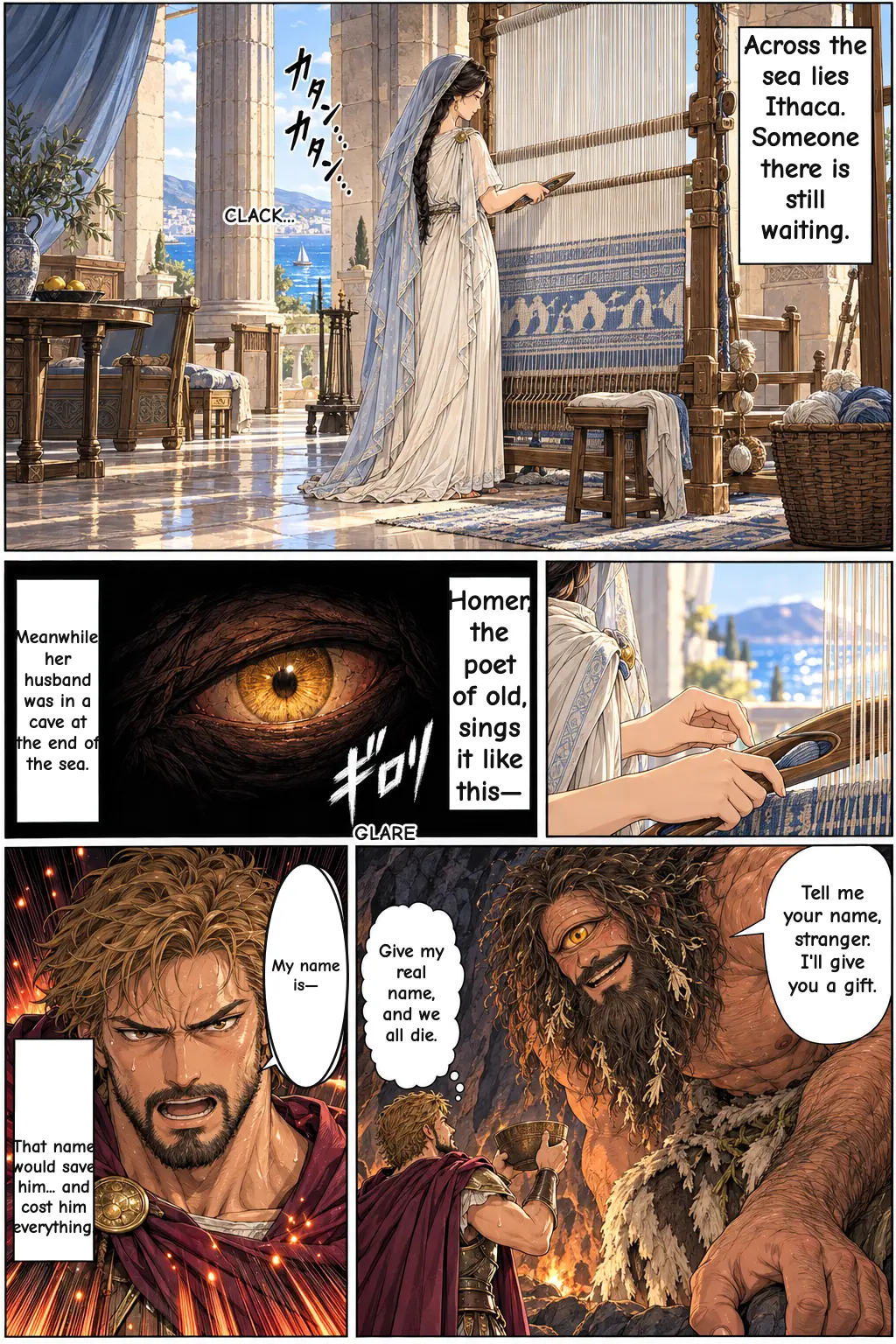
Trapped in the cave of a one-eyed giant, Odysseus survives by giving up his own name. But once safe aboard his ship, he shouts his real name back at the shore — and brings the sea god's curse down on himself.
Odysseus and the Cyclops Polyphemus: The "Nobody" Story Explained (Odyssey Book 9)
The Original Myth: Odysseus in the Cyclops's Cave
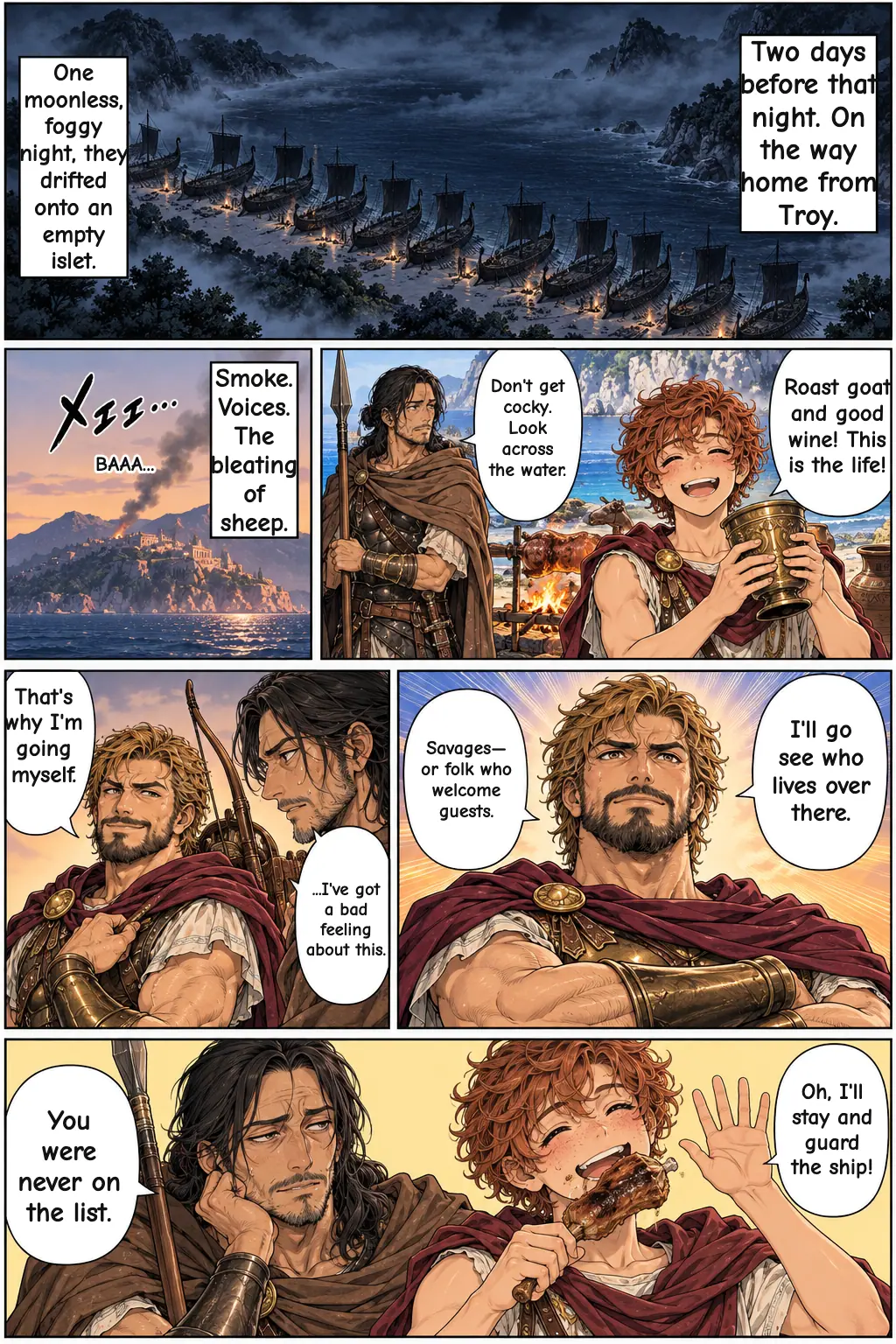
The Cyclops episode comes from Book 9 of Homer's Odyssey, the ancient Greek epic about the hero Odysseus and his long voyage home after the Trojan War. Unusually, Odysseus tells this part himself: he is a guest at the palace of Alcinous, king of the Phaeacians, and he recounts his adventures as a first-person story. His twelve ships reach the land of the Cyclopes, giants who hold no assemblies, keep no laws, never plow, and live apart in mountain caves. The fleet first lands on a small, uninhabited island offshore, full of wild goats, and the crews spend a day feasting.
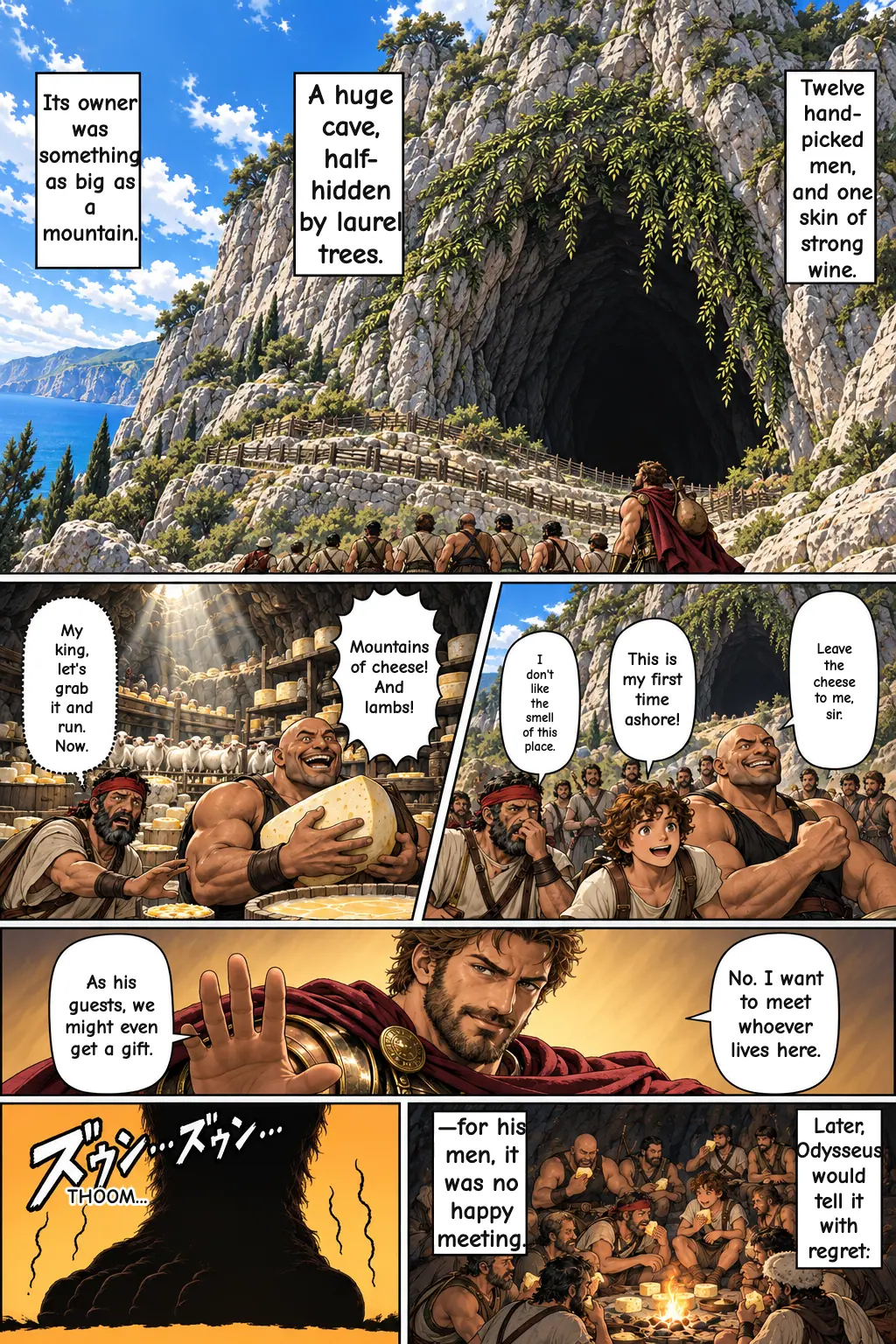
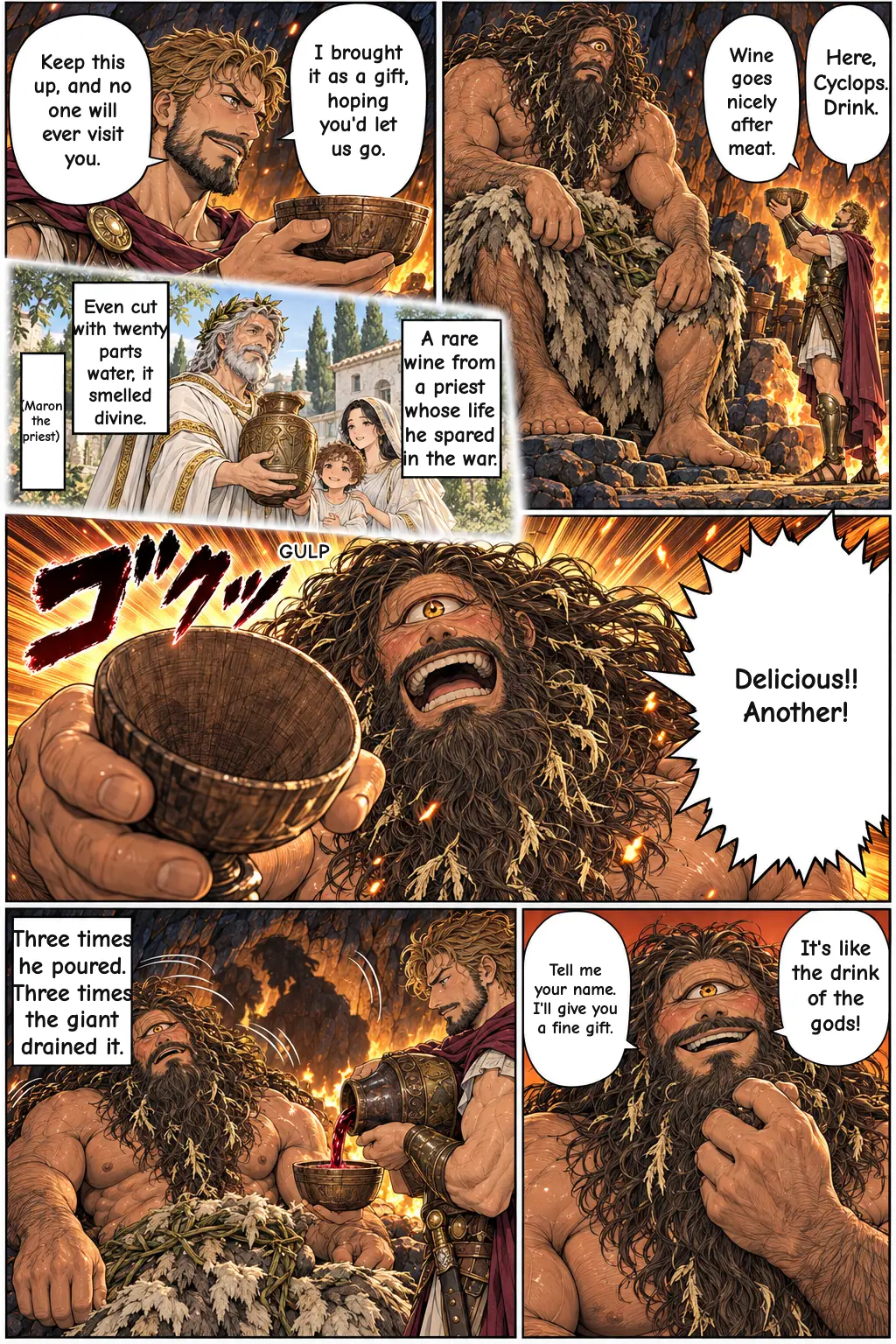
Curious whether the people across the water are savages or god-fearing hosts, Odysseus crosses with only his own ship. He takes his twelve best men and a goatskin of extraordinarily strong, sweet wine, a gift from Maron, a priest of Apollo. The cave they find is empty but full of cheeses and penned lambs. His men beg him to grab what they can and run. Odysseus refuses: he wants to meet the owner and perhaps receive a guest-gift. Looking back, he admits this choice brought his crew no good.
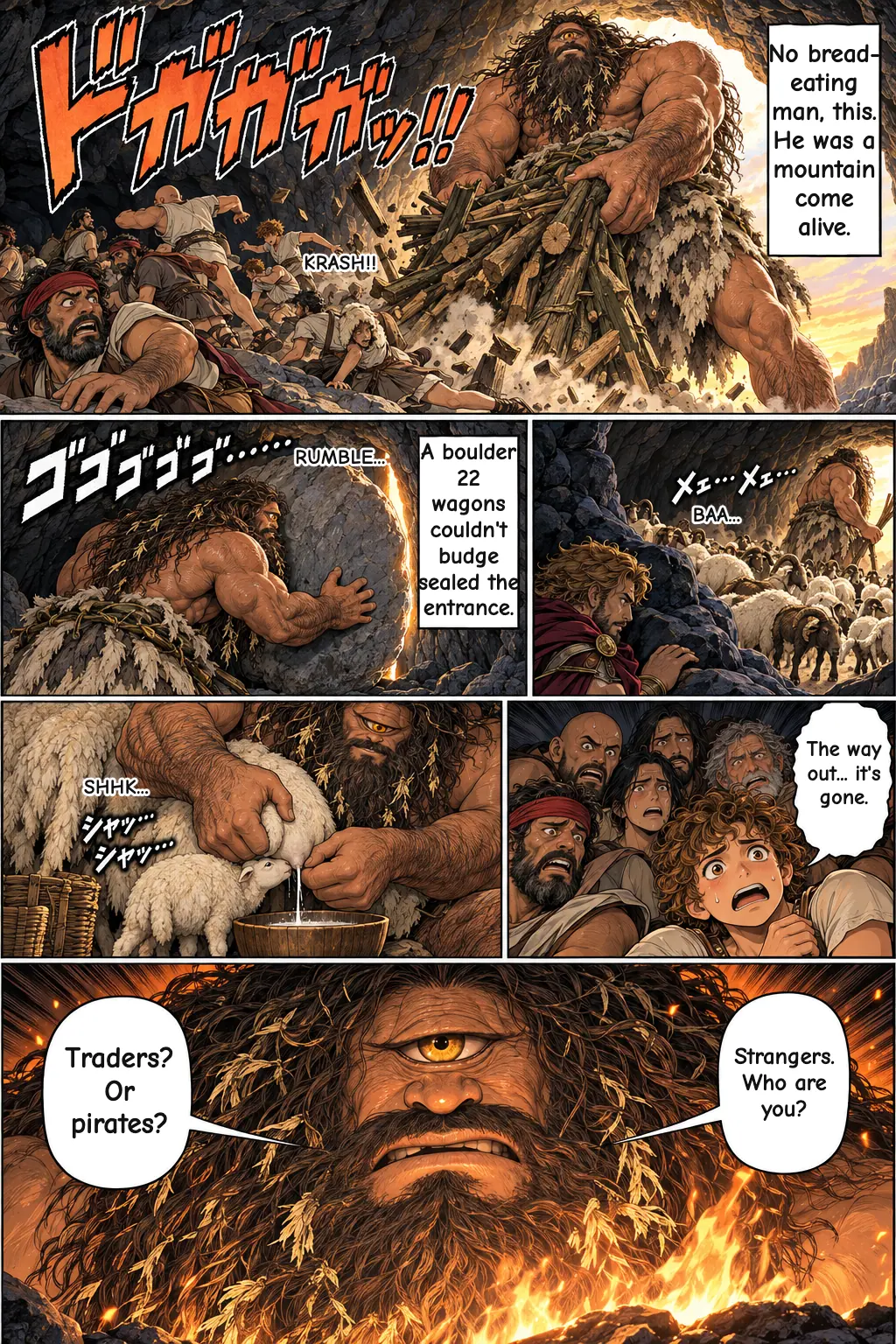
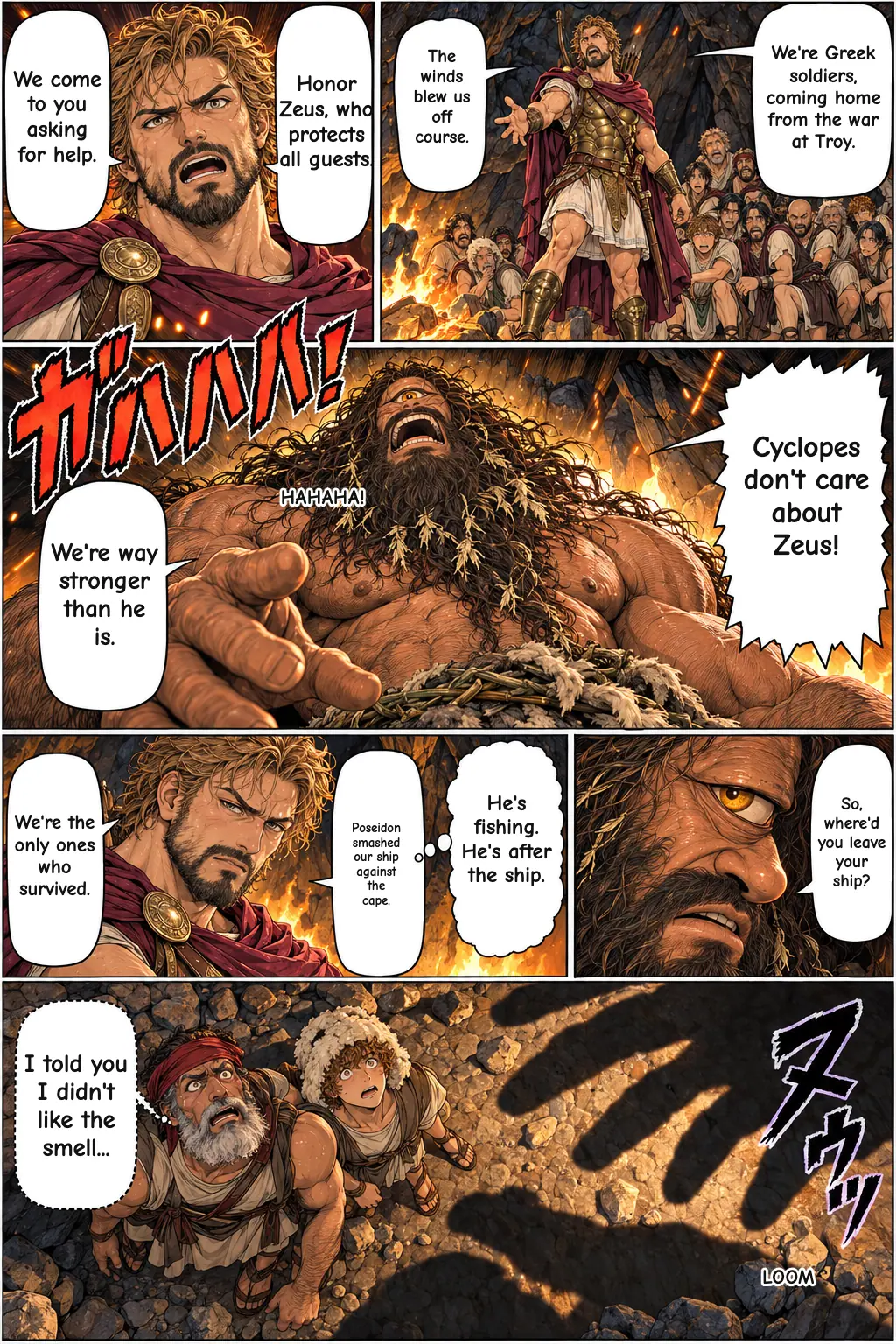
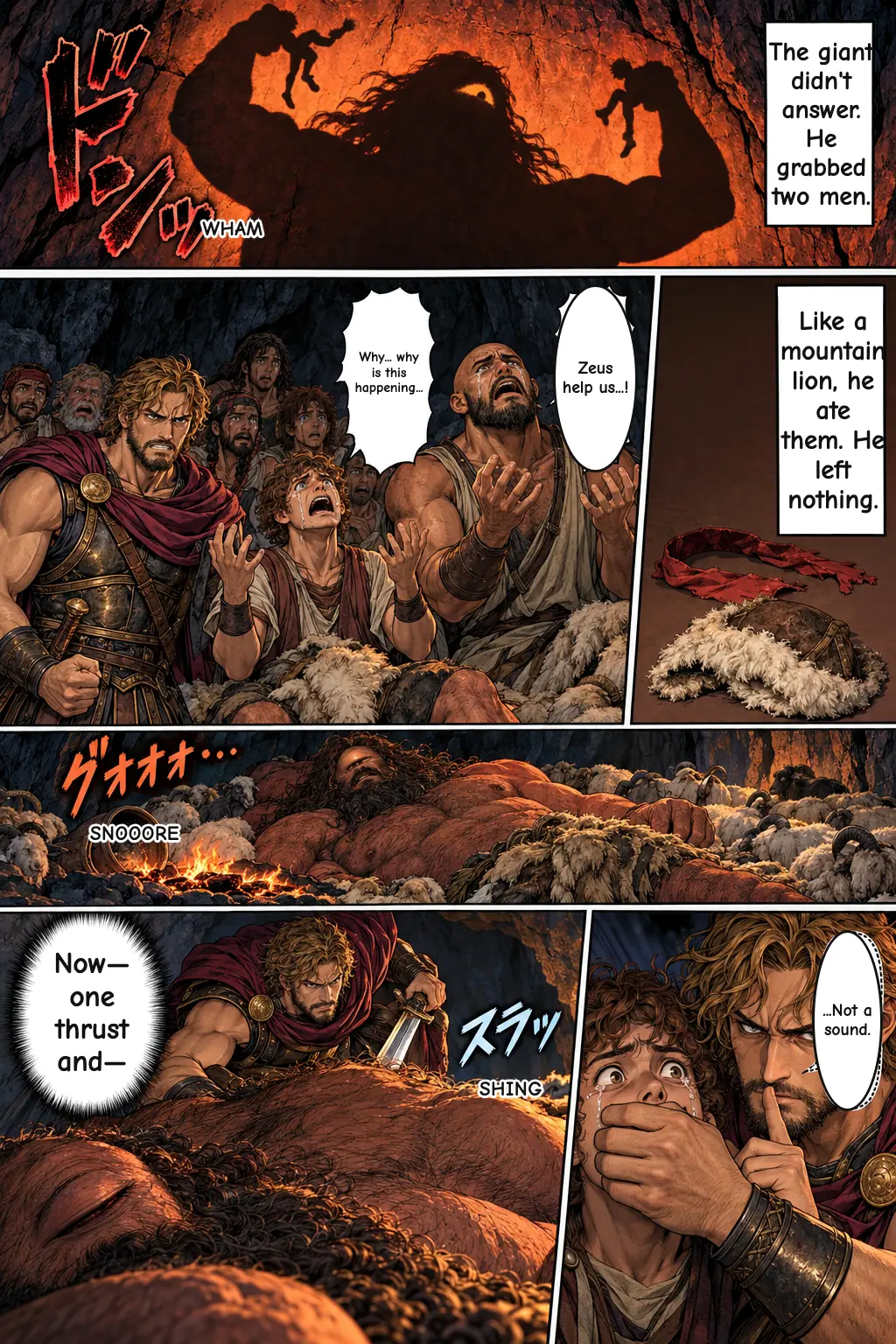
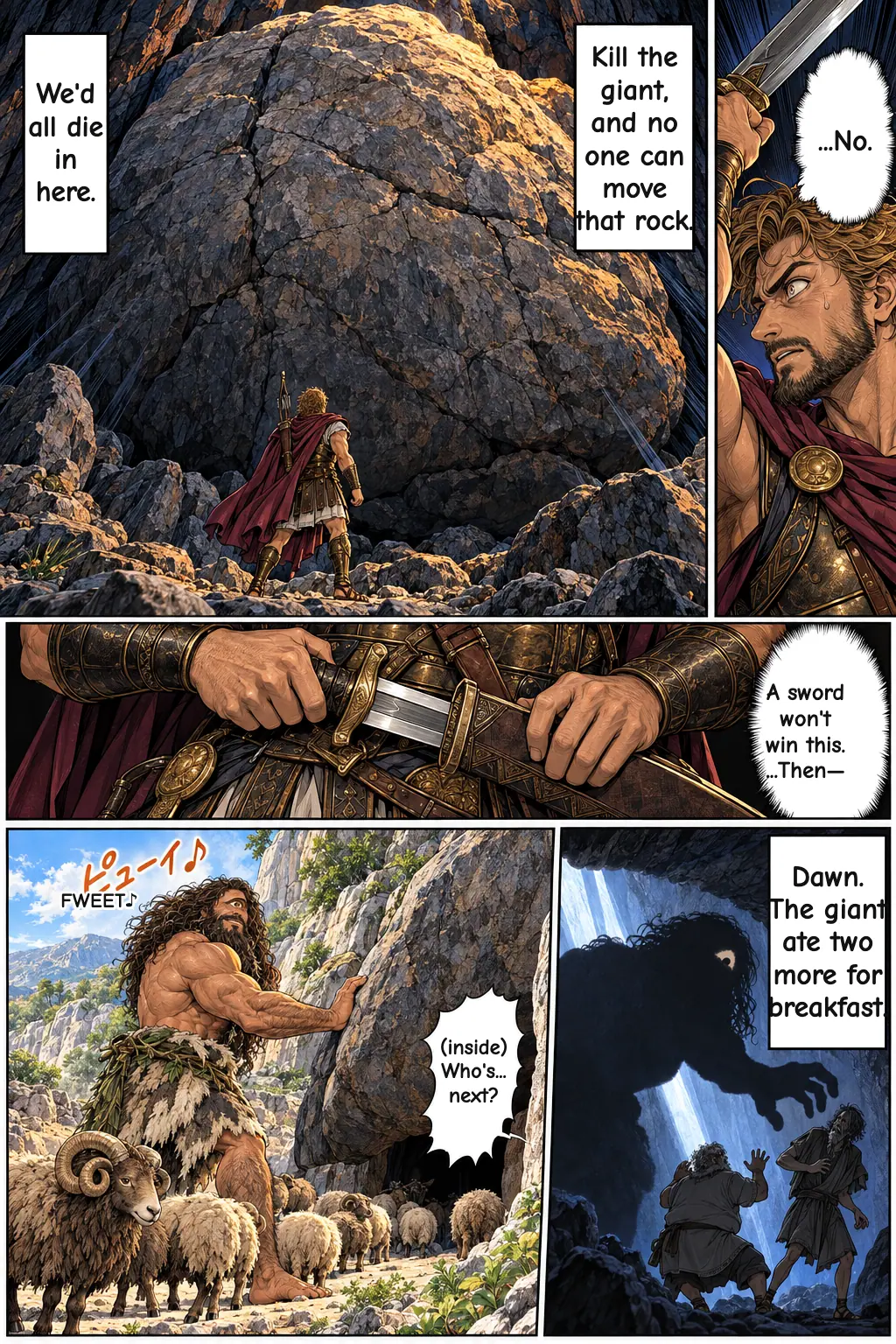
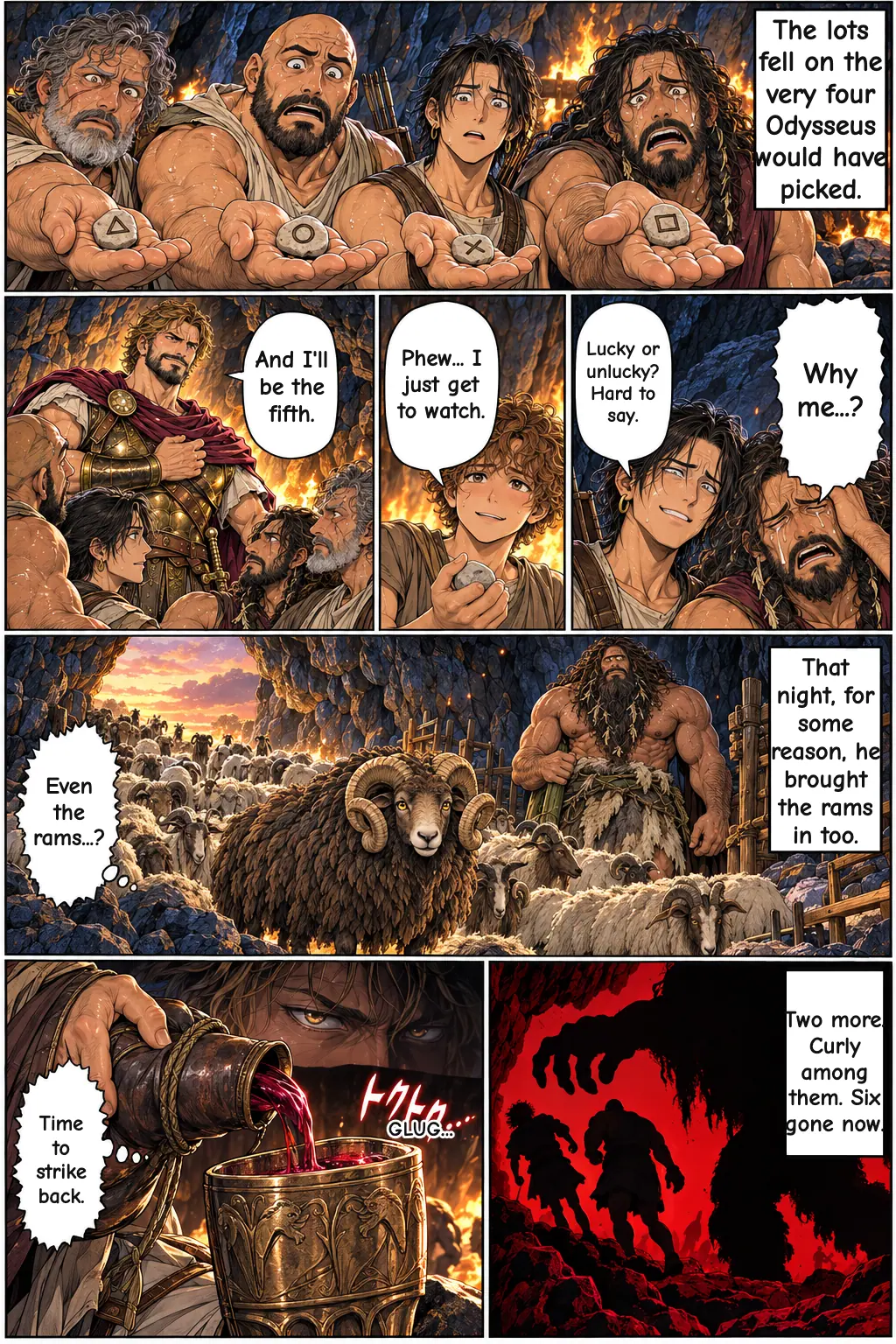
The giant Polyphemus returns with his flock and blocks the entrance with a boulder so huge that twenty-two wagons could not move it. When Odysseus asks him to respect Zeus, the protector of guests, the Cyclops replies that his kind care nothing for Zeus. He seizes two men and eats them, then two more the next morning and two that evening: six in all. Odysseus thinks about stabbing him as he sleeps, but realizes that no one else could roll the rock away, so they would all die trapped inside.
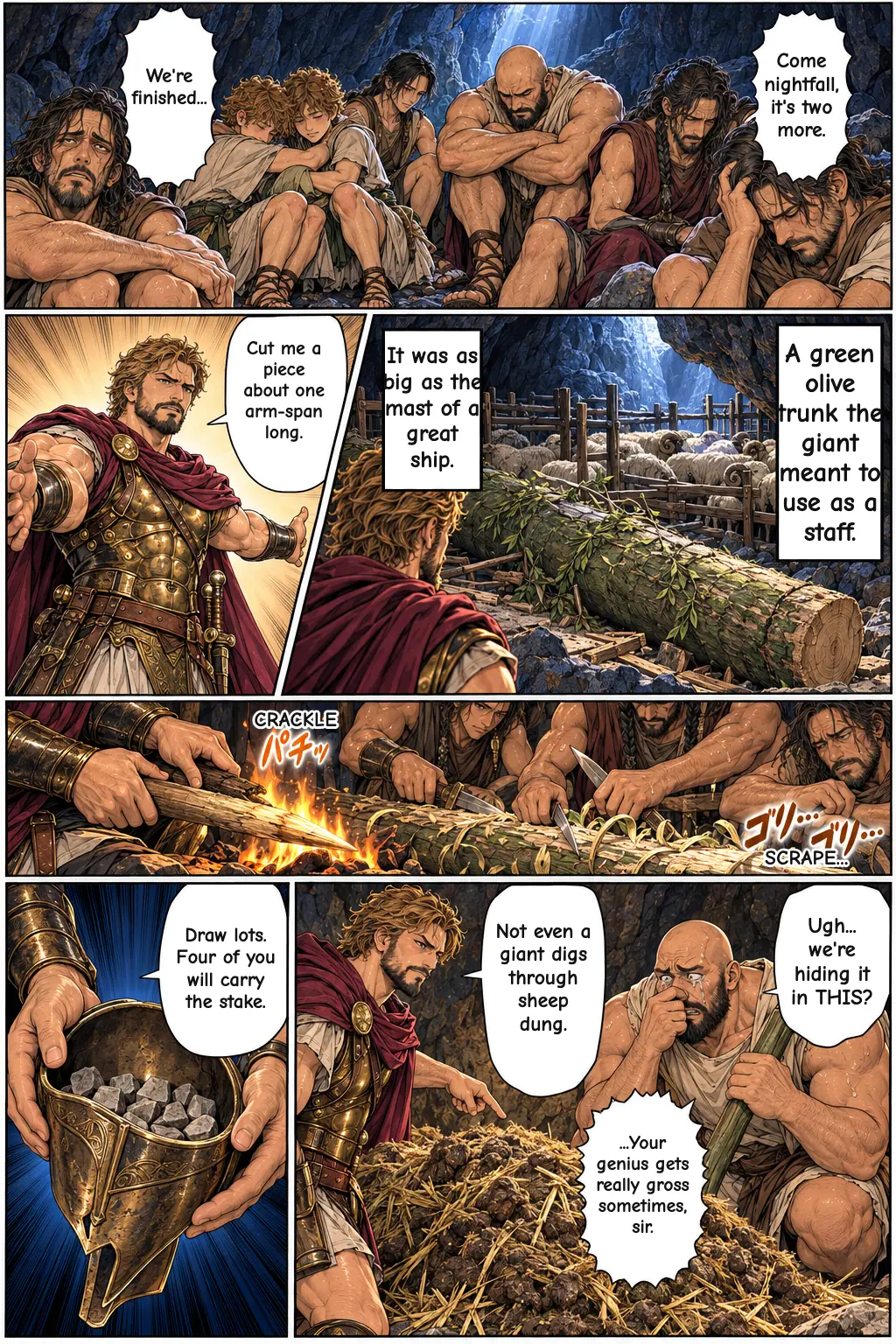
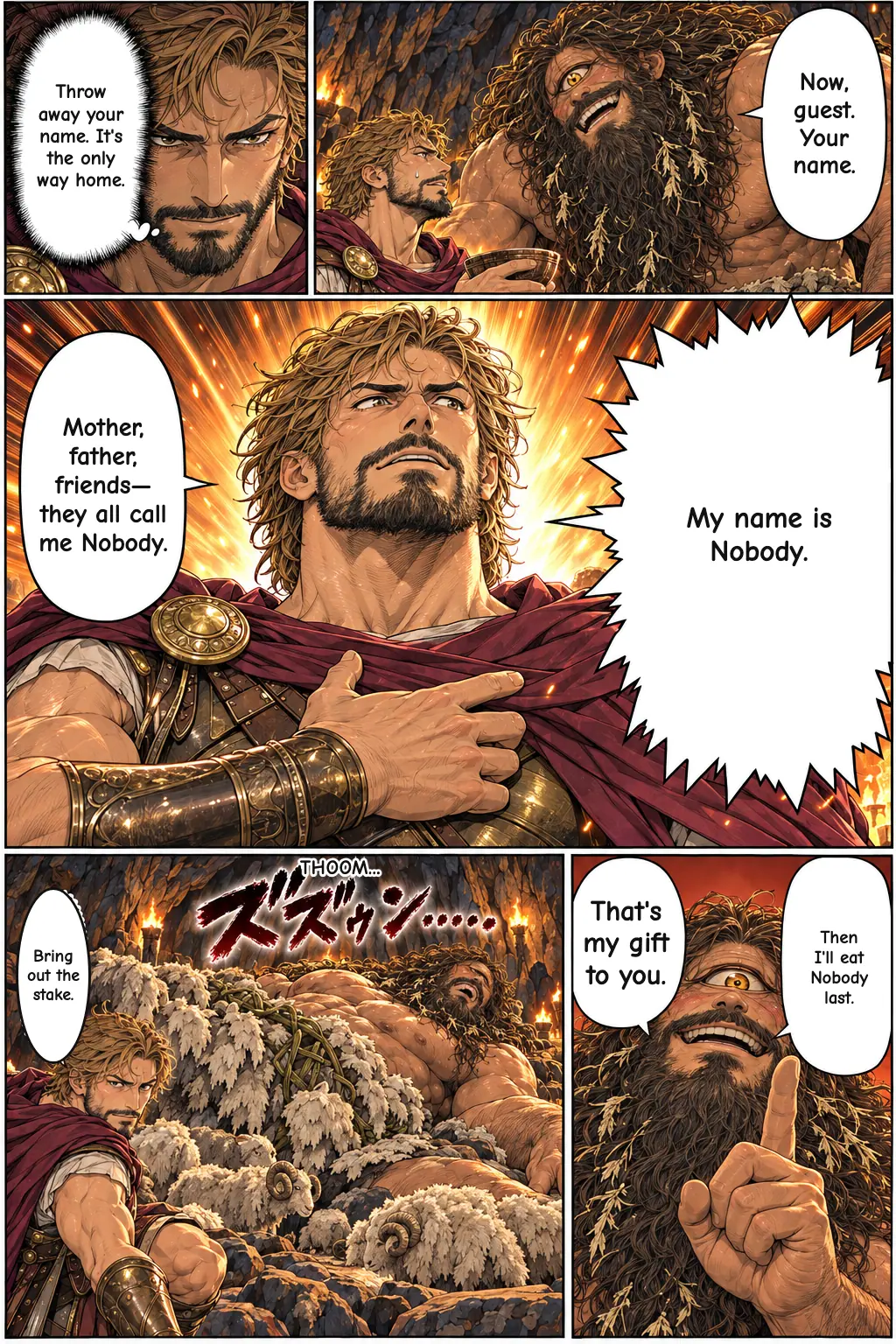
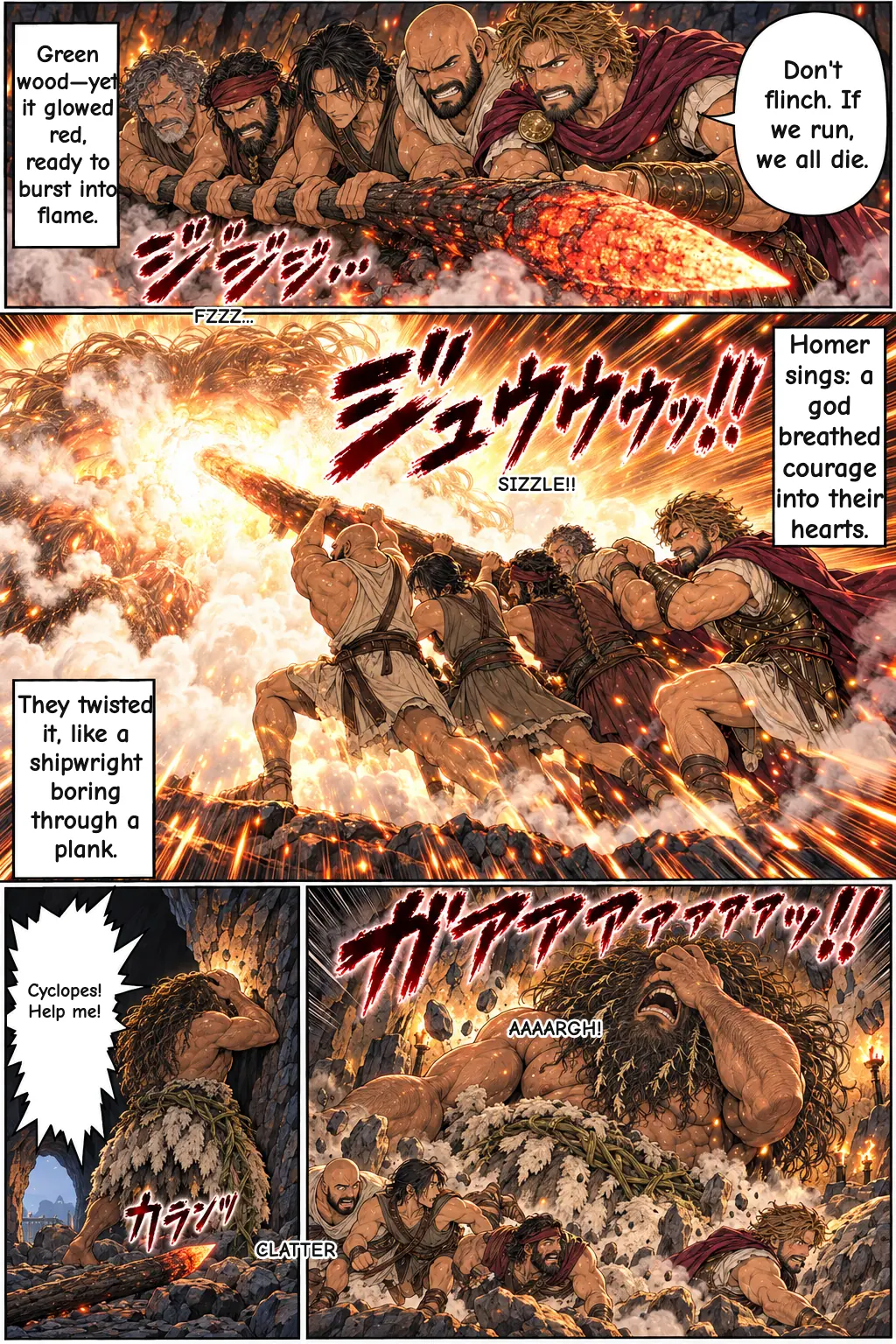
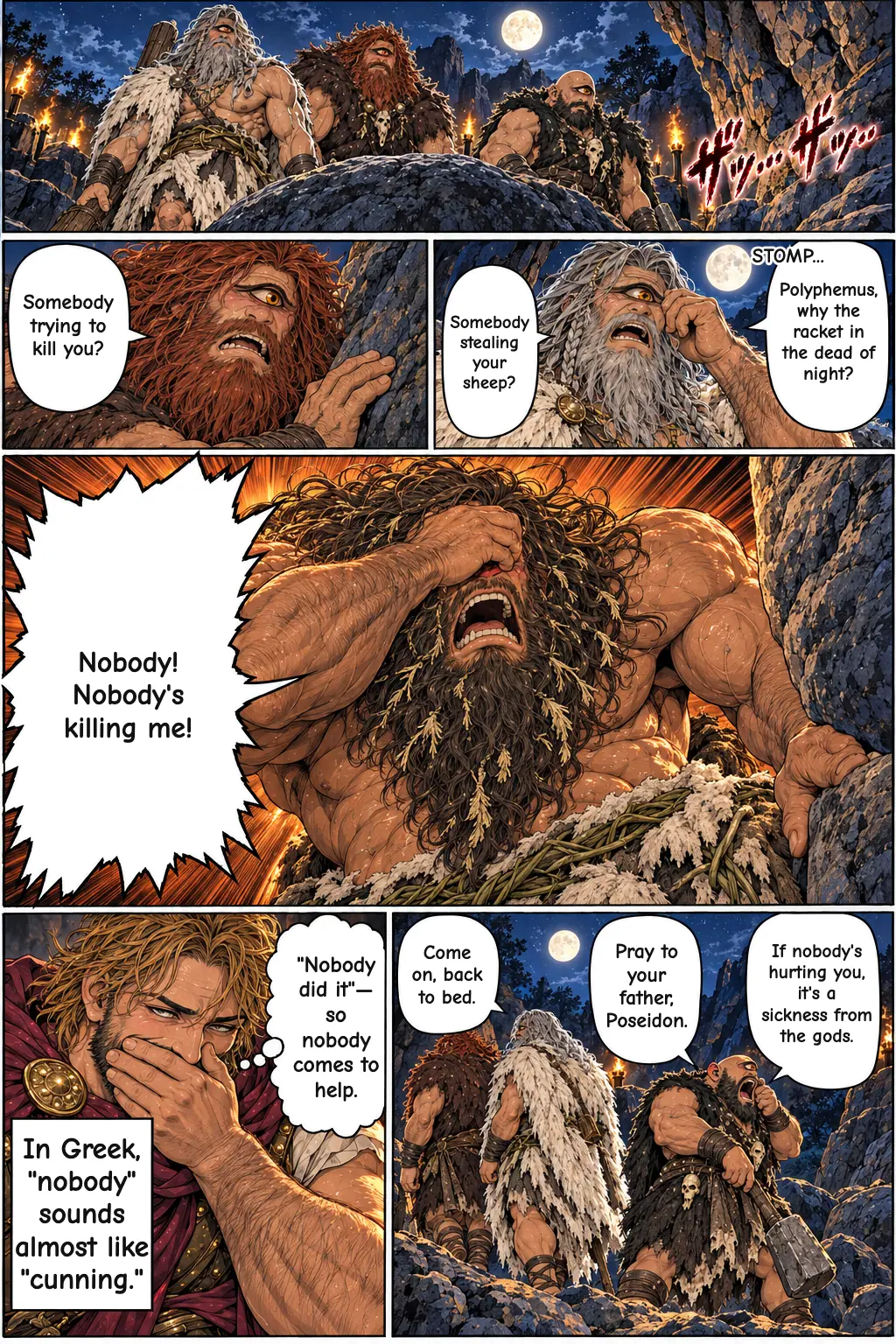
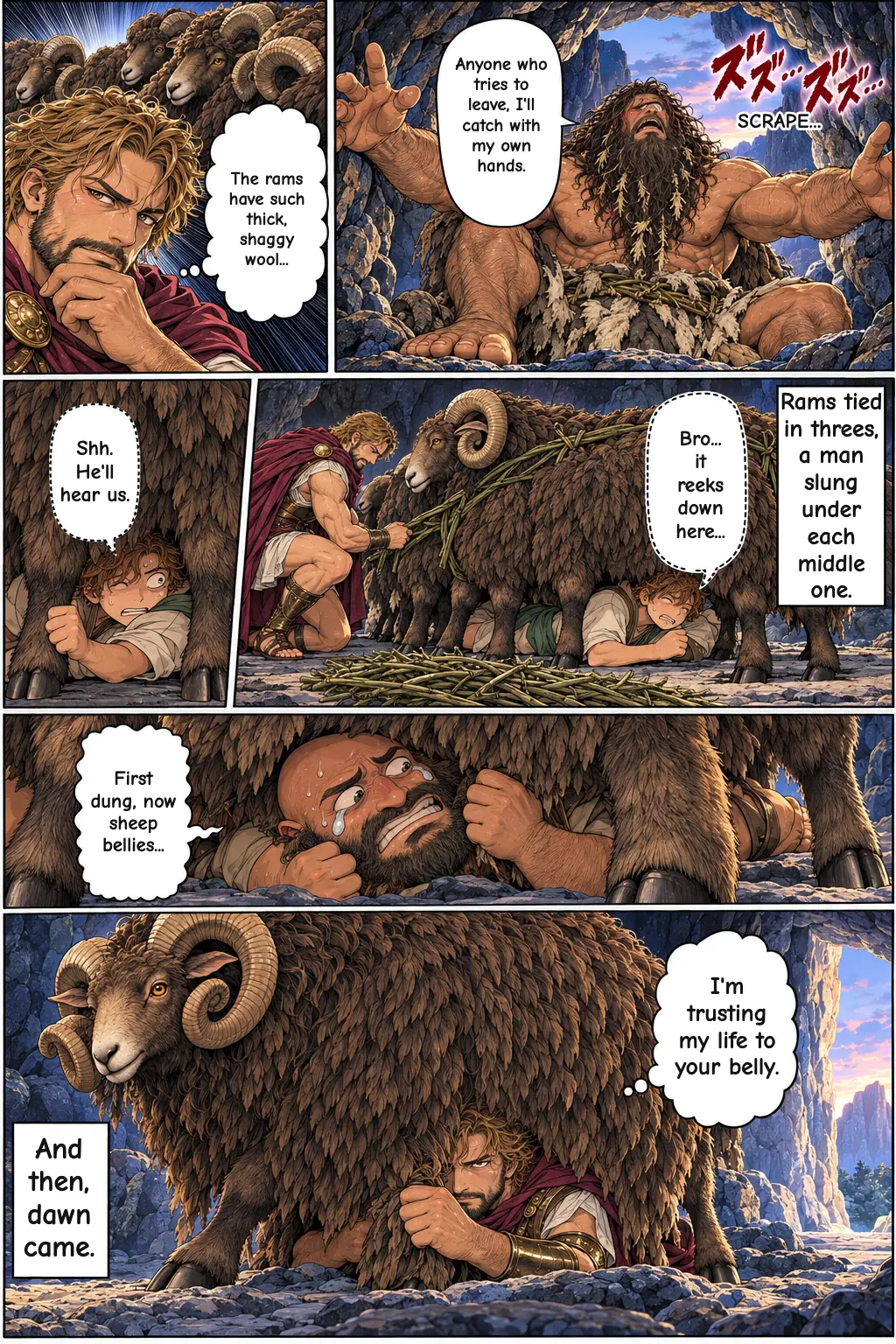
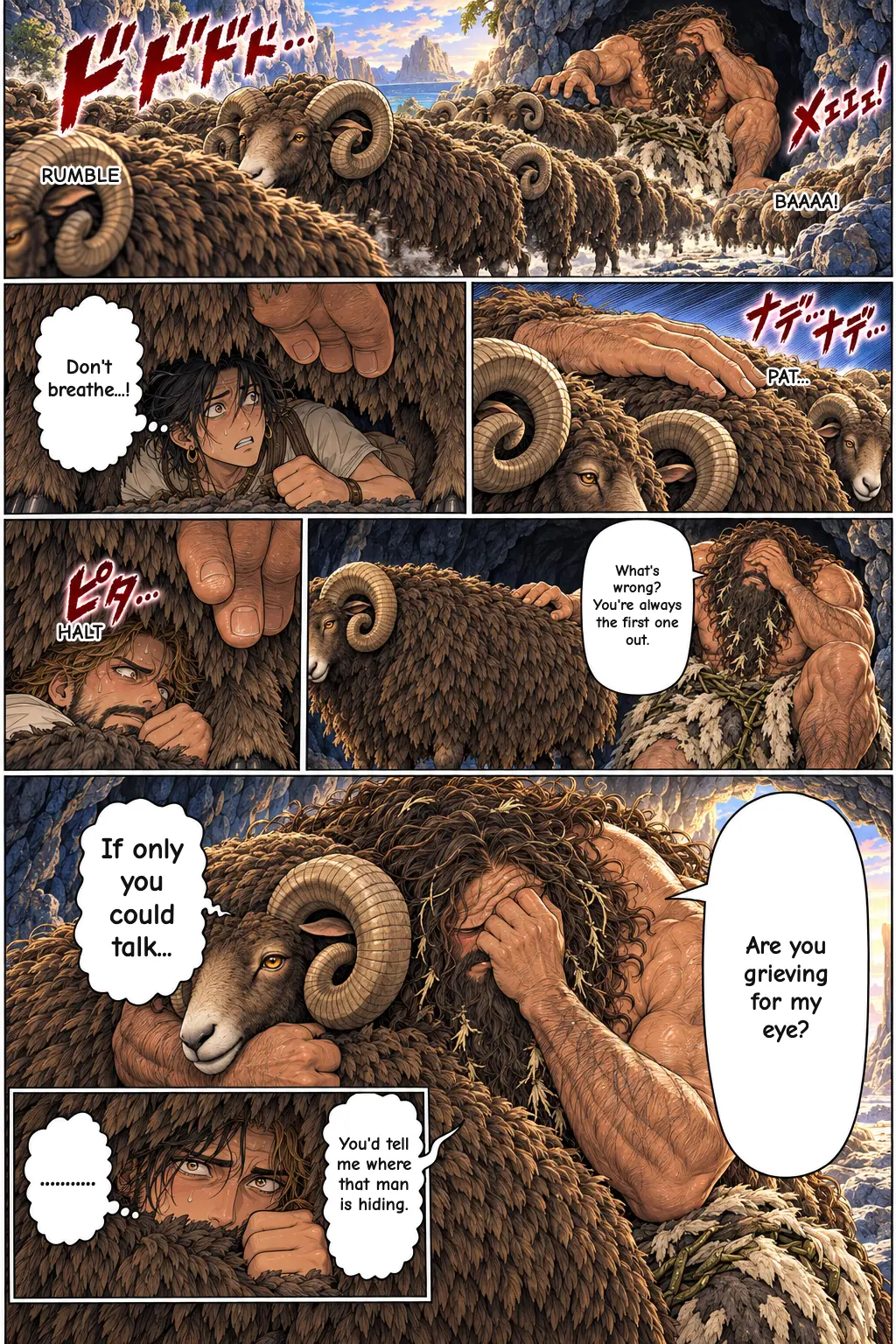
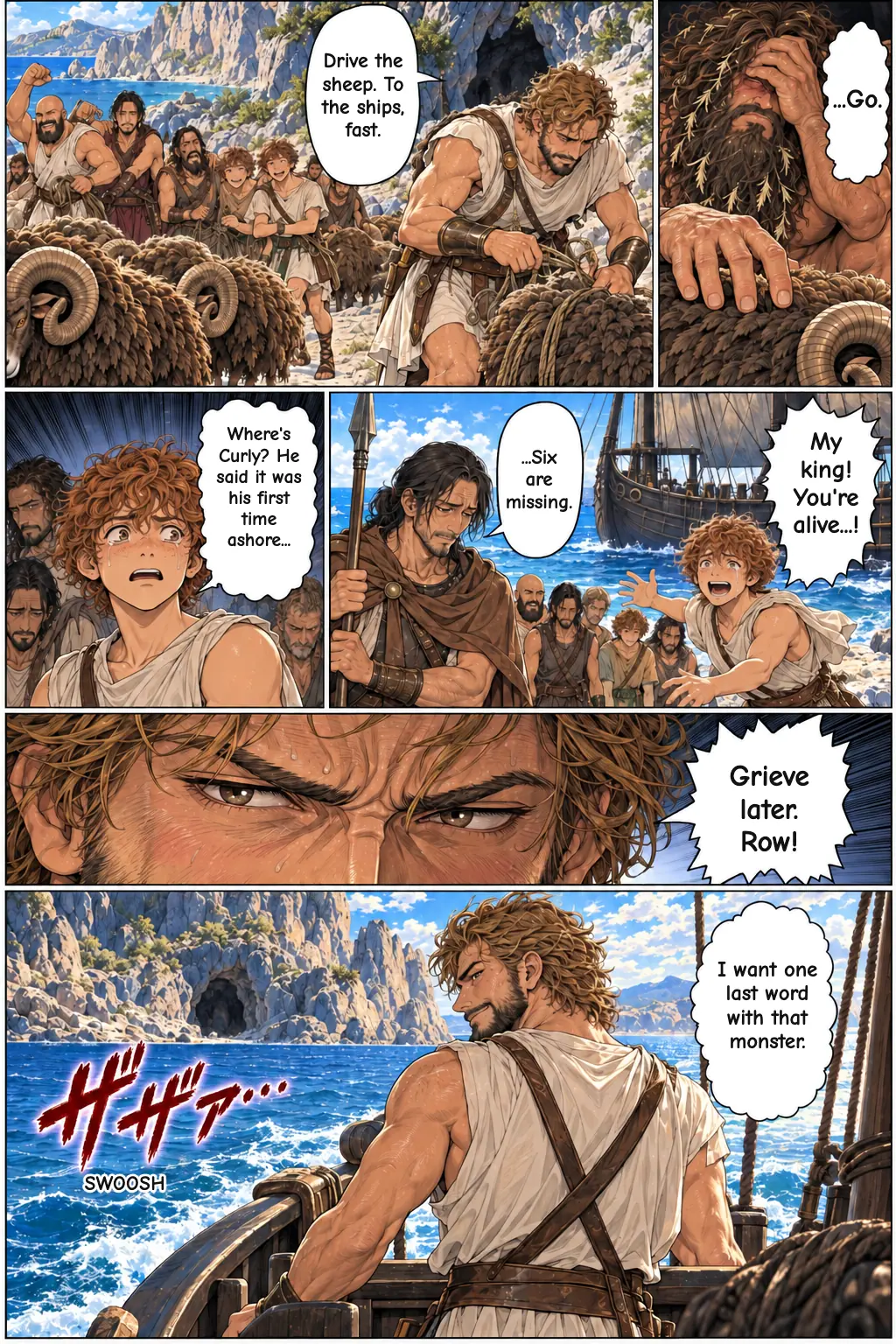
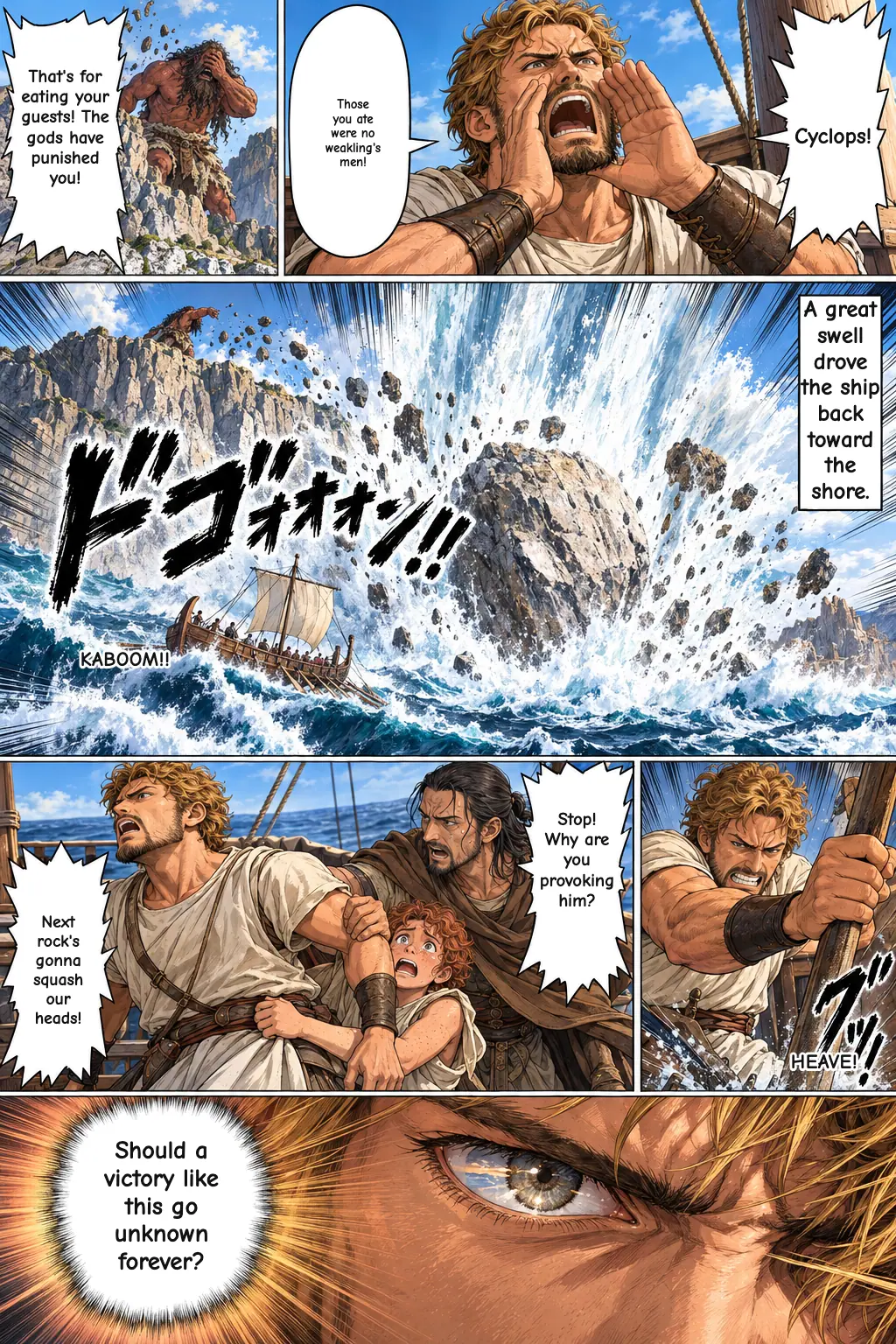
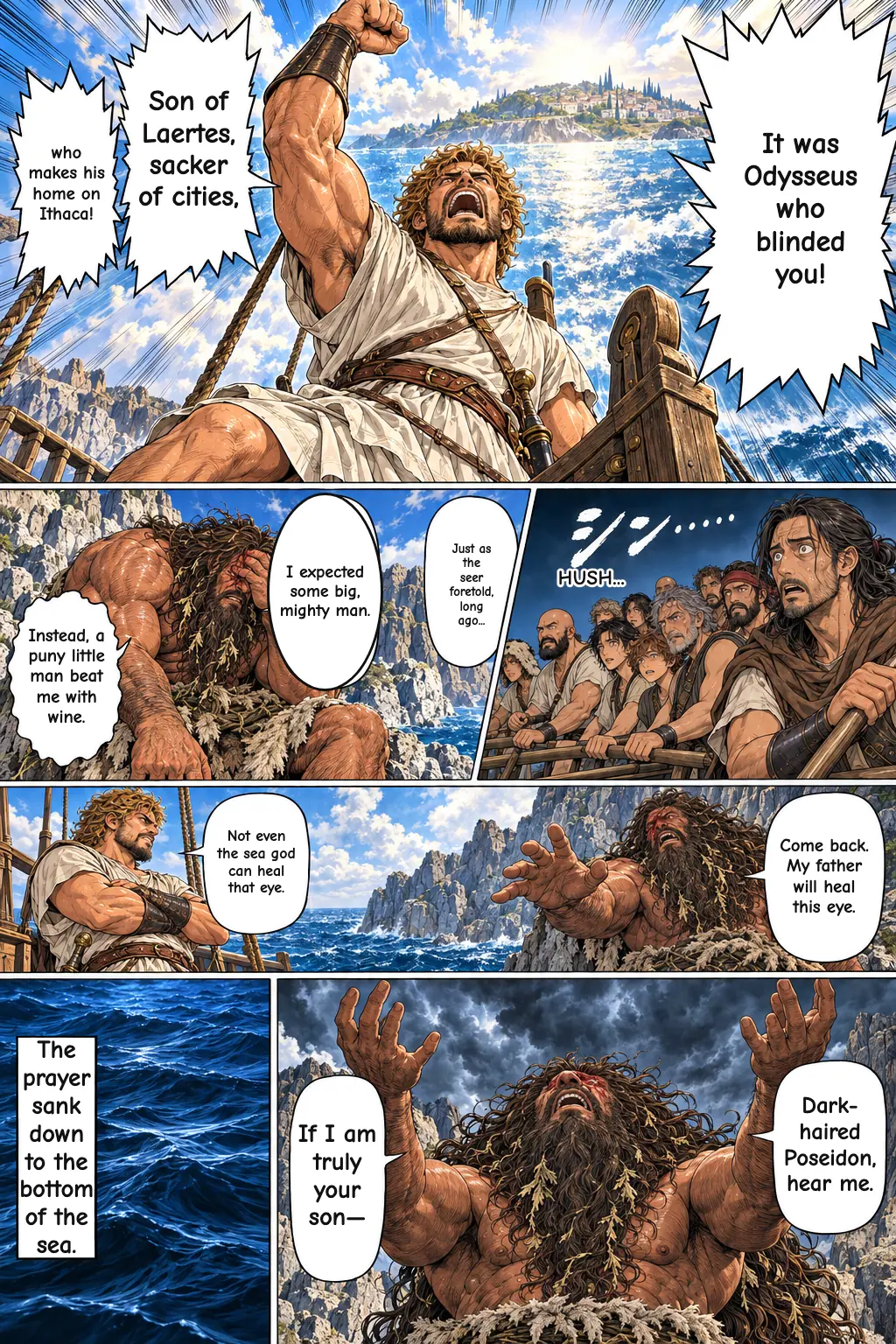
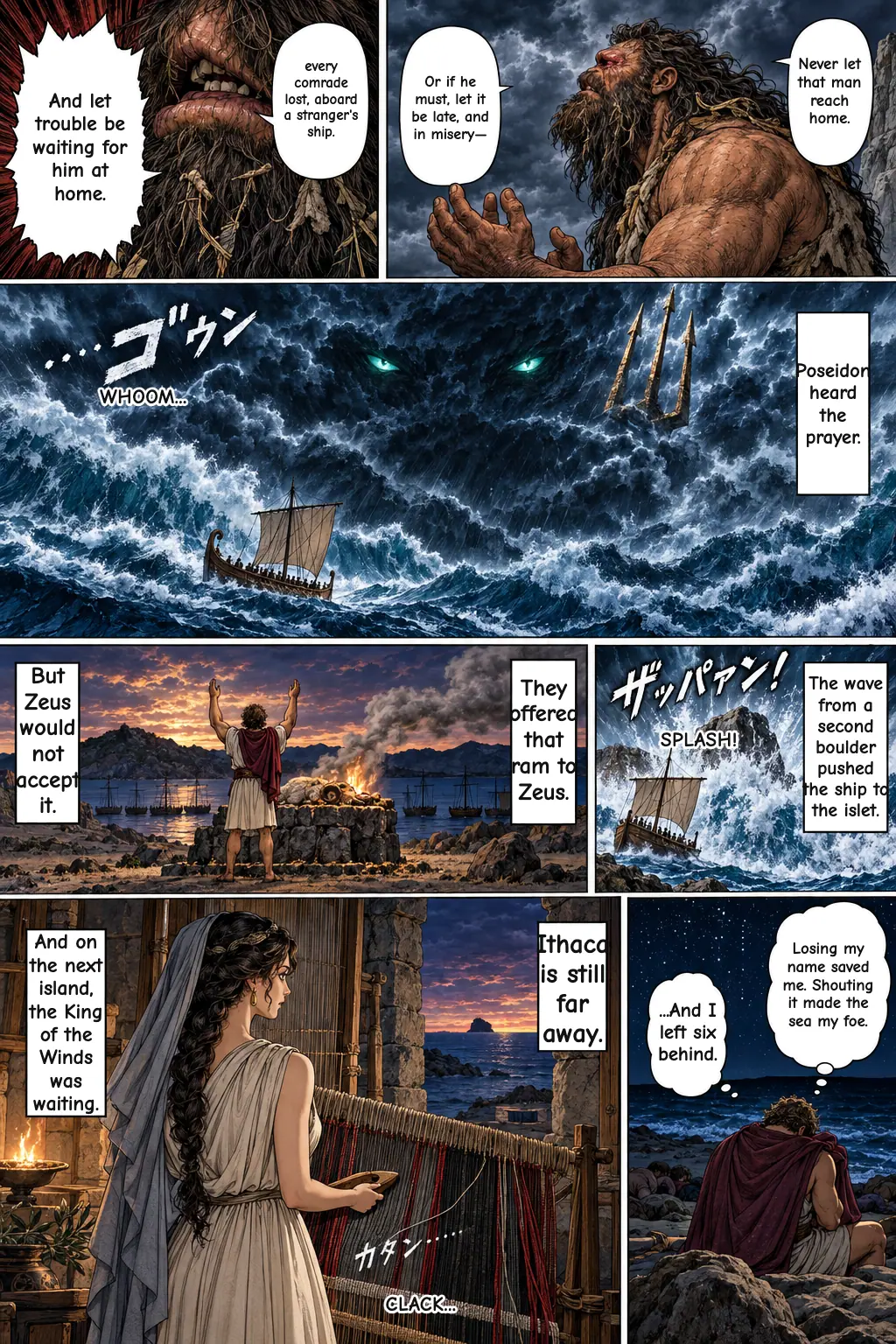
So he plans something else. He sharpens a length of the giant's own olive-wood club, hardens its tip in the fire, and gets Polyphemus drunk on Maron's wine. Asked his name, he answers "Nobody." The giant promises, as a cruel guest-gift, to eat Nobody last. Once he falls asleep, Odysseus and four men twist the glowing stake into his eye. Neighboring Cyclopes come running at his screams, but when he shouts that Nobody is hurting him, they decide his trouble must come from Zeus, tell him to pray to his father Poseidon, and go home. At dawn the survivors slip out tied beneath the rams, and Odysseus clings to the belly of the finest ram of all. Once he is safely aboard, though, his pride gets the better of him. While his crew begs him to stop, he shouts his real name, his father Laertes, and his home, Ithaca. Polyphemus then prays to Poseidon, god of the sea, that Odysseus either never reach home, or arrive late, in misery, with all his companions lost, on someone else's ship, and find trouble waiting there. Poseidon hears the prayer.
Main Characters
Odysseus is the narrator and hero, a king of Ithaca famous for cunning. In this episode he is curious, careful in a crisis and full of tricks, but his pride proves dangerous. Polyphemus is a son of Poseidon: a solitary, monstrous shepherd who looks after his flock with surprising care, yet scorns the gods and the rules of hospitality. Odysseus's twelve companions are never named in this part of the poem. They are frightened, sensible men who wanted to leave from the start, and half of them do not survive.
Why "Nobody"? The Trick and the Wordplay
In Greek, the false name is Outis, meaning "no one." The joke only works because of how the neighbors hear it: if "no one" is harming Polyphemus, there is nothing for them to do. Many readers also point out a second layer of wordplay. When the neighbors say "if no one" (mē tis), it sounds like mētis, the Greek word for cunning intelligence, which is exactly Odysseus's signature quality. Odysseus himself laughs inwardly that his name and his clever plan fooled them.
The irony is that the hero survives by erasing his own name, then brings disaster on himself the moment he claims it back. In the Greek world, a curse aimed at a named person could strike home, and by naming himself Odysseus gives Polyphemus exactly what he needs to call on Poseidon.
What This Myth Tells Us
At its heart the story is about xenia, the ancient Greek law of hospitality between hosts and guests, which Zeus was believed to protect. Polyphemus breaks it as completely as anyone could: instead of feeding his guests, he eats them. But Odysseus is not blameless either. He enters uninvited, helps himself to the food, and stays because he hopes for gifts. The episode also explains the shape of the whole Odyssey. Poseidon's anger, earned in this moment of boasting, is one of the main reasons the hero's journey home takes ten years after the war, twenty years away from Ithaca in total.
What the Manga Version Changes
The manga follows Homer's sequence of events, but it adds visual details the poem never gives. The twelve companions have their own faces, ages, names and personalities. Homer names none of them, so these are the manga's own creations. The famous single eye in the middle of the forehead also comes from the wider tradition and later art: Homer speaks only of Polyphemus's "eye" and never describes where it sits. The giant's exact size, the look of the cave, and the conversations among the men while the giant is out are likewise invented.
The most violent moments are shown through shadow, sound and the men's reactions rather than graphic detail, and the "Nobody" wordplay has been rewritten freshly in English. The moment Odysseus shouts his name keeps the original's key fact, that his crew tried to stop him, while the manga imagines what was going through his head.
Where to Read It
If you want to see the cave, the stake and that fateful shout come to life, Episode 2 of GREEK MYTHOLOGY: THE ODYSSEY — The Twenty-Year Voyage Home is right here on Manga Portal. Every episode is free to read, with no sign-up needed, so you can follow Odysseus from Troy all the way to Ithaca and see how Poseidon's curse plays out.
Characters in this episode
Odysseus
King of Ithaca and the story's narrator, a clever hero who escapes the Cyclops by calling himself "Nobody" but ruins his escape by boasting.
Polyphemus
A giant one-eyed shepherd and son of Poseidon who imprisons Odysseus's men in his cave and eats six of them.
Odysseus's companions
The twelve best sailors Odysseus takes into the cave; they are unnamed in Homer, and only half survive.
Poseidon
God of the sea and earthquakes, and father of Polyphemus; he hears his son's prayer and curses Odysseus's voyage home.
Maron
A priest of Apollo who gave Odysseus the powerful wine used to make the Cyclops drunk; he never appears in the cave himself.
The great ram
The finest ram in Polyphemus's flock, which unknowingly carries Odysseus out of the cave under its belly.
FAQ
Why did Odysseus tell the Cyclops his name was Nobody?
He wanted to be sure no one would come to help Polyphemus. When the blinded giant screamed that "Nobody" was hurting him, the other Cyclopes thought nothing was wrong and went home.
How did Odysseus escape from Polyphemus's cave?
After blinding the Cyclops with a fire-hardened olive-wood stake, Odysseus tied his men beneath the rams and clung to the belly of the biggest ram himself. When Polyphemus let his flock out to graze in the morning, he felt only their backs, and the men slipped past him.
Why did Poseidon curse Odysseus?
Polyphemus is Poseidon's son. When Odysseus shouted his real name and home from his ship, the blinded Cyclops prayed to his father for revenge, and Poseidon granted it, which helps explain why the voyage home took so long.
Where is the Cyclops story in the Odyssey?
It is in Book 9 of Homer's Odyssey. Odysseus tells it himself while he is a guest at the court of the Phaeacian king Alcinous.
Did Homer say the Cyclops had one eye in the middle of his forehead?
Homer refers only to the Cyclops's "eye" and never says where it is on his face. The familiar picture of a single eye in the middle of the forehead comes from the wider tradition and later art.