Episode 1The Fruit That Makes You Forget HomeThe Lotus-Eaters
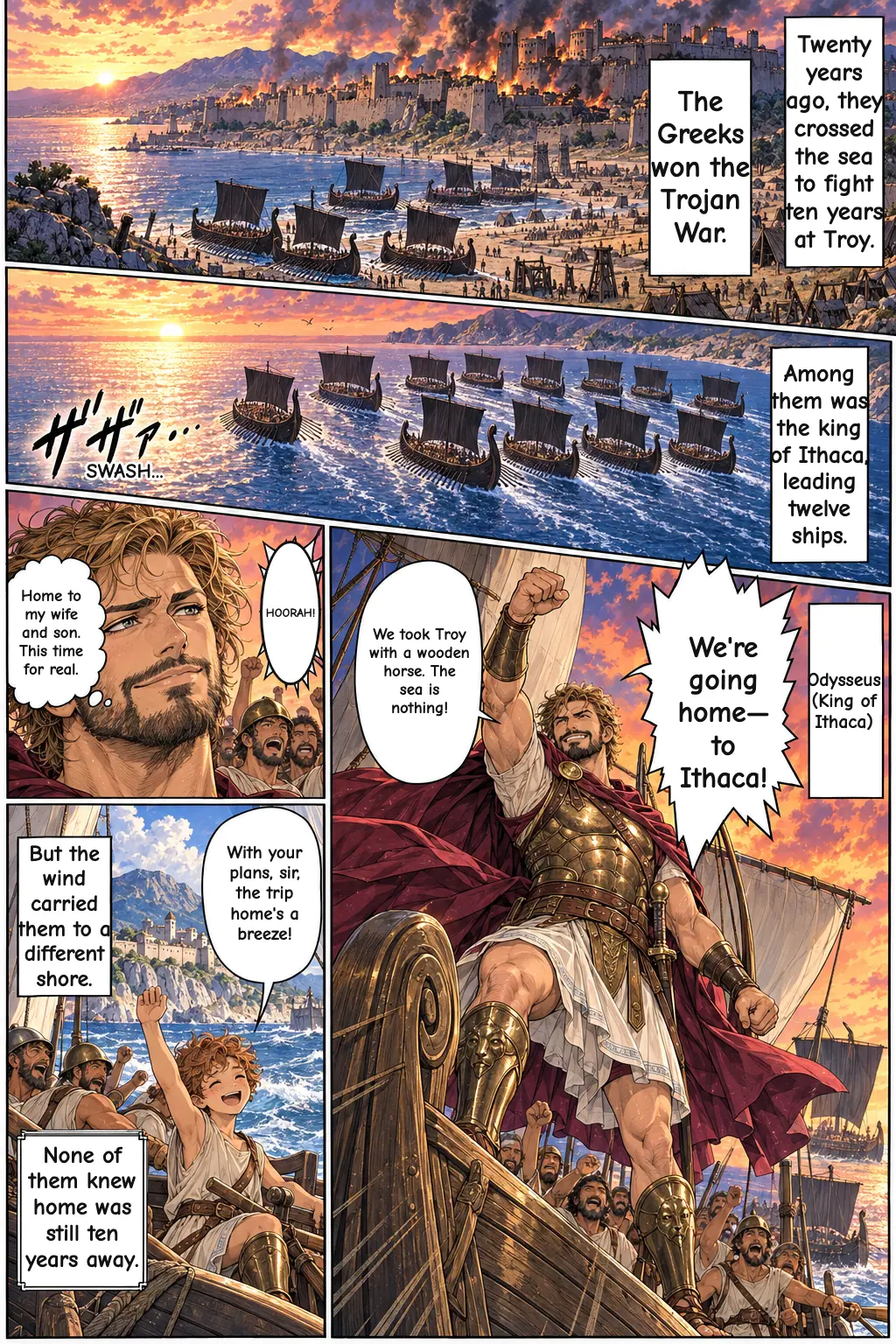
Odysseus won the Trojan War with the trick of the wooden horse. Now his crew won't stop feasting ("just one more cup!"), and he himself gave the order to raid a city. Between the two, seventy-two of his men are lost. Then a storm drives the fleet to a land of sweet fruit that makes anyone who eats it stop wanting to go home.
The Lotus-Eaters in the Odyssey: Book 9 Summary and Meaning Explained
Odyssey Book 9 Summary: The Raid on Ismarus
The Odyssey is an ancient Greek epic poem traditionally credited to Homer. It tells how Odysseus, king of the island of Ithaca, spent ten years trying to get home after the Trojan War. In Book 9 he is a guest of Alcinous, king of the Phaeacians, a seafaring people who have taken him in. There he finally reveals his name and tells his own story in the first person, starting from the day he left Troy.
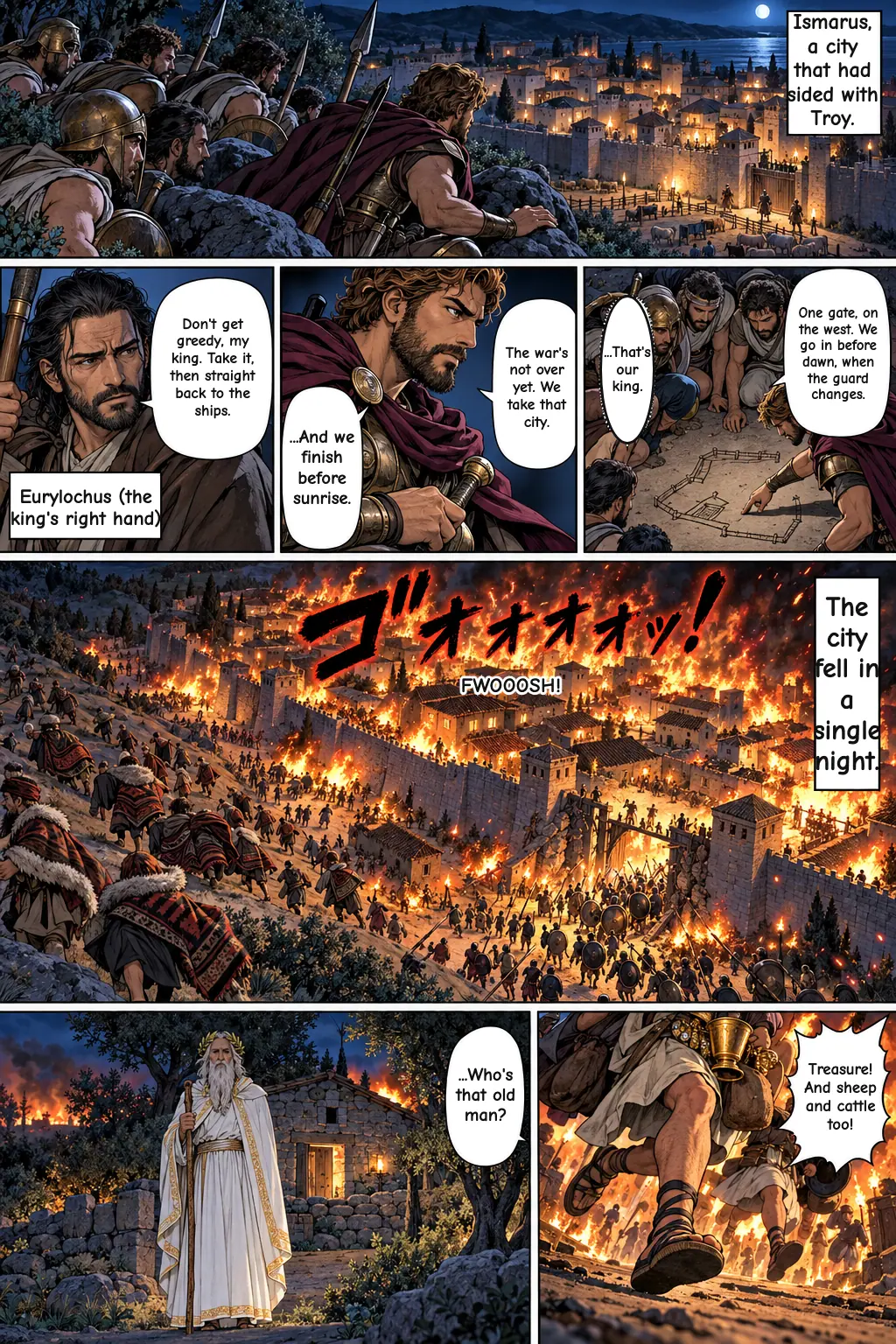
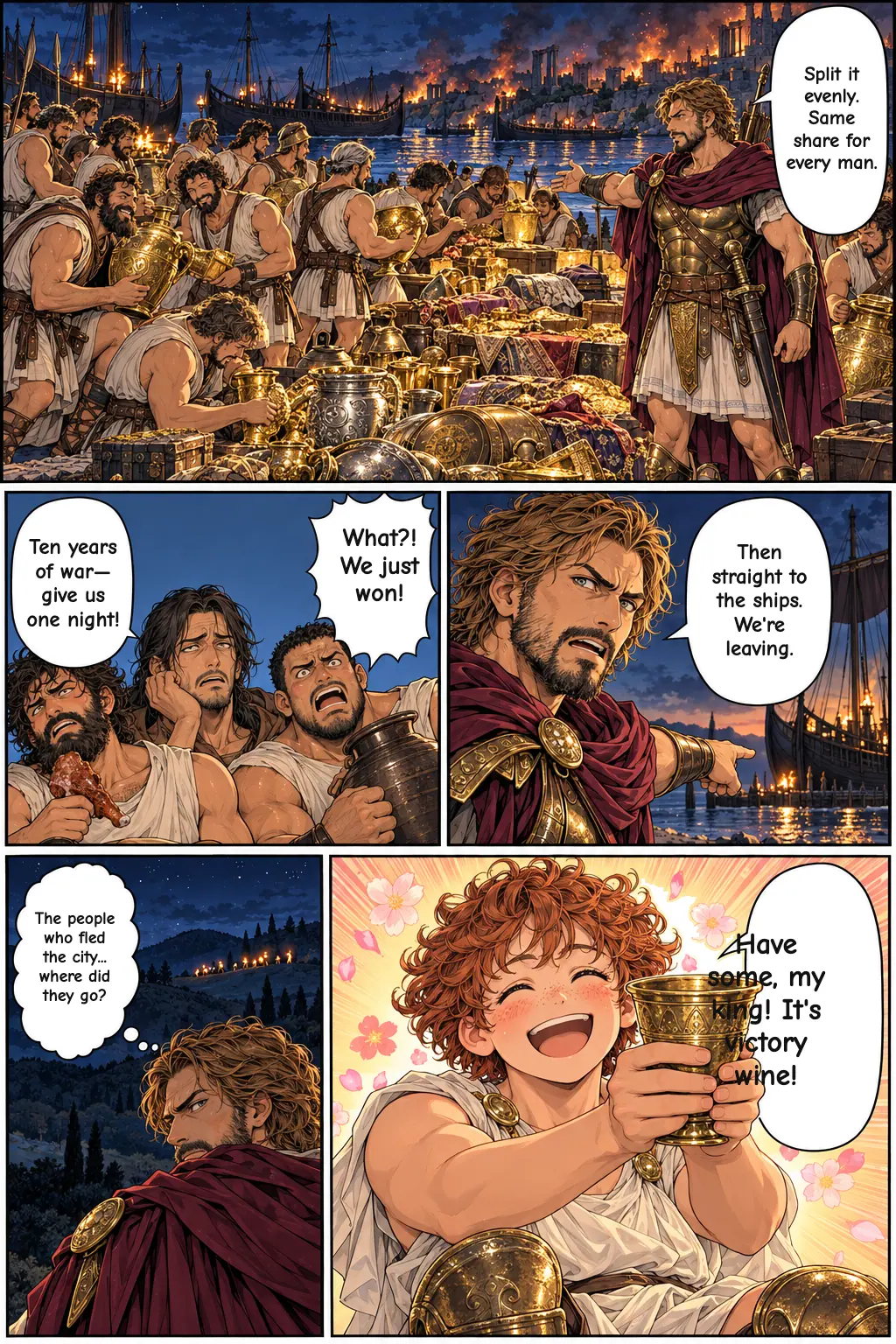
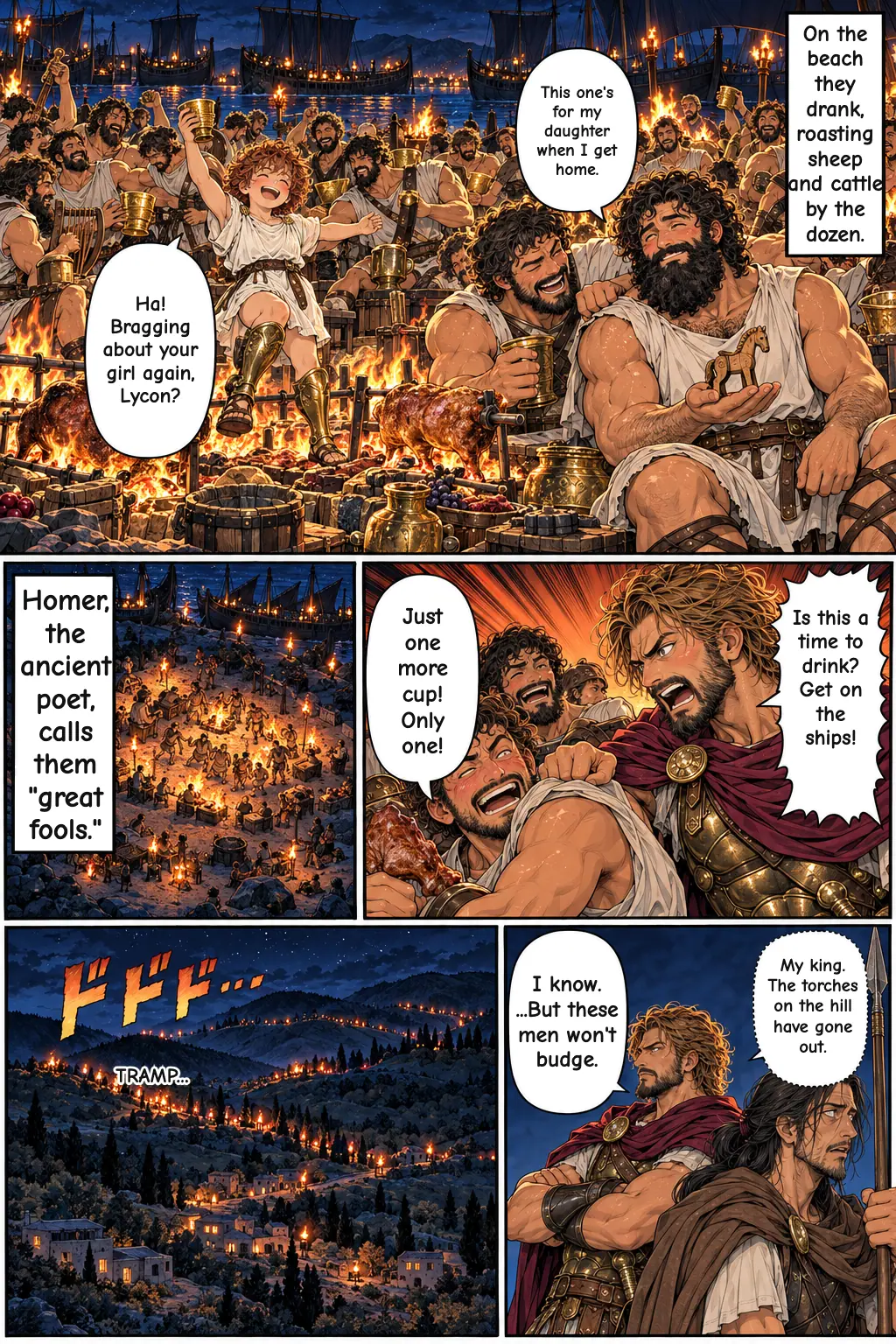
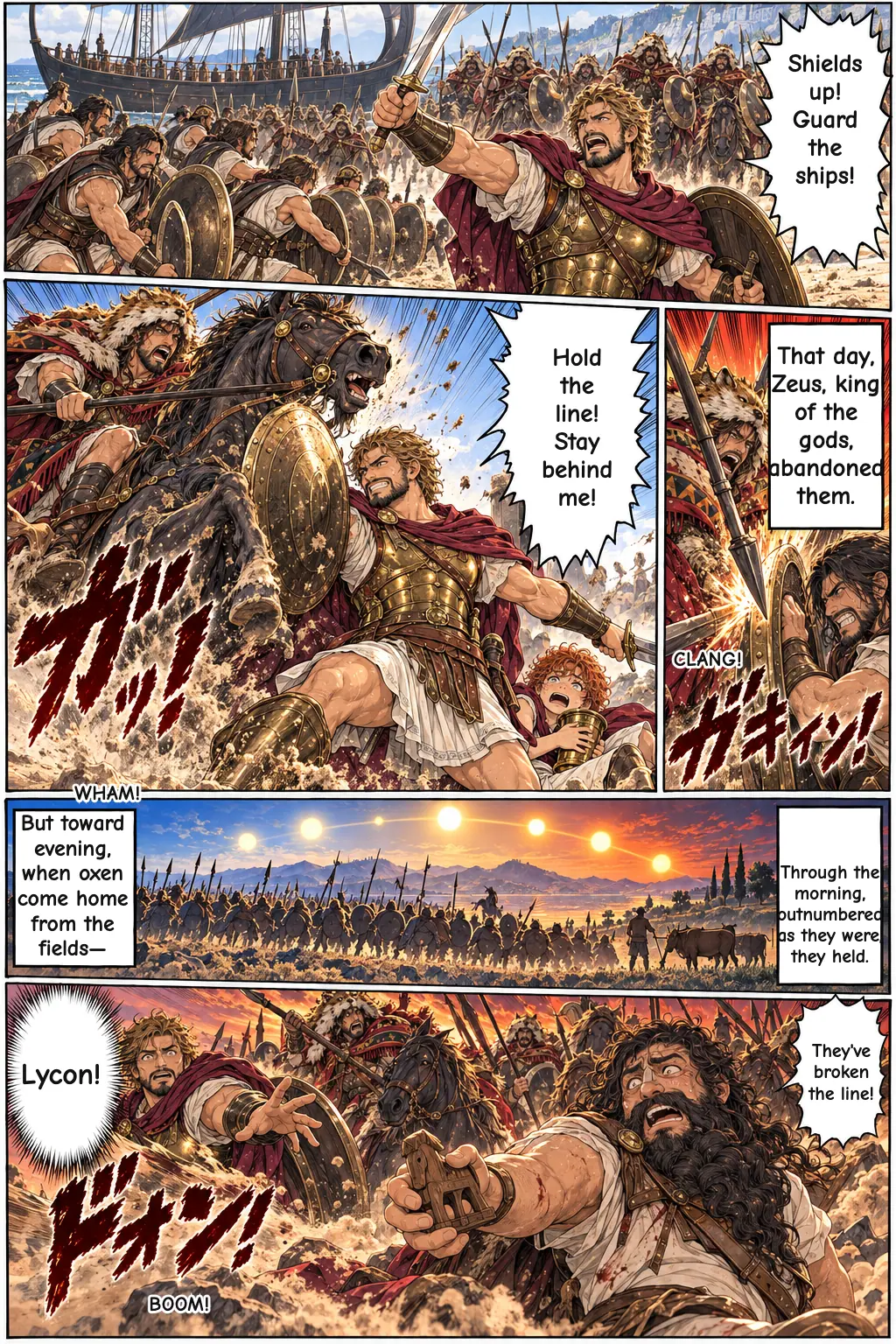
First the wind carries his ships to Ismarus, a town of the Cicones, a people living on the coast of Thrace. Odysseus sacks the town. He kills the men, takes the women and the treasure, and divides the plunder so that everyone gets a fair share. Then he orders his men to leave at once. They refuse. Odysseus calls them fools: they stay on the beach drinking wine and slaughtering sheep and cattle.
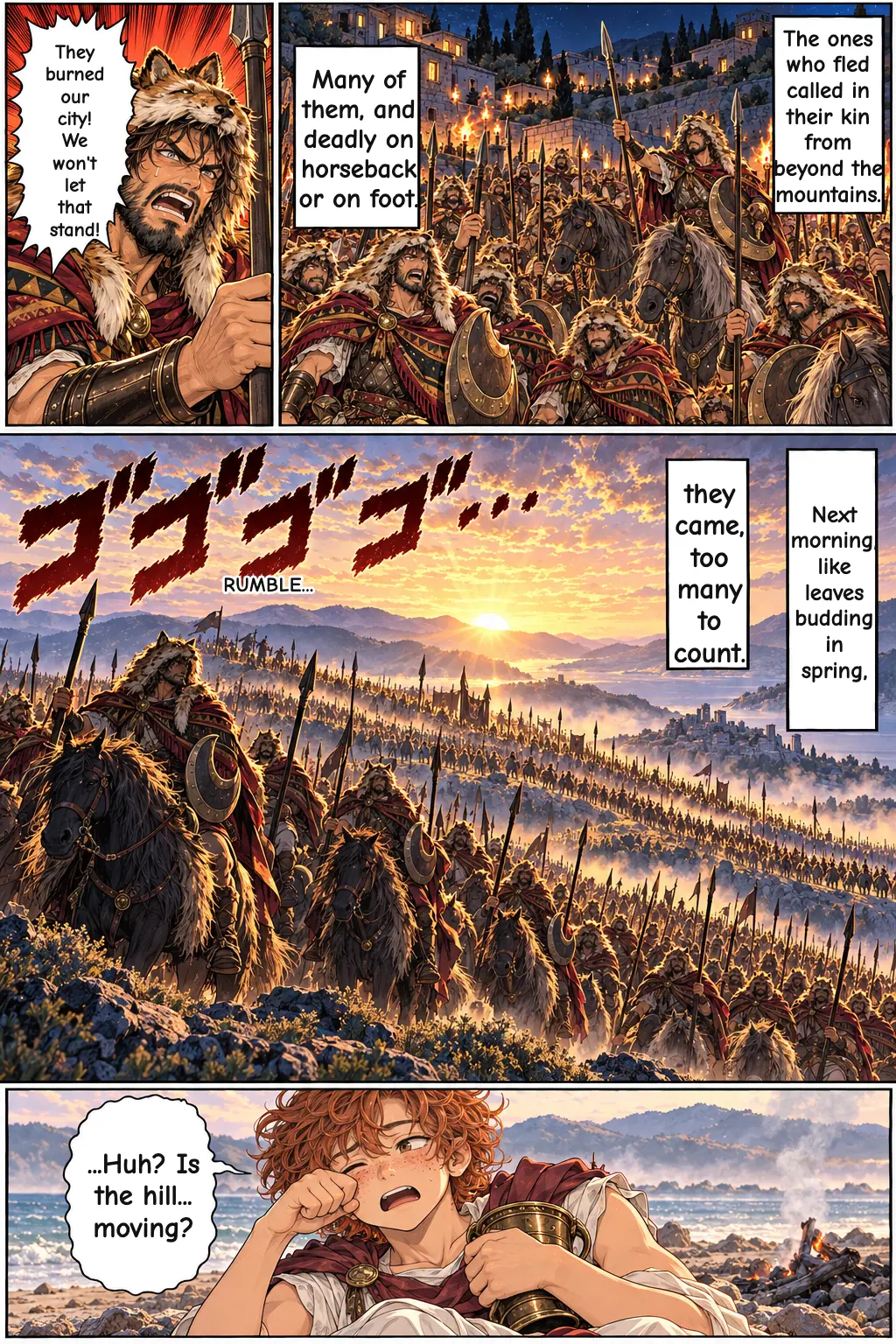
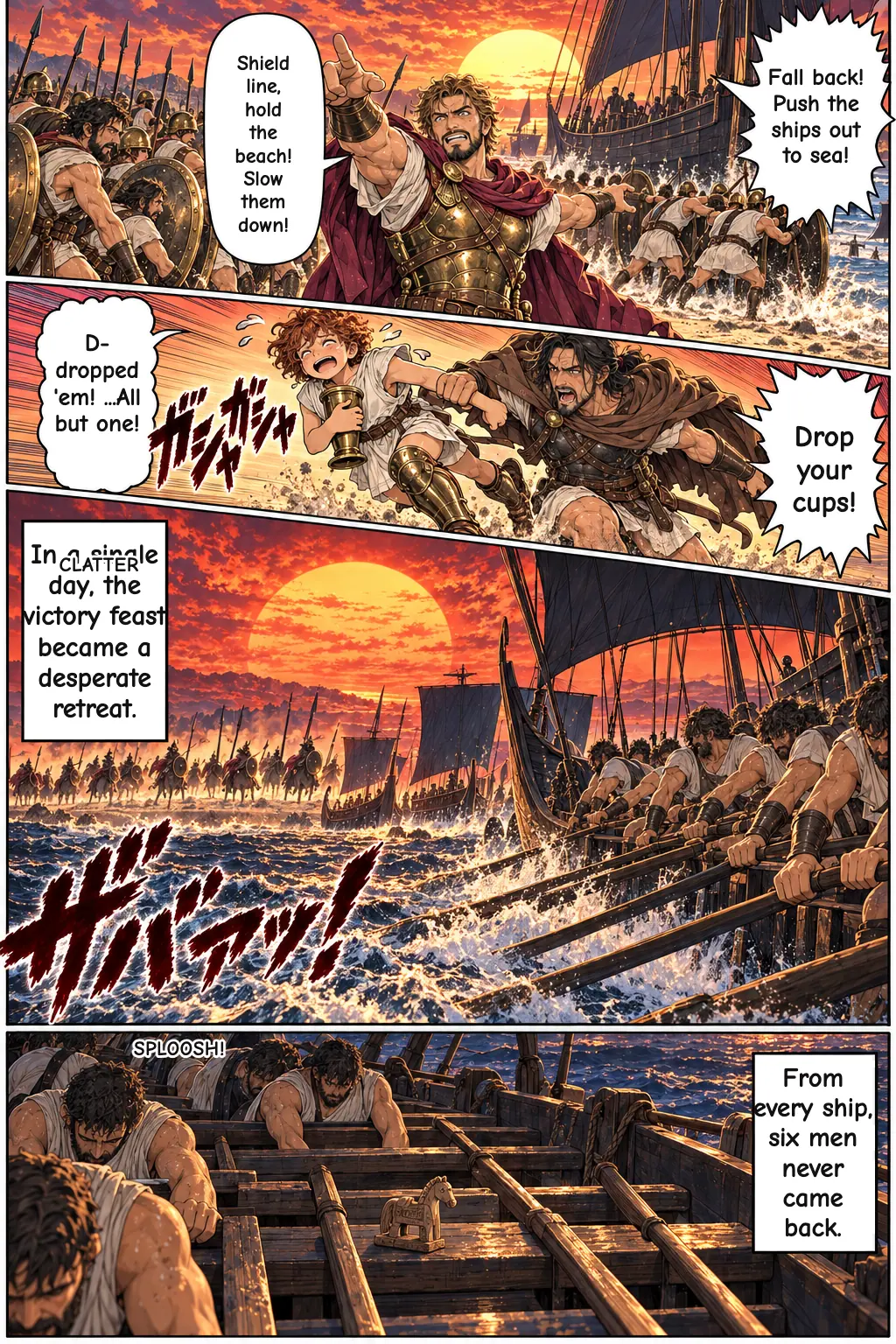
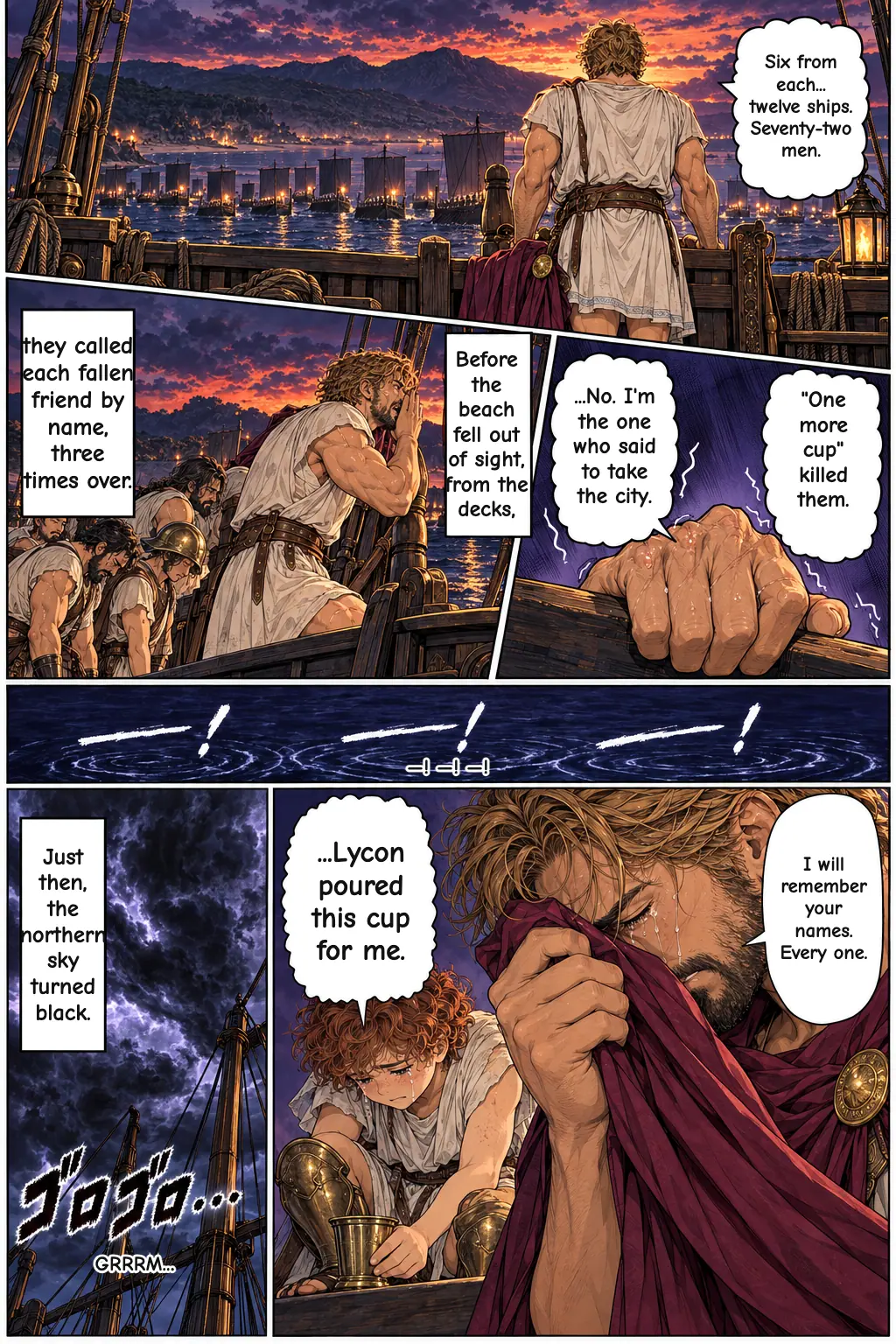
Meanwhile, the Cicones who escaped bring help from their neighbors inland. These warriors are more numerous and braver, and they can fight both on horseback and on foot. They arrive at dawn, as many as the leaves and flowers of spring, and battle breaks out beside the ships. The Greeks hold through the morning but are beaten back by late afternoon. Six men from each ship are killed. Homer never gives a total, but Odysseus sailed with twelve ships, so the loss comes to seventy-two. Before they sail, the survivors call out each dead friend's name three times.
The Lotus-Eaters: The Fruit That Makes You Forget Home
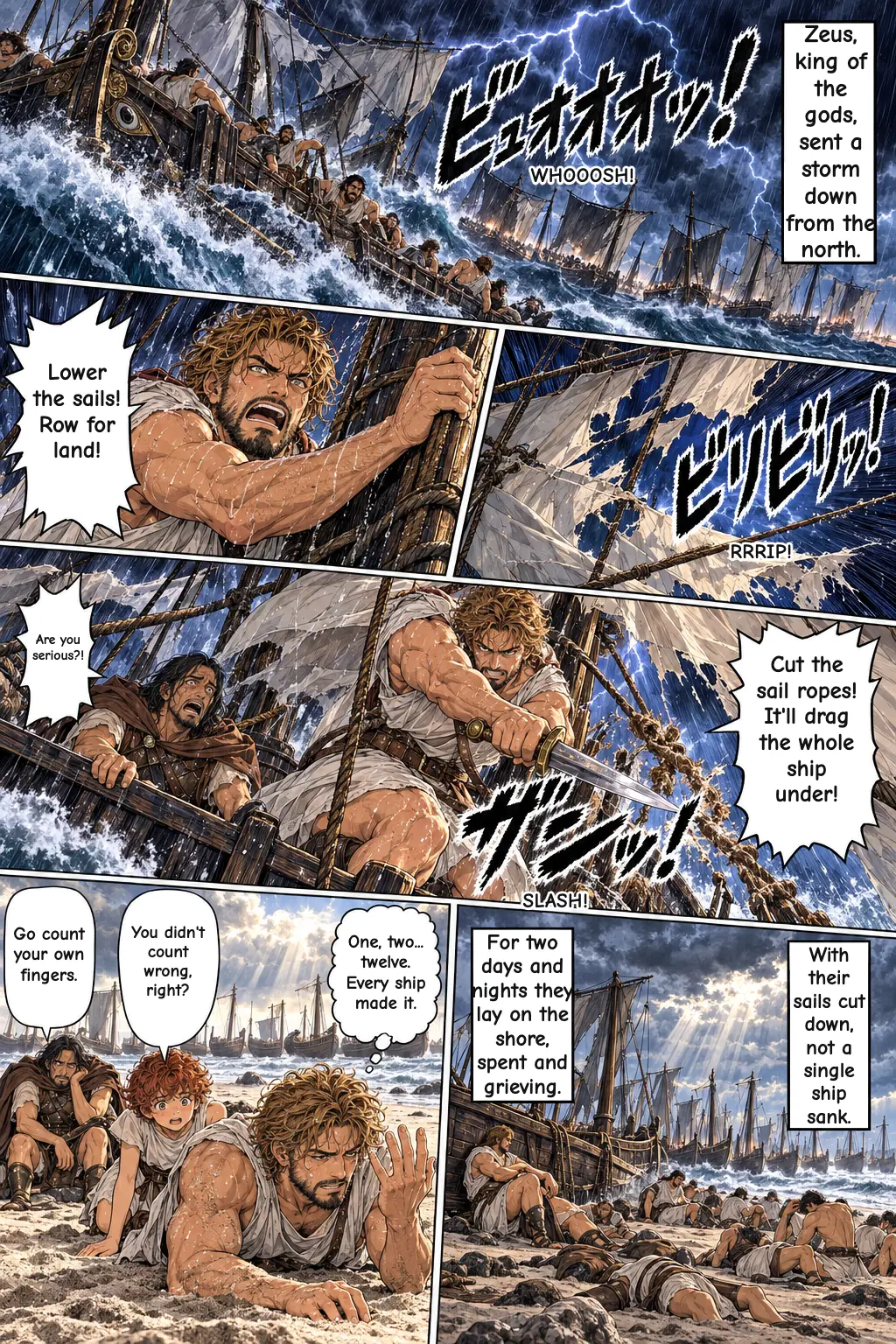
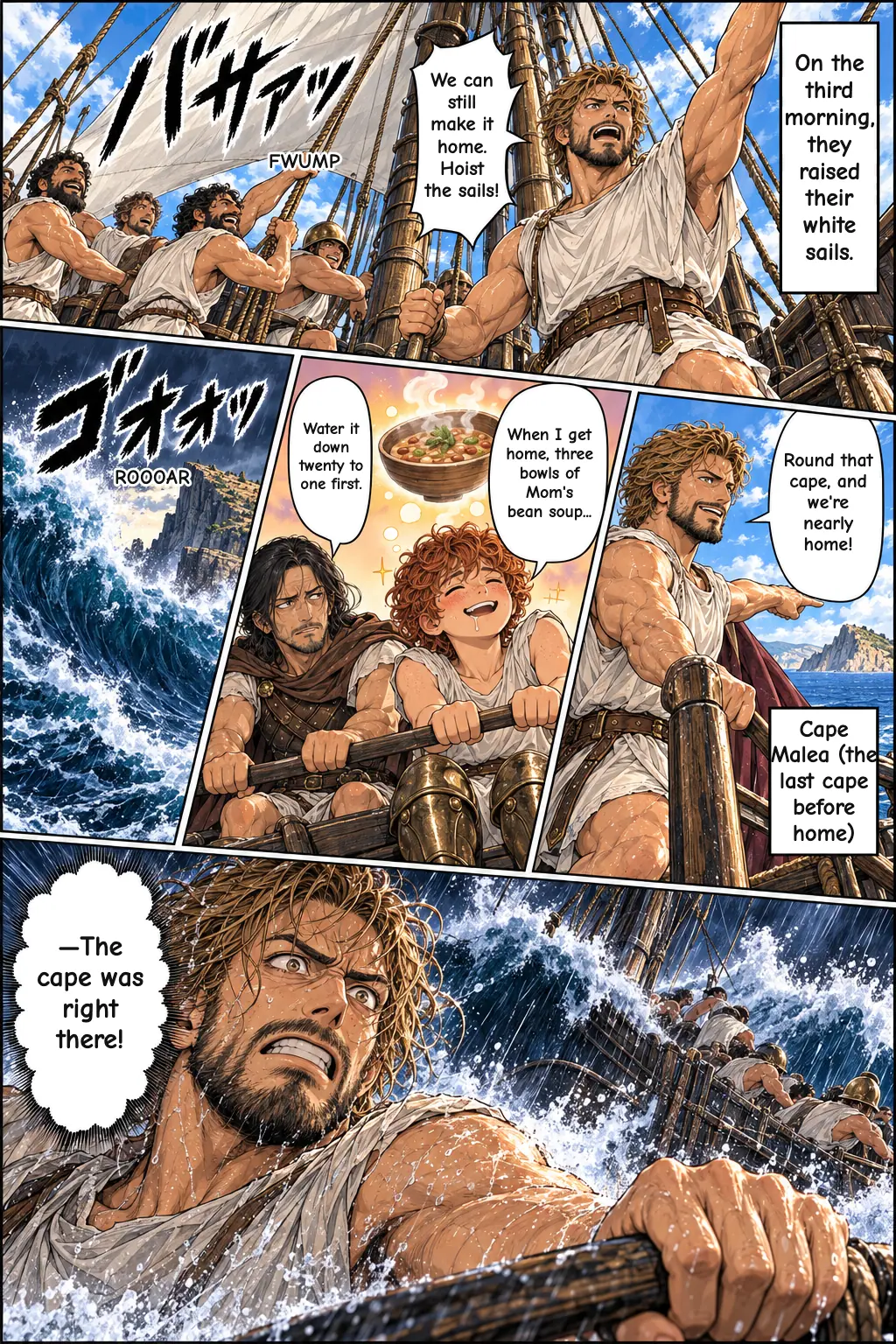
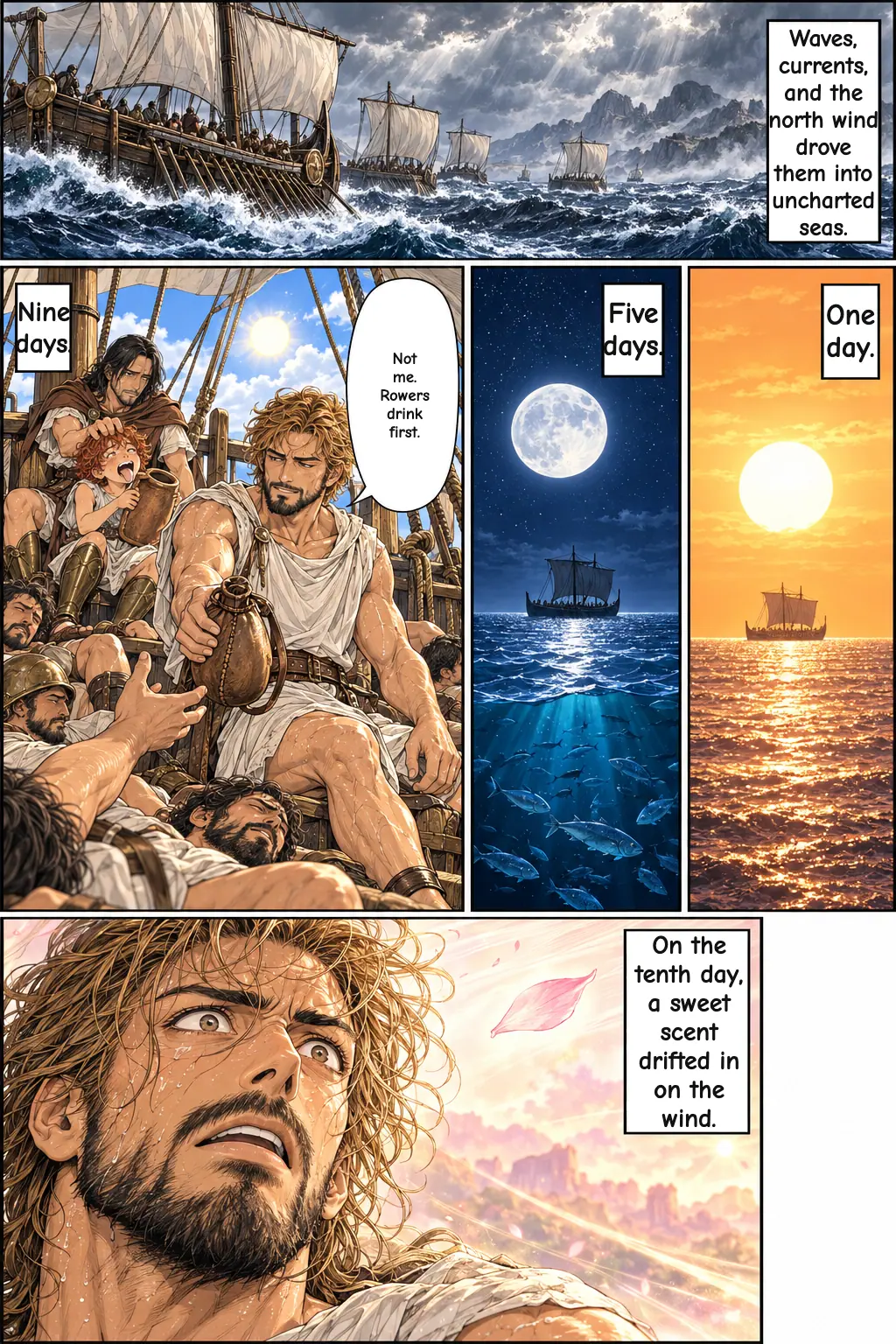
Zeus, king of the gods, then sends a fierce storm on the north wind, Boreas. The sails are torn apart, so the crews row to shore and wait there for two days and nights. When they set out again they are close to home. But as they round Cape Malea, at the southern tip of mainland Greece, the waves, currents and wind push them past the island of Cythera and out to sea. They drift for nine days, and on the tenth they reach the land of the Lotus-Eaters.
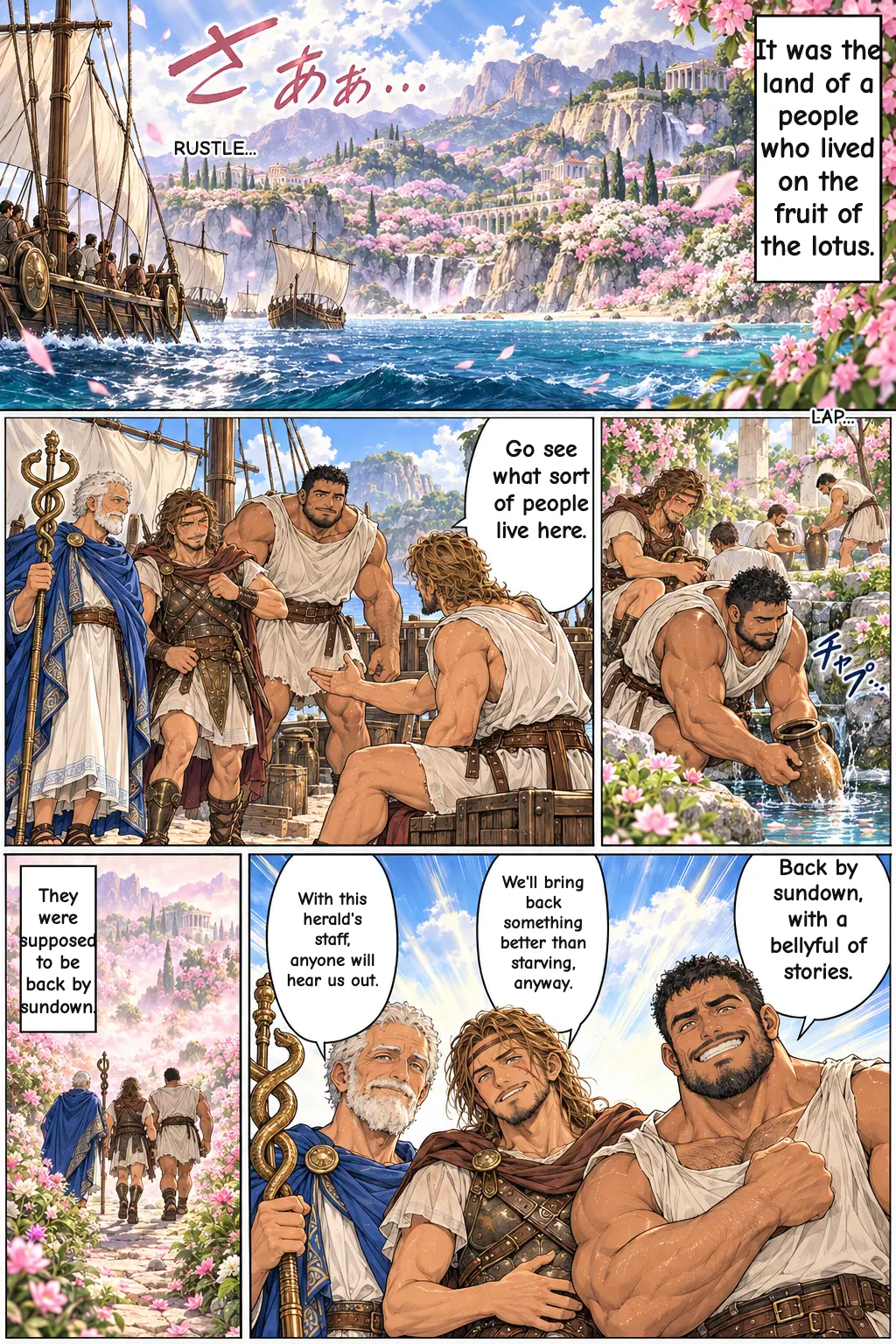
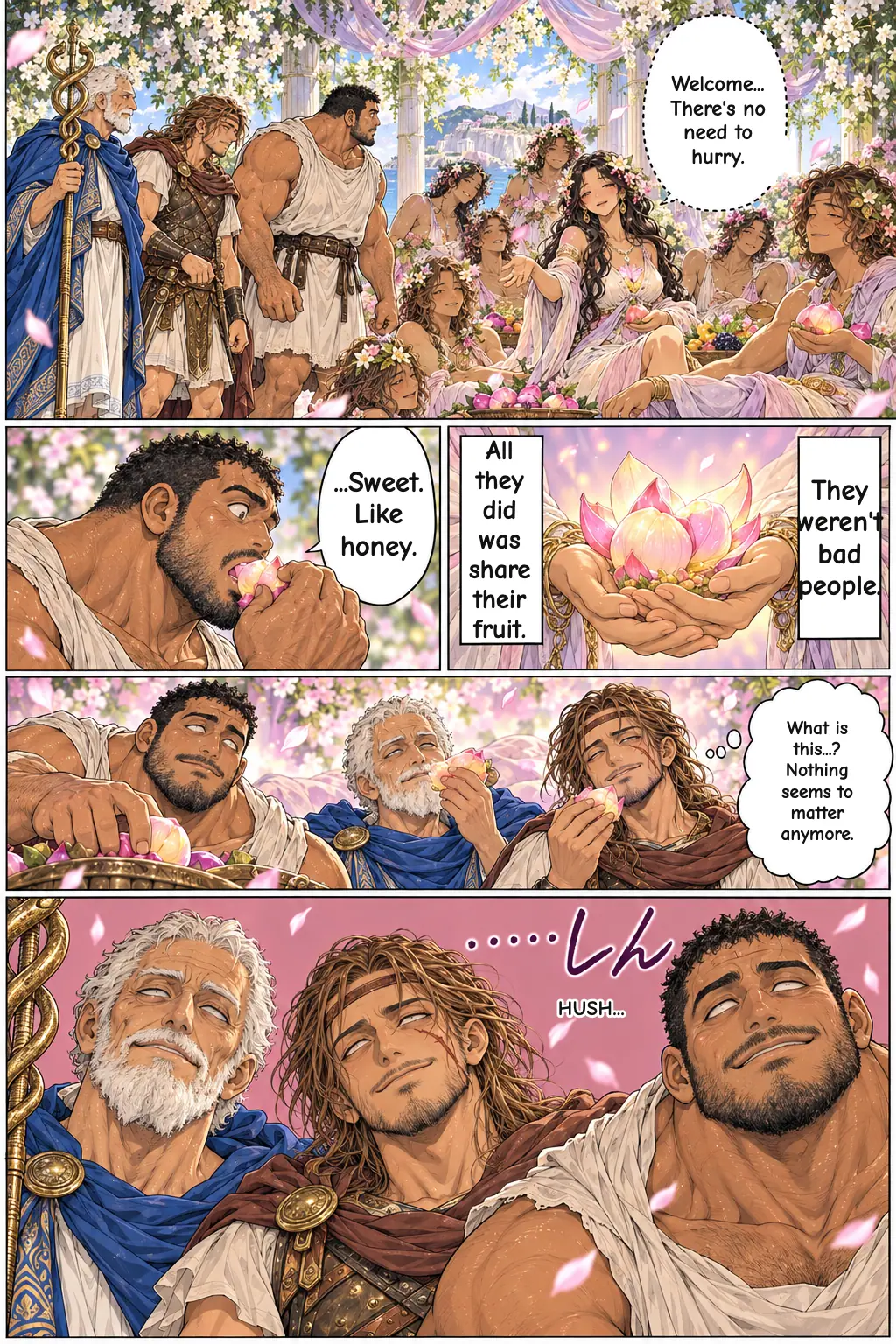
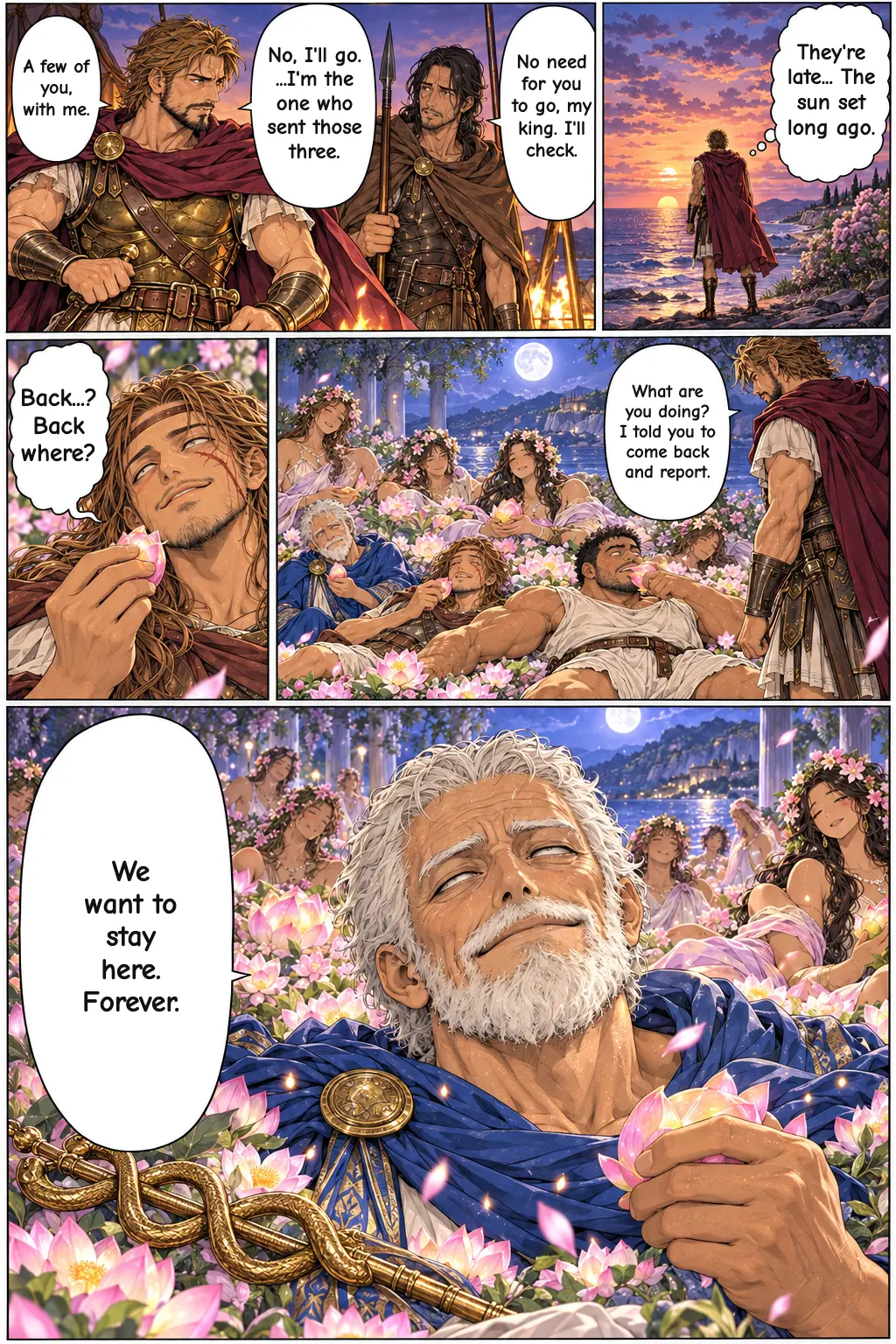
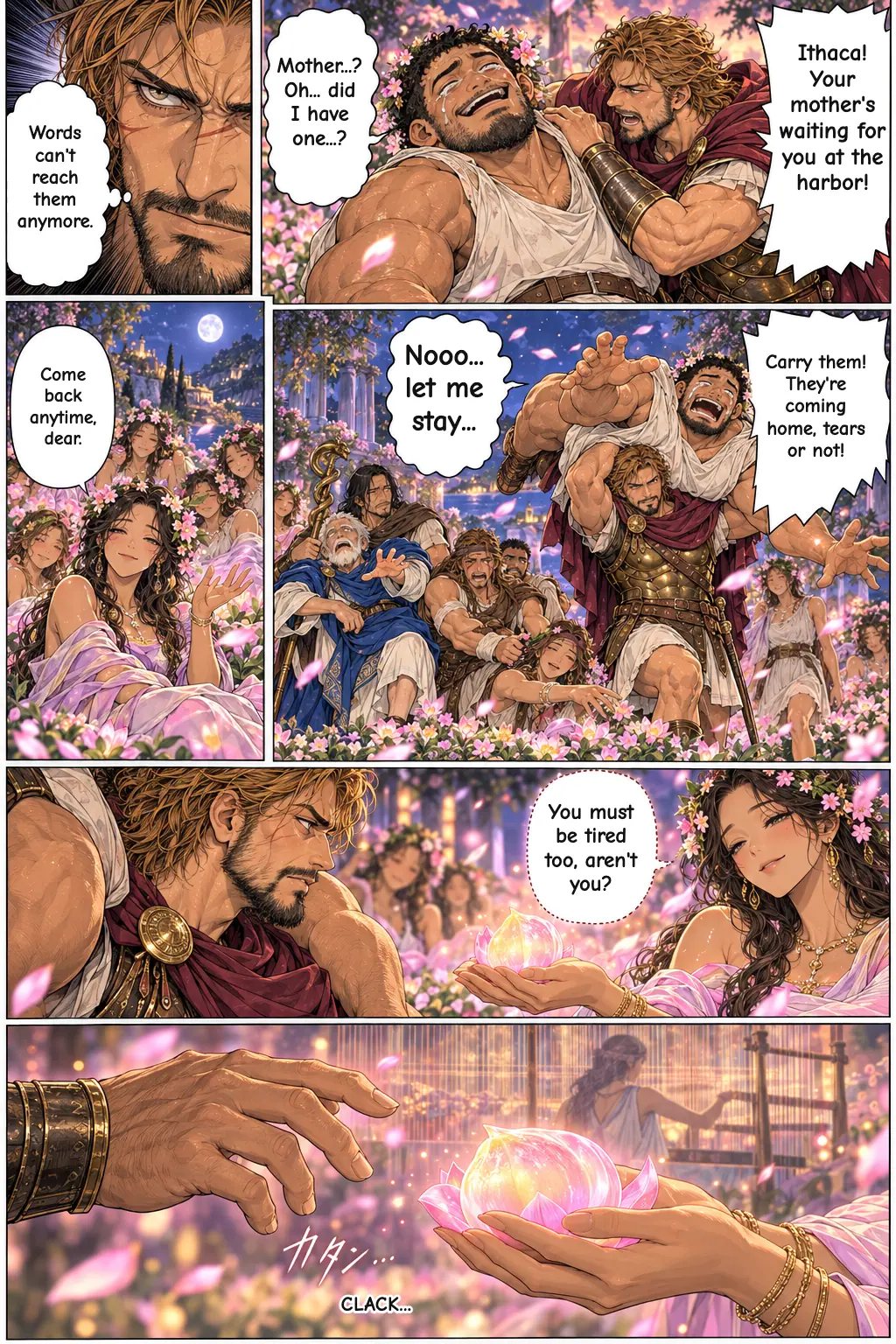
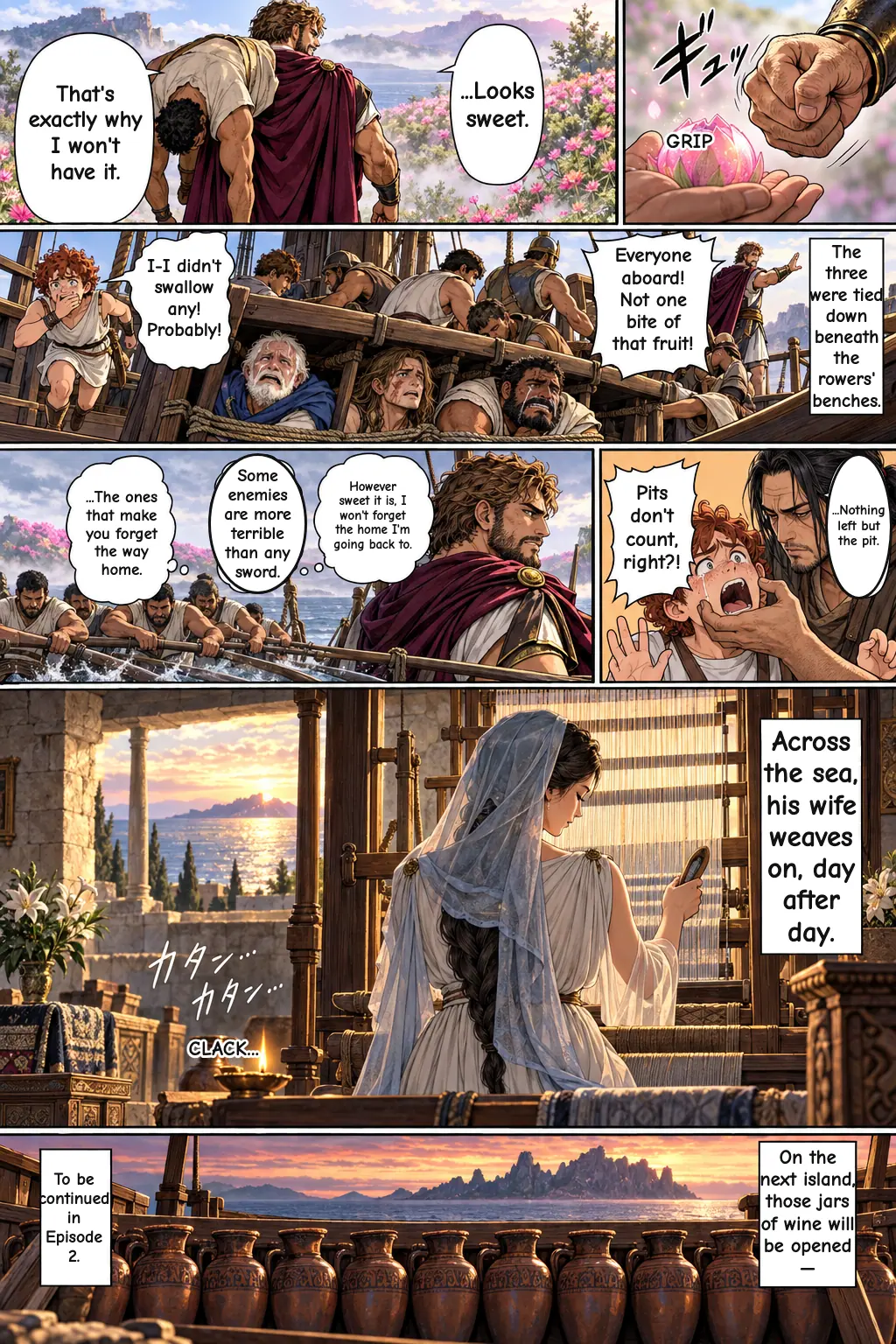
The crews take on water and eat. Then Odysseus sends two men and a herald to find out who lives there. The Lotus-Eaters mean no harm. They simply share their food, the lotus, which is as sweet as honey. Anyone who eats it loses all wish to report back or to sail home, and wants only to stay and keep eating. Odysseus drags the three men back to the ships while they weep, and ties them under the rowing benches. He orders everyone else on board before anyone else can taste the fruit.
Homer never says what plant the lotus is. Some writers, both ancient and modern, have suggested the jujube or another plant of North Africa, but nobody knows. In the poem it is simply a flower-like food with a sweet fruit. Note also that the poem never says Odysseus ate it himself.
Maron's Gift: The Wine Behind the Next Adventure
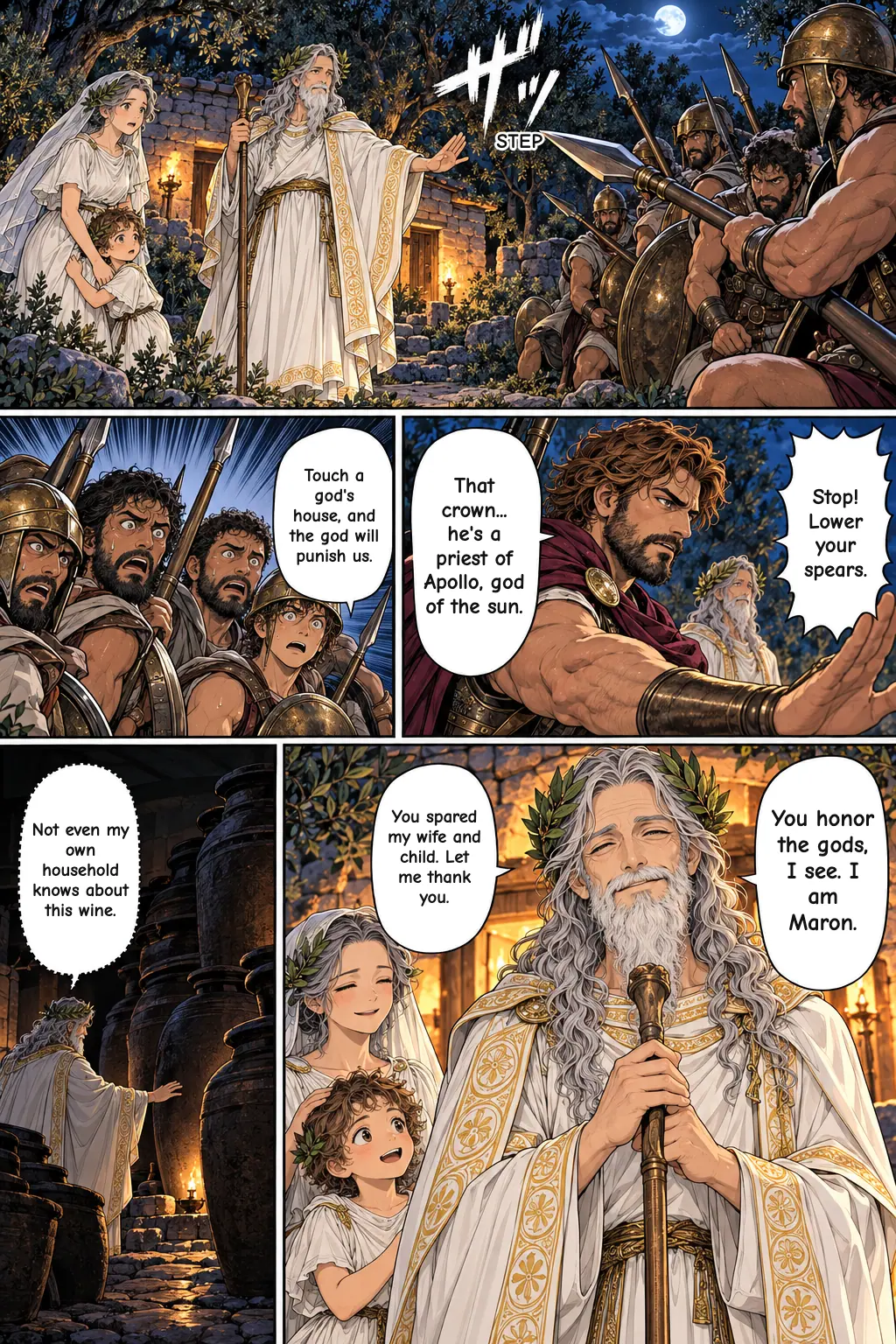
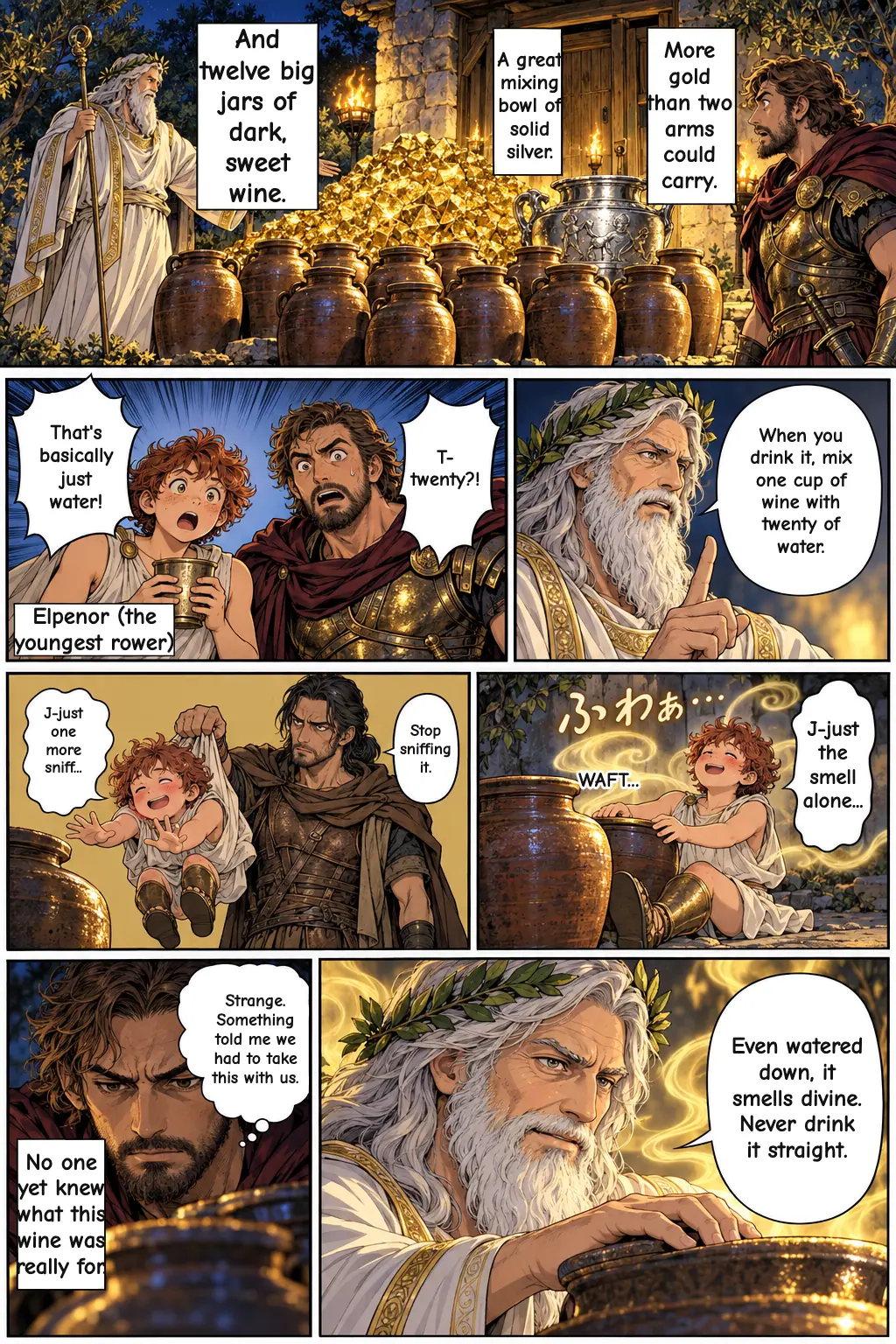
Later in Book 9, as Odysseus heads toward the Cyclops's cave, he explains where his strong wine came from. At Ismarus he and his men had spared Maron, a priest of Apollo, along with his wife and child, out of respect for the god. To thank them, Maron gave Odysseus seven talents of worked gold, a mixing bowl of solid silver, and twelve jars of dark, sweet, unmixed wine. It was so strong that his household drank it with twenty parts water, and only Maron, his wife and his housekeeper knew it existed. This wine plays a key part in the very next episode.
What the Story Means: Homecoming, Memory and Leadership
The Greek word nostos, meaning homecoming, is at the heart of the Odyssey. The Lotus-Eaters are a quiet threat. There are no monsters and no violence, just the temptation to stop caring about home. Placed right after the dead are remembered by name, the episode sets memory against forgetting, which is what the whole voyage is about.
These opening episodes also show a pattern that keeps returning: Odysseus gives sensible orders, but he cannot always make his men obey them. In heroic poetry, raiding a town was treated as a normal part of war, and the poem does not condemn the attack itself. Still, the disaster follows quickly, and Homer describes it as an evil fate from Zeus. Many readers think that calling the names of the dead three times honored men whose bodies had to be left behind. The poem does not explain the custom, though.
What the Manga Version Changes
The manga tells the story in time order and in the third person. It drops the frame of Odysseus speaking at Alcinous's feast, and it moves Maron's scene into the raid on Ismarus. Homer never says how Odysseus found Maron or how the gifts were handed over, so those scenes are invented. The crew's 'just one more cup!' mood is also new. In Homer they get no lines of their own and are simply called fools.
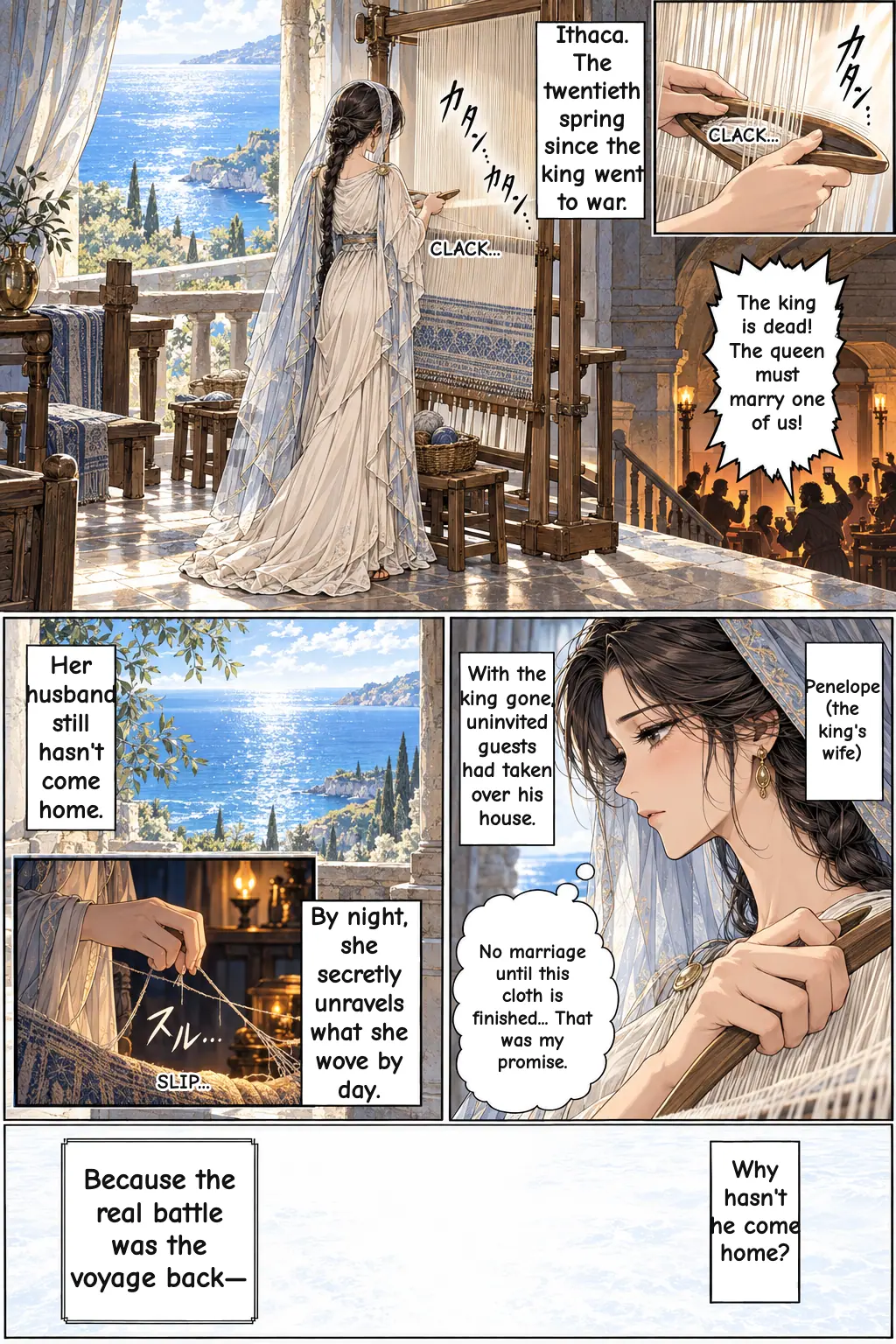
Everything we see of the Lotus-Eaters, their homes and the fruit is the artists' invention, as are the three scouts' names and personalities and how Odysseus finds them. The scenes of Penelope, Odysseus's wife, at her loom are added too. In Homer her famous weaving trick happens in the years just before his return, not right after Troy.
Where to Read It
The original story is in Book 9 of the Odyssey, which you can find in many English translations. To see it as a story, read Episode 1 of GREEK MYTHOLOGY: THE ODYSSEY — The Twenty-Year Voyage Home here on Manga Portal. Every episode is free to read, with no sign-up needed, and the voyage continues next with the Cyclops.
Characters in this episode
Odysseus
King of Ithaca and leader of twelve ships, who tells this part of the Odyssey himself and drags his men away from the lotus.
Odysseus's crew
Unnamed sailors who ignore the order to leave Ismarus and keep feasting, which costs six men from every ship.
The three scouts
Two chosen men and a herald who eat the lotus, forget home, and are carried back to the ships in tears.
The Cicones
The people of Ismarus in Thrace, whose inland neighbors strike back at dawn and drive the Greeks to their ships.
The Lotus-Eaters (Lotophagi)
A people who mean no harm but share a honey-sweet food that takes away all desire to go home.
Maron
A priest of Apollo at Ismarus, spared by Odysseus, who gives him gold, a silver bowl and twelve jars of very strong wine.
FAQ
What happens with the Lotus-Eaters in the Odyssey?
In Book 9, Odysseus sends three men to meet the people of a strange land, and they are given the lotus to eat. Once they eat it, they no longer want to go home. Odysseus drags them back to the ships, ties them down and sails away at once.
What is the lotus in the Odyssey?
Homer only calls it a flower-like food with a fruit as sweet as honey, and never names the plant. Some writers have suggested the jujube or another North African plant, but this is guesswork.
Did Odysseus eat the lotus?
No. The poem says only that the three scouts ate it. Odysseus forces them back and has everyone else board quickly so that no one else tastes it.
How many men did Odysseus lose at Ismarus?
Six men died from each ship. Homer does not give a total, but with twelve ships the loss works out to seventy-two.
Who were the Cicones?
The Cicones were a people of Thrace whose town, Ismarus, Odysseus raided after leaving Troy. Their neighbors from inland counterattacked and drove the Greeks back to their ships.