Episode 3He Could See Home. Then He Fell Asleep.Aeolus and the Bag of Winds
Episode 3 of the series. Aeolus, keeper of the winds, gives Odysseus an oxhide bag with every contrary wind sealed inside. For nine nights Odysseus never sleeps and never lets go of the sail rope, until the fires of home come into view. Then one moment of sleep and a little suspicion among his crew tear the bag open, and in a harbor of giants he loses nearly his whole fleet.
Aeolus and the Bag of Winds: Odyssey Book 10 Summary Explained
The Original Myth: Summary of Odyssey Book 10 (Lines 1–132)
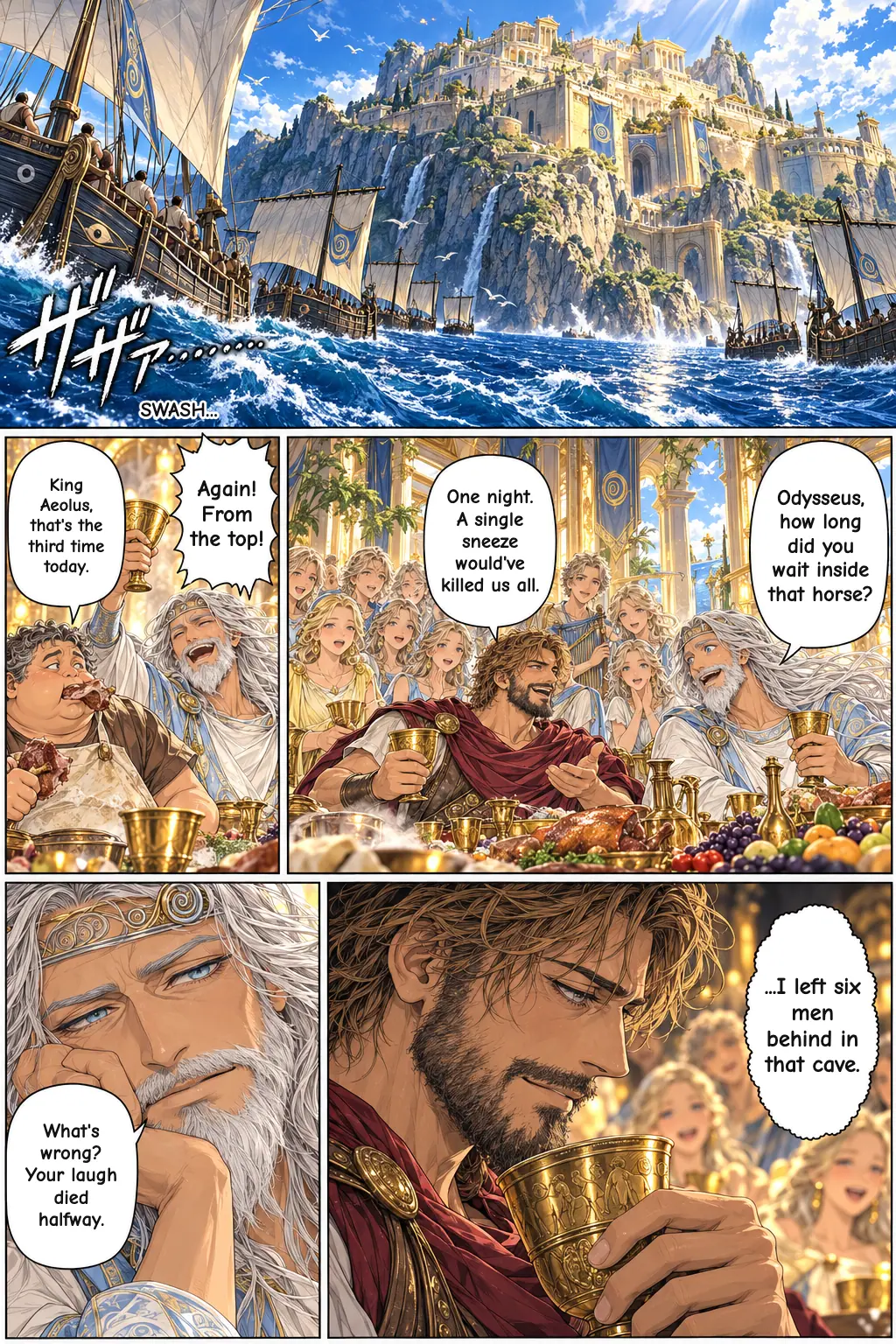
In Homer's Odyssey, this adventure is not told by an outside narrator. Odysseus tells it himself, years later, as a guest at the court of the Phaeacians. After escaping the Cyclops, his ships reach Aeolia, a floating island ringed by an unbreakable wall of bronze and sheer cliffs. Its ruler is Aeolus, son of Hippotes, who lives there with his wife and their twelve children, six sons and six daughters, feasting day after day in a hall full of food and sound.
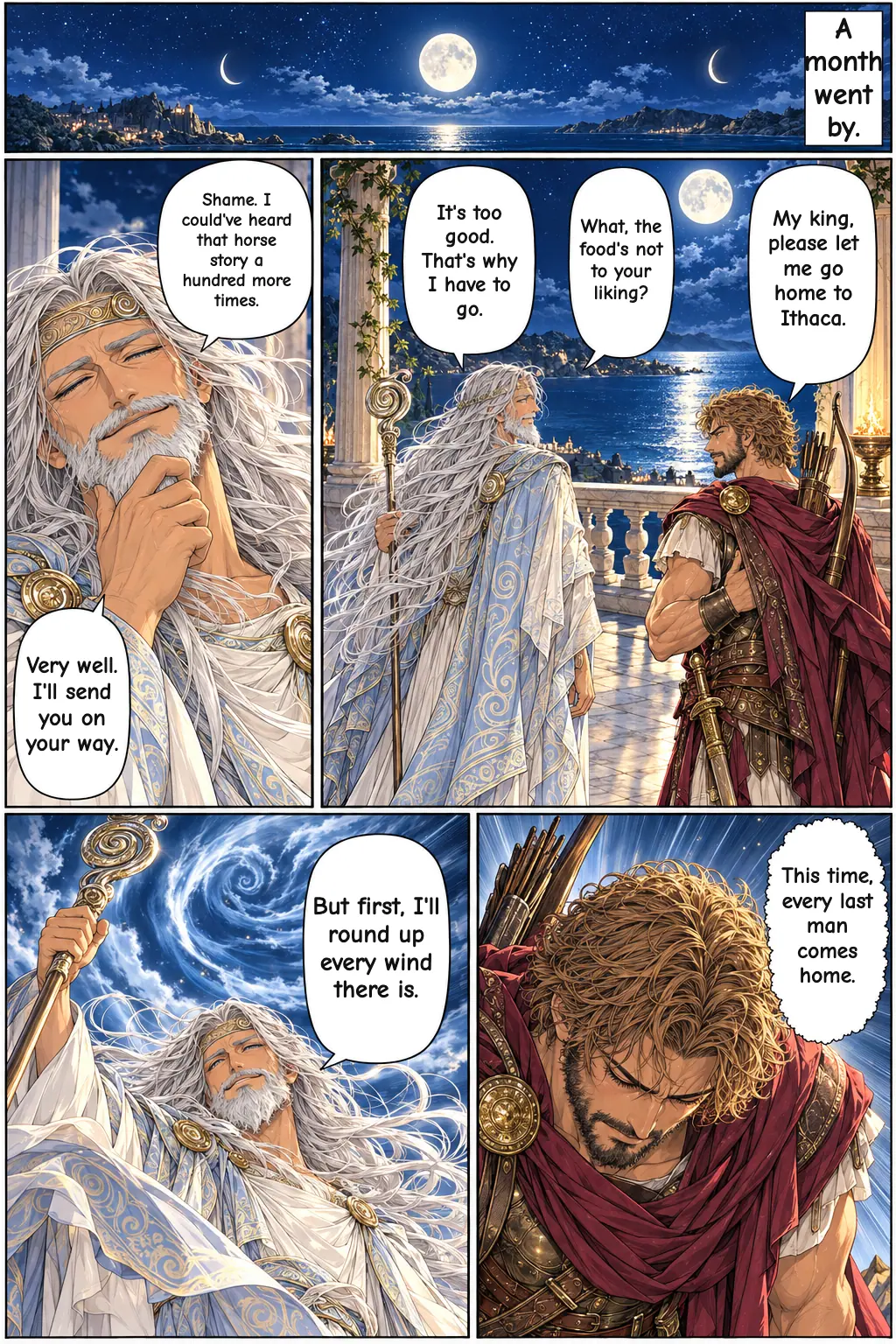
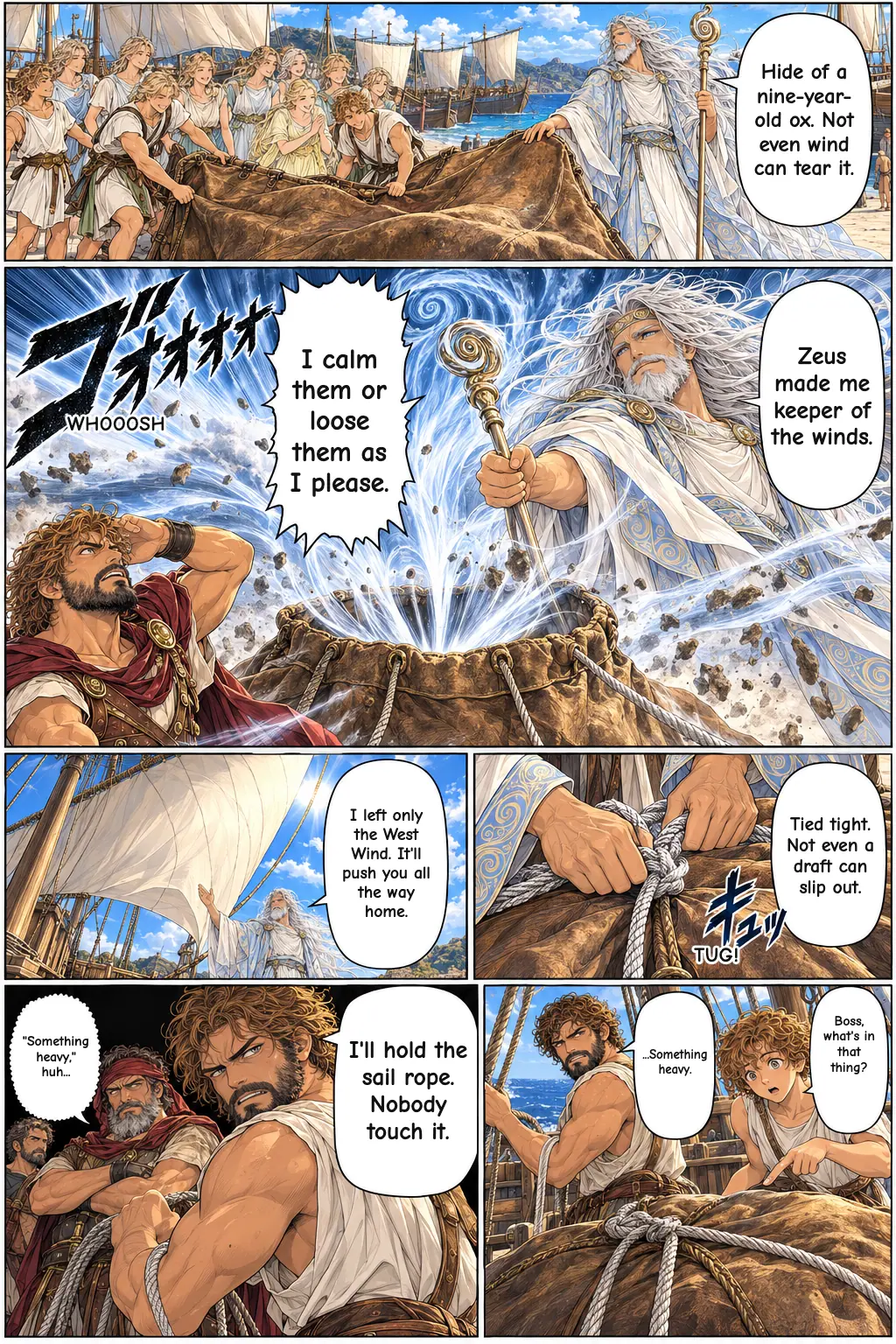
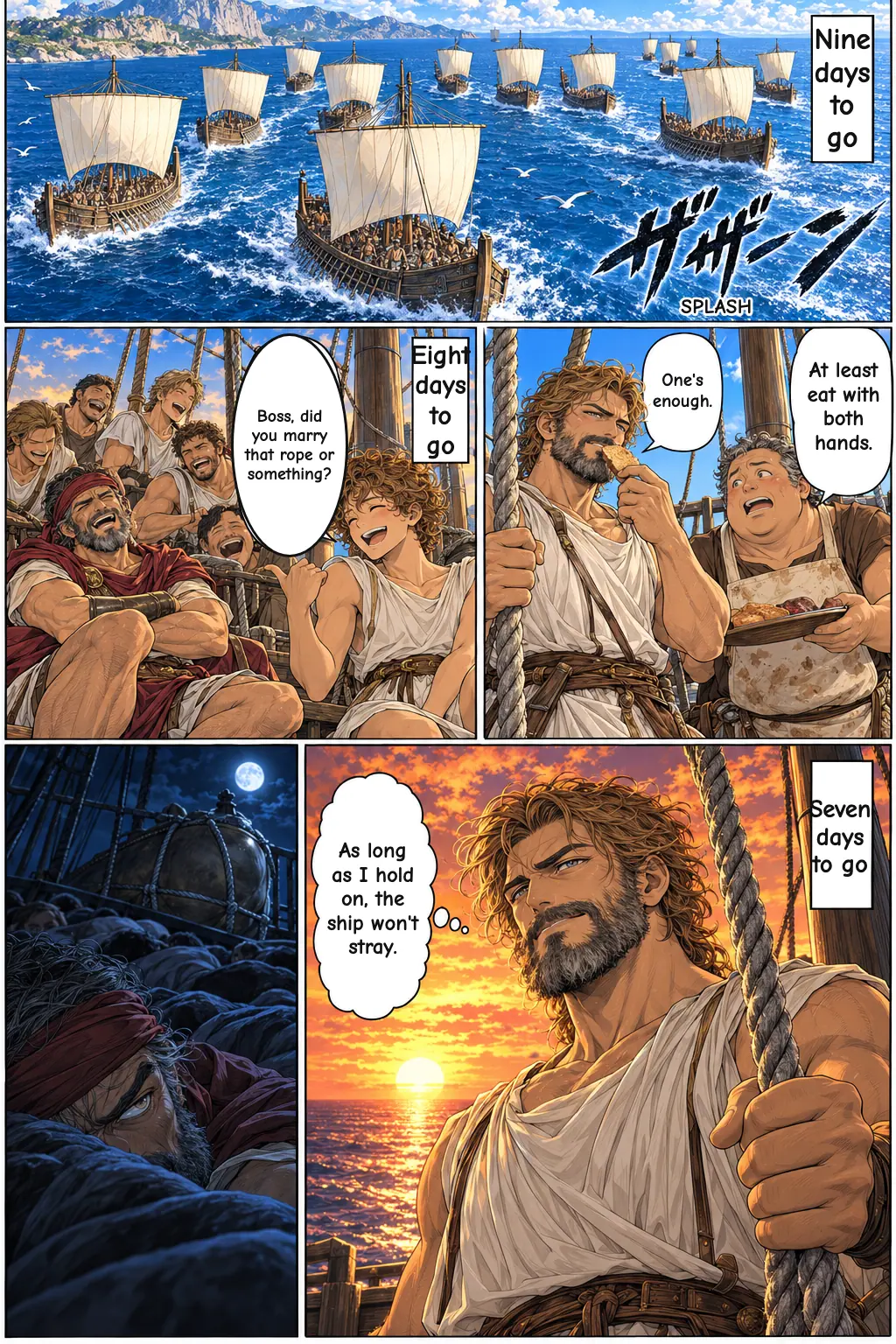
Aeolus hosts Odysseus for a whole month and wants to hear everything about Troy and how the Greek heroes fared on their way home. When Odysseus asks to leave, Aeolus helps him. Zeus has made Aeolus keeper of the winds, able to calm or rouse them as he pleases. So he skins a nine-year-old ox, shuts the paths of the roaring winds inside the hide, and ties the bag into the ship with a shining silver cord so that not even a breath can slip out. Only Zephyrus, the gentle west wind, is left free to carry the fleet home. Before going on, Odysseus warns his listeners that it all ended badly, and that the men's own foolishness was to blame.
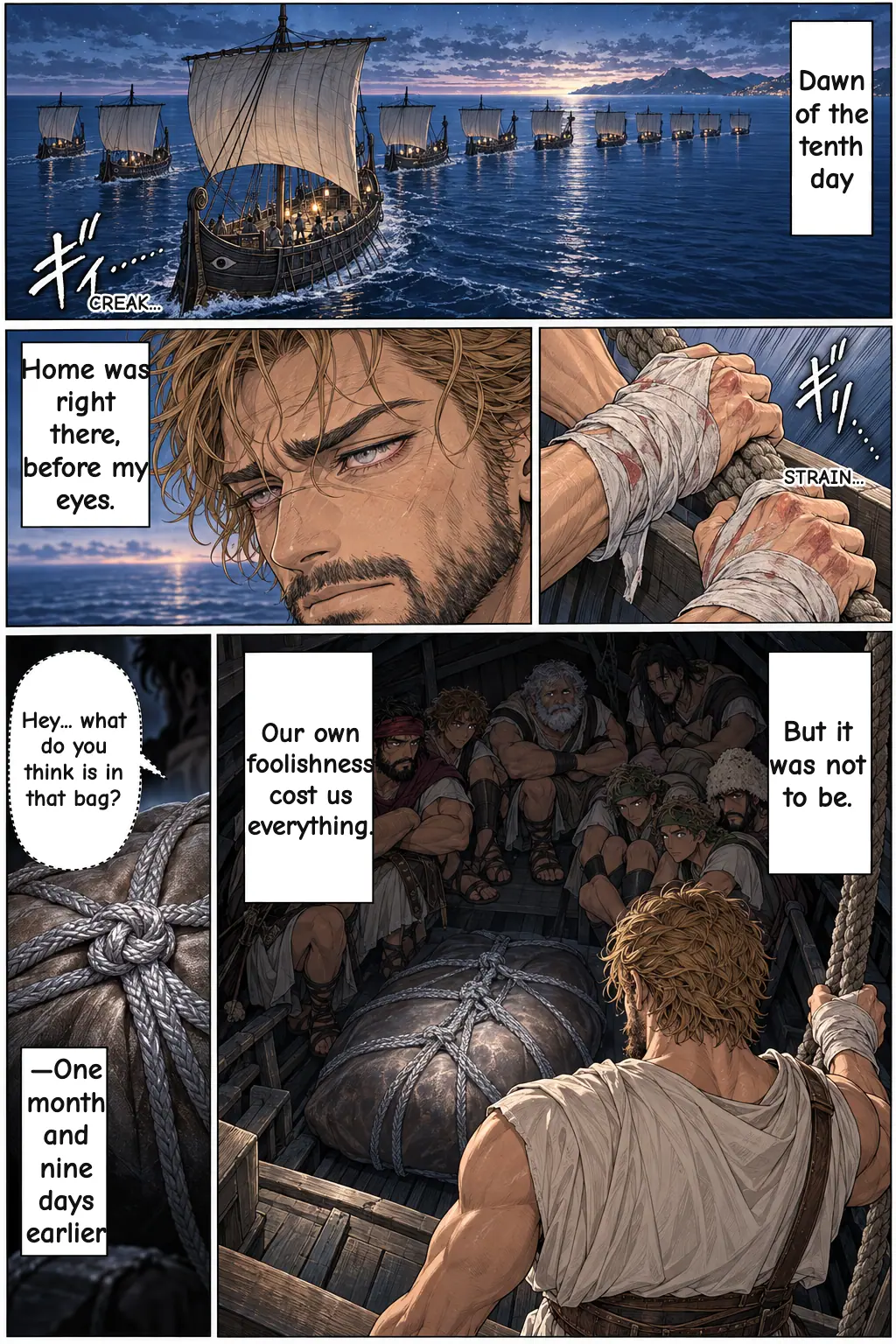
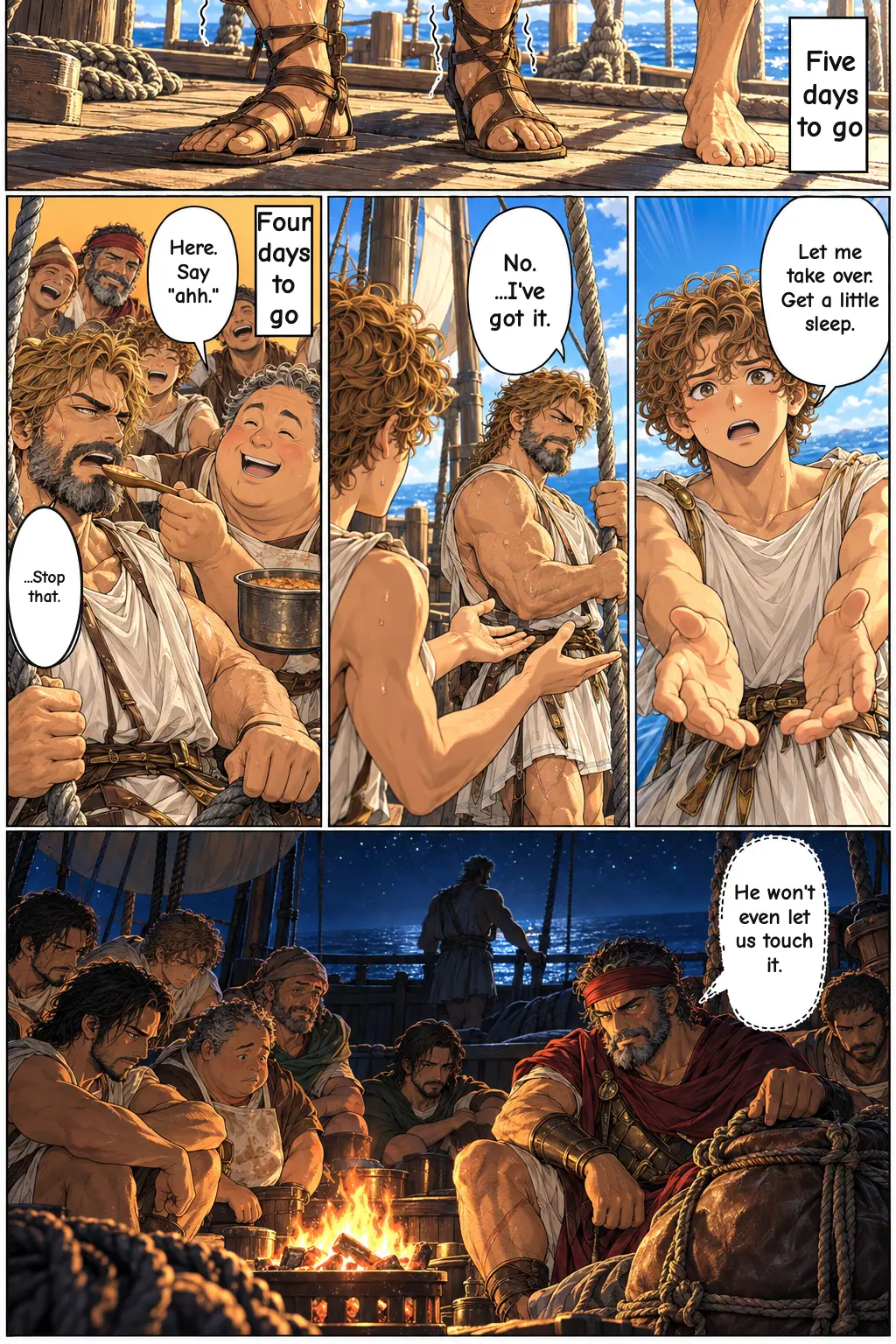
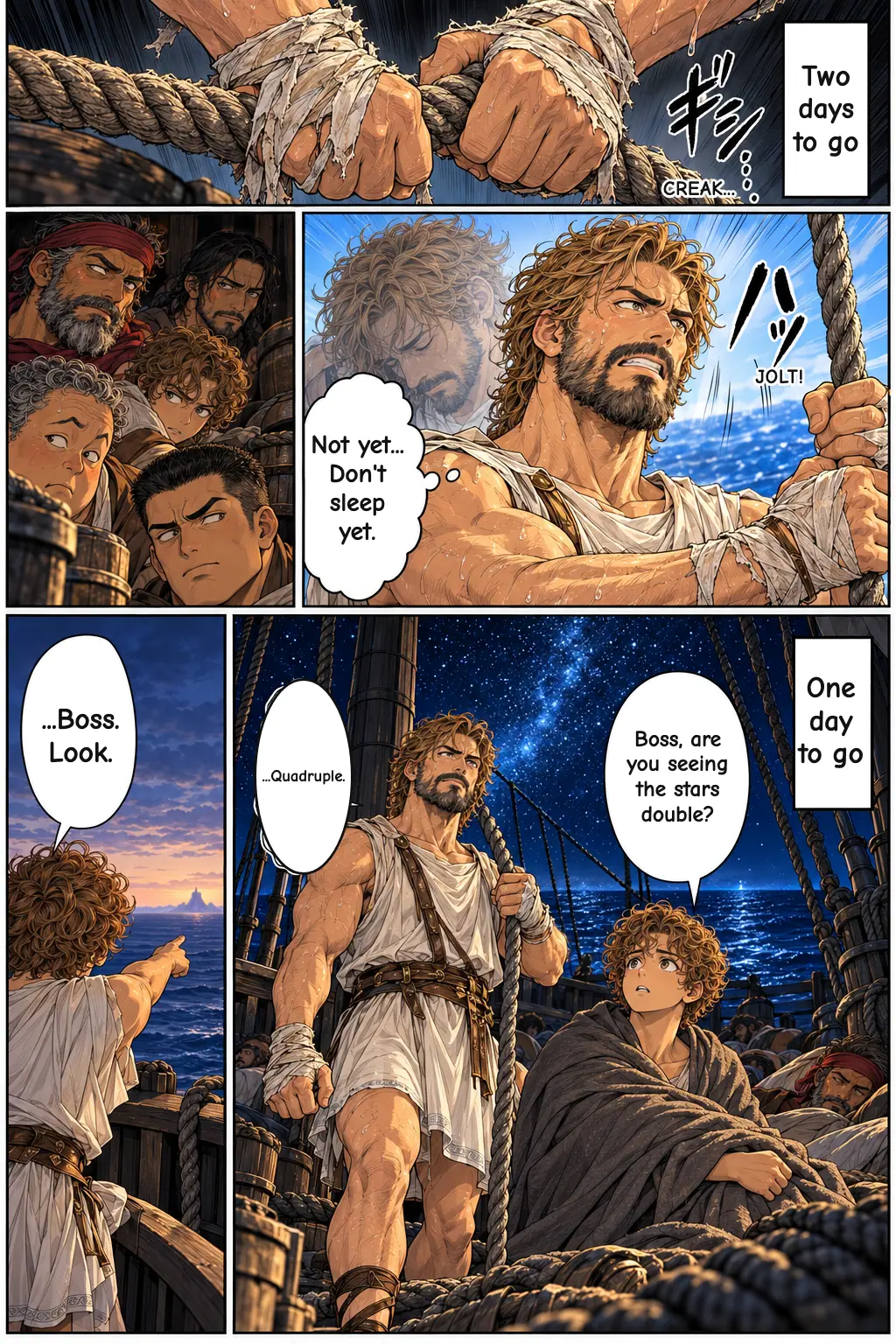
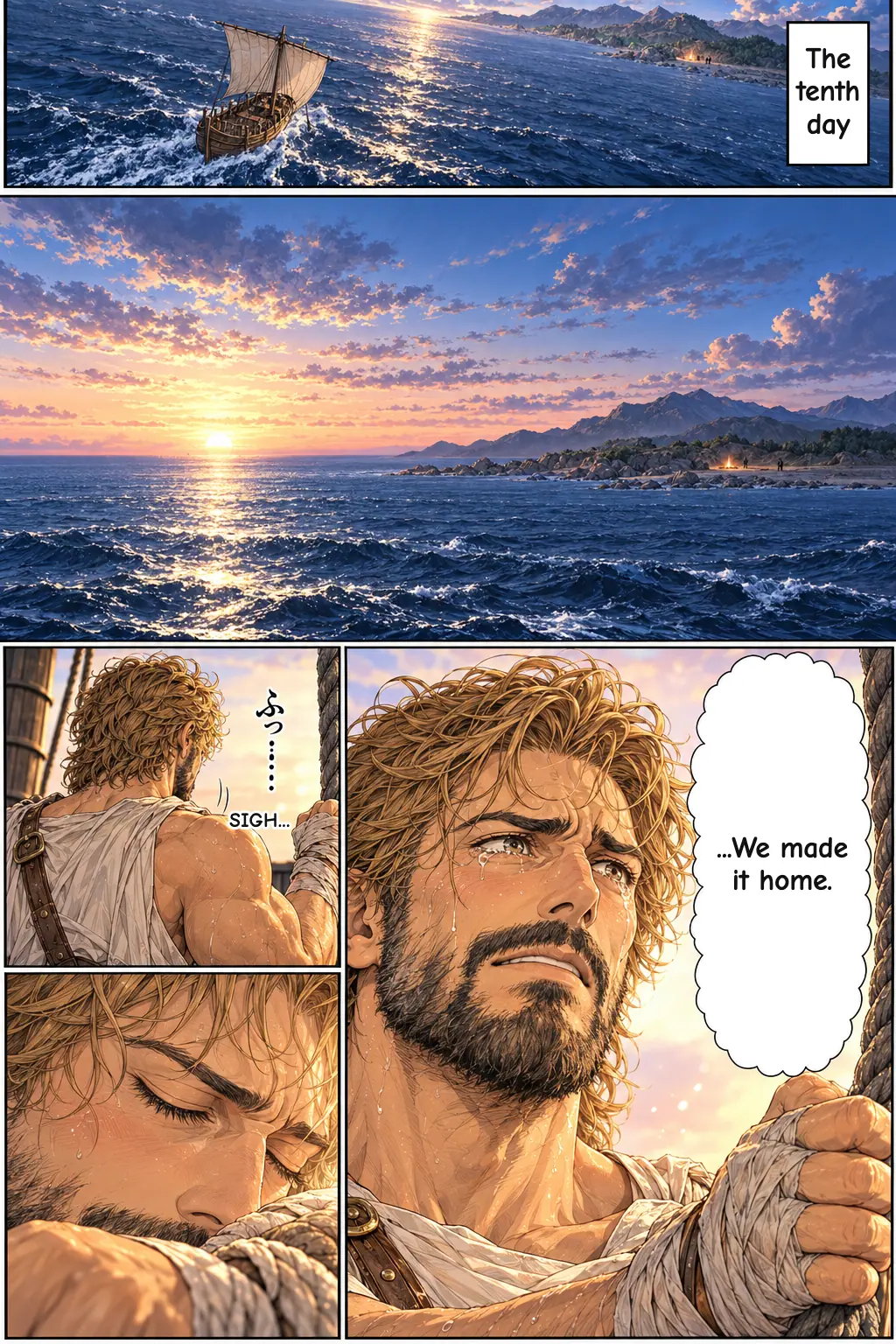
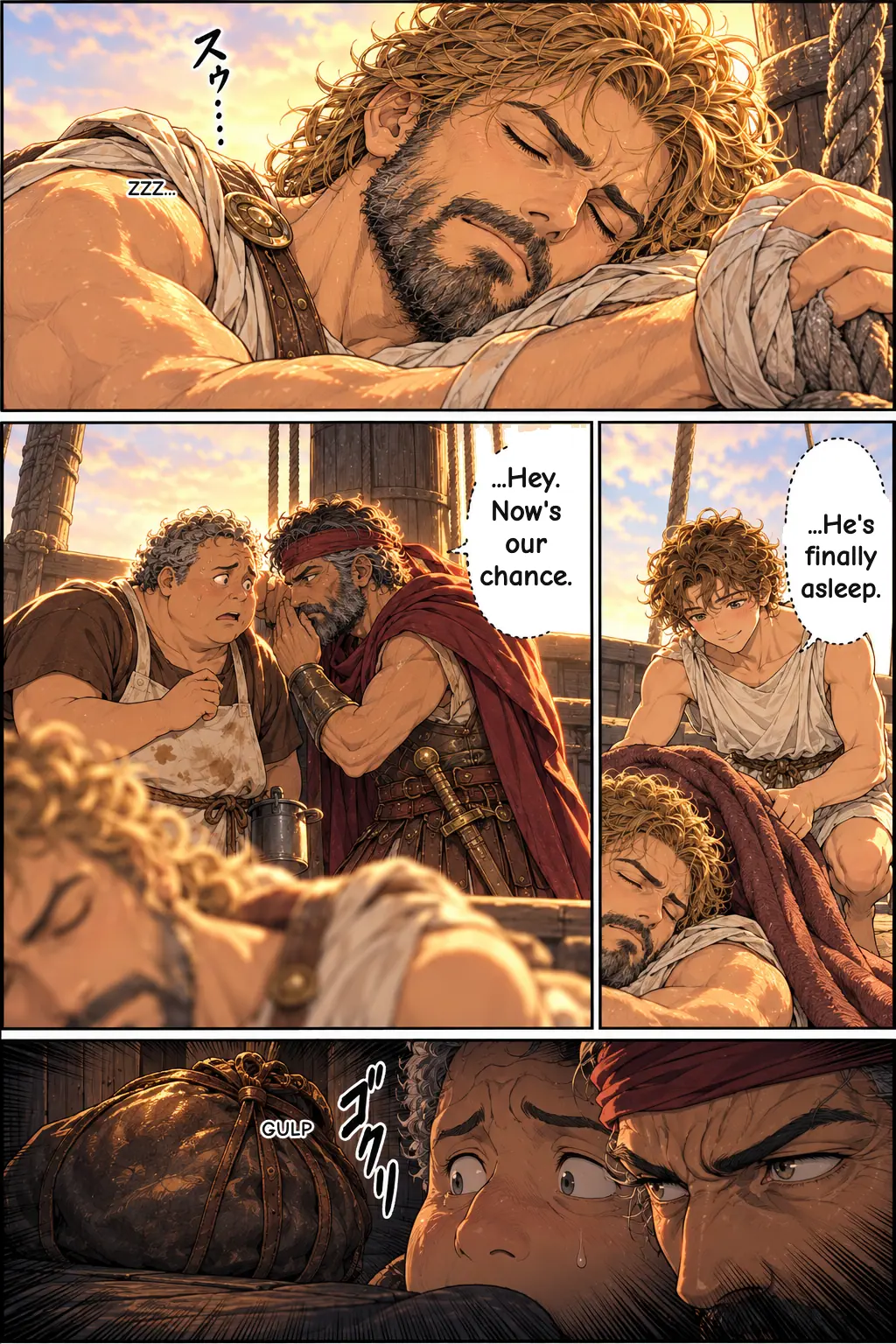
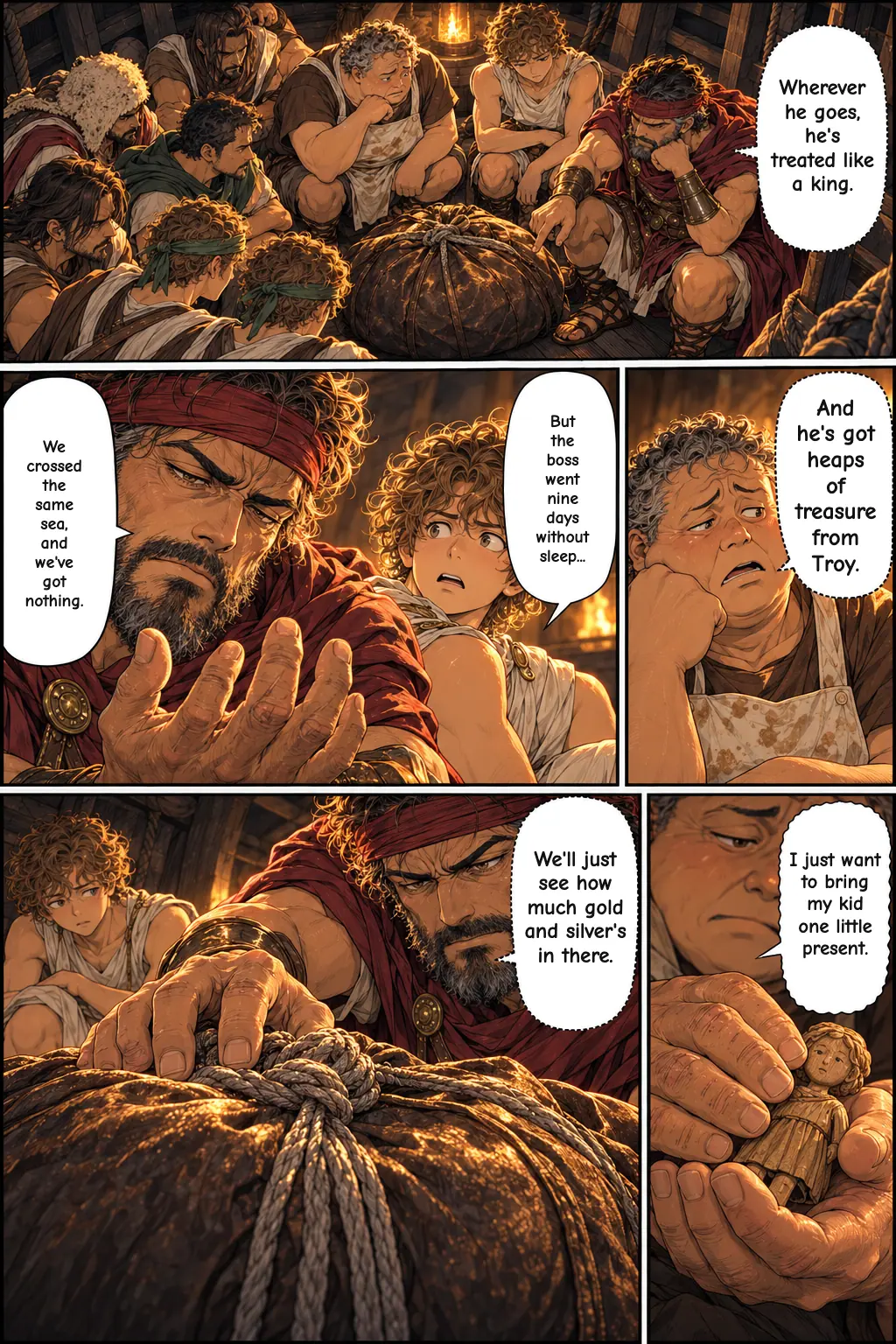
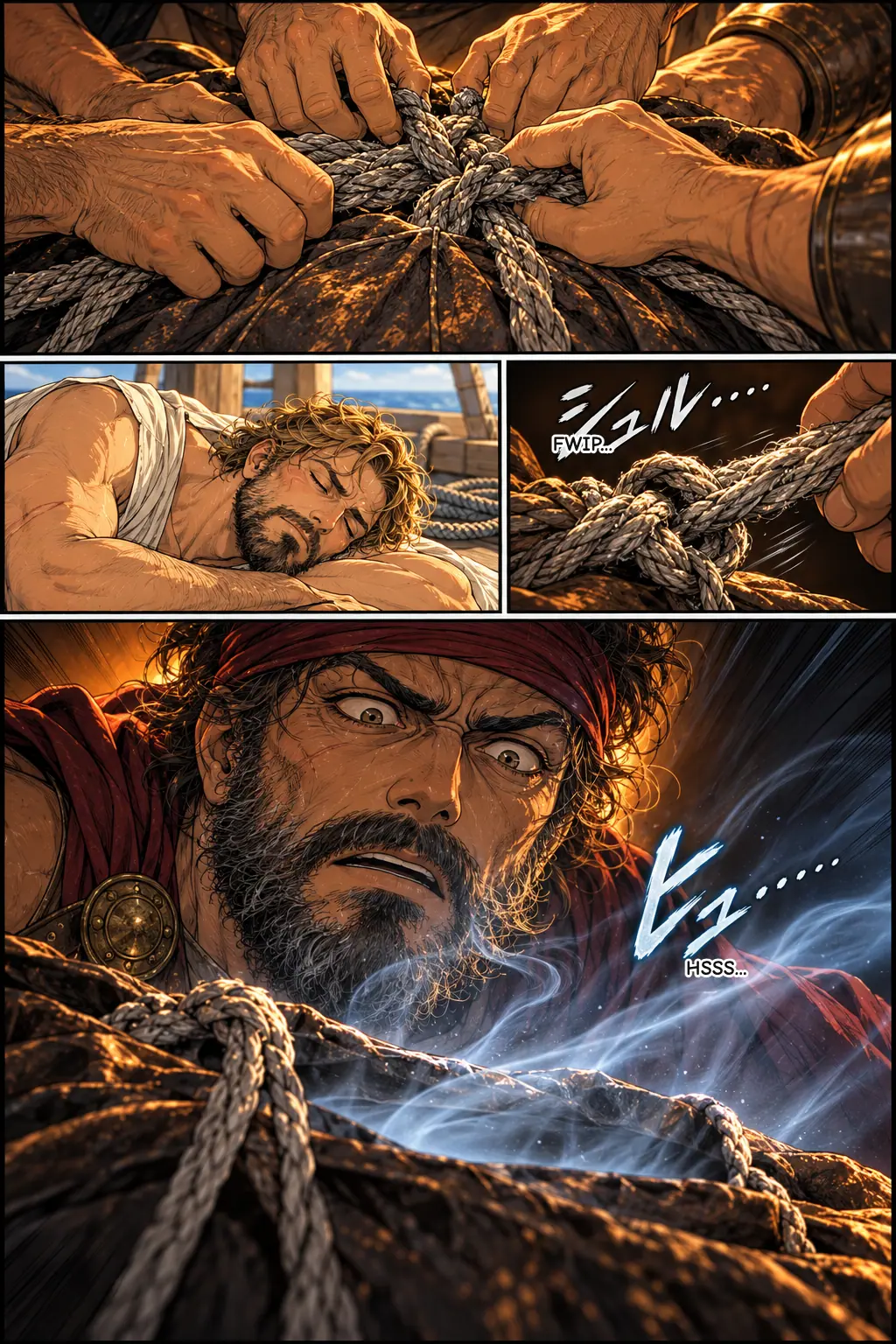
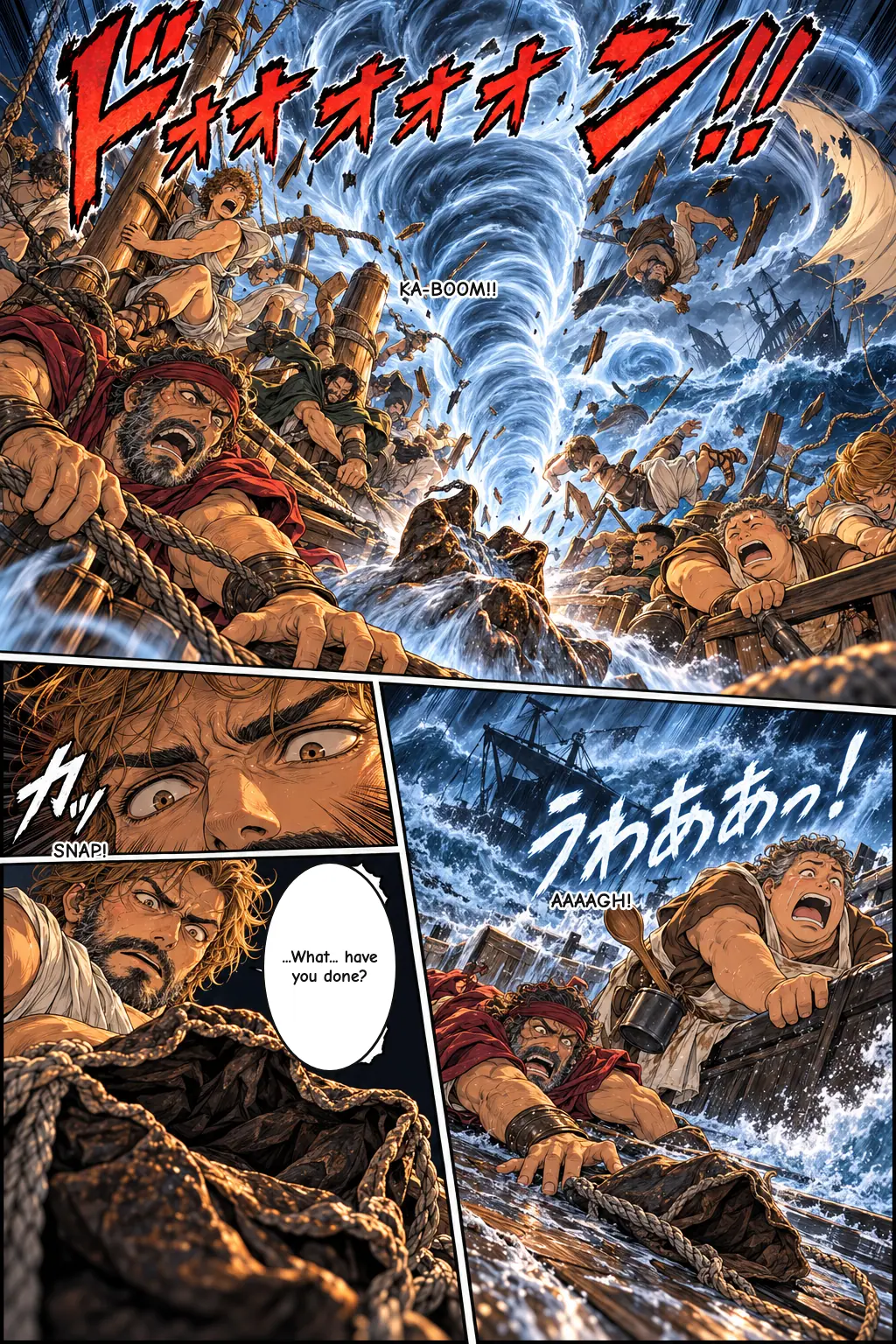
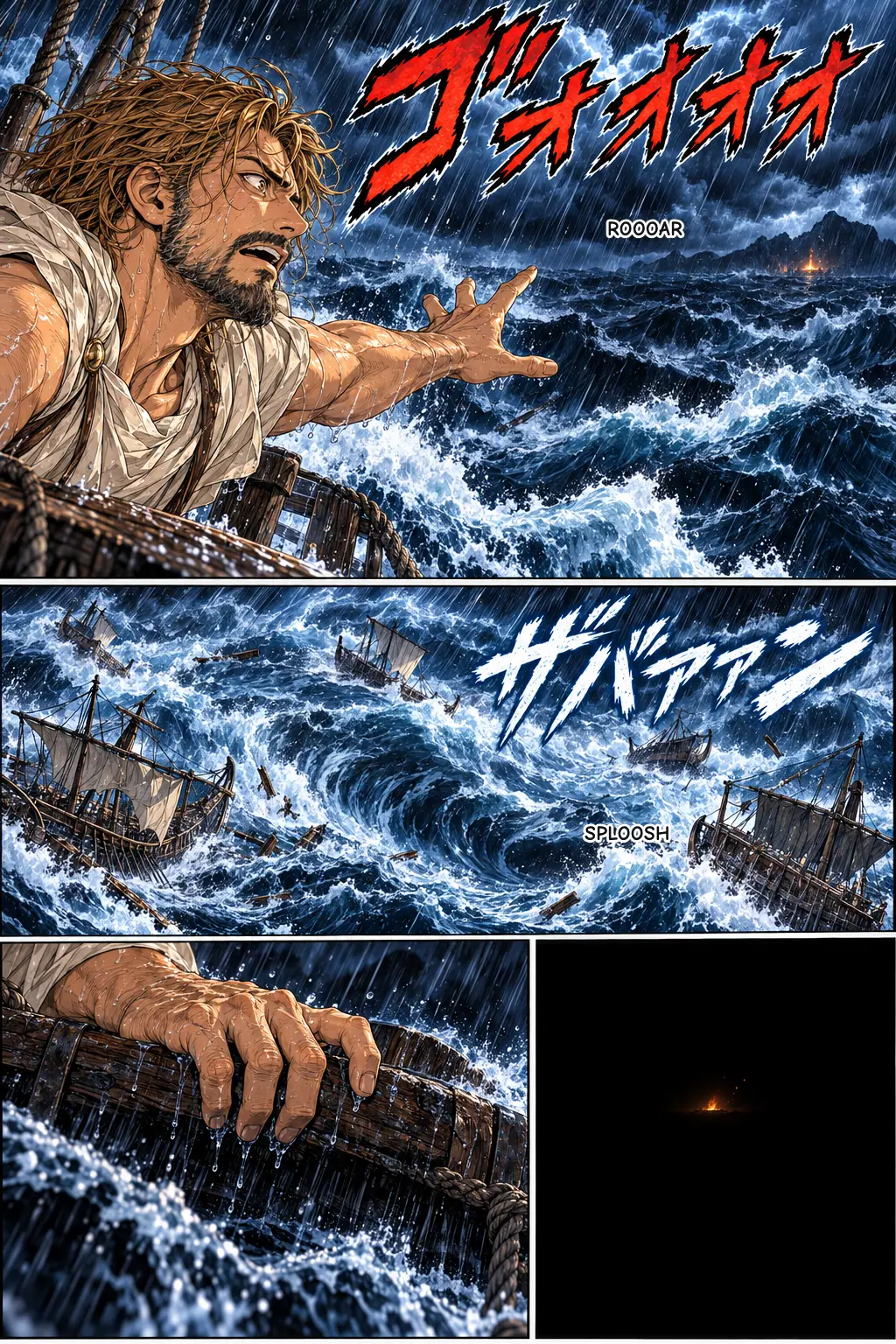
For nine days and nine nights they sail. On the tenth day the coast of Ithaca, Odysseus's home island, comes into view, so close that they can see people tending fires. Odysseus has held the sail rope the entire time, trusting no one else with it, and now he falls asleep from exhaustion. His crew start talking. Their captain, they grumble, is honored wherever he goes and brings home treasure from Troy, while they return empty-handed after the same journey. They decide the bag must be full of gold and silver from Aeolus, and they open it. Every wind bursts out at once, and the storm sweeps the weeping men back out to sea.
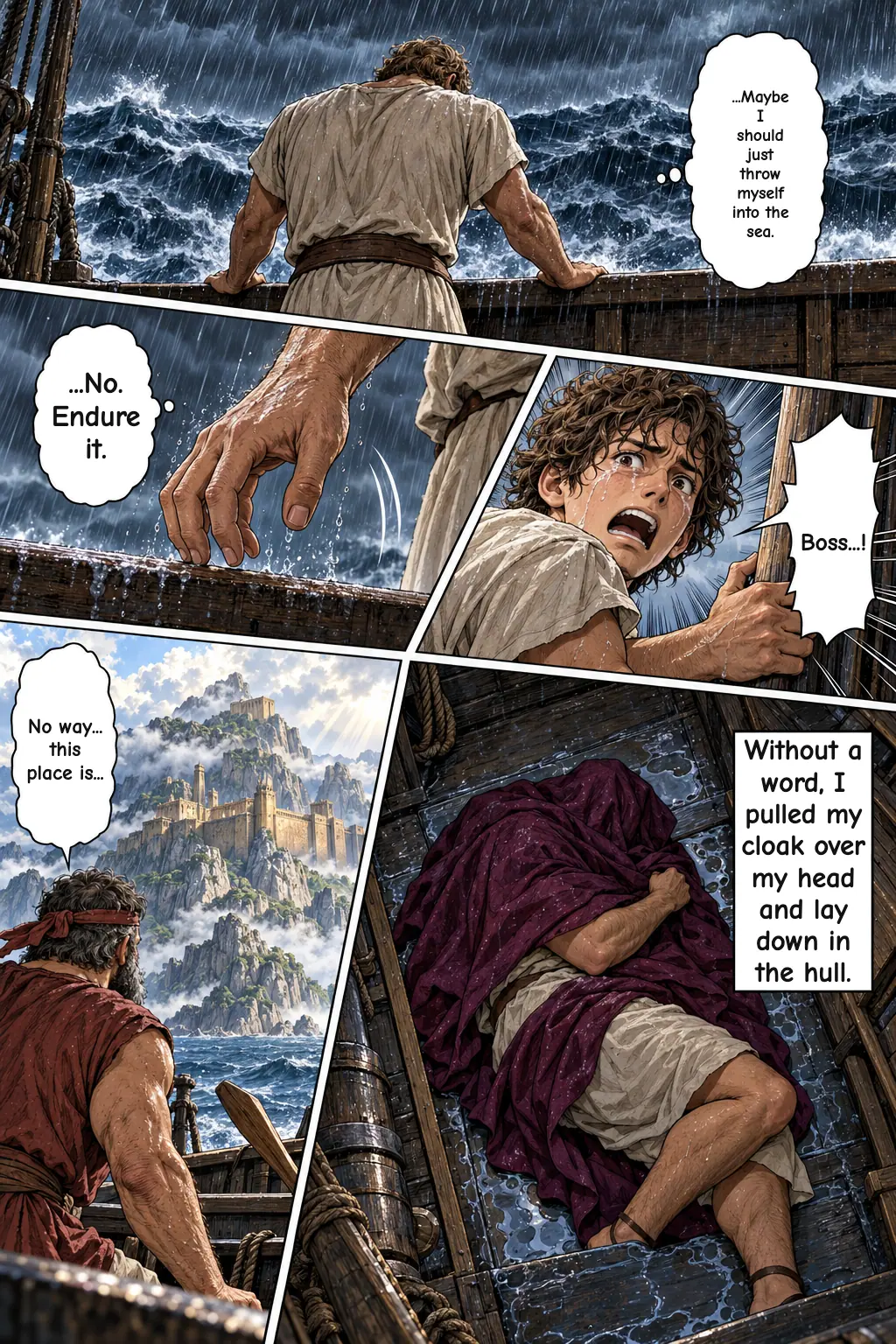
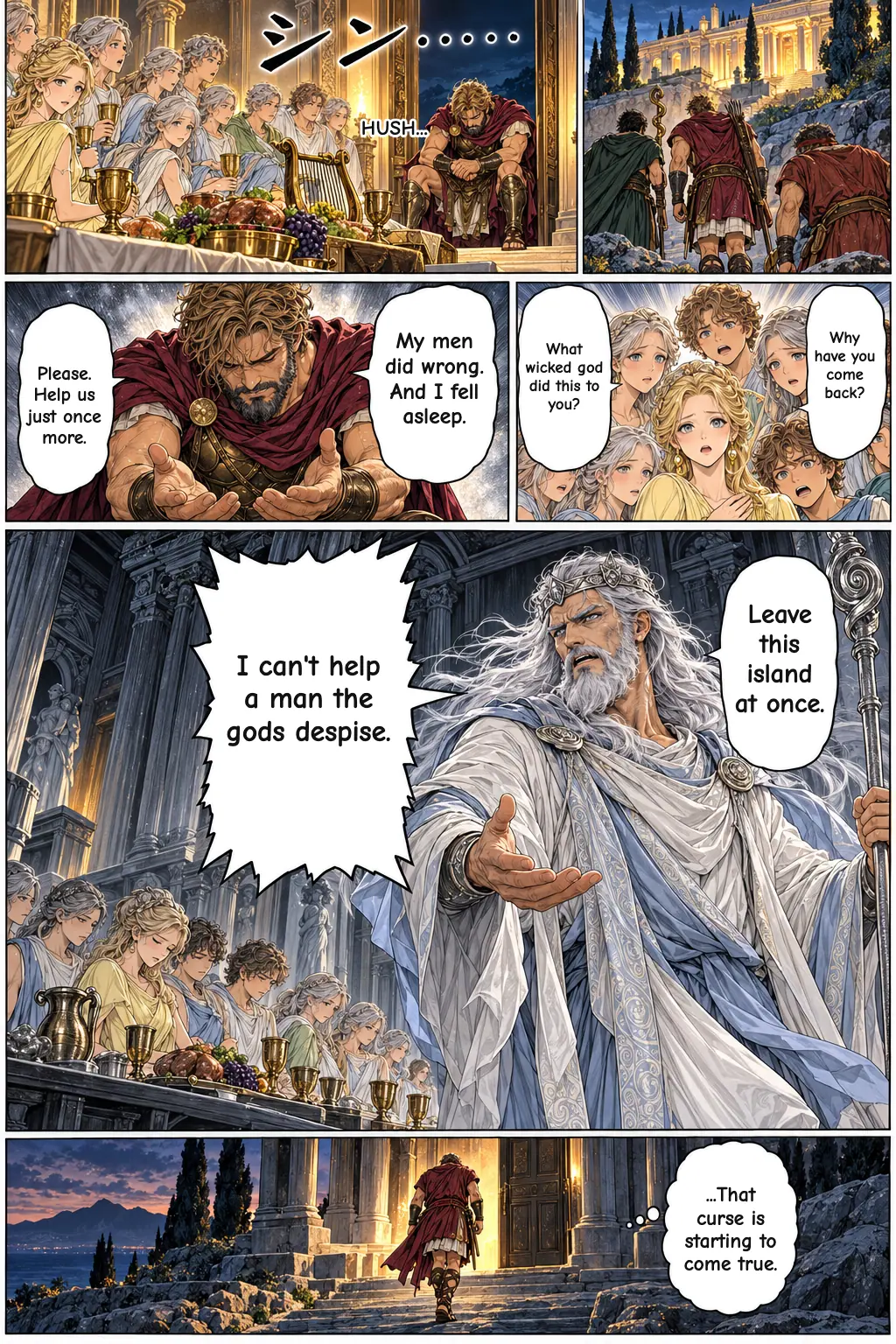
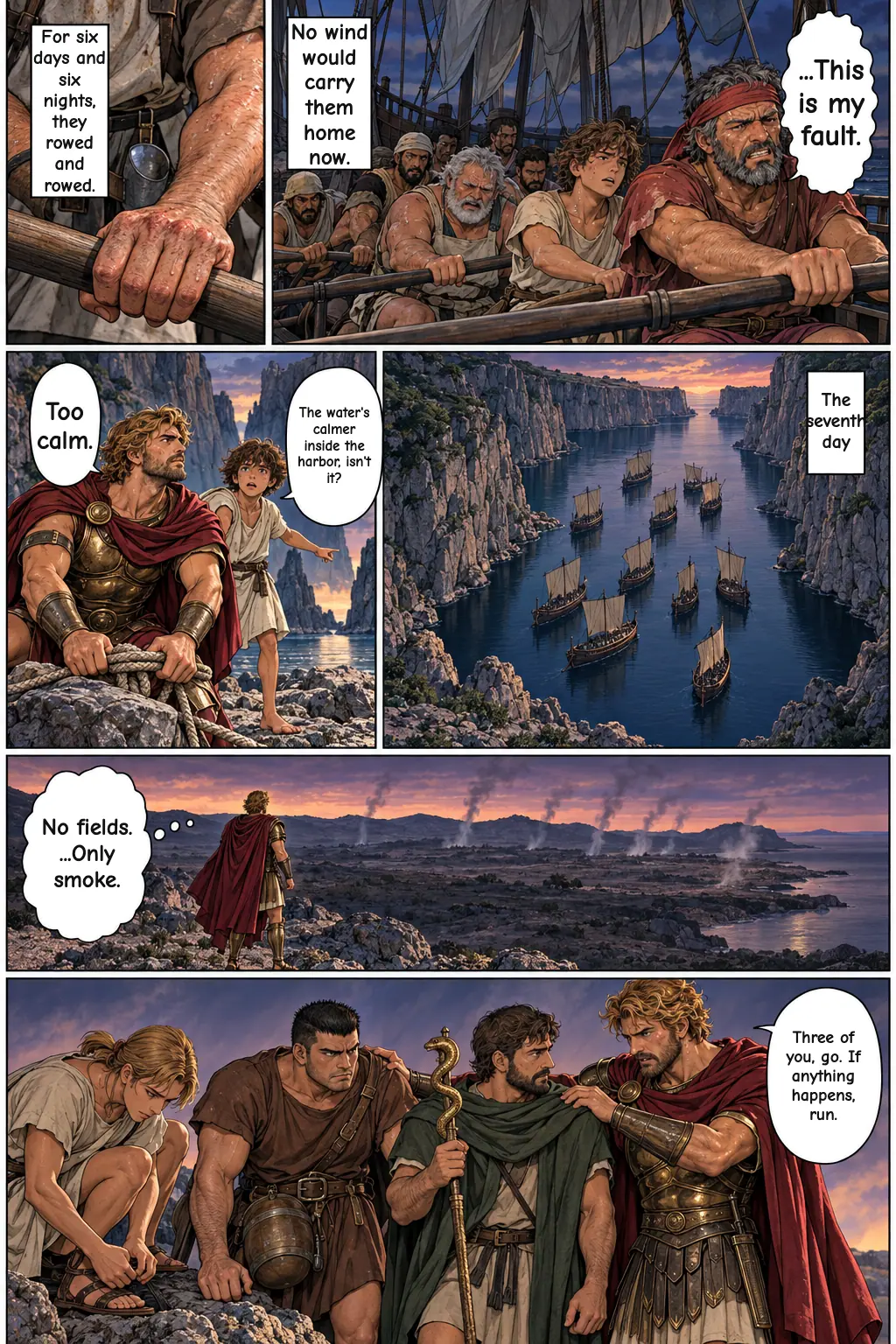
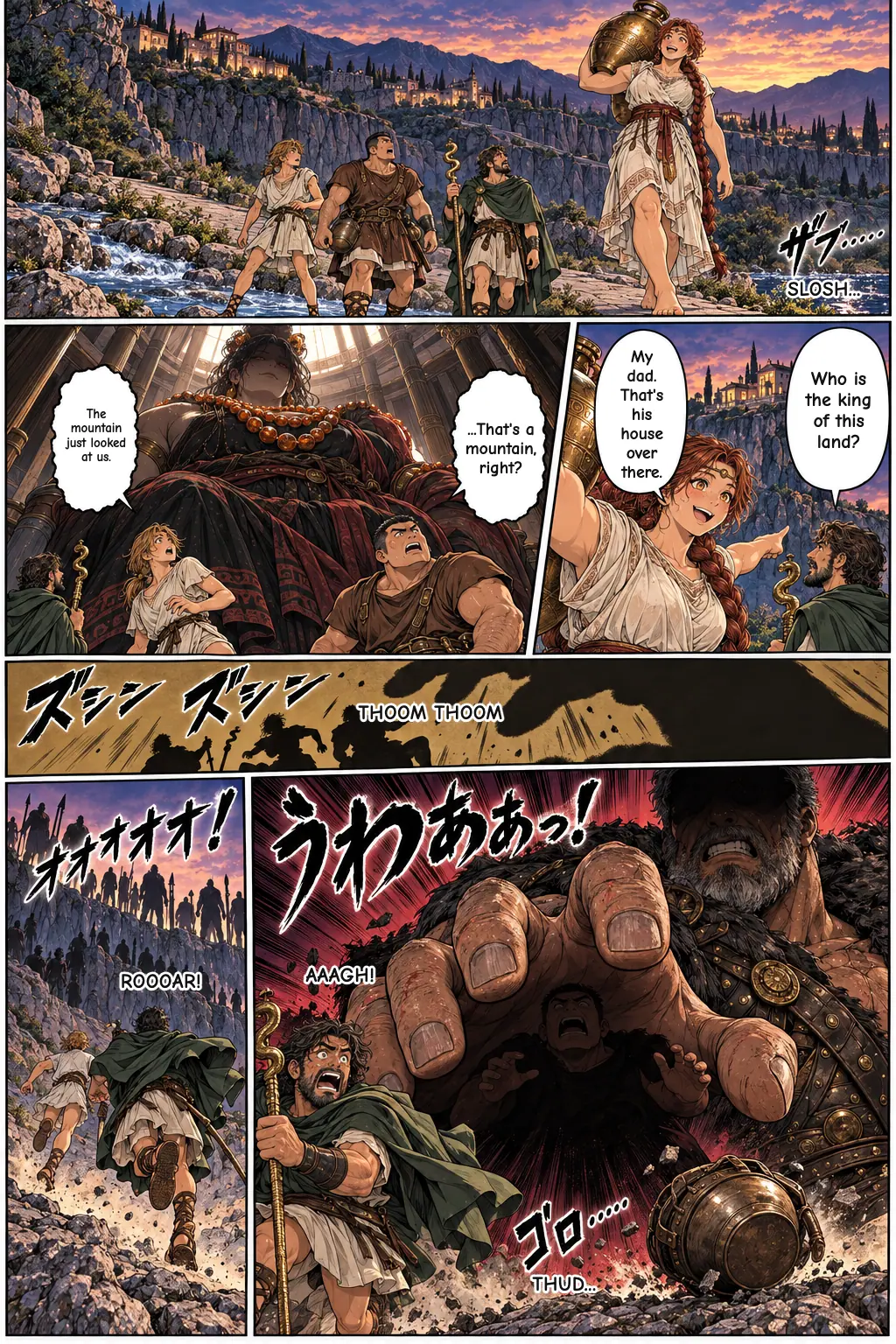
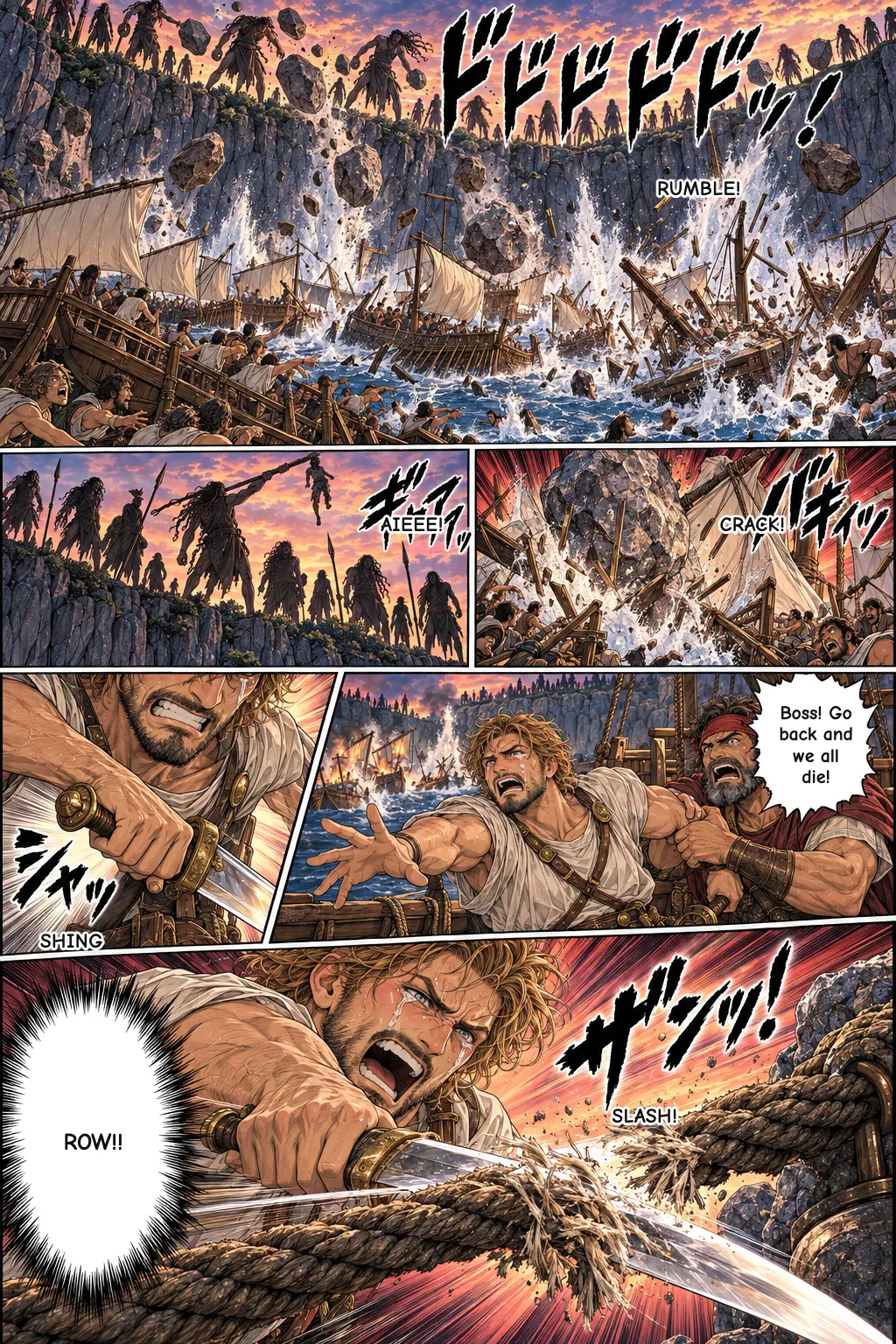
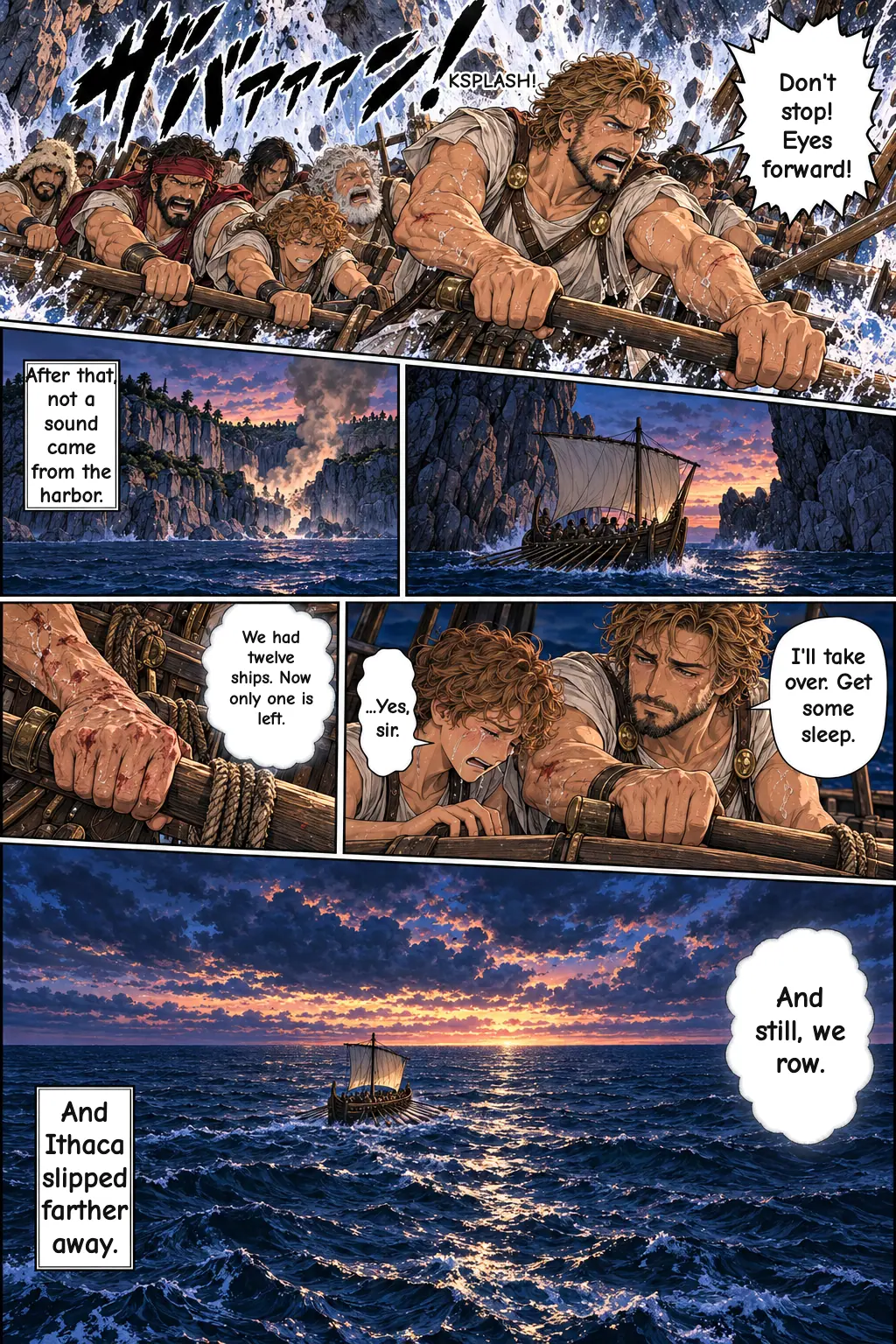
Odysseus wakes and wonders whether to throw himself into the sea or endure in silence. He chooses to endure and lies down in the ship with his face covered. The winds drive the fleet all the way back to Aeolia. Odysseus goes to the hall and sits at the threshold to ask for help once more, but Aeolus orders him off the island. A man so plainly hated by the gods, he says, cannot be sent on his way. Now without any wind, the crew row for six days. On the seventh they reach Telepylus, the city of Lamos in the land of the Laestrygonians. Every ship except Odysseus's enters a calm, rock-walled harbor; he alone ties his ship outside. His scouts meet the strong daughter of King Antiphates at a spring, and she points them to her father's house. There they find a queen as tall as a mountain peak. Antiphates seizes one scout to eat, and thousands of giants hurl boulders from the cliffs, smashing the ships and spearing the men like fish. Odysseus cuts his ship's cable with his sword, orders his crew to row, and his single ship is the only one that escapes.
Main Characters
Odysseus is the leader of the fleet and the narrator, a captain driven so hard by the wish to get home that he refuses to rest. Aeolus is a mortal king favored by the gods, a generous host who turns cold when Odysseus returns. The crew have no names in this passage (even Eurylochus, who speaks up elsewhere, is absent here), and their envy is what opens the bag. Antiphates and his giant people turn the second half of the episode into pure horror.
What This Myth Tells Us: Culture and Background
The episode is built around xenia, the Greek custom of guest-friendship. Hosts were expected to feed, entertain and help their guests on their way, and Aeolus does all of this perfectly. The Laestrygonians are the dark mirror of that custom: hosts who eat their guests. Placing the two scenes side by side shows how much a traveler's fate depended on the people he met.
The story also shows how the Greeks understood divine favor. When the gift fails, Aeolus does not see bad luck. He sees proof that the gods are against Odysseus, and helping such a man would be wrong. And the bag of winds is one of the most painful moments in the poem: the hero gets within sight of home and loses it all through one moment of sleep and a little distrust among his men.
Where these places were has been argued about since ancient times. Many have linked Aeolia with the volcanic Aeolian Islands north of Sicily, and the Laestrygonians were placed in Sicily or on the Italian coast by some ancient writers. Homer's strange remark that in Telepylus a herdsman going out meets one coming in, and a sleepless man could earn double wages, has led some scholars to suggest it echoes sailors' stories of northern lands with very short summer nights. None of these ideas can be proven.
What the Manga Changes and Adds
The main events follow Homer closely, but the poem gives few details, so the manga has to imagine much of what you see. The look of Aeolus's family, his palace, the clothes and the feasts are all invented, as is what was said during the month-long stay, since Homer only says that Odysseus told the whole story of Troy. How the winds look inside and outside the bag is also the artist's choice.
Homer never says whether Odysseus told his men what was in the bag, and the crew's complaints are given as the words of the whole group, so who speaks each line and whose hand opens the bag are creative choices. The faces of Aeolus's family when Odysseus returns, the land of the Laestrygonians, the giant queen, and the daughter's manner (Homer never says whether she meant to trap the scouts) are interpretations too. The poem also gives no reason why Odysseus moors outside the harbor; showing it as caution is a reading, not a fact. Finally, the manga keeps the violence restrained, showing the giants grabbing and carrying off men but not the eating.
Where to Read It
If you would like to see the nine sleepless nights, the moment the bag tears open and the escape from the giants' harbor, Episode 3 of GREEK MYTHOLOGY: THE ODYSSEY — The Twenty-Year Voyage Home is on this page. Every episode on Manga Portal is free to read with no sign-up, so you can follow Odysseus from Troy all the way home, one voyage at a time.
Characters in this episode
Odysseus
King of Ithaca and leader of the fleet, who holds the sail rope for nine days straight and falls asleep just as home comes into view.
Aeolus
Son of Hippotes and keeper of the winds under Zeus, who seals the storm winds in an oxhide bag but later drives Odysseus away as a man hated by the gods.
Odysseus's crew
Unnamed sailors who think the bag holds gold and silver and, out of envy, open it while their captain sleeps.
Antiphates
King of the giant Laestrygonians, who seizes one of Odysseus's scouts to eat and calls his people to attack the fleet.
The daughter of Antiphates
A strong young giantess fetching water at a spring, who directs the scouts to her father's house.
Zephyrus
The west wind, the only wind Aeolus leaves free to carry the ships toward Ithaca.
FAQ
What was in Aeolus's bag of winds?
Aeolus shut the storm winds that could have blown the fleet off course inside a bag made from the hide of a nine-year-old ox. Only the west wind, Zephyrus, was left outside to carry the ships home.
Why did Odysseus's men open the bag of winds?
They believed it was full of gold and silver that Aeolus had given only to Odysseus. Envious that they were going home with nothing, they opened it while he slept, releasing a storm that blew them away from Ithaca.
Why did Aeolus refuse to help Odysseus a second time?
Aeolus saw the failed voyage as a sign that the gods hated Odysseus. He said it was not right to help a man the gods were against, and he sent him away.
Who were the Laestrygonians in the Odyssey?
They were a race of man-eating giants ruled by King Antiphates in the city of Telepylus. They destroyed every ship in Odysseus's fleet except his own, which was moored outside their harbor.
How close did Odysseus get to home?
Close enough to see people tending fires on Ithaca. He fell asleep on the tenth day of the voyage, just before landing, and only reached home many years later.