Episode 1The Greatest Warrior Refuses to FightThe Wrath of Achilles
A king's arrogance over a priest's daughter brings down Apollo's plague, and Achilles, the greatest of heroes, has what he holds dearest taken from him in front of everyone. As he reaches for his sword, a goddess only he can see stops his hand. Then, for her son weeping on the shore, his mother Thetis goes to the king of the gods and clasps his knees.
Iliad Book 1 Summary: The Wrath of Achilles Explained
What Happens in Iliad Book 1: The Plague of Apollo
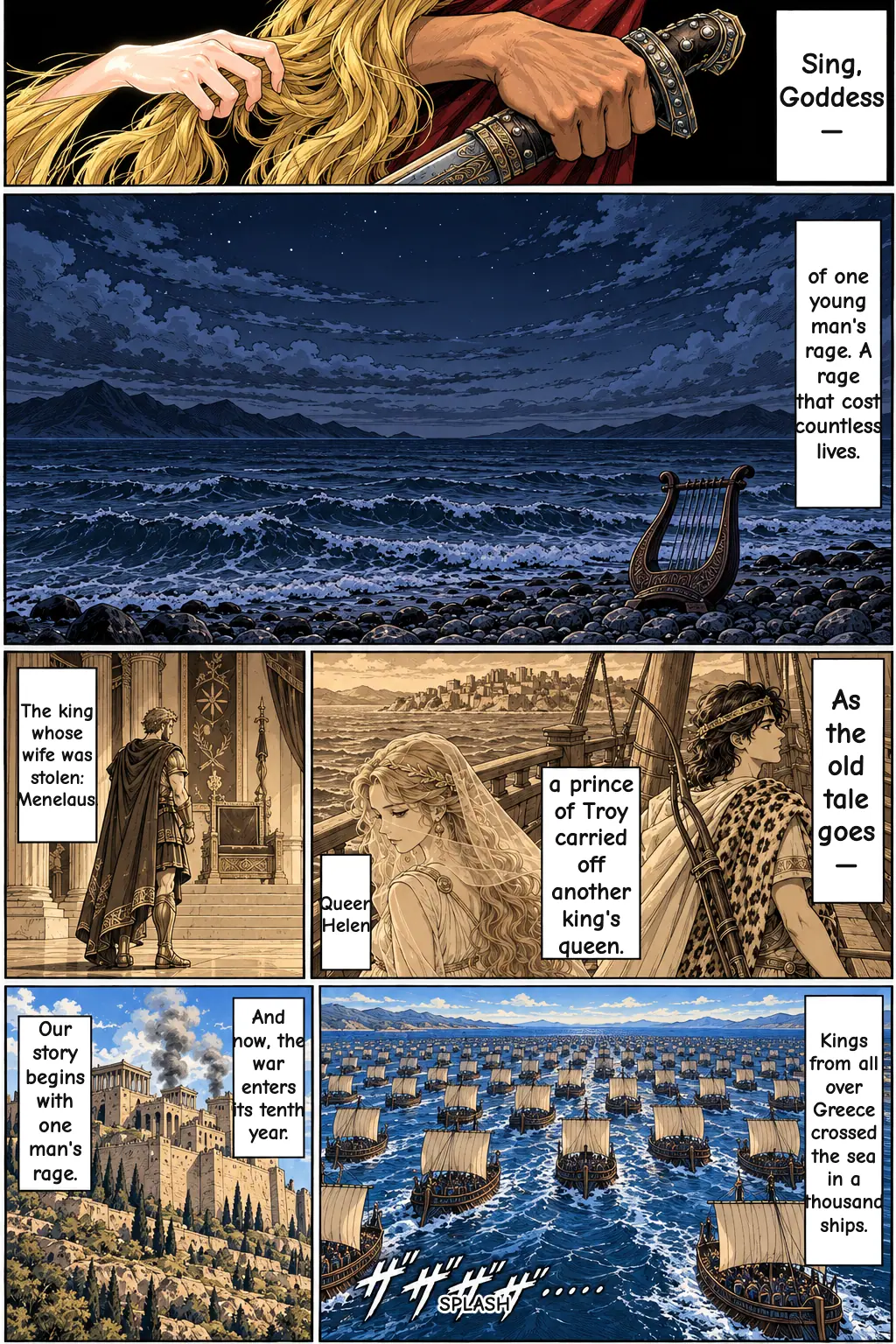
Homer's Iliad does not begin with the start of the Trojan War. It opens in the war's tenth year, and its first line names its real subject: the wrath of Achilles, the greatest Greek warrior. The poet calls on the Muse to sing of that anger, which would send countless heroes to their deaths. He says it all happened as part of the will of Zeus, the king of the gods, and he starts the story at the moment Achilles and Agamemnon fell out.
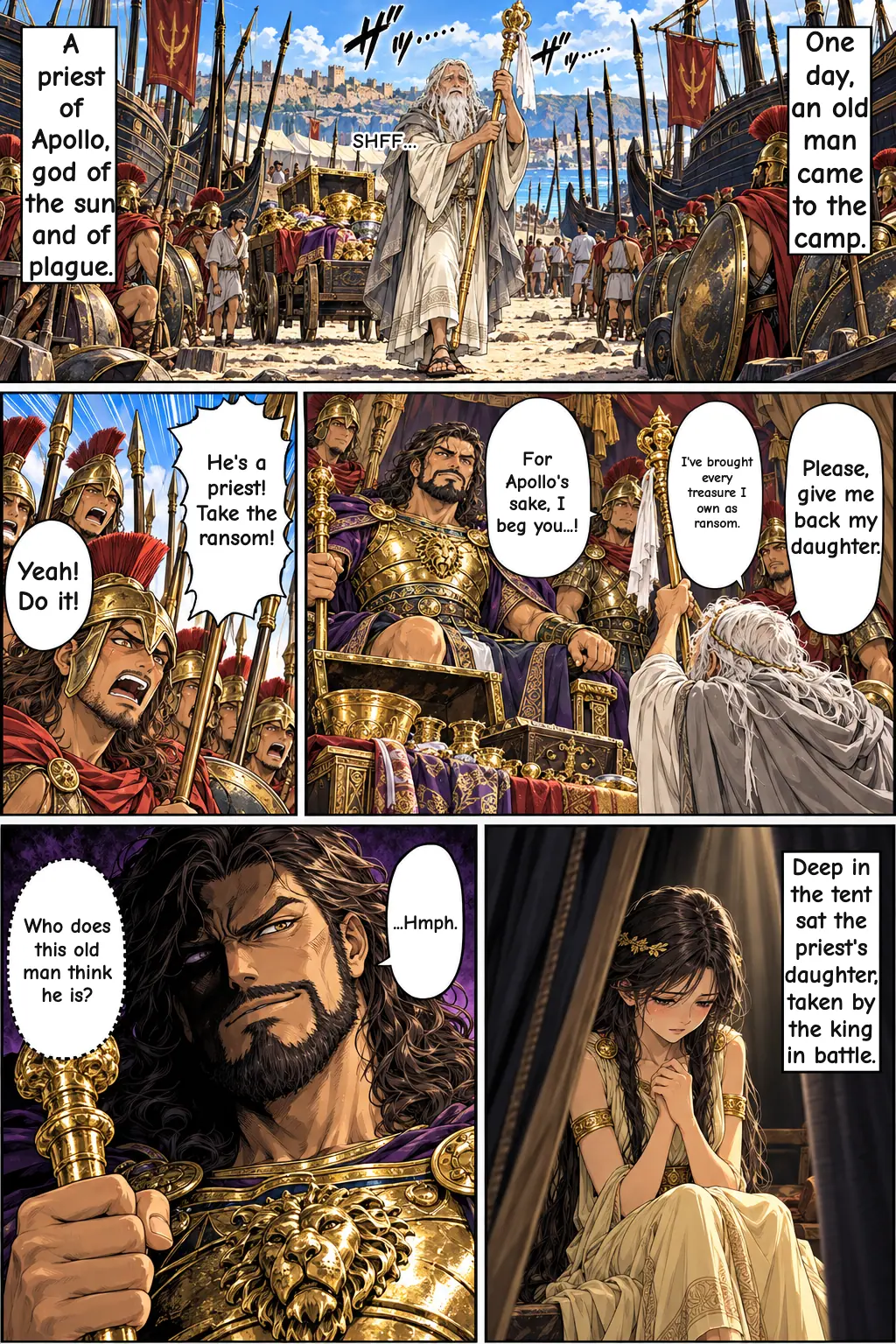
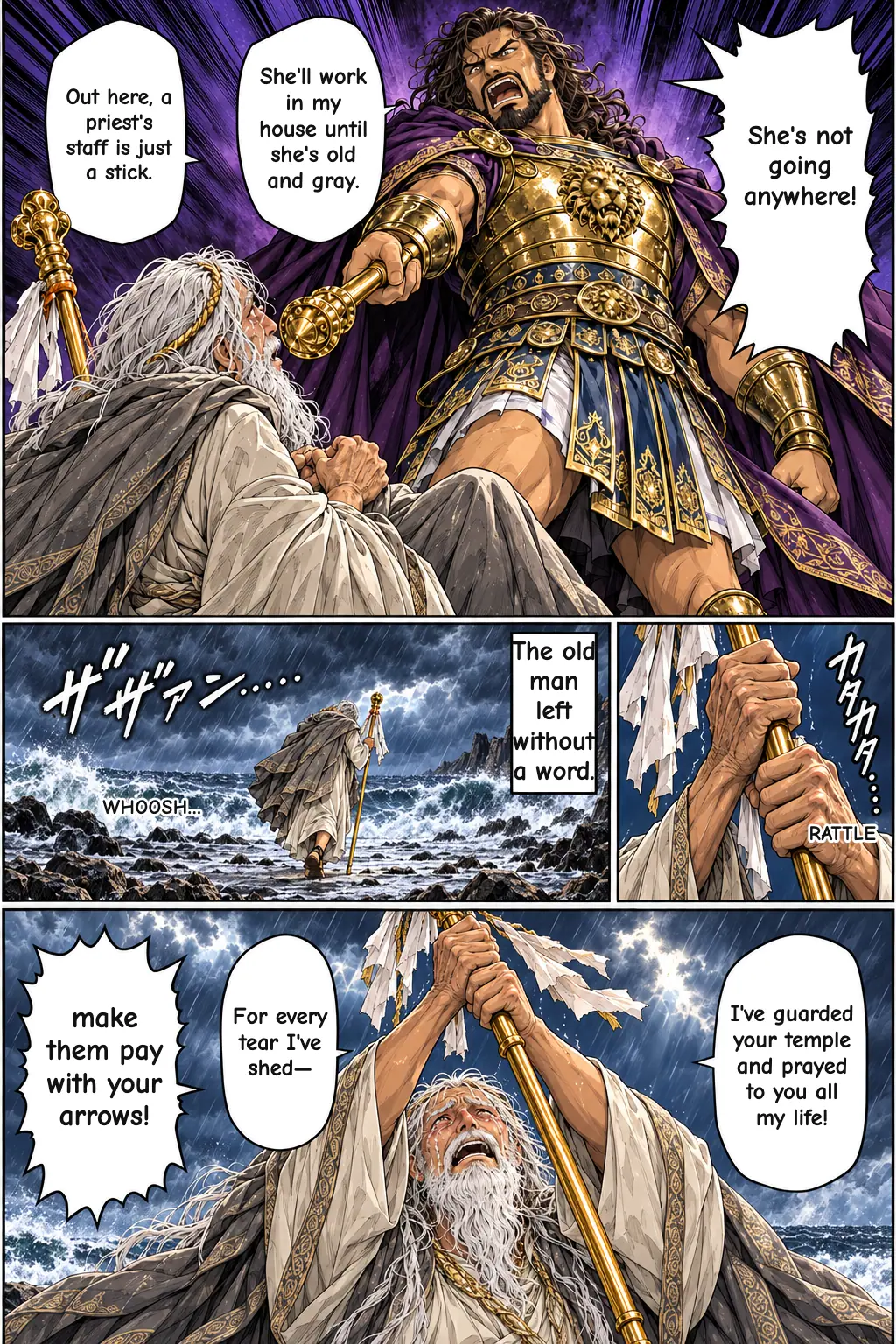
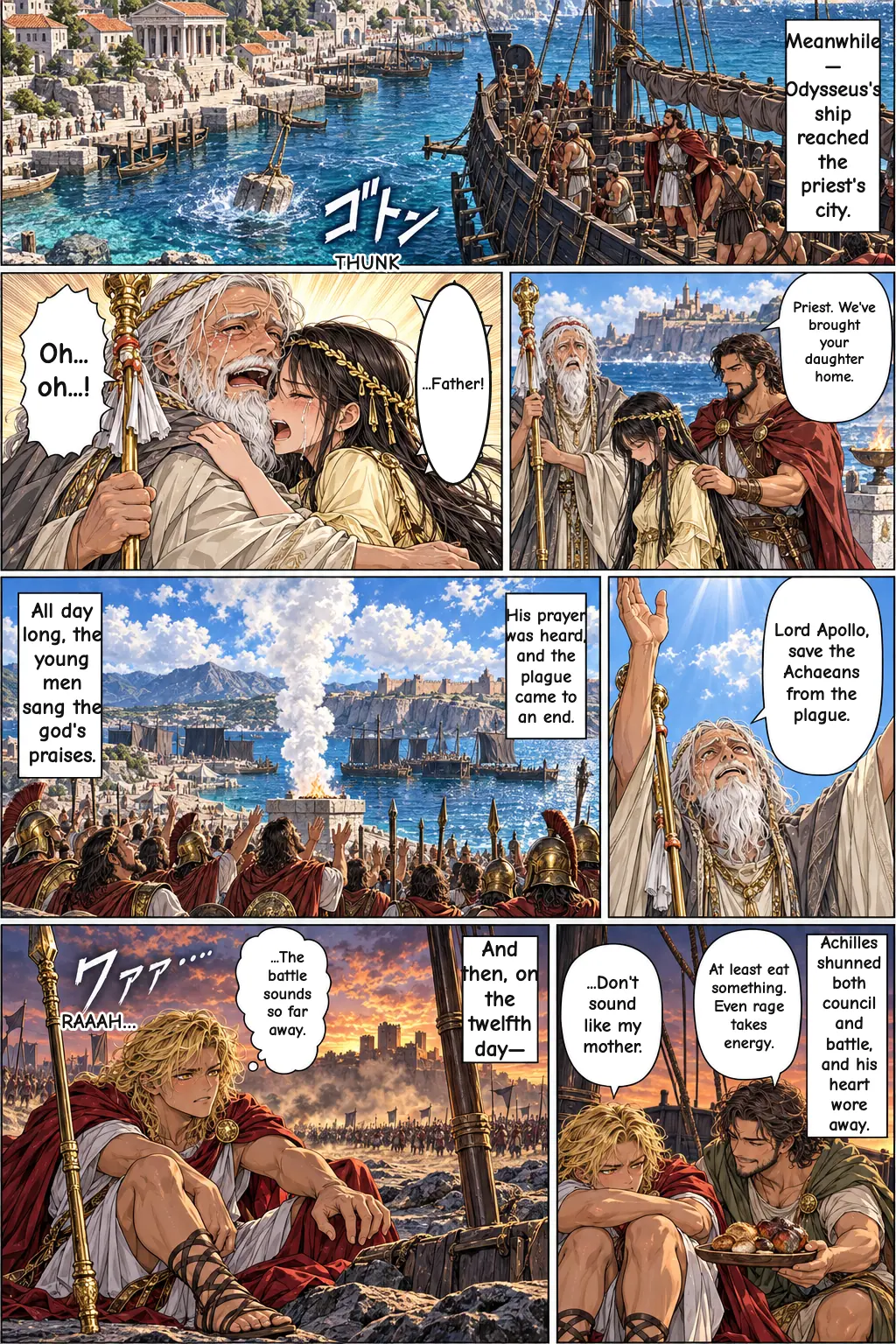
The trouble starts with Chryses, an elderly priest of Apollo, the god of archery, music and plague. His daughter Chryseis has been captured by the Greeks (Homer calls them Achaeans) and given to Agamemnon, the commander of the whole army. Chryses comes to the Greek ships carrying a huge ransom and a golden staff wrapped in Apollo's sacred ribbons. The other soldiers loudly agree that the priest should be respected, but Agamemnon refuses and sends the old man away with threats.
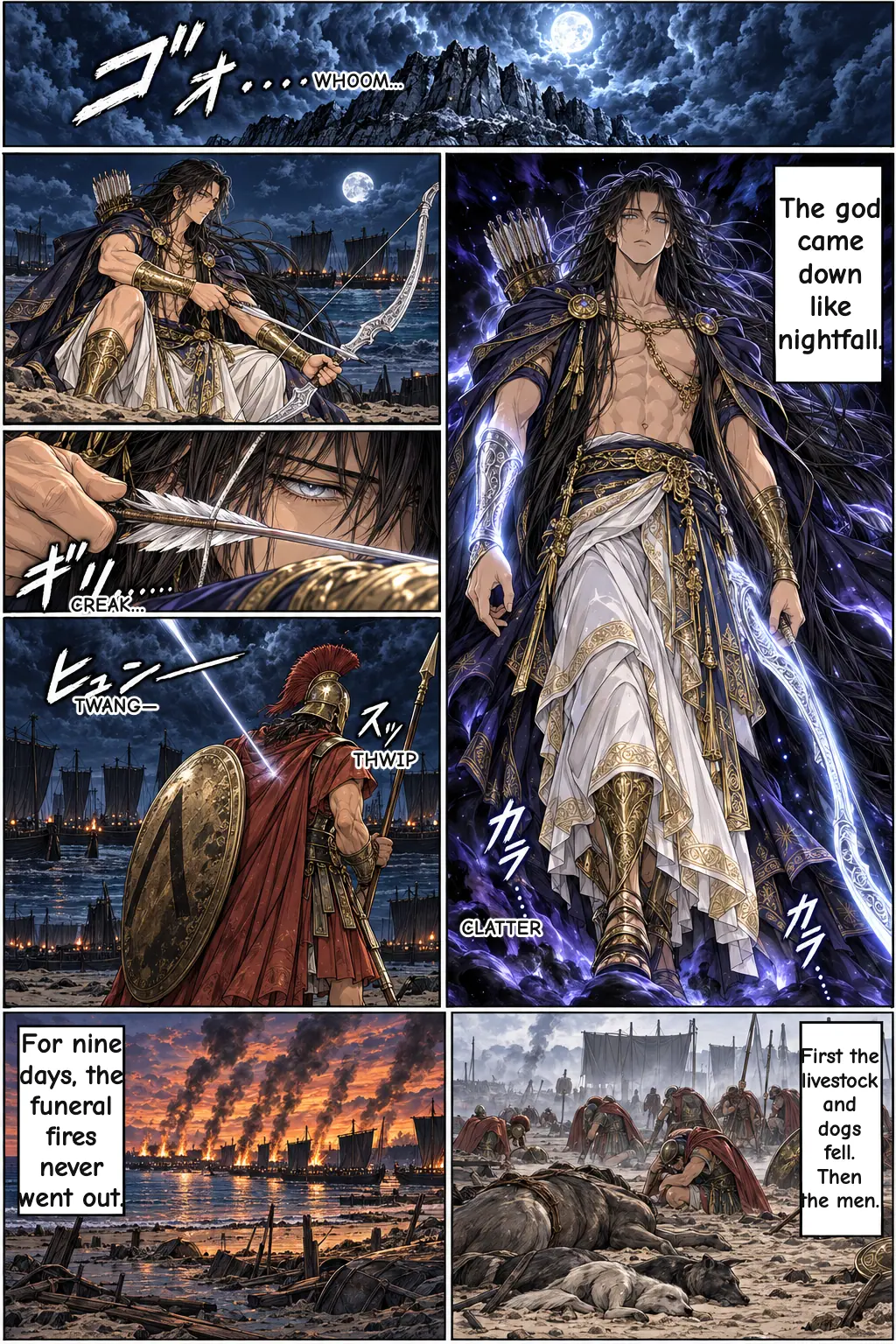
Chryses walks along the shore and prays to Apollo, asking the god to make the Greeks pay for his tears. Apollo comes down from Mount Olympus, dark as night, with his arrows rattling on his shoulder. He shoots the mules and dogs first, then the men. For nine days the funeral fires never stop burning.
The Quarrel, the Goddess, and the Nod of Zeus
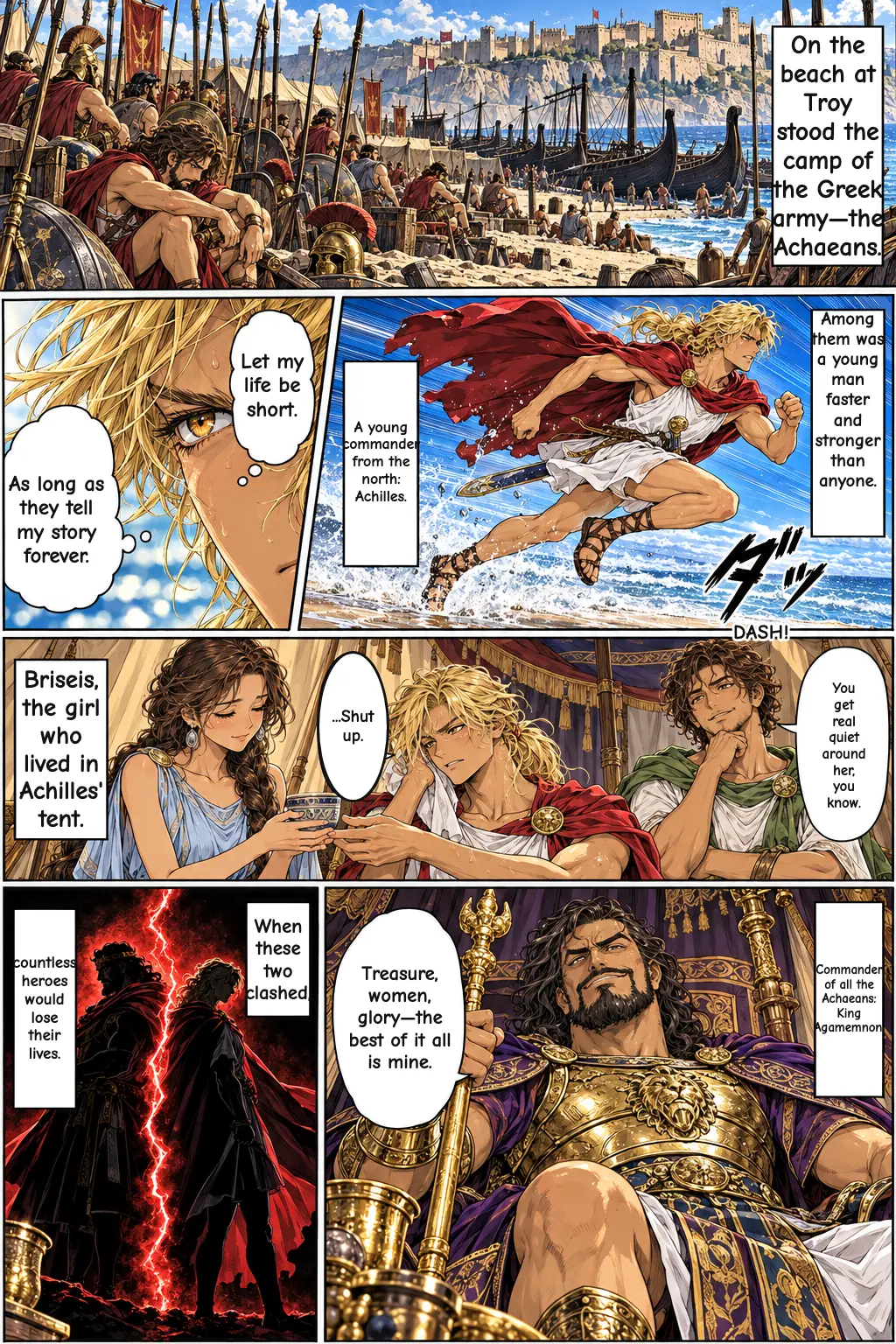
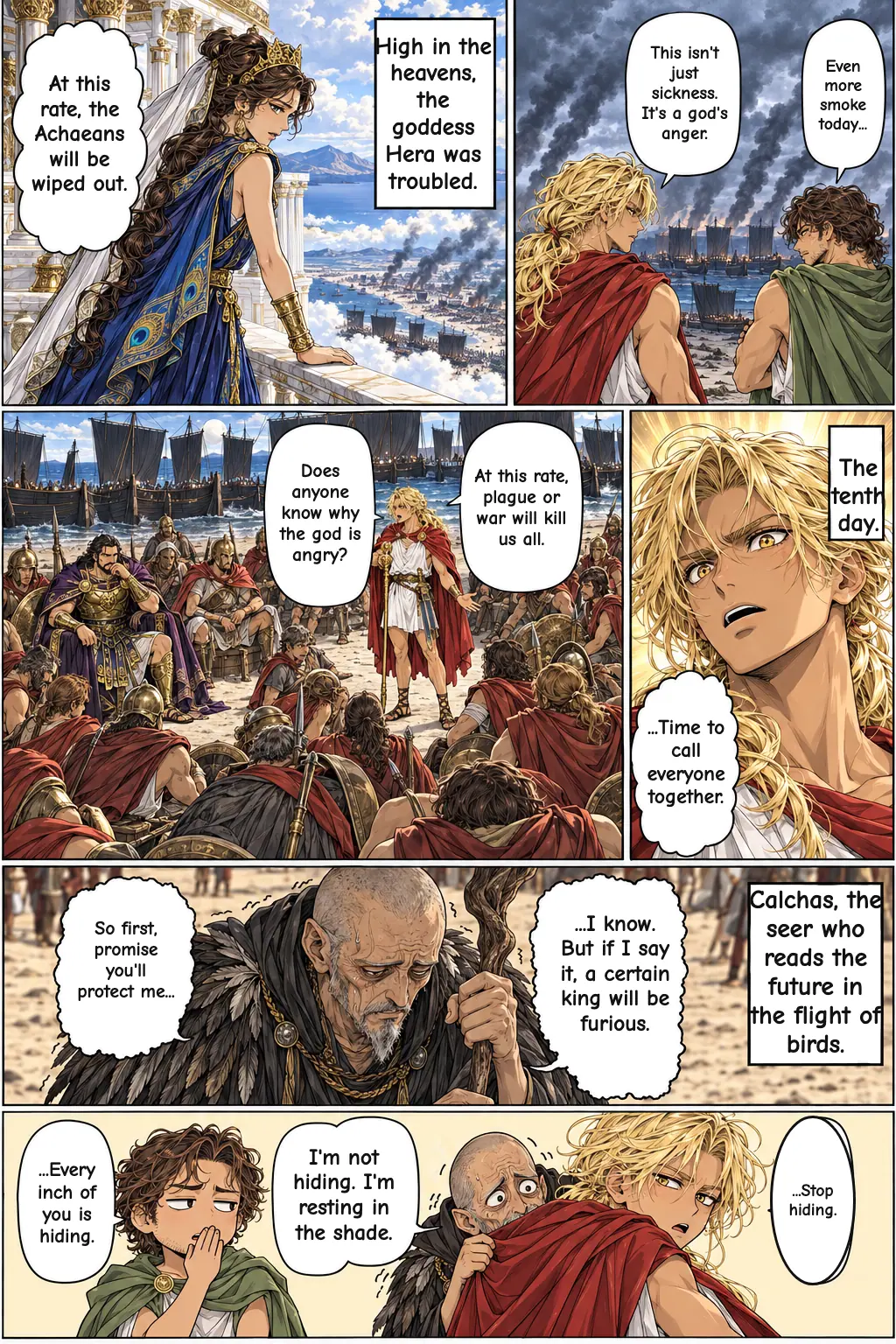
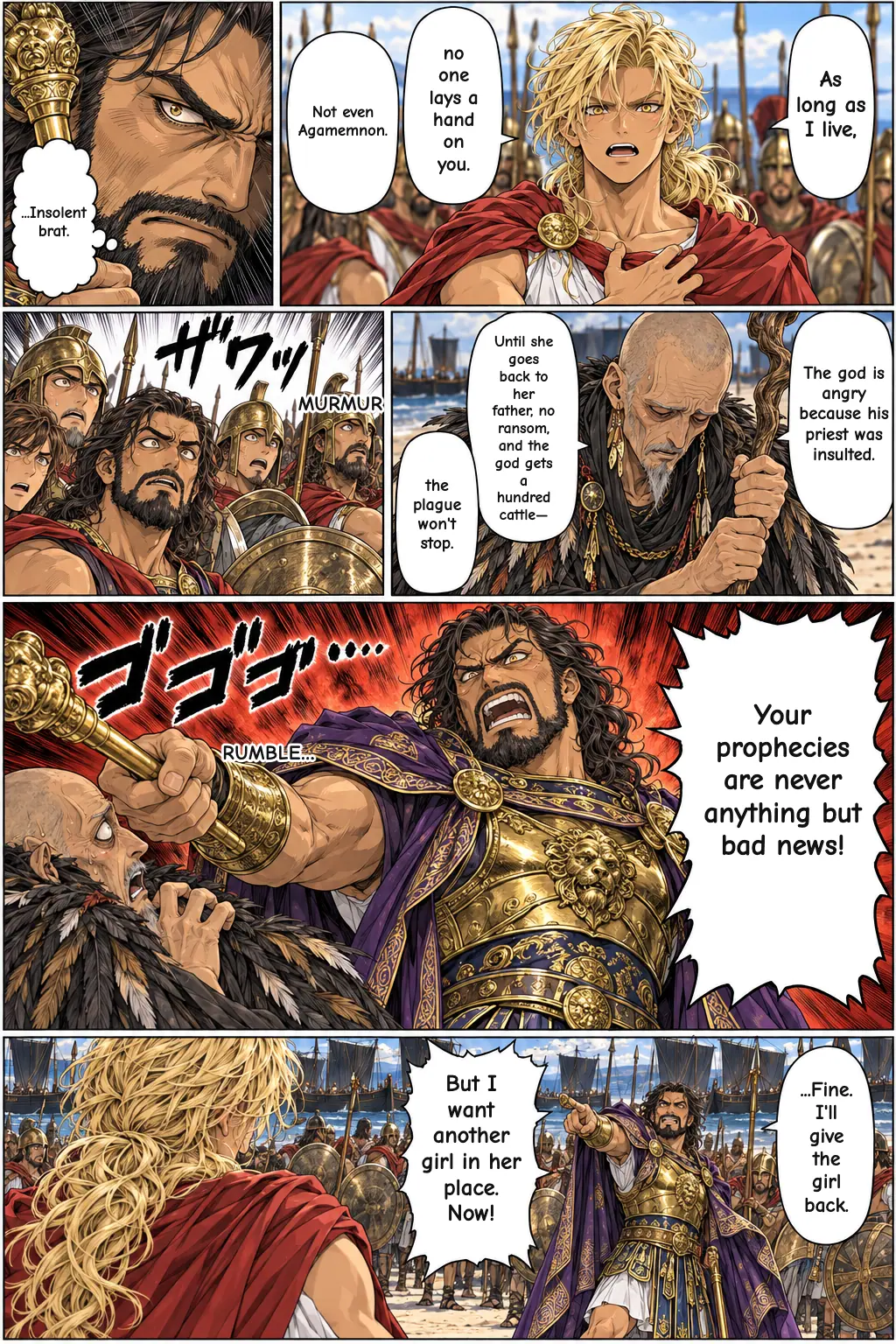
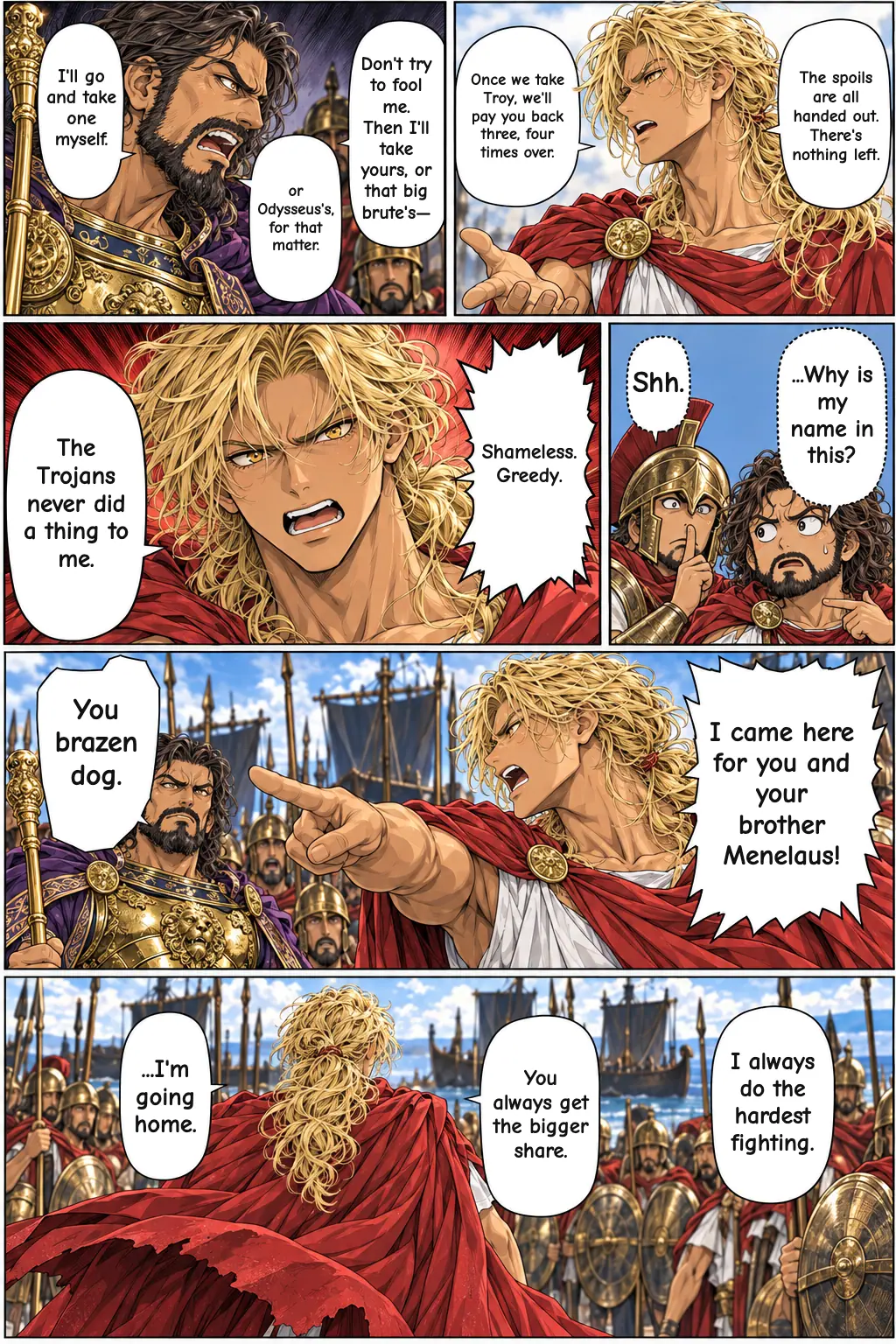
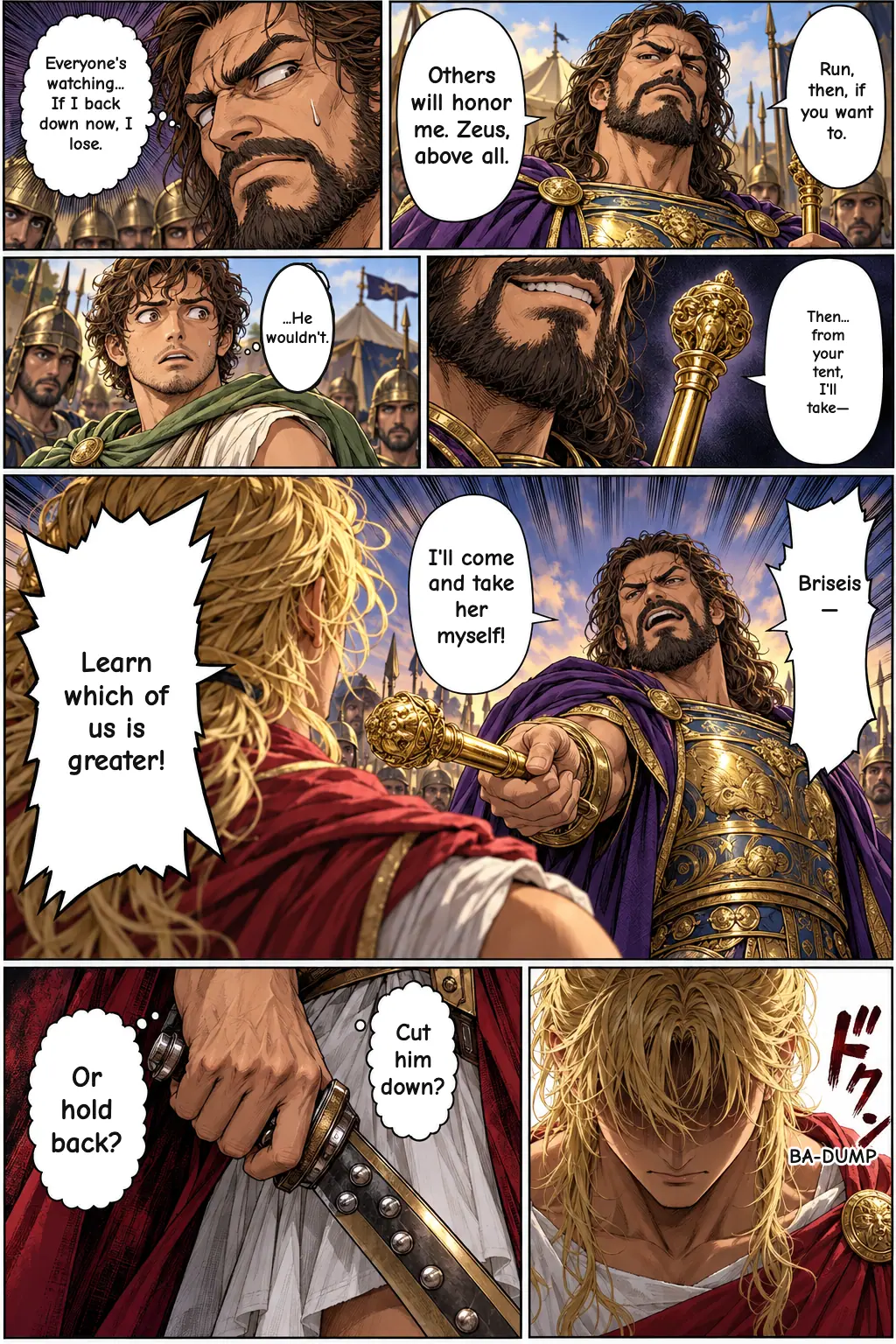
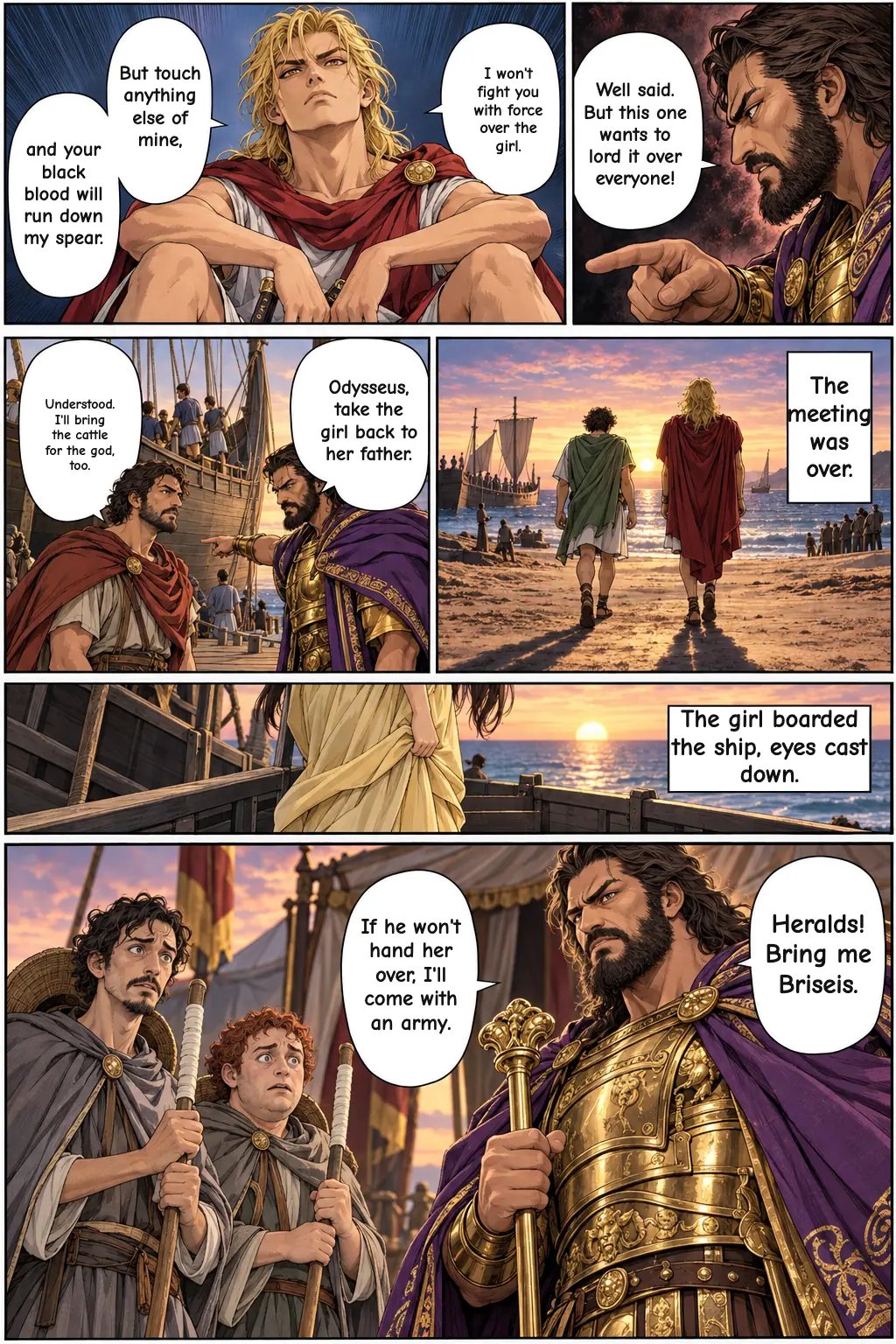
On the tenth day Achilles, prompted by the goddess Hera, calls an assembly. The seer Calchas agrees to explain the plague only after Achilles promises to protect him, even from Agamemnon. Calchas tells them Apollo is angry because his priest was insulted. The plague will end only when Chryseis is returned to her father without ransom, along with a great sacrifice. Agamemnon is furious. He agrees to give her up, but demands another prize in exchange. When Achilles objects, Agamemnon declares he will take Achilles' own prize, a young woman named Briseis.
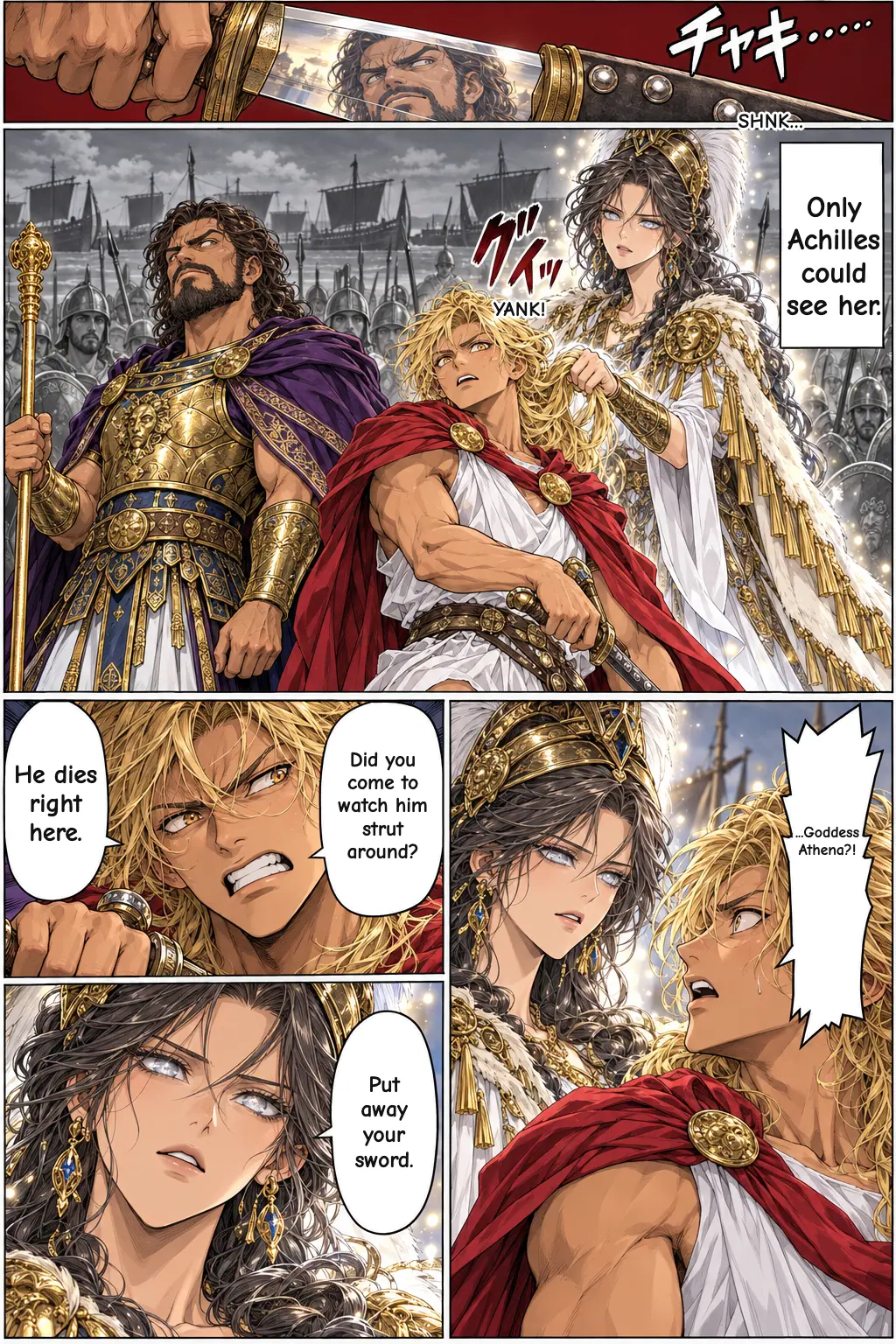
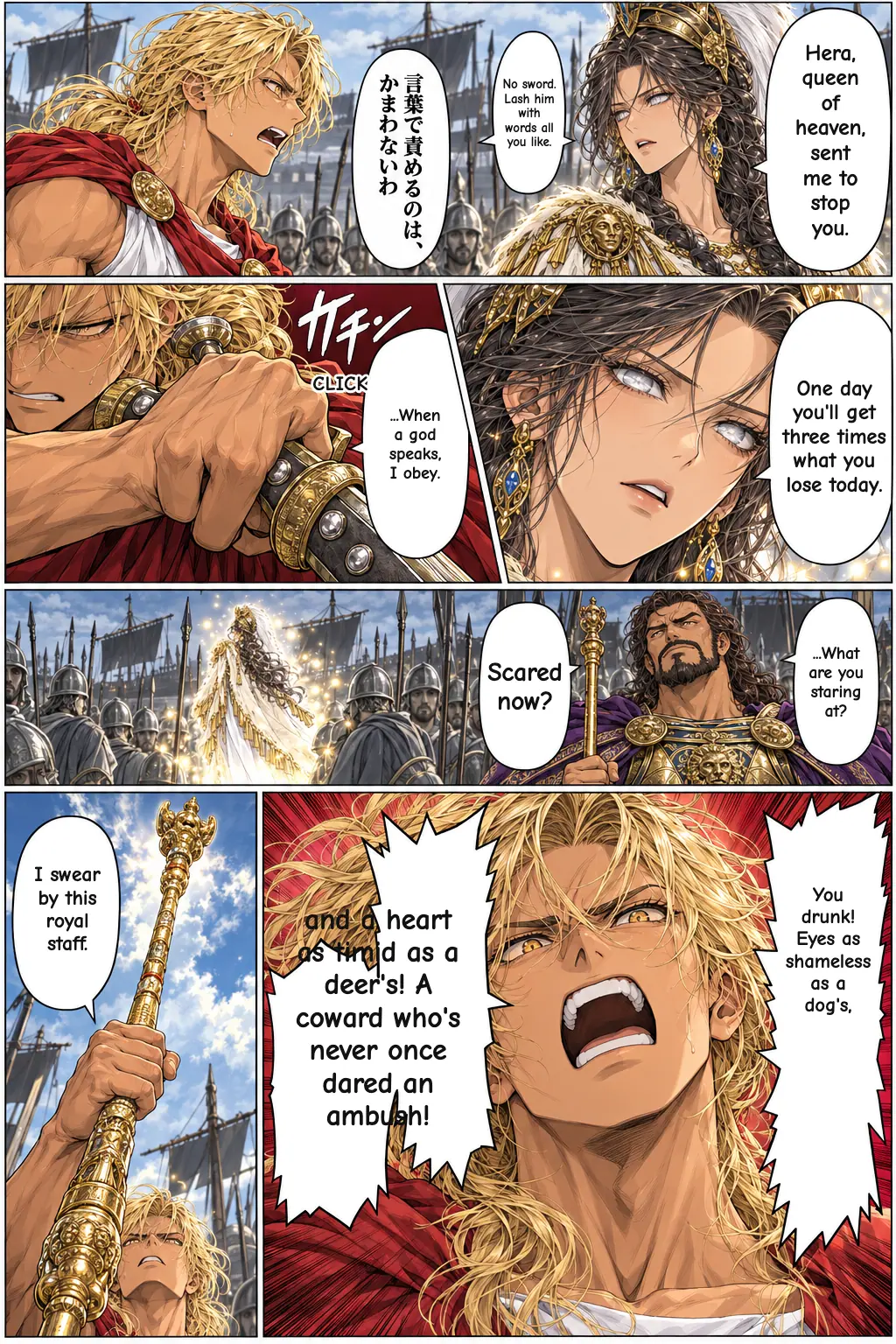
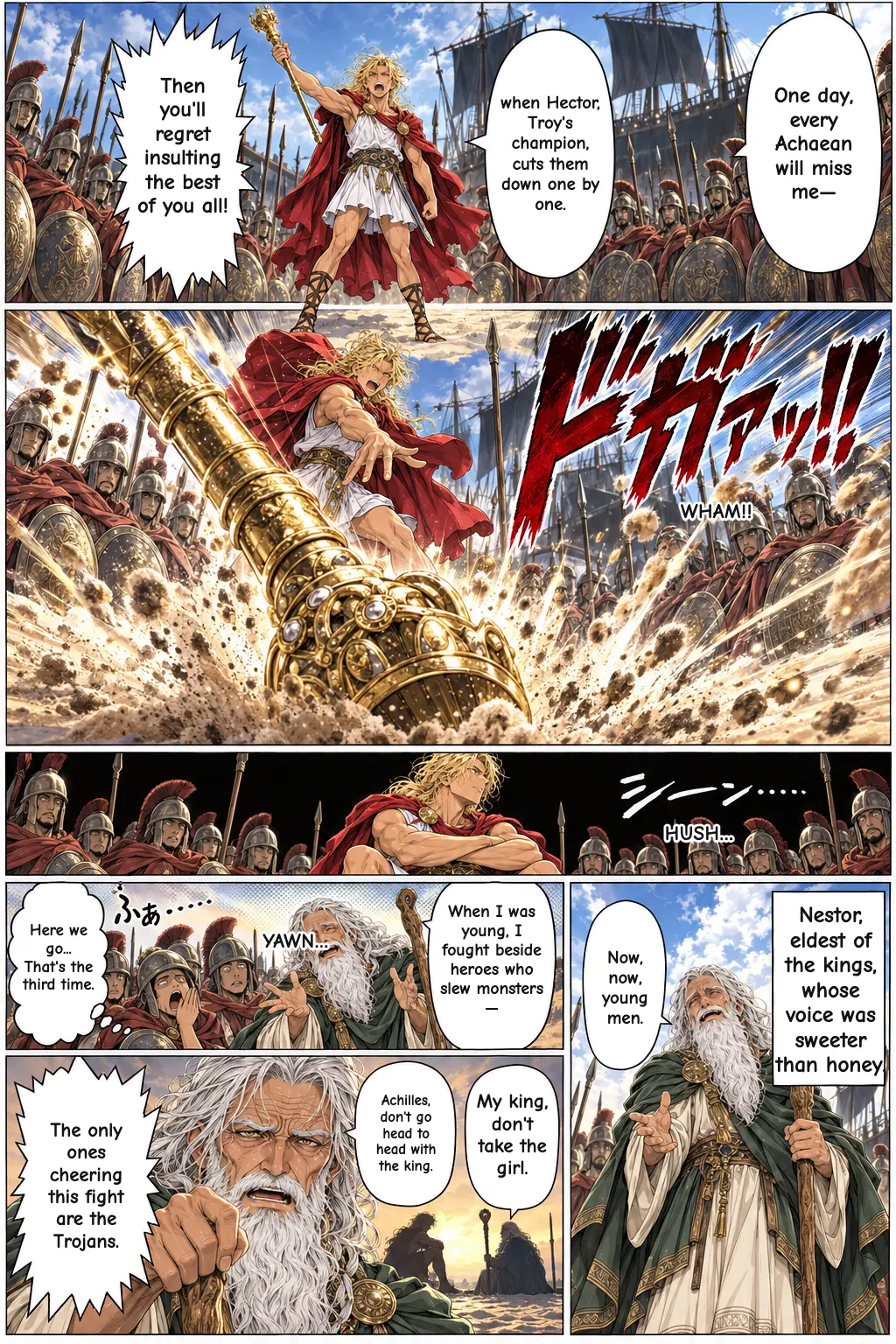
Achilles is torn between killing Agamemnon on the spot and holding back. As he begins to draw his sword, Athena, the grey-eyed goddess of wisdom, sent by Hera, catches him by his golden hair from behind. No one else can see her. She tells him to fight with words, not steel, and promises that he will one day receive gifts three times greater. Achilles obeys her, but he swears a solemn oath that the Greeks will miss him badly, and he withdraws from the fighting. The old king Nestor tries to make peace between them, and neither man listens.
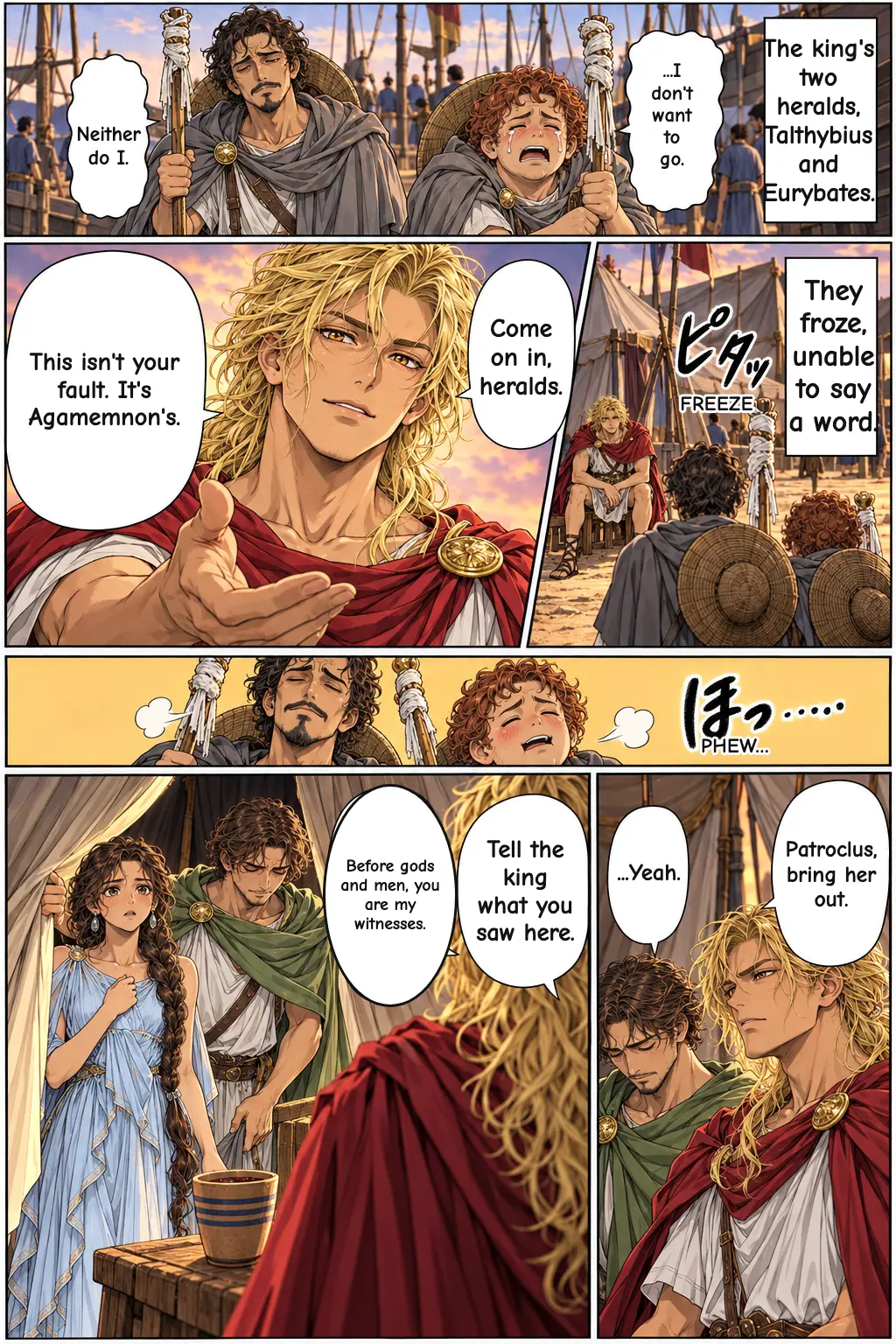
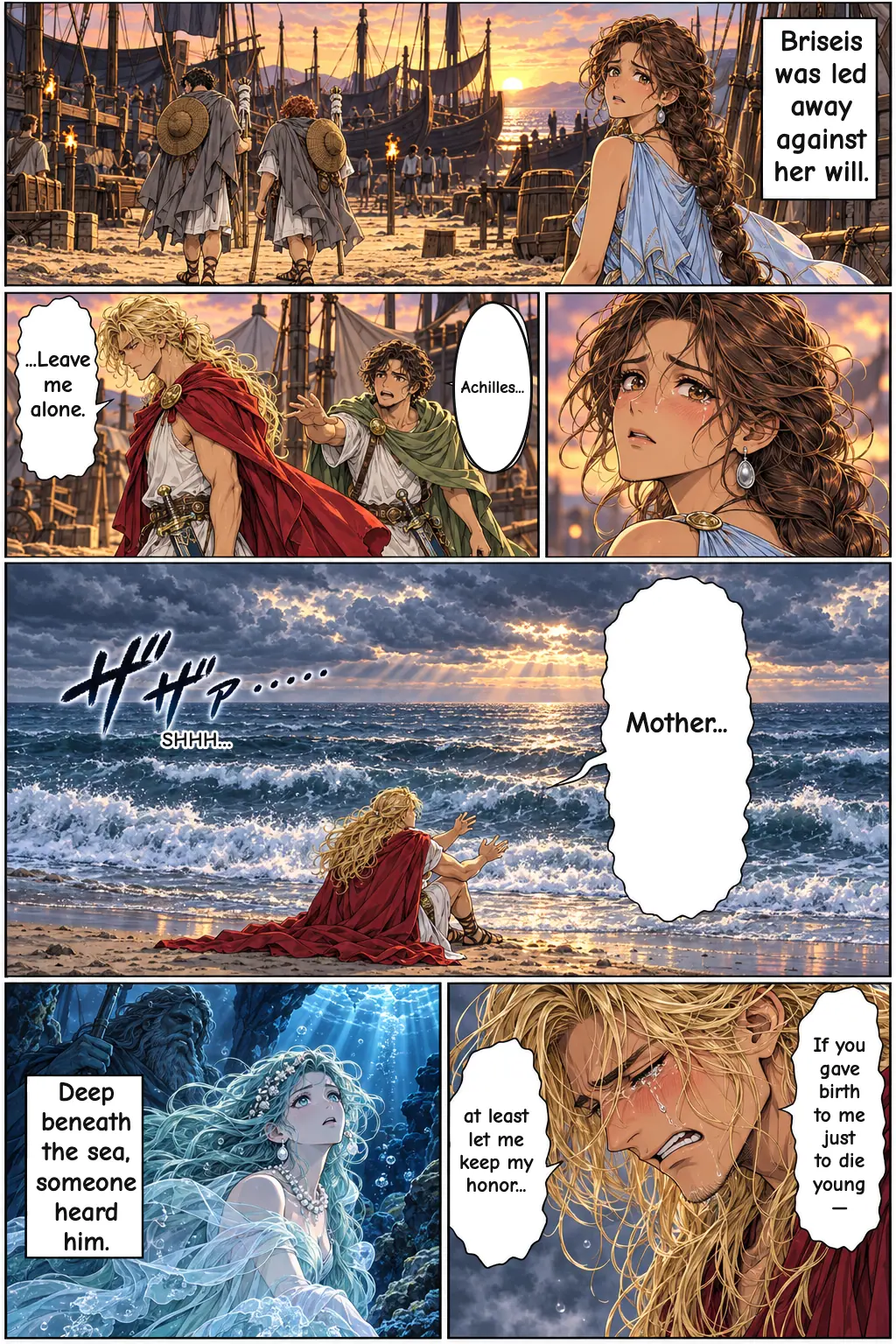
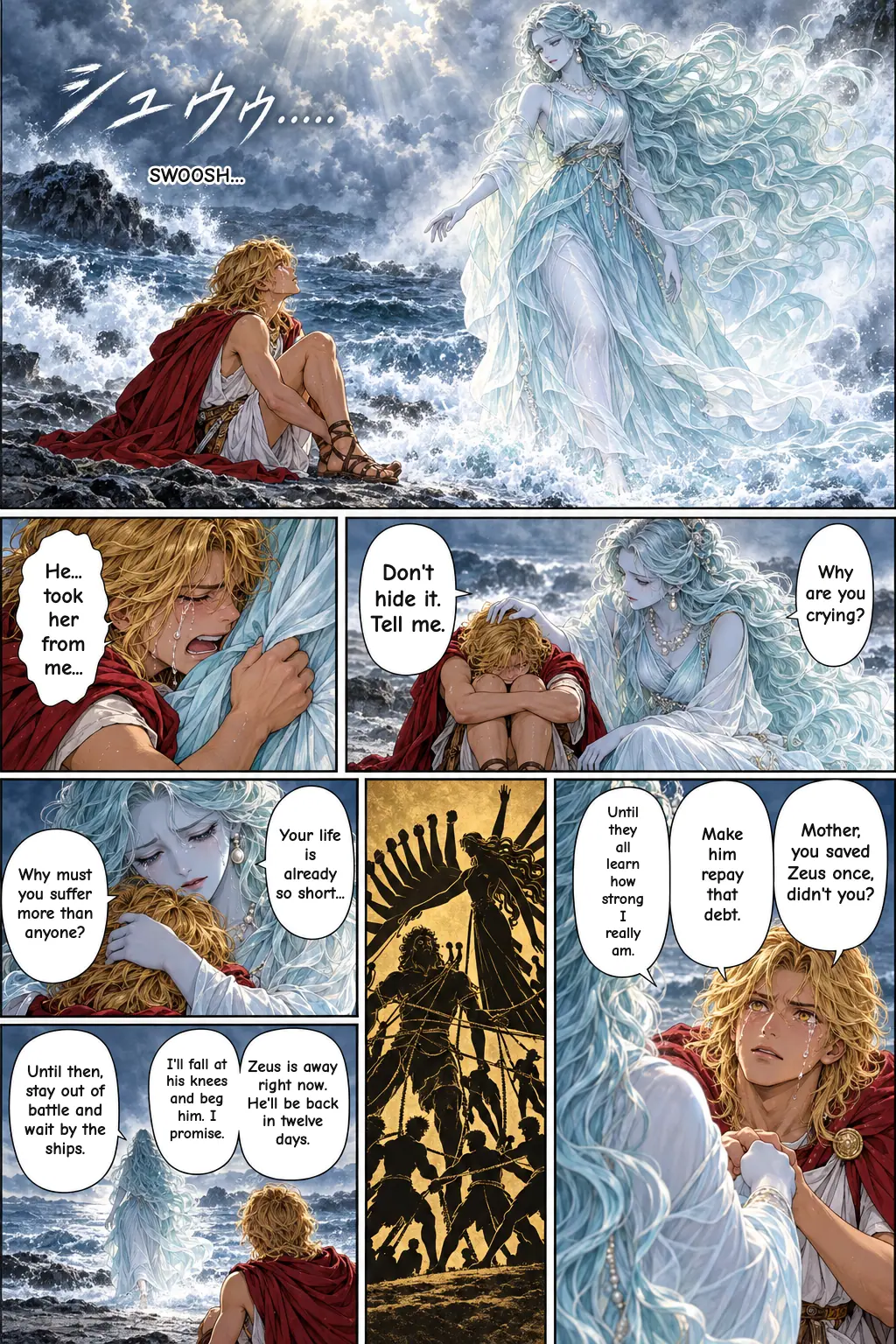
Agamemnon's heralds come for Briseis, and Achilles' companion Patroclus hands her over. Achilles makes a point of not blaming the messengers. Then he sits by the sea and weeps, and his mother Thetis, a sea goddess, rises from the waves like a mist. He asks her to beg Zeus to help the Trojans for a while, so the Greeks will learn what losing him costs them. Meanwhile Odysseus sails Chryseis home, the sacrifice is made, and Apollo ends the plague.
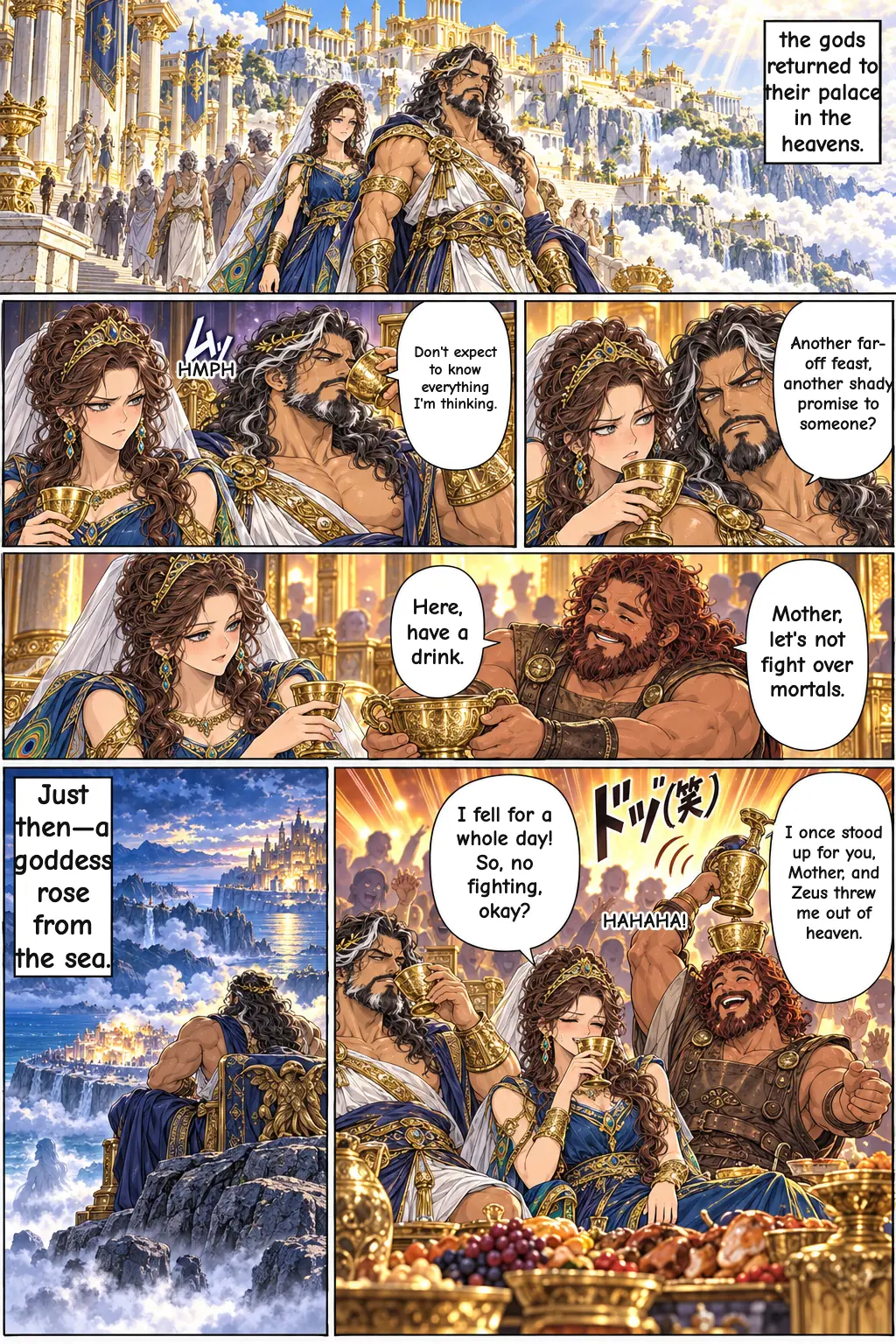
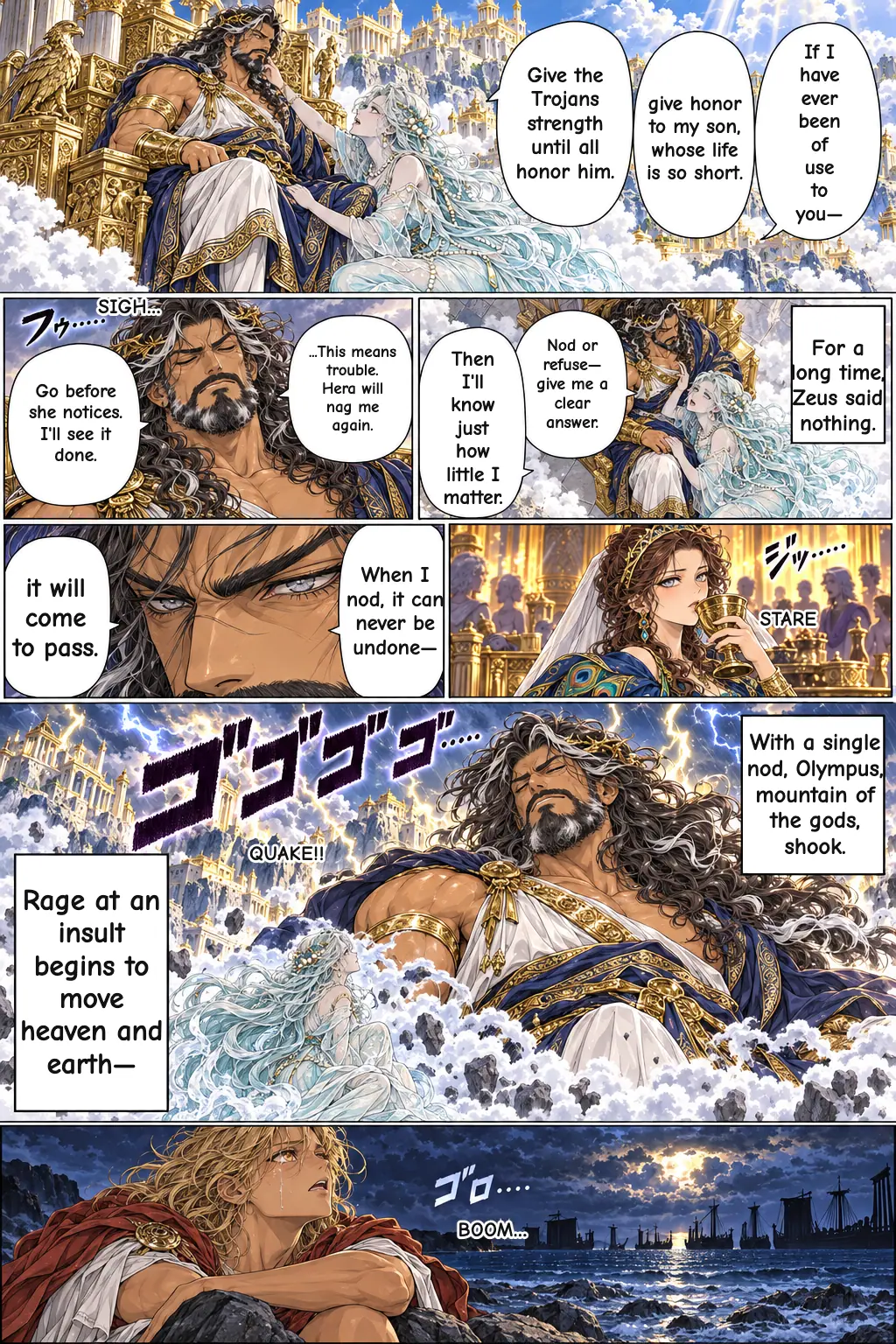
Twelve days later Thetis goes to Zeus on Olympus, clasps his knees and makes her request. Zeus nods his agreement, and great Olympus shakes. Hera notices and quarrels with her husband, until her son Hephaestus, the smith god, calms everyone down. The gods feast, laugh and go to sleep.
Main Characters of Iliad Book 1
Achilles, the son of the goddess Thetis, leads the Myrmidons from Phthia; in this book his mother already mourns that his life is fated to be short. Agamemnon is the proud commander of the Greeks. Chryses and his daughter Chryseis set the whole conflict in motion. Briseis is taken from Achilles and says nothing in this book, except that Homer notes she went unwillingly. Among the gods, Apollo sends the plague, Athena stops Achilles' sword, Hera watches over the Greeks, and Zeus makes the promise that will shape the rest of the war.
What the Wrath of Achilles Means (Cultural Background)
The Iliad was composed in a long tradition of oral poetry. Most scholars place its written form somewhere around the 8th or 7th century BCE. Homer's word for Achilles' anger, menis, is a weighty one that elsewhere tends to describe the anger of the gods. That choice hints at how terrible and far-reaching his rage will become.
At the heart of the quarrel is honor. In this warrior society a prize from the spoils of war was public proof of a man's worth, so losing Briseis in front of the whole army is a deep humiliation for Achilles, not just a personal loss. It is also worth remembering that Chryseis and Briseis are captives treated as property. The poem shows their situation without giving them a voice in this book. Thetis clasping Zeus's knees is a formal act of supplication, a sacred way of asking for help that was hard to refuse.
What exactly the will of Zeus means is debated. Some ancient readers, drawing on a lost epic called the Cypria, linked it to a divine plan to thin out the human race through war. Many modern readers, however, take it to mean simply the promise Zeus makes to Thetis at the end of this book.
What the Manga Changes
The manga follows the main events of Book 1 closely, but it makes some changes to suit the format. It opens with a short narration about how the war began, with Paris of Troy and Helen, the wife of Menelaus. Homer does not tell this story in Book 1; Achilles only mentions that the Greeks came to win honor for Agamemnon and Menelaus. Ancient versions disagree on whether Helen was taken by force or left willingly.
Most of the visual details are the artist's own invention: faces, armor, the layout of the camp, and the way Apollo's arrows and the plague appear on the page. Homer gives only a few physical details, such as Achilles' golden hair, Athena's grey eyes and Thetis's silver feet. Long passages are condensed, including Nestor's stories about older heroes, Odysseus's voyage to return Chryseis, and the feast on Olympus. The staging of Athena's appearance and of Olympus shaking at Zeus's nod is also the manga's own interpretation.
Where to Read It
If you want to see Apollo's plague, the clash in the assembly and Thetis at the knees of Zeus come to life, read Episode 1 of GREEK MYTHOLOGY: THE ILIAD — The Wrath of Achilles here on Manga Portal. Every episode is free, with no sign-up needed, so it's an easy way into one of the oldest stories in Western literature.
Characters in this episode
Achilles
The greatest Greek warrior and son of the sea goddess Thetis, whose anger at being dishonored is the subject of the Iliad.
Agamemnon
The proud commander of the Greek army, who insults Apollo's priest and then seizes Briseis from Achilles.
Chryses
An elderly priest of Apollo whose prayer for revenge brings a plague down on the Greek camp.
Briseis
A captive woman given to Achilles as his prize and taken from him by Agamemnon.
Athena
The grey-eyed goddess of wisdom who, unseen by anyone else, stops Achilles from drawing his sword.
Thetis
A sea goddess and Achilles' mother, who begs Zeus to honor her son by helping the Trojans.
FAQ
What happens in Book 1 of the Iliad?
Apollo sends a plague on the Greeks because Agamemnon insulted his priest. To end it, Agamemnon gives back the priest's daughter but takes Briseis from Achilles instead. Achilles withdraws from the war, and his mother Thetis gets Zeus to promise that the Greeks will suffer without him.
Why is Achilles angry in the Iliad?
Agamemnon publicly takes Briseis, Achilles' prize of honor, in front of the whole army. For Achilles this is a deep insult to his status as the best warrior, so he refuses to fight.
Why did Apollo send a plague on the Greeks?
Agamemnon refused the ransom offered by Chryses, Apollo's priest, for his captured daughter and drove him away with threats. Chryses prayed to Apollo for revenge, and the god shot plague arrows into the Greek camp for nine days.
Why does Athena stop Achilles?
Hera, who cares for both Achilles and Agamemnon, sends Athena to keep Achilles from killing the king. Athena tells him to fight with words instead and promises he will later receive gifts three times greater.
Does the Iliad tell the story of the Trojan Horse?
No. The Iliad covers only a few weeks in the tenth year of the war and ends before Troy falls. The Trojan Horse is mentioned in Homer's Odyssey and told more fully in later works such as Virgil's Aeneid.