Episode 6He Wanted to Hear the Song That KillsThe Sirens
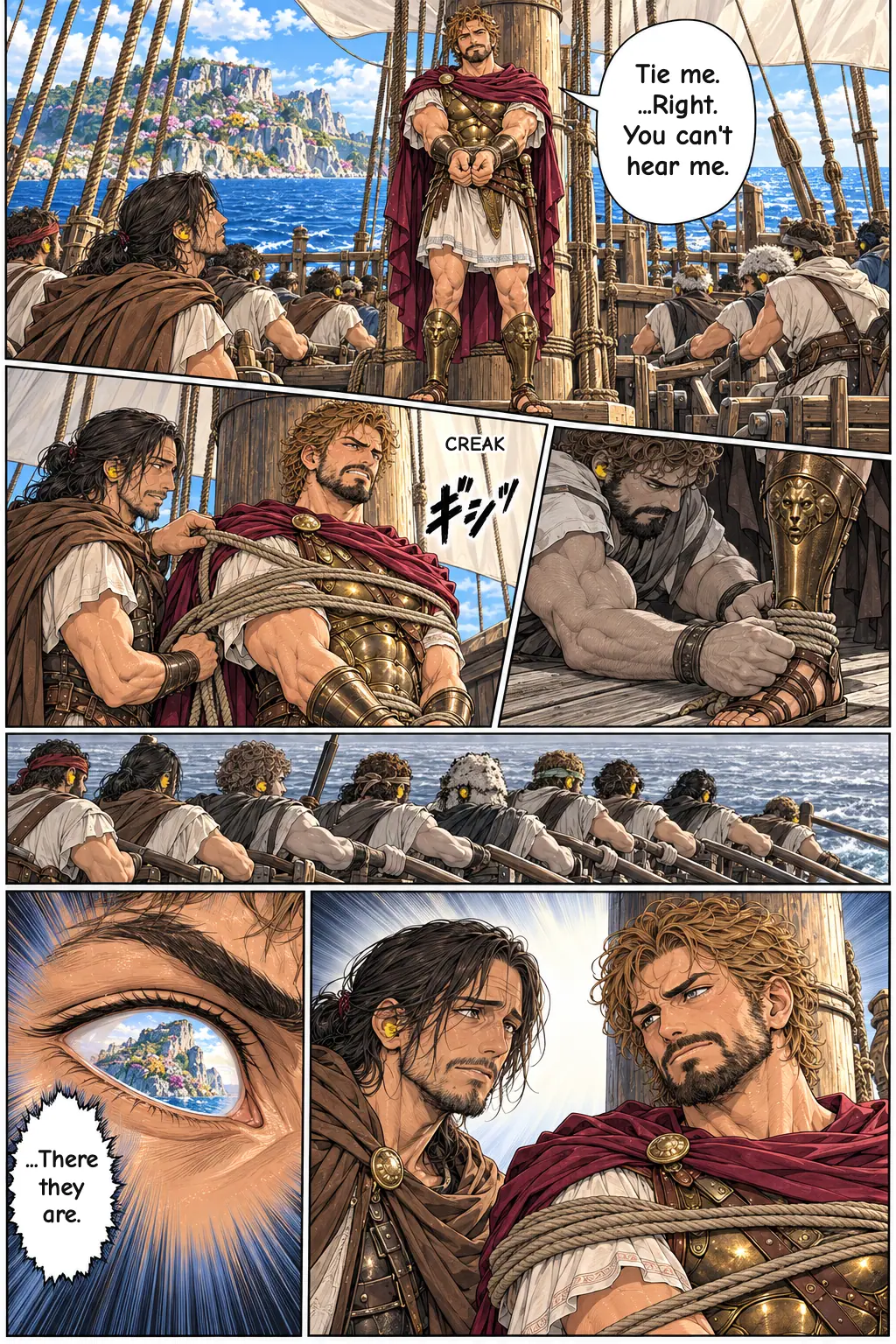
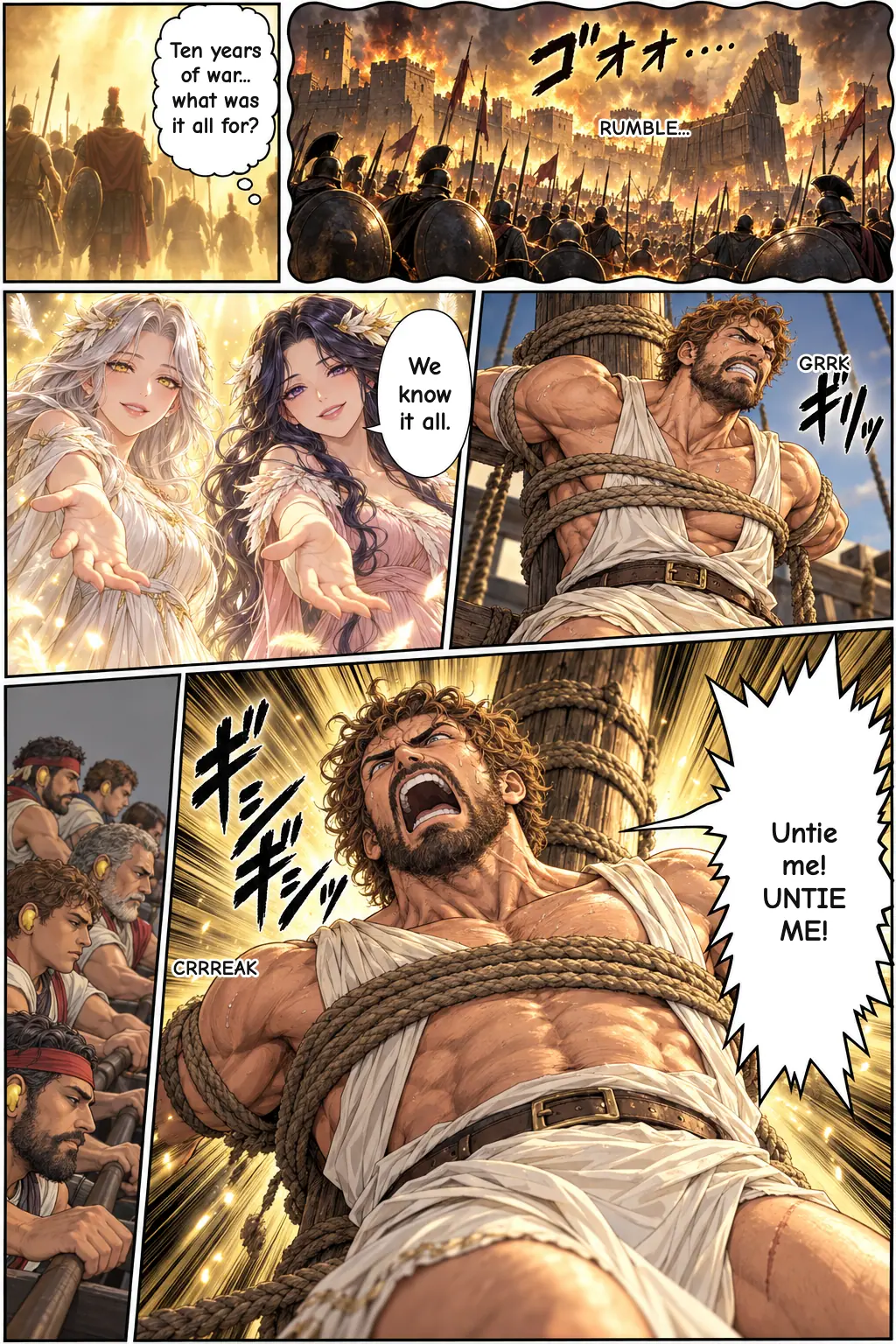
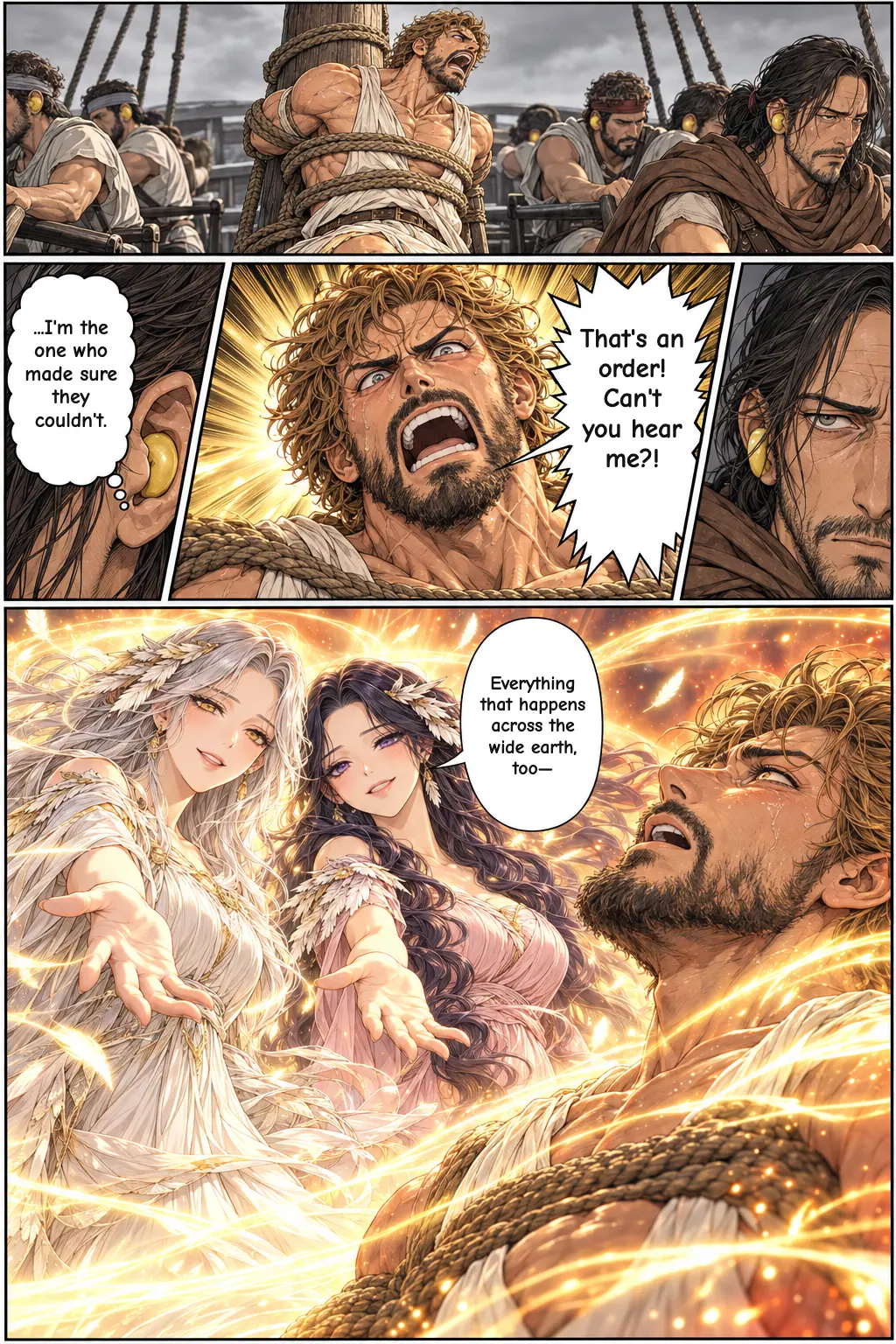
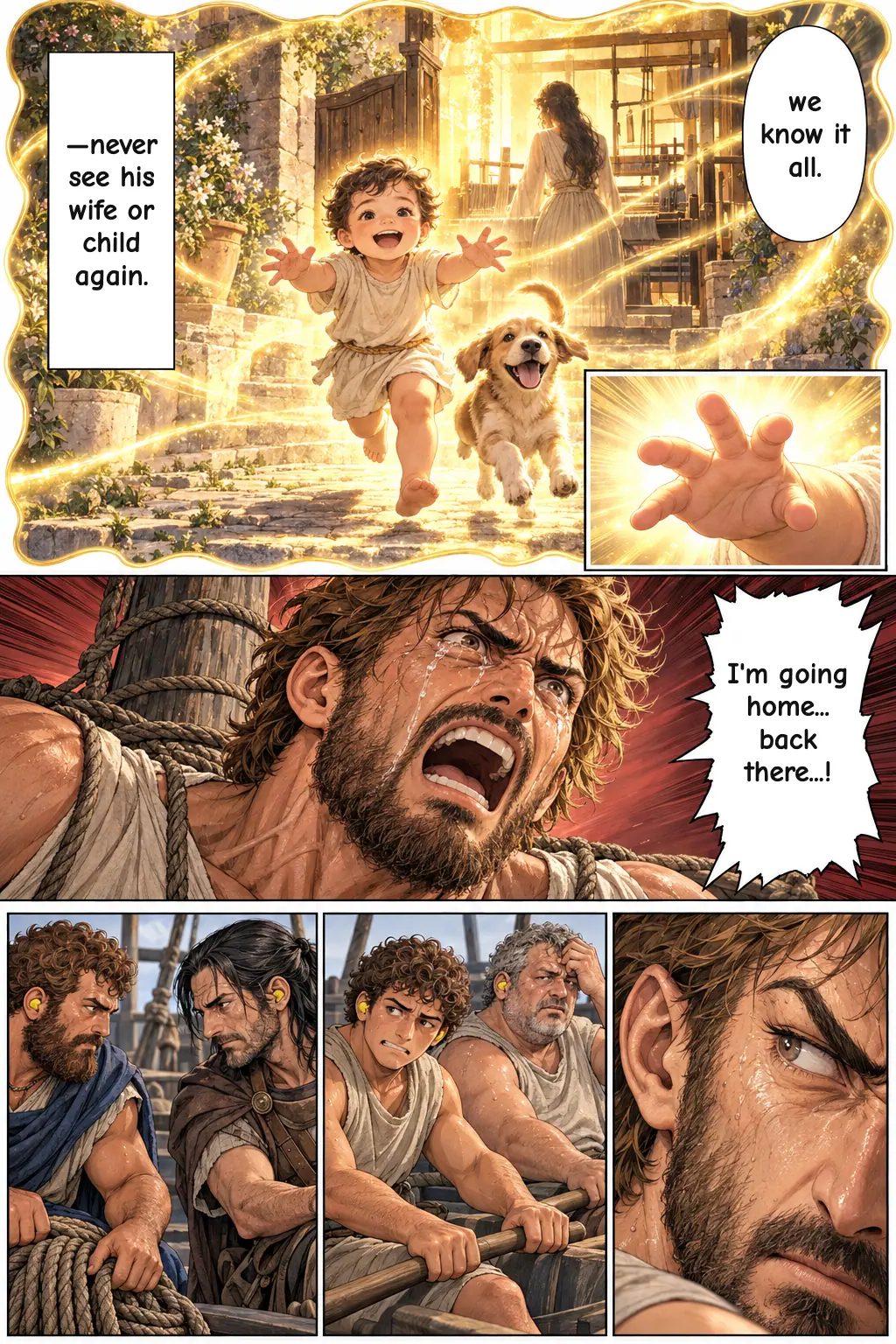
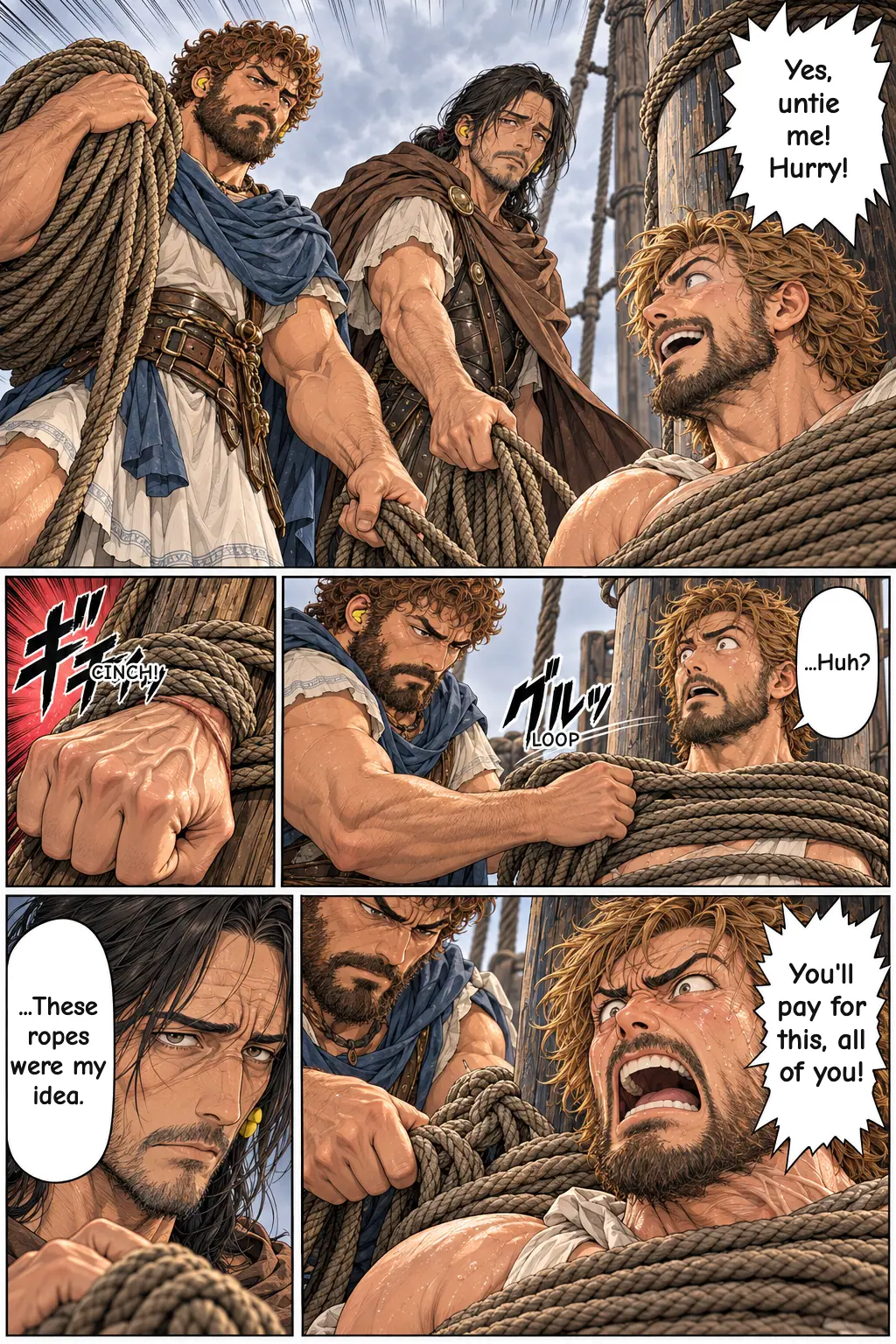
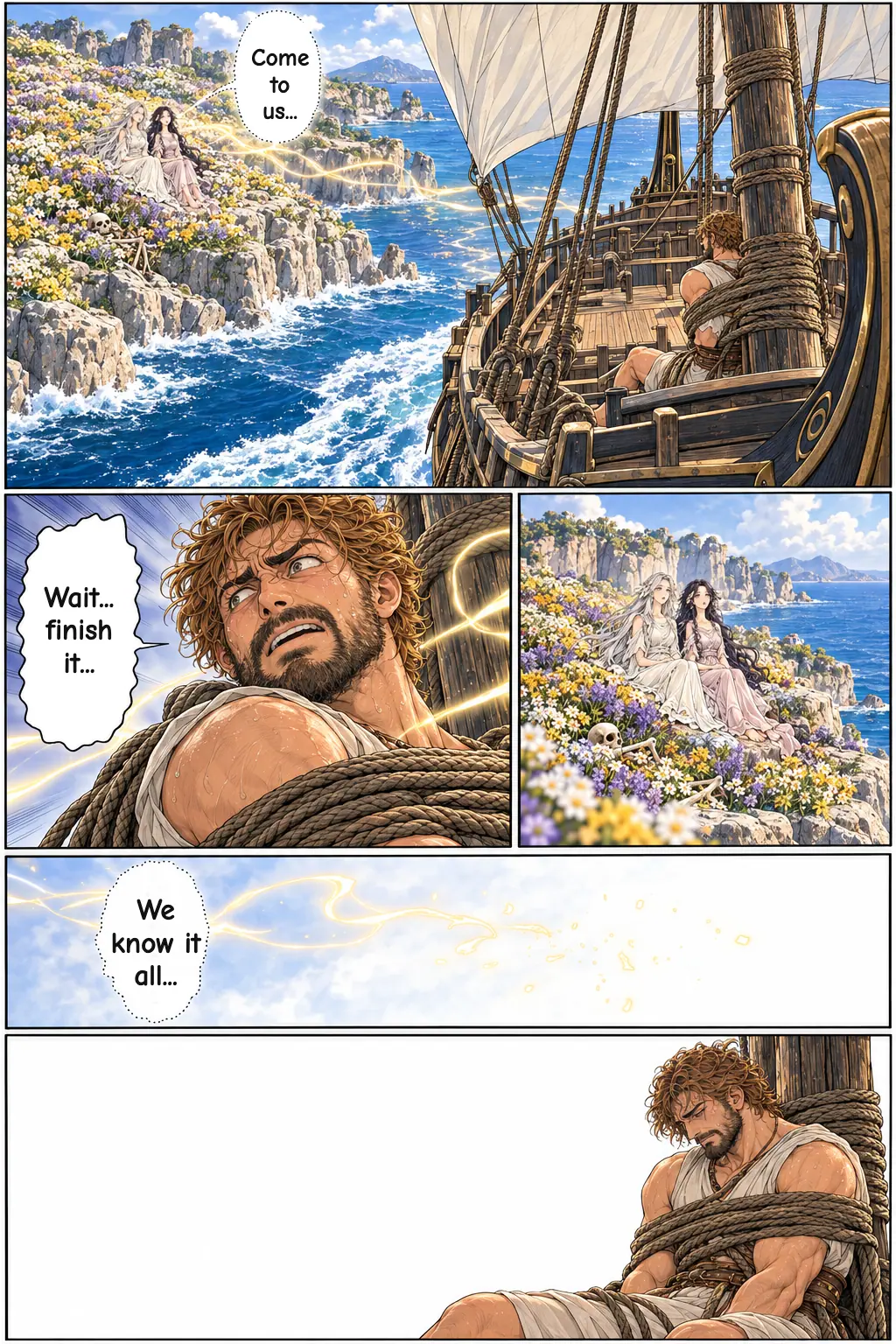
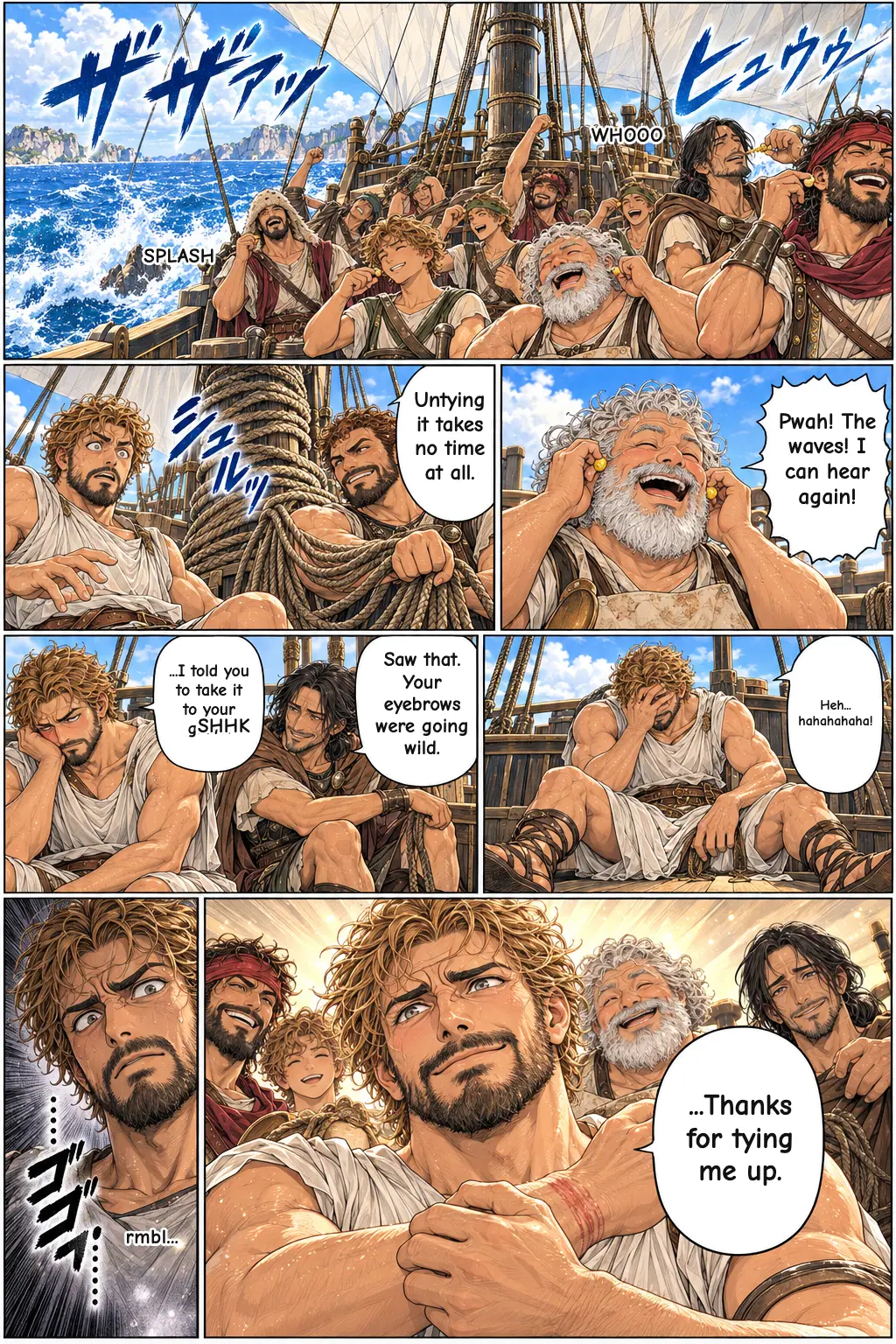
Odysseus wants to hear the Sirens' song, which promises to answer any question. Knowing from the start that he'll lose to it, he has his crew tie him to the mast. When the song takes hold and he screams, "Untie me!", his men, their ears stuffed with wax, only pull the ropes tighter. The promise he made before the song began is what saves him.
Odysseus and the Sirens Explained: The Odyssey Book 12 Story and Meaning
Circe's Warning: How the Sirens Episode Begins
The Sirens episode comes from Book 12 of Homer's Odyssey, an ancient Greek epic poem usually dated to around the 8th century BCE (the exact date is debated). Odysseus, the Greek hero trying to get home after the Trojan War, tells the whole adventure himself, years later, to King Alcinous and his court on the island of the Phaeacians.
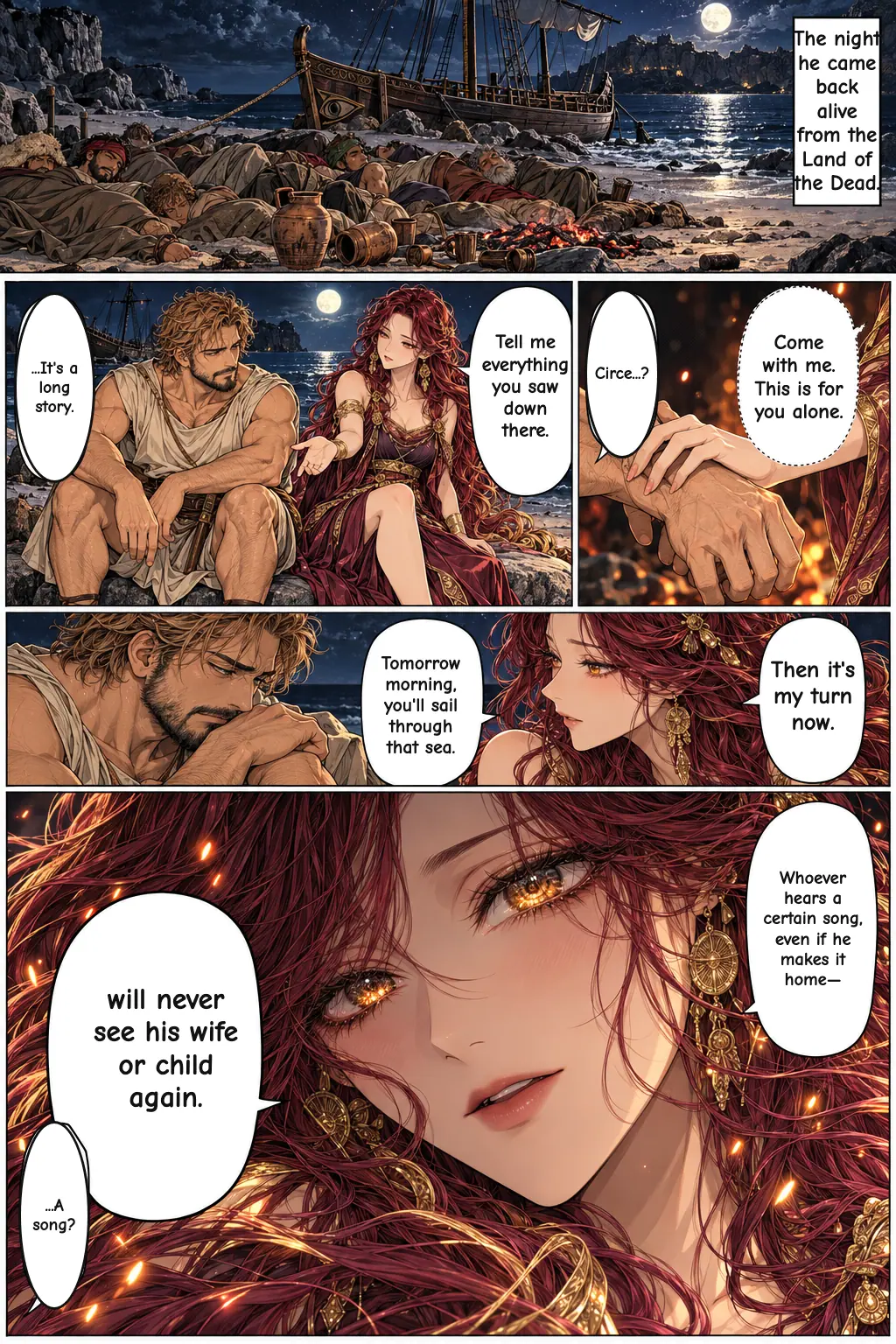
The story starts after Odysseus and his crew return from the underworld. Circe, the goddess who lives on the island of Aiaia, greets them with bread, meat and red wine, and calls them people who will die twice, since they have already gone down to the land of the dead while still alive. She lets them feast for a full day. That night, she takes Odysseus aside and maps out the dangers ahead.
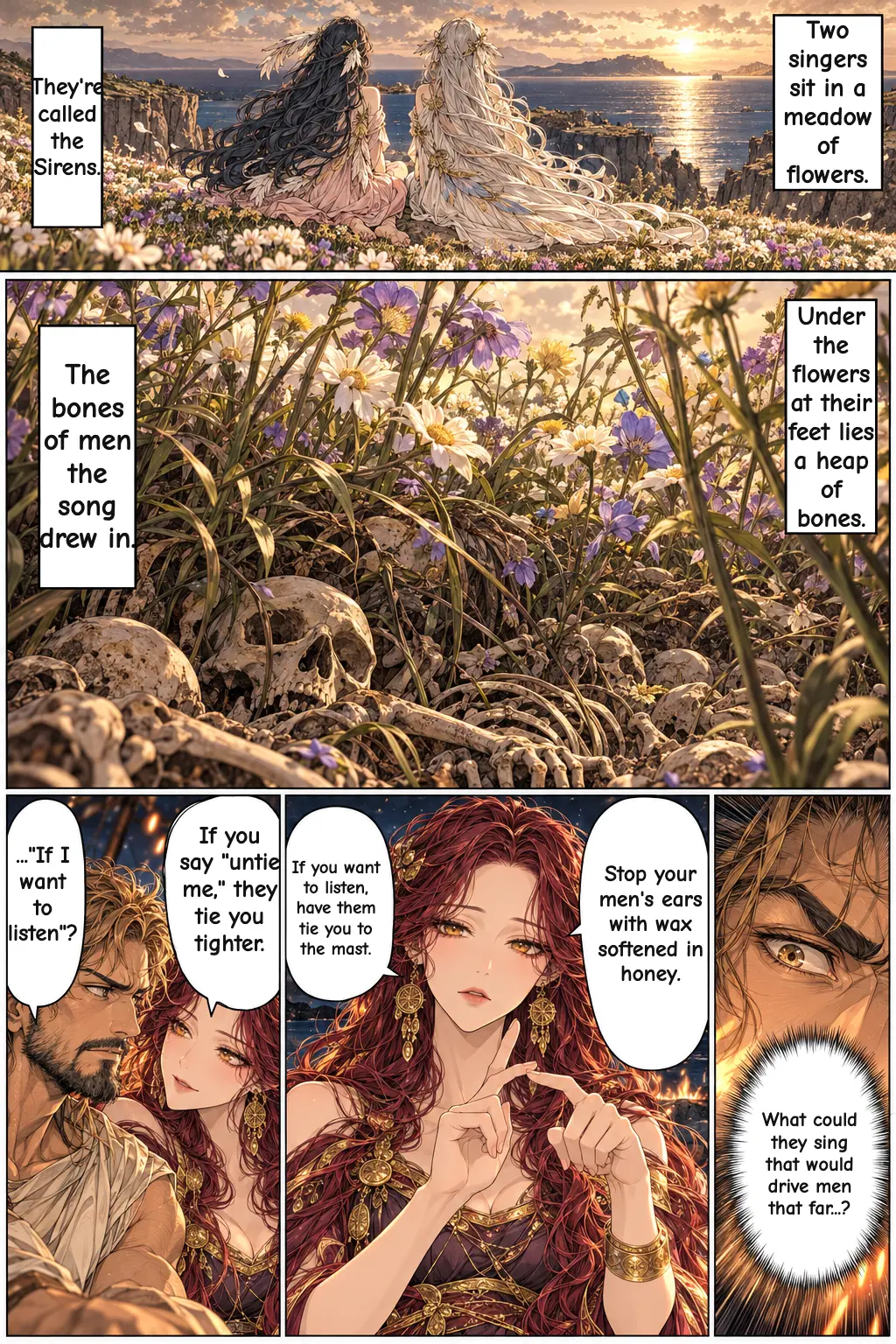
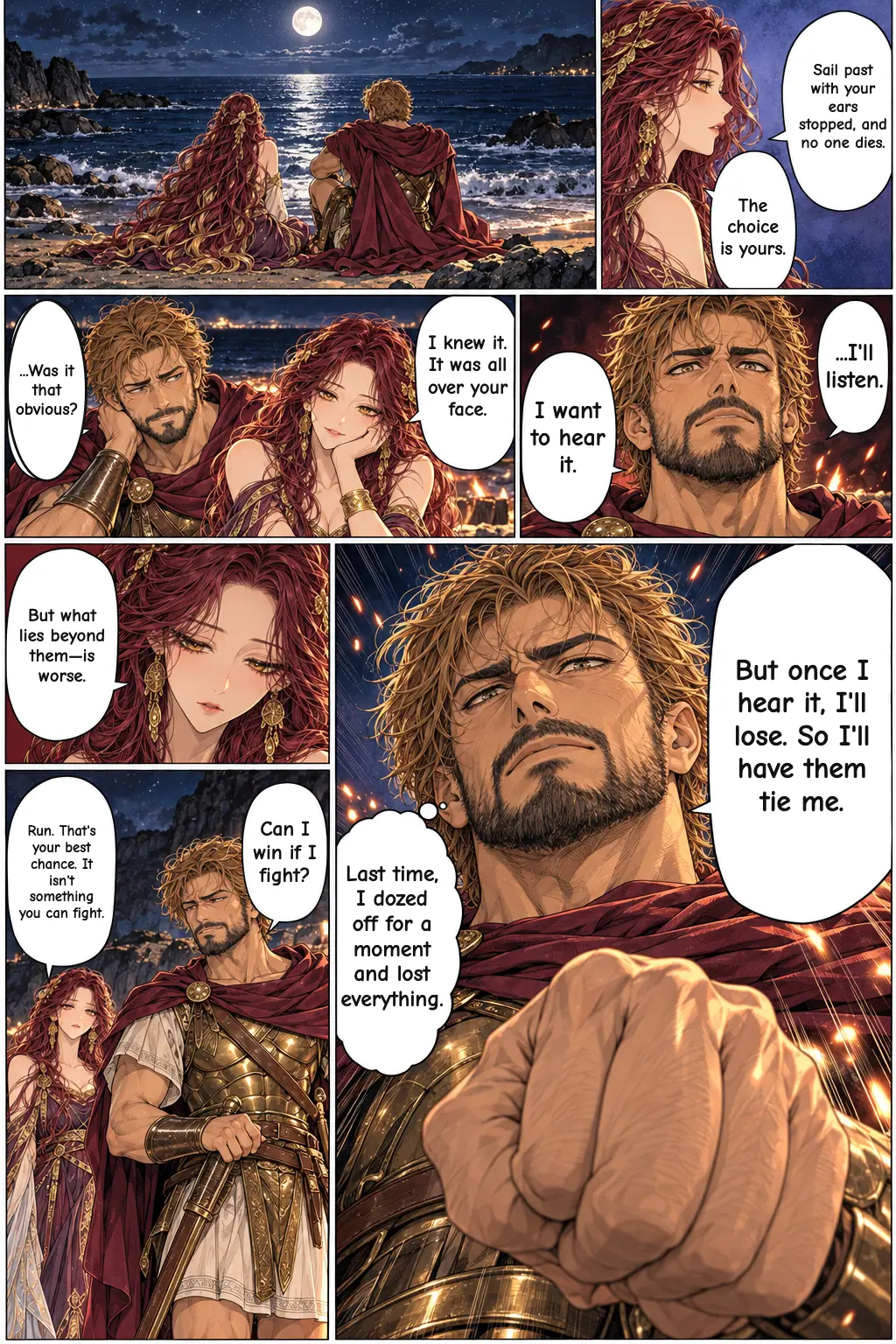
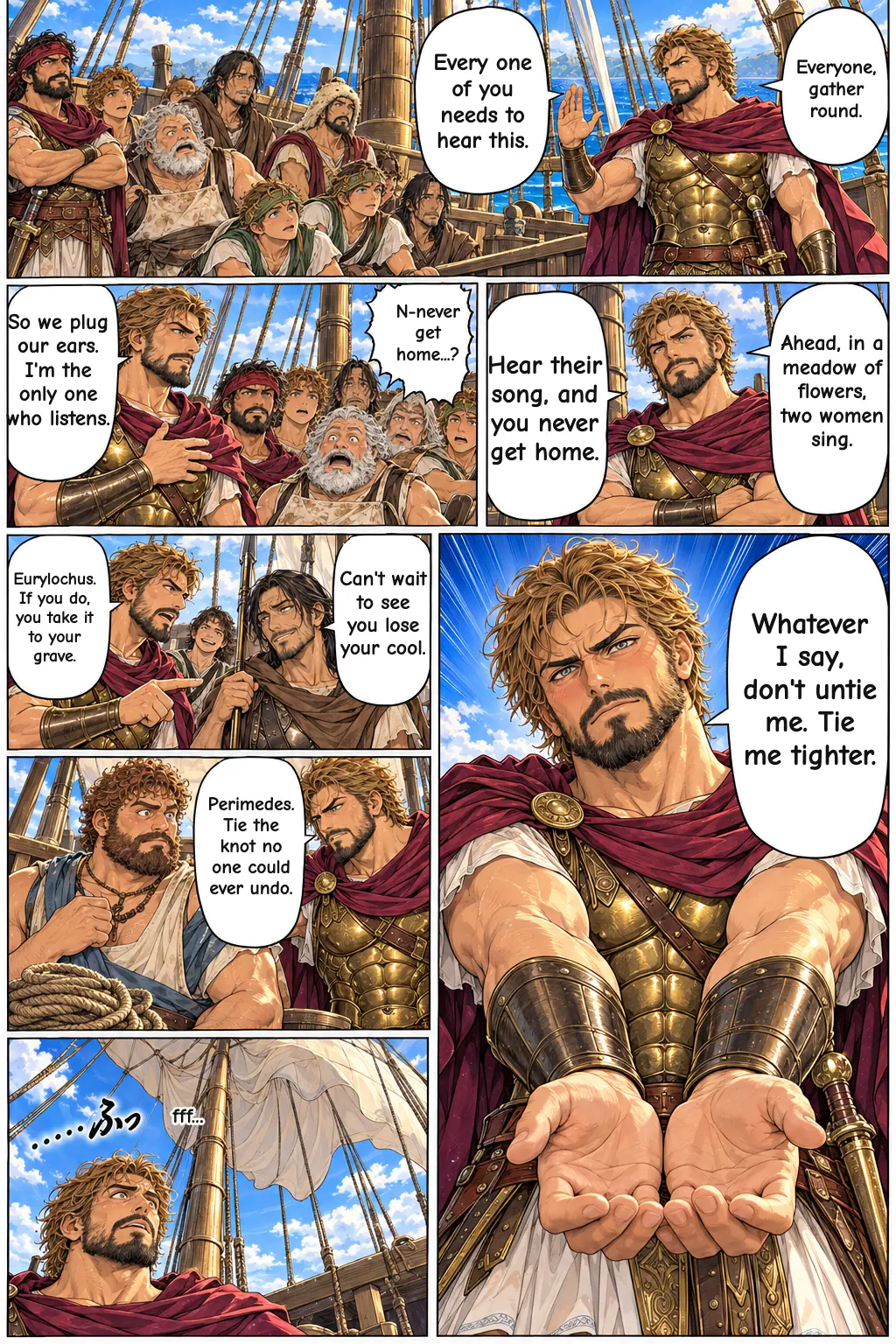
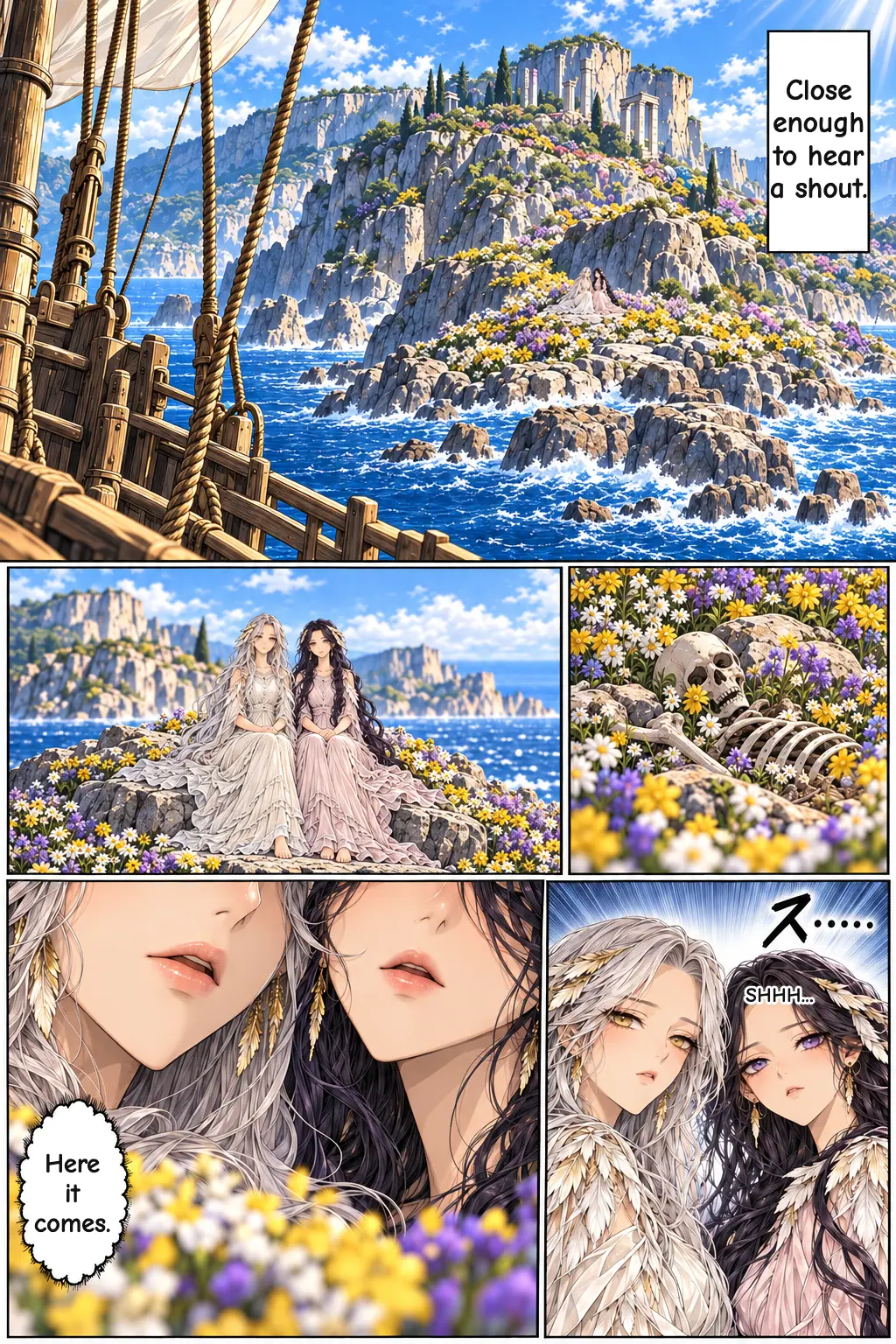
First come the Sirens. Anyone who sails up to them without knowing and hears their voice never gets home to his wife and children. They sit in a meadow and sing, surrounded by heaps of rotting human bones and shriveled skin. Circe's advice is simple: soften wax and plug the crew's ears. If Odysseus himself wants to listen, he must be tied upright to the mast, and if he begs to be set free, his men must tie him even tighter. She also warns him about the Wandering Rocks, the monster Scylla, the whirlpool Charybdis, and the cattle of Helios, the sun god.
The Original Myth: Sailing Past the Sirens
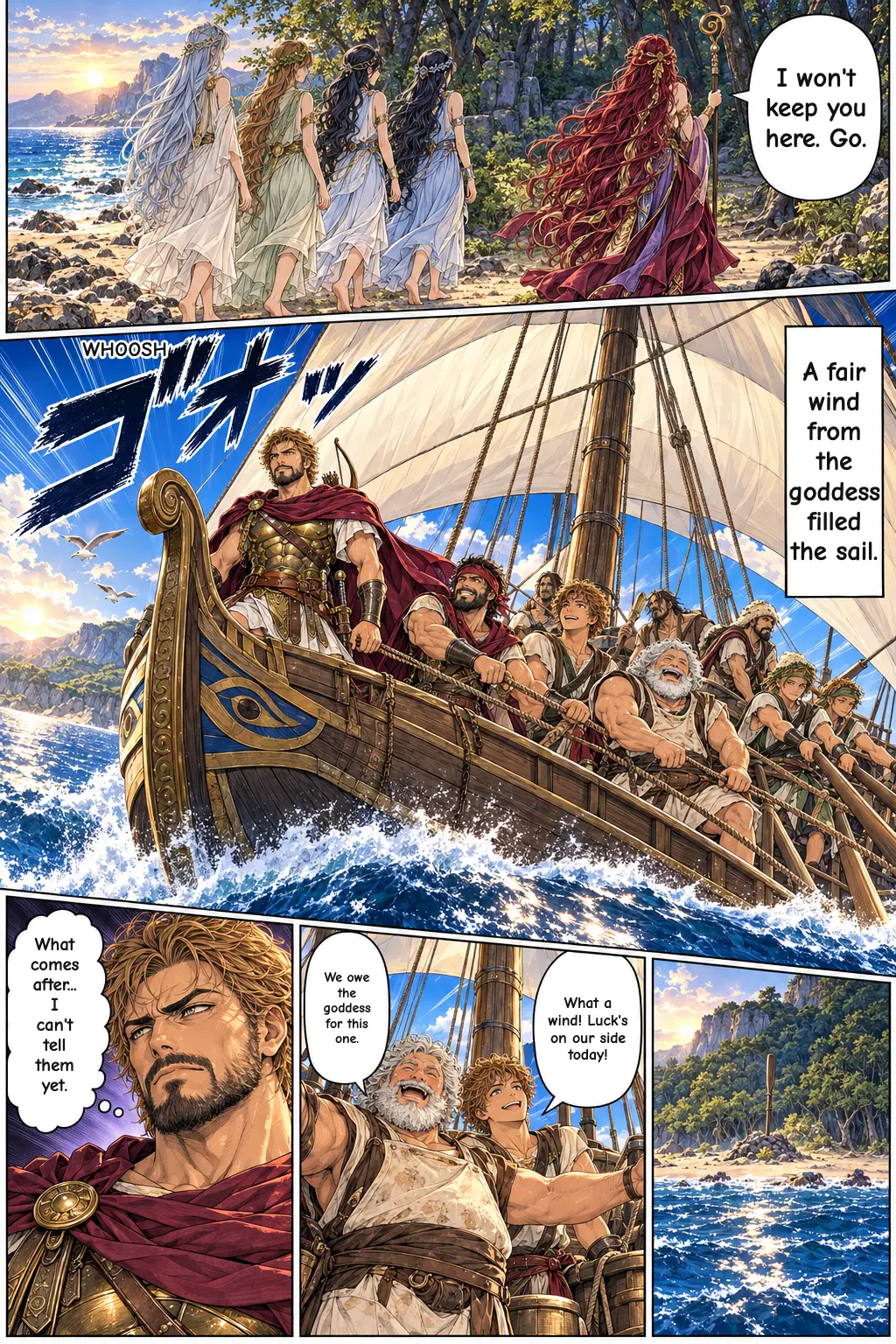
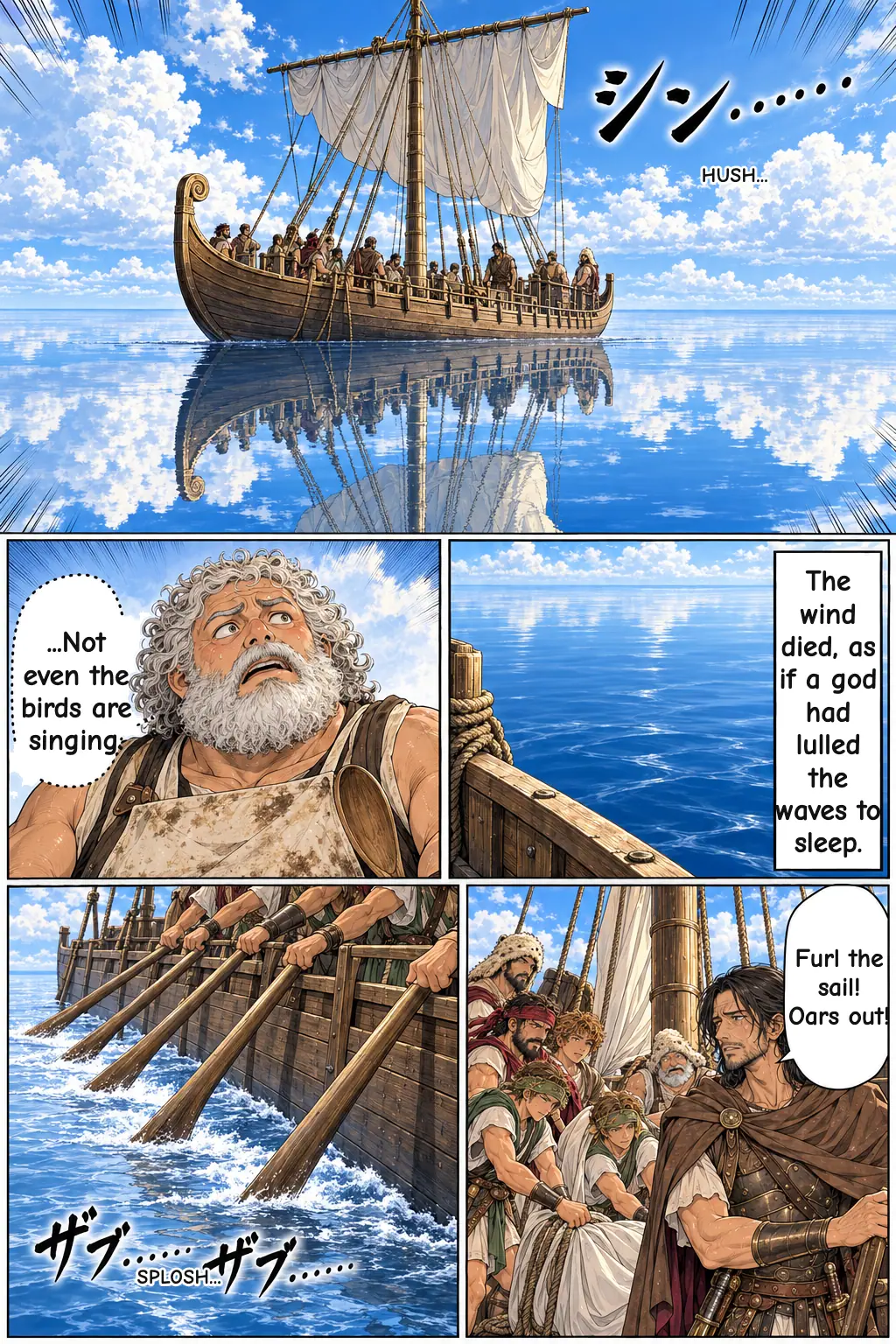
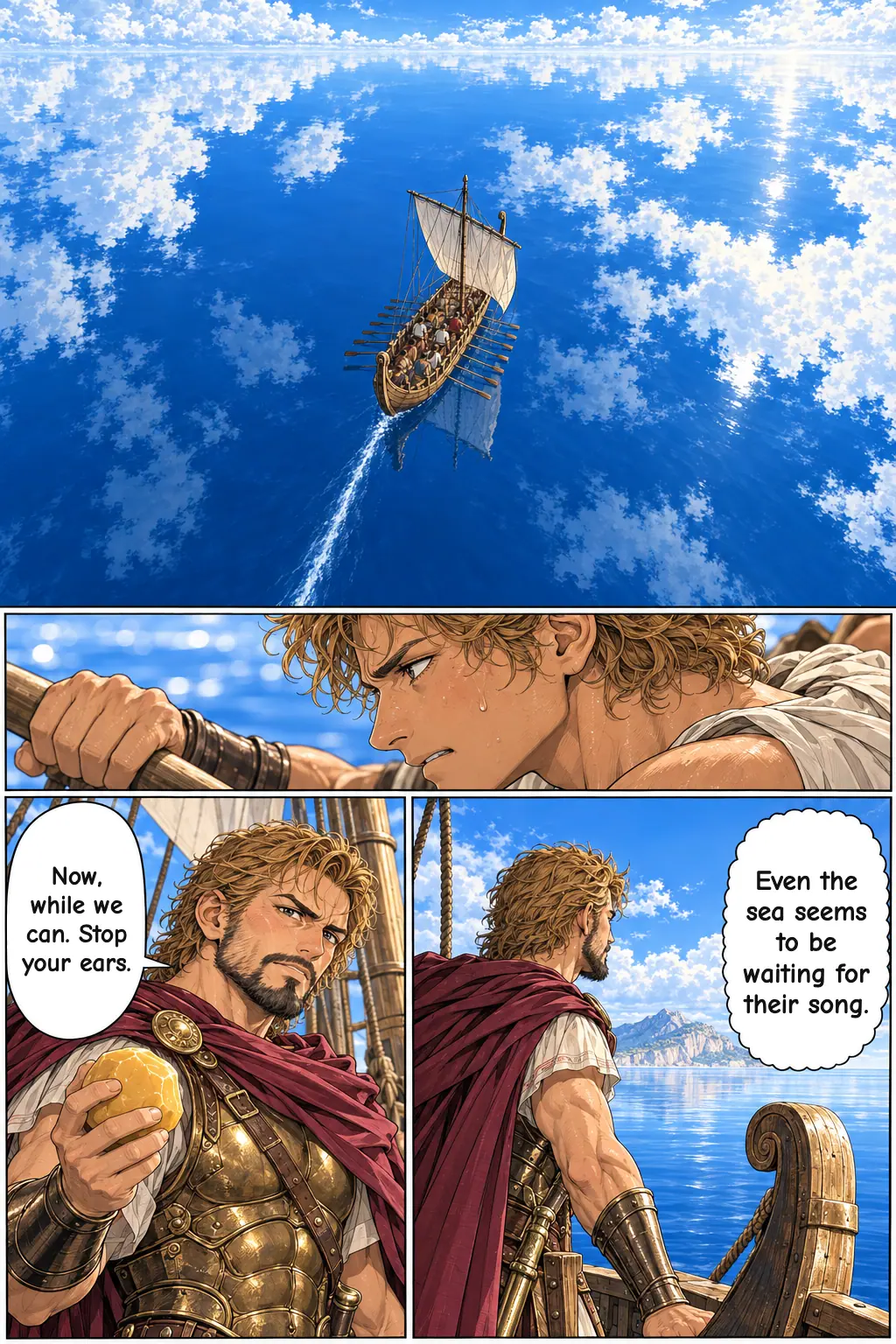
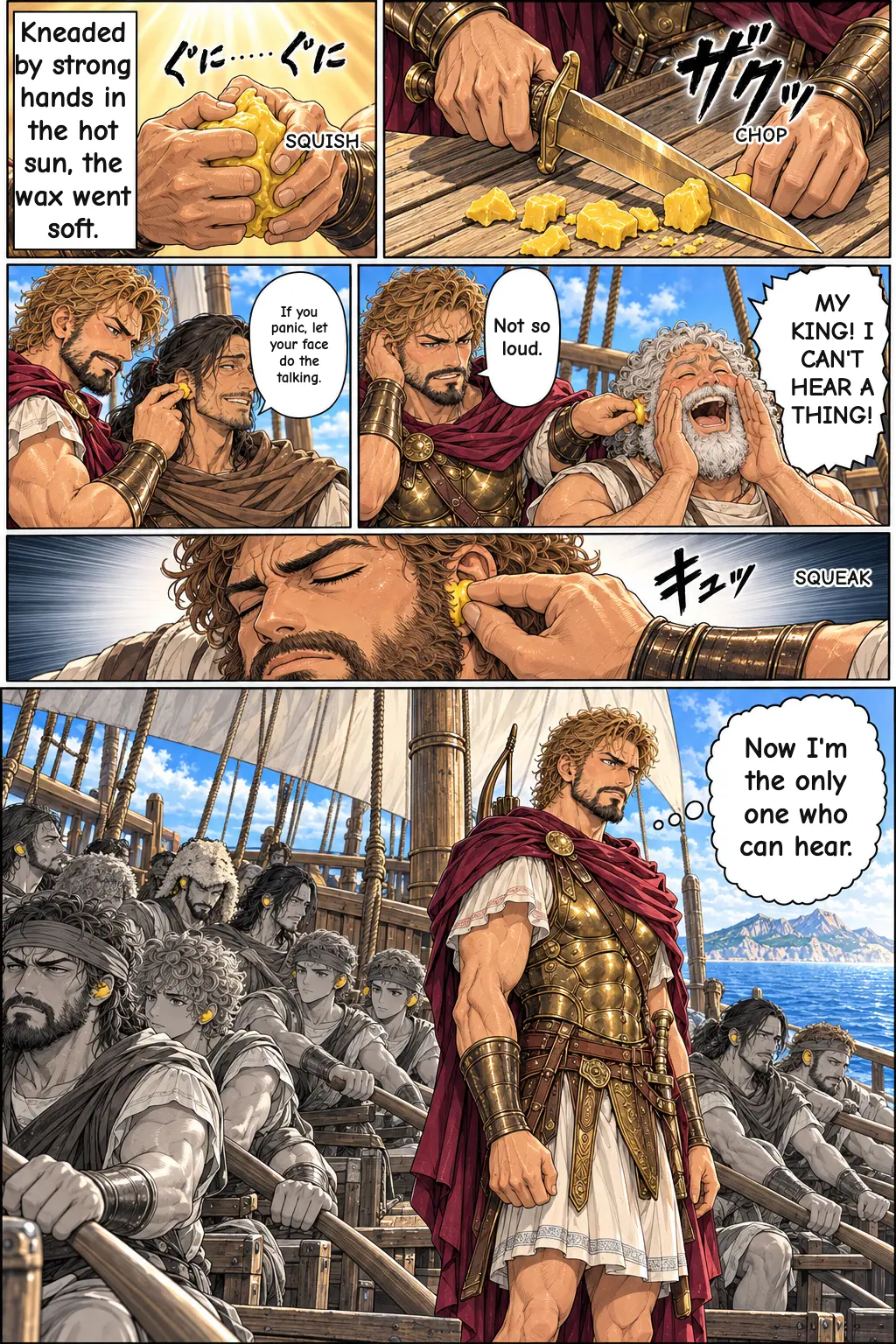
In the morning they sail, and Odysseus shares the Sirens part of the warning with his crew instead of keeping it to himself. Near the Sirens' island the wind dies and the sea goes completely flat. Odysseus cuts a block of wax with his bronze sword, works it soft in his hands under the sun, and seals each man's ears. The crew bind him to the mast and row hard.
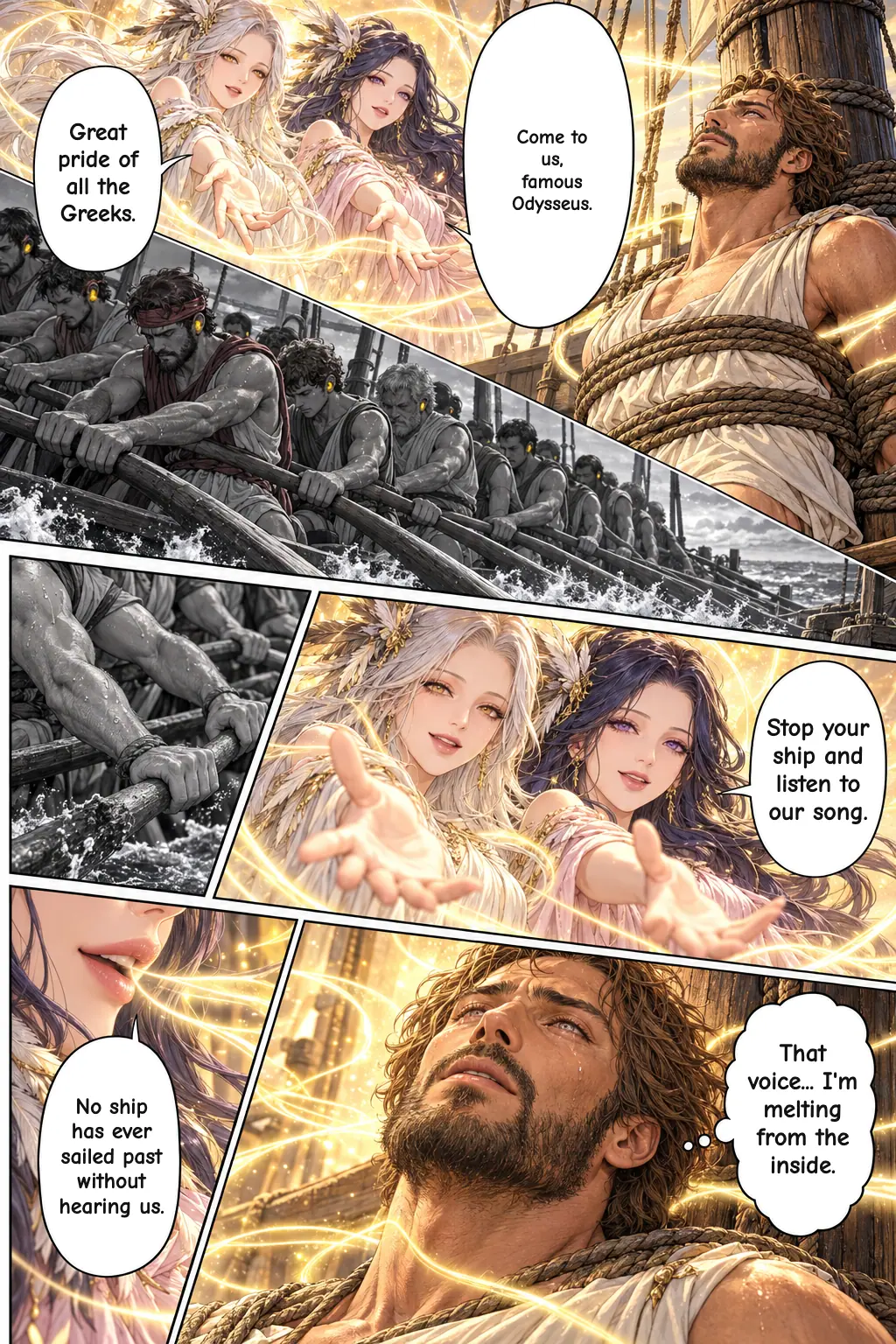
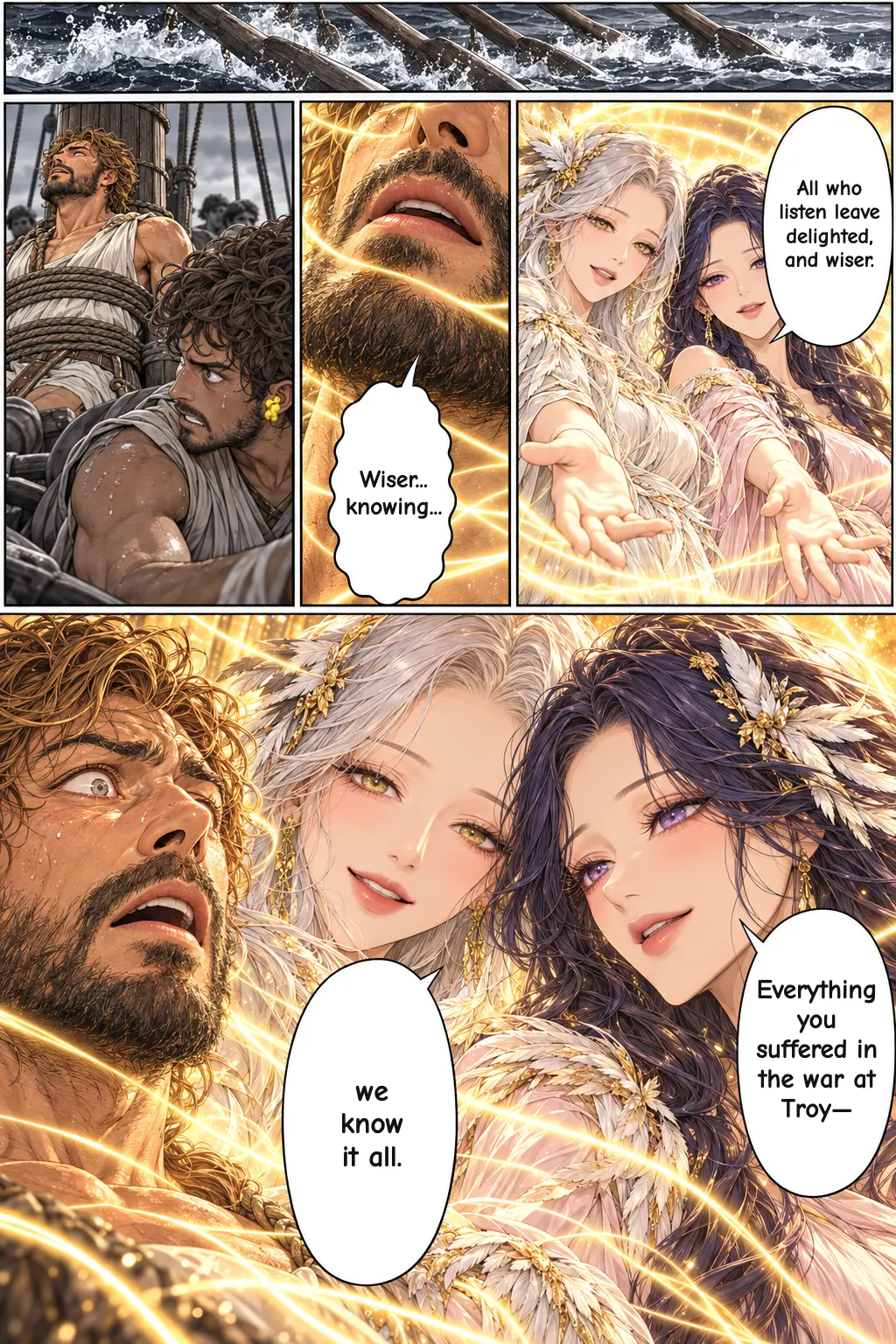
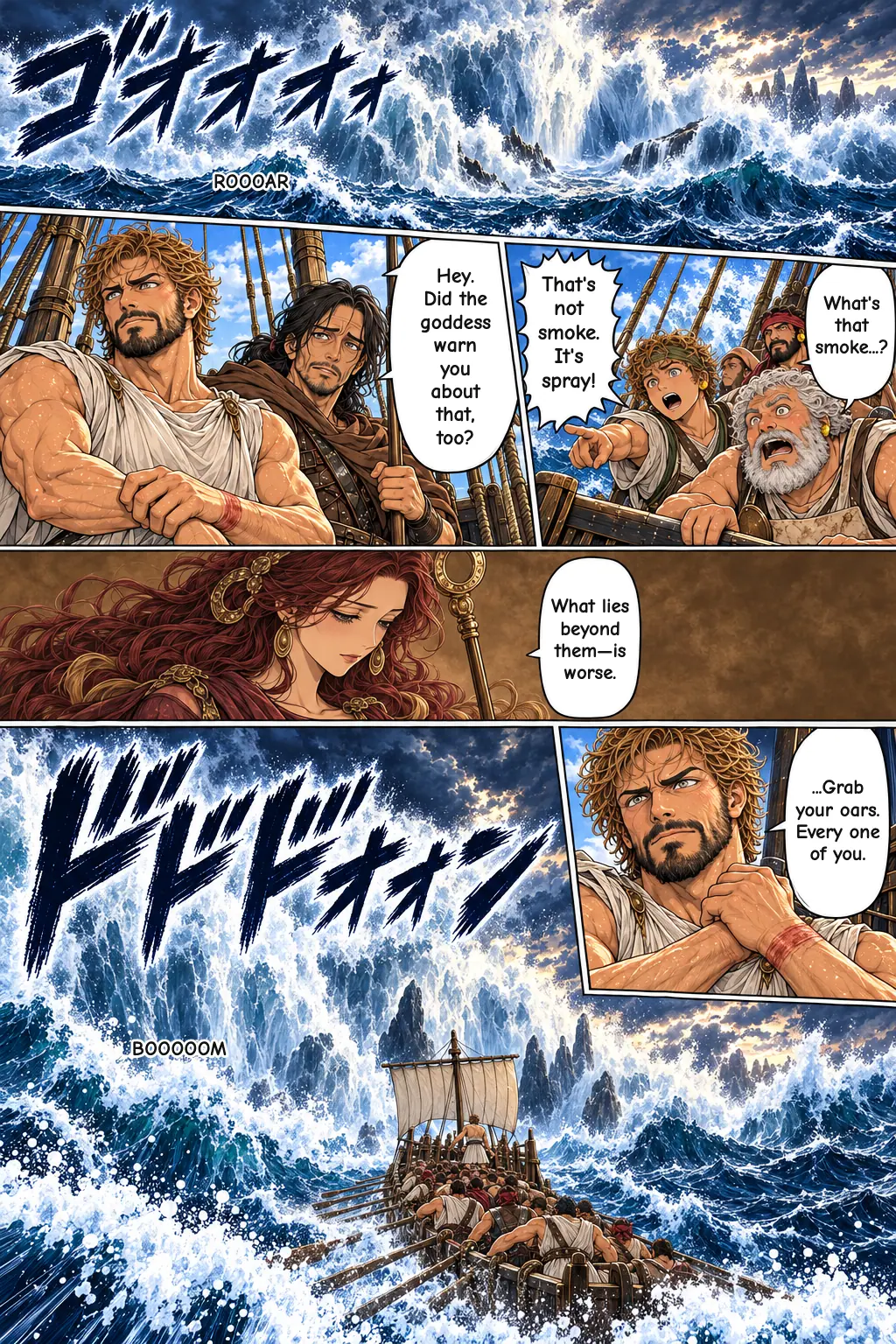
The Sirens spot the ship and sing to him by name. They promise that no one sails past without hearing them, and that listeners leave knowing more, because they know everything the Greeks and Trojans suffered at Troy and everything that happens on earth. Odysseus longs to go to them and signals with his eyebrows to be untied. Instead, two of his men, Perimedes and Eurylochus, jump up and add more ropes. Only when the song fades do the crew take out the wax and free him. Right after this, Odysseus sees smoke and huge waves and hears a roar ahead: the next danger is already in sight.
Main Characters
Odysseus is the clever king of Ithaca. In this episode he is curious enough to want to hear a deadly song, but wise enough to plan for his own weakness before it arrives. Circe is not an enemy here: she is a host and guide, and when the crew leave she even sends them a helpful wind.
The Sirens are much more mysterious than most people expect. Homer never describes what they look like, never names them, and never gives their family. The Greek grammar uses a dual form (a word form for exactly two), so the poem seems to picture two Sirens. The famous image of Sirens as bird-bodied women comes from later Greek art, not from the Odyssey. Eurylochus and Perimedes are two of Odysseus's crew, and their one job in this scene is to keep their promise and tighten the knots.
What the Myth Means: A Song About Knowledge
The most surprising detail in Homer is what the Sirens actually offer. Their song does not promise pleasure or love. It promises knowledge: the full story of the Trojan War and everything happening in the world. For Odysseus, a man defined by curiosity and by that war, this is the perfect trap. The danger is not a monster's teeth but the wish to know more.
The episode is also often read as a picture of self-control. Odysseus cannot trust himself once the song begins, so he makes a decision in advance and gives his crew permission to ignore him later. People still use the phrase "tying yourself to the mast" for this kind of pre-commitment. It is also a story about trust: the plan works only because the crew keep their word even when their captain orders the opposite.
In a later epic, the Argonautica by Apollonius of Rhodes, the Argonauts escape the Sirens in a different way, with the singer Orpheus drowning out their voices with his own music. Homer's version stands out because the hero chooses to listen and survives anyway.
What the Manga Changes
The manga follows Homer's main events closely: Circe's warning, the wax in the crew's ears, Odysseus tied to the mast, the song about Troy, and the men tightening the ropes instead of untying them. Some parts are creative additions made for the comic format.
In Homer, Odysseus only signals with his eyebrows. In the manga he screams "Untie me!", a shout his crew can't hear through the wax. The visions he sees while the song plays, of the battlefield at Troy and of coming home, are invented. Still, they fit the Sirens' promise to tell the story of Troy, and they echo Circe's warning that listeners never return to their families. The Sirens' appearance, the sound of their song, the faces of the crew, and the details of the feast and the island are all the artist's design, because the original text does not describe them. The final hint of the next danger is drawn as spray rising like smoke, which stays close to Homer's smoke, waves and roar.
Where to Read It
If you want to see this scene come to life, Episode 6 of GREEK MYTHOLOGY: THE ODYSSEY — The Twenty-Year Voyage Home on Manga Portal tells the Sirens story from Circe's night-time warning to the moment the ropes pull tight. Every episode is free to read, with no sign-up needed. You can start here, or go back to the beginning and follow Odysseus's whole twenty-year voyage home.
Characters in this episode
Odysseus
The clever Greek king of Ithaca, who chooses to hear the Sirens' song but has himself tied to the mast so he can't give in to it.
Circe
A goddess on the island of Aiaia who hosts the crew and warns Odysseus exactly how to survive the Sirens and the dangers beyond.
The Sirens
Mysterious singers, apparently two in Homer, who lure sailors to their death with a song promising knowledge of everything.
Eurylochus
A senior member of Odysseus's crew who leaps up to tie his captain even tighter when the song takes hold.
Perimedes
A crew member who helps Eurylochus add more ropes, keeping the promise made before the song began.
The crew
Odysseus's rowers, who sail past the Sirens with wax in their ears and free him only once the song has faded.
FAQ
Why did Odysseus tie himself to the mast?
Circe warned him that anyone who hears the Sirens' song never makes it home. Odysseus wanted to hear it anyway, so he had his crew tie him to the mast and told them to tie him tighter if he begged to be freed.
What did the Sirens sing to Odysseus?
In Homer's Odyssey, the Sirens call Odysseus by name and promise that he will leave wiser. They claim to know everything the Greeks and Trojans suffered at Troy and everything that happens on earth.
How did Odysseus's crew avoid hearing the Sirens?
Odysseus cut a block of wax with his sword, softened it in his hands, and plugged each crewman's ears. Because they couldn't hear the song or his orders, they kept rowing until the ship was safely past.
What do the Sirens look like in the Odyssey?
Homer does not describe their appearance at all. The poem's grammar suggests there are two of them, and the popular image of bird-women with human heads comes from later Greek art.
Which book of the Odyssey has the Sirens?
The Sirens appear in Book 12 of the Odyssey. Circe warns Odysseus about them early in the book, and the ship passes their island soon afterward, just before the encounter with Scylla and Charybdis.