Episode 5What the Greatest Hero Said After DeathThe Nekyia — Journey to the Underworld
At the lightless edge of the world, Odysseus summons the dead—yet even when his own mother appears, he keeps his sword raised so the prophet can drink the blood first. Three times her shade slips through his arms, and the heroes of Troy speak their hearts. Odysseus learns what it truly means to come home alive.
The Nekyia Explained: Odysseus in the Underworld (Odyssey Book 11 Summary)
The Original Myth: Calling Up the Dead
The Nekyia is the name given to Book 11 of Homer's Odyssey, the ancient Greek epic usually dated to around the 8th century BCE. The word comes from Greek nekys, "corpse," and refers to a rite for calling up the dead. Odysseus tells this story himself, years later, as a guest in the hall of Alcinous, king of the Phaeacians. It belongs to his long flashback in Books 9–12.
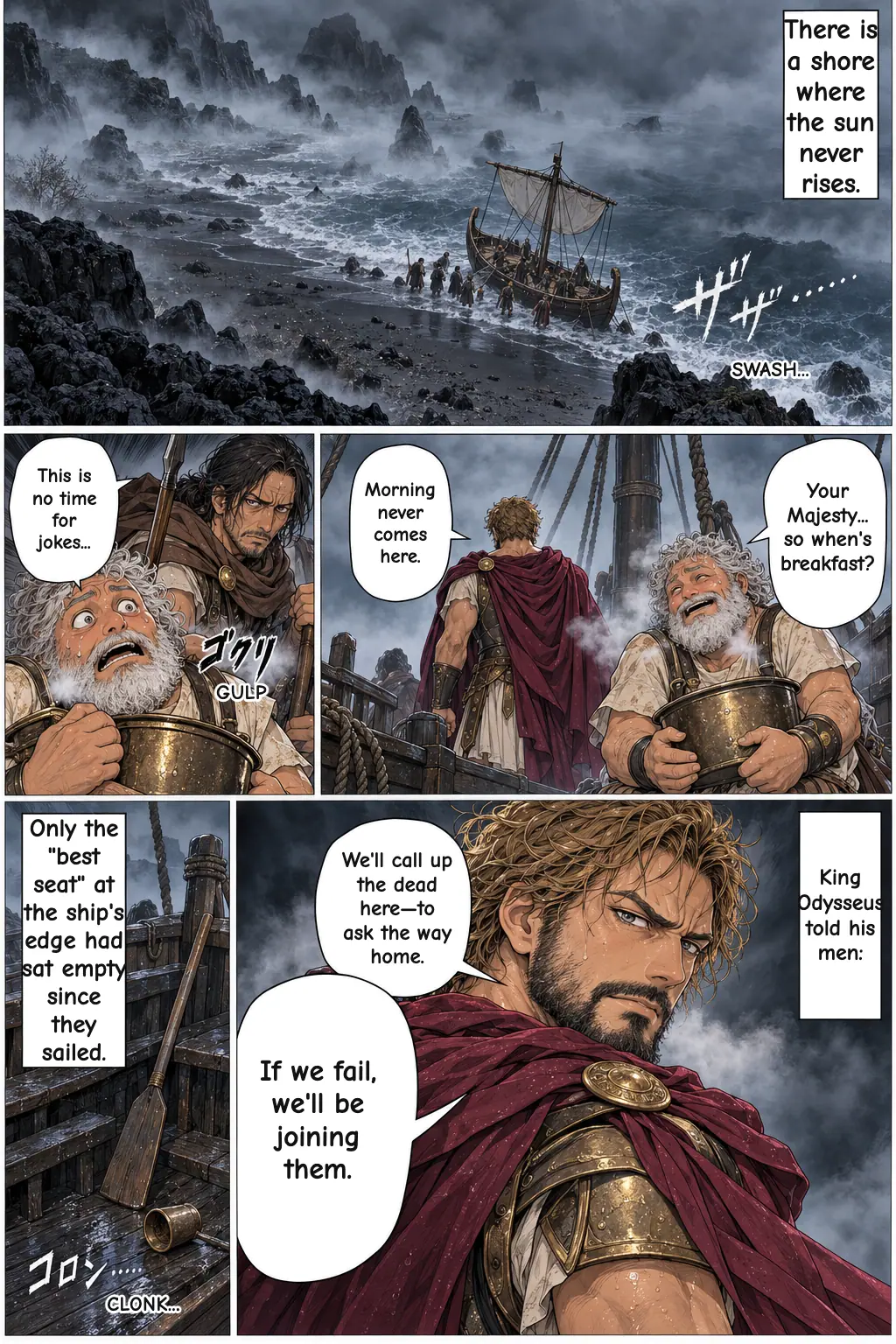
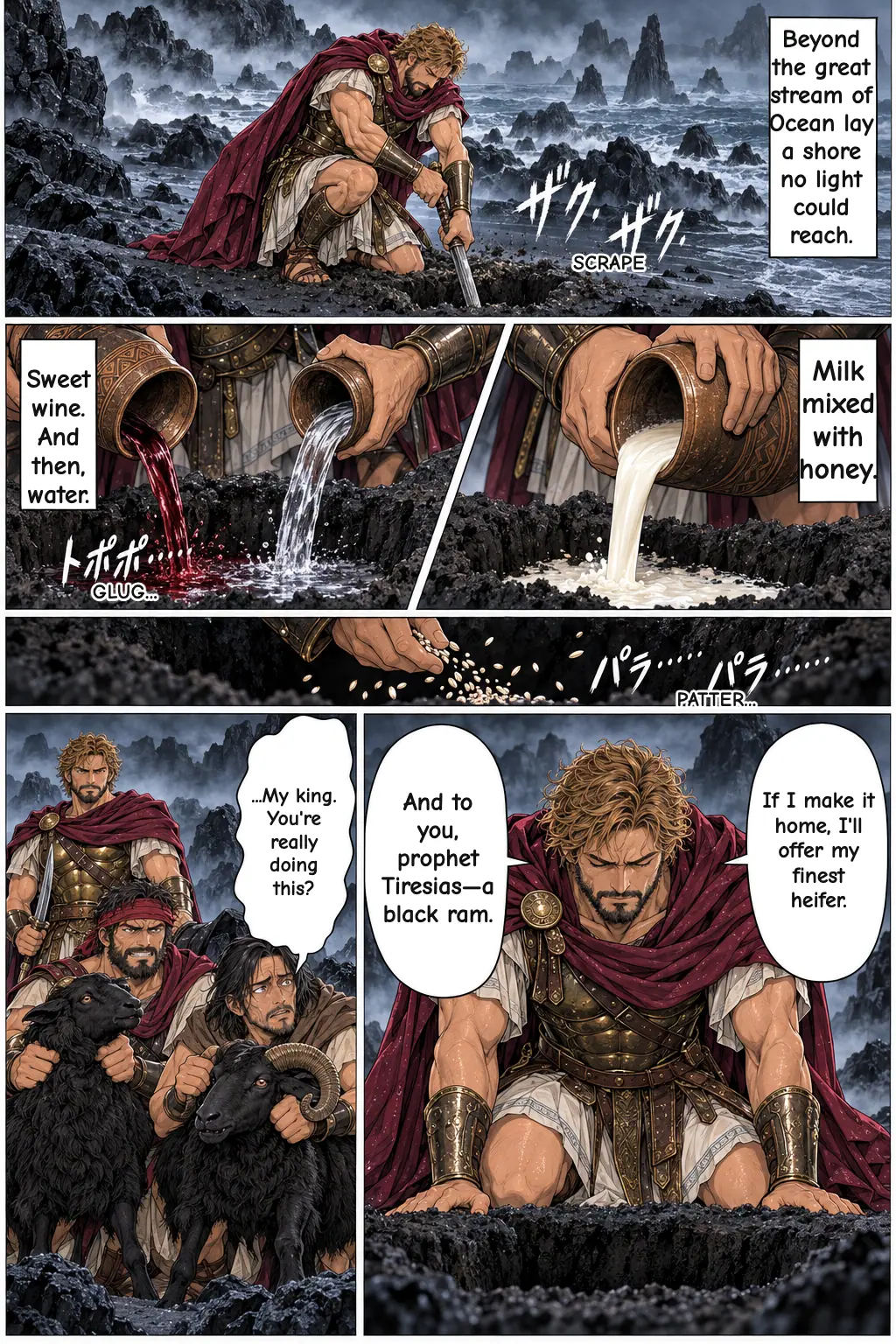
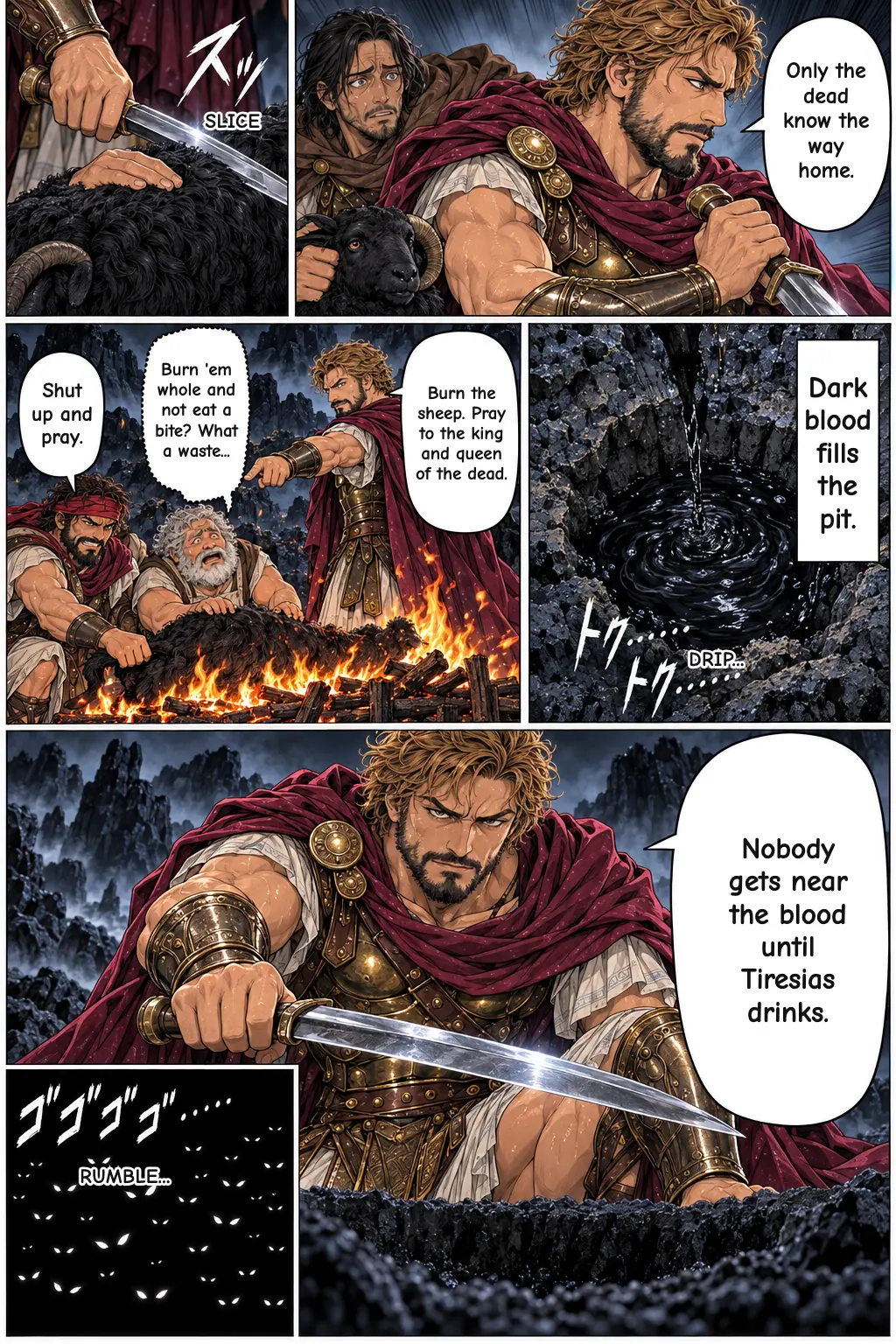
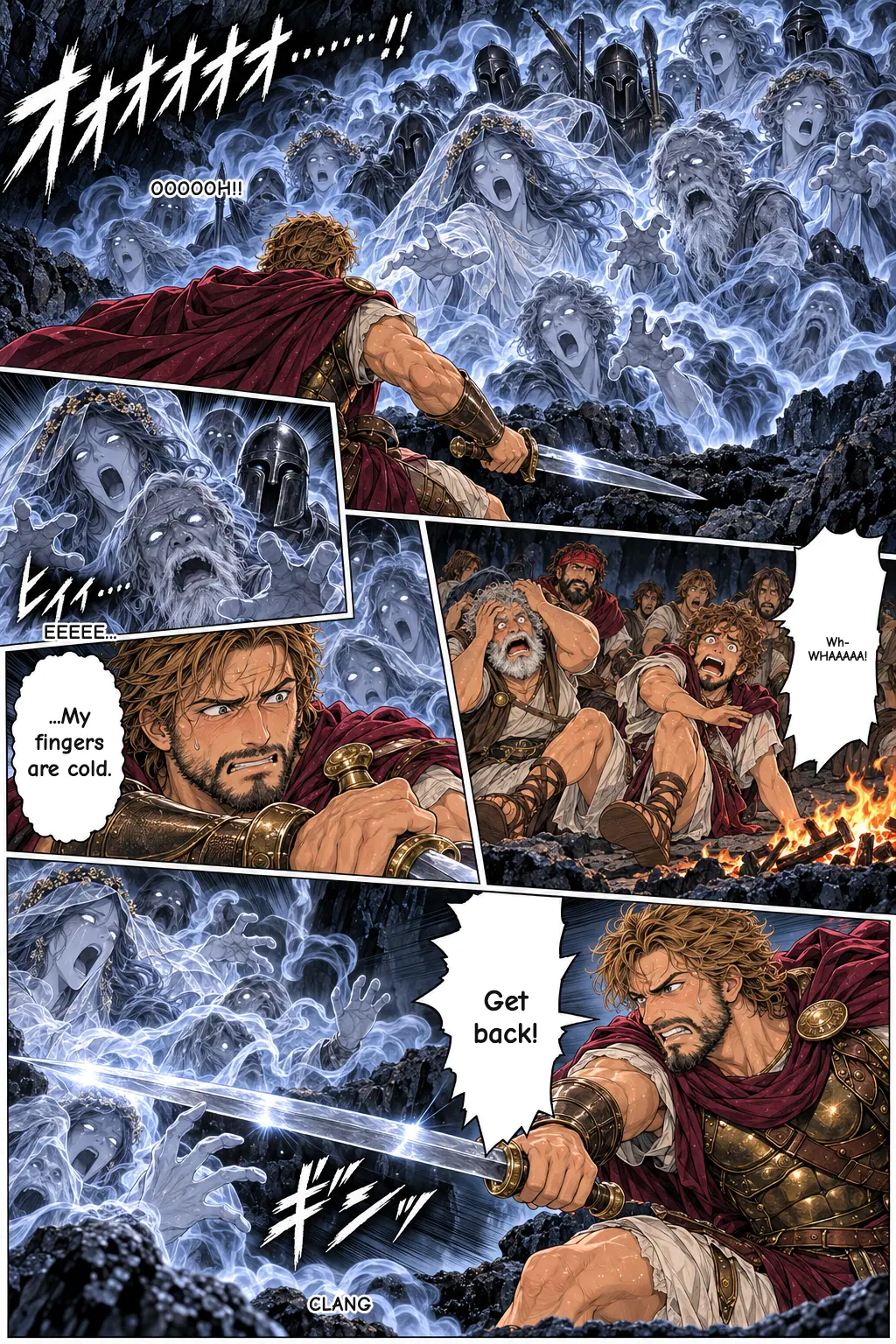
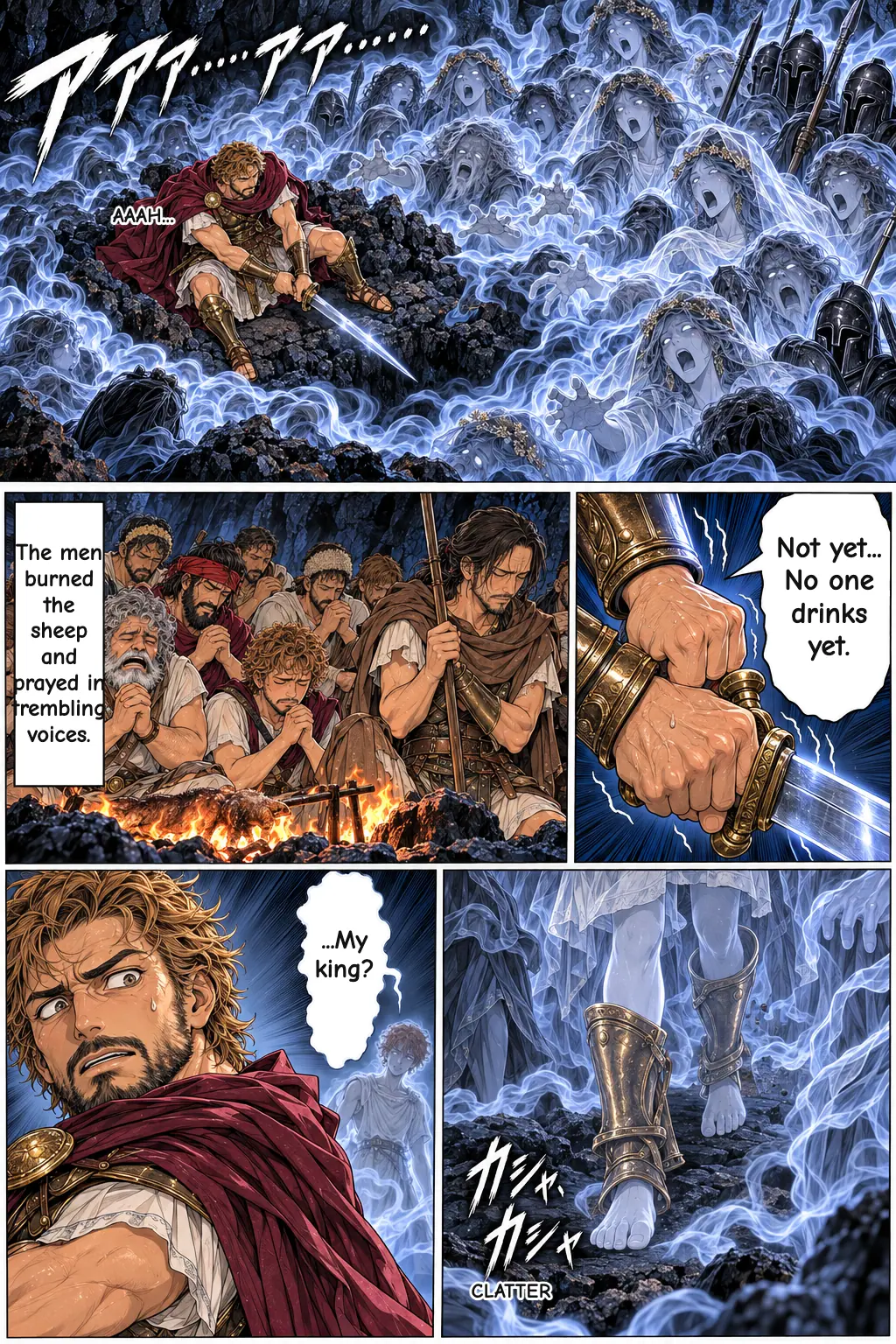
Following instructions from the enchantress Circe, Odysseus sails to the far edge of the world, beyond the great river Oceanus, to the land of the Cimmerians, a place wrapped in mist where the sun never shines. There he digs a small pit, pours offerings of milk and honey, sweet wine, and water, scatters white barley, and cuts the throats of sheep so their dark blood flows into it. The spirits of the dead rise from Erebus, the realm of darkness: young brides, old men, girls, and warriors still in bloodstained armor. They crowd around the pit with an eerie cry, and Odysseus goes pale with fear.
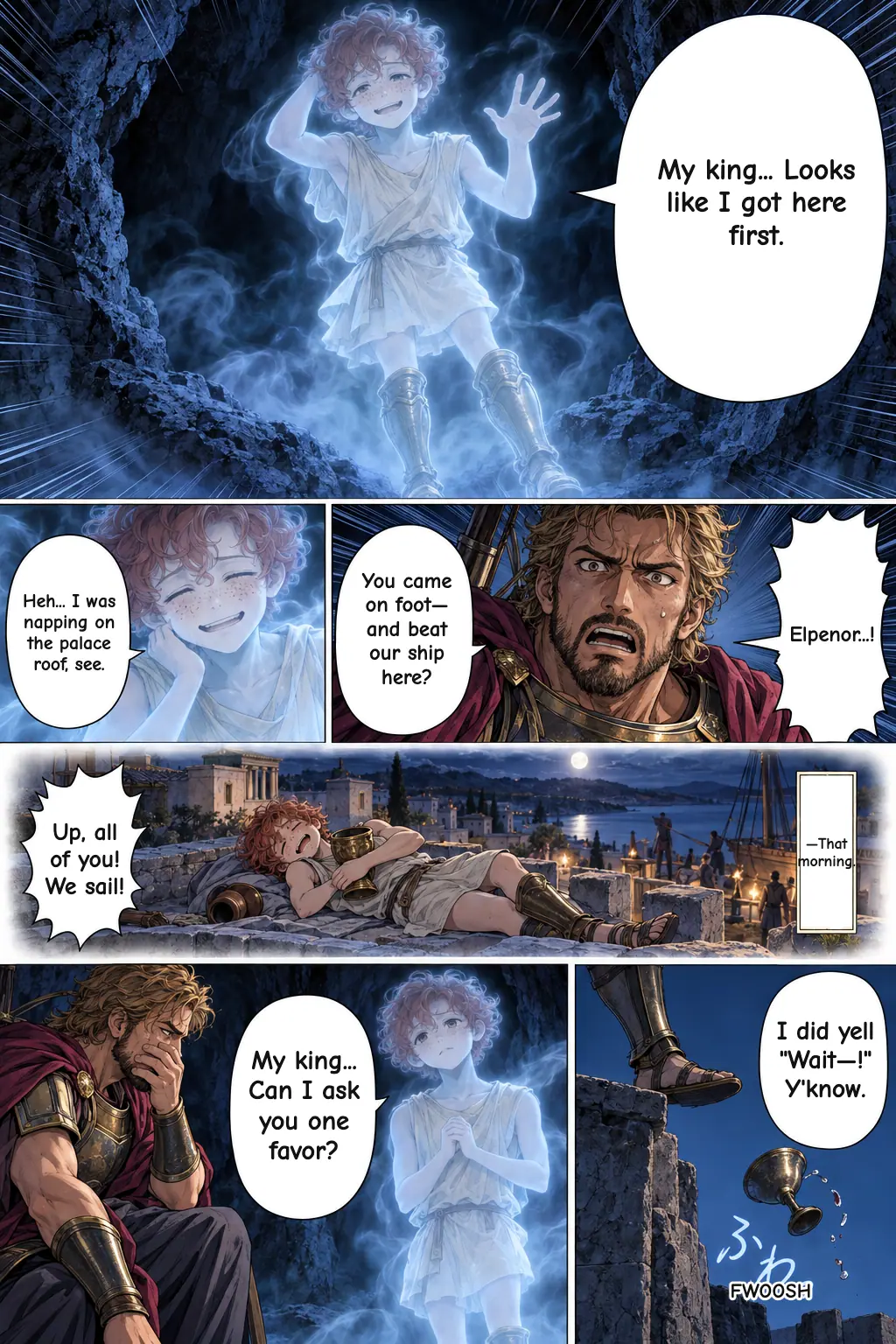
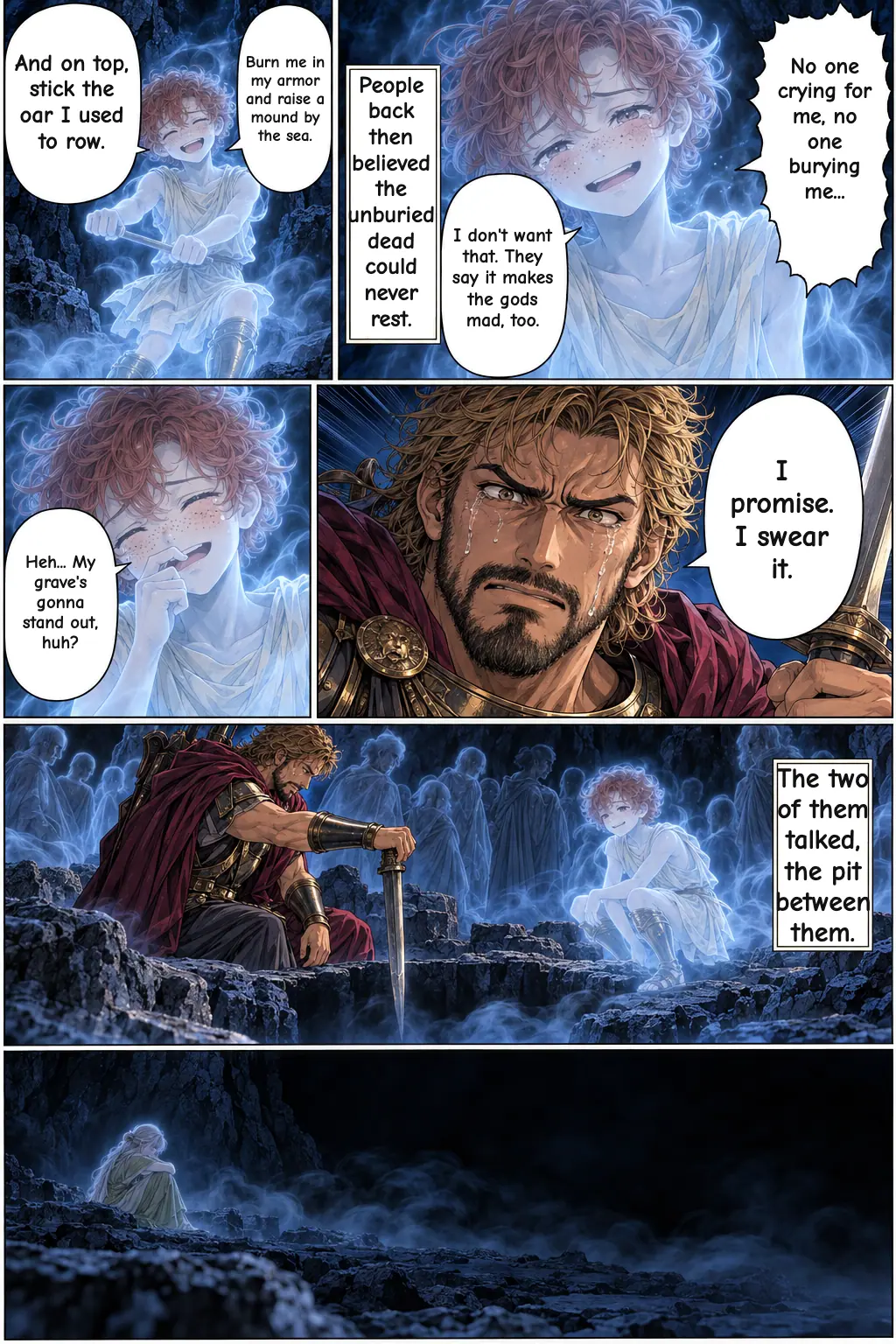
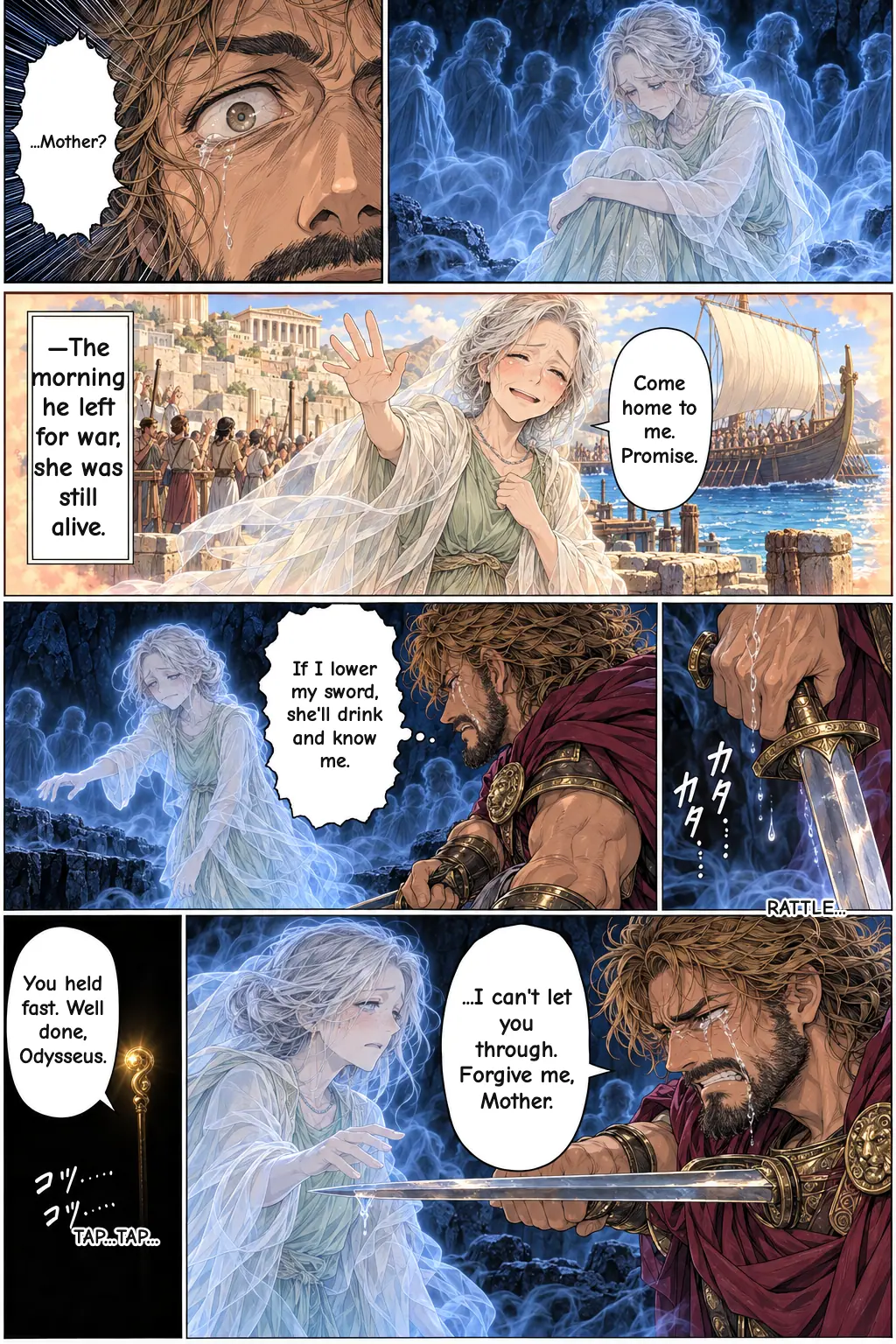
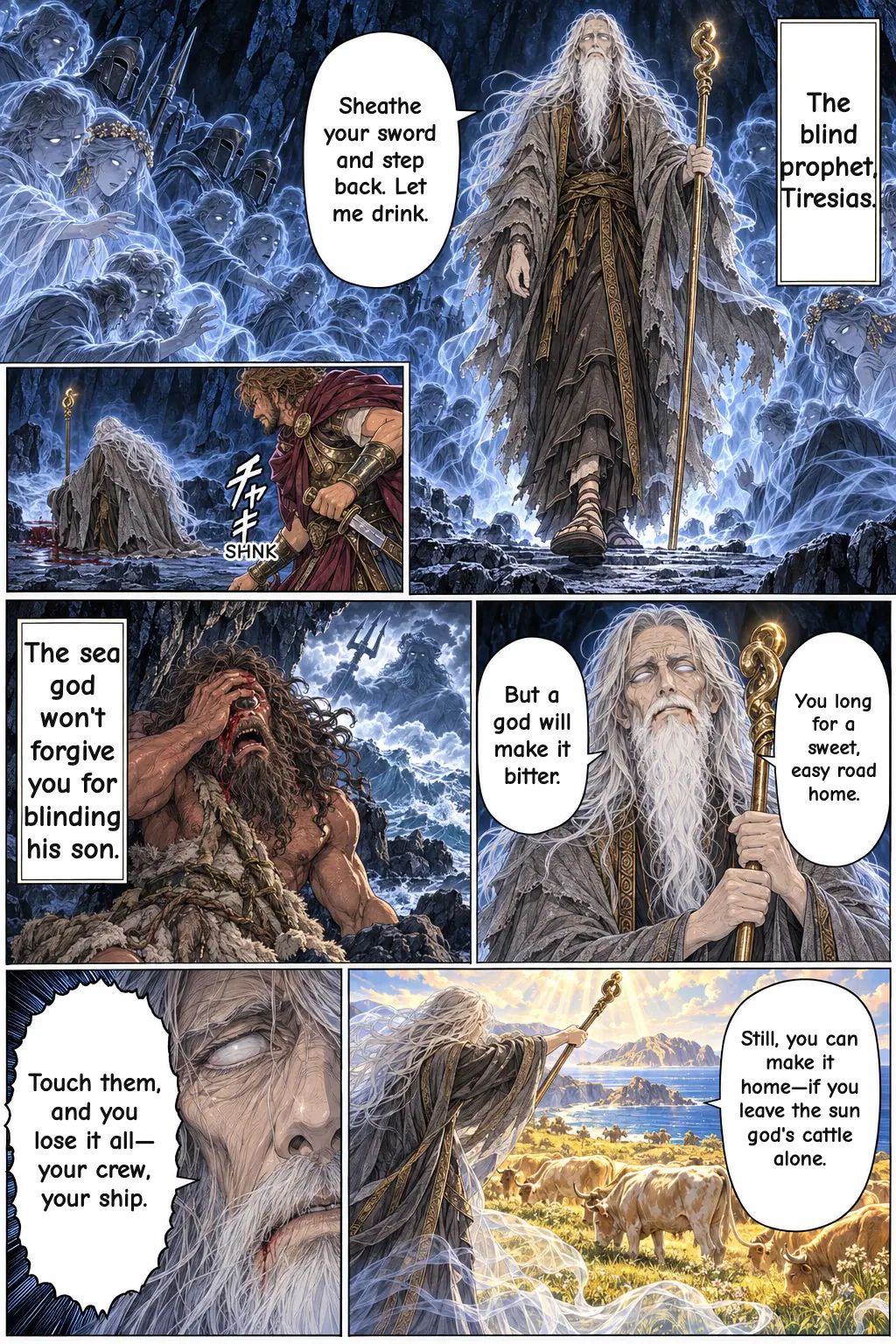
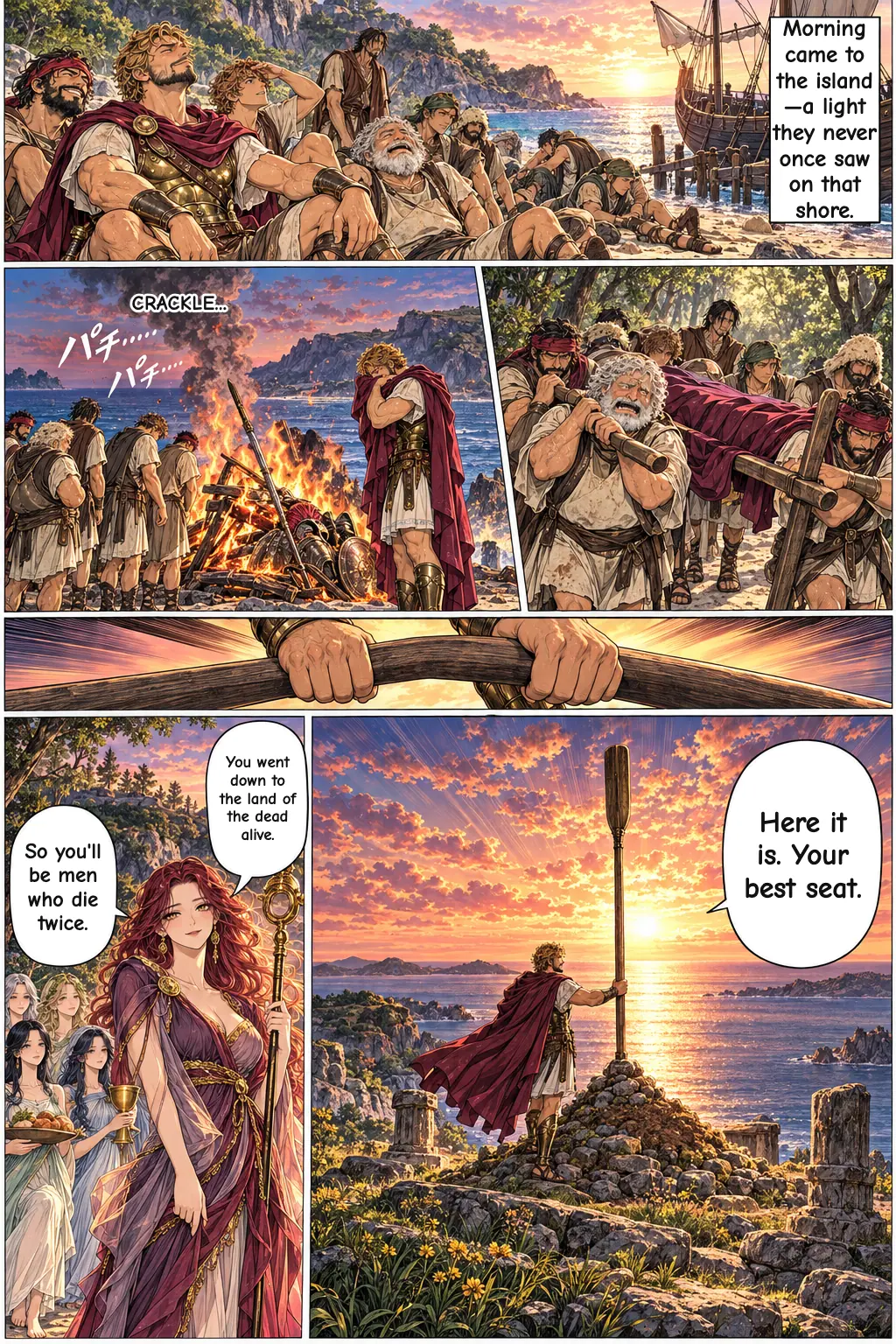
He sits with his sword drawn and lets no spirit drink the blood until he has spoken to the prophet Tiresias. The first to arrive is Elpenor, a young crewman who fell from Circe's roof while drunk and broke his neck. His body still lies unburied, and he begs Odysseus to burn it, raise a mound by the sea, and plant his oar on top. Next comes Odysseus's own mother, Anticleia, who was alive when he left for Troy. He weeps, but still holds her back from the blood.
The Prophecy, the Mother, and the Heroes of Troy
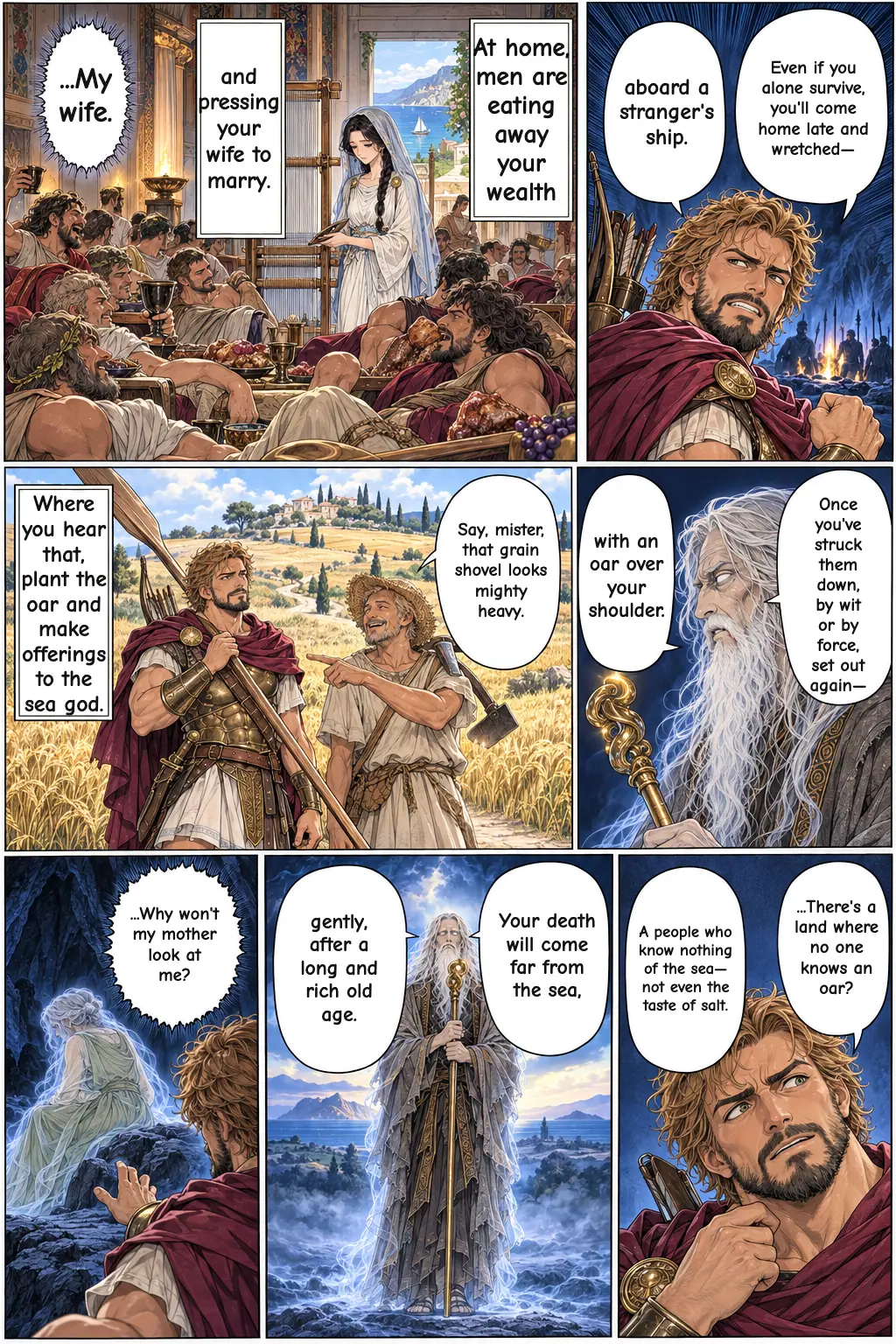
Tiresias drinks and prophesies. Poseidon is angry because Odysseus blinded his son, the Cyclops. The way home is still open, but only if the crew leaves the cattle of Helios, the sun god, untouched. At home, suitors are devouring his wealth and courting his wife. After dealing with them, Odysseus must carry an oar inland until someone mistakes it for a winnowing fan, then offer sacrifice to Poseidon. His own death will come gently in a rich old age. The Greek can be read as death "from the sea" or "away from the sea," and scholars still debate which is meant.
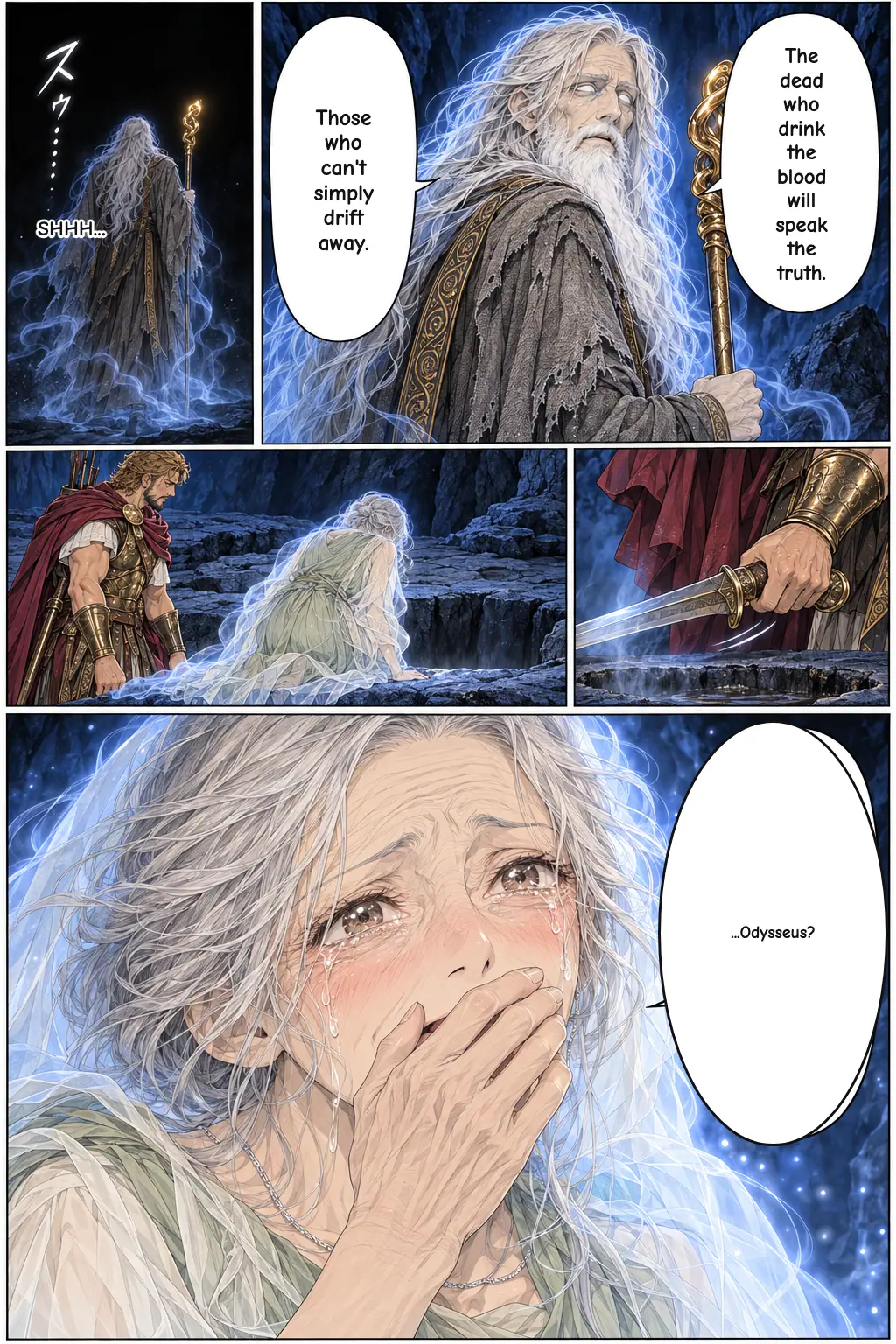
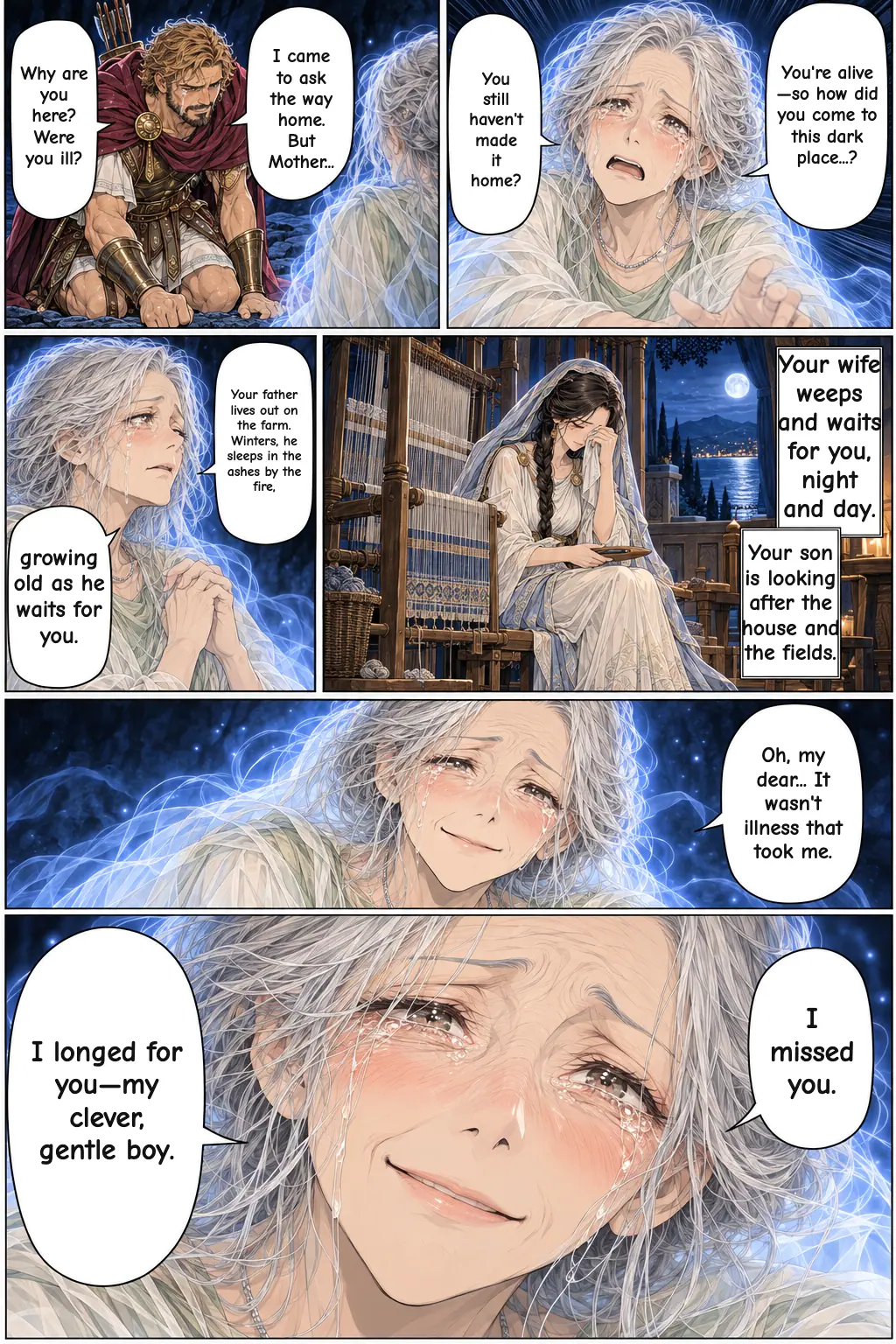
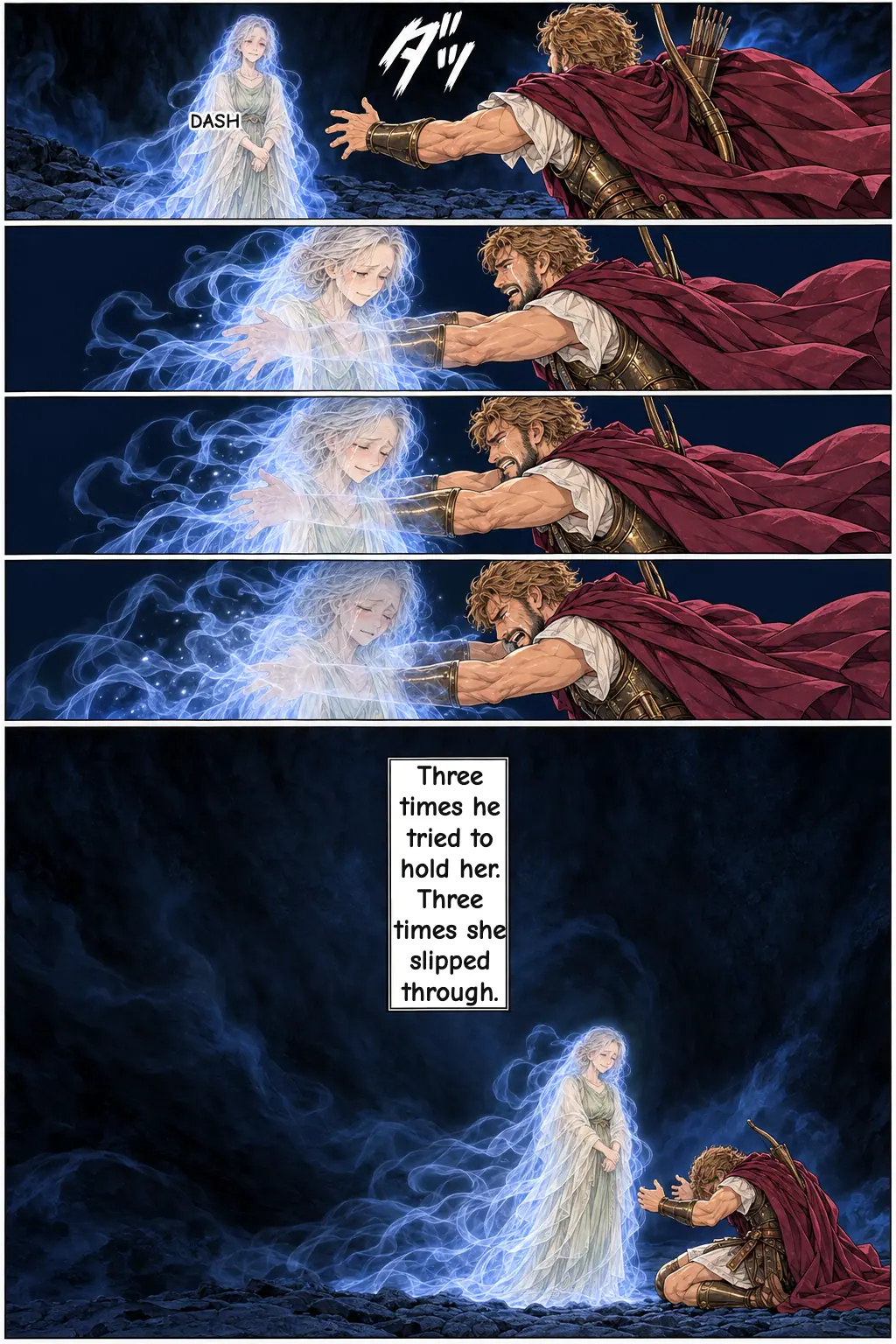
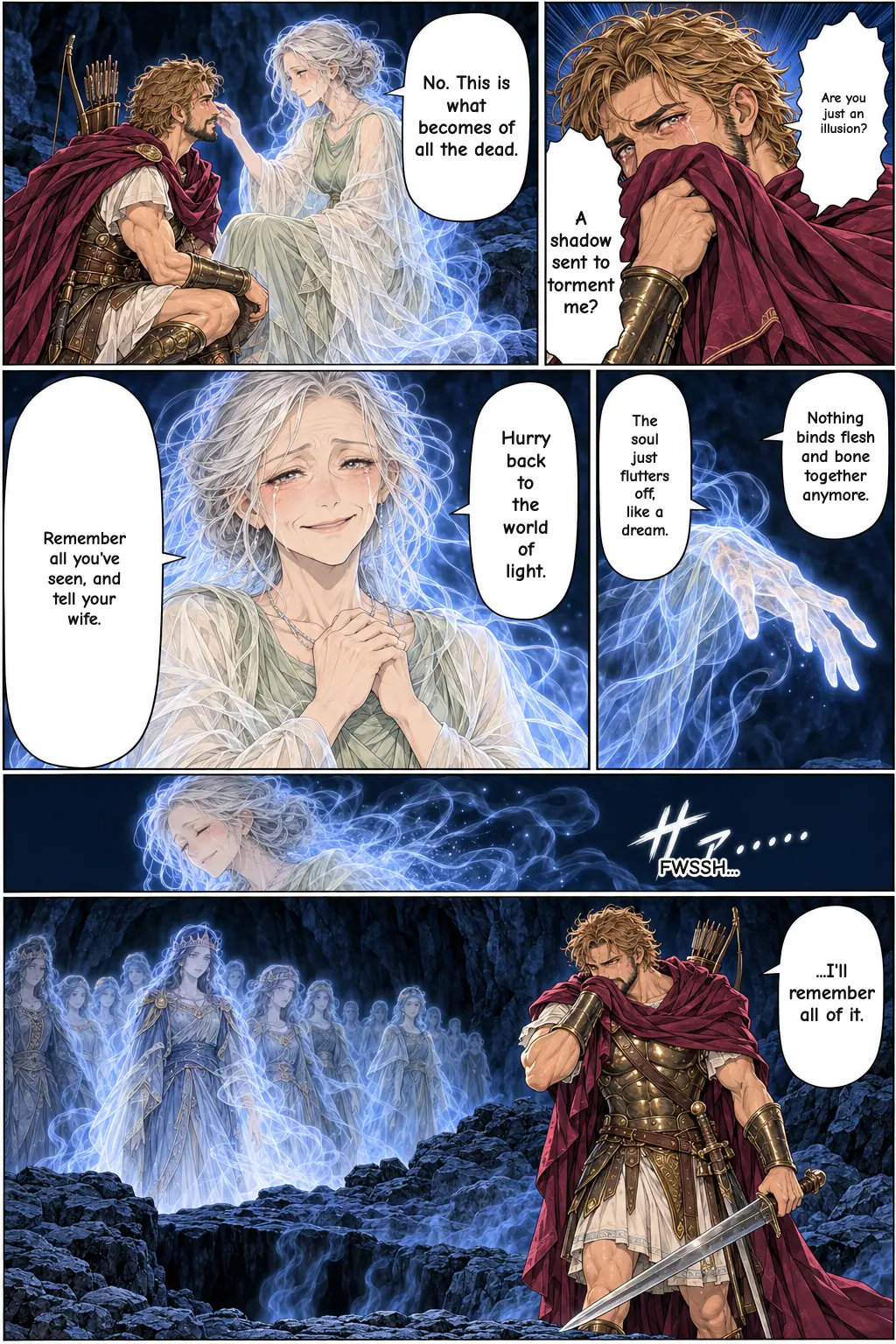
Once Anticleia drinks, she recognizes her son. She tells him that his wife Penelope weeps day and night, that his son Telemachus manages the estate, and that his father Laertes lives roughly in the countryside, longing for him. She did not die of illness, she says, but of missing him. Three times Odysseus tries to embrace her, and three times she slips through his arms like a shadow or a dream.
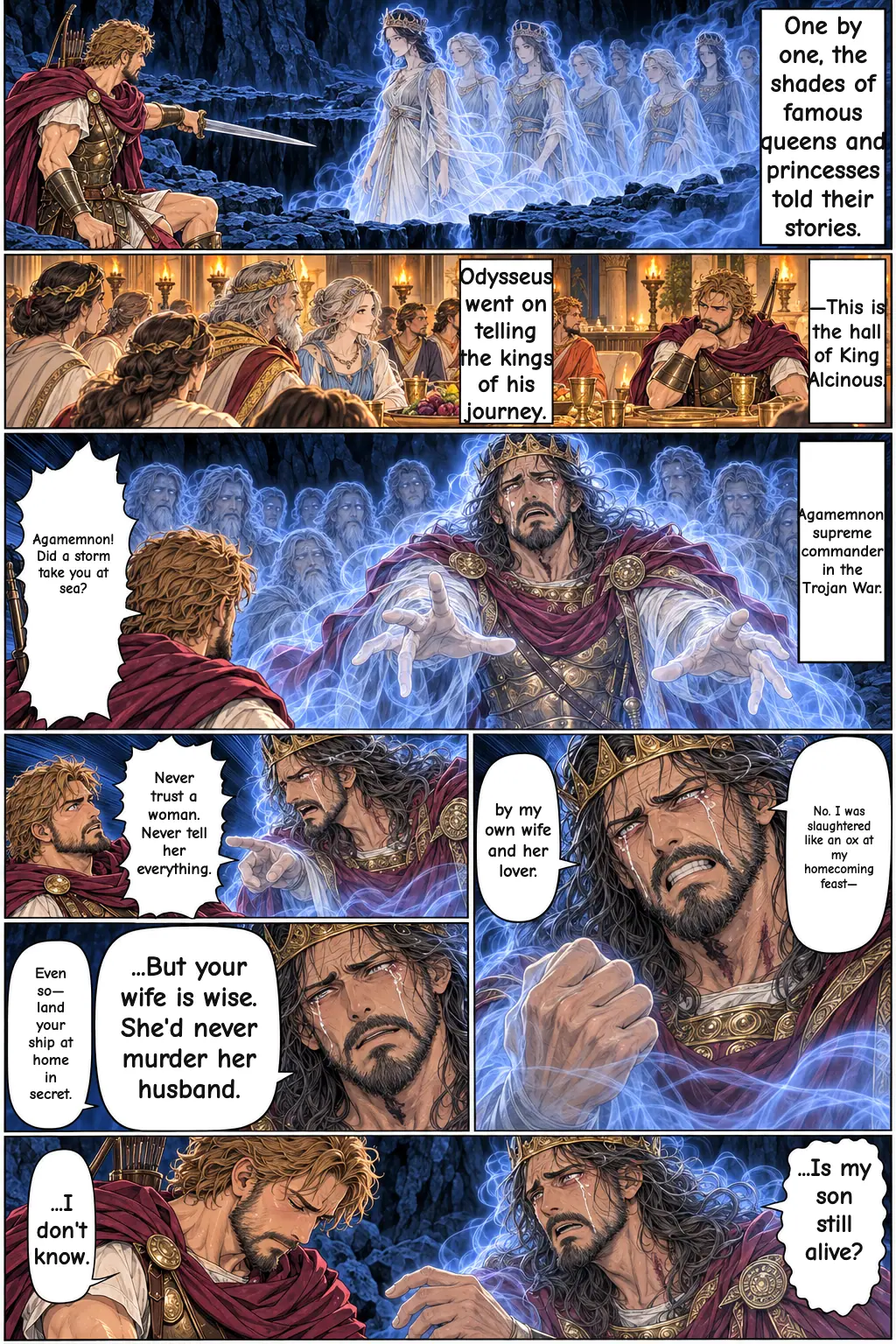
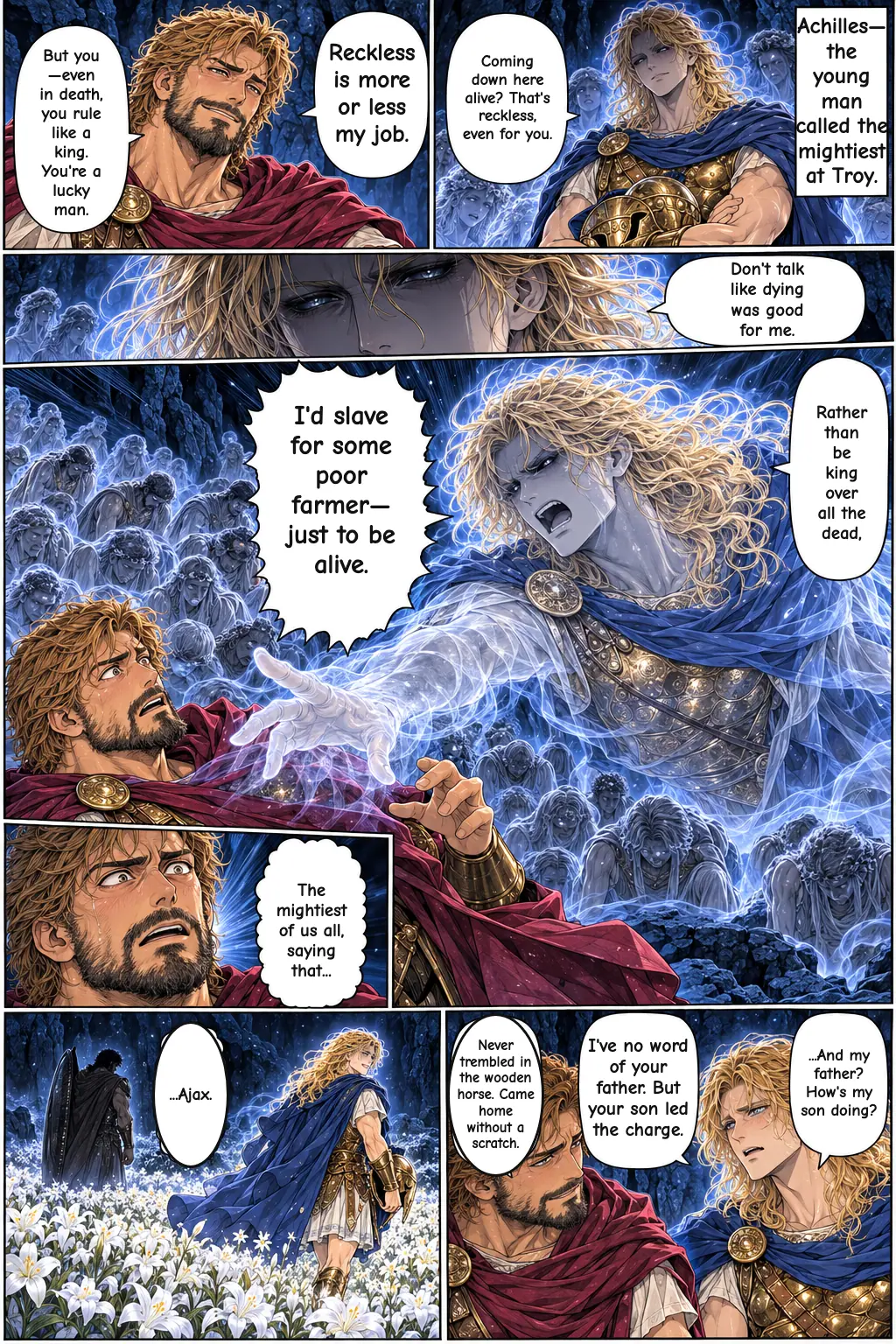
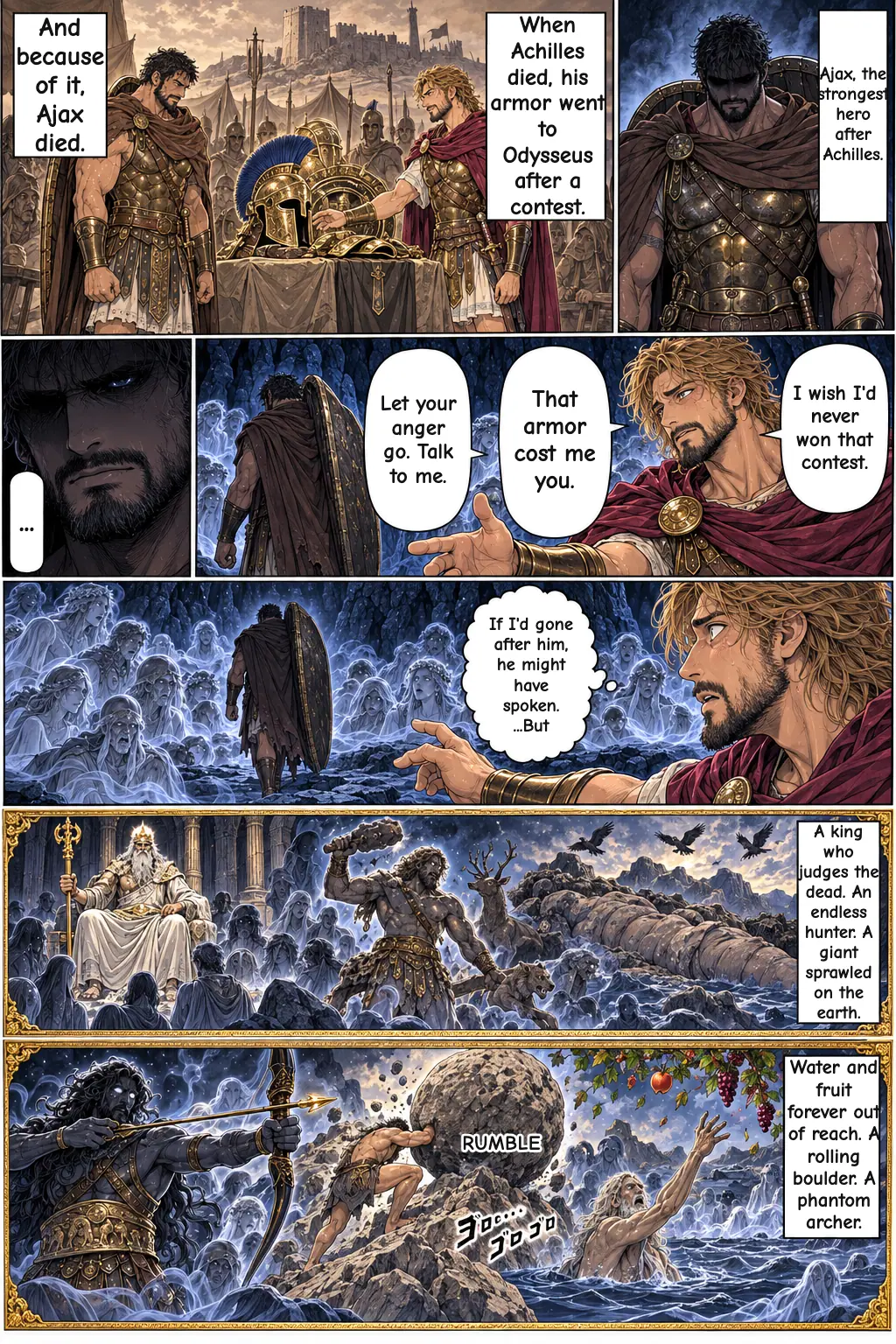
After a long procession of famous women, the heroes of Troy appear. Agamemnon tells how his wife Clytemnestra and her lover Aegisthus murdered him at a feast on his return. Achilles, the greatest warrior of the war, says he would rather be a poor hired laborer among the living than king over all the dead. Ajax, still bitter that Odysseus won Achilles's armor, turns away without a word.
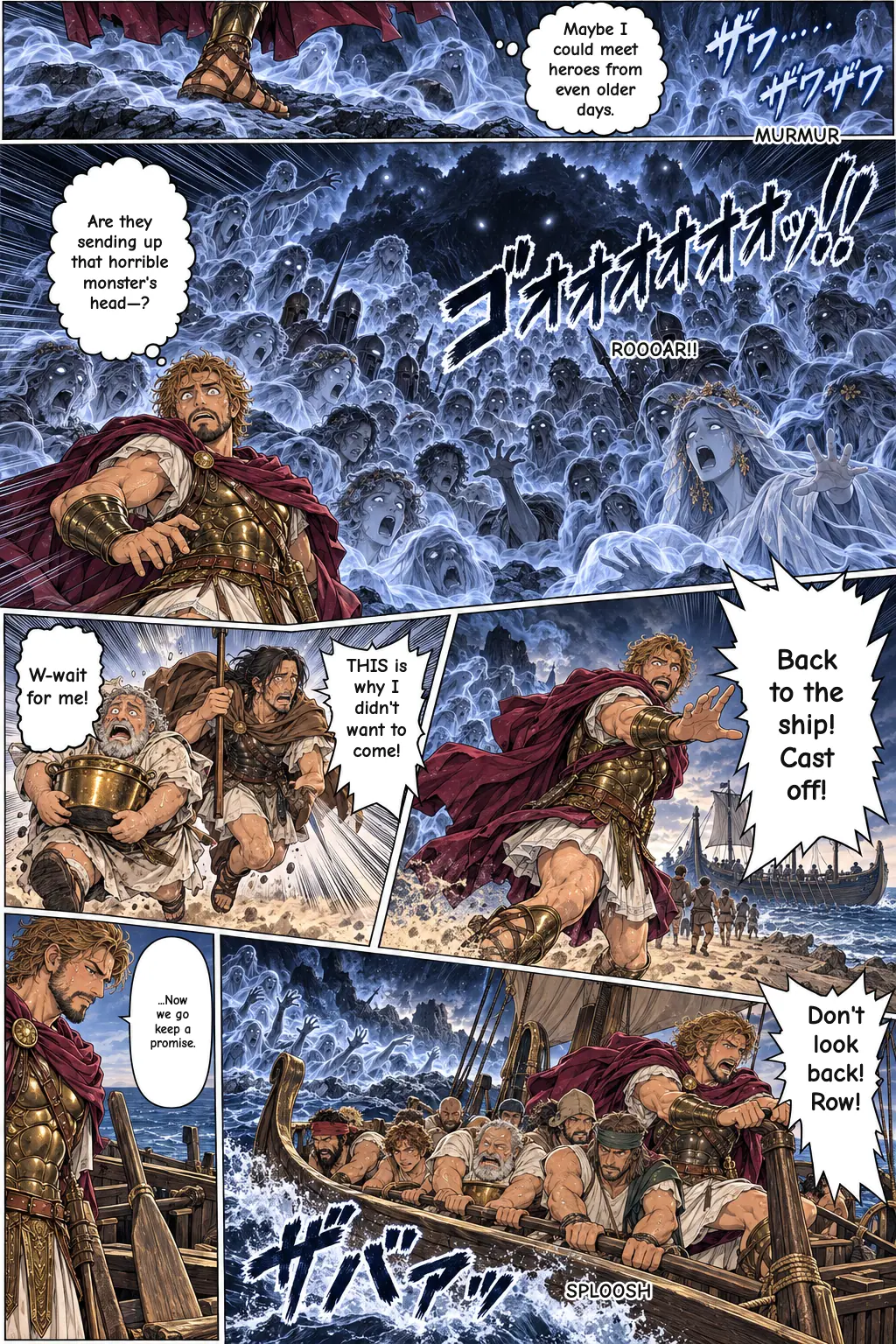
Odysseus then sees figures such as Minos judging the dead, and Tantalus and Sisyphus suffering endless punishments. Finally, terrified by the swarming dead, he flees to his ship. At the start of Book 12, he returns to Circe's island and buries Elpenor, planting the oar on his mound as promised.
Main Characters
Odysseus is careful and controlled. Even when his mother appears, he keeps the order Circe gave him. Yet he weeps for her and for his lost companions, and he speaks gently to Ajax, saying he regrets the contest that came between them. Tiresias, the blind prophet of Thebes, is the only one of the dead allowed to keep his full wisdom. Anticleia's calm, sorrowful words explain what death means for mortals: the body is gone, and only a shade remains.
What This Myth Tells Us: Culture and Background
The Nekyia shows how seriously the ancient Greeks took burial. An unburied body was dangerous: Elpenor warns that neglecting him could bring the anger of the gods. The Homeric underworld is not a place of reward for most people. It is a dim, joyless existence, and Achilles's complaint turns the heroic ideal of glorious death upside down. That is why the episode is often read as the moment Odysseus learns the value of life itself, and of the home he is fighting to reach.
Notice that in Homer, Odysseus does not walk down into the underworld. He stays at the pit, and the dead come up to him. Some scholars have argued that parts of the book, especially the section with Minos and the punished sinners, may have been added later, though this is debated.
What the Manga Changed
Homer says very little about how things look, so the manga fills in the visuals: the mist-choked landscape of the Cimmerians, the color and transparency of the spirits, and the faces of Elpenor and the frightened crew. The original only tells us that the war dead wear bloody armor, that the spirits cry out, and that they have no solid bodies. The blood in the pit is drawn with restraint so the episode stays readable for a wide audience rather than becoming horror.
Dialogue is shortened and rewritten in plain language, while keeping the meaning of Tiresias's prophecy and Anticleia's words. Long passages, such as the catalog of famous women, the break where Odysseus pauses his story in the Phaeacian hall, and the montage of punished figures, are condensed to keep the focus on Odysseus, his mother, and the heroes of Troy. Tiresias's blindness is shown through how his eyes are drawn, and details of Elpenor's burial, such as the weather and the shape of the oar, are the artist's own.
Where to Read It
If you want to feel the weight of the moment when Anticleia slips through her son's arms, or hear Achilles's famous lament, the manga version brings Book 11 to life panel by panel. Episode 5 of GREEK MYTHOLOGY: THE ODYSSEY — The Twenty-Year Voyage Home is free to read on Manga Portal, like every episode, with no sign-up required. Start here, or go back to Episode 1 and follow the whole voyage home.
Characters in this episode
Odysseus
The king of Ithaca and narrator, who calls up the dead to learn how to get home.
Tiresias
The blind prophet of Thebes, who keeps his wisdom in death and foretells Odysseus's future.
Anticleia
Odysseus's mother, who died of longing for her son and appears as a shade he cannot hold.
Elpenor
The youngest crewman, who died falling from Circe's roof and asks to be properly buried.
Achilles
The greatest Greek hero of the Trojan War, who says he would rather live as a poor laborer than rule the dead.
Agamemnon
The Greek commander at Troy, murdered on his return by his wife Clytemnestra and Aegisthus.
FAQ
What is the Nekyia in the Odyssey?
The Nekyia is Book 11 of Homer's Odyssey, in which Odysseus performs a ritual to call up the spirits of the dead. He needs to consult the prophet Tiresias about his journey home. The name comes from the Greek word for a corpse.
Why does Odysseus go to the underworld?
Circe tells him he must consult the prophet Tiresias before he can return to Ithaca. Tiresias warns him about Poseidon's anger and the cattle of the sun god Helios, and foretells the trouble waiting at home.
What does Achilles say to Odysseus in the underworld?
When Odysseus praises him as a king among the dead, Achilles rejects the comfort. He says he would rather be a poor man's hired worker on earth than rule over all the dead. He is cheered only when he hears that his son has fought bravely.
How did Odysseus's mother die?
Anticleia tells Odysseus she did not die of illness or by the arrows of Artemis. She died of longing for him, missing his wisdom and kindness while he was away at war.
Does Odysseus actually enter the underworld?
In Homer's account, he stays beside the pit he dug at the edge of the world, and the dead come up to him. Later retellings often picture it as a journey down into Hades.