Episode 4Pigs on the Outside, Still Men InsideCirce
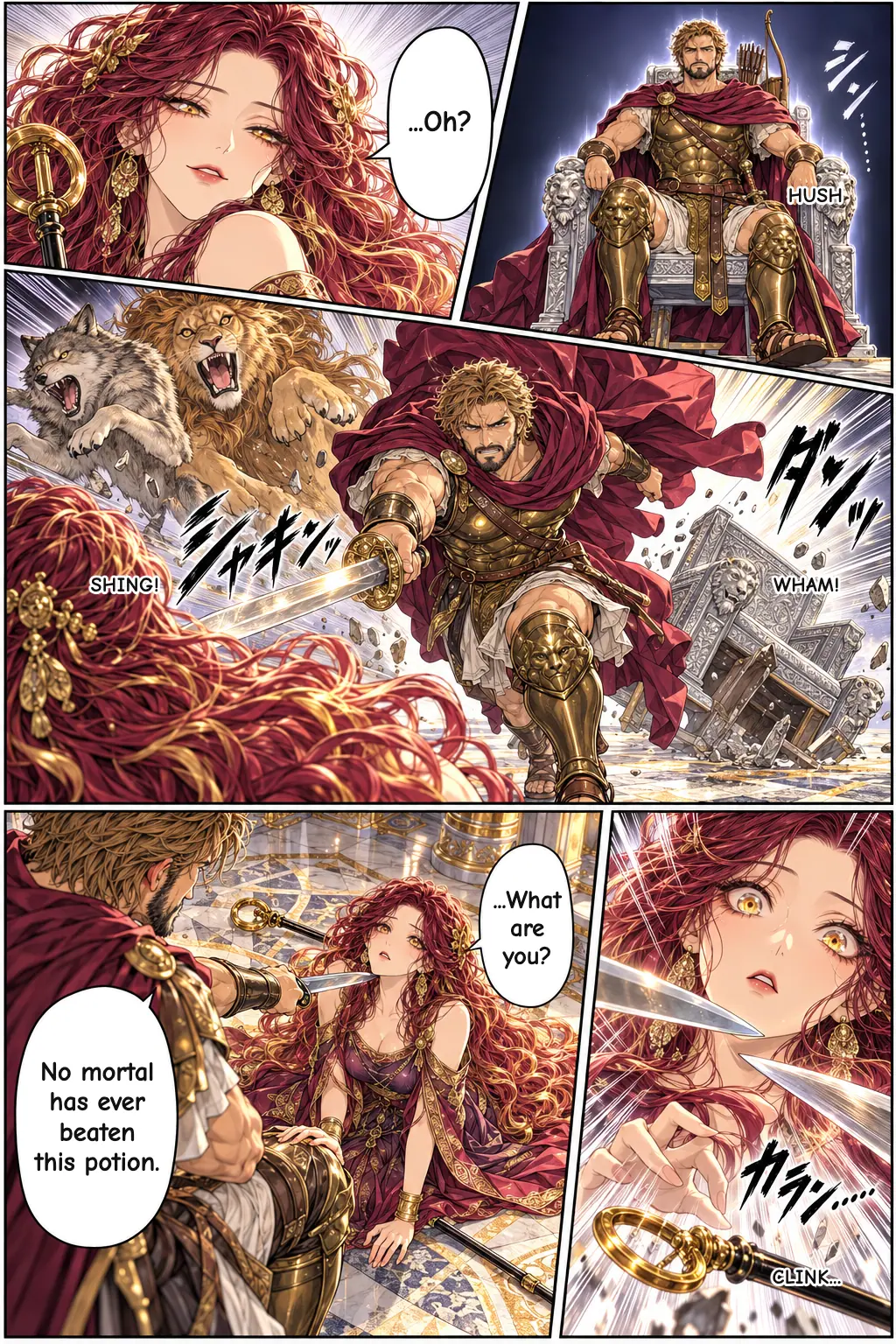
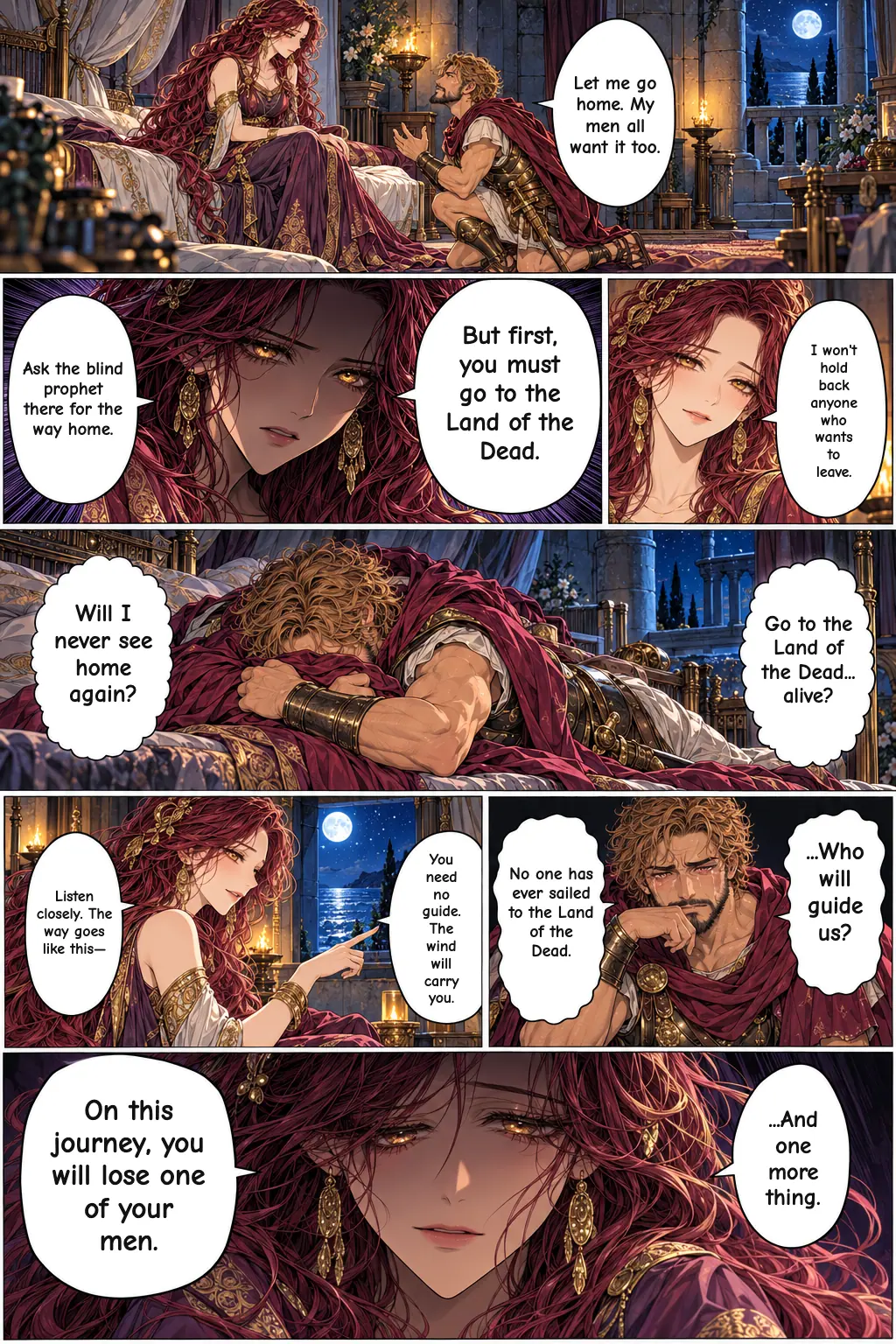
Deep in a forest stands a beautiful mansion, and the scouts who go there are turned into pigs by the goddess Circe. Odysseus walks in alone. With a white flower from the messenger of the gods and the nerve to stand his ground, he wins the witch over. But after a year of peace, she tells him something he never wanted to hear: "First, you must go to the Land of the Dead."
Circe Turns Odysseus' Men into Pigs: Odyssey Book 10 Summary
The Story in Homer's Odyssey (Book 10)
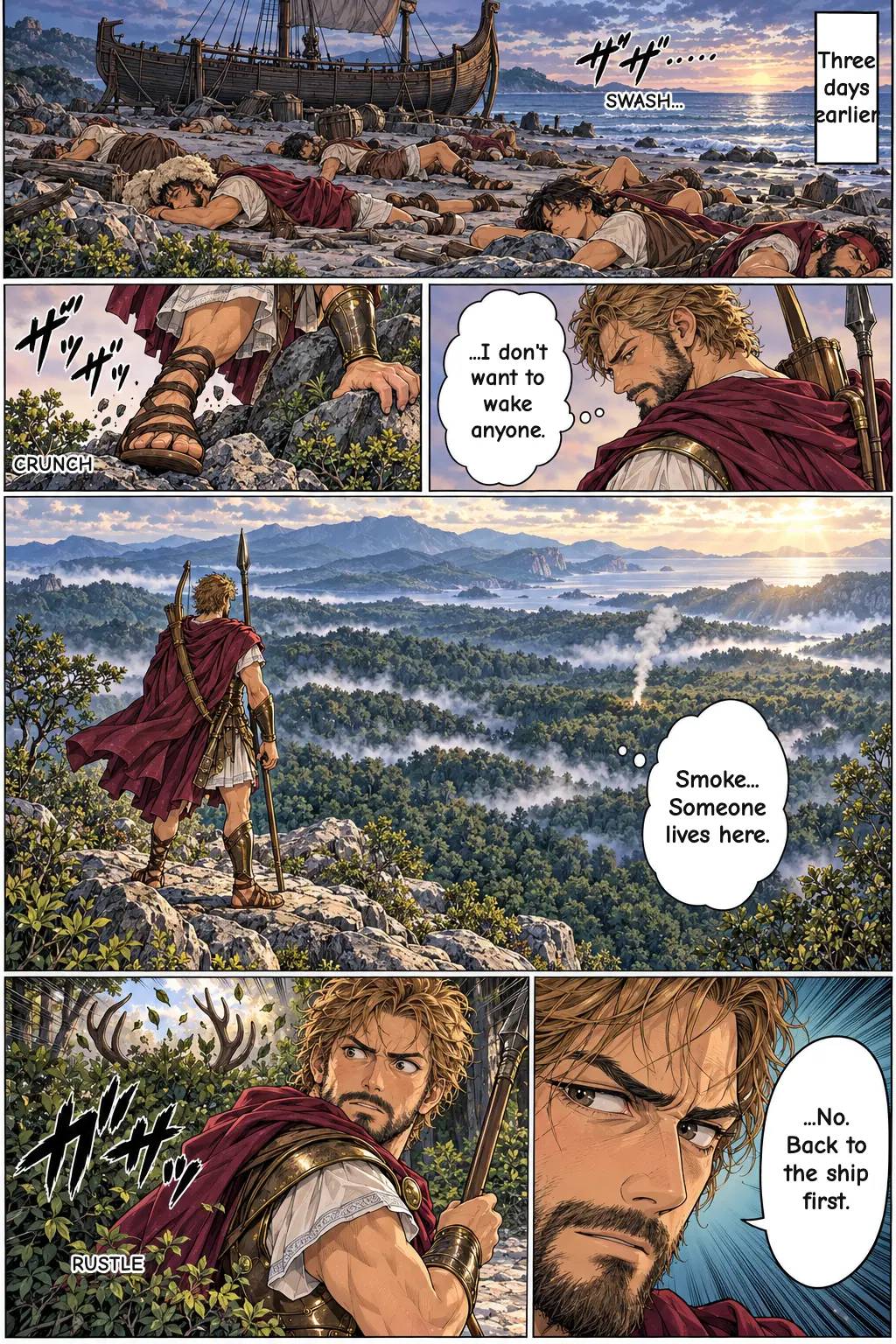
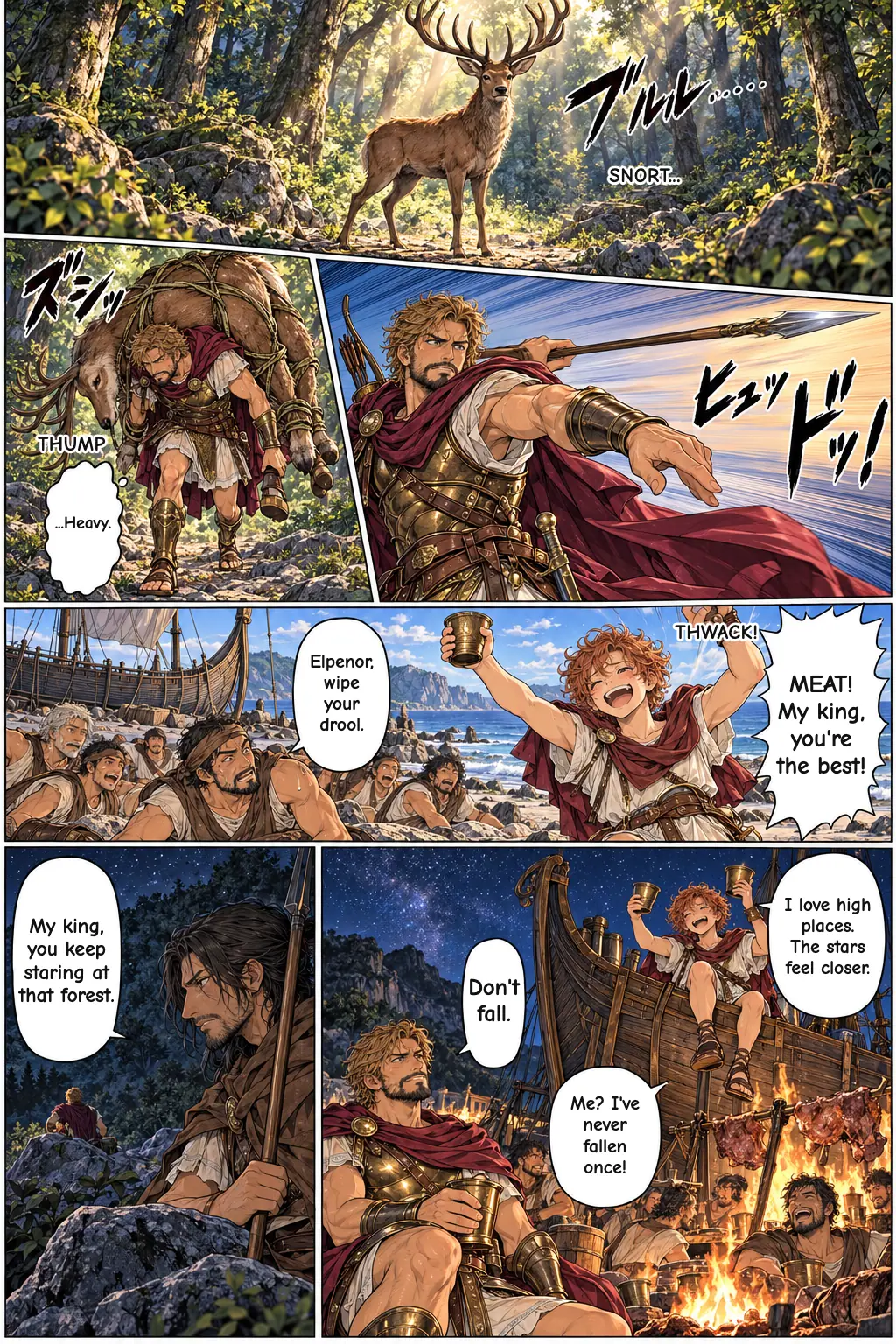
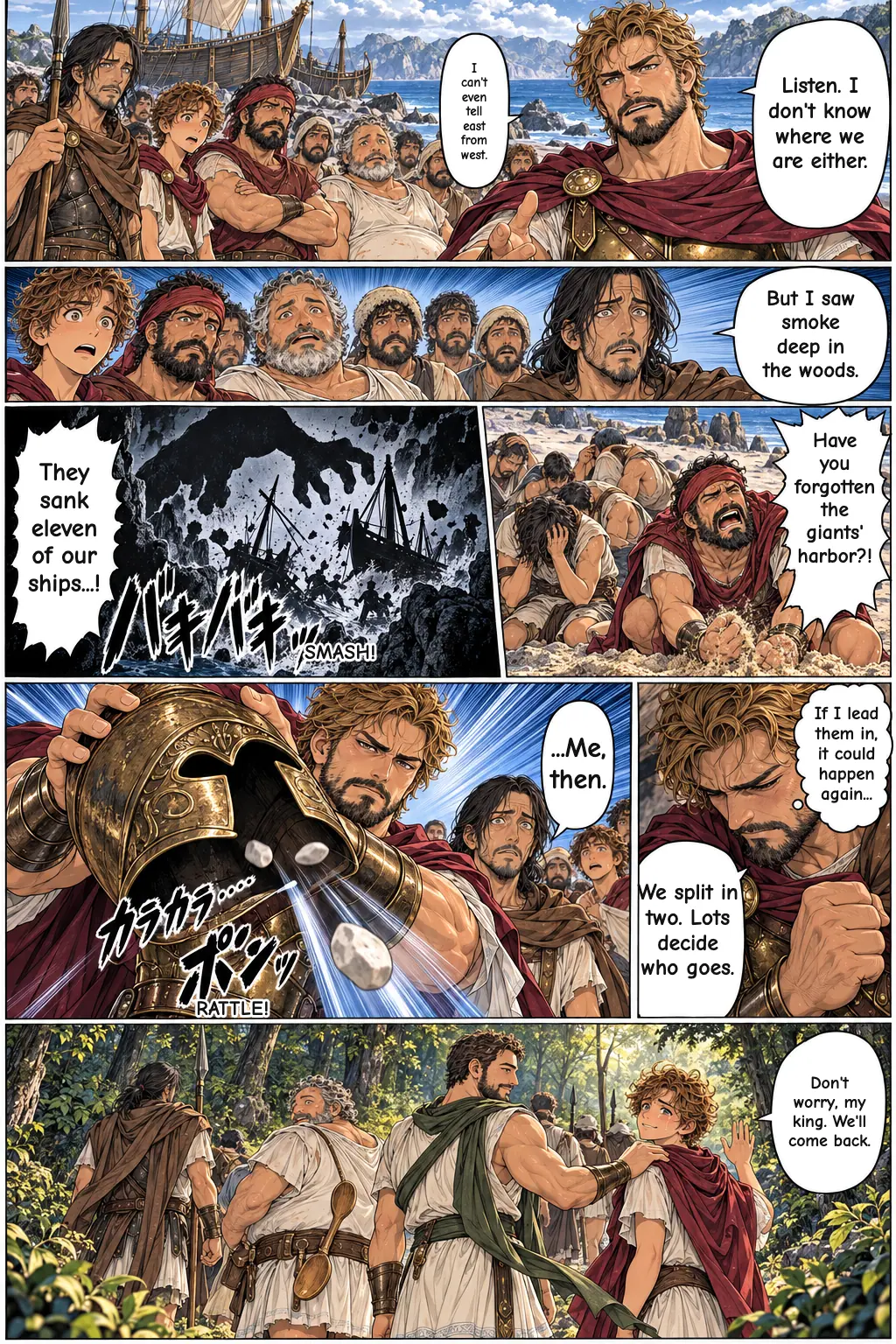
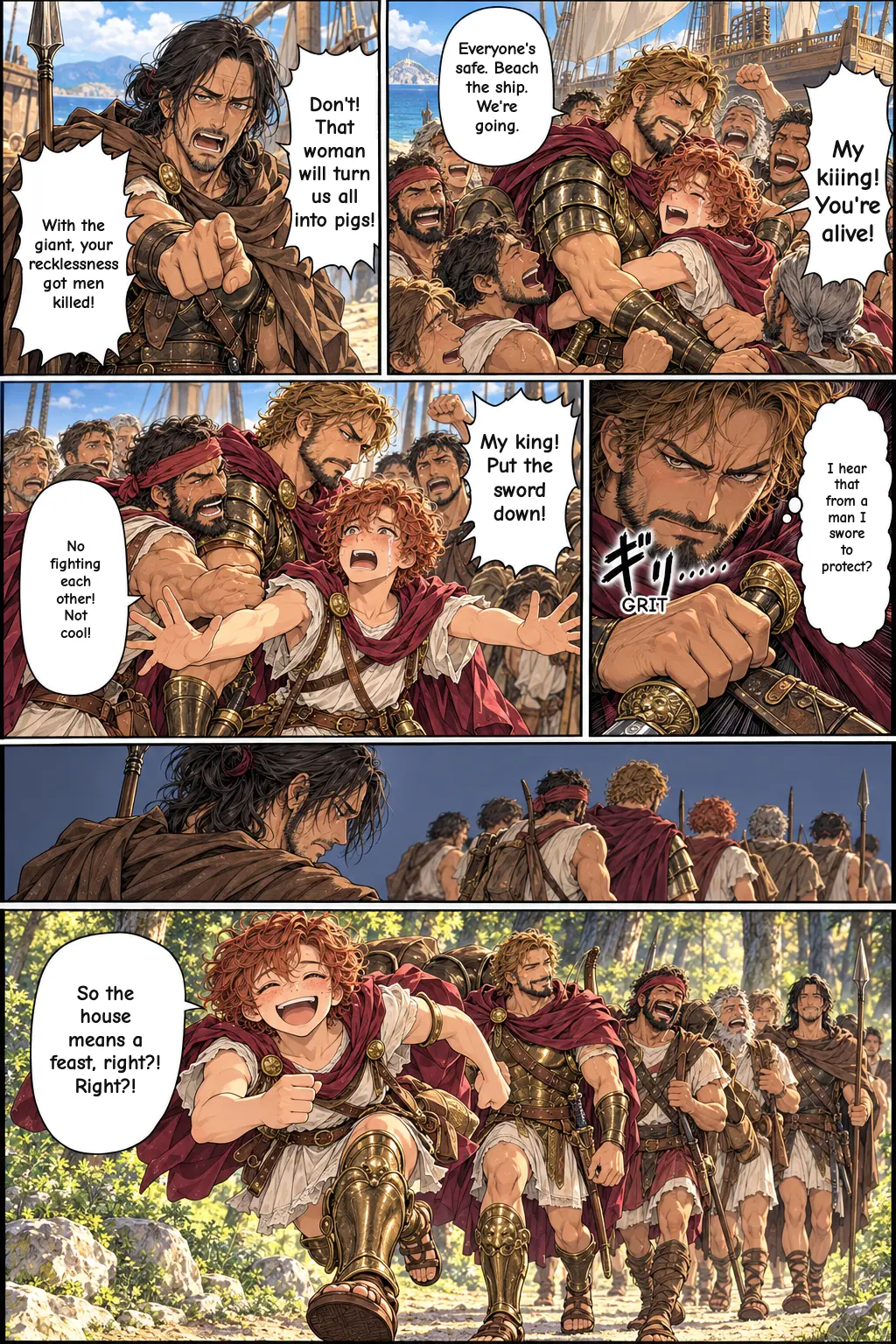
After the cannibal Laestrygonians destroy every ship but his own, Odysseus, king of Ithaca, lands on the island of Aeaea with one crew. For two days the men lie on the beach, worn out and grieving. On the third day Odysseus climbs a high point and sees smoke rising from a house deep in the woods. On the way back to the ship he kills a huge stag, and the crew feast on it until nightfall. The next morning he admits that he doesn't know east from west. When he tells them about the smoke, the men break down in tears. They remember the Cyclops and the Laestrygonians all too well.
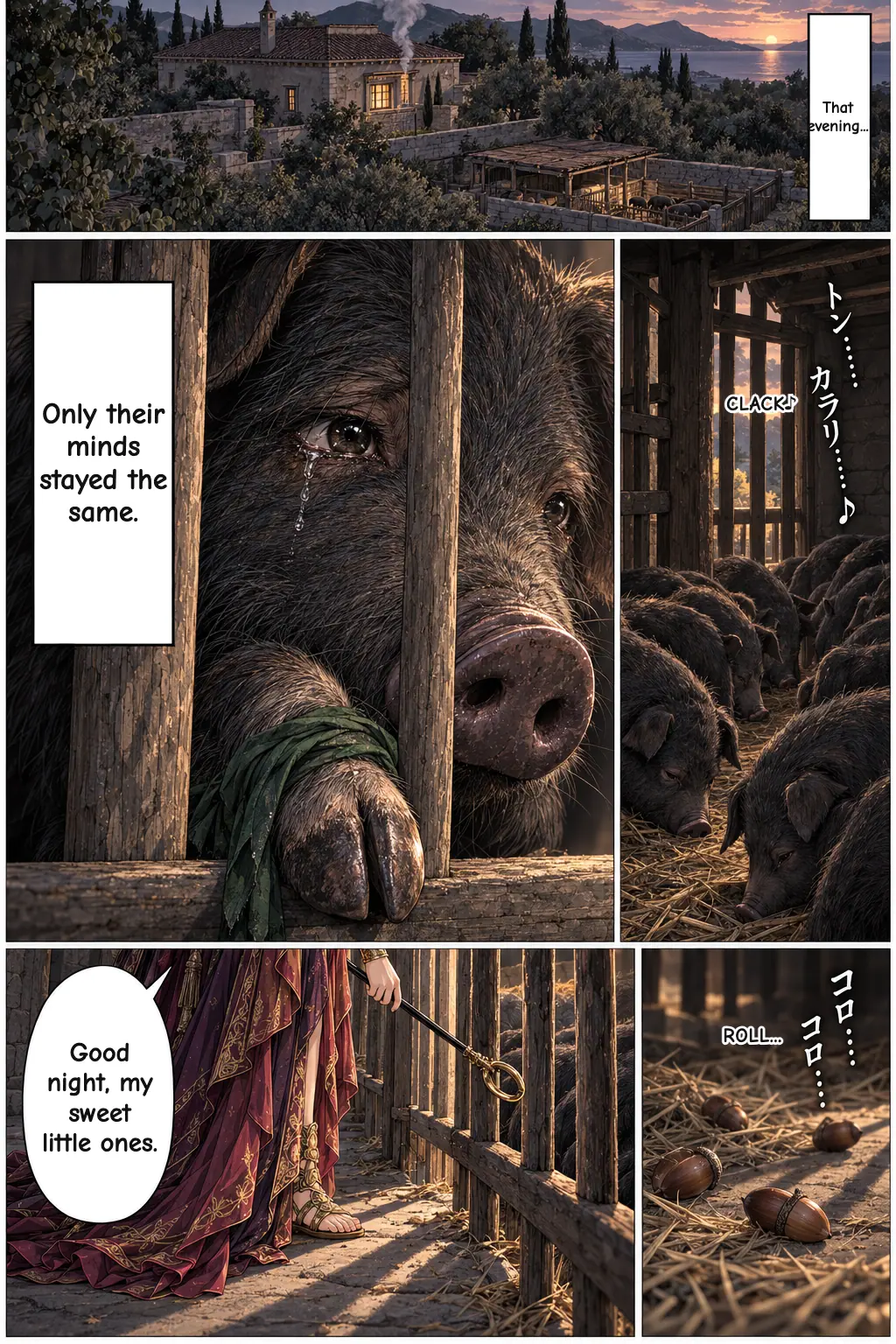
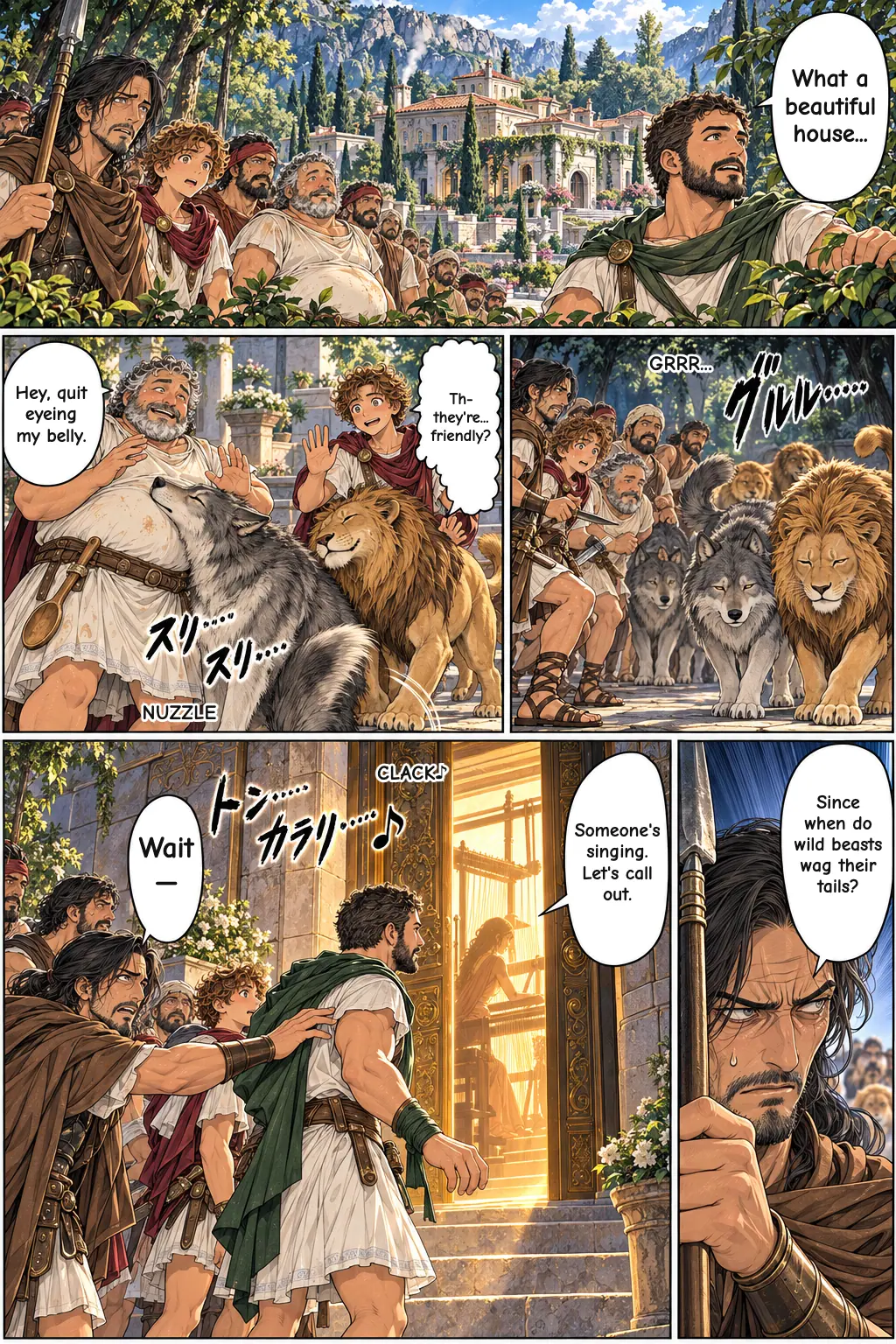
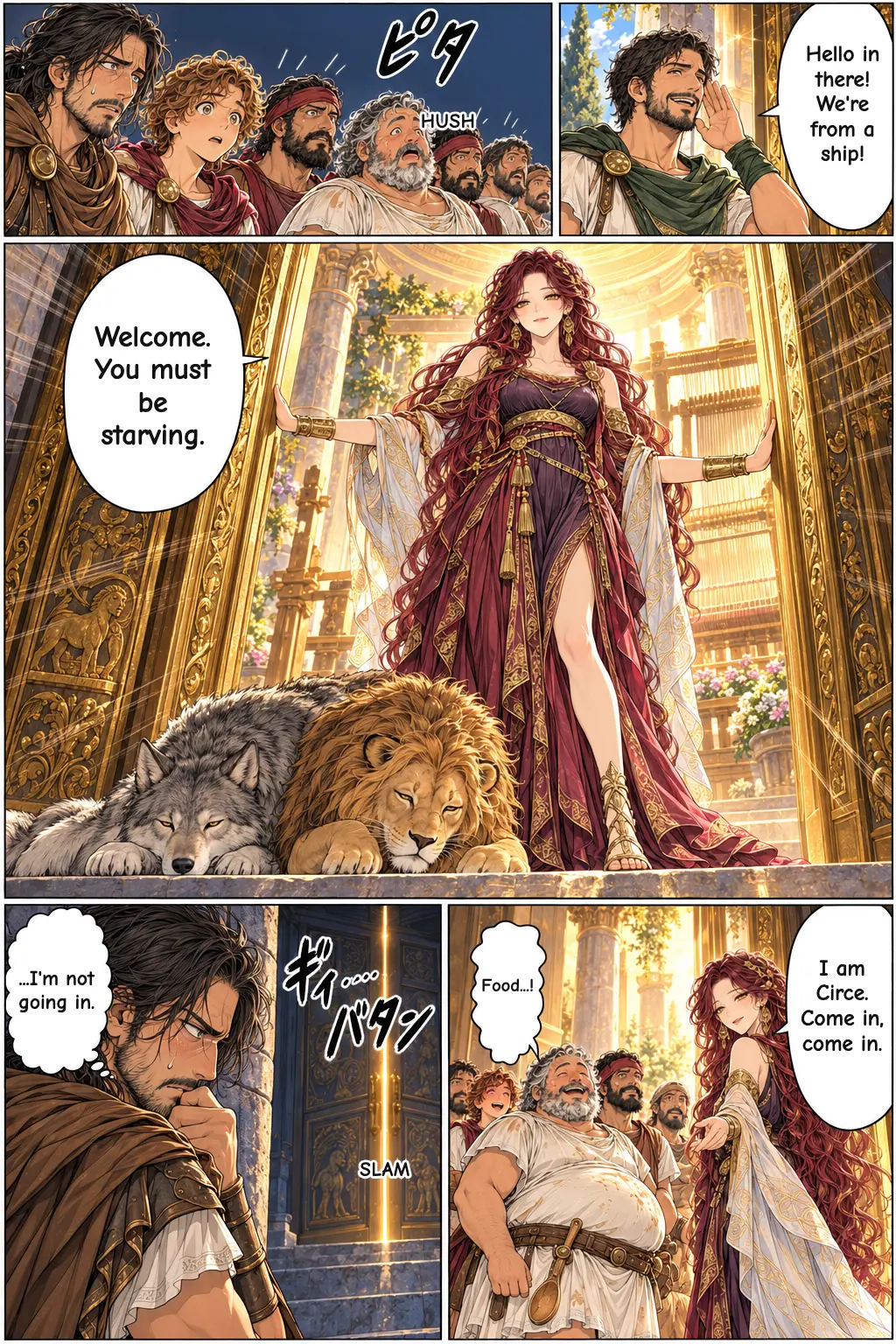
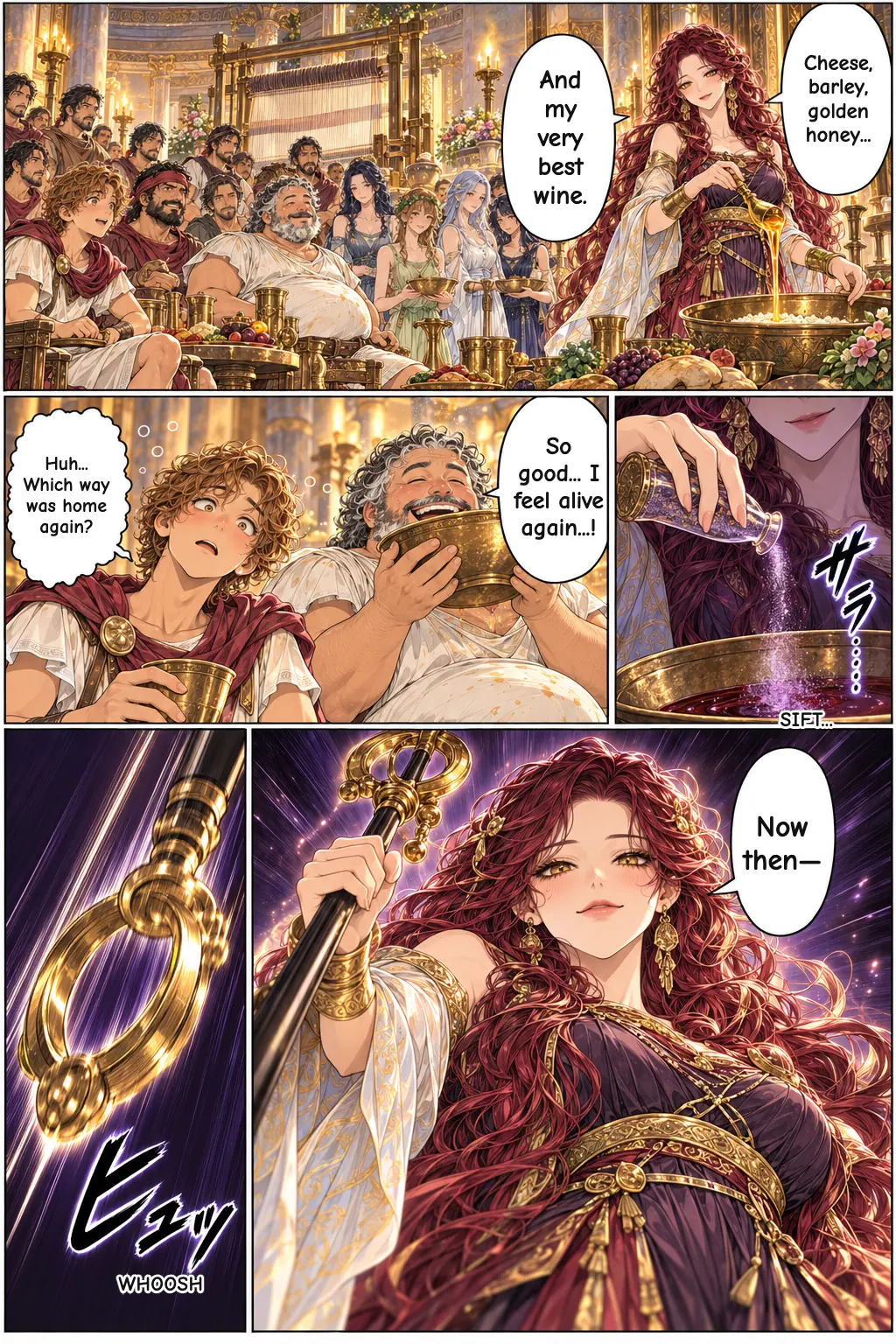
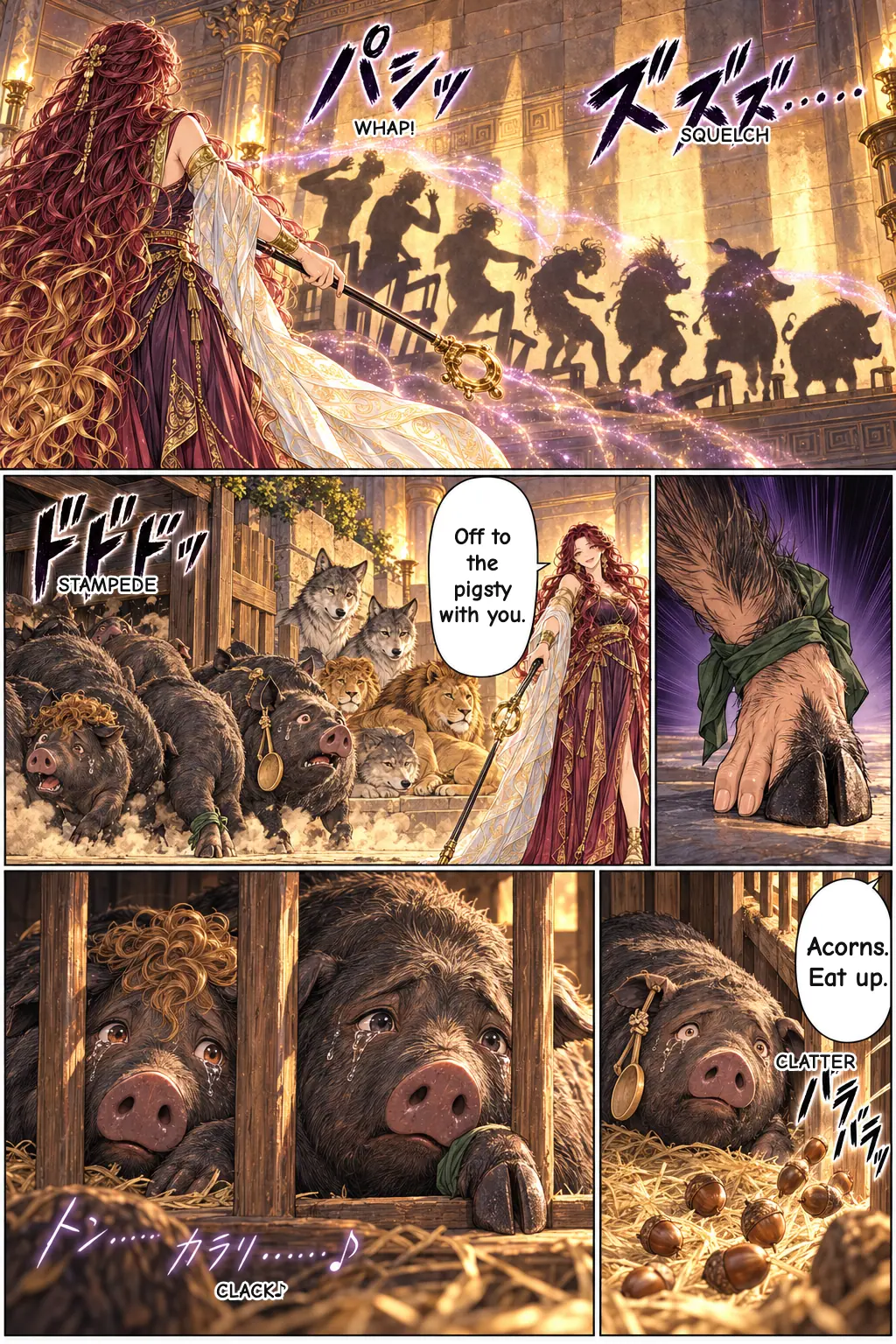
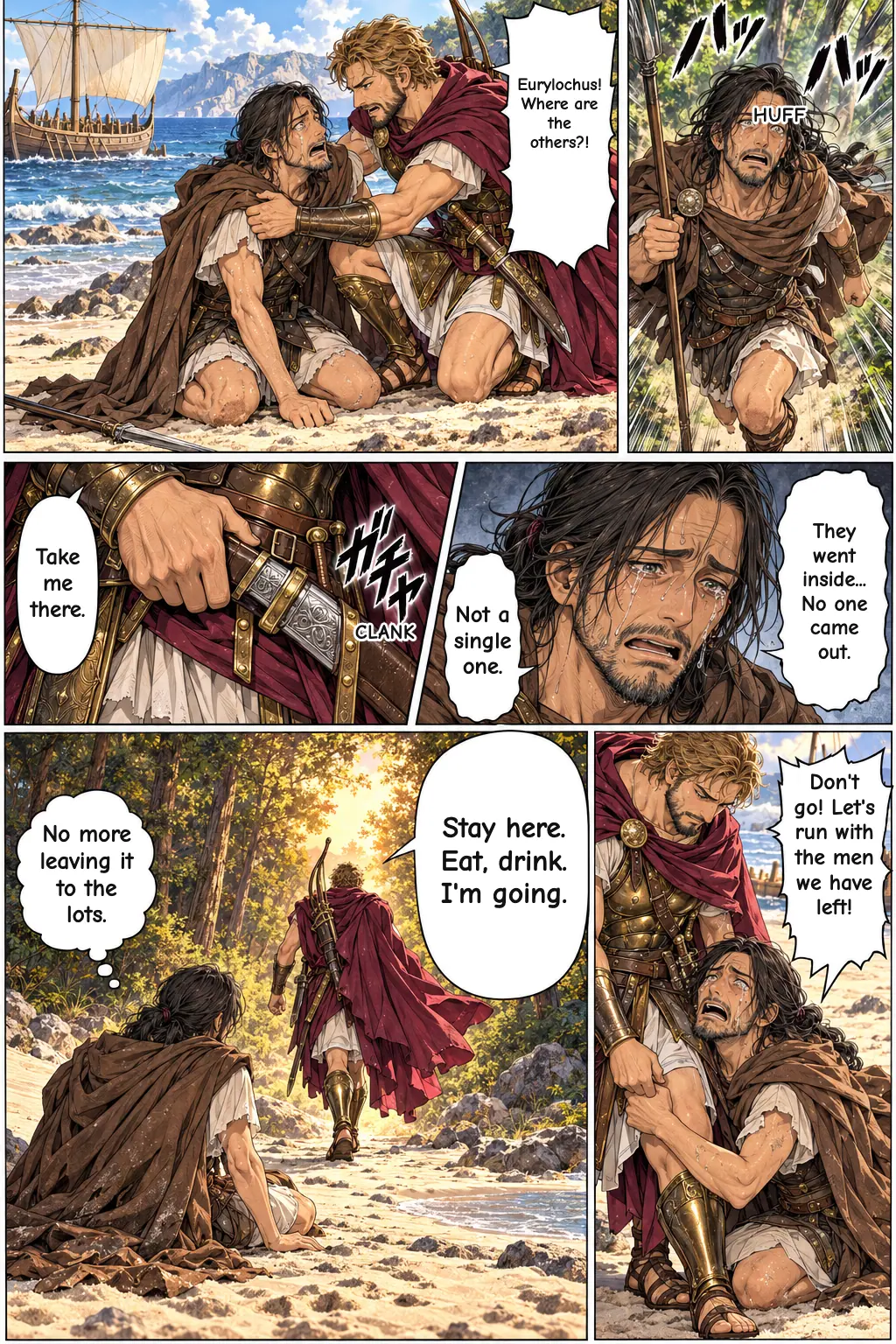
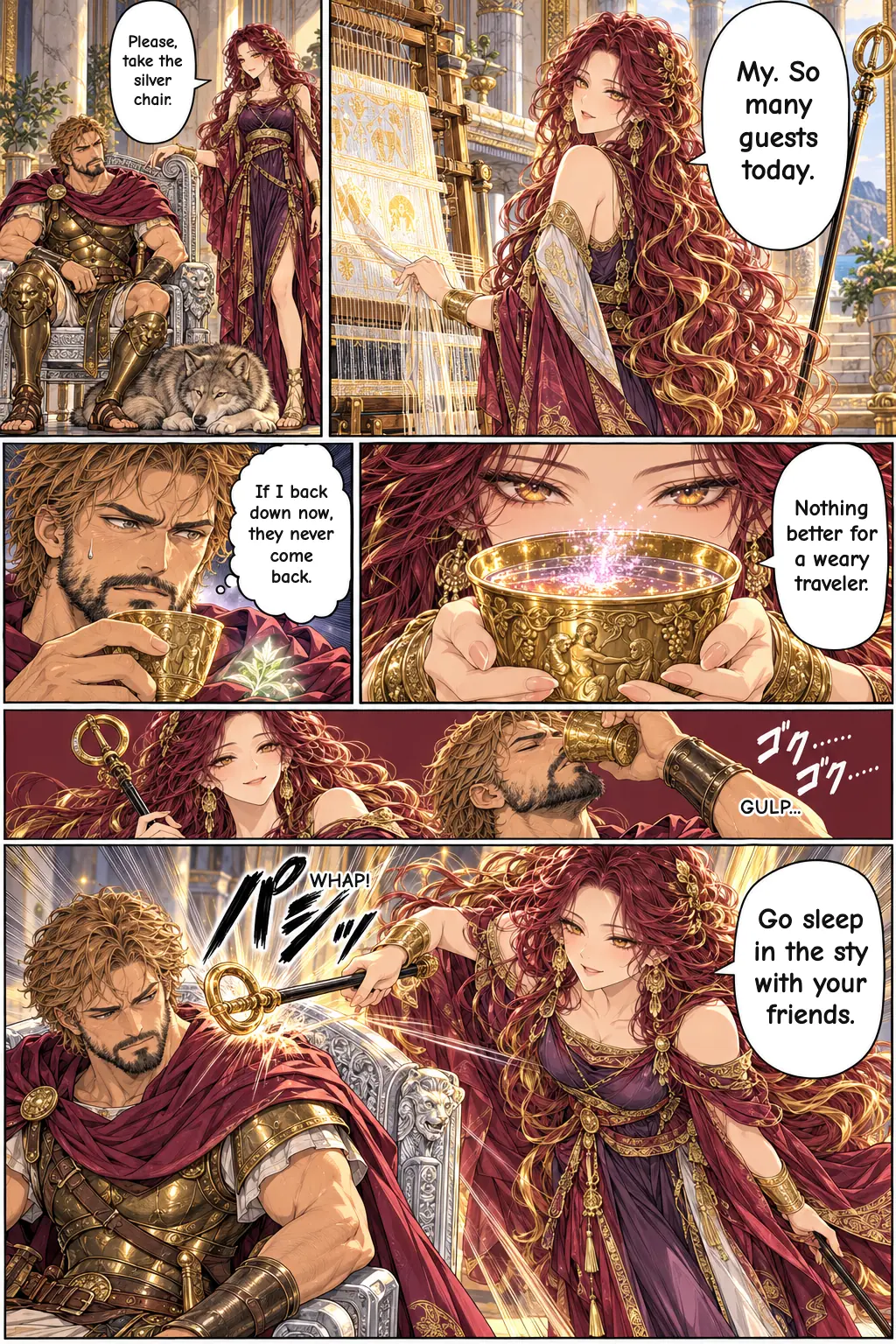
Odysseus splits the crew into two groups and draws lots in a helmet. The lot falls to Eurylochus, his relative by marriage, who sets out with twenty-two men. Around a polished stone house in a valley they find wolves and lions that fawn on them like friendly dogs. These are wild beasts tamed by magic drugs. Inside, a woman is singing as she weaves at her loom. She is Circe, a goddess and the daughter of Helios, the sun god. She invites them in, and everyone goes except Eurylochus, who suspects a trap. Circe serves them a mix of cheese, barley, honey and Pramnian wine, laced with a drug that makes them forget home. Then she strikes them with her wand. Their heads, voices, bristles and bodies become those of pigs, but their minds stay human. She pens them in a sty, and they weep there as she tosses them acorns.
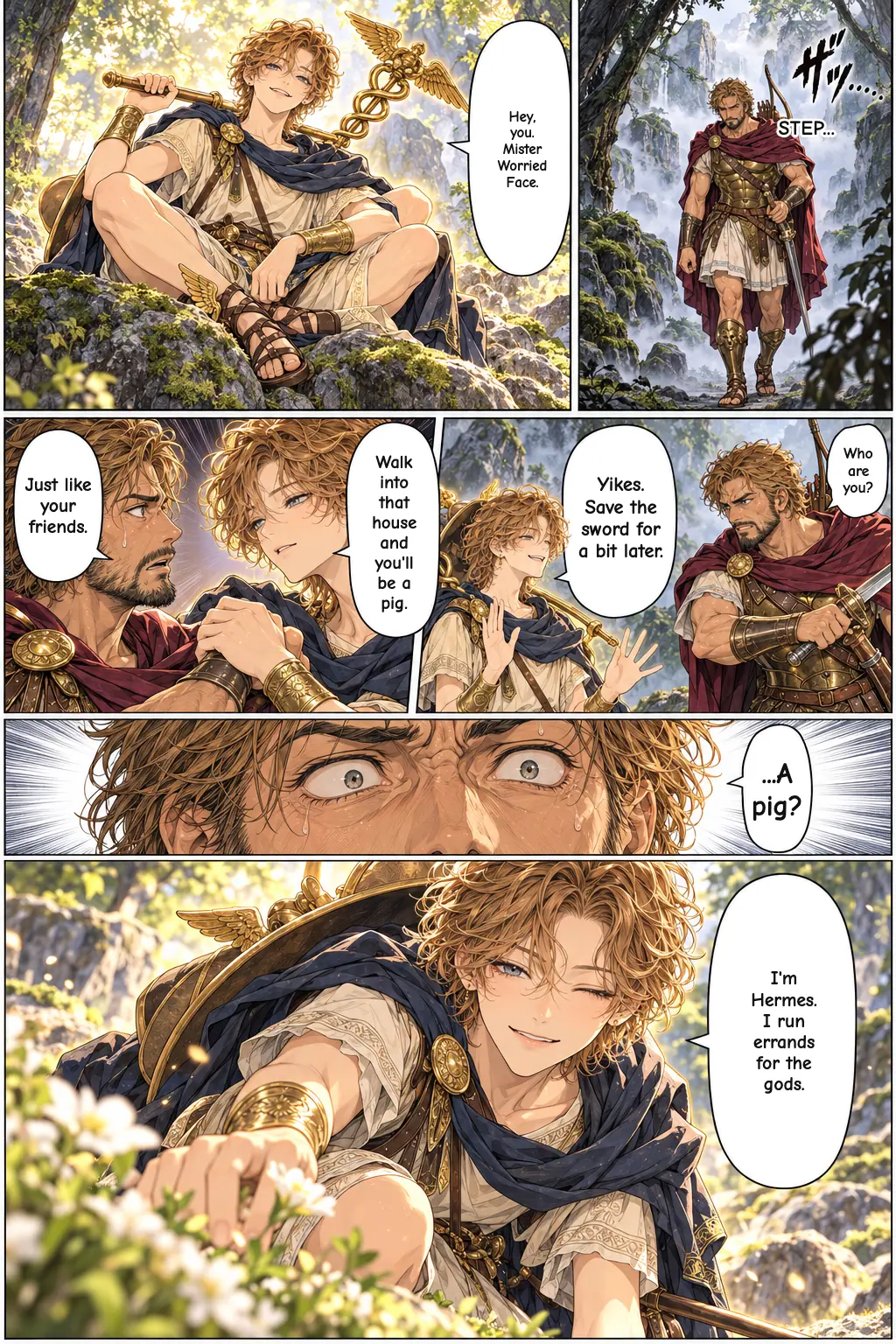
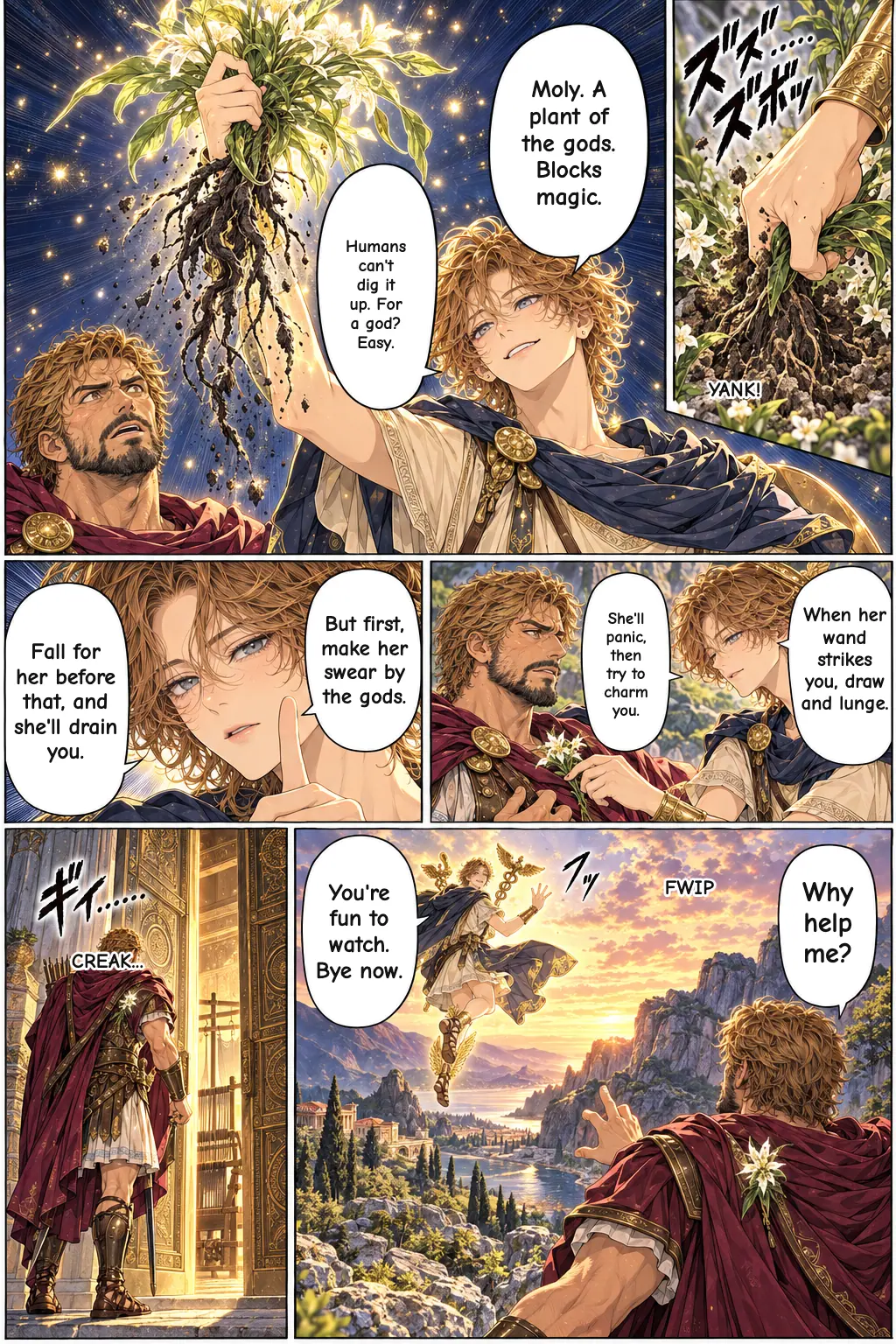
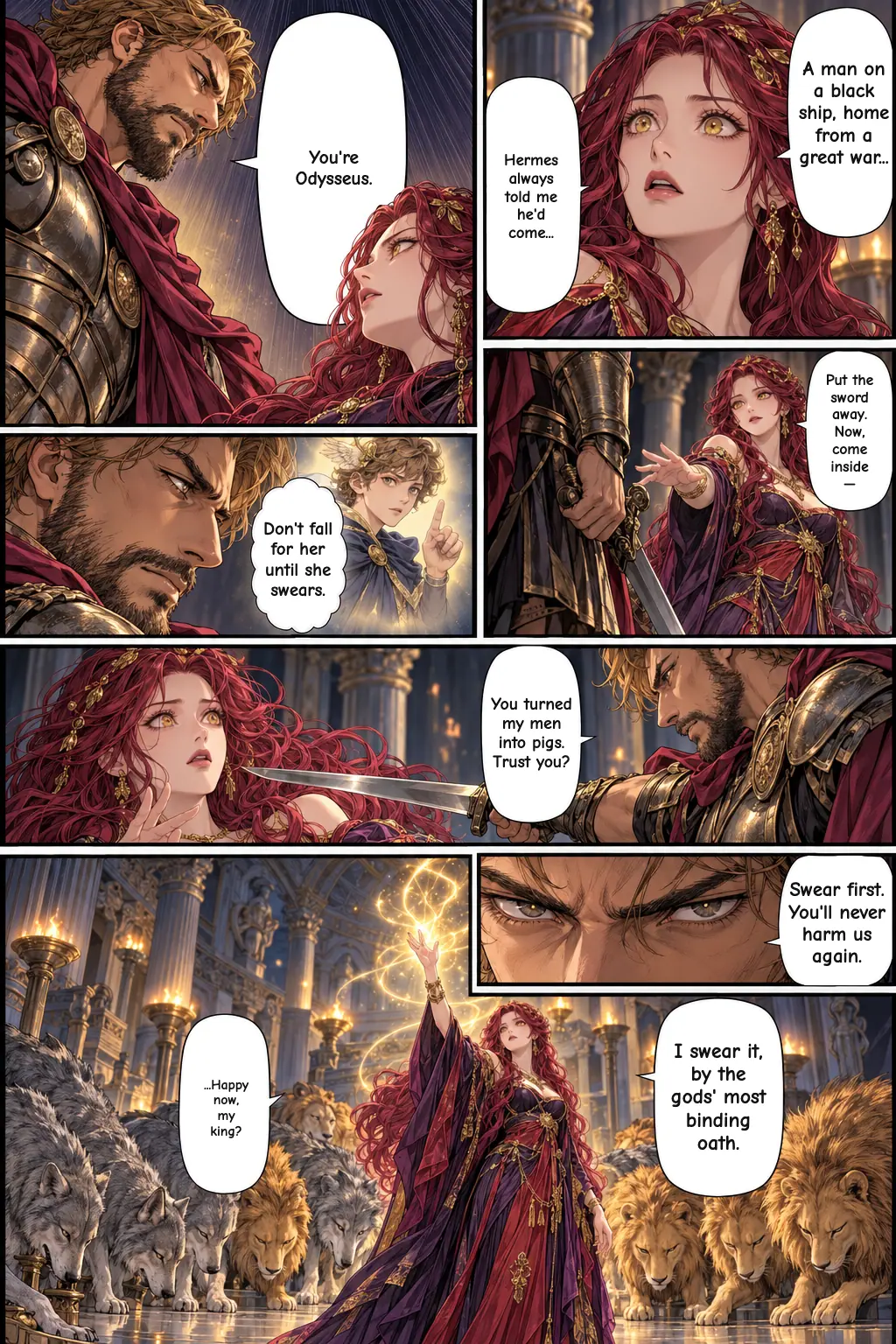
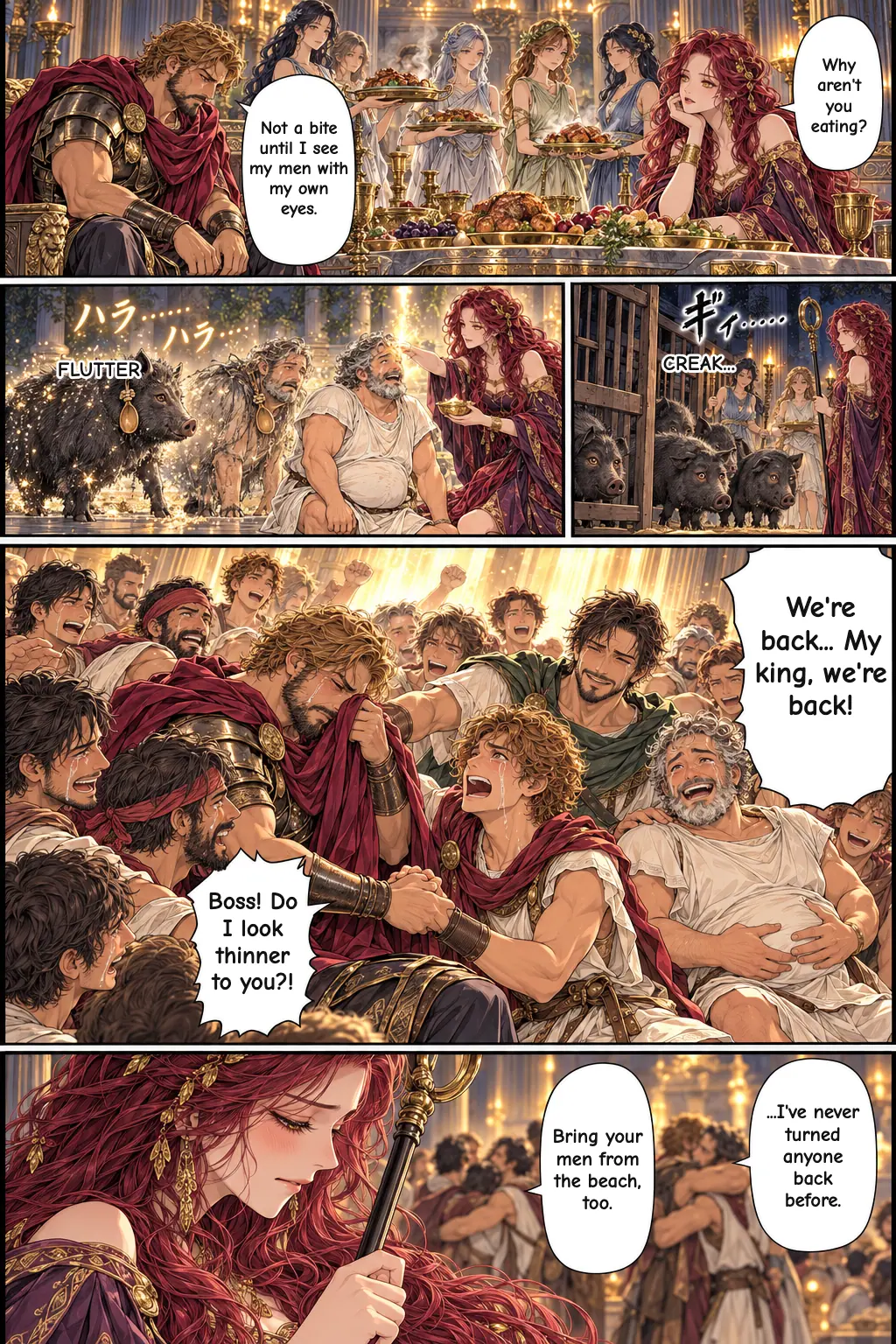
Eurylochus runs back to the ship. Odysseus takes his sword and bow and goes alone, even though Eurylochus begs him to sail away. On the path he meets Hermes, messenger of the gods, who looks like a young man with his first beard. Hermes gives him an herb the gods call moly, with a black root and a milk-white flower, and tells him what to do. When the drug fails and Circe raises her wand, Odysseus draws his sword and rushes at her as if to kill her. Circe screams, clasps his knees, and realizes this must be the clever Odysseus whom Hermes had told her about long ago. Before he will trust her, Odysseus makes her swear the great oath of the gods. She then turns his men back into humans, and they come out younger, taller and better-looking than before.
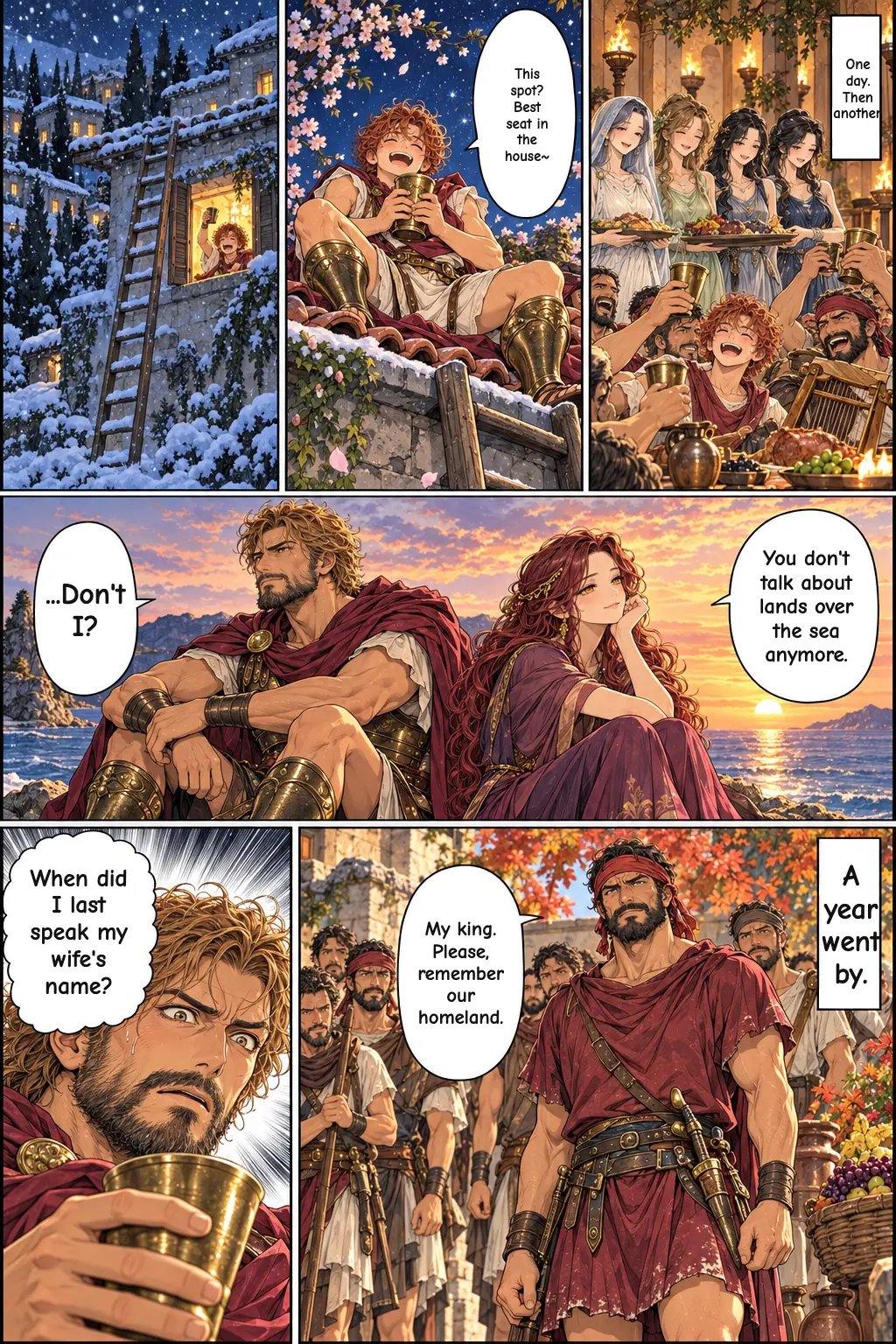
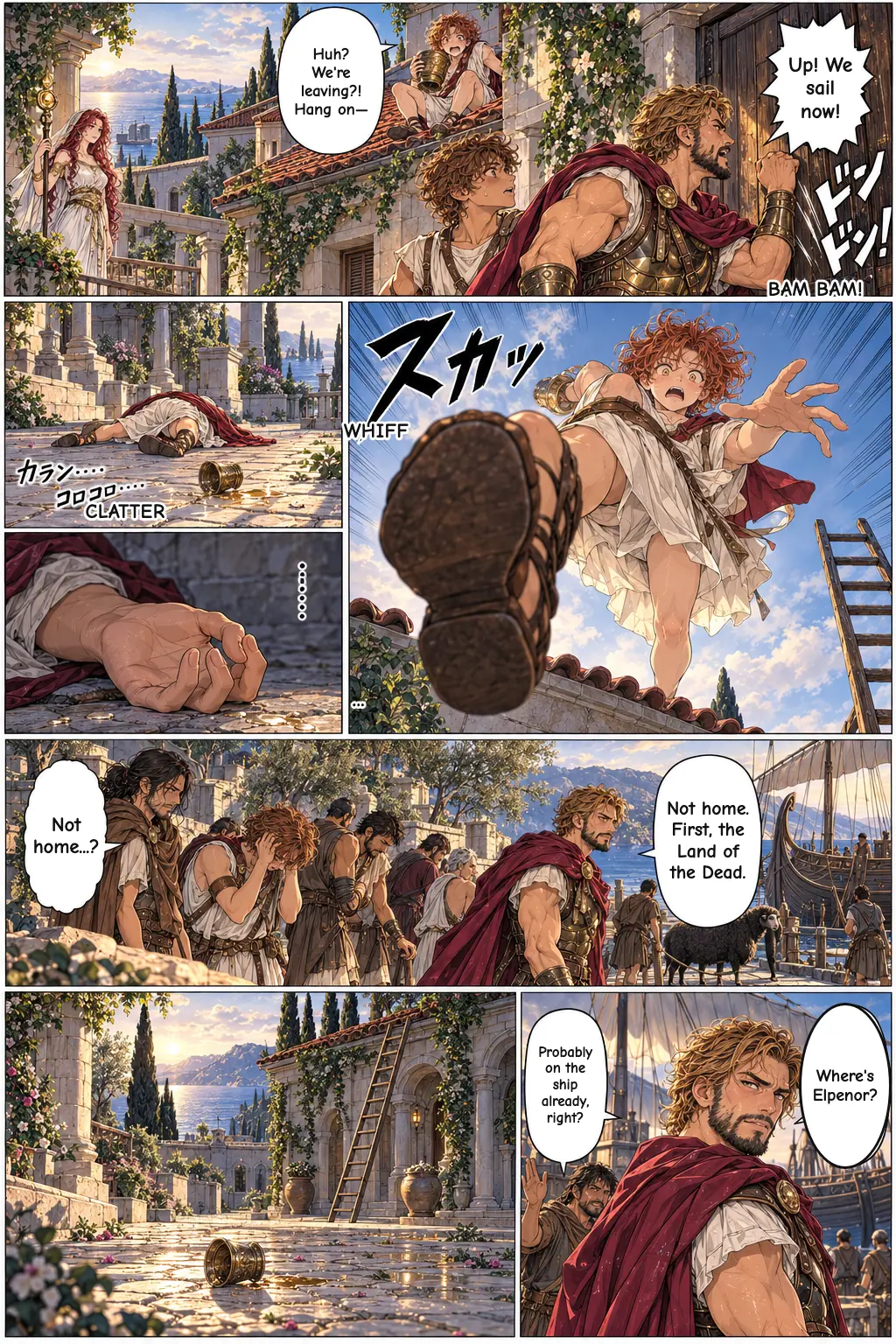
The whole crew stays for a full year of feasting. When the men finally urge Odysseus to go home, Circe lets them leave. First, though, she says he must travel to the Land of the Dead and consult the spirit of Tiresias, the blind prophet of Thebes. On the morning they depart, Elpenor, the youngest of the crew, wakes up drunk on the palace roof, forgets the ladder, falls, and breaks his neck.
Main Characters
Odysseus tells this whole episode himself, years later, at the court of the Phaeacian king. That's why Book 10 is full of his own feelings: dread, anger, and grief. Circe is both a threat and, later, a generous host and guide. Hermes helps him, as gods often do for favored heroes. Eurylochus is the cautious one, or the cowardly one, depending on how you read him. He'll clash with Odysseus again later in the epic.
What the Myth Says About Its World
Ancient Greek culture placed great weight on xenia, the sacred bond between guest and host. Circe's welcome turns that bond upside down: food, wine and a seat by the fire become the trap. Her later hospitality, once the oath is sworn, shows the bond working the way it should. The oath matters too. In Homer, even gods are bound by an oath sworn by the gods' great oath, so making Circe swear is Odysseus being careful, not just polite.
The scene also shows the trait Homer prizes most in Odysseus: mêtis, meaning cunning intelligence, joined with courage. He survives because he takes divine advice, keeps his nerve, and makes sure of a binding promise. Nobody knows exactly what plant moly was meant to be. Some modern writers have linked it to the snowdrop, but others treat it as purely mythical. Homer himself says only that it is hard for mortals to dig up.
What the Manga Changes
The manga keeps the main events of Book 10 but fills in what Homer leaves out. Homer says very little about how anyone looks, so the faces, hairstyles, clothing and builds of Circe, Hermes, Elpenor and the crew are all the artist's own designs. So are the layout of the mansion, the pigsty and the island scenery. How Odysseus uses the moly, and the light and visual effects of the transformations, are also creative choices. In the original, only Polites and Eurylochus are named among the scouts, so any other names or personalities belong to the manga.
Homer sums up the year on Aeaea in a single line about feasting, so the conversations and events of that year are new. The epic states plainly that Odysseus shares Circe's bed. The manga only hints at their relationship. Hermes' frank warning about what Circe could do to an unprotected man is toned down into a general threat of losing his strength, so the episode works for all ages. The manga also gives Elpenor a little more personality before his fall, and it reduces Circe's detailed underworld ritual to its core: find Tiresias, and keep the other dead away with a sword.
Where to Read It
If you'd like to see Circe's mansion, the moly scene and that unwelcome final order in pictures, Episode 4 of GREEK MYTHOLOGY: THE ODYSSEY — The Twenty-Year Voyage Home is right above this article. Every episode on Manga Portal is free to read, with no sign-up. Next comes the voyage to the Land of the Dead, if you want to keep going.
Characters in this episode
Odysseus
King of Ithaca and the narrator, who goes alone to Circe's house to rescue his men.
Circe
A goddess and daughter of the sun god Helios, who turns visitors into animals with drugs and a wand.
Hermes
Messenger of the gods, who appears as a young man and gives Odysseus the protective herb moly.
Eurylochus
Odysseus' relative by marriage, who leads the scouting party and is the only one to escape.
Polites
Odysseus' dearest and most trusted companion, who suggests calling out to the singing woman.
Elpenor
The youngest crewman, who falls from Circe's roof on the morning they leave.
FAQ
Why did Circe turn Odysseus' men into pigs?
Homer never gives a motive. He simply presents it as what Circe does to strangers who come to her house, and the tame wolves and lions around it suggest earlier visitors met a similar fate. Readers have offered many interpretations, but the poem itself doesn't explain.
How did Odysseus resist Circe's magic?
The god Hermes gave him moly, a magic herb with a black root and white flower, which protected him from Circe's drug. Following Hermes' advice, Odysseus then drew his sword on her and made her swear a binding oath not to harm him.
What is moly in the Odyssey?
Moly is a divine herb that only gods can easily dig up. Homer describes it as having a black root and a milk-white flower. Some modern writers have suggested real plants such as the snowdrop, but there is no agreement.
How long did Odysseus stay with Circe?
He and his crew stayed on Aeaea for one full year. It was his own men who finally reminded him to head home.
Why did Circe send Odysseus to the underworld?
She told him he had to consult the spirit of the prophet Tiresias, who would tell him the route home. That journey takes place in Book 11 of the Odyssey.