Episode 7Sacrifice Six, or Sink Them AllScylla and Charybdis
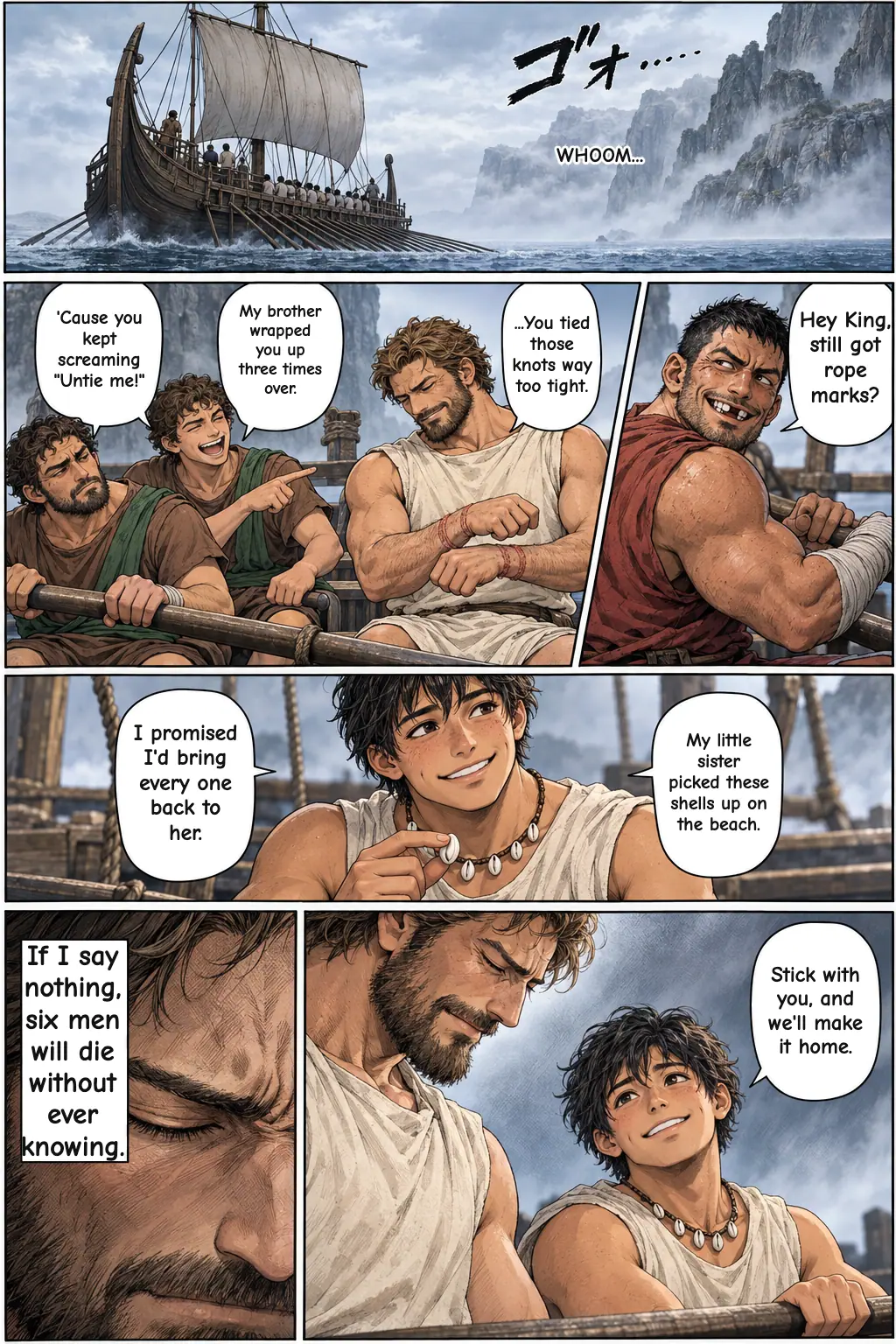
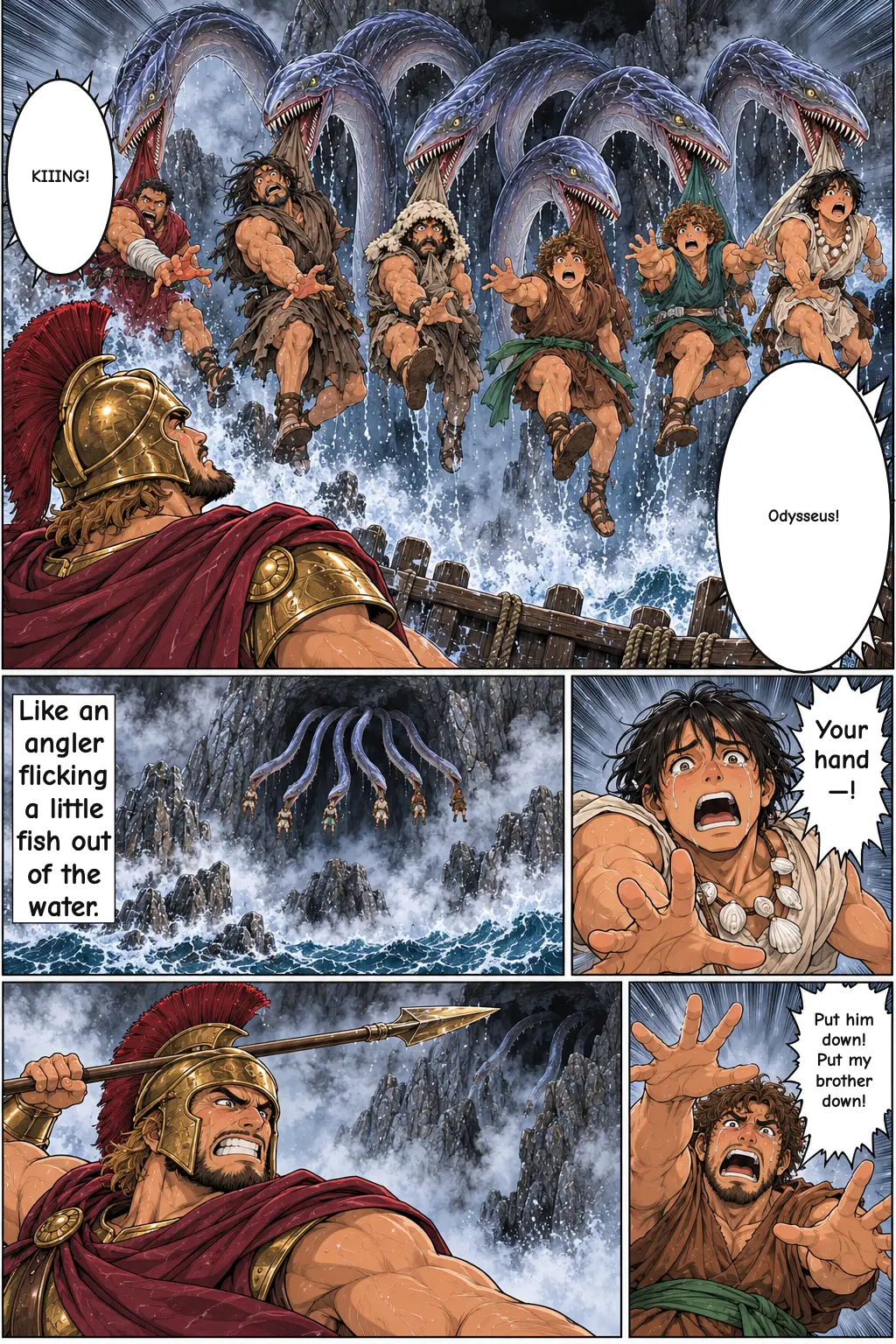
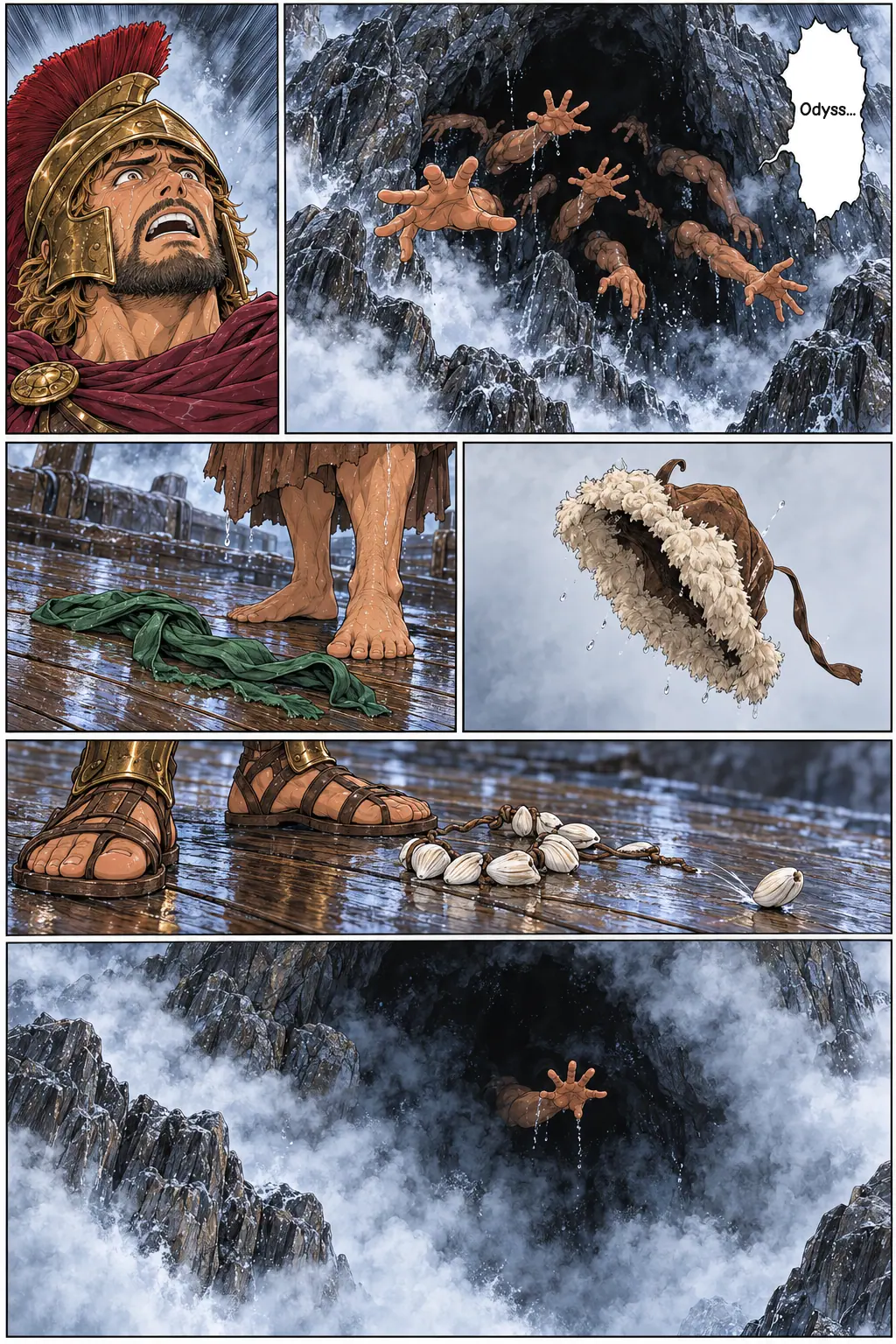
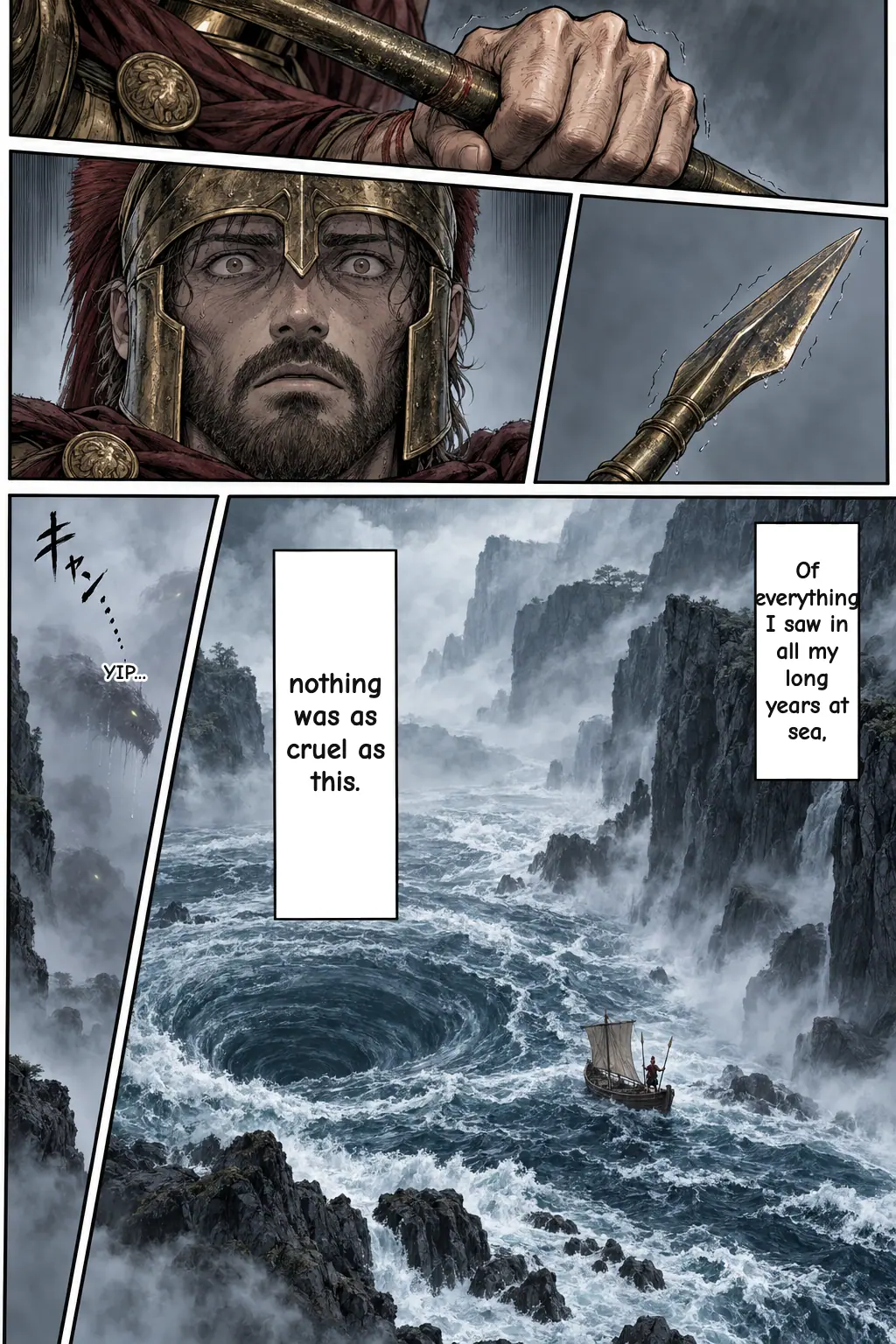
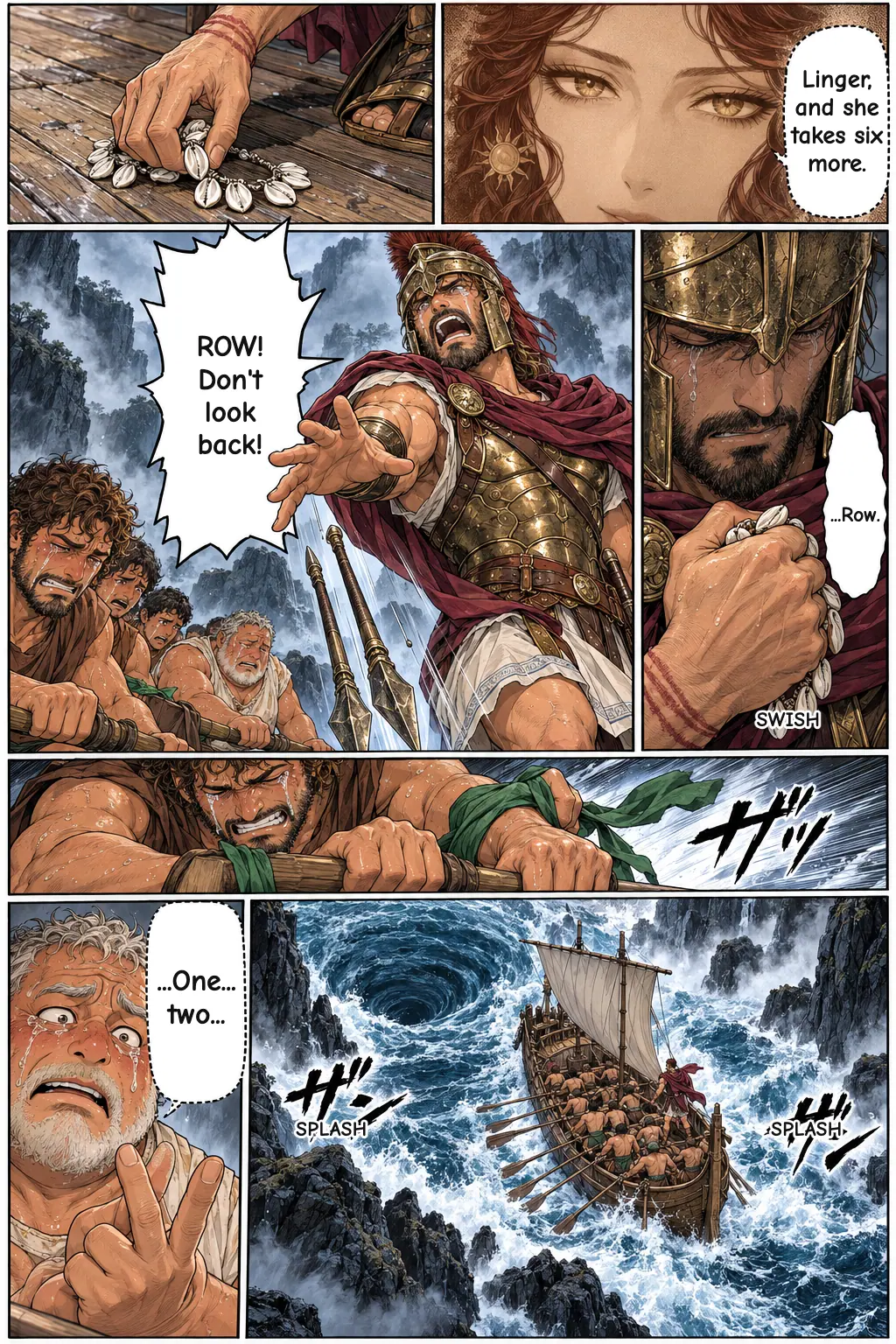
On one side, a whirlpool that swallows whole ships. On the other, an undying monster that always takes six men. Odysseus alone knows the truth. He keeps it from his crew and just keeps shouting "Row!" Then the hands reach out to him, calling his name, and there is nothing he can do.
Scylla and Charybdis Explained: Odyssey Book 12 Story and Meaning
The Original Myth: What Happens in Odyssey Book 12
The story of Scylla and Charybdis comes from Homer's Odyssey, an ancient Greek epic poem usually dated to around the 8th century BCE. It appears in Book 12, inside a long flashback. Odysseus, the hero trying to sail home to Ithaca after the Trojan War, is a guest at the court of Alcinous, king of the Phaeacians (a seafaring people who take him in), and he tells his own adventures in the first person. So everything we hear about this strait comes from Odysseus himself.
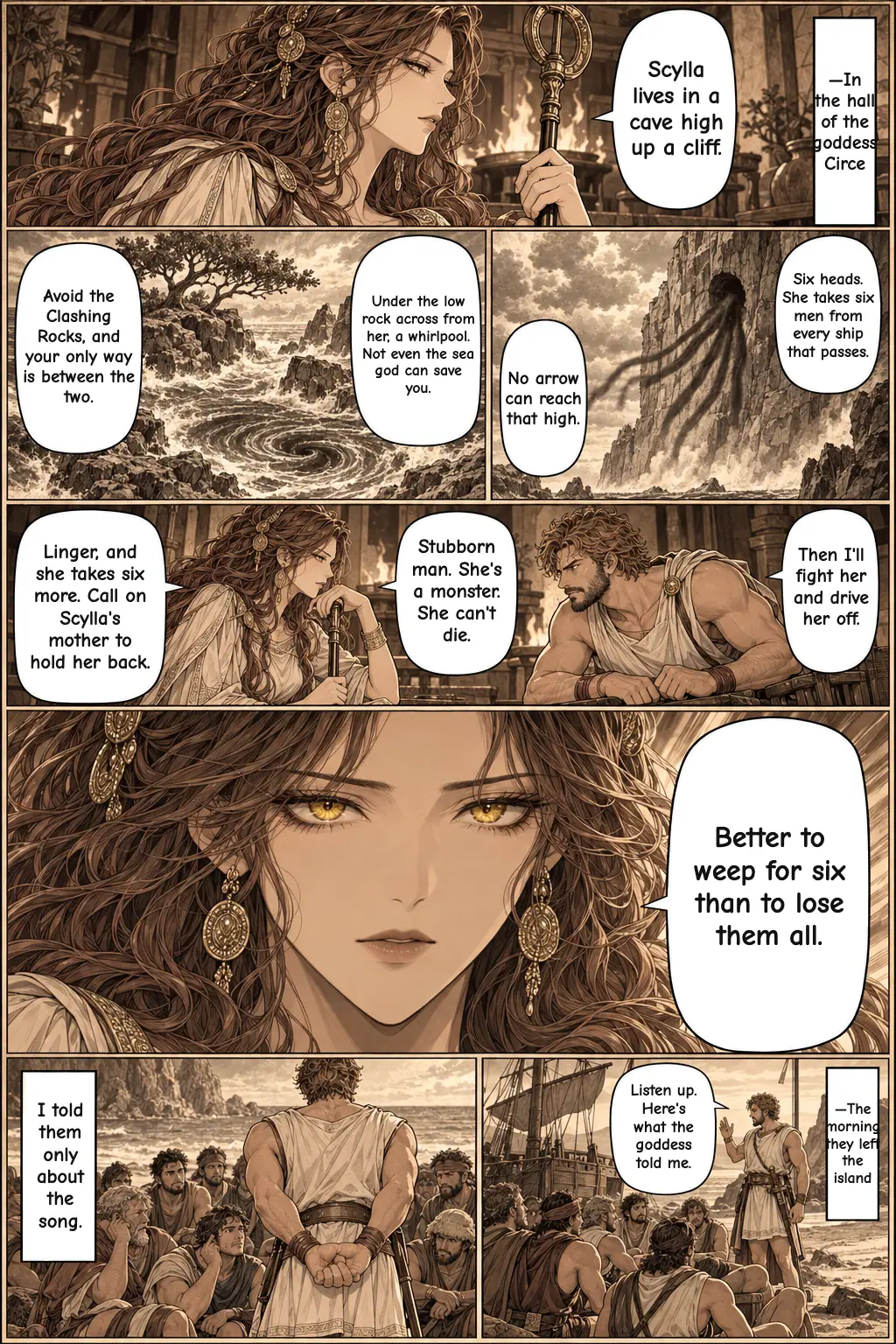
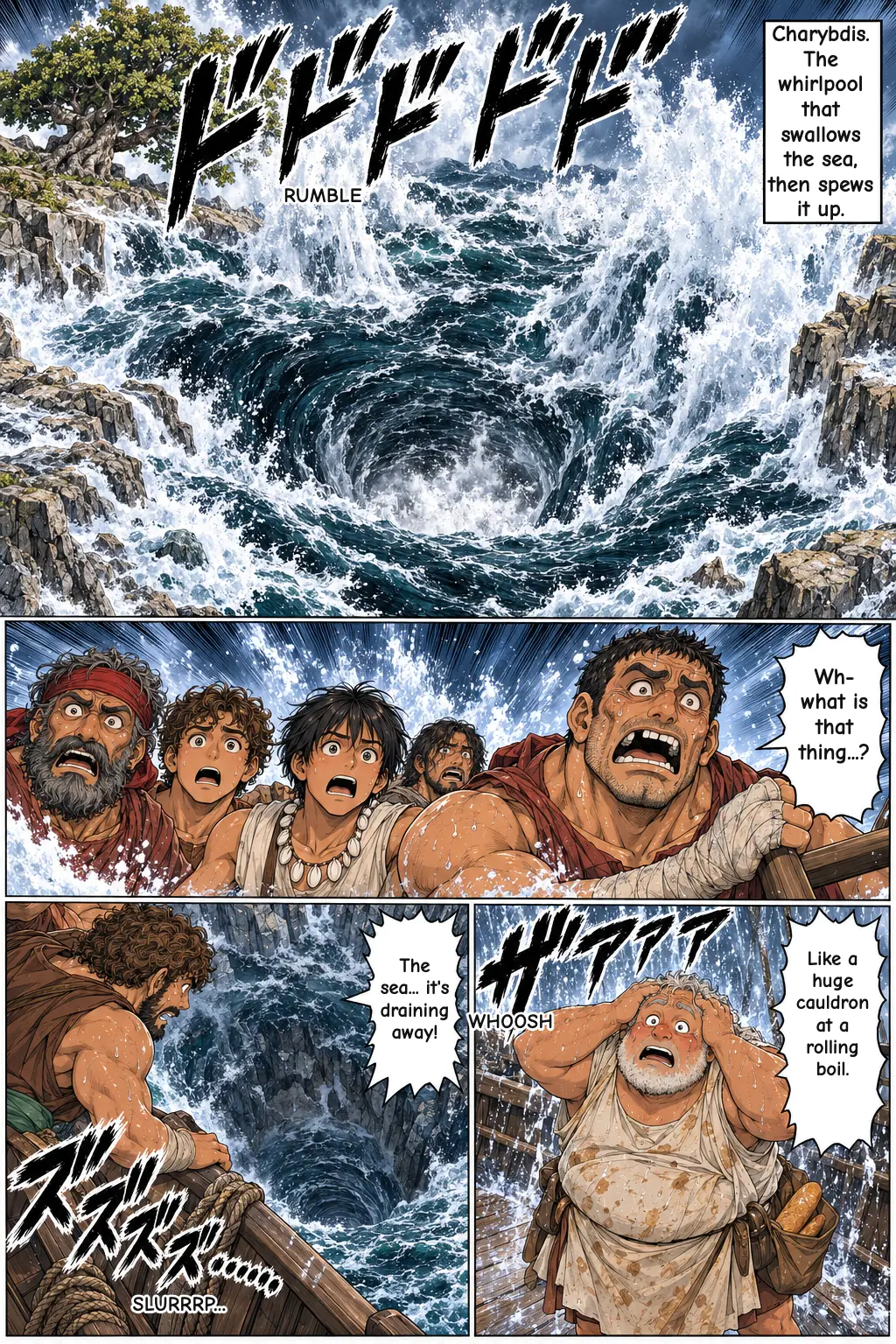
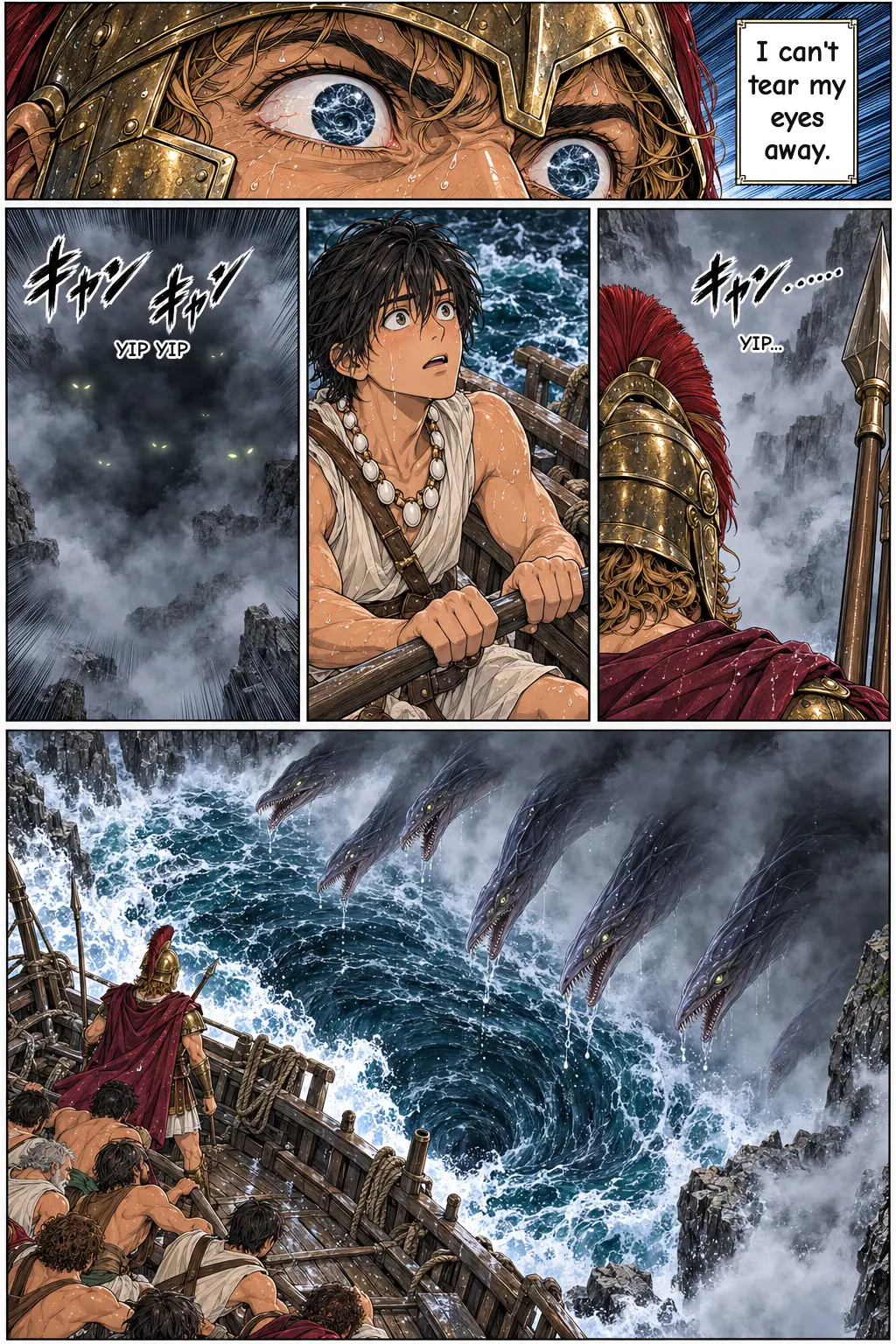
Before he sets out, the goddess Circe describes the route ahead. There are two rocks facing each other. One is a towering peak always wrapped in cloud, too smooth to climb, with a cave halfway up facing the western darkness. Inside lives Scylla, a monster who yelps like a newborn puppy. She has twelve feet and six very long necks, each ending in a terrible head with three rows of teeth. Hiding her lower body in the cave, she reaches out to snatch sea creatures, and from every passing ship she takes one man for each head. The other rock is lower, close enough to hit with an arrow, and has a large fig tree on it. Beneath it Charybdis swallows the dark sea water and spits it out again, three times a day. If a ship is caught while she swallows, not even Poseidon, the sea god, could save it.
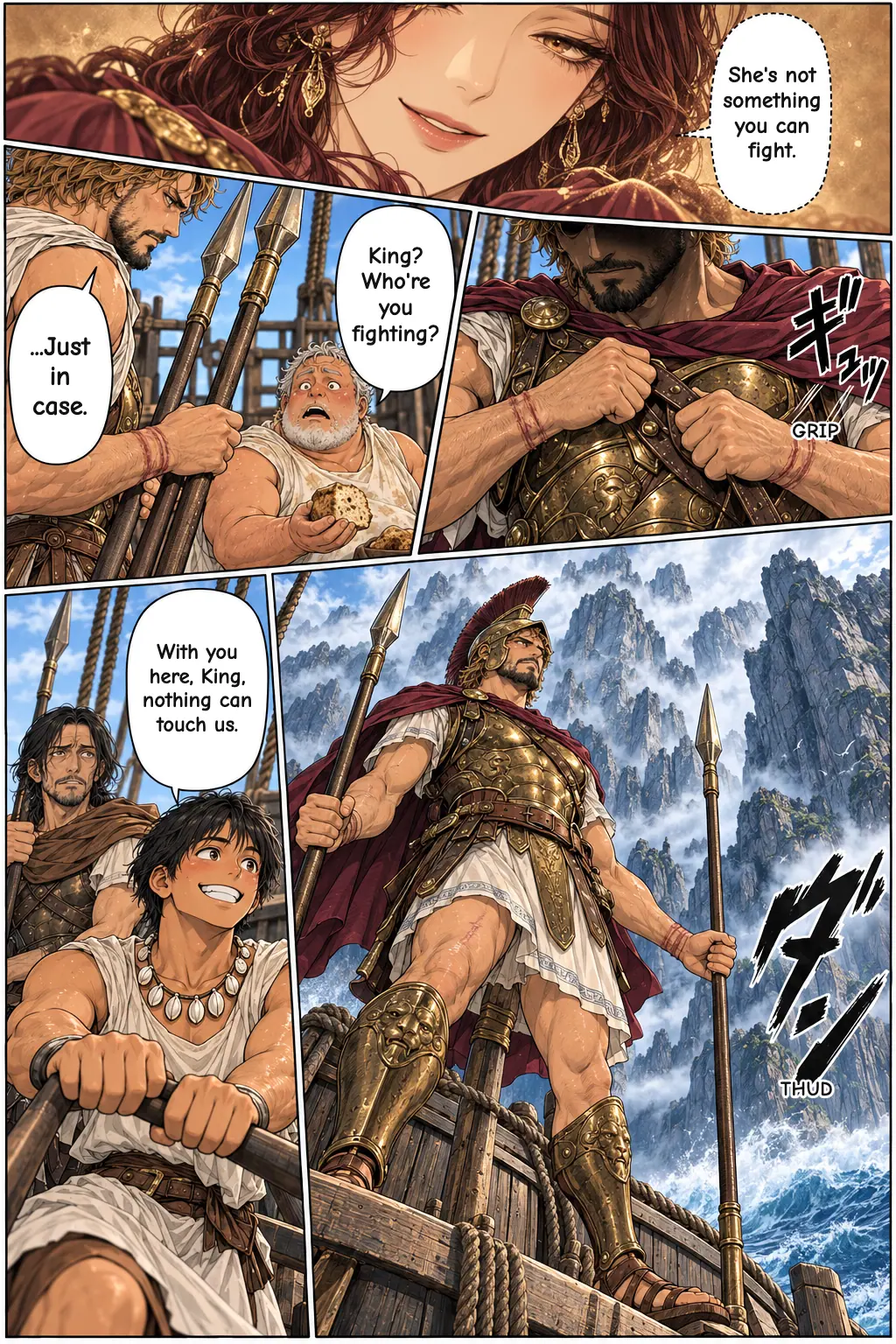
Circe's advice is cold but practical: keep close to Scylla's rock and row hard, because losing six men is far better than losing everyone. When Odysseus asks whether he could fight Scylla off, Circe scolds him for always thinking of battle. Scylla is not mortal, she says, but an undying evil. Arming himself and lingering would only cost another six men. The best he can do is flee and call on Crataeis, Scylla's mother, to stop a second attack.
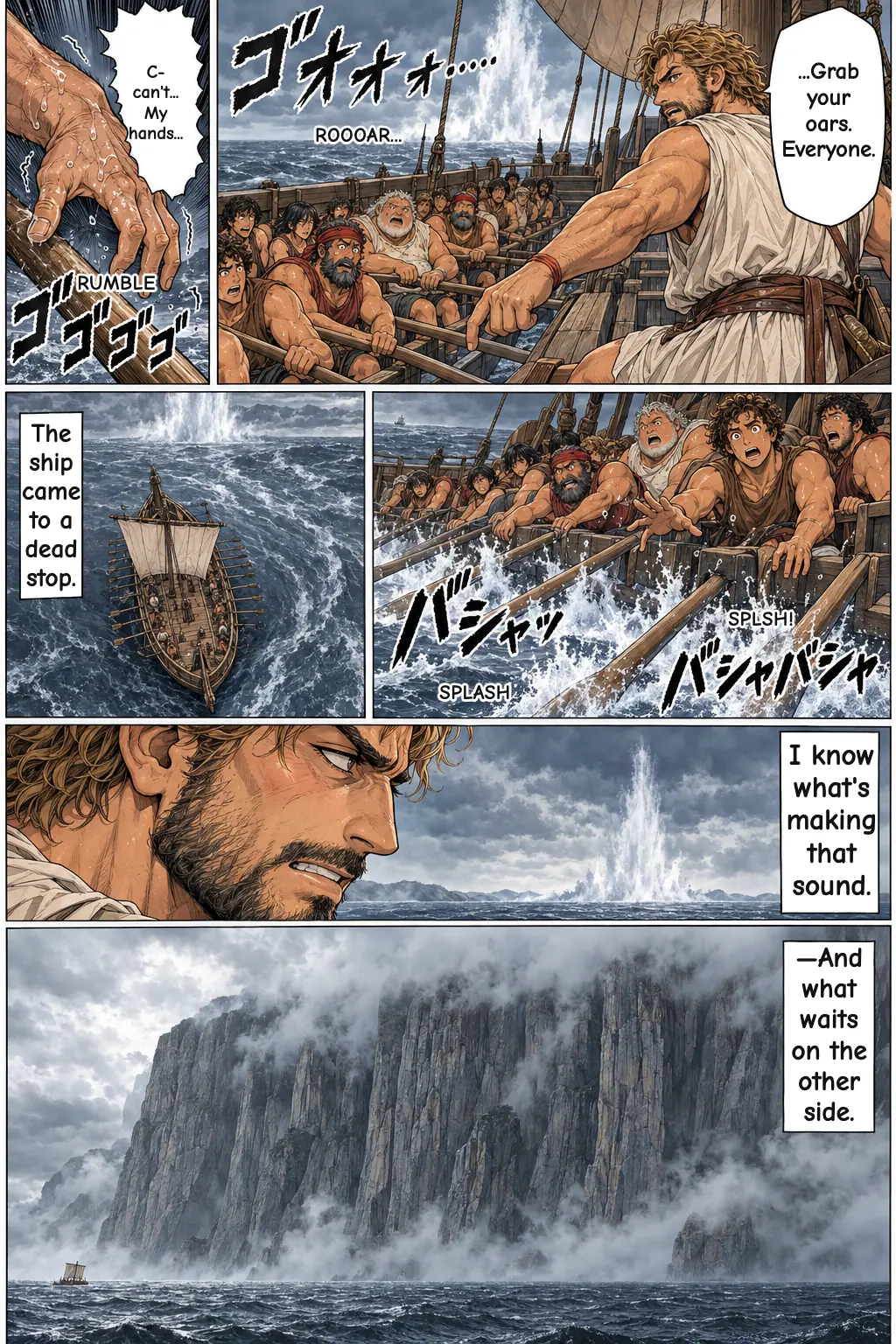
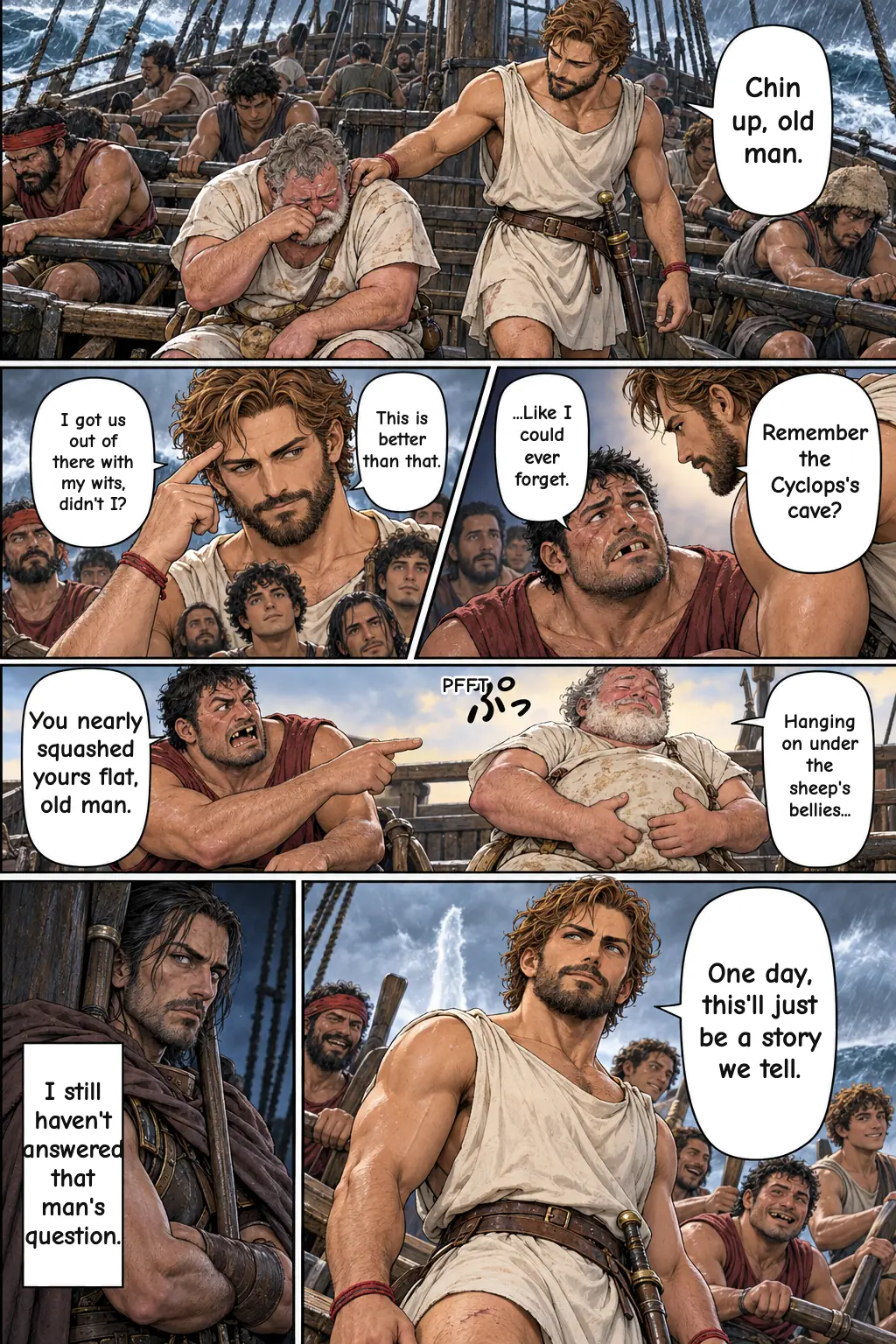
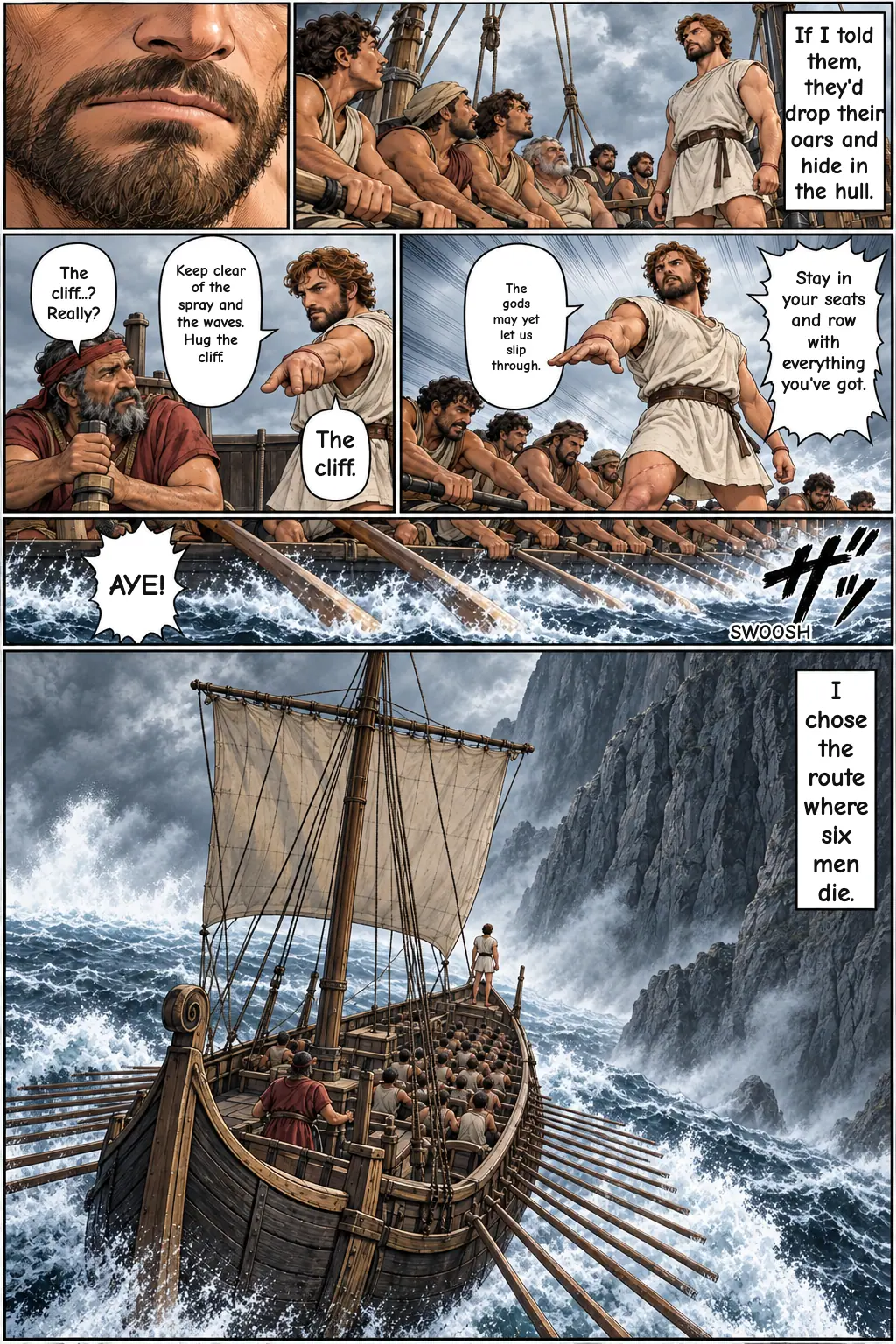
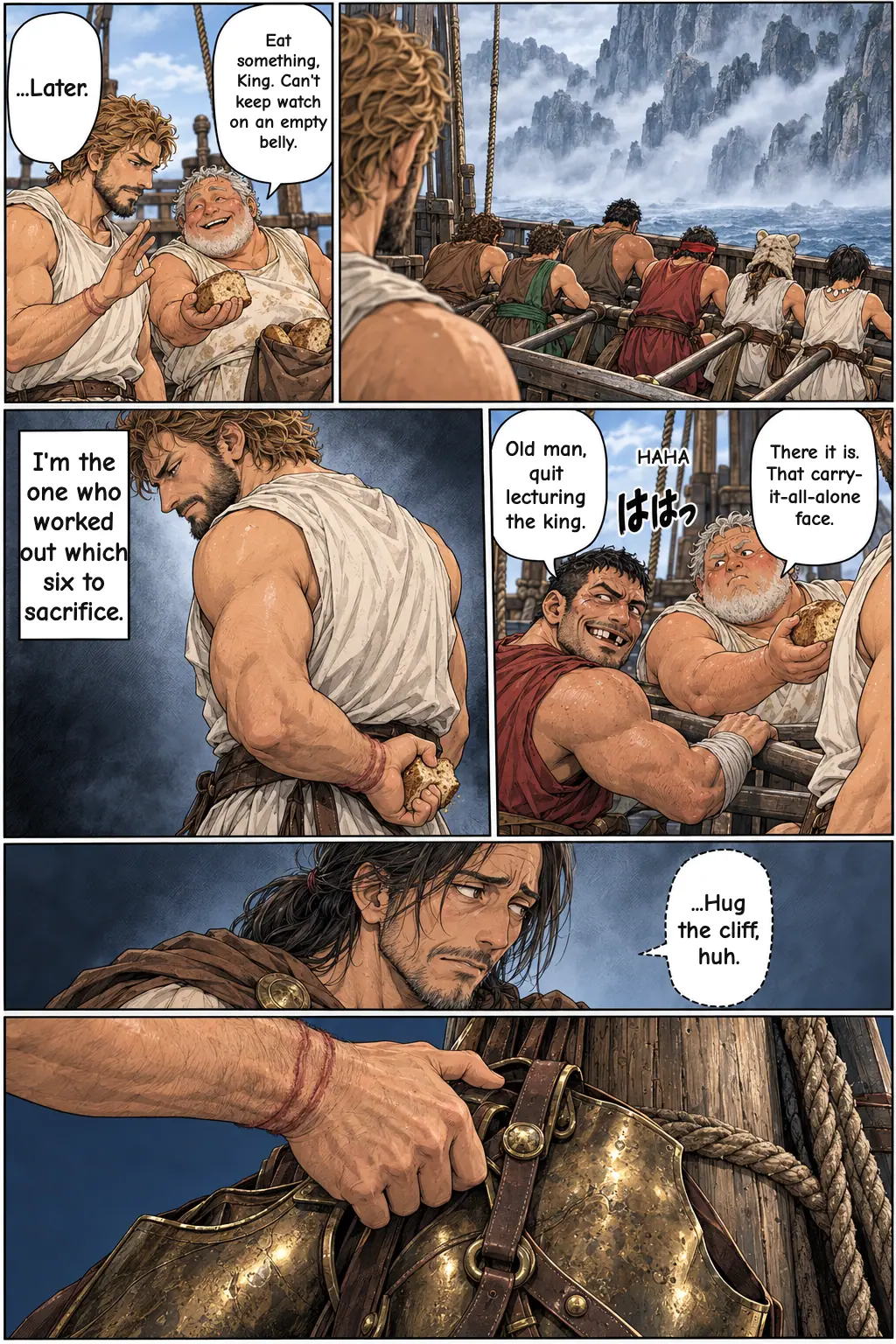
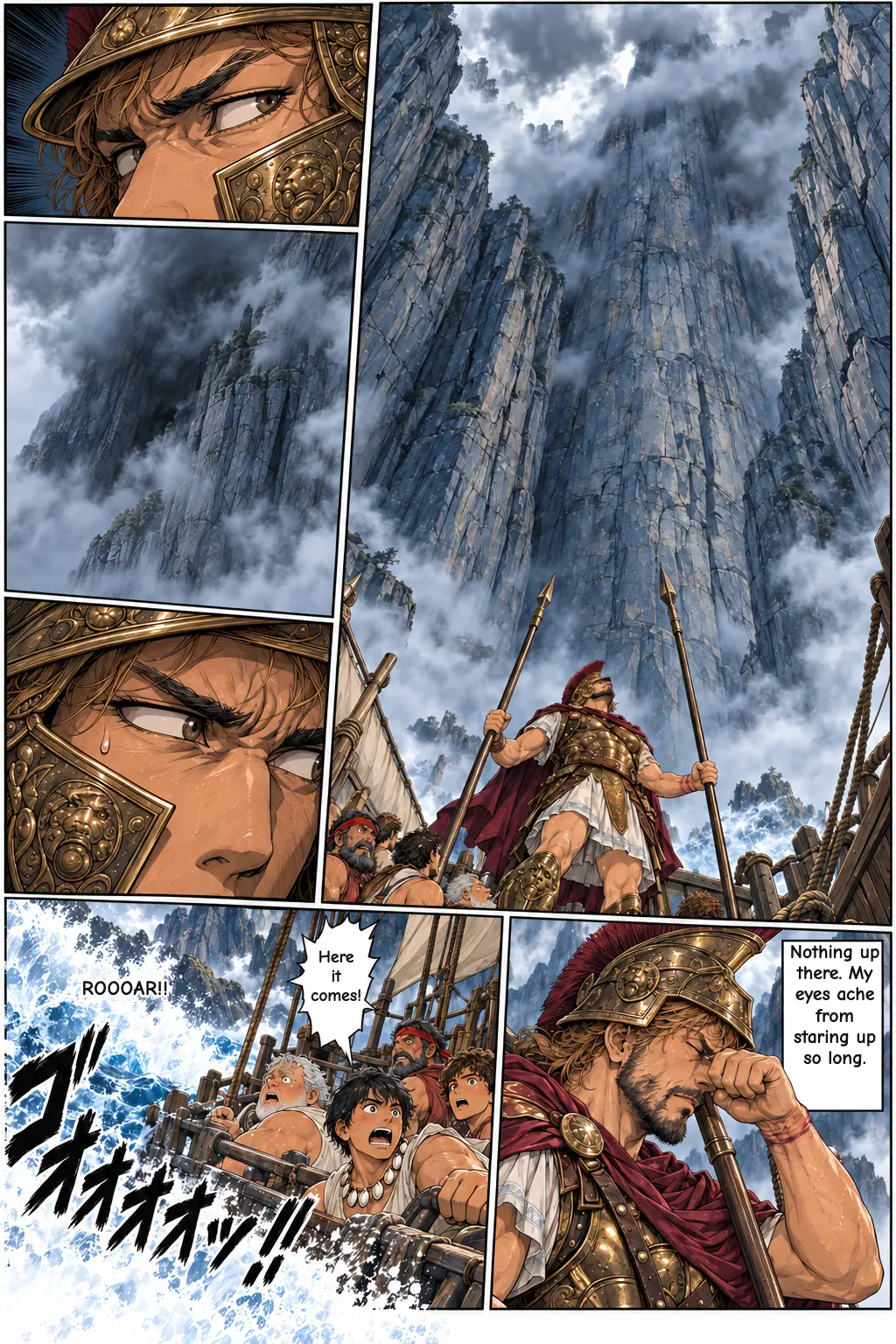
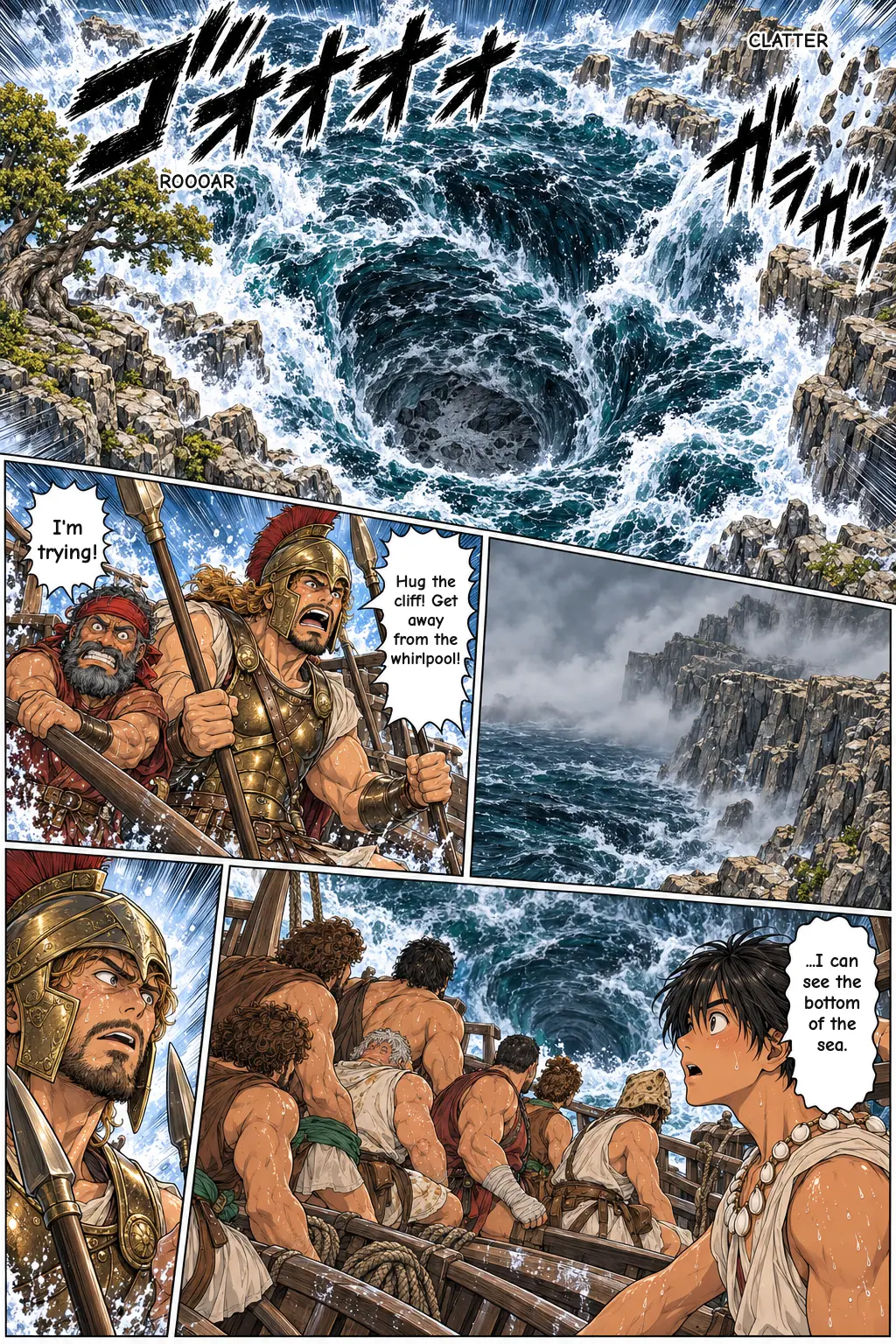
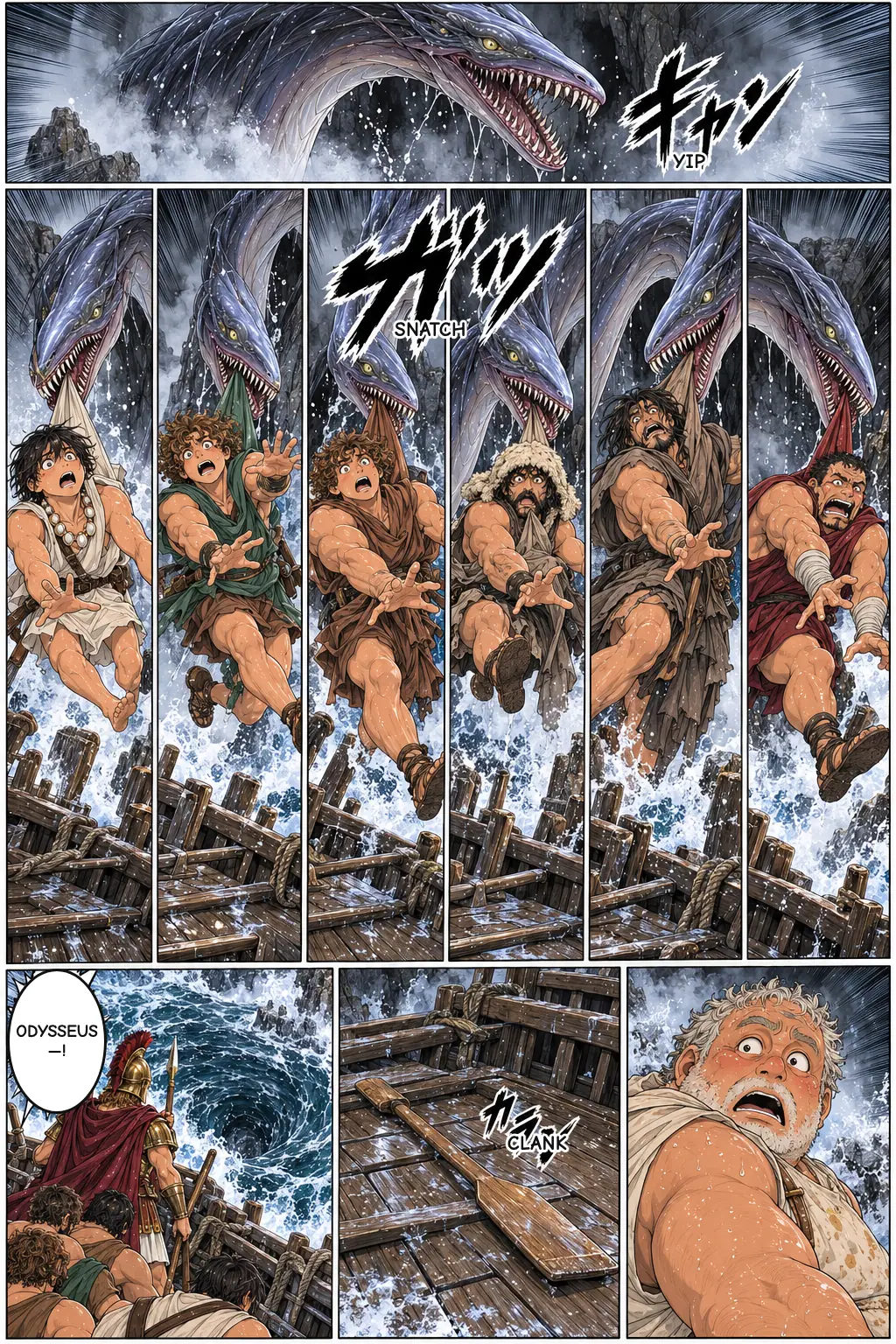
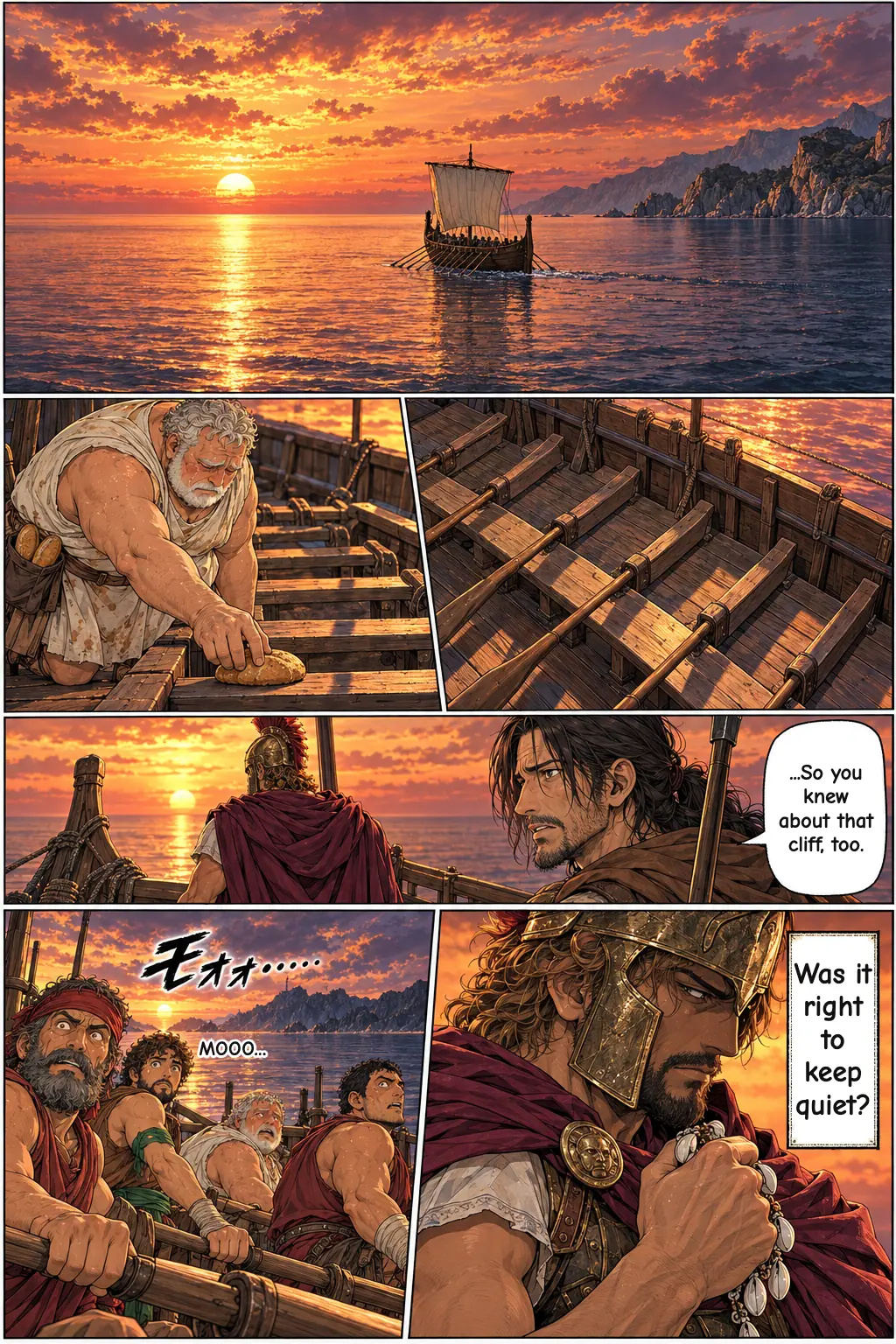
In the scene itself (Book 12, roughly lines 201 to 259), the ship has just passed the Sirens when the crew sees spray and smoke and hears a roar. Terrified, the men drop their oars and the ship stops dead. Odysseus walks among them, encouraging each one and reminding them that his wits got them out of the Cyclops's cave. He orders the rowers to pull and tells the helmsman to steer away from the smoke and surf and hug the cliff. But he does not mention Scylla. He explains that he feared the men would stop rowing and hide in the hold if they knew. Forgetting Circe's warning, he puts on his armor, takes two long spears and stands at the bow, watching for Scylla. He never sees her. While everyone stares at Charybdis, which boils like a cauldron and then drains so deep that the black sand of the seabed shows, Scylla seizes the six strongest men. Lifted into the air, they cry out his name for the last time, and she devours them at the mouth of her cave as they reach toward him. Odysseus calls it the most pitiful sight of all his wanderings. Soon after, the island of Helios, the sun god, comes into view.
Main Characters
Odysseus is the narrator and captain; Circe is the goddess whose warning shapes the whole passage; Scylla and Charybdis are the two dangers; the crew, including six unnamed men who are lost, do the rowing. Crataeis and Helios are only mentioned by name. Notably, Homer never describes what Charybdis looks like. She is shown only through the movement of water, and the poem does not give Scylla the dogs around her waist that later art often added.
What This Myth Tells Us (Cultural and Historical Background)
For an audience of ancient sailors, the scene captured a real fear: narrow waters, hidden rocks and currents that could pull a ship under. Later ancient writers placed the strait in a real location, most often the Strait of Messina between Italy and Sicily, though Homer himself gives no map, and this identification is a later tradition.
The deeper theme is leadership under impossible choices. Odysseus is famous for cleverness, yet here no trick works. He must accept a certain loss to avoid a total one, and he decides alone what his men will and will not know. Whether his silence is wise care or a heavy burden is left for the listener to judge. The scene gave English the phrase "between Scylla and Charybdis," meaning stuck between two dangers where avoiding one means facing the other.
What the Manga Changes
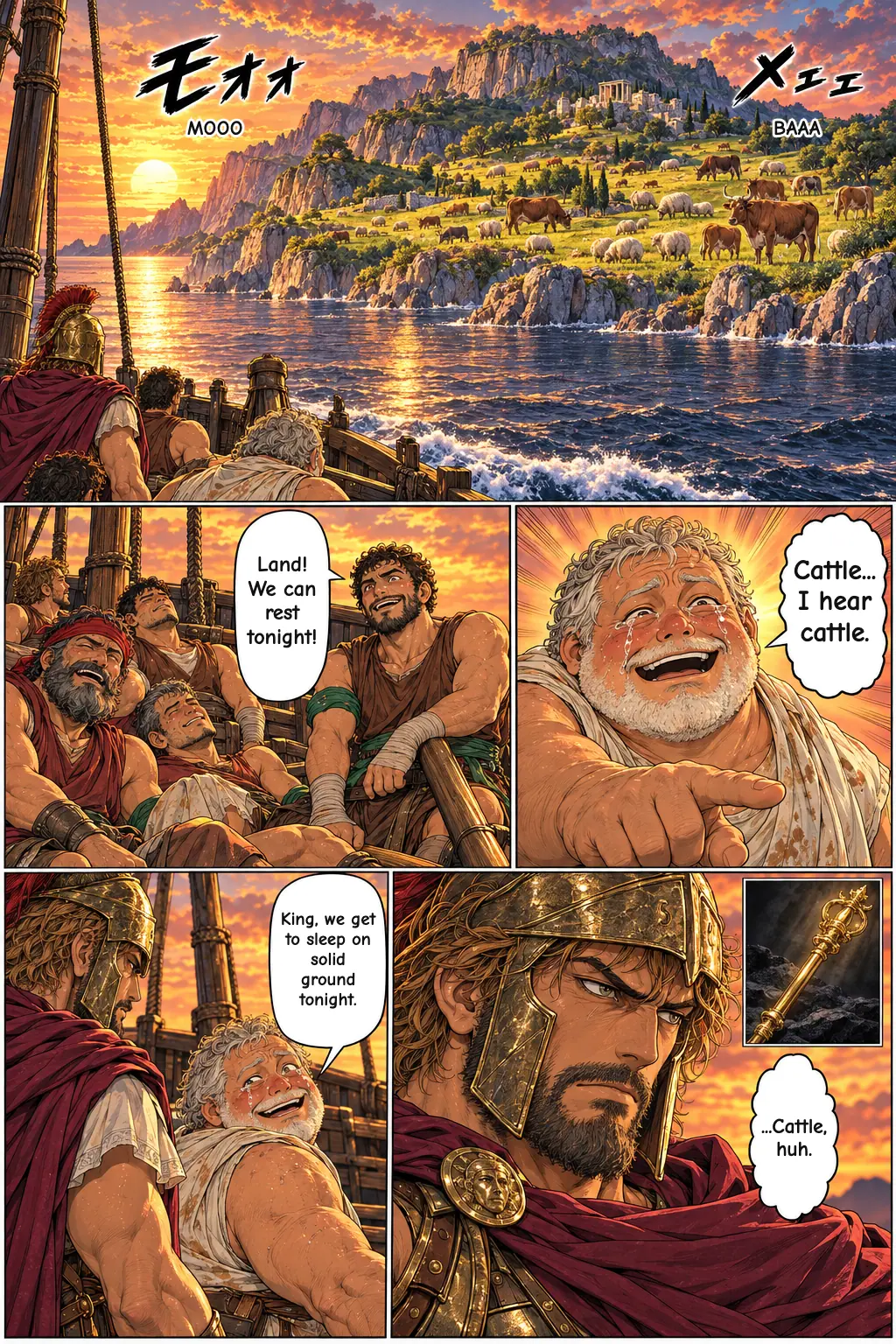
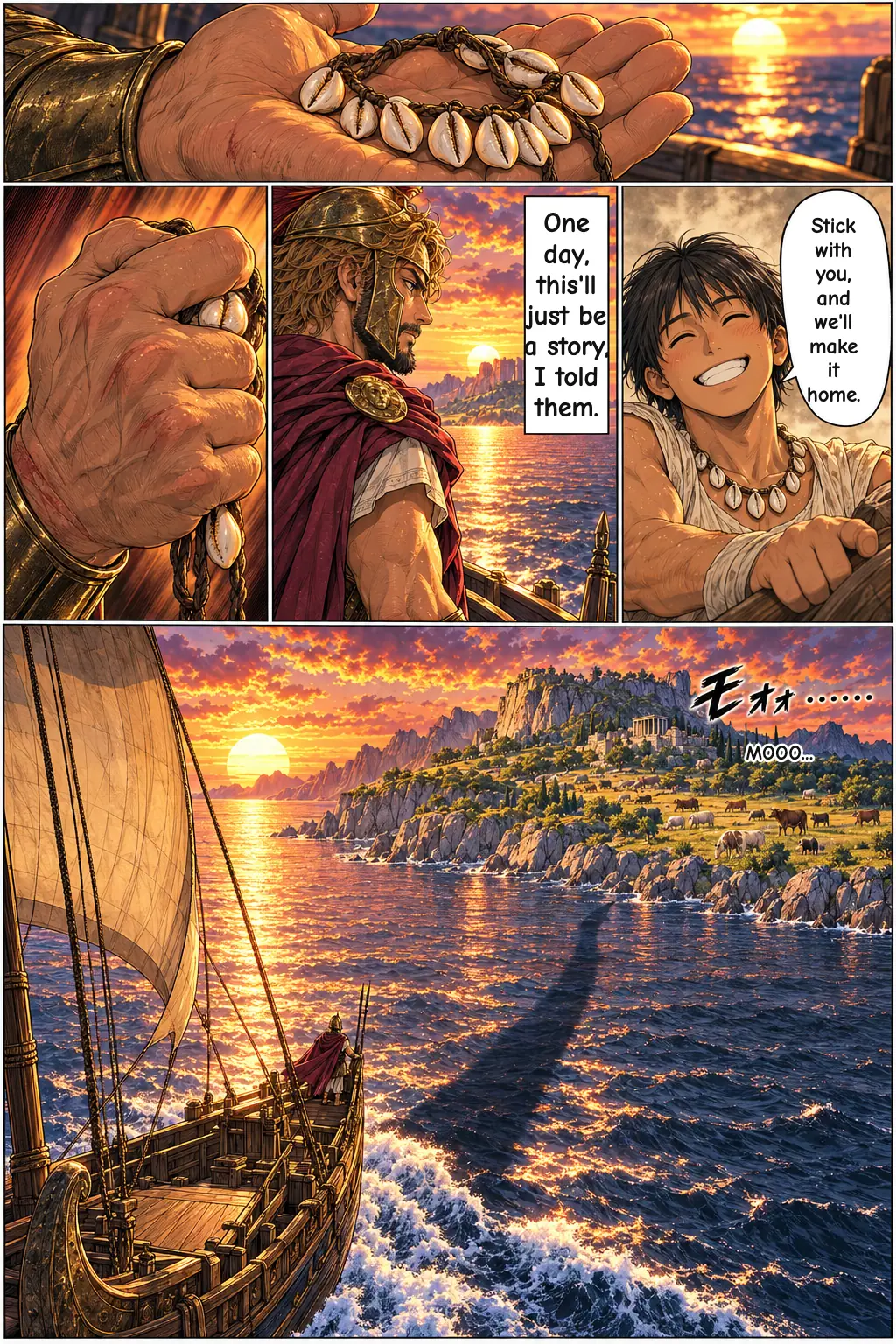
Episode 7 keeps the core events from Homer: the stalled oars, Odysseus's rallying words, his secret, the armor, Charybdis's whirlpool, and the six men calling his name. The parts below are creative additions.
Homer gives only one line of reasoning for Odysseus's silence. The manga expands it into an inner struggle, with guilt over having quietly accepted that six men would be lost. It also treats an earlier detail, his promise to share Circe's warnings while only mentioning the Sirens, as the start of that conflict. The six men have no names in the poem, so their faces, personalities and moments aboard ship are the manga's invention, though they remain the strongest of the crew as in Homer. Scylla's visual design, the weather and light in the strait, the exact words the men shout, and whether Odysseus truly forgot Circe's warning or chose to ignore it are all interpretation. Charybdis is drawn mainly as churning water, staying close to the poem.
Where to Read It
If you want to feel the weight of that choice rather than just read about it, Episode 7 of GREEK MYTHOLOGY: THE ODYSSEY — The Twenty-Year Voyage Home on Manga Portal tells it in full color panels, from the roar of the whirlpool to the moment Odysseus can only watch. Every episode is free to read, with no account needed. Start from the beginning to follow the whole twenty-year voyage, or jump straight to Scylla and Charybdis and then see what waits on the island of the sun god.
Characters in this episode
Odysseus
King of Ithaca and narrator of the story, who hides the truth about Scylla from his crew so they will keep rowing.
Circe
A goddess who warns Odysseus about the strait beforehand and advises him to lose six men rather than the whole ship.
Scylla
An undying monster with six long necks and triple-toothed heads who snatches one sailor per head from passing ships.
Charybdis
A mysterious force beneath a fig tree that swallows and spews the sea three times a day, described only through its whirlpool.
The Crew
Odysseus's rowers, six of whom, the strongest, are seized by Scylla while crying out his name.
Helios
The sun god, whose island with its sacred cattle comes into view right after the strait.
FAQ
What is the story of Scylla and Charybdis?
In Book 12 of Homer's Odyssey, Odysseus must sail through a strait between two deadly dangers: Scylla, a six-headed monster on a cliff, and Charybdis, a whirlpool that swallows the sea. Following Circe's advice, he steers near Scylla and loses six men rather than risk the whole ship.
What does "between Scylla and Charybdis" mean?
It means being caught between two dangers, where escaping one pushes you toward the other. The expression comes from Odysseus's passage through the strait in the Odyssey.
Why didn't Odysseus tell his crew about Scylla?
Odysseus says he feared the men would panic, stop rowing and hide in the ship if they knew. Since nothing could be done against Scylla, he chose to keep them focused on escaping Charybdis.
How many men did Scylla take from Odysseus's ship?
Scylla took six men, one for each of her heads. Homer says they were the strongest men aboard.
What does Charybdis look like?
Homer never describes her body. She appears only as a terrifying whirlpool under a fig tree that boils up and then drains so deeply that the seabed shows; later artists sometimes gave her a monstrous form.