Episode 15WaitEveryone Thinks I'm Dead? — The Revolt of Prince Oshikuma
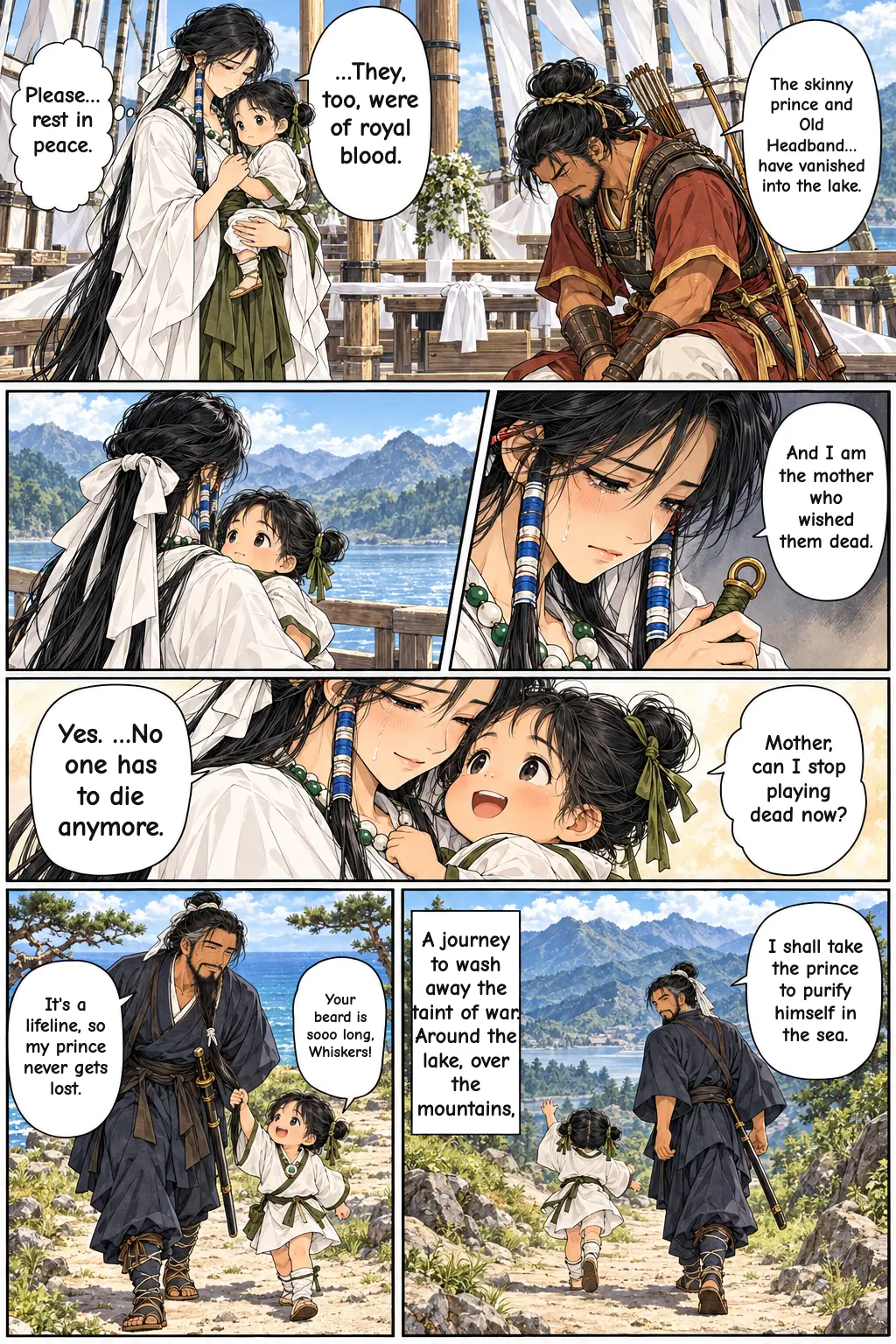
A mother spreads the rumor that her son is dead, then sails for the capital with the prince and her soldiers hidden aboard a funeral ship. A battle with his scheming half-brothers, a stunning reversal thanks to a bowstring hidden in General Topknot's hair, a lord and his loyal retainer vanishing into a lake, and a strange gift from the god of the northern shore—until the child everyone thought dead returns to his mother, and one day becomes king.
Prince Oshikuma's Revolt: The Kojiki Funeral Ship Myth Explained
The Original Myth: A Living Prince on a Funeral Ship
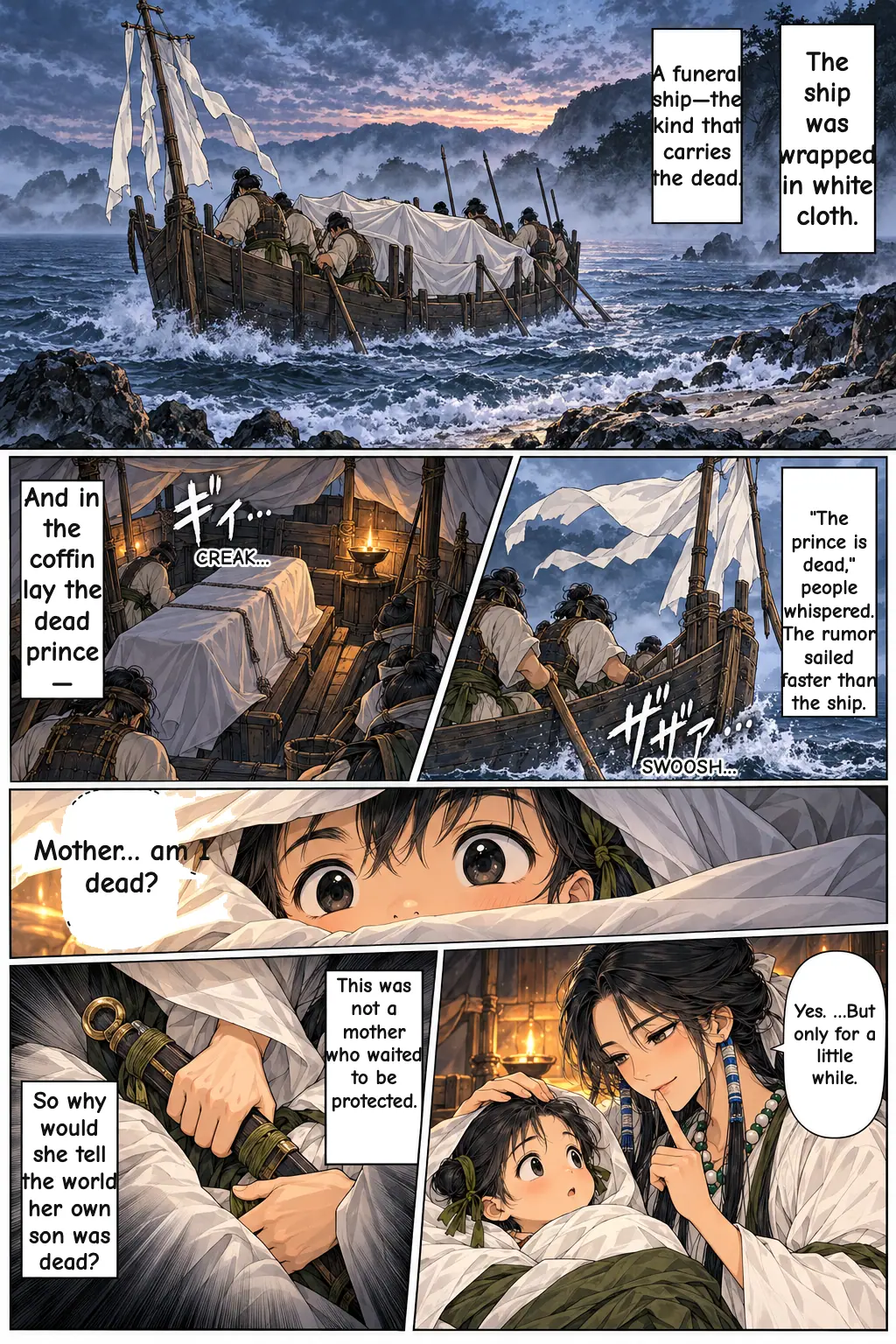
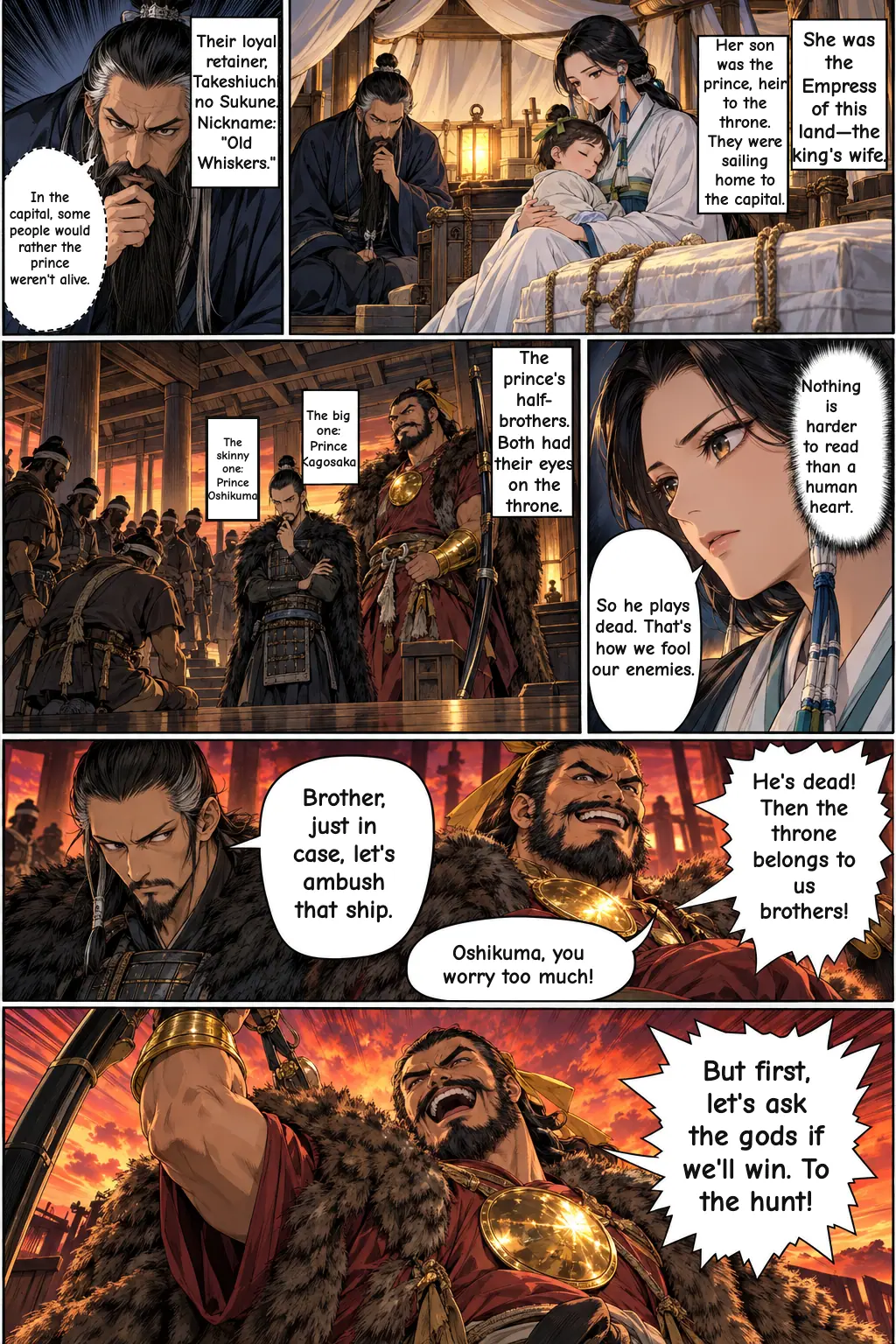
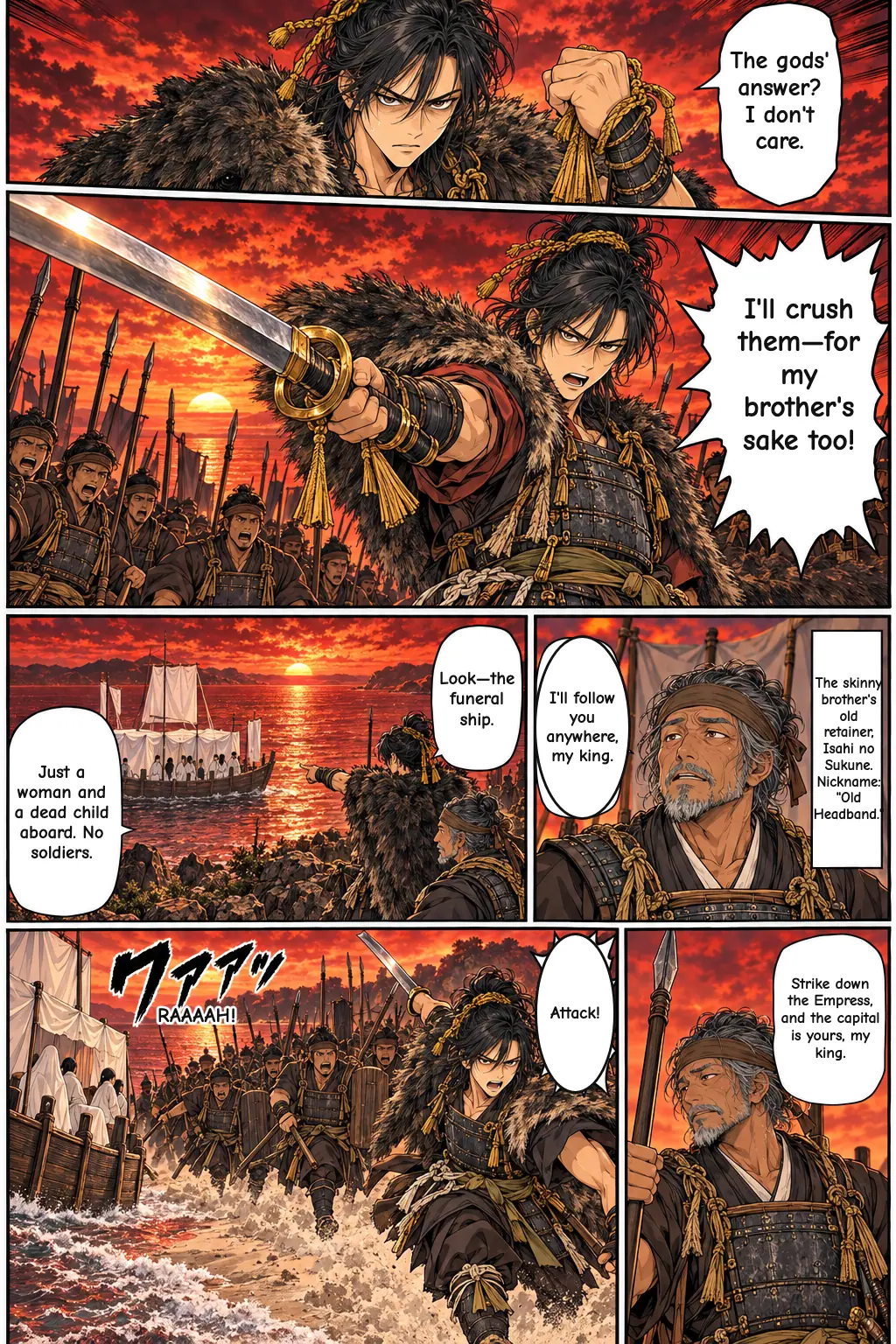
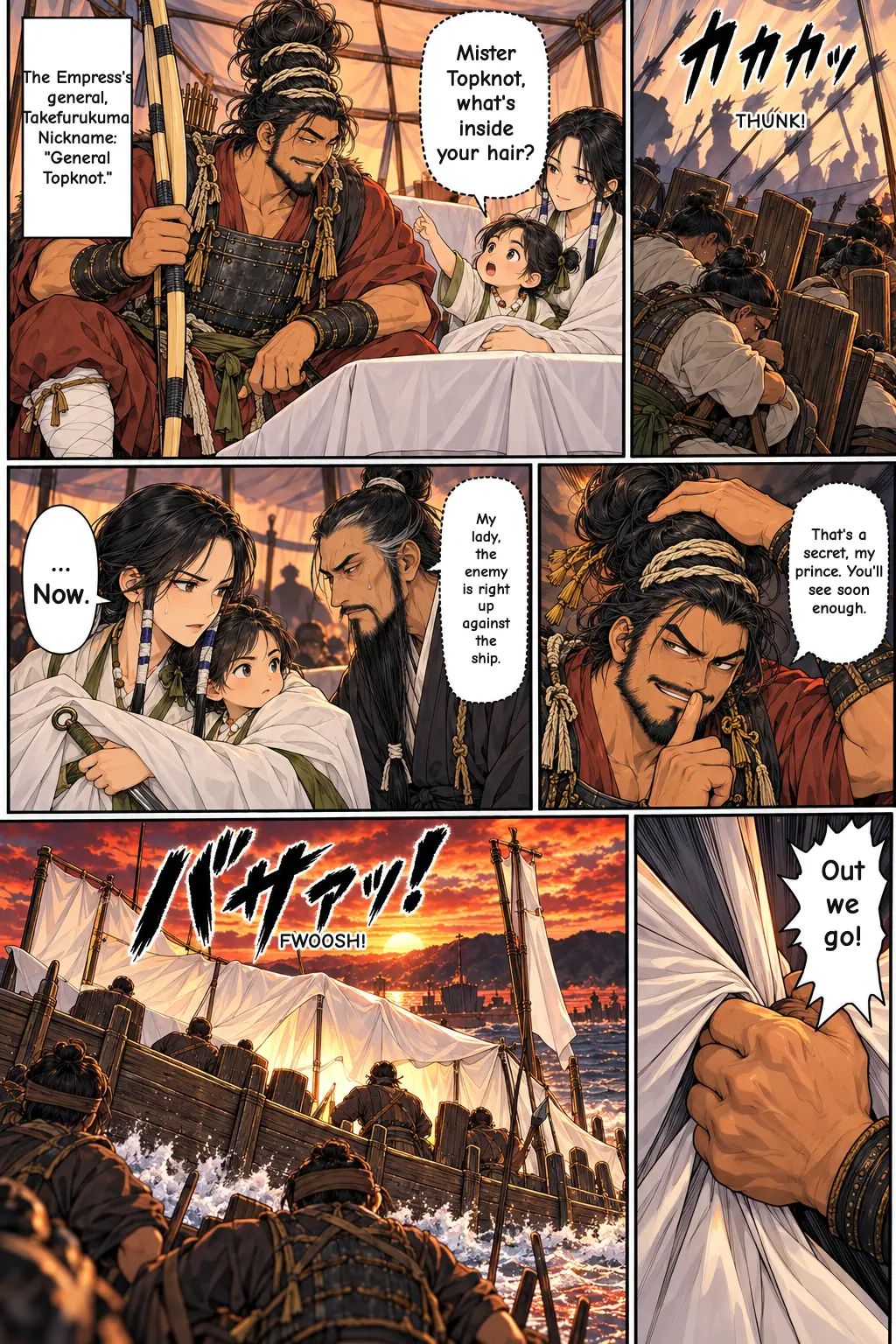
This story comes from the middle volume of the Kojiki, Japan's oldest surviving chronicle, which Ō no Yasumaro compiled in 712. It follows the death of Emperor Chūai. His chief consort, Okinagatarashihime (later known by the title Empress Jingū), is going back to Yamato, the heartland, with her young son, the crown prince. She doesn't trust the people at home, so she has a funeral ship made, puts the prince on it and sends word ahead that the child has already died.
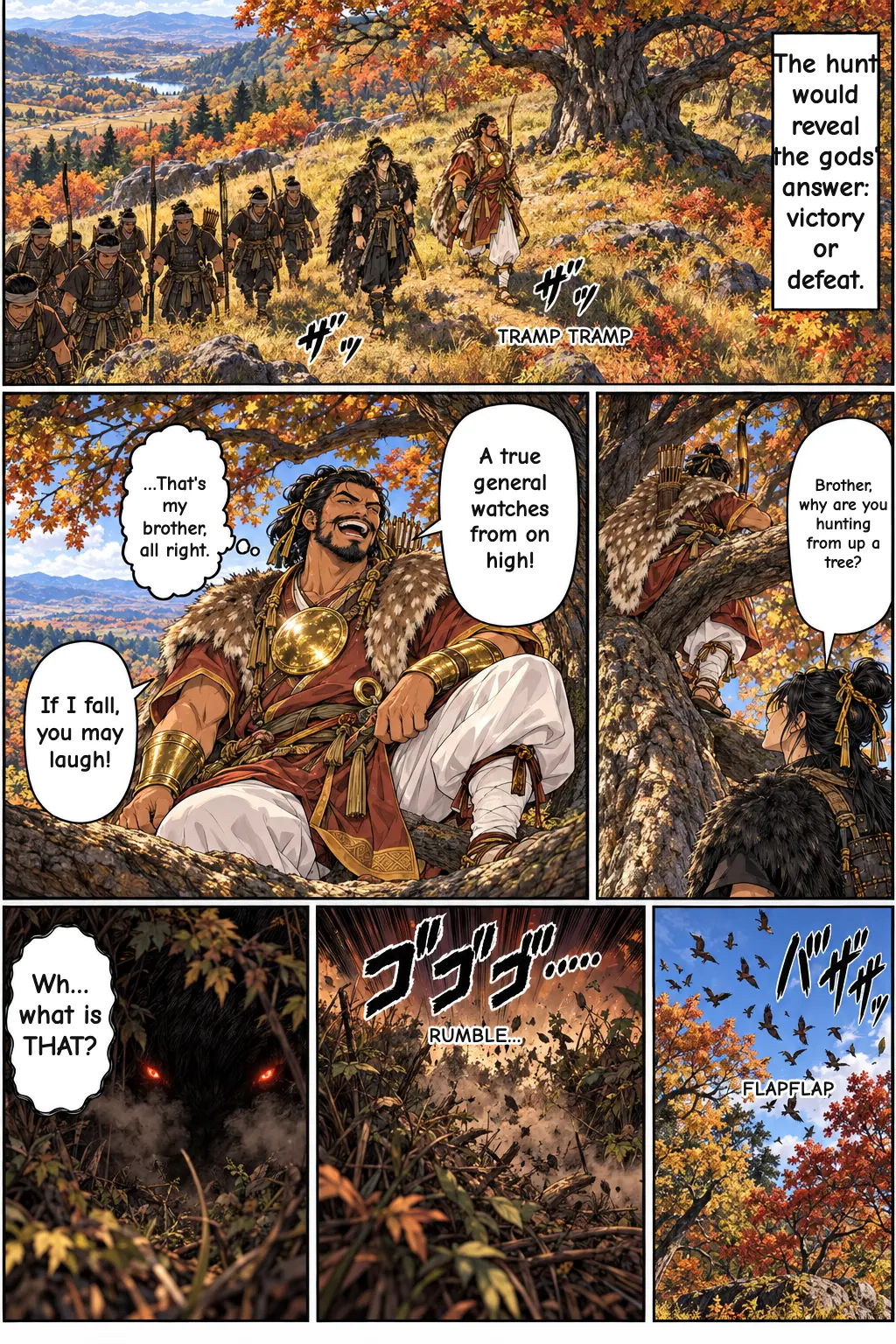
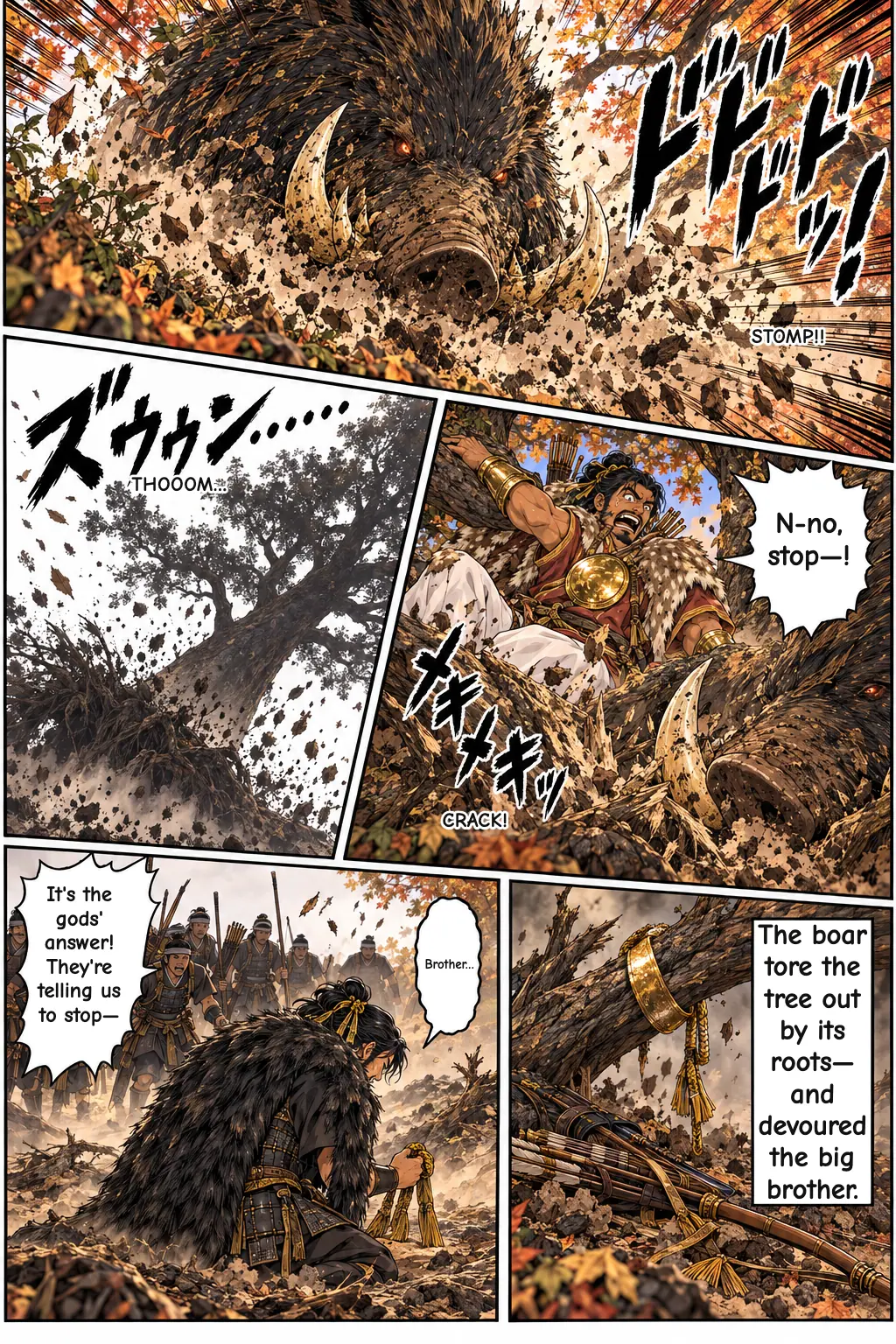
Two of the prince's half-brothers hear the rumor. They are Prince Kagosaka and Prince Oshikuma, sons of Chūai by a different wife, and they plan to ambush the returning party. First they hold an ukehi-gari, an "oath-hunt" at a place called Toga-no. A hunt like this was a way to ask the gods whether a plan had their blessing. The text doesn't make clear whether both brothers took part or only Kagosaka. The answer is terrible. A huge, furious boar charges out, digs up the oak tree Kagosaka has climbed, and eats him.
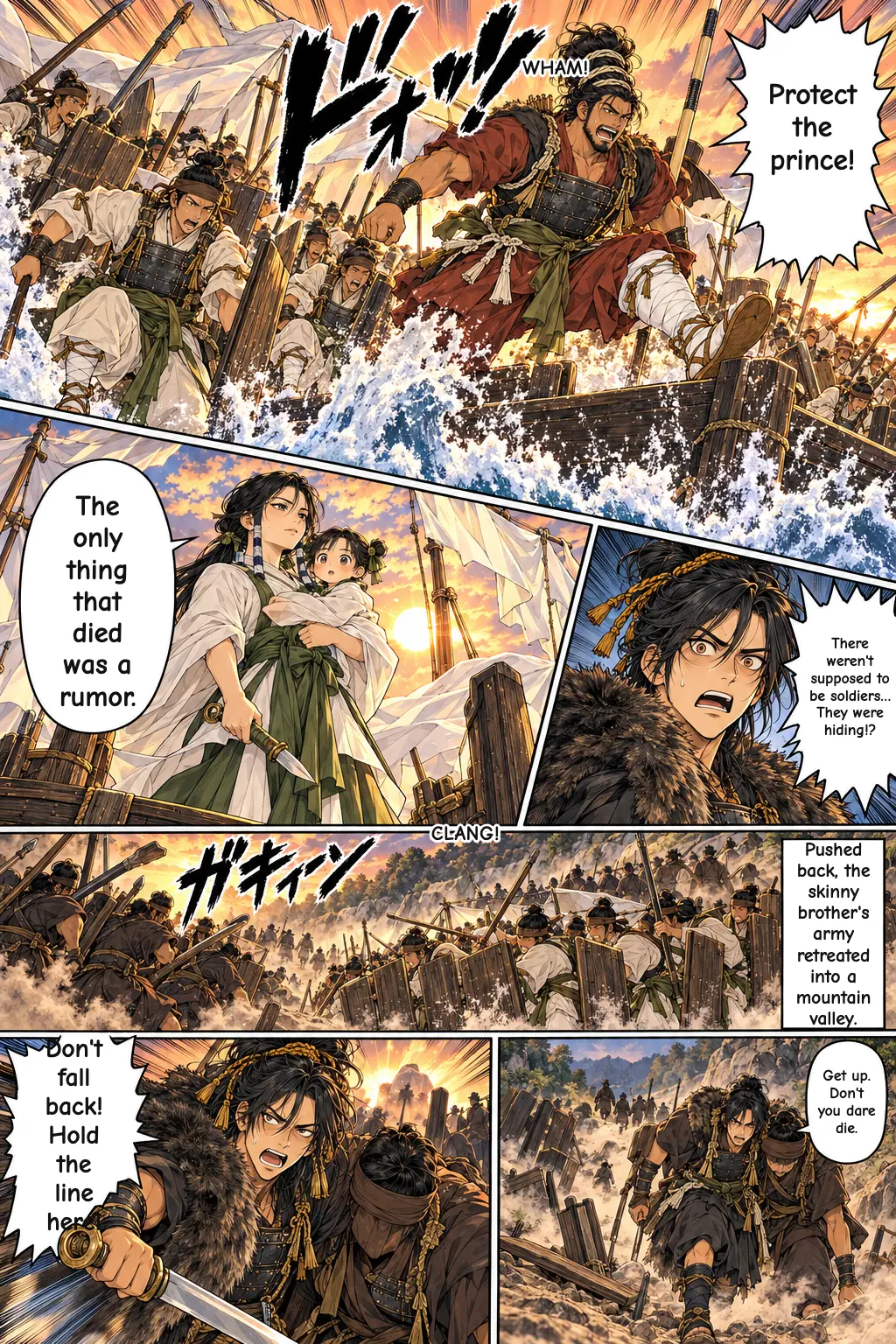
Oshikuma pays no attention to the omen. He raises an army and attacks the funeral ship, expecting it to carry only a coffin. Instead, soldiers pour out of it.
The Battle and the Hidden Bowstring
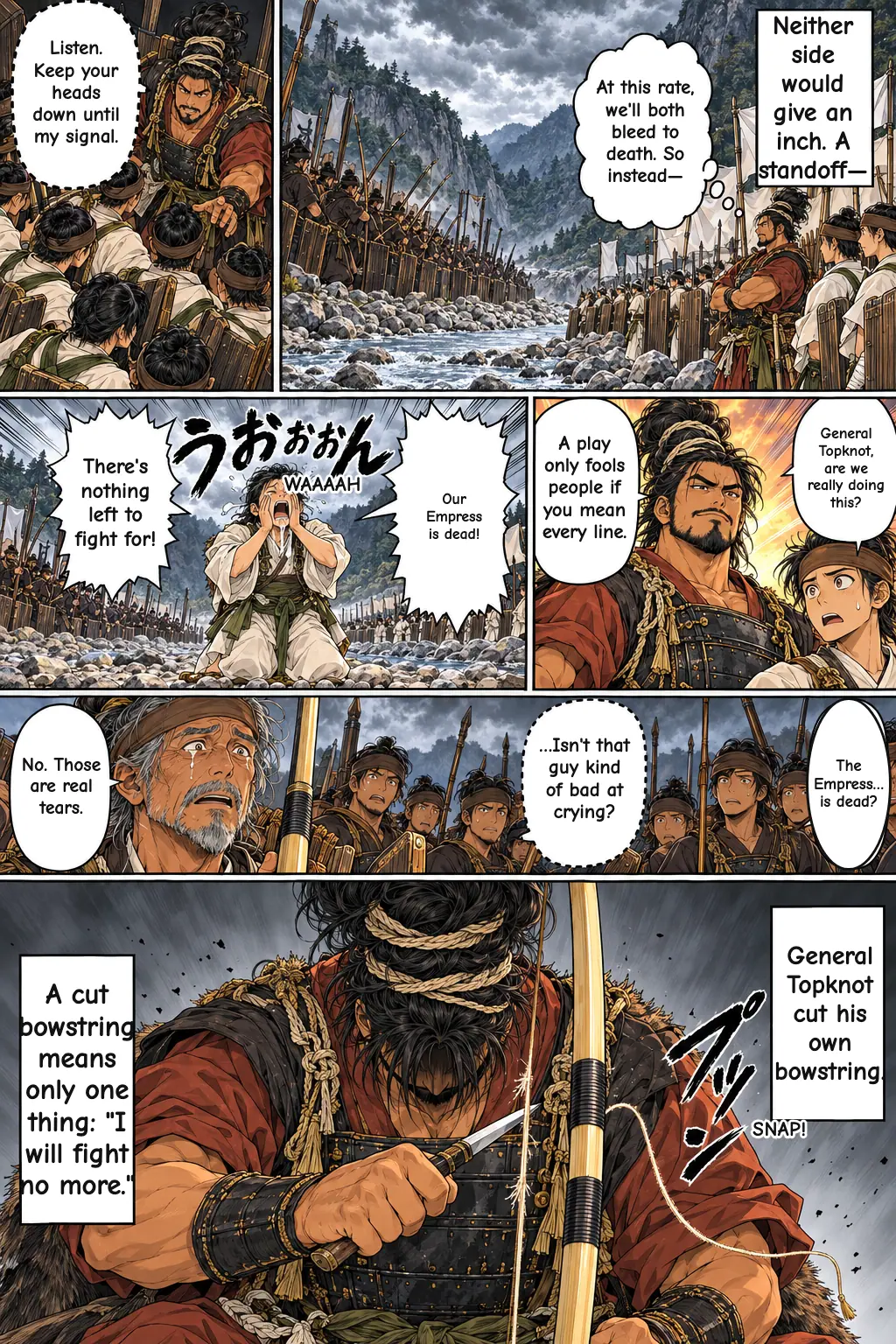
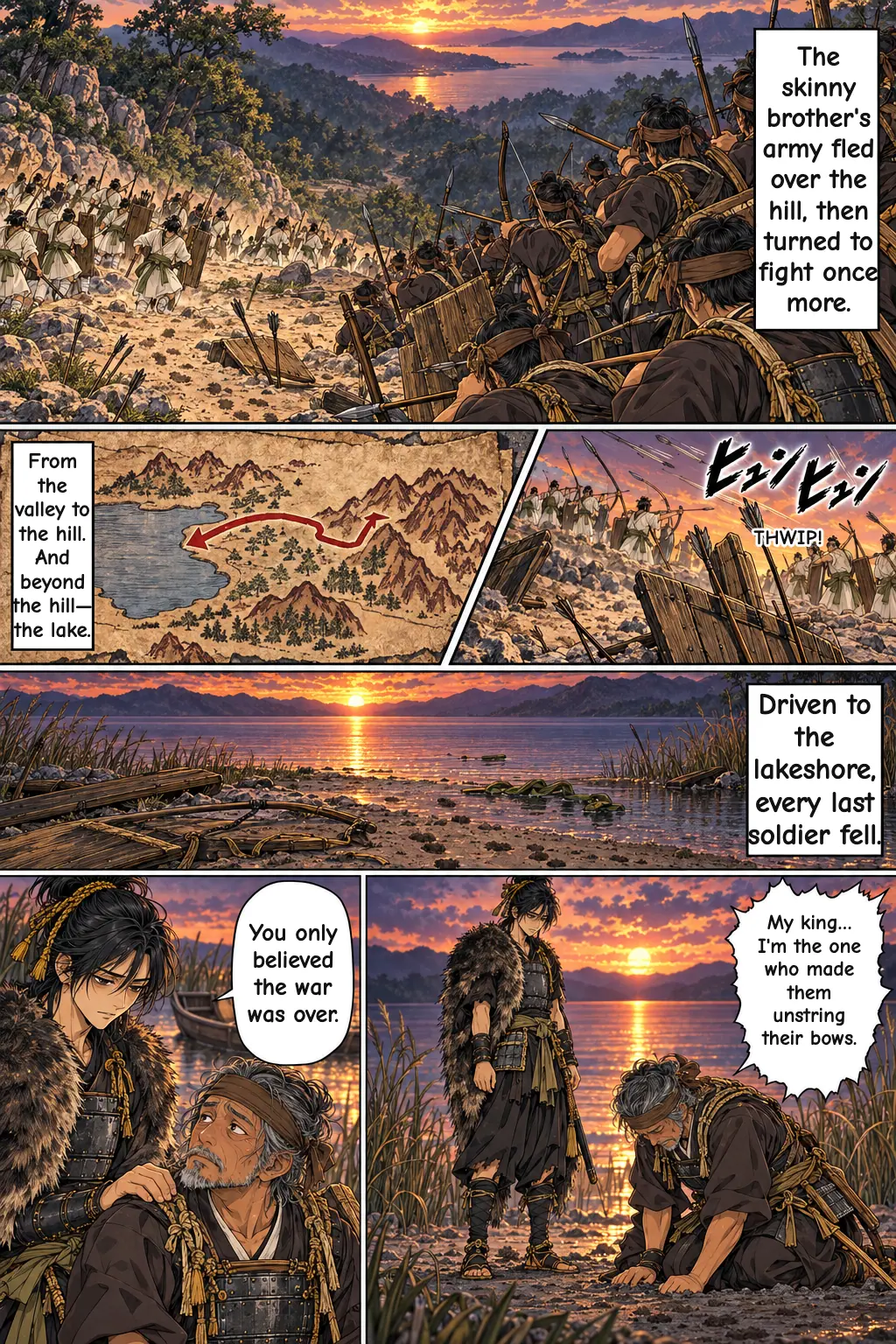
Oshikuma's general is Isahi no Sukune. The prince's general is Naniwa-neko Takefurukuma, whom the Kojiki names as an ancestor of the Wani clan. The prince's side drives the rebels back. In Yamashiro, though, the rebels turn to face them, and neither army gives ground.
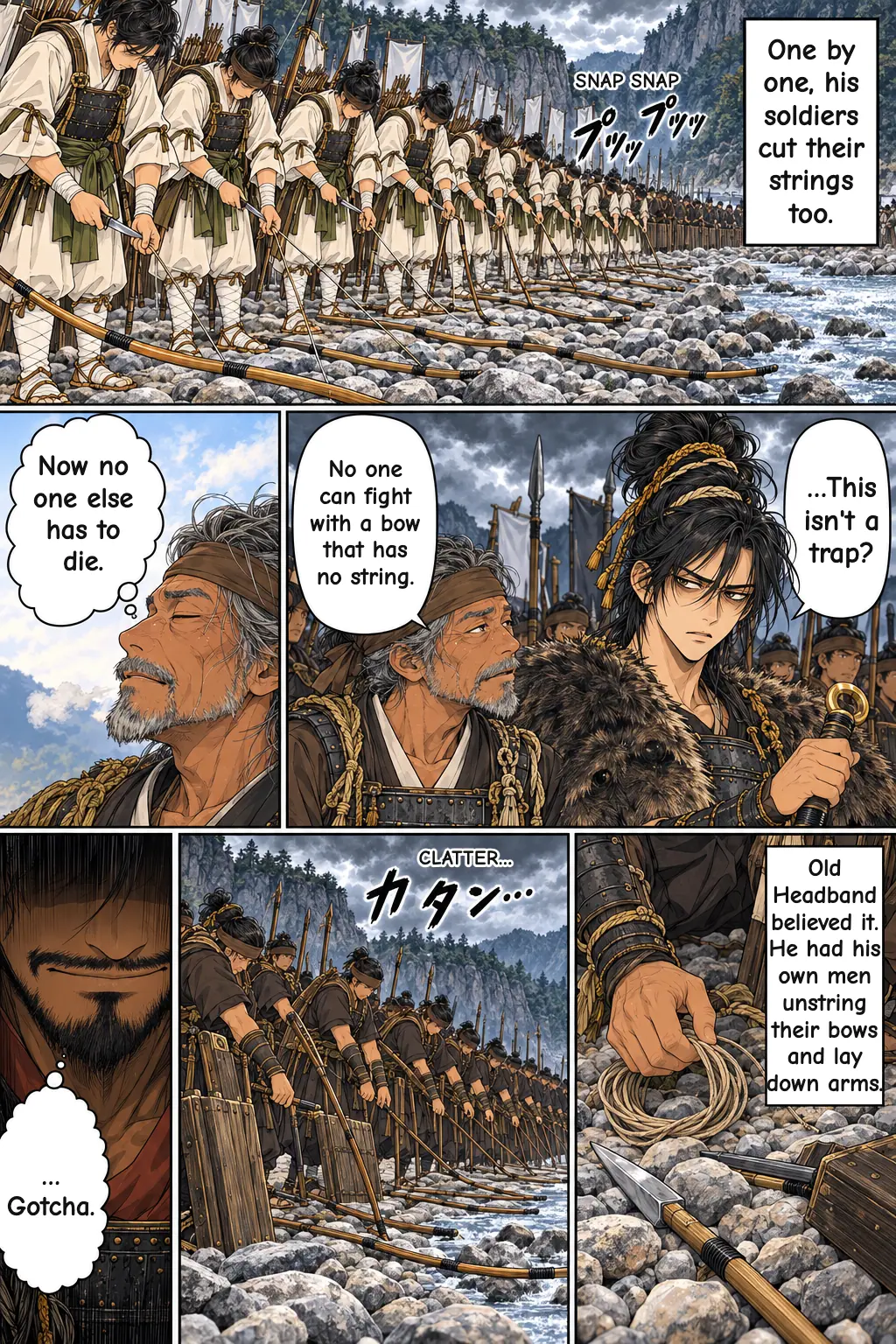
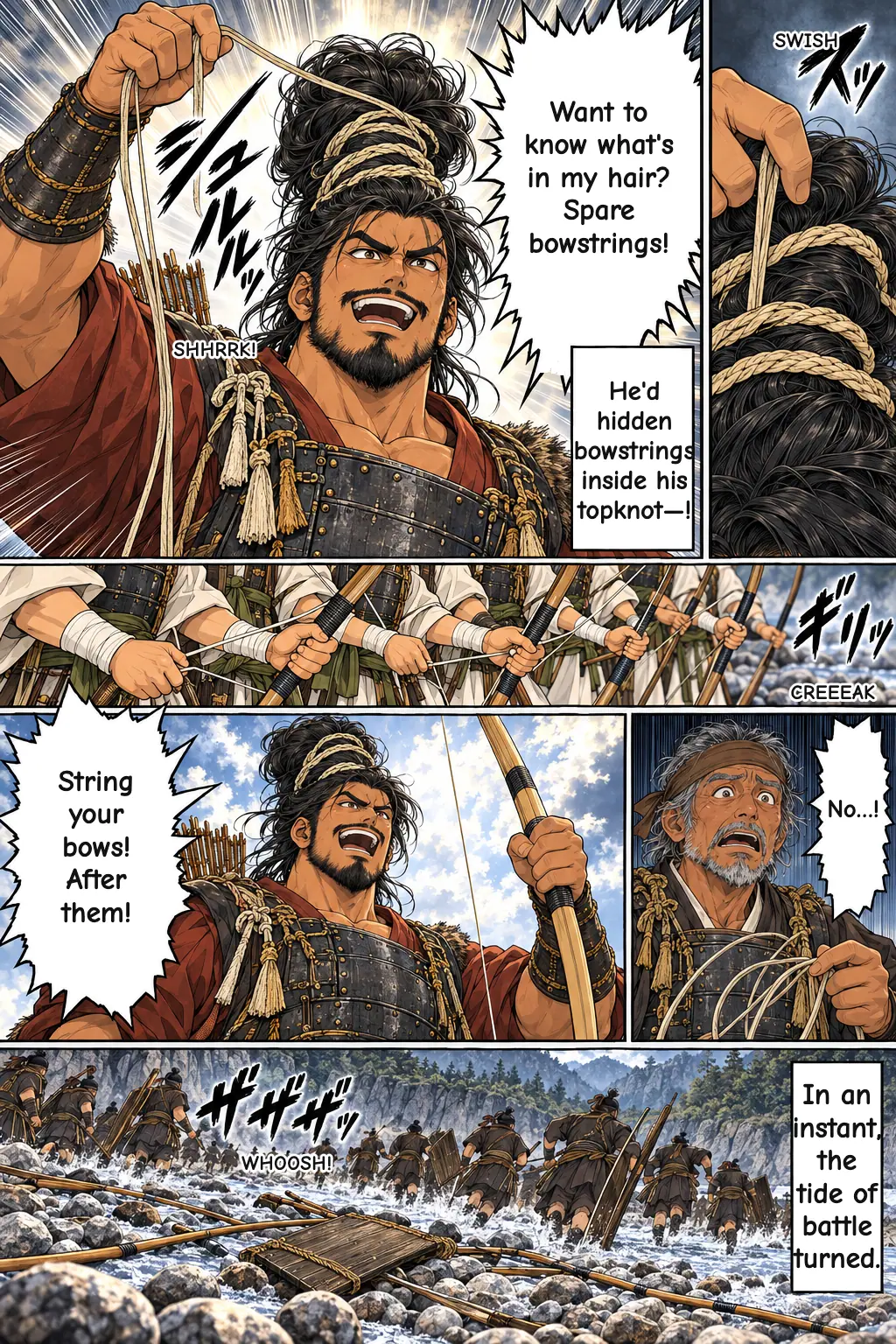
So Takefurukuma tries a trick. He has it announced that the prince's mother has died, which means there is nothing left to fight for, and his men cut their own bowstrings as if they are surrendering. Isahi believes it. He unstrings his bows and puts away his weapons. Then Takefurukuma's soldiers pull spare bowstrings out of their hair, string their bows again and attack.
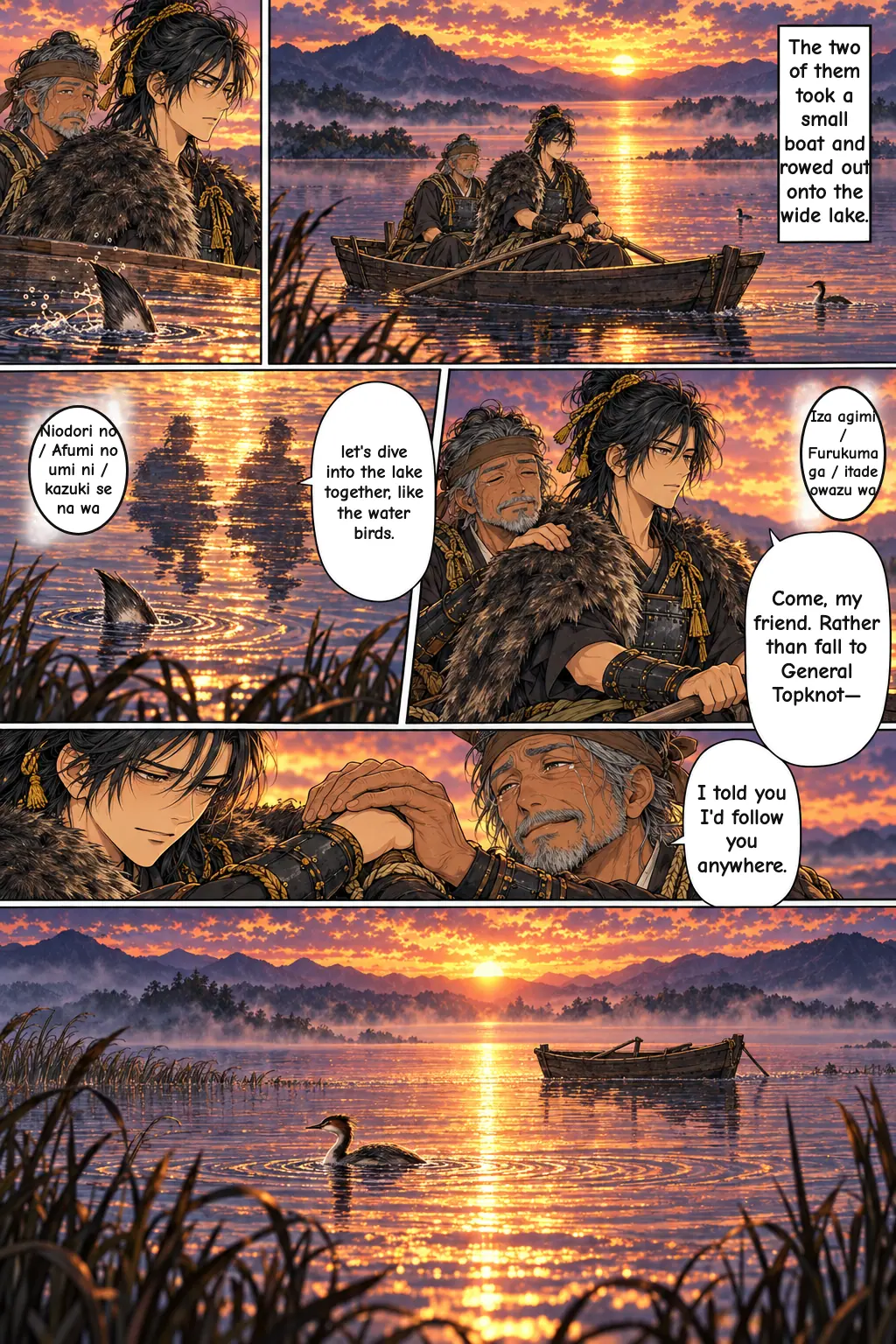
The rebels run through Afusaka (Ōsaka) and are wiped out at Sasanami. With nowhere left to go, Oshikuma and Isahi get into a boat on the waters of Ōmi. In their last song they say it is better to dive into the water like a grebe than to be wounded by Furukuma. Then they drown together. Many readers take these waters to be Lake Biwa, but that is a later reading of the geography, not something the text says.
The God of Tsunuga and the Exchange of Names
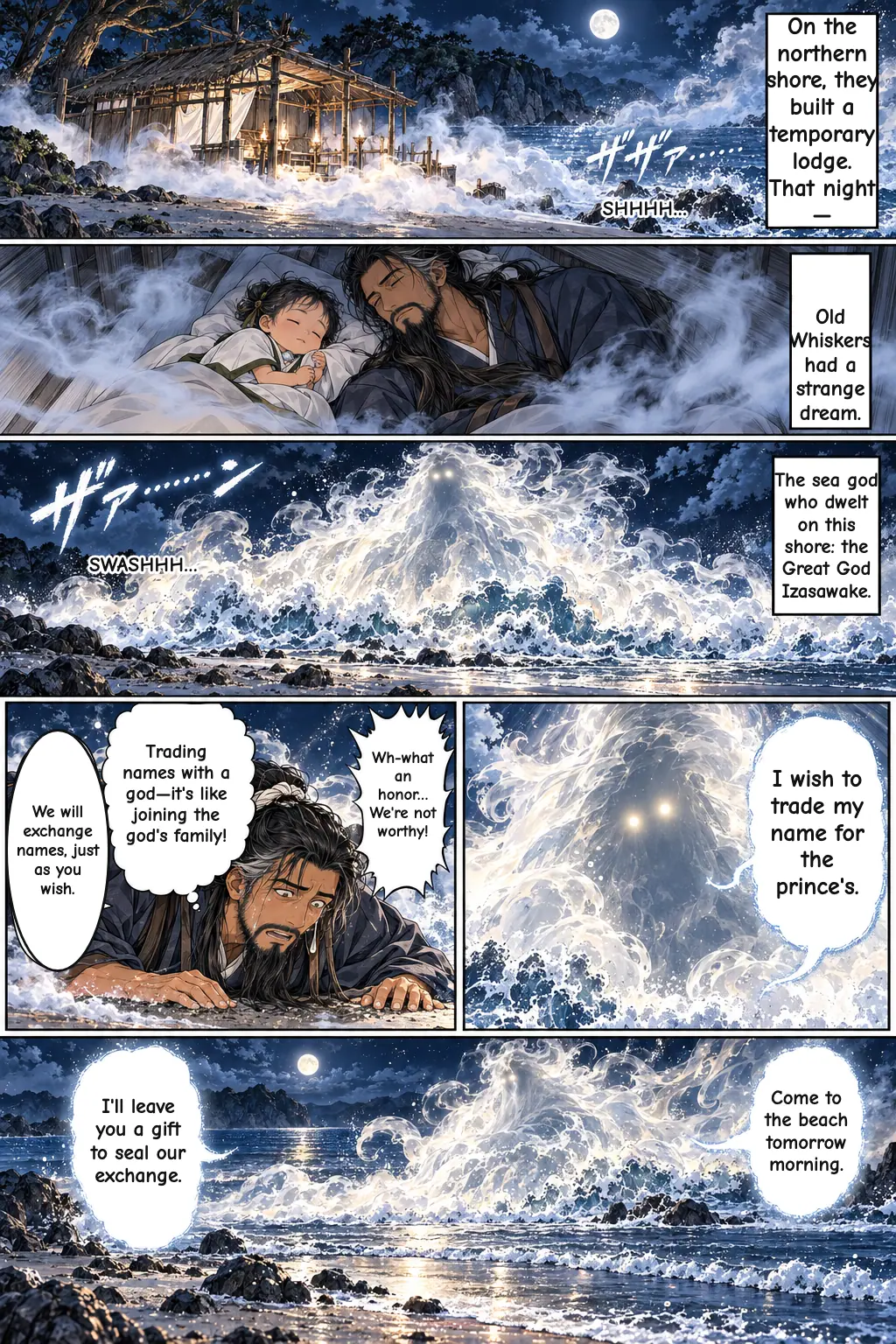
After the war, the prince's guardian Takeshiuchi no Sukune takes him on a journey of purification. They travel through Ōmi and Wakasa to Tsunuga (present-day Tsuruga) and build a temporary palace there. One night the local god, Izasawake, appears in a dream and asks to exchange his name with the prince's. The reply humbly agrees. The Kojiki doesn't say who had the dream or who gave the answer.
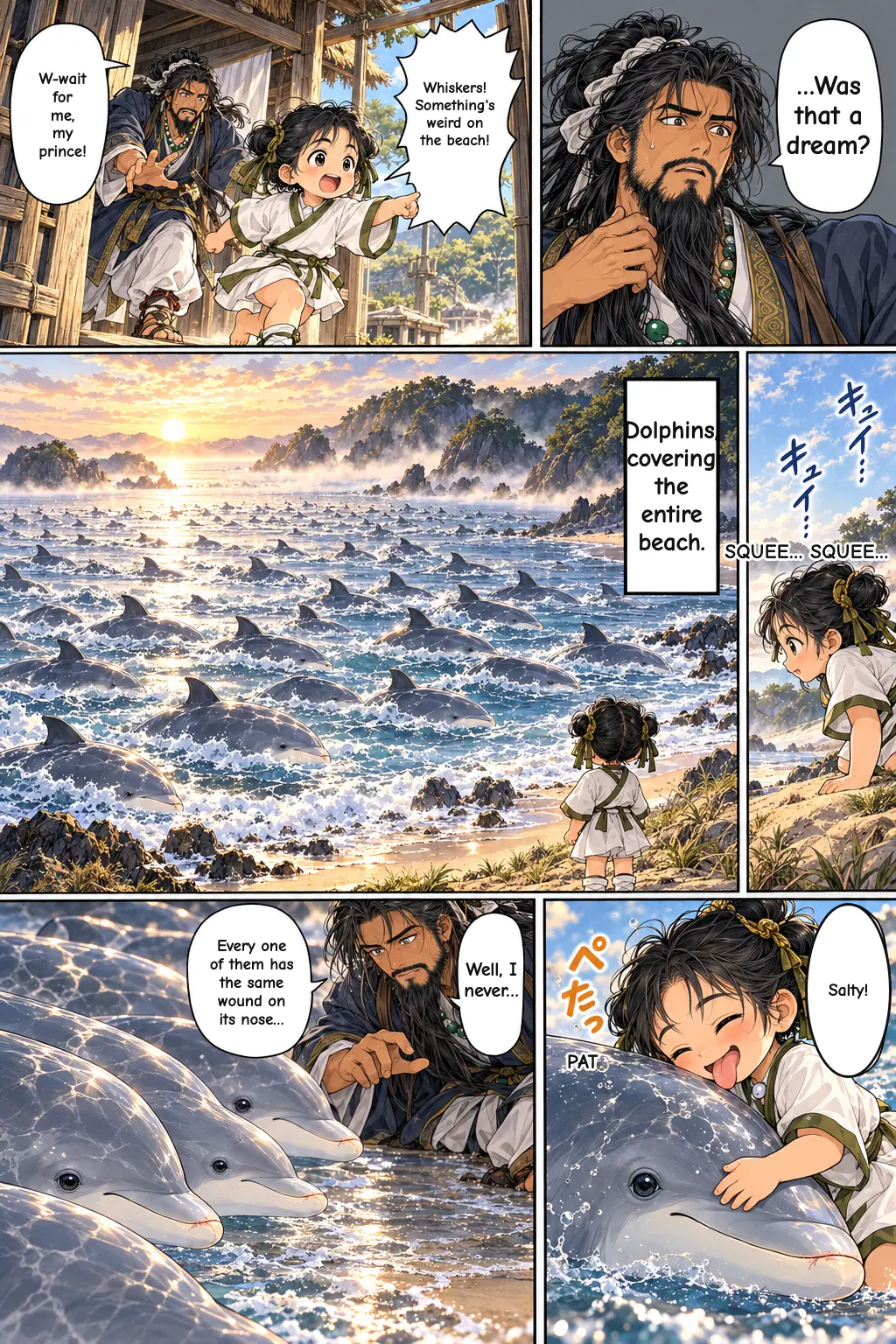
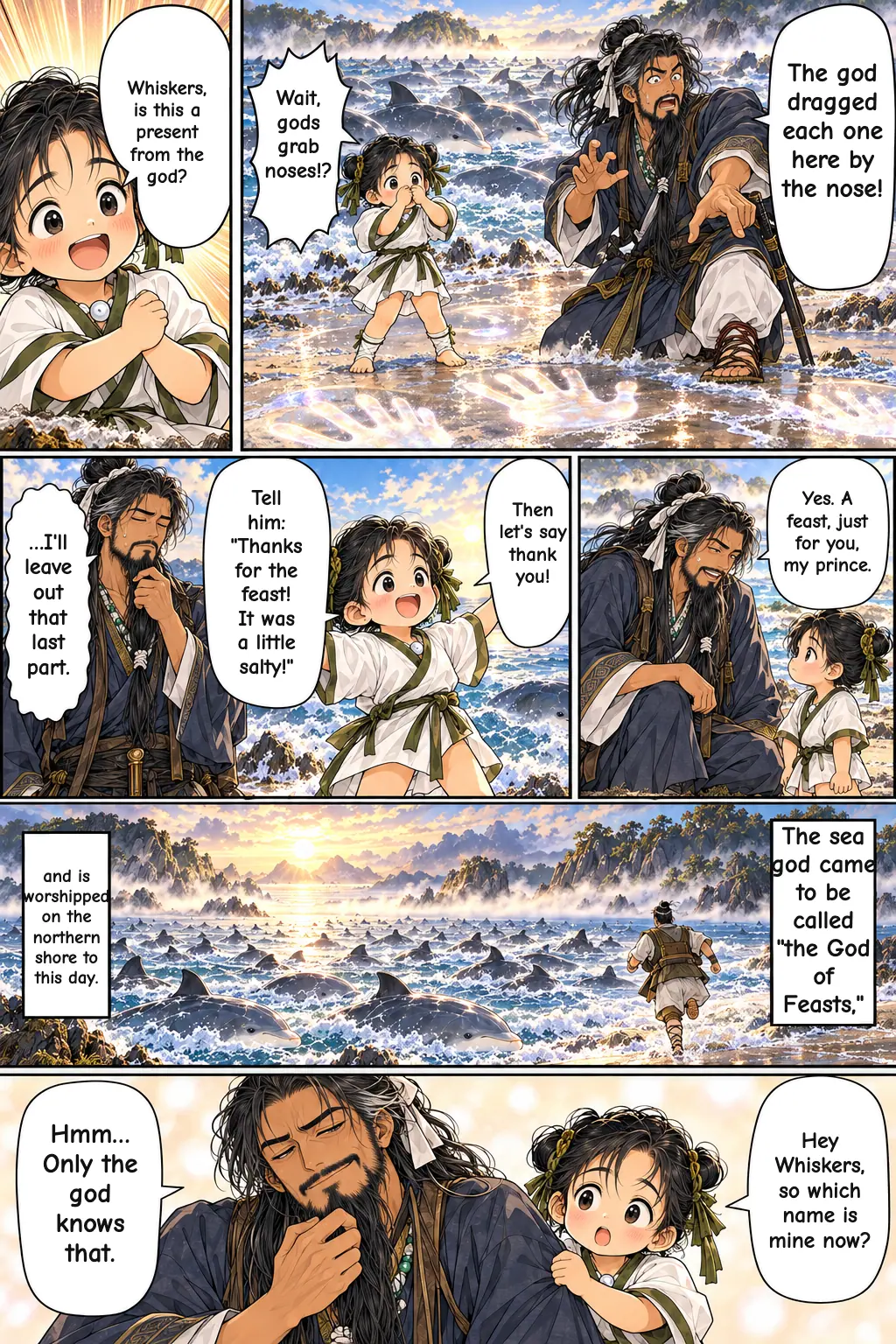
The god promises a gift to seal the exchange. The next morning the bay is full of dolphins with wounded noses. The prince sends thanks, saying the god has given him fish for his meals, so the god is honored as Miketsu-no-Ōkami, the Great God of Food. Today he is known as the Great God of Kehi. The text adds that the dolphins' blood smelled so strongly that the bay was called Chiura, "Blood Bay," and that this is where the name Tsunuga comes from.
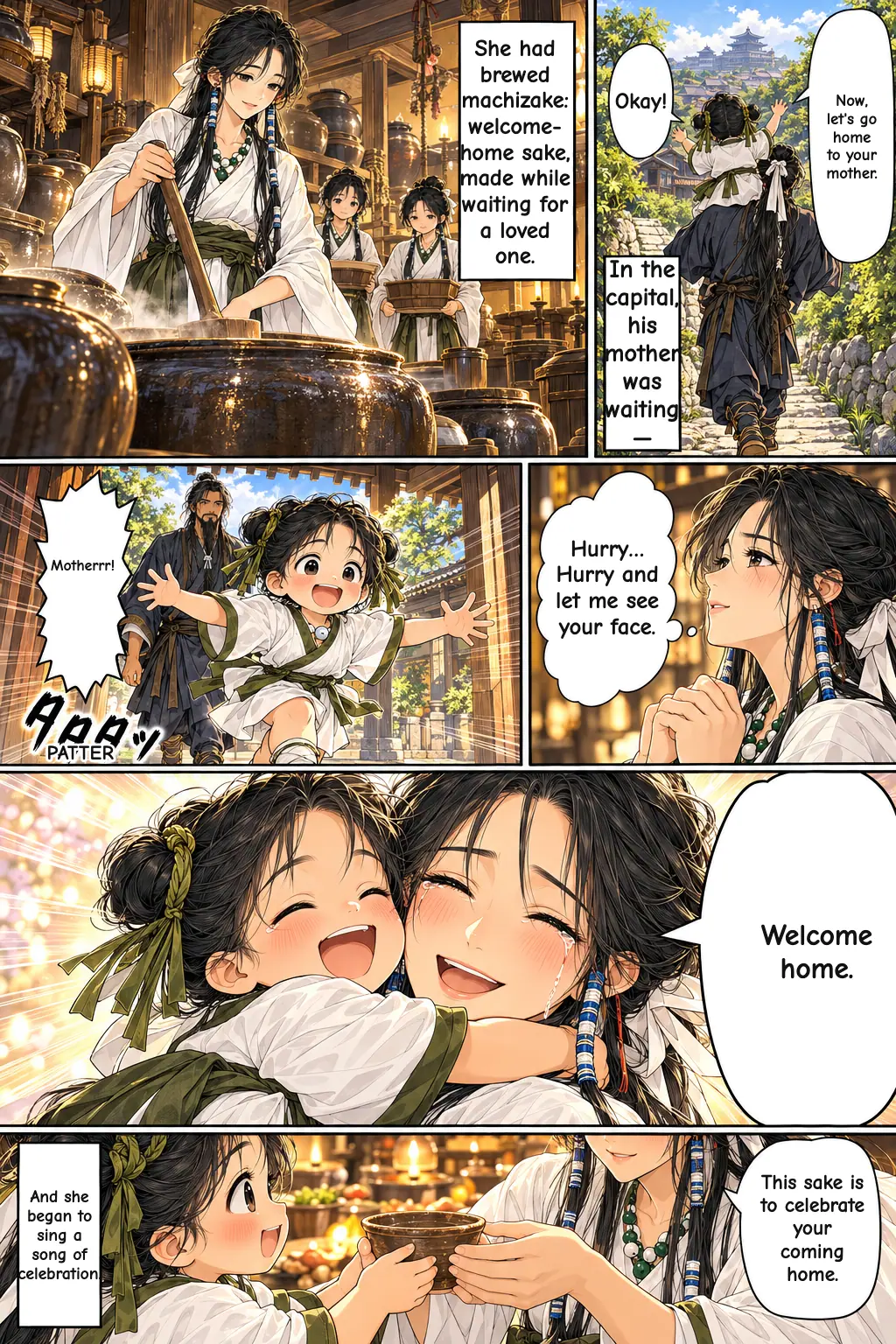
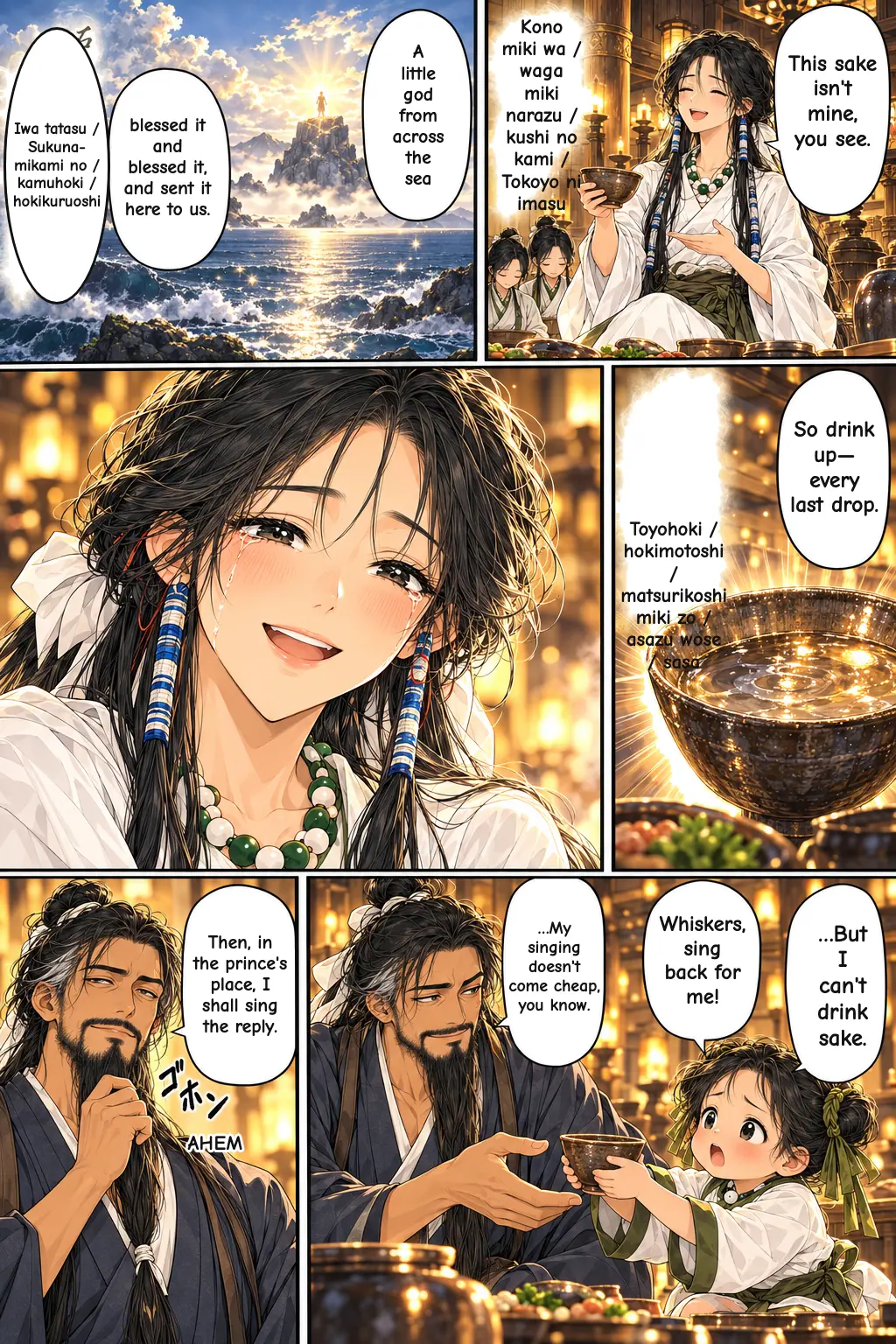
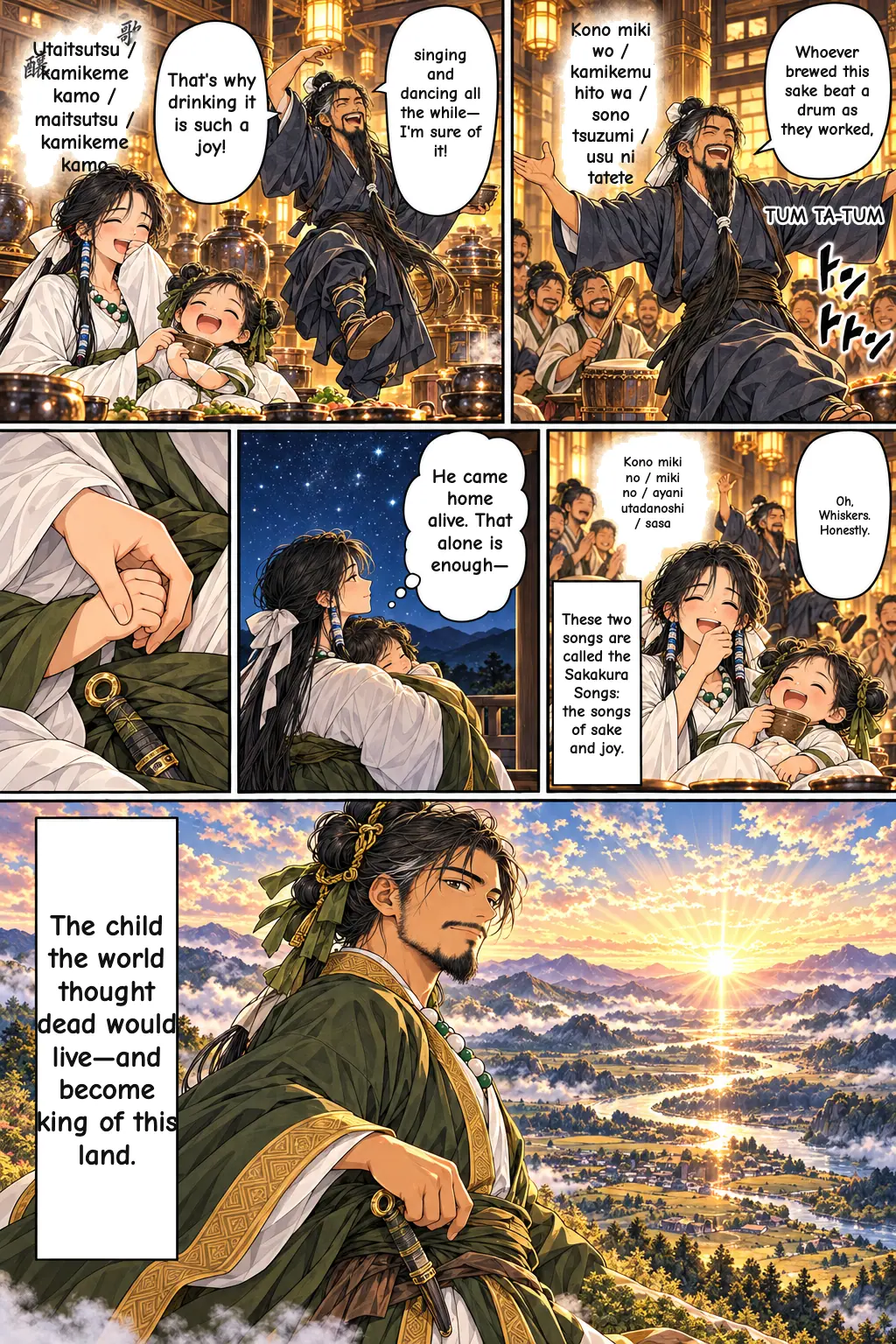
When the prince returns to the capital, his mother welcomes him with sake she brewed for his homecoming. She sings that the sake was blessed by Sukuna-mikami, a lord of sake who lives in Tokoyo, the land beyond the sea. This god is often identified with Sukunabikona. Takeshiuchi answers for the prince with a song that pictures the brewers drumming and dancing as they made it. The Kojiki calls these the sakakura songs, "songs of sake and joy."
What This Myth Tells Us
At its core this is a story about who gets the throne. Half-brothers compete for it, and the story makes clear the gods are on the young prince's side. The boar that kills Kagosaka is the gods' judgment, delivered through a ritual test. The prince grows up to be Homudawake, remembered as Emperor Ōjin, so the episode also explains why his line has the right to rule.
Small details in the text also served real communities. Notes that Takefurukuma and Isahi were ancestors of particular clans tied living families to the story. The account of the god of Kehi and Blood Bay explains a place name and a local cult. Kehi Shrine still stands in Tsuruga, Fukui Prefecture. The name exchange itself is read in different ways: some scholars think the prince took the god's name, others think the god took the prince's, and the original text doesn't decide.
What the Manga Changes
The manga follows the Kojiki's order of events, but some details are the artists' choices. Faces, costumes, armor and hairstyles are invented. So are the nickname "General Topknot" for Takefurukuma and the way the spare bowstring is shown hidden in his hair. The original only says the strings came out of the soldiers' hair. The shape of the funeral ship, the number of soldiers hidden on it, the size of the armies and how the boar looks are also drawn from imagination.
The Kojiki doesn't say who actually shouted that the queen mother was dead, who had the dream at Tsunuga, what the god looked like or which name went to whom. The manga has to show these things one way or another, so treat those scenes as one possible interpretation. The characters' spoken feelings, the weather and the last panel showing the prince as a grown king are also additions. In the Kojiki, his reign comes in a later section.
Where to Read It
If you want to see the funeral ship open up, the bowstring come out of the general's hair and the bay fill with dolphins, Episode 15 of KOJIKI Book II: The Age of Heroes on Manga Portal tells the whole story in one chapter. Every episode is free to read, and you don't need an account. It's an easy way to keep going through the Kojiki one story at a time.
Characters in this episode
Okinagatarashihime (later called Empress Jingū)
The prince's cautious mother, who fakes her son's death with a funeral ship and later welcomes him home with sake she brewed herself.
The Crown Prince (later Homudawake / Emperor Ōjin)
The young heir hidden on the funeral ship, whom the god of Tsunuga asks to exchange names with.
Prince Oshikuma
The prince's half-brother, who ignores a deadly omen, leads the revolt, and drowns after his defeat.
Naniwa-neko Takefurukuma ("General Topknot")
The prince's general, who pretends to surrender and then attacks with spare bowstrings hidden in his hair.
Isahi no Sukune
Oshikuma's general, who falls for the fake surrender and dies alongside his lord.
Izasawake, the Great God of Kehi
The god of the northern shore at Tsunuga, who offers to exchange names with the prince and fills the bay with dolphins.
FAQ
Who was Prince Oshikuma in Japanese mythology?
Prince Oshikuma was a son of Emperor Chūai and a half-brother of the young crown prince who later became Emperor Ōjin. In the Kojiki he rebels to take the throne, loses, and drowns with his general Isahi no Sukune.
Why was the prince put on a funeral ship in the Kojiki?
His mother, Okinagatarashihime, did not trust the people waiting in Yamato. She spread a rumor that the prince was dead and hid him, along with her soldiers, on a funeral ship, which drew the rebels out and caught them by surprise.
How did Takefurukuma trick Oshikuma's army?
He announced that the queen mother had died and had his men cut their bowstrings, as if they were surrendering. When the enemy put down its weapons, his soldiers took spare strings from their hair, restrung their bows and attacked.
What is the name exchange with the god of Kehi?
At Tsunuga (Tsuruga), the god Izasawake asked in a dream to exchange his name with the prince's, then filled the bay with dolphins as a gift. The Kojiki does not say which name went to whom, so interpretations differ.
Is Empress Jingū the mother in this story?
Yes. The Kojiki calls her Okinagatarashihime, and "Empress Jingū" is a title given to her later. She plans the funeral-ship trick and welcomes her son home with sake.