Episode 14The Music Stopped, and the King Was DeadEmpress Jingū's Expedition to Silla
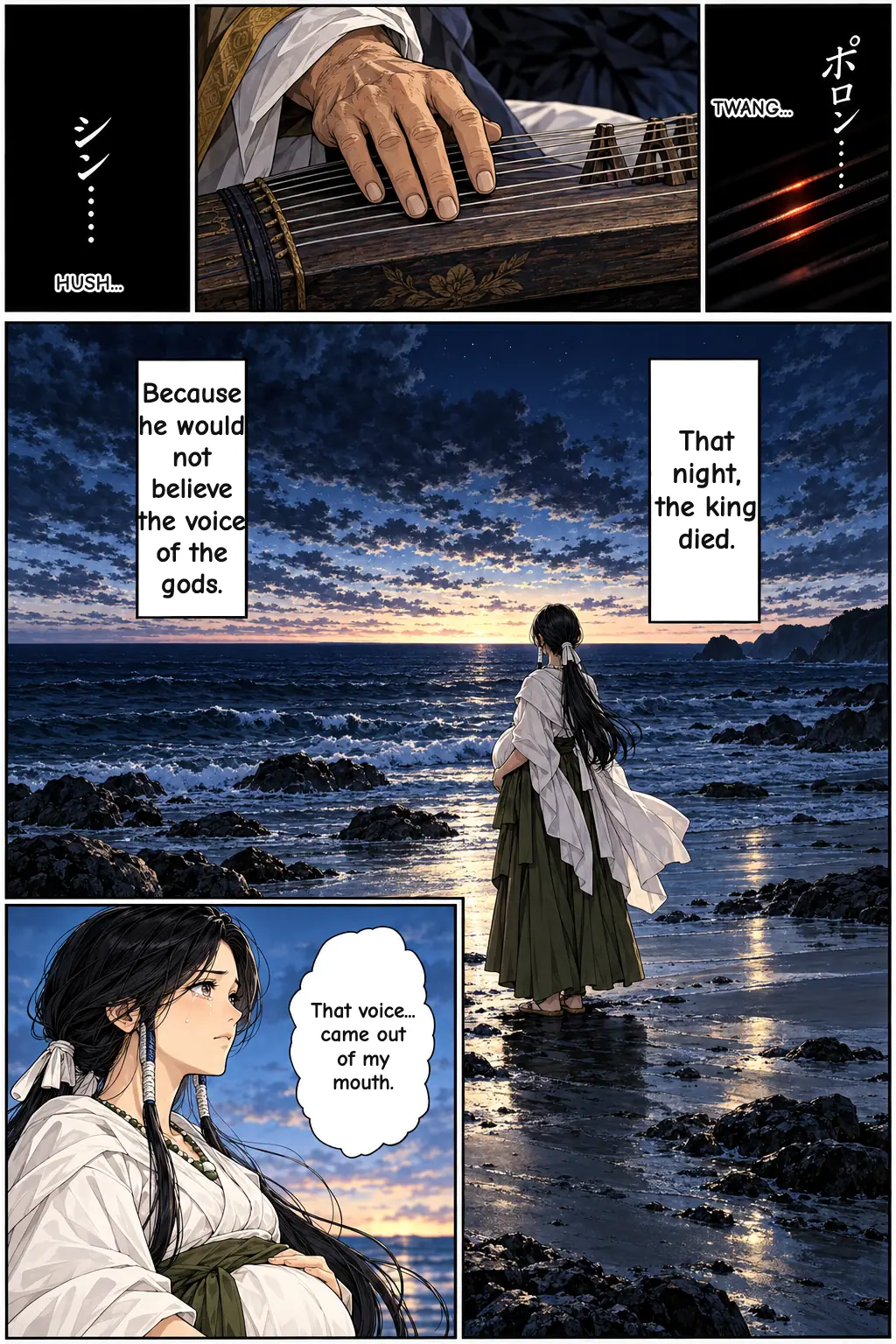
Kojiki series, Episode 14. A king who doubted the gods' words dies in the middle of playing his koto. "That voice came out of my mouth." Carrying both her guilt and her unborn child, the empress asks the gods again herself. Then she sets out to sea, trusting the fish to carry her fleet across the rough waves. *Based on myths written down some 1,300 years ago, not on historical fact.
Empress Jingū and Emperor Chūai's Death: Kojiki Myth Explained
The Original Myth: A Silent Koto and a Voice from the West
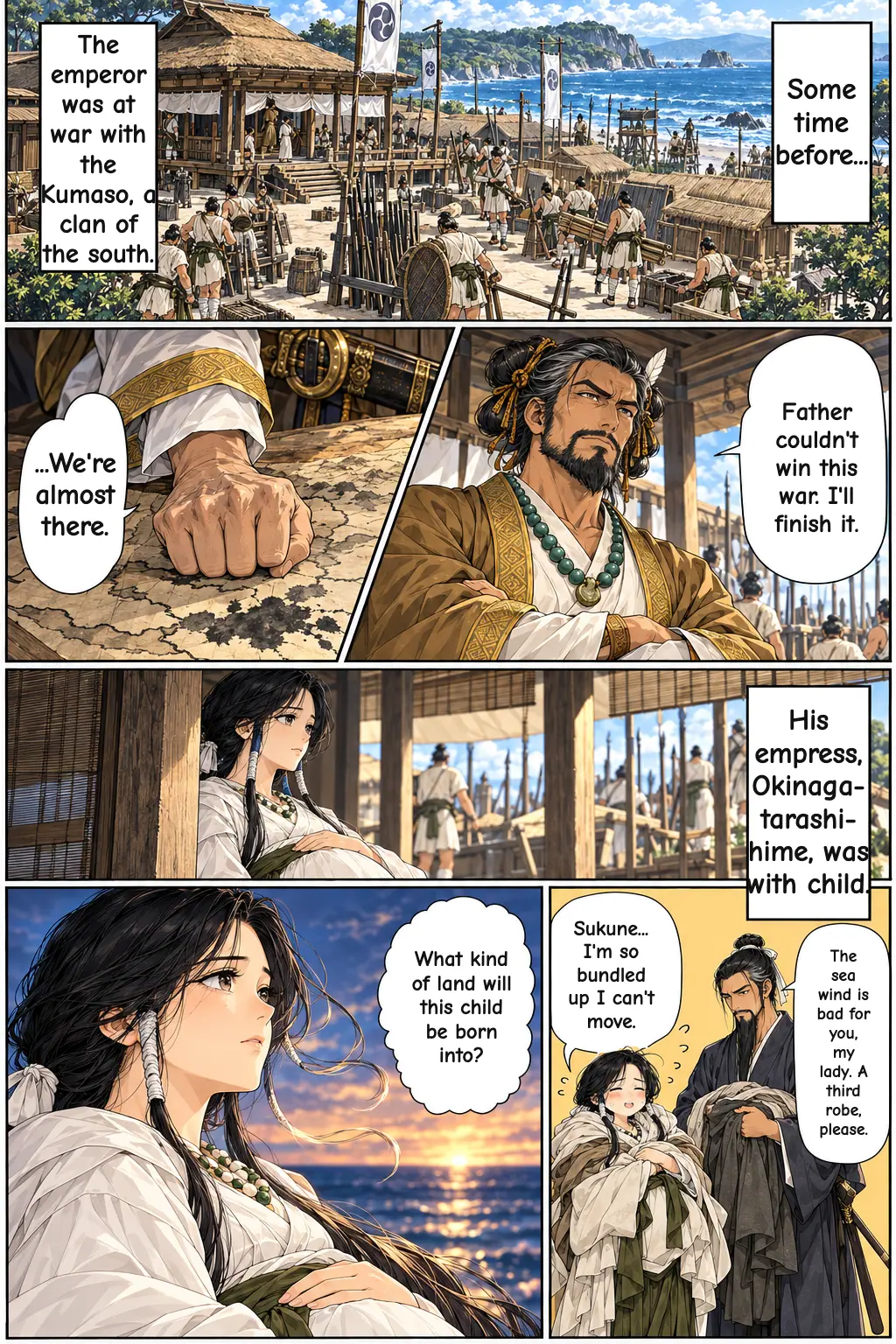
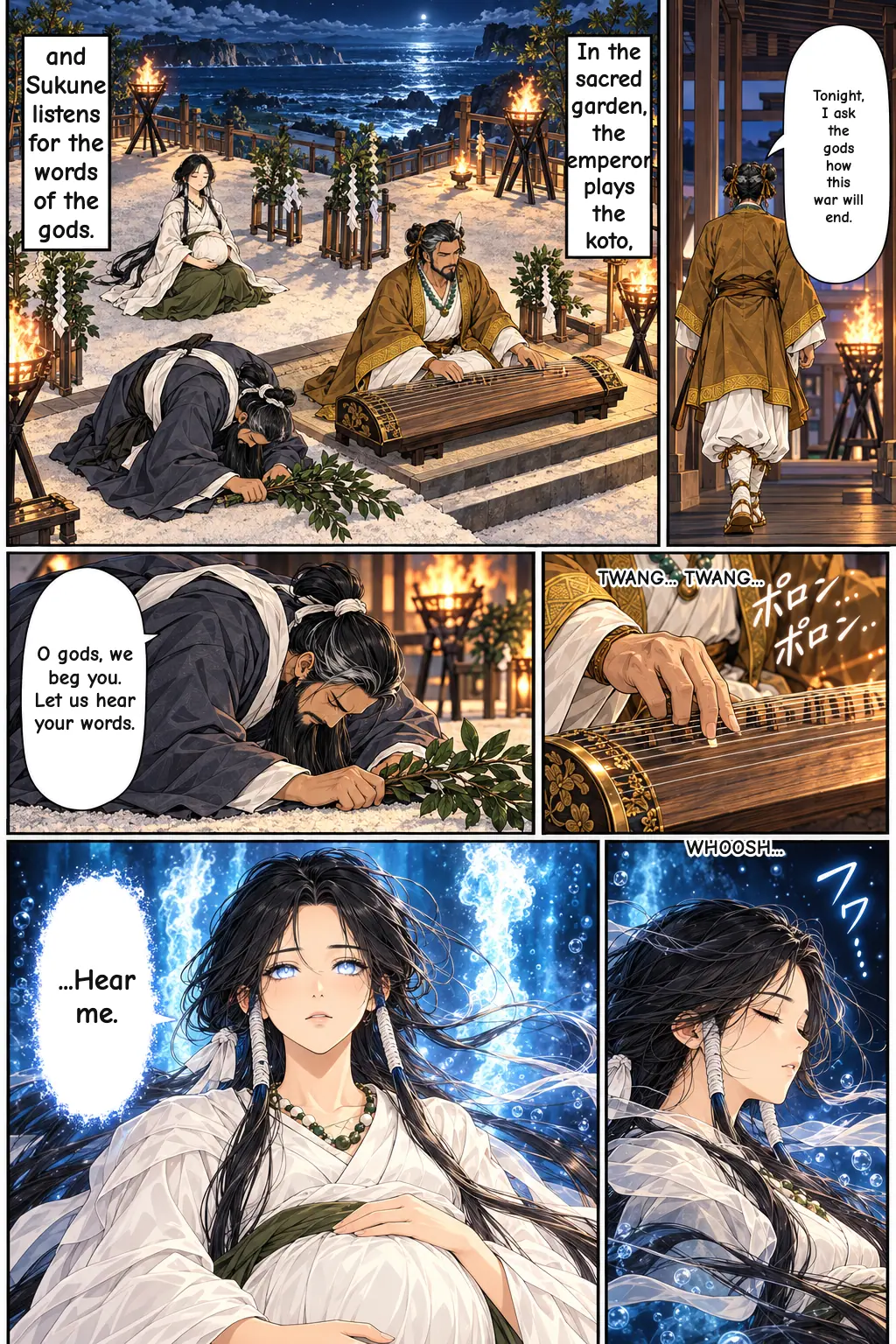
This story comes from the middle volume of the Kojiki (Records of Ancient Matters), compiled by Ō no Yasumaro in 712. Emperor Chūai (Tarashi-naka-tsu-hiko), son of the hero Yamato Takeru, is staying at the Kashii palace in Tsukushi, in northern Kyushu, and plans to attack the Kumaso, a people of southern Kyushu. To ask the gods for guidance, he plays the koto, a long zither, while his chief minister Takeuchi no Sukune waits in the saniwa, a purified space for receiving divine messages. His wife, Okinaga-tarashi-hime, later known as Empress Jingū, is someone through whom the gods speak.
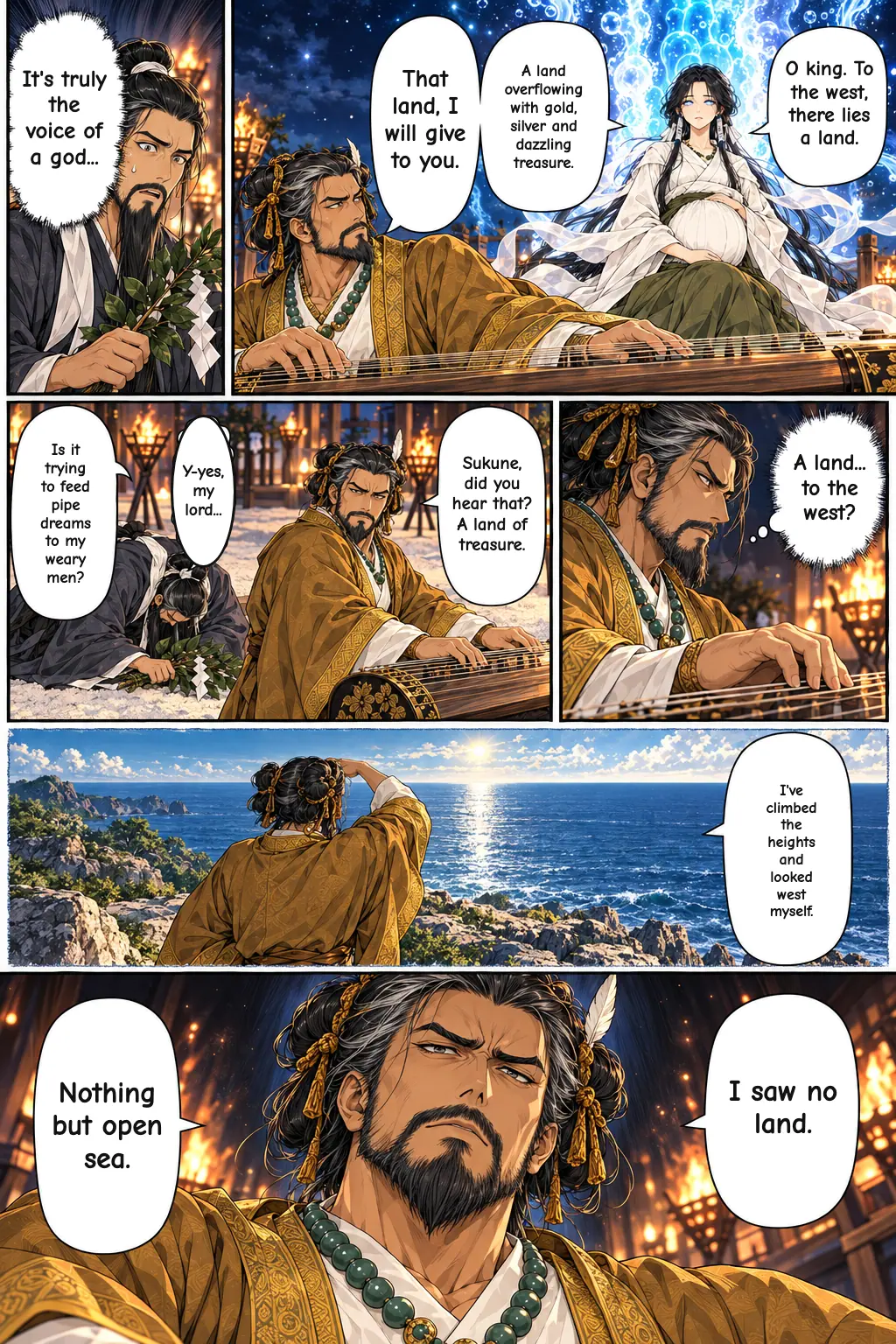
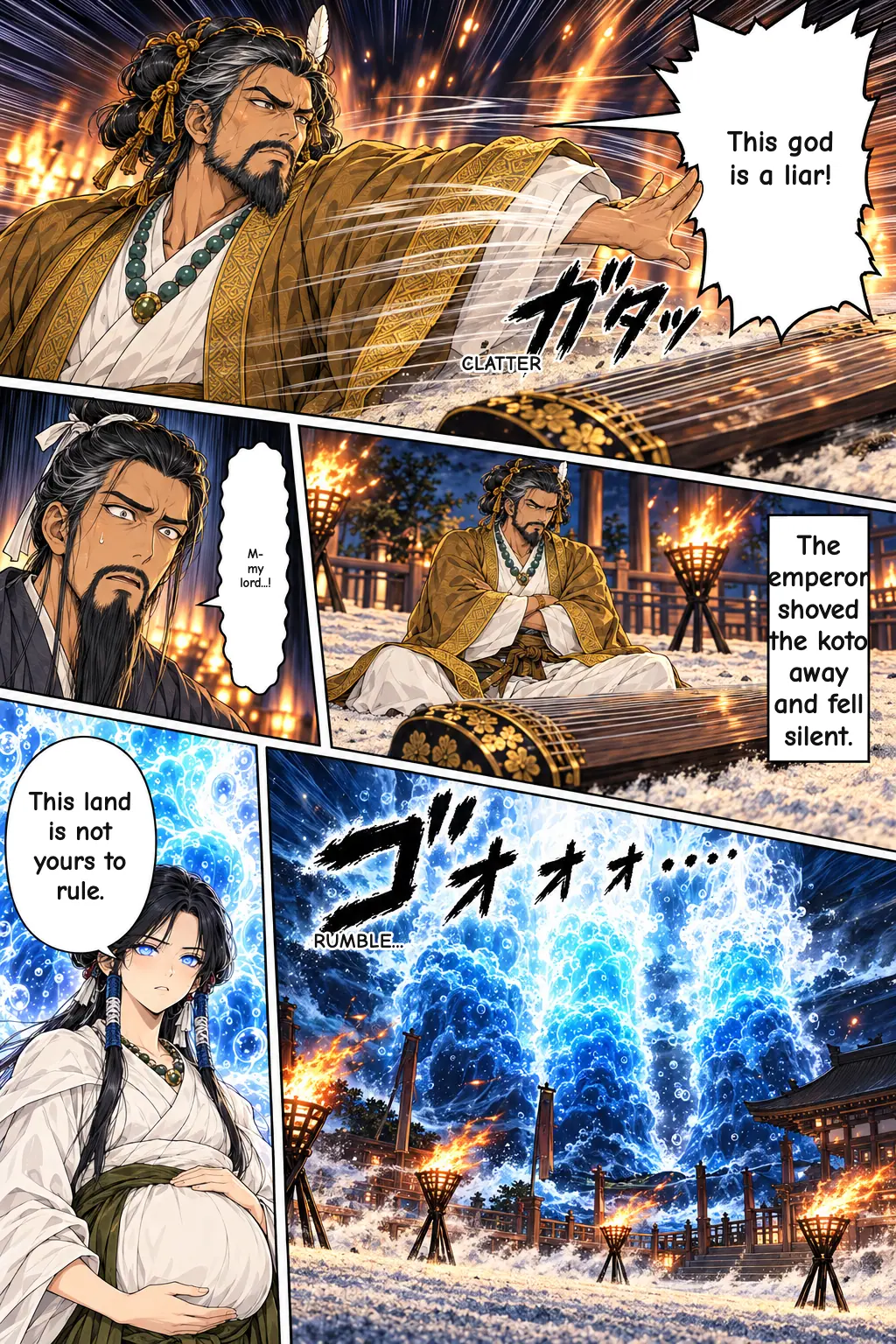
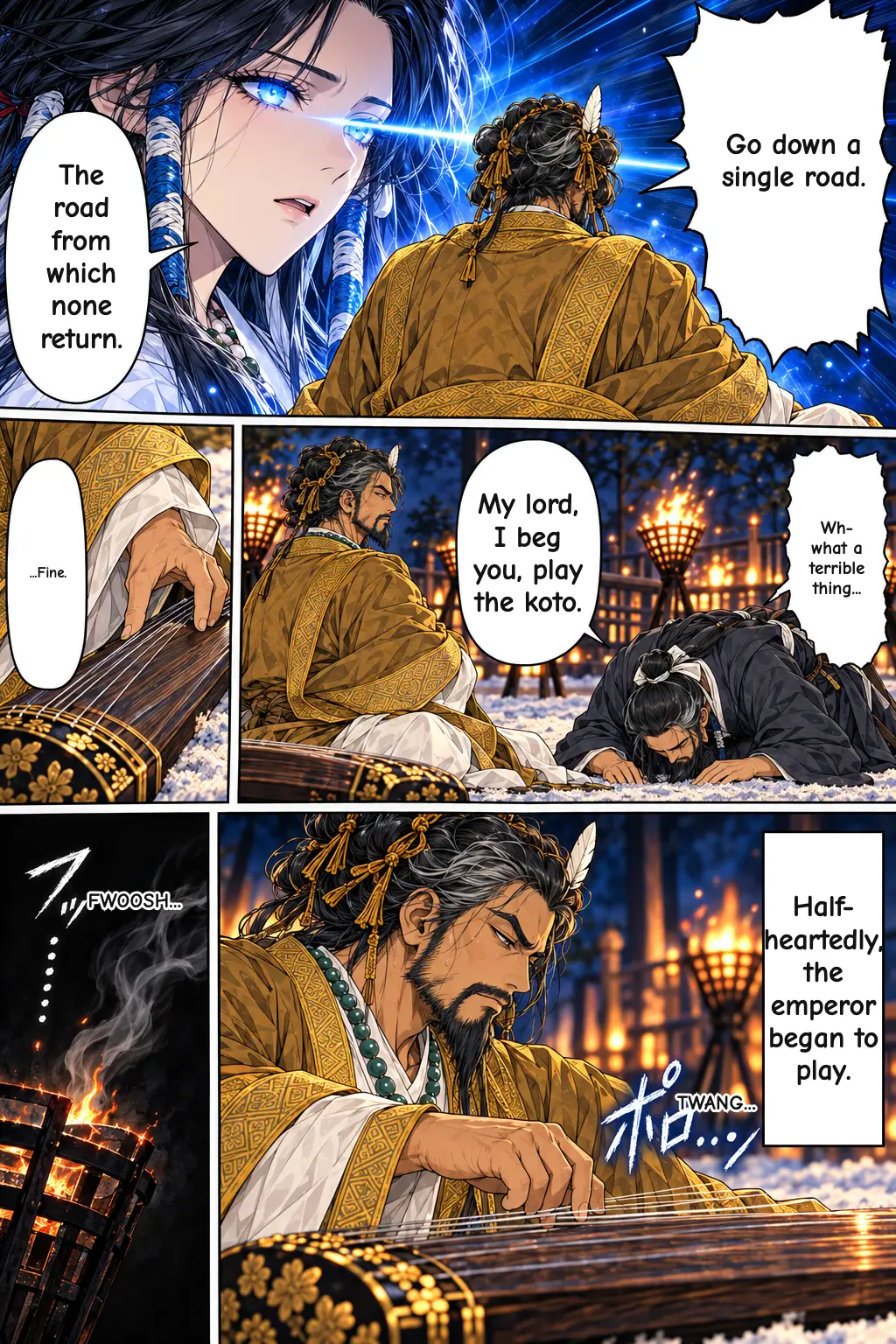
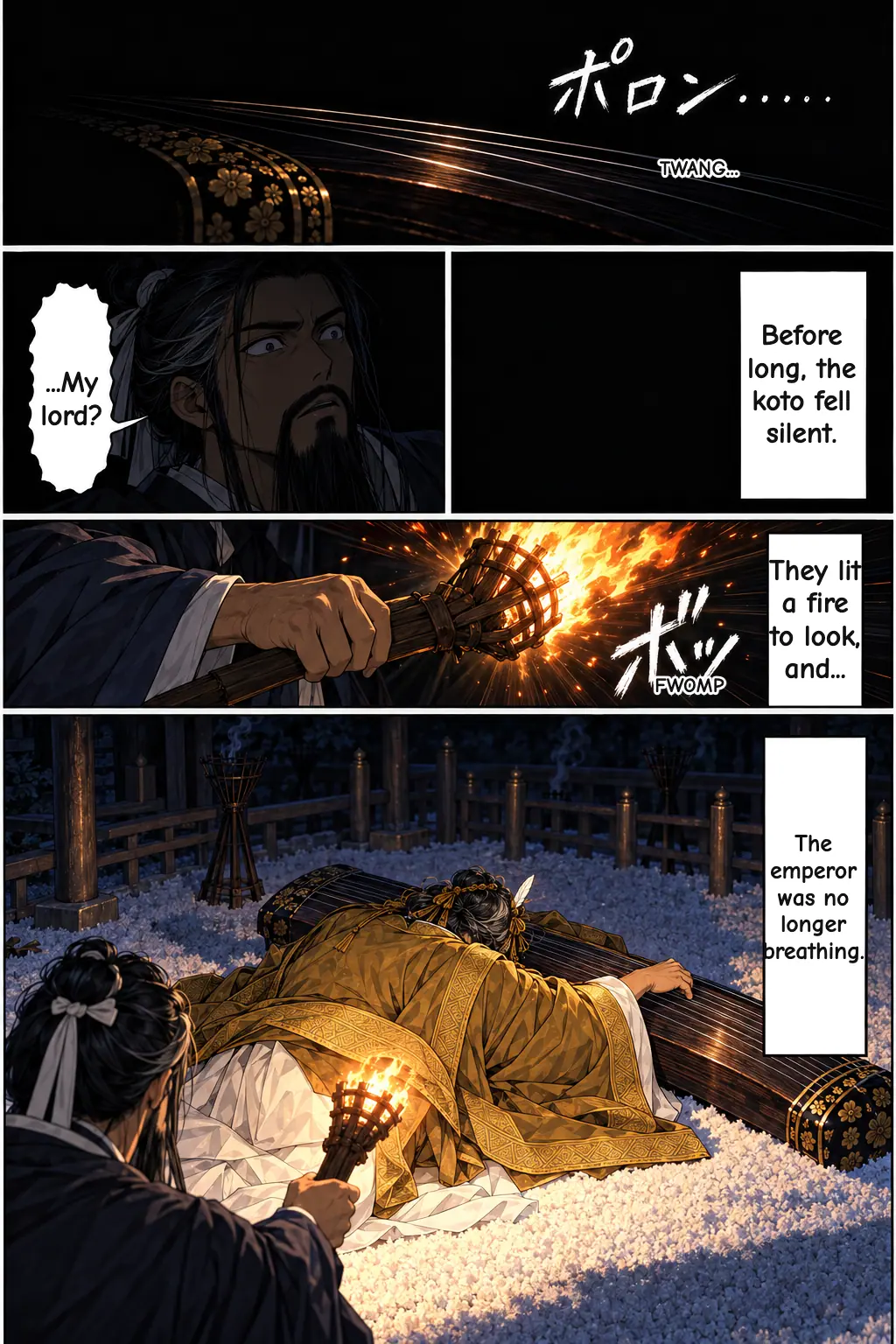
A god speaks through her: across the sea to the west lies a land full of gold, silver and dazzling treasures, and the god will give it to him. Chūai says that from a high place he sees only open ocean, calls the god a liar, pushes the koto away and falls silent. Furious, the god declares that this realm is not his to rule and tells him to set off down a single road. Takeuchi urges him to keep playing, and the emperor plays half-heartedly. Soon the music stops. When lights are brought in, Chūai is dead. The Kojiki never says what killed him.
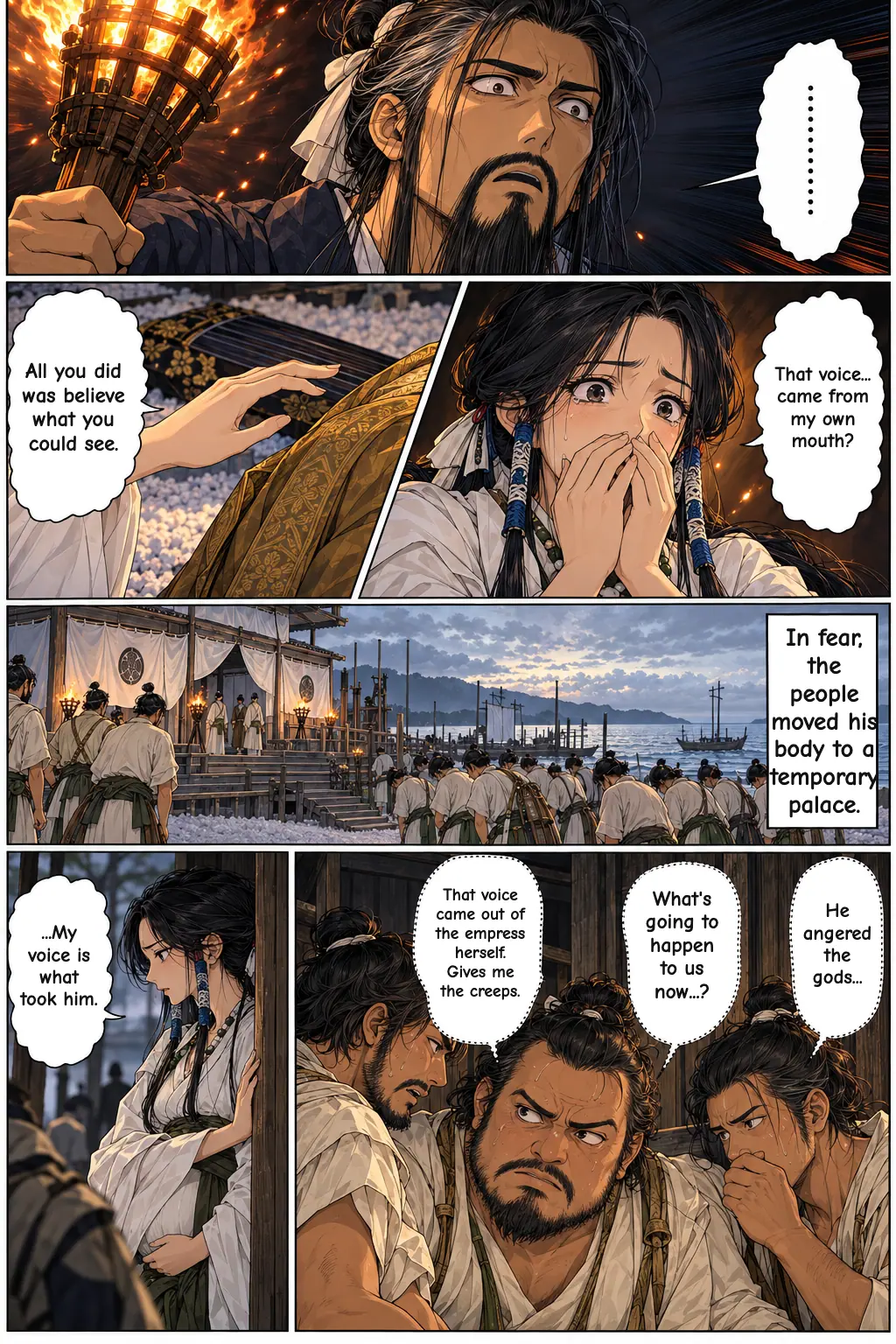
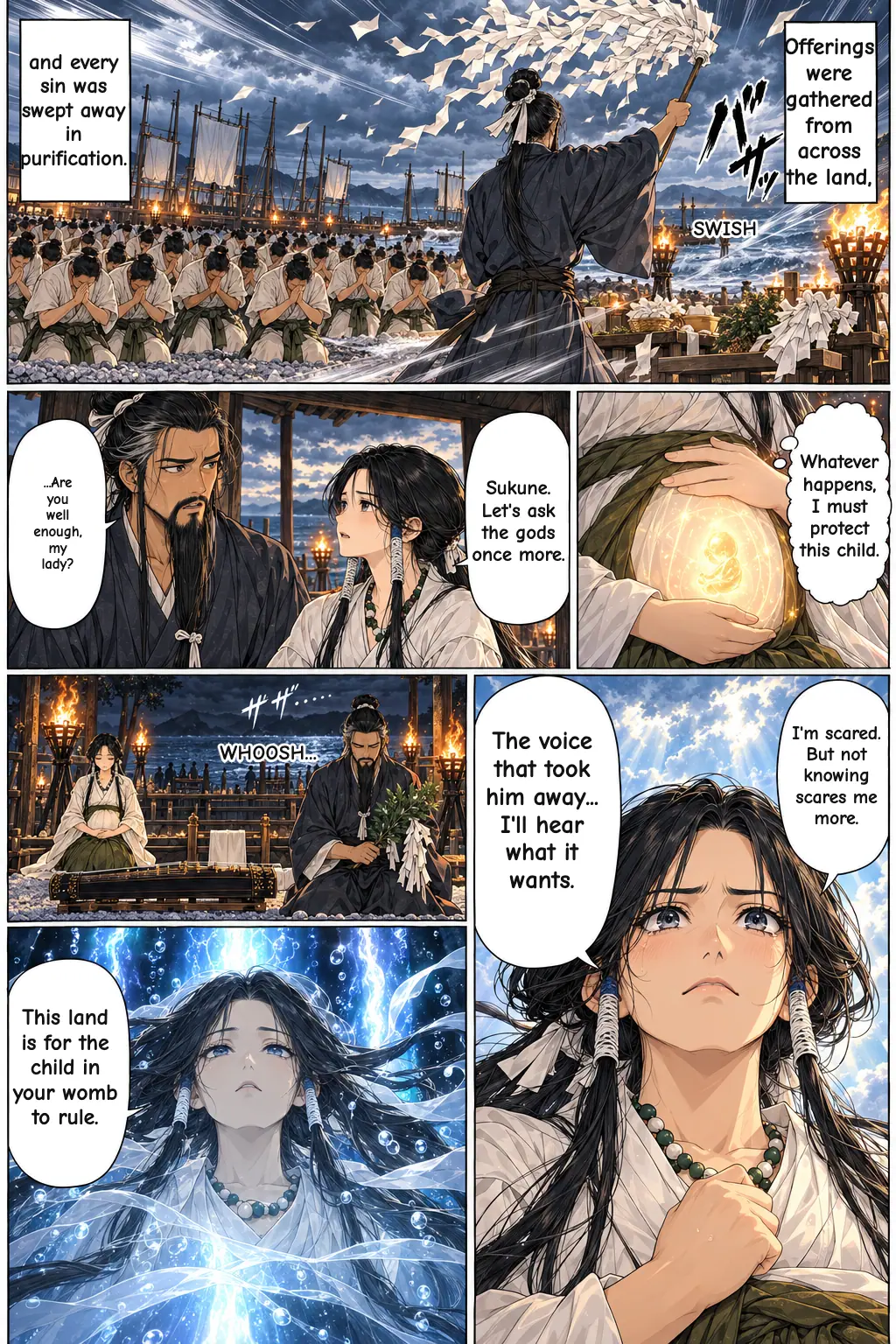
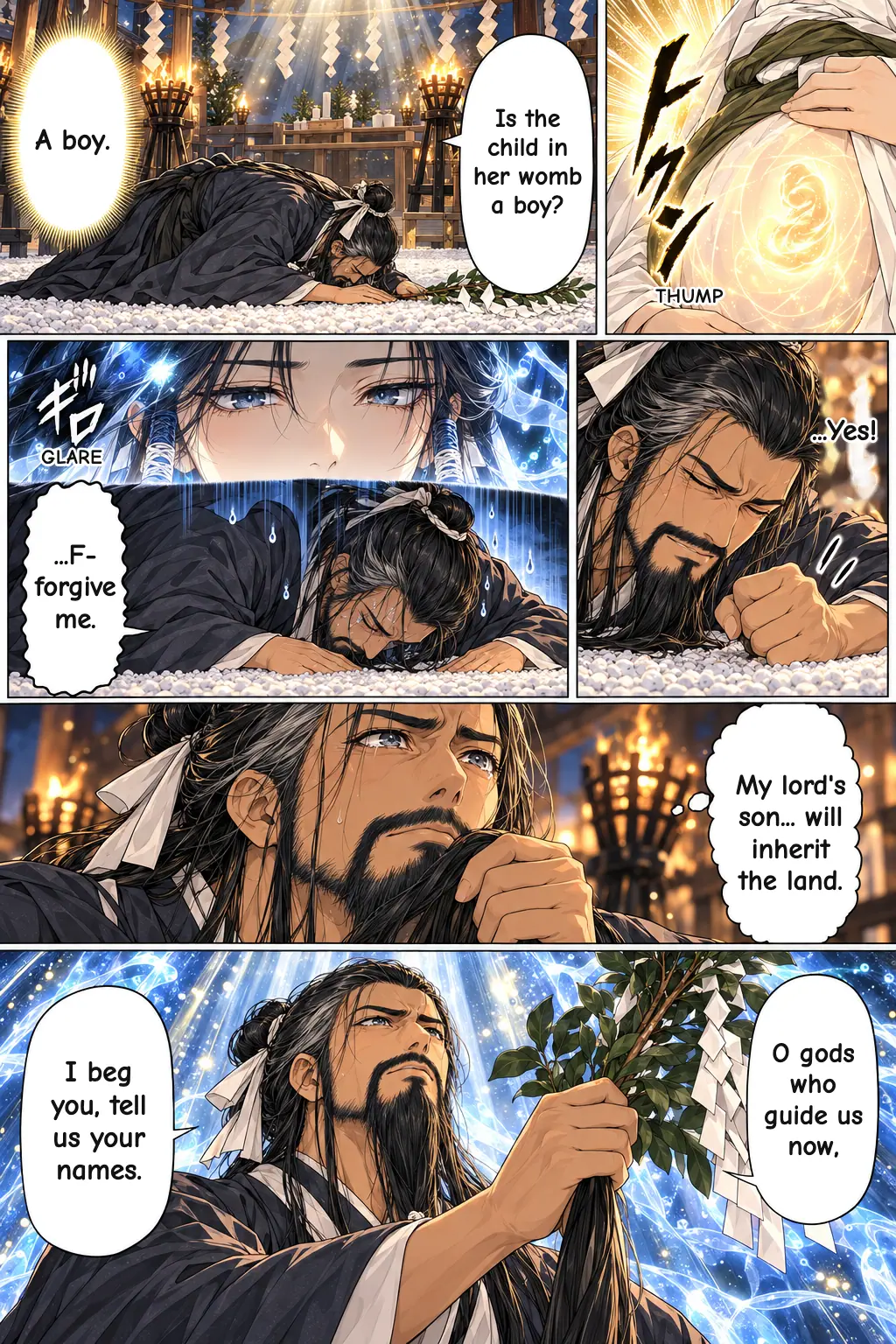
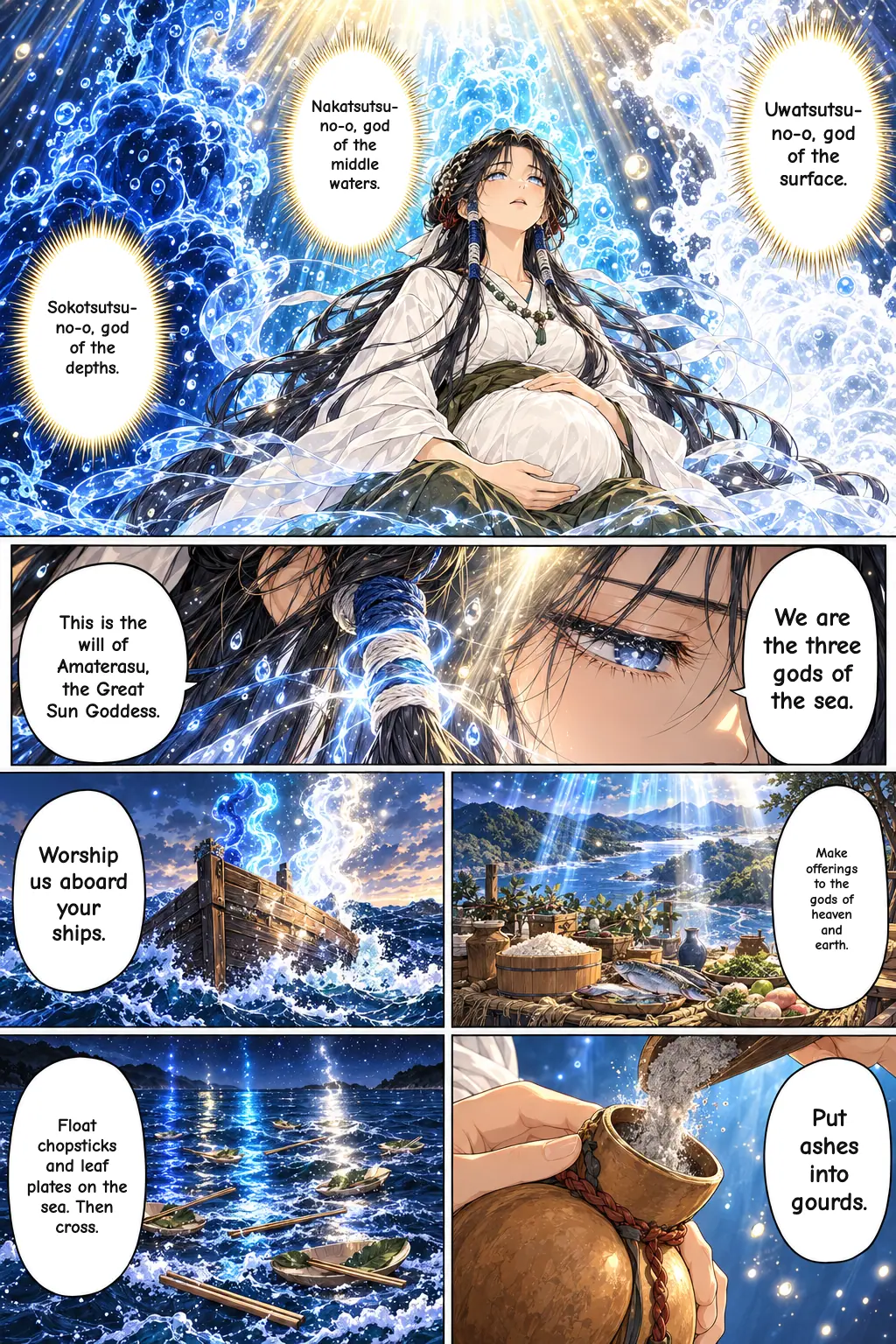
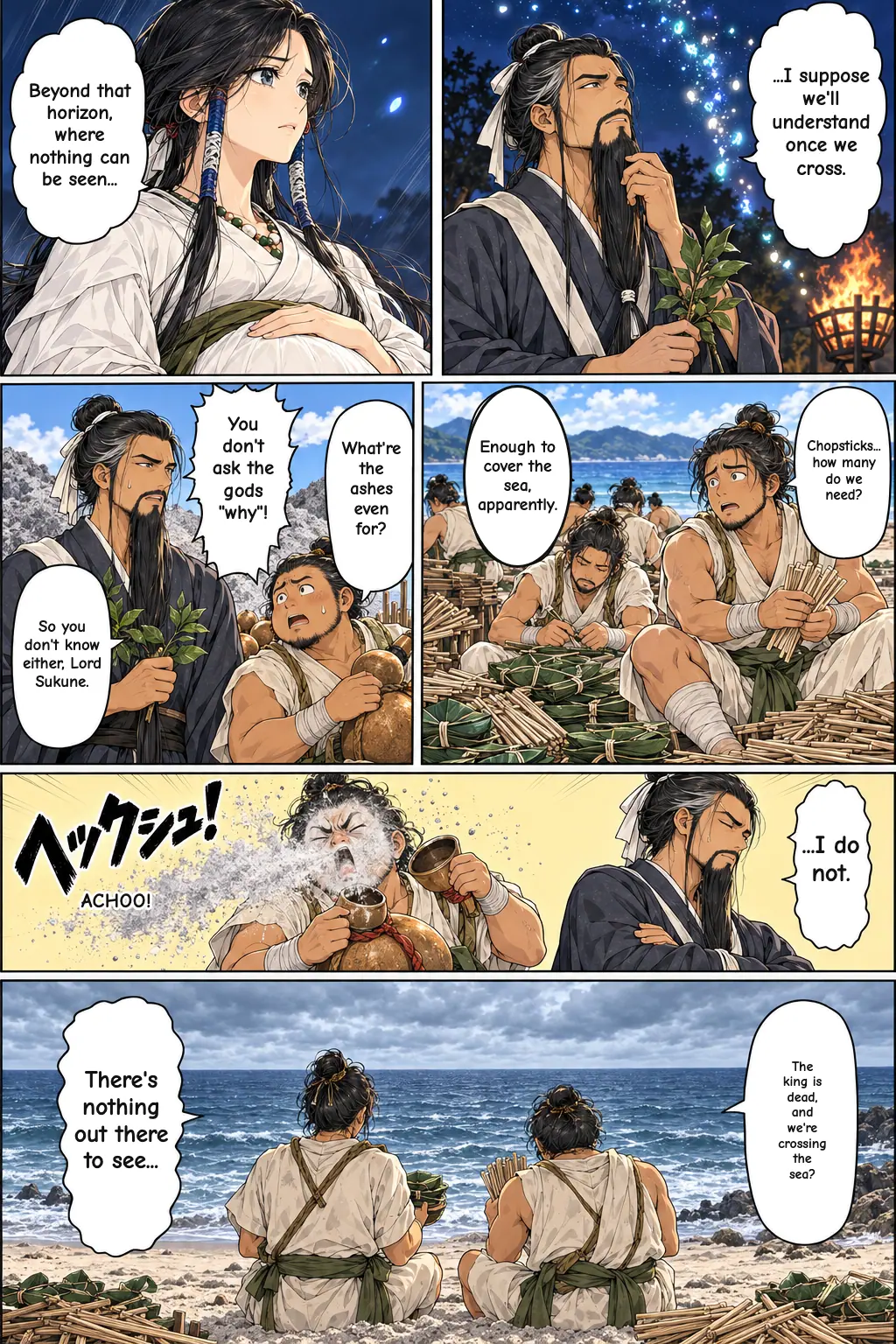
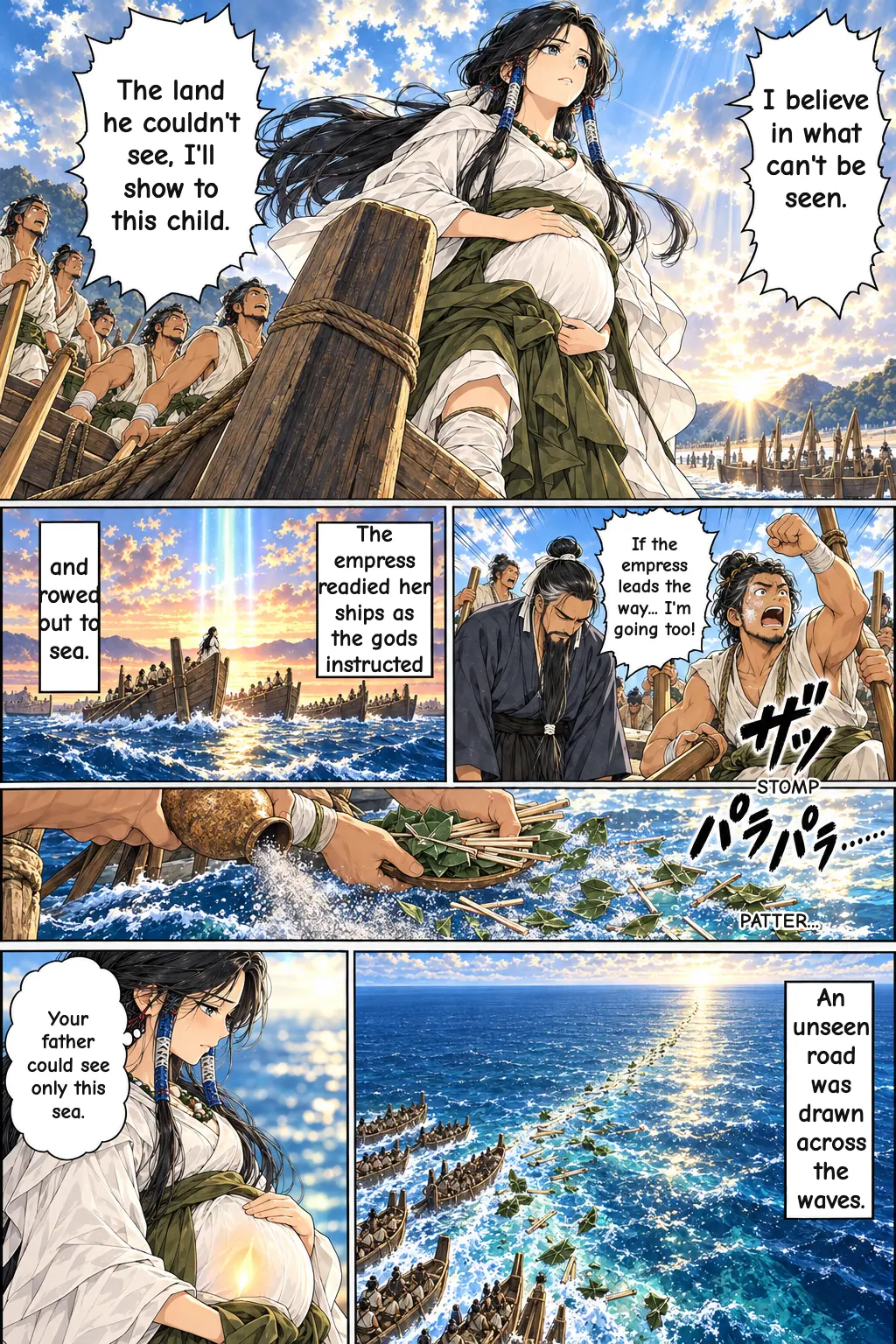
The shaken court places his body in a temporary mourning hall, gathers offerings from the whole country and holds a Great Purification (Ōharae) to cleanse the land of wrongdoing. When Takeuchi asks the god again, the message is the same: this land belongs to the child in the empress's womb, and that child is a boy. Asked who is speaking, the voice answers that it carries the will of Amaterasu, the sun goddess, and that it is three gods: Sokotsutsu-no-o, Nakatsutsu-no-o and Uwatsutsu-no-o. They explain how to cross the sea: make offerings to every god of heaven, earth, mountains, rivers and seas, enshrine their spirit on the ship, and scatter gourds of wood ash, chopsticks and leaf plates on the water.
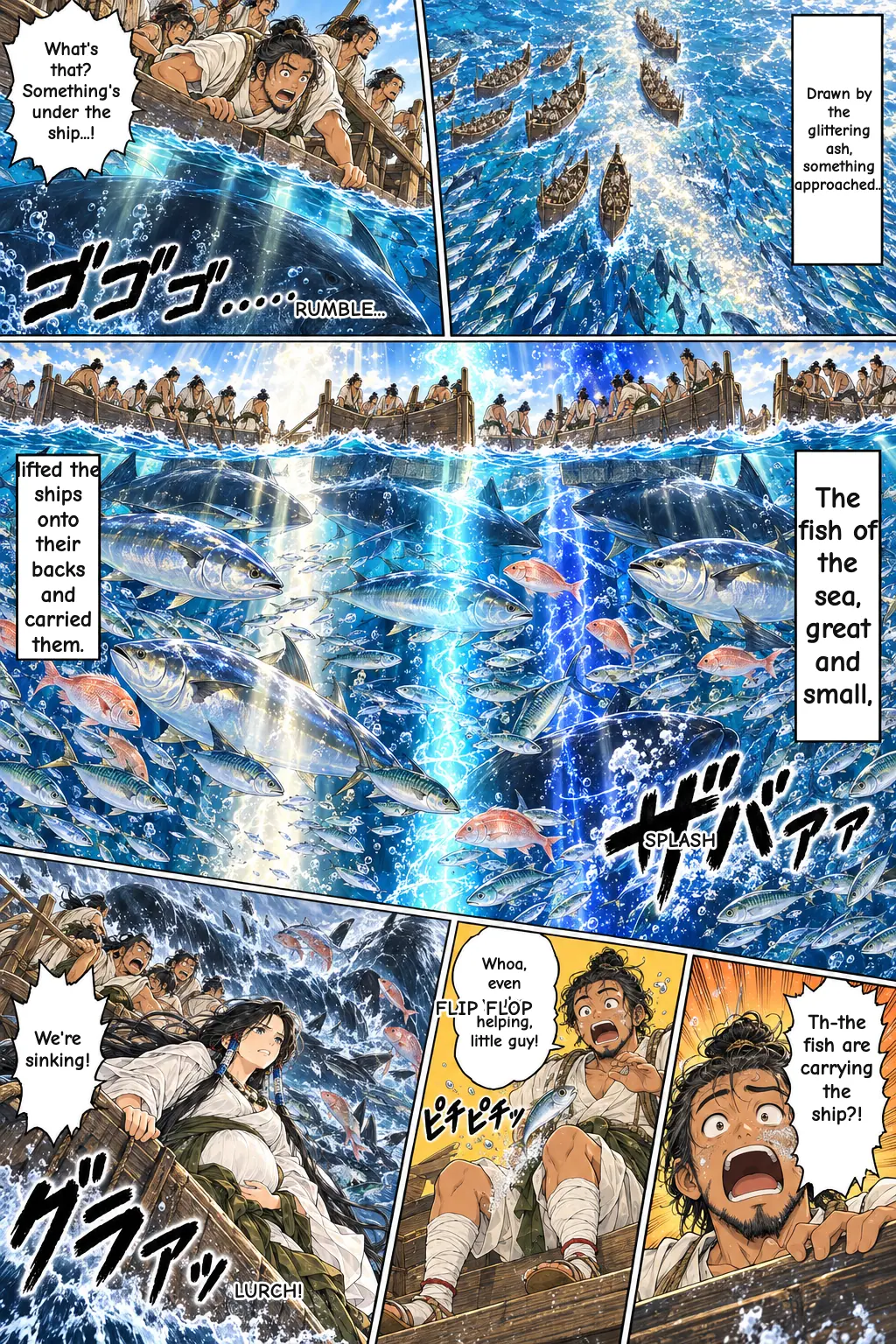
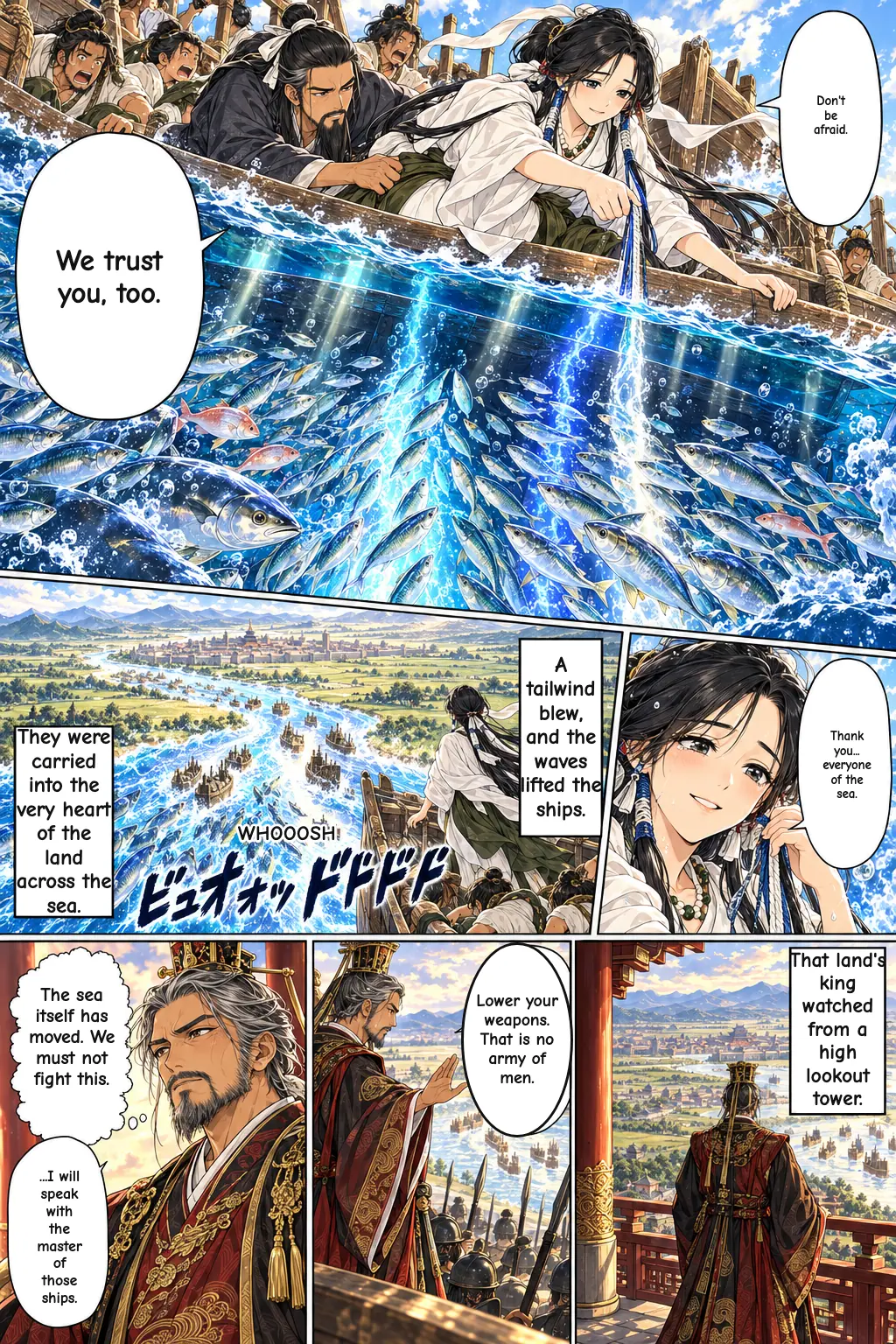
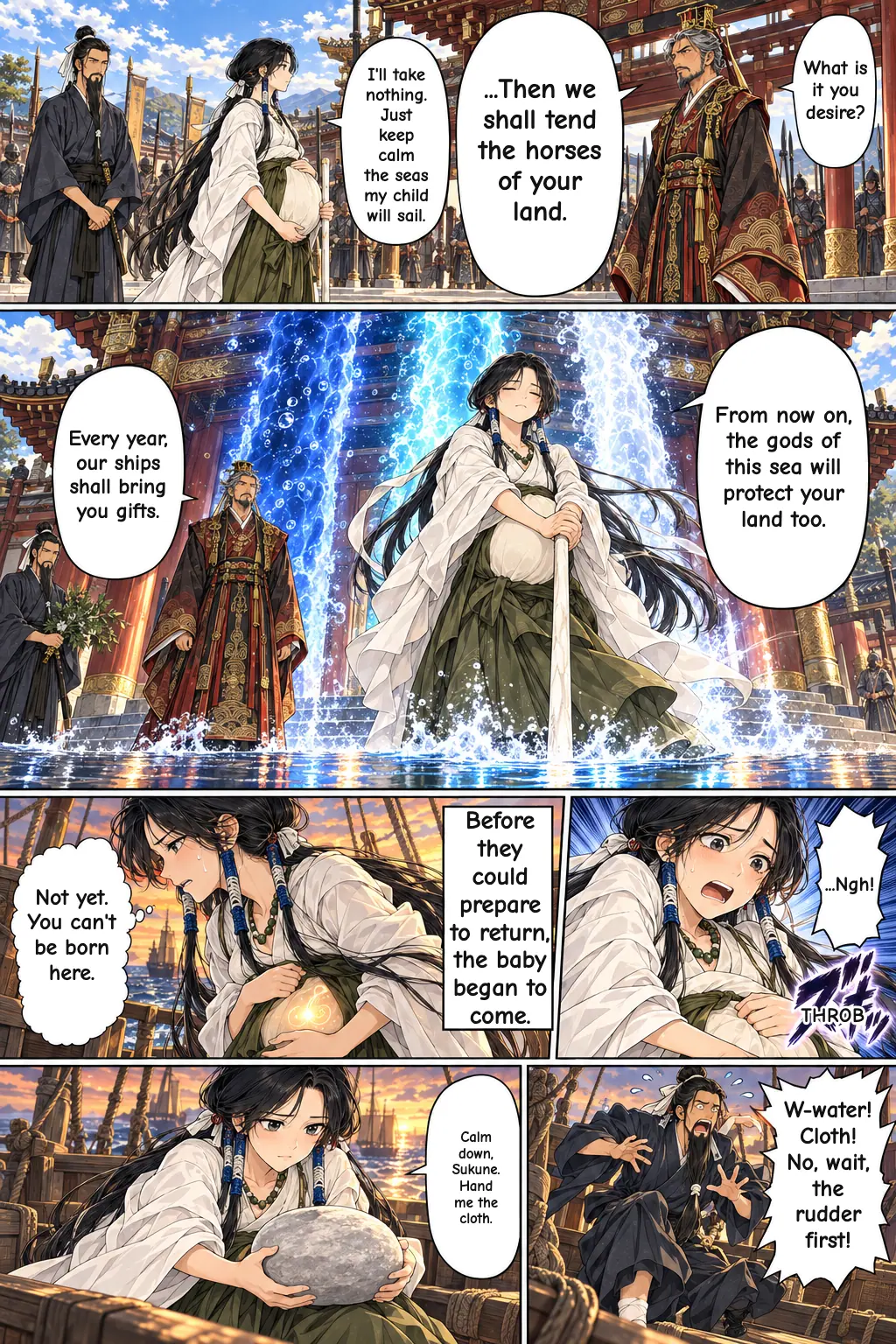
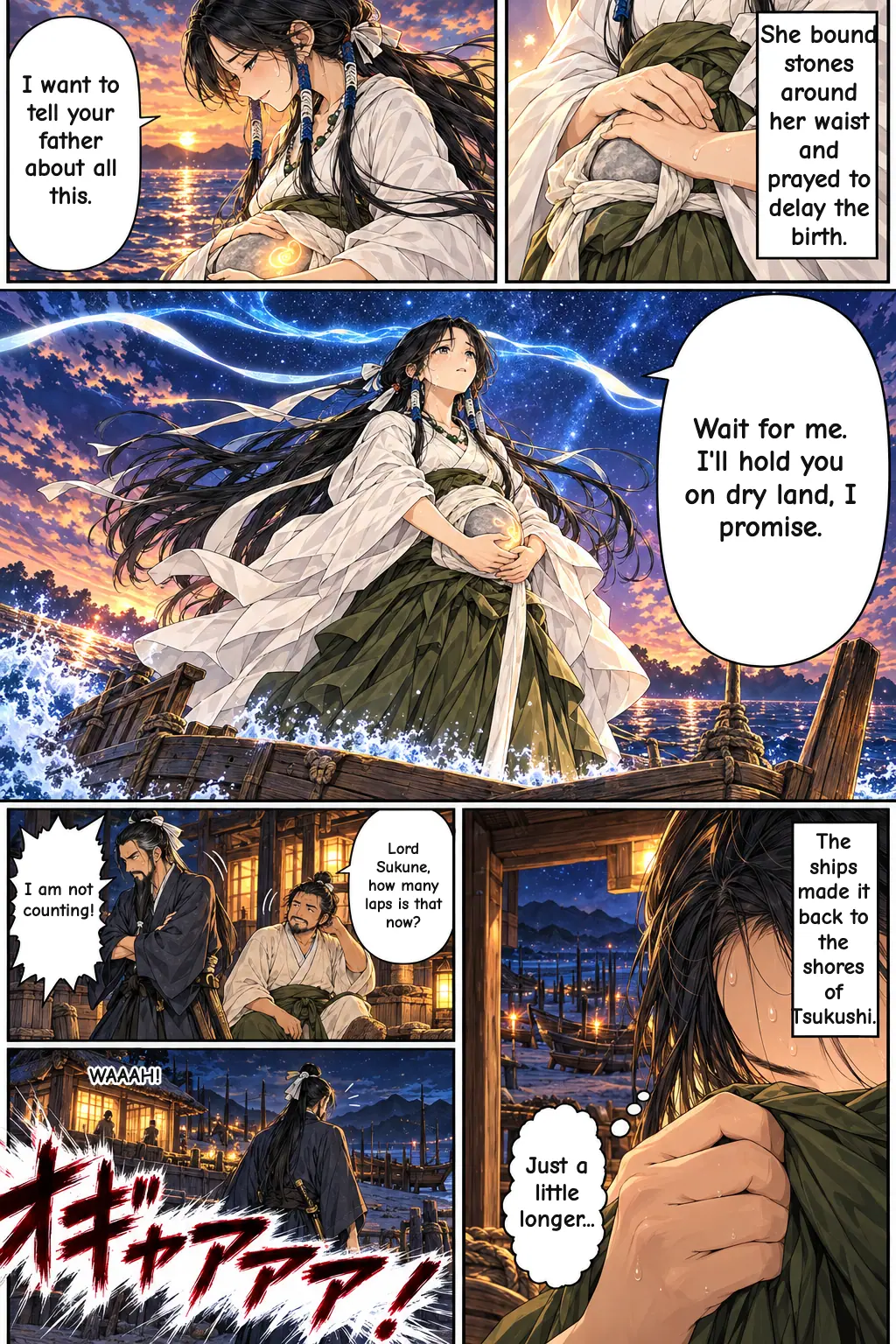
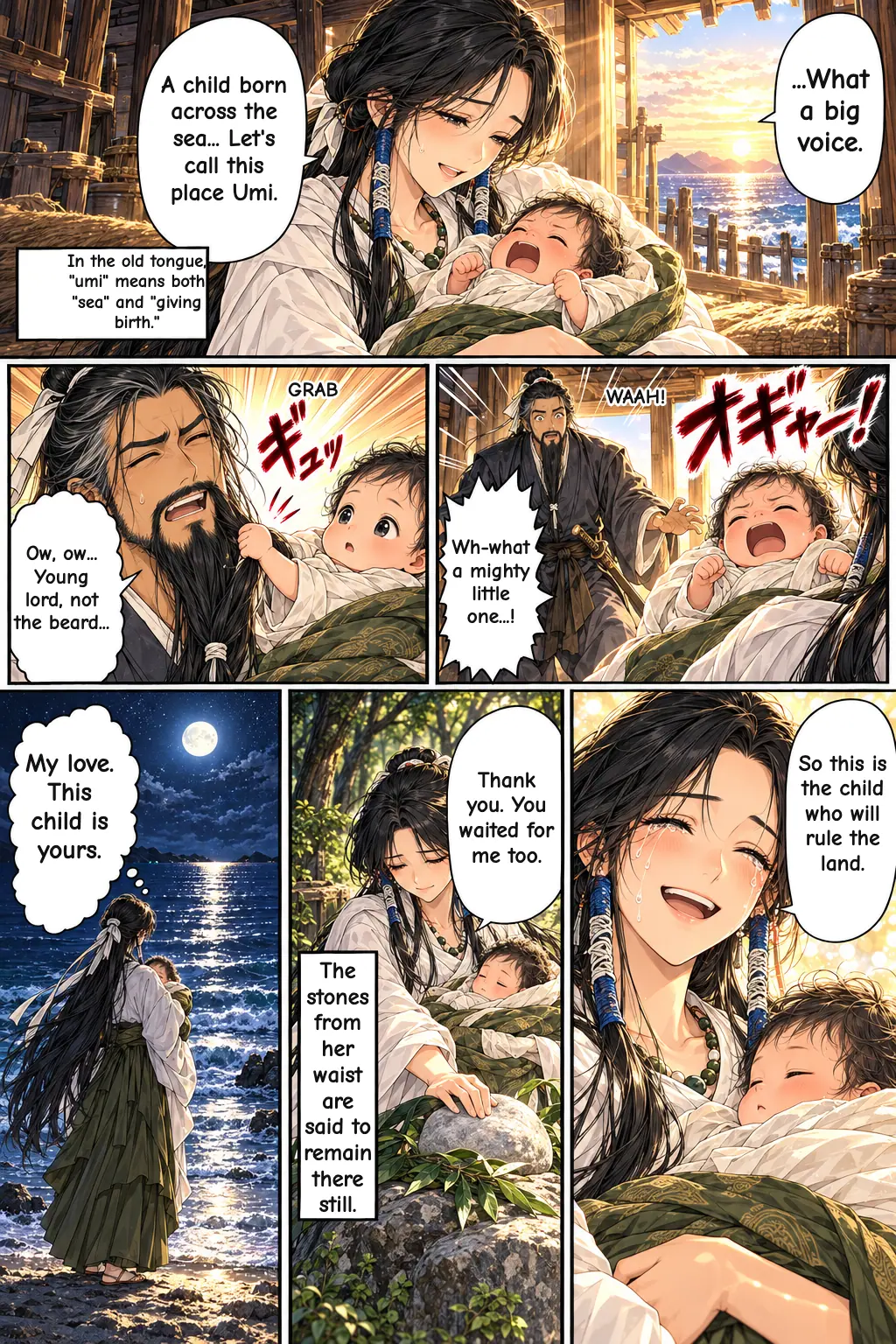
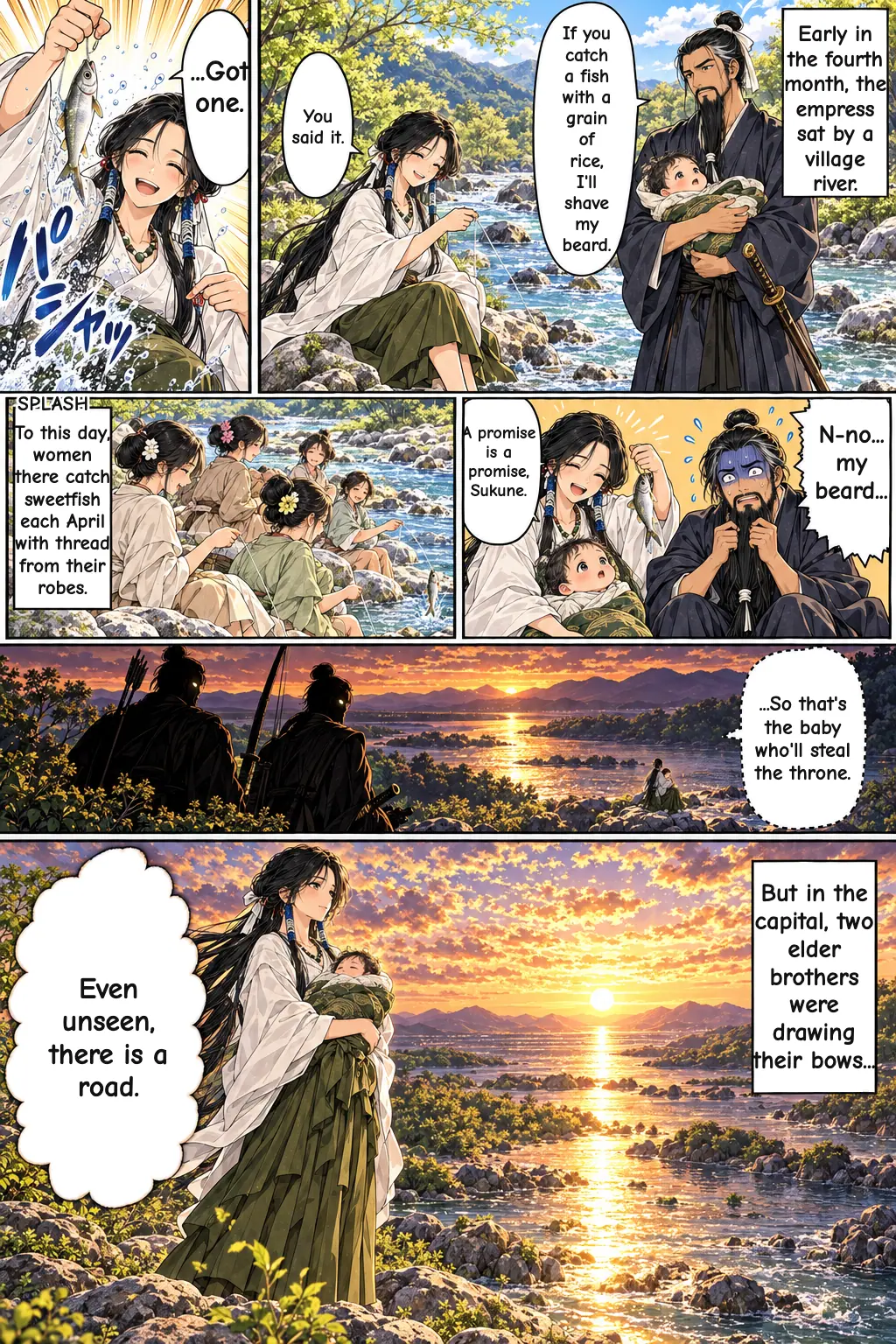
The empress does as they say. Fish large and small carry the ships on their backs, a strong tailwind blows, and a great wave pushes the fleet halfway into Silla, a kingdom on the Korean peninsula. The frightened king promises to send ships with tribute every year. Before leaving, Jingū plants her staff at his gate and enshrines the fierce spirit of the Great God of Suminoe as a guardian. Her baby is due before the campaign is over, so she ties a stone to the waist of her skirt to calm her womb, and gives birth only after returning to Tsukushi, at a place named Umi. Later, by a river at Tamashima in Matsura, she pulls a thread from her skirt, baits it with grains of rice and catches sweetfish (ayu). The Kojiki adds that local women still fish this way each spring.
Main Characters
Emperor Chūai trusts what he can see with his own eyes over what the gods say, and it costs him his life. Empress Jingū (Okinaga-tarashi-hime) is the medium whose mouth carries the gods' words; she then leads the crossing herself. Takeuchi no Sukune, the loyal minister, receives the oracles and asks the key questions. The voice belongs to the three Sumiyoshi sea gods, acting on the will of Amaterasu. The unborn son, whose name the Kojiki gives only later, becomes Emperor Ōjin.
What This Myth Tells Us: Culture and Background
At its heart this is a story about listening. Chūai is not wicked; he simply believes his eyes over a divine voice, and in the world of the Kojiki that is fatal. Rule passes instead to those who obey: the medium-empress and the child the gods have chosen. The episode also shows how important purification rituals and offerings to the sea were in early Japanese religion. The three gods who speak are still worshipped today as the Sumiyoshi gods, protectors of sailors, at Sumiyoshi Taisha in Osaka and at shrines across Japan.
Several details explain the origins of place names and customs, such as Umi, the stone kept at Ito village, and the spring ayu fishing at Tamashima. This kind of origin story is common throughout the Kojiki.
This is a myth, not history. There is no reliable evidence that such an expedition took place, and historians still debate what memories of early contact with the Korean peninsula, if any, lie behind it. In modern times the story was also used for political purposes, including justifying Japanese rule over Korea, so scholars treat it with care.
Some well-known details are not in the Kojiki. The name 'Chinkai-seki' (the stone that calms the womb), along with descriptions of its size and worship, comes from the Nihon Shoki (720), the Man'yōshū poetry collection and a provincial gazetteer. The Nihon Shoki also adds a prayer Jingū says before fishing. The god's command to go down 'one road' is often read as an order to die, but that is a later interpretation, since the text itself does not explain it.
What the Manga Changes
The Kojiki tells this story in a few spare lines, so the manga fills in what the text leaves out. The look of the palace, the oracle space and the mourning hall, the shape of the koto, the characters' faces, ages and clothing, and how the empress changes when a god takes hold of her are all the artist's design. The original never describes the gods' appearance, either; they only speak through Jingū.
The moment of Chūai's death, with the music fading out in the dark, closely follows the original, which gives no cause of death. Jingū's guilt and her line 'That voice came out of my mouth' are the manga's invention, since the Kojiki says nothing about her feelings. In the original, Takeuchi is the one who questions the gods the second time, while the manga lets the empress ask them herself.
The kinds of fish carrying the fleet, the scene of the wave washing over the land, the size of the stone, the calm of the river scene and some of the linking dialogue are also creative additions. The long list of offenses cleansed in the Great Purification is shortened to a single summary.
Where to Read It
You can read Episode 14, 'The Music Stopped, and the King Was Dead', and every other episode of the KOJIKI series on Manga Portal for free, without creating an account. It is an easy way to watch this short, strange tale unfold, from the silent koto to the fish carrying the fleet. If you would like to go further, several complete English translations of the Kojiki are available, and you can compare the manga with the original text.
Characters in this episode
Emperor Chūai (Tarashi-naka-tsu-hiko)
Son of Yamato Takeru, he calls a god's oracle a lie and dies while playing the koto.
Empress Jingū (Okinaga-tarashi-hime)
The emperor's wife and a spirit medium, who carries out the gods' instructions and leads the crossing to Silla while pregnant.
Takeuchi no Sukune
The emperor's chief minister, who receives the oracles and asks the gods for their names.
The Sumiyoshi gods (Sokotsutsu-no-o, Nakatsutsu-no-o, Uwatsutsu-no-o)
Three sea gods who speak through the empress on behalf of Amaterasu's will.
The unborn prince (later Emperor Ōjin)
The boy in Jingū's womb, whom the gods declare the rightful ruler of the land.
The King of Silla
A ruler on the Korean peninsula who, frightened by the great wave, promises yearly tribute.
FAQ
Who was Empress Jingū in Japanese mythology?
Empress Jingū (Okinaga-tarashi-hime) is the wife of Emperor Chūai in the Kojiki and Nihon Shoki. Gods speak through her, and after her husband's death she follows their instructions across the sea to Silla. She is the mother of Emperor Ōjin.
Why did Emperor Chūai die in the Kojiki?
He refused to believe a god who promised him a rich land to the west, saying he could see only sea. The angry god told him the realm was not his, and he died soon after while playing the koto. The Kojiki does not say exactly how he died.
Did Empress Jingū really invade Korea?
There is no reliable historical evidence for the expedition as the Kojiki tells it, and most historians treat it as myth. Scholars debate whether any memories of early contact with the Korean peninsula lie behind the story.
Who are the Sumiyoshi gods?
They are three sea gods, Sokotsutsu-no-o, Nakatsutsu-no-o and Uwatsutsu-no-o, who reveal their names in this episode. They are worshipped as protectors of sailors and voyages, most famously at Sumiyoshi Taisha in Osaka.
What is the stone Empress Jingū tied to her waist?
In the Kojiki she ties a stone to her skirt to calm her womb and delay the birth until she returns to Kyushu. The name 'Chinkai-seki' and further details about the stone come from other sources, such as the Nihon Shoki and the Man'yōshū.