Episode 11The Wife Who Laid Her Mats on the StormOtotachibana-hime and the Sea of Hashirimizu
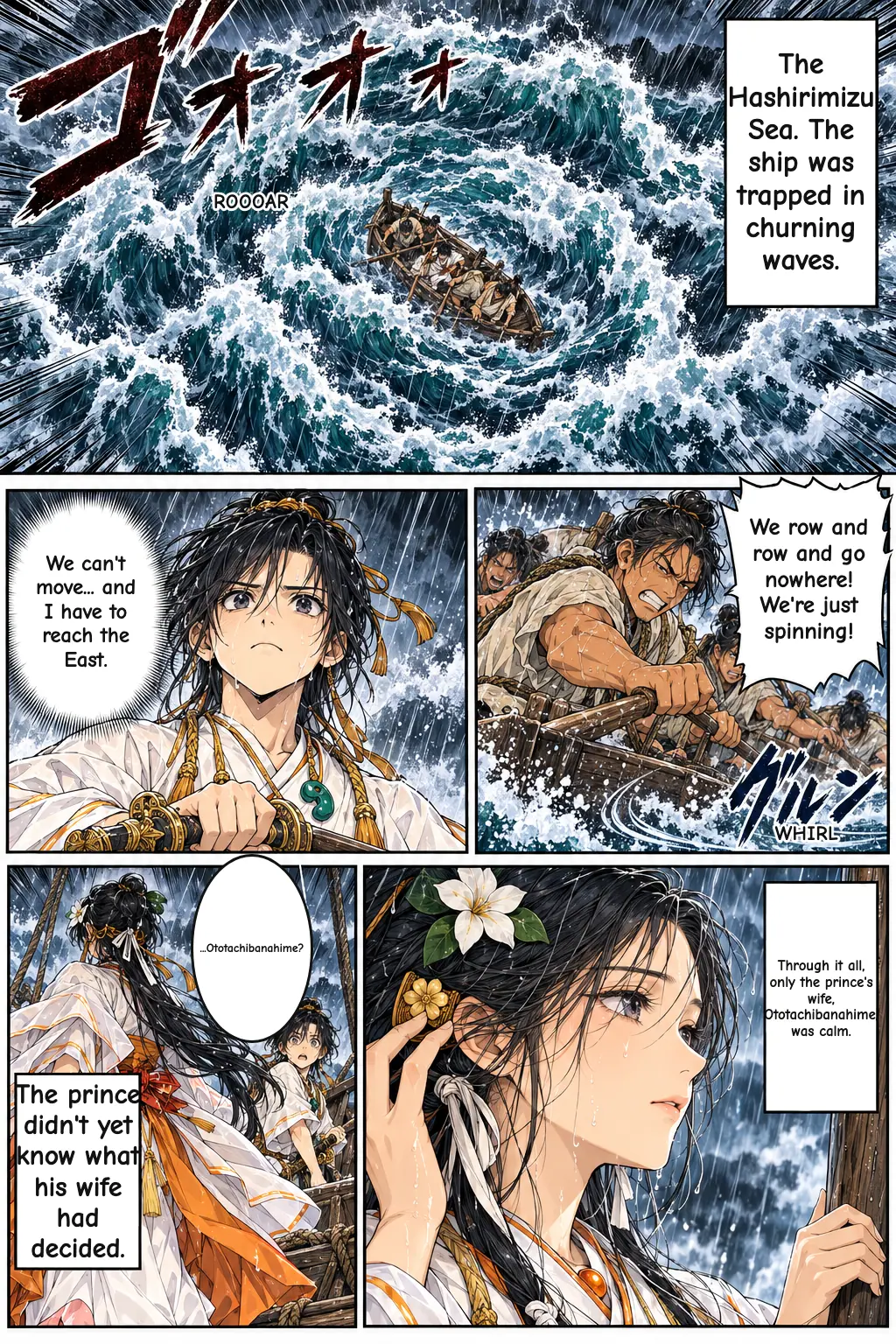
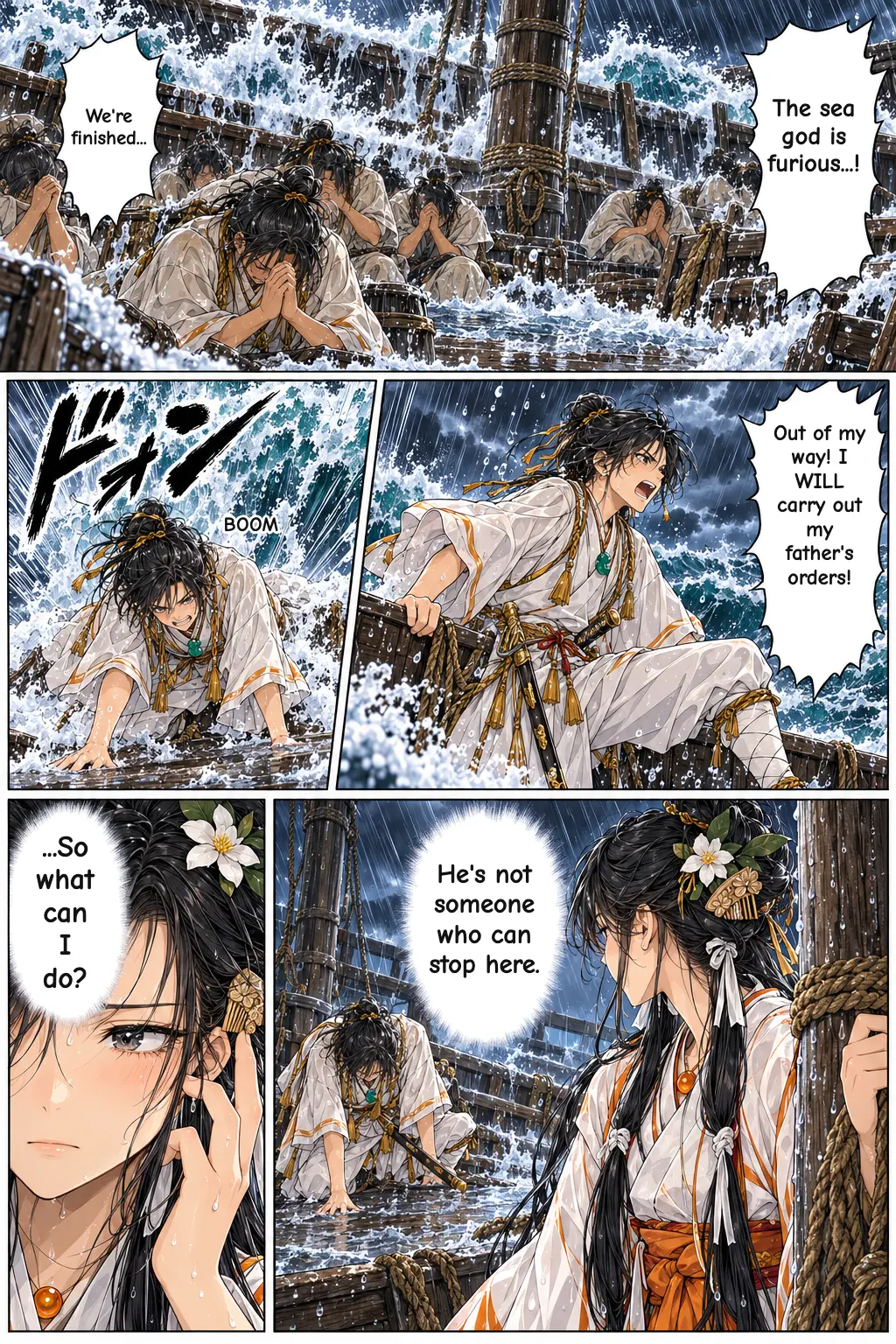
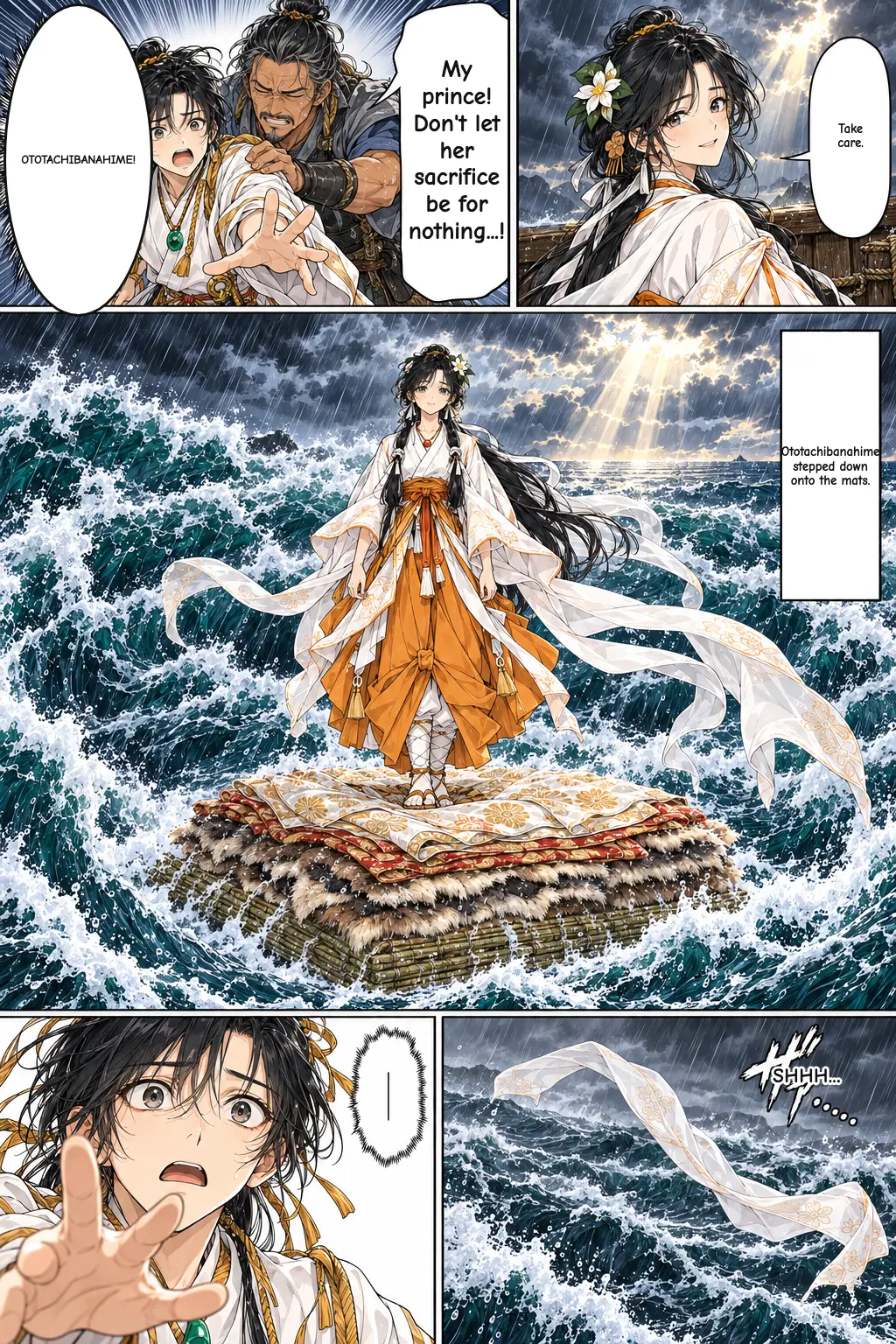
Trapped by a storm on the Hashirimizu Sea, Ototachibanahime steps down onto the waves so her husband Yamato Takeru can finish his mission. Holding back his grief, the young prince subdues the East, and on a mountain pass on the way home, he cries out three times: "Azuma haya!"
Ototachibana-hime and Yamato Takeru: Kojiki Sea Sacrifice Explained
The Original Myth: A Storm, a Sacrifice, and a Cry from the Mountains
This episode comes from the middle volume of the Kojiki (Records of Ancient Matters, compiled in 712), in the chapter on Emperor Keikō. His son Yamato Takeru, a fierce young prince, has been ordered to travel east and bring rebellious gods and people under the court's control. After surviving a trap in the land of Sagamu, he tries to cross the Hashirimizu Sea, a strait usually identified with the narrow mouth of today's Tokyo Bay.
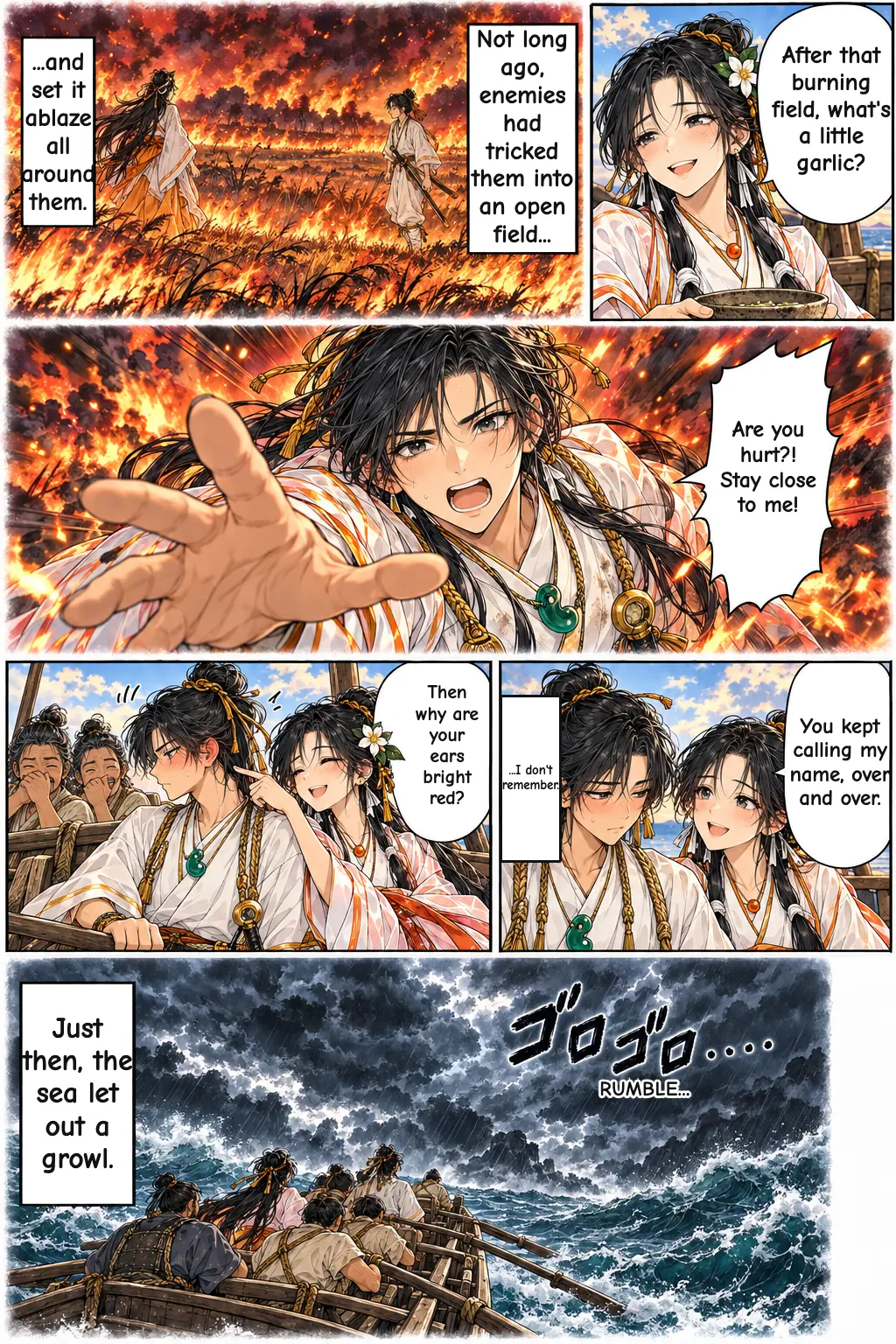
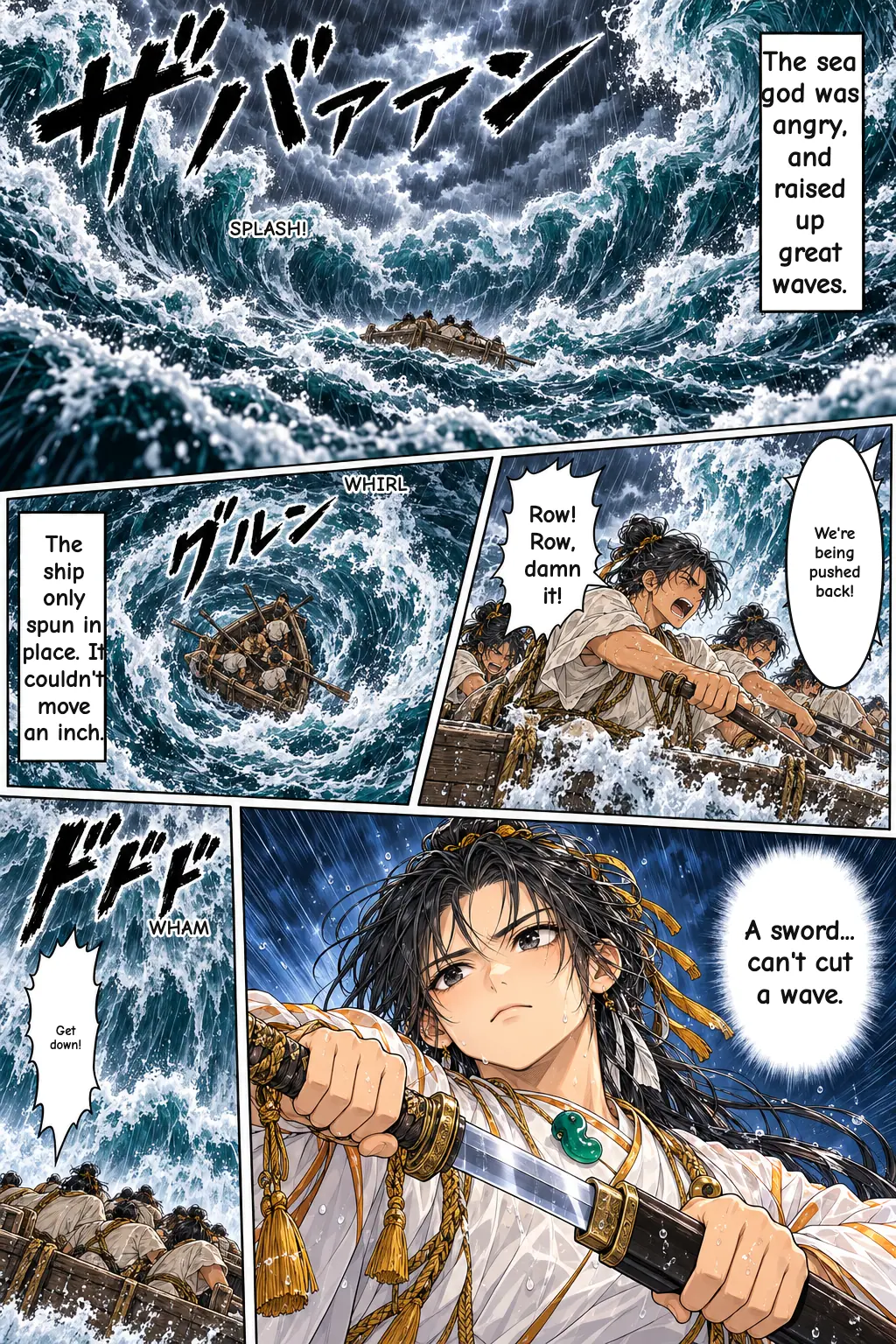
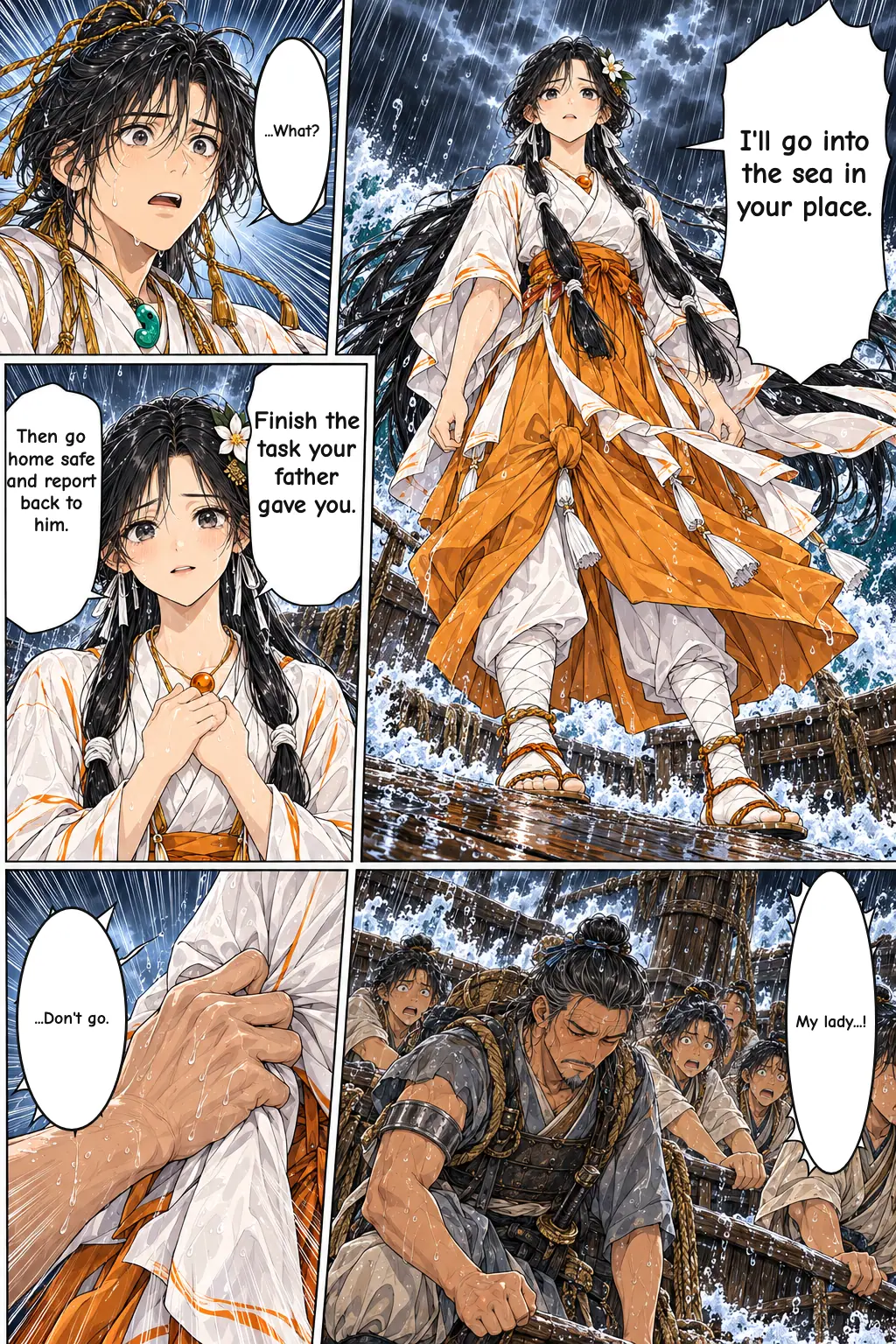
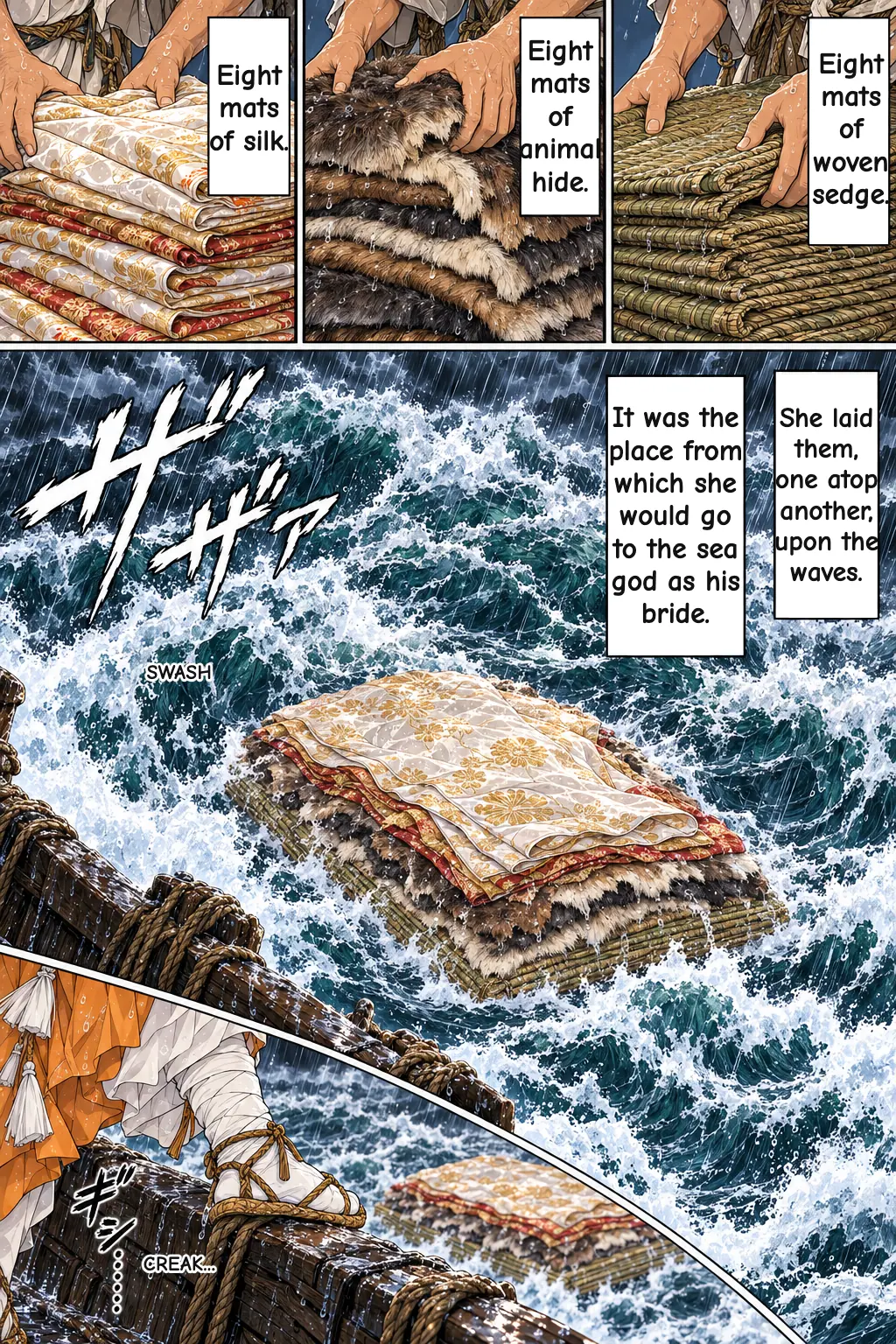
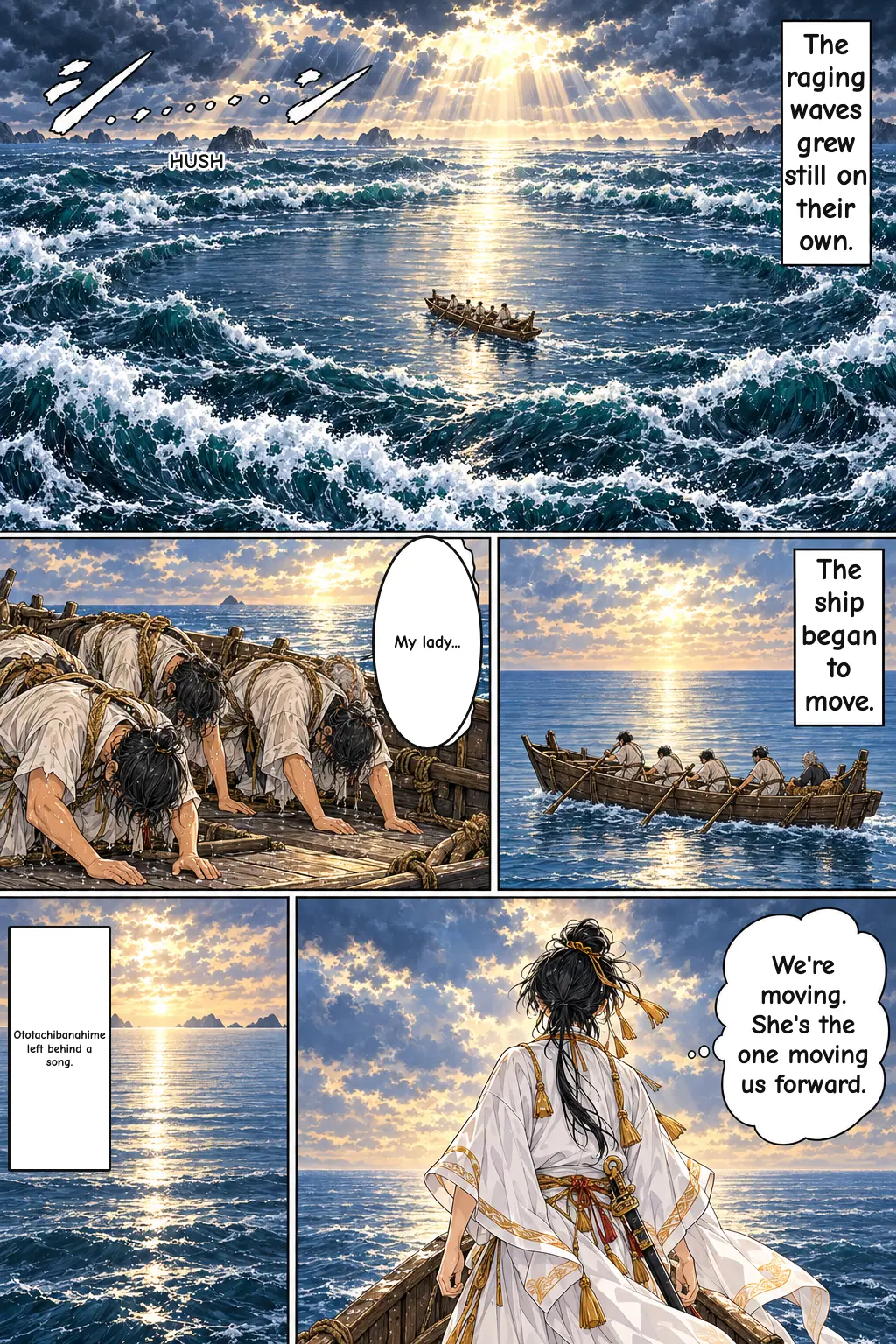
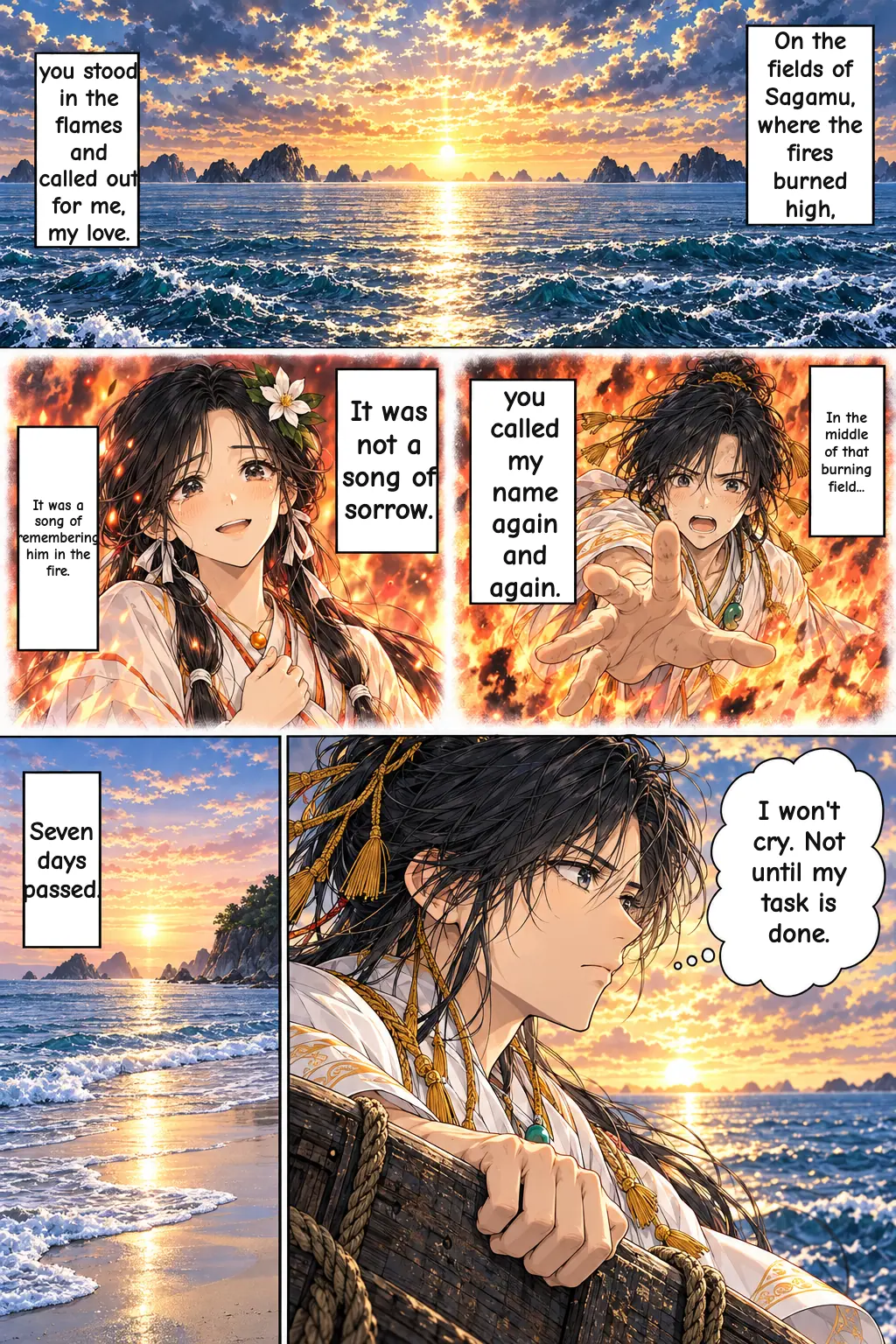
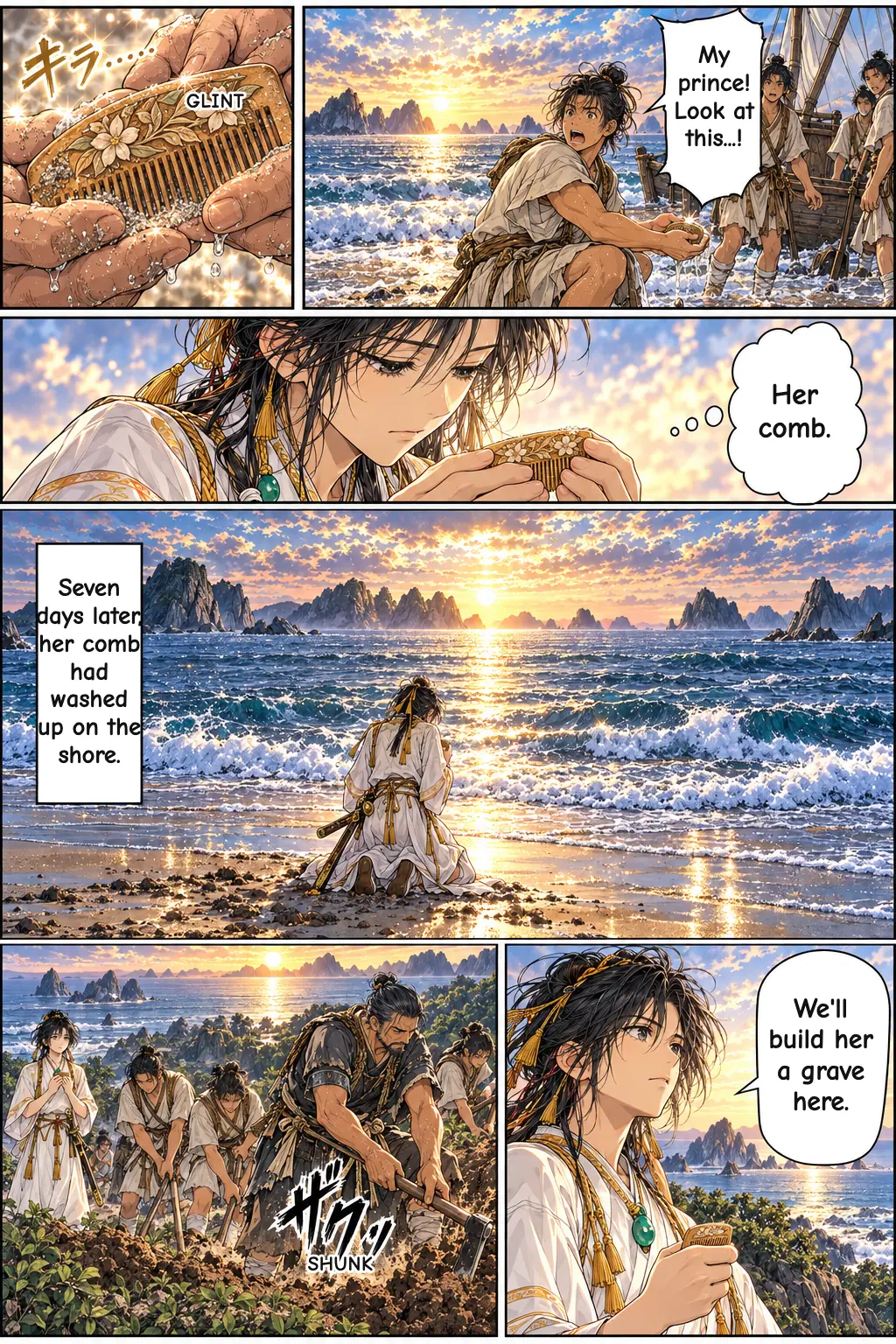
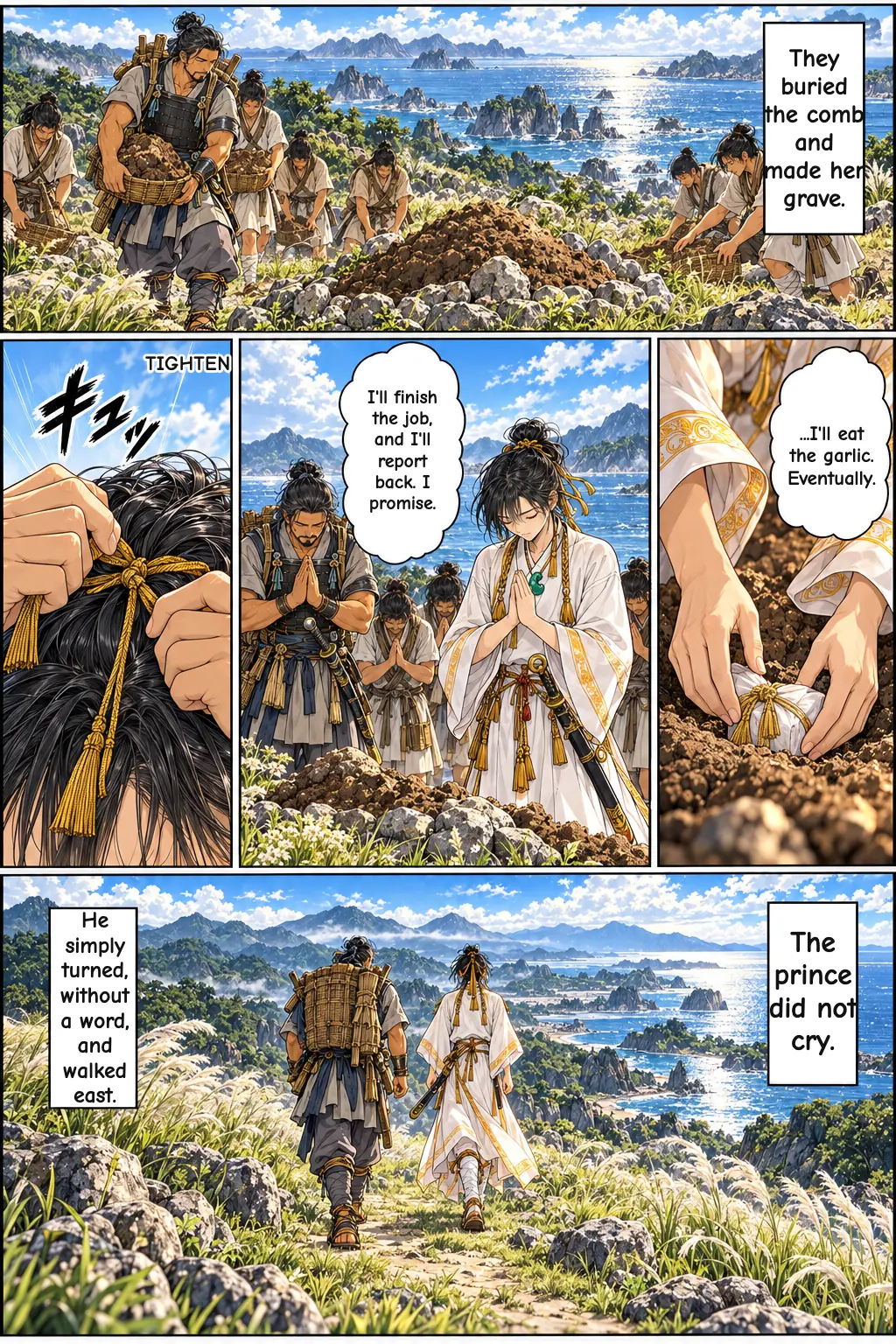
The god of the crossing raises the waves, and the prince's boat only spins in place. His wife, Ototachibana-hime, then speaks up: she will go into the sea in his place, and he must finish his mission and report back to the emperor. Mats of sedge, mats of hide, and mats of silk cloth are spread on the waves, eight layers of each, and she steps down onto them. As she goes, she sings a short poem remembering how her husband once stood in the middle of a burning field and asked whether she was safe. The rough waves calm by themselves, and the boat is able to move on. Seven days later, her comb washes up on the shore. It is gathered up and placed in a tomb built for her; the Kojiki does not say where.
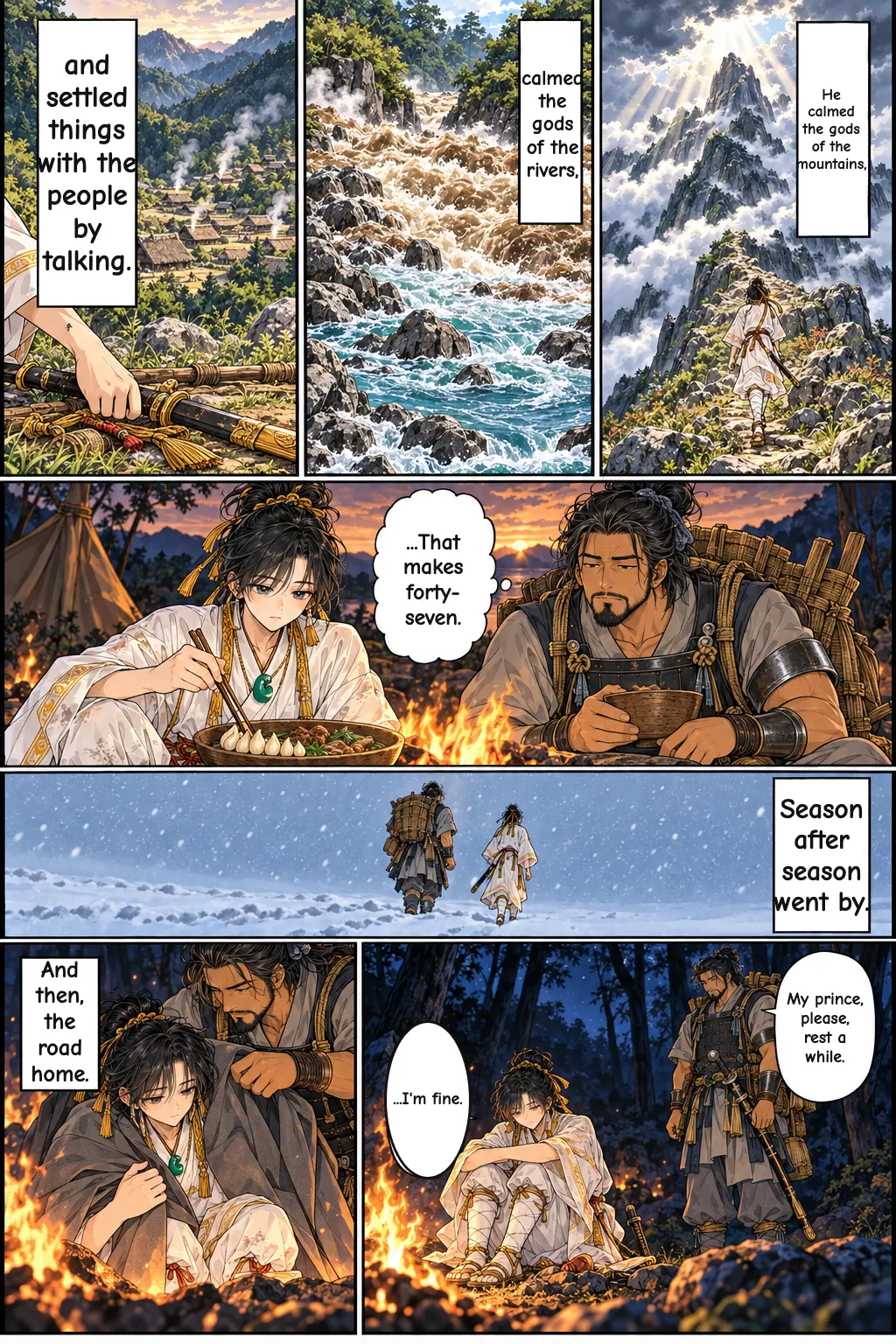
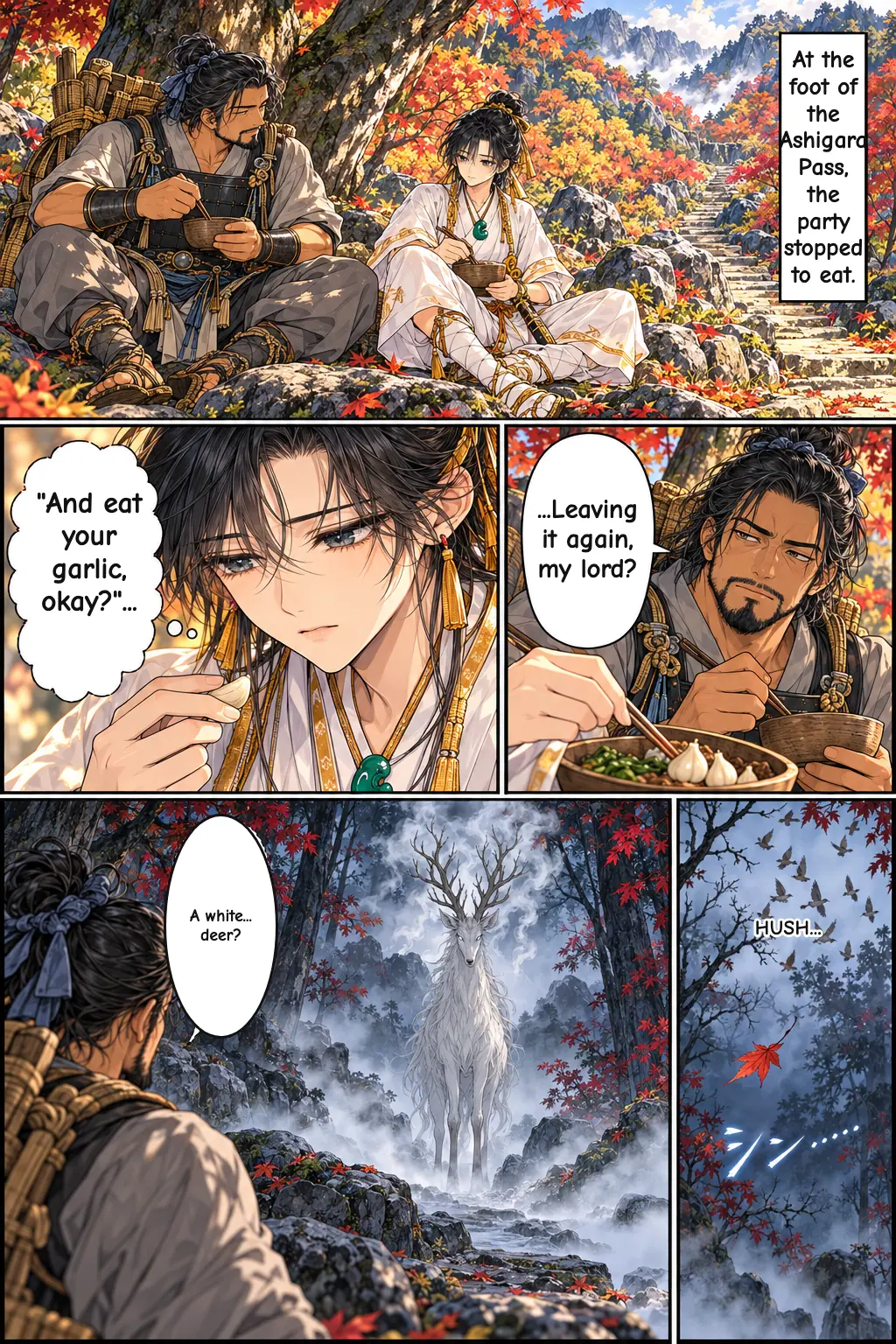
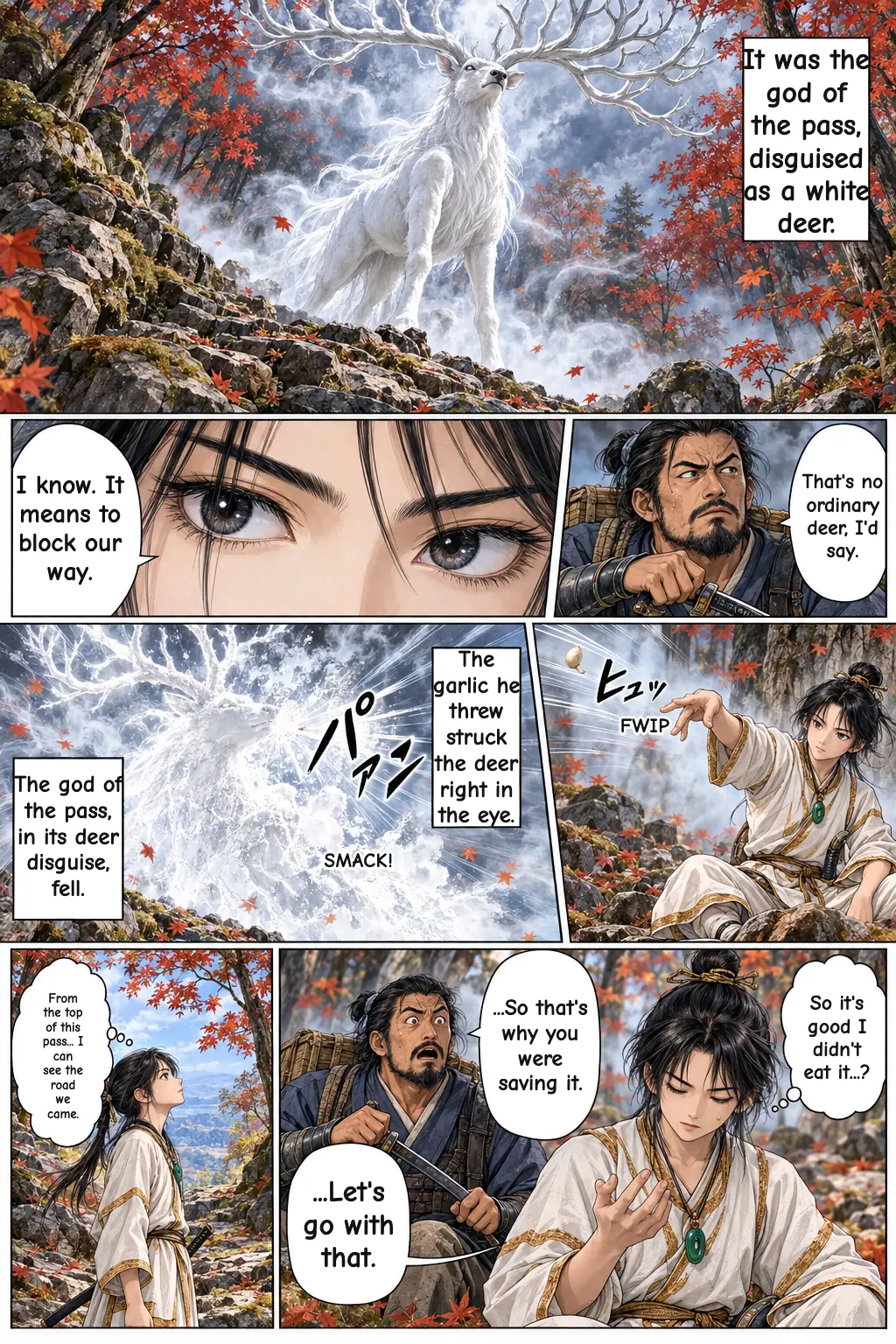
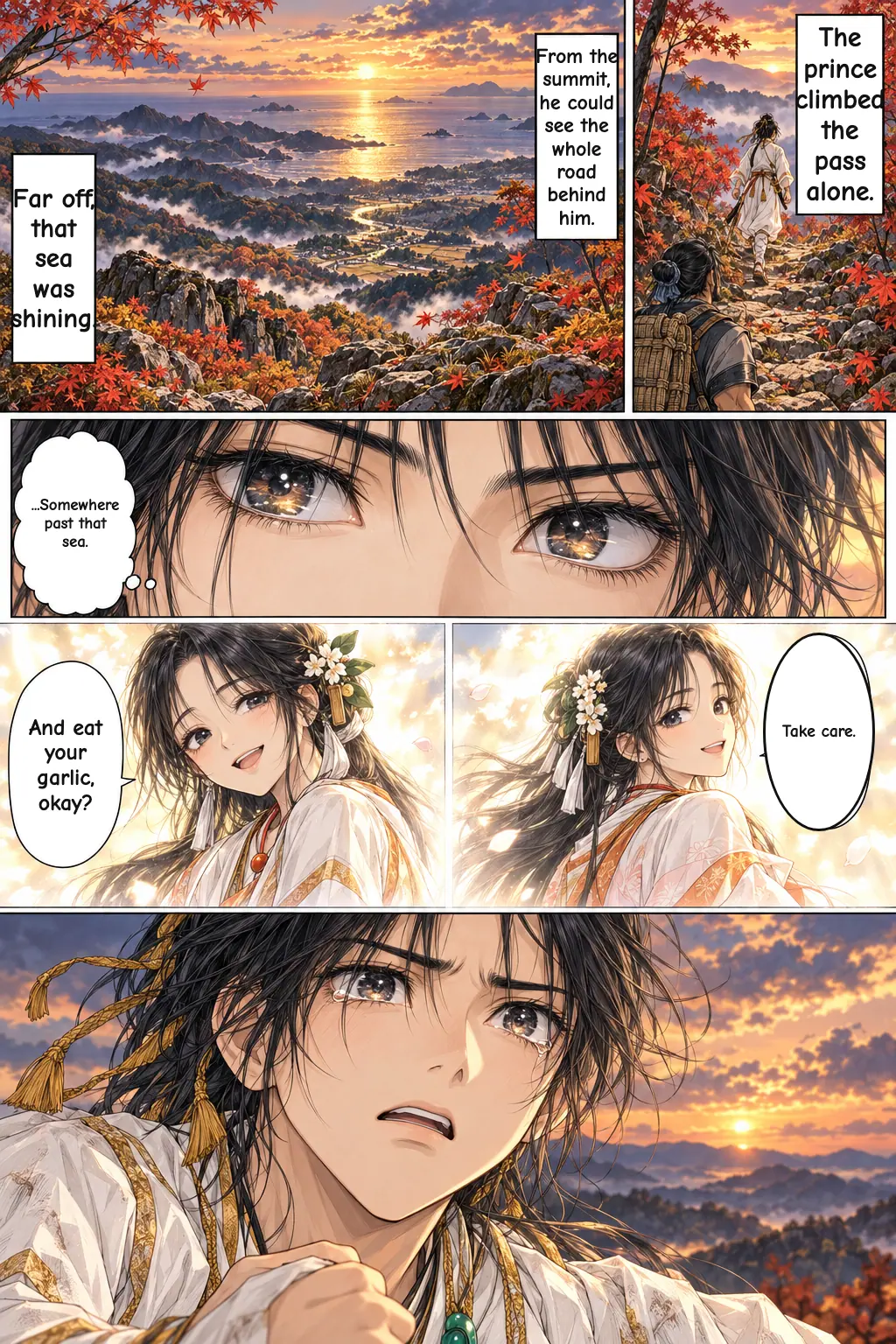
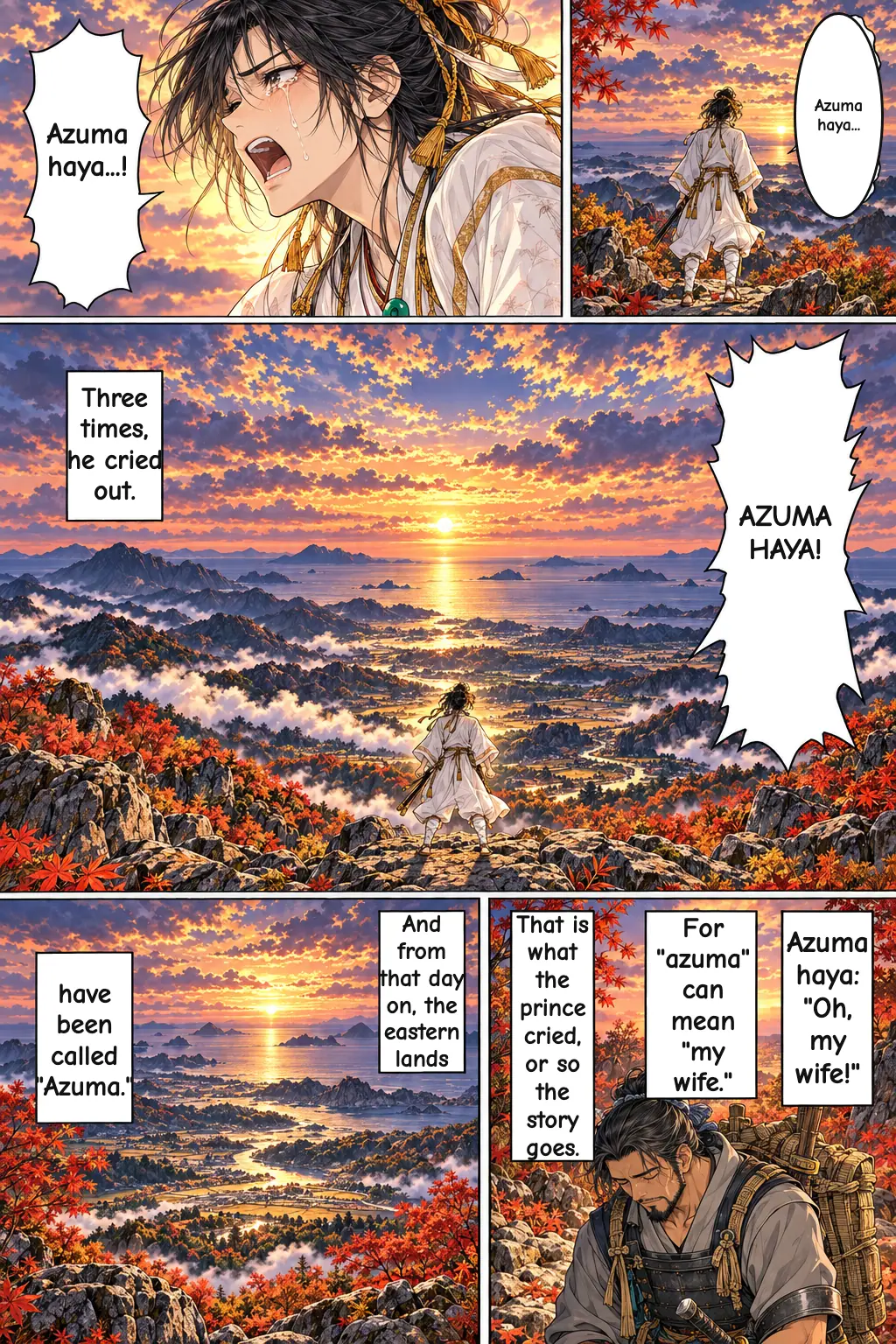
The text then sums up the rest of the campaign in a single sentence: Yamato Takeru subdues the fierce Emishi people of the east and calms the wild gods of the mountains and rivers. On the way home, while he is eating at the foot of the Ashigara slope, the god of the slope appears as a white deer. The prince throws the leftover end of a wild garlic stalk (hiru), hits the deer in the eye, and kills it. He then climbs the slope, sighs three times, and says, "Azuma haya!" Because of this, the Kojiki says, the eastern lands came to be called Azuma.
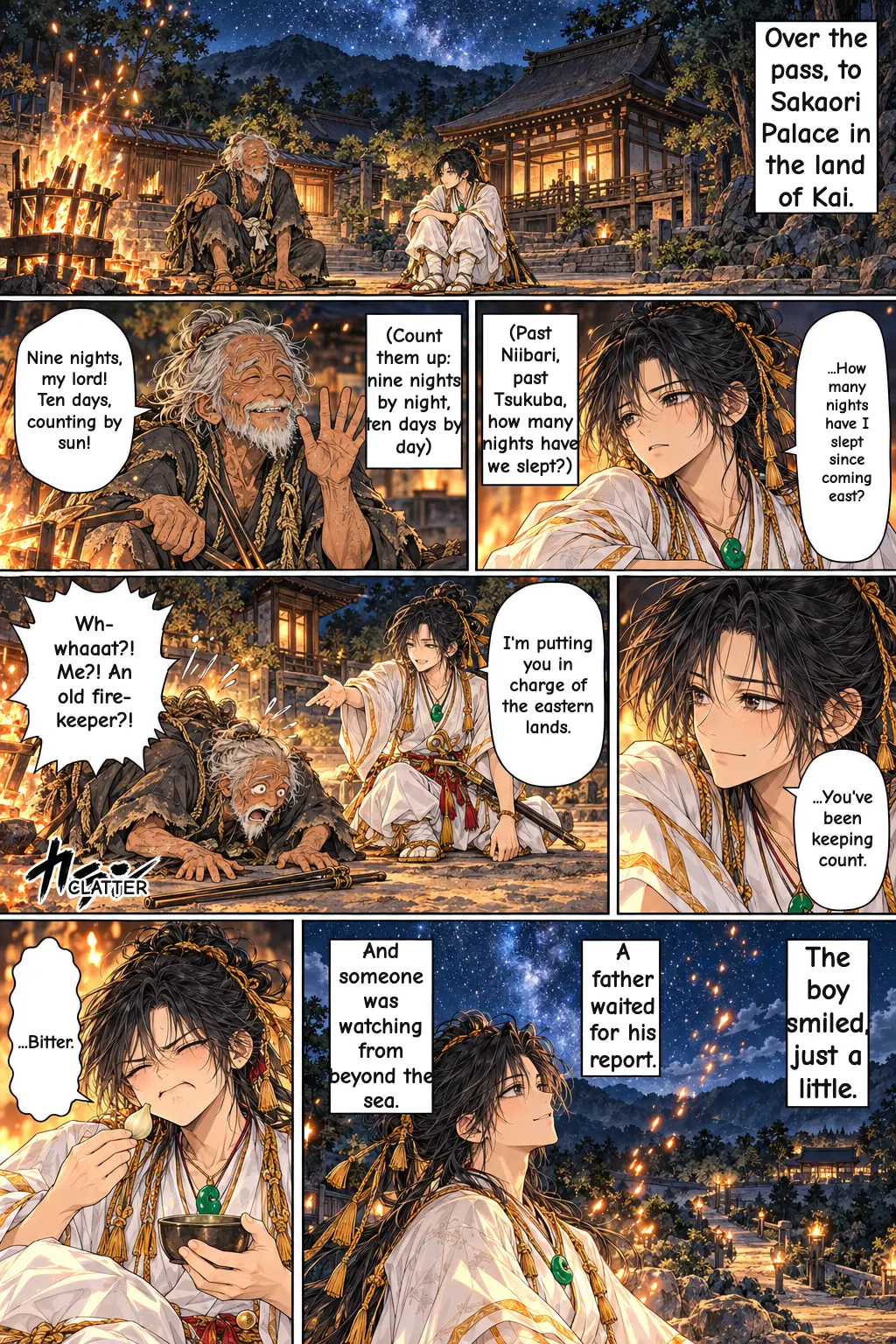
Crossing into Kai province, he stays at the Sakaori Palace and sings a question: "Since we passed Niihari and Tsukuba, how many nights have we slept?" No one answers except an old man tending the night fires, who replies in verse: "Counting the days together, it comes to nine nights, and ten days." Pleased, the prince praises him and makes him governor of the eastern lands.
Main Characters
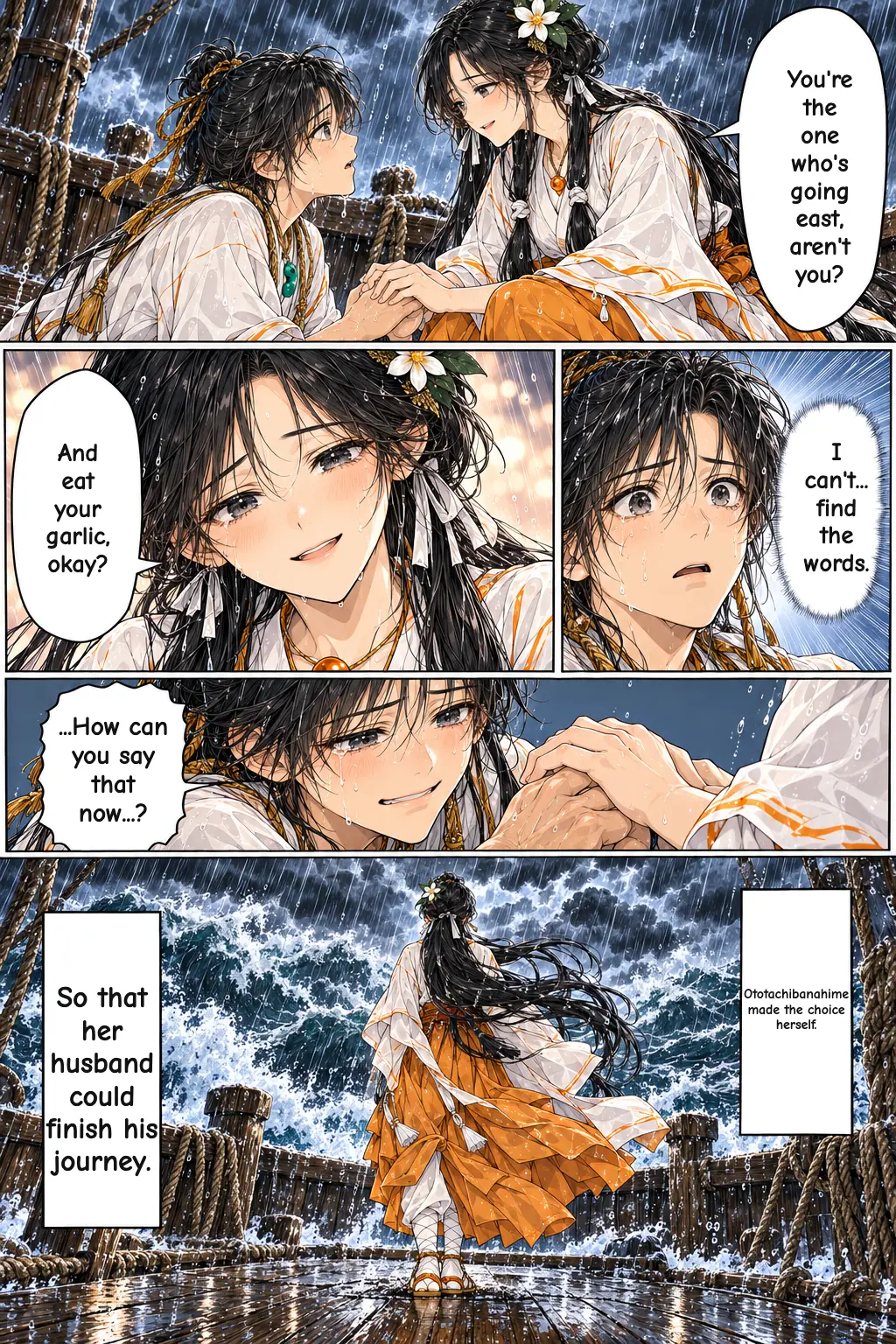
Yamato Takeru (originally named Ousu) is the hero: a prince sent far from home by his father. In this passage the Kojiki tells us what he does but says almost nothing about what he feels at the moment his wife leaves him. Ototachibana-hime appears here simply as "his consort"; her family background is recorded elsewhere in the chapter. She makes the choice herself and gives her husband his instructions, which makes her one of the most active women in this part of the Kojiki.
The god of the crossing and the god of Ashigara are never shown speaking, and the crossing god is never described at all; we only see the waves. The old fire-keeper has no name, but his quick, clever reply earns him an important post.
What This Myth Tells Us: Culture and Background
The sea scene reflects an old belief that dangerous waters were ruled by gods who could be calmed by an offering. The layered mats may show how seriously such a rite was imagined: these were valuable goods, and eight was a number of fullness in early Japanese texts. Scholars read the scene in different ways, as a sacrificial rite, as a tale of loyalty, or as a love story, and the Kojiki itself does not explain.
"Azuma haya" is the most famous line in the episode. A widely held reading is that it means "Ah, my wife!", with azuma heard as a tsuma, "my wife." But the original only says that he sighed three times; it does not say whom he was thinking of. The story is also a place-name origin tale, explaining why eastern Japan was called Azuma.
The exchange at Sakaori is remembered for another reason. Because one person begins a poem and another completes it, later Japanese poets came to treat it as the legendary beginning of renga, or linked verse. That idea comes from later poetic tradition, not from the Kojiki itself. Local traditions likewise connect shrines around Tokyo Bay with Ototachibana-hime and her comb, but the Kojiki names no such places.
What the Manga Changes
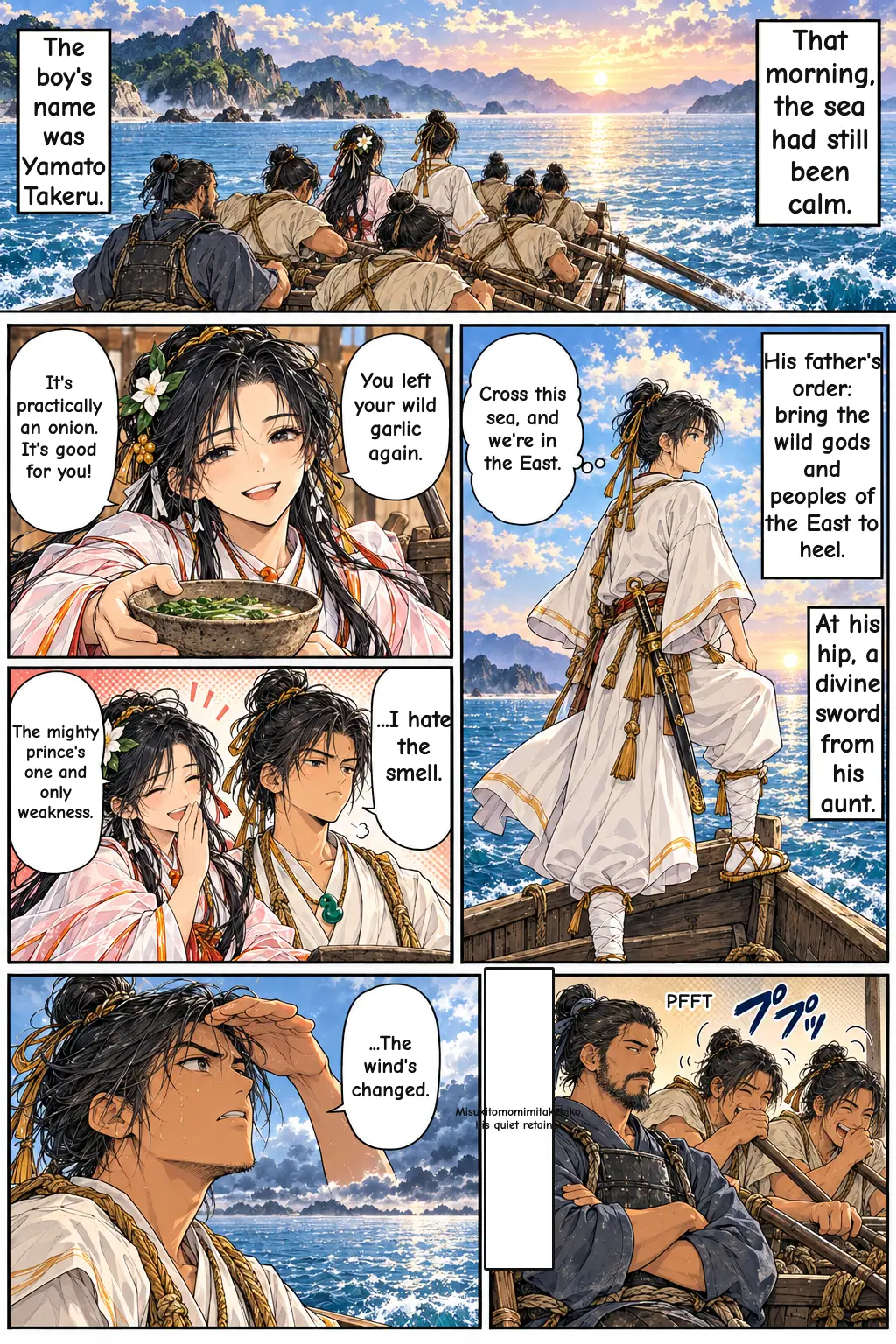
The core events in Episode 11 follow the Kojiki: the storm, her offer, the eight-layered mats, the poem, the calm sea, the comb, the white deer, the three cries, and the old man's answer. Some parts are our own invention. The short conversation between husband and wife before she steps onto the waves is ours, because the Kojiki records only her words and never his reply. The look of the sea god, her clothing and age, the crew on the boat, and how the mats are laid out are also drawn freely.
The manga also fills in what the original skips: how the prince spends the seven days, who finds the comb, and the eastern campaign, shown here as a brief montage. When Yamato Takeru cries out at Ashigara, the manga shows him remembering his wife. This follows the popular reading of "Azuma haya," not a statement in the text. All poem translations in the manga are new versions written for this series.
Where to Read It
If you want to see this story told in pictures, from the spinning boat on the Hashirimizu Sea to the lonely cry on the mountain pass, Episode 11 of KOJIKI Book II: The Age of Heroes is on this page. Every episode of the series is free to read, with no sign-up needed, so you can also go back to see how Yamato Takeru's journey began, or keep reading to find out where his road leads after Sakaori.
Characters in this episode
Yamato Takeru
A son of Emperor Keikō, sent to subdue the eastern lands, who loses his wife at sea and cries "Azuma haya" on the way home.
Ototachibana-hime
Yamato Takeru's consort, who steps onto mats laid on the waves so that the storm will calm and her husband can finish his mission.
The god of the Hashirimizu crossing
The unseen god of the strait, who raises the waves and spins the prince's boat until Ototachibana-hime enters the sea.
The god of the Ashigara slope
A mountain god who appears to the prince as a white deer and is struck down with a piece of wild garlic.
The old fire-keeper
A nameless old man at the Sakaori Palace who completes the prince's poem and is made governor of the eastern lands.
Emperor Keikō
Yamato Takeru's father, who does not appear in the scene but is the person the prince must report back to.
FAQ
Why did Ototachibana-hime jump into the sea?
In the Kojiki, the god of the Hashirimizu crossing raised waves that kept Yamato Takeru's boat from moving. She offered to enter the sea in his place so that he could finish his mission and report to the emperor. After she stepped onto the mats laid on the waves, the sea calmed.
What does "Azuma haya" mean?
The Kojiki says Yamato Takeru sighed three times on the Ashigara slope and said "Azuma haya," and that the eastern lands were named Azuma because of it. A widely held reading is "Ah, my wife!", referring to Ototachibana-hime, though the text itself does not say whom he meant.
Where is the Hashirimizu Sea?
It is usually identified with the strait at the mouth of Tokyo Bay, between the Miura Peninsula and the Bōsō Peninsula. The Kojiki itself gives only the name and does not describe the location in detail.
What happened to Ototachibana-hime's comb?
Seven days after she entered the sea, her comb washed up on the shore. It was taken and placed in a tomb made for her. The Kojiki does not say where the tomb was; links to particular shrines come from later local tradition.
Is the Sakaori poem exchange the origin of renga?
Later Japanese poets treated Yamato Takeru's question and the old fire-keeper's answer as the legendary start of renga, or linked verse. This is a later interpretation, not something the Kojiki claims.