Episode 1Japan Began as a Second TryKuniumi: The Birth of Japan
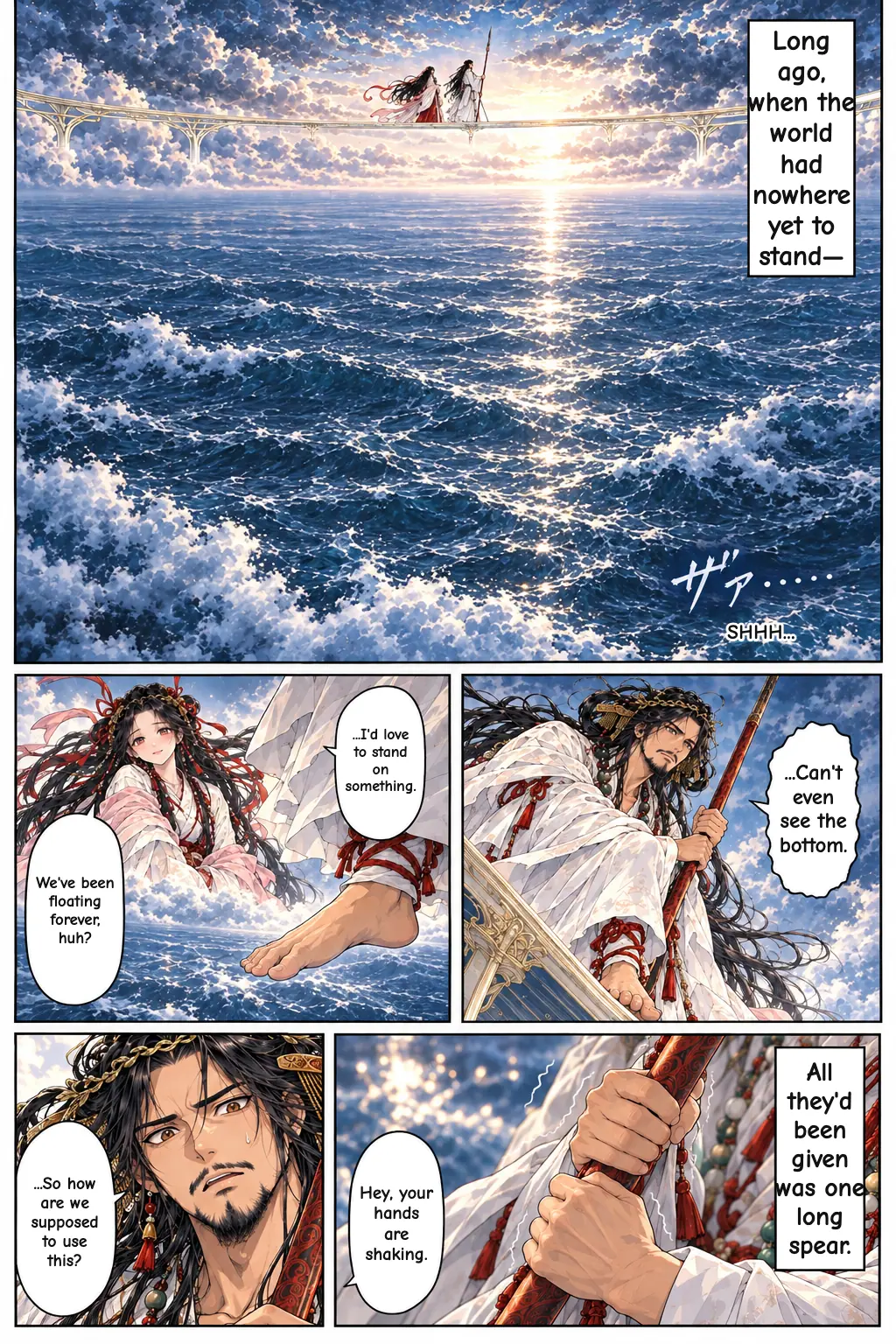
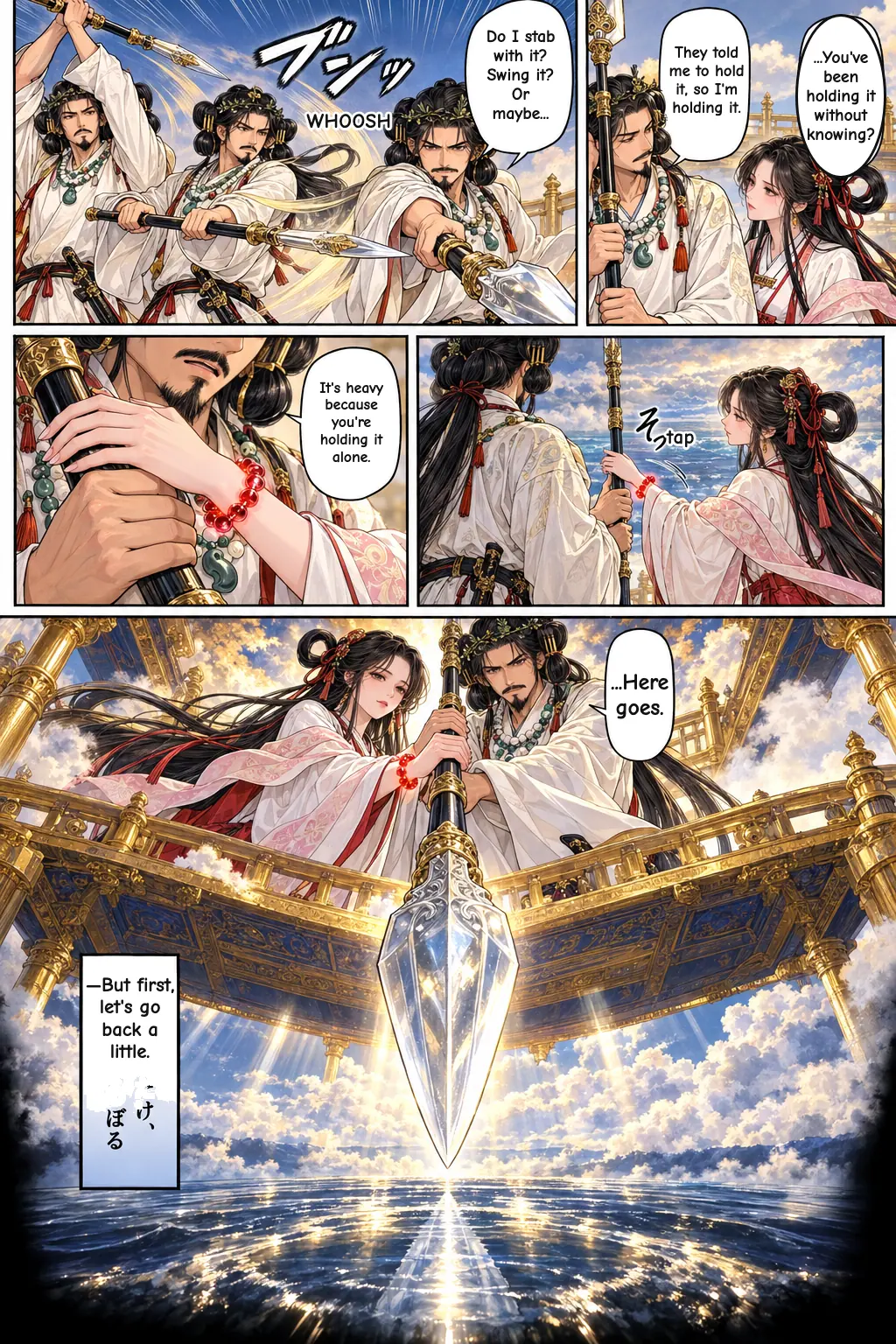
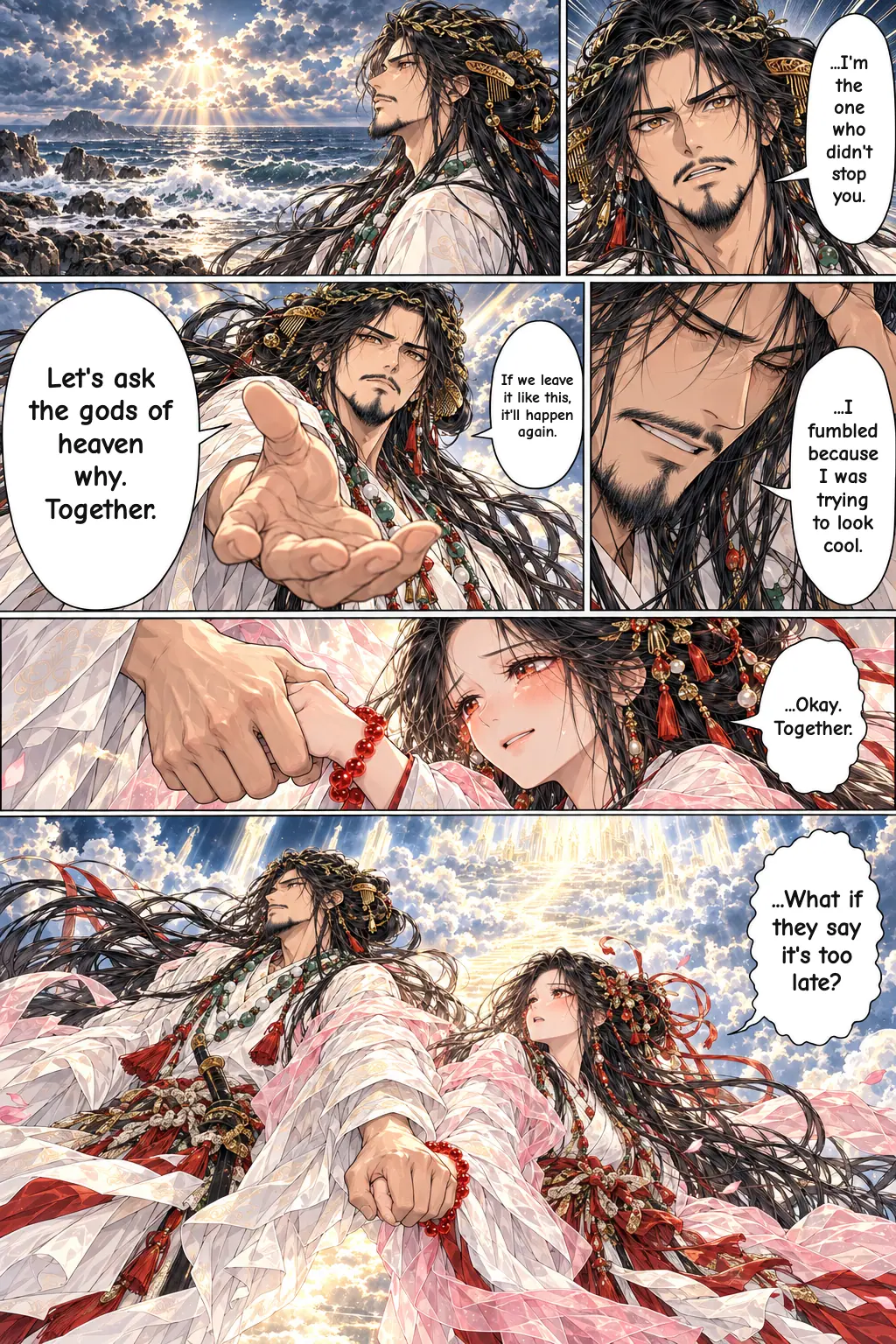
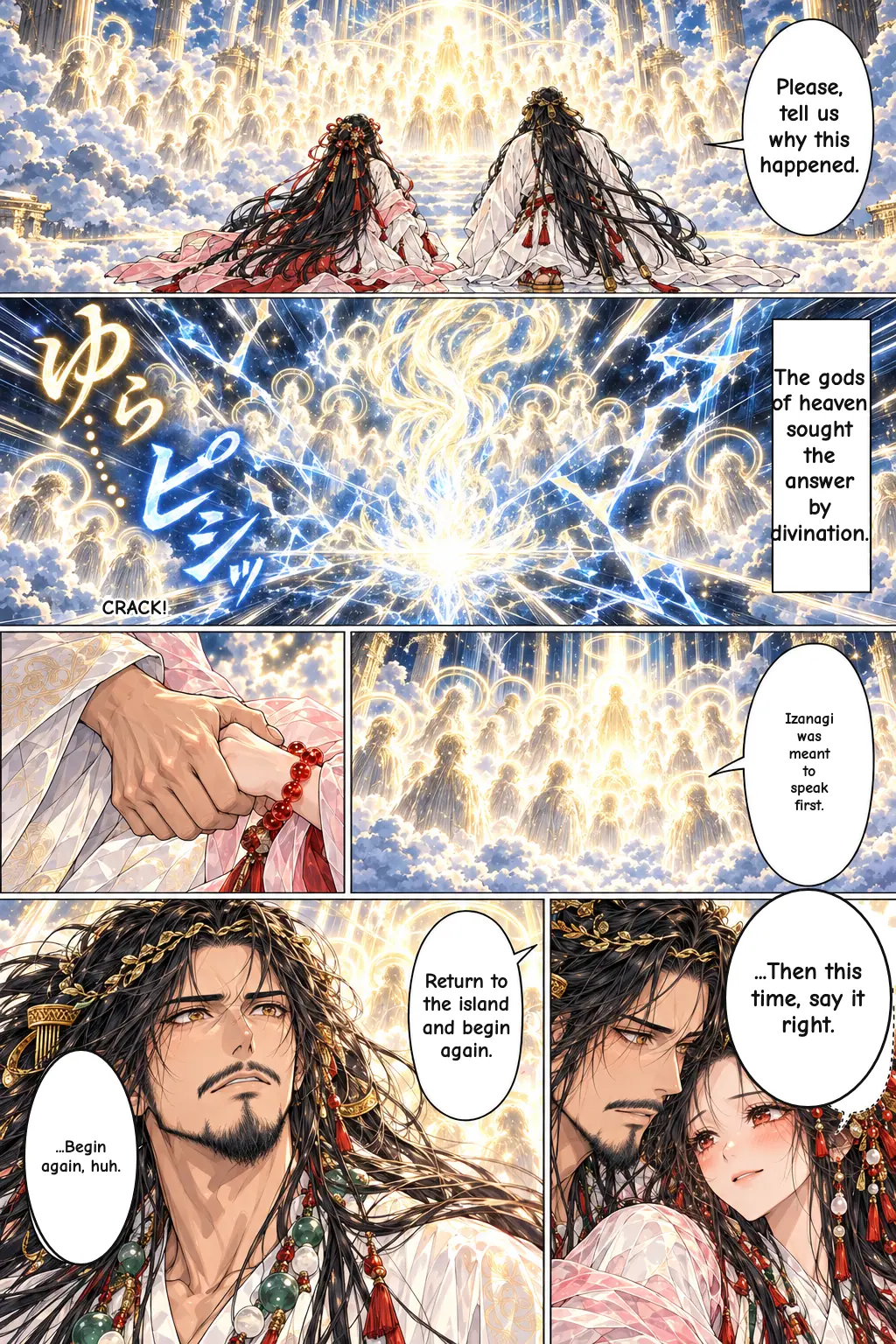
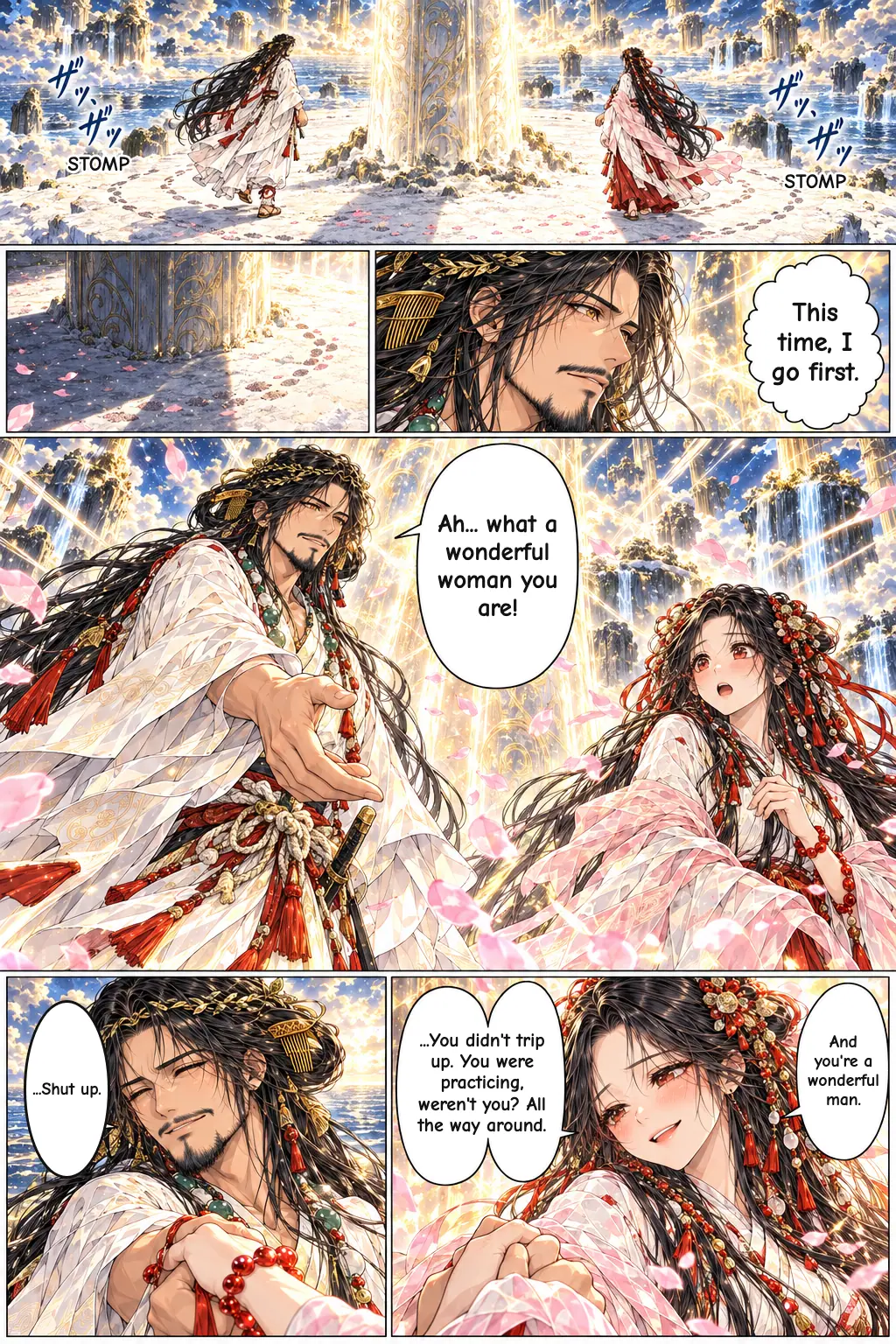
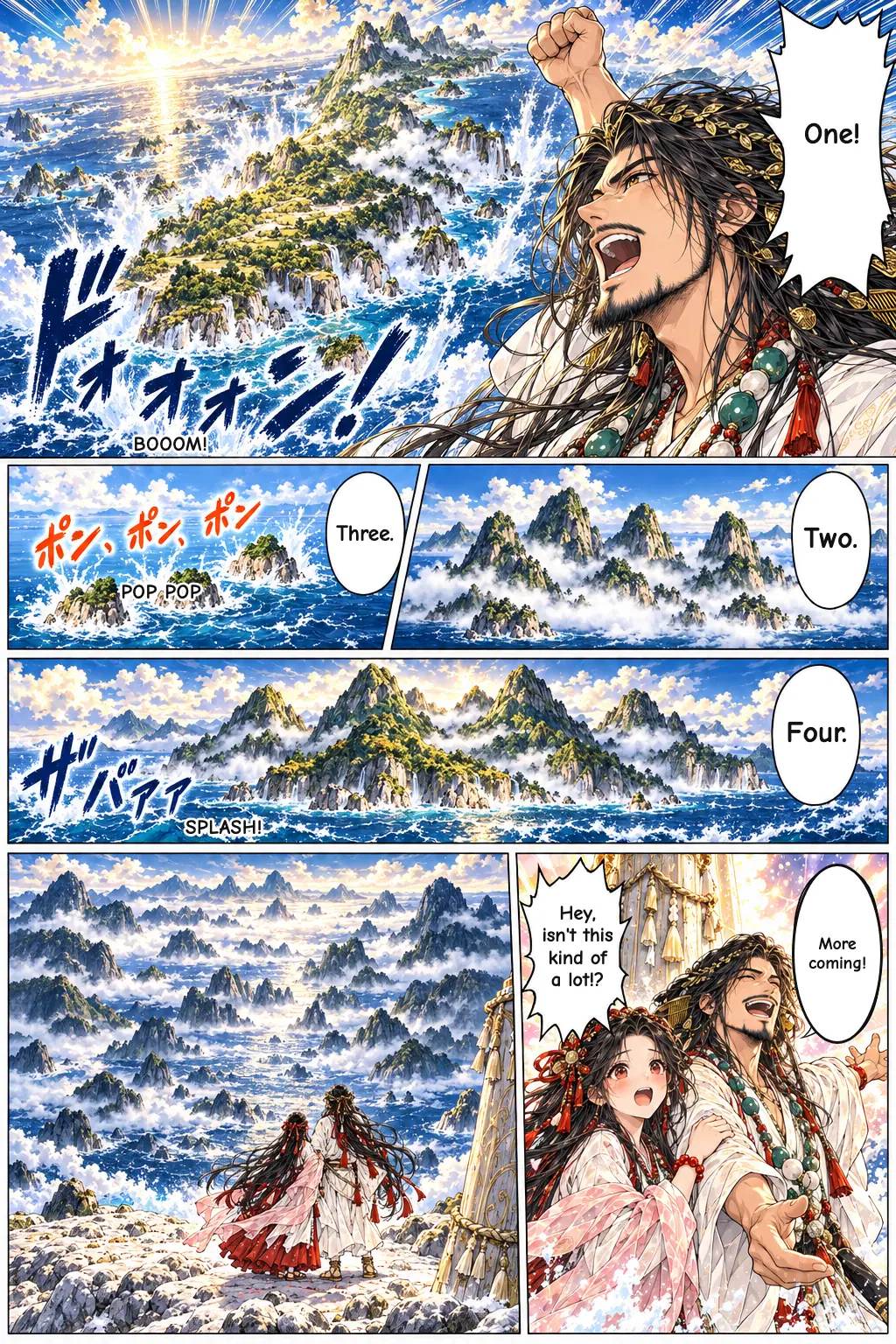
Floating above an endless sea with nothing but a single spear, Izanagi and Izanami create the first island and circle a pillar to meet. But Izanagi fails to keep his promise to speak first, and after giving up their first child, the two climb to heaven to ask what went wrong. Then they try again, and give birth to the eight islands that will one day become Japan.
Get new episodes in your feed. Follow us on:ThreadsBluesky
Story summary
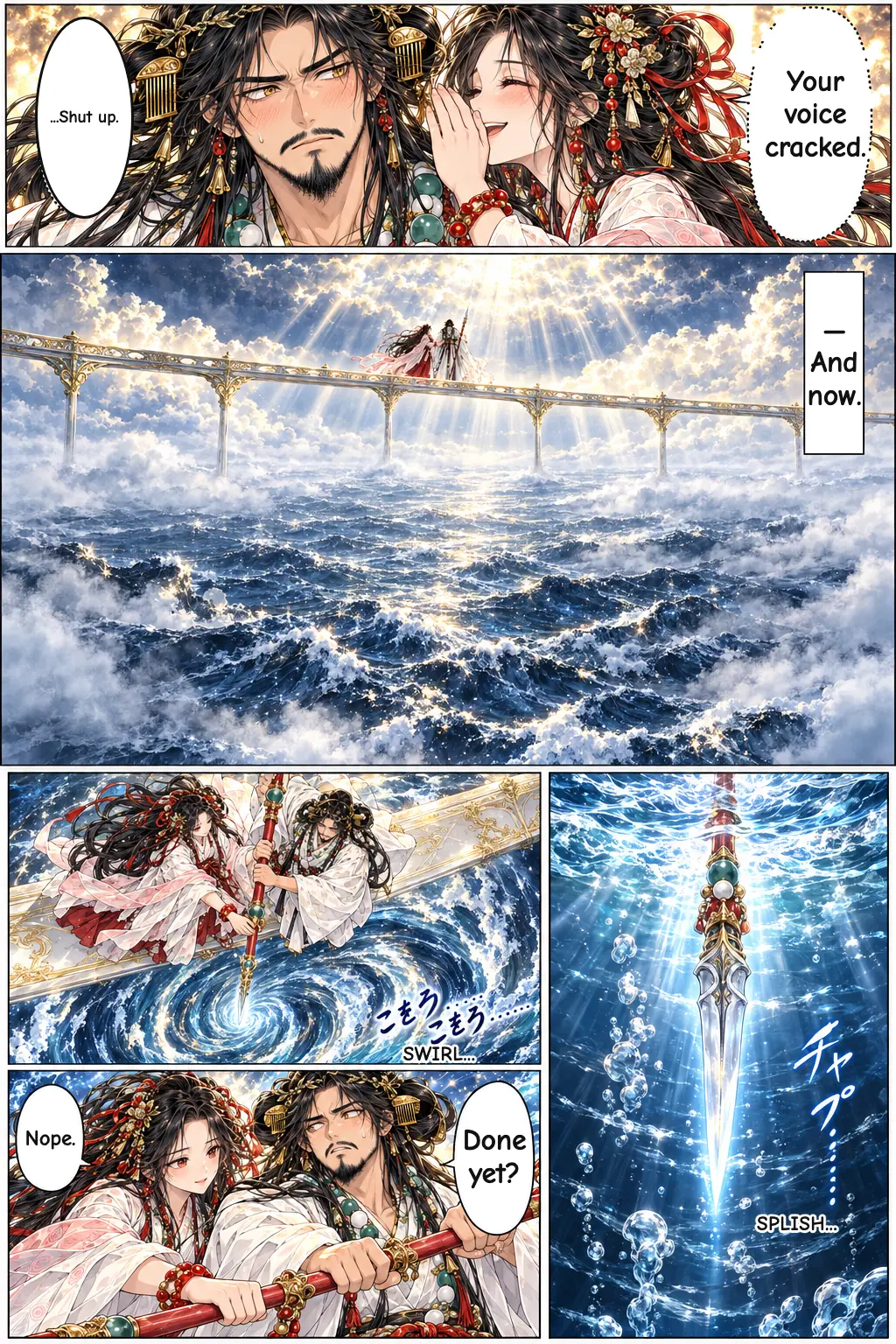
The Kojiki opens with a sky realm called Takamagahara, the High Plain of Heaven, where the first gods appear one after another. Below them, the world is still soft and shapeless, drifting like oil on water. The last pair of gods to appear are Izanagi, "he who invites," and Izanami, "she who invites." The older gods give them one task, which is to shape and fix this drifting land, and hand them a jeweled spear called Ame-no-Nuboko. Standing on the Floating Bridge of Heaven, the pair lower the spear into the sea below and stir the brine.
Izanagi and Izanami Story: The Kojiki Creation Myth of Japan Explained
In short: The story of Izanagi and Izanami, called Kuniumi ("the birth of the land"), is the creation myth of Japan told in the Kojiki, Japan's oldest surviving chronicle (712 CE). Two gods stir the ocean with a jeweled spear to make the first island and marry there. Their first attempt goes wrong, so they ask the heavenly gods for advice, try again, and give birth to the eight great islands that become Japan.
The Original Myth: A Summary of Kuniumi
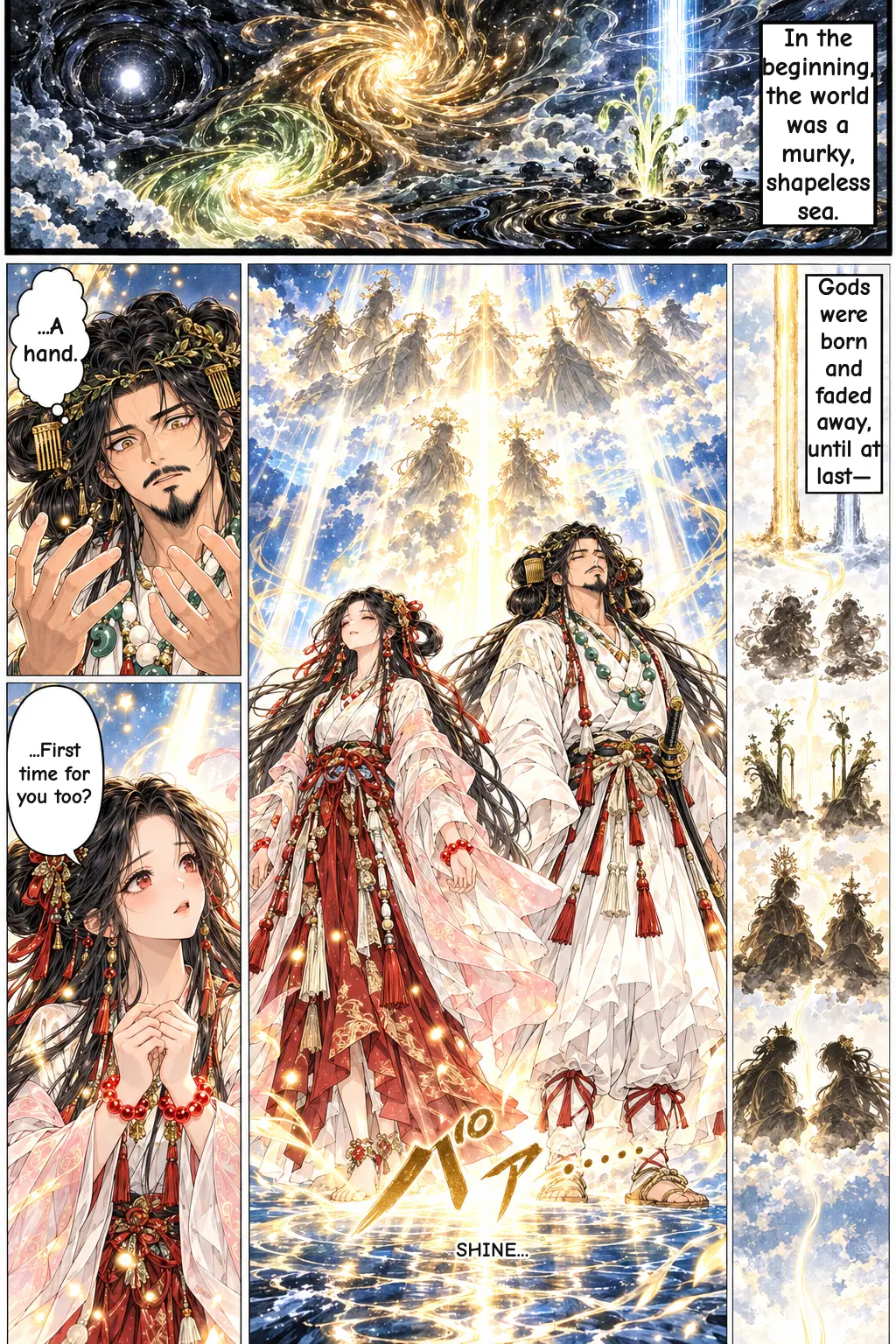
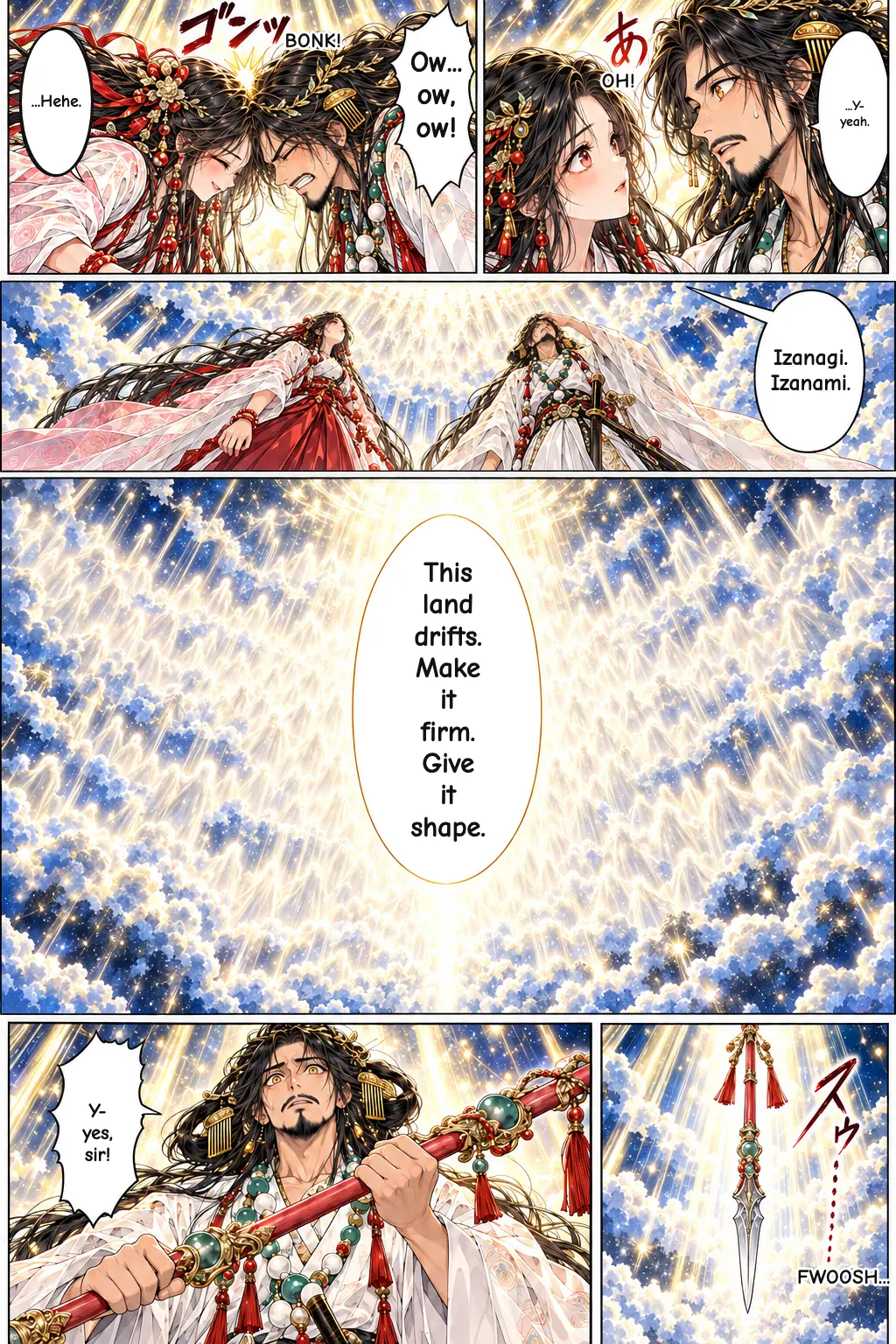
The Kojiki opens with a sky realm called Takamagahara, the High Plain of Heaven, where the first gods appear one after another. Below them, the world is still soft and shapeless, drifting like oil on water. The last pair of gods to appear are Izanagi, "he who invites," and Izanami, "she who invites." The older gods give them one task, which is to shape and fix this drifting land, and hand them a jeweled spear called Ame-no-Nuboko.
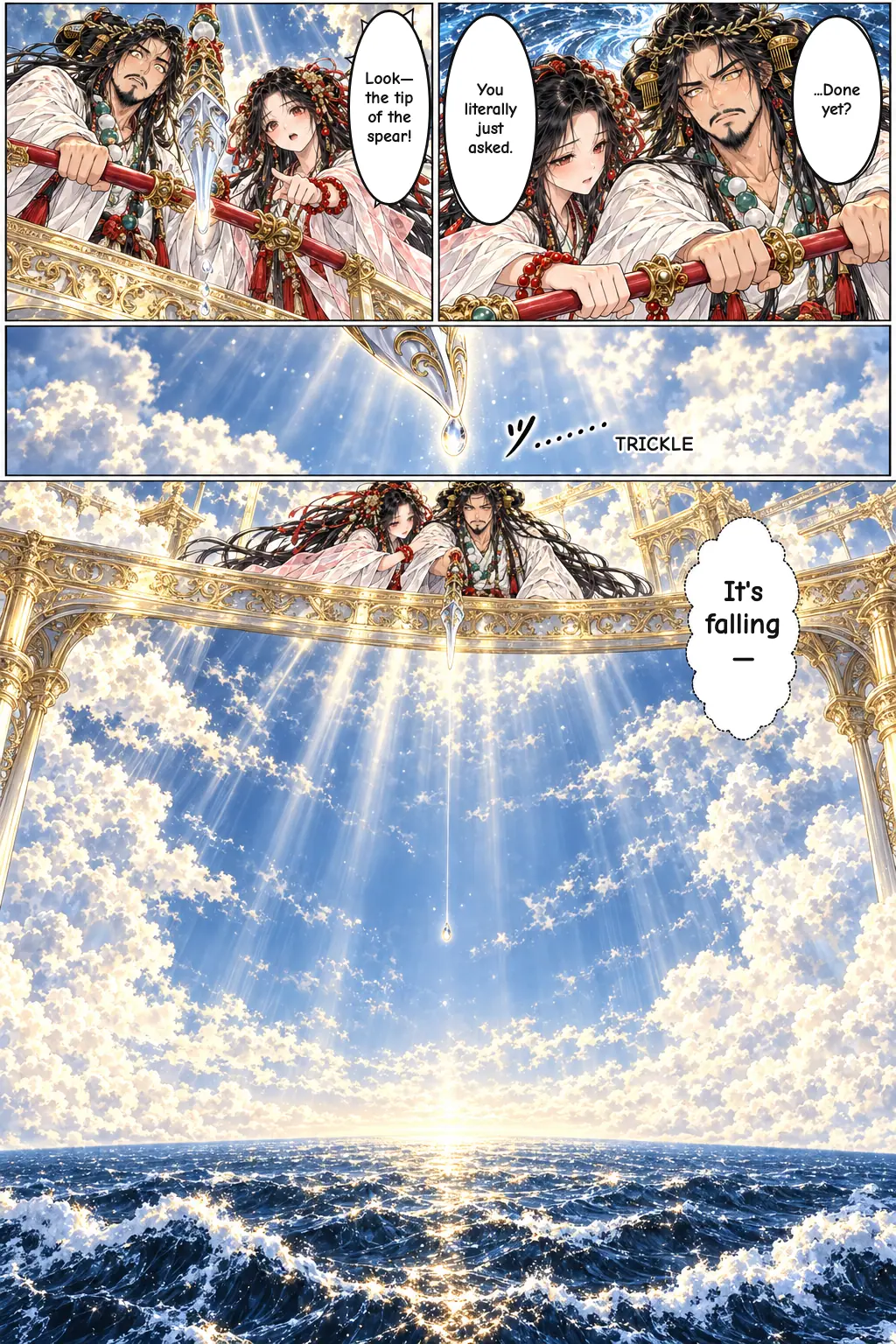
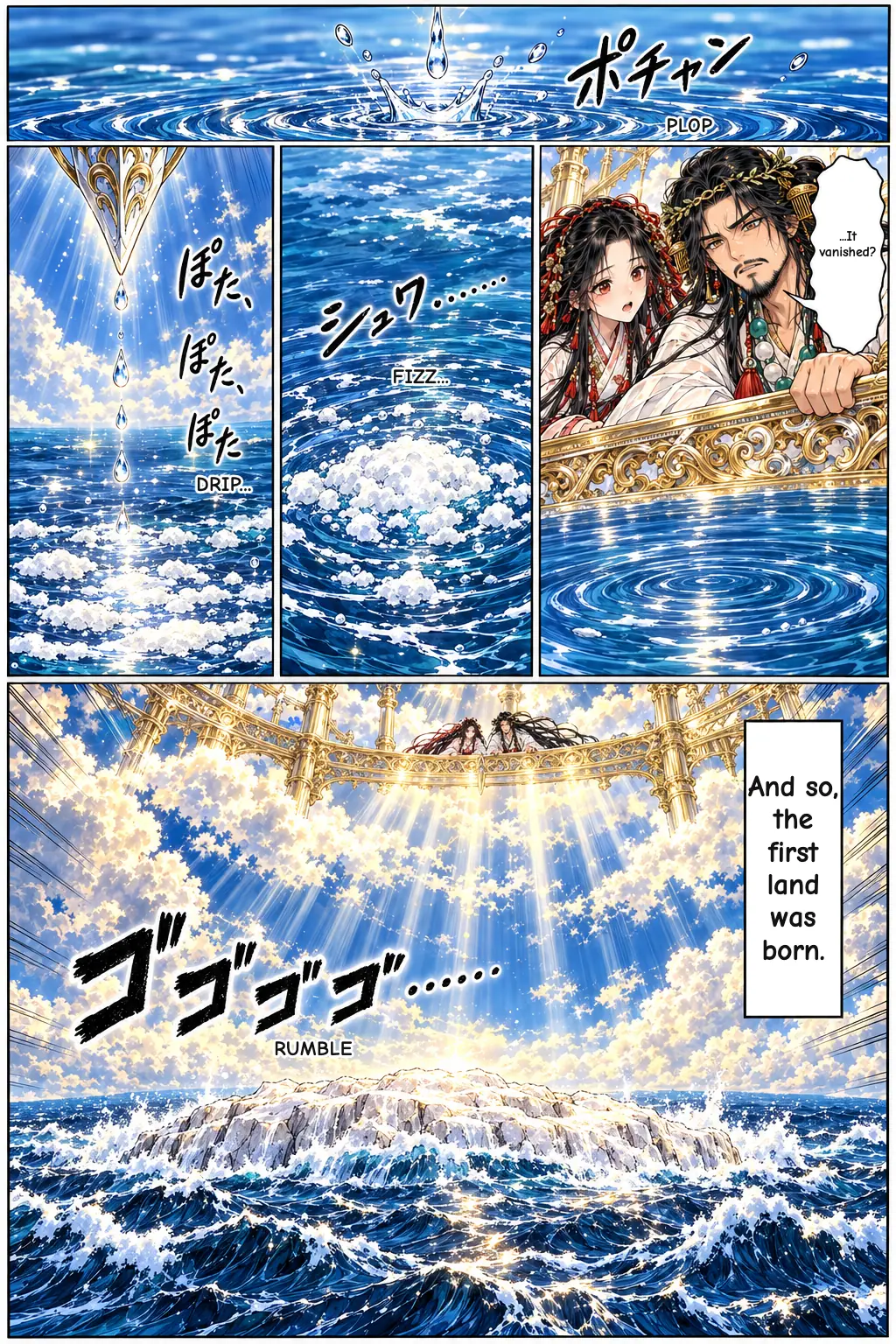
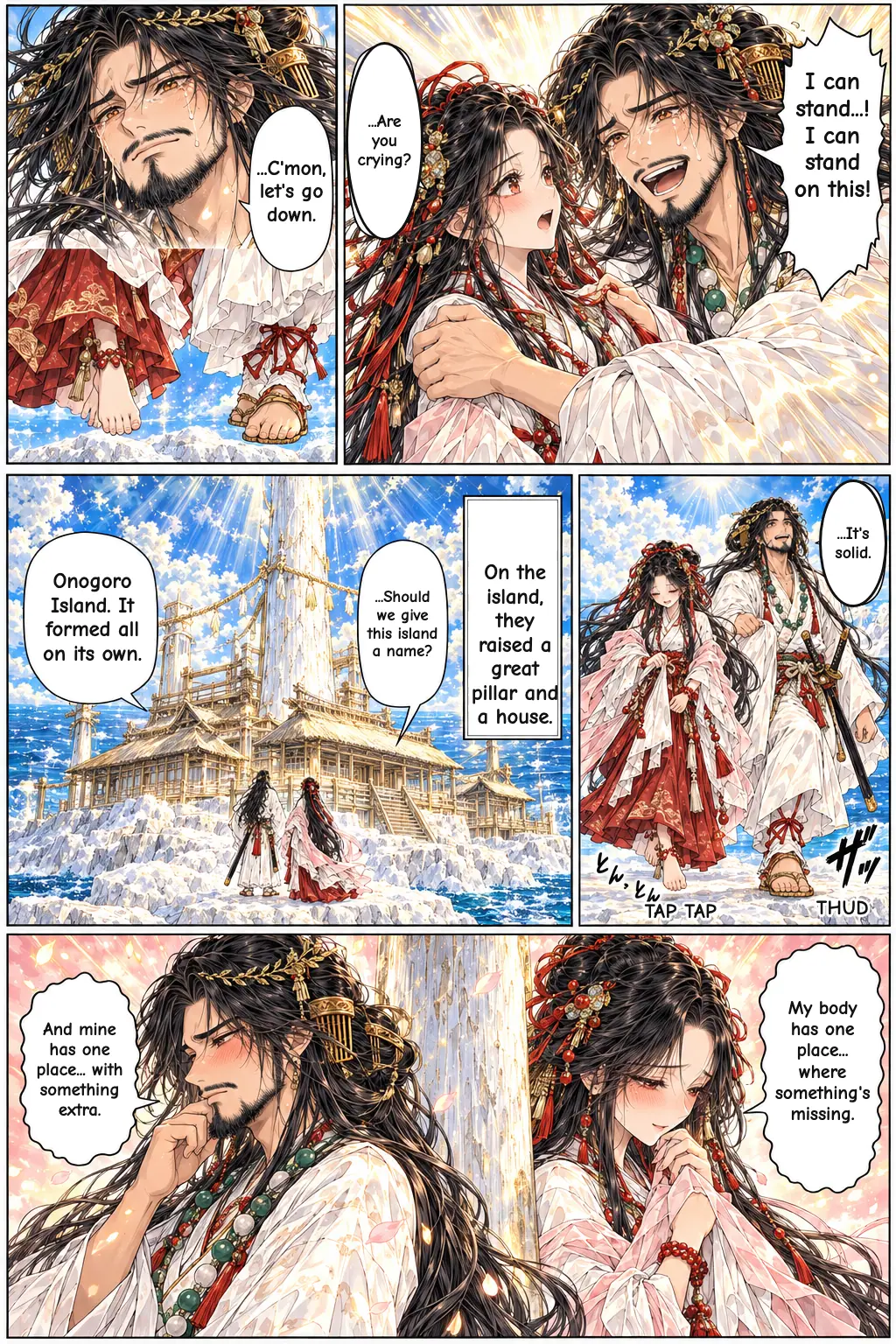
Standing on the Floating Bridge of Heaven, the pair lower the spear into the sea below and stir the brine. When they lift it out, salt water drips from its tip, piles up, and hardens into an island, Onogoro-shima, "the self-condensing island." They come down to it, raise a great pillar of heaven, and build a large hall.
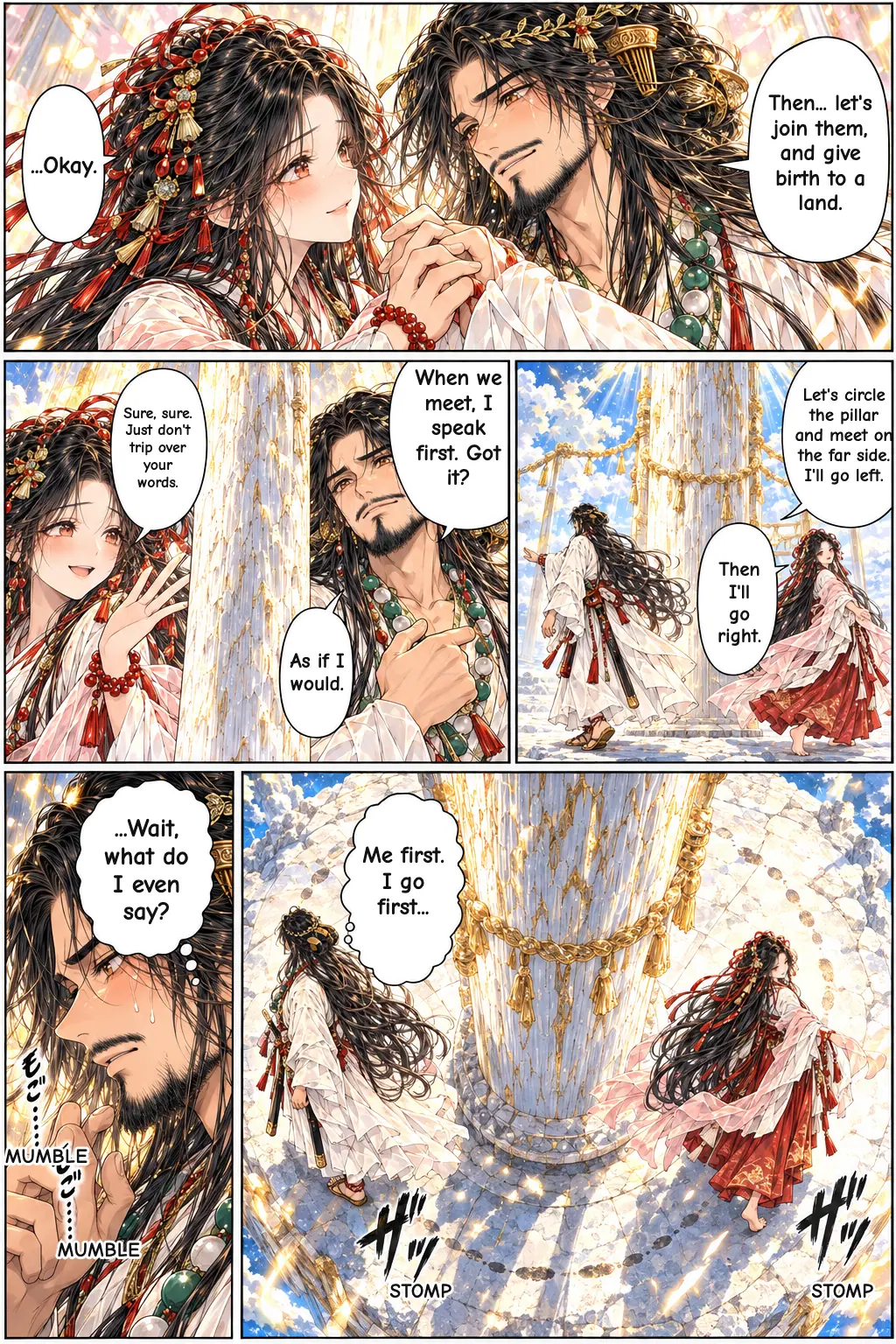
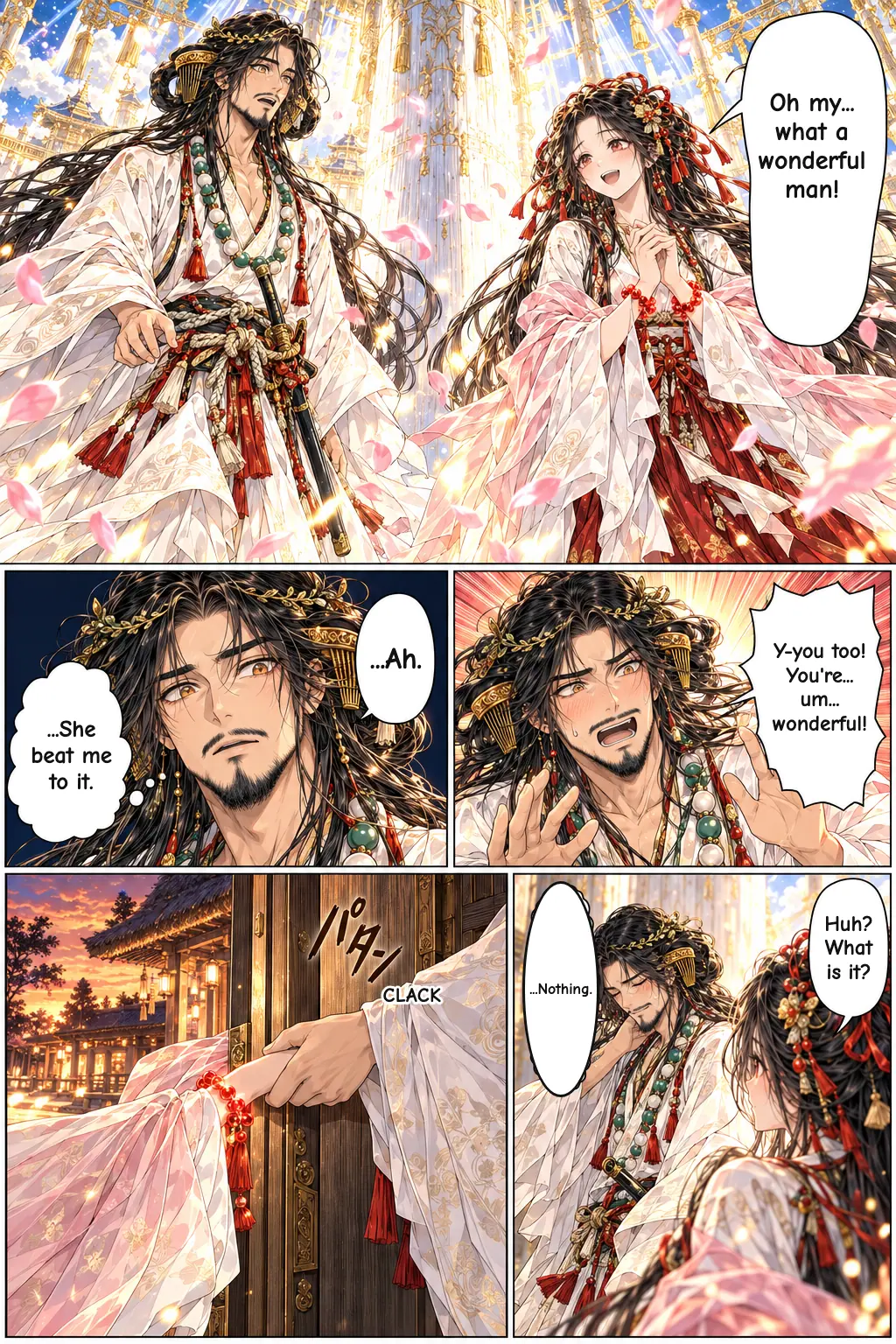
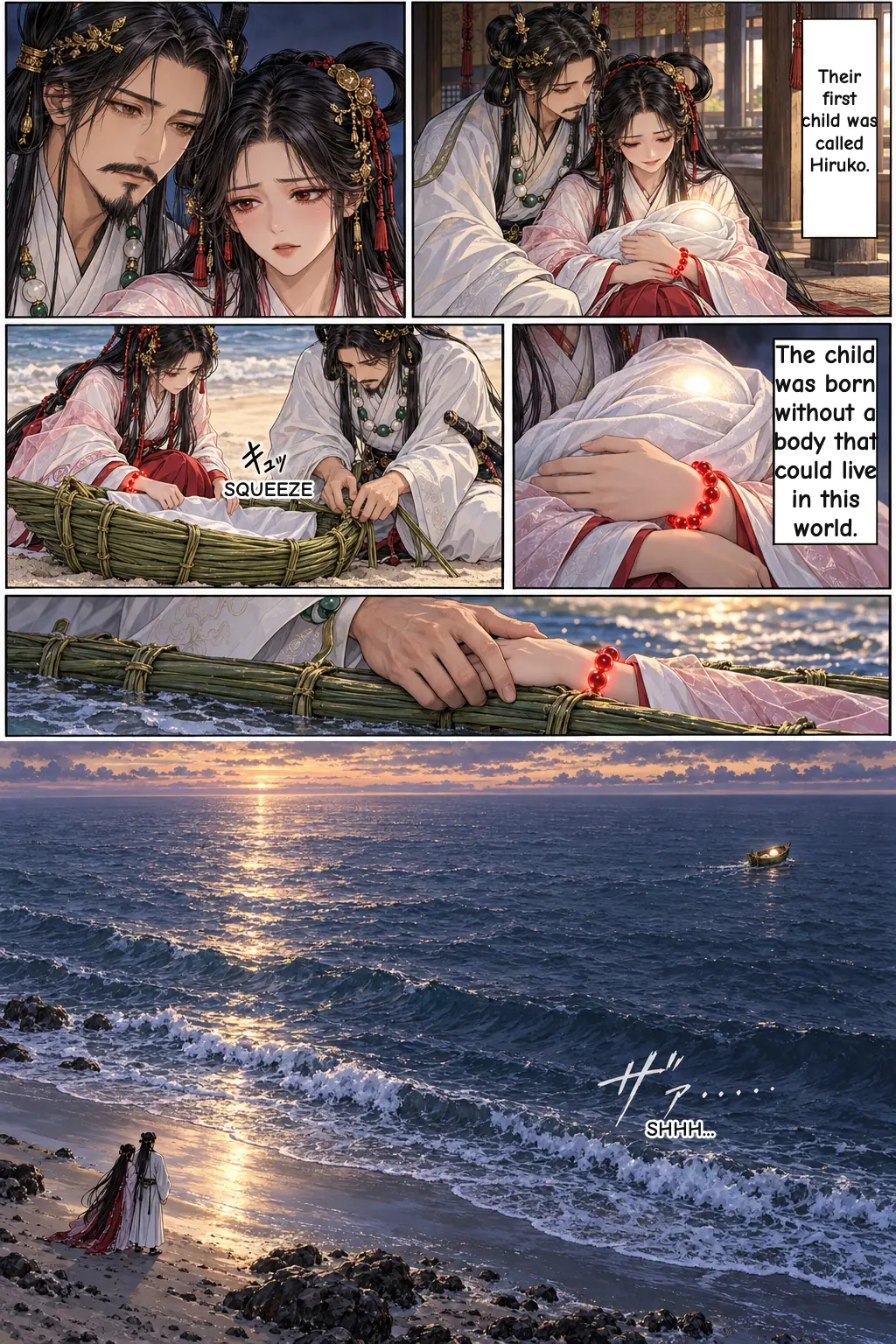
Izanagi then asks Izanami about her body, and they agree to join themselves together to give birth to lands. For their marriage they walk around the pillar in opposite directions, Izanagi to the left and Izanami to the right. When they meet, Izanami speaks first and praises him. Izanagi answers with praise of his own, but says it was not right for the woman to speak first. They marry anyway. Their first child, Hiruko, is born unformed, and they set it adrift in a boat of reeds. A second child, Awashima, is not counted among their children either.
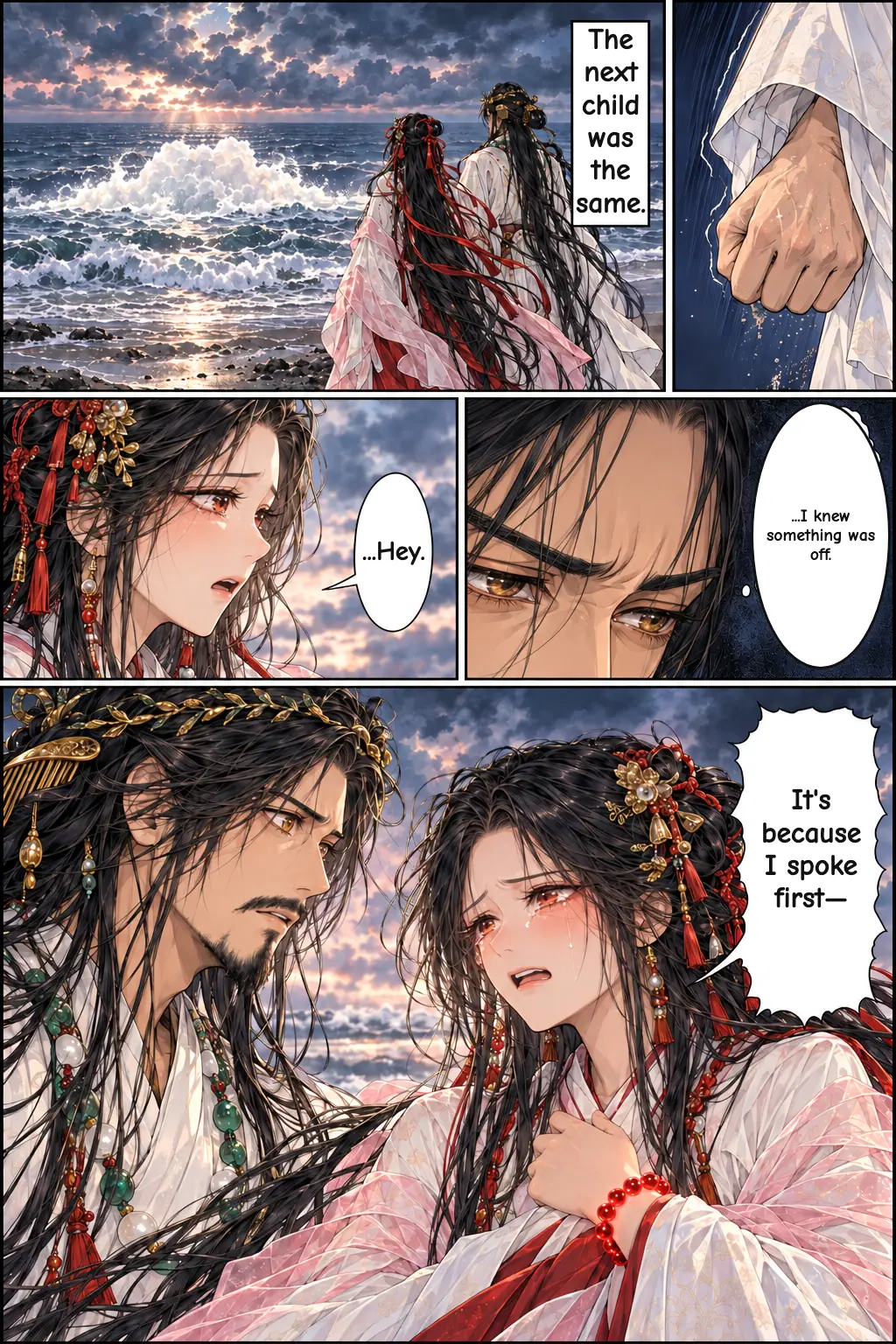
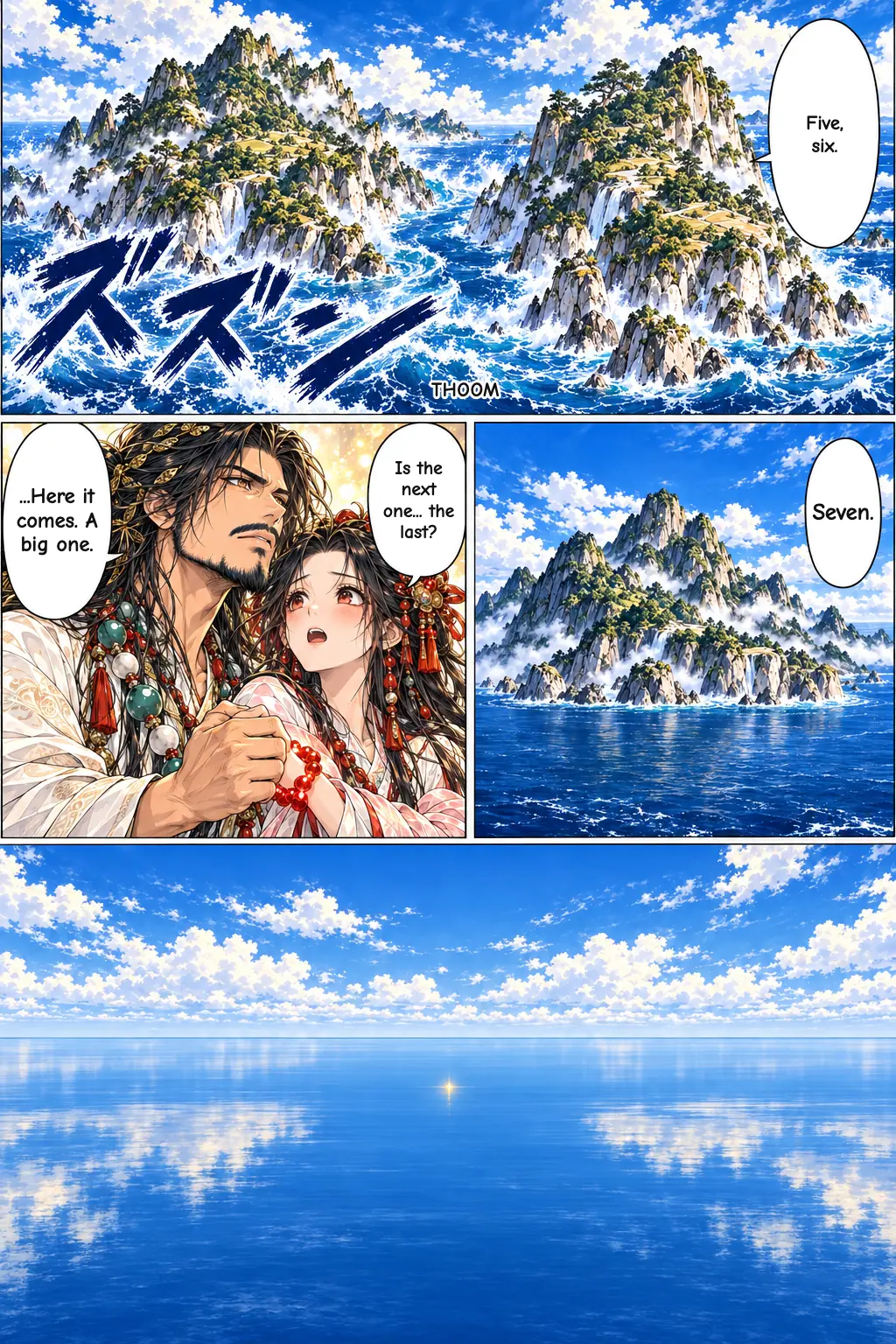
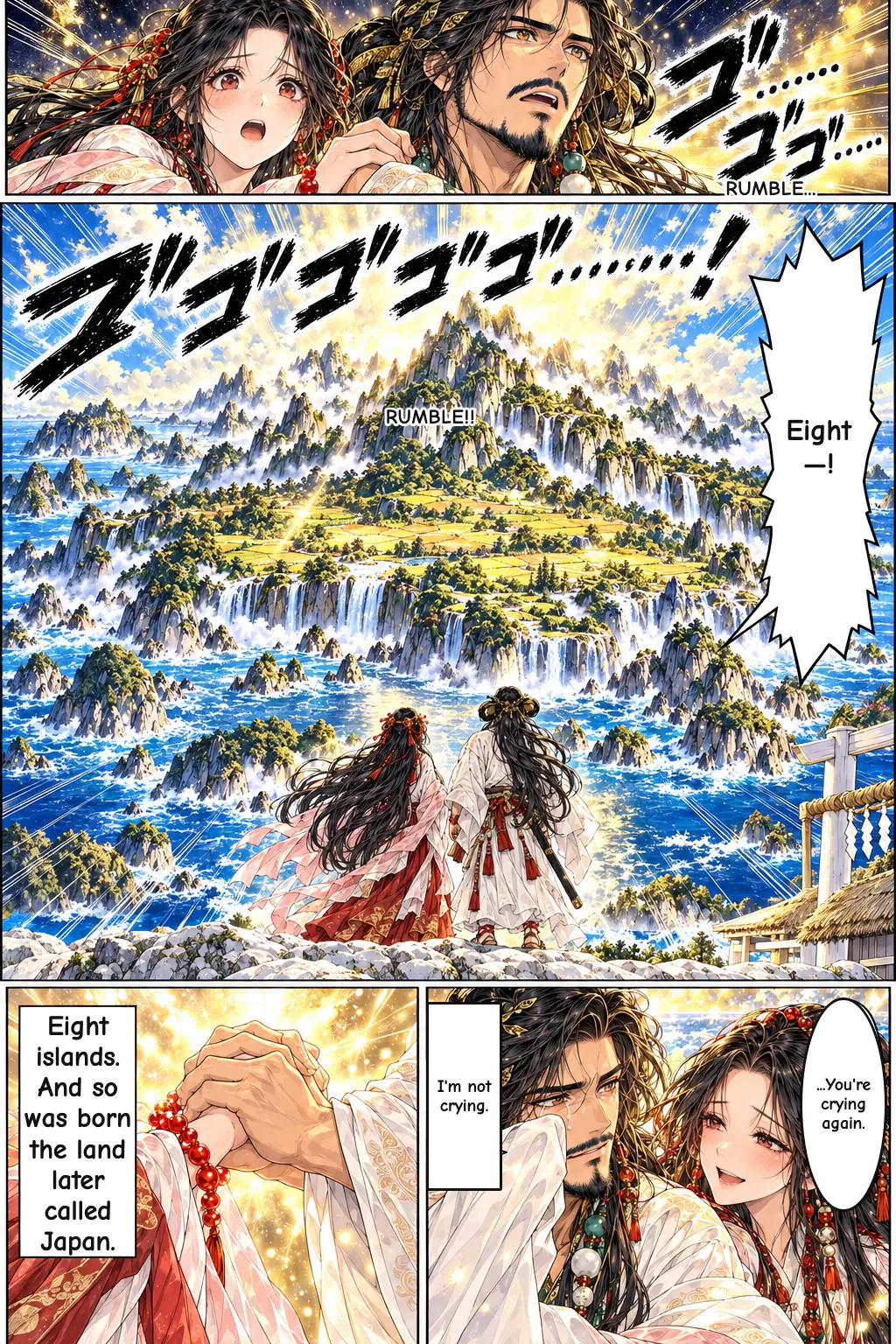
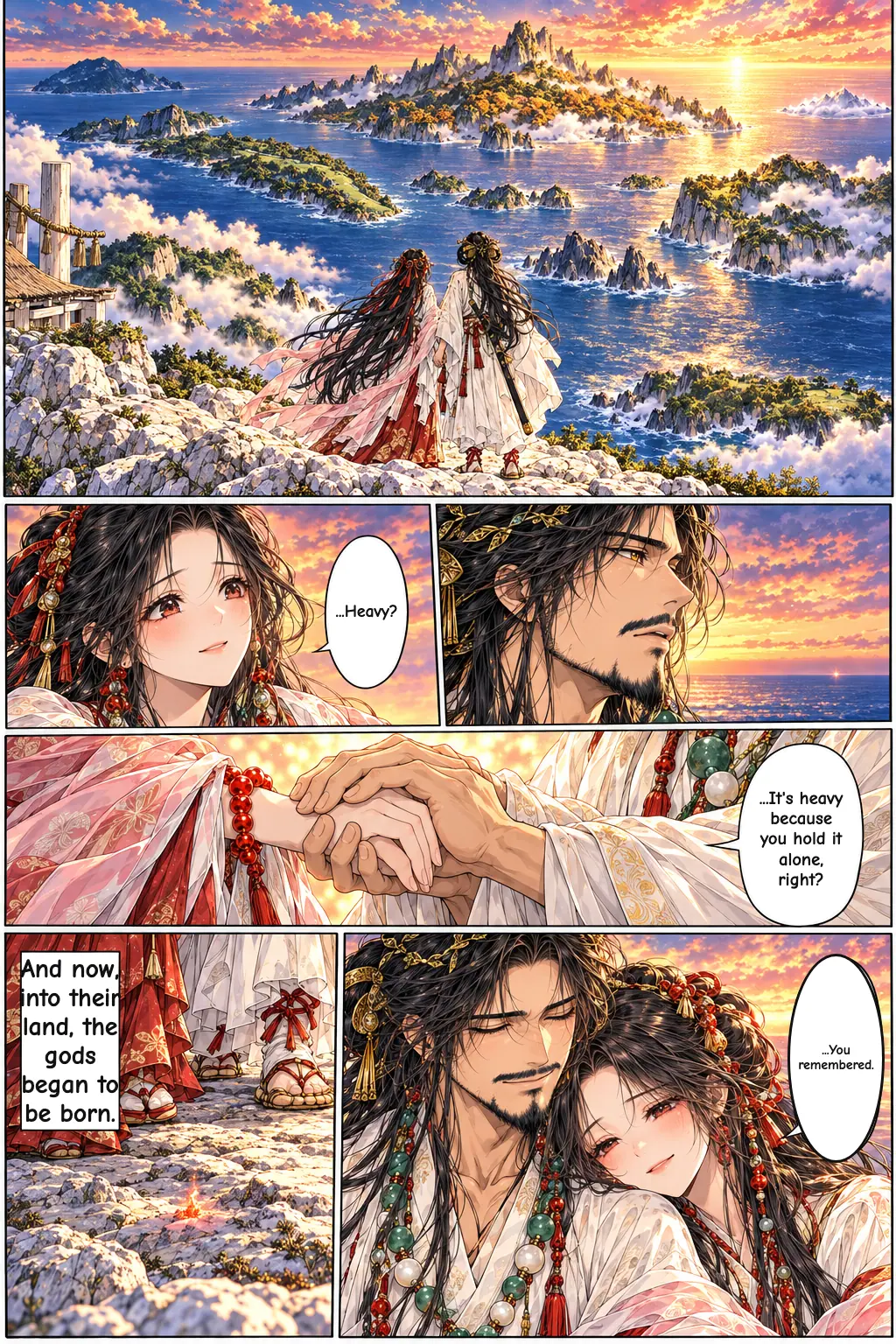
Unsure what went wrong, the two climb back to heaven and ask the elder gods. The gods perform a divination and give the answer: the woman spoke first, and that was the problem. So Izanagi and Izanami return, circle the pillar again, and this time Izanagi speaks first. Now the births go well. They produce Awaji, then Iyo (Shikoku), Oki, Tsukushi (Kyushu), Iki, Tsushima, Sado, and finally Oyamato-toyoakitsu-shima, the main island of Honshu. Because these eight islands came first, Japan was given an old name, Oyashima-kuni, "the Land of the Eight Great Islands."
What This Myth Tells Us: Culture and Background
The Kojiki ("Record of Ancient Matters") was put together by the court official O no Yasumaro and presented to the imperial court in 712. It drew on accounts that had been memorized and recited at court. Its first book covers the age of the gods and moves step by step toward the founding of the imperial line, so the Kuniumi story is the first link in a long chain of ancestry.
Some things stand out. In this myth, Japan is not made from nothing by a single all-powerful creator. It is born from a married couple, the way children are born. The ritual of walking around a pillar suggests that marriage customs and ceremony mattered to the people who told this story. Many scholars read the "woman speaks first" episode as reflecting the ideas about order and gender held at the court that compiled the text, though how to interpret it is still debated.
The theme of a failed first attempt is also striking. Even gods make mistakes here, ask for help, and try again. Hiruko, the abandoned first child, also had a long life outside the Kojiki: in later folk tradition, some people linked Hiruko with Ebisu, a popular god of fishermen and good fortune. That connection comes from later belief, not from the Kojiki itself. Japan's other early chronicle, the Nihon Shoki (720), tells this creation story too, but with several different versions and details.
What the Manga Changes
The manga follows the main events of the Kojiki: the spear and the first island, circling the pillar, the failed first child, the trip to heaven for answers, and the second try that produces the eight islands. Some parts are dramatized for the story.
The biggest change is the idea of a promise. In the manga, Izanagi fails to keep a promise to speak first. In the Kojiki, the gods agree only on which way each will walk around the pillar. The rule about who should speak first appears only afterward, when Izanagi complains, and is confirmed by the elder gods' divination. The manga also fills in things the Kojiki leaves out, such as the endless sea around the two gods, their feelings as they give up their first child, and how they look and talk to each other. These are creative choices, not part of the original text.
Where to Read It
If you want to see this story come to life, Episode 1 of KOJIKI Book I: Chronicle of the Gods, "Japan Began as a Second Try — Kuniumi: The Birth of Japan," is right here on Manga Portal. Every episode is free to read, with no sign-up required. Start with the first island rising out of the sea, then keep reading to follow Izanagi and Izanami into the darker chapters of the Kojiki that come next.
Characters in this episode
Izanagi
The male creator god who, with his wife Izanami, stirs the sea with a spear and fathers the islands of Japan.
Izanami
The female creator goddess who marries Izanagi and gives birth to the eight great islands of Japan.
The Heavenly Gods (Amatsukami)
The elder gods of the High Plain of Heaven who give the pair their spear and use divination to explain their first failure.
Hiruko
The couple's first, unformed child, set adrift in a reed boat and later linked by folk tradition to the god Ebisu.
FAQ
Who created Japan in mythology?
According to the Kojiki, Japan was created by the god Izanagi and the goddess Izanami. They formed the first island by stirring the sea with a jeweled spear and then gave birth to the islands of Japan as their children.
What is Kuniumi?
Kuniumi means "birth of the land." It is the part of the Kojiki where Izanagi and Izanami marry and give birth to the eight great islands, including Honshu, Kyushu, and Shikoku.
Why did Izanagi and Izanami's first child fail?
When they circled the heavenly pillar to marry, Izanami spoke first. The elder gods' divination said this was the mistake, so the couple redid the ritual with Izanagi speaking first, and their next births went well.
What happened to Hiruko?
Hiruko was born unformed, so Izanagi and Izanami placed the child in a reed boat and let it float away. In later folk belief, Hiruko was sometimes identified with Ebisu, a god of fishing and good luck, but this idea does not appear in the Kojiki.
What is the Kojiki?
The Kojiki, or "Record of Ancient Matters," is Japan's oldest surviving book, presented to the imperial court in 712. Its first book tells the myths of the gods, from the creation of the world to the ancestors of the imperial family.