Get new episodes in your feed. Follow us on:ThreadsBluesky
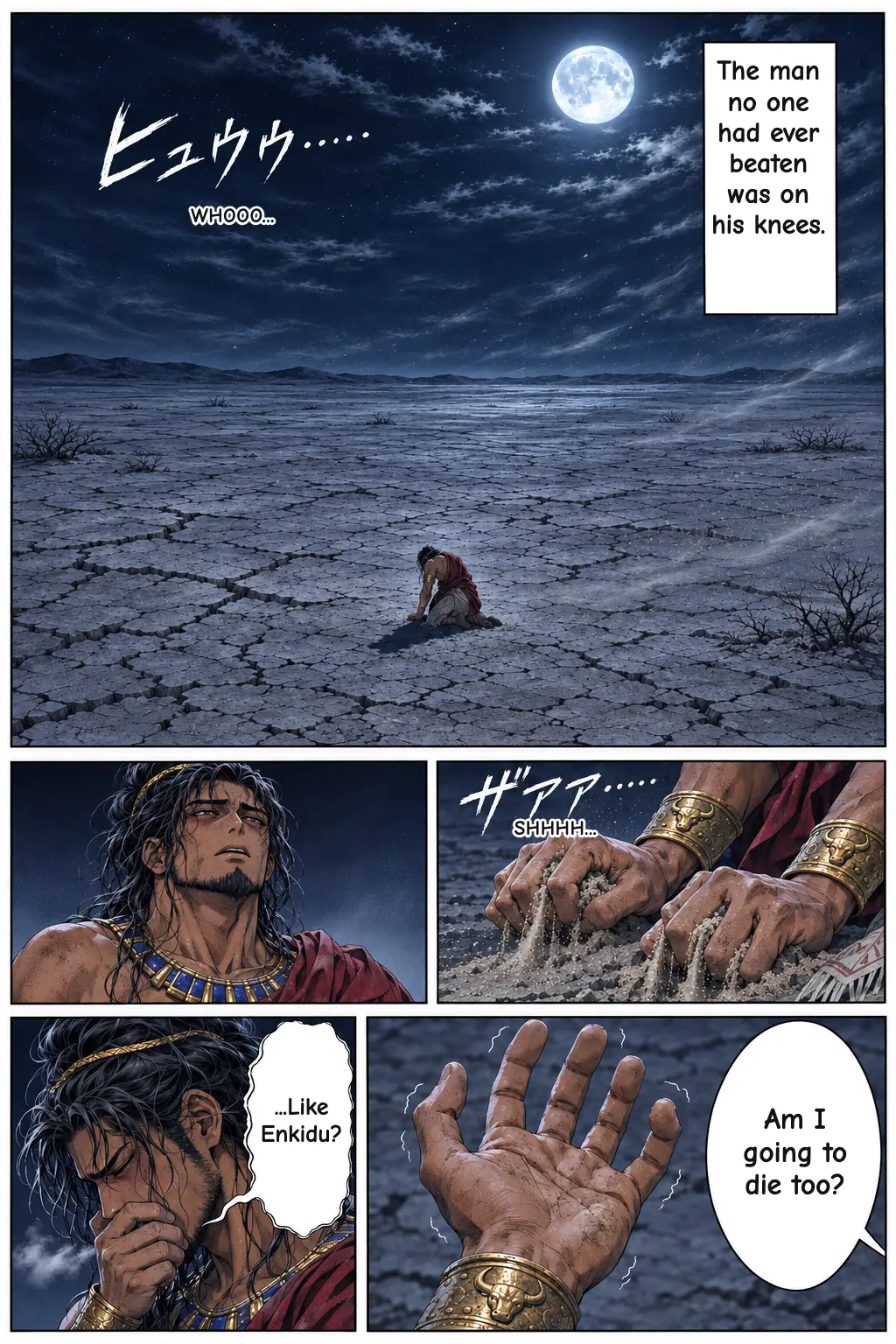
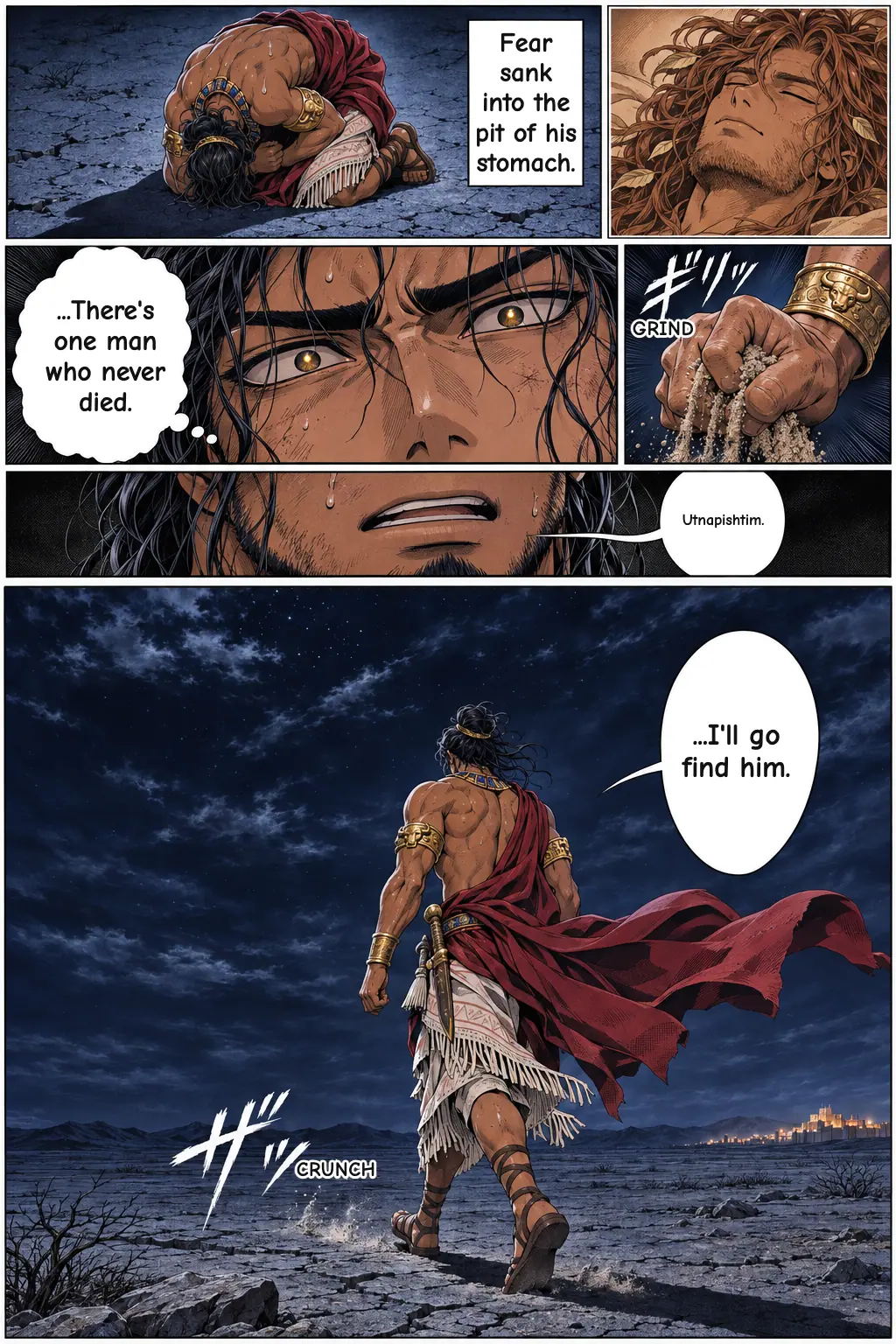
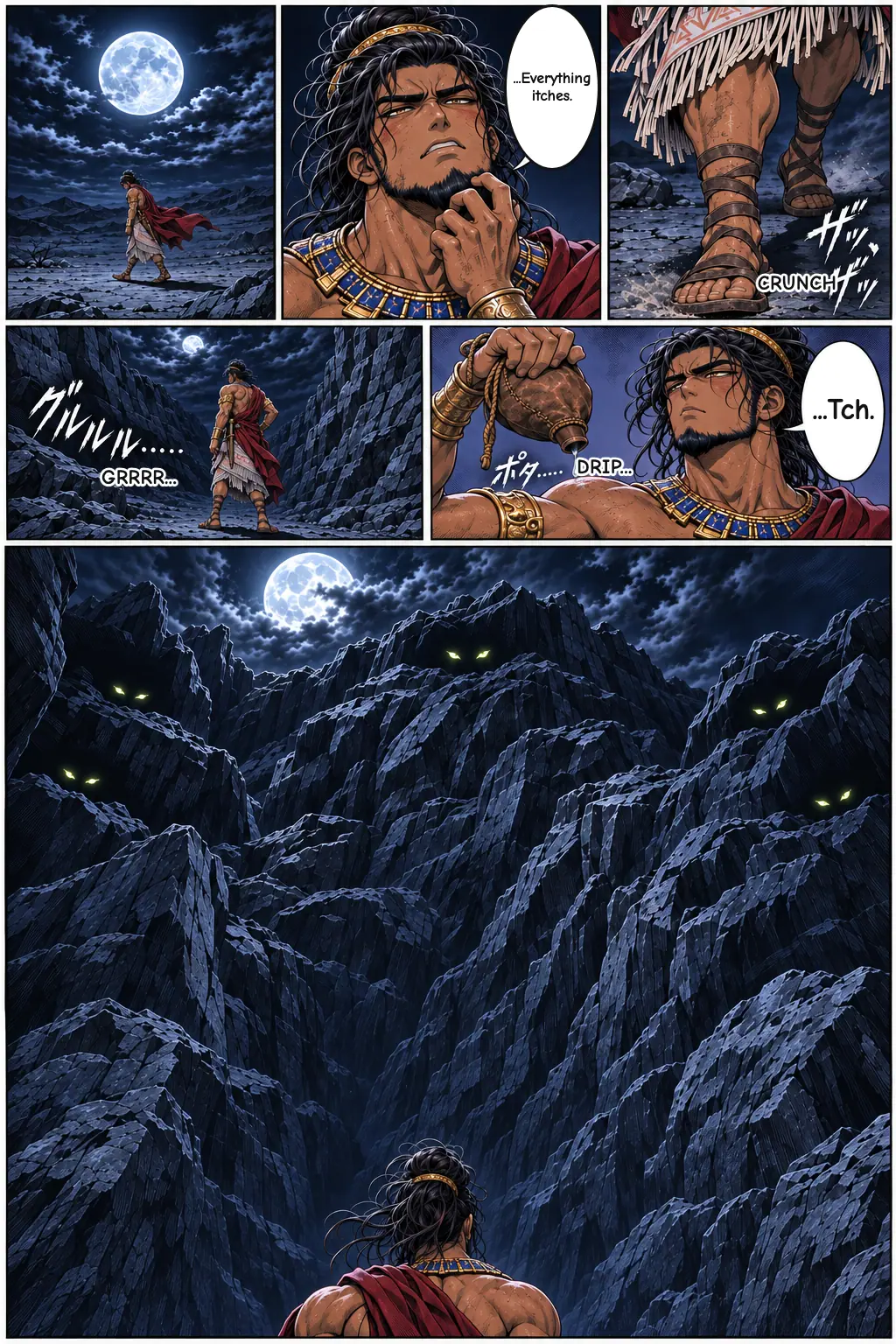
Enkidu is gone, and King Gilgamesh can't stop shaking at one thought: "Will I die too?" He heads into the wilderness to find Utnapishtim, the only man who never died. Past a pride of lions and a pair of gatekeepers said to kill with a single glance, he runs through twelve hours of darkness no one has ever crossed. At the end waits a garden made of jewels.
Story summary
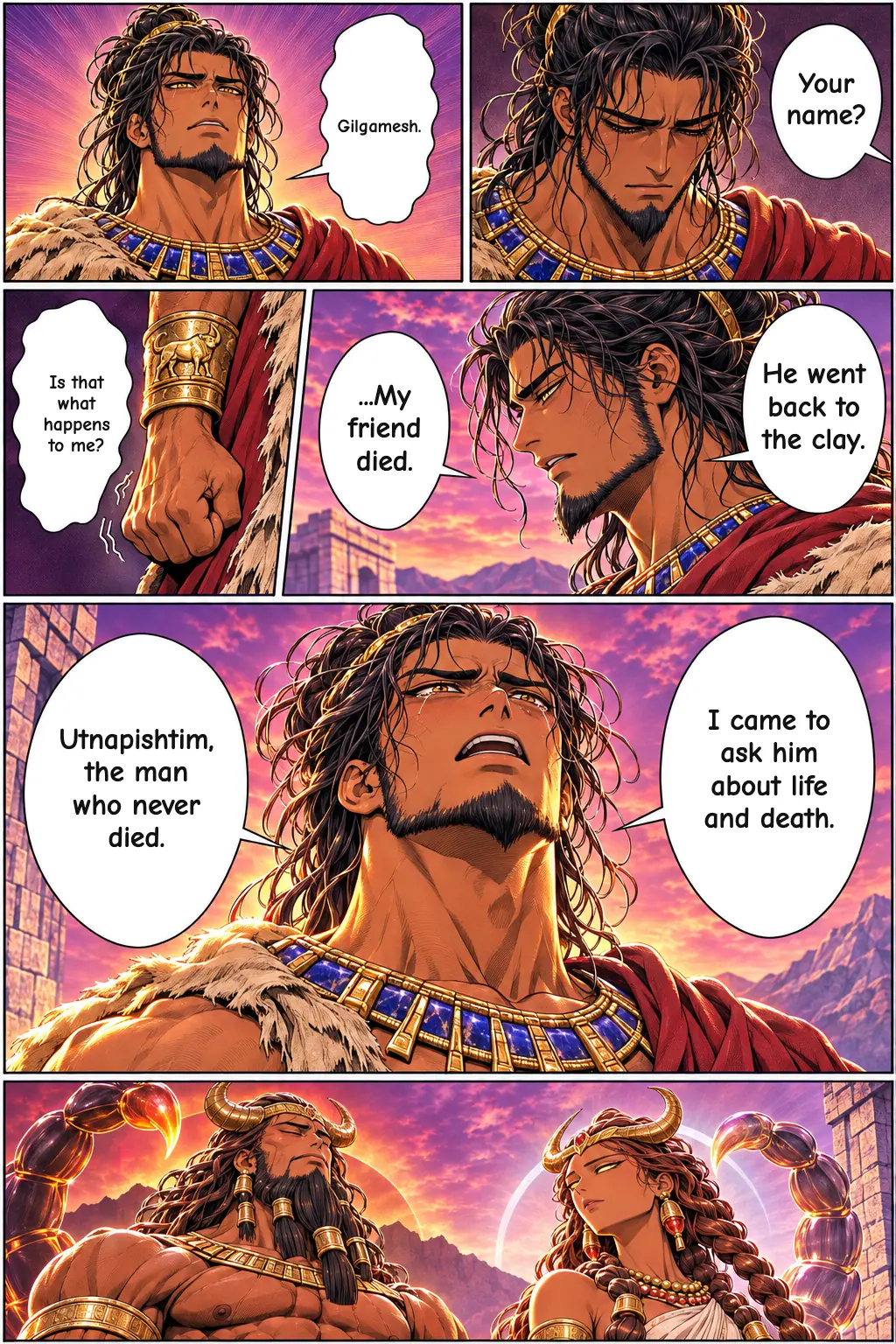
The Standard Babylonian version of the Epic of Gilgamesh, written in Akkadian cuneiform and best known from clay tablets found at Nineveh, divides the story into twelve tablets. Tablet IX opens right after the death of Enkidu, Gilgamesh's closest friend. Gilgamesh weeps bitterly and wanders the wilderness, and a new fear takes hold of him: if Enkidu died, he will die too. To escape that fate he decides to find Utnapishtim, son of Ubar-Tutu, a man who was admitted to the assembly of the gods and given eternal life. Gilgamesh wants to ask him about life and death.
Gilgamesh's Quest for Immortality: Tablet IX Summary and Meaning
In short: Gilgamesh's quest for immortality begins in Tablet IX of the Epic of Gilgamesh. Terrified by the death of his friend Enkidu, King Gilgamesh of Uruk sets out to find Utnapishtim, the one human the gods allowed to live forever. On the way he fights lions, persuades the scorpion-people who guard Mount Mashu, and walks through twelve stretches of total darkness. He comes out in a garden of jewel trees.
The Original Story: What Happens in Tablet IX
The Standard Babylonian version of the Epic of Gilgamesh, written in Akkadian cuneiform and best known from clay tablets found at Nineveh, divides the story into twelve tablets. Tablet IX opens right after the death of Enkidu, Gilgamesh's closest friend. Gilgamesh weeps bitterly and wanders the wilderness, and a new fear takes hold of him: if Enkidu died, he will die too. To escape that fate he decides to find Utnapishtim, son of Ubar-Tutu, a man who was admitted to the assembly of the gods and given eternal life. Gilgamesh wants to ask him about life and death.
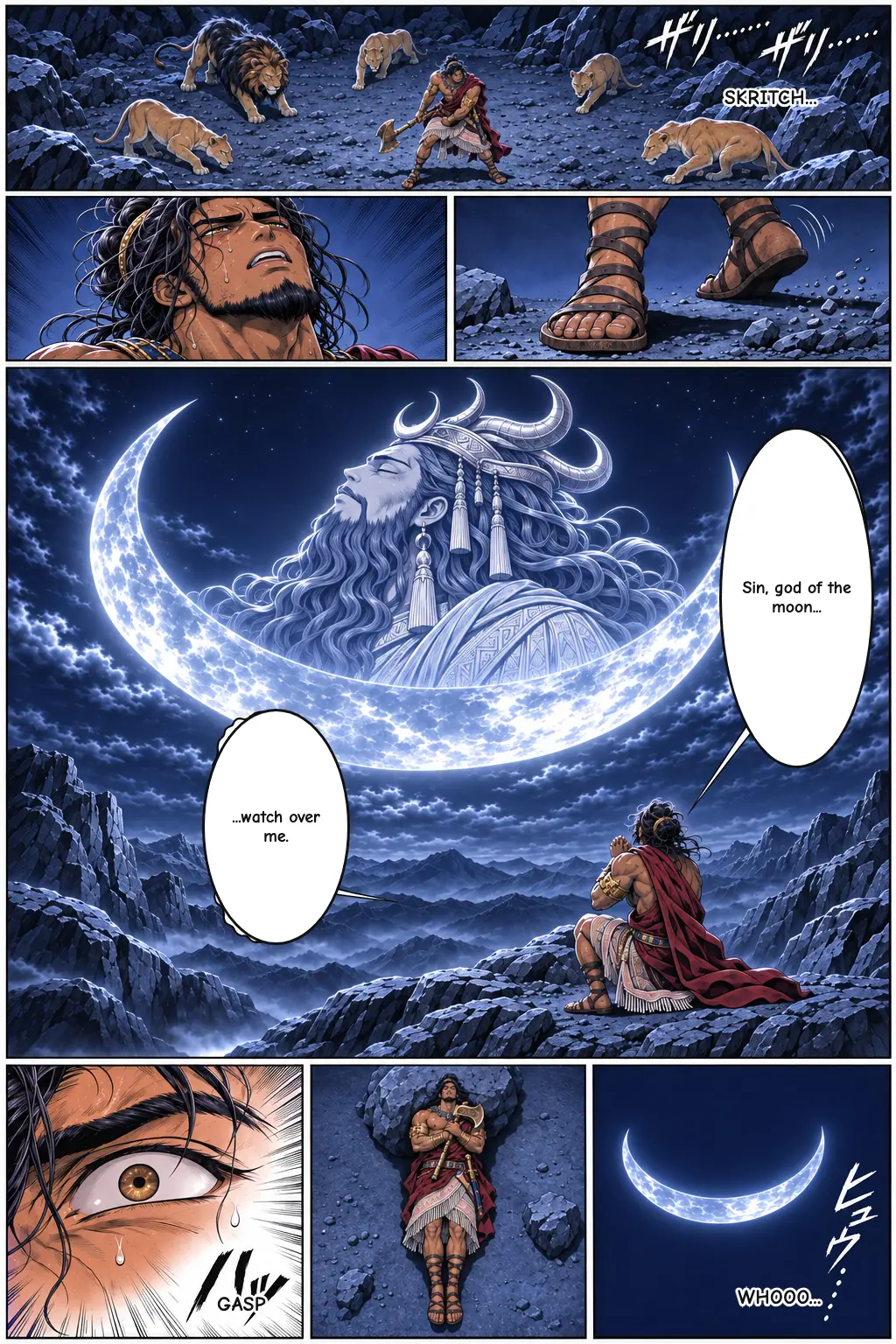
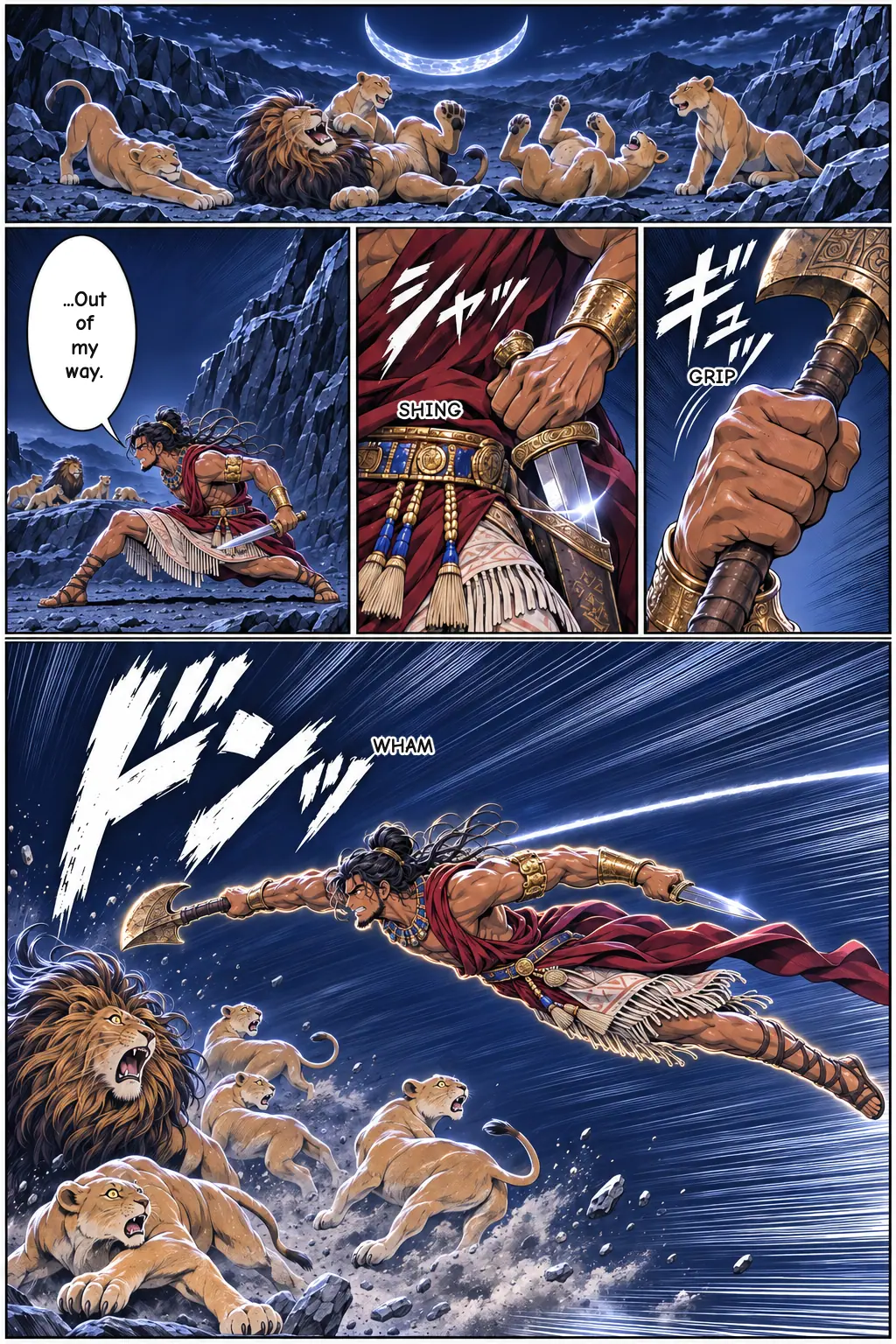
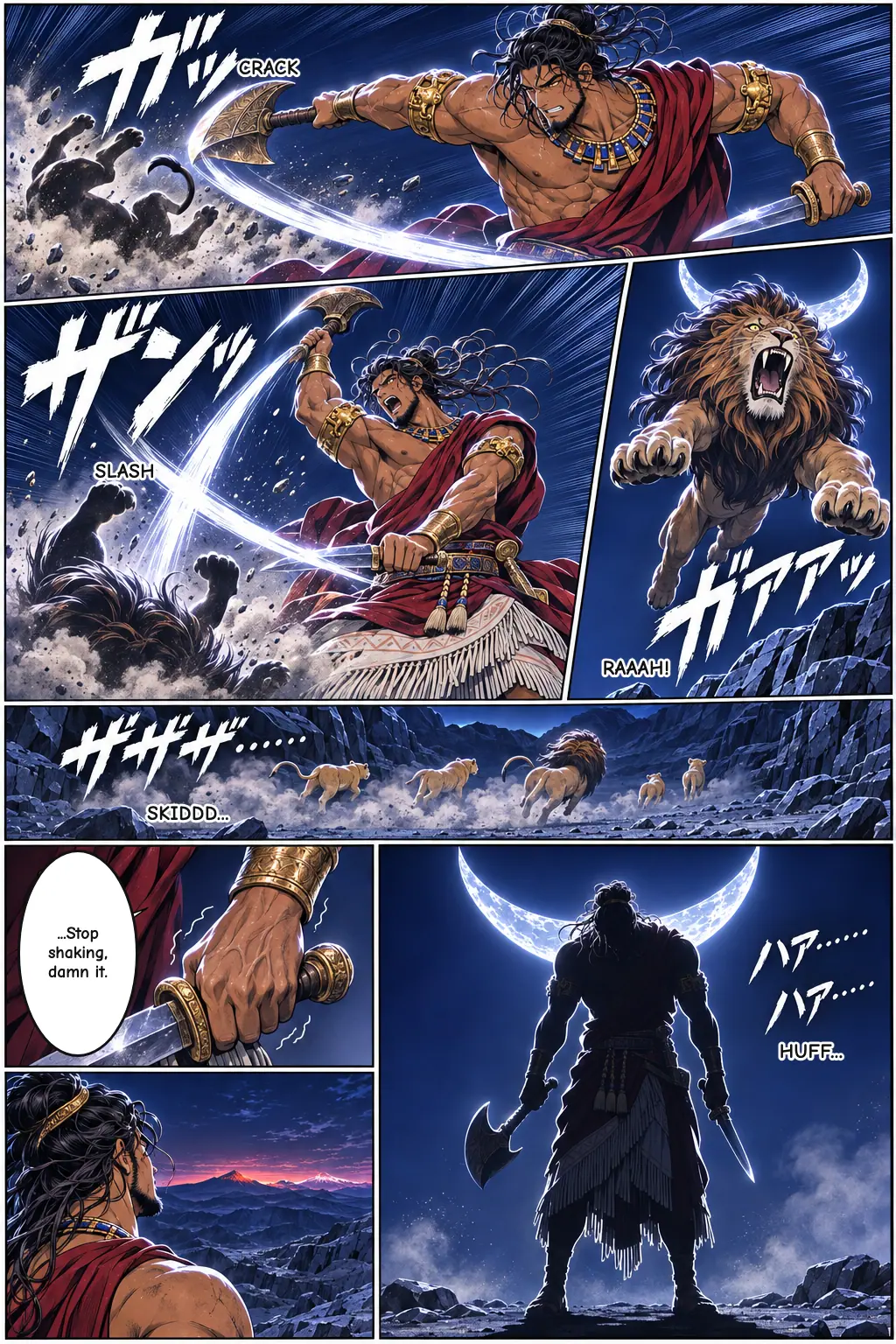
One night he reaches a mountain pass and sees lions. Afraid, he lifts his head and prays to Sin, the moon god, for protection. (Some readings of the damaged text list other gods as well.) He lies down and sleeps, but the dream he has is lost to breaks in the tablet. When he wakes he sees the lions full of life, takes up his axe, draws the blade at his belt, and drops on them like an arrow, striking them down and scattering them. The next few lines are also broken, so we don't know exactly what he did afterward.
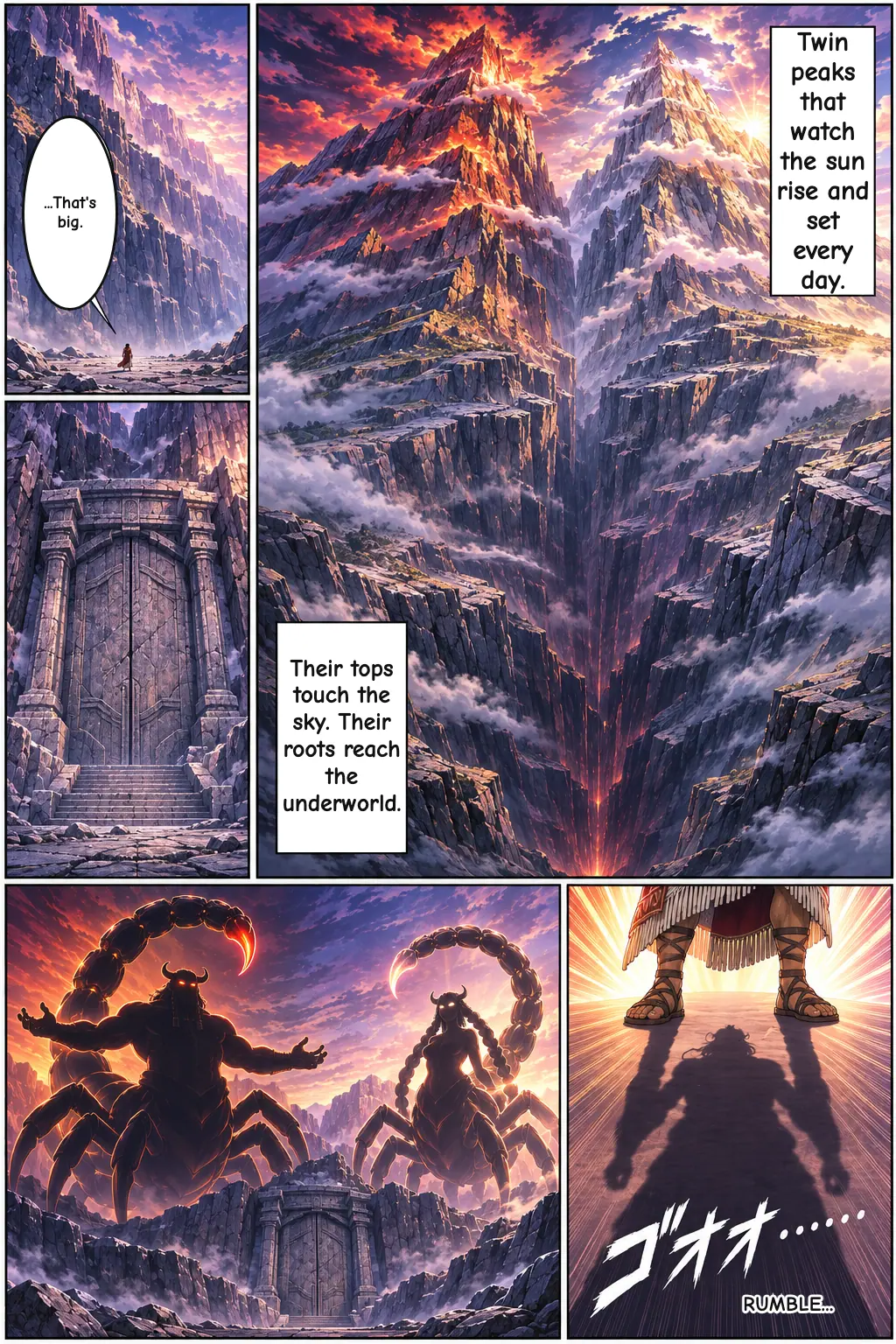
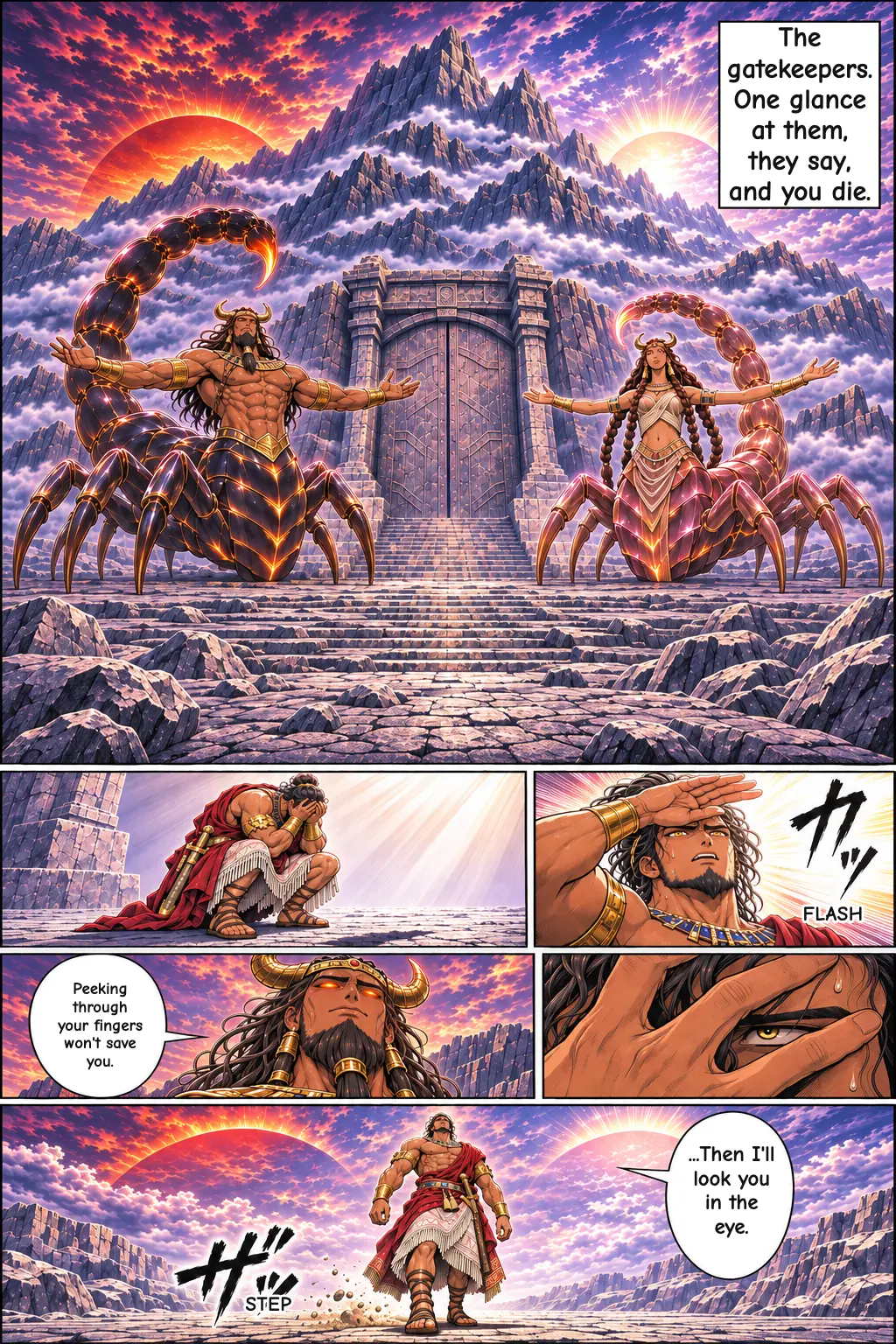
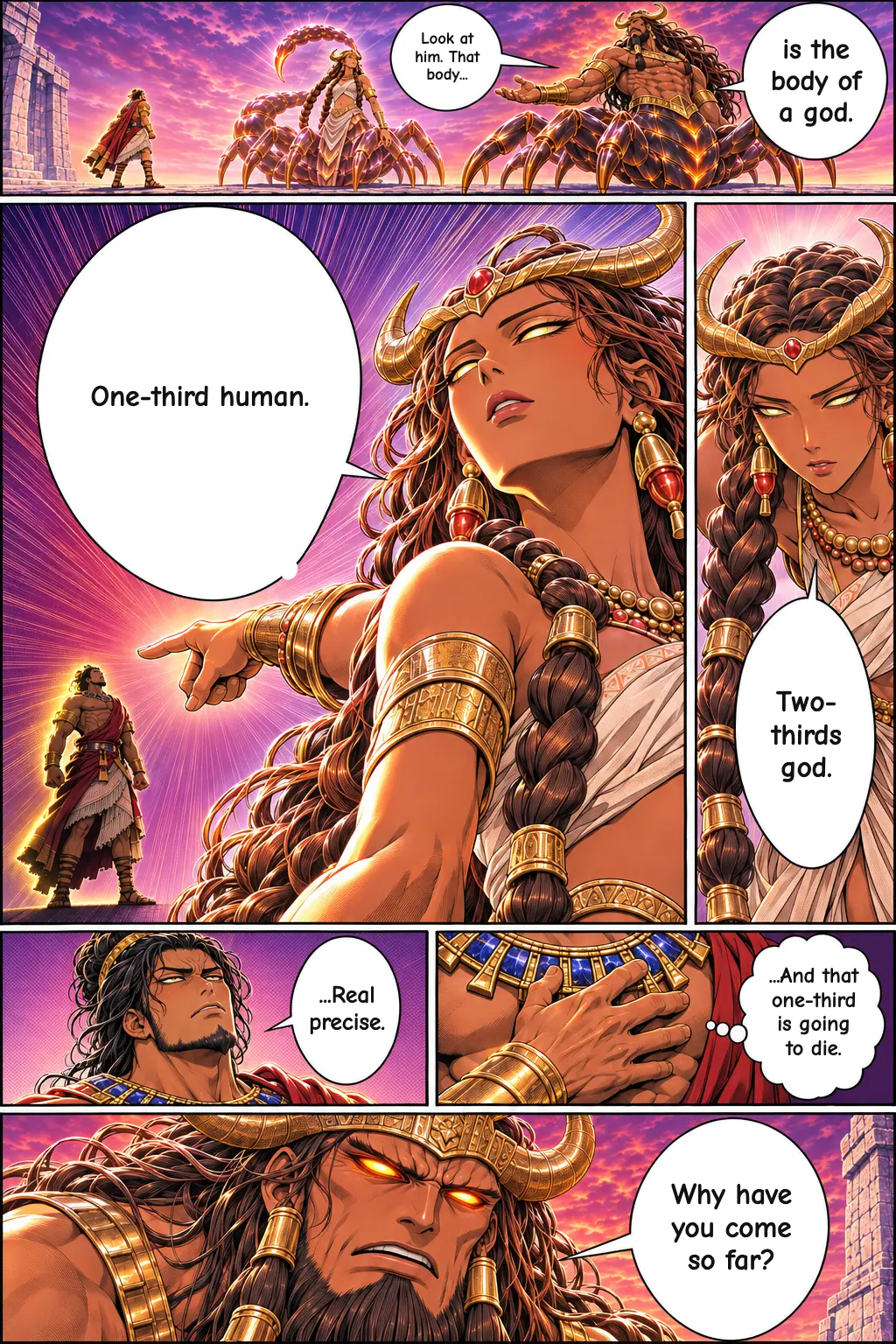
Next he reaches Mount Mashu, the twin mountain that watches over the sunrise and the sunset every day. Its peaks reach the vault of heaven and its roots reach down into the underworld. Its gate is guarded by scorpion-people whose terrible glow covers the mountains and whose gaze is said to mean death. Gilgamesh's face darkens with fear, but he steadies himself and walks toward them. The scorpion-man calls to his wife that this traveler's body is made of the flesh of gods. She answers that he is two-thirds god and one-third human.
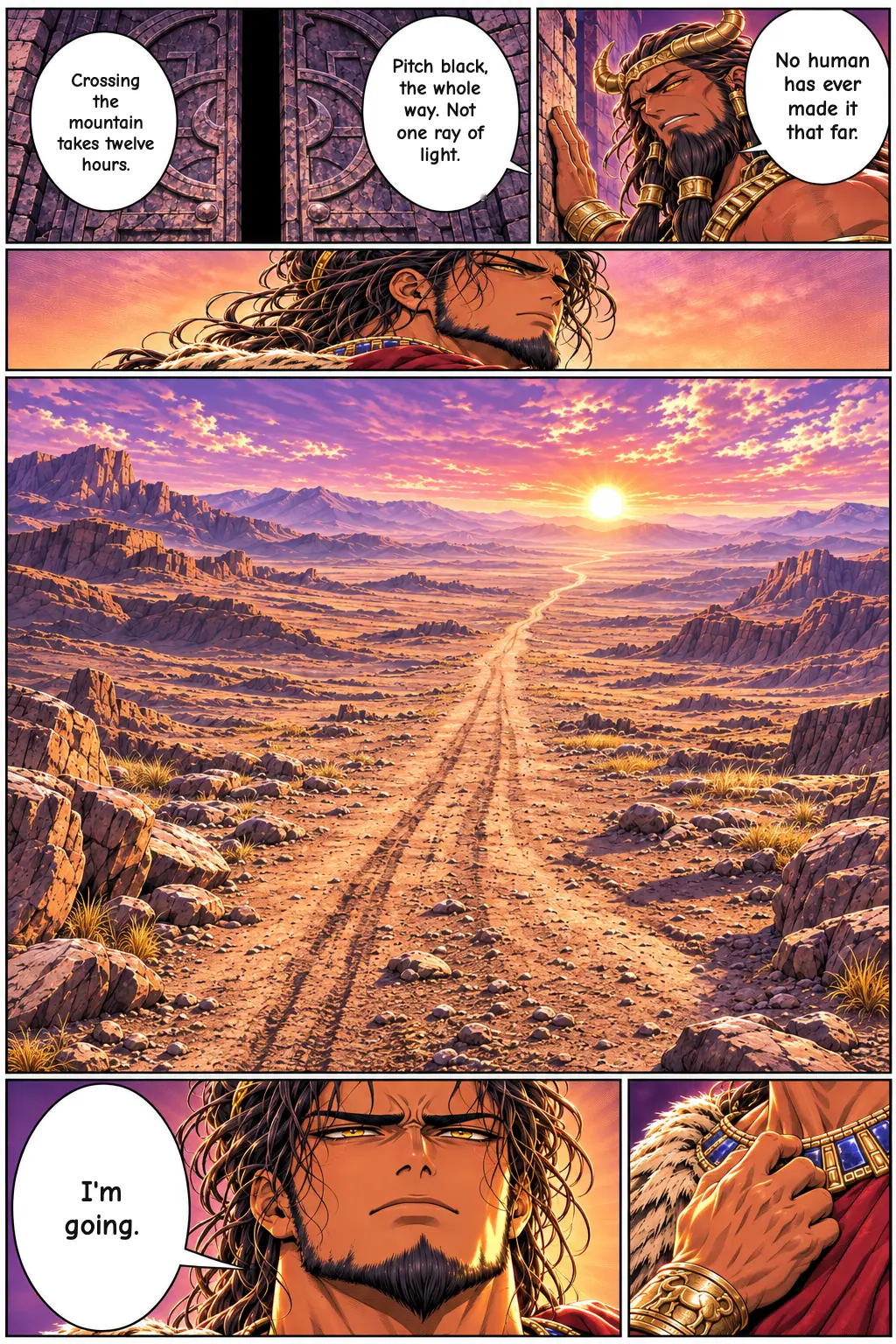
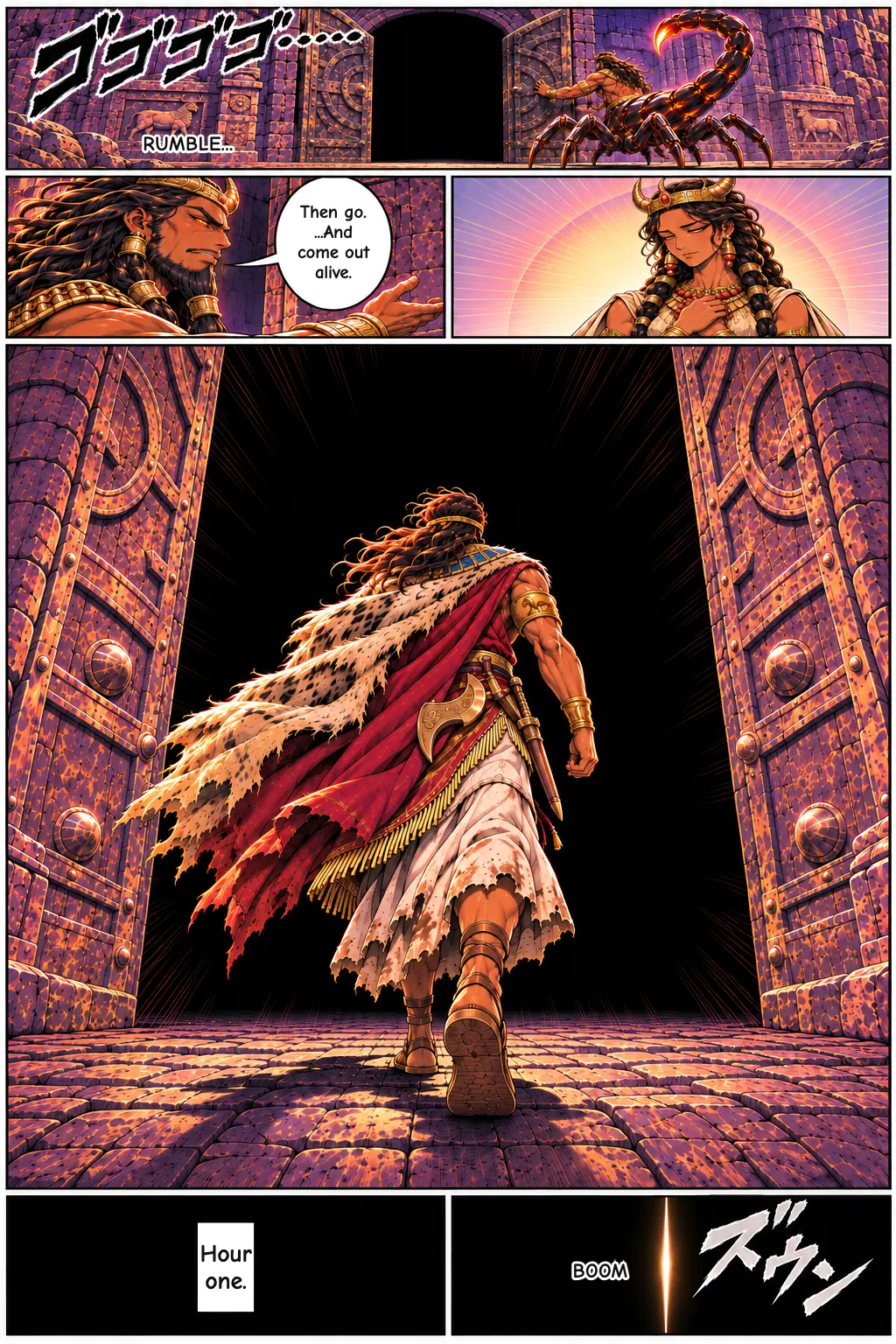
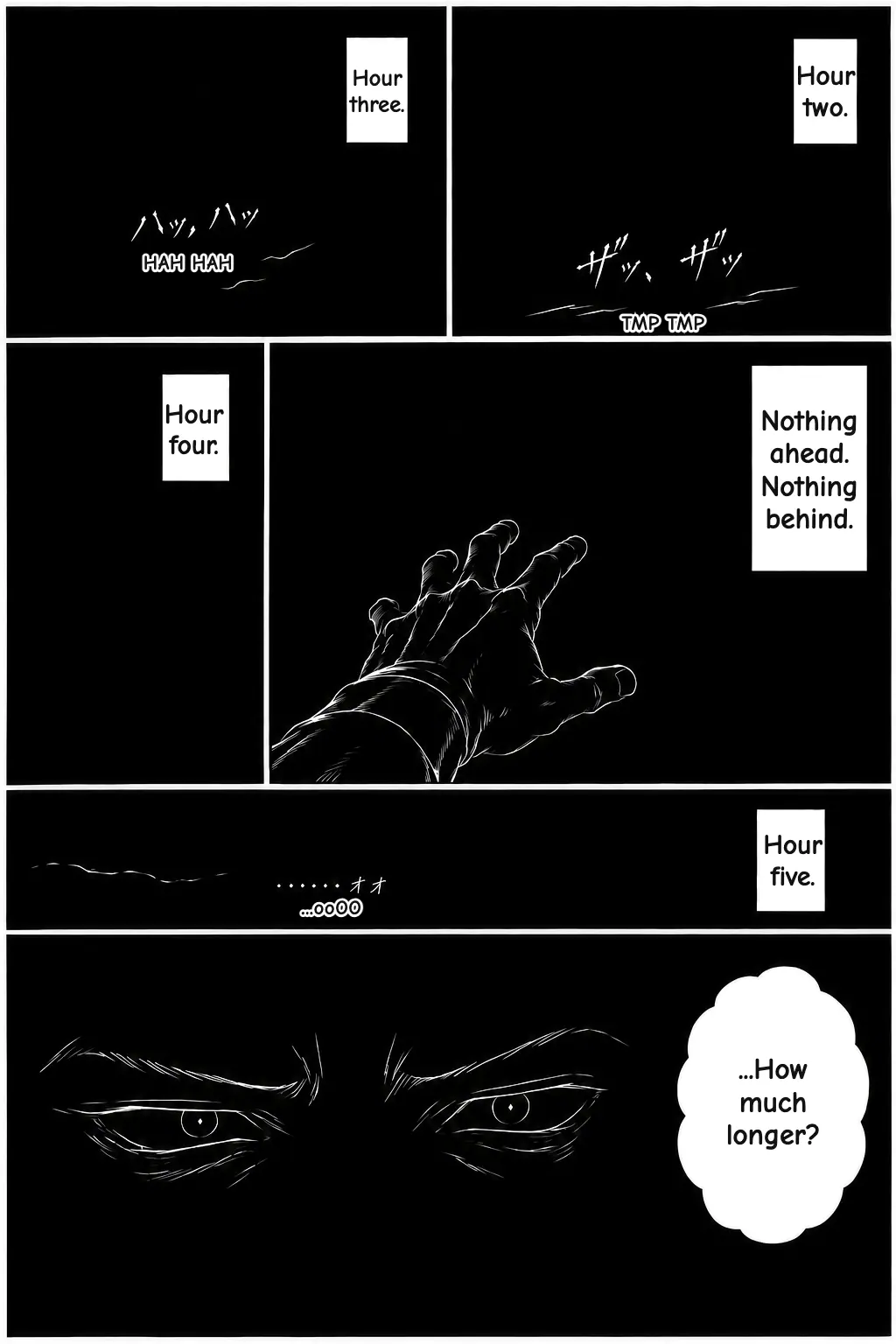
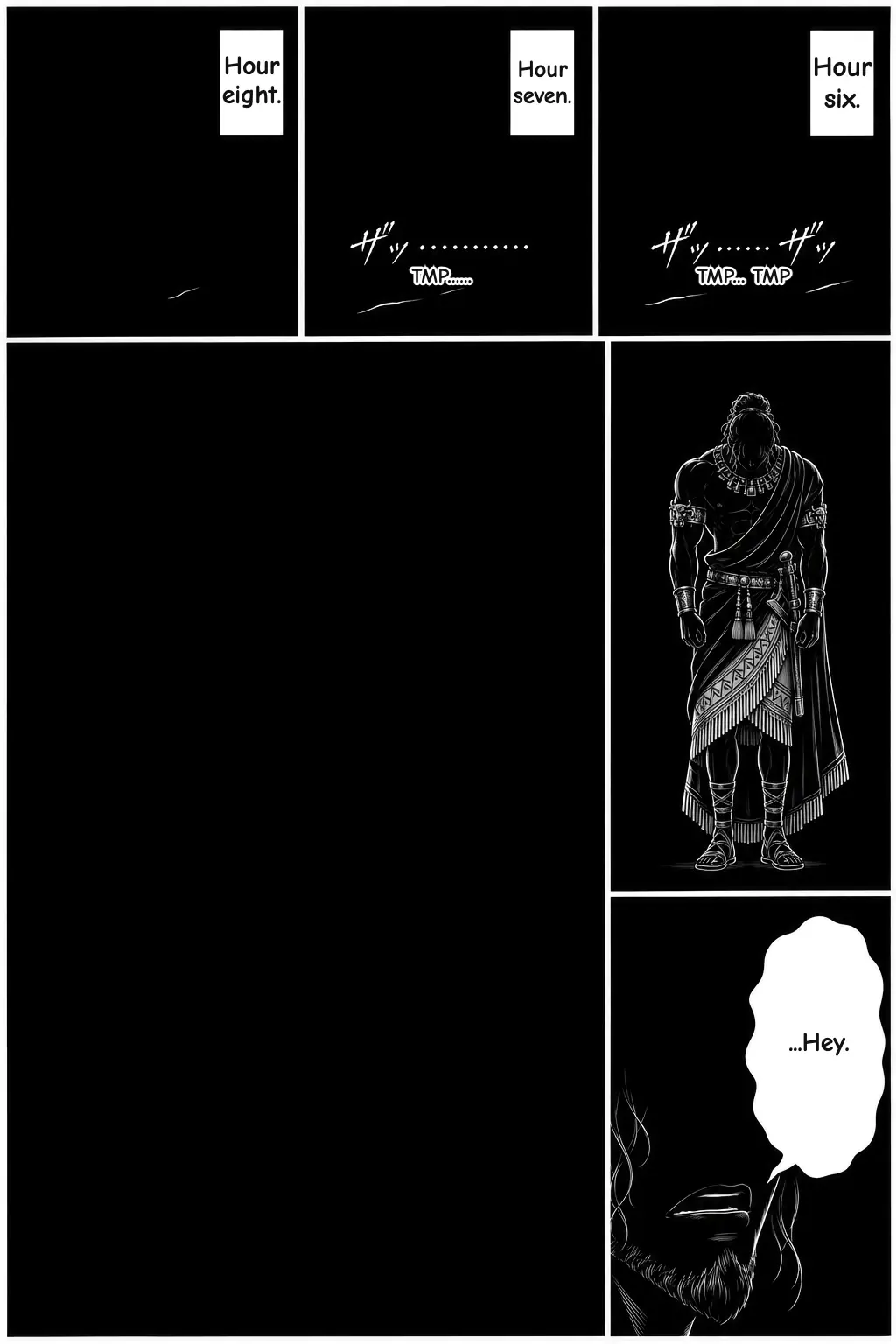
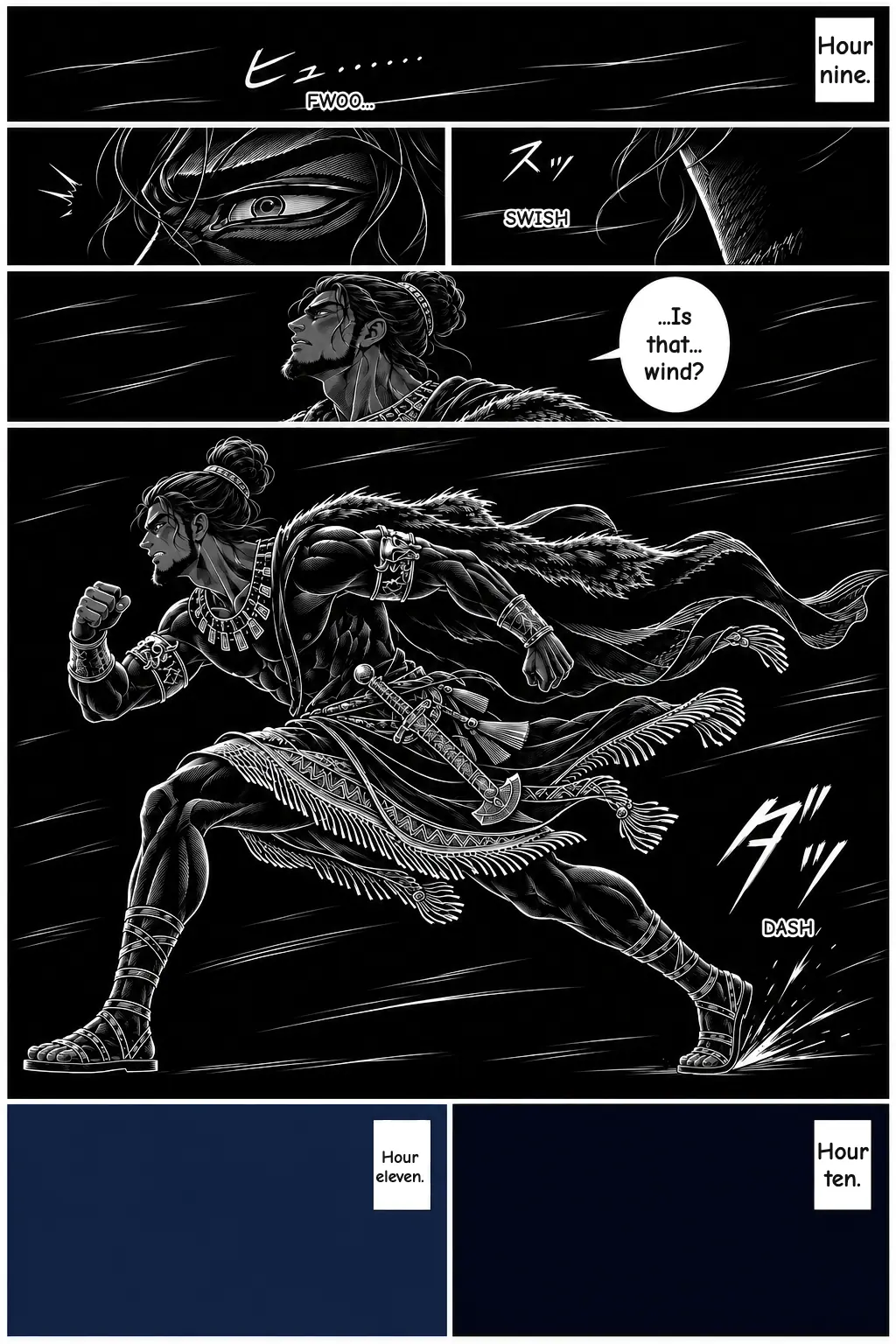
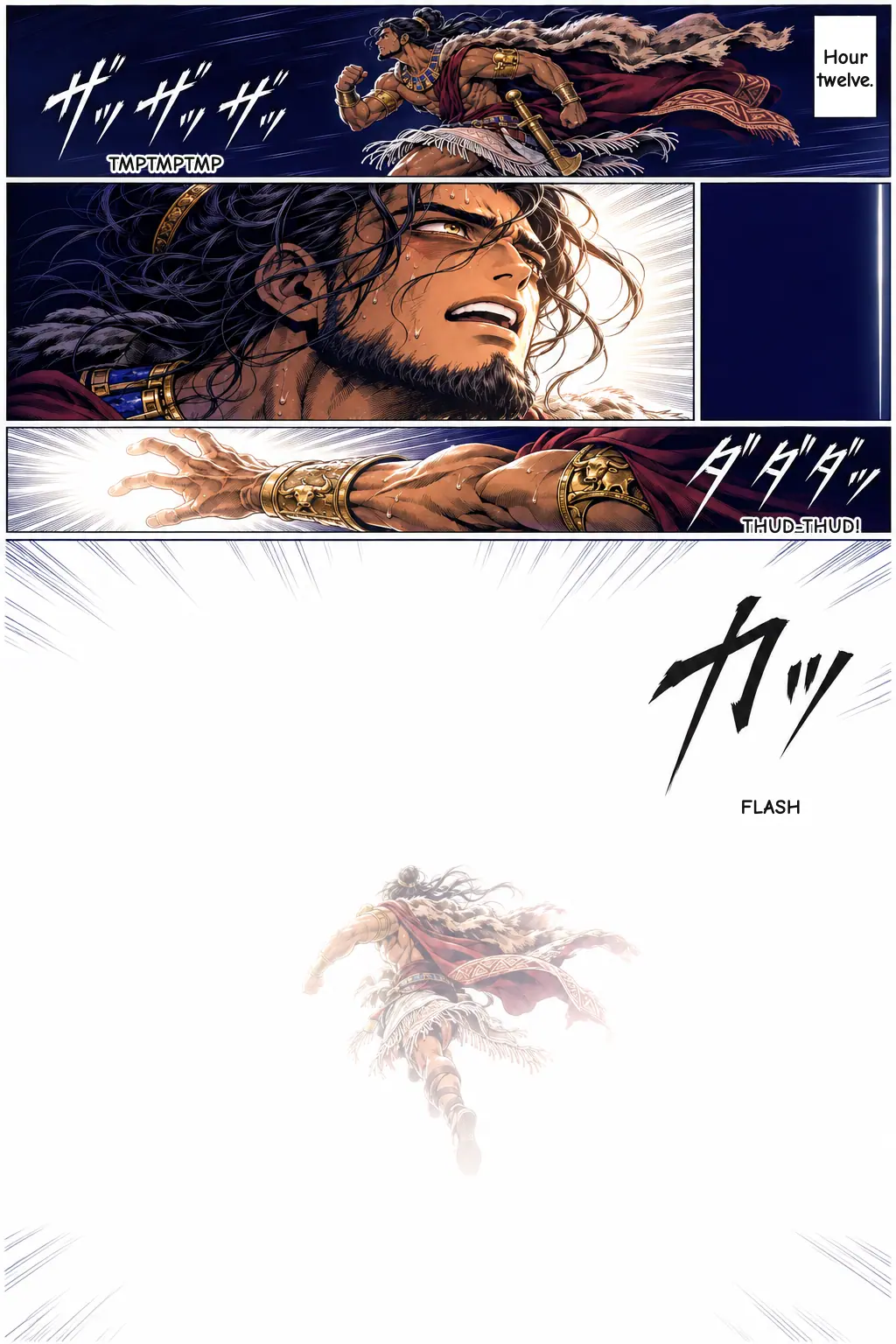
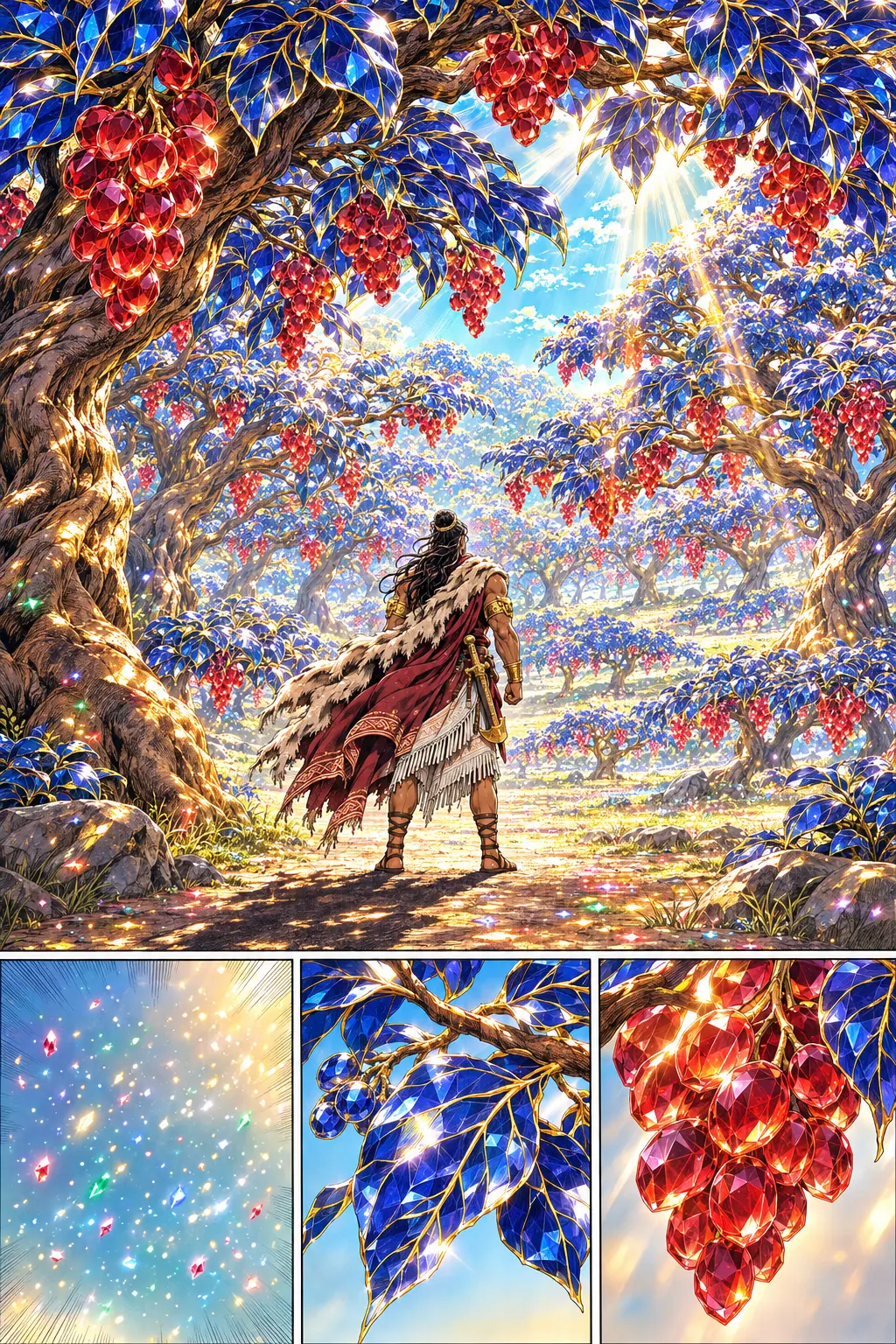
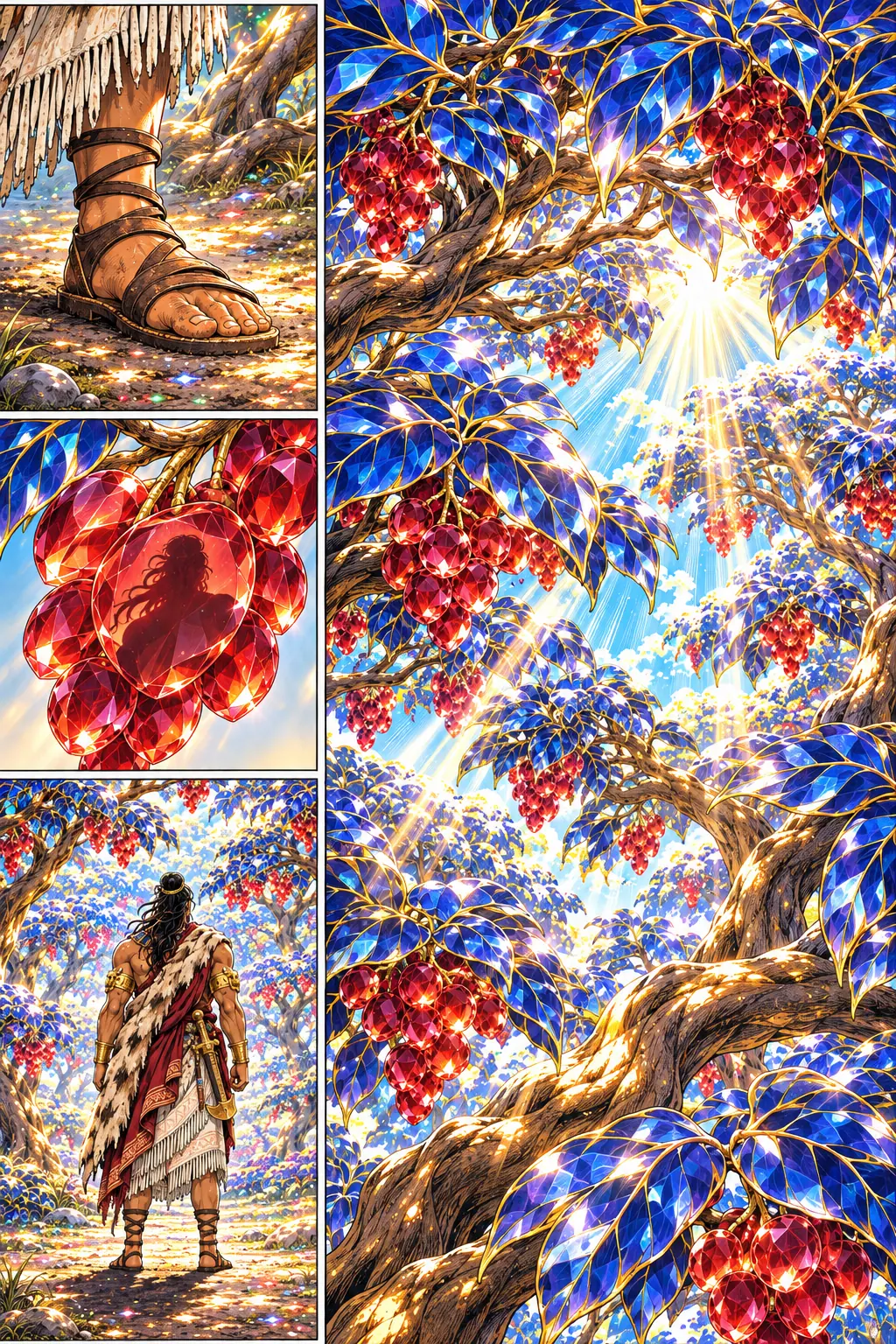
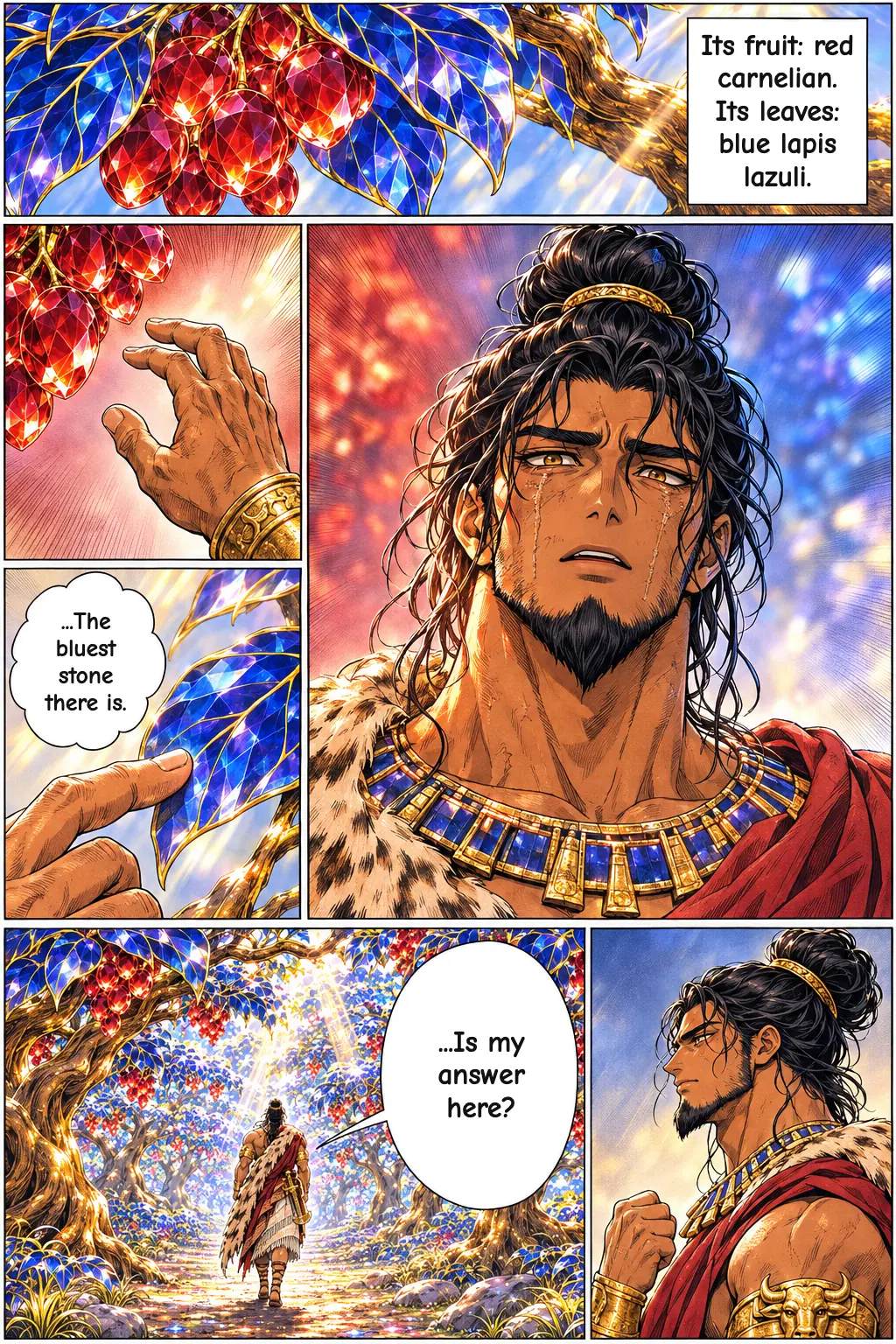
The scorpion-man asks why Gilgamesh has come so far. When he hears the answer, he warns that no one has ever traveled the mountain's path: inside lie twelve beru of thick darkness with no light at all. After a gap in the text, he opens the gate and sends Gilgamesh off with a blessing. Gilgamesh enters the Road of the Sun. For each beru the epic repeats the same lines: the darkness is dense, there is no light, and he can see nothing ahead or behind. At the ninth he feels the north wind on his face. At the twelfth he finally steps out into light, and he finds a garden where carnelian hangs like fruit, lapis lazuli grows as leaves, and grape clusters hang from the branches. Many other gemstones are listed, but much of that list is damaged or unclear.
Main Characters
Gilgamesh, king of Uruk, is the hero. He is powerful and part divine, but in this tablet he is frightened. He prays when he is scared, and he keeps going anyway. Enkidu appears only in memory, yet his death drives the whole journey. Utnapishtim is named here only as the goal of the quest. The scorpion-man and his wife are among the epic's most memorable guardians: frightening to look at, but in the end willing to help.
What This Myth Is About
Ancient Mesopotamians did not imagine a happy afterlife for ordinary people. The underworld was usually described as a dim, dusty place. So Gilgamesh's panic makes sense: being two-thirds divine does not protect him from the human third, and that third is the part that dies. Tablet IX is the moment the epic changes from a story about heroic adventures into a story about mortality.
The journey also follows the shape of Mesopotamian ideas about the cosmos. The sun was thought to pass through a hidden path at night, and Mount Mashu marks the place where it rises and sets. By walking the sun's own road, Gilgamesh goes where no living person was supposed to go. Some scholars read the episode as a race to get through before the sun comes back along the path. That reading depends on broken lines, so it remains one possible interpretation. The jewel garden at the end is a picture of a world beyond the ordinary, beautiful but unnatural, and it hints that what Gilgamesh is looking for may not belong to human life.
What the Manga Changes or Adds
The manga follows the main events of the tablet, but some choices are its own. The twelve beru of darkness are drawn as all-black panels where only the number changes. This choice actually matches the original closely, because the original text repeats the same lines for each beru. In the manga the north wind comes in gradually across several panels. In the original it appears only at the ninth beru.
The scorpion-couple's design (for example, human upper bodies with scorpion tails) is the artist's creation. The epic itself describes their glow and the terror they cause, not their exact shape. Other invented details include Gilgamesh's animal-skin clothing and ragged appearance, the number of lions and the choreography of the fight, his inner monologue and flashbacks to Enkidu, and the colors of the jewel garden. The animal skins come from his vow in Tablet VIII and his description in Tablet X; they are not stated in the surviving text of Tablet IX. The manga also fills the gaps in the tablet, such as the missing dream and the conversation before the gate opens, with its own storytelling. After Tablet IX, the story continues in Tablet X, where the tavern keeper Siduri sees Gilgamesh walking through the garden.
Where to Read It
If you want to experience the long walk through the dark instead of just reading about it, Episode 8 of MESOPOTAMIAN MYTH: THE EPIC OF GILGAMESH — No One Lives Forever is on this page. The full series is free to read on Manga Portal, with no sign-up required, so you can start from Enkidu's arrival or continue to Gilgamesh's meeting with Utnapishtim.
Characters in this episode
Gilgamesh
King of Uruk, two-thirds god and one-third human, who sets out to escape death after losing his friend.
Enkidu
Gilgamesh's late friend, whose death makes the king afraid of his own mortality.
Utnapishtim
Son of Ubar-Tutu, the only human granted eternal life by the gods and the goal of Gilgamesh's quest.
Sin
The Mesopotamian moon god, to whom Gilgamesh prays for protection on the night mountain pass.
The Scorpion-Man
The fearsome, glowing guardian of Mount Mashu's gate, who warns Gilgamesh about the darkness and then lets him pass.
The Scorpion-Man's Wife
His partner at the gate, who sees that Gilgamesh is two-thirds god and one-third human.
FAQ
Why did Gilgamesh search for immortality?
After his friend Enkidu died, Gilgamesh became terrified that he would die the same way. He went looking for Utnapishtim, the one human granted eternal life, to learn the secret of life and death.
Who are the scorpion men in the Epic of Gilgamesh?
They are a husband and wife who guard the gate of Mount Mashu, where the sun rises and sets. Their glow is terrifying and their gaze is said to bring death, but after questioning Gilgamesh they open the gate for him.
What is Mount Mashu?
Mount Mashu is the twin mountain in the epic that watches over the sunrise and the sunset. Its peaks touch the sky and its roots reach the underworld, and the Road of the Sun runs through it.
What happens in the twelve leagues of darkness?
Gilgamesh walks twelve beru through complete darkness, unable to see ahead or behind. He feels the north wind at the ninth beru and comes out into the light at the twelfth. The beru is a unit that can be read as time or distance and is often explained as a 'double hour.'
What is the jewel garden in Gilgamesh?
It is the garden Gilgamesh finds at the end of the Road of the Sun. Its trees bear carnelian as fruit and lapis lazuli as leaves. Many of the other gems listed are damaged or unclear in the surviving text.
More episodes of MESOPOTAMIAN MYTH: THE EPIC OF GILGAMESH