Episode 1To Stop the King, a Goddess Threw ClayThe Creation of Enkidu
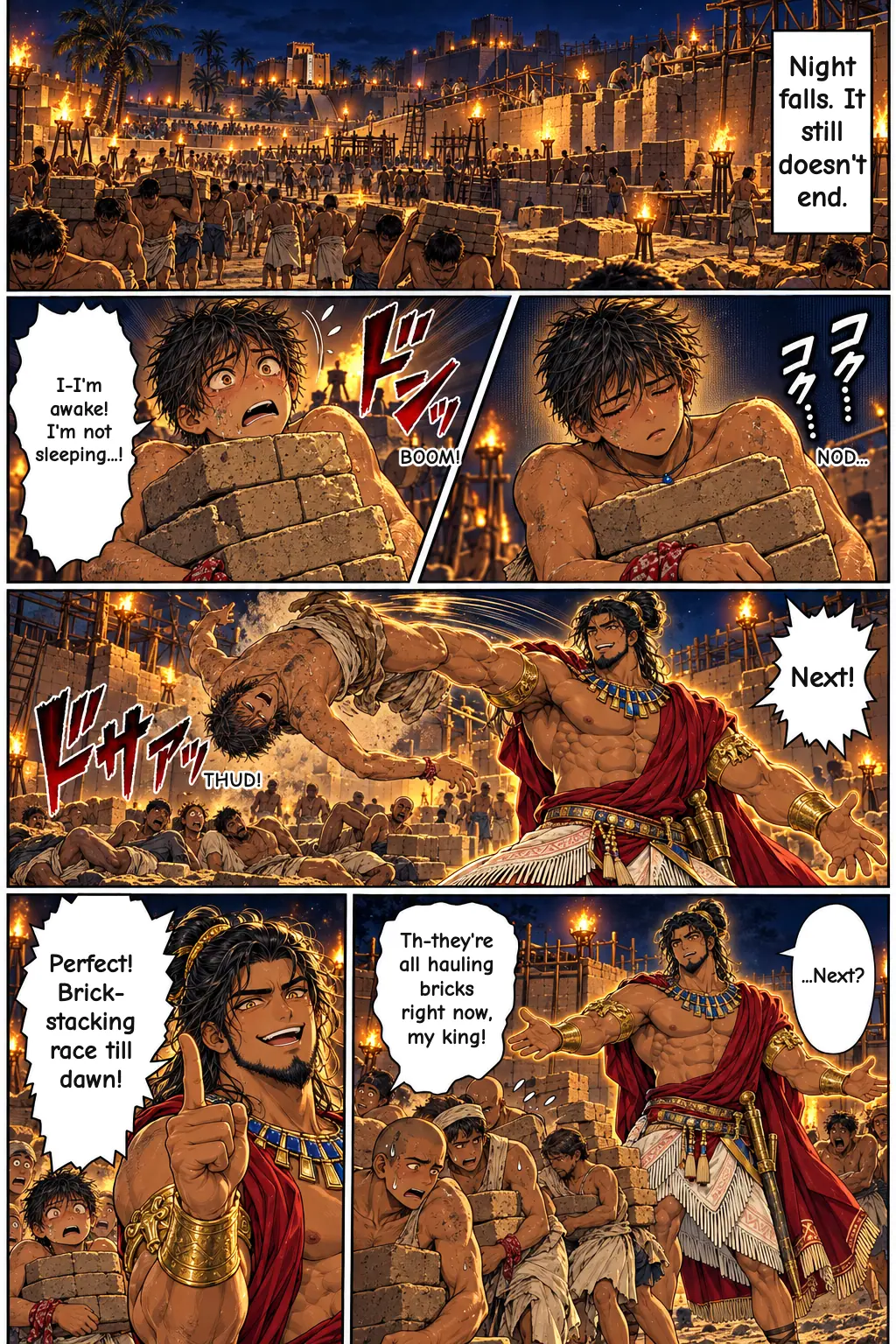
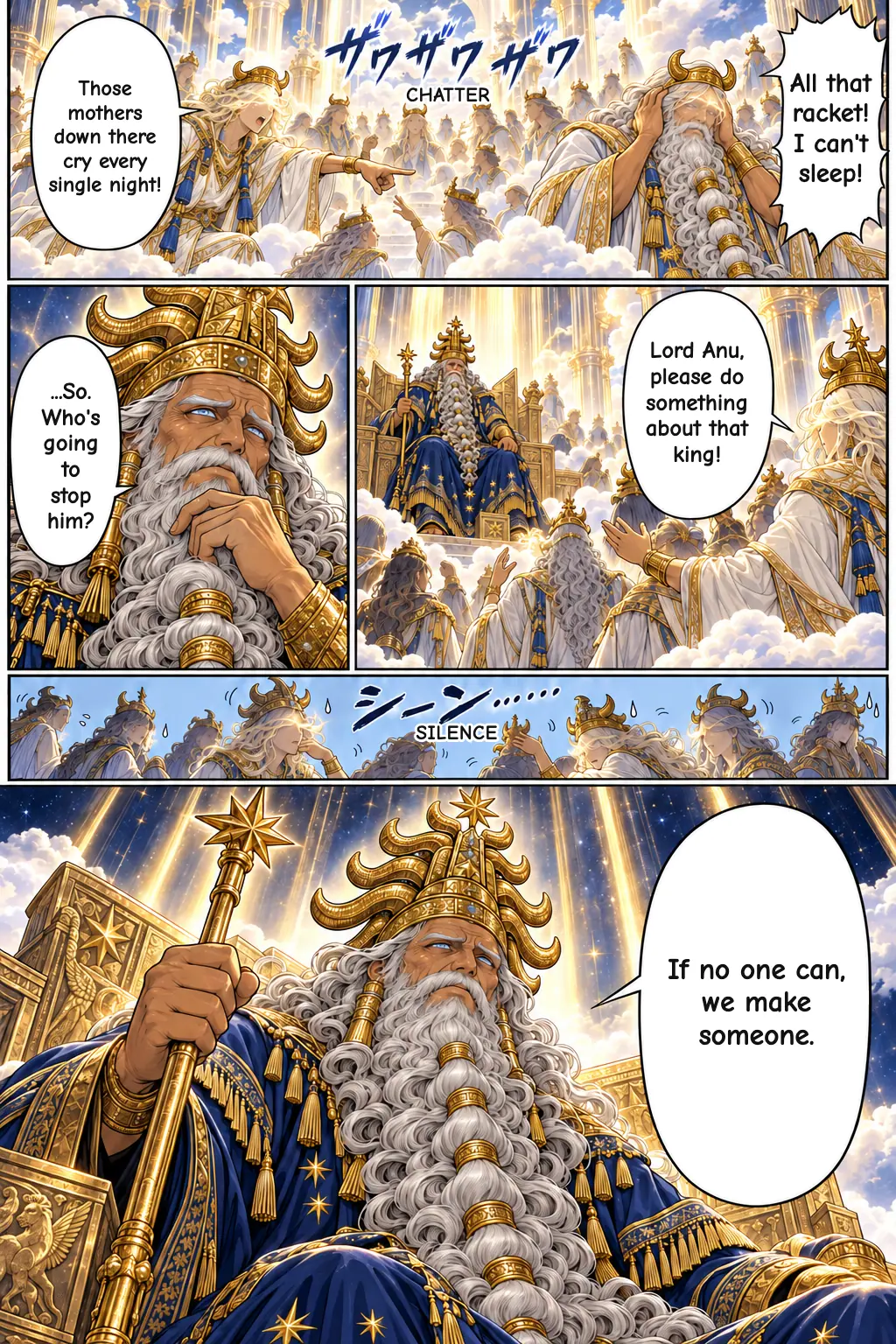
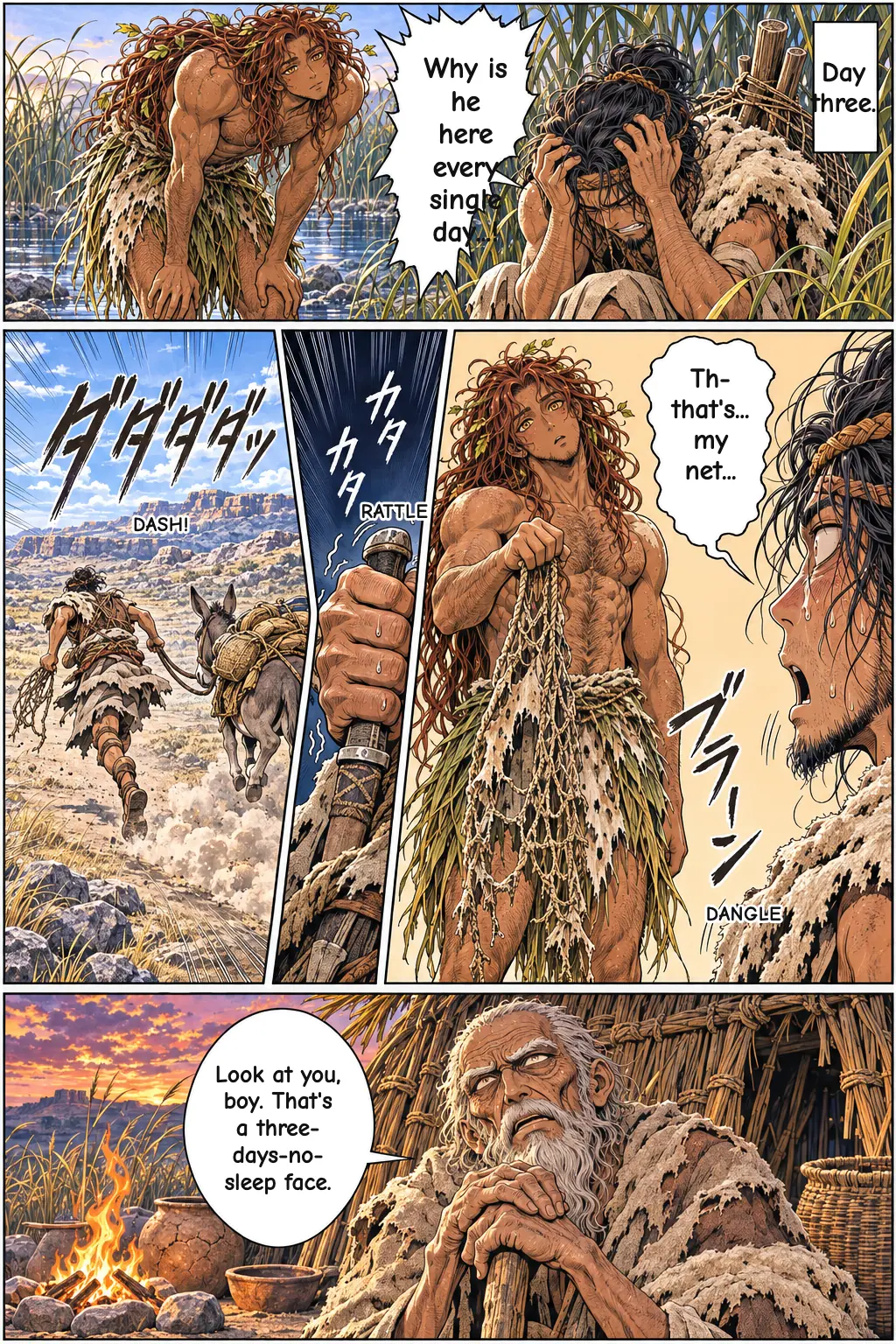
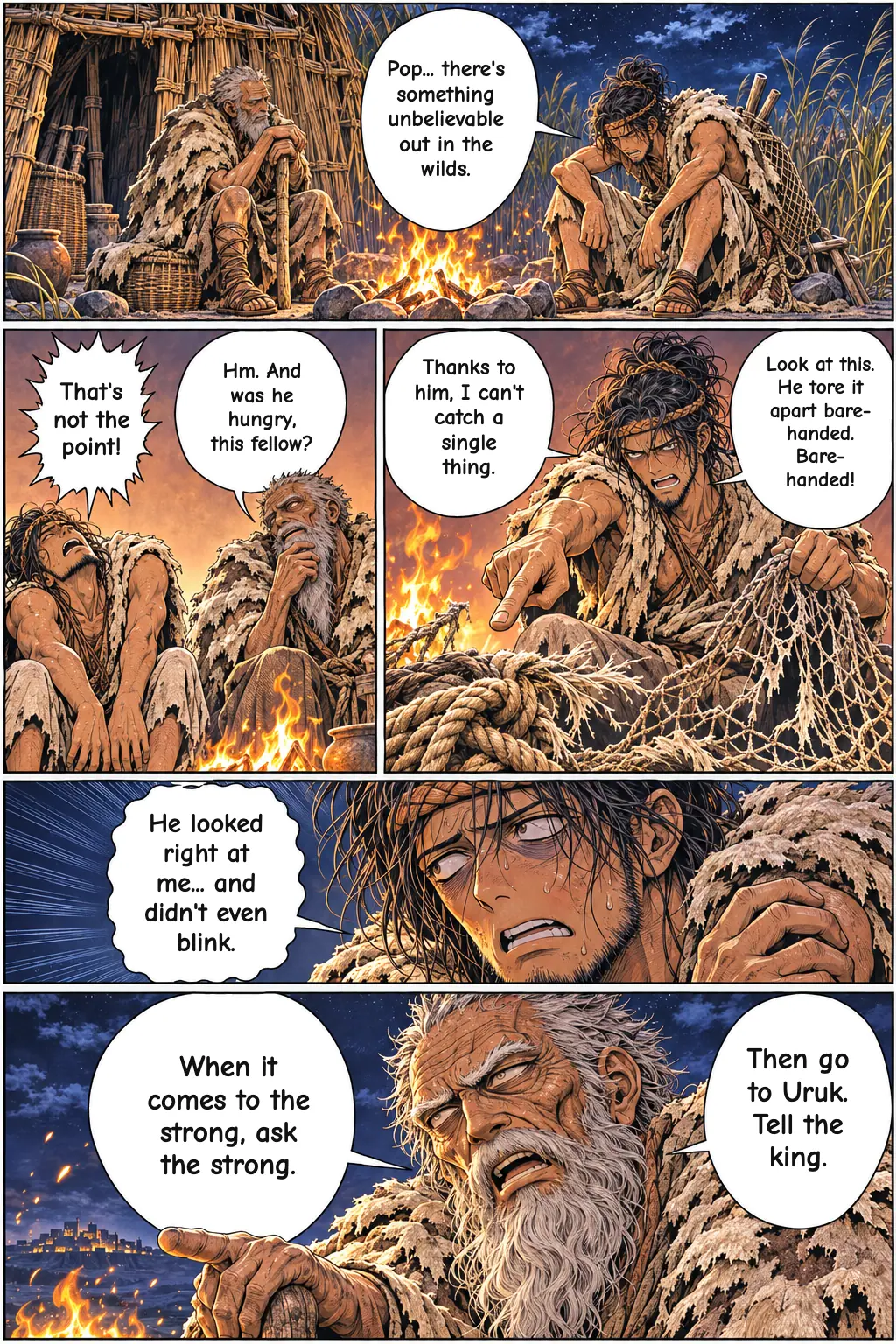
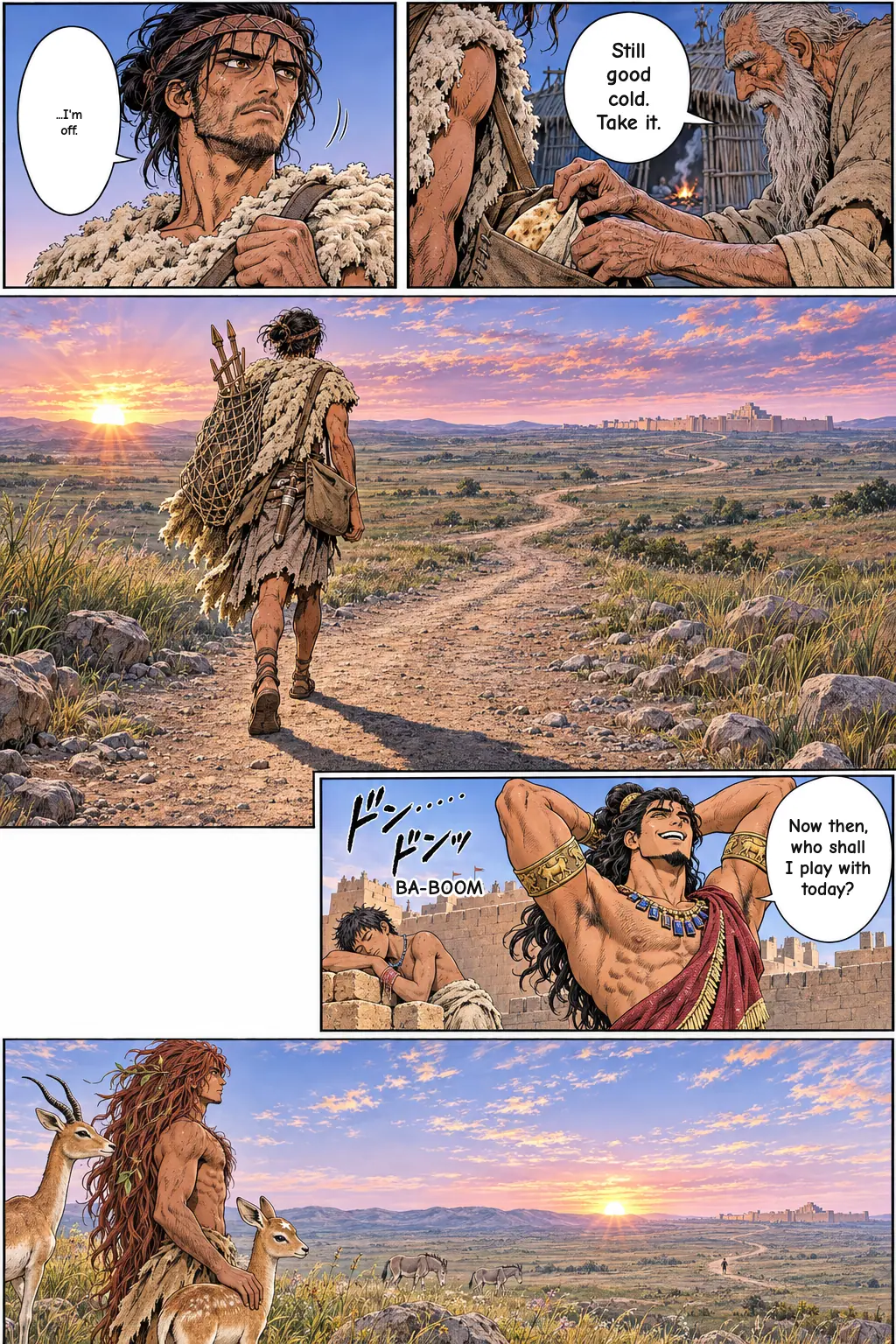
Gilgamesh, Uruk's young king, has more strength than he knows what to do with. He keeps ordering his collapsing subjects to run "one more lap," until their mothers' cries reach heaven. At the gods' request, the goddess Aruru throws a pinch of clay into the wild, and from it rises Enkidu, a wild man who lives among the beasts and smashes traps to save his friends. But someone has seen him, and a frightened trapper sets out for Uruk.
Get new episodes in your feed. Follow us on:ThreadsBluesky
Story summary
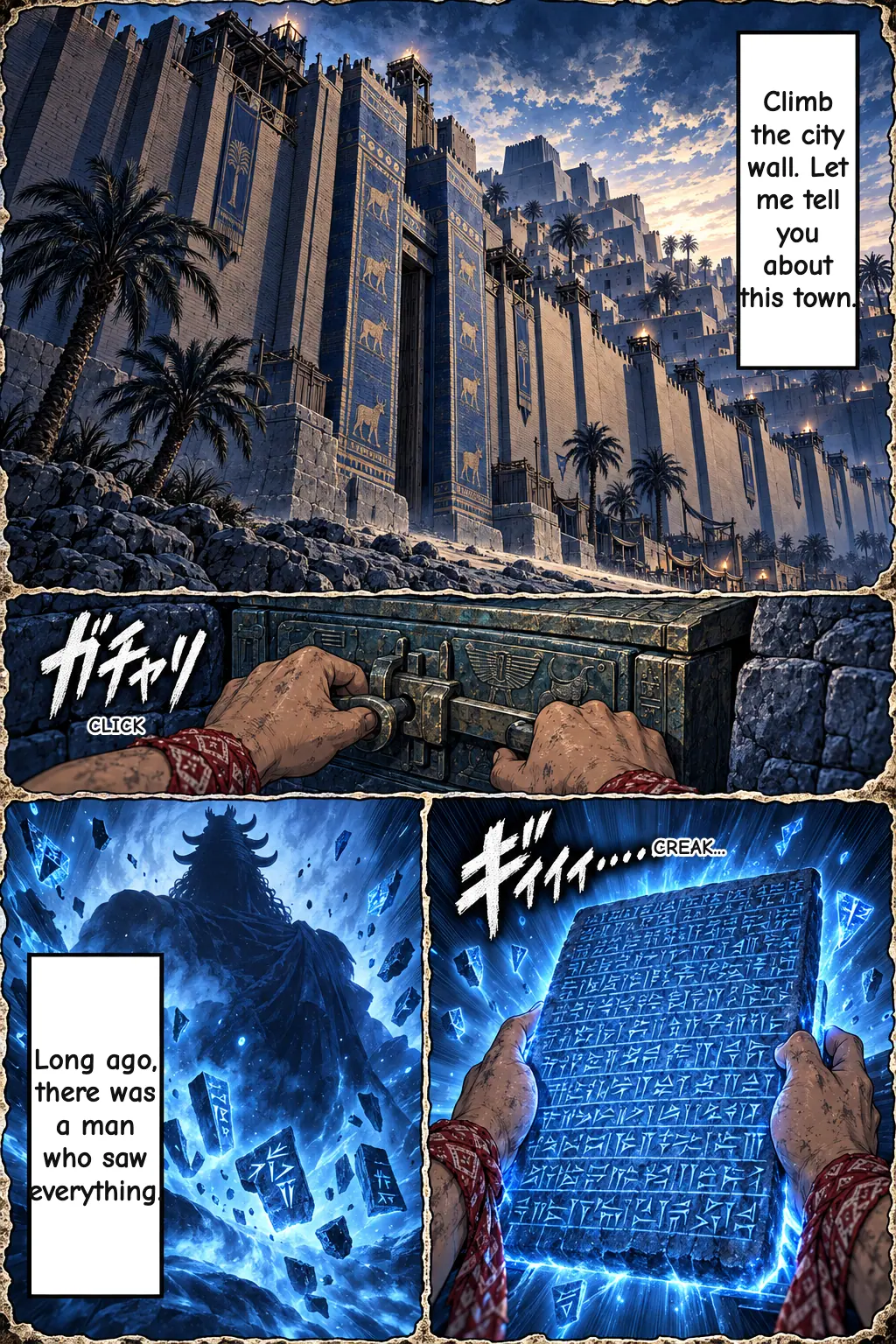
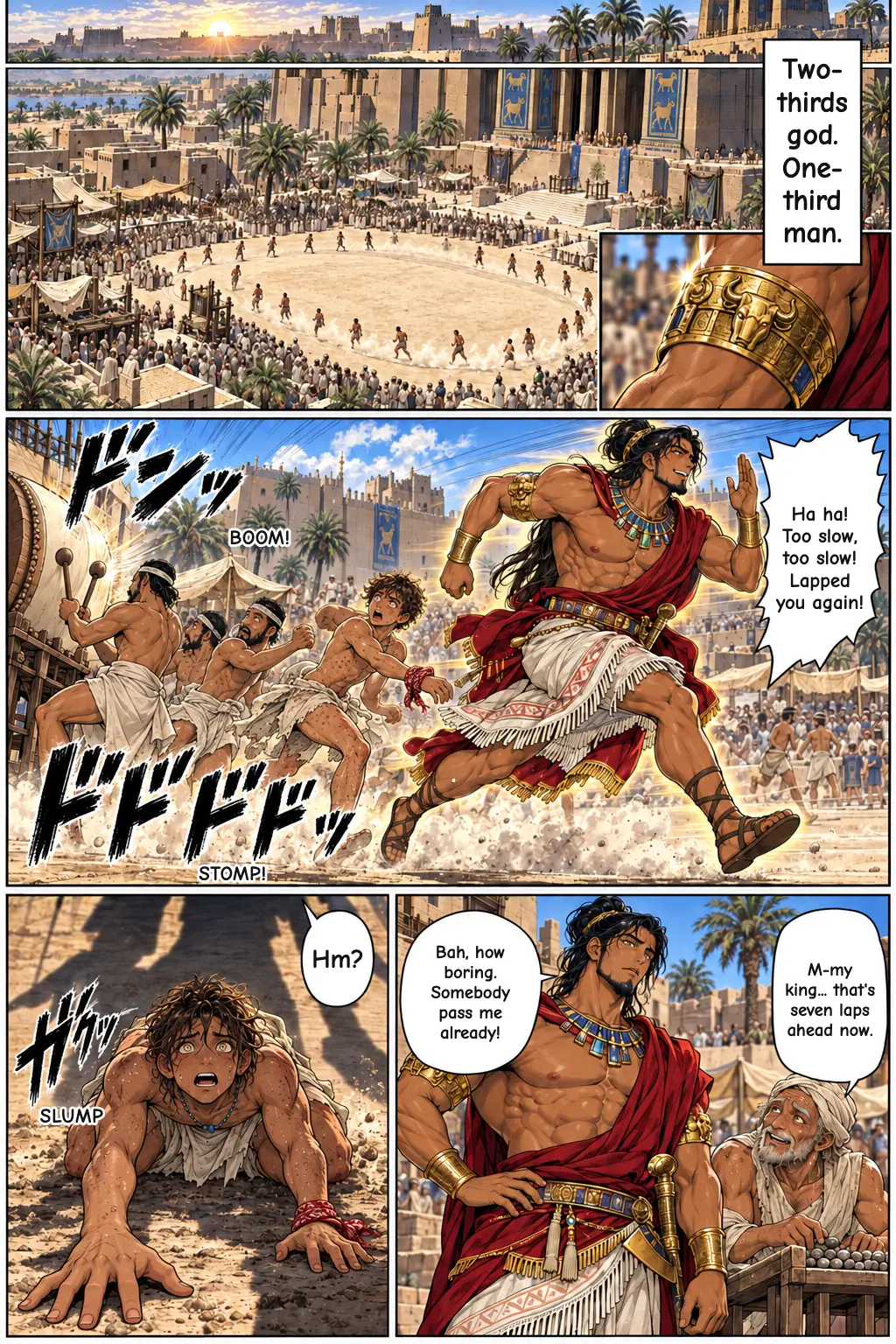
The epic opens with a narrator speaking directly to the reader. Its ancient title comes from its first words, roughly "He who saw the deep," and the narrator praises Gilgamesh as a man who came to know everything. Then the voice becomes a tour guide: climb the great walls of Uruk, study the foundations, open the copper box, and take out the lapis lazuli tablet that holds the king's story. Gilgamesh, Uruk's young king, is two-thirds god and one-third human. No one can match his body or his strength, and that is the problem. He gives his people no rest, day or night.
Epic of Gilgamesh Summary: How Enkidu Was Created from Clay
In short: The creation of Enkidu is the opening crisis of the Epic of Gilgamesh, the ancient Mesopotamian poem about the king of Uruk. When Gilgamesh wears out his people and their cries reach heaven, the gods ask the goddess Aruru to make his equal, and she throws a pinch of clay into the wild. From it rises Enkidu, a wild man who lives among animals until a frightened trapper reports him and sets in motion the meeting that will change both men.
The Original Story: A King Too Strong for His City
The epic opens with a narrator speaking directly to the reader. Its ancient title comes from its first words, roughly "He who saw the deep," and the narrator praises Gilgamesh as a man who came to know everything. Then the voice becomes a tour guide: climb the great walls of Uruk, study the foundations, open the copper box, and take out the lapis lazuli tablet that holds the king's story.
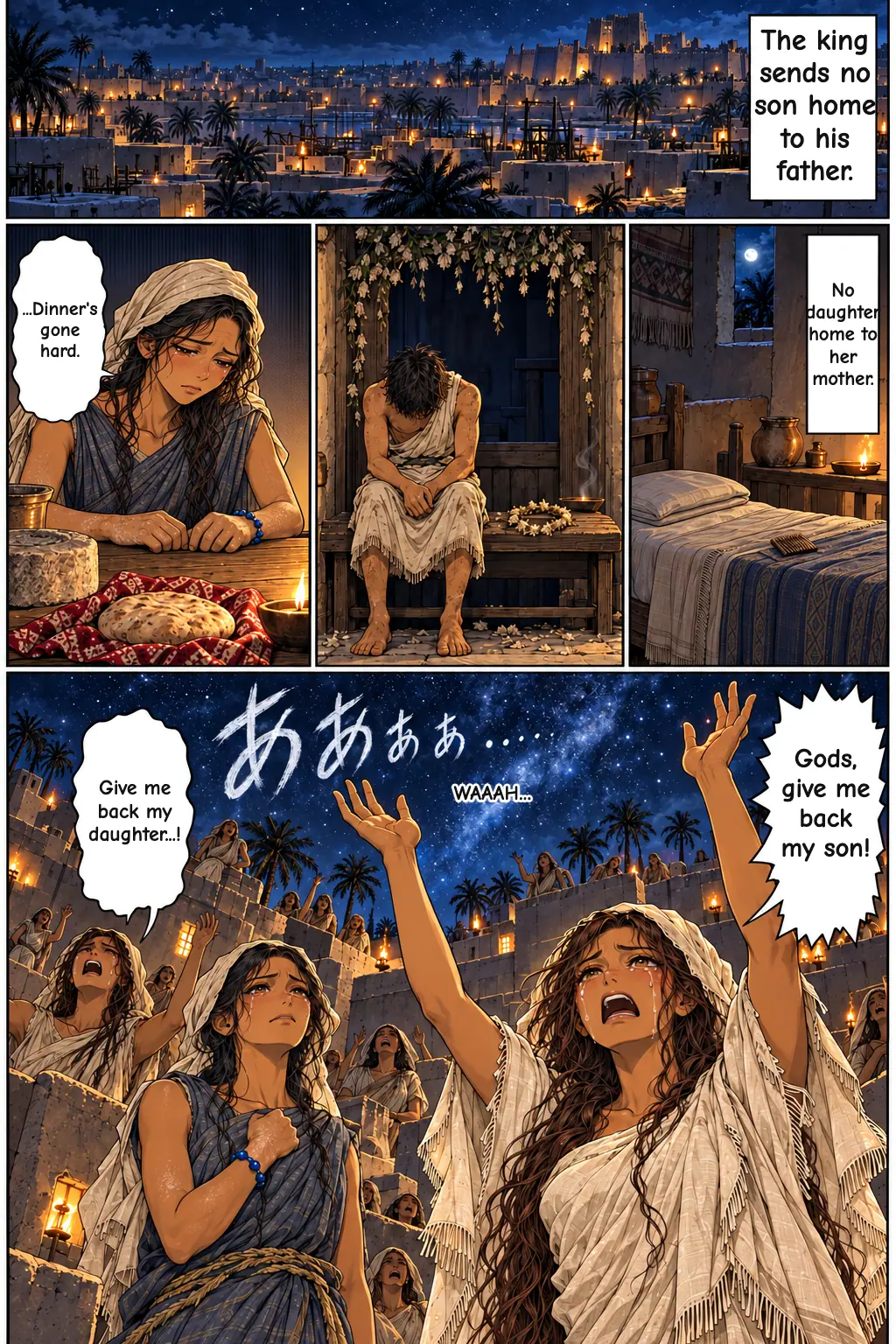
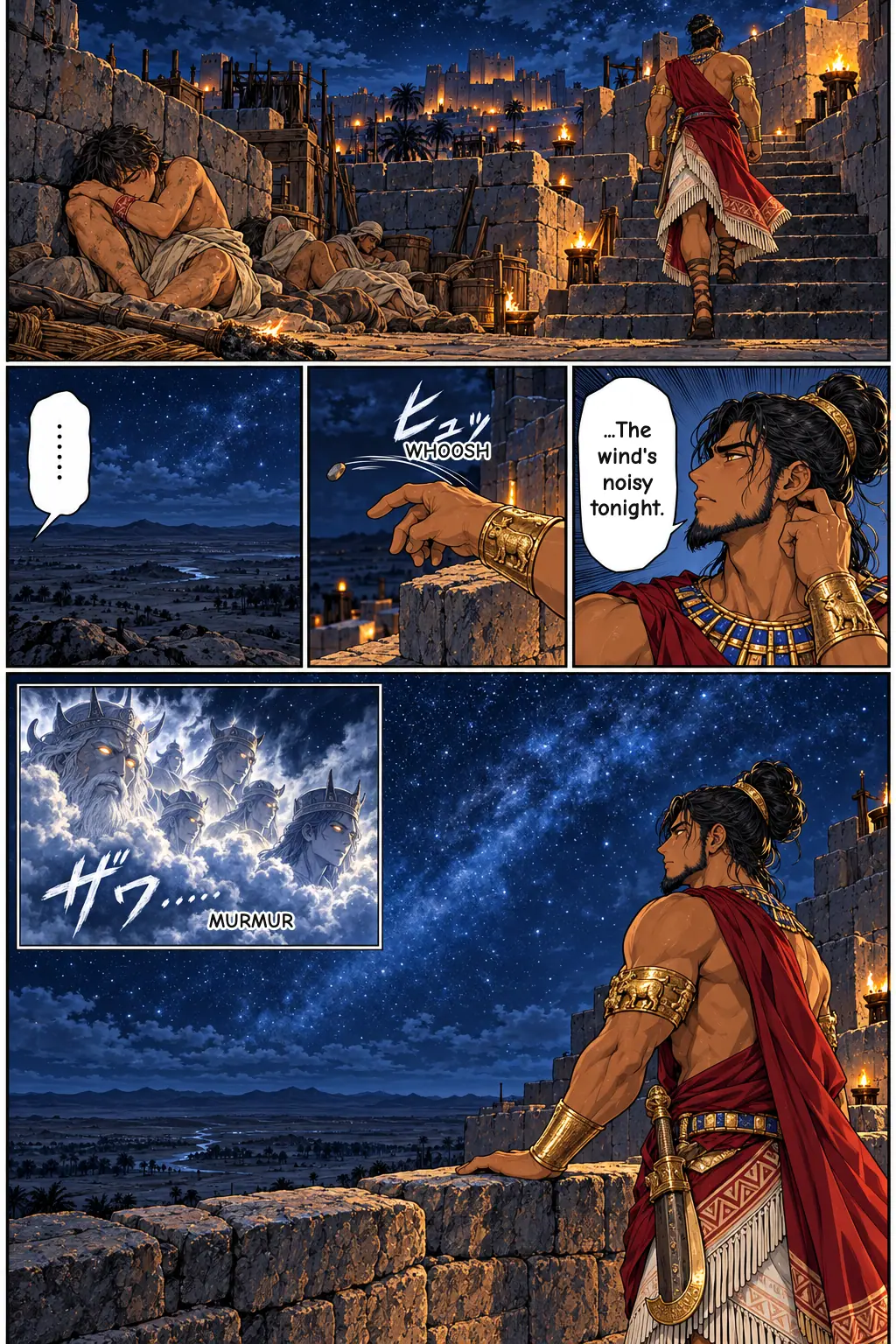
Gilgamesh, Uruk's young king, is two-thirds god and one-third human. No one can match his body or his strength, and that is the problem. He gives his people no rest, day or night. Sons are not left to their fathers, and daughters are not left to their mothers. The laments, especially those of the women, rise all the way to heaven.
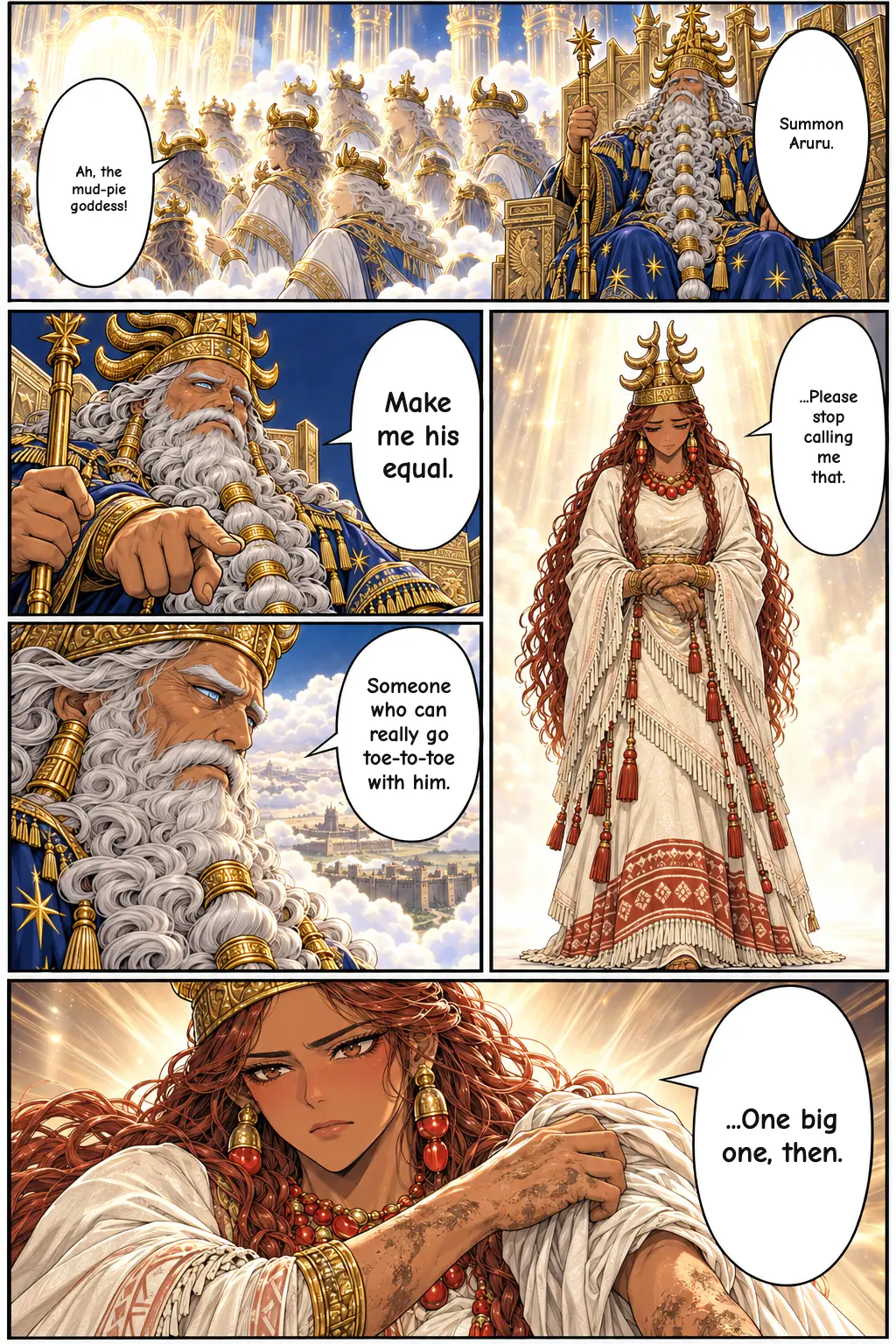
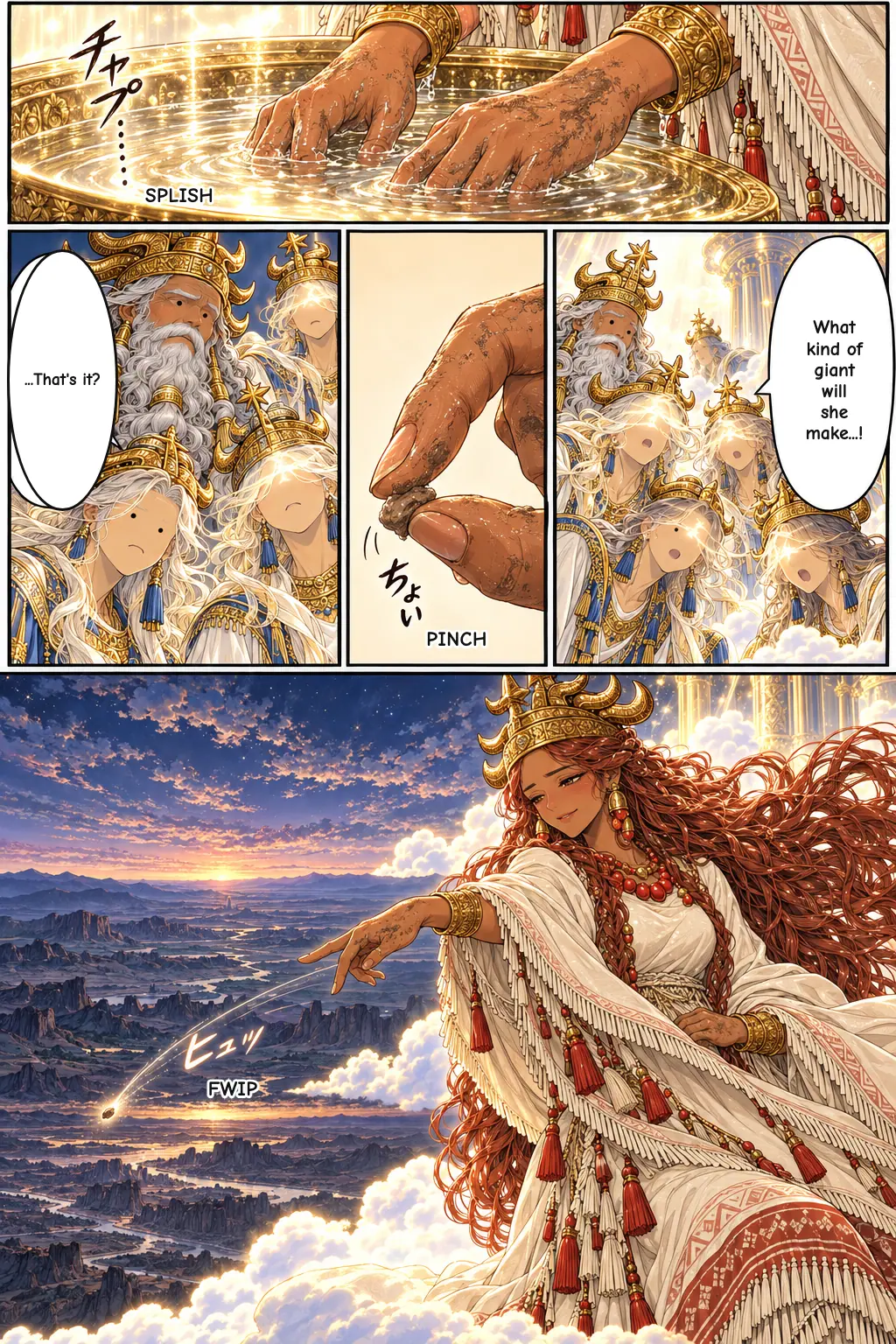
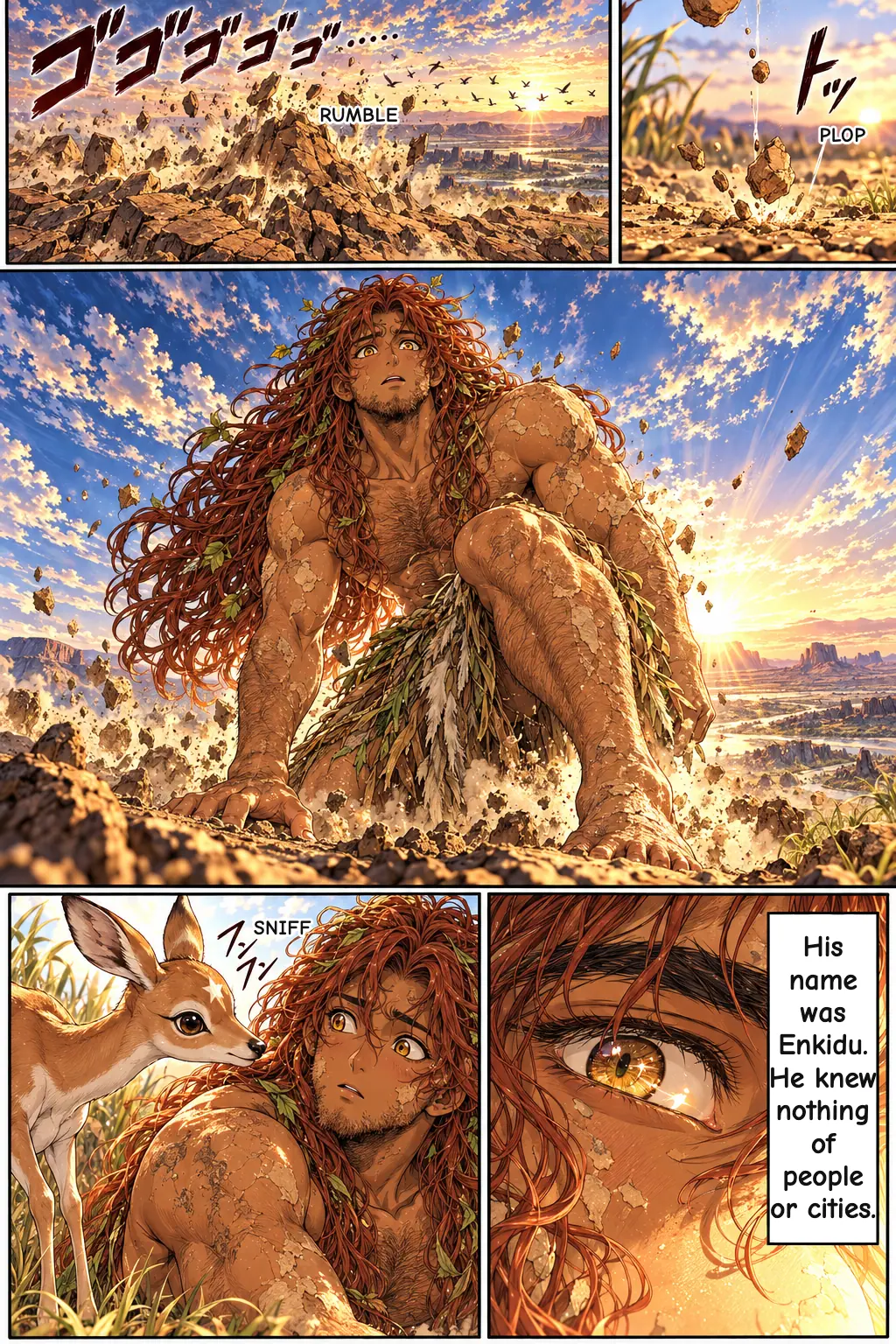
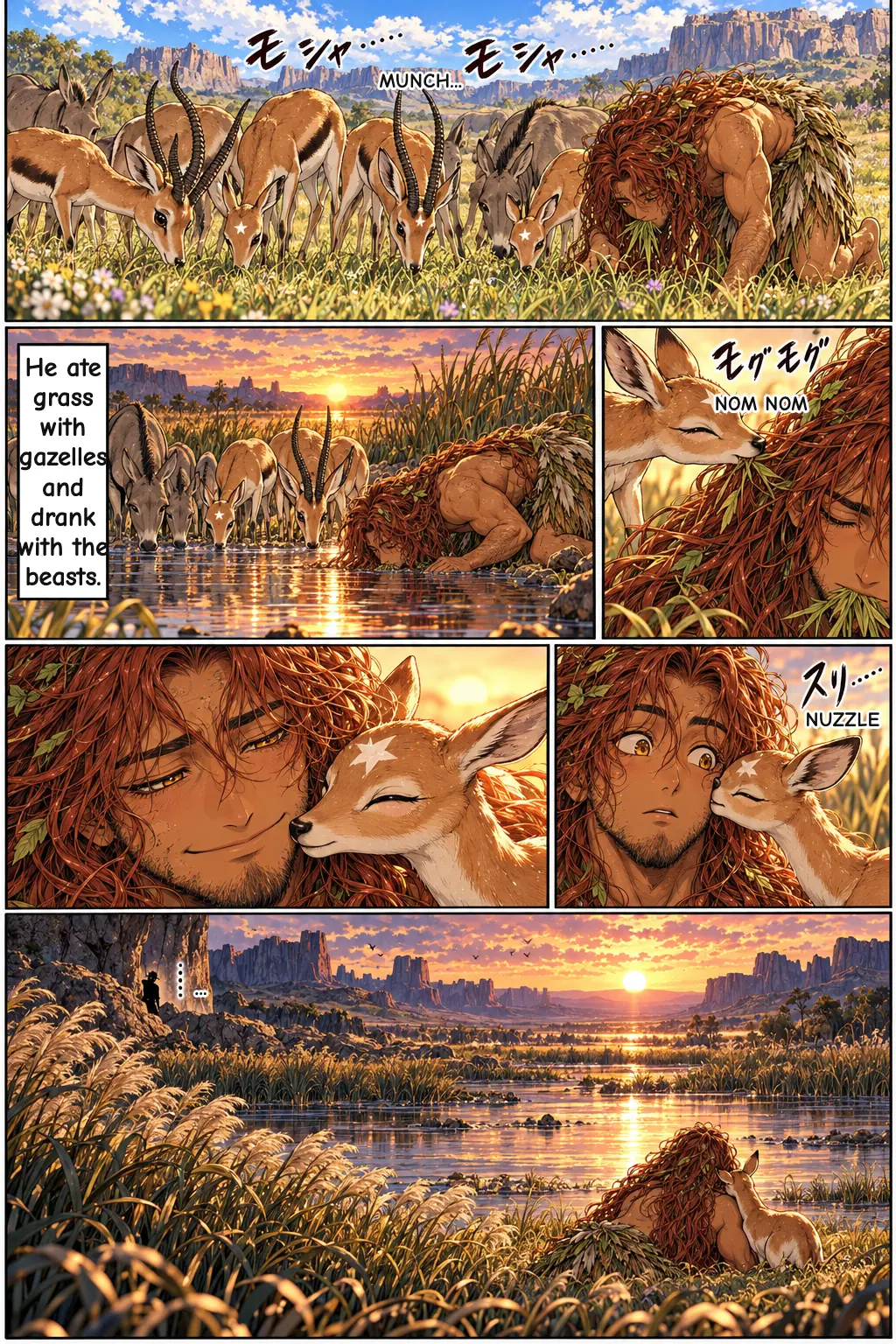
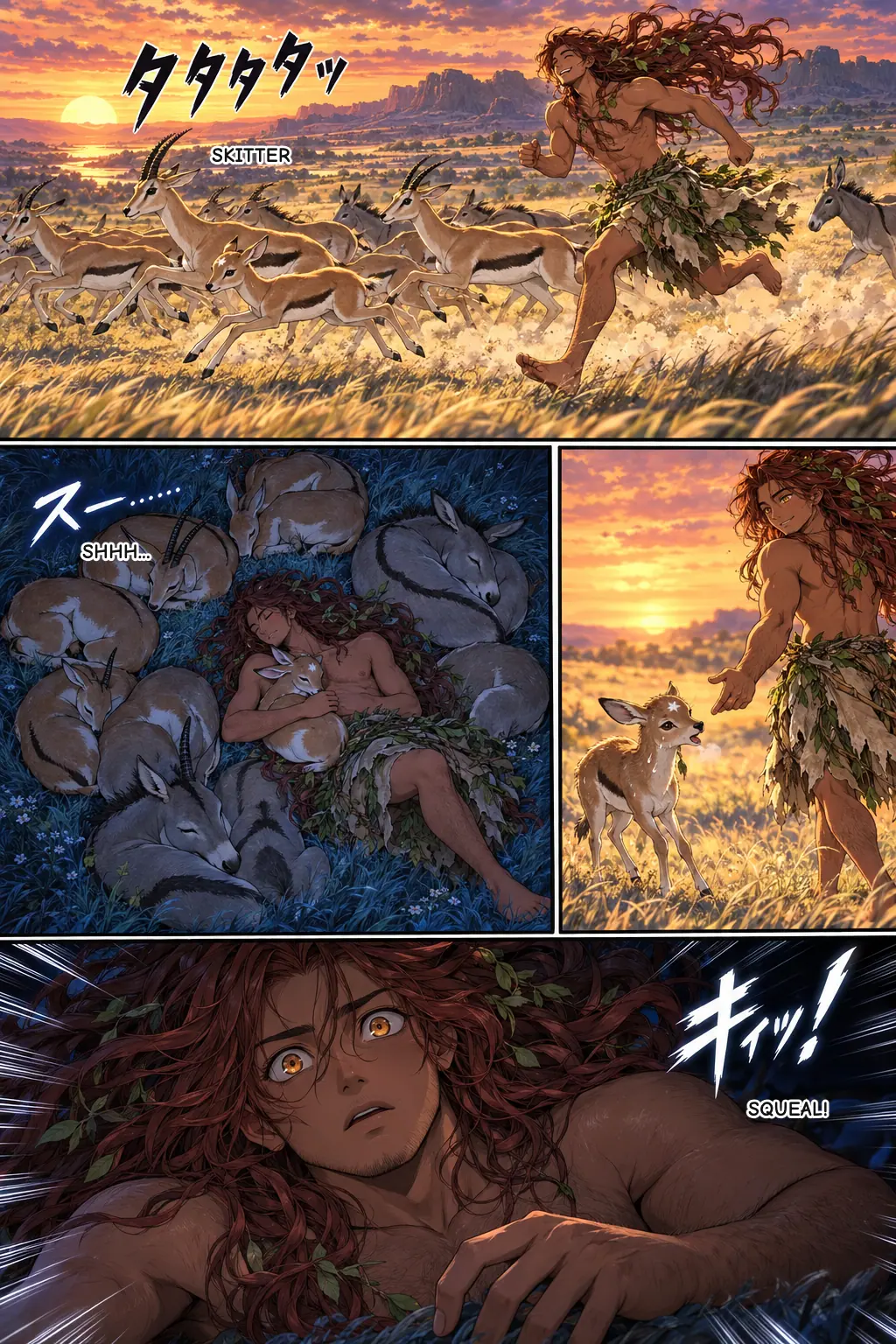
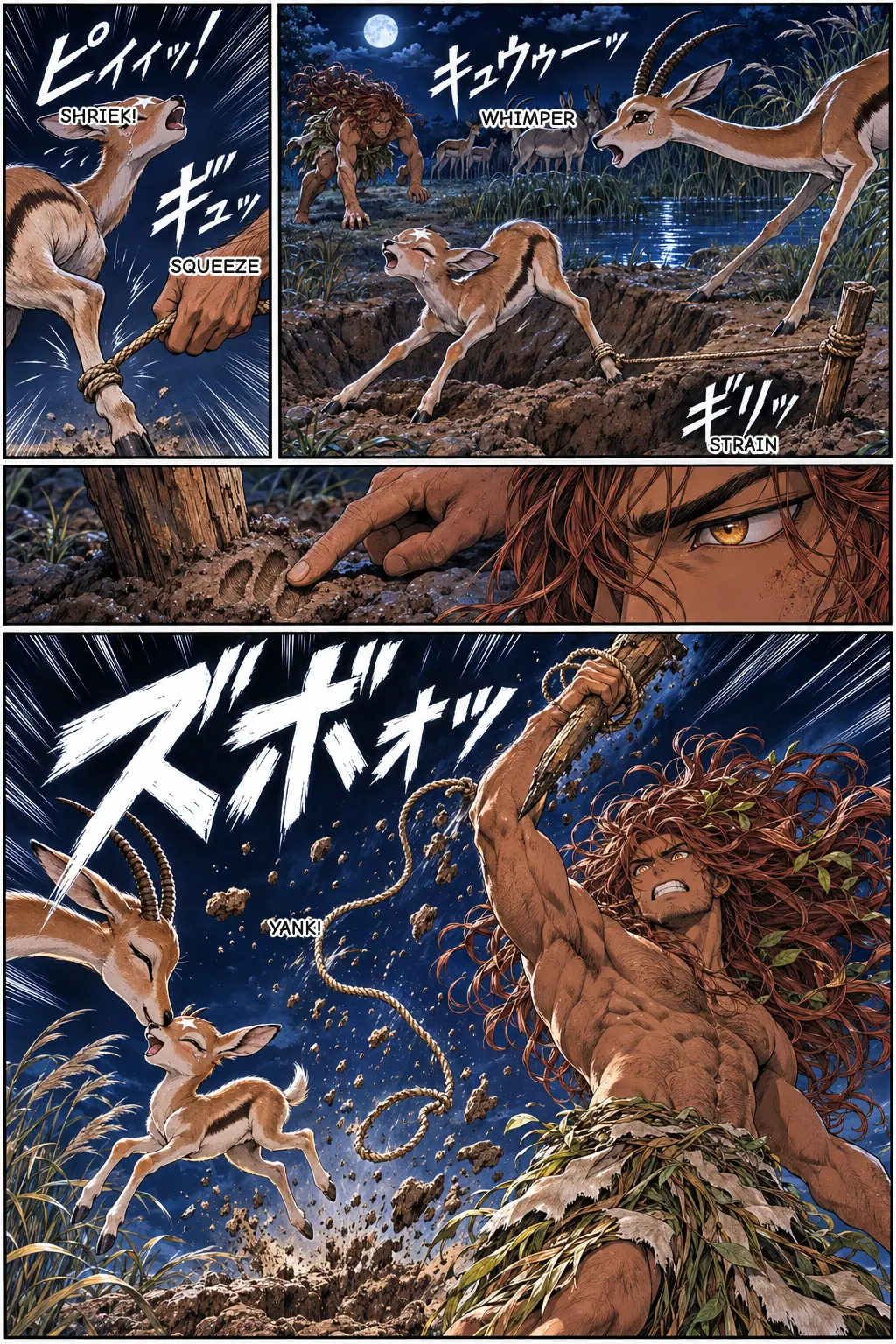
The gods do not strike the king down. Instead, they ask Aruru, a mother goddess who shapes human beings, to make someone who can stand against him. She washes her hands, pinches off some clay, and throws it into the wilderness. From it comes Enkidu, whose body is covered in hair and whose locks are as long as a woman's. He knows nothing of people or countries. He grazes with the gazelles and drinks with the animals at the watering hole.
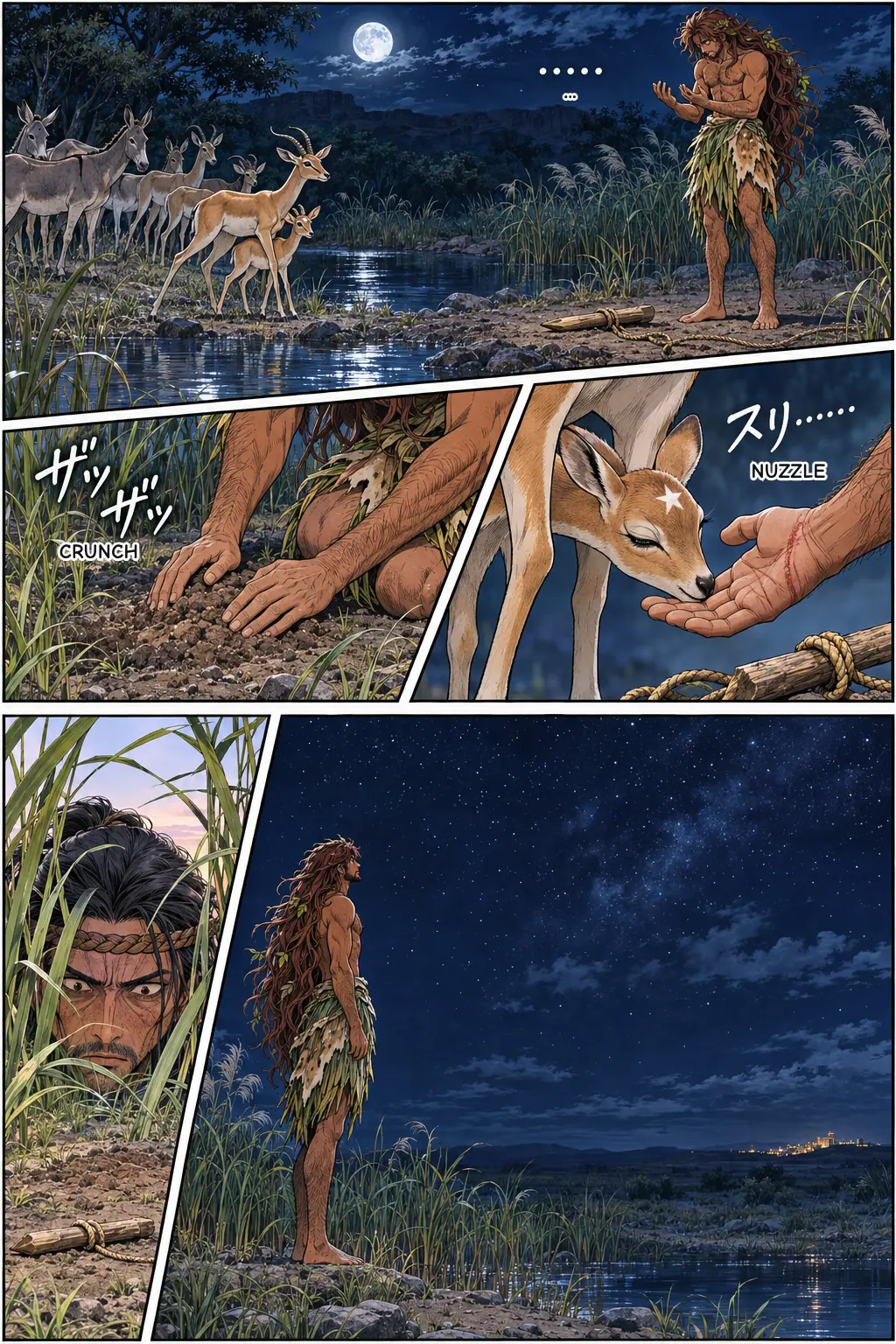
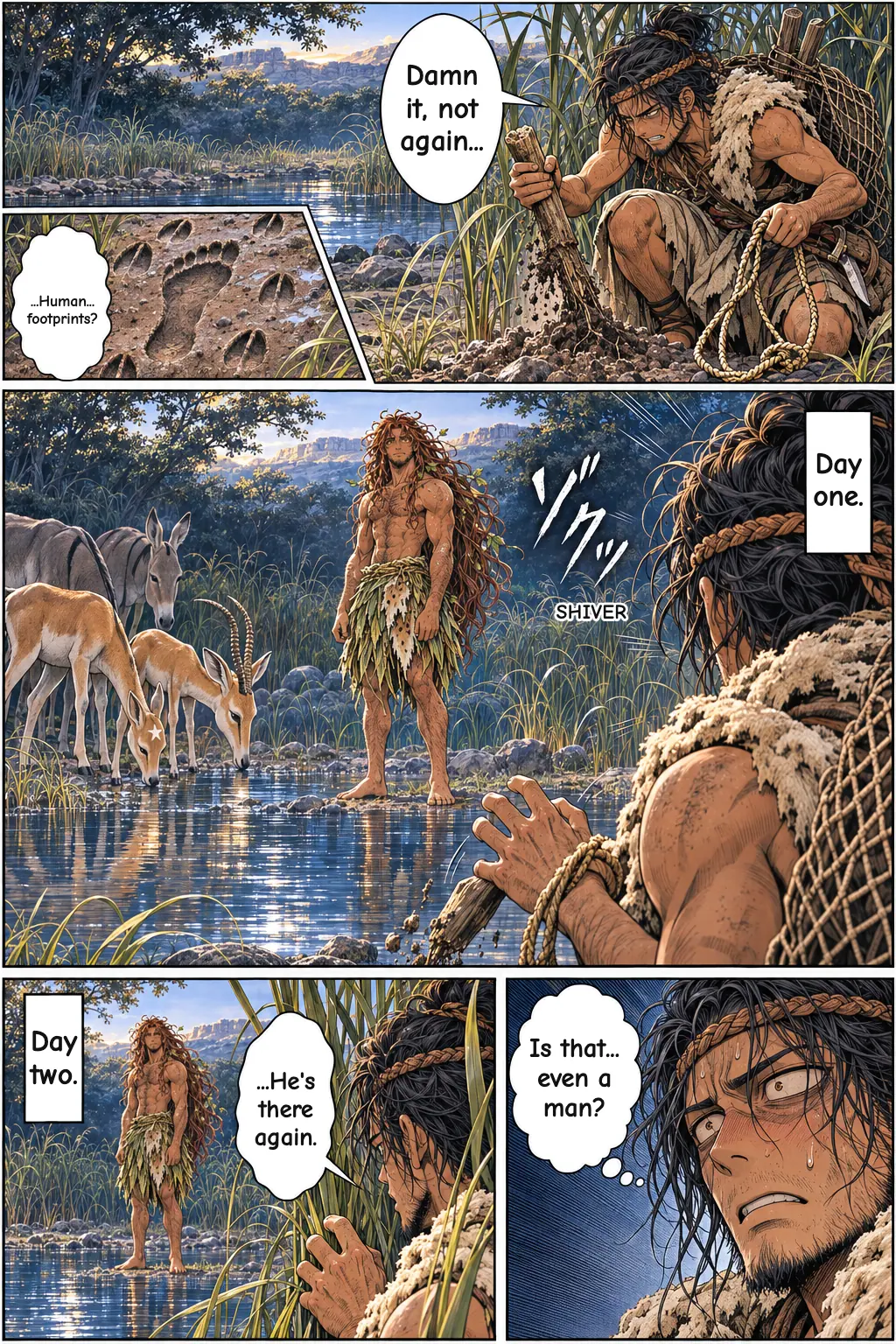
A trapper meets him at the water three days in a row and goes home stiff with fear. Enkidu has been filling in his pits and pulling up his snares, letting the animals escape, and the man can no longer hunt. His father advises him to go to Uruk, tell Gilgamesh, and ask for Shamhat, a woman who can draw the wild man away from the herd.
What Comes Next: Shamhat, Two Dreams, and a First Meal
The source continues well past this episode. Gilgamesh gives the same order as the father, and Shamhat goes with the trapper to the watering hole. Her Akkadian title, harimtu, is usually translated as prostitute or courtesan. She and Enkidu spend six days and seven nights together, though the older Old Babylonian version counts the time differently. When he returns to the animals, the gazelles run from him. His legs no longer carry him as they did, but he has gained understanding.
Shamhat tells him about Uruk and its king. Enkidu begins to want a friend, and he also declares that he will challenge Gilgamesh and prove himself the strongest. She reveals that the king already knows he is coming. Gilgamesh has told his mother, the wise goddess Ninsun, about two dreams: in one, a heavy lump falls from the sky, and in the other, an axe lies in Uruk's street. Each time, the people crowd around it and the king loves it as he would a wife. Ninsun explains that both dreams announce a powerful companion. Some scholars think the words for "lump" and "axe" also play on other Akkadian words.
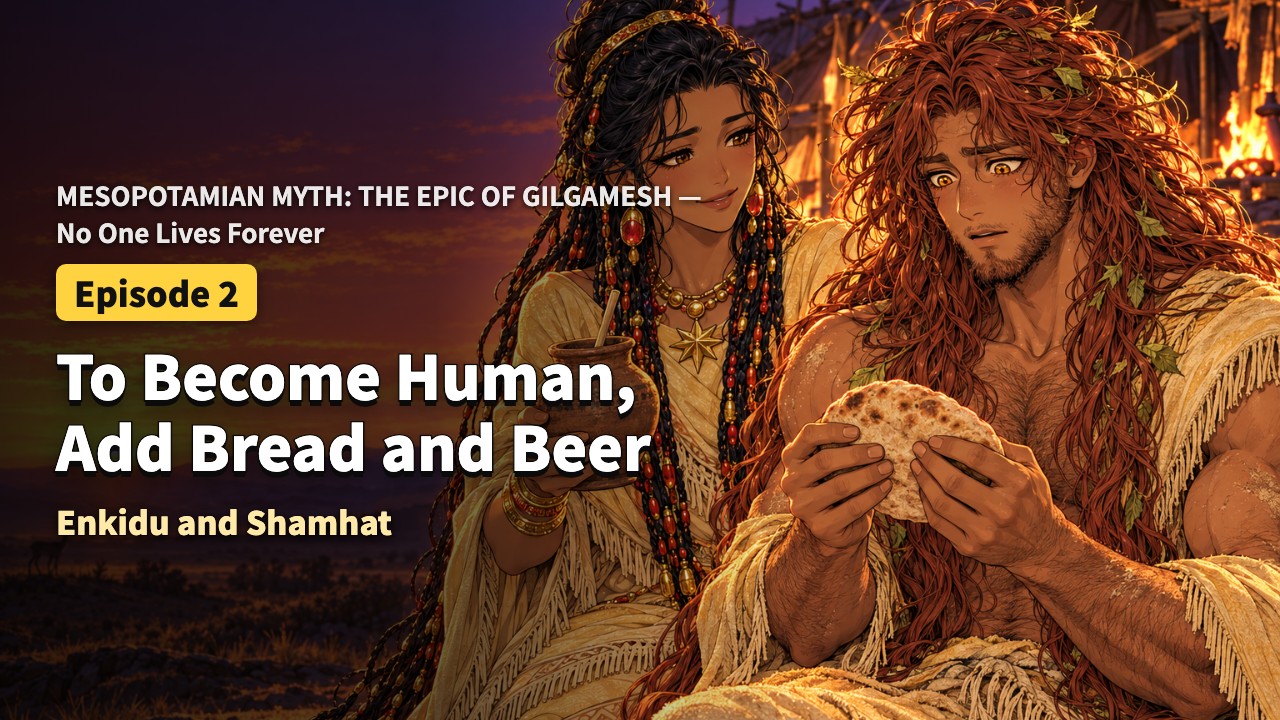
The Standard Babylonian text of Tablet II is badly damaged, so this part is usually filled in from an Old Babylonian copy known as the Pennsylvania Tablet. Shamhat shares her clothing with Enkidu and leads him by the hand to a shepherds' camp. He has no idea what to do with the bread and beer set before him until she tells him that this is how people live. He eats his fill, drinks seven jars, and sings with joy. After a barber grooms him and he rubs himself with oil, he looks like a man, and he guards the flocks at night against lions and wolves.
What the Myth Is About: Culture and Historical Background
Uruk was a real and very old city in southern Mesopotamia, in present-day Iraq. Gilgamesh is thought to be based on one of its early kings, although the evidence for the historical man is thin. Sumerian poems about him came first. The version retold here is the later Standard Babylonian one, traditionally credited to a scribe named Sin-leqi-unninni, and it is pieced together from clay tablets that still have gaps.
The opening has a striking answer to tyranny: the gods' solution is not a punishment but an equal. A king with no rival has no limits, and the same figure sent to oppose him is announced in his dreams as the friend he needs. Enkidu's story also shows what the Mesopotamians valued in civilized life. Bread, beer, clothing, and grooming mark him as human, yet he pays for them by losing the speed and the animal companions he had. That friendship will later lead Gilgamesh to face the fact of death, the central theme of the epic.
What the Manga Changes
The core events of this episode come from the source: the king's excess, the cries reaching heaven, the pinch of clay, Enkidu's life among animals, the broken traps, and the frightened trapper. The manga's details are often its own.
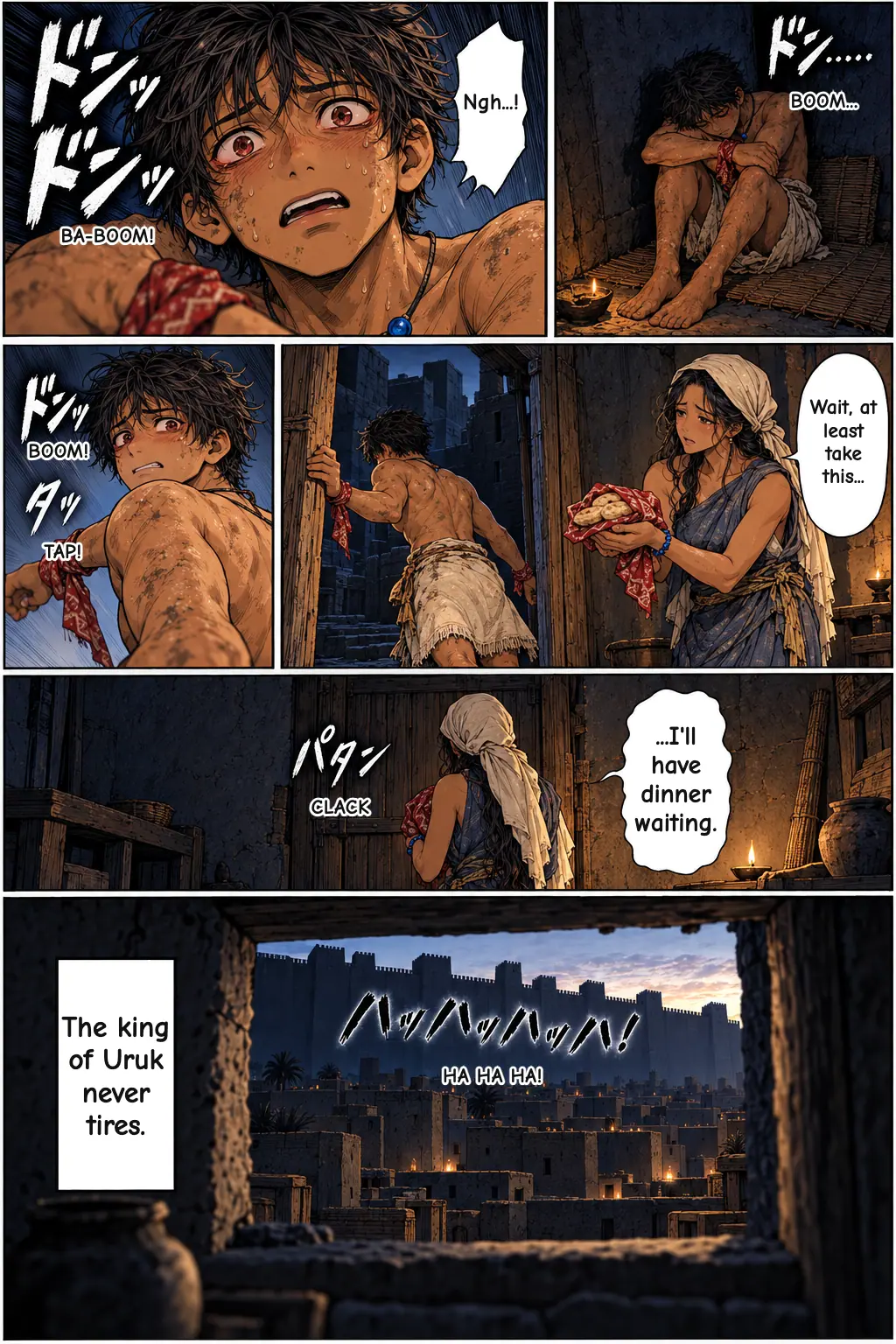
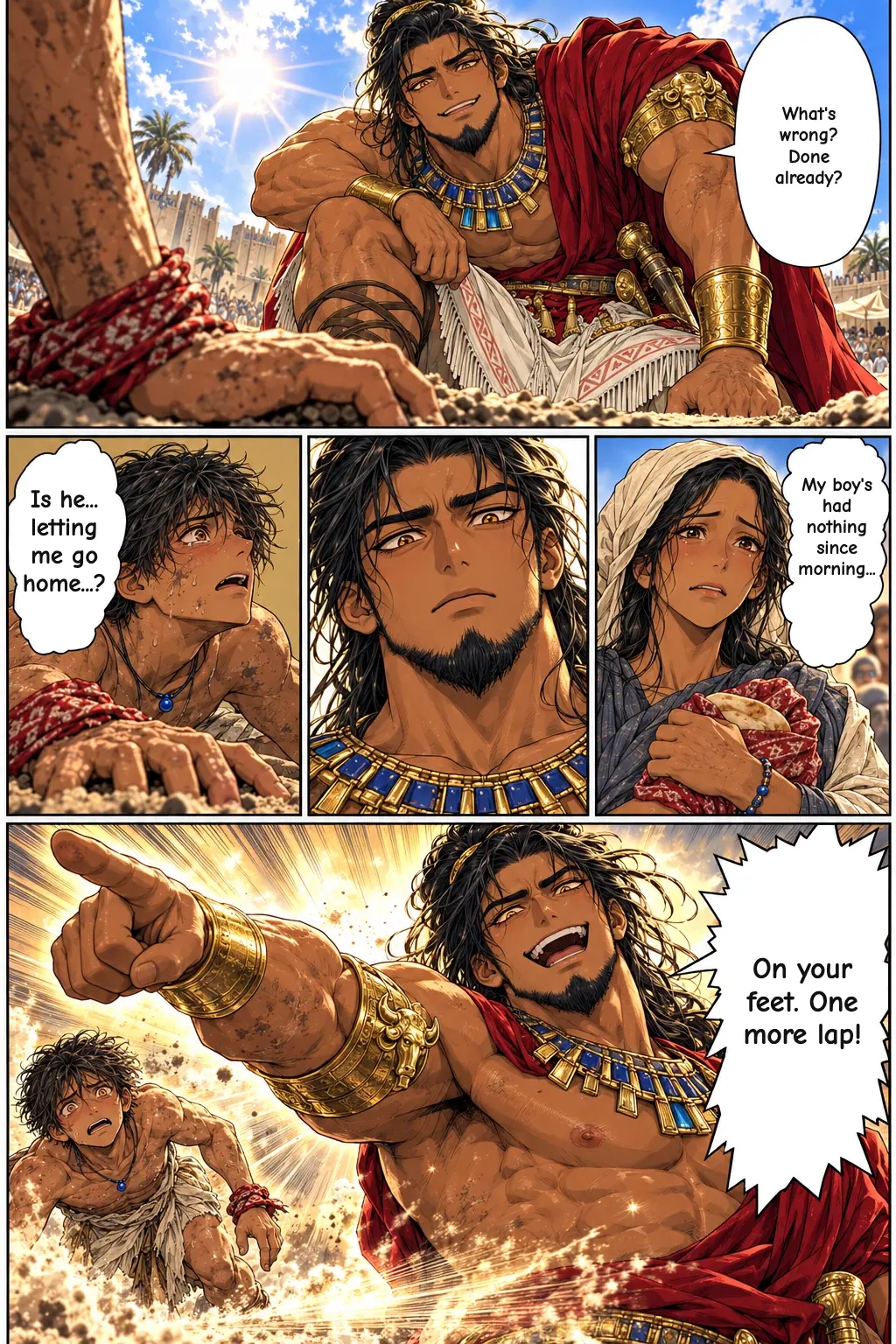
The original does not say clearly what the king's oppression actually is. The lines are difficult, and some scholars think they describe a ball-like game or forced labor, while others also read sexual exploitation into the lines about young women. The manga's image of exhausted subjects being ordered to run "one more lap" is a dramatization built on that uncertainty. Any sexual exploitation is only hinted at. The ordinary young man and his mother who give us a view from the crowd are also invented, since the poem does not follow any individual subject.
Calling the animals Enkidu's "friends" is the manga's warm framing of what the poem simply describes as him living beside them. The faces, ages, and personalities of the trapper and his father are created for the comic, as are the look of Uruk and the wilderness and the way the narrator appears on the page. As the story continues, Shamhat's personality and feelings, the way Enkidu learns to speak, the visual staging of the dreams, and the mood of the shepherds' feast are also interpretations. The six days and seven nights are shown only through the passing of time.
Where to Read It
If you want to see how a pinch of clay becomes one of literature's first great friendships, MESOPOTAMIAN MYTH: THE EPIC OF GILGAMESH — No One Lives Forever is on Manga Portal. Episode 1, "To Stop the King, a Goddess Threw Clay," is the place to start. Every episode is free, and you do not need an account to read it.
Characters in this episode
Gilgamesh
The young king of Uruk, two-thirds god and one-third human, whose unmatched strength leaves his people no rest.
Enkidu
A hairy wild man made from clay as Gilgamesh's equal, who lives among animals and frees them from traps.
Aruru
A mother goddess who, at the gods' request, pinches off clay and throws it into the wilderness to create Enkidu.
The Trapper
An unnamed hunter whose pits and snares are ruined by Enkidu and whose fearful report carries the news to Uruk.
Shamhat
A woman of Uruk, usually described as a prostitute or courtesan, who leads Enkidu from the wild into human society.
Ninsun
Gilgamesh's wise divine mother, who explains that his two dreams announce the arrival of a powerful companion.
FAQ
Why did the gods create Enkidu?
The people of Uruk were worn down by King Gilgamesh, and their laments reached heaven. The gods answered by having the goddess Aruru make someone who could match him, rather than by punishing the king directly.
How was Enkidu created in the Epic of Gilgamesh?
Aruru washed her hands, pinched off some clay, and threw it into the wilderness, where it became Enkidu. He emerged covered in hair and lived with the animals, knowing nothing of human society.
What did Gilgamesh do to his people?
The poem says that he gave them no rest and did not leave sons to their fathers or daughters to their mothers. The exact meaning of the passage is unclear; proposed readings include forced labor, an exhausting game, and sexual exploitation.
Was Gilgamesh a real person?
He may have been. Gilgamesh is thought to be based on an early king of Uruk, a real Mesopotamian city, but the evidence is limited and the epic itself is legend, not history.
What do Gilgamesh's dreams about the lump and the axe mean?
His mother, the goddess Ninsun, explains that both dreams foretell the arrival of a mighty companion whom he will love, and that companion is Enkidu. Some scholars also see Akkadian wordplay in the two objects.