Episode 1The World's First Hero Was a TyrantGilgamesh and Enkidu
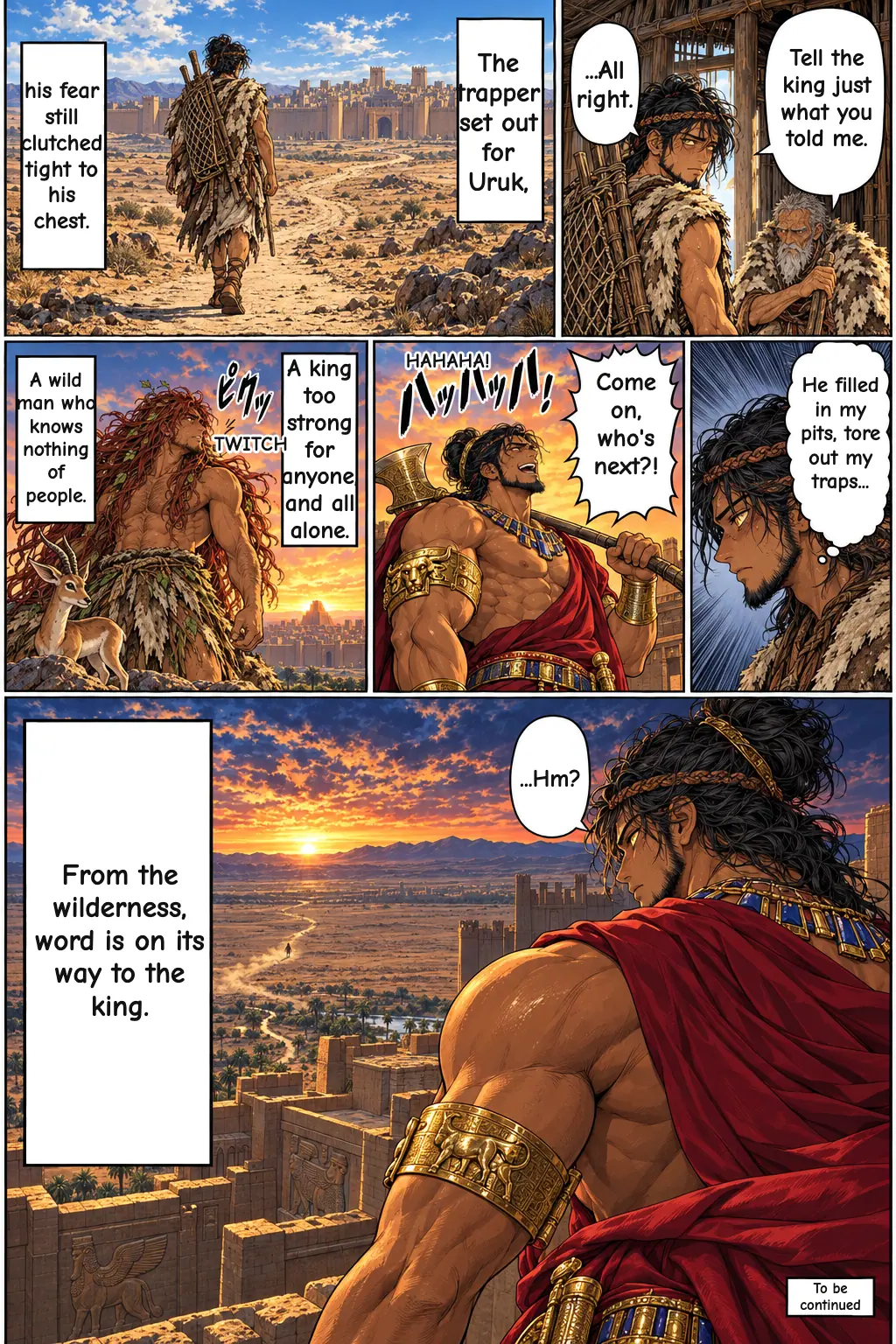
Gilgamesh is a young king no one can stop, and the people of Uruk suffer under him. Their cries reach the heavens, so the goddess Aruru shapes Enkidu, a wild man, from clay. A trapper spots him at a watering hole and, still afraid, sets out for Uruk.
Epic of Gilgamesh Summary: Gilgamesh the Tyrant and Enkidu's Creation
The Original Story: How the Epic of Gilgamesh Begins
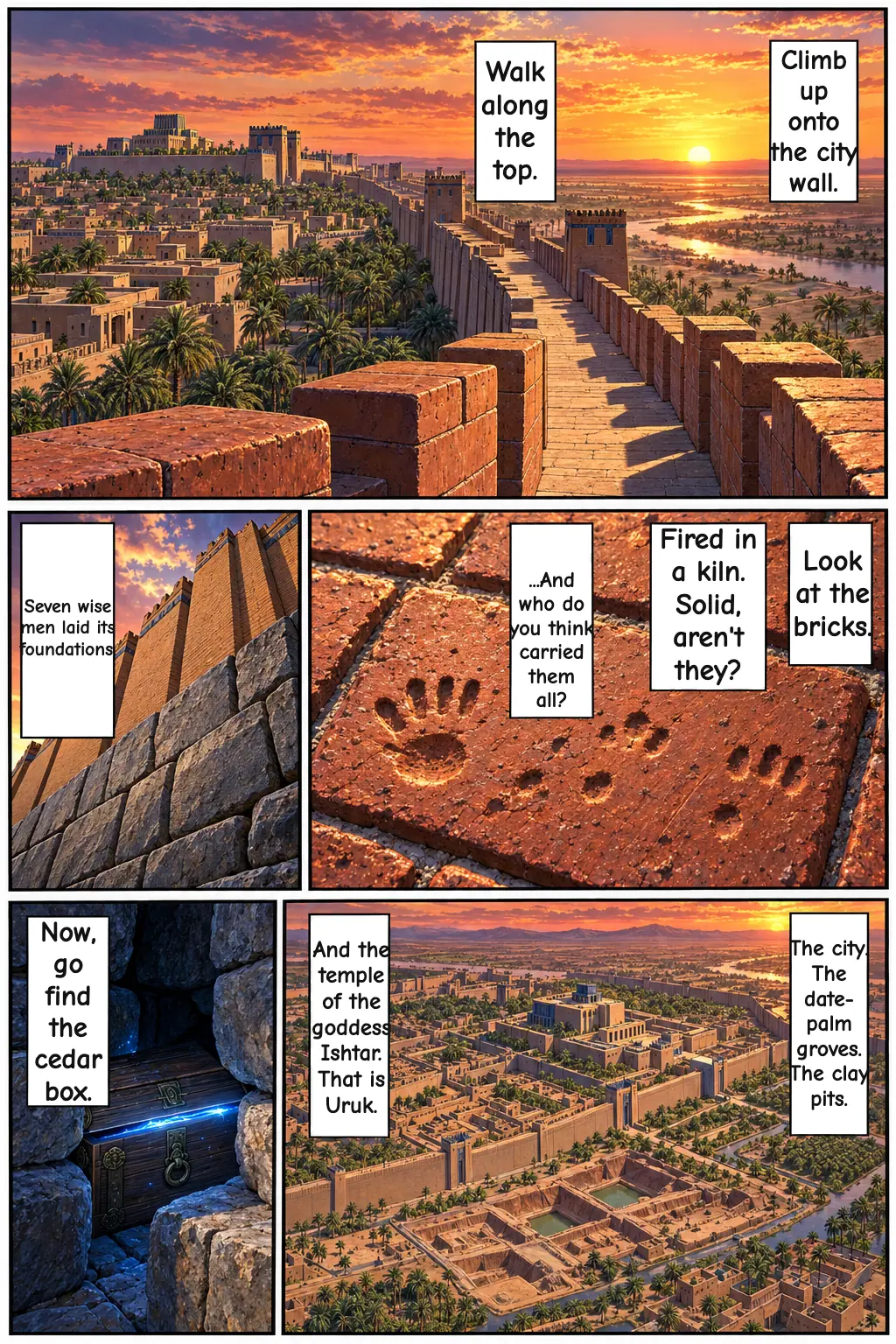
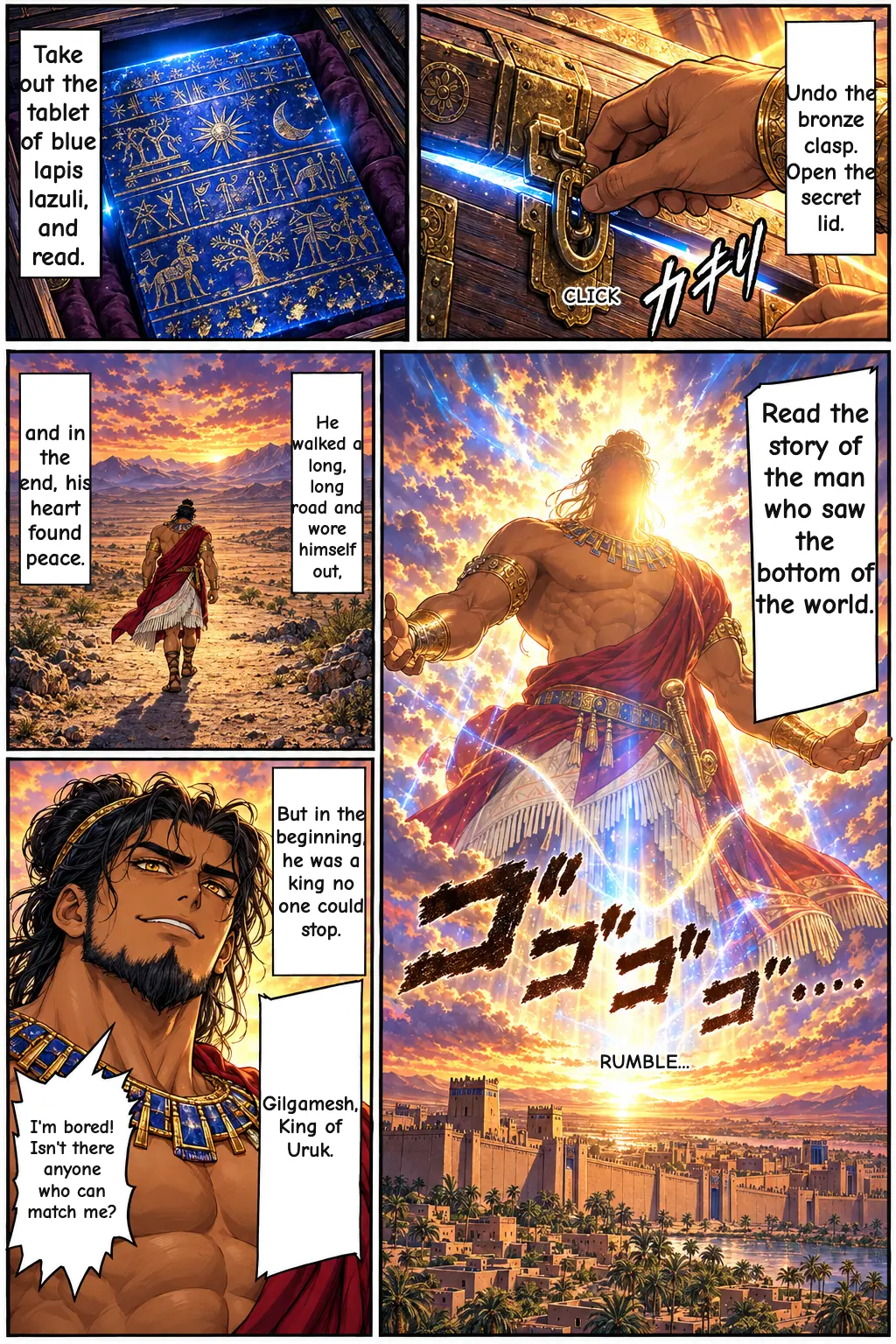
The Epic of Gilgamesh is one of the oldest surviving works of literature. Its best-known form, the Standard Babylonian version, was written in Akkadian on eleven or twelve clay tablets. It doesn't open with action. It opens with an invitation. A narrator who is never named praises a man who saw the depths of the world. This man learned hidden things, brought back knowledge from the time before the Great Flood, wore himself out on long journeys, and finally found rest. He wrote his hardships down on stone and built the great walls of Uruk.
Then the narrator turns to the reader and speaks directly to "you": climb the wall of Uruk and walk along it. Look closely at the foundations and the kiln-fired bricks. Weren't those foundations laid by the Seven Sages? Find the cedar tablet box, open its bronze clasp, take out the tablet of lapis lazuli, and read about everything Gilgamesh went through.
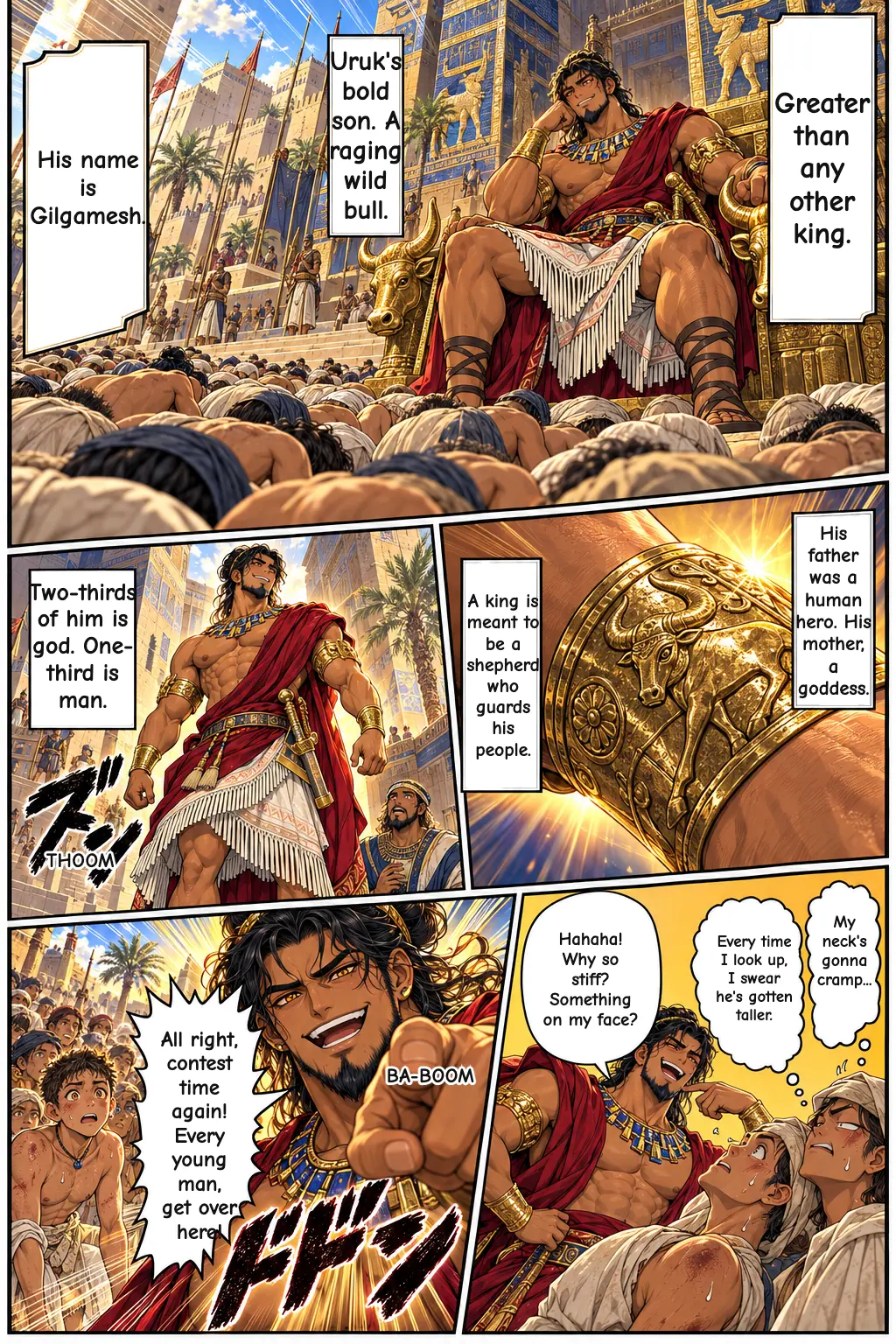
Next comes a hymn to the king. Gilgamesh is the son of King Lugalbanda and Ninsun, the wild-cow goddess. He is two-thirds god and one-third human, enormous, and as strong as a charging wild bull. The hymn also looks ahead to deeds he has not done yet: opening mountain passes, crossing the sea, finding Utanapishtim, the far-off survivor of the Flood, and rebuilding shrines the Flood destroyed.
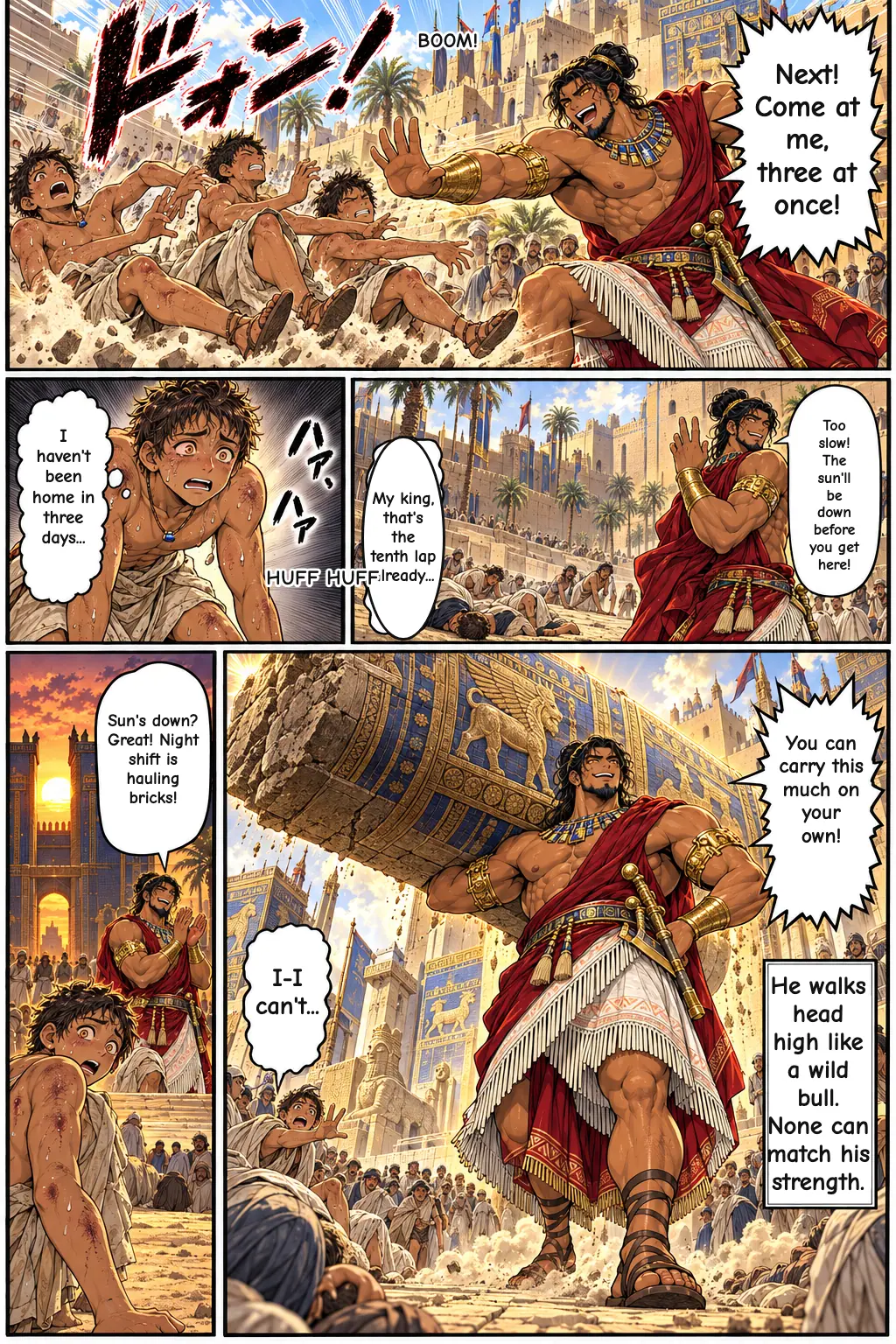
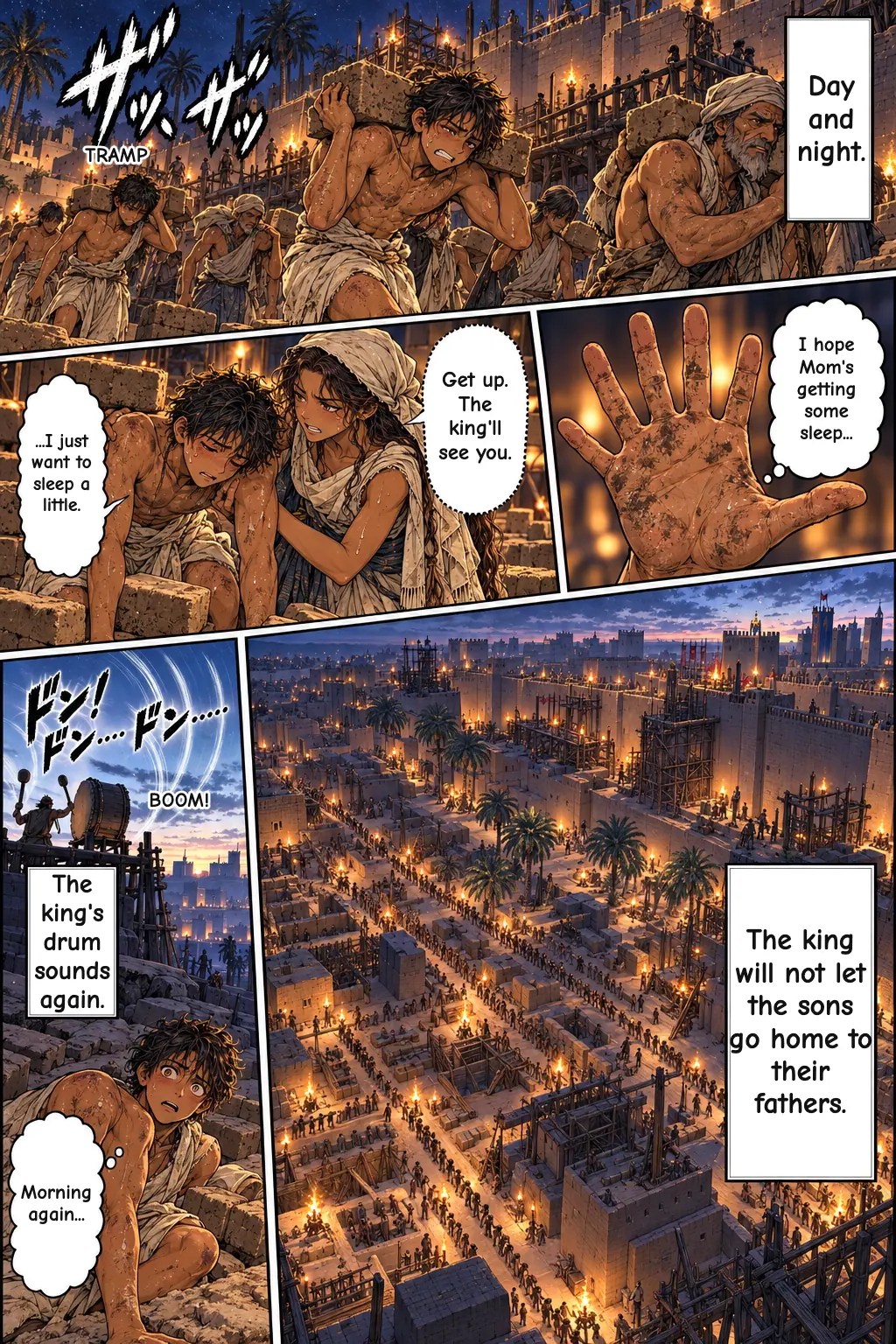
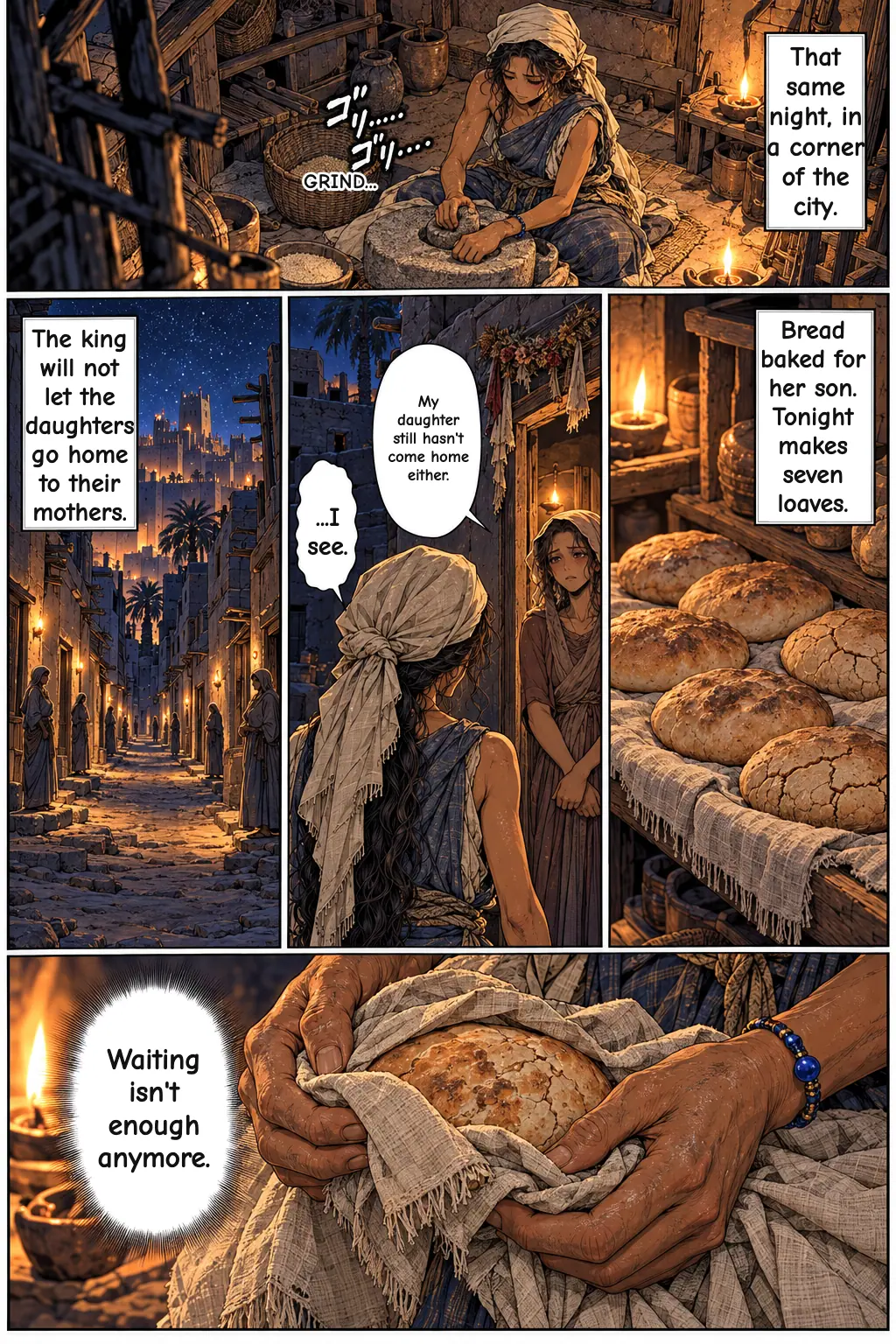
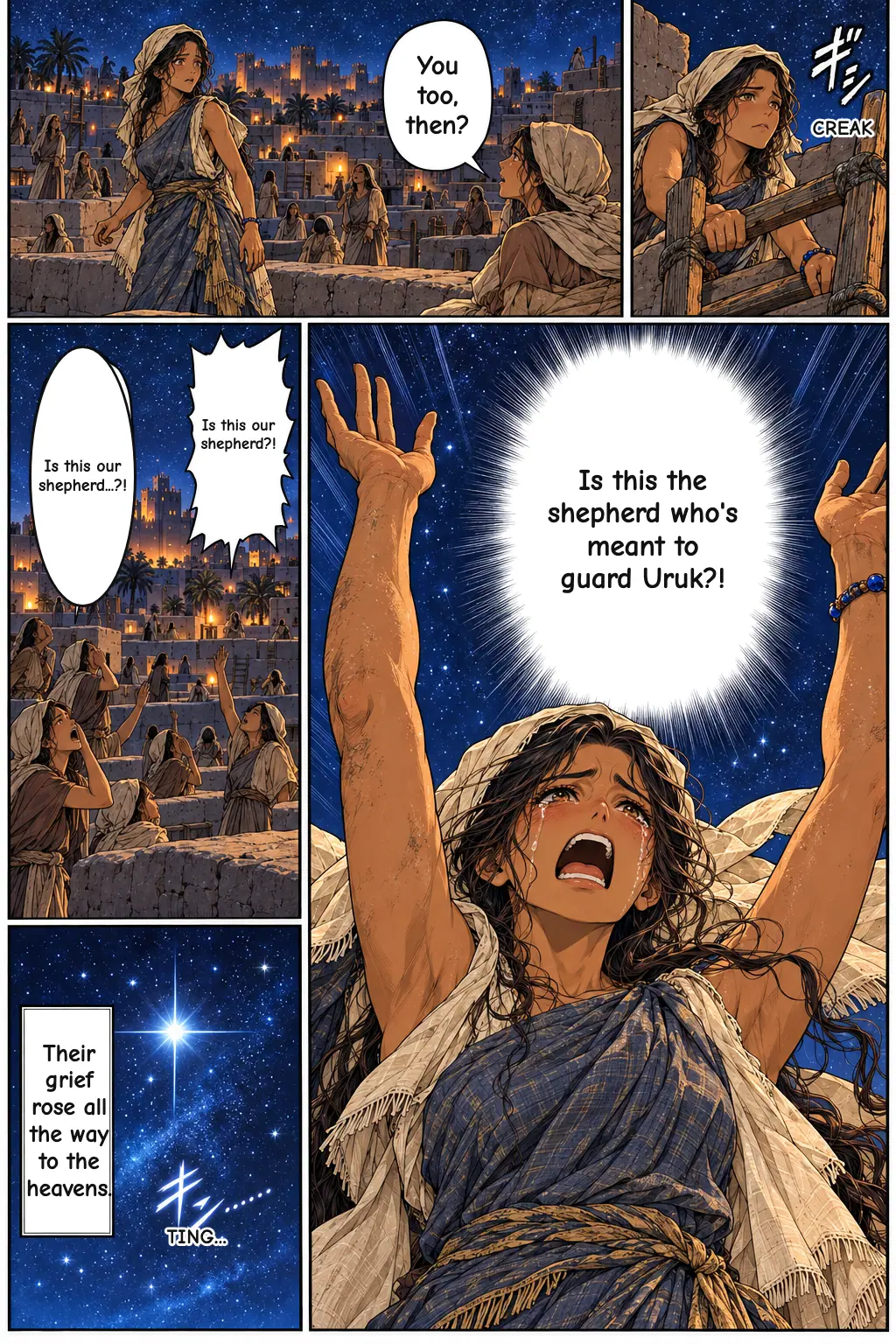
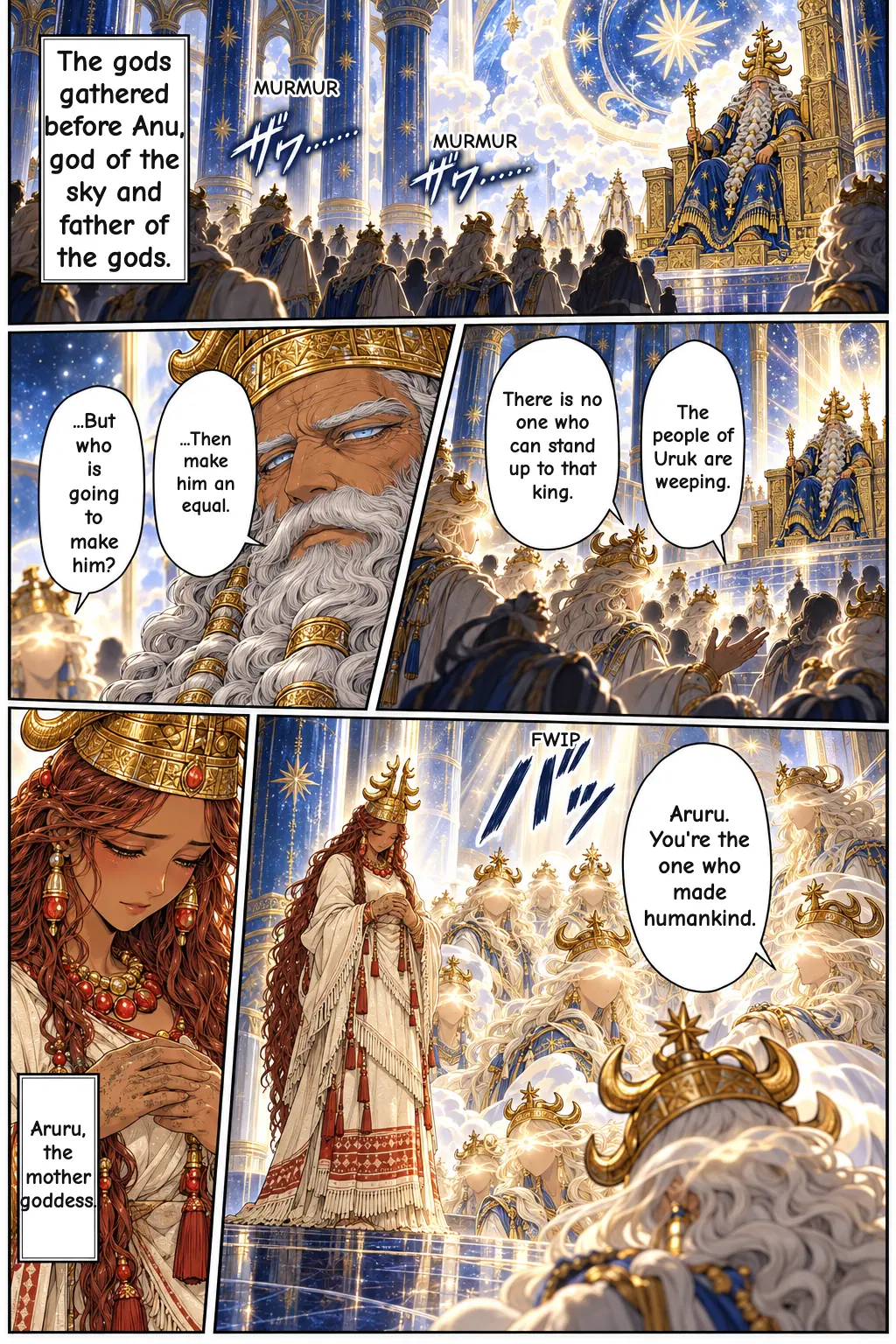
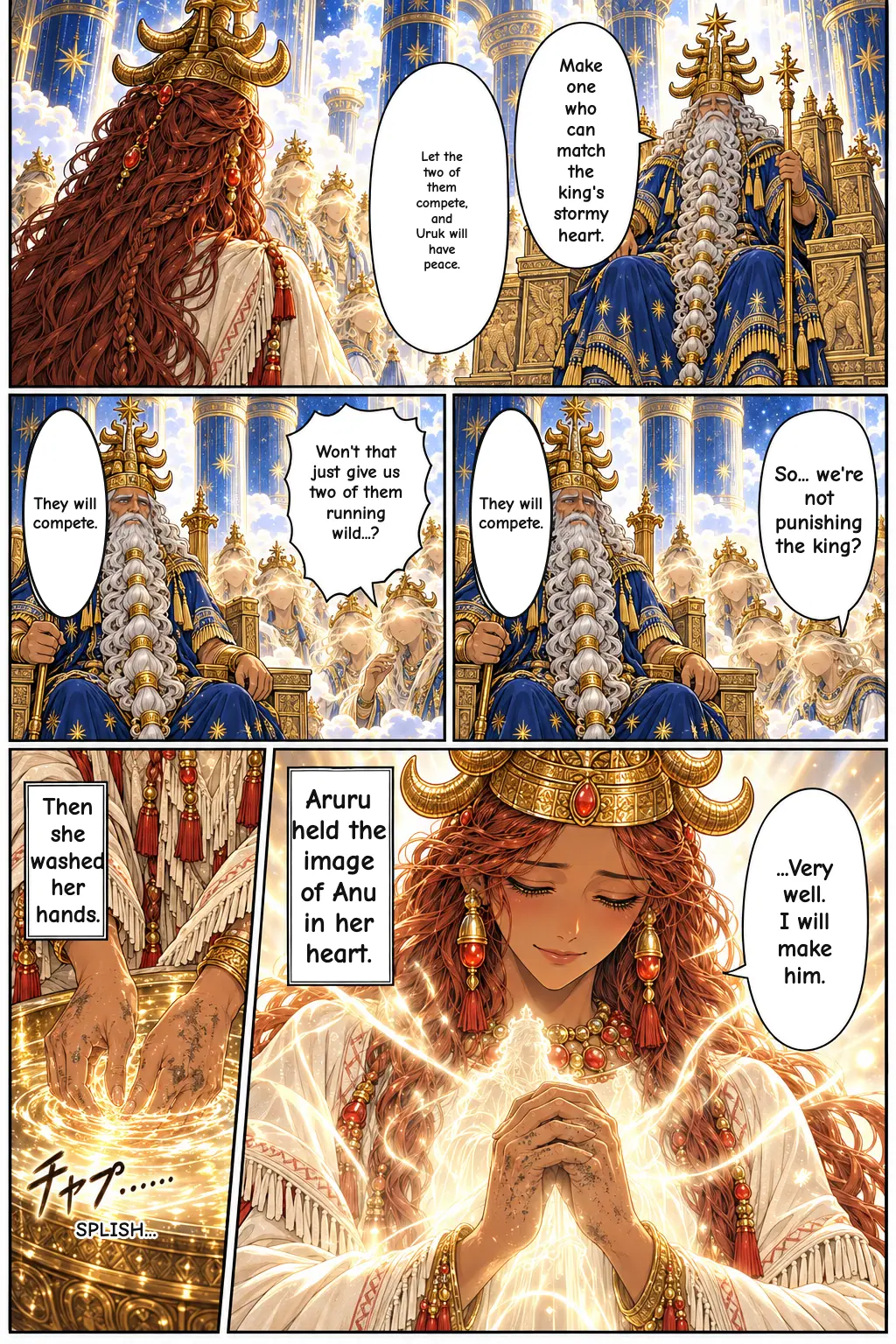
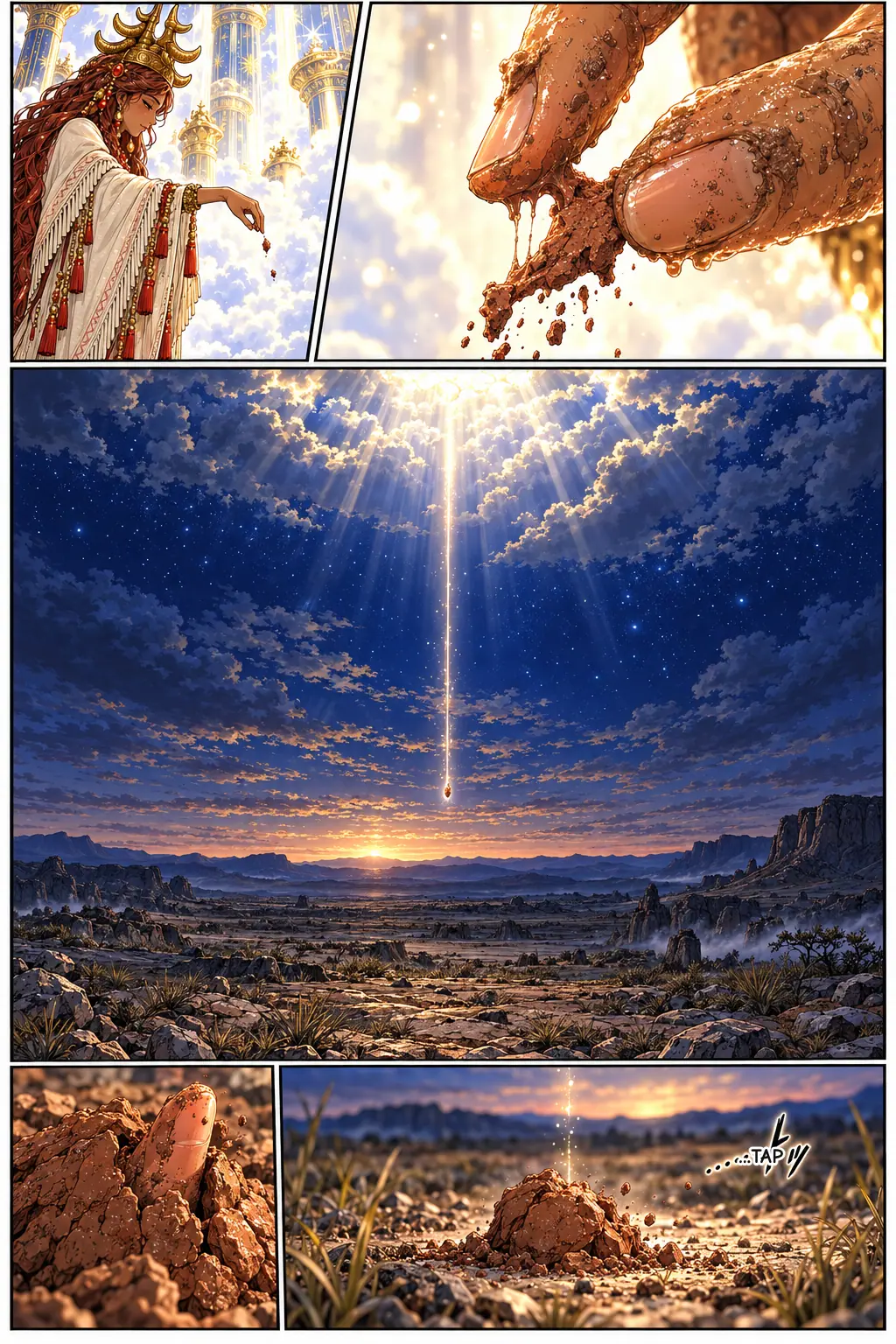
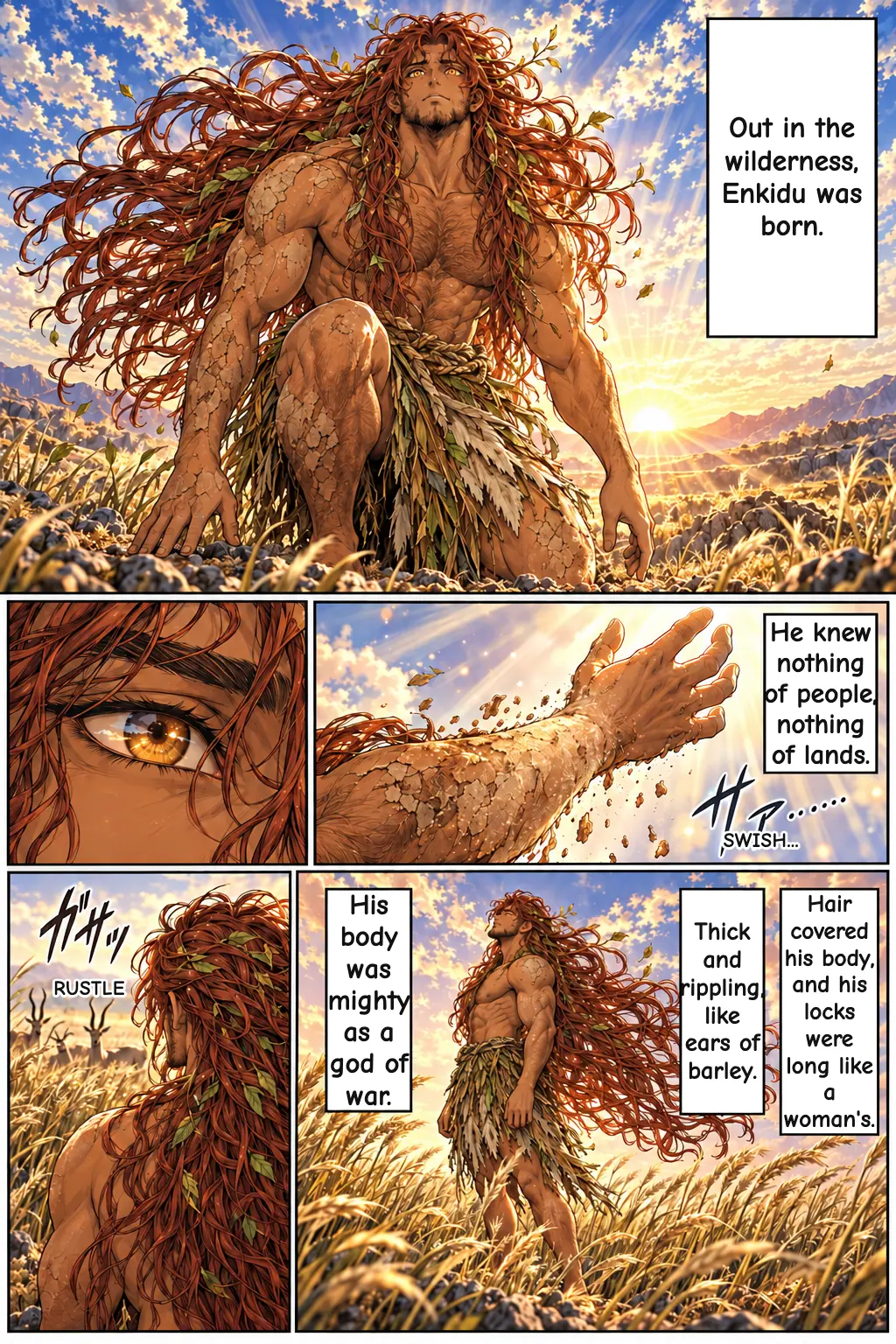
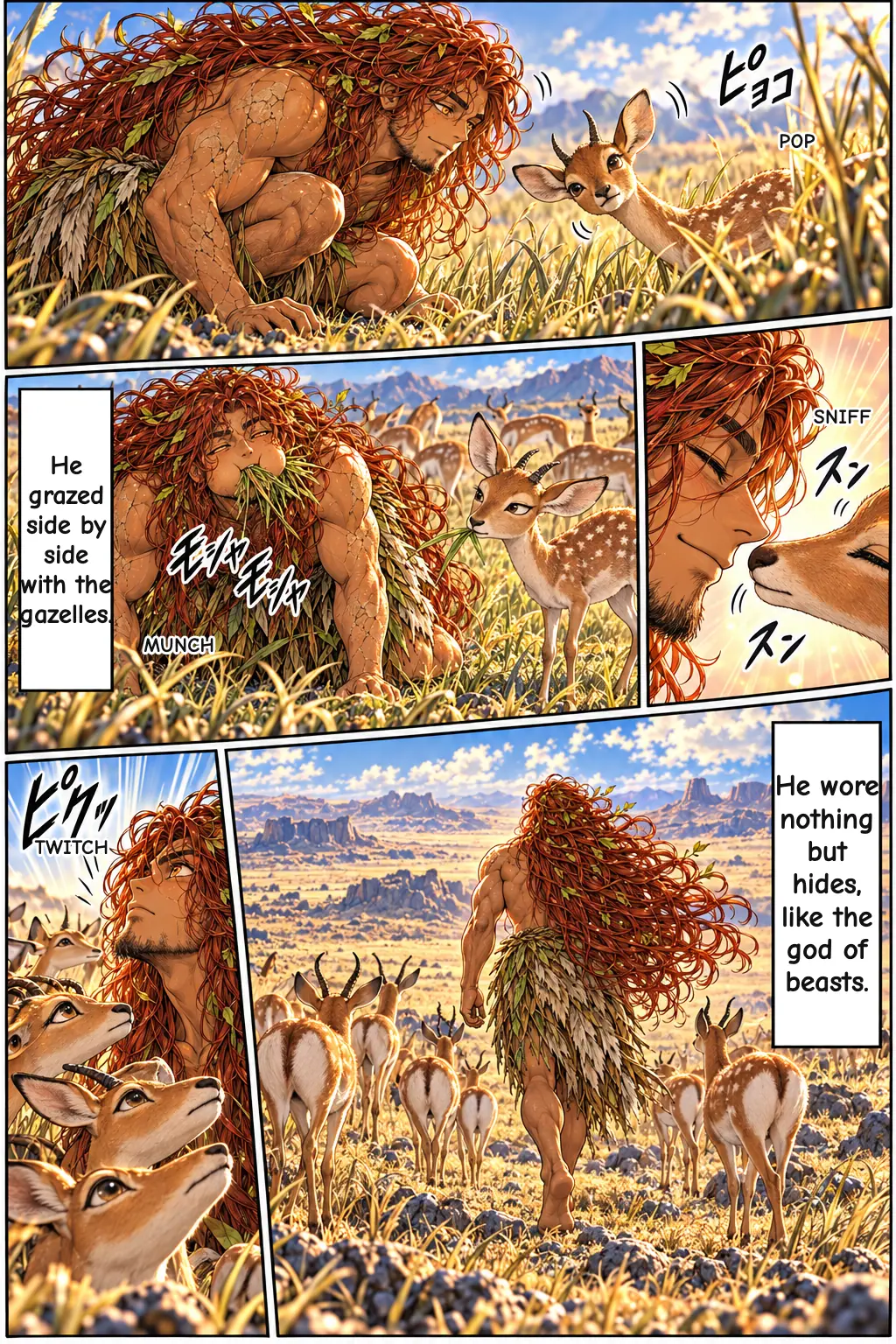
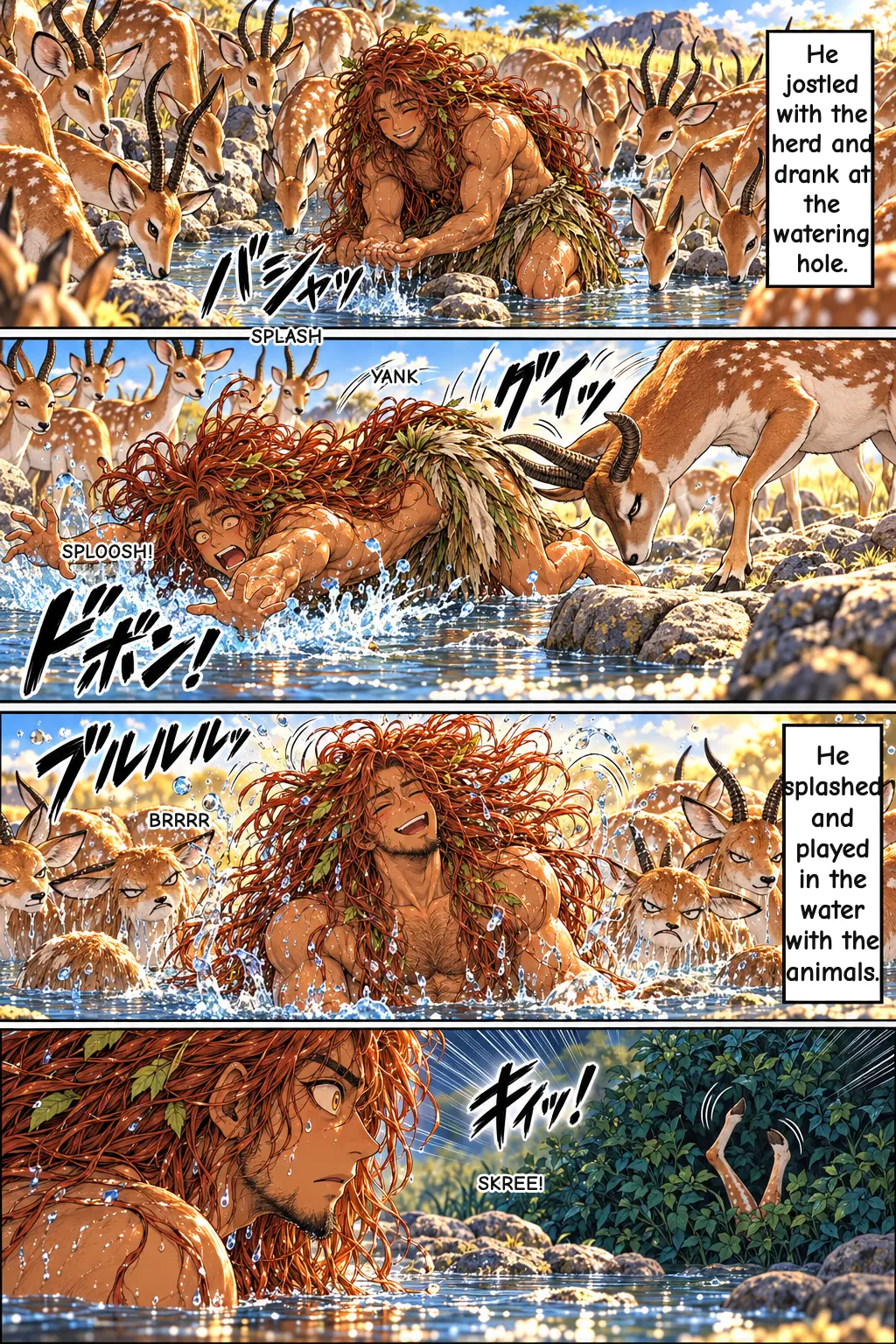
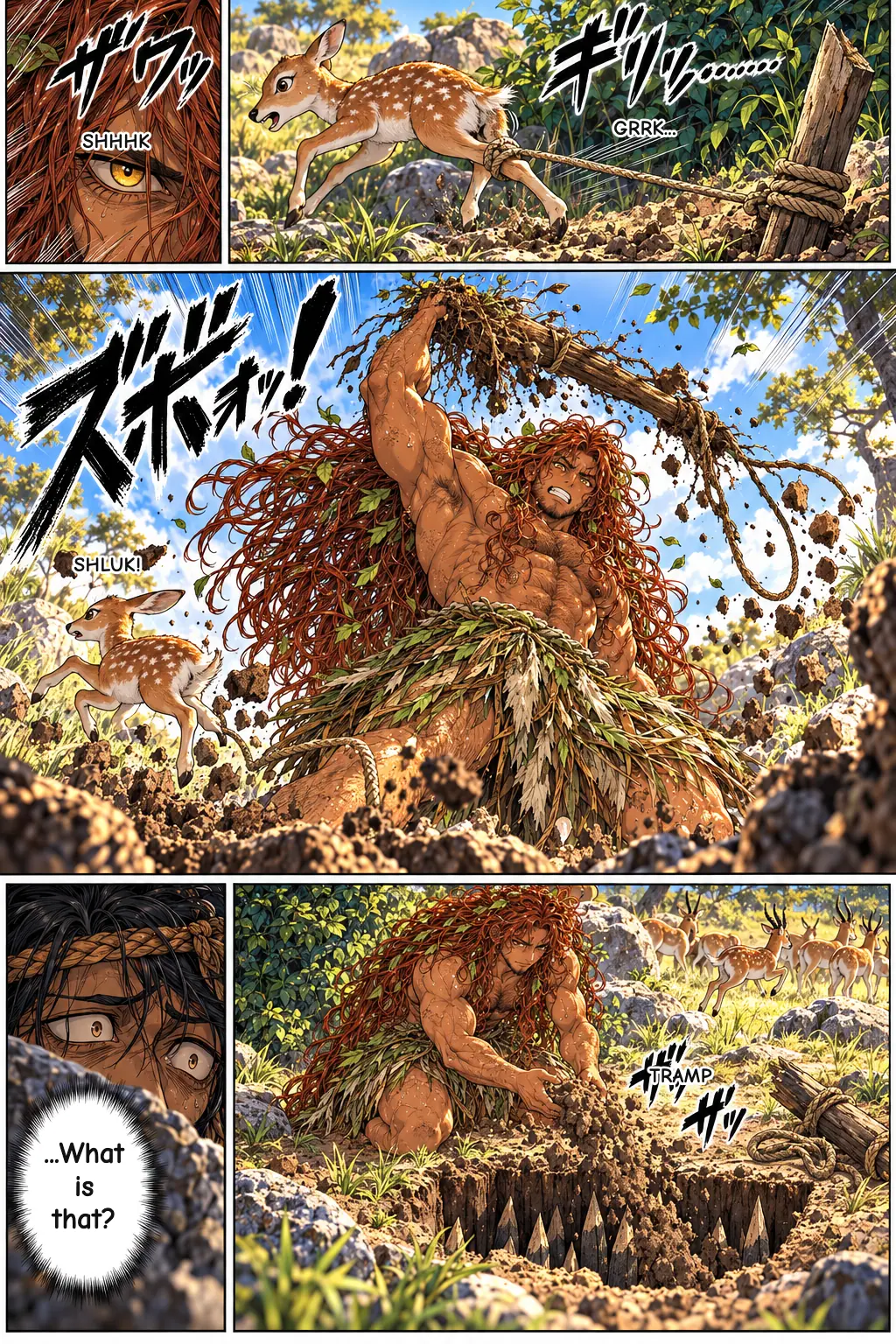
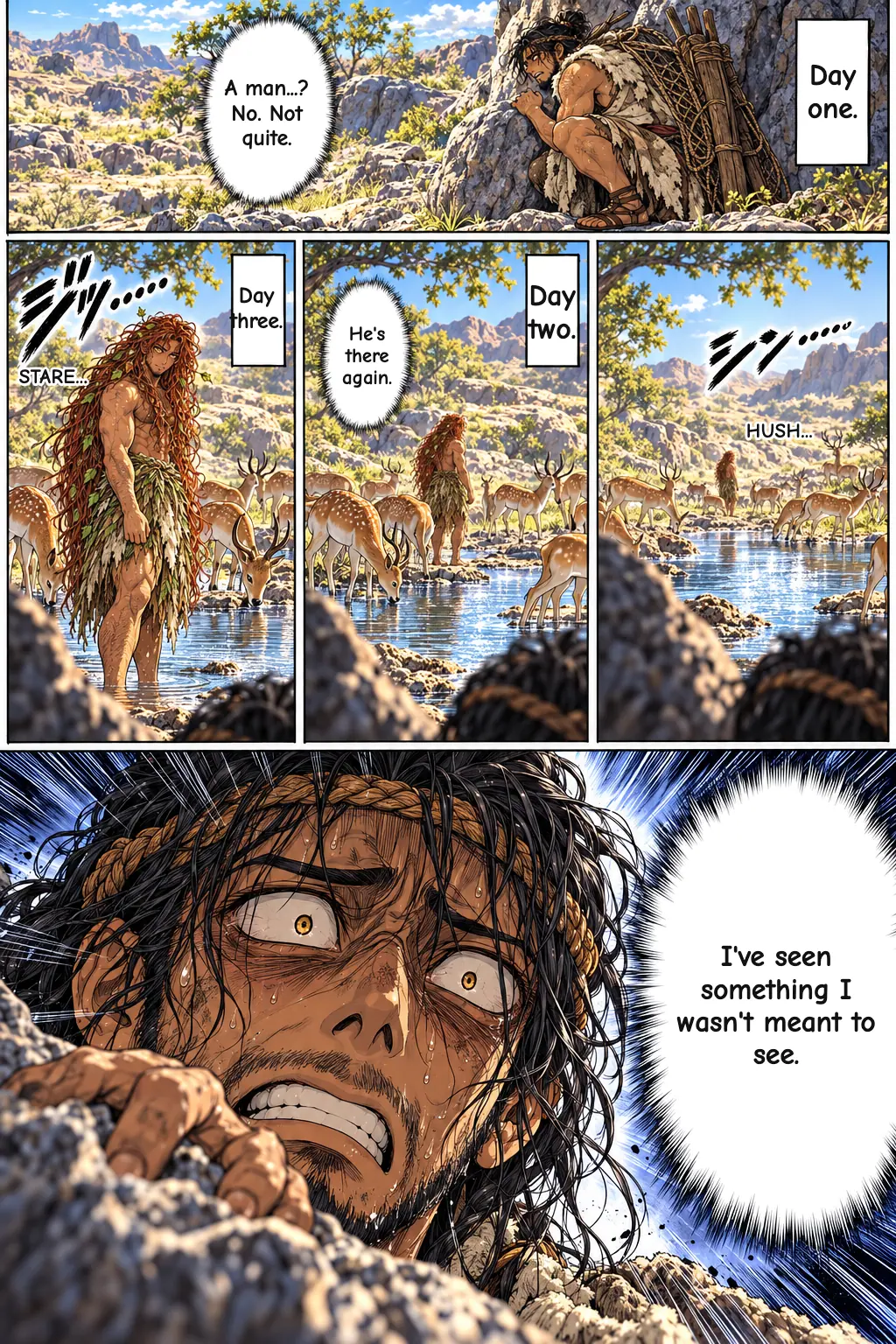
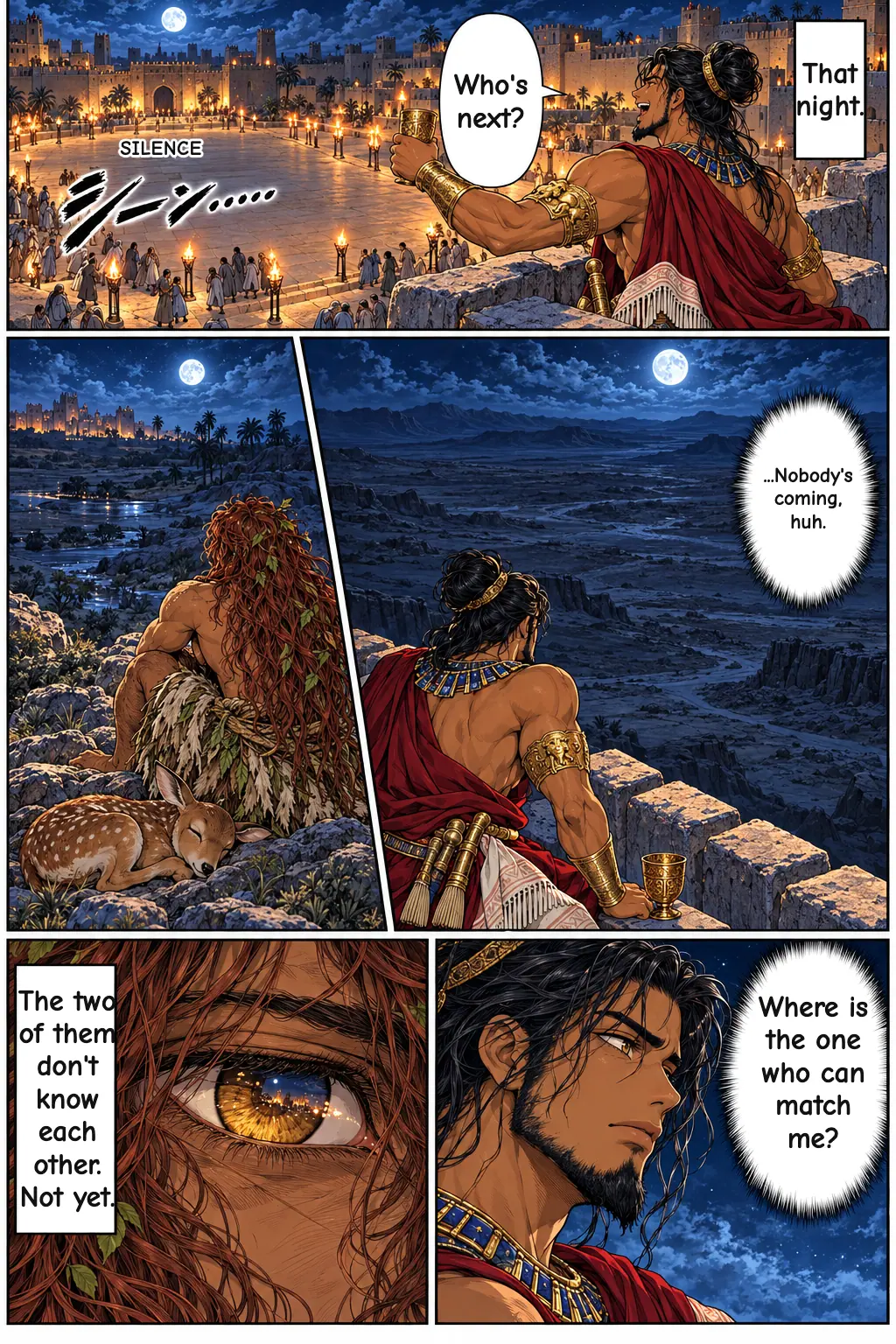
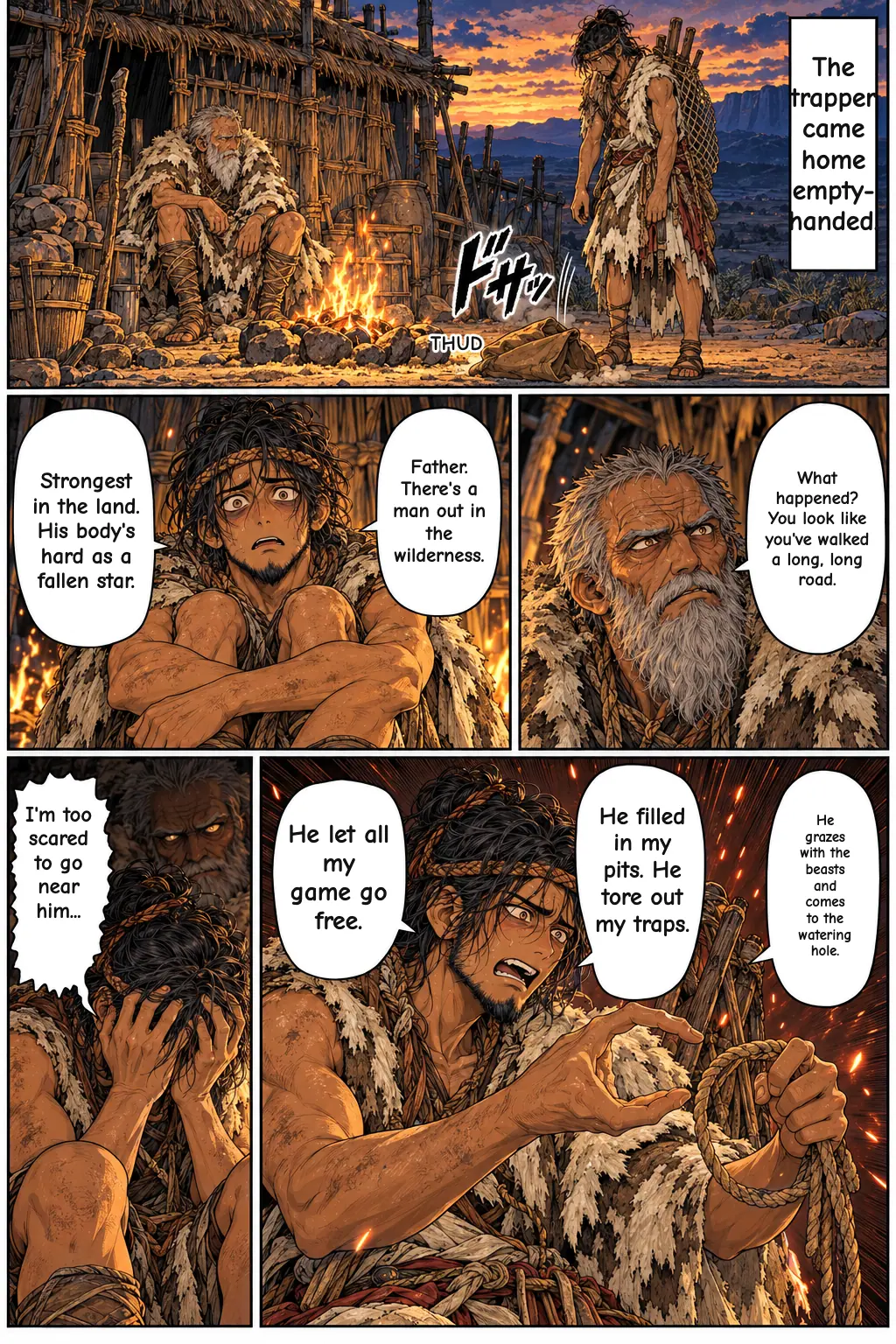
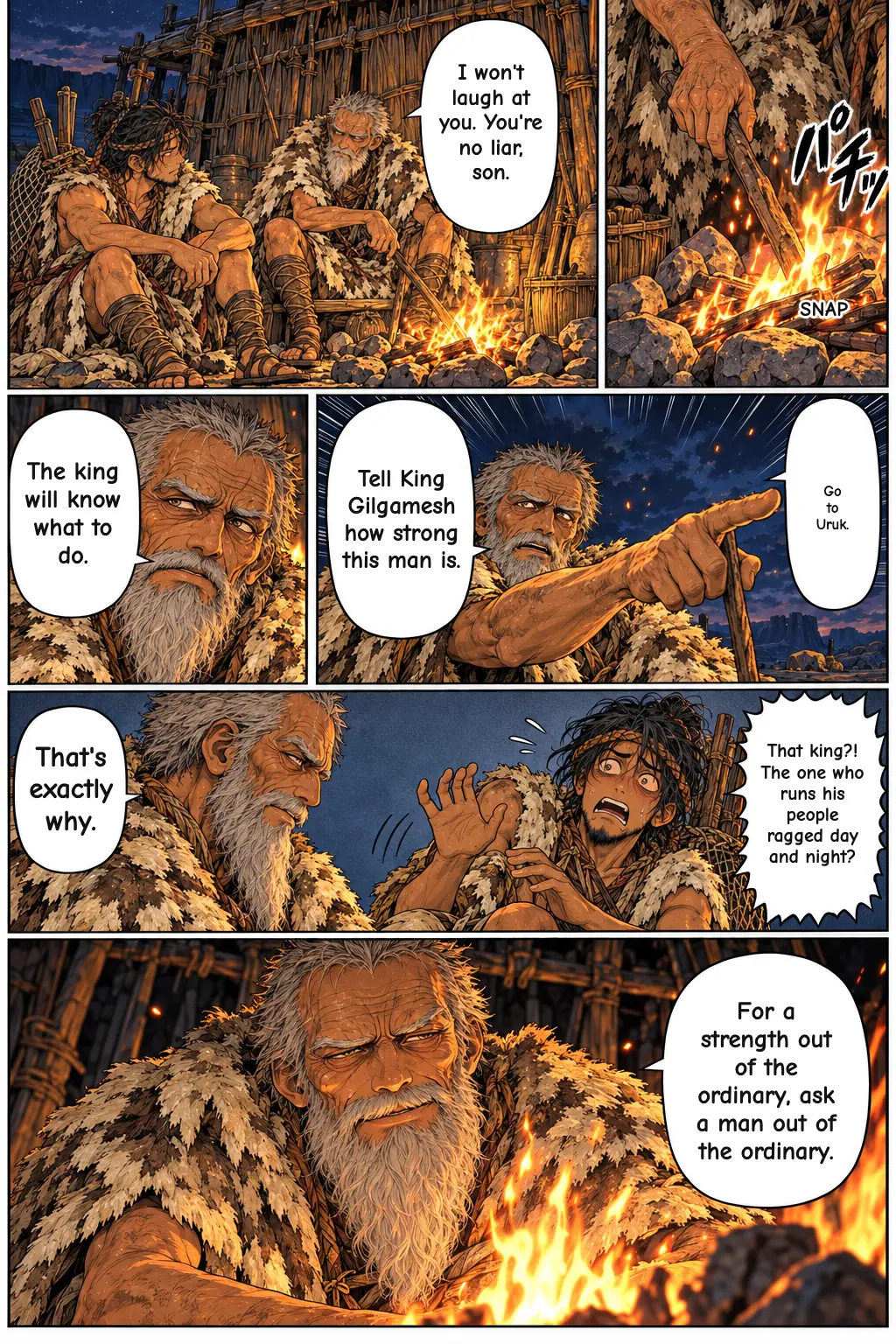
Then the tone changes. In Uruk no one can match Gilgamesh, and he gives his people no rest. Young men are driven day and night. He won't let sons go home to their fathers or daughters to their mothers. The people cry out, asking whether this is really the shepherd of Uruk, and their cry reaches the gods and Anu, the sky god. The gods call on Aruru, the mother goddess who made humankind, and order her to make a rival equal to the king's stormy heart, so the two can compete and Uruk can have peace. Aruru pictures Anu in her mind, washes her hands, pinches off some clay, and throws it into the wilderness. There Enkidu is born. He is covered in hair, has long flowing locks, and knows nothing of people or towns. He grazes with the gazelles and drinks with the animals at the watering hole. A trapper sees him there three days in a row and freezes with fear. At home the trapper tells his father that this wild man fills in his pits, tears up his snares and lets his game go free. His father tells him to go to Gilgamesh in Uruk and bring back Shamhat, a prostitute, who can draw Enkidu into human life. The trapper sets off.
Main Characters in Tablet I
Gilgamesh is the hero, but here he is also the problem. Enkidu is made as his counterpart and doesn't speak a word in this part of the story. The gods, mainly Anu and Aruru, act behind the scenes. The ordinary people of Uruk have no names, and neither do the trapper and his father. Shamhat, who becomes important in the next scene, is only mentioned in the father's advice.
What This Myth Is About: Kingship, Clay and the Wild
In ancient Mesopotamia the king was often called the shepherd of his people, meant to protect and feed them. The people's lament throws that title back at Gilgamesh: their shepherd is acting like a wild bull among the sheep. The gods' answer is interesting. They don't destroy the tyrant. They give him an equal. Many readers see this as the epic's first big idea: someone with unlimited power needs a match, a friend, or a limit.
Enkidu's creation from clay echoes other Mesopotamian stories in which humans are shaped from clay. His life in the wild, among animals and far from walls and fields, sets up a contrast with Uruk, the walled city that stands for civilization. The prologue also says something quietly. It asks us to admire walls and written tablets that outlast any one man, which hints at the epic's later theme: no one lives forever, but what a person builds and records can survive.
Most of the Standard Babylonian manuscripts date to the first millennium BCE and come mainly from Nineveh. They rest on much older material, including Sumerian poems about Gilgamesh (called Bilgames in Sumerian) and an earlier Old Babylonian version. Gilgamesh may have been a real king of Uruk in the early third millennium BCE, but that has not been proven.
What the Manga Changes
The tablets leave many gaps, and some lines are broken, so the manga has to fill them in. Any named or individualized citizens, such as a young man and his mother suffering under the king, are the manga's invention. The text gives the people no faces. The text also never says exactly what Gilgamesh forced the young men to do. Some scholars suggest games or contests, and others suggest labor such as building the walls. Neither is stated, so scenes of forced labor or endless competitions are artistic choices. The idea that Gilgamesh claimed brides on their wedding night comes from Tablet II and the older Old Babylonian version, not Tablet I, which only says he kept daughters from their mothers.
Other details are also interpretation: who the narrator is, where the tablet box is hidden (some read it as being inside the wall's foundation), what the gods look like and which god says which line, Enkidu's face and build, and Gilgamesh's exact height, since the measurements in the text are partly reconstructed. The text calls Gilgamesh a king of unmatched strength but doesn't clearly call him young here. Finally, the epic doesn't show Enkidu wrecking the traps. The trapper reports it afterward. A manga that shows the scene as it happens is retelling the story visually, not changing what happens.
Where to Read It
If you want the original, several respected English translations of the Epic of Gilgamesh are available, many with notes explaining the broken lines and the scholarly debates. If you'd like to see the story first, with the walls of Uruk, the crying city and the wild man at the watering hole all drawn out, MESOPOTAMIAN MYTH: THE EPIC OF GILGAMESH — No One Lives Forever follows the epic episode by episode. Every episode is free to read on Manga Portal, no sign-up needed. The next part of the story is Shamhat's arrival and Enkidu's first steps toward the human world.
Characters in this episode
Gilgamesh
The king of Uruk, two-thirds god and one-third human, whose unchecked power makes his people suffer.
Enkidu
A hairy wild man the goddess Aruru shapes from clay in the wilderness to be Gilgamesh's equal.
Aruru
The mother goddess who made humankind and who creates Enkidu when the gods order it.
Anu
The sky god and chief god of Uruk, who hears the people's cry about their king.
The Trapper
An unnamed hunter who meets Enkidu at a watering hole and carries the news toward Uruk.
Shamhat
A prostitute the trapper's father names as the one who can bring Enkidu into human society.
FAQ
How does the Epic of Gilgamesh begin?
It begins with a narrator praising Gilgamesh as a man who saw and knew everything, then telling the reader to climb the walls of Uruk and read his story from a lapis lazuli tablet. After a hymn to the king, the story describes how harshly he ruled his city.
Why did the gods create Enkidu?
The people of Uruk complained to the gods that Gilgamesh gave them no rest and kept their sons and daughters from their families. The gods told the goddess Aruru to make an equal for him, so the two could compete and the city could have peace.
Who created Enkidu, and how?
The mother goddess Aruru made him. She pictured the sky god Anu in her mind, washed her hands, pinched off some clay and threw it into the wilderness, and Enkidu was born there.
Was Gilgamesh a real person?
He may have been. Many scholars think Gilgamesh was based on a real king of Uruk in the early third millennium BCE, but there is no direct proof. The epic itself turns him into a legendary, partly divine hero.
Is Gilgamesh a god?
Not completely. The epic says he is two-thirds god and one-third human, the son of the goddess Ninsun and King Lugalbanda. His human part means he can still die, which becomes the central theme of the story.