Get new episodes in your feed. Follow us on:ThreadsBluesky
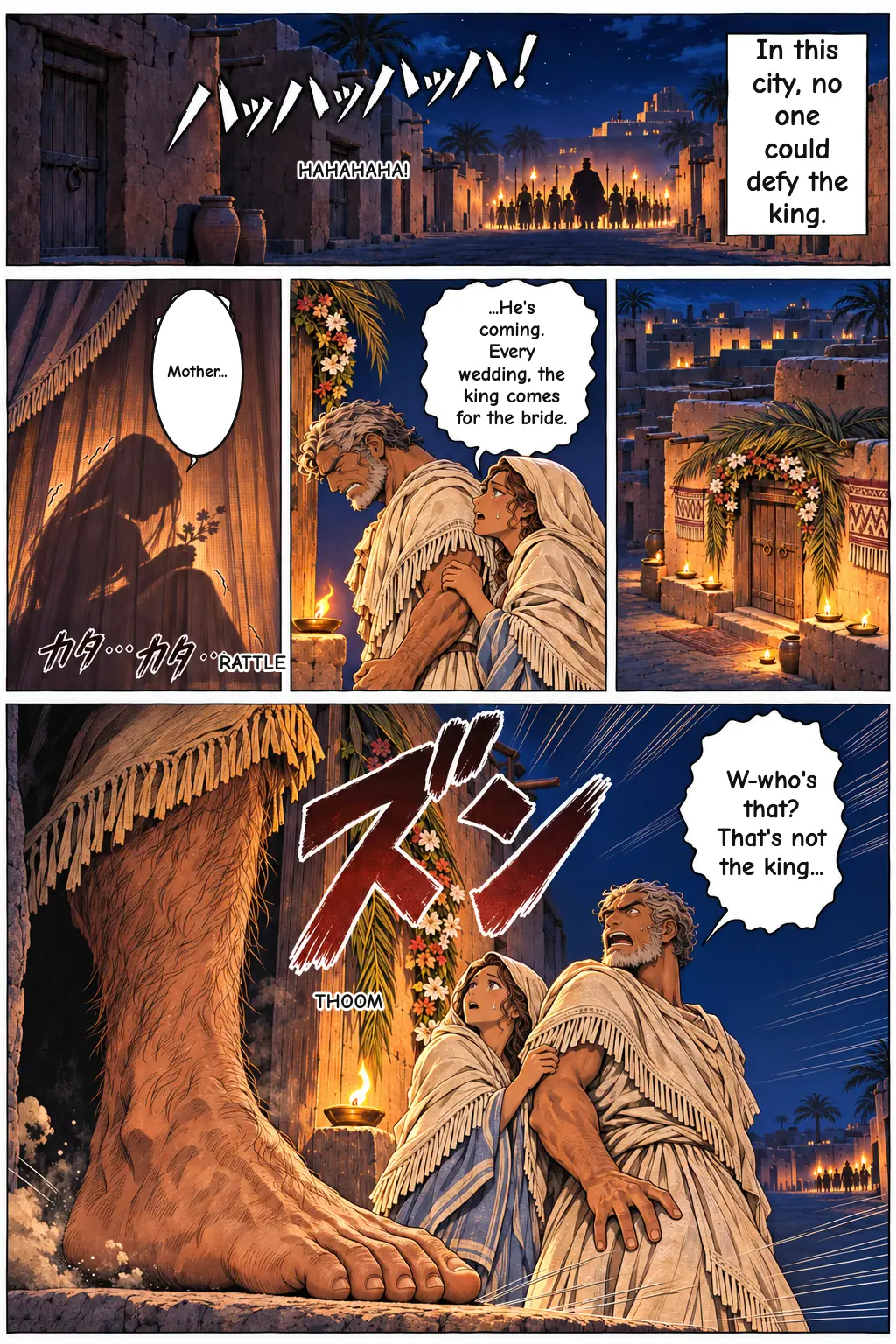
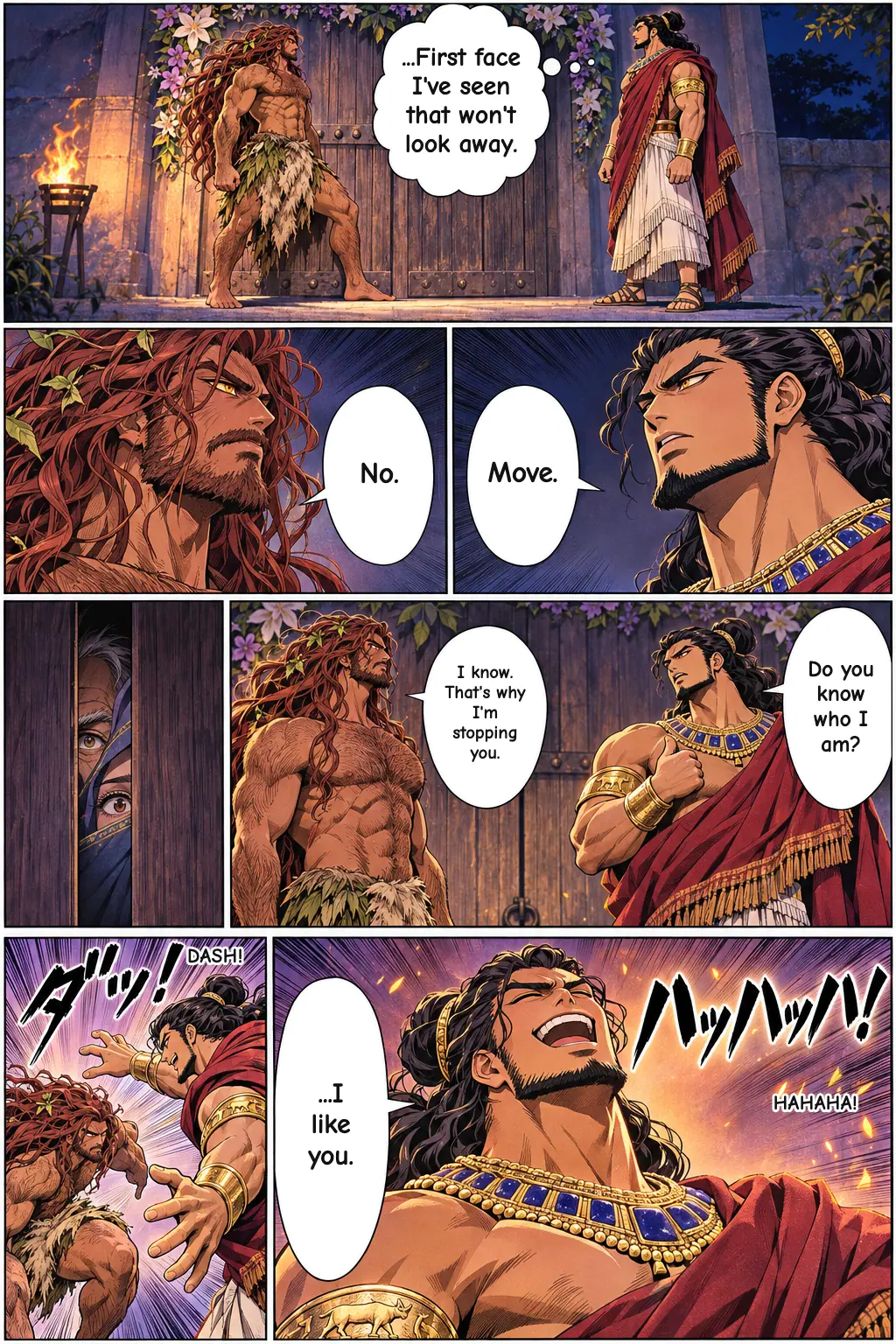
Enkidu, the wild man, blocks the door of a wedding house. King Gilgamesh meets him head-on, and after a brutal wrestling match each admits the other's strength. They become best friends. With a friend at his side, the king decides to kill Humbaba, guardian of the Cedar Forest, and make his name last forever. Behind that dream is his fear of a life that has to end.
Story summary
The Epic of Gilgamesh is one of the oldest surviving stories in the world. It was written on clay tablets in ancient Mesopotamia, the region of modern Iraq. The best-known version, the Standard Babylonian epic, has twelve tablets. Tablet II is badly damaged, so scholars fill its gaps with two older Old Babylonian tablets now kept in Pennsylvania and at Yale. This episode follows those combined sources. At this point Enkidu has left the wilderness, where he lived among animals, and has learned human ways. A traveler on his way to a wedding feast tells him something that shocks him.
Gilgamesh vs. Enkidu: The Wrestling Match and Friendship (Tablet II Summary)
In short: In the Epic of Gilgamesh, Enkidu, a wild man the gods made as a rival for Gilgamesh, blocks the door of a wedding house to stop the king of Uruk from taking a bride before her husband. The two wrestle until the doorframe shatters, then make peace and become inseparable friends. Gilgamesh then plans to kill Humbaba, guardian of the Cedar Forest, so that his name will outlive him. This happens in Tablet II of the Standard Babylonian version, with missing parts filled in from the older Pennsylvania and Yale tablets.
The Original Story: What Happens in Tablet II
The Epic of Gilgamesh is one of the oldest surviving stories in the world. It was written on clay tablets in ancient Mesopotamia, the region of modern Iraq. The best-known version, the Standard Babylonian epic, has twelve tablets. Tablet II is badly damaged, so scholars fill its gaps with two older Old Babylonian tablets now kept in Pennsylvania and at Yale. This episode follows those combined sources.
At this point Enkidu has left the wilderness, where he lived among animals, and has learned human ways. A traveler on his way to a wedding feast tells him something that shocks him. Gilgamesh, king of the city of Uruk, takes his place with a new bride before her husband does. Enkidu's face goes pale with anger, and he heads for Uruk.
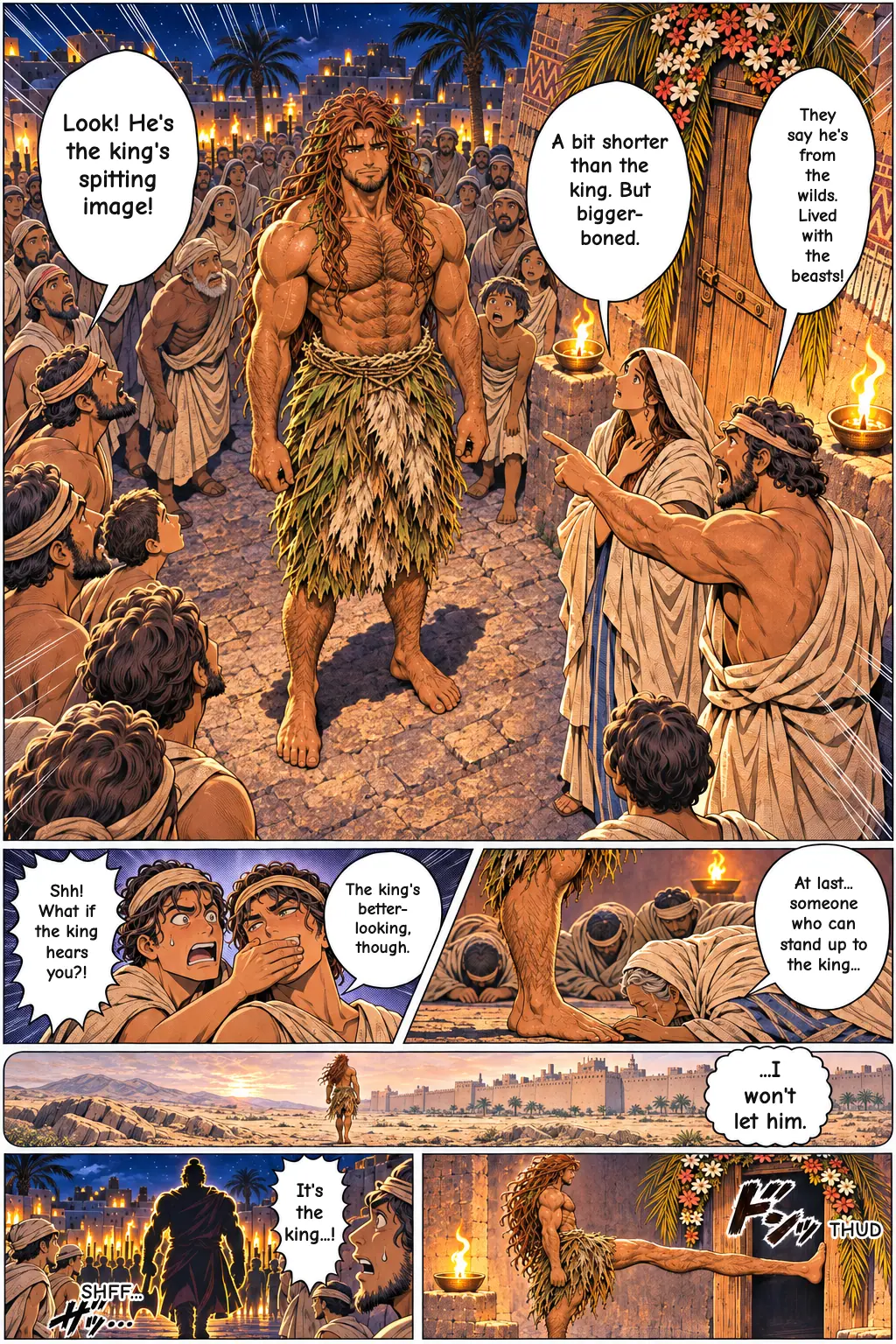
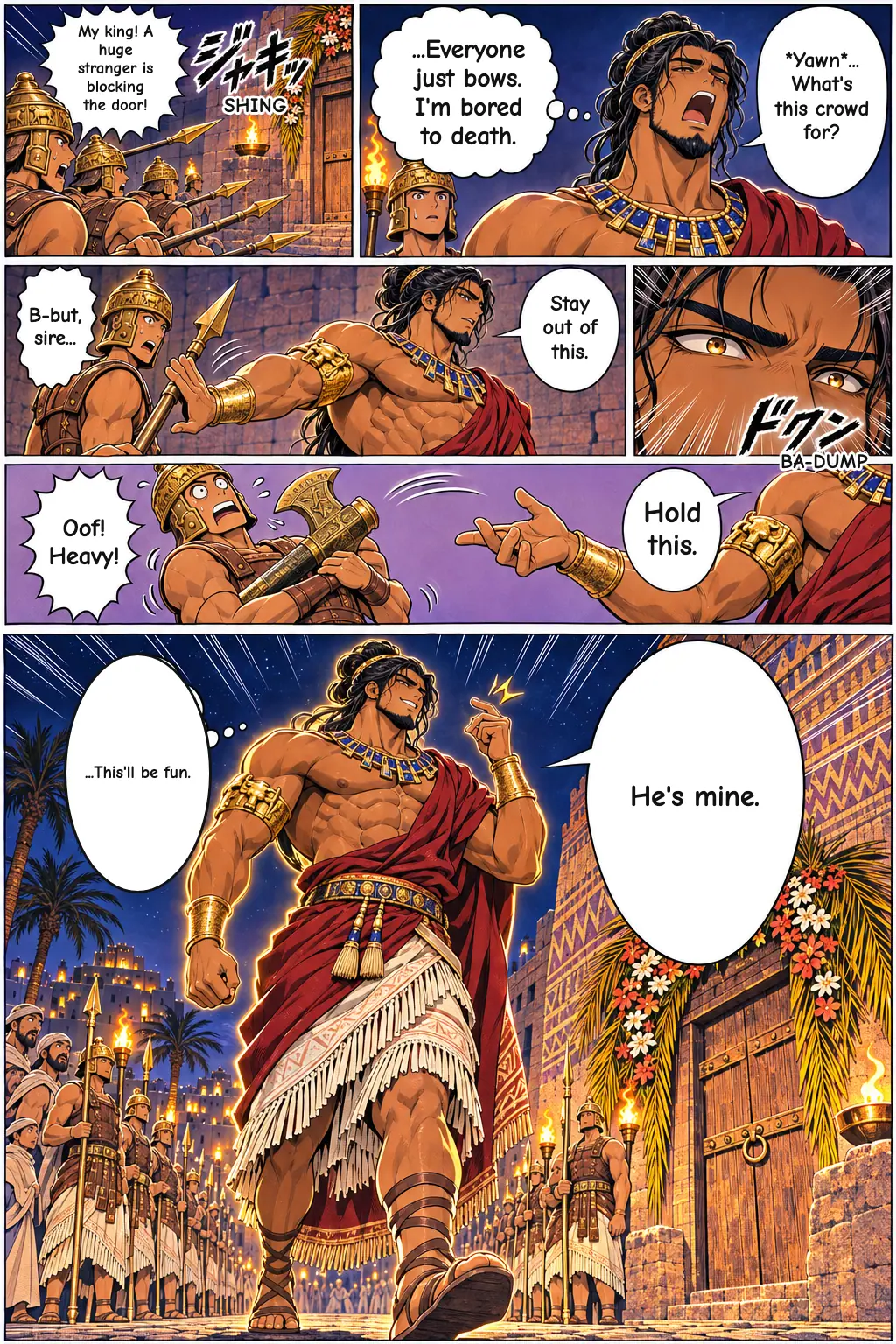
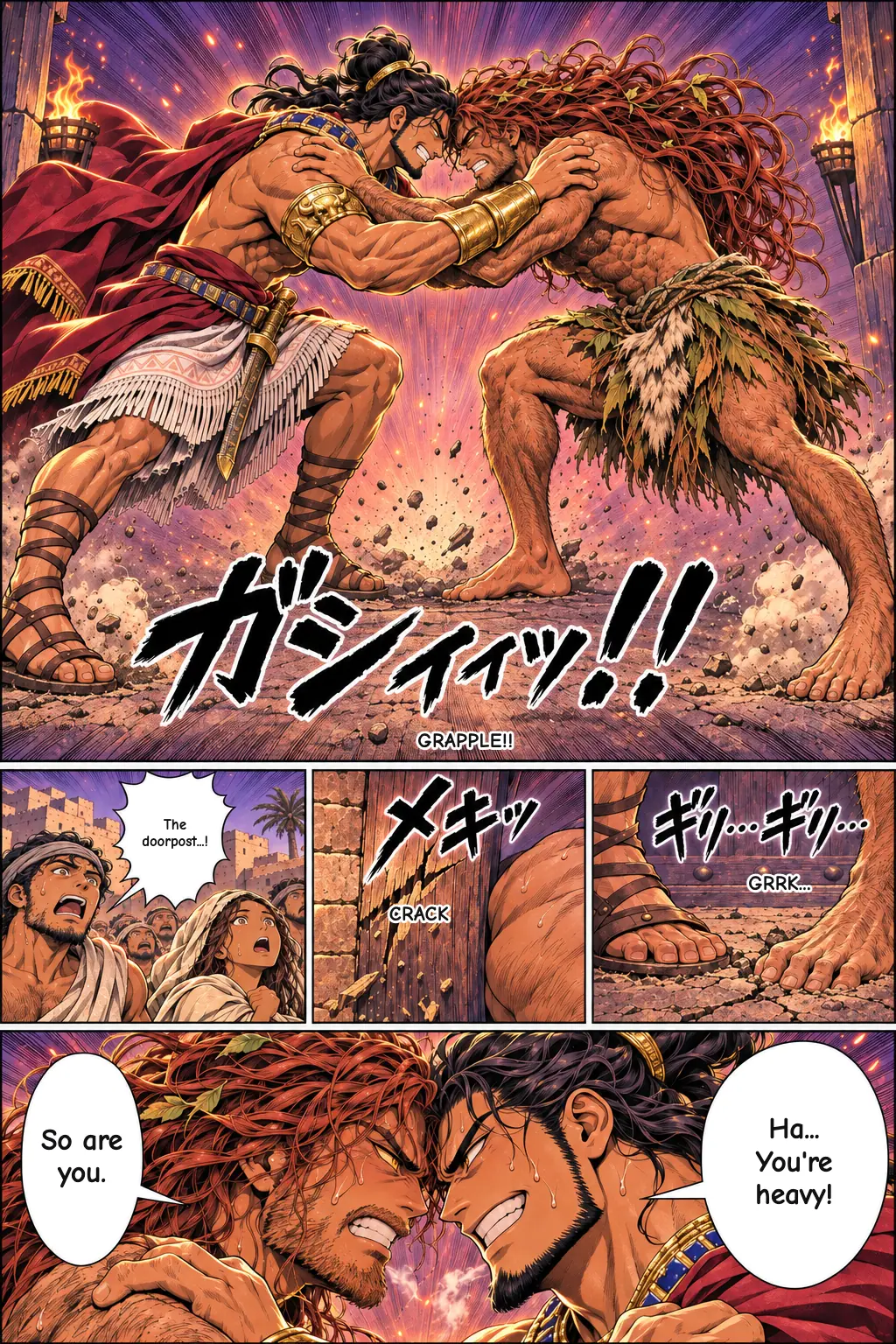
When he arrives, a crowd gathers in the streets. People say he is built like Gilgamesh, a little shorter but with heavier bones. Some bow to him. The city senses that the king, who seemed almost a god, has finally met his match. A bed is prepared for the wedding goddess Ishhara, and when Gilgamesh comes to enter the wedding house, Enkidu plants his foot across the doorway and refuses to let him in.
The Wrestling Match and the Birth of a Friendship
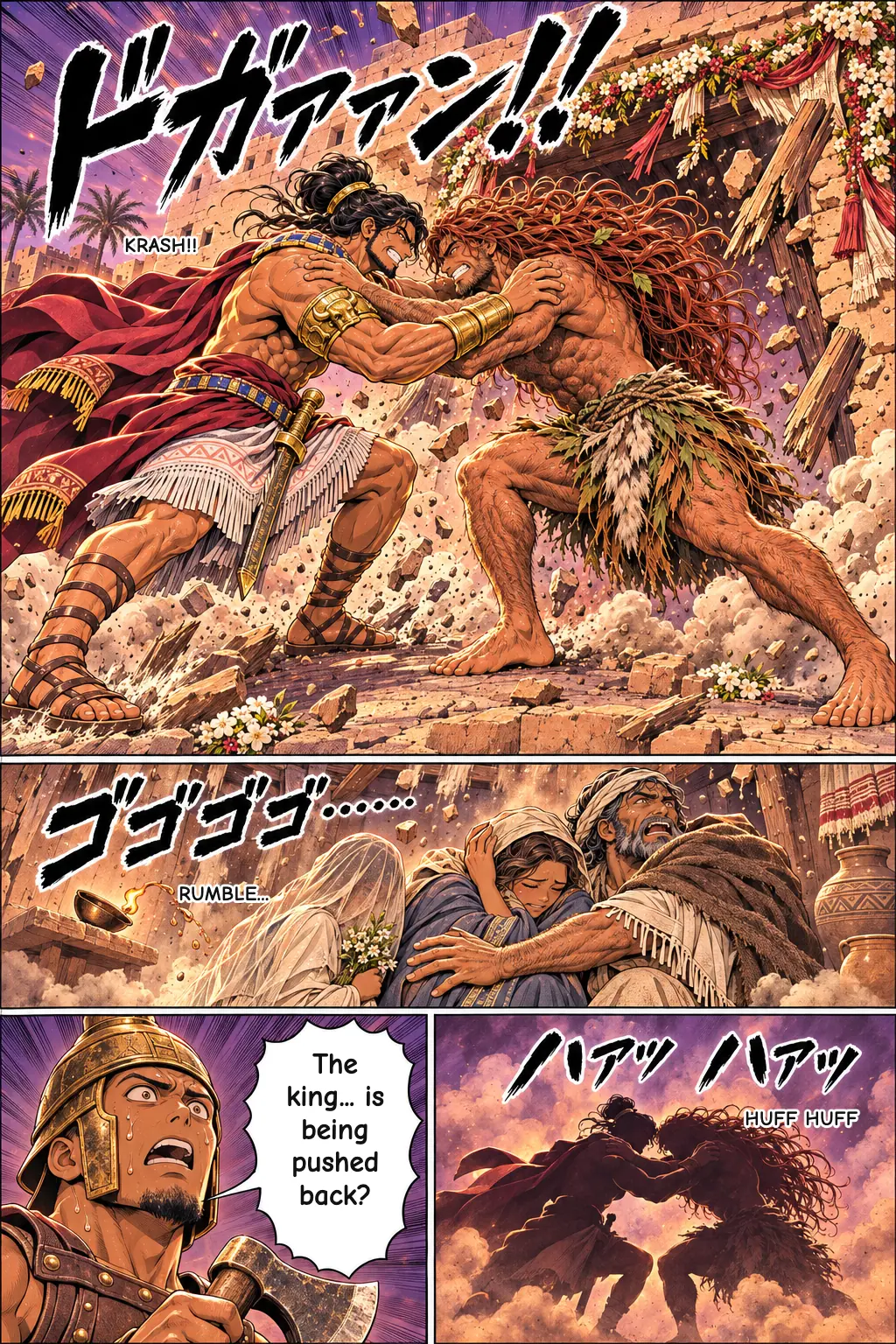
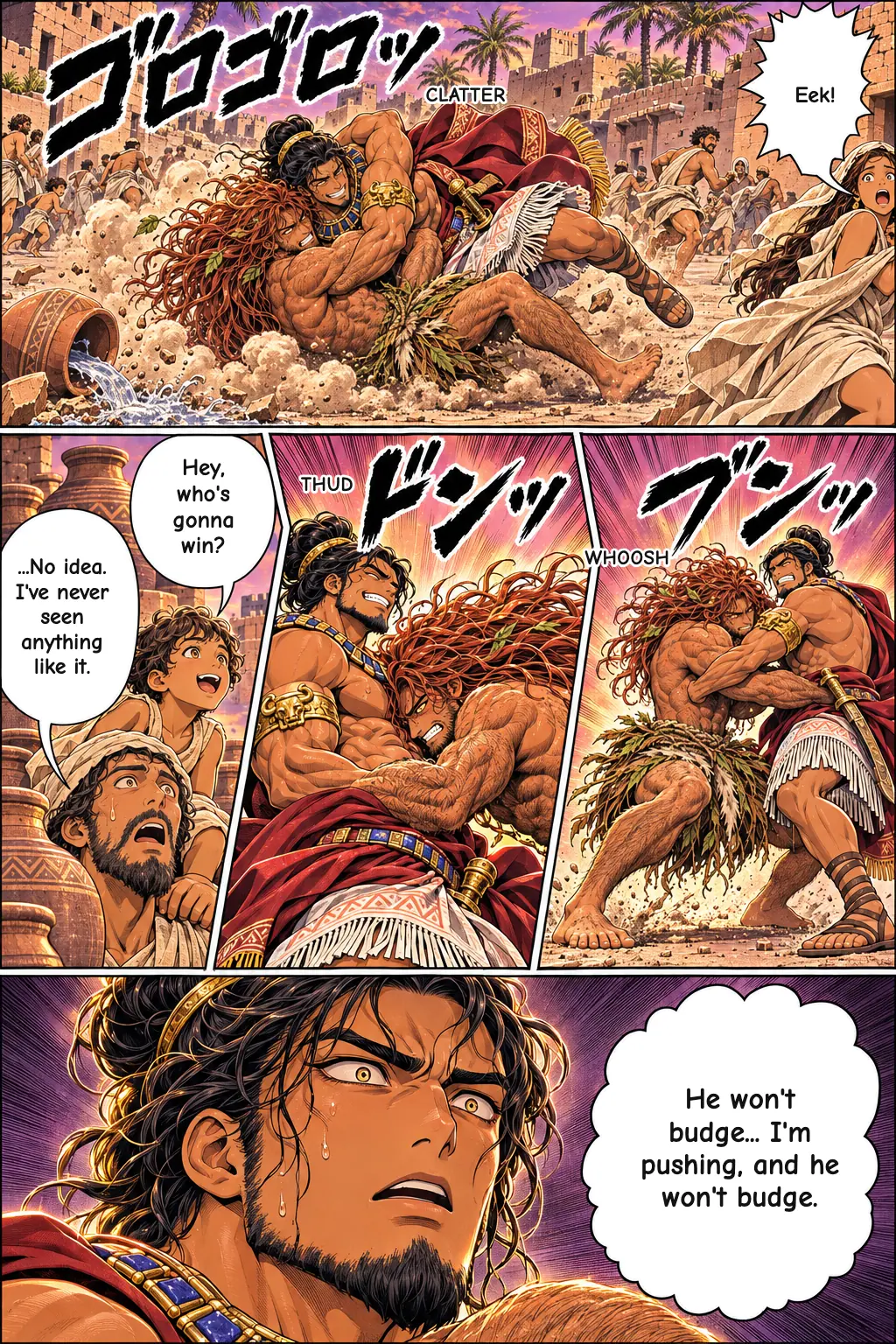
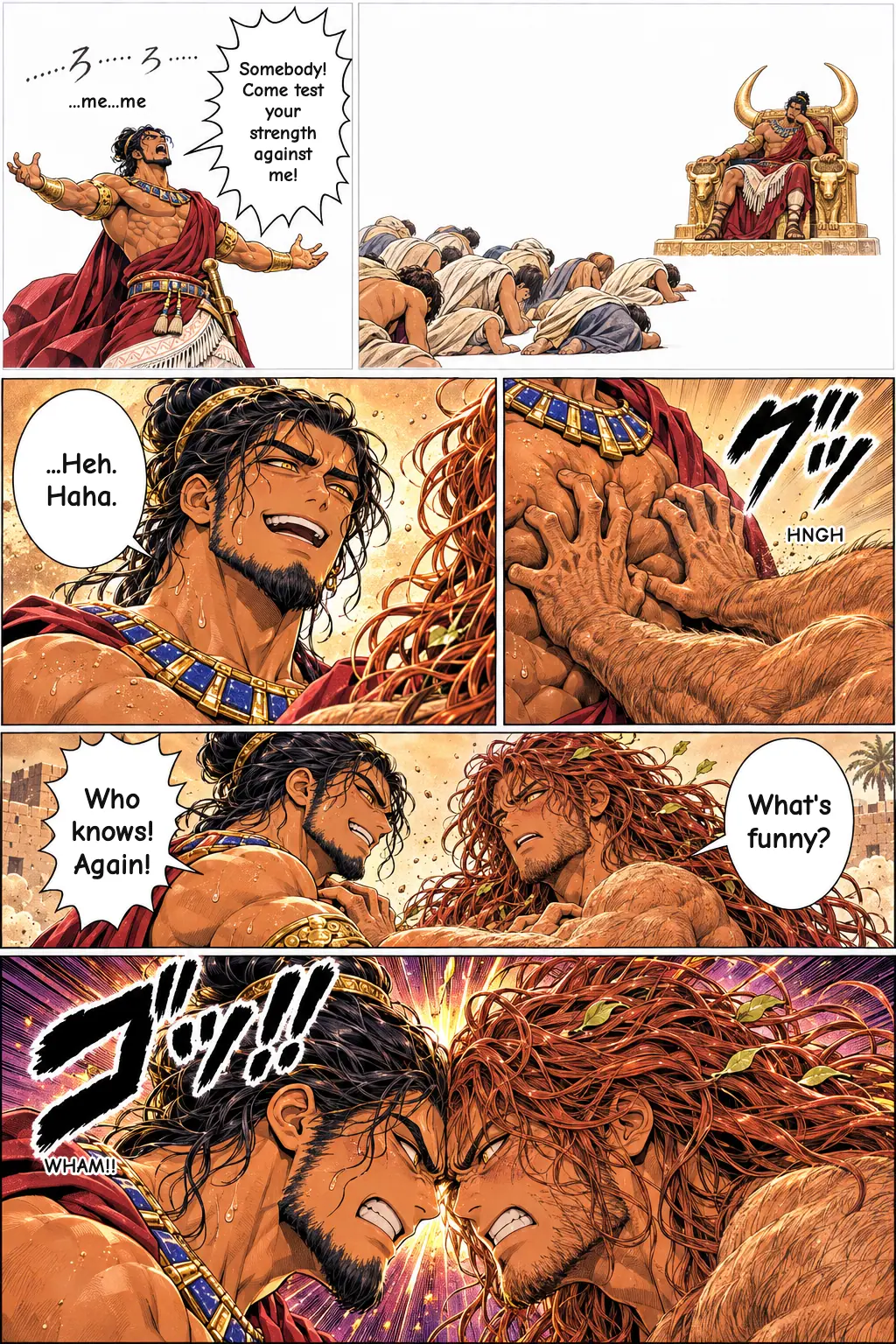
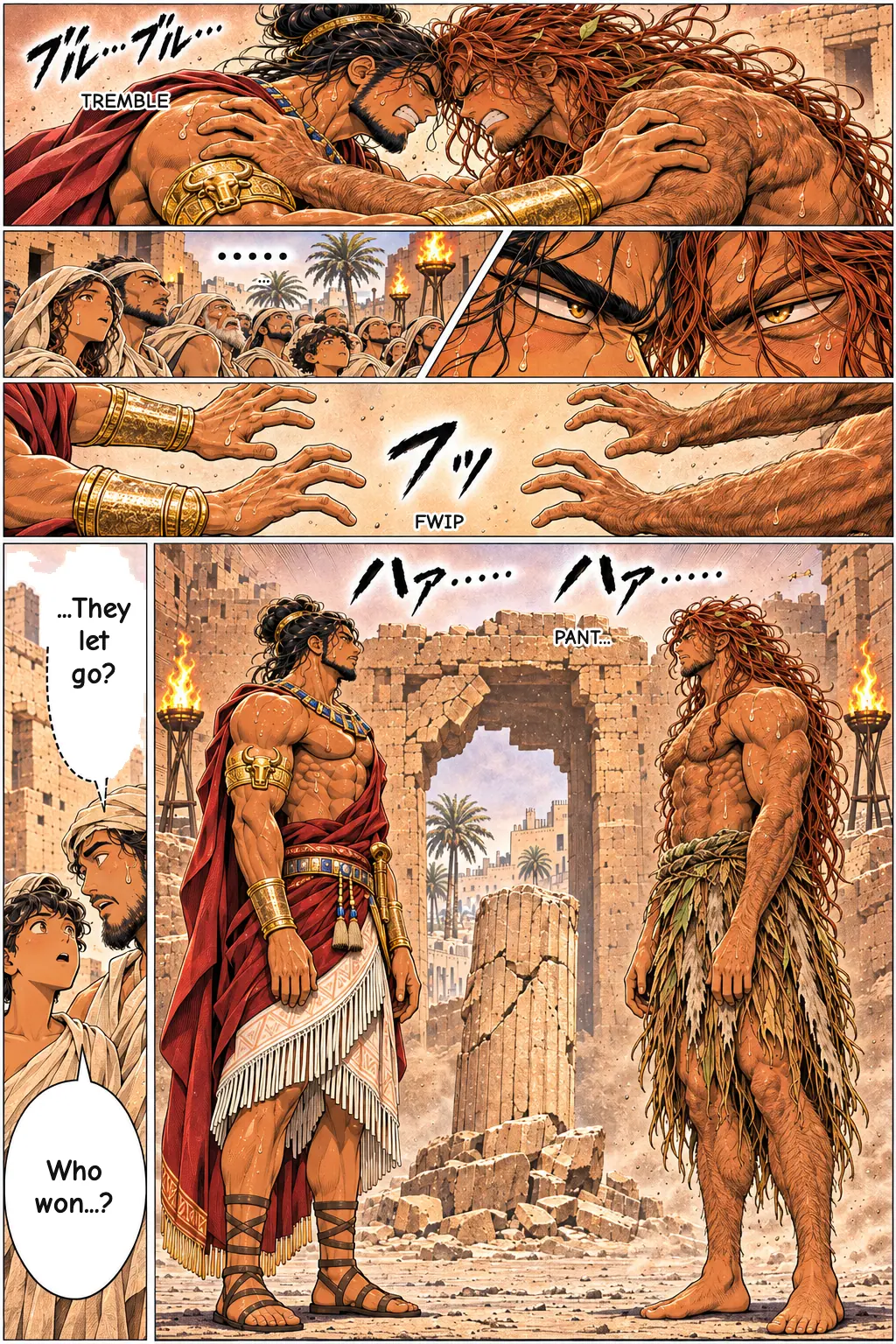
The two men seize each other in the doorway and grapple like bulls. The doorposts break and the wall shakes. Then Gilgamesh drops to one knee with a foot set on the ground, his anger fades, and he turns away. The text does not say clearly who won. Some readers think Gilgamesh came out on top, others think Enkidu did, and some think the fight was simply a draw.
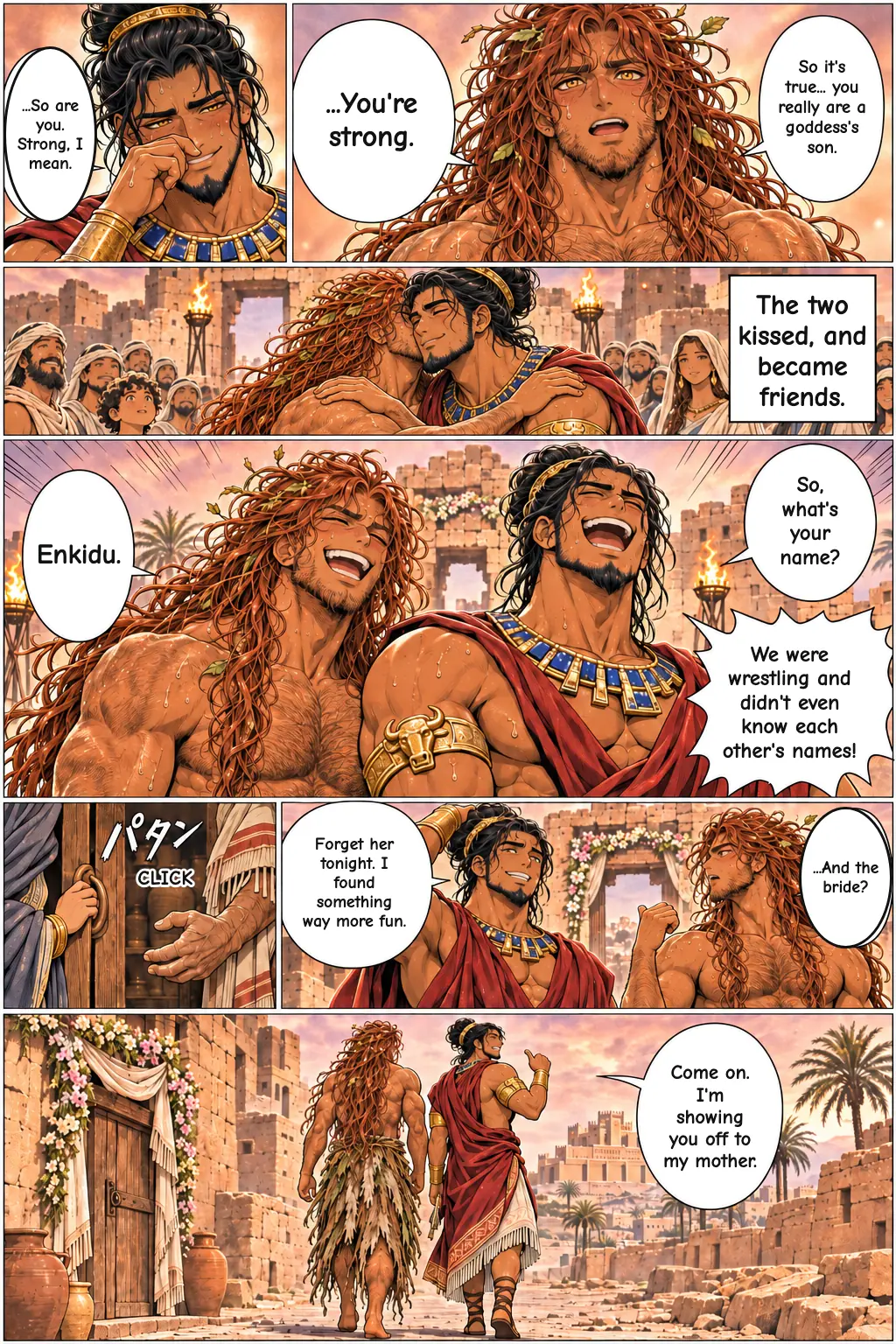
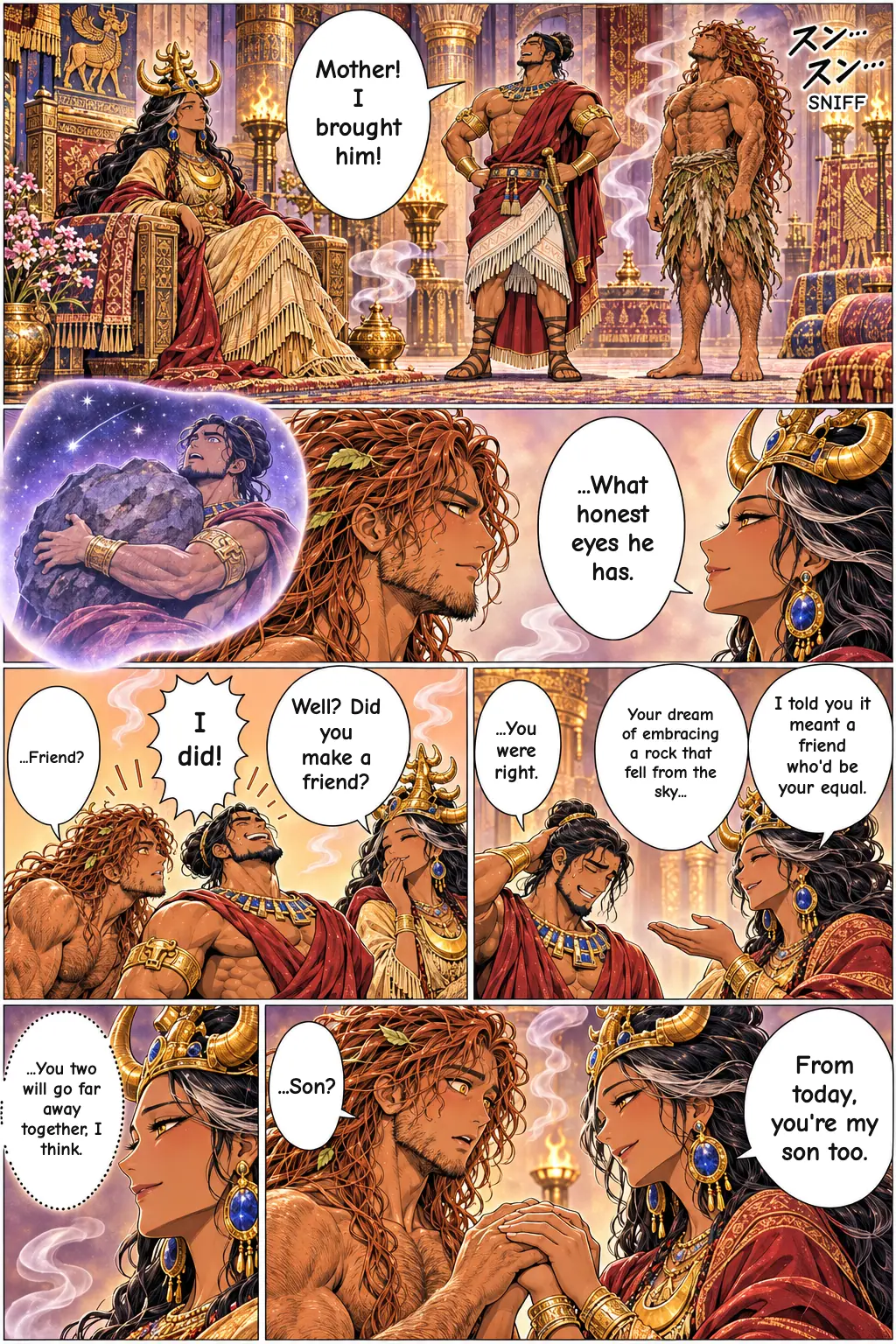
What the text does make clear is what came next. Enkidu praises Gilgamesh as the one-of-a-kind son of Ninsun, the goddess known as the Wild Cow, a man raised high above other people and given kingship by Enlil, the chief god. The two kiss, which was a sign of respect and closeness in this culture, and they become friends. A broken passage that follows seems to involve Gilgamesh's mother Ninsun, but too much of it is lost to be sure what she says.
The Plan to Kill Humbaba
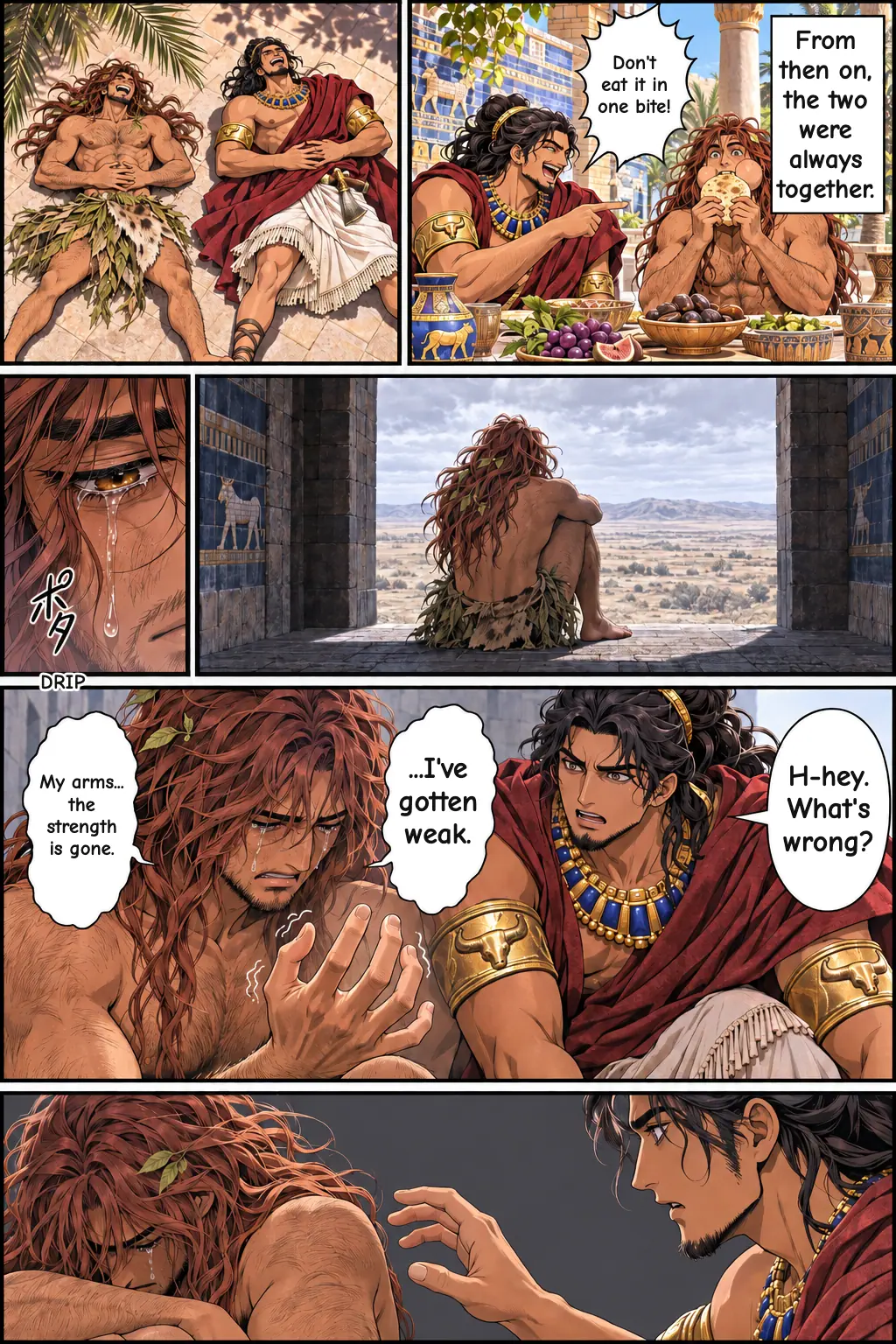
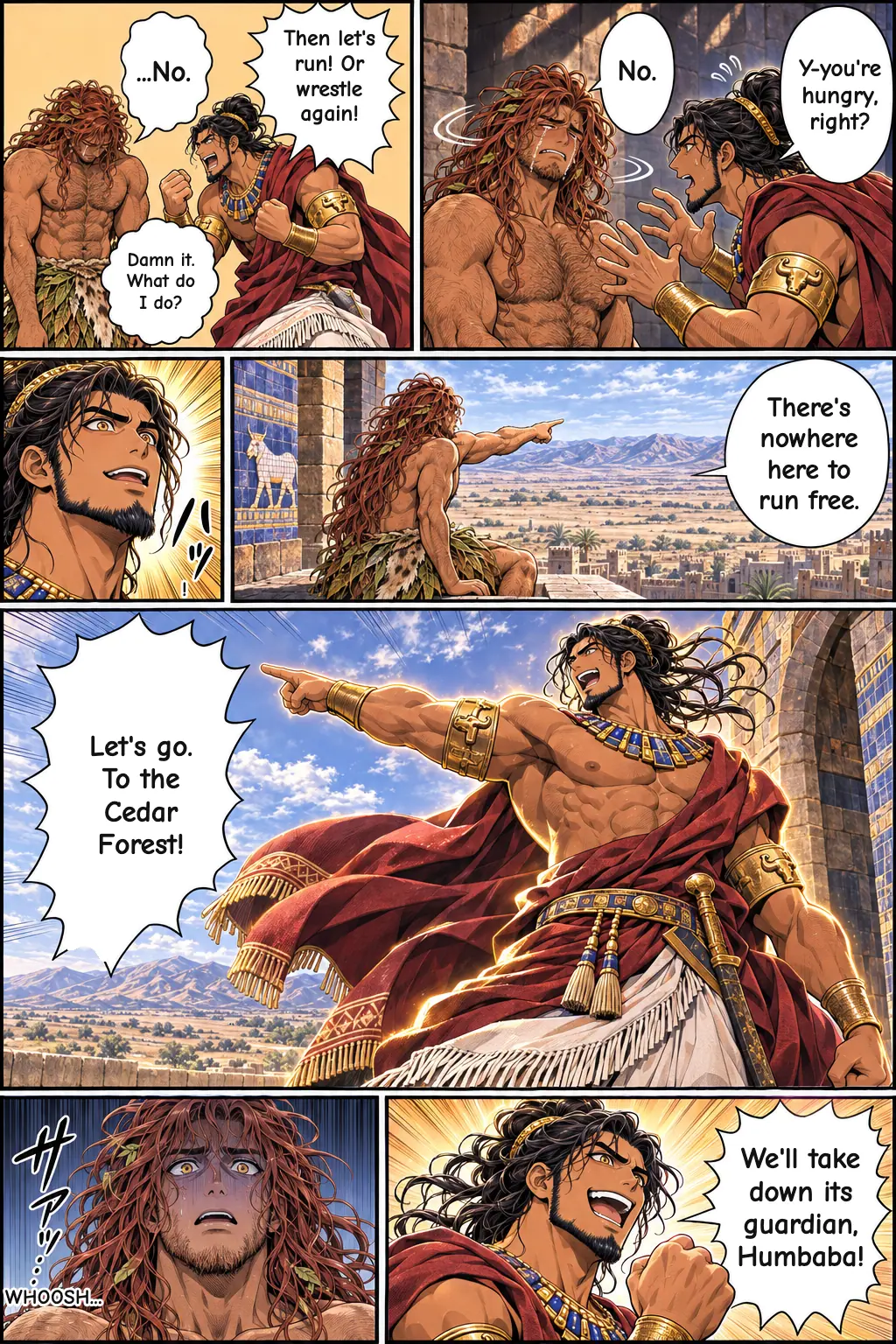
Some time later, Enkidu weeps. He feels his arms have lost their strength. Gilgamesh asks what is wrong and then offers a new purpose: the two of them should travel to the Cedar Forest, kill its fearsome guardian Huwawa (called Humbaba in the later version), and drive evil from the land.
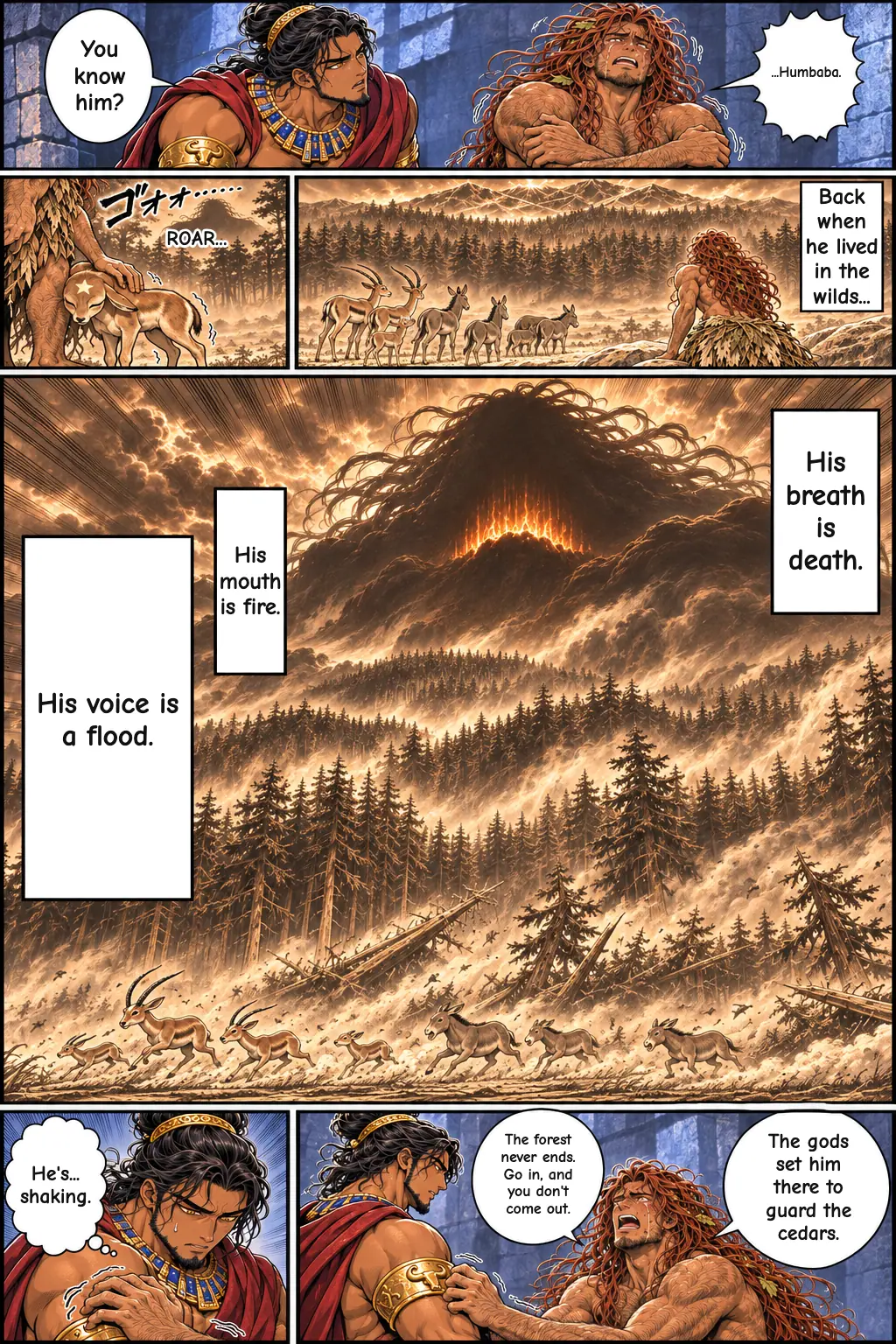
Enkidu argues against it. He knew of Humbaba from his days in the wild. The forest is endlessly large, and Enlil himself set Humbaba there to protect the cedars. His voice is like a great flood, his mouth is fire, and his breath brings death.
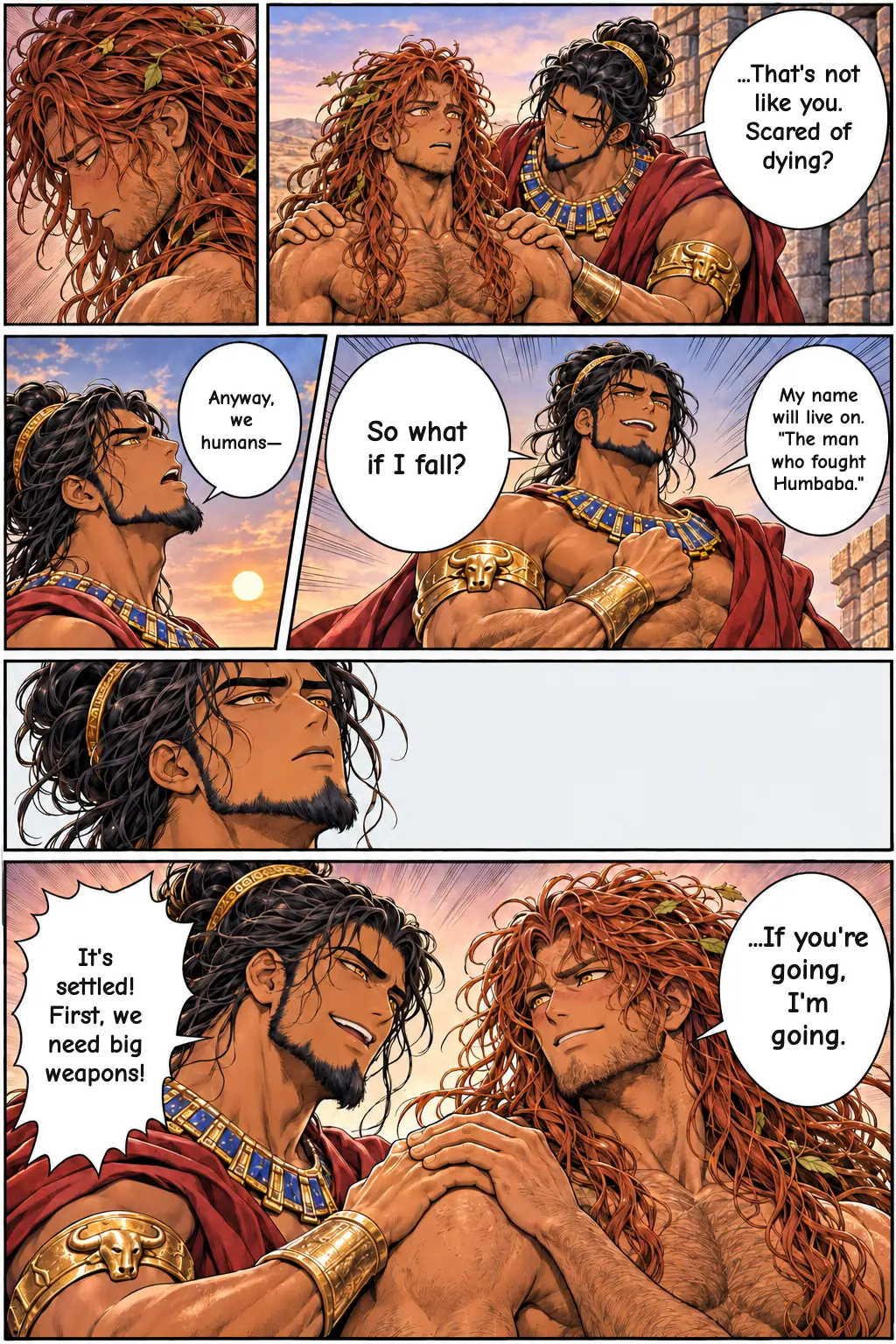
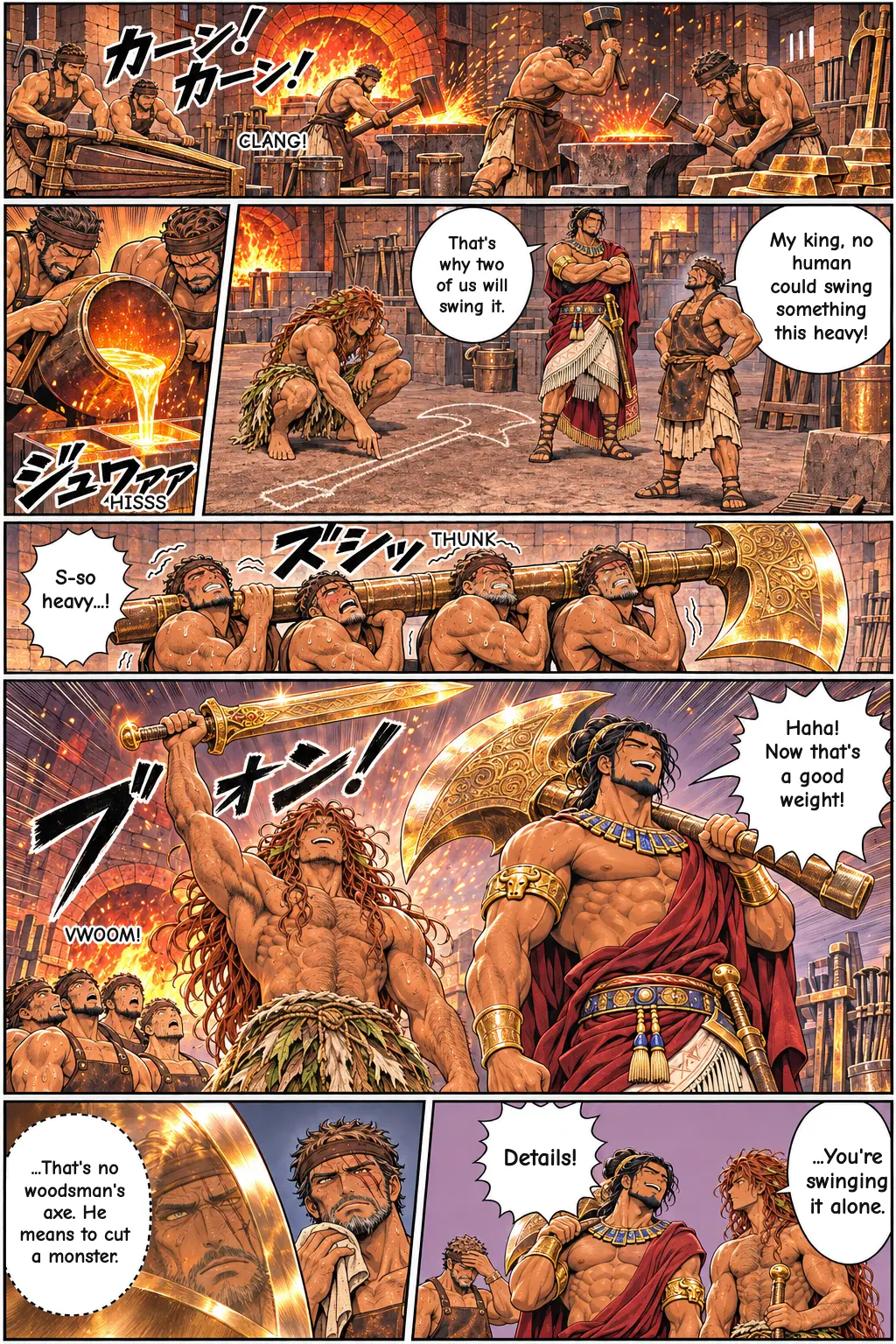
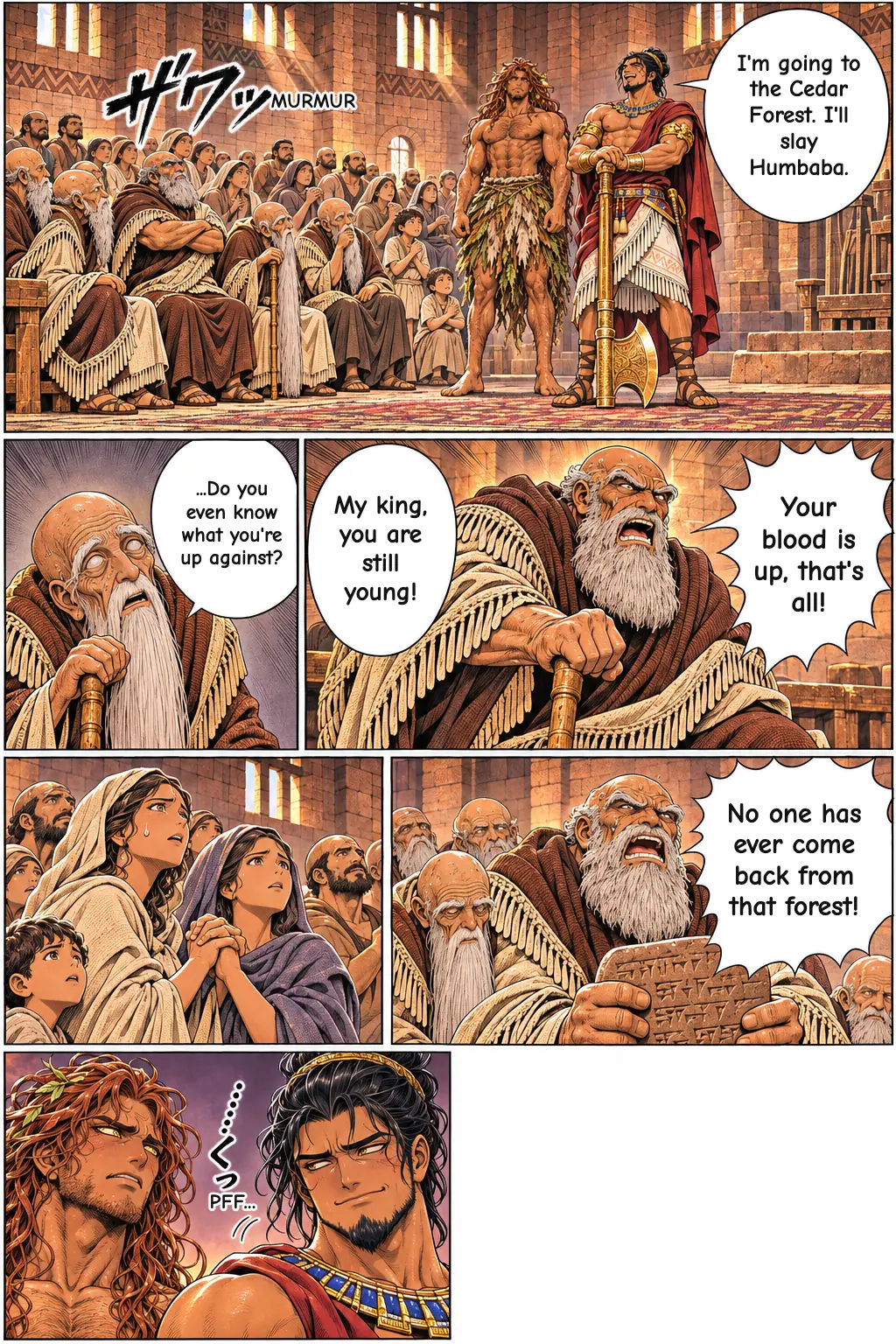
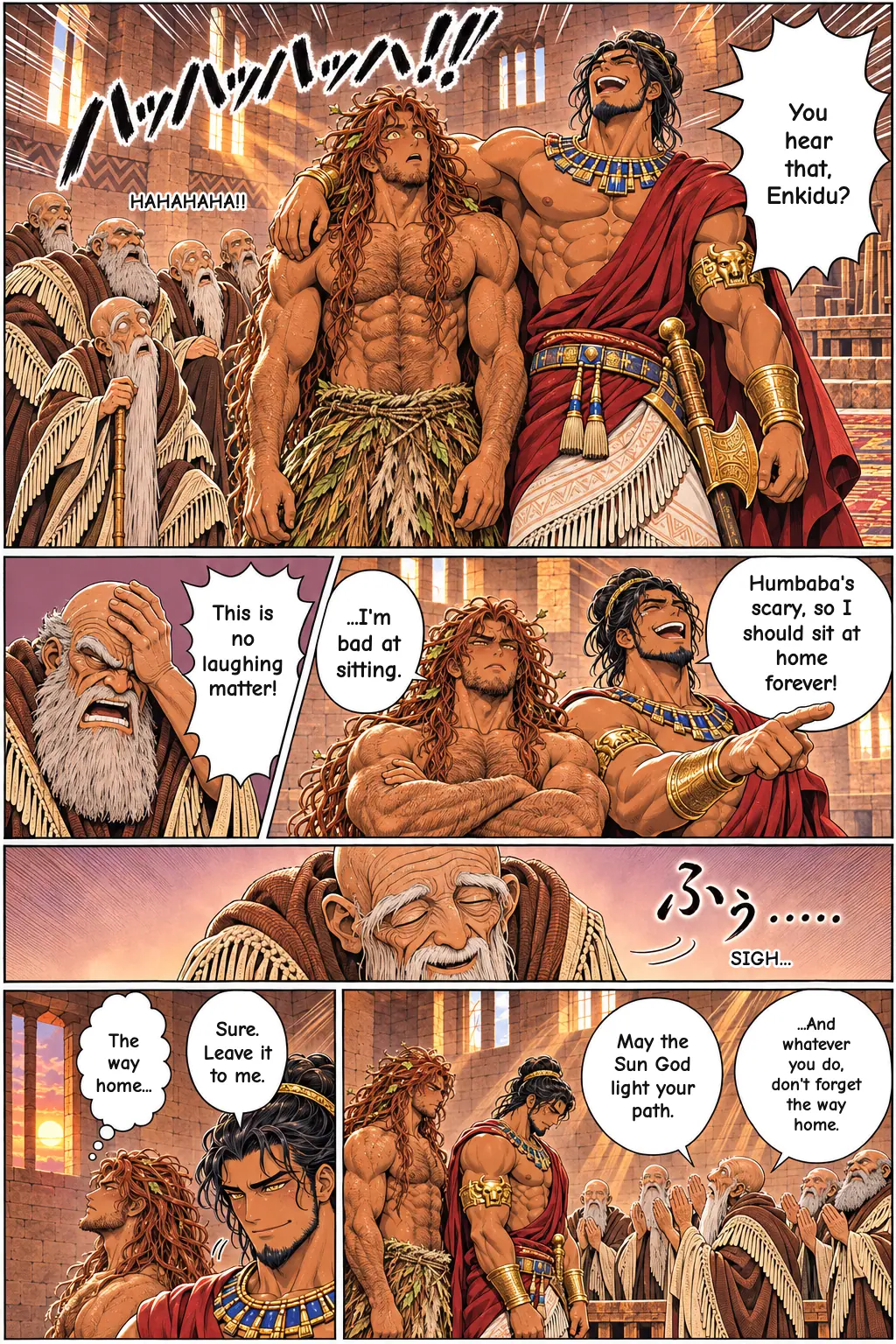
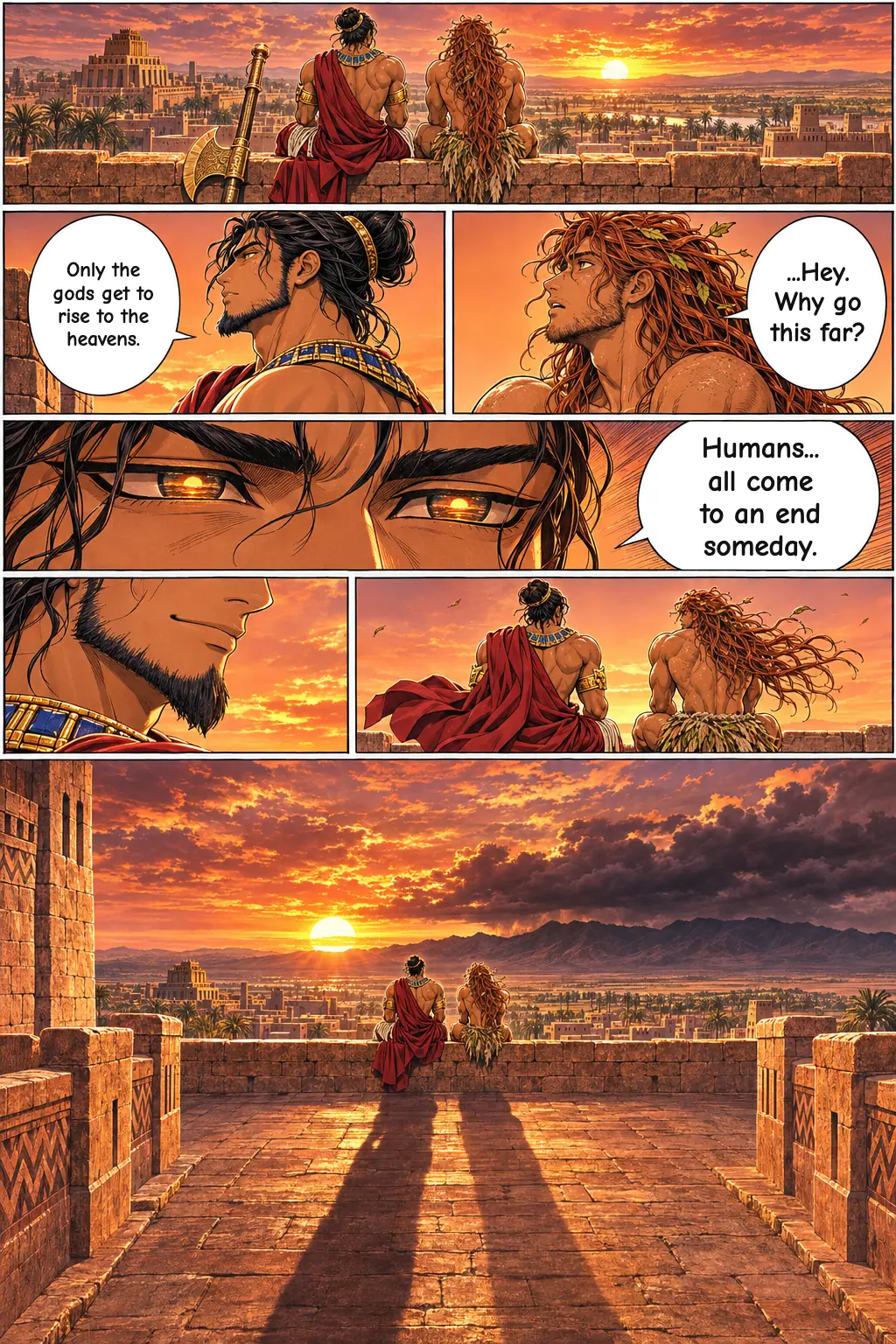
Gilgamesh's answer is the heart of the episode. Only the gods live forever beside Shamash, the sun god, he says. Human life is short, and everything people do passes away like wind. Why be afraid of death? Even if he falls, people will remember that Gilgamesh died fighting Humbaba. Craftsmen cast huge axes and swords for the journey. When the elders of Uruk warn the king that he is young and led by his heart, he only laughs. Would they have him sit at home for the rest of his life out of fear?
What This Episode Tells Us
The wrestling match turns a tyrant's story into a story about friendship. Earlier in the epic, the people of Uruk ask the gods for help against their overbearing king, and the gods answer by making Enkidu as his equal. Gilgamesh does not find his match by being defeated. He finds it by being matched, and the fight ends in mutual respect instead of a winner.
The Humbaba plan introduces the epic's central theme: the fear of death. In the Mesopotamian view, eternal life belonged to the gods. The best a mortal could hope for was a lasting reputation. Gilgamesh's brave speech is also a sign of anxiety. He chases fame because he already knows his life will end, and that question will grow much heavier later in the epic.
What the Manga Changes
The manga keeps the main events of the source: the blocked doorway, the bull-like fight, the shattered doorposts, the friendship, Enkidu's warning, the forged weapons, and the elders' advice. Because the original never says who won, the manga ends the fight with both men letting go at the same moment. This is an interpretation the text allows, not something it says.
Other details are invented for the comic. These include the individual moves in the fight, the crowd's reactions and lines, how the two men's feelings change between fighting and friendship (the original covers this in about a line), the reason Enkidu feels weak, the forge scene and the look of the weapons, and the faces and words of the elders. Uruk's streets, the wedding house, and the costumes are based on Mesopotamia from roughly the Early Dynastic to the Old Babylonian periods. The final page ends on the idea that human days are limited, which sets up a later episode.
Where to Read It
If you want to watch Gilgamesh and Enkidu crash through that doorway, Episode 3 of MESOPOTAMIAN MYTH: THE EPIC OF GILGAMESH — No One Lives Forever is right above this article. The whole series on Manga Portal is free, with no sign-up. Start at Episode 1 to see how Enkidu came from the wild, or read on to follow the two friends into the Cedar Forest.
Characters in this episode
Gilgamesh
The powerful and overbearing king of Uruk, son of the goddess Ninsun, who hopes a heroic deed will make his name live forever.
Enkidu
A wild man the gods made as Gilgamesh's equal. He challenges the king at the wedding-house door and becomes his closest friend.
Ninsun
Gilgamesh's mother, a wise goddess called the Wild Cow; her scene in Tablet II is mostly lost.
Humbaba (Huwawa)
The terrifying guardian Enlil set over the Cedar Forest. In this episode he is only talked about.
The Elders of Uruk
The city's advisers, who warn the young king that his quest is reckless.
The People of Uruk
The crowd that compares Enkidu with their king and whispers that a rival has finally come.
FAQ
Why did Gilgamesh and Enkidu fight?
Enkidu was angry to hear that Gilgamesh took his place with brides before their husbands. He blocked the door of a wedding house to stop the king, and Gilgamesh met him with force.
Who won the fight between Gilgamesh and Enkidu?
The text is unclear. Gilgamesh kneels and his anger fades, but it never names a winner. Some scholars read it as a Gilgamesh victory, some as Enkidu's, and others as a draw that ends in mutual respect.
How did Gilgamesh and Enkidu become friends?
After the wrestling match, Enkidu praises Gilgamesh as the son of Ninsun, made king by the god Enlil. The two kiss and become friends, and from then on they act together.
Why did Gilgamesh want to kill Humbaba?
Gilgamesh believed only the gods live forever, so a mortal can only last through his reputation. Killing Humbaba, guardian of the Cedar Forest, would make his name endure even if he died trying.
Which tablet of the Epic of Gilgamesh has the wrestling match?
It is in Tablet II of the Standard Babylonian version. Because that tablet is damaged, scholars also use the older Old Babylonian Pennsylvania and Yale tablets, which tell the same part of the story.
More episodes of MESOPOTAMIAN MYTH: THE EPIC OF GILGAMESH