Get new episodes in your feed. Follow us on:ThreadsBluesky
In the Cedar Forest where the gods dwell, King Gilgamesh freezes before its guardian, Humbaba. His friend Enkidu grabs his wrist and pulls him back into the fight, and with the sun god's thirteen winds they win. But when the guardian begs for his life, Gilgamesh hesitates, and the friends float down the river at sunset carrying the curse laid on them.
Story summary
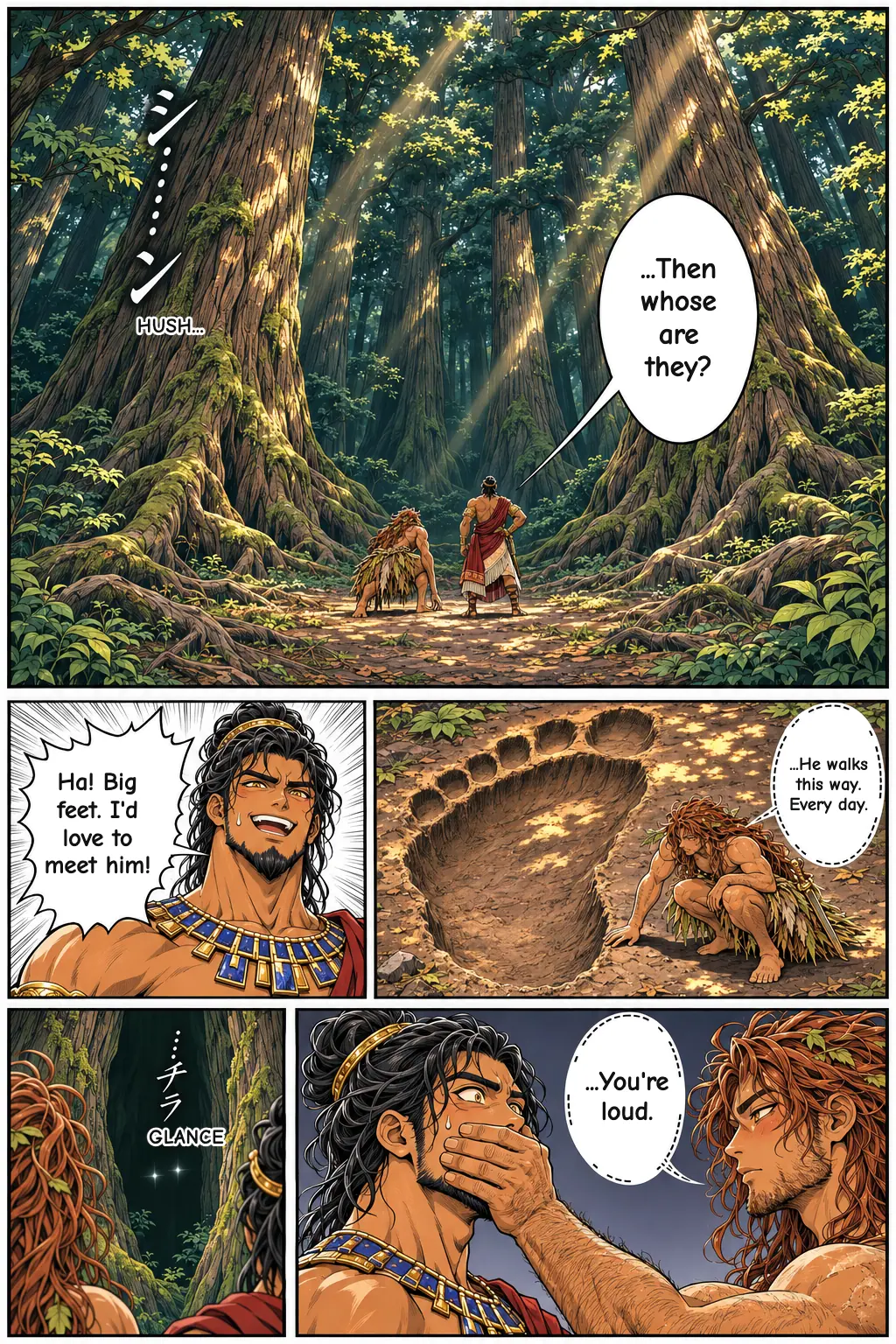
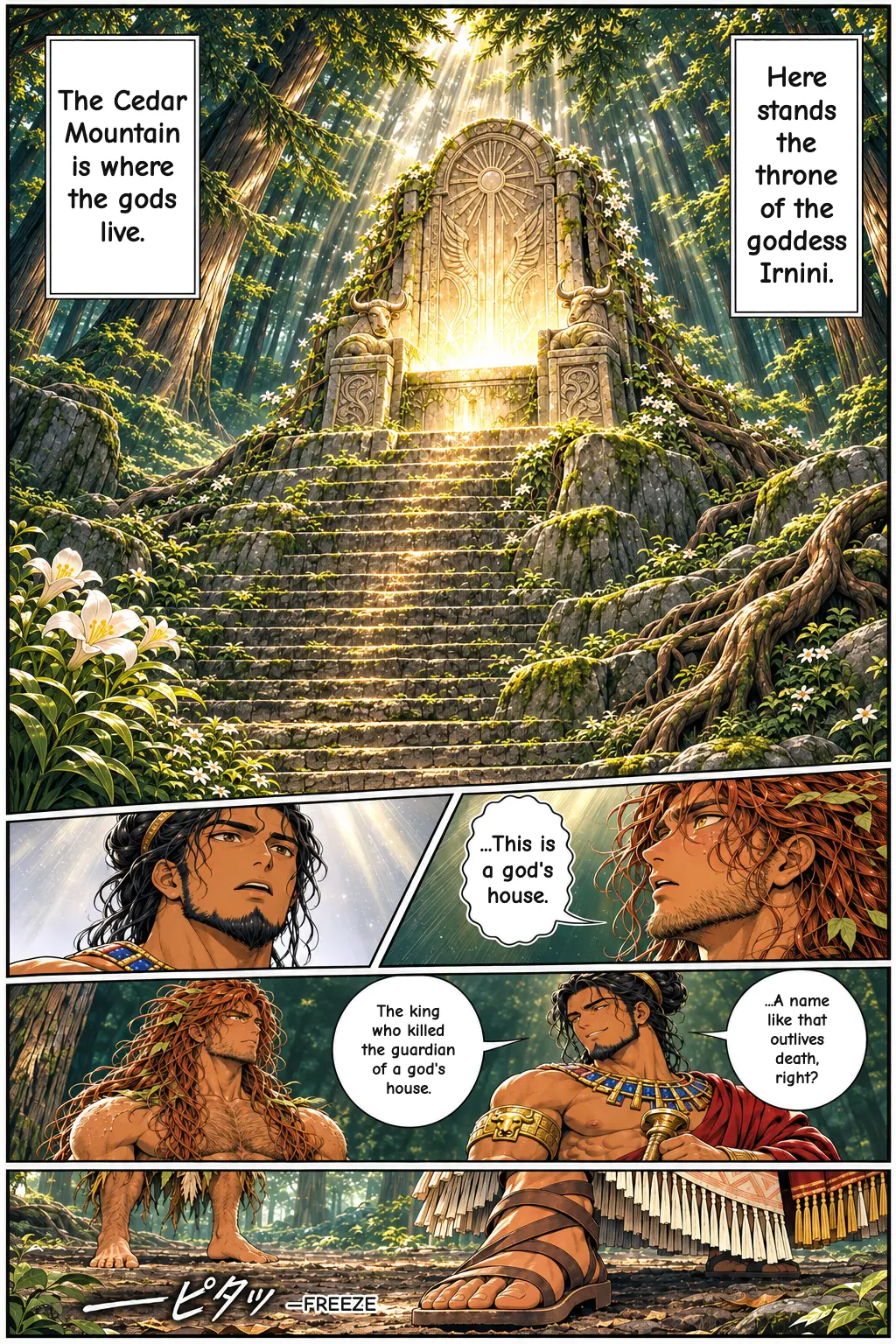
Gilgamesh, king of the city of Uruk, has marched west with Enkidu to win lasting fame by defeating Humbaba (also spelled Huwawa), the guardian of the Cedar Forest. Tablet V opens with the two standing at the forest's edge, gazing up at the towering cedars. They can see the well-trodden path Humbaba walks on his rounds. The mountain is described as a dwelling of the gods, where the goddess Irnini has her throne. The cedars grow thick and fragrant, the shade is pleasant, and thorny undergrowth covers the ground.
Gilgamesh and Humbaba: The Cedar Forest Battle and Curse Explained
In short: The slaying of Humbaba is the episode in Tablet V of the Epic of Gilgamesh where King Gilgamesh and his friend Enkidu enter the Cedar Forest of the gods and fight its guardian, Humbaba. The sun god Shamash pins the guardian down with thirteen winds. Humbaba begs for his life, and when Enkidu insists they kill him anyway, he curses the two friends before he dies. The story comes from the Standard Babylonian version of the epic, written in Akkadian and traditionally credited to the scholar Sin-leqi-unninni.
The Original Story: What Happens in Tablet V
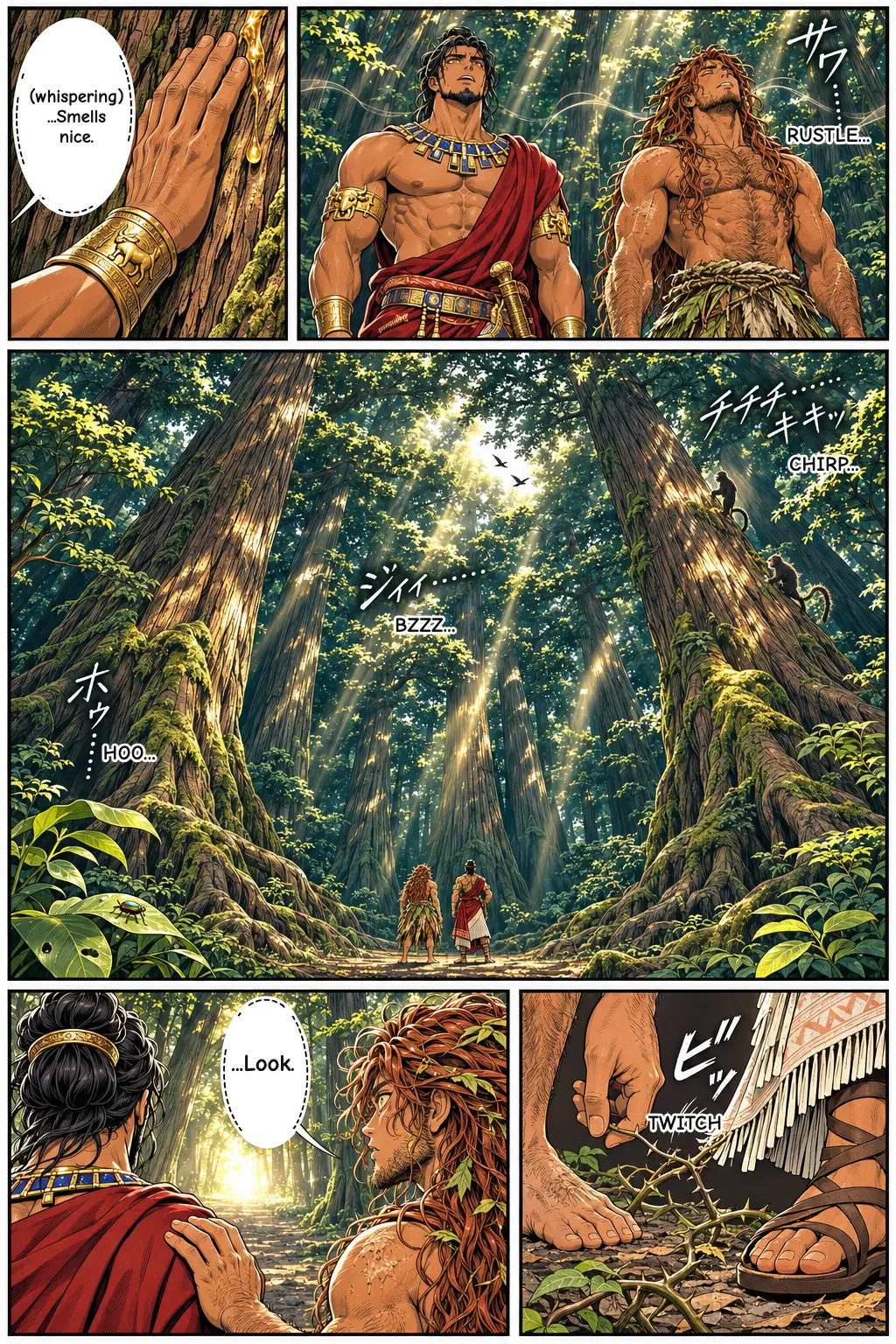
Gilgamesh, king of the city of Uruk, has marched west with Enkidu to win lasting fame by defeating Humbaba (also spelled Huwawa), the guardian of the Cedar Forest. Tablet V opens with the two standing at the forest's edge, gazing up at the towering cedars. They can see the well-trodden path Humbaba walks on his rounds. The mountain is described as a dwelling of the gods, where the goddess Irnini has her throne. The cedars grow thick and fragrant, the shade is pleasant, and thorny undergrowth covers the ground. A tablet fragment found more recently also pictures the forest as noisy with birds, monkeys and insects, like an orchestra, though because the piece is damaged, some details are uncertain.
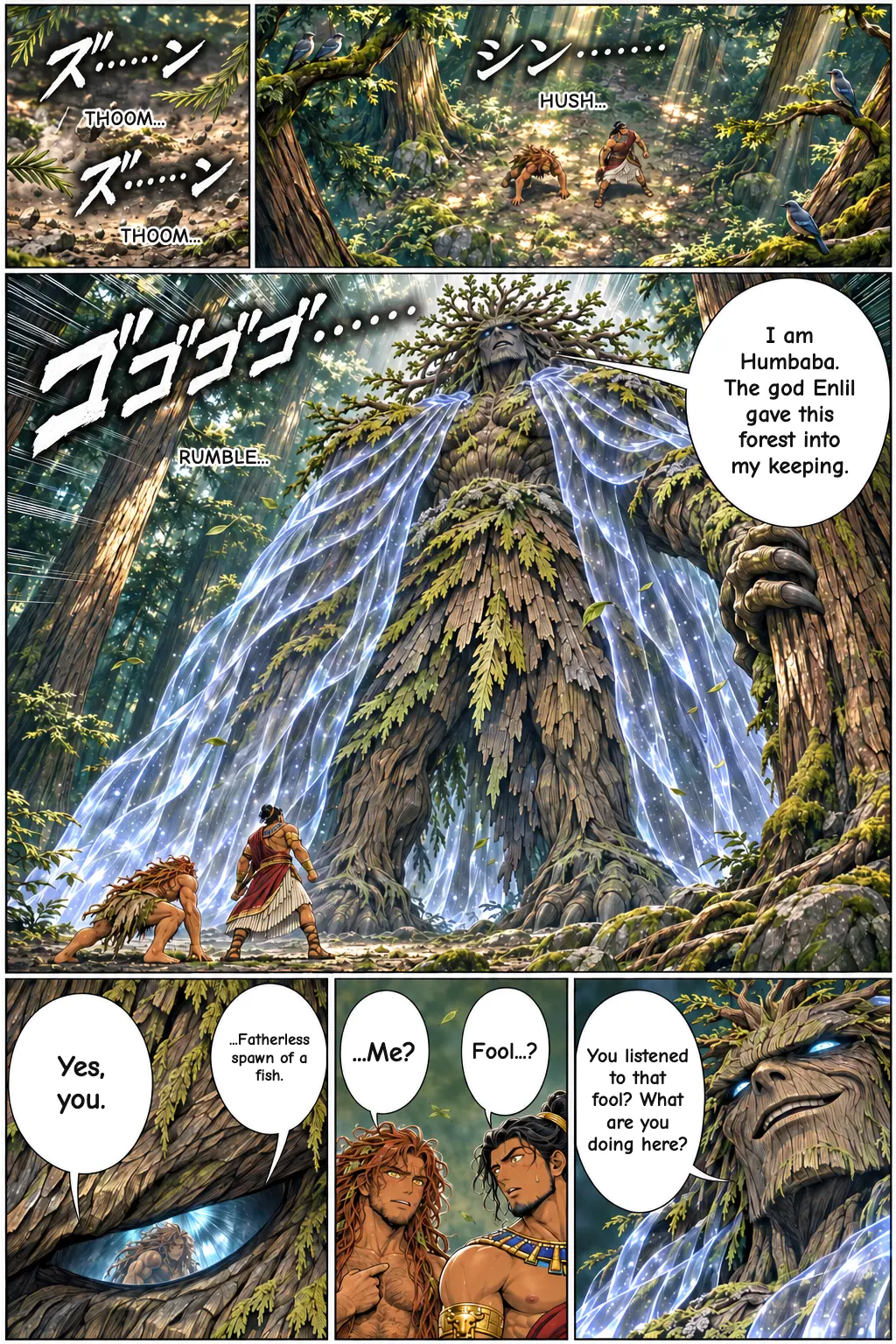
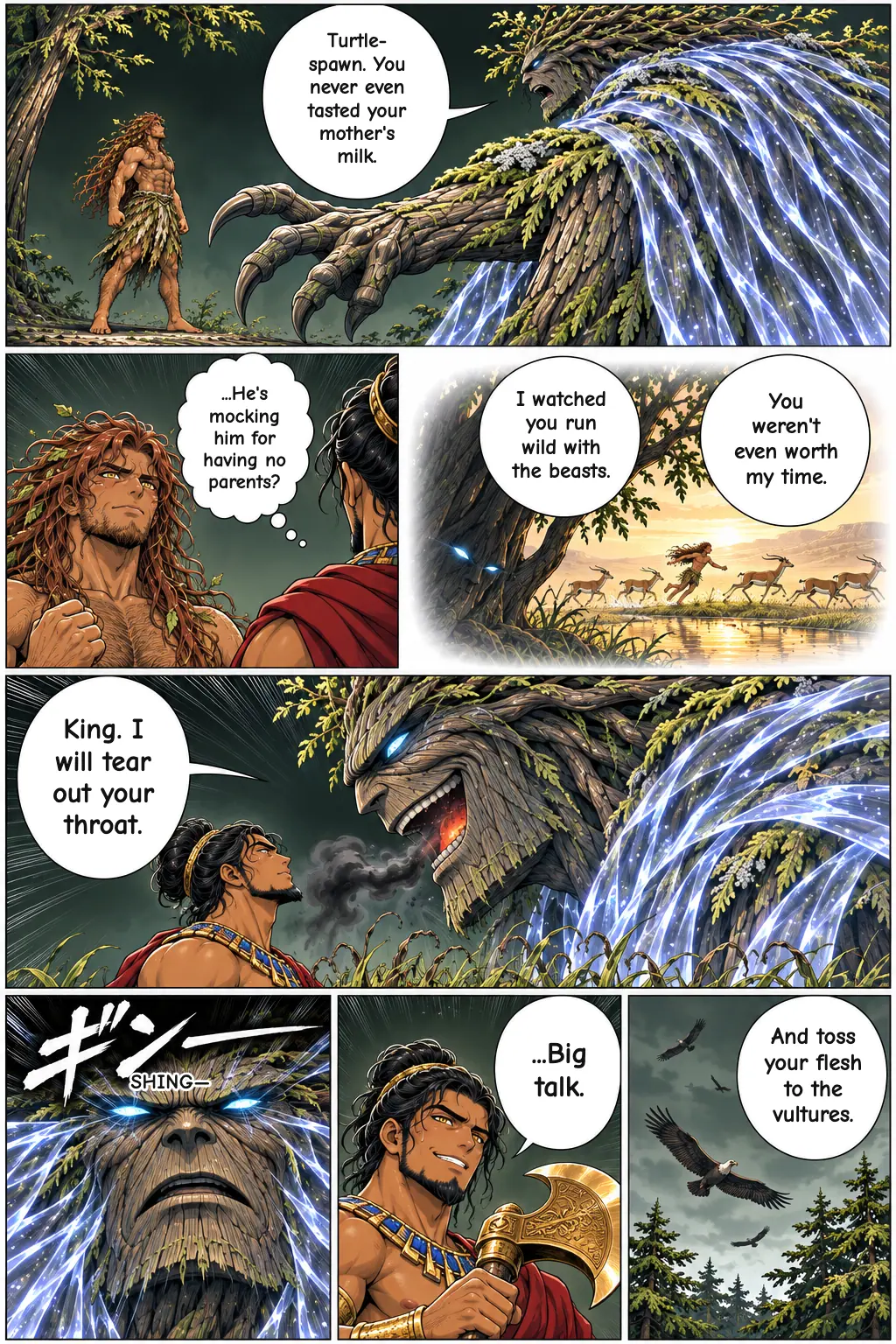
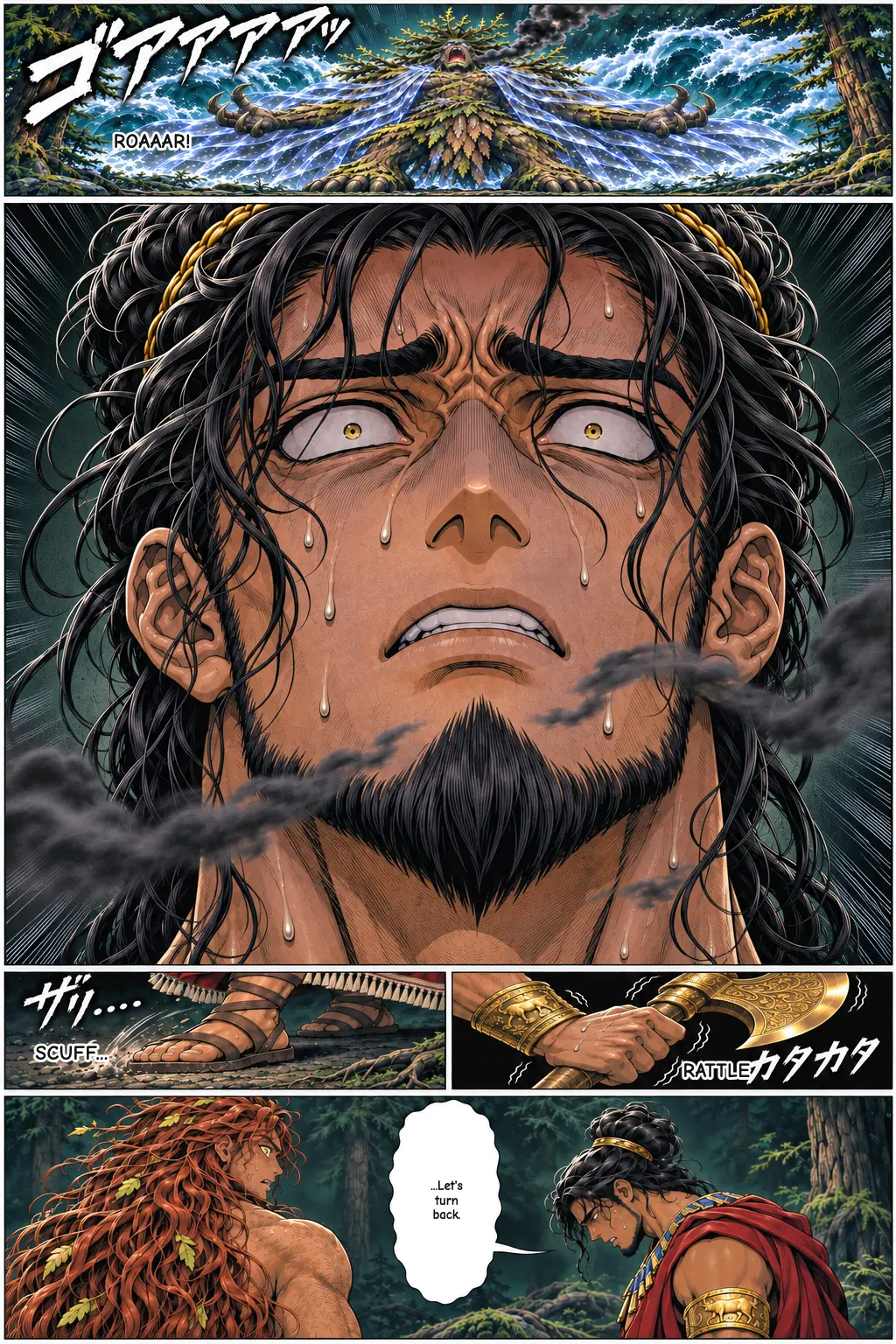
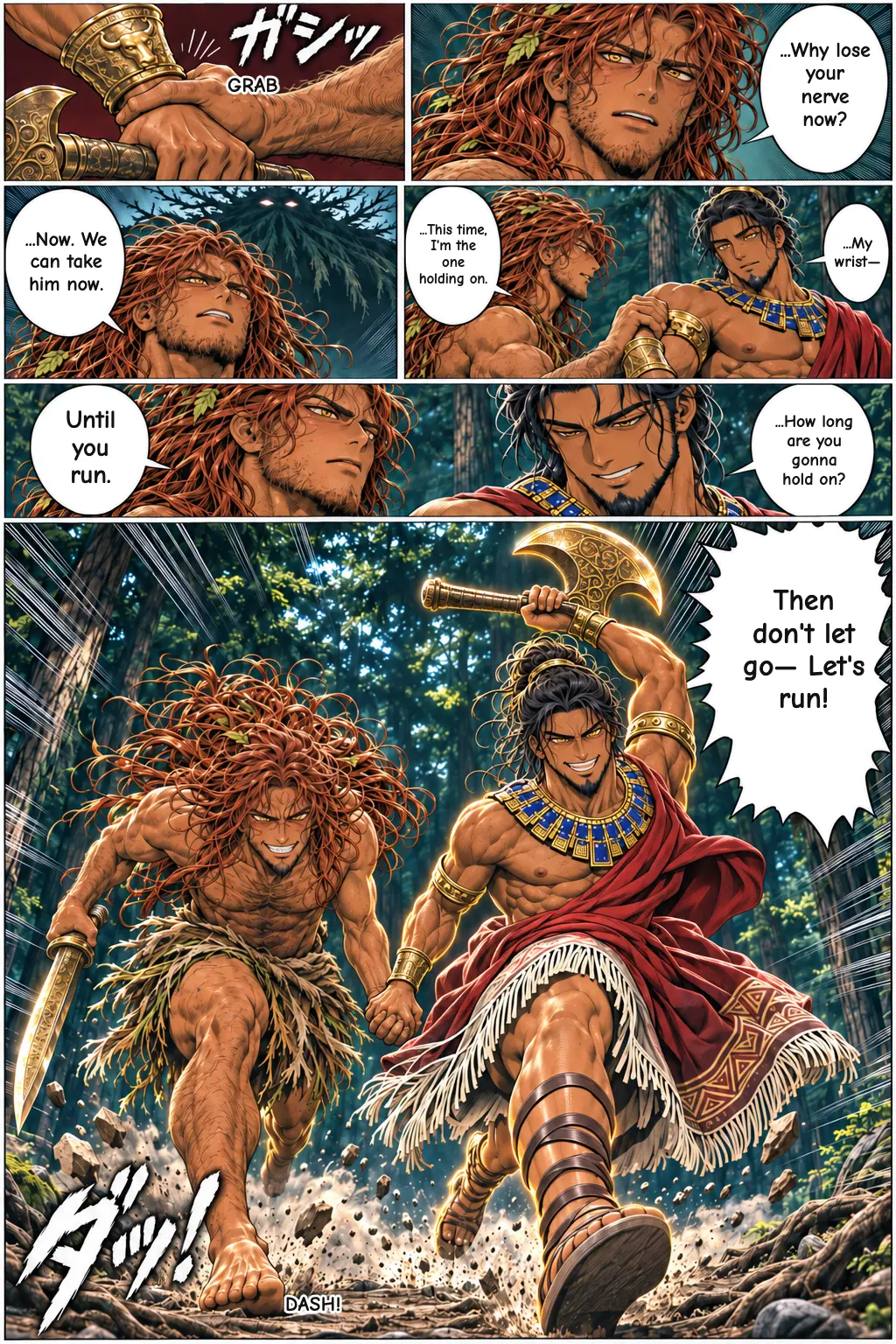
Then Humbaba appears and mocks them. He asks Gilgamesh why he listened to a fool and came here. He insults Enkidu as a creature of no known father, comparing him to a fish's or turtle's offspring that never drank its mother's milk, and says he watched Enkidu as a young wild thing but left him alone. He threatens to cut Gilgamesh's throat and feed his flesh to vultures and eagles. When Humbaba's face changes, Gilgamesh is afraid and talks as if he wants to turn back. Enkidu rebukes him for speaking weakly and urges him to strike now.
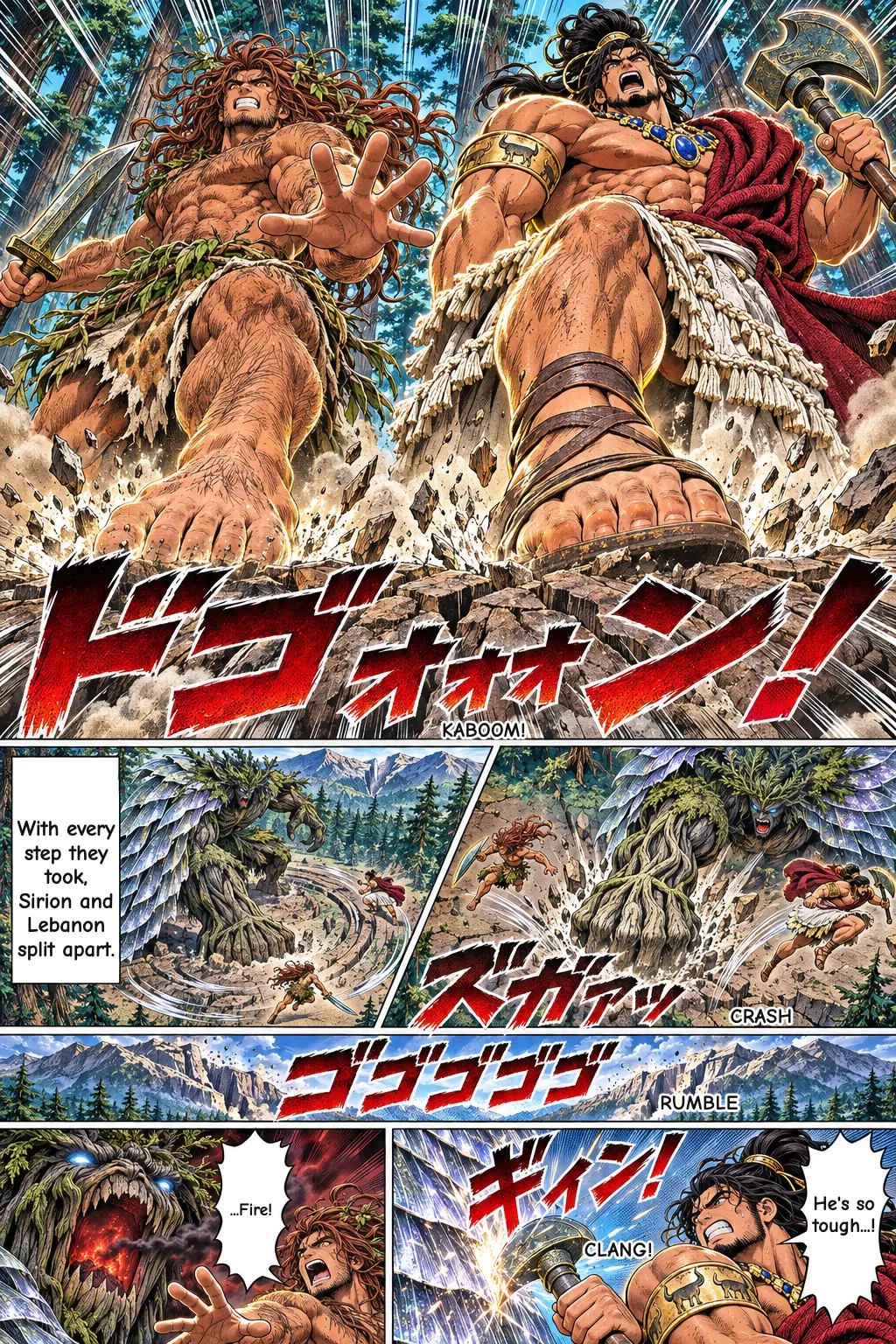
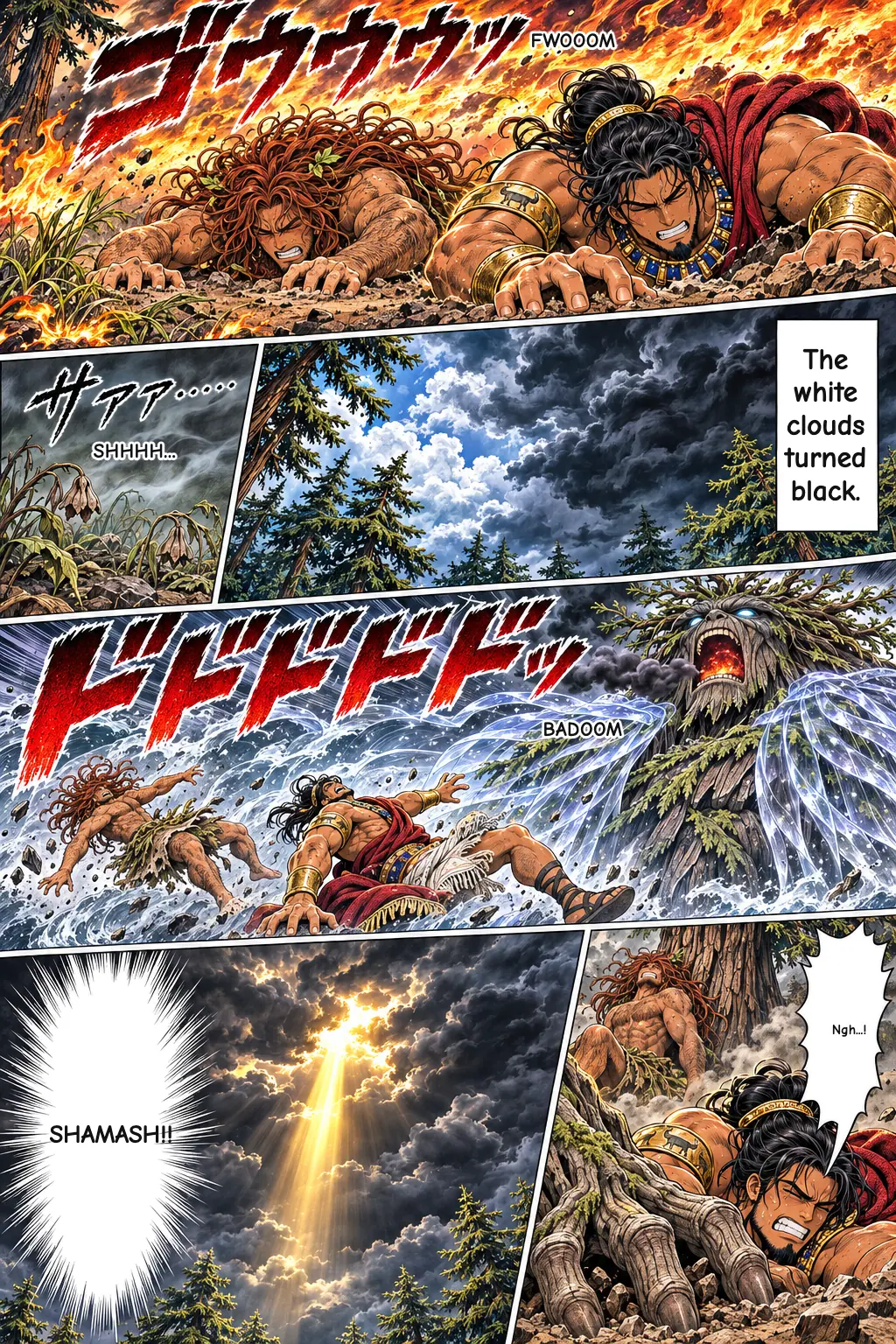
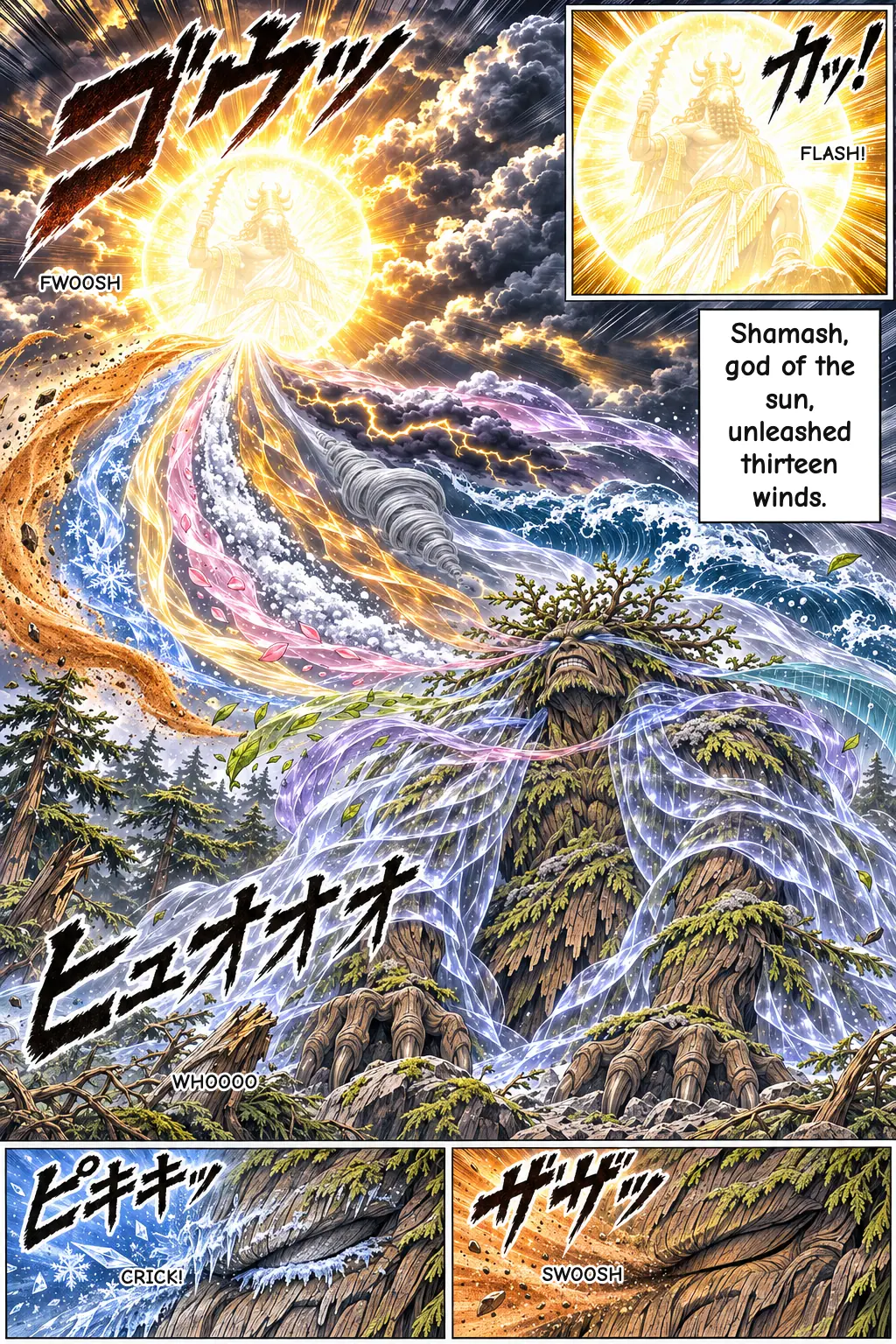
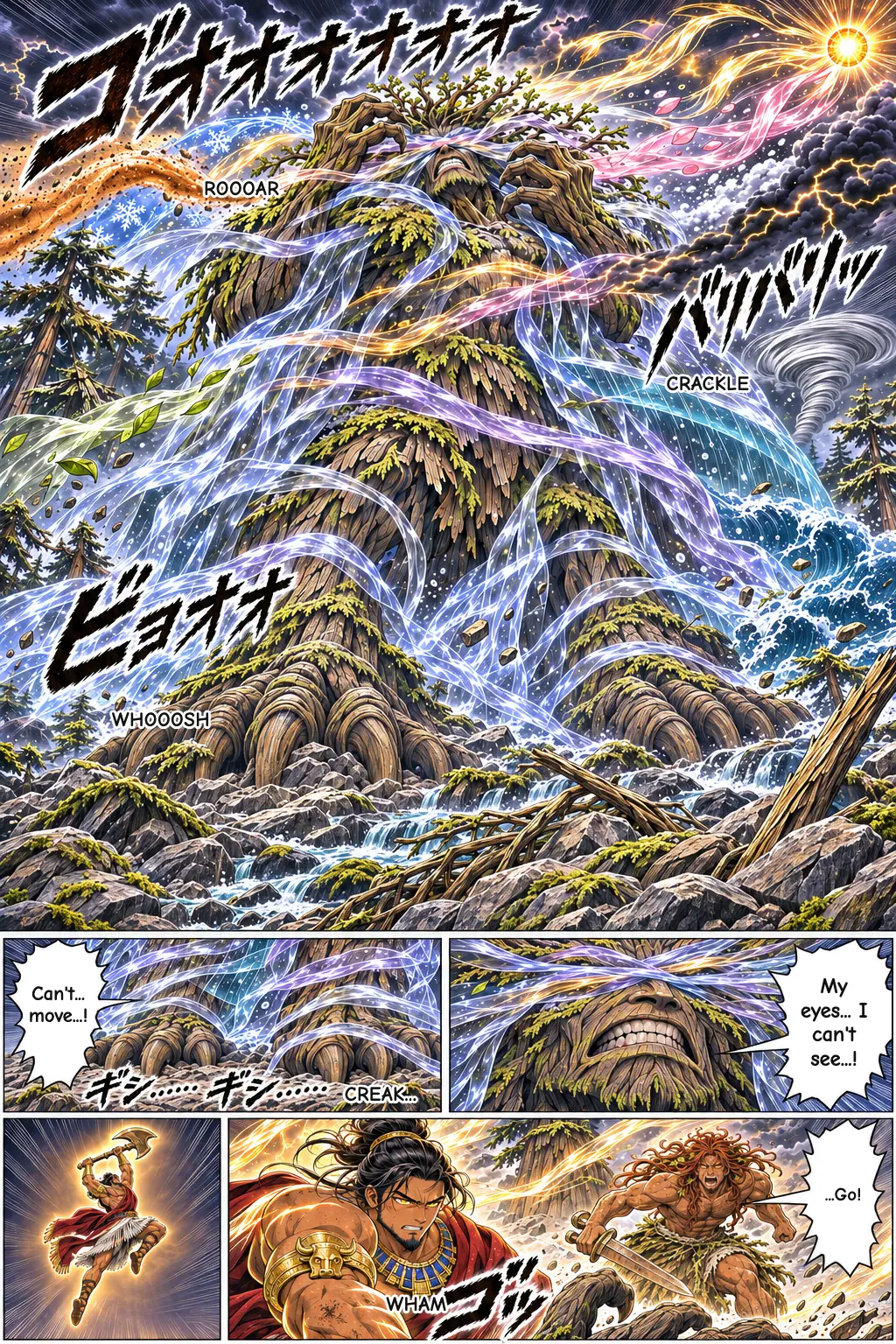
The fight is told on a huge, almost cosmic scale. The ground splits under the heroes' heels, the mountains of Sirion (Mount Hermon) and Lebanon crack apart, white clouds turn black, and death drifts down like fog. Shamash, the sun god and Gilgamesh's protector, sends thirteen winds against Humbaba: the four directional winds plus gales, storms and whirlwinds. Blinded and unable to move forward or back, Humbaba is finally within reach of Gilgamesh's weapons.
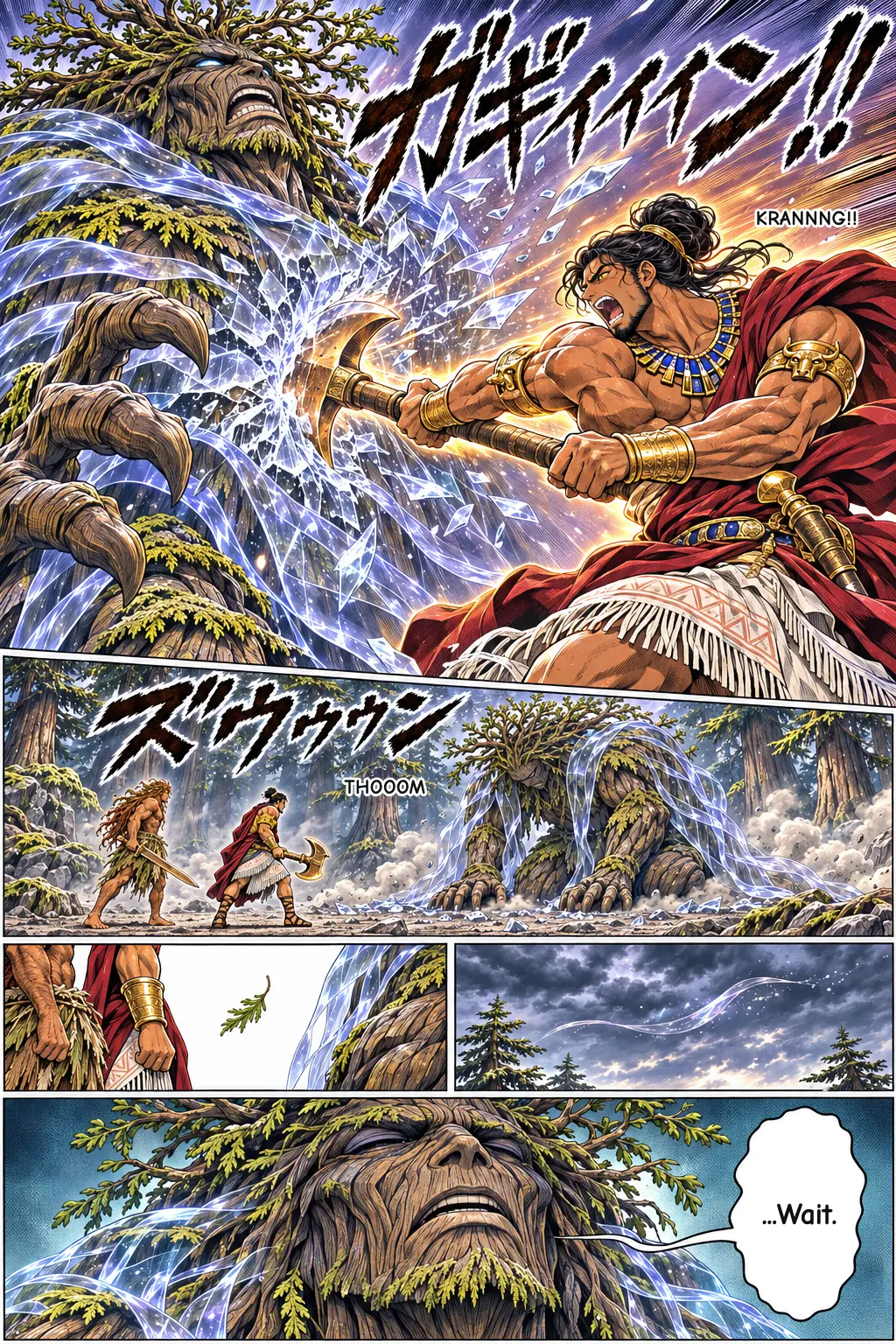
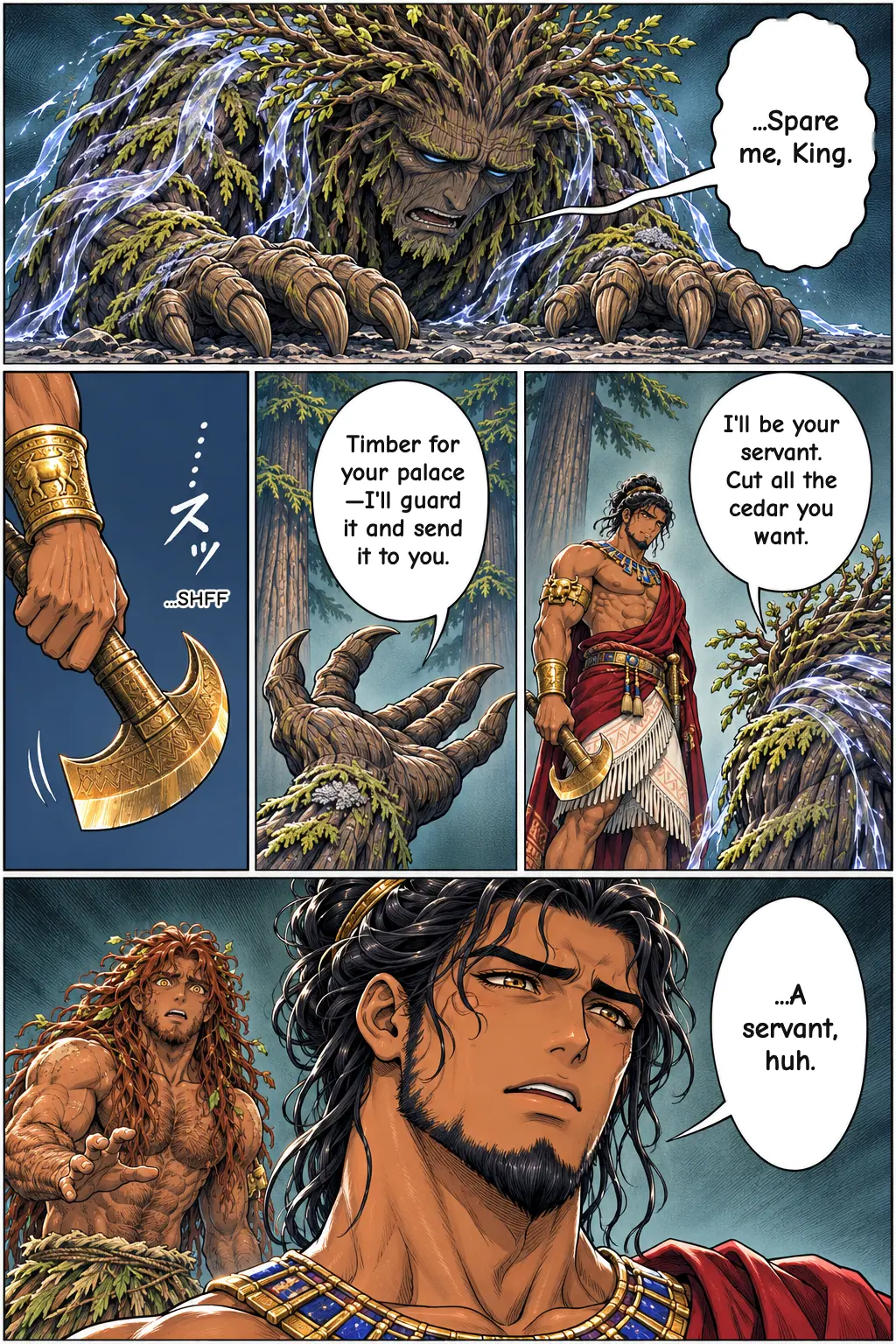
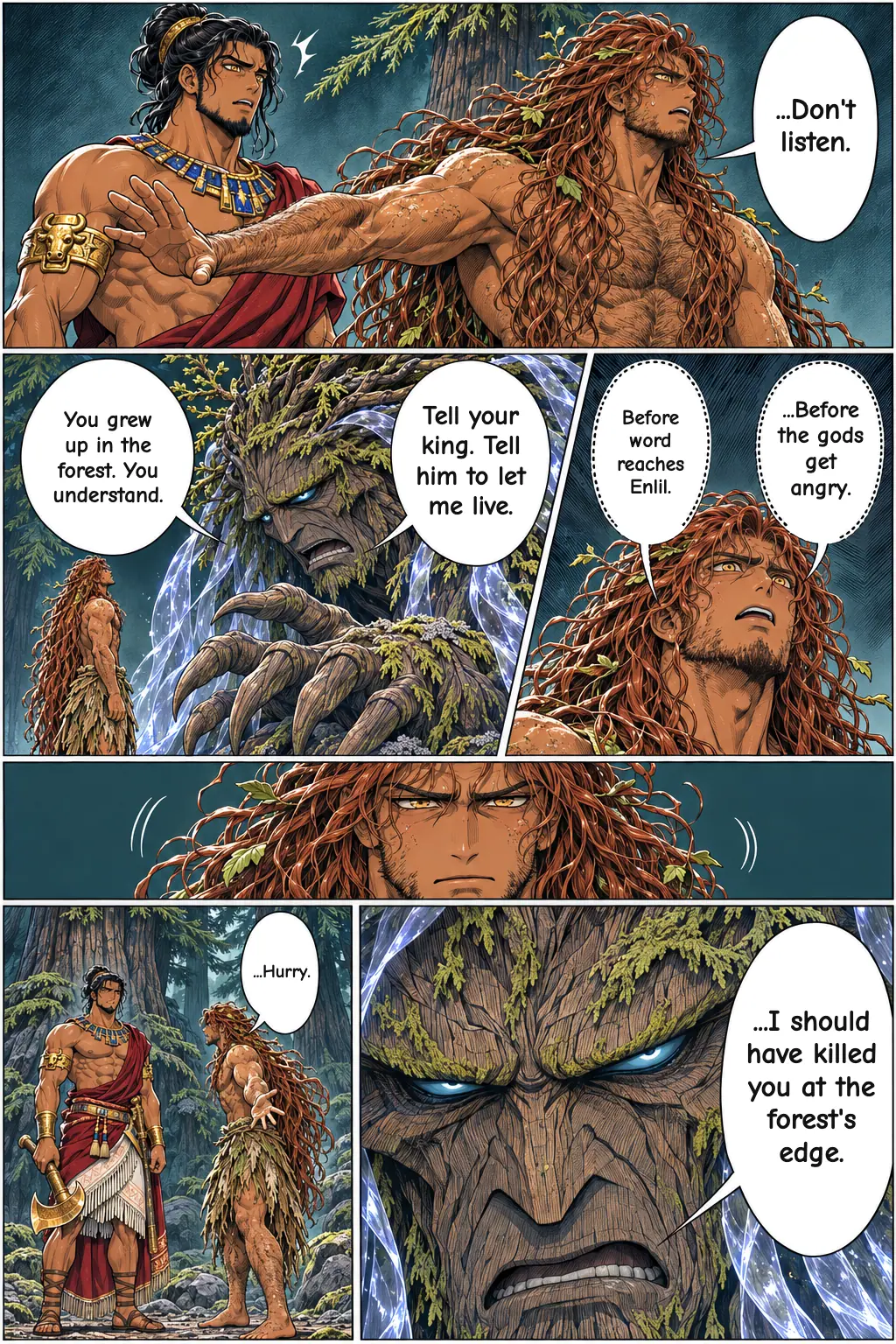
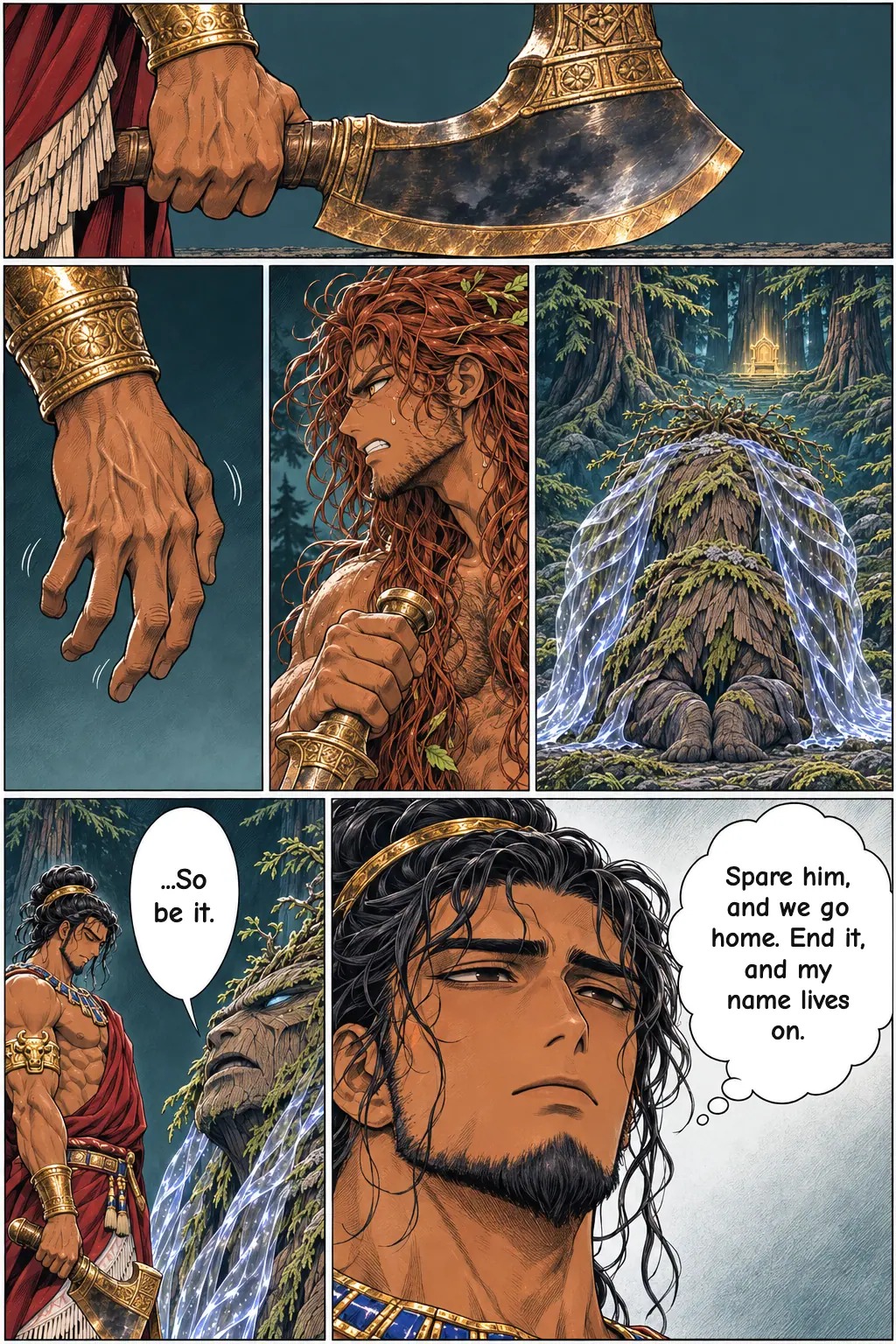
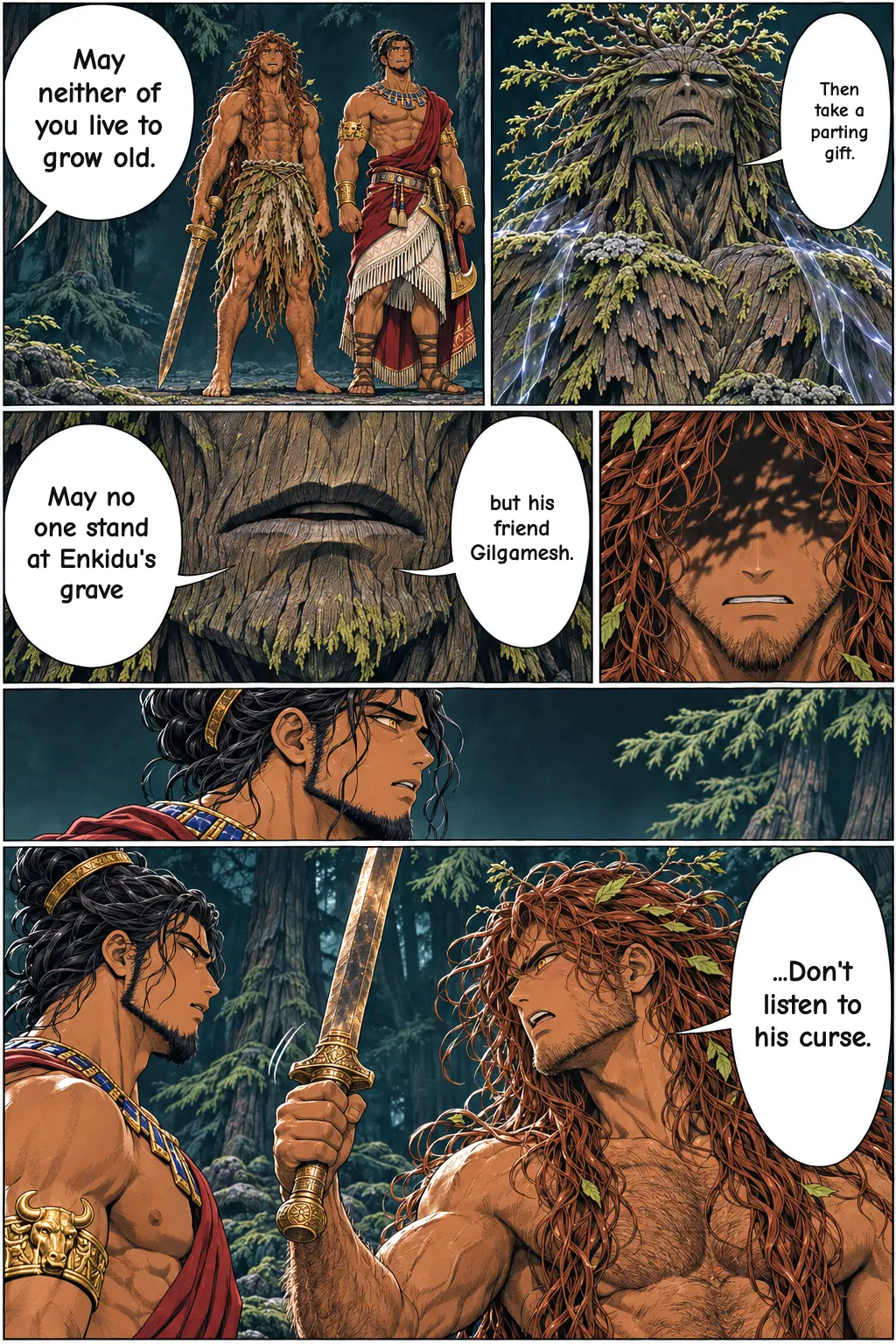
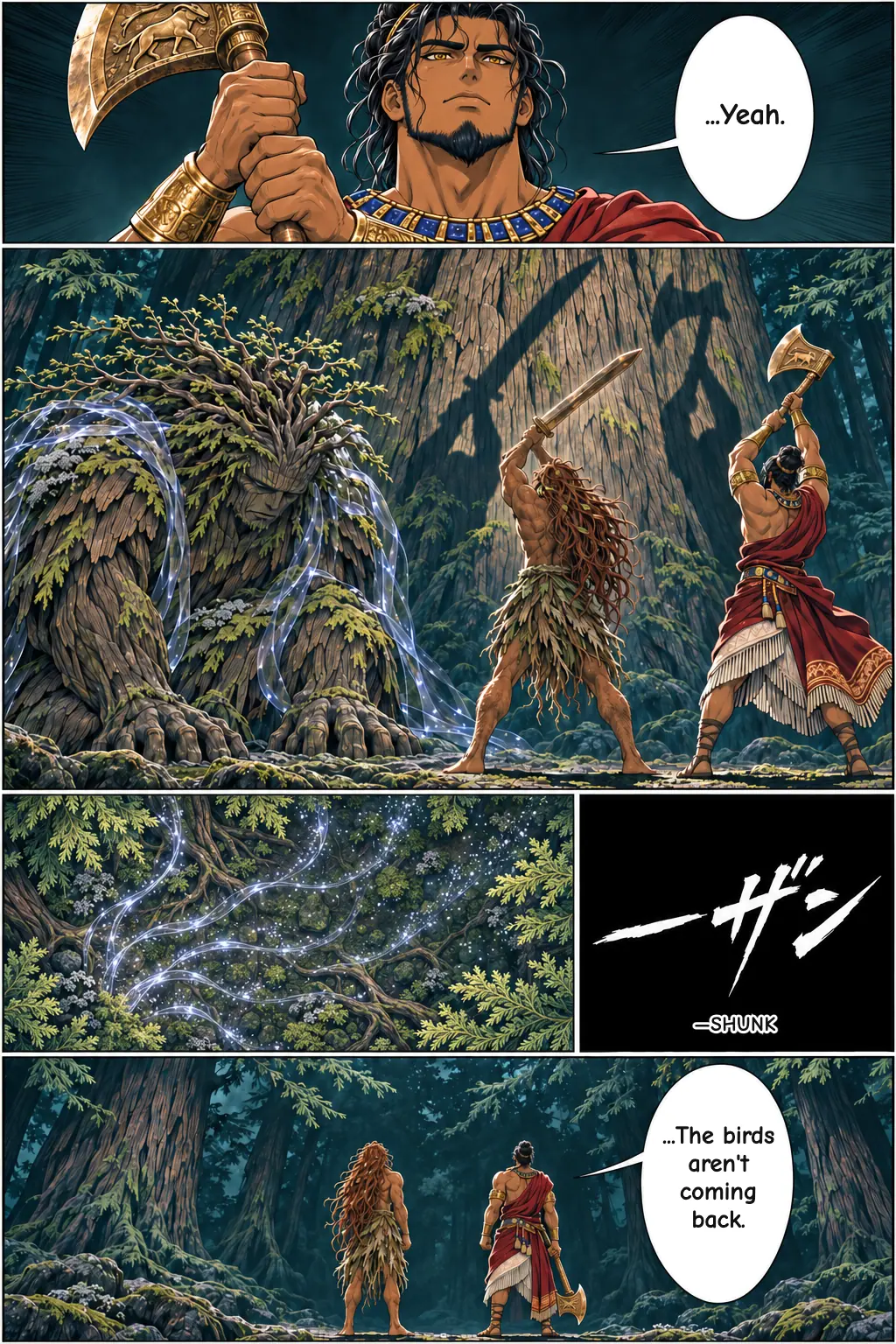
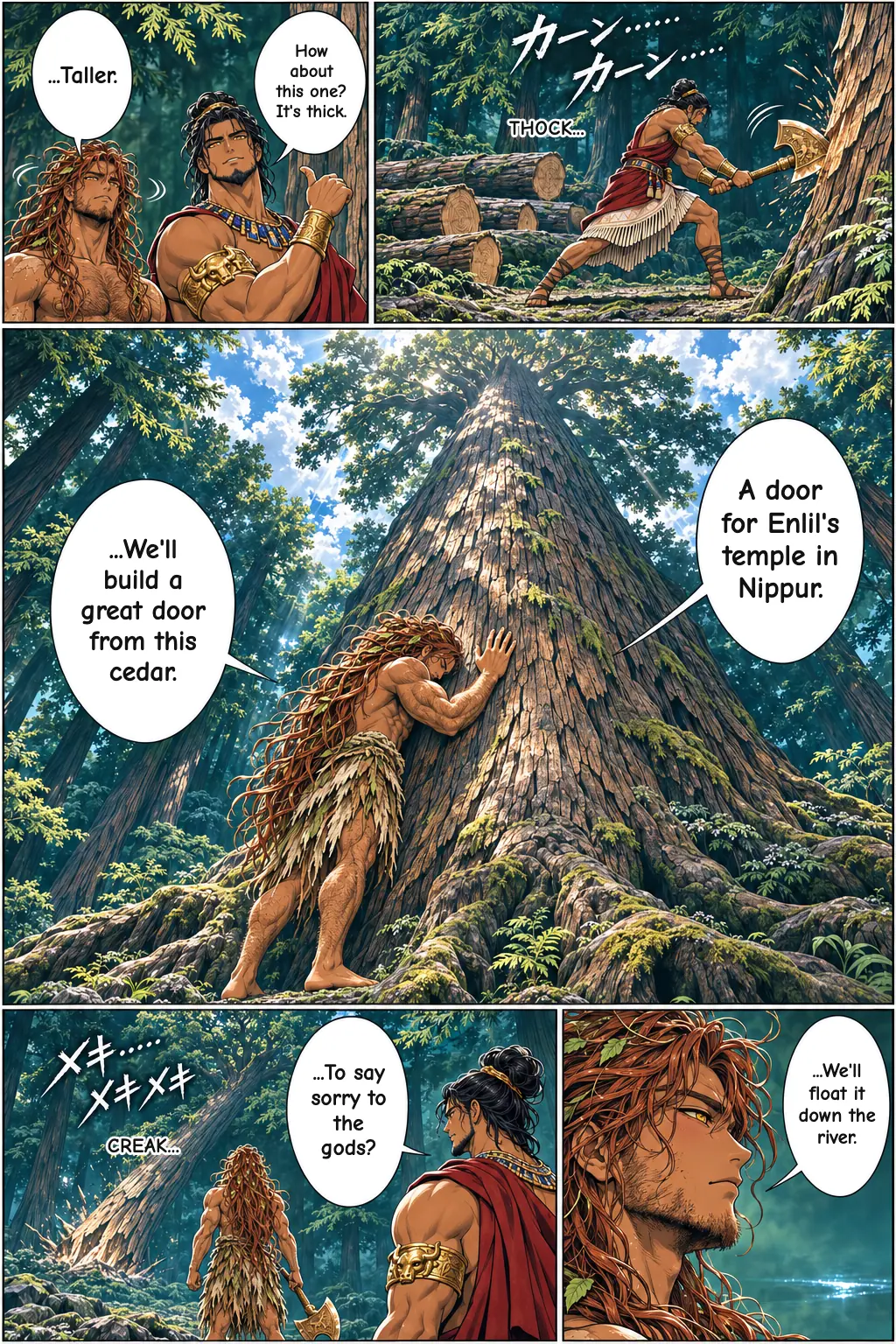
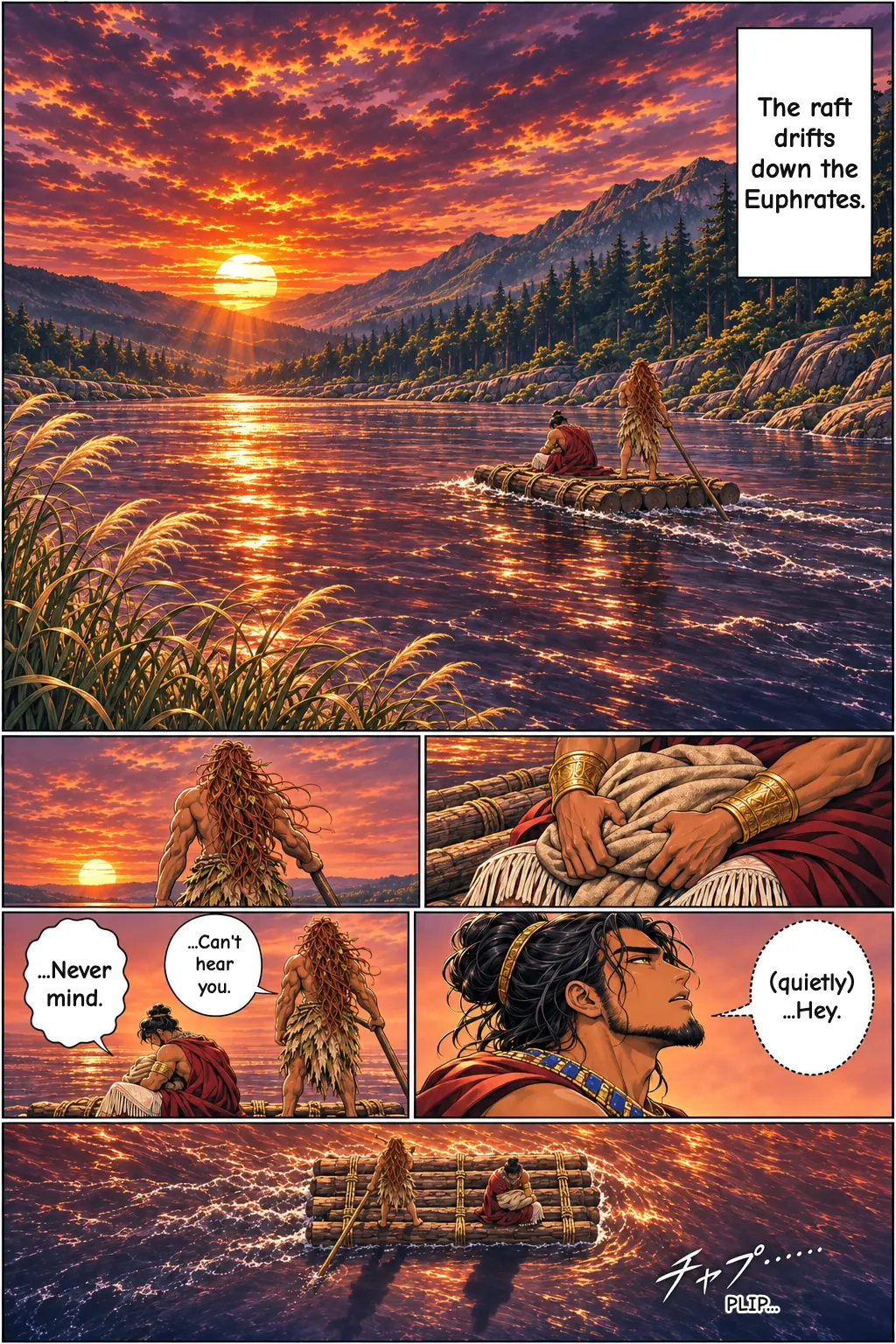
Humbaba begs for mercy and offers to be Gilgamesh's servant and to cut and guard as much timber as the king wants for his palace. Enkidu says not to listen and to kill him before Enlil, the chief of the gods, hears about it and the gods grow angry. Humbaba turns to Enkidu, who knows the ways of the forest, and asks him to speak up for him. When Enkidu refuses, Humbaba says he should have killed him at the forest's entrance. Then he curses them: may neither of them reach old age, and may no one but Gilgamesh be left to bury Enkidu. Enkidu tells Gilgamesh to ignore the curse, and they kill Humbaba and cut off his head. Gaps in the text mean we can't be sure exactly who struck the final blow, or how long Gilgamesh hesitated. Afterward they fell cedars. Enkidu picks one tall enough to touch the sky and vows to make a great door from it for Enlil's temple in Nippur. They build a raft and float down the Euphrates, with Enkidu steering and Gilgamesh holding Humbaba's head.
Main Characters in the Humbaba Episode
Gilgamesh is two-thirds god and one-third human. He pushed for this expedition to make his name last forever, yet in this tablet he is the one who freezes. Enkidu, raised among wild animals, gives the courage and the hard decisions here, and Humbaba singles him out in both his insults and his curse. Humbaba himself is surprisingly human in the text: he talks, mocks, threatens, pleads and curses. Earlier tablets say Enlil appointed him guardian and that he is wrapped in seven fearsome radiances, but the epic says almost nothing about what his body looks like.
What the Myth Is About: Fame, Cedar and Mortality
Southern Mesopotamia had very little big timber, so tall cedar from the western mountains was precious material for temples and palaces. One way to read the quest is as a heroic version of a real need: kings had to bring wood from distant forests. But the poem makes clear the forest is sacred. Humbaba is Enlil's appointed guardian, and Enkidu's rush to kill him before the gods find out shows the heroes know they are crossing a line. Dedicating a cedar door to Enlil's temple may be an attempt to make up for that.
The curse is the dark heart of the episode. Not growing old sounds like a blessing, but many readers see it as a prediction of early death. Later in the epic the gods decide Enkidu must die, partly over the killing of Humbaba and the Bull of Heaven, and Gilgamesh is left to mourn and bury his friend. So the fame Gilgamesh wanted to win against death leads straight to the loss that teaches him he can't escape it. Older Sumerian poems also tell a Gilgamesh and Huwawa story, and details differ between versions.
What the Manga Changed or Added
Because the ancient text barely describes Humbaba, his whole design in the manga is original: his face, size and body, and how his seven radiances appear as light, aura, robes or horns. The look of the forest, its light, scents and sounds, is also the artists' invention. So is the visual way each of the thirteen winds blinds and pins Humbaba down.
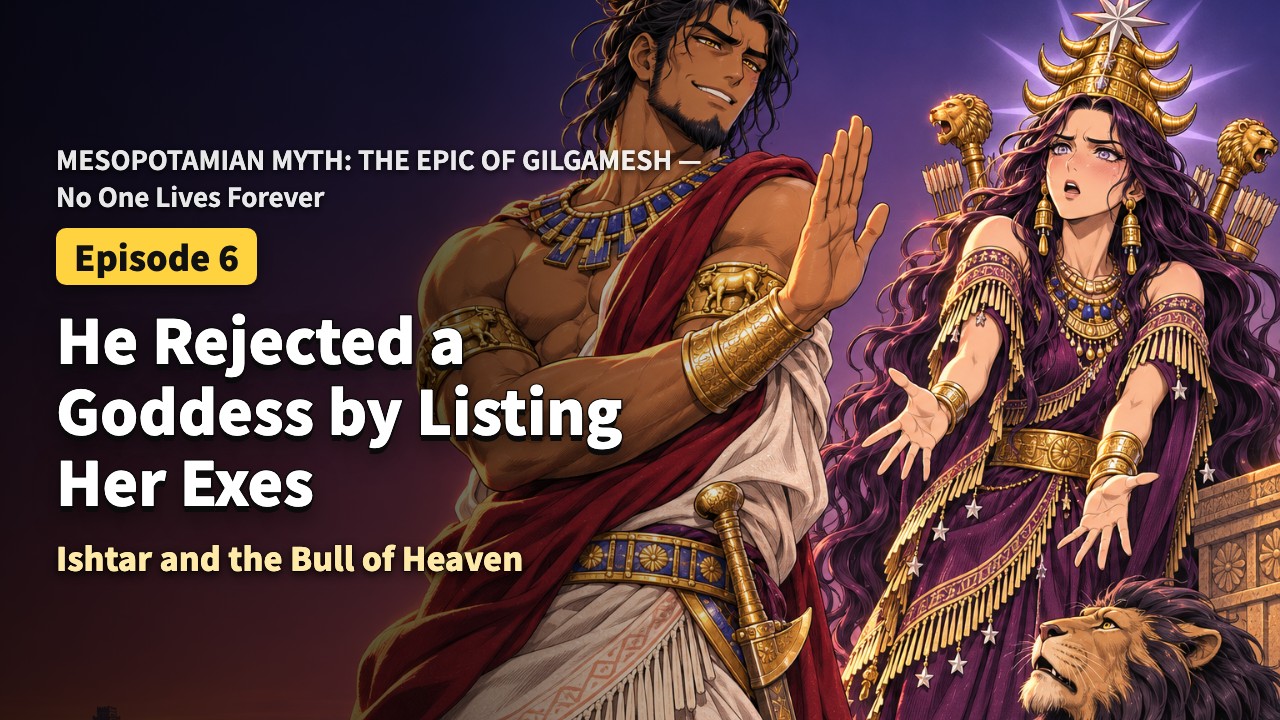
The manga also gives Gilgamesh's moment of fear and hesitation more room, including Enkidu grabbing his wrist and pulling him back into the fight. Since the source text has gaps right where the king's indecision would be, this is a creative filling-in rather than a claim about the original. How the killing blow lands, the weapons' design, all the dialogue (written fresh, not taken from any translation) and the heavy mood on the sunset raft are the manga's own. The ending also hints at what comes next in the epic: Ishtar's proposal and Enkidu's death.
Where to Read It
If you'd like to see this ancient battle play out panel by panel, Episode 5 of MESOPOTAMIAN MYTH: THE EPIC OF GILGAMESH — No One Lives Forever, "The Monster's Last Words Were a Curse," is right above this article. Every episode on Manga Portal is free to read, with no sign-up. Start from Episode 1 to meet Gilgamesh and Enkidu before they reach the cedars, or keep going to find out how Humbaba's curse comes true.
Characters in this episode
Gilgamesh
The king of Uruk, two-thirds god and one-third human, who started the Cedar Forest quest to win eternal fame but panics when he faces Humbaba.
Enkidu
Gilgamesh's best friend, raised in the wild, who pushes the king to fight, refuses Humbaba's plea for mercy, and becomes the main target of the curse.
Humbaba (Huwawa)
The guardian of the Cedar Forest, appointed by Enlil and wrapped in seven terrifying radiances, who mocks, threatens, begs and finally curses the heroes.
Shamash
The sun god and Gilgamesh's protector, who sends thirteen winds to blind Humbaba and hold him in place.
Enlil
The chief of the gods, who made Humbaba guardian of the forest. Only his name appears in this episode, and the cedar door is dedicated to his temple.
Irnini
A goddess whose throne stands on the Cedar Mountain. She is often identified with Ishtar.
FAQ
Who killed Humbaba in the Epic of Gilgamesh?
Gilgamesh and Enkidu kill him together, with help from the sun god Shamash, whose thirteen winds pin Humbaba down. The text is damaged at the key moment, so exactly who struck the final blow isn't certain, but Enkidu is the one who insists Humbaba must die.
What was Humbaba's curse?
As he dies, Humbaba curses the two friends so that neither of them will grow old, and so that no one but Gilgamesh will bury Enkidu. Many readers see it as a prediction of early death, and later in the epic Enkidu dies and Gilgamesh mourns him.
Why did Gilgamesh go to the Cedar Forest?
Gilgamesh wanted to make his name last forever through a great deed, and defeating the forest's fearsome guardian was that deed. The precious cedar wood, scarce in Mesopotamia, was also a prize, and the heroes bring some back for Enlil's temple.
Was Humbaba evil?
Not clearly. He was the guardian appointed by Enlil to protect a sacred forest of the gods, and he begs for his life when defeated. The heroes' worry about the gods' anger suggests the killing was a serious act of overreach, not simply a victory over evil.
Which tablet of the Epic of Gilgamesh tells the Humbaba story?
In the Standard Babylonian version, the fight and slaying of Humbaba take up Tablet V, after the journey to the forest in the earlier tablets. Older Sumerian poems tell a related story about Gilgamesh and Huwawa.
More episodes of MESOPOTAMIAN MYTH: THE EPIC OF GILGAMESH