Get new episodes in your feed. Follow us on:ThreadsBluesky
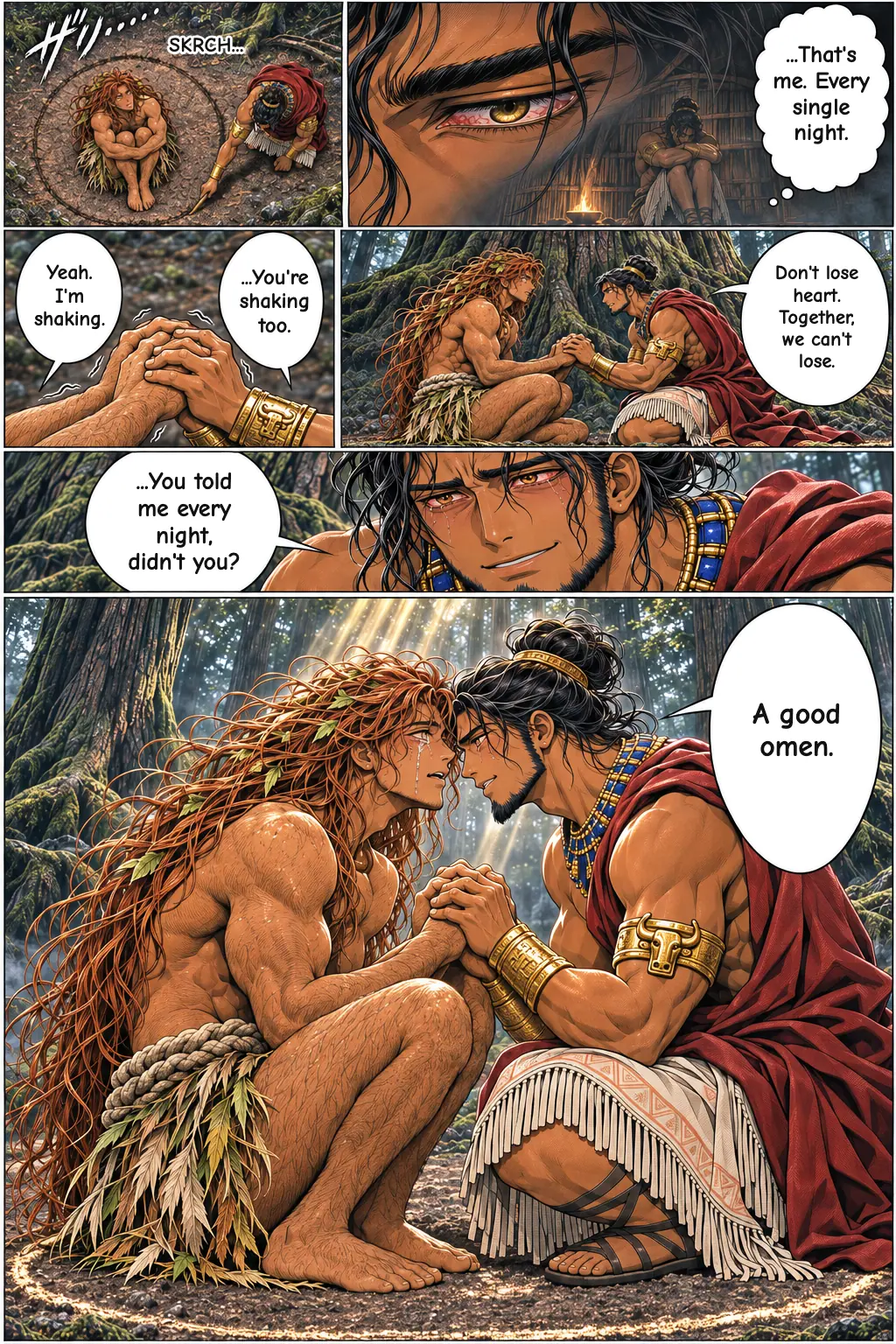
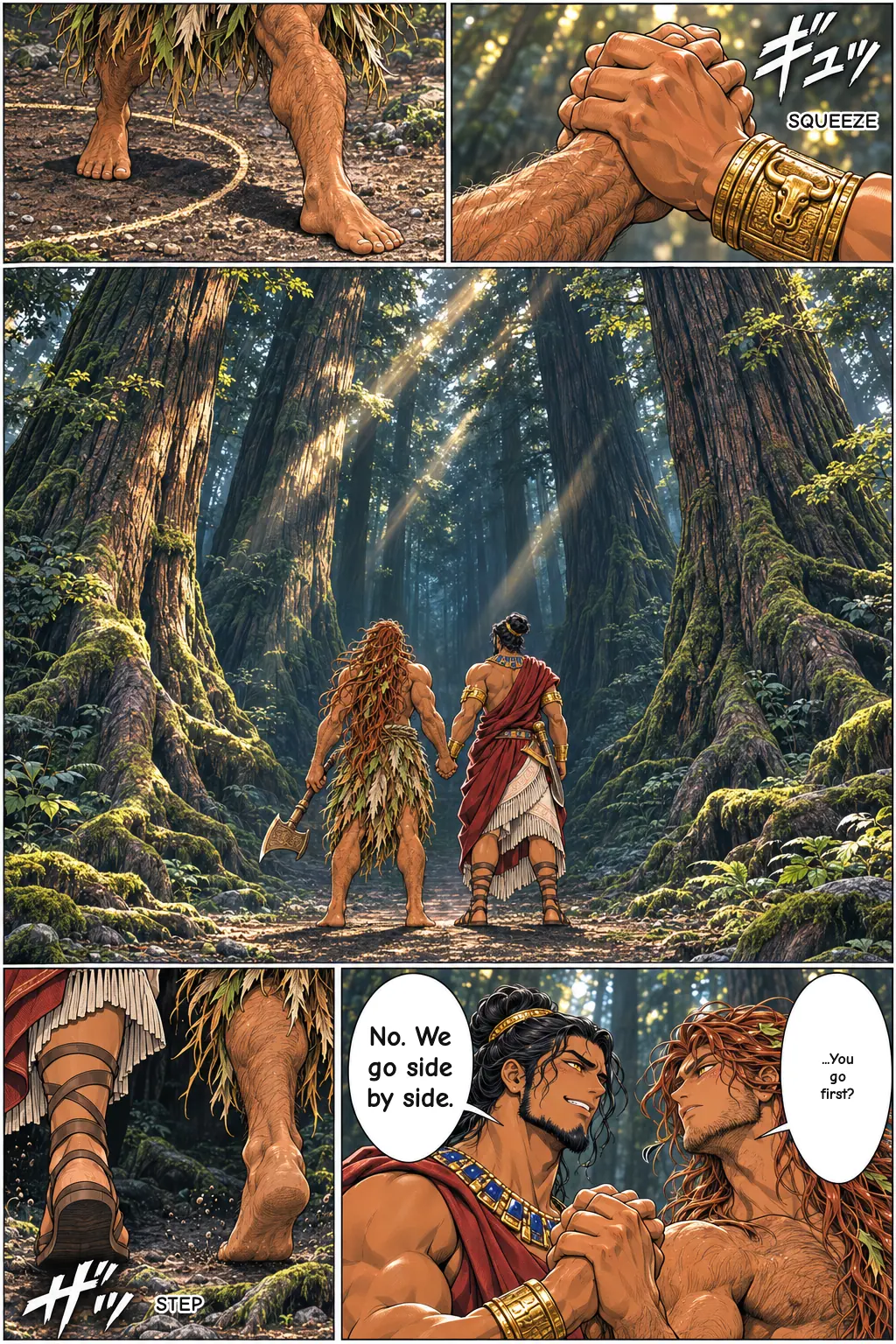
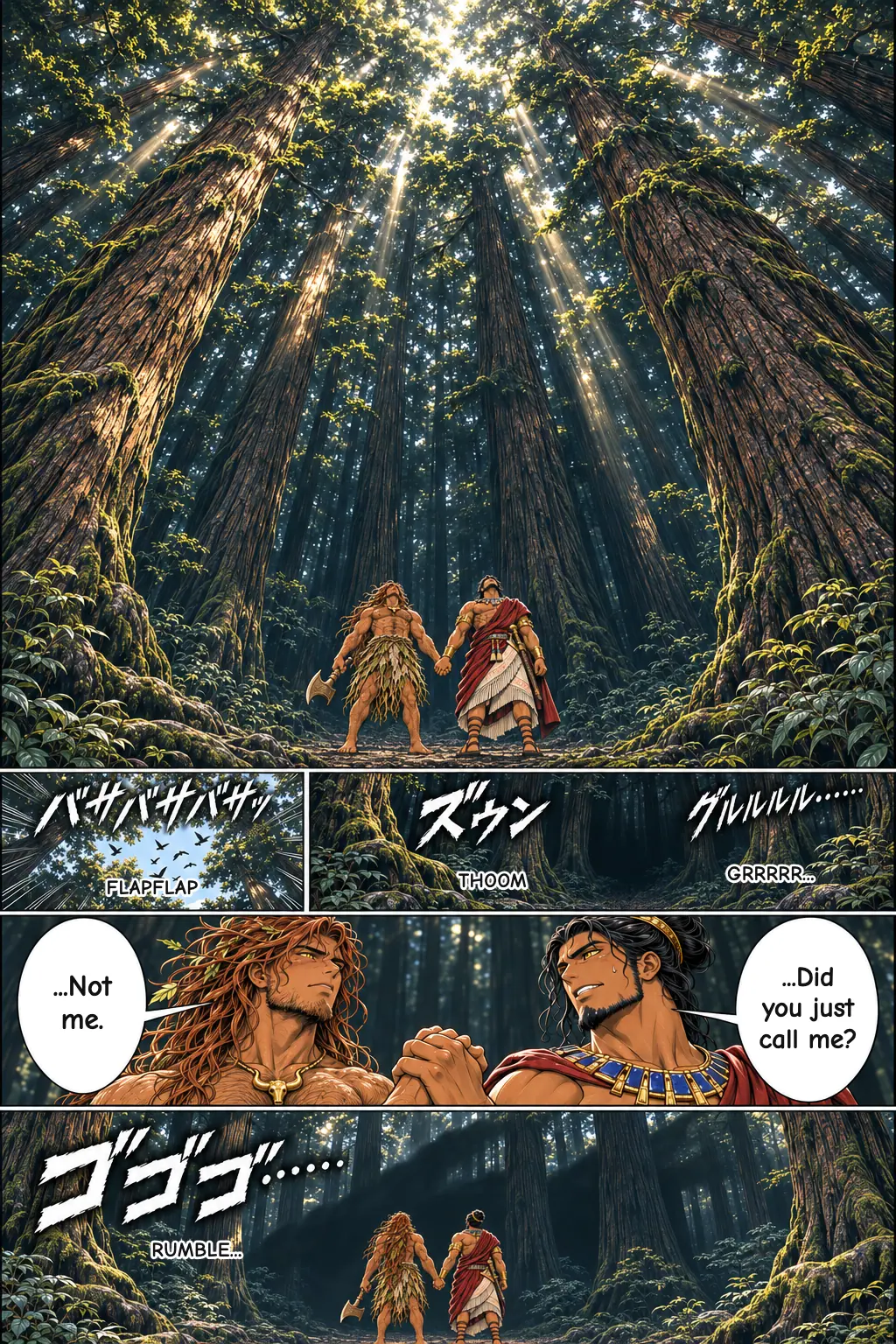
On the road to the Cedar Forest, young King Gilgamesh wakes from a nightmare every night, and each time his best friend Enkidu steadies him with three words: "A good omen." Then, at the edge of the forest, it's Enkidu who freezes. Gilgamesh is still scared, but he takes his friend's hand.
Story summary
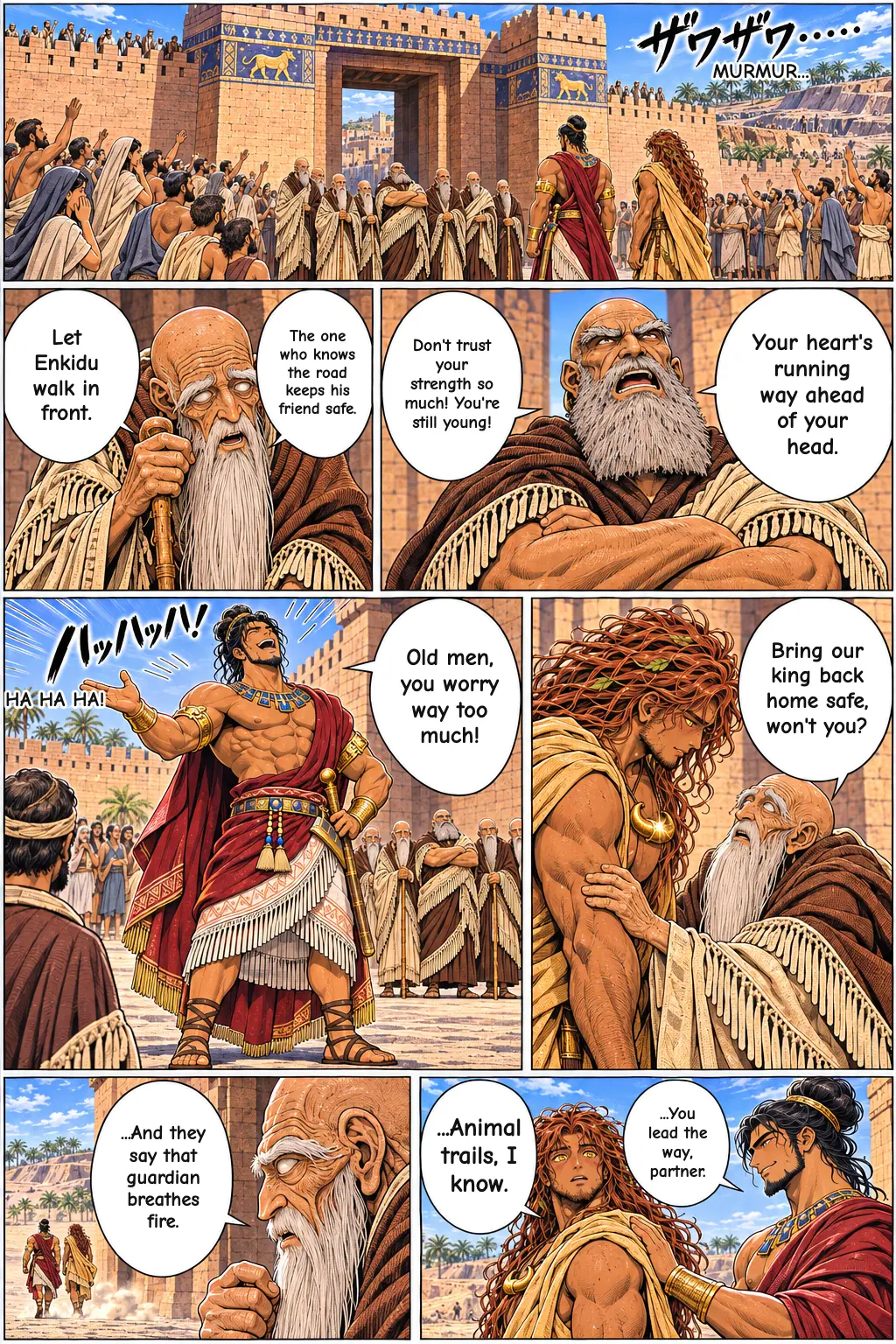
Gilgamesh, the young king of Uruk, has decided to travel to the distant Cedar Forest and kill Humbaba (also called Huwawa), the monstrous guardian the god Enlil placed there. Before he leaves, the elders of Uruk give him a warning. He should not rely too much on his own strength. He should let Enkidu walk in front, because Enkidu grew up in the wild and knows the mountain paths, and the one who goes first protects his companion. The elders also ask Enkidu to bring their king home safely.
Gilgamesh's Dreams on the Road to the Cedar Forest: Epic of Gilgamesh Tablets III–IV Explained
In short: In Tablets III and IV of the Epic of Gilgamesh, King Gilgamesh of Uruk and his friend Enkidu set out for the Cedar Forest to fight its guardian, Humbaba. Every night on the road Gilgamesh wakes from a terrifying dream, and every time Enkidu explains it as a good omen. Near the forest it is Enkidu who loses his nerve, and Gilgamesh who encourages him. The story comes from the Standard Babylonian version of the epic, traditionally credited to the scholar Sîn-lēqi-unninni.
The Original Story, Part 1: Warnings and a Mother's Prayer (Tablet III)
Gilgamesh, the young king of Uruk, has decided to travel to the distant Cedar Forest and kill Humbaba (also called Huwawa), the monstrous guardian the god Enlil placed there. Before he leaves, the elders of Uruk give him a warning. He should not rely too much on his own strength. He should let Enkidu walk in front, because Enkidu grew up in the wild and knows the mountain paths, and the one who goes first protects his companion. The elders also ask Enkidu to bring their king home safely.
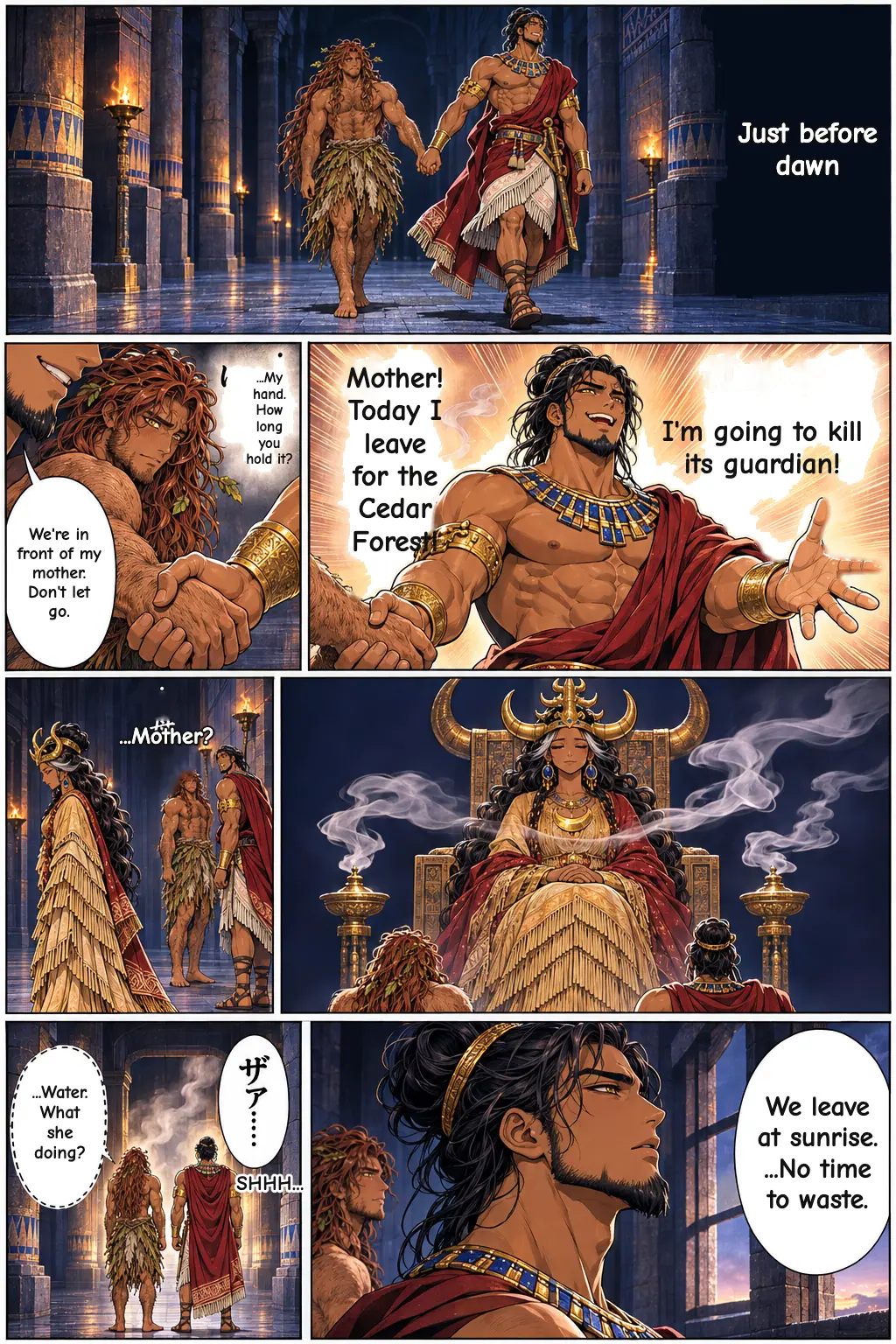
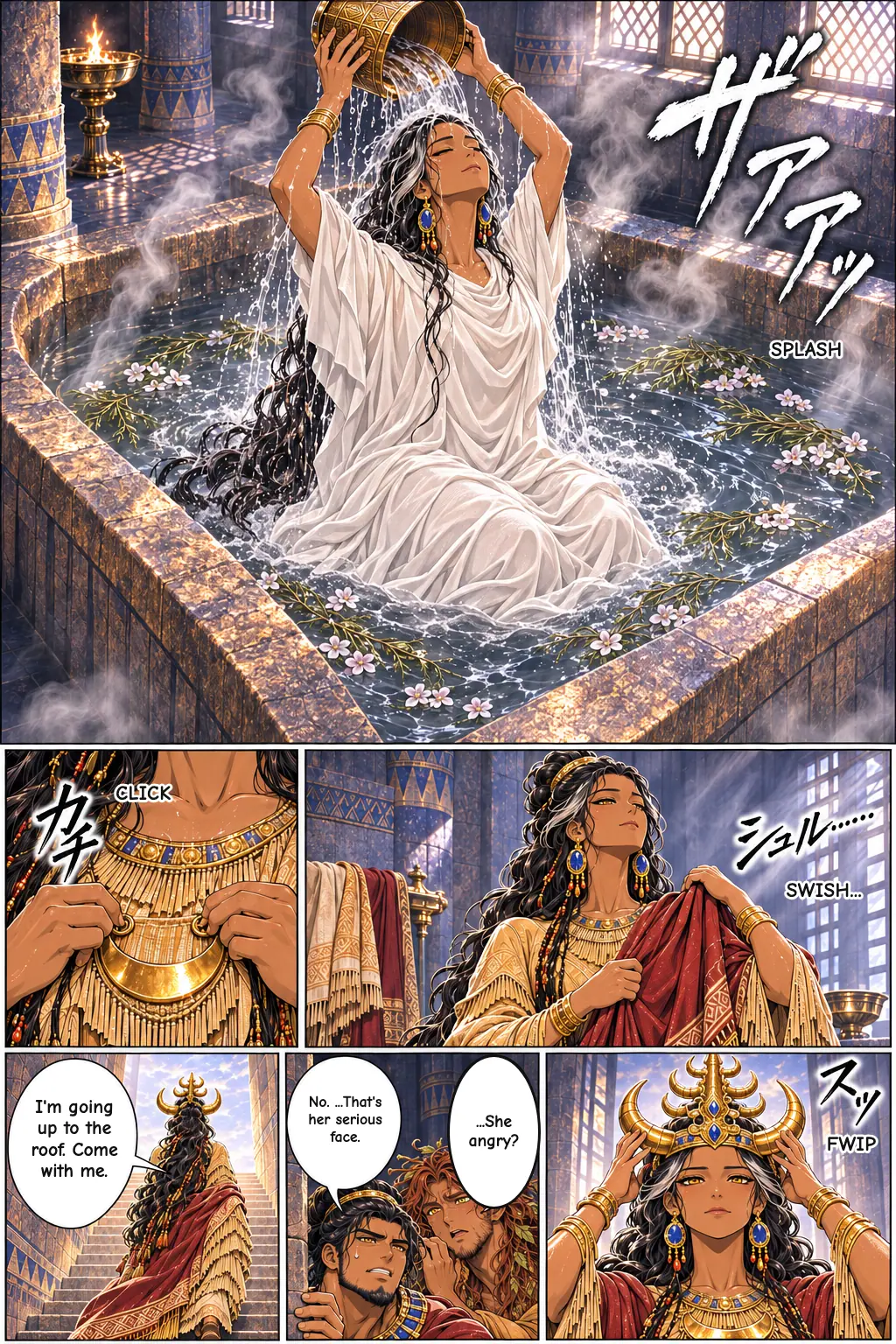
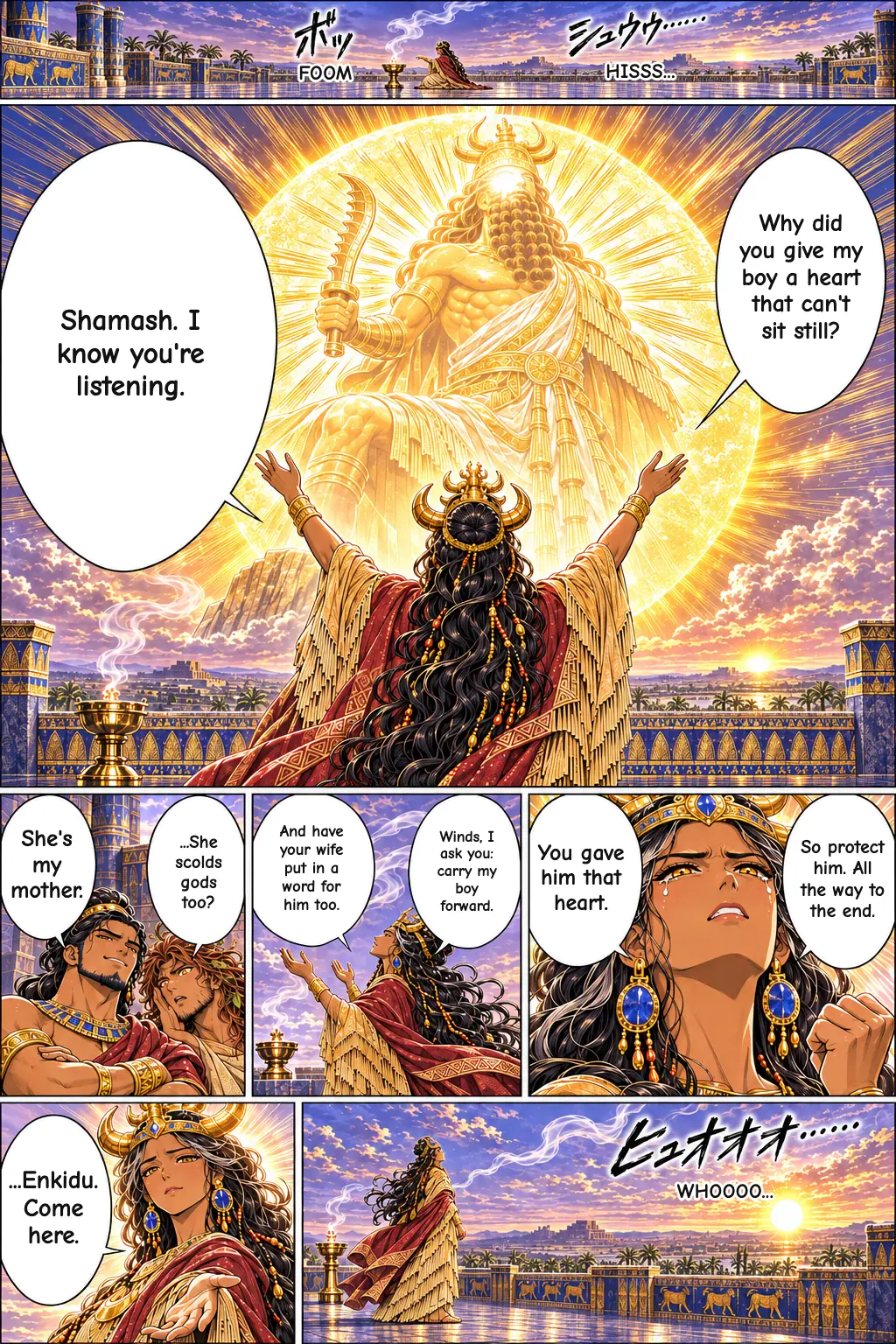
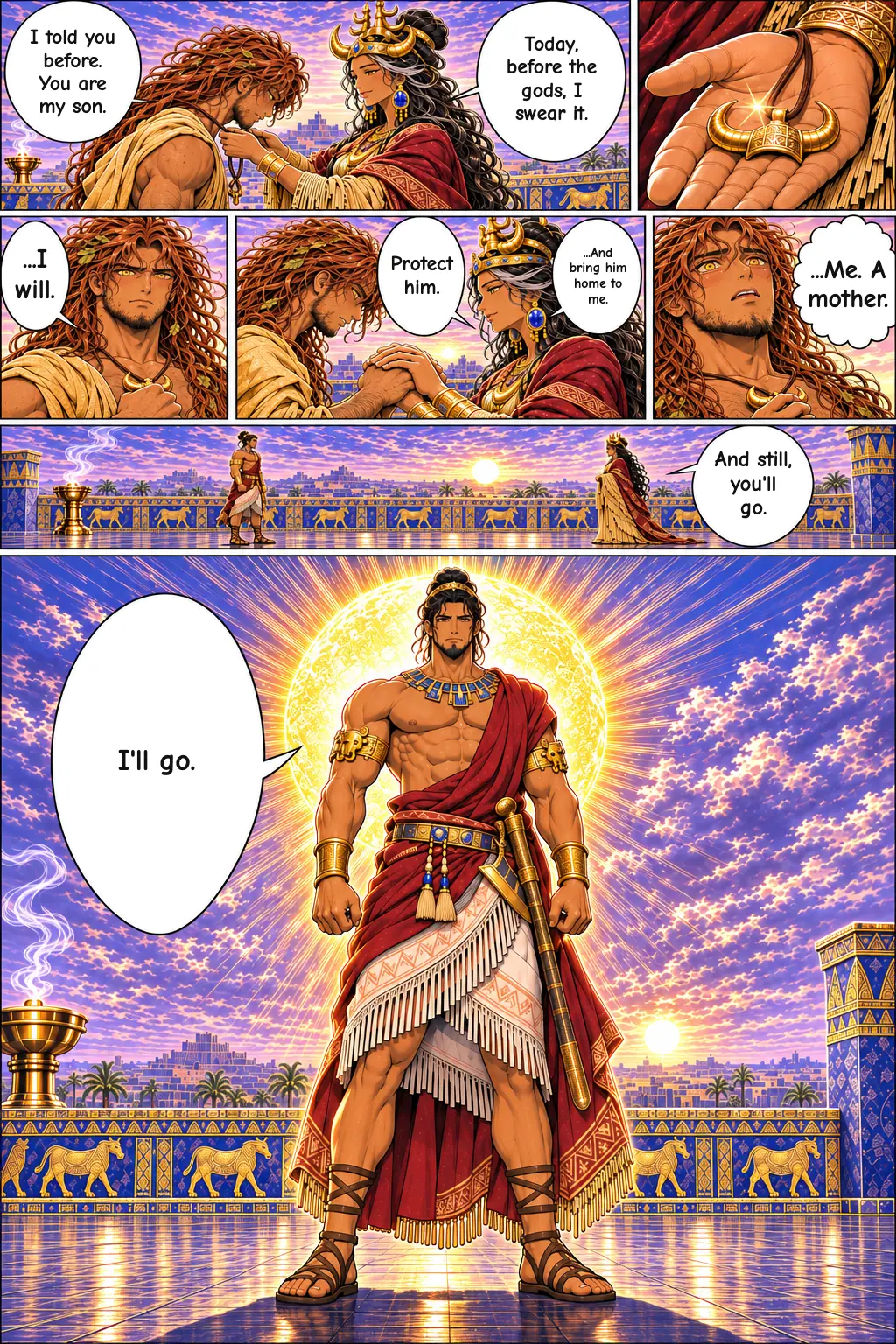
Hand in hand, the two friends go to the palace of Ninsun, Gilgamesh's mother, a wise goddess associated with the wild cow. Ninsun bathes, dresses in fine clothes, puts on her jewelry and crown, climbs to the roof, and burns incense to Shamash, the sun god and god of justice. She asks him why he gave her son such a restless heart, and she begs him to protect the journey. She also asks Shamash's wife, the goddess Aya, to speak for her, and she calls on the winds for help. Then she places a pendant around Enkidu's neck, declares that she is taking him as her son even though she did not bear him, and asks him to guard the king. Parts of the departure scene, including Gilgamesh's instructions for ruling Uruk while he is away, are badly damaged on the surviving tablets.
The Original Story, Part 2: Five Nights of Bad Dreams (Tablet IV)
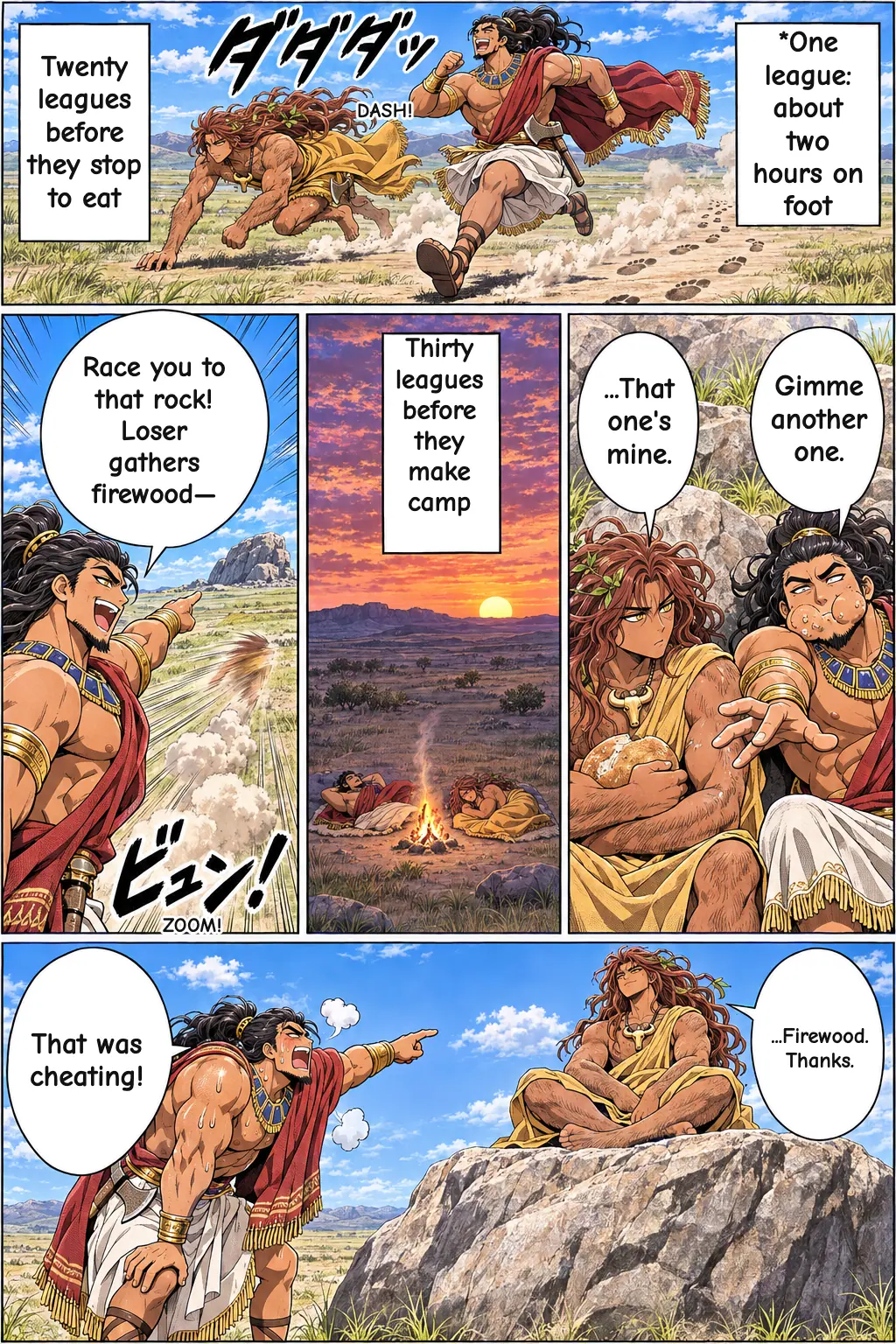
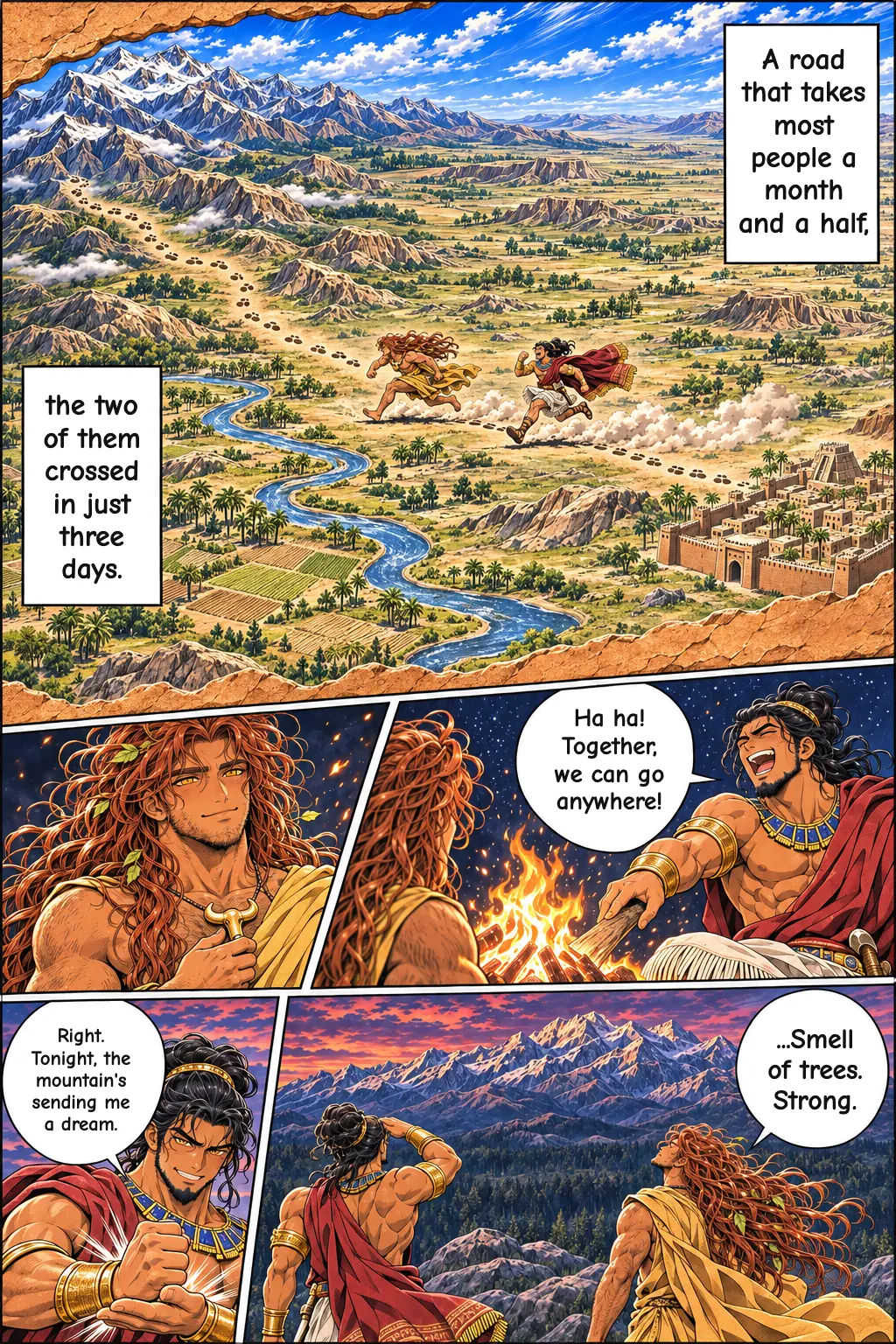
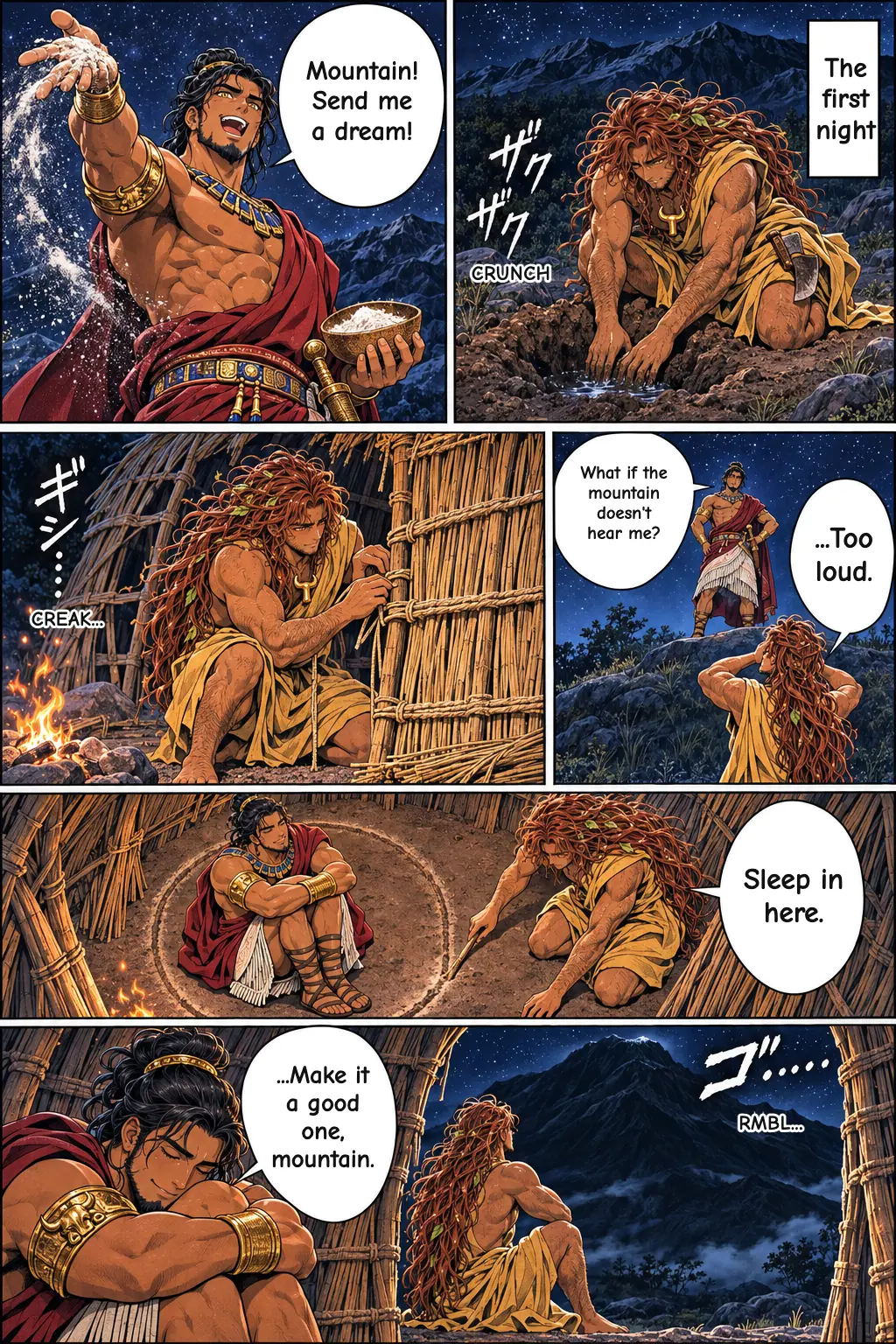
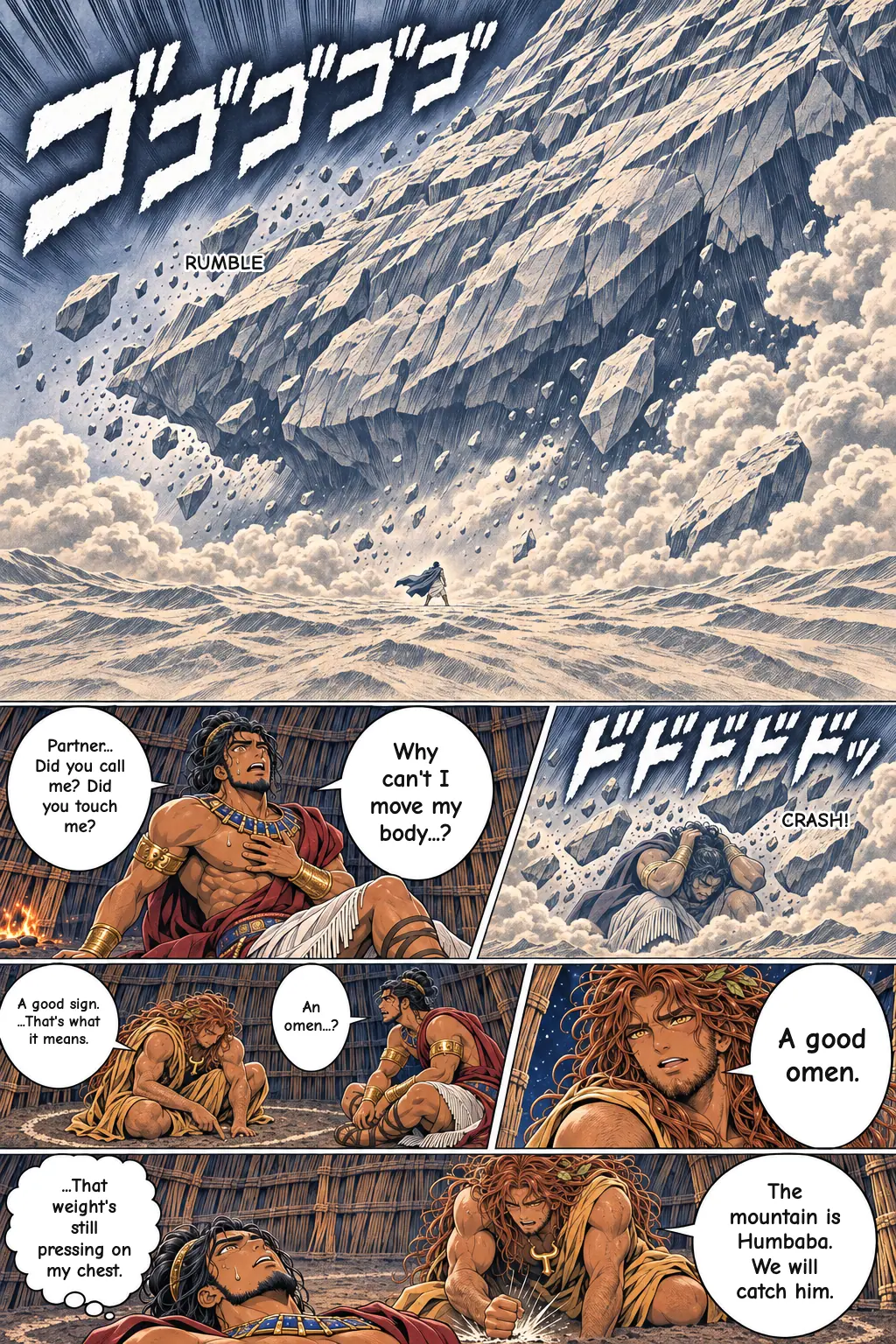
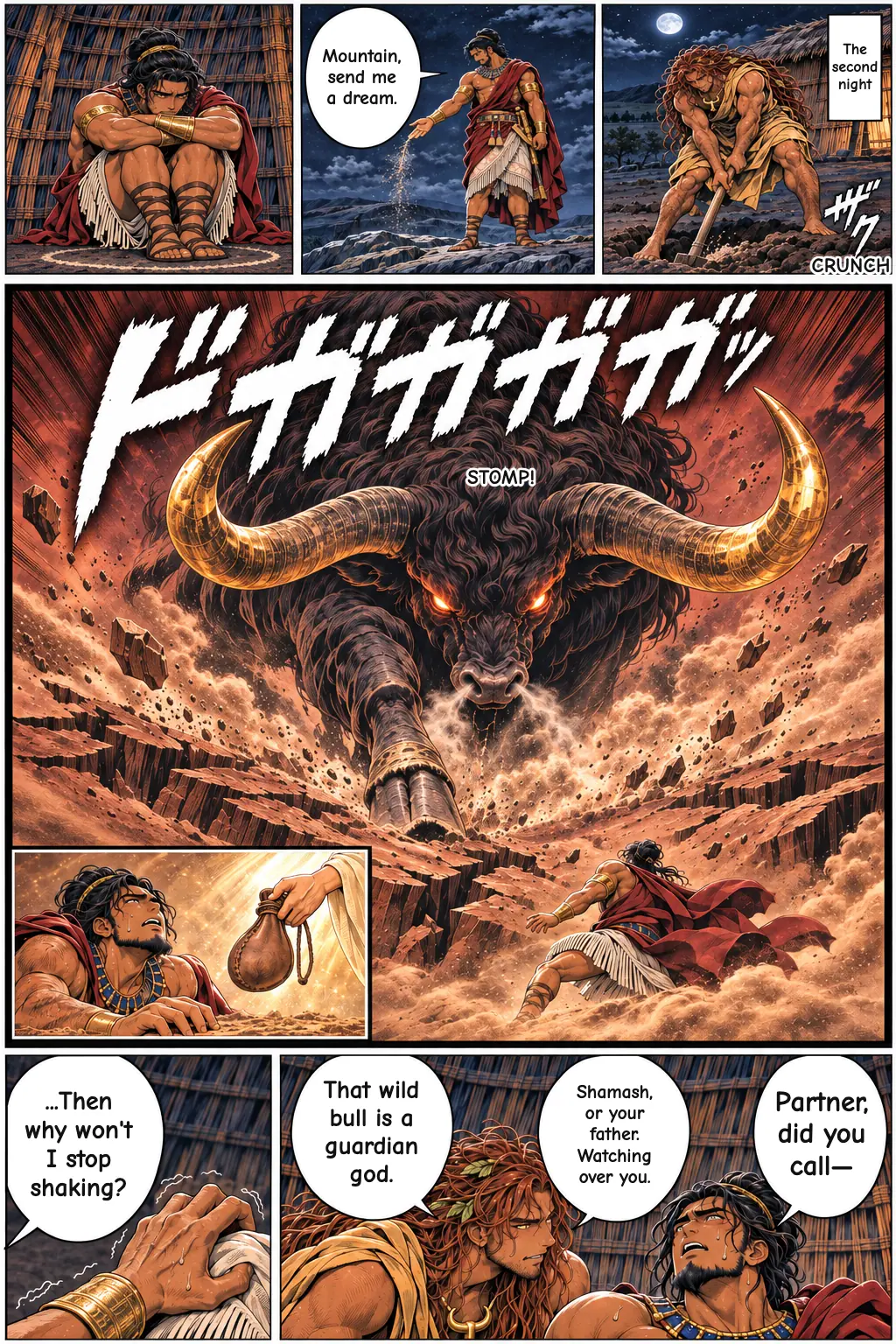
The journey follows a repeating pattern. Every twenty double-hours of walking (a Babylonian unit of distance often translated as a league) the friends stop to eat, and every thirty they make camp. They cover a month and a half's journey in three days and come near the cedar-covered mountains of Lebanon. Each evening they dig a well. Gilgamesh climbs the mountain, offers flour, and asks it to send him a dream. Enkidu builds a small shelter for dreaming, fits it with a door against the wind, draws a circle, and lays the king inside. Gilgamesh falls asleep sitting up with his chin on his knees.
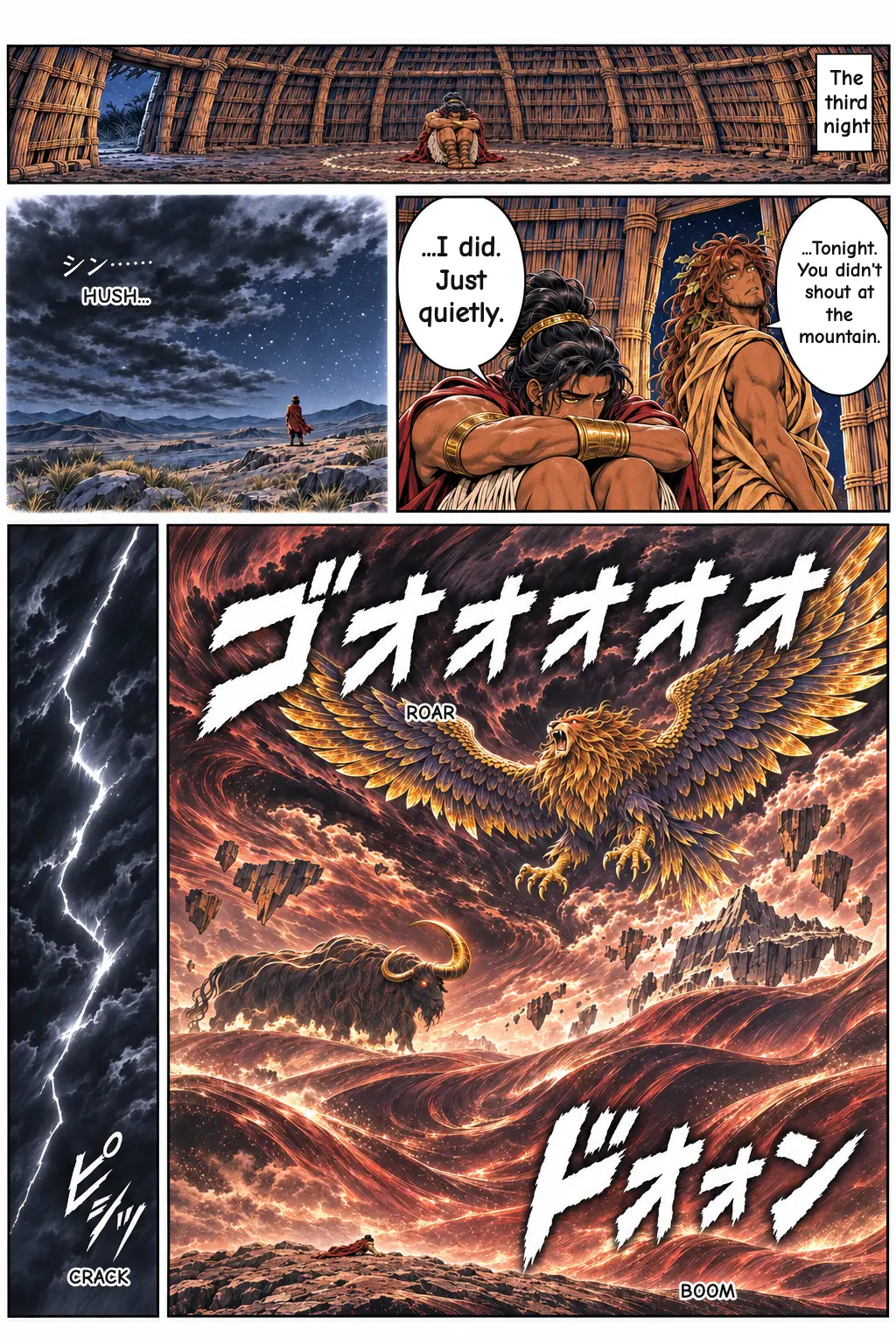
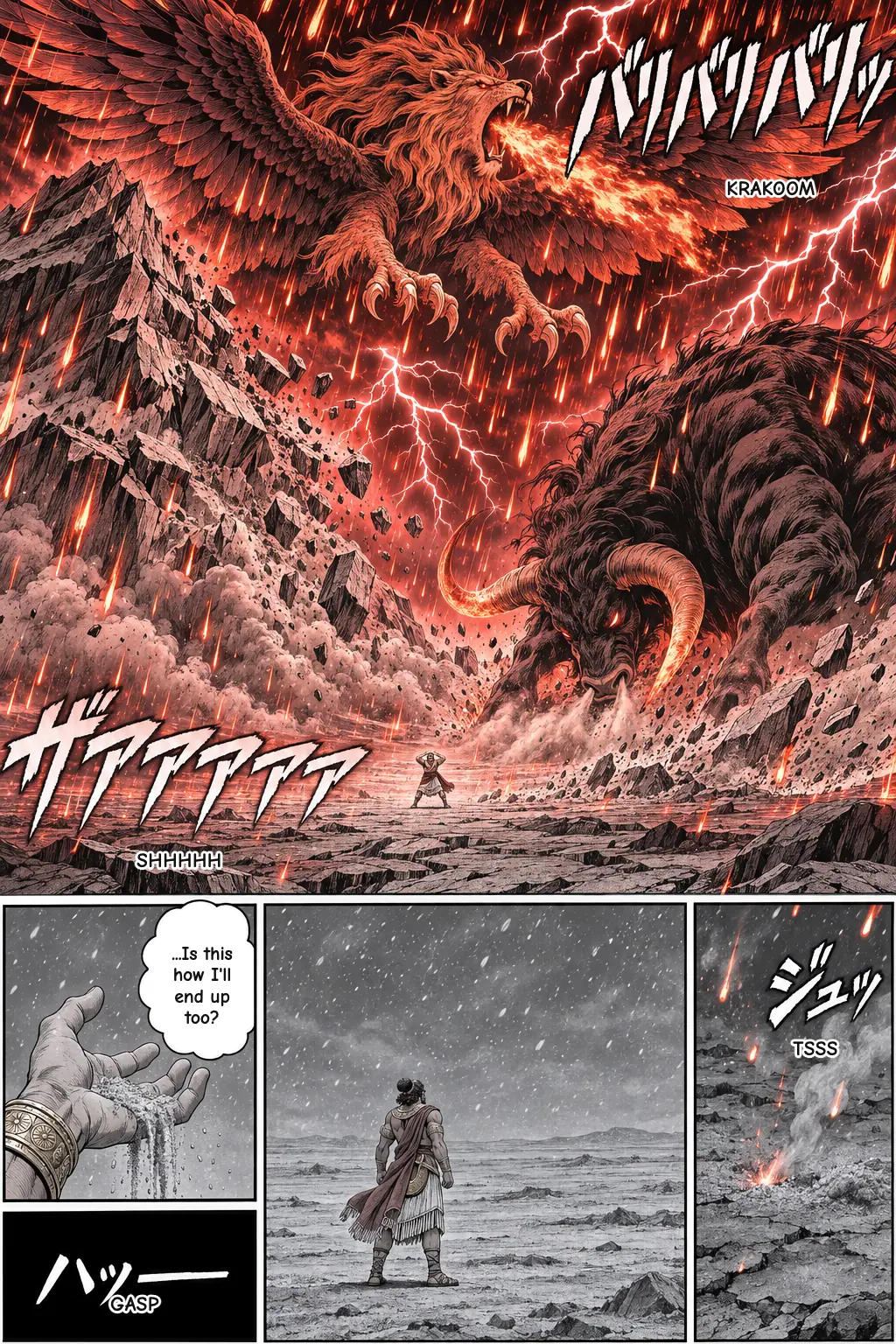
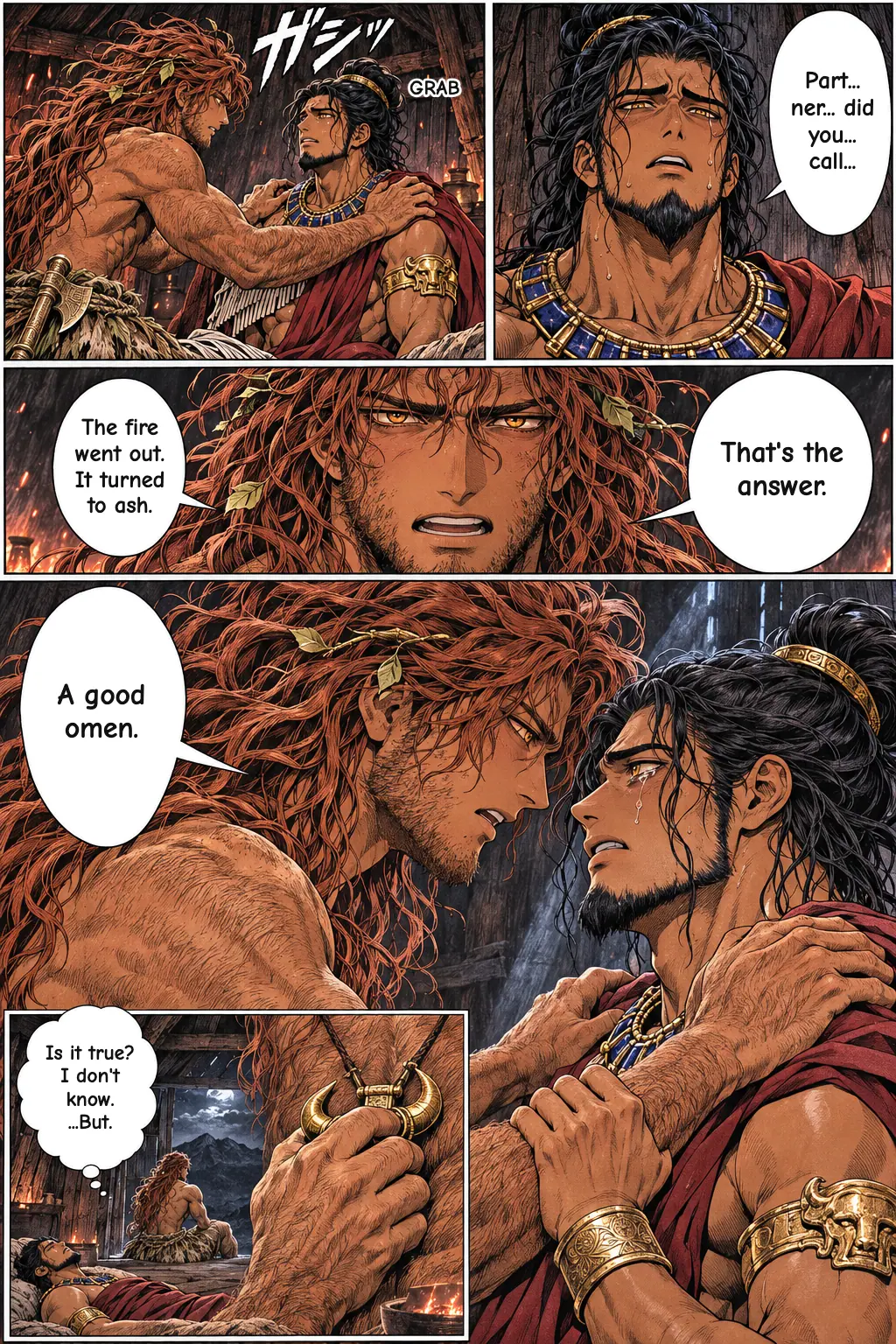
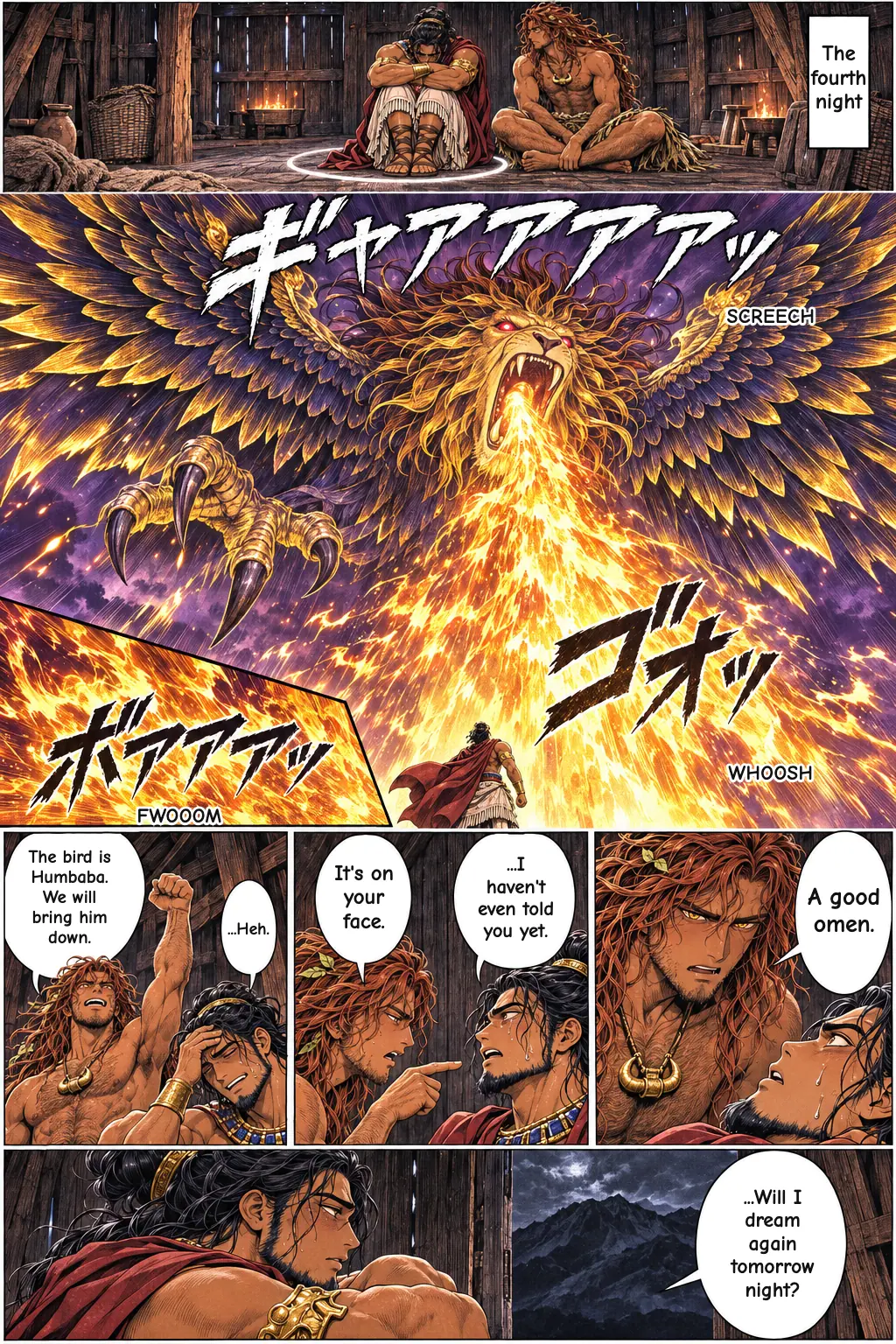
In the middle of the night he wakes up trembling and asks his friend: Did you call me? Did you touch me? Why am I so afraid? He then describes his dream. In one, a mountain collapses on him. Enkidu explains that the mountain is Humbaba and that they will capture him. In another, the sky roars and the earth rumbles, lightning starts fires, and death falls like rain until the flames die and turn to ash. One dream seems to show a fire-breathing monster that looks like the Anzu bird, a mythical thunderbird. In another a wild bull appears, and Enkidu reads it as a protector, either Shamash or Gilgamesh's father Lugalbanda. The tablets are broken in many places, so scholars partly rebuild the order of the dreams and some of their details. The fifth dream is almost entirely lost. Whatever the dream, Enkidu's answer is the same: it is a good sign.
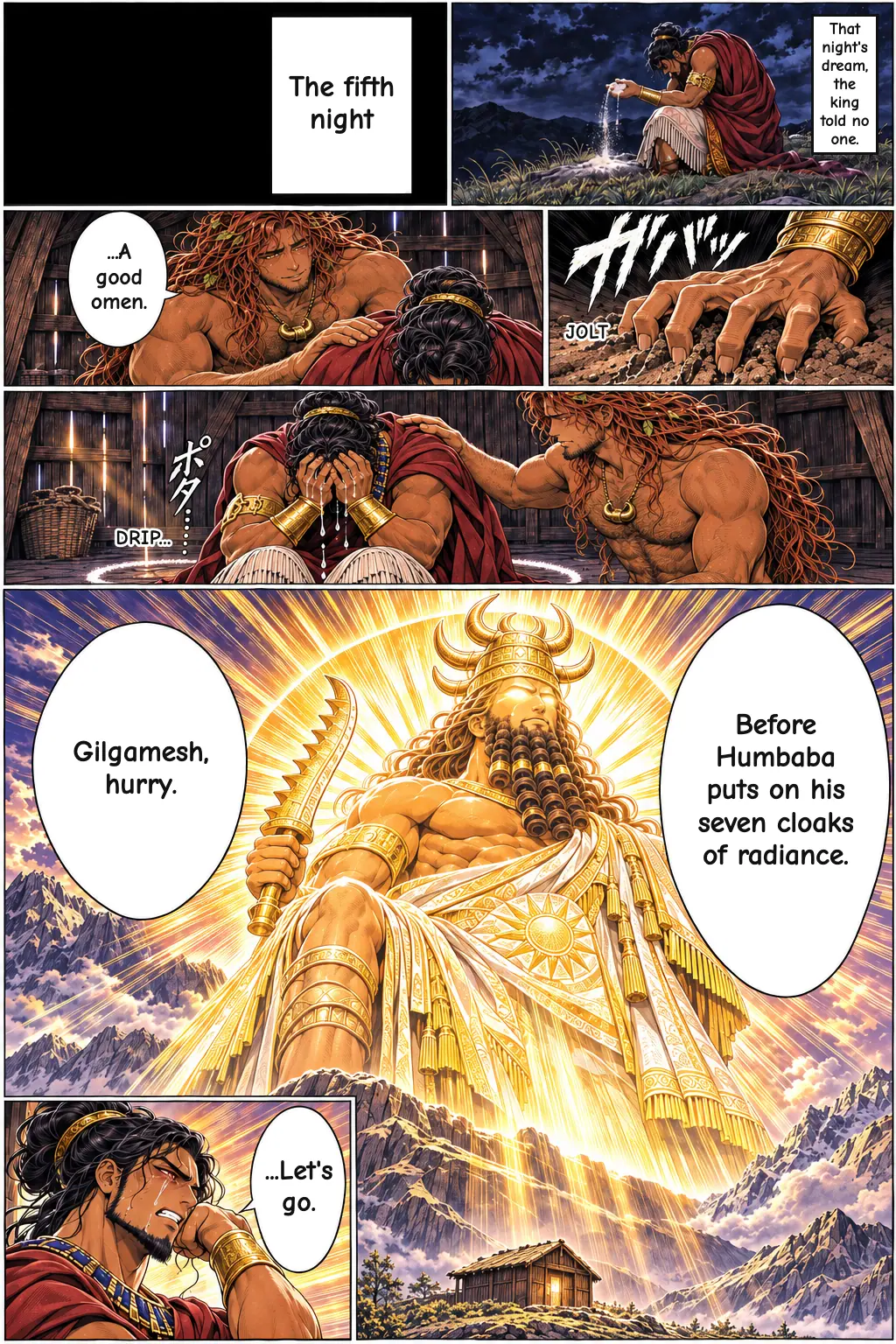
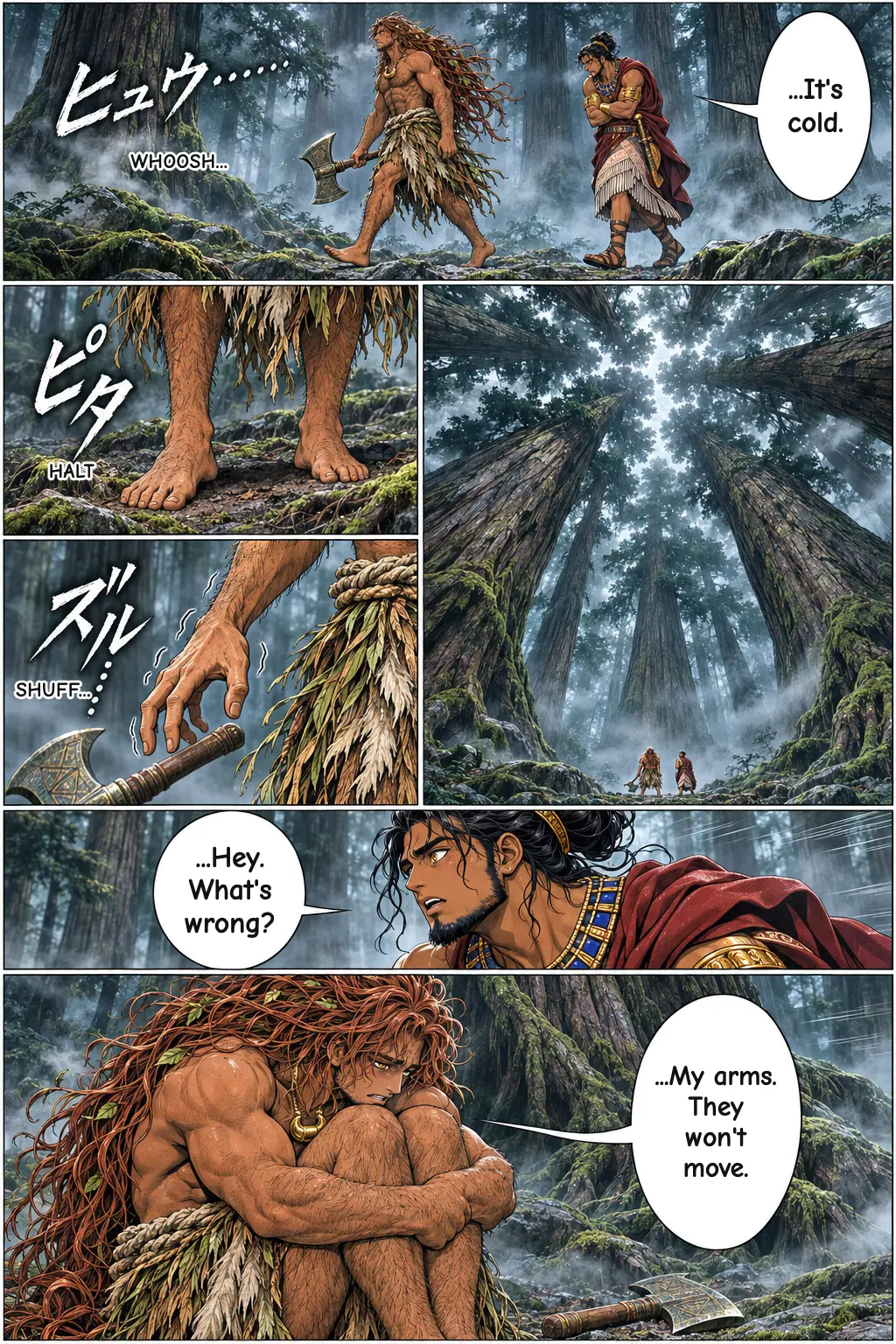
Eventually Gilgamesh weeps, and Shamash calls to them from heaven. They must hurry, he says, before Humbaba puts on his seven radiant auras, the terrifying brilliance that protects him. As the forest gets close, Enkidu's arm goes numb and his courage fails. Gilgamesh tells him not to lose heart, because together they cannot be beaten. In some fragments Enkidu is the one who encourages the king. The two friends go on to the edge of the forest. The moment when they stand at the forest's edge and stare at it opens the next section, Tablet V.
What This Part of the Myth Tells Us
Dreams were serious business in ancient Mesopotamia. People believed the gods sent messages through them, and experts wrote down long lists of dream signs and what they meant. The well, the flour offering, the circle, and the special dreaming shelter in Tablet IV probably reflect real ritual practices meant to call up a meaningful dream. Enkidu acts as the dream interpreter, a respected role in Mesopotamian society.
The episode also shows how close the two heroes are. Gilgamesh is two-thirds god and one-third human and is famous for his strength, but here he is shaken and wakes up night after night. Enkidu turns each frightening image into hope, and then Gilgamesh repays him when Enkidu falters. Ninsun's prayer adds another human note: a mother who cannot stop her son, so she does the only thing left to her and asks the gods to keep him safe.
What the Manga Changes
Episode 4 of the Manga Portal adaptation follows the ancient outline: the warnings, the night camps, the dream rituals, Enkidu's good-omen readings, Shamash's call to hurry, and Enkidu's moment of fear. Where the clay tablets are broken, the manga has to fill in the gaps. The order in which the dreams are told and the content of the missing fifth dream are creative choices. So are the visual details of the collapsing mountain, the rain of fire, and the Anzu monster, which follows the ancient image of a lion-headed eagle.
The manga's dialogue is newly written and does not quote any translation. That includes Ninsun's prayer, the adoption scene, and the way Enkidu says "A good omen" each time. Scenery, campfire meals, and digging the well are illustrated in the manga's own way. The final image of Gilgamesh, still frightened, taking his friend's hand at the forest's edge is a dramatized version of a scene the source preserves only in outline. The episode is also built around a reversal: the confident king is shaken by his dreams, Enkidu supports him, and in the end Gilgamesh supports Enkidu.
Where to Read It
If you want to see these dreams instead of just reading about them, the full series, MESOPOTAMIAN MYTH: THE EPIC OF GILGAMESH — No One Lives Forever, is on Manga Portal. Every episode is free to read, and you don't need an account. Start with Episode 4 to follow Gilgamesh and Enkidu to the edge of the Cedar Forest, or go back to the beginning to see how a wild man and a restless king became friends.
Characters in this episode
Gilgamesh
The young king of Uruk, two-thirds god and one-third human, who wants to make his name last forever by killing Humbaba but is shaken by nightmares on the road.
Enkidu
Gilgamesh's best friend, raised in the wild, who leads the way, builds the dream shelter, and explains each of the king's nightmares as a good omen.
Ninsun
Gilgamesh's mother, a wise goddess associated with the wild cow, who prays to Shamash for her son's safety and adopts Enkidu.
Shamash
The sun god and god of justice, who protects the travelers and calls to them from heaven to hurry.
The Elders of Uruk
The city's senior advisers, who warn the king not to overrate his strength and ask Enkidu to bring him home.
Humbaba (Huwawa)
The guardian of the Cedar Forest, appointed by the god Enlil and protected by seven terrifying radiant auras; he does not appear in this episode.
FAQ
What are Gilgamesh's dreams on the way to the Cedar Forest?
In Tablet IV, Gilgamesh has a series of frightening dreams, usually counted as five. They include a collapsing mountain, a storm of lightning and fire, a creature like the Anzu bird, and a wild bull. Several of them are damaged on the tablets, and the fifth is almost completely lost.
Why does Enkidu say the dreams are good omens?
Enkidu acts as the dream interpreter and reads each frightening image as a sign of victory. For example, he says the falling mountain stands for Humbaba, whom they will capture. His readings keep the king's courage up during the journey.
Who is Ninsun in the Epic of Gilgamesh?
Ninsun is Gilgamesh's divine mother, a wise goddess linked to the wild cow. Before the journey she prays to the sun god Shamash to protect her son, and she adopts Enkidu so that he will guard the king.
Who is Humbaba?
Humbaba, also called Huwawa, is the guardian of the Cedar Forest, placed there by the god Enlil. He is protected by seven radiant, terrifying auras, which is why Shamash tells the heroes to hurry before Humbaba puts them all on.
Which tablets of the Epic of Gilgamesh cover the journey to the Cedar Forest?
In the Standard Babylonian version, Tablet III covers the elders' advice, Ninsun's prayer, and the departure. Tablet IV covers the journey, the camps, and the dreams. The arrival at the forest itself begins in Tablet V.
More episodes of MESOPOTAMIAN MYTH: THE EPIC OF GILGAMESH