Get new episodes in your feed. Follow us on:ThreadsBluesky
After losing his friend, King Gilgamesh is haunted by a single question: "Will I die too?" At a tavern at the edge of the world, Shiduri slams the door in his face, but he still gets the way to the man who cannot die. When his own temper smashes the Stone Ones who protect the ferry, Gilgamesh has to pay for it with 300 hand-cut poles and the clothes off his back to cross the Waters of Death. On the far shore, Uta-napishti tells him the hard truth: no one is ever told the day they will die.
Story summary
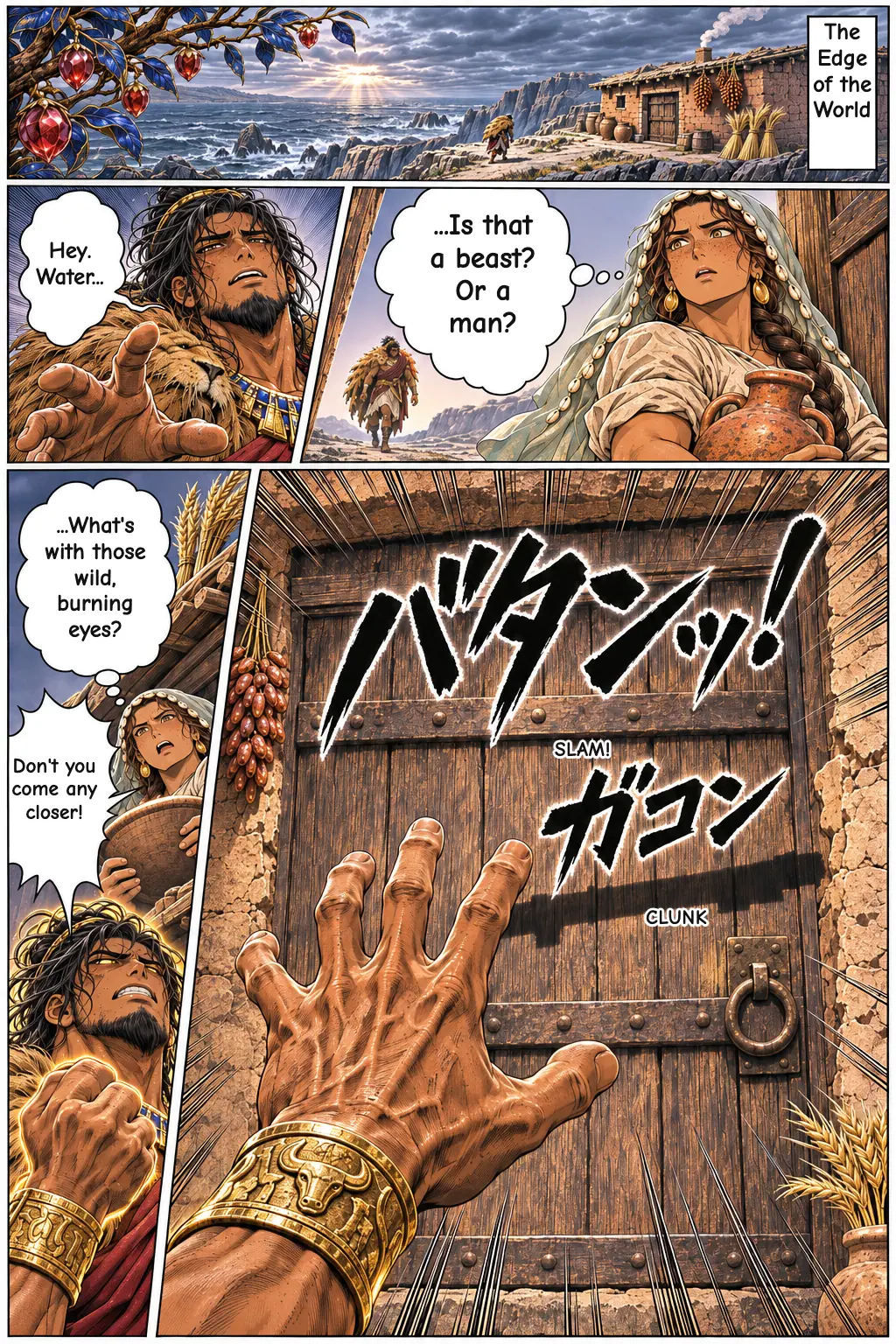
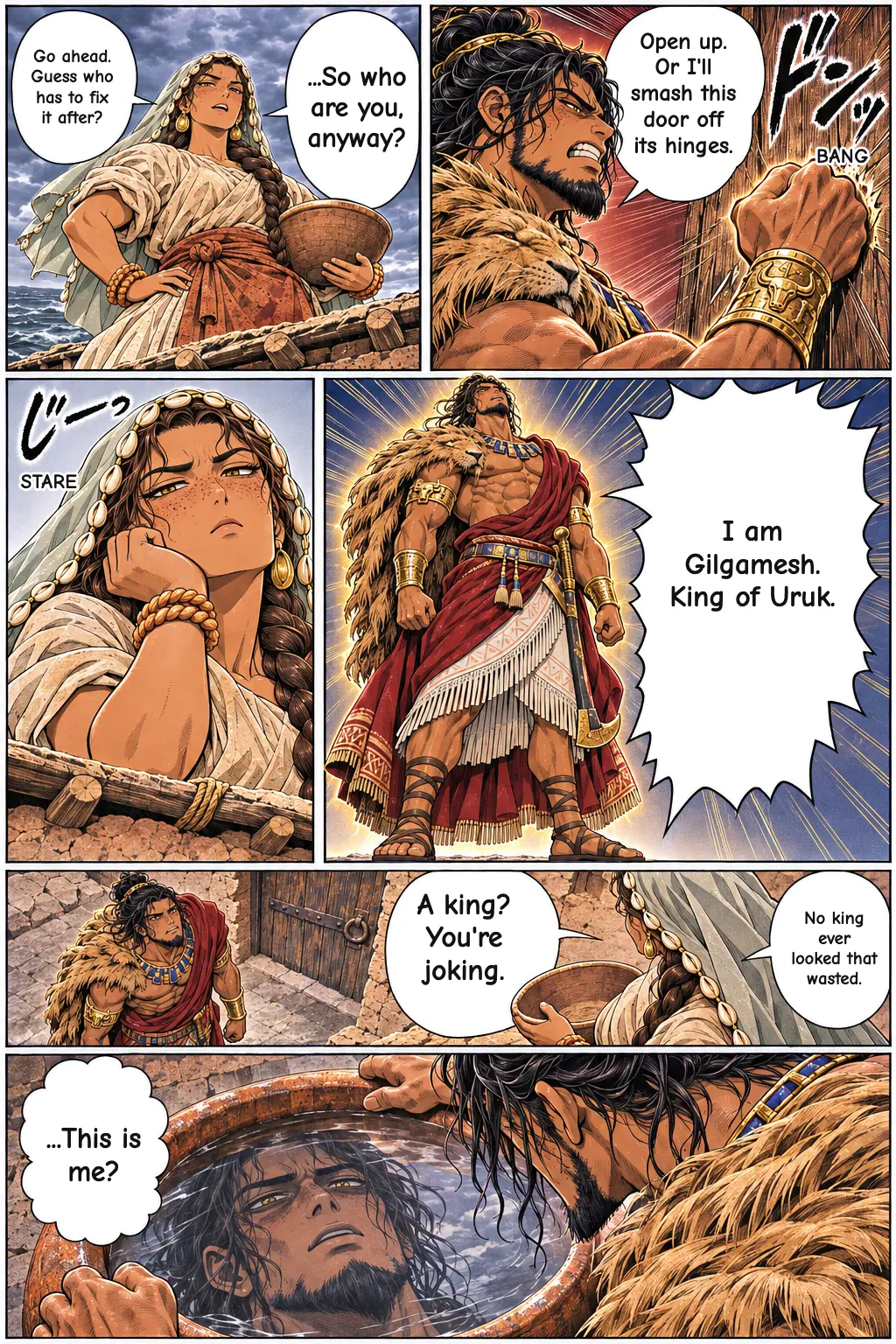
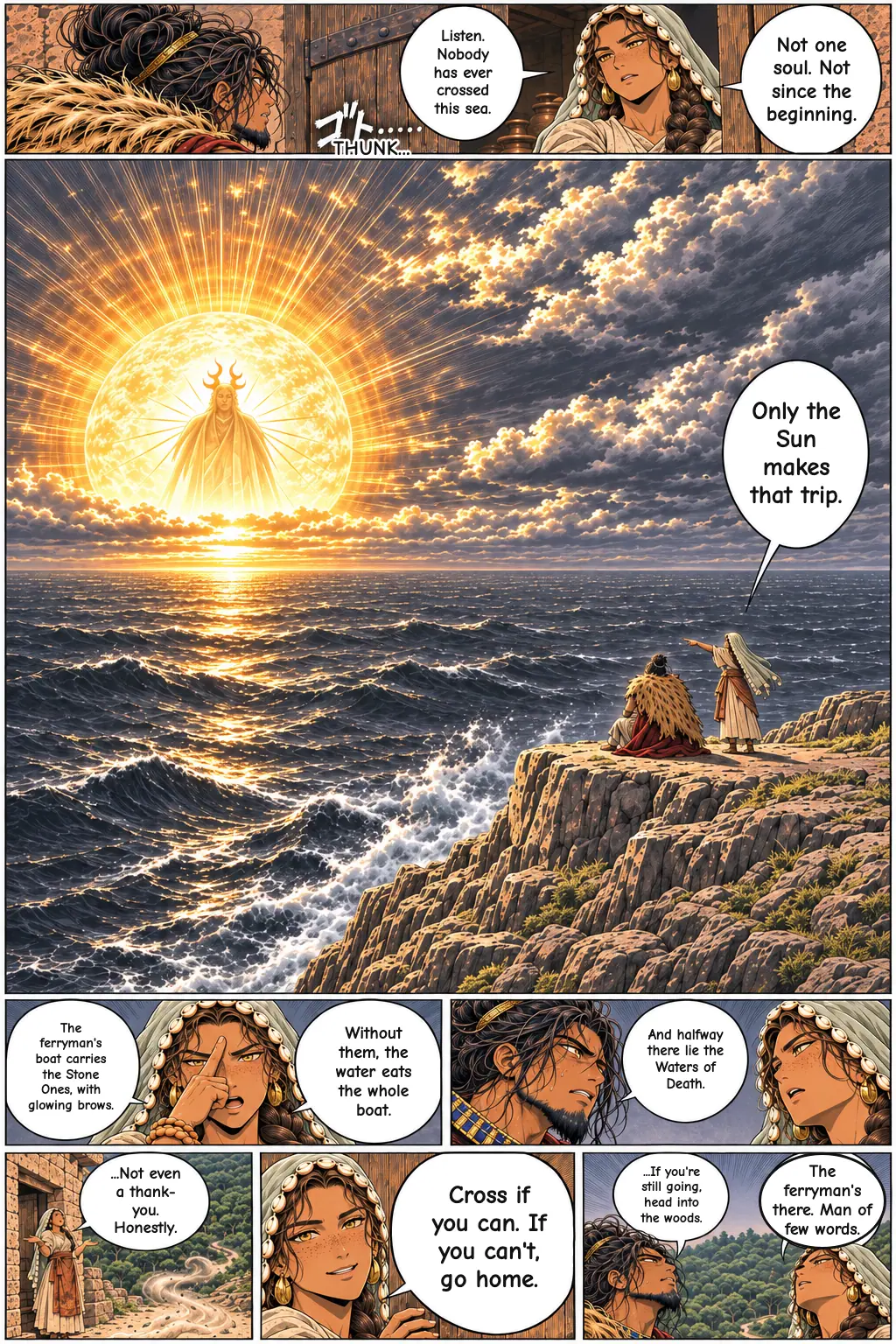
Tablet X opens after the death of Enkidu, Gilgamesh's closest friend. The king of Uruk has left his city and wandered through the wilderness dressed in animal skins, his face hollow and worn. He finally reaches the shore of a sea at the edge of the world, where a woman named Siduri keeps a tavern. Seeing a wild-looking stranger approach, she bars her door against him. Some readings of the damaged text also have her climbing onto her roof, but scholars are not fully sure of that detail. Gilgamesh threatens to break the door down, then tells her who he is.
Gilgamesh Tablet X Summary: Siduri, Urshanabi & the Waters of Death
In short: Tablet X of the Epic of Gilgamesh tells how King Gilgamesh, terrified of death after losing his friend Enkidu, reaches a tavern at the edge of the world, is sent on by the tavern-keeper Siduri, and crosses the deadly Waters of Death with the ferryman Urshanabi. On the far shore, the immortal flood survivor Uta-napishti tells him that every human life is fragile and that the gods never reveal the day of death. The story comes from the Standard Babylonian version of the epic, traditionally linked to the scholar Sin-leqi-unninni.
The original story: what happens in Tablet X
Tablet X opens after the death of Enkidu, Gilgamesh's closest friend. The king of Uruk has left his city and wandered through the wilderness dressed in animal skins, his face hollow and worn. He finally reaches the shore of a sea at the edge of the world, where a woman named Siduri keeps a tavern. Seeing a wild-looking stranger approach, she bars her door against him. Some readings of the damaged text also have her climbing onto her roof, but scholars are not fully sure of that detail.
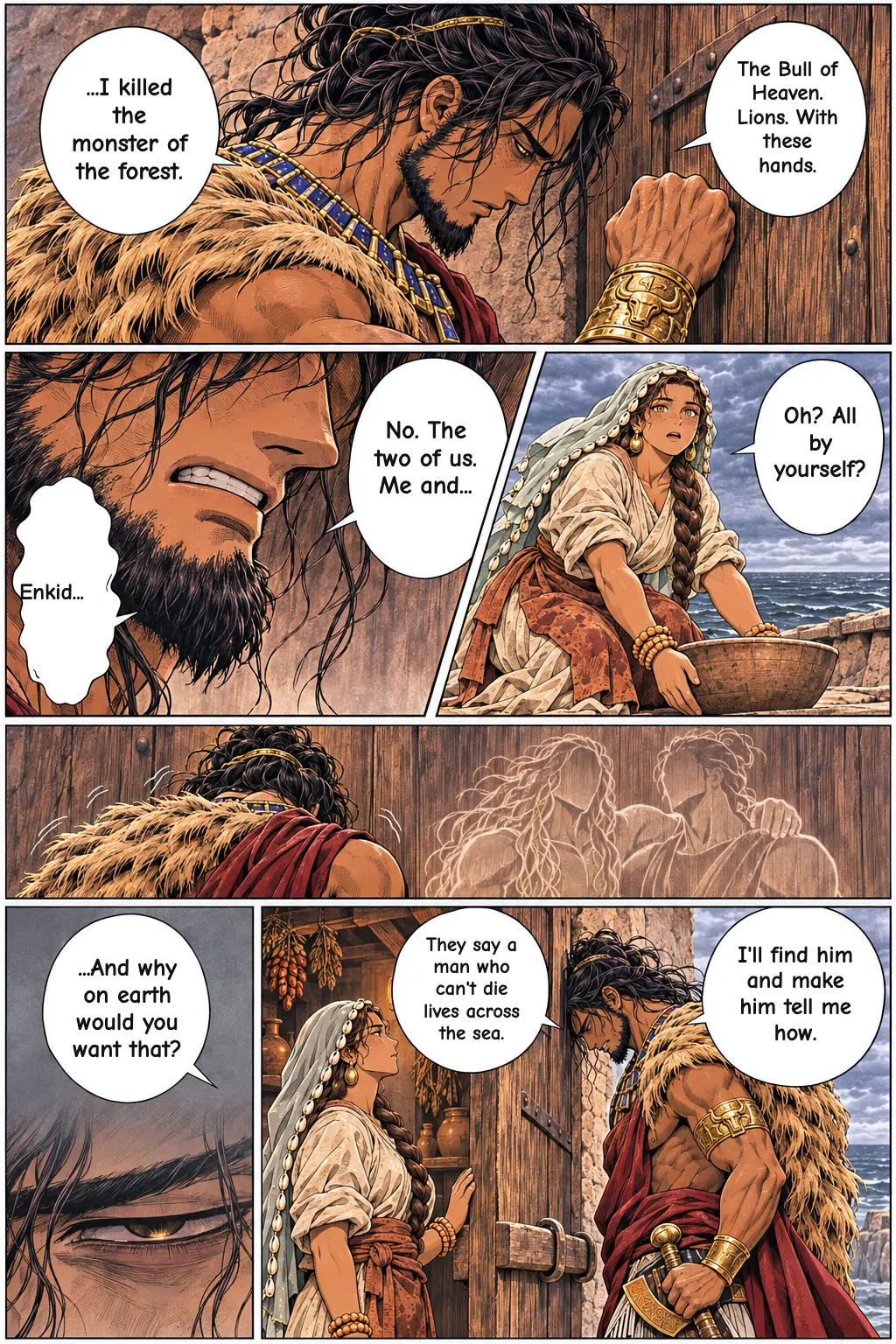
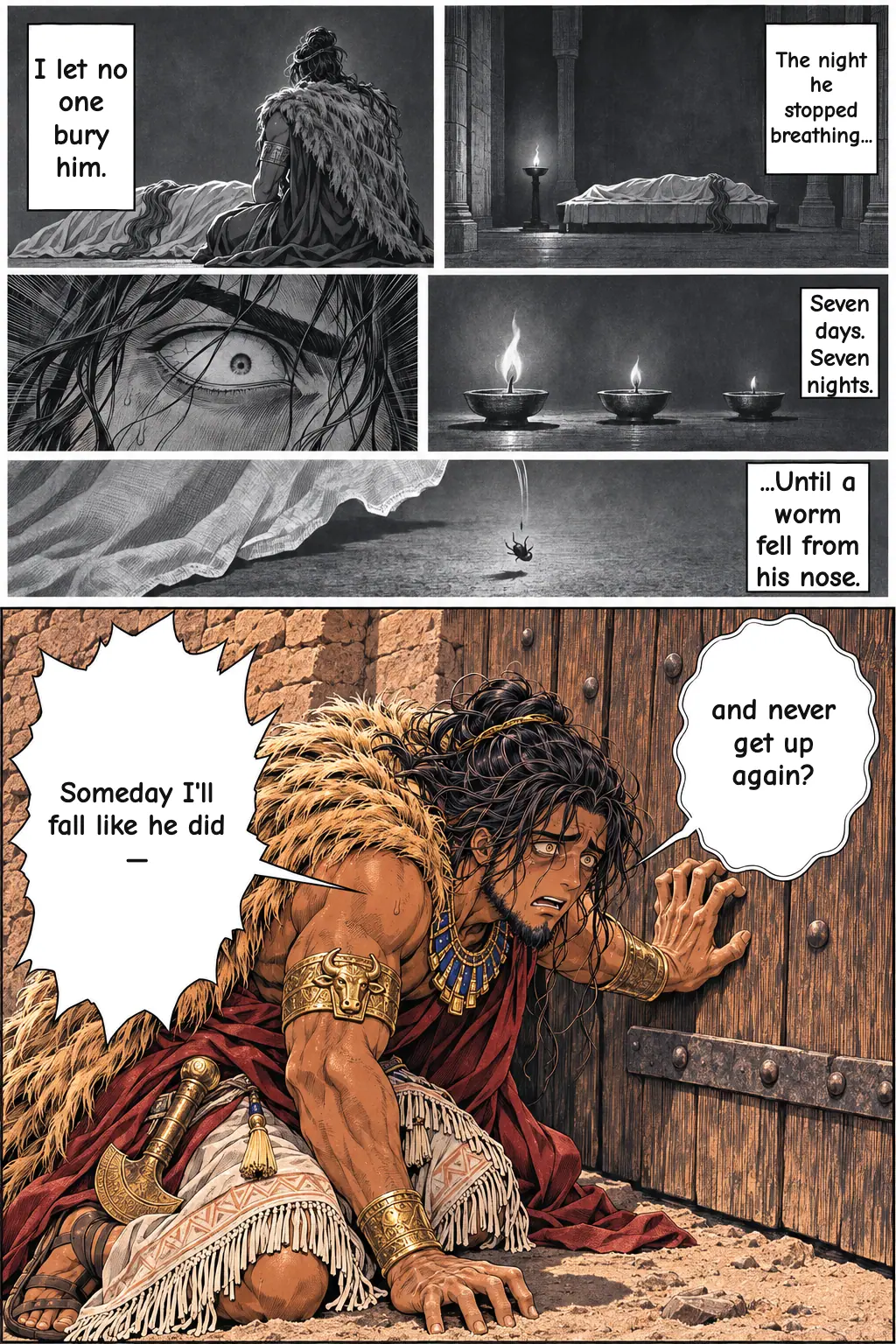
Gilgamesh threatens to break the door down, then tells her who he is. When Siduri asks why he looks so ruined, he lists the great deeds he shared with Enkidu: killing the forest guardian Humbaba, slaying the Bull of Heaven, and hunting lions. Then he describes how he wept over his friend for days and refused to bury him until decay set in. His real fear comes out plainly: if Enkidu turned to clay, will he also lie down one day and never rise again?
Siduri answers honestly. Nobody has ever crossed this sea except Shamash, the sun god, and somewhere in the middle lie the Waters of Death. Still, she tells him where to find Urshanabi, the ferryman of Uta-napishti, who works in the woods with mysterious objects called the Stone Ones. If he can cross with Urshanabi, he should; if not, he should turn back.
The Stone Ones, the 300 poles, and the crossing
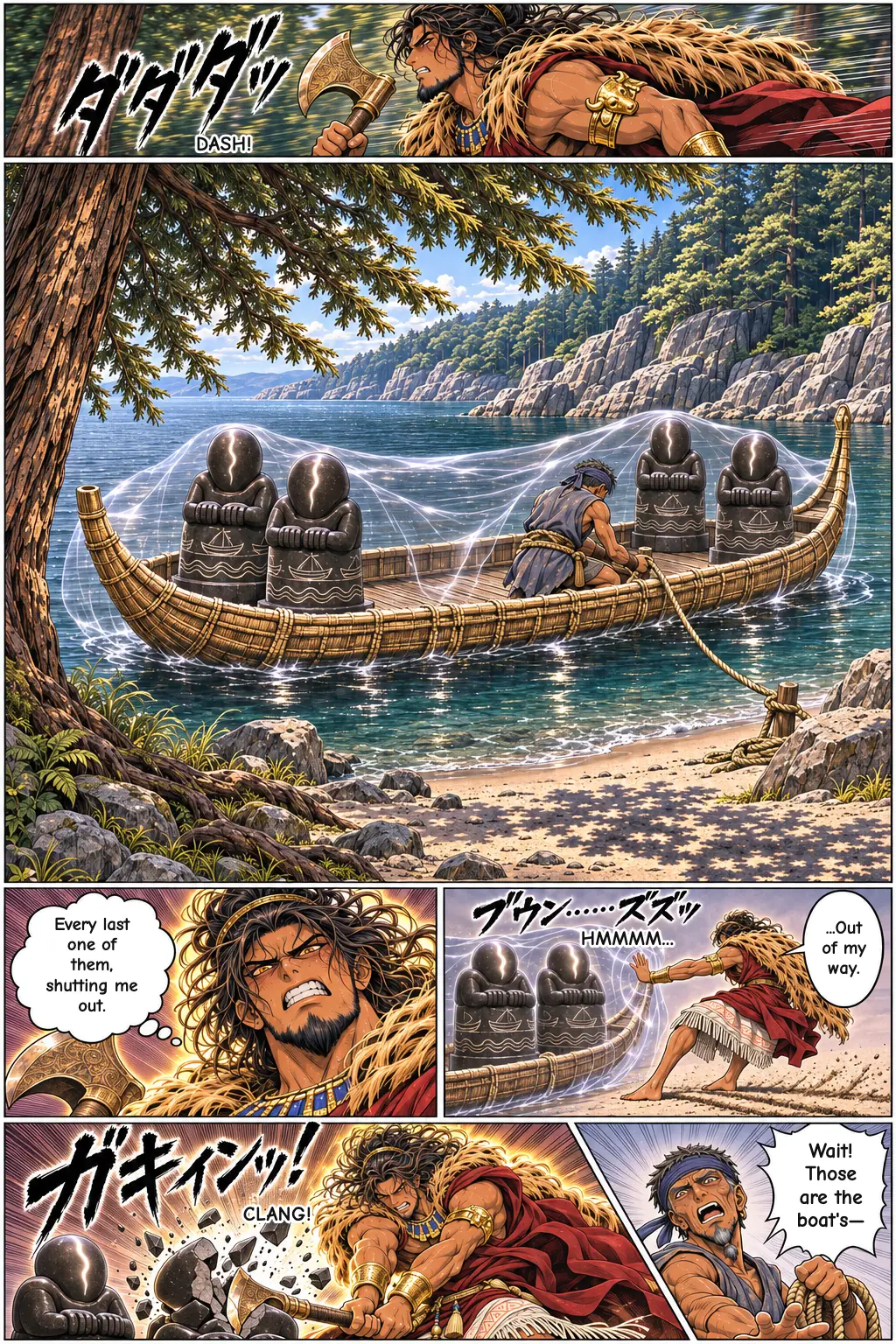
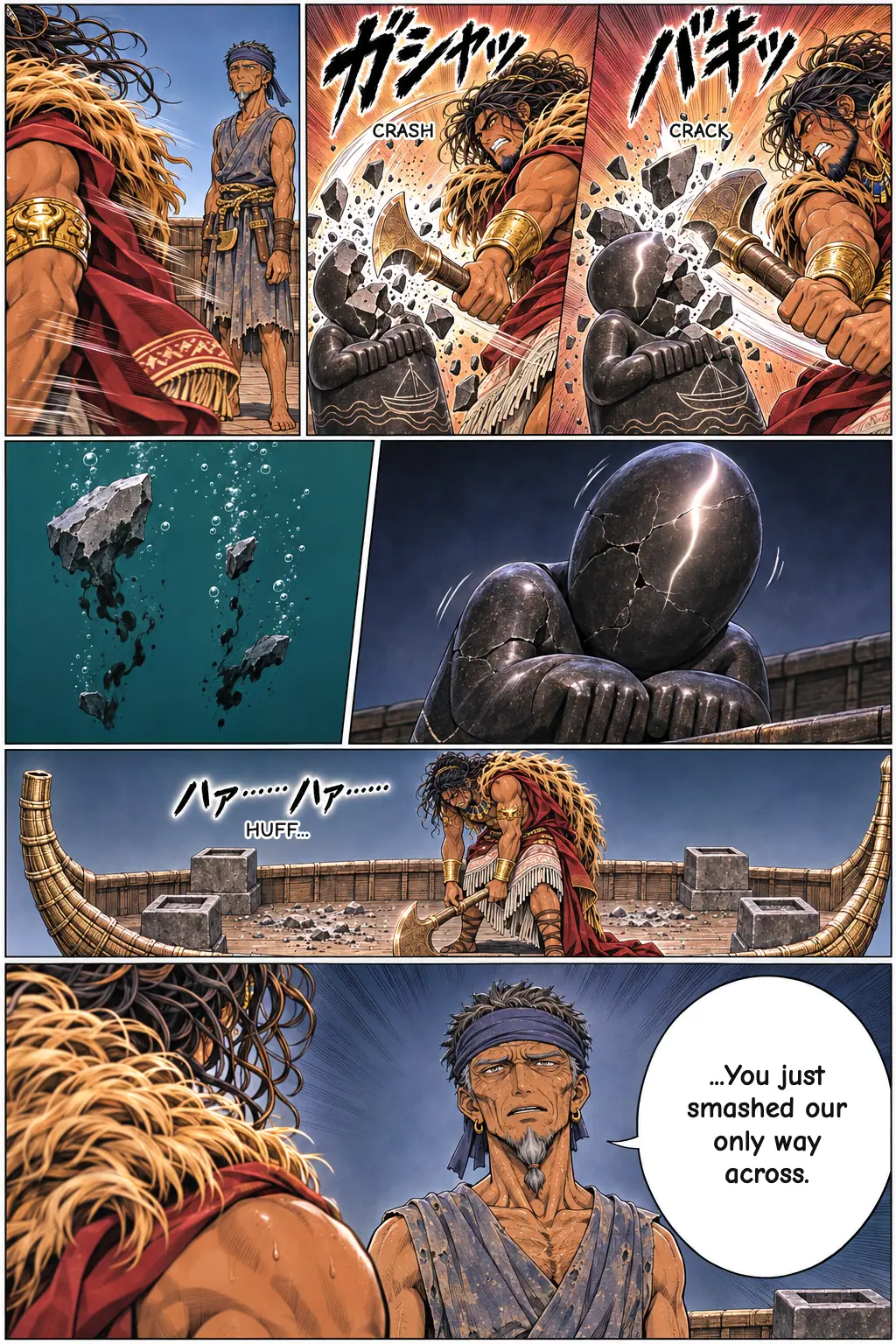
Gilgamesh rushes into the forest with an axe and a dagger and, in a burst of rage, smashes the Stone Ones. The tablet is broken at this point, so the exact sequence of the fight is lost. Urshanabi asks the same question Siduri asked, and Gilgamesh repeats his grief almost word for word, a repetition the poem uses to show how stuck he is in his loss.
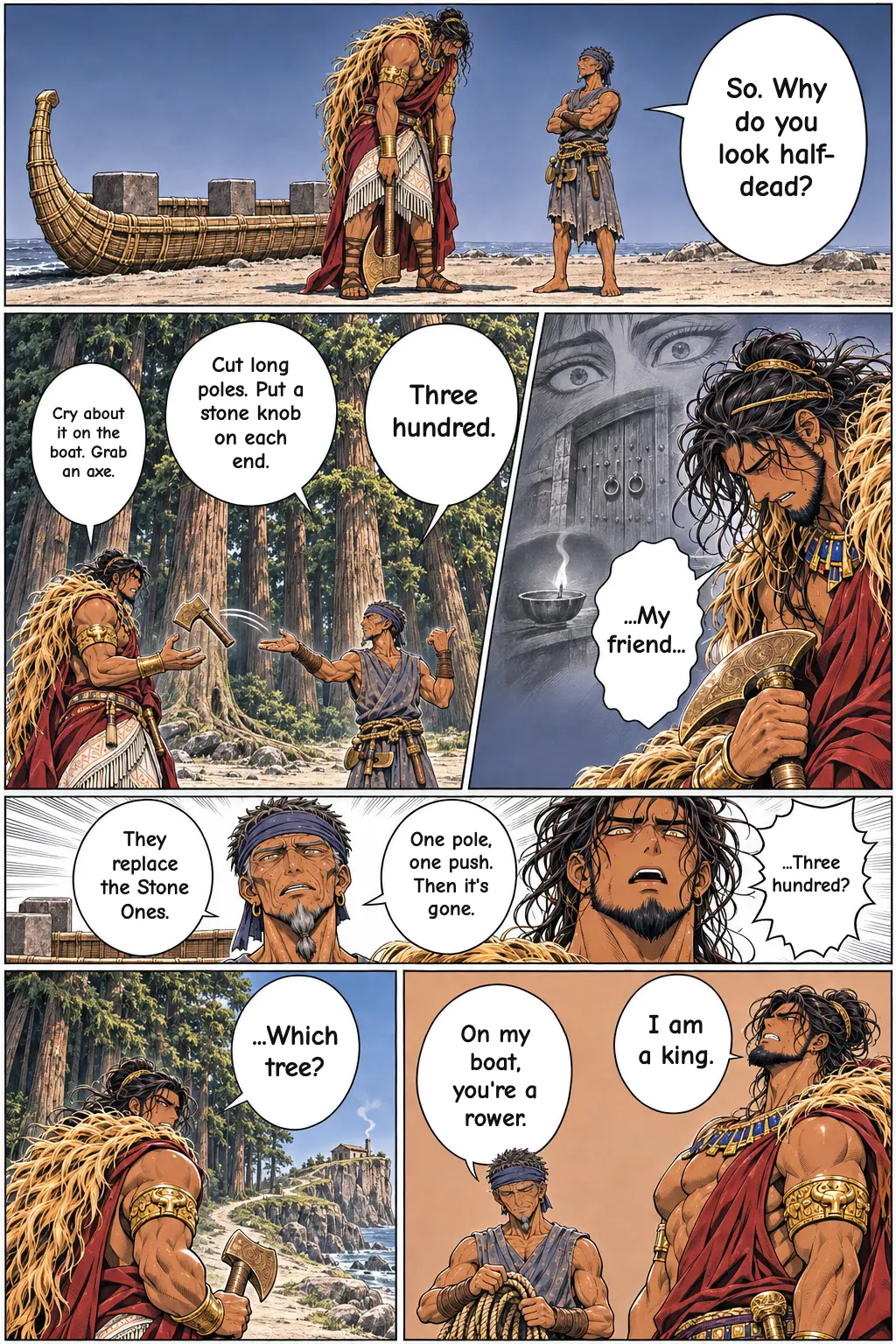
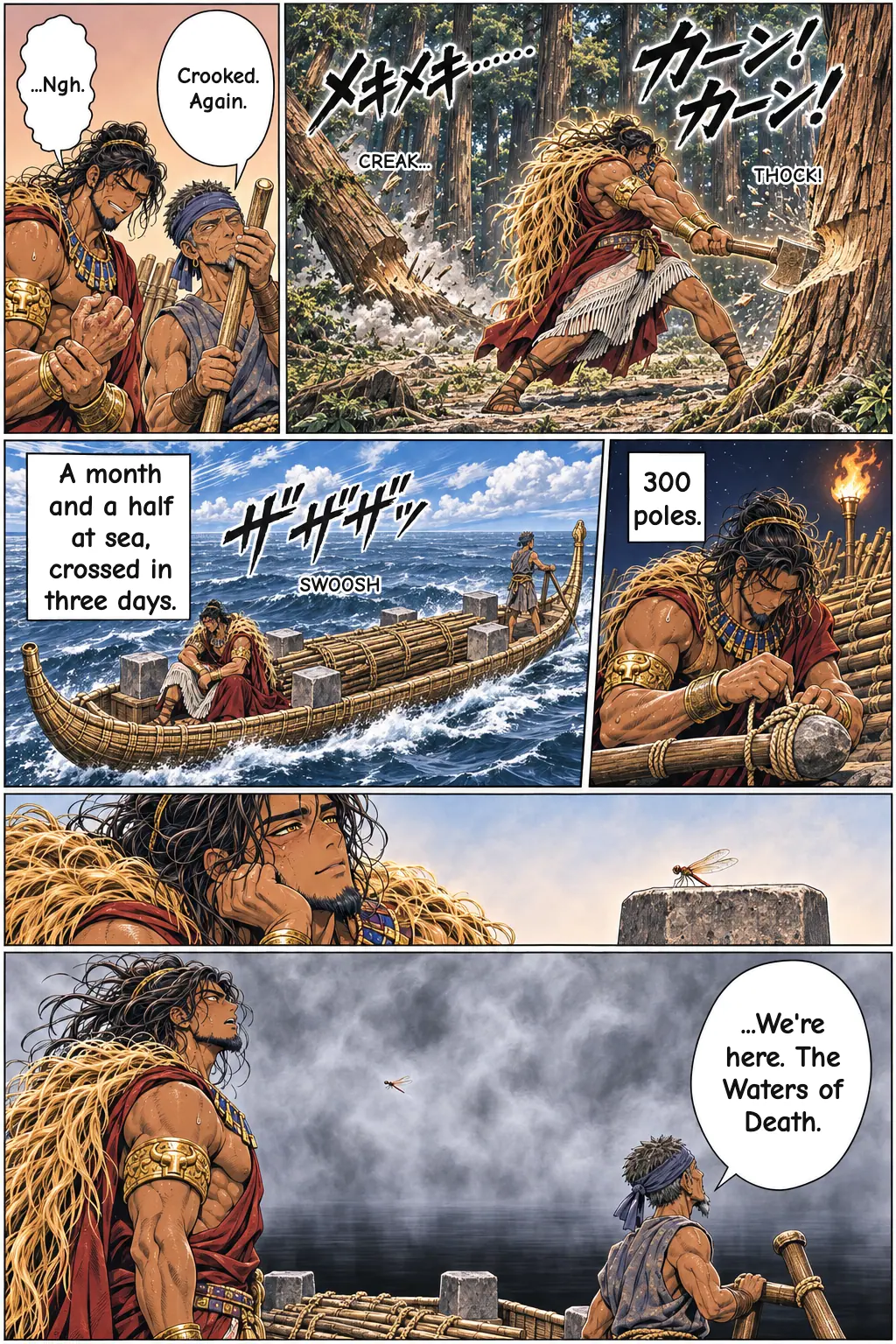
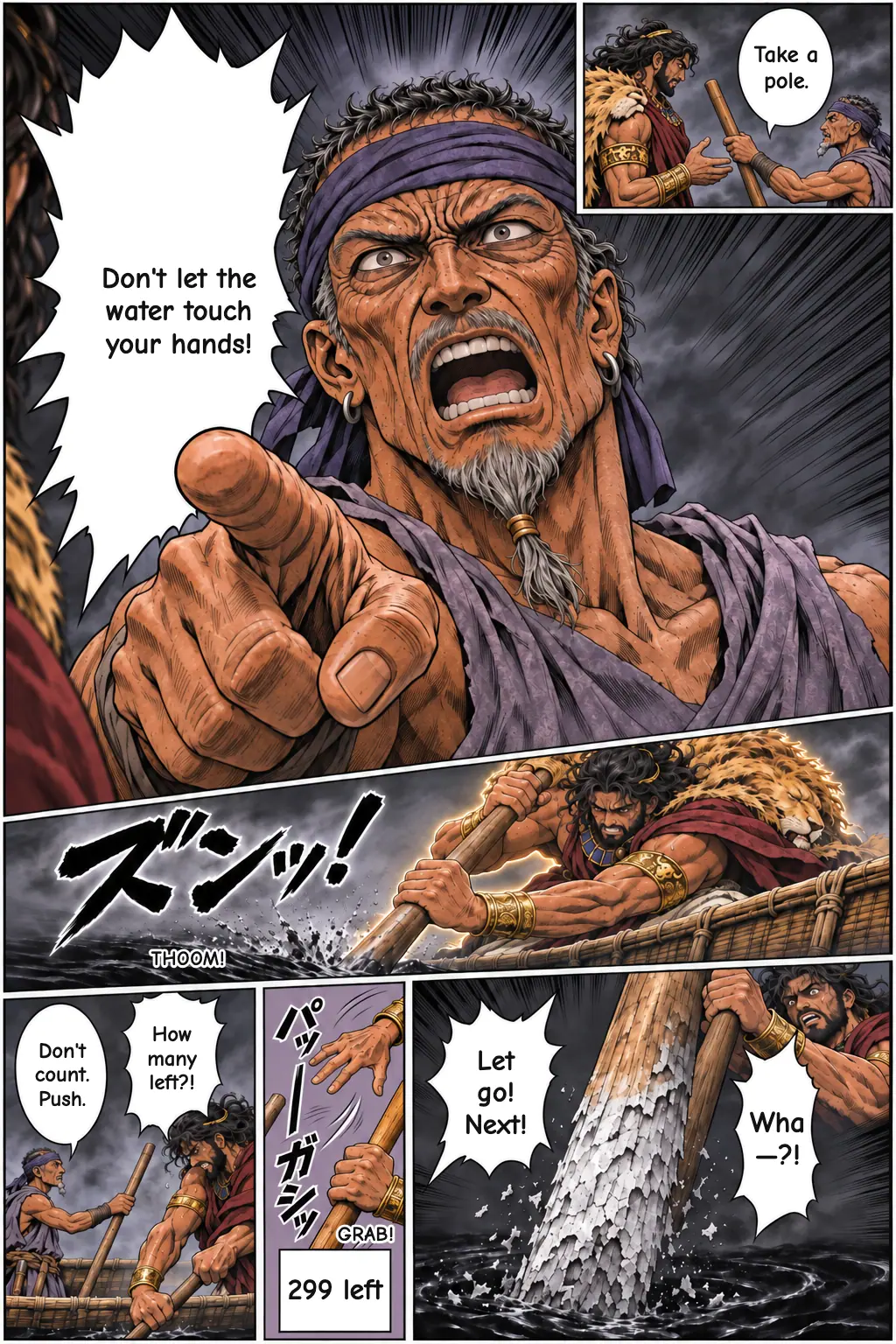
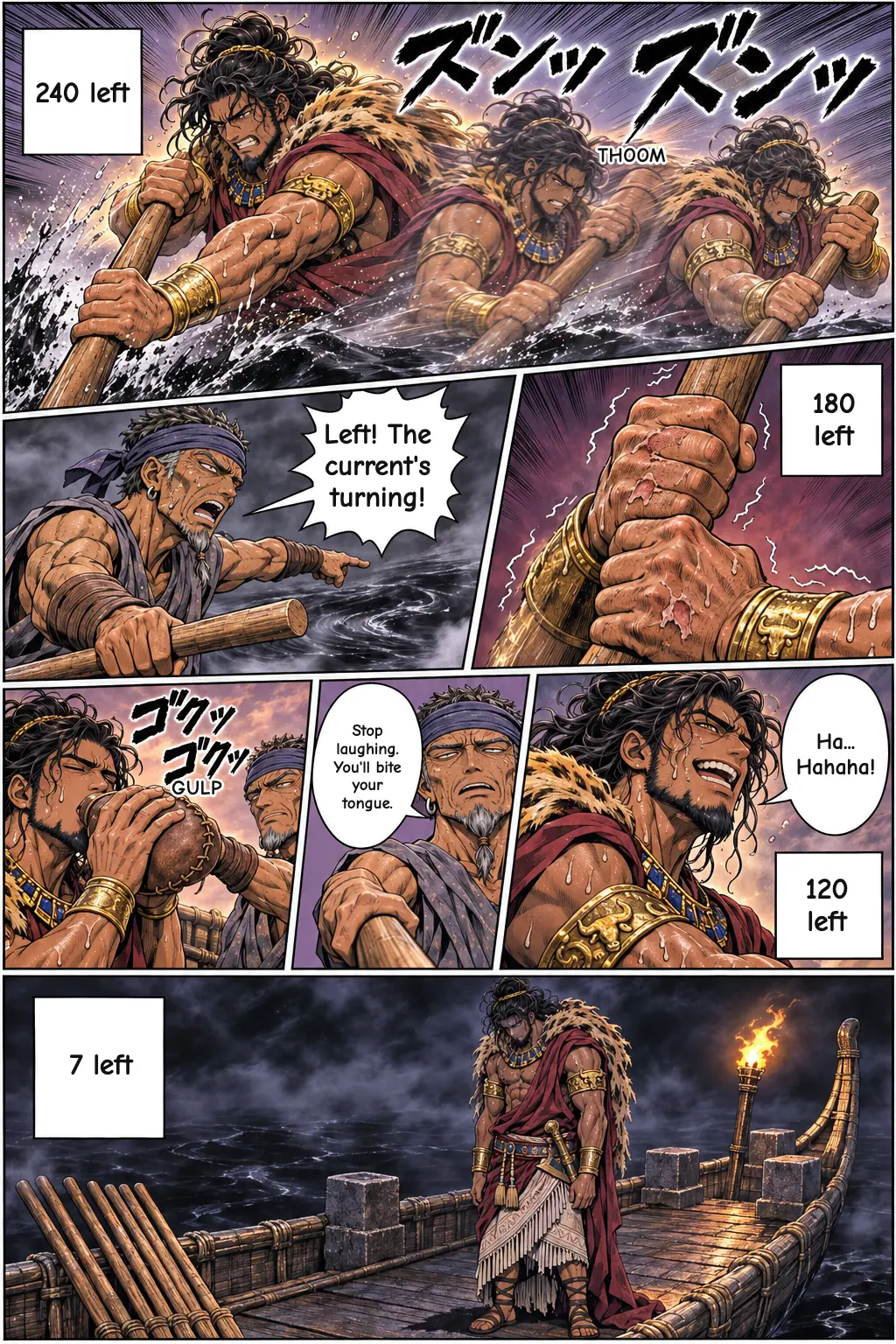
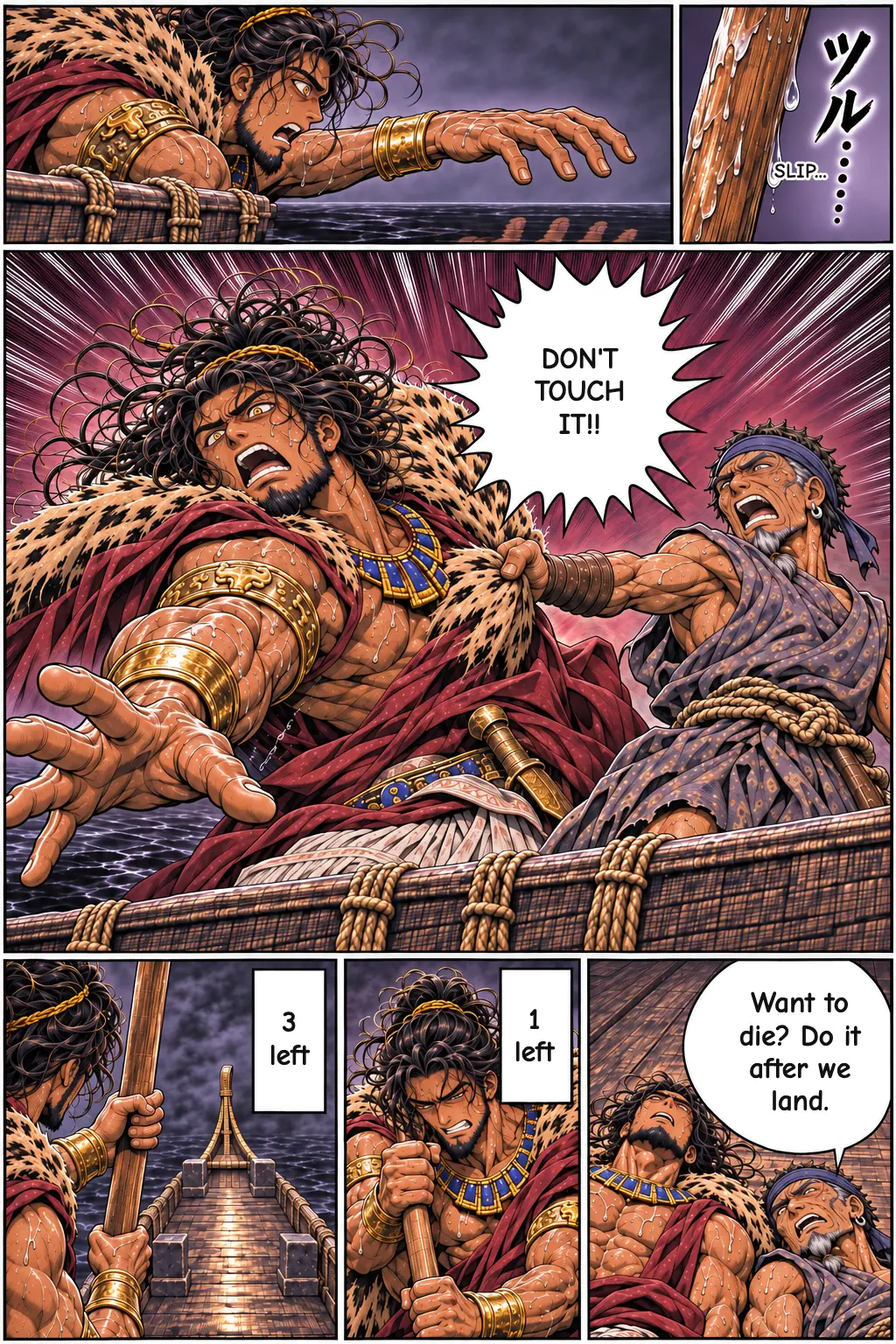
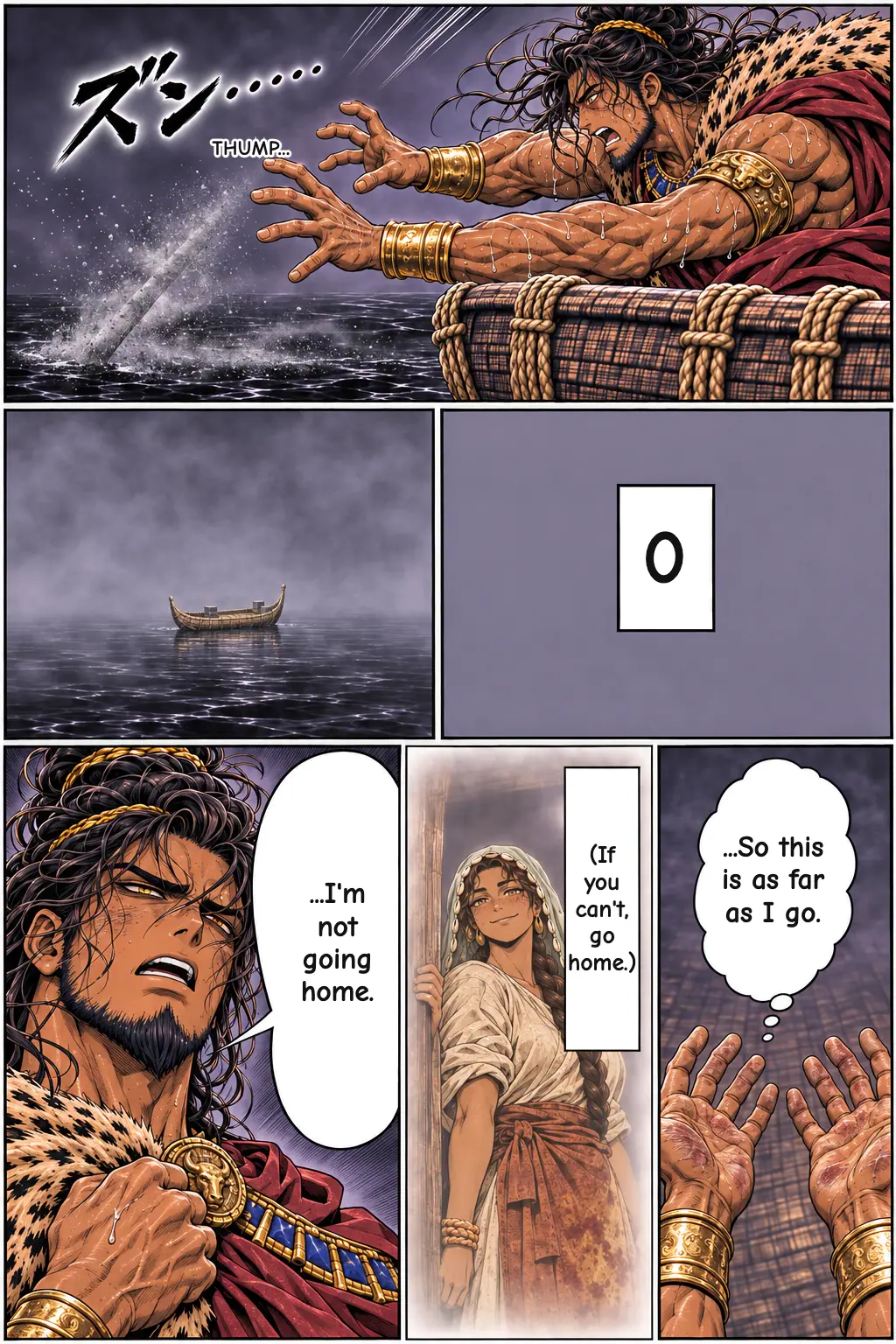
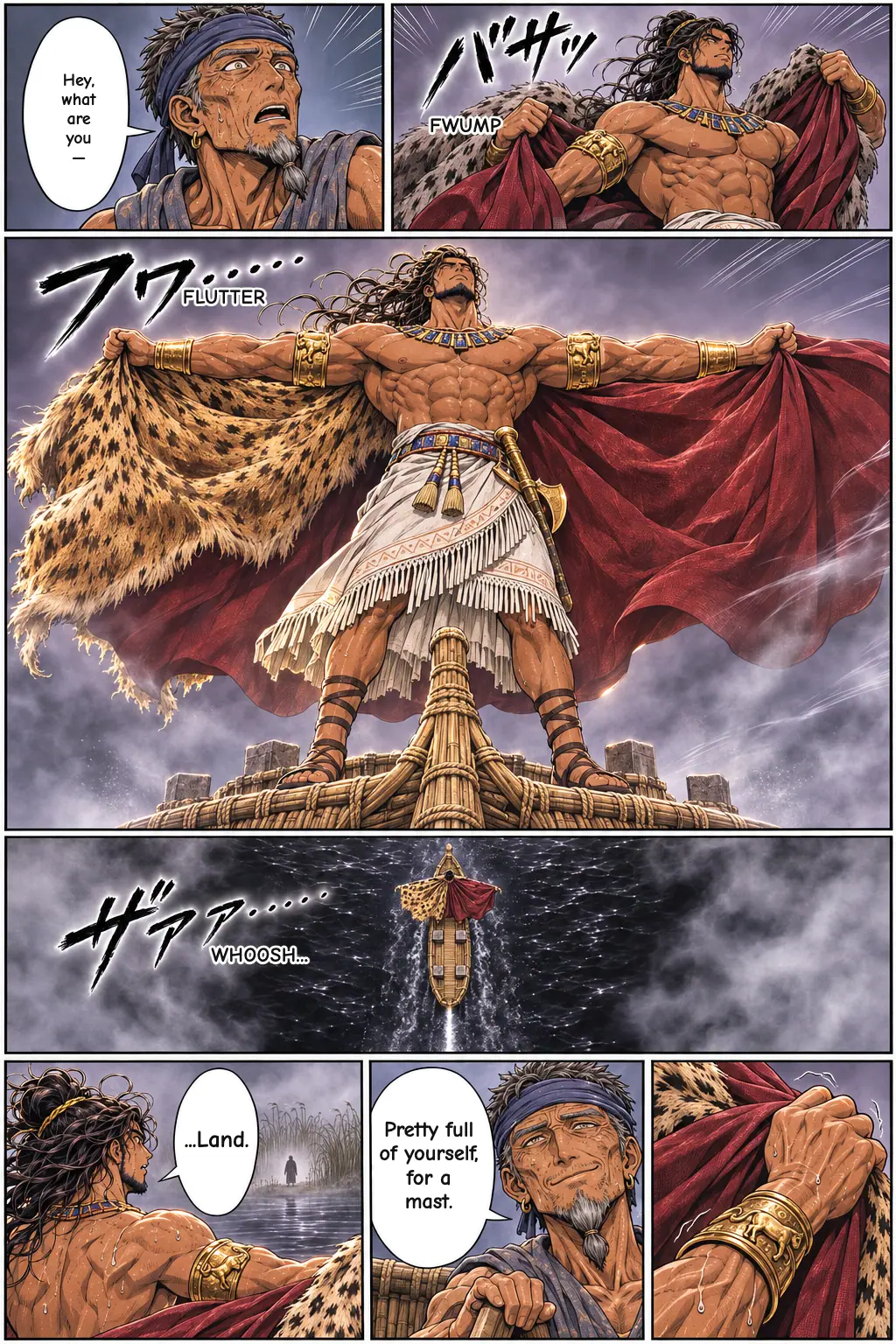
Urshanabi's reply is calm and practical: Gilgamesh has blocked his own crossing by destroying the Stone Ones. To make up for it, he must cut 300 poles, each about 60 cubits long (roughly 30 meters), trim them, and fit them with knobs or rings. The two set out and cover a month and a half of travel in three days, until they reach the Waters of Death. Urshanabi warns the king never to let his hand touch the water. Gilgamesh pushes the boat forward pole by pole until every one is used up.
When the poles run out, Gilgamesh strips off his garment and holds it up with his arms. Many readers take this as an improvised sail, but the text is difficult here, and who held what is still debated.
Uta-napishti's answer about death
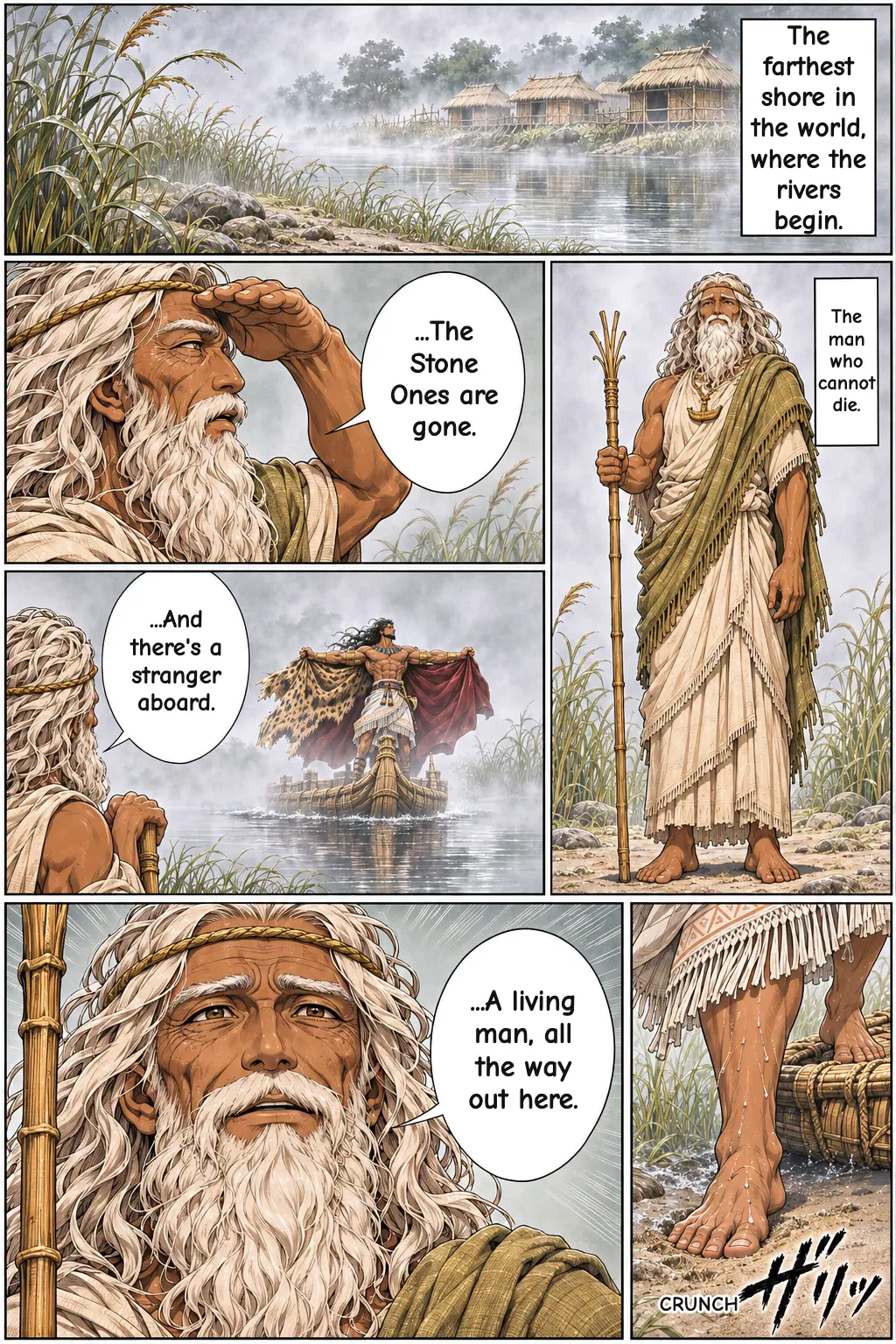
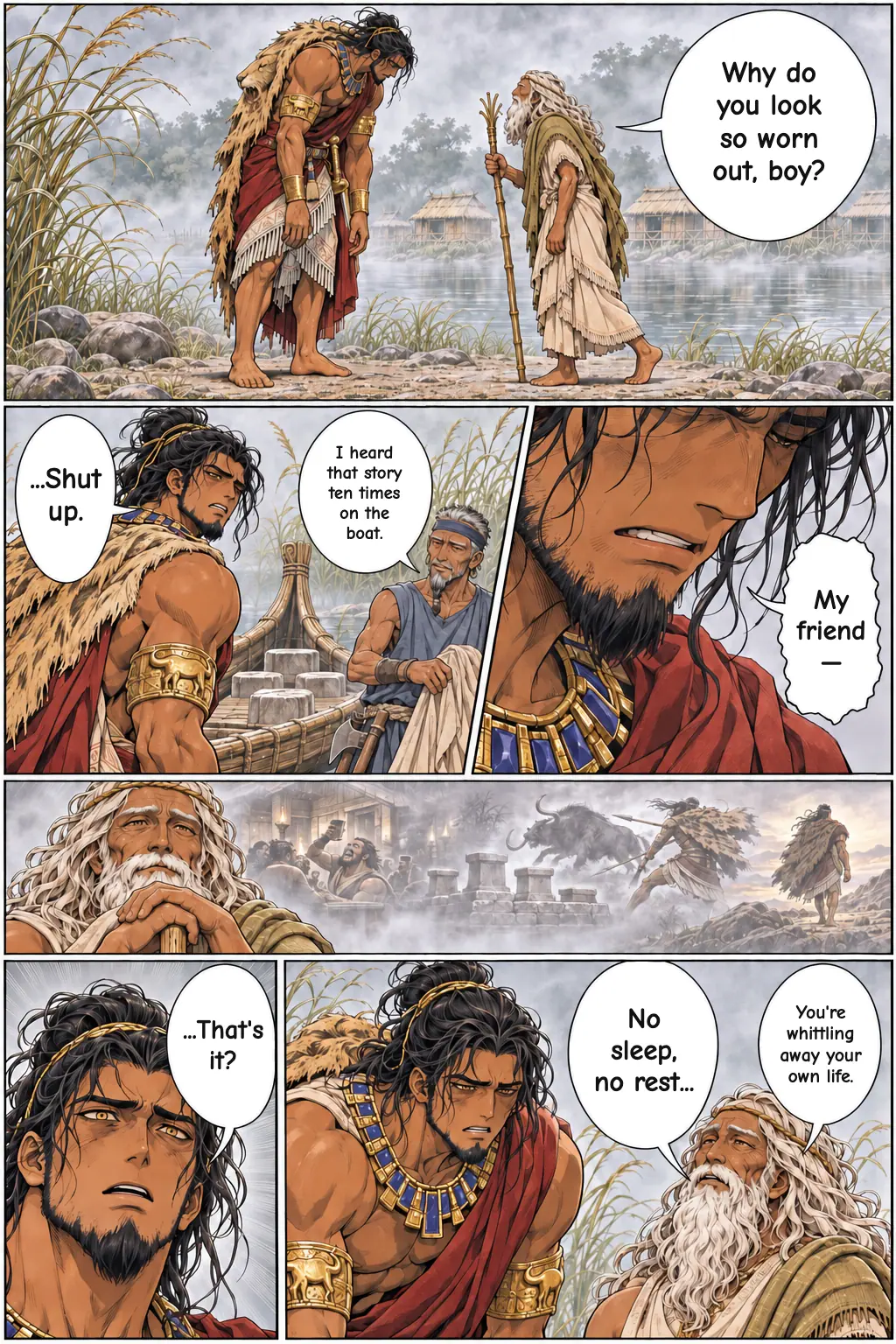
From the far shore, Uta-napishti, the man who survived the great Flood and was granted eternal life, watches the boat and wonders why the Stone Ones are broken and a stranger is aboard. When Gilgamesh lands, Uta-napishti hears the same lament once more and gently scolds him: by refusing sleep and feeding his sorrow, the king is only shortening his own days. Part of this speech, which compares fools, wise men, and the duties of a king, is badly damaged.
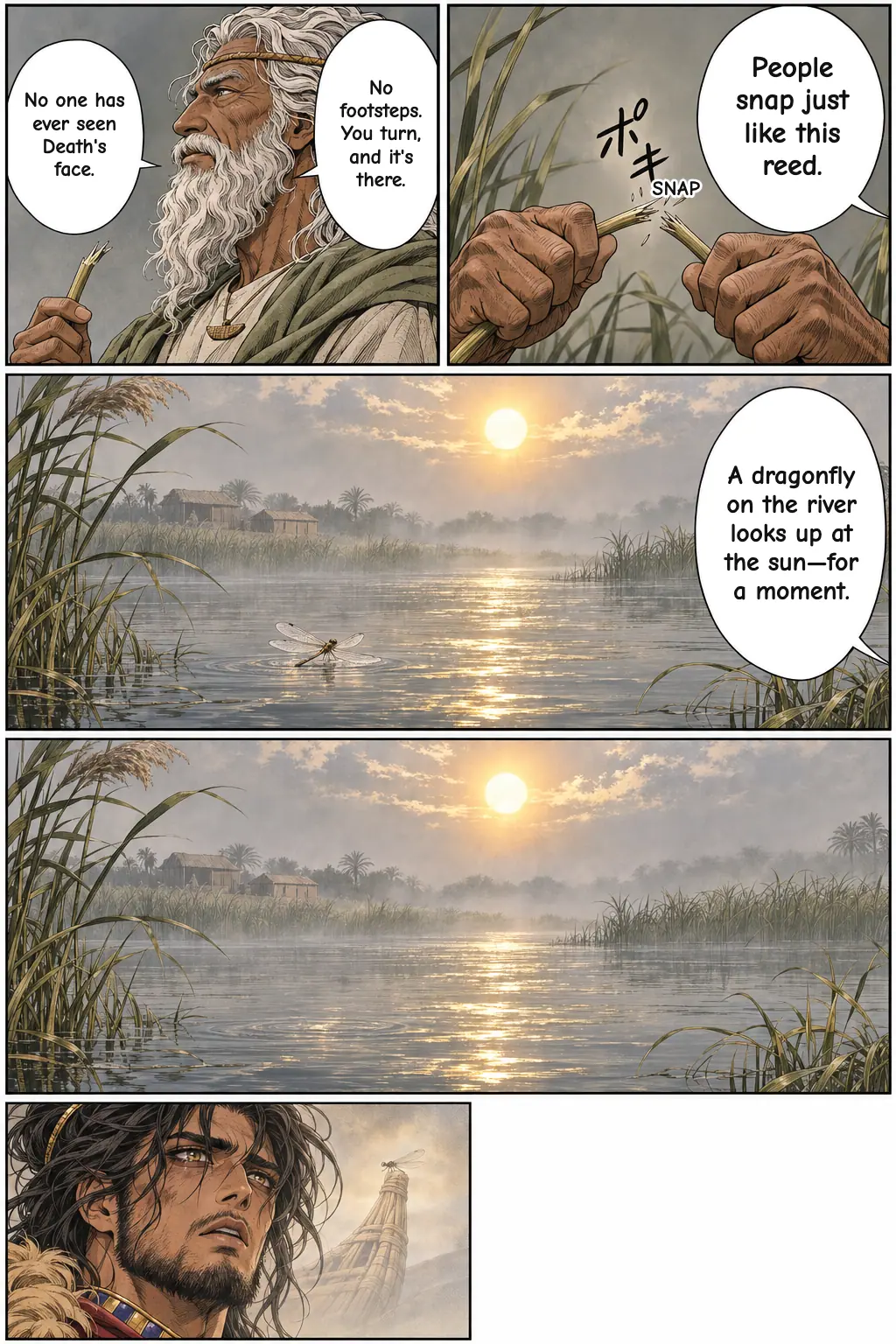
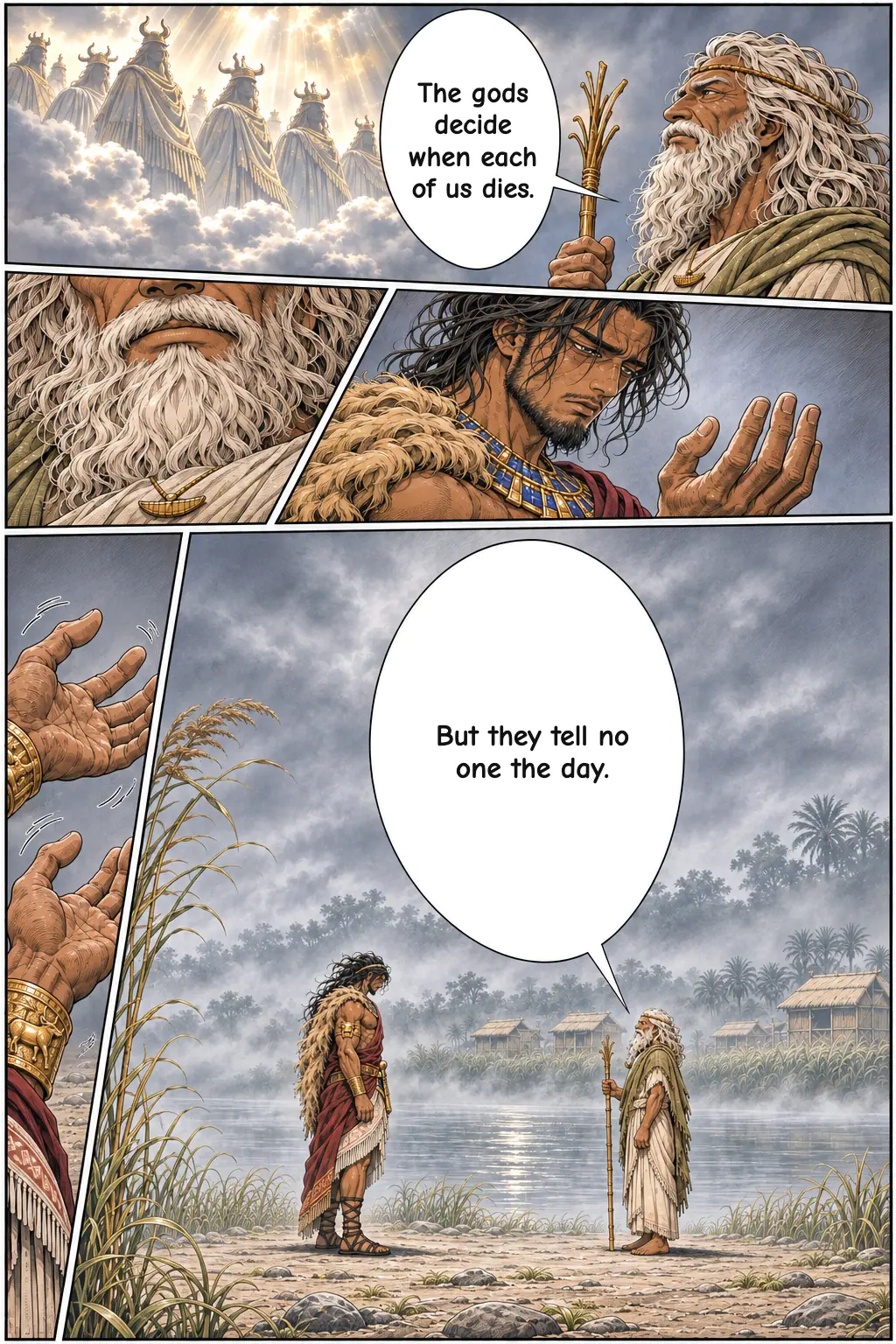
The tablet then closes with some of the most famous lines in ancient literature, here in summary. Humans are snapped like reeds in a marsh. No one has ever seen the face of death or heard its voice, yet death cuts everyone down. People build houses, make agreements, and divide inheritances, but the river still floods, and a mayfly on the water glimpses the sun only to vanish. The great gods, the Anunnaki, met with Mammitum, the goddess of fate, and fixed both death and life, but they kept the day of death hidden.
What this myth tells us
The Epic of Gilgamesh is one of the oldest stories in the world, with roots in Sumerian poems from the third millennium BCE. The Standard Babylonian version, preserved on clay tablets such as those from the library of Ashurbanipal at Nineveh, arranges the story into eleven main tablets plus a twelfth. Tablet X is the emotional turning point: the hero who once conquered monsters now faces something no weapon can beat.
The tablet also shows a pattern Mesopotamian readers would have recognized: wisdom does not come as magic, but as hard truth spoken by others. Siduri, Urshanabi, and Uta-napishti each give Gilgamesh honest answers, and his violence against the Stone Ones only makes the road harder. An older Old Babylonian version also contains a well-known speech in which Siduri urges him to enjoy the life he has, which suggests the theme of accepting mortality runs through many versions of the story.
What the manga changes or adds
Because the ancient text says almost nothing about appearances, the manga designs freely: Siduri's tavern, the seaside landscape, Uta-napishti's shore, and the faces, clothes, and ages of Urshanabi and Uta-napishti. The Stone Ones are drawn as mysterious statues that protect the ferry. That is an artistic choice; the original never makes clear what they were, and scholars have suggested they may have been charms, crew, ballast, or something else.
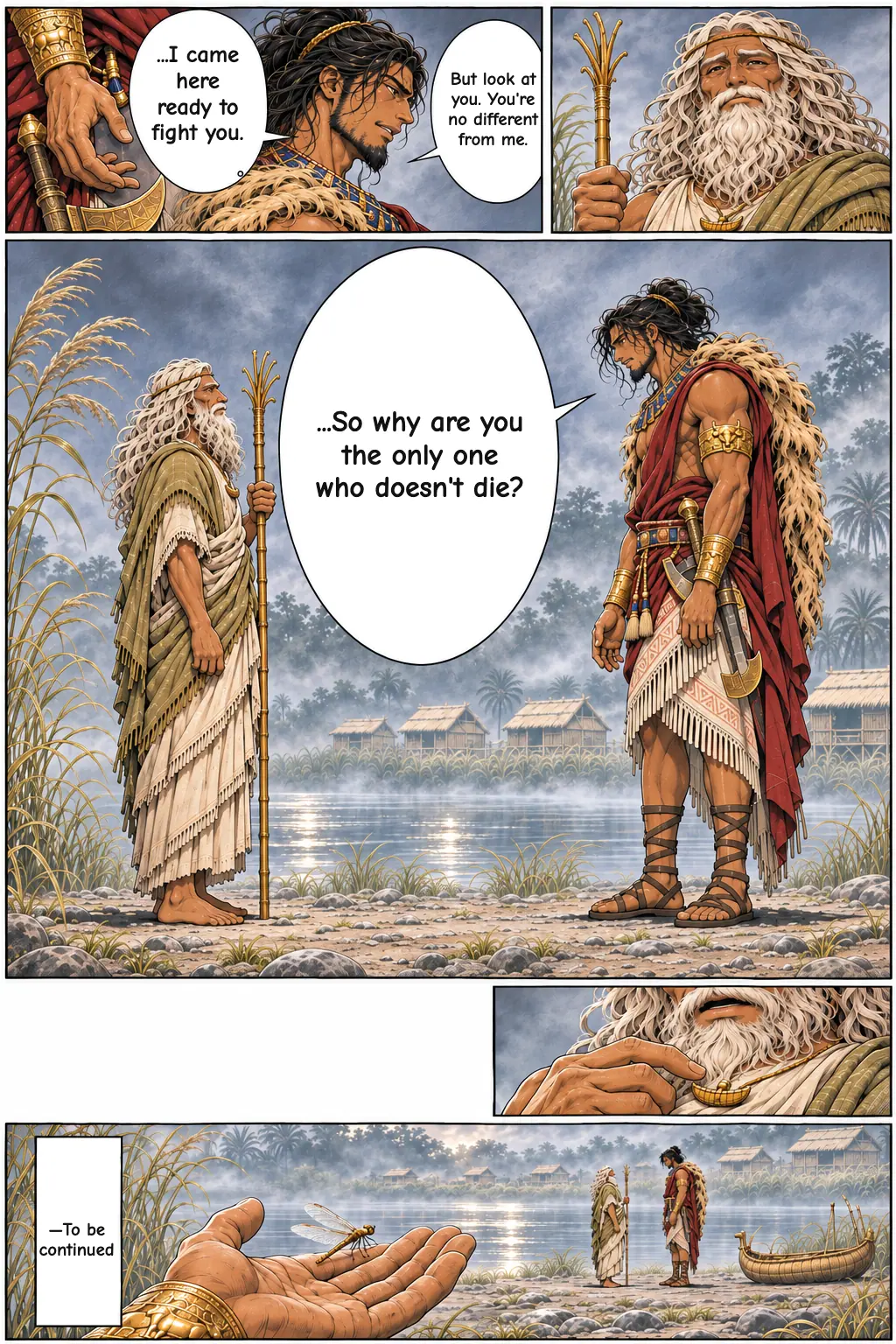
The manga also dramatizes the labor of cutting 300 poles, the conversation during the three-day voyage, the look and sound of the Waters of Death, and how each pole is used and released. The fight with the Stone Ones is reconstructed because the tablet is broken there. Finally, the episode ends on Gilgamesh asking why Uta-napishti does not die. In the original, that question opens Tablet XI, so the manga uses it as a bridge to the next episode.
Where to read it
If you want to see Siduri's barred door, the smashed Stone Ones, and the desperate crossing of the Waters of Death brought to life, you can read Episode 9 of MESOPOTAMIAN MYTH: THE EPIC OF GILGAMESH — No One Lives Forever right here on Manga Portal. Every episode is free, with no sign-up needed, so you can start from the beginning or jump straight to Uta-napishti's flood story in the next chapter.
Characters in this episode
Gilgamesh
The king of Uruk, two-thirds divine, who wanders to the edge of the world in terror of death after losing his friend Enkidu.
Siduri
A veiled tavern-keeper (ale-wife) living by the sea who first bars her door to Gilgamesh, then honestly tells him how to find the ferryman.
Urshanabi
Uta-napishti's ferryman, who calmly makes Gilgamesh cut 300 poles to cross the Waters of Death after the king smashes the Stone Ones.
Uta-napishti
The flood survivor granted eternal life, who tells Gilgamesh that human life is fragile and the day of death is never revealed.
Enkidu
Gilgamesh's dead friend and companion in his great deeds, whose death sets the whole journey in motion.
Shamash
The sun god, named by Siduri as the only one who has ever crossed the sea.
FAQ
What happens in Tablet X of the Epic of Gilgamesh?
Gilgamesh meets the tavern-keeper Siduri, finds the ferryman Urshanabi, and crosses the Waters of Death using 300 poles. On the other side he meets Uta-napishti, who tells him that all humans die and the gods never reveal when.
Who is Siduri in the Epic of Gilgamesh?
Siduri is a tavern-keeper (often called an ale-wife) who lives by the sea at the edge of the world. She warns Gilgamesh that the crossing is deadly but directs him to the ferryman Urshanabi.
What are the Stone Ones in Gilgamesh?
The Stone Ones are objects or beings connected with Urshanabi's boat that Gilgamesh destroys in anger. The text never clearly explains what they were, and scholars have suggested several ideas, such as charms, crew, or ballast.
What are the Waters of Death?
They are deadly waters in the middle of the sea leading to Uta-napishti's home. Gilgamesh must not touch them, so he pushes the boat with long poles and discards each one after use.
Why is Uta-napishti immortal?
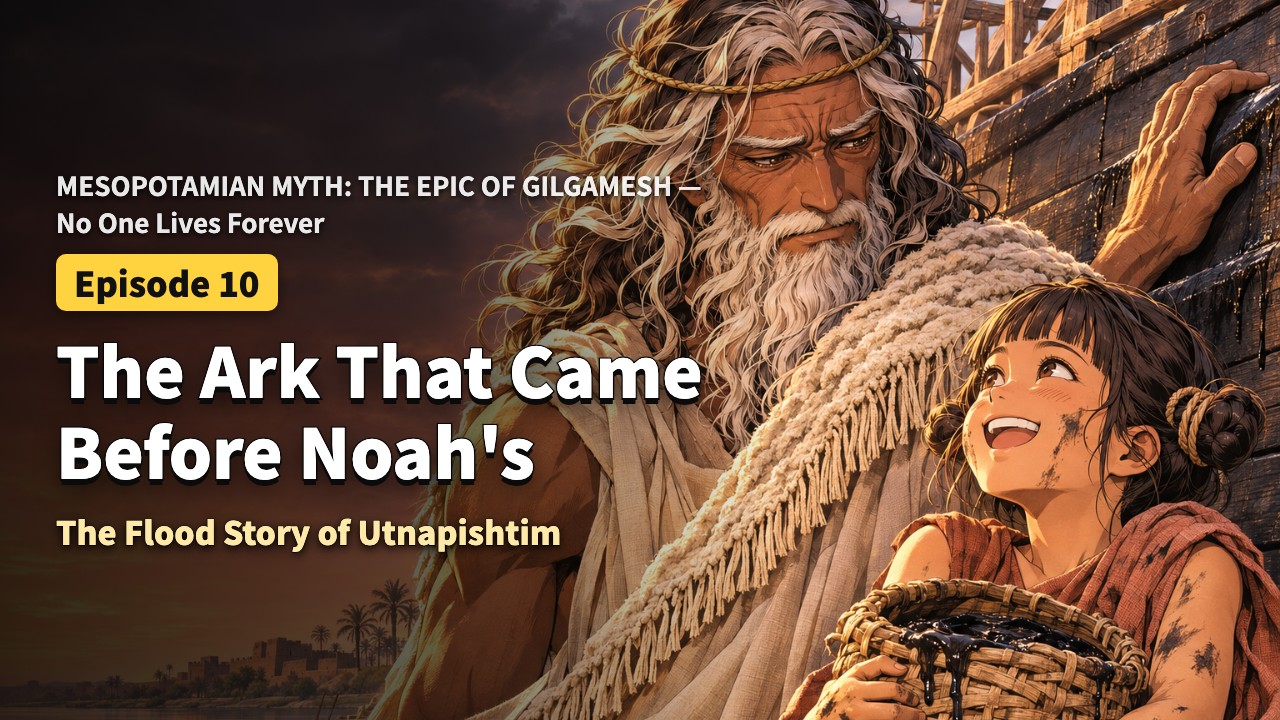
Uta-napishti survived the great Flood, and afterward the gods granted him and his wife eternal life. He tells this story in Tablet XI, which follows Tablet X.
More episodes of MESOPOTAMIAN MYTH: THE EPIC OF GILGAMESH