Get new episodes in your feed. Follow us on:ThreadsBluesky
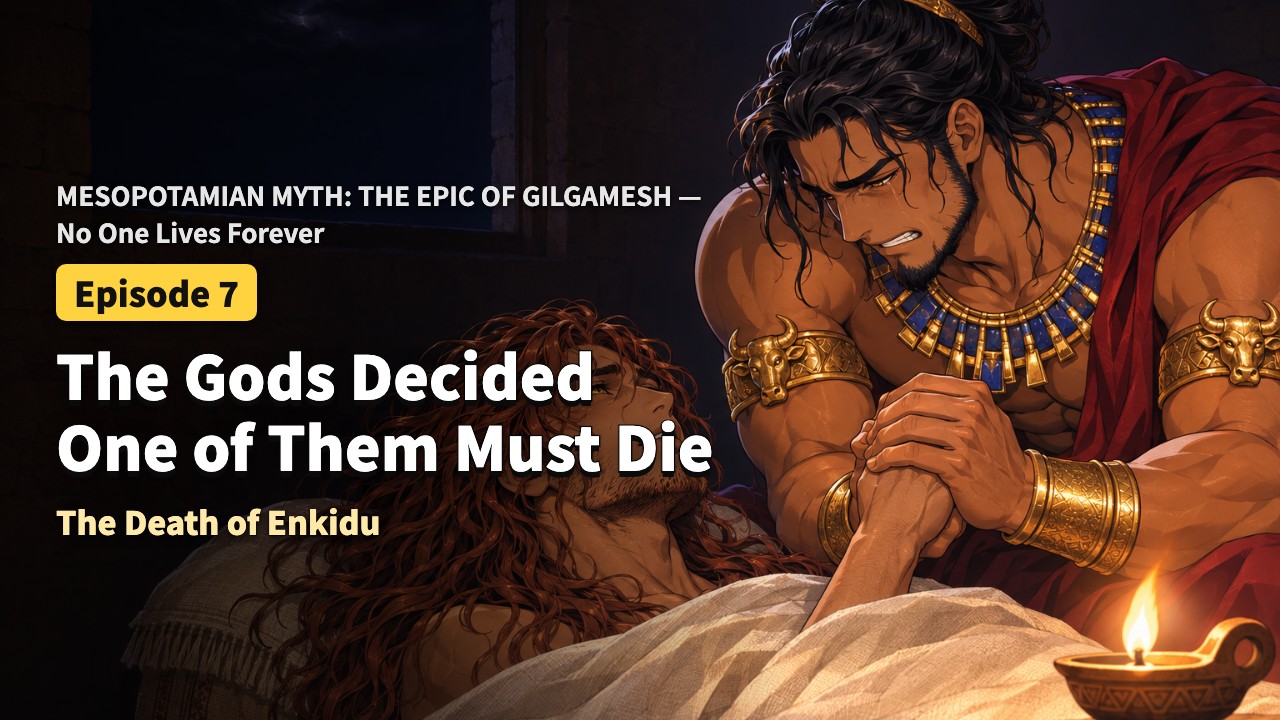
Back from slaying the forest monster and bored out of his mind, King Gilgamesh gets a marriage proposal from the goddess Ishtar, and turns her down flat by listing what happened to every lover she ever had. Furious, the goddess runs crying to her father and brings down the Bull of Heaven. The king and his friend Enkidu kill the bull and stand at the peak of Uruk's cheers. But that night, Enkidu has a terrible dream.
Story summary
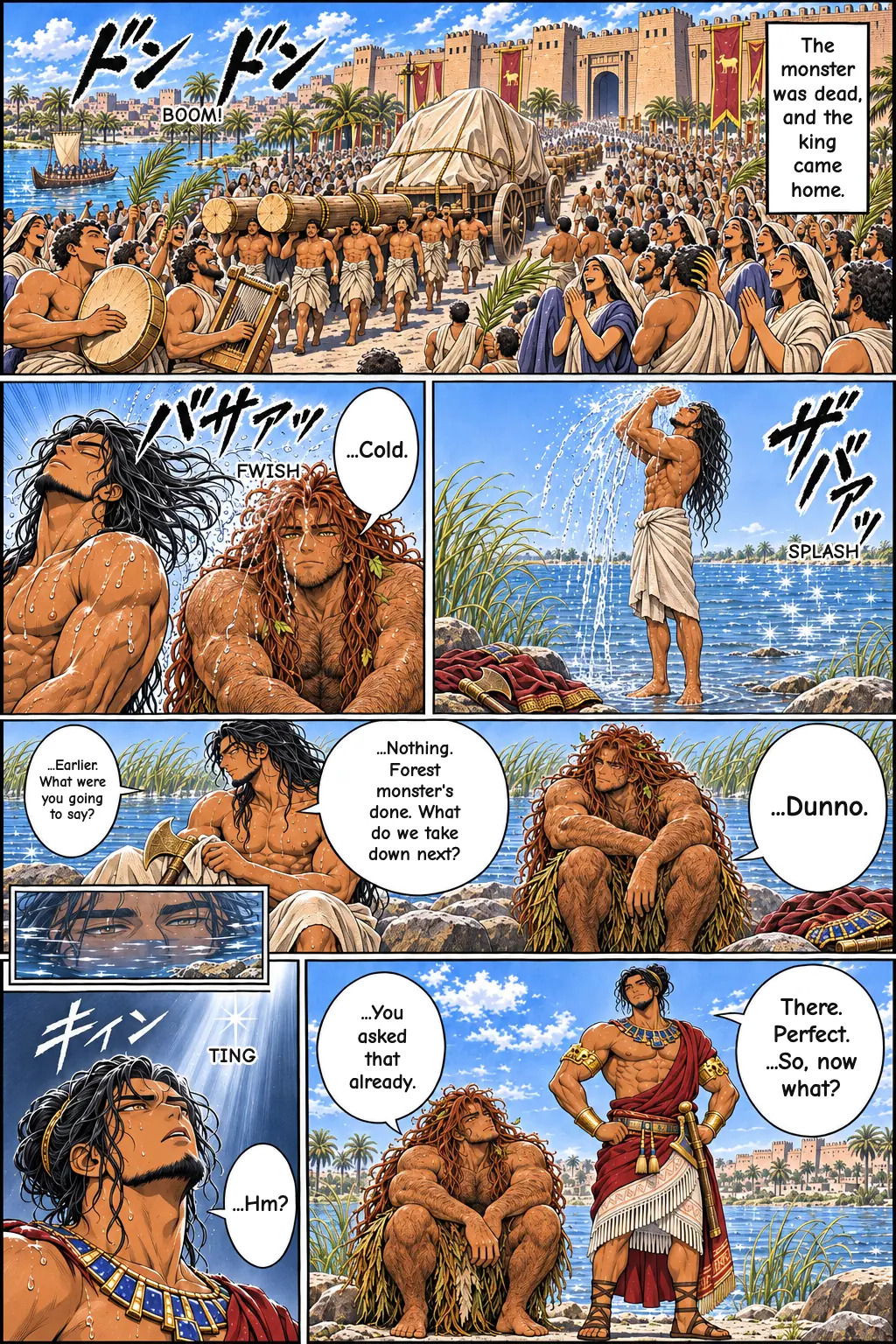
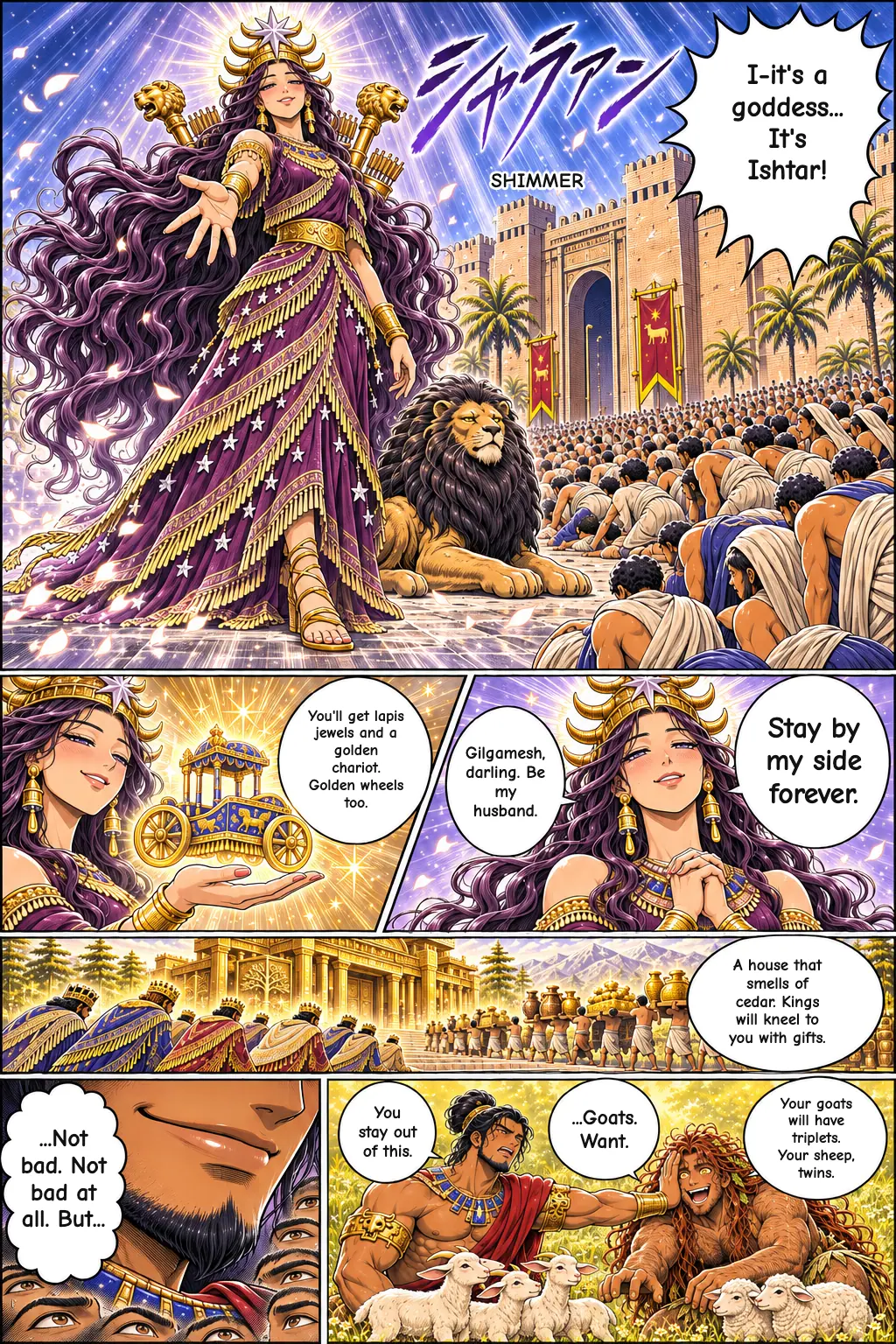
The episode opens just after Gilgamesh, the king of Uruk, and his companion Enkidu have returned from killing Humbaba, the guardian of the Cedar Forest. Gilgamesh washes his matted hair, polishes his weapons, changes into clean robes, and puts on his crown. He looks so splendid that Ishtar, the goddess of love and war, notices him and asks him to become her husband. She promises him a chariot of lapis lazuli and gold, a house fragrant with cedar, kings and princes bowing down with tribute, and herds that multiply beyond counting. Gilgamesh refuses, and not politely.
Gilgamesh and Ishtar: The Bull of Heaven Story Explained (Tablet VI Summary)
In short: The Ishtar and Bull of Heaven episode is Tablet VI of the Epic of Gilgamesh. Ishtar, goddess of love and war, proposes marriage to King Gilgamesh of Uruk. He insults her and lists the grim fates of her past lovers. Enraged, she gets the Bull of Heaven from her father Anu, but Gilgamesh and his friend Enkidu kill it. That night, Enkidu has an ominous dream.
The Original Myth: Summary of Tablet VI
The episode opens just after Gilgamesh, the king of Uruk, and his companion Enkidu have returned from killing Humbaba, the guardian of the Cedar Forest. Gilgamesh washes his matted hair, polishes his weapons, changes into clean robes, and puts on his crown. He looks so splendid that Ishtar, the goddess of love and war, notices him and asks him to become her husband. She promises him a chariot of lapis lazuli and gold, a house fragrant with cedar, kings and princes bowing down with tribute, and herds that multiply beyond counting.
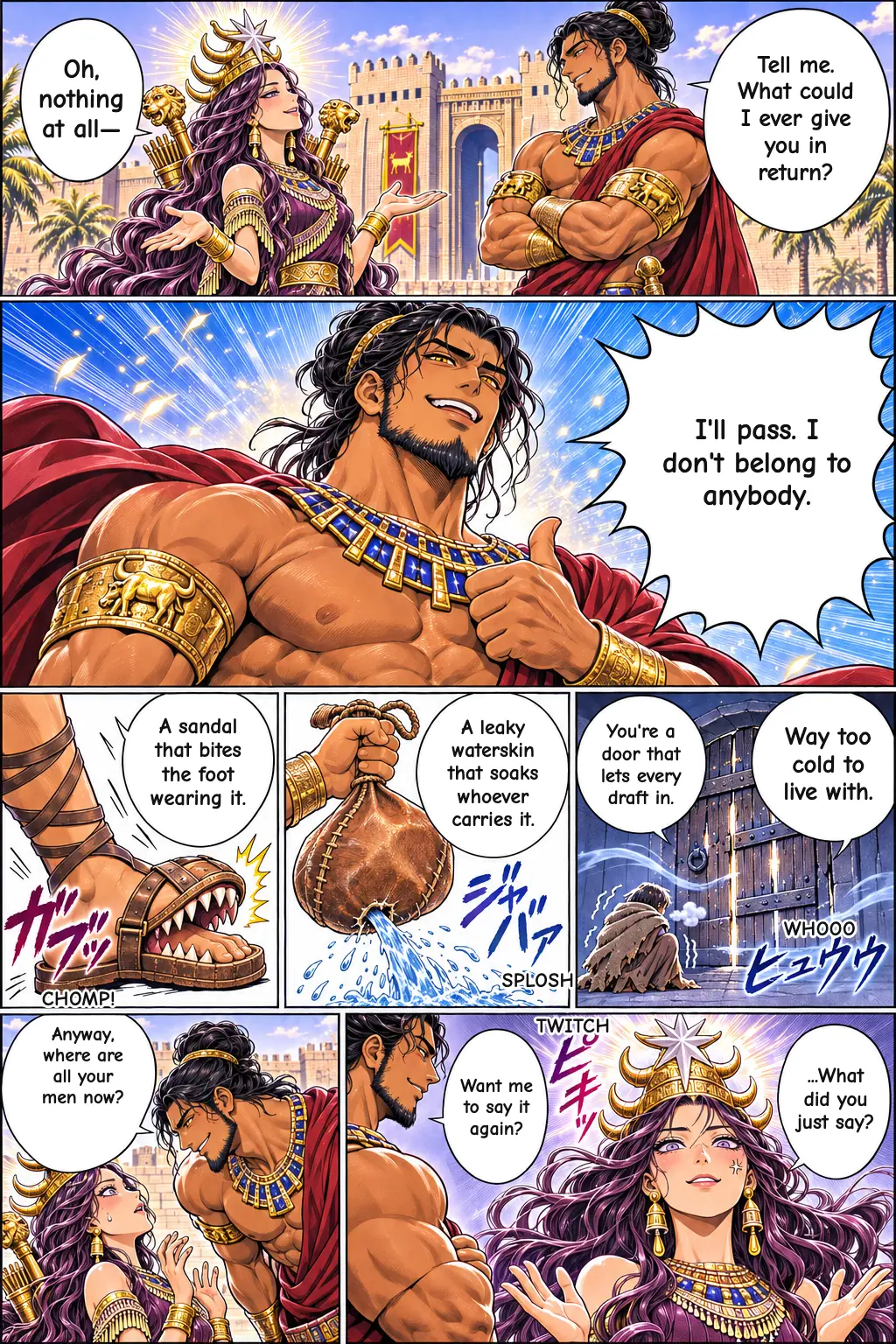
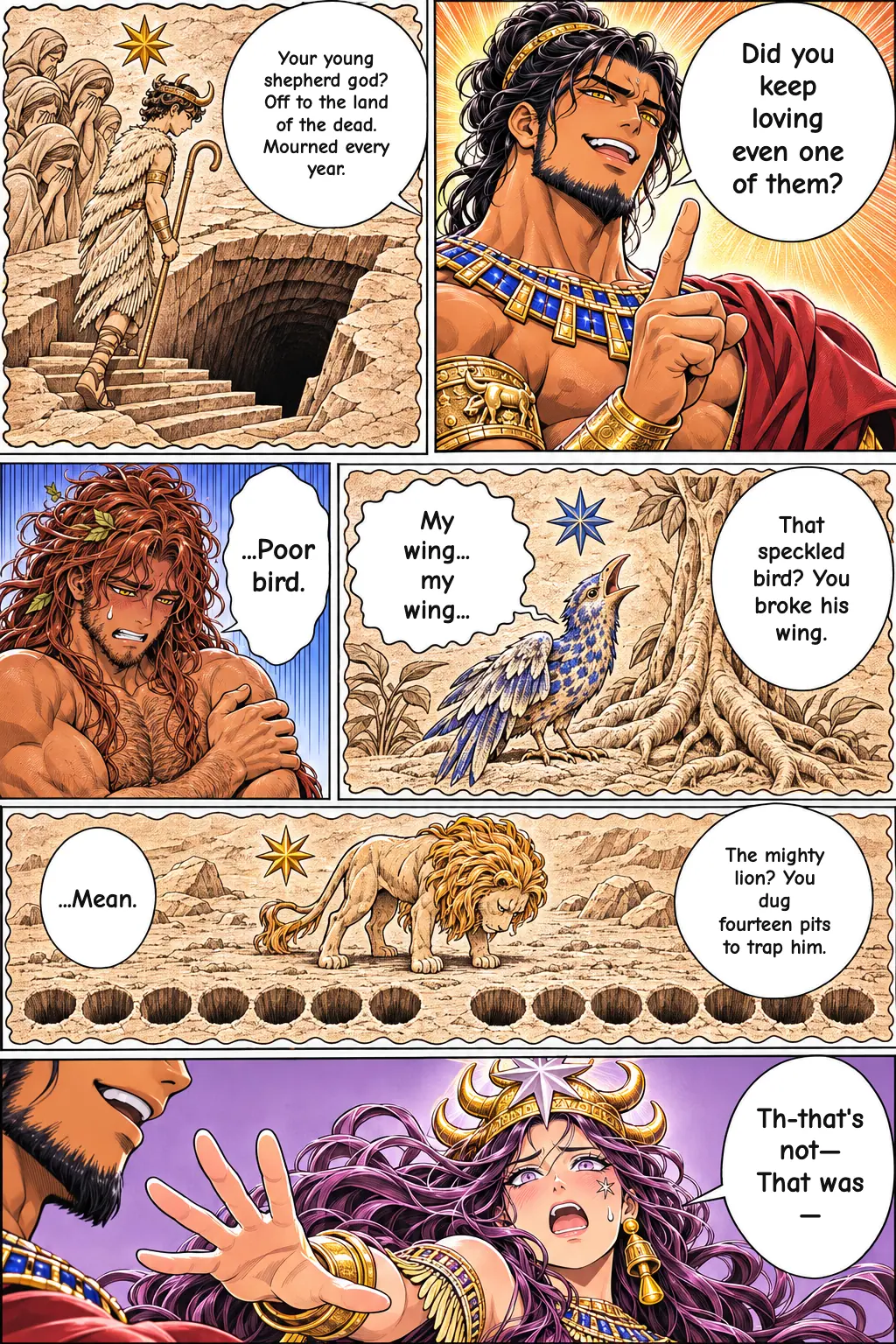
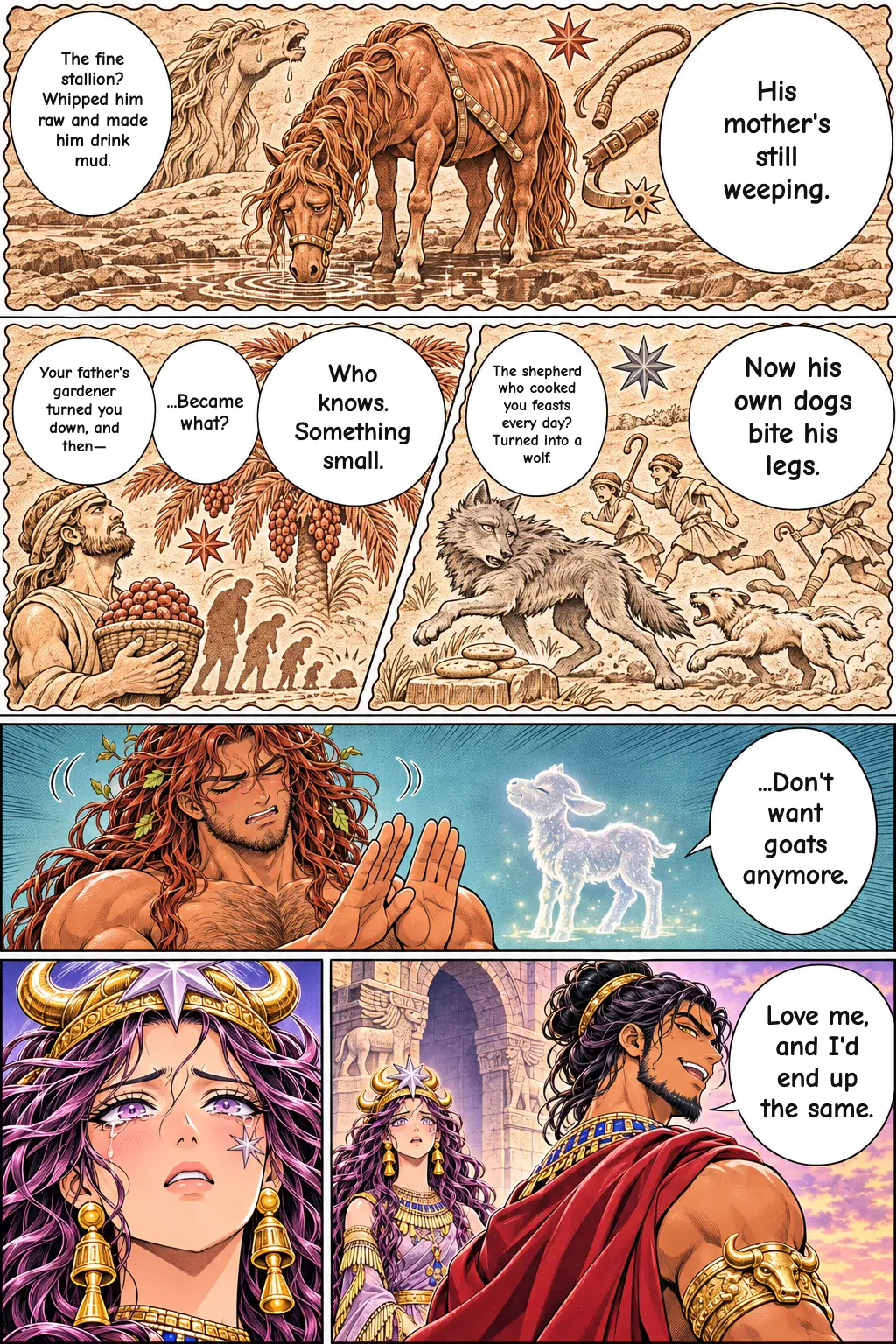
Gilgamesh refuses, and not politely. He compares the goddess to useless or harmful things: a brazier that goes out in the cold, a back door that lets the wind in, a waterskin that soaks whoever carries it, a shoe that bites its wearer's foot. Then he asks whether she ever loved any husband for good, and runs through her former lovers. Dumuzi (also called Tammuz), the lover of her youth, was given a fate of being mourned every year. A colorful bird had its wing broken. A mighty lion was trapped in pits. A warhorse was driven with whip and spur until its mother wept. A shepherd who brought her offerings every day was turned into a wolf, chased by his own herd boys and bitten by his own dogs. Ishullanu, her father's gardener, refused her and was transformed into something that could not move. Translations disagree on what that creature was. Gilgamesh's conclusion: if he loved her, he would end up just like them.
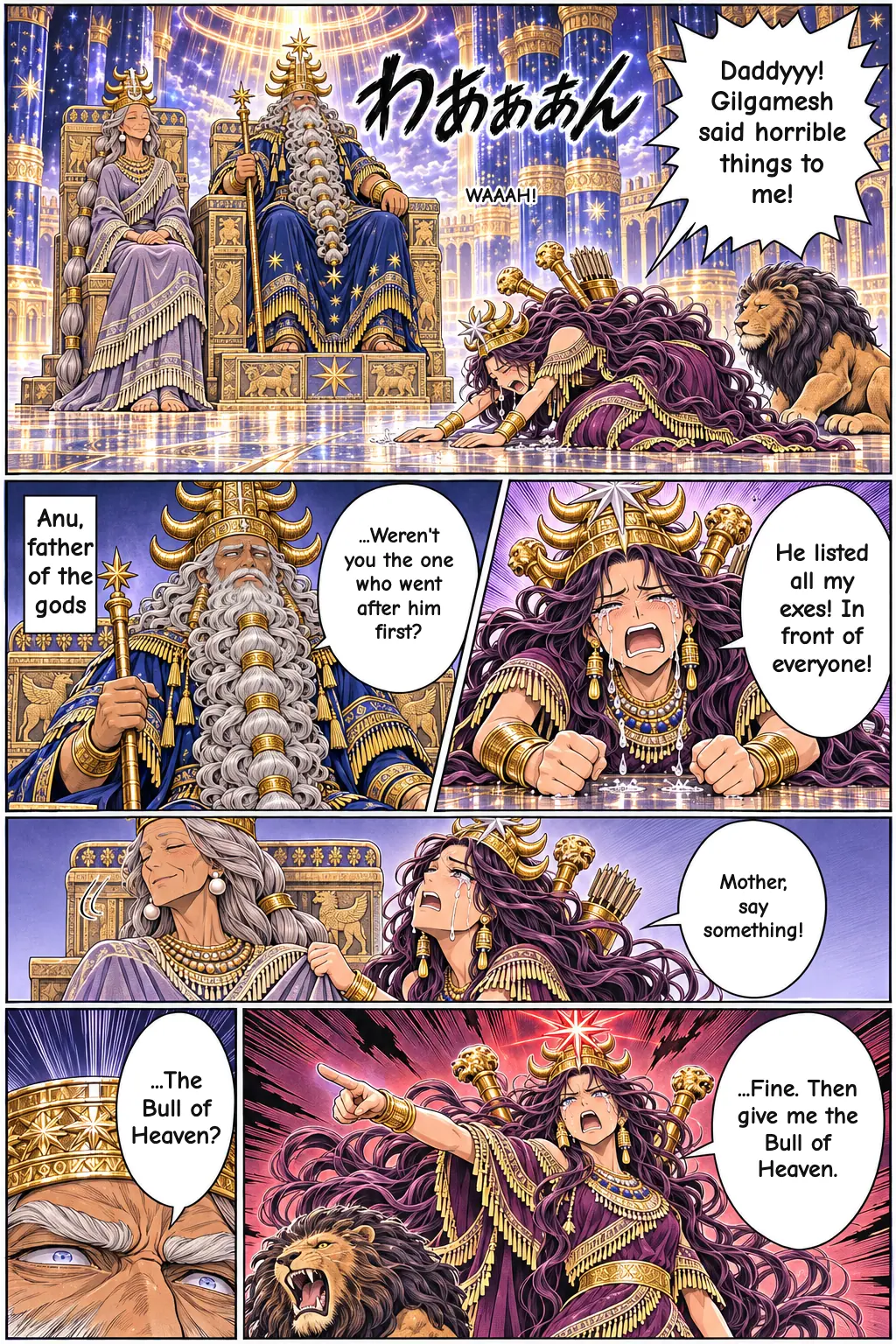
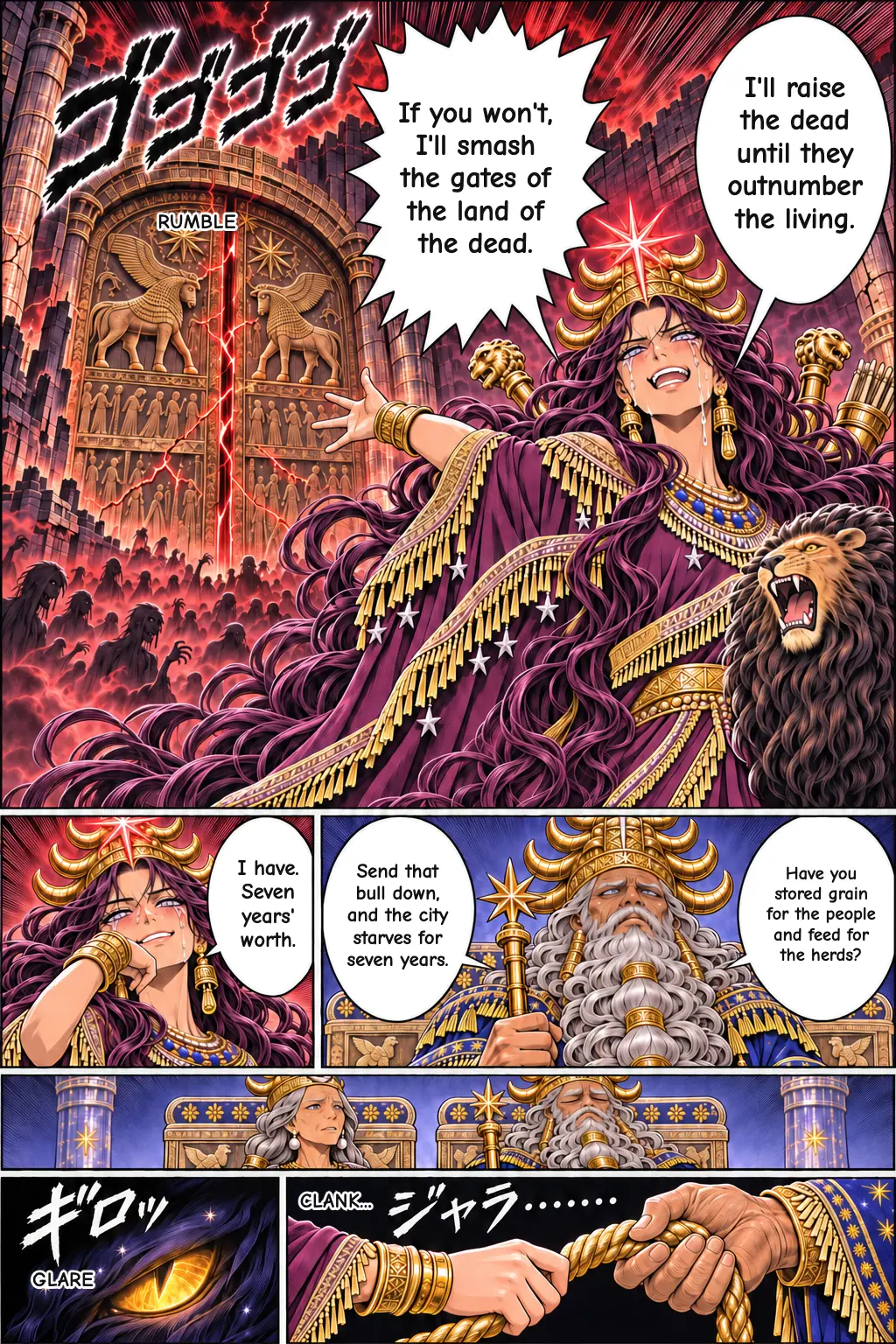
Humiliated and in tears, Ishtar goes up to heaven and complains to her father Anu, the sky god, and her mother Antu. Anu points out that she provoked the king herself. Ishtar then demands the Bull of Heaven. If she does not get it, she threatens to smash the gates of the underworld and let the dead rise until they outnumber the living. Anu warns that releasing the bull will bring seven years of famine to Uruk and asks whether she has stored grain and fodder. She says she has, and he hands her the bull's lead rope.
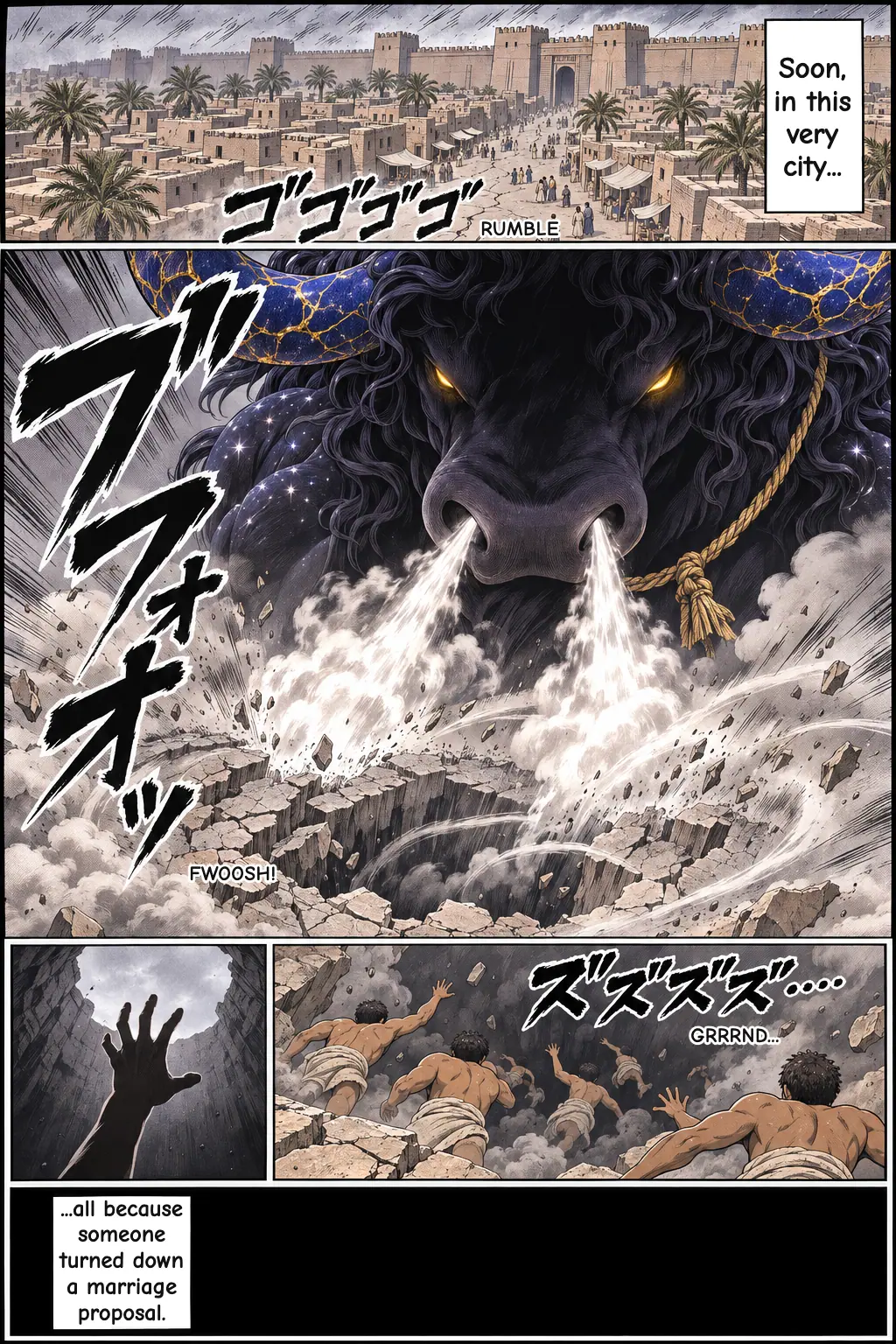
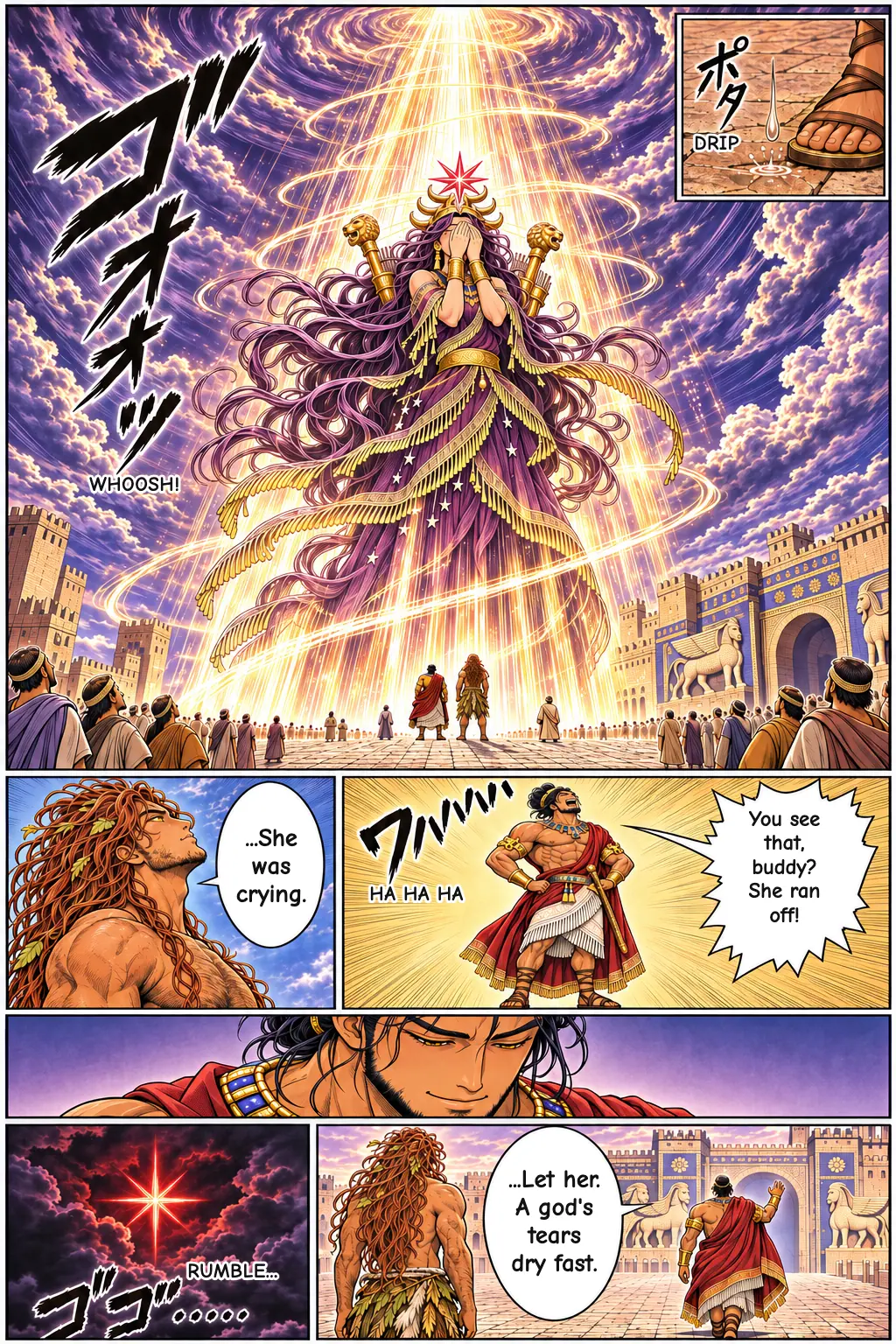
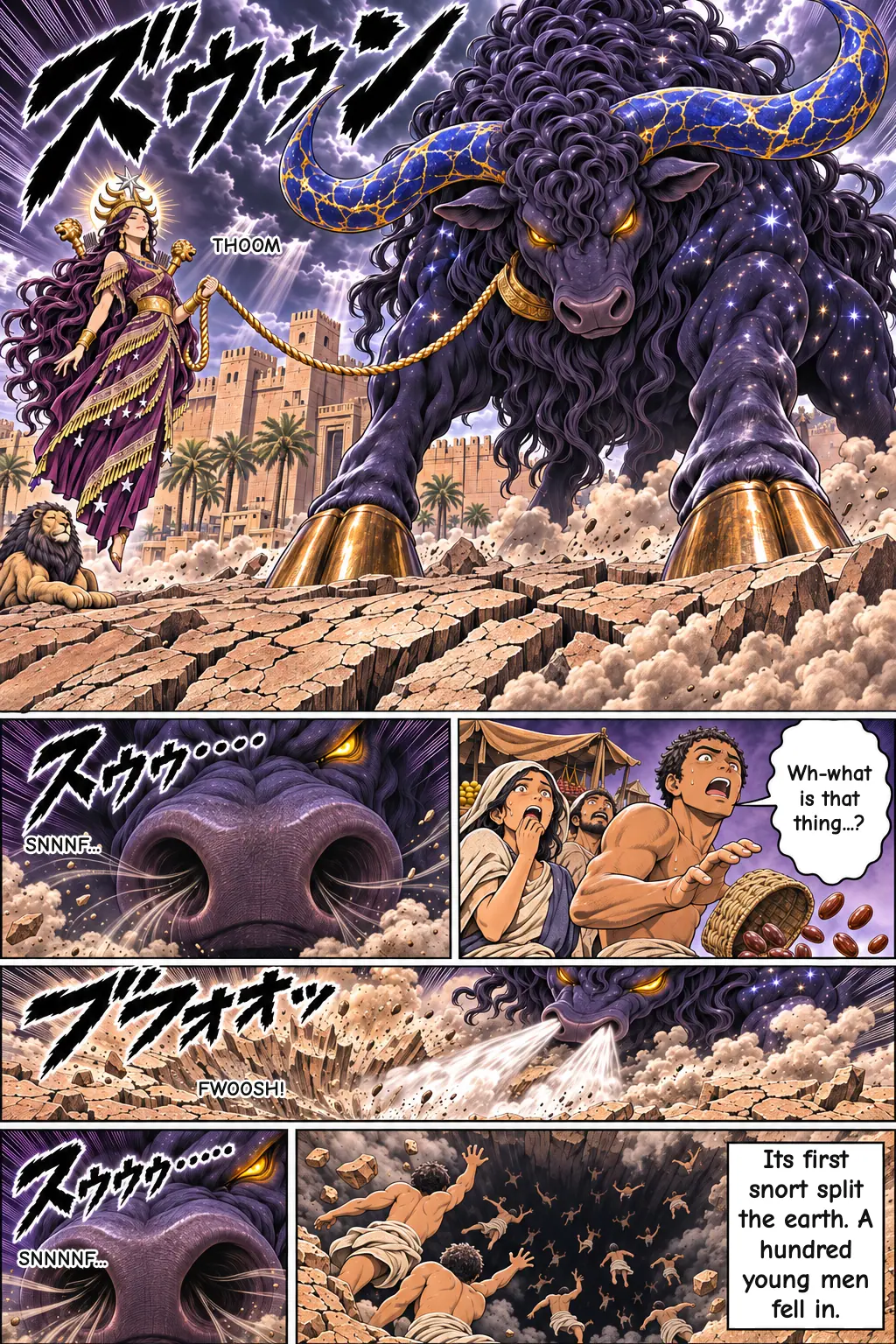
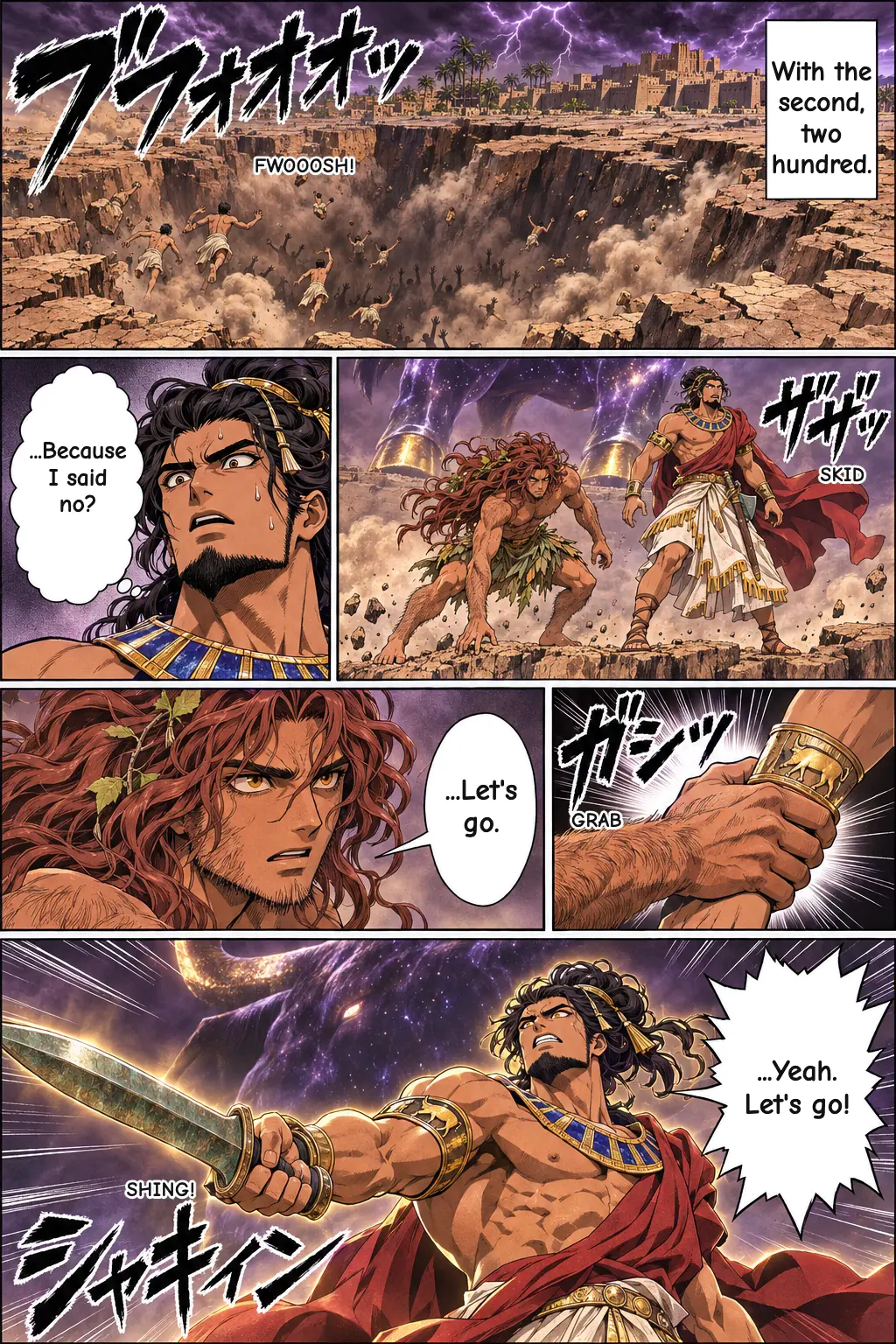
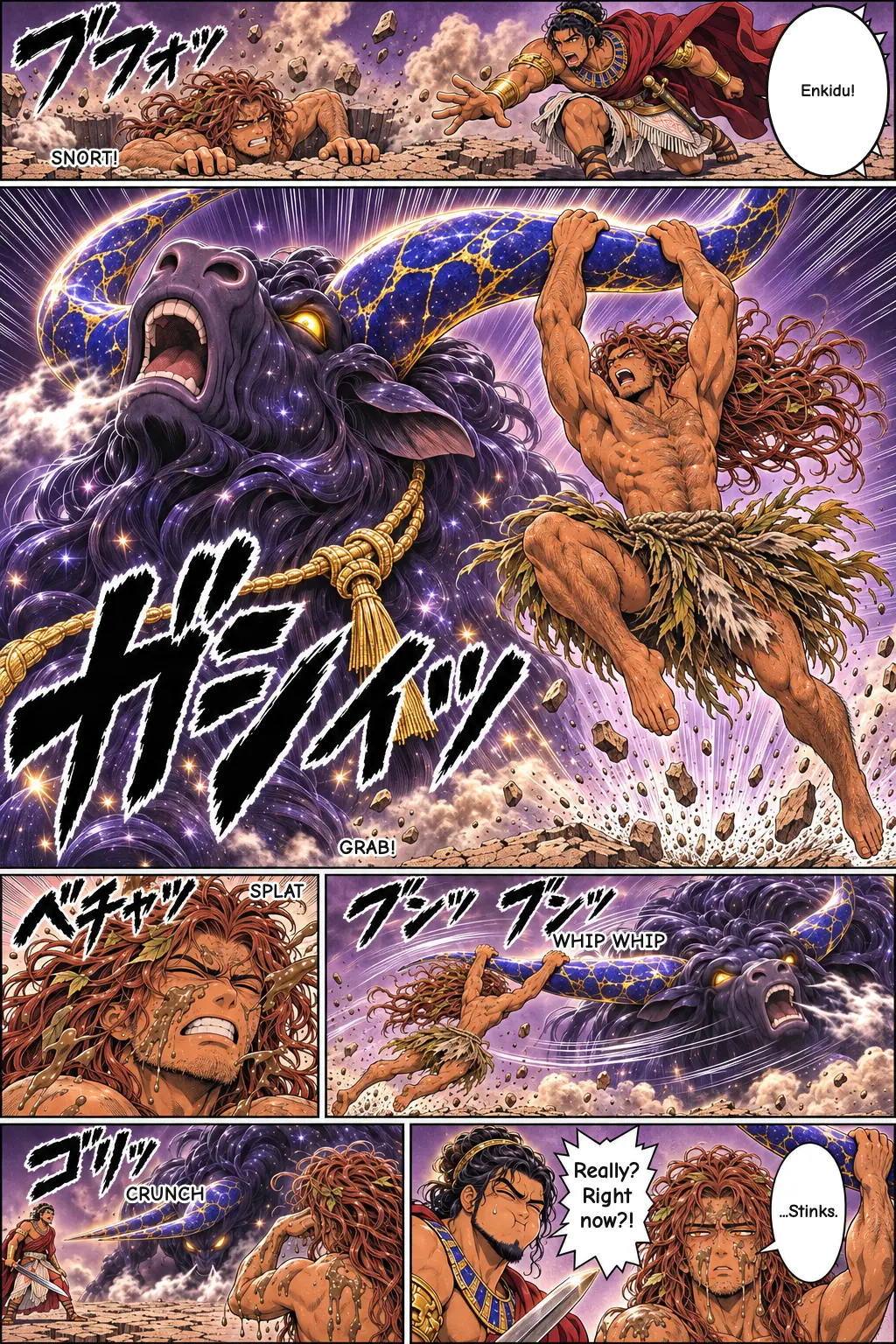
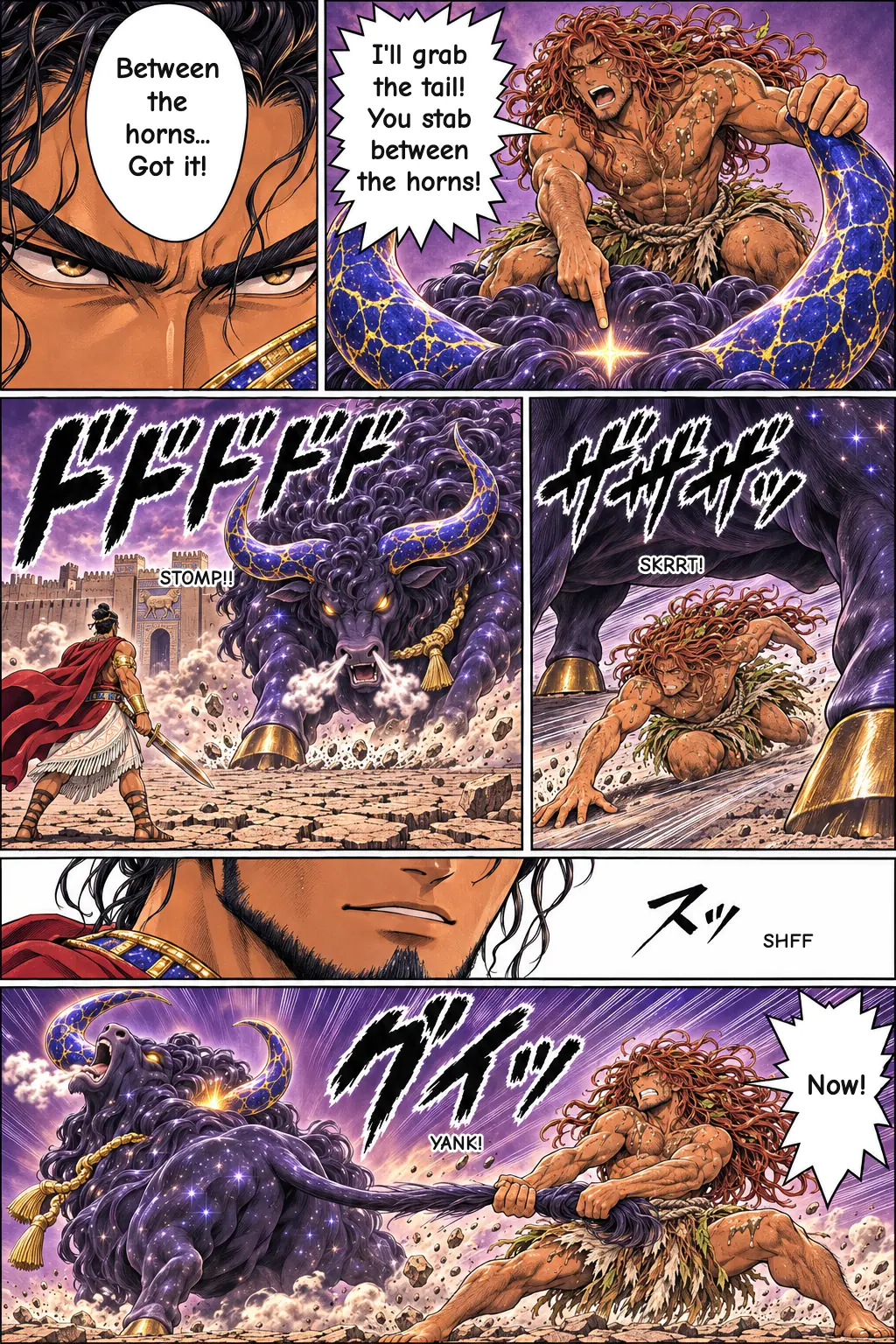
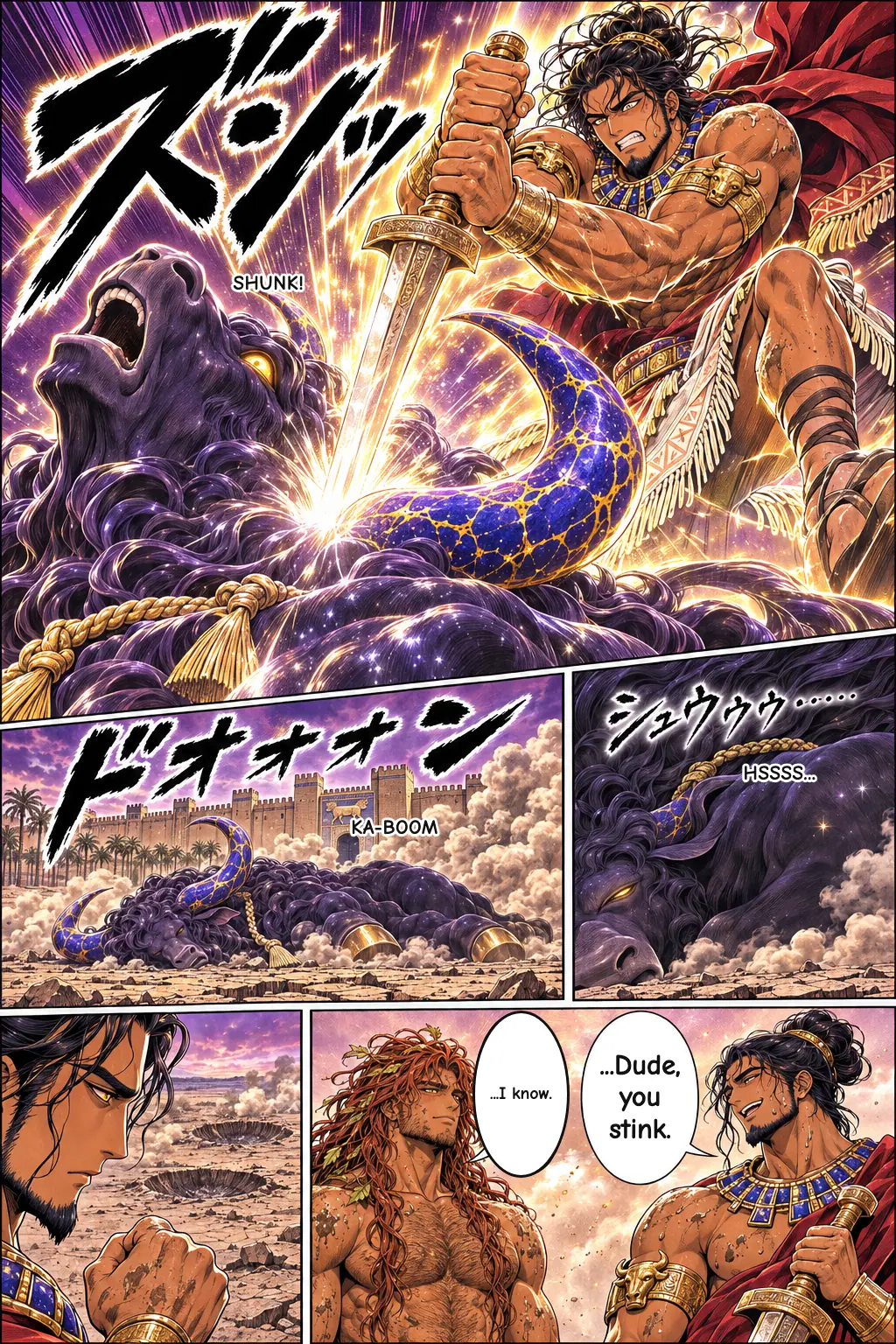
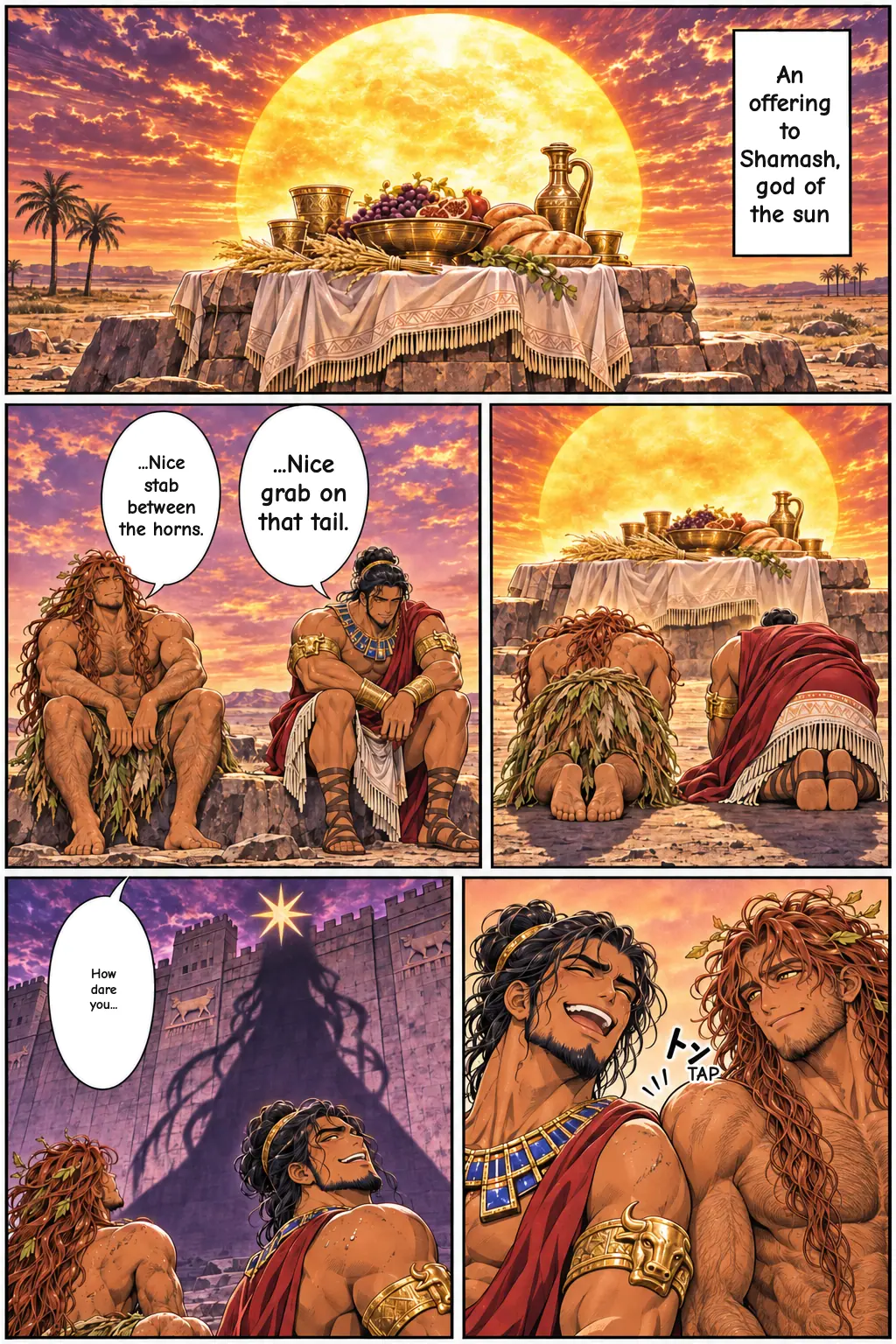
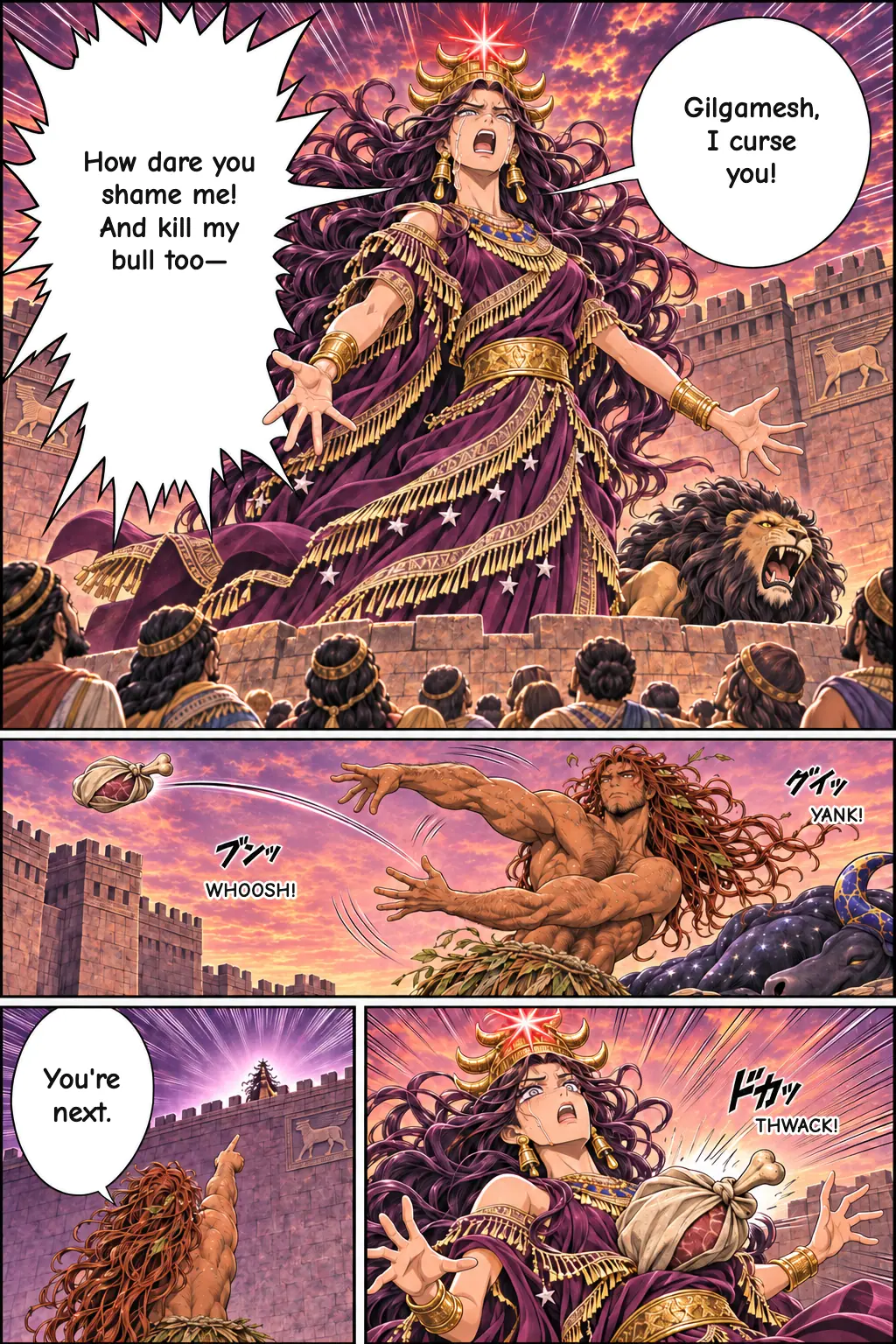
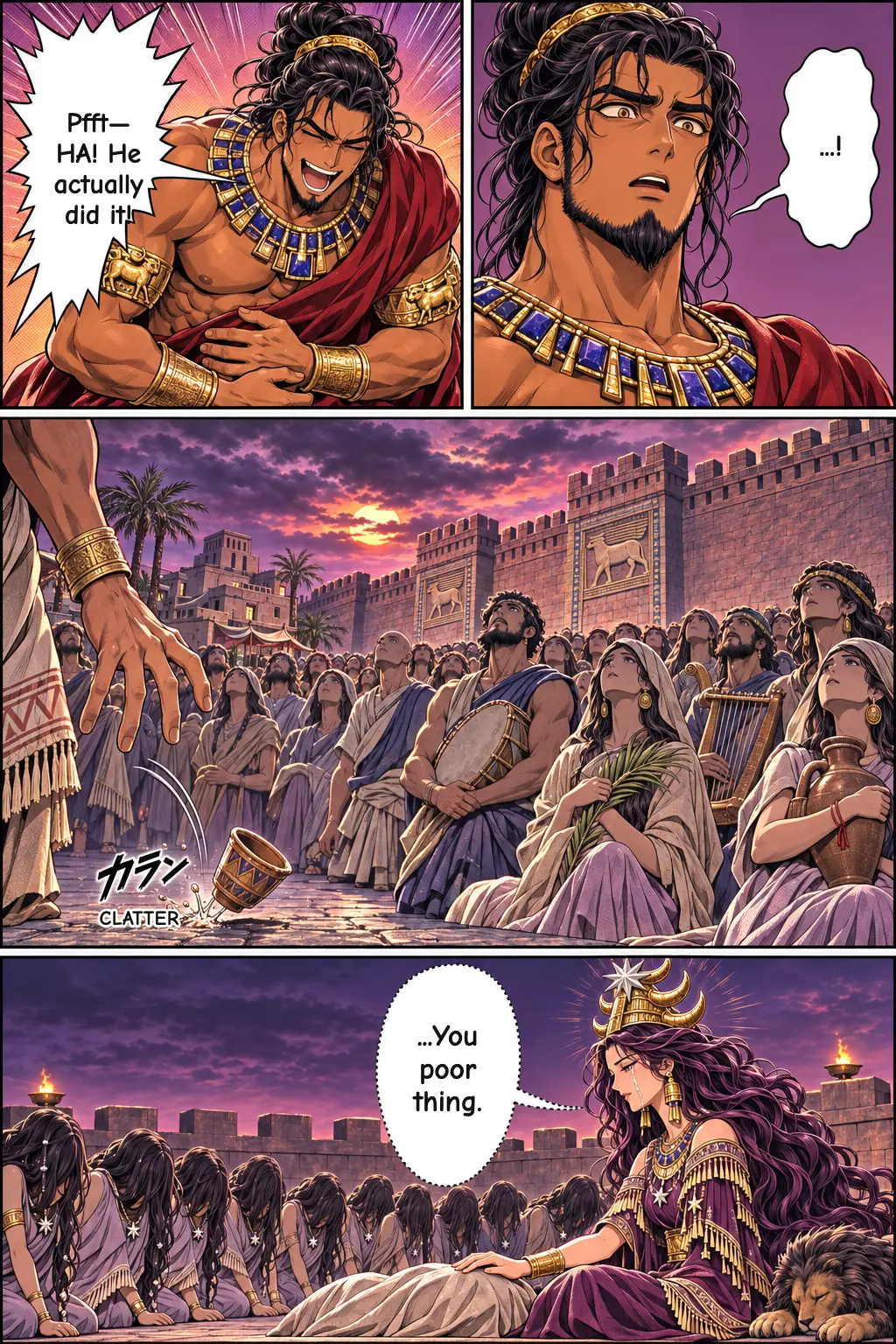
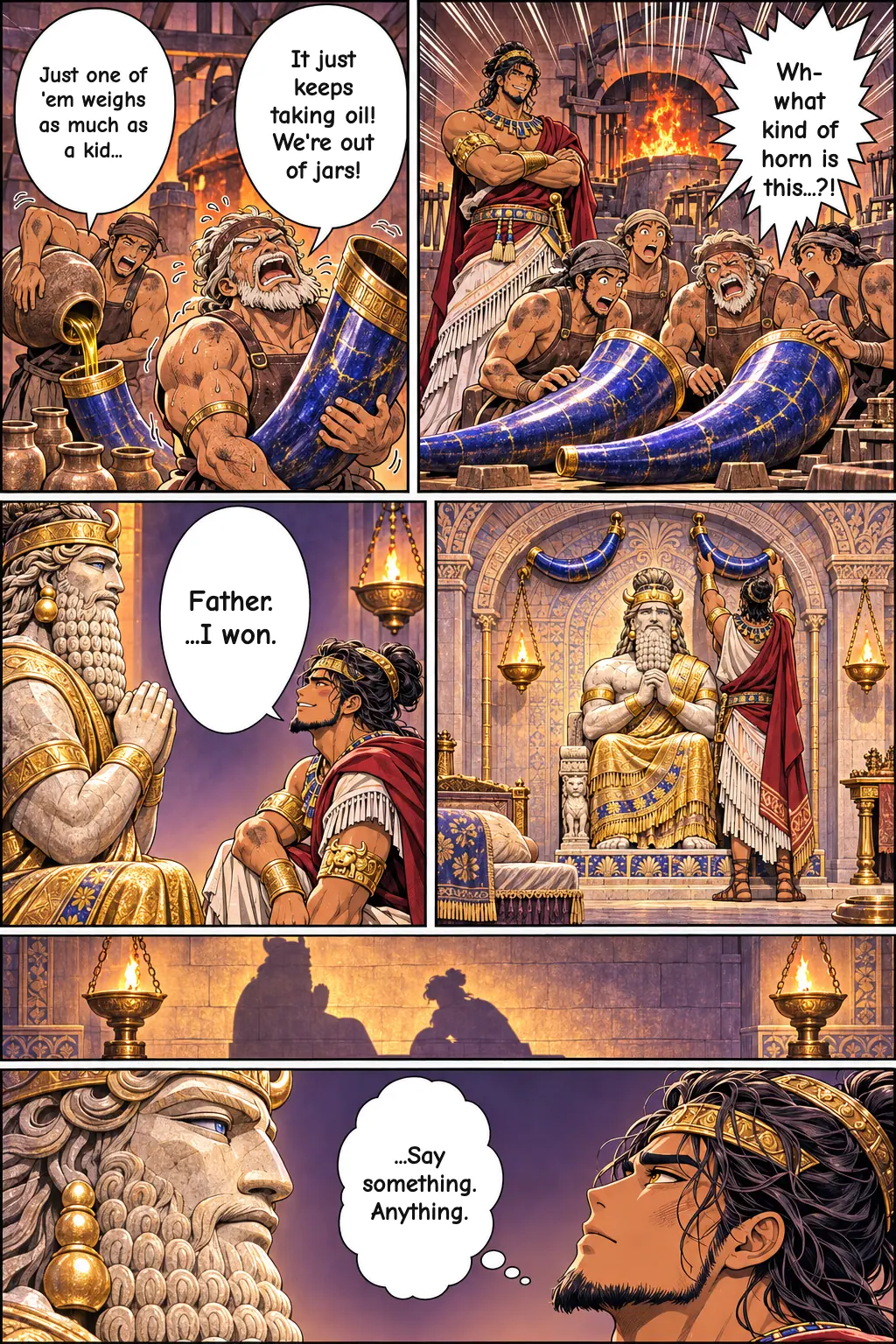
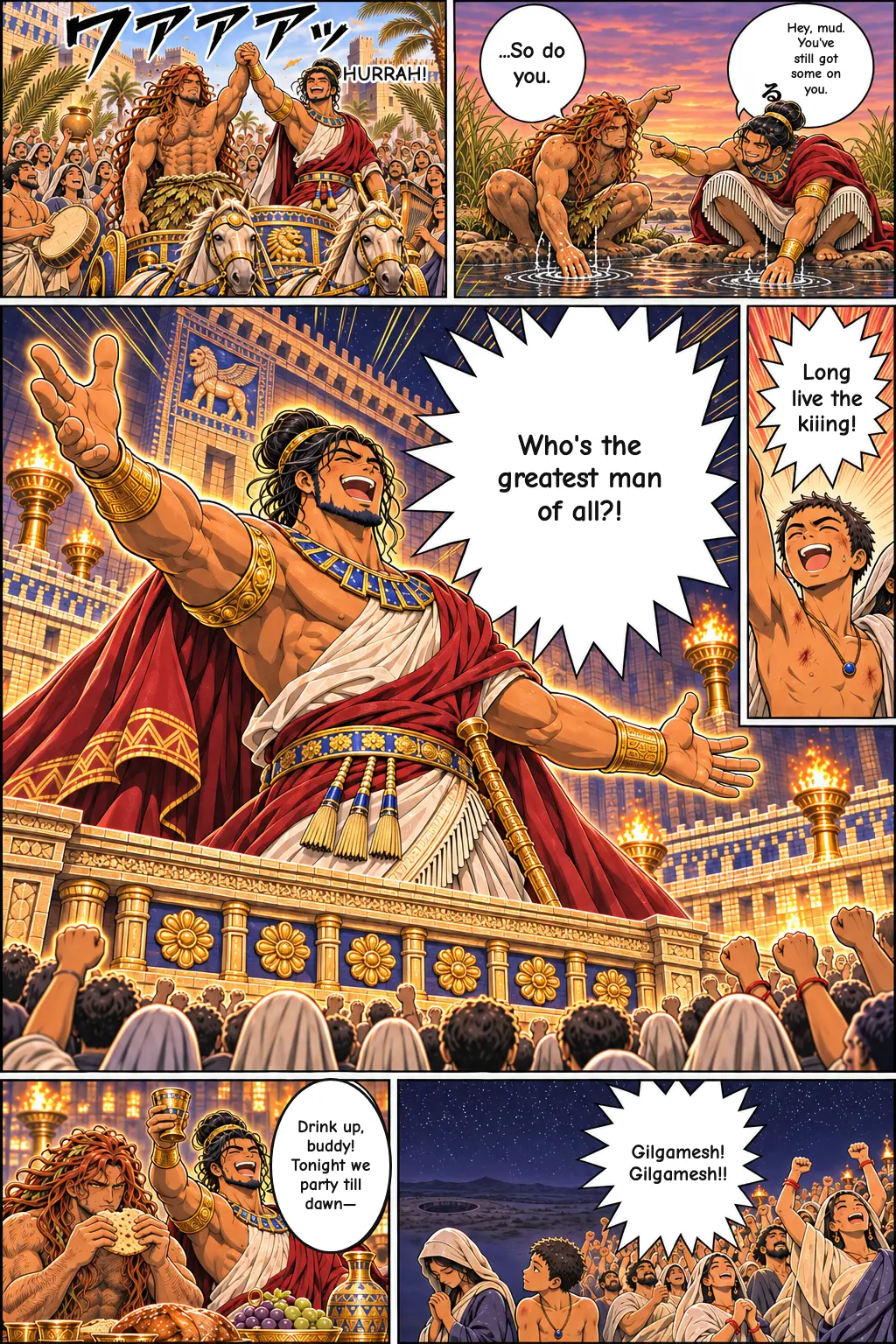
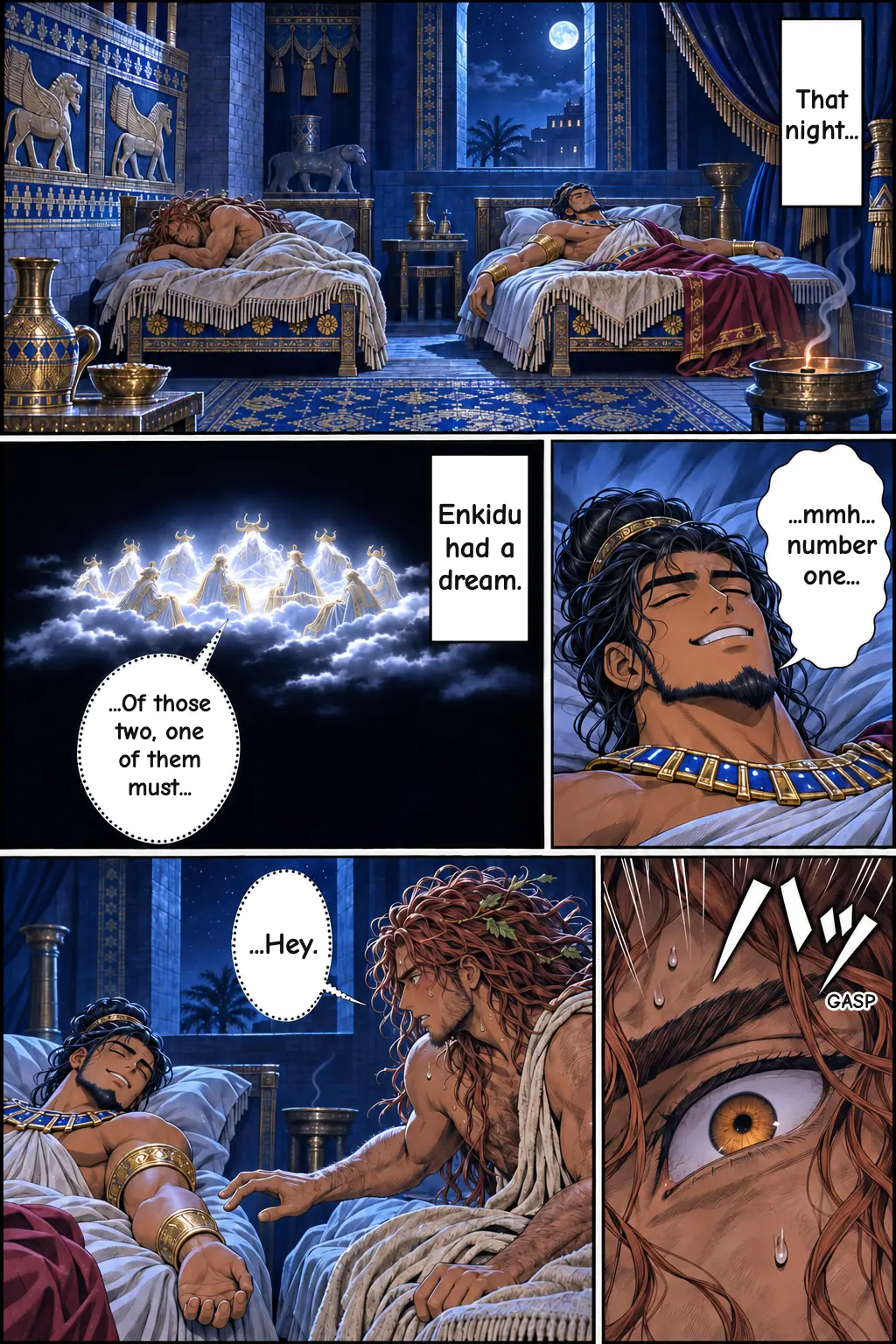
In Uruk the bull snorts, and the ground cracks open. A hundred young men fall in, then two hundred more. On the third snort Enkidu drops waist-deep into a pit, leaps out, and grabs the bull by the horns. He tells Gilgamesh to strike between the horns and the neck while he holds the tail, and the king kills the beast. The two offer its heart to Shamash, the sun god. When Ishtar curses Gilgamesh from the city wall, Enkidu tears off the bull's thigh and hurls it at her. Gilgamesh dedicates the enormous horns to his deified father Lugalbanda, and the friends parade through cheering streets. He asks who is the finest of men, and the people answer that it is Gilgamesh. But that night, Enkidu dreams, and he wakes to tell his friend about it.
Main Characters
Gilgamesh is a proud, sharp-tongued king at the height of his glory. Enkidu is his loyal friend: physically powerful, and reckless enough to insult a goddess to her face. Ishtar is passionate, powerful, and dangerous when scorned. Anu is cautious, and he thinks about how the bull will affect ordinary people before he gives it up. The Bull of Heaven is less a character than a disaster on four legs.
What This Myth Tells Us: Culture and Background
The Epic of Gilgamesh was written in Akkadian on clay tablets. The Standard Babylonian version used here is traditionally credited to a scholar-priest named Sin-leqi-unninni. Ishtar was one of the most important deities in Mesopotamia, and she corresponds to the Sumerian goddess Inanna. An older Sumerian poem about Gilgamesh and the Bull of Heaven also survives, which shows that this story was told for a very long time. The bull is sometimes called Gugalanna, a name borrowed from Sumerian tradition. Some scholars have linked the bull to the constellation Taurus, but that interpretation is debated.
The mention of Dumuzi points to a real religious practice. People in the ancient Near East held yearly laments for Dumuzi, or Tammuz. Gilgamesh's speech turns that ritual into an accusation against the goddess. At a deeper level, the tablet is about crossing a line. Gilgamesh and Enkidu insult a great goddess and destroy a creature that belonged to heaven. Their victory is complete, and their pride has never been higher, and that is exactly when the story turns toward consequences. The dream at the end leads straight into the next tablet, where the gods decide what that pride will cost.
What the Manga Changed
The core events of the manga follow the tablet: the proposal, the list of ex-lovers, Ishtar's appeal to her father, the fight with the bull, the celebration, and Enkidu's dream. Some touches are the manga's own invention. Gilgamesh being 'bored out of his mind' after the forest adventure is a comic framing, since the original simply describes him washing and dressing. The scenes are also staged visually: the parade of doomed lovers works as quick dramatic flashes, while in the original Gilgamesh simply speaks the list aloud. The look of the heavenly palace, Anu and Antu, and the bull's size and appearance are artistic choices, because the text describes almost none of them. The step-by-step action of the battle is also expanded from a brief original sequence. Gilgamesh's long run of insults is trimmed to a few highlights.
The episode ends just as Enkidu wakes from his dream and turns to his friend. This matches the break in the original. What the dream shows is saved for the next episode.
Where to Read It
If you want to see Gilgamesh roast a goddess and wrestle a bull from the sky, Episode 6 of MESOPOTAMIAN MYTH: THE EPIC OF GILGAMESH — No One Lives Forever on Manga Portal tells the story in full color and fast-paced panels. Every episode is free to read, with no sign-up required. Start from Episode 1 to follow Gilgamesh and Enkidu's friendship from the beginning, or keep going to find out what Enkidu's dream means.
Characters in this episode
Gilgamesh
The proud king of Uruk, who rejects Ishtar's marriage proposal and kills the Bull of Heaven.
Enkidu
Gilgamesh's best friend and partner, who grapples the bull, hurls its thigh at Ishtar, and has an ominous dream.
Ishtar
The Mesopotamian goddess of love and war (Inanna in Sumerian), who sends the Bull of Heaven after Gilgamesh rejects her.
Anu
The sky god and Ishtar's father, who reluctantly gives her the Bull of Heaven after asking whether Uruk can survive seven years of famine.
The Bull of Heaven
A divine bull whose snorts open pits that swallow hundreds of Uruk's young men.
Shamash
The sun god and protector of the two heroes, to whom they offer the bull's heart.
FAQ
Why did Gilgamesh reject Ishtar?
Gilgamesh said that Ishtar's lovers all ended badly. He listed what happened to each one: Dumuzi was doomed to yearly mourning, a shepherd was turned into a wolf, and a gardener was transformed. He believed that marrying her would bring him the same fate.
What is the Bull of Heaven in the Epic of Gilgamesh?
It is a divine bull that belongs to the sky god Anu. Ishtar takes it to punish Gilgamesh. Its snorts tear open the ground in Uruk, and Gilgamesh and Enkidu kill it together.
Who are Ishtar's lovers in the Epic of Gilgamesh?
Gilgamesh names Dumuzi (Tammuz), a bird, a lion, a horse, a shepherd, and Ishullanu, Anu's gardener. Each one suffered after being loved by the goddess.
What happens after Gilgamesh and Enkidu kill the Bull of Heaven?
They offer the bull's heart to Shamash, Enkidu throws its thigh at Ishtar, and Uruk celebrates its king. That night Enkidu has a dream that leads into the next tablet, where the gods decide how to punish the heroes.
Are Ishtar and Inanna the same goddess?
Yes, largely. Ishtar is the Akkadian name for the goddess the Sumerians called Inanna. She was a goddess of love, sex, and war.
More episodes of MESOPOTAMIAN MYTH: THE EPIC OF GILGAMESH