Get new episodes in your feed. Follow us on:ThreadsBluesky
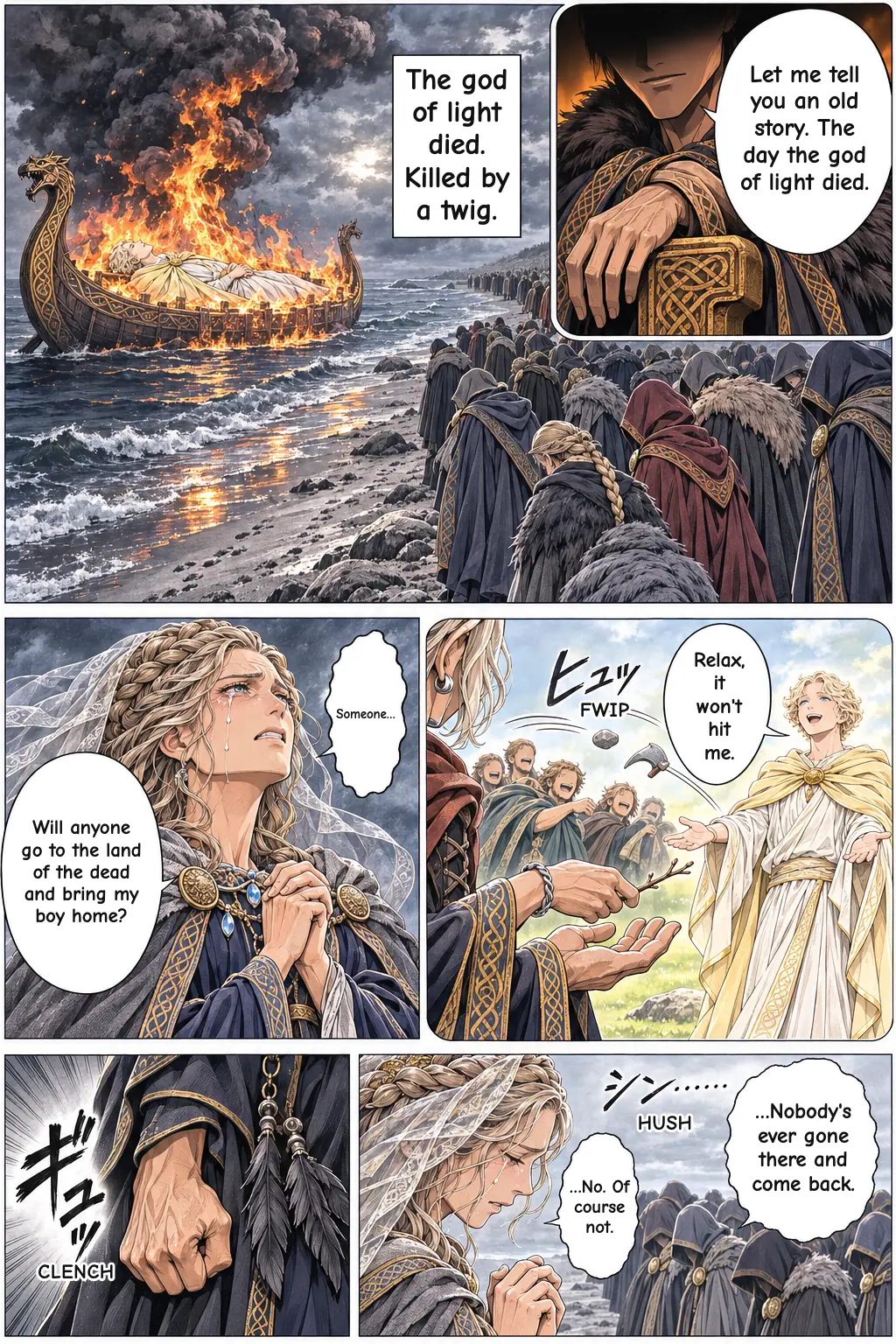
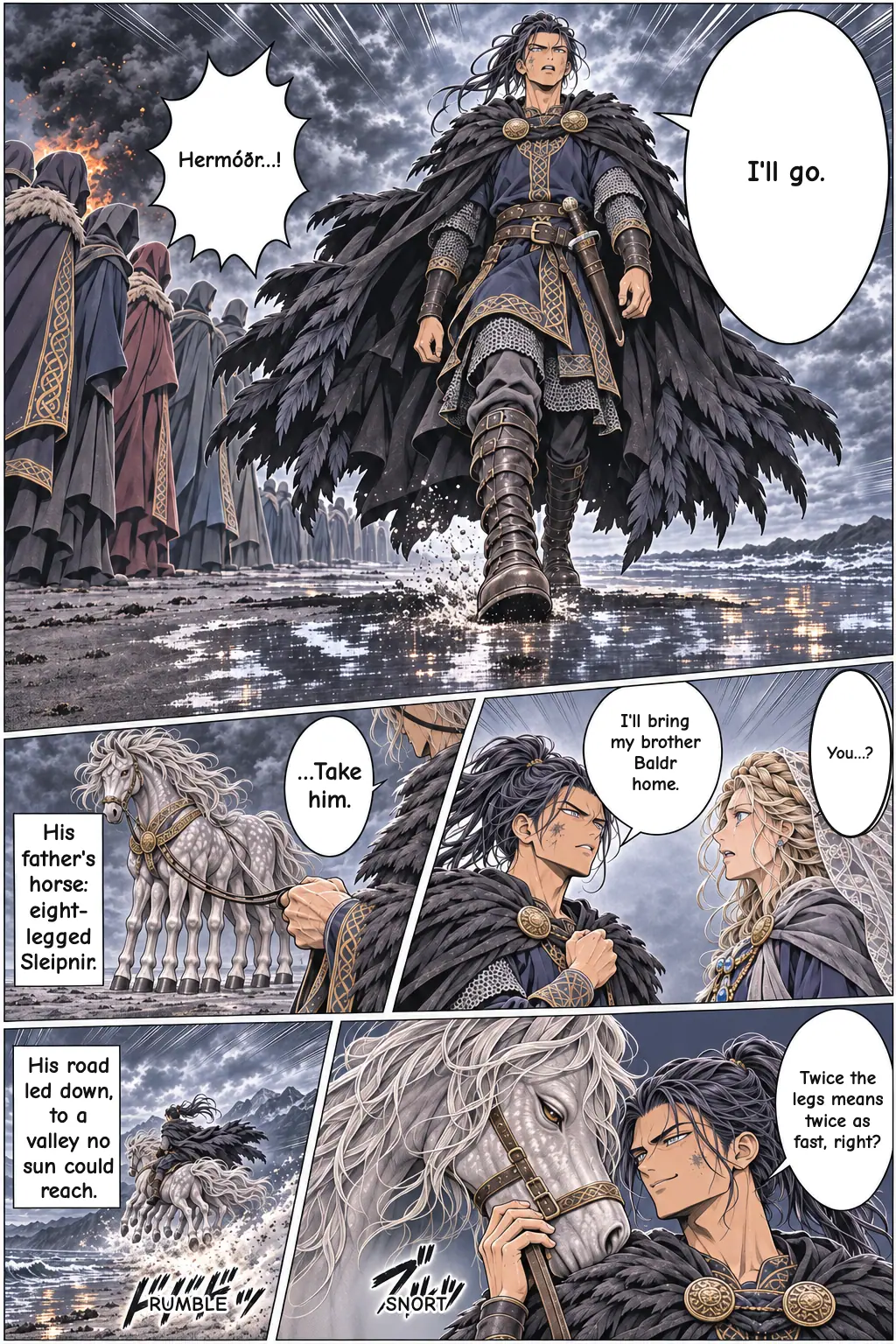
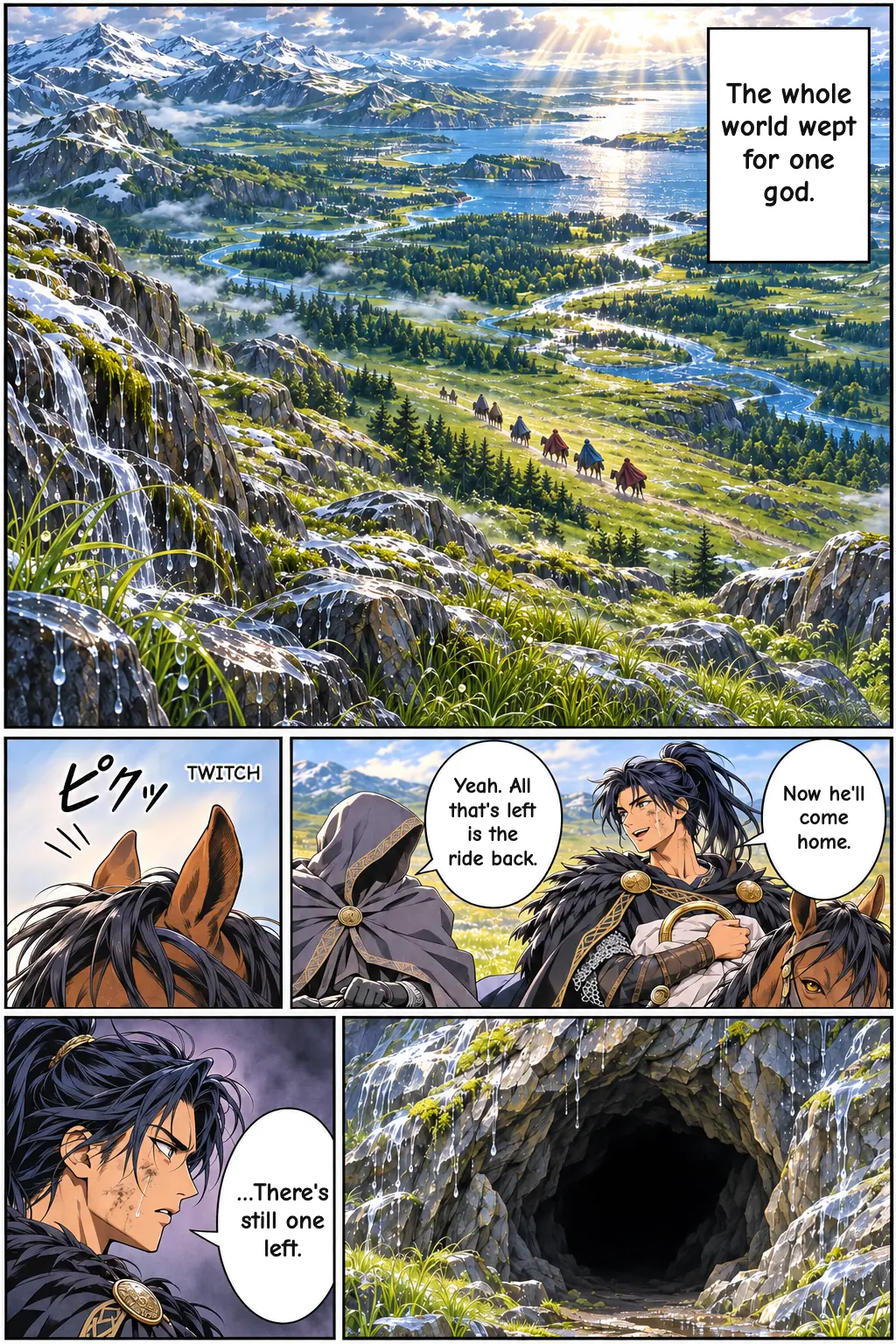
To bring his dead brother Baldr home, the young god Hermóðr rides for nine nights through the dark to the land of the dead. The whole world weeps for Baldr—except one old woman in a cave. Hermóðr follows the trail to its end and finds a god in chains, and a wife holding up a bowl that she can never set down.
Story summary
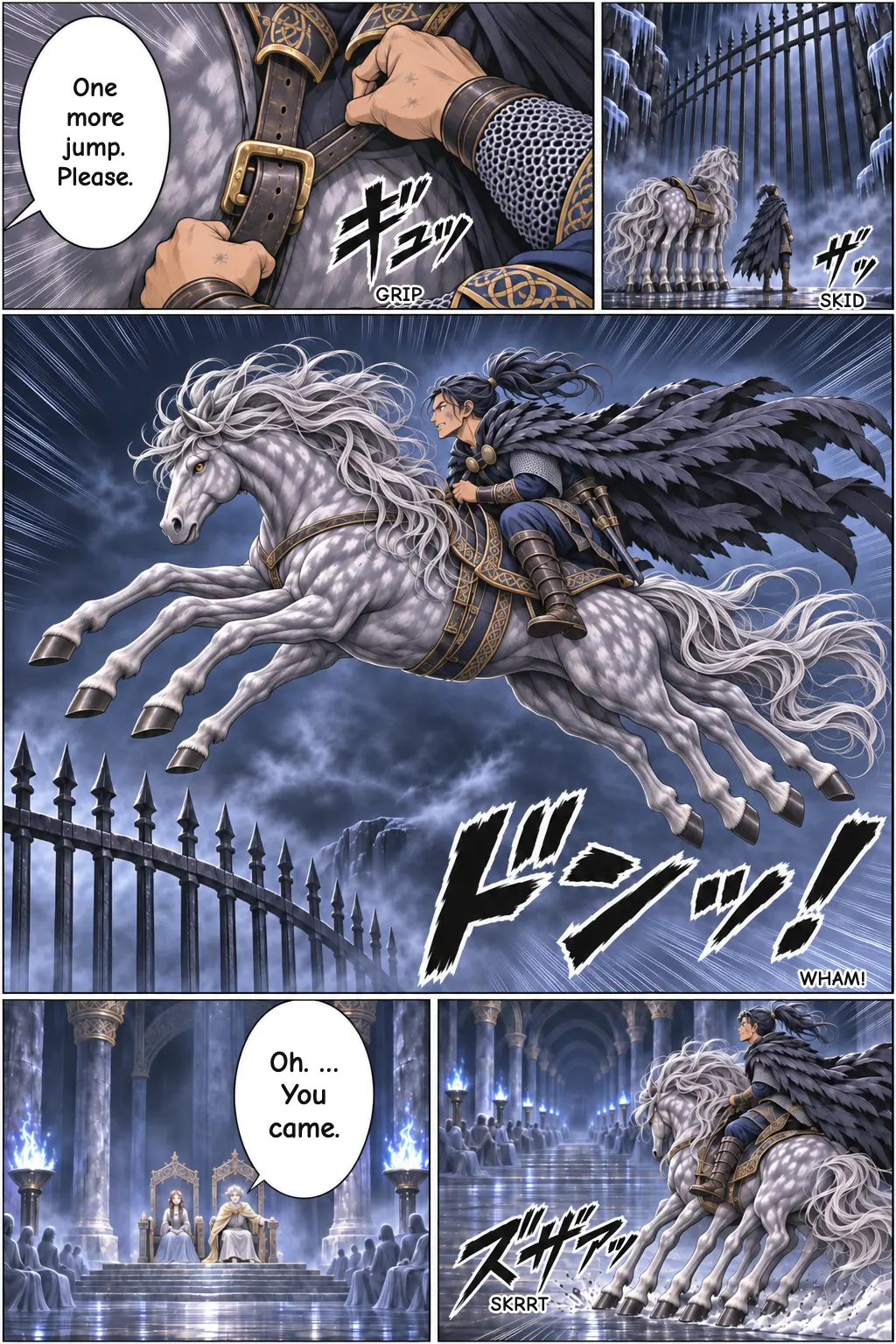
The story picks up right after the death of Baldr, the most beloved of the gods. Earlier in the same chapter, Baldr is killed at a game by his blind brother Höðr, who throws a sprig of mistletoe that Loki, the trickster god, has put in his hand. While the gods grieve, Baldr's mother Frigg asks who will ride to the underworld and offer Hel a ransom to send him back. Hermóðr, a son of Odin known as 'the bold', volunteers. He borrows Sleipnir, Odin's eight-legged horse, and sets out. For nine nights Hermóðr rides through valleys so deep and dark he can see nothing.
Hermod's Ride to Hel and the Binding of Loki: Norse Myth Explained
In short: Hermod's ride to Hel is the Norse myth in which the god Hermóðr rides Odin's horse Sleipnir to the land of the dead to bring his brother Baldr home. Hel agrees on one condition: everything in the world must weep for Baldr. Everything does, except a giantess named Thökk, thought to be Loki in disguise. The gods then hunt Loki down and bind him under a dripping serpent until Ragnarök. The story comes from Snorri Sturluson's Prose Edda (Gylfaginning, chapters 49–50, early 13th century).
The original myth: what happens in the Prose Edda
The story picks up right after the death of Baldr, the most beloved of the gods. Earlier in the same chapter, Baldr is killed at a game by his blind brother Höðr, who throws a sprig of mistletoe that Loki, the trickster god, has put in his hand. While the gods grieve, Baldr's mother Frigg asks who will ride to the underworld and offer Hel a ransom to send him back. Hermóðr, a son of Odin known as 'the bold', volunteers. He borrows Sleipnir, Odin's eight-legged horse, and sets out.
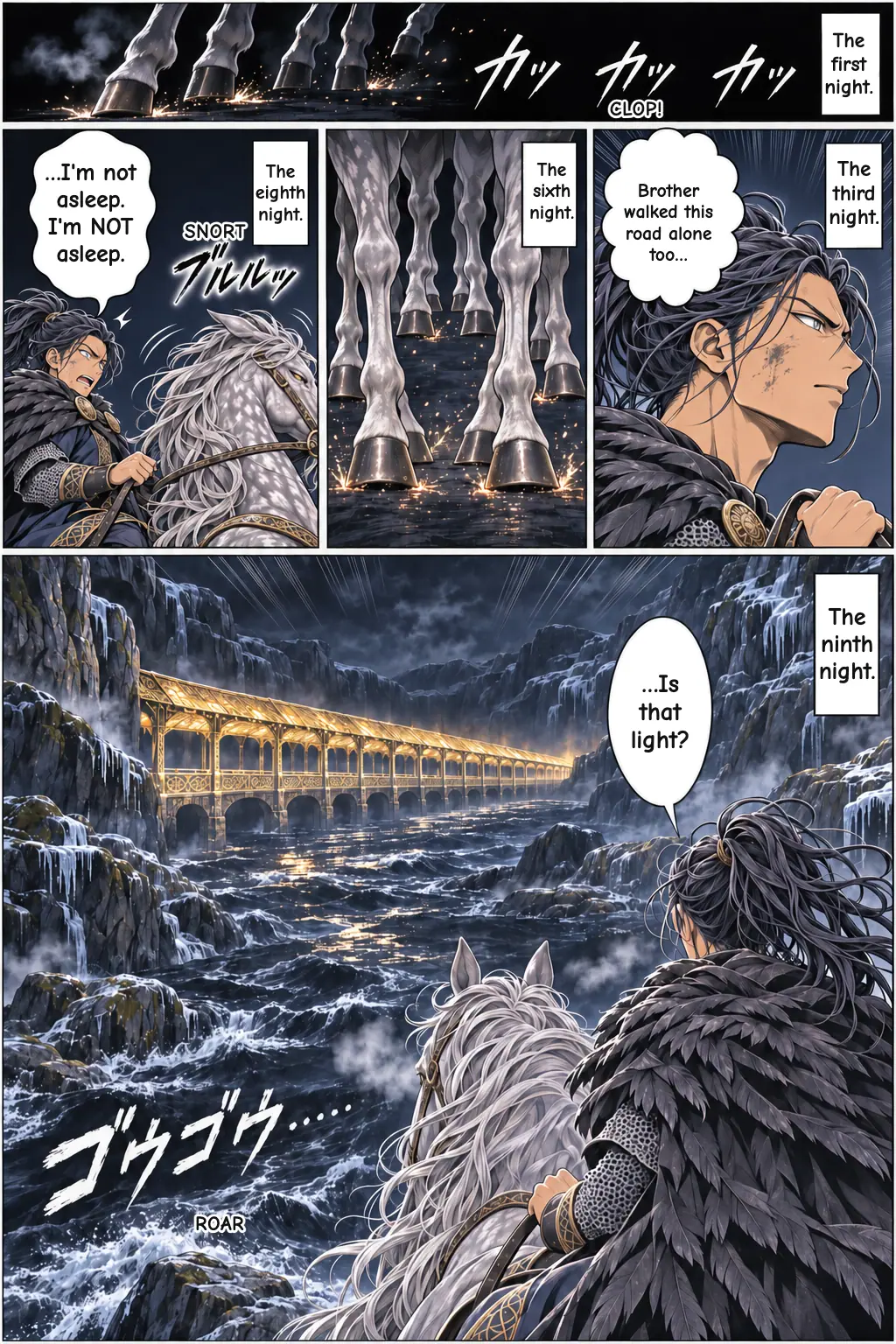
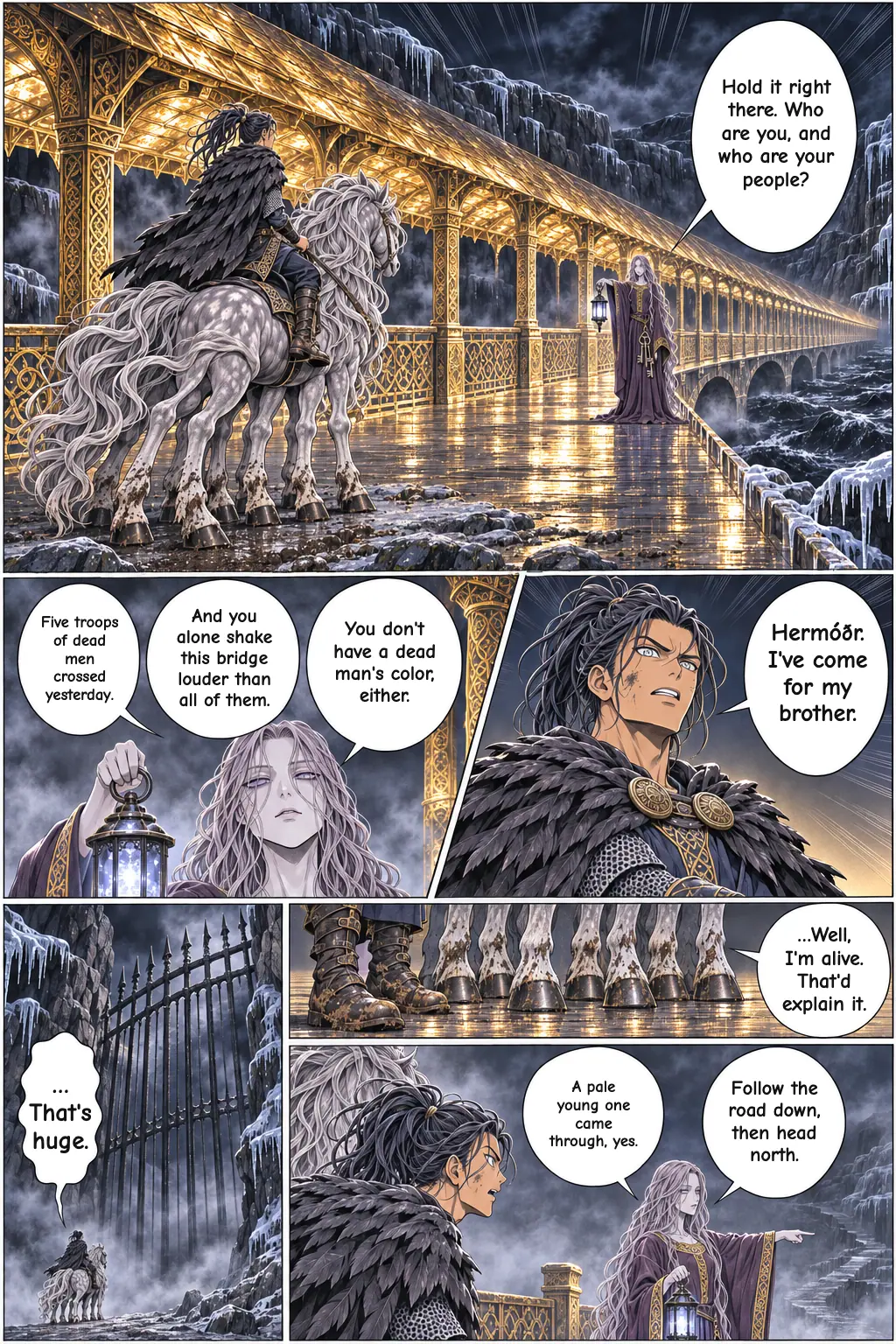
For nine nights Hermóðr rides through valleys so deep and dark he can see nothing. He reaches the river Gjöll and its bridge, which is covered in shining gold. The bridge's guardian, a maiden named Móðguðr, asks his name and family. She notices that he alone makes the bridge rumble more than five whole companies of the dead who crossed the day before, and that he does not have a dead man's color. She tells him Baldr has passed this way, and that the road to Hel runs downward and to the north. At the gate of the underworld, Hermóðr tightens Sleipnir's girth, spurs him on, and the horse clears the gate without touching it.
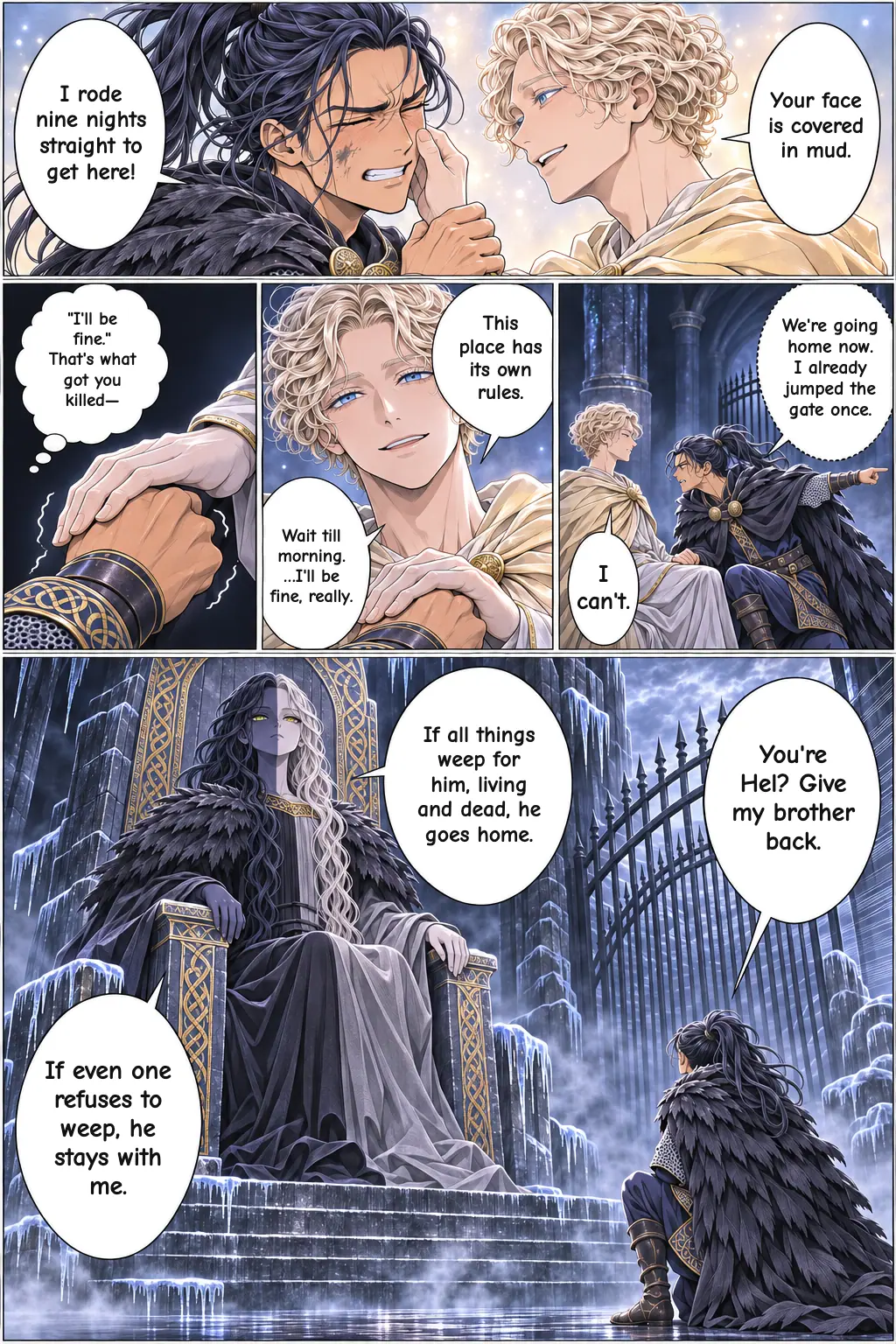
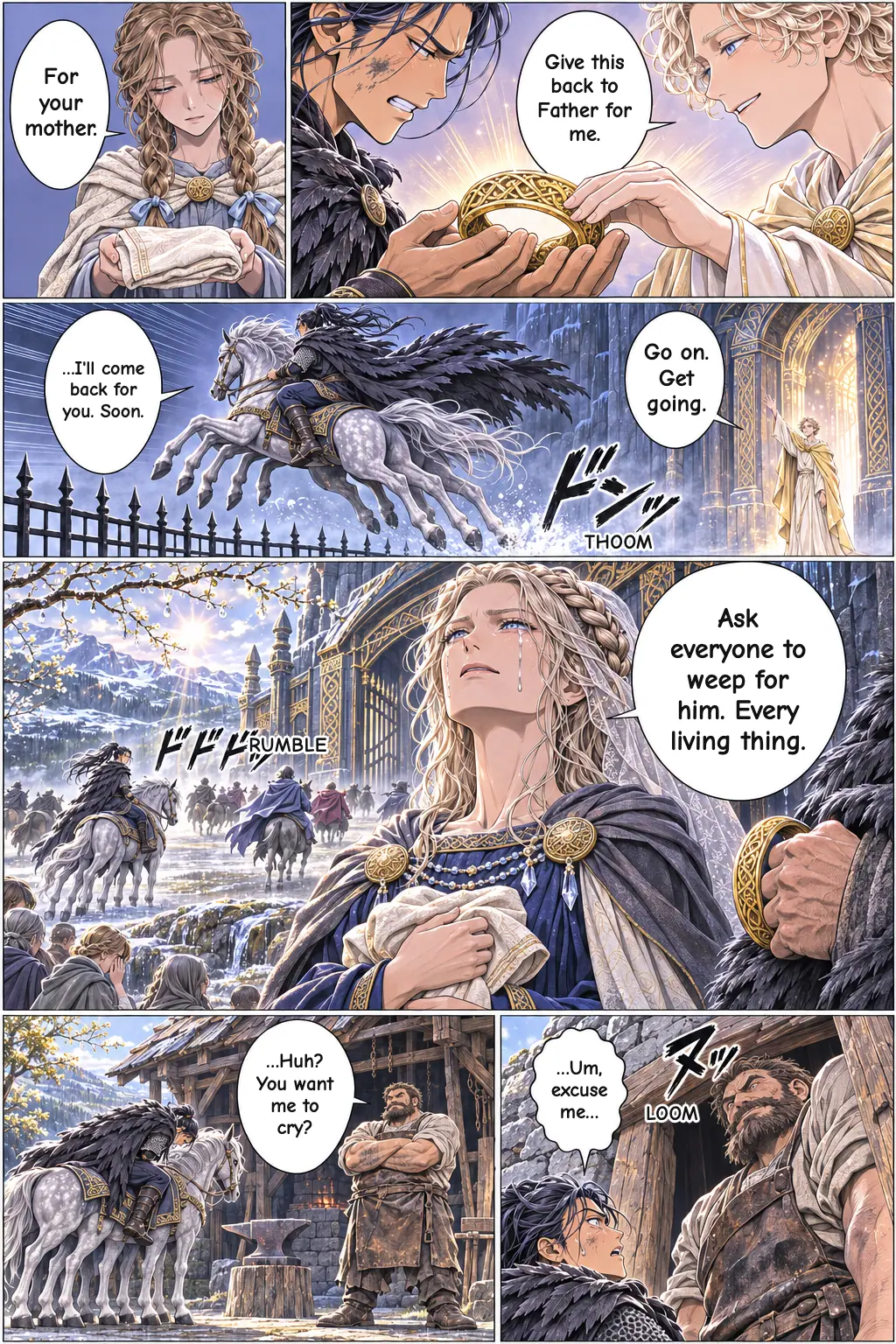
Inside the hall he finds Baldr seated in the place of honor and spends the night there. In the morning he begs Hel, ruler of the dead, to release his brother. Hel sets a test: if everything in the world, living and dead, weeps for Baldr, he may return. If even one thing refuses, he stays. Baldr sends back the ring Draupnir for Odin, and his wife Nanna, who died of grief at his funeral, sends a linen cloth and other gifts to Frigg and a gold ring to Frigg's servant Fulla.
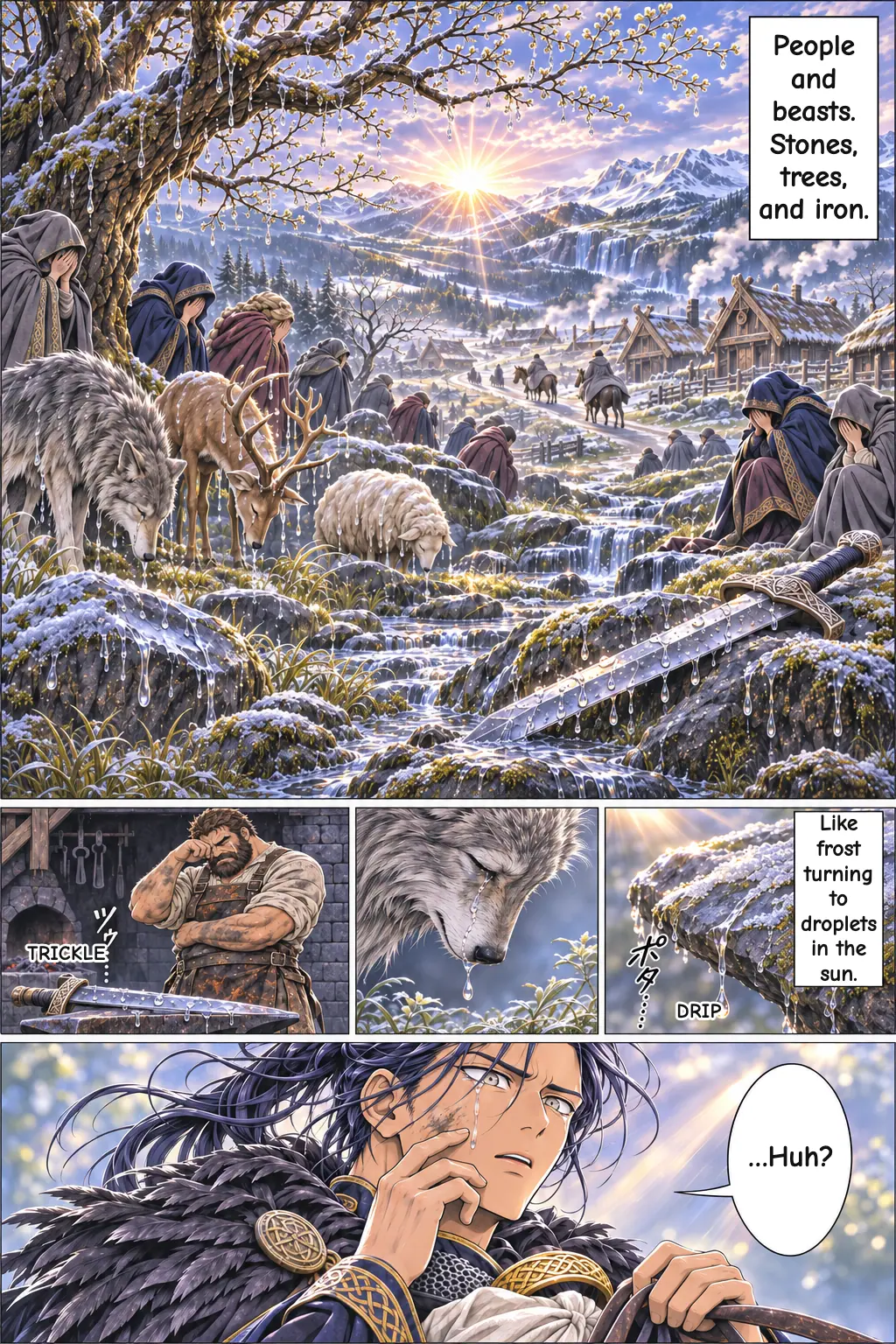
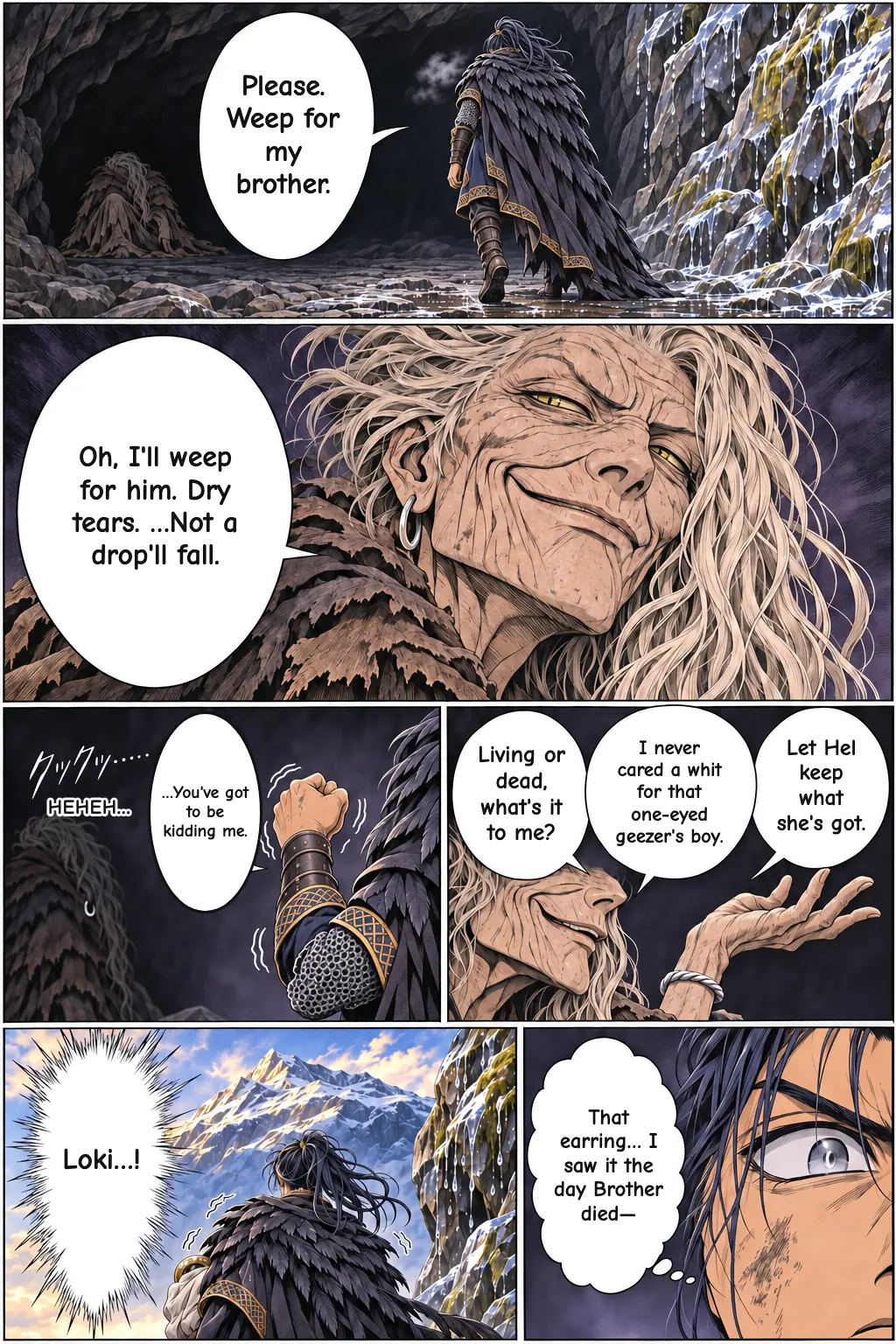
The gods send messengers across the world. People, animals, the earth, stones, trees and every metal weep, the way things turn wet when they come out of frost into warmth. But on their way home the messengers find a giantess named Thökk sitting in a cave. She says she will weep only dry tears for Baldr and that Hel can keep what she has. So Baldr stays among the dead. Snorri adds that people believe Thökk was really Loki.
Loki's escape, the first fishing net, and the binding
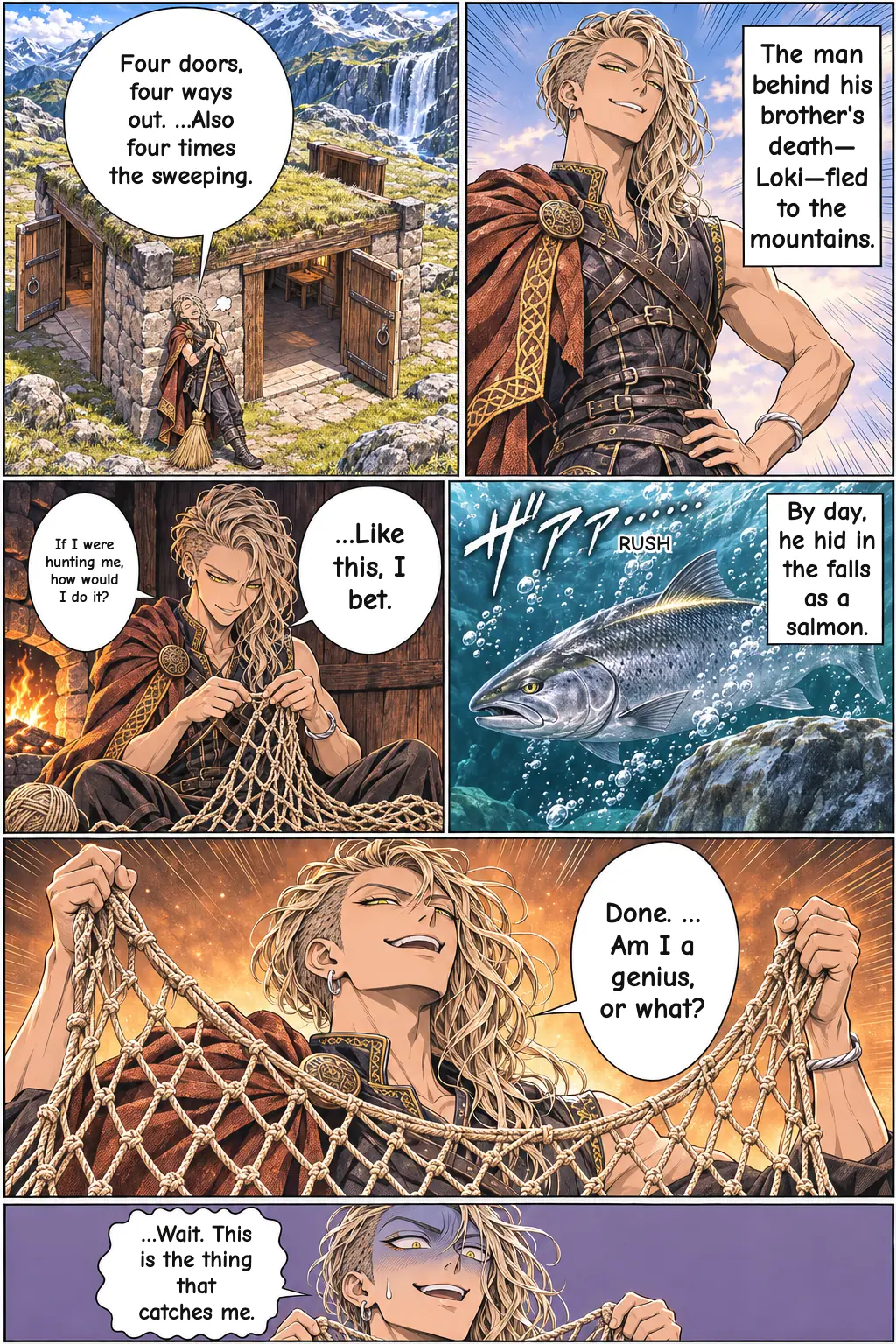
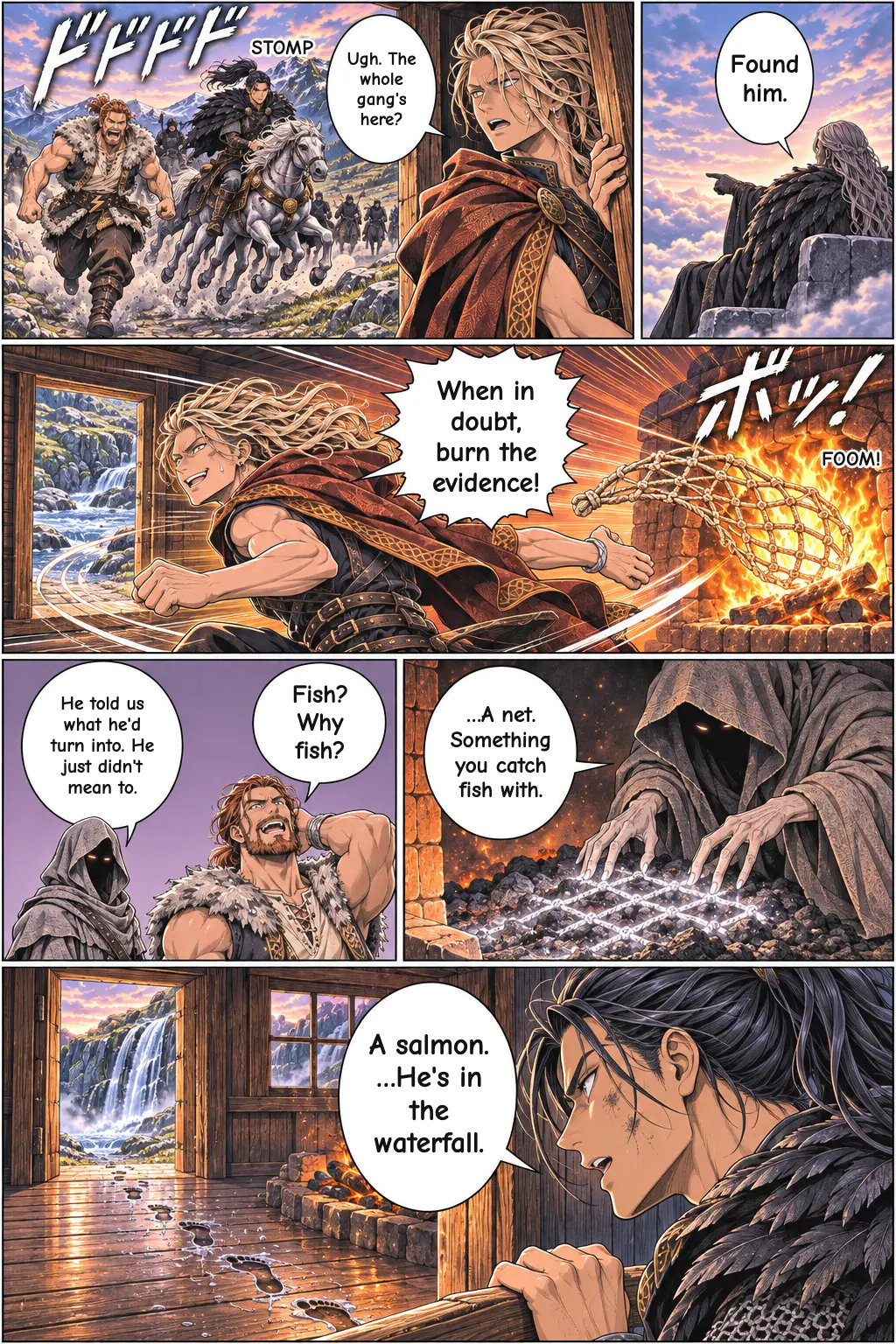
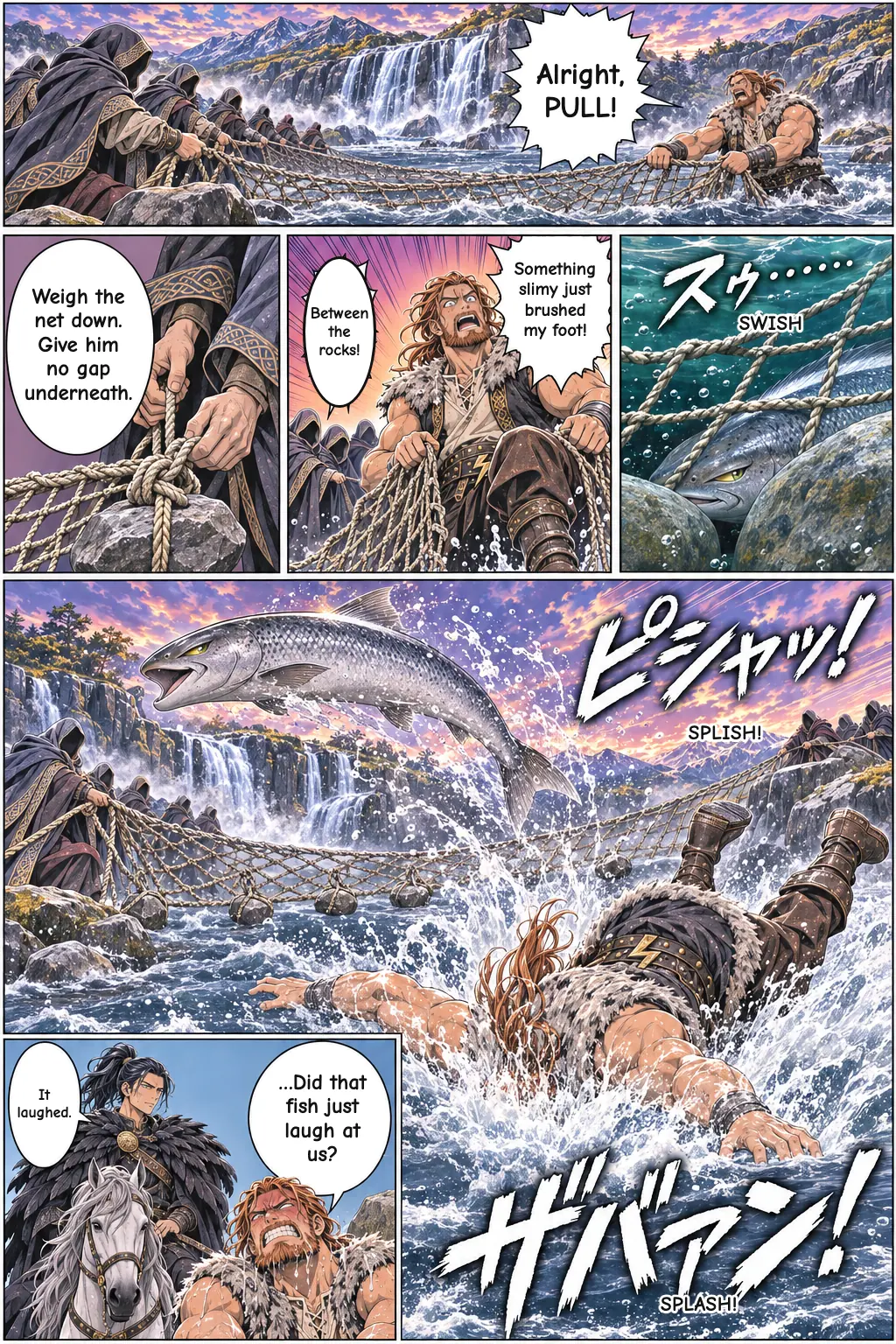
Knowing the gods are furious, Loki hides on a mountain in a house with four doors, so he can watch in every direction. By day he often takes the shape of a salmon in the Fránangr waterfall. Thinking ahead to how the gods might catch him, he invents the fishing net. When he sees the gods coming (Odin has spotted him from his high seat, Hliðskjálf), he throws the net into the fire and jumps into the river. But the wisest of the gods reads the pattern left in the ashes, and the gods weave a copy.
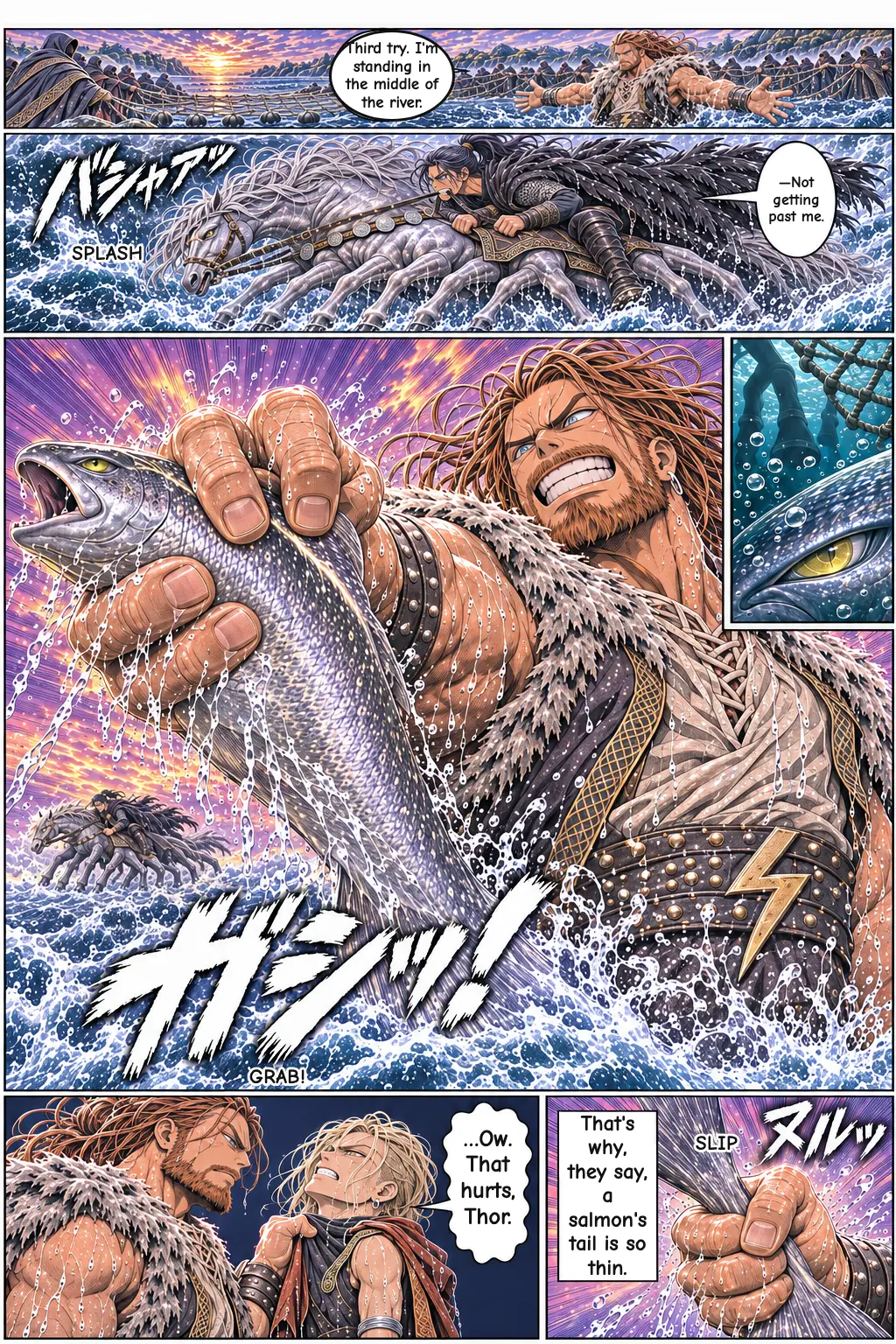
They drag the river three times. The first time Loki hides between two stones. The second time he leaps over the net. On the third try Thor wades down the middle of the stream, and when Loki jumps again Thor grabs him. The salmon slips through his hand until Thor catches it by the tail, which, Snorri says, is why salmon have narrow tails.
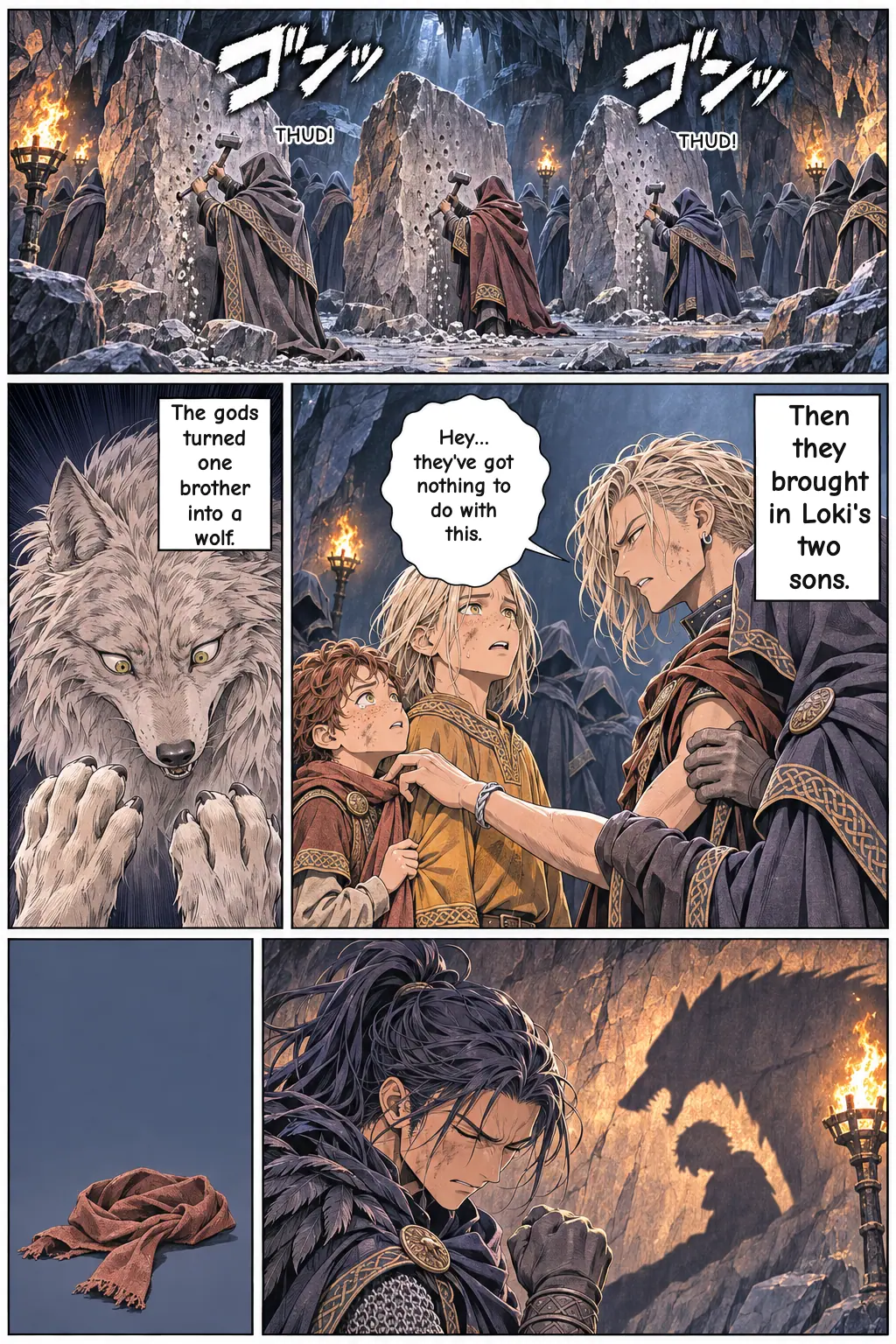
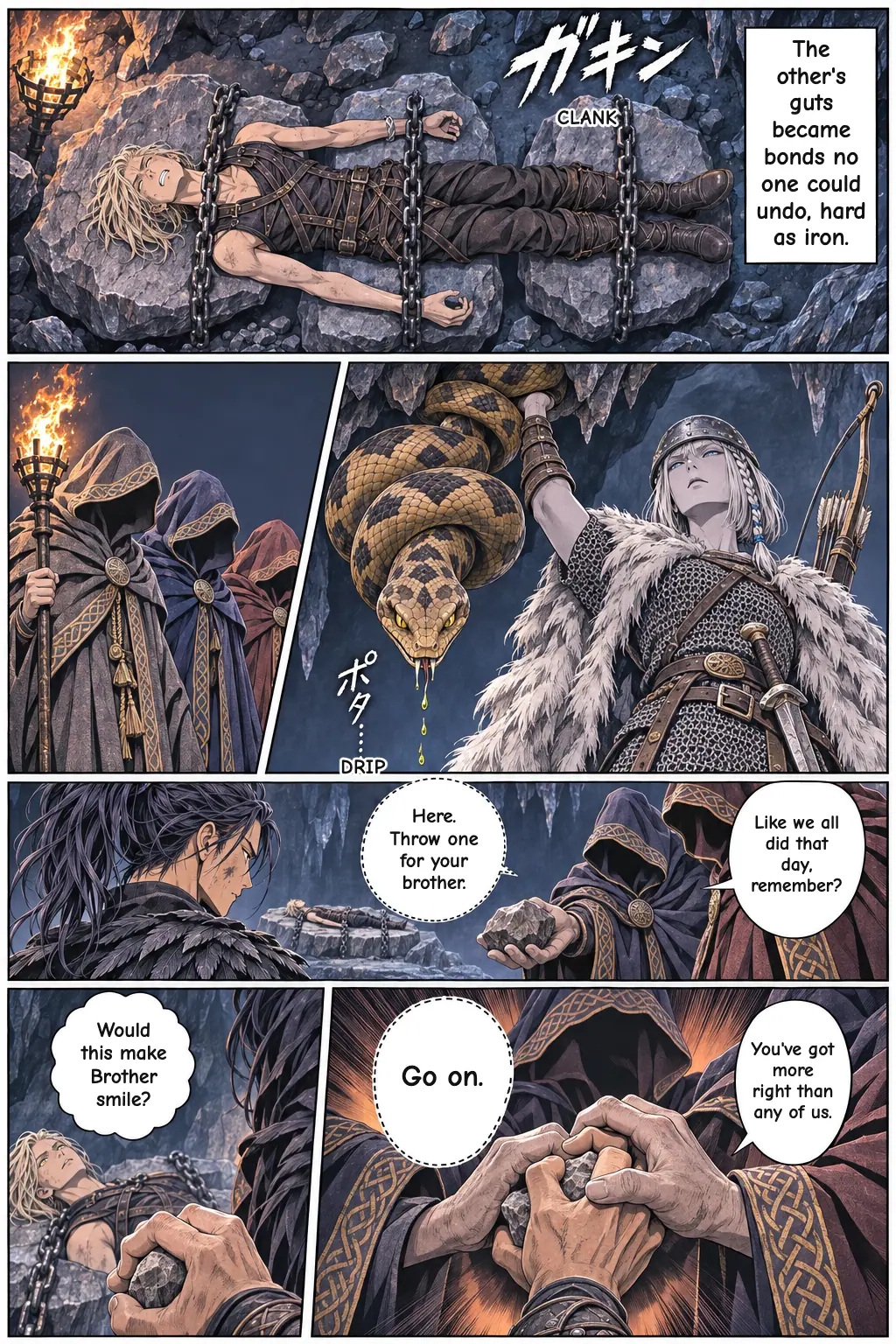
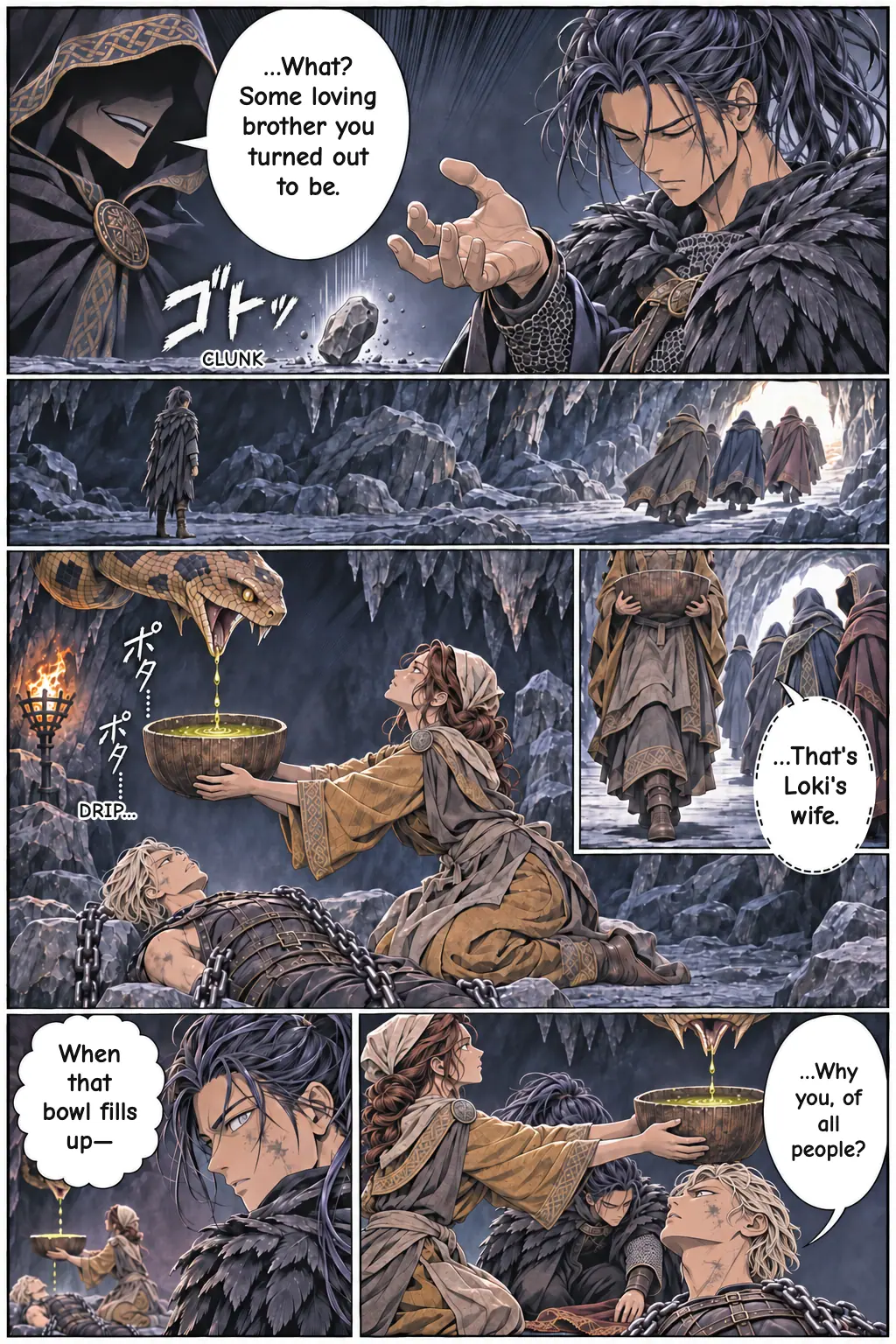
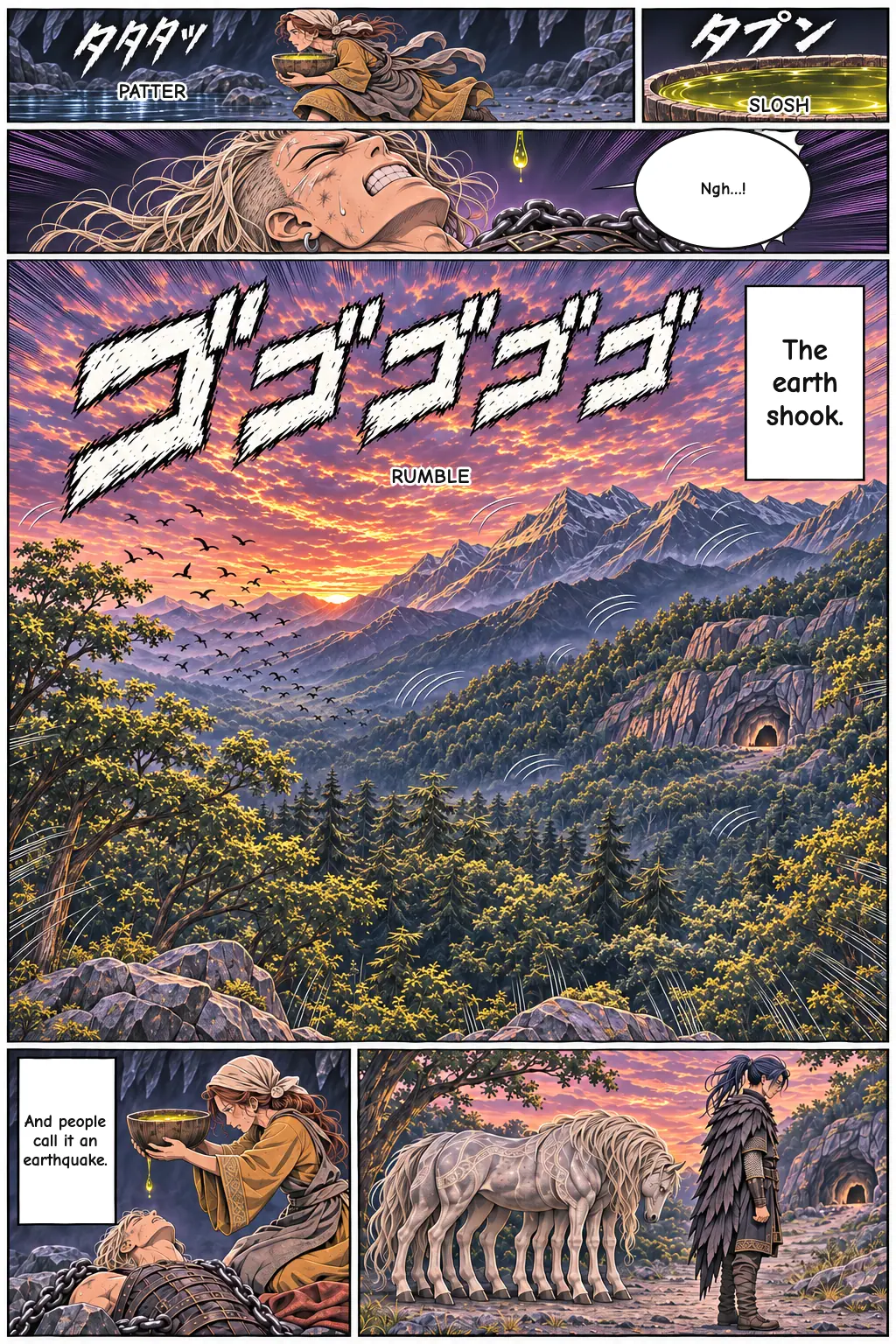
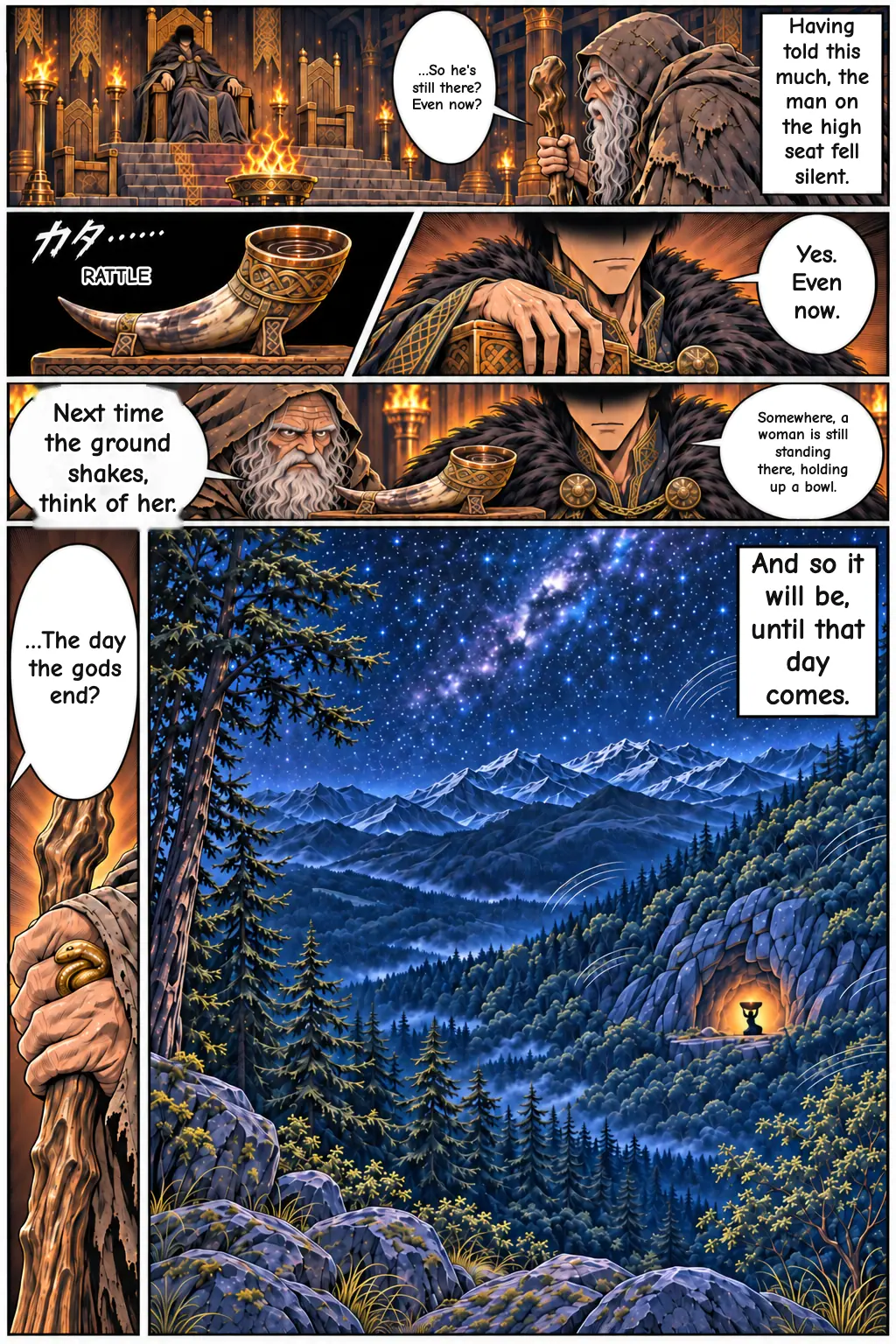
The gods carry Loki to a cave and stand up three flat stones. They turn his son Váli into a wolf, and Váli tears apart his brother, named Nari or Narfi (the text uses both names). The gods bind Loki to the stones with Narfi's entrails, which turn to iron. The goddess Skaði hangs a venomous snake above his face. His wife Sigyn stands beside him holding a bowl to catch the venom, but when the bowl is full and she goes to empty it, the venom falls on Loki. He thrashes so violently that the earth shakes, and that, the myth says, is what earthquakes are. He will lie there until Ragnarök, the end of the gods.
What this myth tells us about the Norse world
This passage explains several things at once: why death cannot be undone, where earthquakes come from, how the fishing net was invented, and even why a salmon's tail is thin. Origin stories like these show Norse myth working as a way to explain the everyday world.
The weeping test also says something about grief. Baldr's return depends on the whole world agreeing, and it takes only one refusal to make loss permanent. Many readers see Thökk's 'dry tears' as one of the coldest lines in Norse myth. Her name even means 'thanks' in Old Norse, which some readers take as bitter irony.
Keep in mind who wrote it. Snorri Sturluson was a Christian Icelandic scholar writing in the early 1200s, long after the Viking Age. He drew on older poems, but he also arranged and explained them, so scholars still debate how much of the story is ancient tradition and how much is his own retelling. Even Snorri doesn't claim to know that Thökk was Loki. He only says people believe it.
What the manga version changes
The Prose Edda tells this story briefly, so the manga fills in the details. It shows the nine-night ride through the dark, the river Gjöll, the gate of Hel and the hall of the dead in full, where the source gives only a few words to each. The source also says only that Hermóðr spent the night with Baldr, so the conversation between the brothers is the manga's own invention, as are Loki's private thoughts while he builds his net and the gods' words when they catch him.
A few choices are worth knowing about. In the original, the god who reads the net in the ashes is named Kvasir. The manga calls him only 'the wisest god', because another part of Snorri's work says Kvasir was already dead by this time. The manga also hints that Thökk and Loki are the same person without confirming it, the same way the source leaves it open. The binding scene uses shadows, scene cuts and iron chains rather than graphic images, so readers of any age can follow it. Sigyn's feelings are shown through her face, because the source only describes what she does.
Where to read it
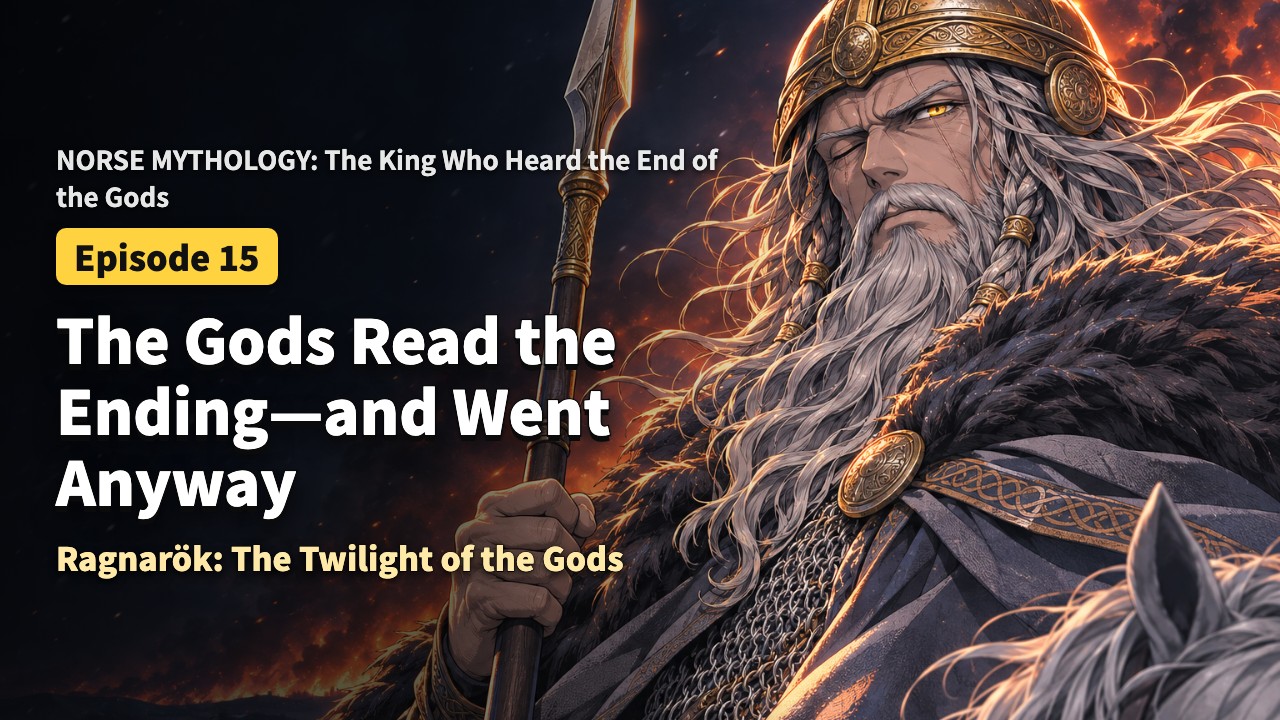
Episode 14 of NORSE MYTHOLOGY: The King Who Heard the End of the Gods tells this whole story in comic form, from Hermóðr's ride across the golden bridge to Sigyn's bowl in the cave. Like every episode on Manga Portal, it's free to read with no sign-up. If you came here to look up the myth, the manga is a quick way to see it play out, and the next episodes continue toward Ragnarök.
Characters in this episode
Hermóðr (Hermod)
A bold son of Odin who rides to the land of the dead to try to bring his brother Baldr home.
Baldr
The beloved son of Odin and Frigg, killed by mistletoe, who now sits in the place of honor in Hel's hall.
Hel
Loki's daughter and ruler of the dead, who will release Baldr only if the whole world weeps for him.
Thökk (Þökk)
A giantess in a cave who alone refuses to weep for Baldr and is thought to be Loki in disguise.
Loki
The trickster god who hides as a salmon, invents the fishing net, and is bound beneath a venomous snake until Ragnarök.
Sigyn
Loki's wife, who holds a bowl over him to catch the snake's venom.
FAQ
Why didn't Baldr come back from Hel?
Hel agreed to release Baldr only if everything in the world, living and dead, wept for him. Everything did except one giantess, Thökk, who said she would weep only dry tears. Because of that single refusal, Baldr stayed among the dead.
Who was Thökk in Norse mythology?
Thökk is the giantess in a cave who refused to weep for Baldr. In the Prose Edda, Snorri Sturluson says people believe she was really Loki in disguise, but he presents this as a belief, not a certain fact.
How was Loki punished in Norse mythology?
The gods caught Loki while he was disguised as a salmon and bound him to three stones with the entrails of his son, which turned to iron. Skaði hung a venomous snake over his face, and his wife Sigyn catches the venom in a bowl. He stays there until Ragnarök.
What causes earthquakes in Norse mythology?
According to the Prose Edda, the venom drips onto Loki's face whenever Sigyn leaves to empty her bowl. Loki writhes so violently that the whole earth shakes, and that is what people call an earthquake.
Where does the story of Hermod's ride to Hel come from?
It comes from Gylfaginning, the first part of the Prose Edda, written by the Icelandic scholar Snorri Sturluson in the early 13th century. The ride and Loki's binding are in chapters 49 and 50.