Get new episodes in your feed. Follow us on:ThreadsBluesky
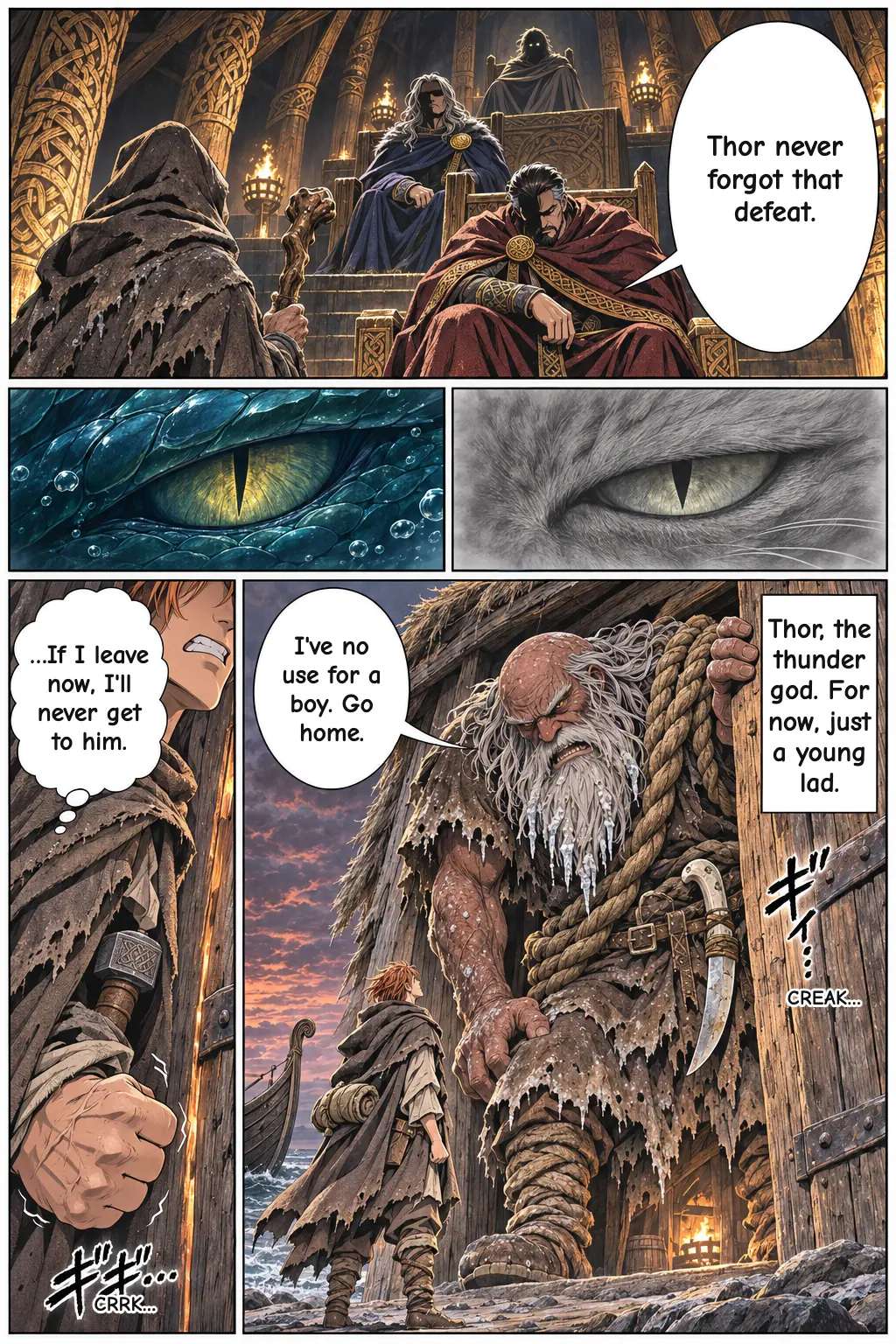
Thor couldn't lift the giant king's cat, and he hasn't forgotten it. Disguised as a young man, he talks his way onto the boat of Hymir, a foul-mouthed giant fisherman. His bait is an ox head, and his target is the serpent coiled around the whole world. But just as Thor raises his hammer, a trembling knife cuts the line.
Story summary
The story appears in Gylfaginning ("The Deluding of Gylfi"), the first major part of the Prose Edda, written by the Icelandic scholar Snorri Sturluson in the early 1200s. It comes right after an embarrassing episode for Thor: in the hall of Útgarða-Loki, a giant king and master of illusions, Thor had failed to lift a cat off the floor. The cat, it turned out, was the World Serpent in disguise. The narrator opens the fishing tale by saying that everyone knows Thor made up for that journey. Thor leaves Midgard, the world of humans, alone.
Thor's Fishing Trip for Jörmungandr: The Norse Myth Explained (Prose Edda Summary)
In short: Thor's fishing trip is a Norse myth in which the thunder god Thor, disguised as a young man, rows out to sea with the giant Hymir, baits a hook with an ox head, and hauls up Jörmungandr, the serpent that encircles the world. Just as Thor raises his hammer, the terrified Hymir cuts the line and the serpent sinks back into the sea. The story is told in Gylfaginning, part of Snorri Sturluson's Prose Edda (early 13th century).
The Original Myth: A Summary
The story appears in Gylfaginning ("The Deluding of Gylfi"), the first major part of the Prose Edda, written by the Icelandic scholar Snorri Sturluson in the early 1200s. It comes right after an embarrassing episode for Thor: in the hall of Útgarða-Loki, a giant king and master of illusions, Thor had failed to lift a cat off the floor. The cat, it turned out, was the World Serpent in disguise. The narrator opens the fishing tale by saying that everyone knows Thor made up for that journey.
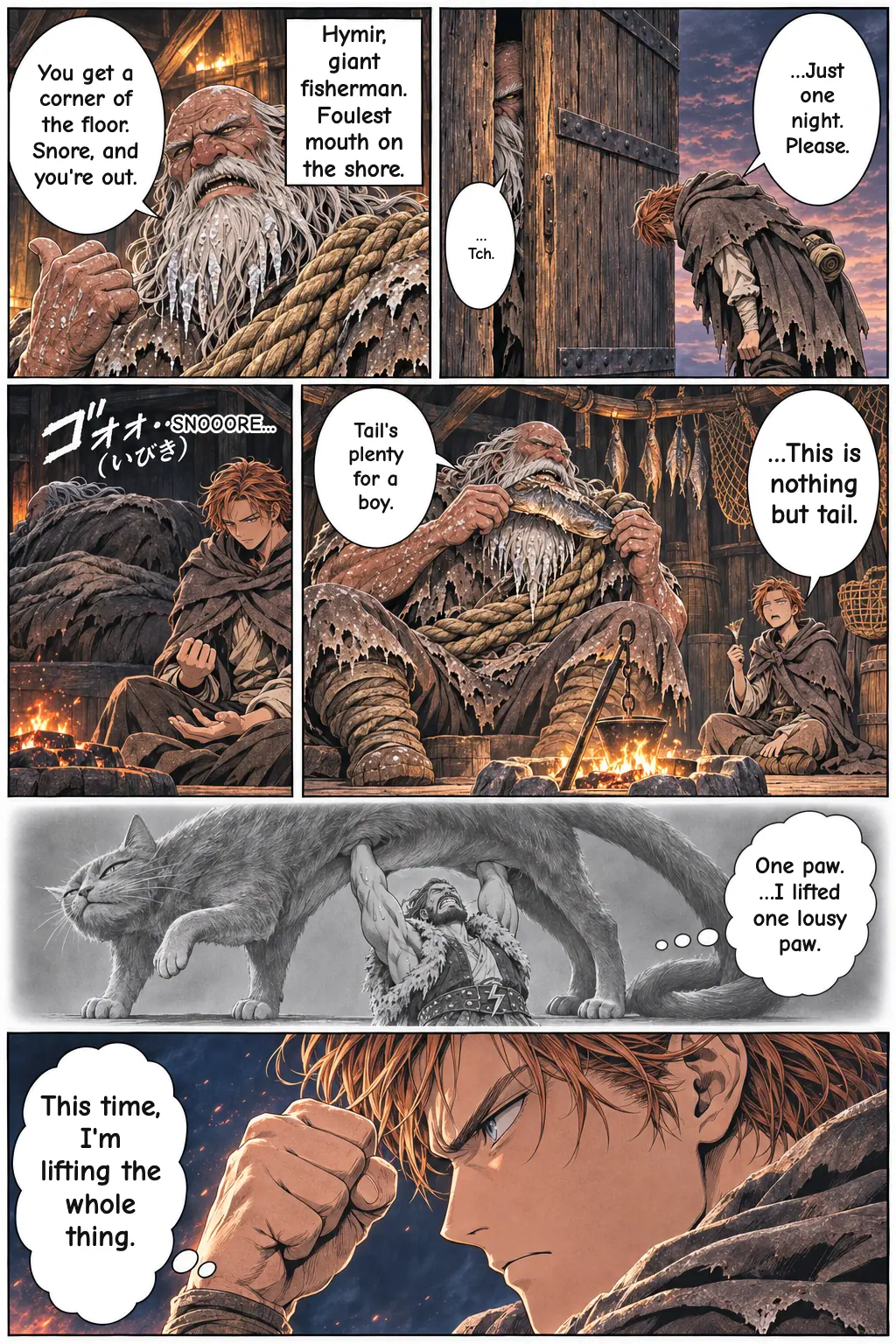
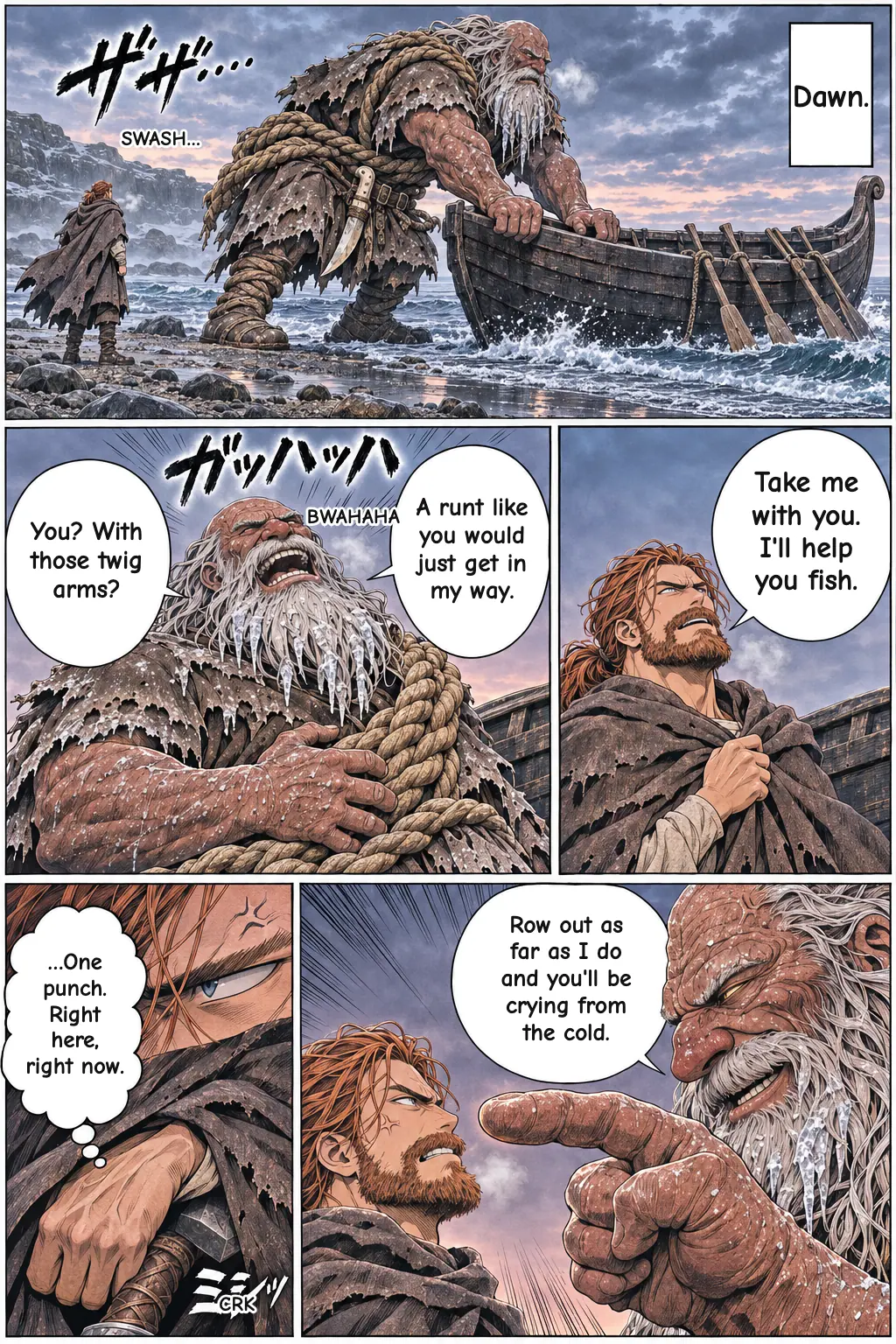
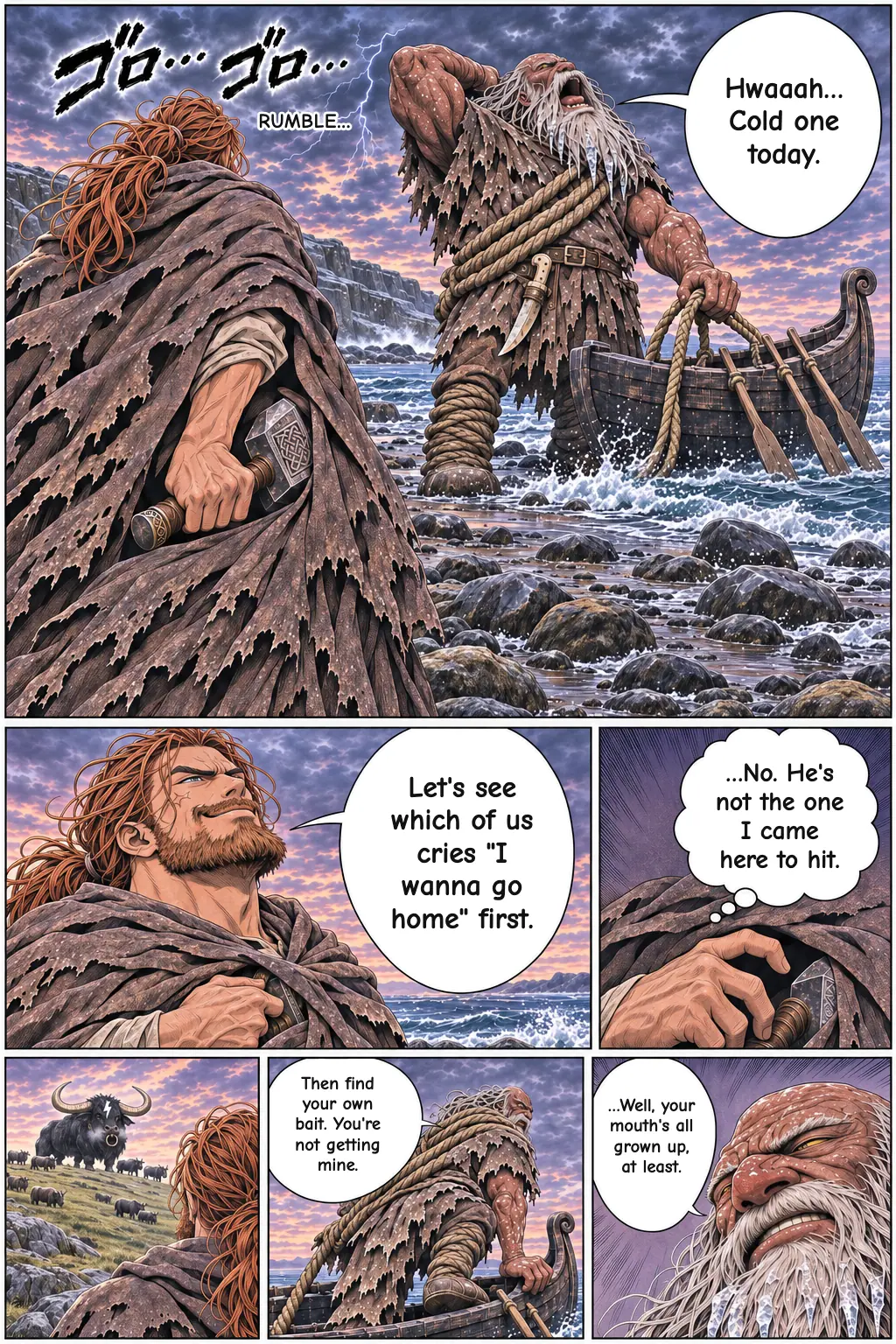
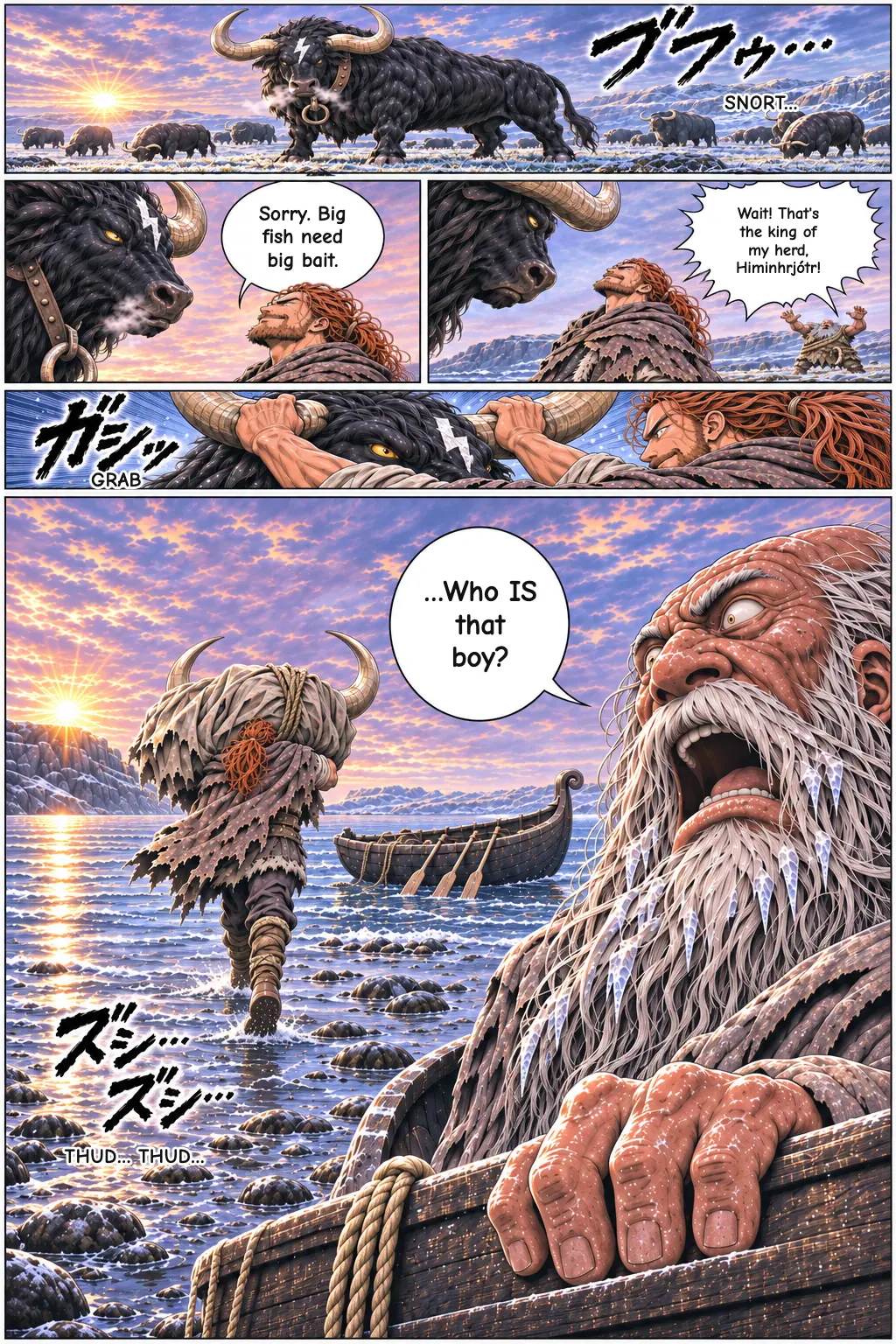
Thor leaves Midgard, the world of humans, alone. He takes neither his goat-drawn chariot nor any companions, and he looks like a young boy. In the evening he reaches the home of Hymir, a giant, and stays the night. At dawn Hymir gets ready to row out fishing, and Thor asks to come along. Hymir scoffs: a small youngster will be useless and will freeze out on the open sea. Thor is furious and almost uses his hammer on the spot, but he holds back, because he plans to test his strength somewhere else.
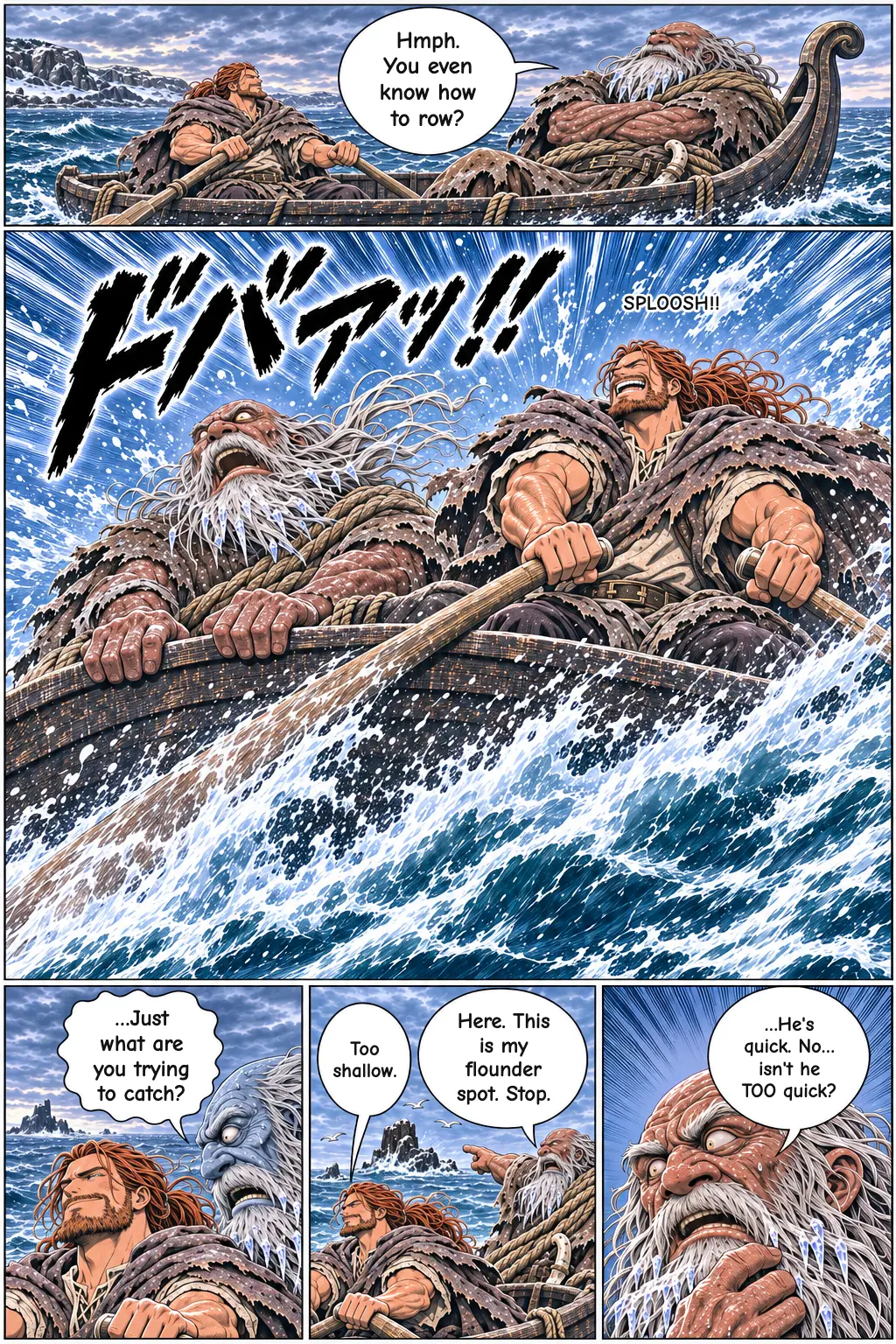
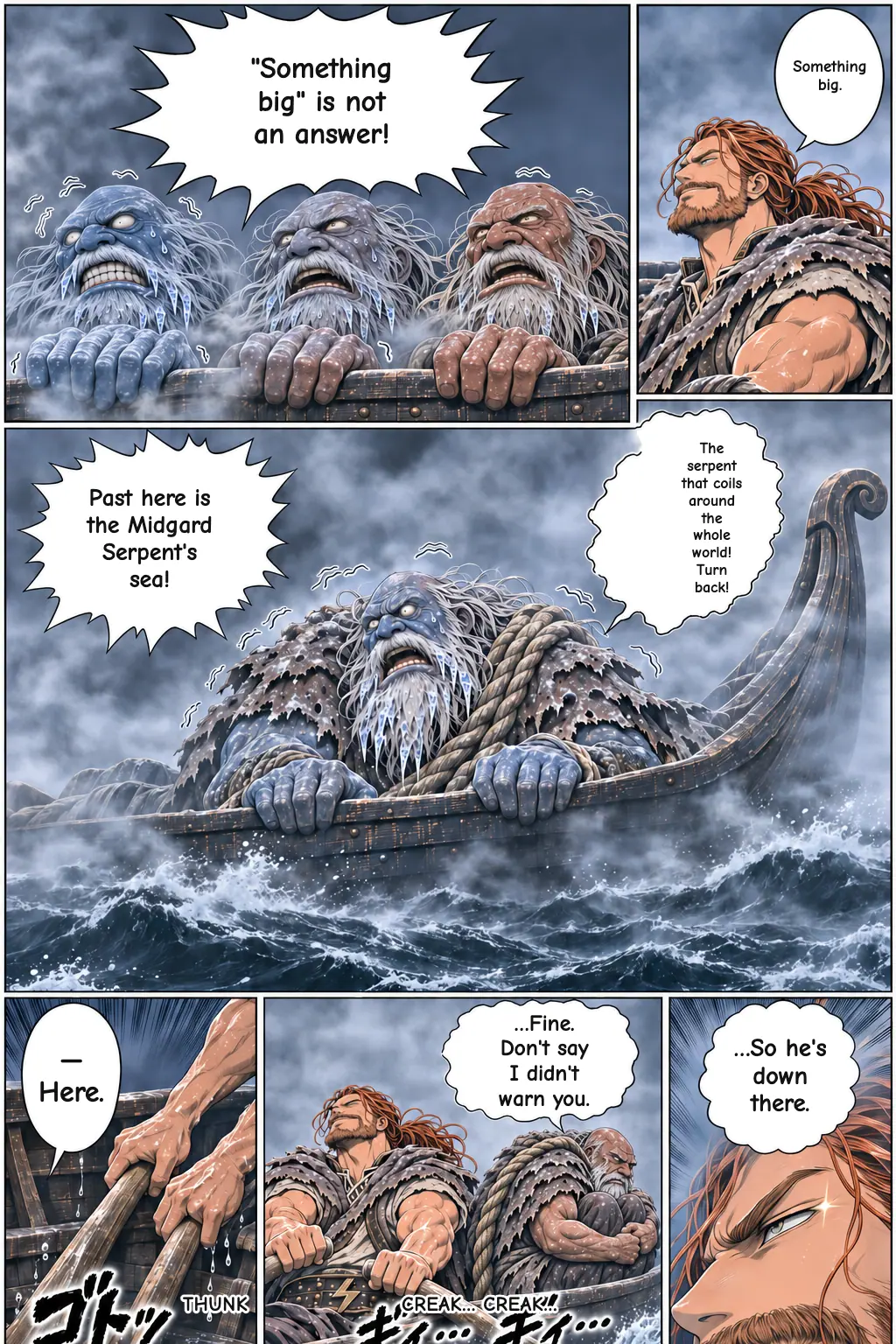
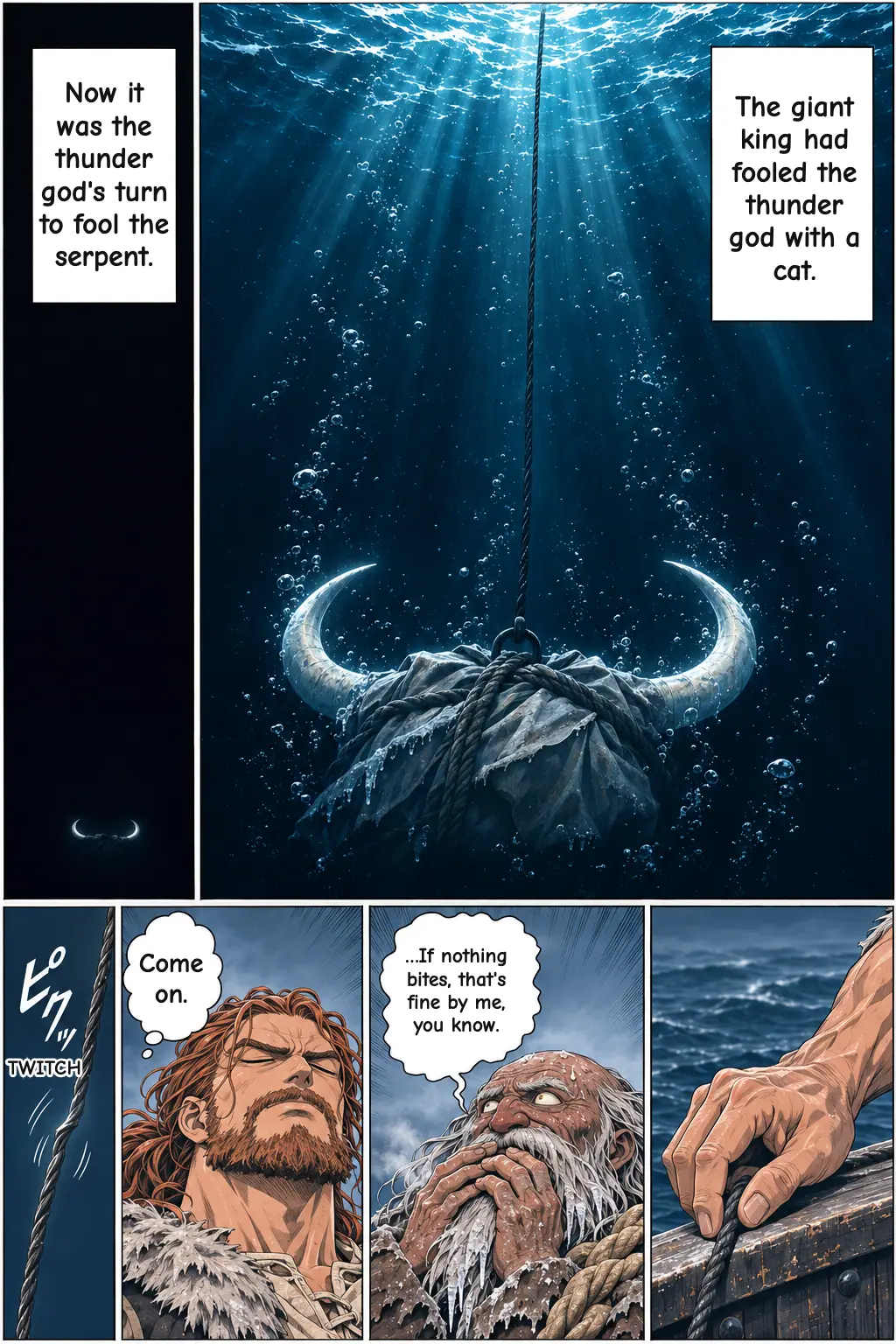
When Thor asks about bait, Hymir tells him to find his own. Thor goes to Hymir's herd, picks the largest ox, named Himinhrjótr, and tears off its head. He rows with two oars so hard that even Hymir admits the boat is moving fast. Hymir says they have reached his usual fishing spot for flatfish, but Thor keeps rowing. Hymir warns that farther out is dangerous because of the Midgard Serpent. Thor doesn't care, and Hymir sulks.
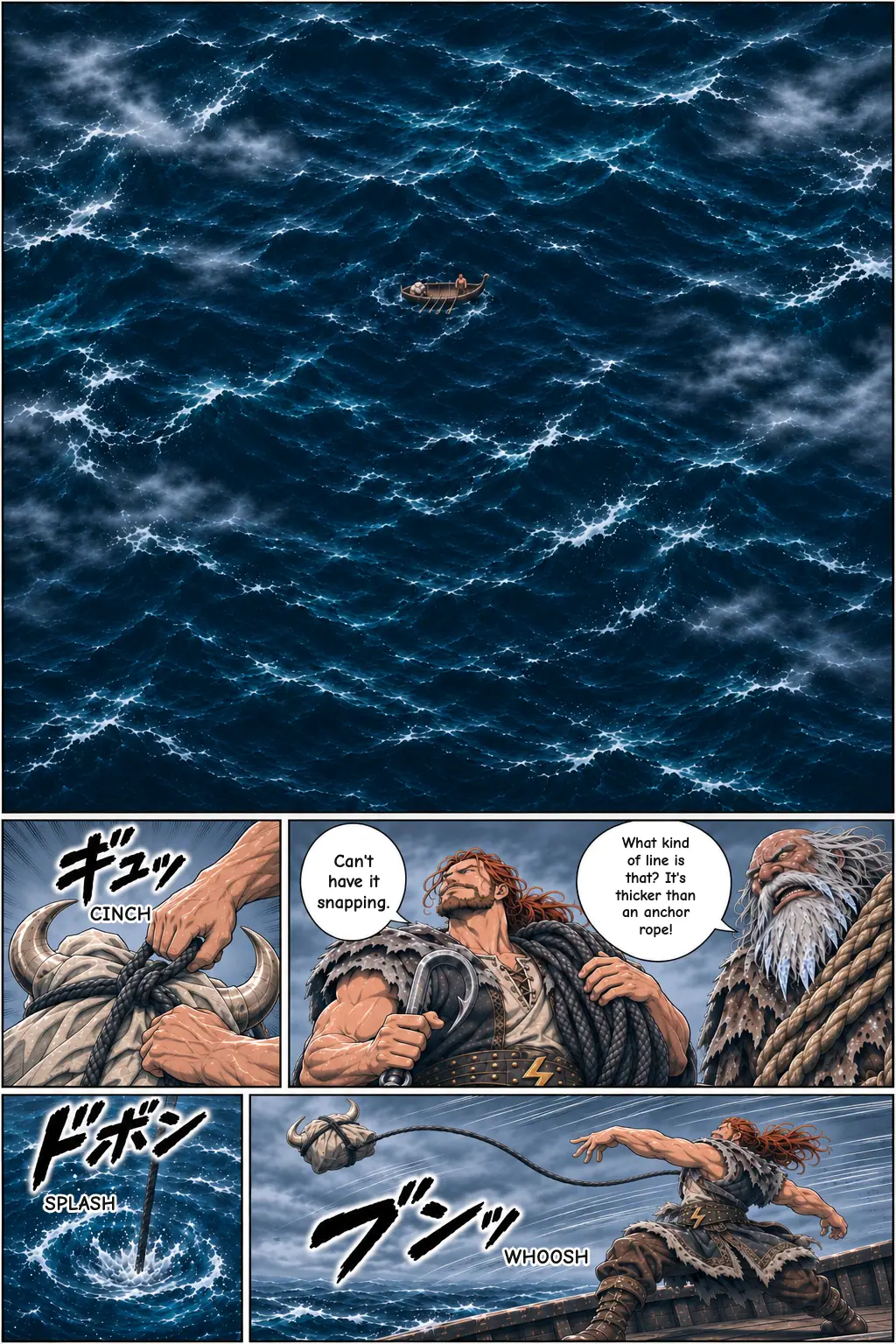
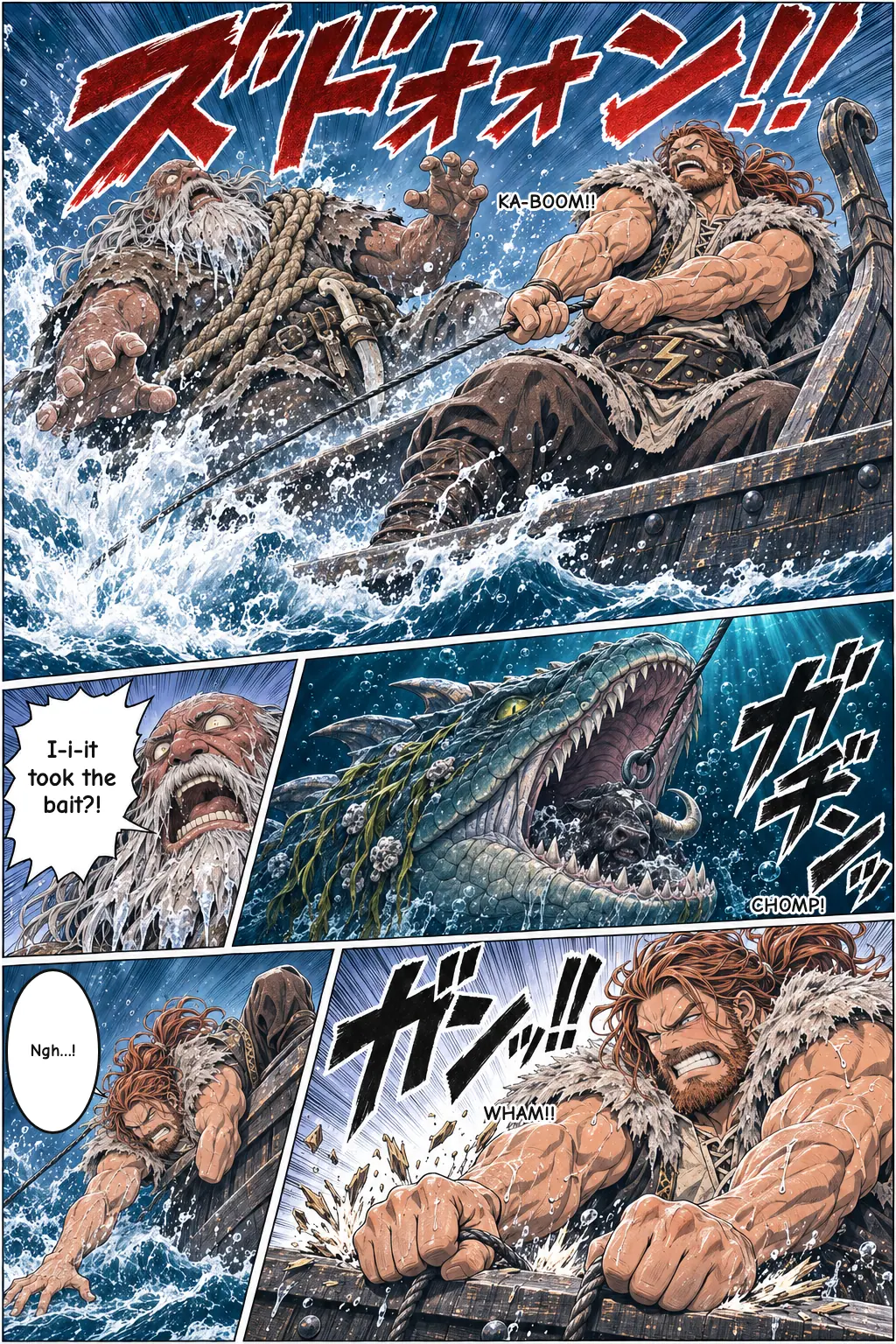
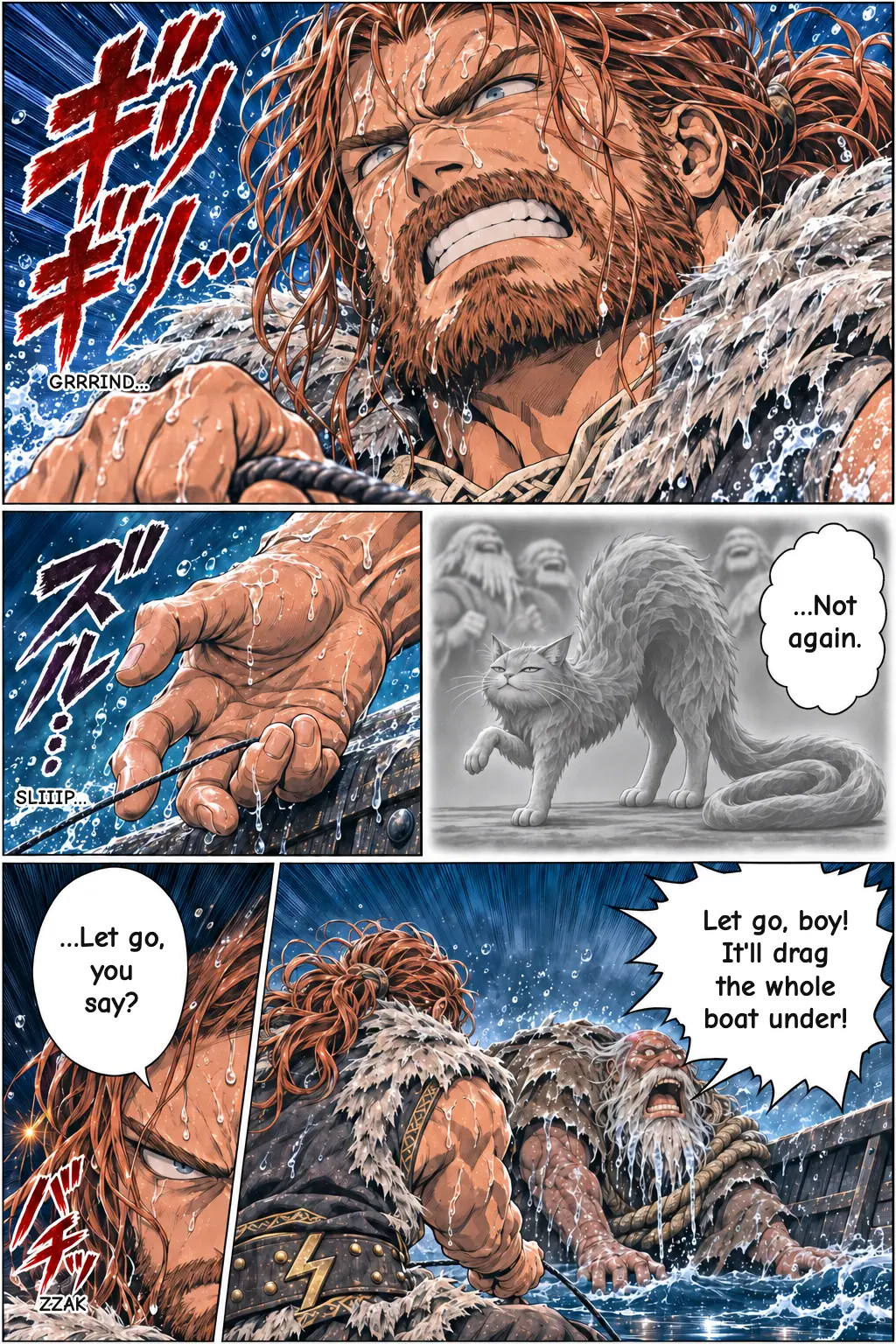
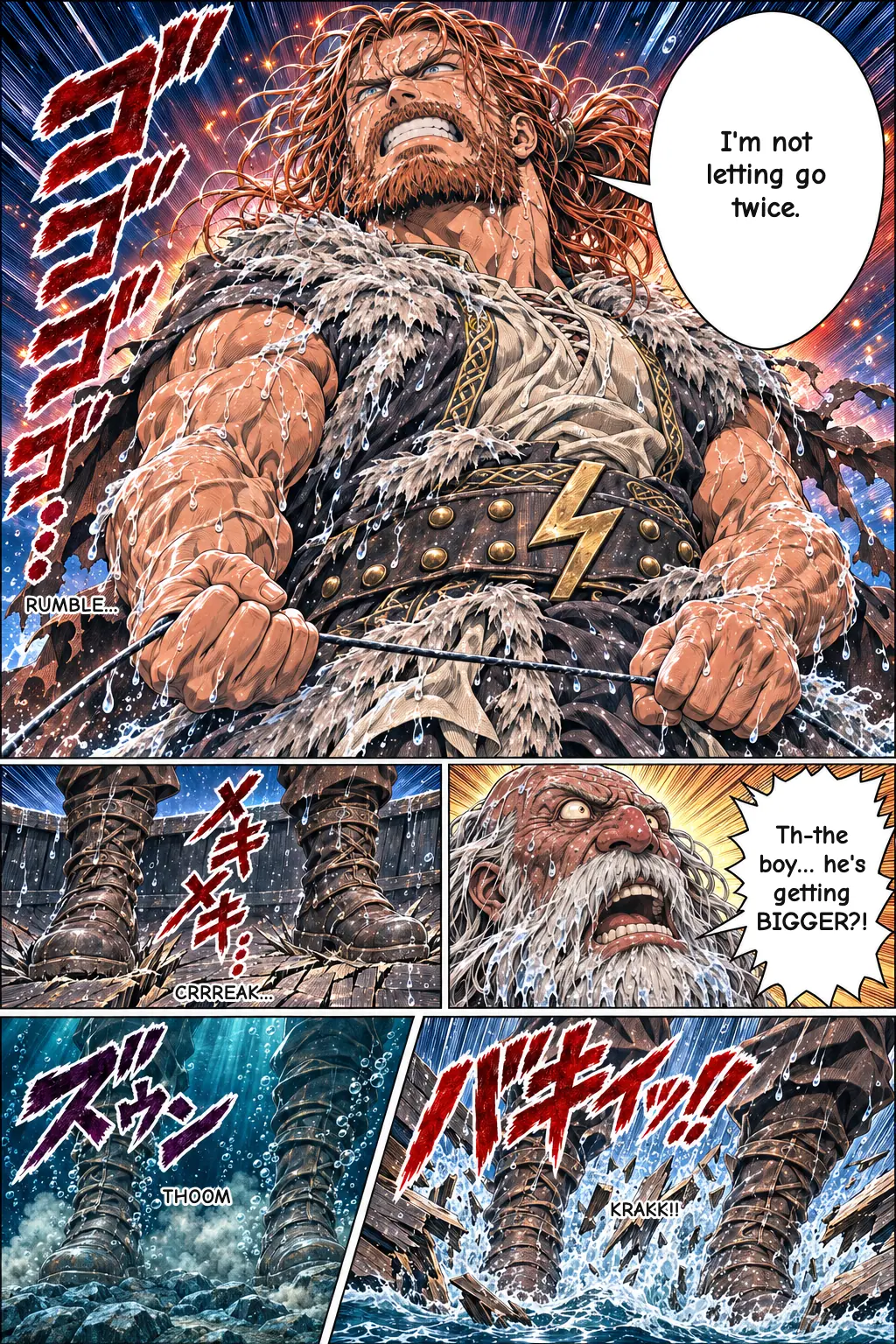
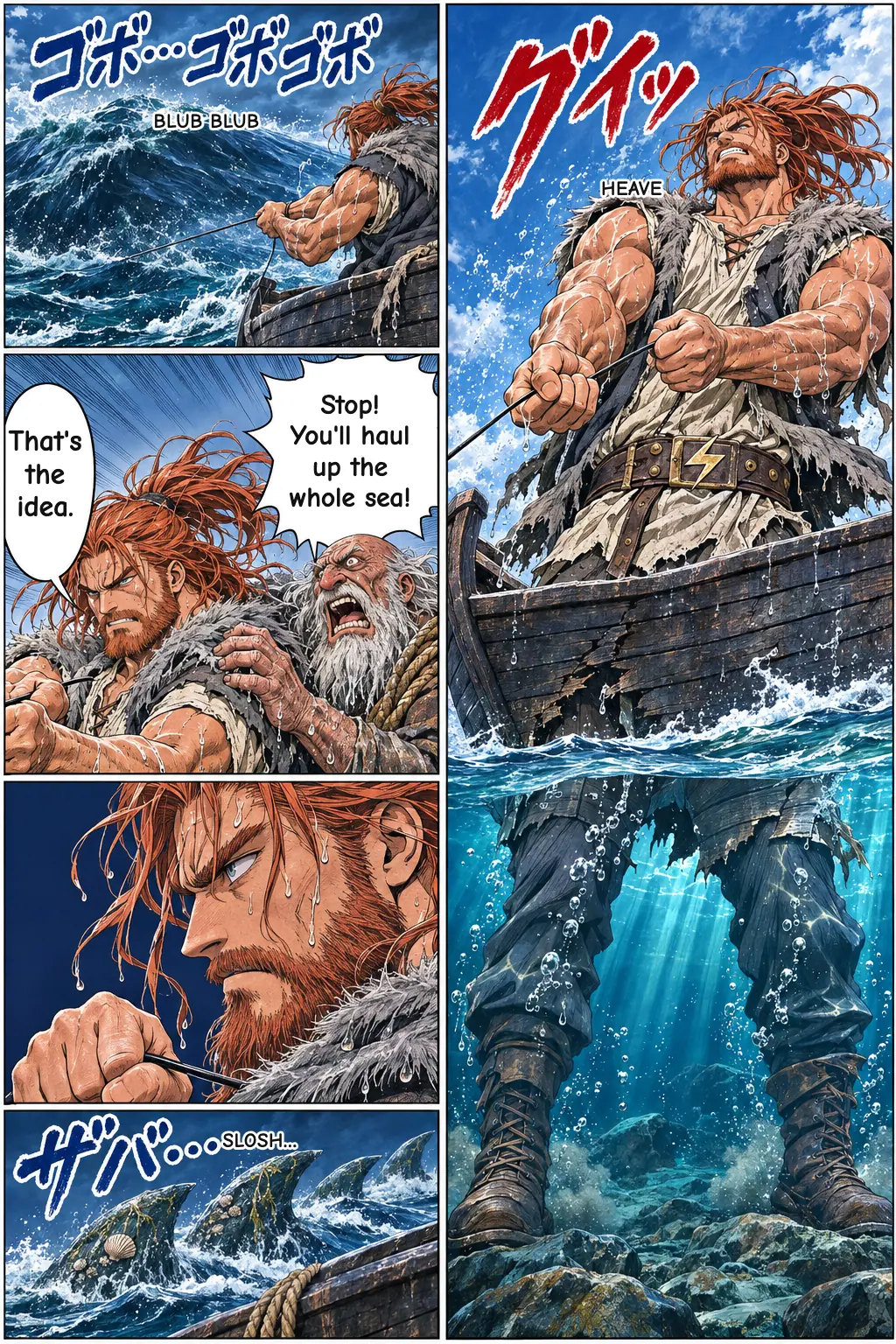
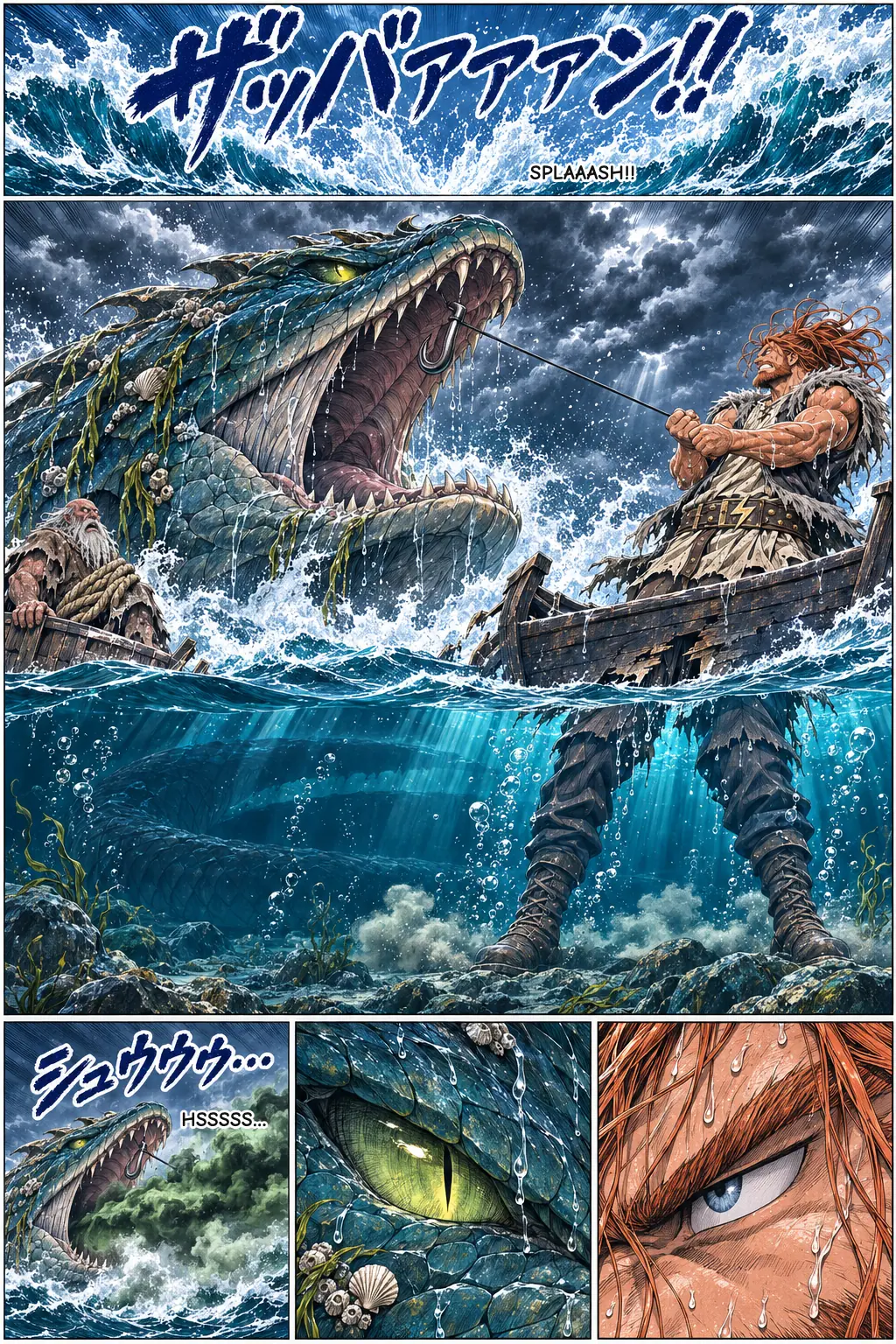
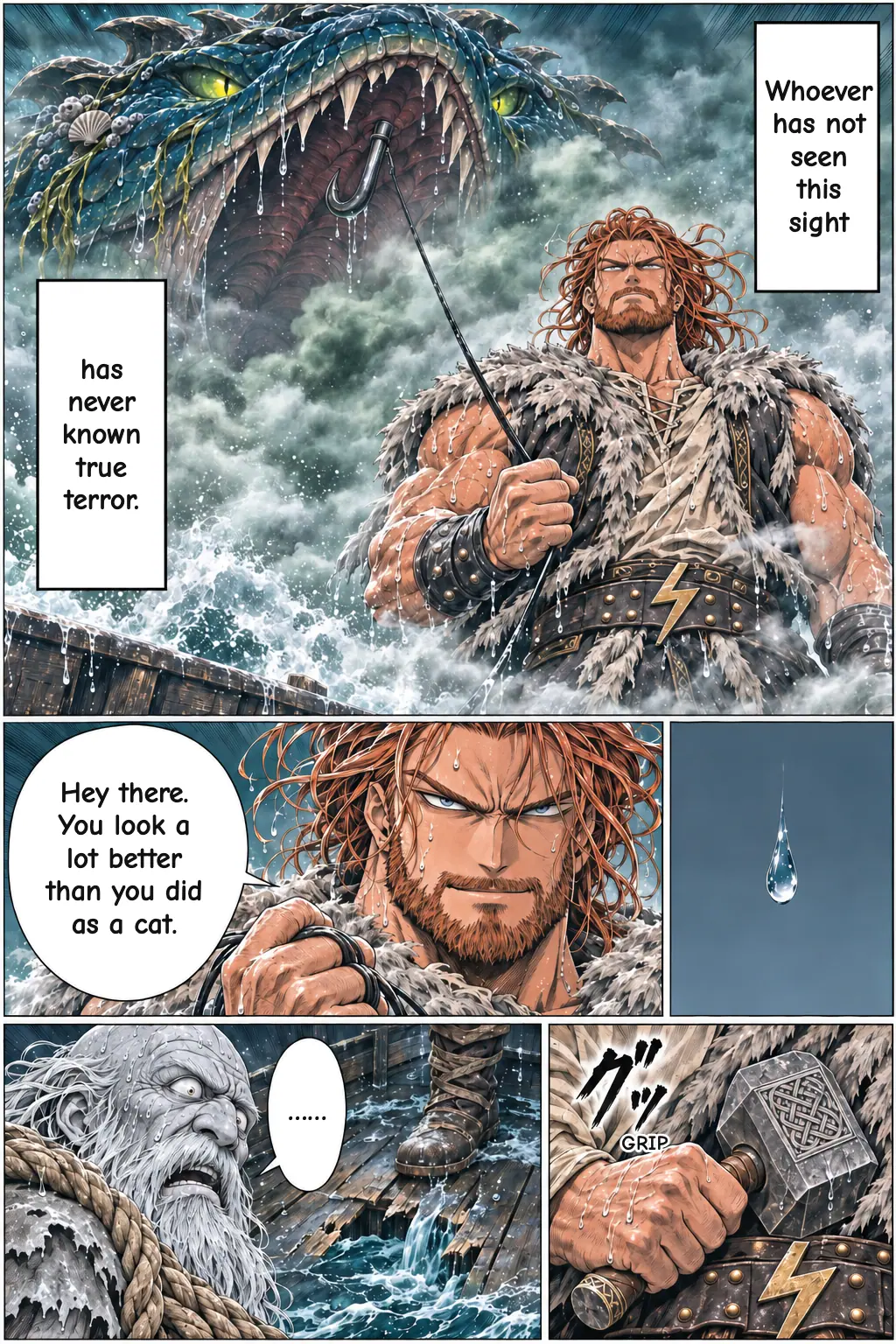
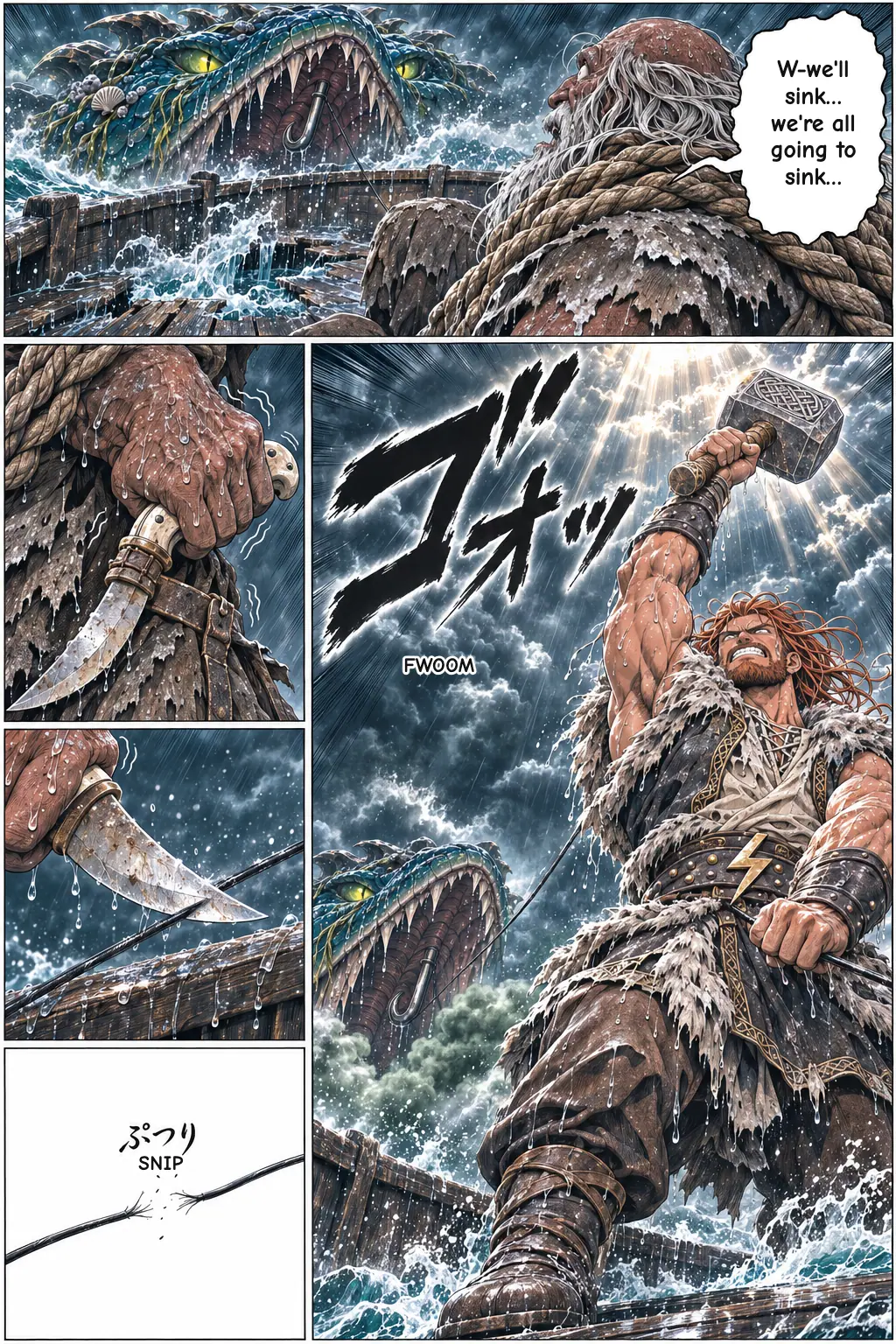
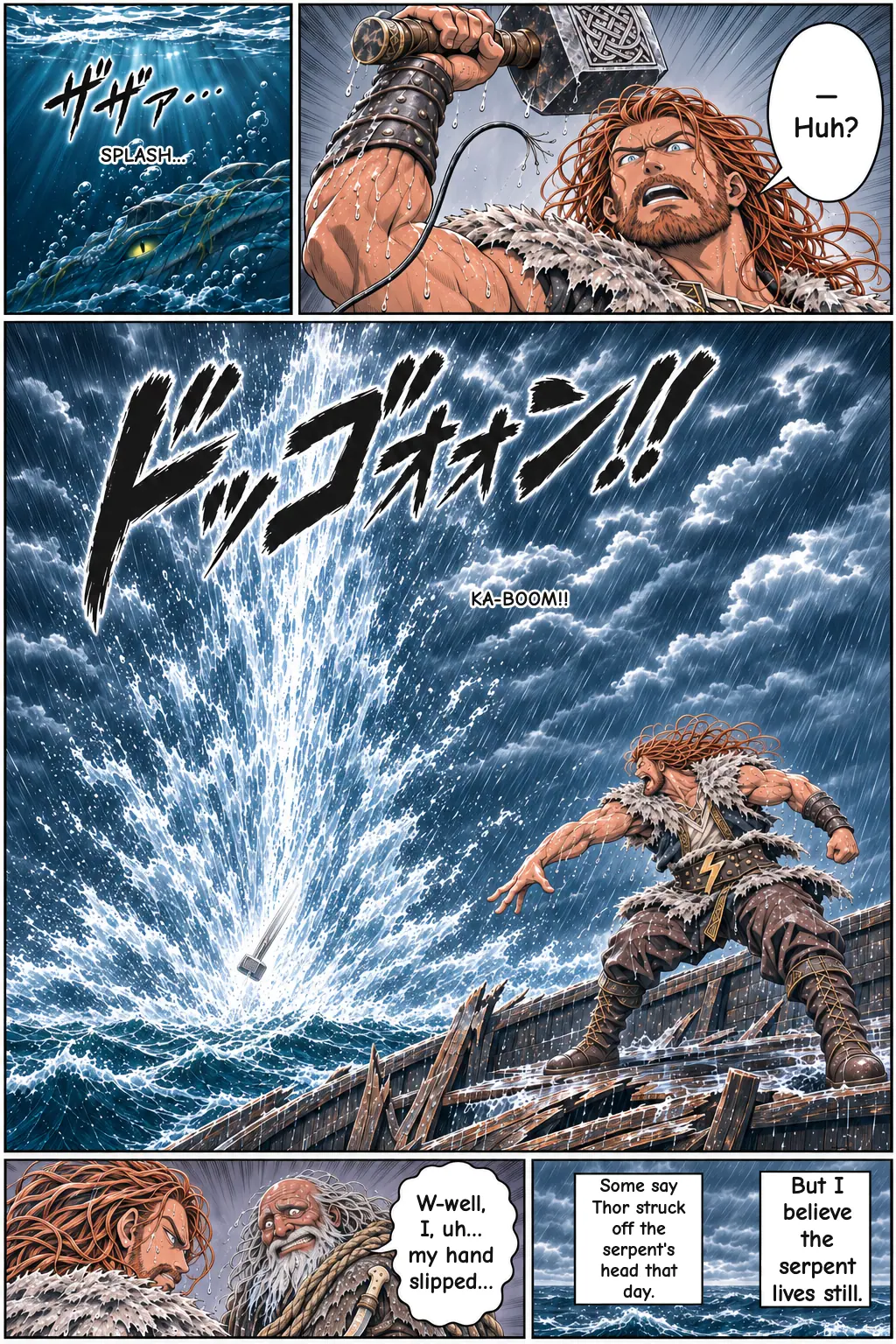
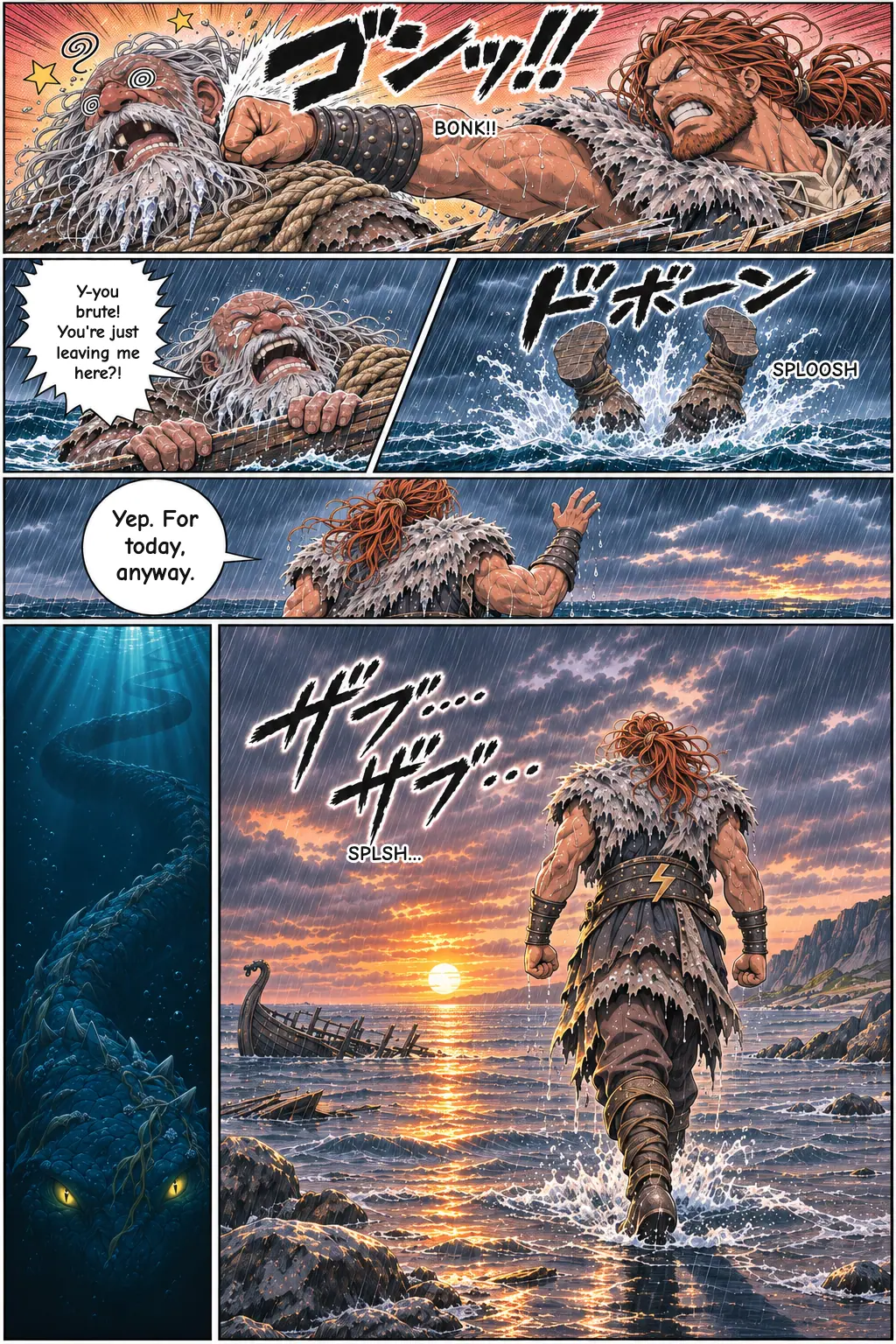
Thor prepares an enormously strong line and hook, baits it with the ox head, and drops it to the sea floor. The serpent bites, and the hook catches in the roof of its mouth. It pulls back so hard that Thor's fists slam against the side of the boat. Angry, Thor calls up his full divine strength. His feet break through the bottom of the boat and he braces against the seabed, dragging the serpent up to the gunwale. Thor glares down, and the serpent glares back and spits venom. Hymir goes pale at the sight of the monster and the seawater pouring in. Just as Thor lifts his hammer, Hymir cuts the line with his bait knife, and the serpent sinks. Thor hurls his hammer after it. The narrator says some people claim it struck the serpent's head off on the seabed, but he himself believes the serpent still lies alive in the ocean around the world. Thor then punches Hymir by the ear, knocking him overboard, and wades back to shore.
Main Characters
Thor (Þórr) is the thunder god of the Æsir and the strongest of the gods. In this tale he is proud and quick to anger, yet he can hold his temper when he has a bigger goal. Hymir is a giant (jötunn) who fishes for flatfish and owns a herd of cattle. He looks down on his young-looking guest and fears the open sea. Jörmungandr, also called the Midgard Serpent, lies in the ocean that surrounds the human world, so long that it rings the whole earth.
The story is also part of a frame tale: a wise figure called Hár ("High") tells it to Gangleri, who is really King Gylfi in disguise. That is why the narrator can openly offer his own opinion about whether the serpent survived.
What the Myth Means: Culture and Background
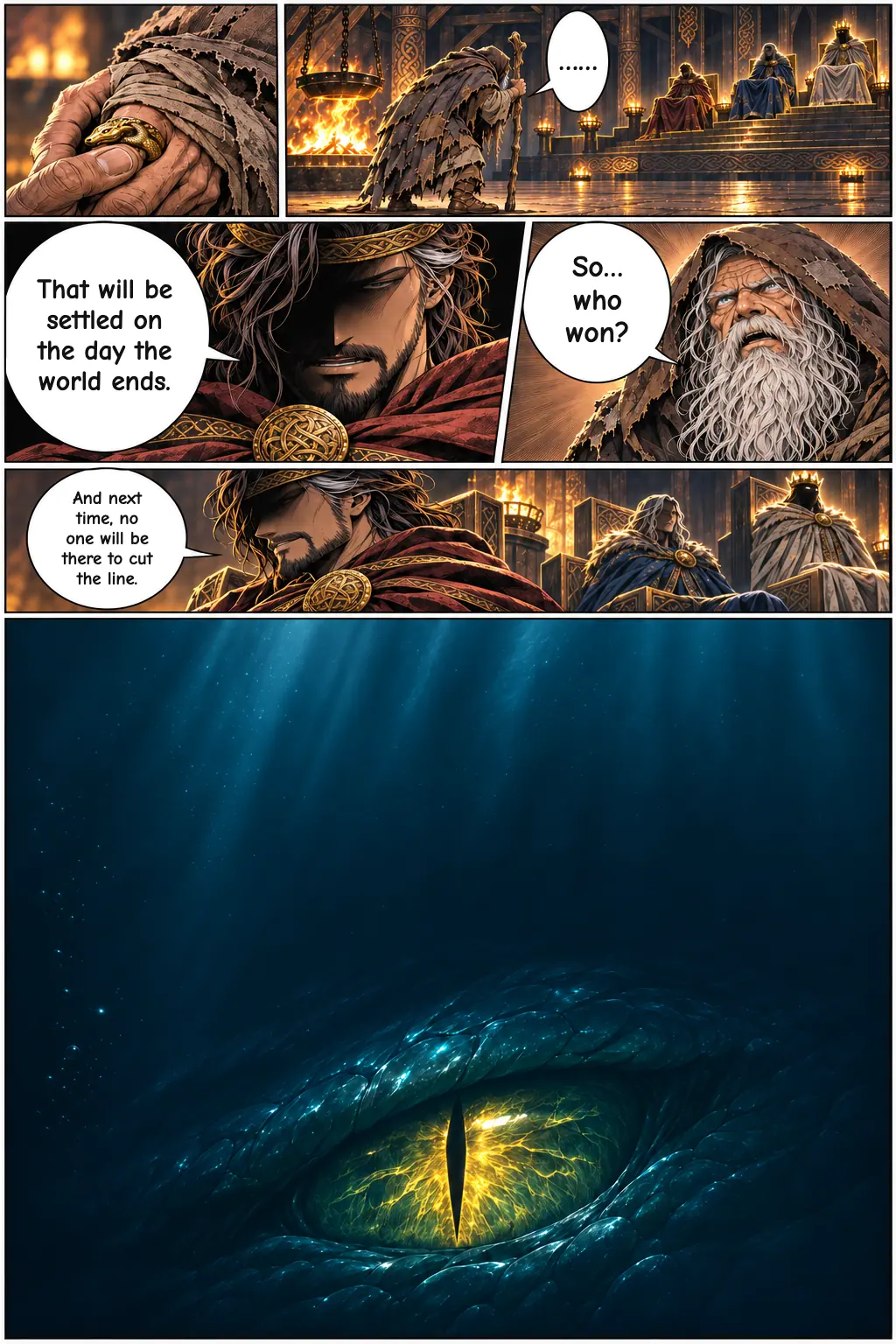
In Norse belief, Thor was the protector of gods and humans against the forces of chaos, often represented by giants and monsters. The World Serpent is one of the greatest of those forces. Their meeting in the boat is a stalemate, not a victory. Elsewhere in Gylfaginning, Snorri describes Ragnarök, the end of the gods, when Thor finally kills the serpent but staggers nine steps and dies from its venom. Read together, the fishing trip feels like a preview of that final battle.
This was clearly a popular story. A different version appears in Hymiskviða, a poem in the Poetic Edda, and scenes of a fisherman with an ox-head bait are carved on stones in Scandinavia and Britain, such as the Altuna stone in Sweden. Scholars generally read these as images of Thor's fishing, which suggests the tale was known well before Snorri wrote it down. Snorri was writing as a Christian in Iceland, about two centuries after the country's conversion, so his version is a learned retelling of older traditions rather than a pagan scripture.
What the Manga Changes or Adds
Snorri's account is short and reads almost like a summary, with very little dialogue. The manga keeps every major event in his order: the boyish disguise, the night at Hymir's house, the ox-head bait, the rowing past the safe fishing grounds, the foot through the hull, the staring contest, the cut line, and the thrown hammer.
Some details are the manga's own invention: Thor's exact appearance as a young man, Hymir's house and personality, the conversation on the boat, the weather and sea, and the serpent's colors and fangs. Thor's inner thoughts and flashbacks to his humiliation with the cat are dramatization based on the earlier chapter. The closing hint of a rematch at Ragnarök is also an addition: it comes from a later chapter of the Prose Edda, not from this story.
Where to Read It
If you want to see Thor's feet smash through the boat and the serpent rise from the deep, Episode 11 of NORSE MYTHOLOGY: The King Who Heard the End of the Gods is free to read here on Manga Portal. Every episode is free, with no sign-up needed. Start from Episode 1 to follow Gylfi's journey from the beginning, or go back one episode to see how the cat in Útgarða-Loki's hall set this rivalry in motion.
Characters in this episode
Thor
The Norse thunder god, who disguises himself as a young man to get revenge on the World Serpent after his humiliation in Útgarða-Loki's hall.
Hymir
A giant fisherman who mocks Thor, refuses to give him bait, and cuts the fishing line in terror at the decisive moment.
Jörmungandr (the Midgard Serpent)
The giant serpent that lies in the ocean around the human world, which bites Thor's ox-head bait and spits venom at him.
Himinhrjótr
Hymir's largest ox, whose head Thor tears off to use as bait.
Hár and Gangleri
The narrator and listener of the frame story; Hár tells the tale to Gangleri, who is King Gylfi in disguise.
Útgarða-Loki
The giant king of illusions who embarrassed Thor in the previous story and is mentioned here only by comparison.
FAQ
Why did Thor go fishing for the World Serpent?
In the Prose Edda, the trip comes right after Thor was tricked into trying to lift the serpent, disguised as a cat, in Útgarða-Loki's hall. The narrator presents the fishing trip as Thor making up for that failed journey.
Did Thor kill Jörmungandr on the fishing trip?
Not clearly. Hymir cut the line and the serpent sank; some said Thor's thrown hammer struck its head off, but Snorri's narrator believes the serpent survived. Thor kills it later, at Ragnarök.
What bait did Thor use to catch the Midgard Serpent?
He used the head of Himinhrjótr, the biggest ox in Hymir's herd, which Thor tore off himself after Hymir told him to find his own bait.
Why did Hymir cut the line?
Hymir panicked when he saw the serpent at the side of the boat and seawater pouring in through the hole Thor's feet had made. He cut the line just as Thor raised his hammer.
Where does the story of Thor and Hymir come from?
This version comes from Gylfaginning in Snorri Sturluson's Prose Edda, written in Iceland in the early 13th century. Another version is told in the Eddic poem Hymiskviða.