Get new episodes in your feed. Follow us on:ThreadsBluesky
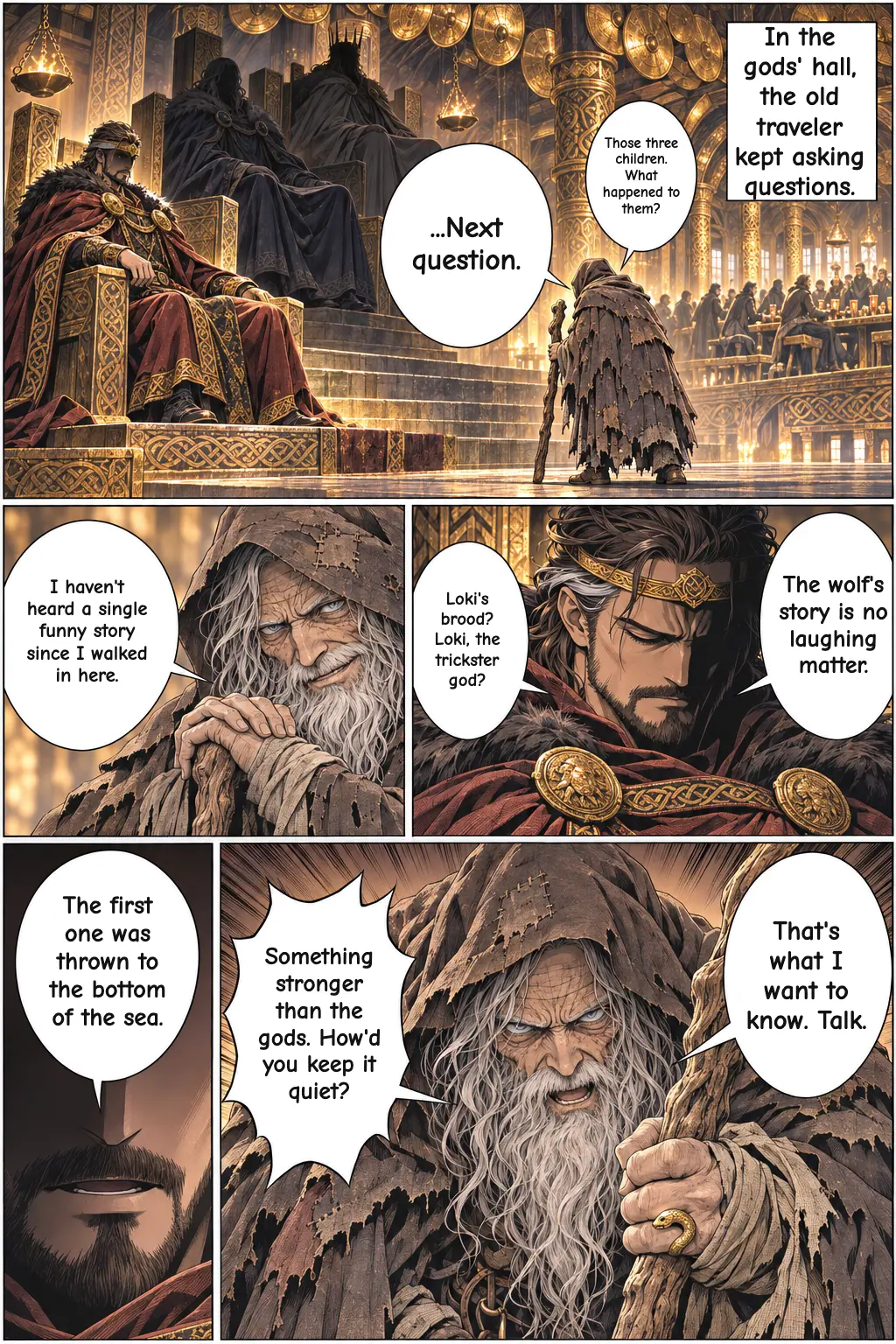
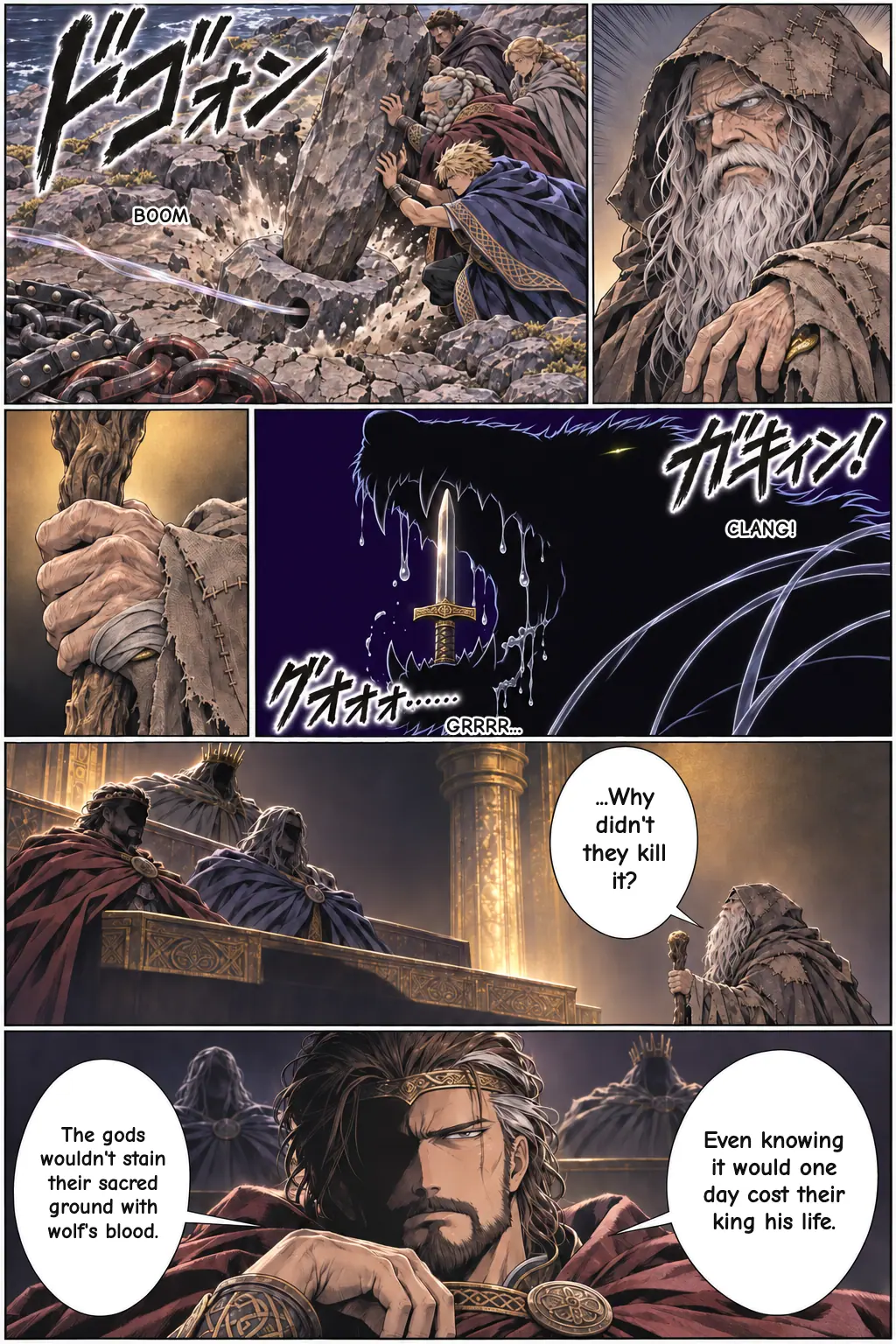
King Gylfi wants to know how the gods hold their power, and he admires their clever trick: binding the giant wolf Fenrir with a ribbon made from six things that no longer exist in this world. Then he hears about Týr, the one god who paid for their false promise, and his smile freezes. He turns on High with one question: why didn't they just kill it?
Story summary
The story comes from Gylfaginning, the first part of the Prose Edda, written down by the Icelandic scholar Snorri Sturluson in the early 13th century. The whole book is framed as a conversation: a king named Gylfi, disguised as a traveler called Gangleri, questions a mysterious figure named High about the gods. The binding of Fenrir is one of High's answers (usually numbered chapter 34, though editions differ). Loki, the trickster god, had three children with Angrboda, a giantess from Jötunheim, the land of the giants: the wolf Fenrir, the great serpent Jörmungandr, and Hel.
The Binding of Fenrir Explained: Gleipnir, Týr's Hand & Norse Myth Summary
In short: The binding of Fenrir is a Norse myth in which the gods, fearing a prophecy, trick the giant wolf Fenrir into a magic ribbon called Gleipnir, made by dwarves from six impossible things. The wolf agrees only if one god puts a hand in his mouth as a pledge; Týr does, and loses his hand when the ribbon holds. The story is told in Snorri Sturluson's Prose Edda (Gylfaginning, 13th century).
The Myth in Brief: How the Gods Bound Fenrir
The story comes from Gylfaginning, the first part of the Prose Edda, written down by the Icelandic scholar Snorri Sturluson in the early 13th century. The whole book is framed as a conversation: a king named Gylfi, disguised as a traveler called Gangleri, questions a mysterious figure named High about the gods. The binding of Fenrir is one of High's answers (usually numbered chapter 34, though editions differ).
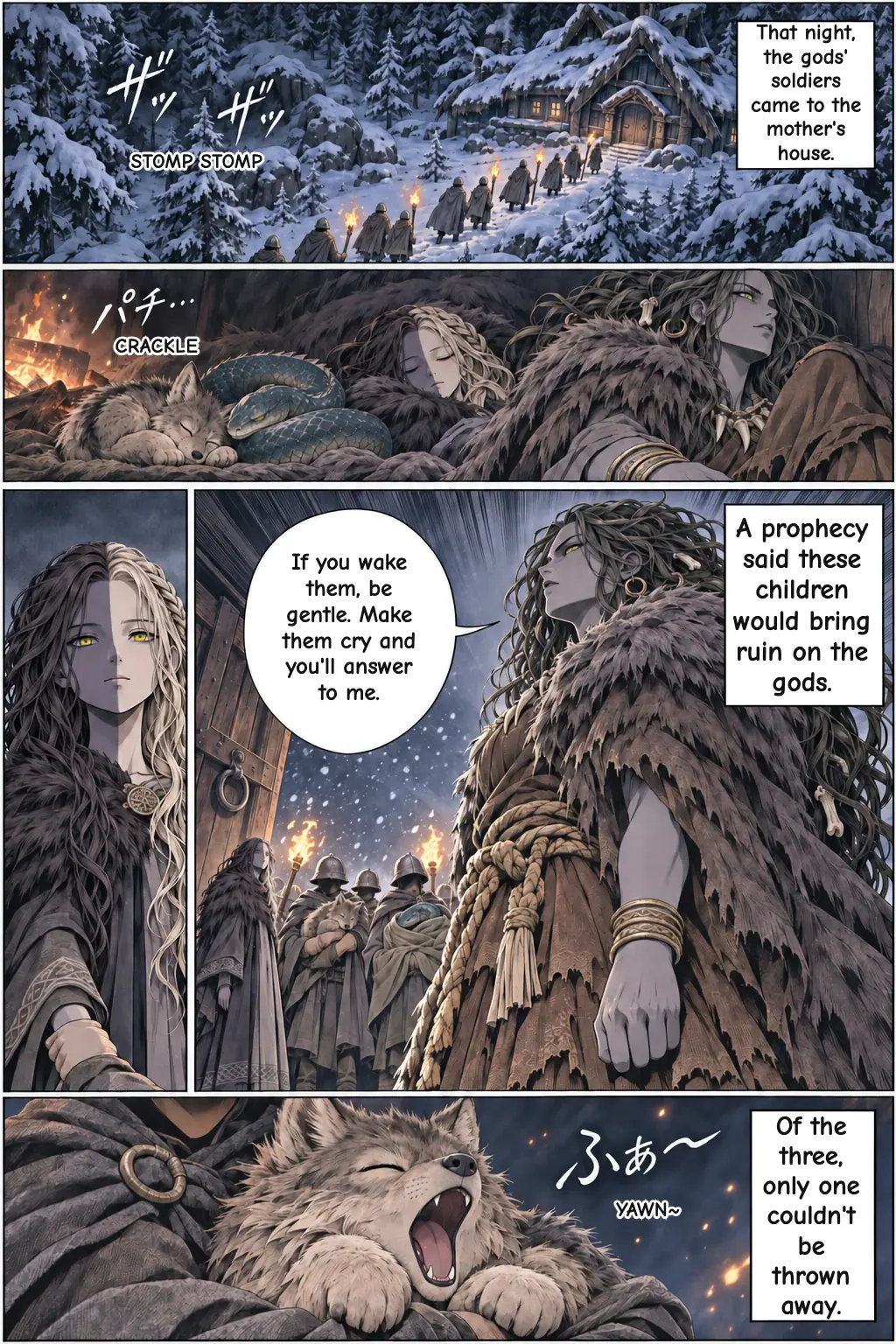
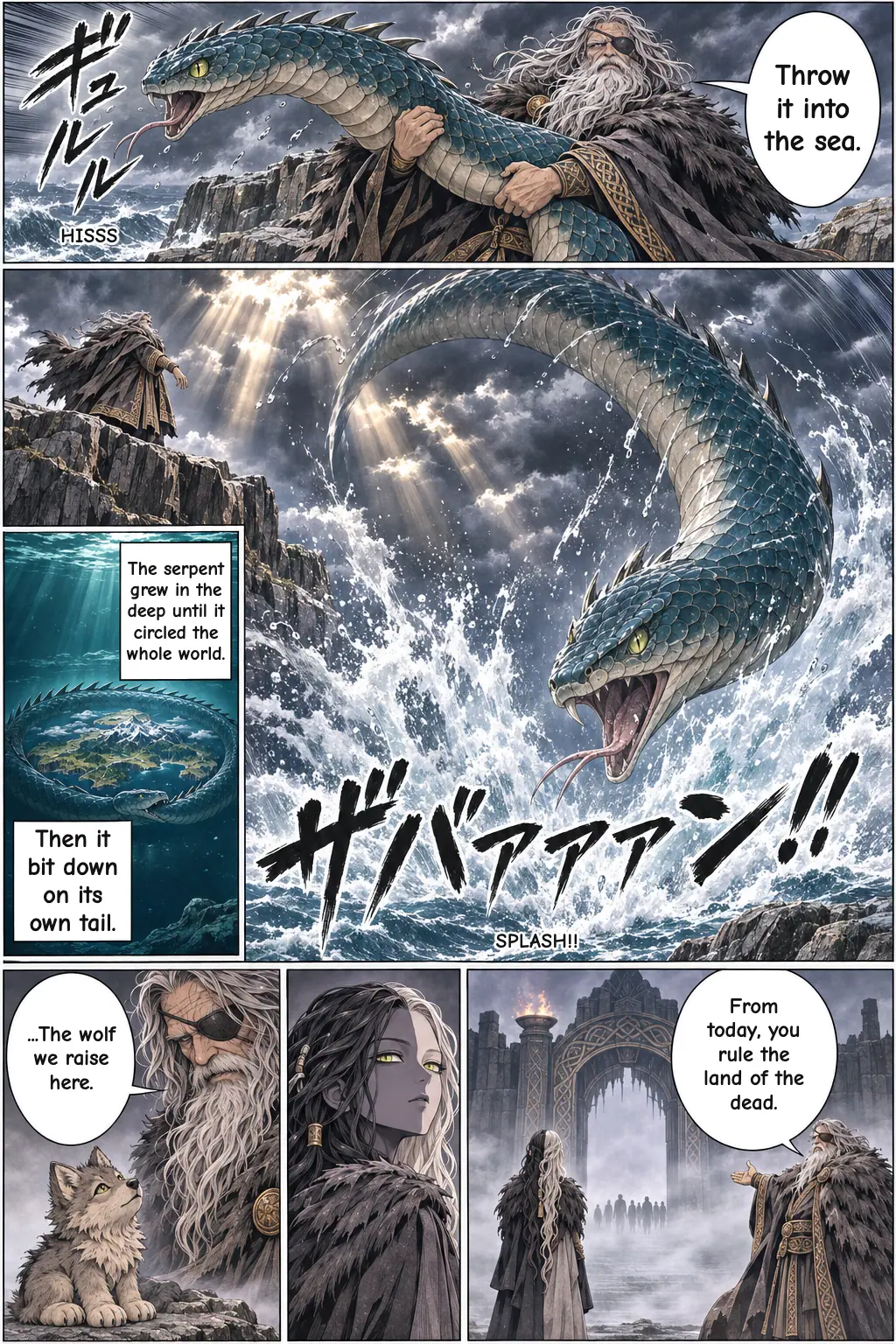
Loki, the trickster god, had three children with Angrboda, a giantess from Jötunheim, the land of the giants: the wolf Fenrir, the great serpent Jörmungandr, and Hel. Prophecies warned that all three would bring disaster on the gods. Odin, the All-Father, had them brought to him. He threw the serpent into the deep sea, where it grew until it circled the whole earth and bit its own tail. He sent Hel down to Niflheim, the cold underworld, to rule over those who die of sickness and old age.
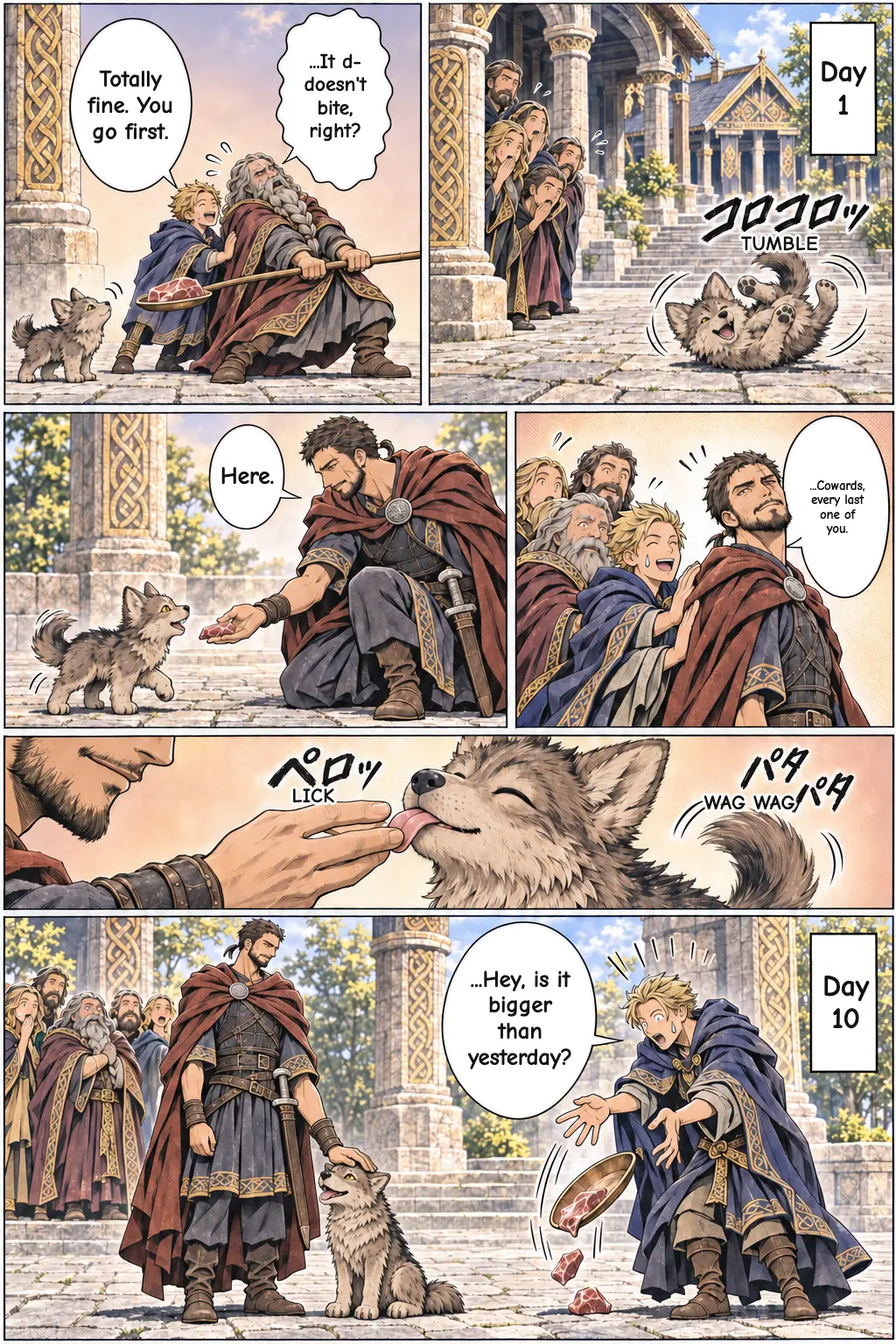
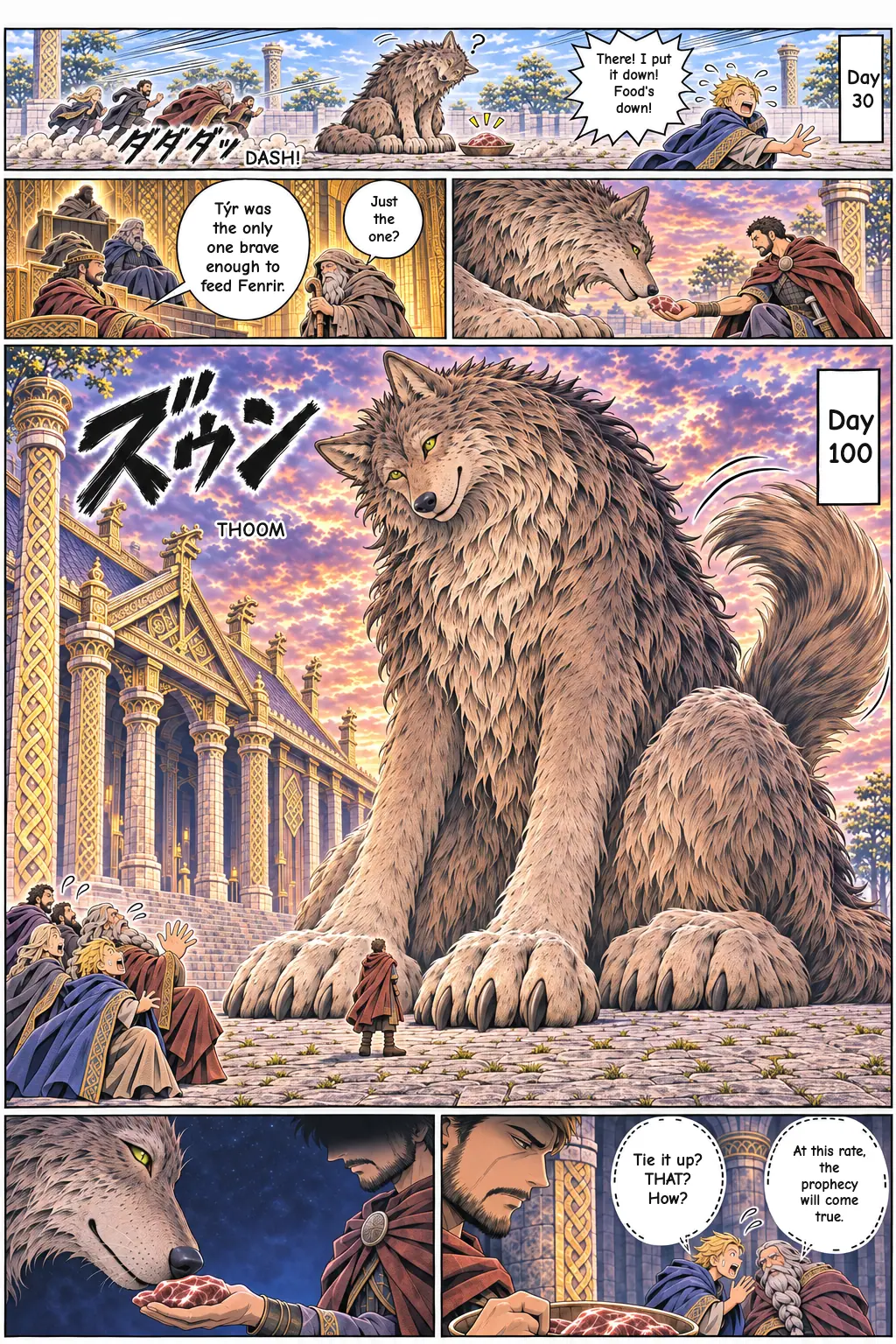
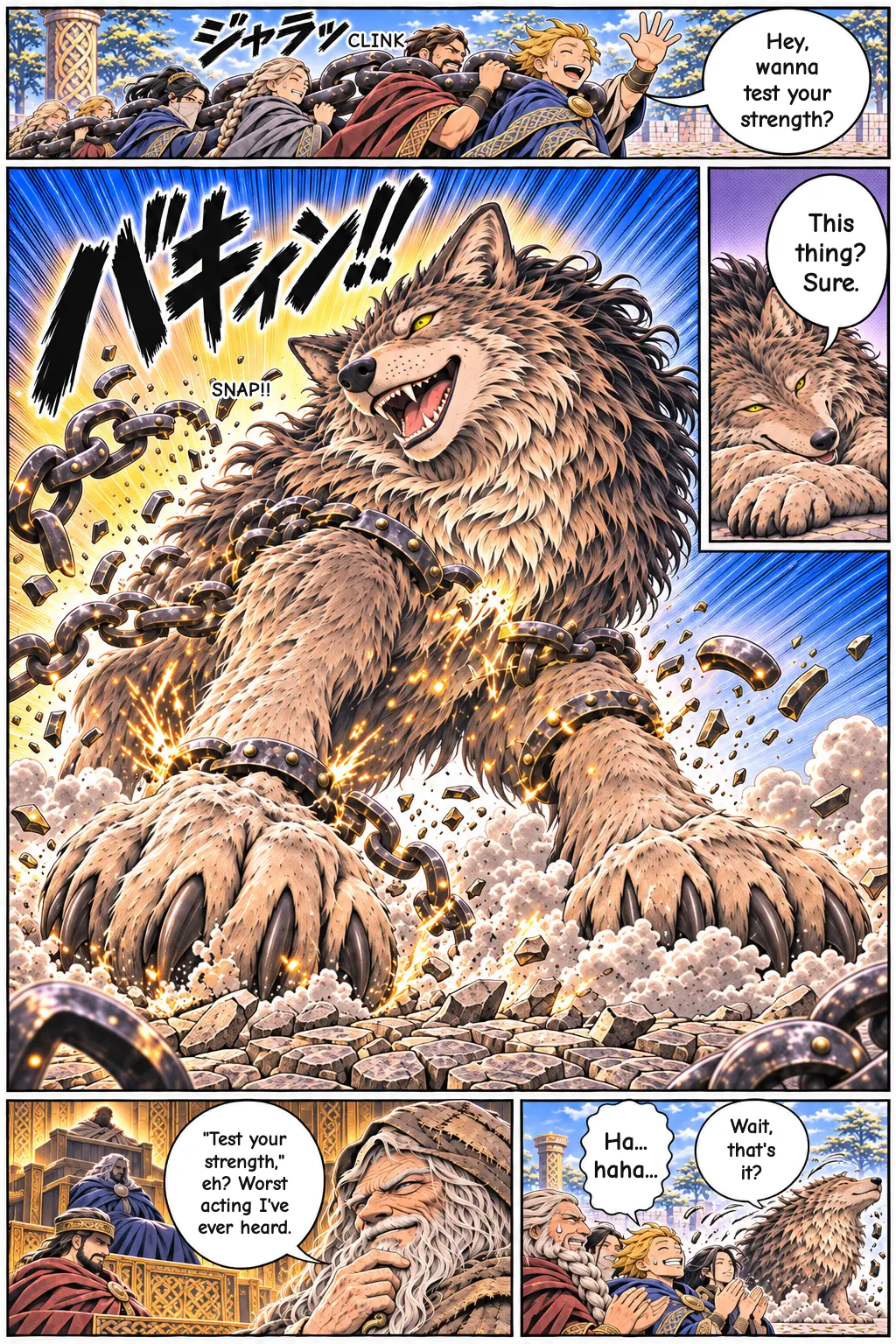
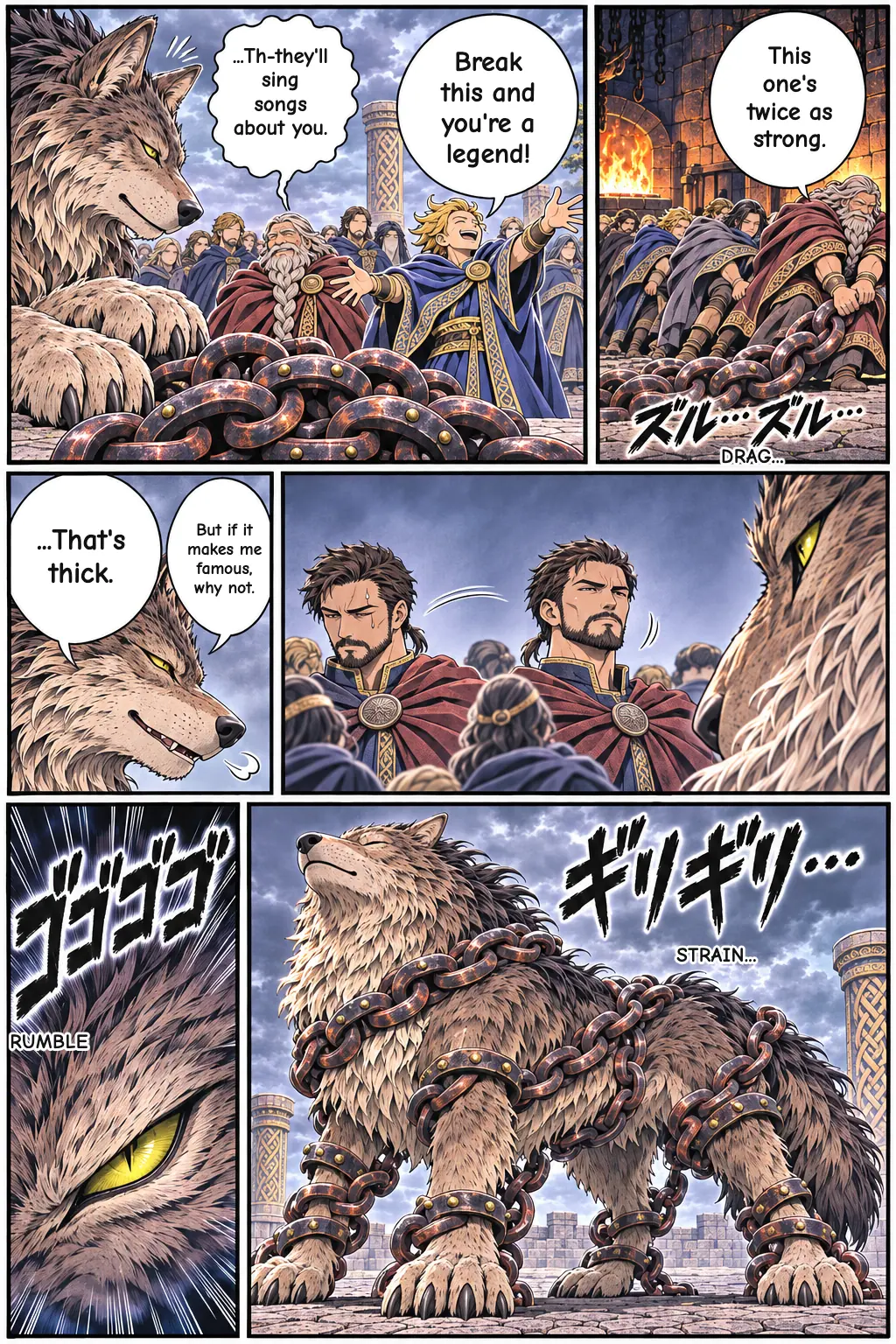
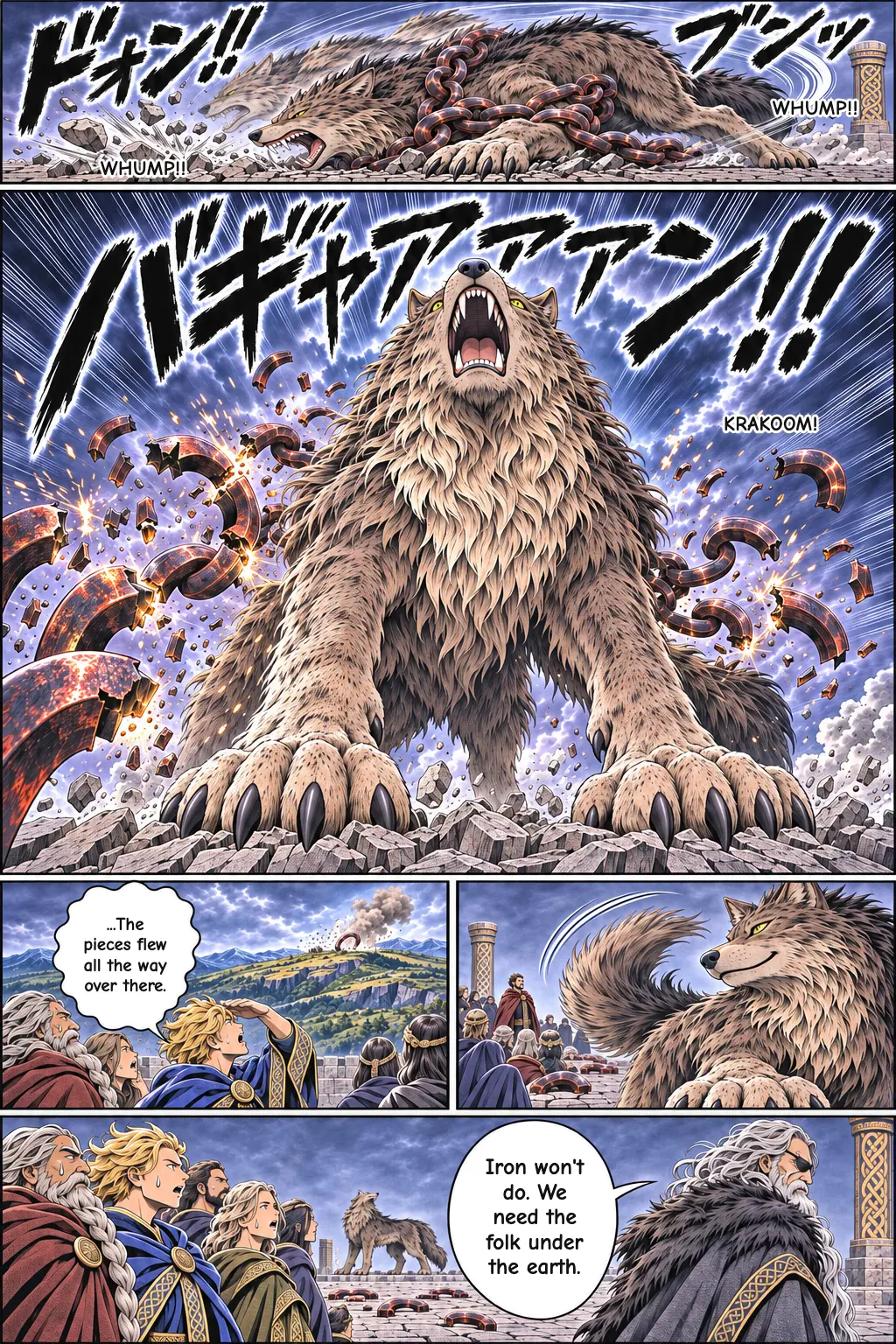
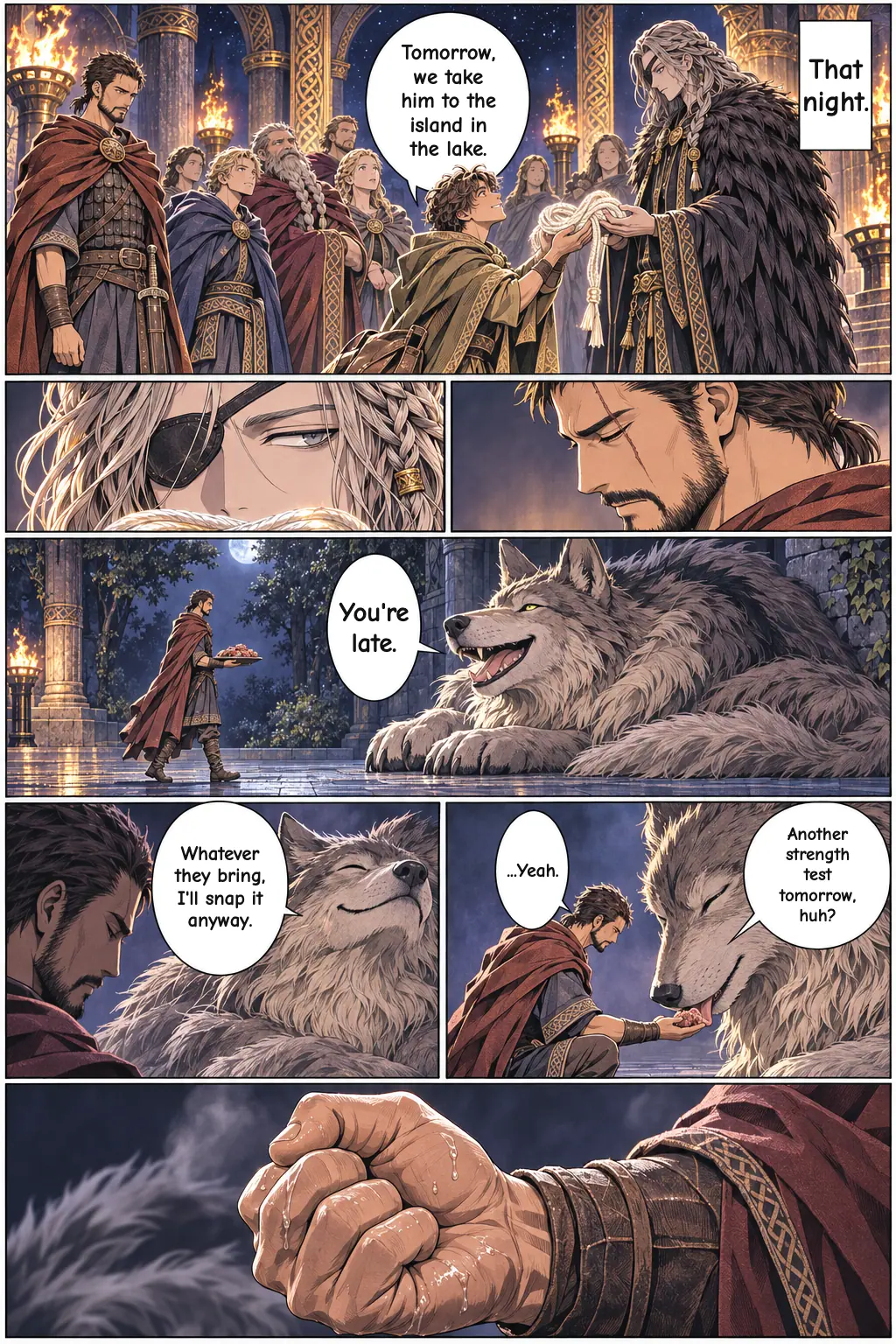
The wolf alone stayed with the gods, and only Týr, the bravest of them, dared to feed him. But Fenrir grew larger every day. The gods forged a chain called Leyding and proposed a test of strength; the wolf broke it with one push. They made a second chain, Dromi, twice as strong; he shook, strained and shattered it, sending pieces flying.
Gleipnir and Týr's Sacrifice
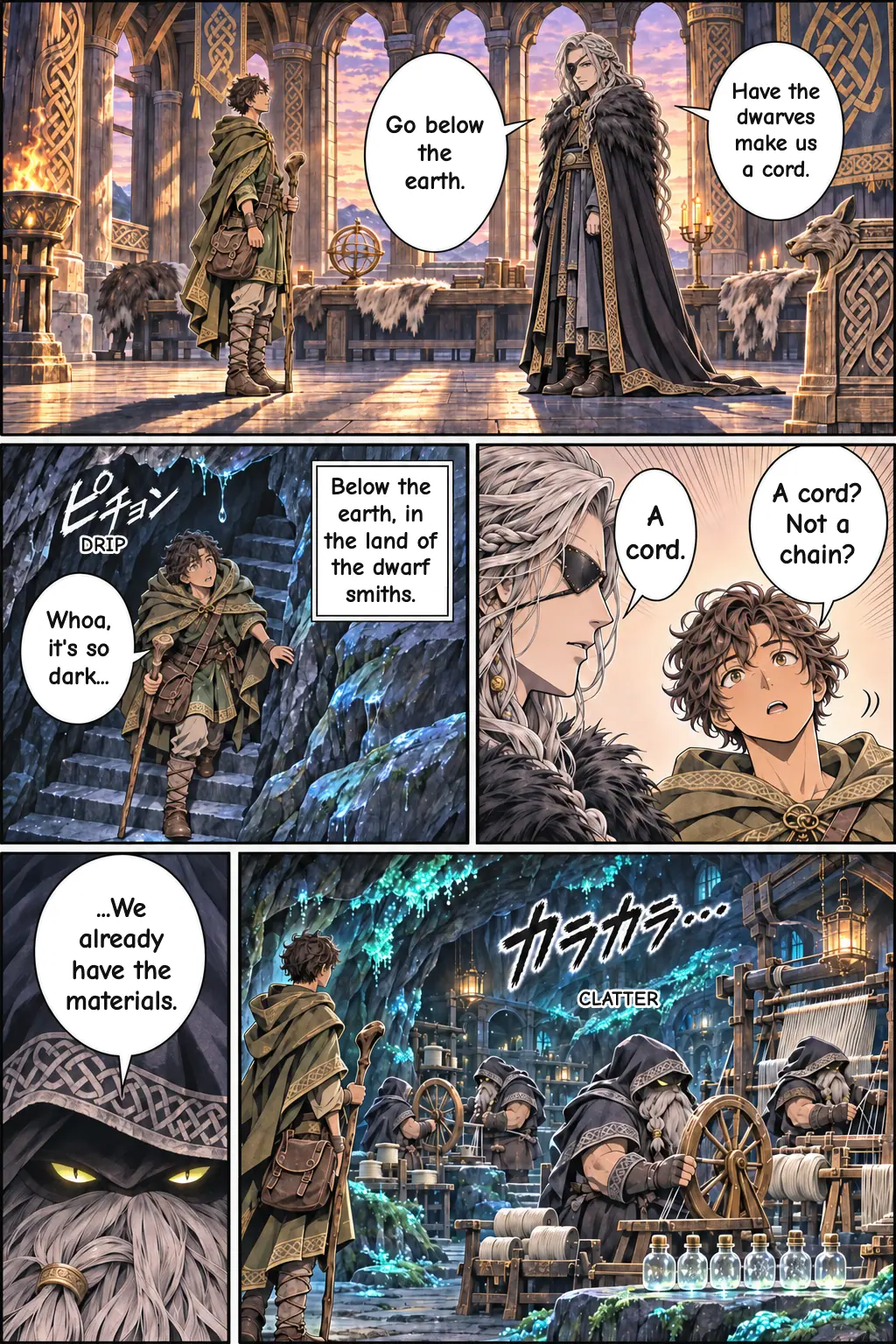
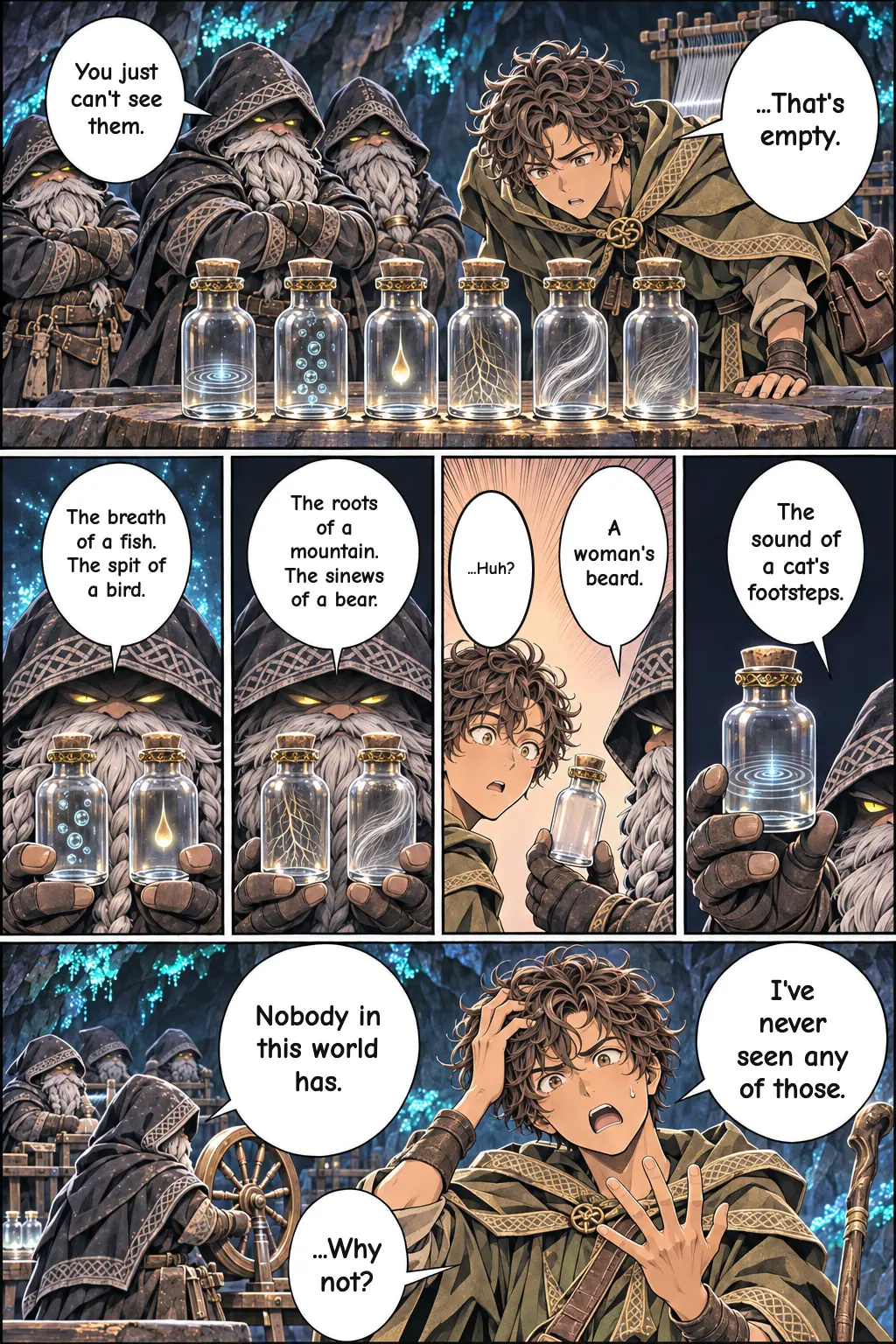
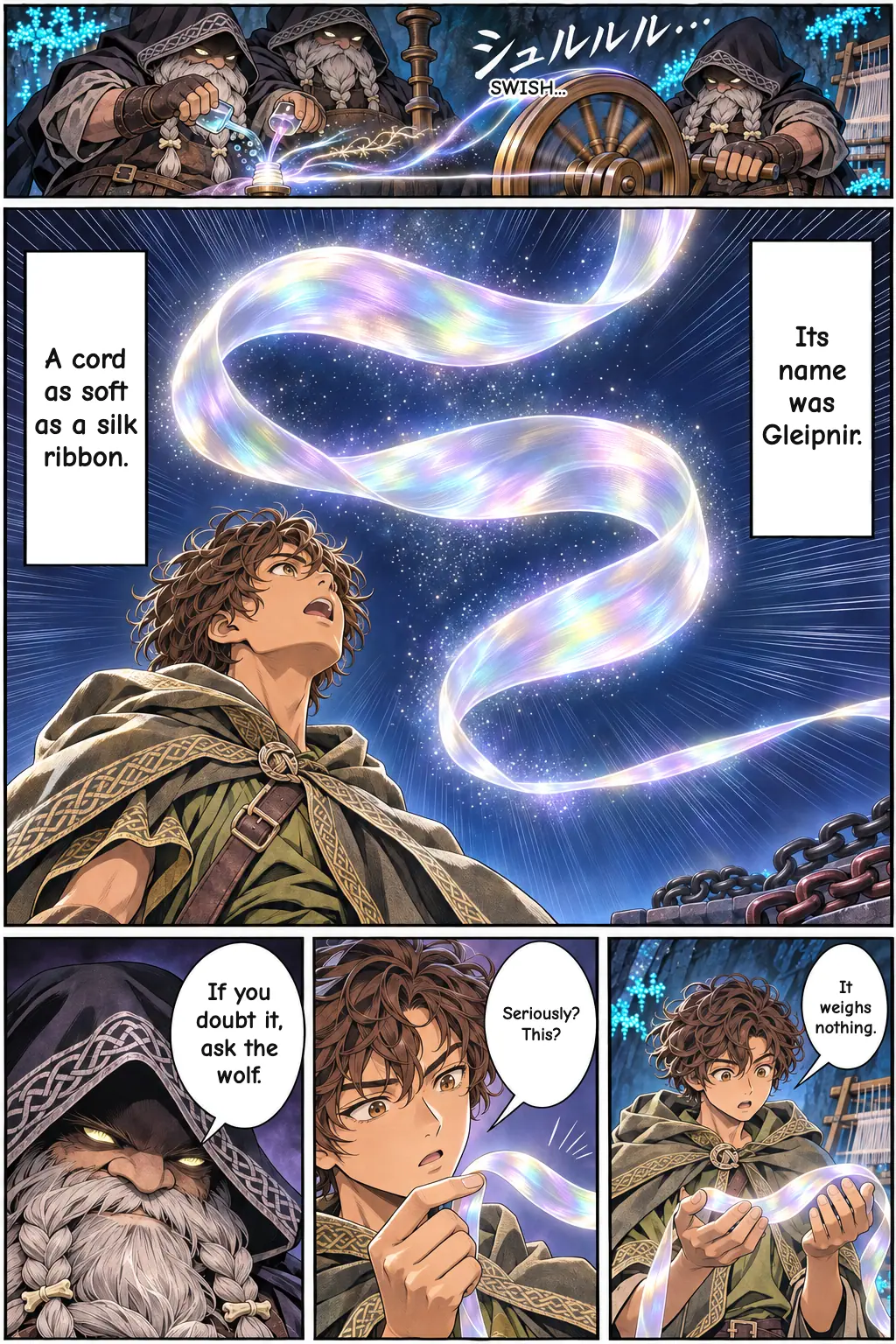
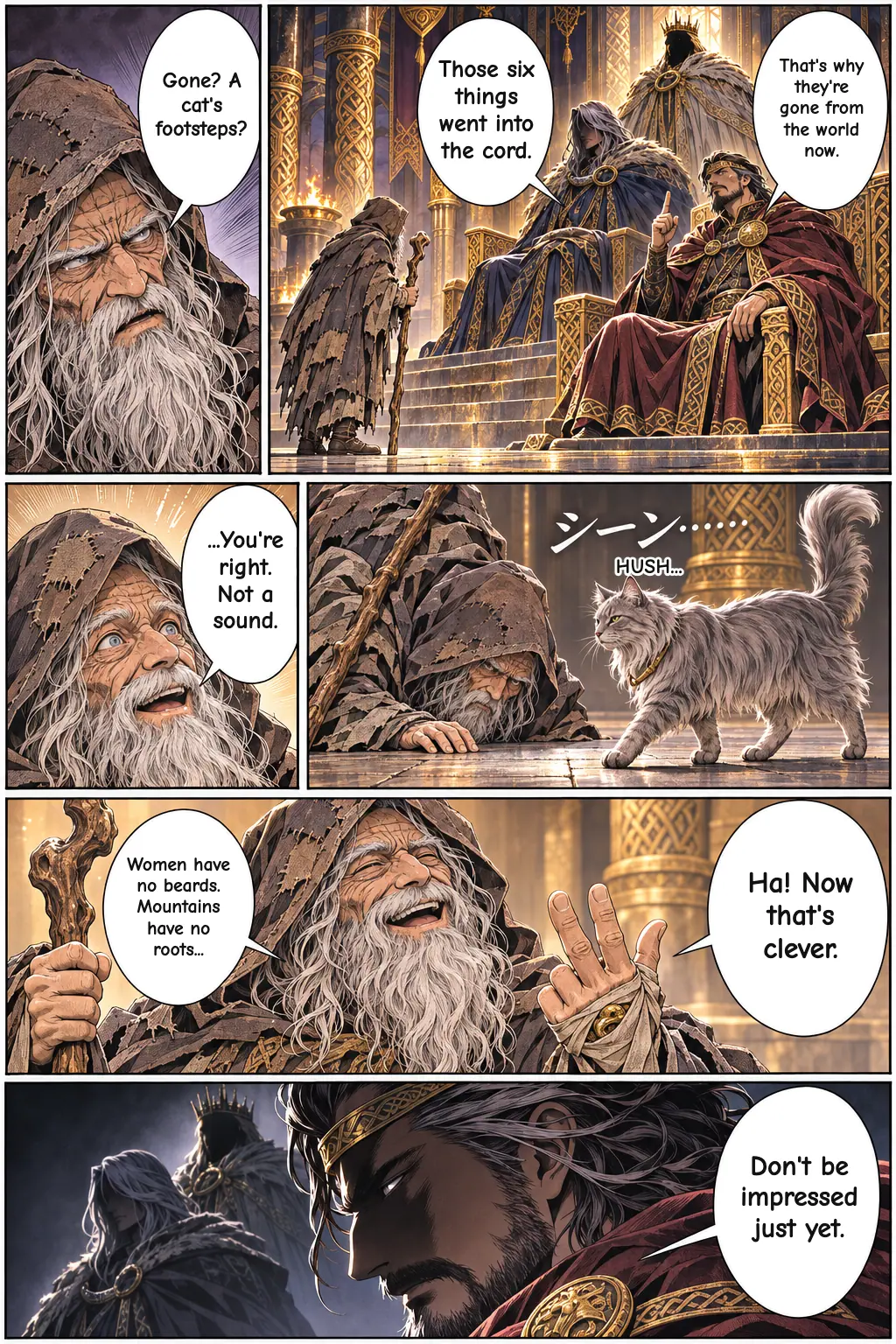
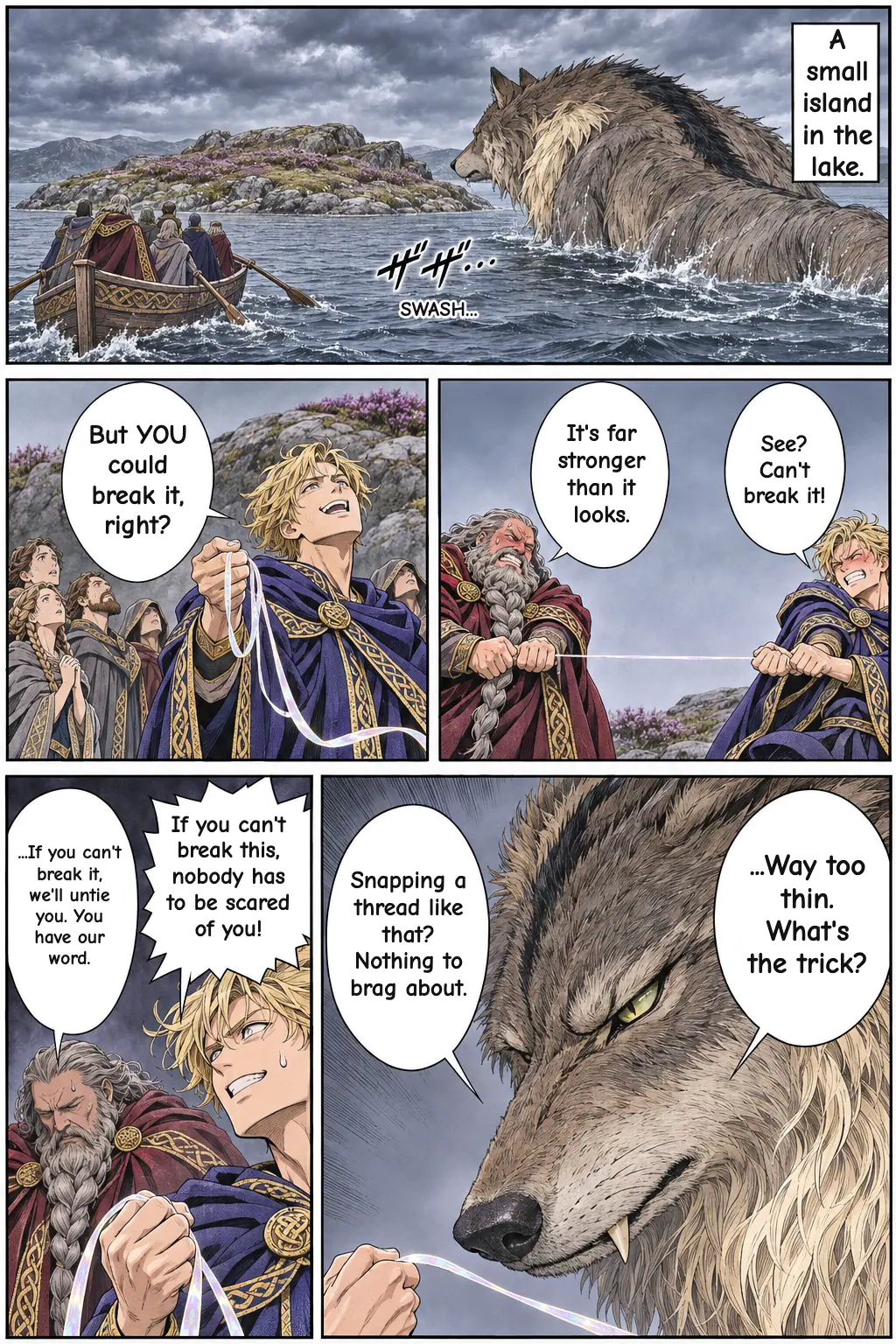
Odin then sent Skírnir, the messenger of the god Freyr, to the dwarves in Svartalfheim, the land of the dark elves. They made a fetter named Gleipnir from six things: the sound of a cat's footsteps, a woman's beard, the roots of a mountain, the sinews of a bear, the breath of a fish, and the spit of a bird. High adds, with a wink, that this is why none of these things exist anymore. The result looked like nothing more than a soft silk ribbon.
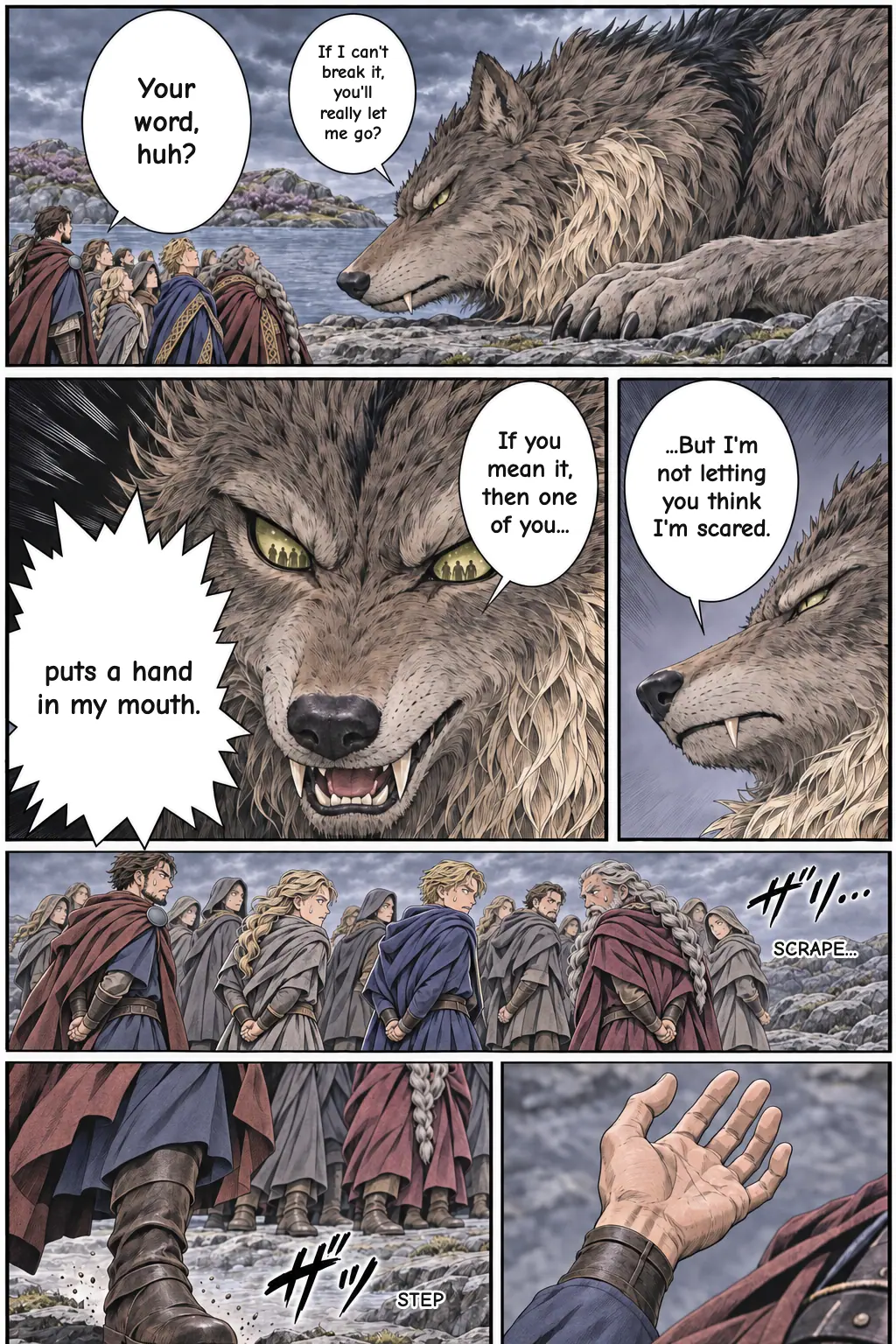
The gods took Fenrir to an island called Lyngvi in the lake Amsvartnir and invited him to try it. The wolf was suspicious: breaking such a thin thing would win him no fame, and if it was made with trickery, he wanted no part of it. Yet he did not want to be called a coward. So he set a condition: one of the gods must place a hand in his mouth as a pledge of good faith.
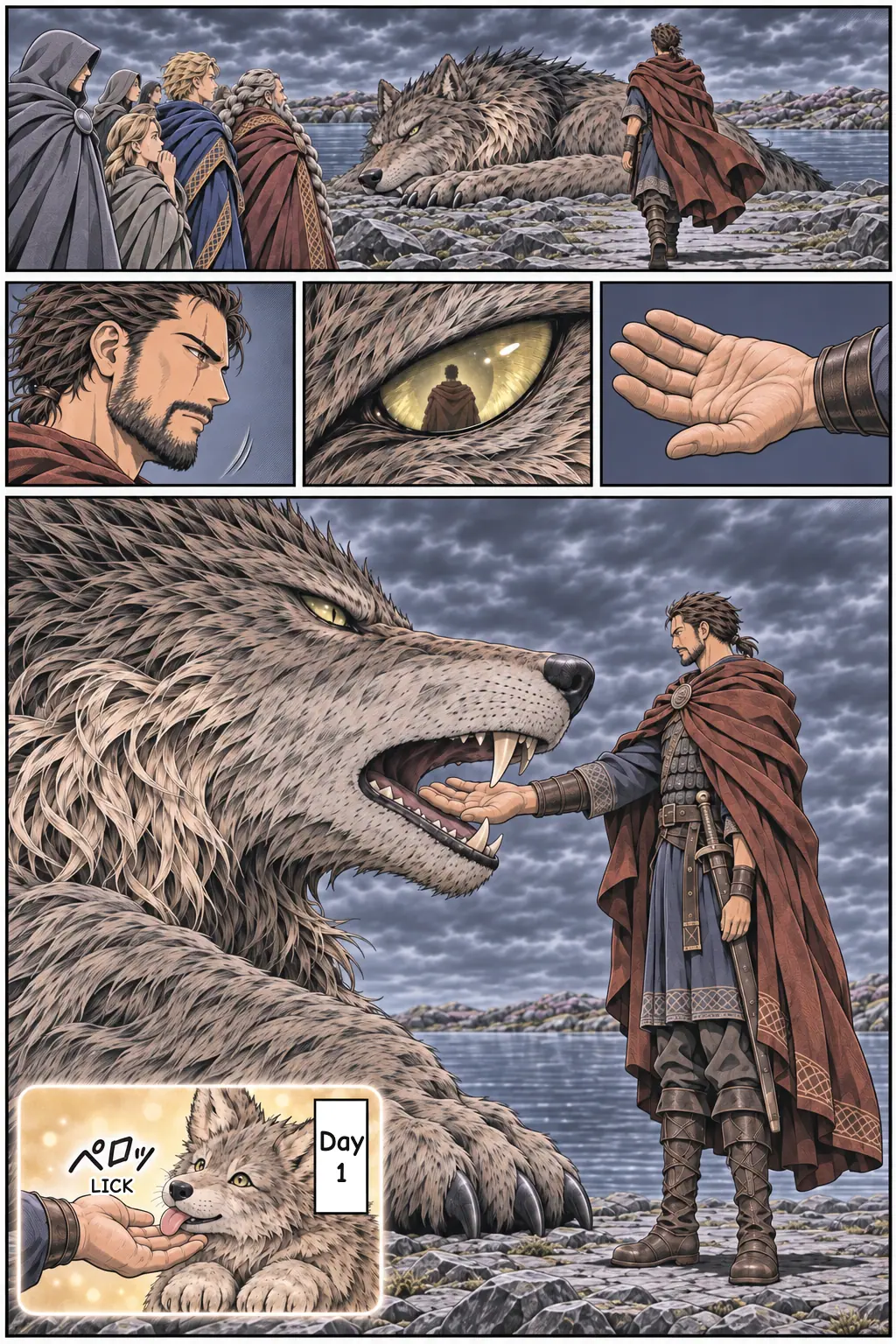
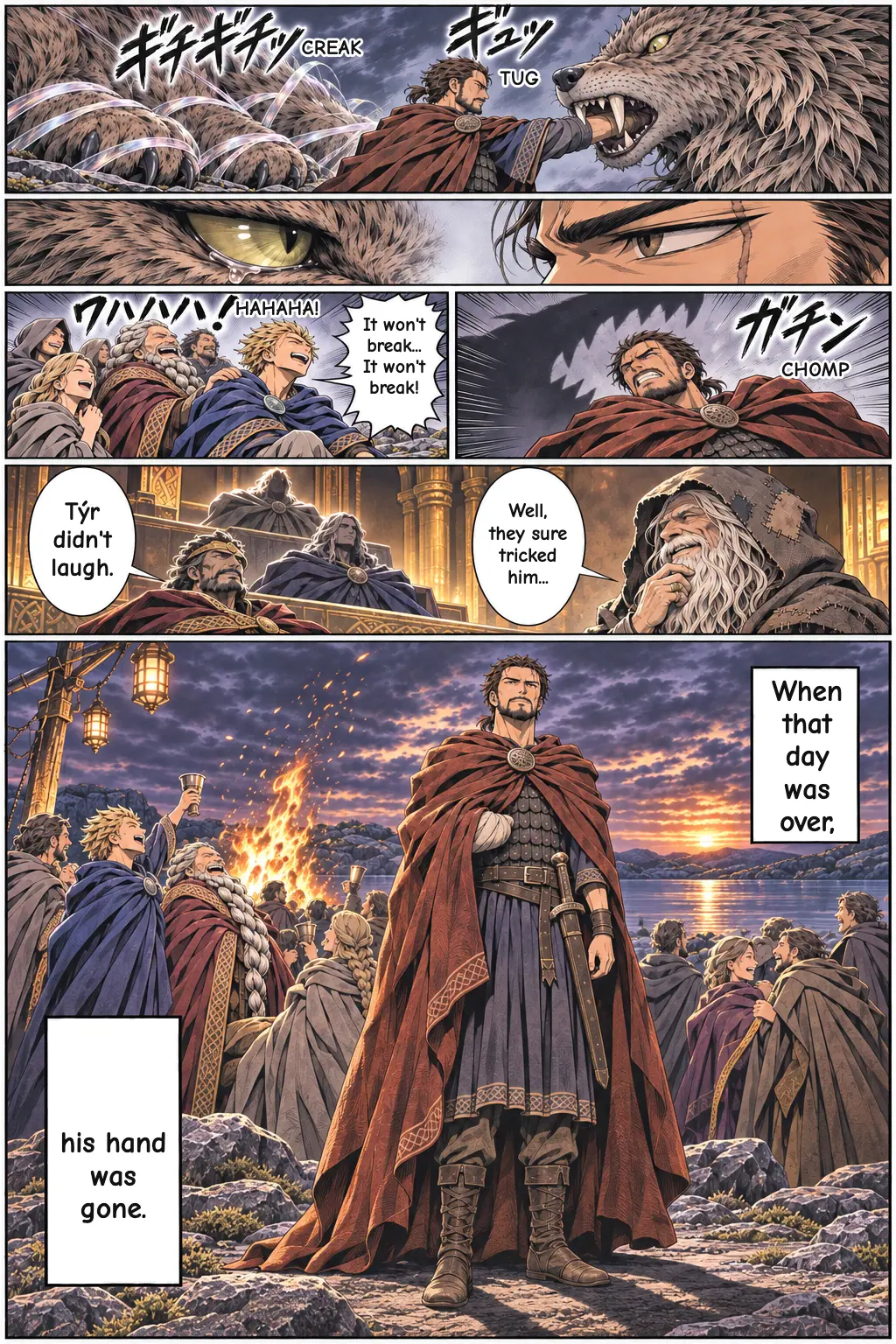
The gods looked at one another, and no one moved. Then Týr put his right hand between the wolf's jaws. The more Fenrir struggled, the tighter Gleipnir held. Everyone laughed except Týr, who lost his hand. Elsewhere in the Edda, Snorri notes that the wrist was afterward called the 'wolf's joint.'
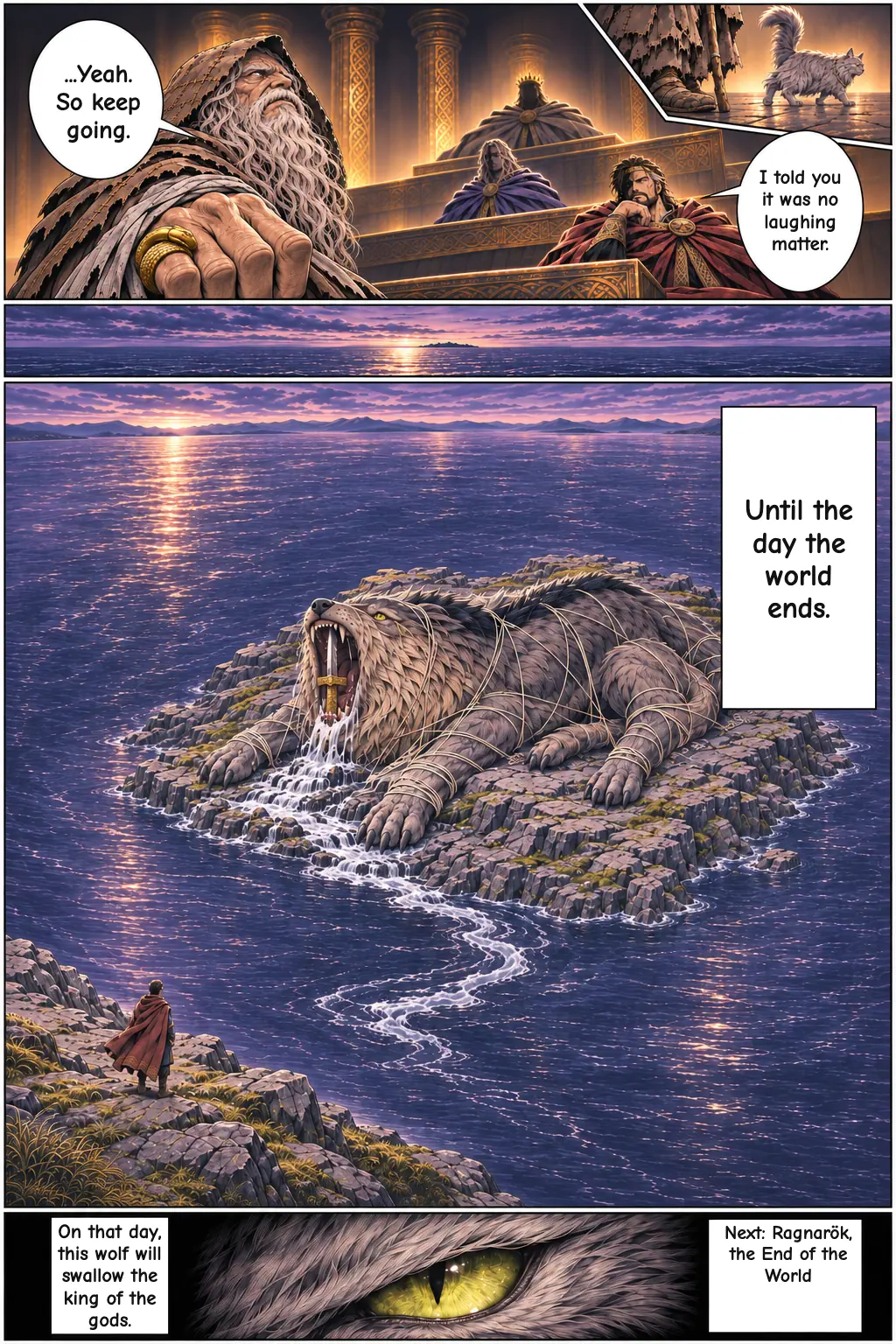
The gods anchored the fetter deep in the earth beneath great stones and wedged a sword in the wolf's open mouth, hilt against the lower jaw and point against the upper. His drool became a river called Ván, and there he will lie until Ragnarök, the end of the gods. When Gangleri asks why they didn't simply kill him, High answers that the gods would not stain their sacred places with his blood, even though prophecy said the wolf would be Odin's death.
What the Myth Tells Us
At its heart this is a story about oaths. The gods win by deception, and the only way to make a false promise believable is to back it with something real. Týr pays that price. Many readers and scholars see him as a god linked to law and sworn agreements, which makes his loss especially pointed: the keeper of oaths is maimed by a broken one. This reading is widely discussed, though how Týr was worshipped before Snorri's time is not fully known.
The myth also shows the Norse sense of fate. The gods can delay what the prophecy foretells, but not erase it. In a later part of Gylfaginning (not this chapter), Fenrir breaks free at Ragnarök, swallows Odin, and is killed by Odin's son Vídar. Snorri was a Christian writing about older beliefs, so his retelling reflects both earlier poems and his own shaping of them.
What the Manga Changes
Episode 7 keeps Snorri's frame: we watch King Gylfi listen, admire the cleverness of the trick, and then go quiet when he hears about Týr. His final question, why not just kill the wolf, is the same one Gangleri asks in the original, and High's answer follows the source.
The Edda says very little about feelings or settings, so the manga fills those gaps. Wherever the episode shows the warmth between young Fenrir and Týr beyond feeding him, the gods' debate over the plan, the look of the dwarves' realm, the glow of Gleipnir, the scenery of the lake, the long silence before Týr steps forward, or his inner resolve, those are creative additions. The original records only what people did and said. Any sense of the wolf waiting in anger is also interpretation; the Edda does not describe Fenrir's thoughts after he is bound.
Where to Read It
If you want the original, look for an English translation of Snorri Sturluson's Prose Edda and read the Gylfaginning section on Loki's children. It is short and surprisingly funny in places.
If you'd like to see the story first, Episode 7 of NORSE MYTHOLOGY: The King Who Heard the End of the Gods tells it in manga form, and every episode is free to read on Manga Portal with no sign-up. Start here, or go back to Episode 1 to follow King Gylfi's journey toward Ragnarök from the beginning.
Characters in this episode
Fenrir
The giant wolf, son of Loki, raised by the gods and bound with Gleipnir because prophecy said he would bring their ruin.
Týr
The bravest of the gods and the only one who fed Fenrir; he put his right hand in the wolf's mouth as a pledge and lost it.
Odin (the All-Father)
Chief of the gods, who dealt with Loki's three children and had the dwarves make Gleipnir, though he was fated to die by the wolf.
Loki
The trickster god and father of Fenrir, Jörmungandr and Hel; he does not appear in the binding scene itself.
Skírnir
Freyr's messenger, sent by Odin to the dwarves of Svartalfheim to have Gleipnir made.
King Gylfi (Gangleri) and High
The frame-story pair: a disguised king who asks questions and the mysterious figure who tells him the myths.
FAQ
How did Týr lose his hand?
Fenrir agreed to be bound with Gleipnir only if a god placed a hand in his mouth as a pledge of good faith. Týr did, and when the wolf realized he could not break free, he bit it off. The Prose Edda says the wrist was later called the 'wolf's joint.'
What is Gleipnir made of?
According to Snorri's Prose Edda, the dwarves made Gleipnir from six things: a cat's footsteps, a woman's beard, the roots of a mountain, a bear's sinews, a fish's breath, and a bird's spit. The storyteller jokes that this is why those things no longer exist.
Why didn't the gods kill Fenrir?
In the Prose Edda, High explains that the gods did not want to defile their sacred places with the wolf's blood. They chose to bind him instead, even though prophecy said he would one day kill Odin.
What happens to Fenrir at Ragnarök?
In a later part of Gylfaginning, Fenrir breaks loose at Ragnarök, swallows Odin, and is then killed by Odin's son Vídar. This is told in a separate chapter from the binding story.
Who are Loki's children?
With the giantess Angrboda, Loki fathered the wolf Fenrir, the world serpent Jörmungandr, and Hel, who rules the dead in Niflheim. Odin cast the serpent into the sea and Hel into the underworld, and kept the wolf among the gods.