Get new episodes in your feed. Follow us on:ThreadsBluesky
A nameless builder offers to raise a wall no giant can break, all in one winter. His price: the goddess Freyja, plus the sun and the moon. The Æsir laugh at the impossible deal, until the builder's giant horse nearly finishes the wall. Then they go pale and pin the blame on Loki. As King Gylfi hears the funny tale of how the eight-legged horse Sleipnir was born, he is the only one who stops laughing.
Story summary
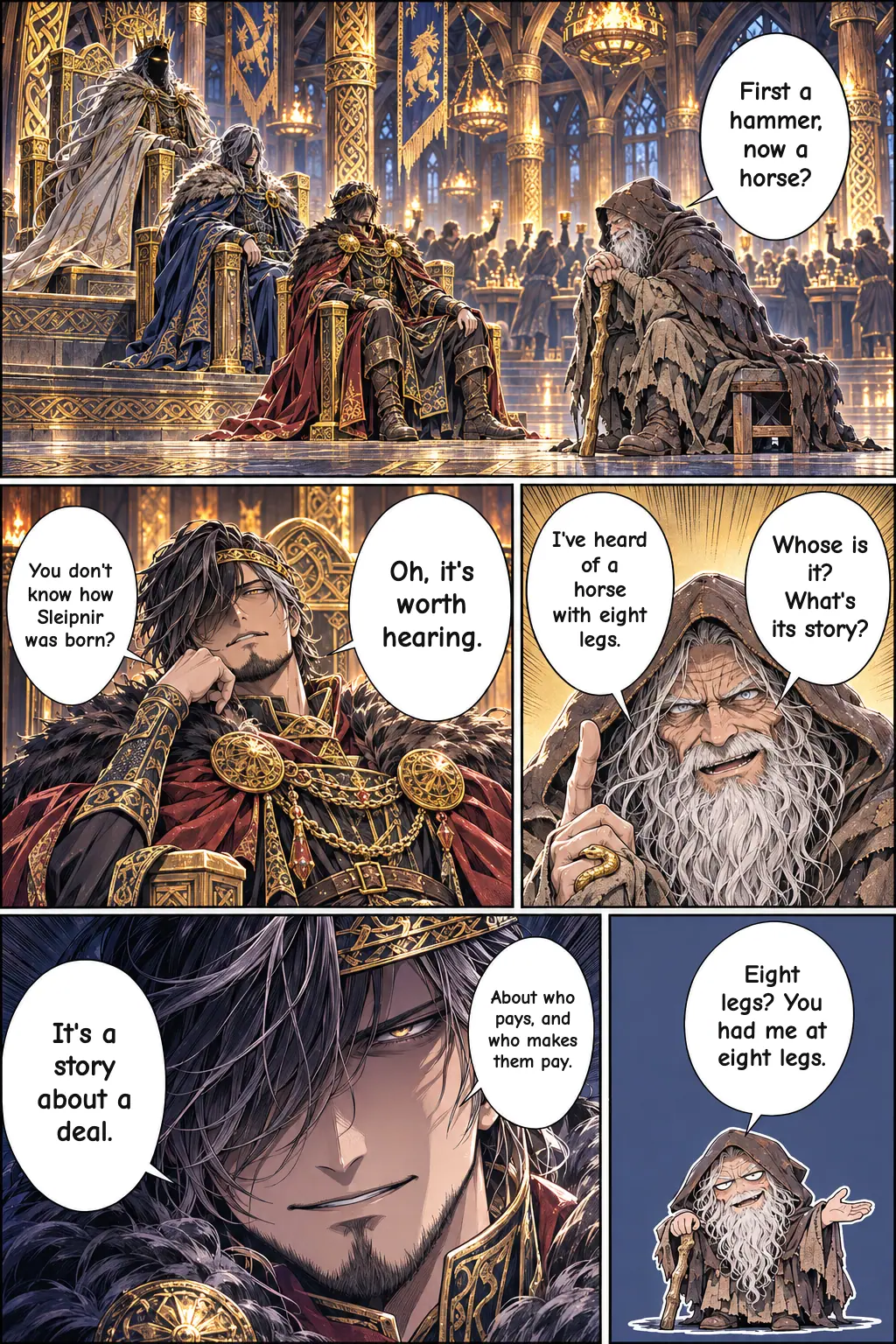
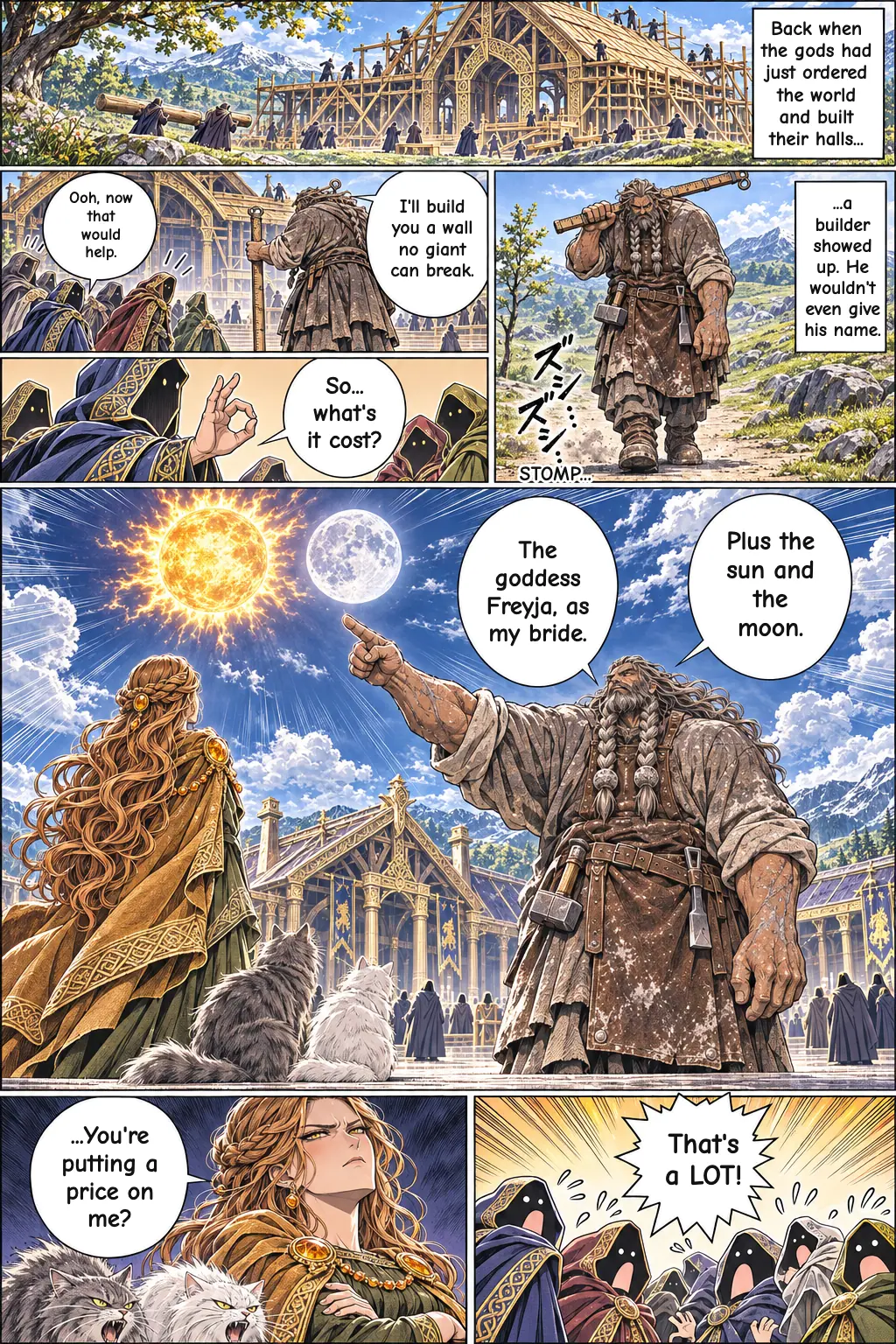
The story opens with a question. Gangleri, a disguised human king named Gylfi, asks whose horse Sleipnir is and what story lies behind it. High, one of three mysterious figures answering him, replies that Gangleri must not know how Sleipnir was born, and he tells the tale. Early in the world's history, after the gods had set up Midgard (the world of humans) and built Valhalla, a builder arrived. He offered to raise a stronghold so strong that no mountain giant or frost giant could get past it. He would need three seasons.
How Was Sleipnir Born? The Giant Builder and the Wall of Asgard Myth
In short: The birth of Sleipnir is a Norse myth from Snorri Sturluson's Prose Edda (Gylfaginning, written around 1220). A builder who turns out to be a mountain giant offers to build the gods a stronghold in one winter. His price is the goddess Freyja, the sun and the moon. When his stallion Svaðilfari nearly finishes the job, a mare lures the horse away. The mare is Loki. Thor kills the builder, and Loki later gives birth to Sleipnir, the grey eight-legged horse that is the best of all horses.
The Original Myth: A Builder, a Bargain, and a Horse
The story opens with a question. Gangleri, a disguised human king named Gylfi, asks whose horse Sleipnir is and what story lies behind it. High, one of three mysterious figures answering him, replies that Gangleri must not know how Sleipnir was born, and he tells the tale.
Early in the world's history, after the gods had set up Midgard (the world of humans) and built Valhalla, a builder arrived. He offered to raise a stronghold so strong that no mountain giant or frost giant could get past it. He would need three seasons. His price was huge: Freyja, the goddess of love and fertility, as his wife, and the sun and the moon as well.
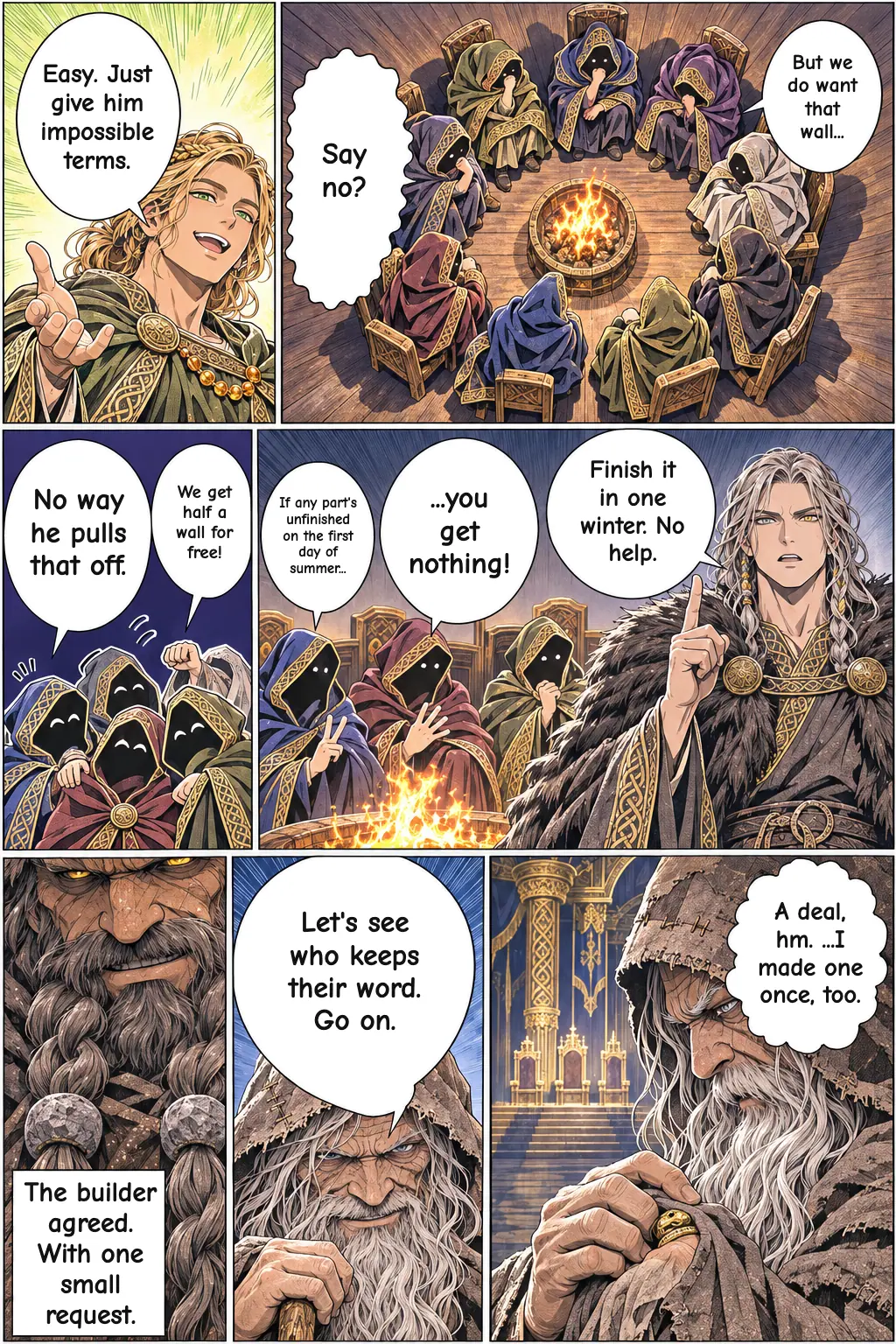
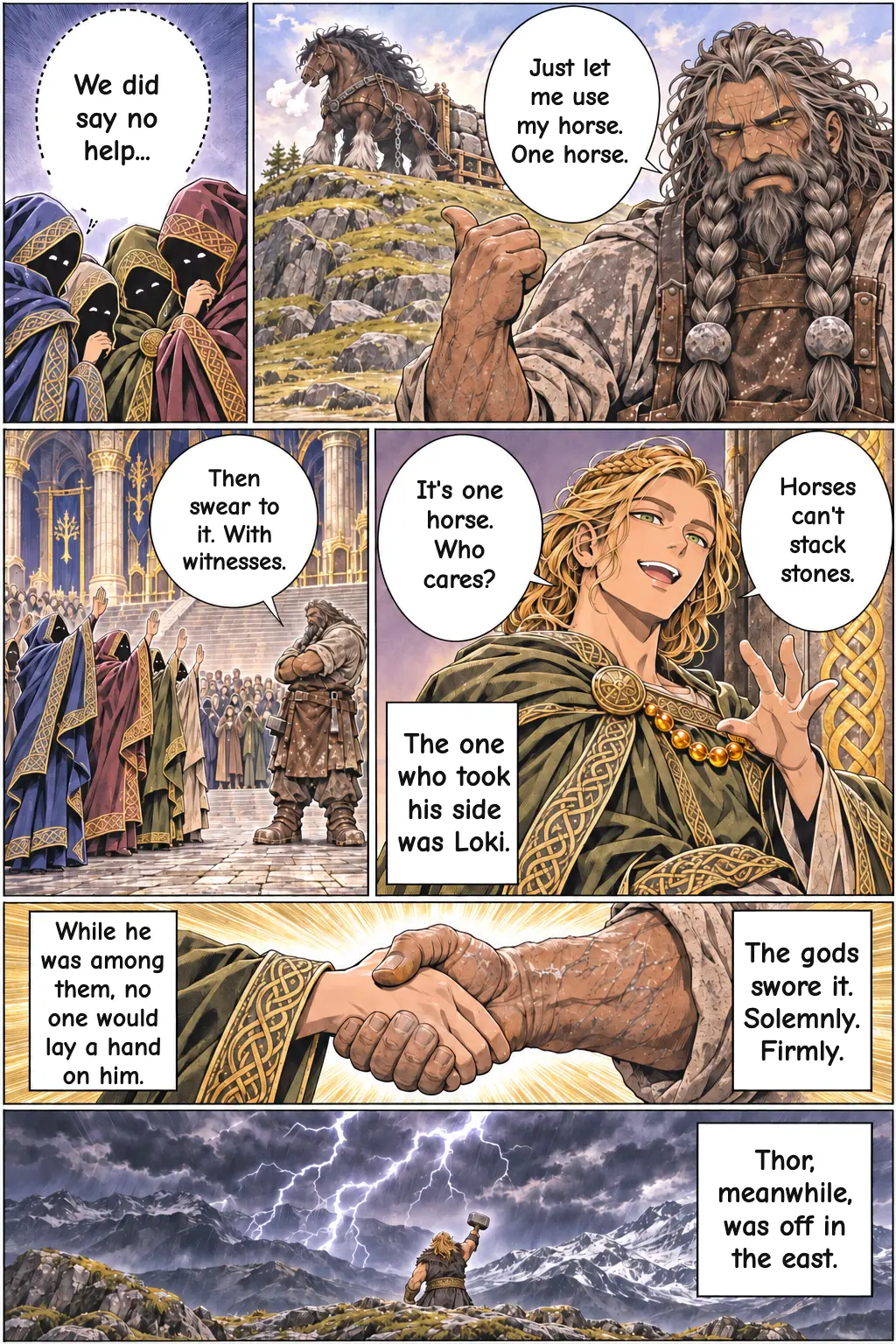
The gods talked it over and set conditions they expected him to fail. He had to finish in a single winter, with no help from any man. If any part was still unbuilt on the first day of summer, he would get nothing. The builder asked for one thing in return: permission to use his stallion, Svaðilfari. Loki, the trickster god, advised the gods to agree. The deal was sealed with many witnesses and strong oaths, so the builder could feel safe among the gods. That mattered, because Thor, their strongest protector, was away in the east fighting trolls.
How the Plan Went Wrong, and How Loki Fixed It
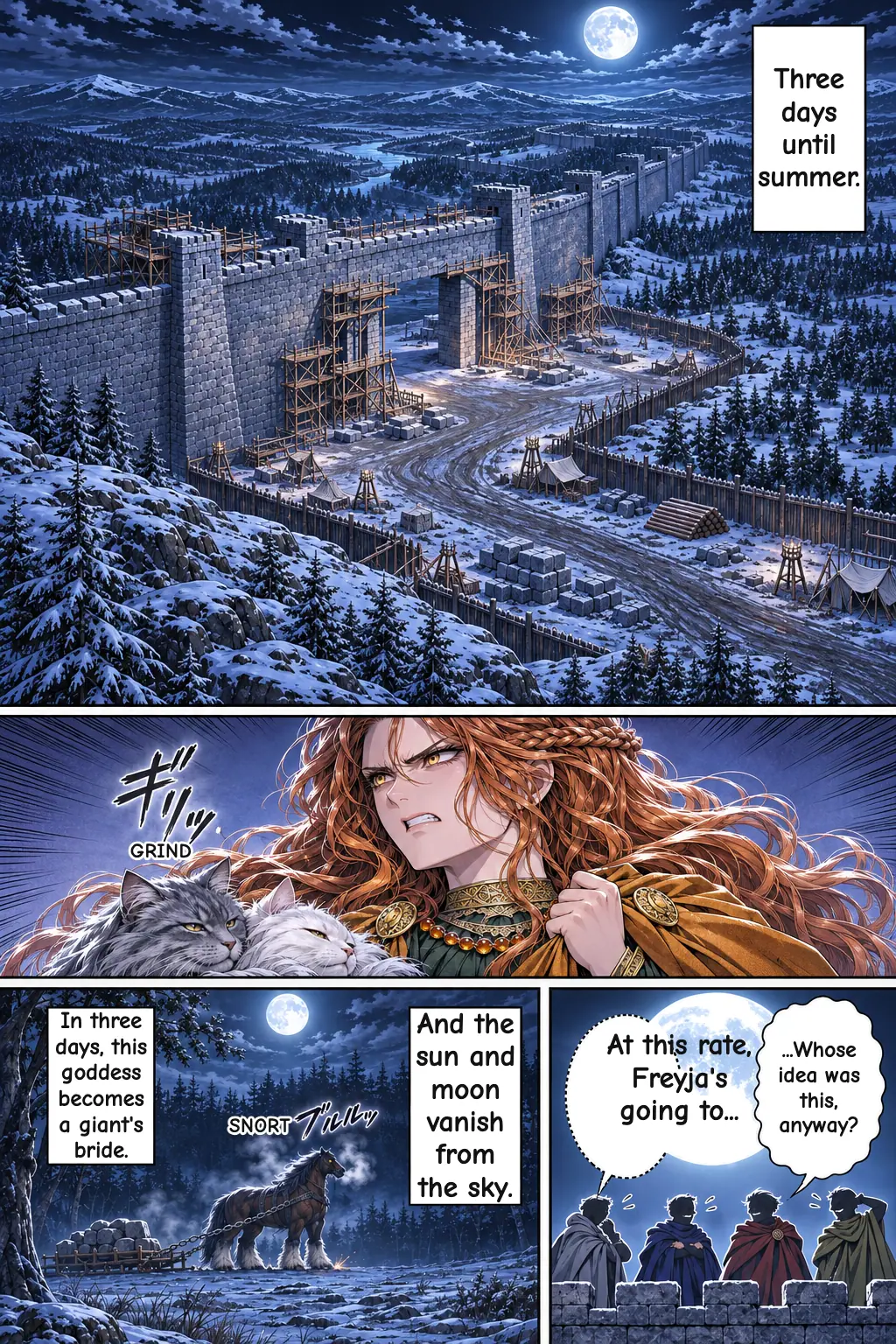
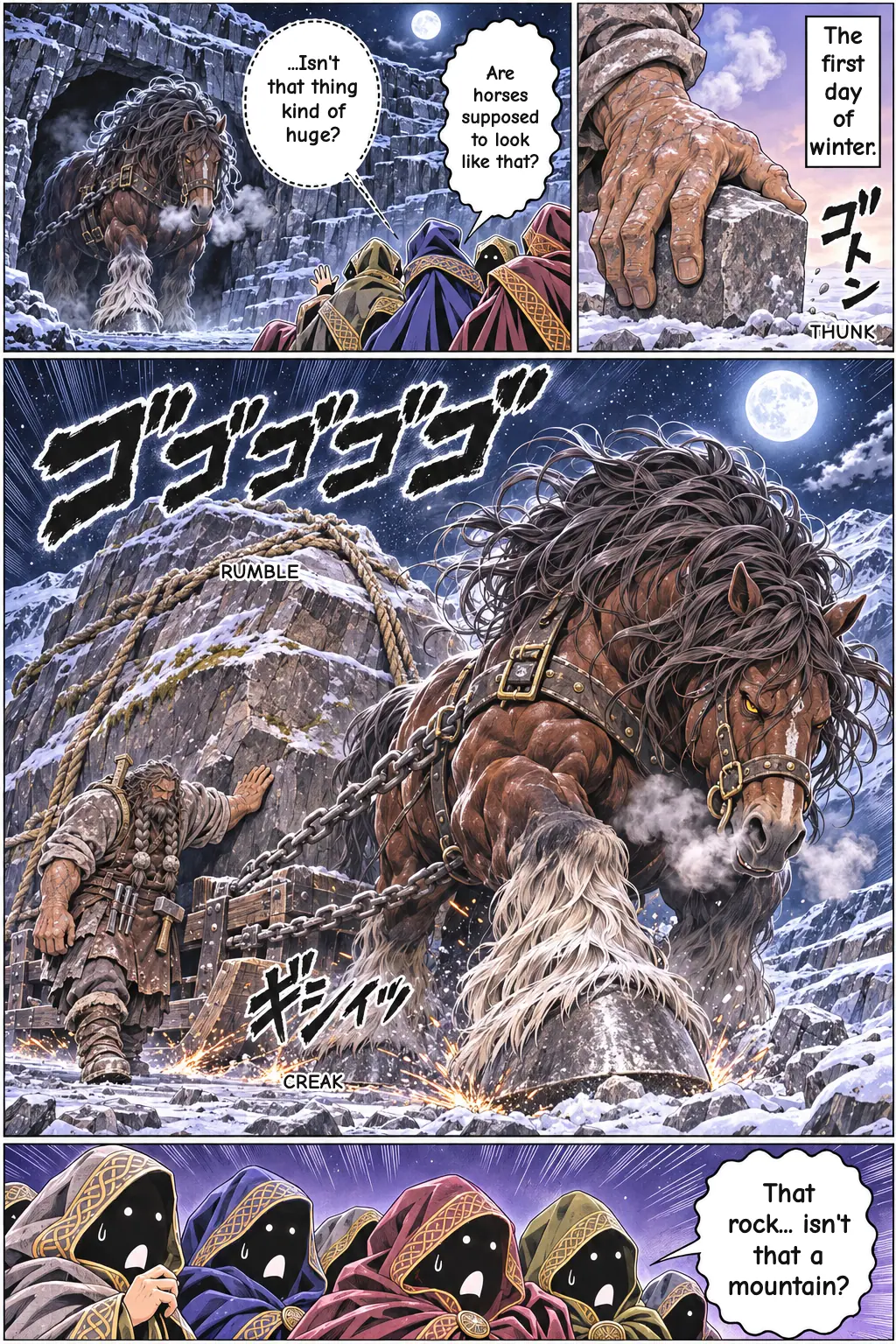
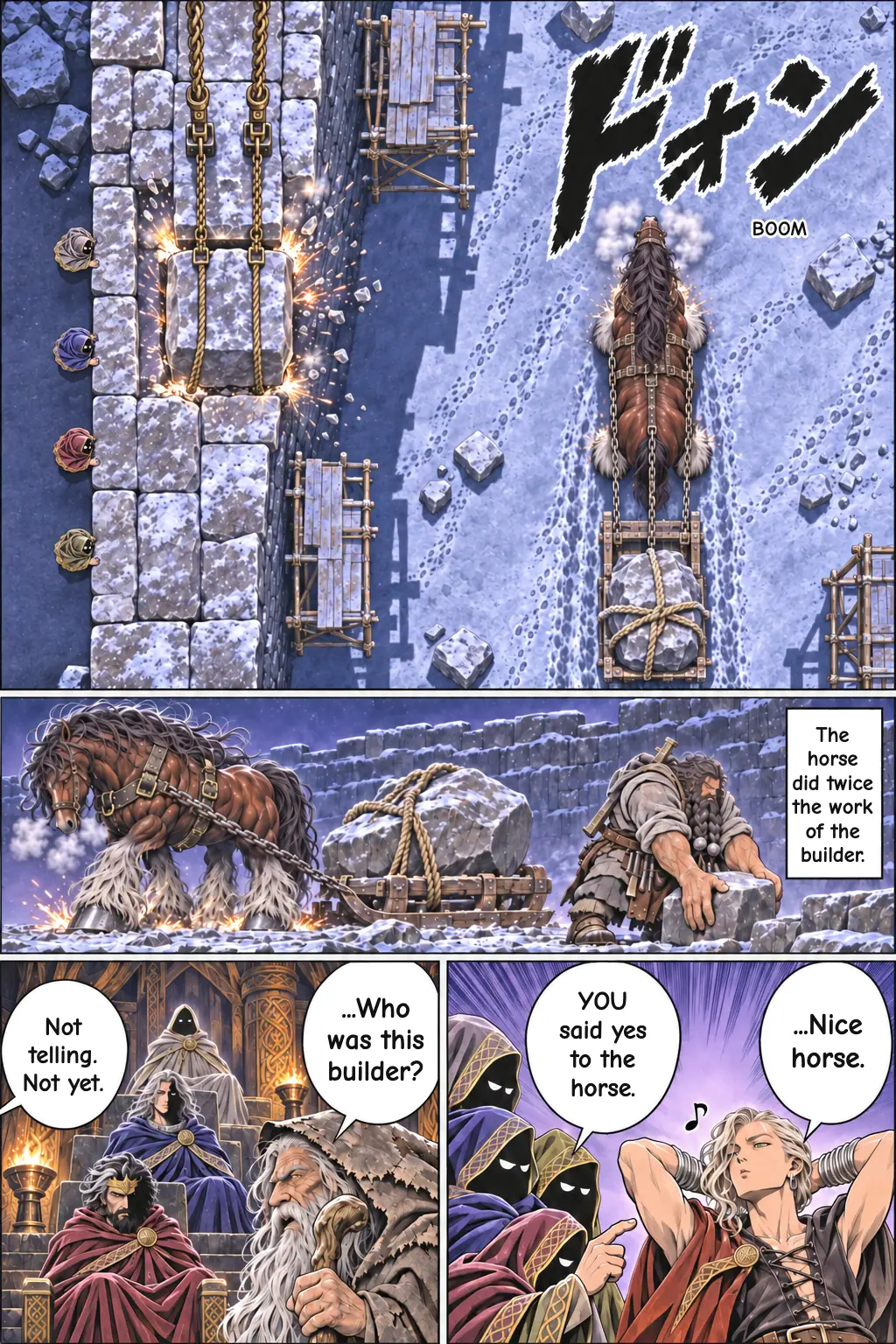
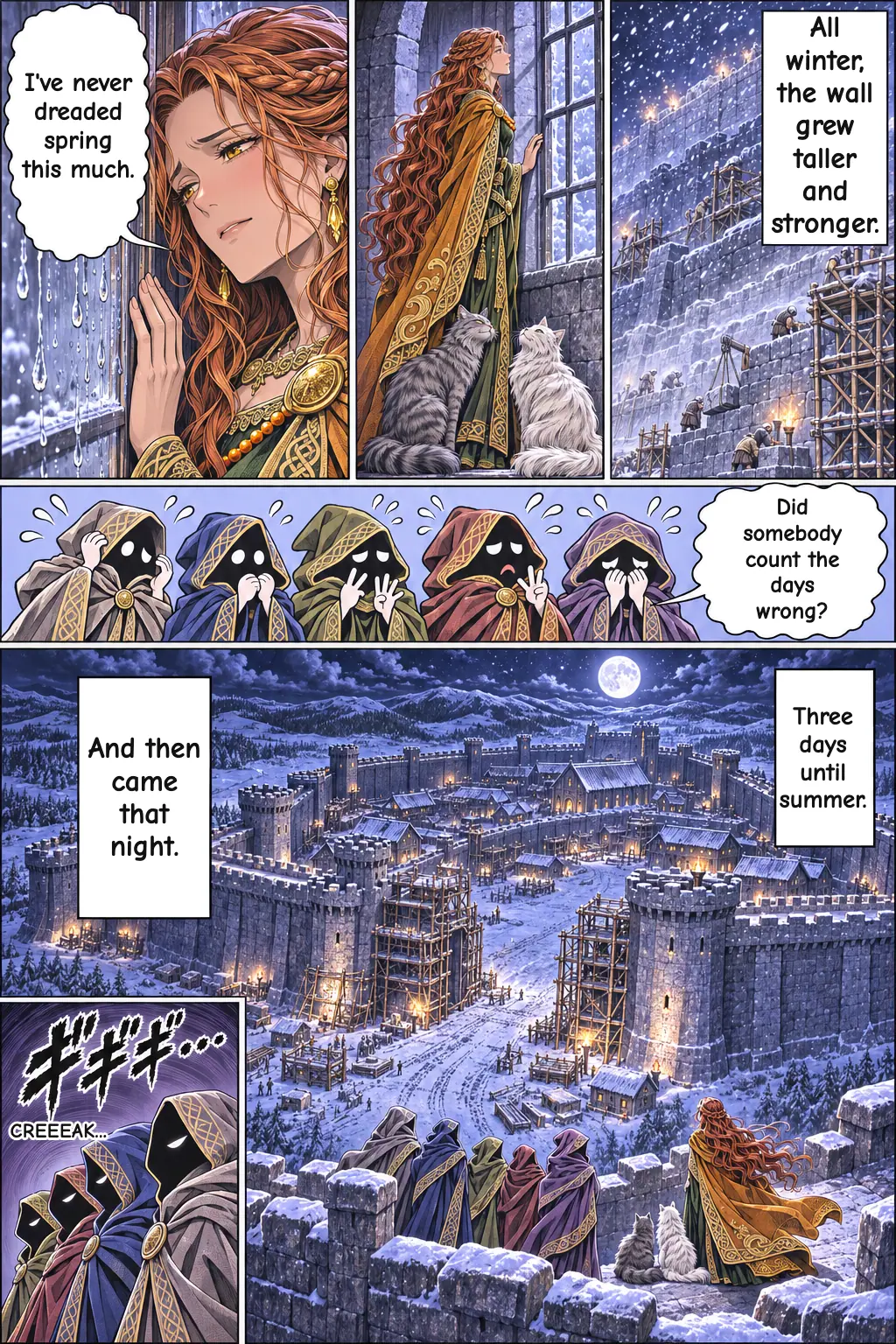
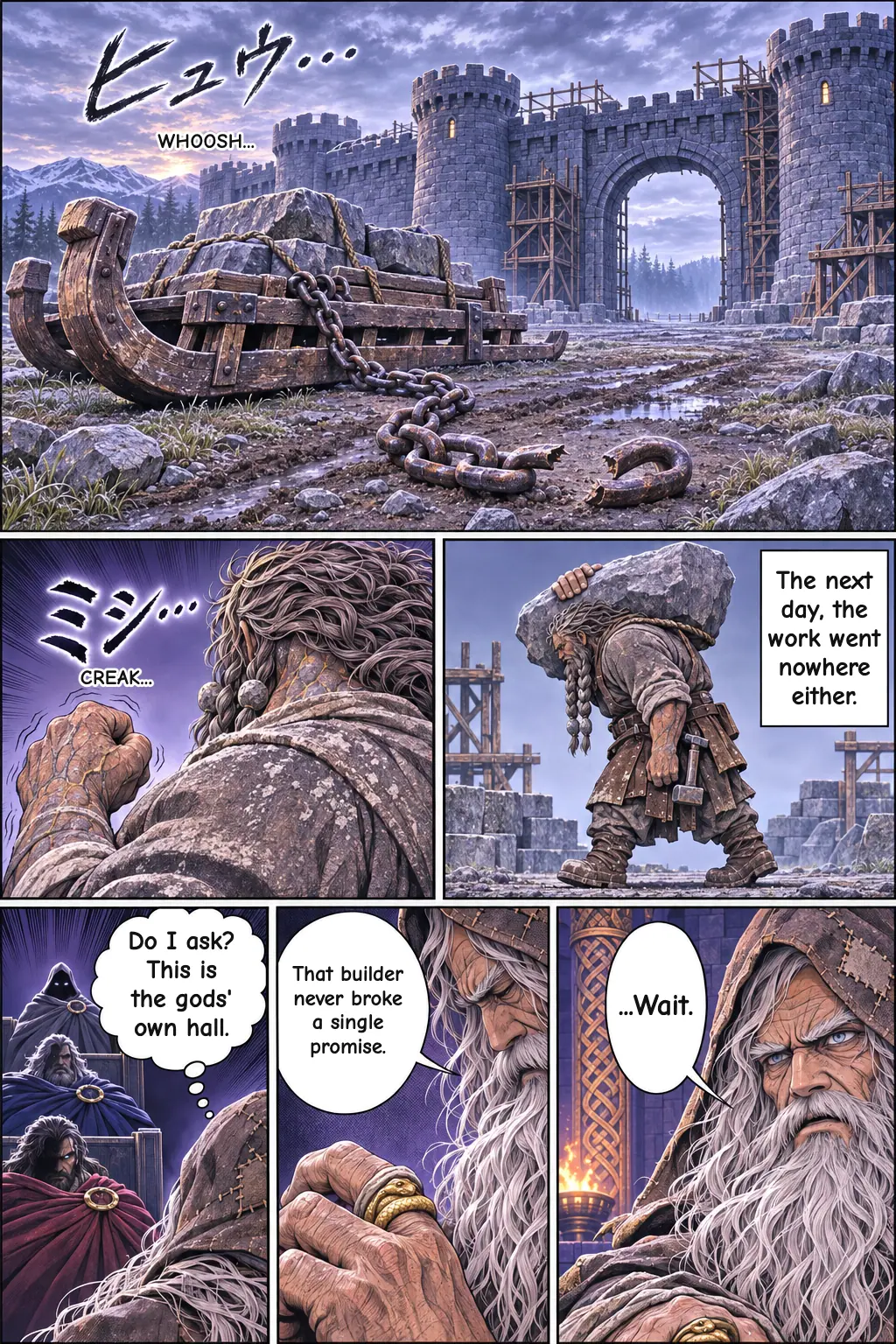
Work began on the first day of winter. At night the stallion hauled stones so huge that the gods were amazed, and the horse did twice as much work as its master. Three days before summer, the stronghold was high and solid. Only the gateway was left.
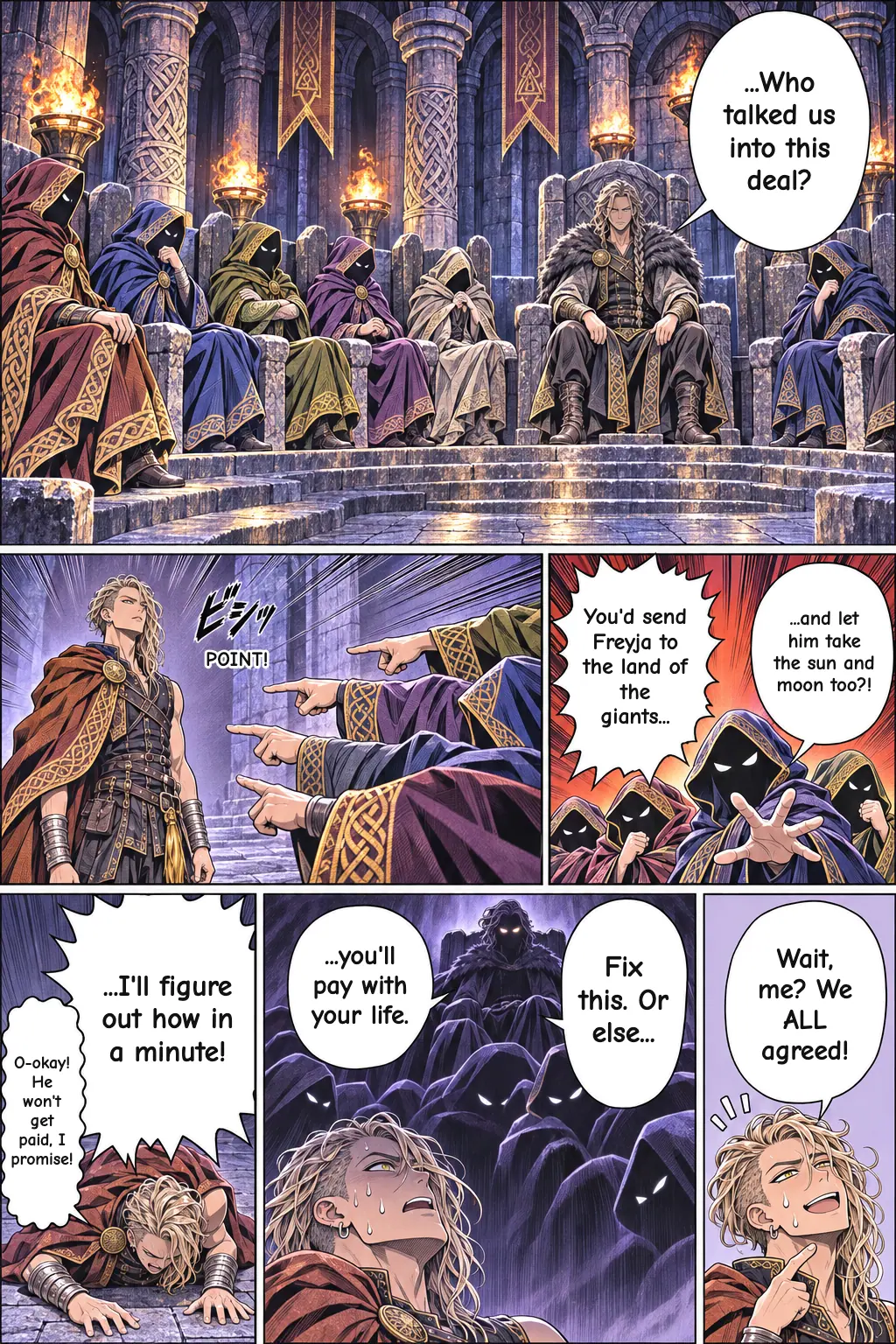
Now the gods panicked. They took their judgment seats and asked who had advised a deal that would send Freyja off to Jötunheim, the land of the giants, and ruin the sky by taking away the sun and moon. Everyone agreed it was Loki, the one behind most mischief. The gods threatened him with death. Frightened, Loki swore he would make the builder lose his payment, whatever it cost him.
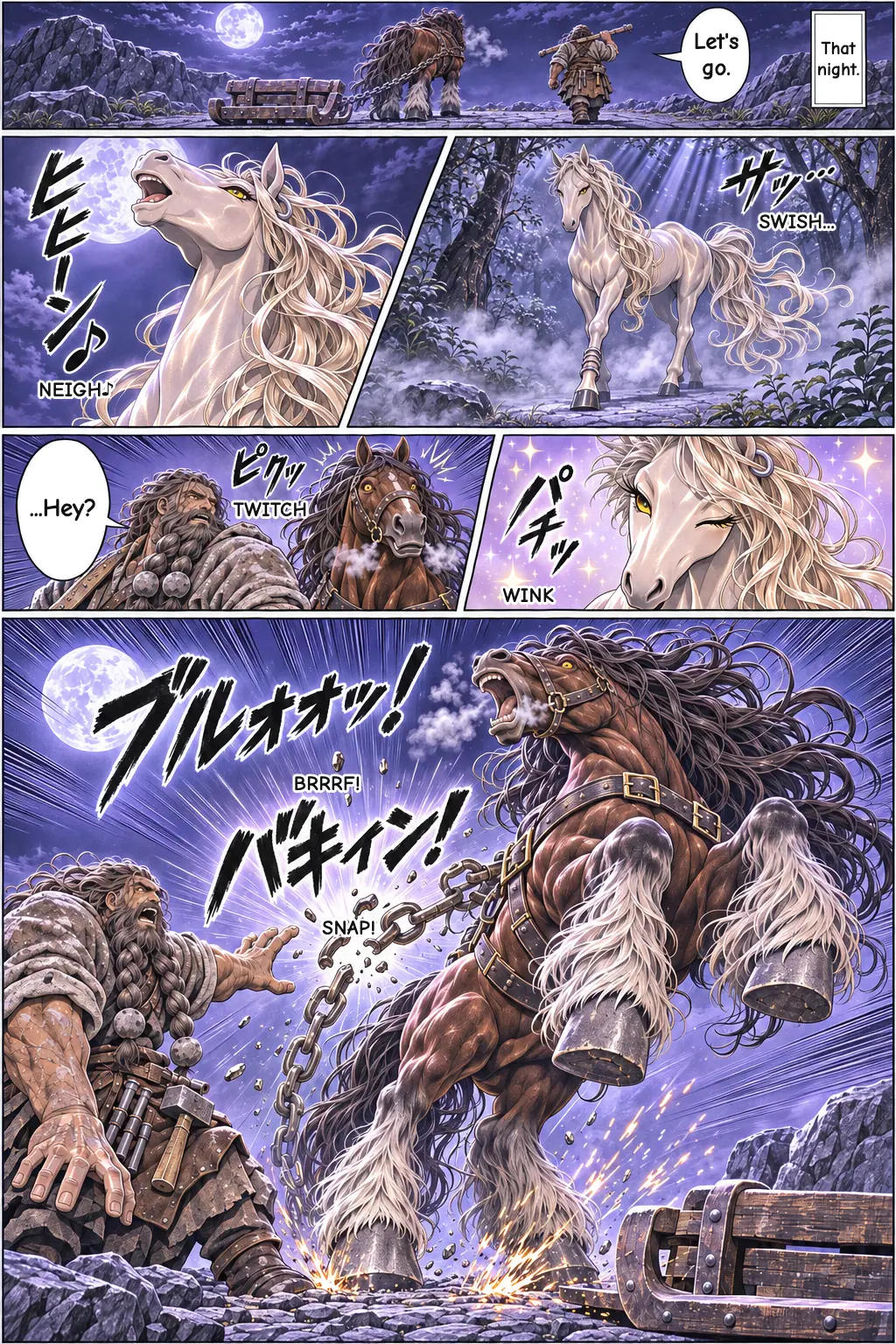
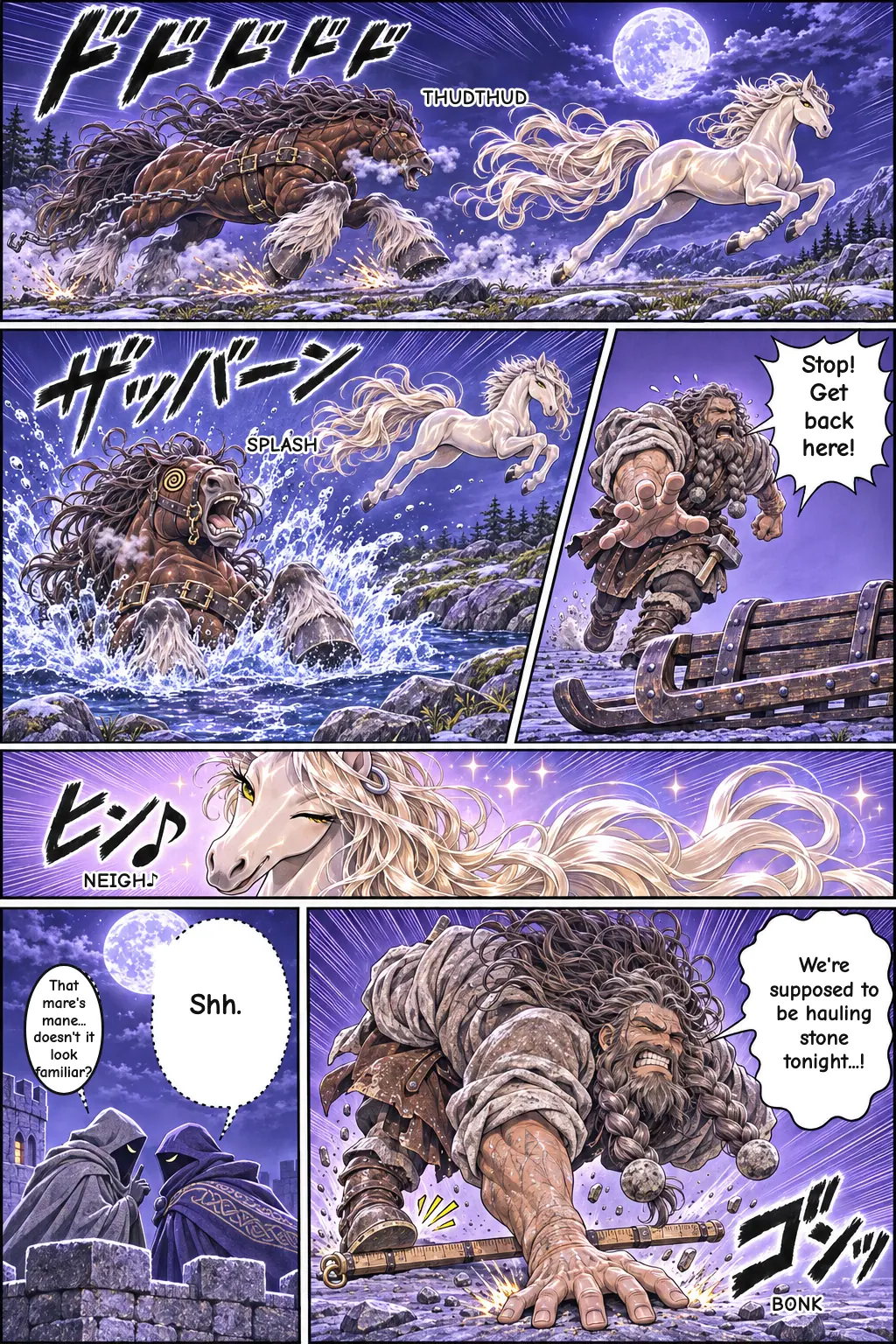
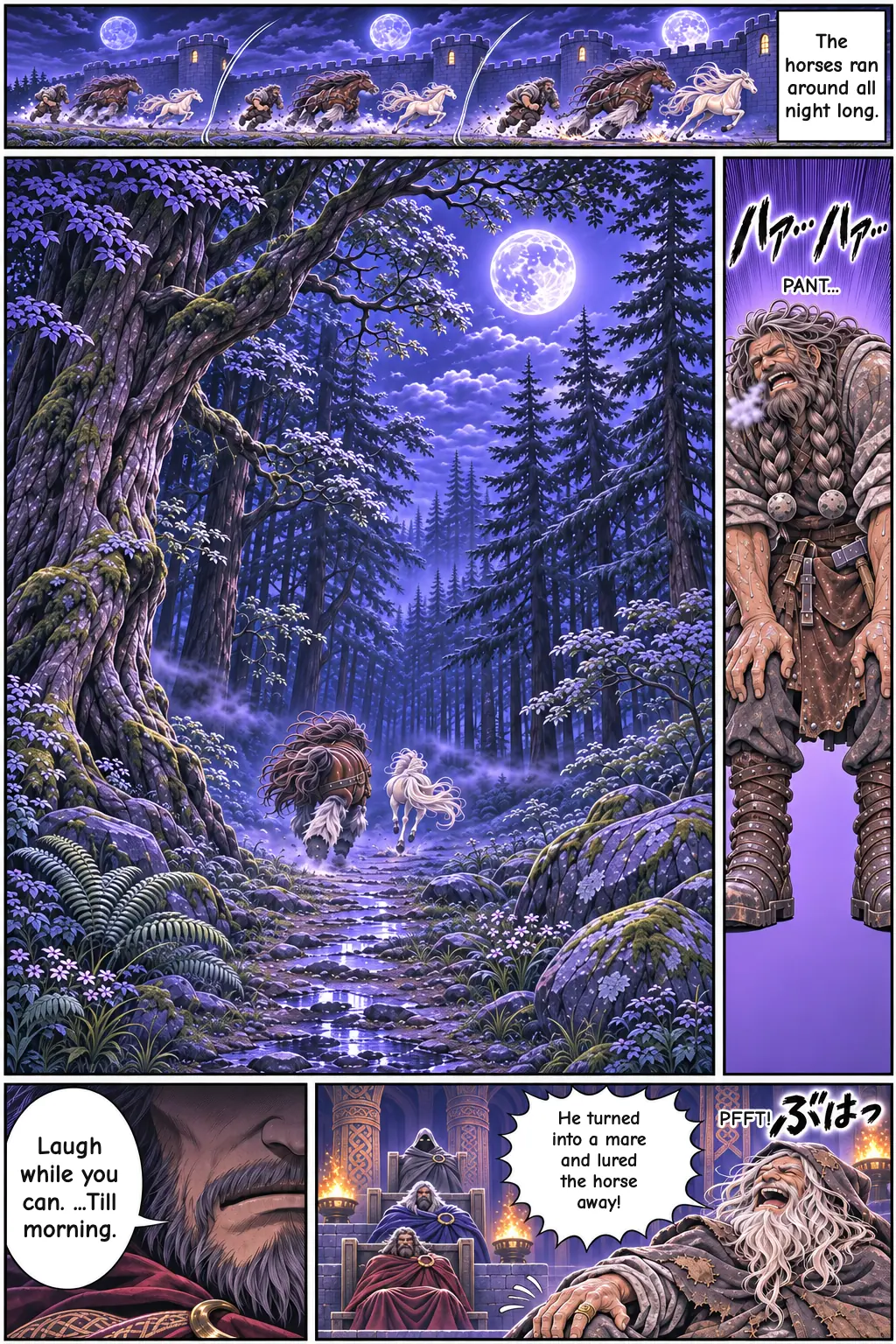
That evening, as the builder went out with Svaðilfari for stone, a mare ran out of the forest and whinnied. The stallion went wild, broke its ropes and chased her, and the builder chased the stallion. The horses ran all night, and the work stopped. The text never says outright that the mare was Loki, but the rest of the story makes it clear.
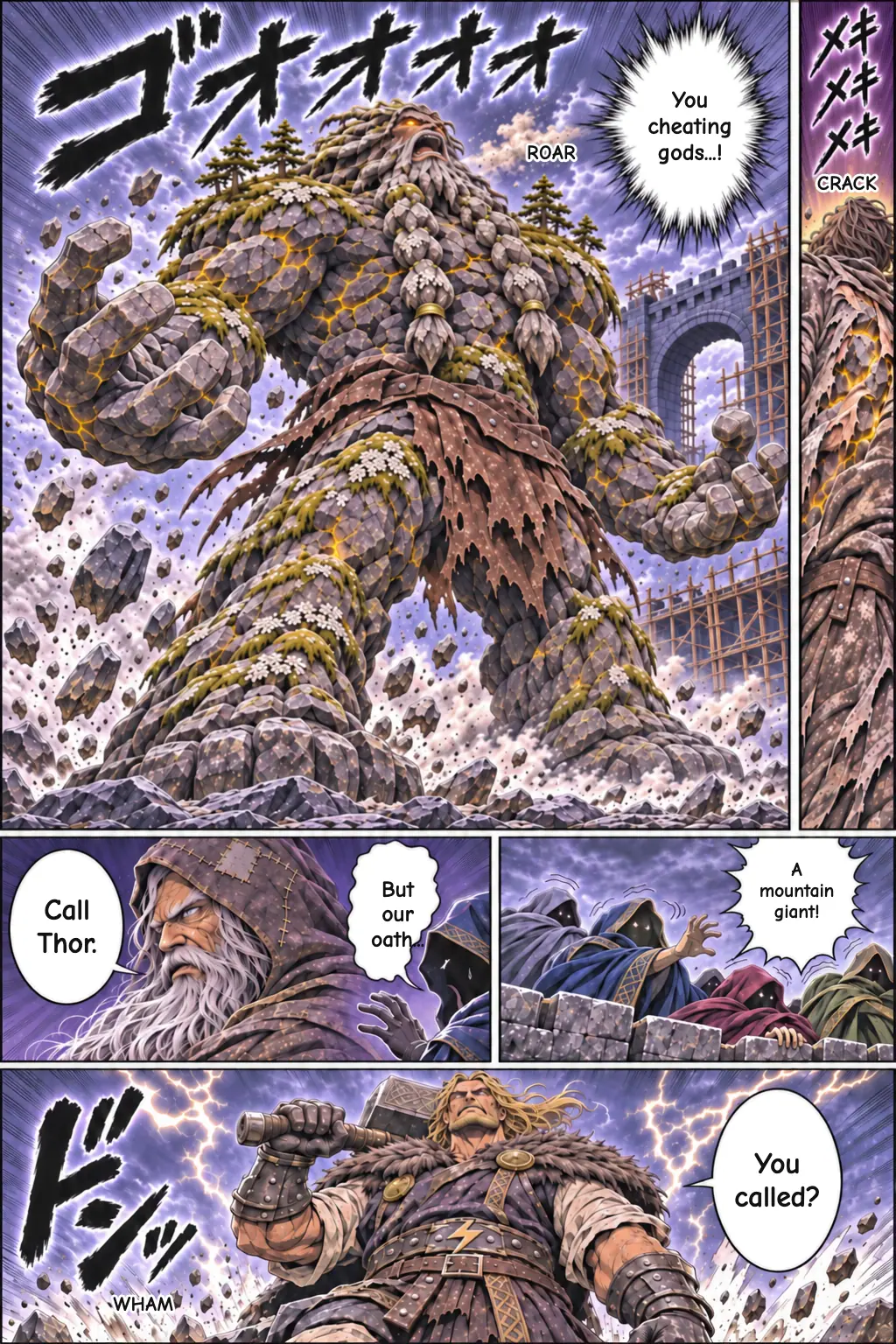
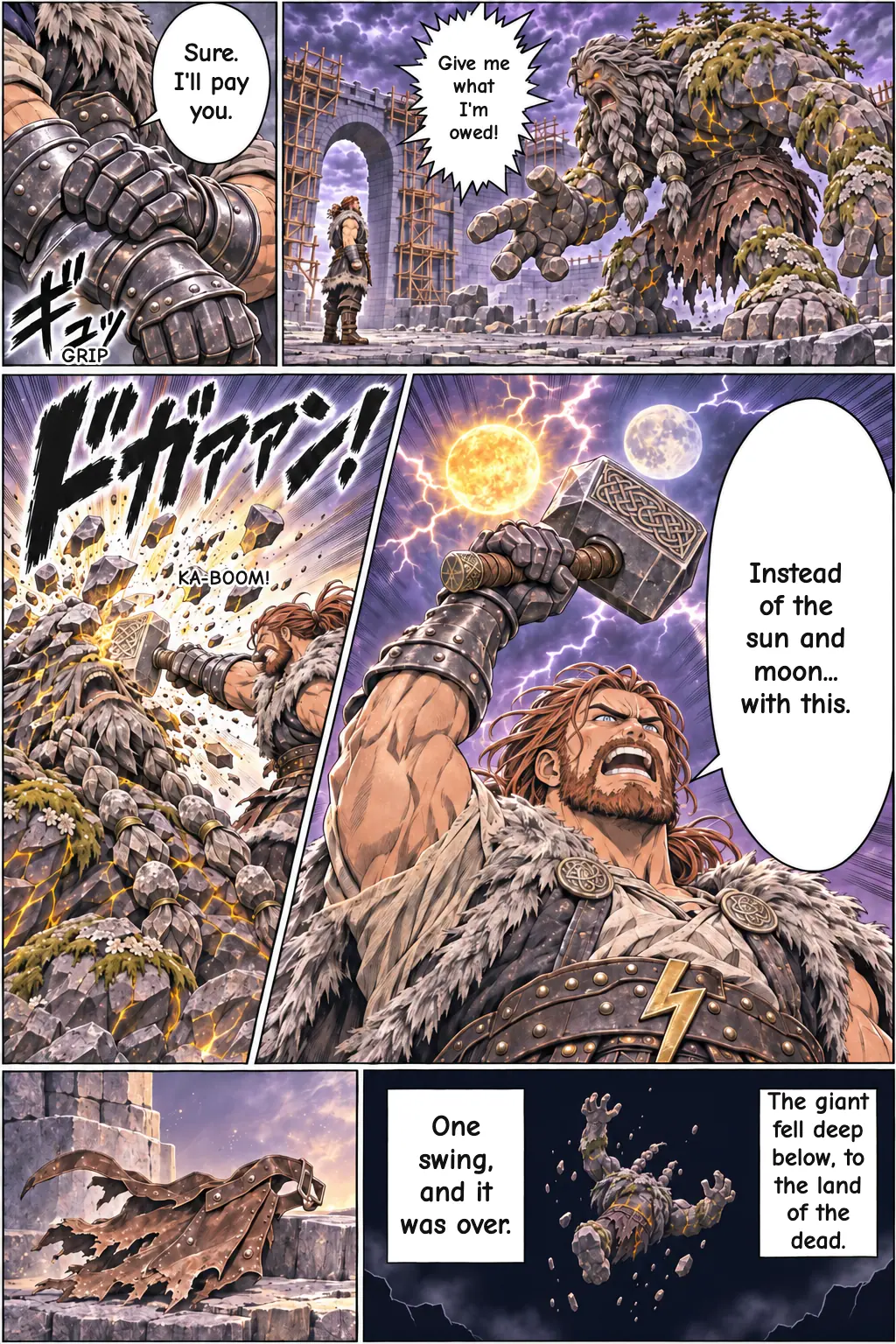
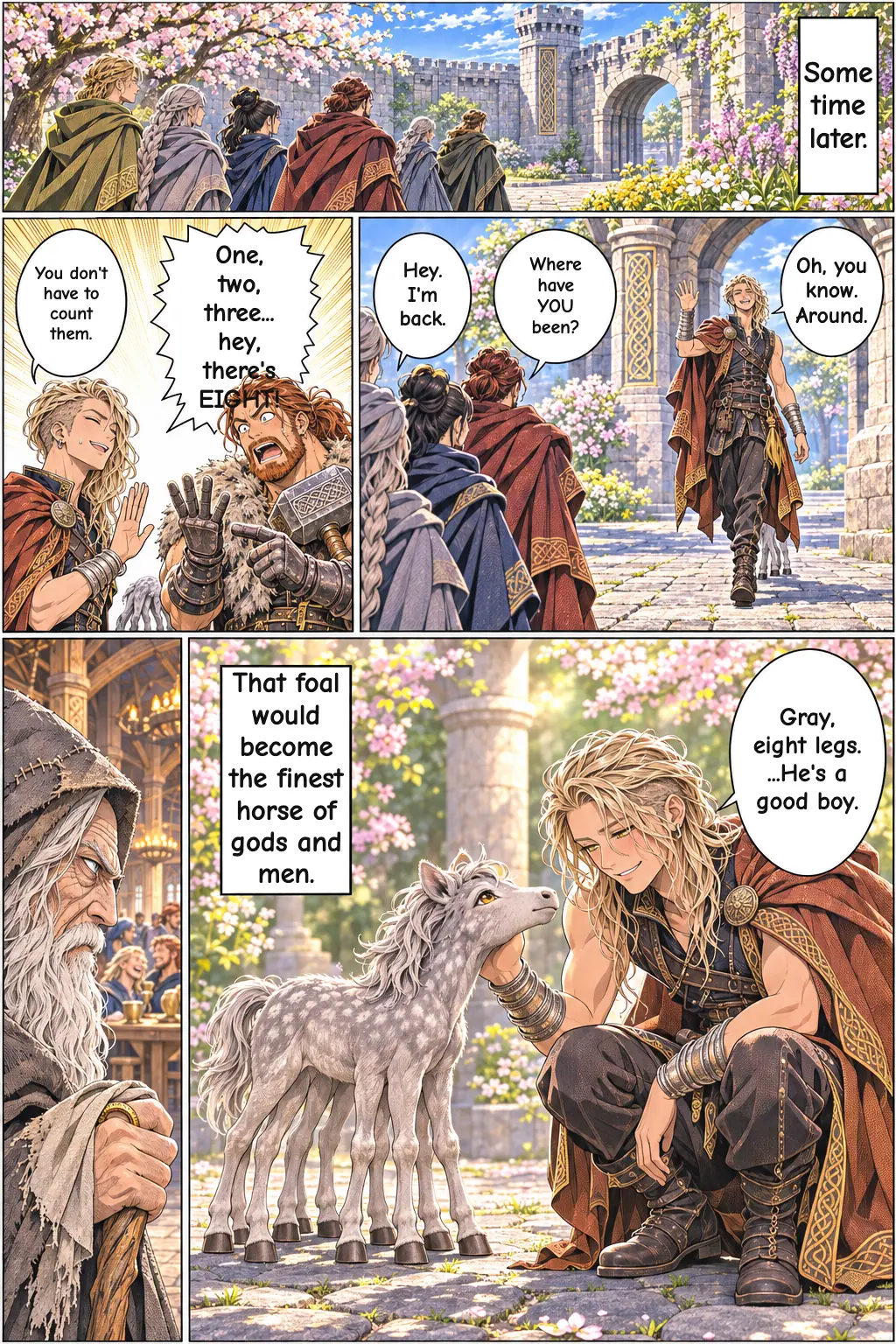
When the builder saw he could not finish in time, he flew into a giant's rage, and the gods saw that he was really a mountain giant. Setting their oaths aside, they called for Thor, who came at once. With his hammer Mjölnir he paid the wages instead of the sun and the moon. One blow shattered the giant's skull and sent him down into Niflhel, the misty underworld. Some time later Loki gave birth to a grey foal with eight legs, the finest horse among gods and men.
Where This Myth Comes From
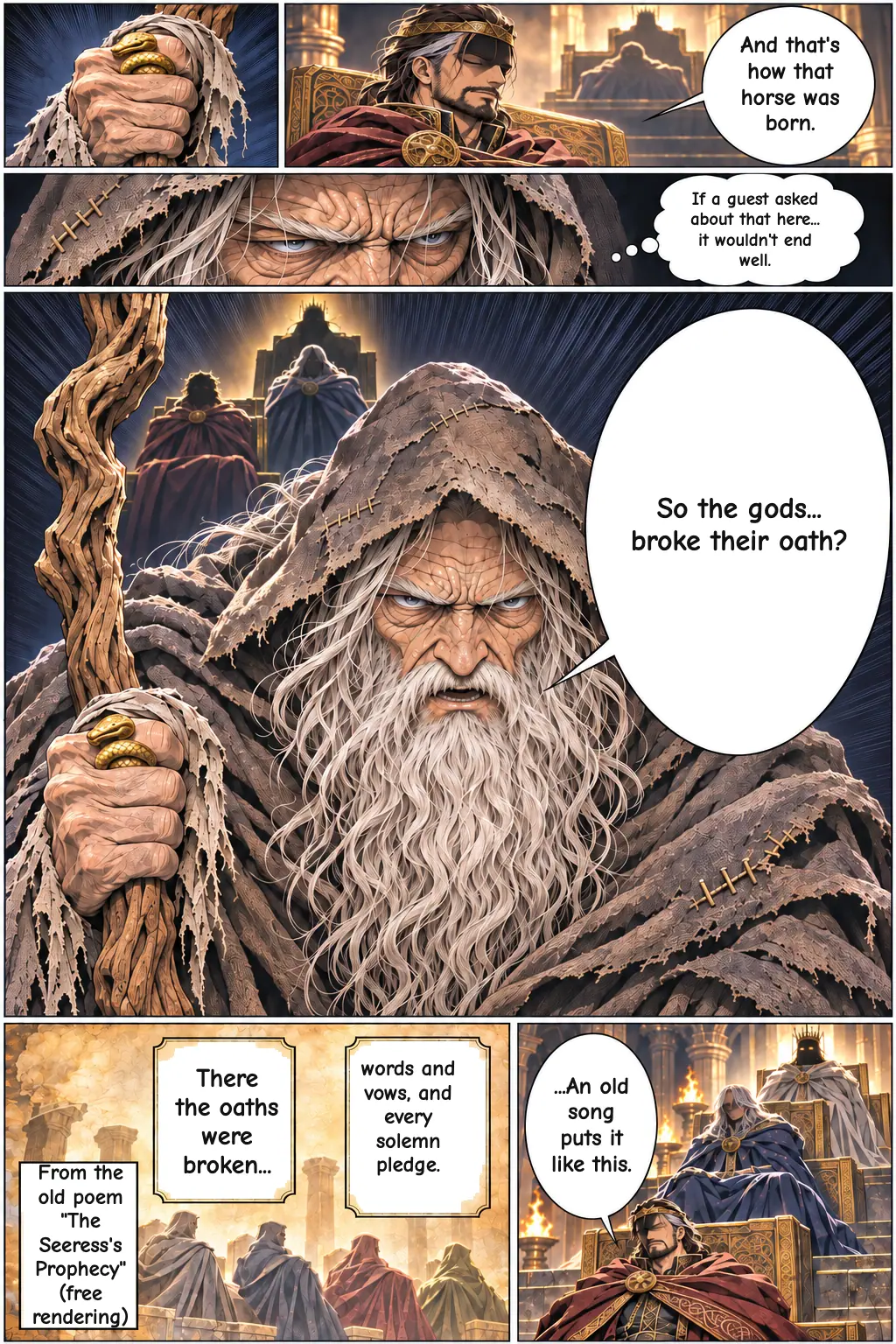
The tale is found in Gylfaginning ("The Tricking of Gylfi"), the first part of the Prose Edda. The Icelandic writer Snorri Sturluson wrote it around 1220, and the whole of Gylfaginning is framed as a conversation between Gangleri and his three hosts. In many editions the story is chapter 42, though numbering varies between editions. To back up the tale, Snorri quotes verses from the older poem Völuspá ("The Seeress's Prophecy"), which describe the gods meeting in judgment while oaths and promises are broken.
Two popular details are not in Snorri's text. He never names the builder, so names like "Hrimthurs" come from later retellings. He also calls the structure only a stronghold. Calling it "the wall of Asgard" is a common modern label. Sleipnir's role as Odin's horse is mentioned elsewhere in Gylfaginning, not at the end of this episode.
What the Story Says
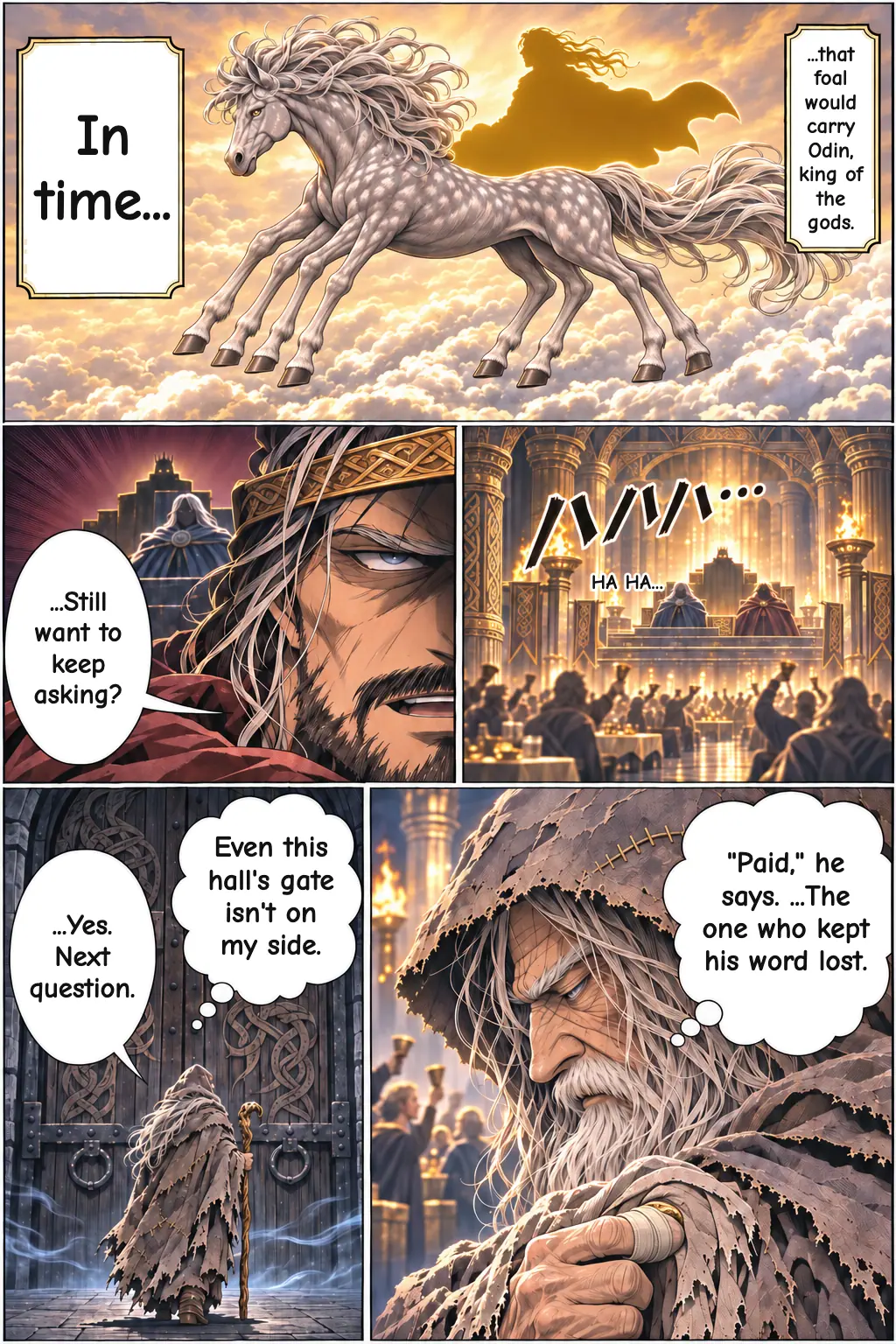
On the surface this is a comic trickster tale, and it explains how Odin got his eight-legged horse. Underneath, the gods do not come off well. They try to get a fortress built for free, blame Loki when the plan fails, and finally break sworn oaths to avoid paying. Some scholars read the Völuspá verses as a sign that the gods' broken promises are part of the slow decline that leads to Ragnarök, the end of the gods. Others mainly see a story that explains where Sleipnir came from. Both readings come up in discussions of the myth.
What the Manga Changes
Snorri tells the story briefly and describes almost nothing, so the manga adds a lot of visual detail. The builder's appearance, his human disguise and the moment he reveals his true form are all invented, as are Loki's mare form and the scene of the transformation. The gods' arguments and their accusations against Loki are dramatized with new dialogue, while the original only reports what was decided.
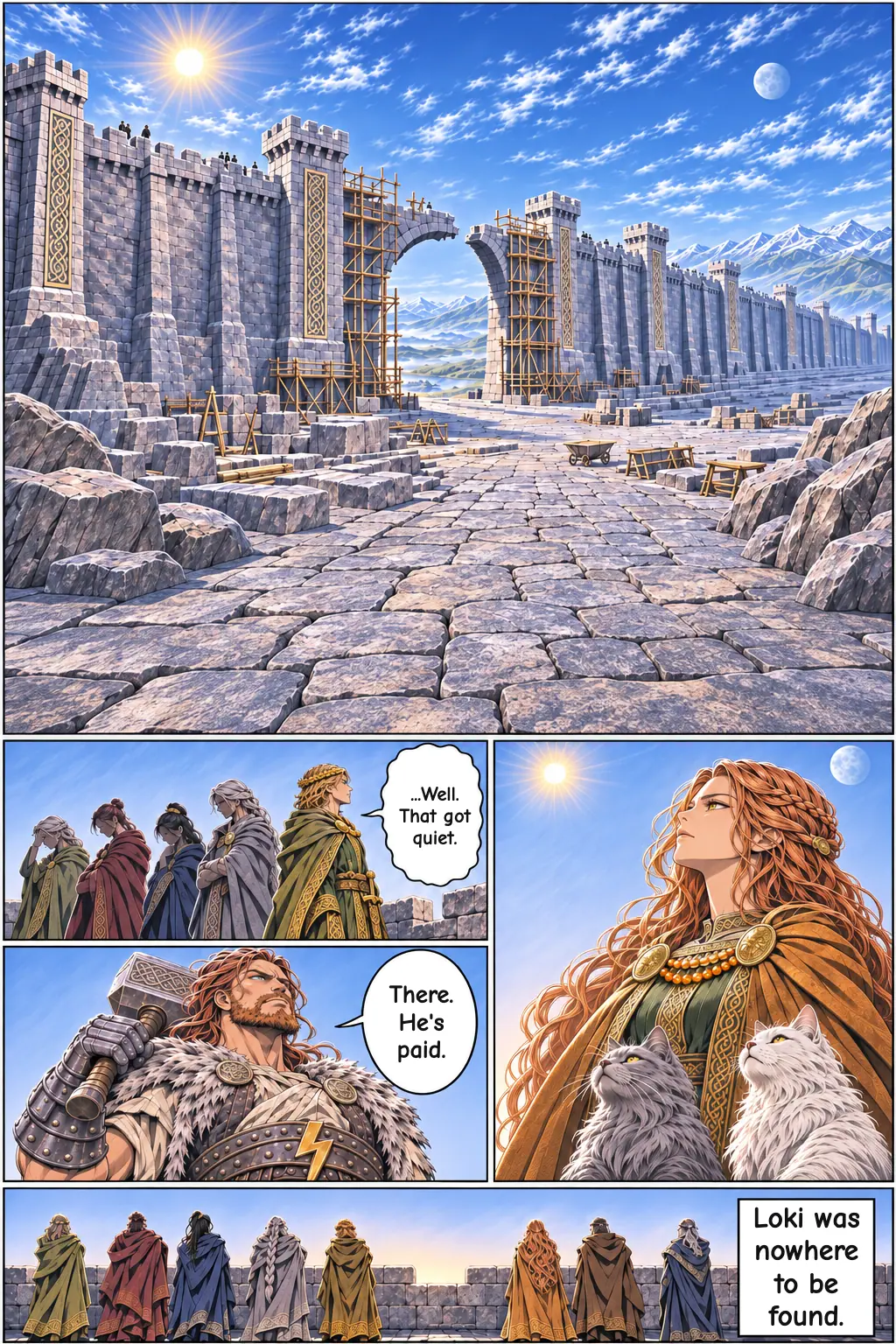
Freyja is silent in the original, so any reactions she shows in the manga are invented, though she never agrees to the bargain. The nighttime stone-hauling and the tension of the last three days are built up for drama. King Gylfi's uneasy reaction, as the only listener who stops laughing, is also the manga's own touch. It reflects the troubling side of the gods' broken oaths without claiming that Snorri openly condemns them. A closing panel showing Sleipnir as Odin's horse points ahead to other parts of the book.
Where to Read It
If you want to see a giant's horse hauling boulders under the stars, and Loki's very unusual rescue, read Episode 6 of NORSE MYTHOLOGY: The King Who Heard the End of the Gods here on Manga Portal. Every episode is free, and you don't need an account. If you want the original, look for a translation of Snorri's Prose Edda and find the passage where Gangleri asks about Sleipnir.
Characters in this episode
The Builder (Mountain Giant)
A nameless craftsman who offers to build the gods a stronghold in exchange for Freyja, the sun and the moon. He turns out to be a mountain giant.
Svaðilfari
The builder's powerful stallion, which hauls huge stones at night and becomes the father of Sleipnir.
Loki
The trickster god who advises the risky deal, is threatened by the gods, and saves them by luring the stallion away as a mare.
Freyja
The goddess of love and fertility whom the builder demands as his wife. She has no lines in the original story.
Thor
The thunder god who is away fighting trolls during the deal and returns to kill the builder with his hammer Mjölnir.
Sleipnir
The grey eight-legged horse born to Loki, called the best horse among gods and men, and later Odin's mount.
FAQ
How was Sleipnir born in Norse mythology?
In the Prose Edda, Loki becomes a mare to lure away Svaðilfari, the stallion of a giant who is building the gods a stronghold. Some time later Loki gives birth to a grey foal with eight legs, Sleipnir.
Why did Loki turn into a mare?
The gods had agreed to give Freyja, the sun and the moon to the builder if he finished on time, and Loki had advised the deal. When the gods threatened him with death, Loki lured away the builder's horse so the work could not be finished.
What did the giant builder want as payment?
He asked for the goddess Freyja as his wife, plus the sun and the moon. The gods agreed only because they believed he could not finish in one winter.
Who killed the builder of Asgard's wall?
Thor. When the gods learned the builder was a mountain giant, they ignored their oaths and called Thor, who shattered the giant's skull with his hammer Mjölnir.
Where is the story of Sleipnir's birth told?
It appears in Gylfaginning, the first part of Snorri Sturluson's Prose Edda (around 1220), in the section where Gangleri asks about Sleipnir. Many editions number it chapter 42.