Get new episodes in your feed. Follow us on:ThreadsBluesky
Mocked as a "little boy" by the giant king, Thor refuses to leave a laughingstock and accepts his challenge — only to lose at eating, racing, drinking, lifting a cat, and wrestling. The next morning, outside the walls, the king reveals the truth: Thor's opponents were fire, thought, the sea, the world serpent, and old age. And then he confesses: "You frightened me."
Story summary
The story comes from Gylfaginning ("The Deluding of Gylfi"), the first part of the Prose Edda, written in Old Norse by the Icelandic scholar Snorri Sturluson in the early 13th century. In most modern editions the contests and their explanation fall around chapters 46–47, though numbering shifts by a chapter or two between editions. The episode follows Thor's strange journey with the giant Skrymir and leads straight into his famous fishing trip for the Midgard Serpent. Thor travels with Loki, the trickster god, and two human servants: Thjalfi, a farmer's son, and his sister Roskva.
Thor in Utgard: Utgard-Loki's Contests Explained (Norse Myth Summary)
In short: Thor's contests in Utgard is a Norse myth from Snorri Sturluson's Prose Edda (Gylfaginning), in which the thunder god Thor and his companions lose every challenge at the castle of the giant king Utgard-Loki. The next morning the king admits it was all illusion: they had been competing against fire, thought, the sea, the Midgard Serpent and old age itself—and Thor's strength had terrified him.
The original myth: Thor's humiliation in Utgard
The story comes from Gylfaginning ("The Deluding of Gylfi"), the first part of the Prose Edda, written in Old Norse by the Icelandic scholar Snorri Sturluson in the early 13th century. In most modern editions the contests and their explanation fall around chapters 46–47, though numbering shifts by a chapter or two between editions. The episode follows Thor's strange journey with the giant Skrymir and leads straight into his famous fishing trip for the Midgard Serpent.
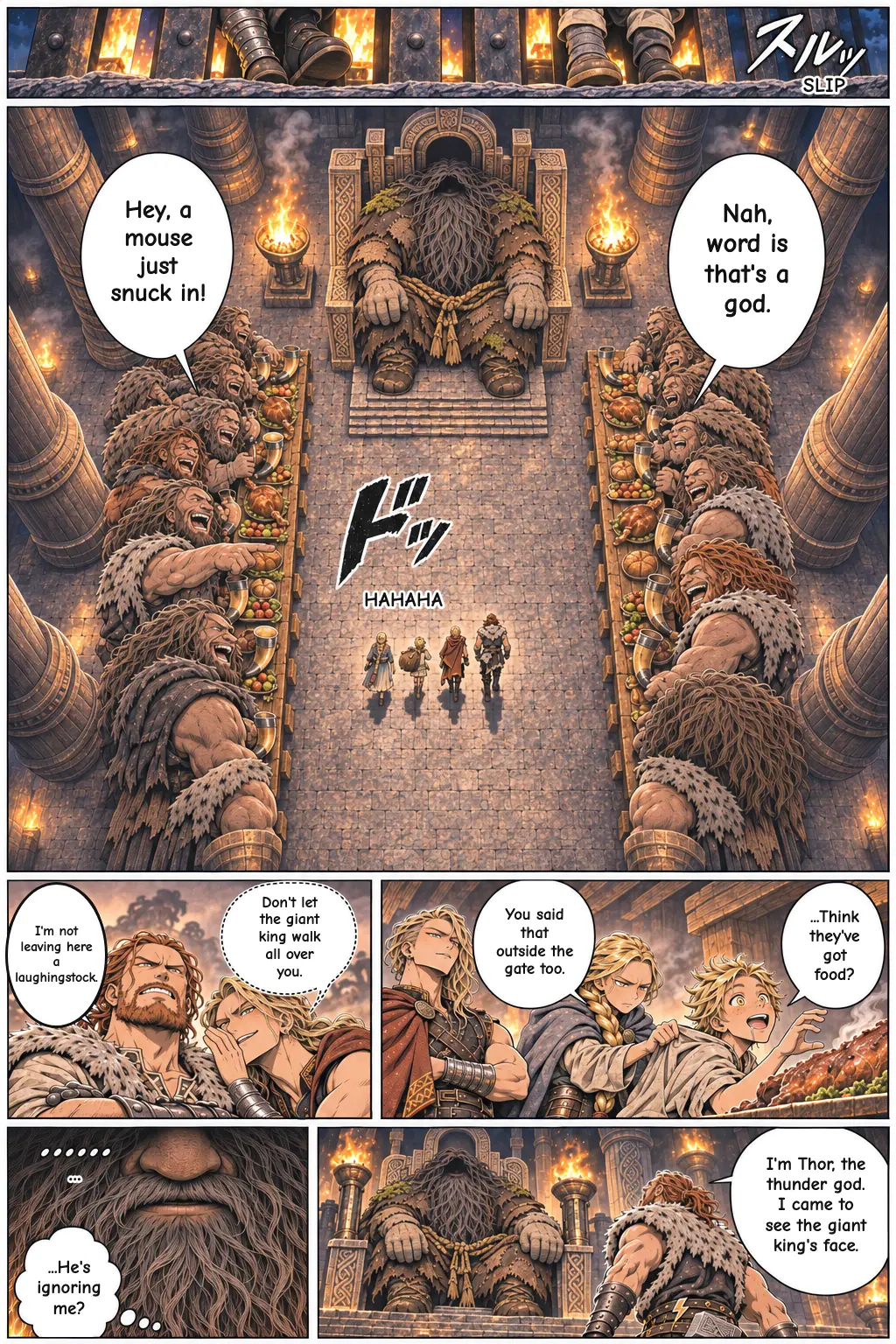
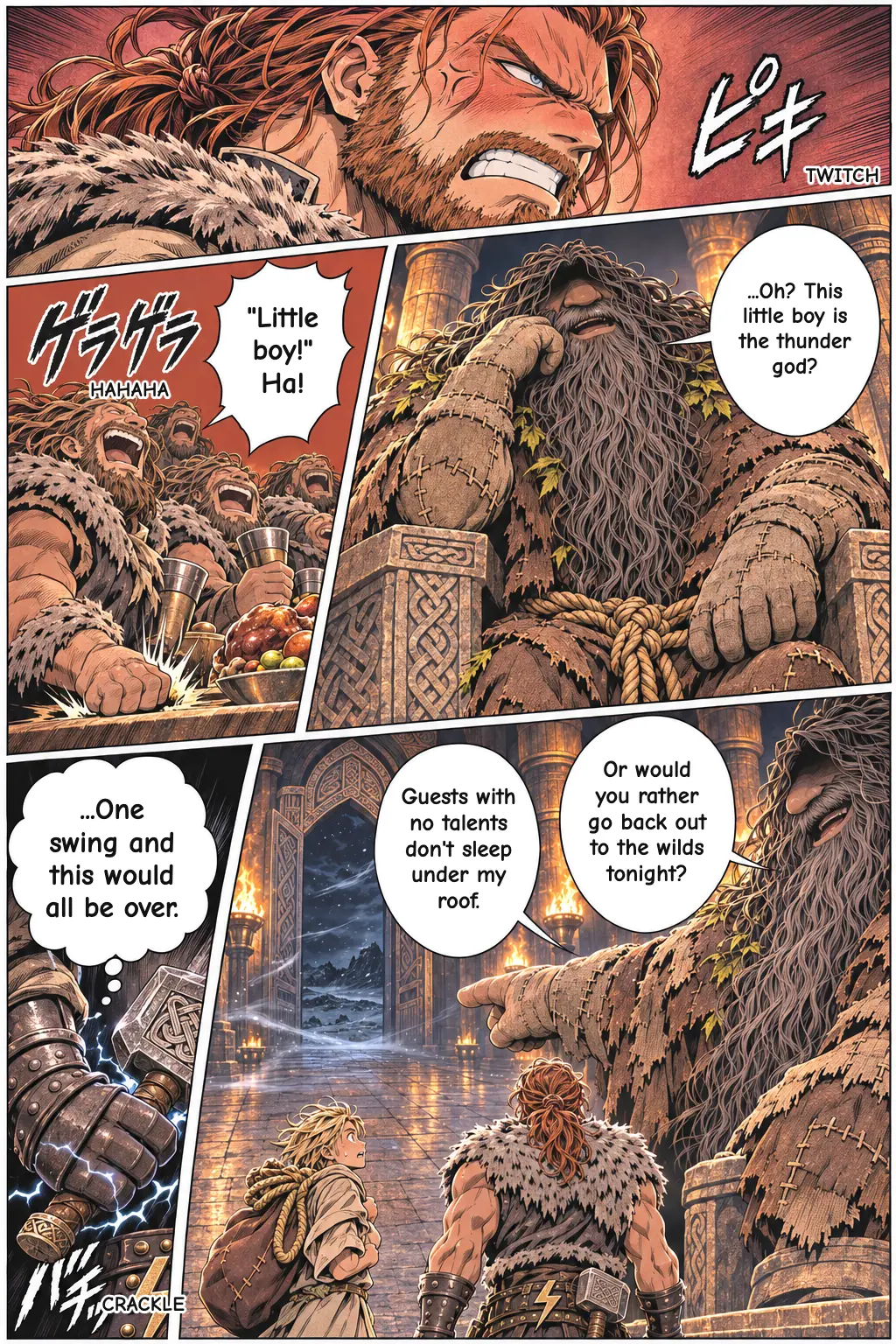
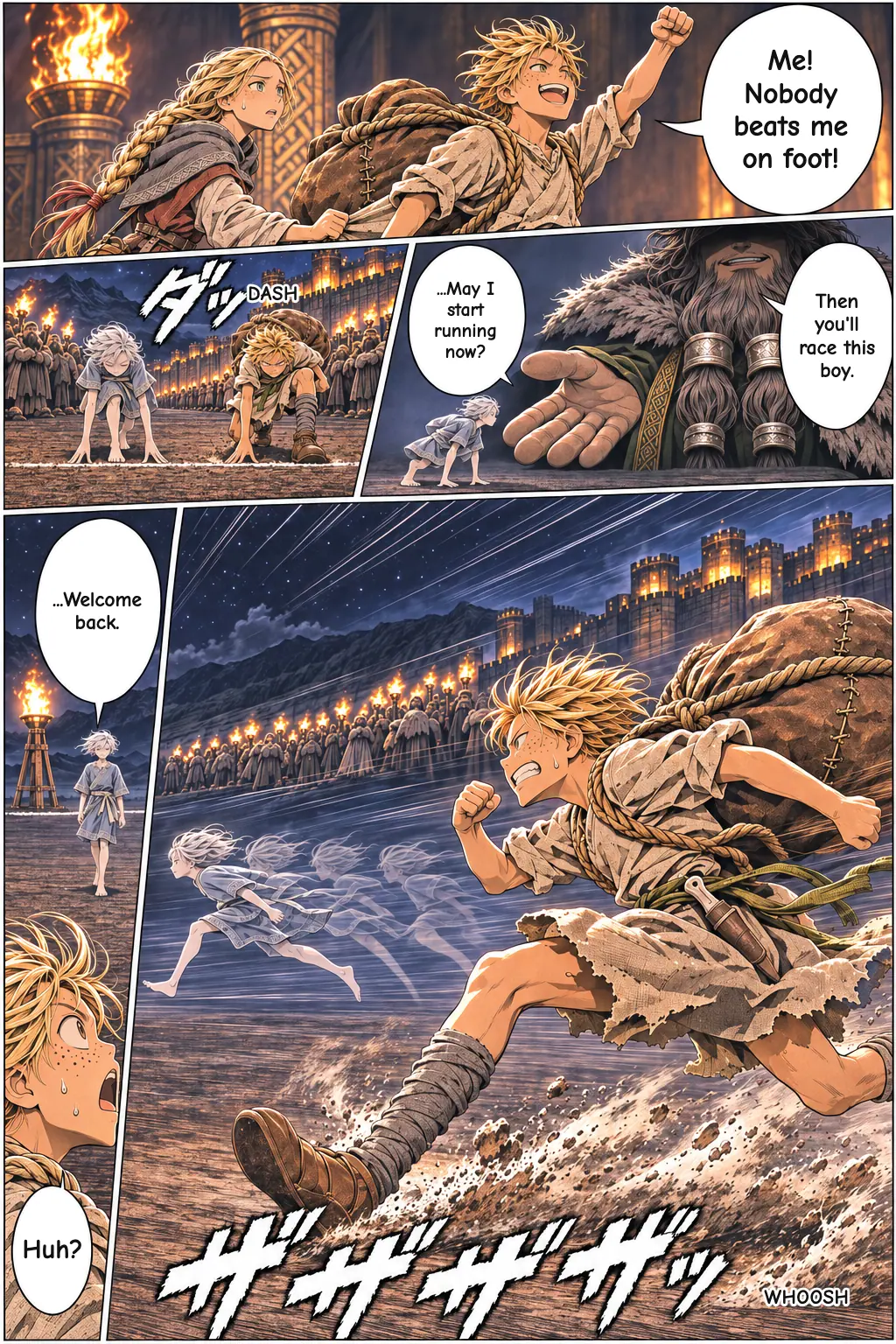
Thor travels with Loki, the trickster god, and two human servants: Thjalfi, a farmer's son, and his sister Roskva. They reach Utgard, a fortress so tall they must crane their necks to see the top. The gate is shut, but they squeeze through the bars. Inside, the giant king Utgard-Loki barely acknowledges them, then sneers at Thor as a mere boy. No one stays in his hall, he says, unless they excel at some skill.
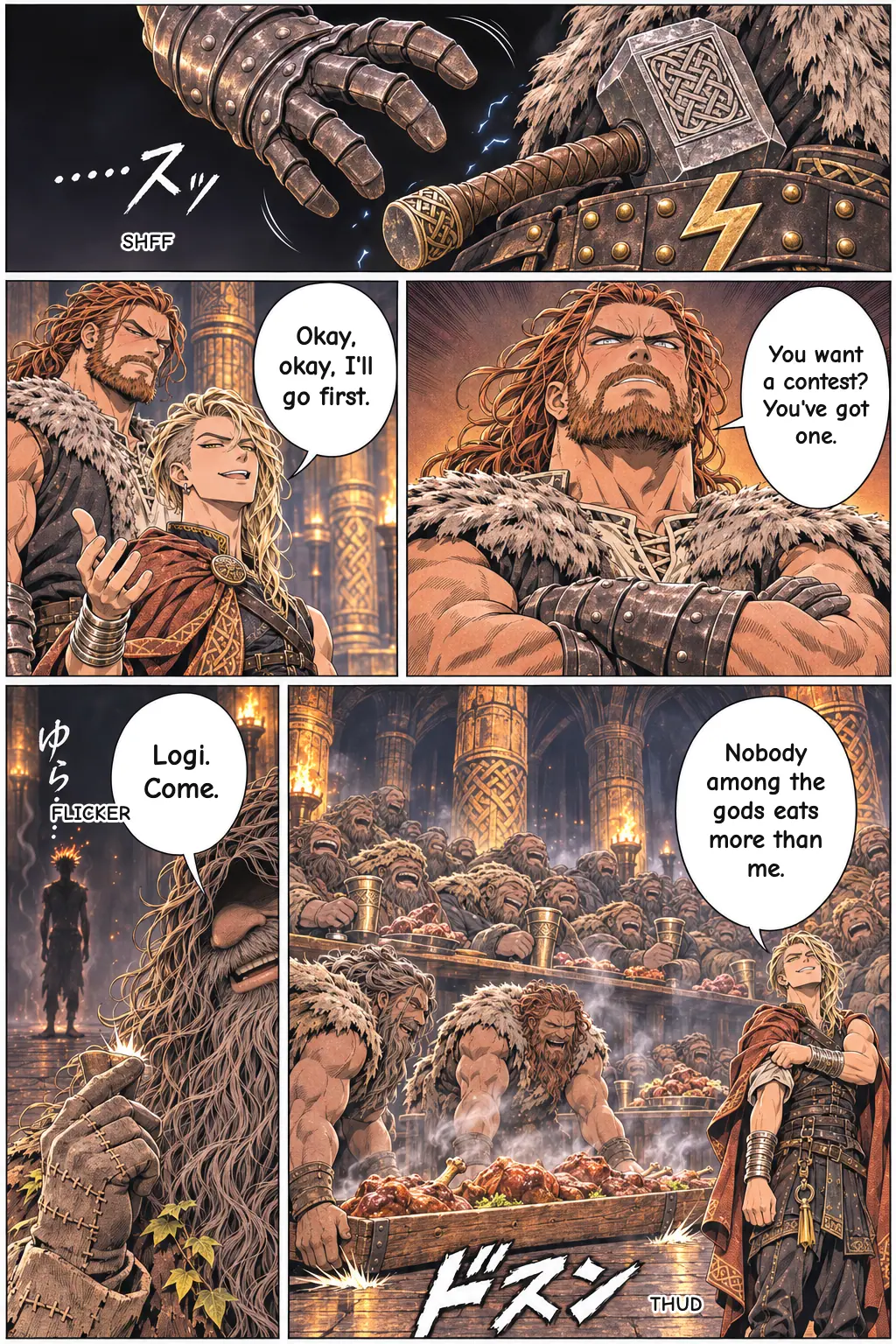
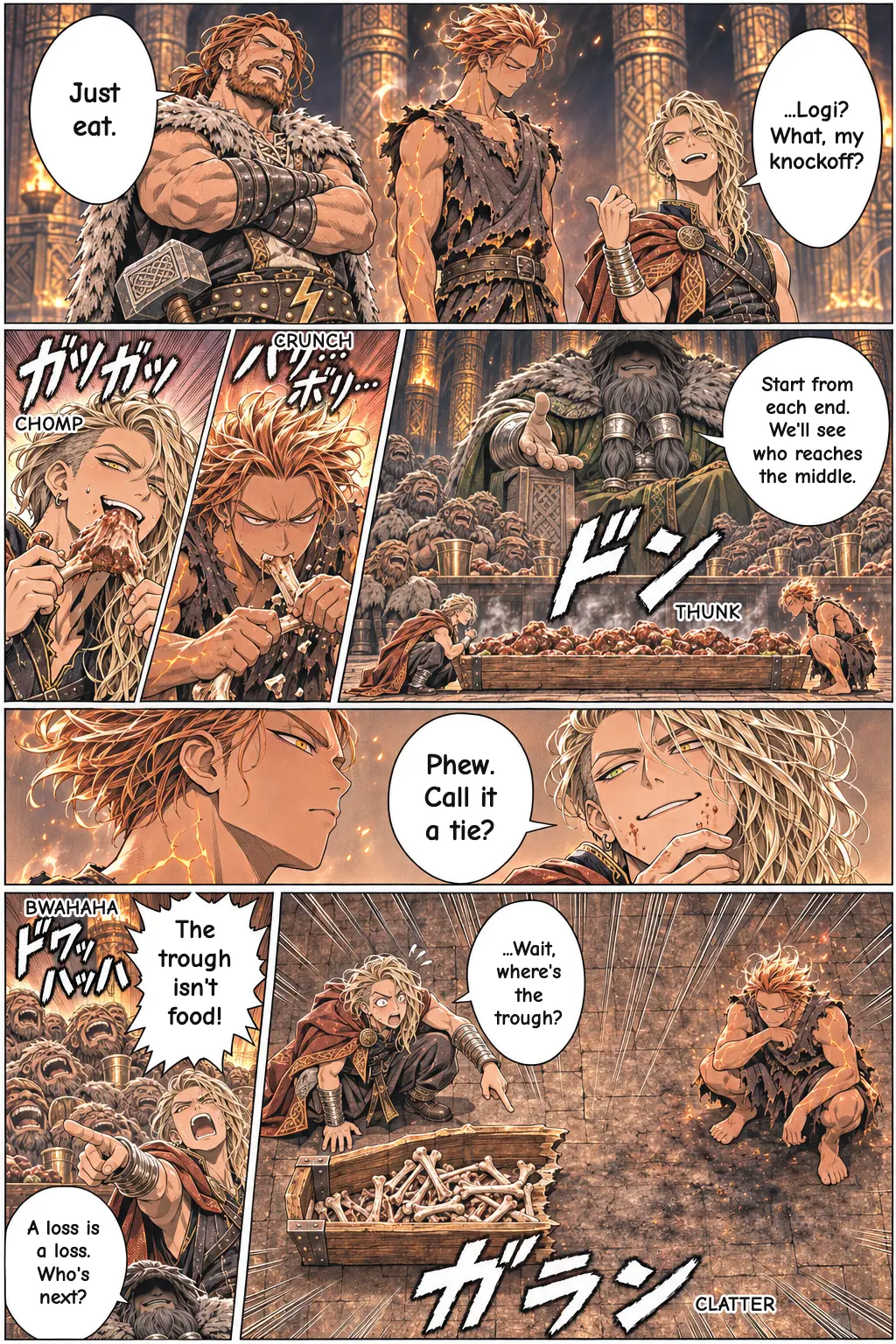
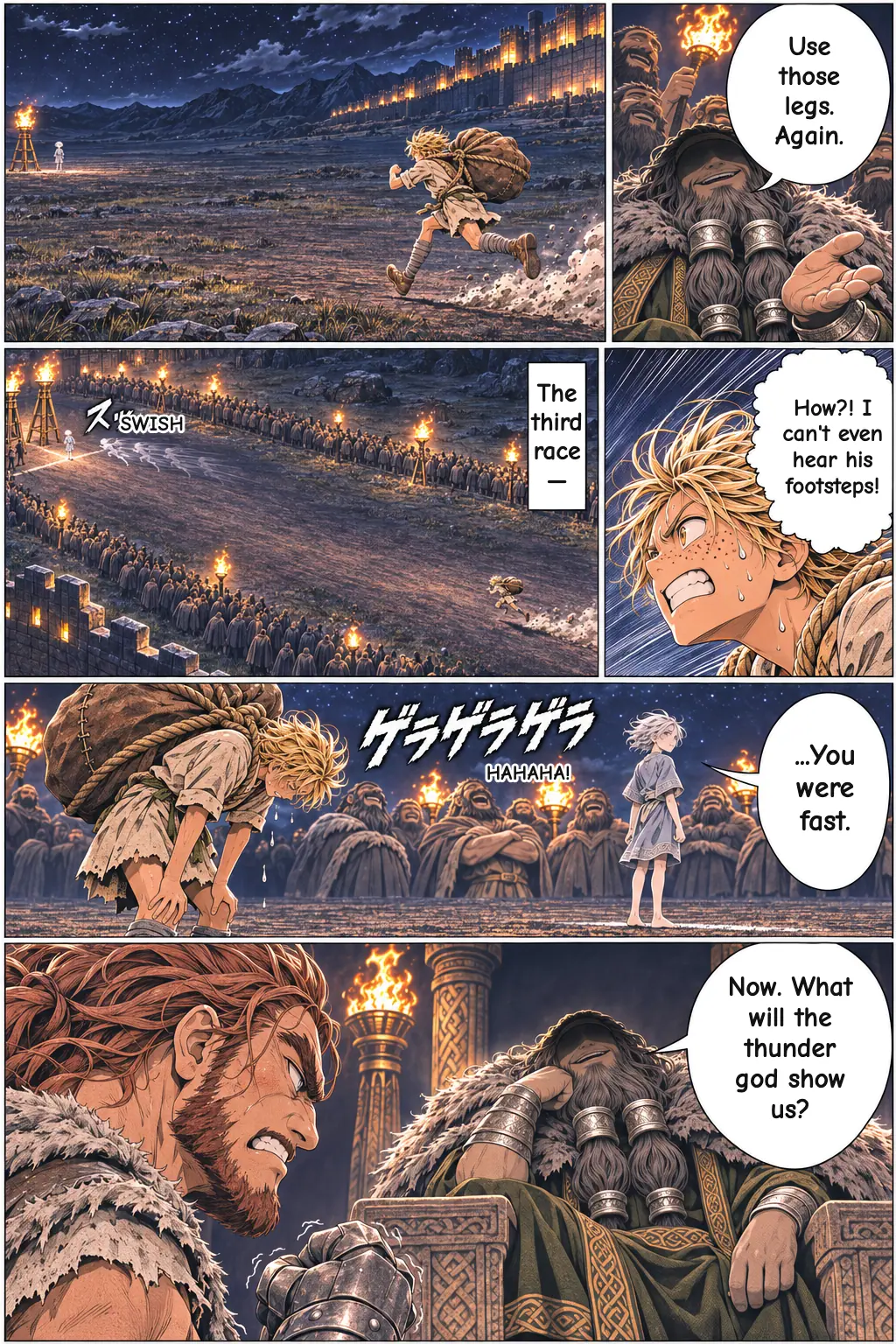
Loki offers to out-eat anyone. He is set against a man called Logi, with a wooden trough of meat between them. They meet in the middle, but while Loki stripped the meat from the bones, Logi devoured meat, bones and trough alike. Thjalfi, the fastest runner among humans, races a young man named Hugi three times and is beaten more badly each time.
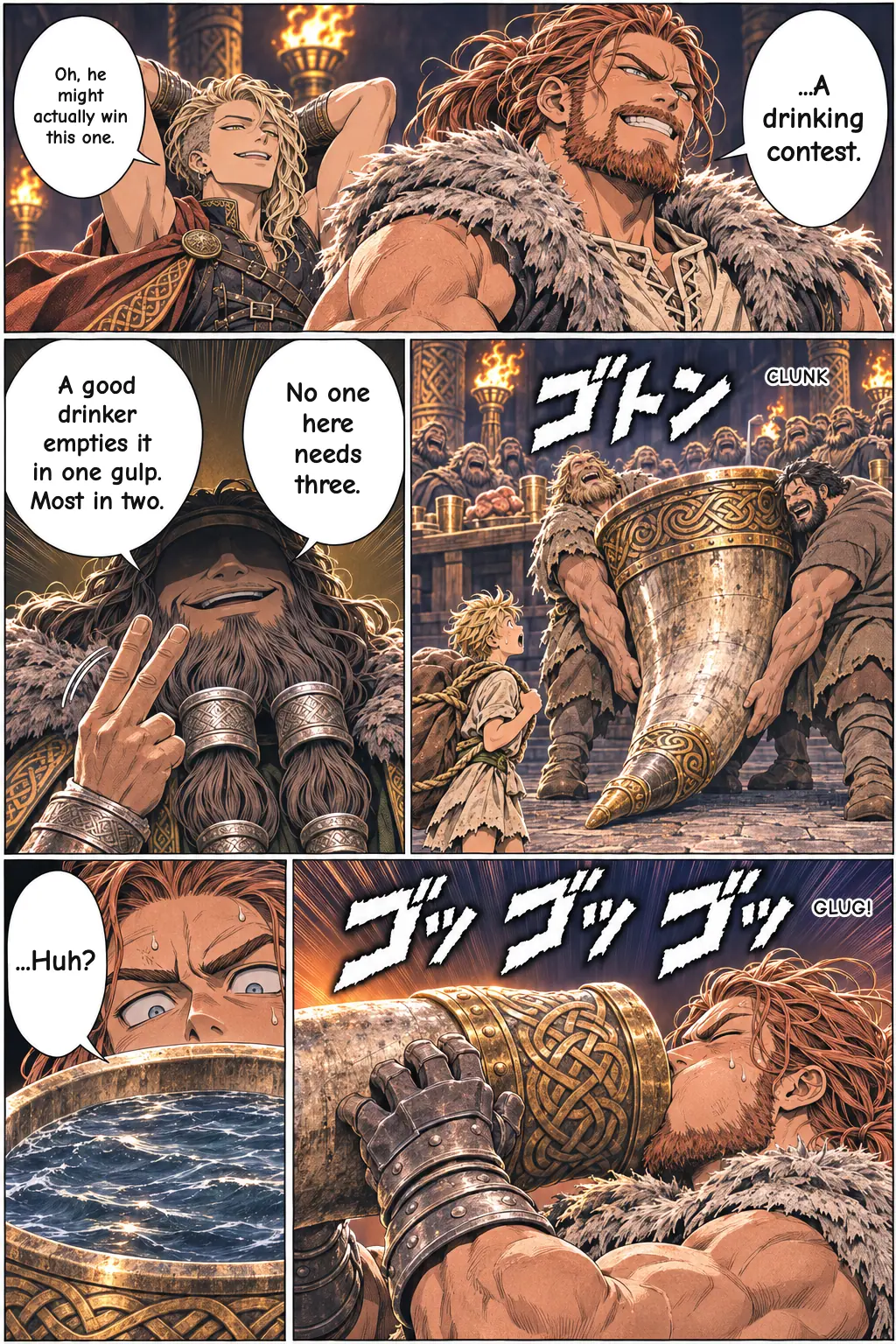
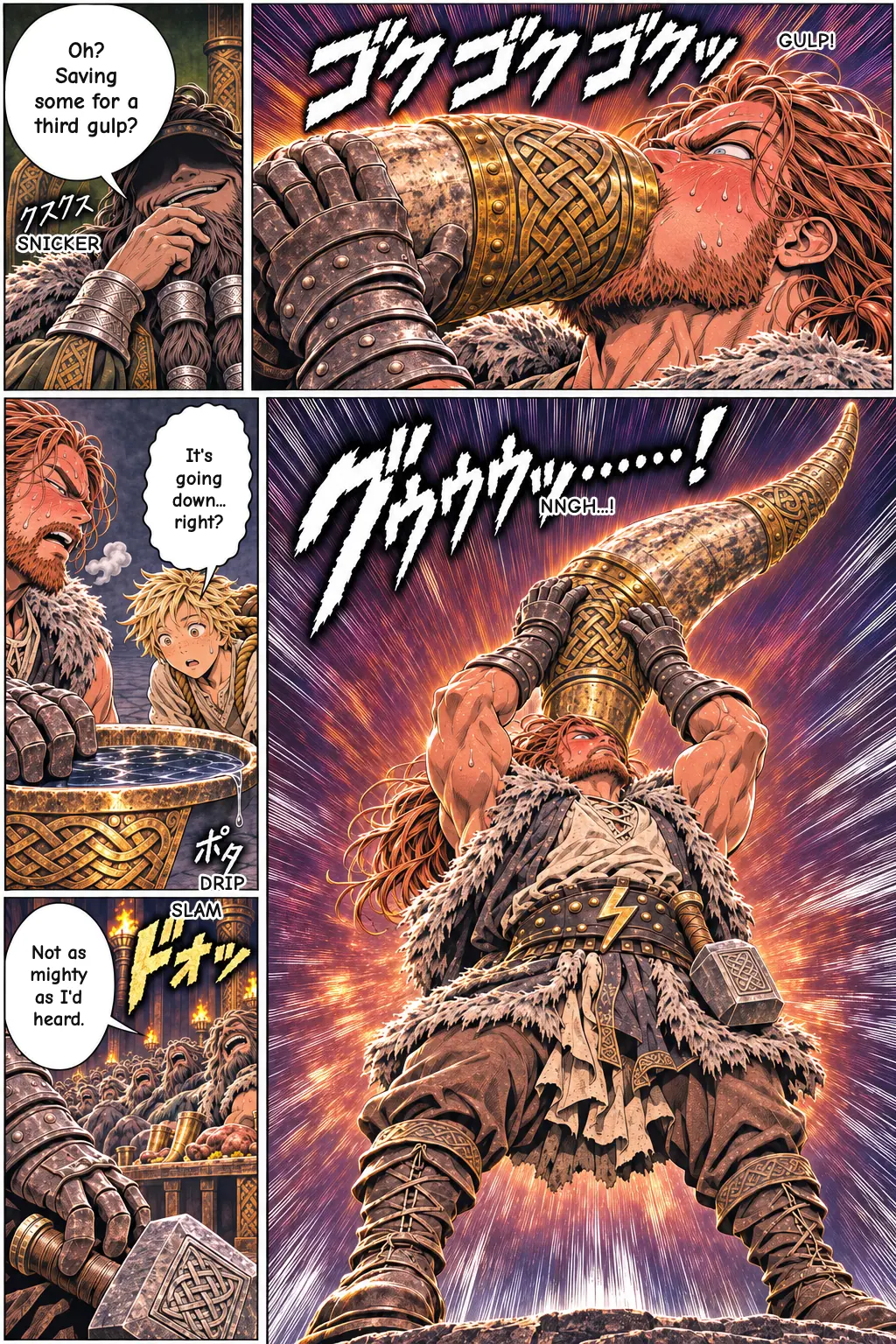
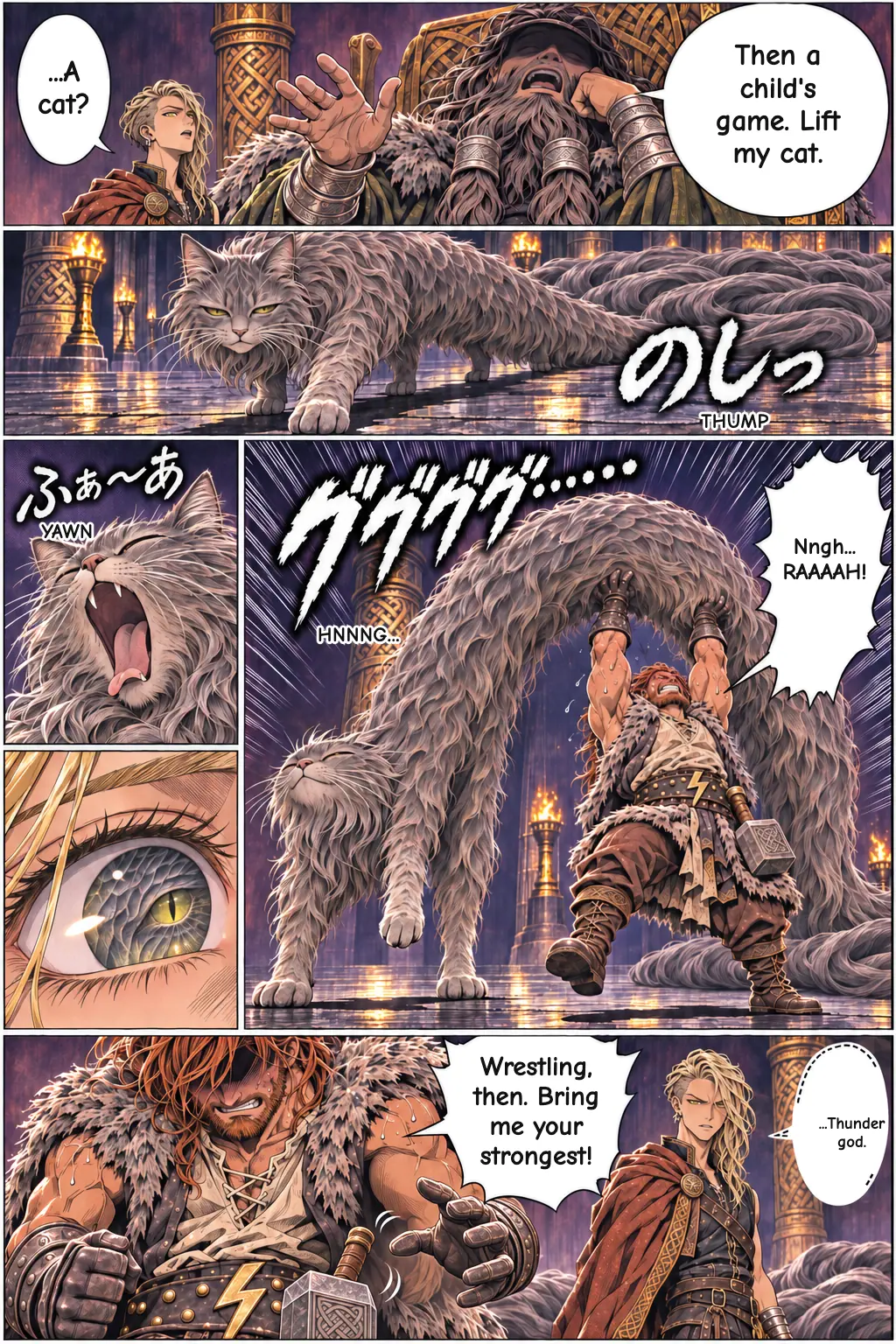
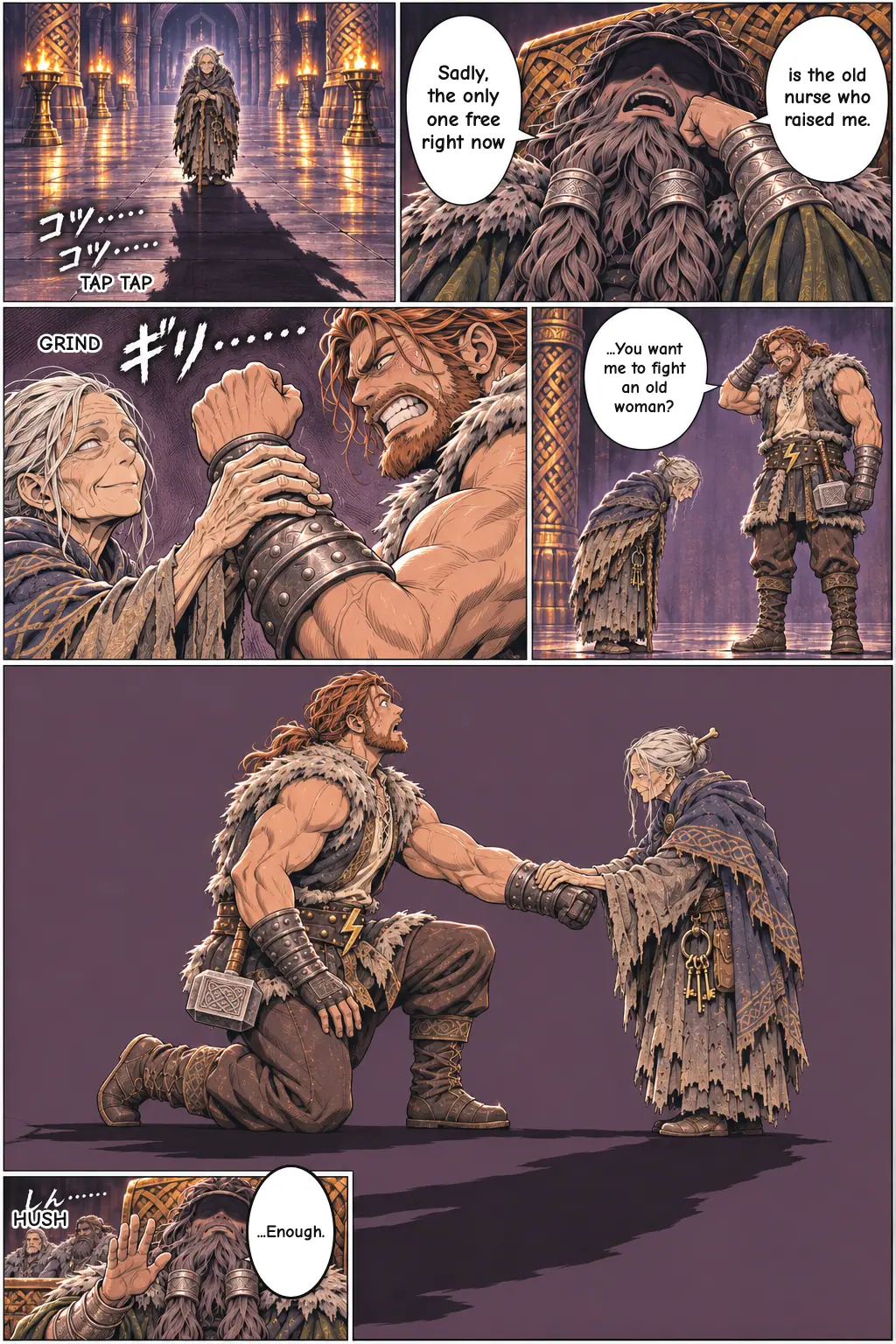
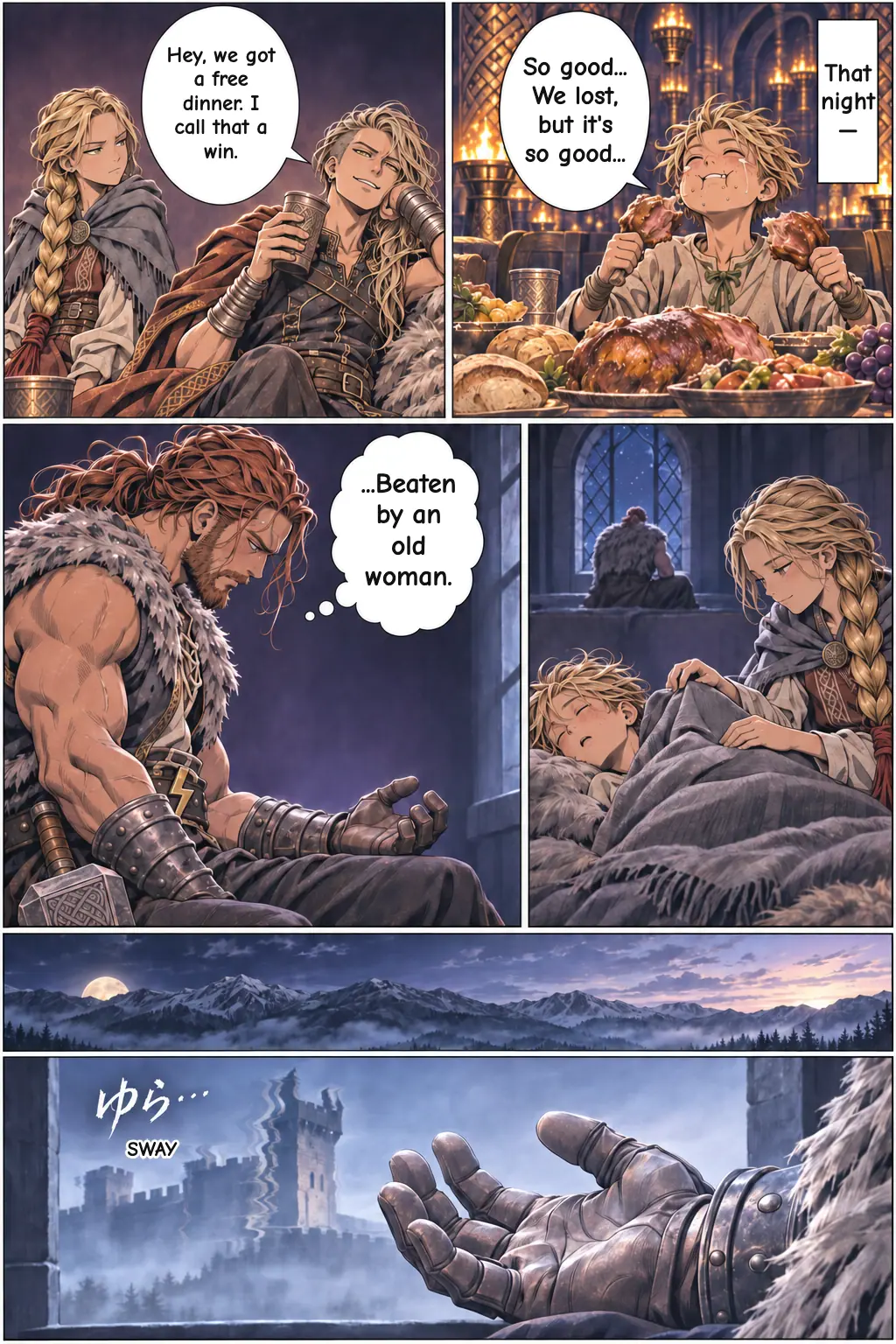
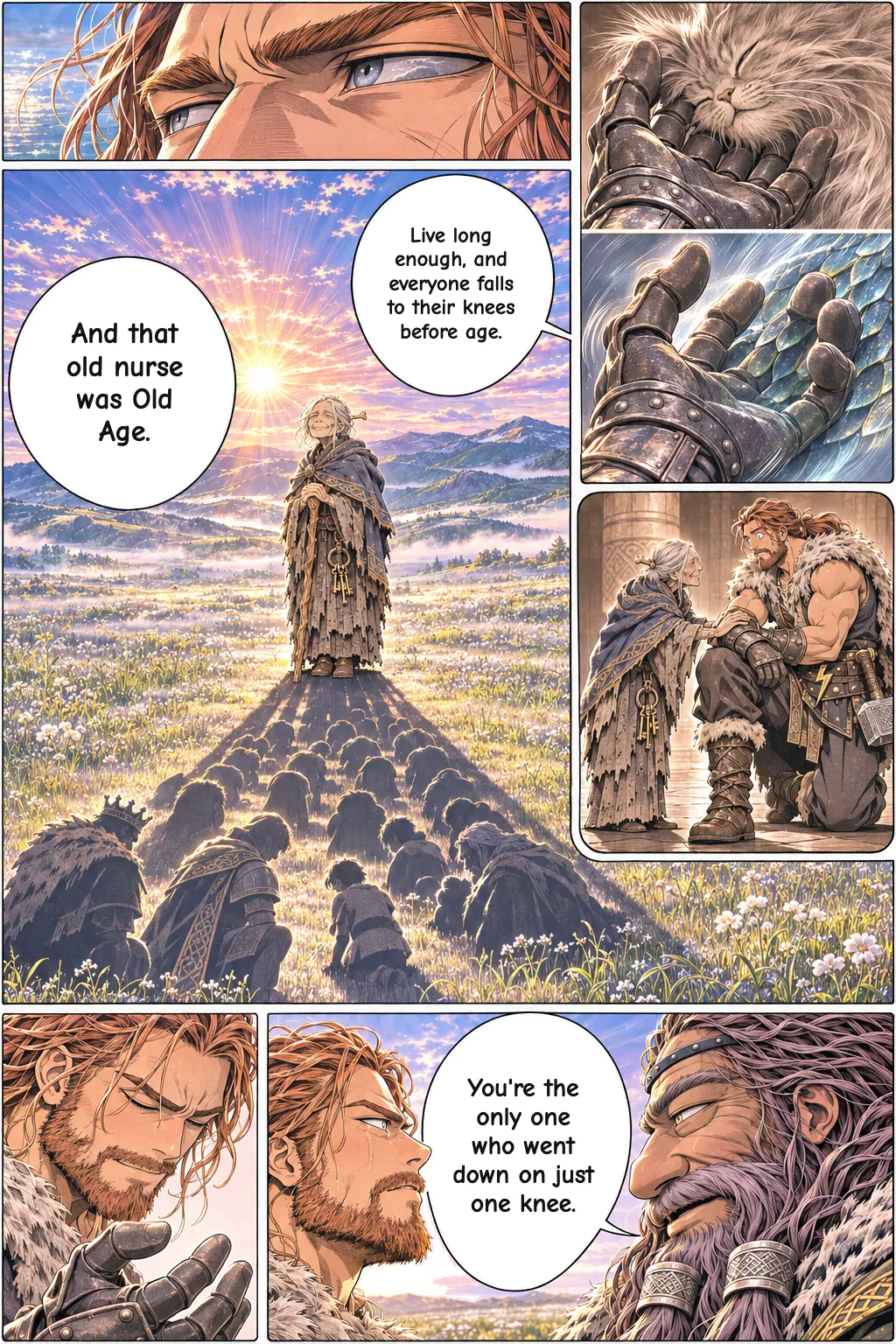
Then Thor competes. Given a drinking horn that a strong drinker should empty in one draught, he takes three huge swallows and barely lowers the level. Asked to lift the king's grey cat—a game for youngsters, the king says—he strains with all his might and raises only one paw. Finally he wrestles the king's old nurse, Elli, and the harder he pushes, the firmer she stands, until Thor is forced down onto one knee. The guests spend the night in the hall, treated generously despite their defeat.
The morning reveal: what Thor was really fighting
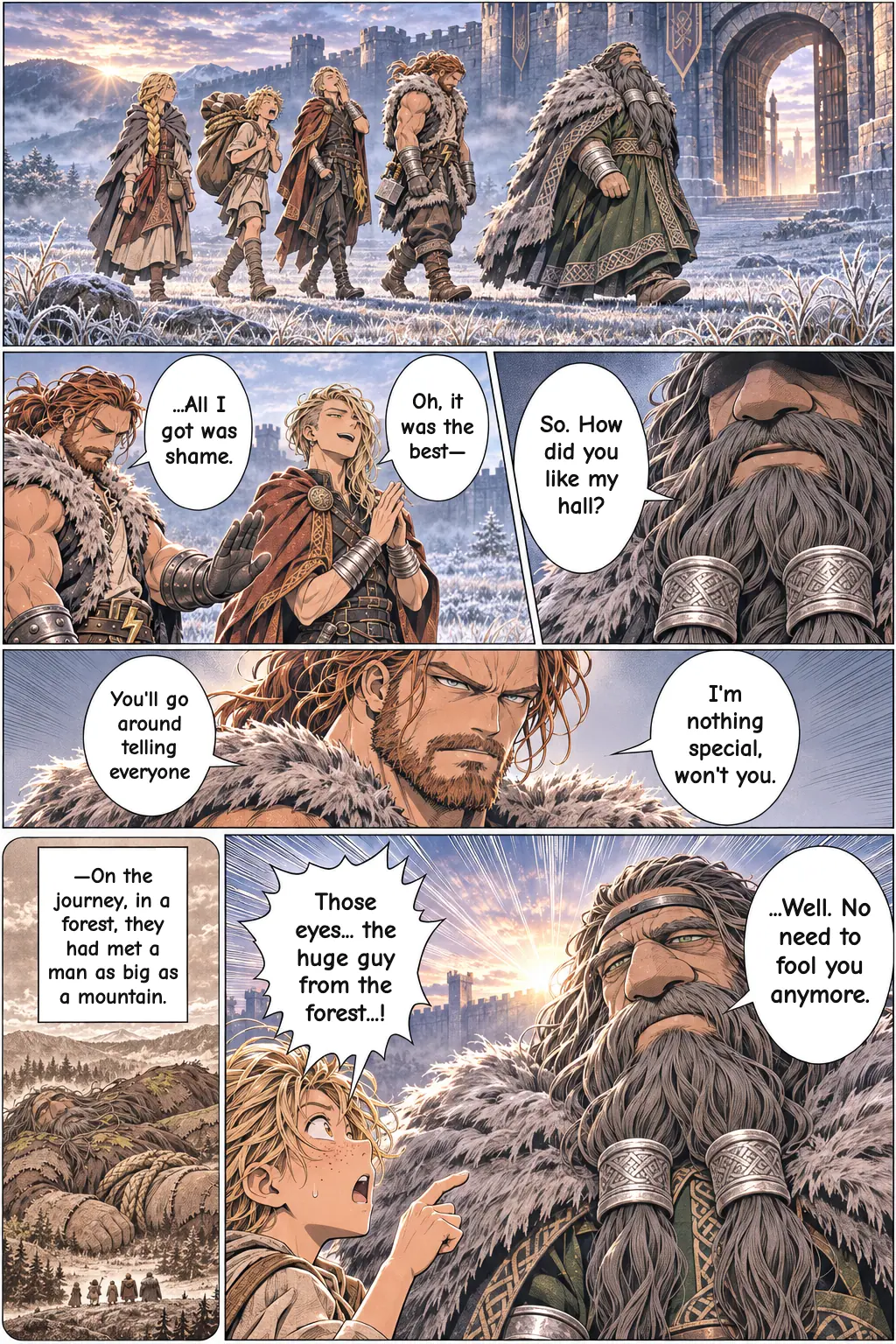
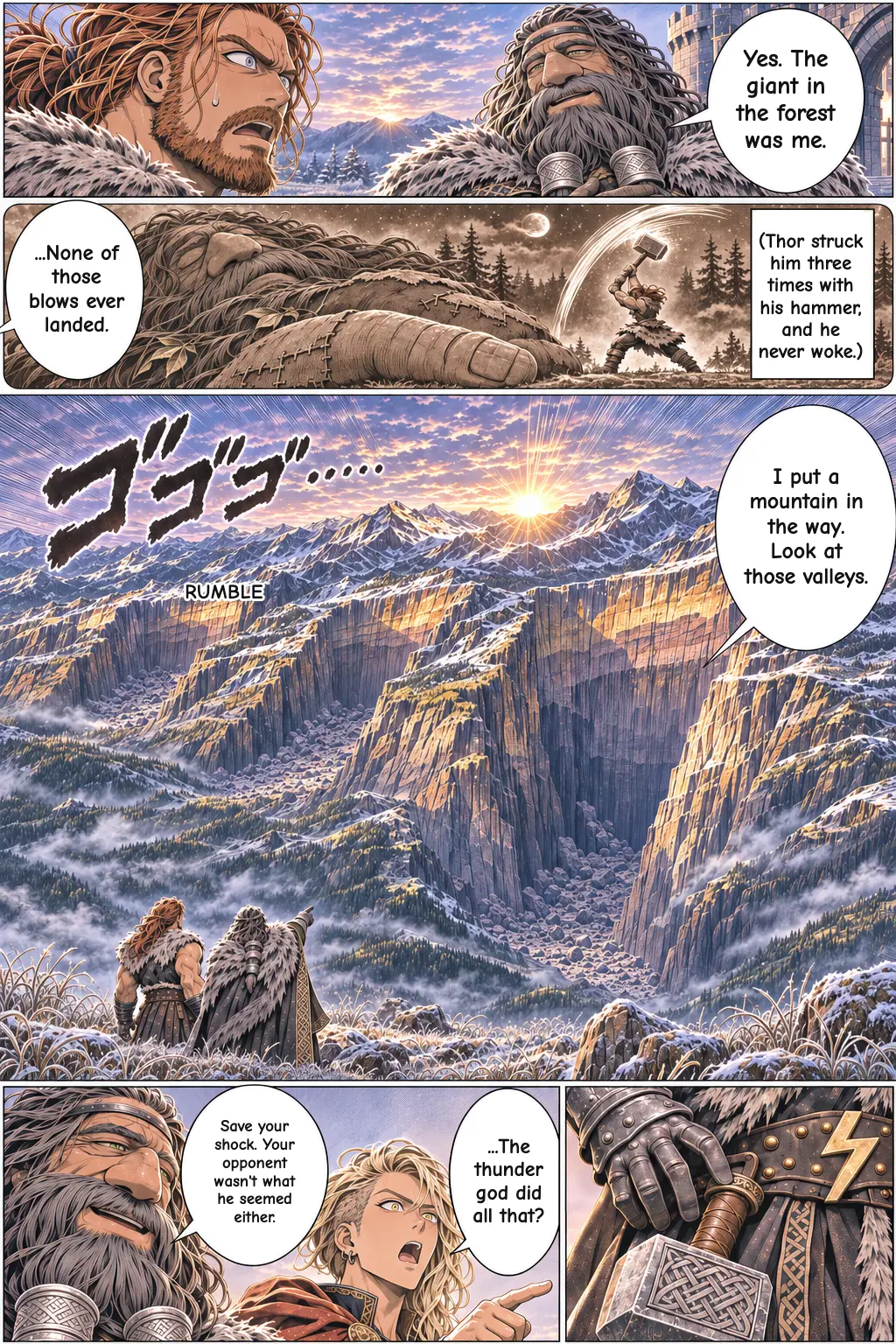
After breakfast, Utgard-Loki walks his guests outside the walls and asks how the visit went. Thor admits he has been deeply shamed. Now the king tells the truth. He himself was Skrymir, the giant they met on the road; the three hammer blows Thor struck at Skrymir's head had actually landed on a mountain he slipped in between, leaving three square valleys.
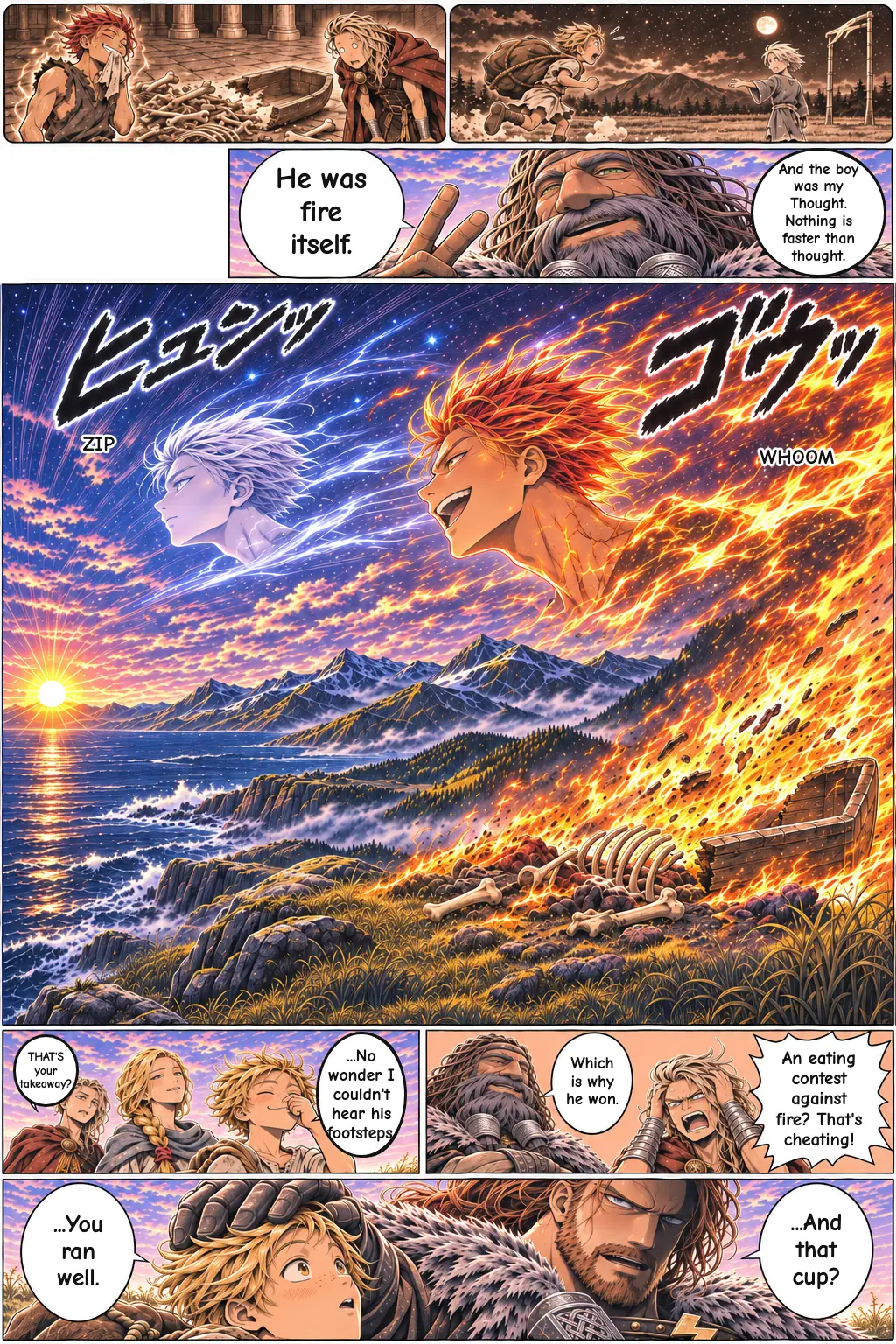
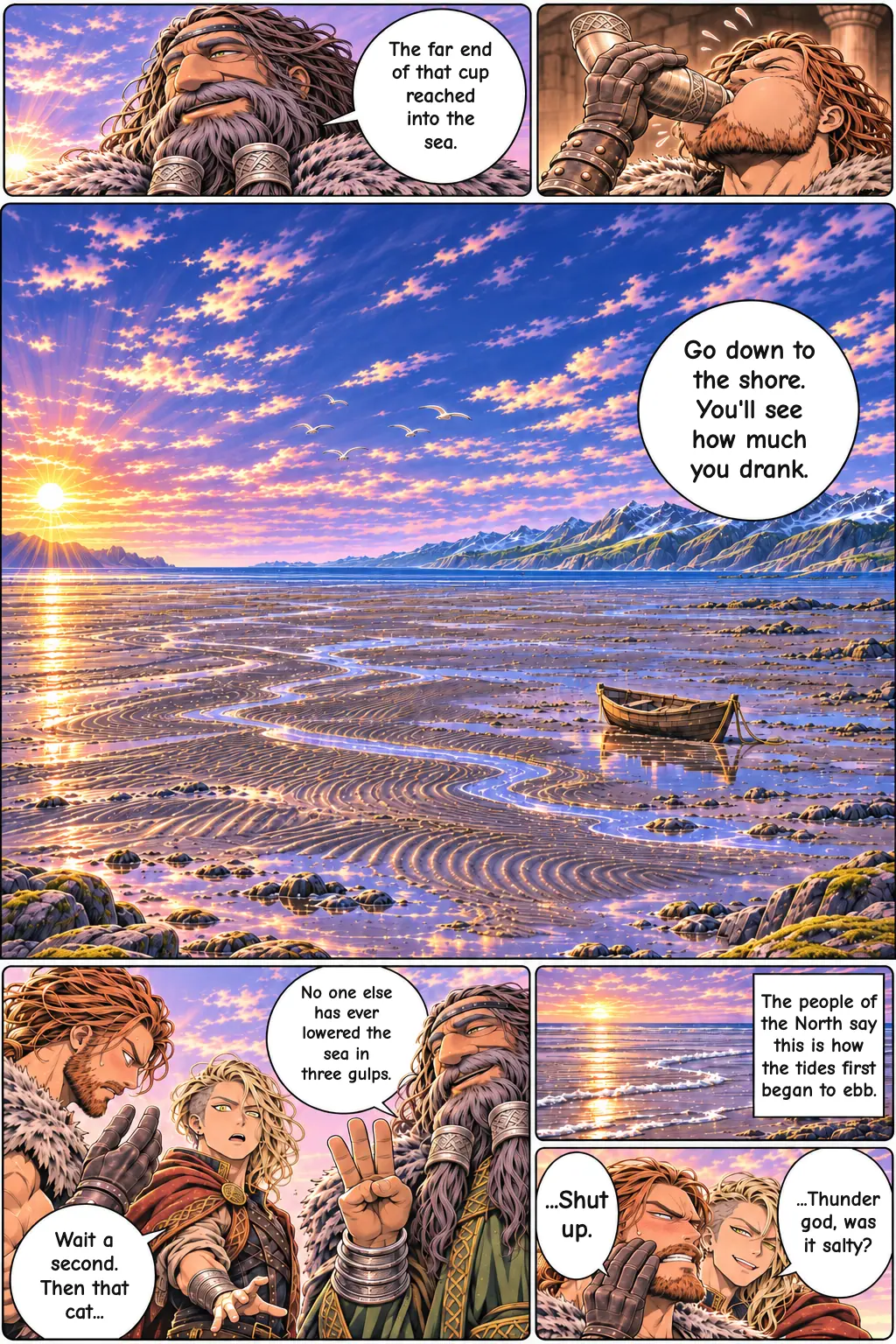
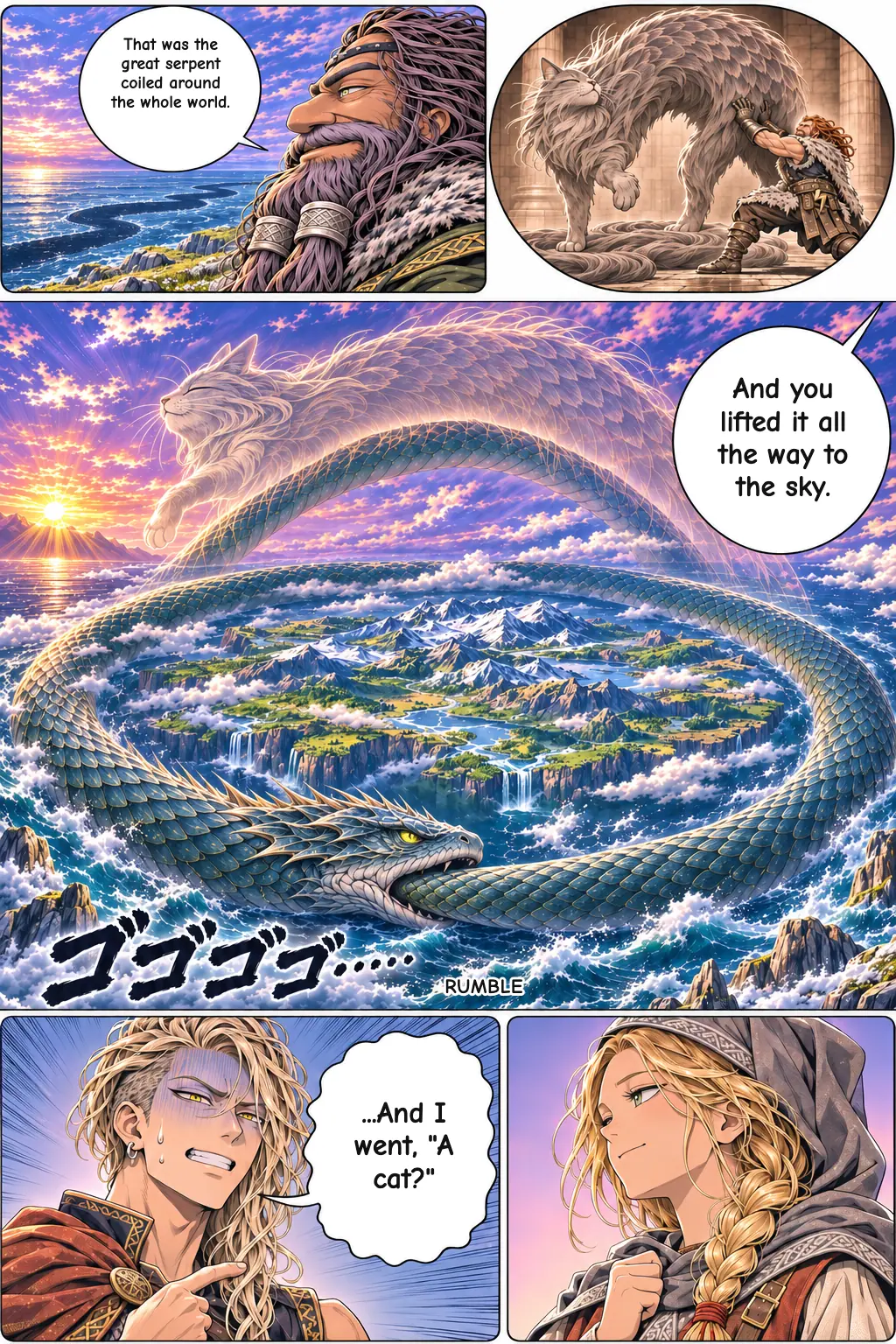
Logi was wildfire, which consumes everything. Hugi was the king's own thought, and nothing runs faster than thought. The end of the drinking horn reached the sea, and Thor drank so much that the ocean dropped—the origin of the ebb tide. The cat was the Midgard Serpent, the monster that encircles the world, and Thor had lifted it nearly to the sky. Elli was old age, which defeats everyone eventually; that Thor only fell to one knee was astonishing.
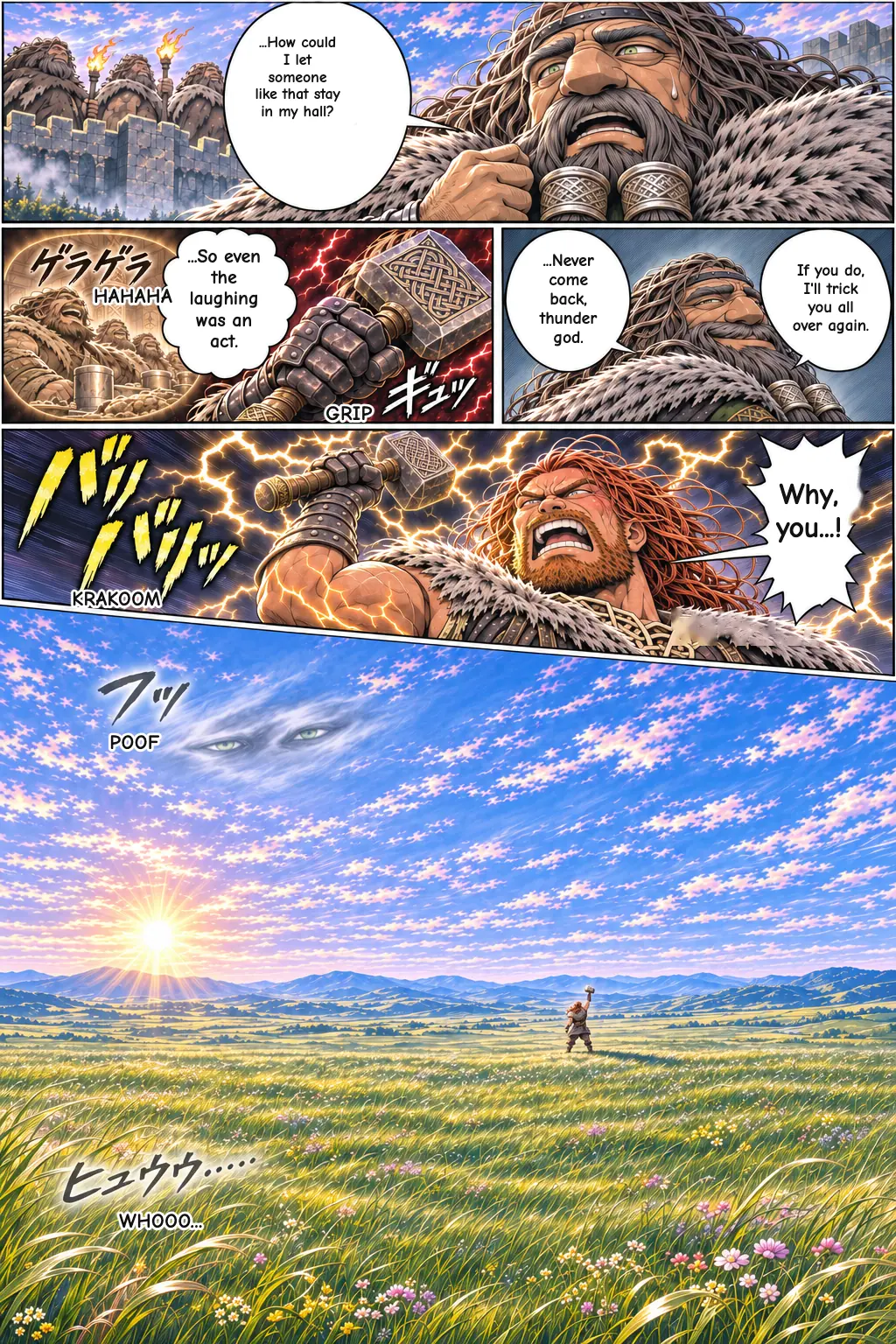
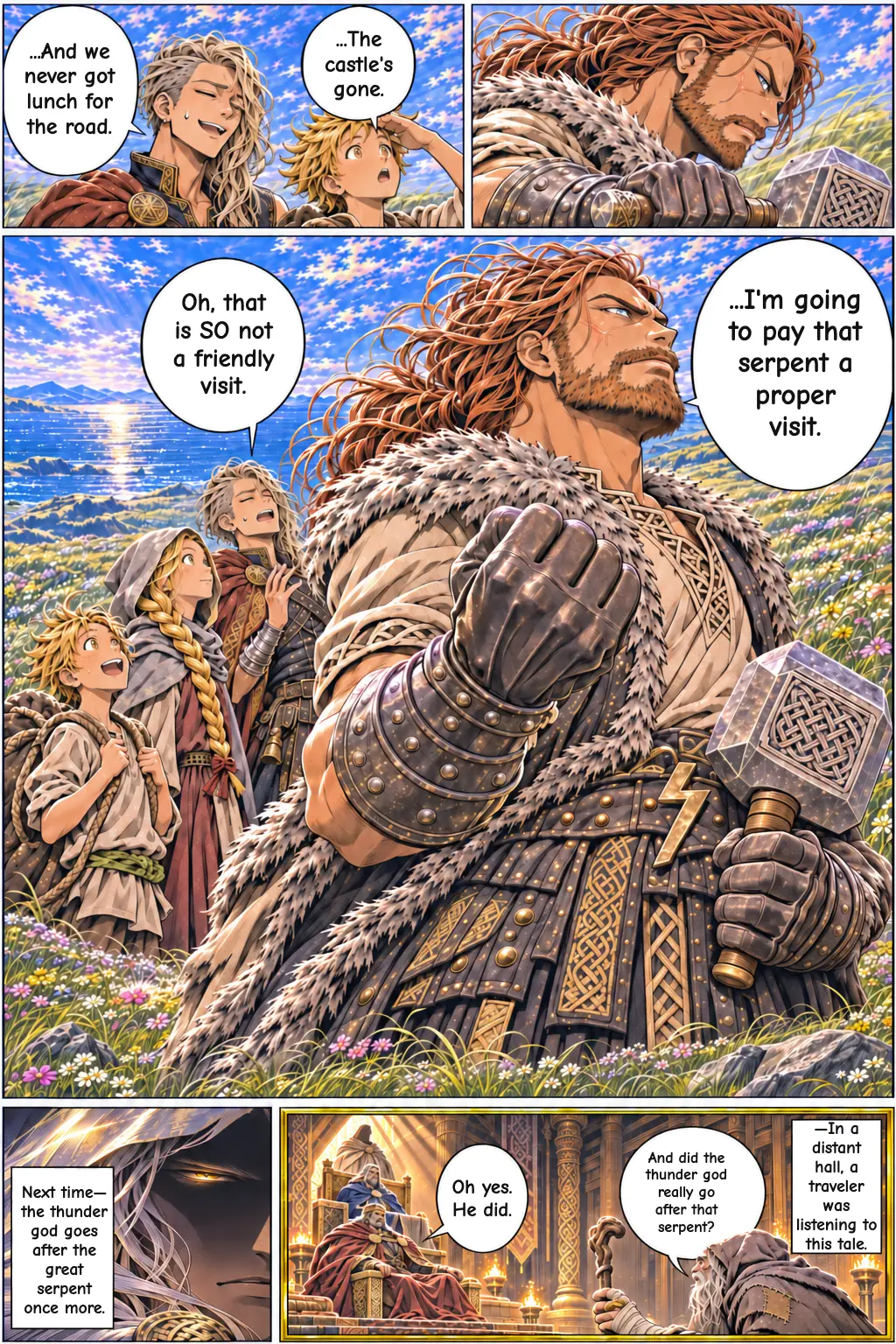
The king confesses that everyone in the castle had been afraid, and that had he known Thor's power he would never have let him in. He warns Thor never to return. Thor raises his hammer—but the king and the castle have vanished, leaving only a wide, open plain. Thor turns back, resolved to meet the Midgard Serpent again.
What this myth tells us
Snorri frames the whole tale as an answer given to King Gylfi, who has come in disguise to question three mysterious figures about the gods. Within that frame, Utgard is a place of illusion, and the story plays a clever trick on the audience too: we laugh at Thor's failures, then learn he was doing the impossible.
The myth also explains natural things—tides and the shape of a mountain—and pits Thor against forces no one can truly beat: fire, thought, the sea and aging. Scholars have read it in different ways, from a humorous tall tale to a reflection on the limits even gods face. One common reading, based on the king's own admission, is that Thor was deceived precisely because he was feared; the source implies this rather than stating it as a moral. The episode also sets up Thor's rivalry with the Midgard Serpent, which returns in the fishing story and at Ragnarok, the end of the gods.
Note that Utgard-Loki is a giant, not the same figure as Thor's companion Loki. Hugi likewise is unrelated to Huginn, one of Odin's ravens, despite the similar name meaning "thought."
What the manga changes
The plot of Episode 10 follows the Prose Edda: the mockery, the five contests, the morning confession and the vanishing castle all come from the source. Snorri, however, describes very little visually. He mentions a hall full of giants on benches and a race on flat ground, but nothing about faces, costumes or settings.
So the manga invents the look of the castle and the giants, the appearance of Logi, Hugi, Elli and the grey cat (including visual hints at their true identities), the giants' laughter and reactions, the companions' expressions, the size of the drinking horn, and staging such as flashbacks or a glimpse of the shore during the reveal. The king's line about being frightened is a dramatized version of what he admits in the source. The idea that Thor was tricked because he was feared is presented as the story's theme, but it is an interpretation, not a quotation from Snorri.
Where to read it
If you want to see Thor strain against a "cat" that is really a world-circling serpent, you can read Episode 10 of NORSE MYTHOLOGY: The King Who Heard the End of the Gods on Manga Portal. Every episode is free, with no sign-up required. Earlier episodes cover the journey with Skrymir, and the next part of the story follows Thor's attempt to settle the score with the Midgard Serpent.
Characters in this episode
Thor
The thunder god with the hammer Mjolnir, mocked as a boy in Utgard, who loses every contest without realizing he has drained the sea and lifted the world serpent.
Utgard-Loki
The giant king of Utgard who tricks Thor with illusions, then admits he was afraid of him; not the same figure as Thor's companion Loki.
Loki
The trickster god, here Thor's travel companion, who loses an eating contest to Logi.
Thjalfi
Thor's human servant and the fastest runner among people, beaten three times in a race against Hugi.
Logi, Hugi and Elli
Thor's party's opponents, who turn out to be wildfire, the king's thought, and old age itself.
The Midgard Serpent (Jormungandr)
The giant serpent encircling the world, disguised as a grey cat that Thor manages to lift by one paw.
FAQ
Why did Thor lose the contests in Utgard?
Utgard-Loki used illusions so that Thor's party faced impossible opponents. Loki raced wildfire, Thjalfi raced thought, and Thor drank from the sea, lifted the Midgard Serpent and wrestled old age.
Who is Utgard-Loki, and is he the same as Loki?
Utgard-Loki is a giant king who rules the fortress of Utgard and earlier appears in disguise as the giant Skrymir. He is a different figure from Loki, the god who travels with Thor in this story.
What was the cat Thor tried to lift?
The grey cat was the Midgard Serpent (Jormungandr), the huge snake that circles the world. Thor raised one of its paws, which the king later says was an astonishing feat that frightened everyone watching.
Where does the story of Thor and Utgard-Loki come from?
It comes from Gylfaginning, the first part of the Prose Edda by Snorri Sturluson, written in Iceland in the early 13th century. The contests and their explanation appear around chapters 46–47, depending on the edition.
Who was Elli in Norse mythology?
Elli appears as Utgard-Loki's elderly nurse, who wrestles Thor down to one knee. She is really old age, which no one can defeat in the end.