Get new episodes in your feed. Follow us on:ThreadsBluesky
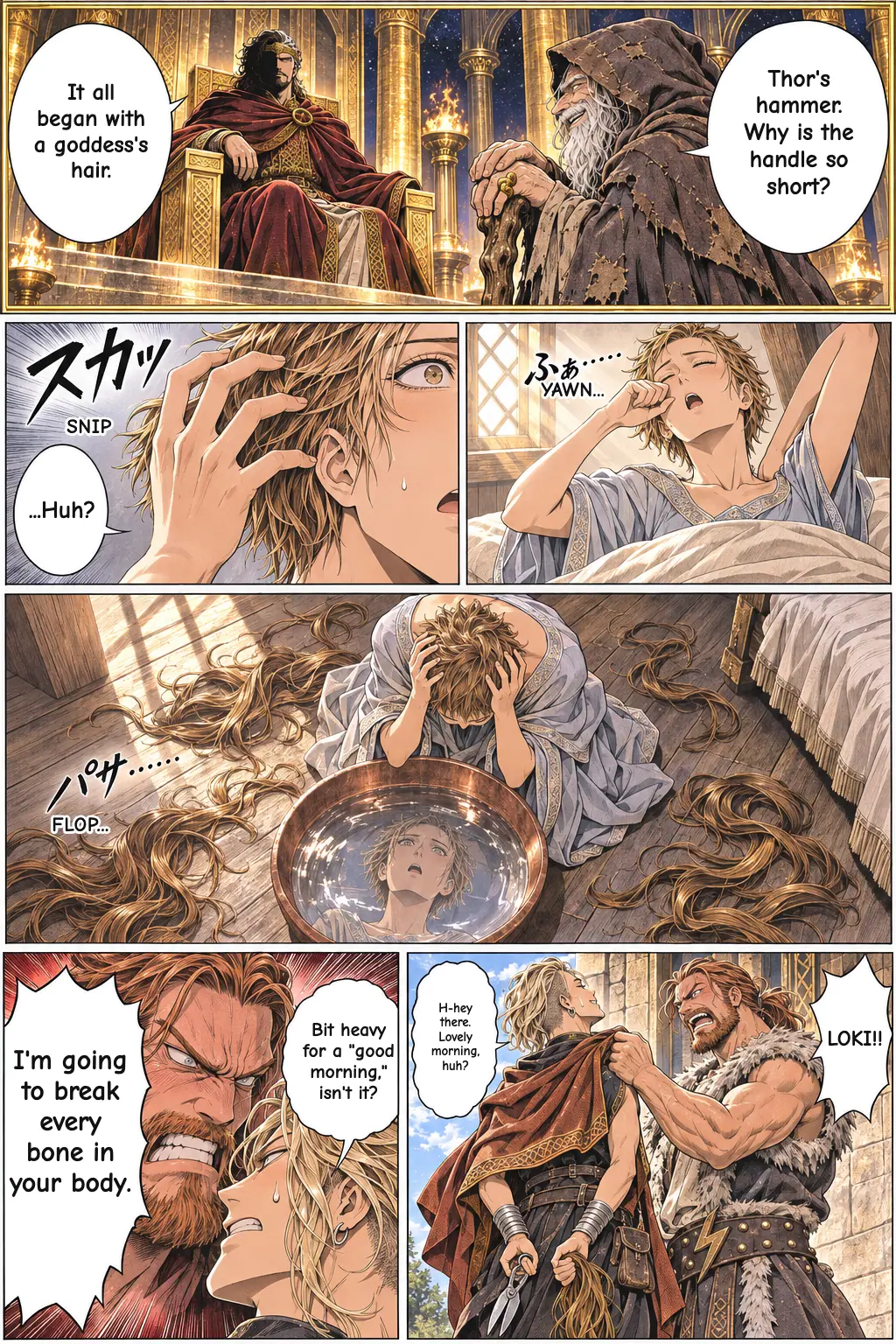
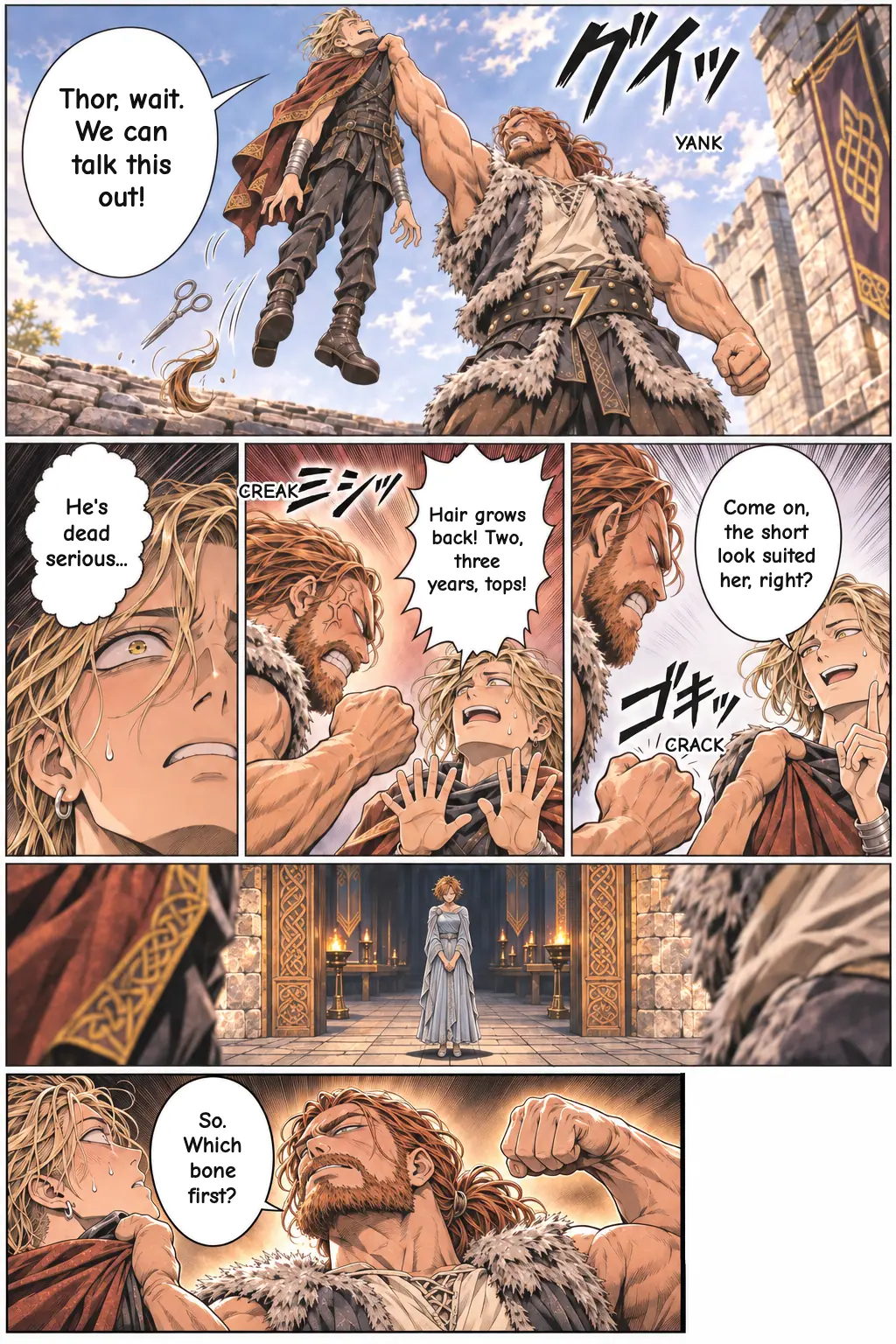
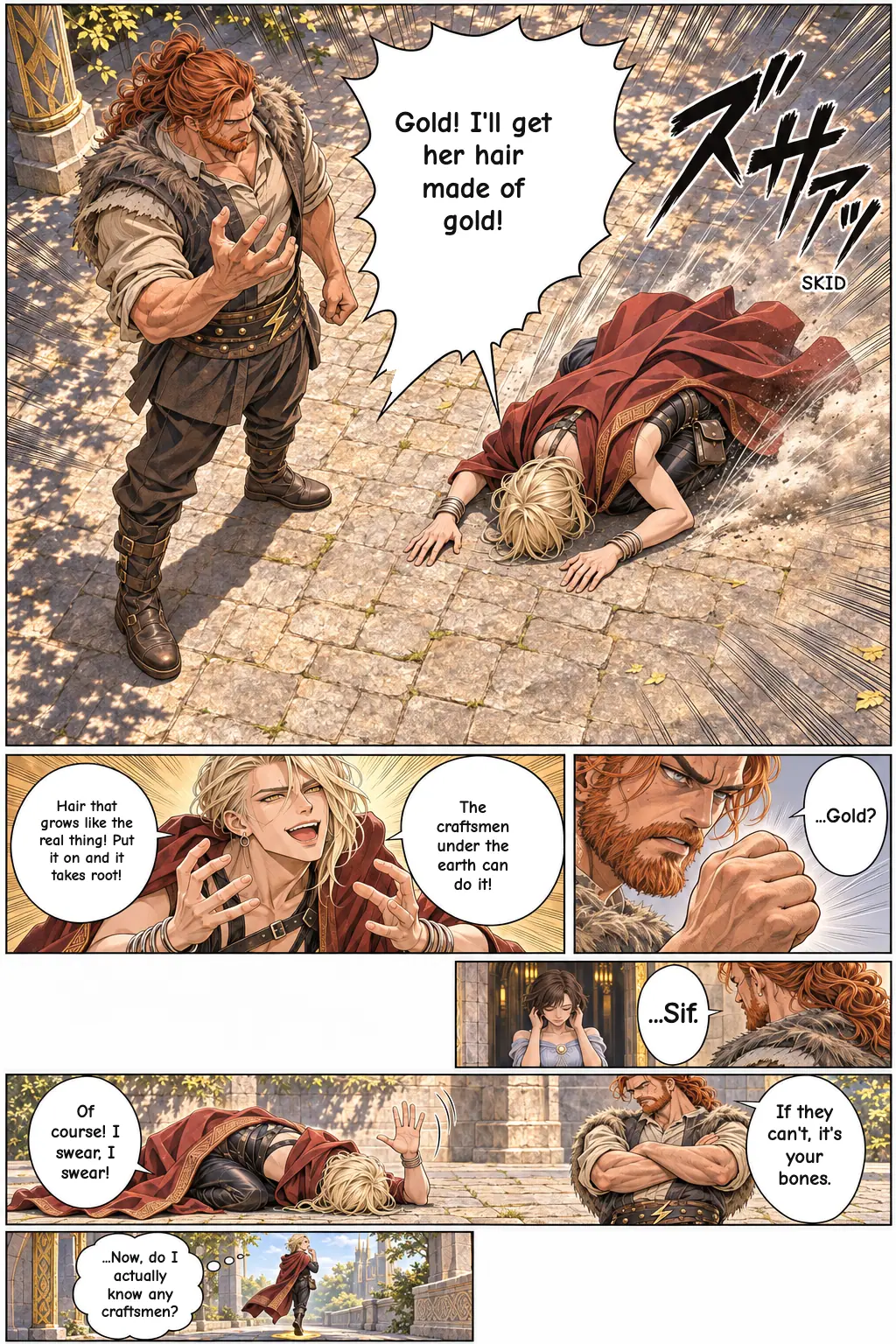
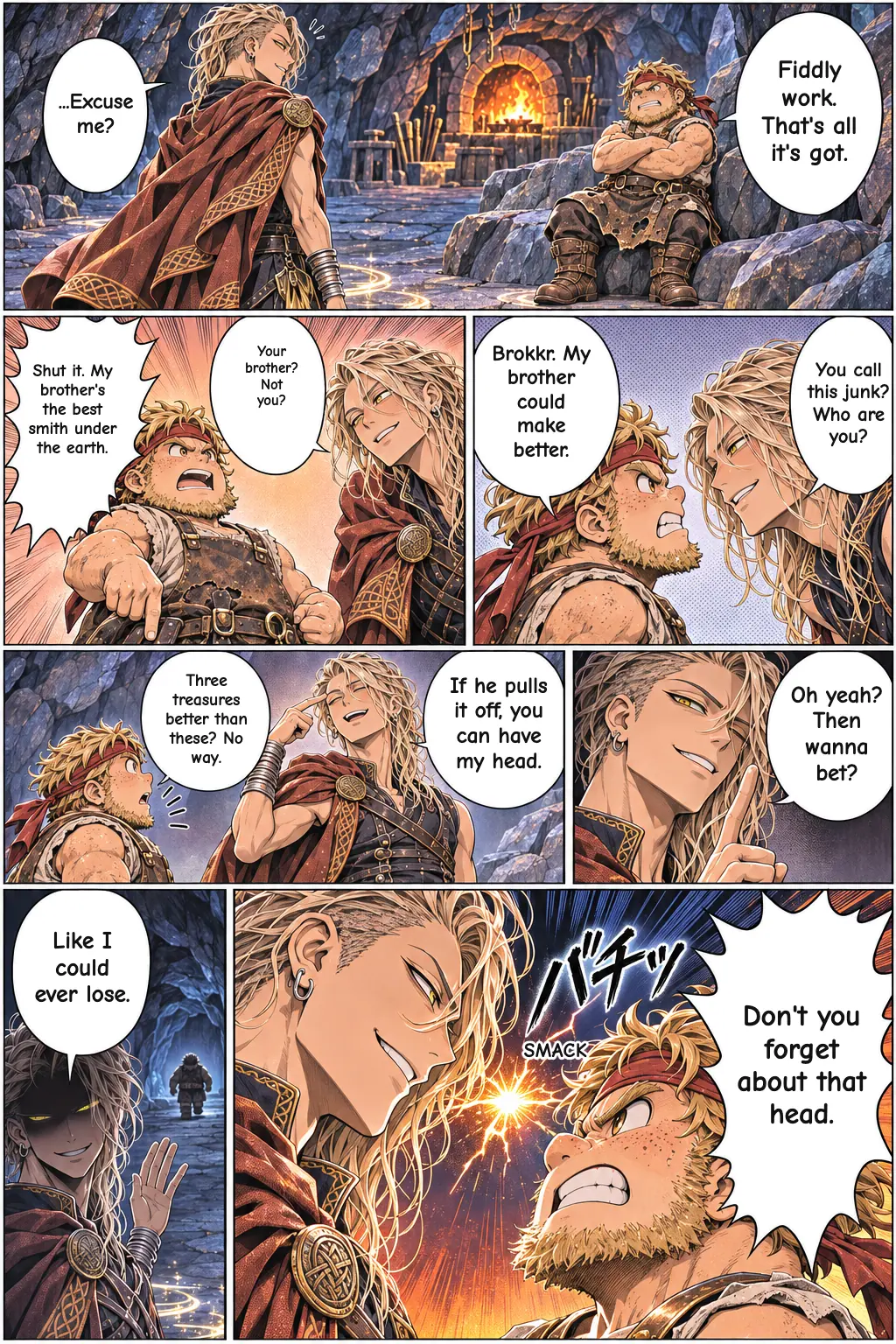
Loki shears off Sif's hair while she sleeps, and a furious Thor is ready to break every bone in his body. To save himself, Loki swears to get her new hair made of gold. Then, riding high, he bets his own head against a dwarf smith who won't let go of the bellows, no matter how many times a fly stings him. It's a comedy about why the thunder god's hammer has such a short handle, and how the god with the fastest mouth ends up with it sewn shut.
Story summary
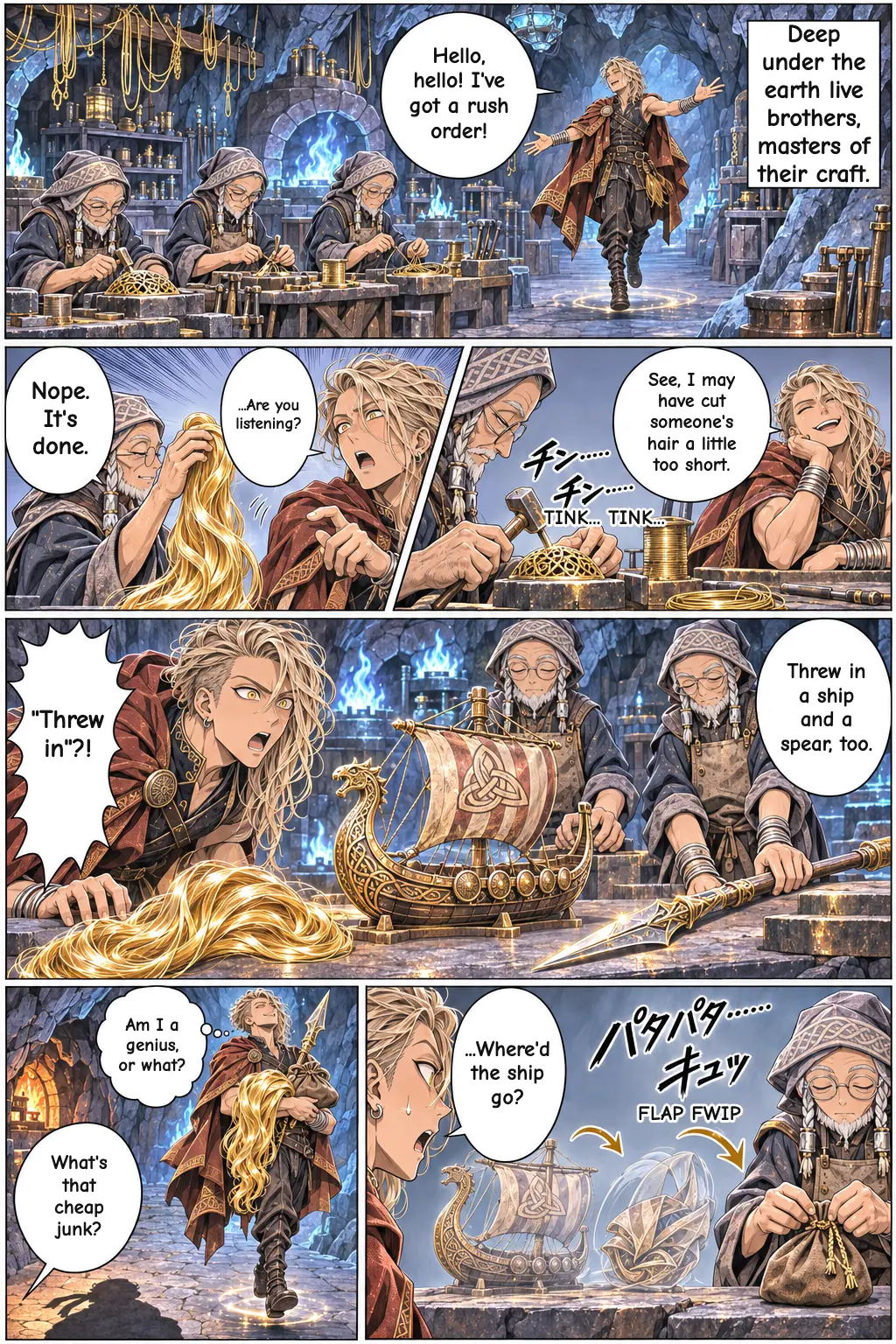
The story begins with a prank. Loki, the trickster god (called the son of Laufey), cuts off all the hair of Sif, the wife of Thor, the thunder god. When Thor finds out, he grabs Loki and is ready to break every bone in his body. To save himself, Loki swears he will get the dwarves to make Sif a head of hair from real gold, hair that will grow like any other. Loki goes to a group of dwarf craftsmen known only as the Sons of Ivaldi. They make three treasures: the golden hair, the ship Skíðblaðnir, and the spear Gungnir. Snorri does not describe how they made them; he only says they did.
How Thor Got Mjölnir: Loki, Sif's Golden Hair & the Dwarves' Bet
In short: The forging of Mjölnir is a Norse myth in which Loki cuts off the goddess Sif's hair, promises to replace it with gold, and then bets his own head that the dwarf smith Eitri cannot make treasures as fine as the ones he already has. A biting fly nearly ruins the work, so Thor's hammer comes out with a short handle. Loki loses the bet, but escapes beheading on a technicality and gets his lips sewn shut instead. It comes from Snorri Sturluson's Prose Edda (Skáldskaparmál, early 13th century).
The Original Myth: Sif's Hair and Loki's Wager
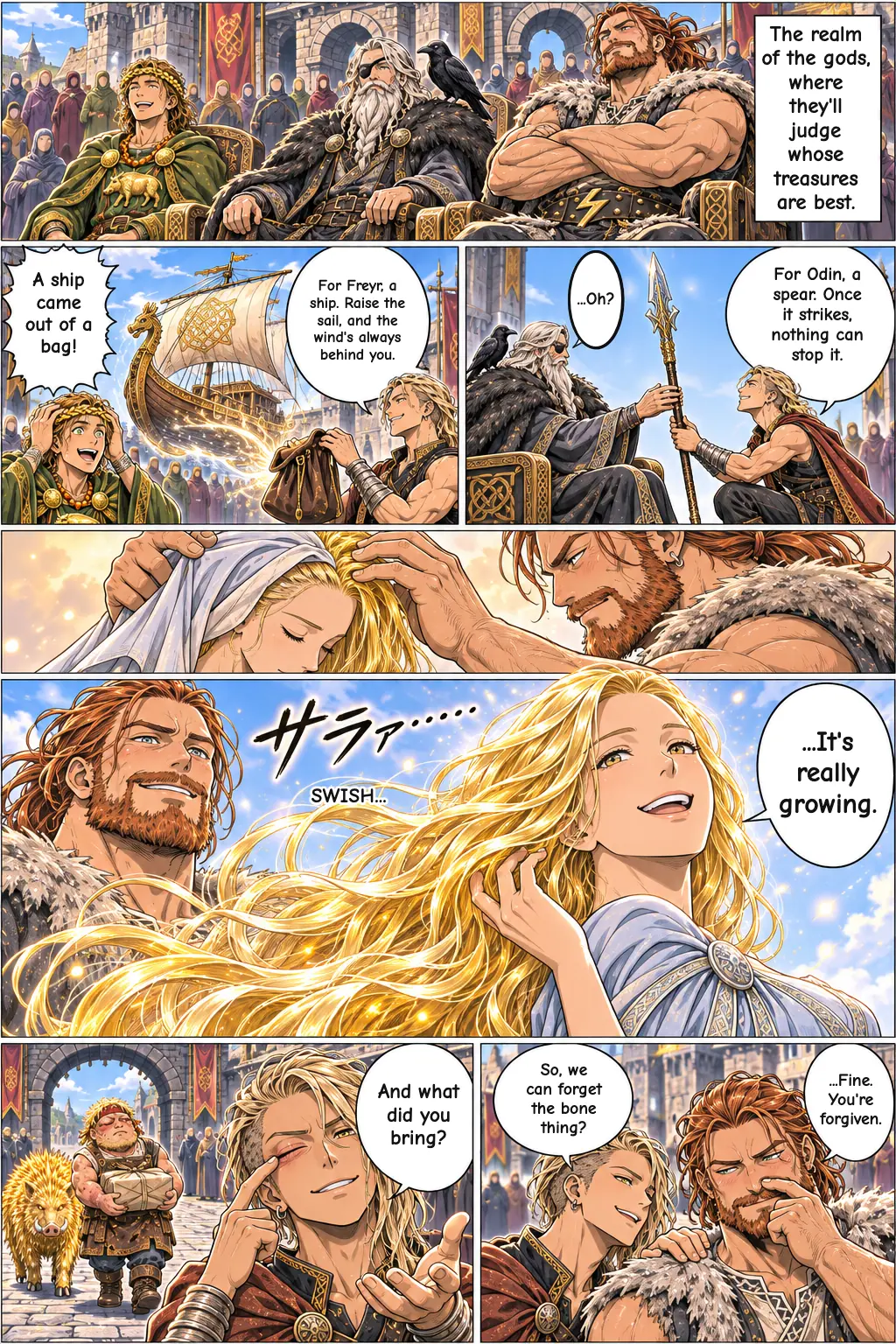
The story begins with a prank. Loki, the trickster god (called the son of Laufey), cuts off all the hair of Sif, the wife of Thor, the thunder god. When Thor finds out, he grabs Loki and is ready to break every bone in his body. To save himself, Loki swears he will get the dwarves to make Sif a head of hair from real gold, hair that will grow like any other.
Loki goes to a group of dwarf craftsmen known only as the Sons of Ivaldi. They make three treasures: the golden hair, the ship Skíðblaðnir, and the spear Gungnir. Snorri does not describe how they made them; he only says they did.
Pleased with himself, Loki then makes a reckless bet with another dwarf, Brokkr. He wagers his own head that Brokkr's brother Eitri cannot make three treasures as good as these.
The Forge, the Fly and the Short Handle
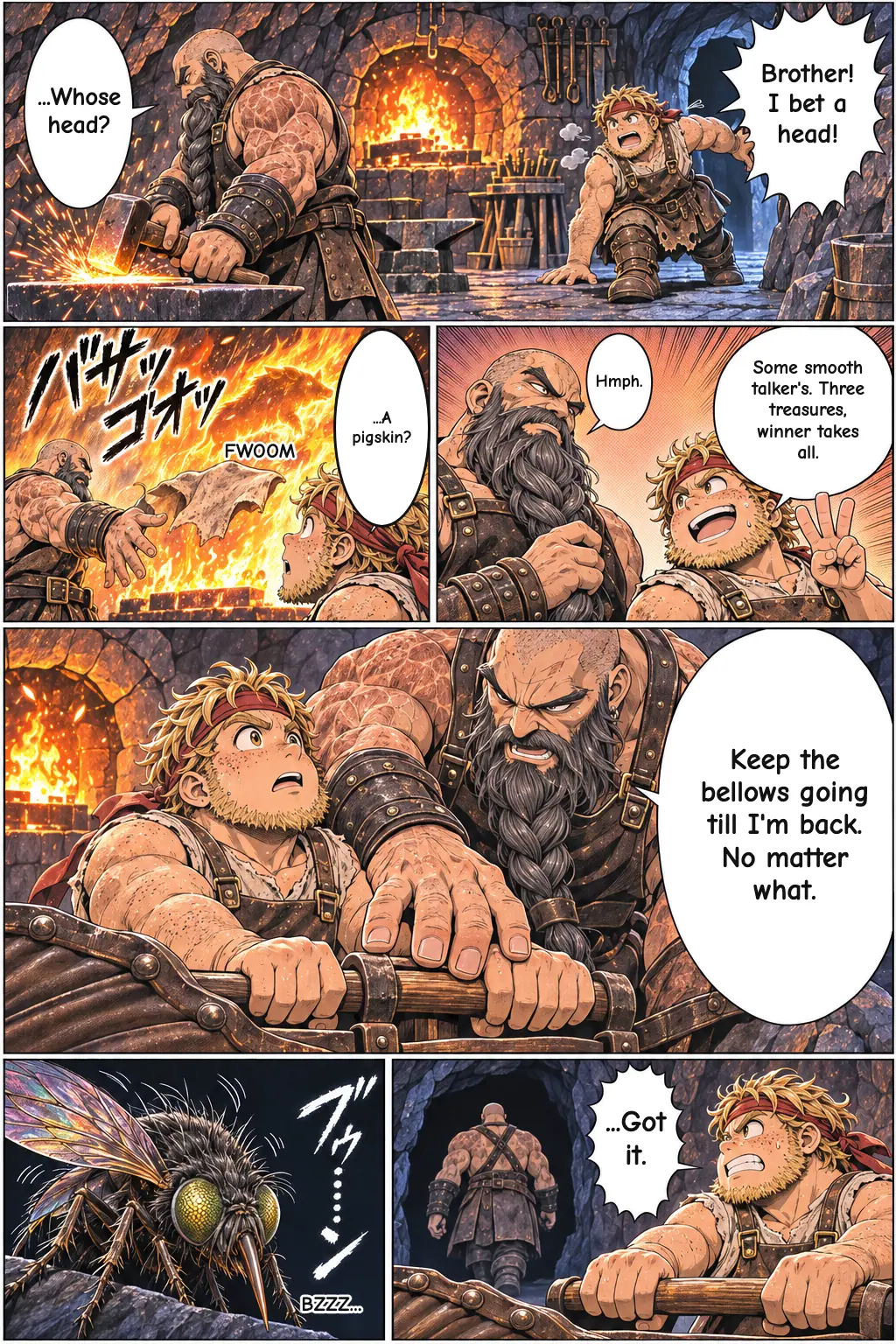
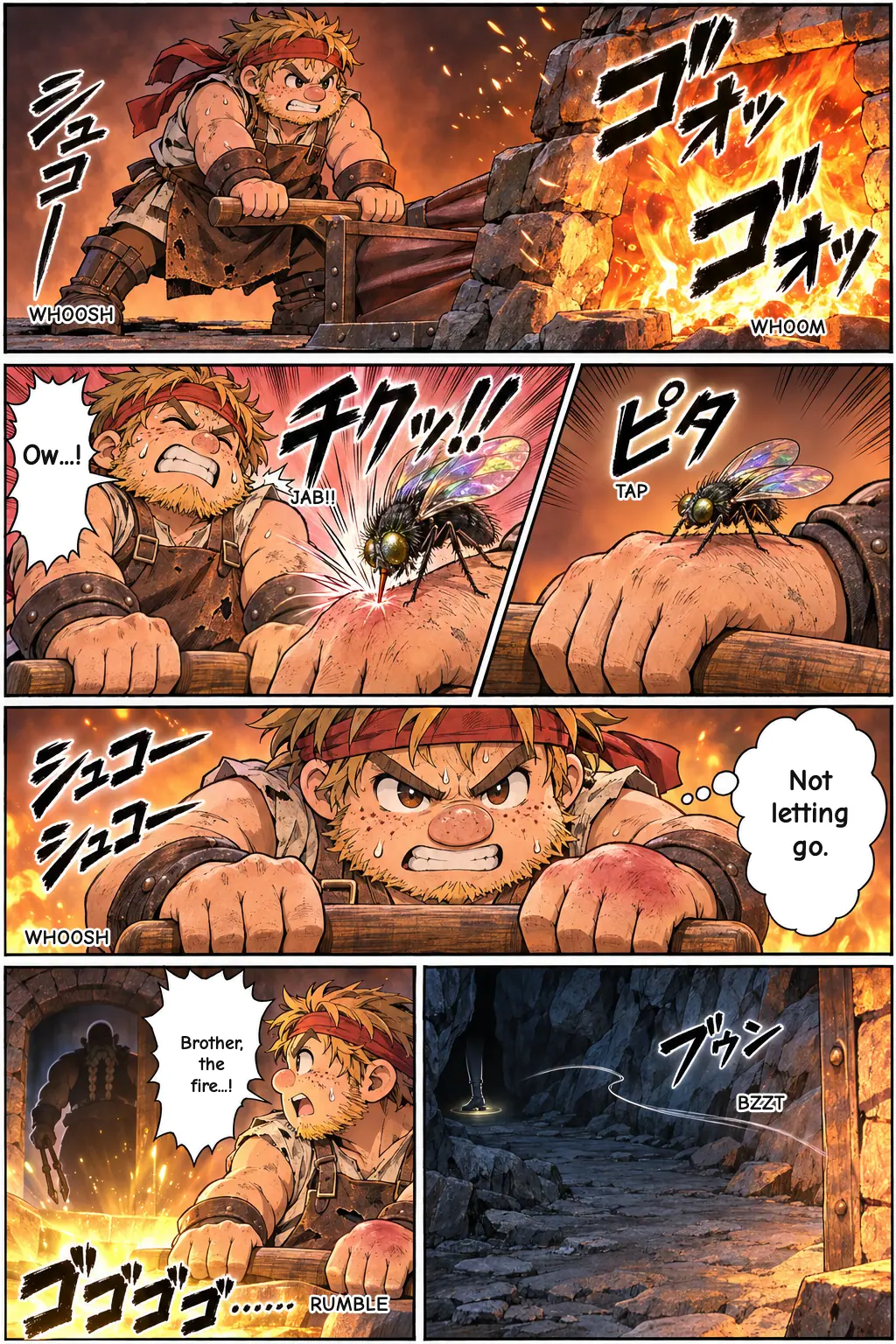
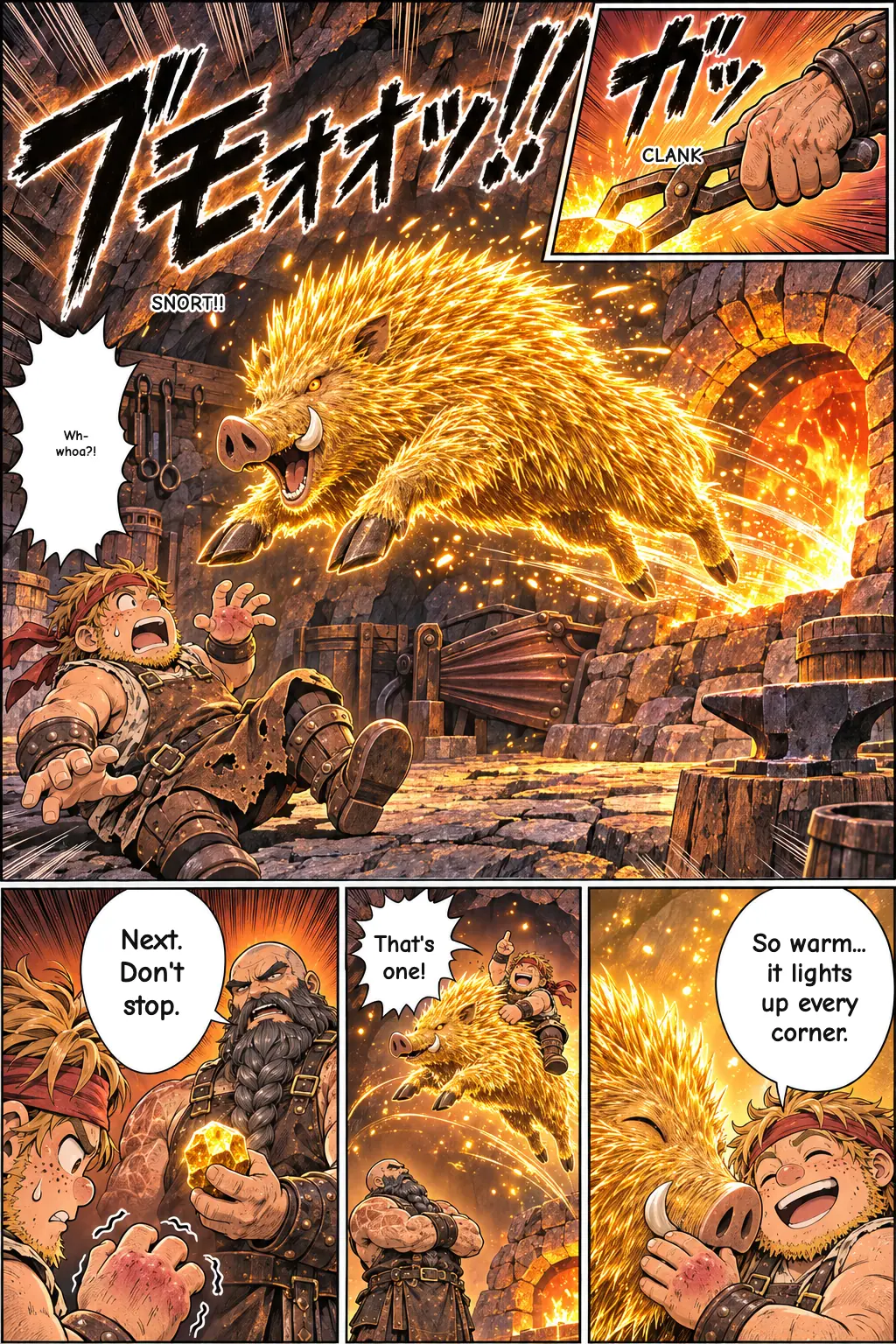
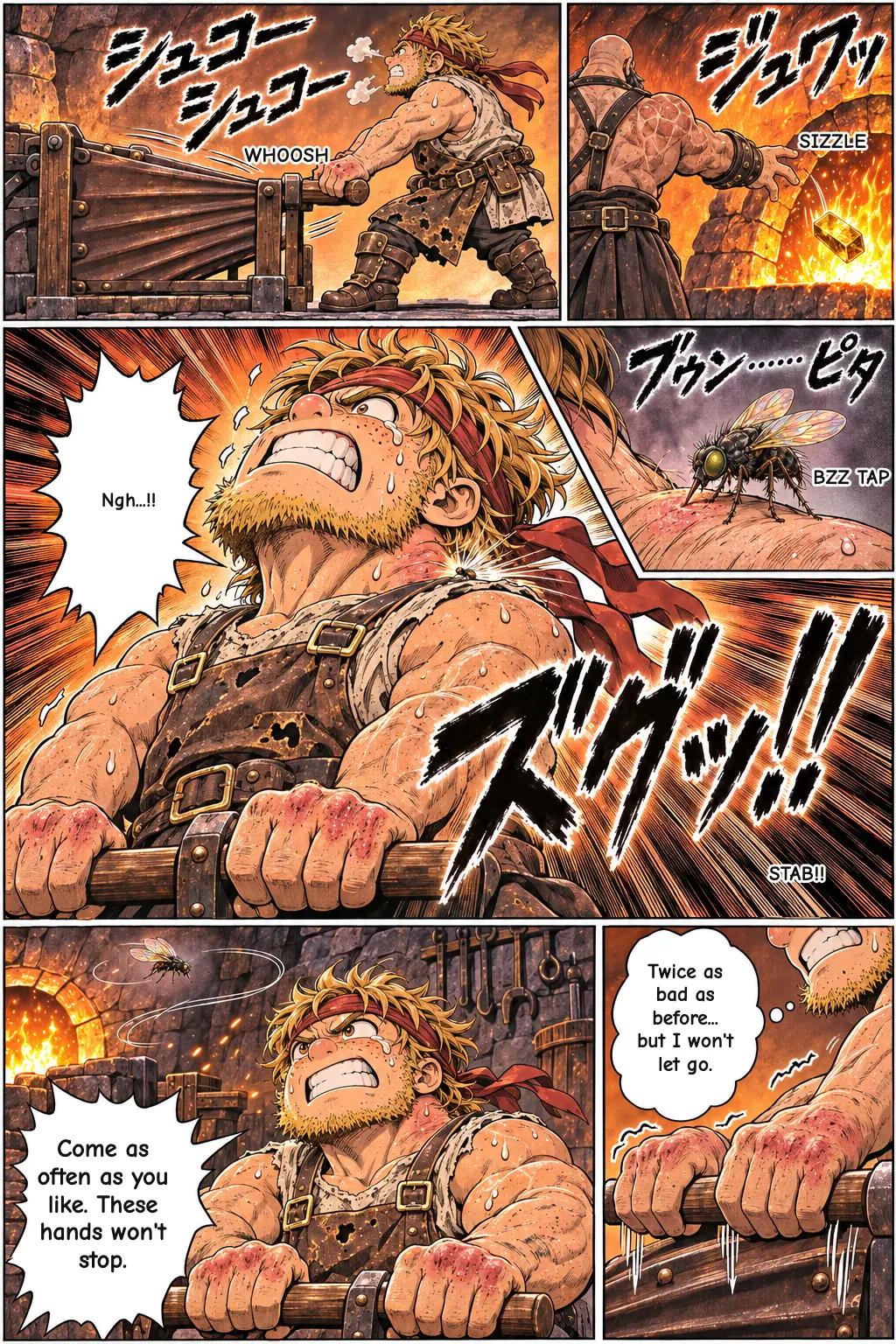
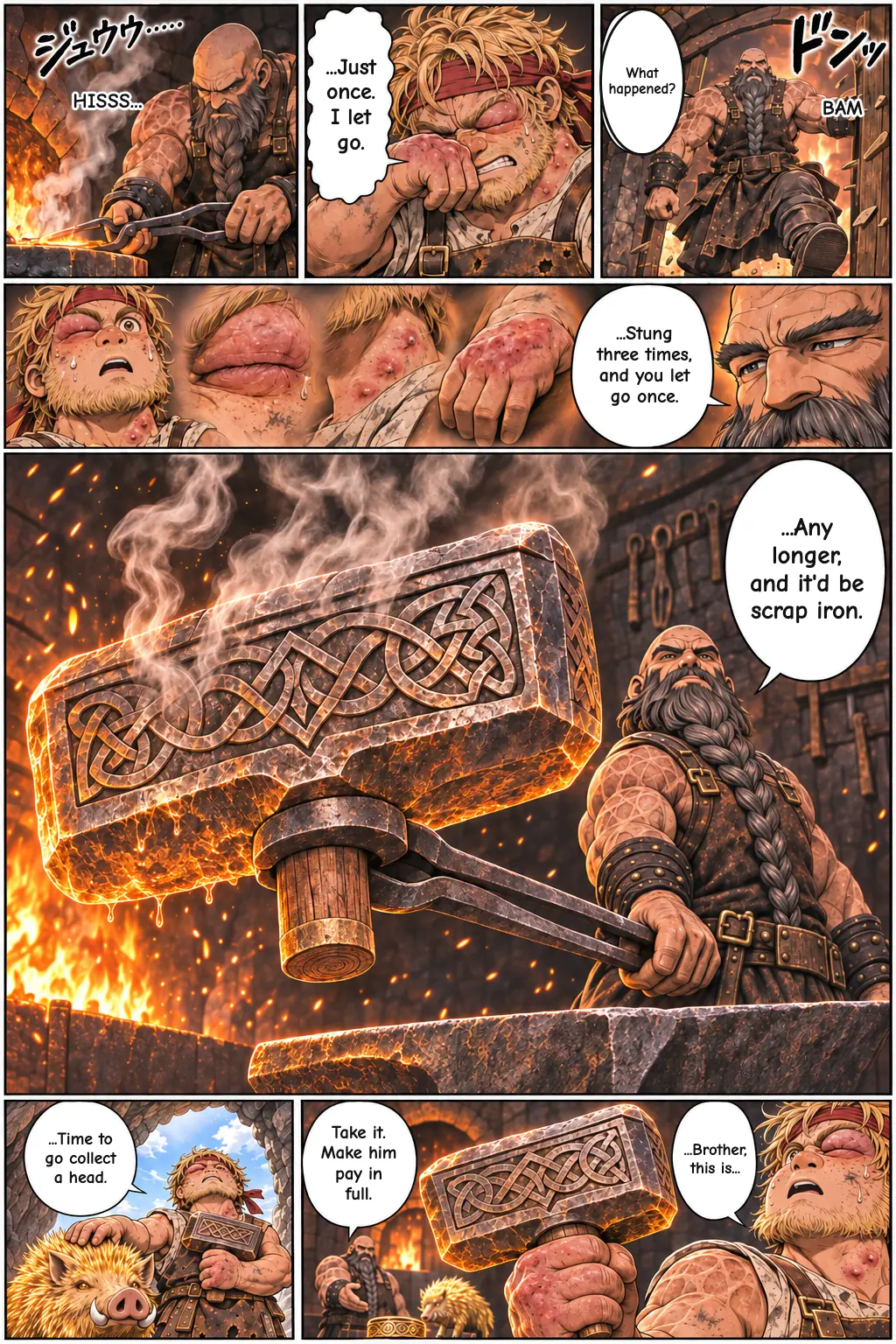
Eitri puts a pigskin into the forge and tells Brokkr not to stop working the bellows until it is taken out. While Eitri is away, a fly lands on Brokkr's hand and bites him, but he keeps pumping. Out comes a boar with golden bristles.
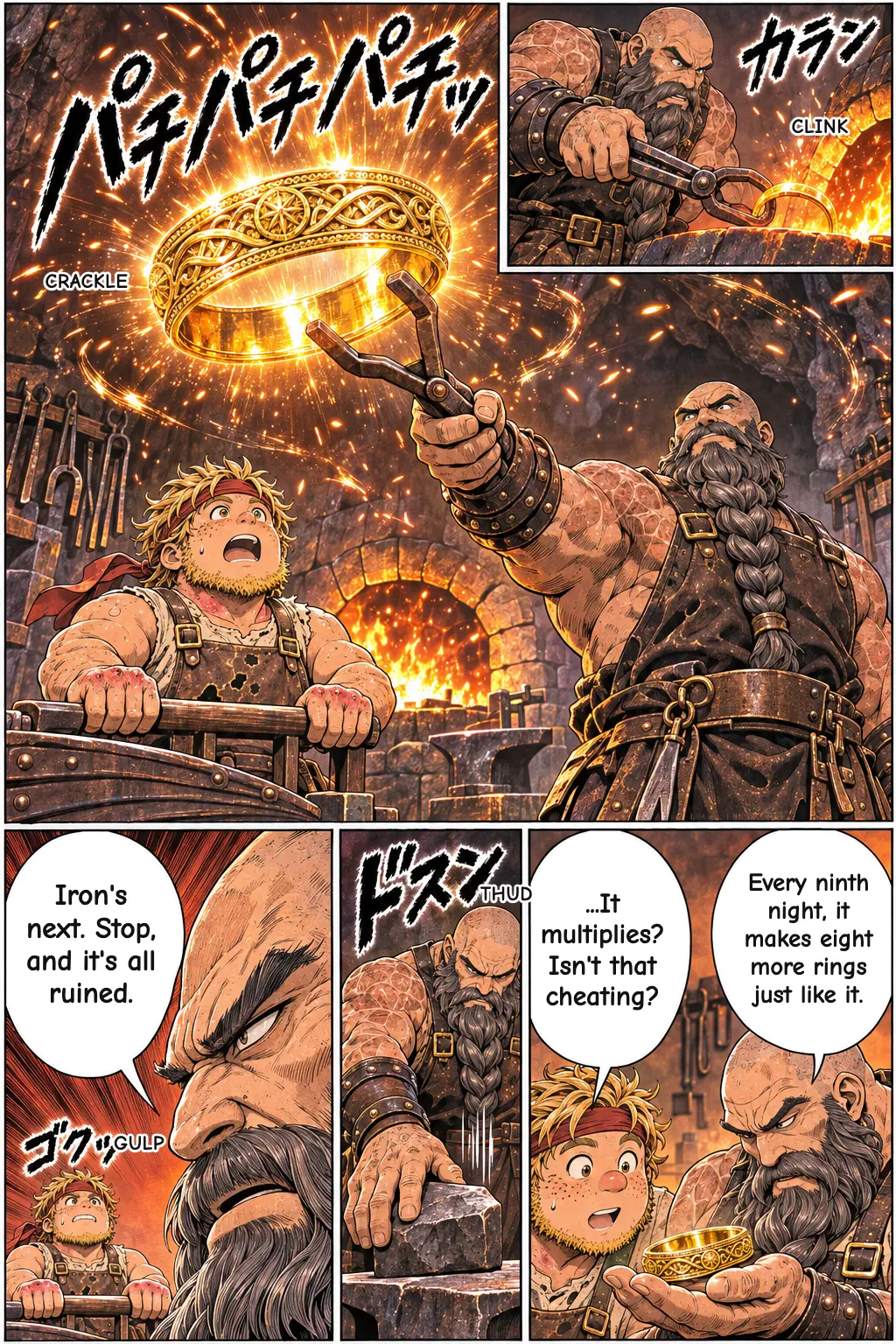
Next Eitri puts in gold. The fly bites Brokkr on the neck, twice as hard, but he still keeps going. The result is Draupnir, a gold ring from which eight rings of the same weight drip every ninth night.
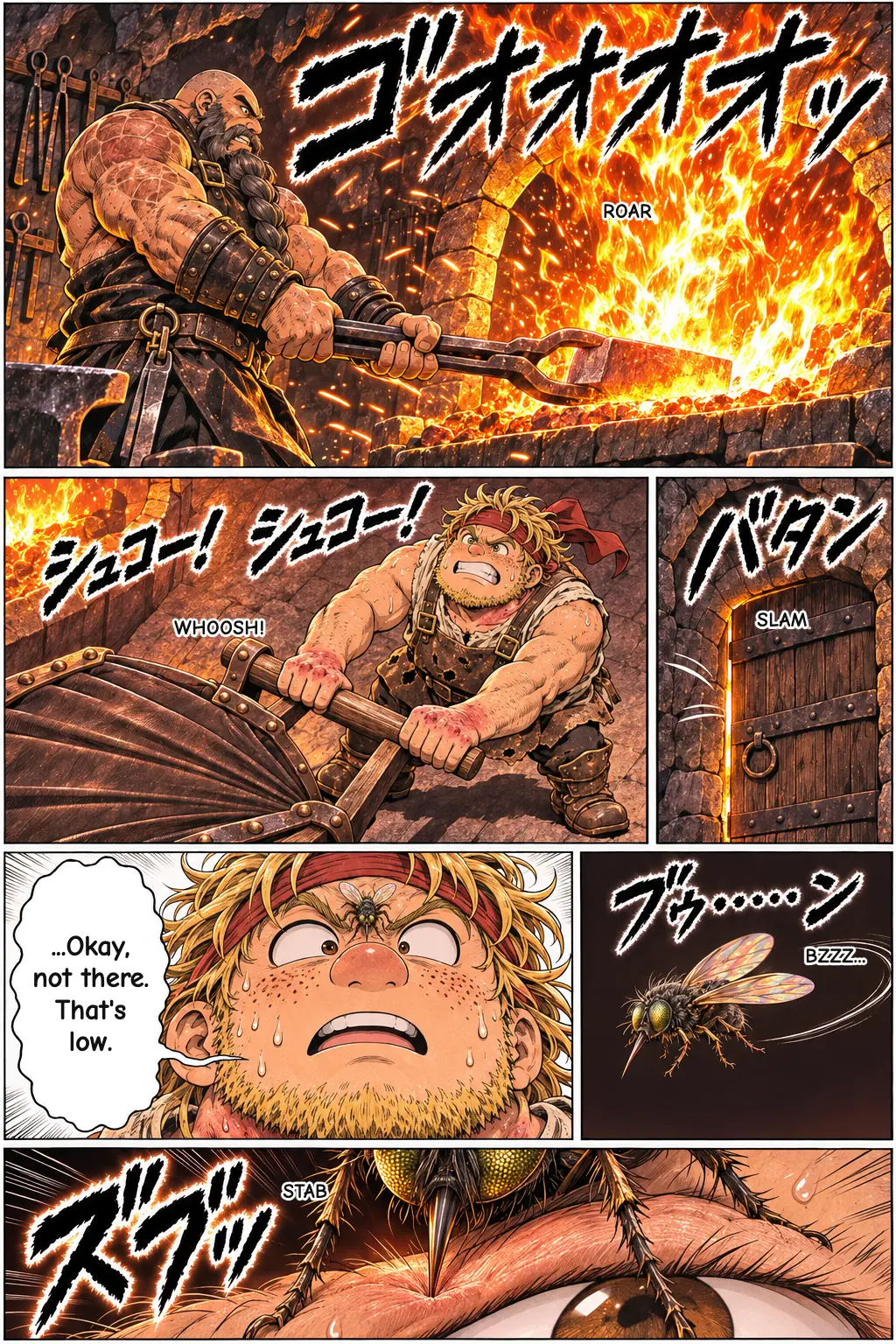
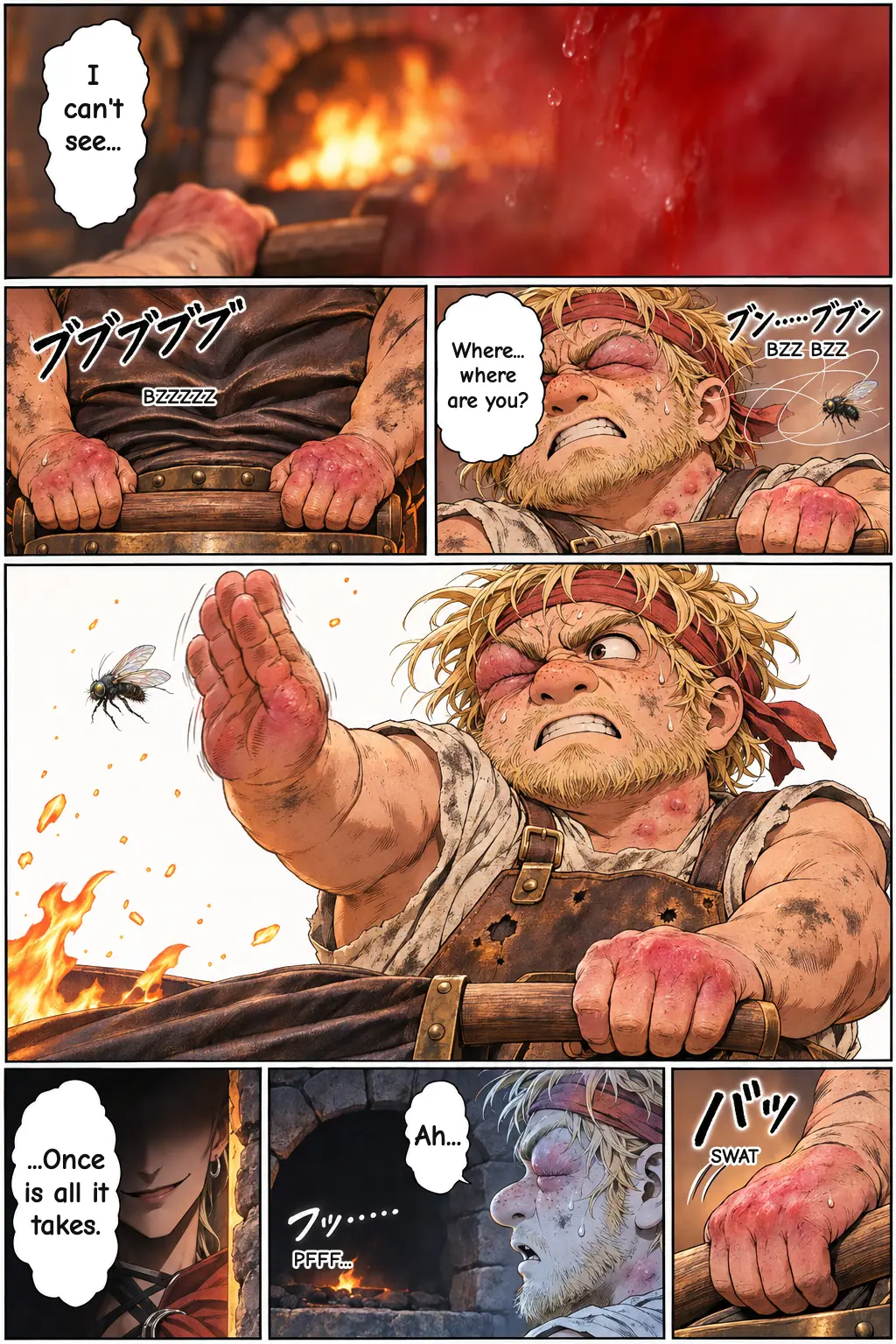
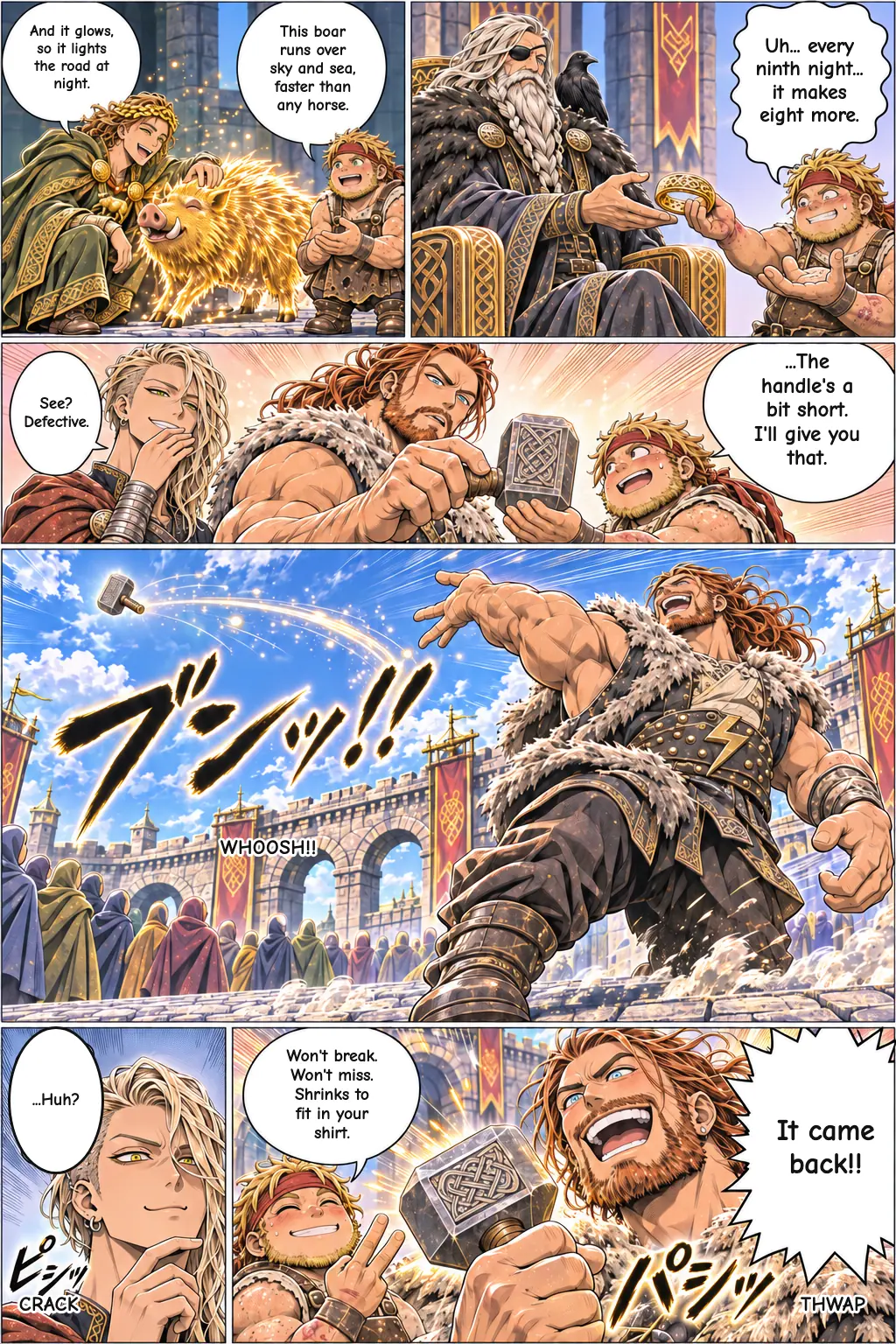
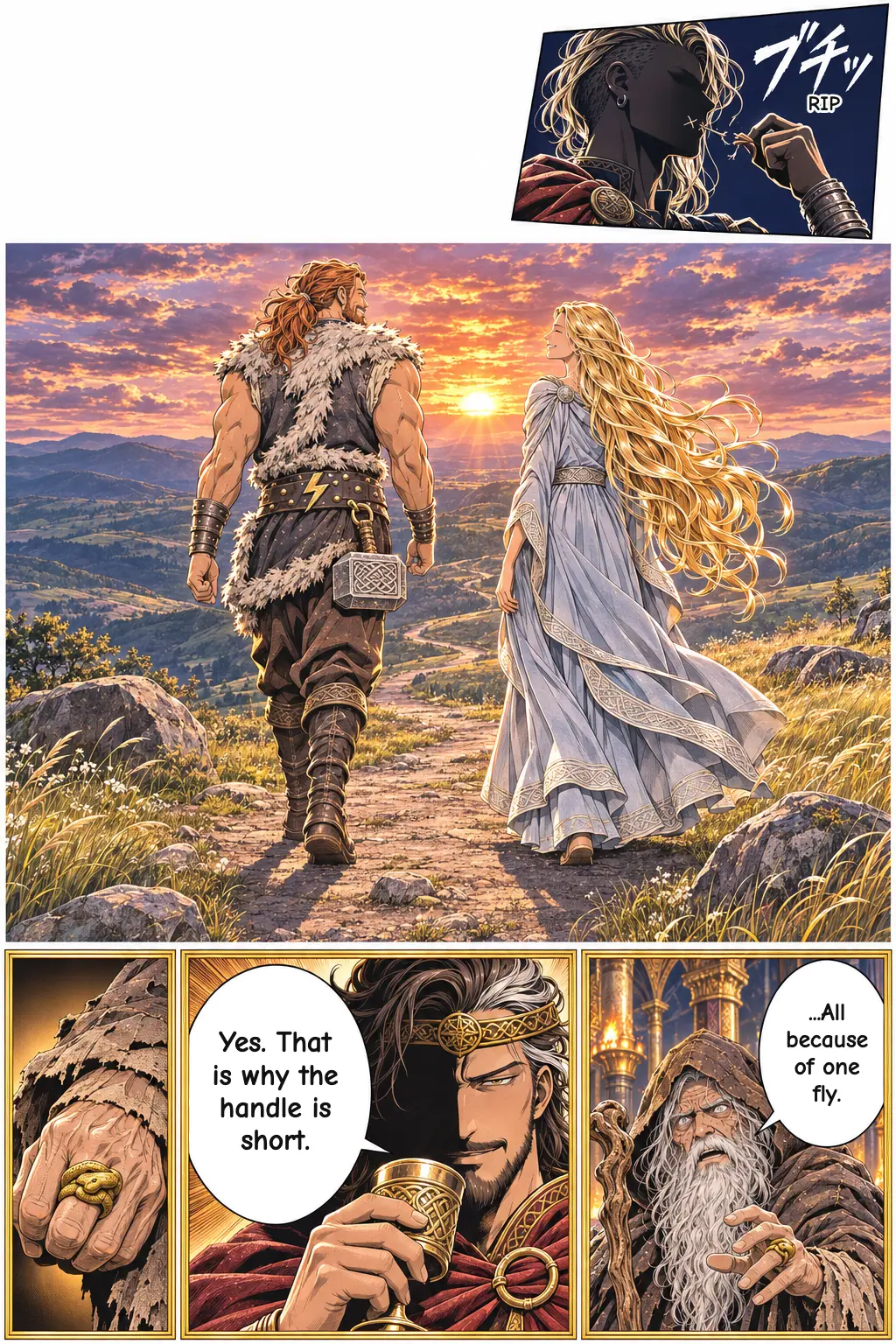
Last, Eitri puts in iron and warns that everything will be ruined if the bellows stop. This time the fly settles between Brokkr's eyes and bites his eyelid until blood runs into his eyes and he cannot see. He lets go for just a moment to brush it away. Eitri comes back, says the piece was nearly spoiled, and pulls out a hammer. It is almost perfect: it never breaks however hard it strikes, it always returns to the hand when thrown, and it can shrink small enough to carry inside a shirt. Its only flaw is that the handle is rather short. Elsewhere in Norse tradition this hammer is called Mjölnir.
The Judgment and Loki's Punishment
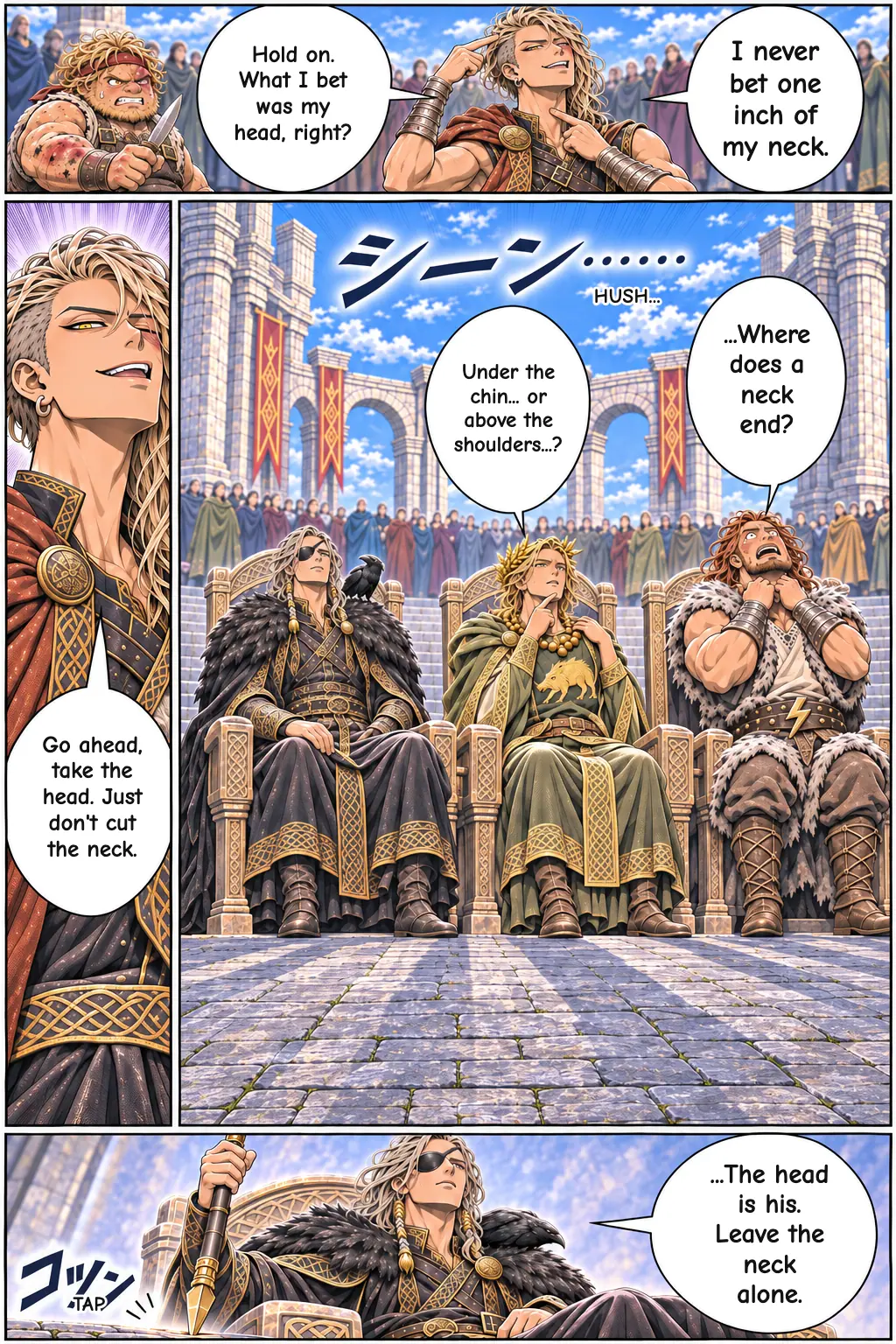
Brokkr carries the treasures to Asgard, home of the gods, to collect on the bet. Odin, Thor and Freyr sit as judges. Loki gives Odin the spear, which never stops once thrust; Thor the golden hair, which takes root as soon as it touches Sif's head; and Freyr the ship, which always catches a fair wind and folds up like cloth to fit in a pouch. Brokkr gives Odin the ring, Freyr the shining boar that runs across sky and sea faster than any horse, and Thor the hammer.
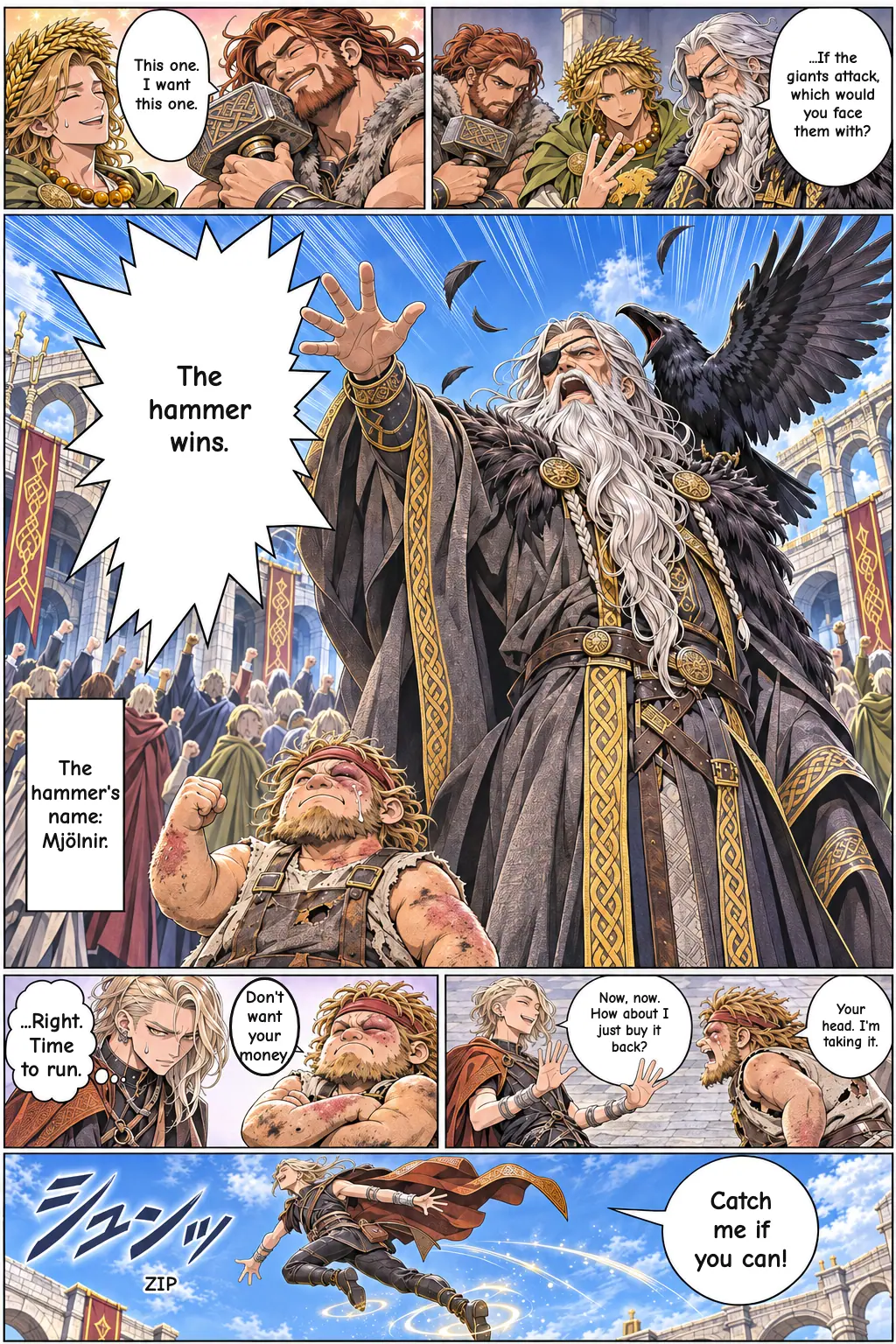
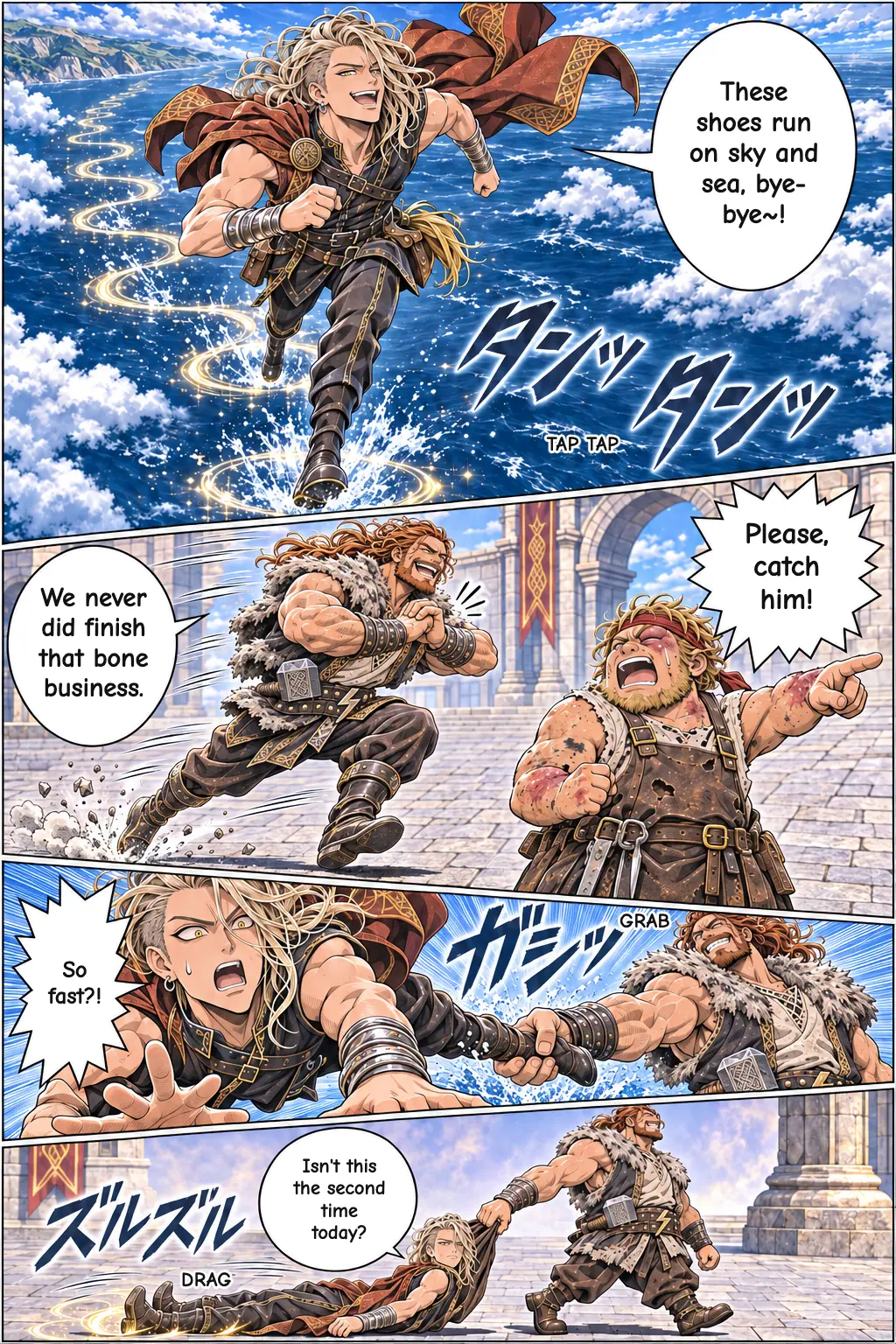
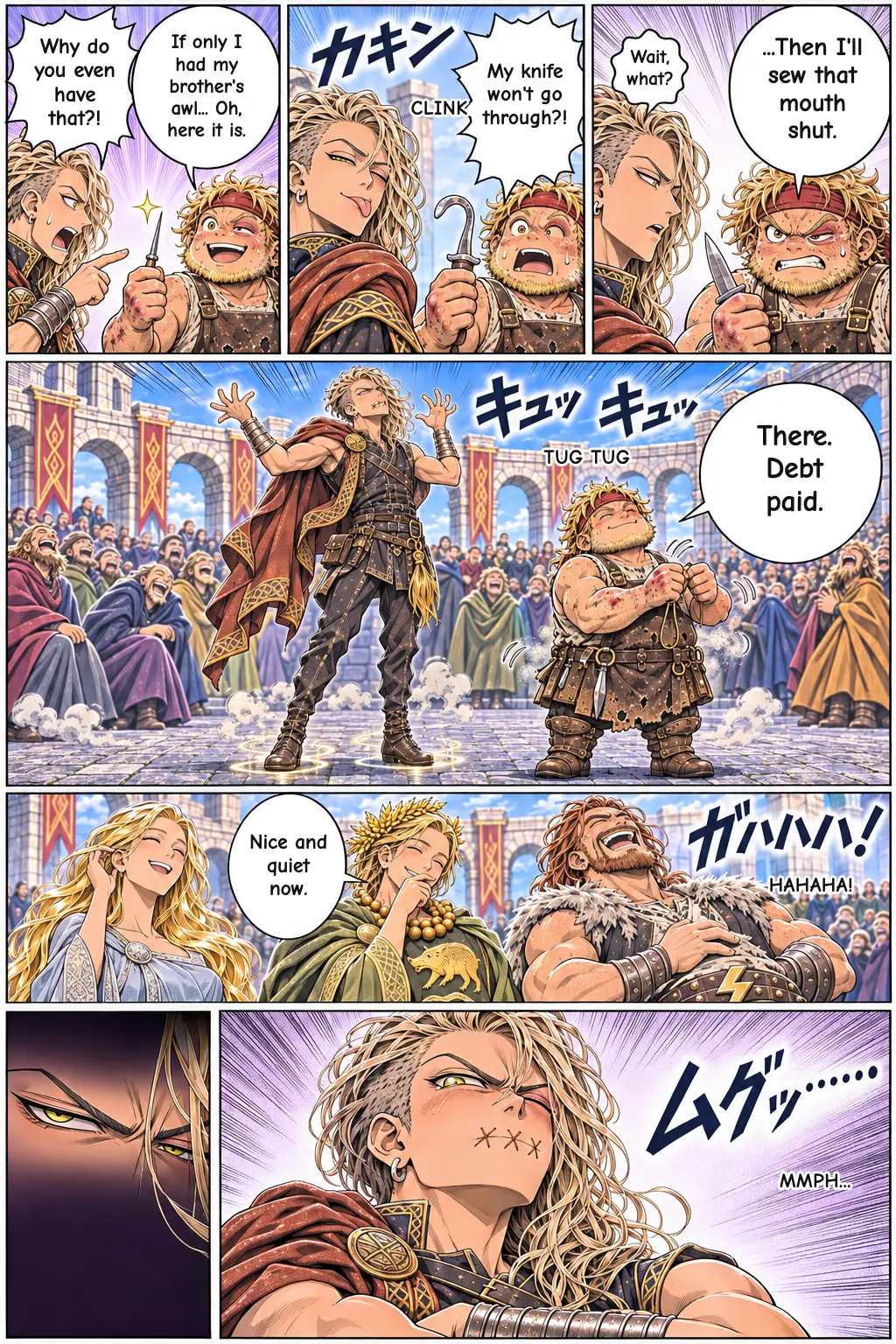
The judges decide the hammer is the best treasure of all, because it is the gods' greatest defense against the frost giants. Brokkr wins. Loki offers to buy back his head, is refused, and runs off in shoes that carry him over sky and sea. Thor catches him. When Brokkr moves to cut off his head, Loki argues that he bet his head, not his neck. Brokkr instead sews Loki's lips together with a thong (Snorri even names it: Vartari). Loki later rips it out.
What the Myth Tells Us
Snorri wrote Skáldskaparmál as a handbook for poets. Old Norse poetry used kennings, poetic nicknames such as calling gold "Sif's hair." This story is told to explain where that kenning comes from, which is why it reads like an origin story for a figure of speech.
It also explains where the gods' best treasures came from: Odin's spear and ring, Freyr's ship and boar, Thor's hammer. They all came from dwarves, and they all exist because of Loki's mischief. Loki is both the problem and the reason the gods end up stronger, a pattern that runs through Norse myth. The fly is never identified in the text. Many readers take it to be Loki in disguise, trying to ruin the bet, but this is an interpretation; Snorri never says so.
What the Manga Changes
The manga keeps the order of events and the key details from Snorri, but adds what the source leaves blank. It hints that the fly might be Loki through sound effects, glances and scene cuts, but never states it, because the original does not. It gives Sif feelings and reactions (she has no lines in the source), shows the Sons of Ivaldi at work with their own looks and personalities, and invents the conversation that leads to Loki's bet.
It also decides which dwarf brother is older, designs the workshop, the shoes and the hammer (avoiding any superhero-movie look apart from the short handle), and plays the judging scene for laughs. The lip-sewing is kept gentle for a wide audience. These are creative choices, not part of the medieval text. One more note: the golden boar is named Gullinbursti in another part of Snorri's Edda, but not in this episode.
Where to Read It
If you want to see Brokkr battling the fly and Loki talking his way out of a beheading, Episode 5 of NORSE MYTHOLOGY: The King Who Heard the End of the Gods tells the whole story as a comedy, right here on Manga Portal. Every episode is free to read, with no sign-up needed, so you can start from the beginning or jump straight to the forge.
Characters in this episode
Loki
The trickster god and son of Laufey, who cuts off Sif's hair and bets his own head against the dwarves.
Thor
The thunder god and Sif's husband, who forces Loki to make amends and receives the short-handled hammer.
Sif
Thor's wife, whose shorn hair is replaced with living hair made of gold.
Brokkr
A dwarf who takes Loki's bet, keeps working the bellows despite the fly, and collects the debt by sewing Loki's lips shut.
Eitri
Brokkr's brother, the master smith who forges the golden boar, the ring Draupnir and the hammer.
Odin and Freyr
Gods who judge the contest alongside Thor and receive the spear, ring, ship and boar.
FAQ
How did Thor get Mjölnir?
In Snorri's Prose Edda, the dwarf smith Eitri forged the hammer after Loki bet his head that Eitri couldn't match the treasures of the Sons of Ivaldi. Eitri's brother Brokkr gave the hammer to Thor, and the gods judged it the best treasure of all.
Why is Thor's hammer handle short?
While Eitri forged it, a fly bit Brokkr on the eyelid, and he let go of the bellows for a moment. The hammer survived, but its handle came out short.
Was the fly Loki?
The original text only says "a fly" and never names it. Many readers think Loki transformed himself to sabotage the bet, but that is an interpretation, not something Snorri states.
Why did Loki cut off Sif's hair?
Snorri says only that he did it out of mischief. No deeper motive is given.
Why is gold called "Sif's hair" in Norse poetry?
It is a kenning, a poetic nickname. Snorri tells this story to explain it: Sif's replacement hair was made of gold by the dwarves.