Episode 1If He Stops Singing, the Gods VanishHesiod and the Muses (Theogony)
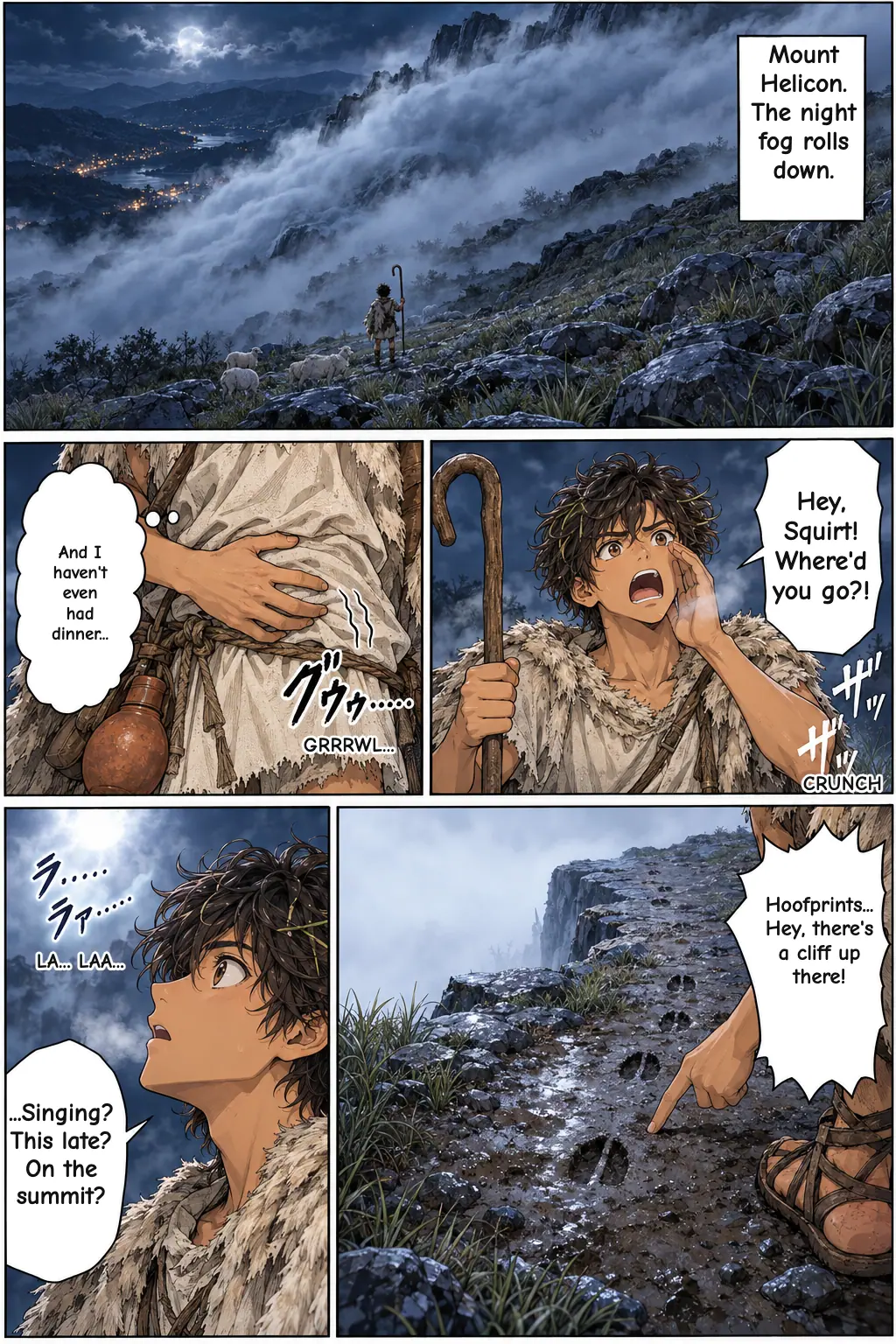
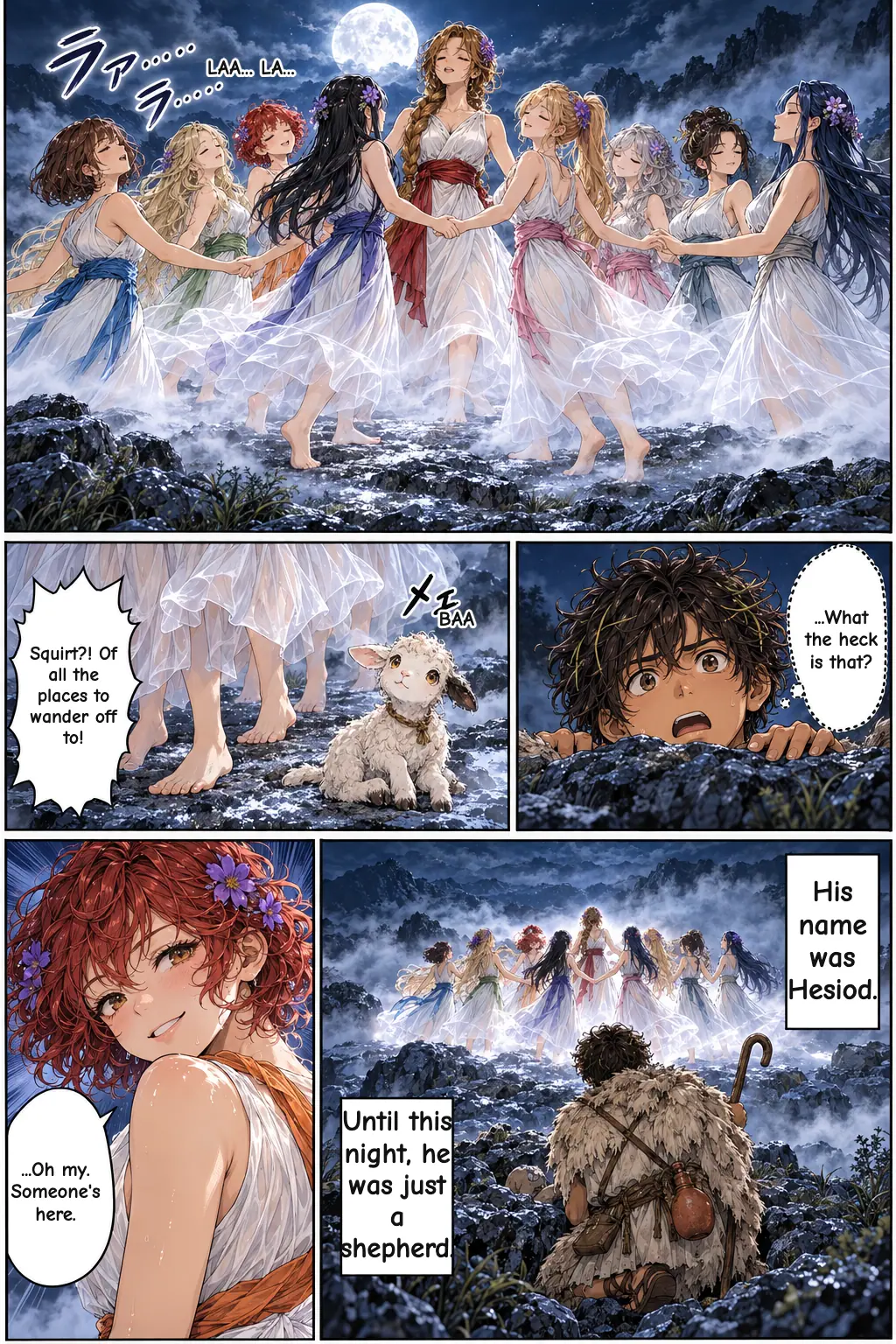
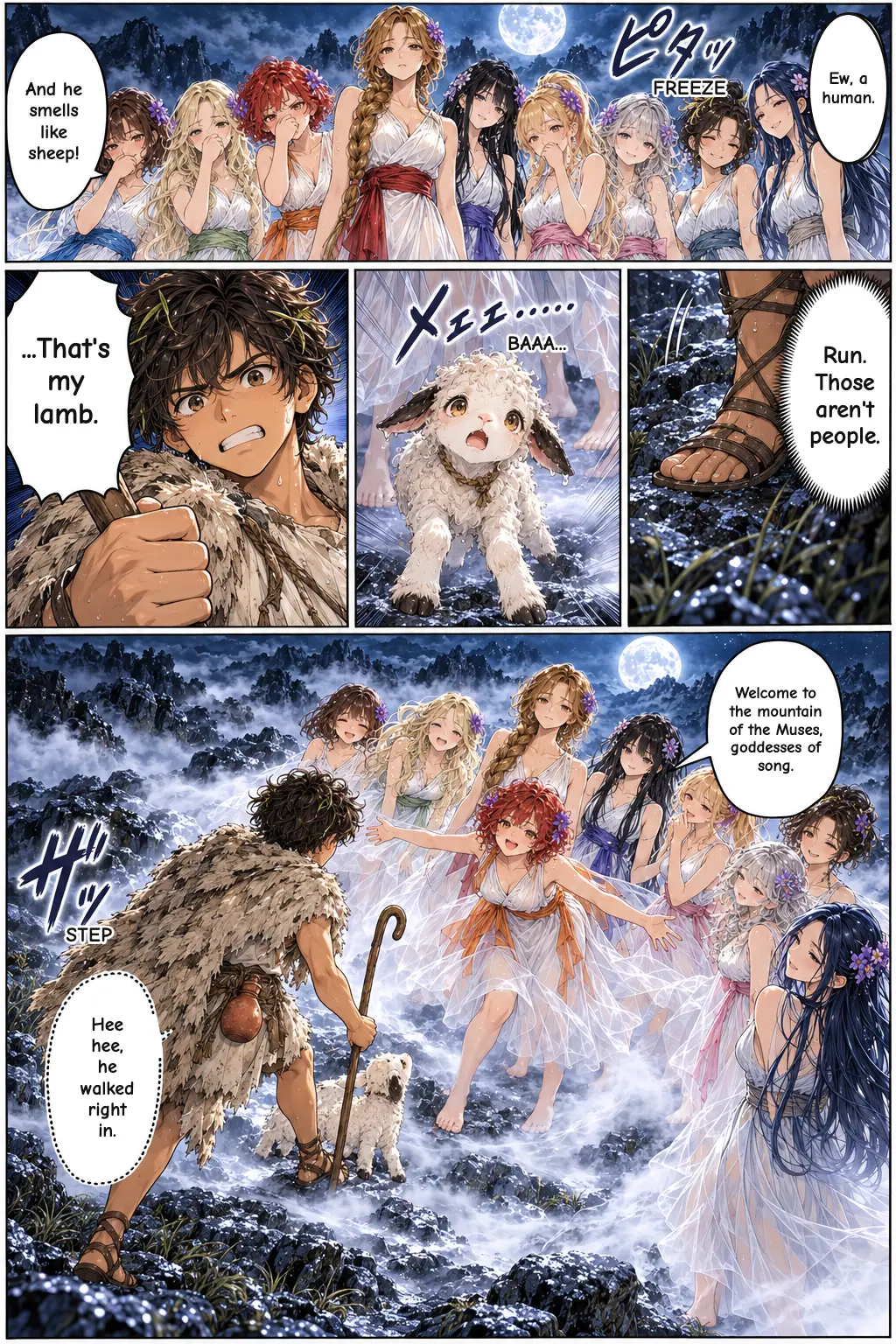
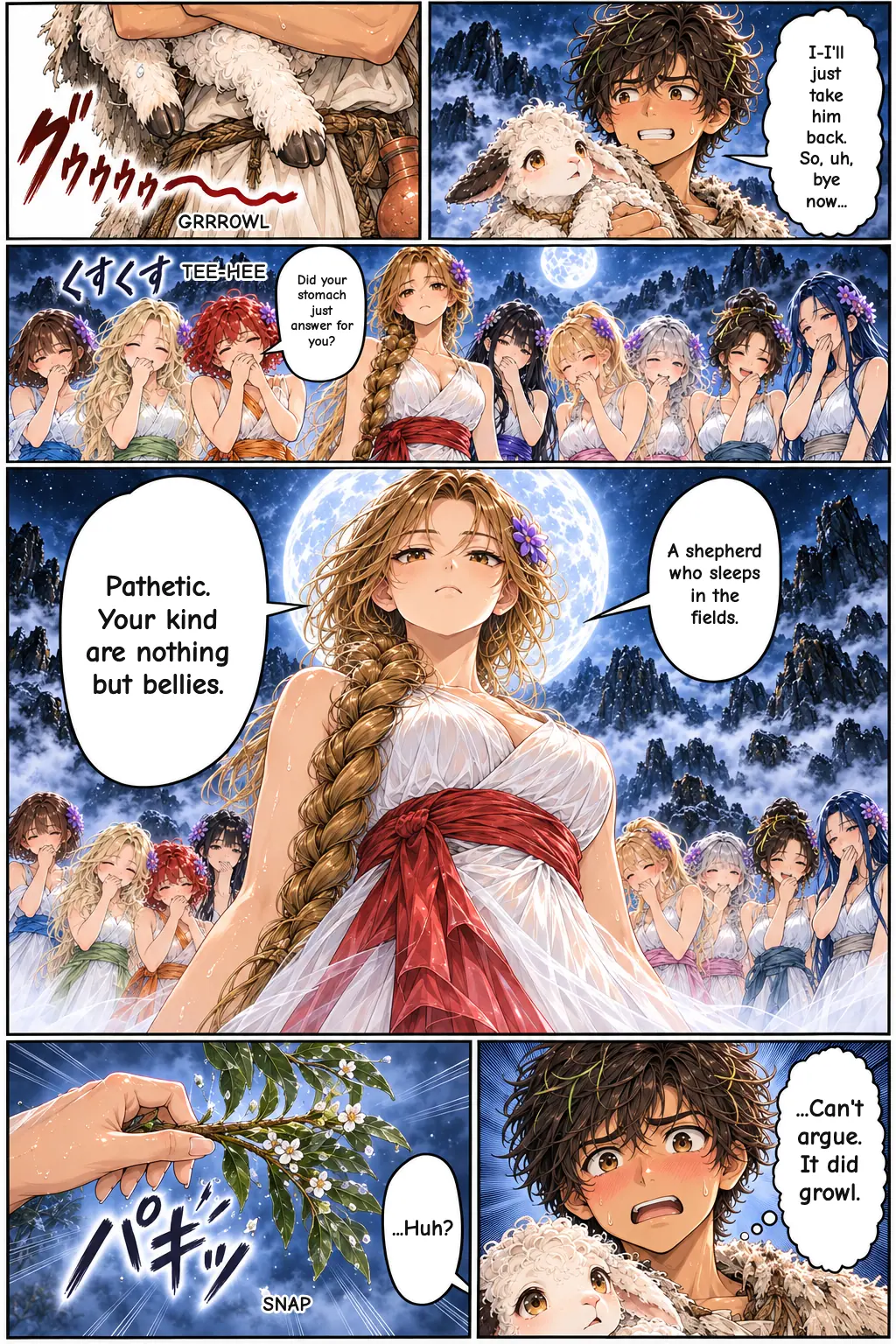
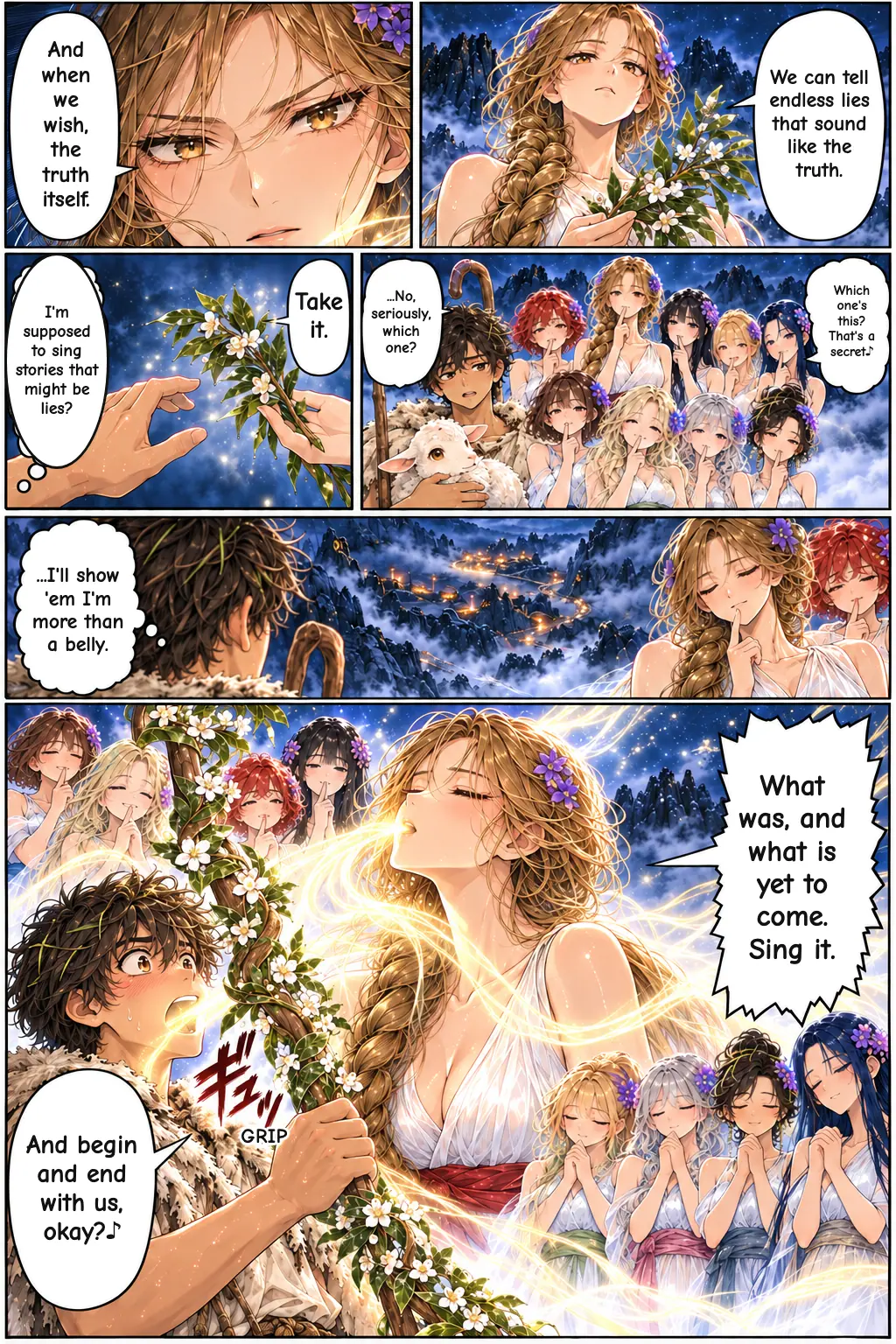
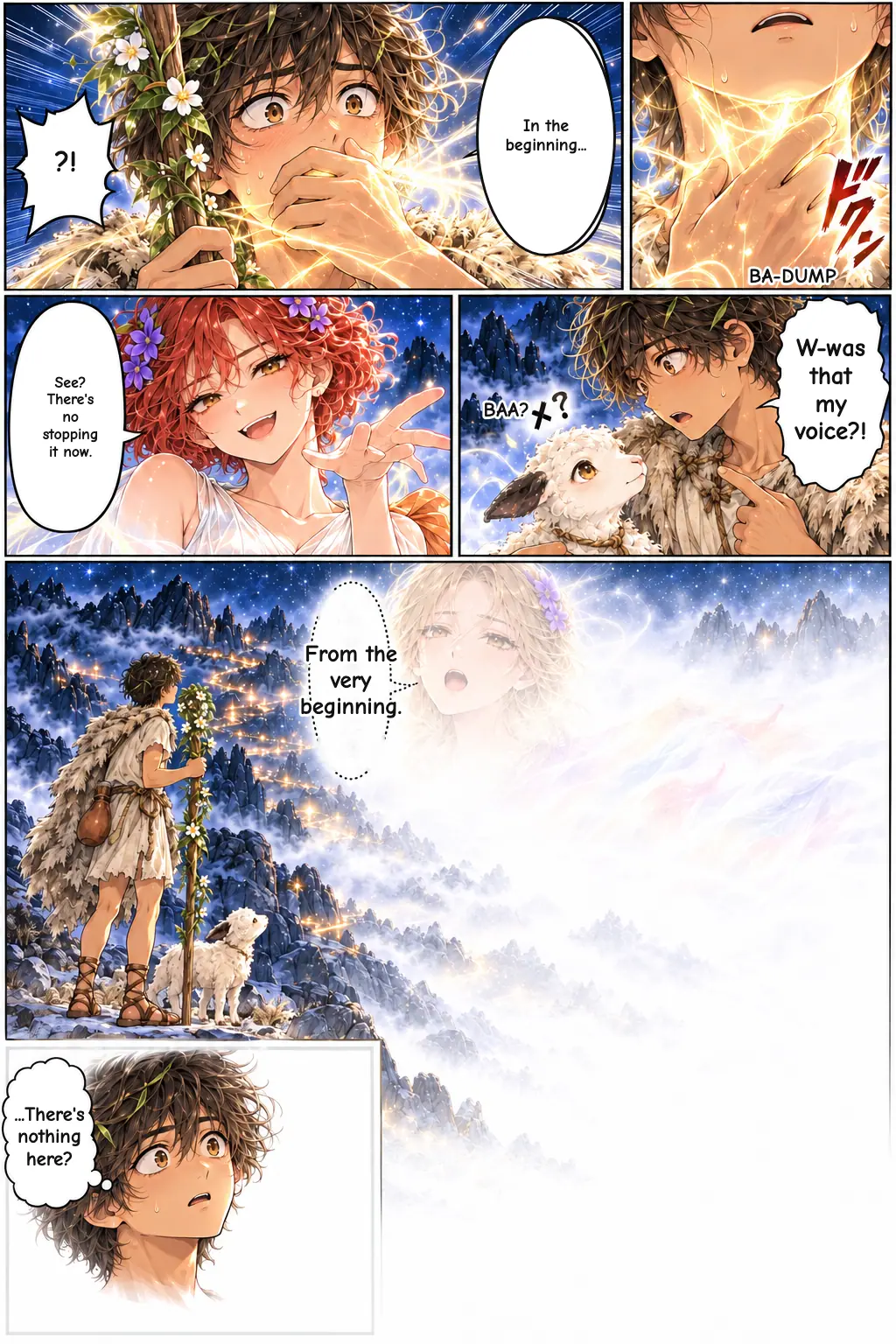
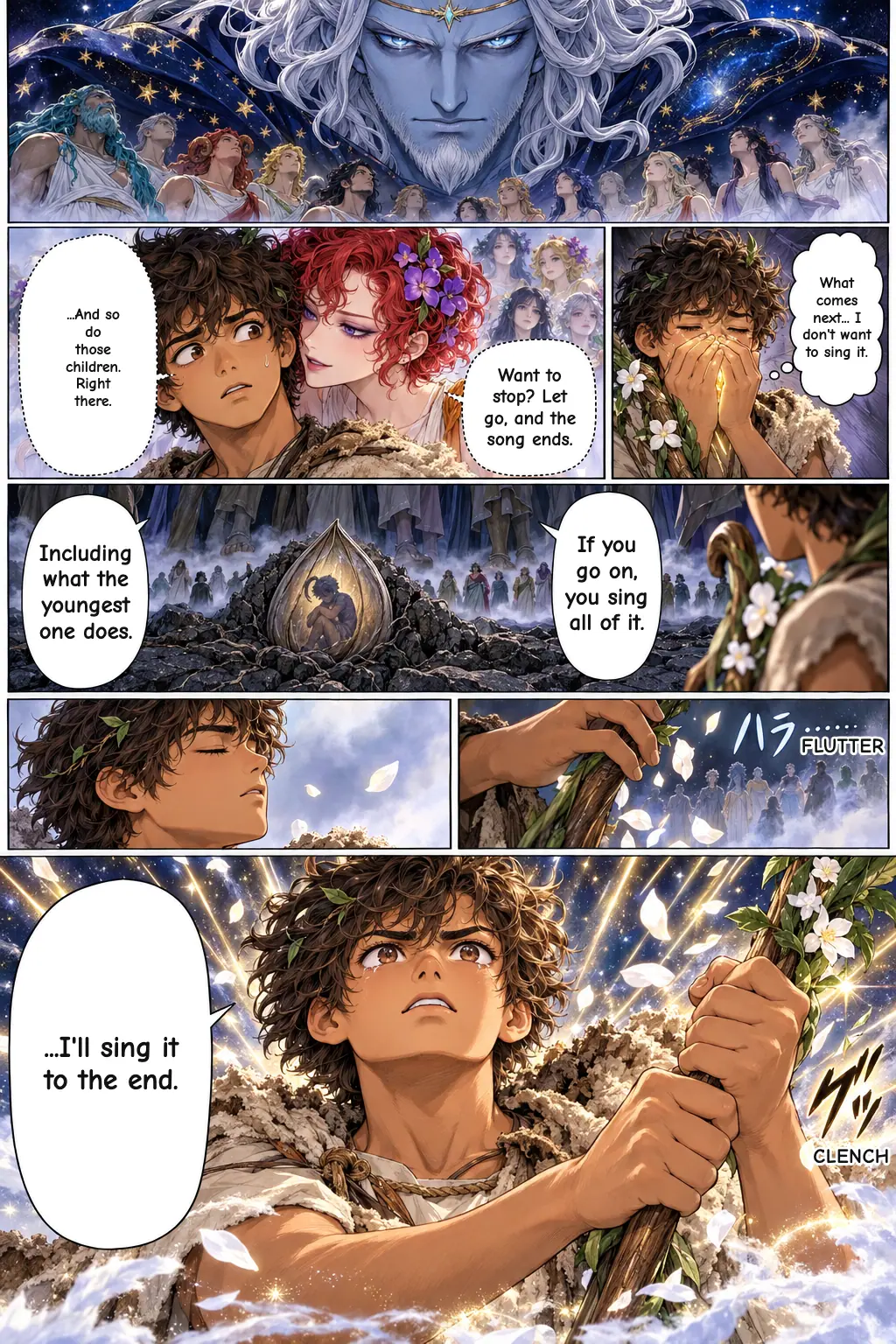
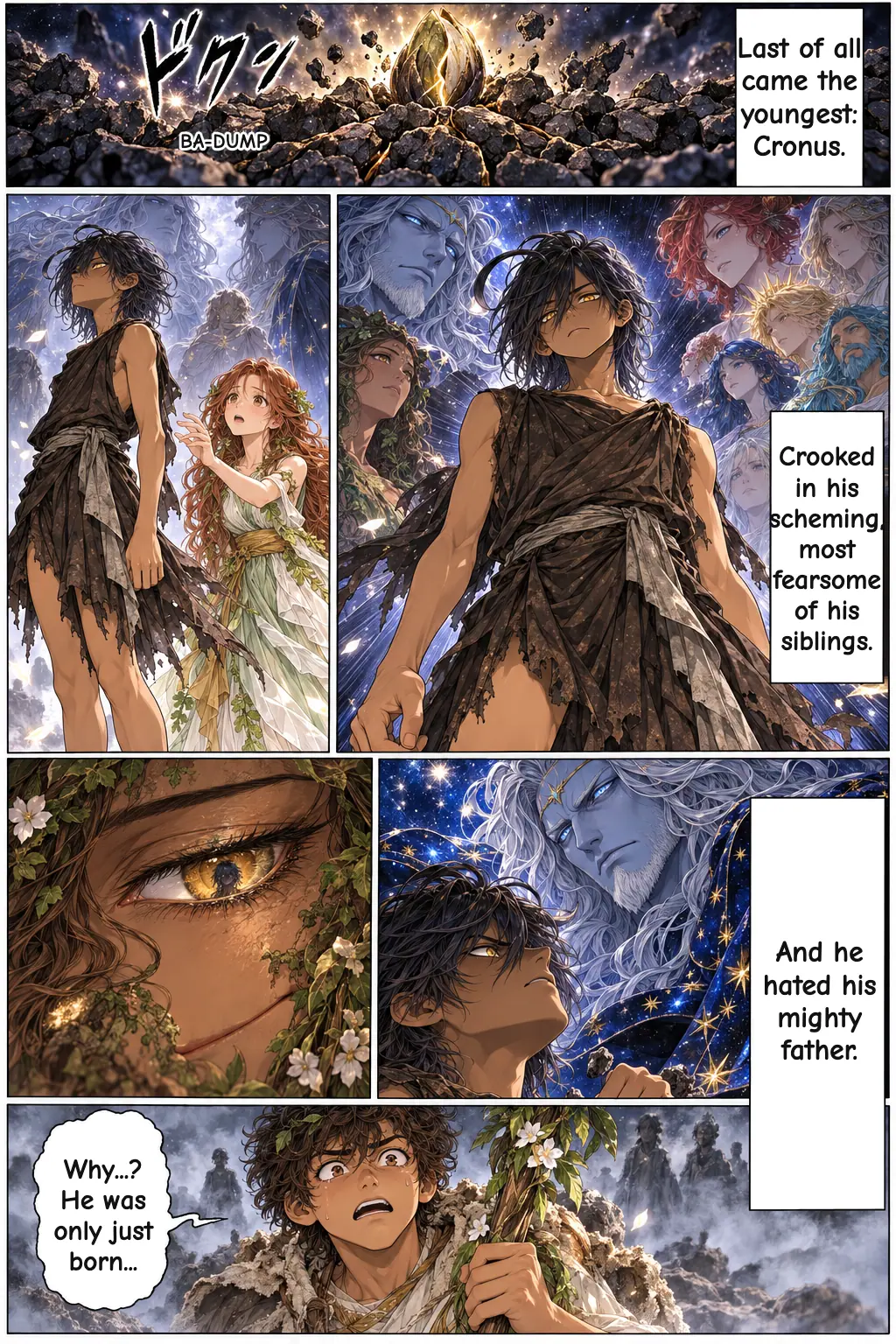
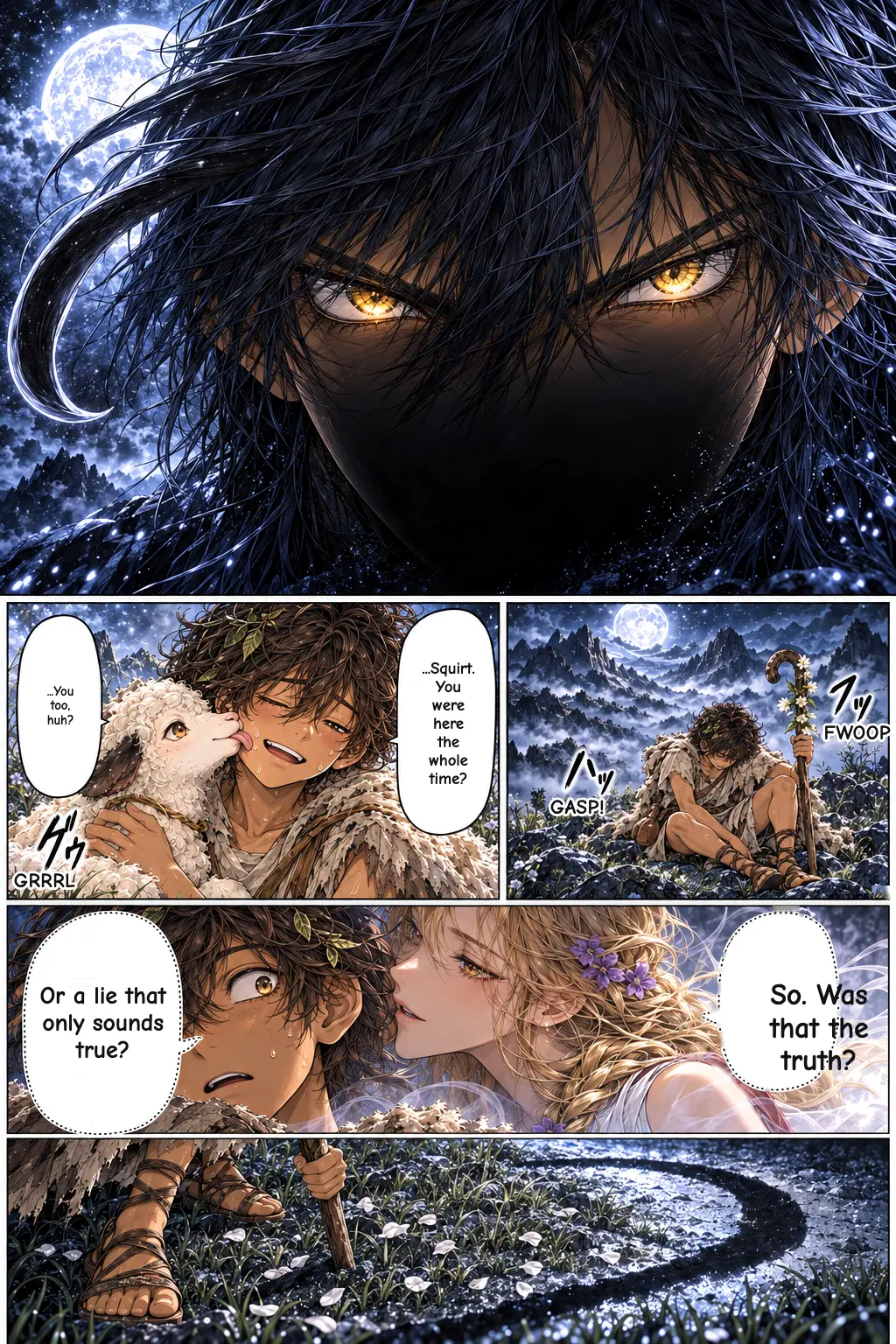
On a foggy night, Hesiod, a hungry shepherd chasing his runaway lamb, stumbles onto the Muses' mountain. The goddesses of song laugh that shepherds are "nothing but bellies," then give him a singing voice that might tell lies or might tell the truth. The song pouring out of him tells how the world was born from a single gap called Chaos. If he stops, the newborn gods vanish. If he goes on, he has to sing the disaster that comes next. Knowing this, he sings all the way to Cronus, the youngest son, glaring at his father.
Get new episodes in your feed. Follow us on:ThreadsBluesky
Story summary
The Theogony (meaning roughly "the birth of the gods") is a long poem by Hesiod, a Greek poet usually dated to around 700 BCE. It is one of the oldest surviving accounts of where the Greek gods came from, and it is unusual because the poet puts himself into the story and names himself. Hesiod says he was tending sheep at the foot of Mount Helicon, a sacred mountain in central Greece, when the Muses came to him. The Muses are the goddesses of song and poetry, daughters of Zeus and Mnemosyne (Memory). The poem describes them dancing on the mountaintop and walking at night wrapped in thick mist.
Theogony Summary: Hesiod, the Muses, and How Chaos Began the Gods
In short: Hesiod's Theogony is an ancient Greek poem from around 700 BCE. In it, the Muses, goddesses of song, meet a shepherd named Hesiod on Mount Helicon and give him the power to sing about the gods. His song begins with Chaos, a yawning gap, and follows the world's birth through Gaia (Earth) and Ouranos (Sky) to the Titans. It ends with Cronus, the youngest Titan, who hates his father.
Theogony Summary: A Shepherd Meets the Muses
The Theogony (meaning roughly "the birth of the gods") is a long poem by Hesiod, a Greek poet usually dated to around 700 BCE. It is one of the oldest surviving accounts of where the Greek gods came from, and it is unusual because the poet puts himself into the story and names himself.
Hesiod says he was tending sheep at the foot of Mount Helicon, a sacred mountain in central Greece, when the Muses came to him. The Muses are the goddesses of song and poetry, daughters of Zeus and Mnemosyne (Memory). The poem describes them dancing on the mountaintop and walking at night wrapped in thick mist.
Their greeting is not kind. They call shepherds a disgrace who live out in the fields and are little more than stomachs. Then they say something surprising: they know how to tell many lies that sound like the truth, and when they choose, they can also tell the truth. After this, they break off a branch of flowering laurel and give it to Hesiod as a staff. They breathe a divine voice into him so he can sing of what has been and what will be. They order him to sing about the family of the immortal gods, and always to begin and end with the Muses themselves.
How the World Began: From Chaos to Cronus
Hesiod then asks the Muses to tell him, from the very beginning, how the gods, the earth, the sea and the starry sky came to be. The answer is the heart of the poem.
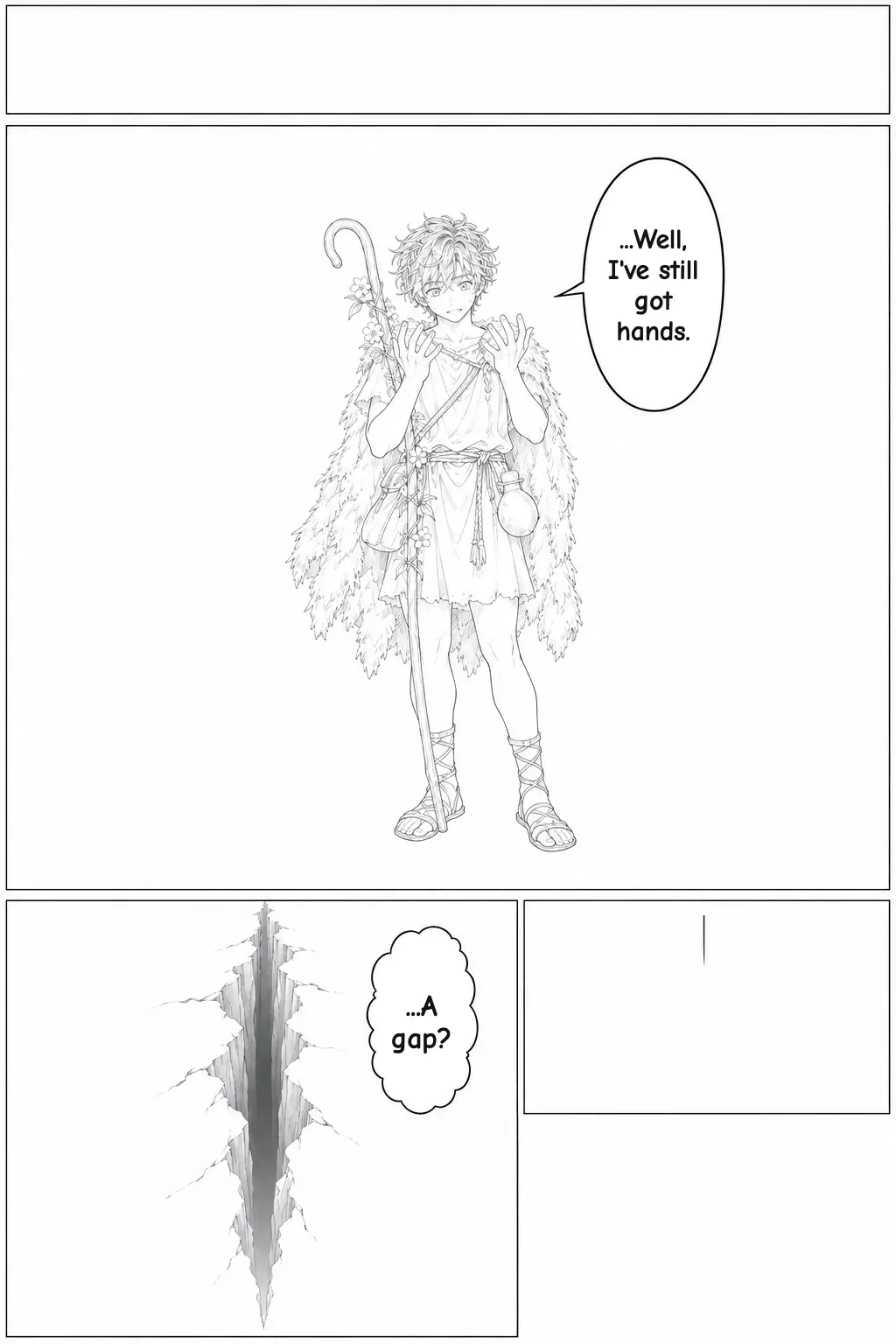
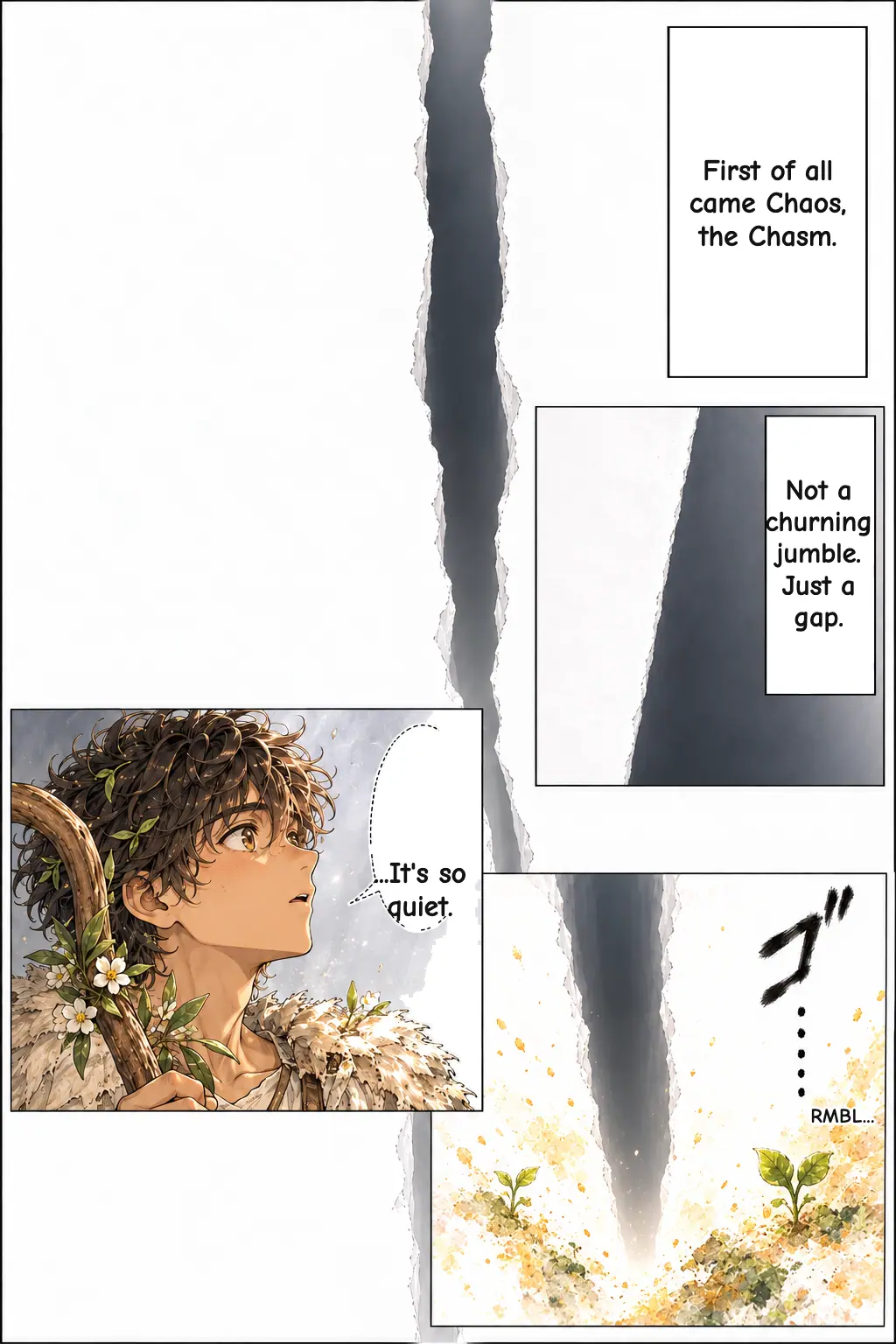
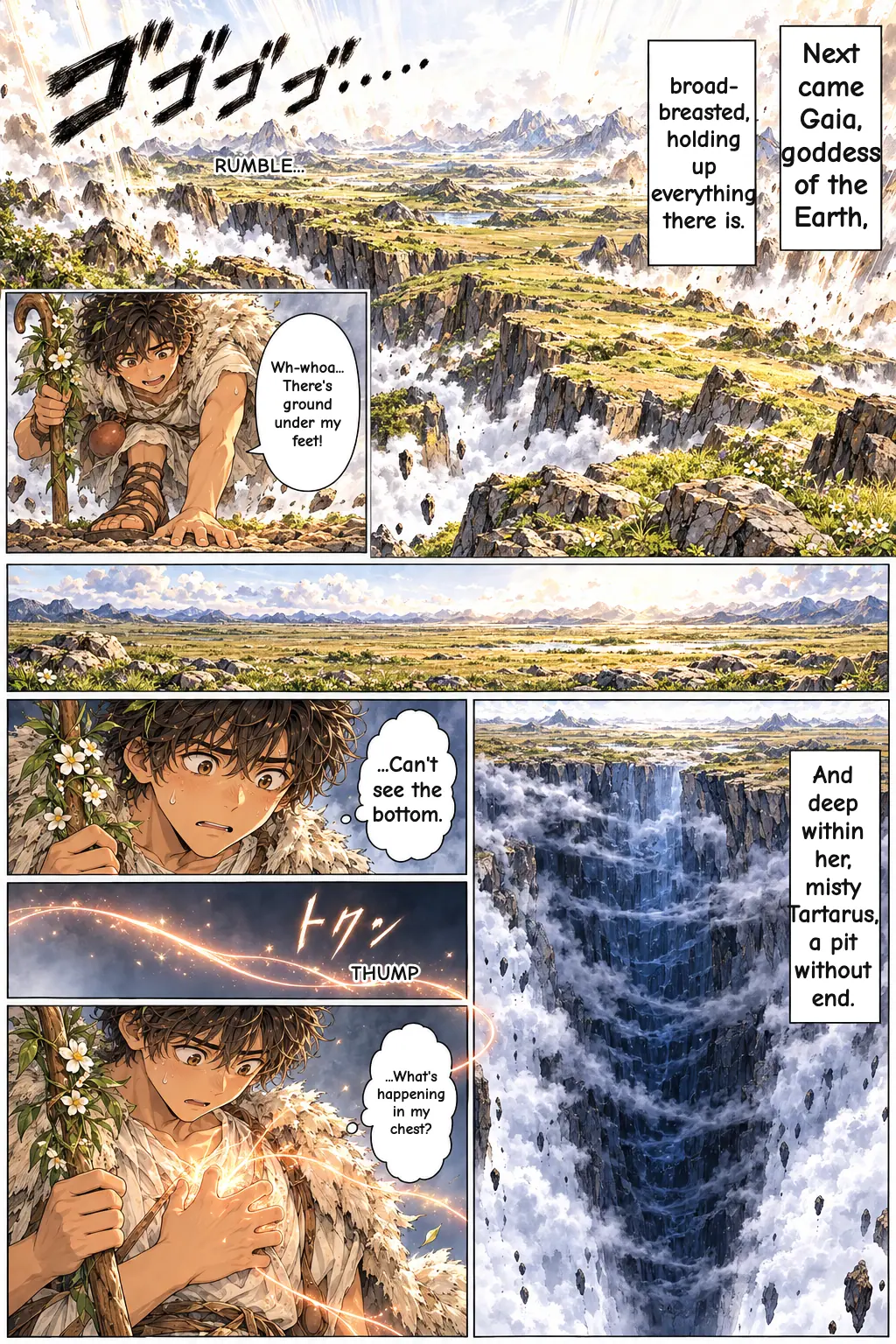
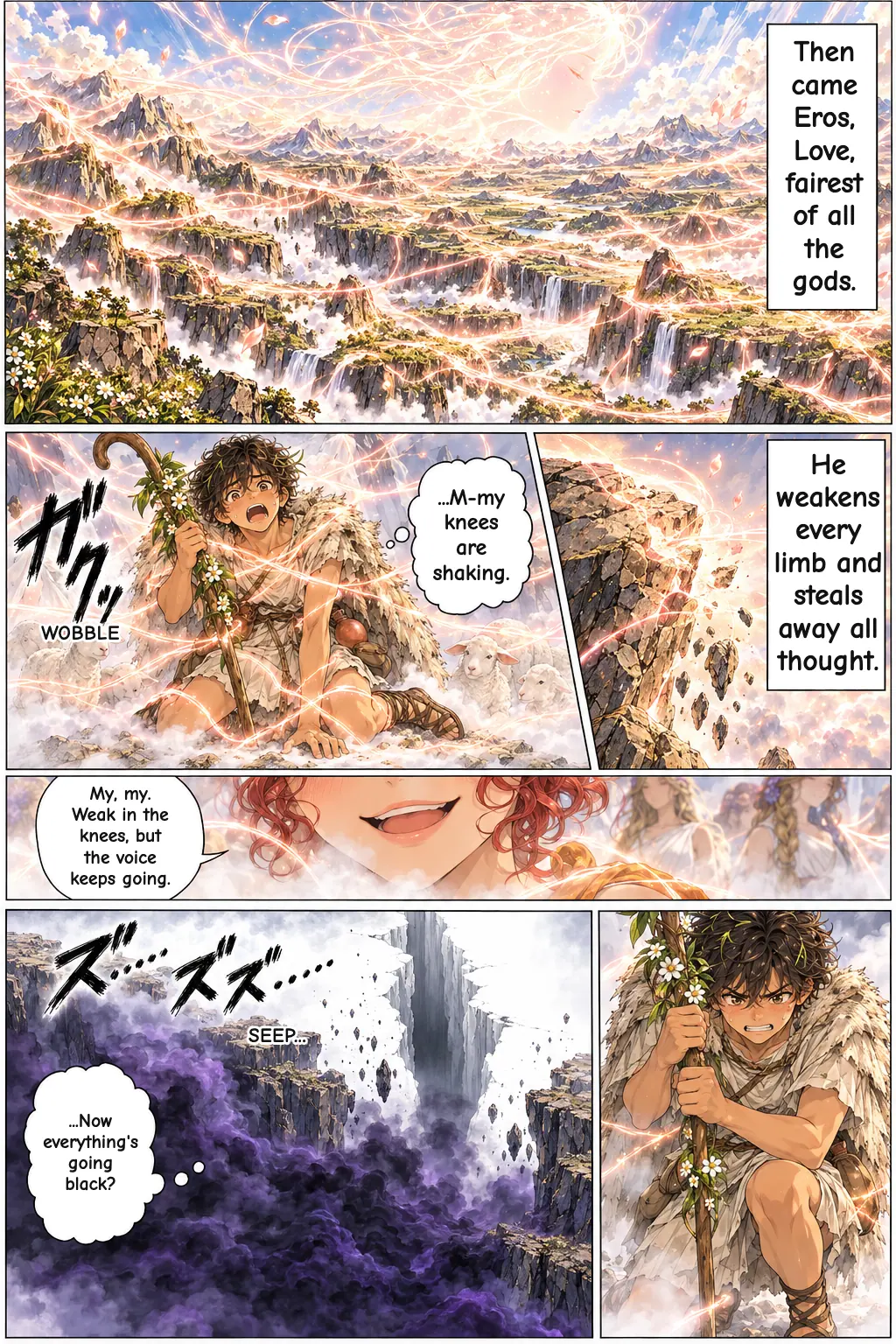
First of all came Chaos. In Greek the word does not mainly mean "disorder". It means a gap or yawning void. After Chaos came Gaia, the broad Earth, a firm seat for the gods. Then came Tartarus, a misty place deep beneath the earth, and Eros, the most beautiful of the immortals, a power that loosens limbs and overwhelms the minds of gods and humans alike.
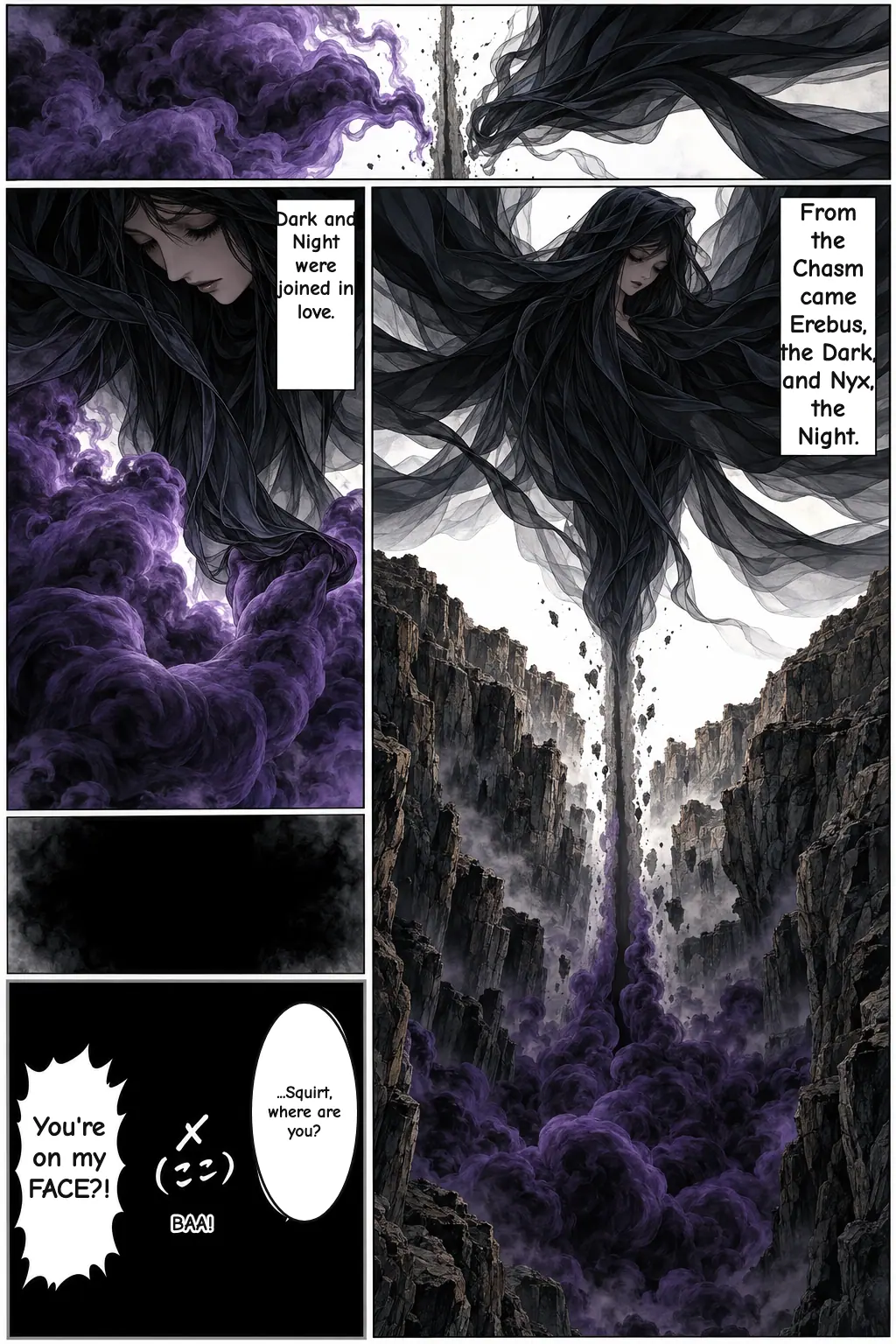
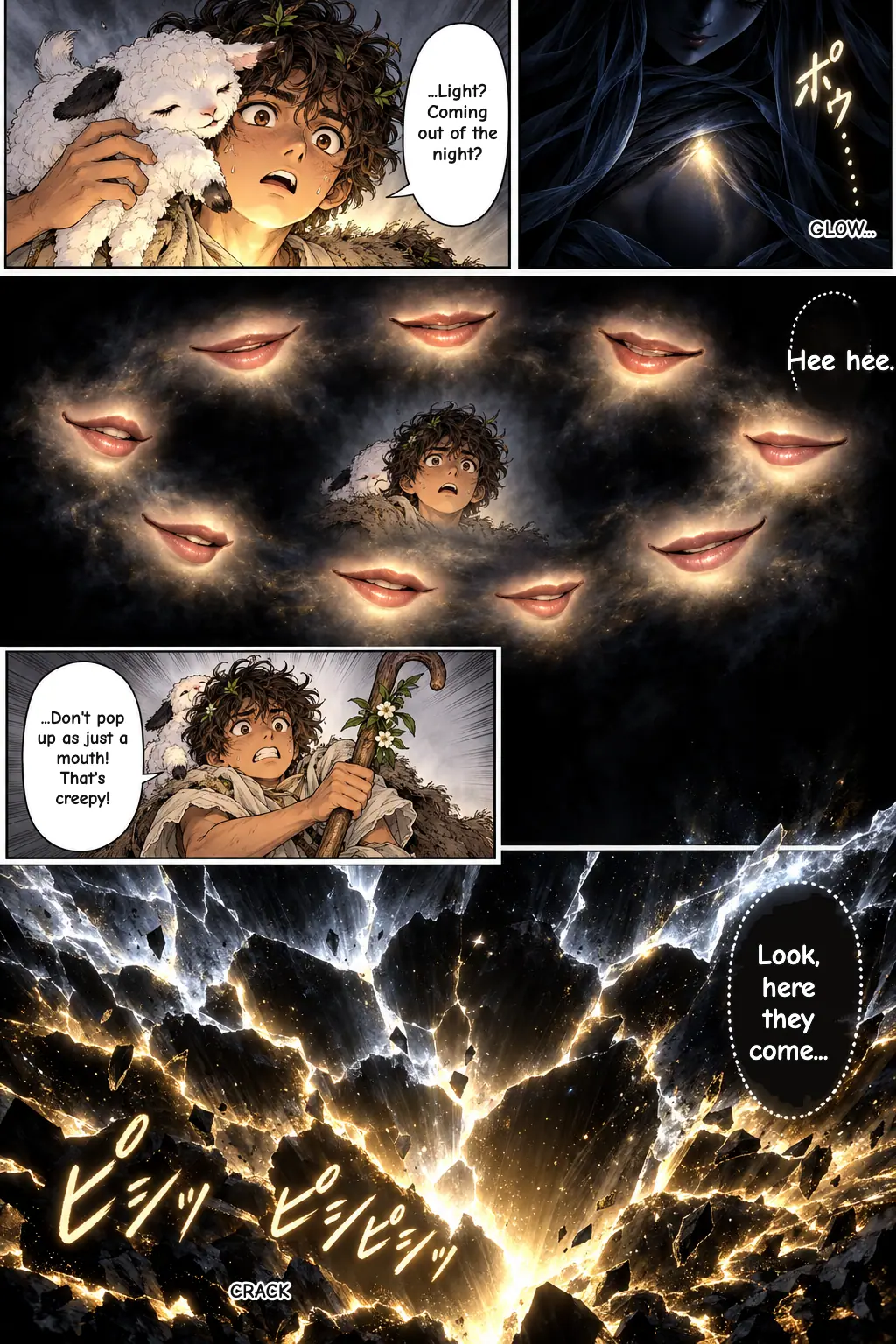
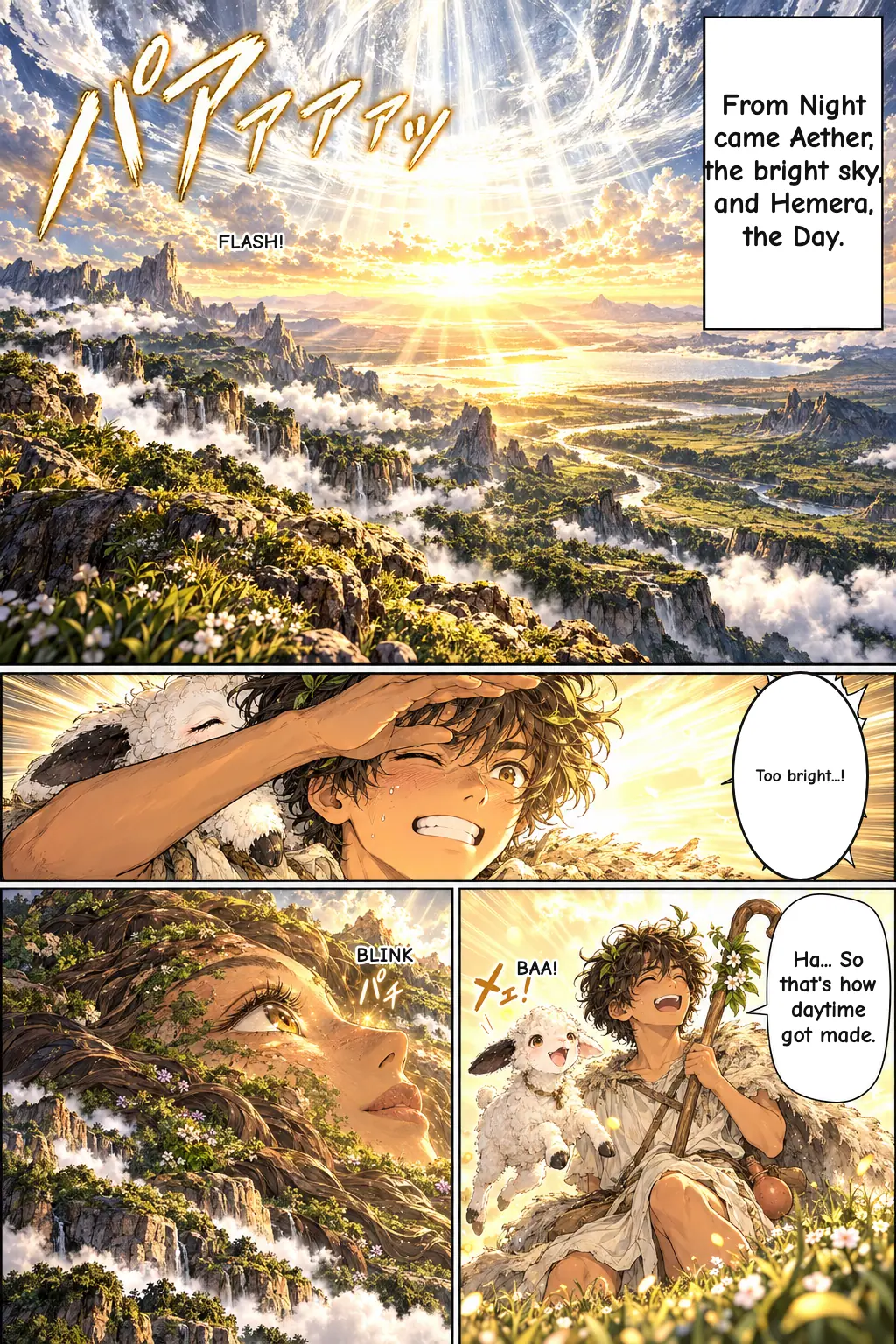
From Chaos came Erebus (Darkness) and black Night. Night joined with Erebus and gave birth to their opposites: Aether, the bright upper air, and Hemera, Day. Light was born out of darkness.
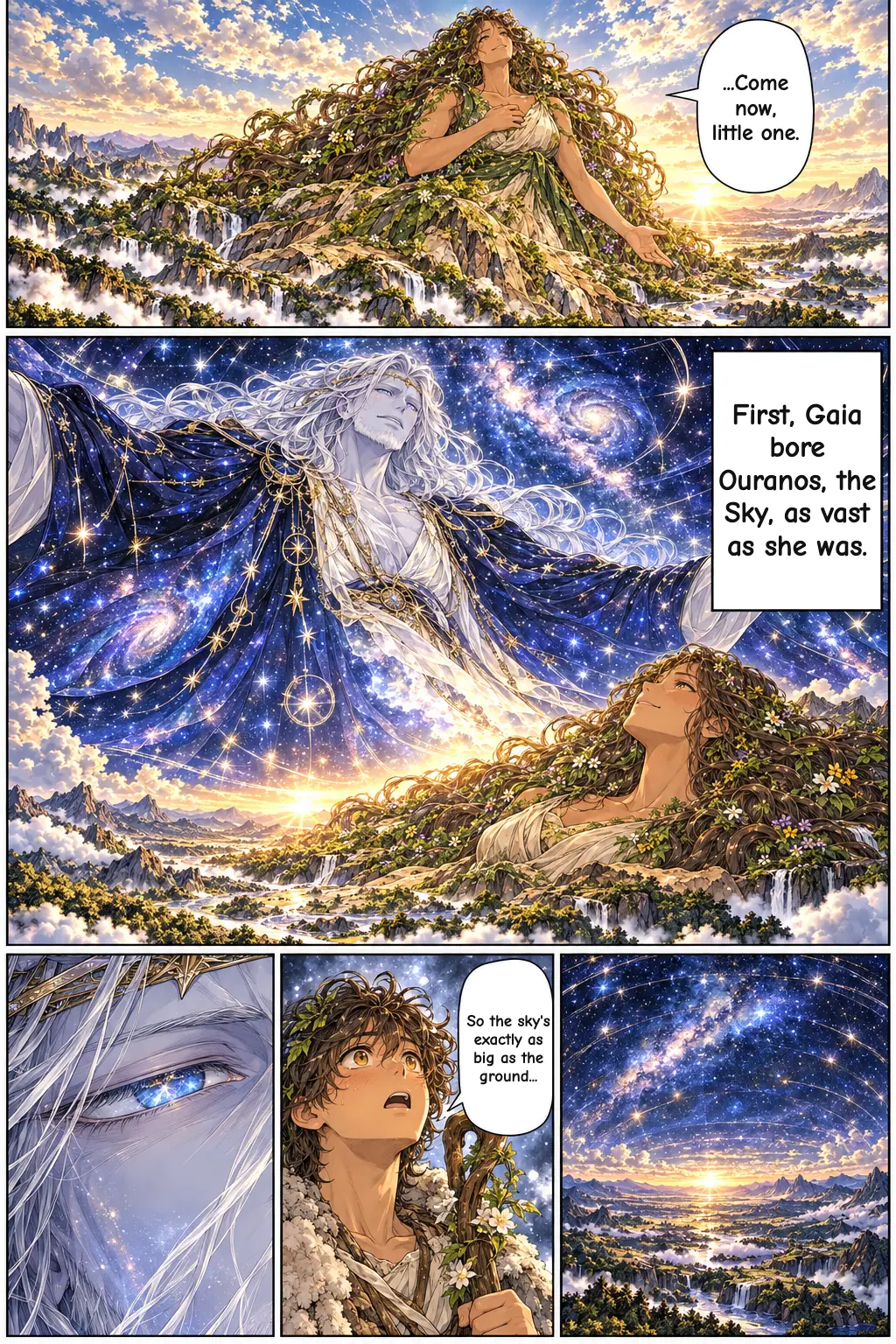
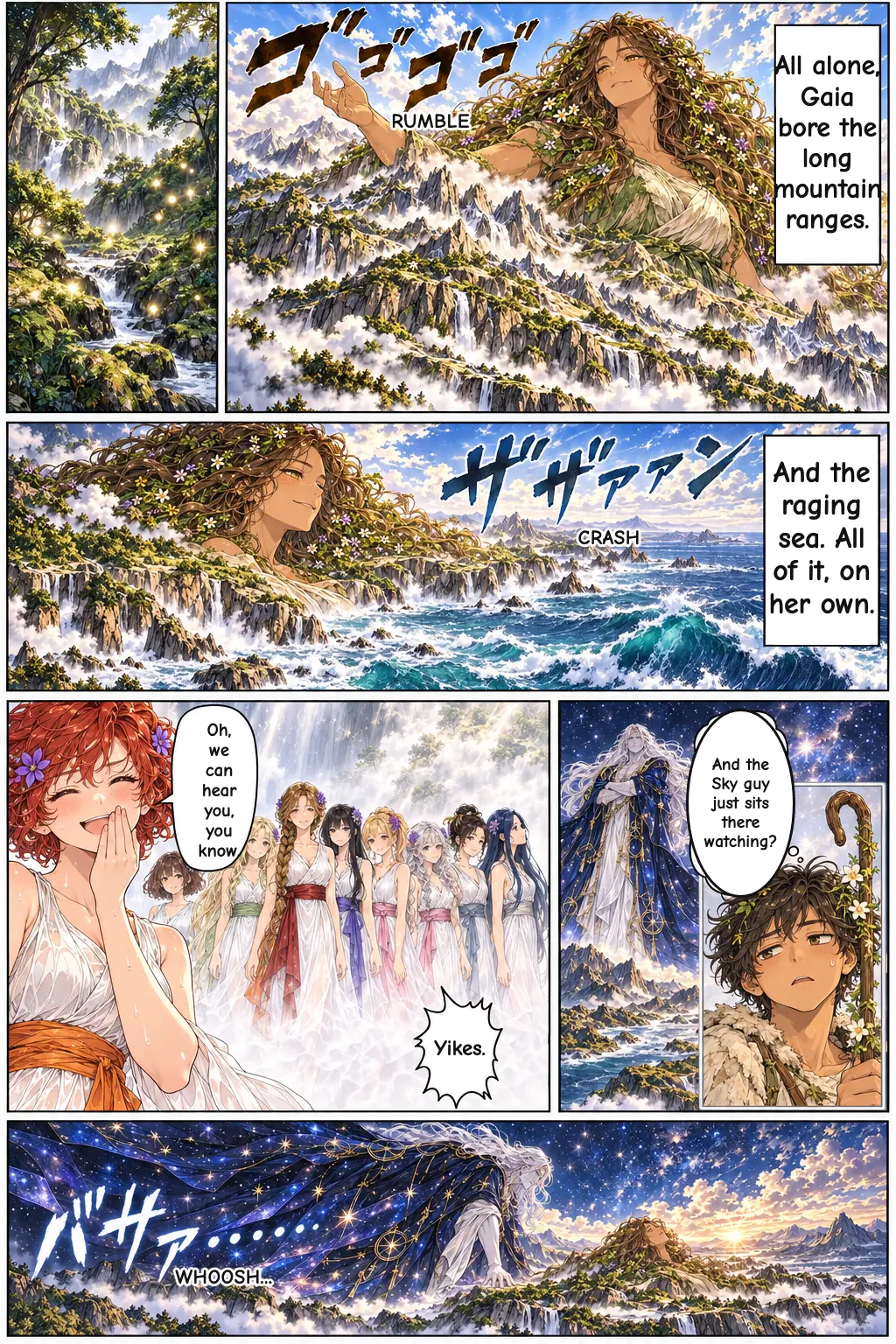
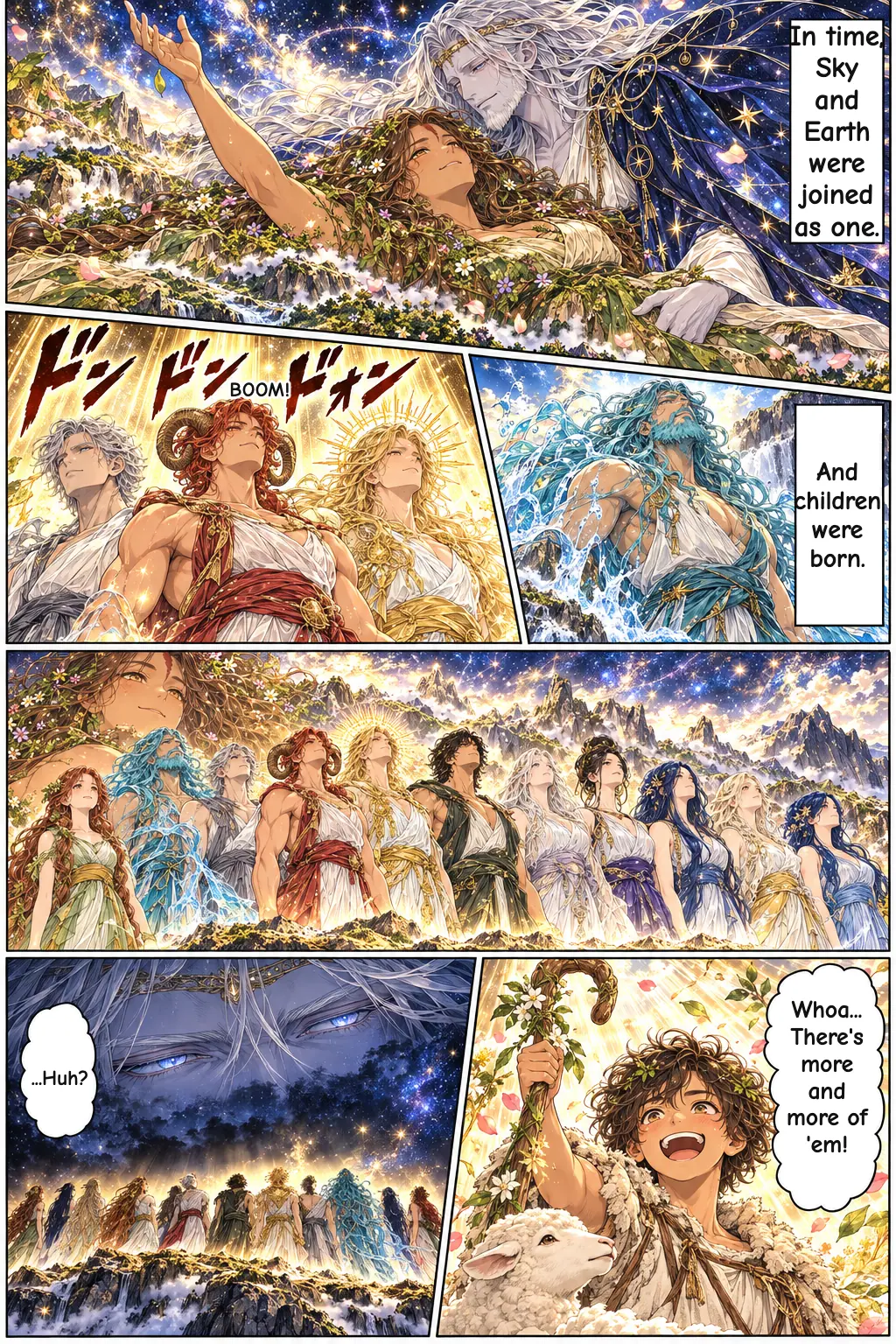
Gaia then produced Ouranos, the starry Sky, equal to her in size, so that he could cover her completely. She also brought forth the mountains and Pontus, the restless sea, without a partner. Finally she lay with Ouranos and bore the Titans: Oceanus, Coeus, Crius, Hyperion, Iapetus, Theia, Rhea, Themis, Mnemosyne, Phoebe and Tethys. Last came Cronus, the youngest. He was crooked in his thinking, the most fearsome of the children, and he hated his powerful father. What Cronus does next comes later in the poem, beyond this episode.
What the Myth Meant to the Ancient Greeks
For Greek audiences, the Theogony was more than a list of names. It explained how the world became orderly: from an empty gap, to Earth and Sky, to families of gods, and eventually, later in the poem, to the rule of Zeus. Pairs like Night and Day, or Earth and Sky, show the world being organized into balanced parts.
The Muses' claim that they can tell both convincing lies and the truth has puzzled readers for centuries. Some scholars read it as a dig at rival poets. Others see it as one of the earliest statements about fiction itself: a story can feel true without being true. Hesiod presents his own song as a gift from the goddesses, which gives it authority, but the poem never fully settles the question.
What the Manga Changes
Episode 1 of GREEK MYTHOLOGY: Three Crowns of Heaven follows the poem's order of creation closely, but it tells the story as a drama. Several details are the manga's own. The original never says how old Hesiod is, what he looks like, or why he is on the mountain at night. The hungry young shepherd chasing a runaway lamb on a foggy night is invented, though the fog echoes the poem's description of the Muses walking in mist.
The biggest addition is the stakes: in the manga, the newborn gods vanish if Hesiod stops singing. That rule is not in Hesiod's text. It is a storytelling device that turns his song into a race against time. The manga also gives each Muse her own look and voice (in the poem they speak as a group), designs visual forms for abstract beings like Chaos and Night, and ends with Cronus glaring out of the page. The Muses' insult is reworded into a modern joke, but the idea, that shepherds are nothing but bellies, comes from the original.
Where to Read It
If you want to see Chaos open up, Earth and Sky take shape, and Cronus first narrow his eyes, Episode 1 of GREEK MYTHOLOGY: Three Crowns of Heaven is right above this article. Every episode on Manga Portal is free to read, with no sign-up needed. It is a quick way into the oldest story of the Greek gods before the real trouble between Ouranos and his children begins.
Characters in this episode
Hesiod
A Greek poet and shepherd who says the Muses taught him to sing the history of the gods on Mount Helicon.
The Muses
Nine goddesses of song, daughters of Zeus and Mnemosyne (Memory), who give Hesiod a laurel staff and a divine voice.
Chaos
The very first thing to exist, a yawning gap or void rather than "disorder", and the parent of Darkness and Night.
Gaia
The broad Earth, mother of the Sky, the mountains, the sea and the Titans.
Ouranos
The starry Sky, born from Gaia and equal to her in size, who covers her and fathers the Titans.
Cronus
The youngest and most fearsome Titan, a cunning schemer who hates his father Ouranos.
FAQ
What is Hesiod's Theogony about?
The Theogony is a Greek poem from around 700 BCE that explains how the world and the gods were born. It starts with Chaos and moves through Gaia, Ouranos and the Titans. Later in the poem it reaches Zeus and his rise to power.
What came first in Greek mythology according to Hesiod?
According to Hesiod, Chaos came first. It was a gap or empty void, not a jumble of disorder. Gaia (Earth), Tartarus and Eros came after it.
Who are the Muses and what did they give Hesiod?
The Muses are the goddesses of song and poetry, daughters of Zeus and Mnemosyne. In the Theogony they give Hesiod a staff of laurel and breathe a divine singing voice into him. Then they command him to sing about the gods.
Who are the parents of the Titans?
The Titans are the children of Gaia (Earth) and Ouranos (Sky). There are twelve of them, and Cronus is the youngest.
Why did the Muses say they can tell lies like the truth?
The poem doesn't explain it, and scholars disagree. Some see it as a jab at other poets. Others read it as an early reflection on how fiction can sound true.