Get new episodes in your feed. Follow us on:ThreadsBluesky
Hunting for the gods' weak spots, King Gylfi learns that humans were made from driftwood on a beach, and that the sun is chased by a wolf every single day. When he hears that even Yggdrasil, the World Tree, is being gnawed at the roots, the king pulls off the cloth hiding his face and asks the one question he can never take back.
Story summary
This episode is drawn from Gylfaginning ("The Tricking of Gylfi"), the first major part of the Prose Edda, written by the Icelandic scholar and politician Snorri Sturluson around 1220. Snorri lived in a Christian Iceland, but he collected and retold the old pagan myths, partly as a handbook for poets who still used their imagery. The frame is a contest of questions. Gylfi, a king in Sweden, wants to understand the power of the Aesir (the main family of Norse gods).
Skoll and Hati, Ask and Embla & Yggdrasil: Norse Myth Explained
In short: In Norse mythology, the sun races across the sky because a wolf named Skoll chases it every day, and another wolf, Hati, hunts the moon. The story comes from Gylfaginning in Snorri Sturluson's Prose Edda (c. 1220), which also tells how the first humans, Ask and Embla, were made from two trees on a beach, and how the World Tree Yggdrasil is gnawed at its roots.
The Story Behind This Episode: A King in Disguise
This episode is drawn from Gylfaginning ("The Tricking of Gylfi"), the first major part of the Prose Edda, written by the Icelandic scholar and politician Snorri Sturluson around 1220. Snorri lived in a Christian Iceland, but he collected and retold the old pagan myths, partly as a handbook for poets who still used their imagery.
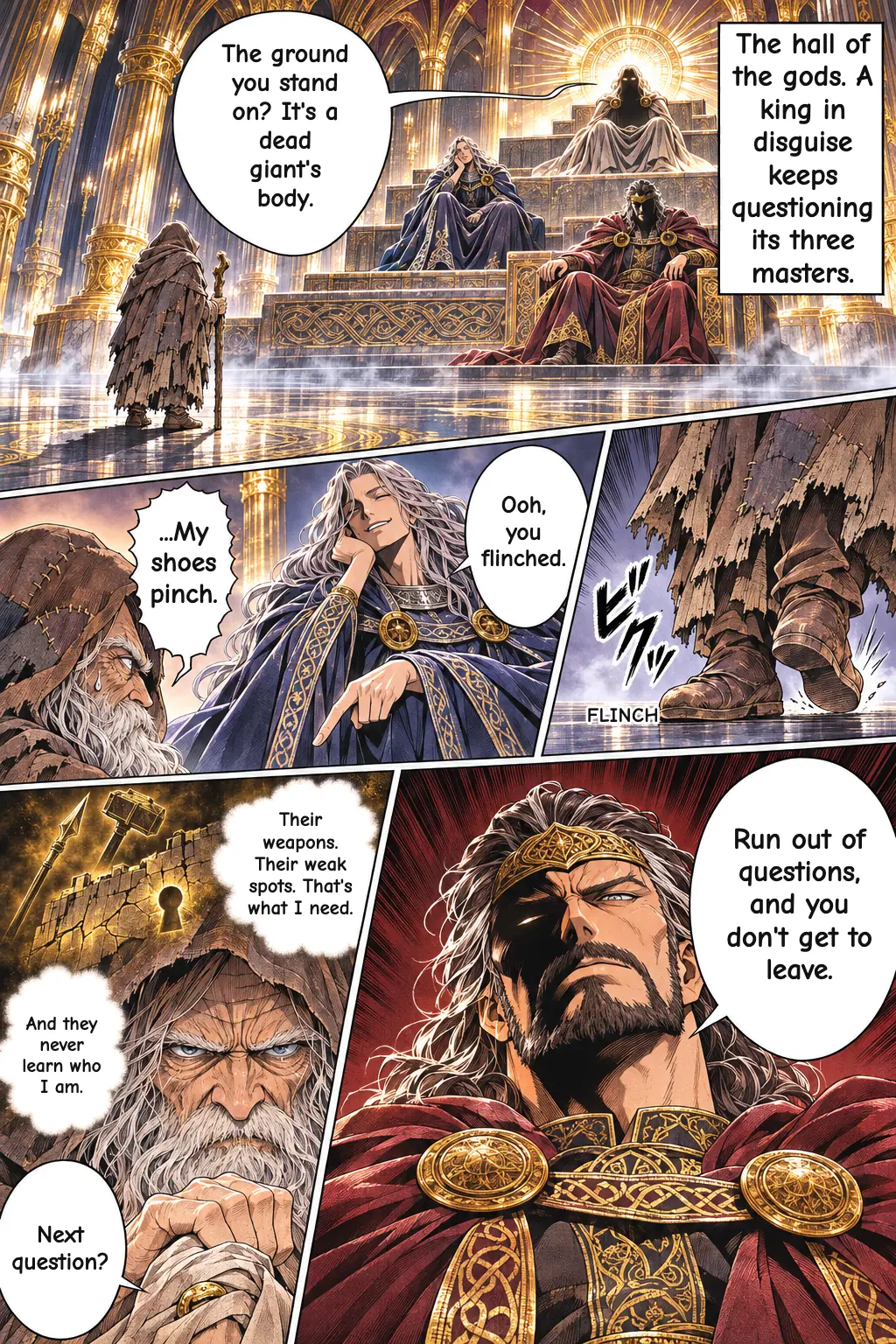
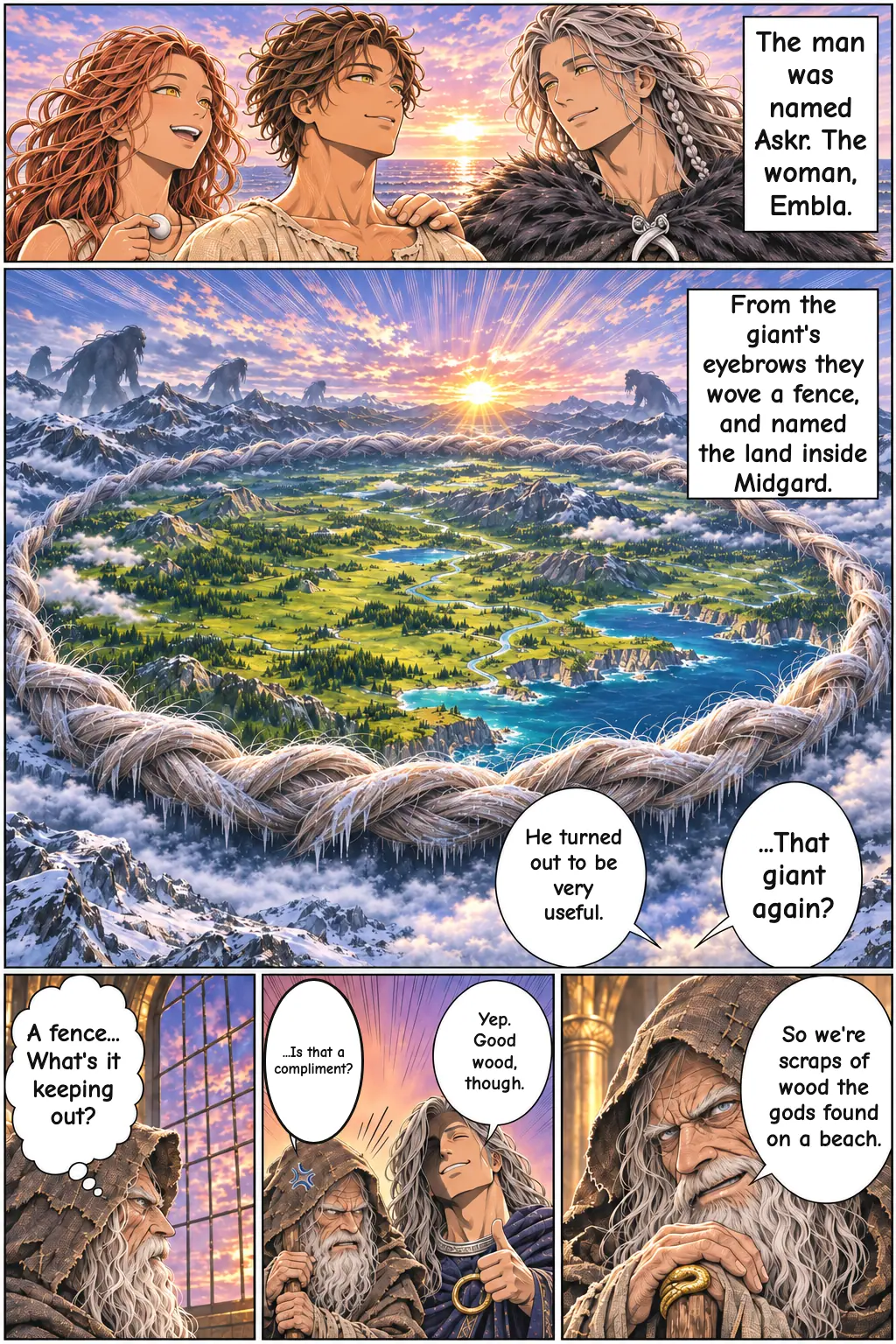
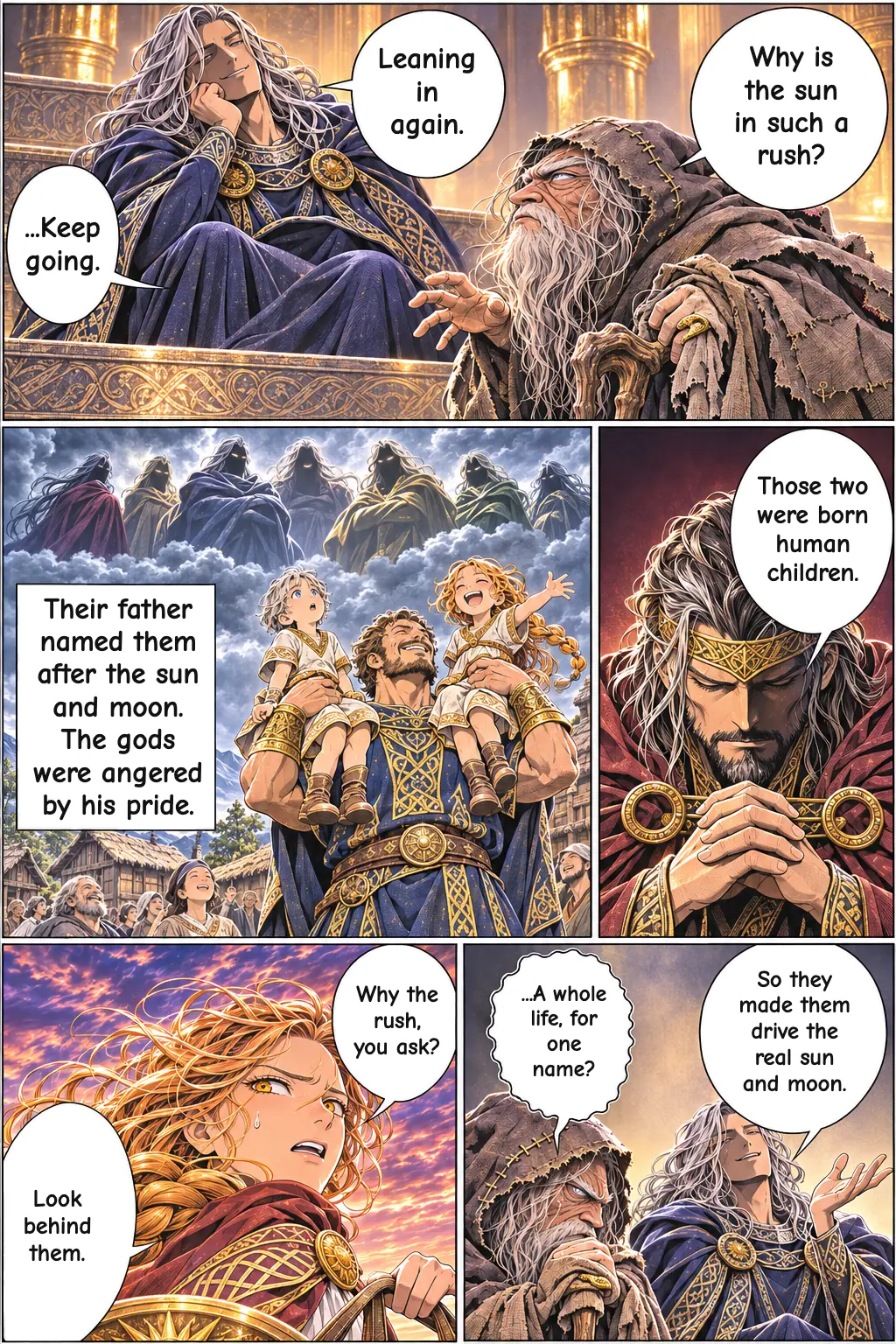
The frame is a contest of questions. Gylfi, a king in Sweden, wants to understand the power of the Aesir (the main family of Norse gods). He disguises himself as a traveler named Gangleri and enters a great hall, where three figures sit on thrones stacked one above another: High, Just-as-High and Third. Gangleri asks about the world, and the three take turns answering, often backing up their words with lines from older poems.
Summary of the Original Myth
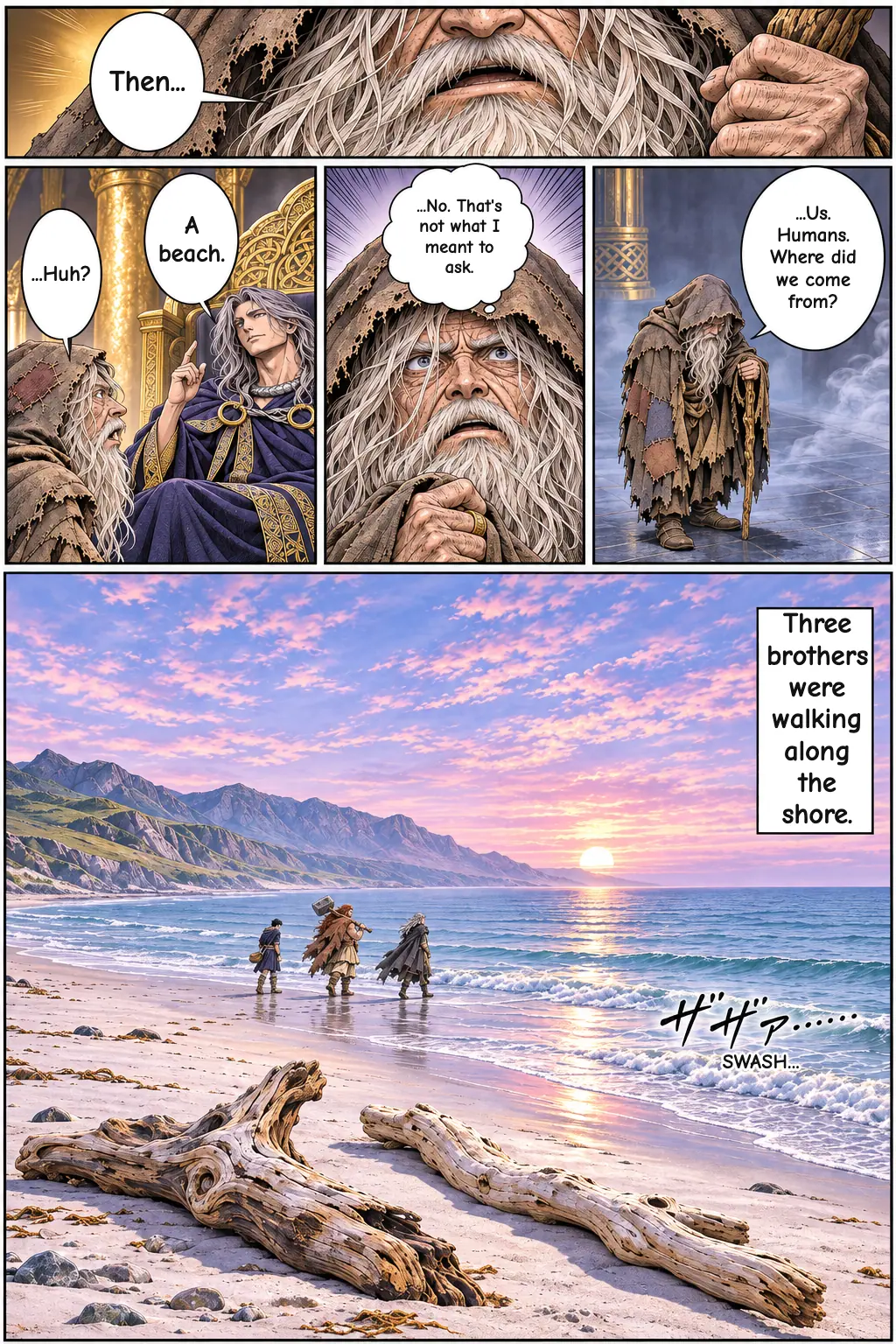
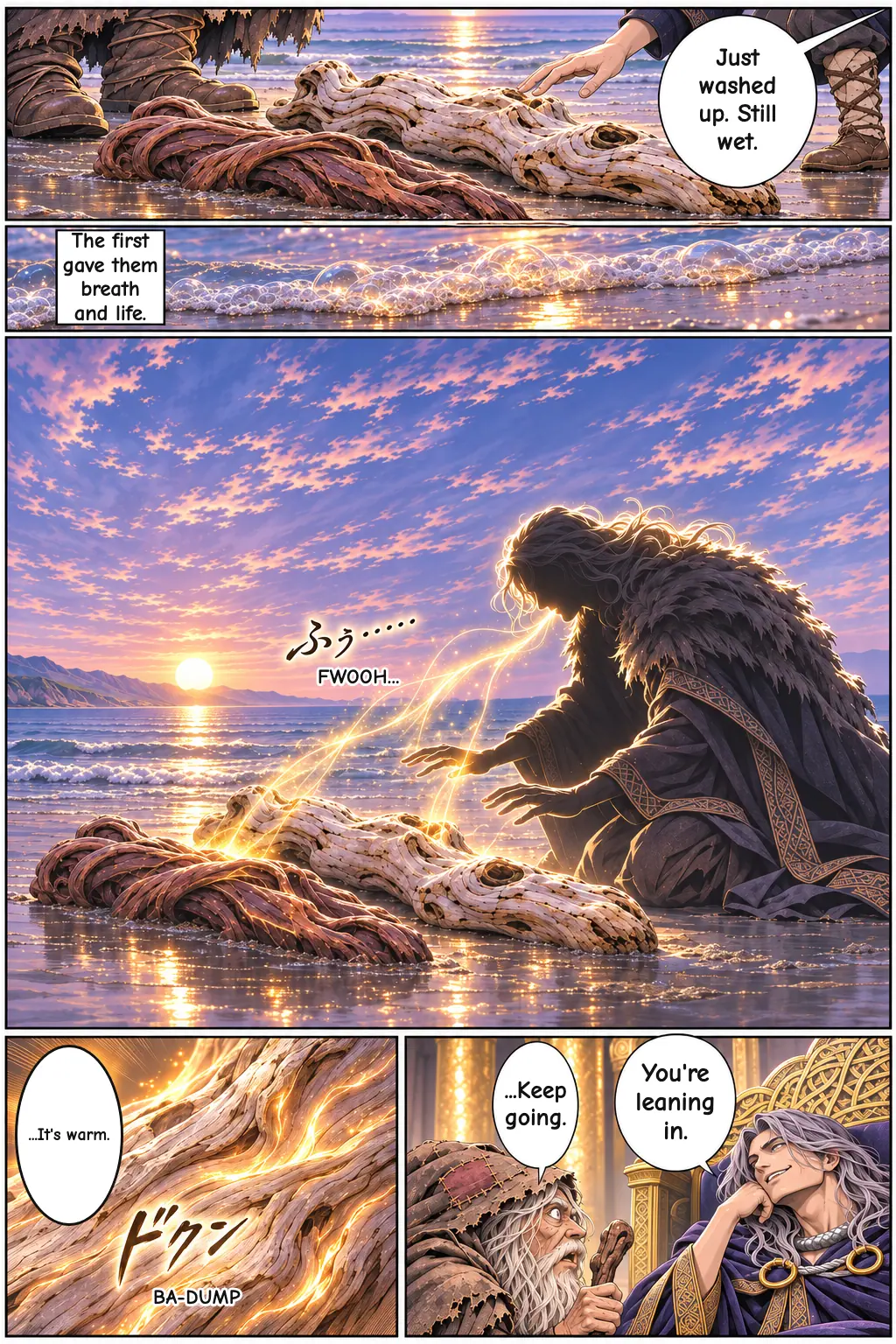
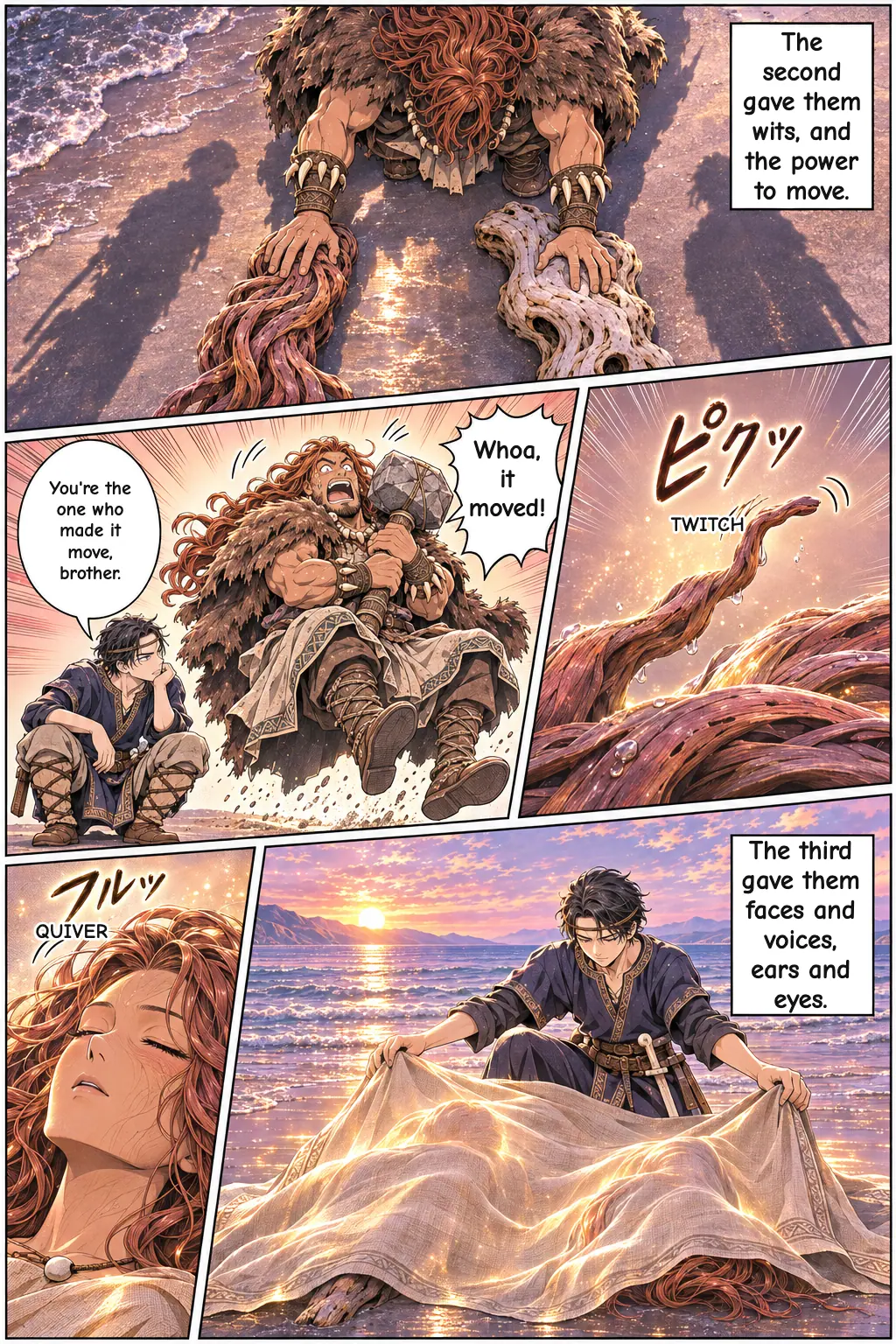
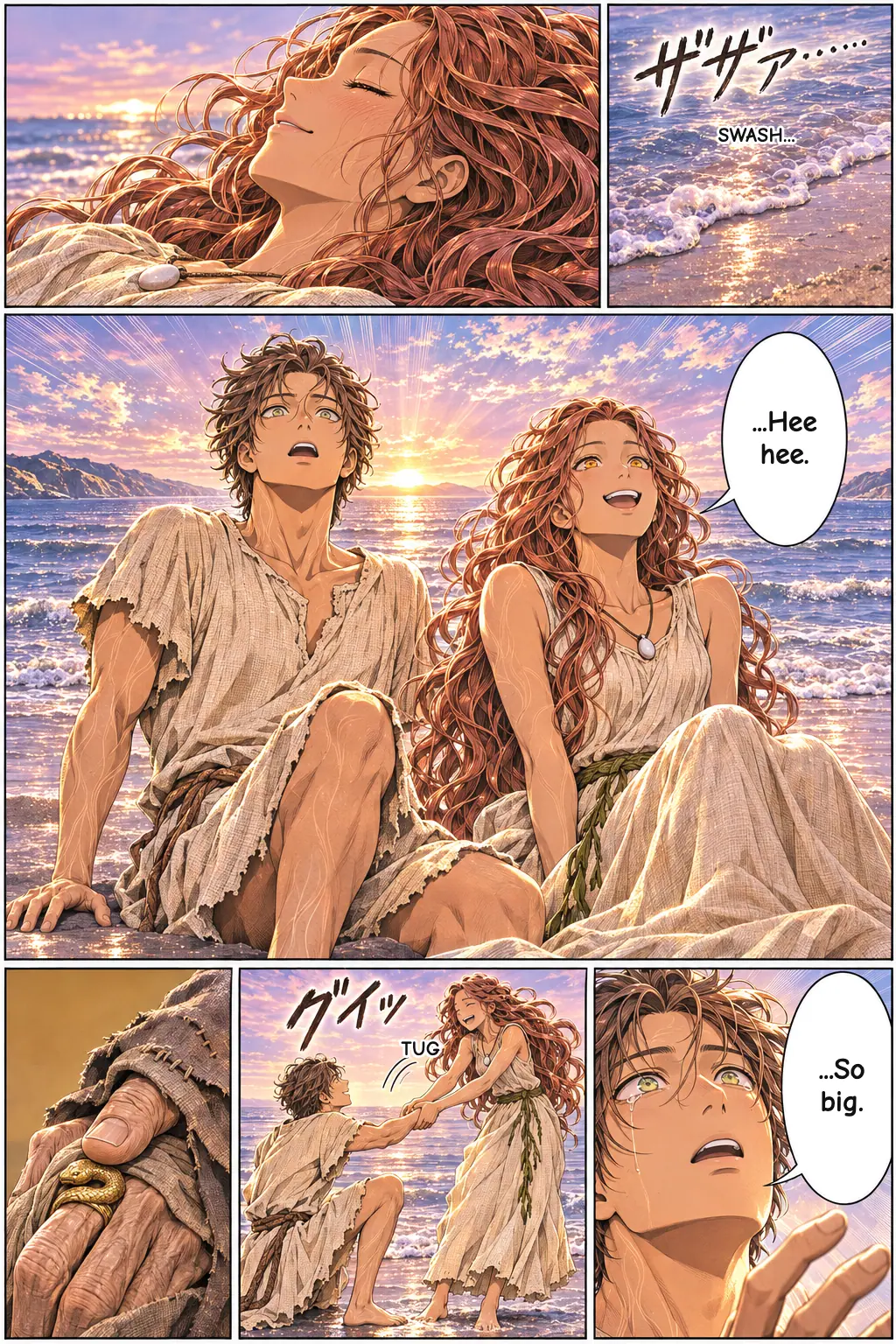
The first humans. The sons of Bor (Odin and his brothers, who had built the world from the body of the giant Ymir) were walking along the seashore when they found two trees. From them they shaped a man and a woman. The first giver granted breath and life; the second gave wit and movement; the third gave a face, speech, hearing and sight. They also gave the pair clothes and names: the man was Ask and the woman Embla. All humans descend from them, and they were given Midgard to live in, a world fenced off from the giants by a wall made from Ymir's eyebrows (or eyelashes; the Old Norse word can be read either way).
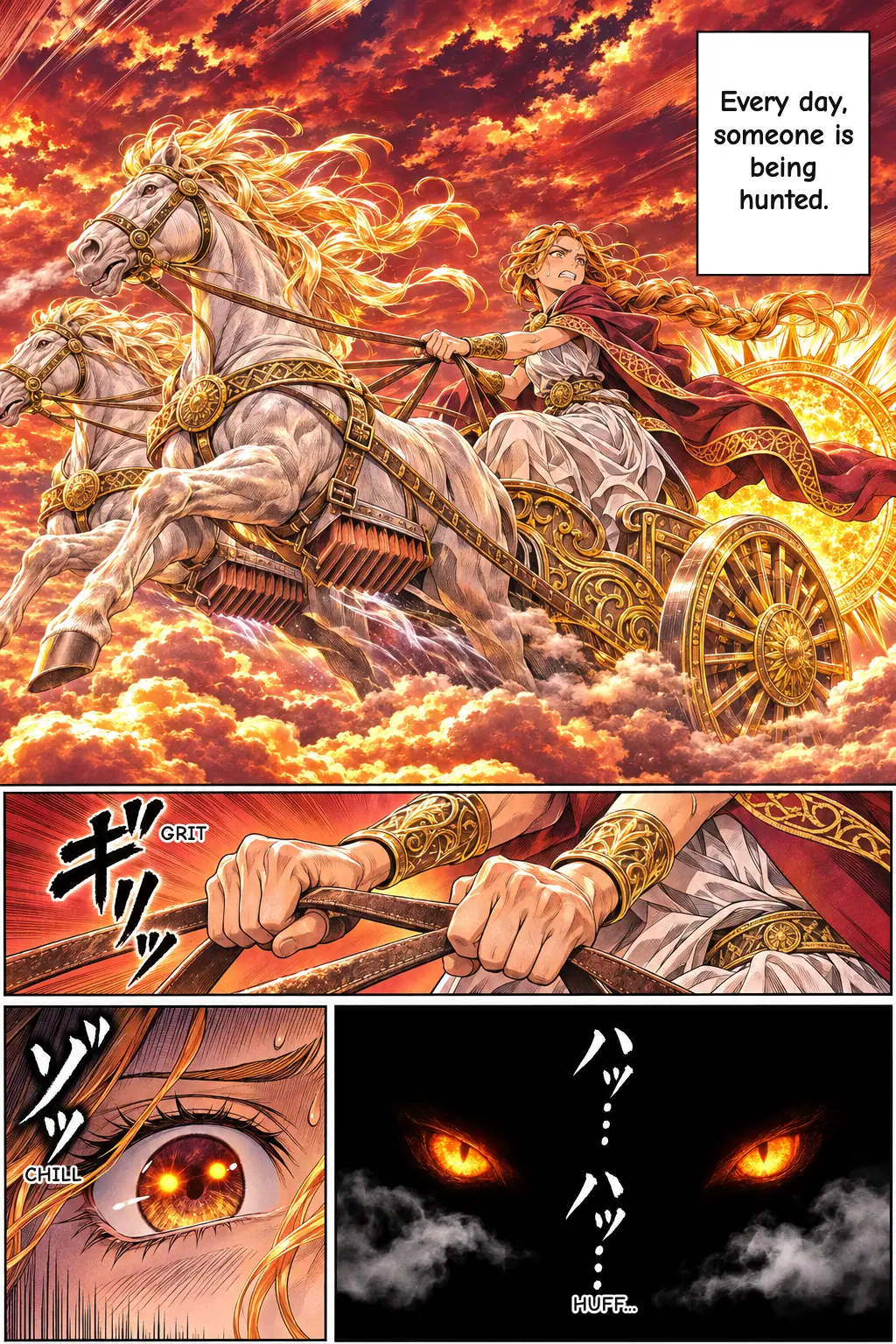
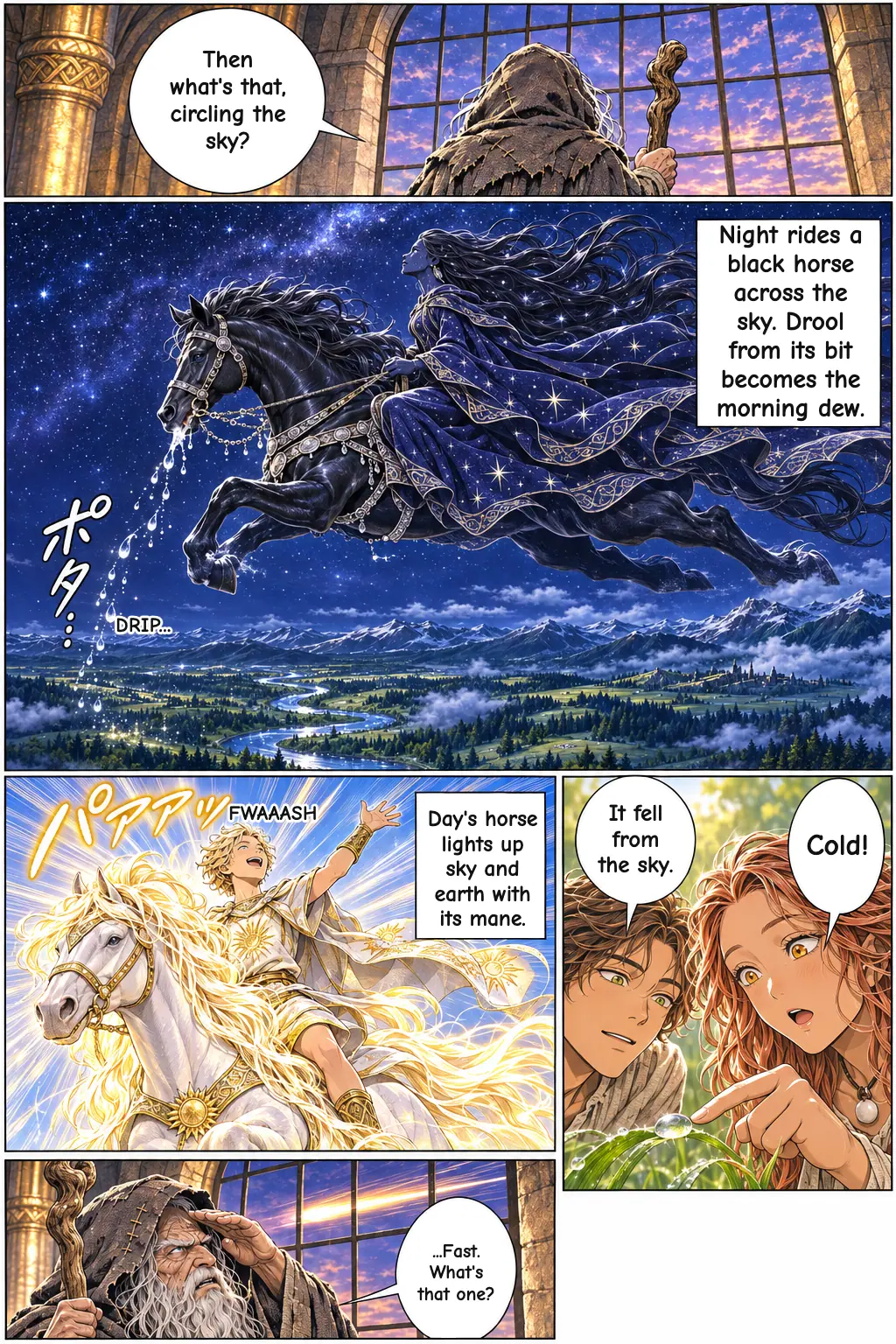
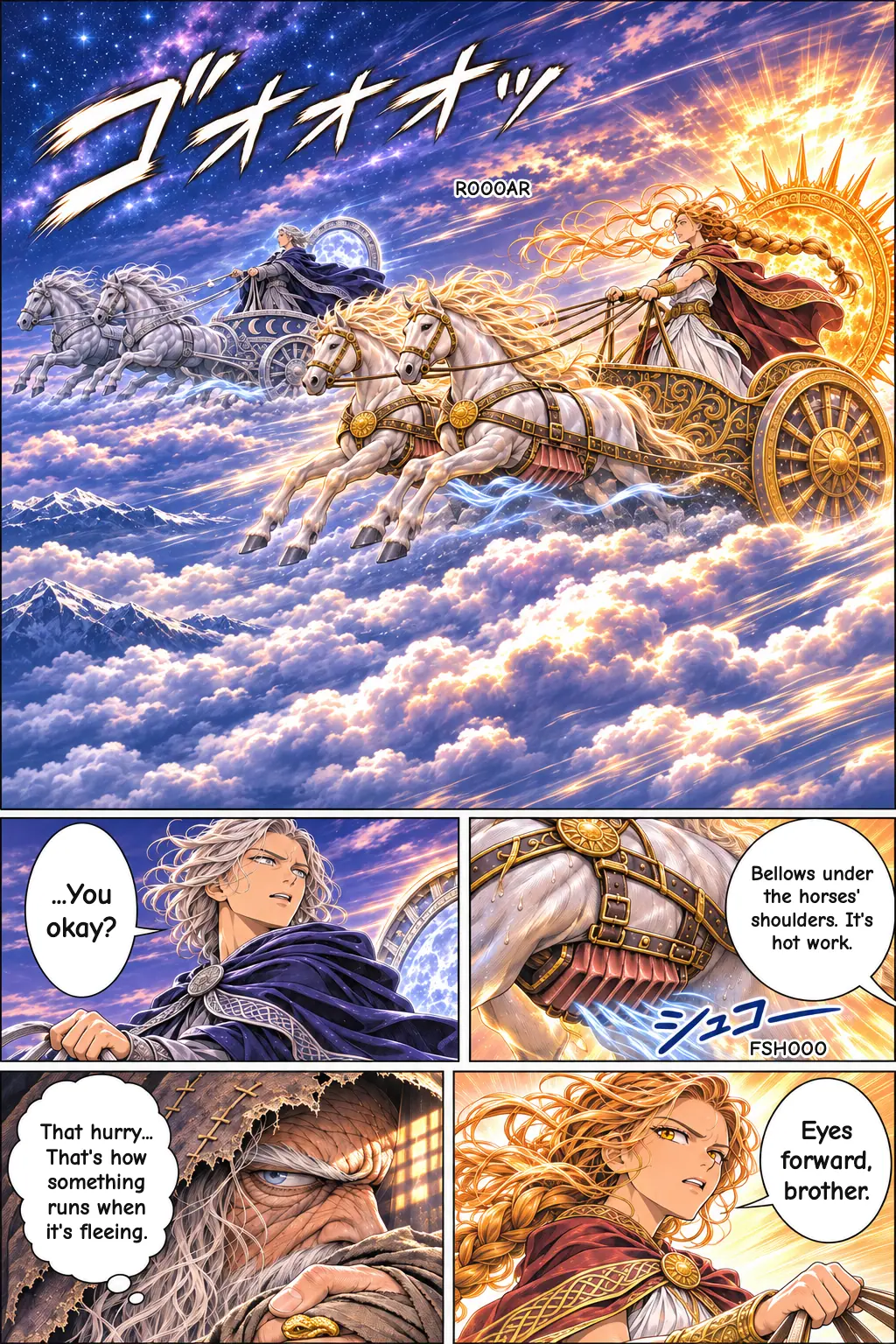
Night, Day, Sun and Moon. Night (Nótt), a dark giant's daughter, and her bright son Day (Dagr) were each given a horse and chariot by Odin, the All-Father, to ride around the sky once a day. Foam dripping from Night's horse becomes the morning dew; the shining mane of Day's horse lights up earth and sky. A man named Mundilfari was so proud of his two beautiful children that he named them Sun (Sól) and Moon (Máni). The gods, angered by this arrogance, set the two in the sky: Sol drives the horses that pull the sun, which the gods had made from sparks of the fire-world Muspelheim, and Mani steers the moon and controls its waxing and waning. Mani also took two children, Bil and Hjuki, up from the earth to follow him.
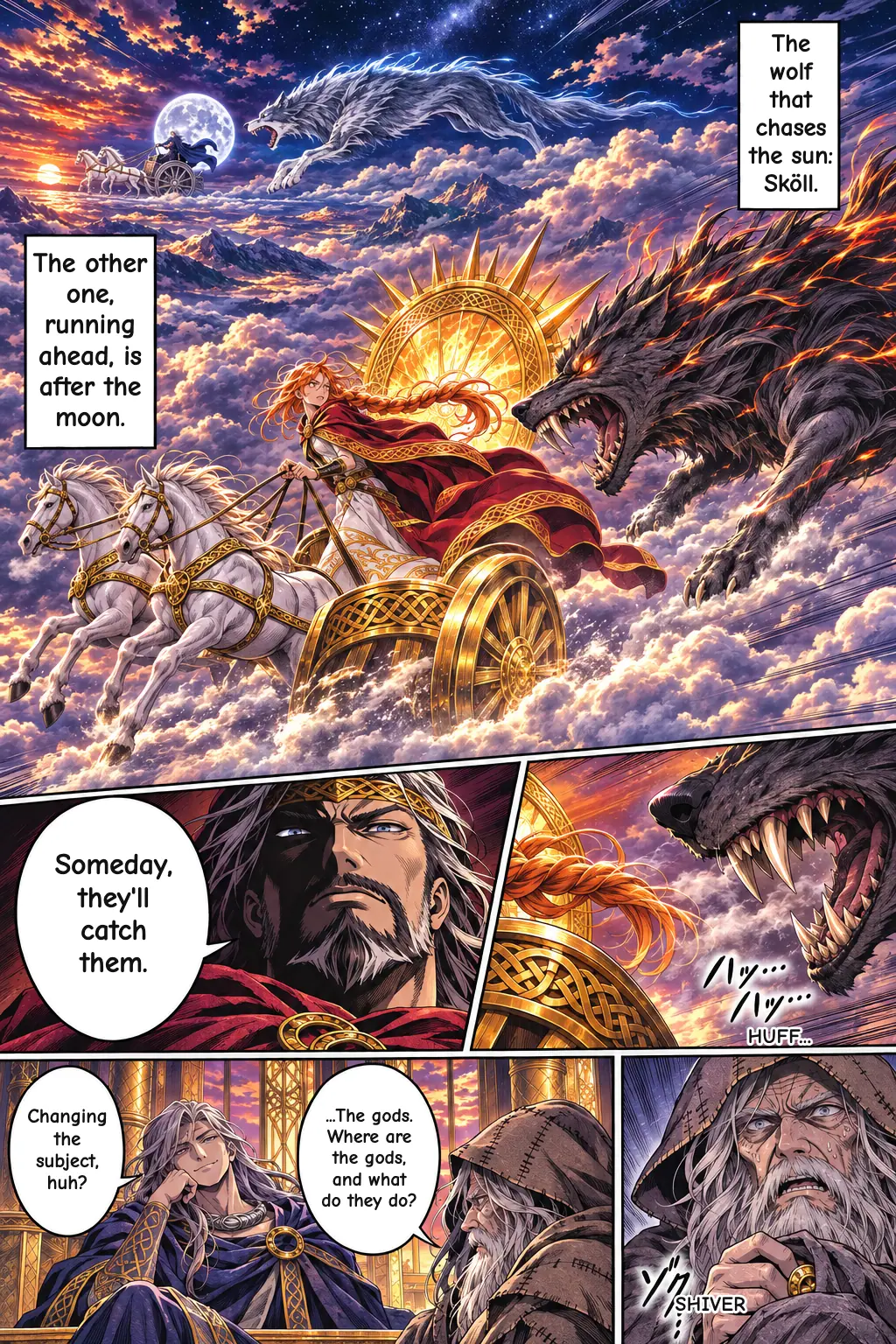
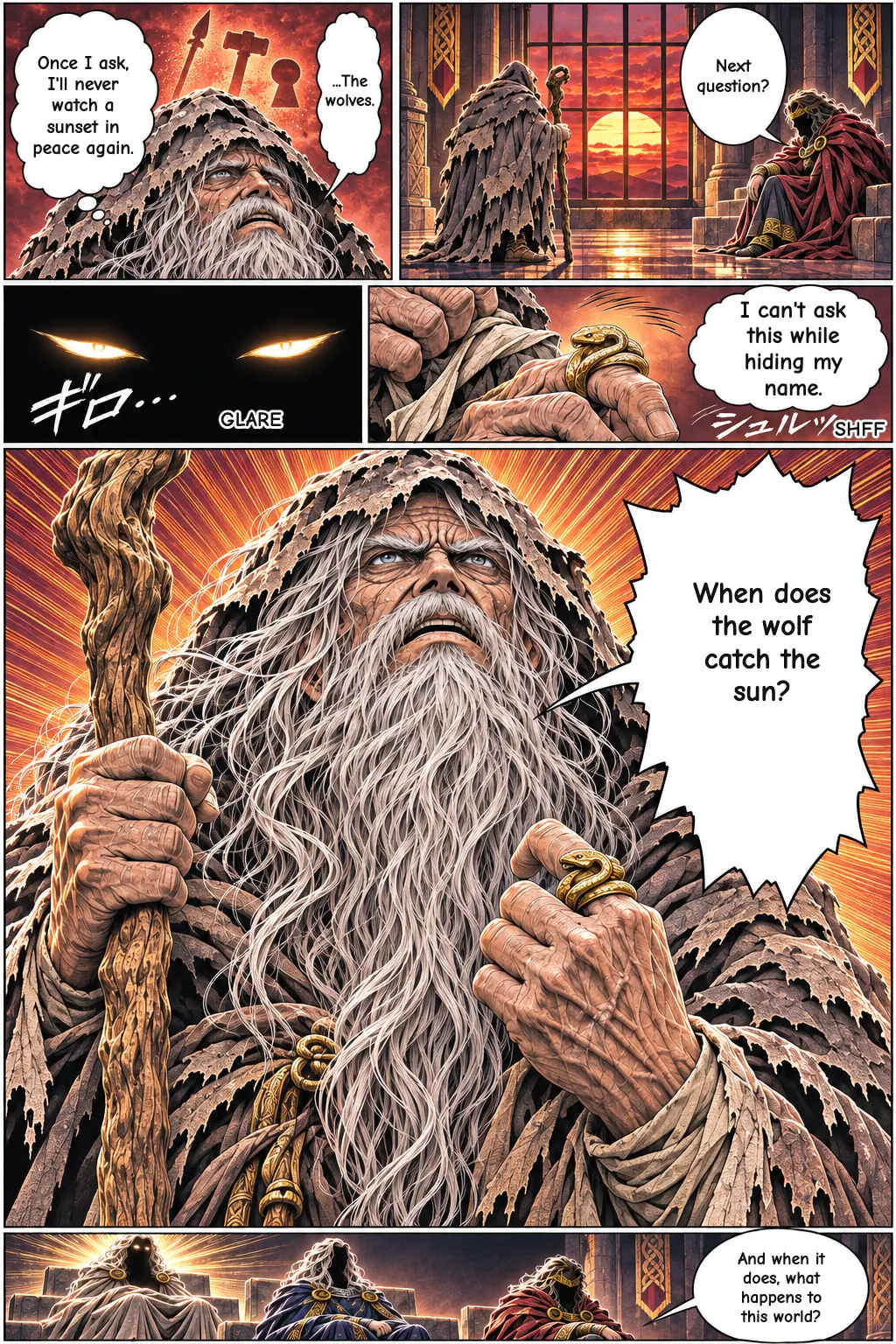
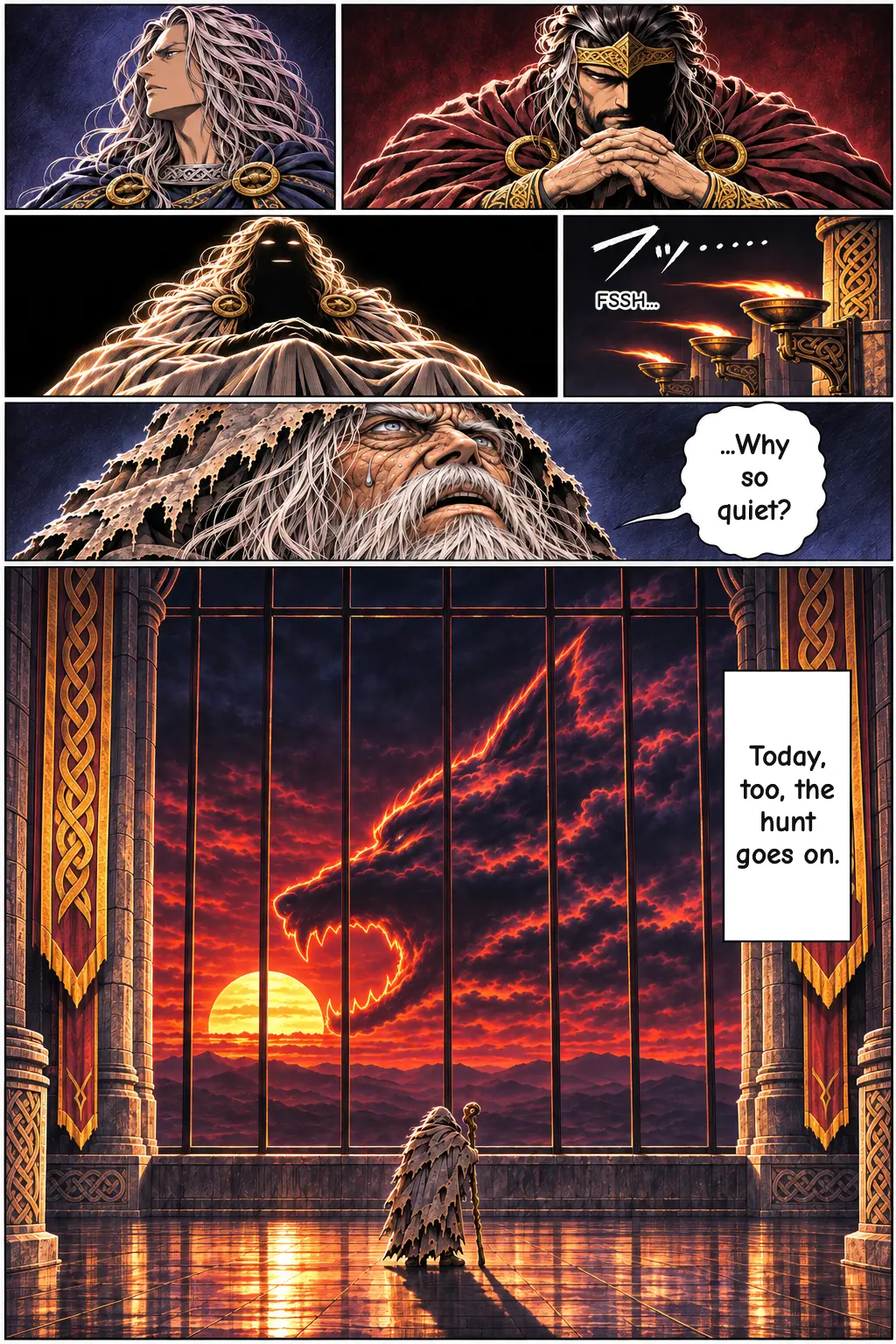
The wolves. When Gangleri remarks that the sun moves as if it were afraid, he is told that it is: the wolf Skoll is right behind it, and one day he will catch it. Another wolf, Hati Hrodvitnisson, runs ahead and hunts the moon, and he too will succeed. These wolves were born to a giantess in the Iron Wood east of Midgard, and the mightiest of her brood is said to swallow the moon and stain the sky with blood.
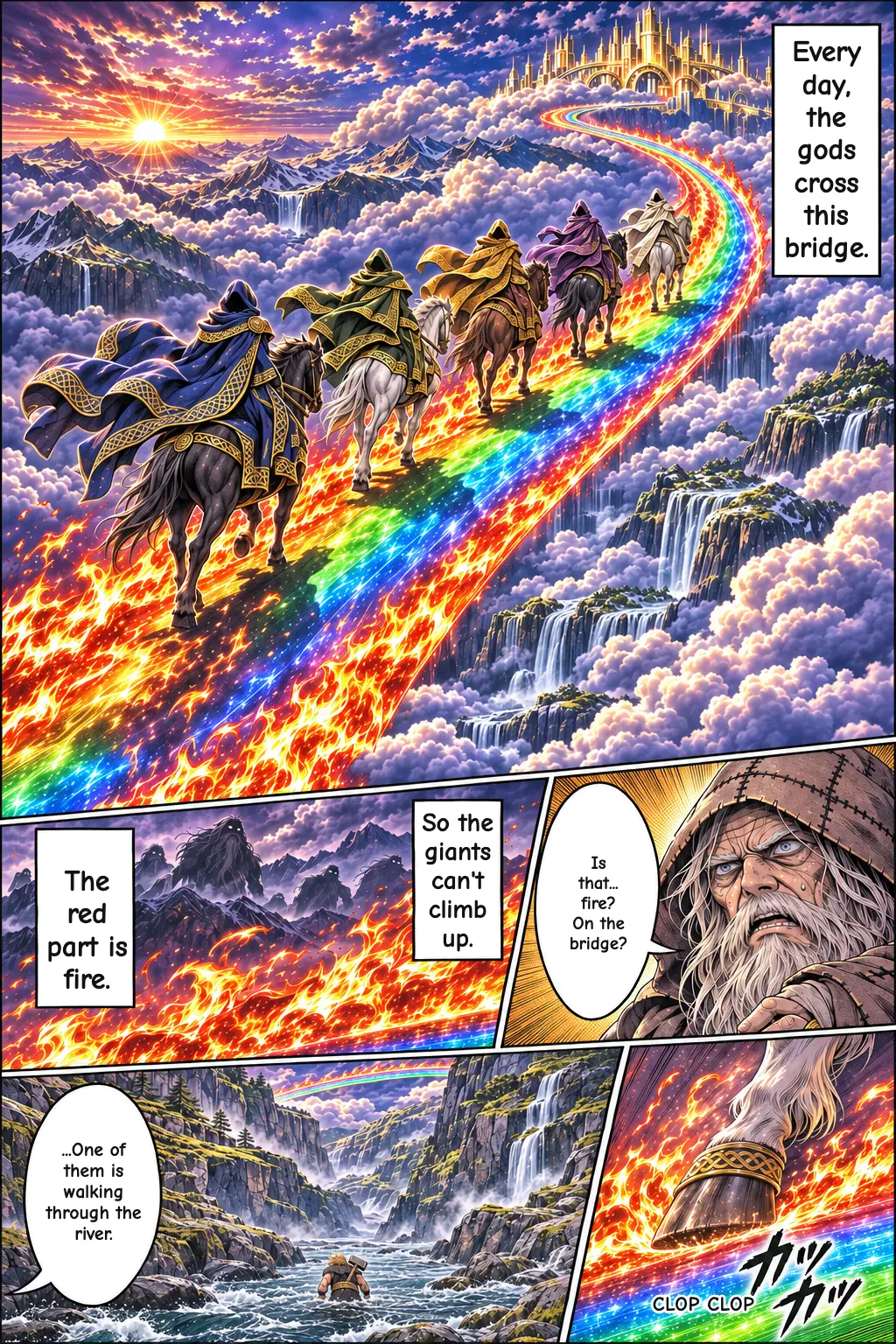
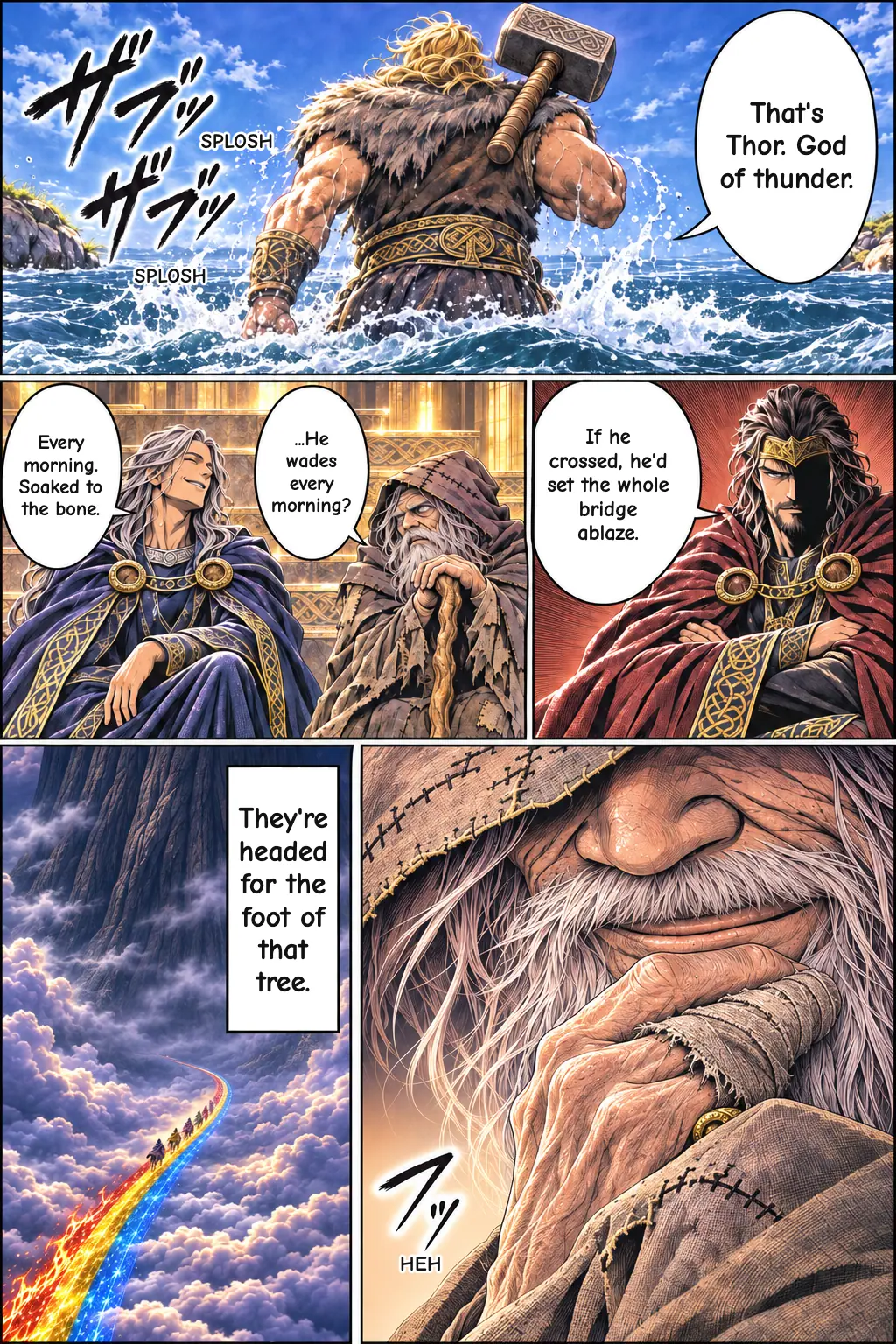
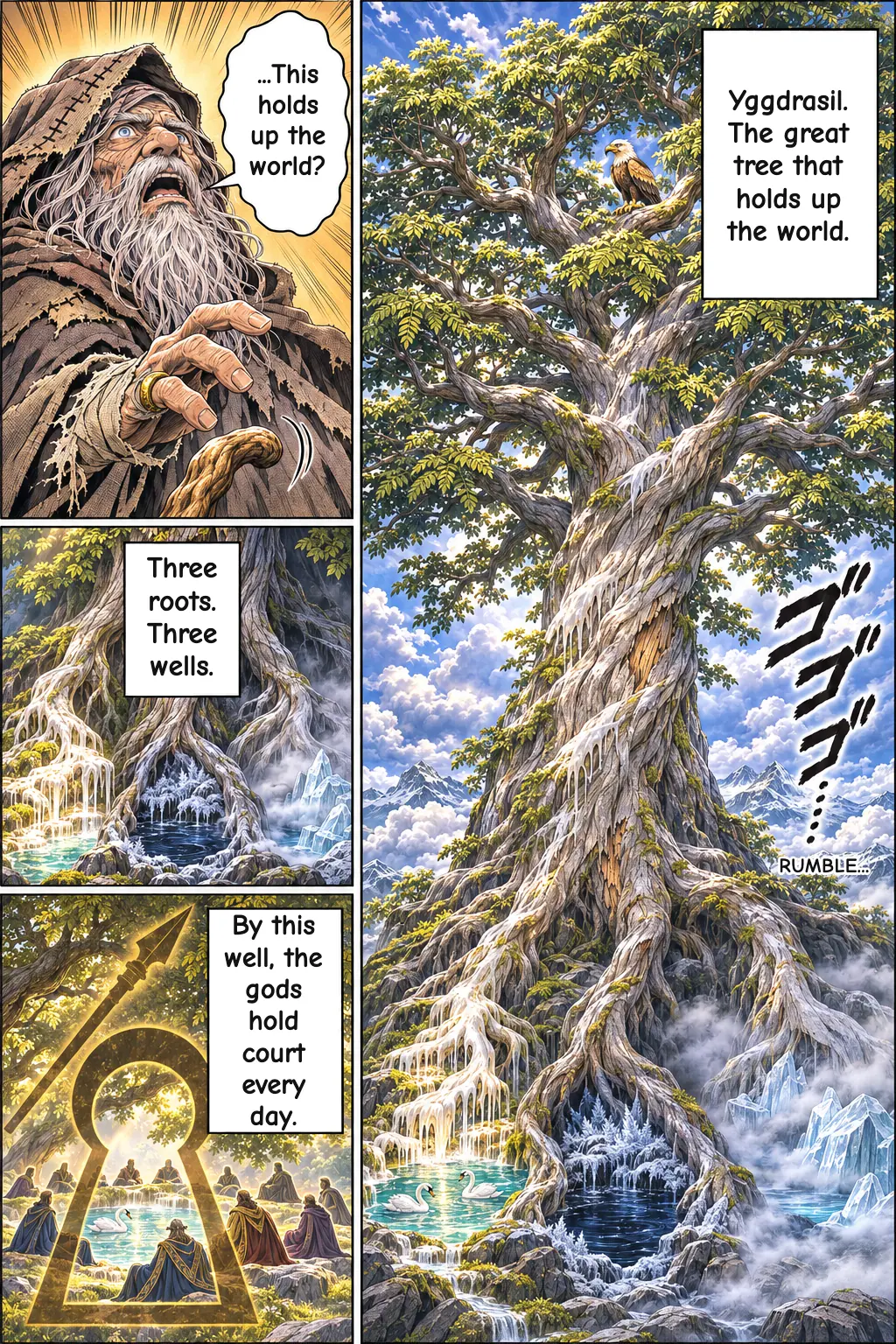
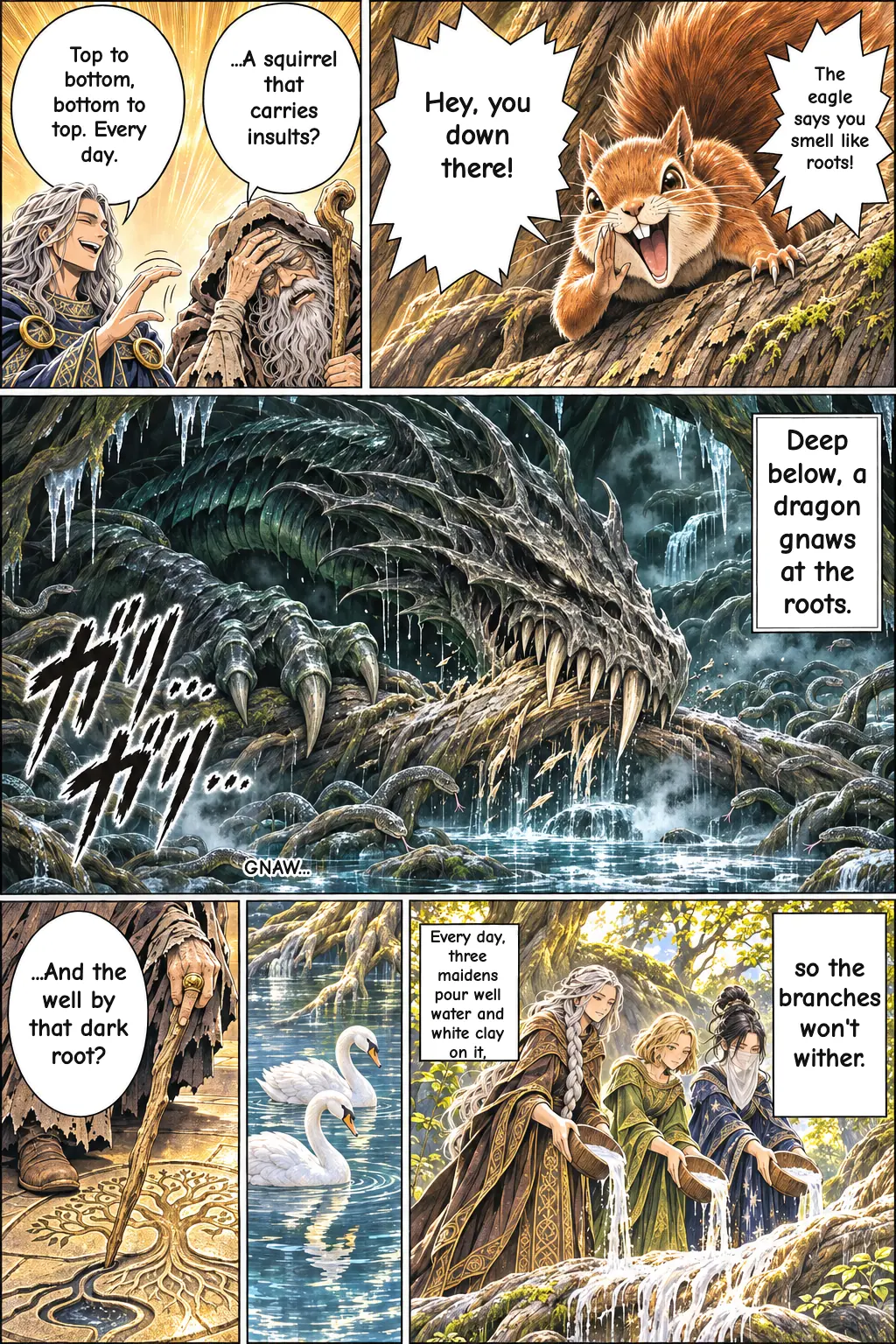
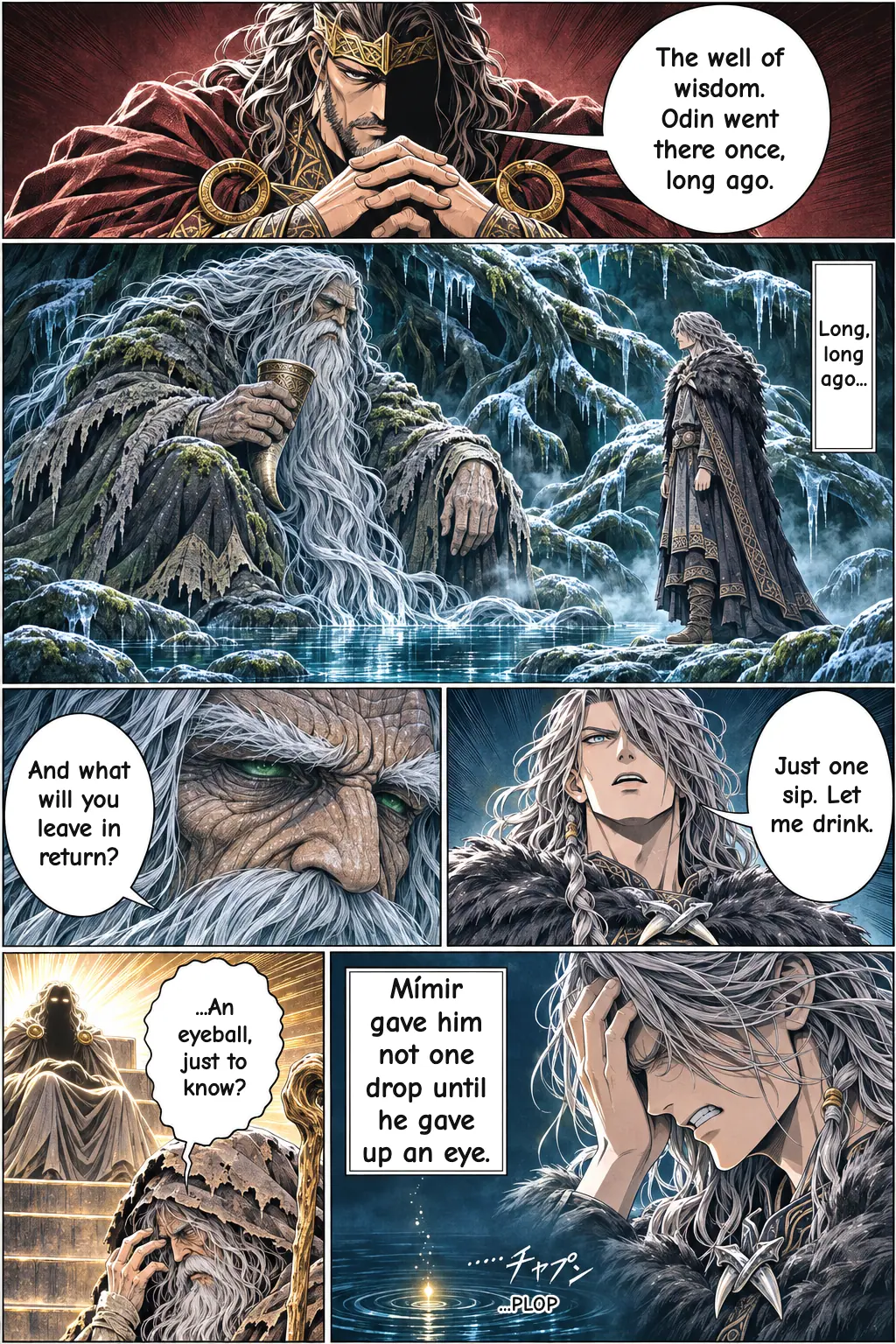
The bridge and the tree. The gods built Bifrost, the rainbow bridge between earth and heaven; its red band is fire, which keeps the giants from climbing up. Every day the gods ride over it to hold court at Yggdrasil, the great ash tree whose branches spread over the whole world. It has three roots: one among the gods, one among the frost giants, and one over the misty underworld Niflheim, where the serpent or dragon Nidhogg gnaws it from below. Under the giants' root lies the well of Mimir, full of wisdom; Odin had to leave one of his eyes as a pledge before Mimir would let him drink from it. Beside the gods' root is the Well of Urd, where three maidens, the Norns, decide the course of human lives and pour water and mud over the tree each day so it does not wither. Only Thor cannot use the bridge, because his thunder would set it ablaze, so he wades through rivers instead.
What This Myth Tells Us
These chapters explain everyday things through story: why dew appears at dawn, why the sun never stops, why the moon changes shape, why rainbows look as though they burn. They also carry a quiet sense of doom. The sun will be caught, the bridge will one day break when the fire-giants cross it, and even the World Tree is being eaten away. In Norse myth, the world is beautiful but not permanent, and these details foreshadow Ragnarok, the end of the gods.
It is worth noting that Snorri was arranging older traditions, not inventing them from scratch. An older poem, Voluspa, names a different trio of gods (Odin, Hoenir and Lodur) as the givers of life to Ask and Embla, and scholars still debate how much of Snorri's tidy system reflects real pre-Christian belief and how much is his own organizing.
What the Manga Changed or Added
The original text is brief and has almost no dialogue, so the manga adds visual and dramatic detail. The beach scene, the weather and the look of the driftwood are invented; Snorri only says the gods found two trees on the shore. Showing each gift in its own panel, and giving Ask and Embla their first expressions and words when they wake, are also the manga's additions. The source counts the givers only as first, second and third; assigning each gift to Odin, Vili or Ve by name is a popular modern interpretation.
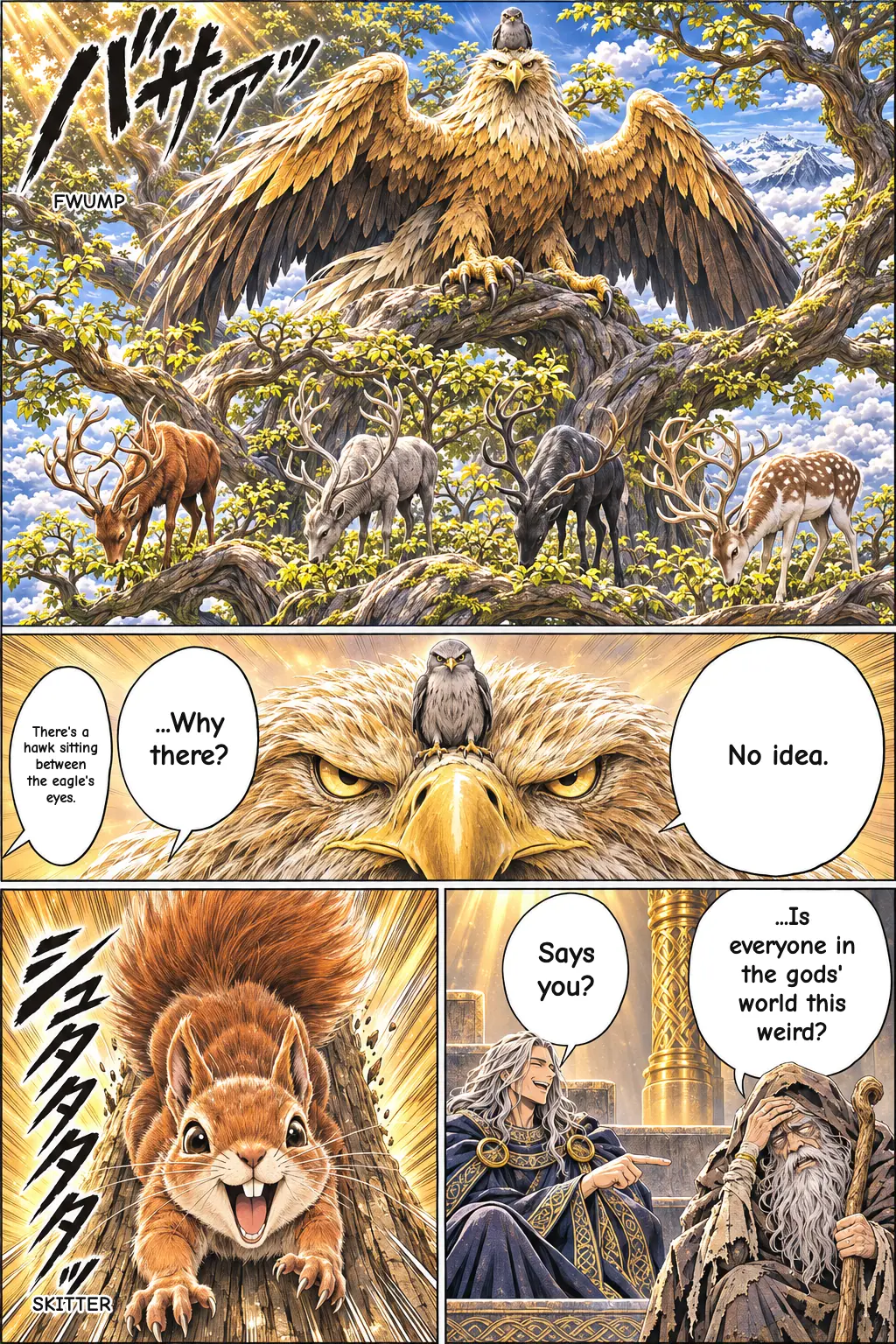
The designs of Night, Day, Sol, Mani, the wolves, Nidhogg, the eagle and the squirrel Ratatoskr, as well as the exact colors of Bifrost (apart from its fiery red), are the artist's choices. The source says Sol is afraid; the scene of her looking back at the wolf's breath is dramatization. Likewise, Snorri says Odin pledged his eye for a drink, without spelling out what wisdom he gained, so the pain and resolve shown in that moment are the manga's interpretation.
Most importantly, Gylfi's goal of finding the gods' weak spots, and the cliffhanger where he pulls away the cloth hiding his face, are the manga's own storytelling. In Snorri's text, Gangleri keeps his disguise and simply keeps asking.
Where to Read It
If you want to see Skoll on the sun's heels, the three roots of Yggdrasil and the moment Gylfi drops his disguise, Episode 3 of NORSE MYTHOLOGY: The King Who Heard the End of the Gods is free to read on Manga Portal, with no sign-up needed. It follows Snorri's Prose Edda closely and makes the old questions easy to picture, and the next episodes continue Gylfi's journey toward the end of the gods.
Characters in this episode
Gylfi (Gangleri)
A Swedish king who disguises himself as a traveler named Gangleri to question the gods about how the world works.
High, Just-as-High and Third
Three mysterious figures on stacked thrones who take turns answering Gangleri's questions, often quoting older poems.
Ask and Embla
The first man and woman, shaped by the gods from two trees found on a seashore and given life, mind and senses.
Sol and Mani
The children of Mundilfari, placed in the sky to drive the sun and the moon as punishment for their father's pride.
Skoll and Hati
Two wolves from the Iron Wood; Skoll chases the sun and Hati hunts the moon, and both are destined to catch their prey.
The Norns
Three maidens, Urd, Verdandi and Skuld, who live by the Well of Urd, shape human lives and water Yggdrasil every day.
FAQ
Why does the wolf chase the sun in Norse mythology?
According to Snorri's Prose Edda, the wolf Skoll pursues the sun every day, which is why the sun hurries across the sky. Snorri says Skoll will eventually catch it, an event tied to Ragnarok, the end of the world.
Who were Ask and Embla?
Ask and Embla were the first man and woman in Norse mythology. The gods made them from two trees found on a seashore and gave them breath, understanding and senses, and all humans descend from them.
What is Yggdrasil?
Yggdrasil is the World Tree, a giant ash whose branches spread over the whole world. In the Prose Edda it has three roots reaching the gods, the frost giants and the underworld Niflheim, where the creature Nidhogg gnaws at it.
Why did Odin give up his eye?
Snorri writes that Odin had to leave one eye as a pledge before Mimir would let him drink from his well, which holds wisdom and understanding. The text does not say exactly what knowledge Odin gained from the drink.
What is Bifrost made of?
Bifrost is the rainbow bridge the gods built between earth and heaven. Its red band is said to be burning fire, which stops the giants from climbing up to the gods' realm.