Get new episodes in your feed. Follow us on:ThreadsBluesky
King Gylfi wants the root of the power that took his kingdom, so he asks the gods' storytellers what came before everything. A giant born of ice and fire is slain by the gods' ancestors, and from his body the earth, the sea and the sky are made. Gylfi gives up his way back and keeps asking, until he learns what he is standing on.
Story summary
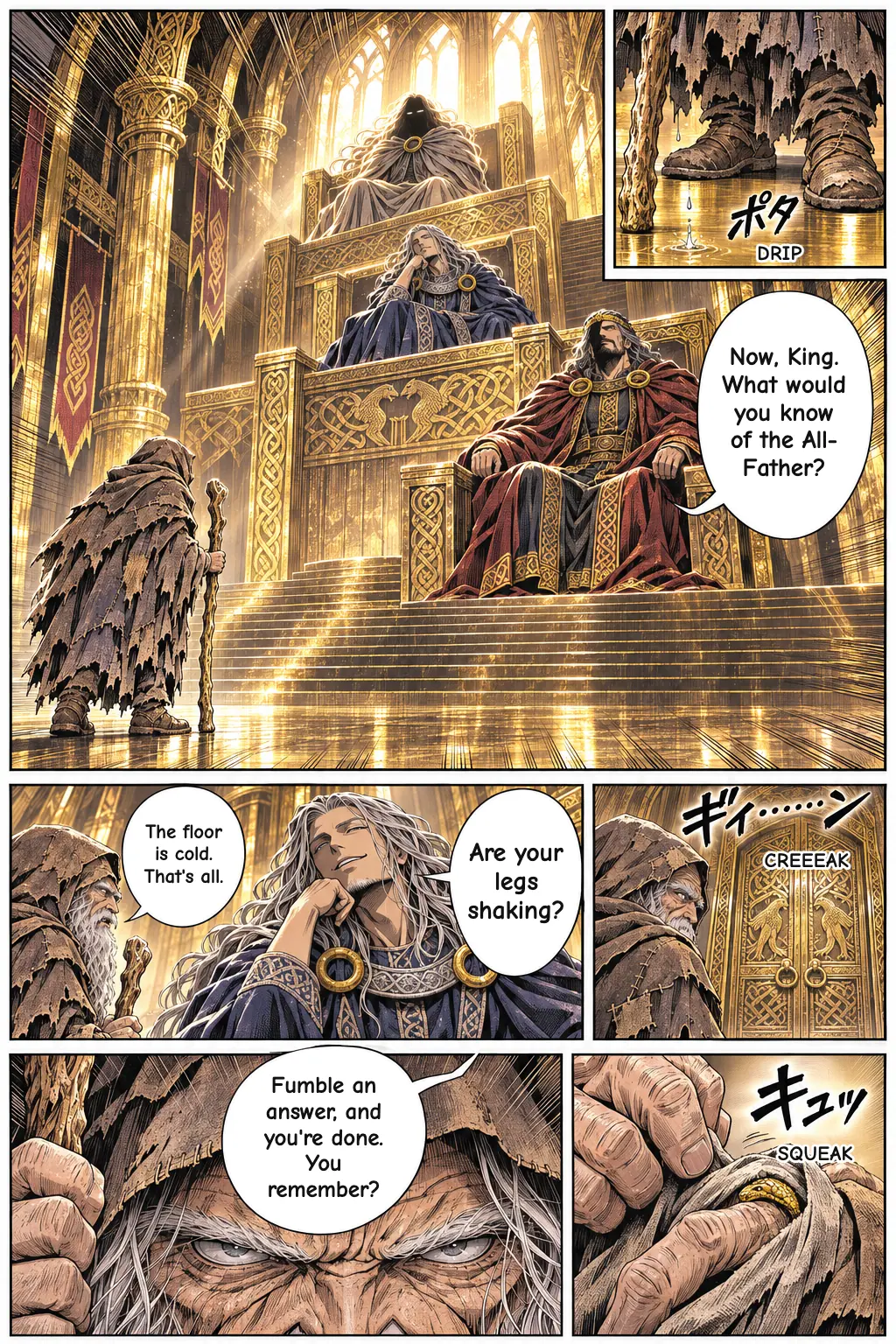
The Norse creation myth most people know comes from Gylfaginning, usually translated as "The Tricking of Gylfi." It is the first part of the Prose Edda, a handbook of myth and poetry written in Old Norse by the Icelandic scholar and politician Snorri Sturluson in the early 13th century. The whole section is a dialogue. Gylfi, a king of Sweden, disguises himself as a traveler called Gangleri and enters a great hall. There he questions three figures seated one above another: High, Just-as-High, and Third.
Ymir and the Norse Creation Myth Explained: Prose Edda Summary
In short: The Norse creation myth tells how the first giant, Ymir, was born where the ice of Niflheim met the fire of Muspell, and how Odin and his brothers killed him and built the world from his body: his flesh became the earth, his blood the sea, and his skull the sky. The story comes from Gylfaginning, the first part of Snorri Sturluson's Prose Edda (early 13th century, Iceland).
Who Is Telling the Story: Gylfi's Questions in the Prose Edda
The Norse creation myth most people know comes from Gylfaginning, usually translated as "The Tricking of Gylfi." It is the first part of the Prose Edda, a handbook of myth and poetry written in Old Norse by the Icelandic scholar and politician Snorri Sturluson in the early 13th century.
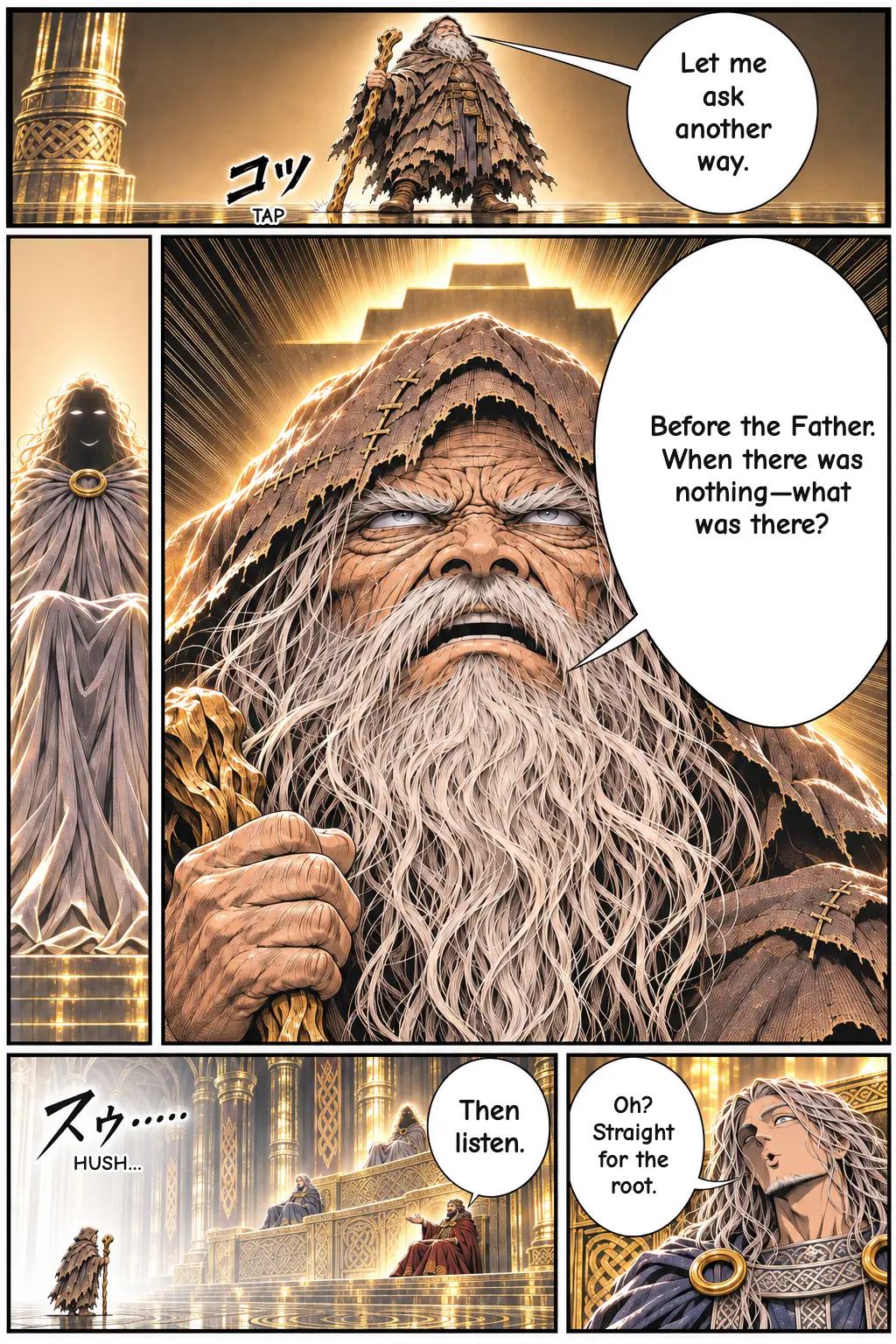
The whole section is a dialogue. Gylfi, a king of Sweden, disguises himself as a traveler called Gangleri and enters a great hall. There he questions three figures seated one above another: High, Just-as-High, and Third. Their answers make up the myth, and they often back up their words by citing older poems such as Völuspá (The Prophecy of the Seeress). Episode 2 of the manga covers roughly chapters 4 to 8 of Gylfaginning. Chapter numbers differ between editions.
The Original Myth: Ice, Fire and the Birth of Ymir
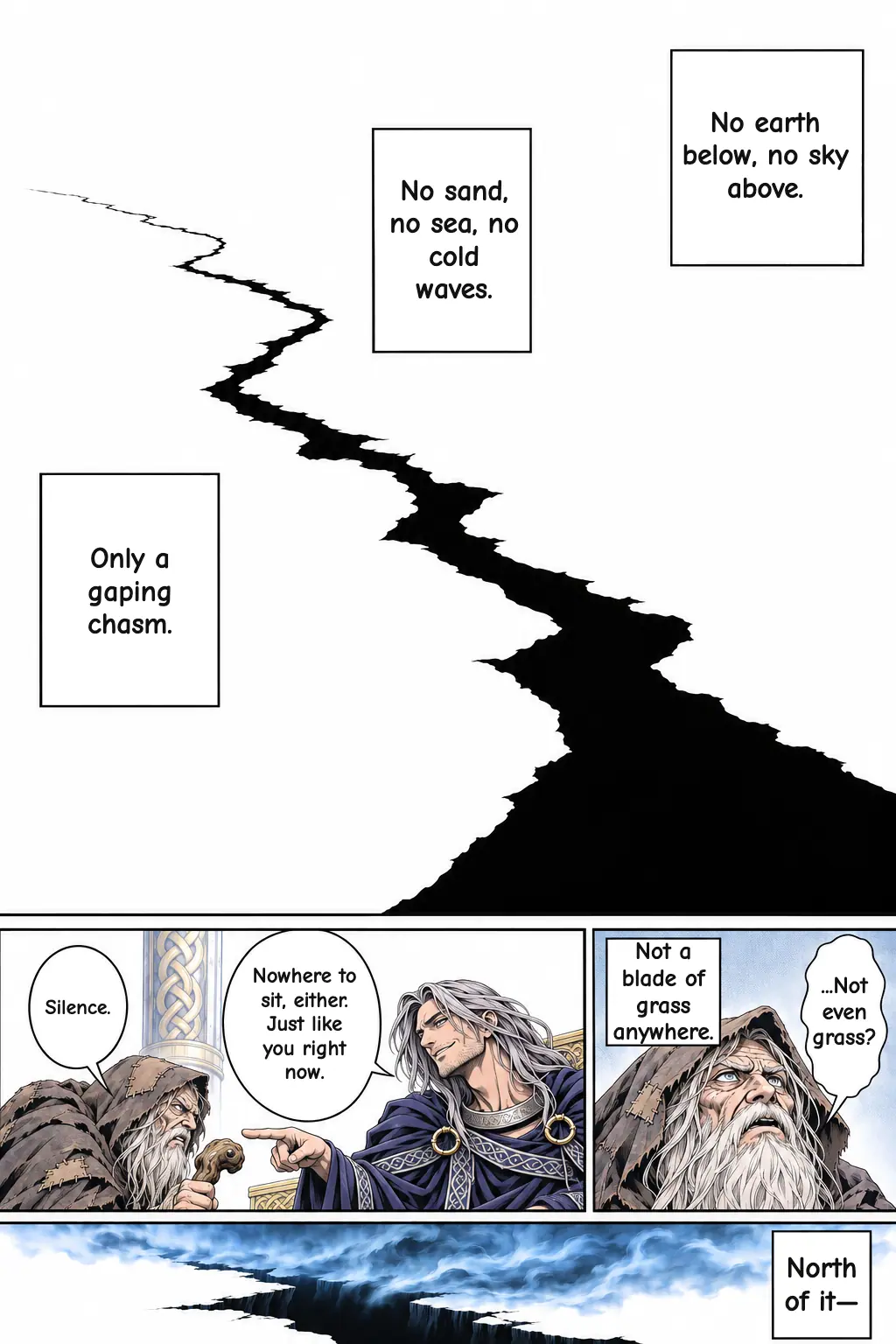
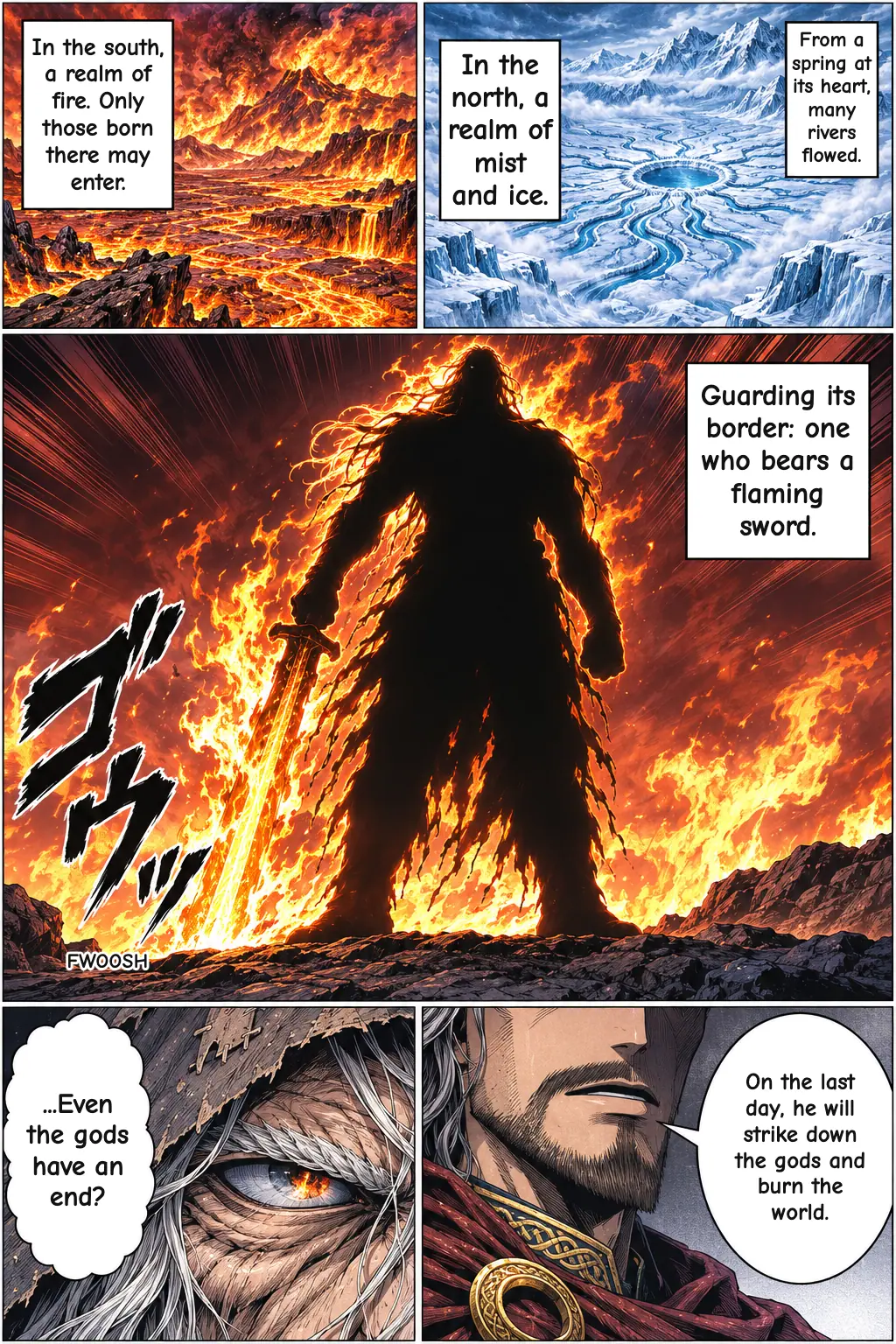
Gangleri asks what existed before anything else. High answers that there was no sand, no sea, no earth and no heaven. There was only Ginnungagap, a vast empty gap. The name is often rendered as "yawning void," though its exact meaning is debated. To the north lay Niflheim, a world of mist and cold, with a spring called Hvergelmir that fed many rivers known together as the Élivágar. To the south lay Muspell, bright and burning, which only those born there could enter. Its border is guarded by Surt, a fire giant with a flaming sword, who is said to defeat the gods and burn the world at the end of time.
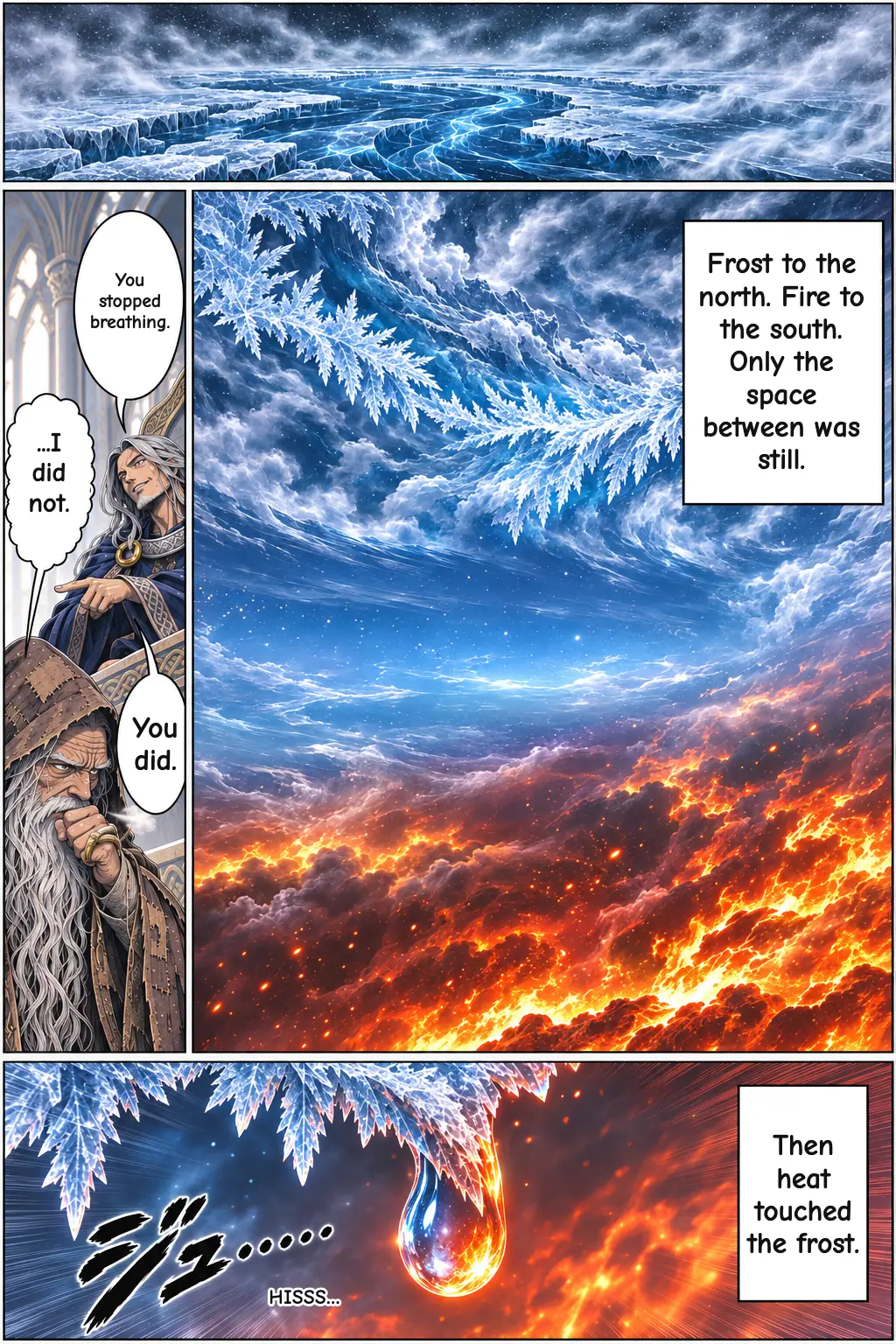
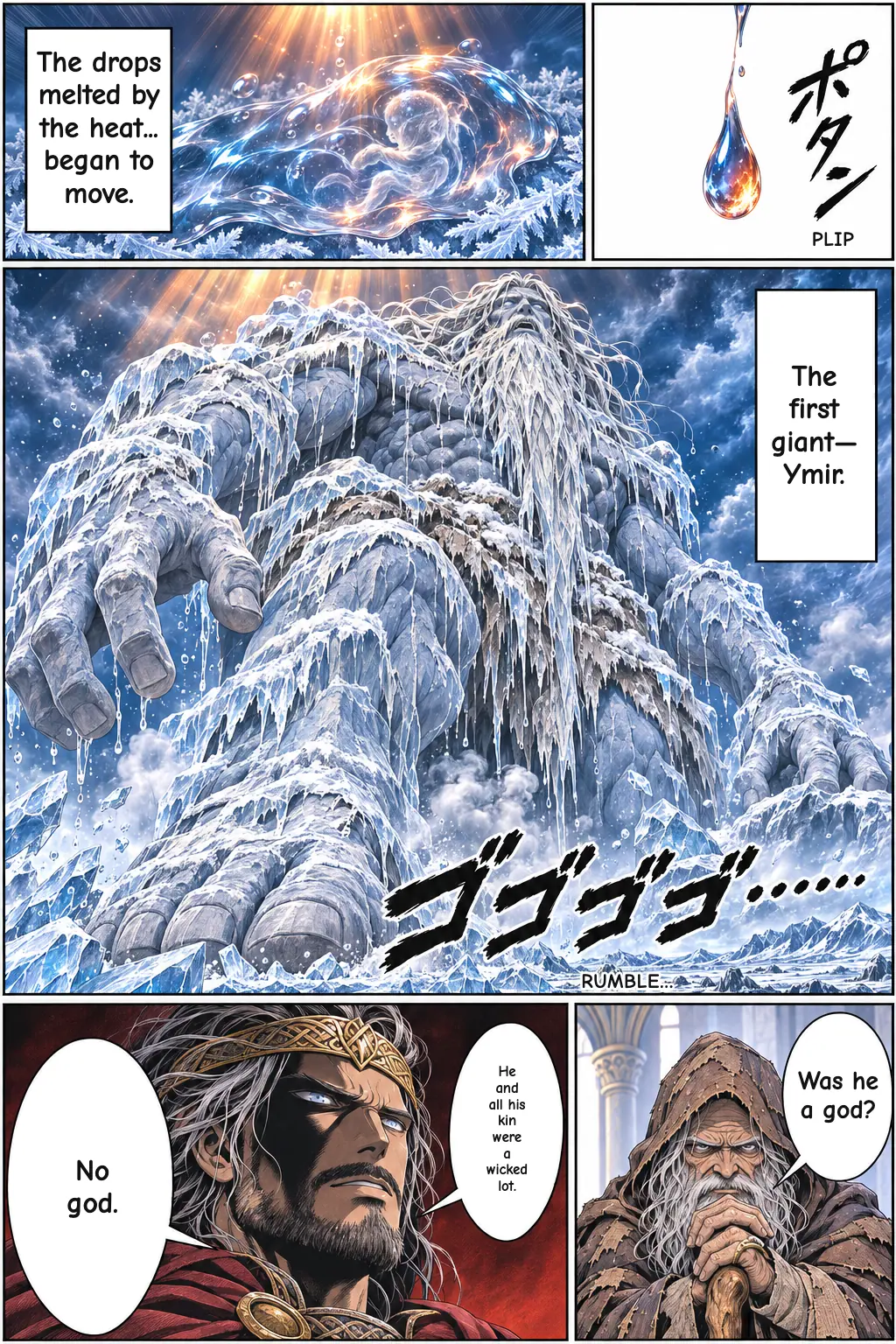
The poisonous rivers froze as they flowed, and layers of rime filled the northern side of Ginnungagap. The southern side glowed with sparks from Muspell, and the middle was as calm as windless air. Where the frost met the warm air it began to melt, and life awoke in the drops. They took the shape of a man: Ymir, whom the frost giants call Aurgelmir. High is clear that Ymir was not a god and that he and his kin were evil.
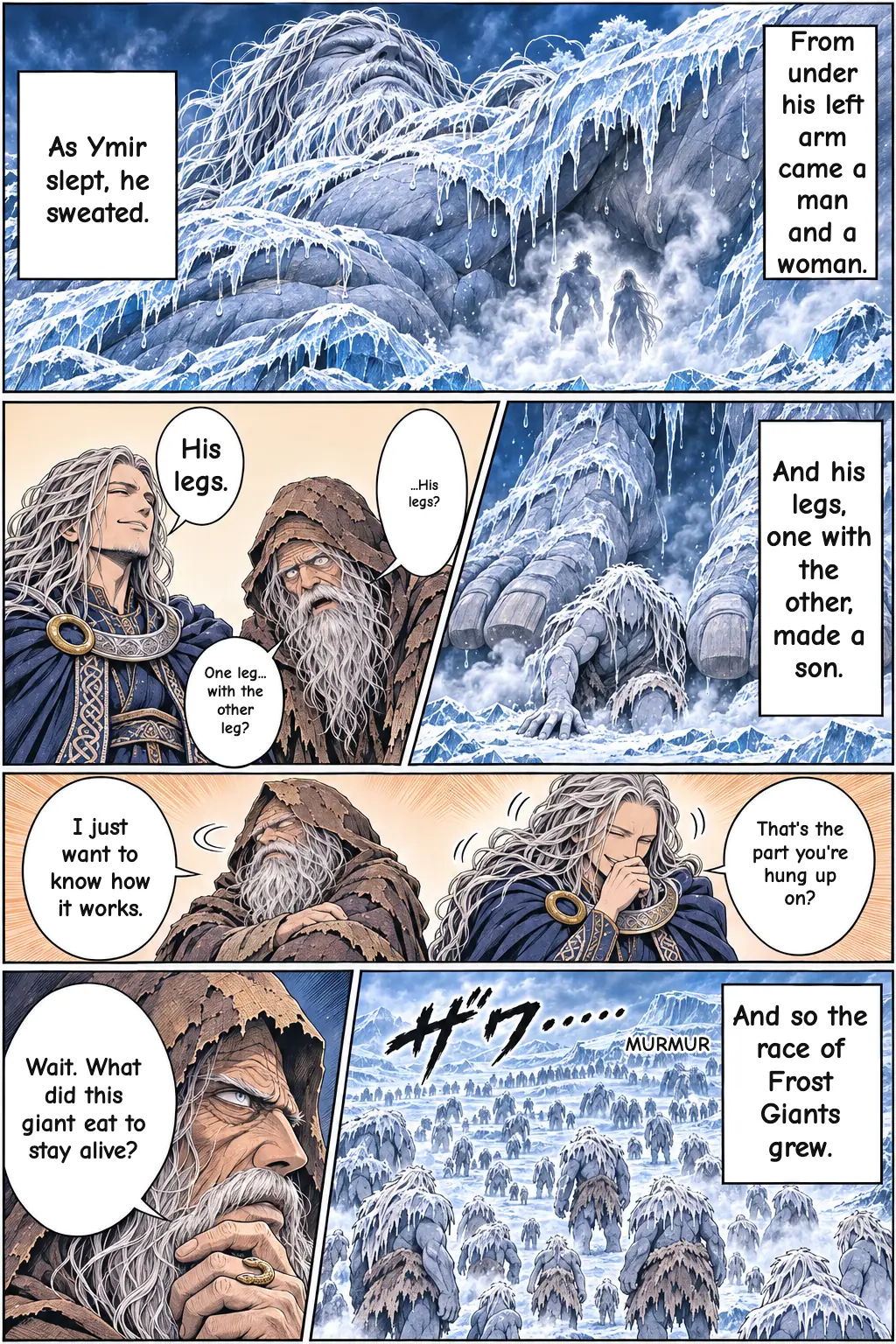
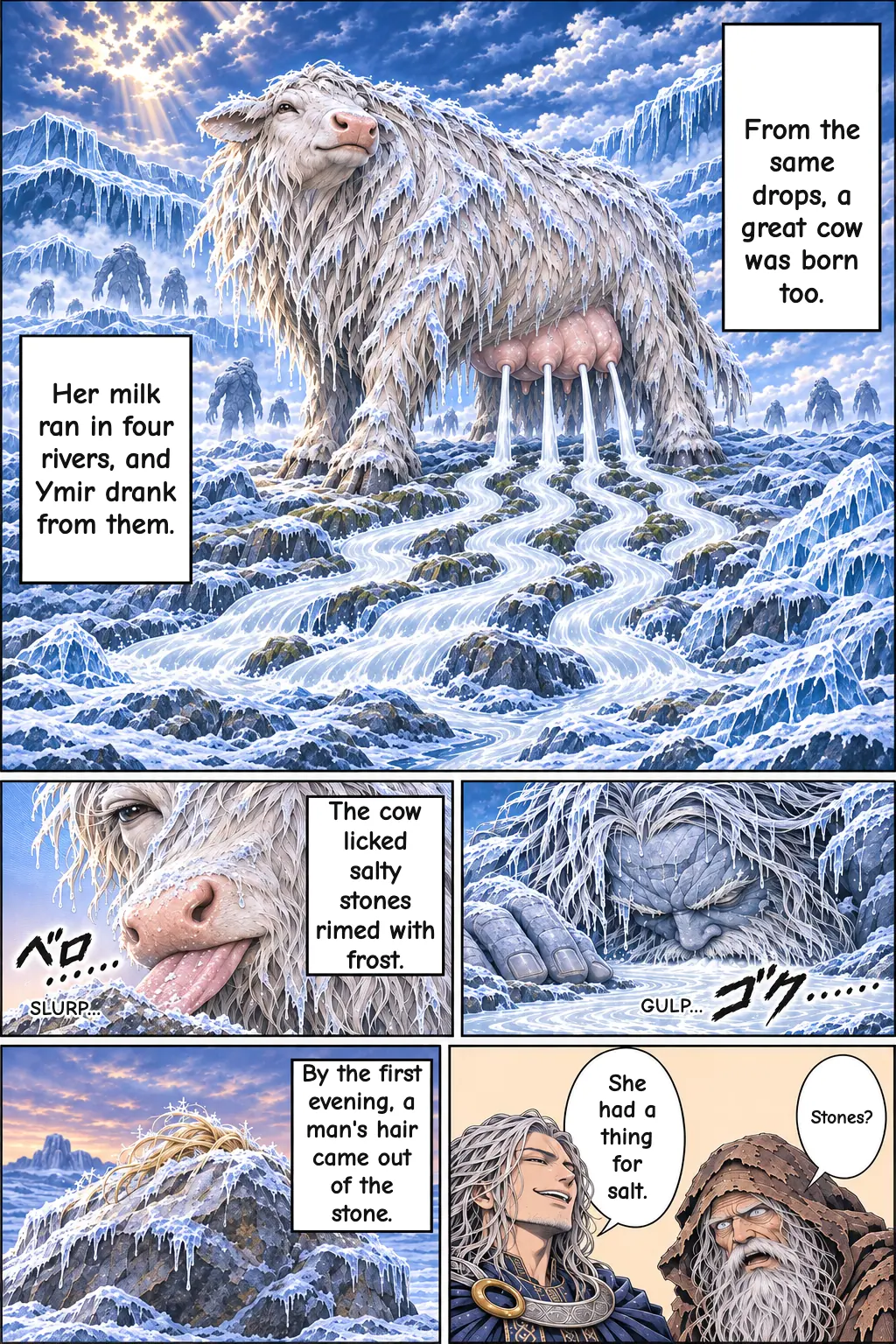
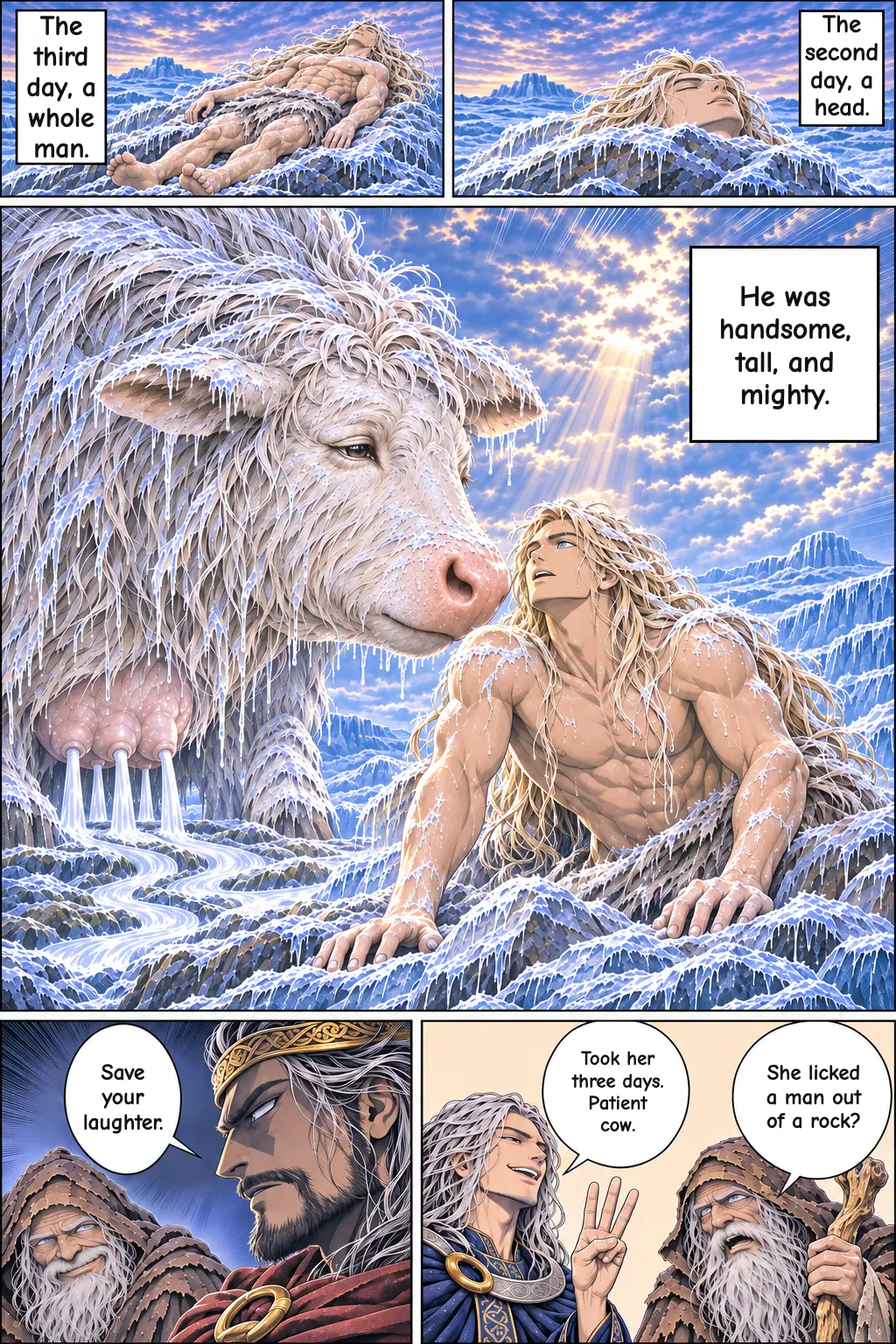
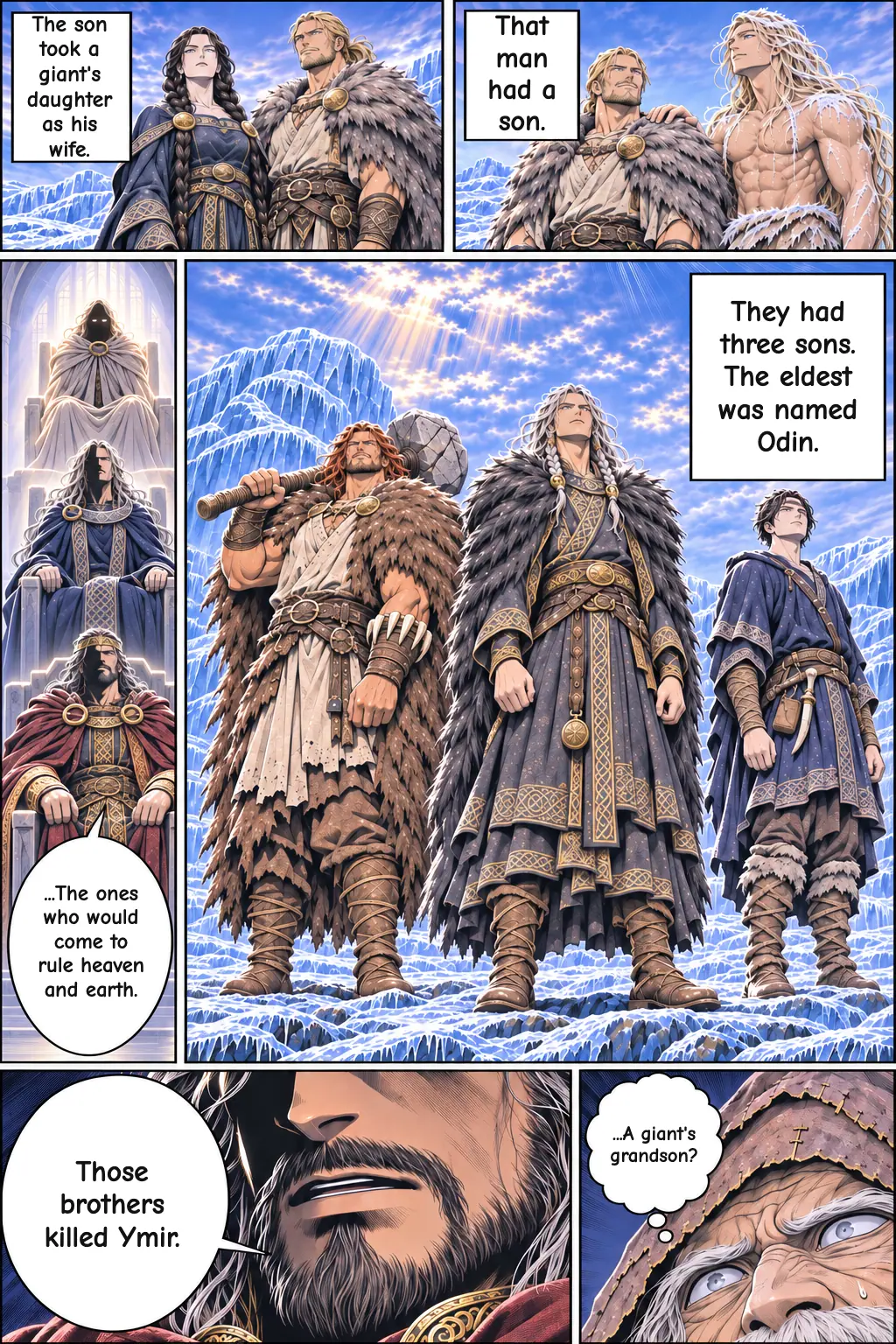
While Ymir slept he sweated. A man and a woman grew from under his left arm, and one of his legs fathered a son with the other. From them came the race of frost giants. The melting frost also produced a cow, Audhumla, whose four rivers of milk fed Ymir. She licked salty blocks of ice. By the first evening a man's hair appeared, on the second day his head, and on the third day the whole man: Buri, who was handsome, large and strong. Buri's son Bor married Bestla, daughter of the giant Bolthorn, and they had three sons: Odin, Vili and Vé.
How the Gods Built the World from Ymir's Body
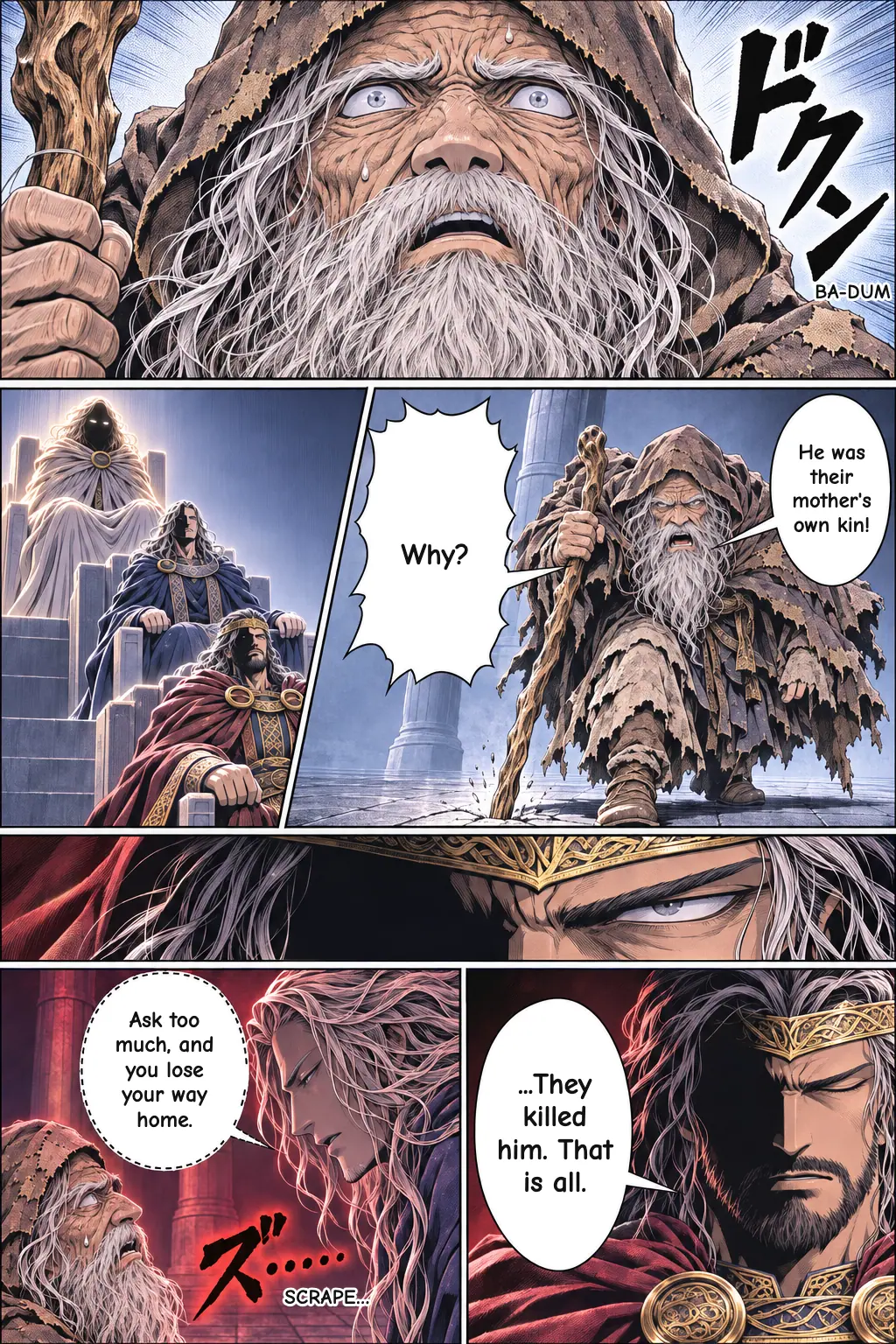
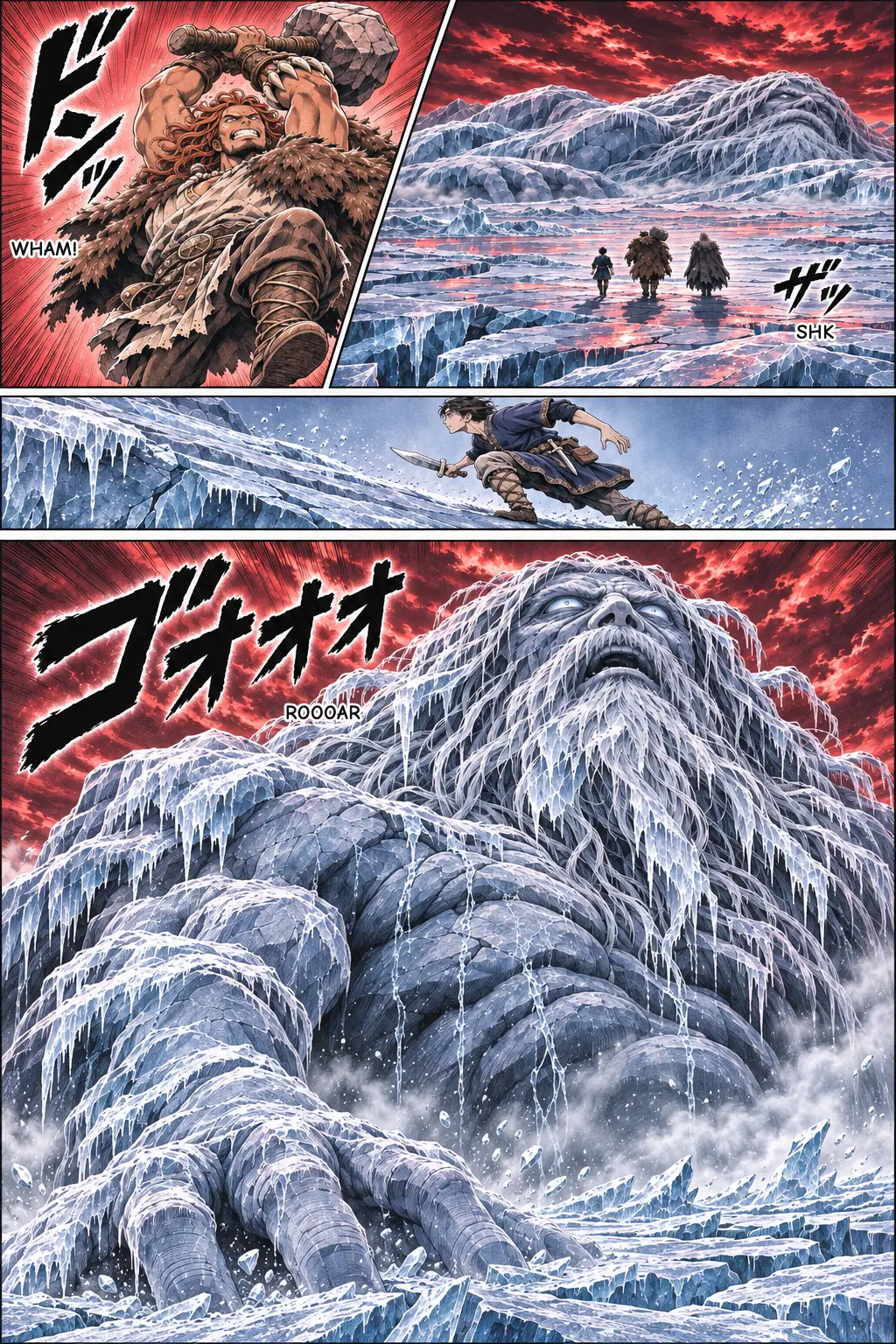
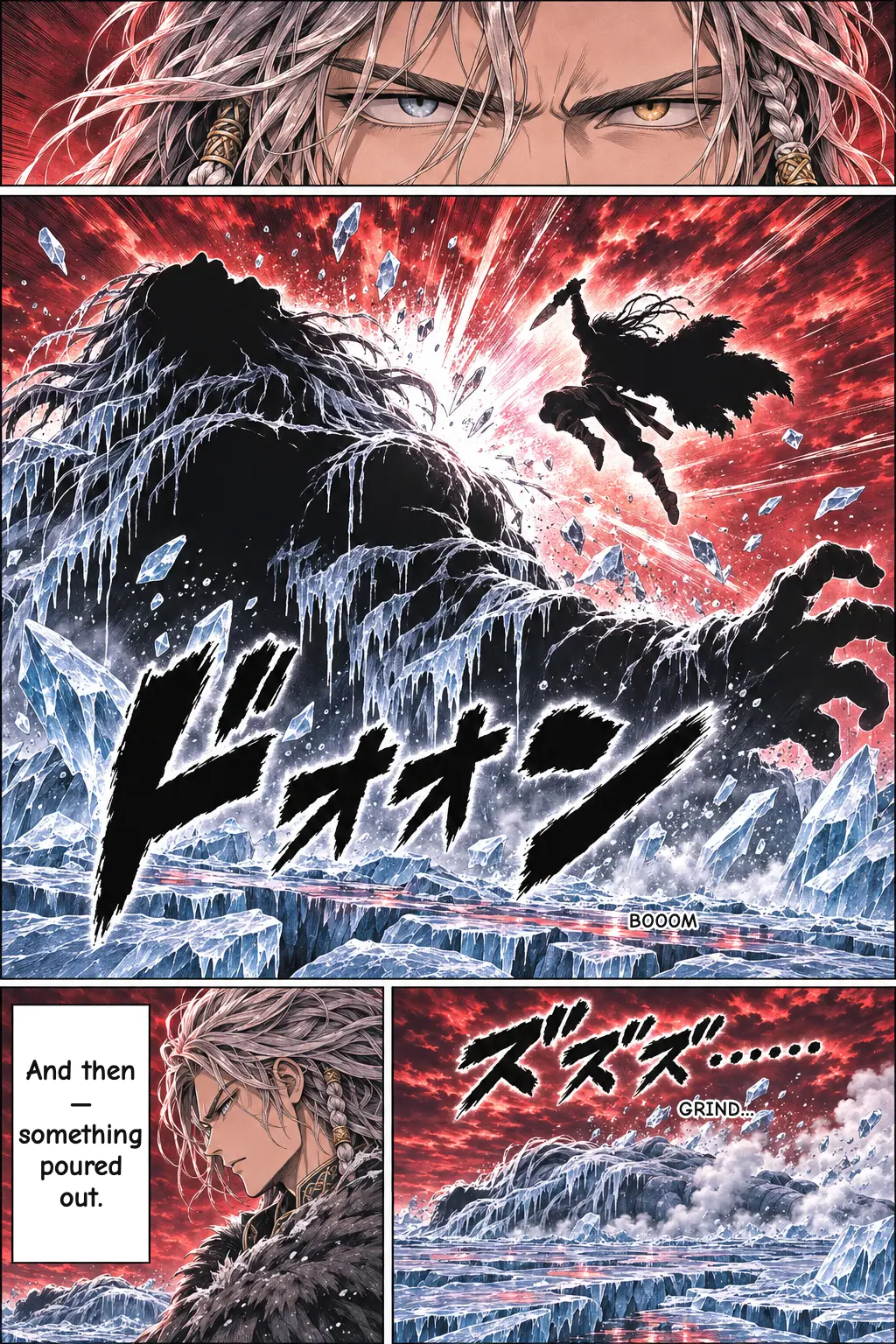
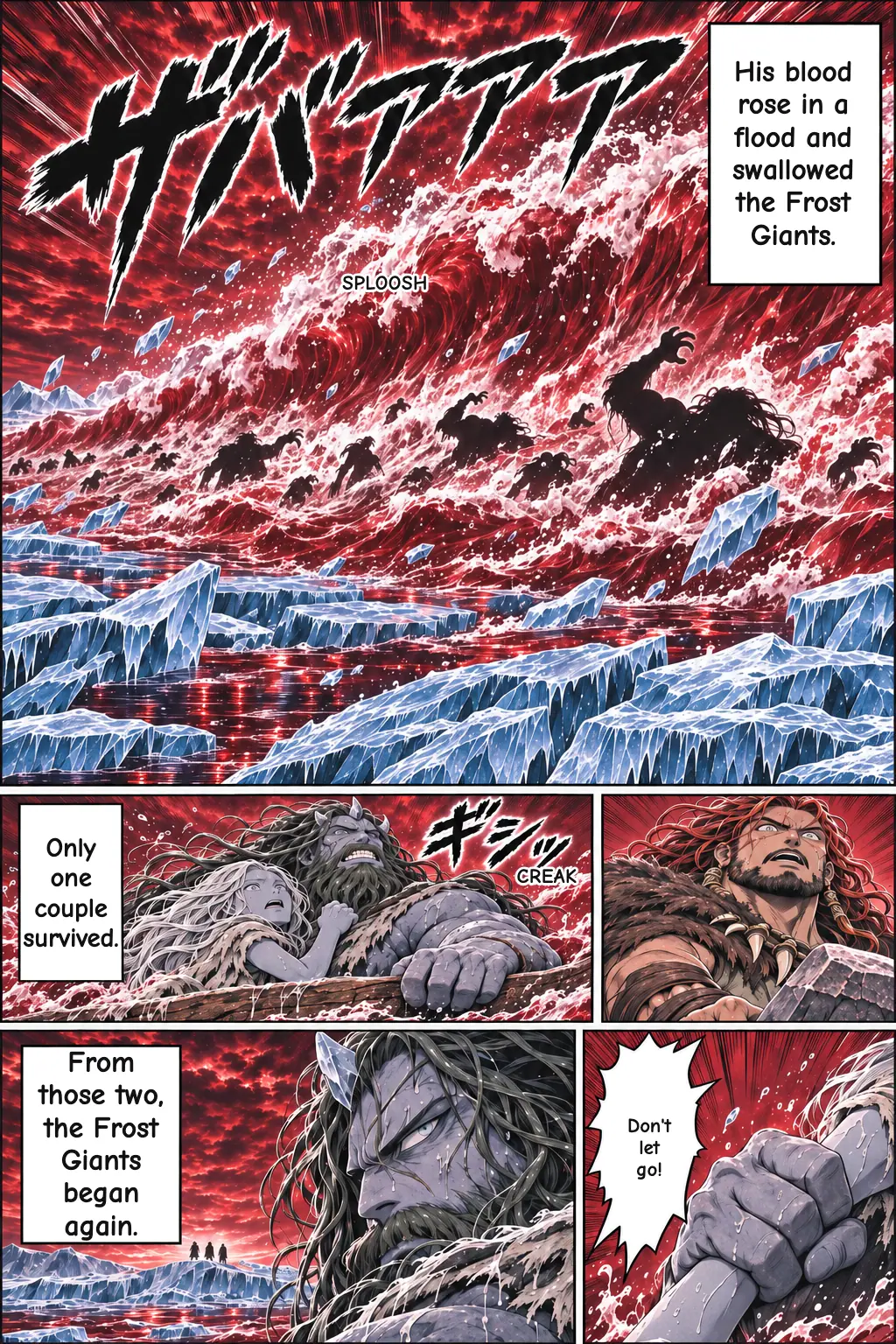
The sons of Bor killed Ymir. Snorri gives no reason and no method. So much blood poured from the wounds that all the frost giants drowned except Bergelmir, who escaped with his wife on a lúðr. The meaning of this Old Norse word is uncertain. Translators have suggested a box, an ark, a mill-frame or a cradle. From Bergelmir the frost giants began again.
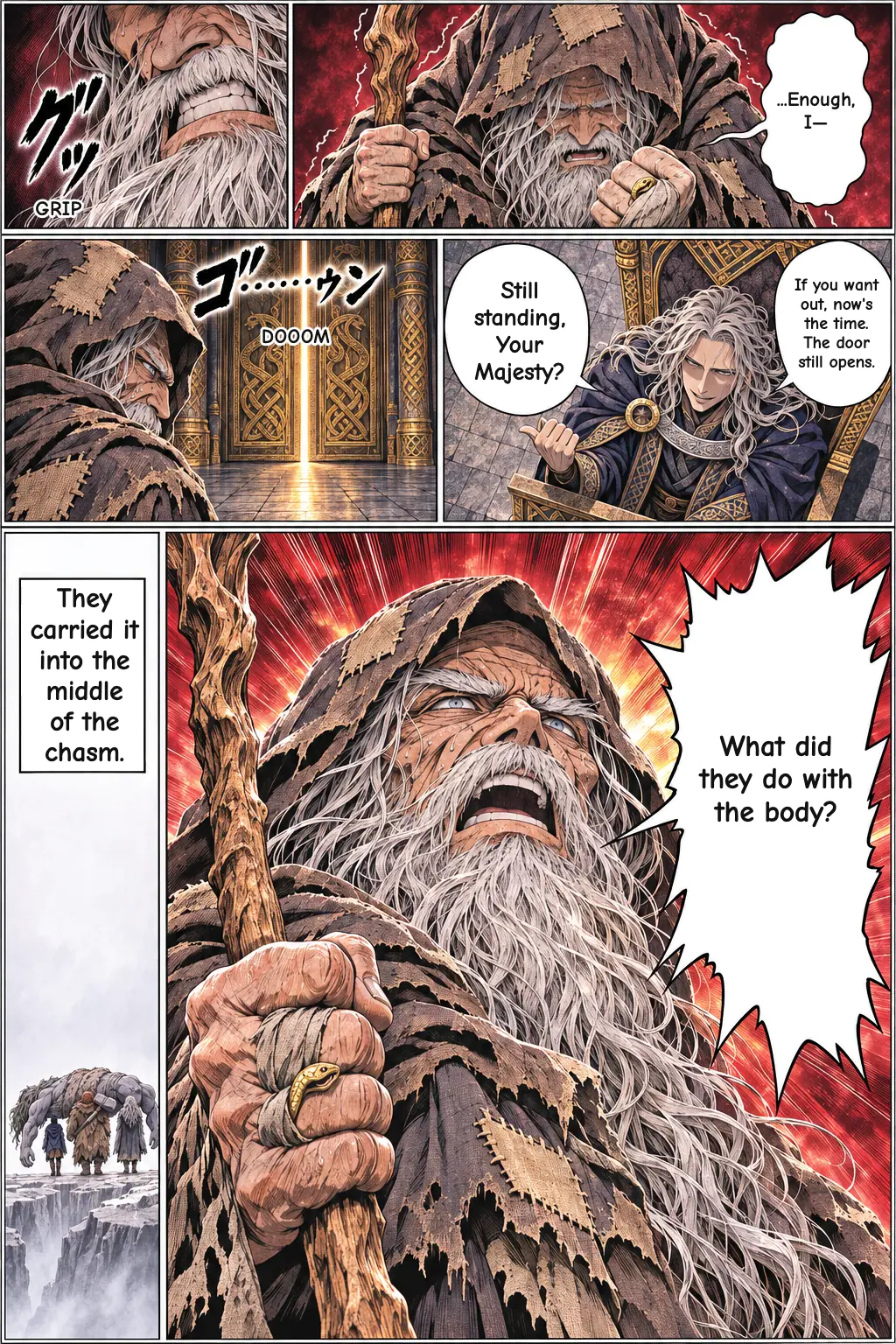
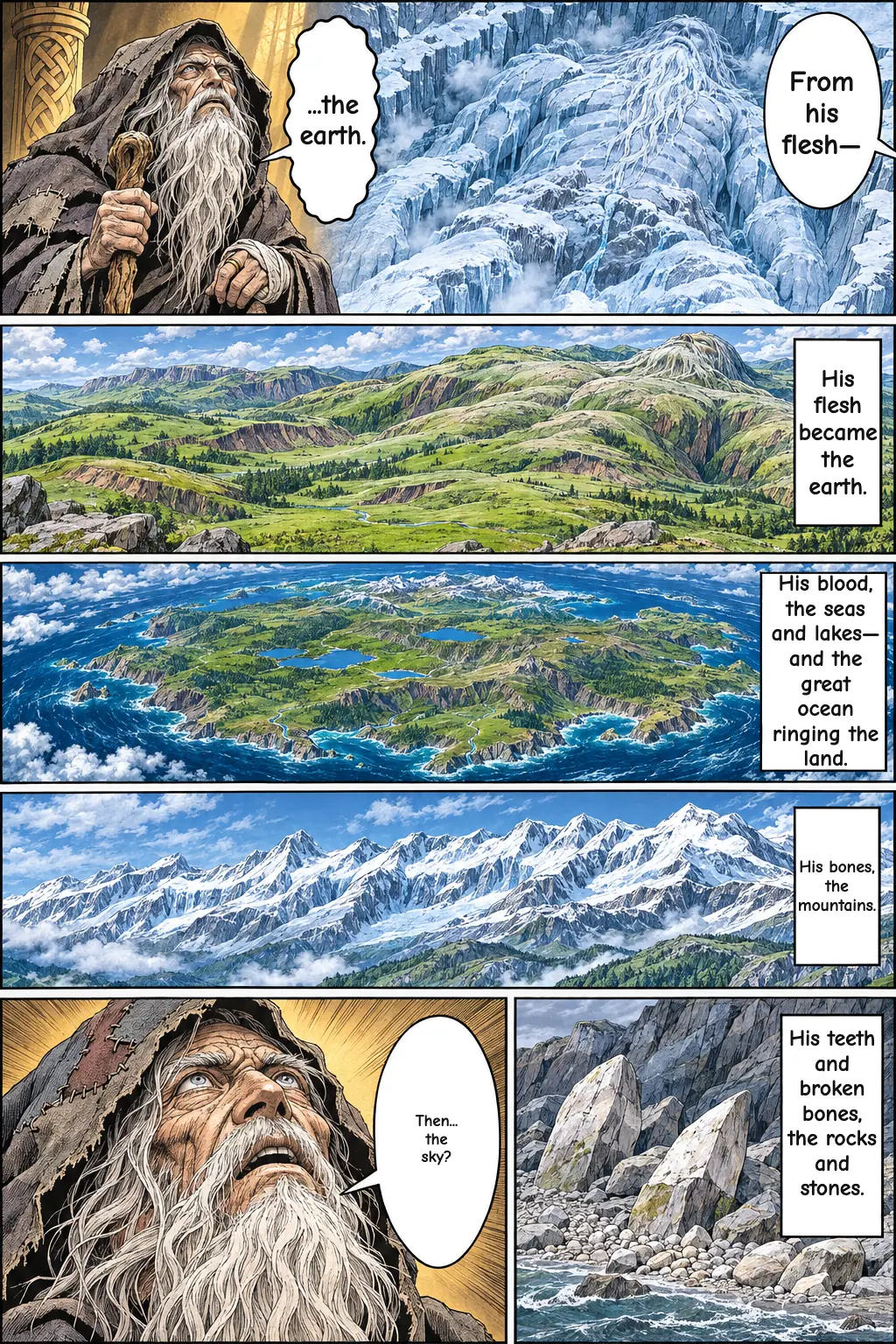
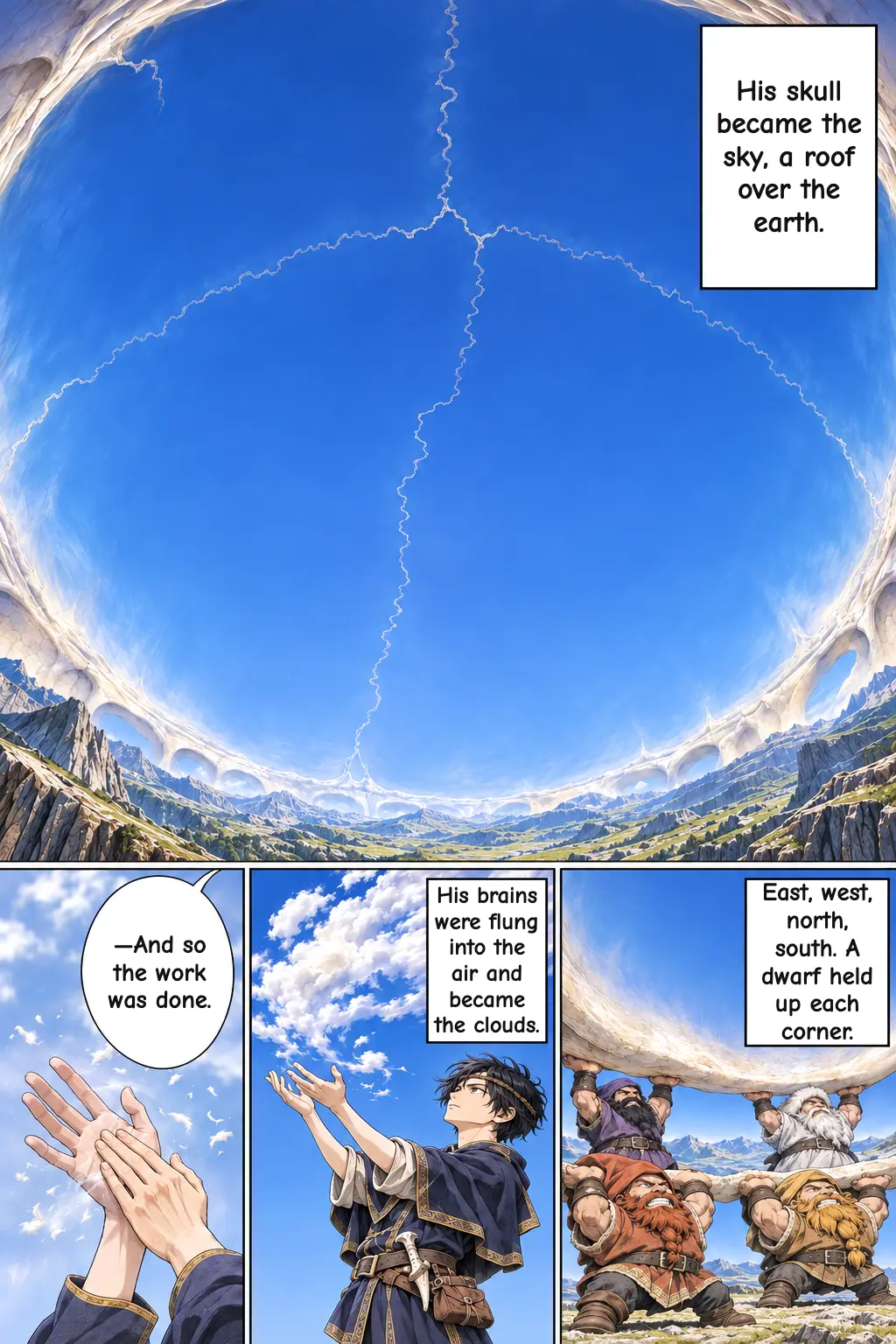
The brothers carried Ymir's body to the middle of Ginnungagap. His flesh became the earth, his blood the seas and lakes, and his bones the mountains. His teeth and broken bones became rocks and stones. They shaped the earth as a ring and set the ocean around it. Ymir's skull became the sky, and four dwarves, Austri, Vestri, Nordri and Sudri (East, West, North and South), hold up its corners. Sparks flying from Muspell were fixed in the sky as stars and given set paths, which made it possible to count days and years.
The giants were given land along the outer shore. Inside, the gods built a wall against them from Ymir's brows (the Old Norse word can mean eyebrows or eyelashes) and called the enclosed land Midgard. Finally they threw Ymir's brain into the air, and it became the clouds. So the line in the episode title is literally true in this myth: the sky above you is a giant's skull.
What This Myth Tells Us
Snorri was a Christian writing about two centuries after Iceland converted, around the year 1000. He gathered older poems and arranged them into one story, partly to help poets understand traditional imagery. Scholars still debate how much of the neat order comes from older belief and how much from Snorri's own editing.
Several ideas stand out. The world comes from the meeting of opposites, ice and fire. Order begins with a killing. The gods are not the oldest beings. Giants came first, and Odin himself has a giant mother. The long conflict between gods and giants, and Surt waiting in the south, already point toward Ragnarök, the end of the gods. Scholars have also compared the image of a world made from a primordial body with myths such as the Indian Purusha and the Chinese Pangu. Some see a shared ancient root, but this is a theory, not a settled fact.
What the Manga Changes
The manga keeps every match between body and world as Snorri gives it: flesh for earth, blood for sea, bones for mountains, skull for sky, brain for clouds, brows for Midgard's wall, and sparks for stars. Snorri describes almost no appearances, so the look of the hall, the three speakers and how they split their lines, the colors of Niflheim and Muspell, and the designs of Ymir, Audhumla, Buri, the brothers and the dwarves are all the artists' work.
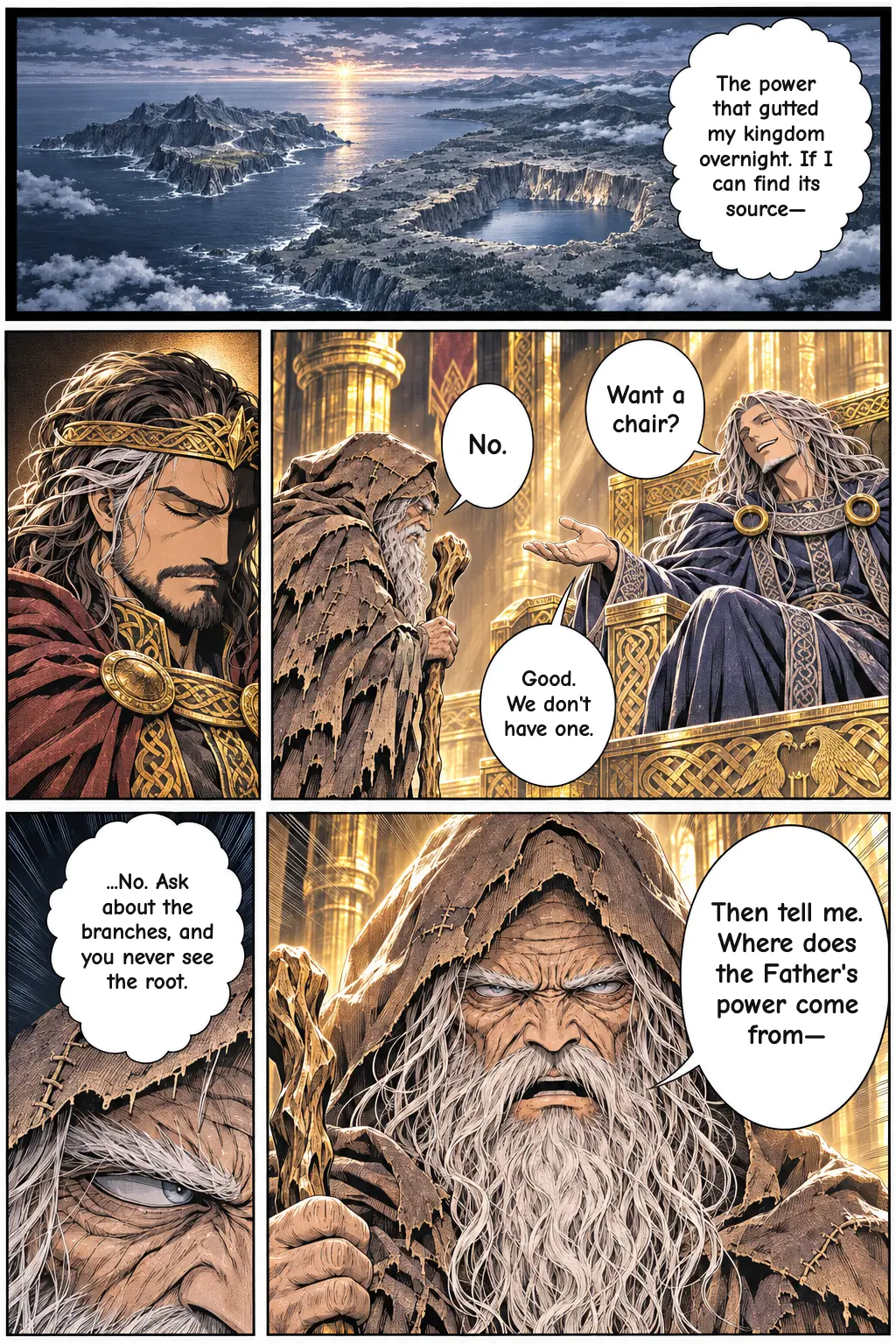
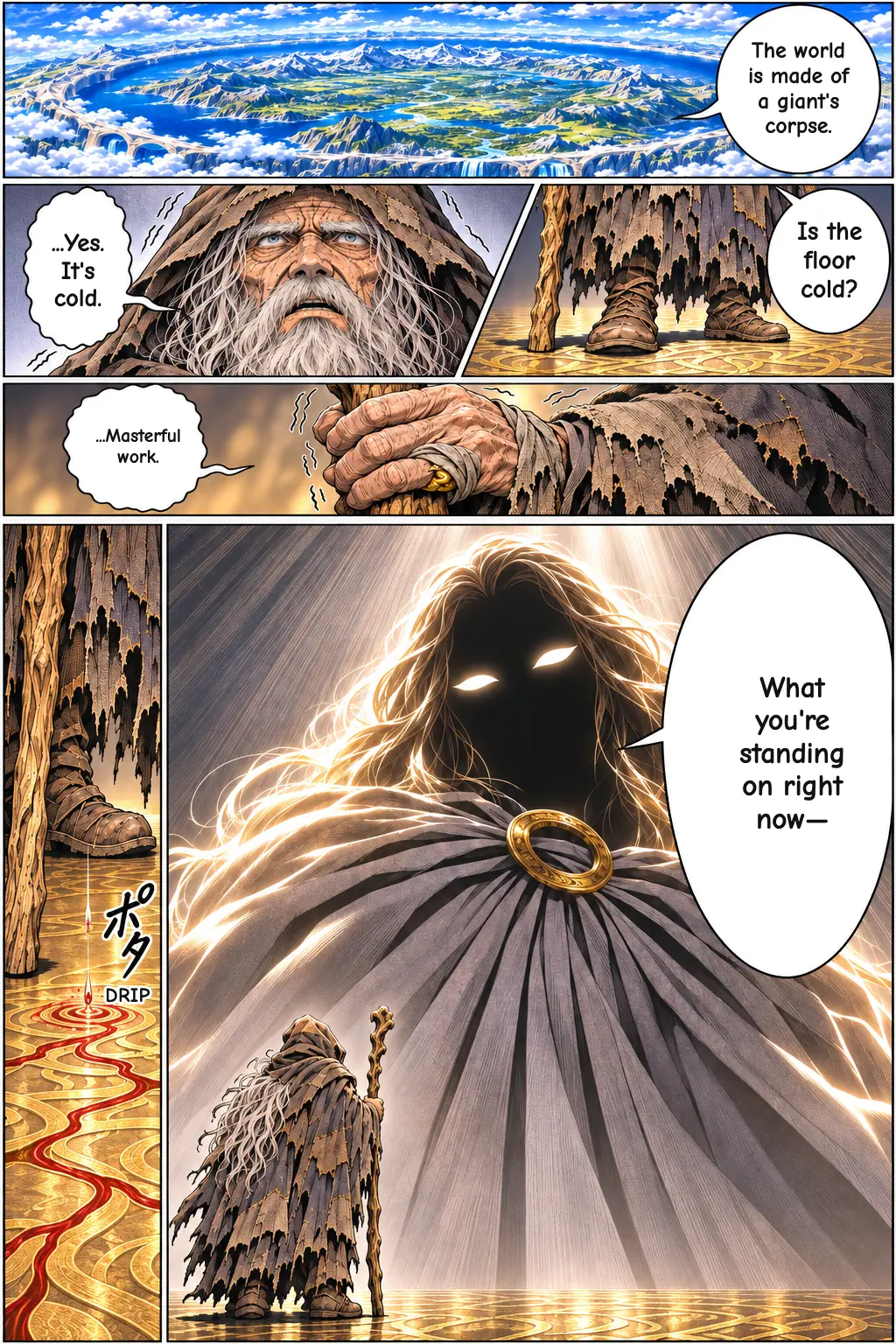
The killing of Ymir is staged as a scene, but the manga does not invent a firm motive. It only reflects the source's verdict that Ymir was evil. Bergelmir's lúðr is drawn as a floating wooden vessel rather than a definite ark. Gylfi's personal drive is also a dramatization. In the manga he seeks the root of the power that took his kingdom, gives up his way back, and shudders to learn that the world began with a killing. In Snorri, Gangleri shows very little emotion.
Where to Read It
You can read Episode 2, "The Sky Above You Is a Giant's Skull," and the rest of NORSE MYTHOLOGY: The King Who Heard the End of the Gods on Manga Portal. Every episode is free, with no sign-up. If the story makes you curious about the original, several English translations of the Prose Edda are easy to find. Reading the manga and the source side by side shows how much of this vivid world Snorri packed into just a few pages.
Characters in this episode
Gylfi (Gangleri)
A Swedish king who disguises himself as a traveler named Gangleri and questions the mysterious three about the origin of the world.
High, Just-as-High and Third
Three figures on stacked high seats who answer Gylfi's questions and support their answers with ancient poems.
Ymir (Aurgelmir)
The first being, a giant born from melting frost, ancestor of the frost giants, whose body becomes the world.
Audhumla
The primeval cow who fed Ymir with four rivers of milk and licked Buri, ancestor of the gods, out of salty ice.
Odin, Vili and Vé
The sons of Bor and the giantess Bestla, who kill Ymir and build earth, sea and sky from his body.
Bergelmir
The only frost giant to survive the flood of Ymir's blood, escaping with his wife to restart the giant race.
FAQ
How was the world created in Norse mythology?
In the Prose Edda, ice from Niflheim and heat from Muspell met in the void of Ginnungagap, and the giant Ymir was born from the melting frost. Odin and his brothers later killed Ymir and made the earth from his flesh, the sea from his blood, the mountains from his bones and the sky from his skull.
Who is Ymir in Norse mythology?
Ymir is the first being and the ancestor of the frost giants, born from drops of melting rime. Snorri's narrator says he was not a god and calls him evil. His body becomes the raw material of the world.
Why did Odin kill Ymir?
The Prose Edda does not say. It only states that the sons of Bor killed him, and earlier it describes Ymir and his kin as evil. Any specific motive in retellings is a modern interpretation.
What is Ginnungagap?
Ginnungagap is the vast empty gap that existed before the world, between icy Niflheim in the north and fiery Muspell in the south. Its name is often translated as "yawning void," though the exact meaning is debated.
Is Odin part giant?
Yes. Odin's mother, Bestla, is the daughter of the giant Bolthorn, and his father Bor is the son of Buri, whom the cow Audhumla licked out of the ice. In Norse myth the gods and giants are related, even though they become enemies.