Get new episodes in your feed. Follow us on:ThreadsBluesky
Episode 15 (Finale). After winters with no summer, the sun is swallowed, every chain breaks, and the gods march to the last battlefield knowing they will lose. King Gangleri came hunting for their weakness—but when everything has burned away, he asks one more question: what's left after the fire?
Story summary
In the Prose Edda, Ragnarök is not told as a battle seen firsthand. It is the answer to a question. King Gylfi of Sweden, travelling in disguise under the name Gangleri, has come to a great hall to question three mysterious figures on high seats: High, Just-as-High and Third. After hearing how the world began, he asks how it will end. The answer begins with human ruin. First come three winters of war across the world, when brothers kill each other for gain and no family bond is respected.
Ragnarök Explained: The Norse End of the Gods and the New World After (Prose Edda)
In short: Ragnarök is the Norse story of the end of the gods, told in Snorri Sturluson's Prose Edda (Gylfaginning, early 13th century). After three winters with no summer, the wolves swallow the sun and moon, Fenrir and the World Serpent break loose, and the gods fight a last battle on the plain of Vígríðr, where Odin, Thor, Freyr, Týr and Heimdall all fall before Surt's fire burns the world. Then a green earth rises from the sea, and a few surviving gods and two humans begin again.
Ragnarök Summary: How the World of the Gods Ends
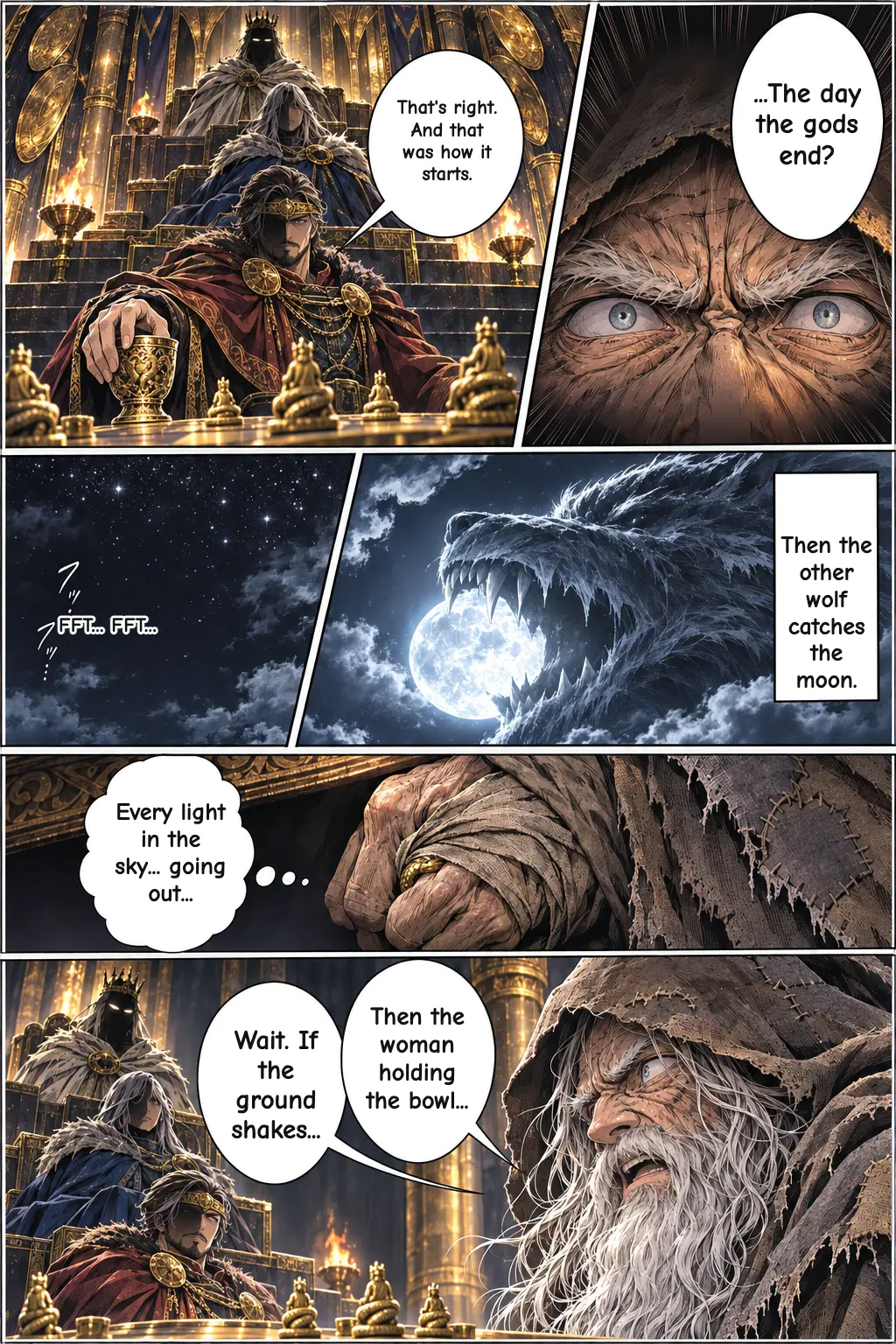
In the Prose Edda, Ragnarök is not told as a battle seen firsthand. It is the answer to a question. King Gylfi of Sweden, travelling in disguise under the name Gangleri, has come to a great hall to question three mysterious figures on high seats: High, Just-as-High and Third. After hearing how the world began, he asks how it will end.
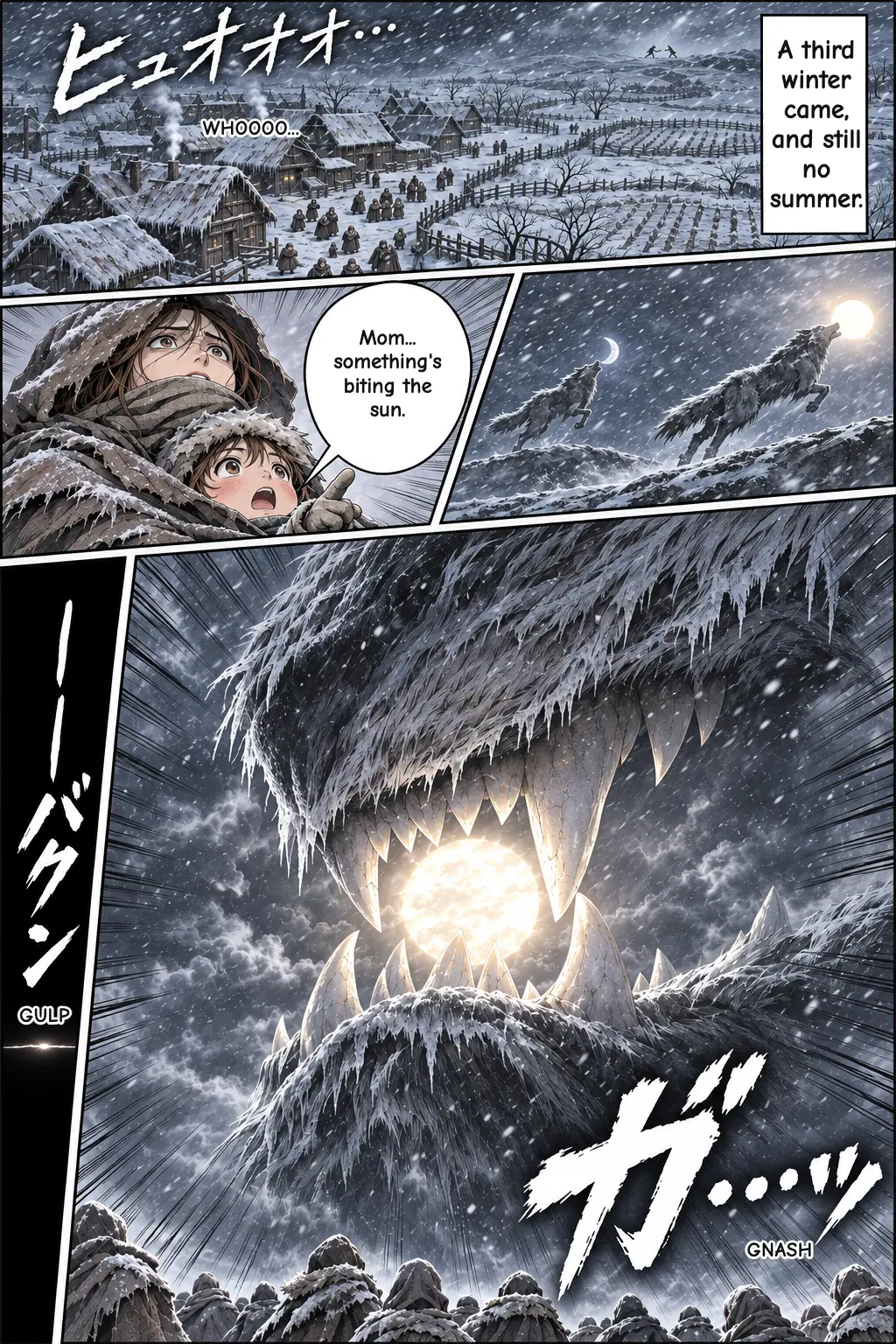
The answer begins with human ruin. First come three winters of war across the world, when brothers kill each other for gain and no family bond is respected. Then comes Fimbulwinter, the 'great winter': snow drives in from every direction, the frost bites, the sun gives no help, and three winters follow one another with no summer in between. A wolf swallows the sun, another seizes the moon, and the stars fall from the sky. (This chapter does not name the wolves; earlier in the Edda, two wolves called Sköll and Hati are said to chase the sun and moon.)
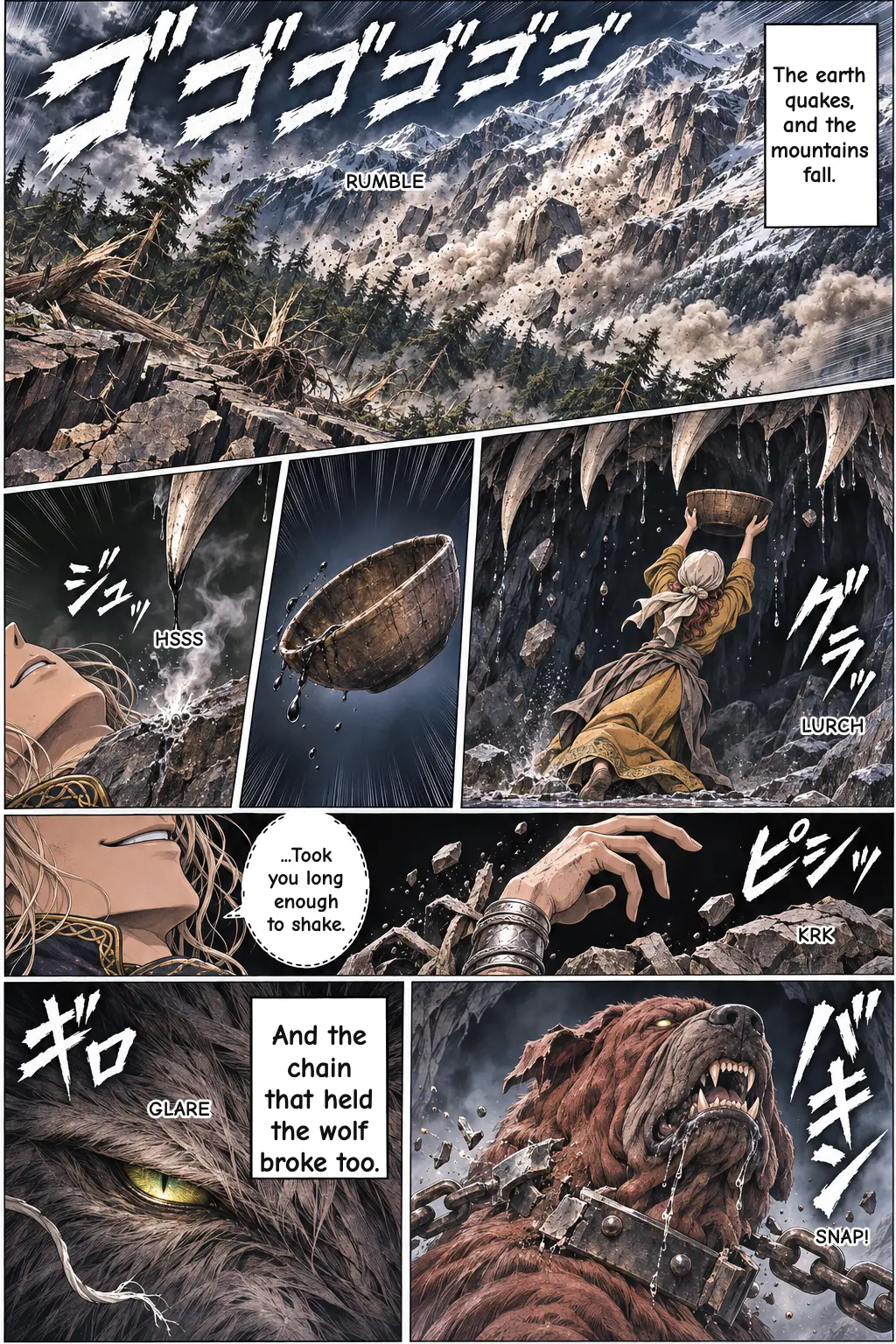
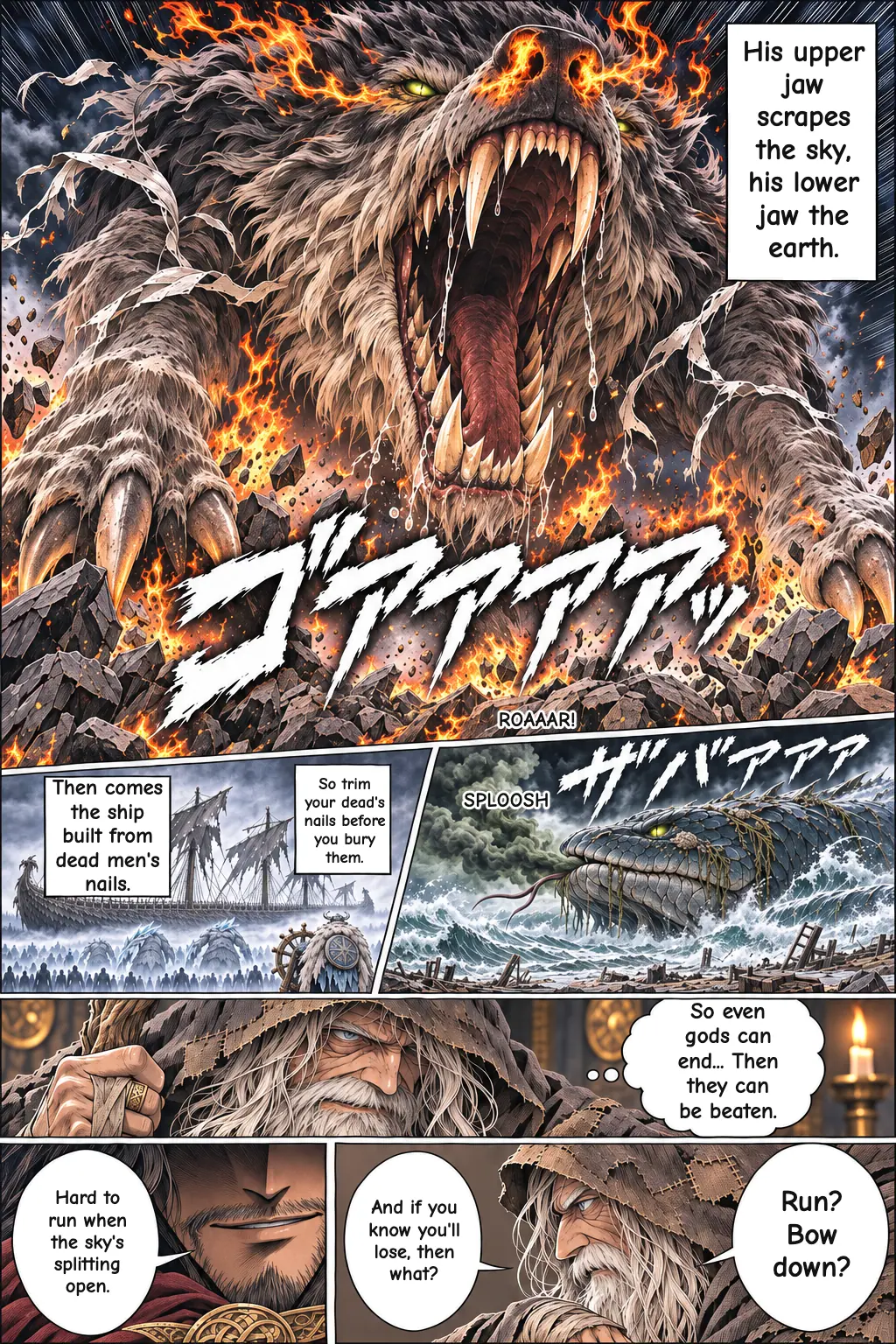
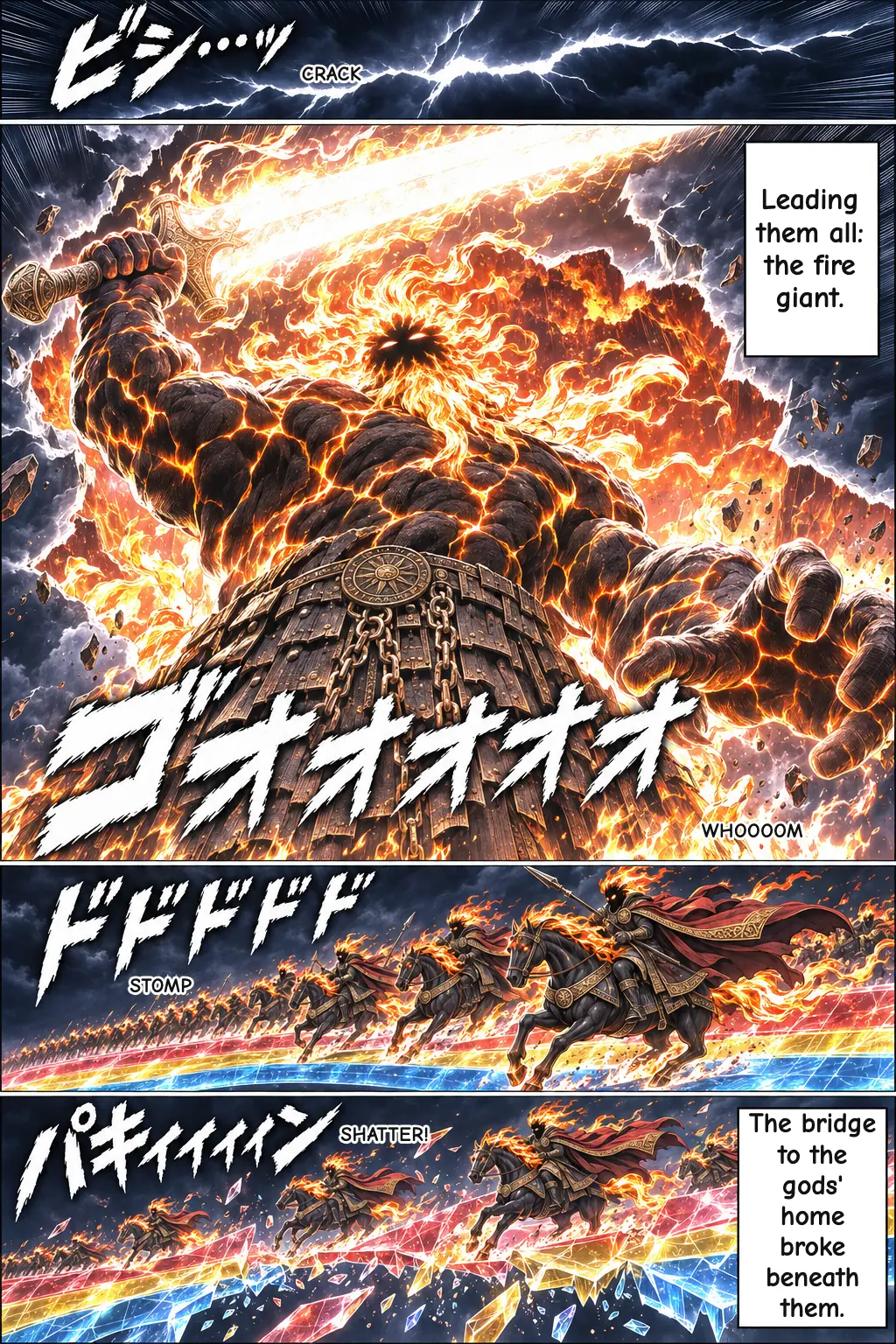
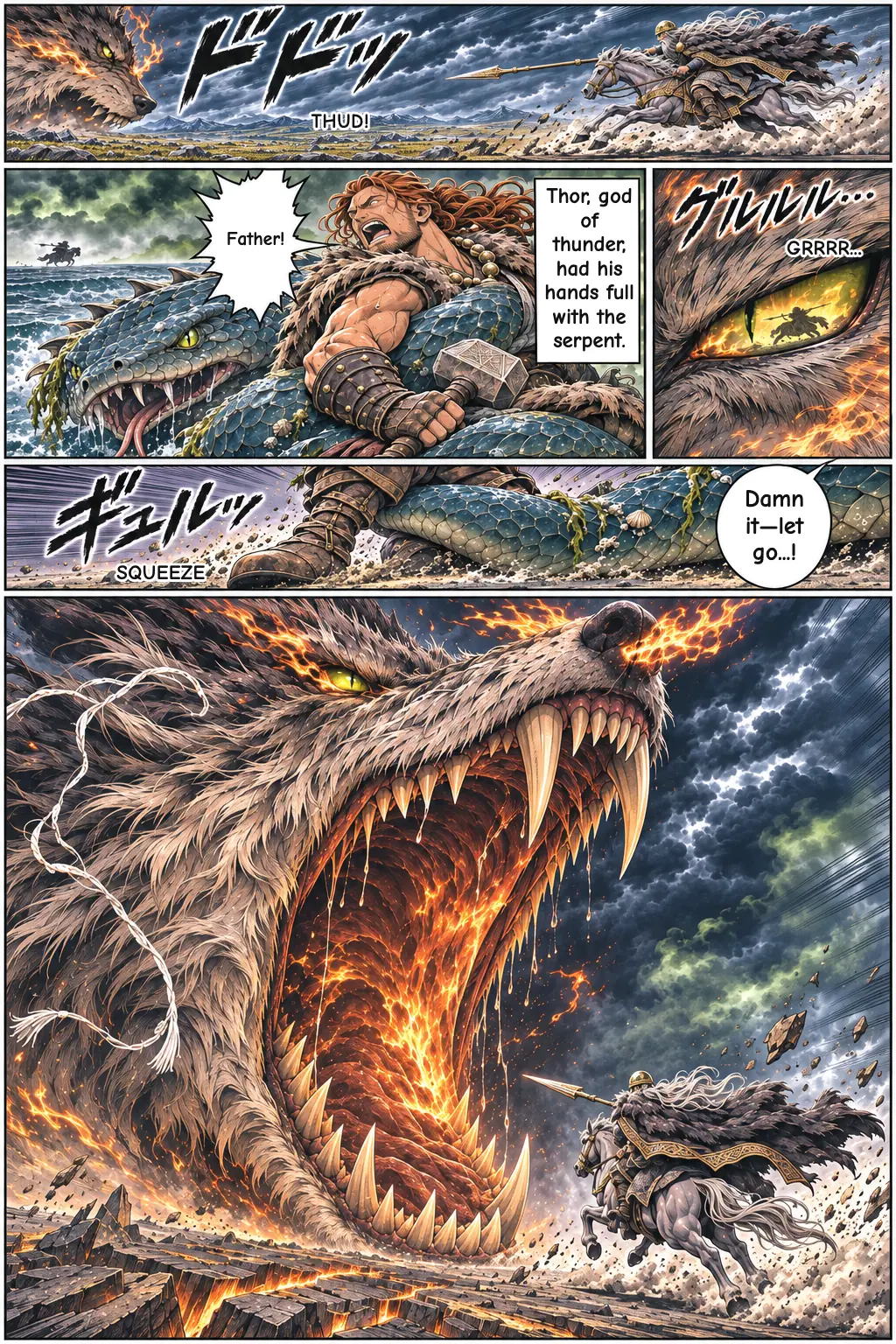
The earth shakes, mountains collapse, and every chain and fetter snaps. Fenrir, the giant wolf, runs free with his jaws stretched from earth to sky and fire pouring from his eyes and nostrils. The Midgard Serpent heaves itself onto land, flooding the shore and spraying poison into the air and sea. Naglfar, a ship built from dead men's nails, sails in with the giant Hrym at the helm. The sky splits open, and the sons of Muspell ride out led by Surt, the fire giant, wrapped in flame and carrying a sword brighter than the sun. As they cross Bifröst, the rainbow bridge, it breaks.
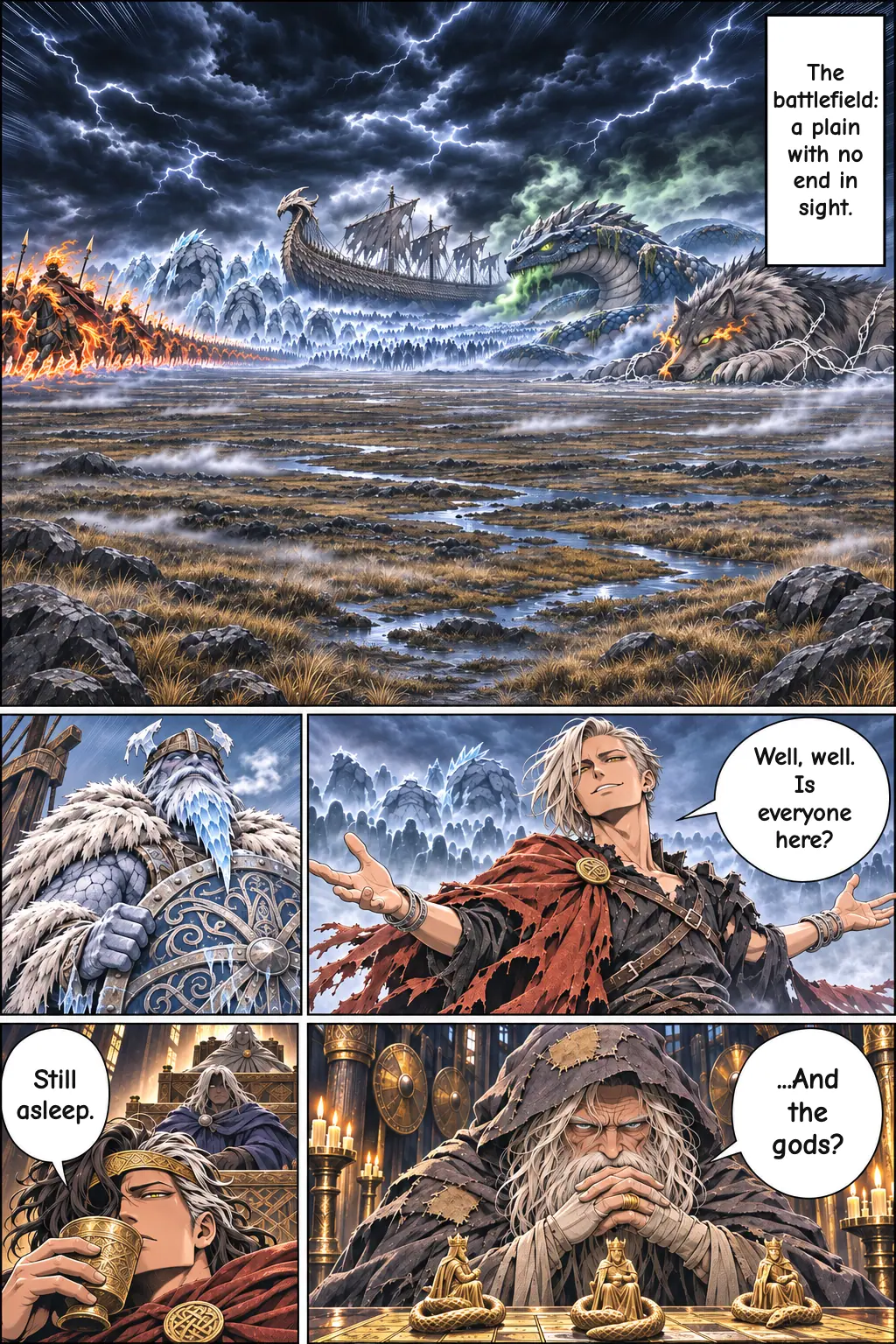
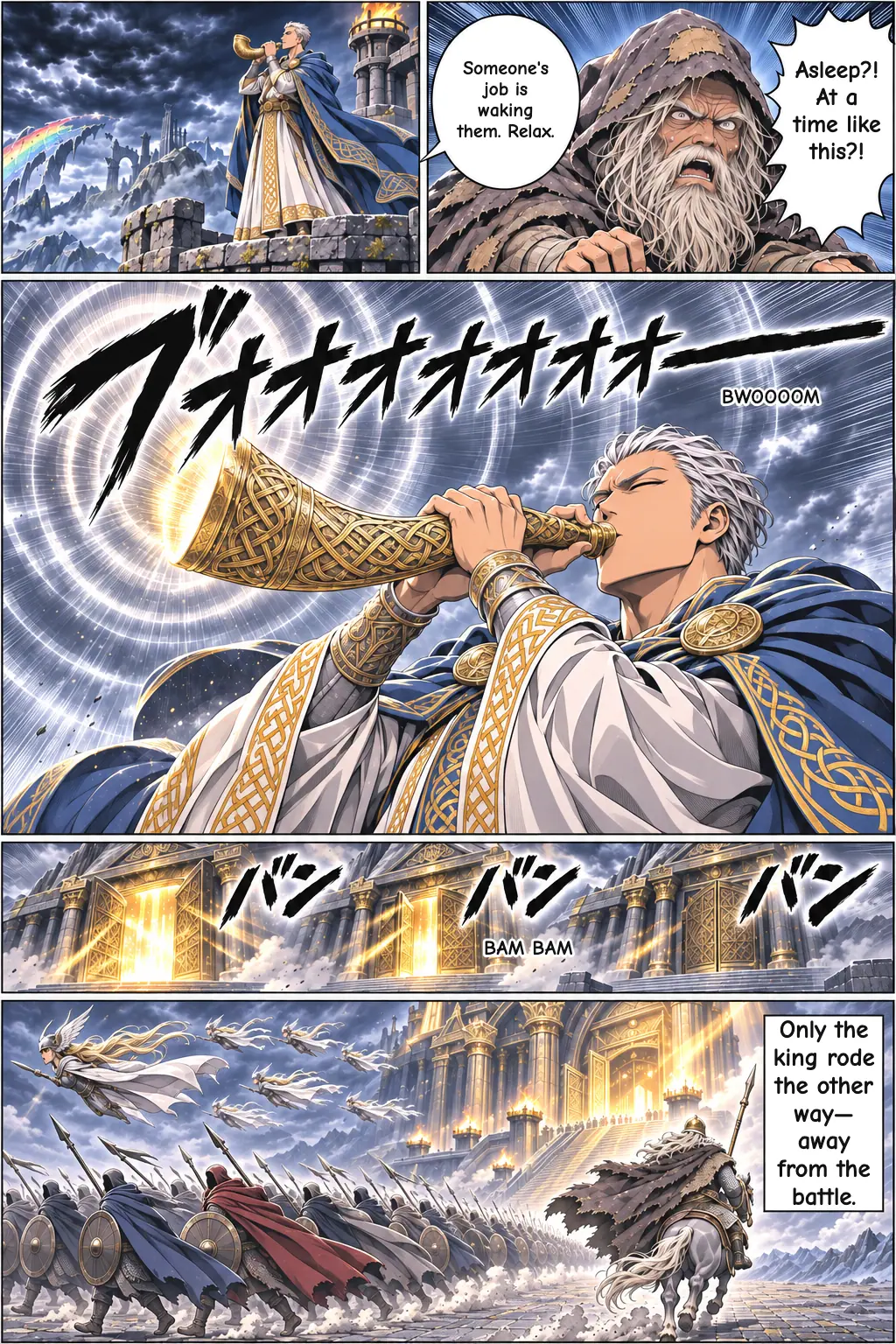
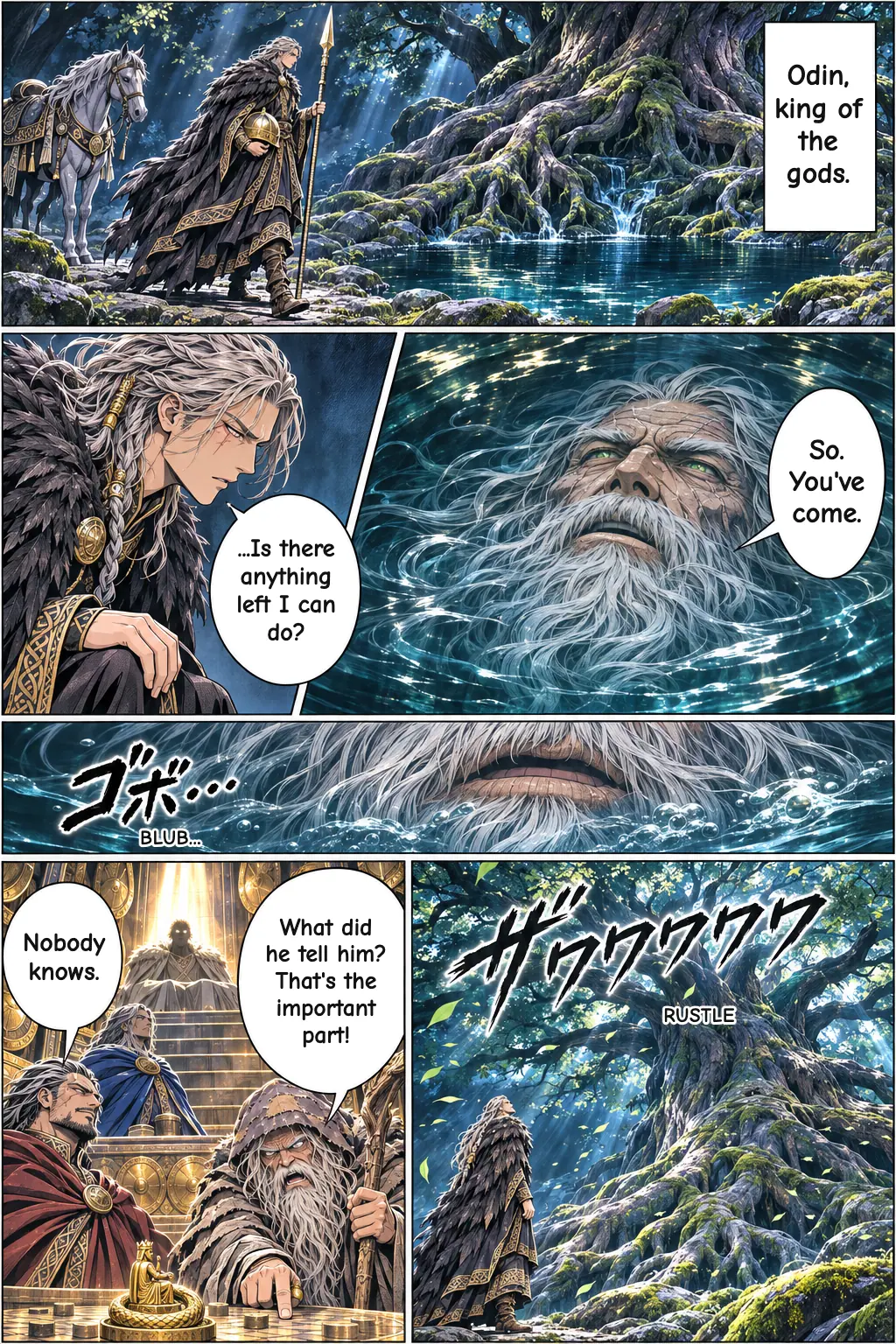
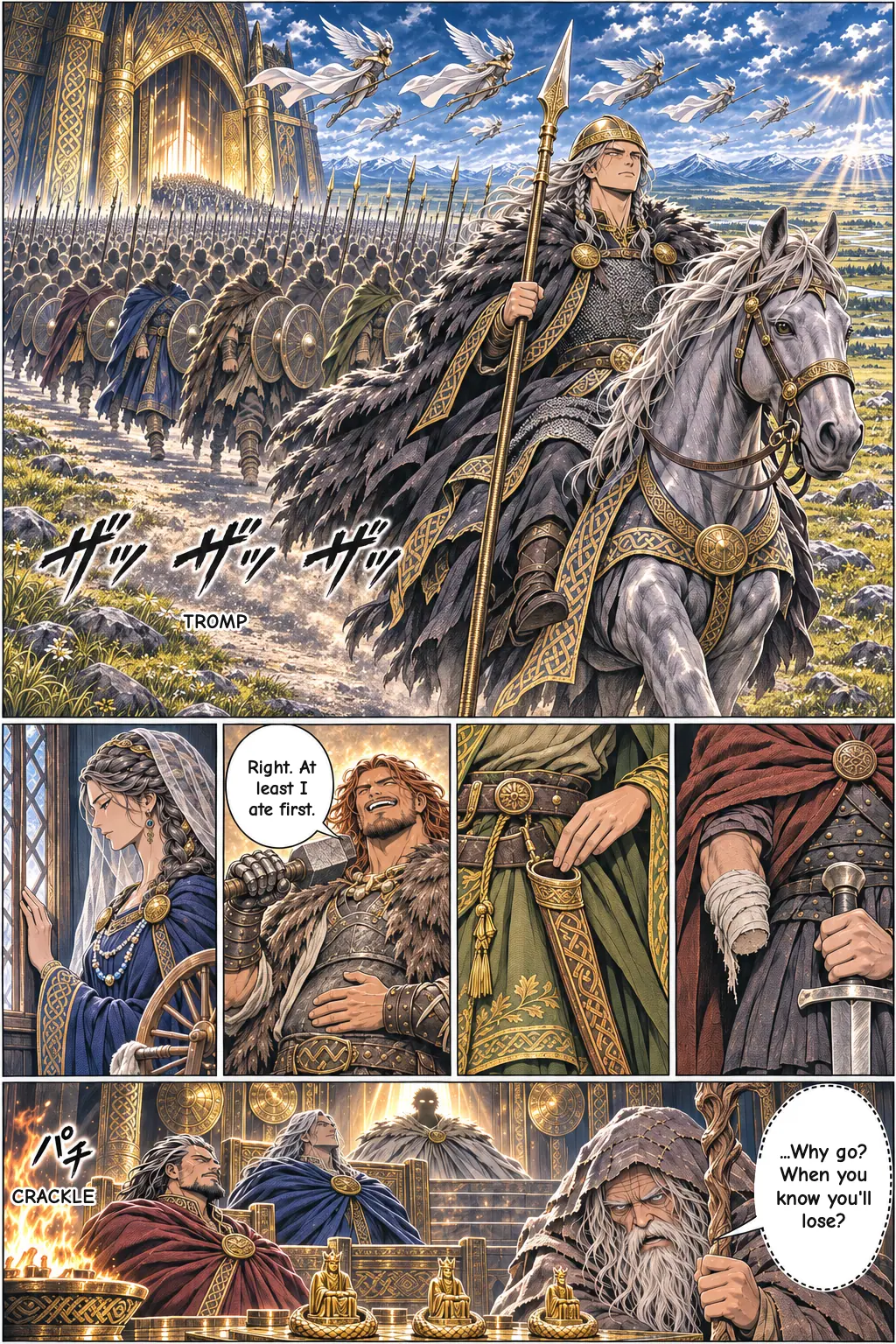
All the enemies of the gods, including Loki with the dead of Hel behind him, gather on the vast plain of Vígríðr. Heimdall, the watchman of the gods, blows the horn Gjallarhorn to wake them. Odin rides to the well of Mímir for counsel, and the great ash tree Yggdrasil trembles.
The Last Battle and What Comes After the Fire
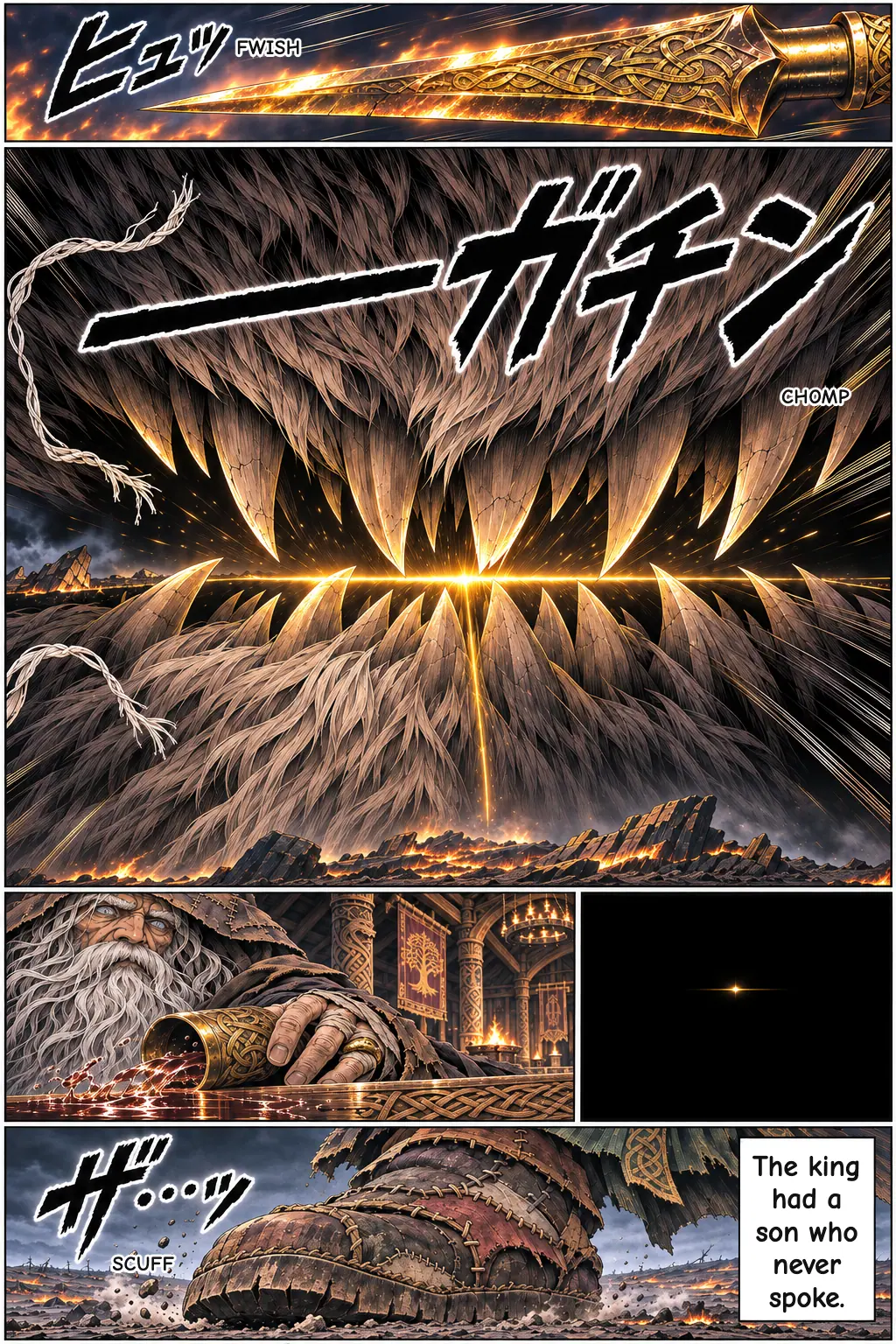
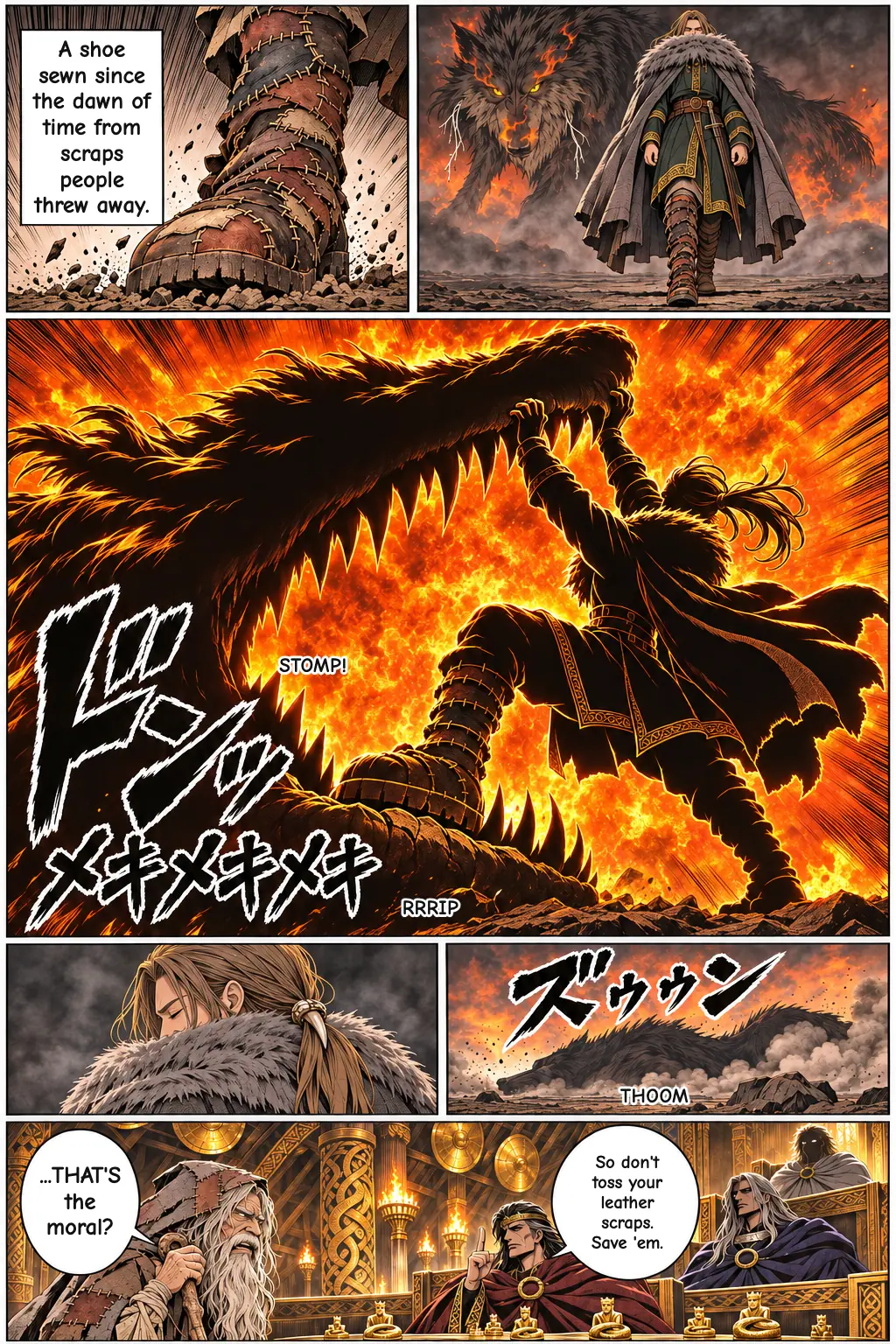
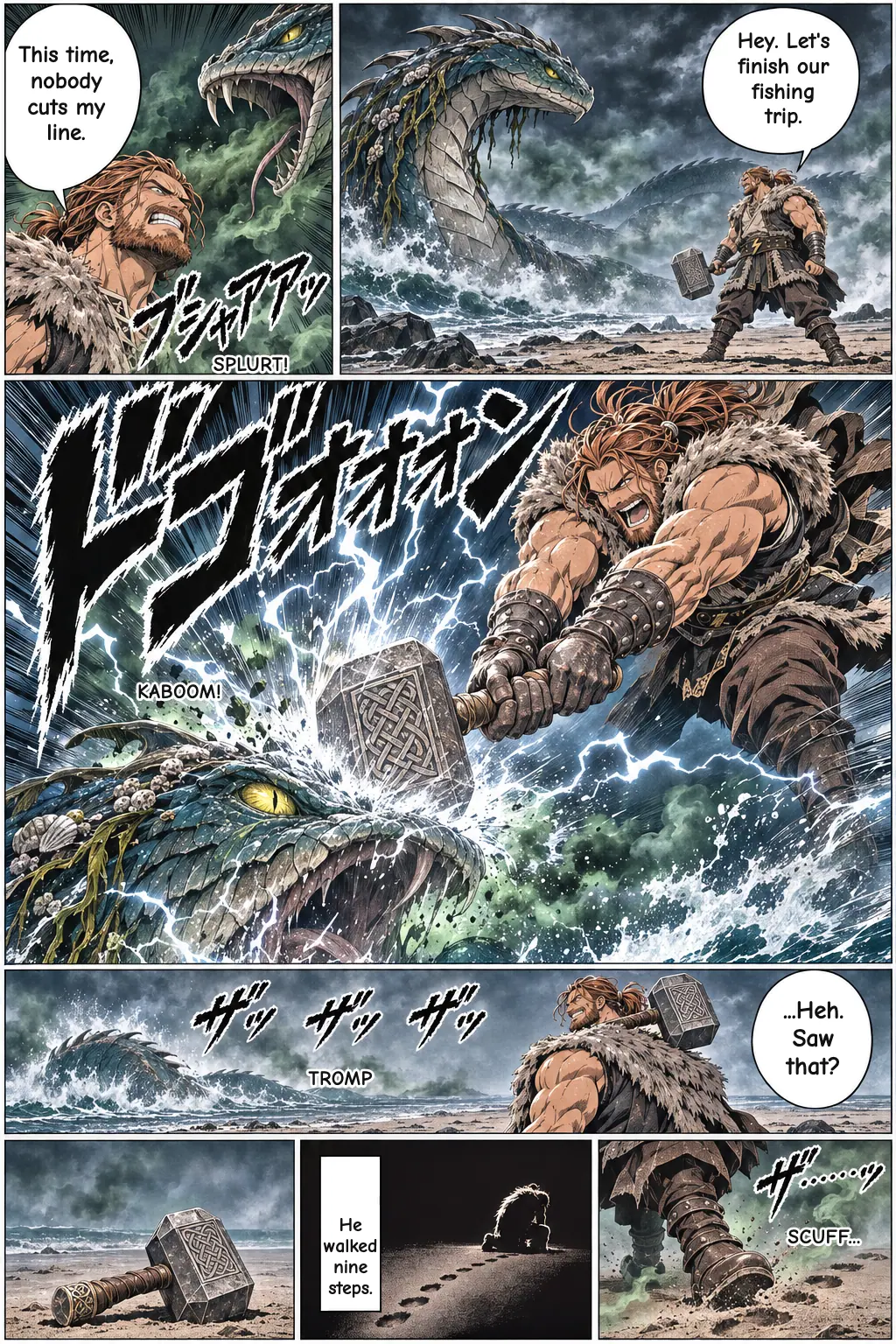
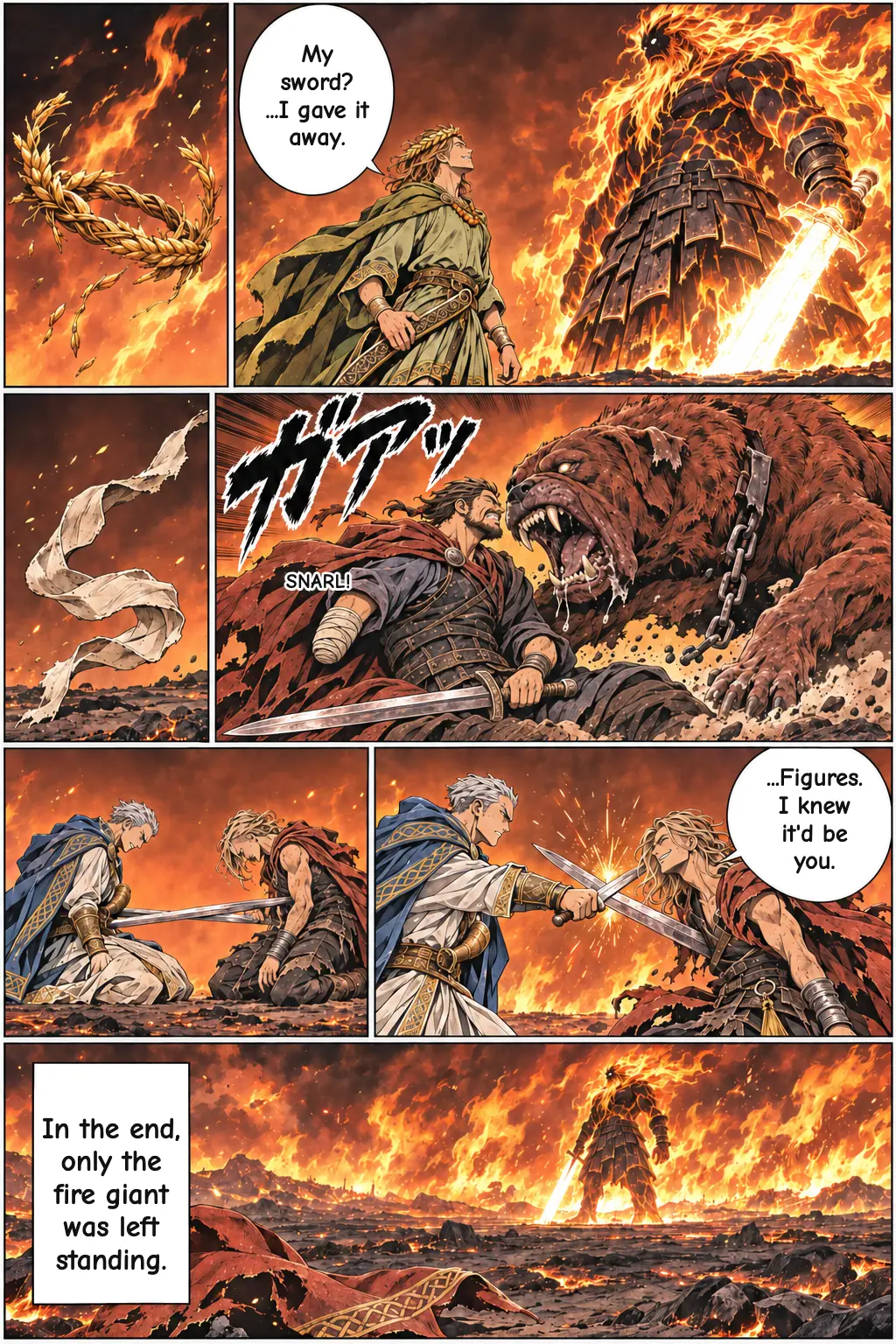
Odin leads the gods and the einherjar, the warriors chosen from the dead, onto the field in a golden helmet and fine mail, spear Gungnir in hand. He goes against Fenrir. Thor is beside him but cannot help, because he is locked in combat with the Midgard Serpent. Freyr, god of plenty, fights Surt and falls, because long ago he gave away his good sword to his servant Skírnir. The hound Garm, called the worst of monsters, breaks loose and kills Týr as Týr kills him. Thor slays the Serpent, walks nine steps, and drops dead from its venom. Fenrir swallows Odin. At once Odin's son Víðarr steps into the wolf's jaw, holds the upper jaw with his hand, and tears its mouth apart. His thick shoe, the Edda says, is made from all the leather scraps people have ever trimmed off their shoes. Loki and Heimdall kill each other. Finally Surt hurls fire over the earth and burns the whole world.
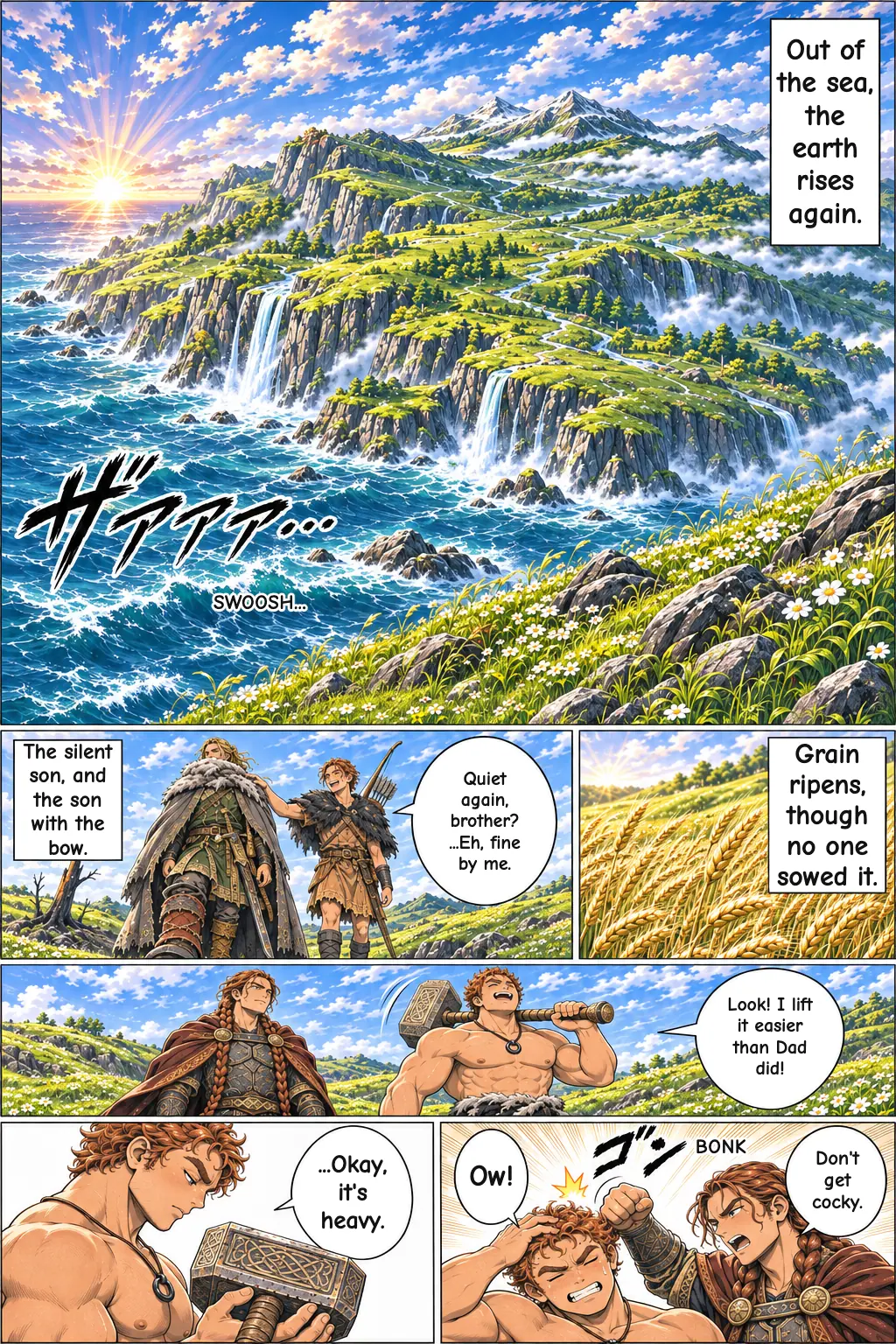
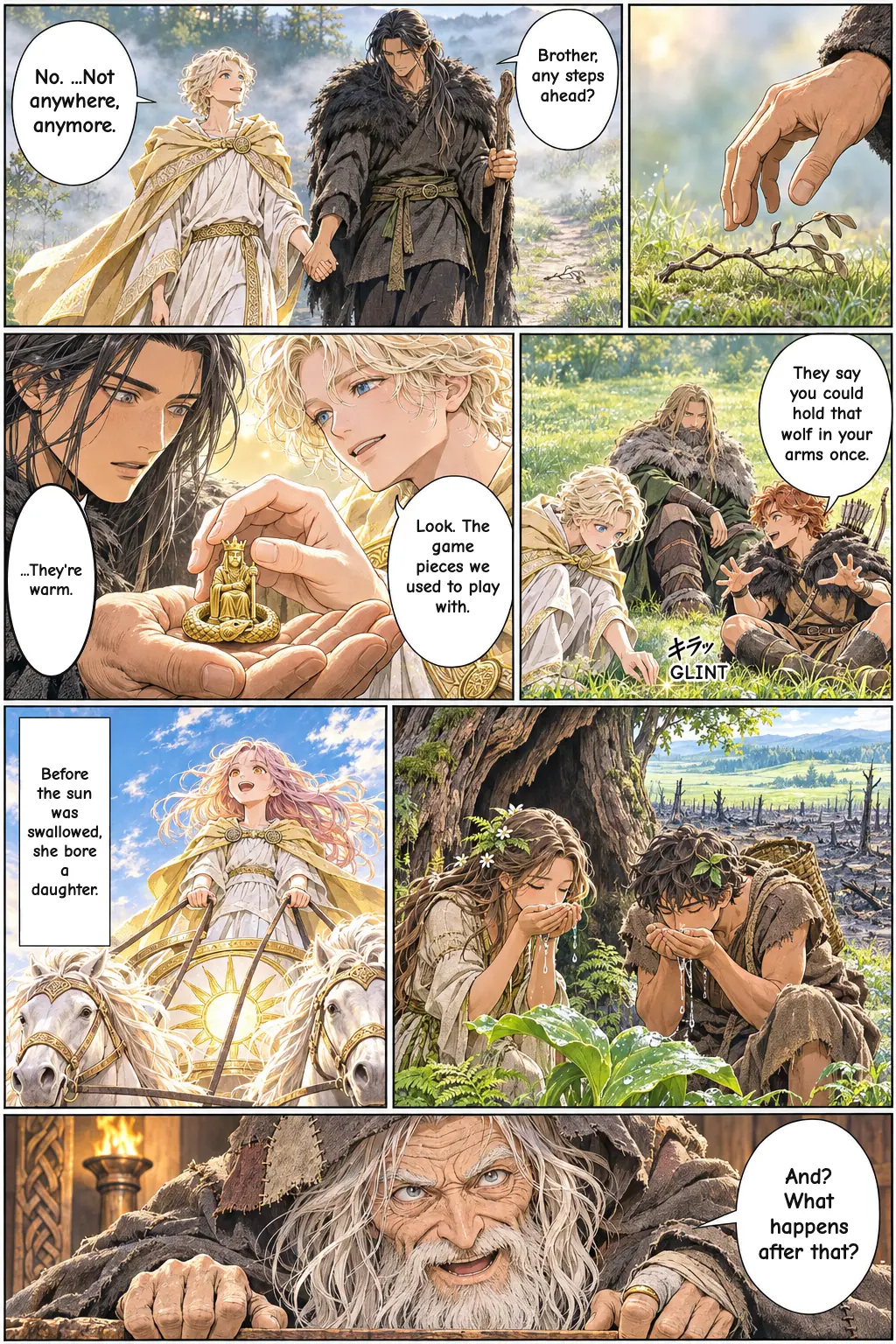
Gangleri then asks what remains. The speakers describe good halls such as Gimlé in heaven and grim ones such as Náströnd, a hall of serpents where oath-breakers and murderers wade through rivers of poison. Then the earth rises out of the sea, green and lovely, with crops growing unsown. Víðarr and Váli survive, untouched by flood or fire, and settle where Asgard once stood. Thor's sons Móði and Magni arrive carrying the hammer Mjölnir. Baldr and Höðr return from the realm of the dead, and the gods sit together remembering the old days, the Serpent and Fenrir, and they find in the grass the golden game pieces the gods once owned. Two humans, Líf and Lífþrasir, who hid in the wood of Hoddmímir and lived on morning dew, become the ancestors of a new people. Before she was swallowed, the sun bore a daughter as bright as herself, who now rides her mother's path.
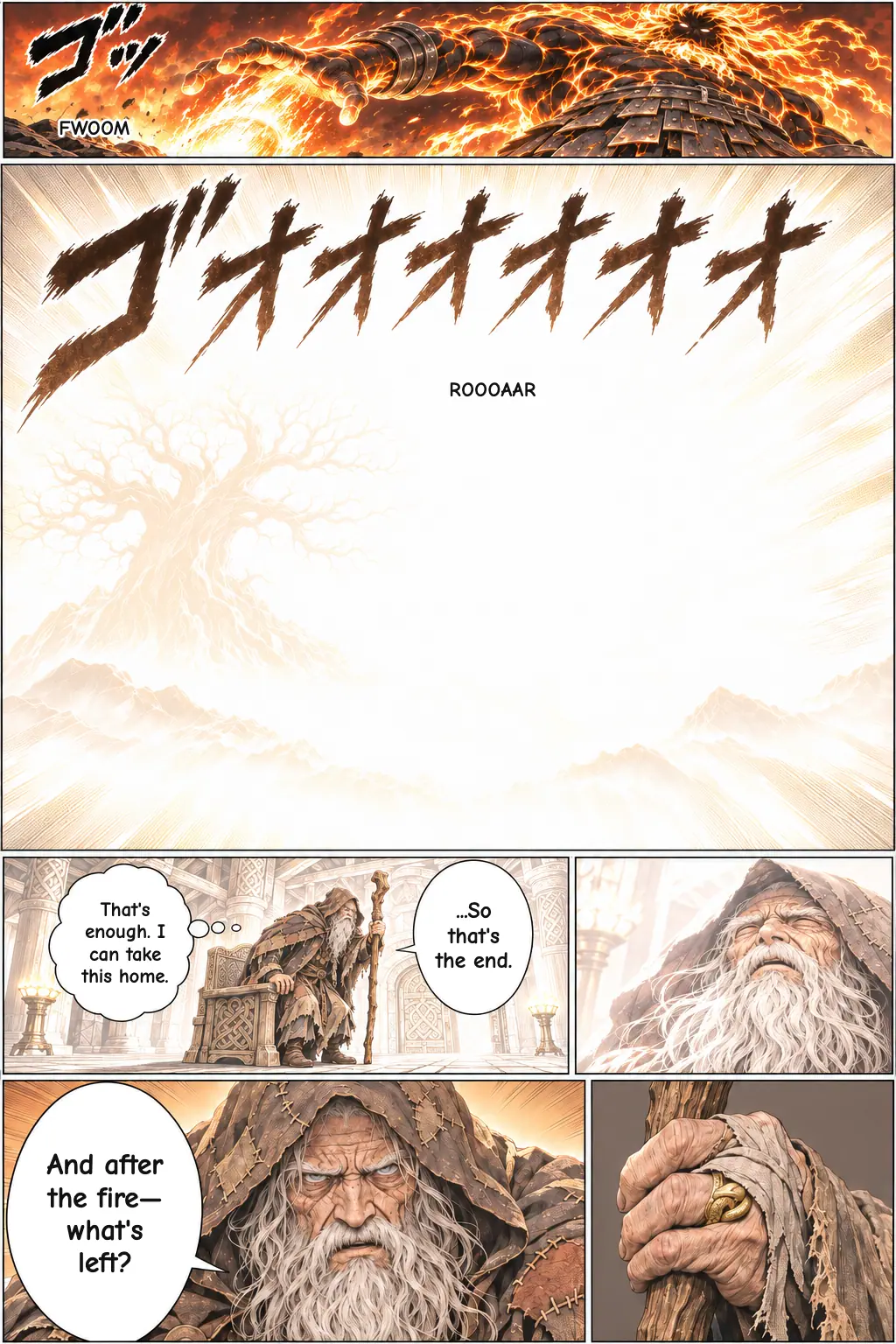
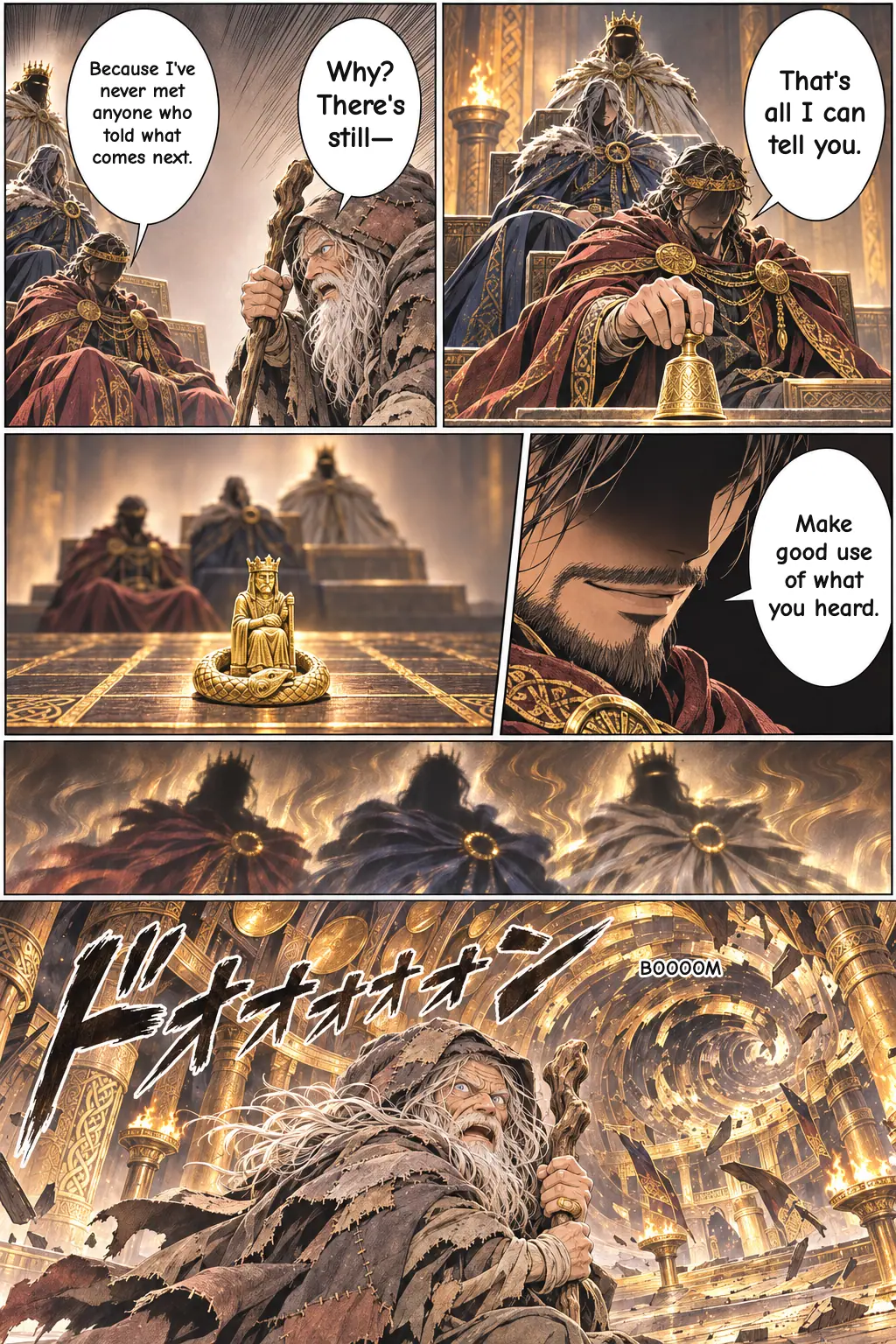
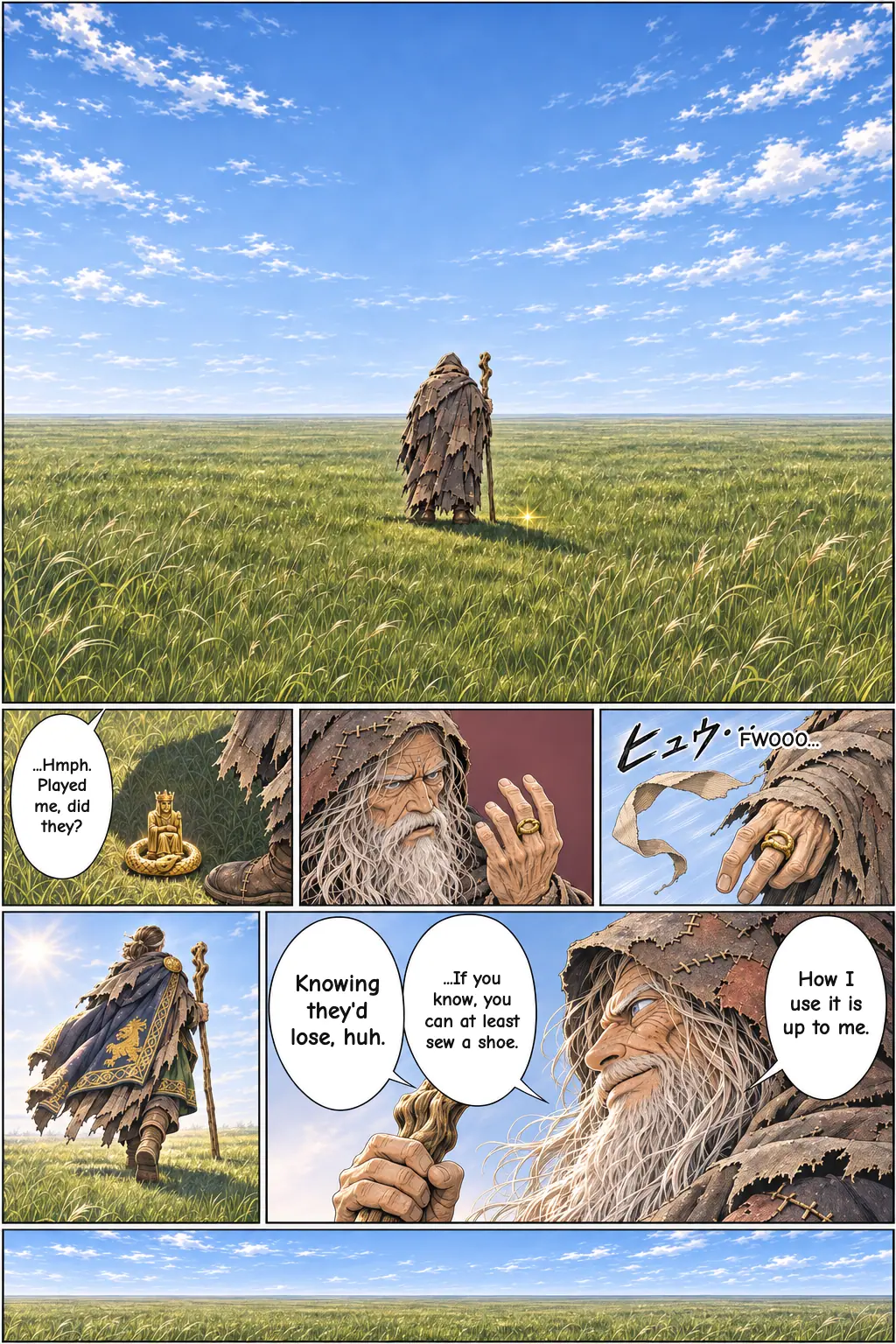
Here the three speakers stop, saying they have never heard anything further. A great roar sounds, and Gylfi finds himself standing alone on an open plain. The hall is gone. He returns home and tells what he heard.
Main Characters of Ragnarök
Gylfi (Gangleri) is the listener whose questions drive the story. High, Just-as-High and Third are the narrators; the Edda never states plainly who they are, though many readers connect them with Odin, since similar names appear among his titles elsewhere in the Edda. On the battlefield, each god meets a fated opponent: Odin and Fenrir, Thor and the Serpent, Freyr and Surt, Týr and Garm, Heimdall and Loki. Notably, the text never says how Surt himself ends.
The survivors matter as much as the fallen. Víðarr and Váli, Odin's sons; Móði and Magni, Thor's sons; Baldr and Höðr, returned from death; and the two humans Líf and Lífþrasir carry the world forward.
What the Ragnarök Myth Means: Background and Themes
Snorri Sturluson was an Icelandic poet, lawyer and chieftain writing in the early 1200s, more than two centuries after Iceland became Christian. He wrote the Prose Edda partly as a handbook for poets who needed to understand the old myths behind traditional poetic language. For Ragnarök he drew heavily on older poems, above all Völuspá ('The Prophecy of the Seeress'), which he quotes in this part of the work.
What strikes many readers is that the gods know the ending in advance and march out anyway. The story is often read as a picture of courage in the face of certain loss, a value that fits the heroic ideals of the Viking-age poetry Snorri preserved. Yet the myth does not end in nothing: destruction is followed by renewal. Scholars debate how much of the rebirth reflects older Norse belief and how much may echo Christian ideas of a new heaven and earth, and there is no settled answer. The work's final passage also offers a more human explanation of where the stories came from, which is often seen as Snorri keeping a careful distance from the old gods.
What the Manga Changed or Added
The Prose Edda tells the battle in a few brisk lines, pairing each god with an enemy. The manga decides how much space each duel gets, the order in which they are shown, and how the scenes cut between the three narrators in the hall and the war they describe. The looks, expressions and dialogue of gods, monsters and Muspell's riders are the artists' creation; the source only describes a few details, such as Odin's armor, Surt's flames and sword, and Fenrir's fiery jaws. Scenes of ordinary people suffering through Fimbulwinter are also invented.
The emotional moments are interpretation too: how the surviving gods feel as they talk and find the golden game pieces, and the look on Gylfi's face as he stands alone on the empty plain. The manga hints that the narrators may be Odin in disguise but, like the original, does not say so outright. It may also shorten the descriptions of the good and bad halls and the Edda's closing explanation, which can be trimmed without breaking the story.
Where to Read It
Episode 15 of NORSE MYTHOLOGY: The King Who Heard the End of the Gods is the finale of Gylfi's journey, bringing the whole series to Ragnarök and the world after the fire. If you want to see how the story reached this point, the earlier episodes follow his questions from the creation of the world onward. Every episode is free to read on Manga Portal, with no account needed.
Characters in this episode
Gylfi (Gangleri)
A Swedish king who visits the gods' hall in disguise and asks how the world will end.
High, Just-as-High and Third
Three mysterious narrators on high seats who tell Gylfi the story of Ragnarök, then vanish with their hall.
Odin
Chief of the gods, who leads the last battle with his spear Gungnir and is swallowed by Fenrir.
Thor
The thunder god, who kills the Midgard Serpent but dies from its poison after nine steps.
Fenrir
The monstrous wolf, son of Loki, who breaks his chains, swallows Odin, and is torn apart by Víðarr.
Surt
The fire giant who leads the sons of Muspell, defeats Freyr, and burns the world with his flames.
FAQ
What happens during Ragnarök in Norse mythology?
After years of war and a three-year Fimbulwinter, wolves swallow the sun and moon and every monster breaks free. The gods fight their enemies on the plain of Vígríðr, where most of them die in paired duels. Surt then burns the world, and a new green earth rises from the sea.
Who survives Ragnarök?
In the Prose Edda, the gods Víðarr and Váli survive, Thor's sons Móði and Magni arrive with Mjölnir, and Baldr and Höðr return from the dead. Two humans, Líf and Lífþrasir, survive by hiding in Hoddmímir's wood and become the ancestors of new people.
Who kills Odin at Ragnarök?
Odin is swallowed by the wolf Fenrir. His son Víðarr immediately avenges him by stepping on the wolf's lower jaw and tearing its mouth apart.
Why do the gods fight if they know they will lose?
The myth does not explain it directly, but the gods arm themselves and march out even though the ending has been foretold. Many readers see this as a picture of courage in the face of fate, a value central to Old Norse heroic poetry.
Where does the story of Ragnarök come from?
The fullest account is in the Gylfaginning section of the Prose Edda, written by the Icelander Snorri Sturluson in the early 13th century. Snorri based it largely on older poems, especially Völuspá, which he quotes.