Get new episodes in your feed. Follow us on:ThreadsBluesky
Drunk on Thor's own cup, the giant Hrungnir rampages through the gods' hall—but he's Odin's guest, so no one can lay a finger on him. Thor accepts the first one-on-one duel of his life at the border and wins. But the whetstone lodged in his forehead is still there today, all because he made one seeress very, very happy.
Story summary
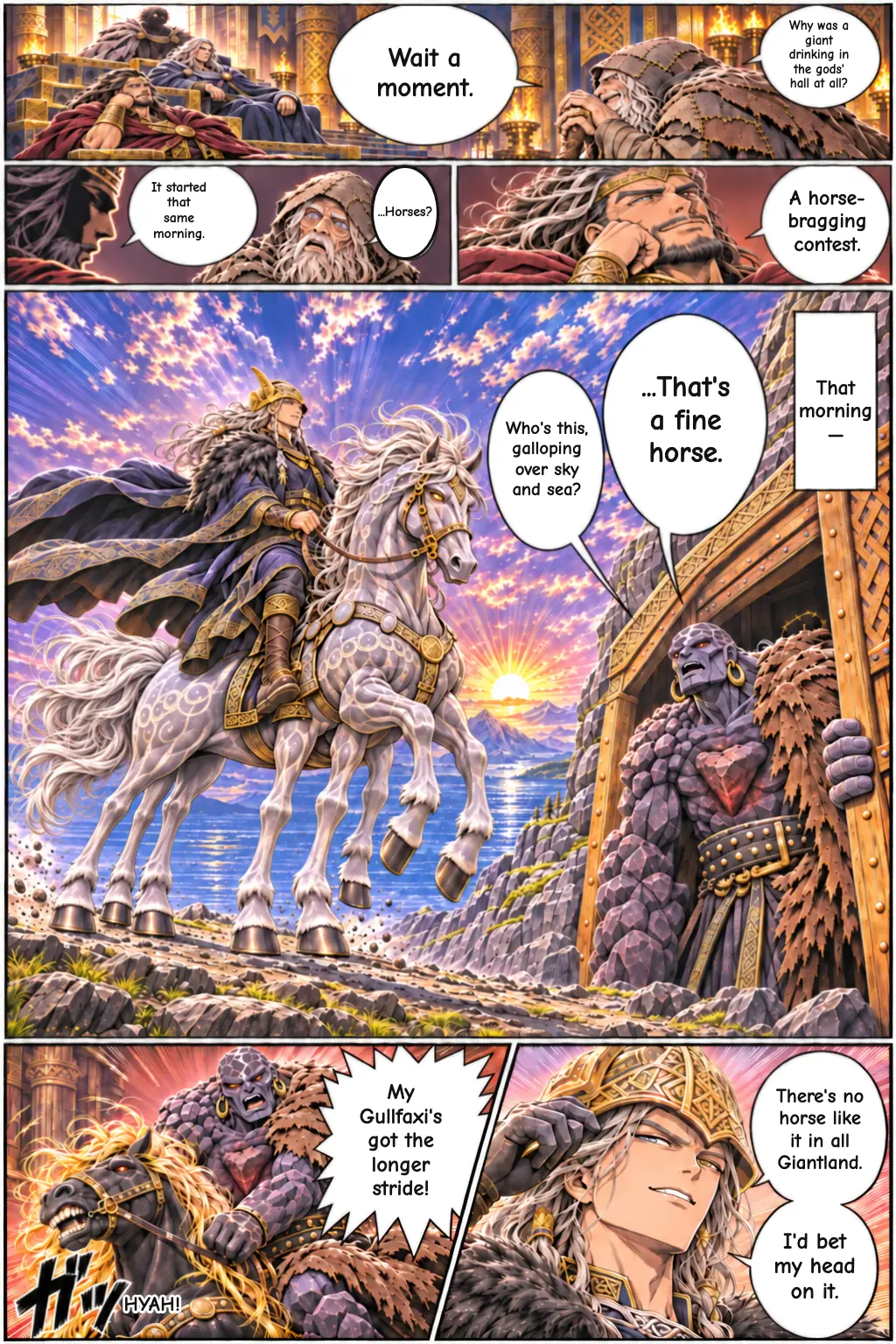
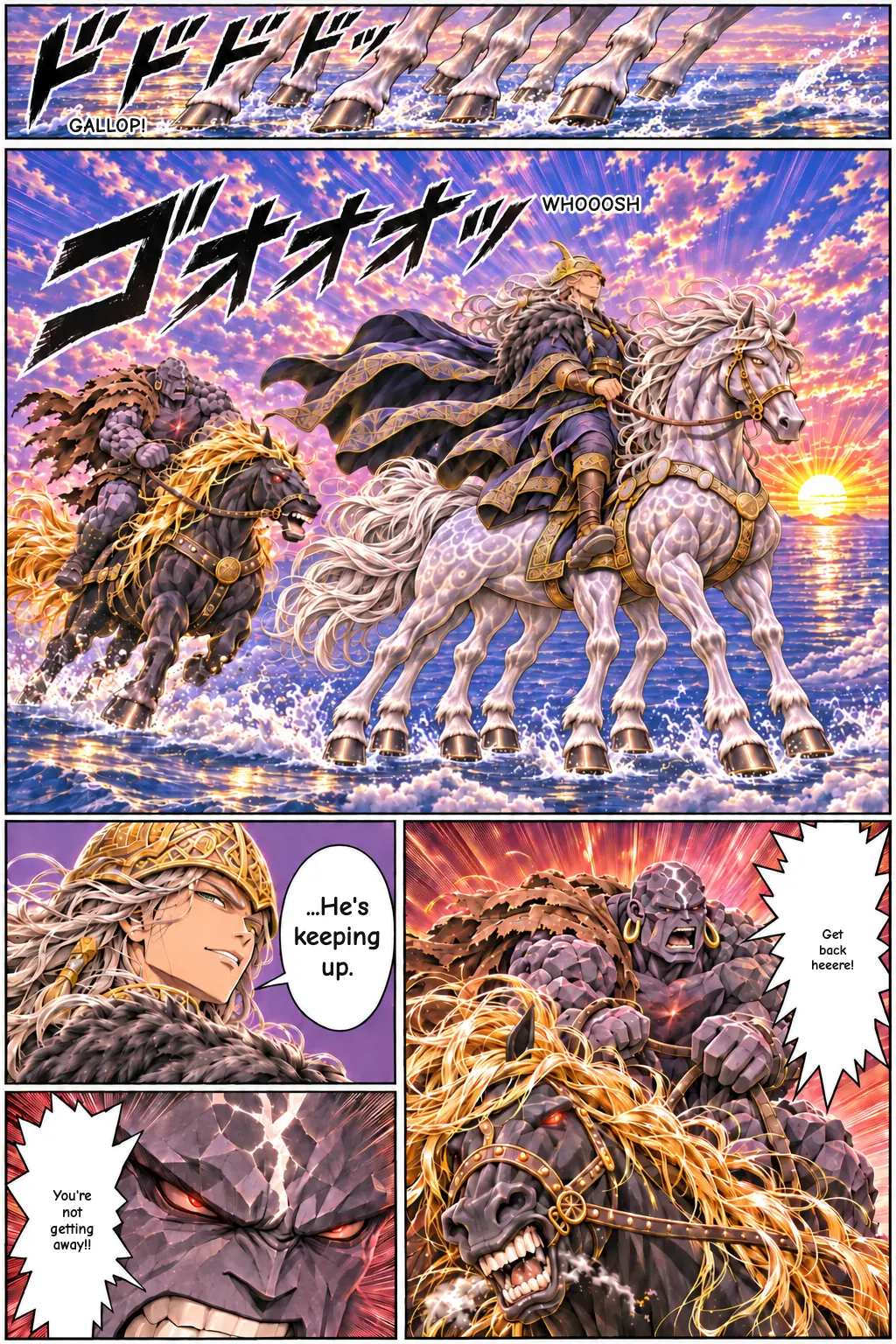
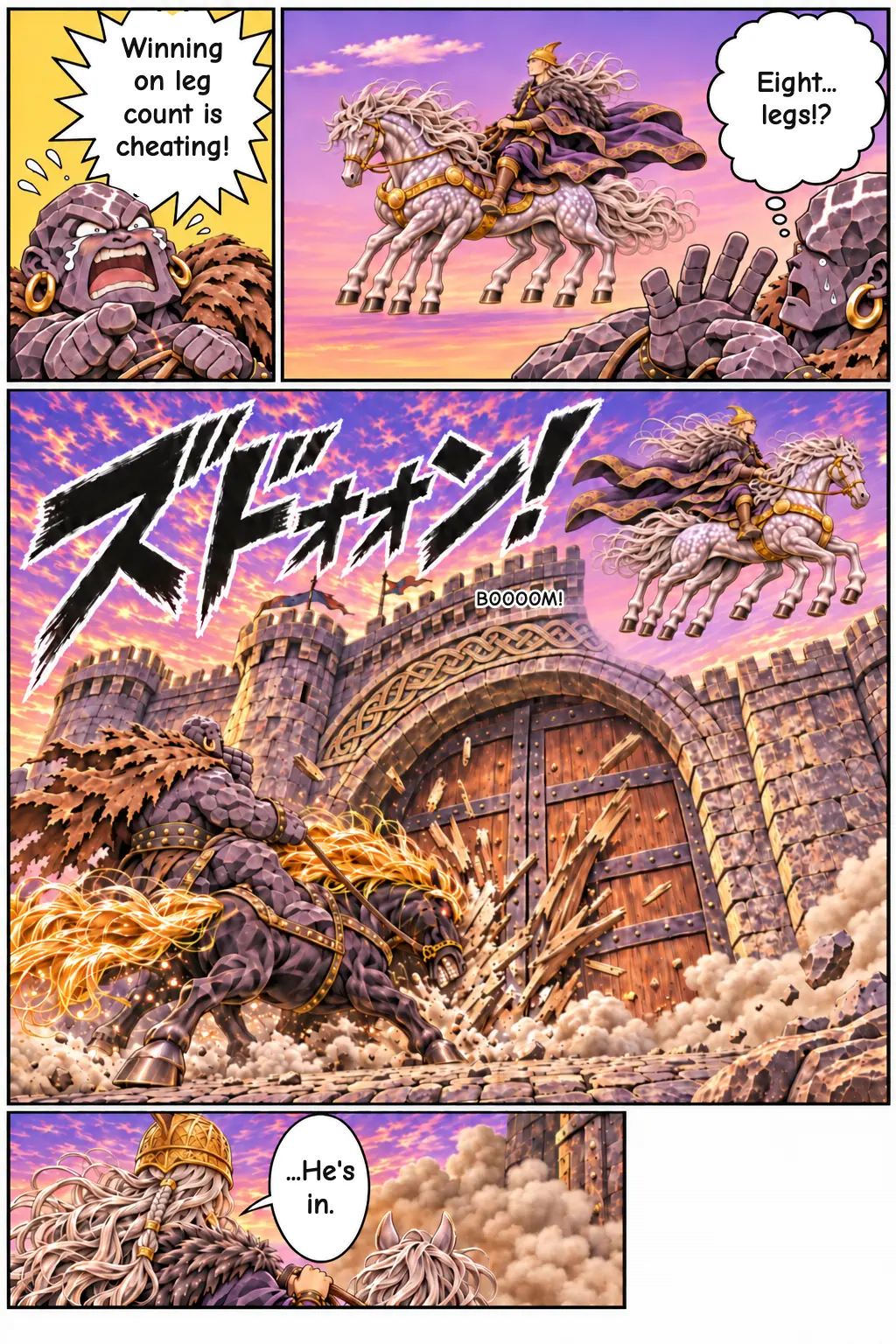
The story starts while Thor, the thunder god, is away in the east fighting trolls. Odin, chief of the gods, rides his eight-legged horse Sleipnir into Jotunheim, the land of the giants. There he meets Hrungnir, the mightiest giant of all, who admires the horse. Odin boasts that no horse in Jotunheim can match it and bets his own head on it. Hrungnir is insulted. He swears his horse Gullfaxi ("Golden Mane") has a longer stride and gallops after Odin. Lost in a giant's rage, he doesn't notice where he is going until he is already inside the gates of Asgard, the home of the gods.
Thor vs. Hrungnir Explained: Why a Whetstone Is Stuck in Thor's Head
In short: Thor's duel with Hrungnir is a Norse myth from Snorri Sturluson's Prose Edda (the section called Skáldskaparmál). Hrungnir, the strongest of the giants, gets drunk and makes threats in the gods' hall. Thor meets him in his first-ever one-on-one duel and smashes his stone skull. A piece of the giant's whetstone stays lodged in Thor's head forever, because the seeress who was chanting it loose got so happy at Thor's news that she forgot her spell.
The Original Myth: A Horse Race That Got Out of Hand
The story starts while Thor, the thunder god, is away in the east fighting trolls. Odin, chief of the gods, rides his eight-legged horse Sleipnir into Jotunheim, the land of the giants. There he meets Hrungnir, the mightiest giant of all, who admires the horse. Odin boasts that no horse in Jotunheim can match it and bets his own head on it.
Hrungnir is insulted. He swears his horse Gullfaxi ("Golden Mane") has a longer stride and gallops after Odin. Lost in a giant's rage, he doesn't notice where he is going until he is already inside the gates of Asgard, the home of the gods.
The Drunken Giant and the Duel at the Border
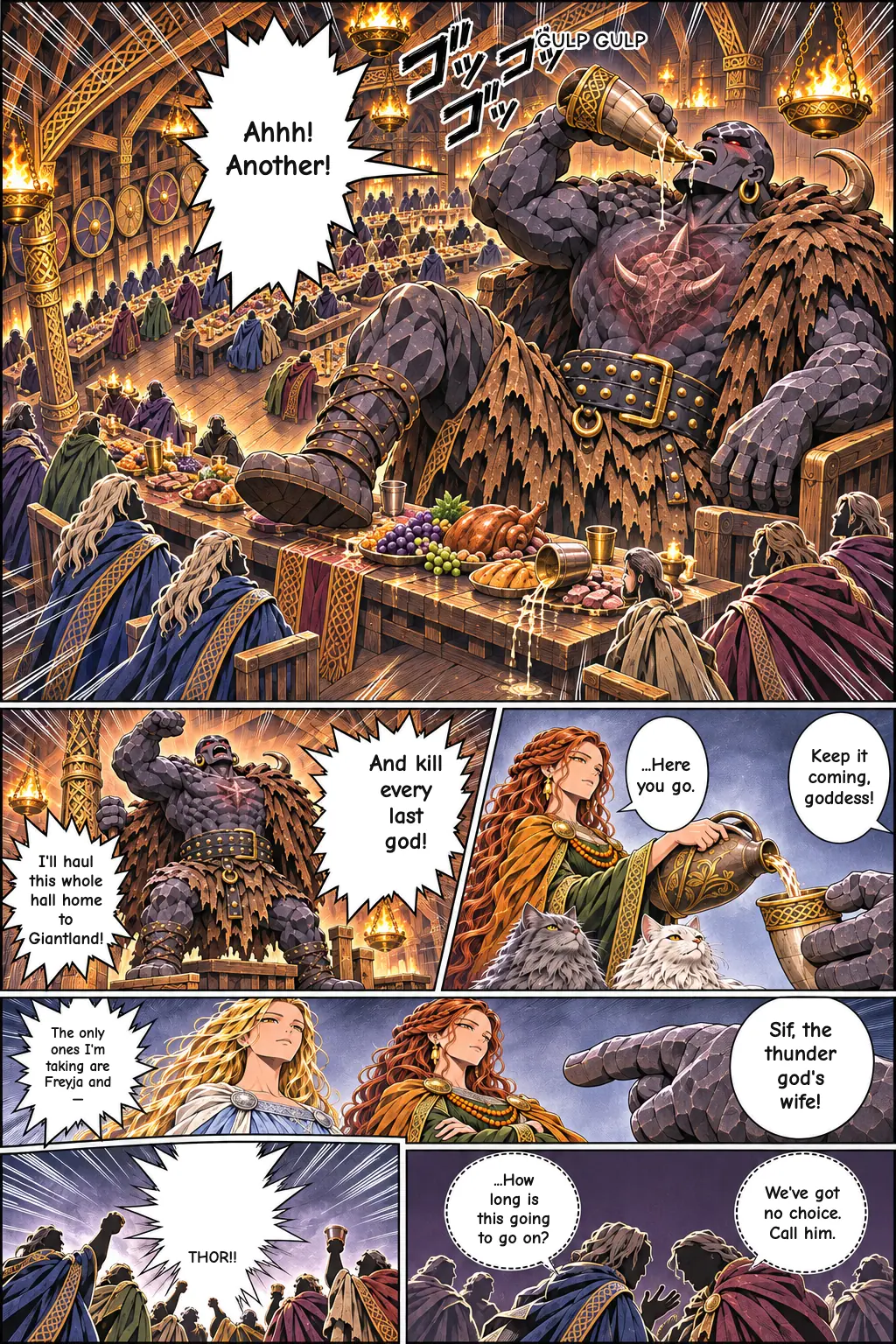
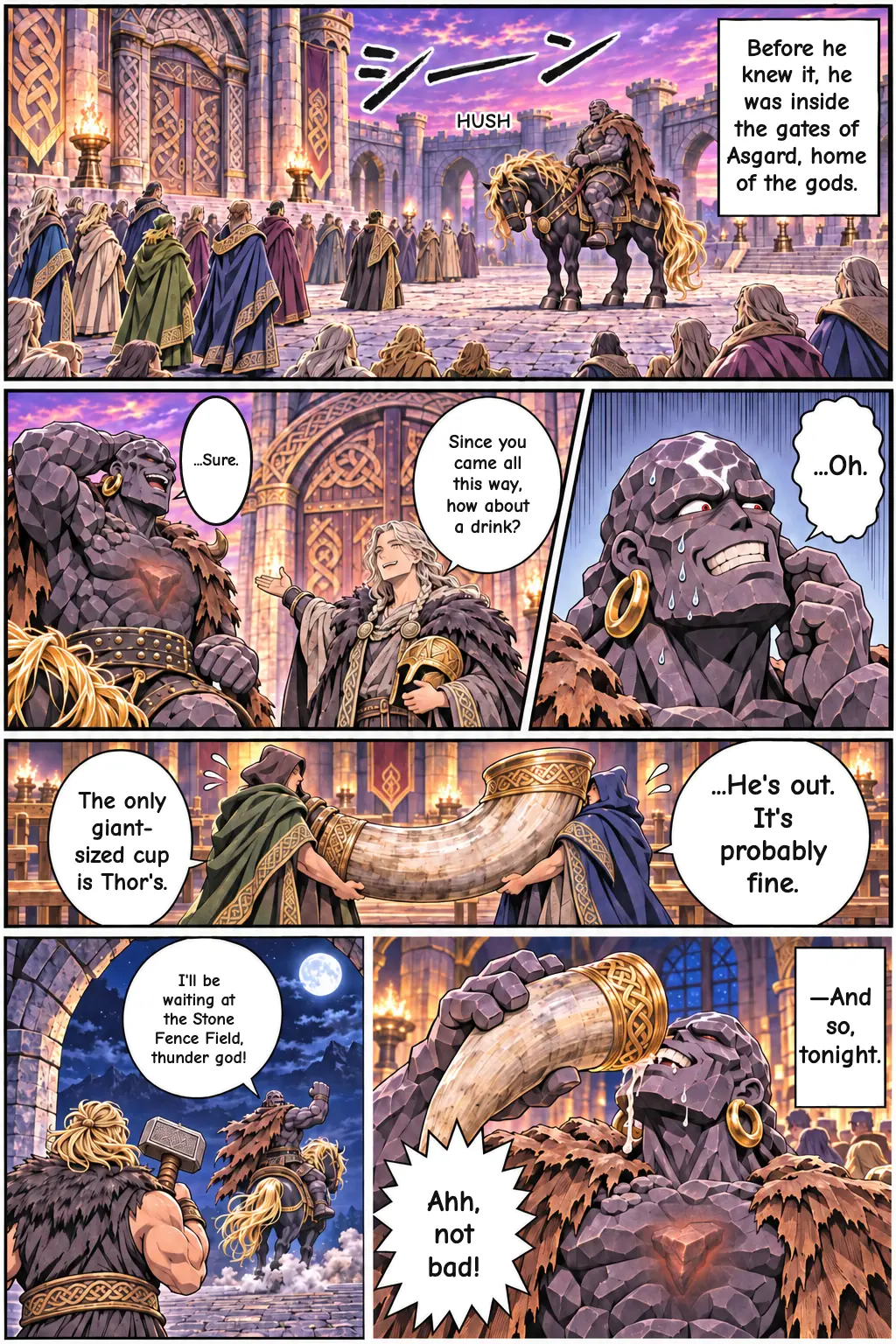
The gods do the polite thing and invite him in for a drink. They bring out the cups Thor normally drinks from, and Hrungnir empties them one after another. Drunk, he starts boasting: he will pick up Valhalla and carry it off to Jotunheim, sink Asgard, kill the gods, and take only the goddesses Freyja and Sif home with him. Freyja is the only one who dares to keep pouring for him.
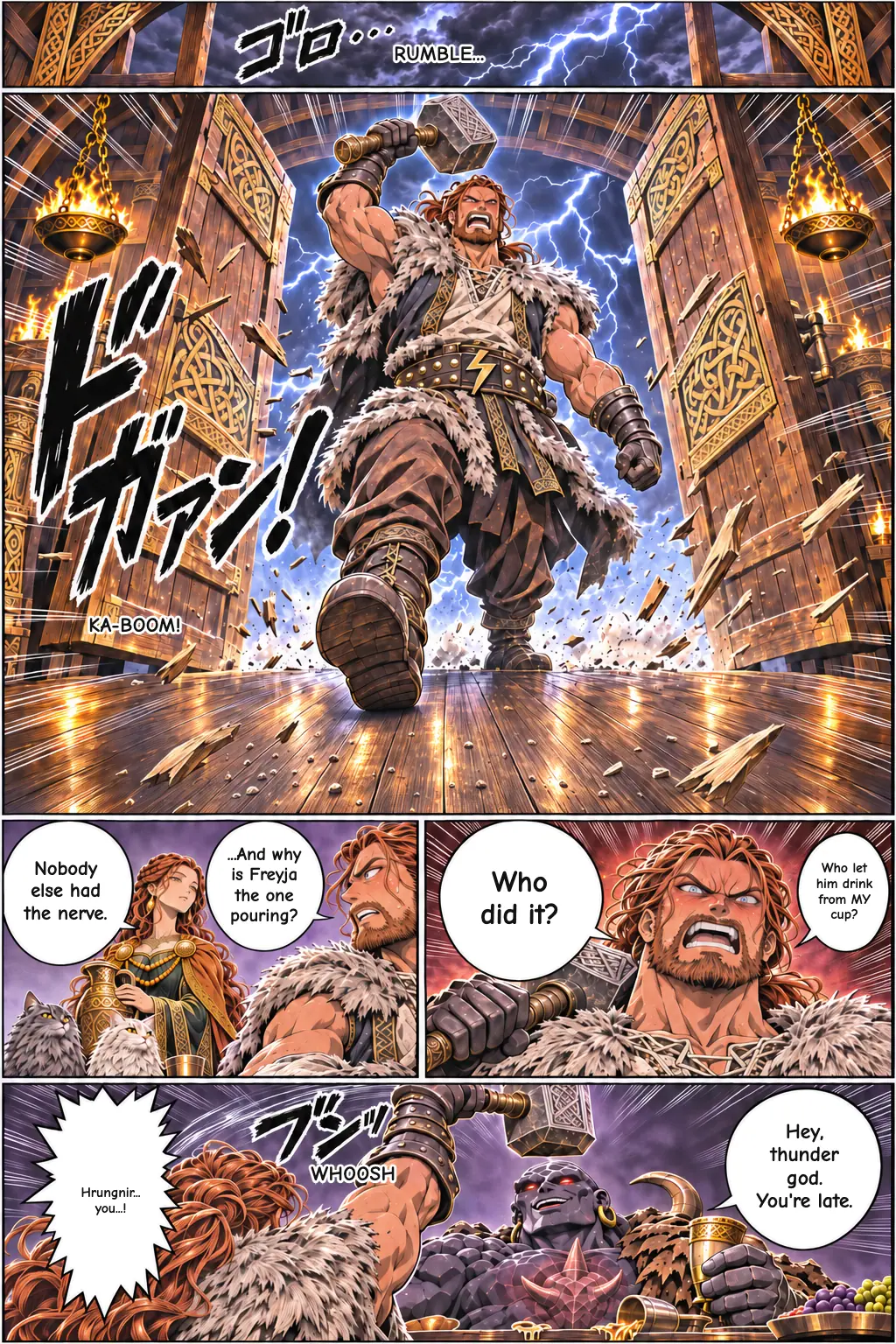
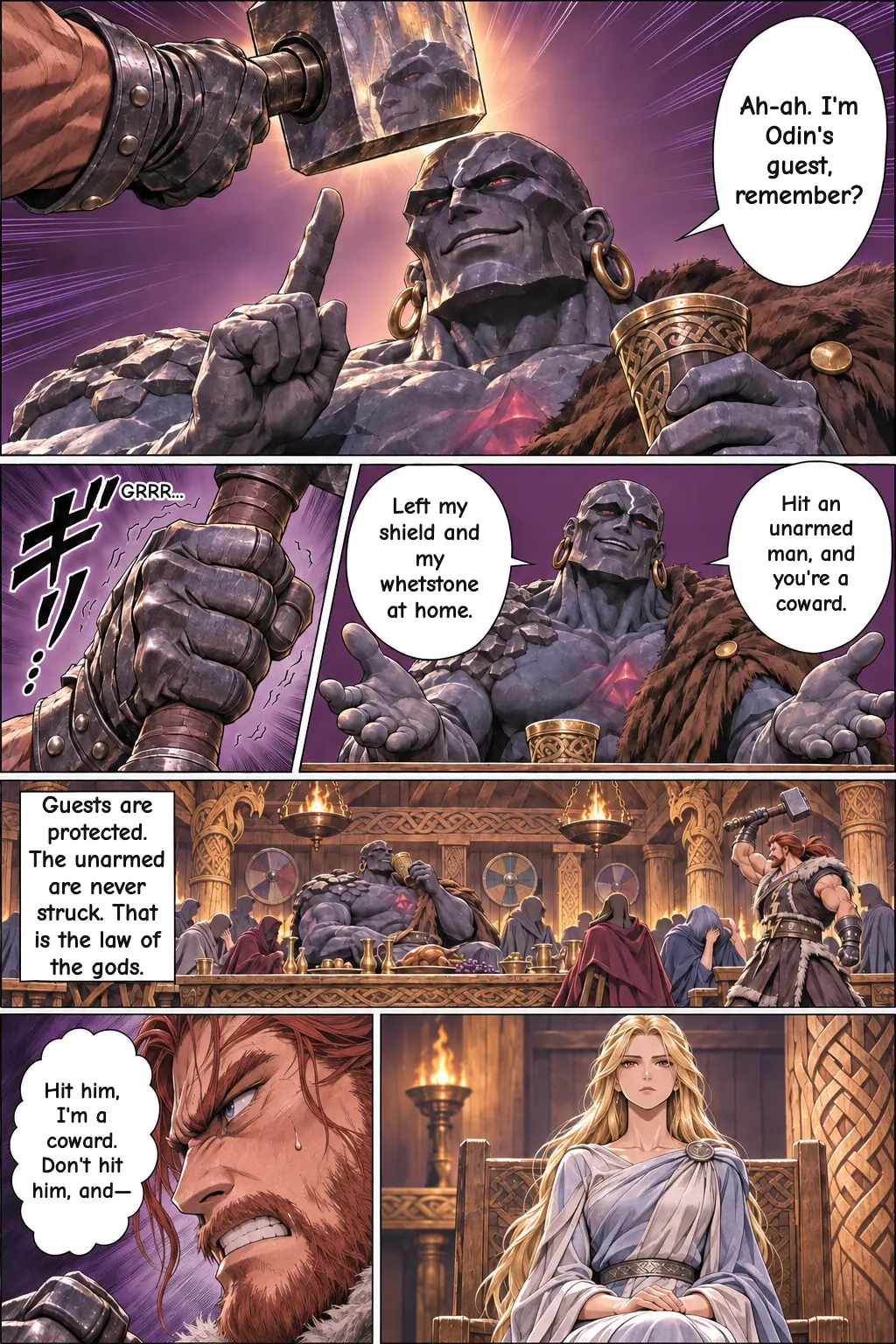
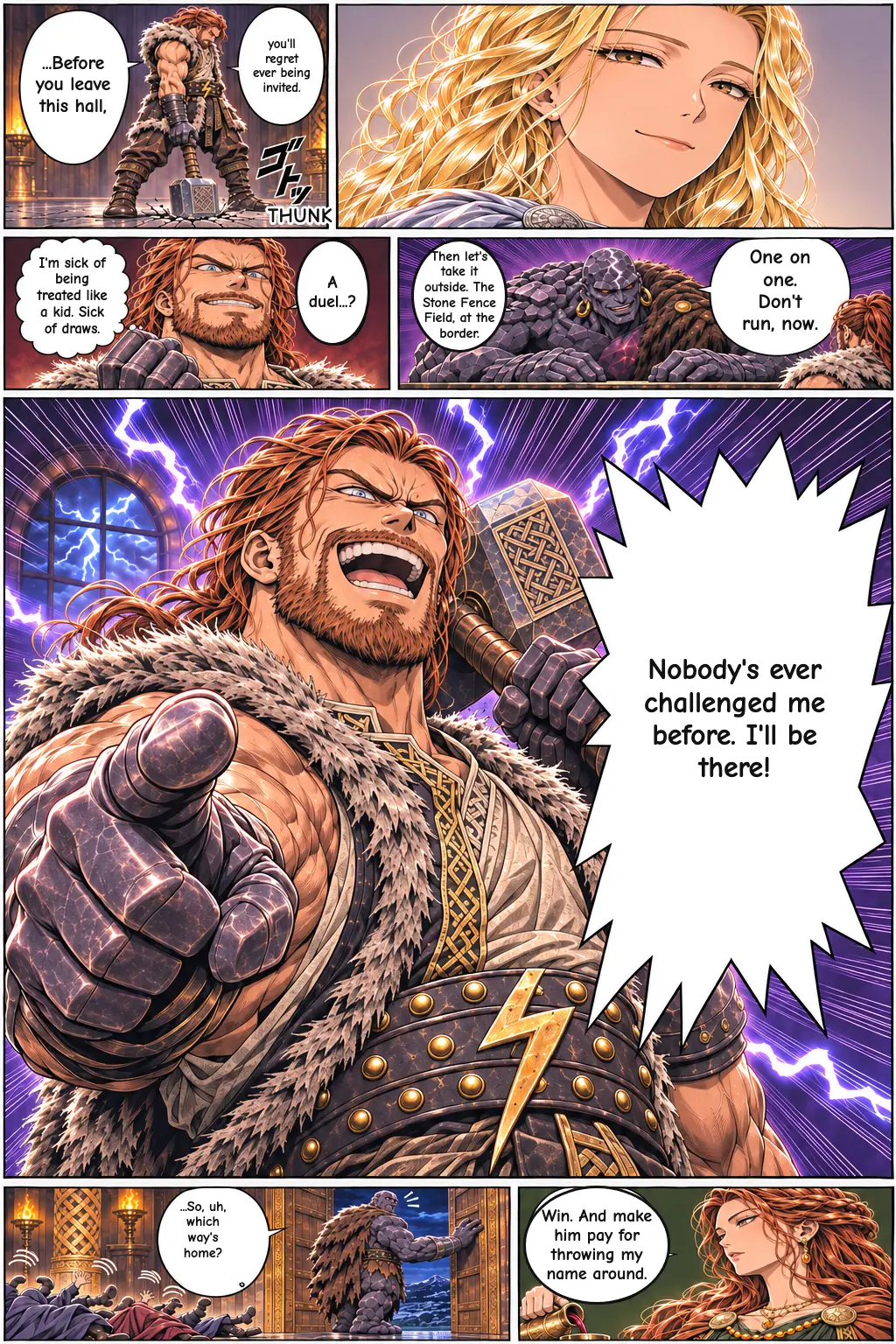
The gods get sick of it and call Thor's name. Thor appears at once, hammer raised, and demands to know who let a giant drink here. Hrungnir calmly answers that Odin invited him, so he is under Odin's protection. He adds that he left his shield and whetstone at home, and killing an unarmed guest would make Thor a coward. If Thor is brave, they should fight at Grjótúnagarðar, a place on the border. Nobody had ever challenged Thor to a single duel before, so he swears he will be there.
The Clay Giant, the Lie, and the Clash in Midair
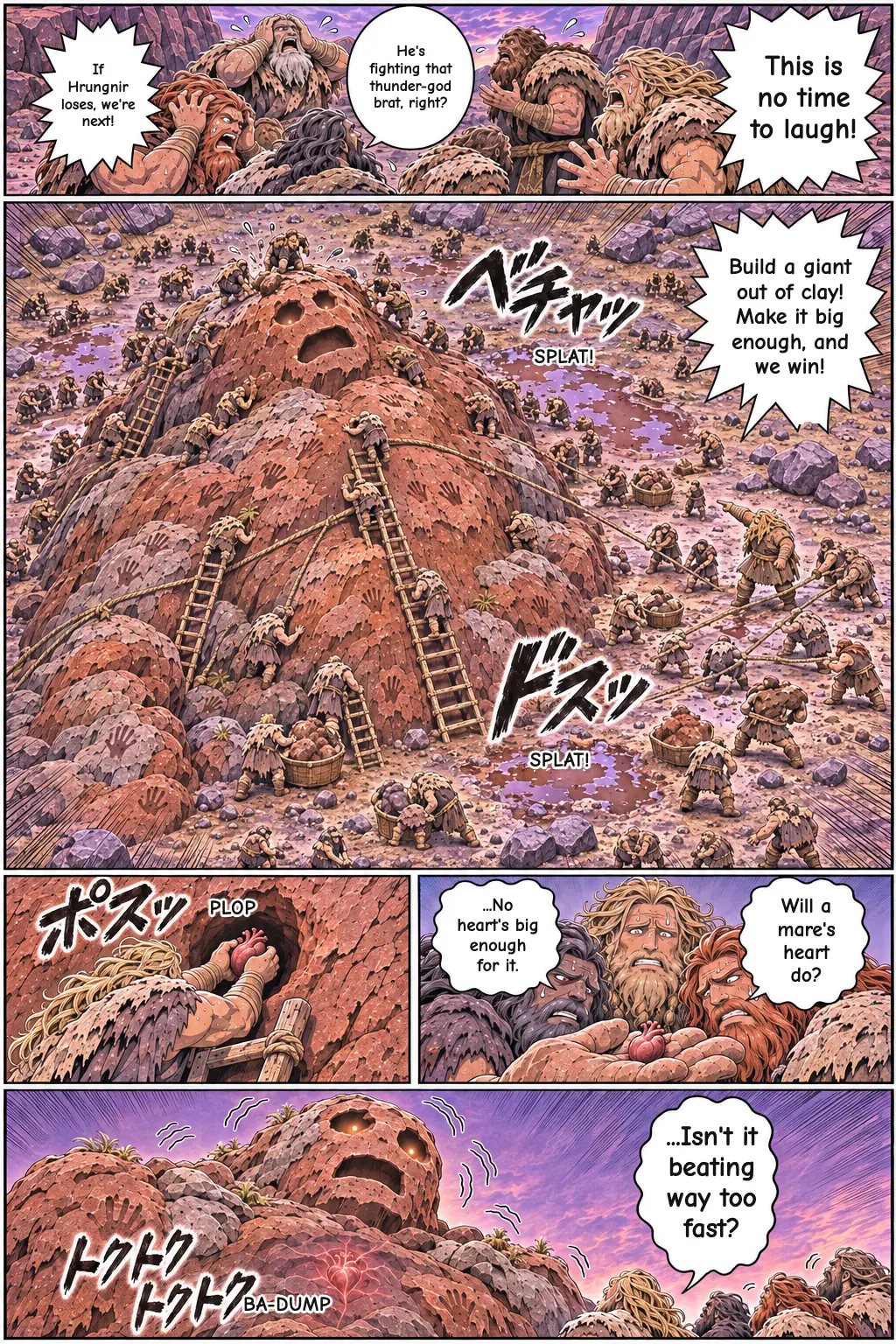
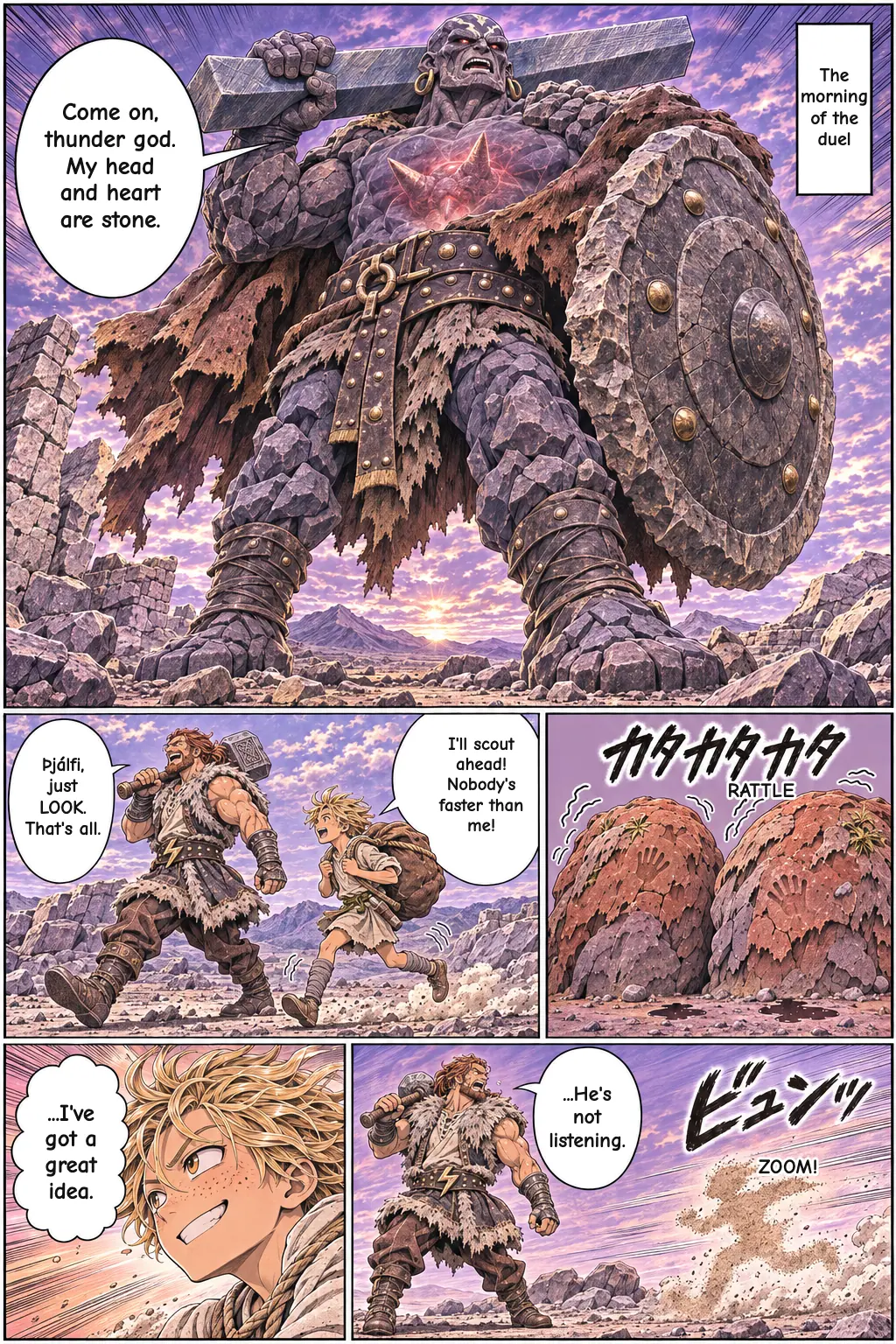
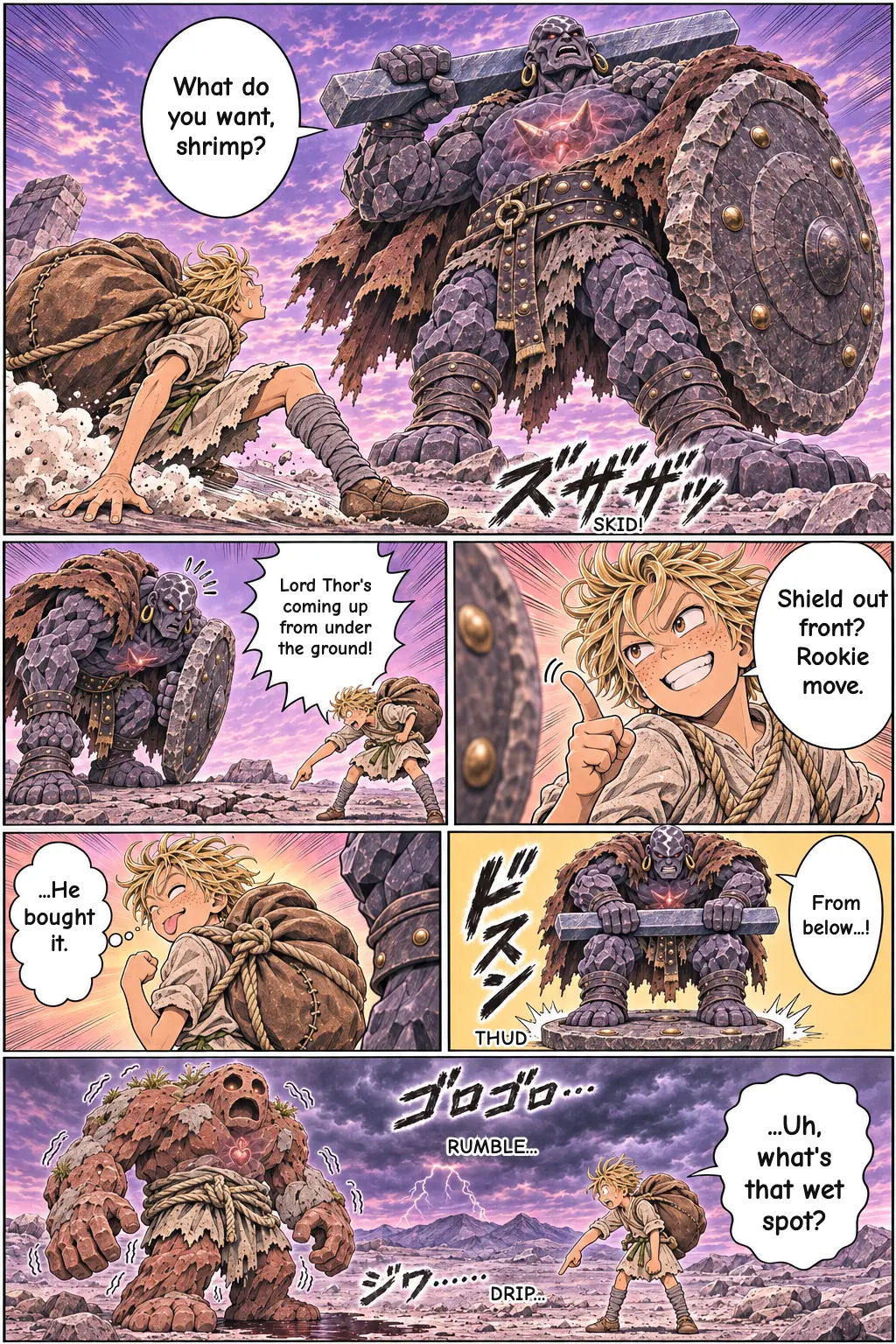
The giants take the duel very seriously. They build a huge clay giant, Mökkurkálfi, and give him a mare's heart, because nothing bigger could be found. Hrungnir himself has a heart of hard stone with three sharp corners, and a stone head. He waits with a broad stone shield and his whetstone on his shoulder. When Mökkurkálfi sees Thor coming, the source says, he is so frightened that he wets himself.
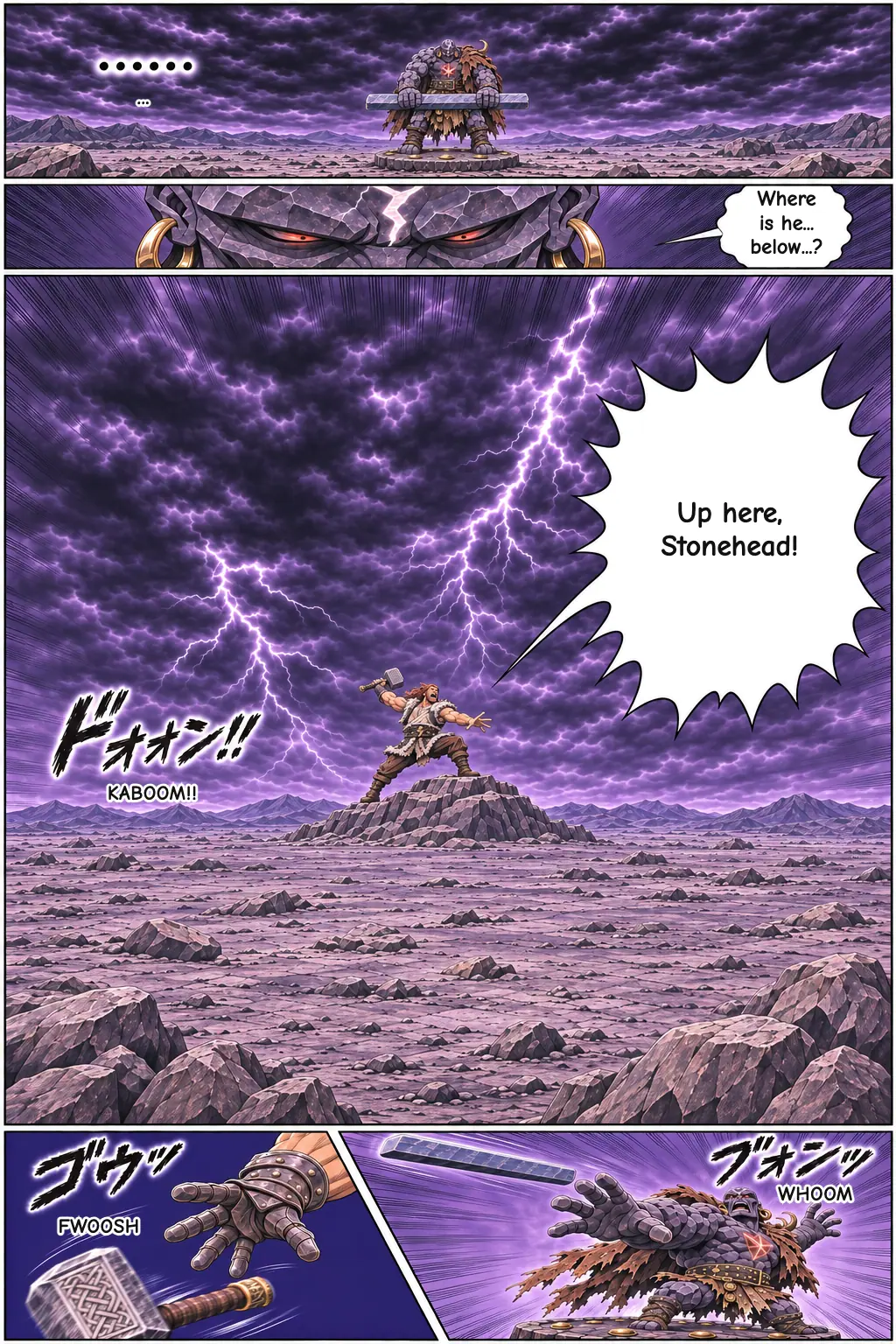
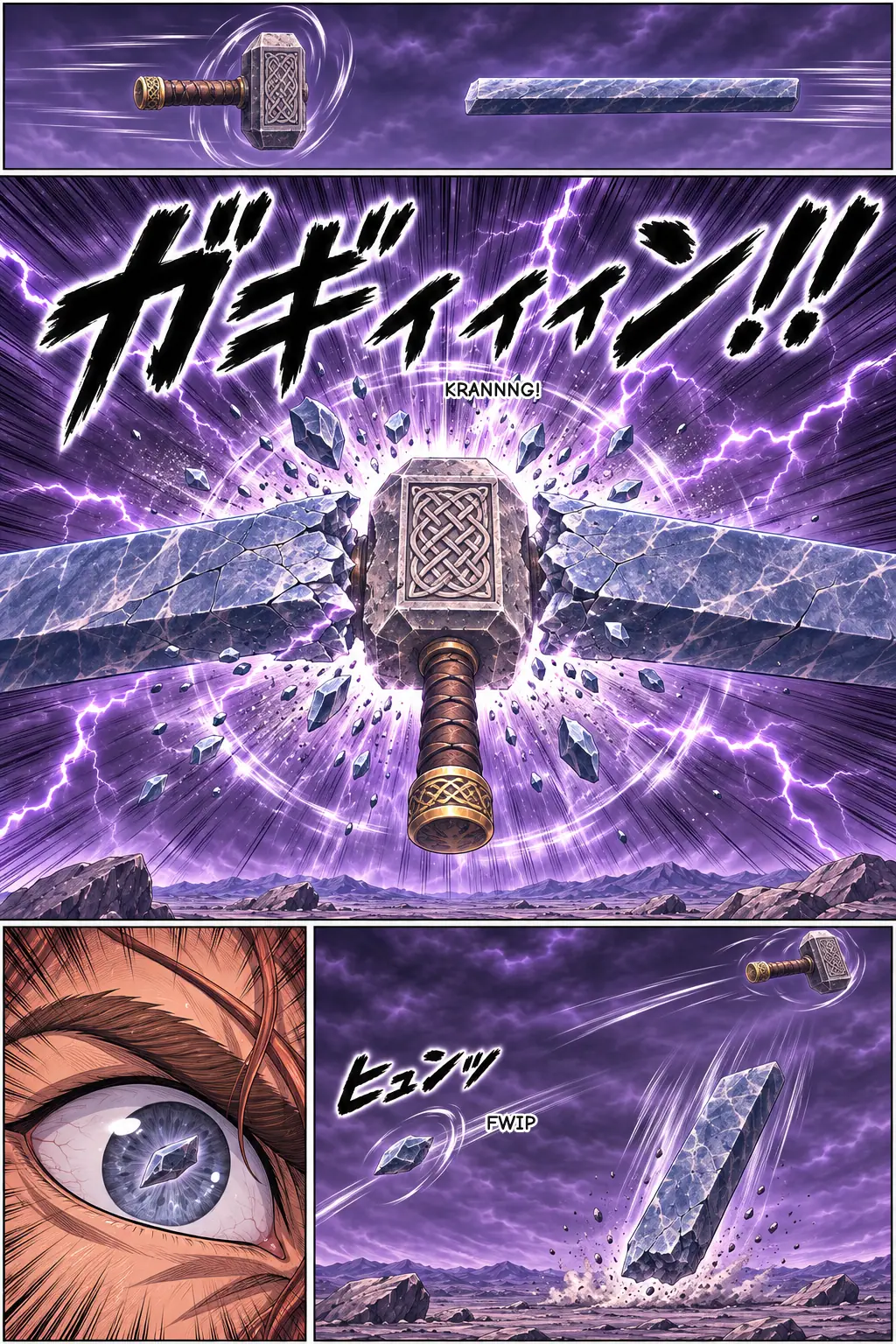
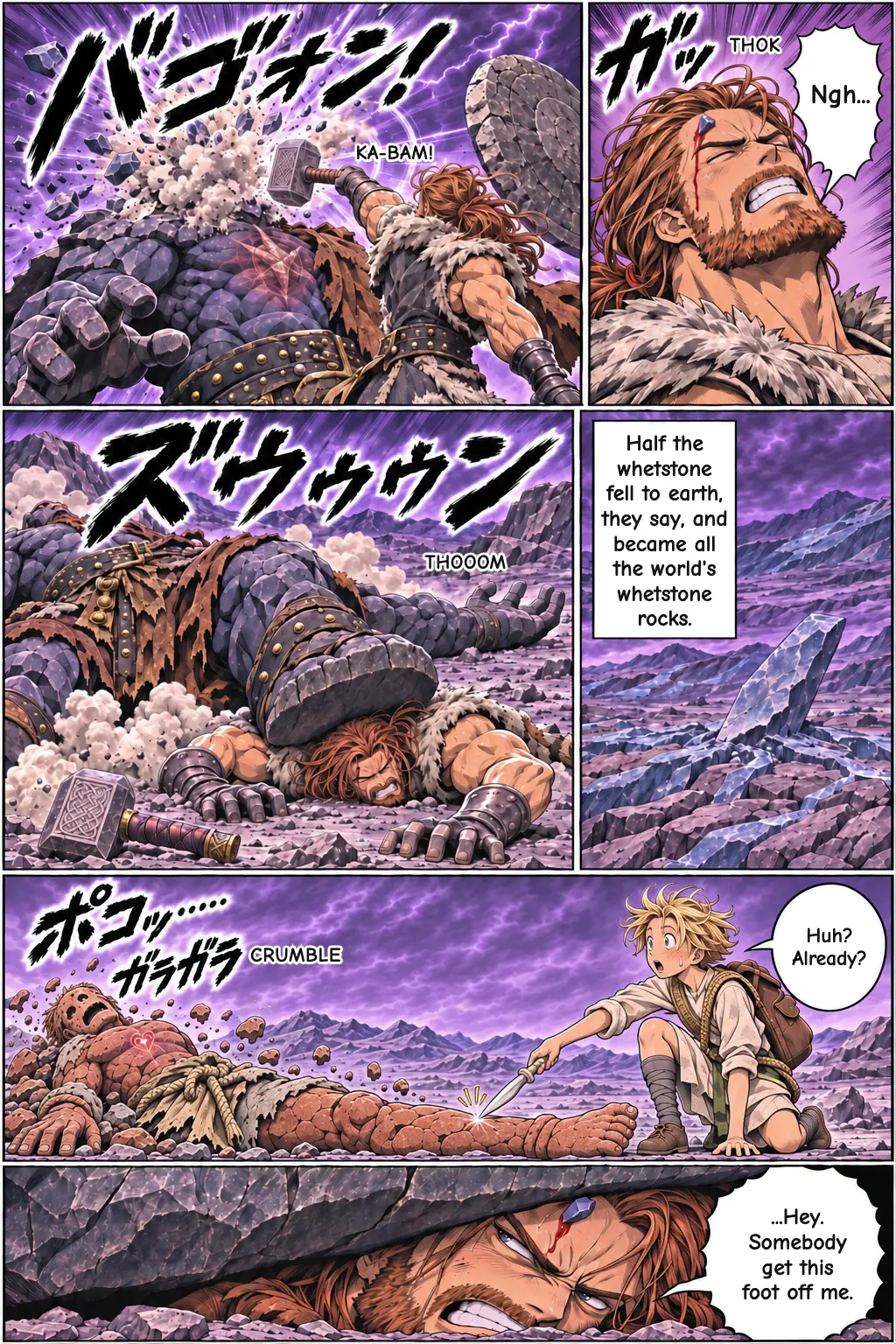
Thor's servant Þjálfi (Thjalfi) runs ahead and tricks Hrungnir, telling him Thor will attack from under the ground. So the giant puts his shield beneath his feet and stands on it. Then Thor arrives in thunder and lightning and hurls his hammer from far away. Hrungnir throws his whetstone. The two weapons collide in the air. The whetstone shatters: one piece falls to earth (the myth says whetstone rock comes from it), and another piece sticks in Thor's head and knocks him down. The hammer crushes Hrungnir's skull, and the giant falls with his leg across Thor's neck. Meanwhile Þjálfi brings down the clay giant with little glory.
Baby Magni and Gróa's Forgotten Spell
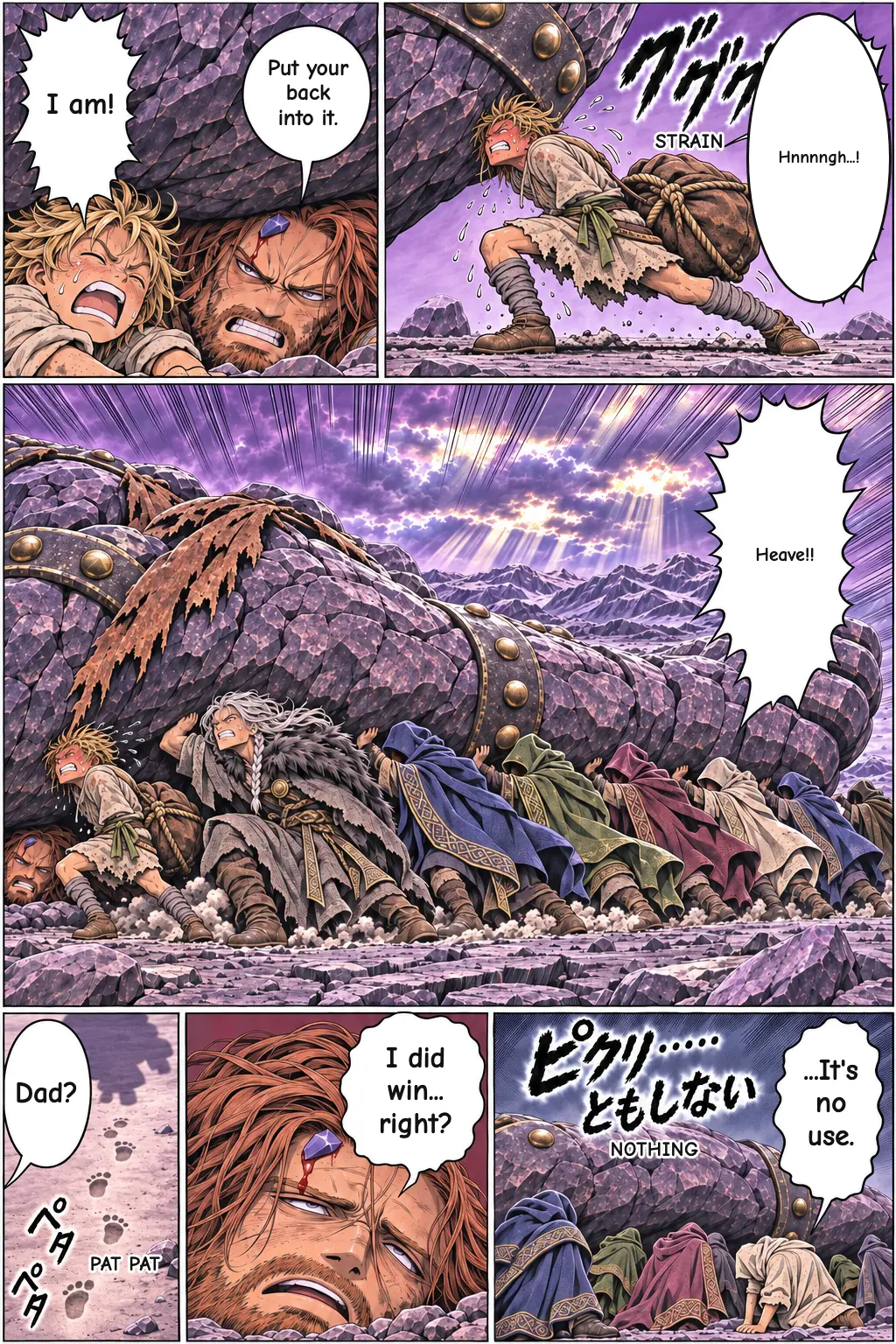
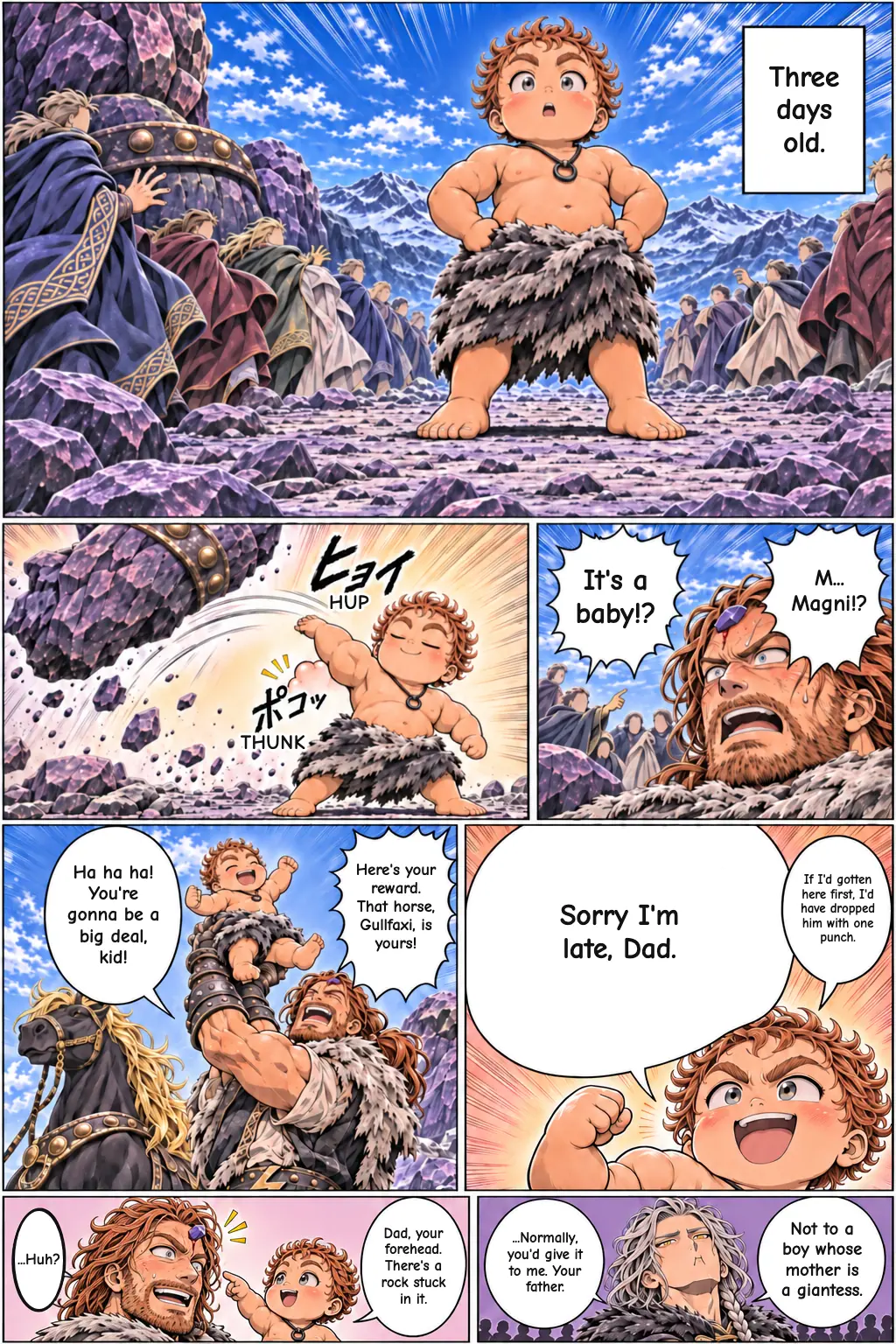
Nobody can lift the giant's leg off Thor, not Þjálfi and not all the gods together. Then Magni arrives. He is Thor's son by the giantess Járnsaxa, and he is only three nights old. He tosses the leg aside and apologizes for being late, saying he could have killed the giant with his fists. Thor is delighted and gives him Gullfaxi. Odin grumbles that the fine horse should have gone to him, Thor's father.
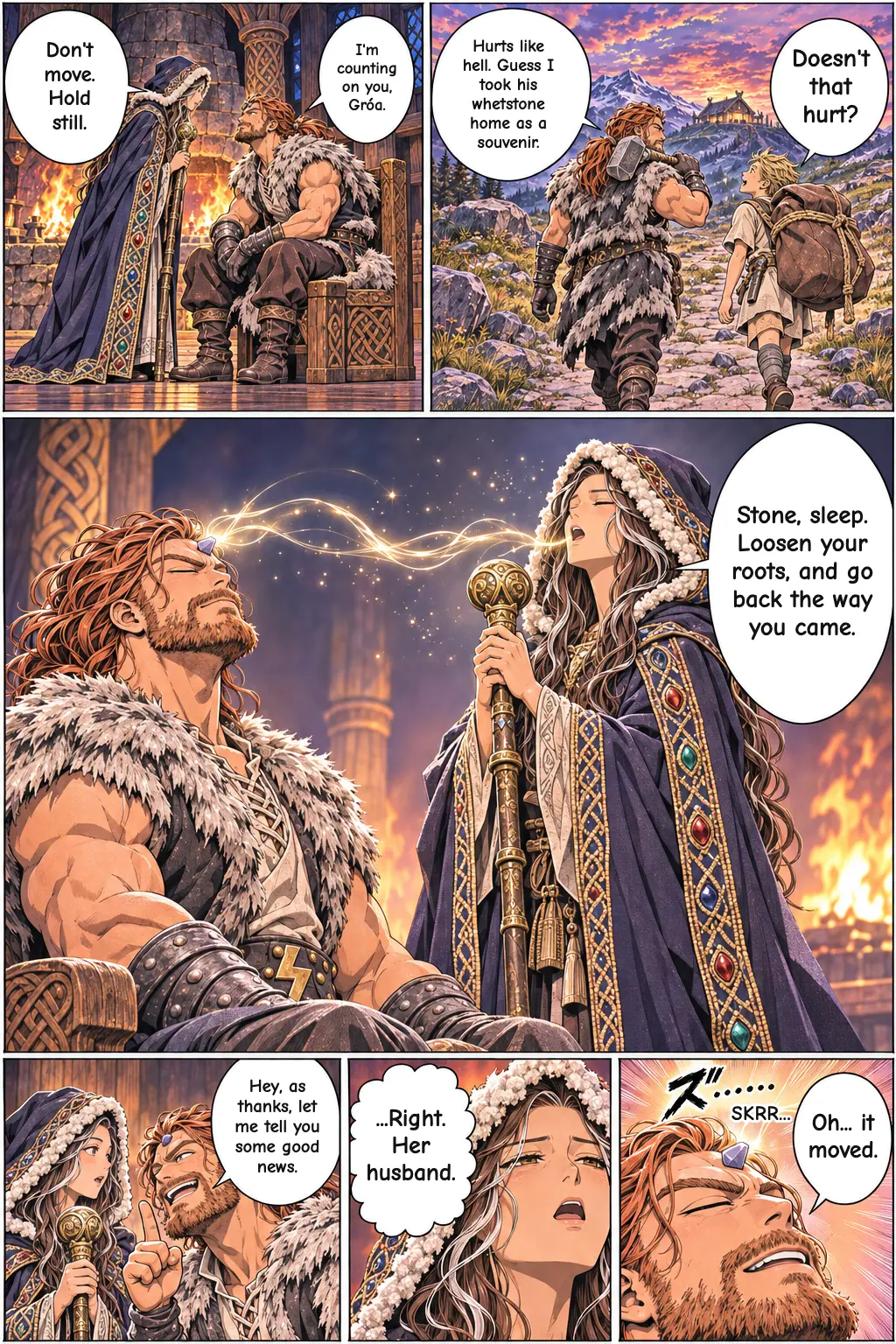
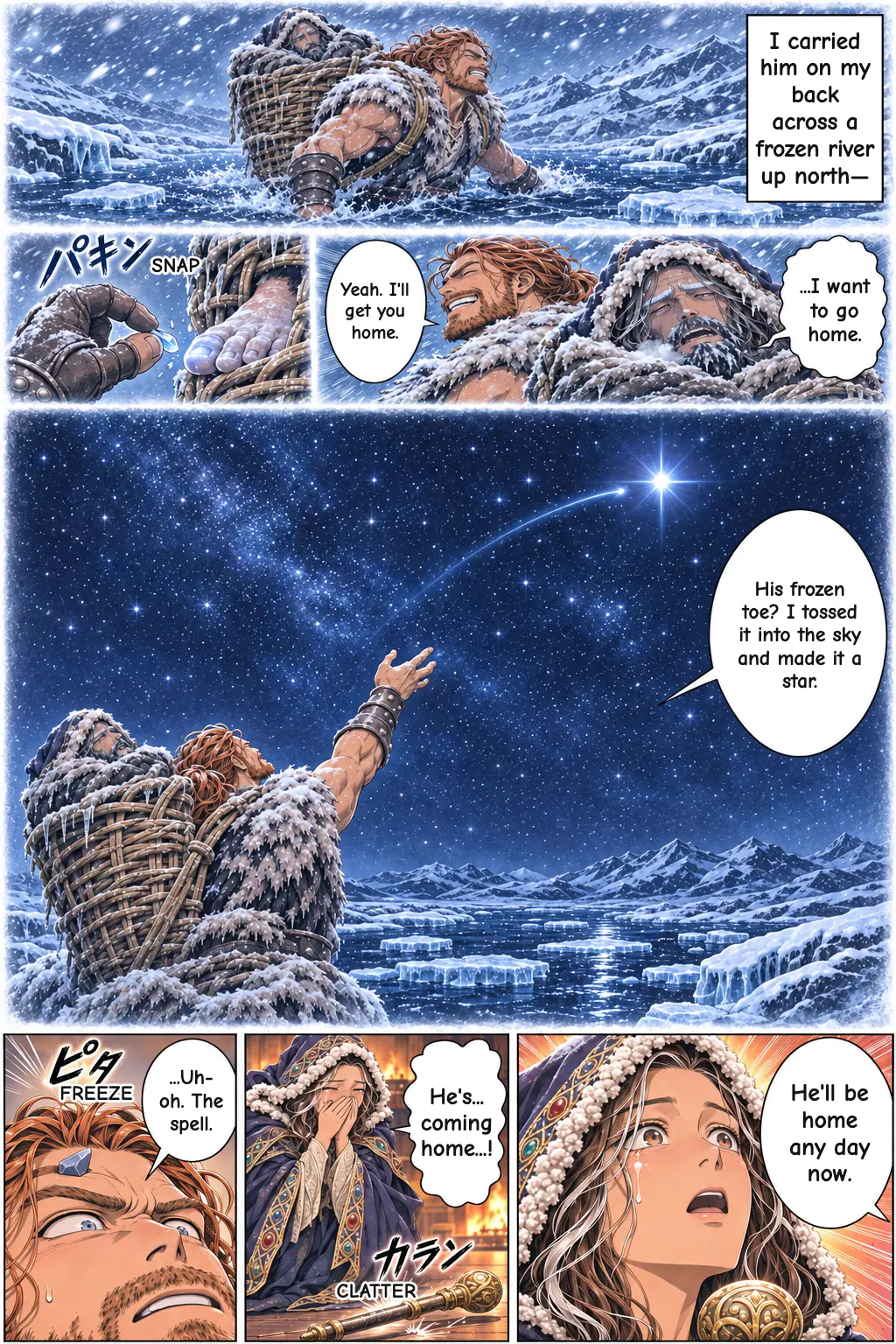
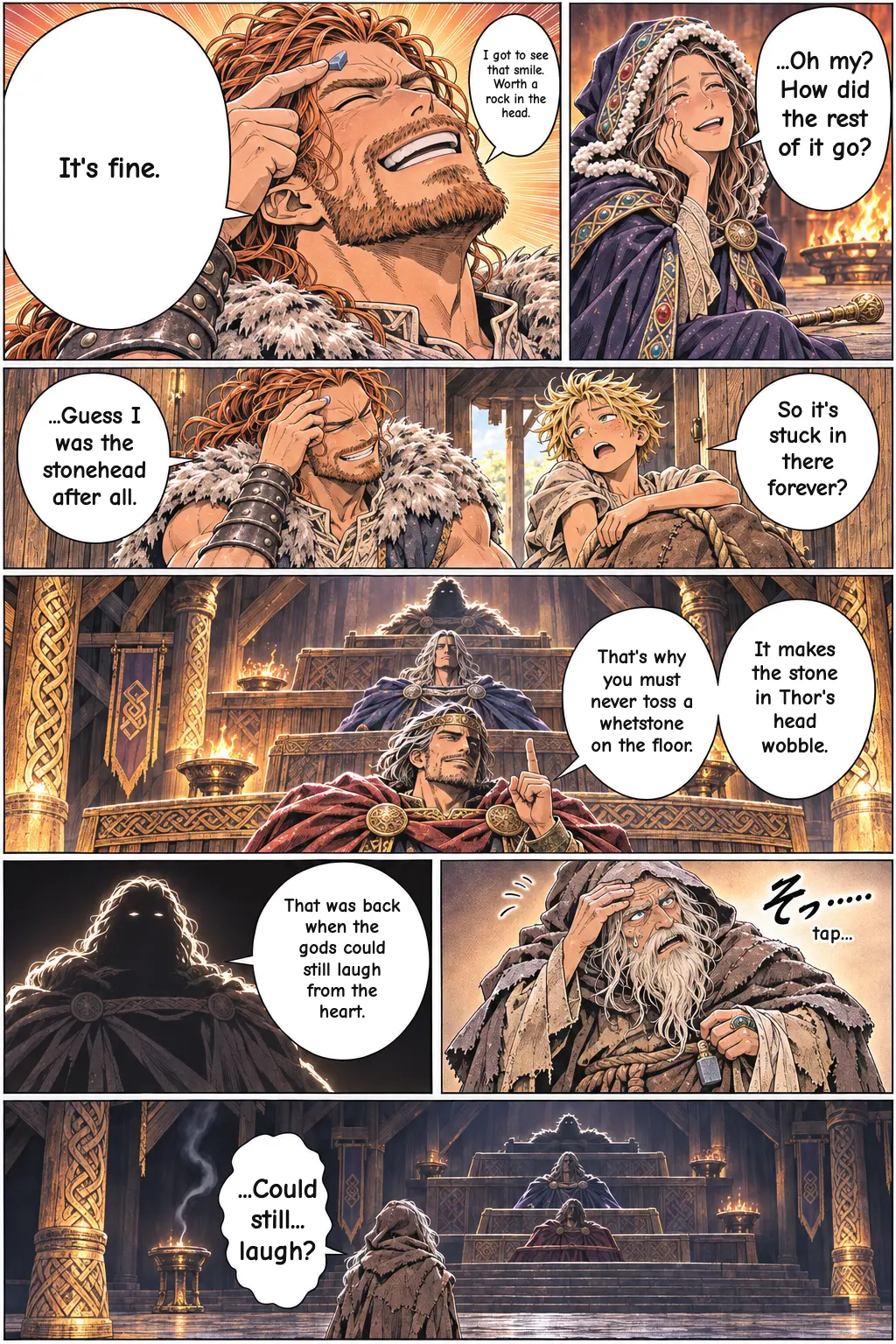
Back home, Thor is visited by the seeress Gróa, wife of Aurvandill the Bold. Her chanting starts to loosen the stone. To reward her, Thor tells her he carried Aurvandill home from Jotunheim in a basket. One of Aurvandill's toes froze, so Thor broke it off and threw it into the sky, where it became a star called Aurvandill's Toe. He adds that her husband will be home soon. Gróa is so happy she forgets the rest of her spell, and the whetstone stays in Thor's head.
What the Myth Tells Us
Snorri wrote the Prose Edda in Iceland around the 1220s, partly as a handbook for poets. This story explains several kennings, the poetic nicknames that skalds used: Thor could be called Hrungnir's killer, for example. Snorri also draws on an older skaldic poem, Haustlöng, which describes the same fight.
The story also shows how much the Norse cared about hospitality. Even Thor cannot strike a guest under Odin's protection, so the conflict has to move to a formal duel. Snorri adds a folk custom too: you shouldn't throw a whetstone across the floor, because the stone in Thor's head will stir. Some scholars link Aurvandill to Earendel in Old English poetry, and some connect the three-cornered "Hrungnir's heart" to triangular symbols carved in Viking Age art. These are interpretations, not settled facts.
What the Manga Changes, and Where to Read It
Episode 12 of NORSE MYTHOLOGY: The King Who Heard the End of the Gods follows Snorri's plot, but the visuals are new. The source does not describe what the gods and giants look like (beyond Hrungnir's stone head and heart), how the race through sky and sea looked, the feast hall, the weather and terrain at the duel, or how the giants built Mökkurkálfi. The manga invents those details, along with Magni's appearance and the exact words of Gróa's chant. The dialogue is reworded but keeps the meaning of the original lines.
If you'd like to watch a stone-headed giant drink Thor's cups dry and a three-day-old baby outlift the whole pantheon, the whole series is free to read on Manga Portal. No sign-up needed. Start with this episode, or go back to the beginning to meet the king who heard how the gods would end.
Characters in this episode
Thor
The Norse thunder god and giant-slayer, who wins his first one-on-one duel but is left with a whetstone shard in his head.
Hrungnir
The strongest of the giants, with a stone head and a three-cornered stone heart, who fights with a whetstone and a stone shield.
Odin
Chief of the gods, whose bet over his horse Sleipnir brings Hrungnir to Asgard and puts the giant under his protection.
Thjalfi (Þjálfi)
Thor's servant, who tricks Hrungnir into standing on his shield and brings down the clay giant Mökkurkálfi.
Magni
Thor's three-night-old son by the giantess Járnsaxa, who lifts the giant's leg off his father and wins the horse Gullfaxi.
Gróa
A seeress and wife of Aurvandill the Bold, whose spell nearly frees Thor until good news makes her forget it.
FAQ
Why does Thor have a stone in his head?
In the Prose Edda, Hrungnir's whetstone shatters against Thor's hammer and a piece lodges in Thor's head. The seeress Gróa starts chanting it loose, but she forgets the spell when Thor tells her that her husband Aurvandill is coming home. So the stone stays there.
Who was Hrungnir in Norse mythology?
Hrungnir was described as the strongest of the giants. He had a stone head and a stone heart with three corners, and he fought with a whetstone and a stone shield. Thor killed him in a duel at Grjótúnagarðar.
How did Magni lift the giant's leg?
Magni, Thor's son, was only three nights old, yet he pushed Hrungnir's leg off his father when none of the gods could move it. Thor rewarded him with Hrungnir's horse Gullfaxi.
Where does the story of Thor and Hrungnir come from?
It comes from Skáldskaparmál, part of the Prose Edda that Snorri Sturluson wrote in Iceland around the 1220s. Snorri also quotes the older skaldic poem Haustlöng, which describes the same fight.
Why couldn't Thor kill Hrungnir in Asgard?
Odin had invited Hrungnir in, so the giant was a guest under Odin's protection. Hrungnir also pointed out that he was unarmed, and killing an unarmed man would be shameful, so the fight moved to a formal duel at the border.