Get new episodes in your feed. Follow us on:ThreadsBluesky
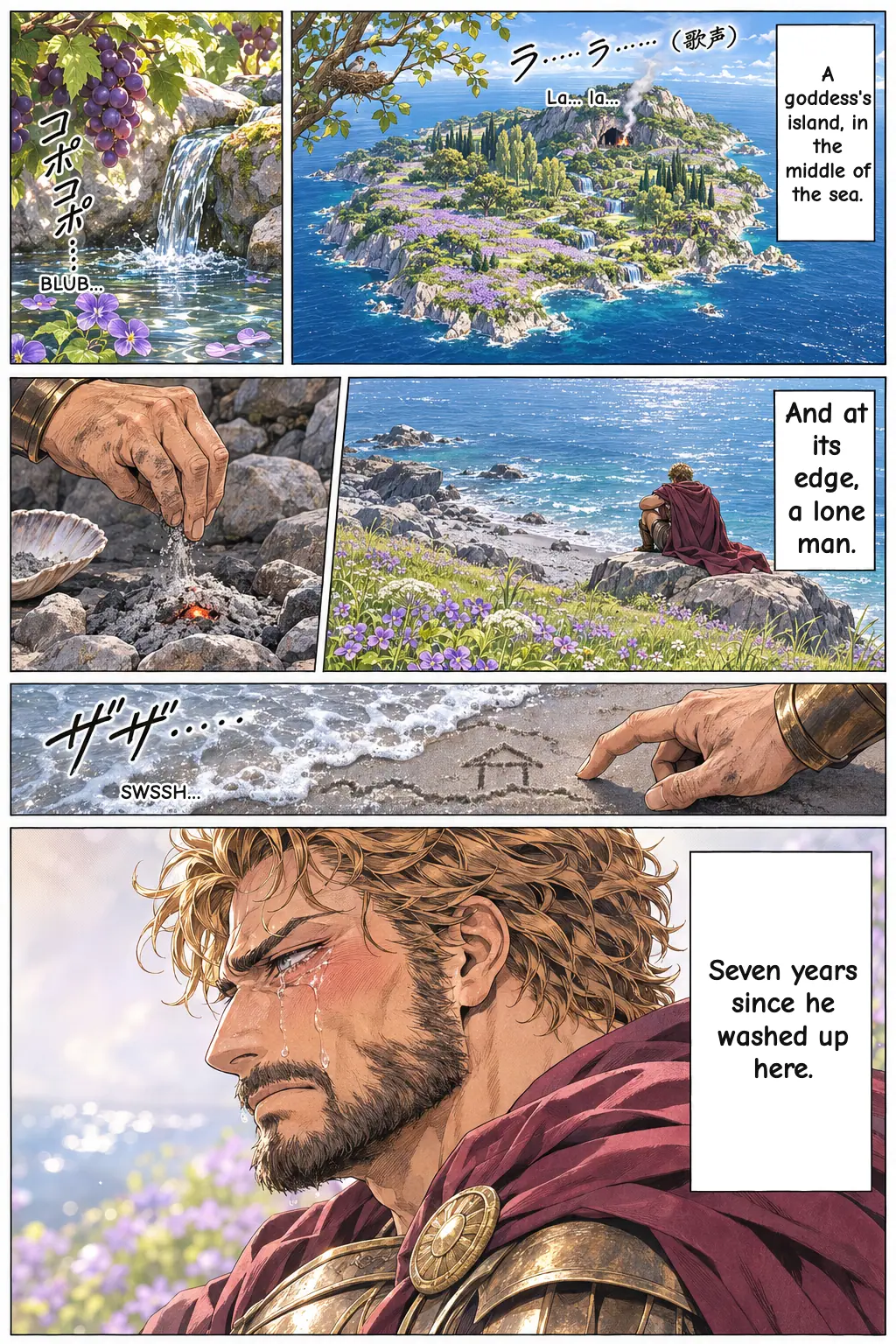
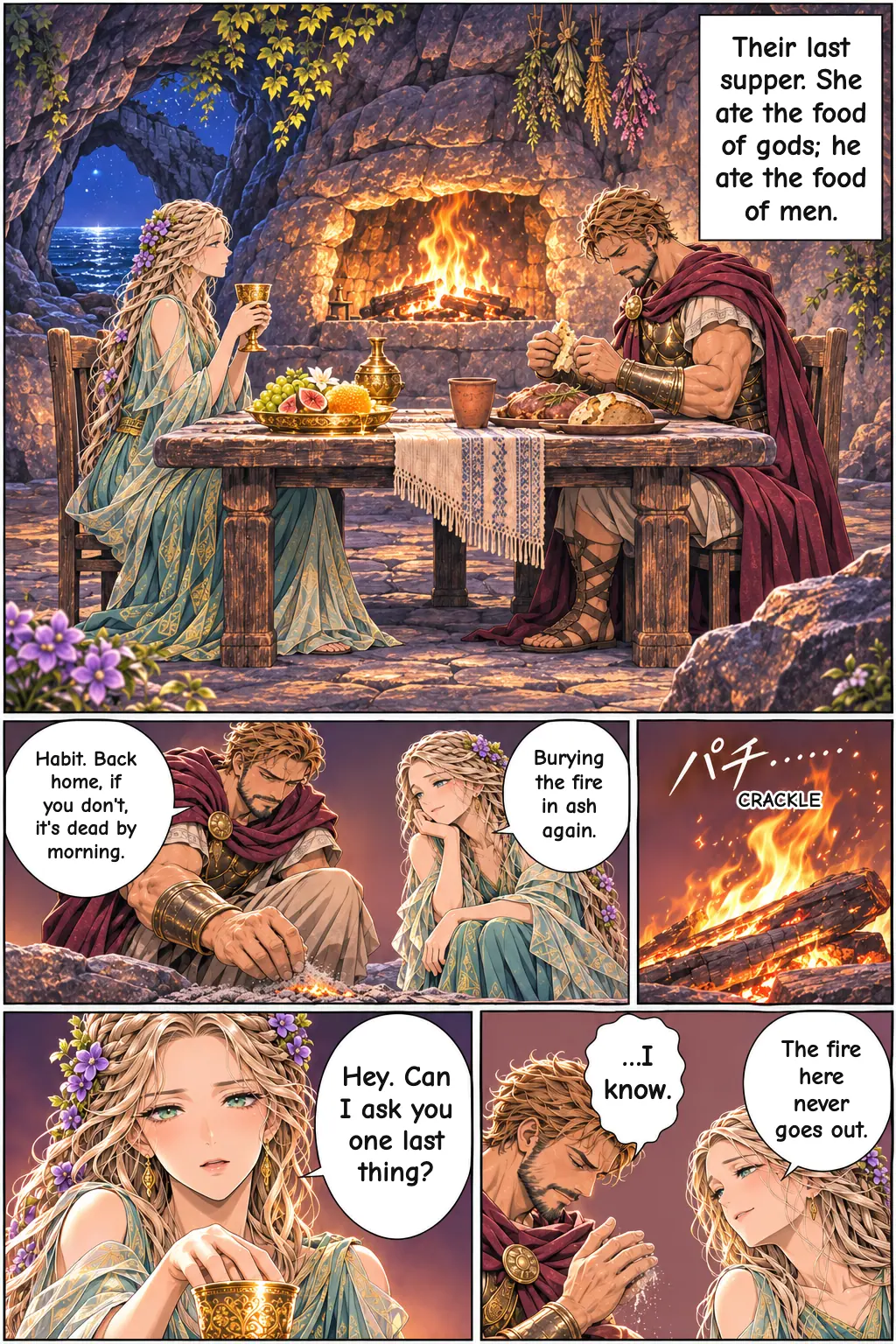
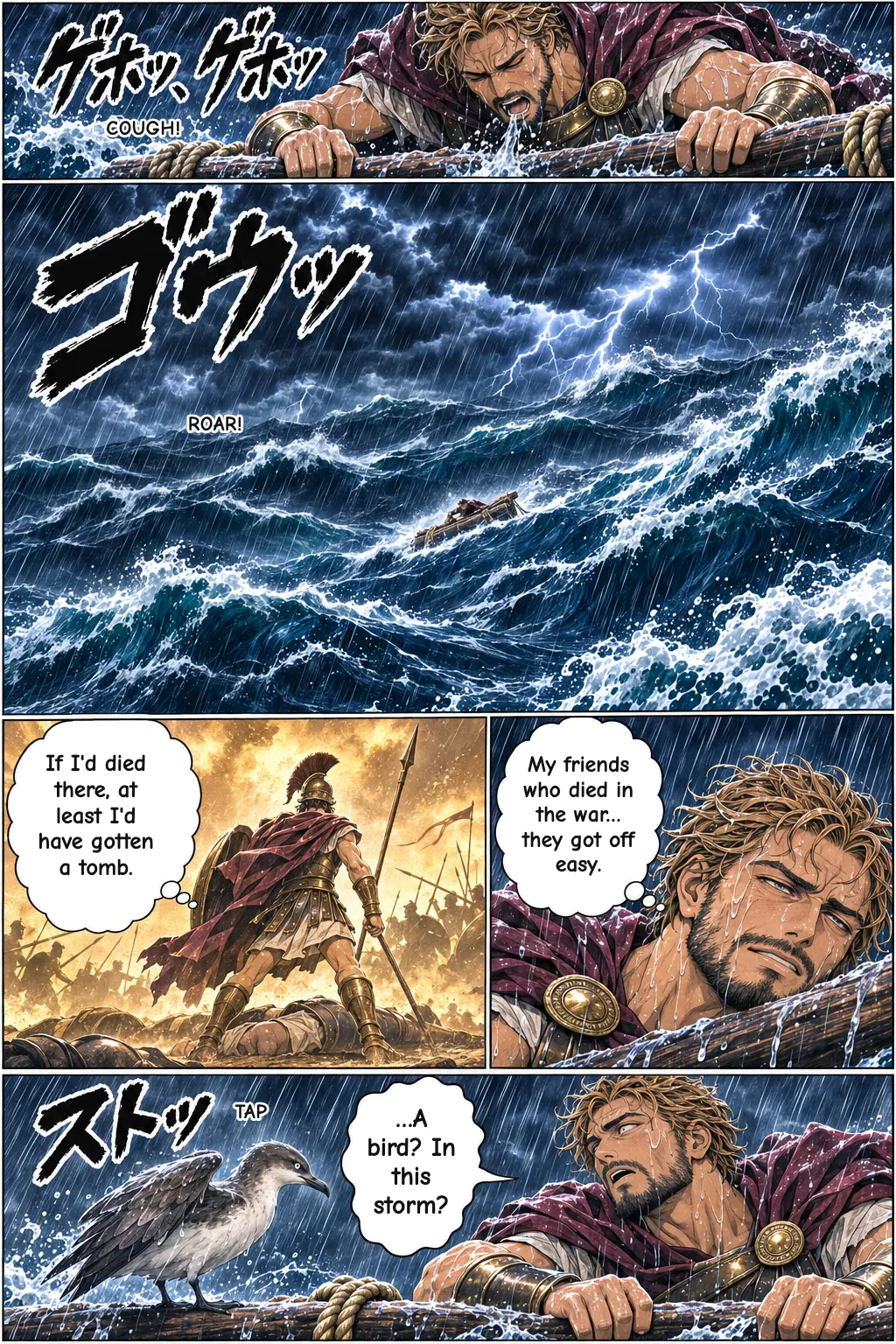
For seven years, Odysseus has wept on the beach of a paradise island. When the goddess Calypso begs him to stay, promising he'll never age and never die, he still chooses his aging wife and his home. He sets out on a raft he built with his own hands, but the moment land comes into view, the sea god's storm smashes everything to pieces.
Story summary
Book 5 of Homer's Odyssey opens on Mount Olympus. Athena, the goddess of wisdom and Odysseus' protector, complains to the other gods that her favorite hero is still stuck on a distant island, held there by the nymph Calypso, while suitors at home plot to kill his son Telemachus. Zeus, king of the gods, agrees it is time. He sends Hermes, the messenger god, with a clear order: Odysseus must go home, alone on a raft, and after hard suffering he will reach Scheria, the land of the Phaeacians, on the twentieth day. They will honor him like a god and send him home with rich gifts.
Odysseus and Calypso: Why He Left Ogygia – Odyssey Book 5 Summary
In short: Odysseus and Calypso is the episode from Book 5 of Homer's Odyssey in which the gods order the nymph Calypso to release Odysseus from her island, Ogygia. She offers him eternal life and youth if he stays, but he chooses his mortal wife Penelope and home, builds a raft, and sets sail, only for Poseidon's storm to wreck it just as land appears.
The original story: Odyssey Book 5 in brief
Book 5 of Homer's Odyssey opens on Mount Olympus. Athena, the goddess of wisdom and Odysseus' protector, complains to the other gods that her favorite hero is still stuck on a distant island, held there by the nymph Calypso, while suitors at home plot to kill his son Telemachus. Zeus, king of the gods, agrees it is time. He sends Hermes, the messenger god, with a clear order: Odysseus must go home, alone on a raft, and after hard suffering he will reach Scheria, the land of the Phaeacians, on the twentieth day. They will honor him like a god and send him home with rich gifts.
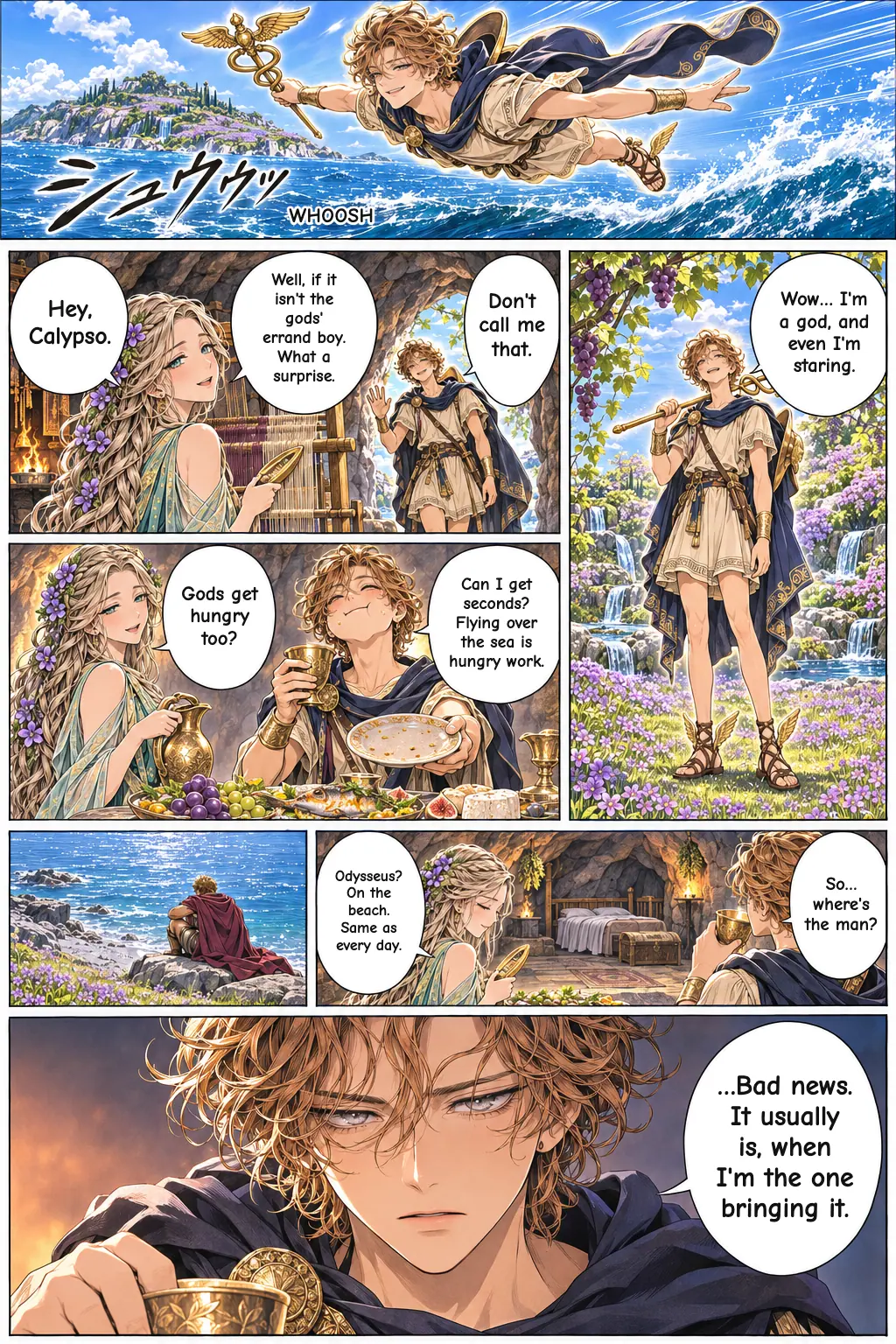
Hermes ties on his golden sandals, takes up his staff, and skims across the waves like a seabird. Calypso's island is so lovely that even a god stops to admire it: a cave with fragrant cedar burning, woods full of birds, grapevines, four springs, and meadows of violets and wild celery. Calypso sits inside singing and weaving at a golden loom. Odysseus is not there. As on every other day, he is sitting on the shore, crying and staring at the empty sea.
Calypso's offer and Odysseus' choice
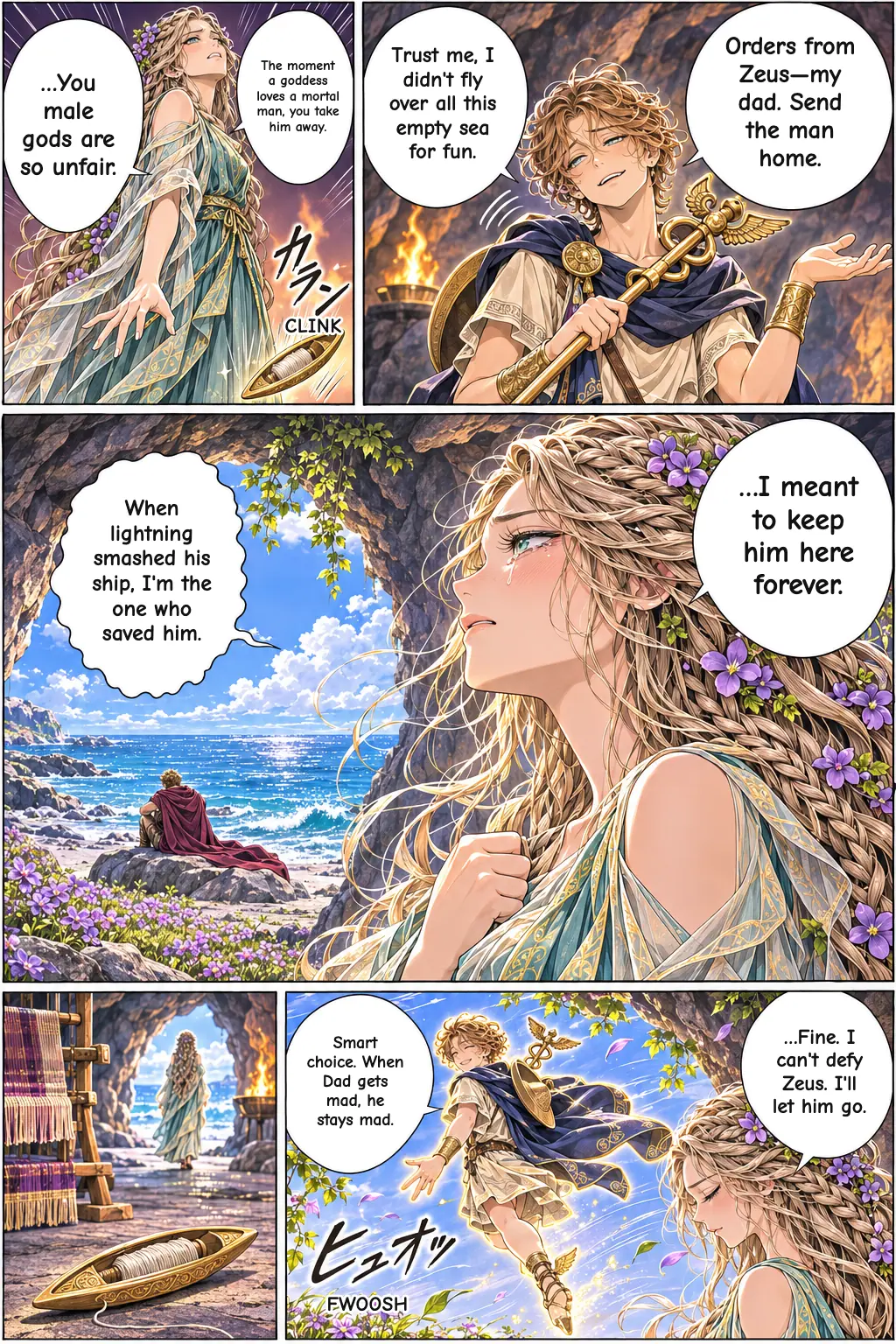
Calypso welcomes Hermes with nectar and ambrosia, the food of the gods, but his message angers her. She accuses the male gods of jealousy: they never let a goddess openly love a mortal man. She points to earlier cases, such as Orion, loved by Eos the dawn goddess and shot by Artemis, and Iasion, loved by Demeter and struck down by Zeus' lightning. She reminds Hermes that she saved Odysseus when his ship was destroyed, fed him, and meant to make him ageless and immortal. Still, no one defies Zeus, so she agrees to let him go.
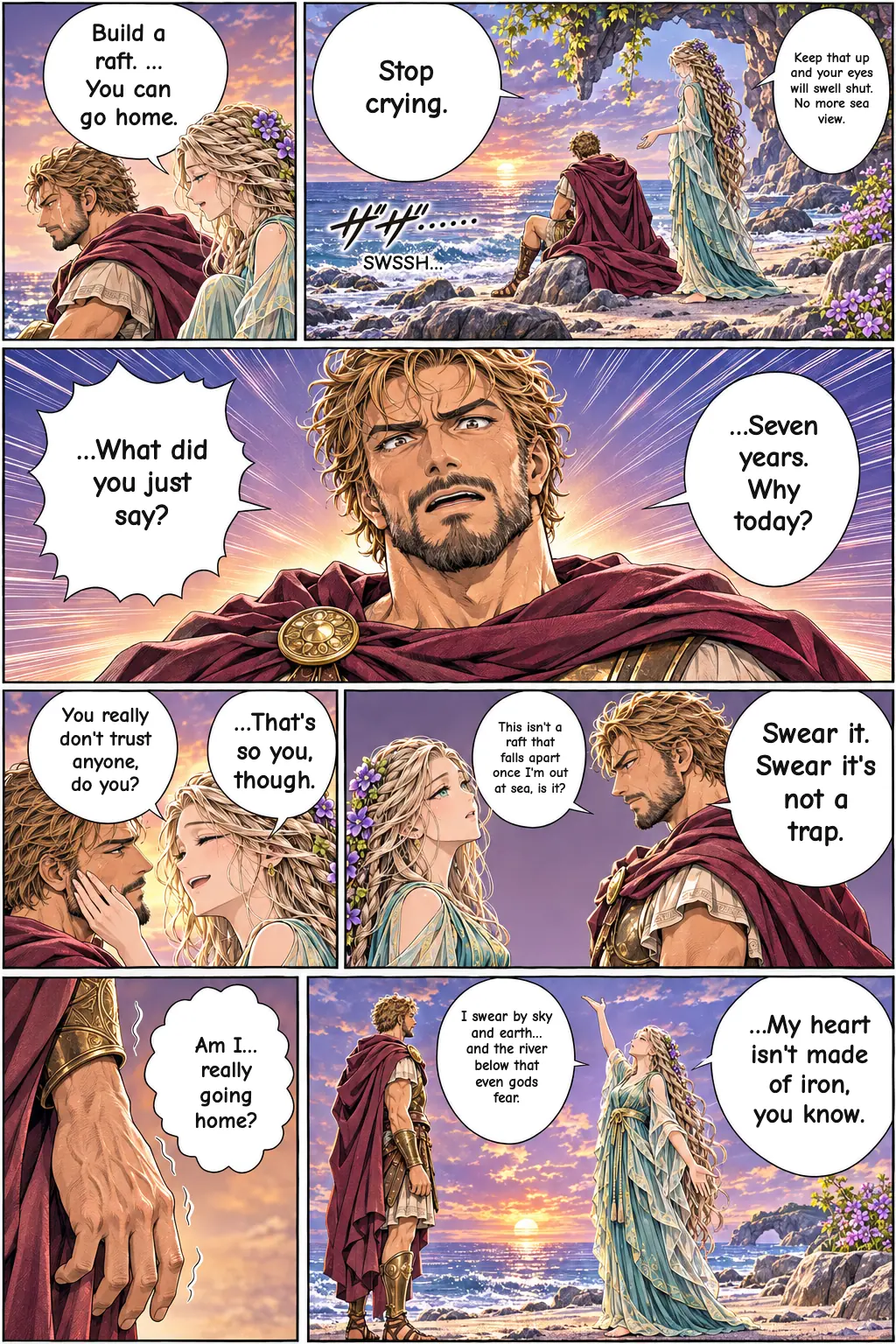
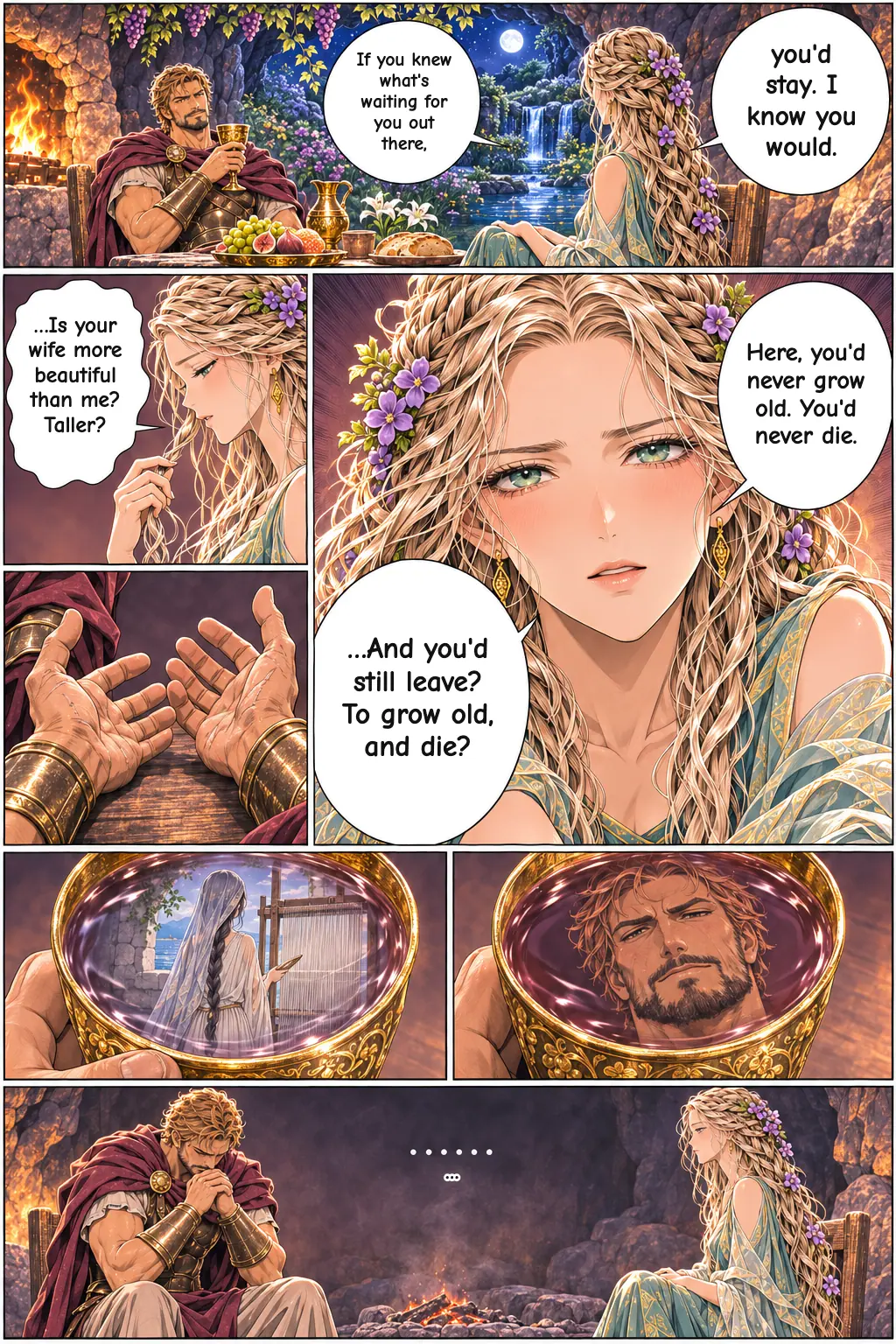
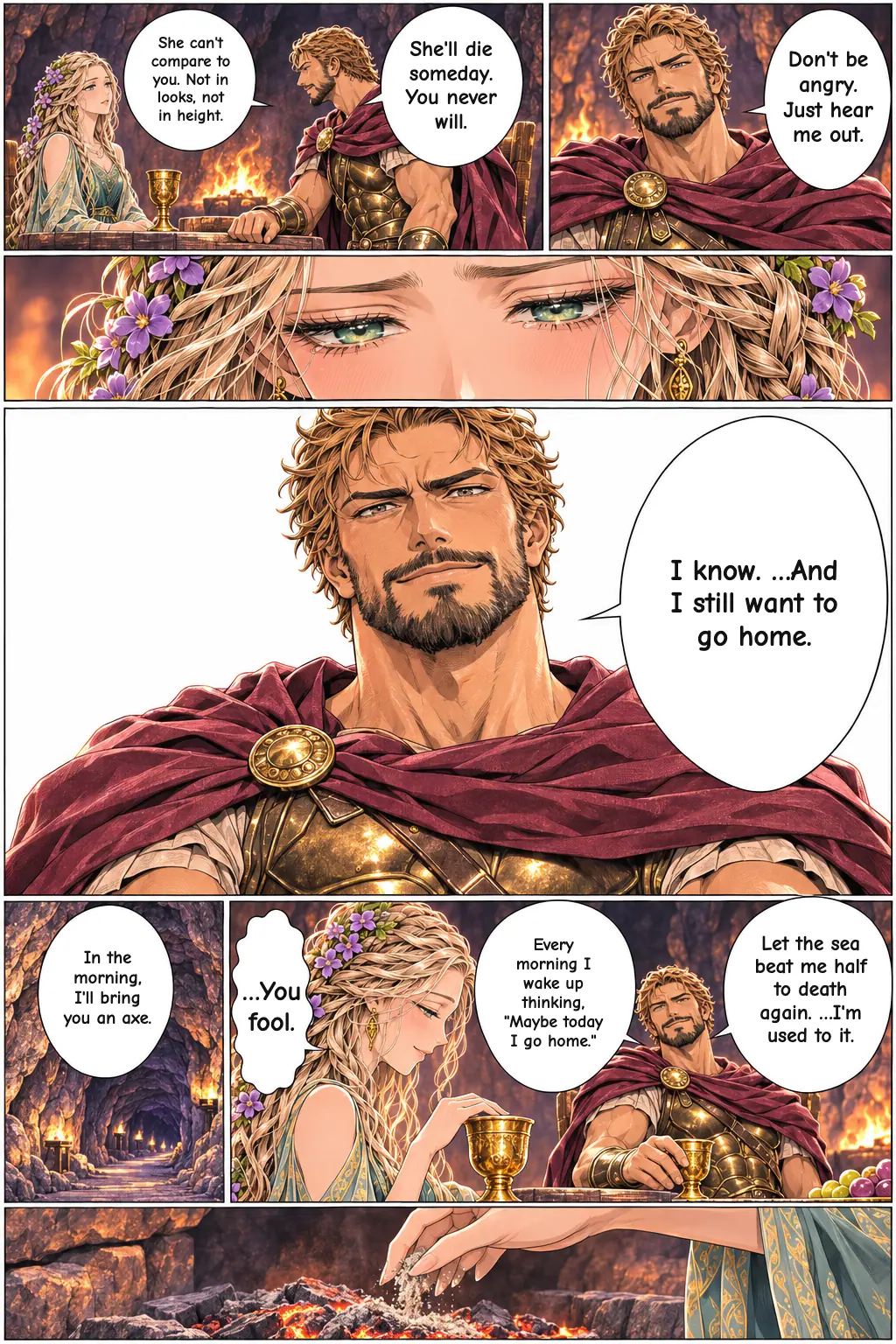
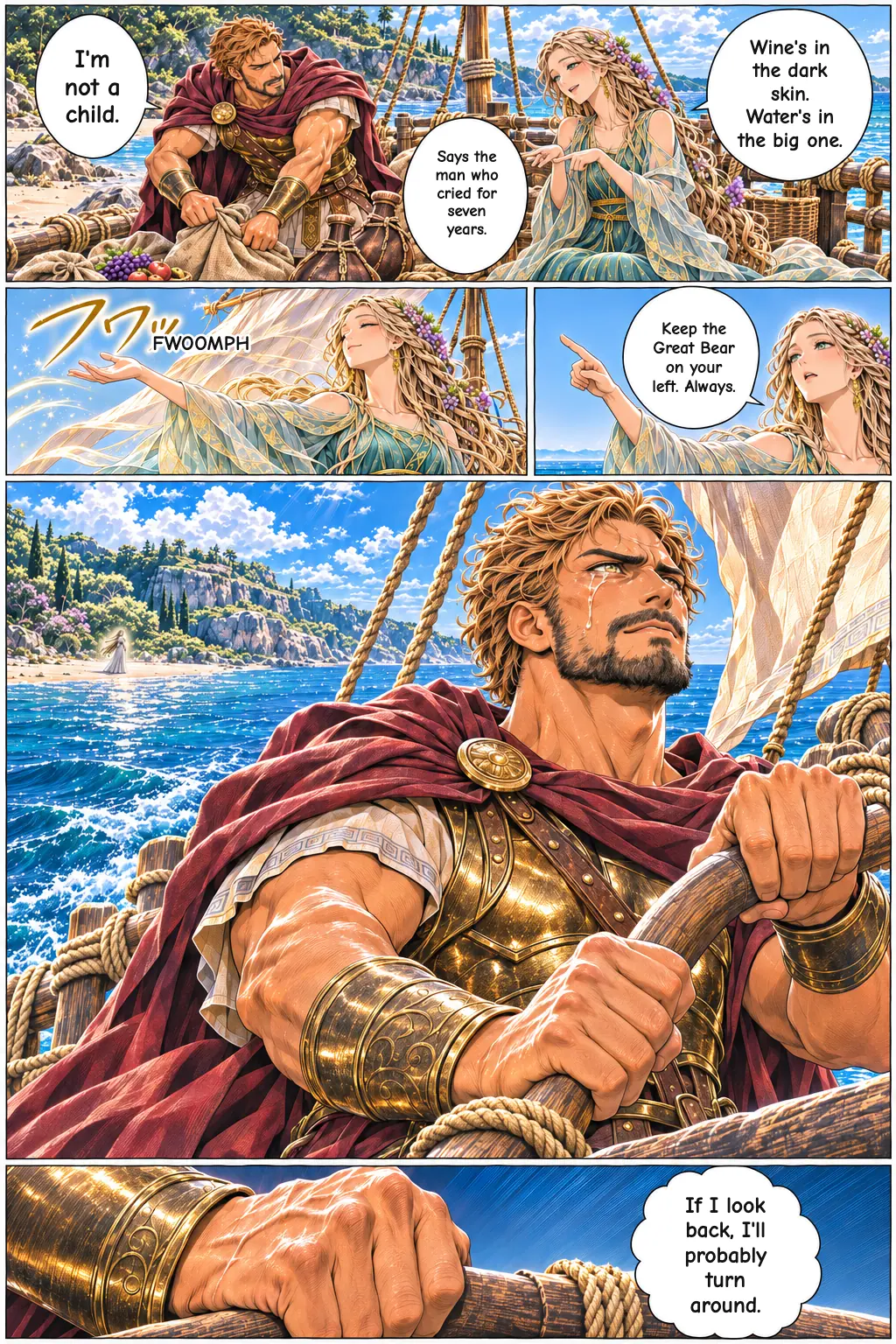
She walks down to the beach and tells Odysseus he may build a raft and leave. He is suspicious and asks her to swear she is not planning some harm. She smiles and swears by Earth, Heaven, and the river Styx, the oath even gods fear to break. Over dinner she makes one last appeal: if he knew the troubles ahead, he would stay and become immortal, and surely she is no less beautiful than his wife. Odysseus answers gently. He admits Penelope cannot match a goddess in looks, because she is mortal. Even so, he longs every day to return home, and if some god wrecks him at sea, he will endure it, as he has endured so much already.
This is the heart of the episode: a man offered eternal youth in paradise who chooses aging, risk, and a human family instead.
The raft, the stars, and Poseidon's storm
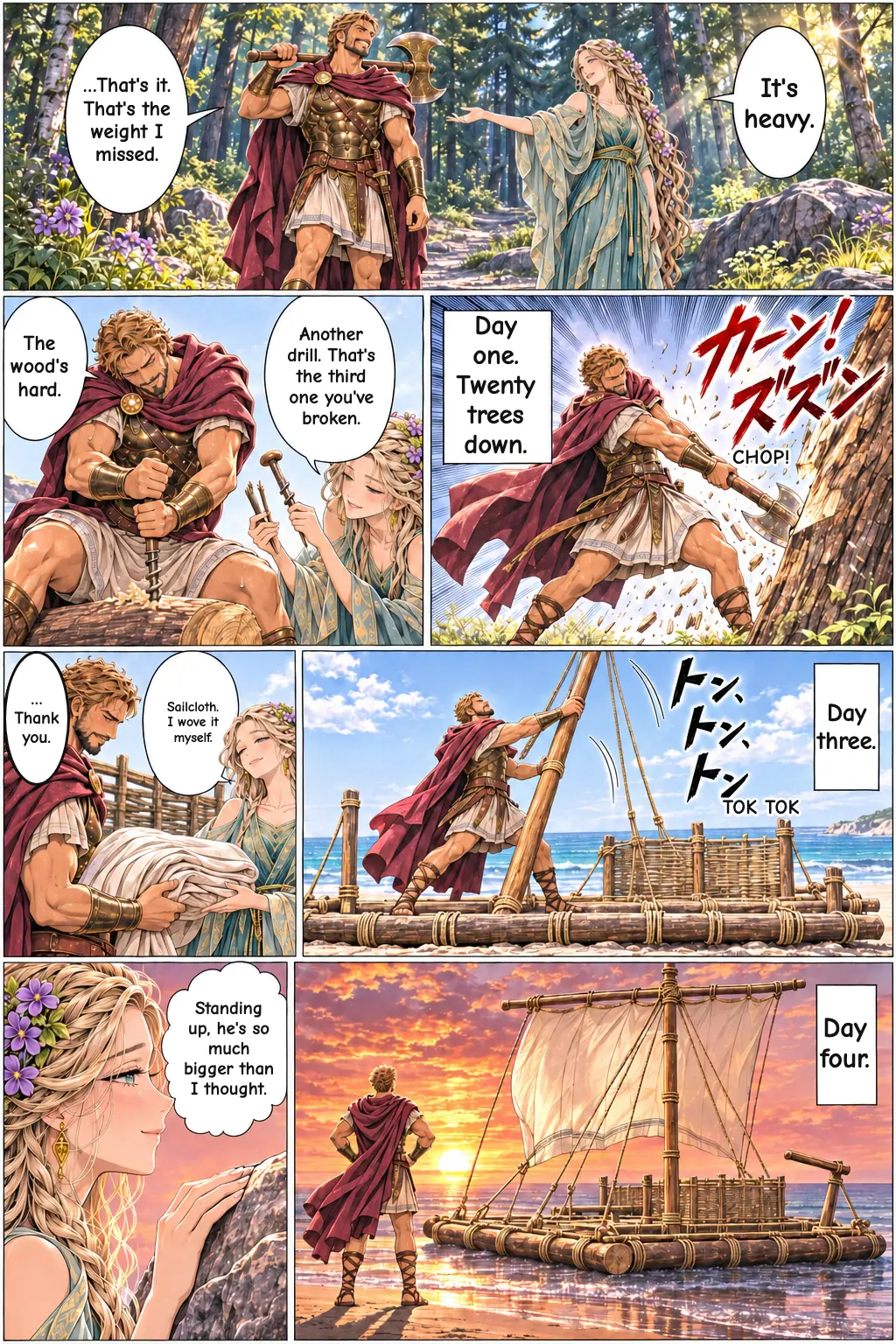
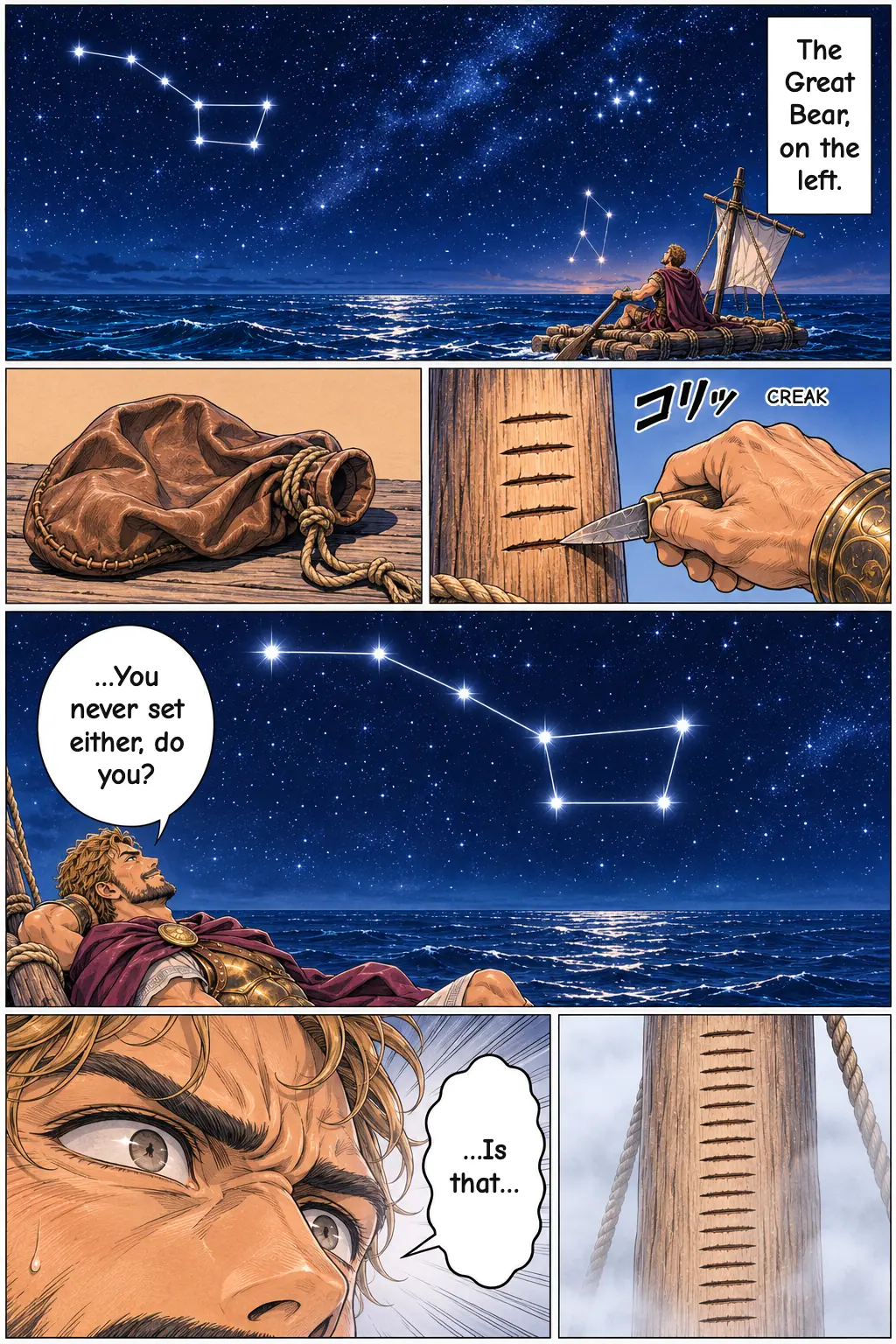
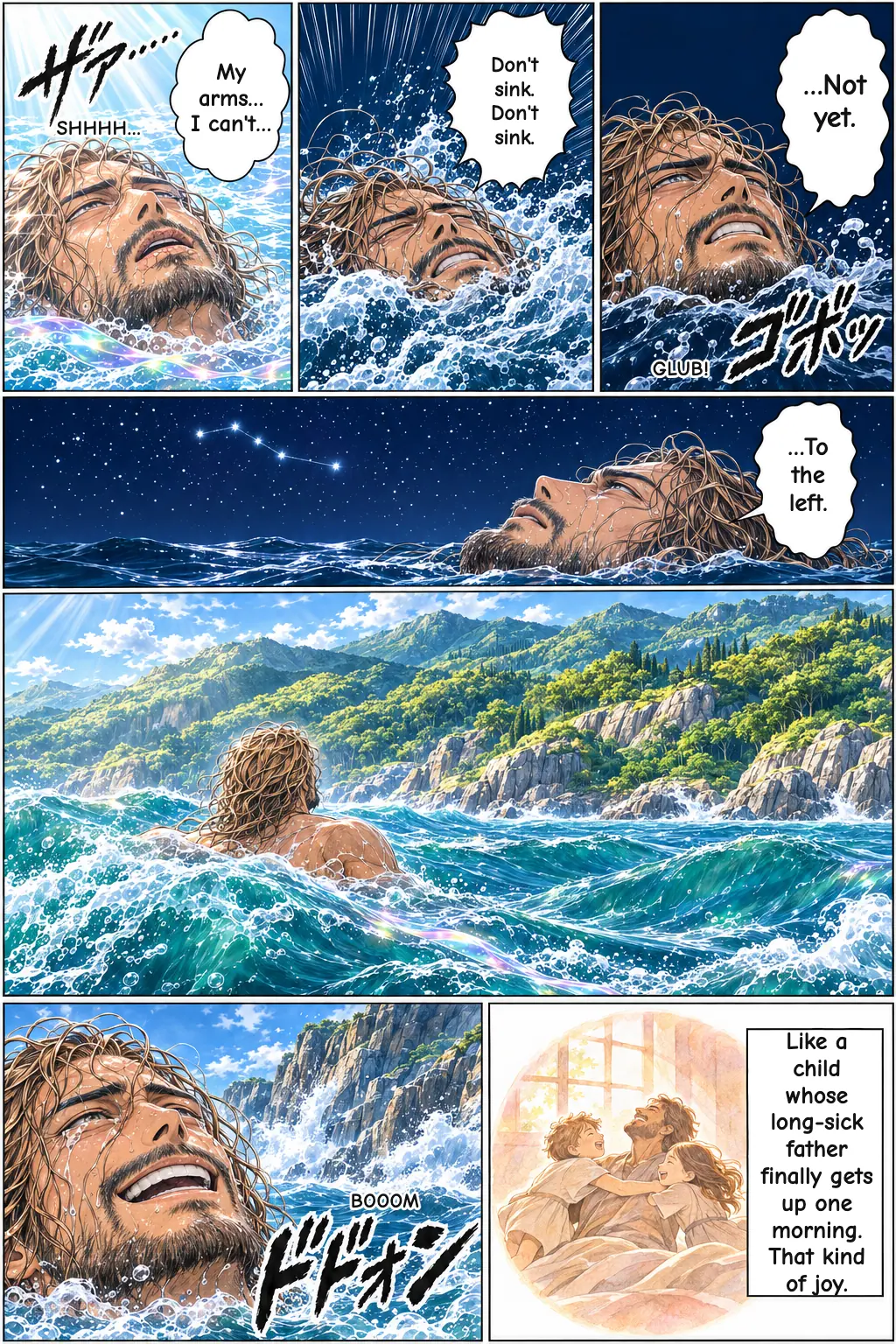
The next morning Calypso gives him a bronze double-edged axe and an adze and shows him where the tall trees grow. He fells twenty trees and, with tools and sailcloth she provides, builds a raft with a deck, mast, yardarm, steering oar, and a woven willow fence. It takes four days. On the fifth, she bathes him, dresses him in fragrant clothes, loads food and wine, and sends a gentle wind. Following her advice, he steers by the stars, keeping the Great Bear on his left.
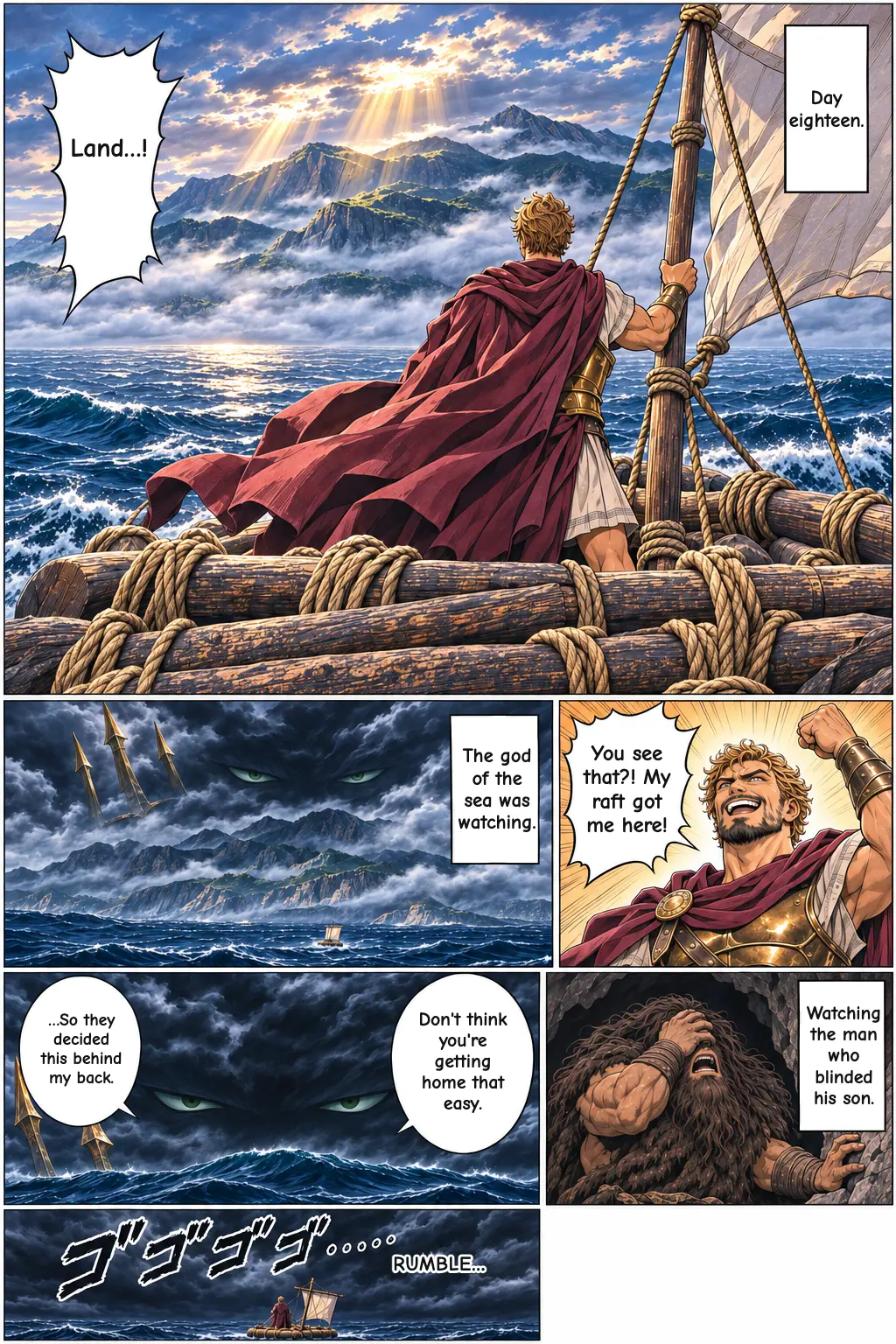
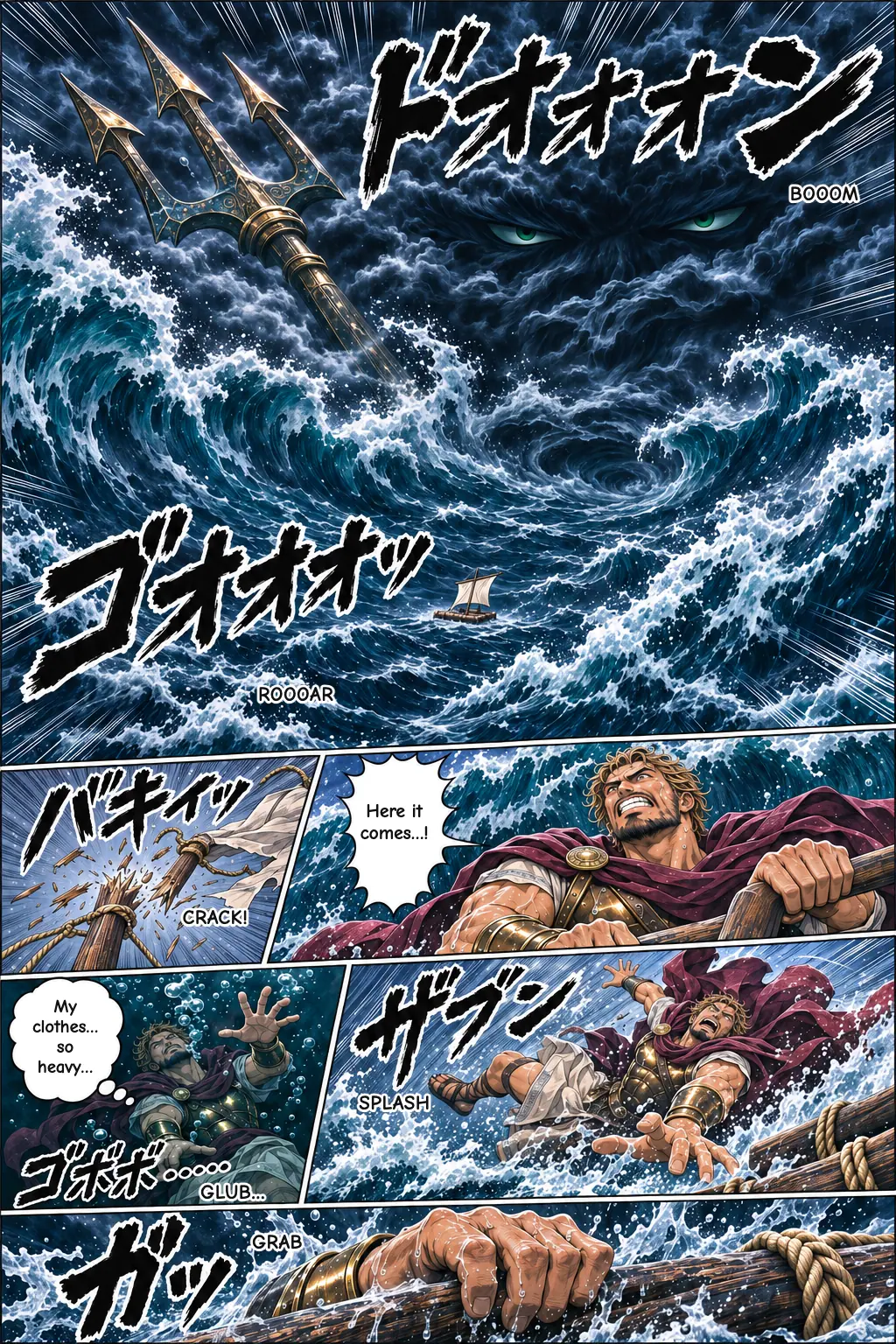
For seventeen days he sails without sleep. On the eighteenth, the shadowy mountains of the Phaeacians rise from the sea like a shield. At that moment Poseidon, god of the sea and Odysseus' enemy, returns from a visit to the Ethiopians, spots the raft, and realizes the other gods acted while he was away. He stirs the sea with his trident and unleashes every wind at once. Odysseus wishes aloud that he had died gloriously at Troy. A wave throws him overboard and snaps the mast, but he struggles back onto the wreck.
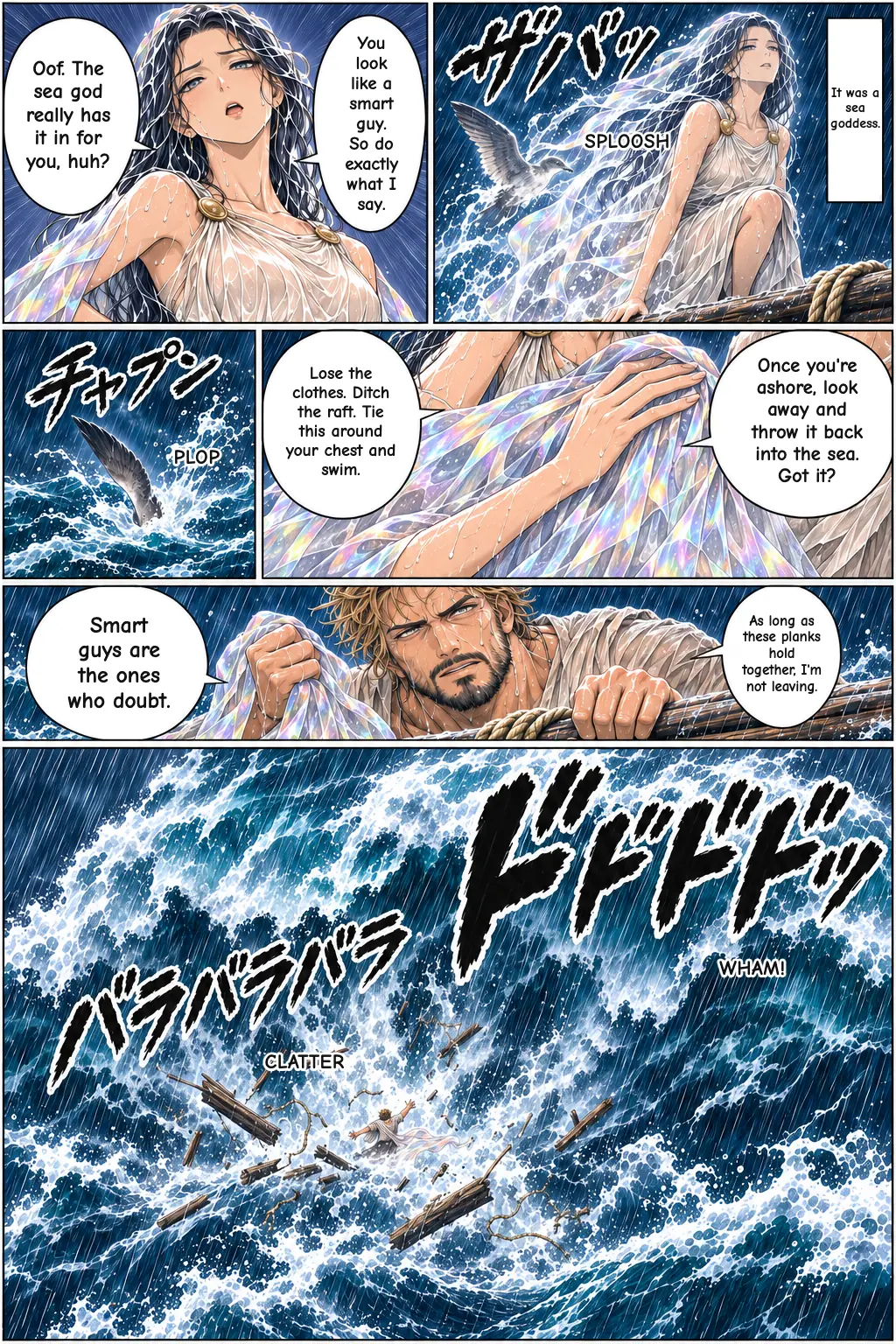
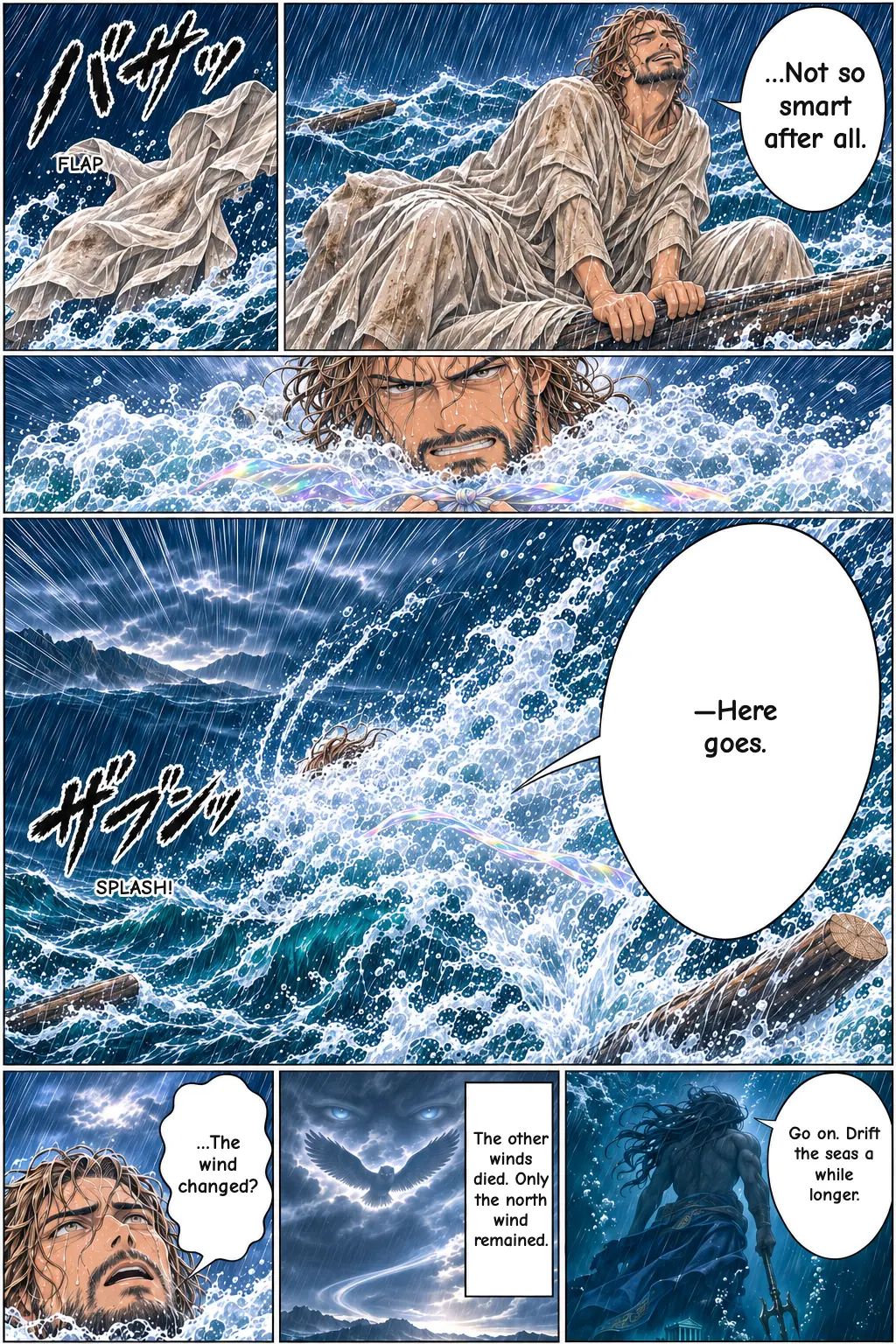
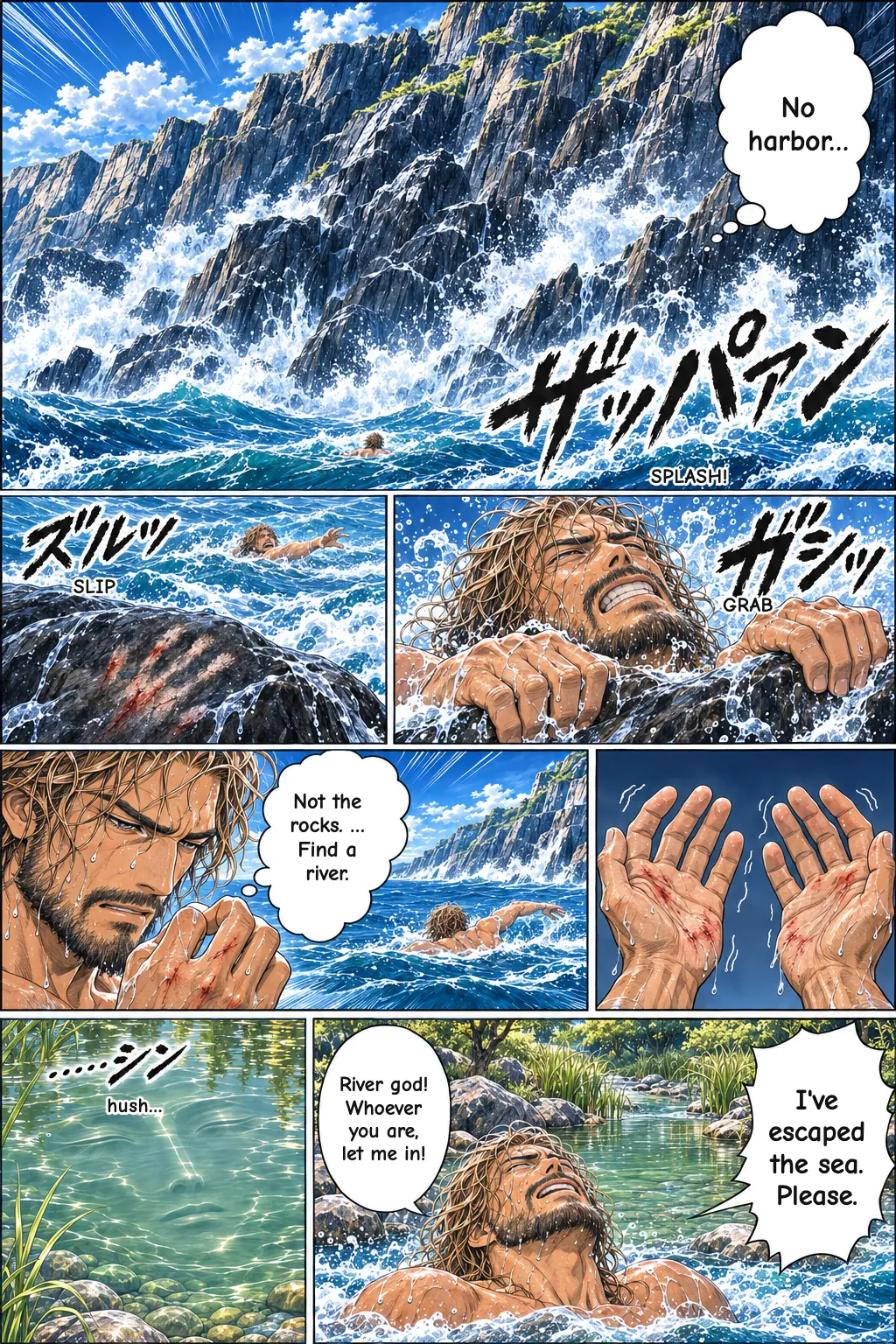
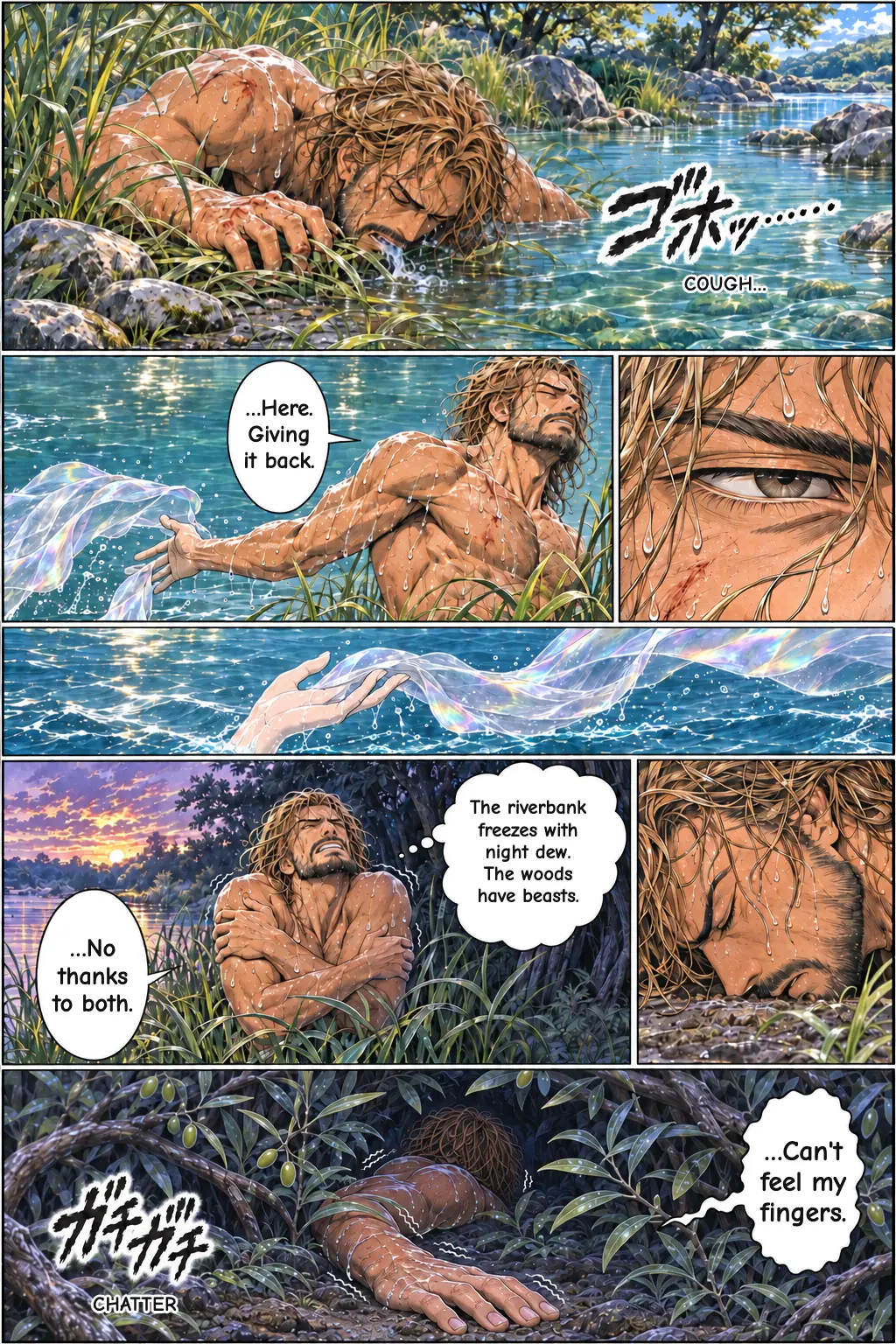
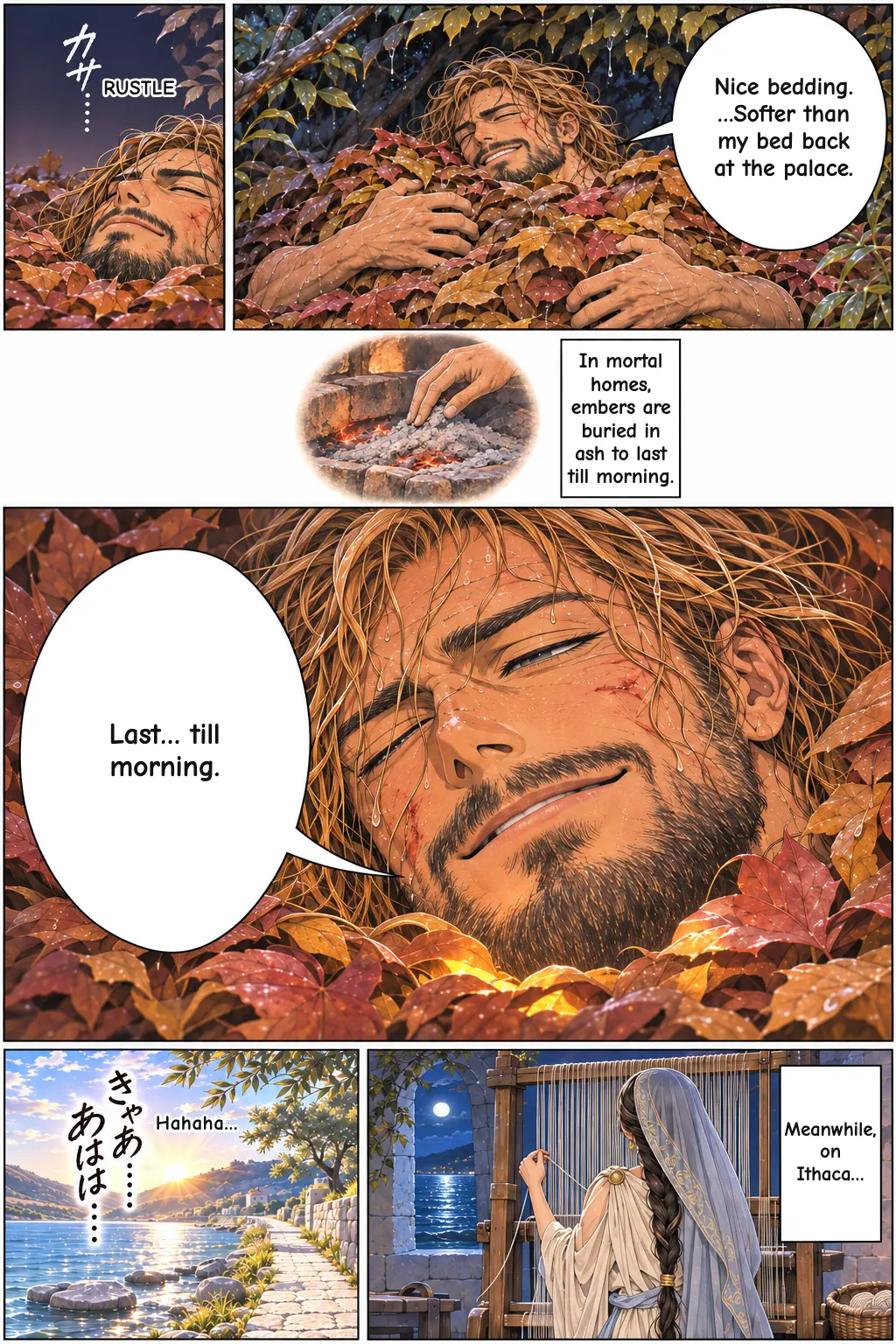
Help comes from Ino, also called Leucothea, a mortal woman who became a sea goddess. Appearing as a seabird, she gives him an immortal veil and tells him to swim for land, then throw it back into the sea. After two days and two nights adrift, guided quietly by Athena, he reaches a river mouth, prays to the river god, who calms the current, returns the veil, and falls asleep in a pile of leaves under olive bushes.
What the story tells us
Ancient Greeks drew a sharp line between gods and mortals, and many readers see Book 5 as a statement about that line. Immortality on Ogygia means a life without change, story, or homecoming. Odysseus' refusal treats human life, with its aging and loss, as worth more. The Greek idea of nostos, the homecoming, is central to the whole Odyssey.
Calypso is not a simple villain. Homer gives her a real grievance about the double standard of the gods, and she sends Odysseus off with tools, provisions, and navigation advice. Her name is often linked to a Greek word meaning to hide or conceal, which fits her role, though this is an interpretation rather than something the poem states.
What the manga changes or adds
The core events in the manga, including Calypso's offer, Odysseus' choice, the hand-built raft, and the storm as land comes into view, come from Homer. Visual details are the artist's own: faces, costumes, the cave interior, the exact shape of the raft, and the look of the storm. Homer gives only a few physical details, such as Calypso's beautiful hair and the silvery robe she wears.
The "seven years" Odysseus spends on Ogygia is accurate to the Odyssey, but Homer states it in Book 7, not Book 5. Any winged hat or snake-wrapped staff on Hermes comes from later art, not from this book, which mentions only his sandals and staff. In Homer, Poseidon does not face Odysseus in person. He churns the sea from far away and leaves, so any dramatic confrontation is an artistic choice. Odysseus' inner thoughts during the voyage are also partly written for the manga, based on the speeches in the poem.
Where to read it
If you want to see this moment, Odysseus weeping on a paradise beach and then turning down a goddess for home, Episode 10 of GREEK MYTHOLOGY: THE ODYSSEY — The Twenty-Year Voyage Home on Manga Portal tells it in full color panels. Every episode is free to read, with no sign-up needed. You can start from the beginning of the voyage, or keep going to find out who finds Odysseus asleep in the leaves on Scheria.
Characters in this episode
Odysseus
The Greek hero of the Trojan War, held for years on Ogygia, who turns down immortality to sail home to his wife and son.
Calypso
A powerful nymph-goddess living on the island of Ogygia, who hoped to make Odysseus her immortal husband but releases him on Zeus' order.
Hermes
The messenger god, who flies over the sea in golden sandals to deliver Zeus' command to Calypso.
Zeus
King of the gods, who decides Odysseus' homecoming and lays out how it will happen.
Poseidon
God of the sea and Odysseus' enemy, who wrecks his raft with a storm just as land comes into sight.
Ino (Leucothea)
A mortal woman turned sea goddess, who gives the drowning Odysseus a magical veil that keeps him afloat.
FAQ
Why did Odysseus leave Calypso?
Zeus ordered Calypso to release him after Athena pleaded on his behalf. Odysseus himself had longed to go home the entire time, weeping on the shore every day, and he chose his mortal wife Penelope over Calypso's offer of immortality.
How long was Odysseus on Calypso's island?
Seven years, according to the Odyssey. Homer gives this number in Book 7, when Odysseus tells his story to the Phaeacians.
What did Calypso offer Odysseus?
She offered to make him immortal and ageless if he stayed with her on Ogygia. She also argued that she was no less beautiful than his wife.
Who saved Odysseus from Poseidon's storm?
The sea goddess Ino, also called Leucothea, gave him an immortal veil that kept him afloat. Athena also helped behind the scenes by calming the winds and sending him sleep once he reached land.
Where is Ogygia?
Ogygia is Calypso's island in the Odyssey, described as far out in the sea. Its real-world location is unknown, and various places have been proposed over the centuries, but none is certain.