Episode 1The Day the Greatest Warrior WeptThe Iliad: The Wrath of Achilles
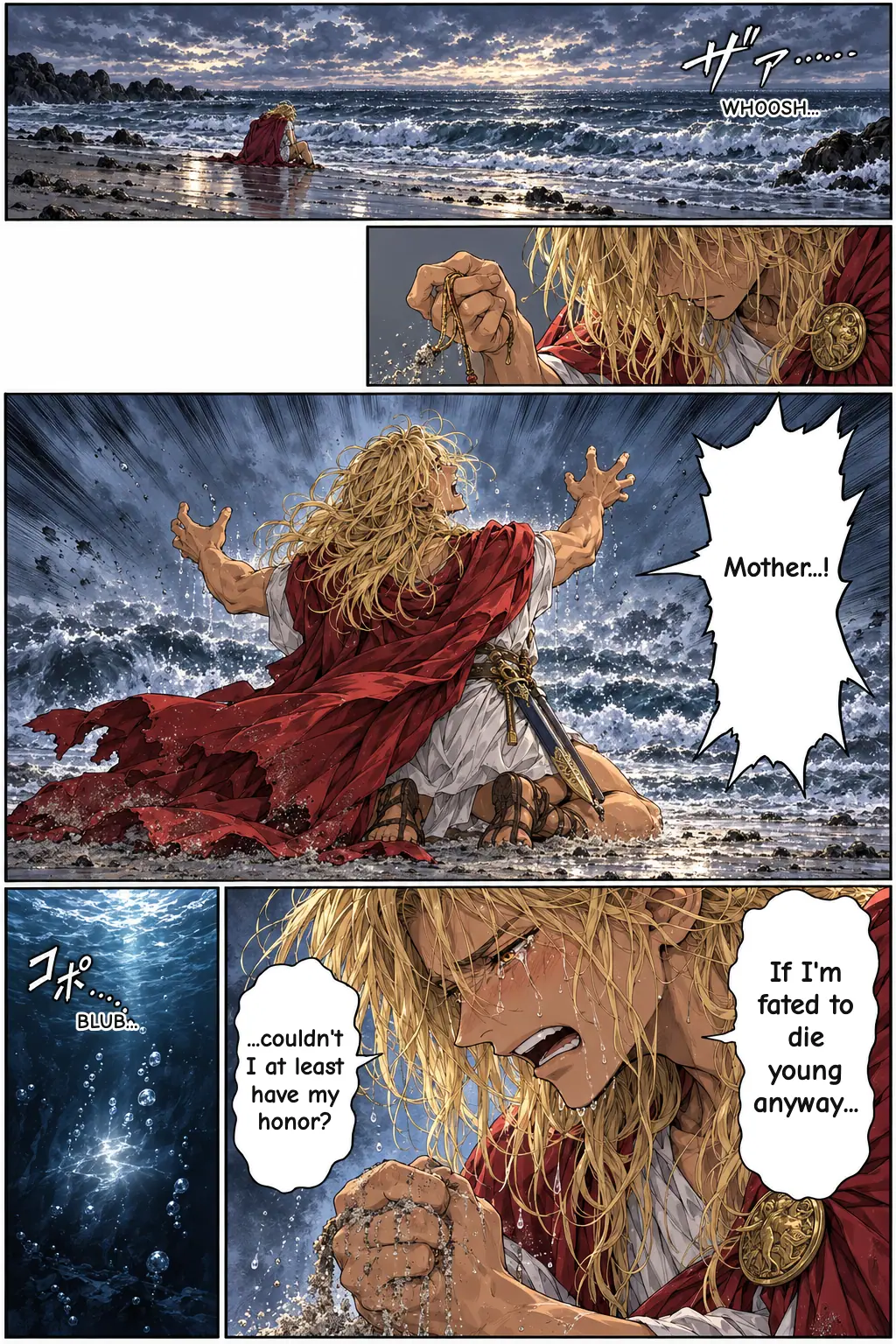
Achilles, the greatest of all heroes, is publicly robbed of someone he cares for by Agamemnon, the high king of the Greek army, and he swears he will fight no more. As he weeps on a gray shore, his mother, a sea goddess, kneels before the king of the gods. With a single nod from Zeus, the mountain of the heavens shakes.
Get new episodes in your feed. Follow us on:ThreadsBluesky
Story summary
The Iliad is an epic poem in ancient Greek attributed to Homer. It is usually dated to around the 8th century BCE, though scholars still argue about when and how it was composed. It does not tell the whole Trojan War. It covers only a few weeks in the war's tenth year, and its first word announces its subject: wrath. The poet calls on the Muse, the goddess of song, to sing of Achilles' anger and of the many warriors it sent down to the land of the dead. The trouble starts with an old priest.
The Wrath of Achilles: Iliad Book 1 Summary and Meaning Explained
In short: The Wrath of Achilles is the opening of Homer's Iliad, an ancient Greek epic poem. In Book 1, Agamemnon, the commander of the Greek army, takes Achilles' war prize Briseis in public, and Achilles refuses to fight any more. His mother, the sea goddess Thetis, then asks Zeus to make the Greeks suffer until they honor her son, and Zeus gives his nod.
The Original Story: How Iliad Book 1 Begins
The Iliad is an epic poem in ancient Greek attributed to Homer. It is usually dated to around the 8th century BCE, though scholars still argue about when and how it was composed. It does not tell the whole Trojan War. It covers only a few weeks in the war's tenth year, and its first word announces its subject: wrath. The poet calls on the Muse, the goddess of song, to sing of Achilles' anger and of the many warriors it sent down to the land of the dead.
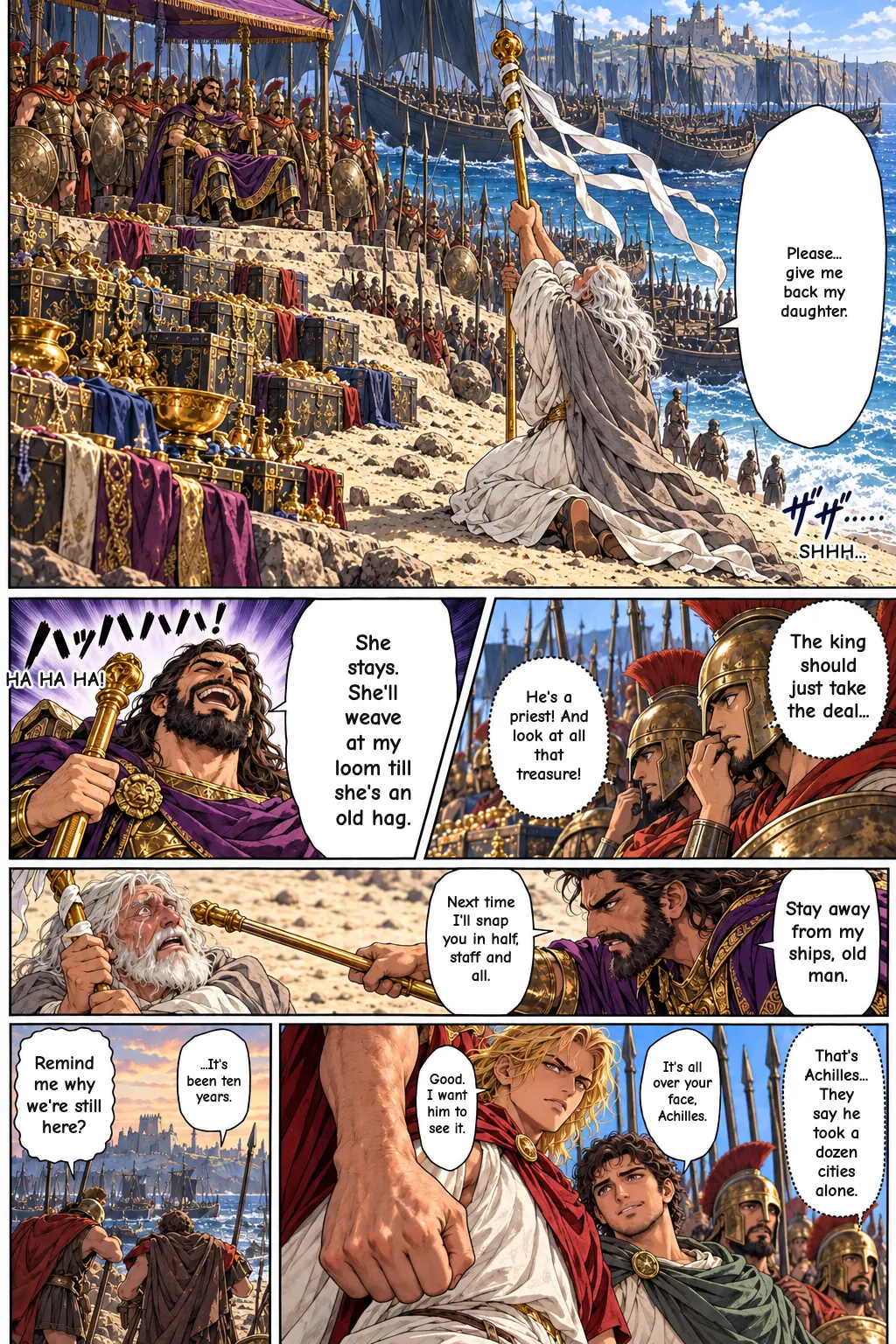
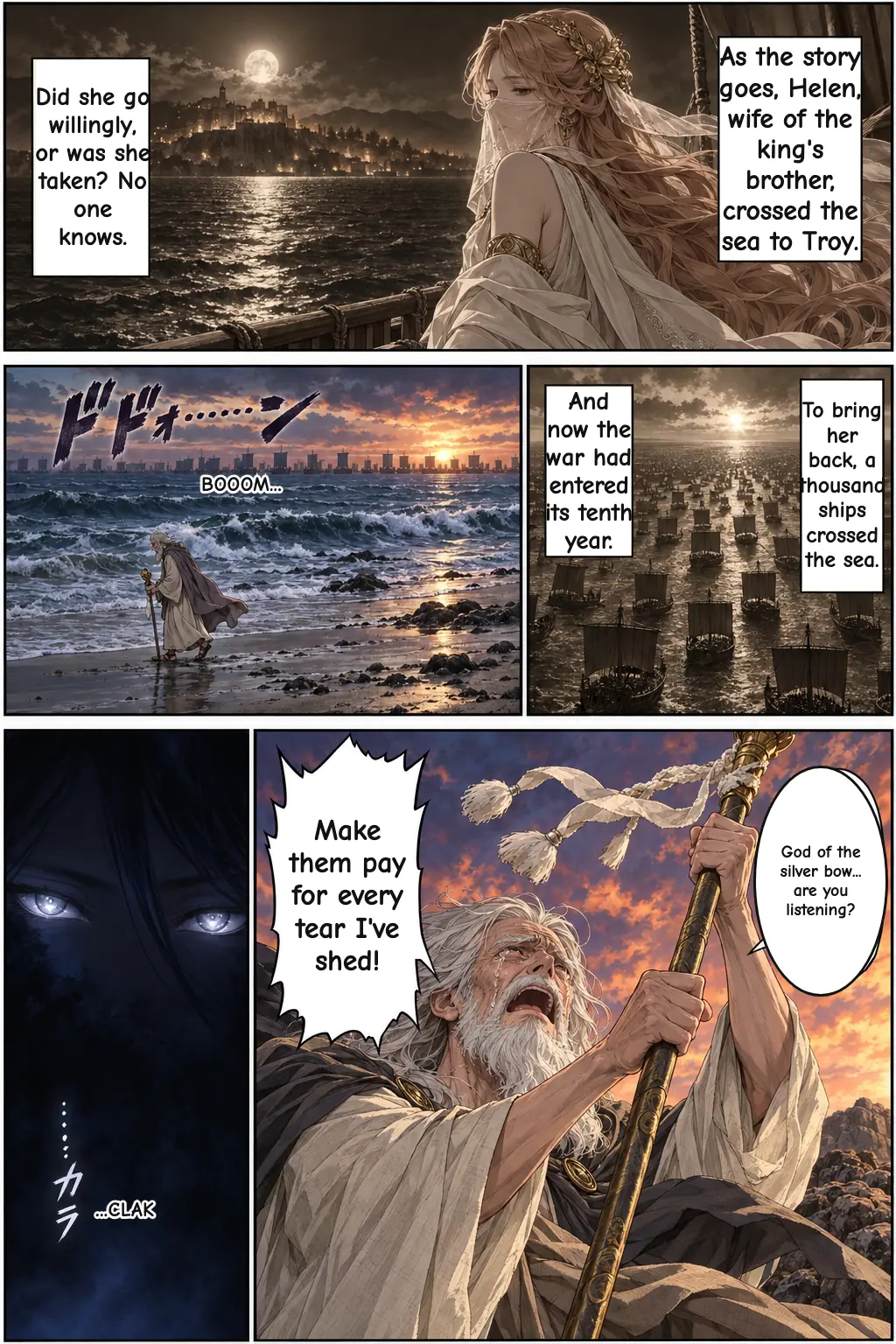
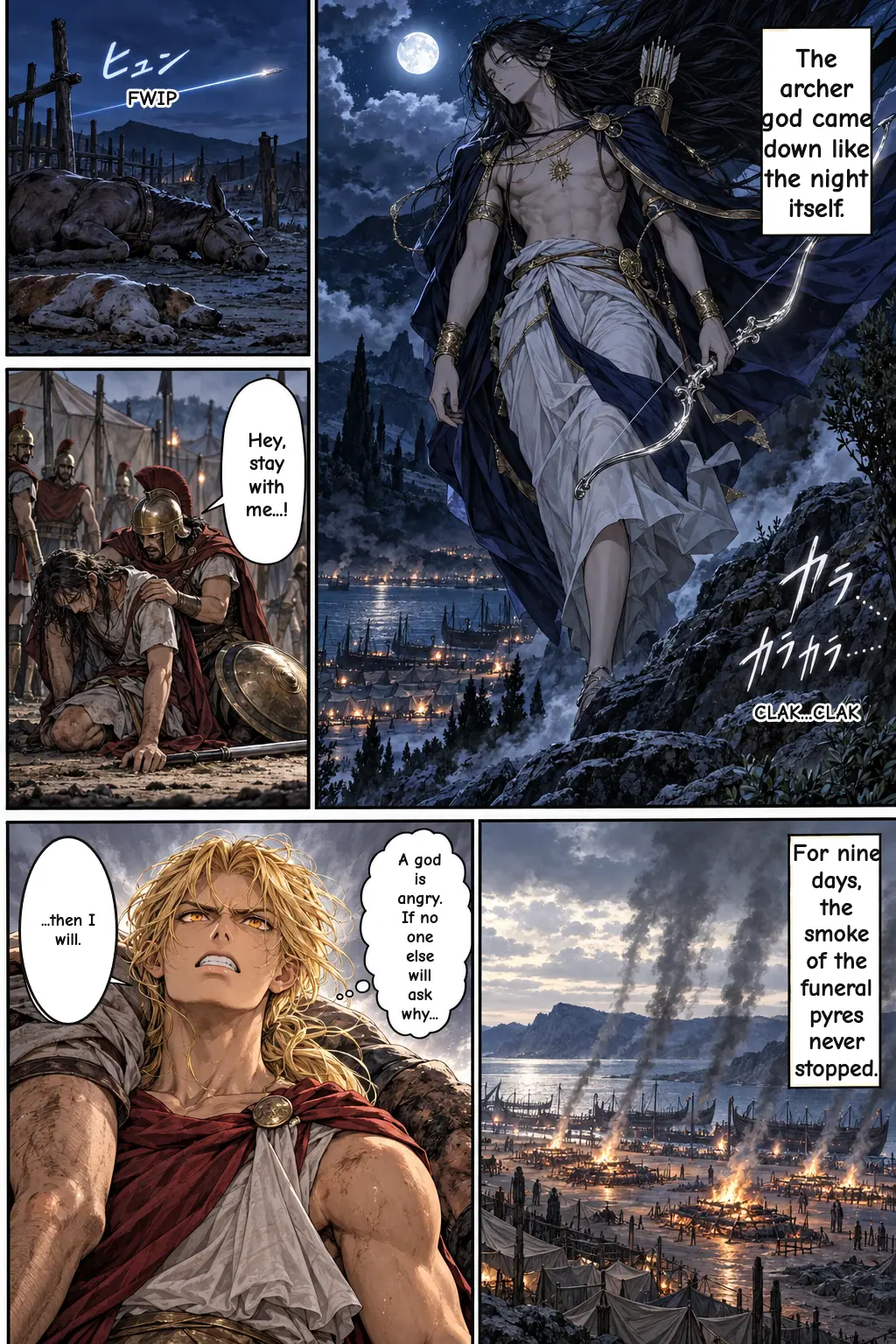
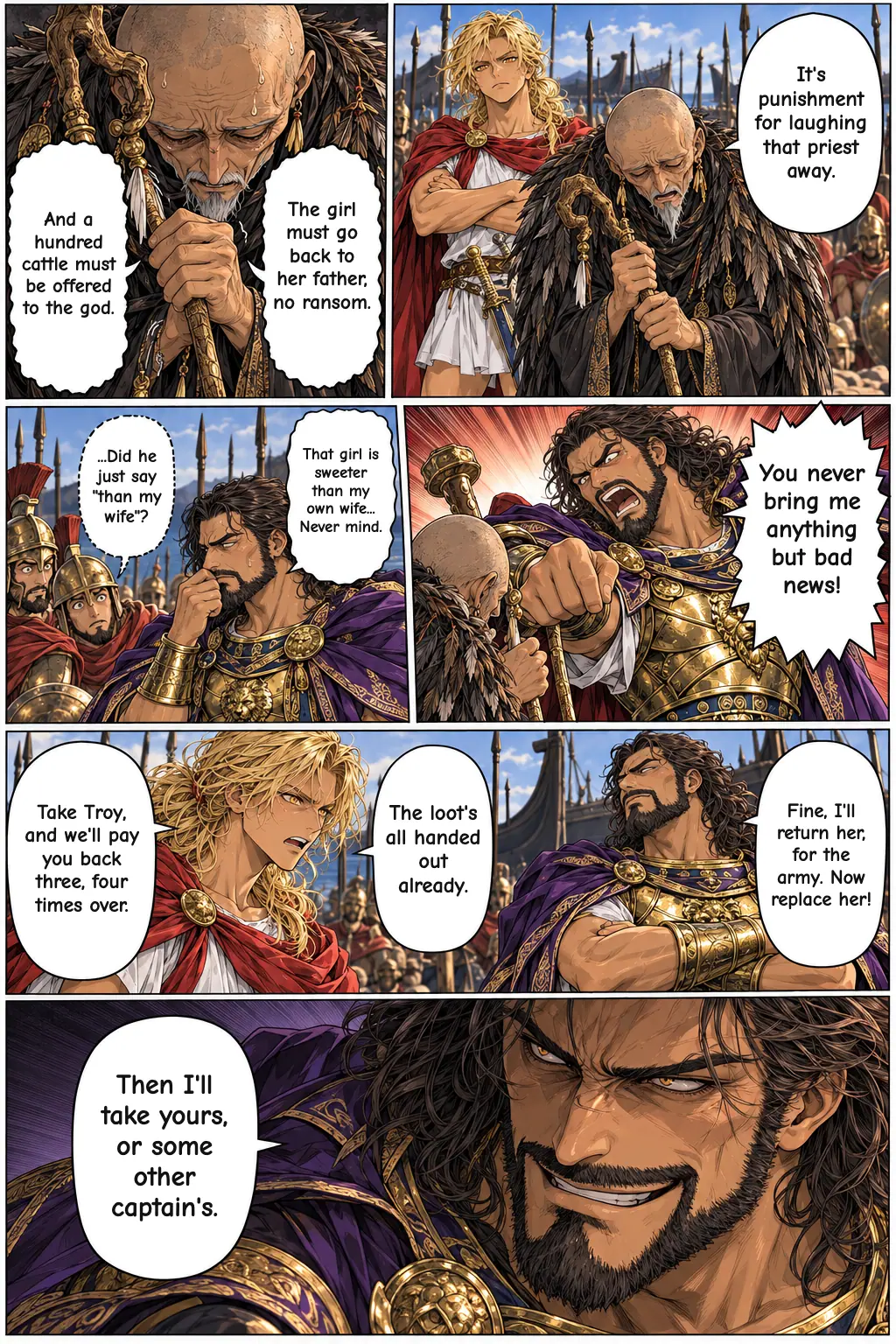
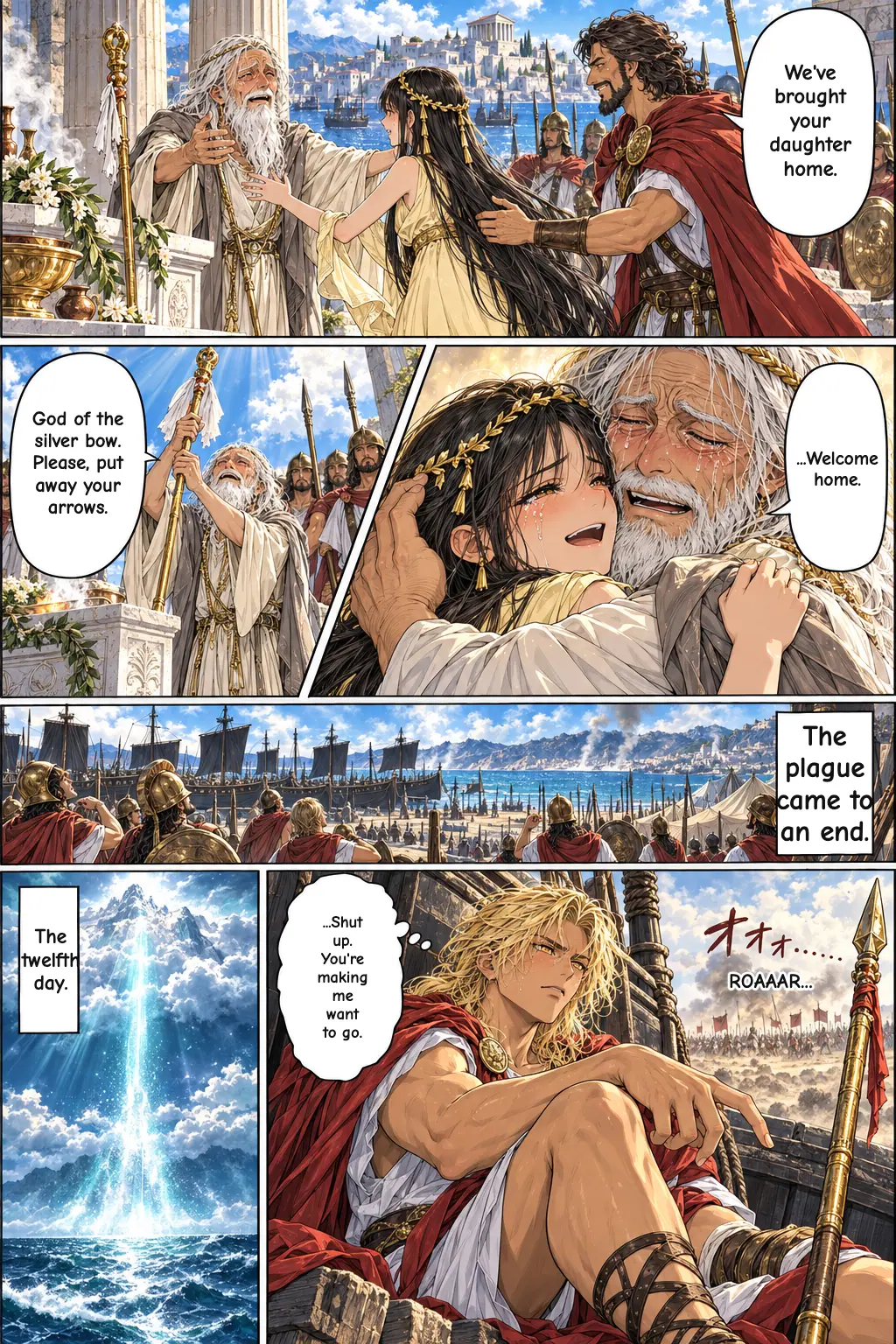
The trouble starts with an old priest. Chryses, a priest of Apollo, comes to the Greek ships with a rich ransom and asks for his daughter Chryseis back. Agamemnon had been given her as a captive. The other Greeks want to respect the priest, but Agamemnon threatens him and drives him off. Chryses walks silently along the shore, then prays to Apollo for revenge. The god comes down from Olympus like nightfall and shoots arrows of plague into the camp. First the mules and dogs die, then the men, and the funeral fires burn for nine days.
The Quarrel Between Achilles and Agamemnon
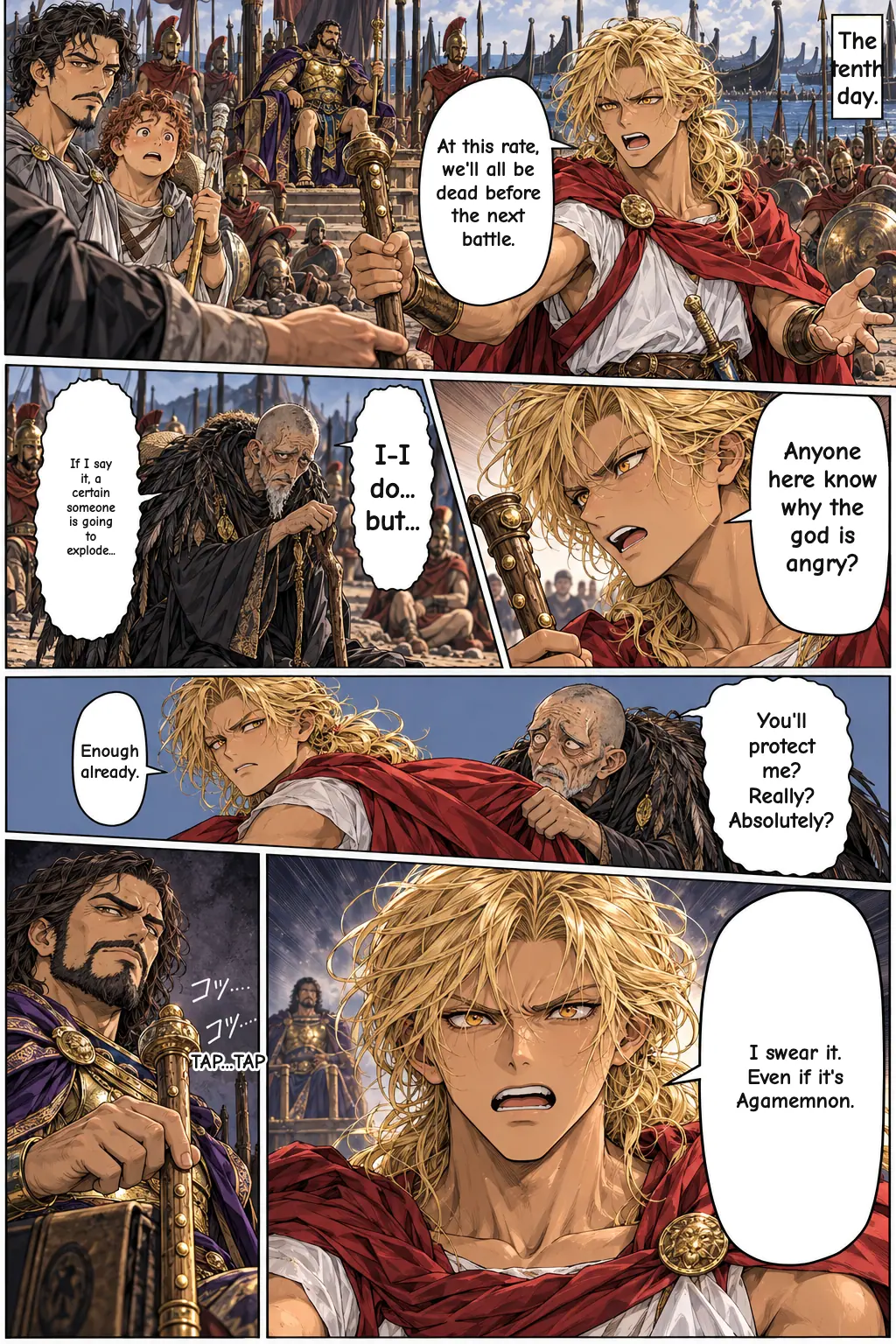
On the tenth day, Achilles calls the army together. The seer Calchas agrees to explain the plague, but only after Achilles promises to protect him, even from Agamemnon. Calchas says the god is angry because the priest was insulted, and the girl must go home without ransom.
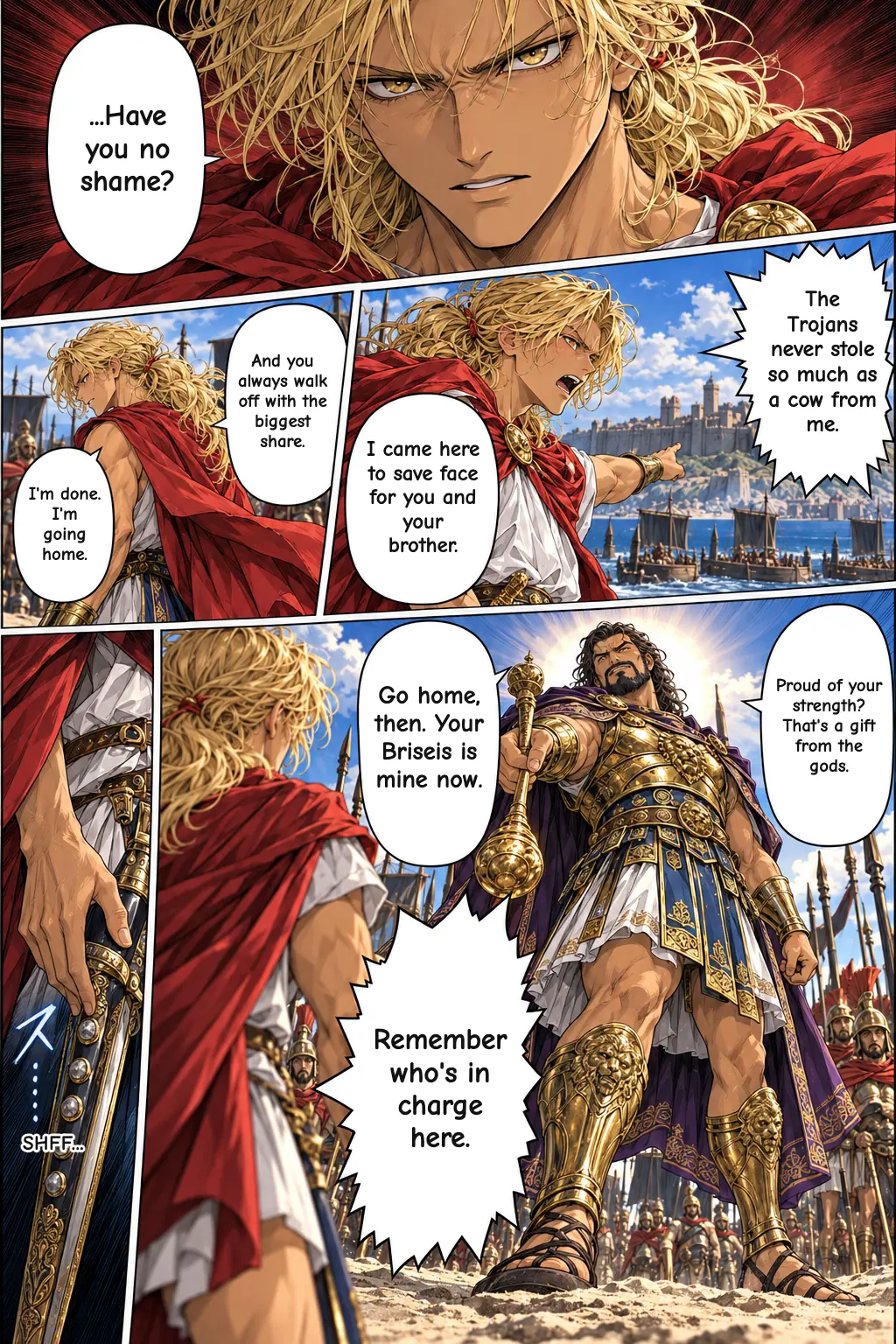
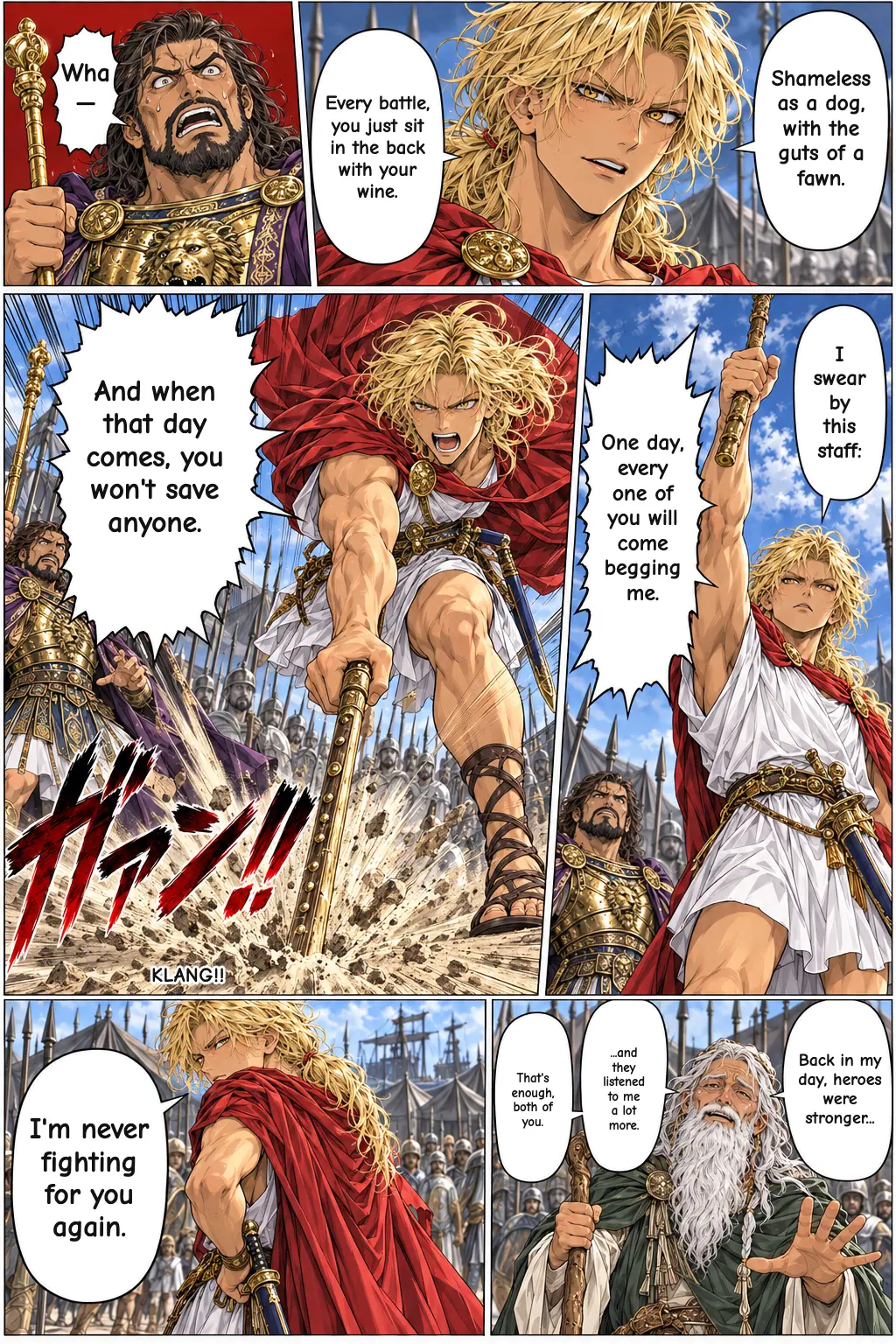
Agamemnon agrees to give her up, but he demands another prize right away so that he is not left with nothing. Achilles replies that all the spoils have already been shared out, and that the Greeks will repay the king several times over once Troy falls. The argument quickly turns bitter. Achilles reminds everyone that the Trojans never wronged him; he came to fight for Agamemnon and his brother Menelaus. Agamemnon answers that he will take Briseis, the woman given to Achilles as his prize, to prove who has more power.
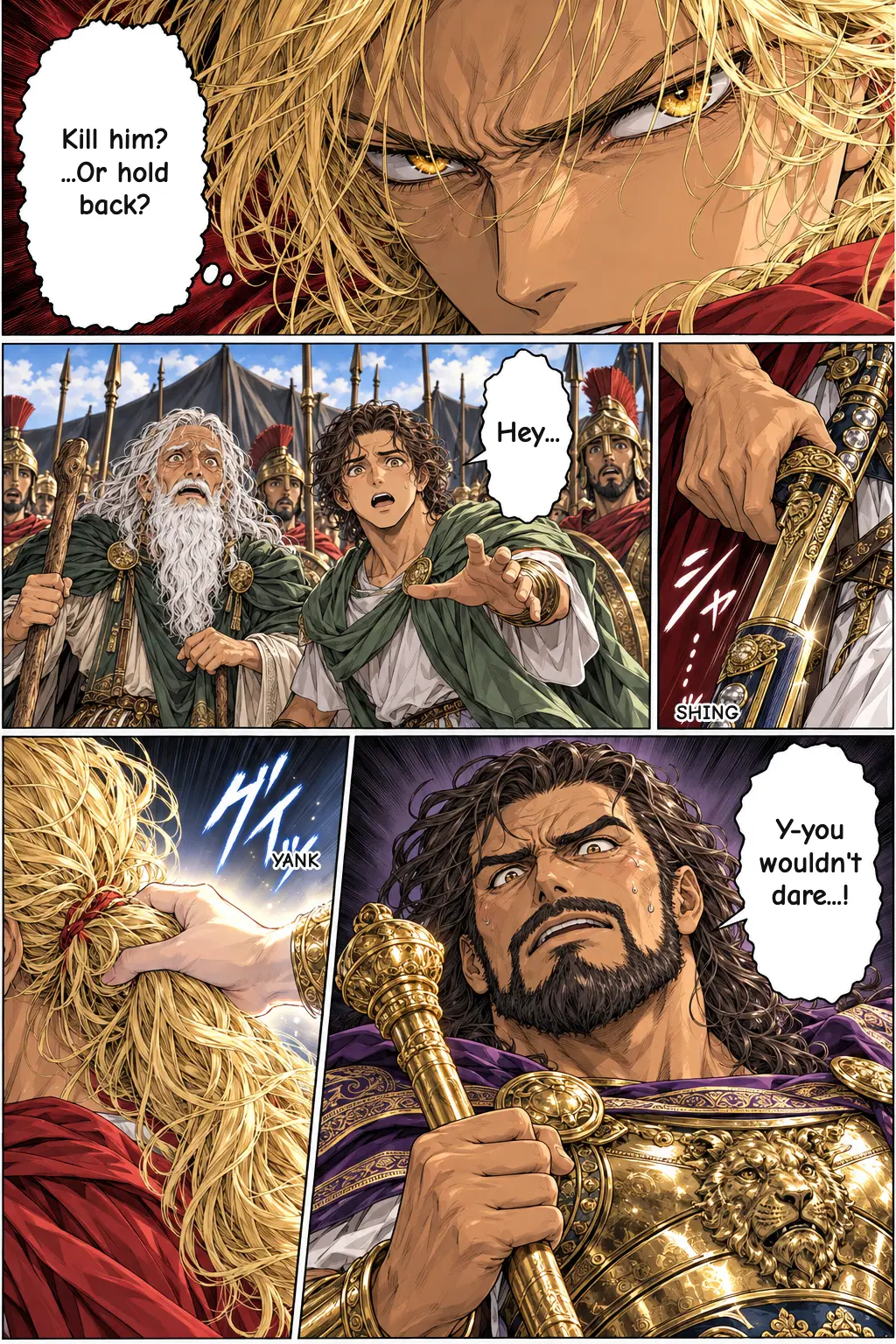
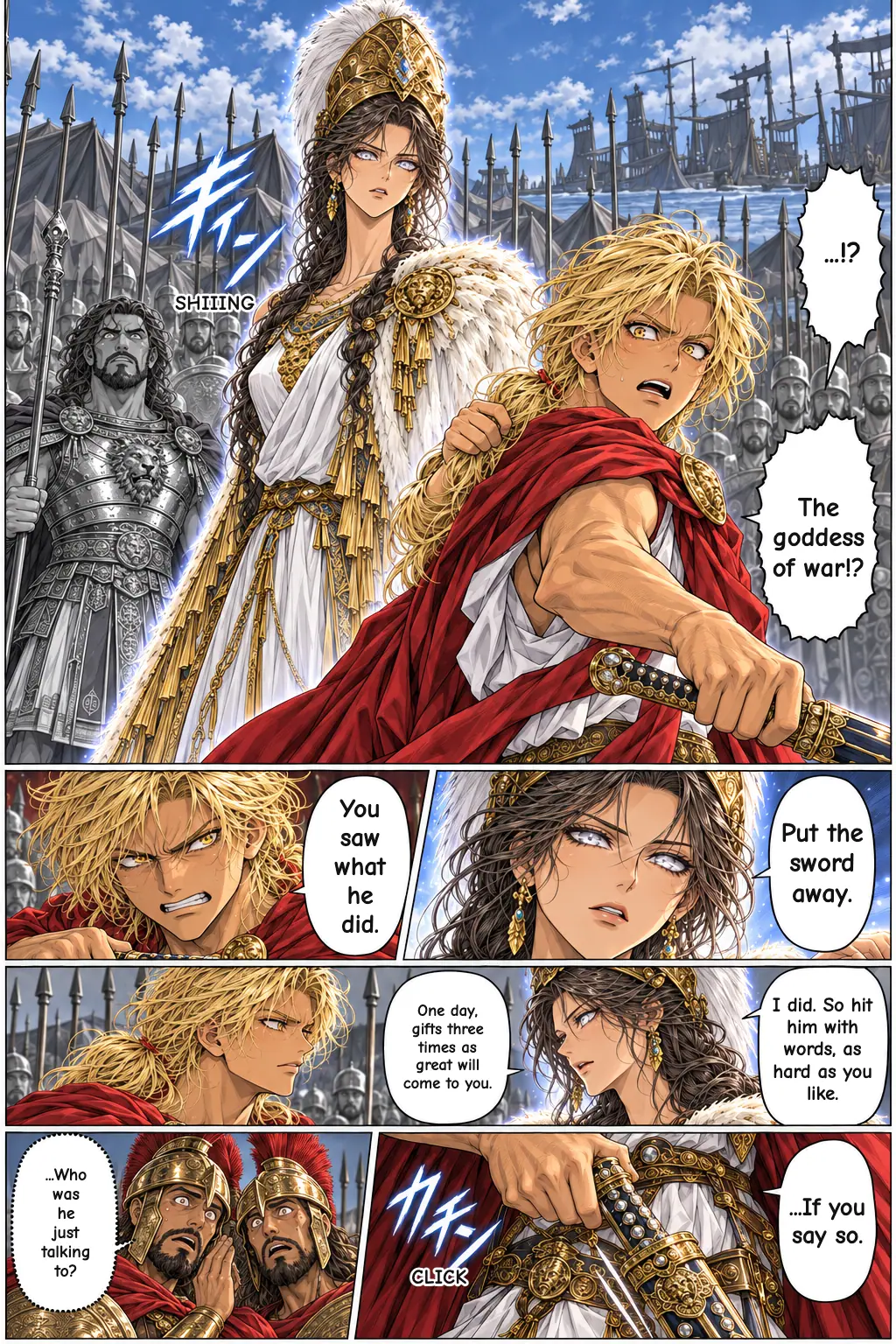
Achilles starts to draw his sword. At that moment the goddess Athena, sent by Hera, comes down and grabs him by the hair from behind. Only Achilles can see her. She tells him to put away the sword and fight with words, promising that one day he will be repaid three times over. He obeys. He then swears a solemn oath that the Greeks will one day miss him badly, when Hector, the greatest Trojan warrior, is cutting them down. The old king Nestor tries to make peace between them, but he fails.
Thetis, Zeus, and the Nod That Shook Olympus
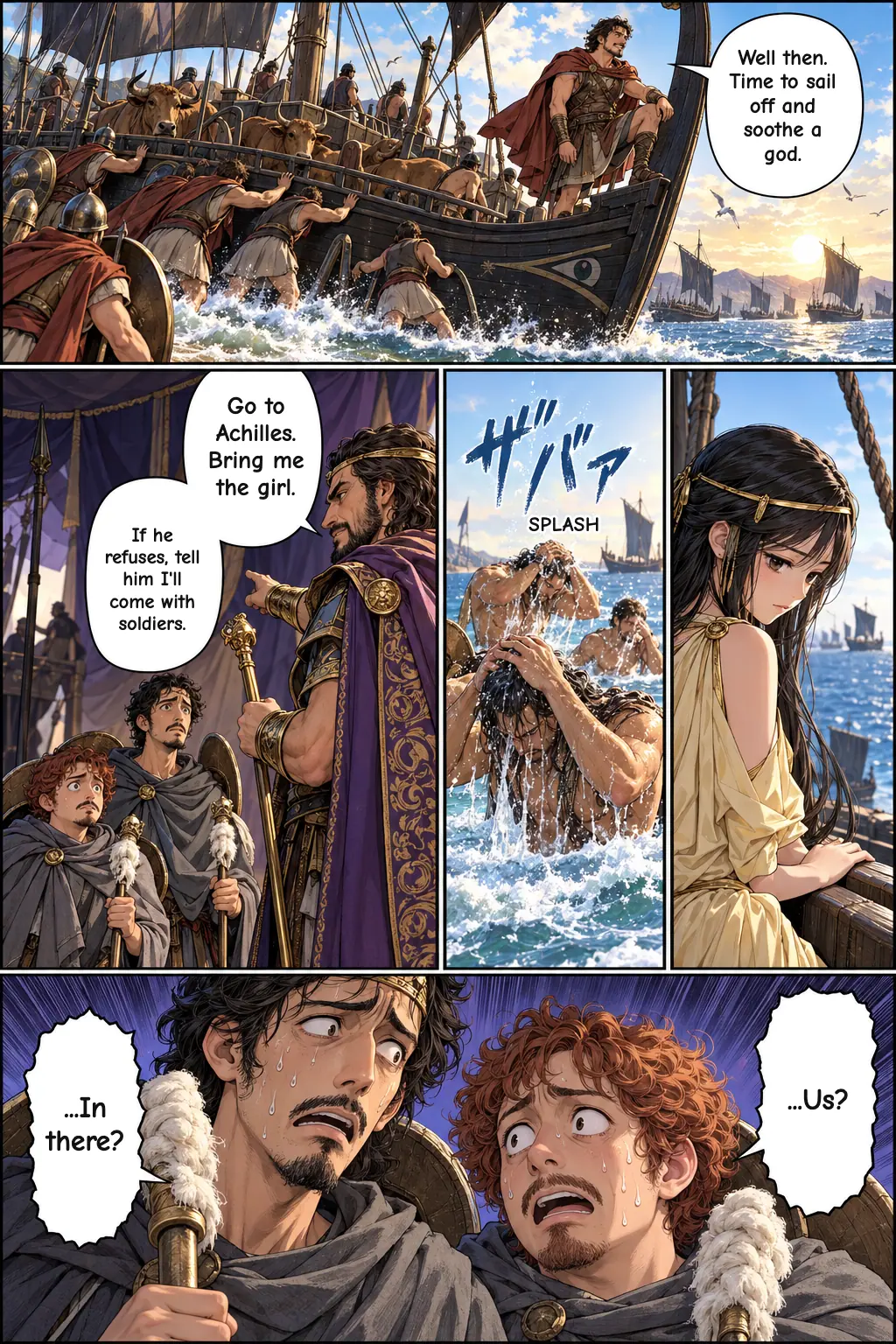
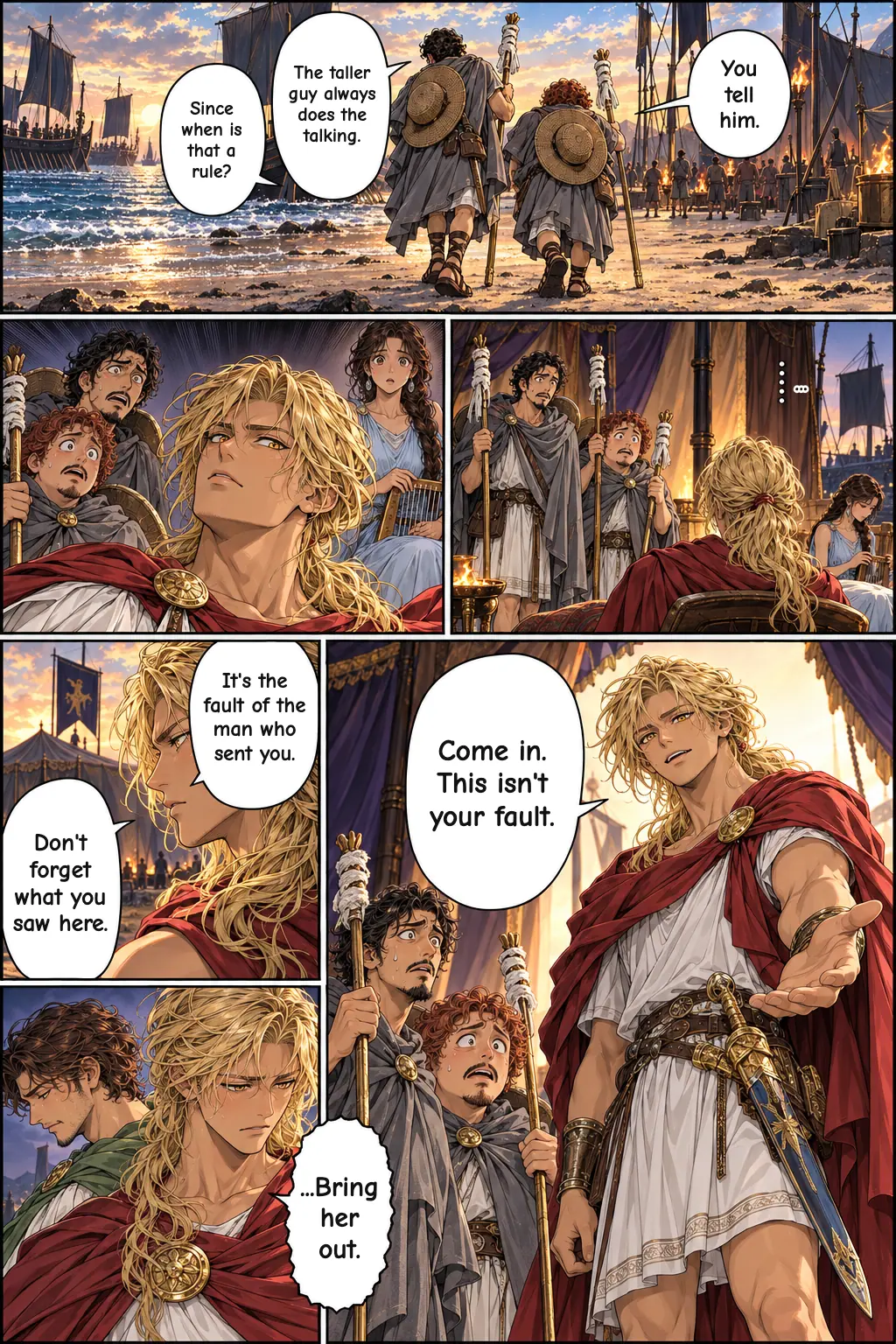
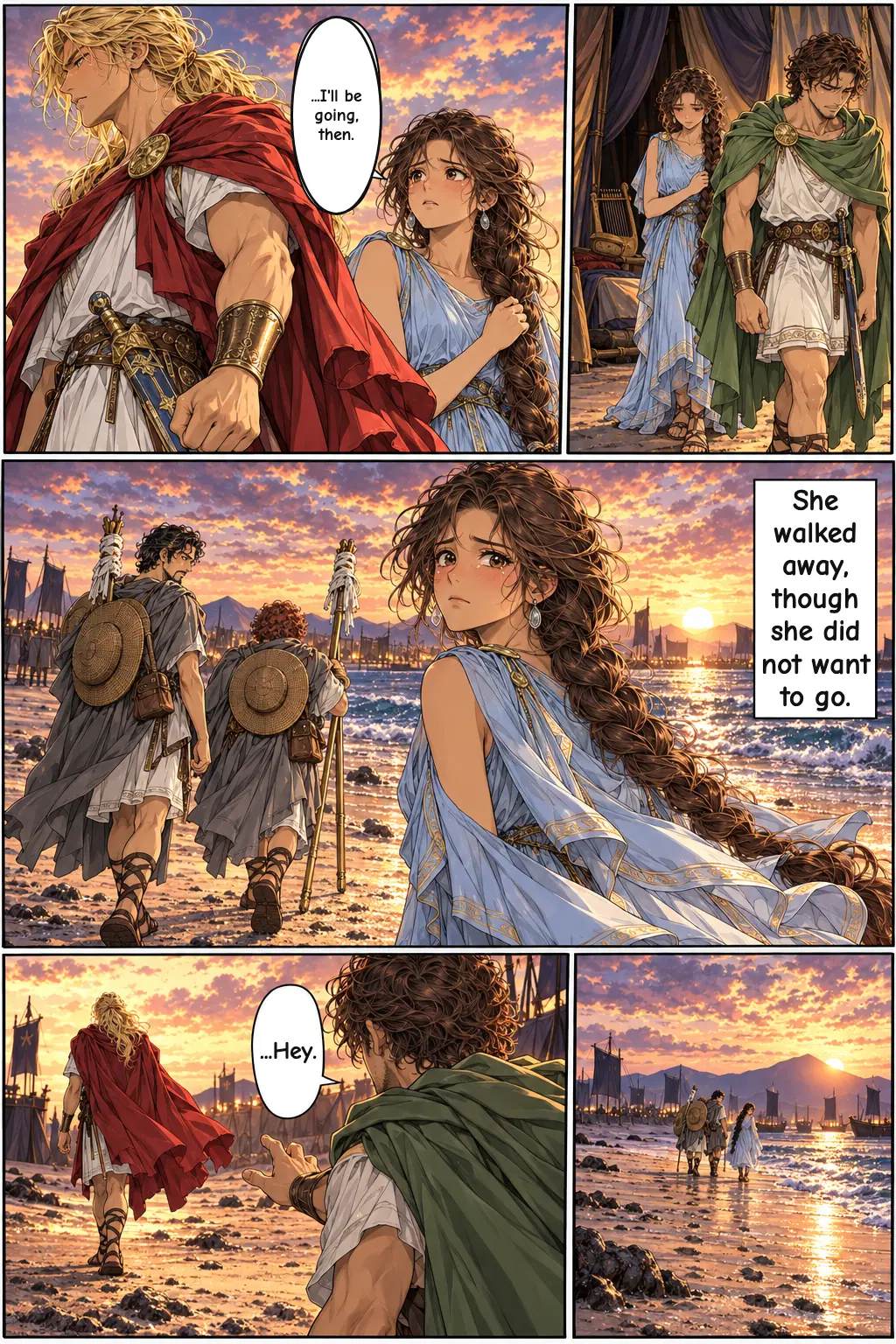
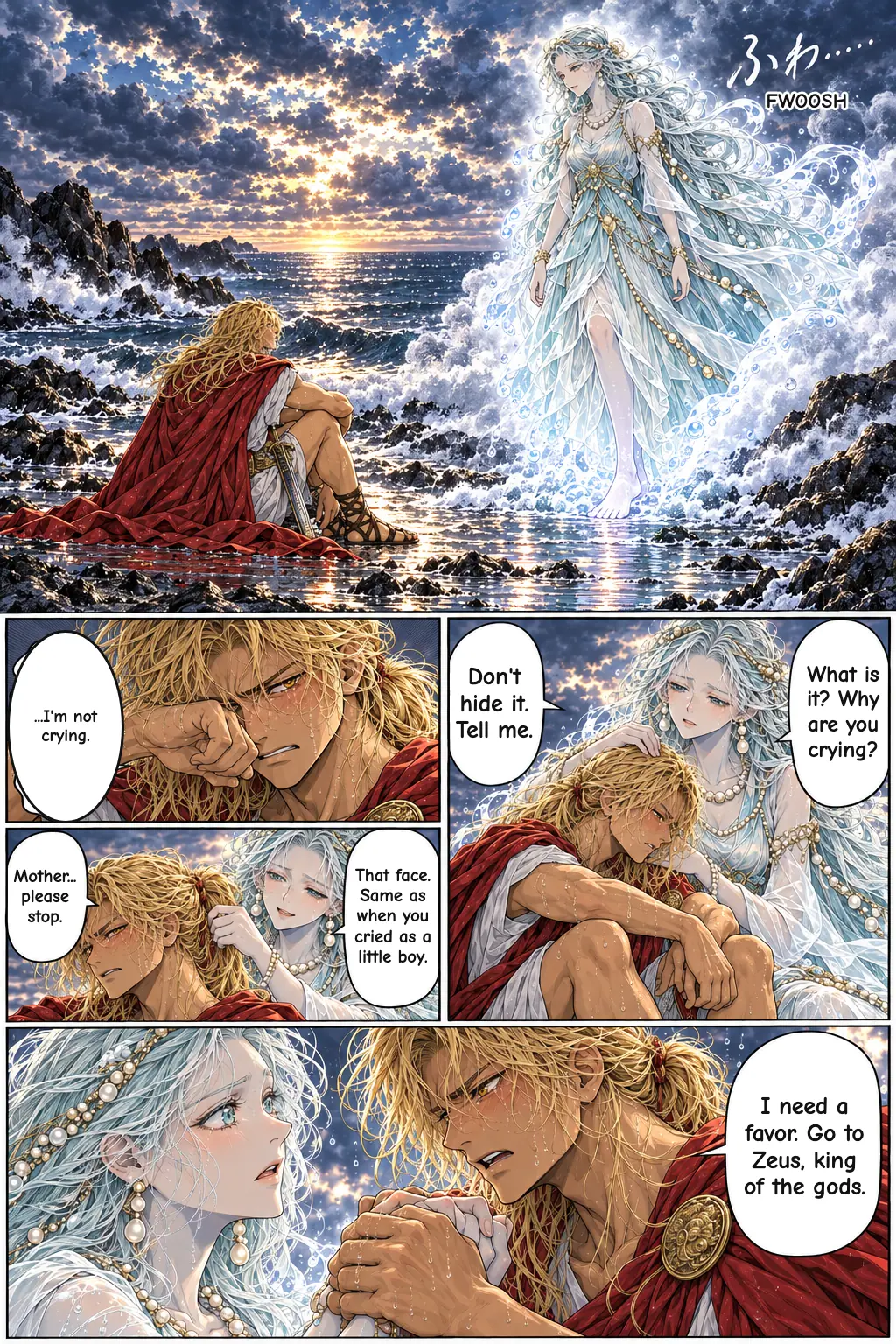
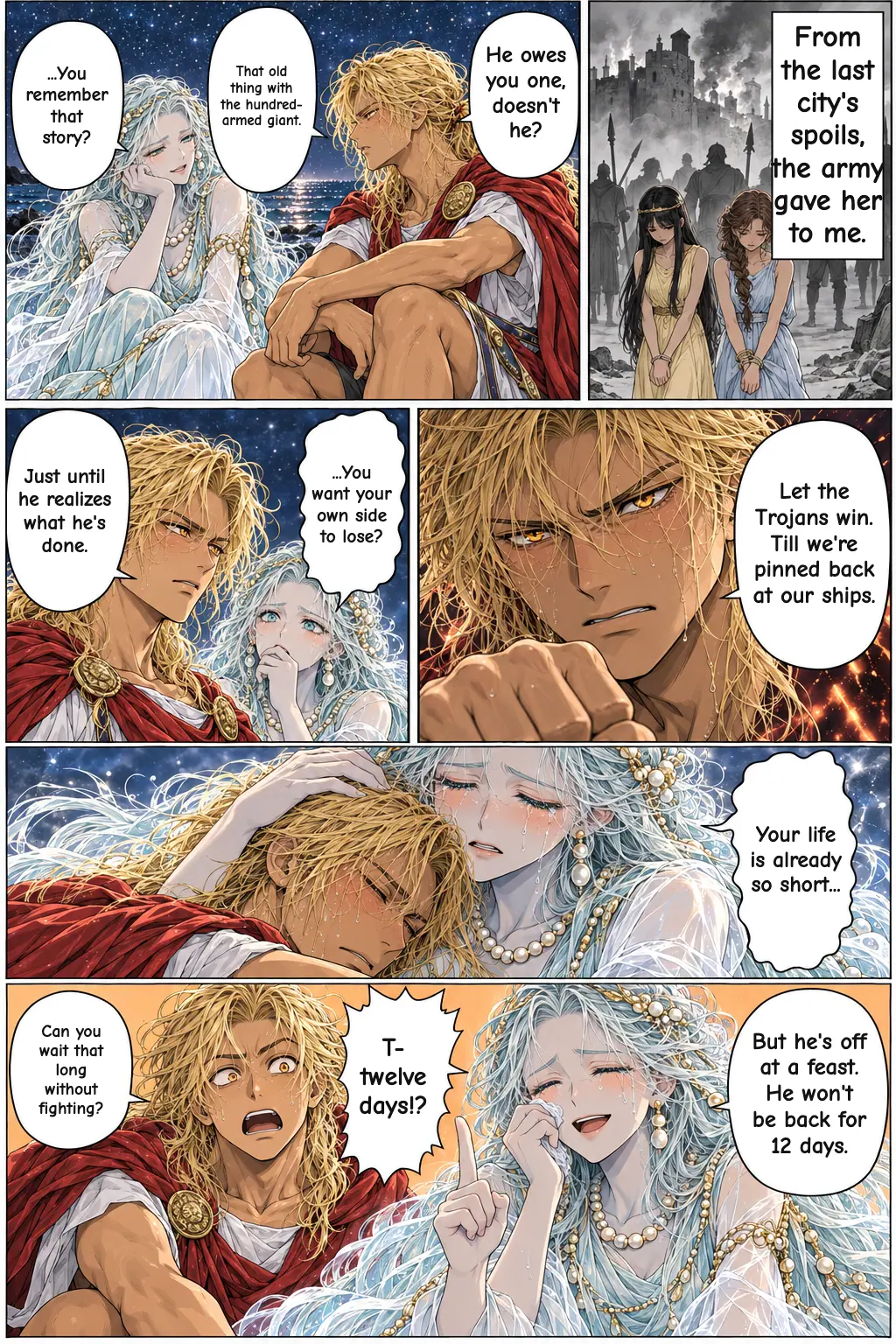
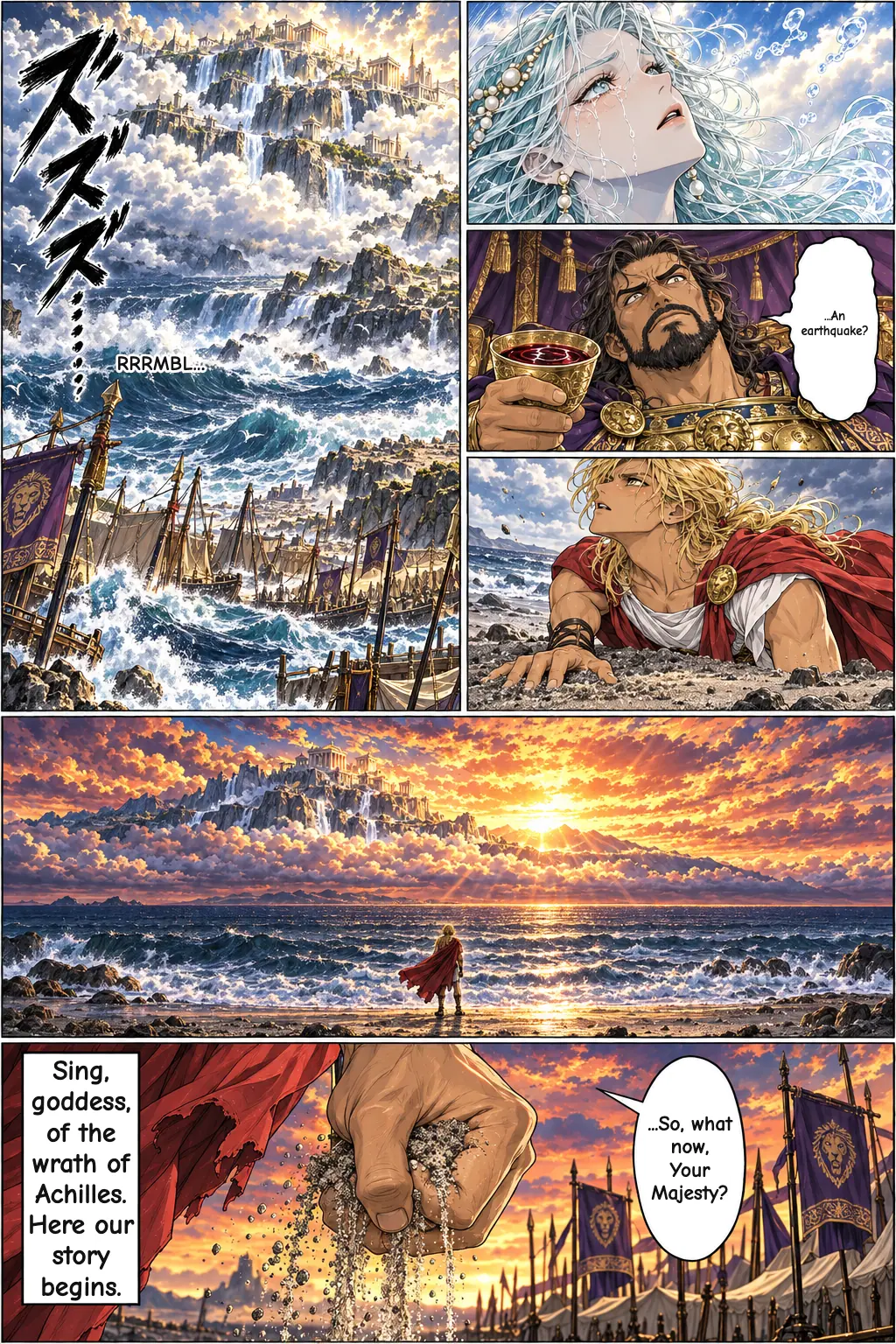
Agamemnon's heralds come for Briseis, and Achilles hands her over through his companion Patroclus. Homer says only that she leaves unwillingly. Achilles then sits alone by the gray sea, weeping, and calls on his mother Thetis, a sea goddess. She rises from the water like a mist and comforts him, grieving because she knows his life will be short.
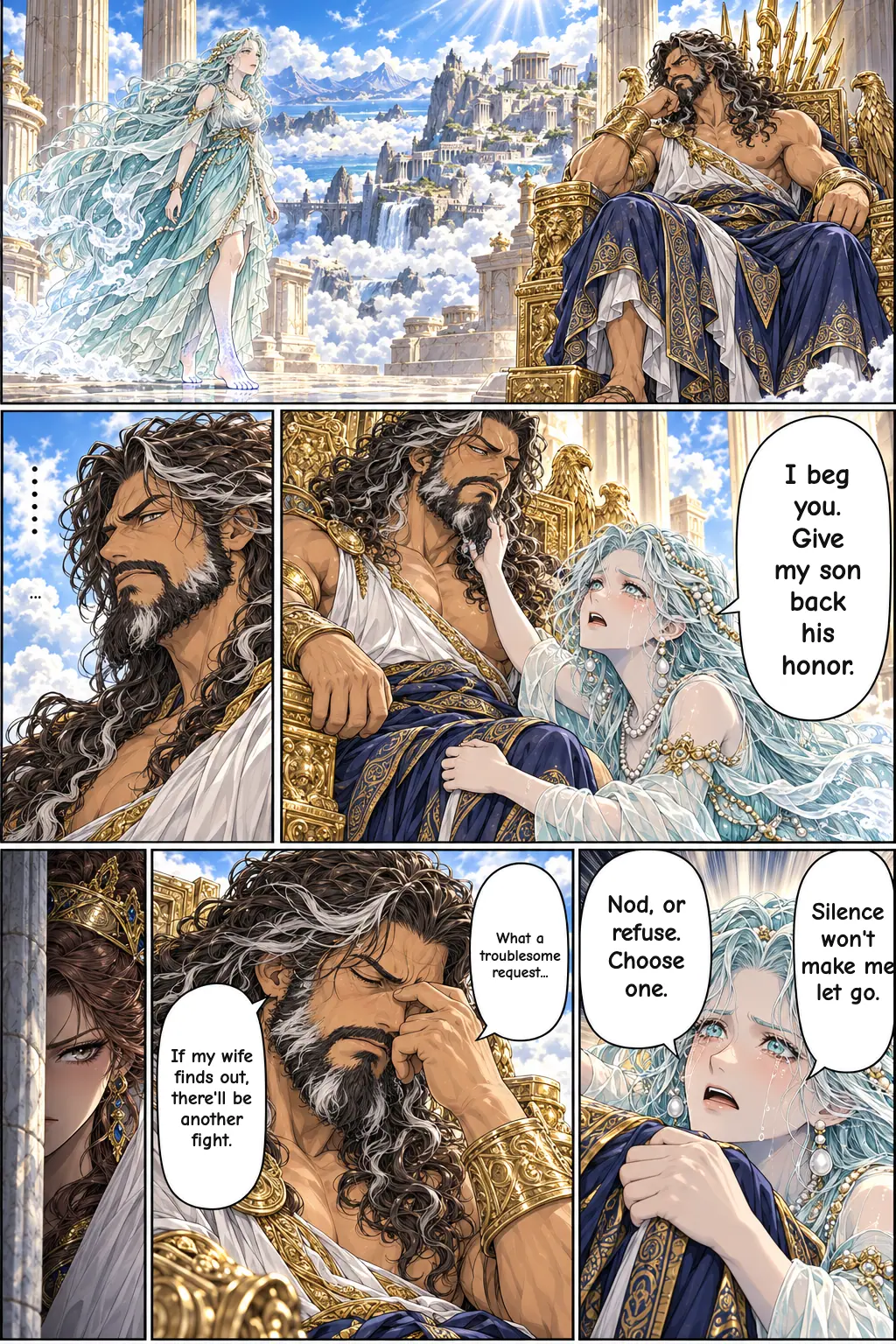
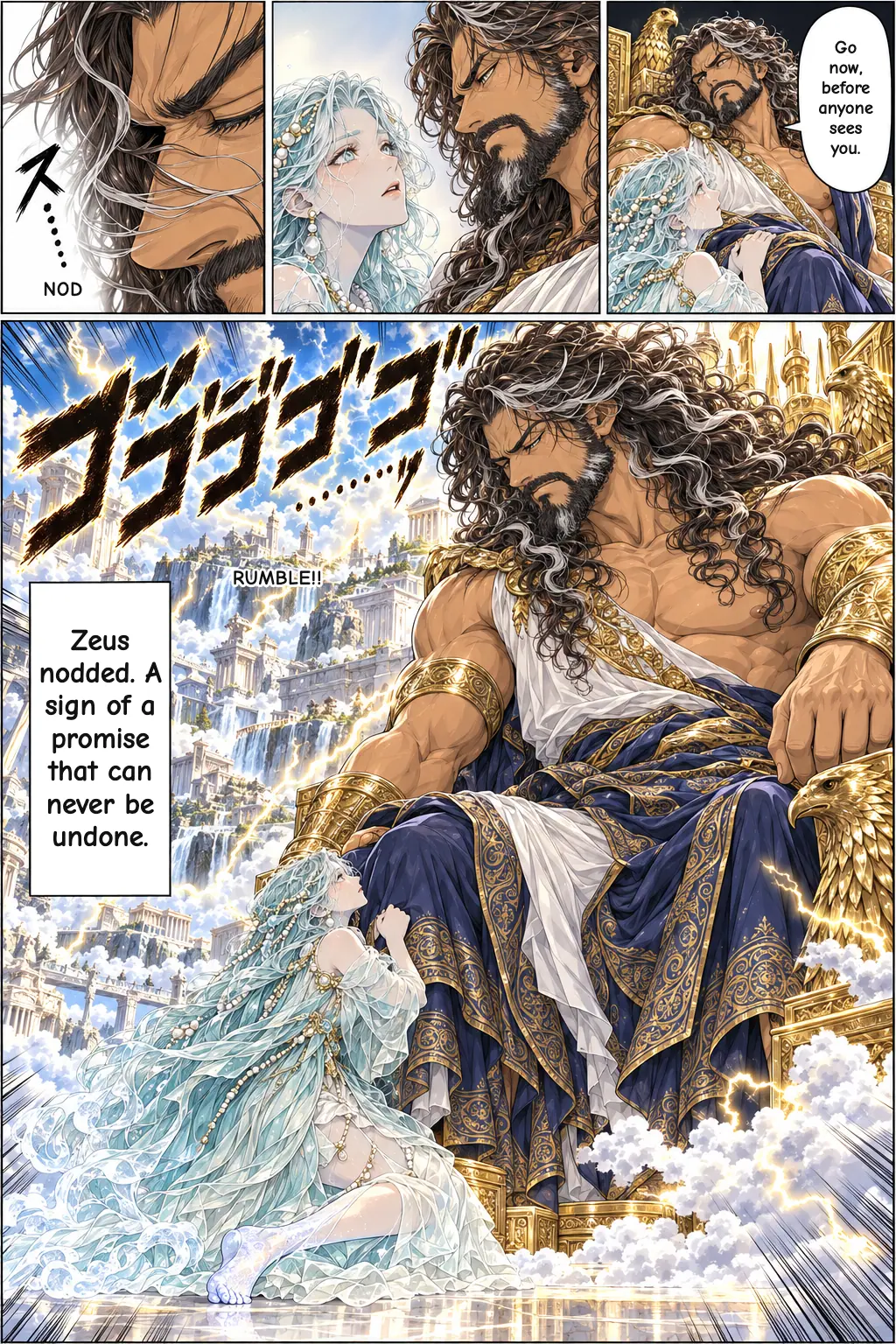
Meanwhile Odysseus sails Chryseis home, a sacrifice is offered, and Apollo ends the plague. Twelve days later, Thetis climbs Olympus, kneels before Zeus, the king of the gods, and holds his knees and chin as a suppliant. She asks him to let the Trojans win until the Greeks give Achilles the honor he is owed. Zeus is silent for a long time, since he knows this will cause trouble with his wife Hera. Then he nods his head, a promise that cannot be taken back, and great Olympus shakes. Hera guesses what happened and confronts him, and the mood among the gods grows tense until Hephaestus, the smith god, calms everyone down and the gods end the day laughing and feasting.
What This Myth Is About: Honor, Pride, and the Gods
To modern readers, a fight over a captive woman can look like simple greed. In the world of the poem, though, a war prize was a public sign of a warrior's honor. When Agamemnon takes Briseis in front of the whole army, he is telling everyone that Achilles counts for less. Achilles, who knows he is fated to die young, treats glory as the only thing that will outlive him, and that is why the insult cuts so deep.
Book 1 also sets up the poem's pattern of gods and humans acting together. Apollo answers a priest's prayer, Athena holds back a sword, and a mother's plea leads Zeus to shape the course of the war. The quarrel among the gods on Olympus echoes the quarrel among the kings on the beach. Some readers see the whole Iliad as a study of what anger costs, though the poem itself lets its characters speak and leaves the judging to its audience.
What the Manga Changes
The manga follows the main events of Book 1 closely, but it adds and trims some parts. The opening narration about how the war began, with Paris, a Trojan prince, and Helen, the wife of Menelaus, is not in Book 1. It is added as background for new readers. Ancient sources disagree about whether Helen was taken by force or left willingly, so the manga does not settle that question.
Homer gives very few physical details. He mentions Achilles' fair hair, Hera's white arms, and Thetis' silver feet, so the faces, armor, ships, and shoreline in the manga are the artists' own Bronze Age-inspired designs. The expressions and inner feelings of Briseis and Chryseis are also the manga's interpretation, since neither speaks in Book 1. Nestor's old war stories, Odysseus' voyage to return Chryseis, and the feast of the gods are shortened, but the key turning points stay: the plague ends, Zeus nods, Hera notices, and laughter breaks the tension.
Where to Read It
If you want to see this story unfold in pictures, Episode 1 of GREEK MYTHOLOGY: THE ILIAD — The Wrath of Achilles on Manga Portal covers everything from the priest's plea to the moment Olympus trembles. Every episode is free to read, and you don't need to sign up. It's an easy way to meet Achilles before reading Homer, or to enjoy the story again after you have.
Characters in this episode
Achilles
The greatest Greek warrior, son of the sea goddess Thetis, who stops fighting after Agamemnon publicly takes his prize.
Agamemnon
King of Mycenae and commander of the Greek army, whose pride starts both the plague and the quarrel.
Briseis
A captive woman given to Achilles as his prize, whom Agamemnon takes from him; she leaves unwillingly.
Chryses
A priest of Apollo who is driven away while begging for his daughter Chryseis, and who prays to Apollo for revenge.
Thetis
A sea goddess and Achilles' mother, who kneels before Zeus to ask him to restore her son's honor.
Zeus
King of the gods, whose nod to Thetis is an unbreakable promise that shakes Mount Olympus.
FAQ
Why is Achilles angry in the Iliad?
Agamemnon takes Briseis, the woman Achilles received as a prize of war, in front of the whole army. To Achilles this is a public insult to his honor, so he refuses to keep fighting for the Greeks.
Why did Apollo send a plague on the Greeks?
Agamemnon insulted Apollo's priest Chryses and refused to return his daughter Chryseis. Chryses prayed for revenge, and Apollo shot arrows of disease into the Greek camp for nine days.
Who stops Achilles from killing Agamemnon?
The goddess Athena, sent by Hera, grabs Achilles by the hair just as he begins to draw his sword. Only Achilles can see her, and she persuades him to use words instead of violence.
What does Thetis ask Zeus in Iliad Book 1?
She asks Zeus to give the Trojans the upper hand until the Greeks realize how much they need Achilles and honor him properly. Zeus agrees with a nod that makes Olympus shake.
Does the Iliad tell the whole Trojan War?
No. It covers only a few weeks in the tenth year of the war and centers on Achilles' anger. Famous events like the Trojan Horse are not part of the Iliad.