Get new episodes in your feed. Follow us on:ThreadsBluesky
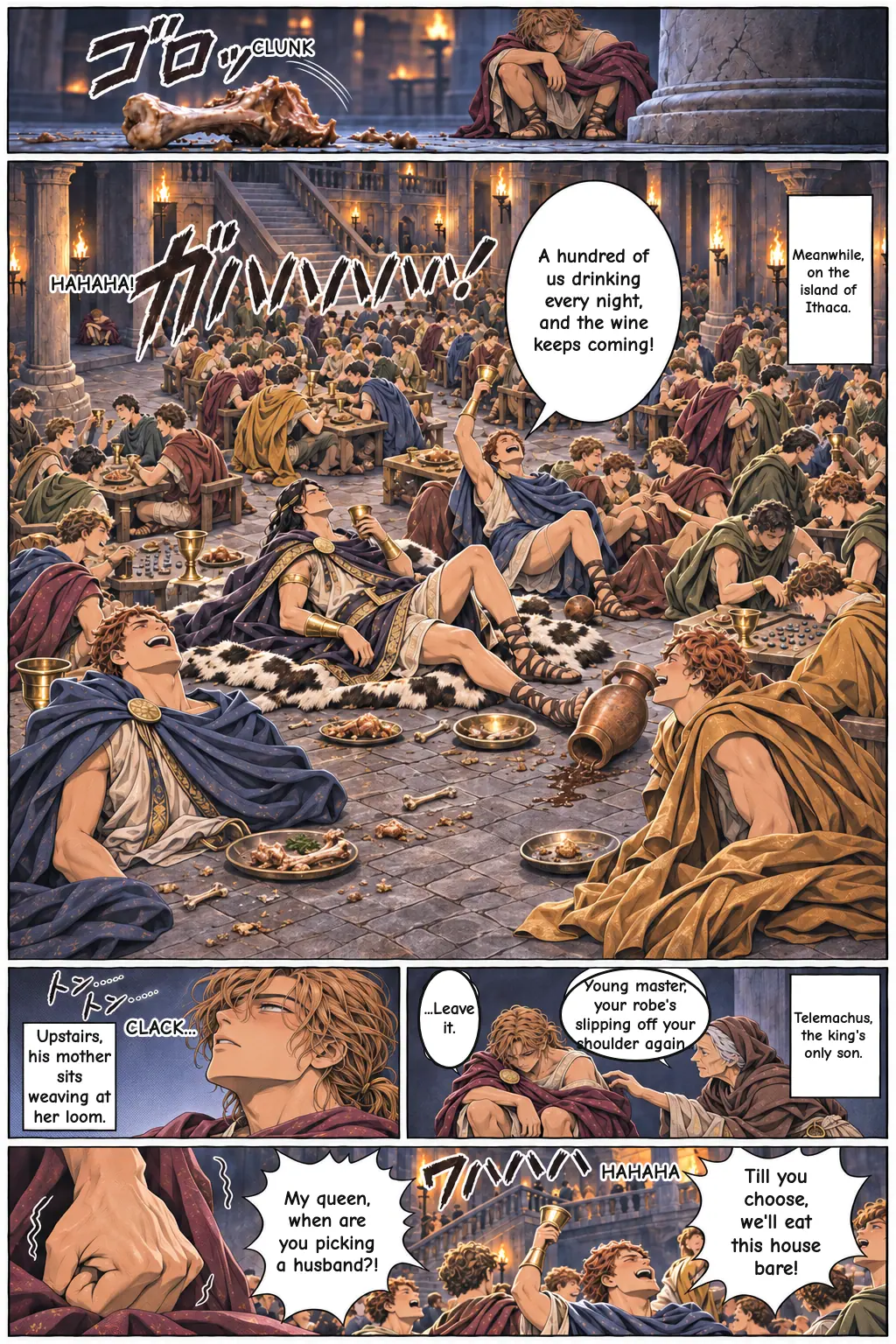
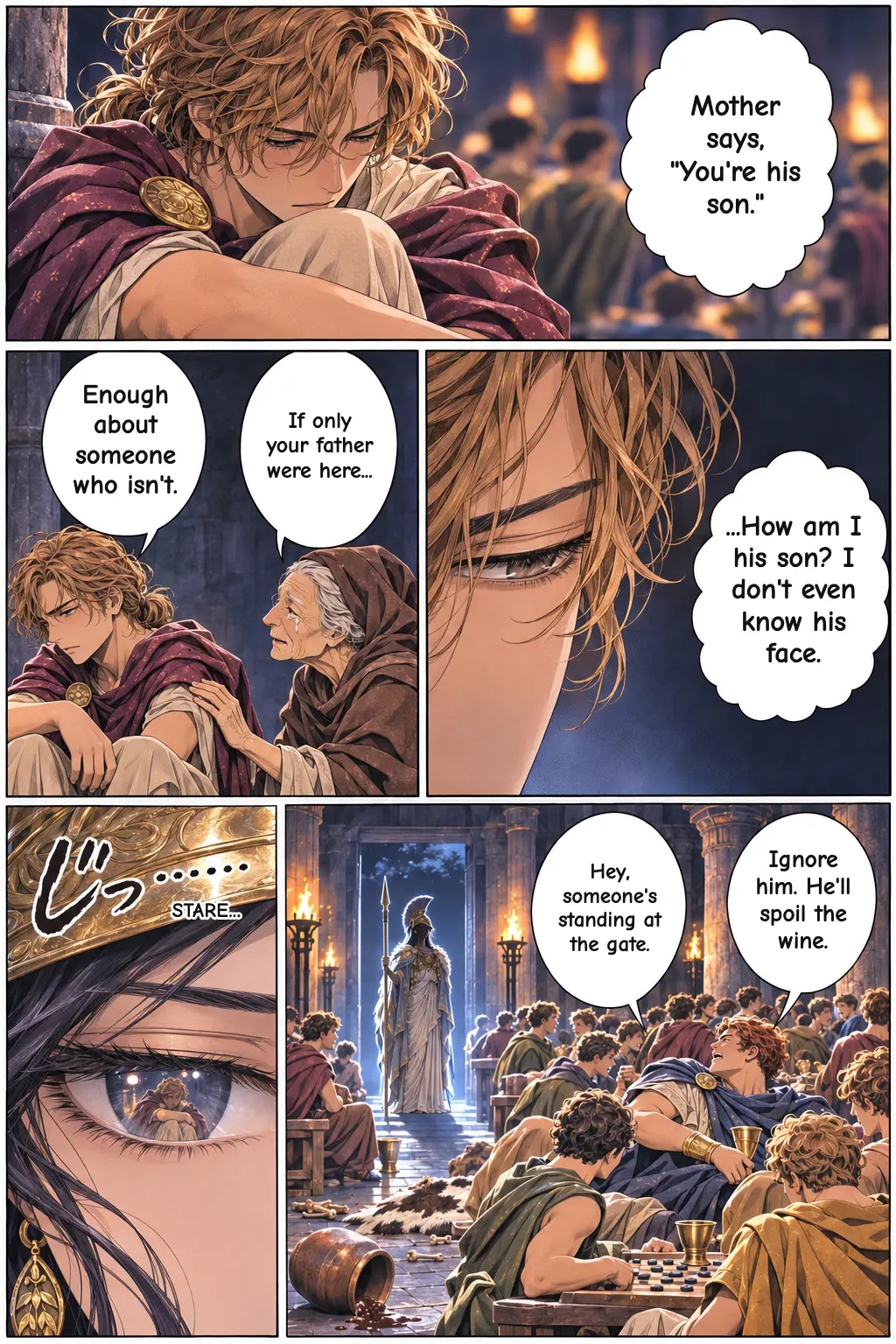
Telemachus, twenty years old, has never seen his father's face. Over a hundred men have taken over his home. He finally speaks up, gets laughed at, and still sails into the night sea to search for his father. On his journey he learns that Odysseus is alive, but on the way home a black ship lies in wait for him in the strait.
Story summary
The Odyssey opens almost twenty years after Odysseus, king of the island of Ithaca, left for the Trojan War. Every other Greek hero has either come home or died. Only Odysseus is still missing, kept on the island of Ogygia by Calypso, a nymph who wants him for herself. While Poseidon, the sea god who hates Odysseus, is away visiting the distant Ethiopians, the other gods meet on Mount Olympus. Athena, goddess of wisdom and Odysseus's protector, pleads for him, and Zeus, king of the gods, agrees that he should finally go home.
The Telemachy Explained: Telemachus's Journey in Homer's Odyssey (Books 1–4)
In short: The Telemachy is the opening section of Homer's Odyssey (Books 1–4), where Telemachus, the son of Odysseus, stands up to the more than one hundred suitors who have taken over his home and sails to Pylos and Sparta for news of his missing father. He learns that Odysseus is alive but held on the nymph Calypso's island, while back home the suitors plan to ambush him on his way back.
The Story in Homer's Original: Books 1–4
The Odyssey opens almost twenty years after Odysseus, king of the island of Ithaca, left for the Trojan War. Every other Greek hero has either come home or died. Only Odysseus is still missing, kept on the island of Ogygia by Calypso, a nymph who wants him for herself. While Poseidon, the sea god who hates Odysseus, is away visiting the distant Ethiopians, the other gods meet on Mount Olympus. Athena, goddess of wisdom and Odysseus's protector, pleads for him, and Zeus, king of the gods, agrees that he should finally go home.
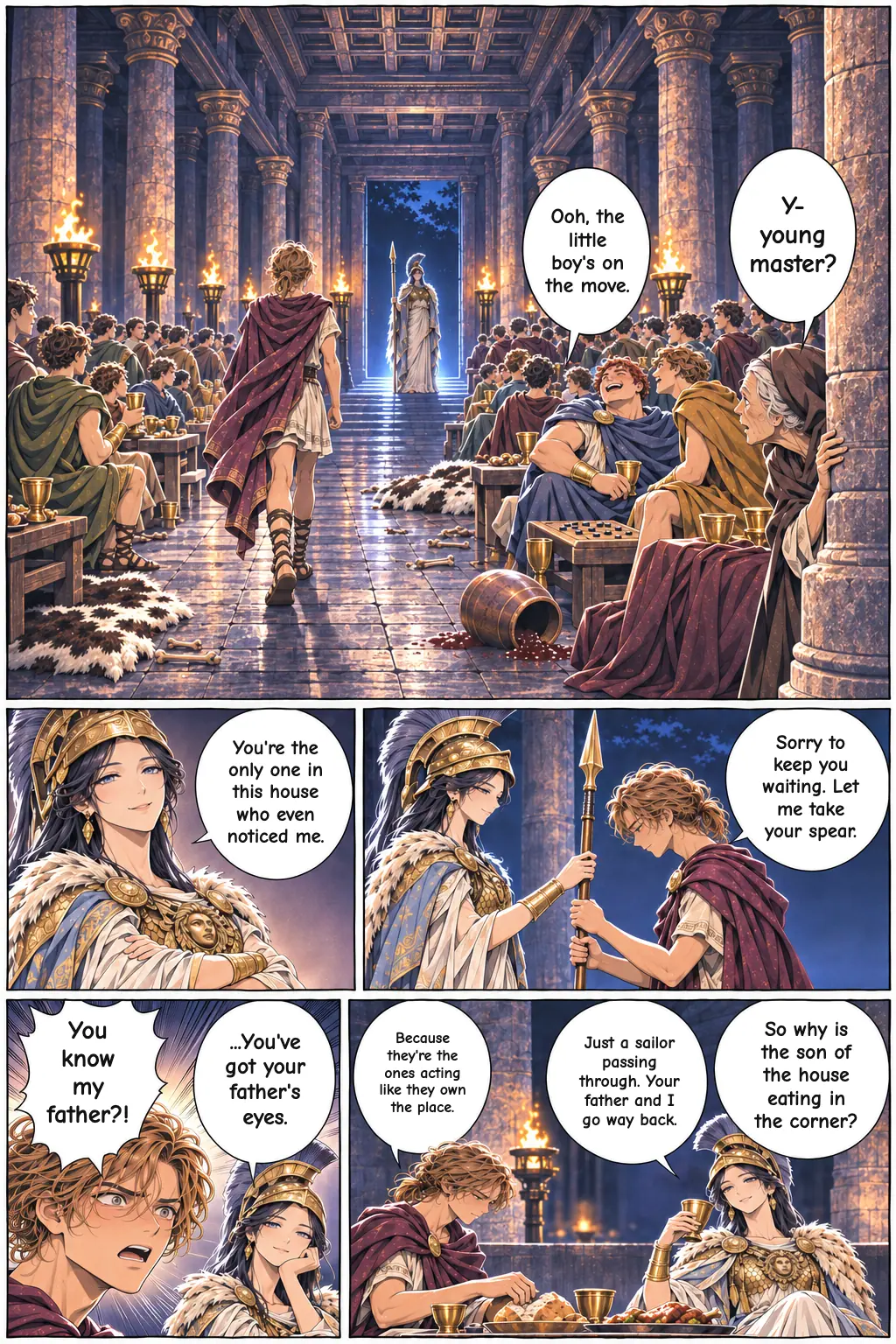
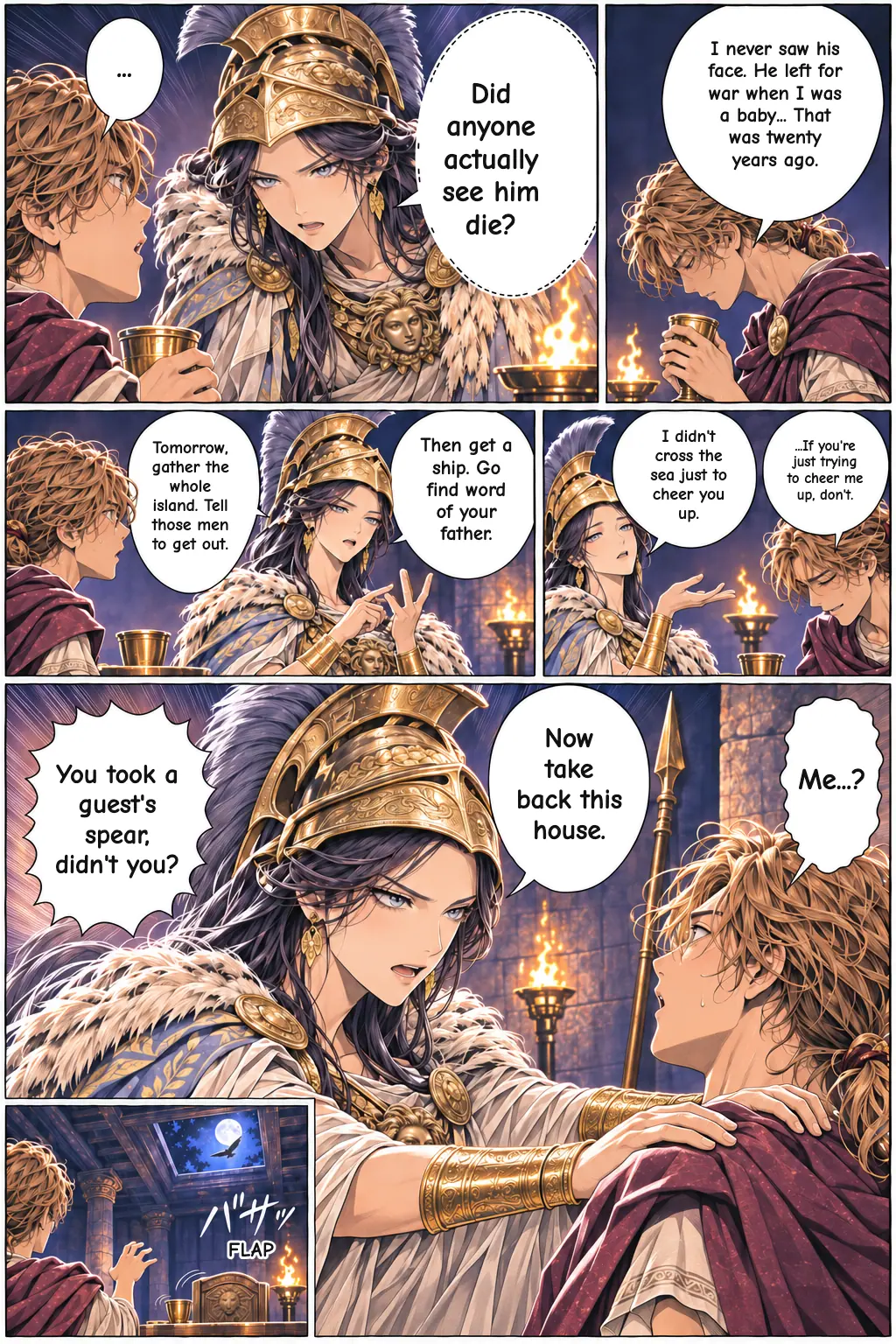
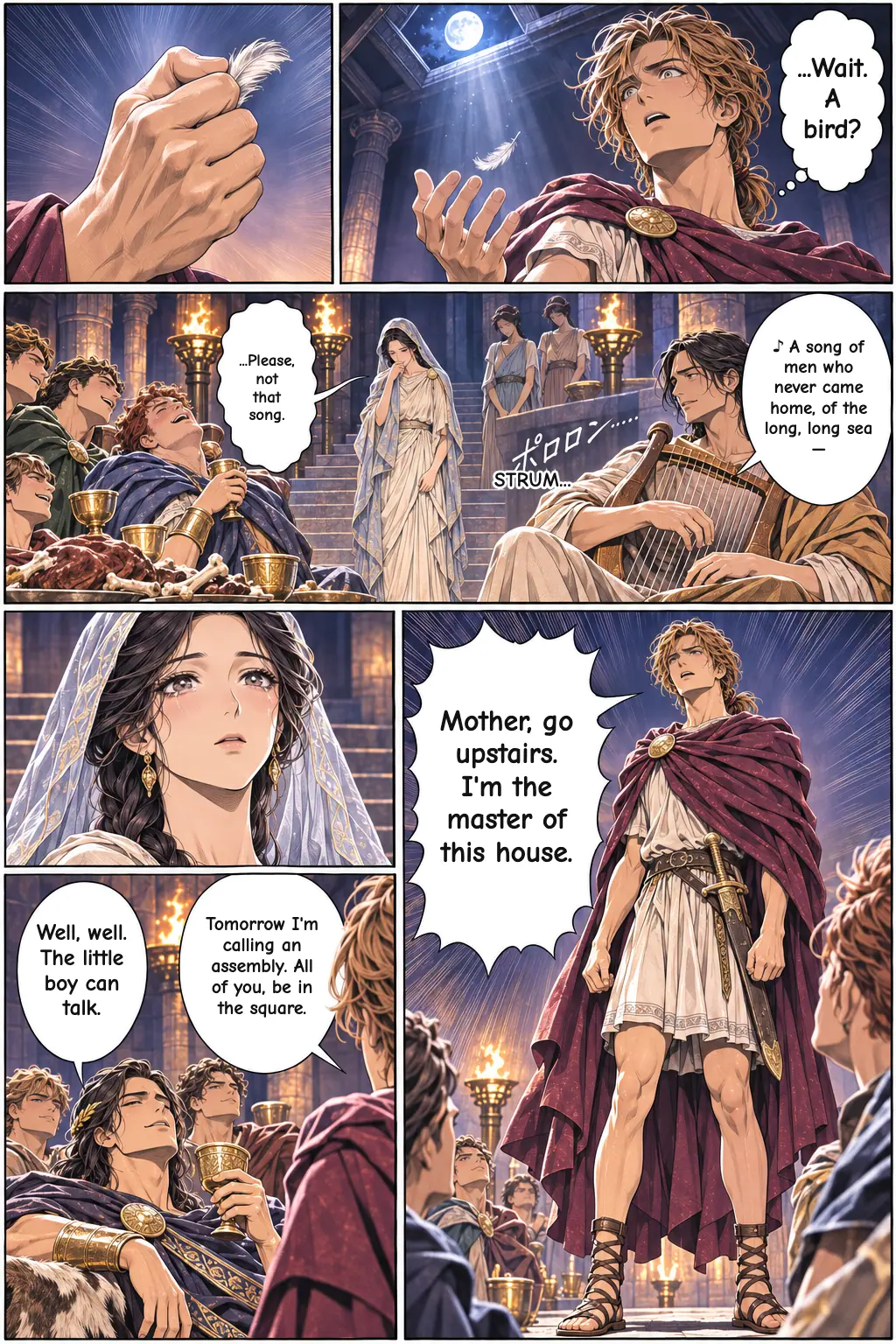
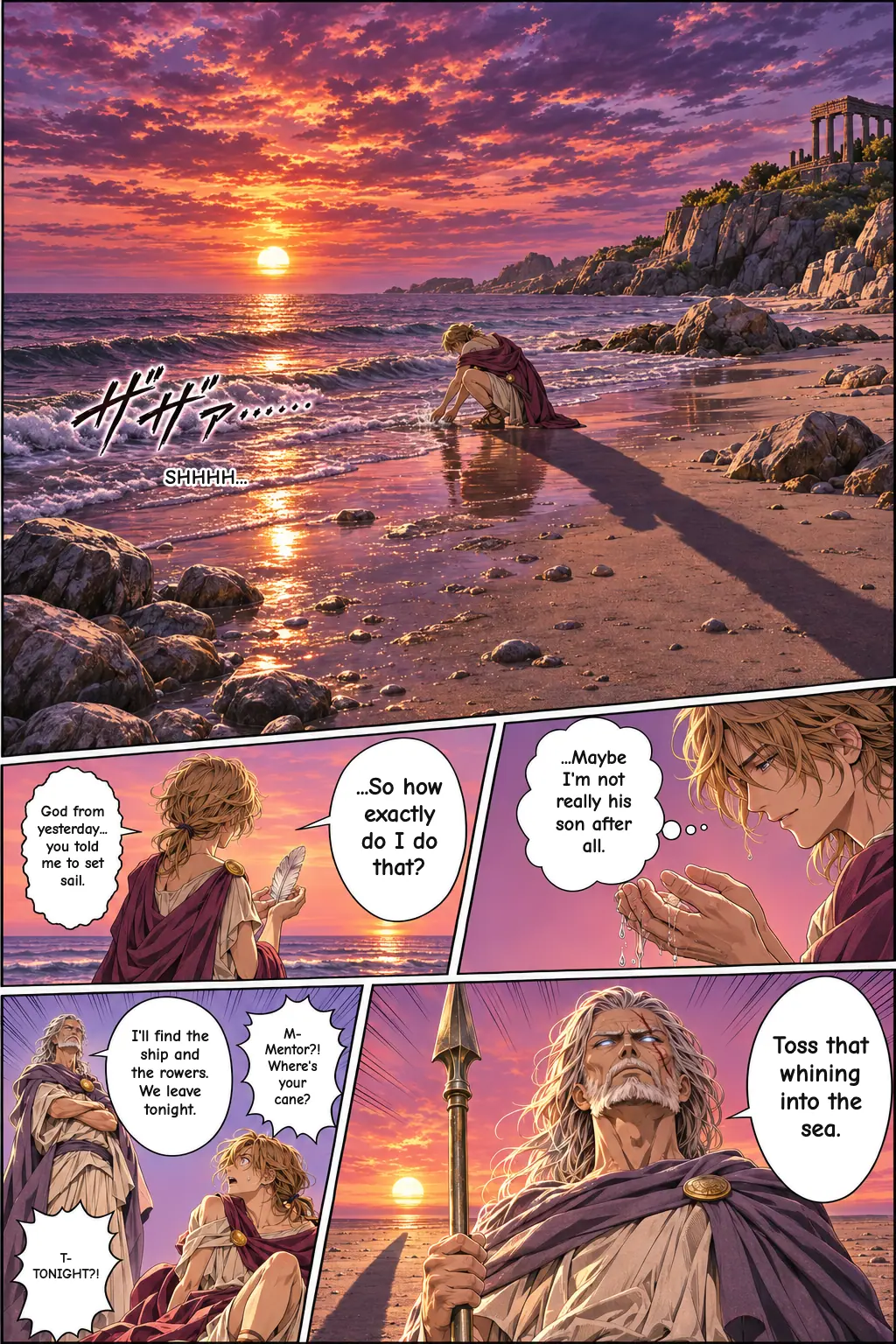
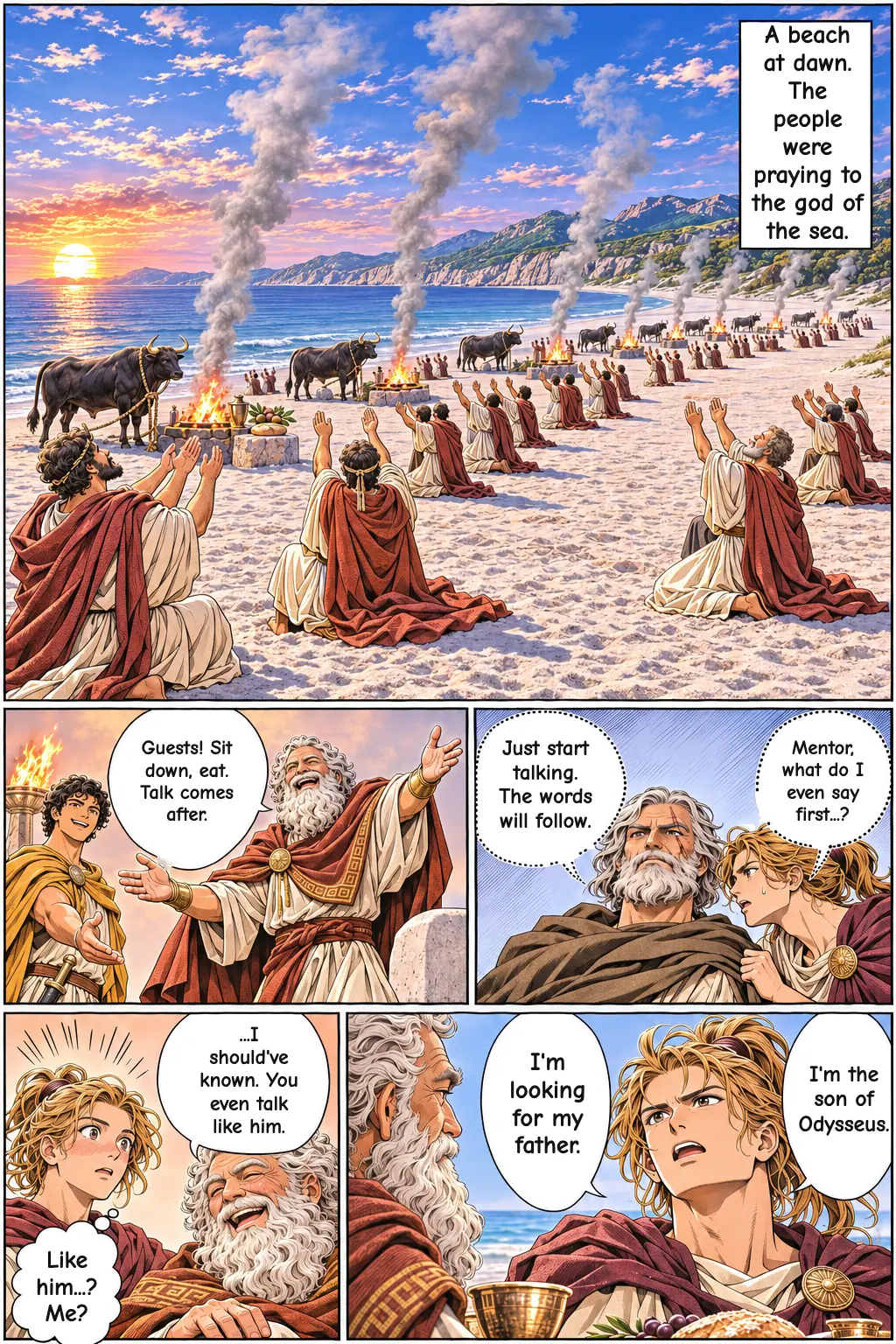
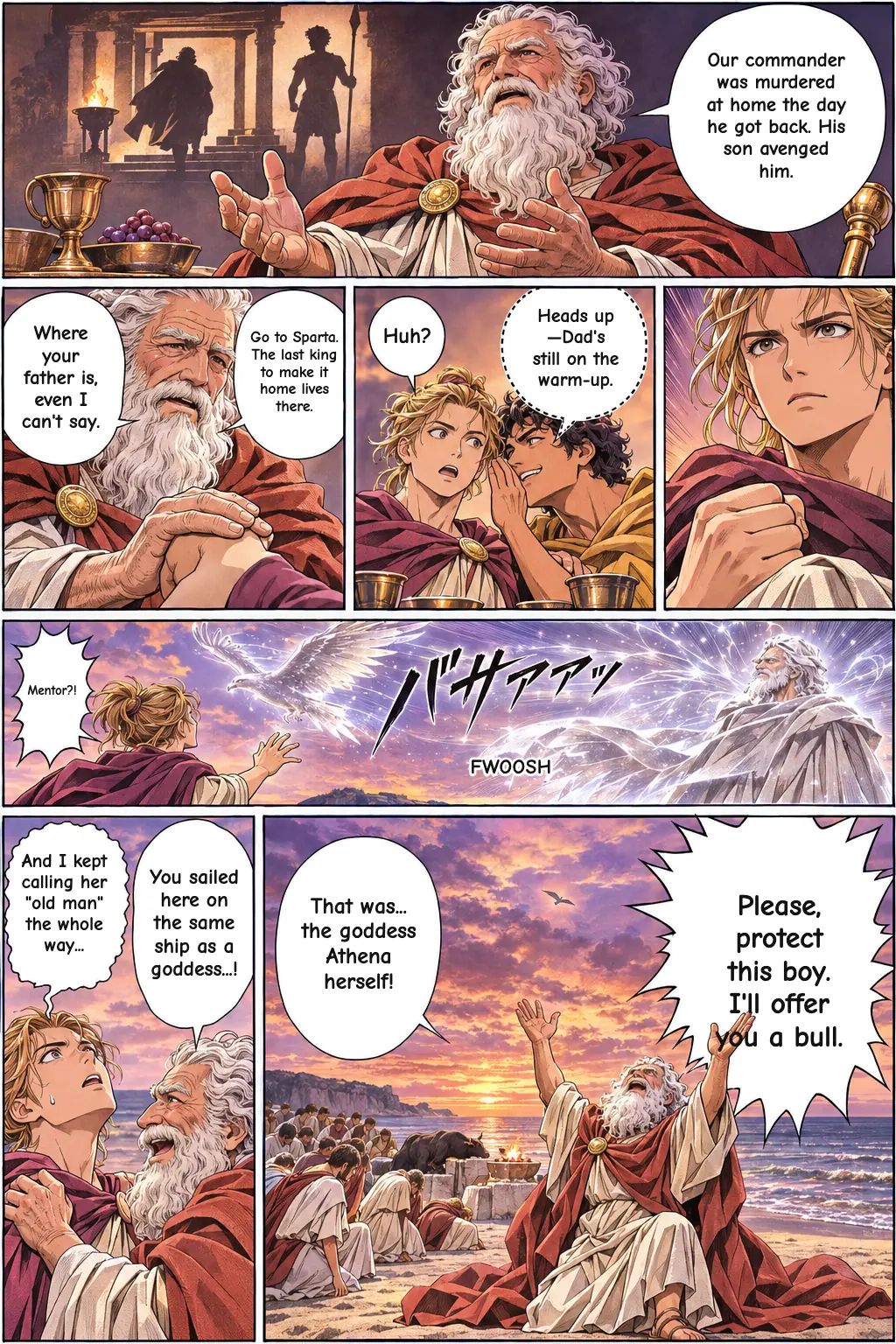
Athena then travels to Ithaca disguised as Mentes, a chieftain of the Taphians and an old friend of the family. She finds the palace full of suitors, young nobles who are eating and drinking their way through Odysseus's wealth while pressing his wife Penelope to remarry. The only person who treats the stranger as a proper guest is Telemachus, the son Odysseus left behind as a baby. Athena tells him that his father is alive, and urges him to call an assembly, order the suitors out, and sail to Pylos and Sparta to seek news. When she leaves, flying off like a bird, Telemachus realizes he has been speaking with a god.
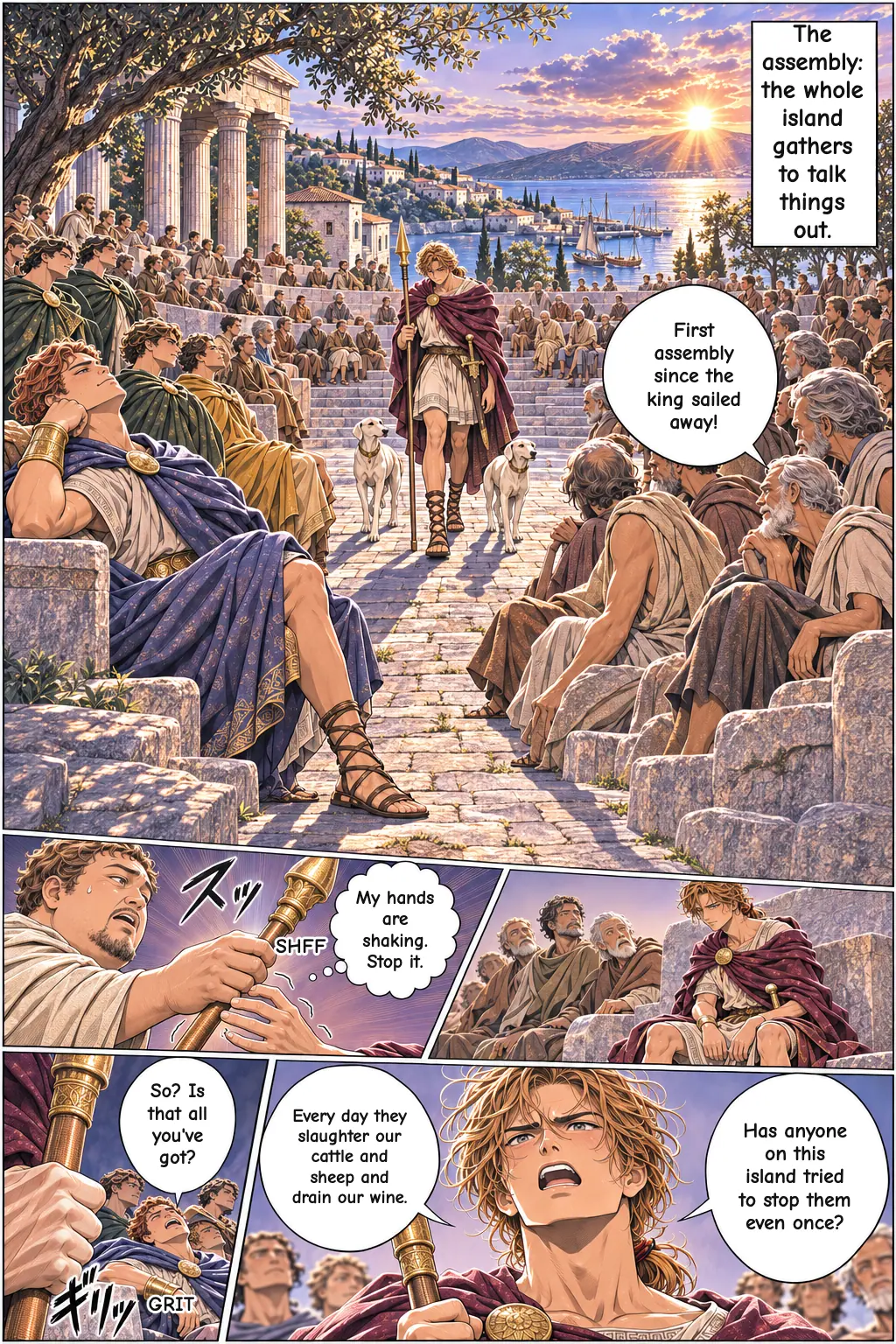
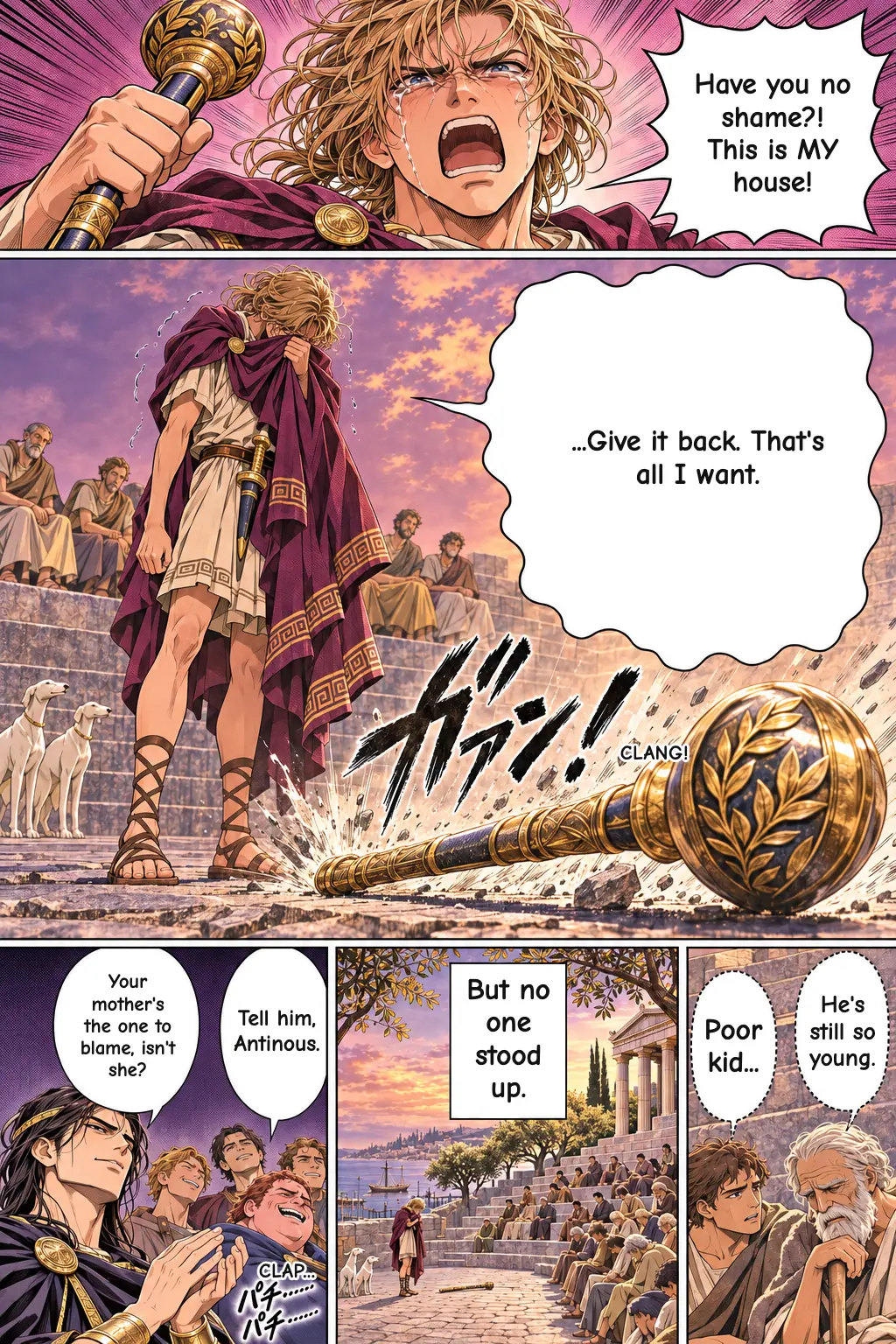
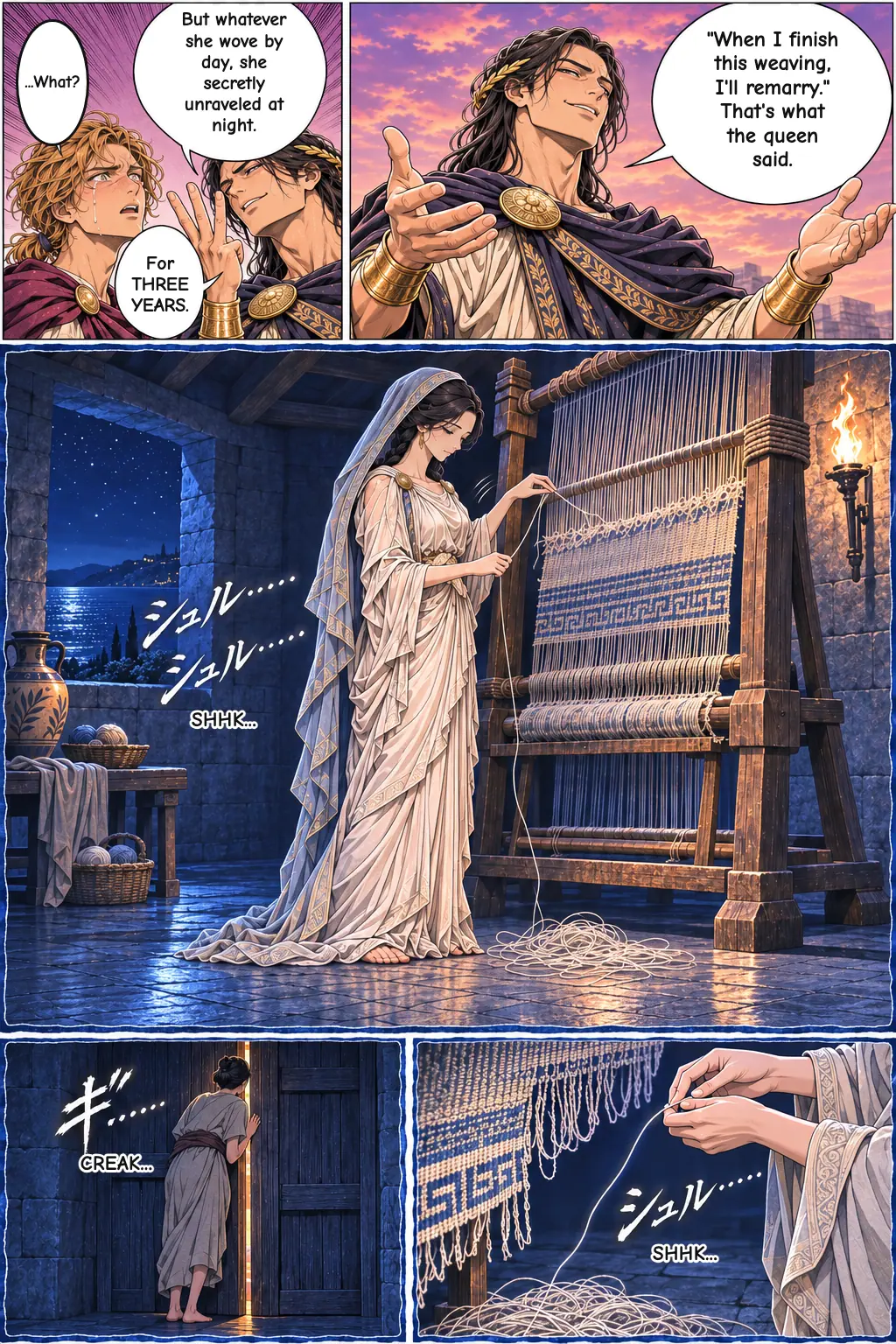
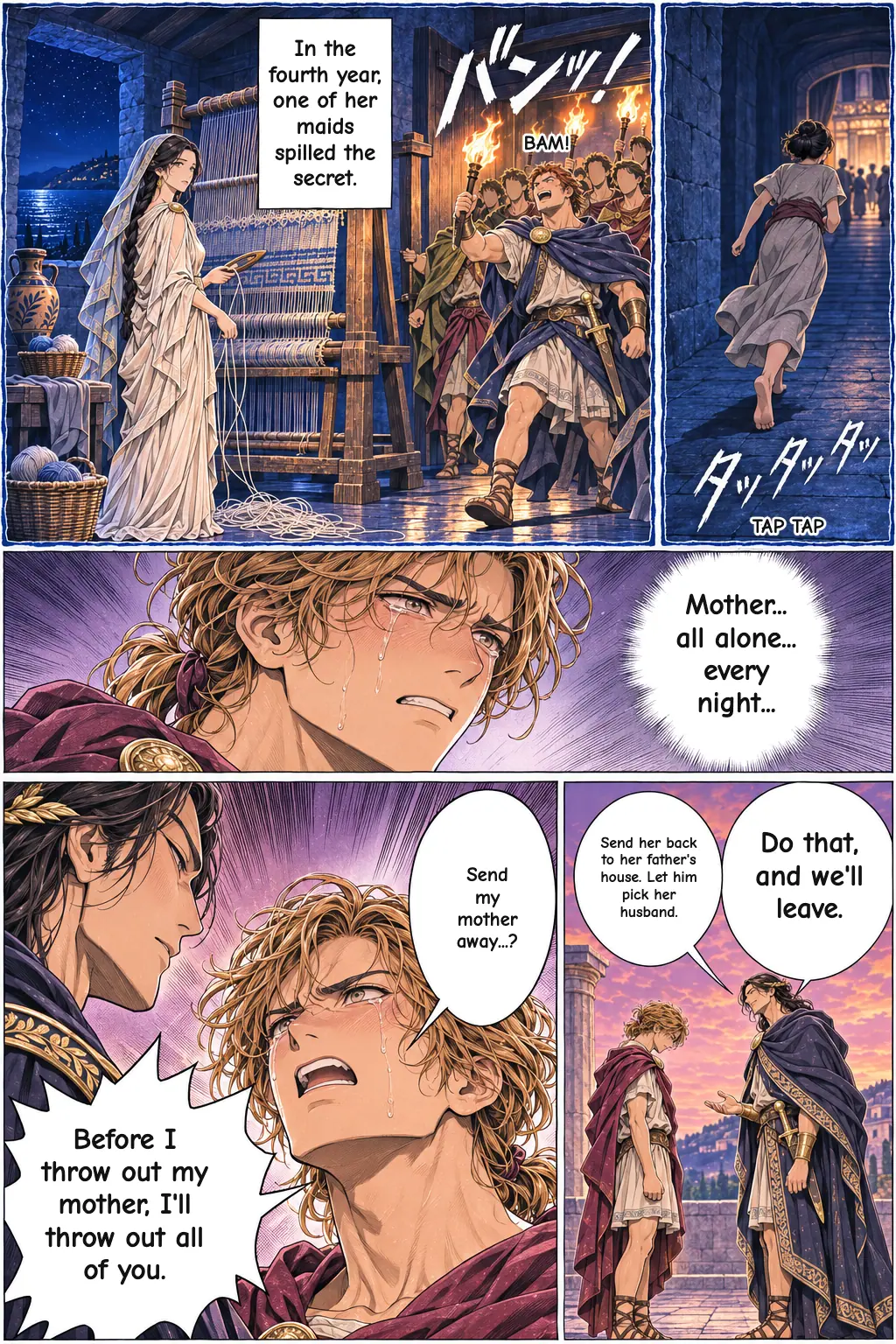
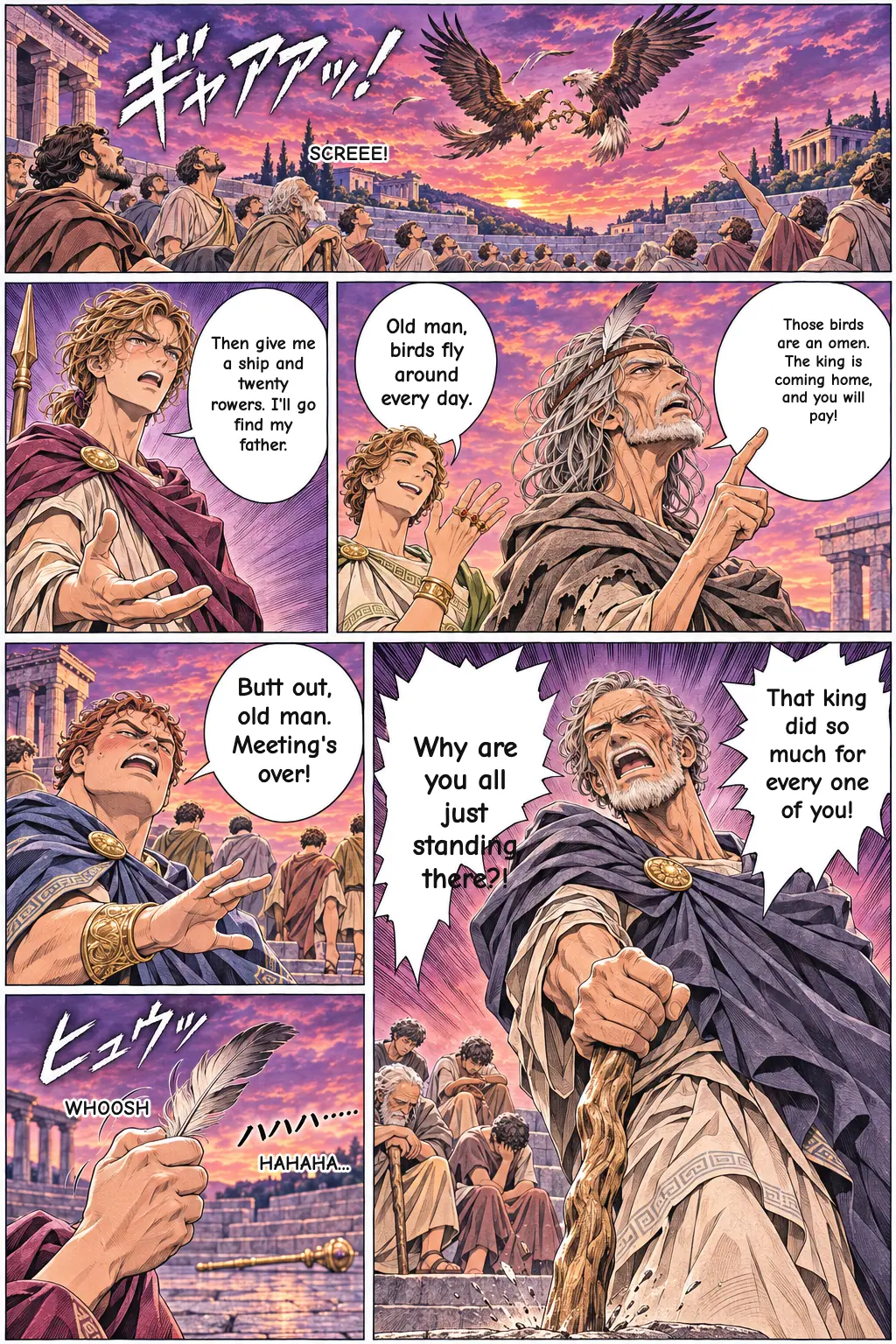
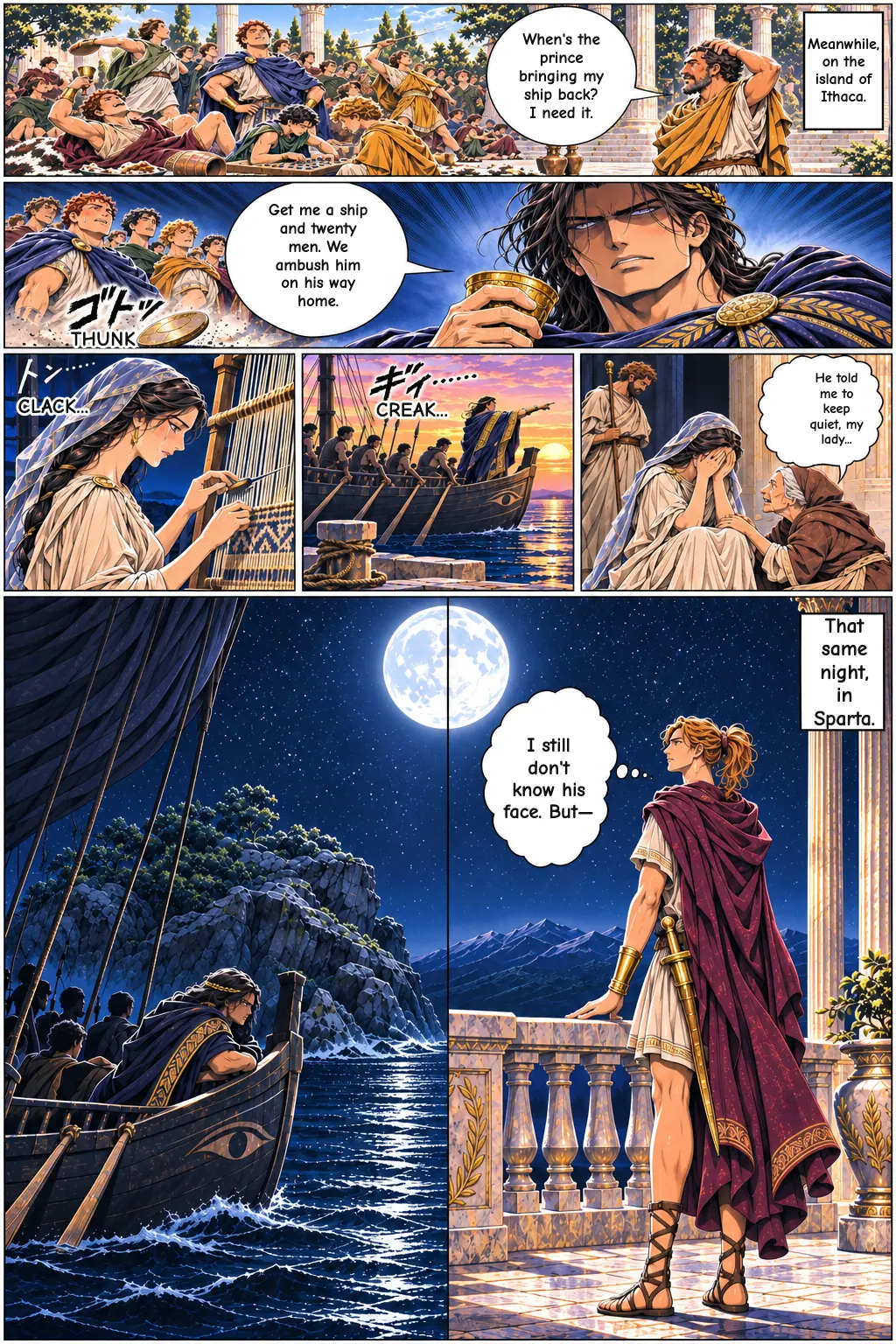
The next morning Telemachus calls the first public assembly held on Ithaca since his father left. He accuses the suitors, then throws down the speaker's staff and bursts into tears. Antinous, the most arrogant suitor, answers that the real fault is Penelope's. She had promised to choose a husband once she finished weaving a burial shroud for Odysseus's old father, Laertes, but she secretly unraveled her work every night. The trick lasted three years until one of her maids gave her away. Zeus sends two eagles that fight above the crowd, and the old seer Halitherses reads them as a sign that Odysseus will return and the suitors will die. The suitors laugh, and the people of Ithaca do nothing.
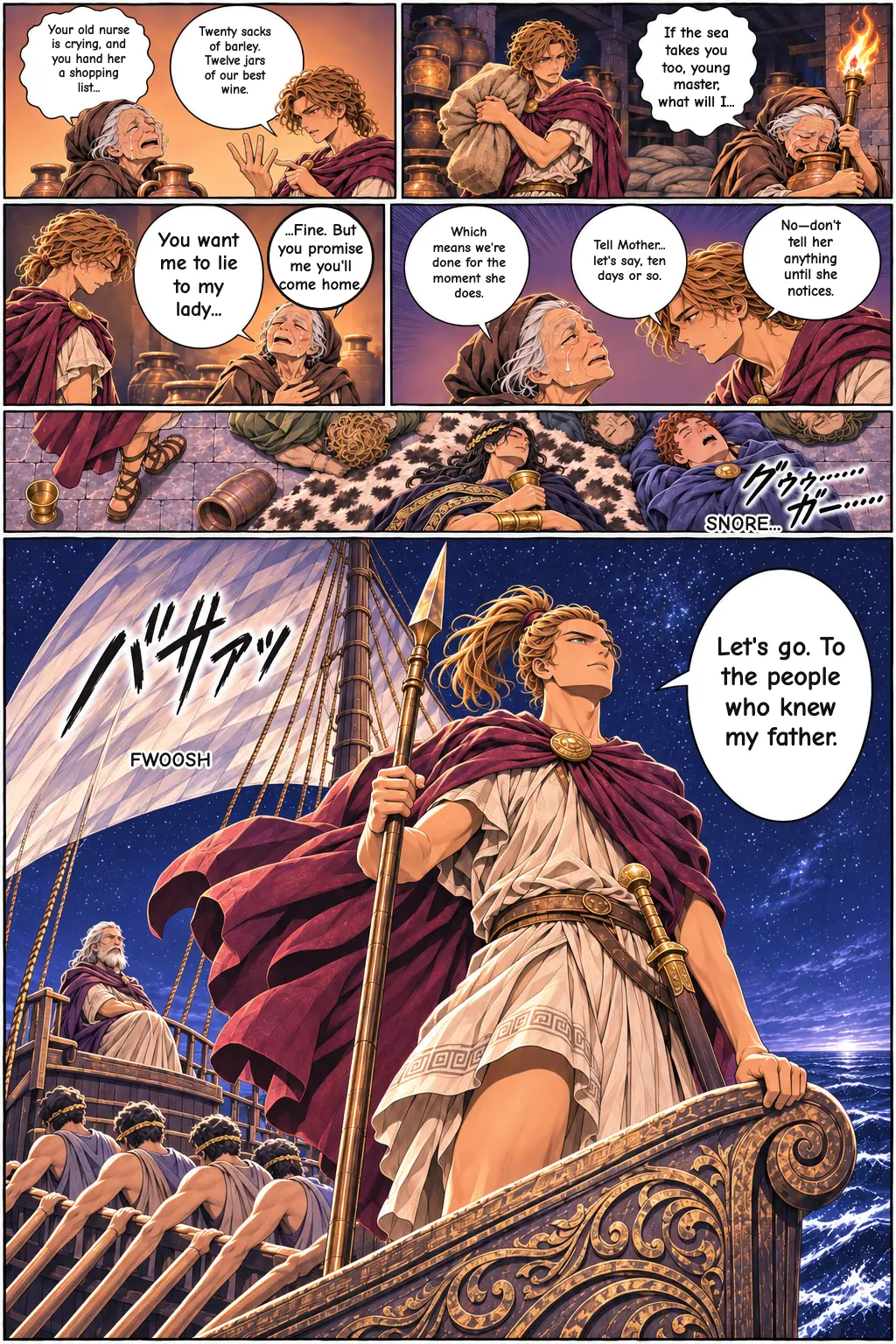
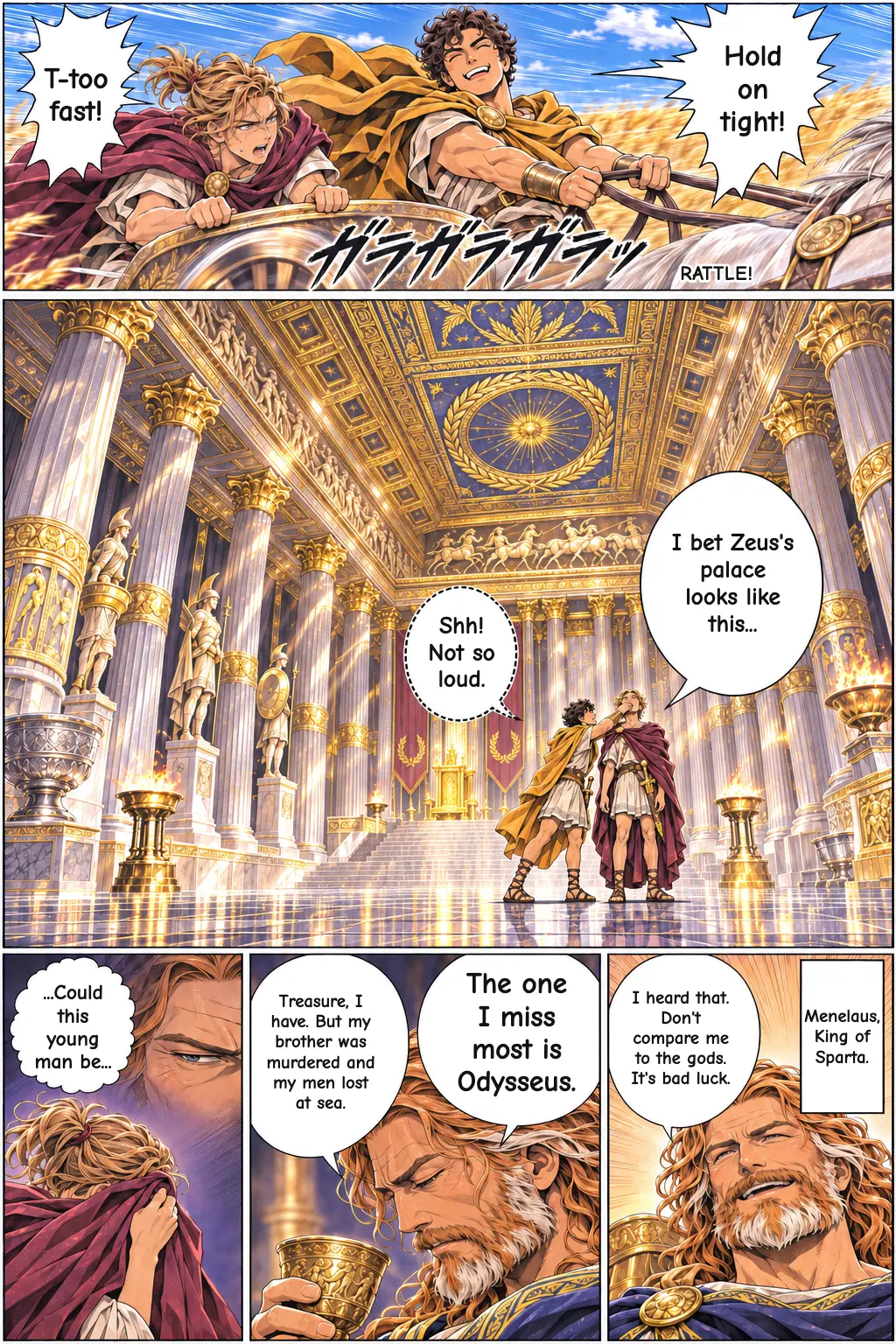
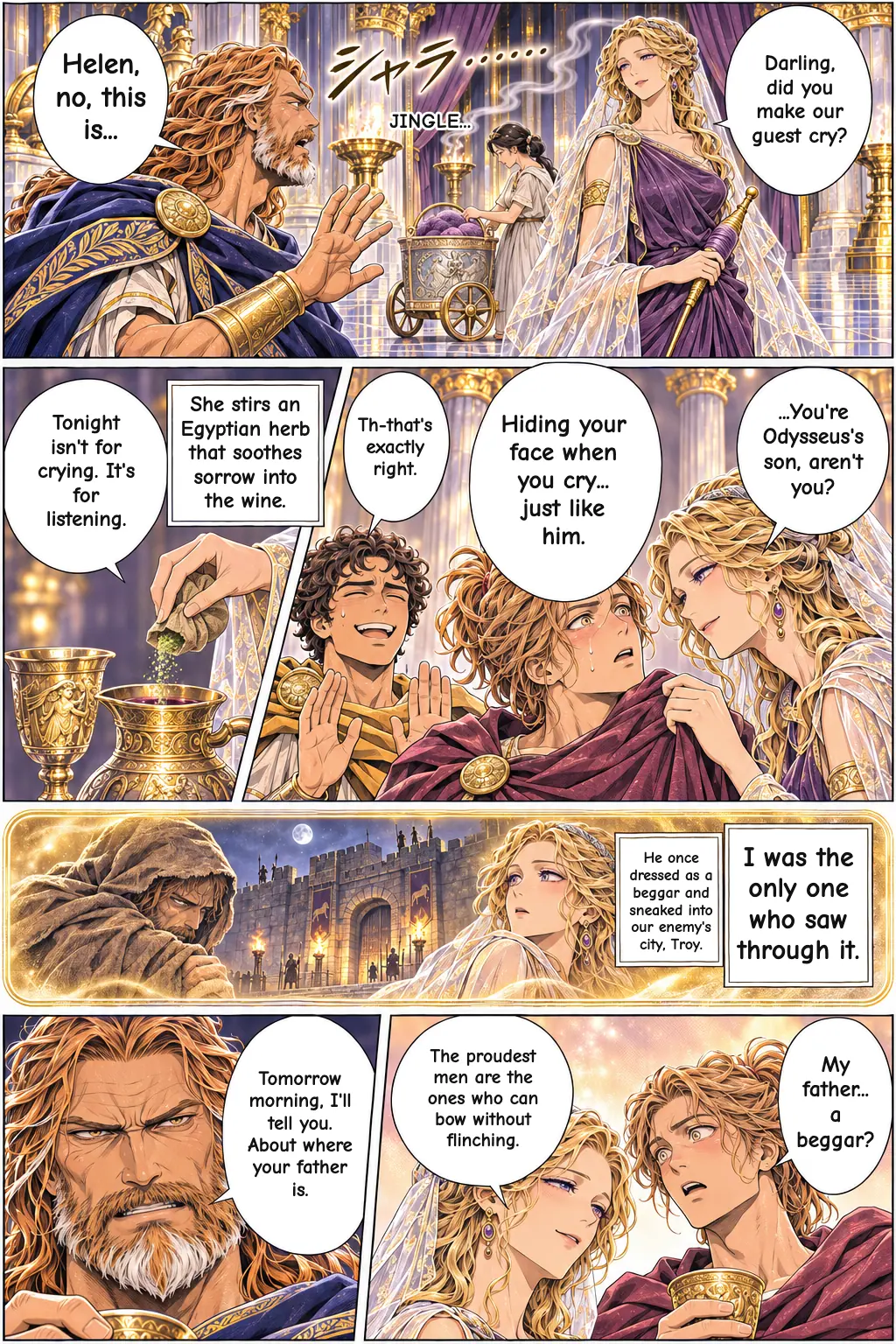
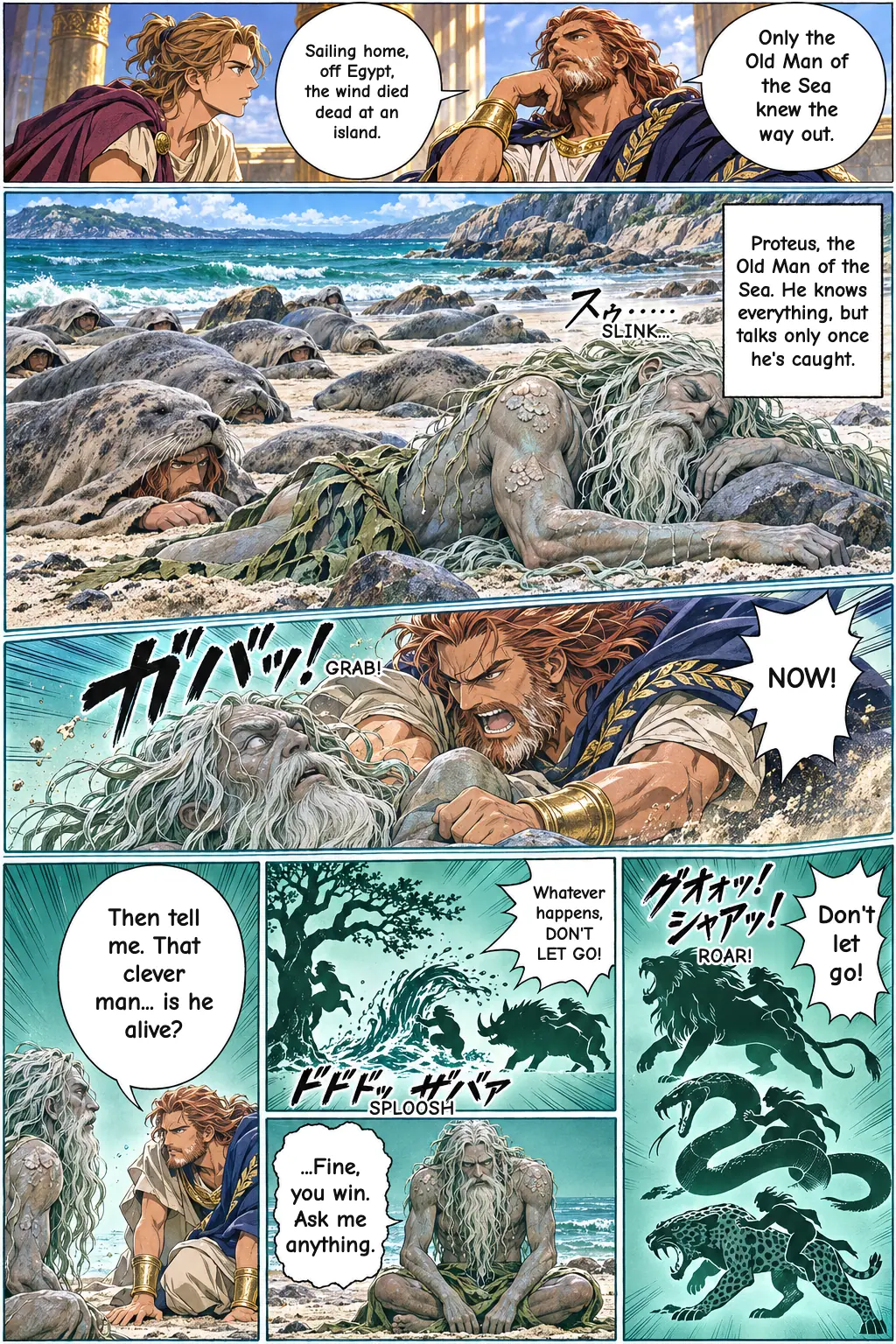
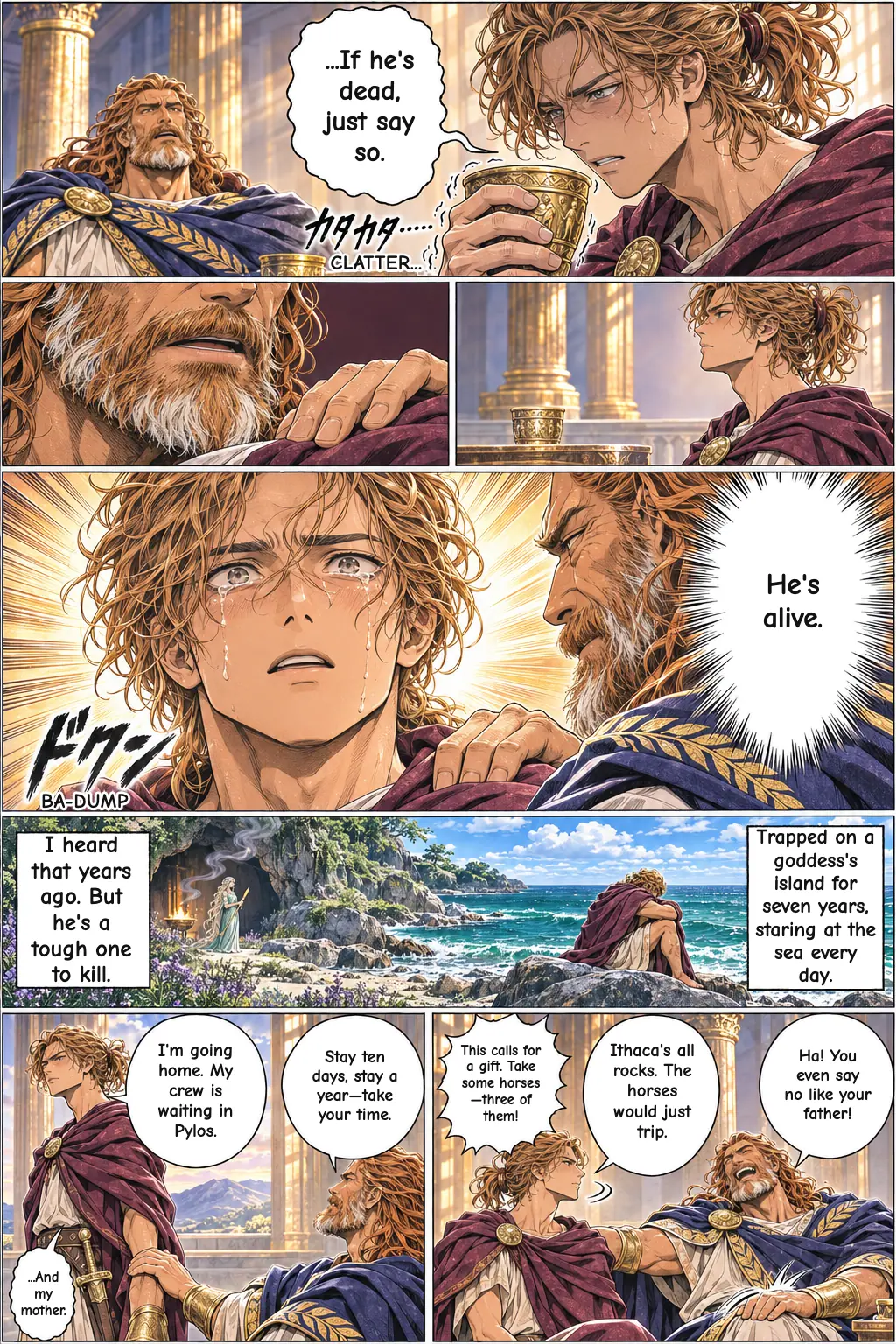
That night Athena, now looking like Mentor, an old friend of Odysseus, gathers a crew and a borrowed ship, and Telemachus slips away to sea without telling his mother. In sandy Pylos, the aged King Nestor tells him how the Greeks scattered after Troy and how Agamemnon was murdered at home, but he has no news of Odysseus. In Sparta, King Menelaus and Queen Helen welcome him. Helen sees at once that he looks like his father, and Menelaus reveals what he learned in Egypt from Proteus, the shape-shifting old man of the sea: Odysseus is alive, trapped on Calypso's island. Meanwhile on Ithaca, the suitors discover the voyage, and Antinous plans to ambush Telemachus with a ship in the strait on his way home. Penelope learns of both the journey and the plot and weeps, until Athena comforts her in a dream.
Main Characters
Telemachus is the real hero of these four books. Homer repeatedly calls him thoughtful or sensible, yet he starts out shy and unsure, especially in front of famous older men. Athena works mostly through disguises, as Mentes, as Mentor, and even as Telemachus himself when she recruits the rowers. On the other side stand Antinous and the smooth-talking Eurymachus, the leaders among the suitors, whose total number Homer later gives as one hundred and eight.
What the Myth Is About: Culture and Background
The Odyssey is an ancient Greek epic poem traditionally credited to Homer. It is usually dated to around the late 8th or 7th century BCE, though both the date and the question of who 'Homer' was are still debated. Modern readers call Books 1–4 the 'Telemachy' because they follow the son rather than the father, who does not appear in person until Book 5.
At its heart, the Telemachy is a coming-of-age story. A young man who has never met his father has to prove he can act like an adult and a future king. It is also a lesson in hospitality, a sacred duty in the Greek world. Telemachus, Nestor, and Menelaus all welcome strangers generously, while the suitors abuse the hospitality of an absent host. Again and again, characters point to the story of Orestes, Agamemnon's son, who avenged his father, as a model for what Telemachus may one day have to do.
What the Manga Changes
The core events in this episode, including the assembly, the shroud trick, the night departure, the visits to Pylos and Sparta, and the ambush plot, all come from Homer. What is new is mostly how they are shown. Homer describes very little about appearance beyond Athena's gray eyes and Menelaus's fair hair, so the characters' faces, clothes, and hairstyles are the manga's own designs, based loosely on Bronze Age Greece.
The manga also condenses Nestor's and Menelaus's long stories of the Greeks' journeys home, focusing on Agamemnon and Orestes, and shortens the scenes with Helen. Telemachus's inner thoughts, the details of the suitors' feasting, the crowd's reactions, and the look of the harbor at night are invented to make the story easier to follow. Penelope's weaving trick may be shown as a flashback, and the maid who exposed her has no name in the original. Any face or identity given to her is the manga's invention.
Where to Read It
If you want to see Telemachus find his voice and take to the dark sea, Episode 9 of GREEK MYTHOLOGY: THE ODYSSEY — The Twenty-Year Voyage Home tells this part of the story in manga form, right here on Manga Portal. Every episode is free to read, and you don't need to sign up. Once you've read the son's side of the story, the next episodes return to Odysseus himself.
Characters in this episode
Telemachus
Son of Odysseus and Penelope, about twenty years old, who has never known his father and sets out to find news of him.
Athena
Gray-eyed goddess of wisdom who persuades Zeus to let Odysseus return, then guides Telemachus in the disguises of Mentes and Mentor.
Penelope
Odysseus's clever, faithful wife, who held off the suitors for three years by secretly unweaving a burial shroud.
Antinous
The most arrogant of the suitors, who mocks Telemachus at the assembly and plots to ambush him at sea.
Nestor
The elderly, talkative king of Pylos, a Trojan War veteran who shares what he knows of the Greeks' journeys home.
Menelaus
King of Sparta and husband of Helen, who passes on the sea god Proteus's news that Odysseus is alive on Calypso's island.
FAQ
What is the Telemachy in the Odyssey?
The Telemachy is the name modern readers give to Books 1–4 of Homer's Odyssey. These books follow Telemachus, Odysseus's son, as he confronts the suitors and travels to Pylos and Sparta looking for news of his father. Odysseus himself does not appear until Book 5.
Why does Telemachus go looking for Odysseus?
The goddess Athena, disguised as a family friend named Mentes, urges him to go. His home has been overrun by suitors and he gets no help from the people of Ithaca, so finding out whether his father is alive or dead is the only way he can decide what to do next.
How many suitors were there in the Odyssey?
Homer gives the number as one hundred and eight in Book 16, plus some servants who attend them. They come from Ithaca and several nearby islands.
What did Telemachus learn in Sparta?
King Menelaus told him that Proteus, the shape-shifting old man of the sea, had revealed that Odysseus was alive. He was being kept against his will on an island by the nymph Calypso.
How did Penelope trick the suitors?
She promised to remarry once she finished weaving a burial shroud for Odysseus's father, Laertes. She wove by day and secretly unraveled the work at night, and kept this up for three years until one of her maids betrayed her.