Episode 9Must Pee. Must Smile. Miles Out at Sea.Yaji and Kita at the Shichiri Ferry
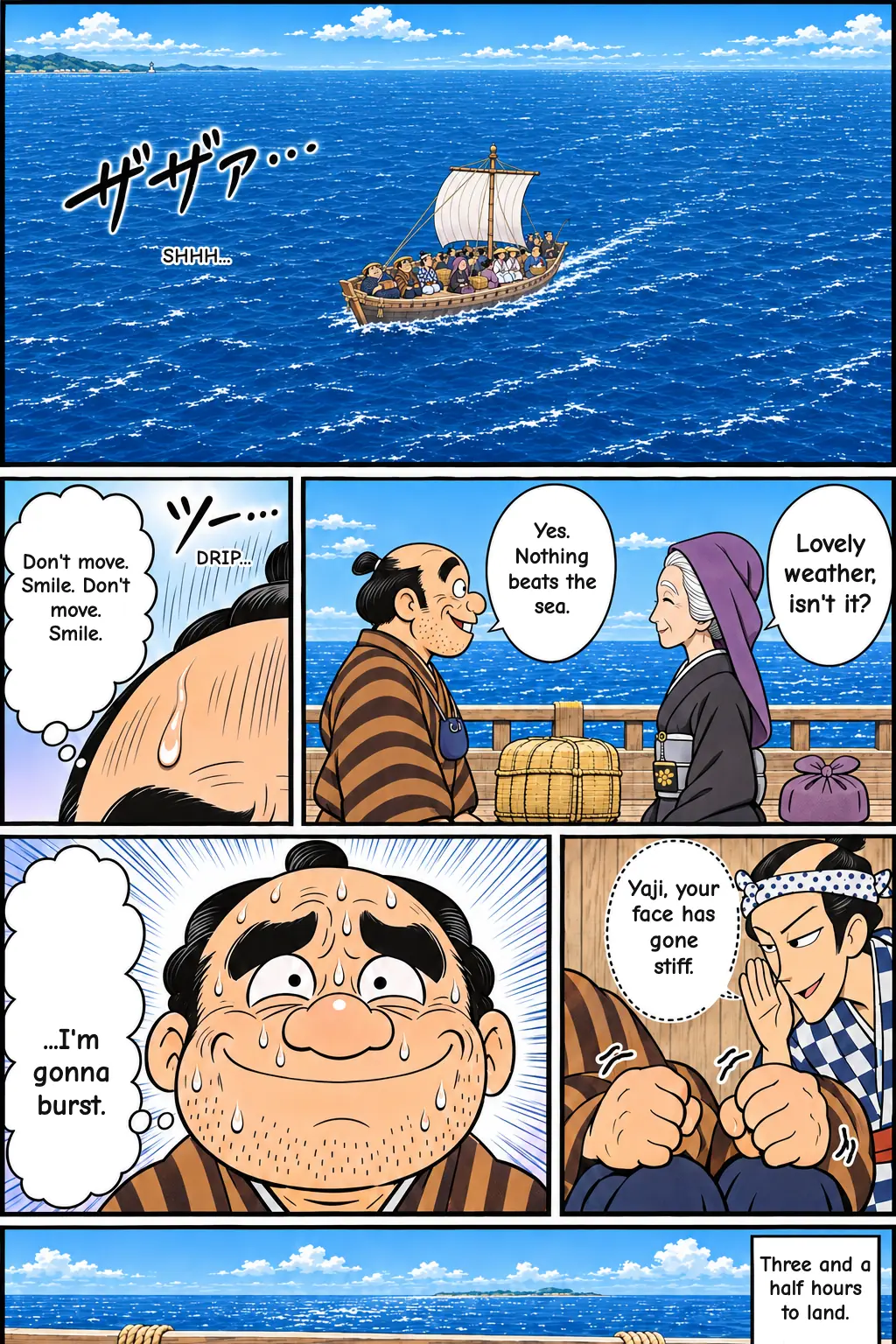
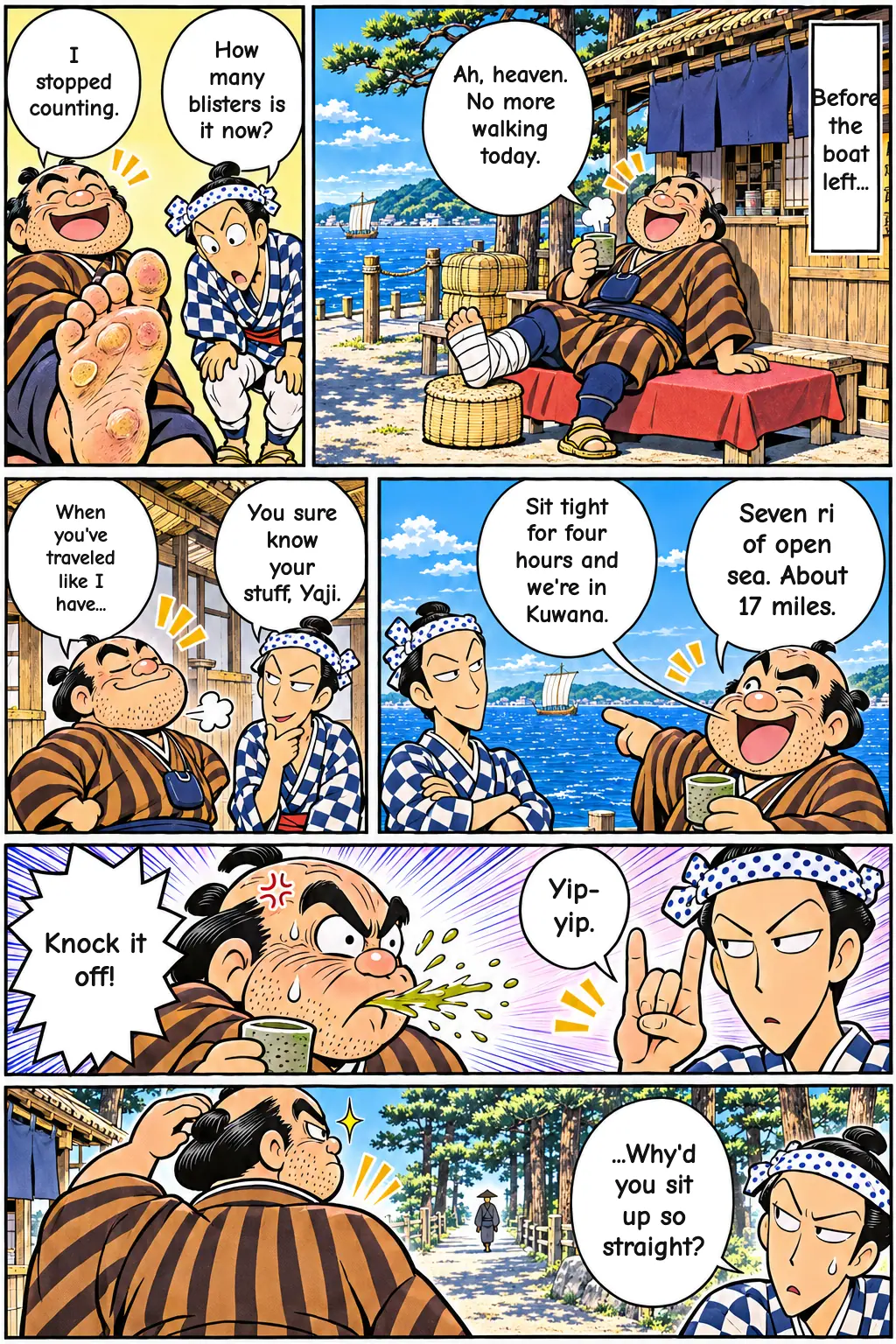
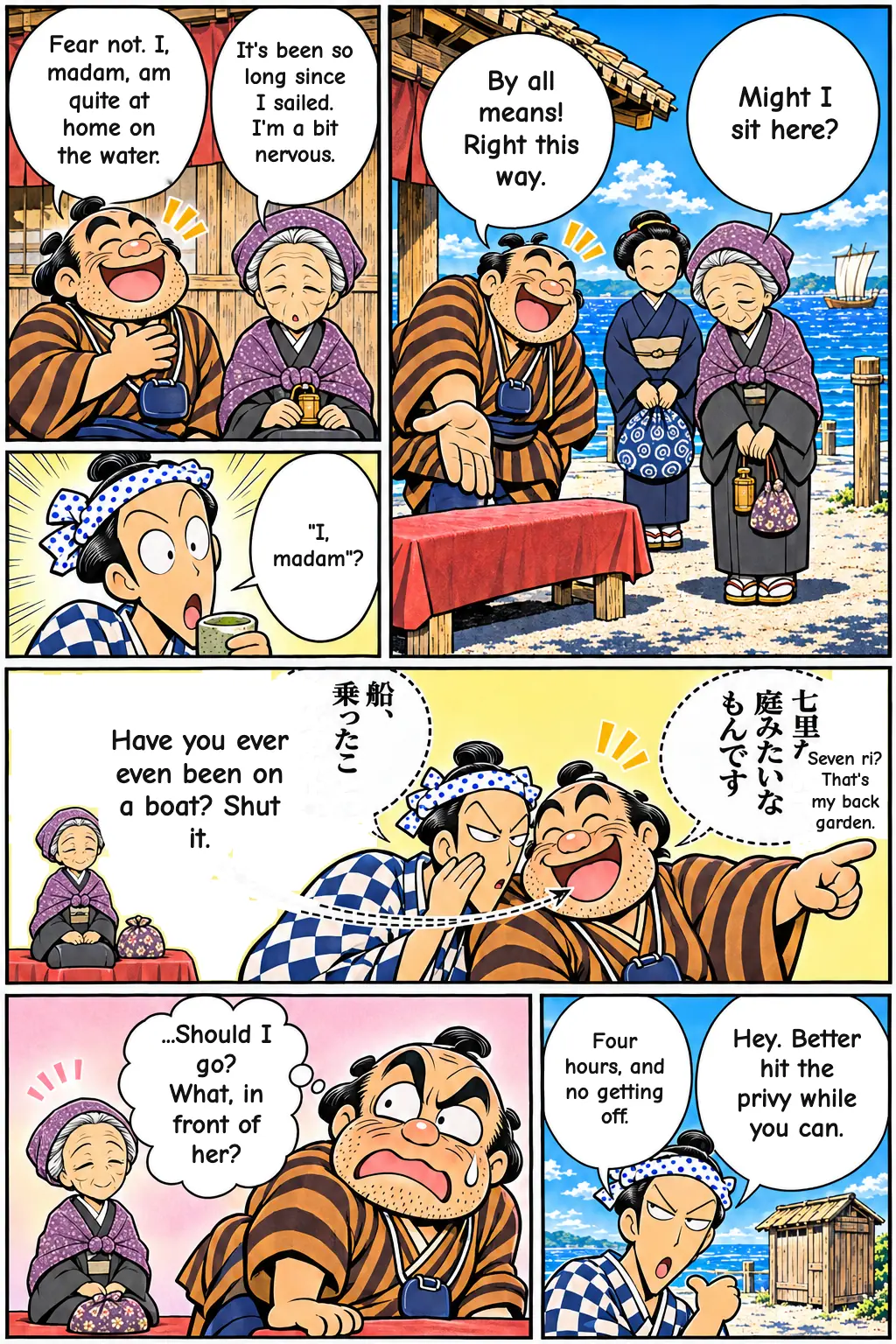
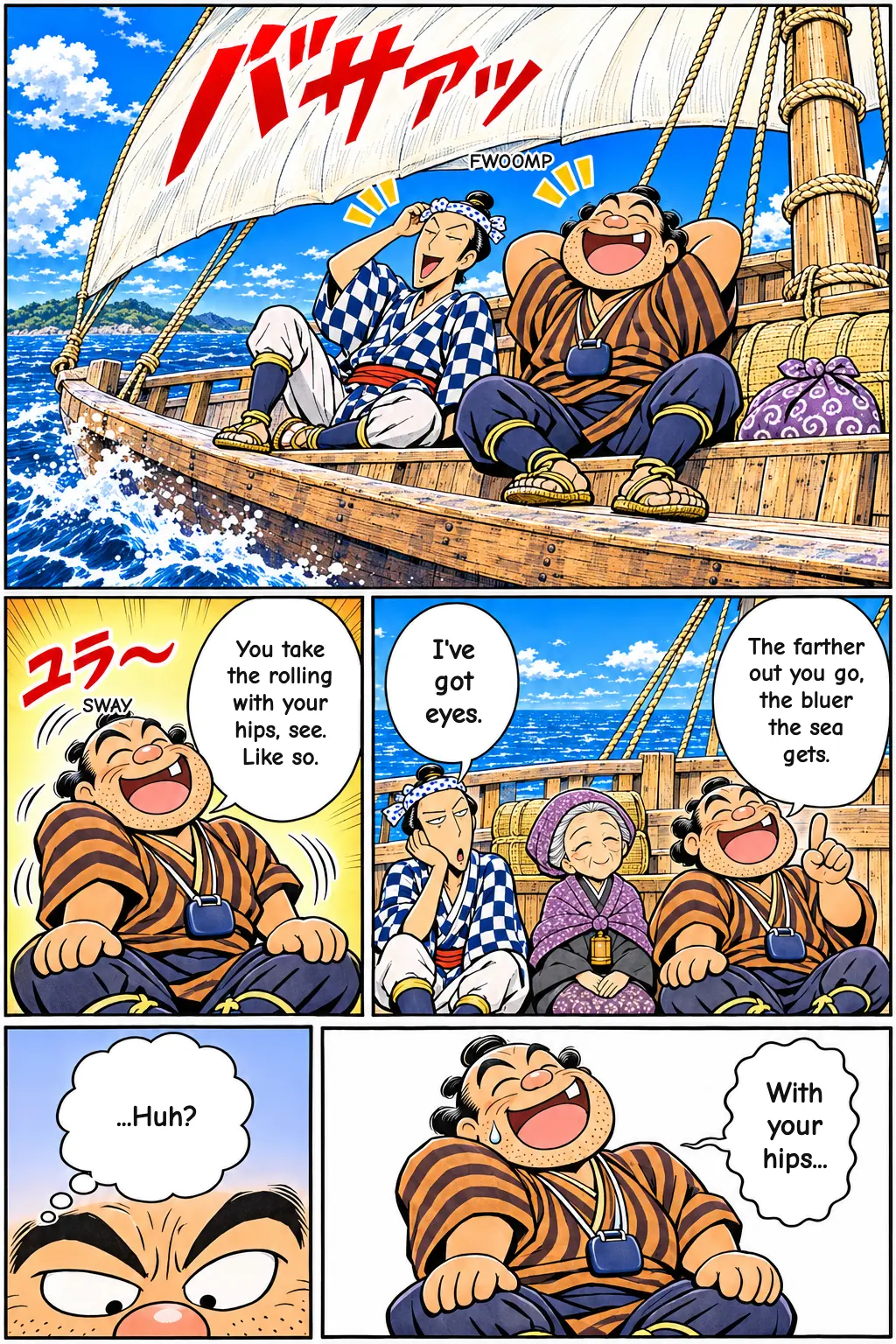
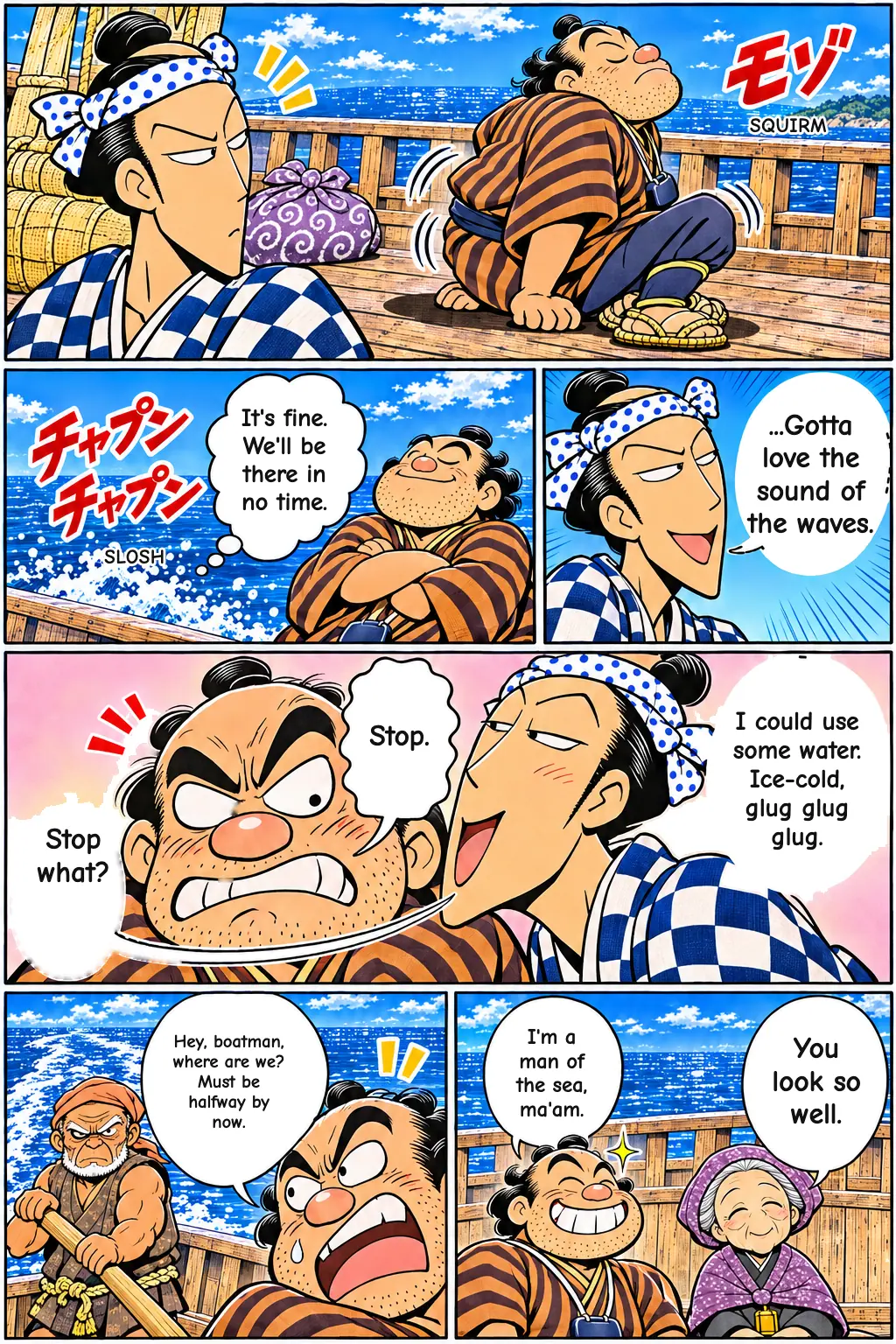
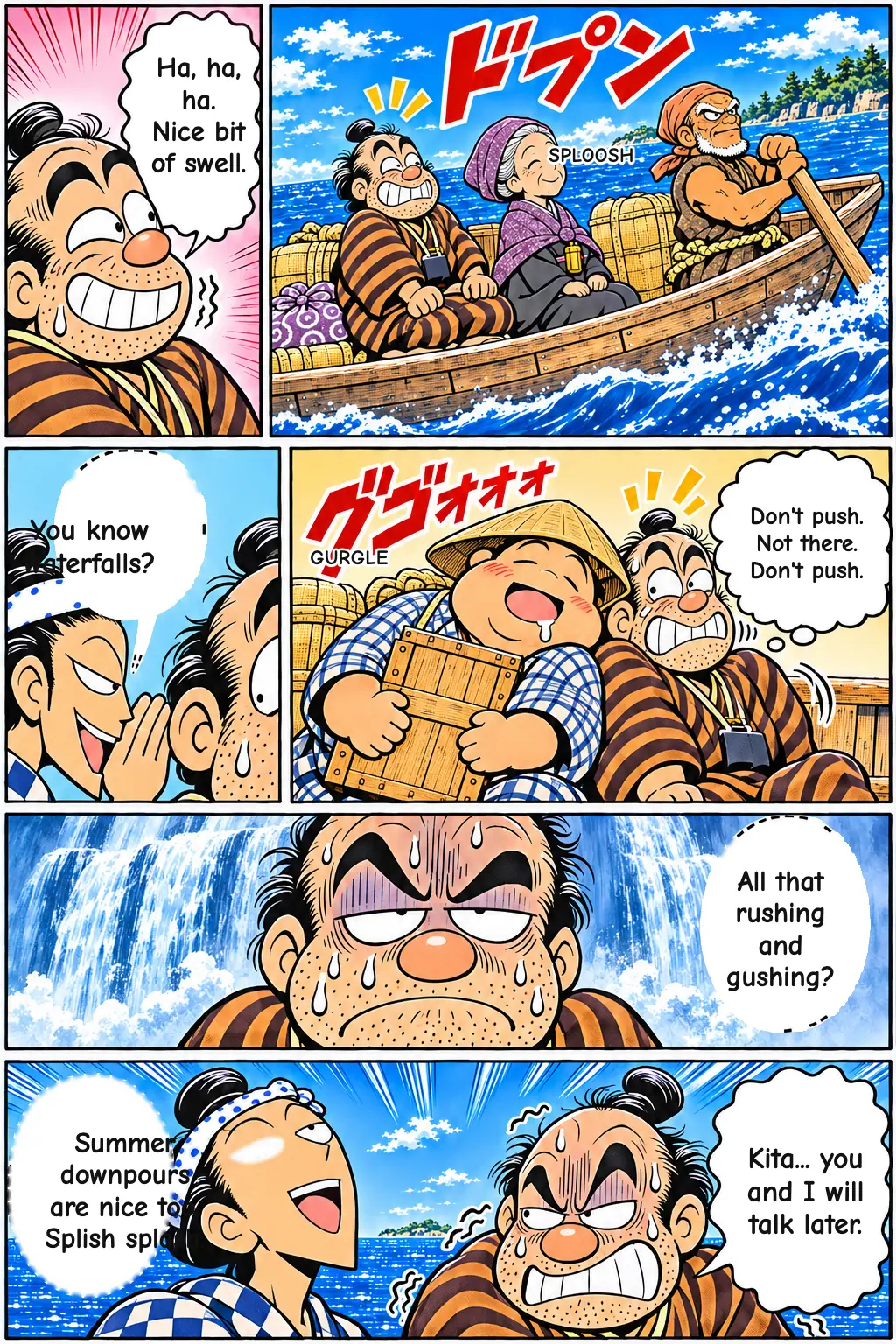
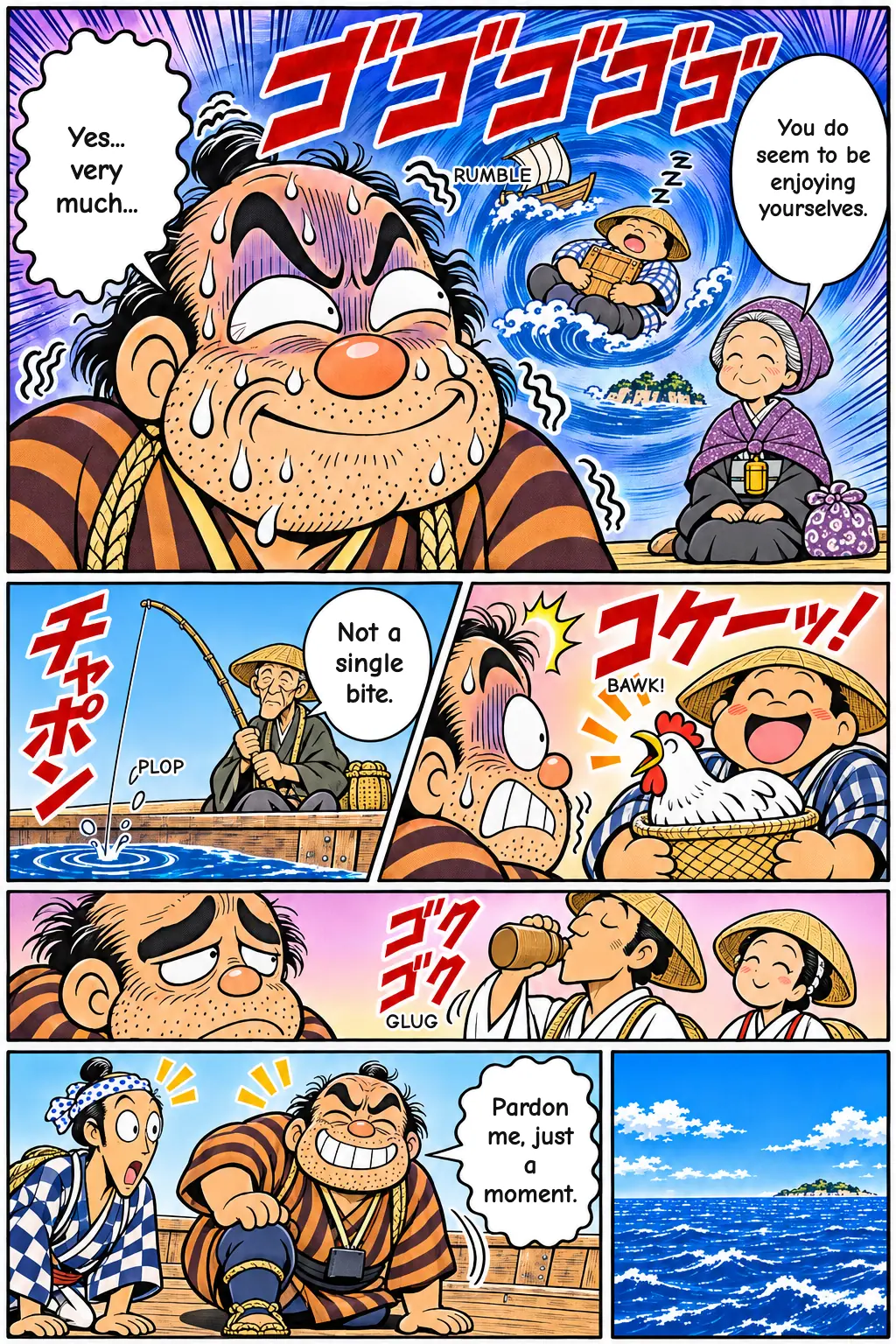
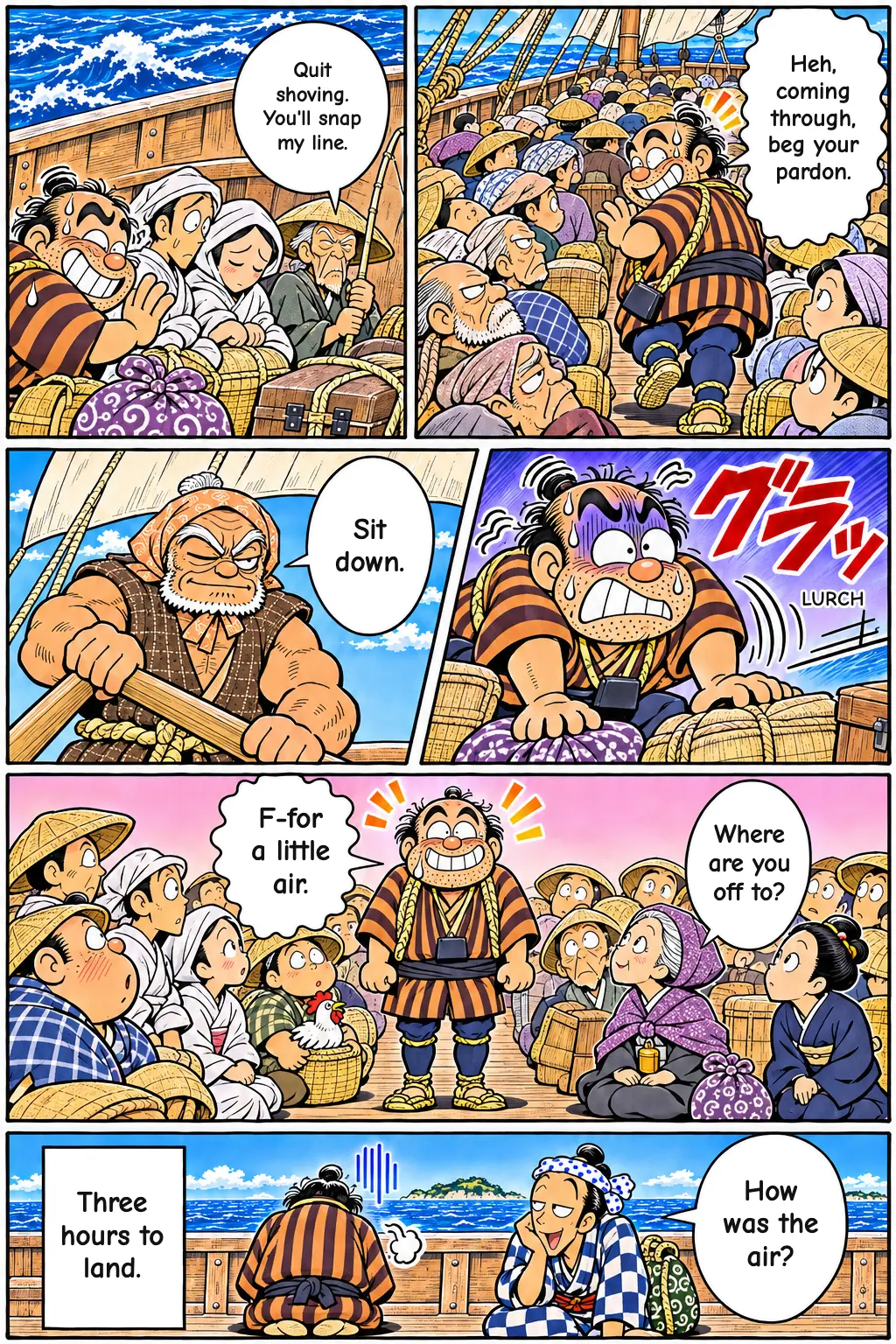
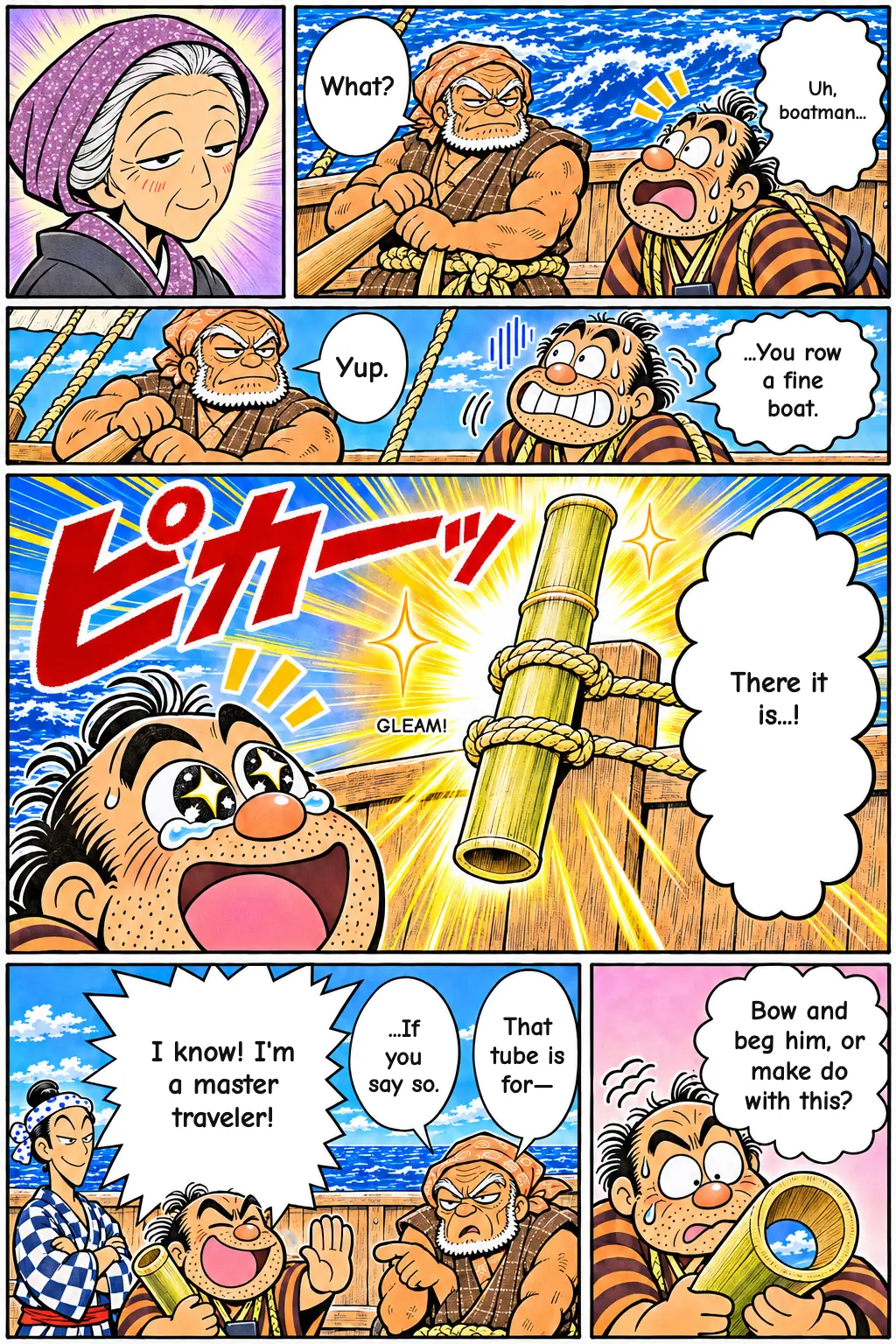
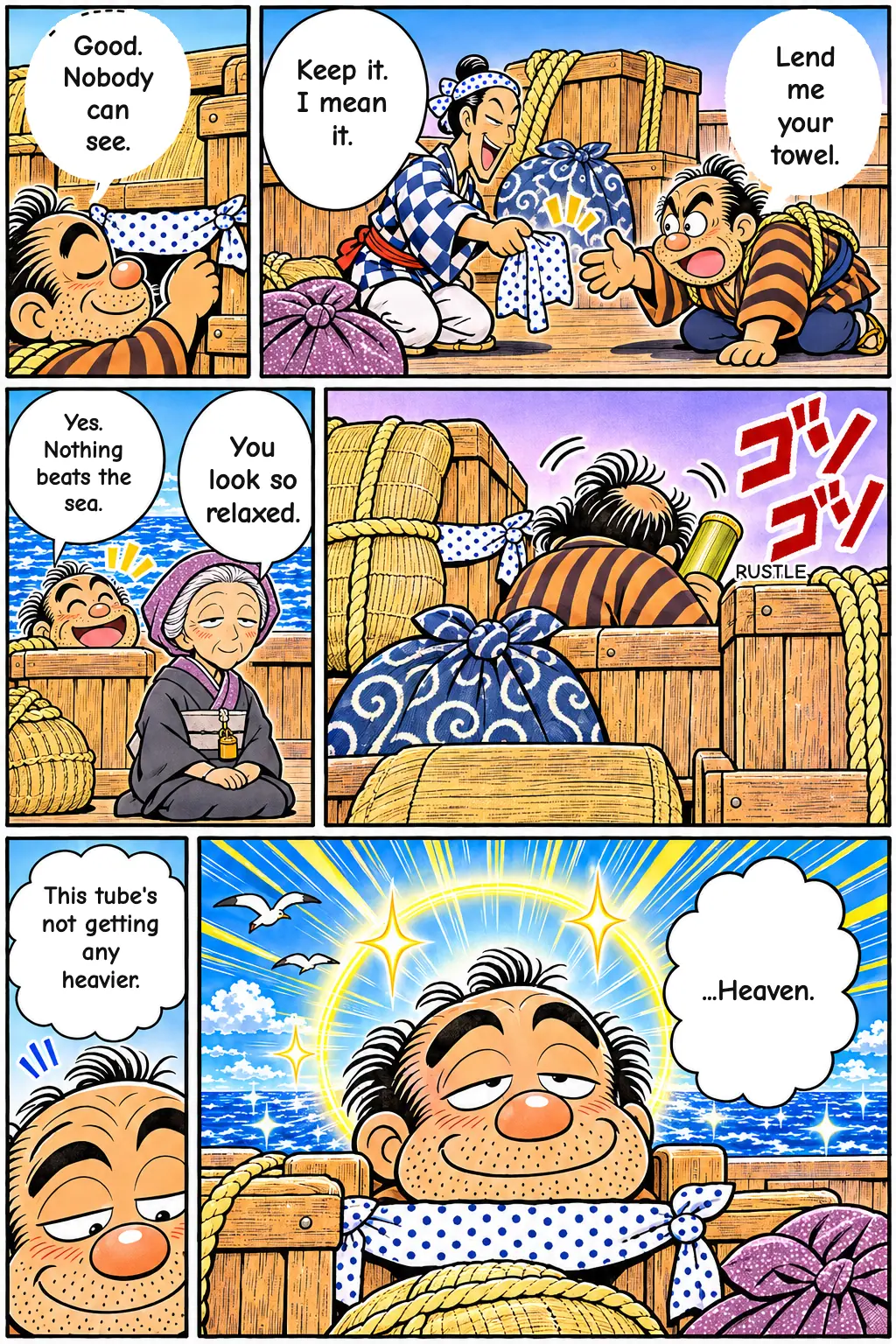
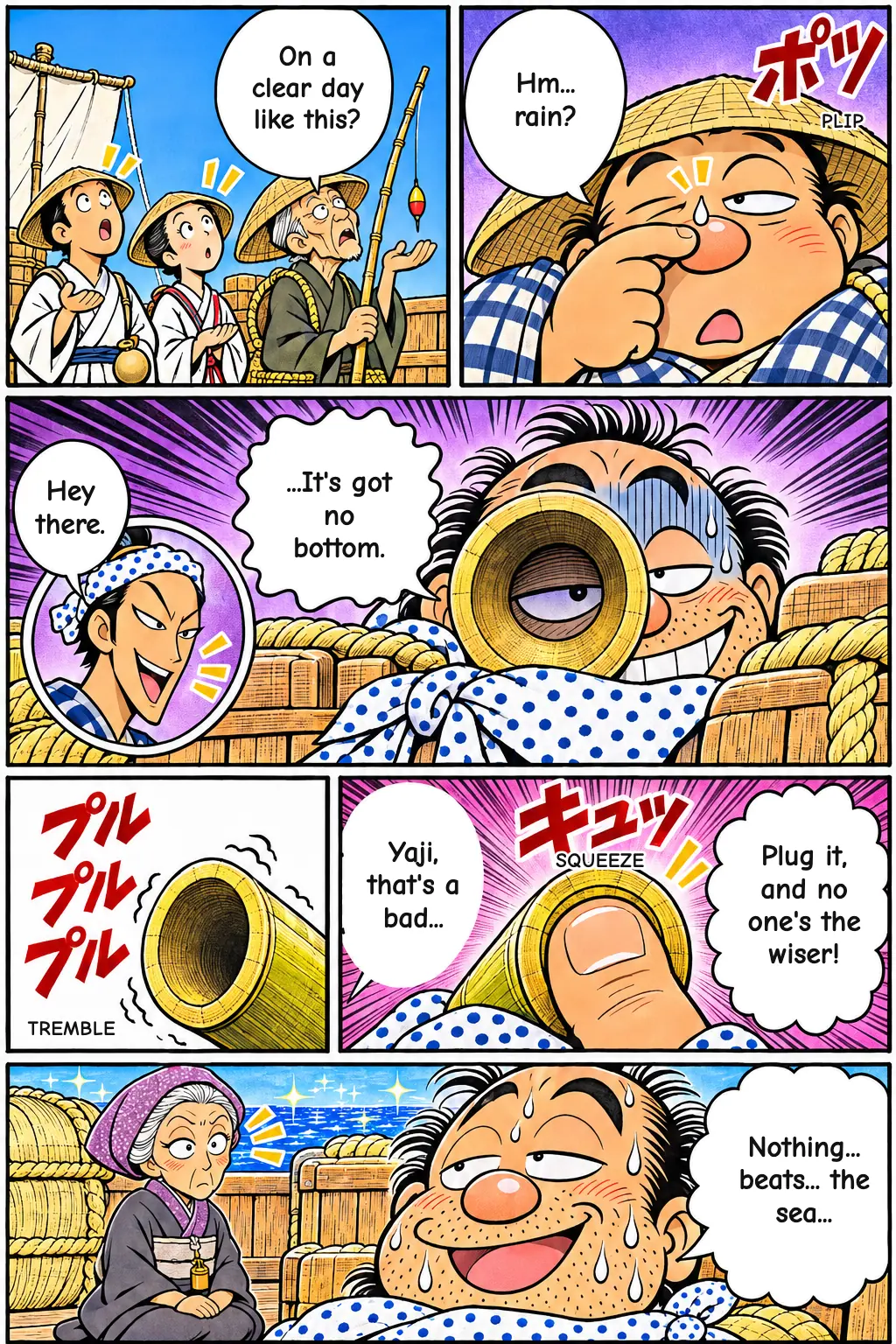
Showing off for a refined old lady, Yaji plays the seasoned traveler and skips the privy before boarding. Now he's stuck at sea with nowhere to go and a bladder at its limit. Beg the boatman, or use the bamboo tube close at hand? His pride makes the call.
Get new episodes in your feed. Follow us on:ThreadsBluesky
Story summary
Tokaido Hizakurige, sometimes called Shank's Mare in English, is a comic novel by Jippensha Ikku that began appearing in 1802 and grew through further installments. It follows two men from Edo (modern Tokyo), Yajirobei and Kitahachi, as they head west along the Tokaido, the great highway linking Edo and Kyoto. The title is itself a small joke: it means something like "knee chestnut horse," in other words, traveling with your own legs as your horse. This part of the story brings the pair to Miya, the post town beside Atsuta Shrine in what is now Nagoya. Here the road stops and the water begins.
Shichiri Ferry in Hizakurige: Yaji and Kita's Tokaido Story Explained
In short: The Shichiri Ferry episode is the sea crossing in Tokaido Hizakurige, Jippensha Ikku's Edo-period comic novel, in which the travelers Yaji and Kita ride a crowded boat about seven ri (roughly 28 km) from Miya to Kuwana. An urgent call of nature and a bamboo tube set off an embarrassing uproar on board, and the pair then land at Kuwana and continue their journey.
The Story in the Original Hizakurige
Tokaido Hizakurige, sometimes called Shank's Mare in English, is a comic novel by Jippensha Ikku that began appearing in 1802 and grew through further installments. It follows two men from Edo (modern Tokyo), Yajirobei and Kitahachi, as they head west along the Tokaido, the great highway linking Edo and Kyoto. The title is itself a small joke: it means something like "knee chestnut horse," in other words, traveling with your own legs as your horse.
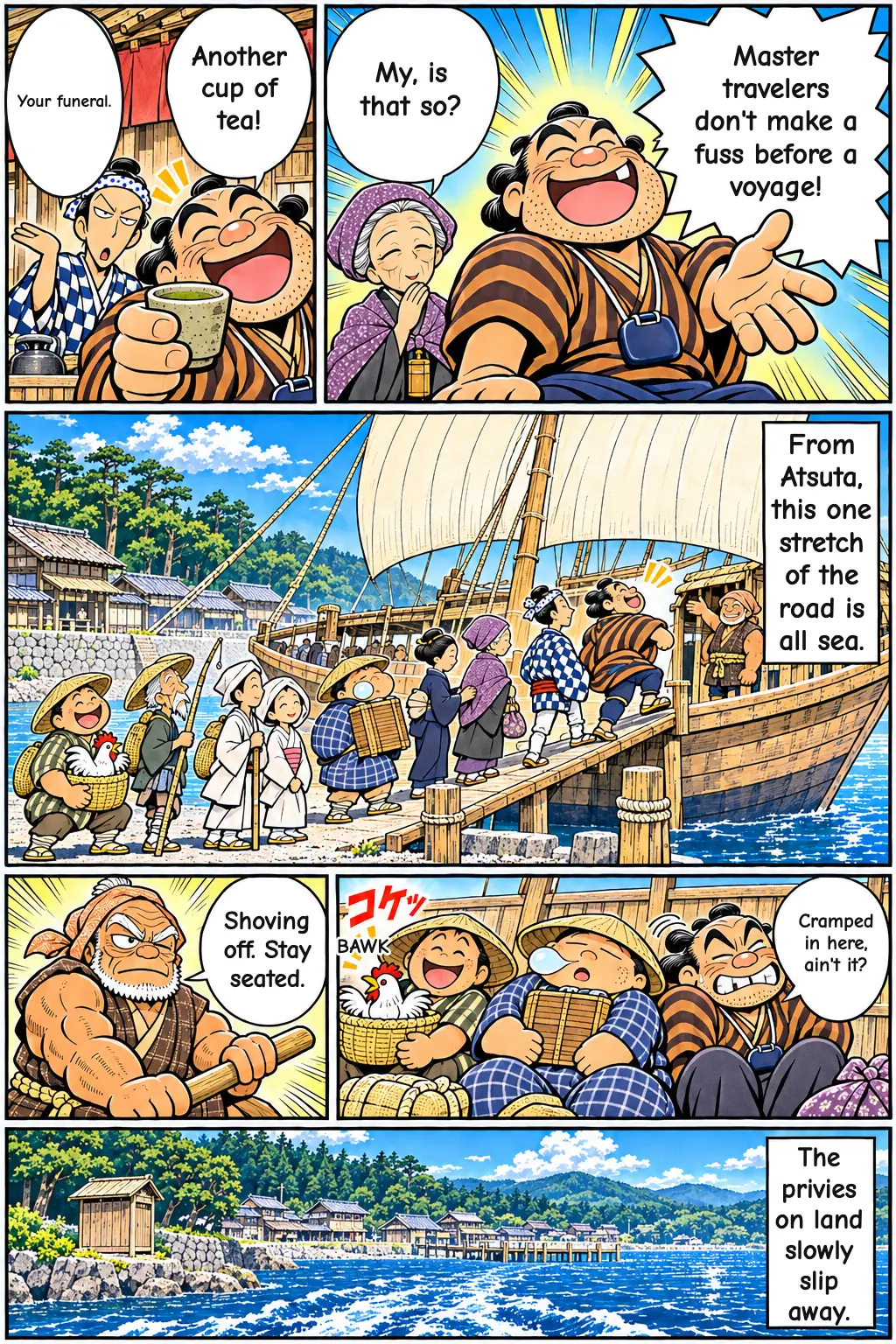
This part of the story brings the pair to Miya, the post town beside Atsuta Shrine in what is now Nagoya. Here the road stops and the water begins. To reach Kuwana, the next stop, travelers boarded a shared ferry and crossed about seven ri of sea. Yaji and Kita squeeze aboard with the other passengers and pass the time trading jokes in the cramped boat.
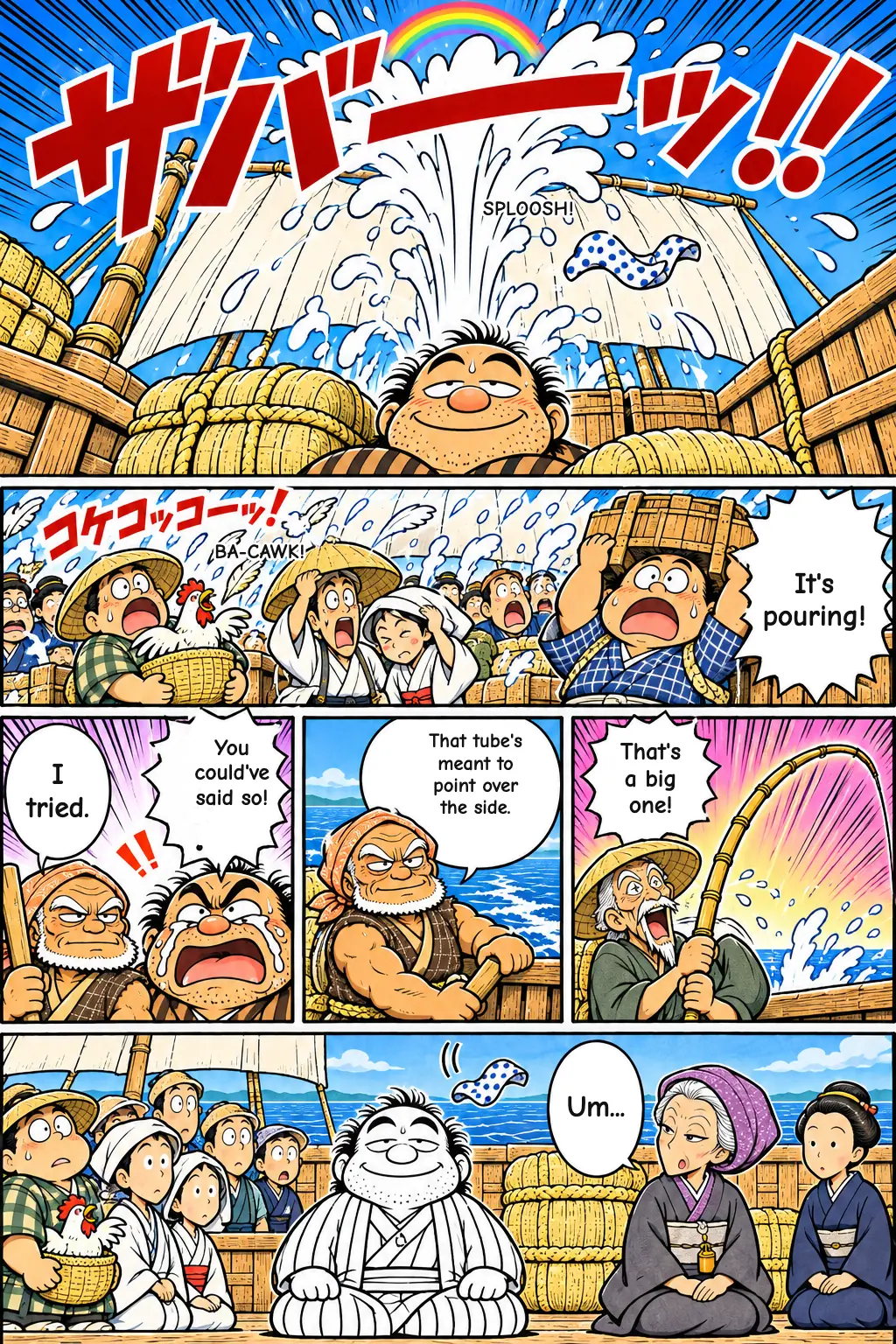
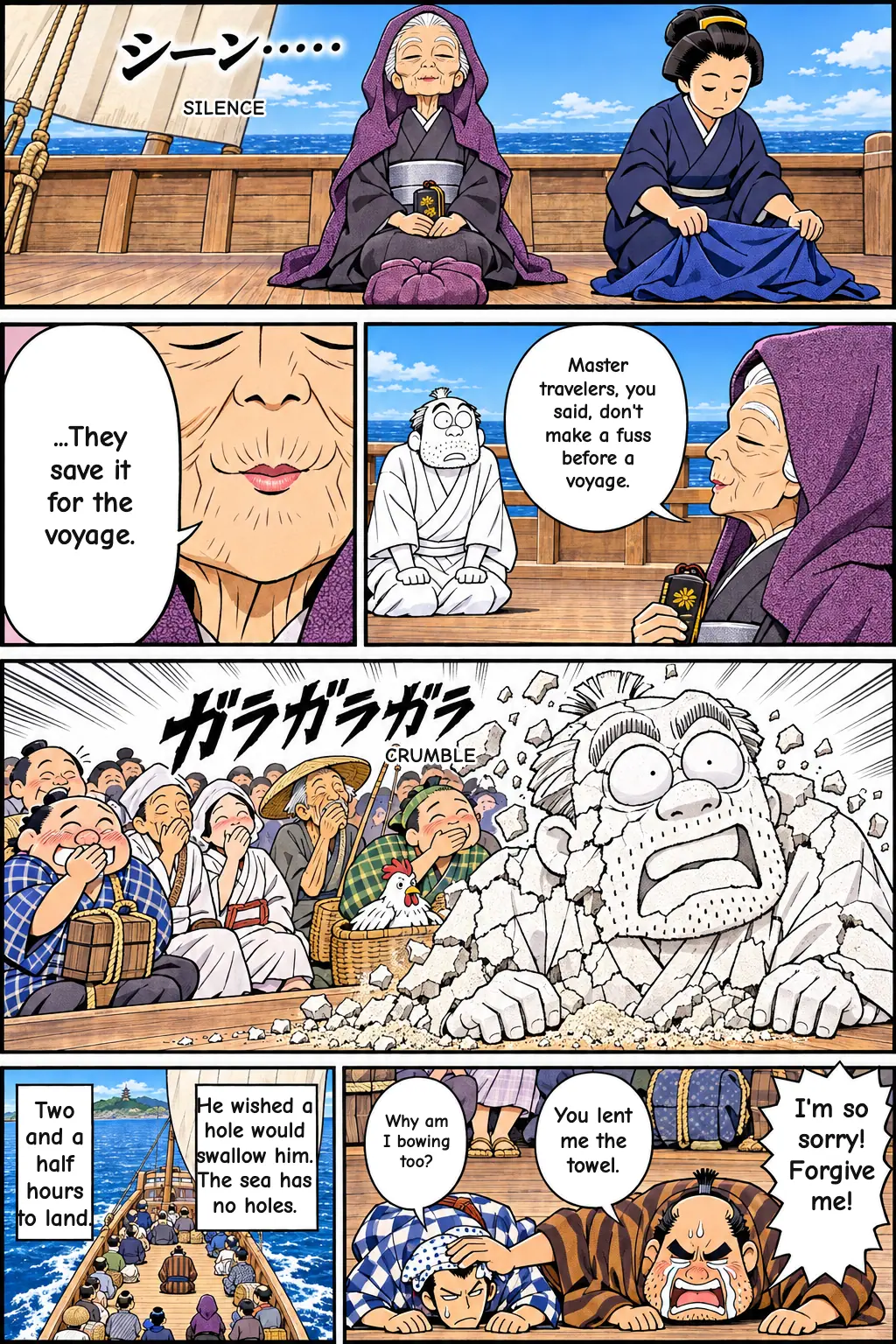
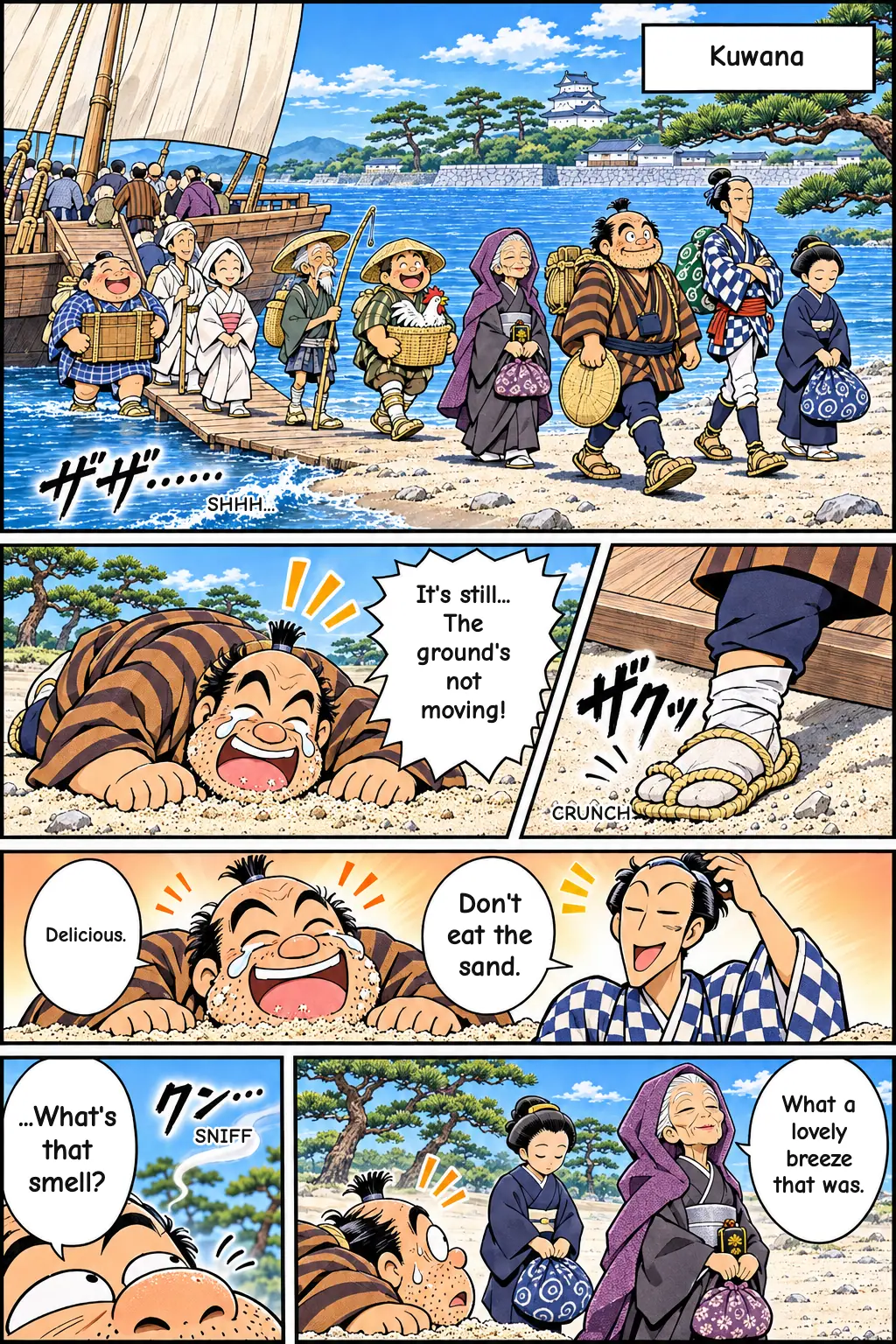
Then comes the low comedy. Partway across, someone badly needs to relieve himself. Too embarrassed to do it in front of everyone, he tries to manage with a bamboo tube, and the attempt turns into a commotion that drags in the people around him. Eventually the boat reaches Kuwana, the two men step ashore, and the road toward Ise lies ahead.
One honest caveat: our summary has not yet been checked line by line against a period edition of the text. We can't yet confirm which man has the problem, where the tube comes from, who gets caught up in the mess, or exactly how it ends. Kuwana is known for grilled clams, but we haven't confirmed where a clam scene falls in the book; it may belong to the following volume.
Main Characters
Yaji (Yajirobei) is a lazy, wisecracking middle-aged man from Edo who loves comic verse and tends to fail right after showing off. Kita (Kitahachi) is his younger companion, a flippant ladies' man who is always ready with a prank or an argument. Around them are the other passengers and the boatman, about whom we can't confirm much beyond their presence in the scene. The comedy depends on them, though: a mishap is only truly mortifying with an audience.
What the Story Reflects: Travel and Laughter in Edo Japan
Hizakurige belongs to a genre called kokkeibon, or "funny books," popular light reading in the Edo period (1603–1868). Its heroes aren't warriors or wise men. They're ordinary, broke, overconfident people on the road, and that was much of the appeal: travel, especially pilgrimage to the great shrine at Ise, was something many commoners dreamed of or actually did.
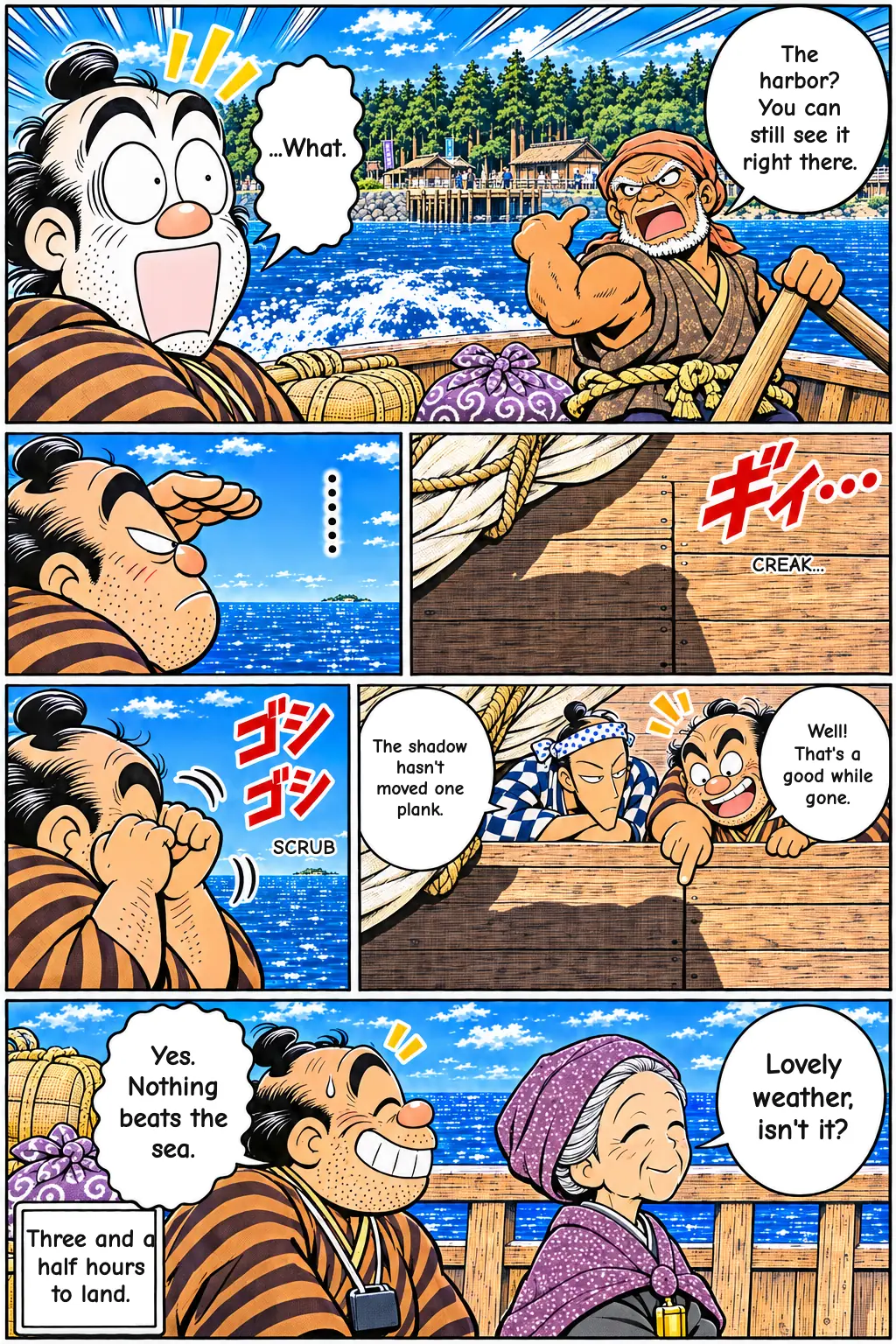
The ferry itself was real. Miya and Kuwana were neighboring stations on the Tokaido, the 41st and 42nd of its famous 53, and this crossing was the highway's long stretch of open sea. A trip took very roughly four hours, depending on wind and tide. For that time you were stuck on a boat with strangers, with nowhere to step away. Readers didn't need that explained to them.
Nor do we. Anyone who has sat in a window seat on a long flight, or in a bus stuck in traffic, knows the feeling. The joke isn't really about the bodily function. It's about pride: the lengths a person will go to rather than look foolish, and how much more foolish that makes them. That is why a gag more than two centuries old still works.
What the Manga Changes
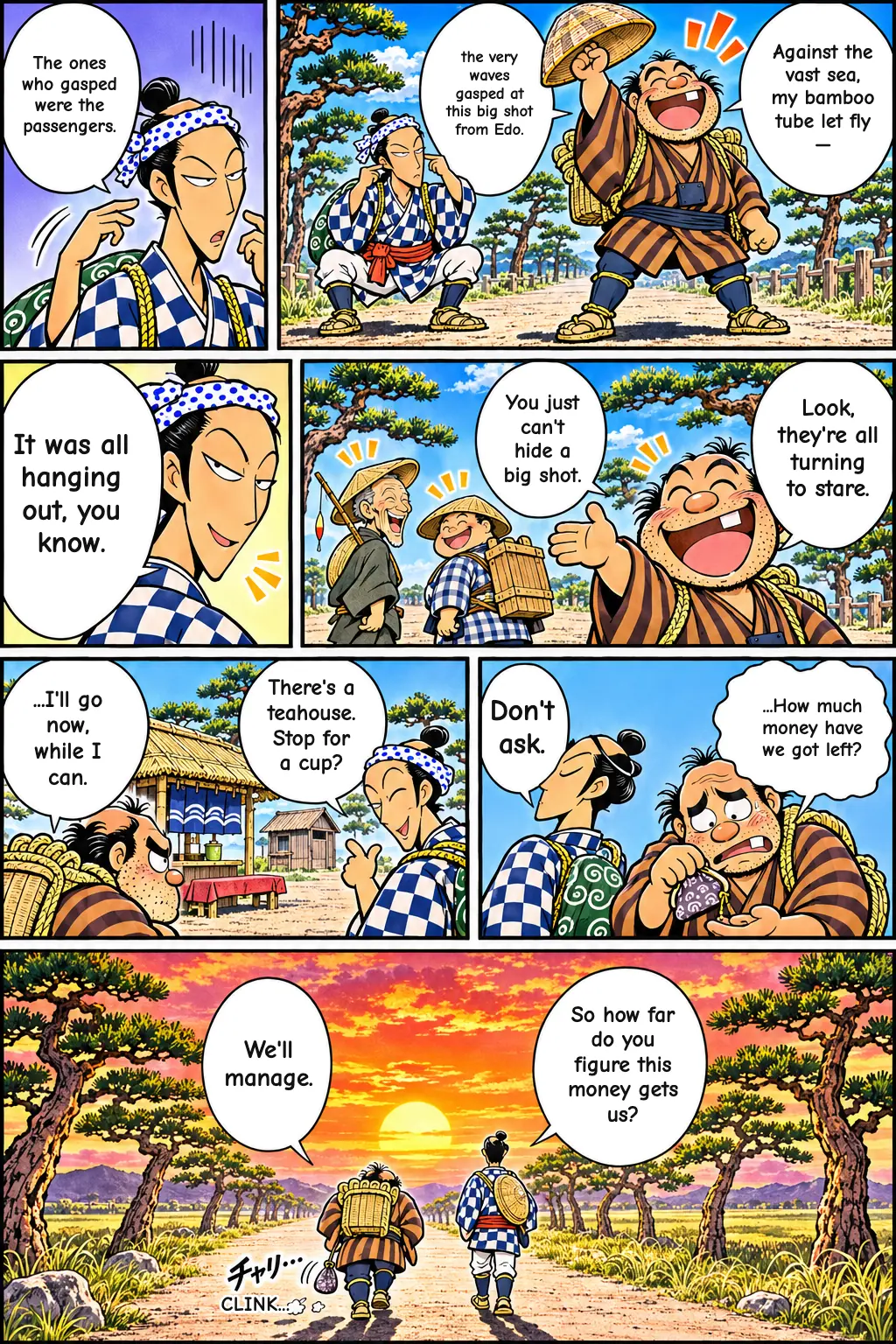
The manga keeps the framework: Miya, the shared ferry, the urgent need, the bamboo tube, the uproar, and the arrival at Kuwana. Much of the rest is its own invention, and shouldn't be read as a description of the original.
Most importantly, the manga makes Yaji the one in trouble. That's a working choice until the text is checked, and it may be revised to match the source. How he comes to the bamboo tube is also the manga's version. The refined old lady he shows off for, the way he plays the seasoned traveler and skips the privy before boarding, and the personalities of the passengers and boatman are all created for this adaptation.
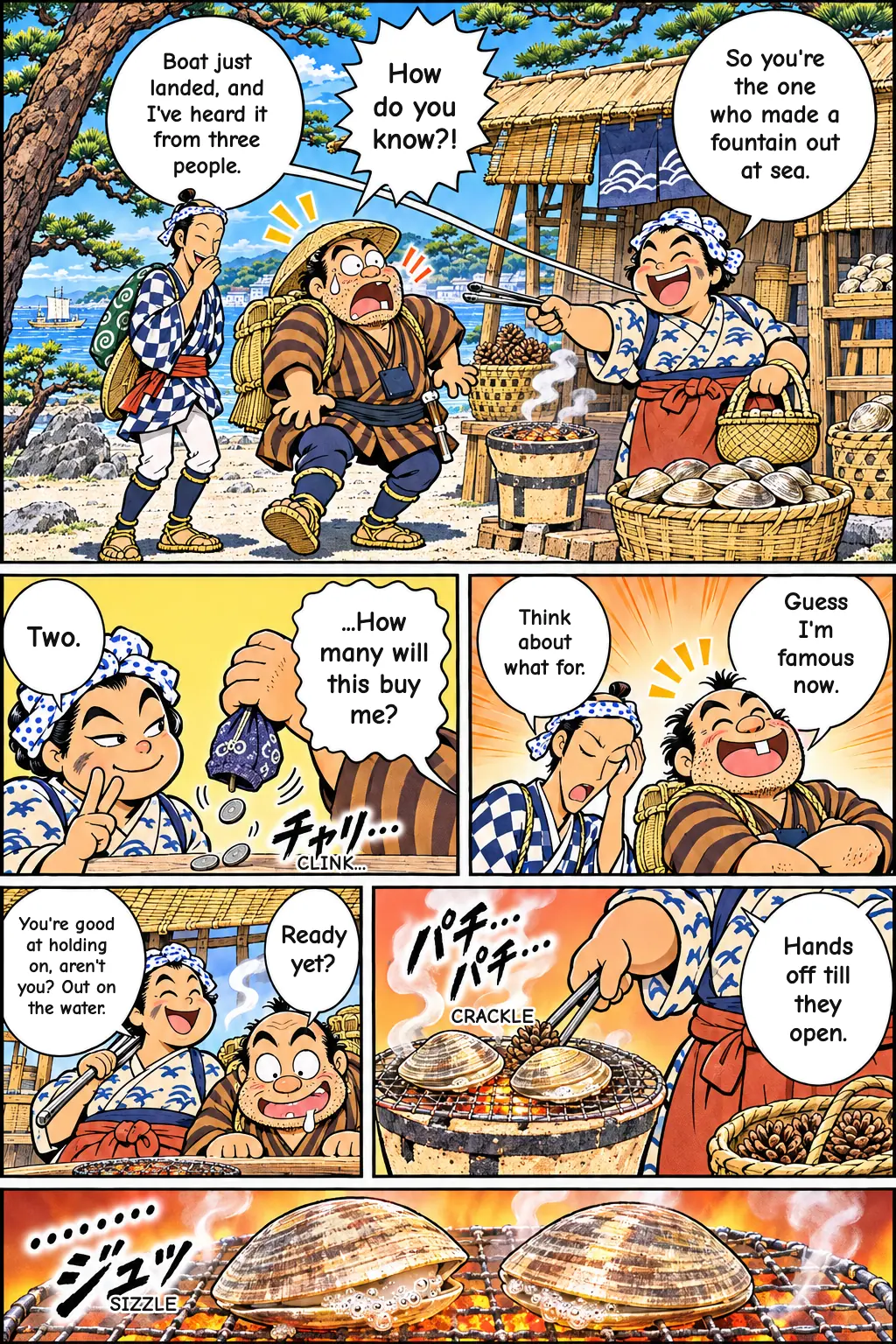
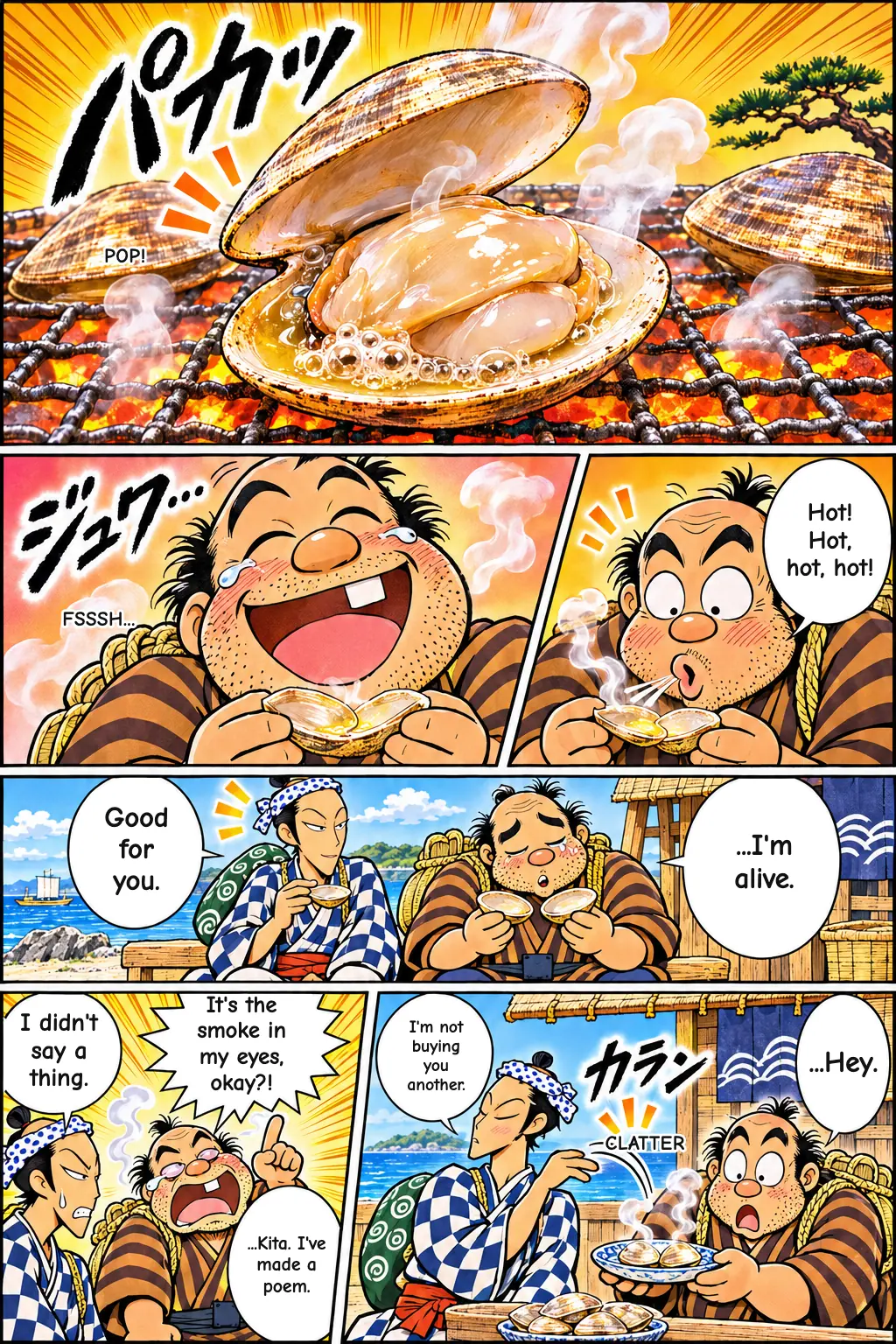
The scenery is also an addition: the wide sea, sails, waves, and the way the shore never seems to get any closer. So is the treatment of the mishap itself, told through sweat, sound effects, exaggerated faces, and cartoon splashes rather than anything graphic. The closing clam scene, with its flavors, shop, and banter, is written for the manga as well, along with short notes for international readers, such as how far seven ri is.
Where to Read It
You can read the whole episode here on Manga Portal, as Episode 9 of YAJI AND KITA: The Great Tokaido Road Trip. Every episode is free and needs no account. If you enjoy watching a grown man fight a losing battle with his dignity on a boat with no escape, it's a quick, silly read, and earlier episodes follow the pair's misadventures all the way from Edo.
Characters in this episode
Yaji (Yajirobei)
A wisecracking middle-aged man from Edo whose showing off usually ends in failure; the manga makes him the one in trouble on the ferry.
Kita (Kitahachi)
Yaji's younger, flippant travel companion, always ready to tease him or join a prank.
The Ferry Passengers
Fellow travelers on the shared boat who witness or get caught up in the uproar; their personalities in the manga are invented.
The Boatman
The man who runs the ferry; his role in the manga's story is an adaptation choice rather than a confirmed detail of the original.
The Refined Old Lady
A manga-original passenger whose presence makes Yaji too proud to admit what he needs.
FAQ
What was the Shichiri Ferry?
It was the sea route on the Tokaido highway between Miya (at Atsuta, in today's Nagoya) and Kuwana. The name means "seven-ri crossing," about 28 km. The trip took very roughly four hours, depending on conditions.
What happens to Yaji and Kita on the Shichiri Ferry?
They ride a crowded shared boat to Kuwana, and an urgent need to relieve himself leads someone to try a bamboo tube, which causes an uproar. They reach Kuwana safely and continue on. The manga shows Yaji as the one in trouble, a detail still to be checked against the original text.
Who wrote Tokaido Hizakurige and what does the title mean?
Jippensha Ikku wrote it, with publication beginning in 1802. The title means roughly "knee chestnut horse," a playful way of saying you are traveling on foot.
Is the old lady on the boat in the original story?
She is the manga's own creation, added to give Yaji someone to impress and to make his pride the center of the joke. Other passengers share the boat in the source scene, but their details are not confirmed here.
Why is Kuwana associated with grilled clams?
Grilled clams, or yaki-hamaguri, are Kuwana's well-known specialty. The town's name even gave rise to a Japanese pun about not being fooled. The manga includes a clam scene, though its exact place in the original book is unconfirmed.