Episode 1I Woke Up. My Horse Was on the Steeple.The Adventures of Baron Munchausen
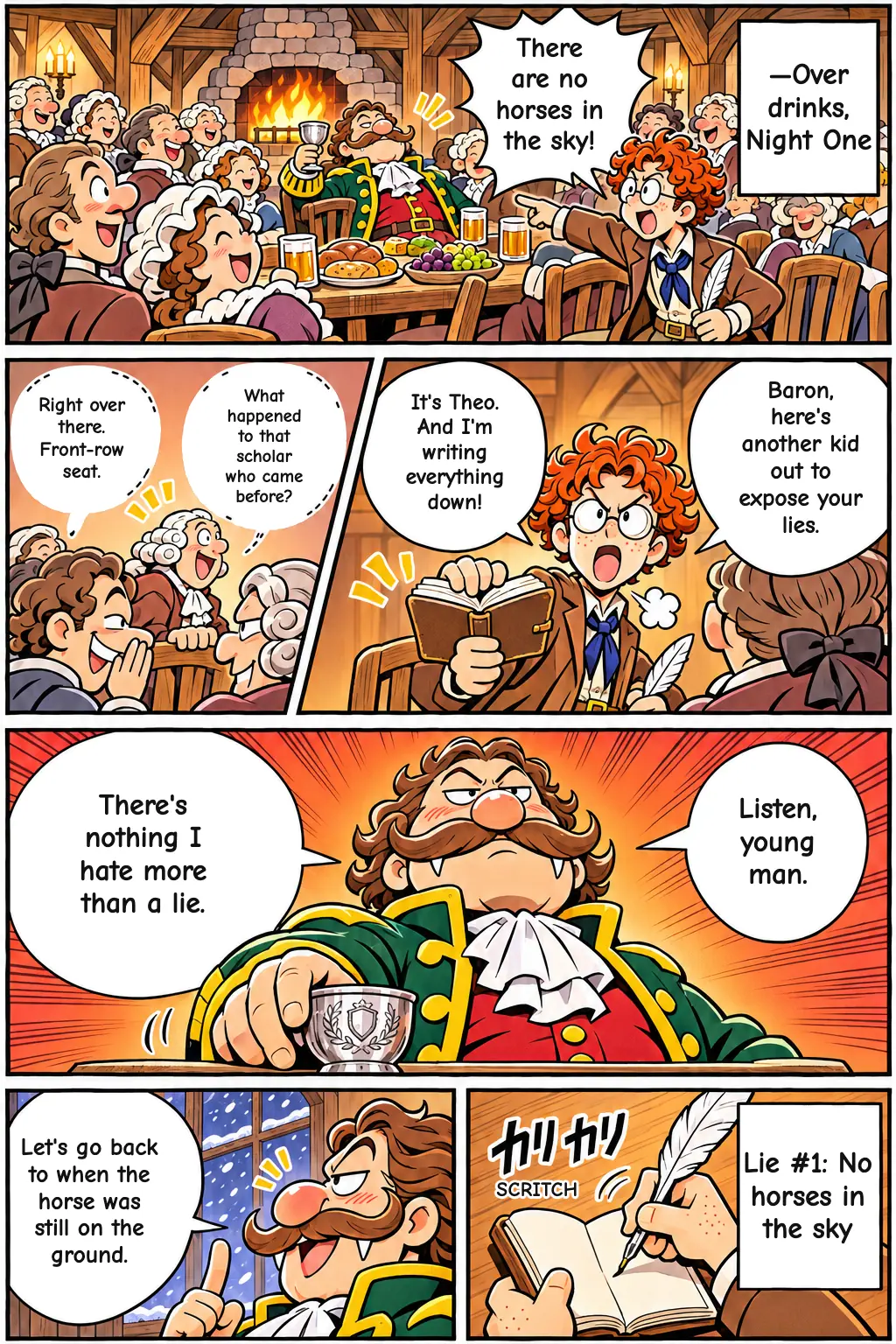
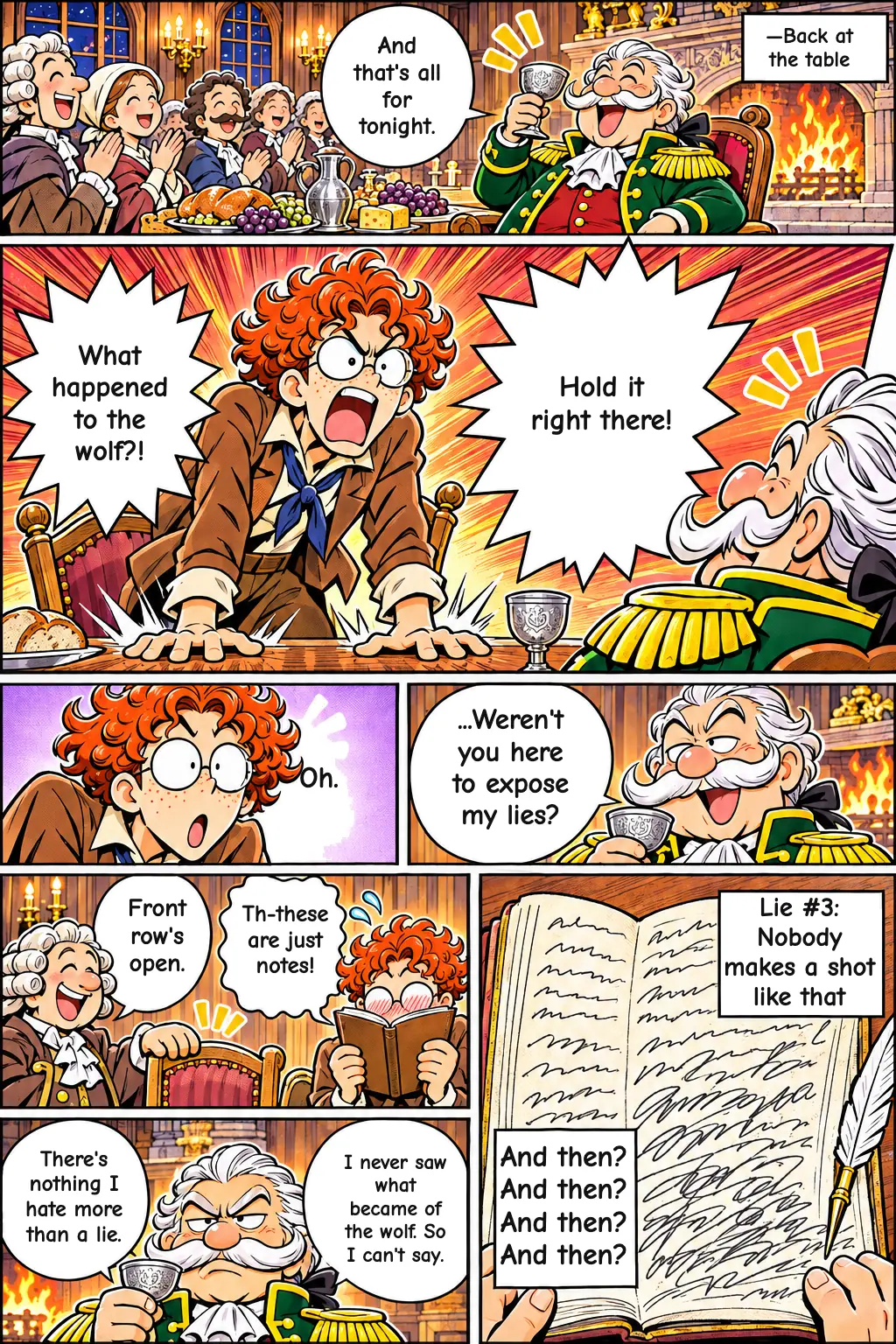
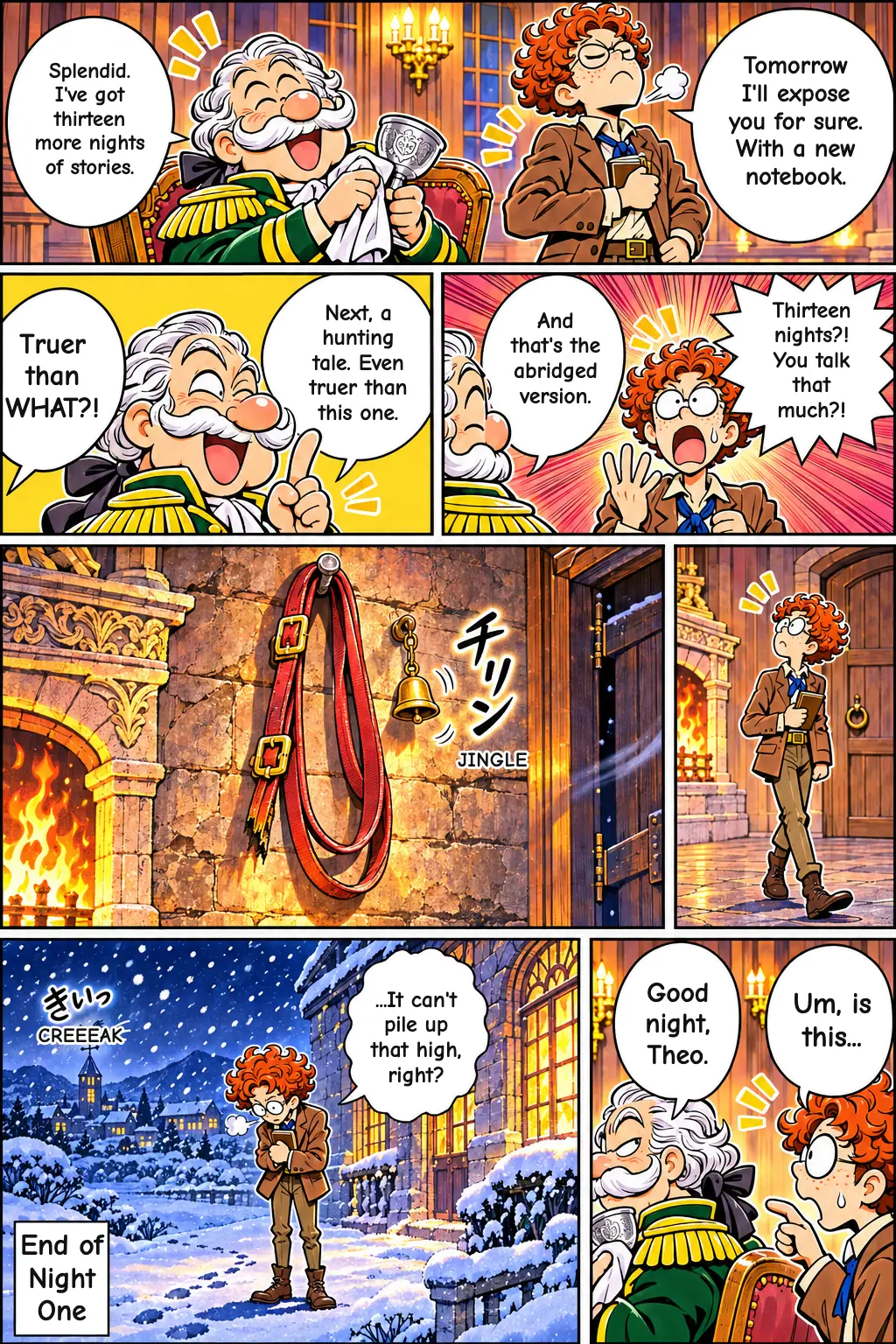
Series premiere. Baron Munchausen falls asleep on a snowy plain and wakes to find his horse dangling from the top of a tower overhead. Theo, a young man out to expose the Baron's lies, is supposed to be noting every contradiction. Instead, his notebook slowly fills with "And then?"
Get new episodes in your feed. Follow us on:ThreadsBluesky
Story summary
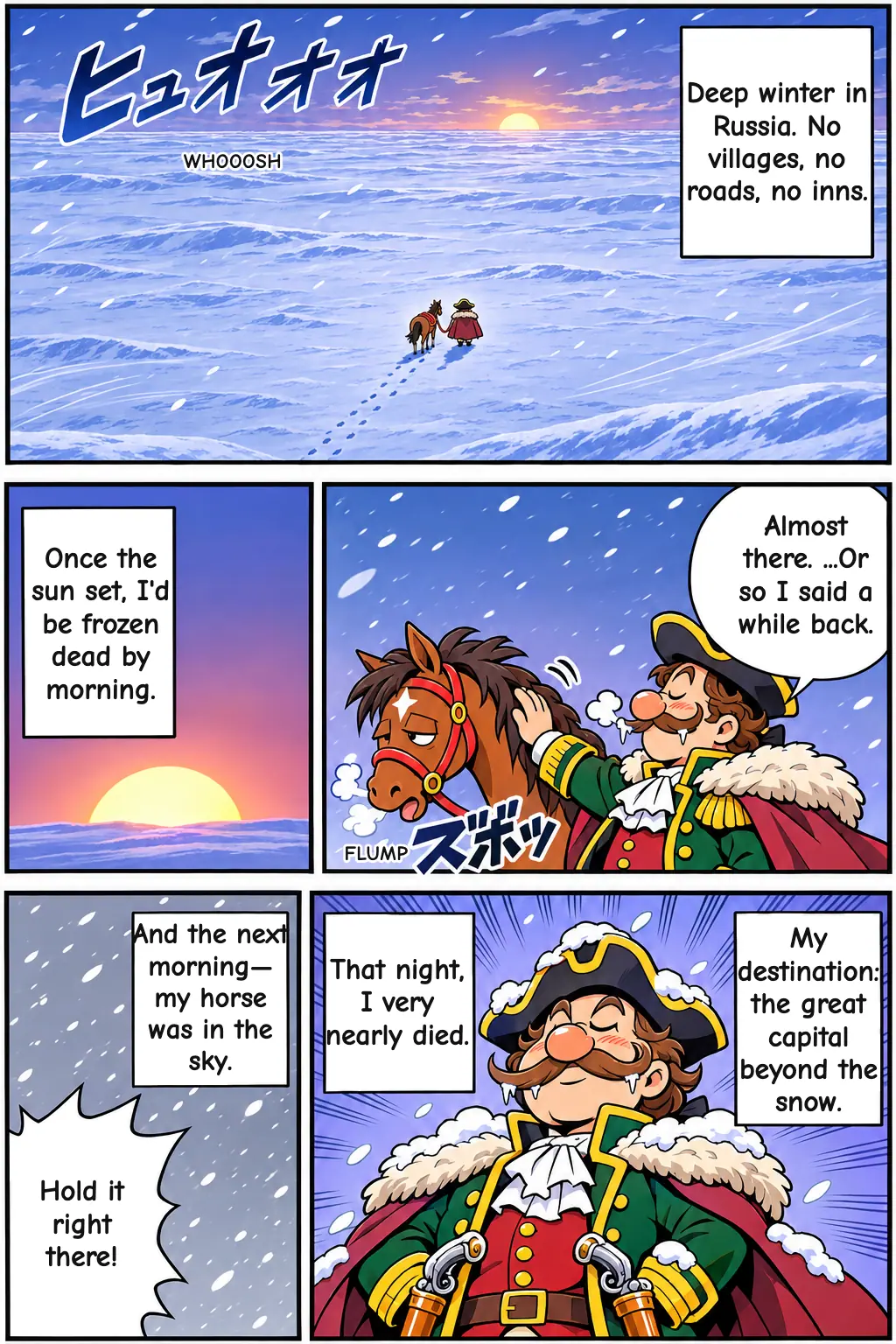
The tale opens with the Baron setting out for Russia in the dead of winter. Editions disagree about where he starts, but his reasoning is the first joke: frost and snow, he figures, must surely improve the terrible roads through northern Germany, Poland, Courland, and Livonia (the last two are historic regions on the Baltic). So he goes on horseback, lightly dressed, and the cold gets worse with every mile. On a bare stretch of Polish wasteland, he comes across a freezing old man with almost nothing to wear. Cold as he is, the Baron gives the stranger his cloak.
Baron Munchausen's Horse on the Steeple: Story Summary and Meaning
In short: The horse on the steeple is a tall tale from The Adventures of Baron Munchausen, in which the Baron ties his horse to what looks like a stump in deep snow and sleeps on top of it. Overnight the snow melts, lowering him gently into a village churchyard and leaving his horse hanging from the top of the church tower, until he shoots through the reins and rides on. The English version by Rudolf Erich Raspe appeared in 1785, followed by Gottfried August Bürger's German version in 1786.
The original story: a horse on the steeple
The tale opens with the Baron setting out for Russia in the dead of winter. Editions disagree about where he starts, but his reasoning is the first joke: frost and snow, he figures, must surely improve the terrible roads through northern Germany, Poland, Courland, and Livonia (the last two are historic regions on the Baltic). So he goes on horseback, lightly dressed, and the cold gets worse with every mile.
On a bare stretch of Polish wasteland, he comes across a freezing old man with almost nothing to wear. Cold as he is, the Baron gives the stranger his cloak. A voice from the sky then promises that the kindness will be rewarded. Its exact words vary by edition, and the voice is never identified.
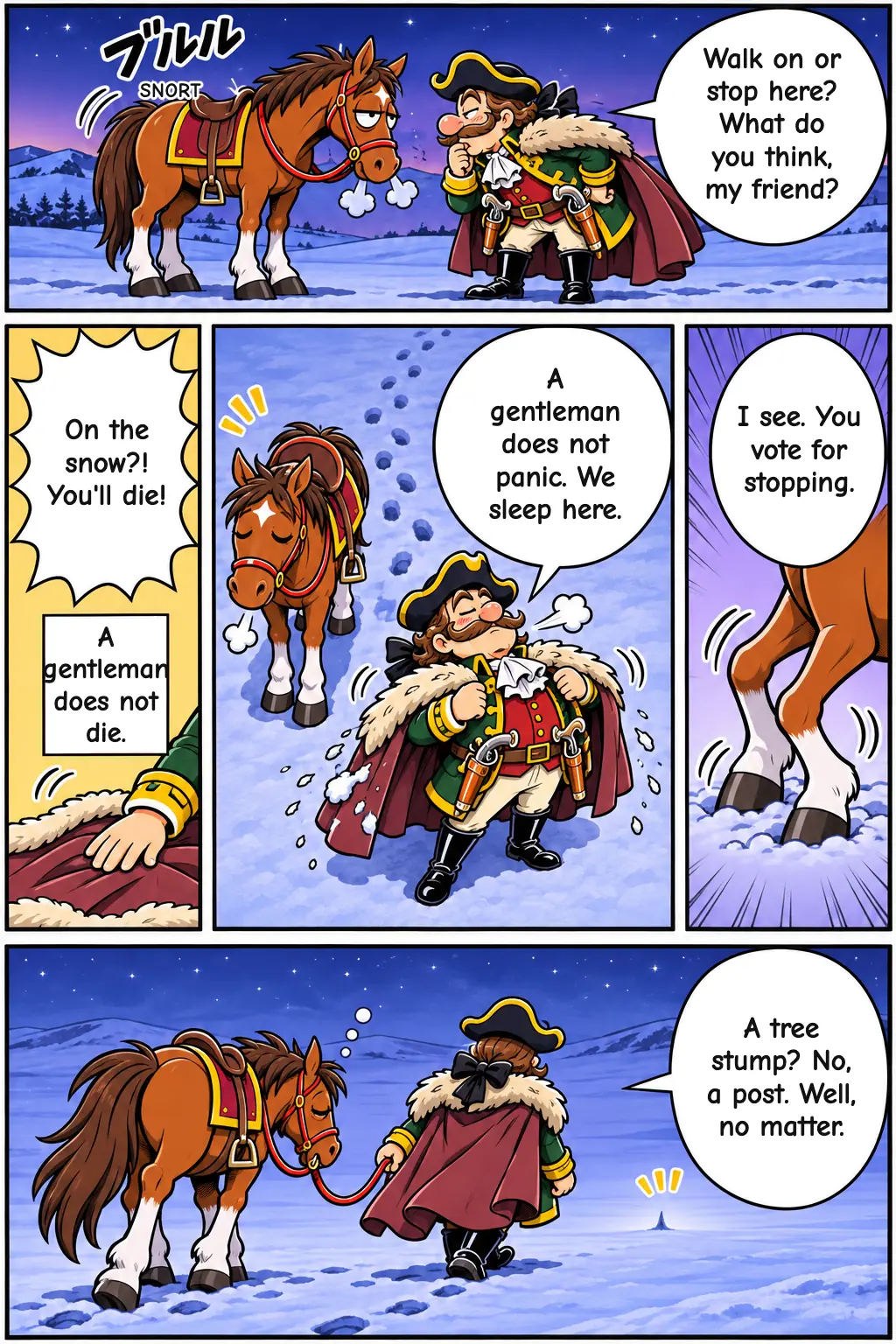
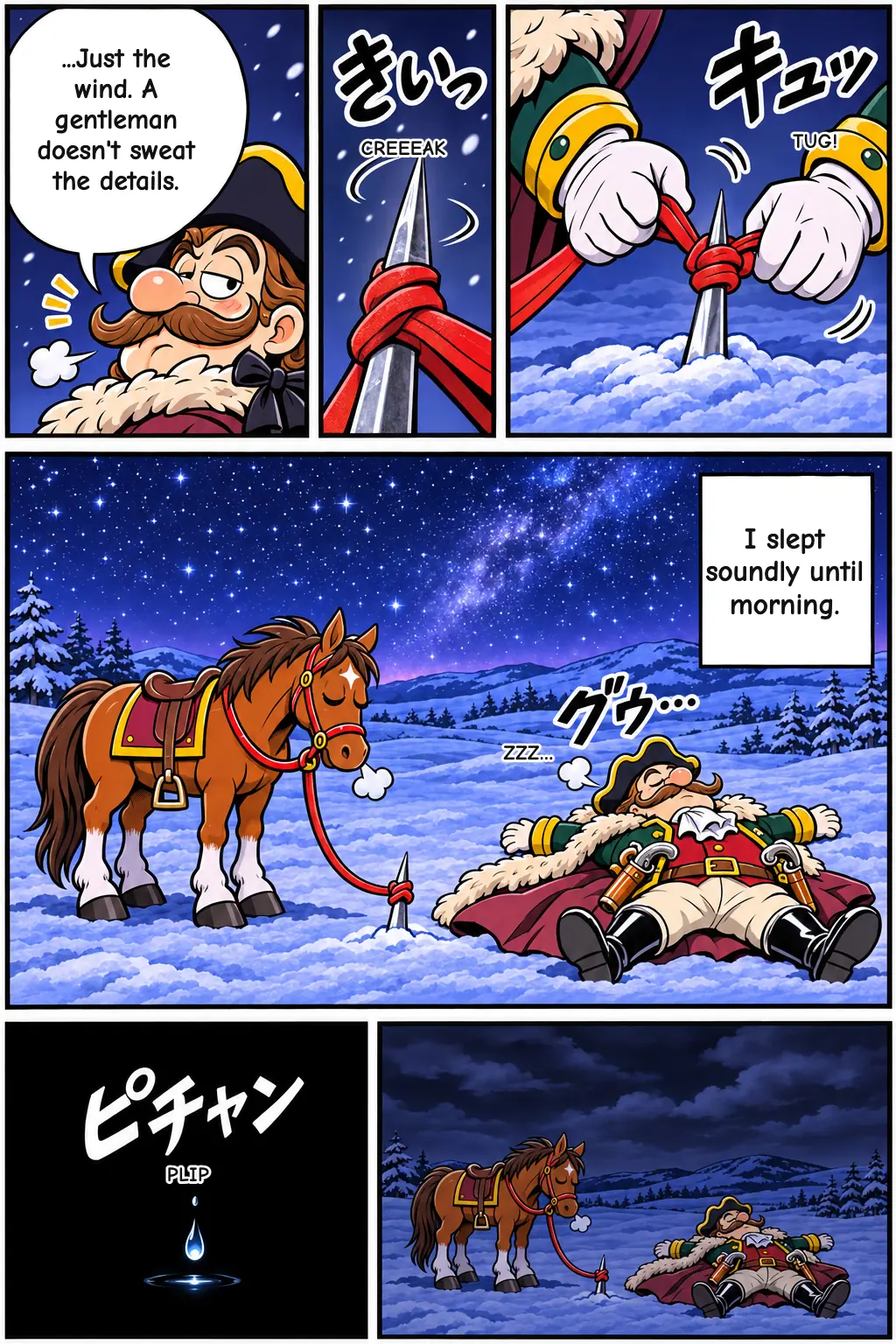
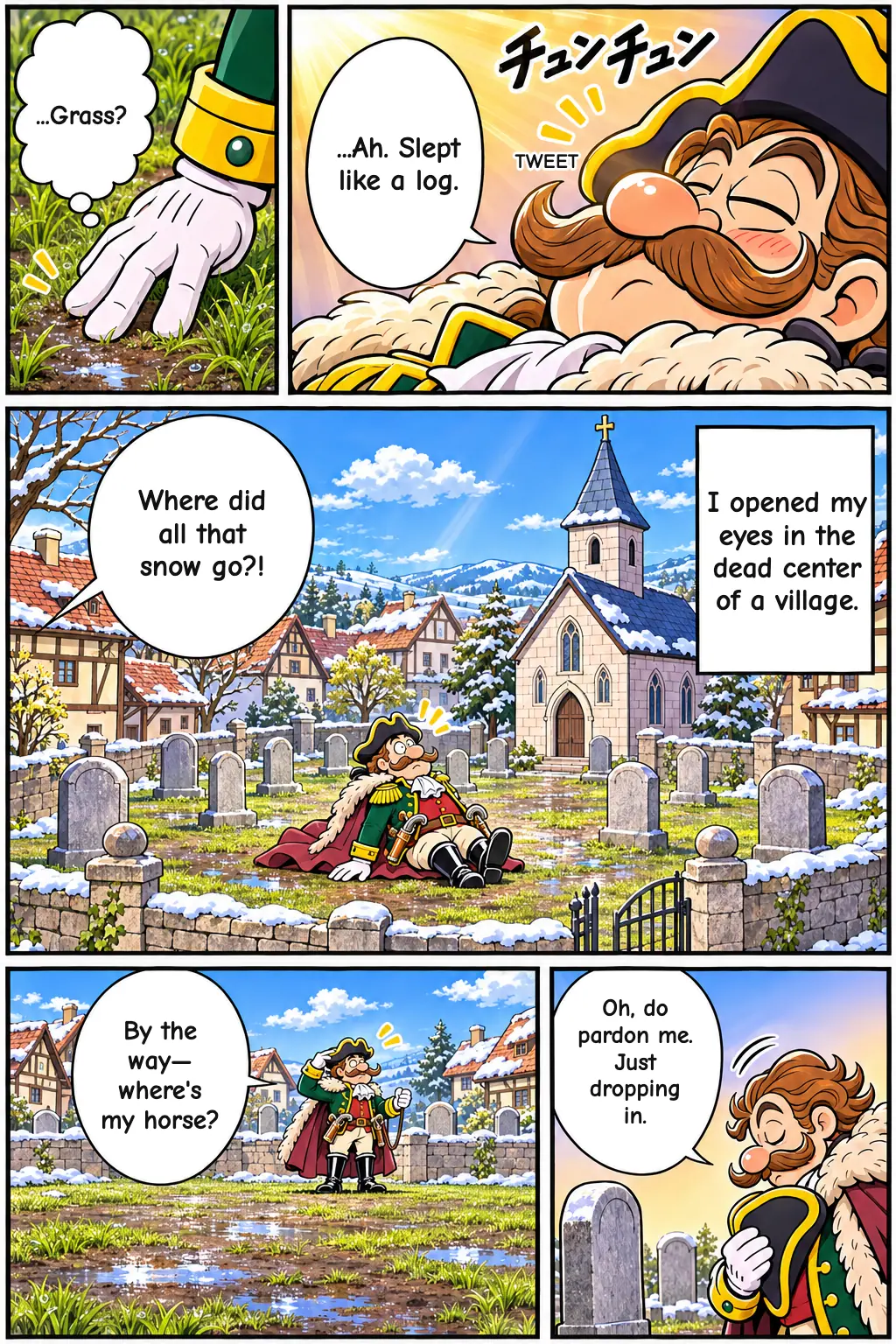
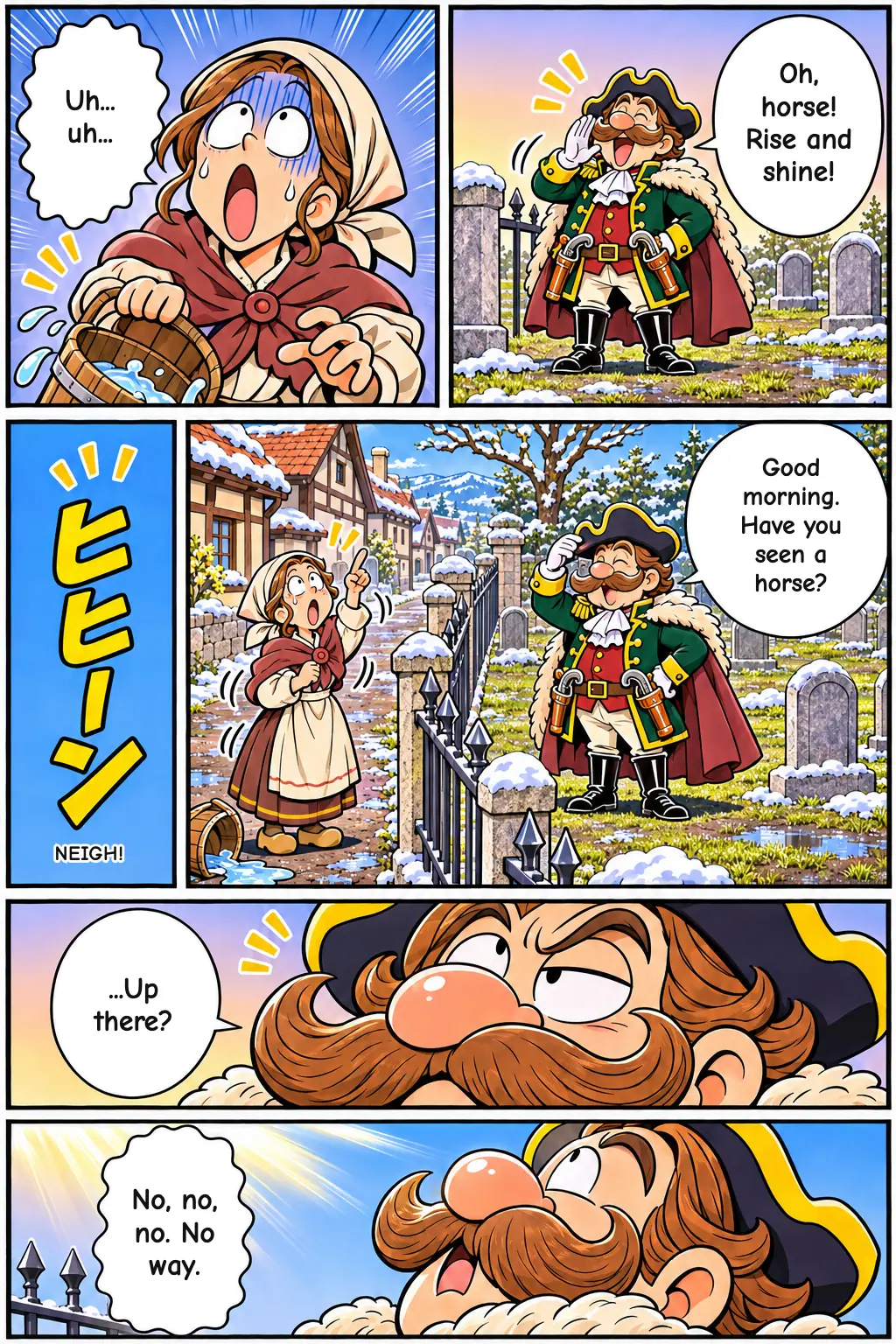
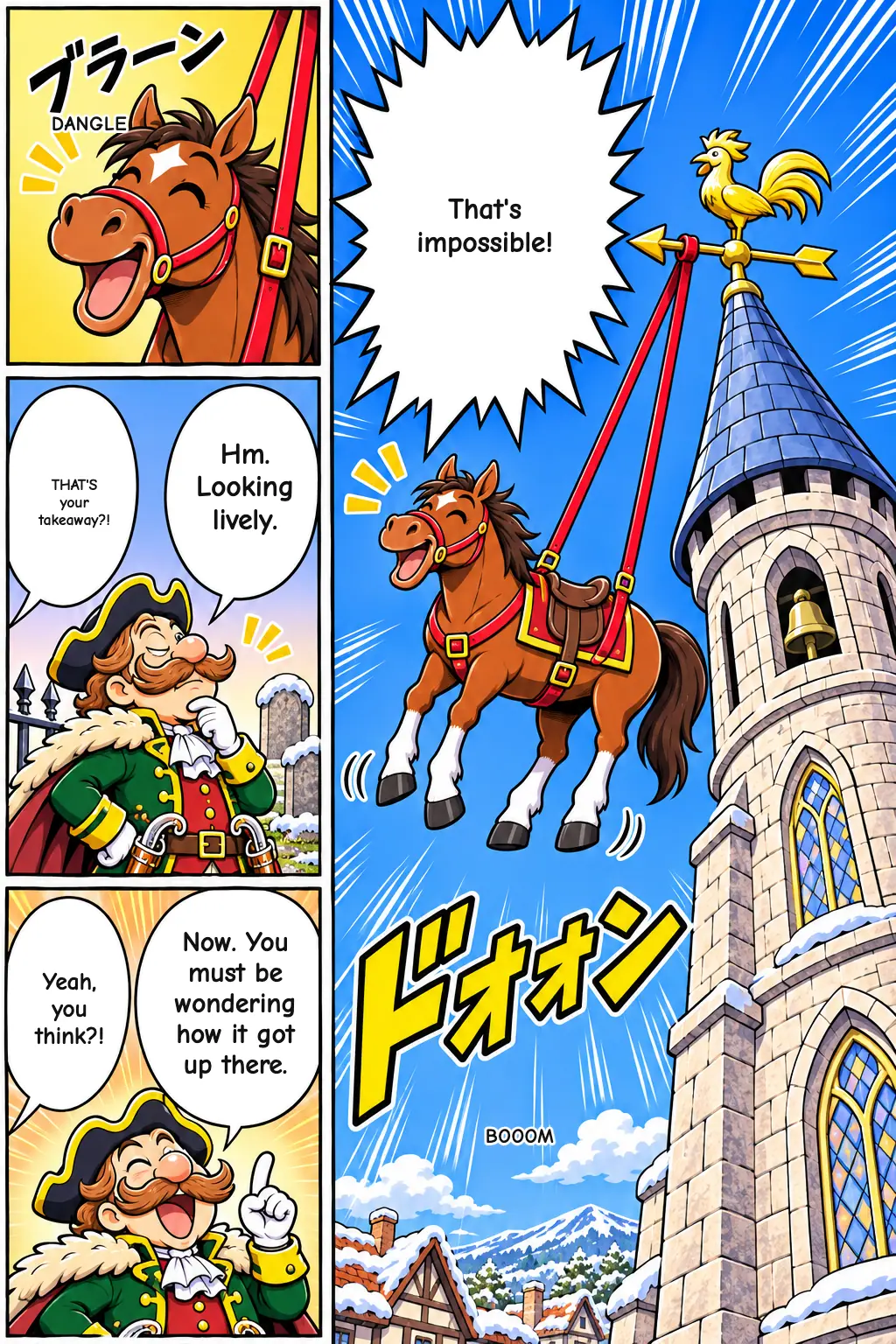
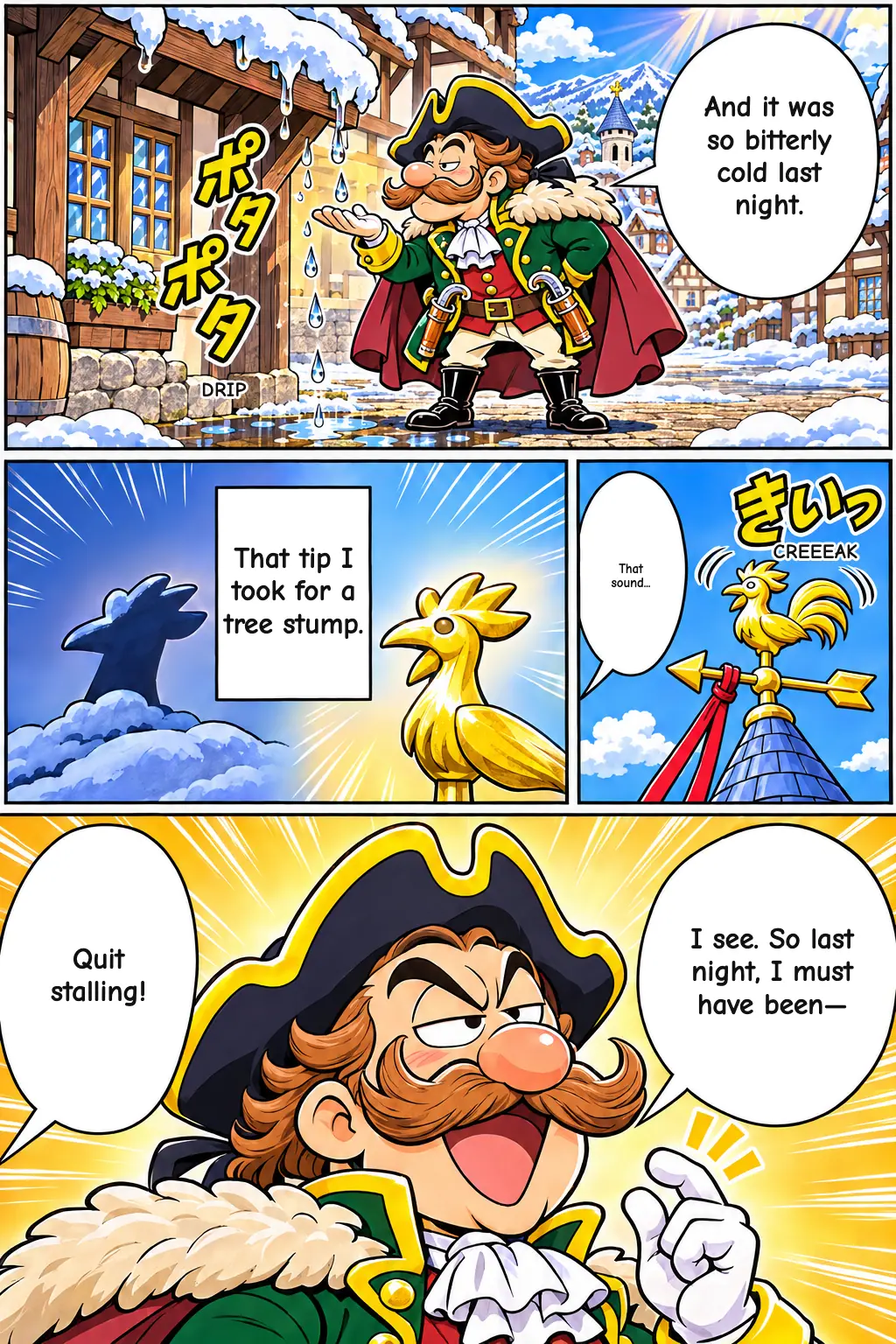
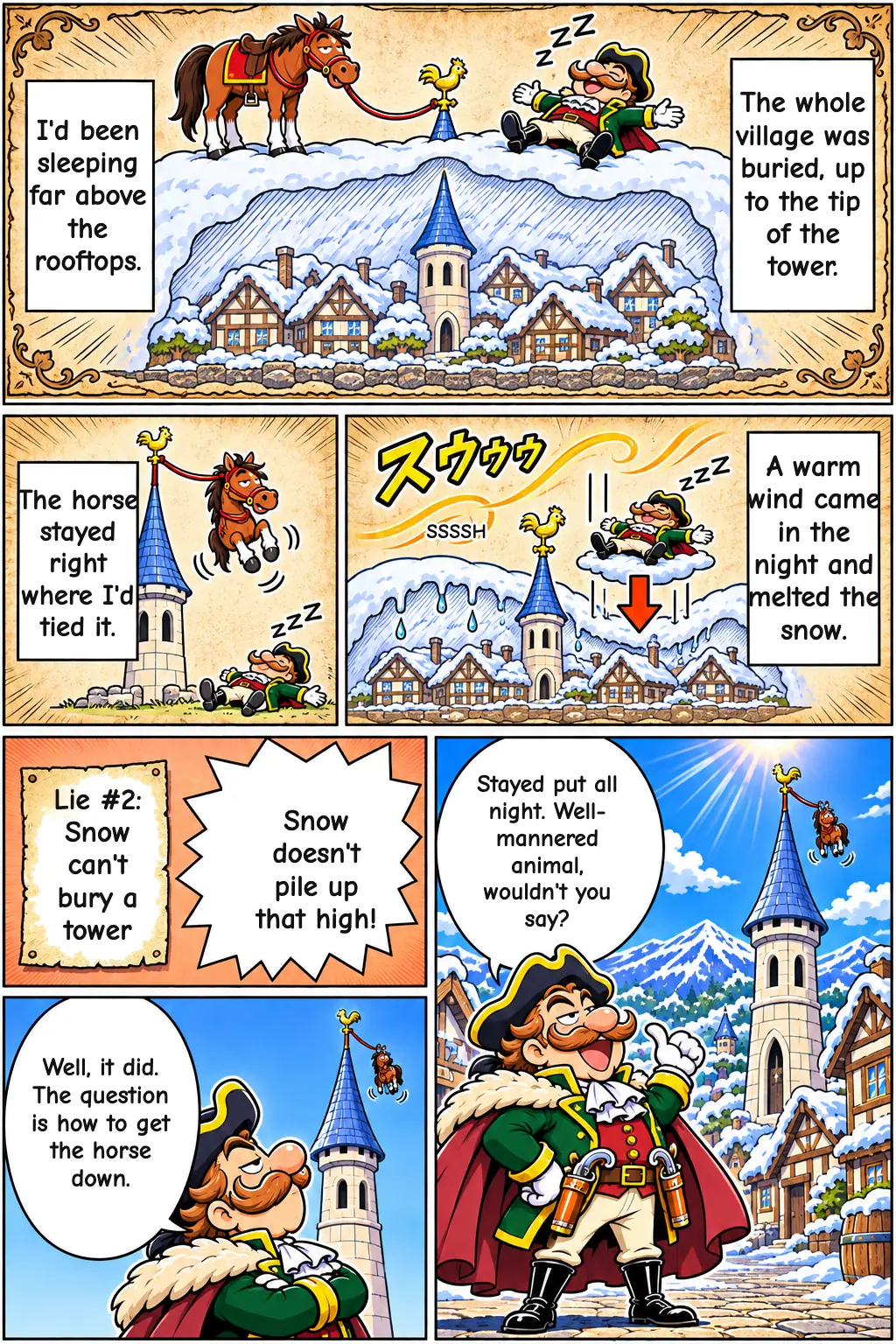
Night falls with no village in sight and the road buried under snow. Exhausted, the Baron ties his horse to something like a pointed stump sticking out of the drifts, tucks his pistol under his arm, and falls fast asleep. He wakes in broad daylight in the middle of a village churchyard, with no horse anywhere. Then he hears neighing from above and looks up: the animal is dangling by its reins from the top of the church steeple, from the weathercock or the cross, depending on the telling.
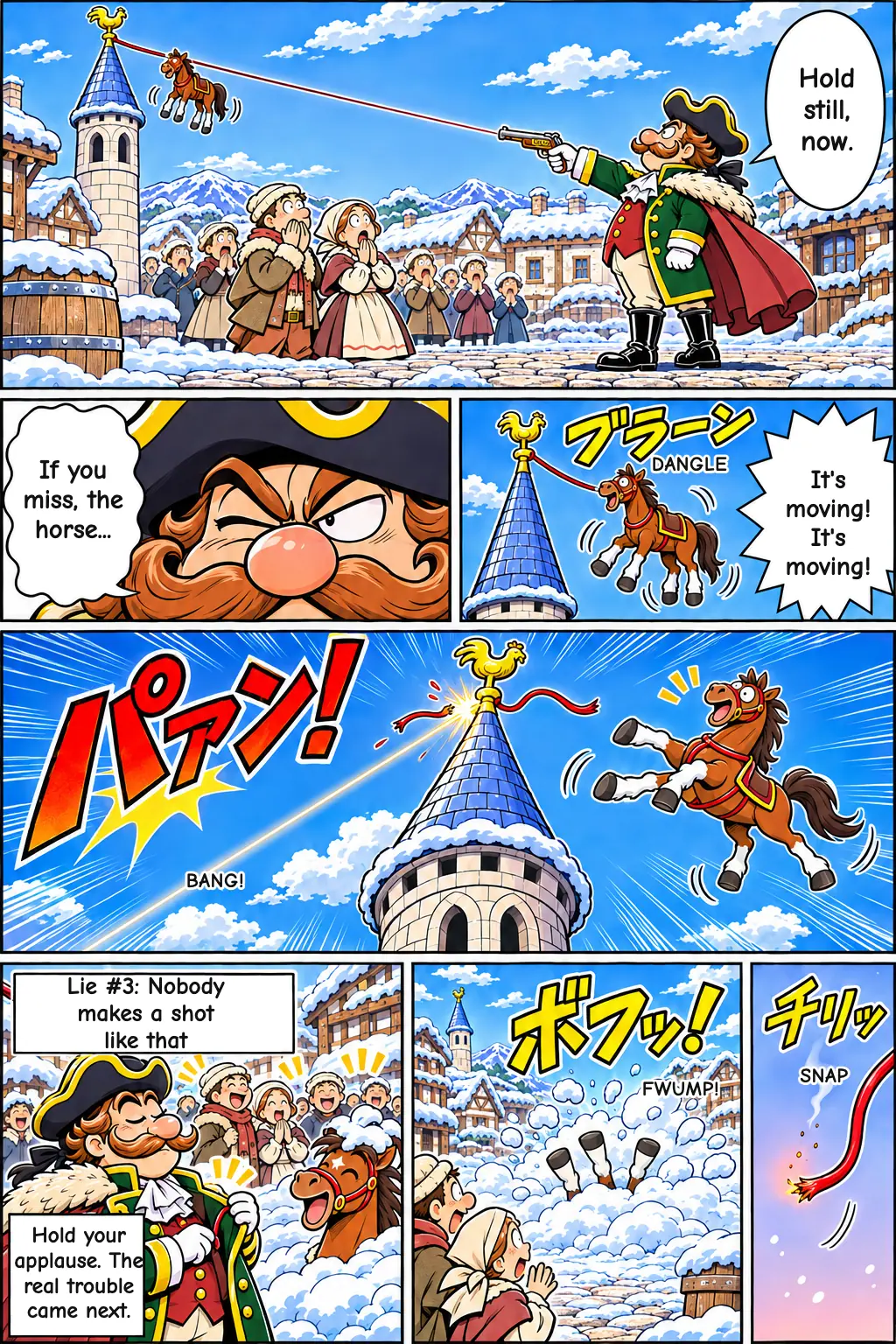
The explanation arrives with a perfectly straight face. The village had been completely buried, the weather turned during the night, and as the snow melted the sleeping Baron sank softly to the ground. The stump was the tip of the steeple. He barely hesitates: one pistol shot cuts the reins, the horse comes down, and the journey continues.
What happens next: the wolf in the harness
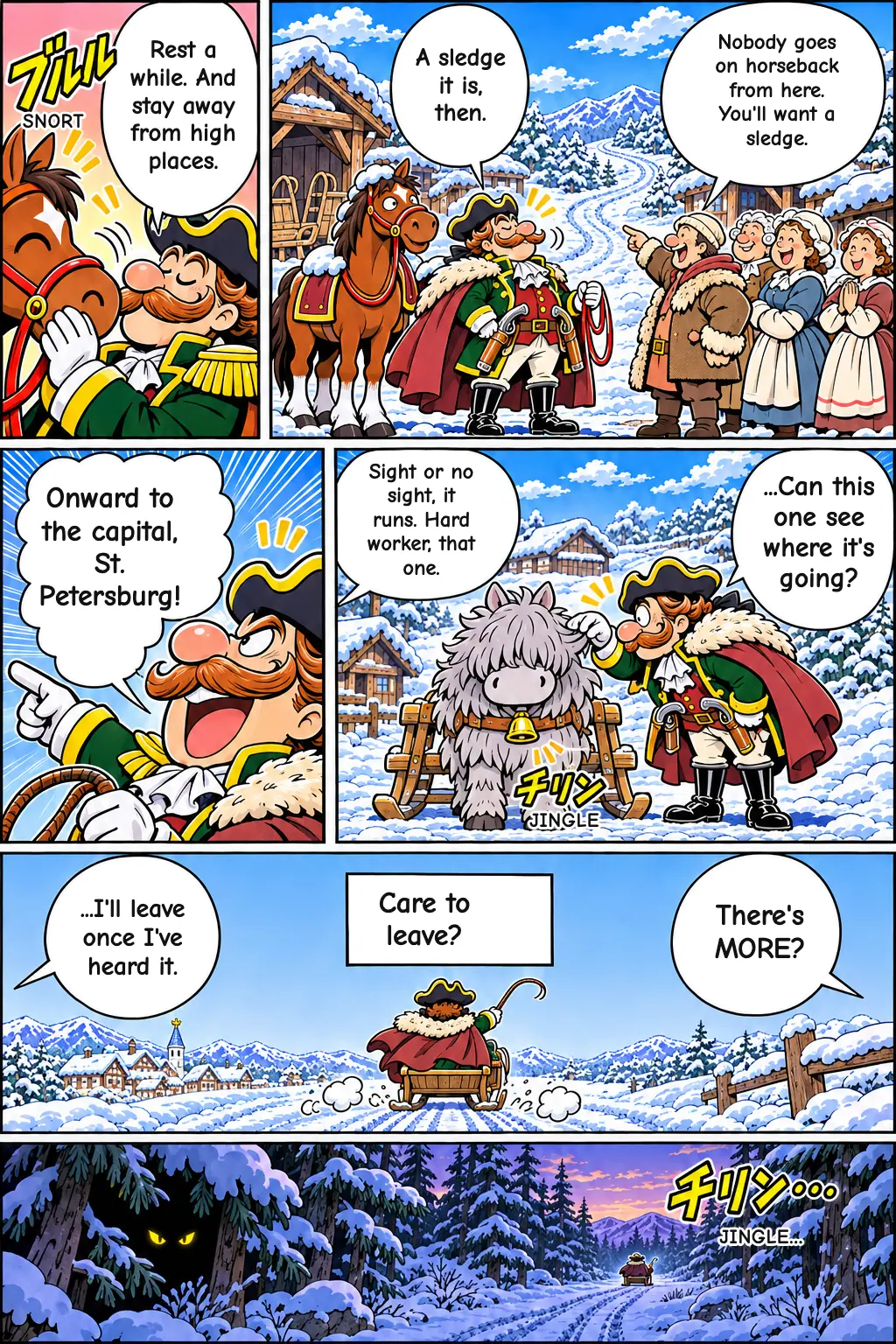
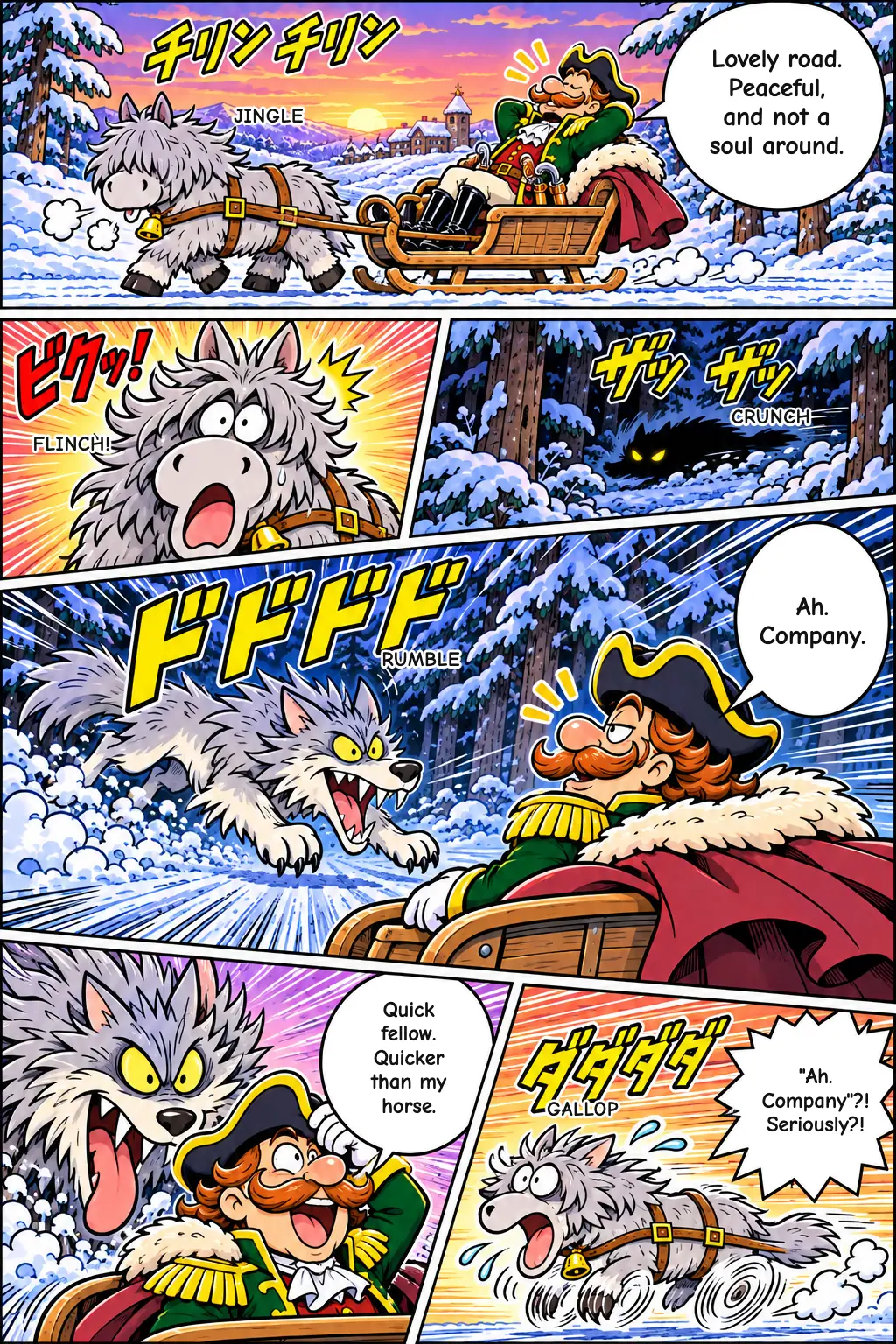
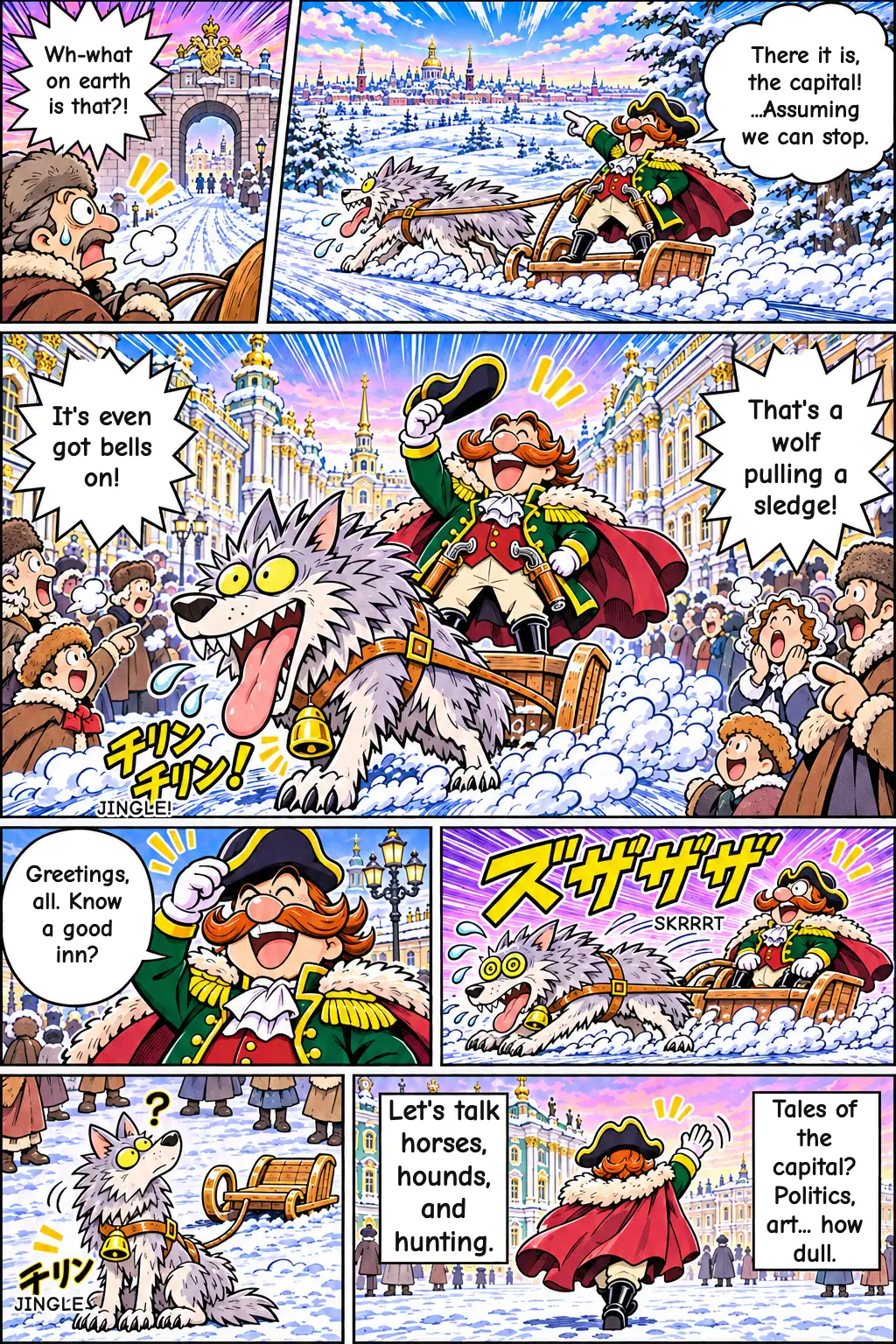
The Baron learns that riding in winter isn't the custom deep in Russia, so he follows local practice and switches to a one-horse sleigh, bound for St. Petersburg. Somewhere in a lonely forest, in Estonia or Ingria (he admits he can't quite remember), a huge, starving wolf runs him down.
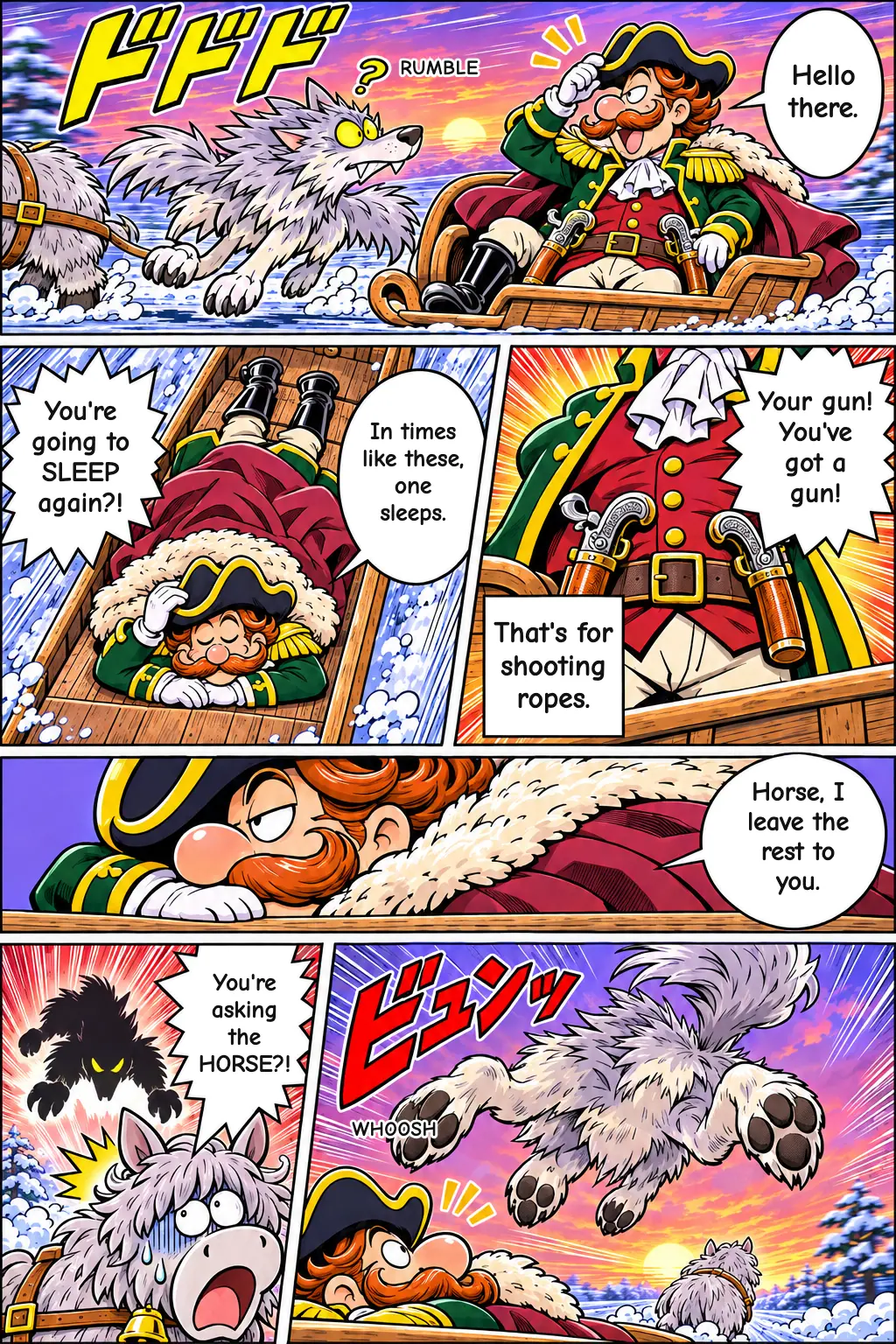
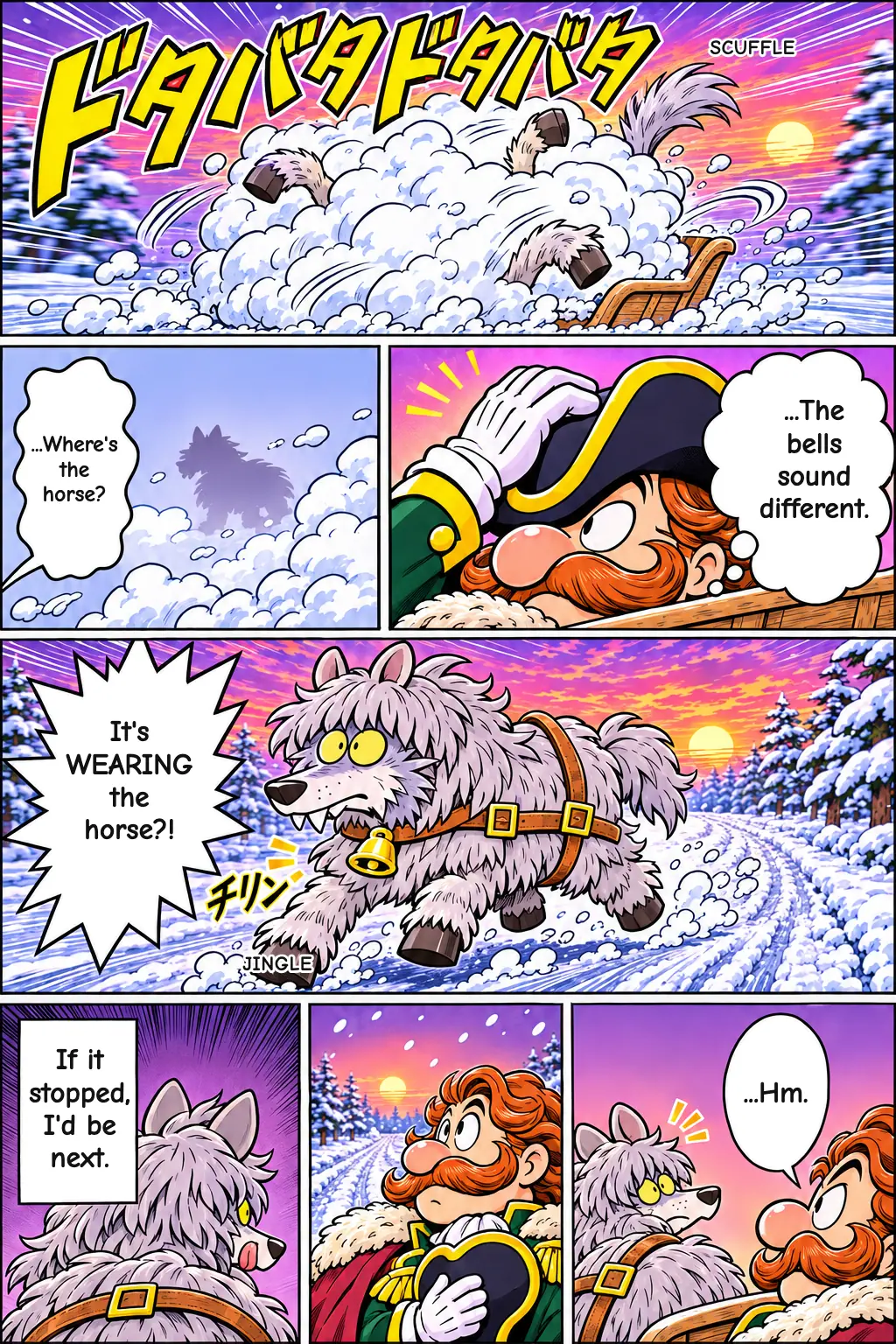
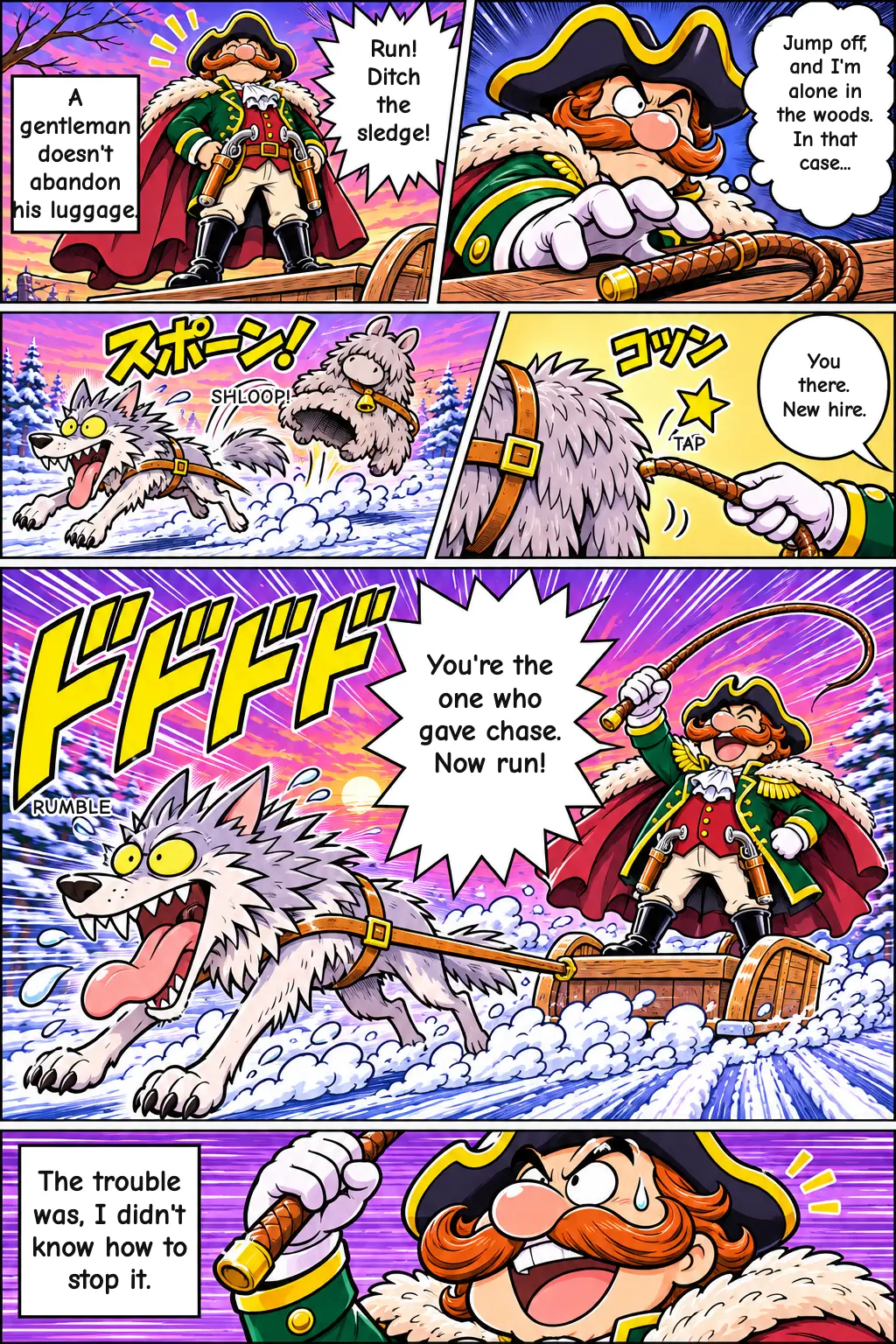
The Baron throws himself flat in the sleigh. The wolf leaps straight over him and attacks the horse from behind, eating its way in until it is entirely inside the animal. Seizing his chance, the Baron strikes the wolf with the butt of his whip. The startled wolf bolts forward, the remains of the horse fall away, and the wolf ends up in the harness. The Baron keeps whipping, and the pair race into St. Petersburg at full speed, to the amazement of everyone watching.
Having reached the capital, the Baron tells his listening gentlemen that he won't bore them with politics, art, or society. He would rather talk about horses, dogs, and hunting.
Main characters in the source
The Baron narrates everything himself, and the chapter tells us little about his age or looks. We learn him through his behavior: he has an unusual theory for every situation, he is unexpectedly generous, and no crisis makes him pause for long. The horse has no name, and the old man and the voice from the sky appear only briefly. The gentlemen he addresses never speak or receive any description in this section.
The real baron and the meaning of the tale
There really was a Baron Münchhausen: Hieronymus Karl Friedrich von Münchhausen (1720–1797), a German nobleman who served in the Russian military and became known for telling tall stories at home. The book, however, was not his own. Raspe, a German writer living in England, published the English version anonymously, and the poet Bürger then translated and expanded it into German. Later editions kept growing and were reorganized, which is why chapter numbers differ. This episode is often counted as chapter 2, but that varies. The real baron's name was also later borrowed for Munchausen syndrome, a medical term for feigning illness.
Unlike a myth, this story doesn't explain the world or honor any gods. Its pleasure lies in the telling. Each event is impossible, yet each comes with a sensible-sounding reason, delivered as calmly as a travel report. A common reading sees the book as a playful send-off of boastful soldiers, hunters, and travelers, whose far-away adventures no listener could check. The snow-buried Russian road makes an ideal setting for exactly that kind of claim. As a reader, you know it can't be true, and you still want to hear what happens next.
What the manga changes
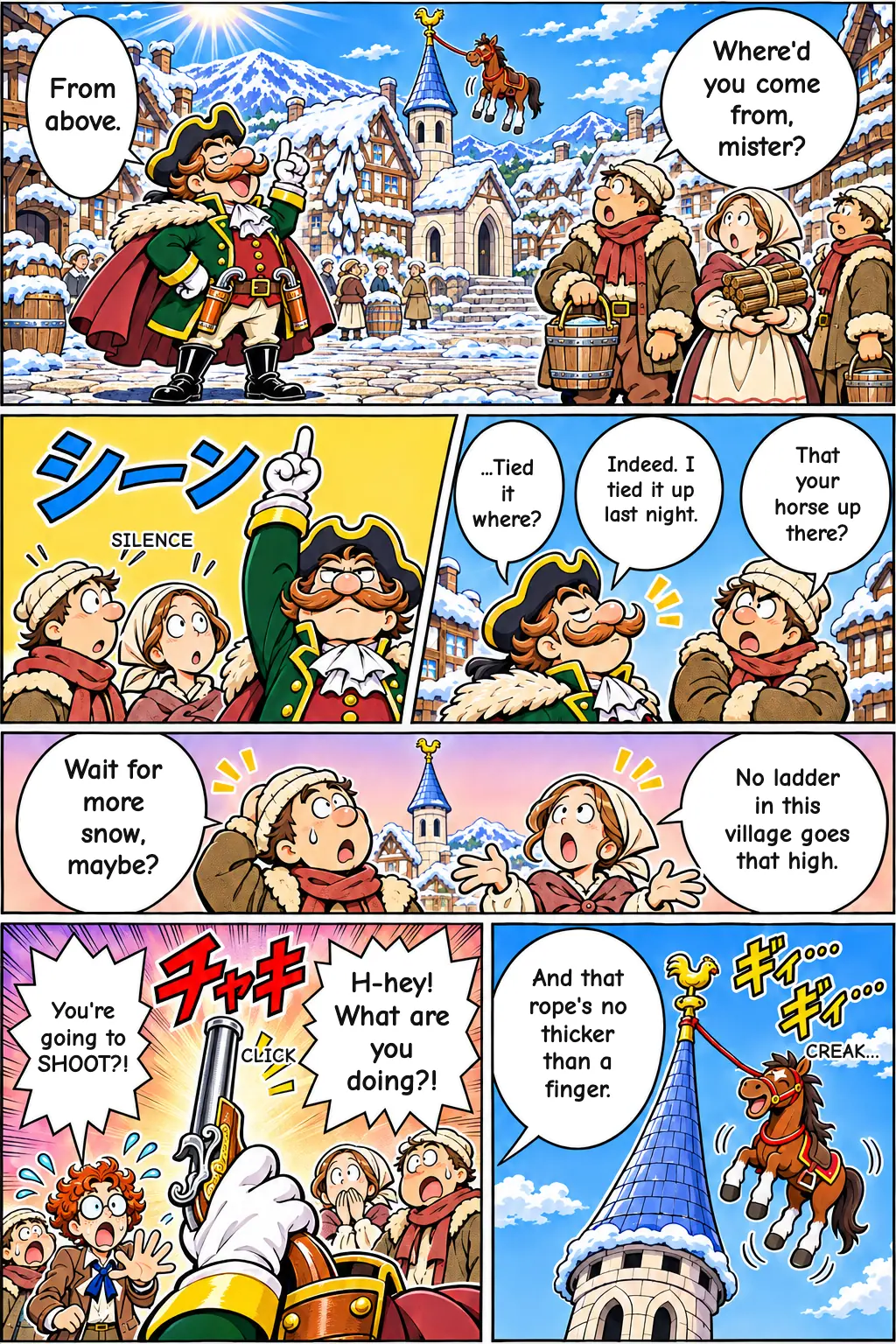
The events above come from the source. The most important addition in BARON MUNCHAUSEN: Fourteen Nights of Impossible Tales is Theo, a young man who sets out to expose the Baron's lies. He is the manga's invention and does not appear in the original book. In Episode 1, he is meant to record every contradiction, but his notebook slowly fills with "And then?" instead. That gives readers a skeptic to follow, and it turns the source's silent audience into a real source of comedy and tension.
The Baron's appearance, age, costume, and manner of speaking are also the manga's interpretation, as are the expressions and acting of the animals. Crowd reactions and any detailed scene around the storytelling go beyond what the source describes, since the original offers little more than the Baron's direct address to his listeners. So when you read the episode, treat the Baron's impossible journey as the inherited tale, and Theo's battle with his own curiosity as the new story built around it.
Where to read it
A summary can tell you how the horse got up there, but the joke lands differently when you can see that tilted-back look at the steeple for yourself. If you'd like to watch Theo try and fail to stay unconvinced, you can read BARON MUNCHAUSEN: Fourteen Nights of Impossible Tales here on Manga Portal. Every episode is free, with no sign-up required, and Episode 1 is a good place to start.
Characters in this episode
Baron Munchausen
The narrator and hero of the original book, who recounts impossible adventures as calmly as if they were ordinary travel notes.
Theo
A young skeptic created for the manga, who sets out to catch the Baron's lies but keeps asking what happens next.
The Baron's horse
An unnamed horse that spends the night tied to what seems to be a stump and ends up hanging from a church steeple.
The wolf
A starving forest wolf that attacks the Baron's sleigh horse and ends up pulling the sleigh to St. Petersburg.
The old man in Poland
A nameless, freezing traveler on the wasteland who receives the Baron's cloak.
The voice from the sky
An unidentified voice that promises the Baron a reward for his kindness.
FAQ
How did Baron Munchausen's horse get on the steeple?
The Baron tied it to what he thought was a stump poking out of deep snow, but it was actually the top of a buried church steeple. When the snow melted overnight, he sank gently to the ground while the horse stayed hanging by its reins. He then shot through the reins to bring it down.
Was Baron Munchausen a real person?
Yes. Hieronymus Karl Friedrich von Münchhausen (1720–1797) was a German nobleman who served in the Russian military and had a reputation for tall tales. The published adventures are comic fiction written by others and go far beyond anything from his actual life.
Who wrote The Adventures of Baron Munchausen?
Rudolf Erich Raspe, a German writer living in England, published the English version anonymously in 1785. Gottfried August Bürger produced an expanded German version in 1786. Later editions added more material and changed the chapter order.
What happens with the wolf in Baron Munchausen?
A starving wolf leaps over the Baron and eats its way into his sleigh horse from behind. When the Baron strikes it with his whip handle, the wolf lunges forward into the harness as the horse's remains drop away. The wolf then pulls the sleigh all the way to St. Petersburg.
Is Theo in the original Baron Munchausen story?
No. Theo is an original character created for the manga. The source's listeners are simply addressed as gentlemen and have no names or dialogue in this section.