Episode 1Rock Bottom? Perfect Time for a Road TripShank's Mare (Tokaido Hizakurige)
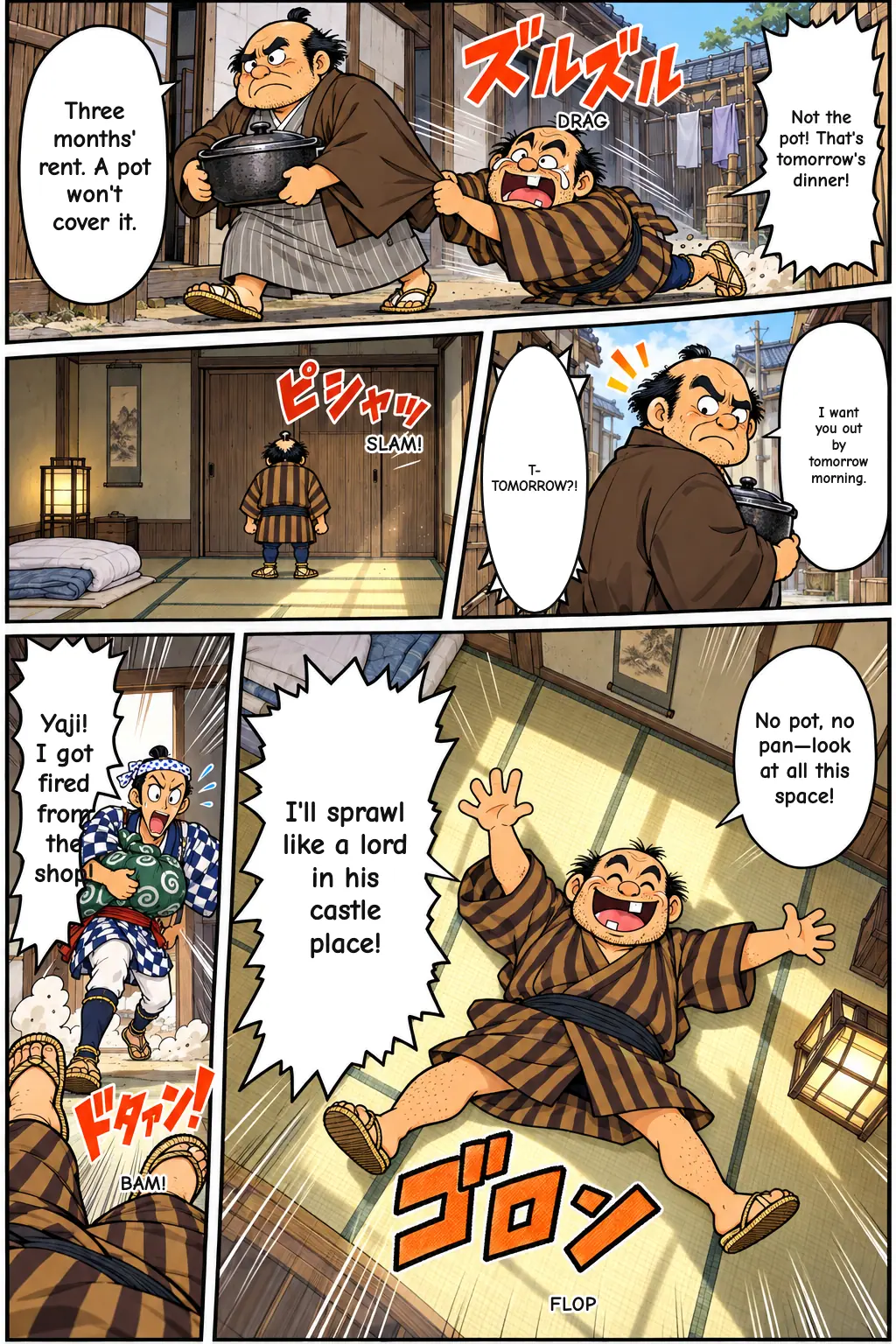
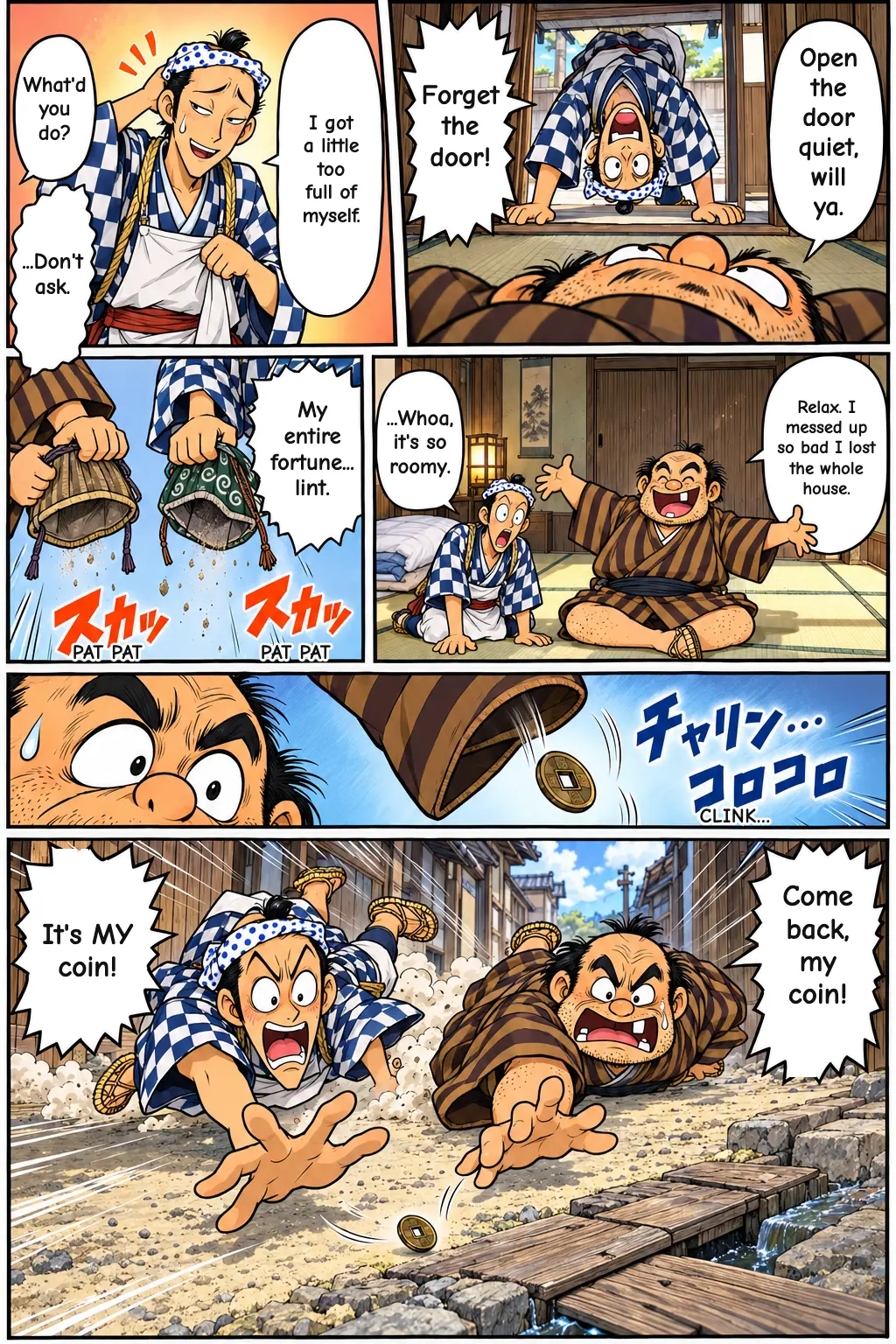
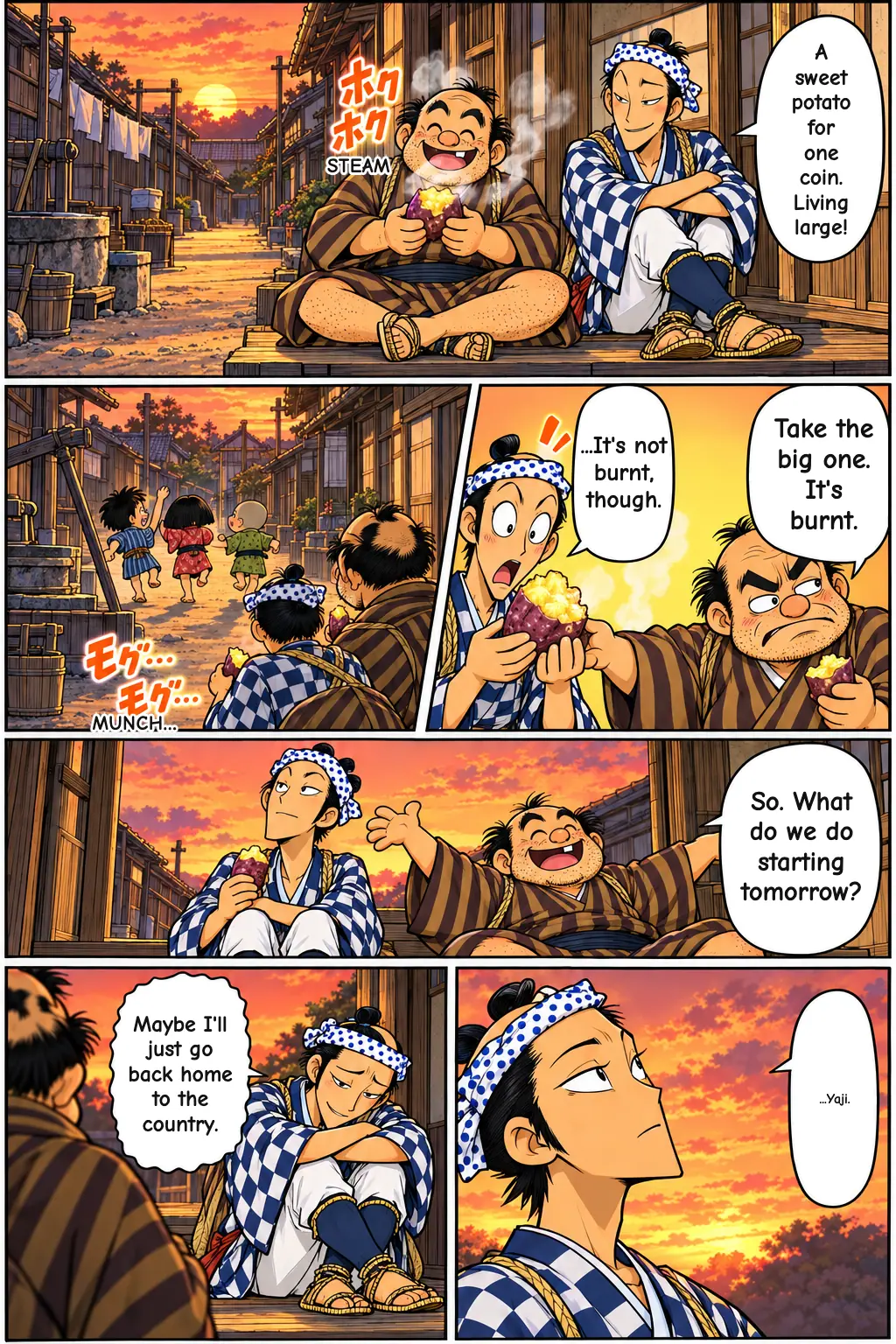
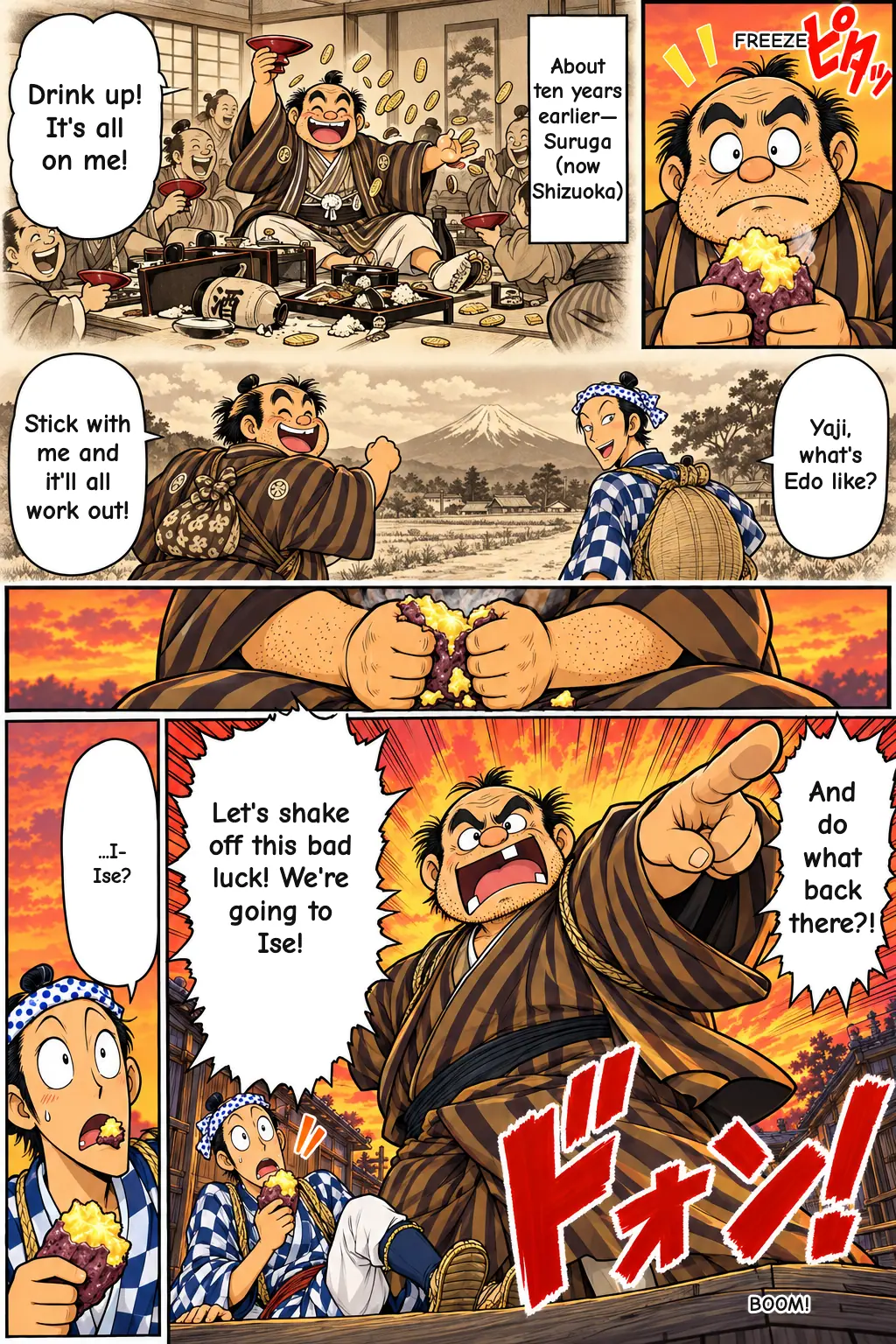
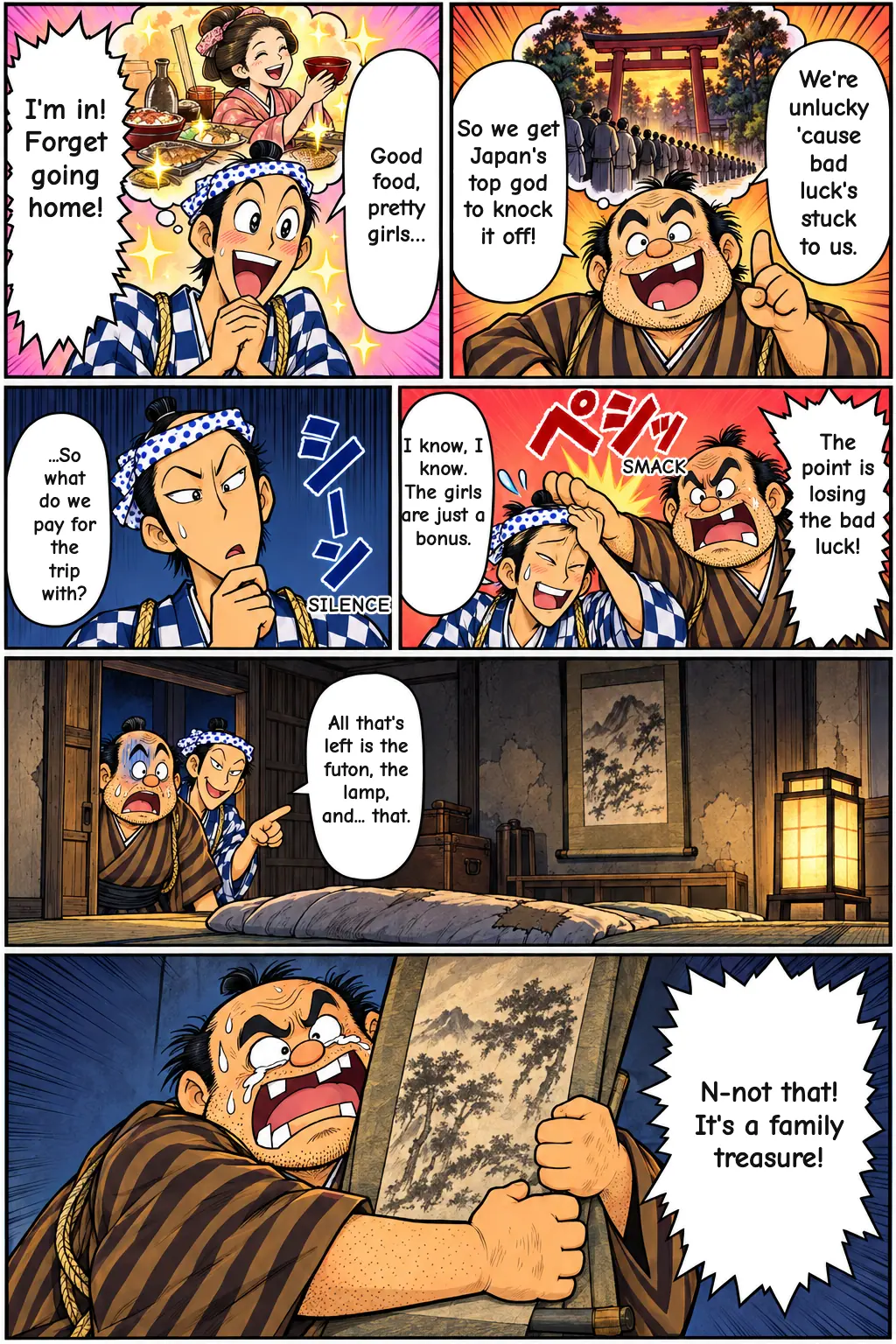
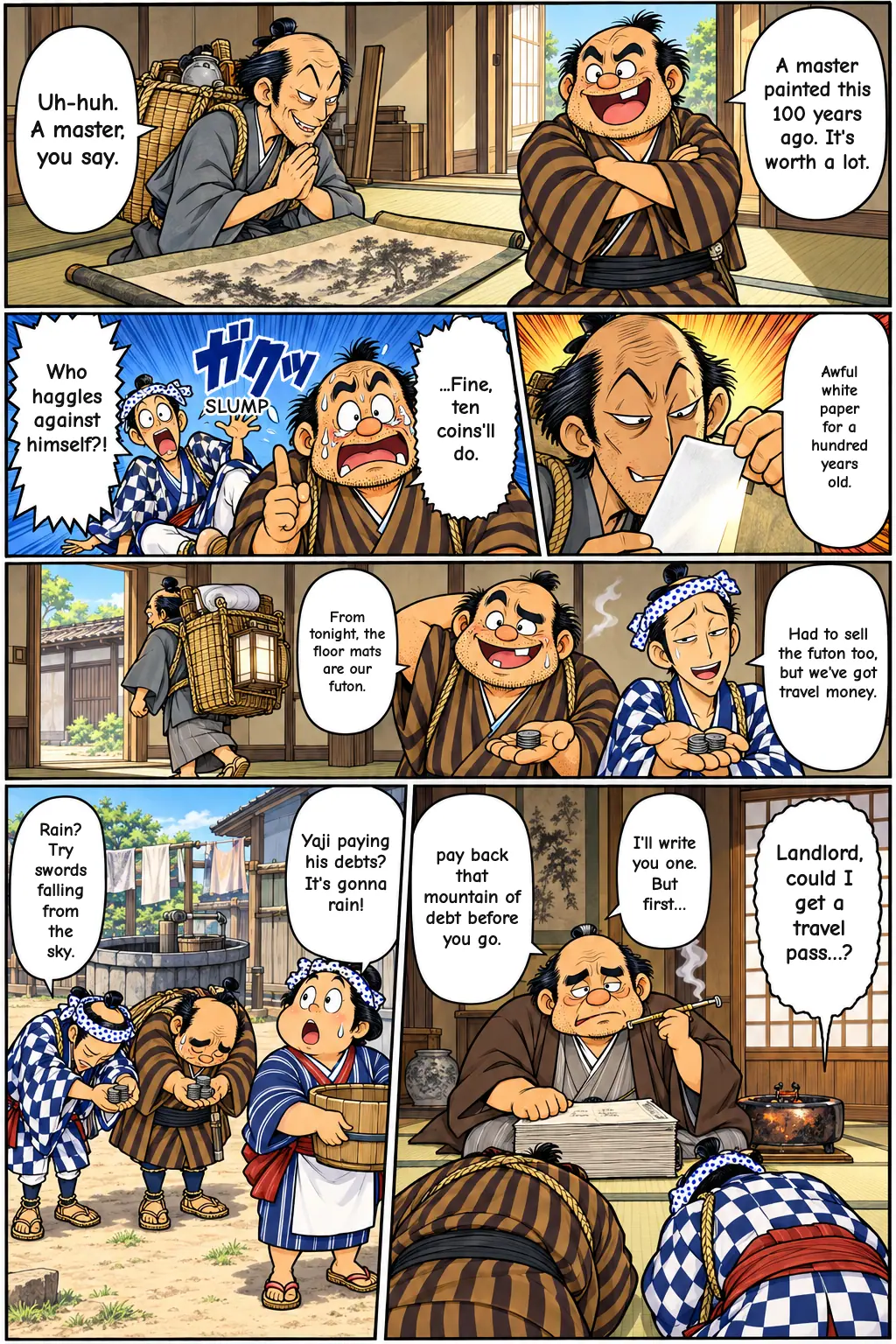
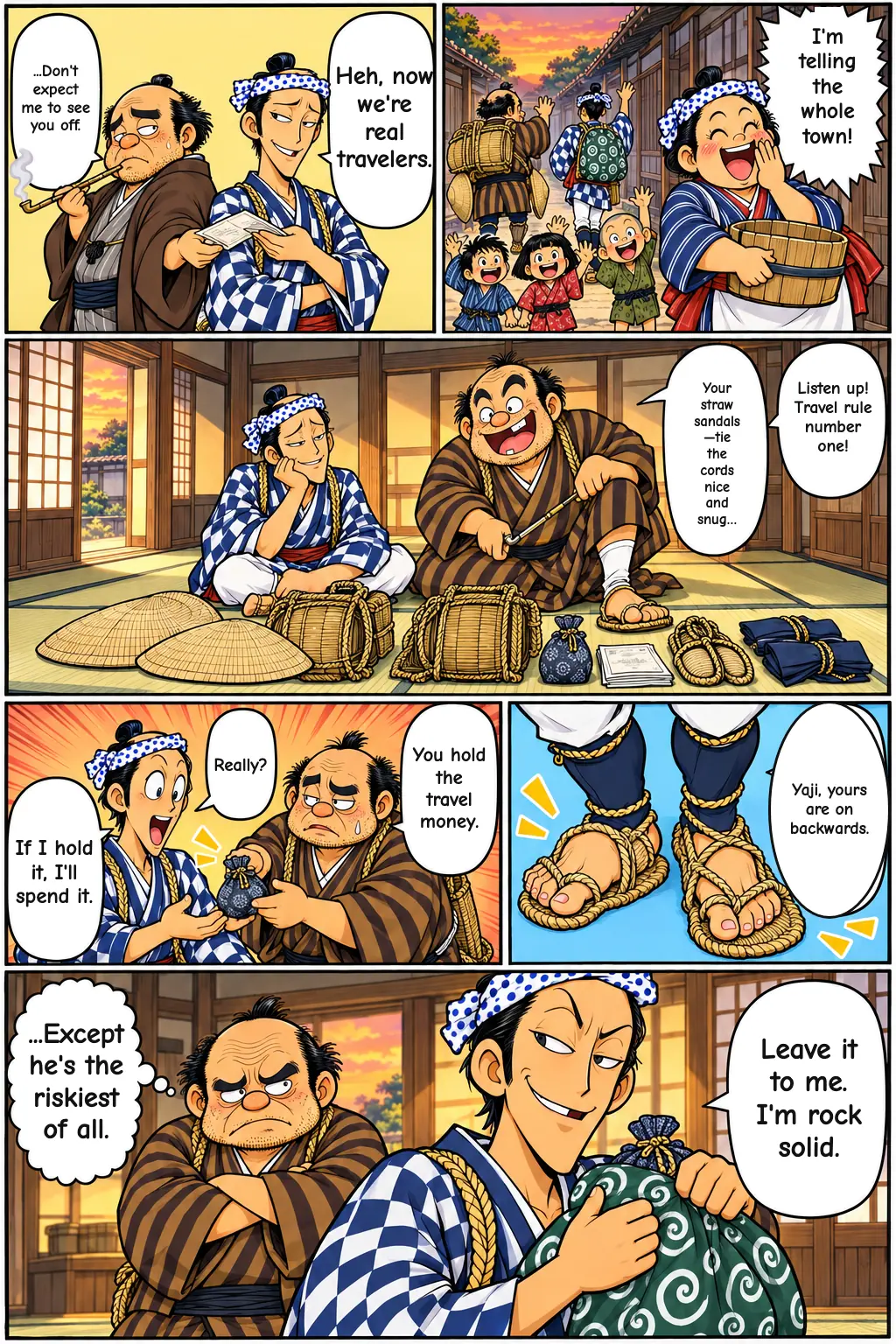
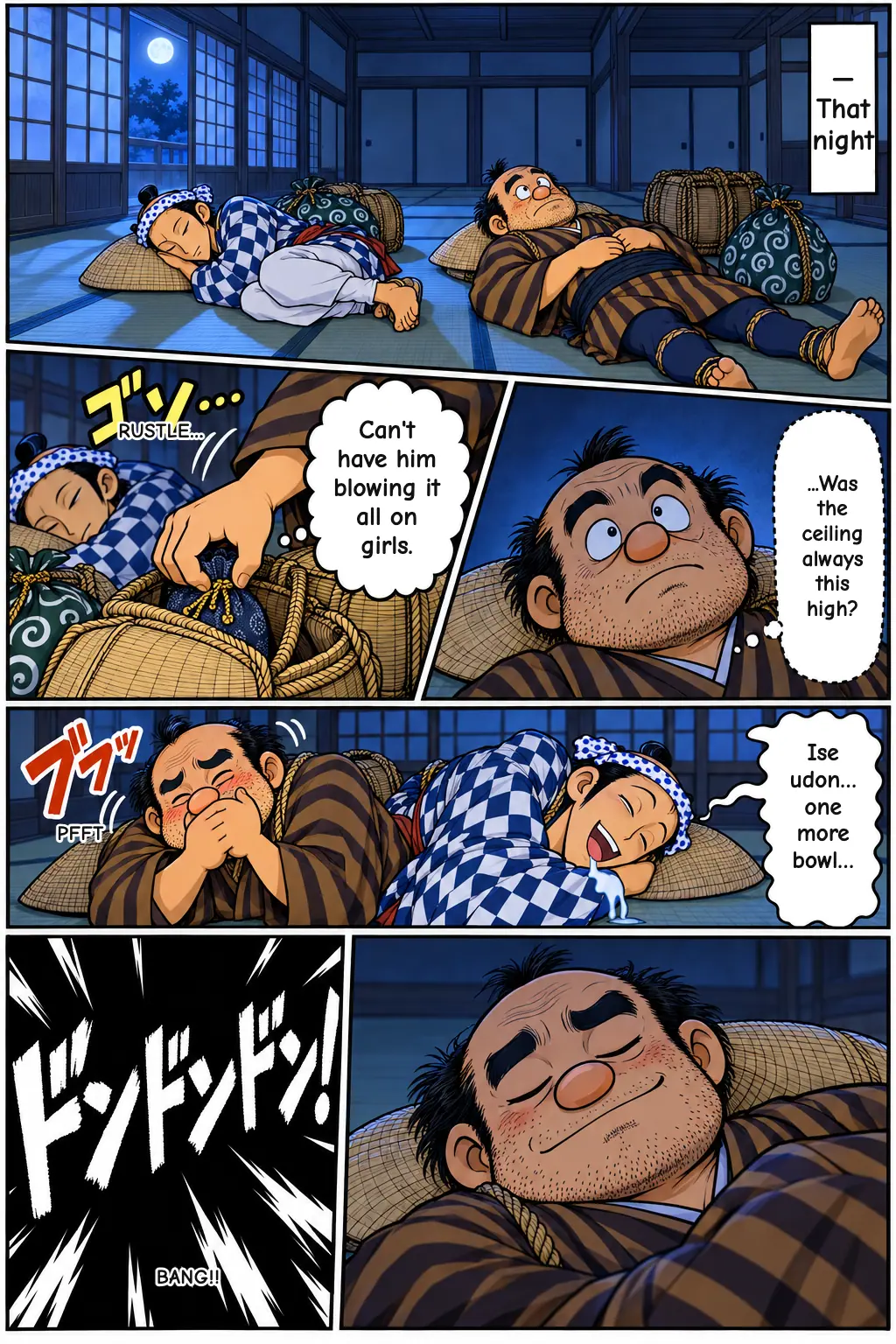
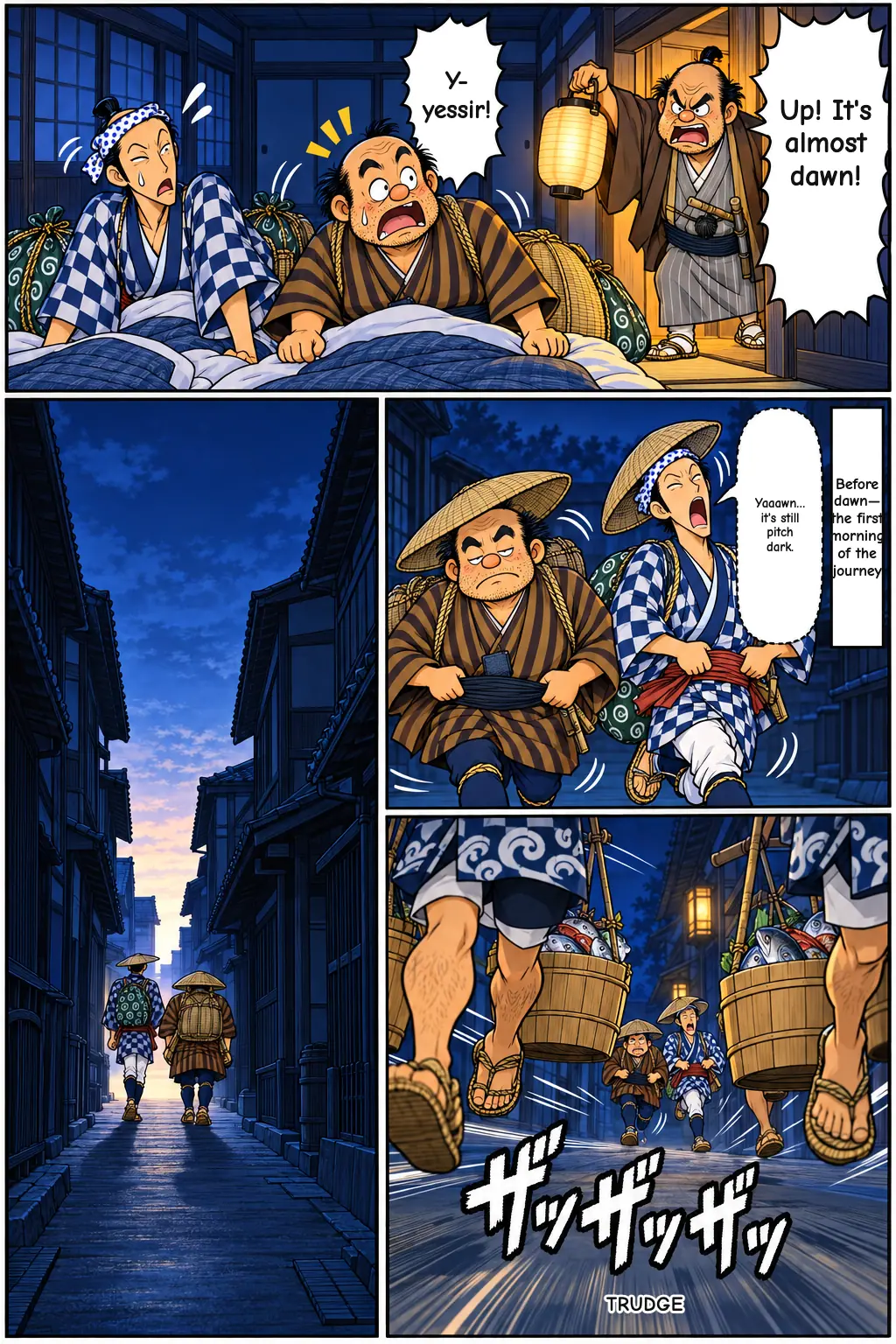
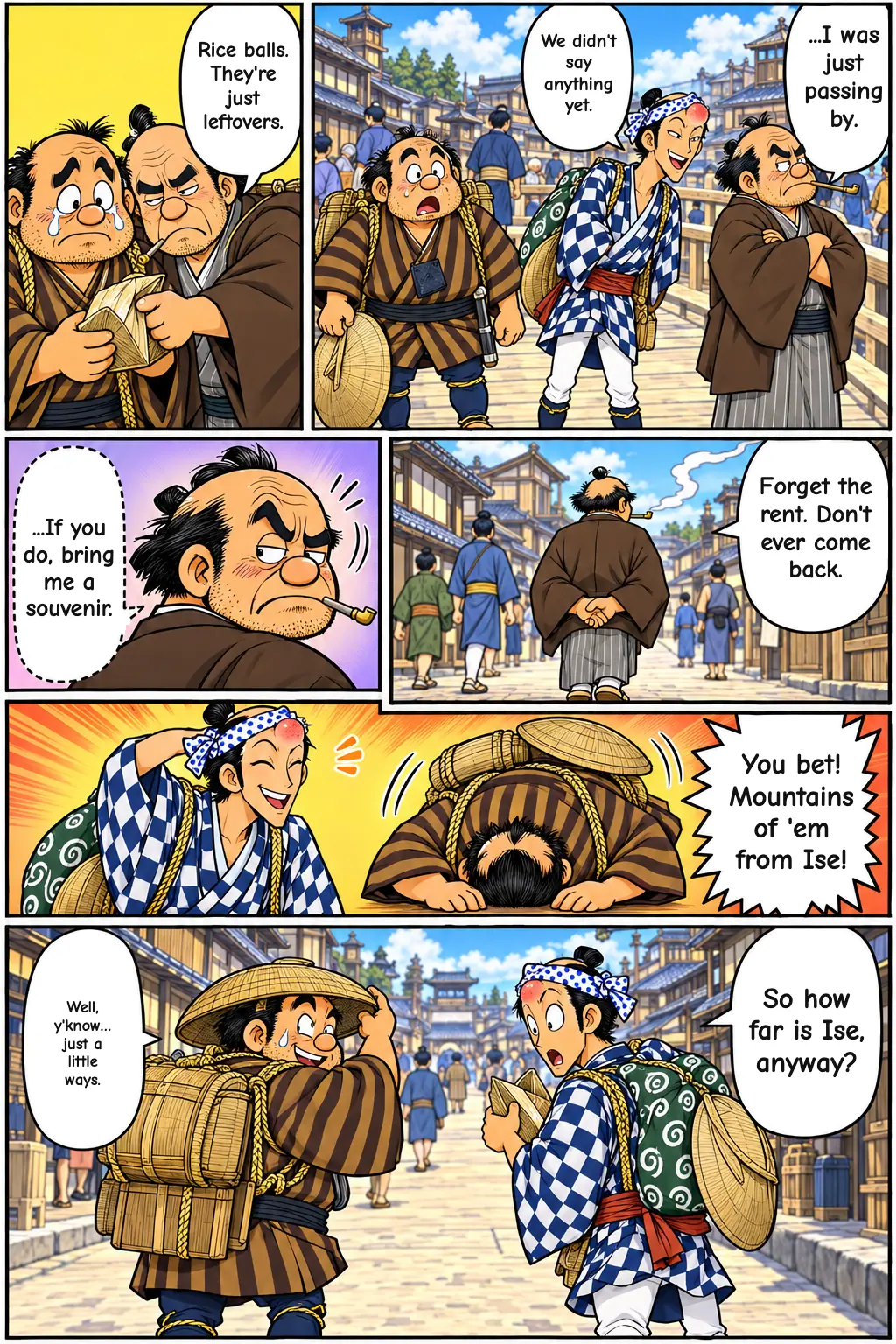
Middle-aged Yaji has lost his home, his work, and every last coin. His buddy Kita just got fired. "Let's shake off this bad luck. We're going to Ise!" Two lovable losers set out from Nihonbashi for Shinagawa in episode one of a road trip from 200 years ago.
Get new episodes in your feed. Follow us on:ThreadsBluesky
Story summary
Tokaido Hizakurige is a kokkeibon, a type of comic fiction popular in Edo-period Japan, written by Jippensha Ikku. Oddly, the beginning of the story came last. The first part, in which the two heroes leave Edo, appeared in 1802. Only in 1814, after the series had become a huge hit, did Ikku publish a prologue (hottan) explaining who these two men were and why they were on the road. According to that prologue, Yajirobei was born into a well-off merchant family in Fuchu, in Suruga Province (today's Shizuoka).
Tokaido Hizakurige Summary: Who Are Yaji and Kita? (Shank's Mare Explained)
In short: Tokaido Hizakurige, known in English as Shank's Mare, is a comic novel by Jippensha Ikku (first part published 1802) about two broke Edo men, Yajirobei and Kitahachi, who walk the Tokaido highway on a pilgrimage to the Ise Shrine. Its prologue (published 1814) explains how a string of schemes and scandals cost them their homes and money, and how they decide to shake off their bad luck with a trip to Ise.
The Original Story: How Yaji and Kita Hit Rock Bottom
Tokaido Hizakurige is a kokkeibon, a type of comic fiction popular in Edo-period Japan, written by Jippensha Ikku. Oddly, the beginning of the story came last. The first part, in which the two heroes leave Edo, appeared in 1802. Only in 1814, after the series had become a huge hit, did Ikku publish a prologue (hottan) explaining who these two men were and why they were on the road.
According to that prologue, Yajirobei was born into a well-off merchant family in Fuchu, in Suruga Province (today's Shizuoka). He threw away the family fortune on drinking and pleasure, then fled to Edo with Hananosuke, a young traveling actor he was close to. The pair settled in a back-alley tenement in Hatchobori, Kanda. Yaji took a wife, and Hananosuke changed his name to Kitahachi and went to work as a live-in employee at a merchant house.
Things went downhill fast. Kitahachi got into money trouble at his workplace, and he and Yaji cooked up a scheme to cover it, one tangled up with Yaji divorcing his wife. The plan backfired badly. When the dust settled, both men had lost their homes, their positions, and their money.
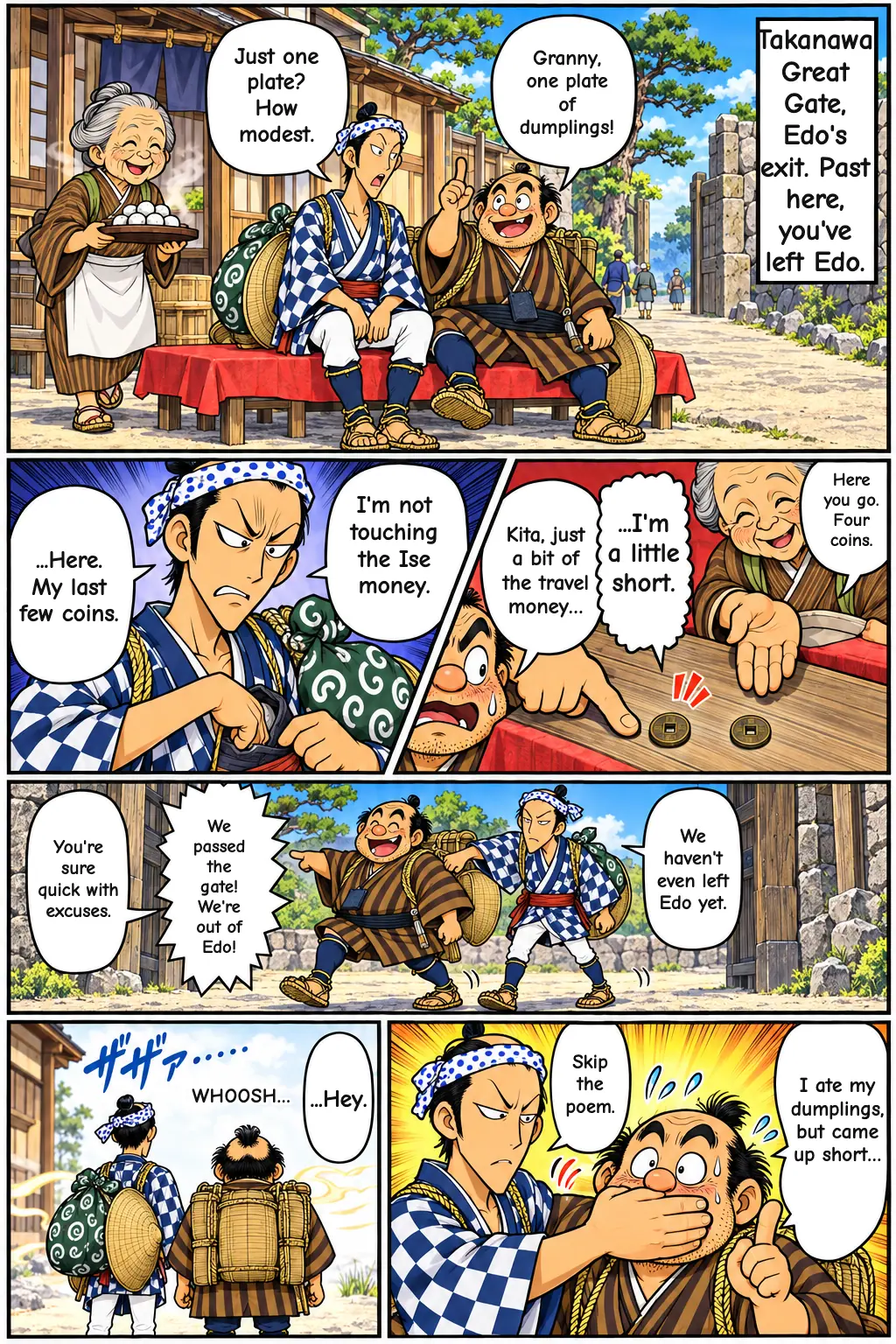
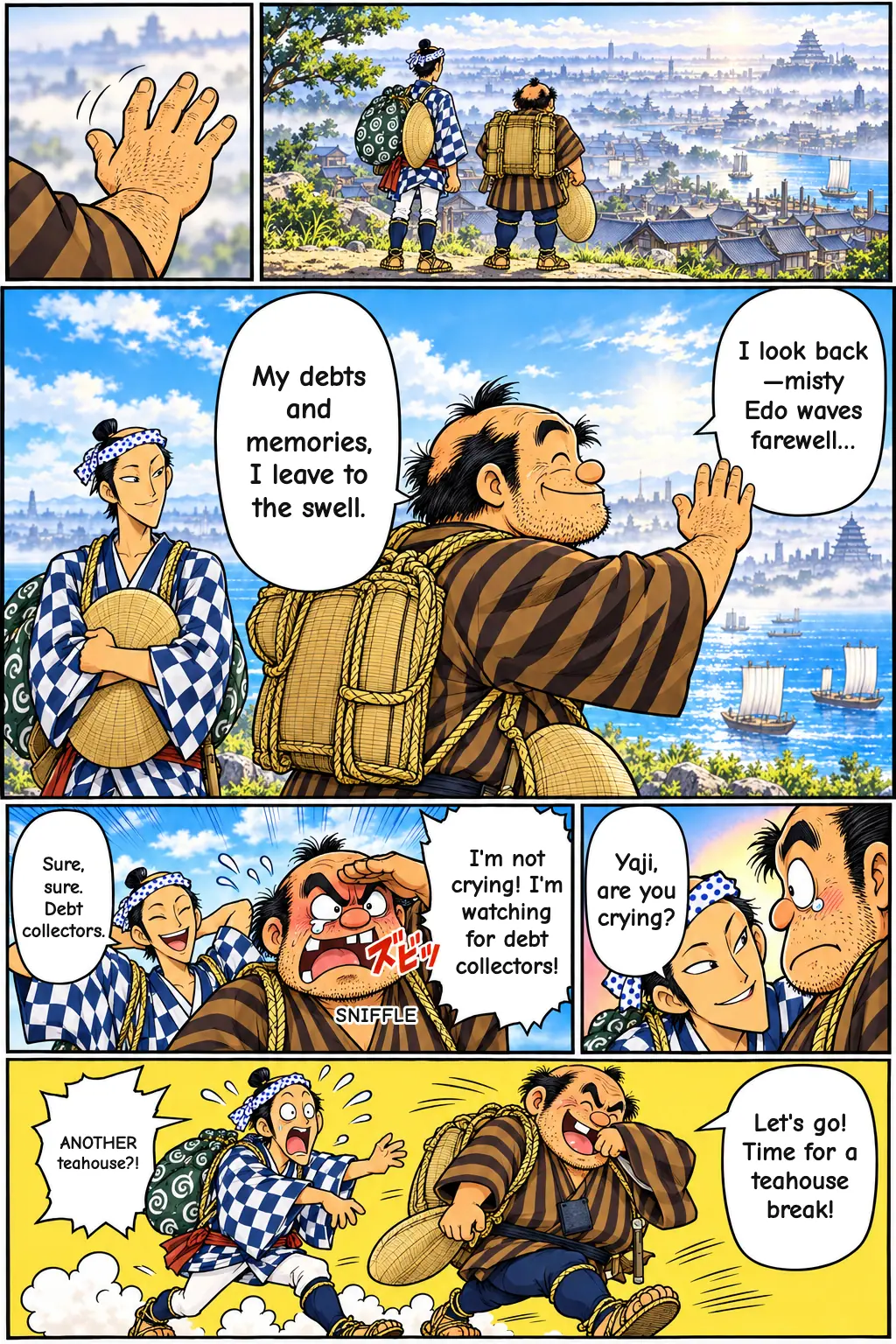
With nothing left in Edo, they decided to go on a pilgrimage to the Ise Grand Shrine to get rid of their bad luck. They settled their debts, packed for the road, and set off west along the Tokaido. In the opening of the first part, they leave the city, say goodbye to Edo around Takanawa and Shinagawa, and trade comic poems as they start a carefree journey.
Main Characters
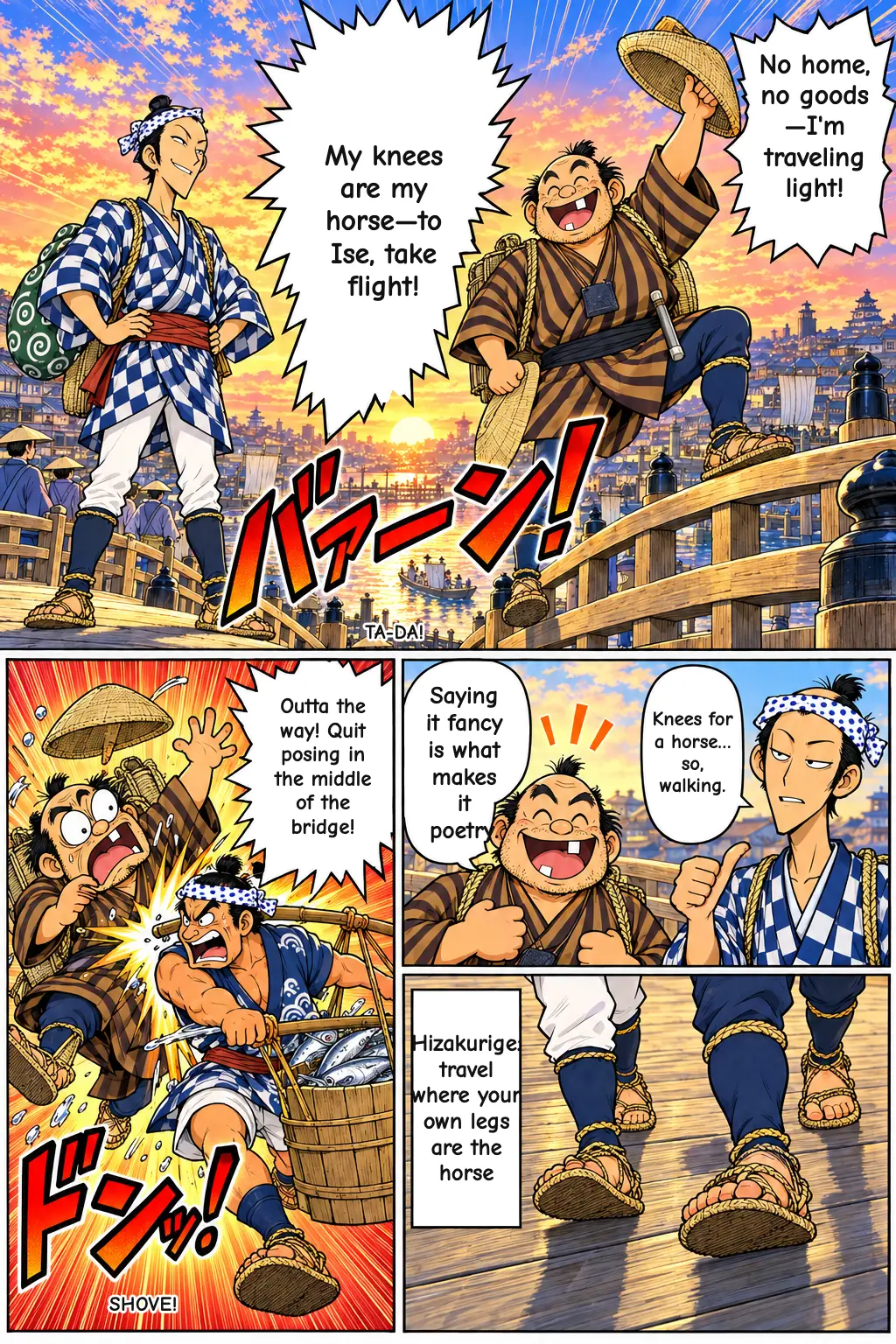
Yajirobei (Yaji) is the older of the two: easygoing, vain, and a little sly, but clumsy enough that his clever plans usually fail. He is always ready with a kyoka, a short comic poem, for any situation.
Kitahachi (Kita), once the actor Hananosuke, is younger, impulsive, and always chasing women. Yaji and Kita bicker constantly but can't seem to get rid of each other. In the original, the two men are also lovers. That was an ordinary detail for readers at the time, and the manga turns it into a close, long-suffering friendship. Yaji's wife and the people at Kita's workplace matter in the prologue, but the surviving story tells us little about them as individuals.
Why This Story Mattered: Travel, Laughter, and Ise
The title explains the joke. Hizakurige means something like "a chestnut horse made of your own knees," which is a playful way of saying "traveling on foot." The English phrase "Shank's mare" means the same thing. Yaji and Kita can't afford horses or palanquins, so they walk.
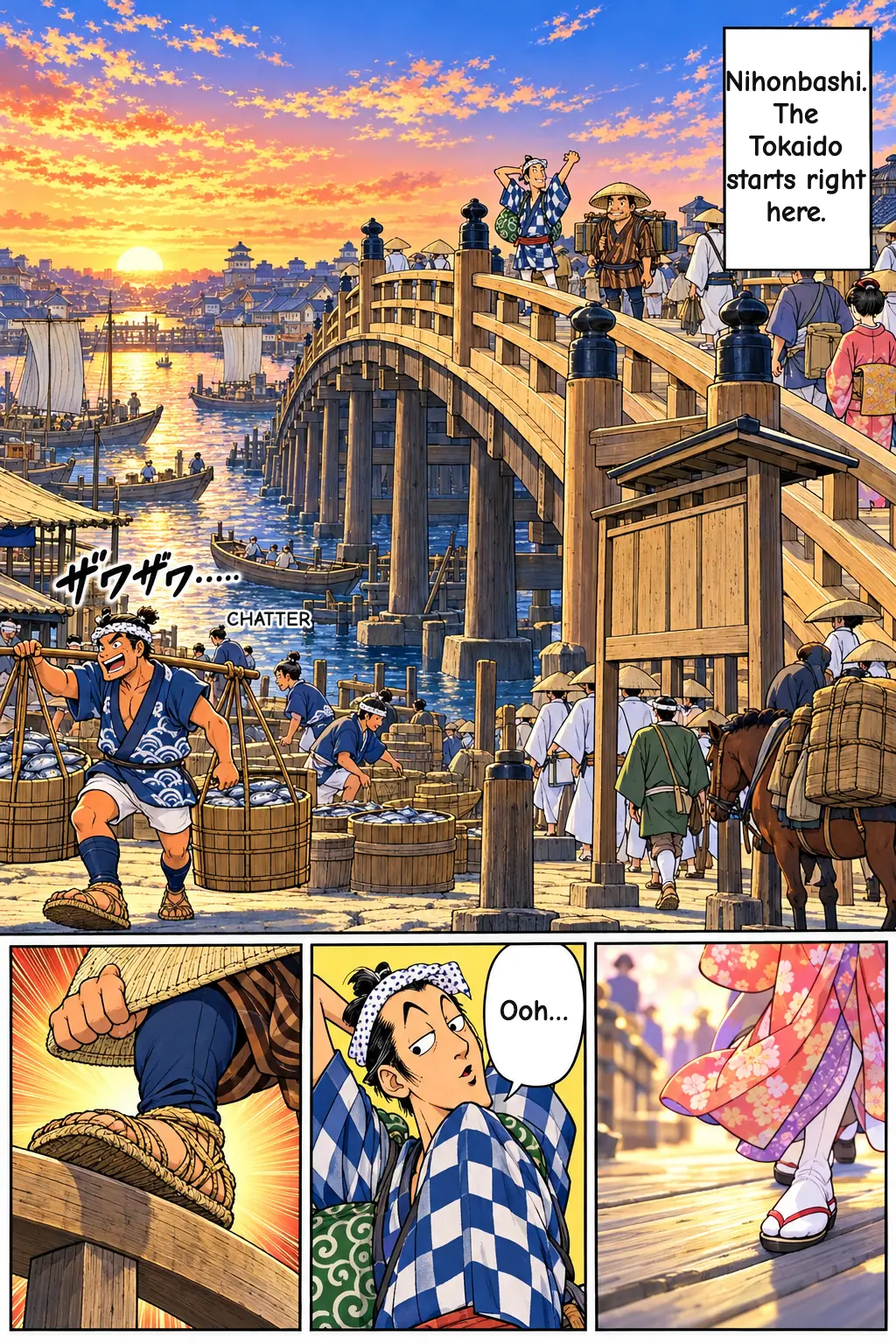
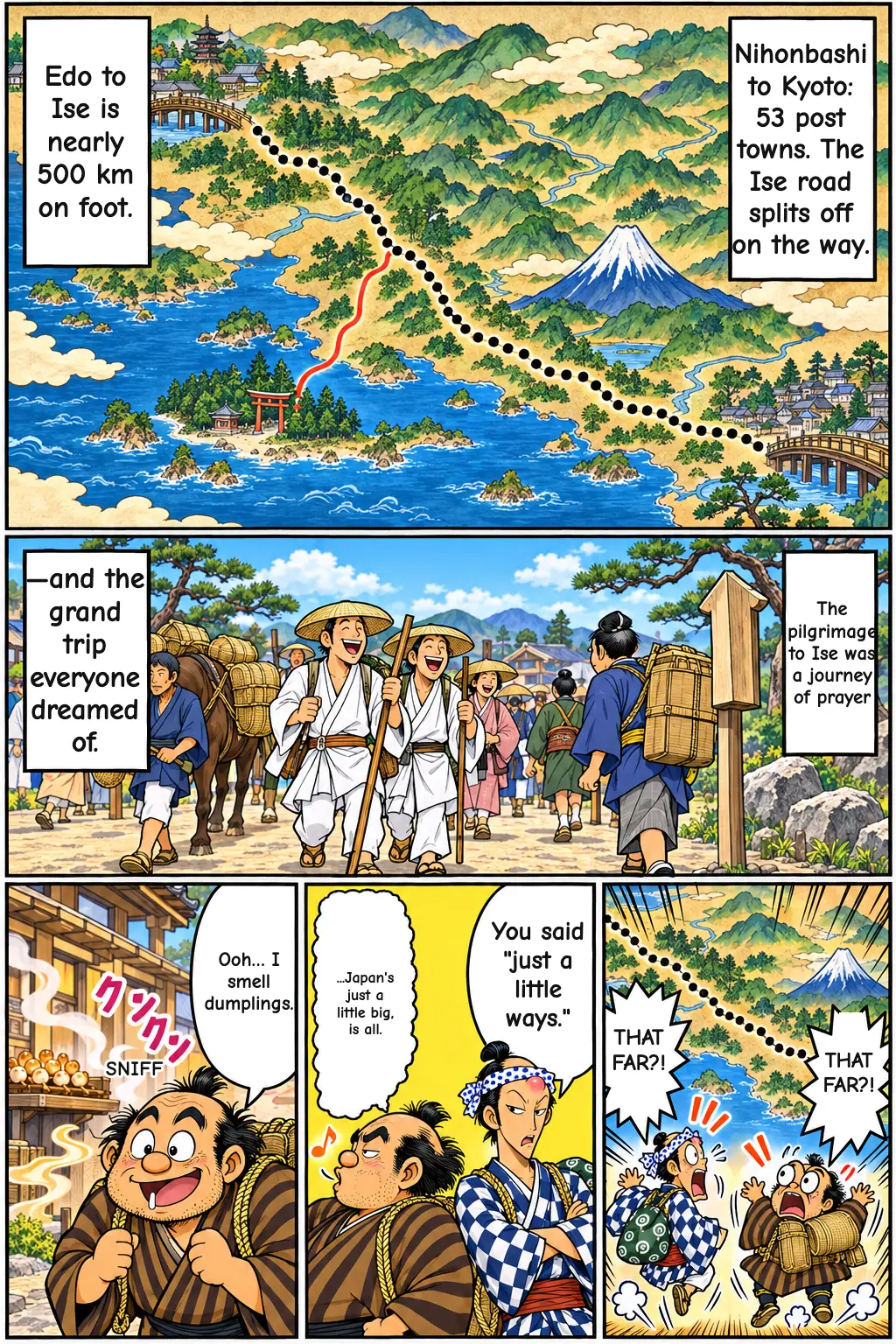
The Tokaido was the great coastal highway between Edo (modern Tokyo) and Kyoto, with 53 post stations along the way. Nihonbashi in Edo was the starting point, and Shinagawa was the first stop. During the Edo period, travel was tightly controlled, but a pilgrimage to Ise was one of the most widely accepted reasons for ordinary people to take a long trip, and huge numbers of them went. Ikku's readers knew these roads, inns, and local specialties, and they loved seeing two hopeless men stumble through them.
The book was a bestseller. Ikku kept the adventures going for about twenty years, and the series helped make travel a popular theme in Japanese entertainment. Even today, "Yaji-Kita" is shorthand in Japan for a pair of bumbling travel buddies.
What the Manga Changes and Adds
The manga follows the original's overall shape: Yaji's ruin, the move to Edo, Kita's disgrace, the decision to go to Ise, and the departure along the Tokaido. To keep the first episode light and easy to follow, it compresses the prologue's divorce scheme and its unhappy aftermath into a simple run of bad luck that costs Yaji his home and work and gets Kita fired. As noted above, it also shows the pair as old friends rather than lovers.
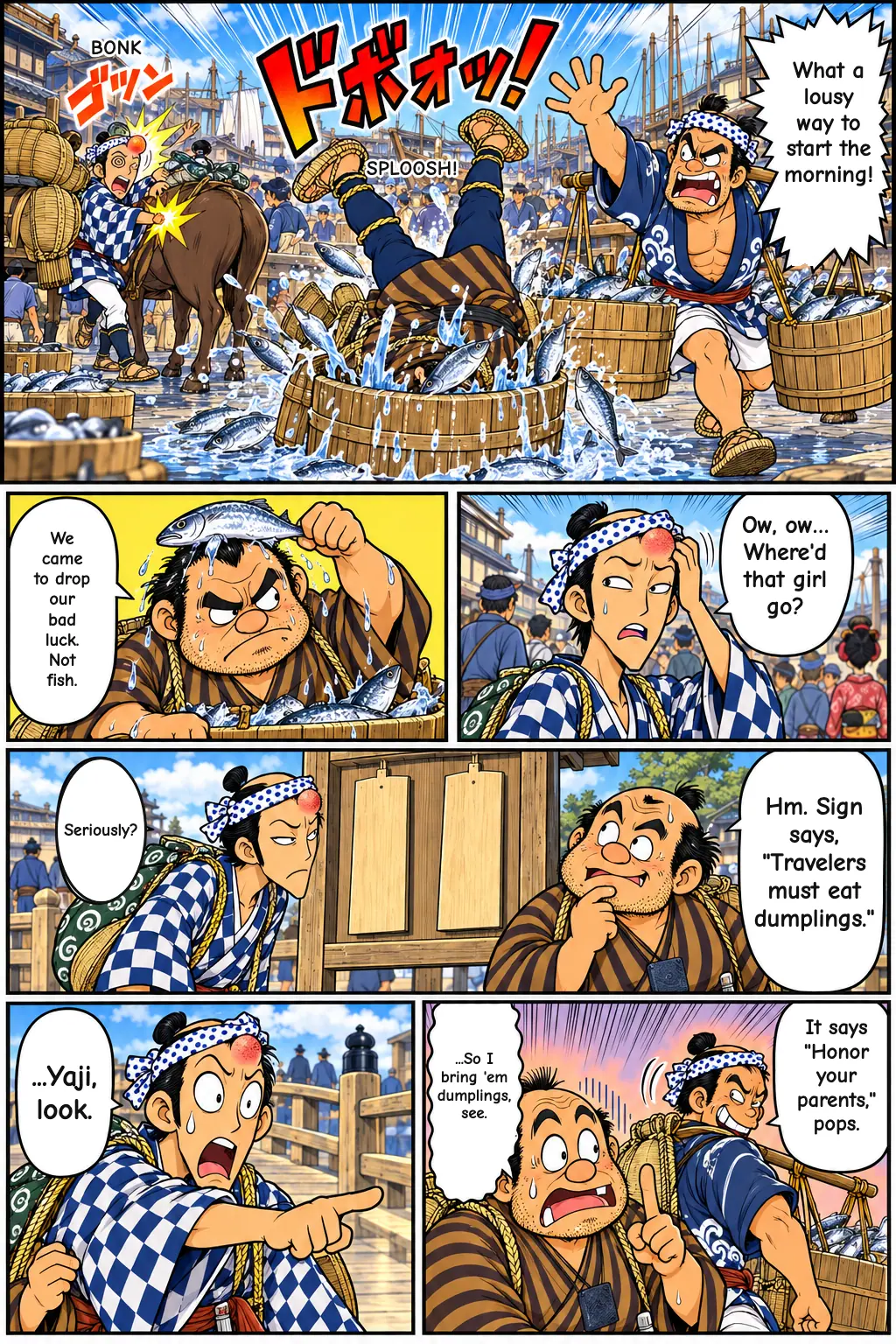
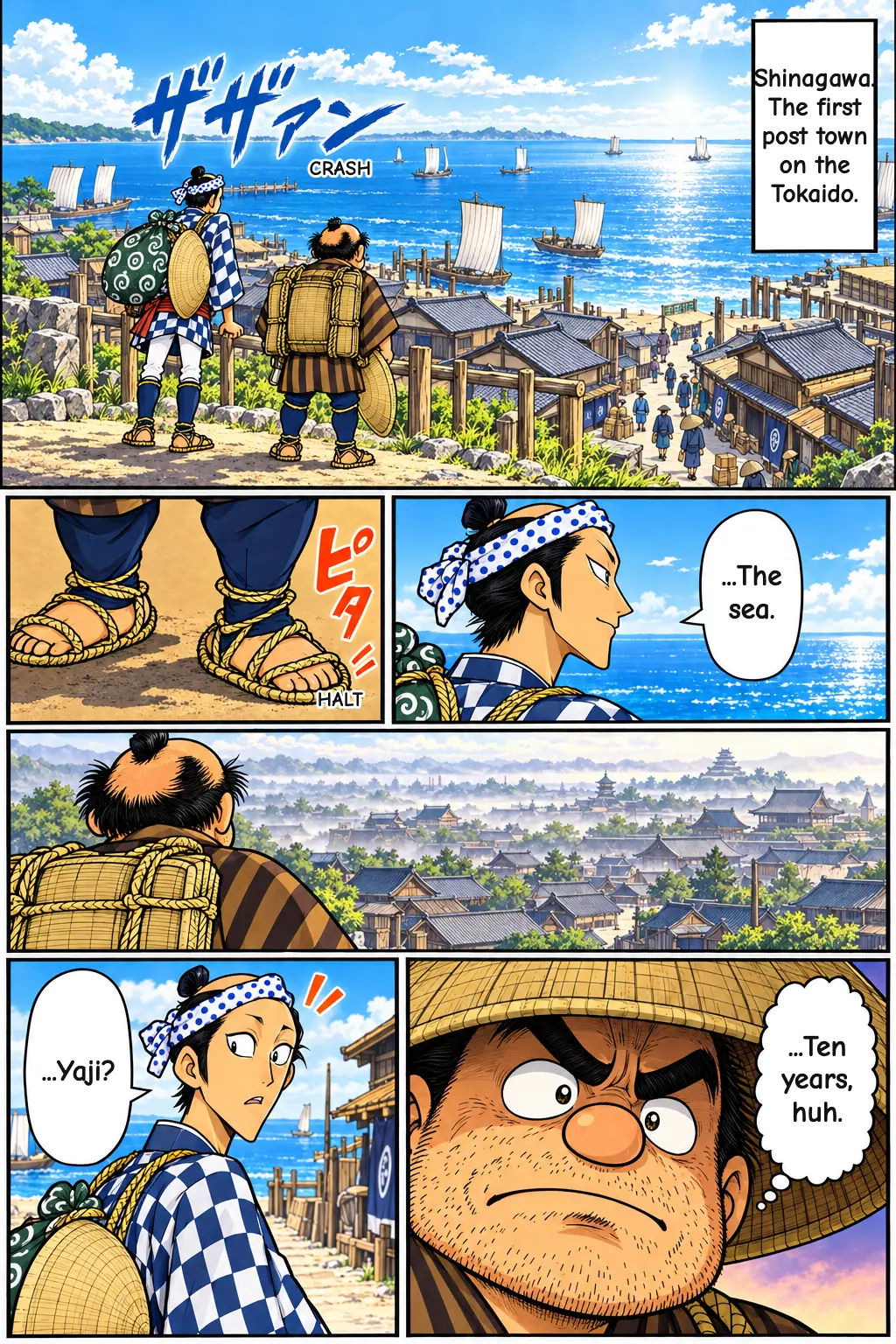
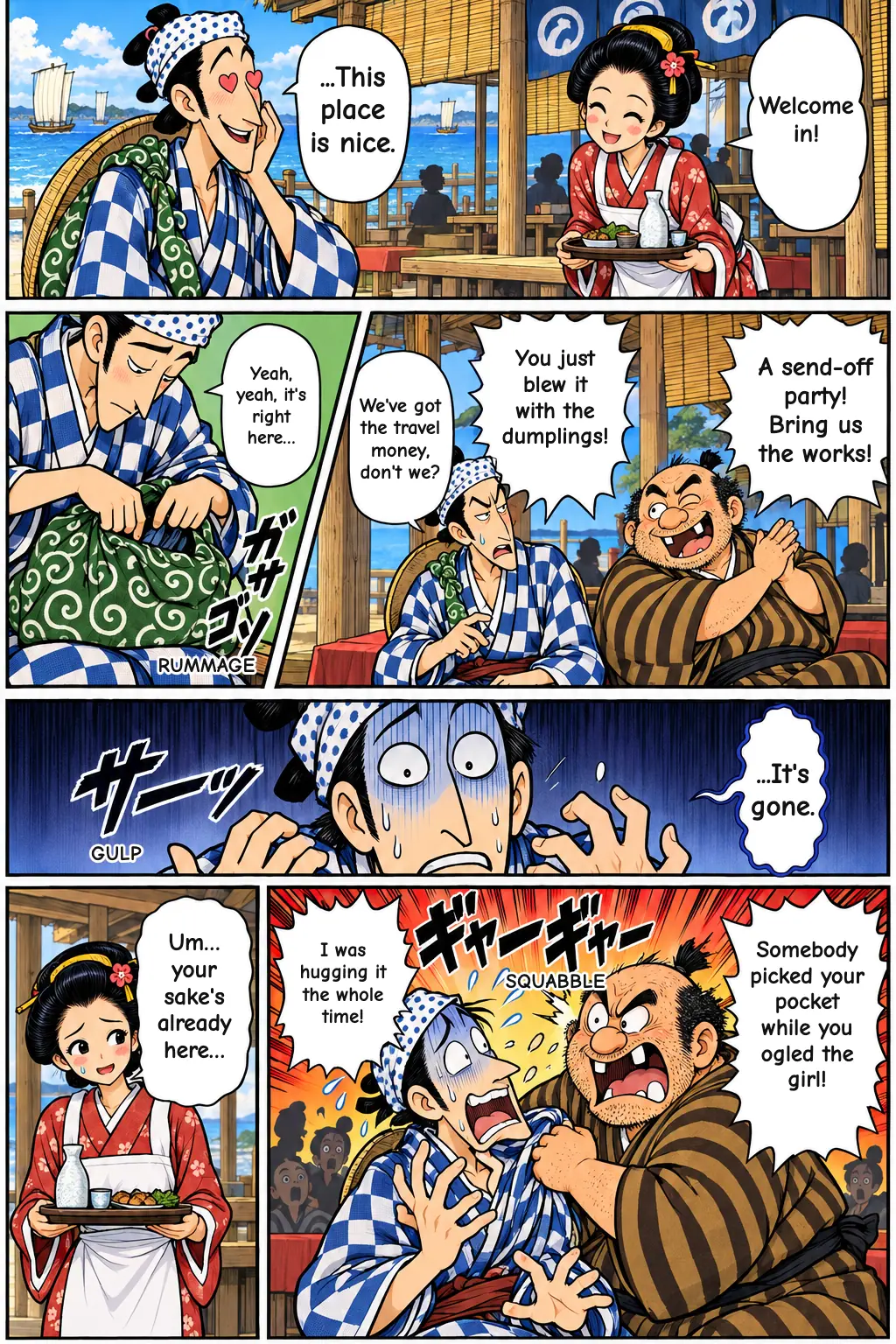
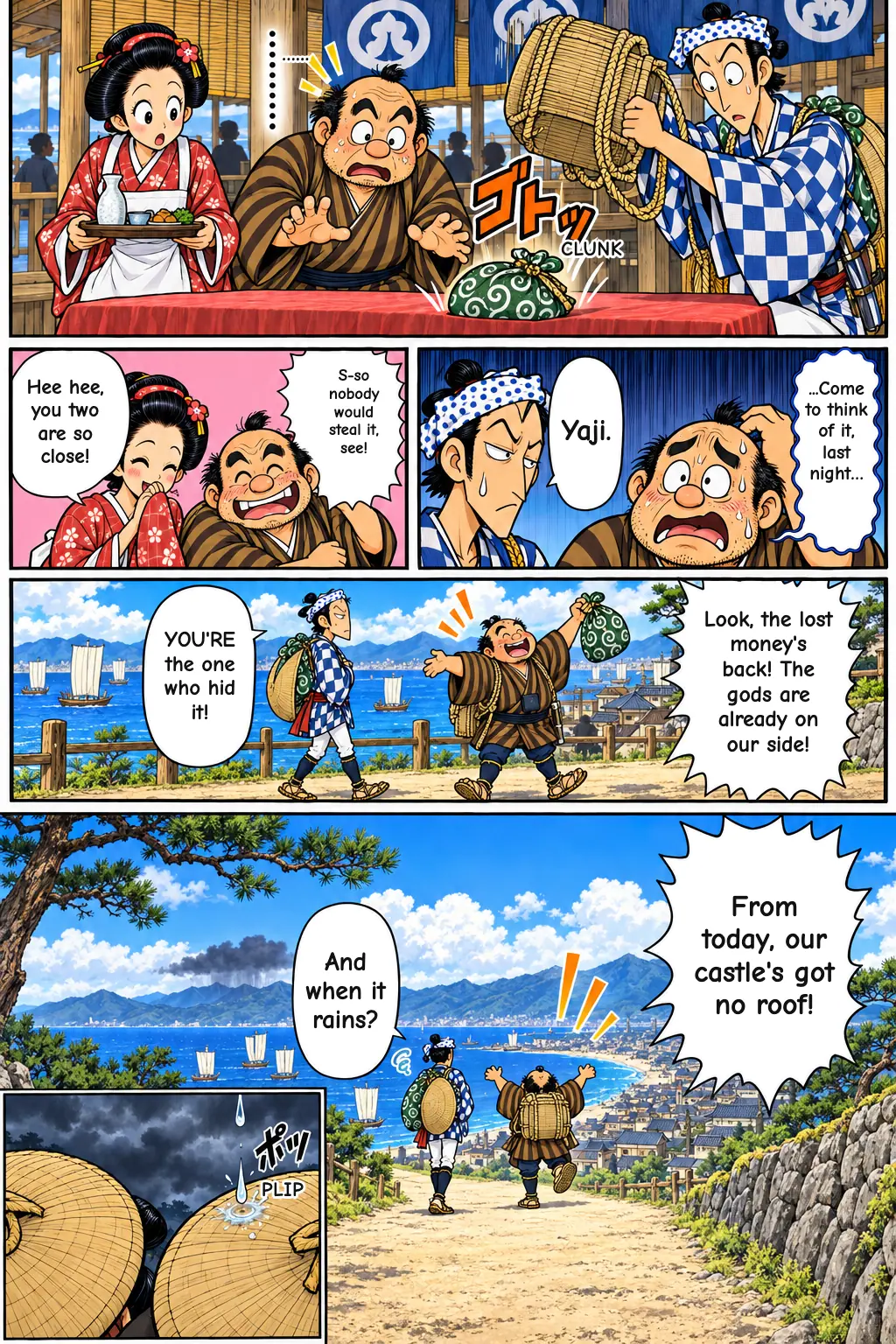
Many scenes are the manga's own creation, designed to bring the Edo period to life. These include daily life in the Hatchobori tenement with nosy neighbors and the landlord, the packing scene that shows real travel gear (straw hats, raincoats, shoulder bags, and travel permits), the busy morning at Nihonbashi with its fish market and notice board, a one-panel map of the 53 stations, and a farewell to Edo at a teahouse overlooking the sea at Shinagawa. The characters' faces, clothes, and ages are also the manga's invention. Ikku's comic poems are newly written so their meaning comes through, and the English edition uses its own rhymes and wordplay in place of the original Japanese puns.
Where to Read It
If you want to see two lovable losers start the most famous road trip in Japanese literature, YAJI AND KITA: The Great Tokaido Road Trip on Manga Portal begins right here with Episode 1, "Rock Bottom? Perfect Time for a Road Trip." Every episode is free to read, and you don't need to sign up. Start at Nihonbashi and follow Yaji and Kita one station at a time on their way to Ise.
Characters in this episode
Yajirobei (Yaji)
A merchant's son from Suruga who drank and partied away his fortune, now a broke, poem-spouting, overconfident Edo resident heading for Ise.
Kitahachi (Kita)
Yaji's younger partner, a former traveling actor named Hananosuke who lost his job after a money scandal and joins Yaji on the road.
Yaji's wife
Yaji's wife in Edo, whose divorce becomes part of the failed scheme that ruins the two men in the original prologue.
Kita's employers
The merchant household where Kita worked, whose money trouble starts the chain of disasters.
FAQ
What is Tokaido Hizakurige about?
It is a comic novel by Jippensha Ikku about two broke Edo men, Yajirobei and Kitahachi, who walk the Tokaido highway on a pilgrimage to Ise. The humor comes from their pranks, failures, and comic poems at inns and post stations along the way.
What does "Hizakurige" mean?
It roughly means "a chestnut horse made of your own knees," which is a joking way of saying "traveling on foot." That is why the book is called Shank's Mare in English.
Who wrote Shank's Mare and when?
Jippensha Ikku wrote it. The first part was published in 1802, and a prologue explaining the heroes' backstory followed in 1814 after the series became popular.
Why did Yaji and Kita go to Ise?
After a failed scheme left them without homes, jobs, or money, they decided on a pilgrimage to the Ise Grand Shrine to shake off their bad luck. In the Edo period, a trip to Ise was one of the most common reasons for ordinary people to travel.
Where does the Tokaido journey start?
The Tokaido officially began at Nihonbashi in Edo (now Tokyo), and Shinagawa was the first of its 53 post stations. In the original, the two men say goodbye to Edo around Takanawa and Shinagawa.