Episode 1Told to Buy a Fan. He Bought an Umbrella.Suehirogari (The Fan)
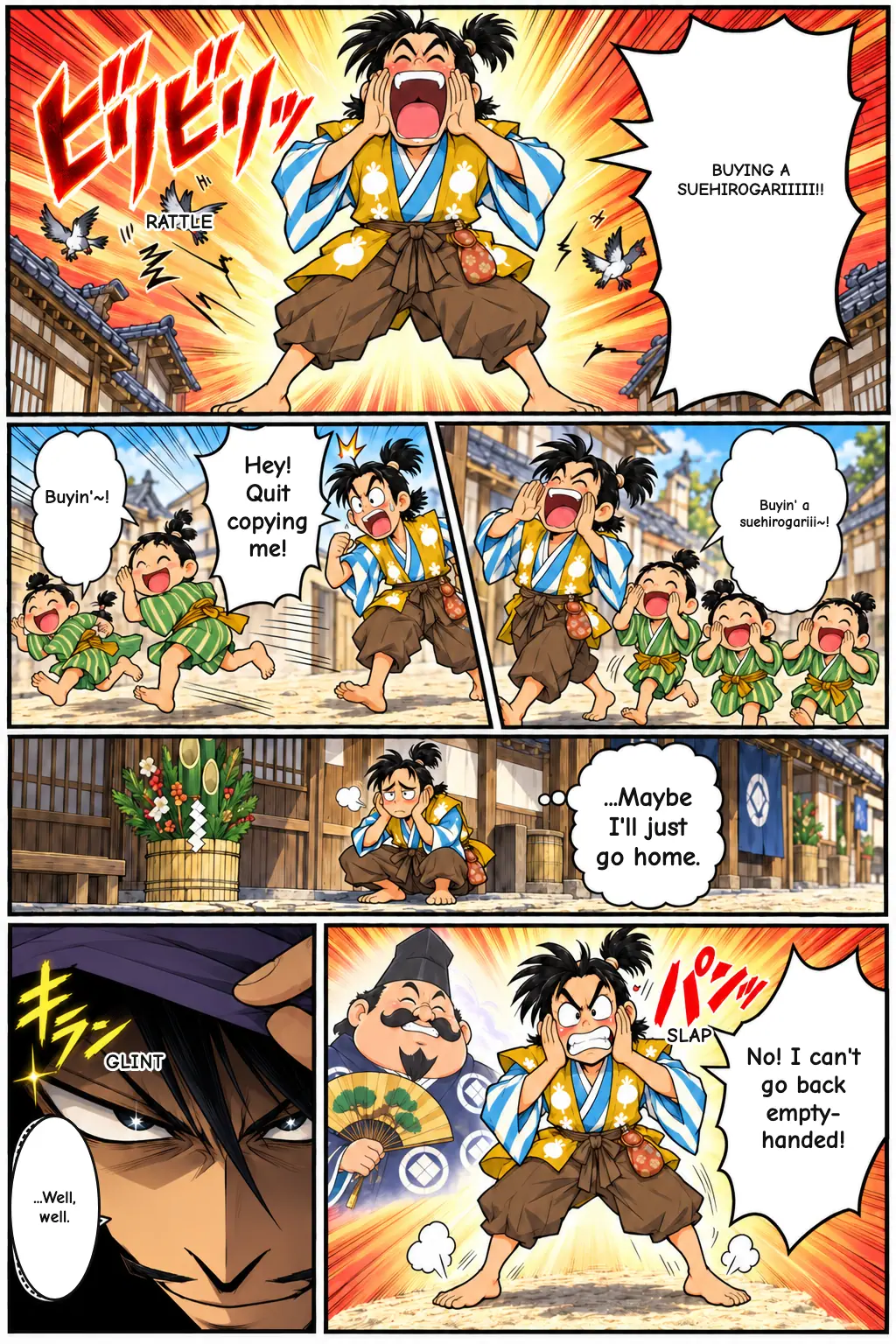
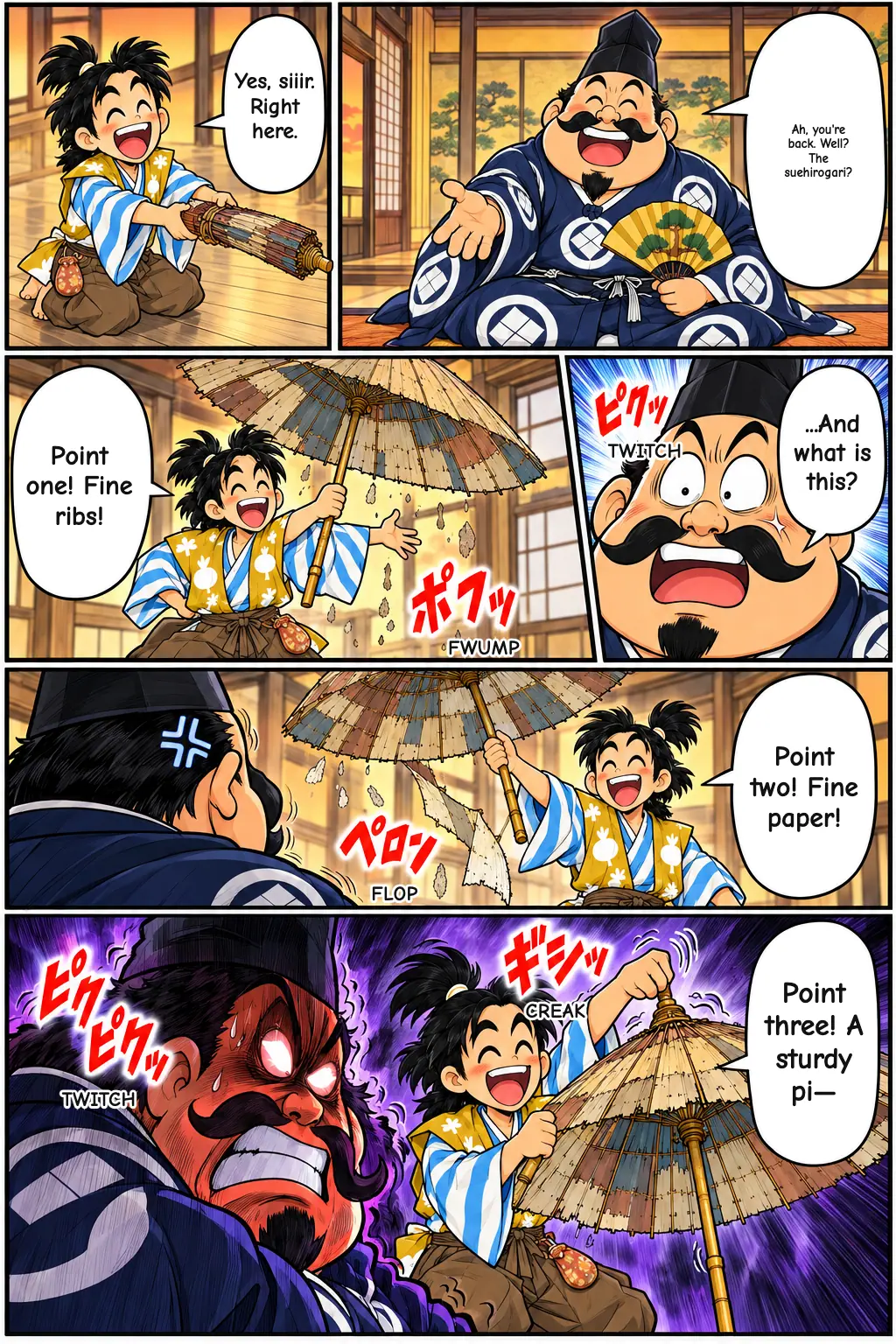
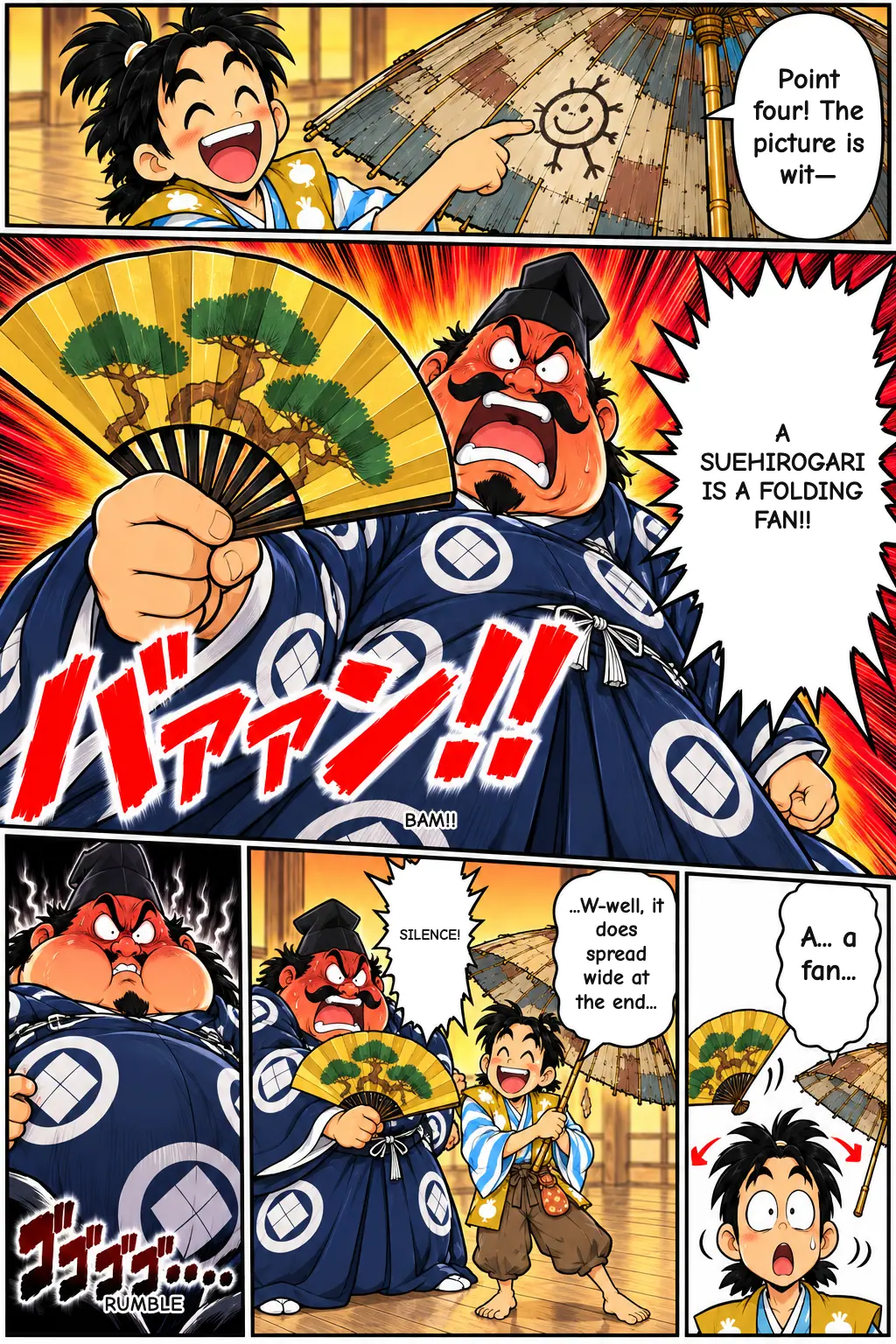
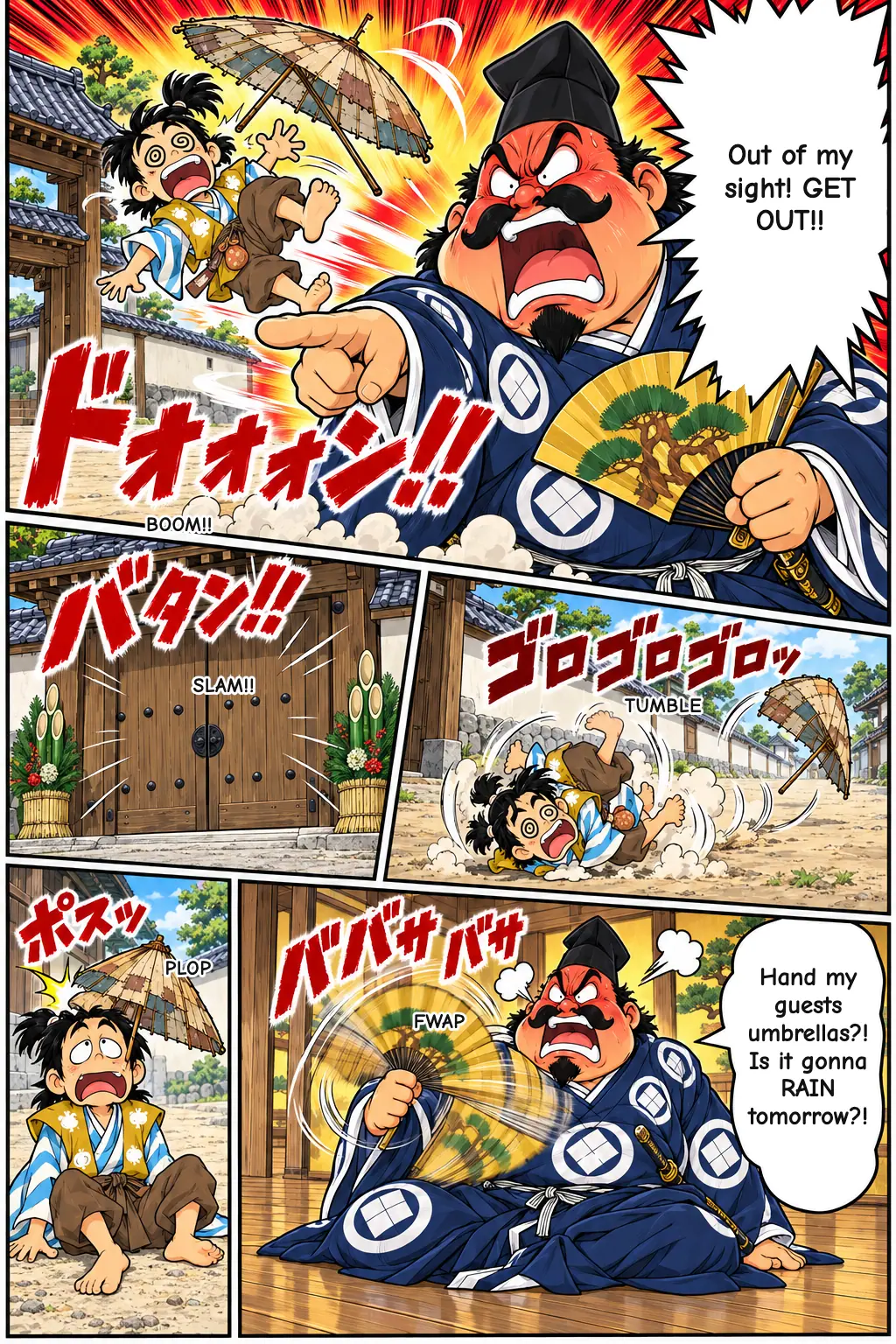
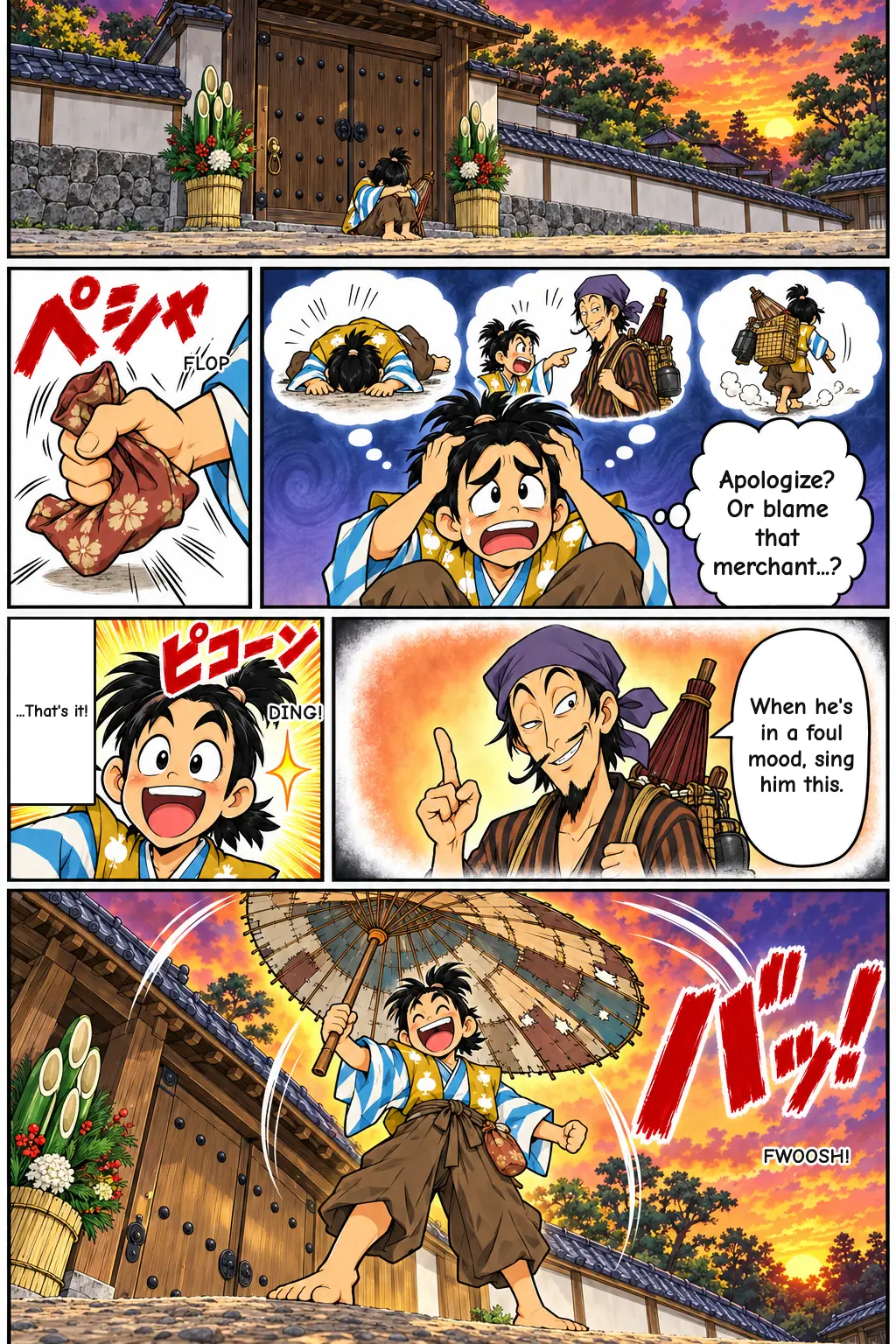
Taro Kaja is sent to the capital to buy a "suehirogari," without knowing it means a folding fan. A smooth-talking swindler sells him a battered old umbrella for a fortune, and the Daimyo explodes. Thrown out of the house, Taro Kaja makes one last move with the song the swindler taught him.
Bookmark the series page so you can jump back in when the next episode is out: KYOGENRSS for this series
Get new episodes in your feed. Follow us on:ThreadsBluesky
Story summary
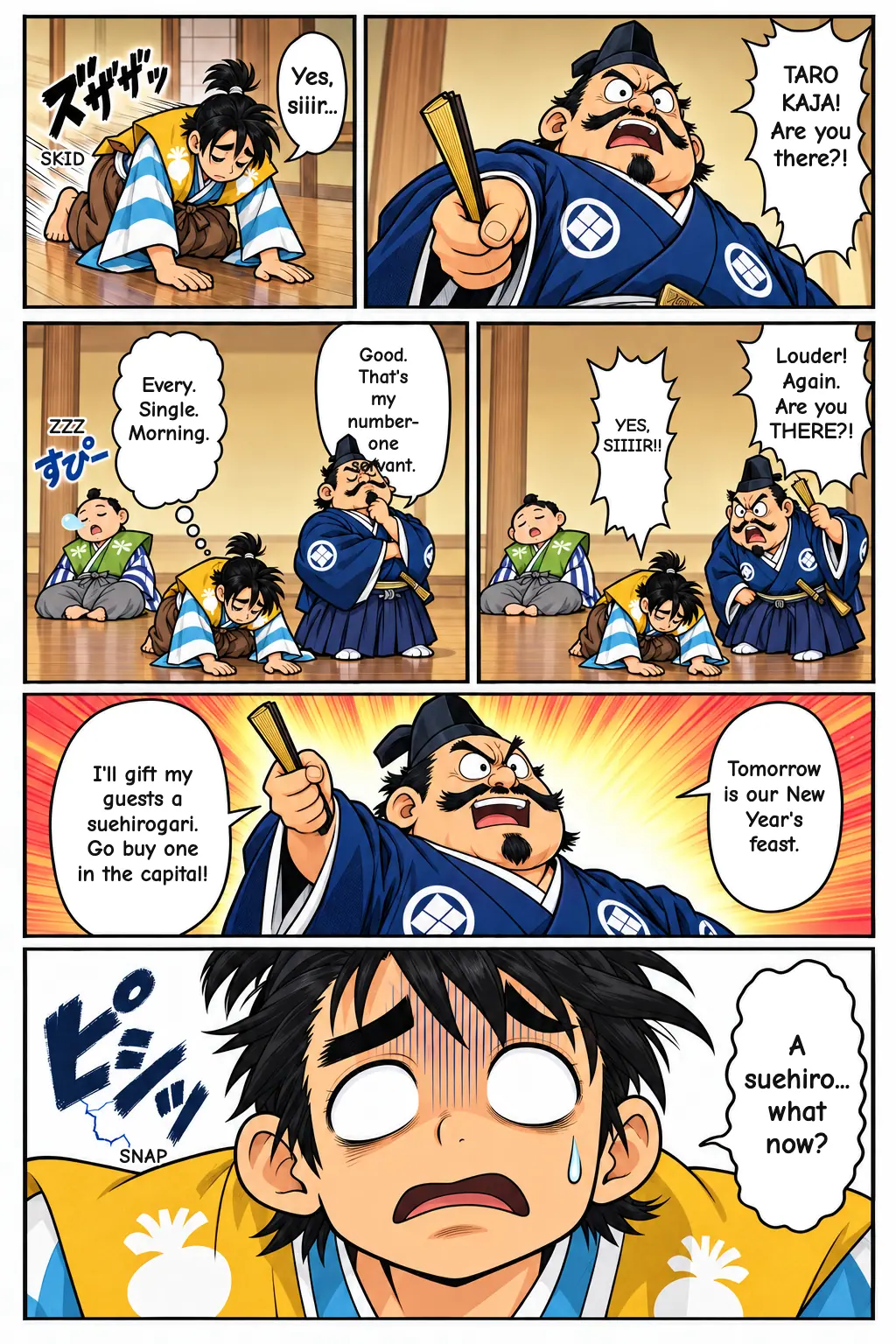
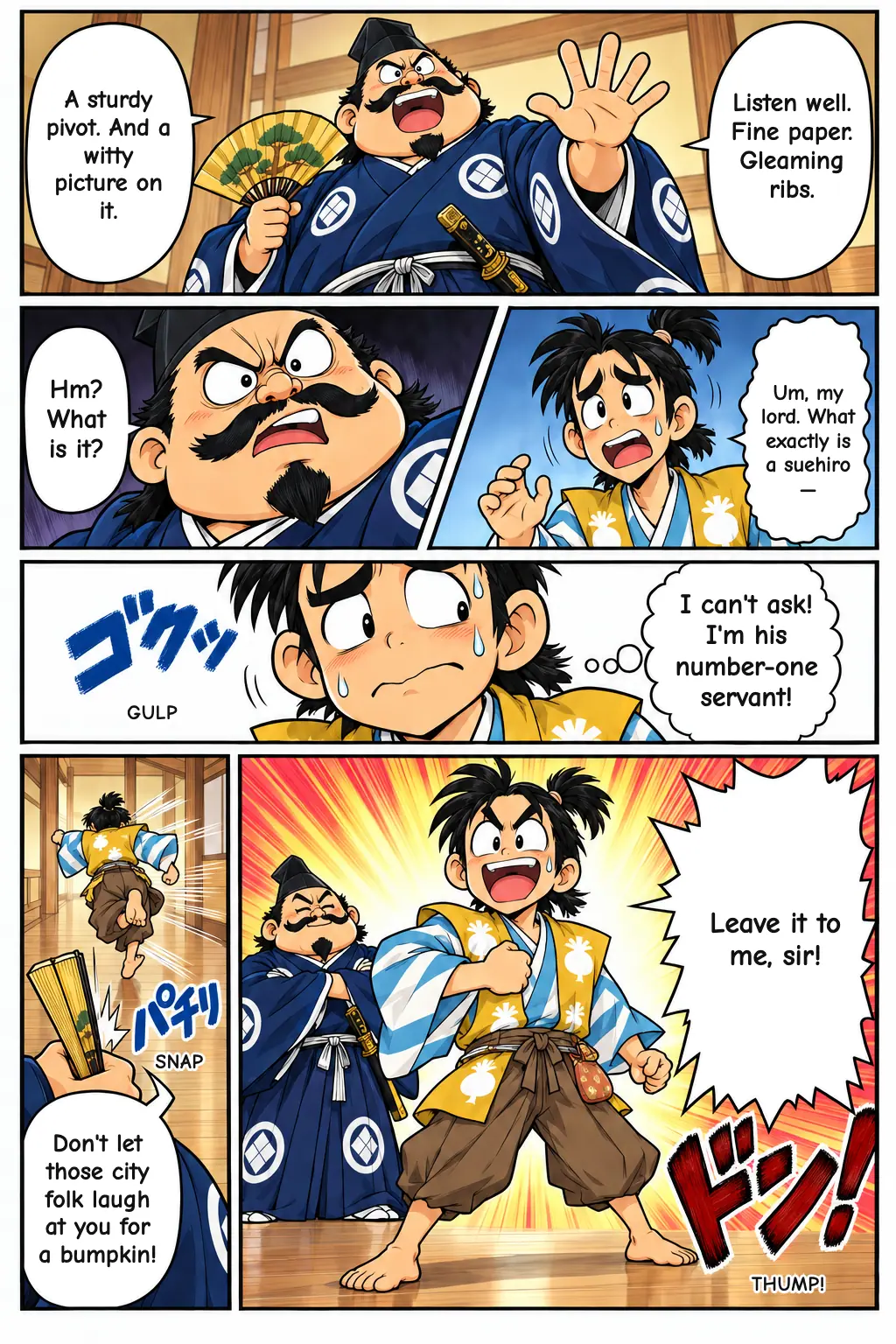
The play begins with a kahōmono, a rich and fortunate man, preparing for a happy celebration. He wants a suehirogari to give his guests as a gift. The word literally means "widening toward the end," and it is a lucky name for a folding fan, which spreads open like a future that keeps growing brighter. He calls his servant, Taro Kaja, and orders him to go to the capital and buy one. He also tells him what a good one looks like: fine paper, polished ribs, a firm pivot rivet, and a playful picture painted on it. Taro Kaja has no idea what a suehirogari is, but he doesn't ask. He just sets off.
Suehirogari (The Fan) Kyogen Summary: Taro Kaja Buys an Umbrella
In short: Suehirogari is a classic kyogen comedy. A wealthy master sends his servant Taro Kaja to the capital to buy a "suehirogari," which is a folding fan. Taro Kaja doesn't know what the word means, so a swindler sells him an old umbrella instead. The master throws him out, but Taro Kaja wins him back with a festive song the swindler taught him. The play belongs to the Okura and Izumi schools of kyogen and is recorded in the Okura Toraaki script.
The Original Story of Suehirogari
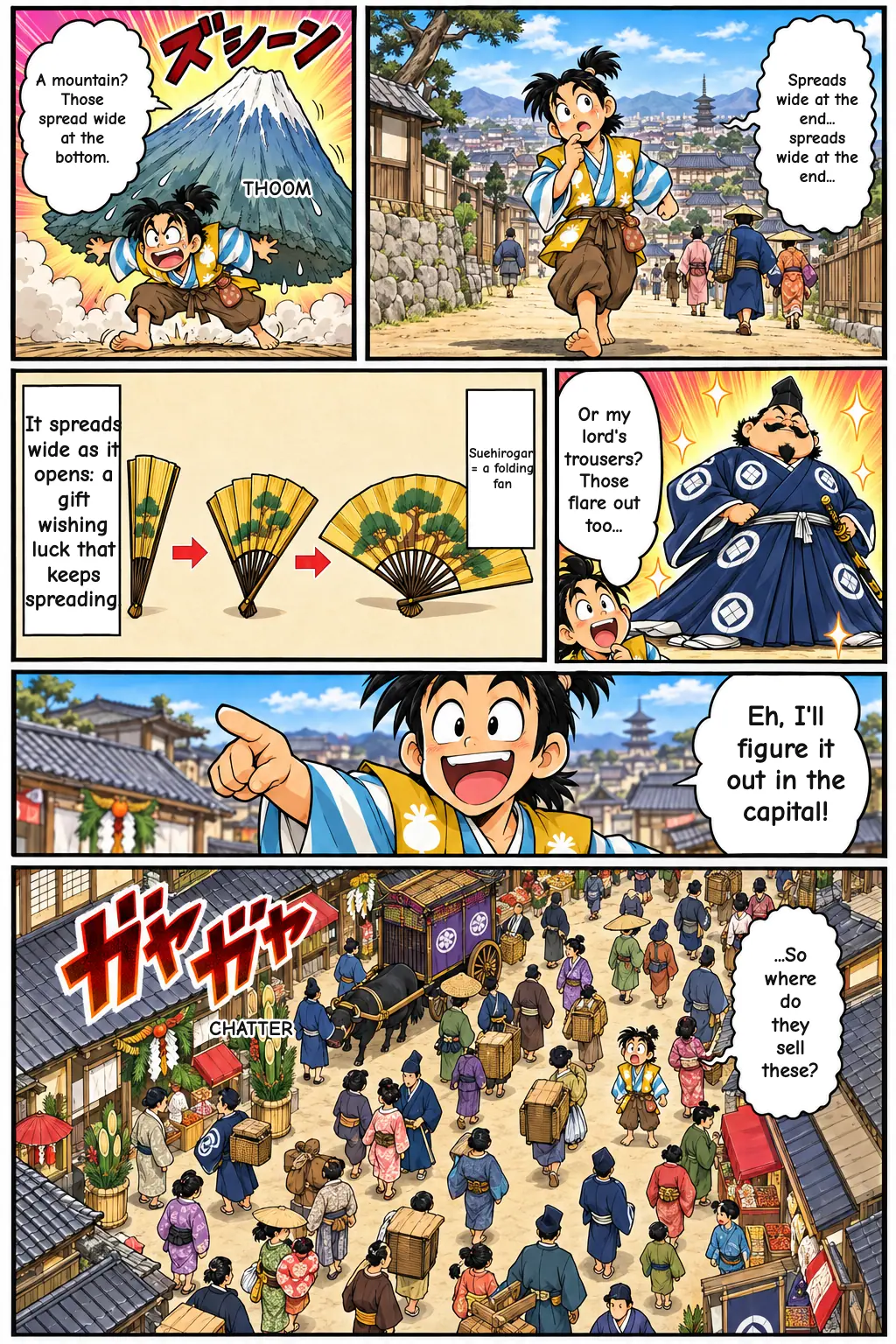
The play begins with a kahōmono, a rich and fortunate man, preparing for a happy celebration. He wants a suehirogari to give his guests as a gift. The word literally means "widening toward the end," and it is a lucky name for a folding fan, which spreads open like a future that keeps growing brighter.
He calls his servant, Taro Kaja, and orders him to go to the capital and buy one. He also tells him what a good one looks like: fine paper, polished ribs, a firm pivot rivet, and a playful picture painted on it. Taro Kaja has no idea what a suehirogari is, but he doesn't ask. He just sets off.
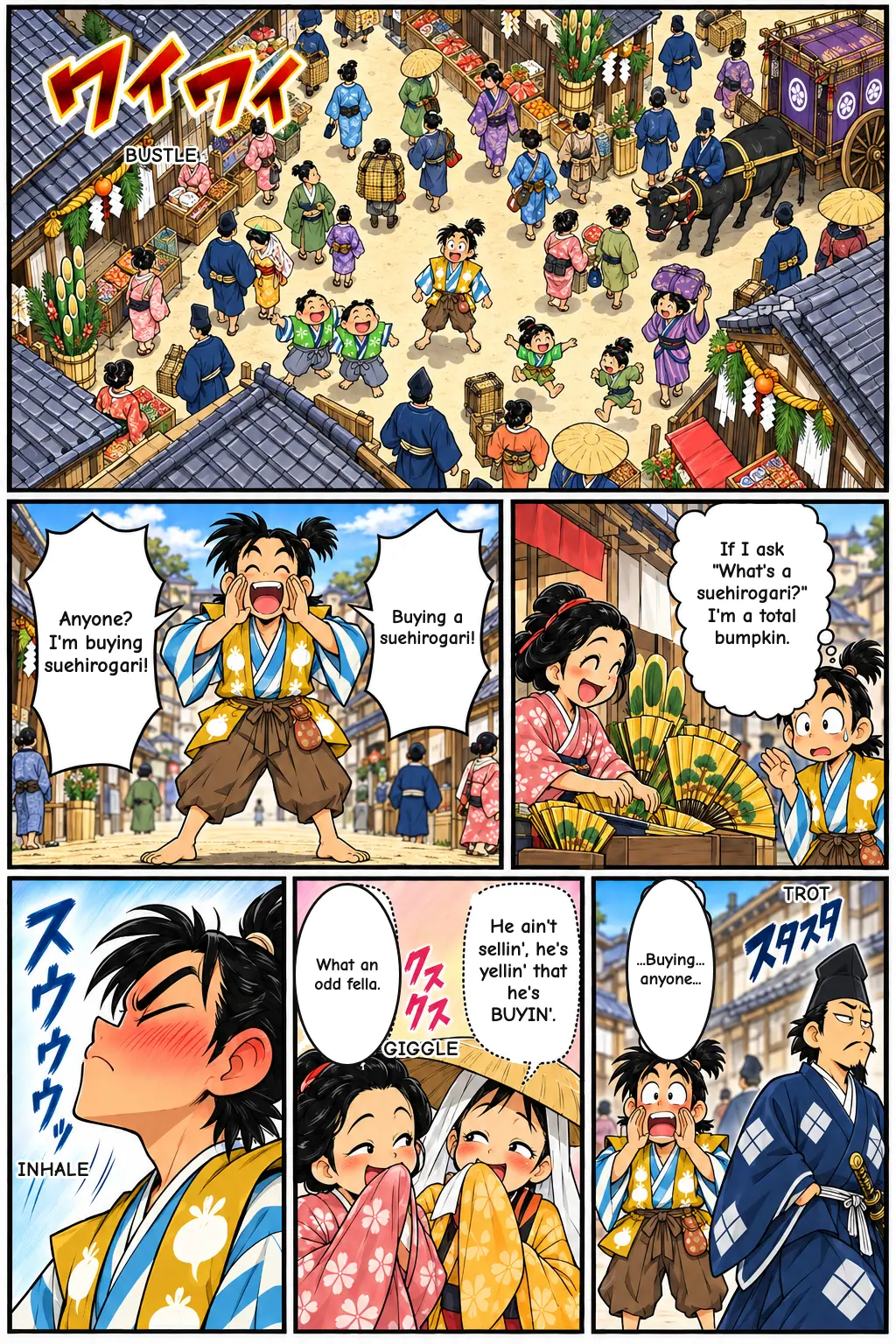
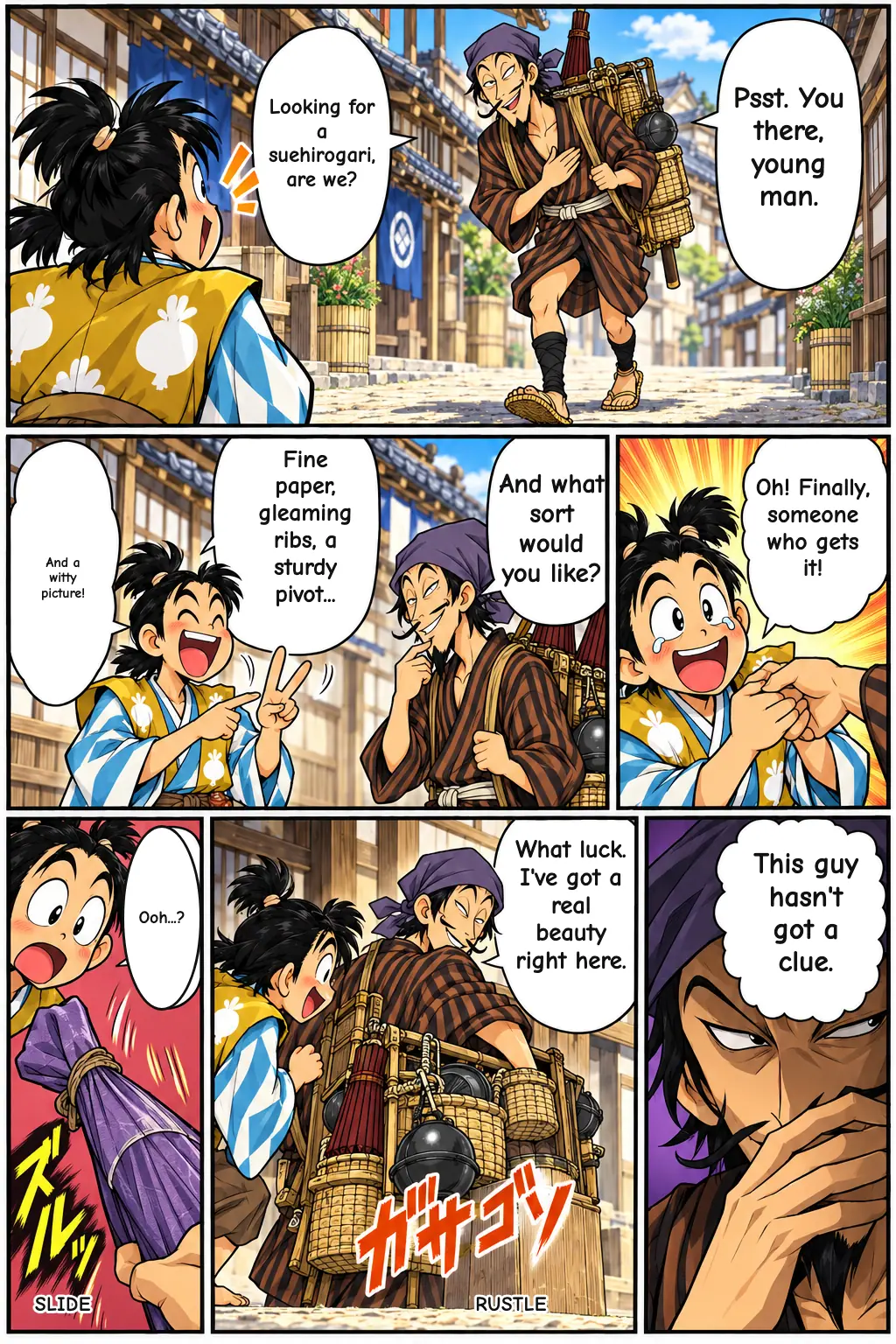
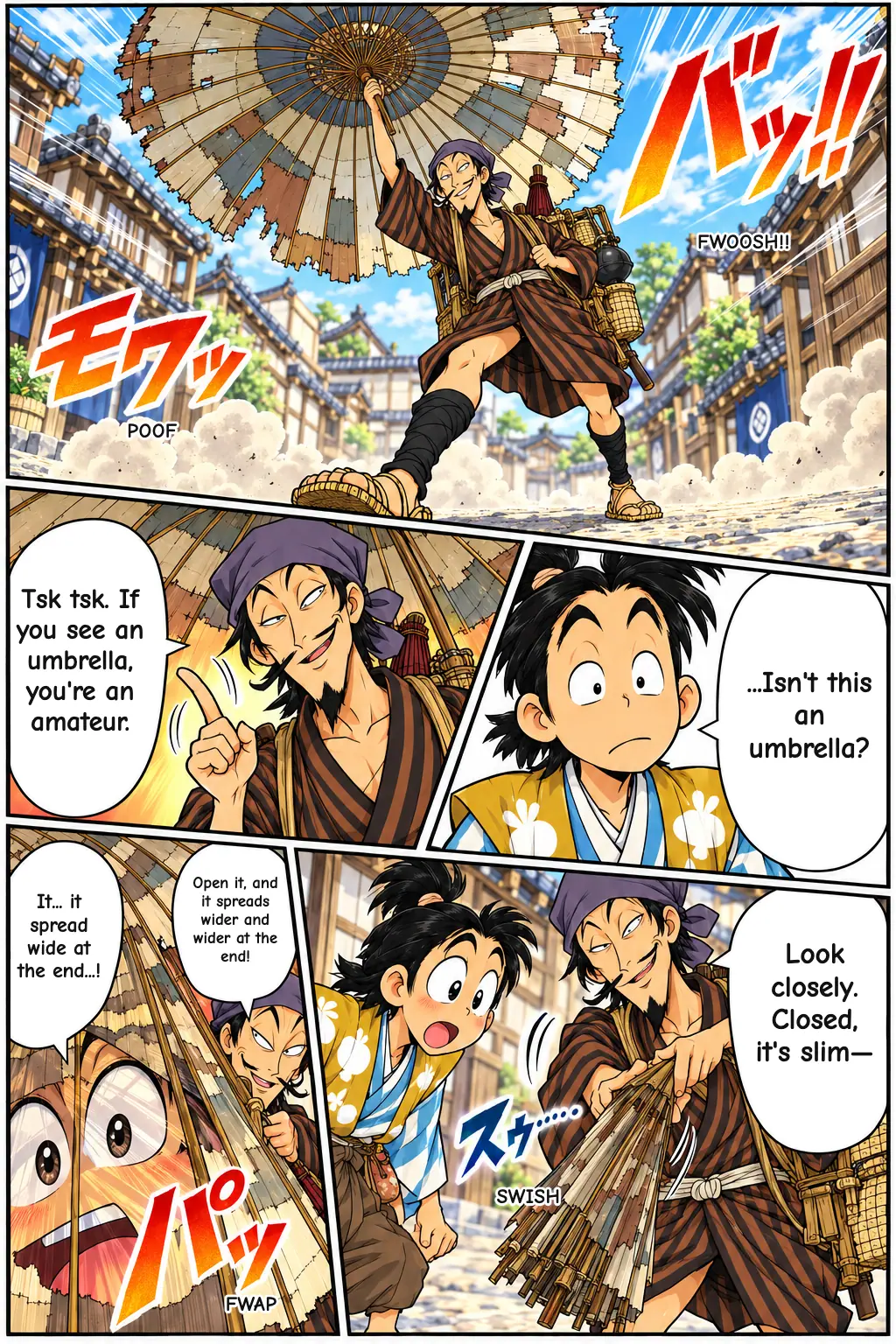
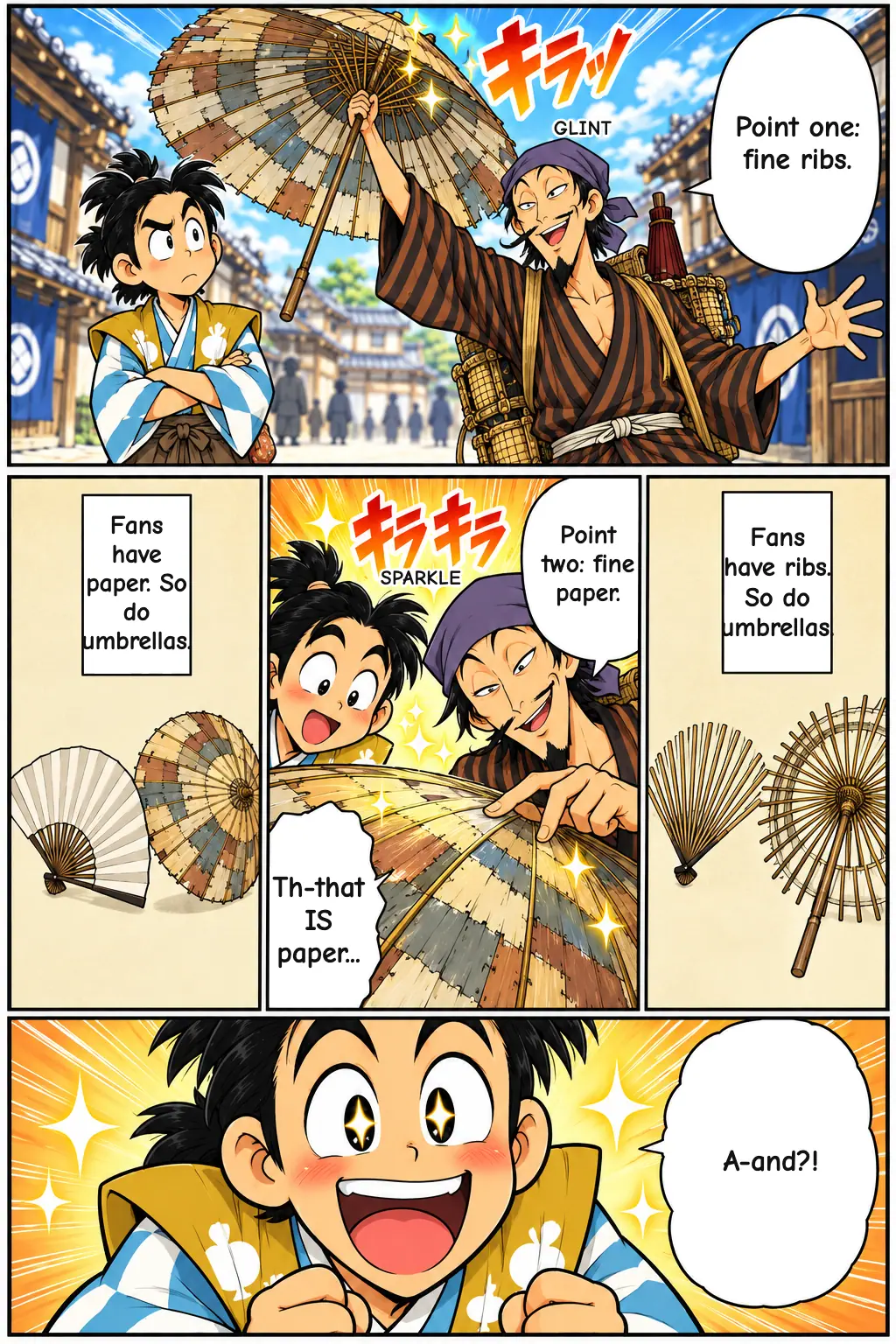
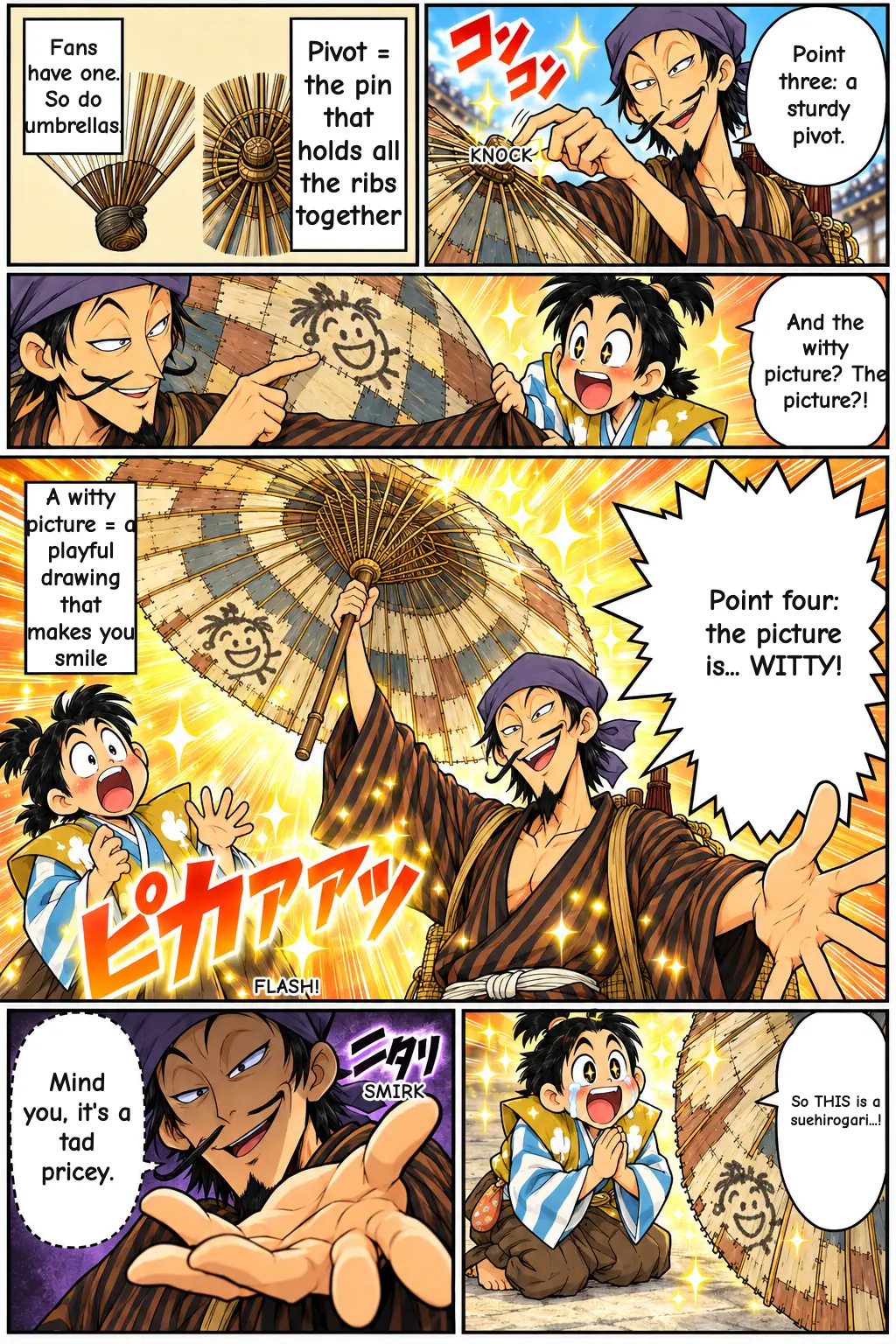
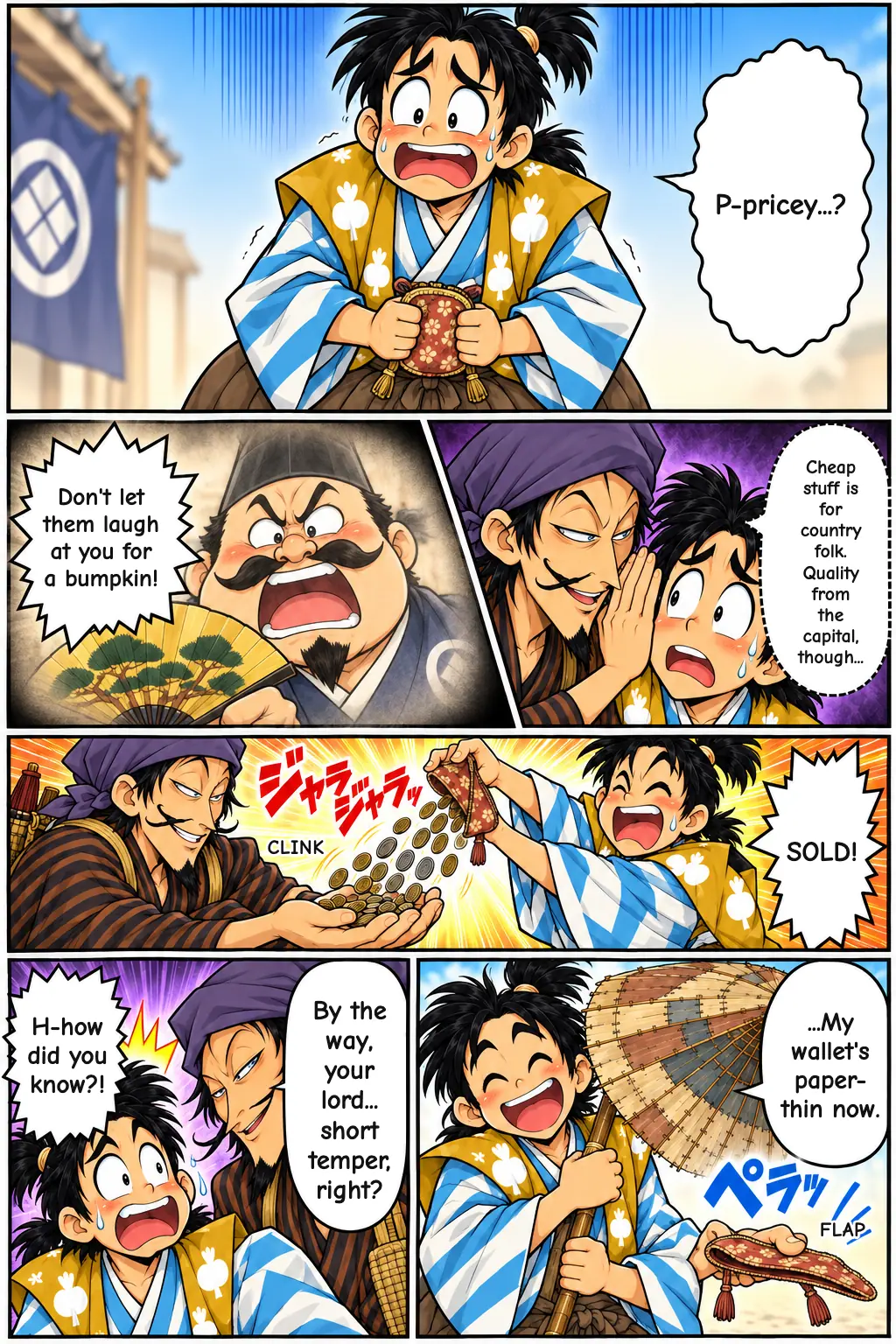
In the capital he has no idea which shop sells such a thing, so he walks the streets shouting that he wants to buy a suehirogari. That's backwards, because in old Japan it was sellers, not buyers, who called out in the street. A suppa, a city con man, spots an easy mark. Taro Kaja happily repeats every one of his master's instructions, and the swindler pulls out an old umbrella. One by one, he twists each requirement to fit it: it opens wider toward the end, it has paper, ribs, a center joint, and so on. Taro Kaja is convinced and pays the swindler's high price.
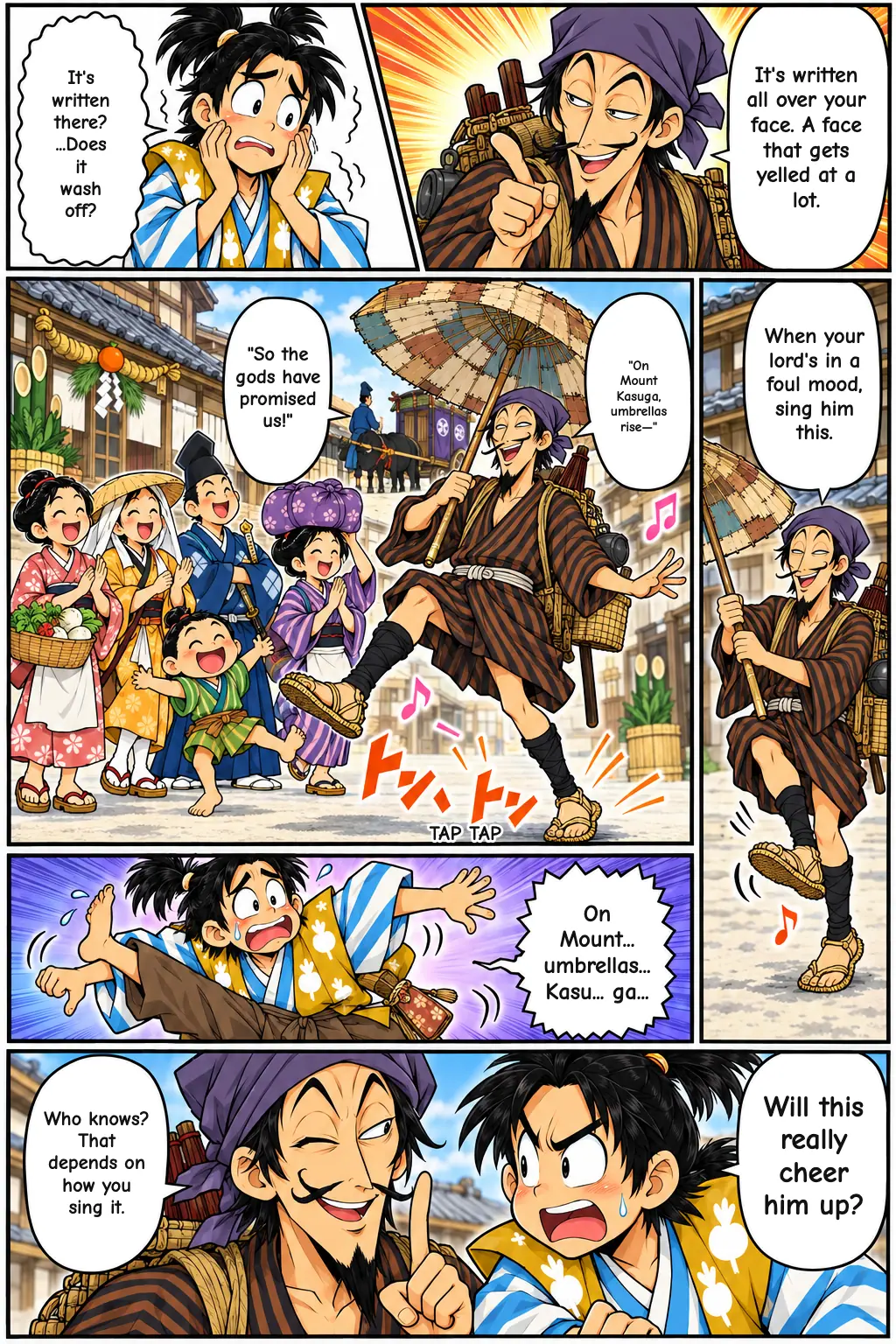
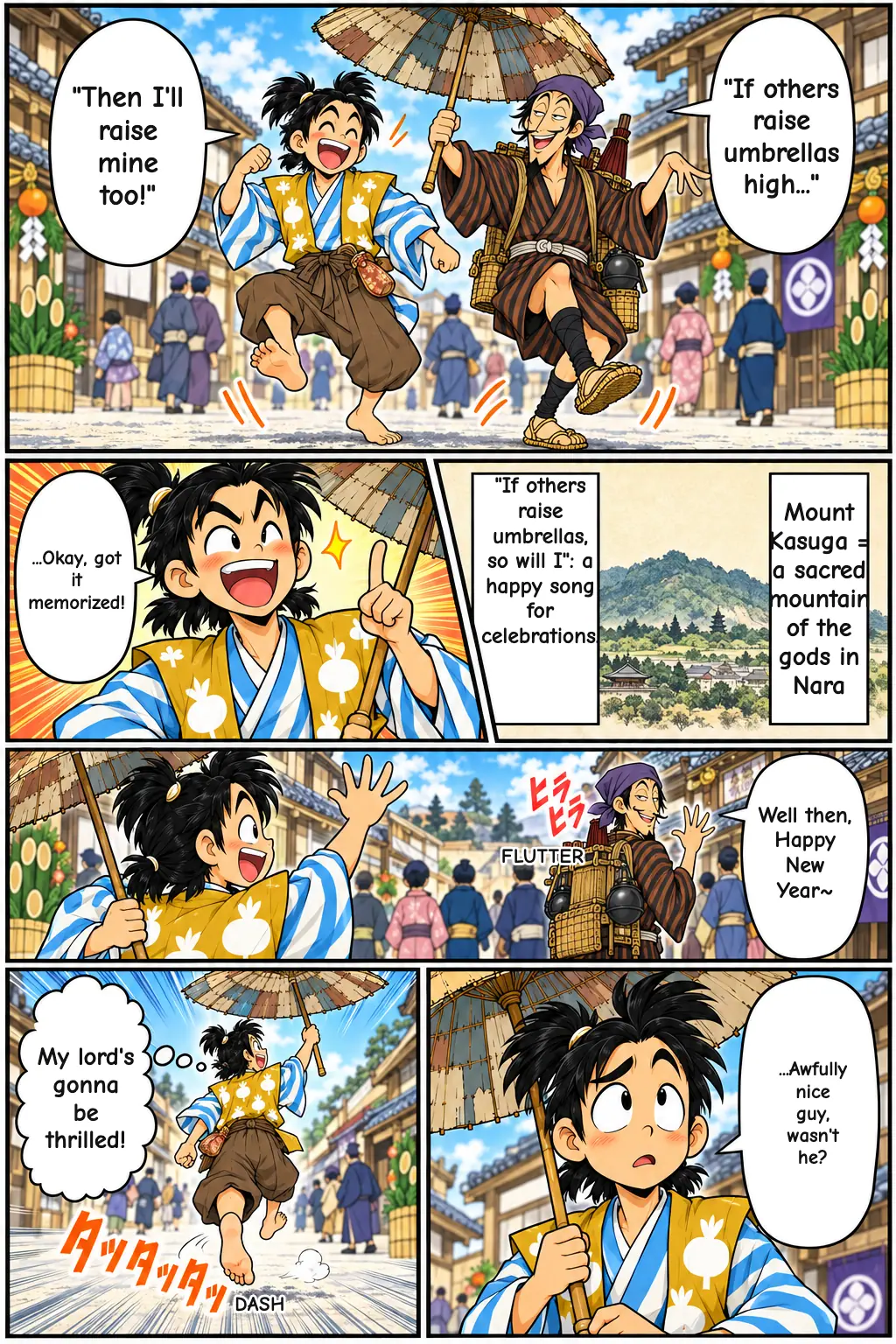
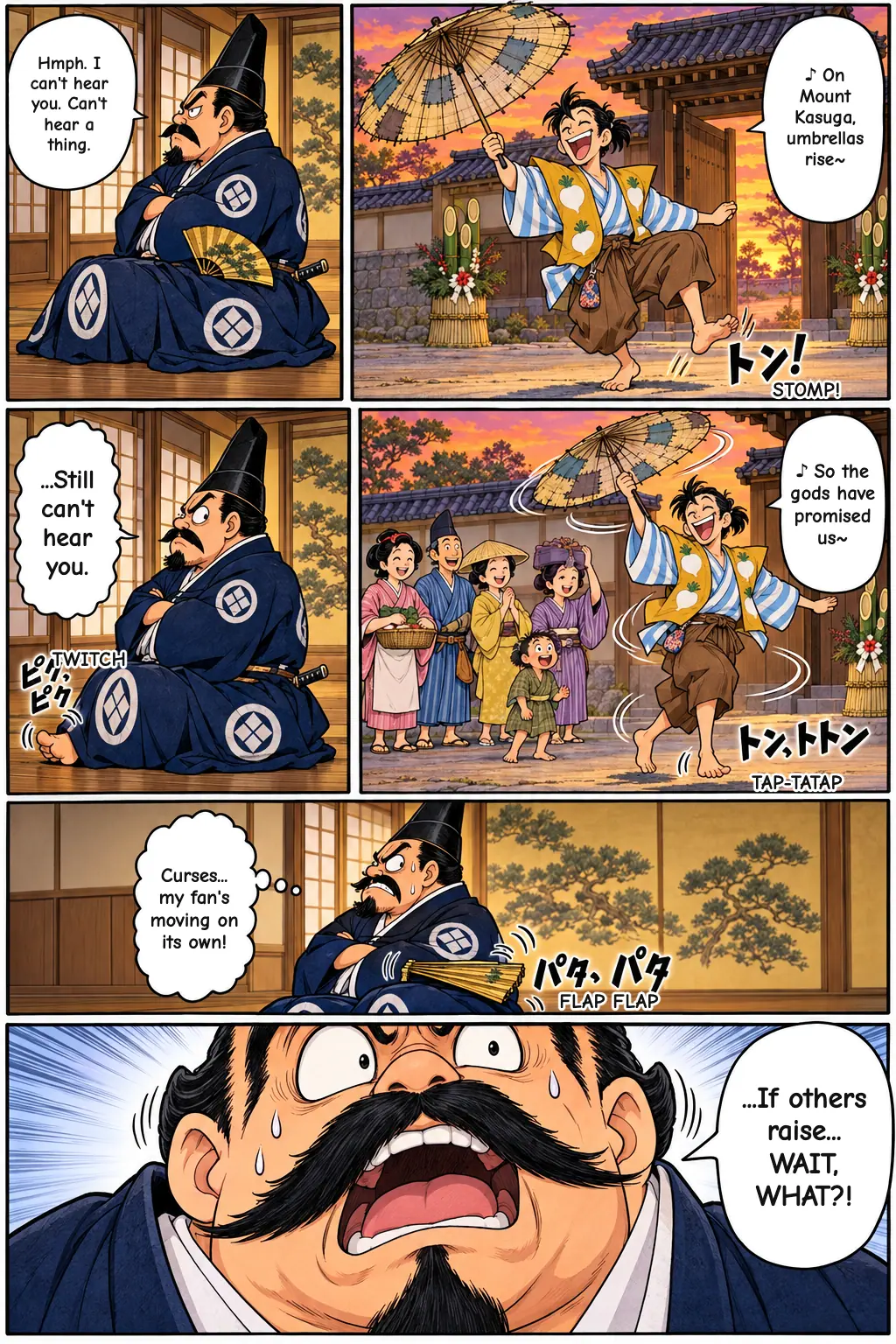
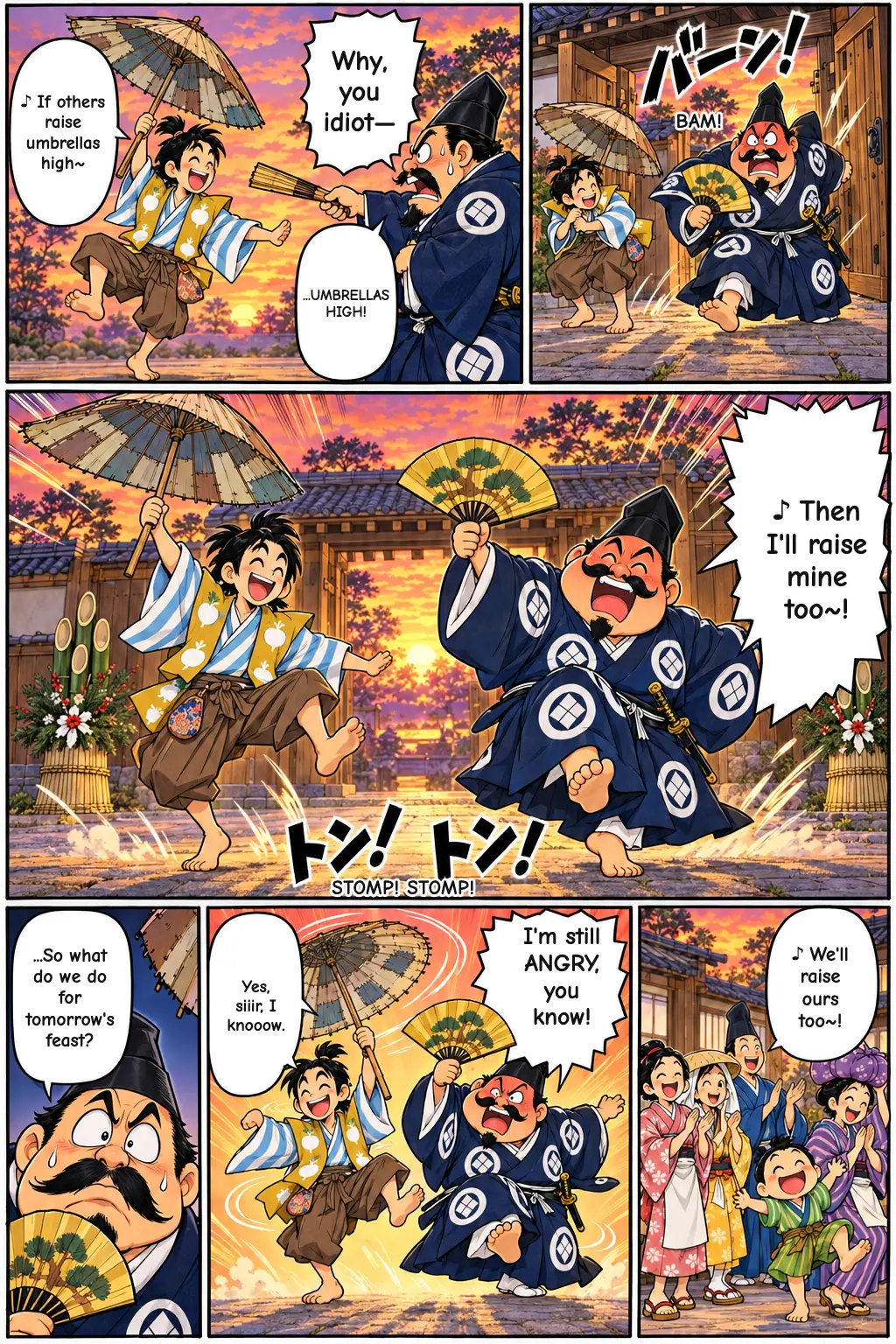
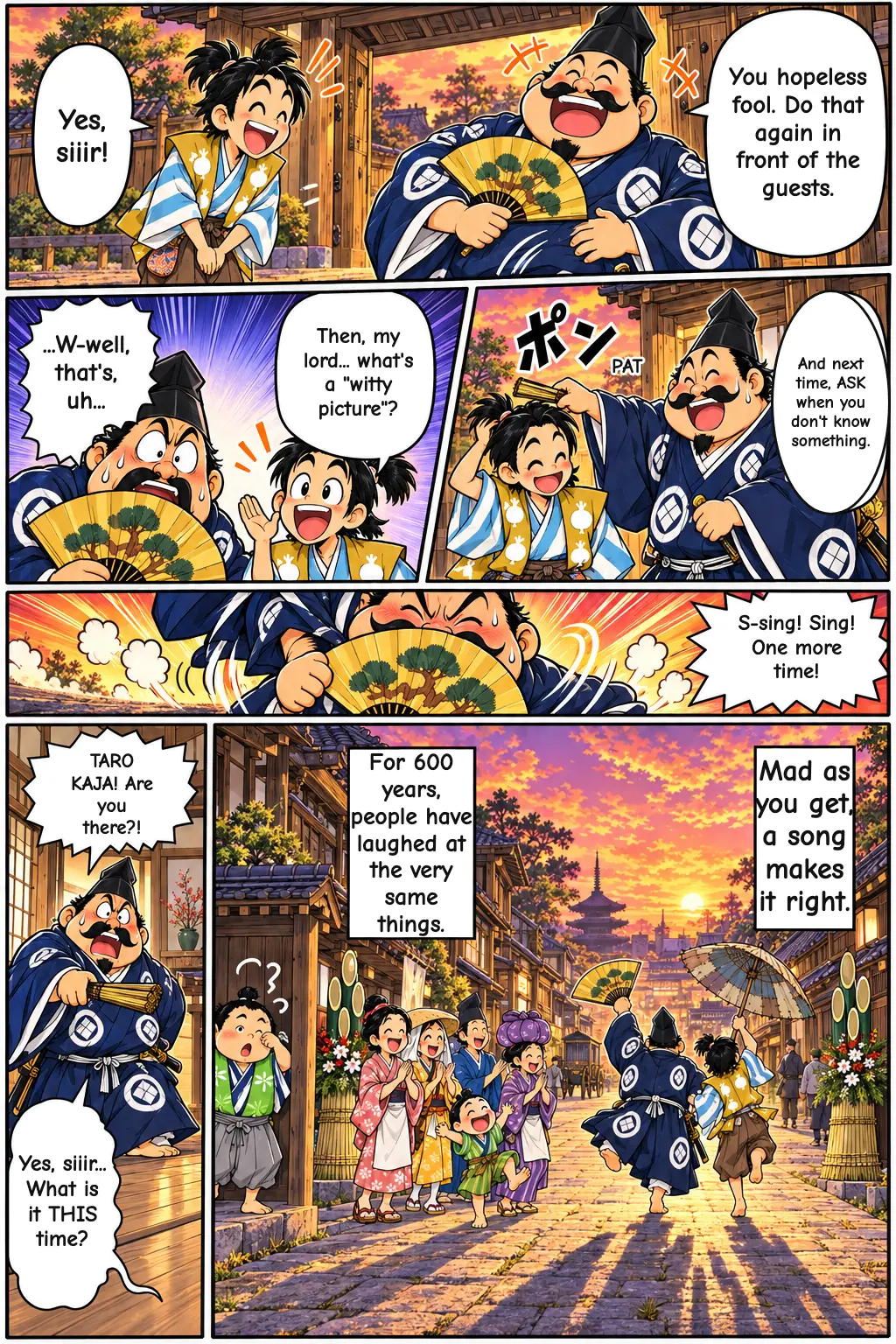
As a parting gift, the swindler warns him that his master is probably short-tempered and teaches him a festive song about holding up an umbrella on Kasuga Mountain, to sing if the master gets angry. At home, Taro Kaja proudly presents the umbrella and explains it with the swindler's logic. The master explodes: a suehirogari is a fan! He drives Taro Kaja away. Then Taro Kaja remembers the song. He opens the umbrella, sings, and dances. Little by little the master gets caught up in the rhythm, joins in, and forgives him, and the two leave the stage singing together.
Main Characters
Taro Kaja is the main role (the shite). He's kind, careless, and far too trusting, but he's also cheerful and quick enough to save himself with a song. He is the most famous stock character in kyogen and shows up in many different plays.
The master is a kahōmono, a man blessed with wealth and good fortune. He loses his temper fast and forgives just as fast, and in the end he can't resist a good festive tune. The suppa is a smooth-talking swindler who preys on country visitors. Even so, his gift of the song gives him a strangely likable side.
What the Play Tells Us: Kyogen and Its World
Kyogen is Japan's classical comic theater. It grew up alongside the solemn masked drama Noh, and the two were traditionally performed on the same program. Where Noh deals with ghosts, gods, and tragedy, kyogen laughs at ordinary people: servants, masters, monks, and con men.
Suehirogari is classed as a waki-kyogen, a celebratory piece with an auspicious tone. That's why the play ends in joy instead of punishment. The fan is a symbol of growing prosperity, and the closing song and dance turn a mistake into a celebration. The comedy also plays on a gap between city and country: the big capital is full of tricksters, and the visitor from outside is easily fooled. The stage itself is almost bare, so the audience pictures the busy streets entirely through the actors' words and movements.
What the Manga Changes
The manga follows the main events of the play: the order, the confusion over the word, the swindler's tricks with the umbrella, the master's anger, and the song that brings everyone back together. Some details have been changed or added for the comic format.
In the original the master is a kahōmono, a fortunate rich man. In the manga he is a Daimyo, a feudal lord staying in the capital, and he wants the fan as a New Year gift. This setup was chosen to open the series; the original only speaks of a happy celebration and doesn't clearly tie it to New Year. The manga also adds opening panels that show off the lord's vanity and Taro Kaja's clumsiness, scenes of passersby laughing at him as he wanders the city, detailed drawings of shops and crowds, and an expressive look at the swindler's sales pitch and the battered umbrella. The steps of the master's anger, his slow slide into good humor, and the final umbrella dance are drawn freely. They are not copies of the actual stage movements, which follow fixed traditional forms.
Where to Read It
If you'd like to see Taro Kaja's shopping disaster and his musical comeback scene by scene, read Episode 1 of KYOGEN: Japan's 600-Year-Old Comedy here on Manga Portal. Every episode is free to read, and you don't need to sign up. It's a light, quick way into a comic tradition that has been making Japanese audiences laugh for centuries.
Characters in this episode
Taro Kaja
A good-natured but careless servant who buys an umbrella instead of a fan, then sings his way back into his master's good graces.
The Master (Kahōmono)
A wealthy, fortunate man who wants a fan as a festive gift, loses his temper over the mistake, and is won over by a song.
The Suppa (Swindler)
A smooth-talking city con man who passes off an old umbrella as a suehirogari and teaches Taro Kaja a festive song.
The Daimyo (manga version)
In the manga, the master becomes a vain feudal lord staying in the capital, an adaptation made for the series' first episode.
FAQ
What is Suehirogari about?
Suehirogari is a kyogen comedy about a servant, Taro Kaja, who is sent to buy a folding fan without knowing what the word means. A swindler sells him an old umbrella instead. He gets thrown out, then wins his master back with a song and dance.
What does "suehirogari" mean?
It means "widening toward the end." It is a lucky name for a folding fan, because a fan spreads open the way good fortune is hoped to grow over time.
Who is Taro Kaja?
Taro Kaja is the best-known stock character in kyogen: a servant who is cheerful, clumsy, and often in trouble with his master. He appears in many different kyogen plays.
What is the difference between kyogen and Noh?
Noh is a serious, masked dance-drama about gods, ghosts, and tragedy. Kyogen is its comic partner, with spoken dialogue about everyday people, and the two were traditionally performed on the same program.
How does Suehirogari end?
Taro Kaja opens the umbrella and sings the festive song the swindler taught him. His master can't resist joining in, forgives him, and the two leave the stage singing together.