Episode 2Too Proud to Ask, He Bathed in ClogsThe Goemon Bath
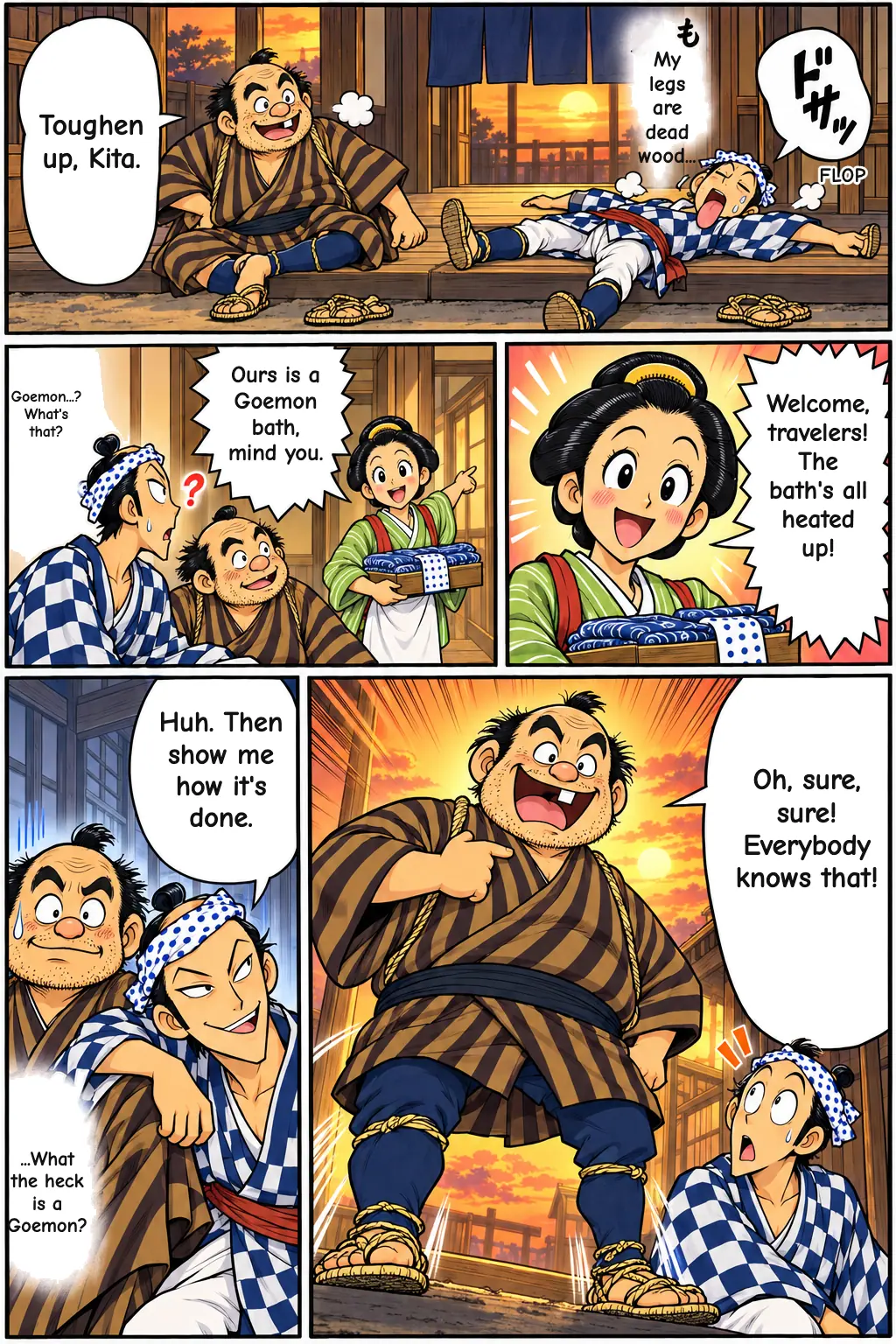
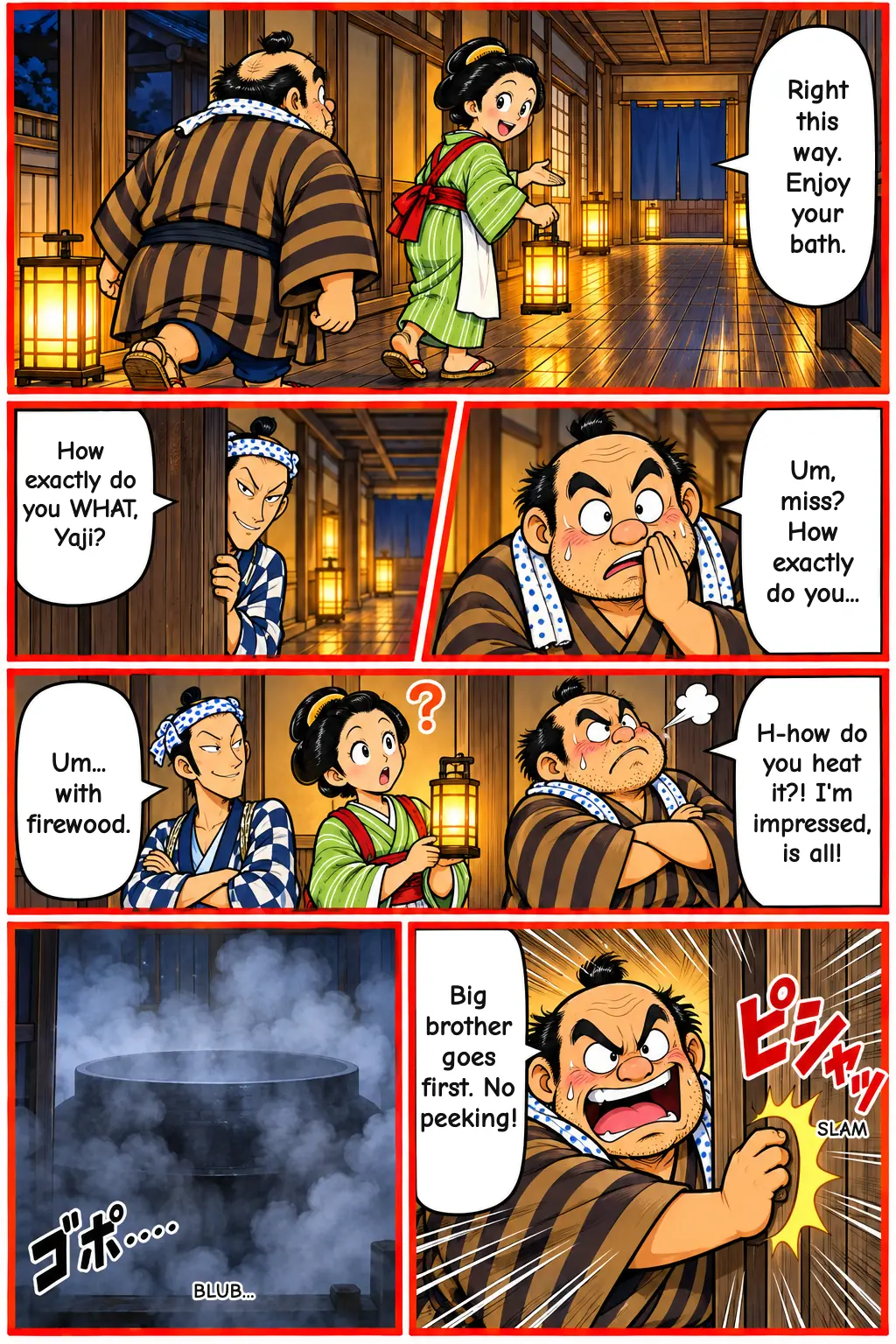
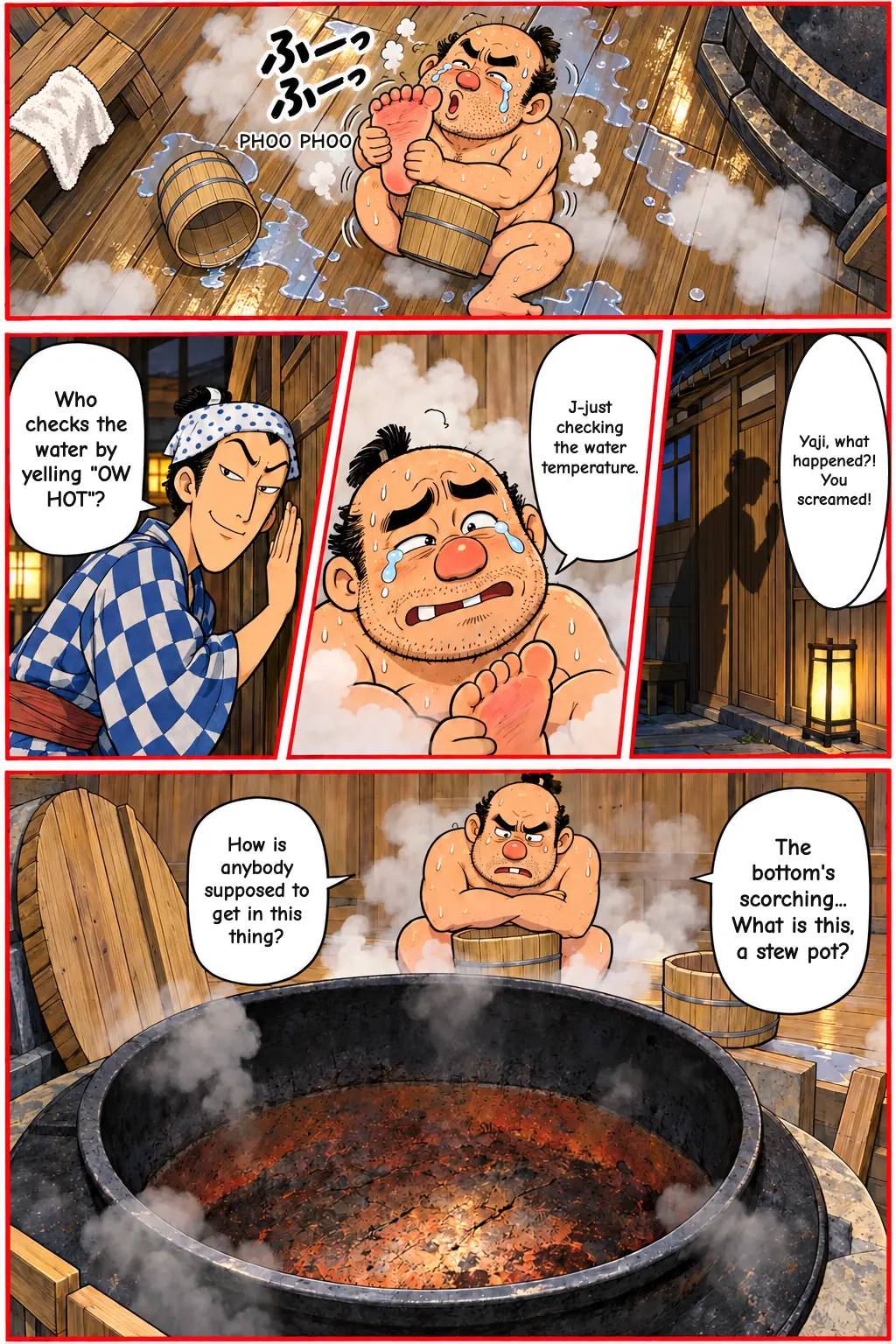
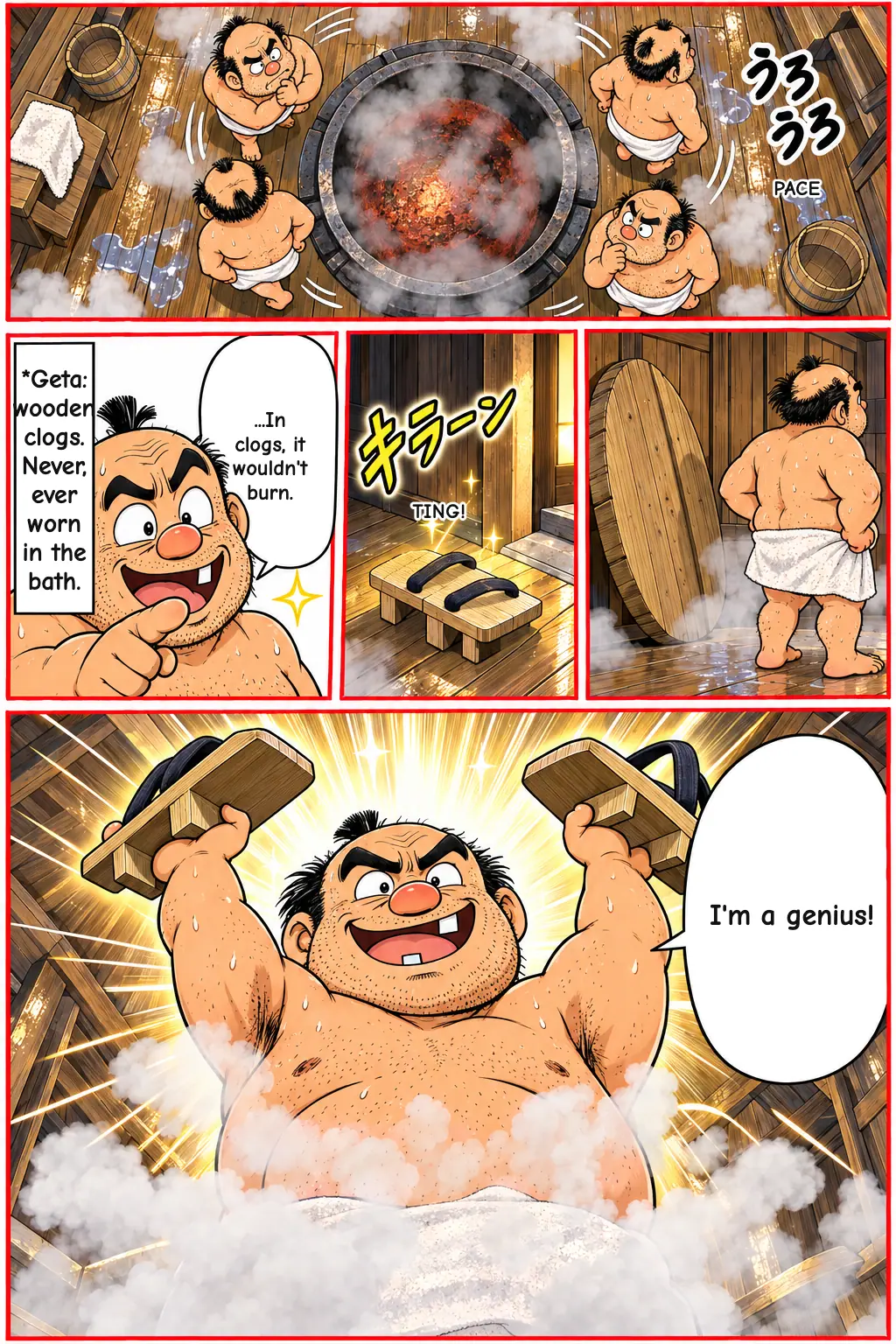
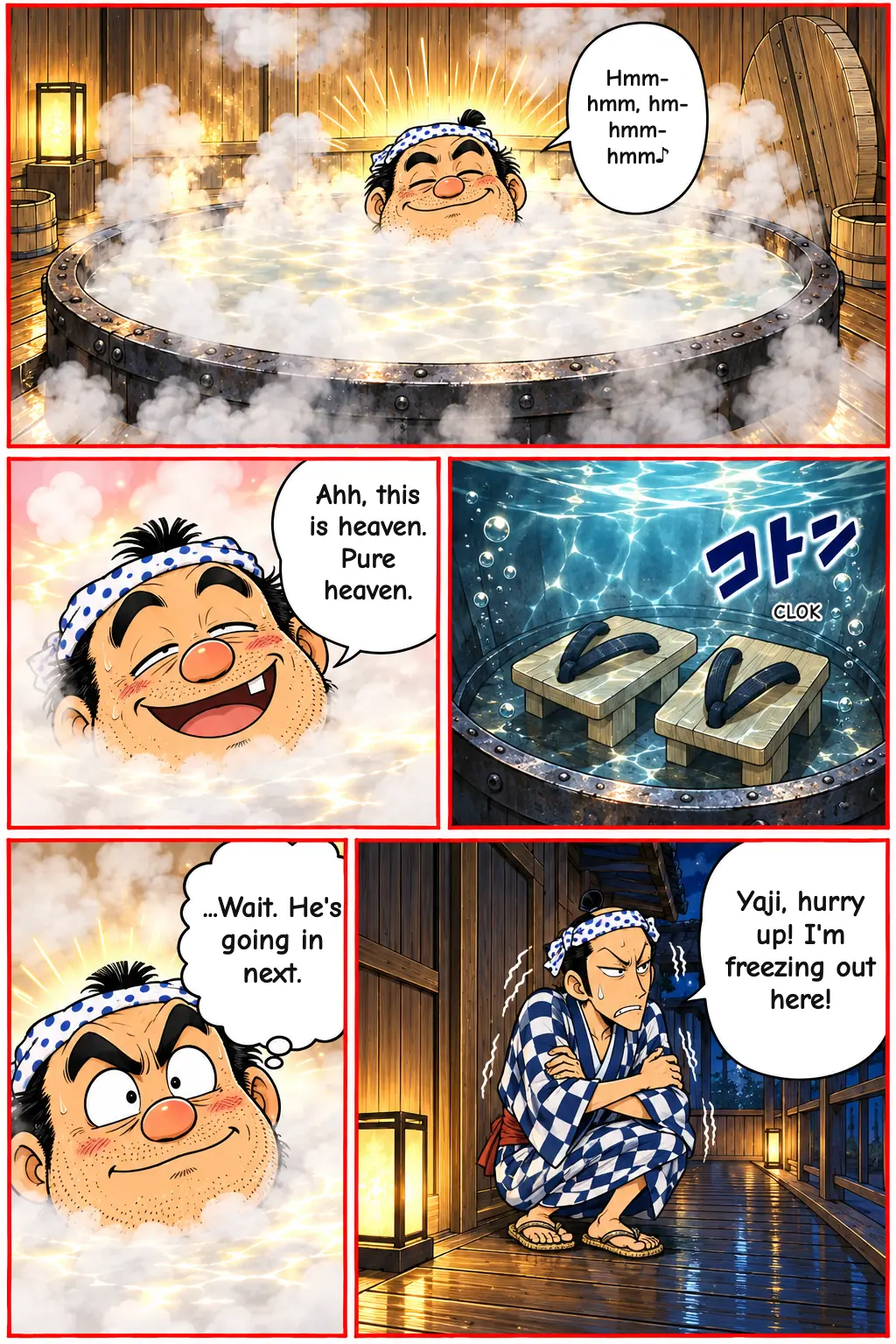
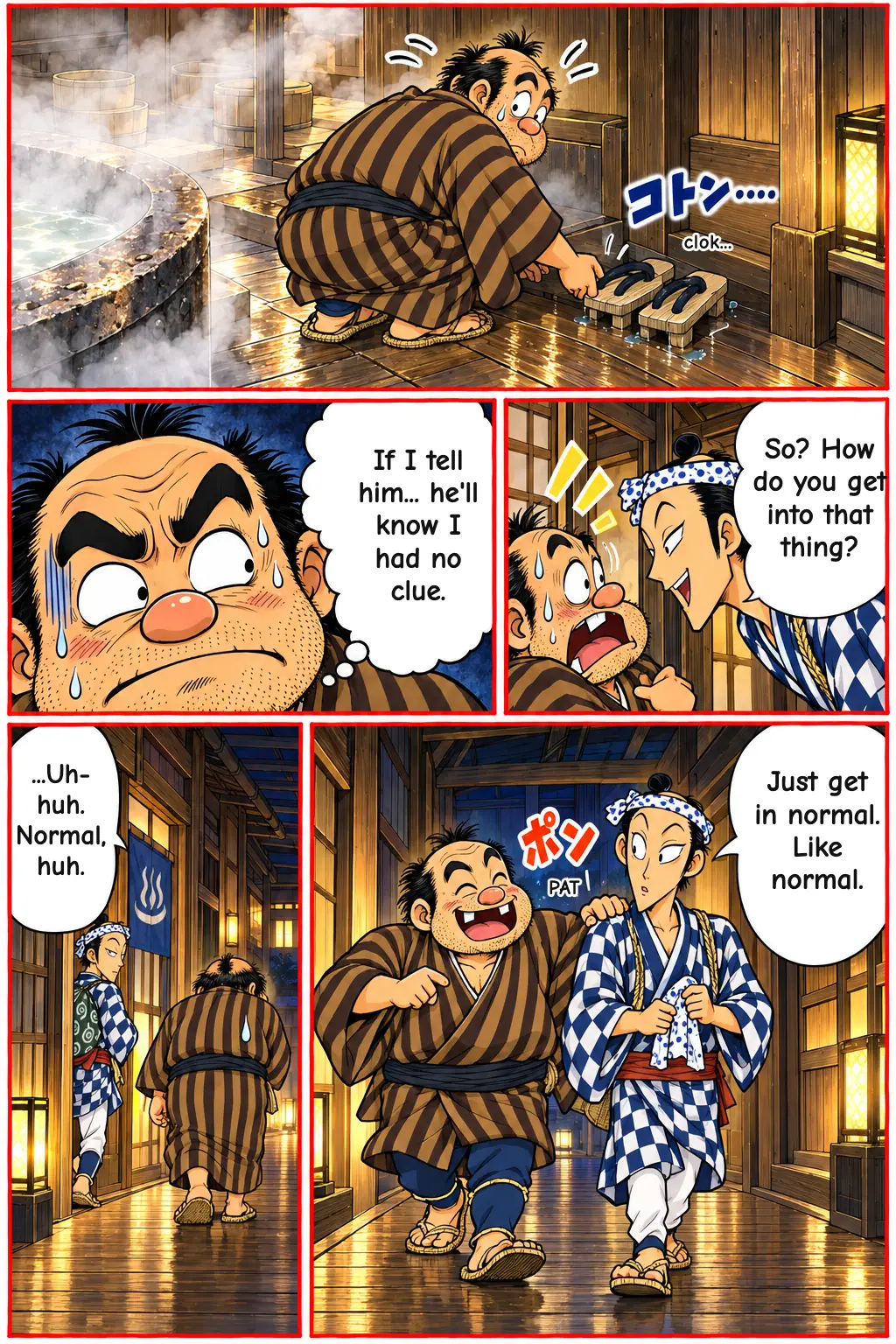
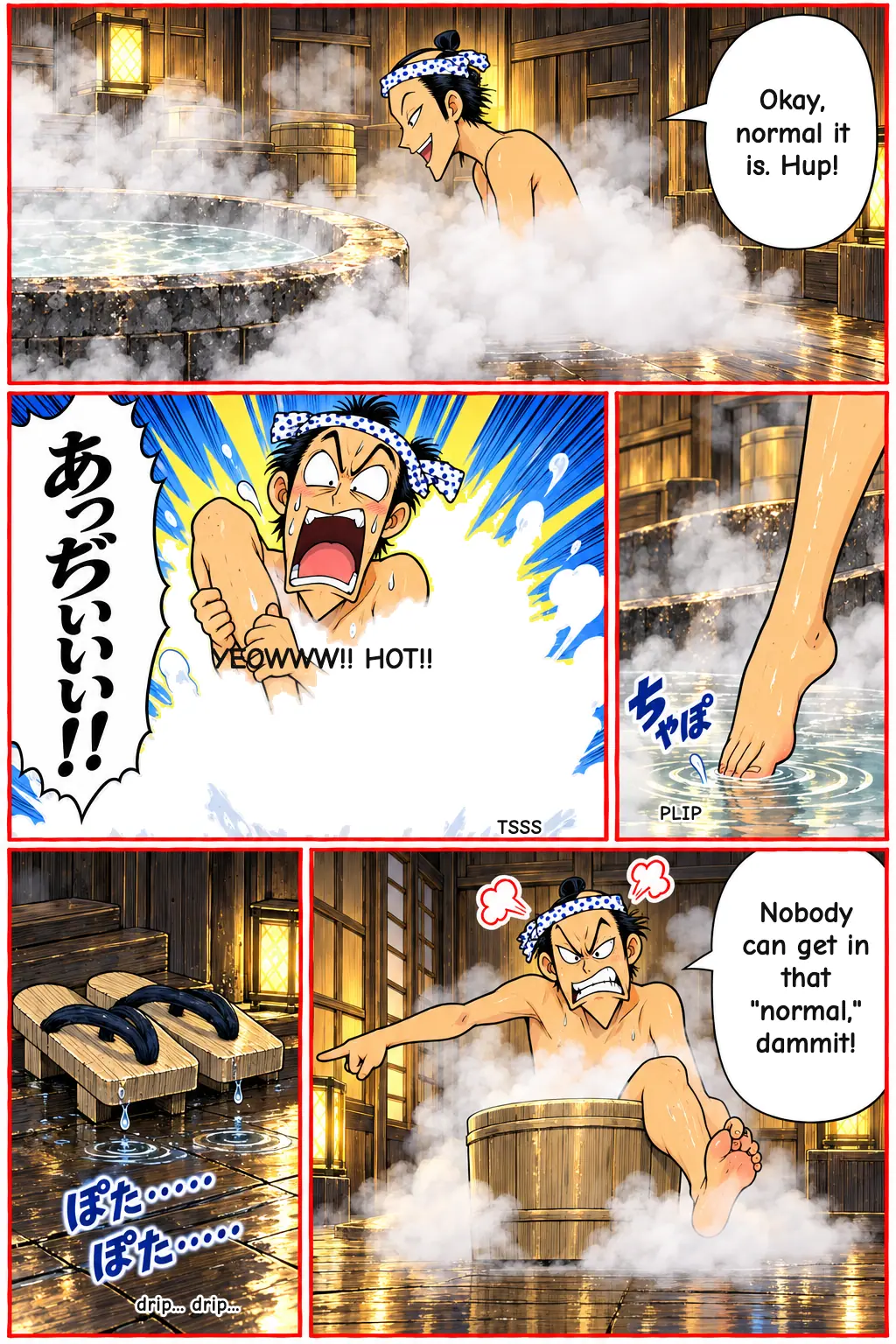
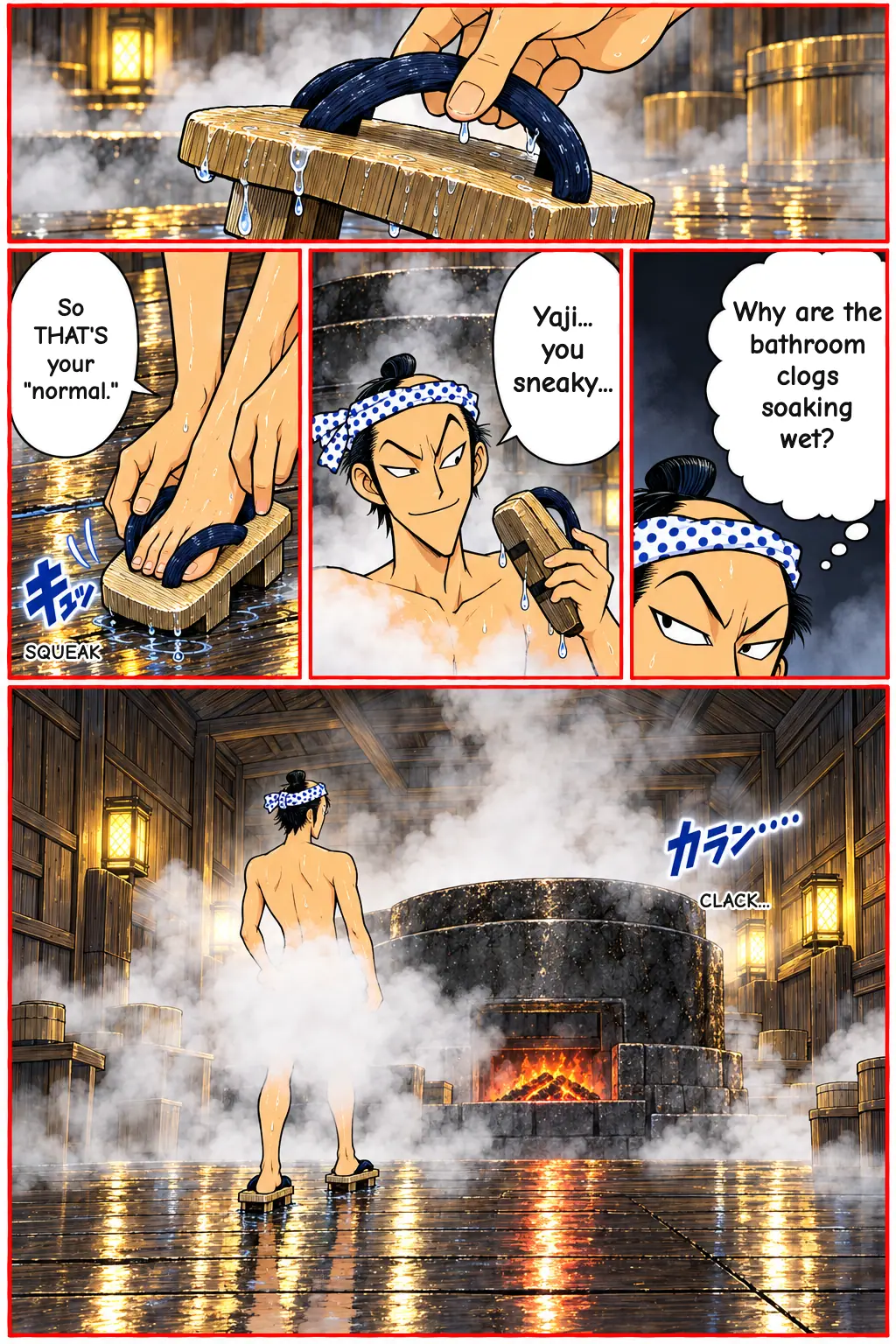
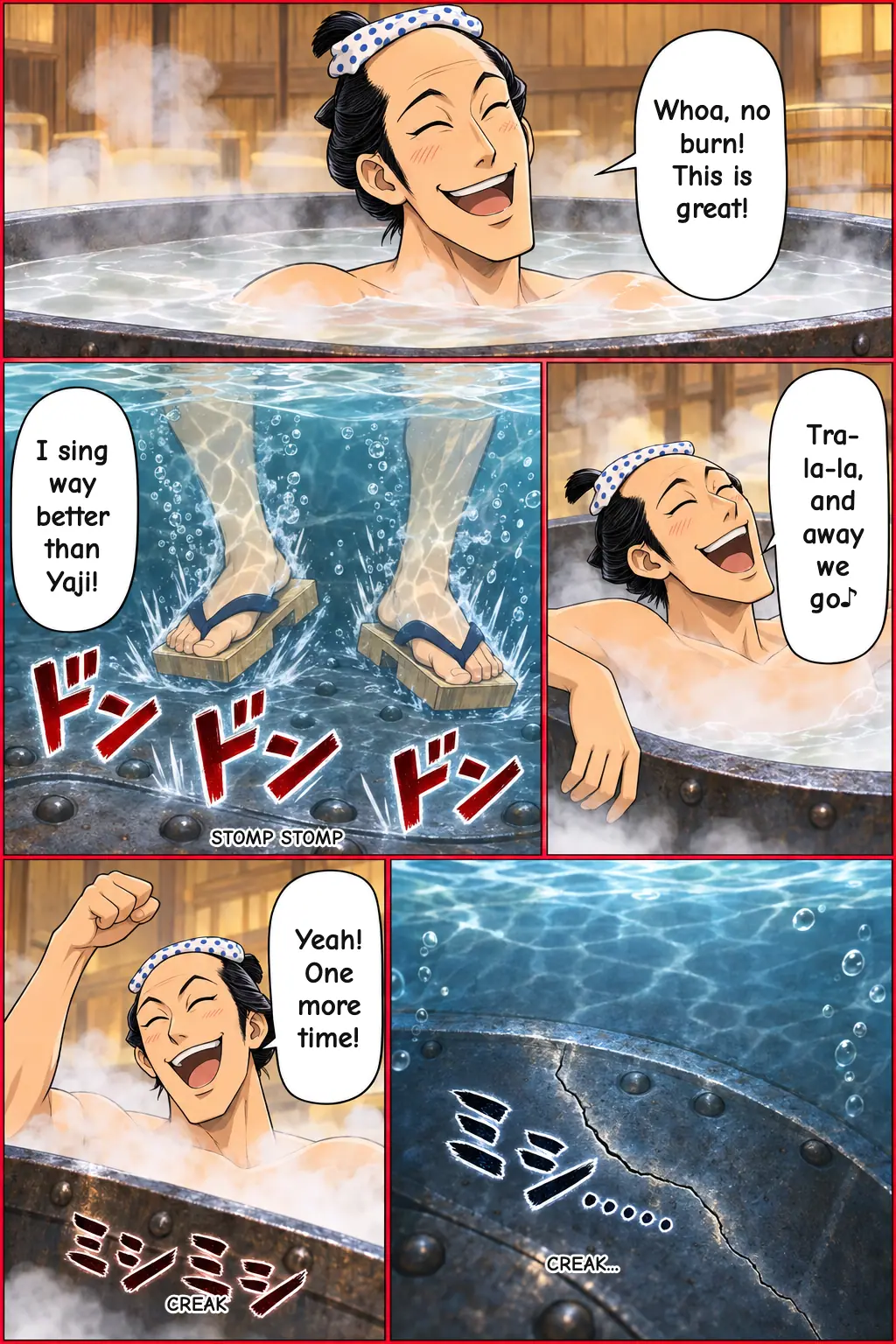
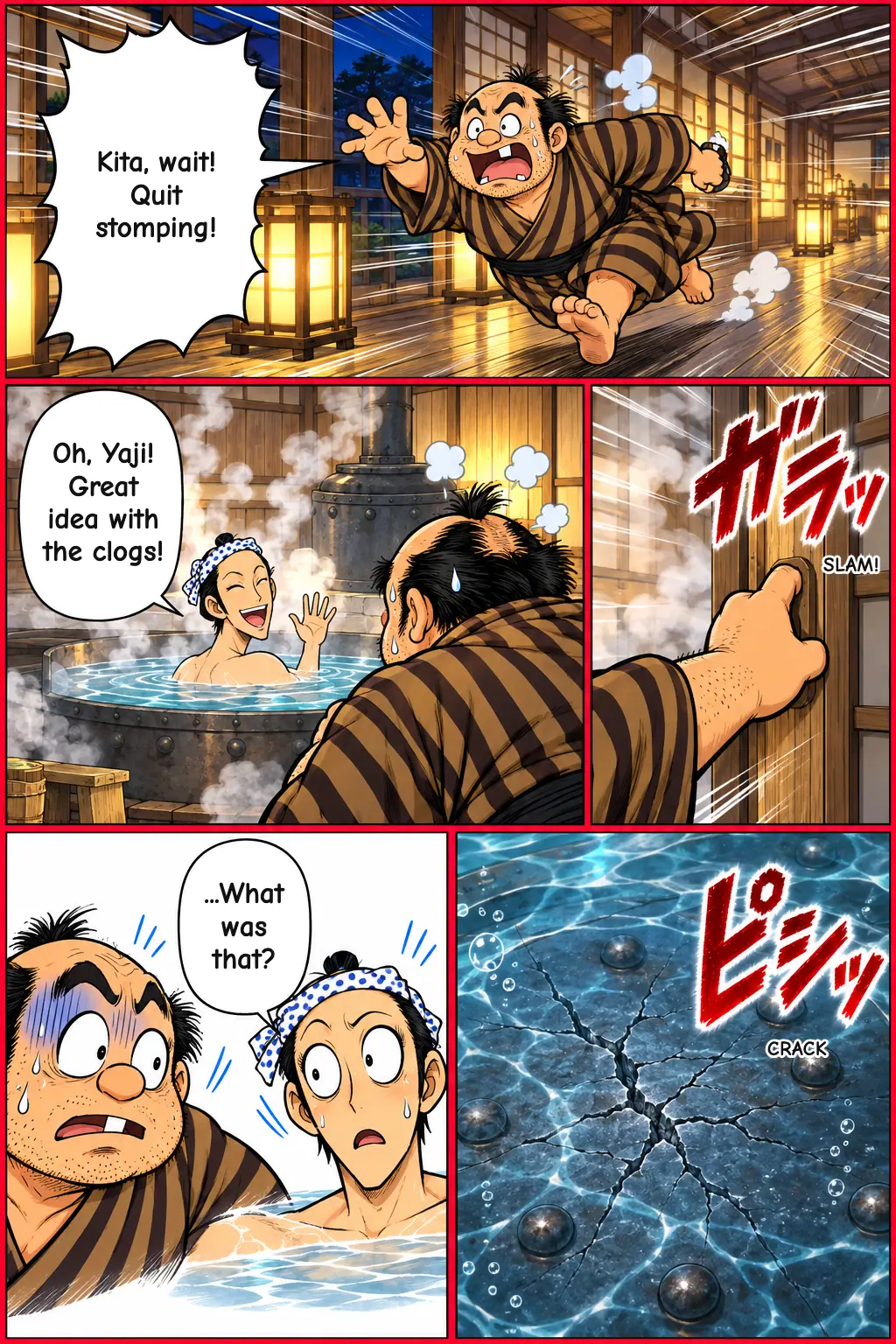
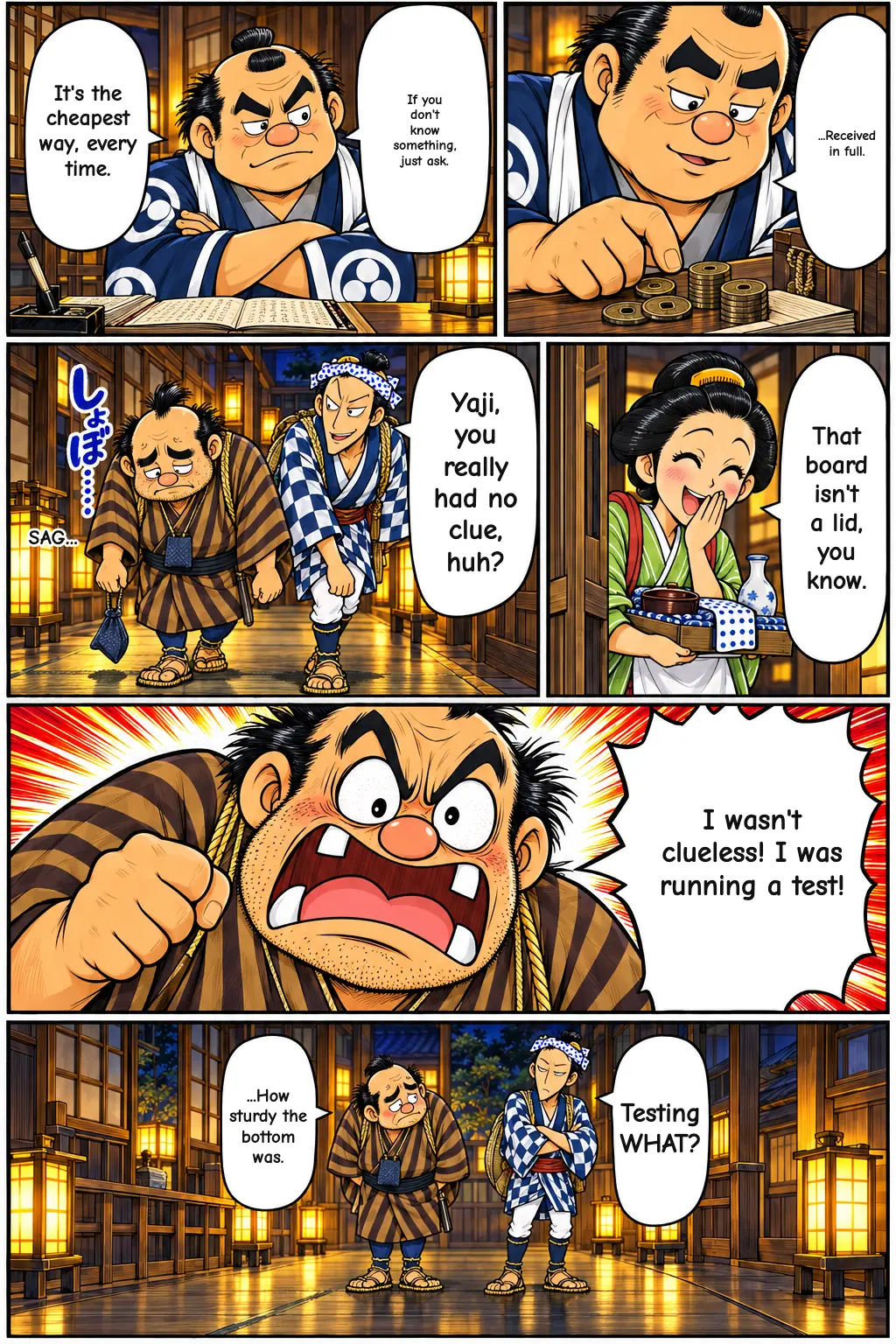
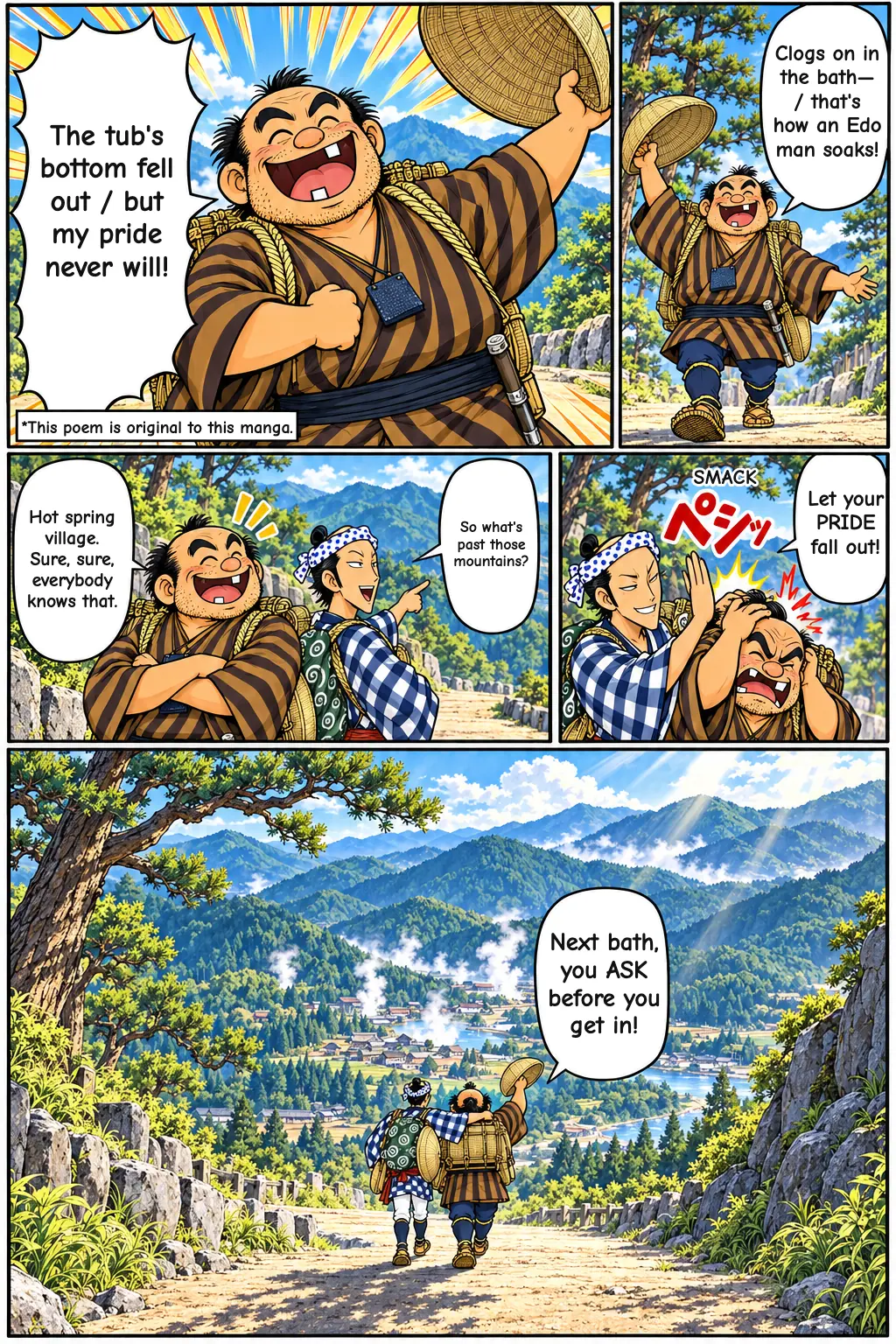
Yaji has no idea how to use the inn's Goemon bath, an iron tub heated by a fire underneath, but he's too proud to admit it and insists "Everybody knows that!" He secretly gets by wearing wooden clogs in the tub, his buddy Kita copies the trick, and their first bath on the road, 200 years ago, ends in disaster.
Get new episodes in your feed. Follow us on:ThreadsBluesky
Story summary
Tokaido Hizakurige follows two Edo townsmen, Yajirobei (Yaji) and Kitahachi (Kita), as they walk the Tokaido, the great highway between Edo (modern Tokyo) and Kyoto. They set out on a pilgrimage to the Ise Grand Shrine, partly to shake off a run of bad luck. Leaving Edo through Shinagawa, they pass post towns such as Kawasaki, Totsuka and Oiso, and at almost every stop they cause small disasters, play tricks, and toss off kyoka, short comic poems. When they reach the castle town of Odawara, they stay at an inn whose bath is a goemon-buro: an iron tub set directly over a fire.
Yaji and Kita's Goemon Bath: Hizakurige Odawara Story Explained
In short: The Goemon bath episode is a comic scene from Jippensha Ikku's Tokaido Hizakurige (first part published in 1802). At an inn in Odawara, Yaji doesn't know how to use an iron bathtub heated from below, but he is too proud to ask, so he gets in wearing wooden clogs. His companion Kita copies him, stamps through the bottom of the tub, and the two end up paying the angry innkeeper for the damage.
The original story: a bath, a pair of clogs, and a broken tub
Tokaido Hizakurige follows two Edo townsmen, Yajirobei (Yaji) and Kitahachi (Kita), as they walk the Tokaido, the great highway between Edo (modern Tokyo) and Kyoto. They set out on a pilgrimage to the Ise Grand Shrine, partly to shake off a run of bad luck. Leaving Edo through Shinagawa, they pass post towns such as Kawasaki, Totsuka and Oiso, and at almost every stop they cause small disasters, play tricks, and toss off kyoka, short comic poems.
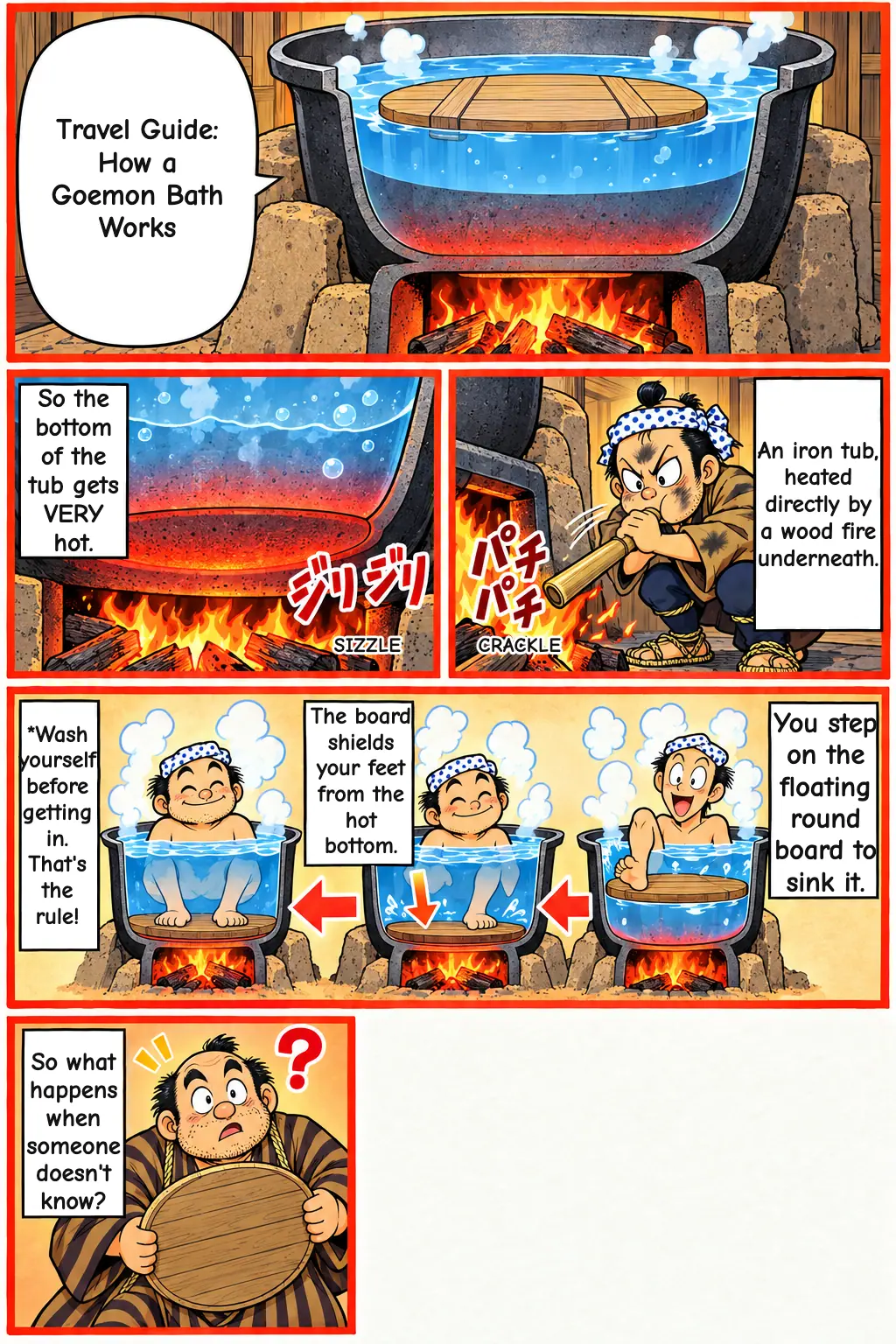
When they reach the castle town of Odawara, they stay at an inn whose bath is a goemon-buro: an iron tub set directly over a fire. The water is hot, but the metal bottom is much hotter. To bathe safely, you step onto a wooden board that floats on the water and push it down with your weight, so it sits between your feet and the iron.
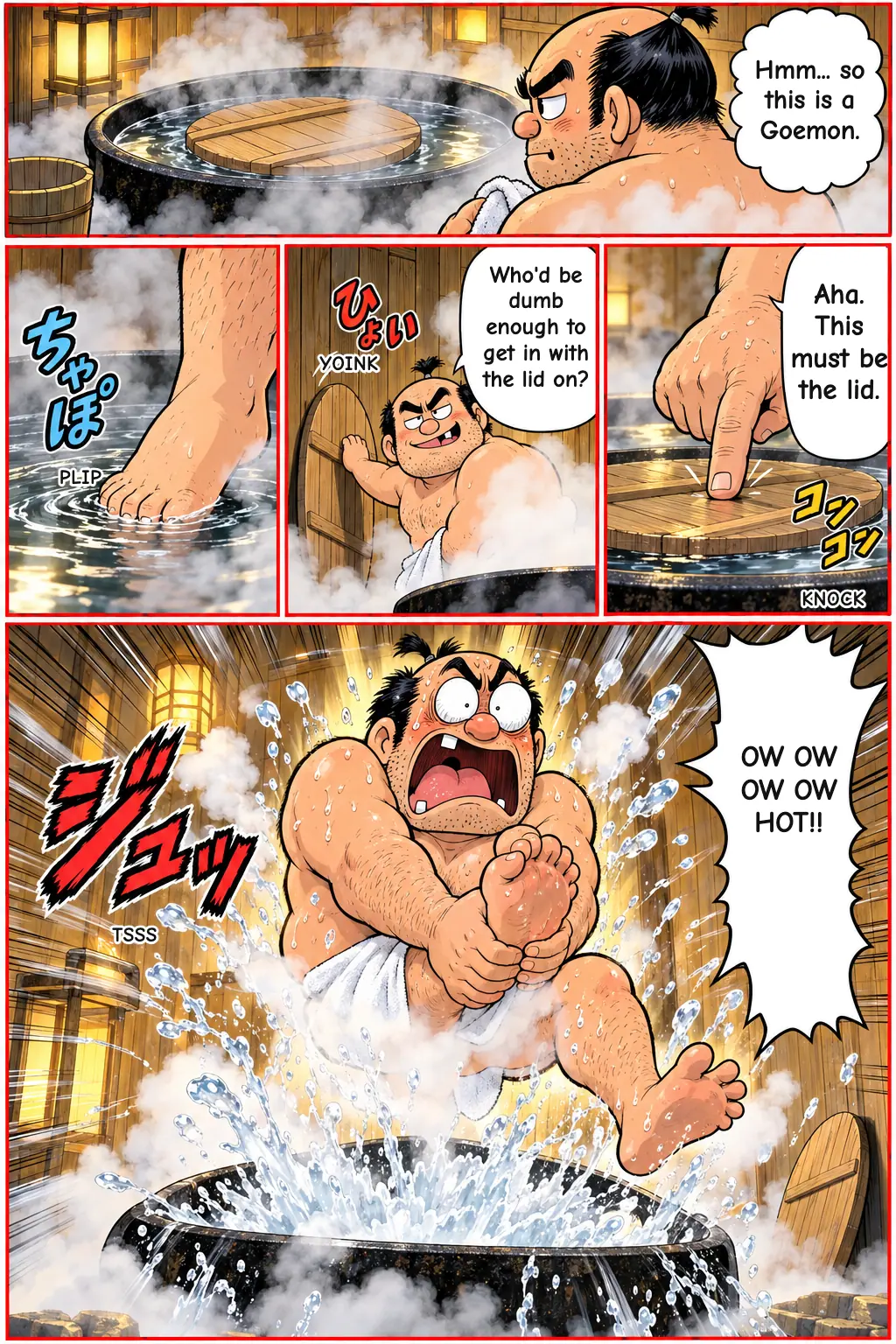
Yaji has never seen one. He takes the floating board for a lid, lifts it out, steps in, and nearly burns his feet on the bottom. Rather than ask anyone, he grabs a pair of wooden geta (clogs) lying nearby, puts them on, and bathes in them. Some readers take these to be the toilet clogs, which makes the joke even dirtier. Then he climbs out looking perfectly calm and tells Kita nothing.
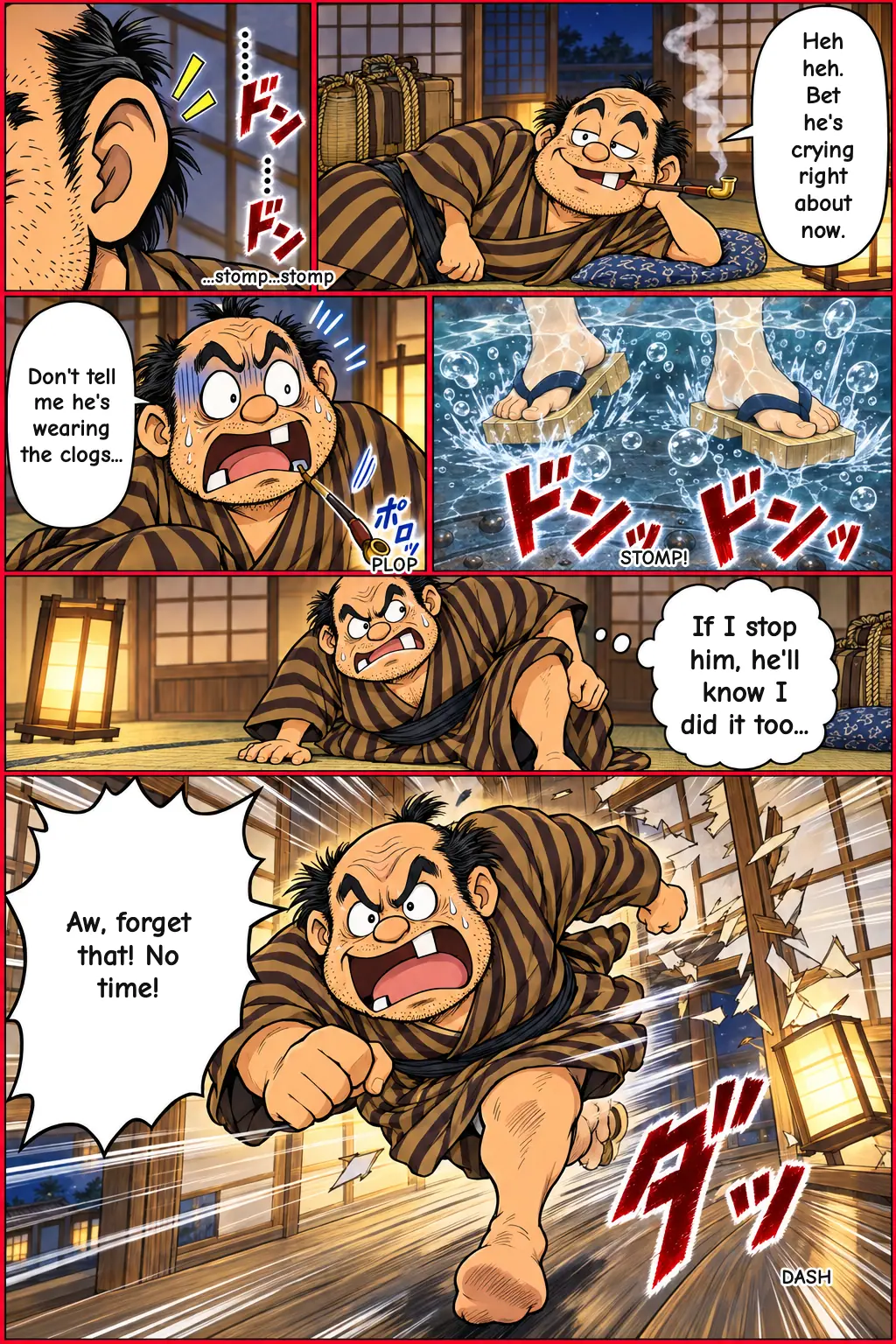
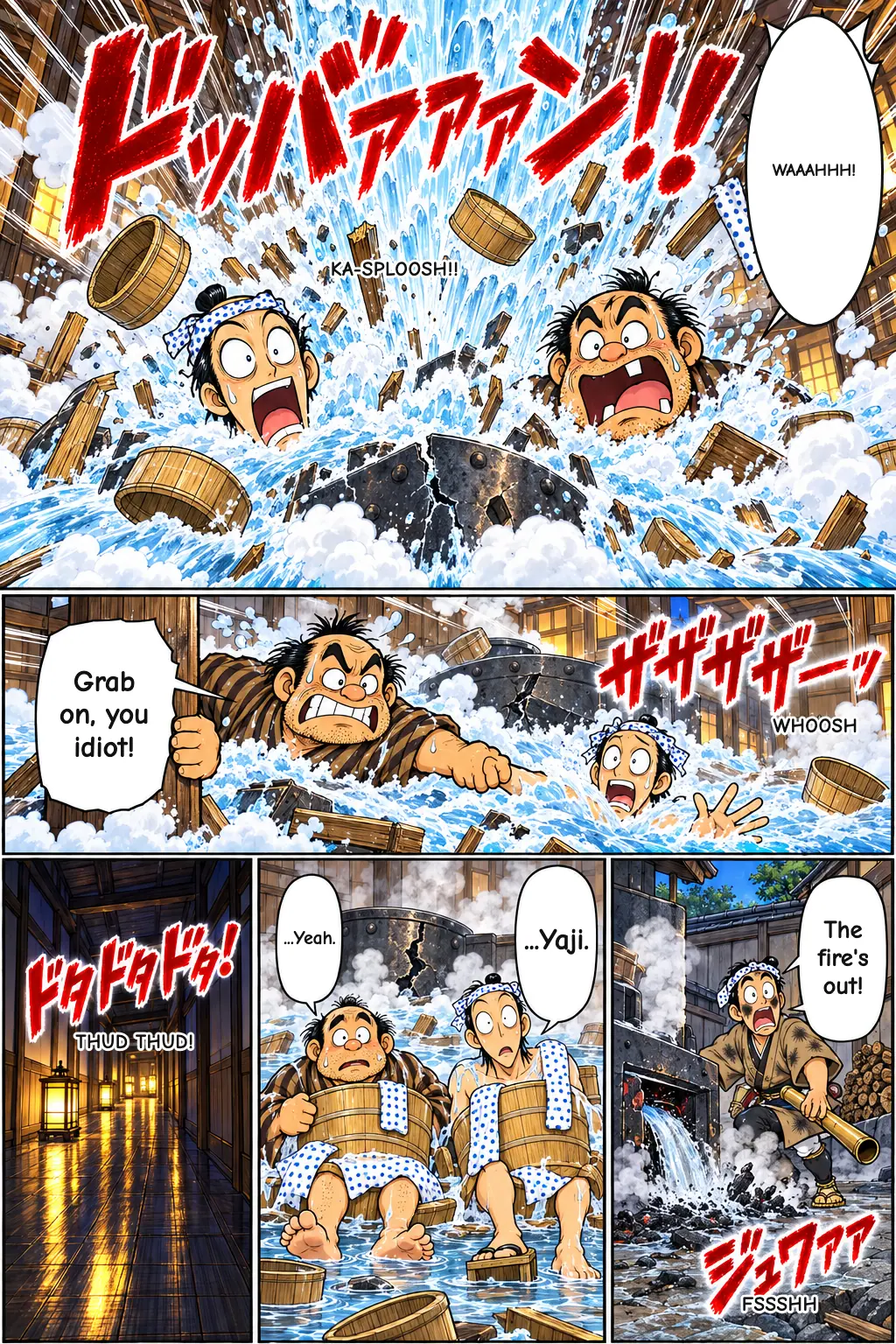
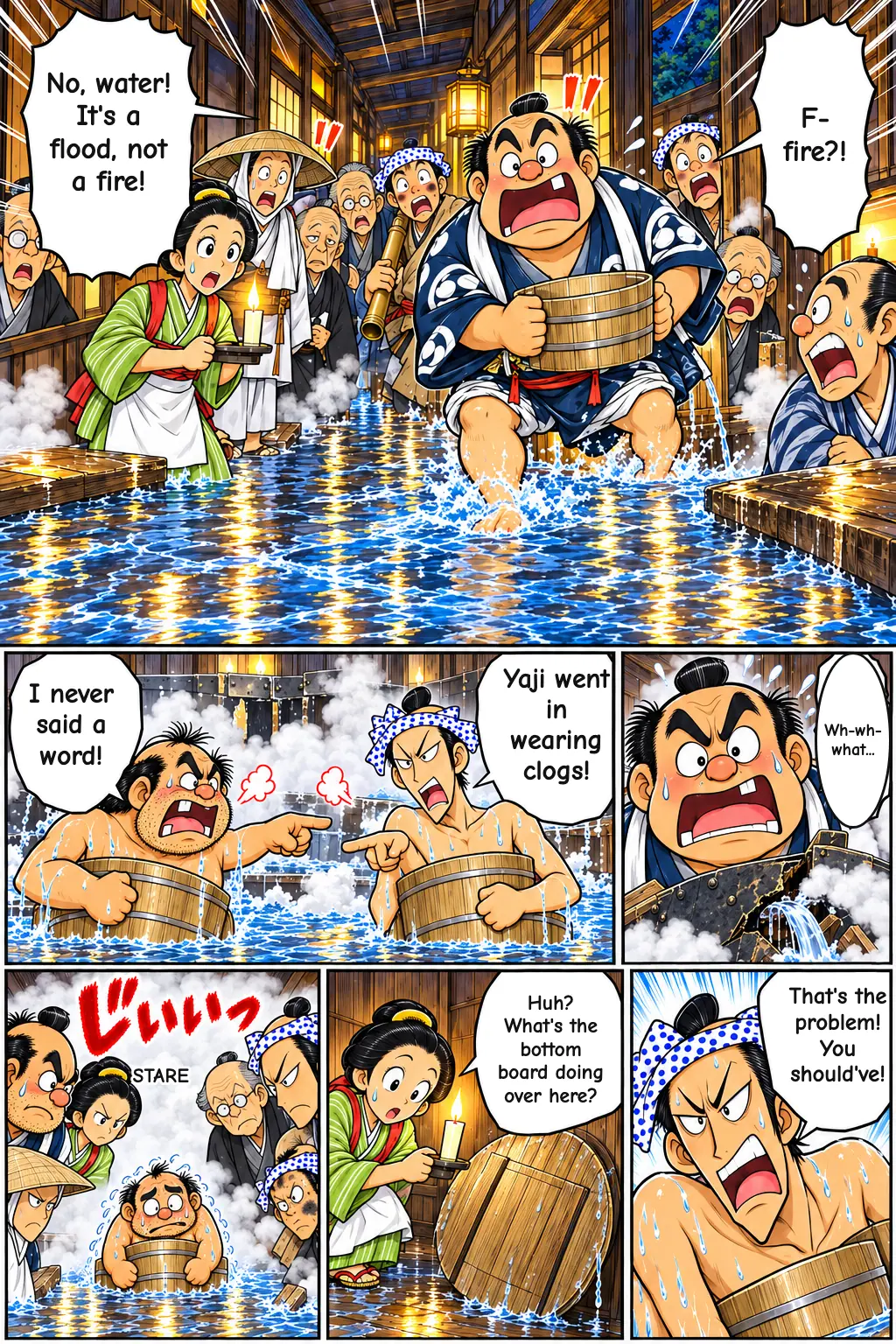
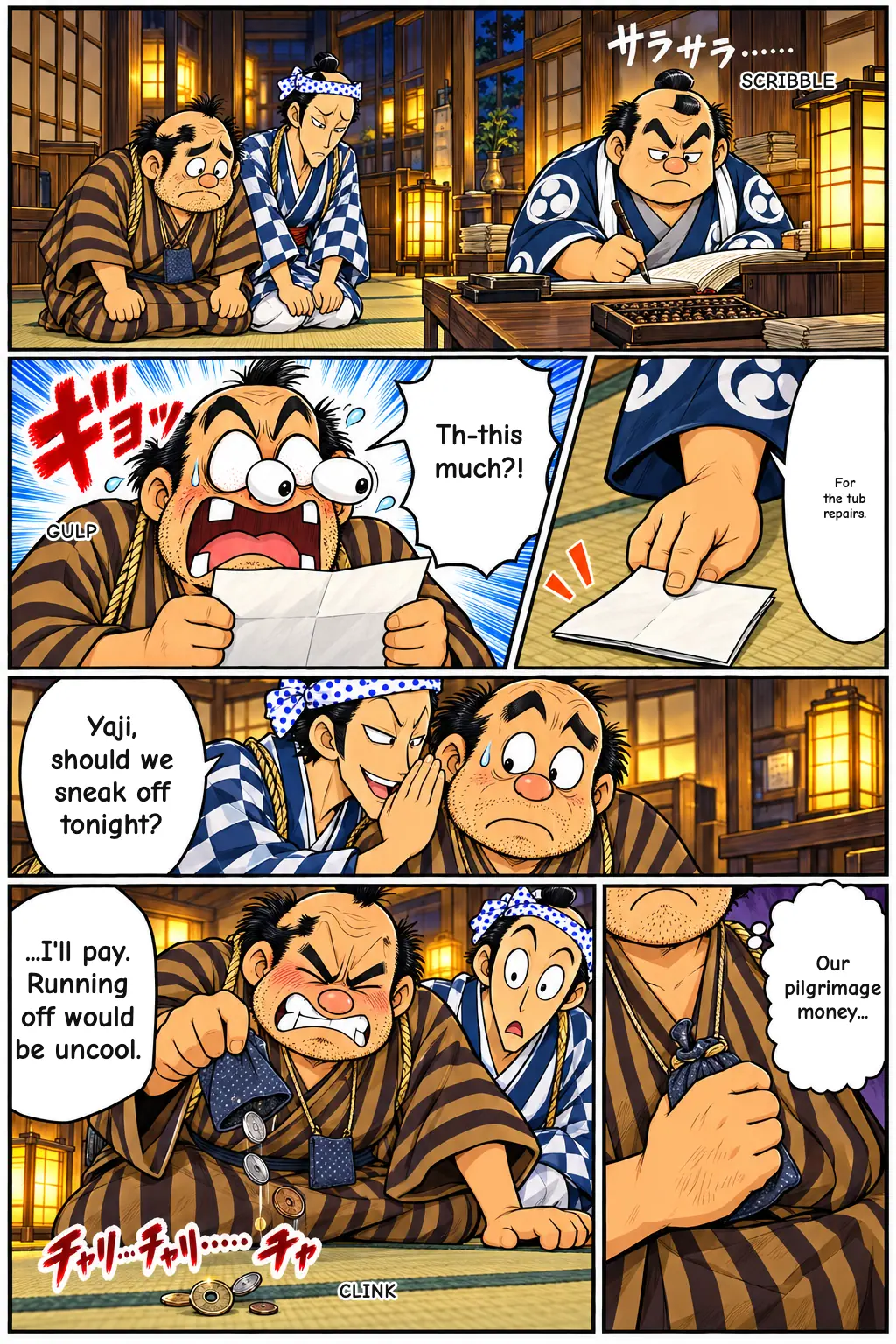
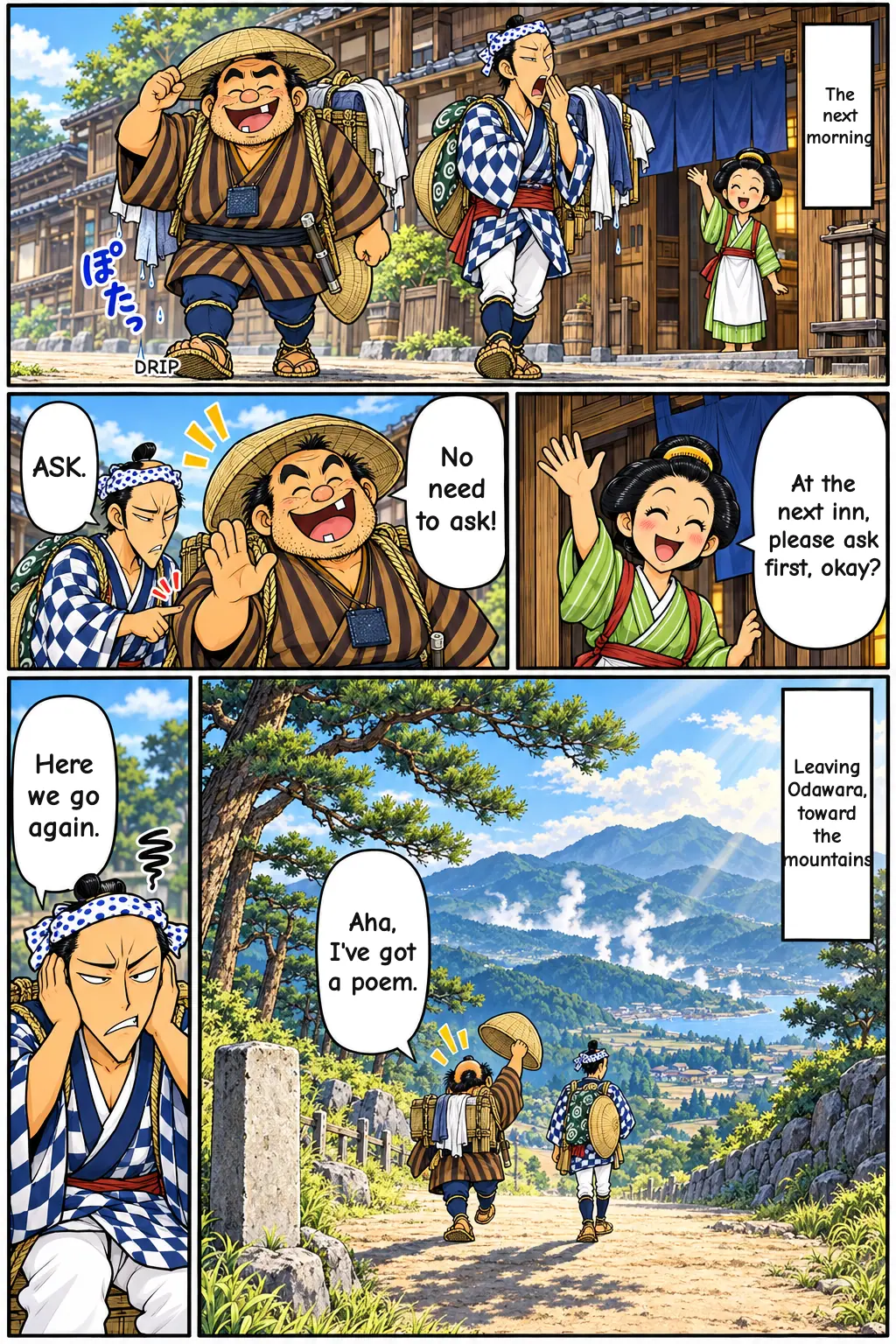
Kita goes in next, finds the bottom scorching, spots the clogs, and copies the trick. But as he shifts around in them, he stamps right through the bottom of the tub. The hot water pours out, the inn's staff come running, and the whole inn is in an uproar. The innkeeper scolds the two travelers and makes them pay for the repair, and the next morning they leave Odawara in embarrassment and head on toward Hakone.
Main characters
Yaji is a middle-aged man from the Hatchobori area of Kanda in Edo. He is cheerful, vain and a know-it-all, quick with a comic poem and fond of pranks. The bath scene shows his main flaw clearly: he would rather risk scalding himself than admit he doesn't know something, and he lets his friend fall into the same trap.
Kita is younger, lives in Yaji's house as a hanger-on, and is impulsive and girl-crazy. He competes with Yaji and is often fooled by him, and here he is the one who actually breaks the tub. Their backstory (Yaji ruining his fortune in Suruga, Kita as a former traveling actor) comes from a prequel volume Ikku added in 1814, not from the original first part.
The innkeeper and the inn staff have only small roles. The original tells us little about them beyond the innkeeper's anger and his demand for payment.
What the story tells us: travel and laughter in the Edo period
By about 1800, ordinary townspeople in Japan were traveling in large numbers, and a pilgrimage to Ise was a socially accepted reason to take a long trip. The title is a pun: hizakurige means a chestnut horse made of your own knees, in other words, going on foot. Ikku's book became one of the best-selling comic novels of its time, and he kept adding sequels for about twenty years.
Much of the comedy comes from Edo city men who think they're sophisticated running into local customs they don't understand. The goemon-buro was more common in western Japan, so it makes sense that two men from Edo might not know how to use one. The name is usually explained as a reference to Ishikawa Goemon, a legendary thief said to have been executed by boiling in a cauldron in the late 1500s. It's grim humor that Edo readers would have recognized right away.
Odawara was also the last big stop before the steep Hakone pass and its checkpoint, so it was a natural place for travelers to rest and have a bath. The lesson, if there is one, is simple and still true: pretending to know everything usually costs more than asking.
What the manga changes
The core events of the manga follow the original: Yaji doesn't know how the bath works, he hides it out of pride, he uses clogs, Kita copies him, the tub breaks, and the innkeeper is furious. What the manga adds is mostly visual and emotional detail that the original text leaves open.
The look of the inn and bathroom, the faces and personalities of the innkeeper and the maid, Yaji's inner thoughts while he keeps quiet, and his reaction when he nearly burns his feet are all the manga's own inventions. The crash of the broken tub and the crowd rushing in are exaggerated for comic effect. For readers outside Japan, the manga also includes a short diagram panel showing how a goemon-buro works. The details of the payment scene are handled carefully, and the two heroes' travel outfits were newly designed to fit the period rather than copied from earlier films or comics.
Where to read it
If you want to see Yaji's straight-faced bluff and Kita's spectacular splash, you can read Episode 2 of YAJI AND KITA: The Great Tokaido Road Trip right here on Manga Portal. Every episode is free, with no sign-up required, so you can start from the beginning or simply follow the pair onward toward Hakone.
Characters in this episode
Yaji (Yajirobei)
A vain, joke-loving Edo townsman who would rather bathe in clogs than admit he doesn't know how a goemon bath works.
Kita (Kitahachi)
Yaji's younger, impulsive traveling companion, who copies the clog trick and stamps through the bottom of the tub.
The Odawara innkeeper
The owner of the inn, who is furious about his broken bathtub and makes the pair pay for the repair.
The inn staff
Minor characters who show the guests to the bath and rush in when the tub breaks.
FAQ
What is Tokaido Hizakurige?
It is a comic travel novel by Jippensha Ikku, with the first part published in 1802. It follows two Edo men, Yaji and Kita, on foot along the Tokaido highway toward the Ise Shrine, getting into one comic disaster after another.
What is a goemon bath (goemon-buro)?
It is a traditional Japanese bathtub made of iron and heated by a fire directly underneath. Bathers step onto a floating wooden board and push it down so their feet don't touch the hot metal bottom.
Why is it called a goemon bath?
The name is usually said to come from Ishikawa Goemon, a legendary thief who, according to tradition, was executed by being boiled in a cauldron in the late 16th century.
What happens in the Odawara bath scene of Hizakurige?
Yaji doesn't understand the floating board, nearly burns his feet, and secretly bathes wearing wooden clogs without telling Kita. Kita copies him, breaks through the bottom of the tub, and the innkeeper makes them pay for the damage.
What does 'hizakurige' mean?
It literally means 'a chestnut horse made of knees.' It is a joke about having no horse to ride and traveling on your own two legs.