Episode 5A Fake Samurai With No Way DownThe Oi River
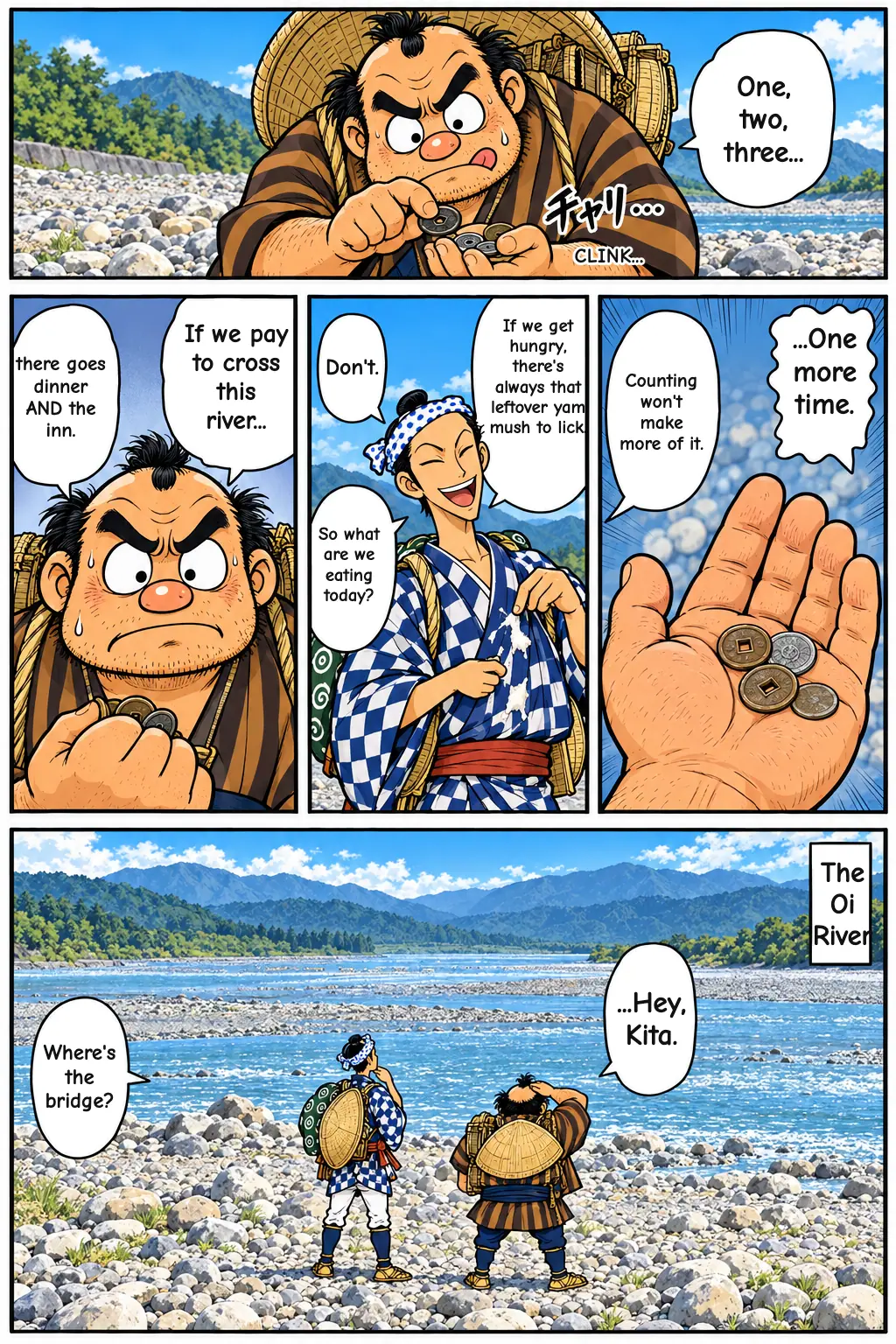
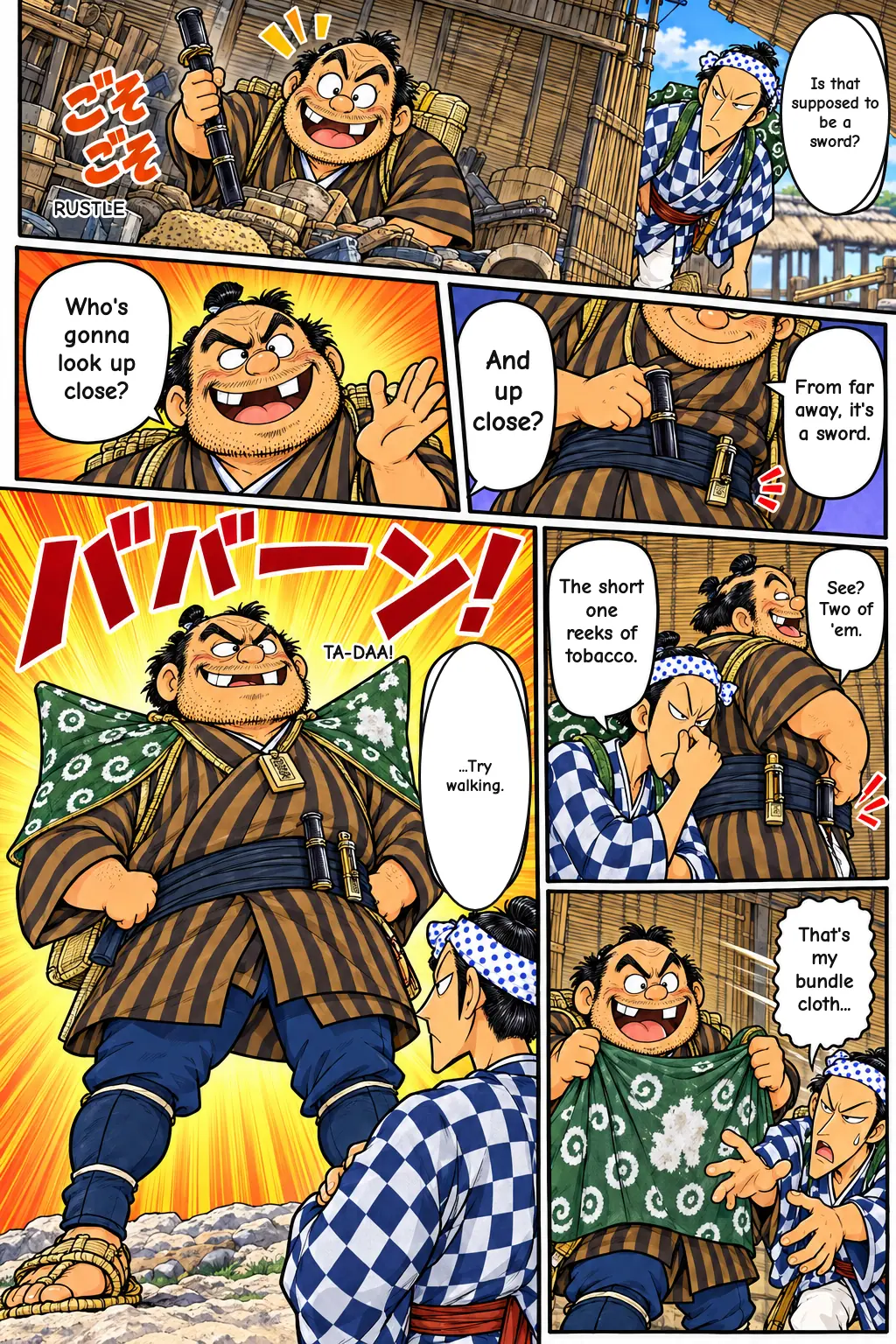
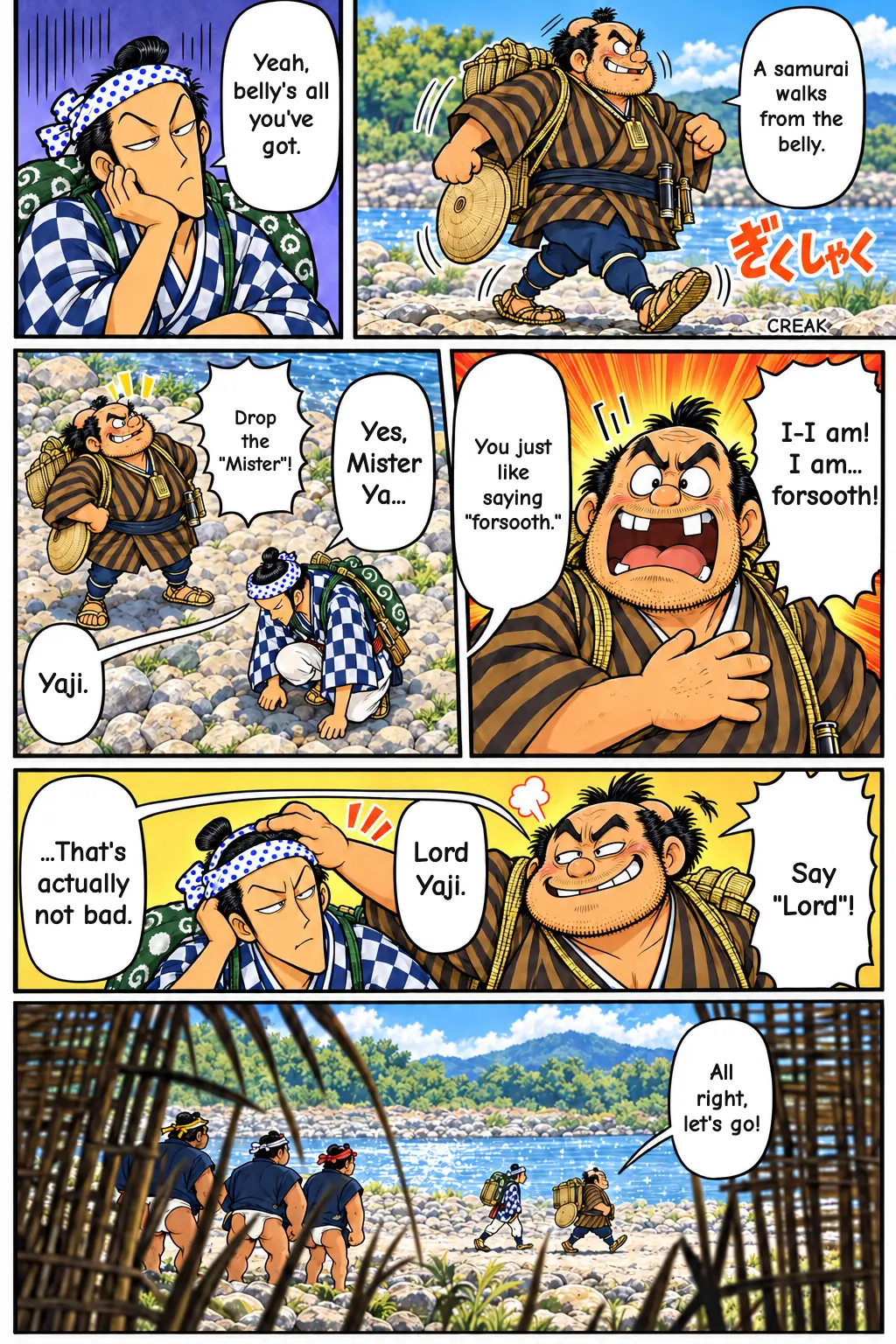
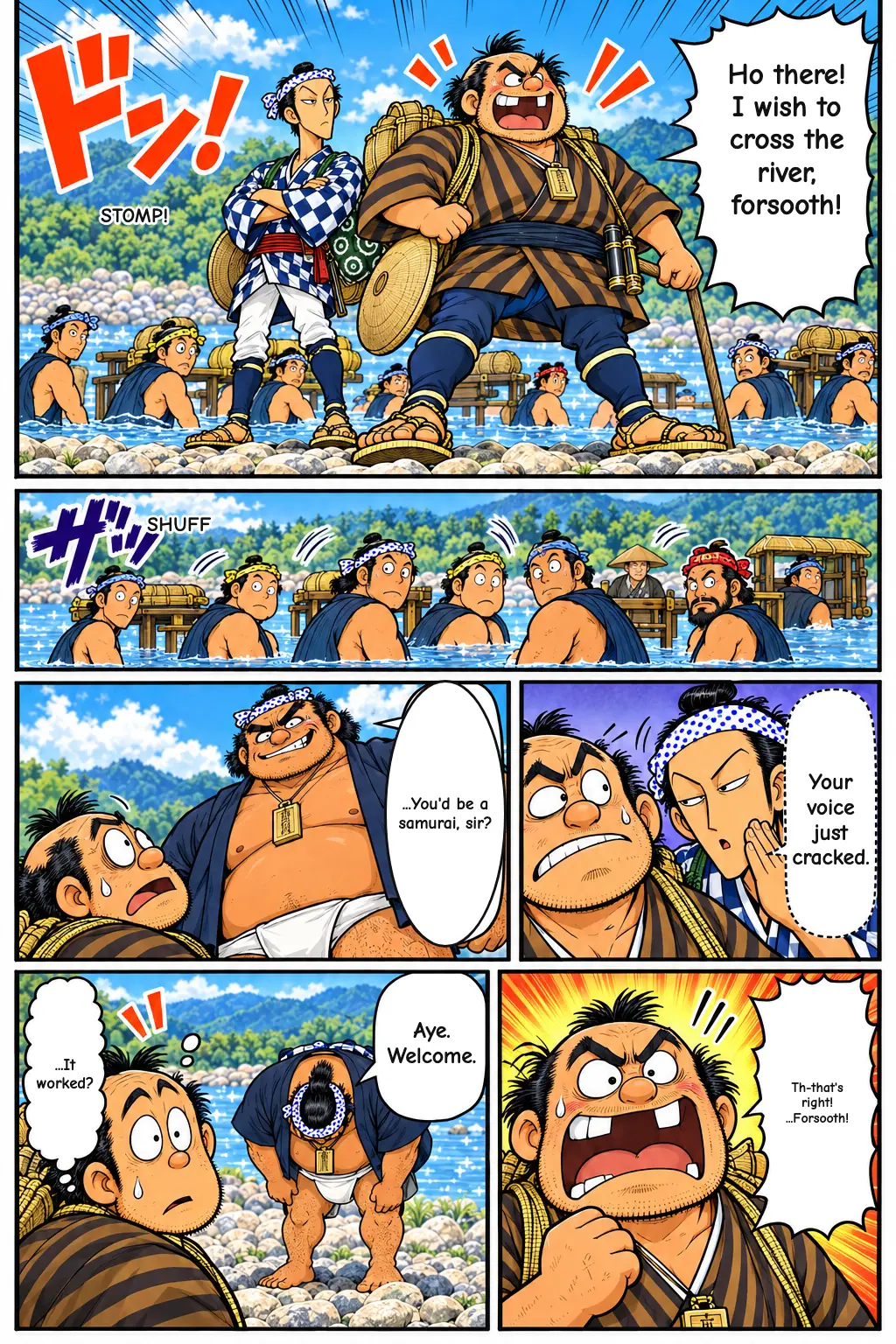
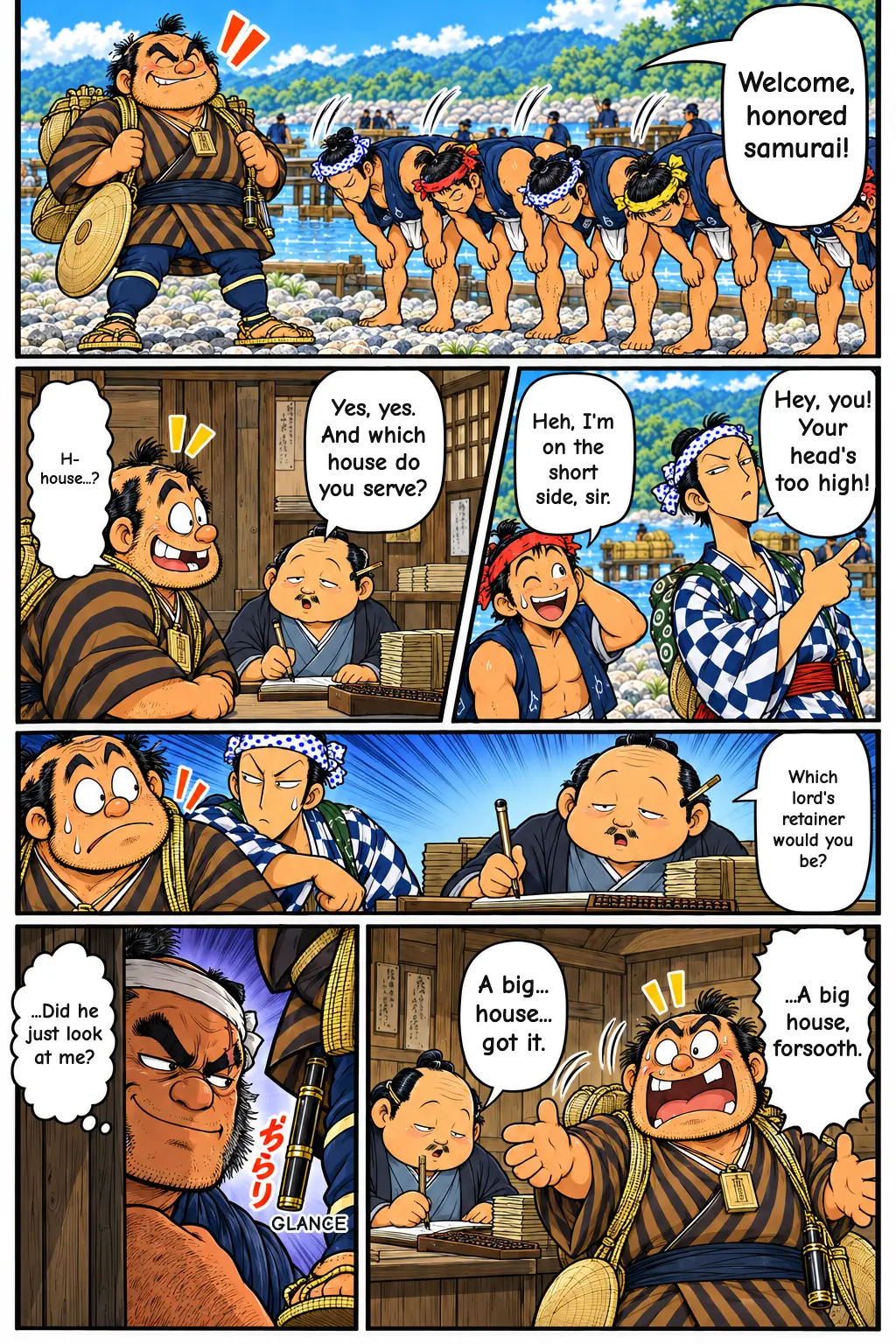
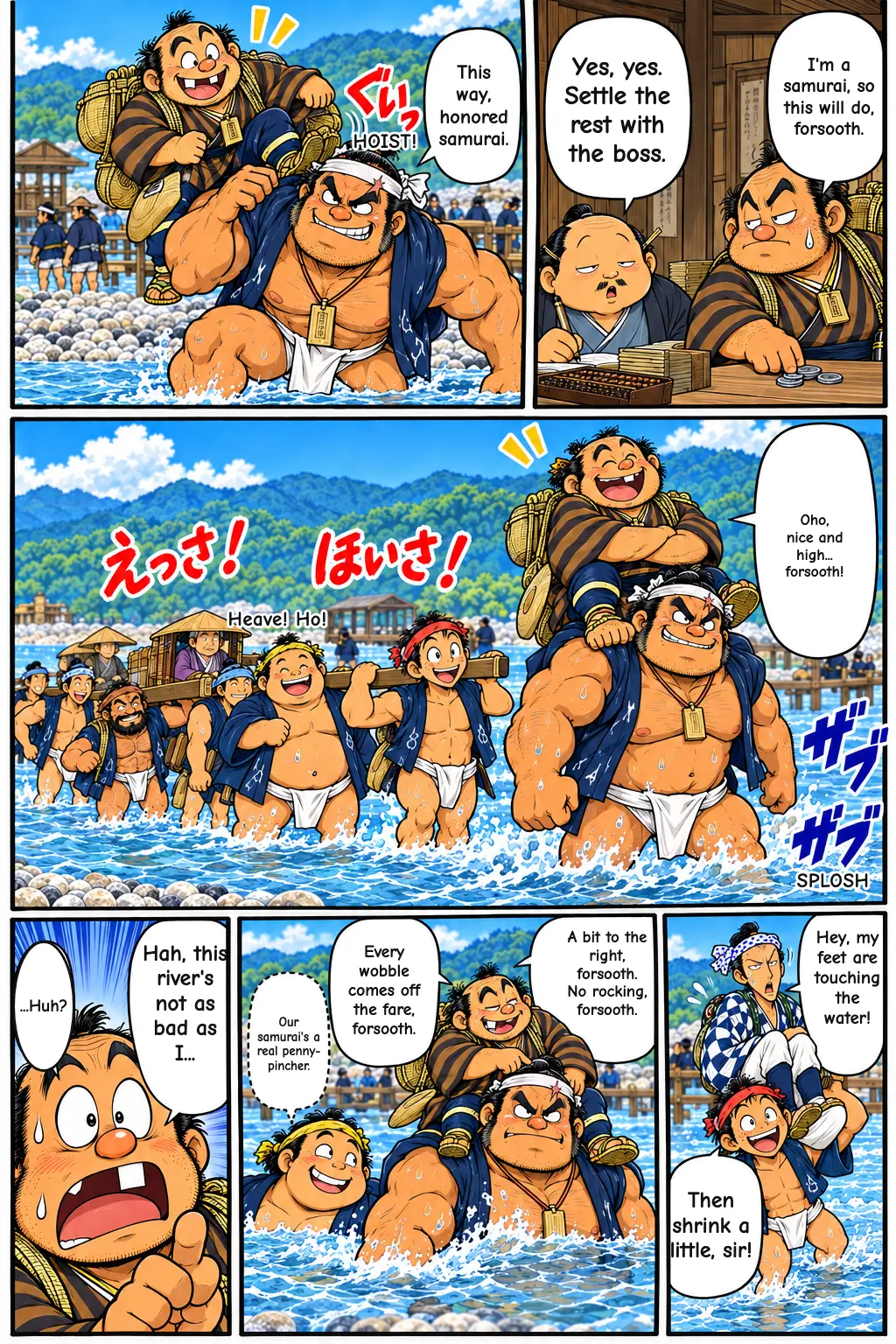
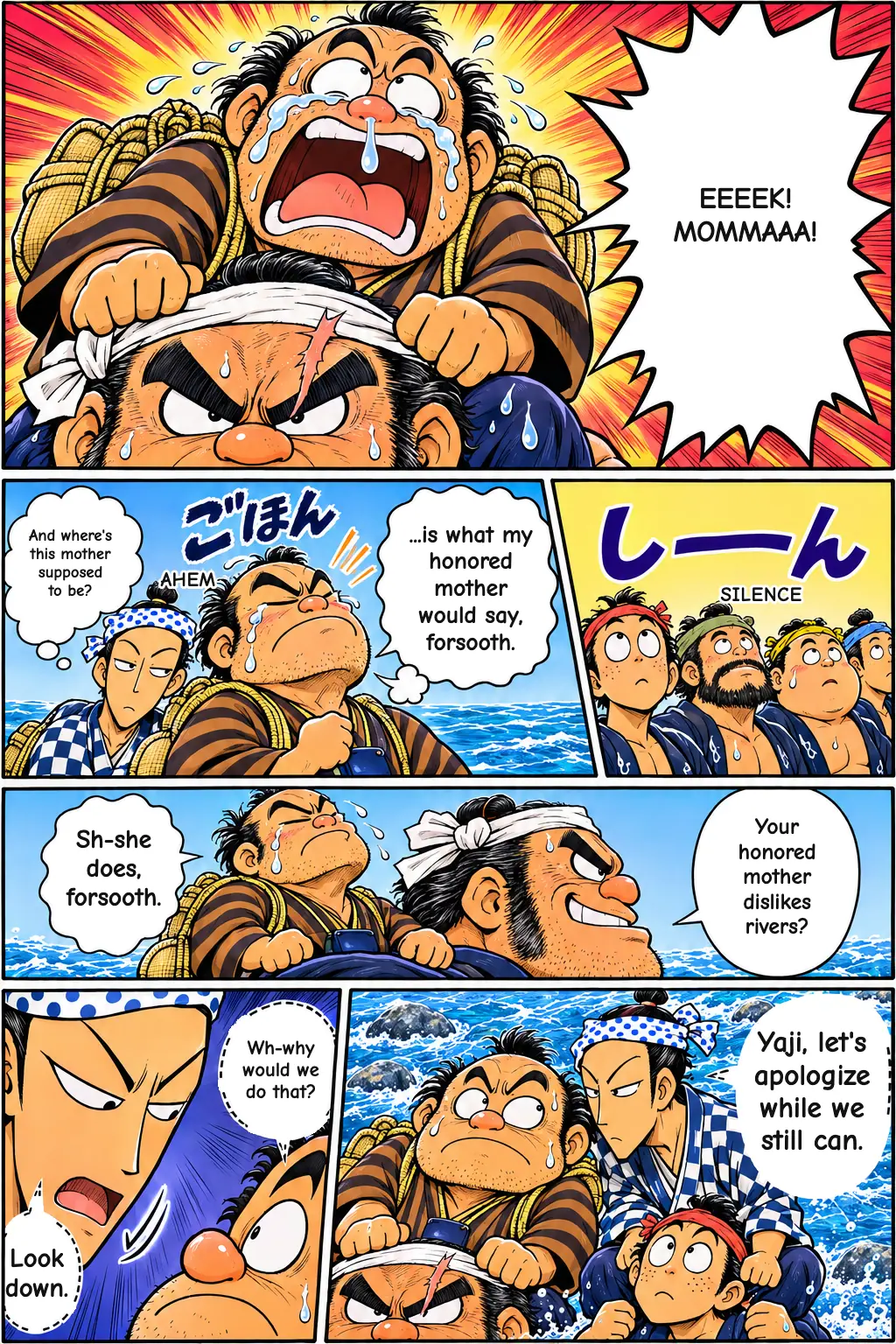
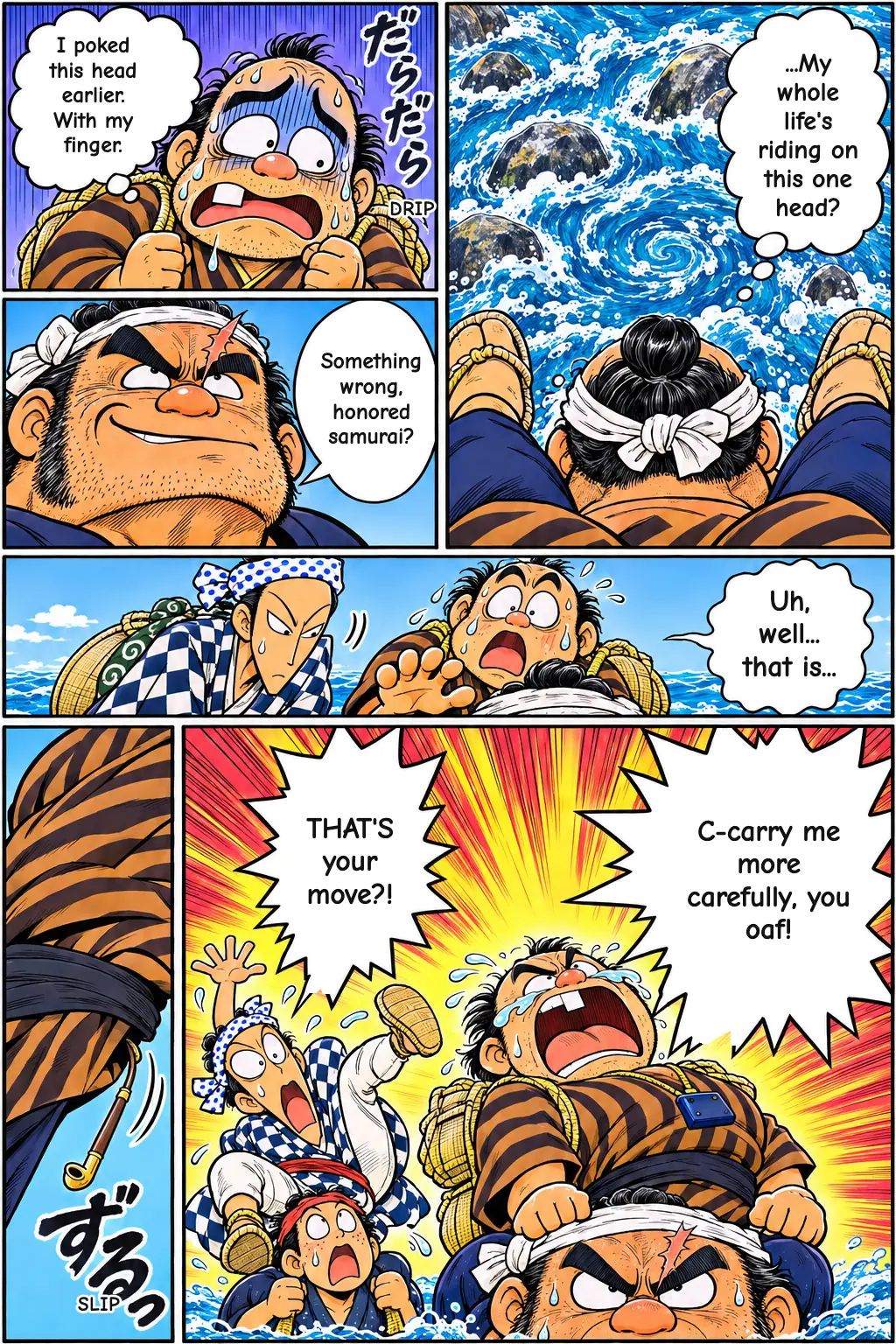
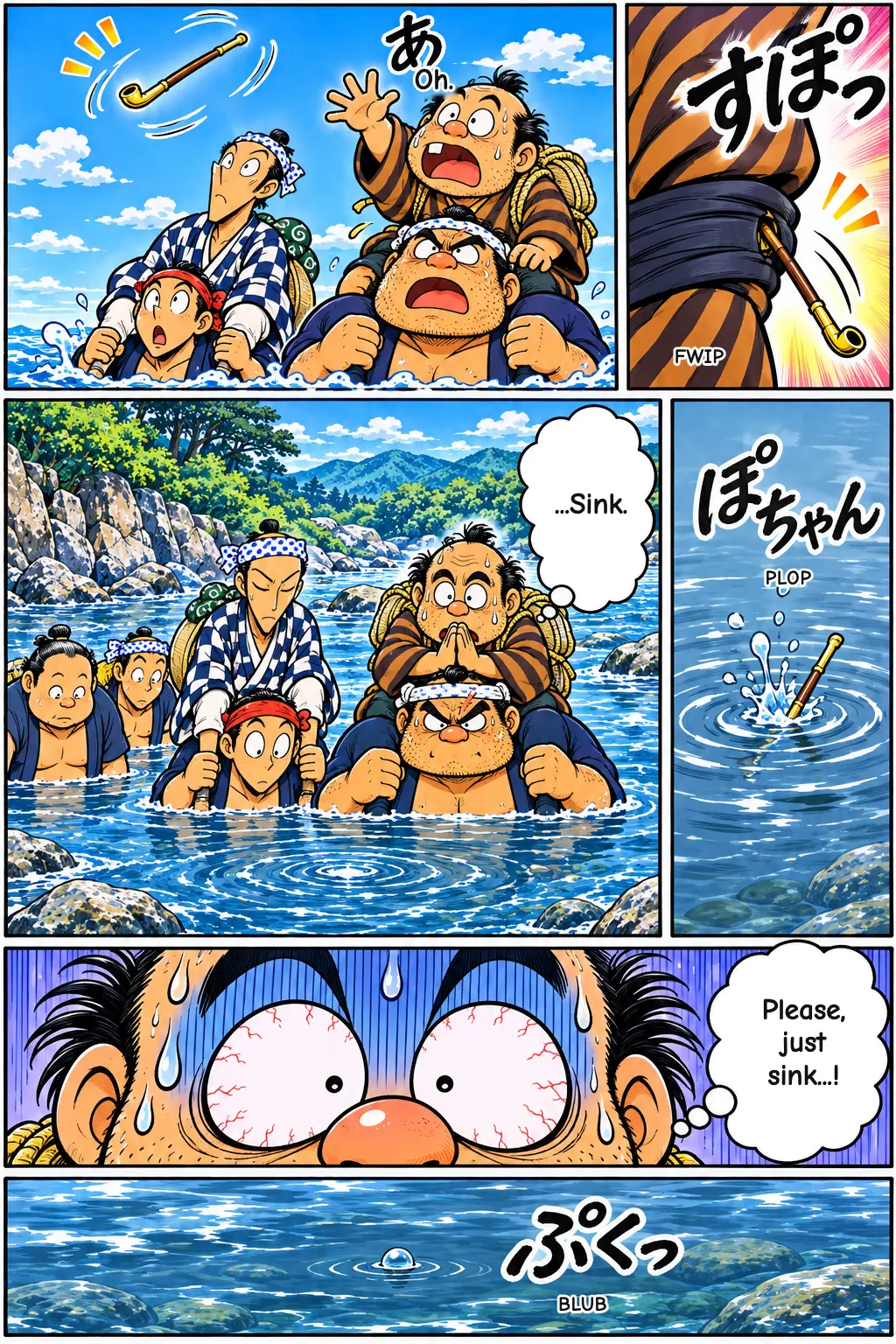
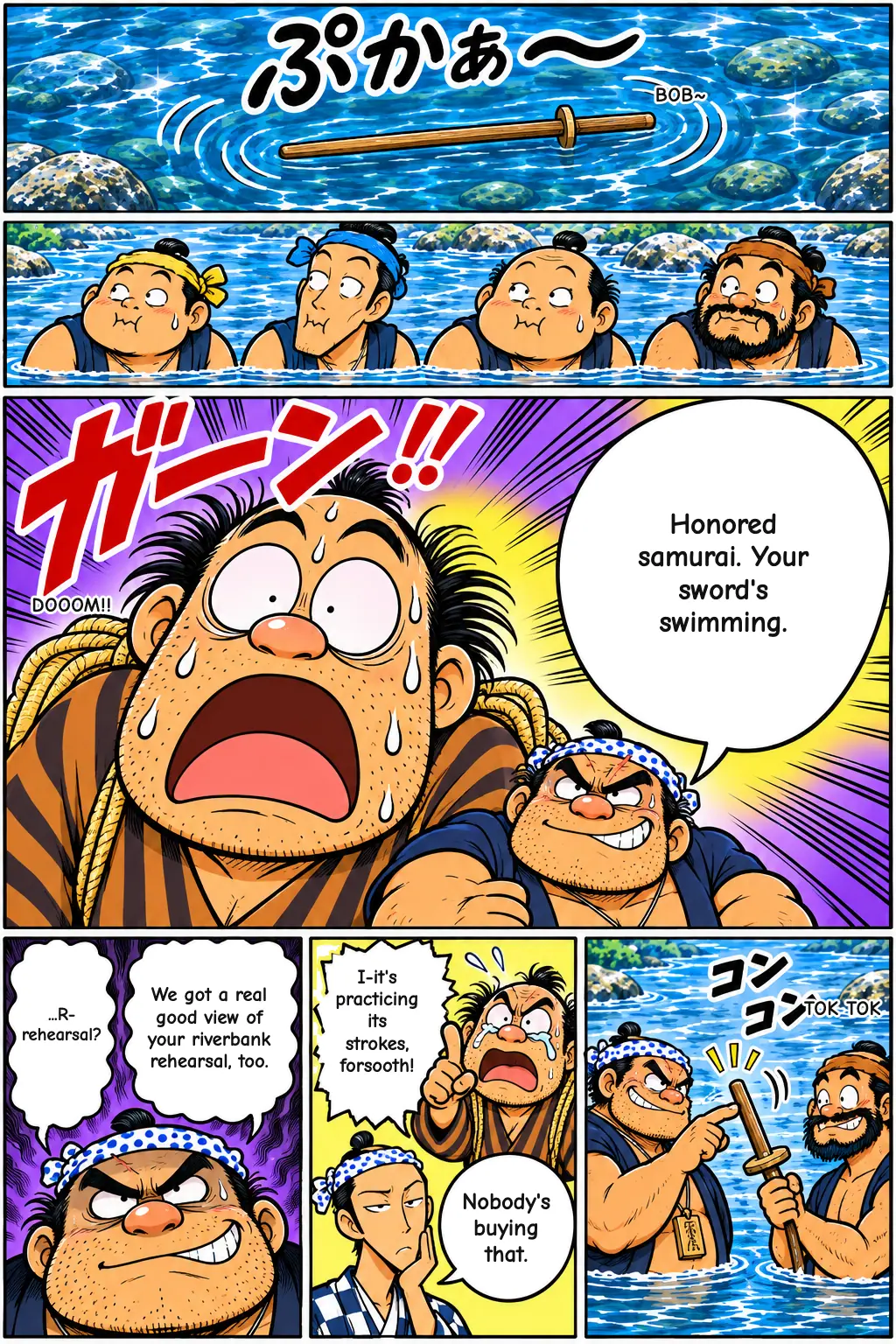
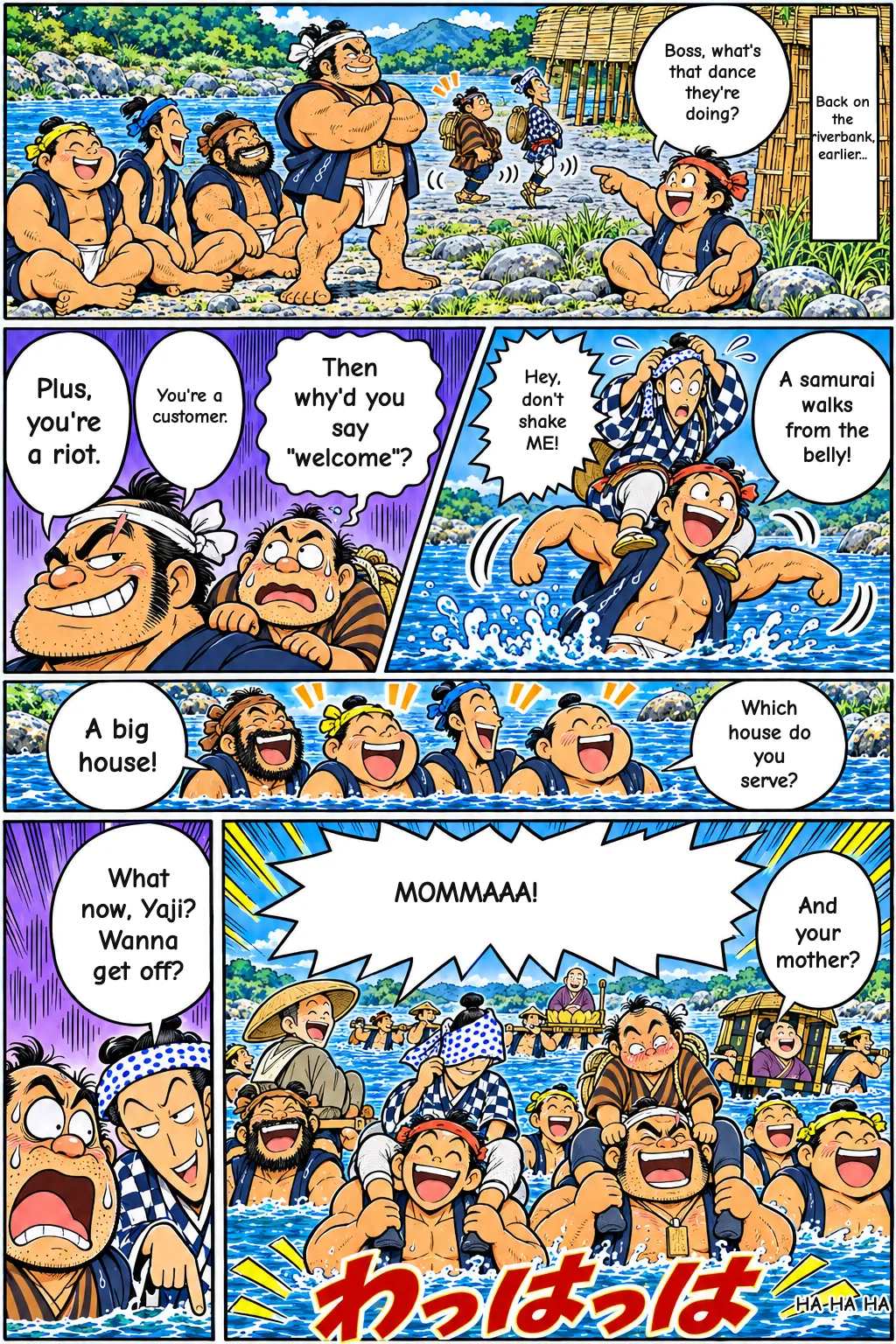
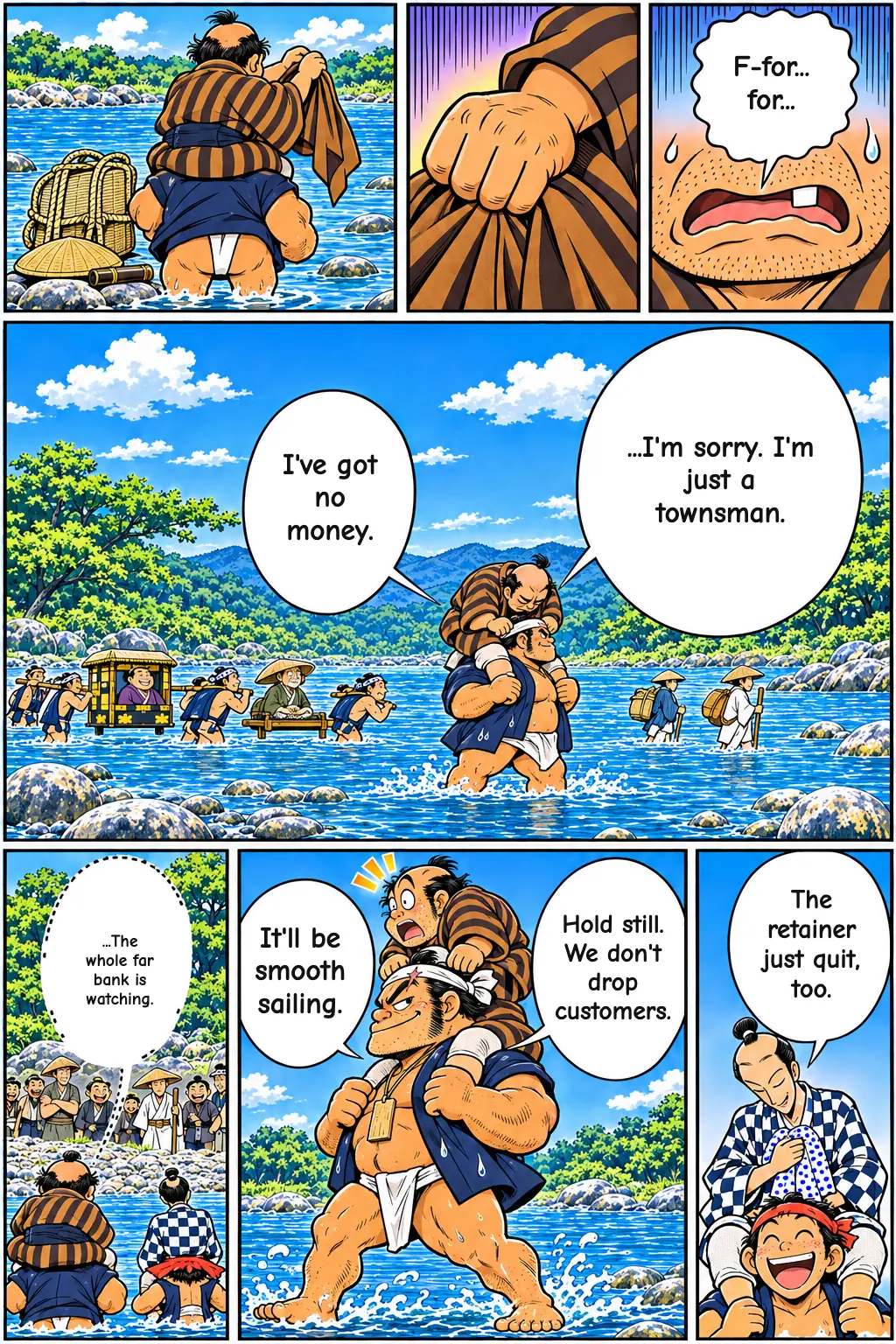
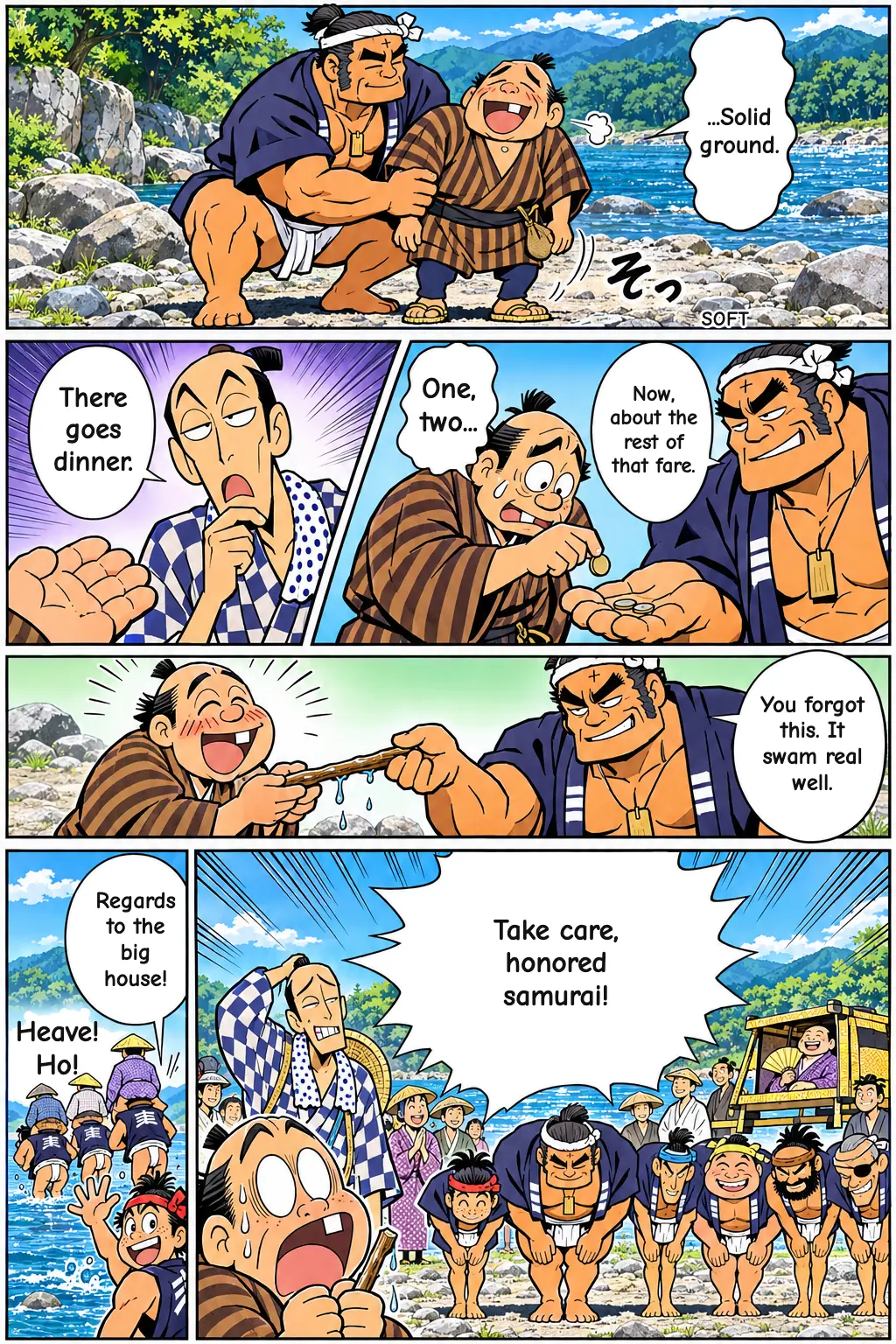
With no bridge across the Oi River and almost no money left, Yaji dresses up as a samurai to dodge the fare, with Kita as his reluctant retainer. He lords it over the porters from atop their shoulders, until his "sword" does something unthinkable in the middle of the river, and his lie falls apart in the one place he can't climb down.
Get new episodes in your feed. Follow us on:ThreadsBluesky
Story summary
Hizakurige is a comic novel by Jippensha Ikku, a popular writer of Japan's Edo period. Its first part came out in 1802, and the book follows two Edo men, Yajirobei (Yaji) and Kitahachi (Kita), as they walk west along the Tokaido, the great highway linking Edo, today's Tokyo, with Kyoto. Their adventures tend to follow a dependable pattern: someone has a clever idea, and the idea backfires. The Oi River crossing appears in the book's third part. The two reach a river with no bridge, where travelers must hire local porters to get across.
Yaji and Kita's Fake Samurai at the Oi River: Hizakurige Summary
In short: The Oi River episode is a comic story from Jippensha Ikku's Hizakurige (known in English as Shank's Mare), in which the Edo travelers Yaji and Kita try to get across a bridgeless river for less money. Yaji poses as a samurai with Kita as his retainer, and the act works at first. Then the porters see through it, partly because his sword is a fake, and the pair are thoroughly humiliated.
The original story: a cheap trick at the Oi River
Hizakurige is a comic novel by Jippensha Ikku, a popular writer of Japan's Edo period. Its first part came out in 1802, and the book follows two Edo men, Yajirobei (Yaji) and Kitahachi (Kita), as they walk west along the Tokaido, the great highway linking Edo, today's Tokyo, with Kyoto. Their adventures tend to follow a dependable pattern: someone has a clever idea, and the idea backfires.
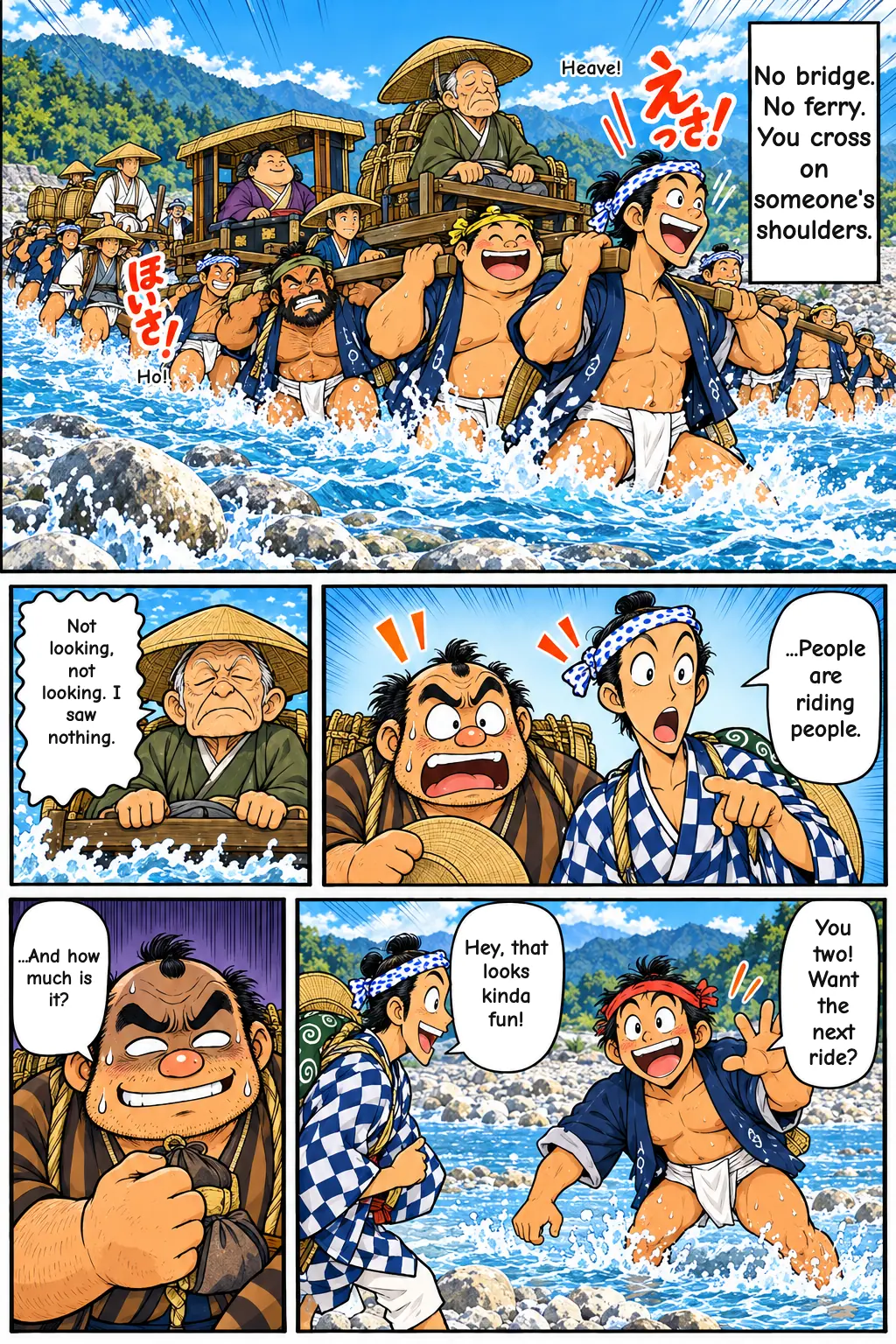
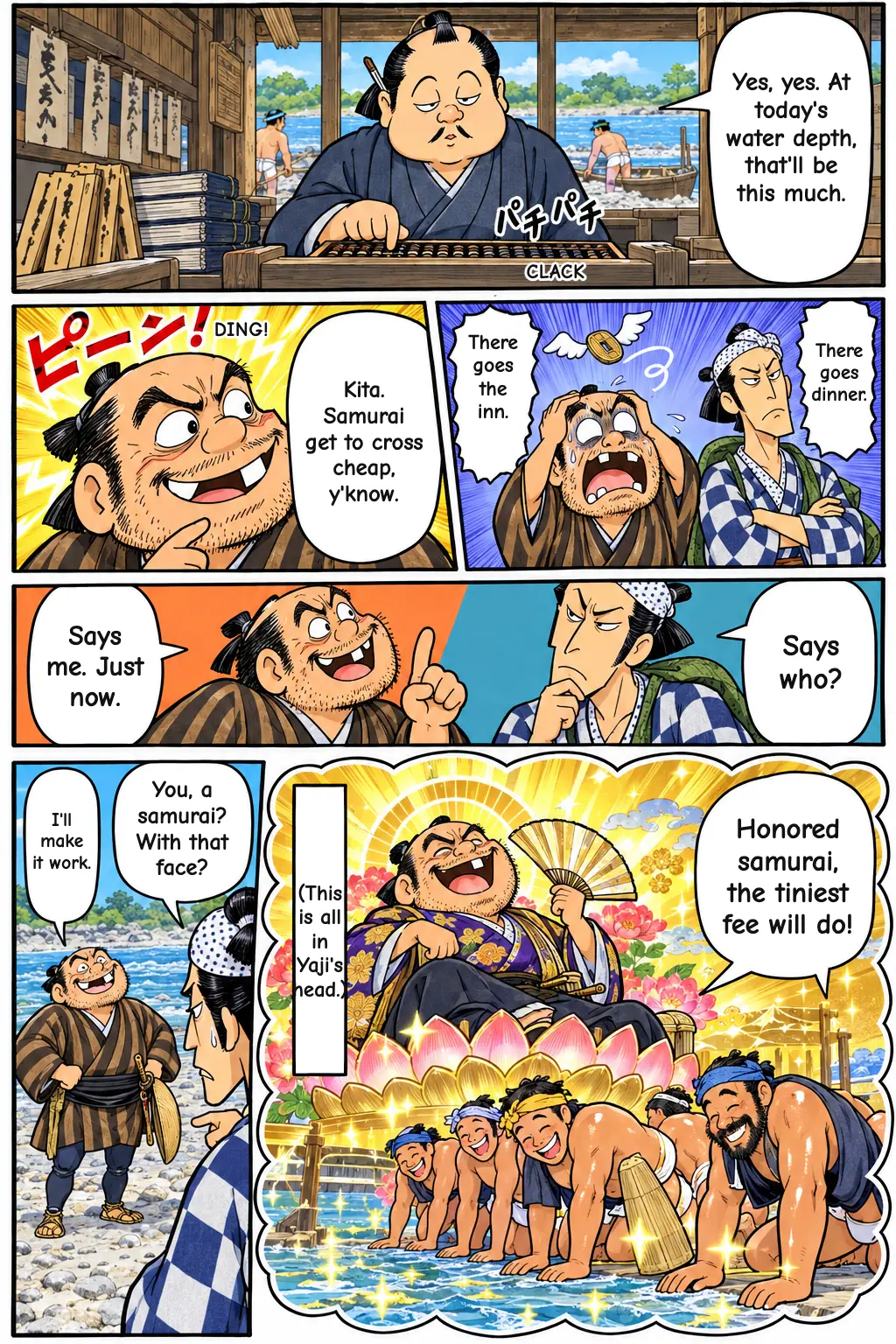
The Oi River crossing appears in the book's third part. The two reach a river with no bridge, where travelers must hire local porters to get across. Wanting to pay as little as possible, Yaji decides to pass himself off as a samurai, and Kita plays his attendant. Yaji puts on a lofty warrior's manner of speech while bargaining with the porters, and Kita plays along. For a while, the porters treat him as the real thing, and the two feel very pleased with themselves.
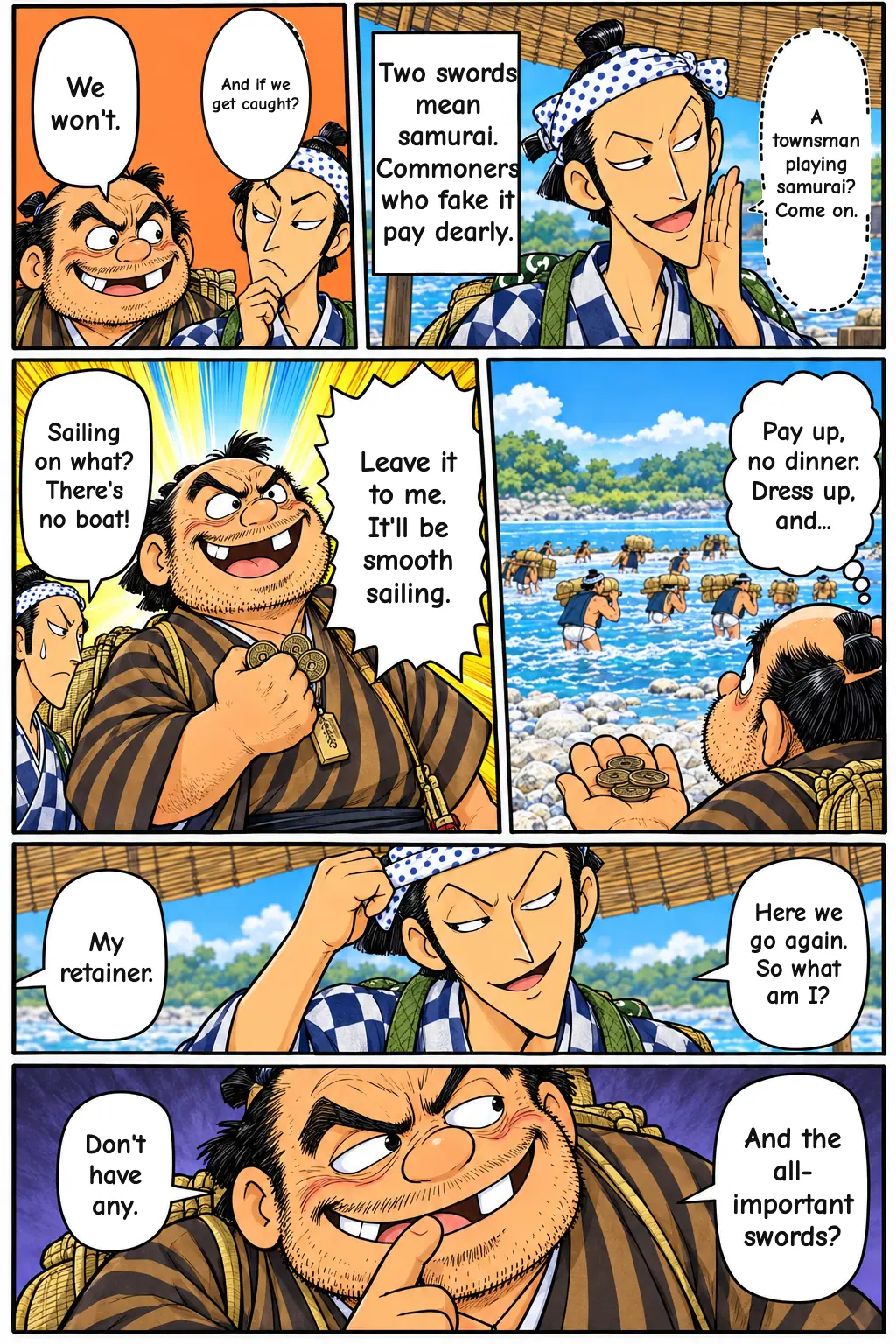
It doesn't last. The disguise collapses, and the fake sword is part of what gives Yaji away. Once the porters know the truth, they let the two have it, and the would-be gentlemen are left red-faced. Neither of them learns much from this, and the journey goes on.
Some details remain open. We have not yet confirmed exactly what the sword was made of, how it was exposed, or whether the truth came out before, during, or after the crossing, so we don't state those points here. The same goes for whether the scene ends with one of the comic poems (kyoka) Yaji composes elsewhere in the book. They still need to be checked against the early printed editions.
Why travelers couldn't just cross the Oi River
The Oi River runs through what is now Shizuoka Prefecture, between the post towns of Shimada and Kanaya. During the Edo period, it had neither a bridge nor a regular ferry. A common explanation is that the shogunate wanted a natural barrier protecting Edo from armies in the west, though the river's broad, shifting channel would have made a bridge difficult as well.
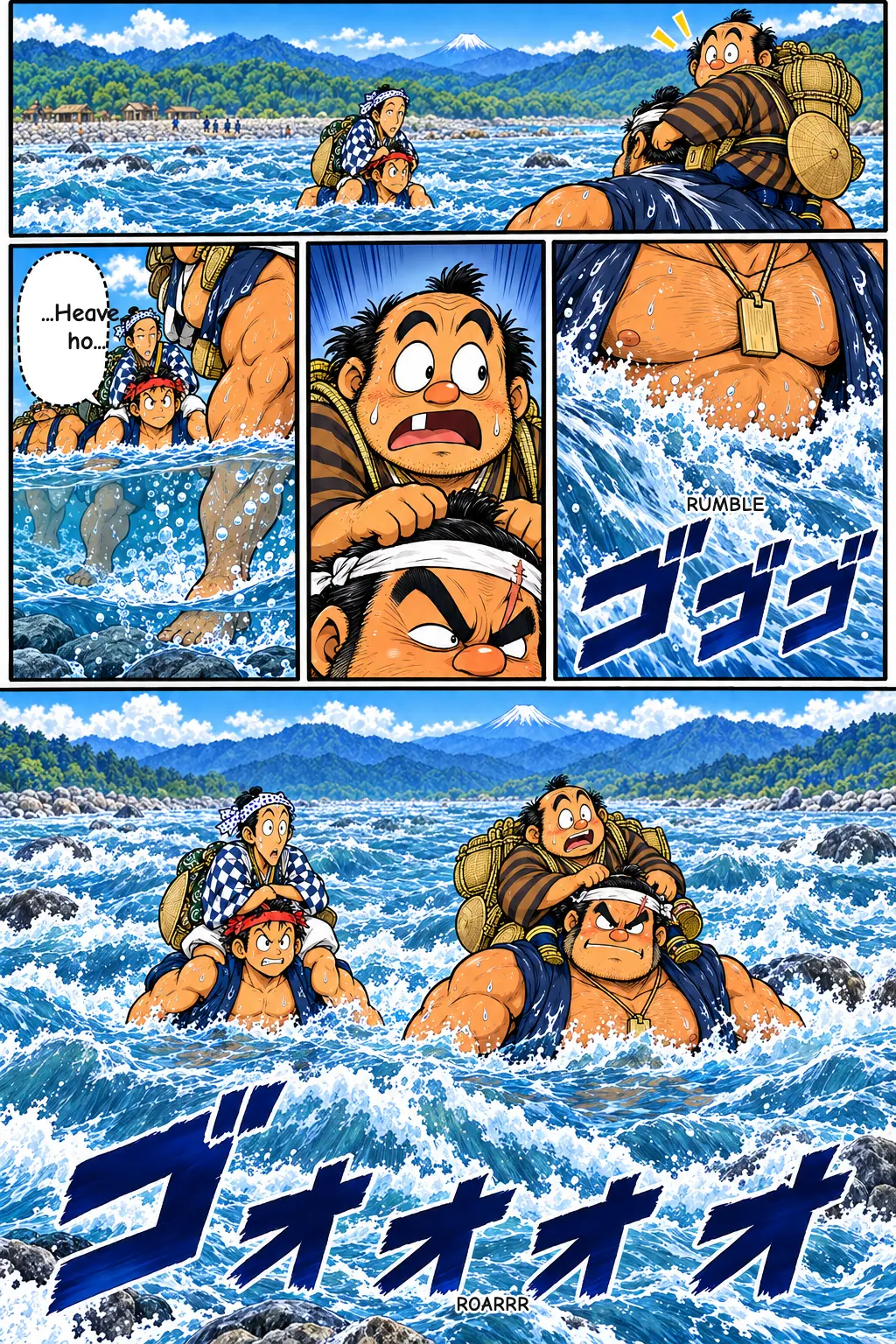
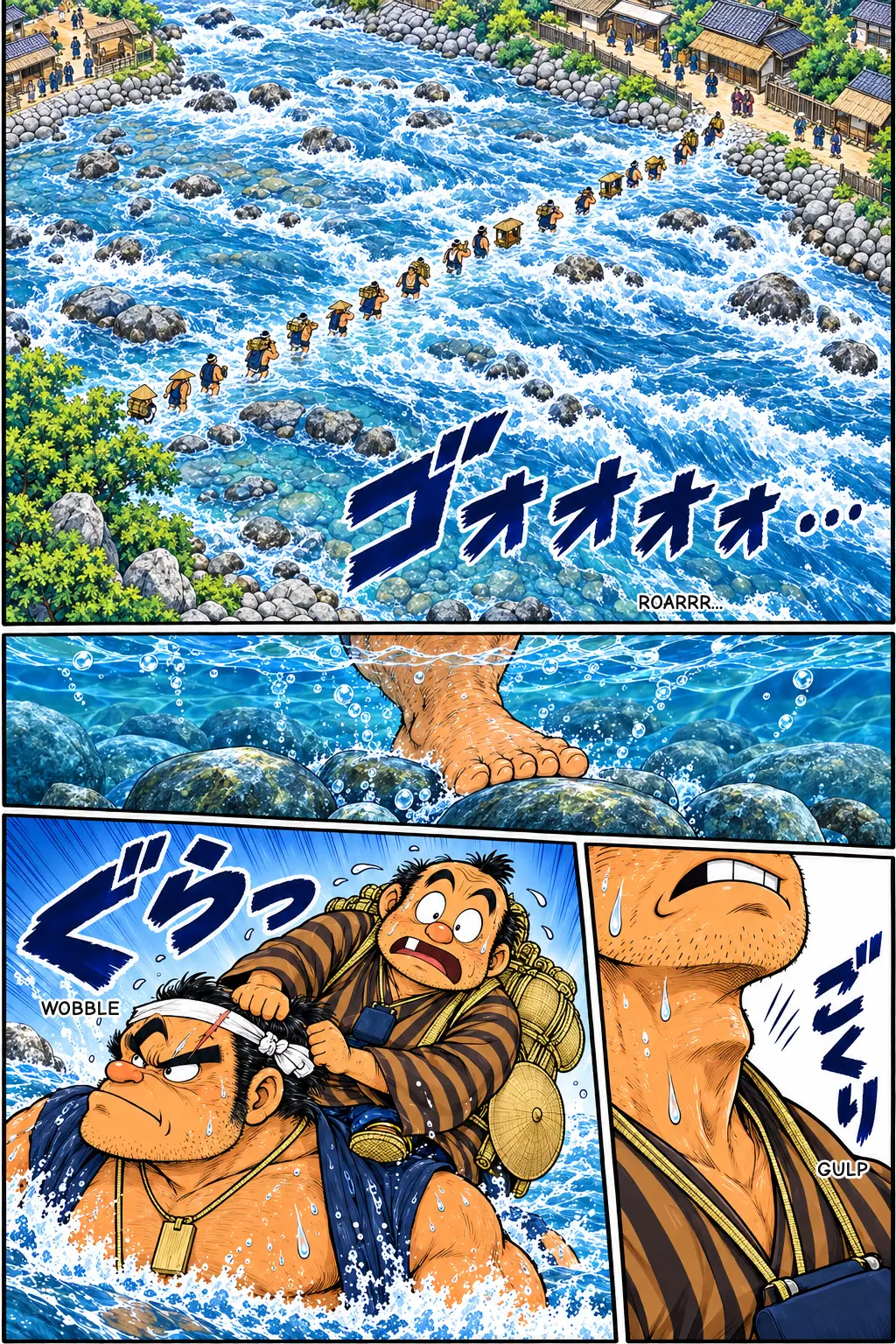
So travelers depended on licensed river porters, who carried them on their shoulders or on wooden platforms. The fare changed with the water level, which was judged by how high it came on a porter's body. When heavy rain made the river too dangerous, crossings stopped, and travelers could be stranded in the post towns until it fell. An old saying contrasted the steep Hakone pass, which you could manage even on horseback, with the Oi, which might not let you through at all. For Edo readers, this was a famous obstacle and an expense they could easily picture, which makes Yaji's scheme easy to understand.
Main characters: Yaji, Kita, and the porters
Yaji is a smooth-talking Edo townsman, vain and always ready with a shortcut. A later-written opening volume says he was born in Fuchu in Suruga Province and lived in the Hatchobori area of Kanda in Edo. Kita is his younger traveling companion, a wisecracking former actor's boy who is as likely to compete with Yaji as to help him. His name appears as Kitahachi in the original and is also widely written Kitahachi or Kita with different Japanese characters.
The river porters matter just as much here. The original doesn't give us individual names or a confirmed head count, but they are experienced and quick with their tongues. They see travelers all day, which makes them a dangerous audience for an amateur performance.
What the story says about Edo-period Japan
The joke depends on Japan's status system. Samurai stood apart from townsmen in law and custom, and dress, speech, and swords all signaled that difference. Yaji treats those signs as a costume: talk grandly, wear the right gear, and people may give way. For a while it works, which is a little subversive in itself. Rank turns out to be partly a performance.
But the story doesn't turn the porters into simple dupes, and it doesn't make Yaji a hero. Part of the fun is watching working people puncture a pretender, and part is seeing vanity and petty cunning come straight back at the person who tried them. This is typical of the kokkeibon, the genre of comic fiction to which Hizakurige belongs. Its readers could laugh at the two fools while recognizing the temptation to look a bit grander and pay a bit less. The book also doubles as a lively picture of road travel at a time when journeys along the Tokaido had become a popular subject.
What the manga changes
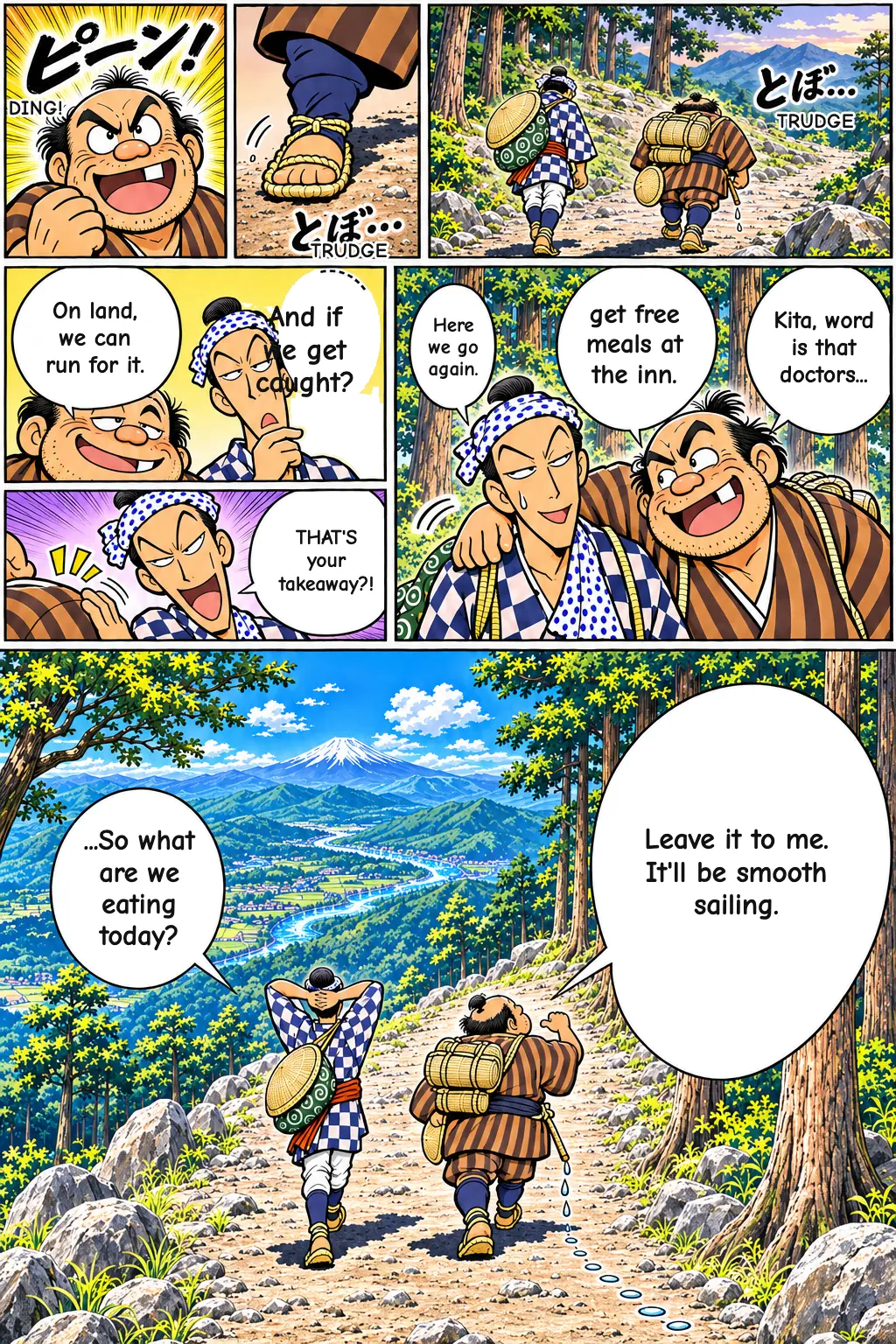
The manga episode, "A Fake Samurai With No Way Down — The Oi River," keeps the core of the original: the bridgeless river, the wish to save money, Yaji as a samurai, Kita as his attendant, and the humiliating exposure. Its staging is a retelling, though. The climax comes in the middle of the river, with Yaji up on the porters' shoulders and unable to climb down, and his "sword" produces a visual gag. Treat that as the manga's own punchline rather than a description of the original text.
The manga also adds personalities, names, ages, and faces for the porters, since the source doesn't clearly provide them. It invents small comic moments, such as Yaji practicing how a samurai talks and Kita nearly fumbling his role. The water level, weather, and bustle on the riverbank are added as background, and short notes explain the crossing system and the gap between samurai and townsfolk for readers new to the period. The banter has also been rewritten from scratch in a modern comic rhythm rather than taken from any existing translation.
Where to read it
You can read this episode and the rest of YAJI AND KITA: The Great Tokaido Road Trip here on Manga Portal. Every episode is free, with no sign-up needed. If you came here for a plot summary, the manga is an easy way to see how the joke plays out, especially the moment Yaji realizes there is nowhere to go but the water.
Characters in this episode
Yaji (Yajirobei)
A vain, fast-talking Edo townsman who disguises himself as a samurai to pay less at the Oi River.
Kita (Kitahachi)
Yaji's younger, wisecracking travel companion, who plays the samurai's attendant in the scheme.
The river porters
Experienced, sharp-tongued laborers who carry travelers across the Oi River and give the pair a thorough scolding once they see through the act.
FAQ
What happens to Yaji and Kita at the Oi River?
To save money on the crossing, Yaji pretends to be a samurai while Kita acts as his attendant. The porters go along with it at first, but they eventually see through the disguise, in part because his sword is a fake. The two are left thoroughly embarrassed and carry on with their journey.
Why was there no bridge over the Oi River?
The Edo-period Oi River had no bridge or regular ferry, so travelers hired porters to carry them across. A common explanation is that this helped defend Edo against armies from the west, while the wide, shifting river would also have made a bridge hard to build.
What is Hizakurige?
Hizakurige, known in English as Shank's Mare, is a comic novel by Jippensha Ikku, with its first part published in 1802. It follows Yaji and Kita on foot along the Tokaido highway through a long string of schemes and mishaps.
Are Yaji and Kita real people?
They are fictional characters created for Hizakurige. The Tokaido and the Oi River crossing are real, though, and the book's comedy draws on the conditions of travel at the time.
Does the manga follow the original story exactly?
It keeps the main outline but changes the staging. The mid-river climax with the sword gag, the porters' personalities, and the modern jokes are the manga's own treatment, so they shouldn't be read as a literal summary of the original.