Episode 3Never Trust a Stranger Who's Too NiceHizakurige: Hakone and Mishima
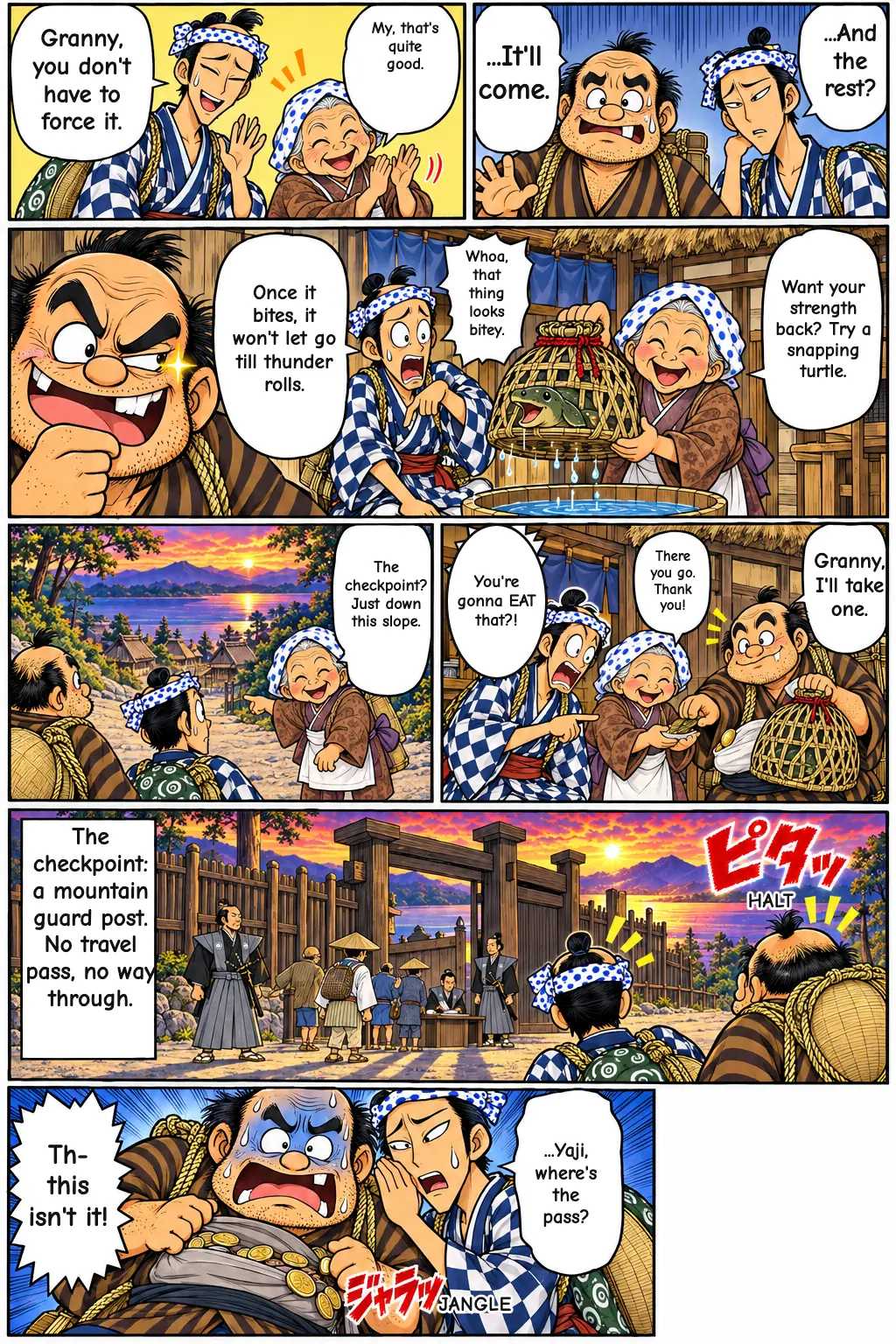
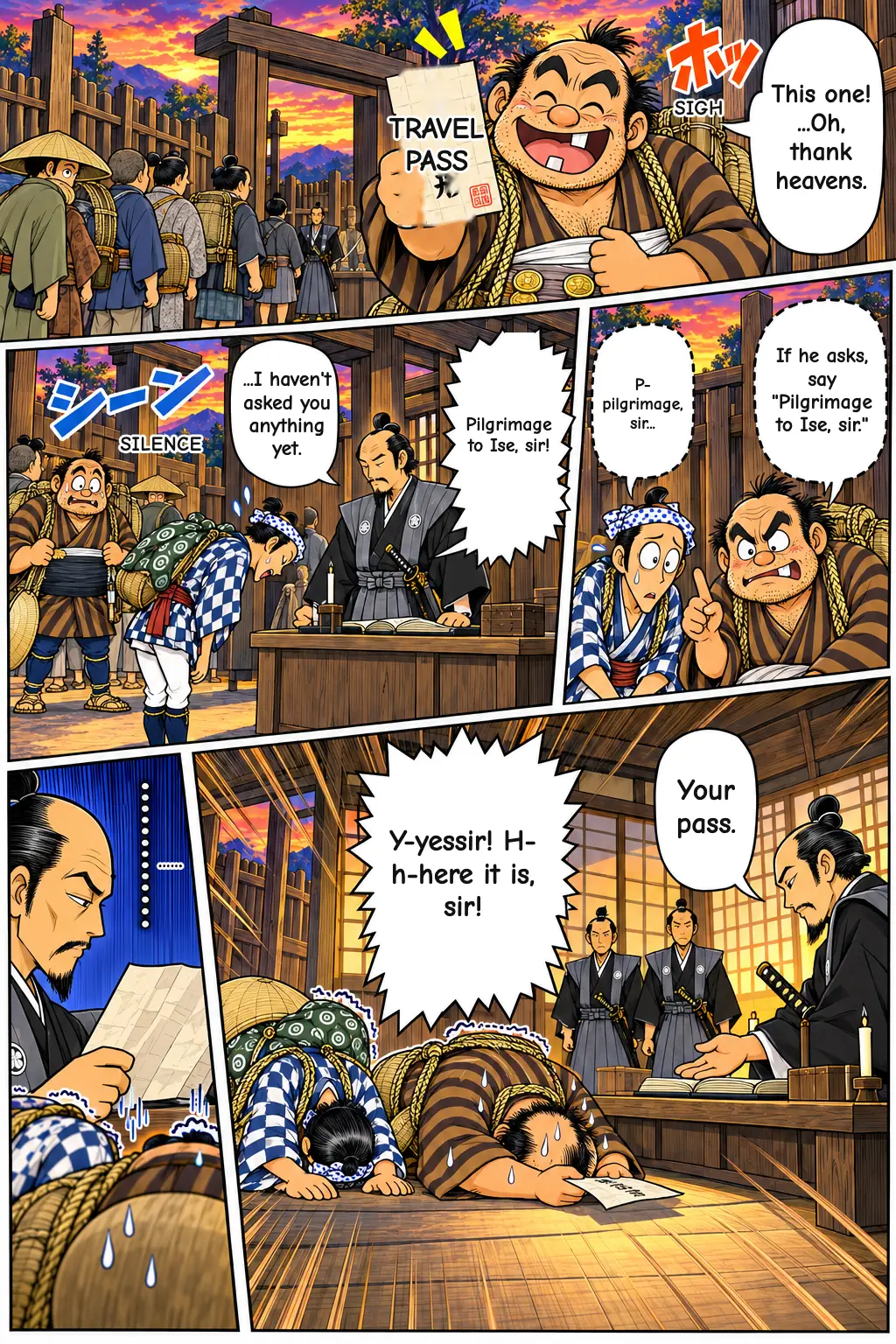
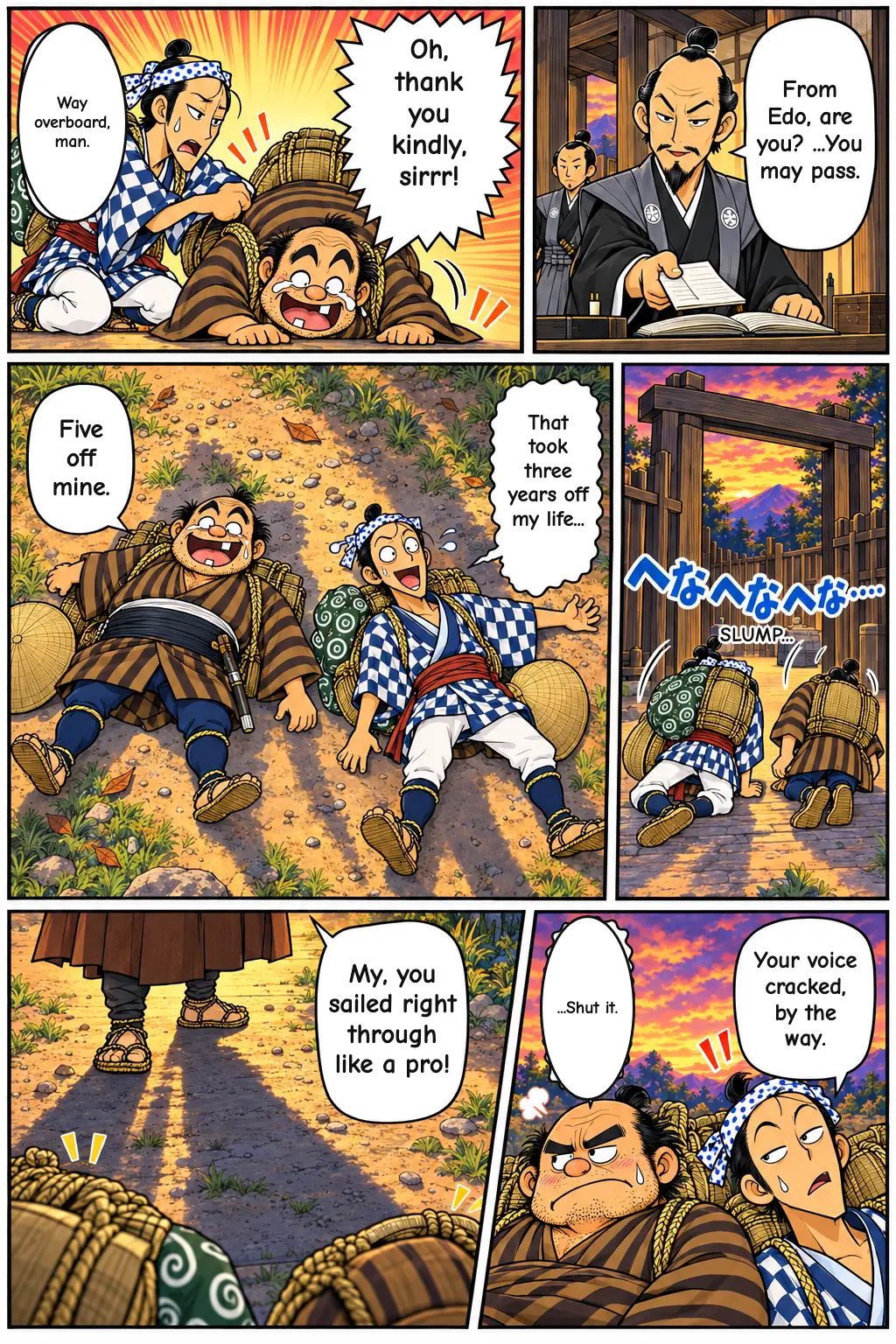
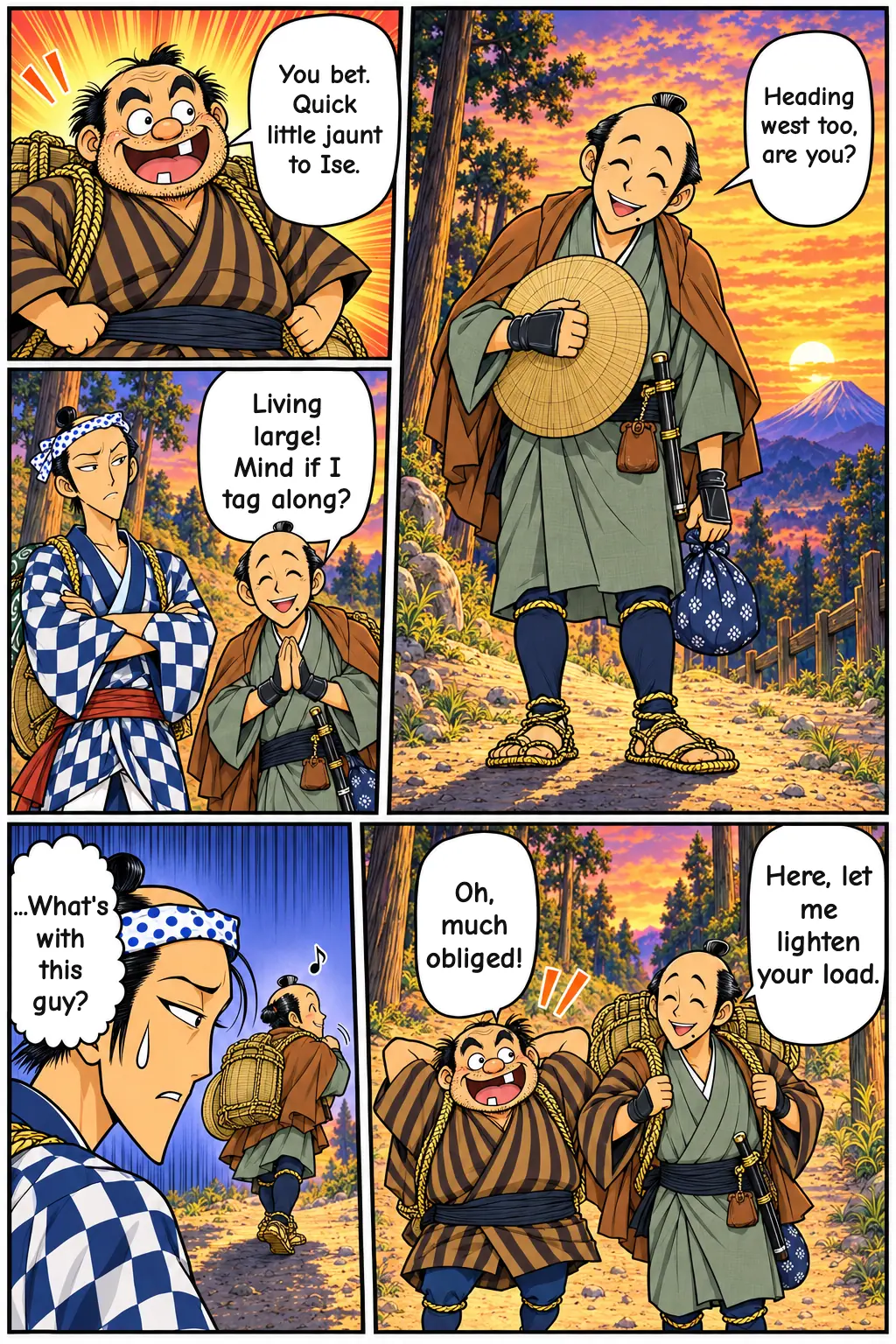
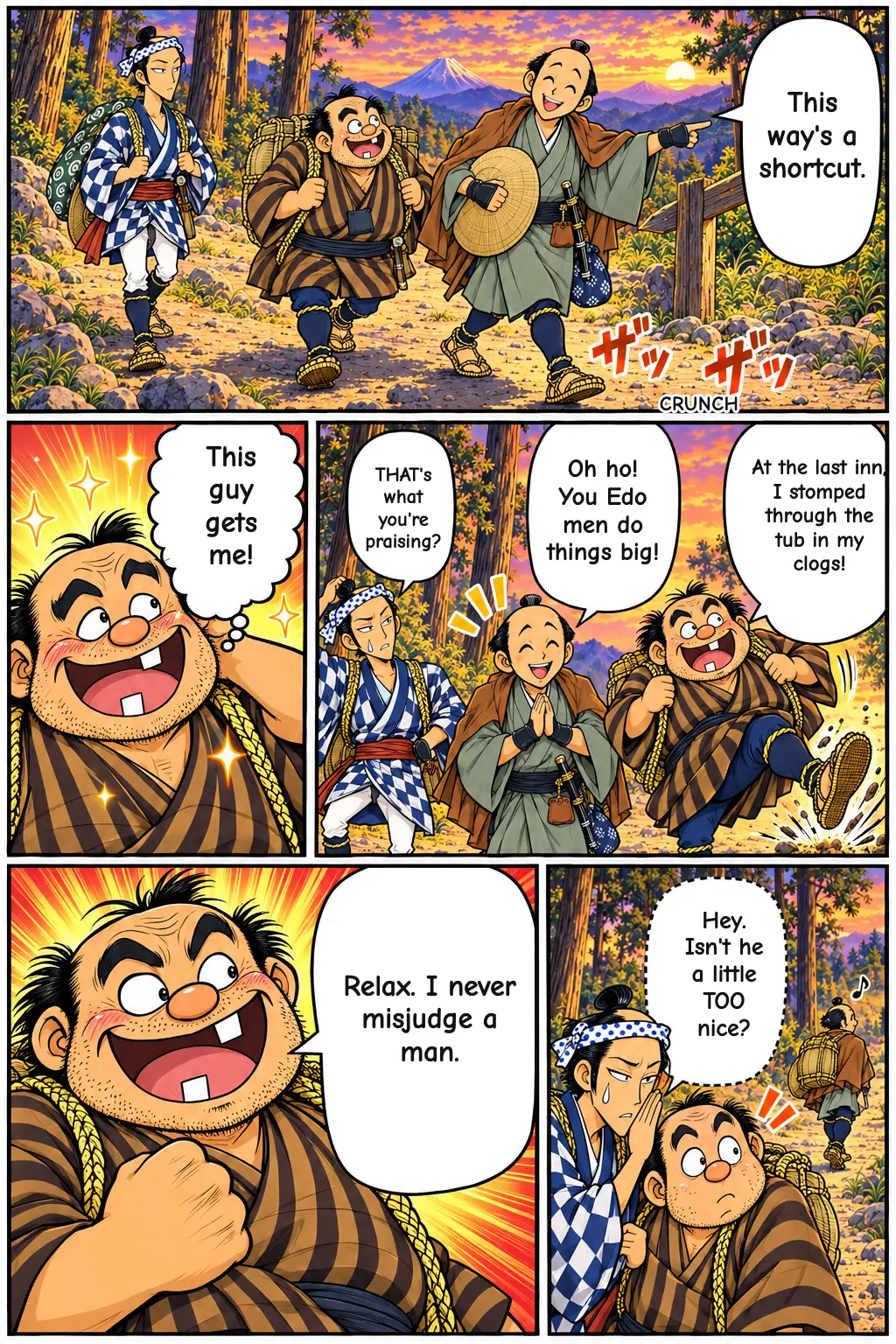
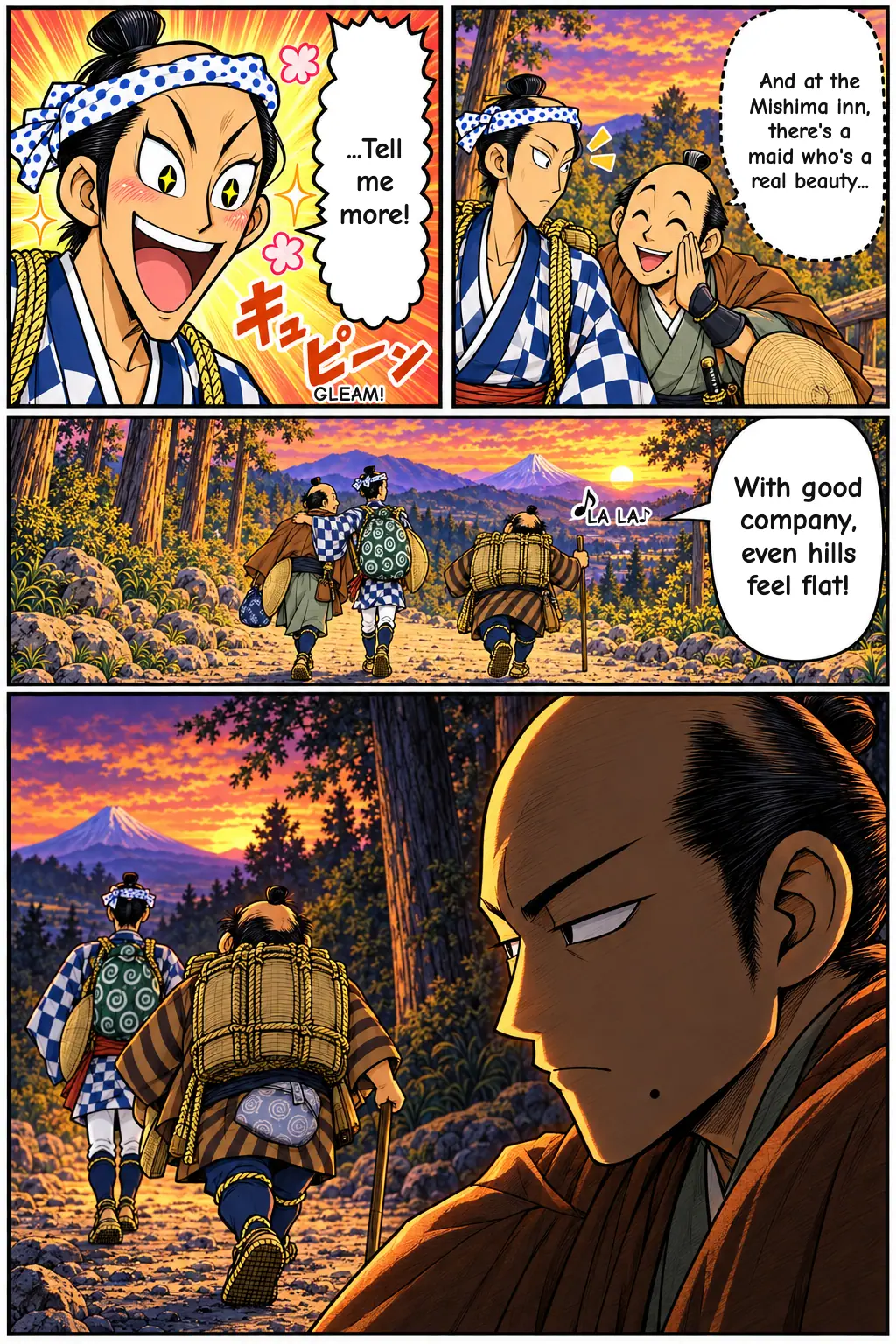
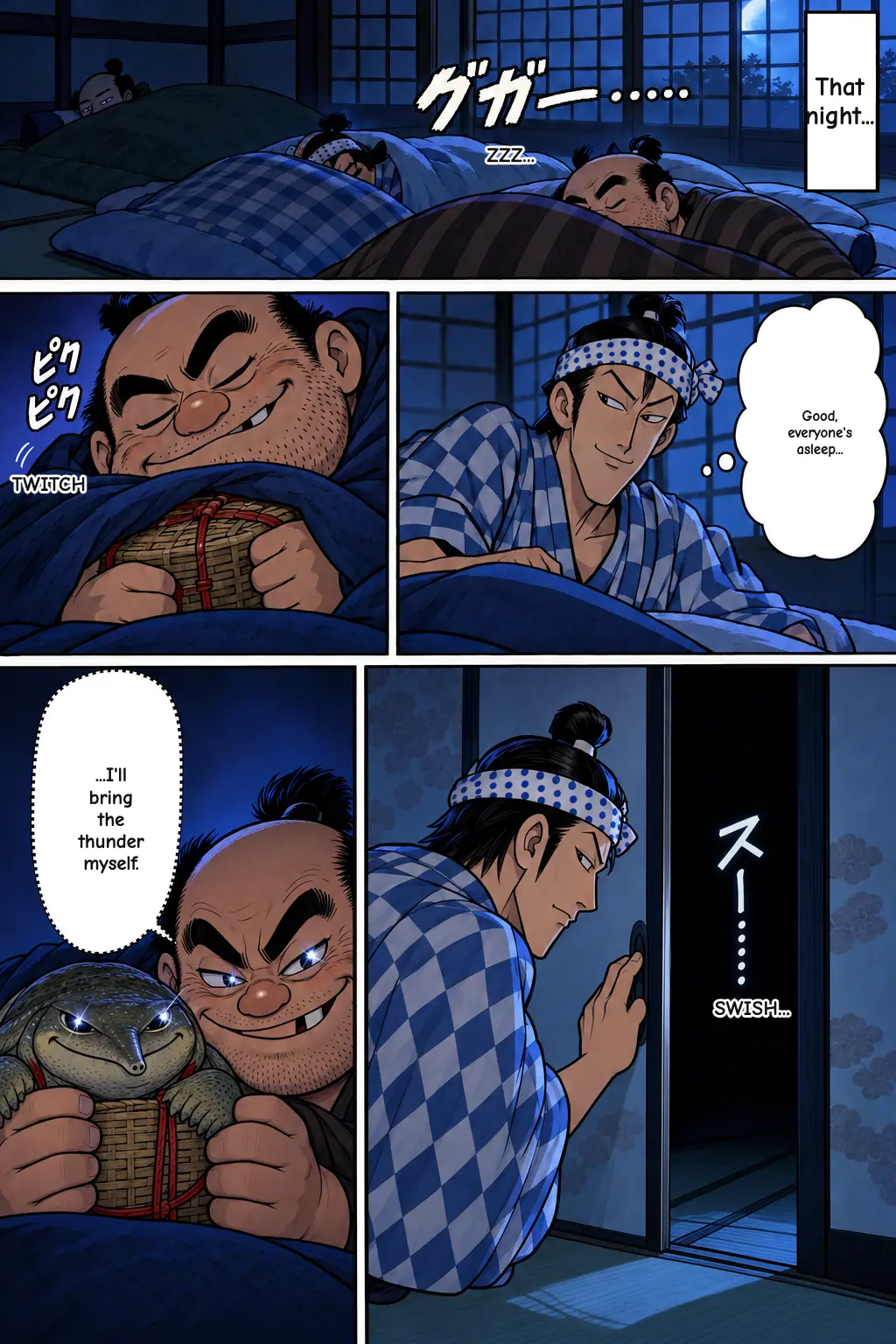
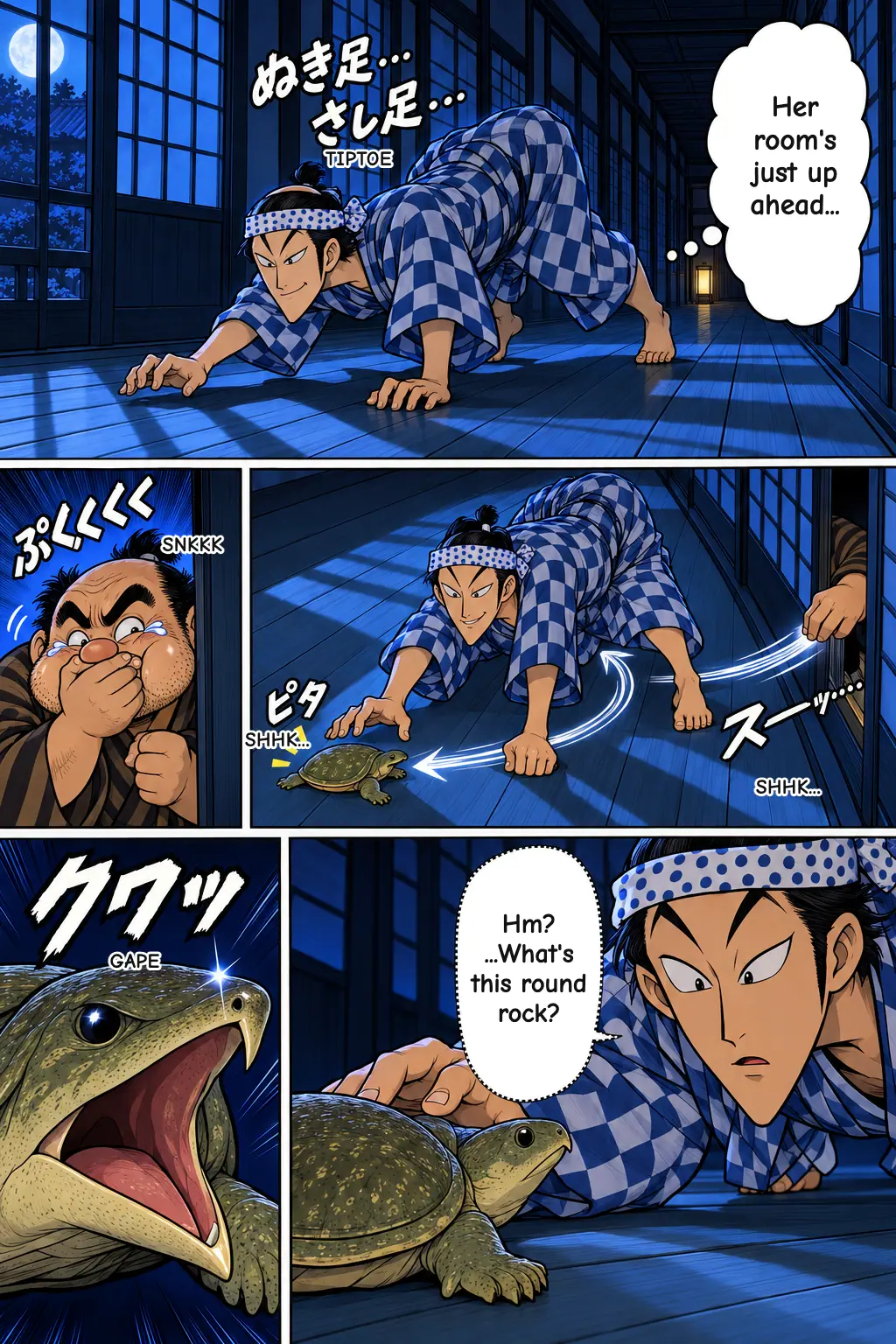
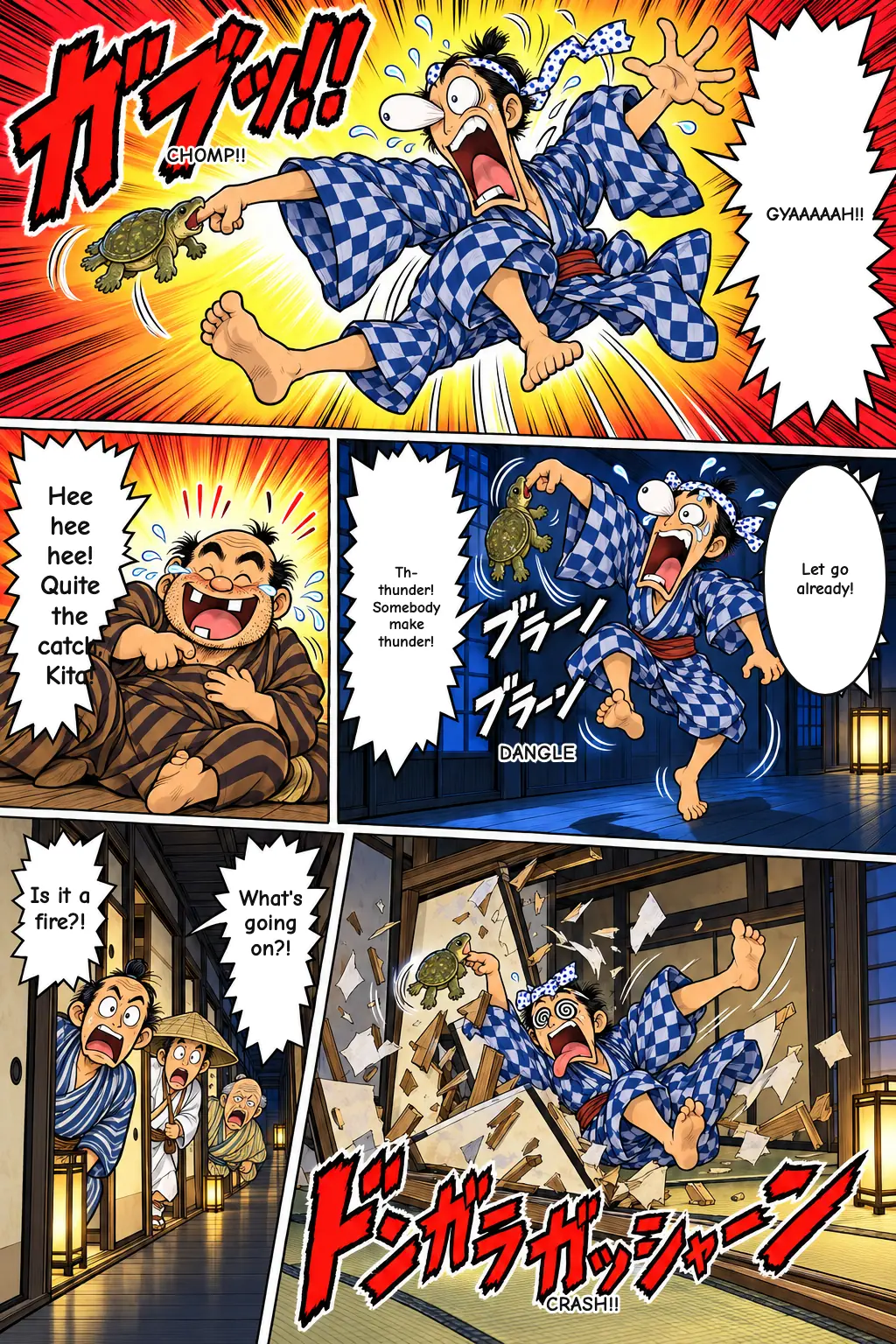
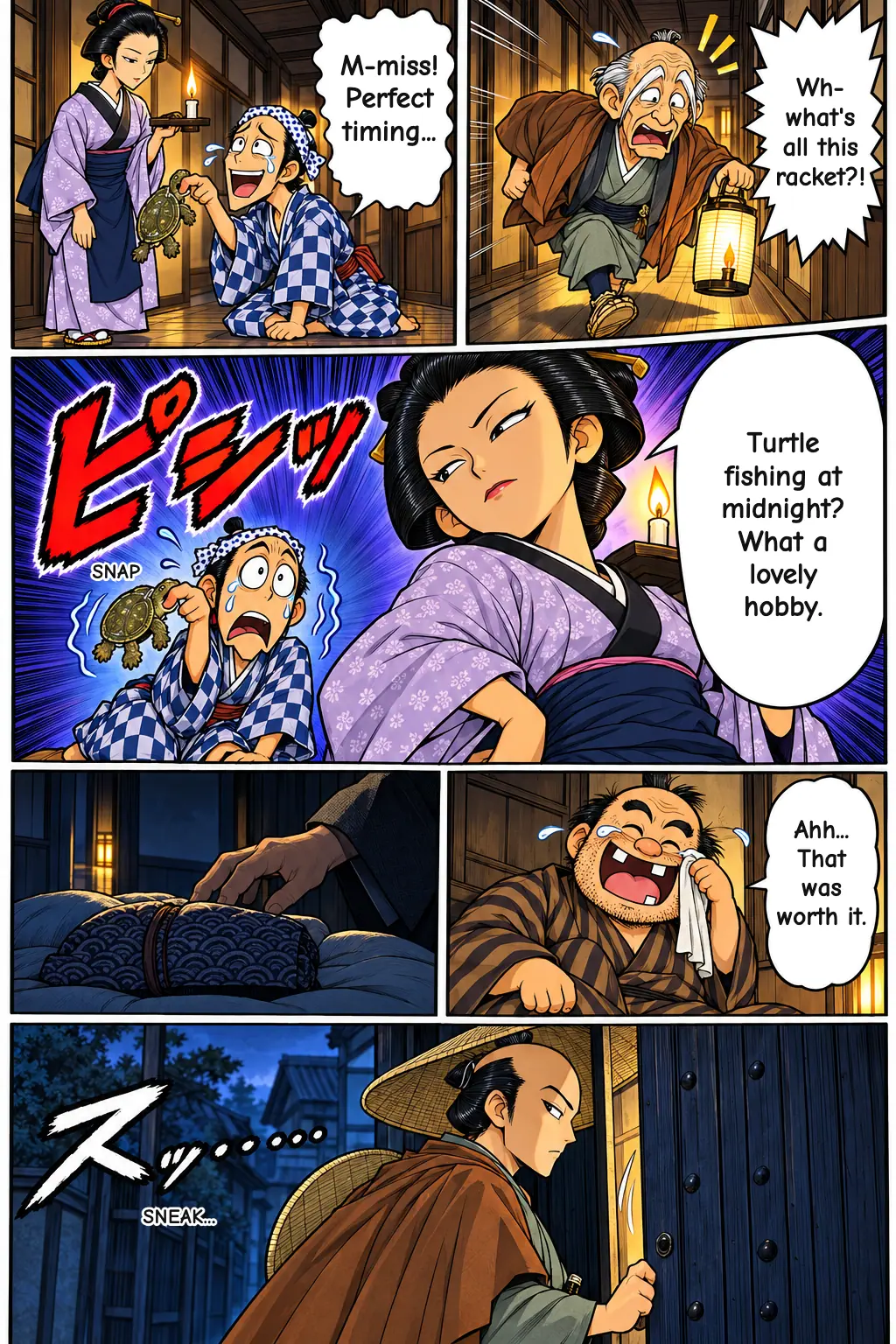
Yaji finally drags himself over Hakone's brutal slopes and through the mountain checkpoint, then falls hard for a friendly fellow traveler who loves his bragging. After a midnight snapping-turtle prank turns the Mishima inn upside down, the boys wake up to find every coin of their travel money gone.
Get new episodes in your feed. Follow us on:ThreadsBluesky
Story summary
Tōkaidōchū Hizakurige (often translated as "Shank's Mare") is a comic novel by Jippensha Ikku, a popular Edo-period writer. The first volume came out in 1802 and the second in 1803. It follows two men from Edo (old Tokyo), Yajirobei and Kitahachi, better known as Yaji and Kita. They set off west along the Tokaido, the great highway between Edo and Kyoto, on a pilgrimage to the Ise Shrine. They say they want to shake off a run of bad luck, but mostly they want a good time. Just before this part of the trip, the pair cause a scene at an inn in Odawara.
Hizakurige Hakone & Mishima Explained: Yaji and Kita Get Robbed on the Tokaido
In short: The Hakone and Mishima chapters of Tokaido Hizakurige follow Yaji and Kita, two jokers from Edo on their way to the Ise Shrine. They struggle over the Hakone mountains, make friends with a kind-seeming traveler, and after a late-night snapping-turtle prank throws their Mishima inn into chaos, they wake up to find he was a thief and their travel money is gone. The story comes from Jippensha Ikku's comic novel Tōkaidōchū Hizakurige, published in installments starting in 1802.
The Original Story: From Hakone to a Robbery at Mishima
Tōkaidōchū Hizakurige (often translated as "Shank's Mare") is a comic novel by Jippensha Ikku, a popular Edo-period writer. The first volume came out in 1802 and the second in 1803. It follows two men from Edo (old Tokyo), Yajirobei and Kitahachi, better known as Yaji and Kita. They set off west along the Tokaido, the great highway between Edo and Kyoto, on a pilgrimage to the Ise Shrine. They say they want to shake off a run of bad luck, but mostly they want a good time.
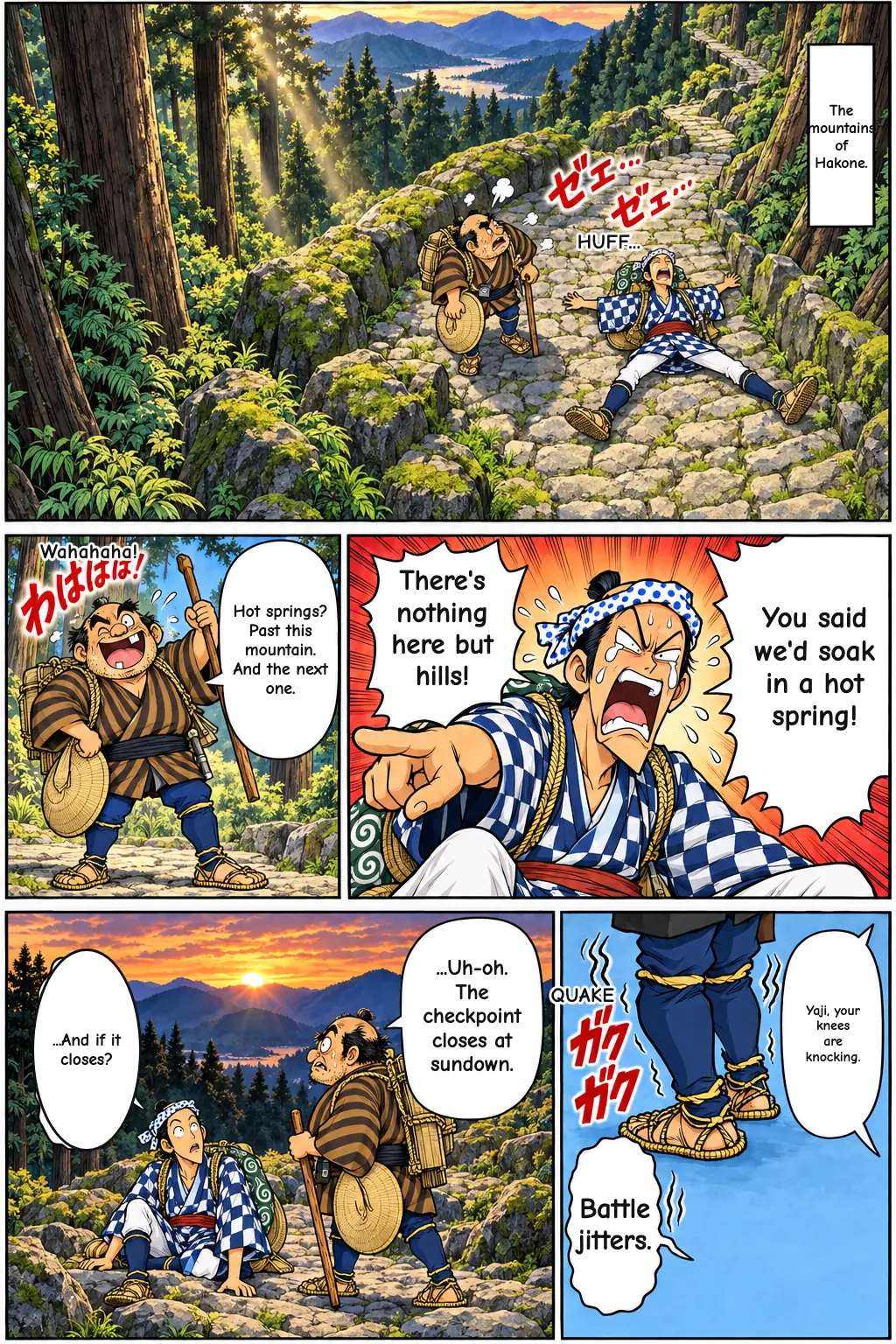
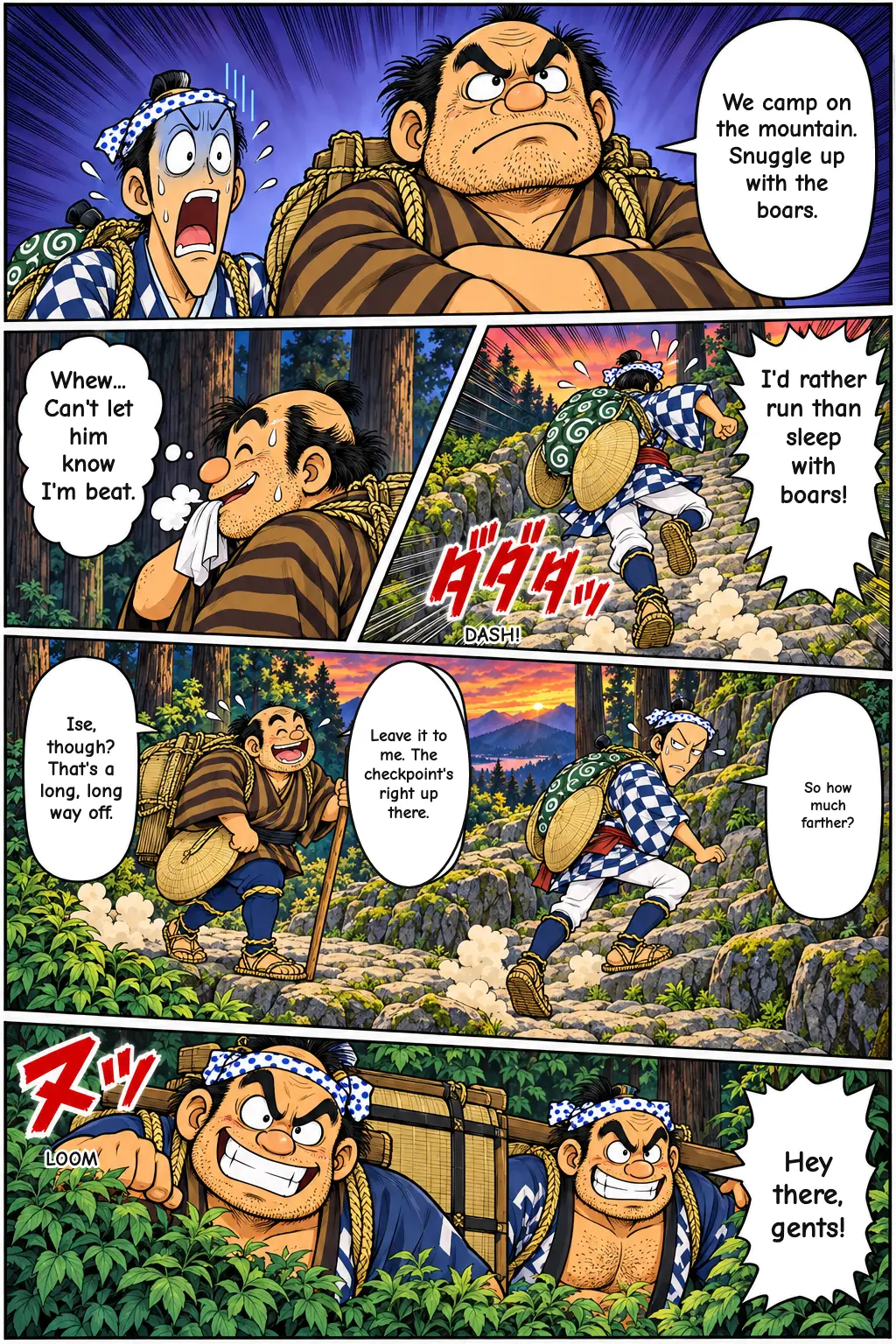
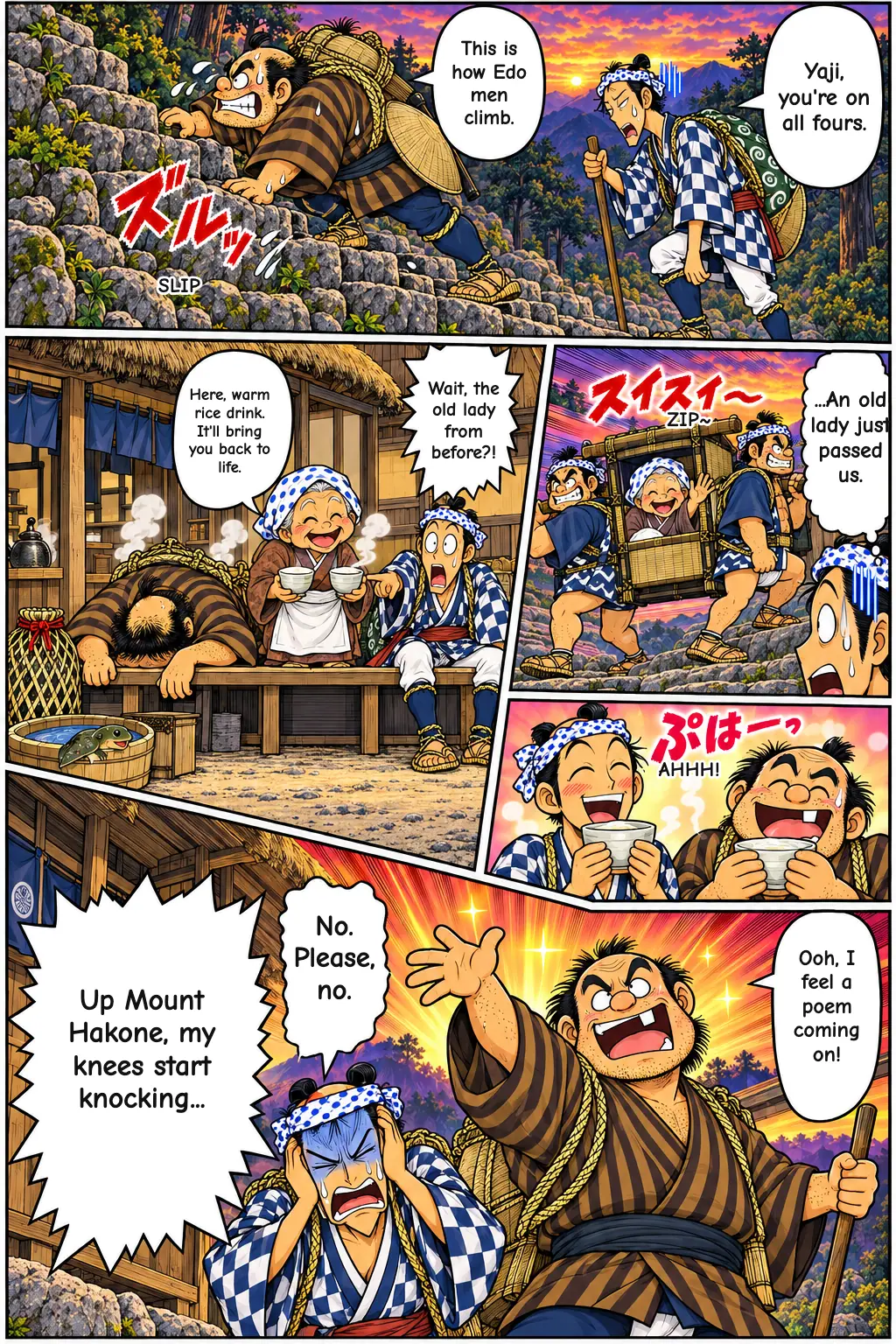
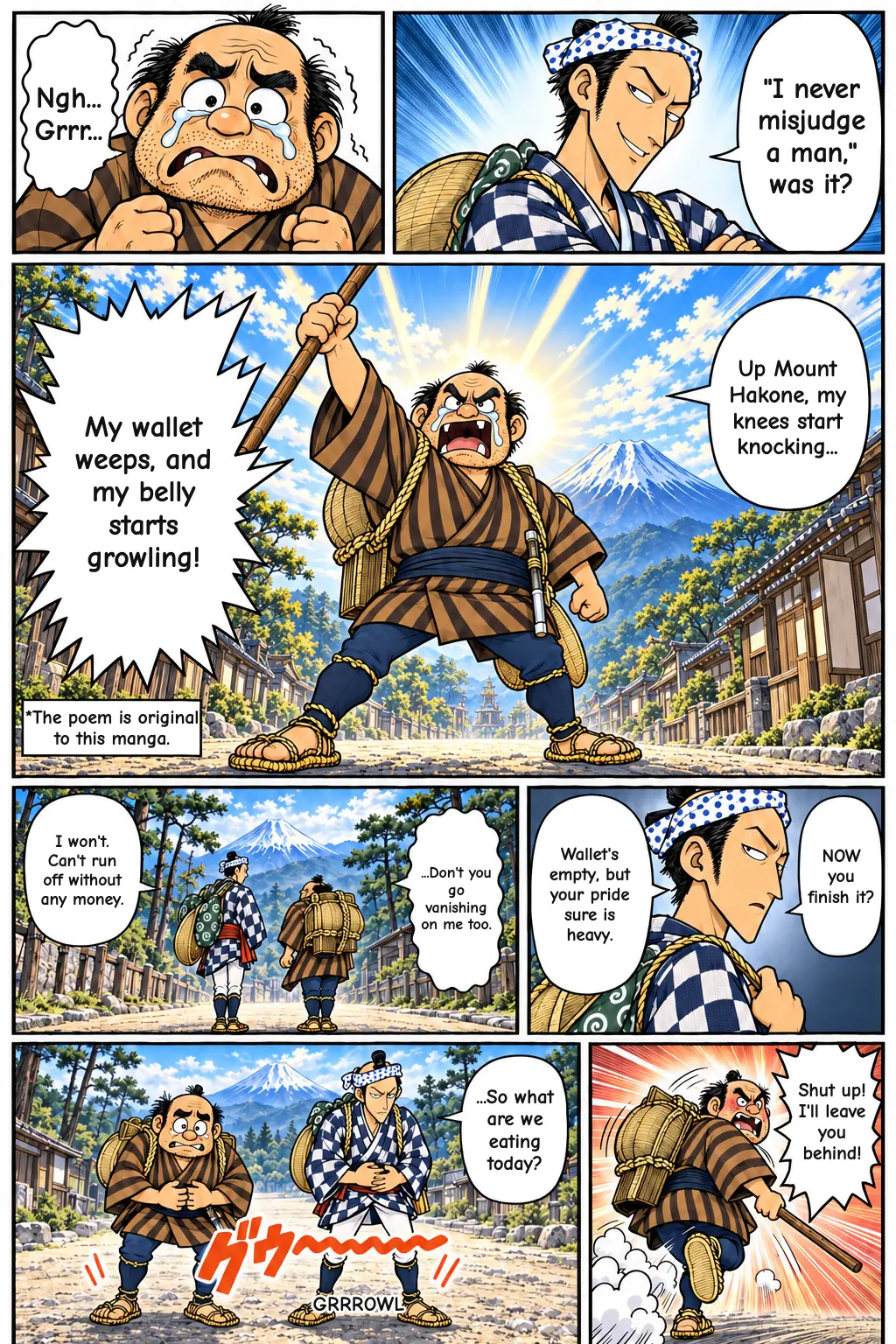
Just before this part of the trip, the pair cause a scene at an inn in Odawara. They have never seen a goemon-buro, a bathtub with an iron bottom heated by a fire underneath, and when they get in wearing wooden clogs, they break straight through the bottom. Leaving Odawara, they climb the steep Hakone mountain pass, one of the hardest stretches of the whole road. Ikku tells of their sore legs and stops at roadside teahouses with jokes and short comic poems.
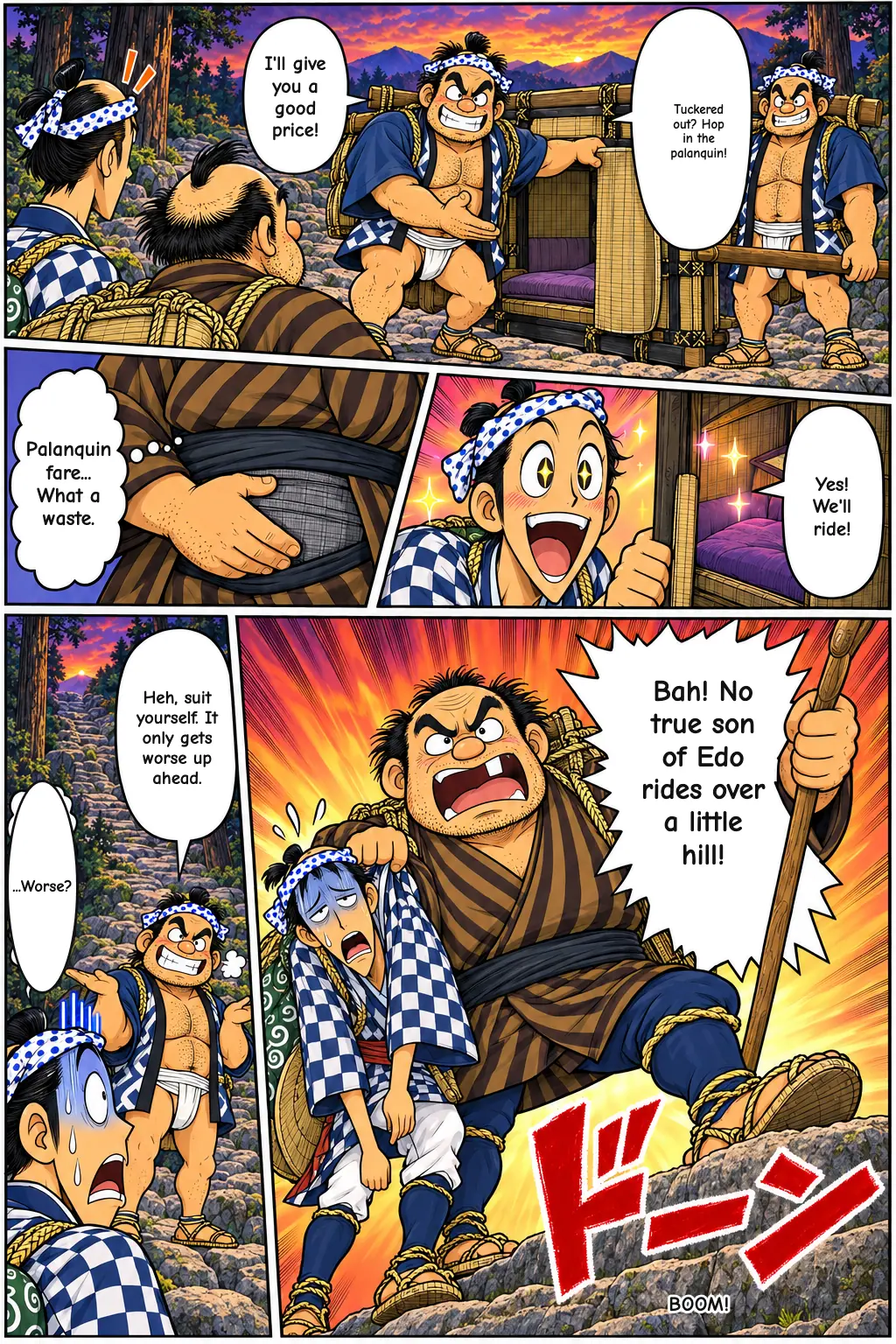
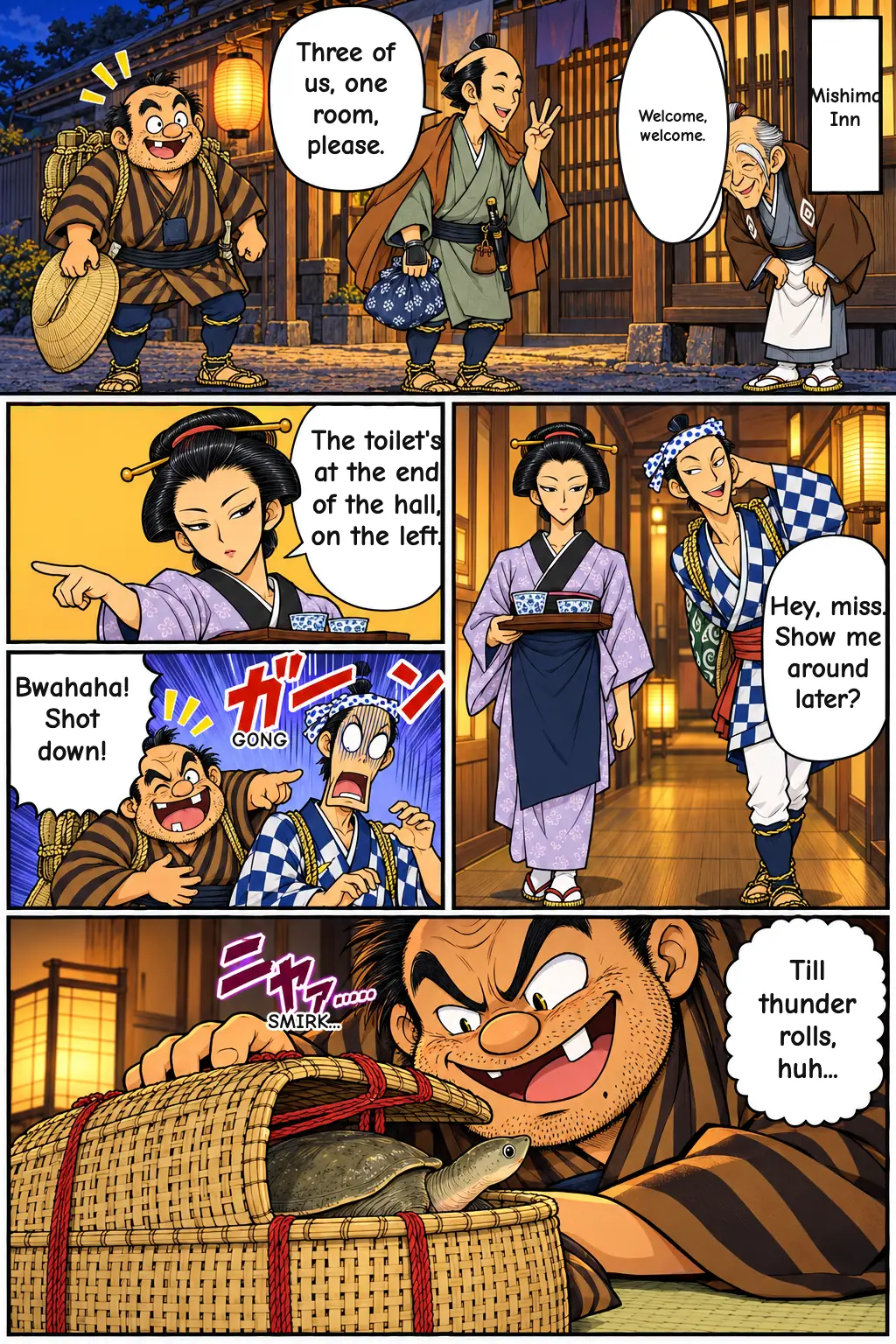
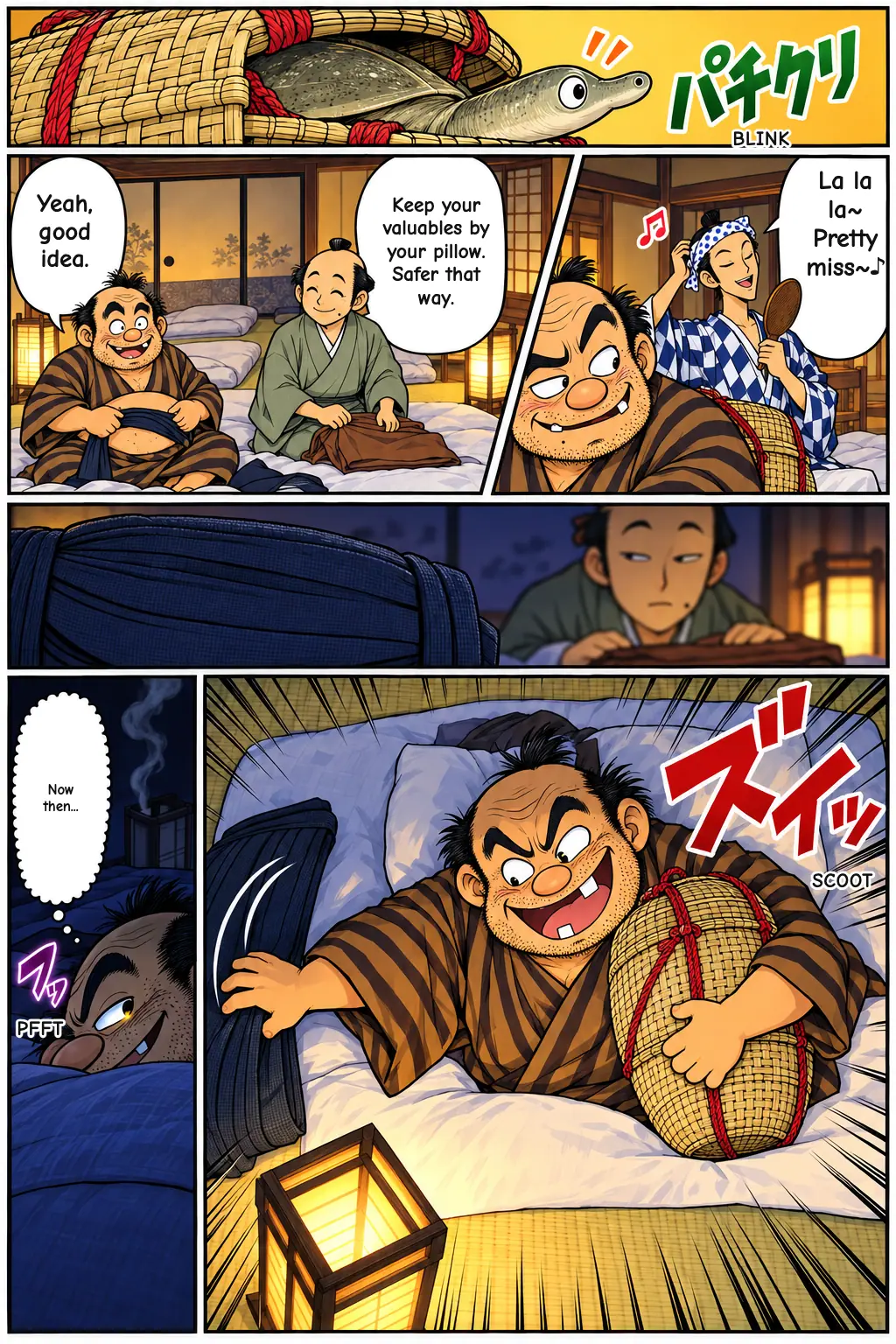
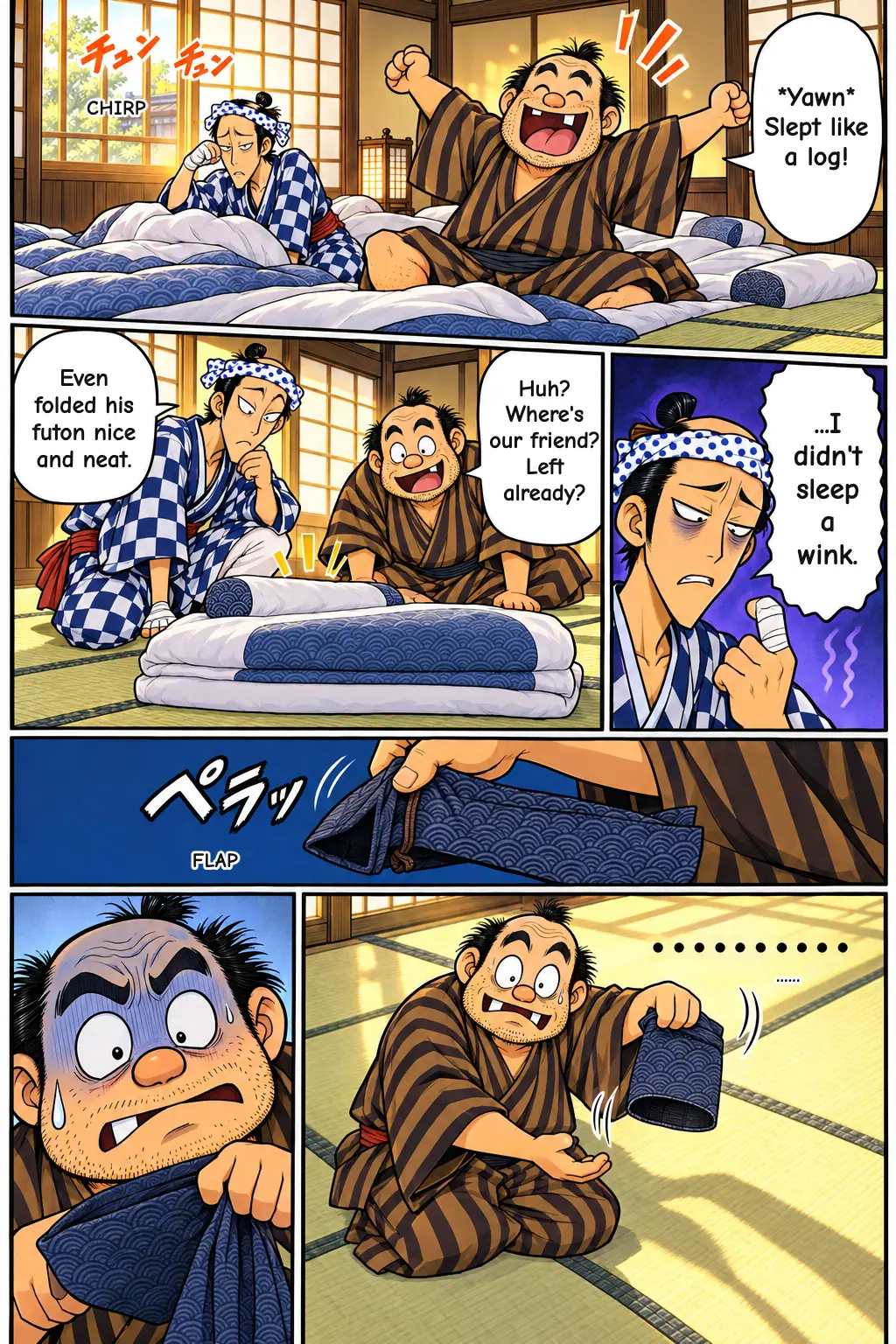
On the way down toward Mishima, a friendly traveler starts chatting with them and joins the group. He seems helpful and easy to talk to, and the three end up at the same inn in Mishima. That night a snapping turtle (suppon) they picked up on the road gets loose in the dark, a prank goes wrong, someone's finger gets bitten, and the whole inn wakes up yelling. Different readings of the text disagree about exactly who pranked whom and who was bitten.
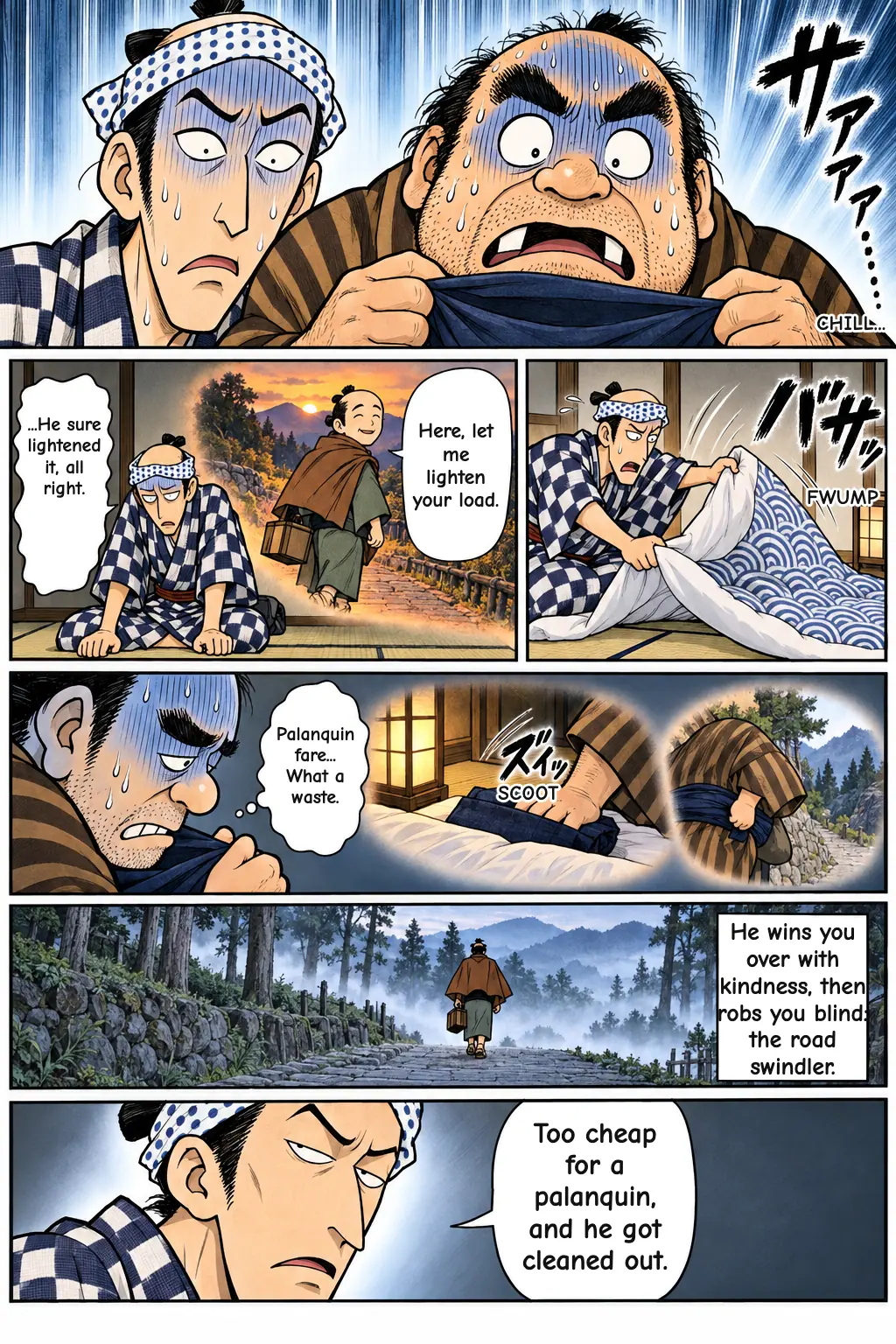
In the morning, the new friend is gone, and so is Yaji's travel money. He was a goma no hai, a thief who poses as a fellow traveler to rob people on the road. Pale and broke, Yaji and Kita have to keep going west with no money at all.
Main Characters
Yajirobei (Yaji) is the older of the two. He brags, chases women, makes up comic poems on the spot, and loves to play tricks, though they backfire on him just as often. In a prequel volume Ikku published later, in 1814, Yaji is a man of about fifty who grew up in a merchant family in Sunpu (today's Shizuoka) and moved to Edo after wasting his fortune.
Kitahachi (Kita) is younger, about thirty in that prequel, which describes him as a former traveling actor who had been living at Yaji's house. He is impulsive, always hungry, and swaps pranks and put-downs with Yaji all the way down the road. The thief at Mishima is the third key figure: someone who wins people over with friendliness and then takes everything.
Background: Travel, Thieves, and Laughter in Edo Japan
In the early 1800s, ordinary townspeople traveled in large numbers, and a pilgrimage to Ise was a socially accepted reason for a long trip. The Tokaido was lined with post towns like Odawara and Mishima, where inns, teahouses, and porters served travelers. The Hakone checkpoint (sekisho) was a real government barrier where officials checked travelers, which made Hakone famous for both its steep road and its strict inspections.
Highway thieves were a real danger, and goma no hai was a common name for the kind who blended in with travelers. One theory says the name comes from swindlers who sold ordinary ash, claiming it came from the sacred fires (goma) of a famous Buddhist monk. Ikku turns that real fear into comedy: Yaji's love of praise is exactly what makes him easy to fool.
A big part of the book's appeal is its wordplay. Ikku fills the story with puns, regional accents, and kyōka, funny poems written in the classical 31-syllable form. The book was a huge hit, and Ikku kept writing sequels for years, eventually sending Yaji and Kita well beyond the Tokaido.
What the Manga Changes
Episode 3 keeps the main events of the original: the Hakone climb, the friendly stranger, the turtle chaos at the Mishima inn, and the stolen travel money. Some parts are new or adjusted. The manga shows the checkpoint scene with extra tension, and draws the mountain scenery and views of Mount Fuji freely. The thief's look, voice, and helpful acts, like carrying bags or showing the way, were created for the manga.
Ikku's original includes adult humor about inn women at night. The manga tones this down to the characters sneaking out of the room. Because the original kyōka poems rely on Japanese puns, the manga swaps them for English rhymes, wordplay, and punchlines rather than translating them word for word. It doesn't name an exact amount for the stolen money, and the inn staff, the reaction faces, and the cliffhanger ending were invented for this adaptation.
Where to Read It
If you want to see Yaji's bragging catch up with him, YAJI AND KITA: The Great Tokaido Road Trip on Manga Portal retells Ikku's road trip one episode at a time. Every episode is free to read, with no sign-up. Episode 3 picks up at Hakone, and the earlier episodes cover the departure from Edo and the bathtub disaster at Odawara.
Characters in this episode
Yajirobei (Yaji)
The older traveler from Edo: boastful, flirtatious, always ready with a comic poem, and the one whose travel money is stolen at Mishima.
Kitahachi (Kita)
Yaji's younger companion and former houseguest, an impulsive, food-loving joker who trades pranks with Yaji the whole way.
The friendly stranger (goma no hai)
A traveler who joins the pair after Hakone and wins them over with kindness, then disappears in the night with their money.
The Mishima inn staff
The innkeeper and maids who get caught up in the midnight turtle chaos and the panic the next morning.
FAQ
What is Tokaido Hizakurige about?
It is a comic novel by Jippensha Ikku, first published in 1802, about two men from Edo, Yaji and Kita, who travel the Tokaido highway to the Ise Shrine. Along the way they keep getting into trouble through pranks, flirting, and boasting, and the book is full of puns and comic poems.
Who wrote Hizakurige?
Jippensha Ikku, a popular writer of the late Edo period. The book was such a hit that he kept writing sequels for many years.
What happens to Yaji and Kita in Mishima?
They share an inn with a friendly traveler they met after crossing Hakone. After a snapping-turtle prank causes chaos that night, they wake up to find the traveler gone along with Yaji's travel money. He was a goma no hai, a thief who preys on travelers.
What does goma no hai mean?
It was an Edo-period name for thieves who pretended to be travelers so they could rob people on the road. One theory says it comes from con men who sold fake 'sacred ash' from Buddhist goma fires.
Why is Hakone important in the story?
The Hakone pass was one of the steepest and hardest parts of the Tokaido, and it was home to a strict government checkpoint. For Edo-period readers, getting over Hakone was a famous part of the trip.