Episode 4Faked Success at Home, Fell Into Yam SoupThe Yam Soup of Mariko (Tokaido Hizakurige)
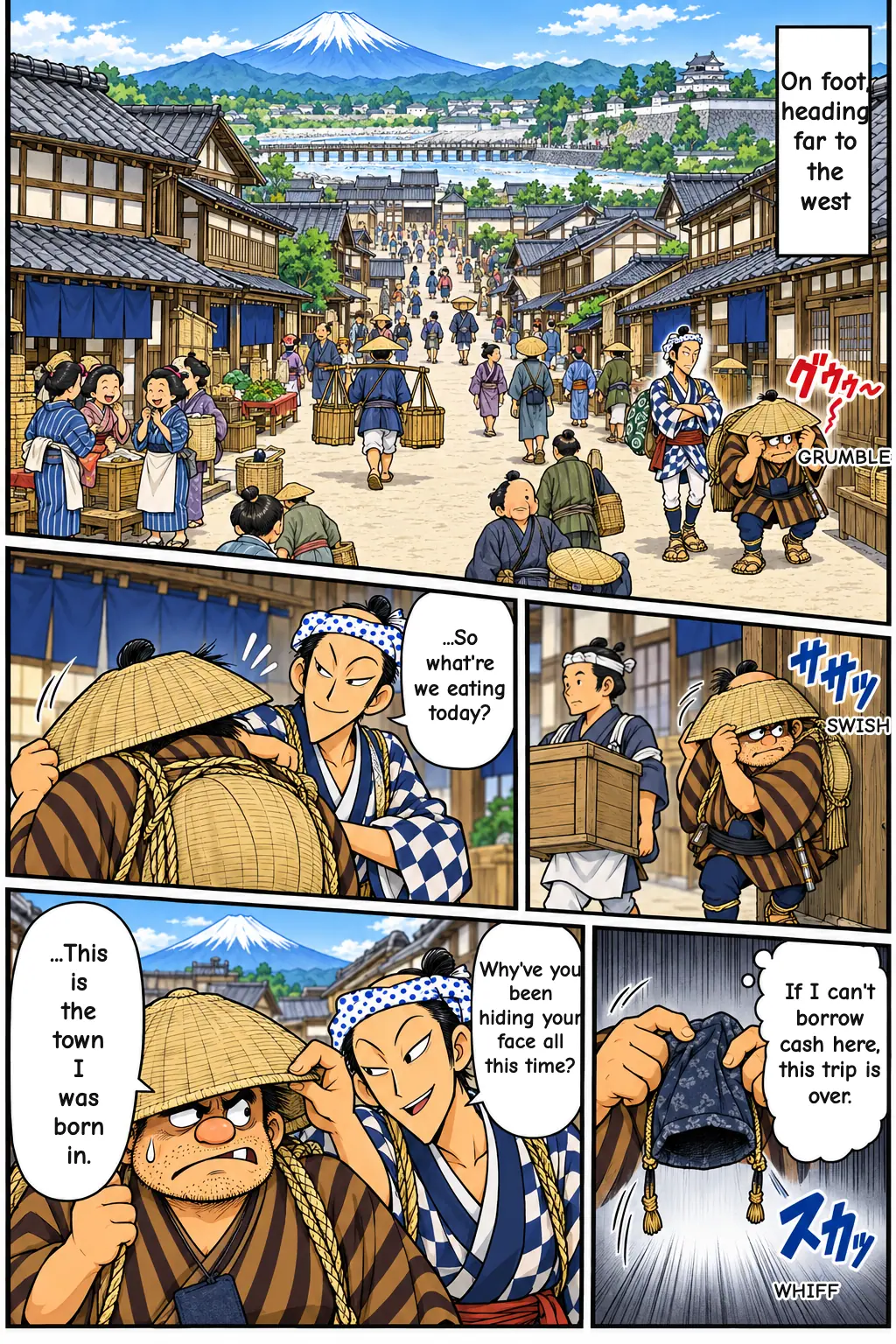
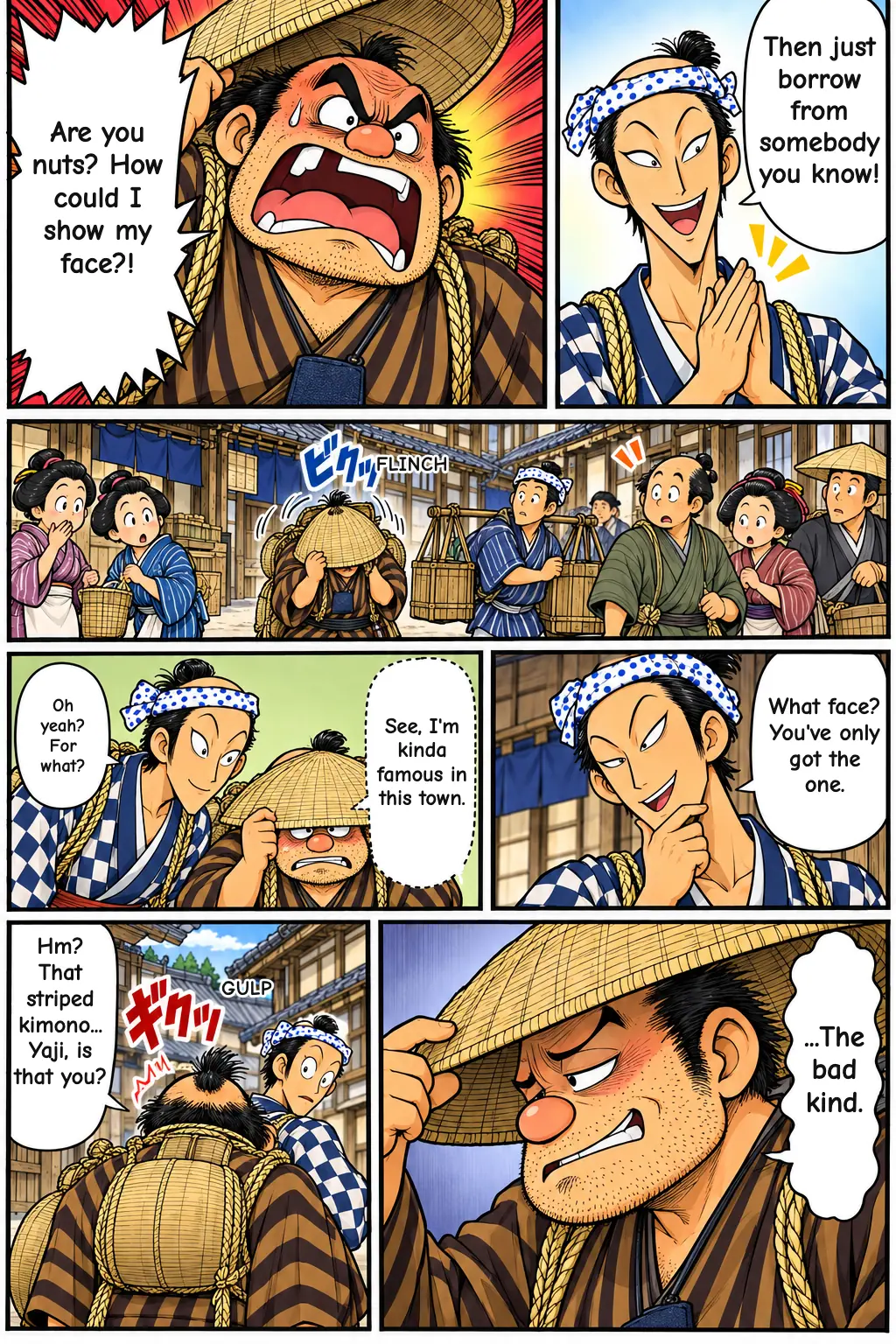
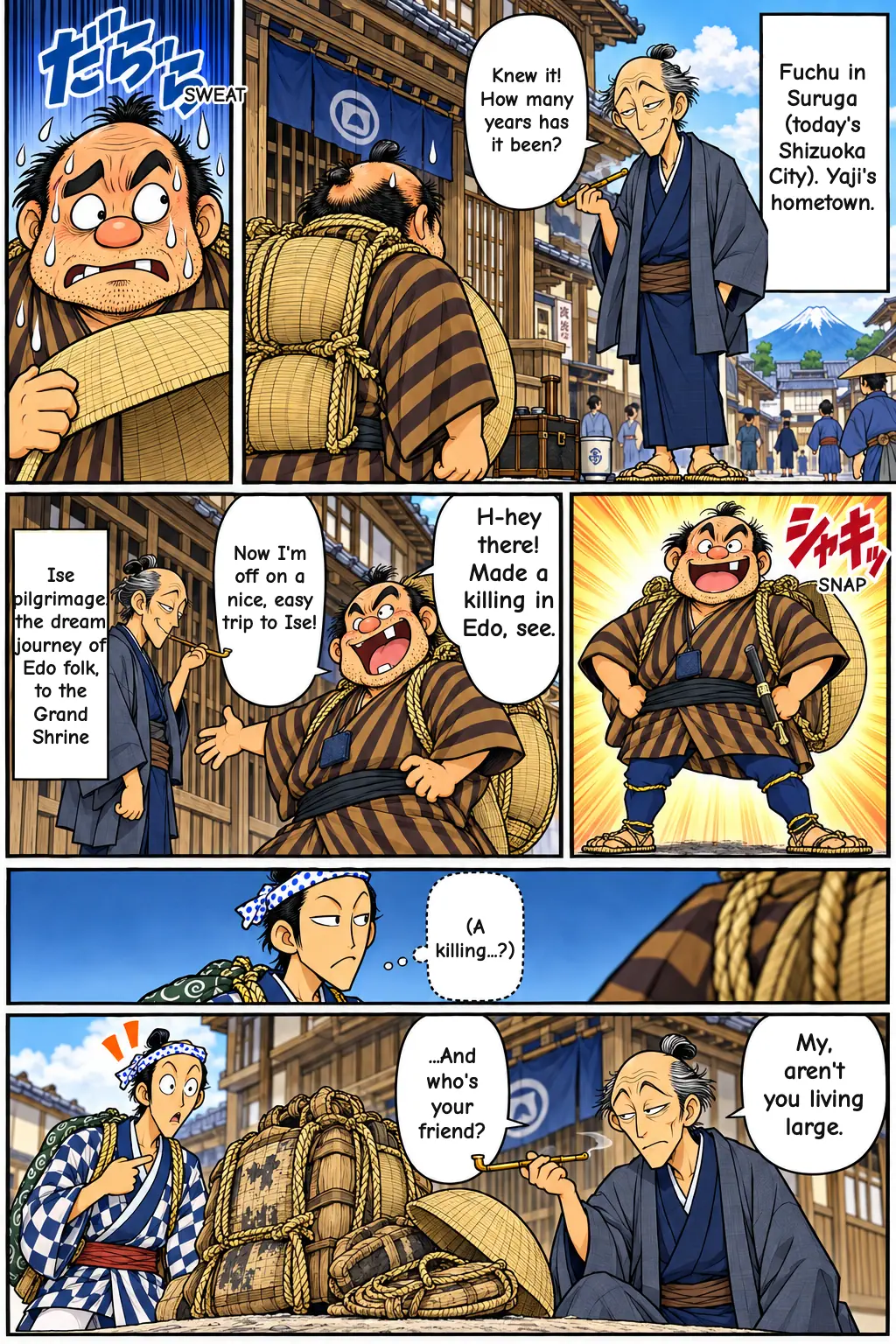
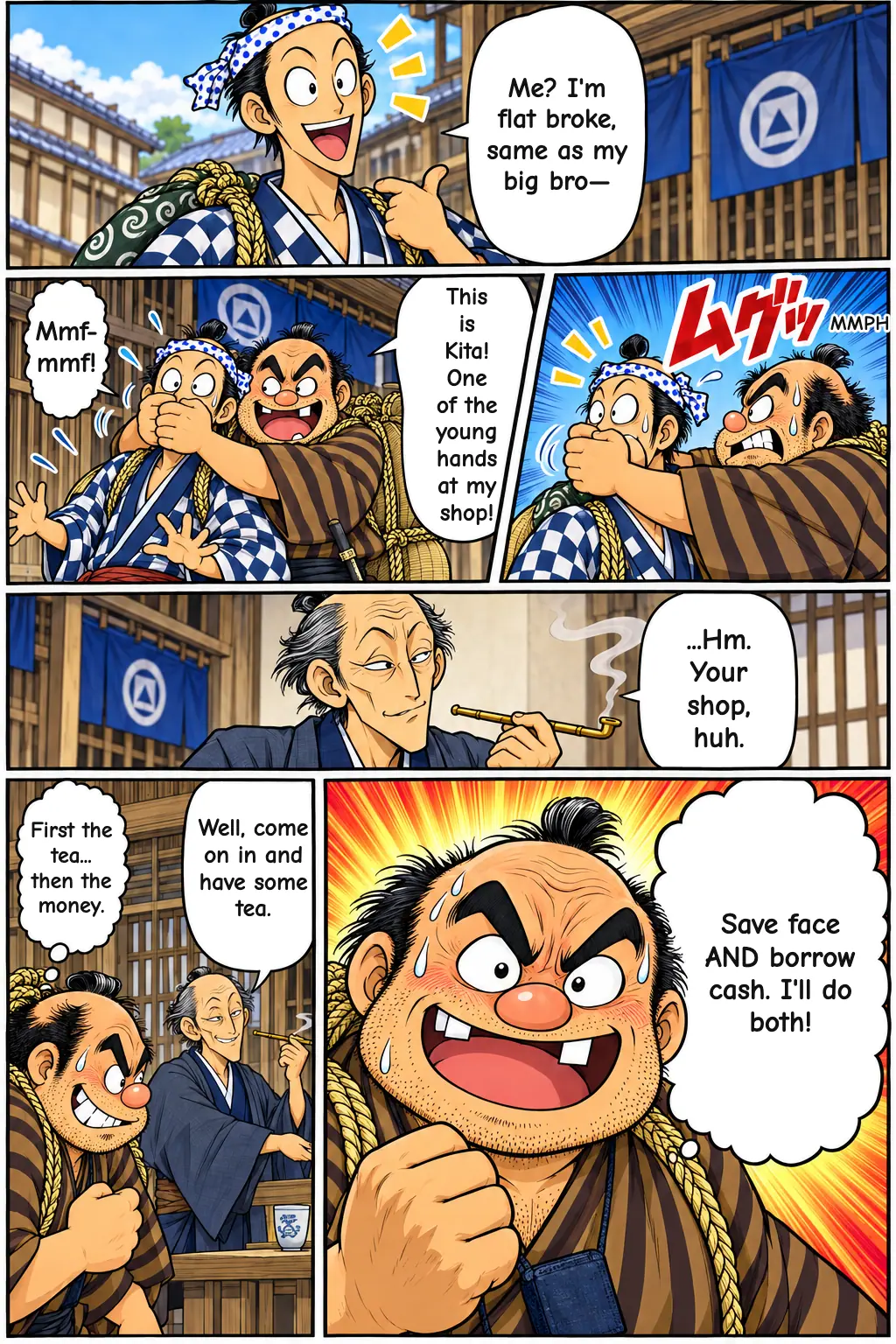
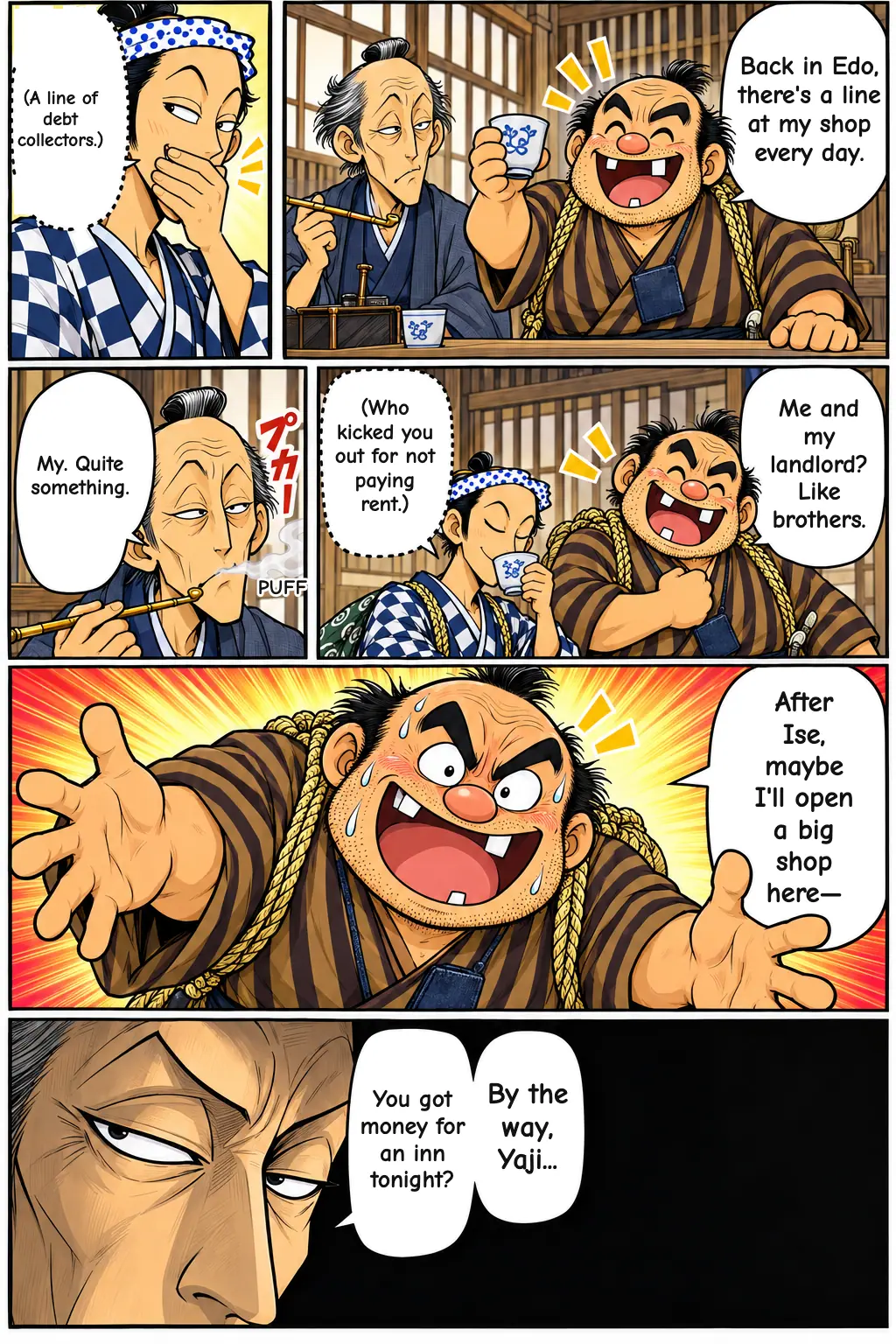
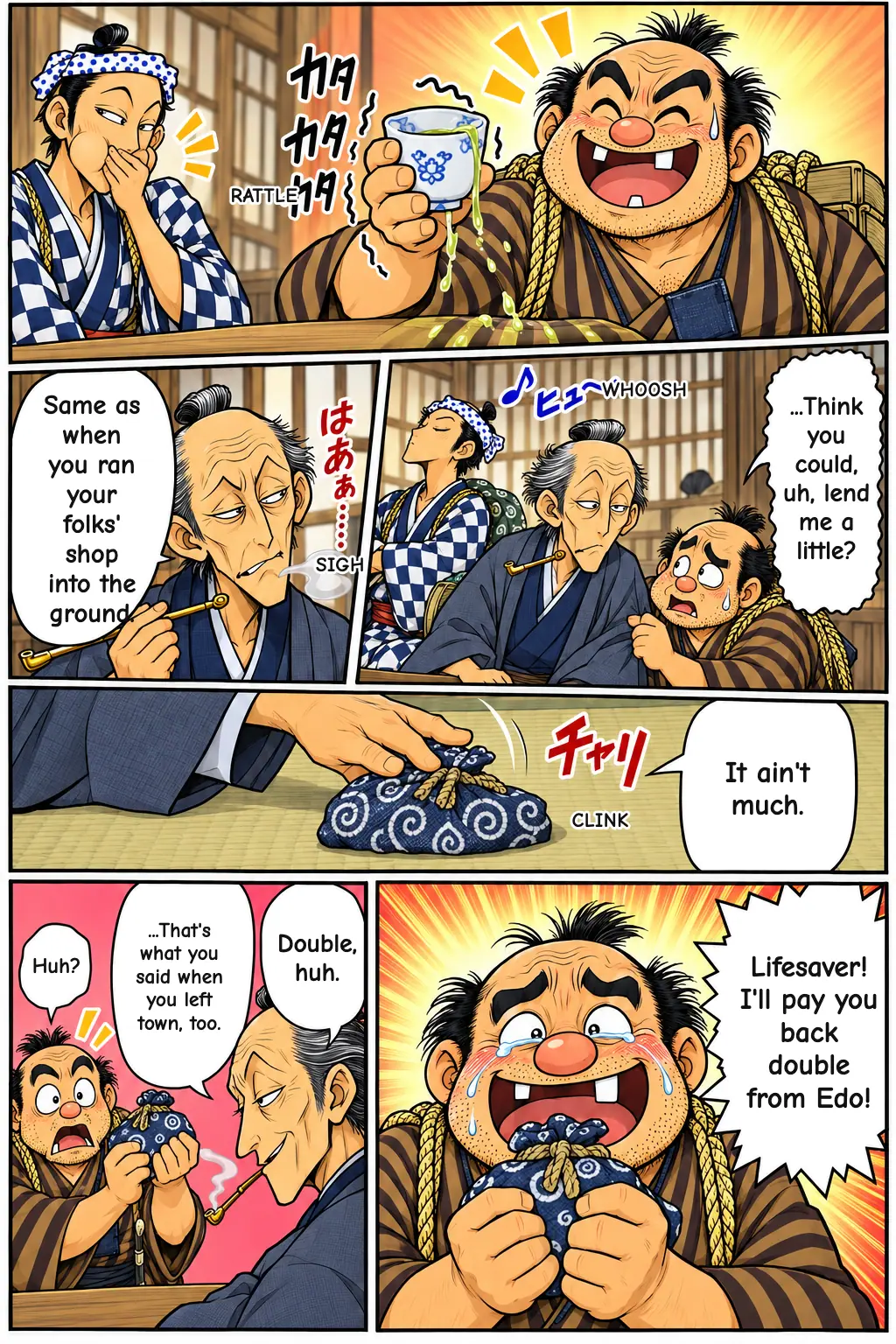
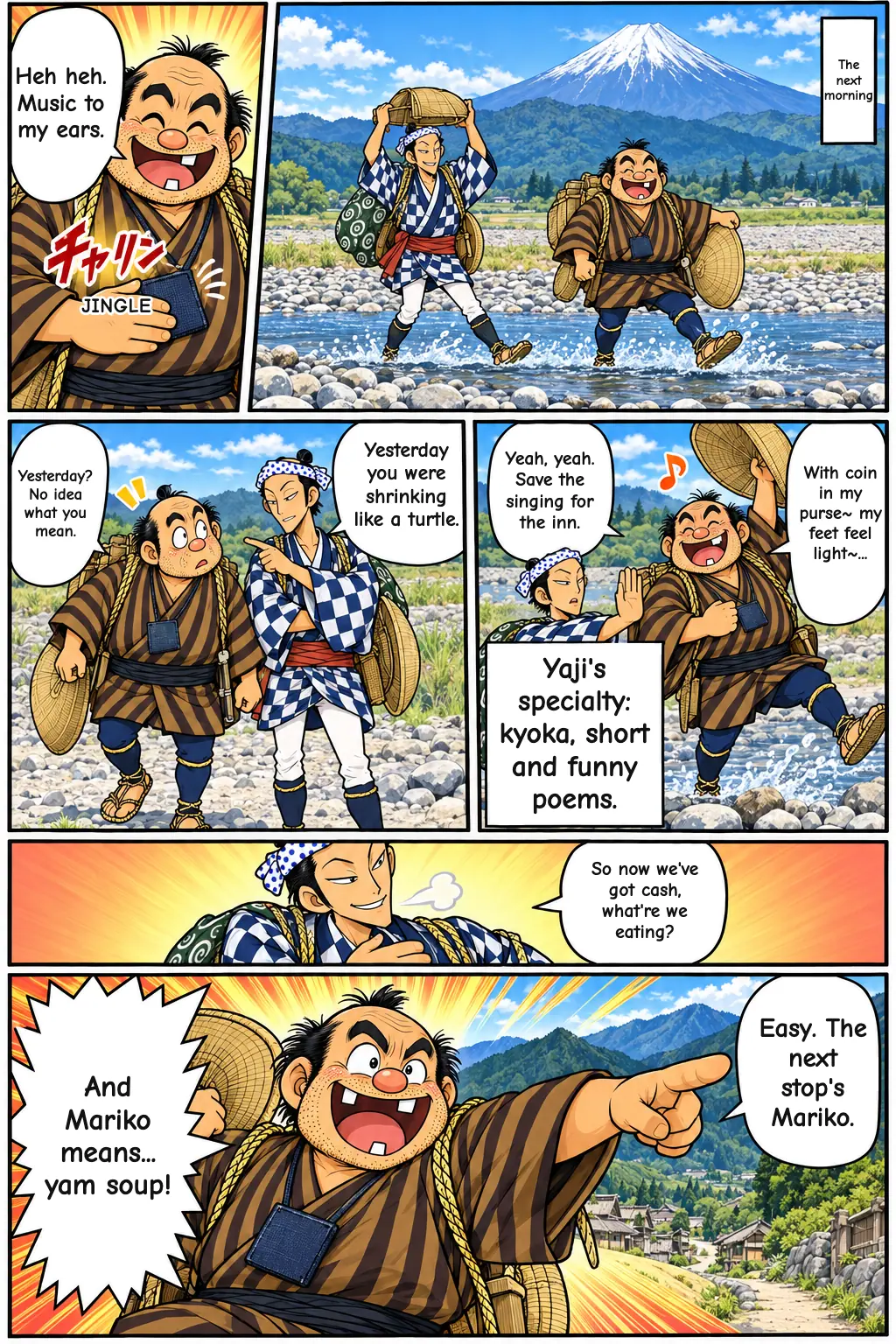
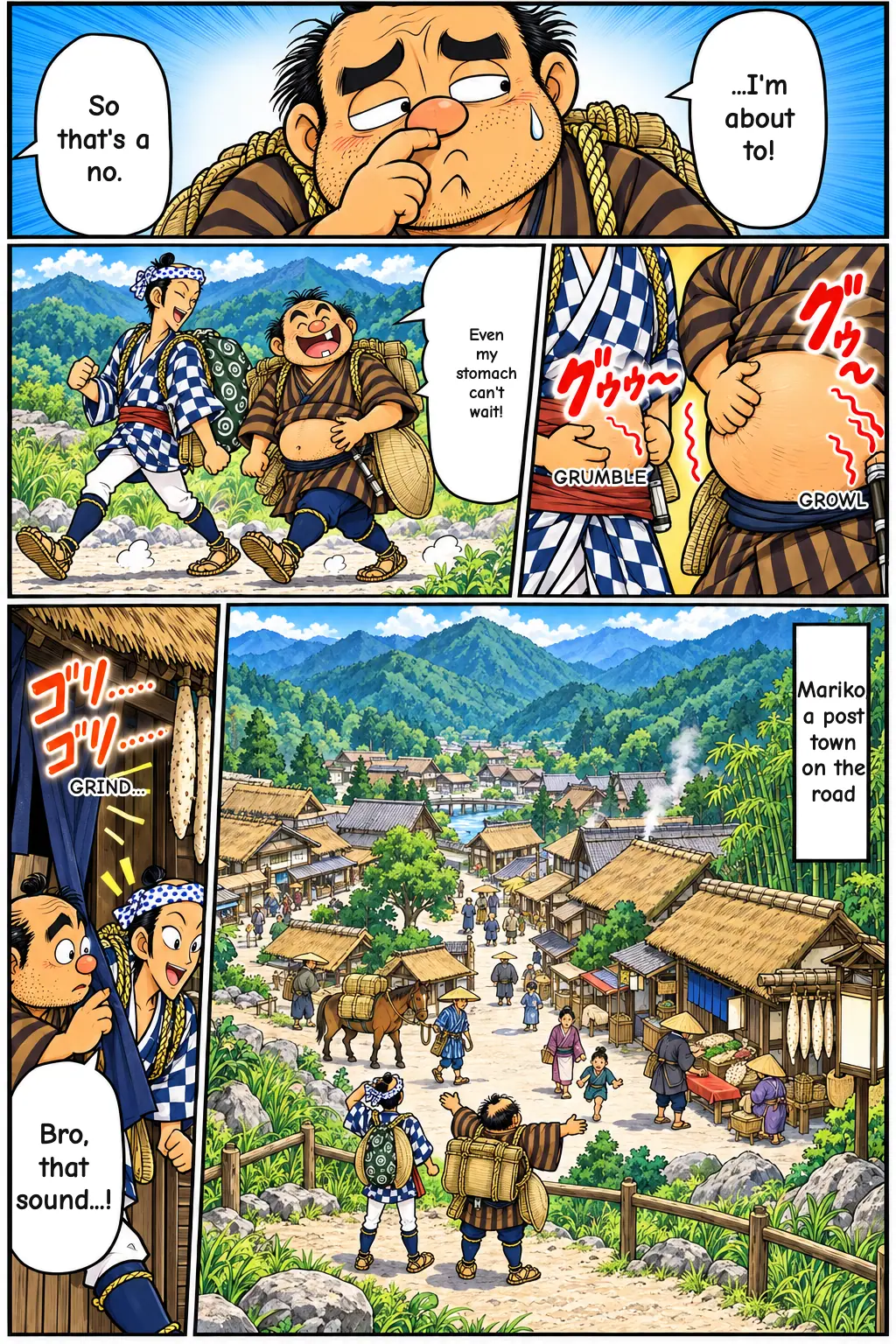
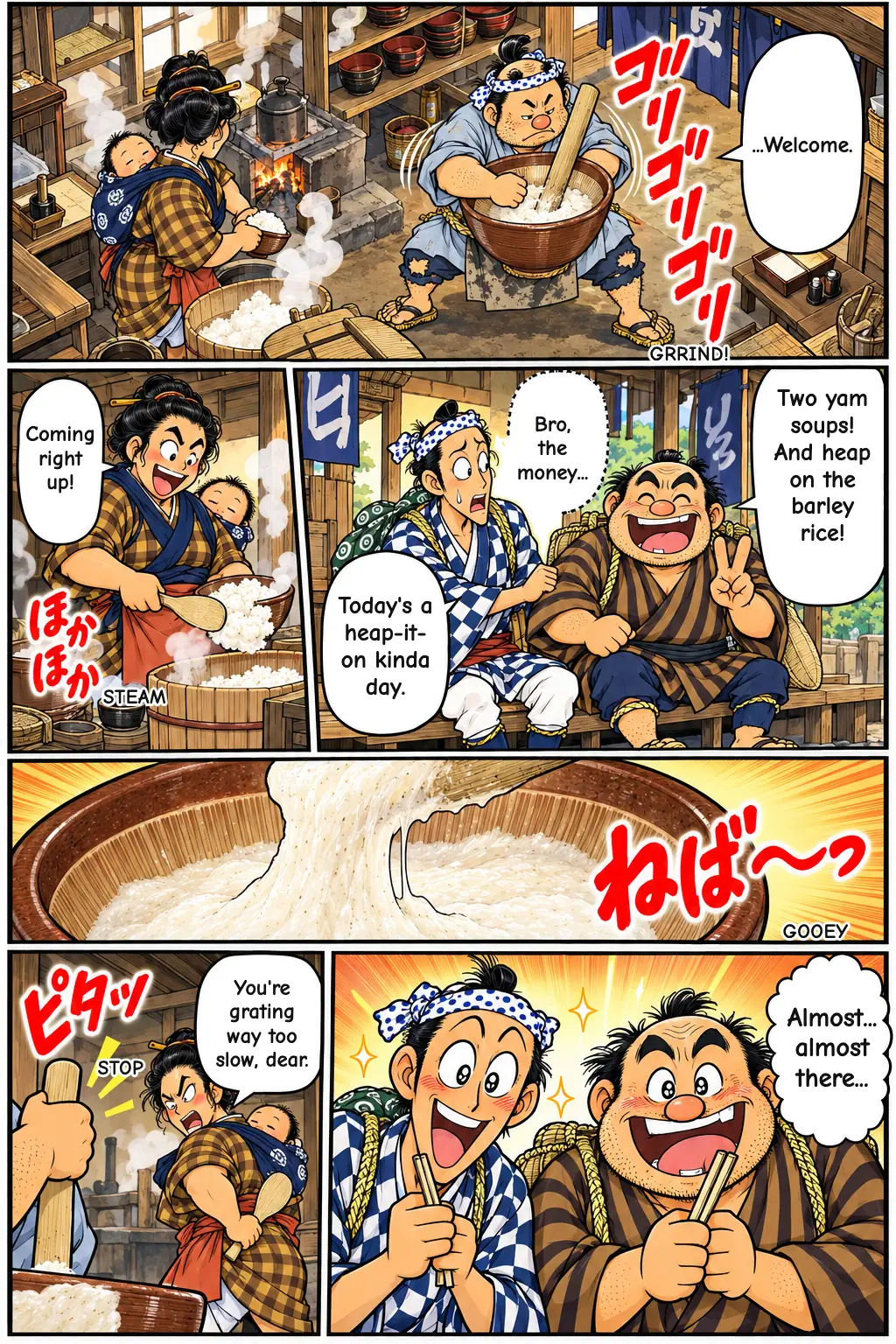
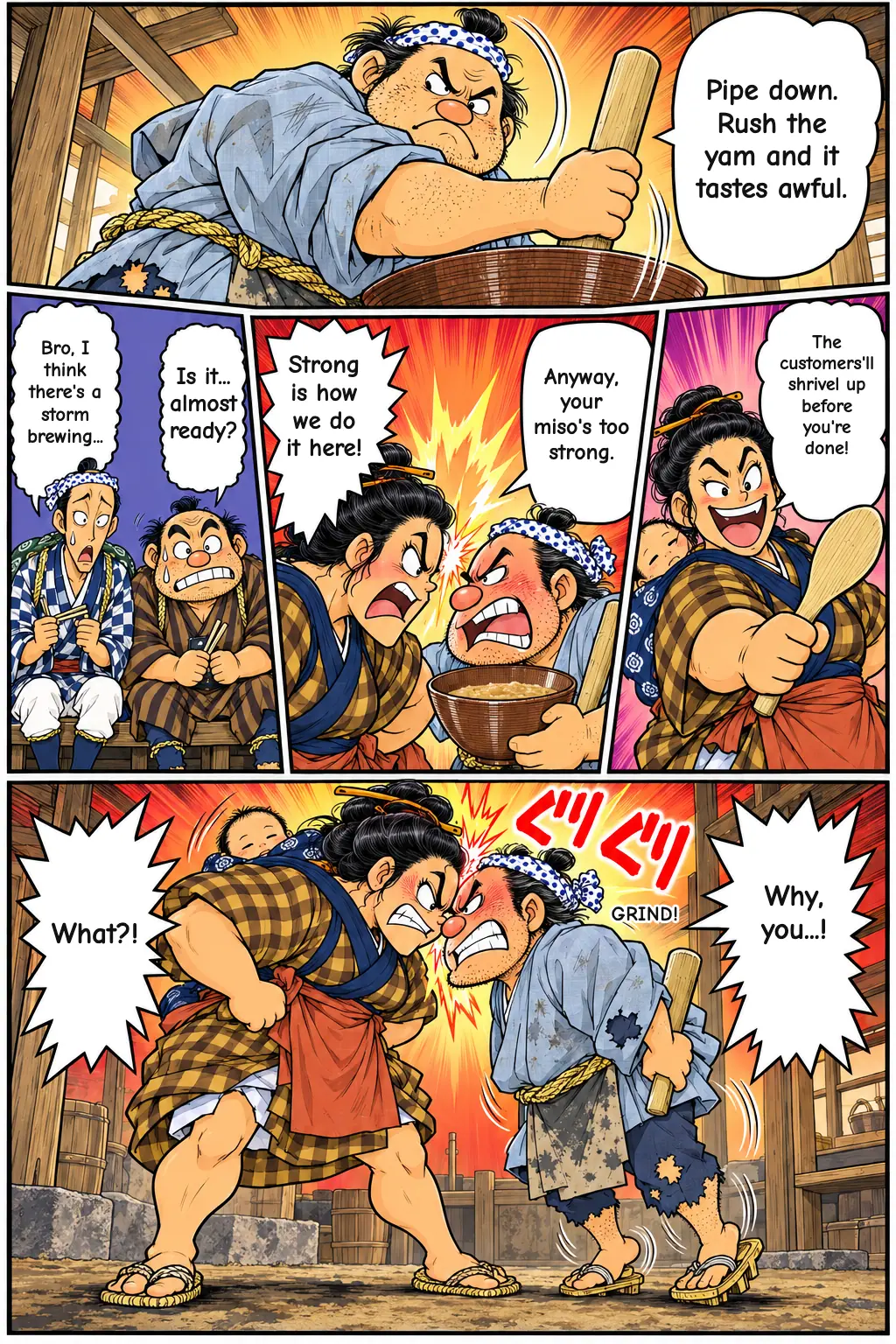
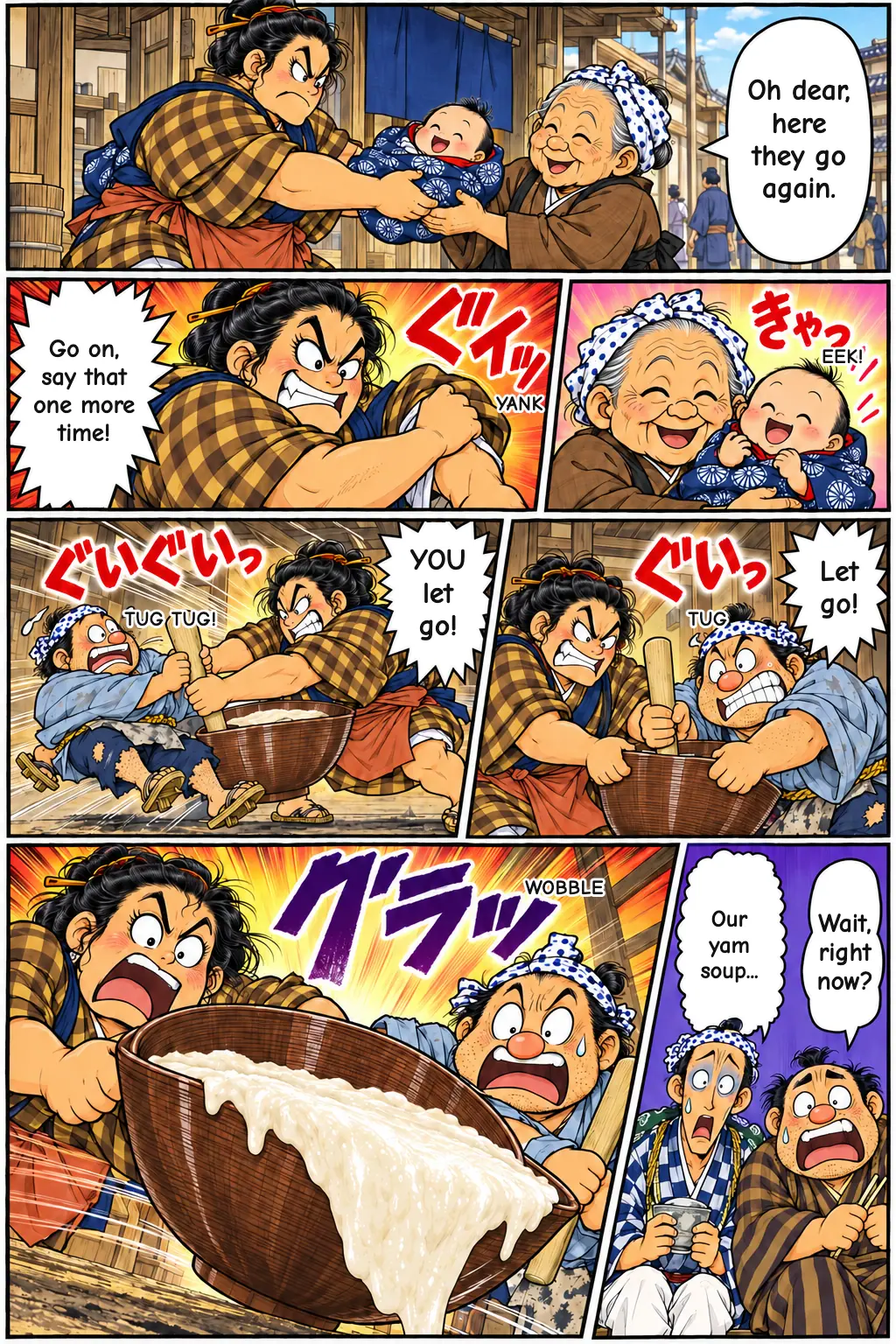
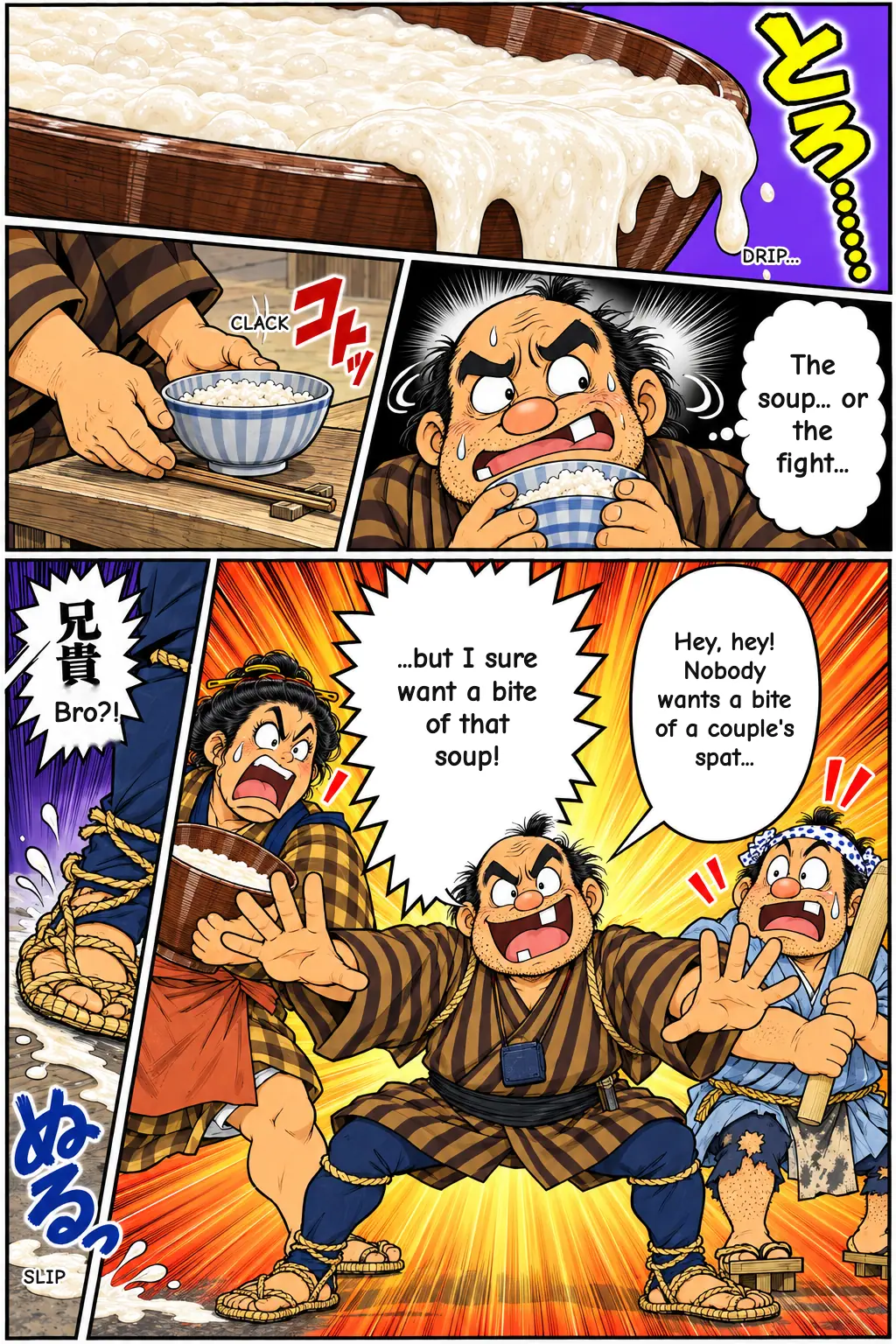
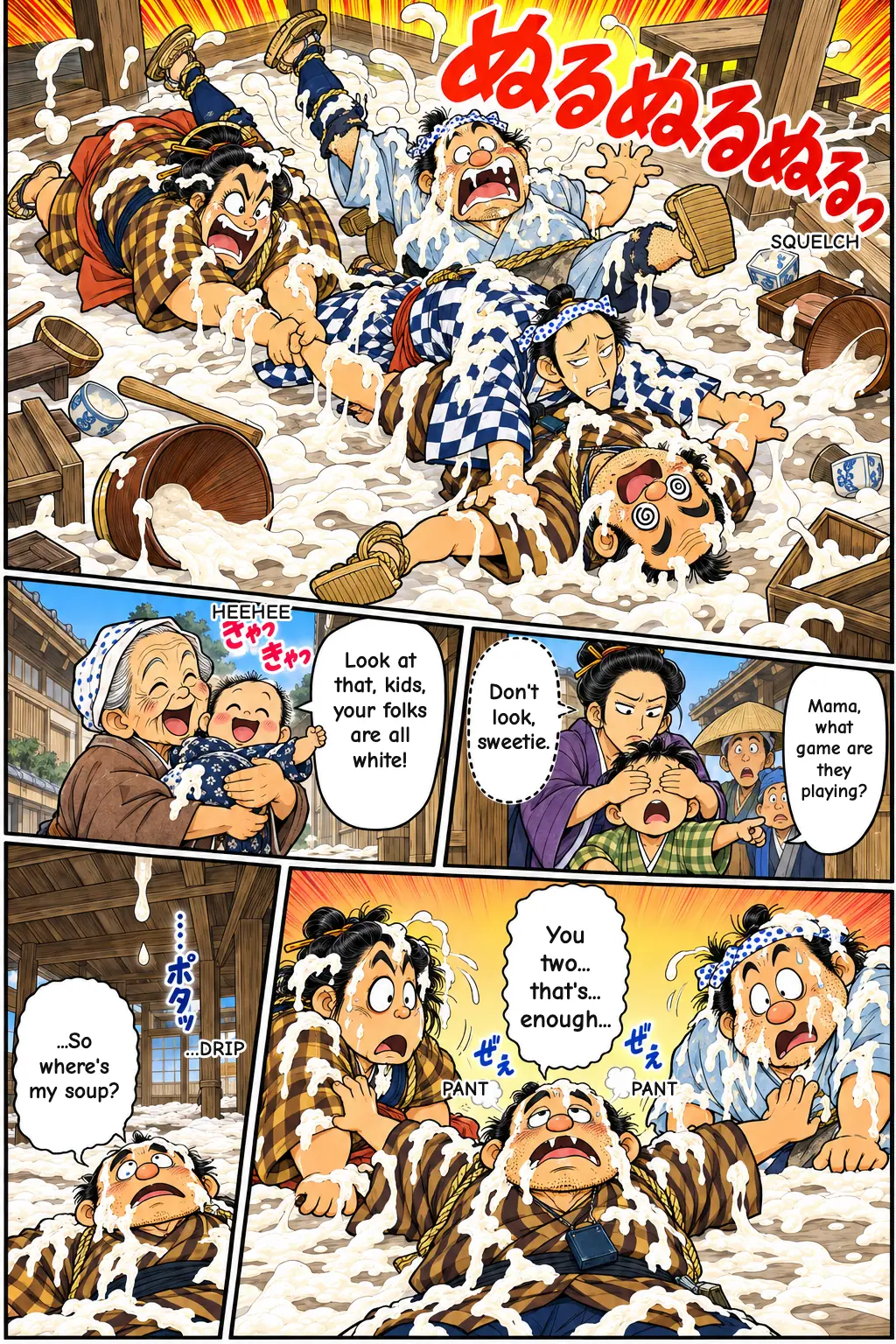
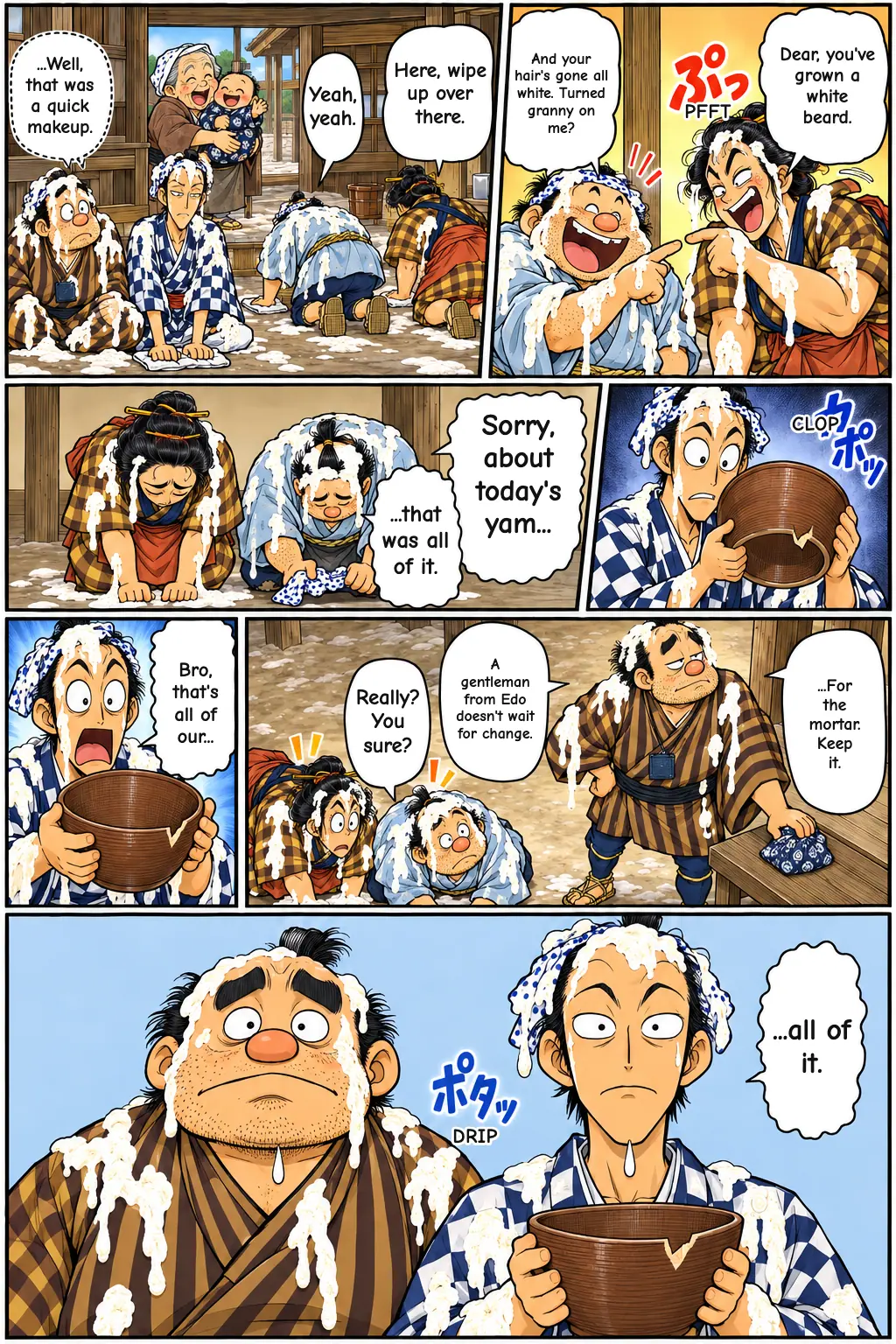
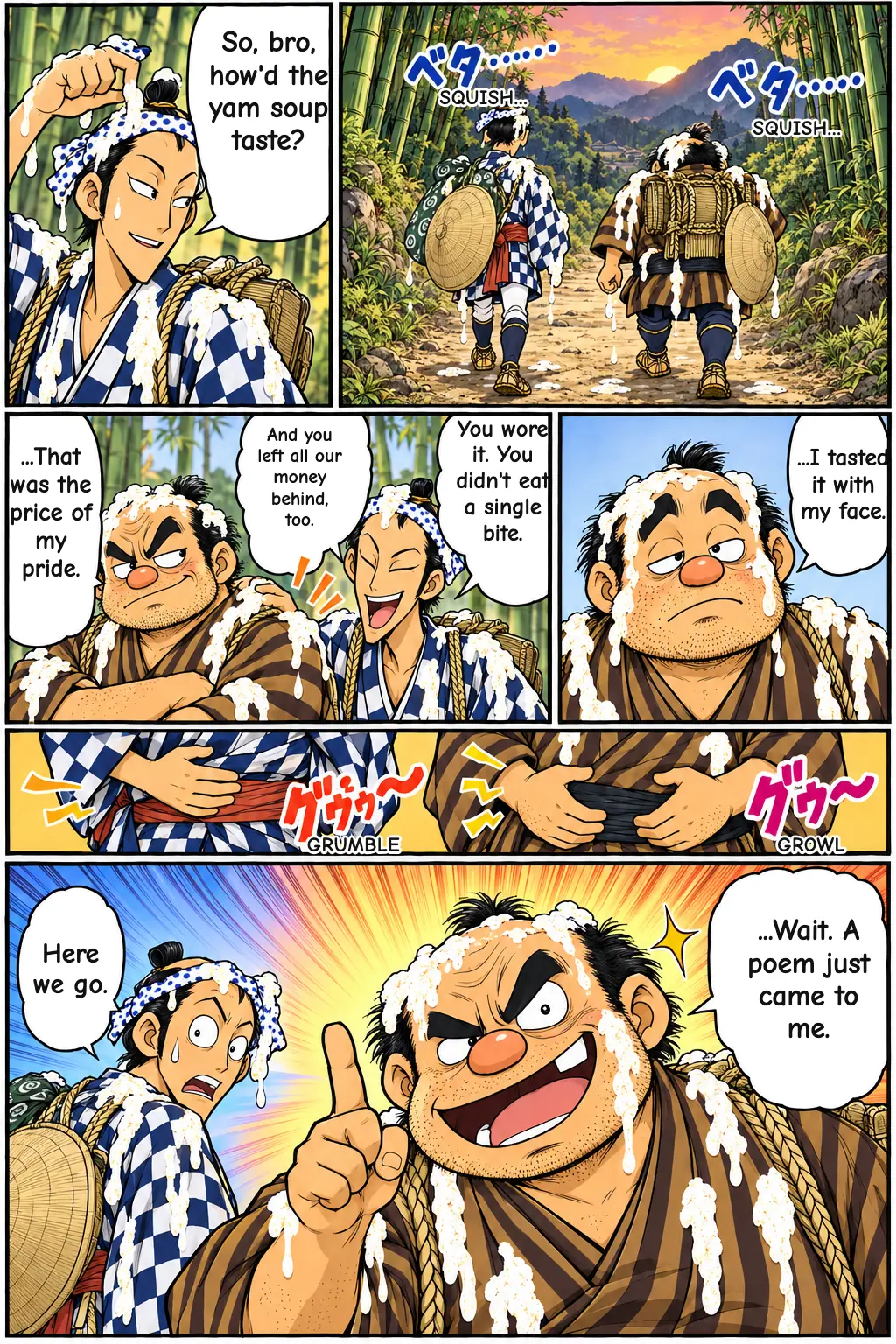
Flat broke, Yaji slinks into Fuchu, the hometown where he once partied away his parents' shop. There he plays the big success from Edo while quietly borrowing travel money. With the cash, he heads for the treat he's been dreaming of: Mariko's famous yam soup. But when he tries to break up the shop owners' marital spat, all four end up brawling in a sea of slippery yam. To top it off, he leaves all his money behind just to save face.
Get new episodes in your feed. Follow us on:ThreadsBluesky
Story summary
Tokaido Hizakurige is a comic travel novel by Jippensha Ikku, published in installments from 1802 to 1809, with eight parts in its main series. The title is a joke about using your own knees as a chestnut horse; in other words, going on foot. Its heroes are Yajirobei and Kitahachi, usually shortened to Yaji and Kita, two Edo men who set out on a pilgrimage to the Ise Grand Shrine. Their route is the Tokaido, the great highway linking Edo (modern Tokyo) with Kyoto. Nearly everything goes wrong, usually because of their own vanity, appetite or bad ideas.
Tokaido Hizakurige Summary: Yaji, Kita and the Mariko Yam Soup Brawl
In short: The yam soup of Mariko is a comic episode from Jippensha Ikku's Tokaido Hizakurige, in which the travelers Yaji and Kita stop at a tea house for the local grated-yam soup. The owner and his wife start fighting, the yam goes flying, and the pair leave without tasting a bite.
Tokaido Hizakurige in Brief: How Yaji and Kita Went Broke
Tokaido Hizakurige is a comic travel novel by Jippensha Ikku, published in installments from 1802 to 1809, with eight parts in its main series. The title is a joke about using your own knees as a chestnut horse; in other words, going on foot. Its heroes are Yajirobei and Kitahachi, usually shortened to Yaji and Kita, two Edo men who set out on a pilgrimage to the Ise Grand Shrine. Their route is the Tokaido, the great highway linking Edo (modern Tokyo) with Kyoto. Nearly everything goes wrong, usually because of their own vanity, appetite or bad ideas.
By the time of this episode, money is a serious problem. At Mishima, a gomanohai, a thief who posed as a friendly fellow traveler, made off with their funds. The two kept heading west through Numazu, Hara, Yoshiwara, Kanbara, Yui, Okitsu and Ejiri, collecting small humiliations along the way, until they reached Fuchu.
Fuchu: Yaji's Awkward Hometown
Fuchu, in old Suruga Province, is now part of Shizuoka City. It matters to the story because Ikku gives Yaji a past there. The opening of the book explains that he came from a merchant family in Fuchu, spent his fortune on pleasure, and left for Edo with Kita, then a young traveling actor. So the road carries a man with a bad record straight back to the town where he made it.
Fuchu is also where the pair are generally said to find money for the road and to enjoy themselves for a while, with the town's sights and pleasure quarters mentioned in some summaries. Who supplies the money, and how uncomfortable any reunion becomes, are details this article does not claim from the original text. The manga's own version of those scenes is described below.
Mariko: The Yam Soup That Never Arrives
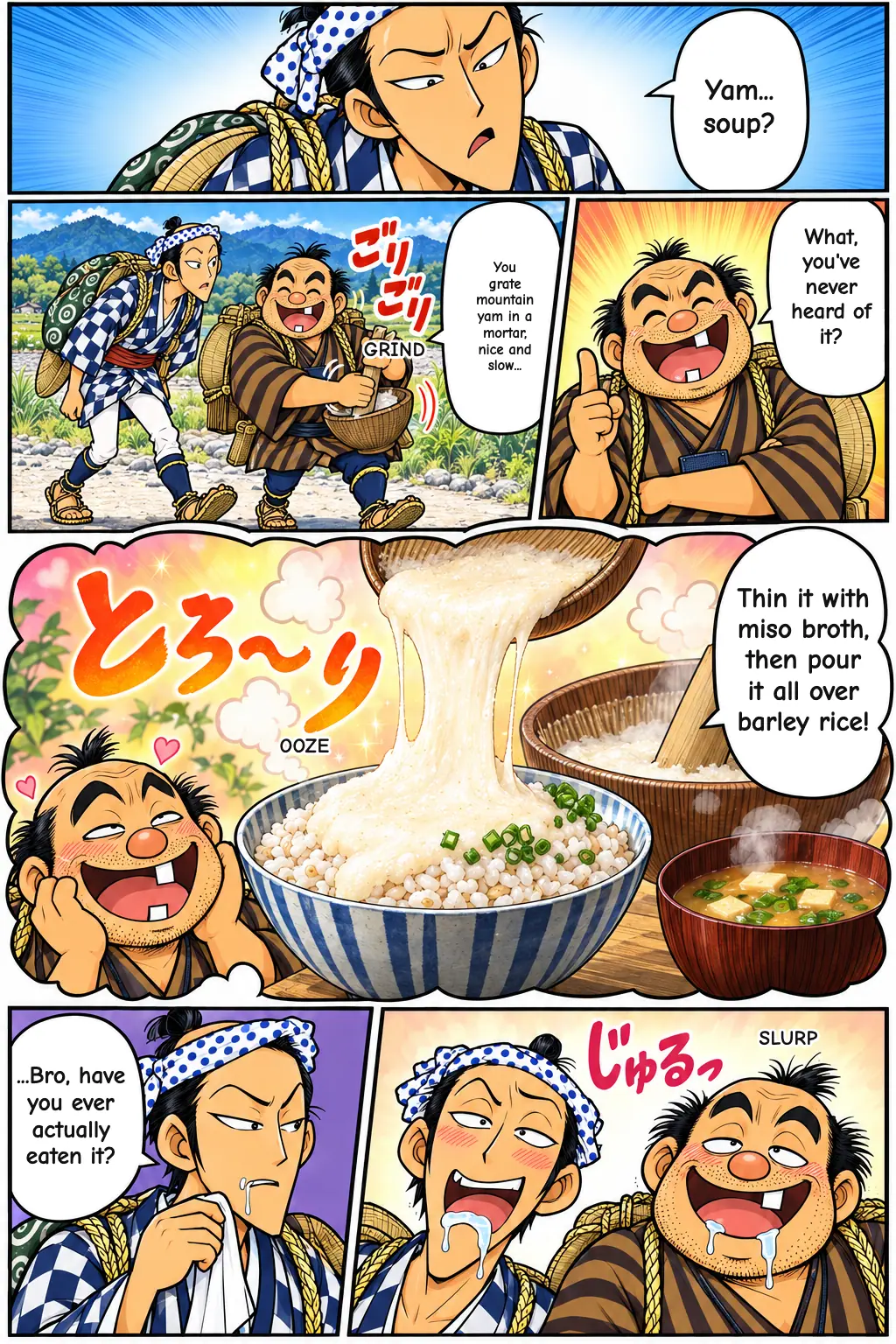
At the start of the third part, the two leave Fuchu, cross the Abe River and arrive at Mariko, also written Maruko, the next post station on the road. Mariko was known for tororo-jiru, a soup of grated mountain yam, smooth and sticky, usually eaten over rice. The dish already had a reputation before Ikku wrote about it: the poet Matsuo Basho mentions it in a haiku, and the print artist Hiroshige later showed a Mariko tea house in his Tokaido landscapes.
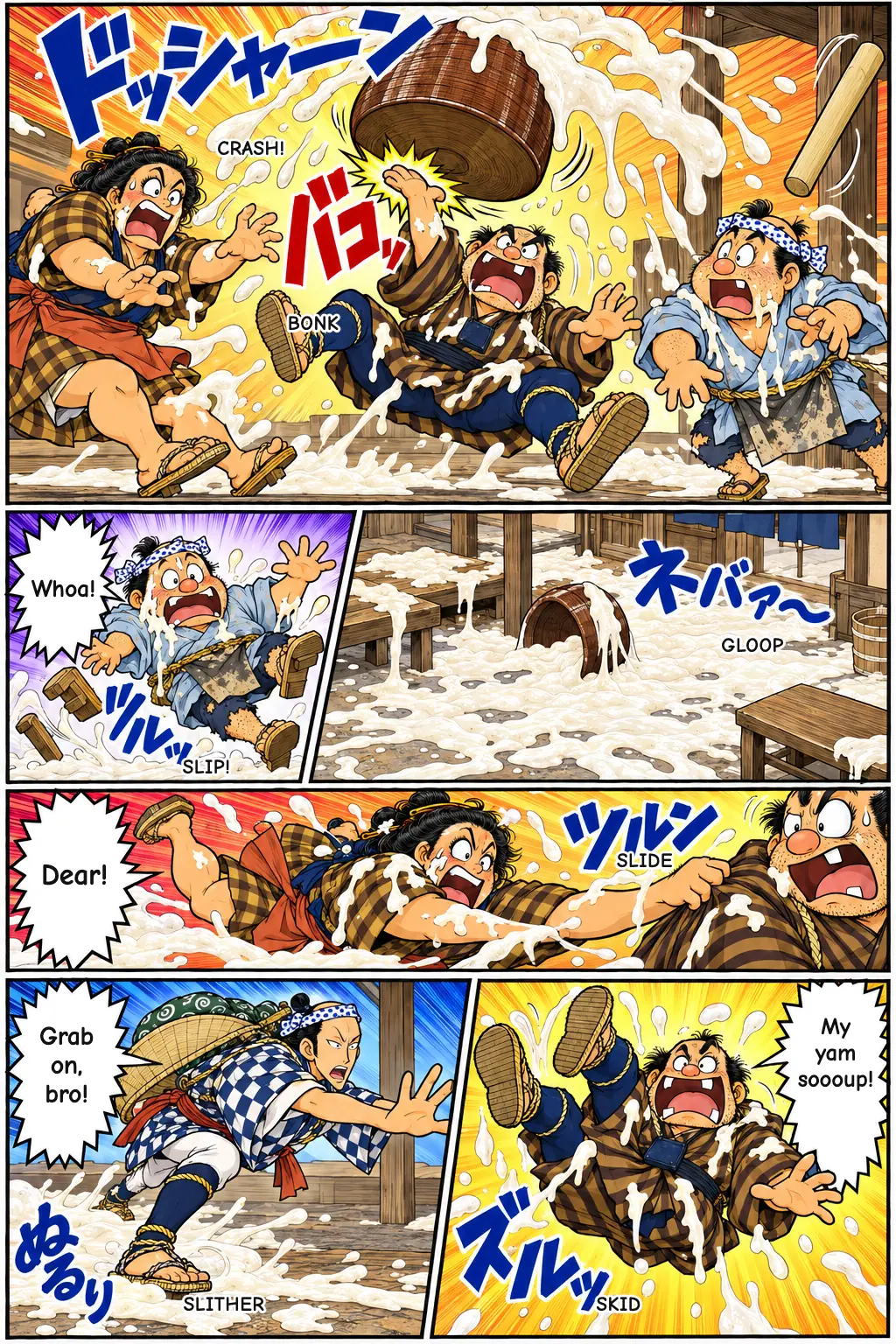
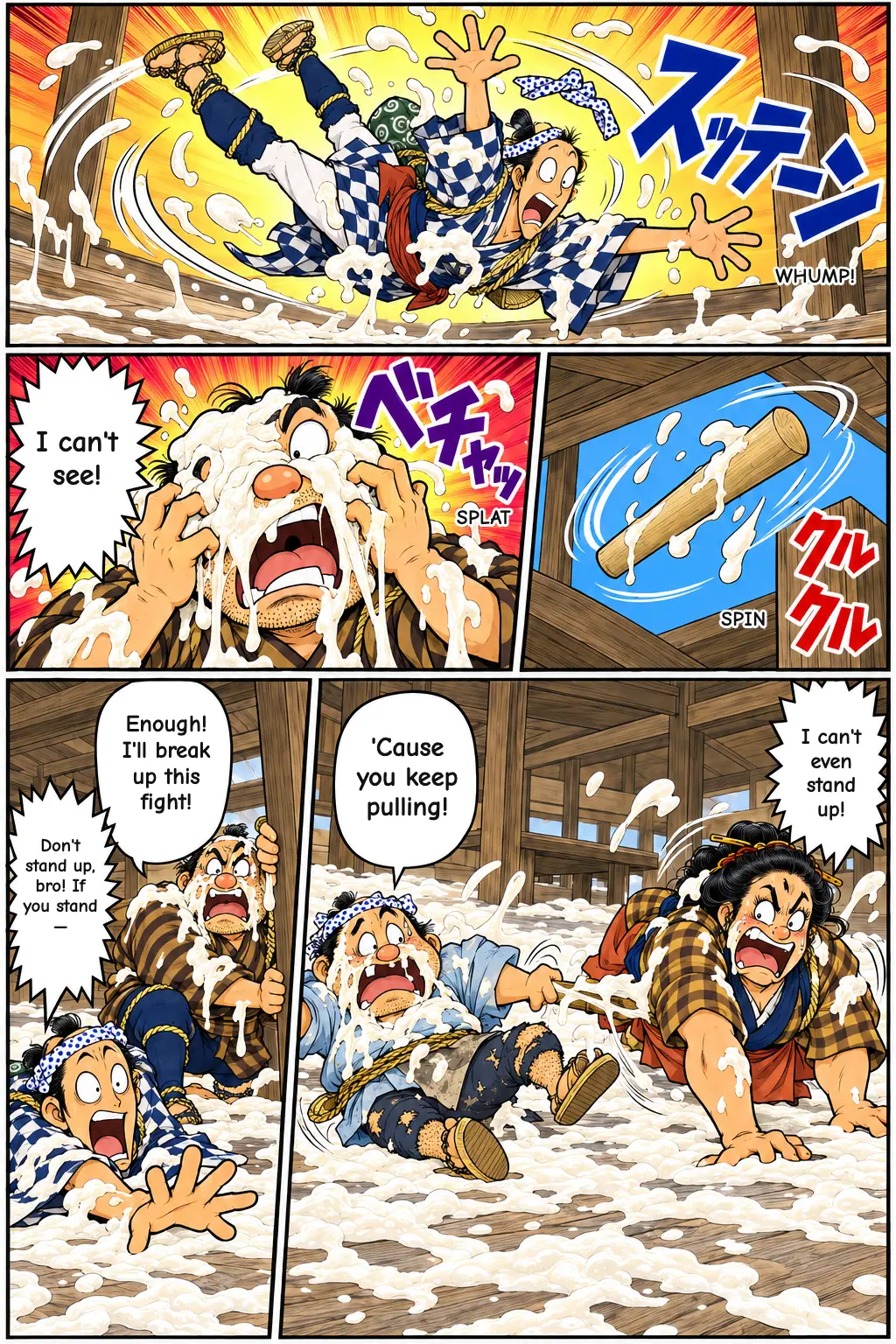
Yaji and Kita walk into a tea house and order, looking forward to the local specialty. Then the owner and his wife begin to argue, and the argument turns into a physical fight. In the chaos, the mortar and pestle are knocked about and grated yam splatters everywhere. The soup the travelers came for ends up on the floor and on the people instead of in a bowl, and they walk out without eating it.
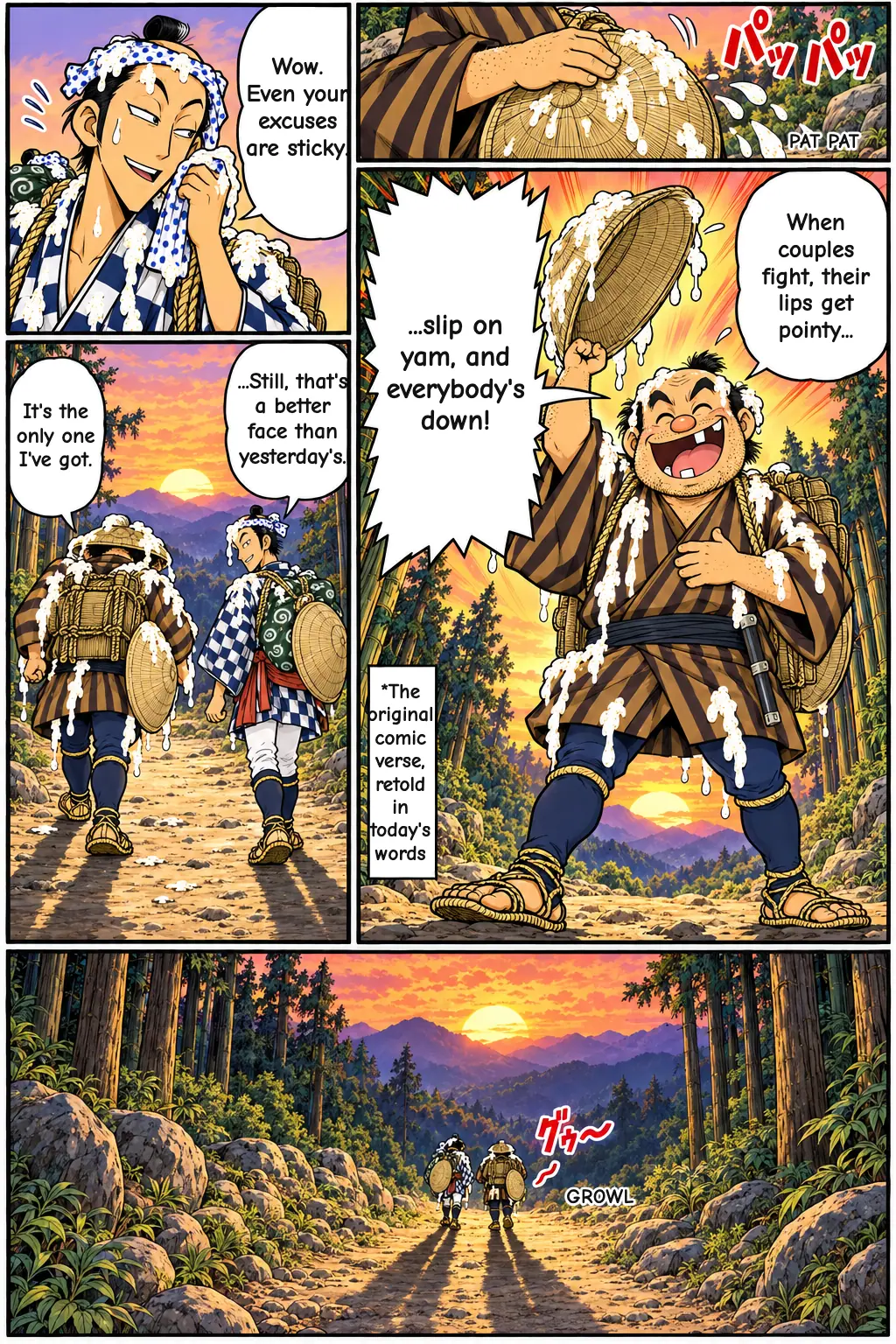
The scene is commonly remembered as ending with a kyoka, a witty comic poem, that plays on the quarrel and the slippery yam. Then the two head on toward Okabe and Utsunoya Pass. It is a small episode with a neat joke: the treat they wanted is right in front of them, and it slides away.
What the Story Tells Us About Edo-Period Japan
Hizakurige belongs to a genre called kokkeibon, or funny books, written to make ordinary townspeople laugh. It became a major hit and led to a long run of further installments. Part of its appeal lay in how recognizable its world was. Under the long Tokugawa peace, many commoners traveled, and a pilgrimage to Ise could double as a holiday. Readers knew about famous local foods, roadside tea houses and the thieves who preyed on travelers.
The humor also reflects Edo culture. Kyoka were a popular pastime, so a hero who answers each disaster with a clever verse would have felt familiar and funny. And Yaji's flaw is timeless: he badly wants to look more impressive than he is. Passing through Fuchu and Mariko, he is a man with an embarrassing past and an empty purse, and the story never lets him stay dignified for long.
What the Manga Adds and Changes
Episode 4 of YAJI AND KITA keeps the main path of the original: broke travelers, Yaji's hometown, Mariko's yam soup and a shop couple's fight that ruins everything. Much of the comedy on the page is the manga's own creation, and it is worth keeping the two apart.
The manga invents the specifics of the Fuchu scenes, including how Yaji poses as a big success from Edo while quietly borrowing money, and the awkwardness of facing people who remember his wild years. The contents of the couple's argument are also written for the manga as a trivial everyday squabble. So is the staging of the brawl: Yaji tries to play peacemaker, and all four end up fighting in a sea of slippery yam. The ending, in which he leaves all his money behind just to save face, belongs to the manga's telling and should not be read as a summary of Ikku's text.
The manga also handles the poetry differently. Rather than translating the original kyoka, it uses newly written English wordplay with a short note. The town and tea house backgrounds are drawn with late Edo period research in mind, while the panel layouts, pacing and closing hook are the manga's own.
Where to Read Yaji and Kita's Yam Soup Disaster
If you would like to see the yam fly, this episode is just above this article, and YAJI AND KITA: The Great Tokaido Road Trip is free to read on Manga Portal. Every episode is available with no sign-up, so it is easy to start from the beginning or simply follow the two fools onward to Utsunoya Pass.
Characters in this episode
Yajirobei (Yaji)
The older of the two travelers, a vain and talkative man from a Fuchu merchant family who squandered his fortune and moved to Edo.
Kitahachi (Kita)
Yaji's younger companion, a former traveling actor who is impulsive, playful and always ready to trade jokes with him.
The tea house owner
The master of a tororo soup shop in Mariko, whose fight with his wife sets off the yam disaster.
The owner's wife
A strong-willed woman who gives as good as she gets when the quarrel with her husband turns physical.
The gomanohai of Mishima
A thief who poses as a fellow traveler and steals the pair's money before this episode begins.
FAQ
What is the plot of Tokaido Hizakurige?
Two Edo men, Yaji and Kita, travel the Tokaido highway on a pilgrimage to the Ise Grand Shrine and stumble from one comic disaster to the next. Their schemes, pranks and vanity keep backfiring along the way. Written by Jippensha Ikku, the main series appeared from 1802 to 1809.
Do Yaji and Kita eat the yam soup at Mariko?
No. In the original story, the shop owner and his wife get into a fight and the grated yam ends up scattered everywhere. The two leave without getting to eat the soup.
What is tororo-jiru?
Tororo-jiru is a soup made from grated mountain yam, with a smooth, sticky texture, commonly eaten over rice. It was a well-known specialty of Mariko, a post station on the Tokaido in what is now Shizuoka City.
Is Yaji really from Fuchu in the original story?
Yes. The book explains that Yaji came from a merchant family in Fuchu, in Suruga Province, and lost his fortune to a life of pleasure. He then moved to Edo with Kita.
What does Hizakurige mean?
Hizakurige joins the words for knee and chestnut horse. It is a playful way of saying that you are traveling on your own two legs rather than riding.