Episode 6Never Ride a Stranger's Back for FreeHizakurige: The River Crossing at Kakegawa
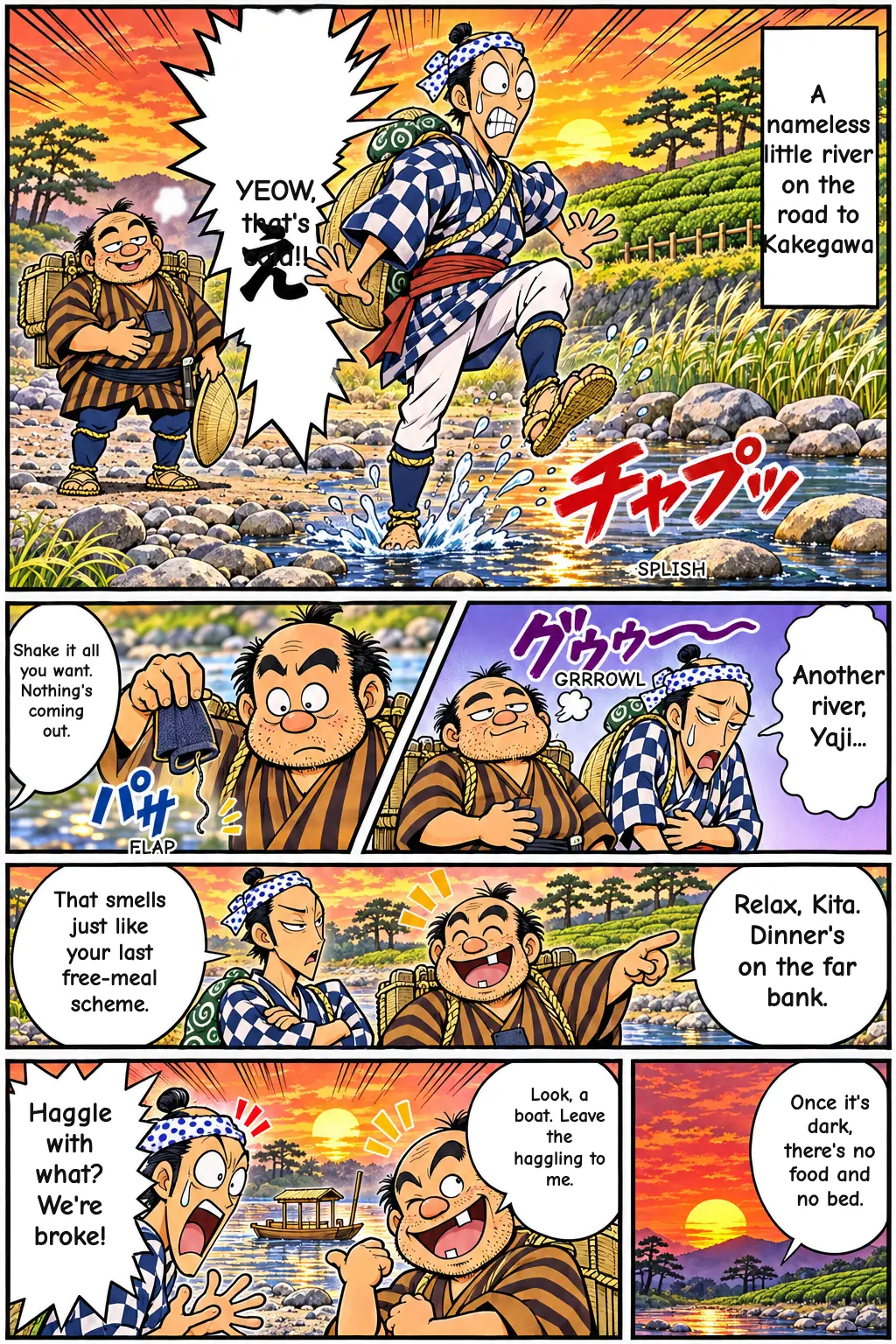
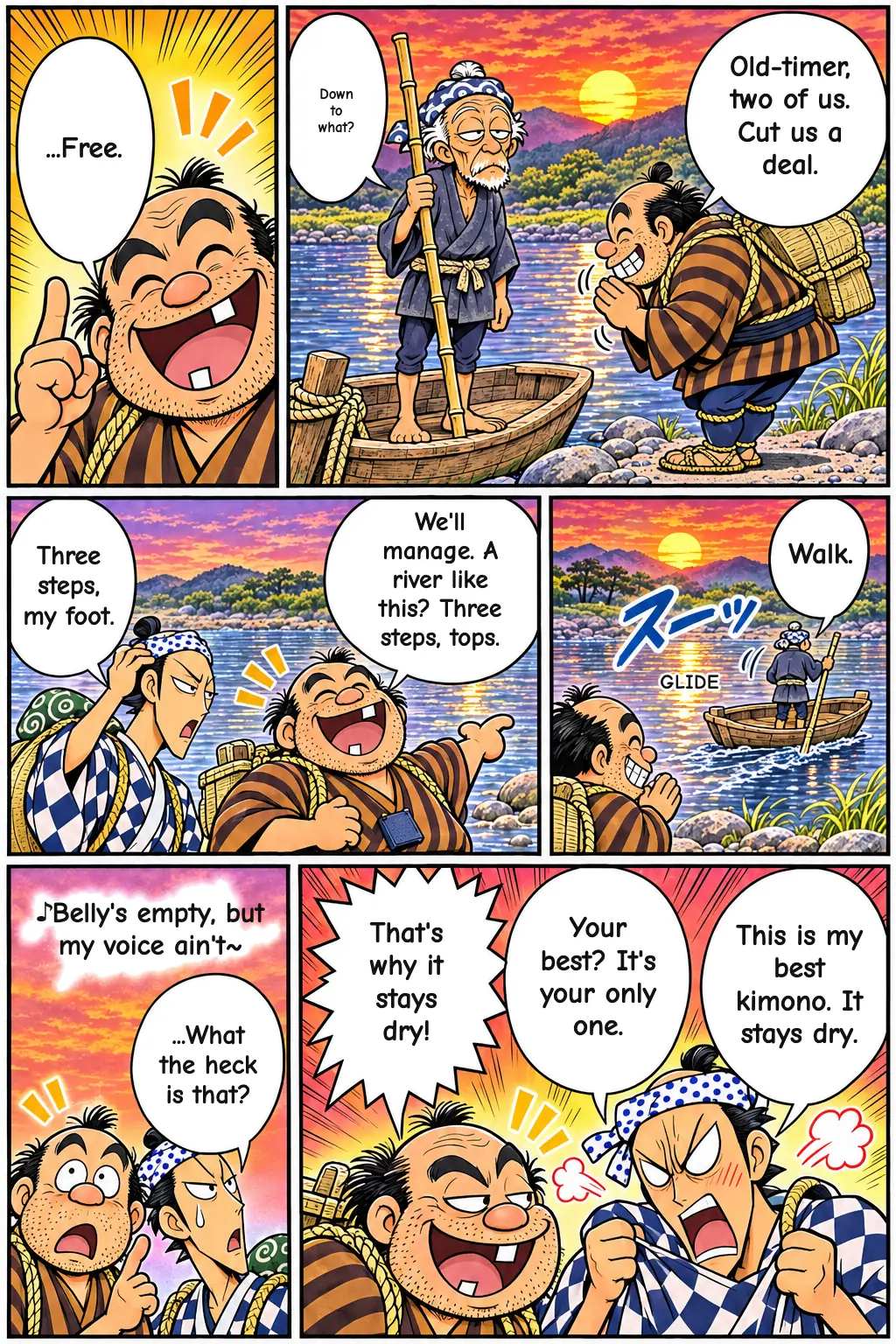
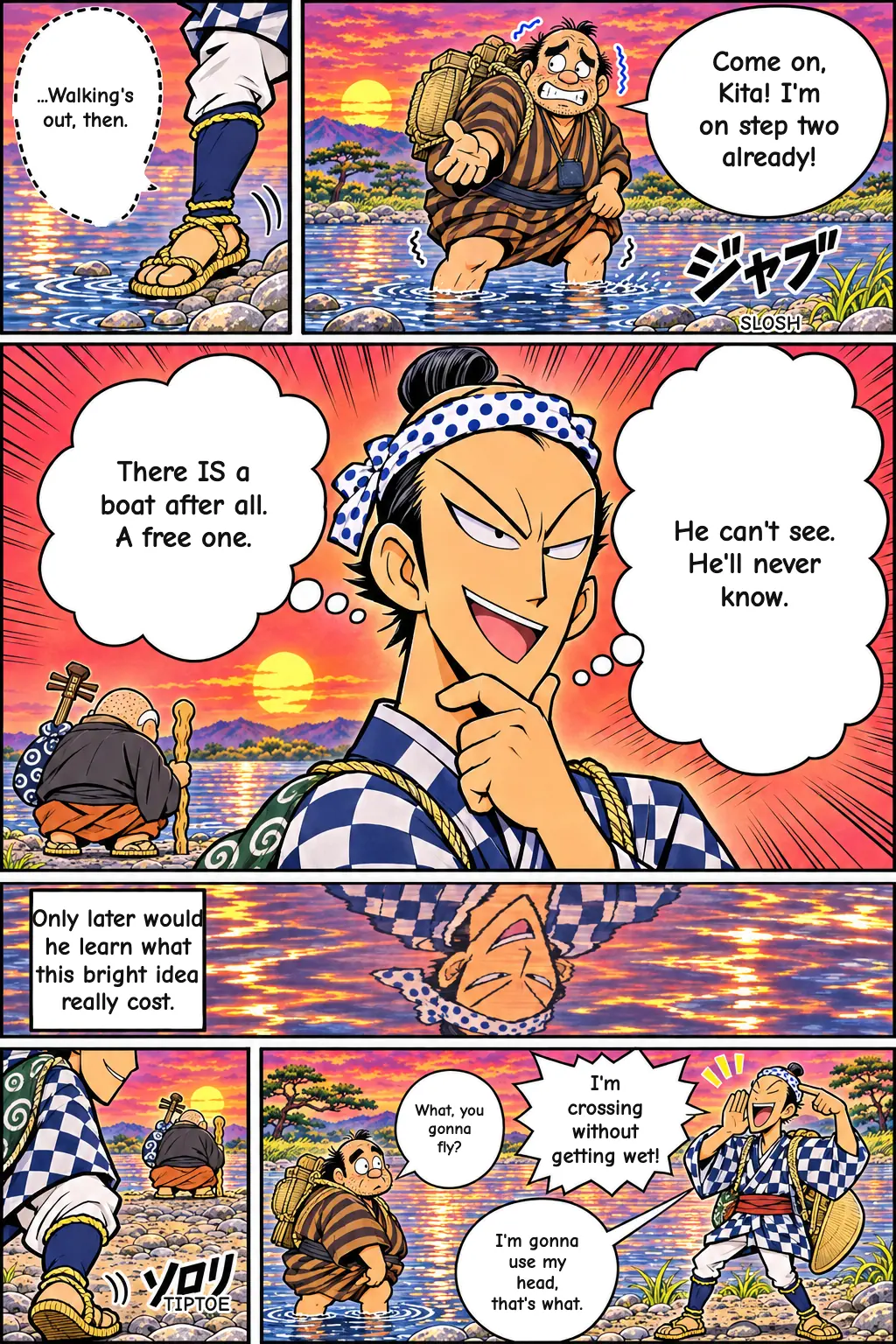
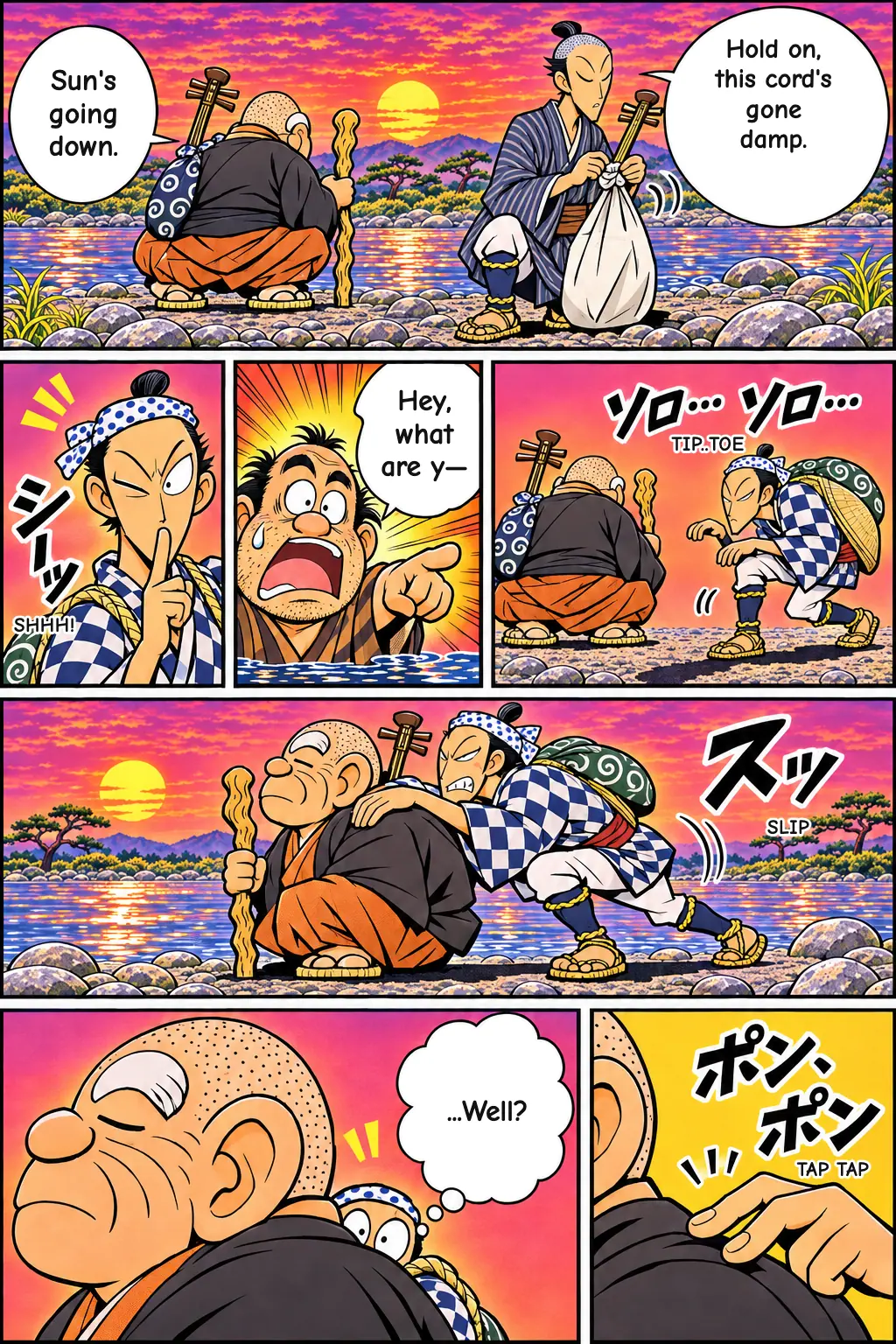
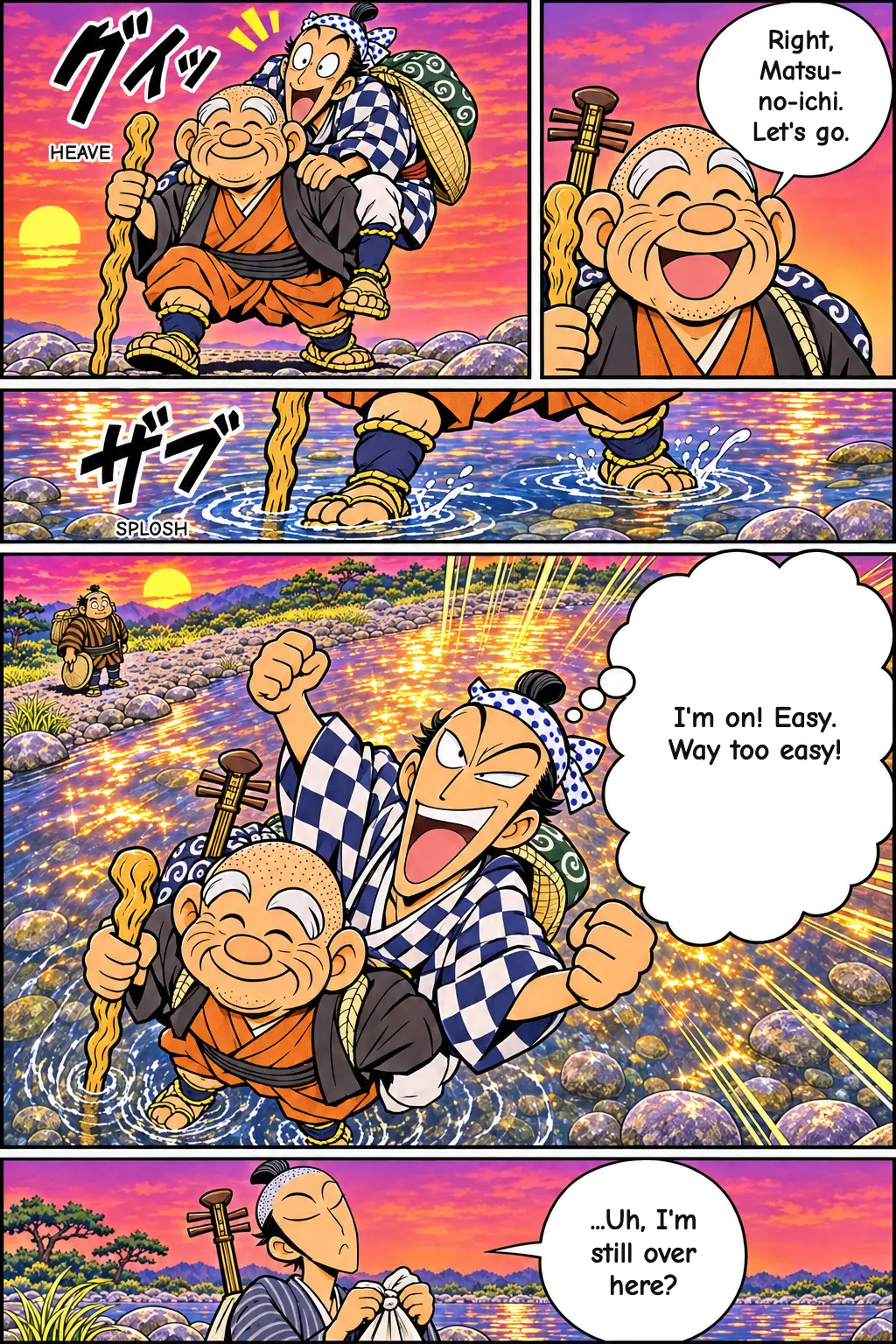
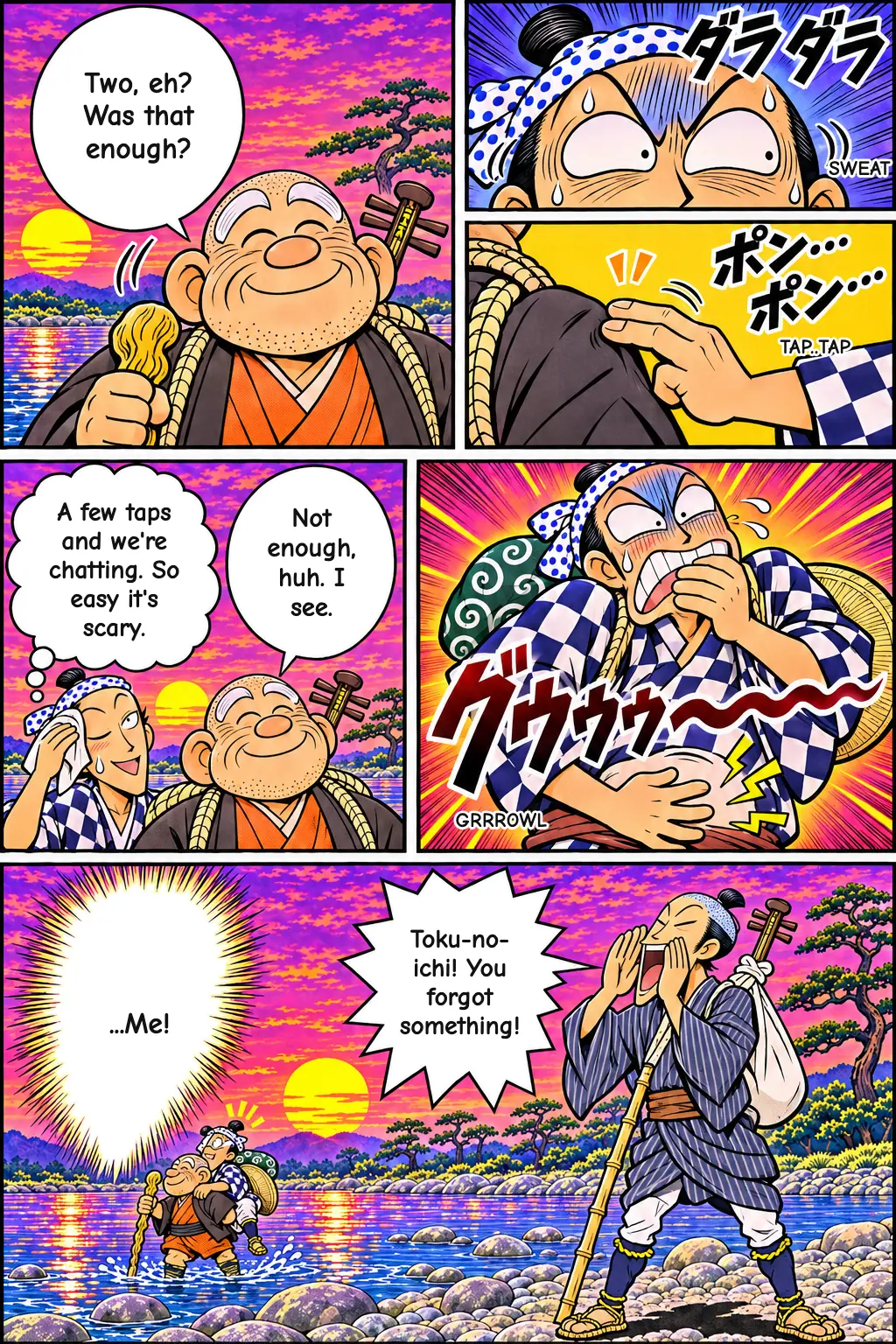
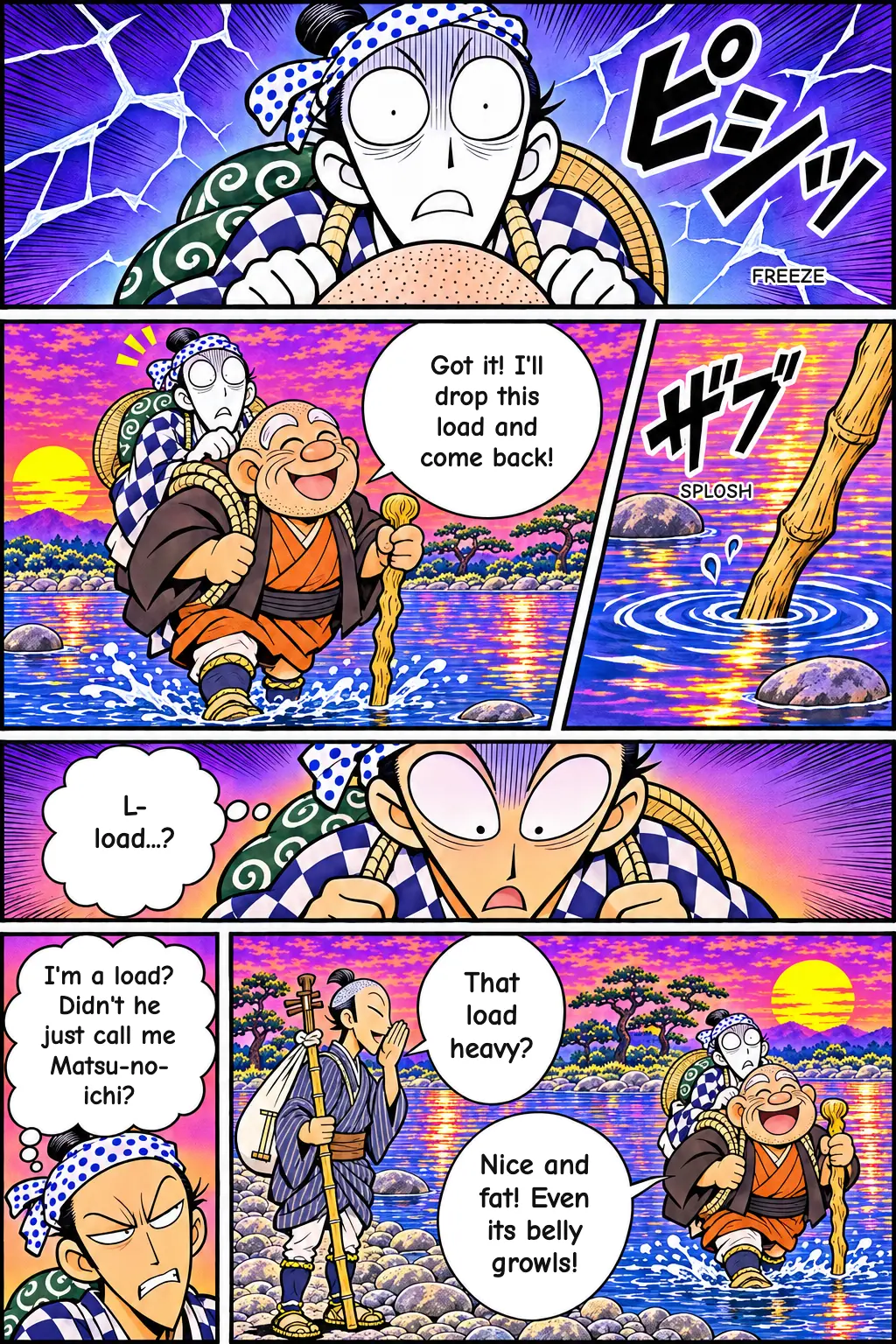
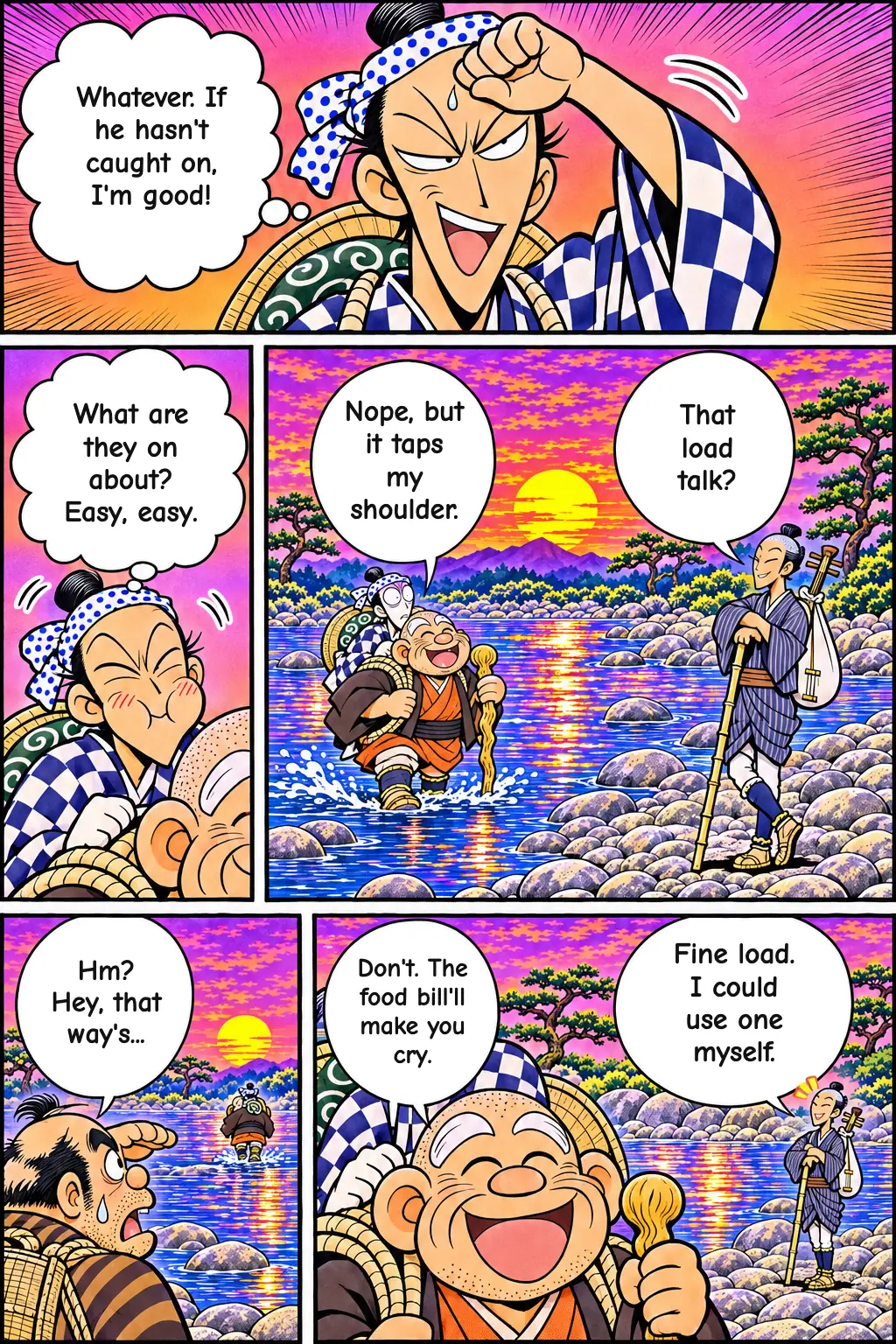
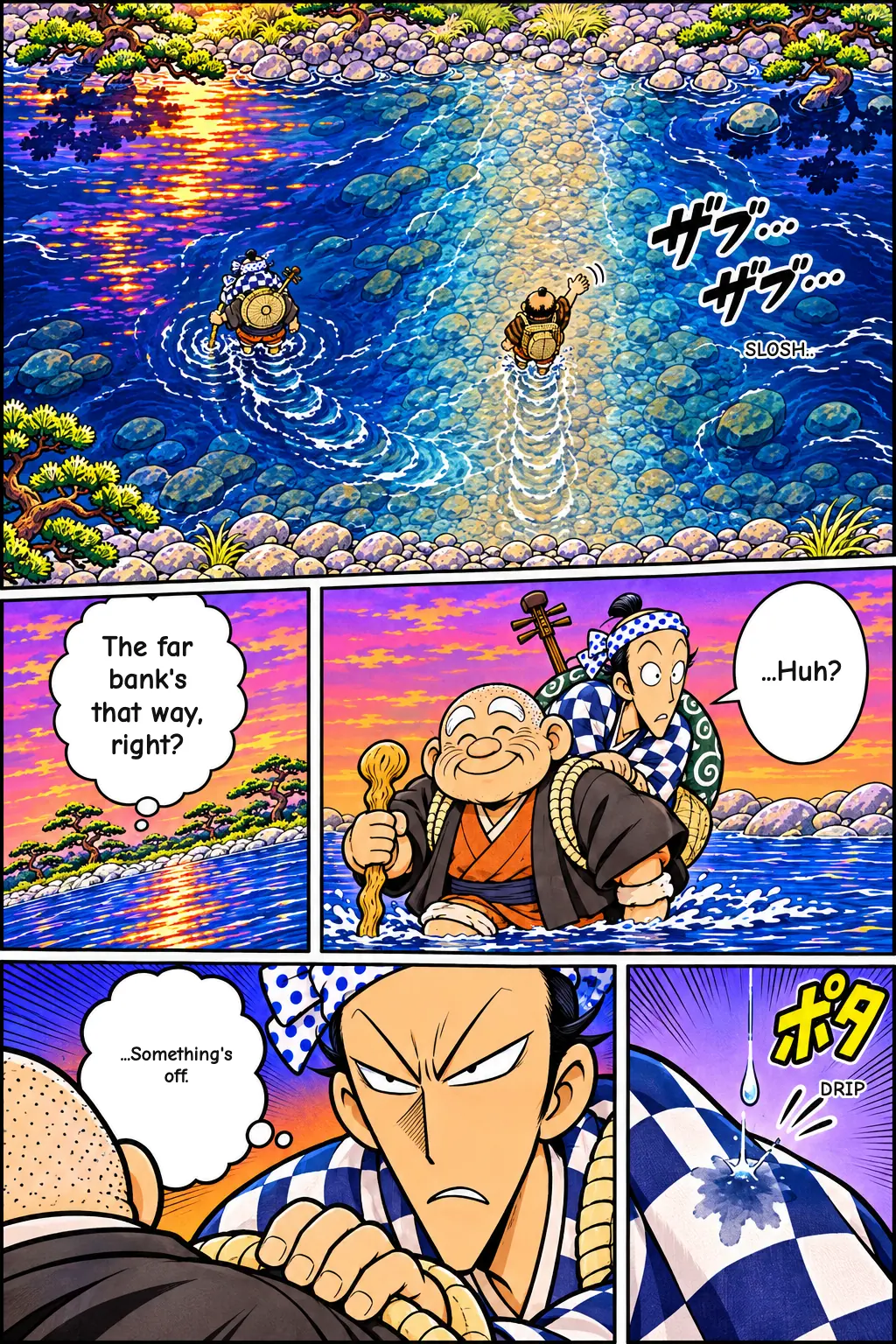
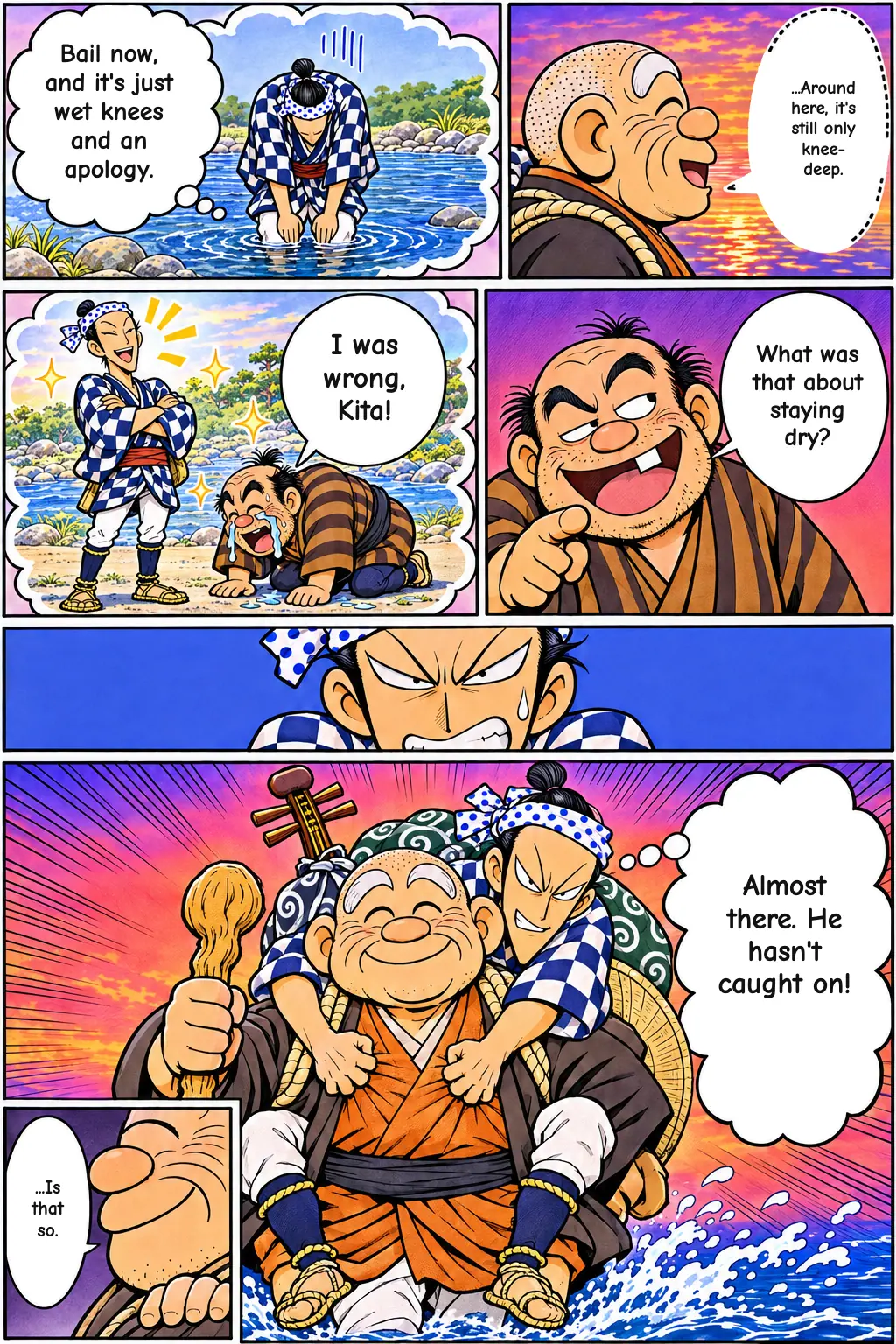
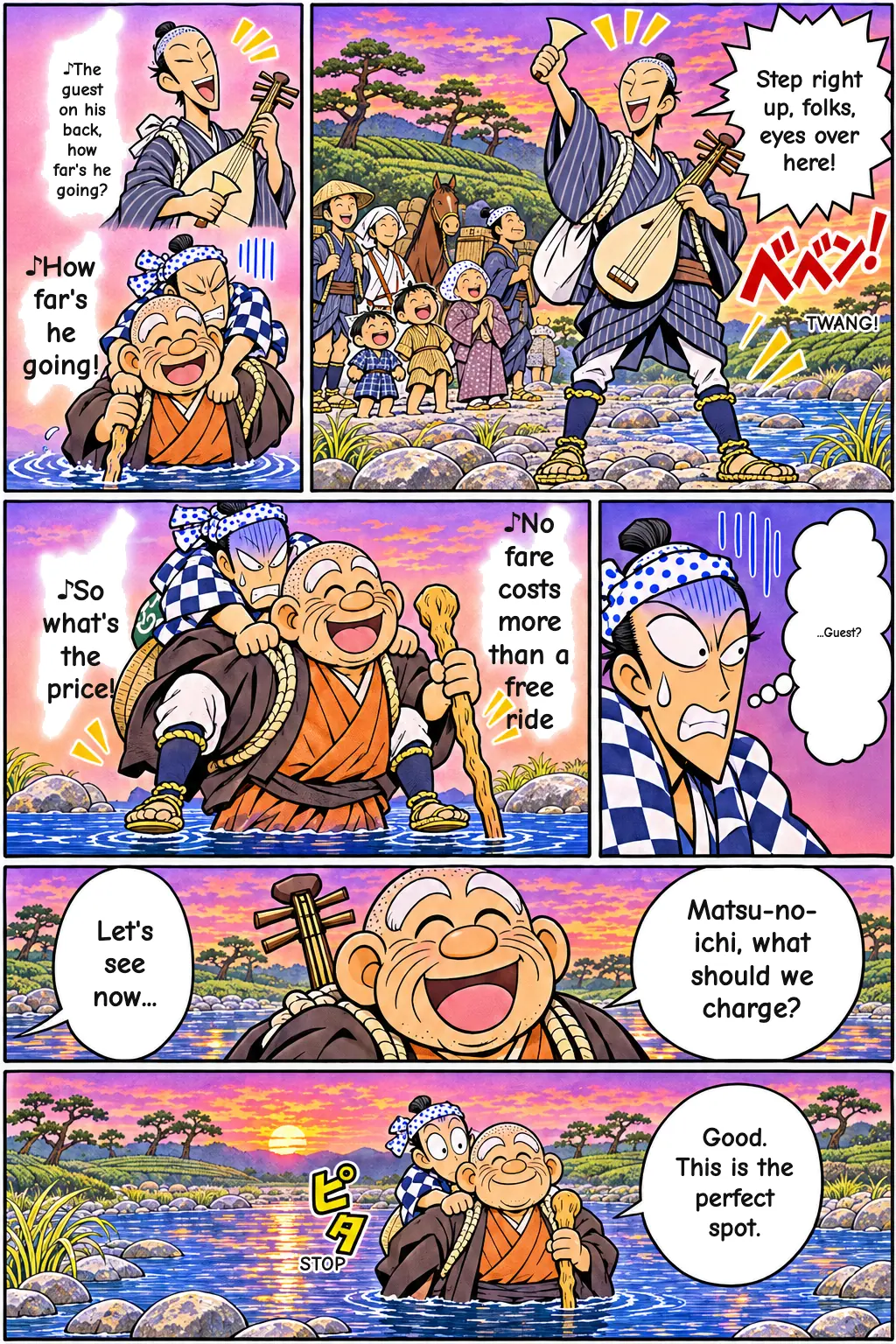
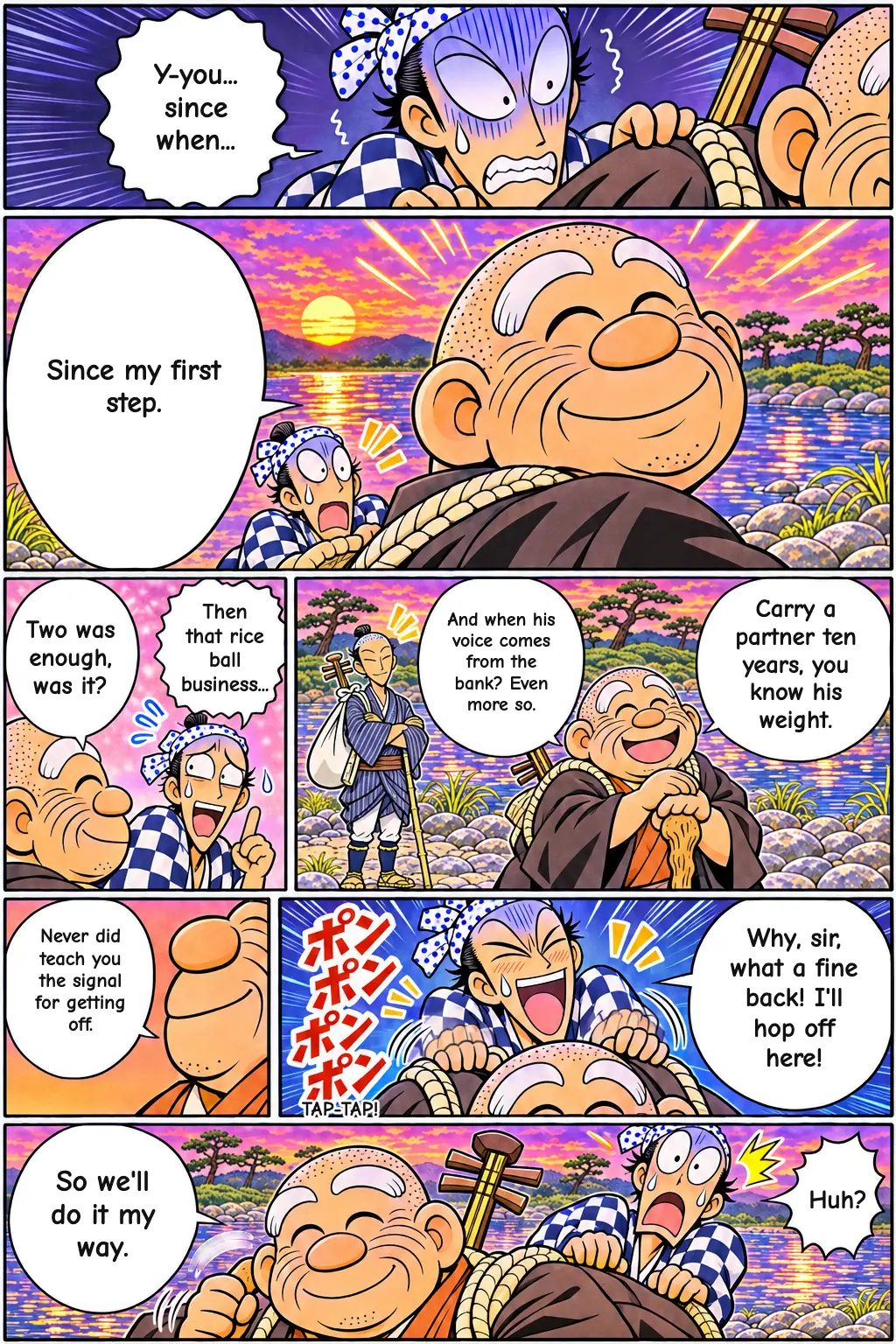
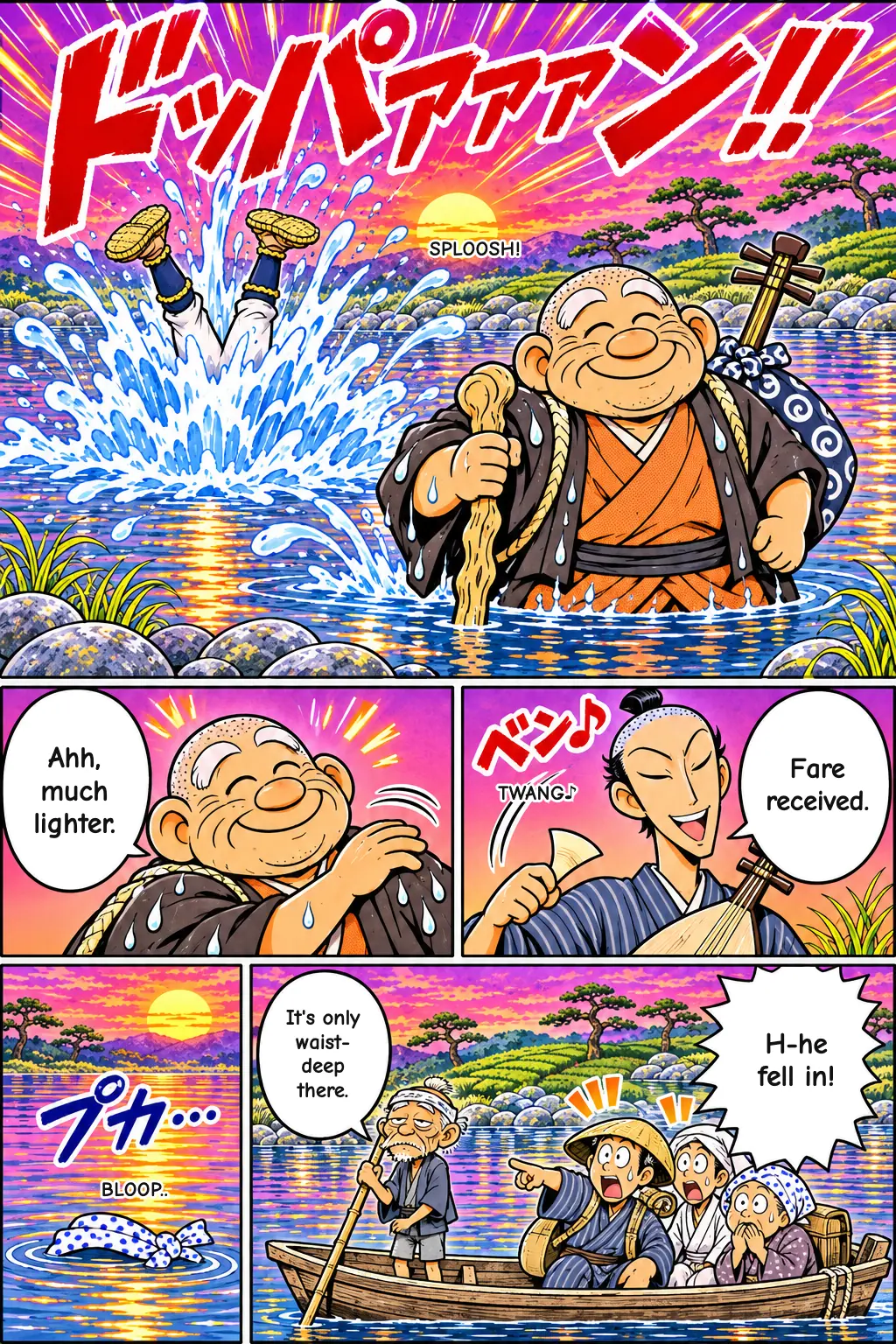
Flat broke, Kita sneaks onto the back of a blind traveling performer to cross a river dry and free of charge. He's on top of the world up there, but the two cool-headed performers may be a step ahead of him.
Get new episodes in your feed. Follow us on:ThreadsBluesky
Story summary
Tokaido Hizakurige, known in English as Shanks' Mare, is a comic novel by Jippensha Ikku (1765–1831), first published in installments from 1802. It follows two men from Edo (modern Tokyo), Yajirobei and Kitahachi, better known as Yaji and Kita, as they walk west along the Tokaido, the great highway between Edo and Kyoto. This episode belongs to the book's third part, when the pair are passing through the Nissaka and Kakegawa area, in what is now Shizuoka Prefecture.
Hizakurige Summary: Kita's Free River Crossing at Kakegawa Explained
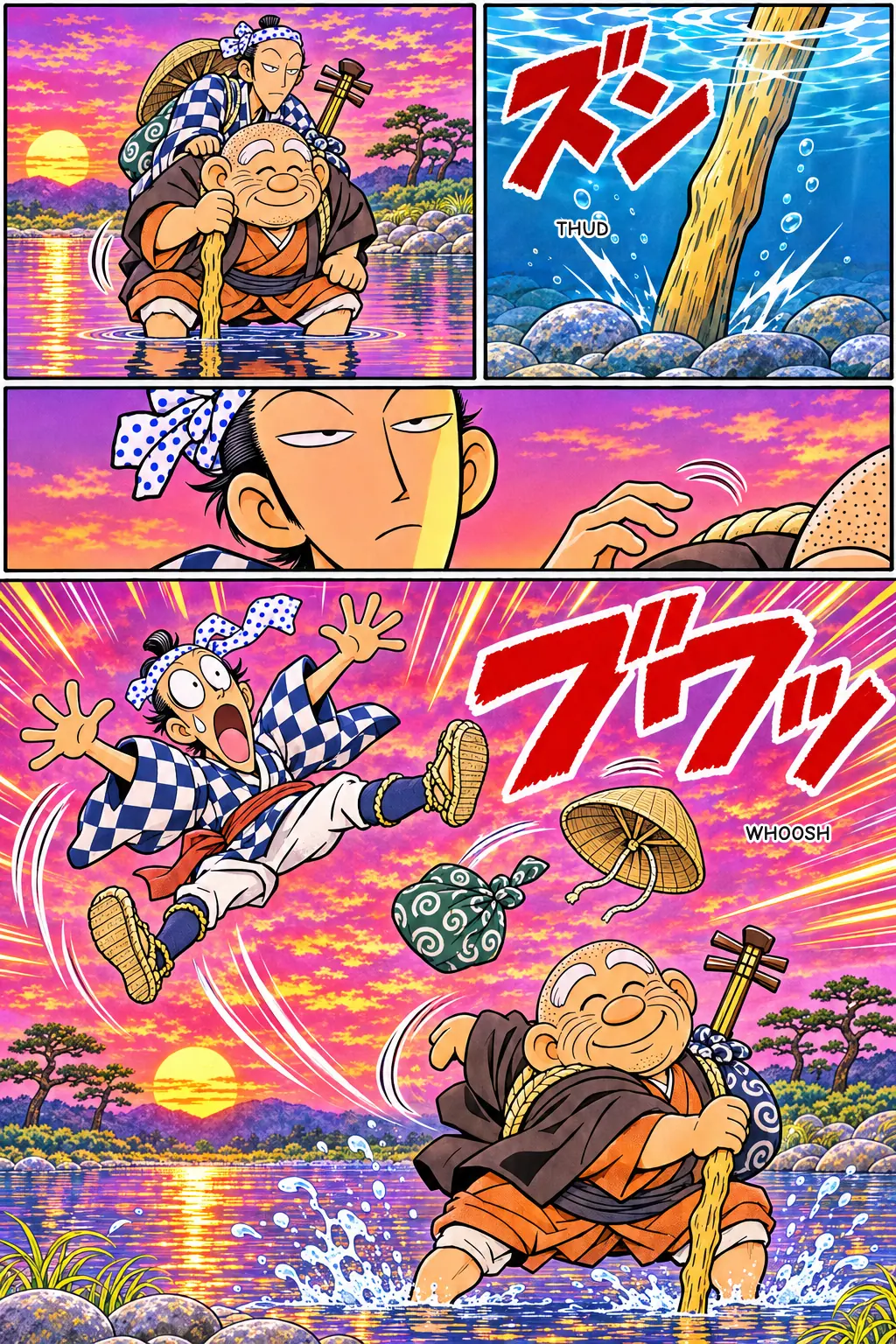
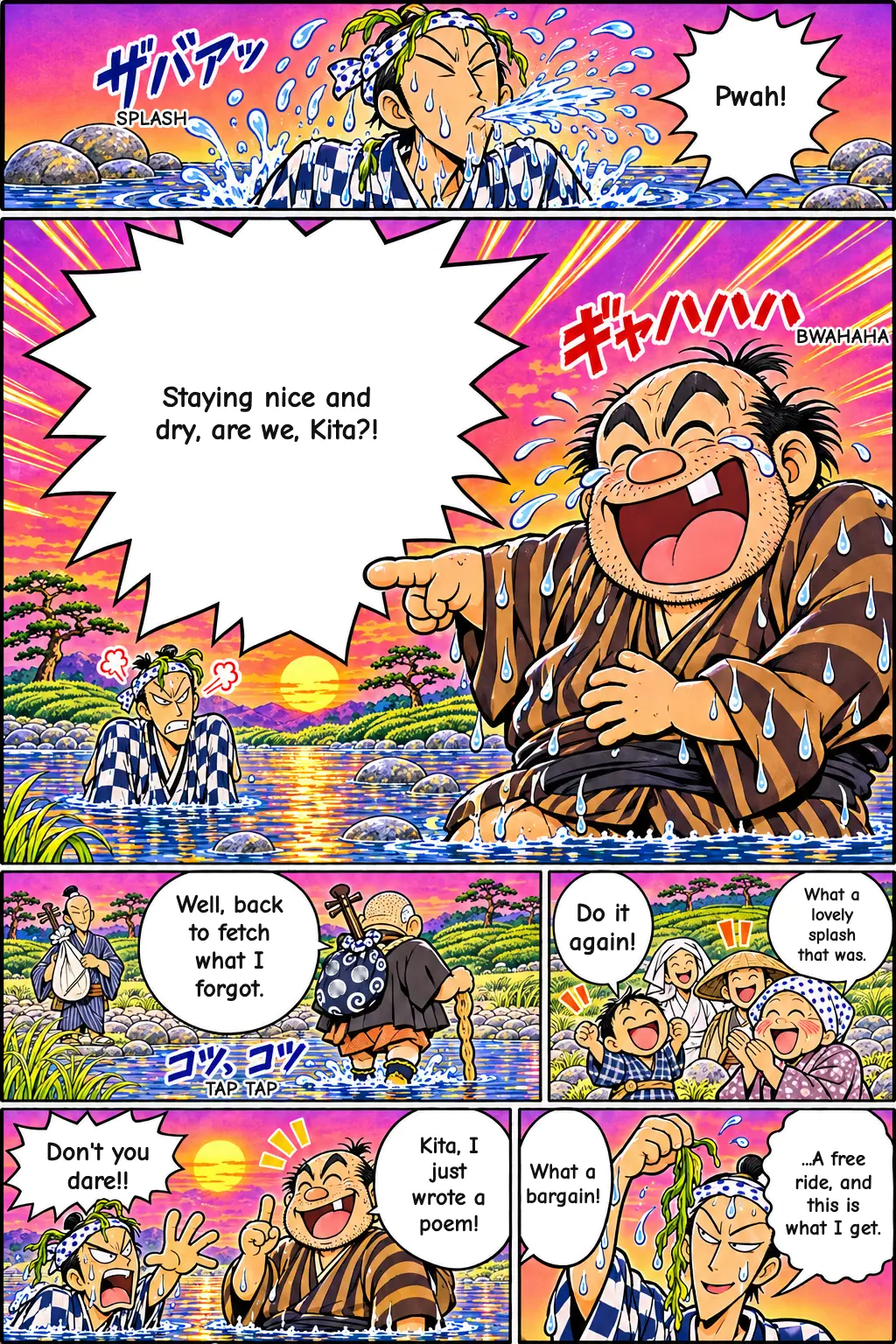
In short: The river crossing near Kakegawa is a comic episode from Jippensha Ikku's Tokaido Hizakurige in which Kita, a freeloading traveler, secretly climbs onto a blind man's back to get across a river without paying or getting wet. When the man realizes his passenger is not his companion, he drops Kita in the middle of the river and leaves him soaked and embarrassed.
The Original Story: Kita's Free Ride
Tokaido Hizakurige, known in English as Shanks' Mare, is a comic novel by Jippensha Ikku (1765–1831), first published in installments from 1802. It follows two men from Edo (modern Tokyo), Yajirobei and Kitahachi, better known as Yaji and Kita, as they walk west along the Tokaido, the great highway between Edo and Kyoto. This episode belongs to the book's third part, when the pair are passing through the Nissaka and Kakegawa area, in what is now Shizuoka Prefecture.
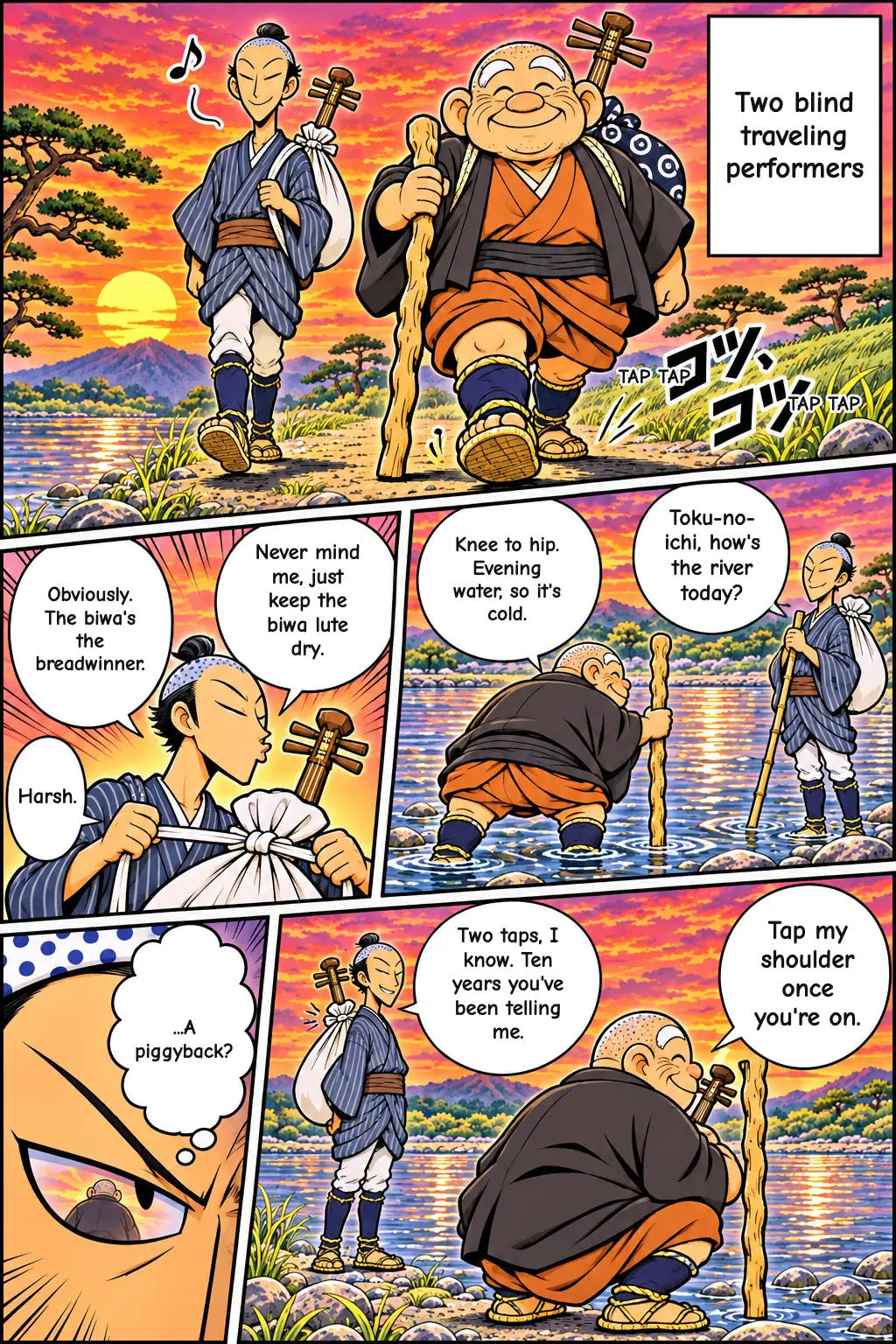
At a river along the road, the two travelers come across a pair of zato, blind men who belong to a recognized class of traveling professionals. The two are about to cross, with one carrying the other on his back. Kita sees an opportunity. Saying nothing, he climbs onto the man's back himself, hoping to reach the far bank dry and free of charge.
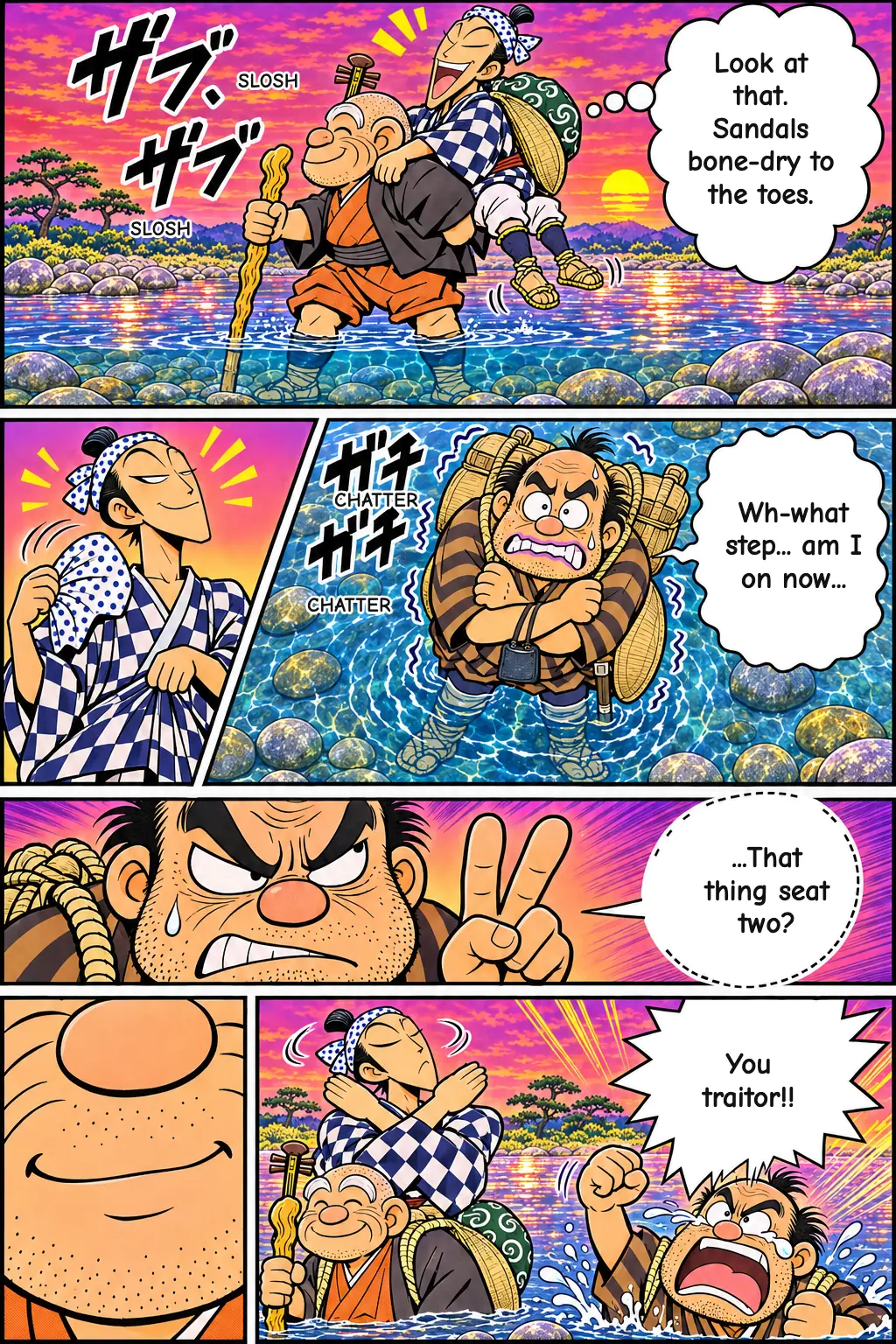
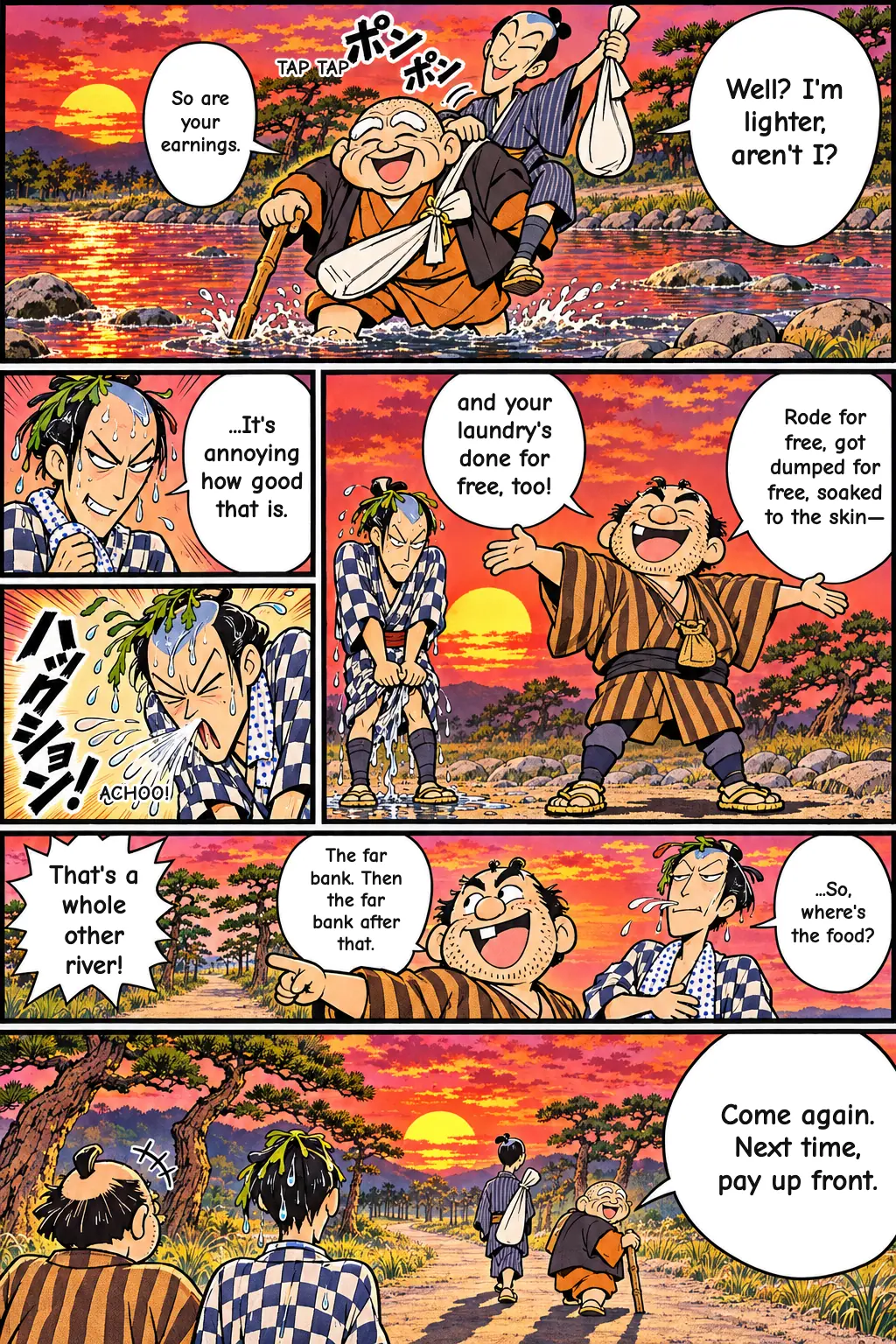
The carrier wades in believing he has his friend on his back. Eventually he realizes that this is not his companion, and in the middle of the river Kita is sent into the water. He ends up drenched and humiliated, then carries on down the road with Yaji. It is a short gag with a simple shape: a trick played on someone who seemed easy to fool comes straight back on the trickster.
Some smaller details are still unconfirmed in our research notes and are left out of the summary above. These include how exactly the ride is discovered, whether Kita gets away with it once before he fails, and how Yaji reacts. Hizakurige episodes often close with teasing or a kyoka, a playful comic poem, but we have not confirmed whether this scene does.
Who Are Yaji and Kita?
Yajirobei is a middle-aged man from the Hatchobori district of Kanda in Edo. Kitahachi is his traveling partner. Neither is a hero in any usual sense. They joke constantly, chase small advantages, and get into one embarrassing scrape after another. In this episode, Kita plays his classic role: the man who grabs at a quick gain without thinking and pays for it moments later.
That is much of the book's appeal. The word hizakurige refers to traveling on foot, using your own knees in place of a horse. The title promises a journey at ground level, full of inns, food, strangers, and mishaps, rather than an adventure with grand stakes.
Why a River Crossing Is Funny: The Tokaido Background
The joke makes more sense once you know what travel was like in the Edo period (1603–1868). The Tokaido was one of Japan's busiest roads, but it was not a smooth one. Several large rivers along the route had no bridge, a policy often explained as a defensive measure by the shogunate, which ruled Japan at the time. At major crossings, travelers often hired porters to carry them over on their shoulders or on a platform. Crossing could cost money, and a swollen river could hold up a journey.
Our notes do not identify this river, and the source does not establish here that it was a paid porter crossing. Still, the general picture helps explain the gag. Getting across a river dry was something travelers really cared about, so a free ride on someone else's back is exactly the kind of petty victory Kita would find irresistible.
The Zato and the Point of the Joke
Zato was a term for blind men in the lower ranks of a guild-like organization for blind people. Many earned their living as musicians, storytellers, or masseurs. English readers may recognize the word from Zatoichi, the famous fictional blind swordsman, whose name includes it. Our notes do not confirm the trade of the two men in this scene, or give them individual names.
Edo-period comedy could be harsh about disability, and modern readers may find parts of Hizakurige uncomfortable. Even so, the basic structure of this episode punishes the person who cheats. Kita assumes he can take advantage of someone, and he is the one who ends up in the water. One way to read the story is as a small lesson about what happens when you try to profit from someone else's vulnerability, though Ikku was clearly writing for laughs and not to preach.
What the Manga Changes
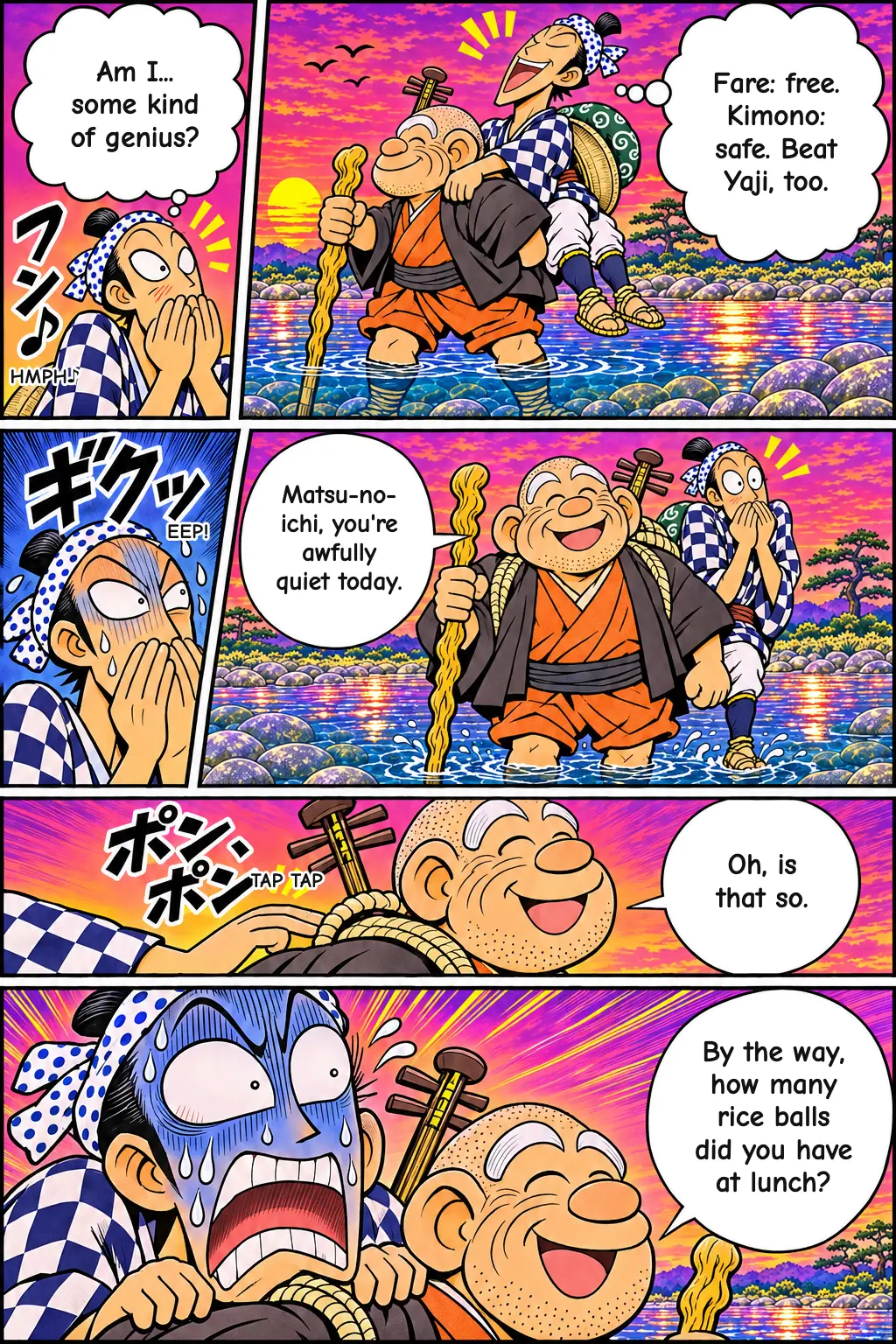
The manga keeps the core of the story: Kita's sneaky ride, the discovery, and the drop into the river. Its biggest addition is how it portrays the two men. In this version, they are sharp, cool-headed performers who may be a step ahead of Kita, picking up on what is happening and deciding when to act. The idea that they lure him to the middle of the river on purpose is an adaptation choice, and we have not confirmed it in the original.
The laughs are also deliberately aimed at Kita alone. The manga does not use the men's blindness as a punchline. Their personalities, dialogue, and performing skills are creative additions, along with Kita being flat broke at the start, the look and mood of the river, and what happens after the dunking. The manga also does not name the river, because its identity has not been confirmed.
Where to Read It
If you would like to see how Kita's perfect plan falls apart, you can read this story as Episode 6 of YAJI AND KITA: The Great Tokaido Road Trip here on Manga Portal. Every episode is free, and you don't need to sign up. It is an easy way to meet one of Japan's great comic road trips, one soggy mistake at a time.
Characters in this episode
Kita (Kitahachi)
Yaji's quick-to-scheme traveling partner, who rides a blind man's back to cross a river for free and ends up in the water.
Yaji (Yajirobei)
A joking, mishap-prone middle-aged man from Edo who is traveling the Tokaido with Kita.
The Two Zato
Blind travelers crossing the river together, one of whom carries Kita unknowingly and drops him midstream once he discovers the trick.
FAQ
What is Tokaido Hizakurige about?
It is a comic novel by Jippensha Ikku about two men from Edo, Yaji and Kita, traveling on foot along the Tokaido road. The humor comes from their jokes, schemes, and constant mishaps along the way.
What happens to Kita at the river in Hizakurige?
Kita secretly climbs onto the back of a blind man who is crossing a river, hoping for a dry, free ride. The man realizes that his passenger is not his companion, and Kita is dropped in the middle of the river.
What is a zato?
A zato was a blind man in the lower ranks of a guild-like organization for blind people in premodern Japan. Many worked as musicians, storytellers, or masseurs, and the word also appears in the name of the fictional swordsman Zatoichi.
Did the blind men plan to trick Kita from the start?
That is the manga's interpretation, and we have not confirmed it in the original. The confirmed outline is simply that the carrier realizes the rider is not his companion and Kita is dropped midstream.
Why did people get carried across rivers on the Tokaido?
Several large rivers on the Tokaido had no bridge during the Edo period, so at major crossings travelers often paid porters to carry them over. This policy is often explained as a defensive measure by the shogunate.