Episode 8Prove You're Not a FoxHizakurige: The Fox of Goyu
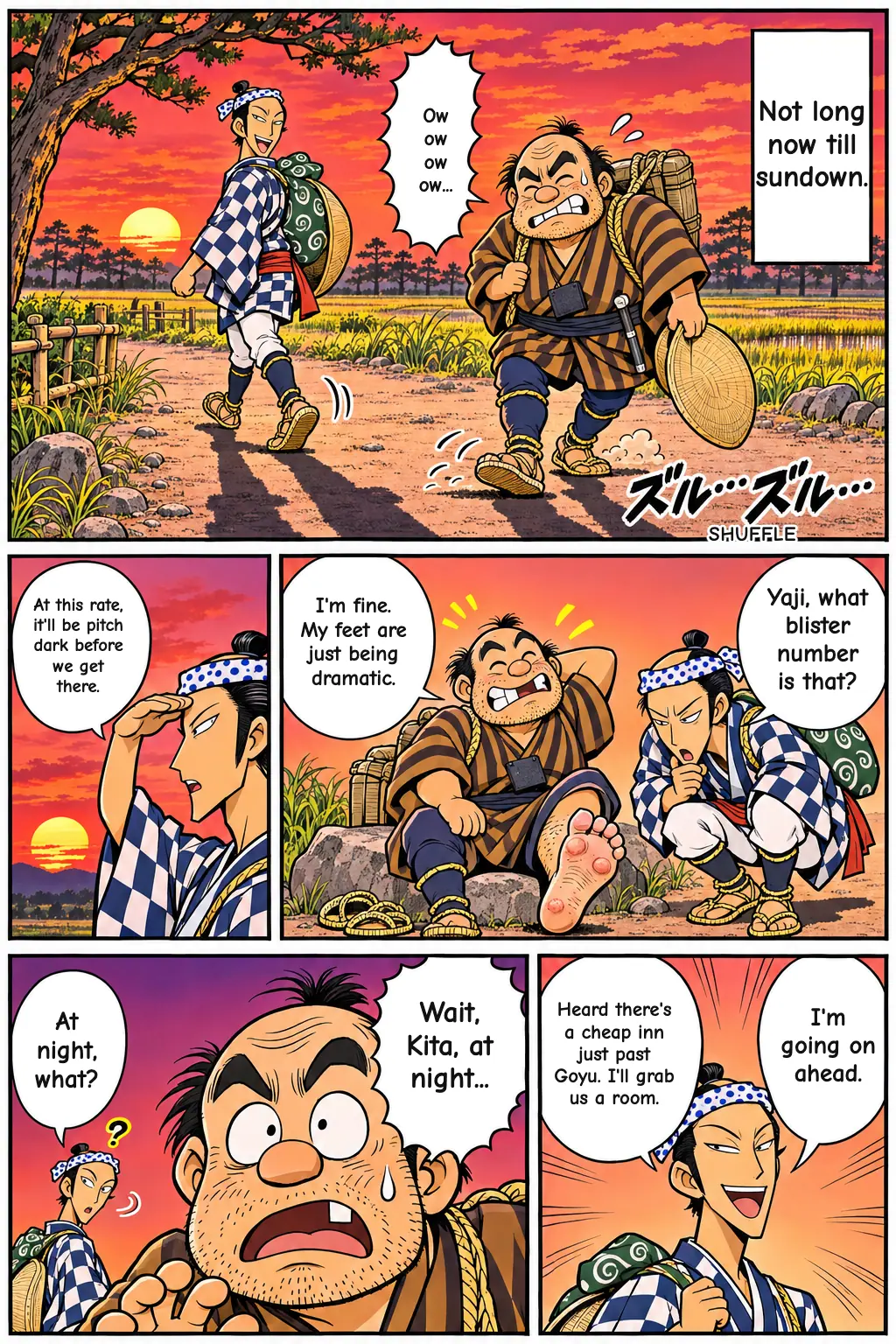
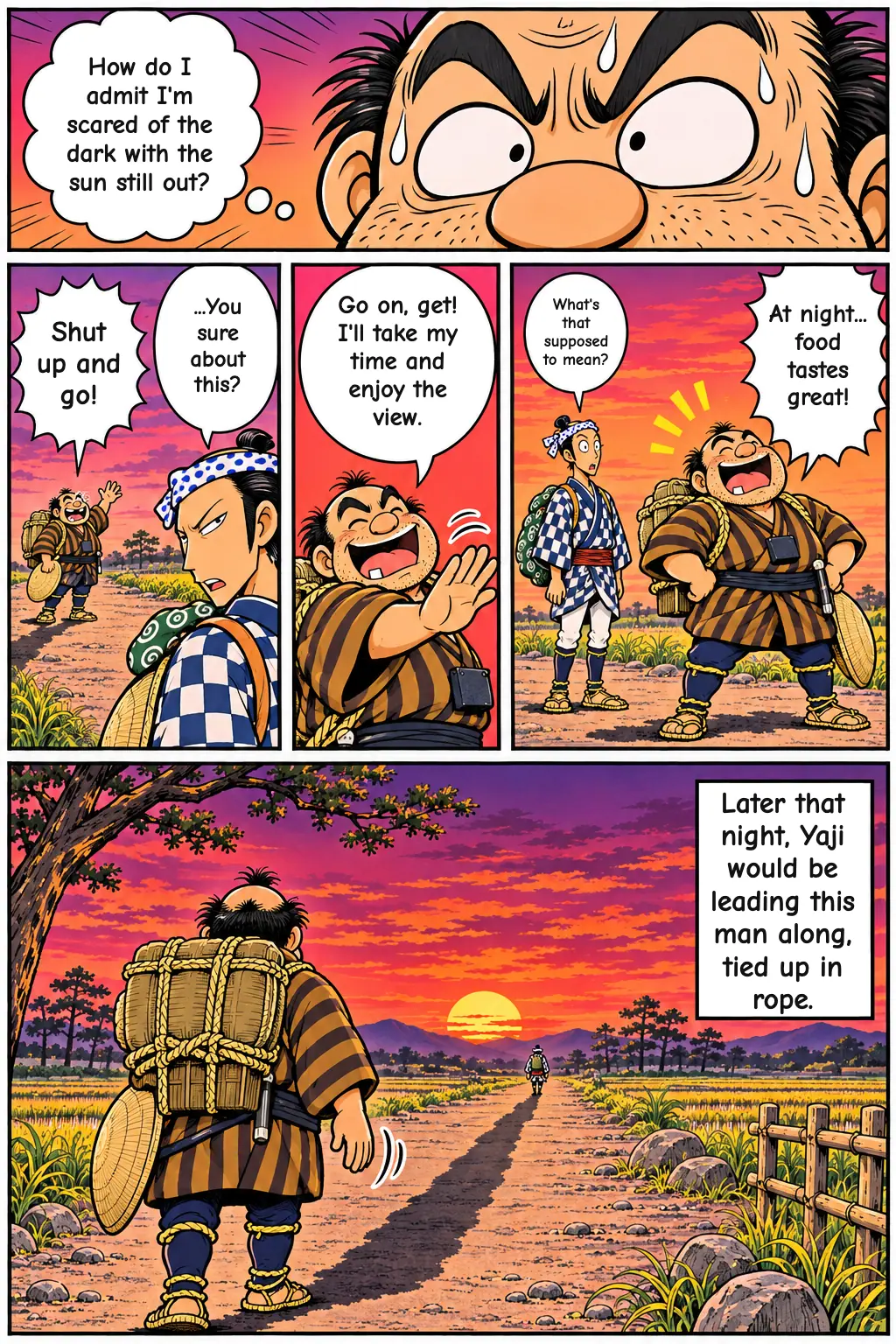
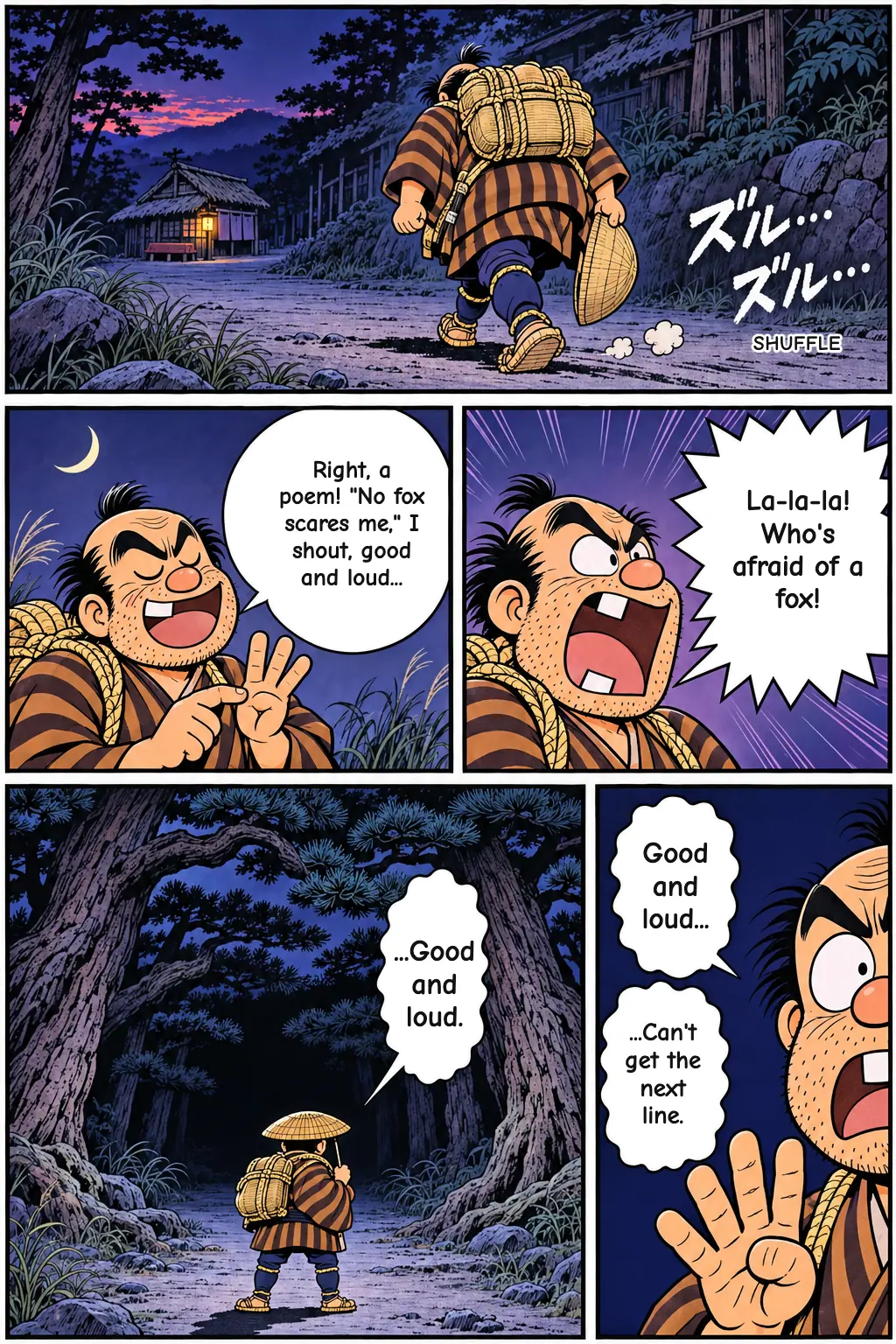
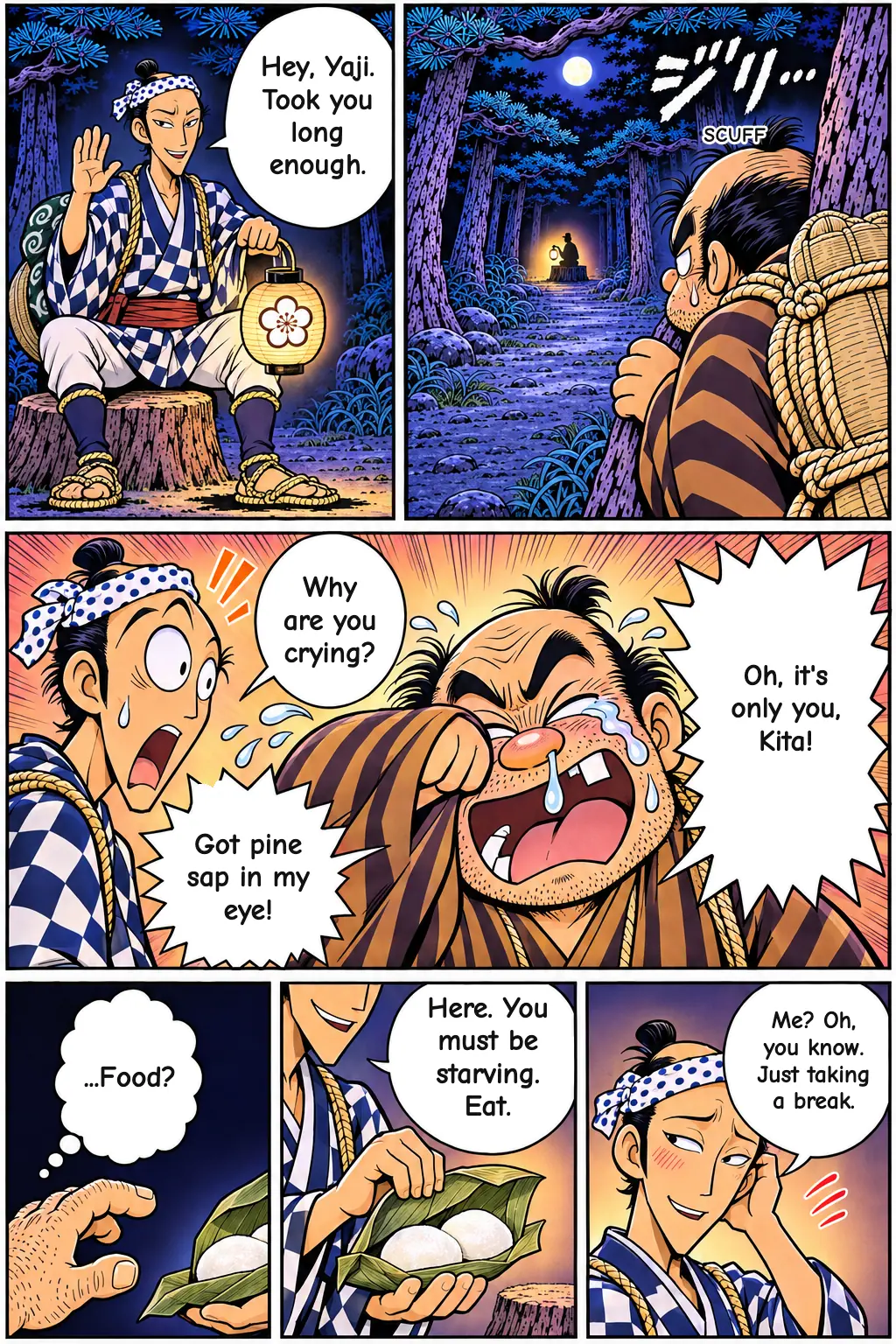
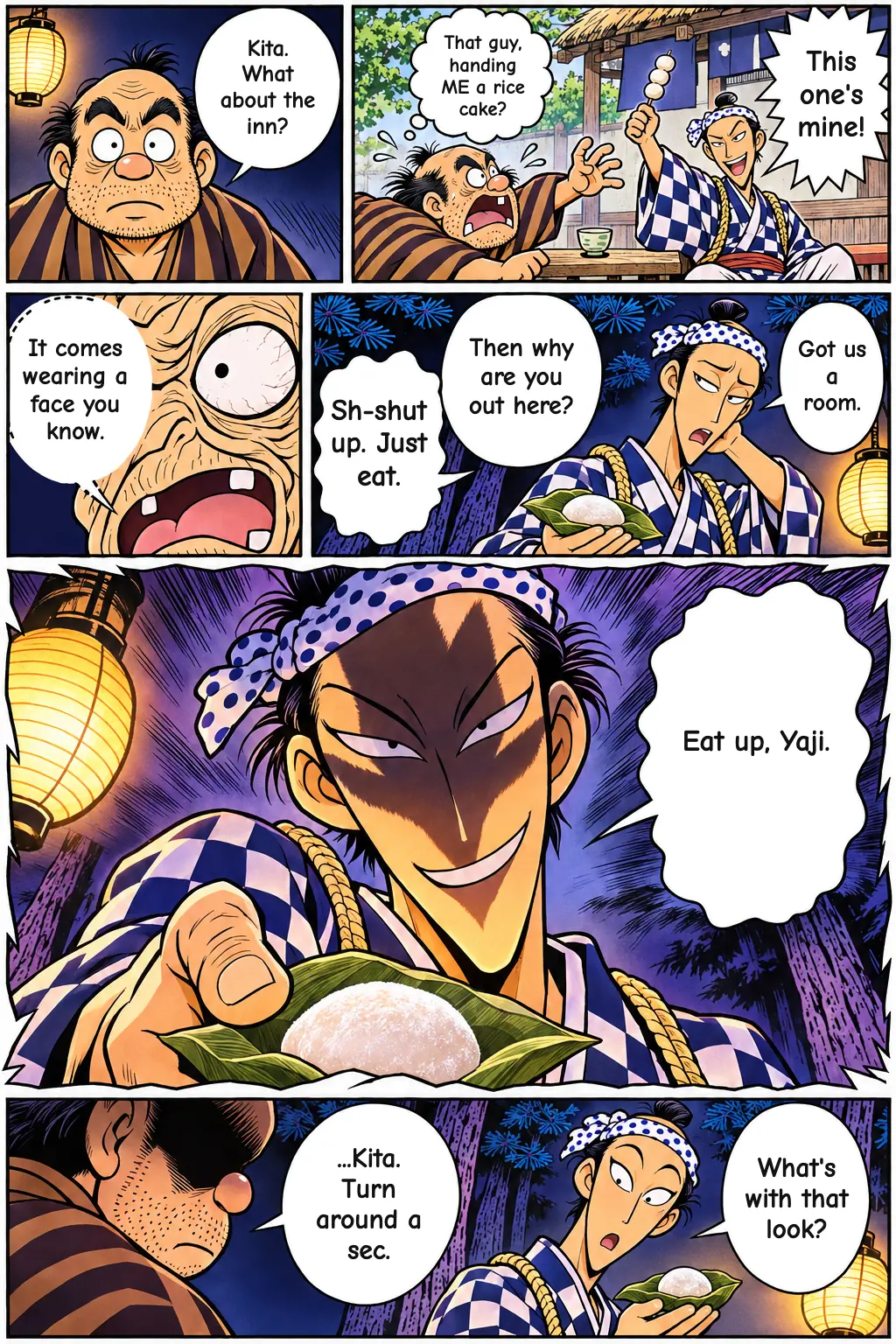
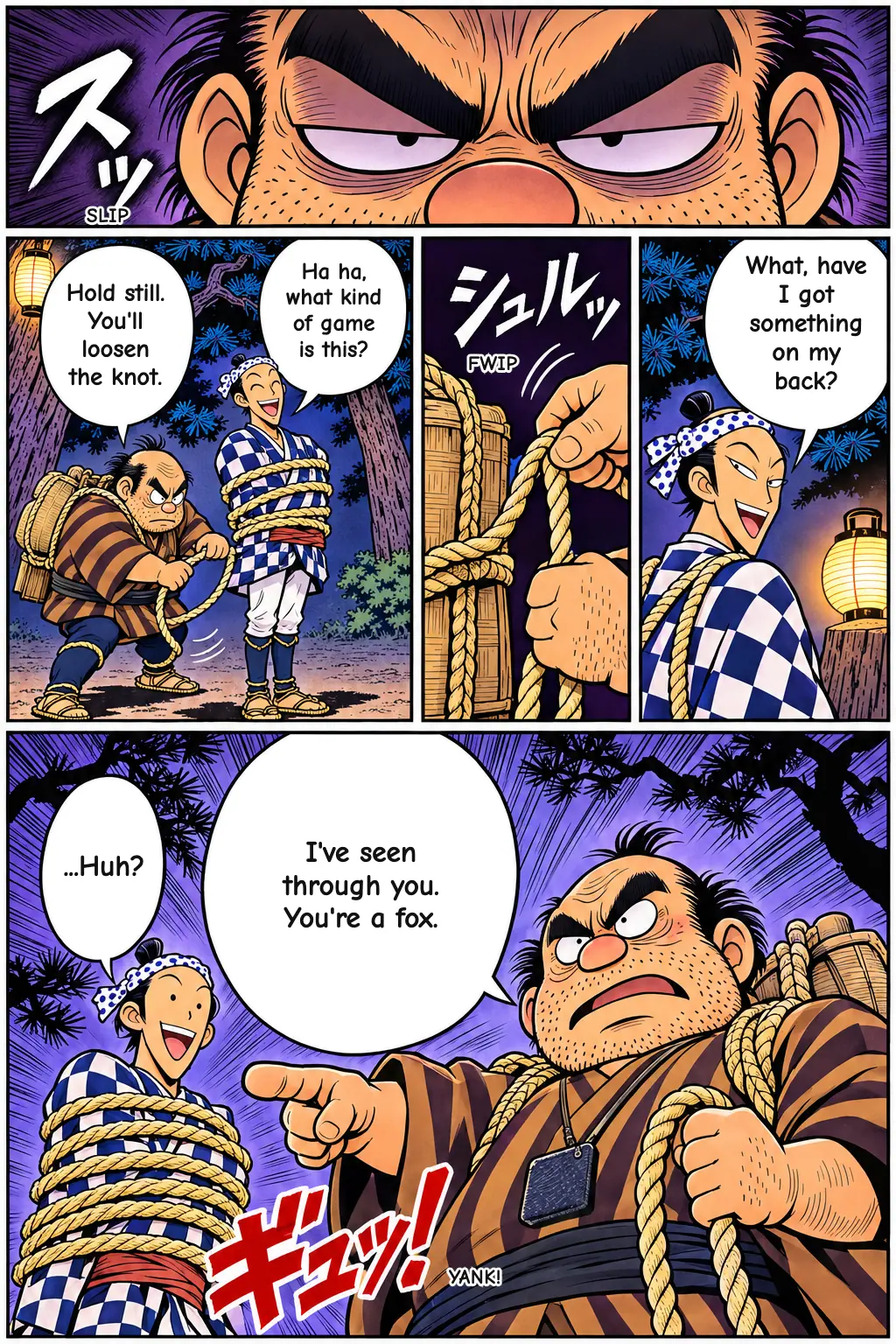
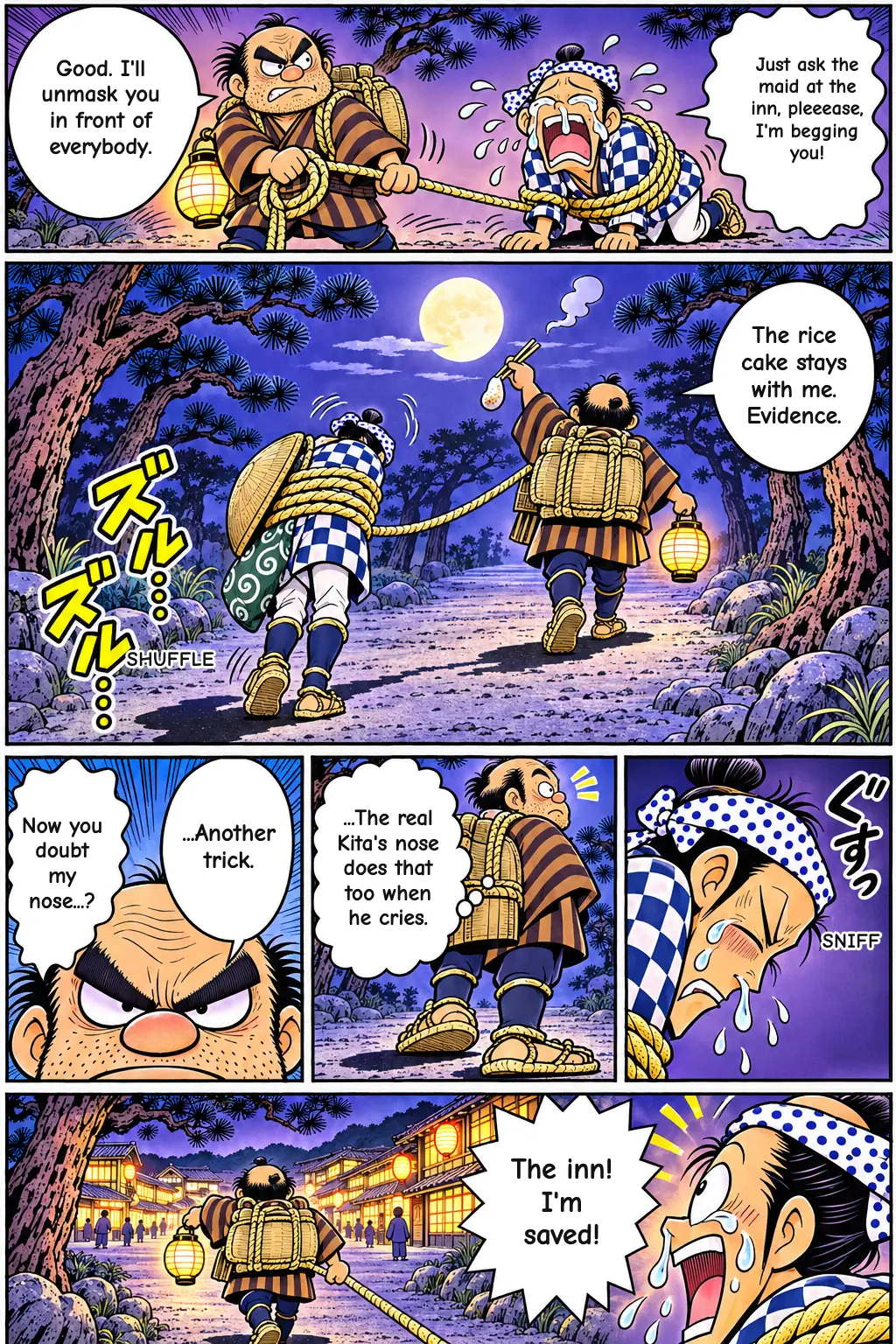
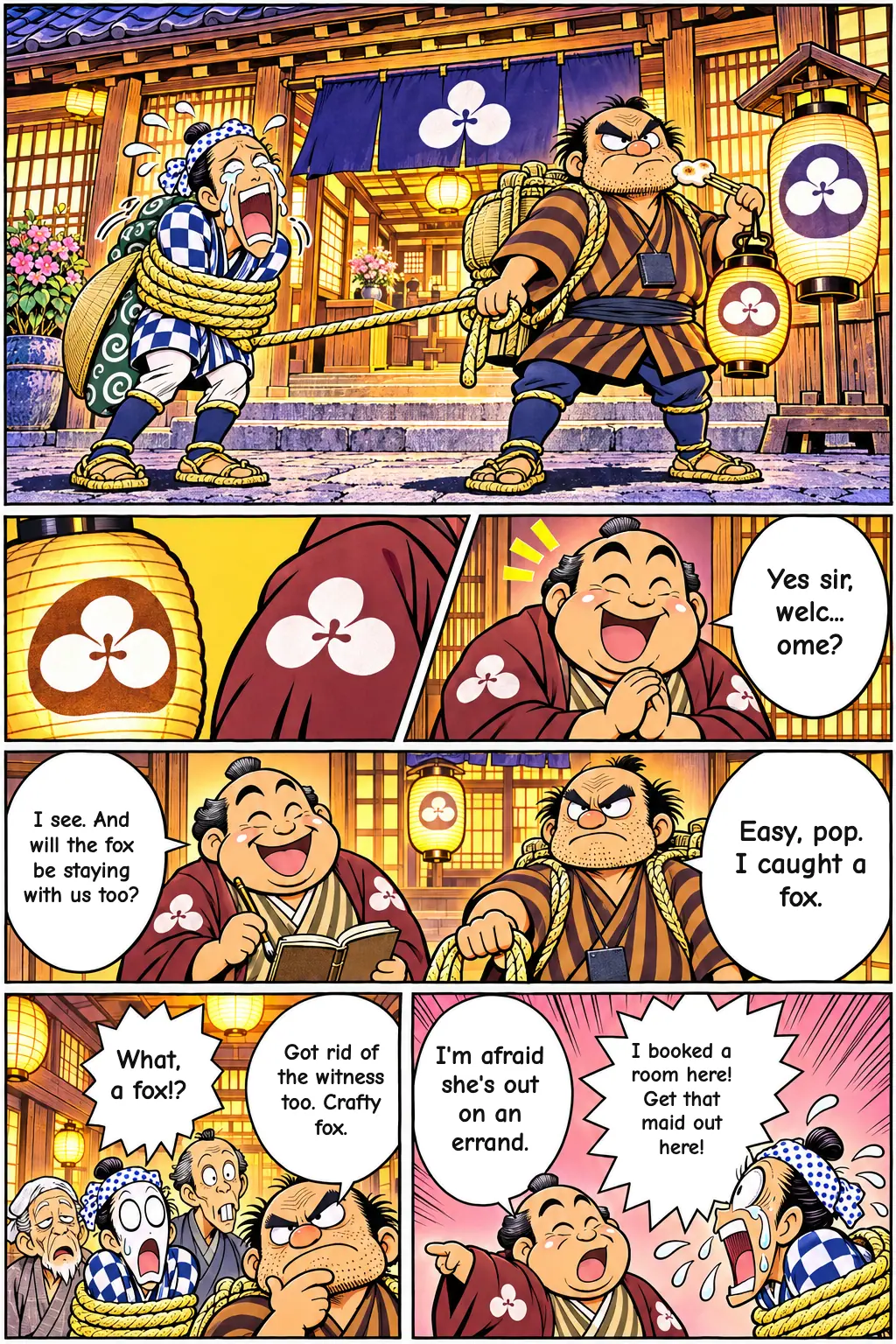
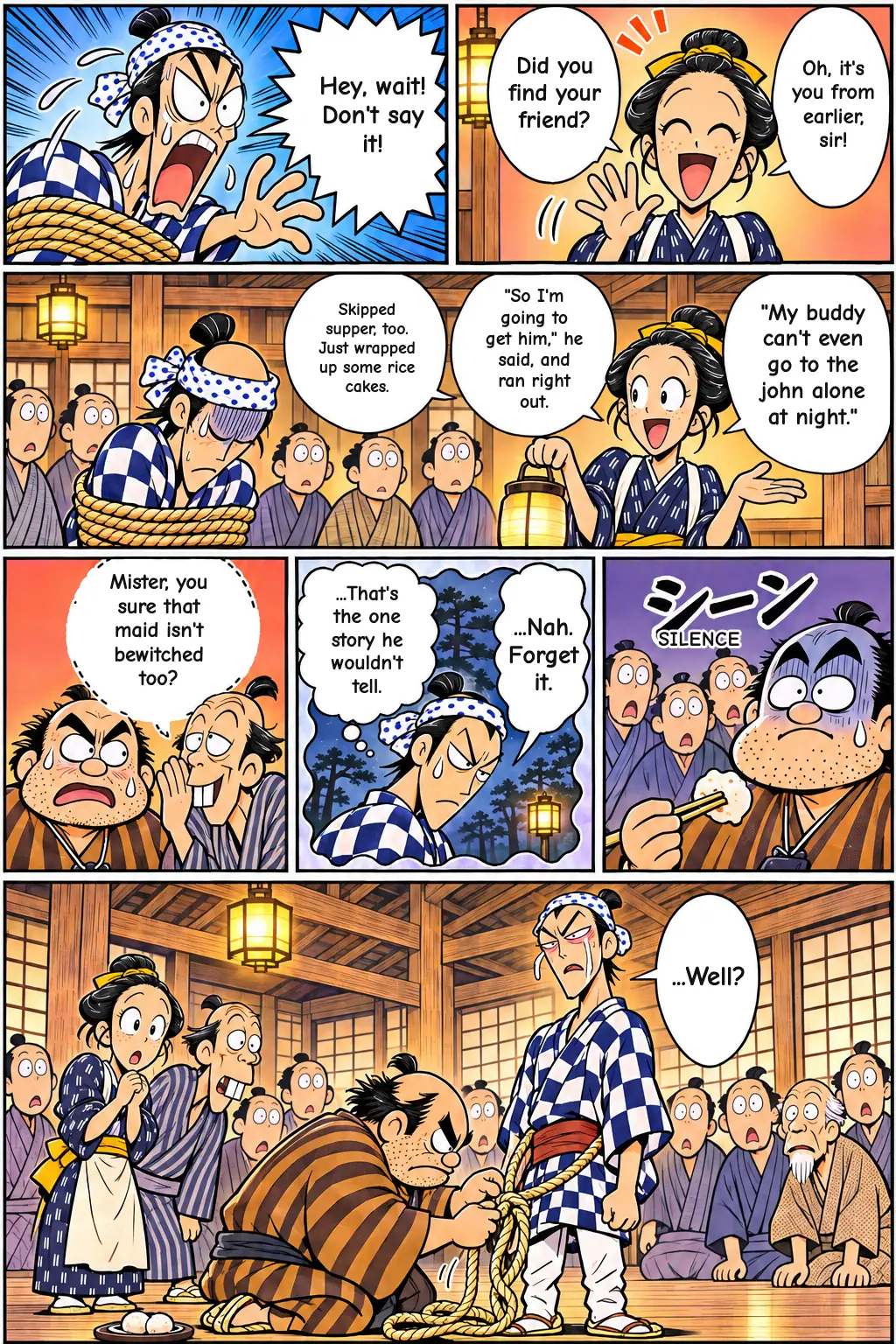
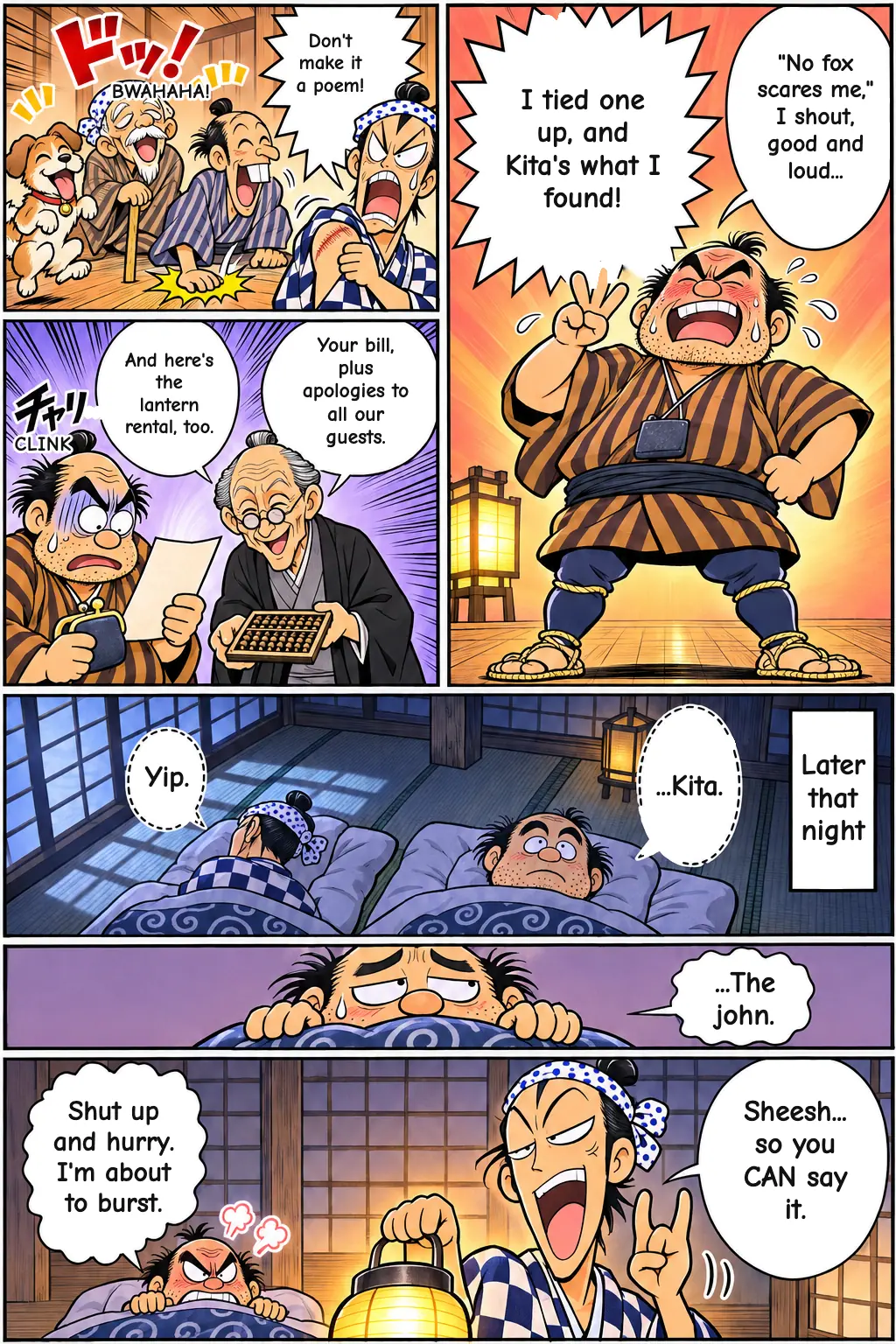
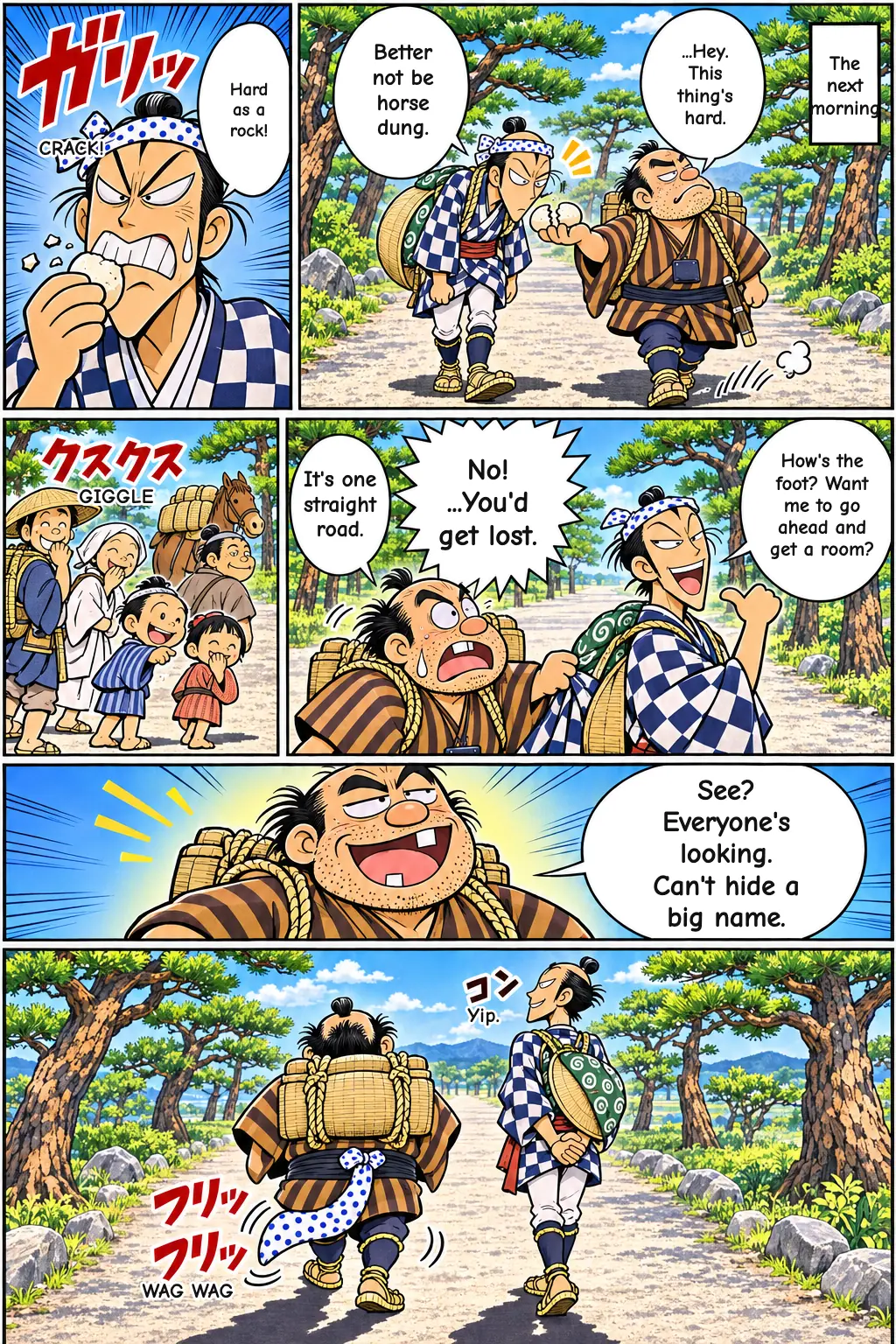
Limping alone through a dark avenue of pines, Yaji runs into Kita, who was supposed to be far ahead. Kita is suspiciously kind, so Yaji decides he must be a fox in disguise, ties him up, and drags him to the inn. And the harder Kita tries to prove who he is, the worse it gets.
Get new episodes in your feed. Follow us on:ThreadsBluesky
Story summary
Tokaidochu Hizakurige is a comic novel by Jippensha Ikku, a popular writer of Edo-period Japan. The first part appeared in 1802, and more installments followed over the next years. It belongs to a genre called kokkeibon, or "funny books," written for ordinary readers and built on jokes, wordplay and embarrassing situations. The title is a joke too. It roughly means traveling on your own knees as if they were a horse, which is why the book is often called Shank's Mare in English.
Hizakurige Summary: Yaji, Kita and the Fox of Goyu Explained
In short: The Fox of Goyu is a comic episode from Tokaidochu Hizakurige, Jippensha Ikku's Edo-period road-trip novel. Frightened by a warning about foxes, Yaji meets his travel companion Kita on a dark pine road, decides he is a fox in disguise, ties him up and drags him to an inn, where the "fox" turns out to be the real Kita.
What Is Hizakurige, and Who Are Yaji and Kita?
Tokaidochu Hizakurige is a comic novel by Jippensha Ikku, a popular writer of Edo-period Japan. The first part appeared in 1802, and more installments followed over the next years. It belongs to a genre called kokkeibon, or "funny books," written for ordinary readers and built on jokes, wordplay and embarrassing situations.
The title is a joke too. It roughly means traveling on your own knees as if they were a horse, which is why the book is often called Shank's Mare in English. The heroes are Yajirobei and Kitahachi, two Edo men walking the Tokaido, the great highway between Edo (now Tokyo) and Kyoto. They brag, scheme and fail at stop after stop, and the fox story comes from the fourth part of the book.
The Fox of Goyu: What Happens in the Original Story
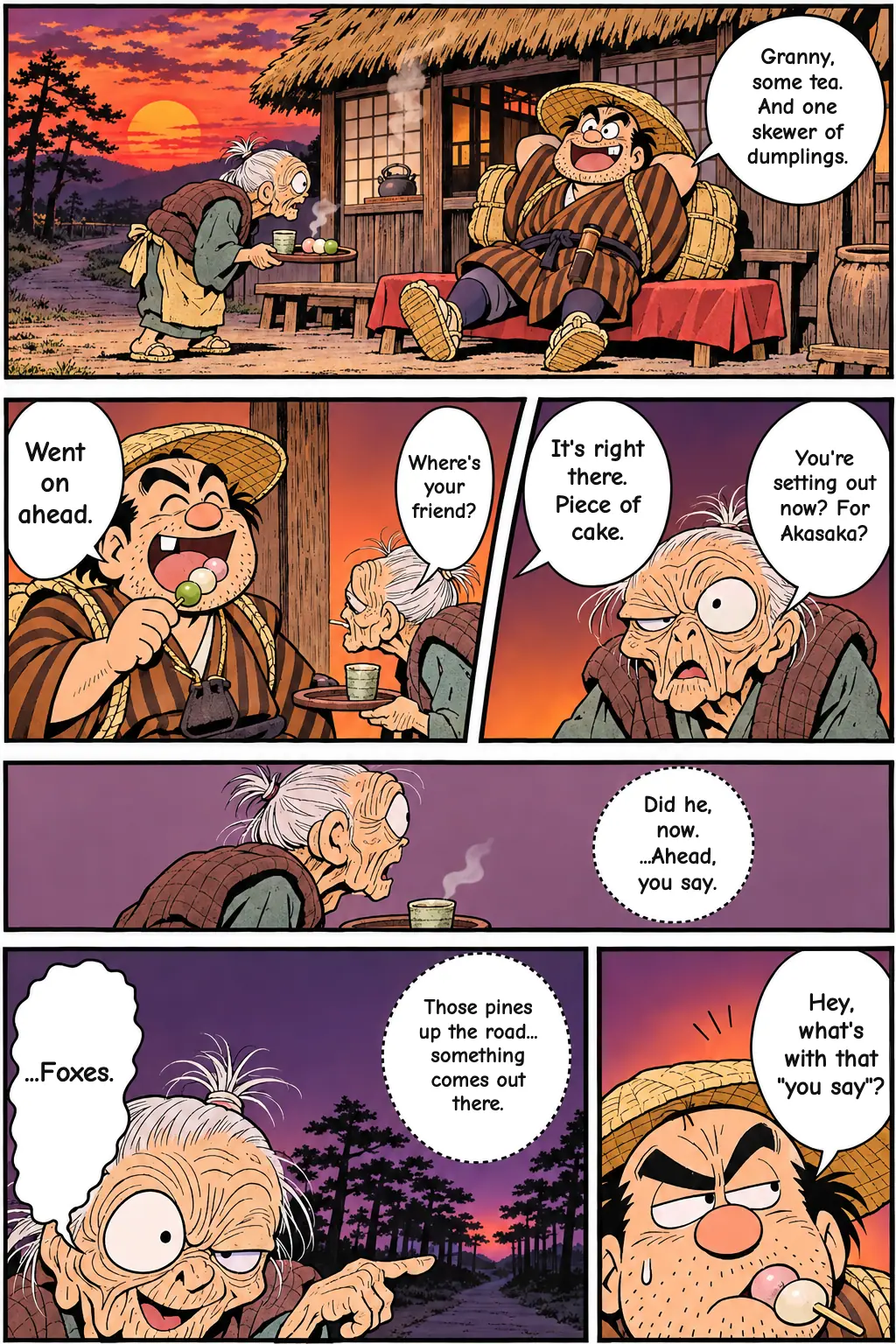
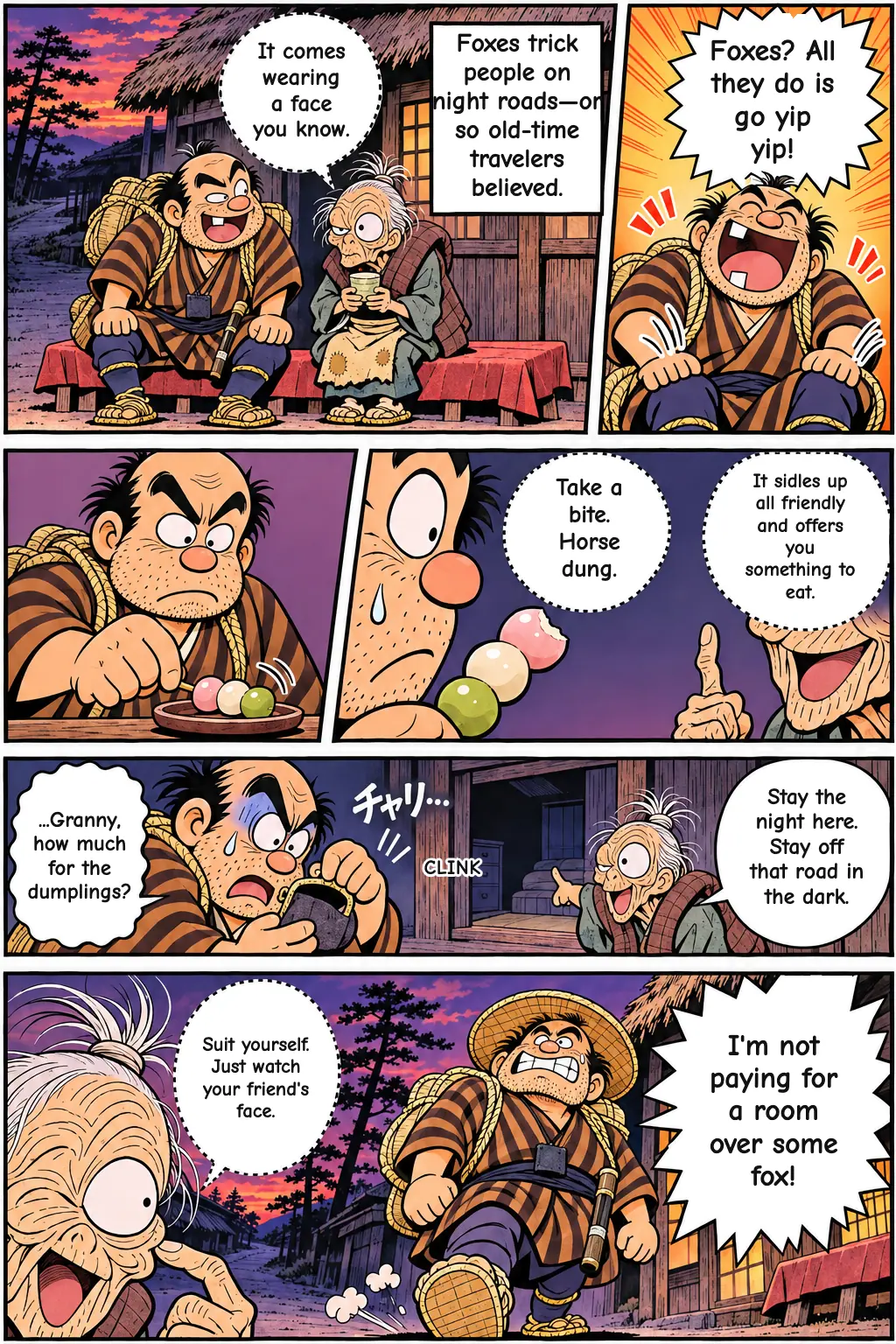
The two friends end up walking separately, with Kita going on ahead. As evening falls, Yaji reaches Goyu, a post town on the highway, and stops at a teahouse. An old woman there gives him some unwelcome news: a fox haunts the pine avenue on the way to the next town, Akasaka, and it tricks travelers.
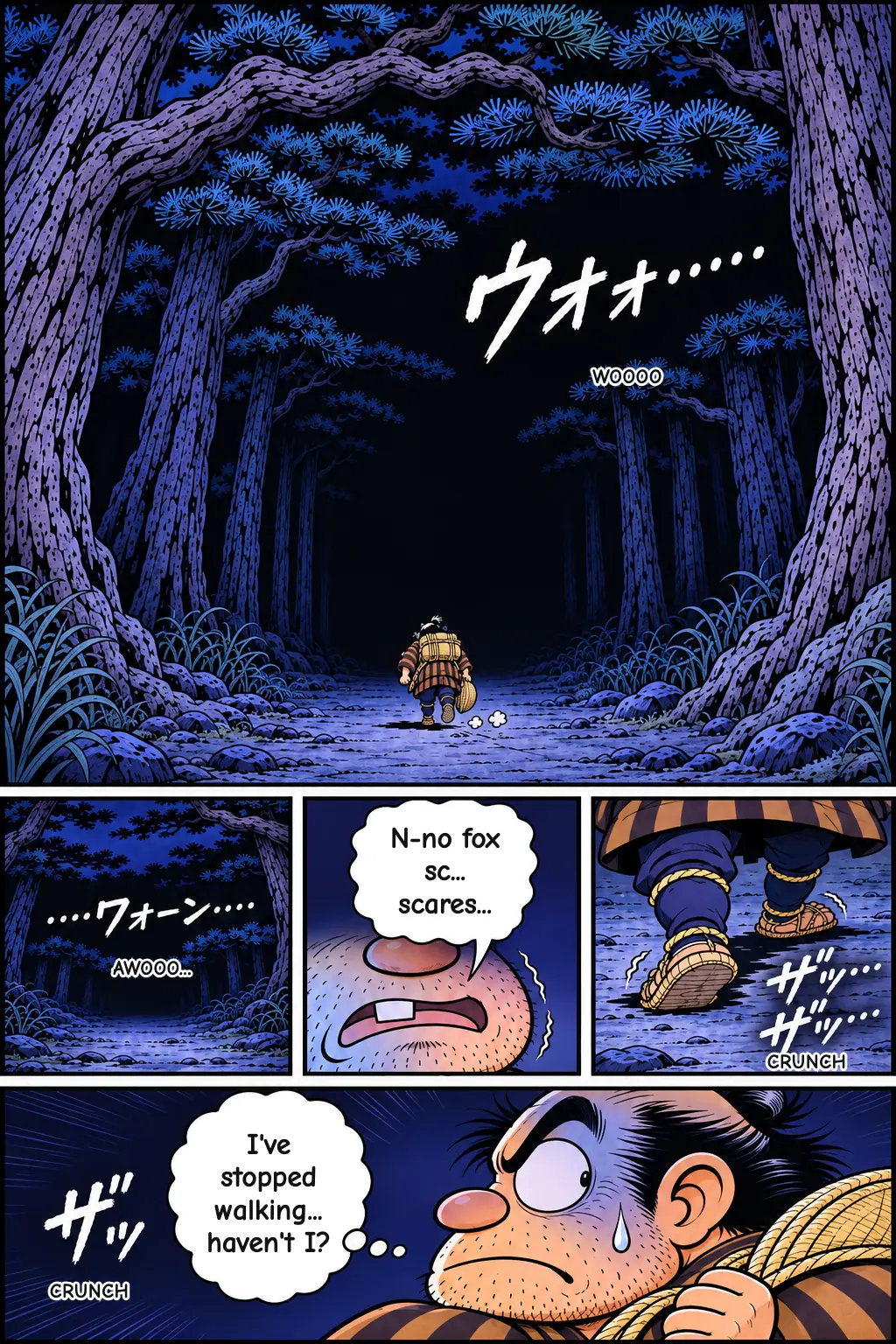
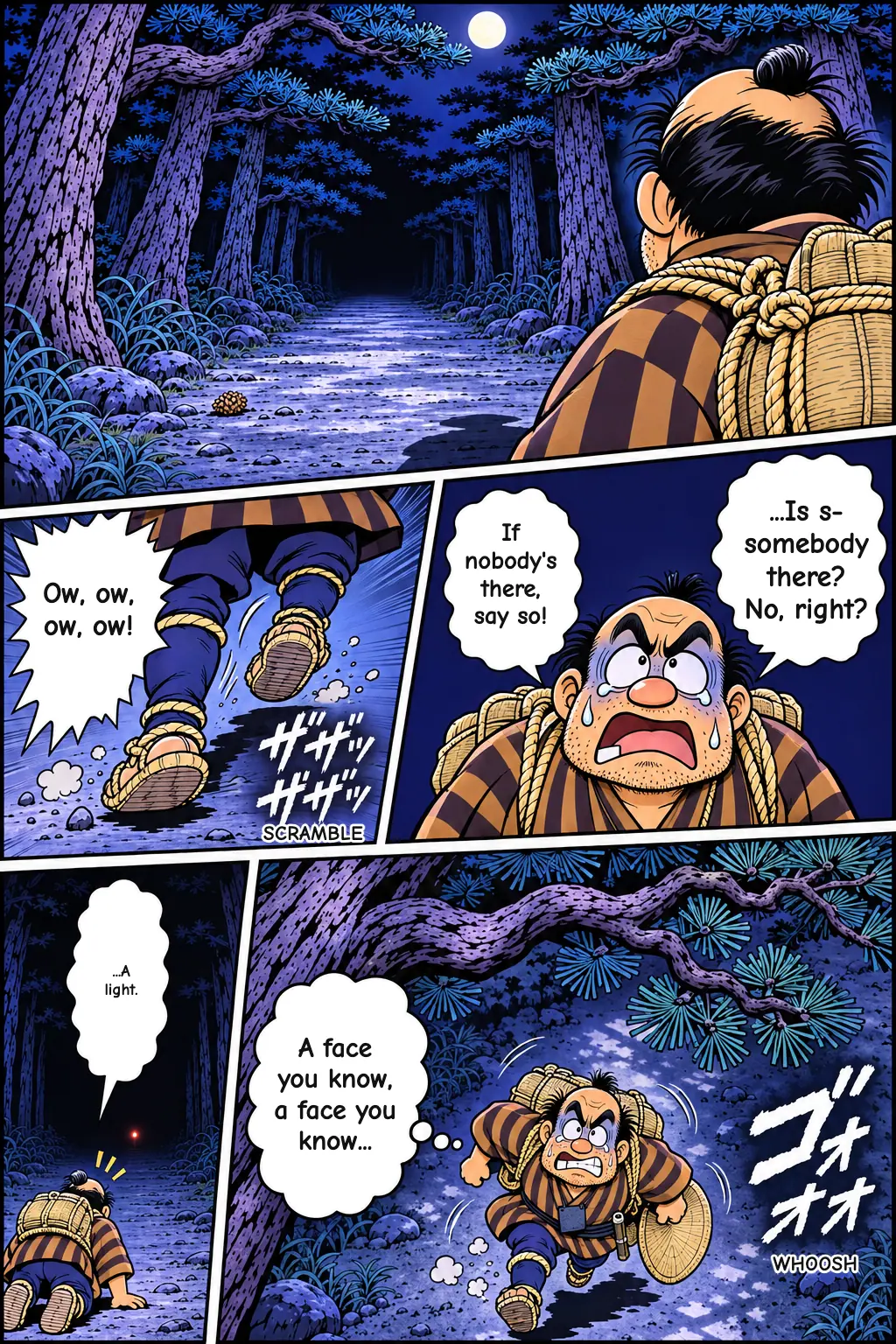
Yaji has to walk that road alone in the dark, and by now the warning has taken hold of him. Somewhere among the pines he meets Kita, who had been ahead of him all along. A sensible man would be relieved. Yaji decides instead that this is a fox wearing his friend's face.
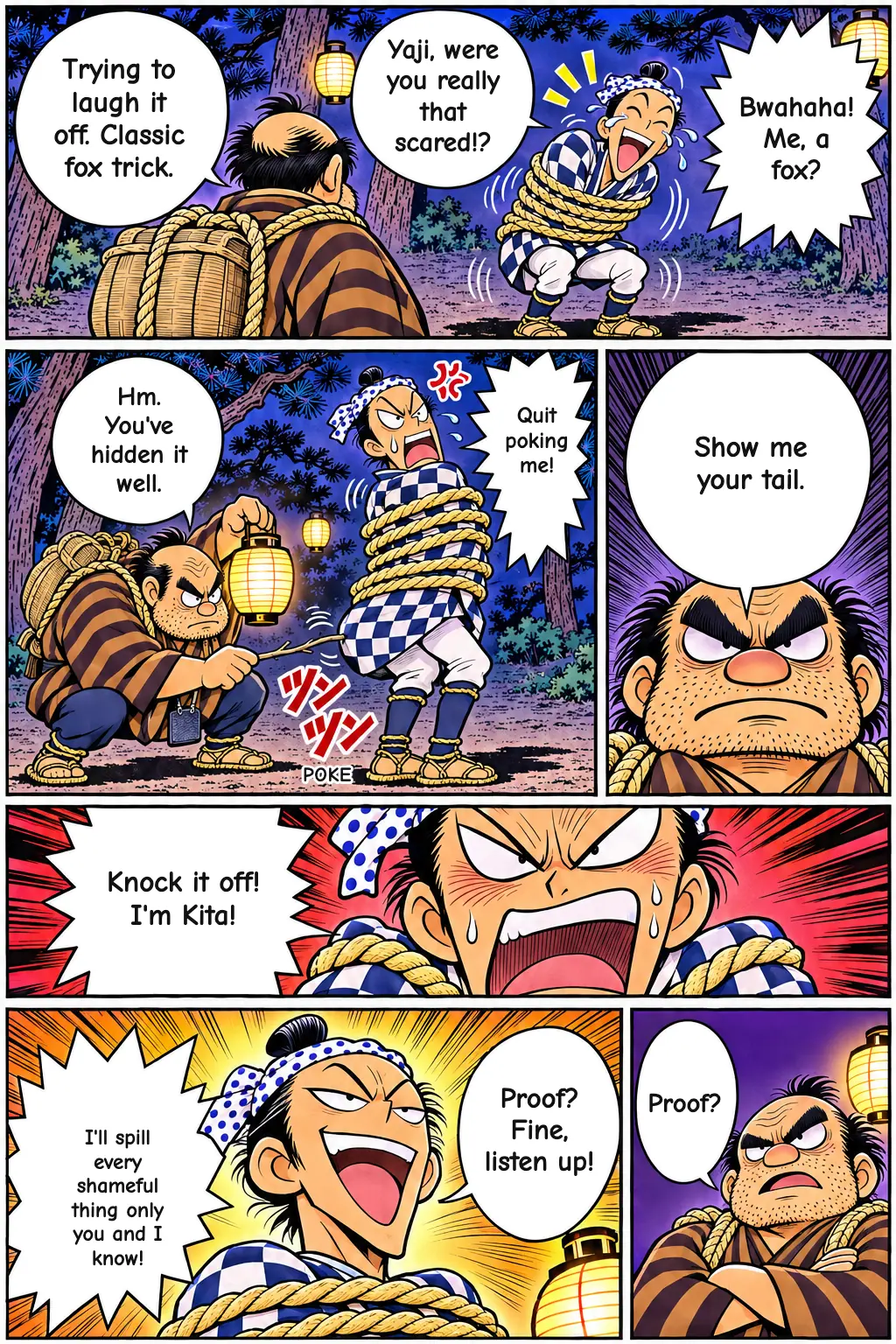
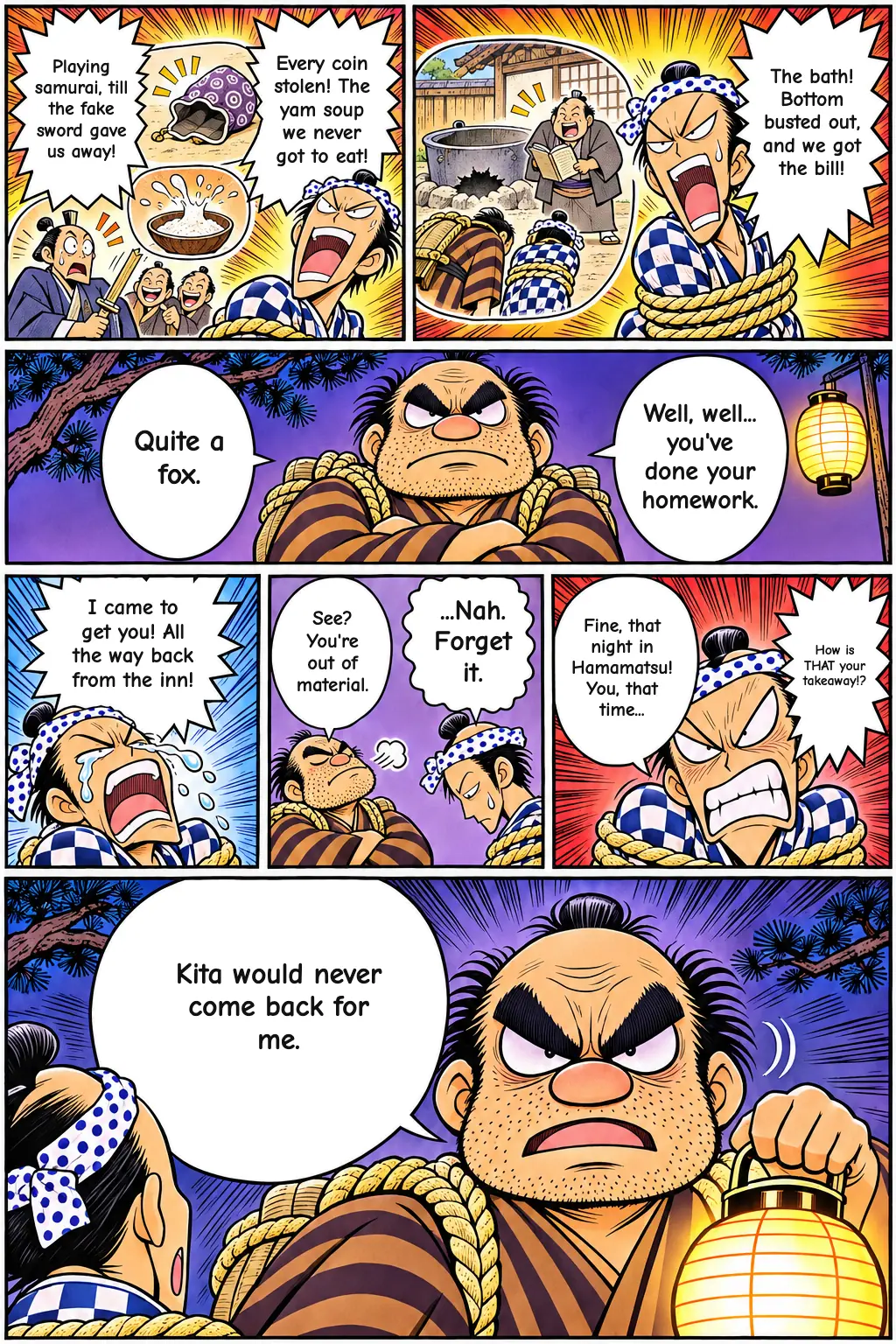
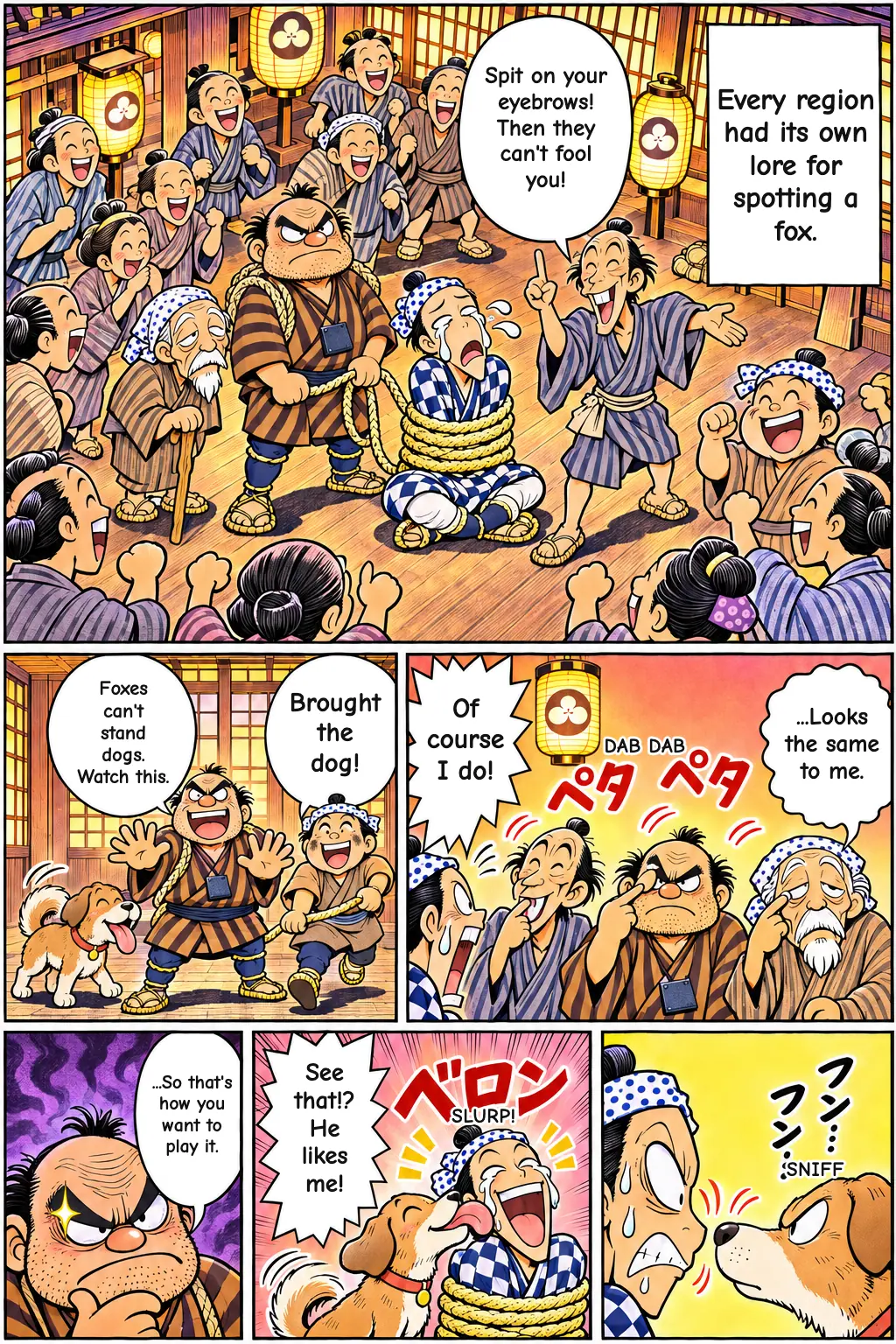
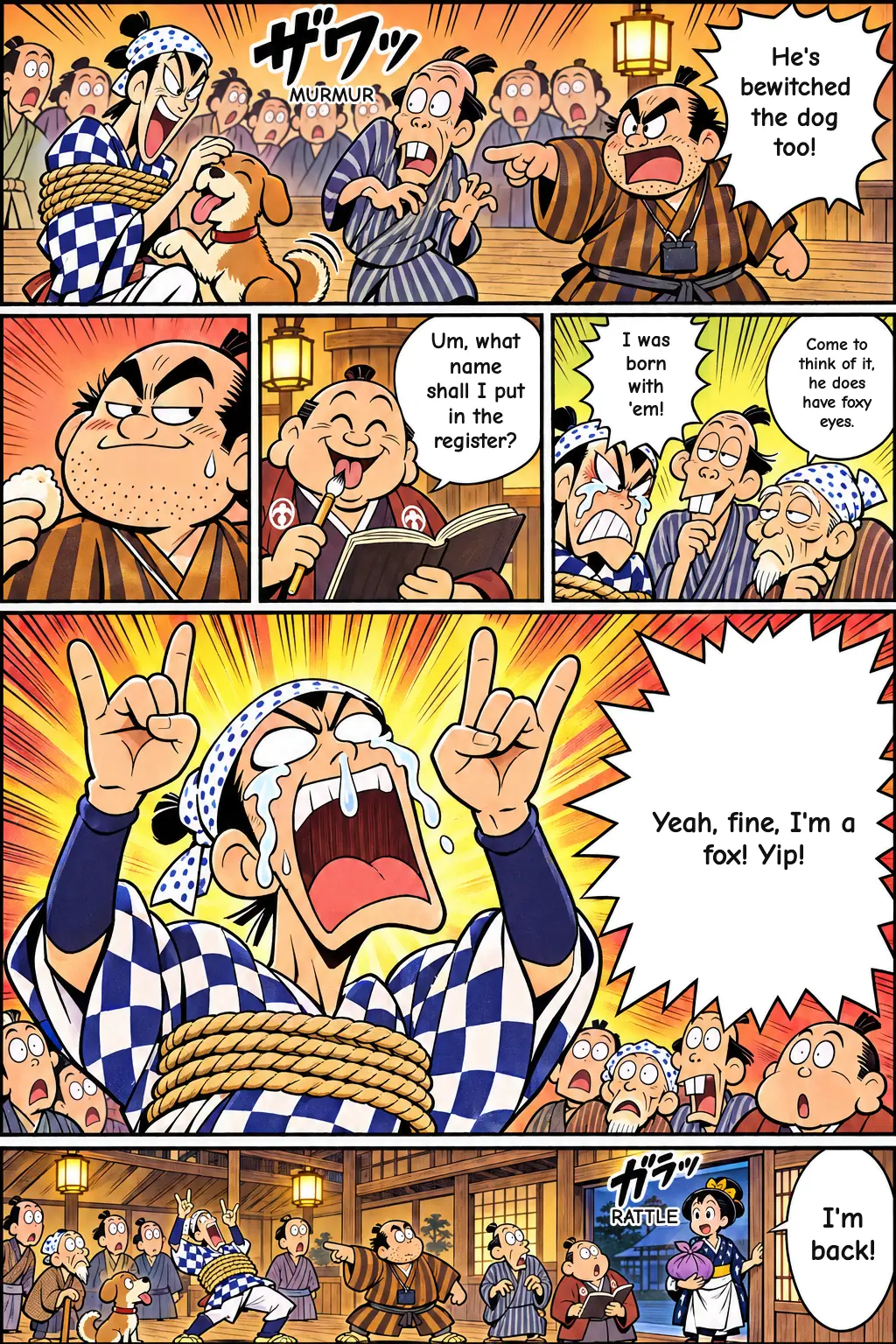
Kita insists he is himself, and it does him no good. Yaji beats him, ties him up and demands that he show his tail. Then he hauls his prisoner on to an inn in Akasaka. Reaching shelter does not cure his suspicion, and the people at the inn get pulled into the uproar. In the end, the prisoner turns out to be the real Kita, the whole fuss is exposed as Yaji's mistake, and his cowardice becomes the punchline.
Why a Fox? The Culture Behind the Joke
In Japanese folklore, foxes (kitsune) are famous shape-shifters. Many tales tell of foxes taking human form and leading people astray, often on lonely roads after dark. Readers of Ikku's day would have understood at once why a warning from a local could unsettle a traveler. A common idea in such tales is that a fox's disguise can slip and reveal its tail, which is why Yaji's demand makes comic sense.
The setting matters as well. Goyu and Akasaka were neighboring stations on the Tokaido, unusually close together, in what is now Toyokawa in Aichi Prefecture. Part of the old pine avenue between them still stands today, so the scare is tied to a real place.
The joke, though, is not really about foxes. No fox ever needs to appear for the chaos to happen. The thing that fools Yaji is his own fear, and one way to read the scene is as a portrait of a boastful traveler whose nerve collapses after one scary story. It also shows how a fixed belief can swallow any evidence, since nothing Kita says can change Yaji's mind.
Main Characters in This Episode
Yajirobei (Yaji) is a middle-aged Edo townsman from Kanda Hatchobori who enjoys puns and comic verse and likes to put on a show, though his plans often go wrong. Kitahachi (Kita) is his younger companion, a former freeloader who trades jabs with him. Usually the two make trouble together, which is what makes this episode fun: here Yaji is the whole problem and Kita is the victim. The old woman at the teahouse and the people of the Akasaka inn have smaller roles, but one sets the panic off and the others get caught up in it.
How the Manga Differs From the Original
The core of the episode comes from the book: the old woman's warning, the dark pine avenue, the mistaken identity, the binding and the trip to the inn. The manga's job is to make those moments work visually for readers today, so several touches are its own.
Those include the way the old woman tells her tale and how frightening the fox story feels, plus the wind, shadows and imagined images that swell Yaji's terror. The manga also shows Kita through Yaji's eyes, with a warped face or a tail in his shadow. The opening image of Yaji limping and Kita acting suspiciously kind is how this version frames the misunderstanding. A narrator or note panels briefly explain fox trickery for international readers, and short gags around the episode play up Yaji's cowardice.
Likewise, the inn workers' personalities and the way the two friends patch things up should be enjoyed as this adaptation's version of events, not read as a line-by-line account of Ikku's text. For the original story, rely on the outline above.
Where to Read It
You can read this story as Episode 8 of YAJI AND KITA: The Great Tokaido Road Trip on Manga Portal. Every episode is free, and you don't need an account. It's an easy place to start even if you've never heard of Hizakurige, since the joke needs no background: a frightened man, a dark road and a friend who can't prove he is himself. If you enjoy Yaji's fox hunt, the rest of the road trip is there to read too.
Characters in this episode
Yajirobei (Yaji)
A middle-aged Edo townsman who believes a fox warning so completely that he mistakes his own travel companion for a fox.
Kitahachi (Kita)
Yaji's younger travel companion, who is beaten and tied up while insisting that he is the real Kita.
The Old Woman at the Teahouse
A local in Goyu whose warning about a fox on the pine road sets off the whole misunderstanding.
The People of the Akasaka Inn
Inn workers who get drawn into the uproar when Yaji arrives with his bound "fox."
FAQ
What is Tokaidochu Hizakurige about?
It is a comic novel by Jippensha Ikku about two Edo men, Yaji and Kita, traveling the Tokaido highway on foot. Its humor comes from their schemes, jokes and constant failures along the road. The first part was published in 1802.
What happens in the Fox of Goyu story?
After an old woman warns him about a fox on the pine road to Akasaka, Yaji meets Kita in the dark and assumes he is a fox in disguise. He beats him, ties him up and takes him to an inn, causing an uproar. Kita turns out to be the real Kita, and Yaji's fear becomes the joke.
Why did Yaji think Kita was a fox?
Yaji had just heard that a fox on that road tricks travelers, and he was walking alone in the dark. So when Kita appeared, he was already primed to see a trick. It was fear and assumption, not any real sign of a fox.
Why do foxes trick people in Japanese folklore?
In Japanese folklore, foxes (kitsune) are known as shape-shifters that can take human form and deceive people. Tales of foxes misleading travelers were familiar in Edo-period Japan. That familiarity is what makes Yaji's panic funny and believable.