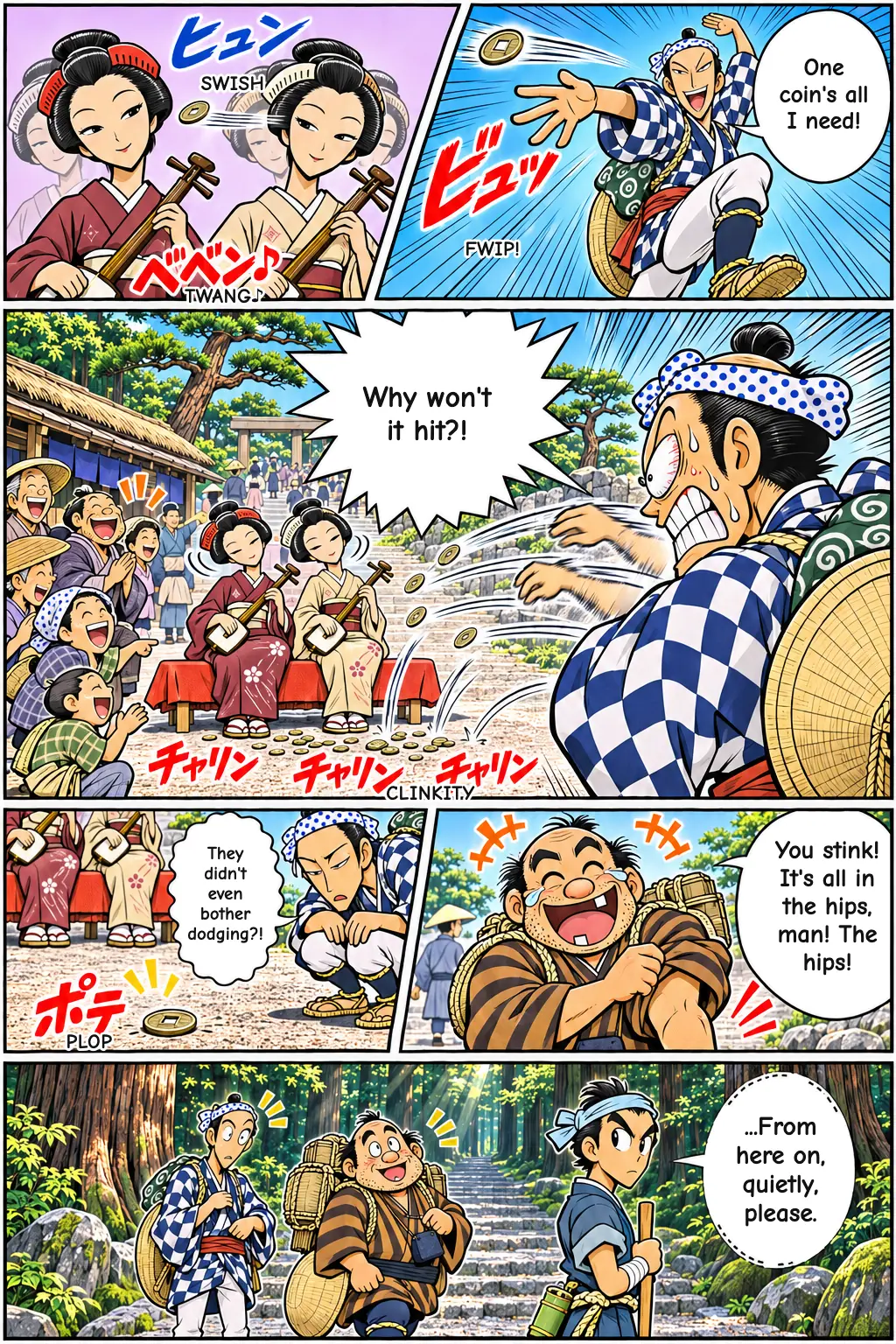
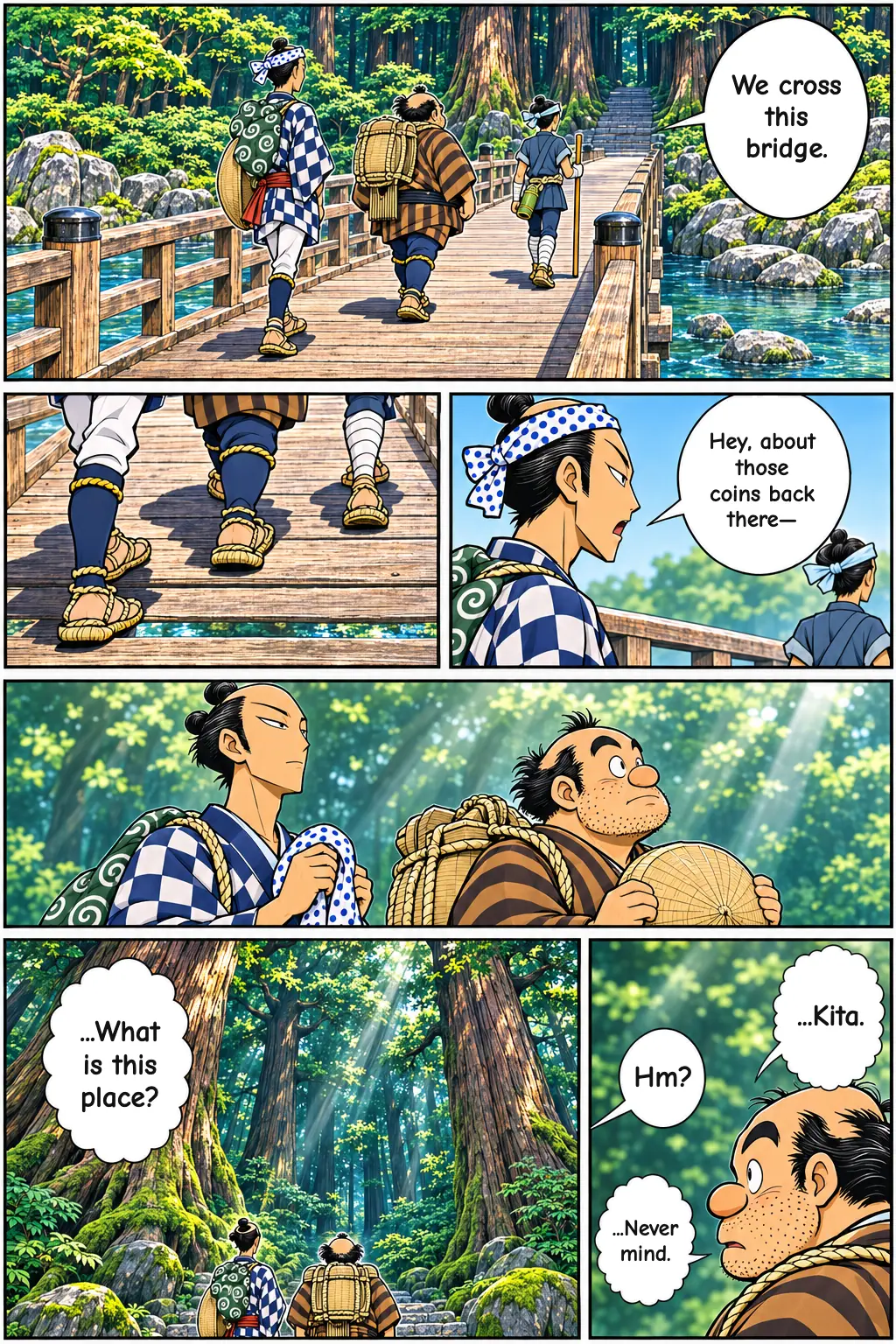
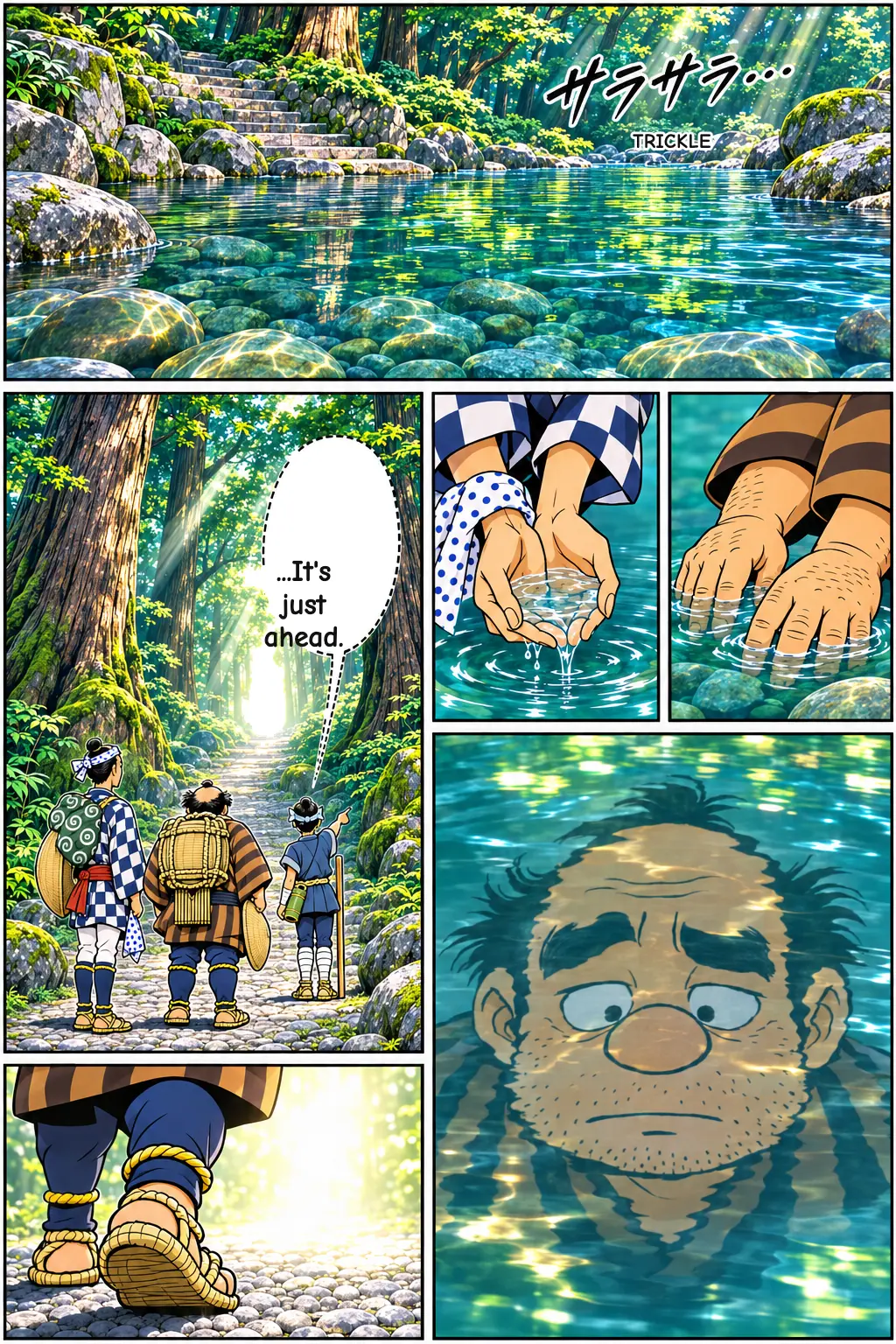
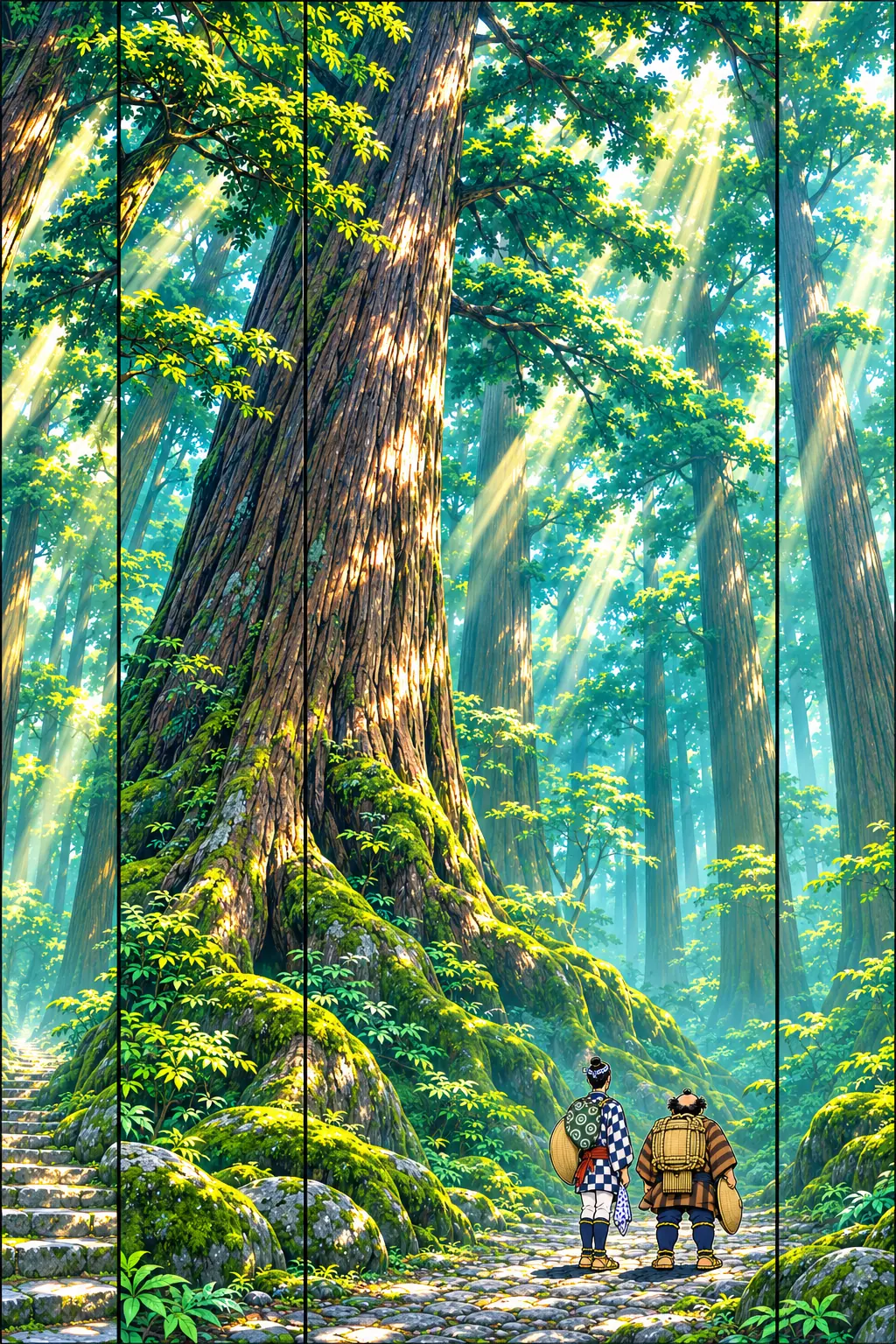
Episode 11Broke, Awestruck, and Buying for EveryoneYaji and Kita (The Ise Pilgrimage)
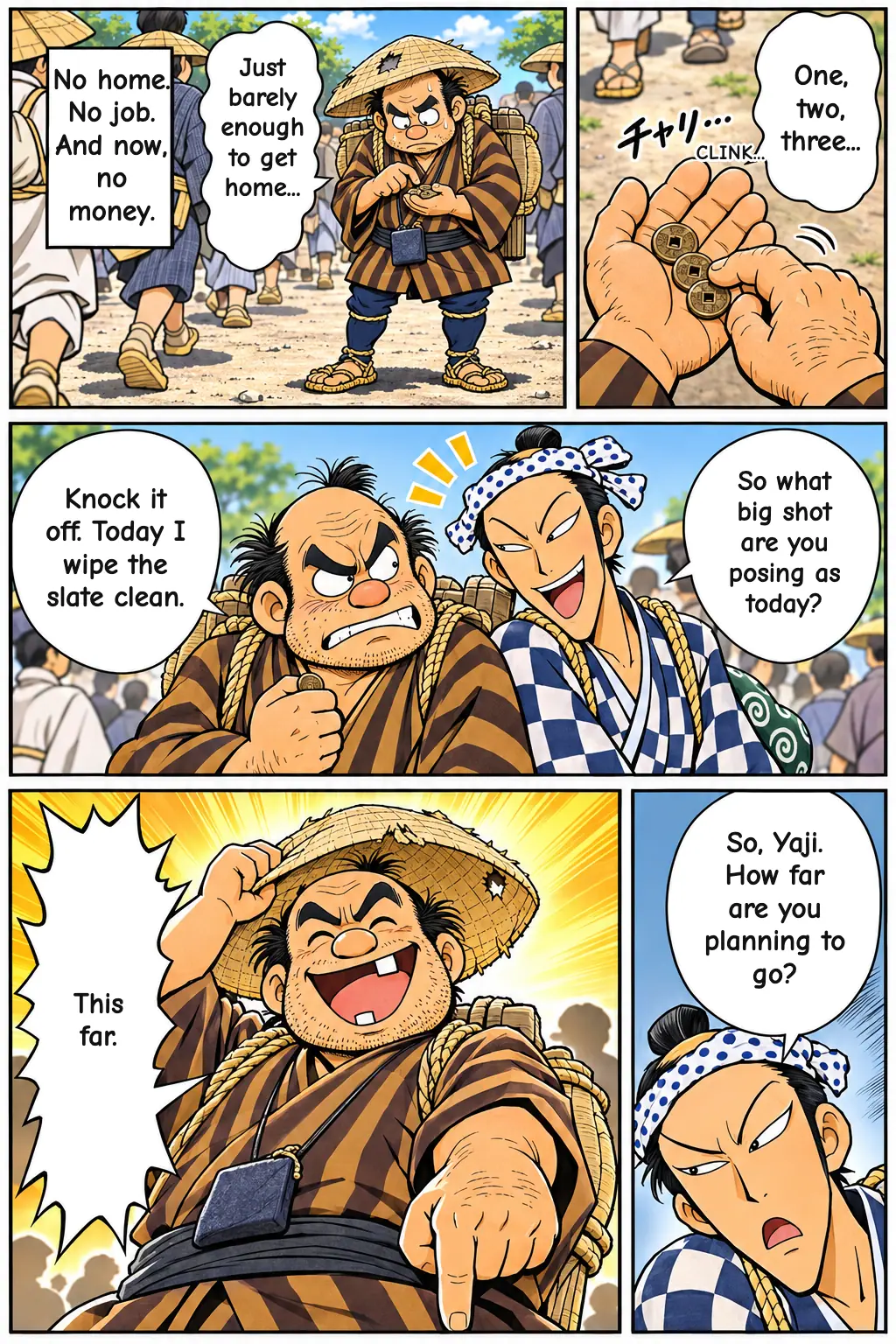
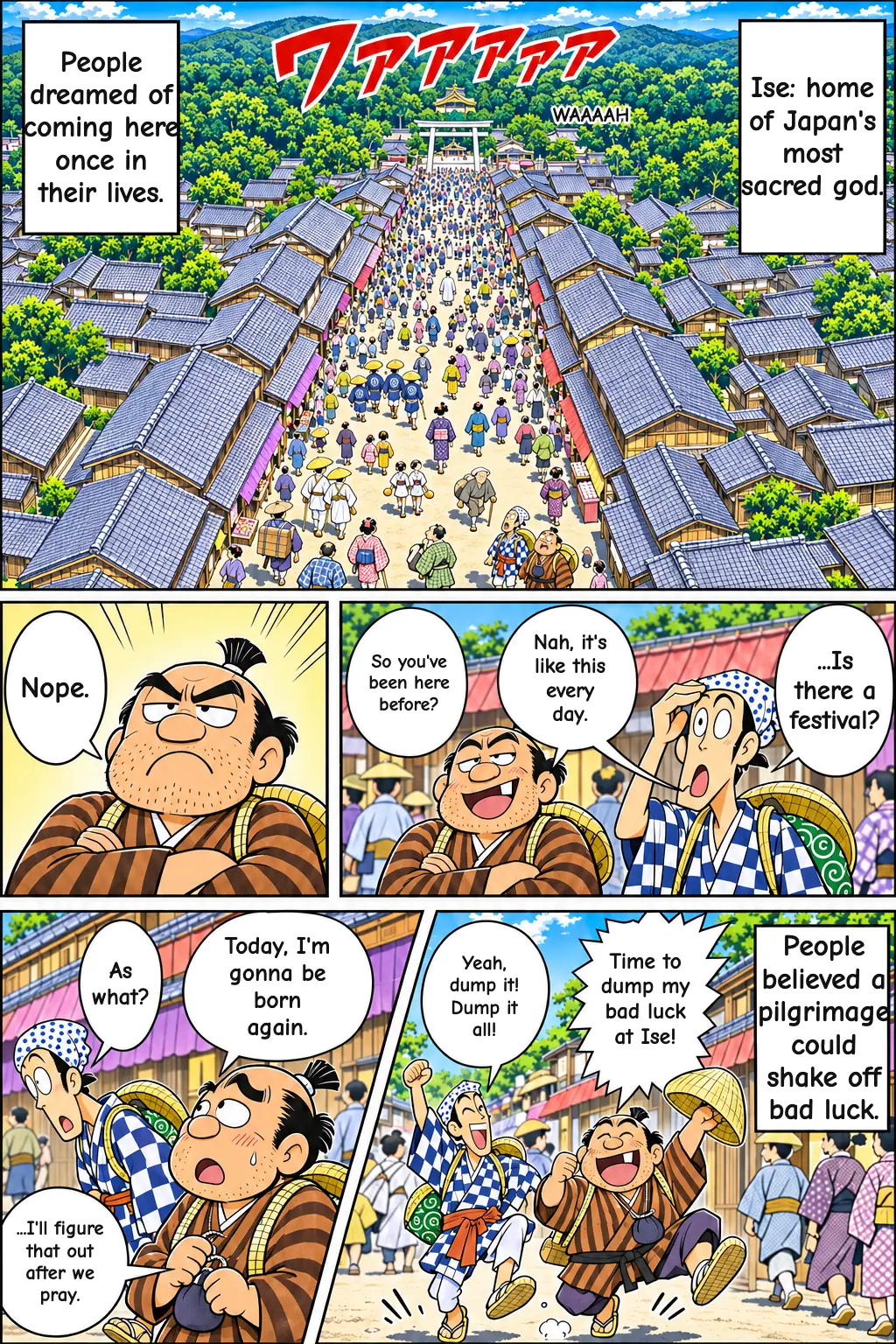
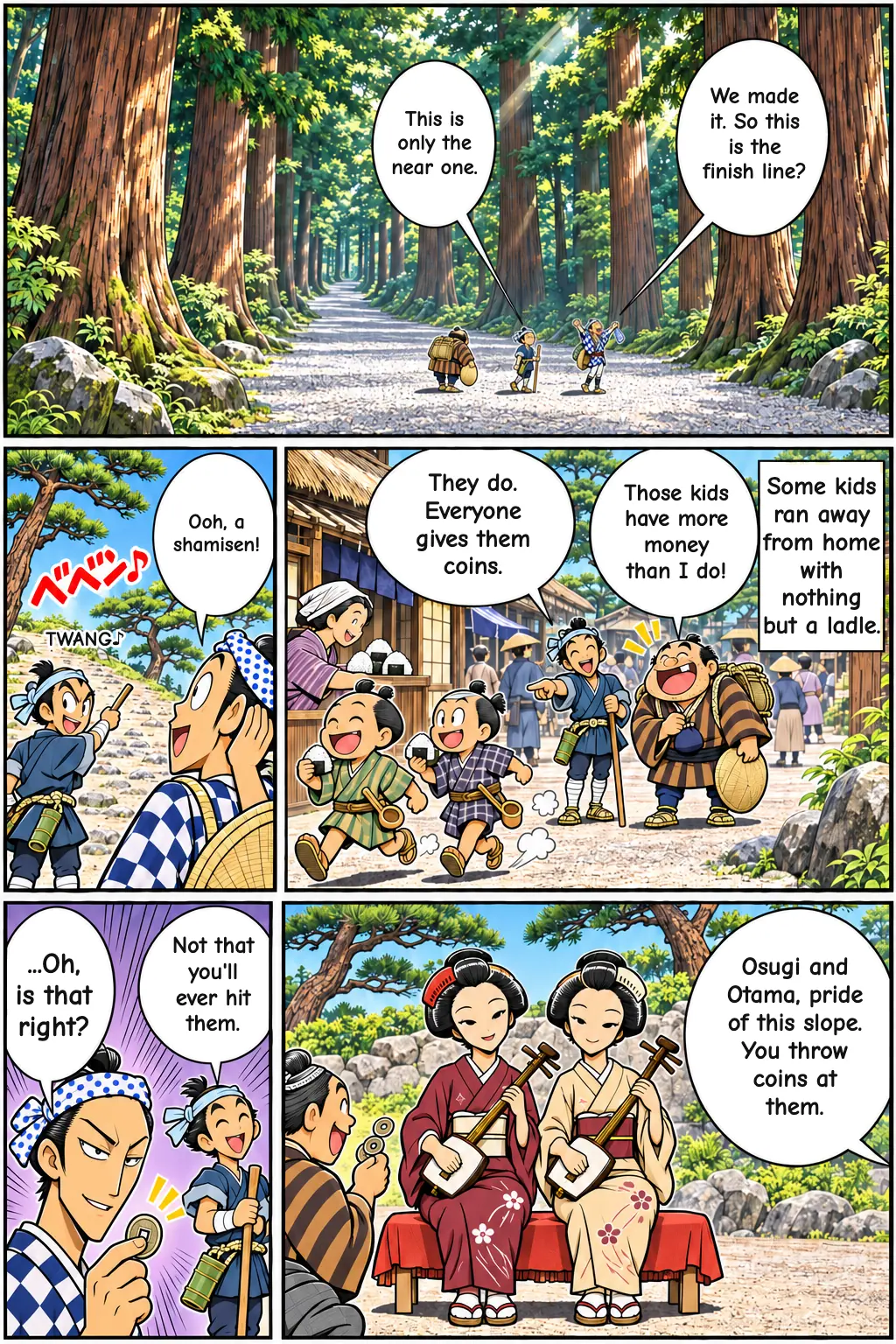
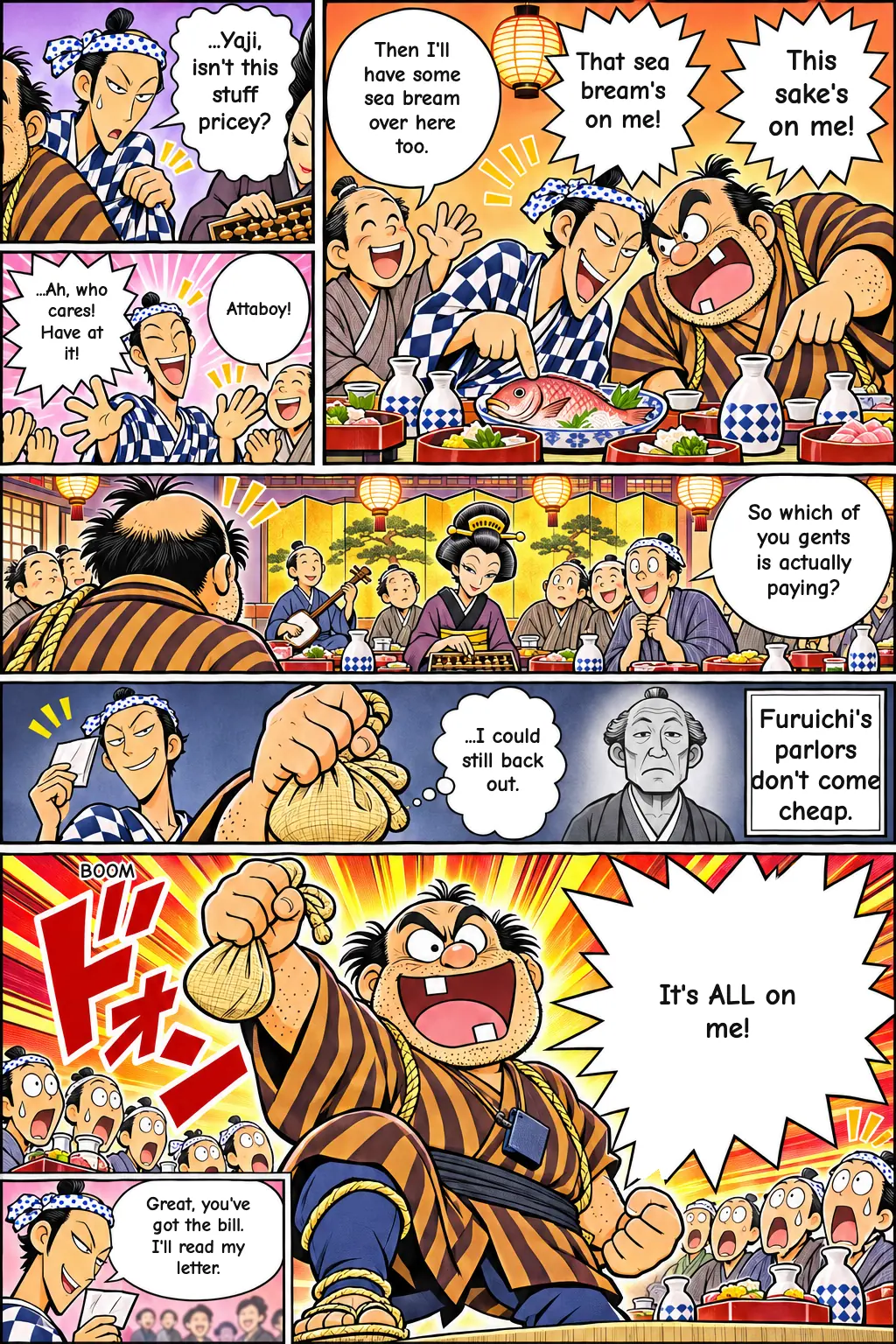
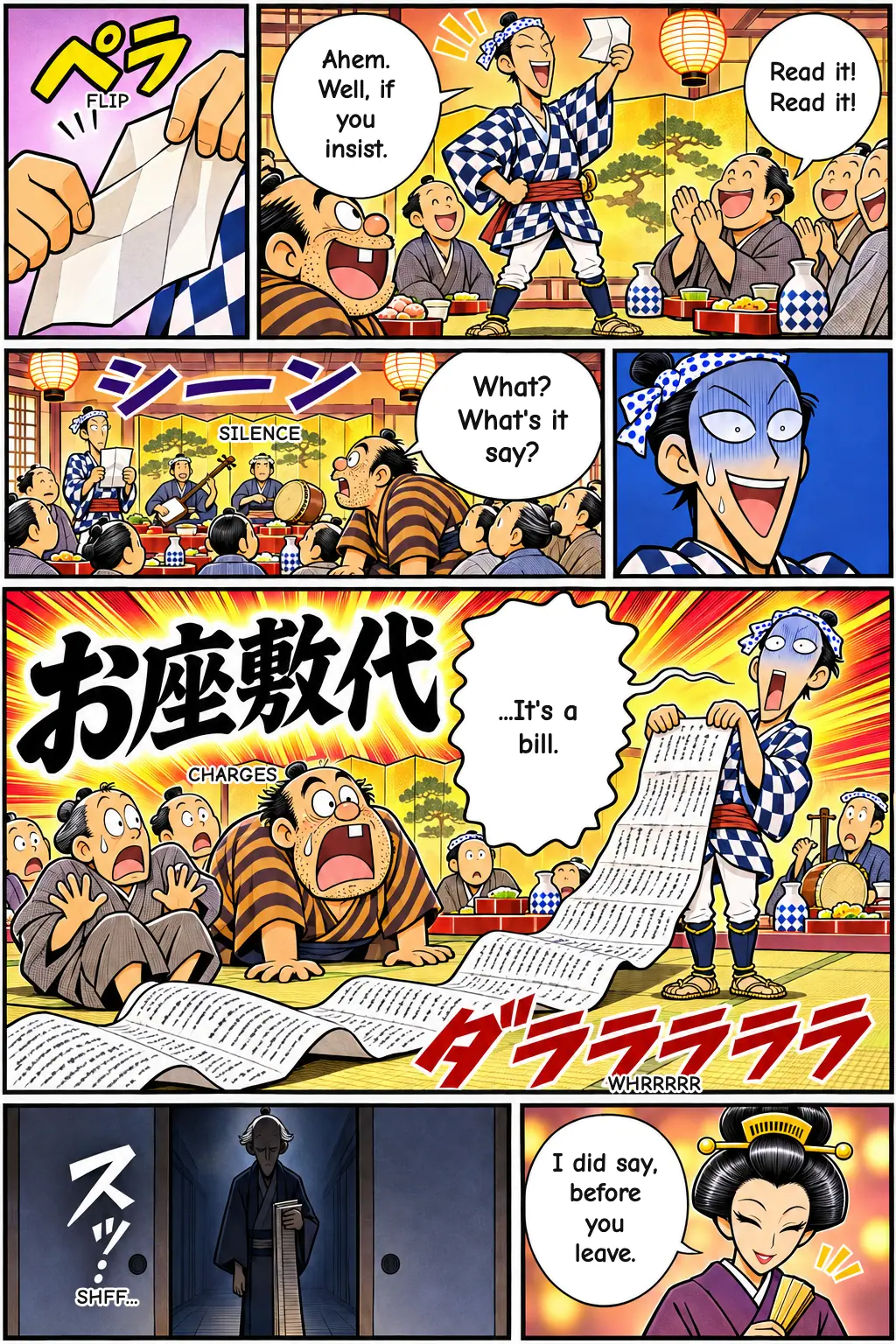
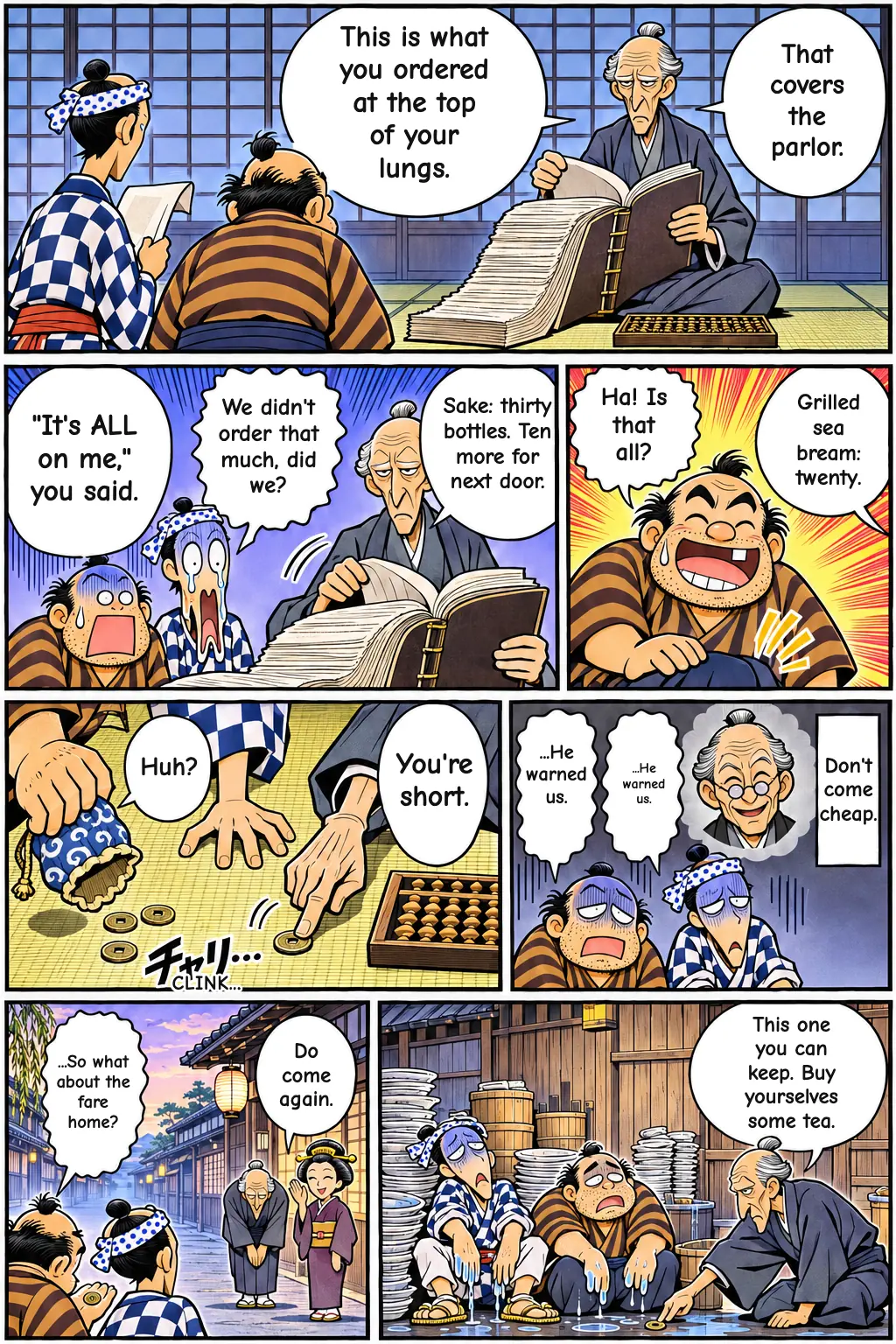
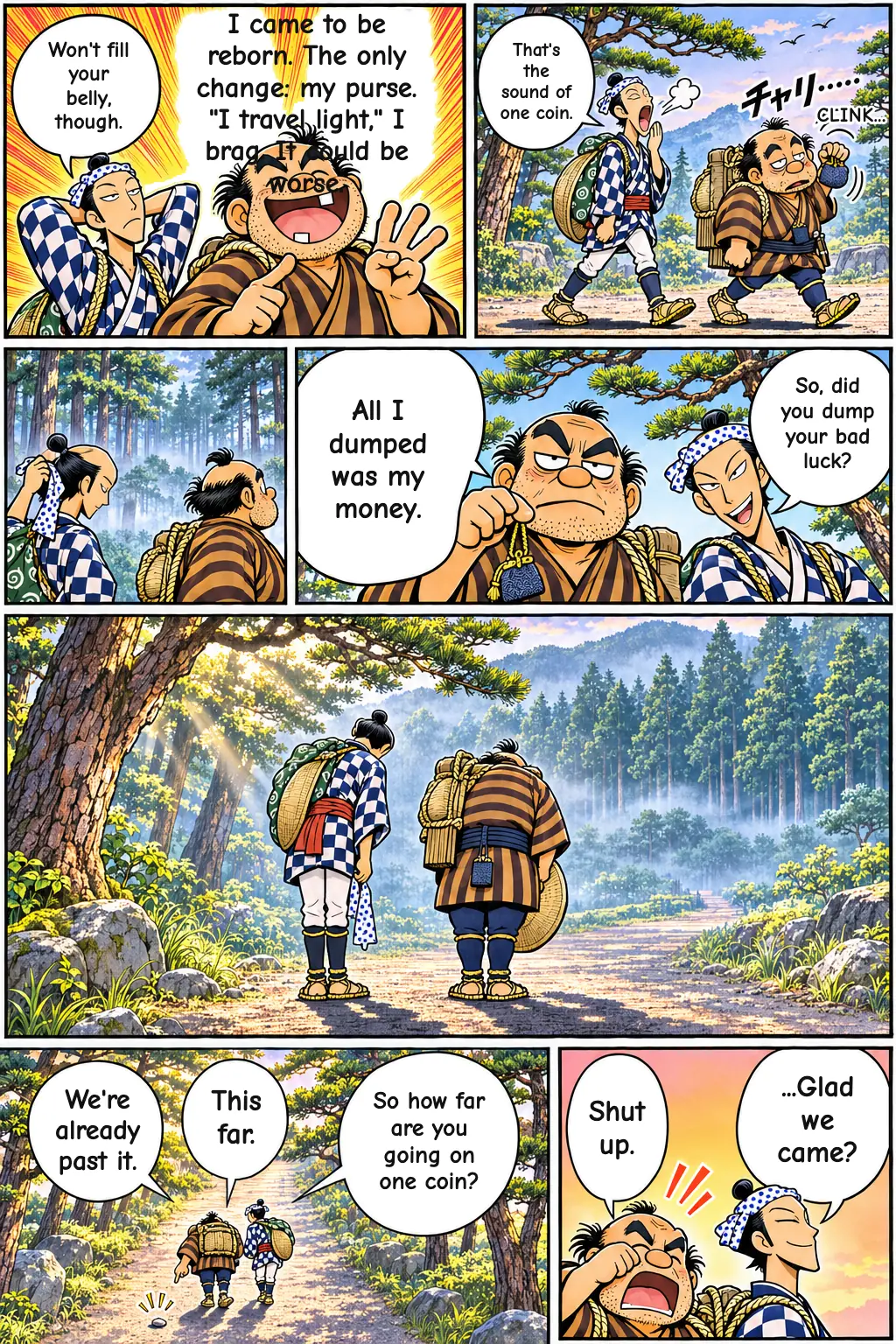
Yaji comes to Ise to shed his bad luck and be born anew. Five minutes after a sacred forest moves him to silence, he forgets the warning and his fare home, and shouts "It's ALL on me!" At the end of the road, two fools feel something real, then turn right back into themselves.
Get new episodes in your feed. Follow us on:ThreadsBluesky
Story summary
Tokaido Hizakurige is a comic travel novel by Jippensha Ikku, first published in 1802 and continued for years afterward. It follows Yajirobei (Yaji) and Kitahachi (Kita), two commoners from Edo, modern Tokyo, as they make their way on foot along the Tokaido, the great highway linking Edo and Kyoto. Their visit to Ise belongs to Part Five of the book. In this part, the pair travel on from Kuwana to Yokkaichi, leave the Tokaido near the Hinaga fork, and head south on the Ise Road through Matsusaka. They arrive in Yamada, the bustling town outside the Outer Shrine of Ise.
Yaji and Kita's Ise Pilgrimage: Hizakurige Summary Explained
In short: The Ise pilgrimage in Tokaido Hizakurige (often called Shank's Mare in English) is the part of Jippensha Ikku's comic novel where two Edo commoners, Yaji and Kita, turn off the Tokaido highway, reach the town of Yamada, carouse in the Furuichi entertainment district, and worship at Ise Grand Shrine. They complete the goal of their trip without becoming any wiser, then carry on toward Kyoto and Osaka.
The Original Story: Yaji and Kita Reach Ise
Tokaido Hizakurige is a comic travel novel by Jippensha Ikku, first published in 1802 and continued for years afterward. It follows Yajirobei (Yaji) and Kitahachi (Kita), two commoners from Edo, modern Tokyo, as they make their way on foot along the Tokaido, the great highway linking Edo and Kyoto. Their visit to Ise belongs to Part Five of the book.
In this part, the pair travel on from Kuwana to Yokkaichi, leave the Tokaido near the Hinaga fork, and head south on the Ise Road through Matsusaka. They arrive in Yamada, the bustling town outside the Outer Shrine of Ise. They also spend time in the brothels of Furuichi, a pleasure district on the road between Yamada and Uji, the town by the Inner Shrine. They worship at Ise, which fulfills the main purpose of the trip. Then they move on toward Kyoto and Osaka, so Ise is a high point of the novel, not its ending.
Some details deserve caution. Summaries of this section mention the pair getting separated in the crowds, being mistaken for other people, and failing to impress anyone in Furuichi despite their Edo swagger. We have not confirmed the specifics against the original text, so we are not presenting them as established plot points. The order of events also needs care: Furuichi lies between the two shrines, so a night there before reaching the Inner Shrine would fit the geography, but that alone does not settle the sequence in the book.
Main Characters: Two Fools From Edo
Yaji is the older of the two. He loves wisecracks and kyoka, short comic poems, and he badly wants to look like a sophisticated man of Edo. He jumps to conclusions, plays pranks, and learns nothing when they backfire.
Kita is younger, breezier, and always chasing women, usually without success. He and Yaji compete with each other and trick each other as often as they help each other. That rivalry drives much of the novel's humor. The people they meet in Ise, including fellow travelers, innkeepers, and the staff of Furuichi's houses, mostly serve as witnesses to their blunders. We cannot confirm names or personalities for them here, so we leave those out.
Why Ise Mattered: The Culture Behind the Comedy
Ise Grand Shrine is among the most sacred places in Japan's Shinto tradition. Its Inner Shrine (Naiku) honors Amaterasu, the sun goddess, and its Outer Shrine (Geku) honors Toyouke, a goddess associated with food. During the Edo period (1603–1868), going to Ise became a dream trip for ordinary people. Travel was regulated, but pilgrimage offered a respectable reason to leave home, and local groups often pooled money to send members. At times, huge waves of mass pilgrimage known as okage-mairi swept the country.
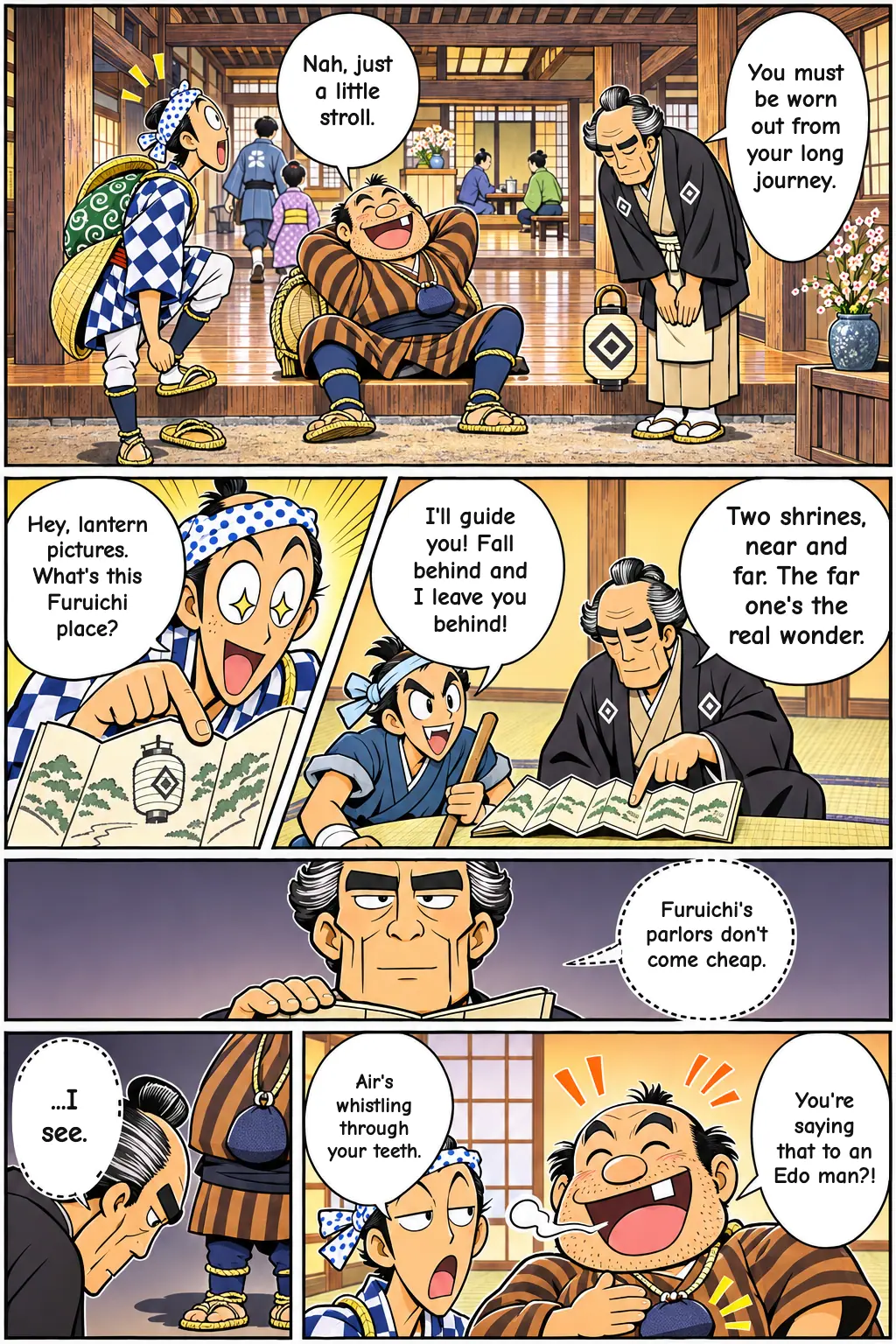
Religion and tourism fed each other at Ise. Shrine-affiliated guides called oshi helped visitors with lodging and prayers, and towns along the way thrived on the pilgrim trade. Furuichi, known for its entertainment and for the Ise Ondo dance, stood on the very road connecting the two shrines. Holy ground and a party district were close neighbors.
That closeness is part of what makes Ise such a good setting for Ikku's comedy. A pilgrimage is supposed to change you. Yaji and Kita show up, do what pilgrims do, and stay exactly who they are. The trip is often framed as a way to shake off bad luck, though the precise wording is best checked against the book's opening. One way to read the humor is as an affectionate joke about ordinary people, who can honestly seek something sacred and still spend the evening being ridiculous. That reading is an interpretation, not a message Ikku spells out.
What the Manga Changes
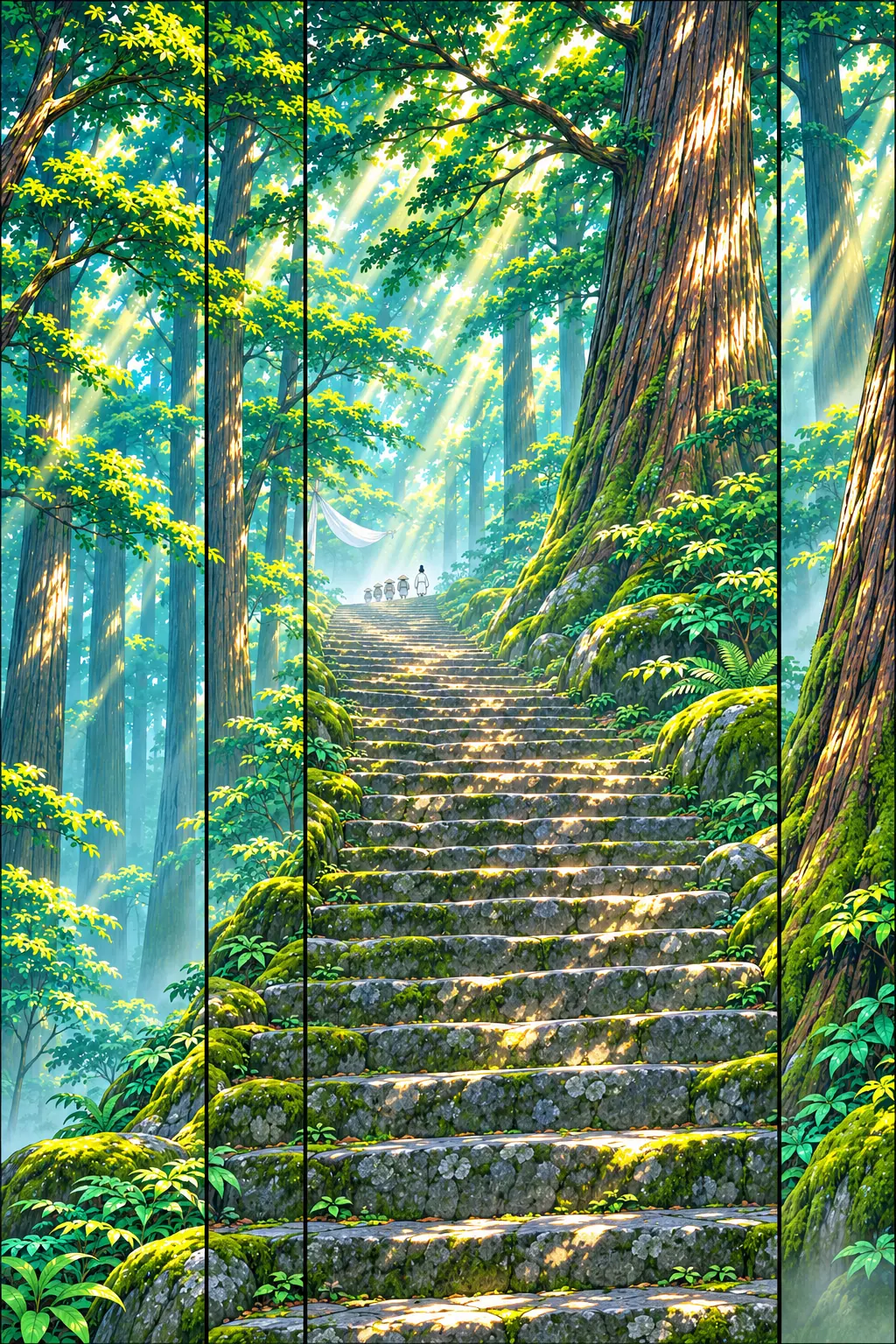
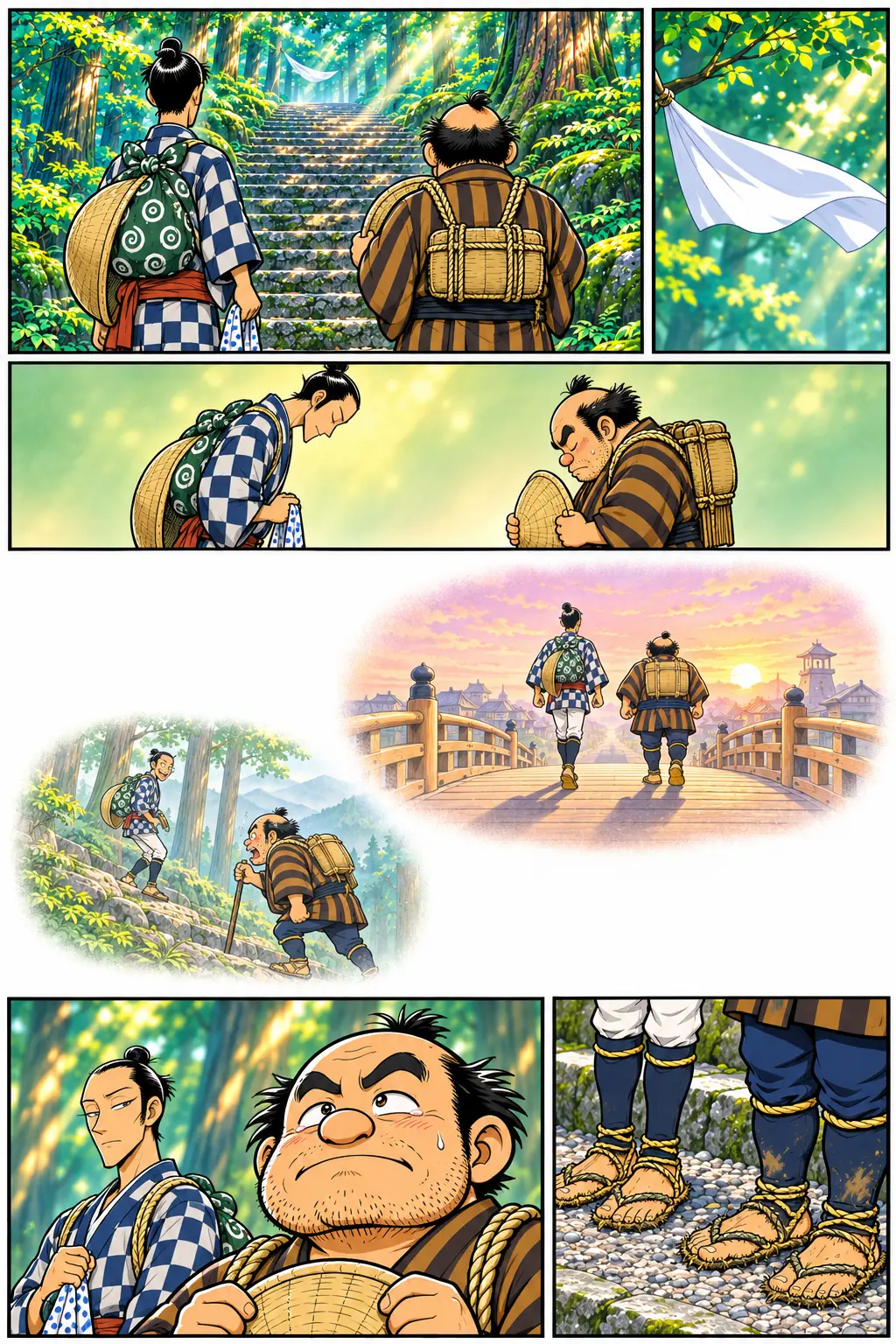
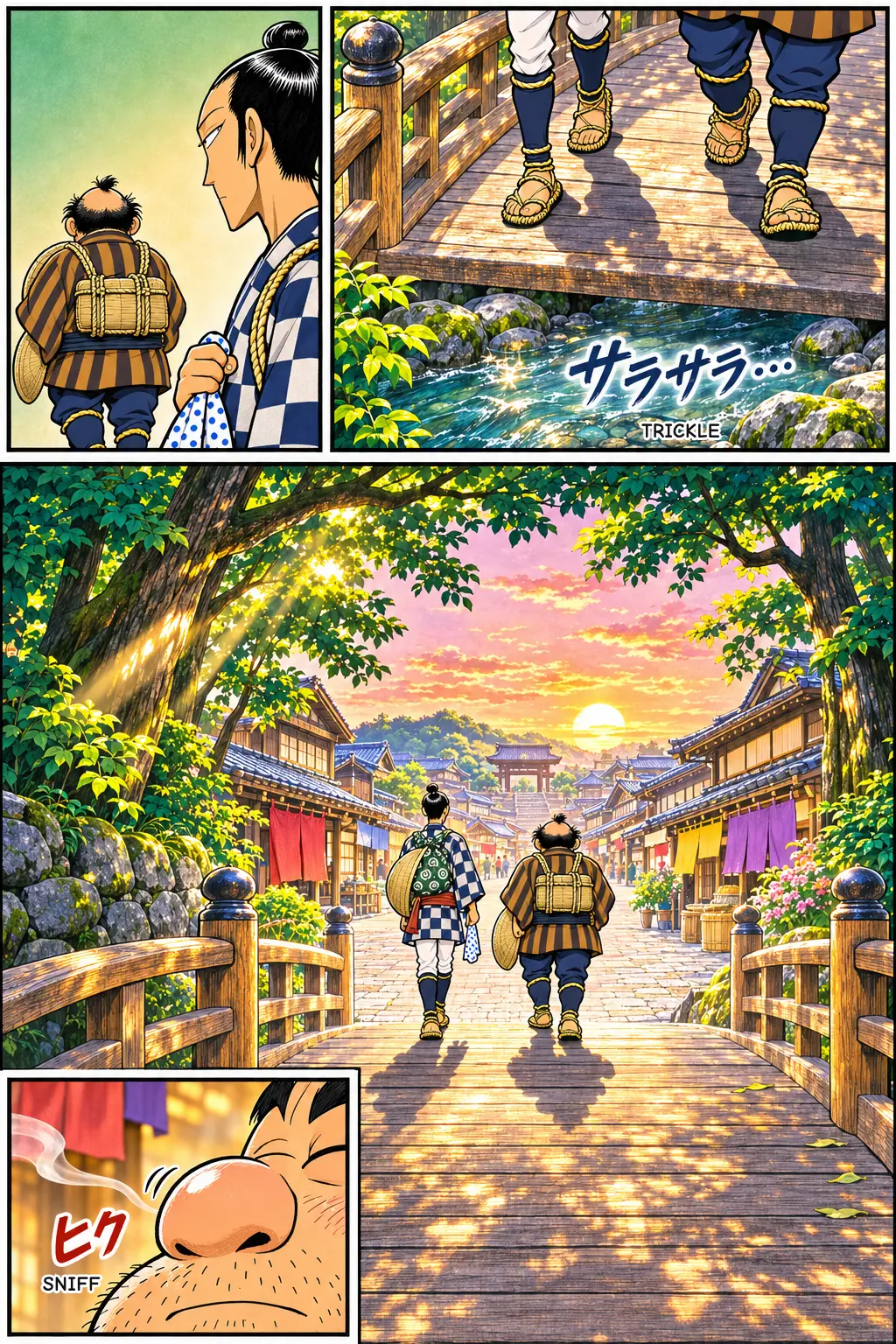
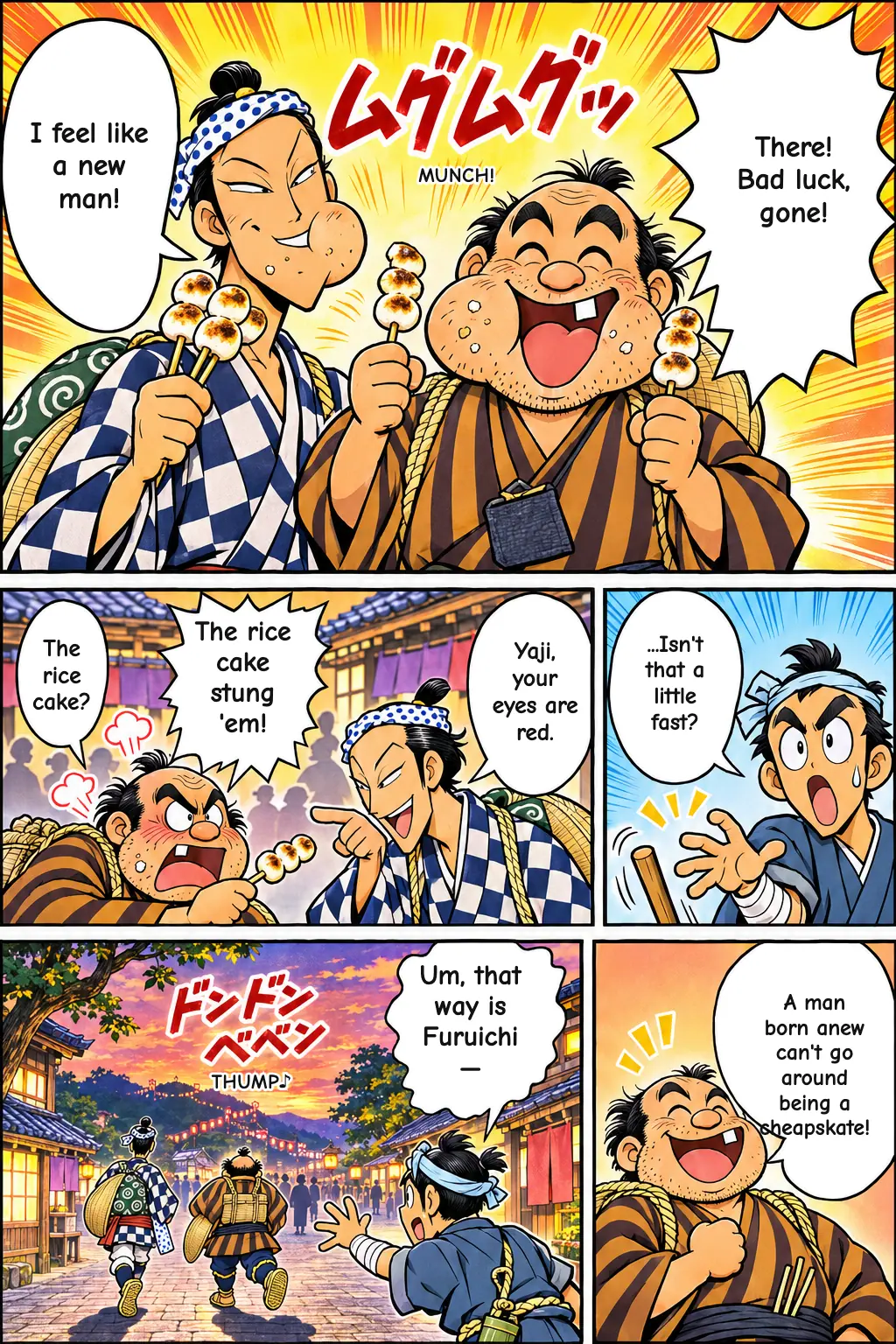
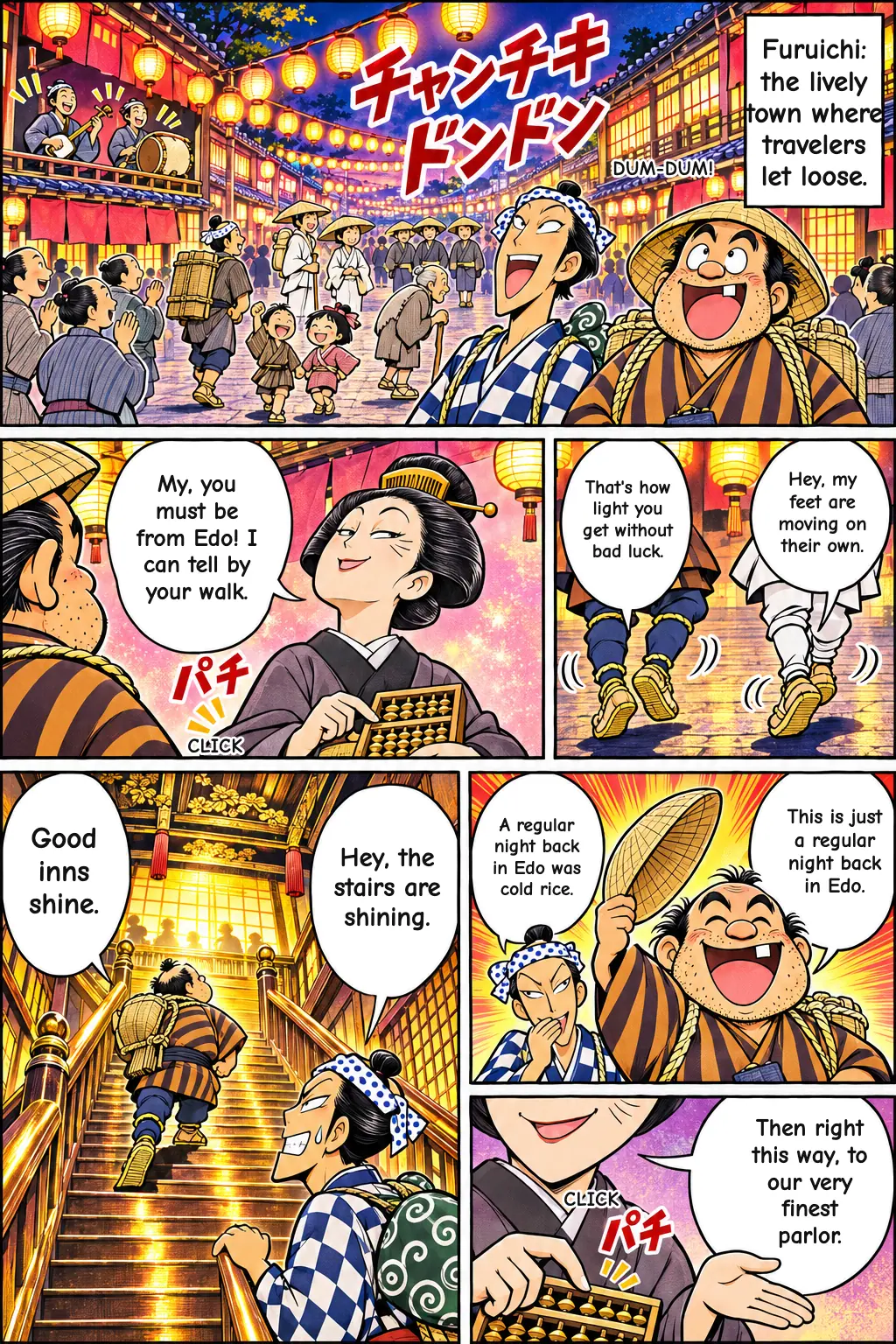
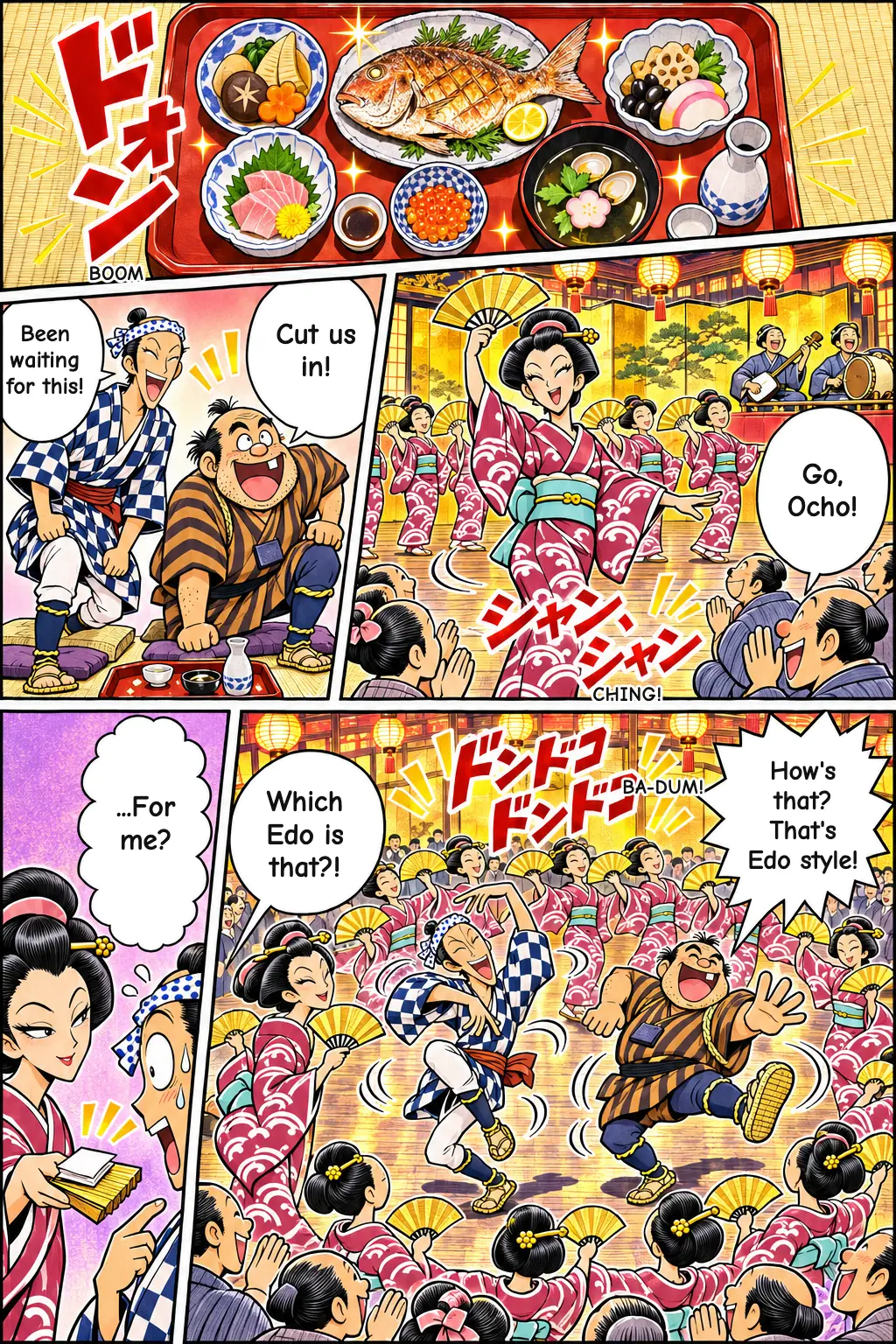
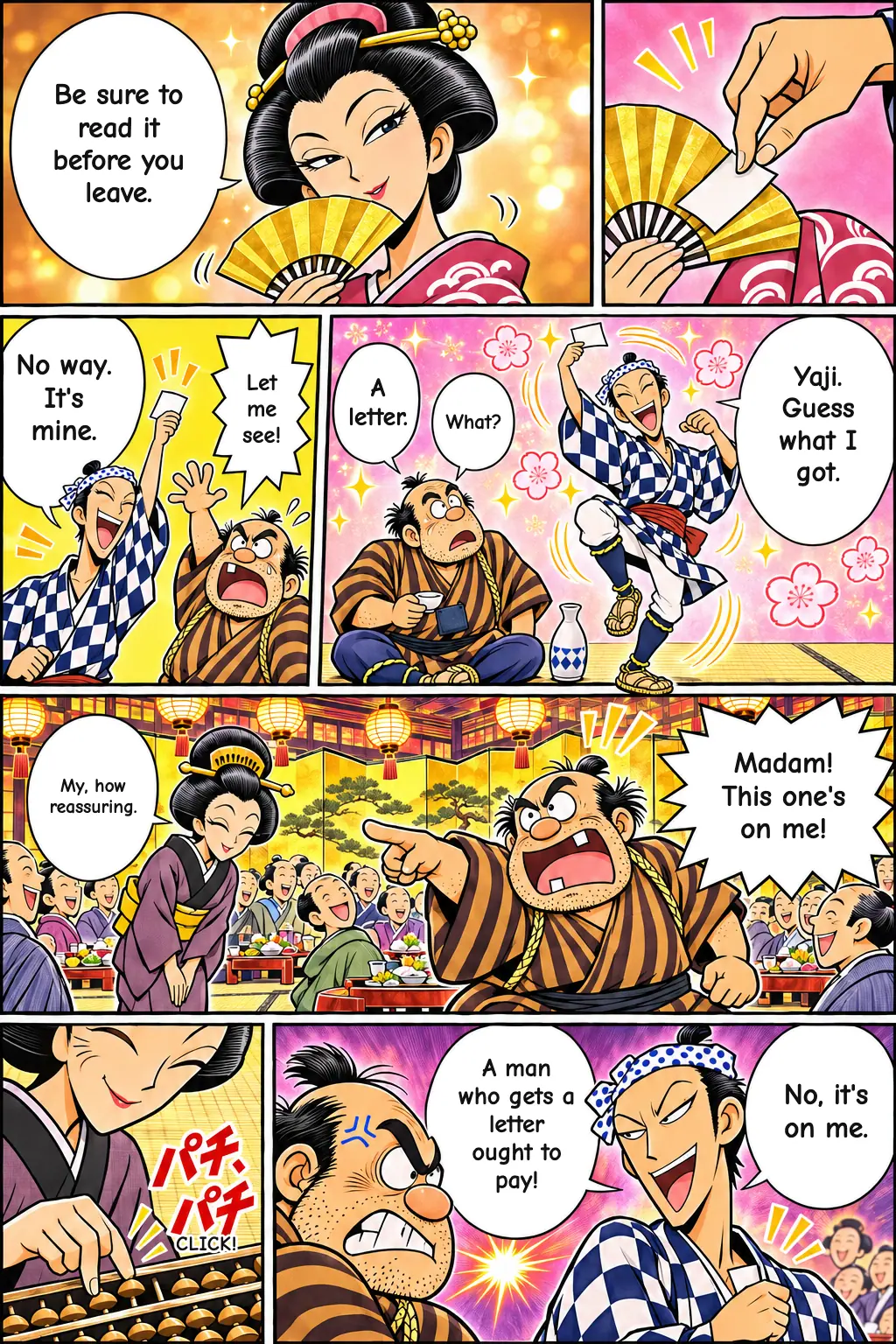
Episode 11 of YAJI AND KITA: The Great Tokaido Road Trip keeps the source's basic outline and comic spirit: two boastful Edo men, the Ise pilgrimage, and a return to their old habits right after the sacred part of the journey. The specific story beats, however, are largely new. In the manga, Yaji comes to Ise hoping to shed his bad luck and be born anew. A sacred forest moves him to silence. Five minutes later, he forgets a warning and his fare home and shouts, "It's ALL on me!" We do not present that scene as something taken directly from Ikku.
The biggest change concerns Furuichi. The original includes brothels, while the manga softens this into a lively night out with teahouses, Ise Ondo dancing, food, and drink. There are no courtesans or sexual jokes. The confusion and mix-ups use Ikku's comic patterns, but the plotting and dialogue are newly written. So are the comic verses, which are short lines created for modern readers instead of translations of his poems. Unnamed side characters, small interactions, and period street details are also creative additions.
The closing punchline, that all this pilgrimage hasn't really rid anyone of bad luck, is the manga's own interpretation. We have not confirmed that the original states this idea. The sense of reaching "the end of the road" is also the episode's framing, since the novel's heroes keep traveling to Kyoto and Osaka.
Where to Read It
If you came here looking for a quick Hizakurige summary, the manga is an easy way to meet these two in action. YAJI AND KITA: The Great Tokaido Road Trip is free to read on Manga Portal, with every episode available and no sign-up needed. Episode 11 works well for seeing the idea at the heart of the Ise chapter: two fools feel something real, then turn right back into themselves. Start there, or go back to Episode 1 and walk the whole road with them.
Characters in this episode
Yaji (Yajirobei)
The older of the two Edo travelers, a wisecracking lover of comic poems whose pride and snap judgments keep getting him into trouble.
Kita (Kitahachi)
Yaji's younger, easygoing travel partner, who chases romance, rarely succeeds, and competes with Yaji as often as he helps him.
Fellow travelers
Companions who join the pair around Furuichi in the original; their exact number and backgrounds are unconfirmed, and the manga treats such figures as unnamed side characters.
People of Furuichi
The workers of the district's houses in the original, who receive the pair's boasting and blunders; the manga moves this nightlife to teahouses and dance shows.
Townspeople of Yamada and Uji
The locals who host and assist the crowds of pilgrims in the shrine towns of Ise.
FAQ
What is Tokaido Hizakurige about?
It is a comic novel by Jippensha Ikku, first published in 1802, about two Edo commoners, Yaji and Kita, traveling on foot along the Tokaido highway. Their pranks, boasting, and failures make up most of the story. It is often known in English as Shank's Mare.
Do Yaji and Kita actually visit Ise Grand Shrine?
Yes. In Part Five they leave the Tokaido for the Ise Road, reach Yamada, and complete their pilgrimage at Ise. Afterward, they continue toward Kyoto and Osaka.
What was Furuichi in Ise?
Furuichi was a famous entertainment district on the road between Ise's Outer and Inner Shrines. It was known for its pleasure houses and the Ise Ondo dance. Yaji and Kita go there in the novel, while the manga turns the visit into a family-friendlier night of teahouses, food, and dancing.
Why did people make the Ise pilgrimage in the Edo period?
Ise was deeply sacred, as the Inner Shrine honors the sun goddess Amaterasu. Pilgrimage also gave ordinary people a respectable reason to travel, and some local groups pooled money to send members. For many, it was both a religious duty and the trip of a lifetime.
Is the Yaji and Kita manga faithful to the original?
It keeps the main characters, the Ise setting, and the comic spirit, but it is a free adaptation. Episode 11's sacred forest scene, its "It's ALL on me!" moment, and its bad-luck punchline should be read as the manga's storytelling, not as a scene-by-scene retelling. Its Furuichi scenes also leave out the brothels and sexual humor.