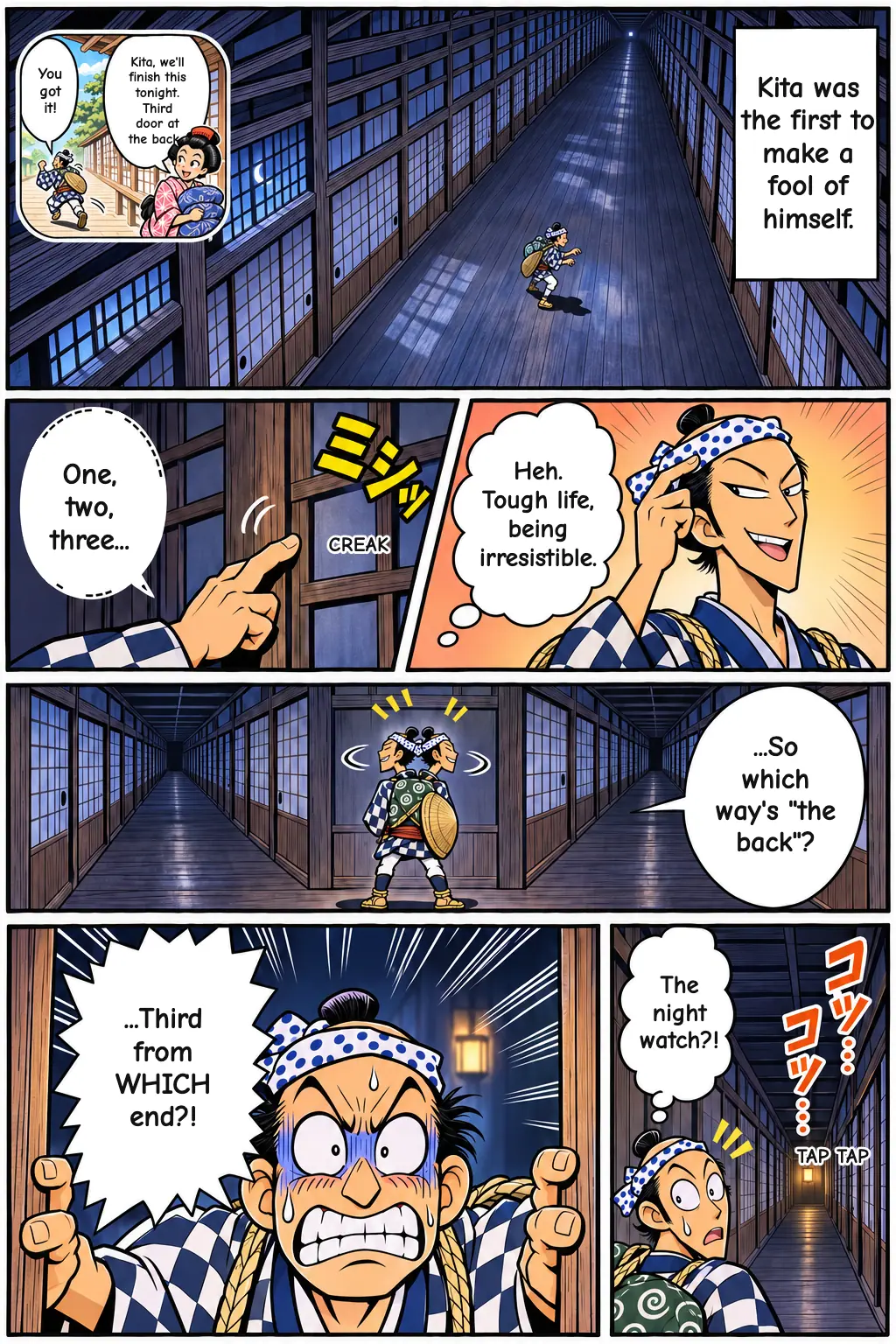
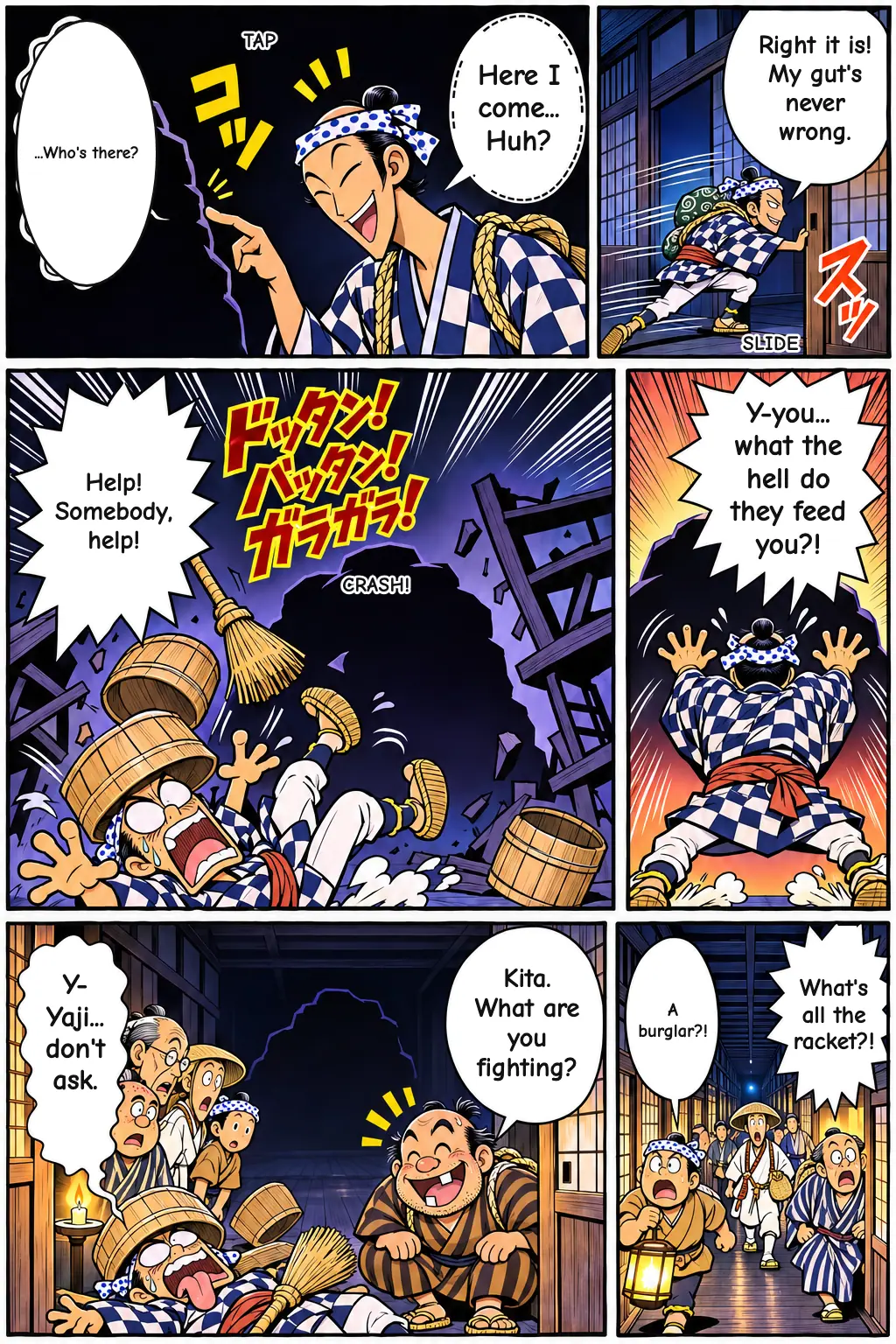
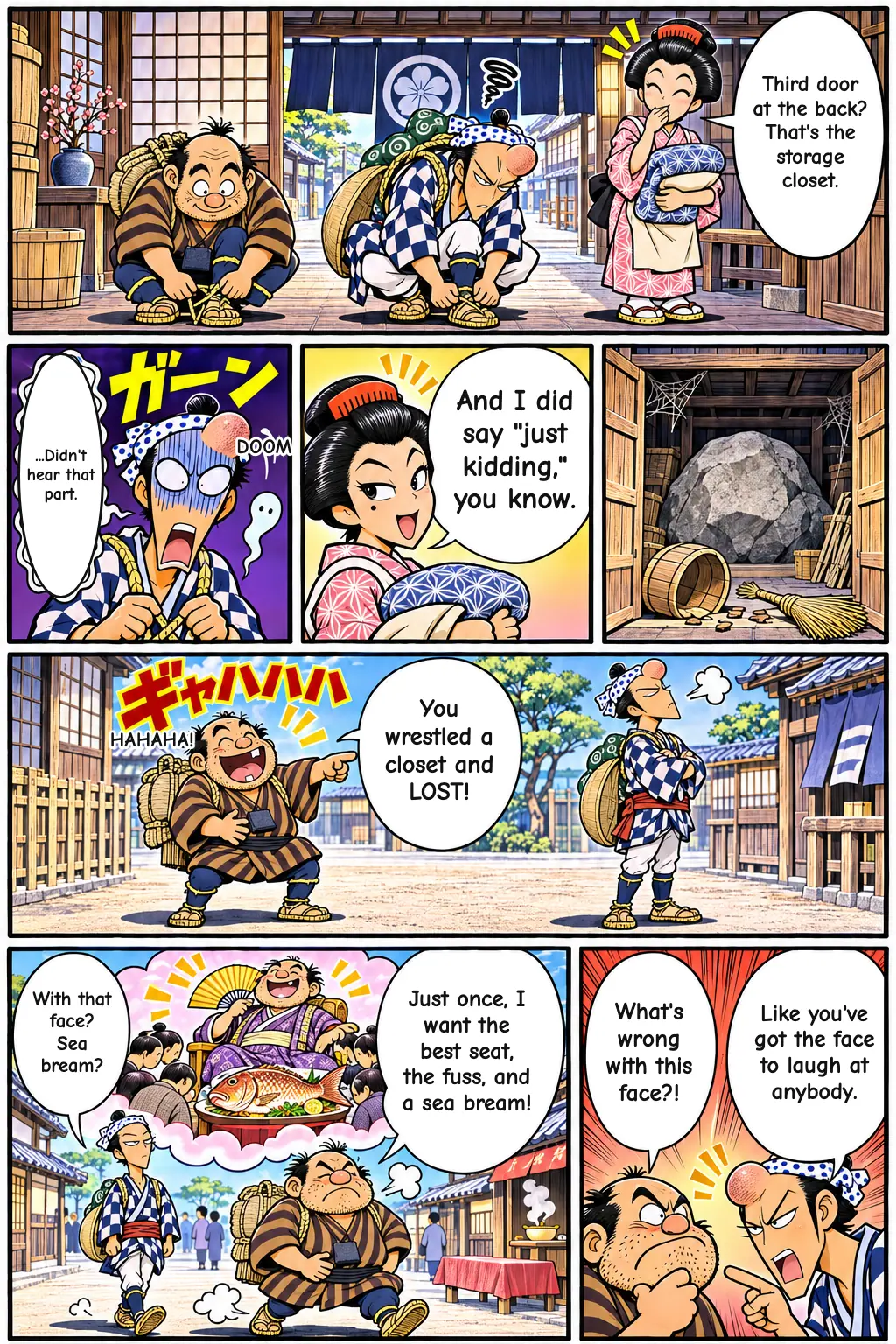
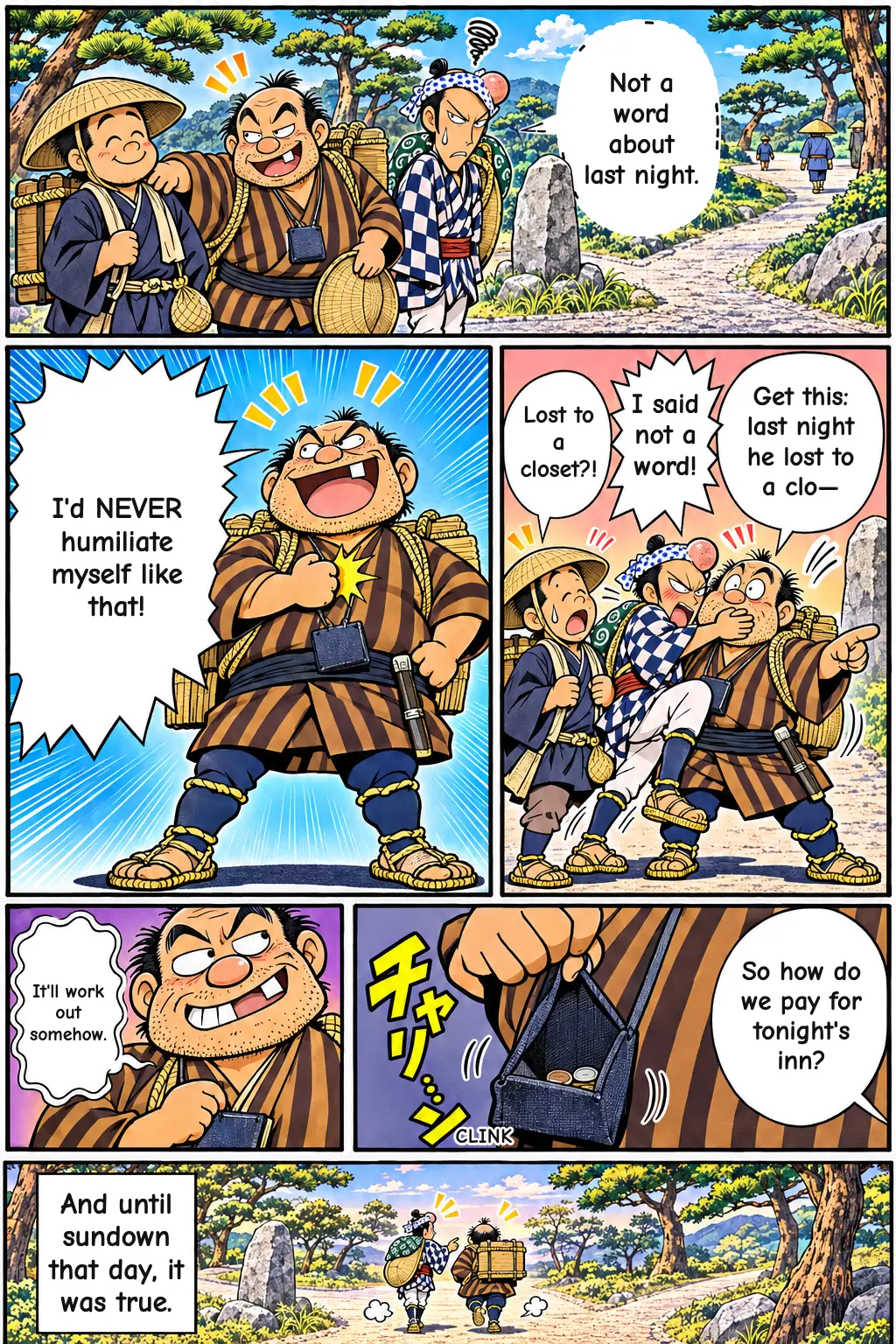
Episode 10He's in the book. He claimed he wrote it.Yaji and Kita: Posing as Jippensha Ikku
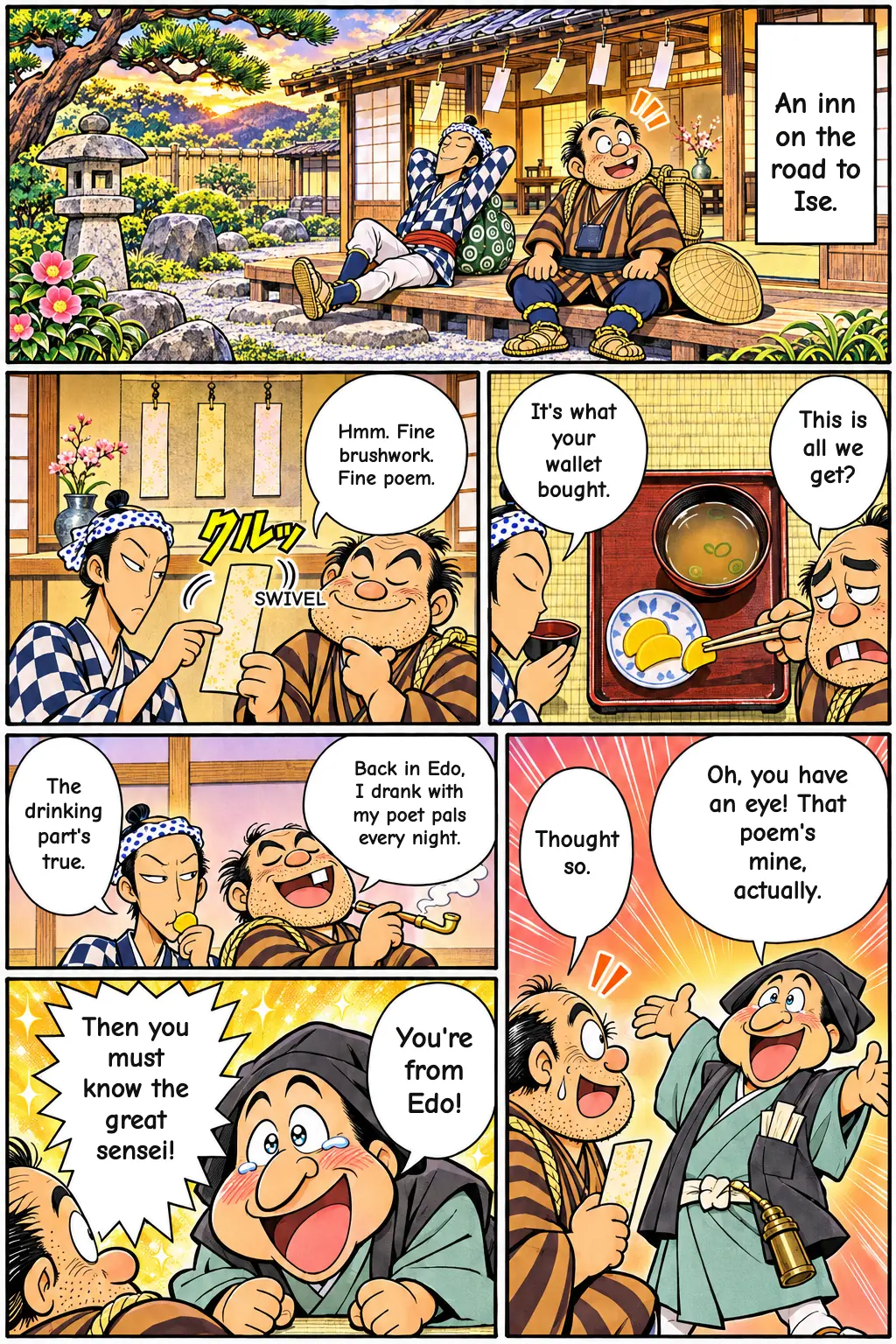
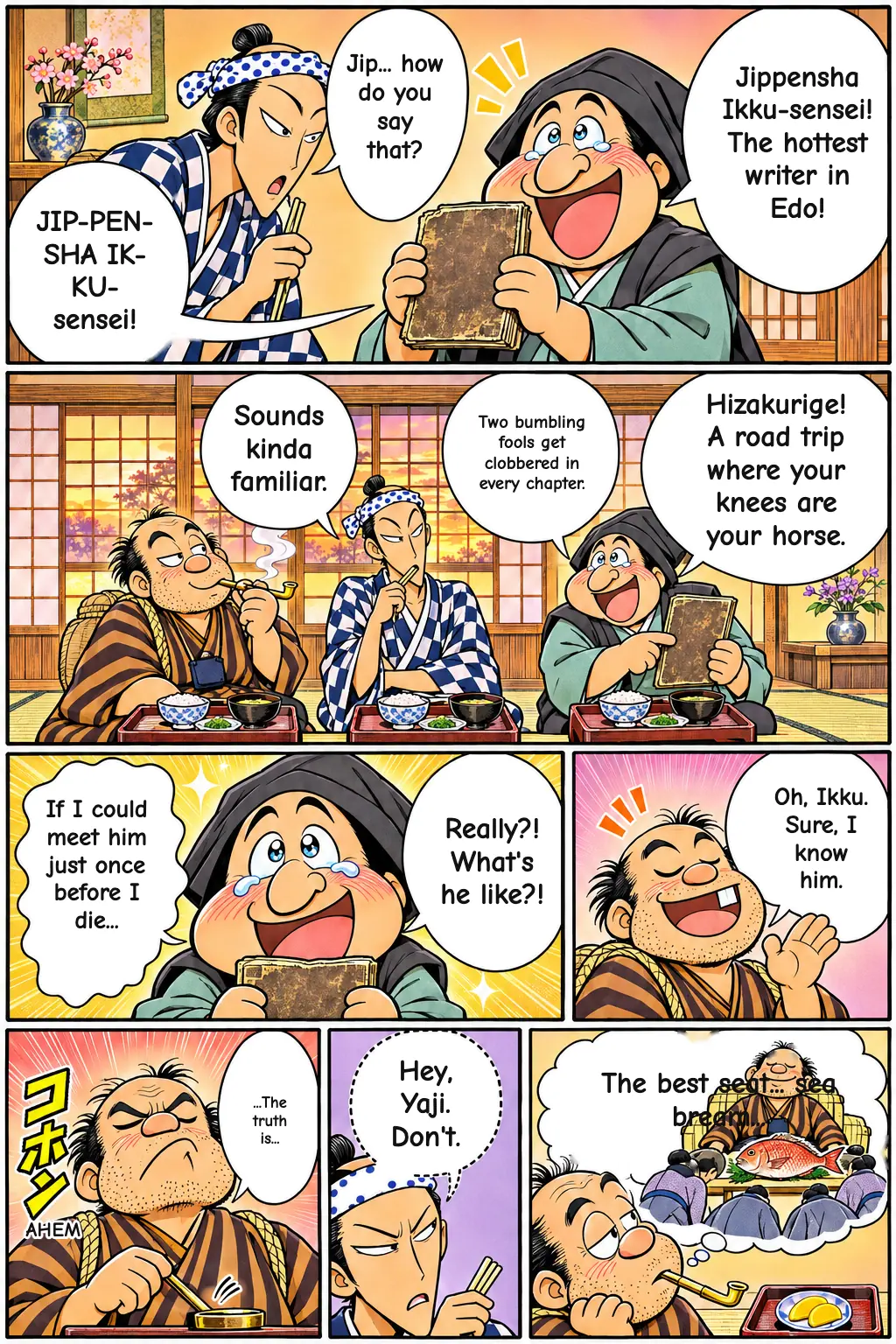
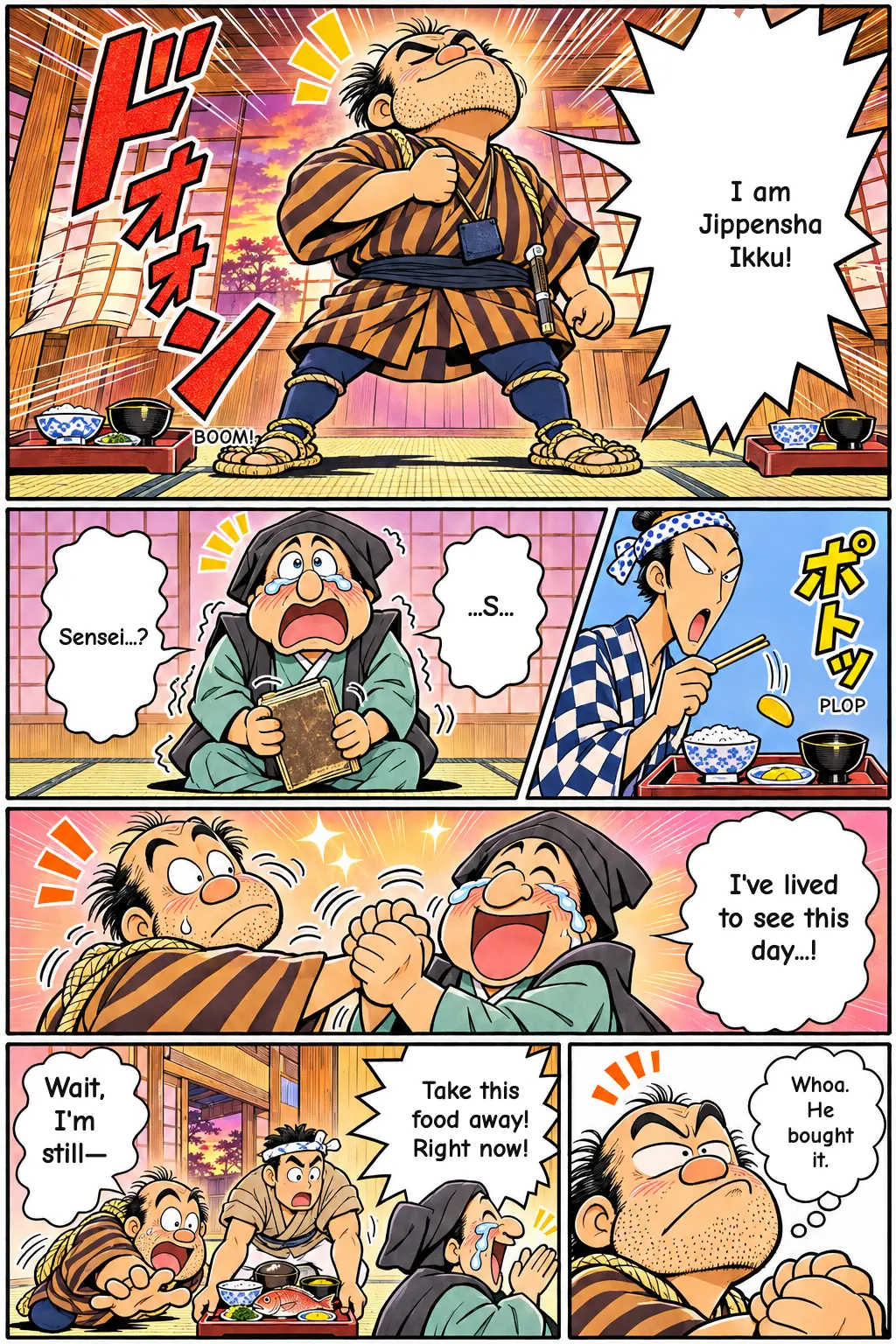
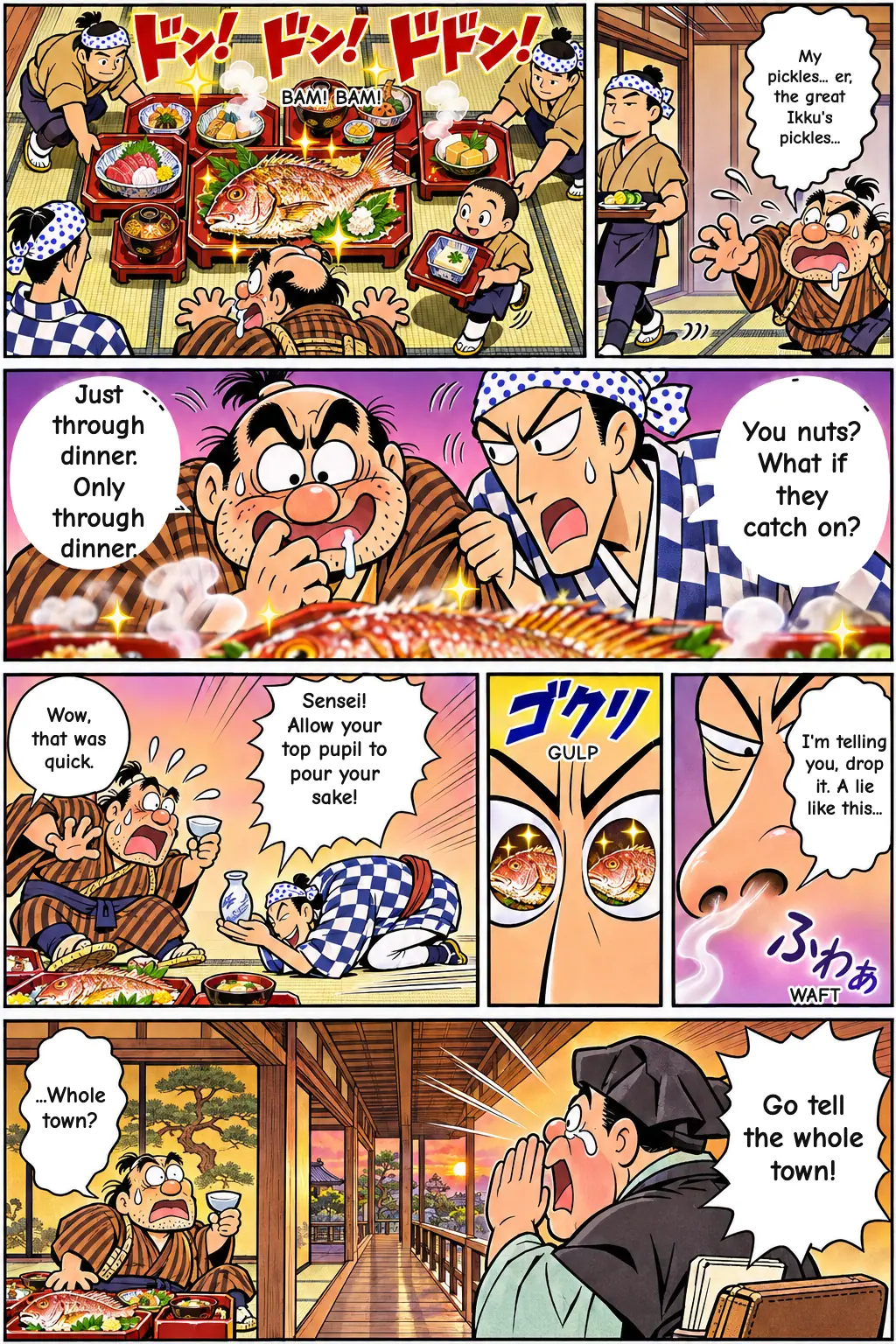
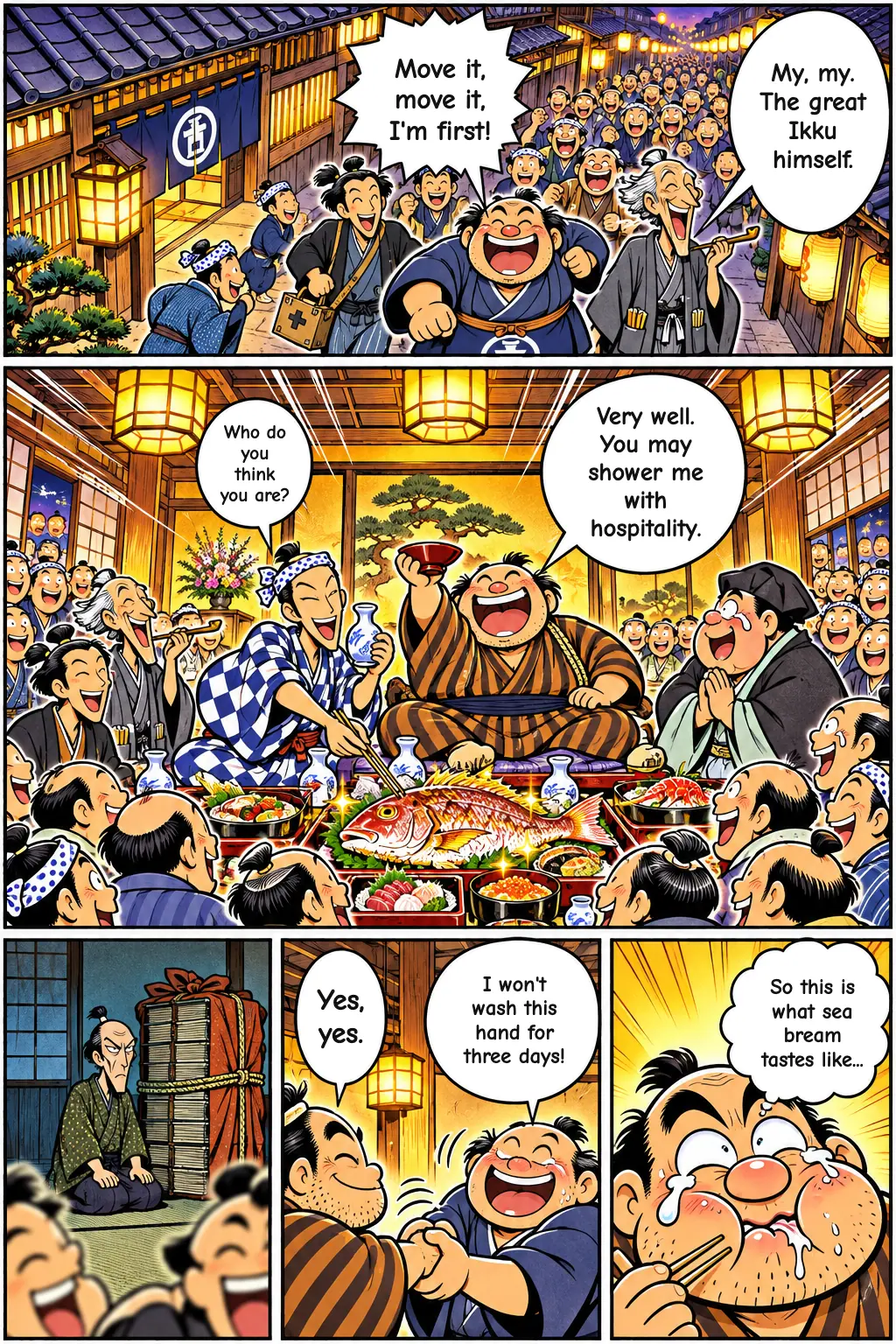
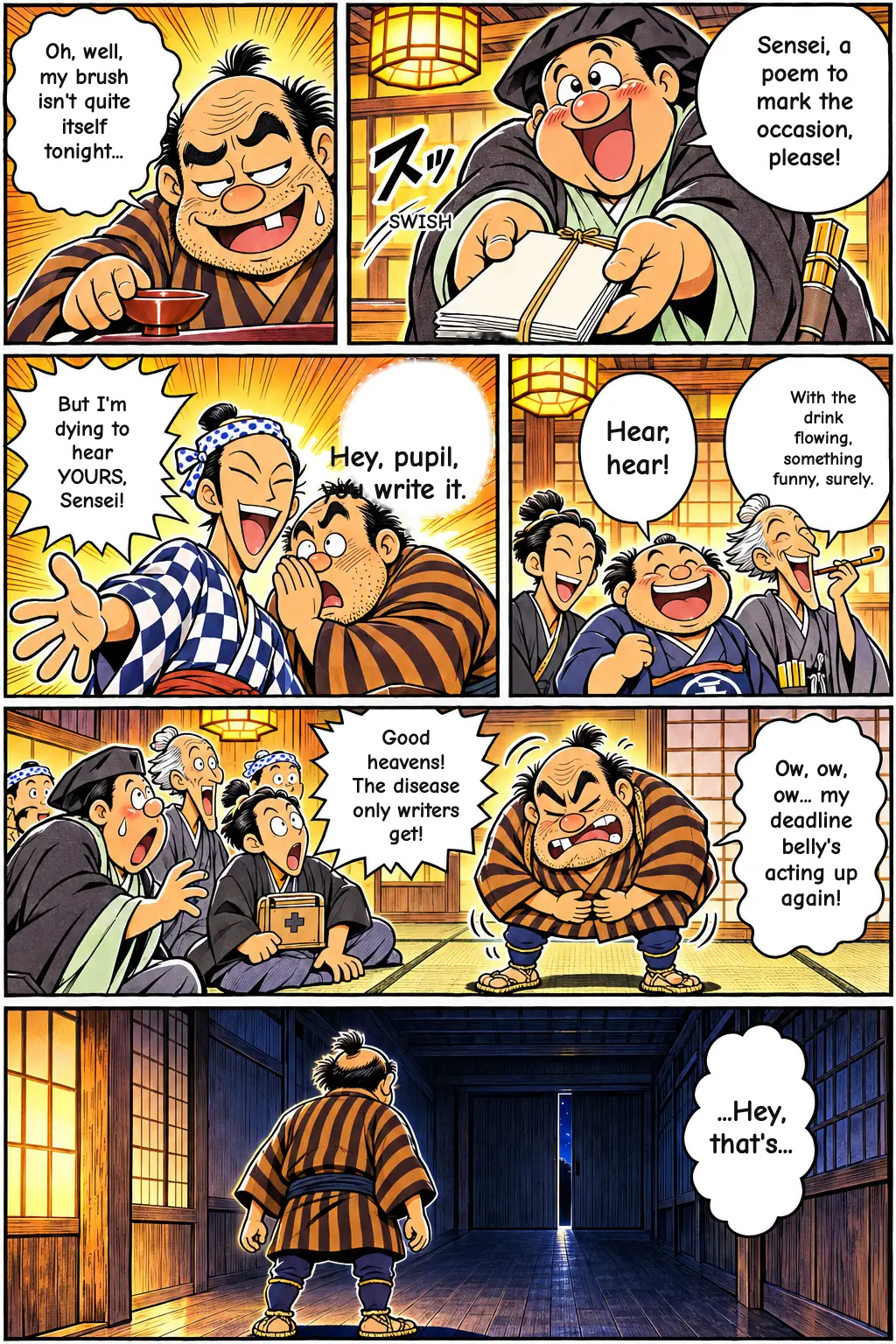
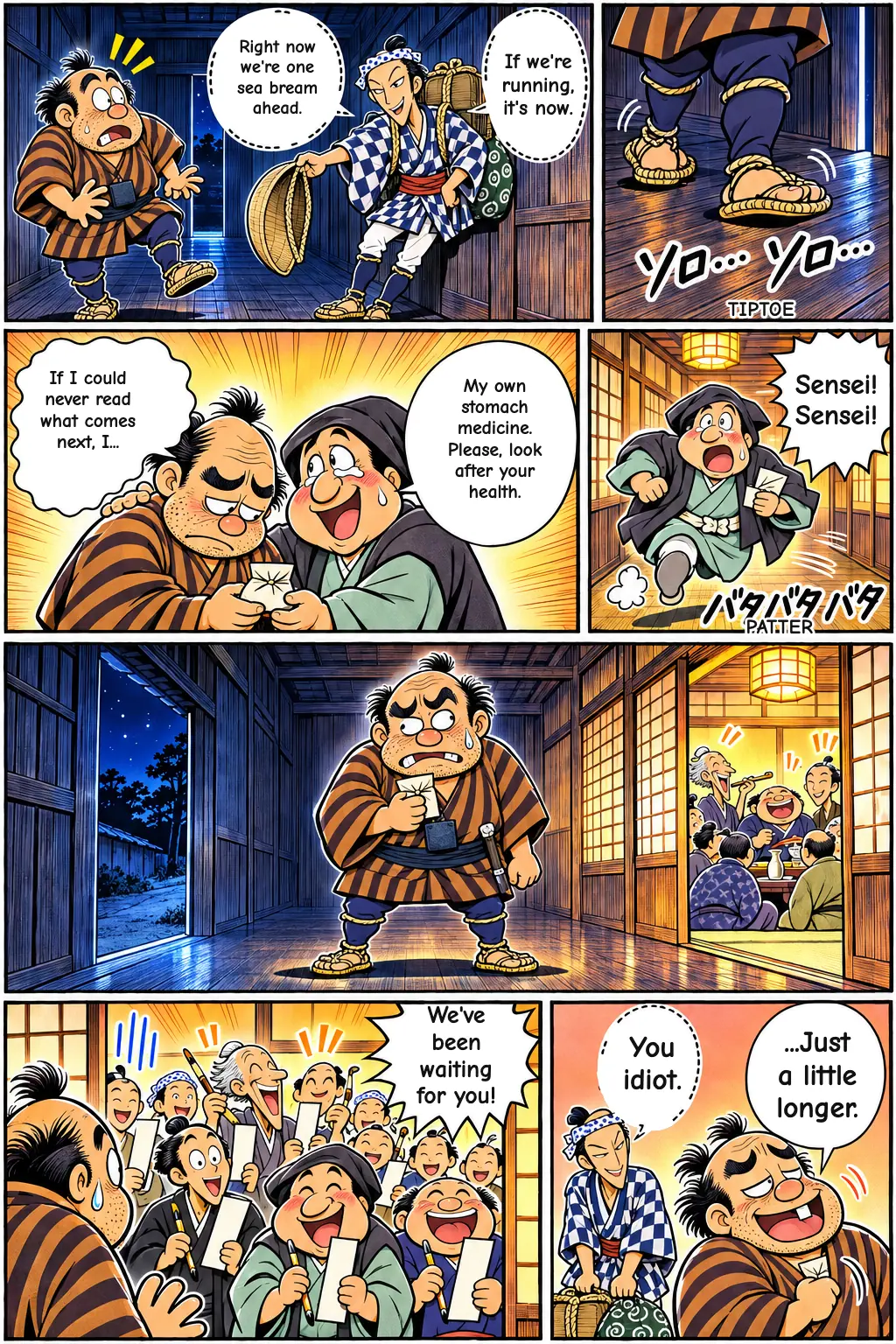
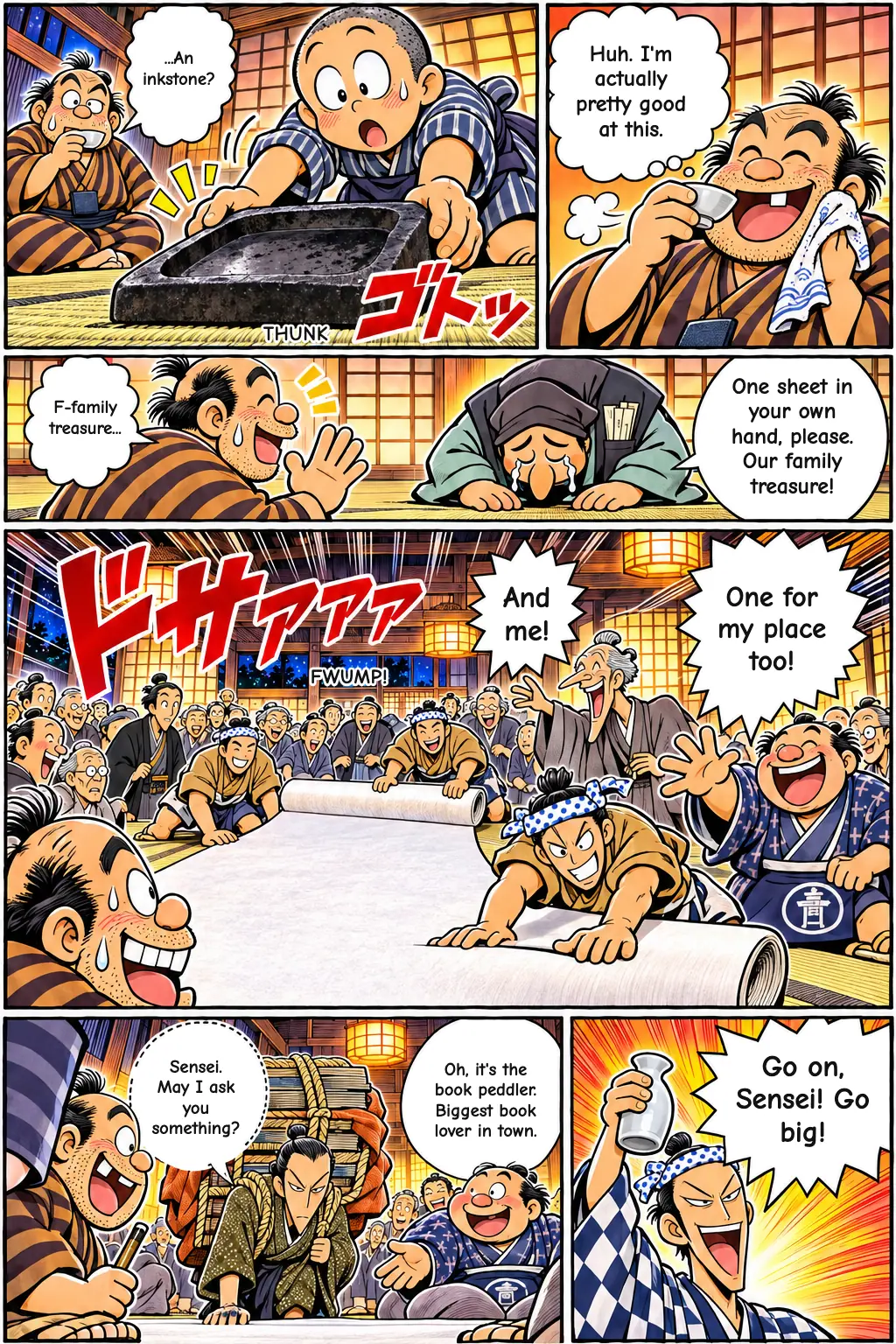
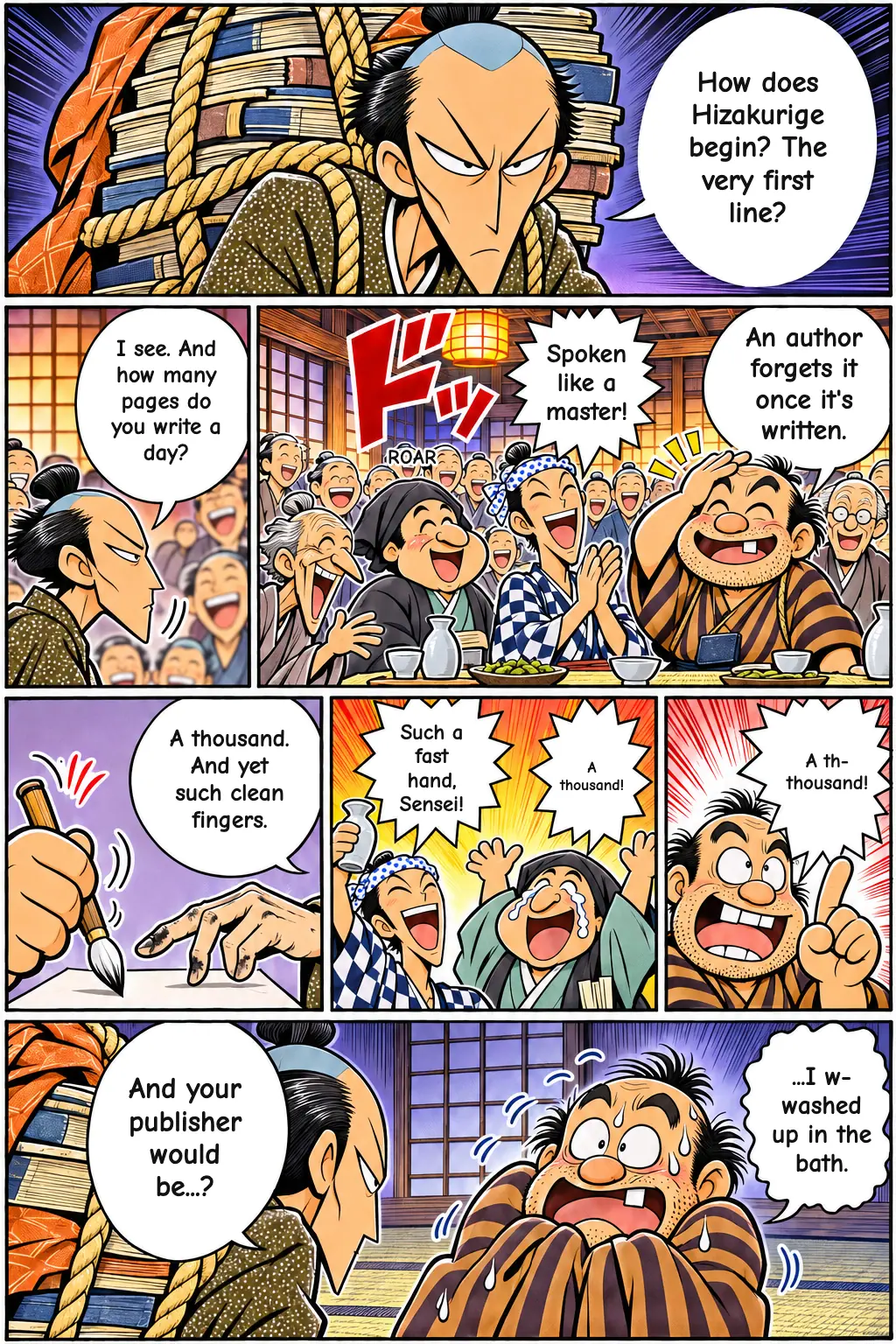
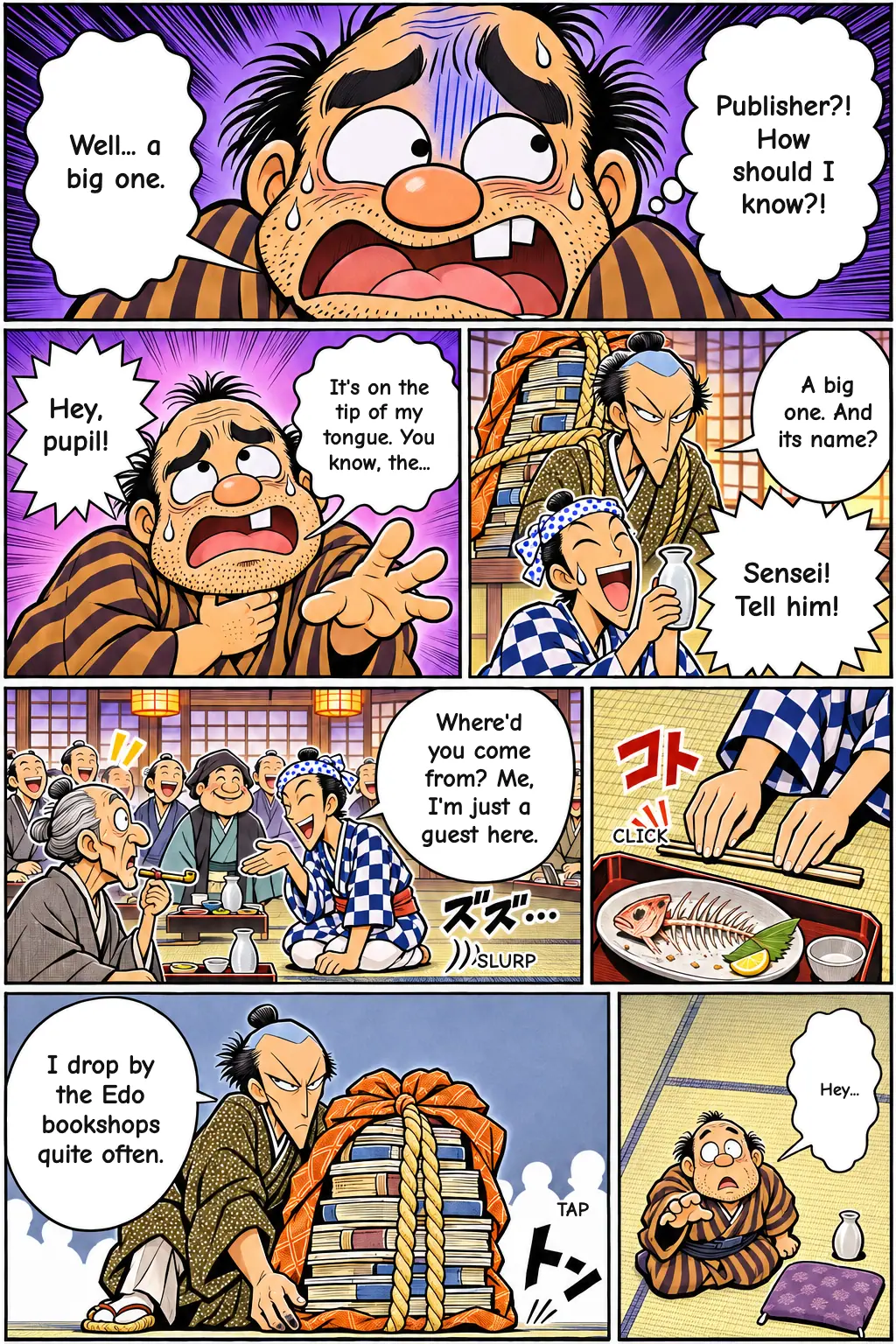
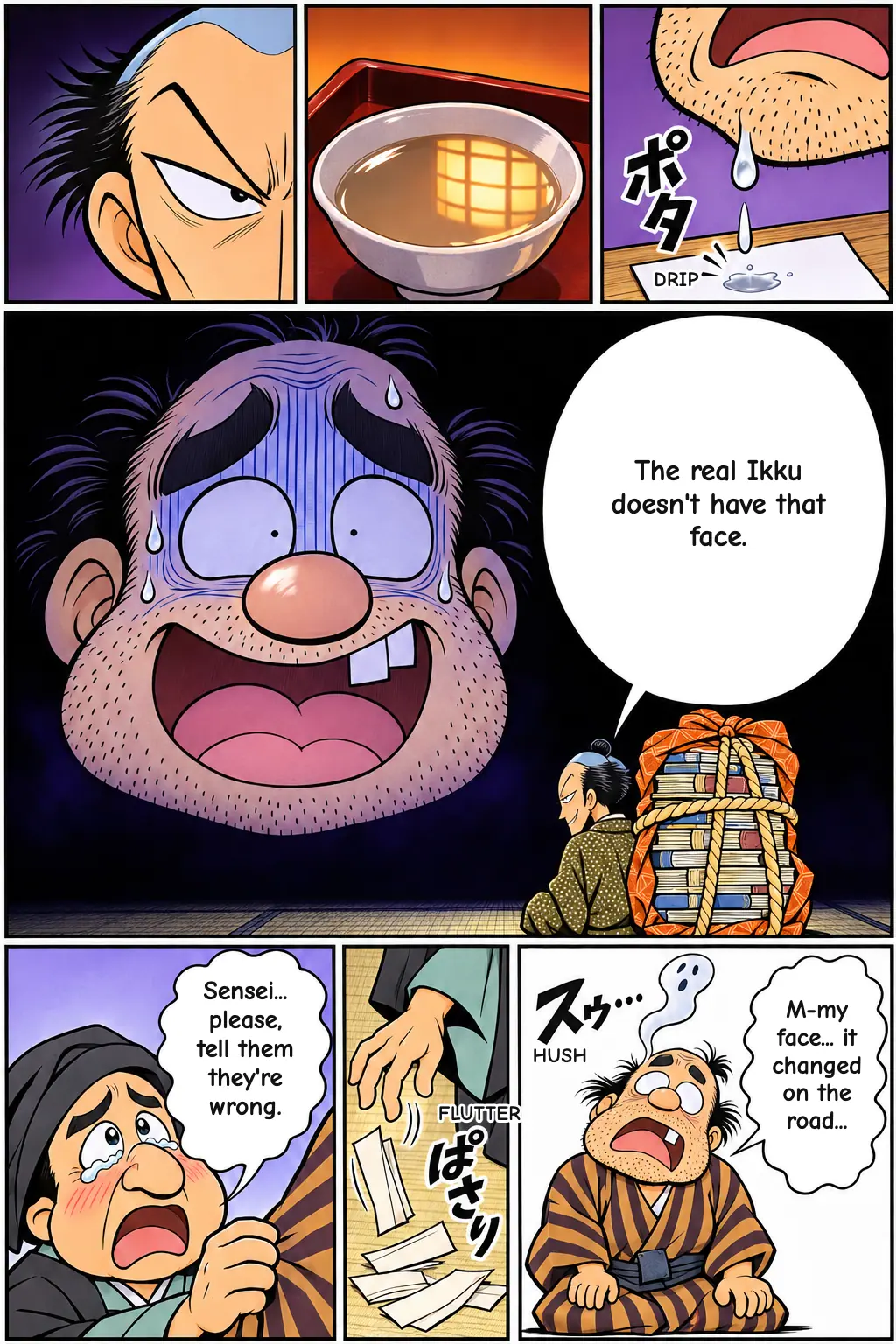
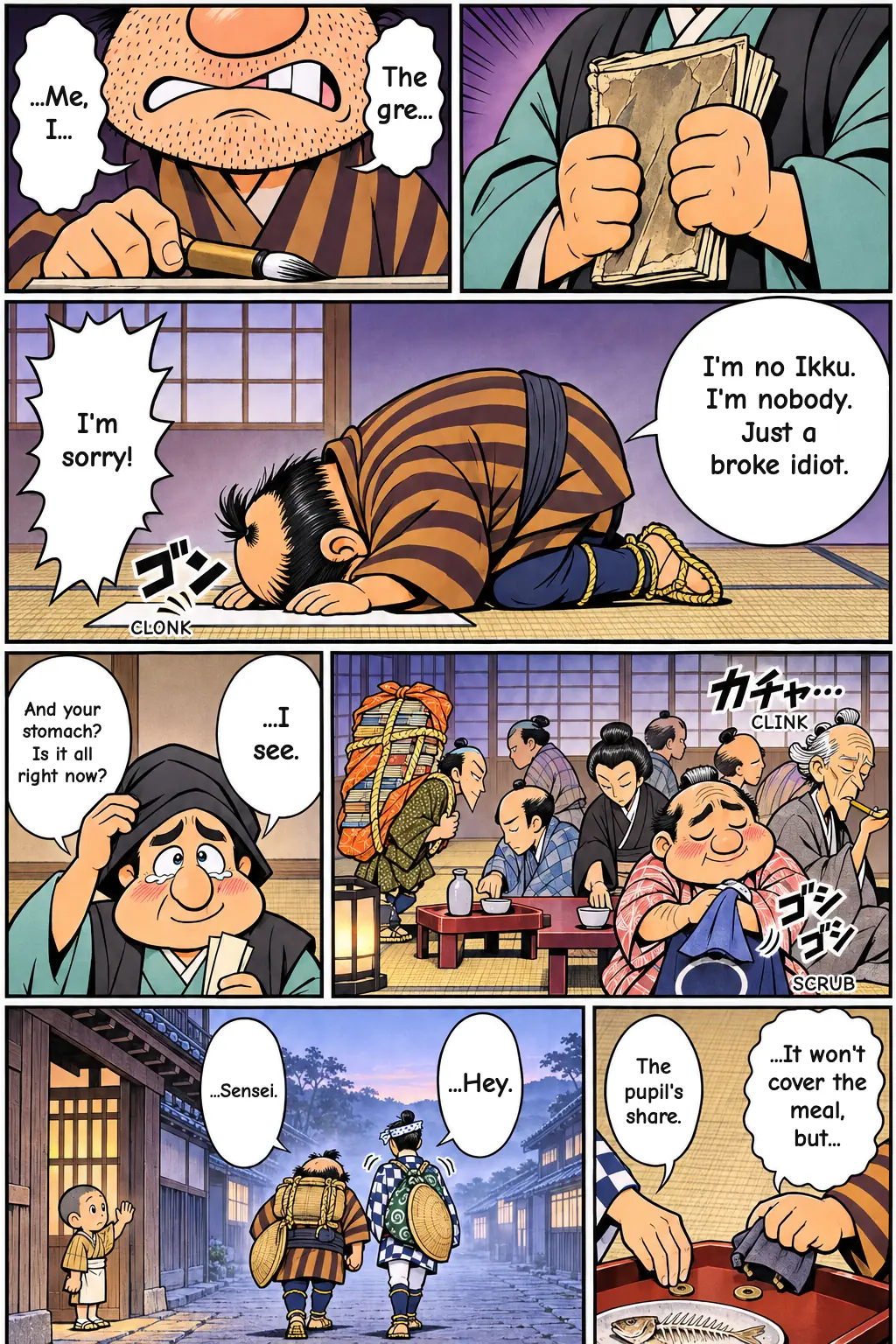
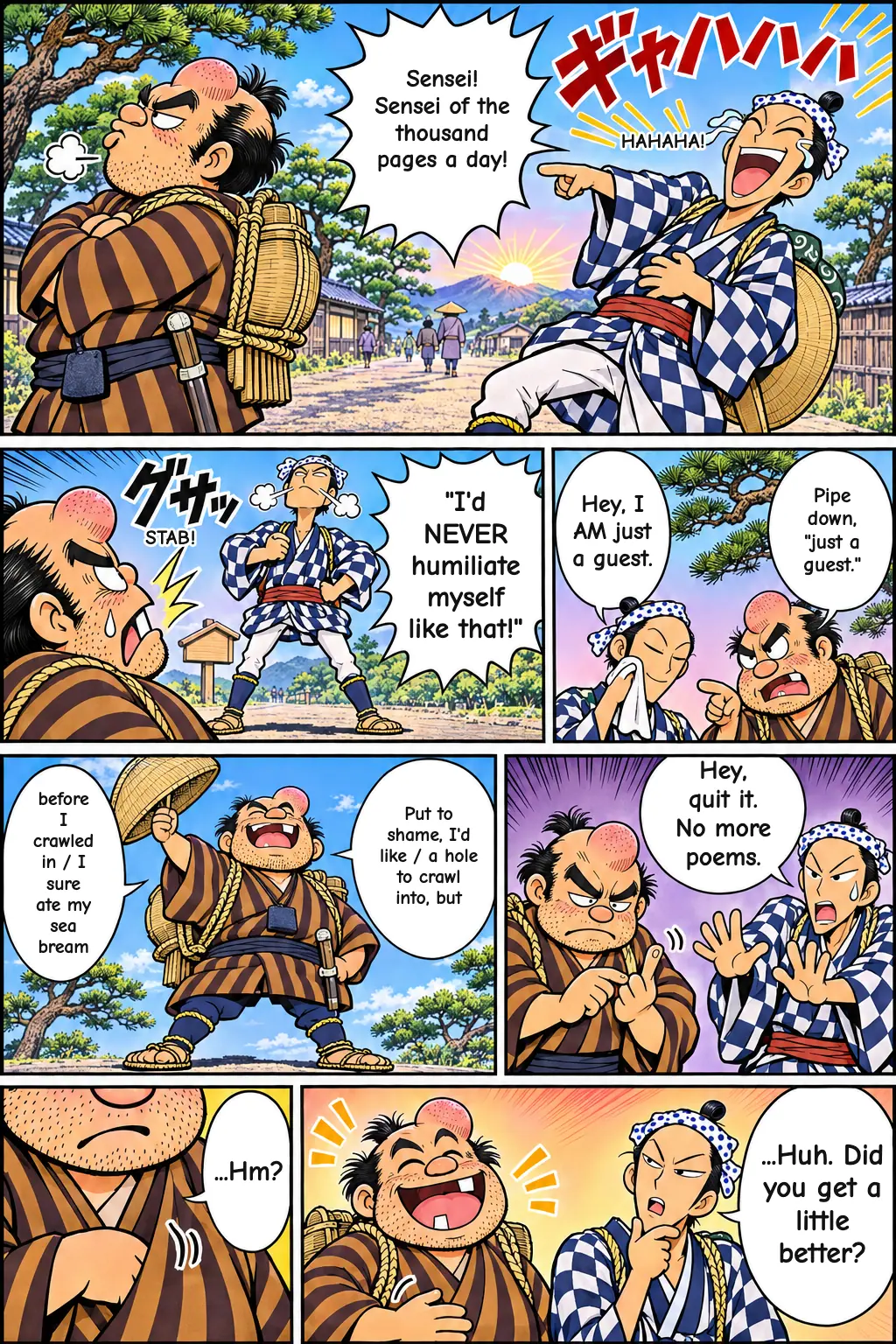
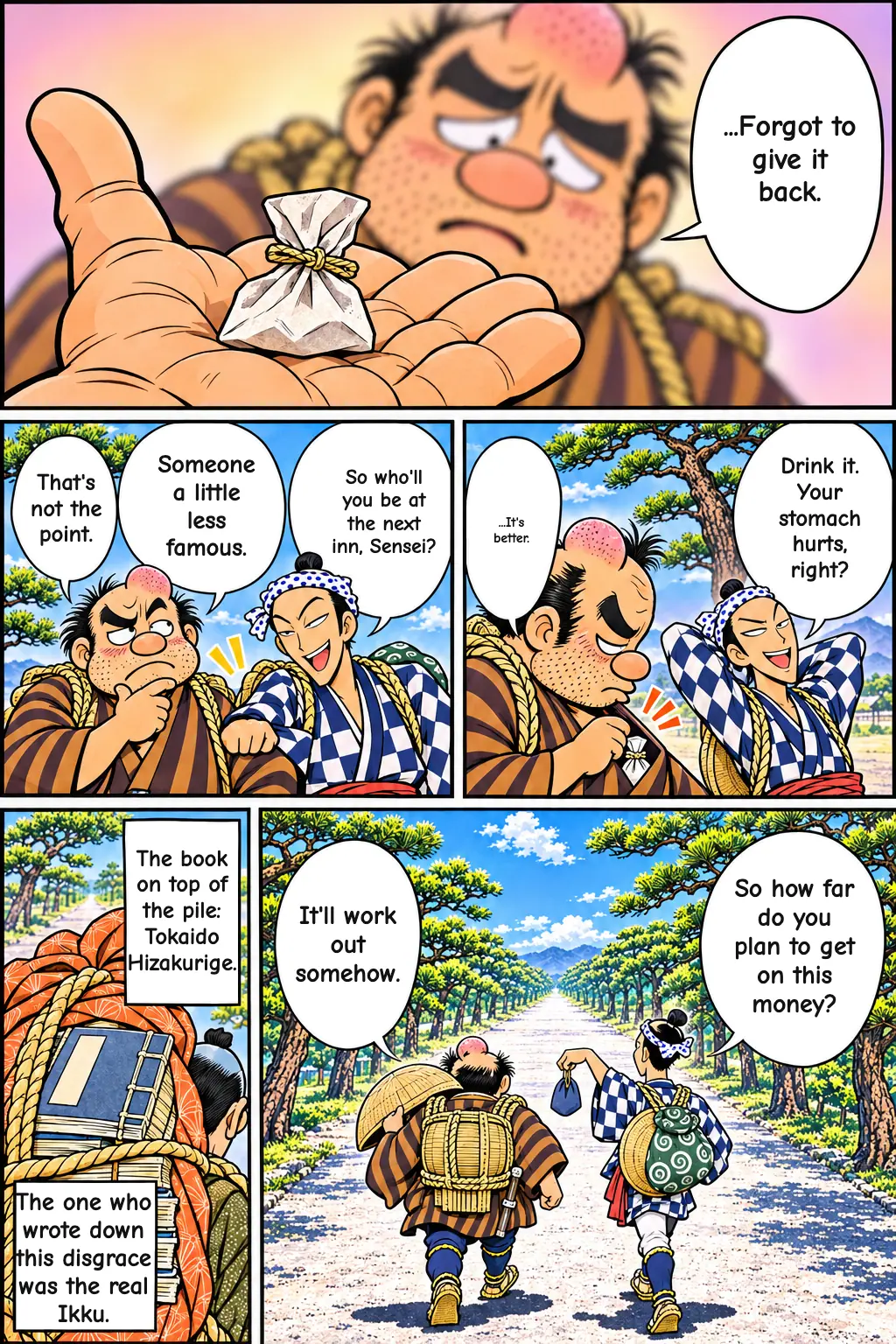
After howling at his partner's blunder, Yaji blurts out at an inn on the road to Ise: "I am Jippensha Ikku!" Tearful welcomes and piling requests corner him, but he passes up the back door and keeps playing "Sensei." Then a quiet book peddler asks him a question.
Get new episodes in your feed. Follow us on:ThreadsBluesky
Story summary
Tokaidochu Hizakurige, sometimes known in English as Shank's Mare, is a kokkeibon, a popular genre of comic fiction from Edo-period Japan. Its author, Jippensha Ikku, began publishing it in 1802. The story follows two men from Edo (present-day Tokyo), Yajirobei and Kitahachi, better known as Yaji and Kita, as they walk the Tokaido highway on a pilgrimage to the Grand Shrine of Ise. The fifth part finds them past the town of Kuwana and stopping for the night at Yokkaichi. At the Yokkaichi inn, Kita hatches a plan for a romantic encounter after dark.
Yaji Poses as Jippensha Ikku: Hizakurige Part 5 Summary Explained
In short: Yaji's impersonation of Jippensha Ikku is a comic episode from the fifth part of Tokaidochu Hizakurige, a Japanese comic novel first published in 1802. On the road to Ise, the vain traveler Yaji tells a lover of comic poetry that he wrote the very book he is a character in, gets treated like a celebrity, and is exposed as a fake when he can't show the expected talent.
What happens in the original story
Tokaidochu Hizakurige, sometimes known in English as Shank's Mare, is a kokkeibon, a popular genre of comic fiction from Edo-period Japan. Its author, Jippensha Ikku, began publishing it in 1802. The story follows two men from Edo (present-day Tokyo), Yajirobei and Kitahachi, better known as Yaji and Kita, as they walk the Tokaido highway on a pilgrimage to the Grand Shrine of Ise. The fifth part finds them past the town of Kuwana and stopping for the night at Yokkaichi.
At the Yokkaichi inn, Kita hatches a plan for a romantic encounter after dark. It falls apart, a commotion breaks out in the darkness, and he ends up as the butt of the joke. The exact mechanics of the mishap are a detail we have not verified against the text, so we won't pin them down here.
The pair then leave the Tokaido near the Hinaga junction and turn onto the road to Ise. There Yaji meets someone who loves kyoka, a form of comic poetry. Unable to resist showing off, Yaji announces that he is Jippensha Ikku, the author of Hizakurige. The delighted admirer believes him and treats him with great respect. But a famous author is expected to have a famous author's gift for verse, and when that talent is called for, Yaji falls apart. He is revealed as a fraud and suffers a thorough public embarrassment.
Some finer points remain unconfirmed in our research: the host's name and background, how lavish the hospitality was, whether Yaji was asked for a poem, a piece of calligraphy, or both, and what finally gave him away.
Why the joke works: an author inside his own book
The obvious gag is a blowhard caught in a lie. The cleverer one sits a layer above it. Ikku wrote his own name into his story, and he handed it to one of his own fictional characters, who then uses it to cadge respect. A character is pretending to be the man who invented him, and he isn't good at it.
The joke also depends on something outside the page: readers had to know who Ikku was and what Hizakurige was. Inside the story, the book's fame is treated as real, which is why a stranger on the Ise road would be thrilled to meet its author. Ikku is, in effect, teasing himself and his own reputation at once. Modern readers may recognize the move from any story where an author makes a cameo or a character notices the book they are in. Here it arrives in a comic novel from the early 1800s.
The background: comic poetry and the road to Ise
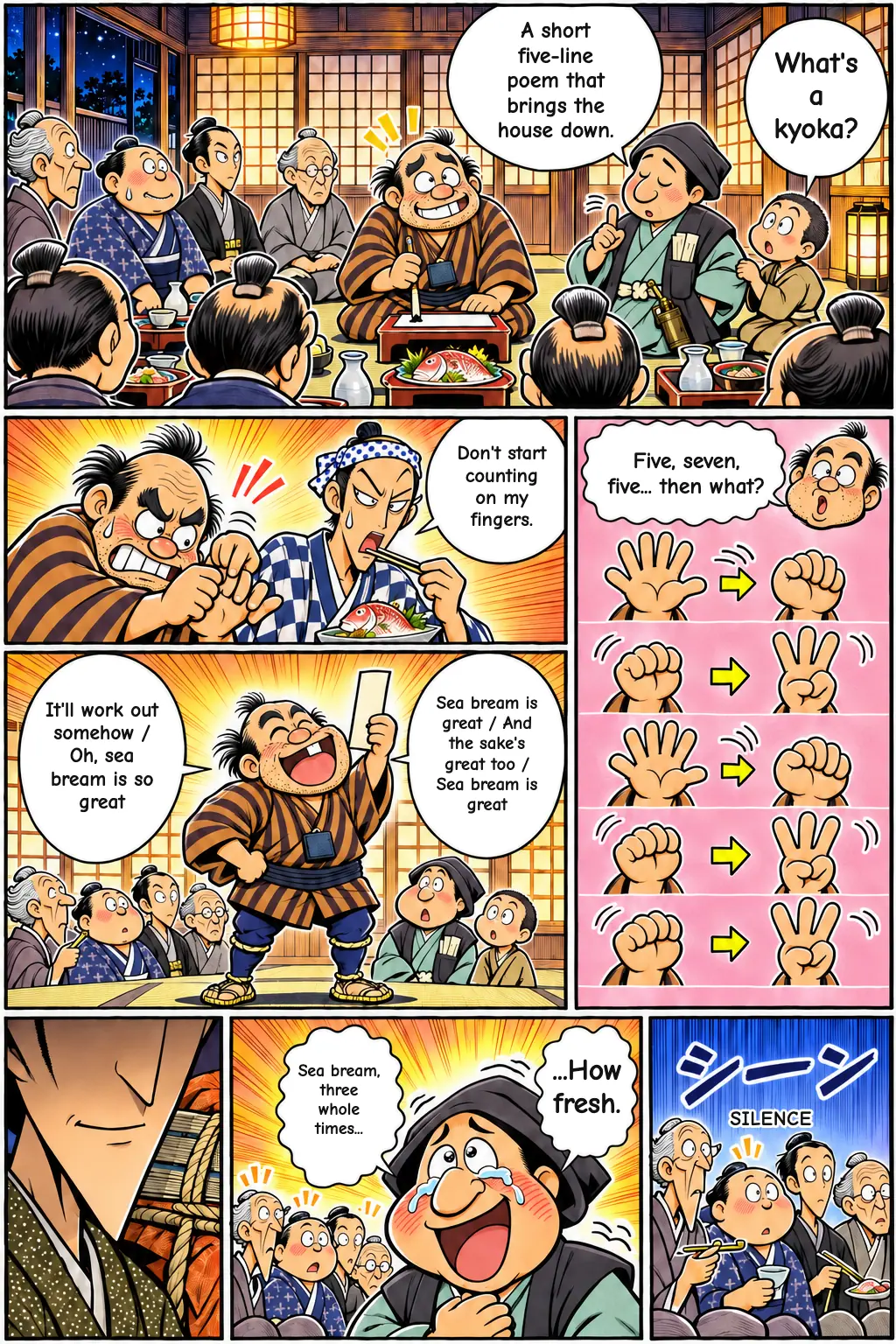
Two pieces of cultural context help the episode land. The first is kyoka, literally "mad verse." It uses the same 5-7-5-7-7 syllable pattern as classical waka poetry, but swaps elegance for puns, parody, and everyday silliness. Kyoka had a major vogue in Edo during the late 1700s, and being able to toss off a witty verse carried real social credit. That is what makes Yaji's choice of lie so risky: he has claimed the one identity that can be tested on the spot. Yaji does enjoy composing verses himself, which makes it funnier, because he is confident in a skill that doesn't hold up under pressure.
The second is the pilgrimage to Ise. In Edo-period Japan, a trip to the Grand Shrine was a popular journey for ordinary people, and it doubled as a chance to see the country. Hizakurige's title reflects the spirit of that travel: it combines the words for "knee" and "chestnut horse," meaning you are using your own legs as your mount. Far from home, nobody knows who you are, so you can claim to be anyone. Yaji finds out how long that lasts.
What the manga changes
The core is the same: Kita's night-time failure at Yokkaichi comes first, and Yaji's false claim to be Ikku drives the rest. Everything below is how the manga stages that core, so please don't read it as a record of the original text.
In the manga, Yaji howls at his partner's blunder, then blurts out his claim at an inn on the road to Ise. Tearful welcomes and piling requests corner him, he passes up the chance to slip out the back door, and he keeps playing "Sensei." Then a quiet book peddler asks him a question. The source summary we worked from describes an encounter with a kyoka enthusiast, and we could not confirm a book peddler or the back-door moment in it, so treat those beats as the manga's own telling.
The food, the order of the banquet, the layout of the rooms, and Yaji's facial expressions and excuses are also creative choices, as is the host's portrayal, including any name, job, or family. Any kyoka in the manga is newly written for international readers unless it is presented as a translation of the original verse, so a poem you enjoy there shouldn't be assumed to be Ikku's. Short guide notes explain the author-in-his-own-book joke, and the Yokkaichi mishap is condensed into quick slapstick rather than played explicitly.
Where to read it
If you'd like to watch Yaji dig himself deeper, this is Episode 10 of YAJI AND KITA: The Great Tokaido Road Trip here on Manga Portal. Every episode is free, with no sign-up required. You can read this one on its own, though the joke is better if you've spent a few episodes with these two and already know how little Yaji should be trusted with a claim like this one.
Characters in this episode
Yajirobei (Yaji)
A boastful, joke-loving middle-aged man from Edo who fancies himself a poet and, in this episode, claims to be the author Jippensha Ikku.
Kitahachi (Kita)
Yaji's younger travel partner and freeloading companion, said to be a former actor, whose night-time scheme at Yokkaichi ends in embarrassment.
The kyoka enthusiast
A lover of comic poetry on the Ise road who admires the author of Hizakurige and welcomes Yaji in good faith; further details are unconfirmed in our research.
Jippensha Ikku
The real author of Hizakurige (1765–1831), whose name and reputation become the joke when his own character borrows them.
The book peddler (manga)
A quiet seller of books who asks Yaji a question in the manga's Episode 10; we could not confirm this figure in the original episode.
FAQ
What is Tokaidochu Hizakurige about?
It is a Japanese comic novel by Jippensha Ikku, first published in 1802, about two men from Edo, Yaji and Kita, traveling the Tokaido highway toward the Grand Shrine of Ise. Most of the humor comes from their pranks, lies, and failed schemes along the way.
Why does Yaji pretend to be Jippensha Ikku?
Vanity is the main reason. After meeting a kyoka enthusiast on the road to Ise, he claims to be the famous author of Hizakurige to impress them, and the lie brings him flattering treatment until it falls apart.
Does Yaji get caught pretending to be the author?
Yes. In the original, he is expected to show an author's talent for comic poetry, fails to keep up the act, and is exposed as a fake. Exactly what gives him away is a detail we have not confirmed.
What is kyoka poetry?
Kyoka, or "mad verse," is a comic form of Japanese poetry using the 5-7-5-7-7 pattern of classical waka. It relies on puns, parody, and everyday humor, and it was especially fashionable in Edo in the late 1700s.
Does Jippensha Ikku appear in his own book?
His name and fame are used inside the story, which is the heart of this episode's joke. We have not confirmed whether he also appears in person, so we can only say that Yaji borrows his identity here.