Episode 8The Hero Who Forgot His Own StrengthHanuman's Leap to Lanka (Sundara Kanda)
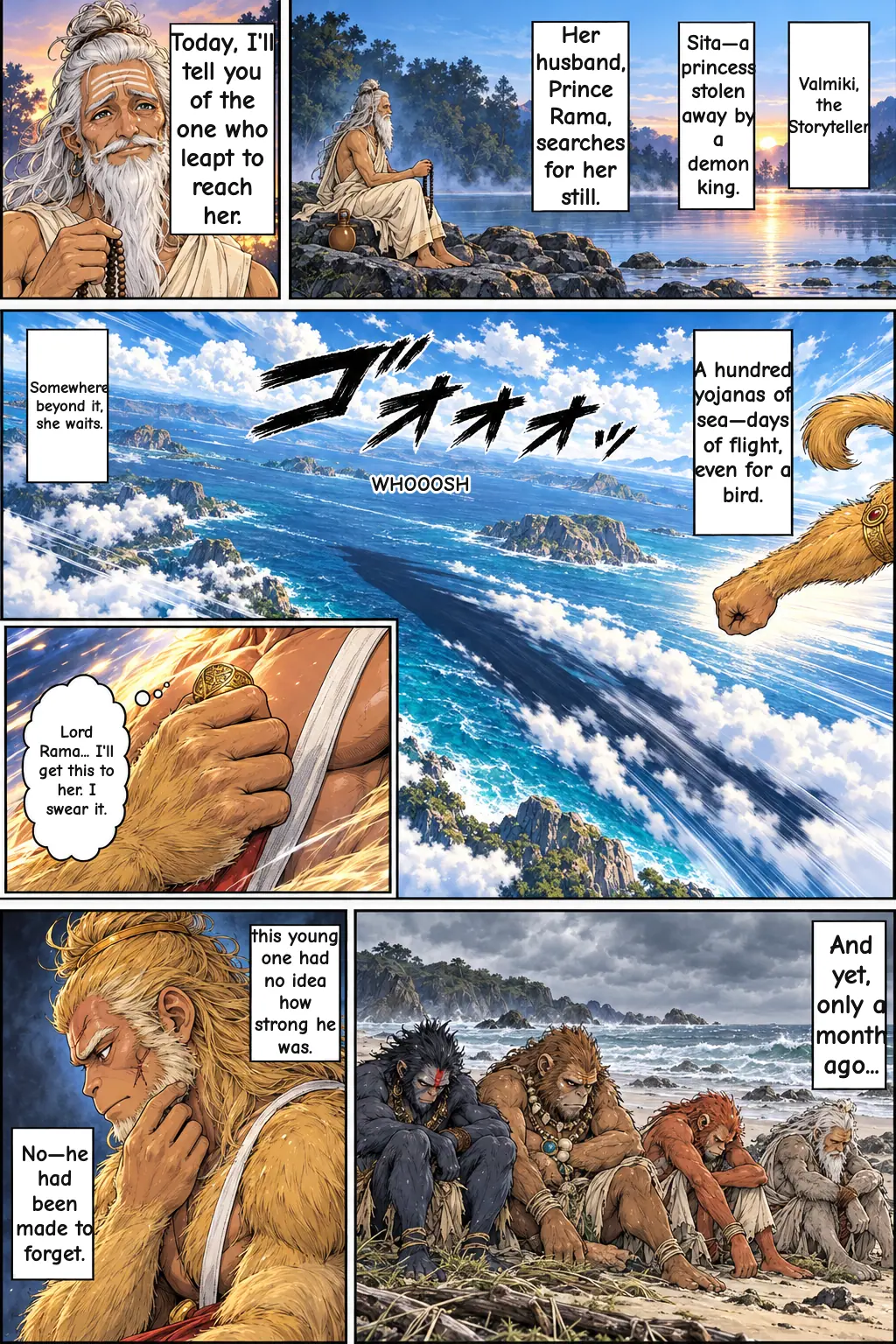
The deadline to find Sita has passed, and the southern search party sits hopeless on the shore of an endless sea—until Sampati, an old vulture with burned wings, appears. Hanuman has never believed in himself, but Jambavan, elder of the bears, reminds him of the power he was made to forget. With Rama's ring held close, Hanuman clears in a single leap a sea that would take even a bird days to cross.
Hanuman's Leap to Lanka Explained: Ramayana Sundara Kanda Summary
The Original Story: A Search Party at the Edge of the Sea
This episode covers the end of the Kishkindha Kanda (roughly chapters 40–67 in the commonly used vulgate numbering) and the first chapter of the Sundara Kanda in Valmiki's Ramayana, the Sanskrit epic composed and expanded over several centuries, from around the last centuries BCE into the early centuries CE. Prince Rama's wife Sita has been abducted by Ravana, the demon king of Lanka, and Rama has allied himself with Sugriva, the king of the monkeys (vanaras).
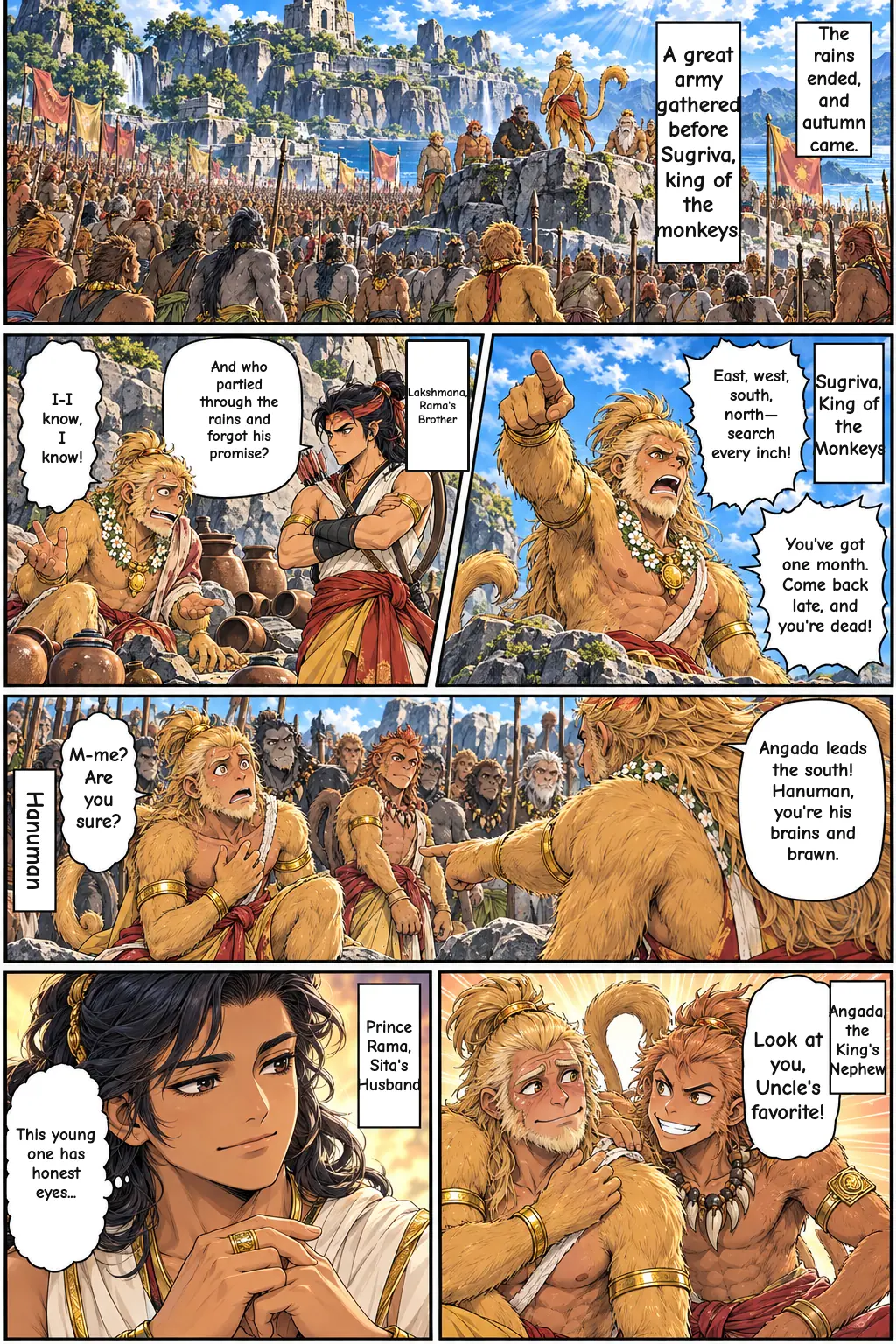
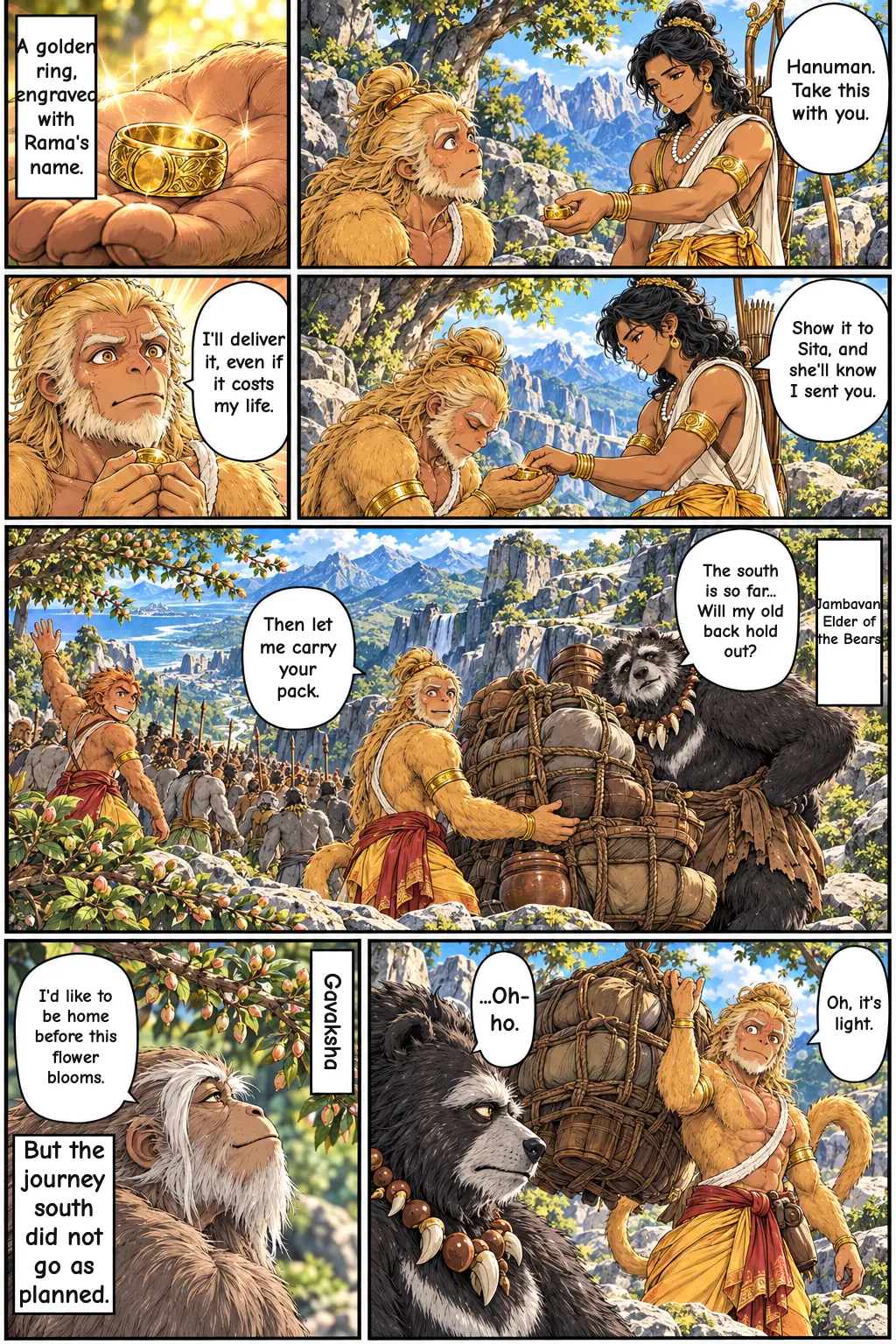
When the rainy season ends, Sugriva sends huge search parties of monkeys and bears to the four directions. He describes the mountains, rivers, and lands of each region in detail, explaining that he learned the world's geography while fleeing his brother Vali. His order is harsh: return within one month, or face death. Sugriva puts special faith in Hanuman, his minister, and Rama, seeing this, gives Hanuman a ring engraved with his own name so that Sita will know the messenger truly comes from him.
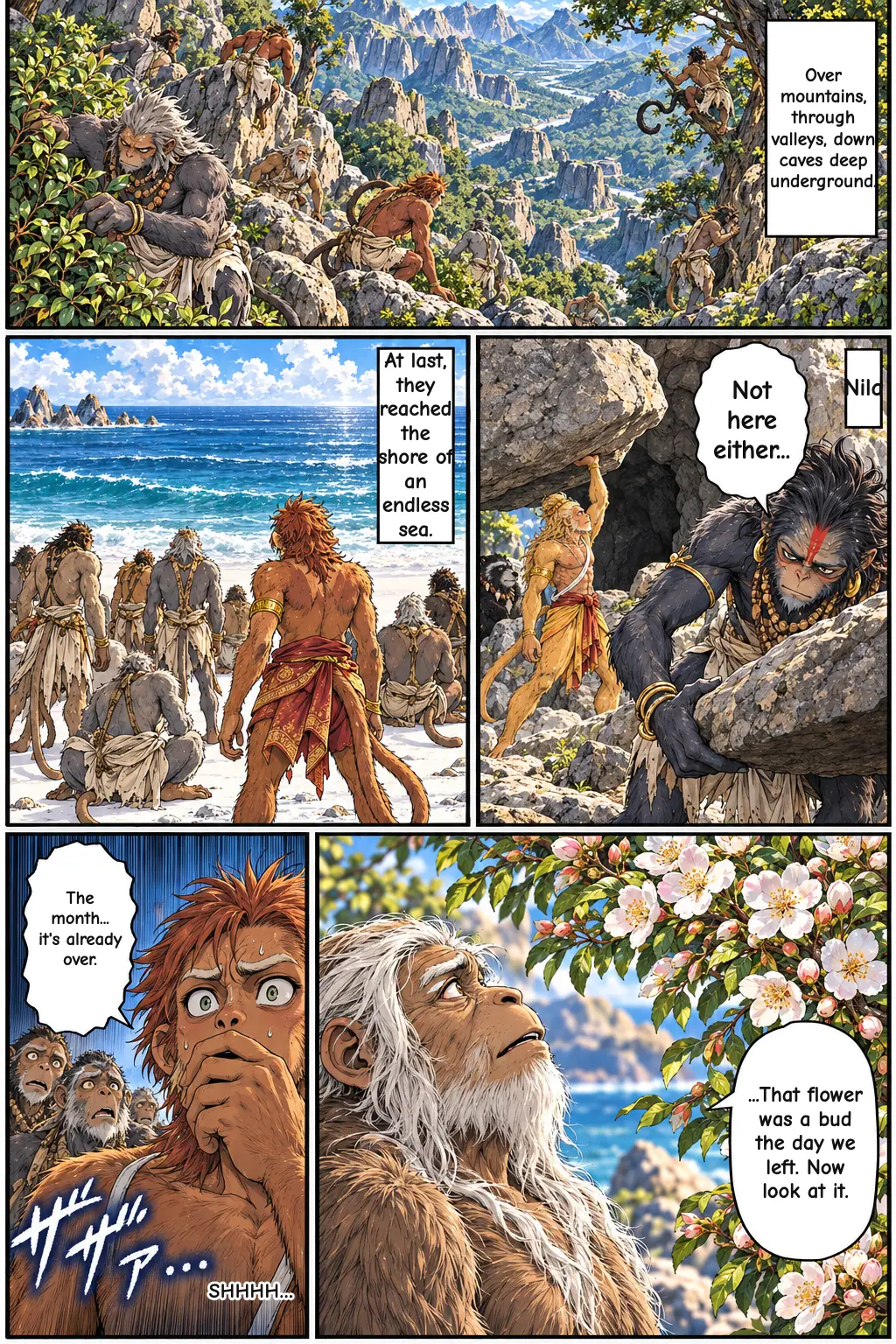
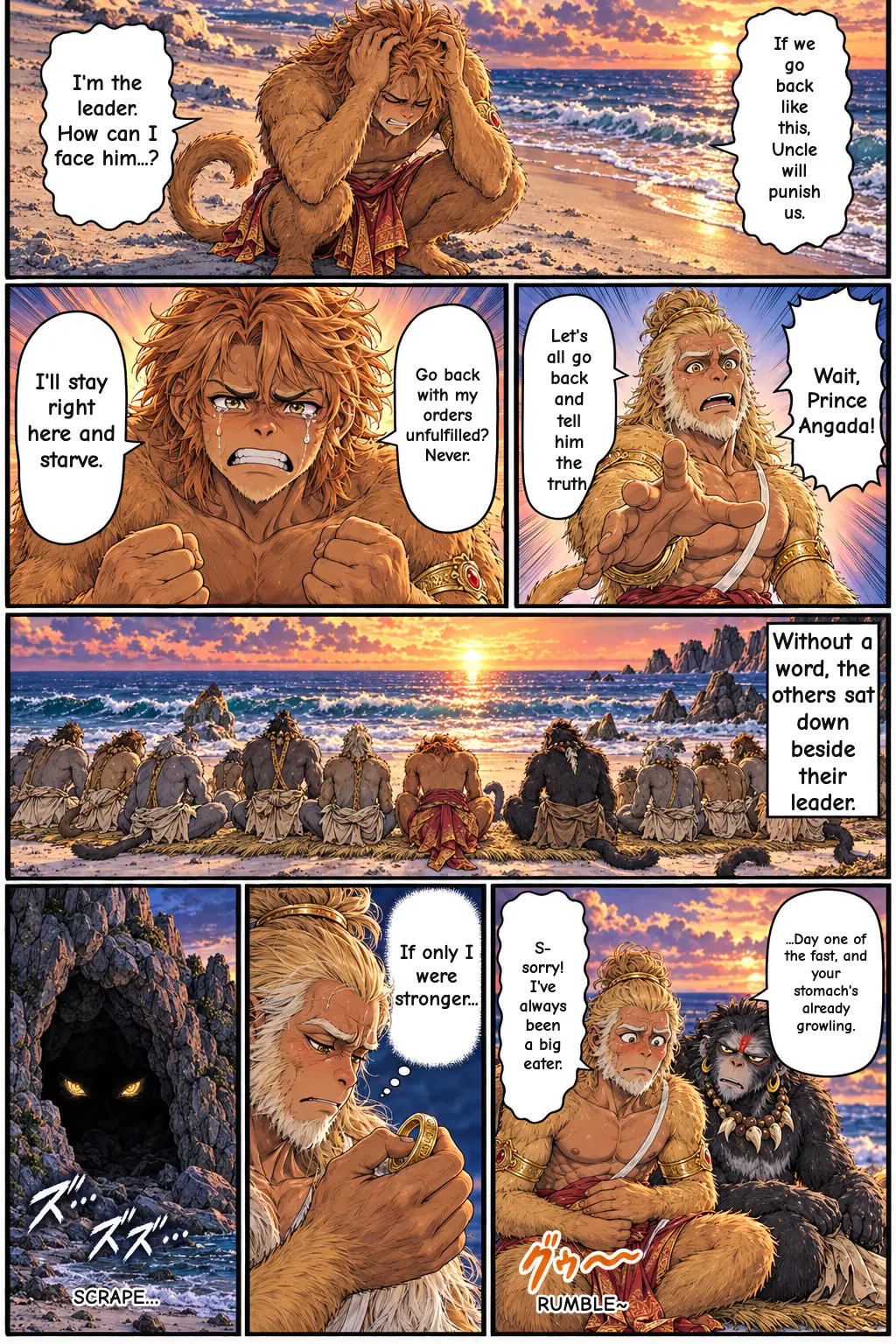
The eastern, western, and northern parties return on time with nothing. The southern party, led by the young crown prince Angada (Vali's son) and including Hanuman and Jambavan, king of the bears, searches the Vindhya mountains without success. Thirsty, they follow wet birds into an underground cave holding a golden palace built by the architect Maya. Its guardian, the ascetic woman Svayamprabha, feeds them and uses her powers to place them on the seashore. There they realize the month has already passed. Fearing Sugriva's punishment, Angada decides to fast until death, and the others sit down beside him to wait for the end.
Sampati, Jambavan, and Hanuman's Forgotten Strength
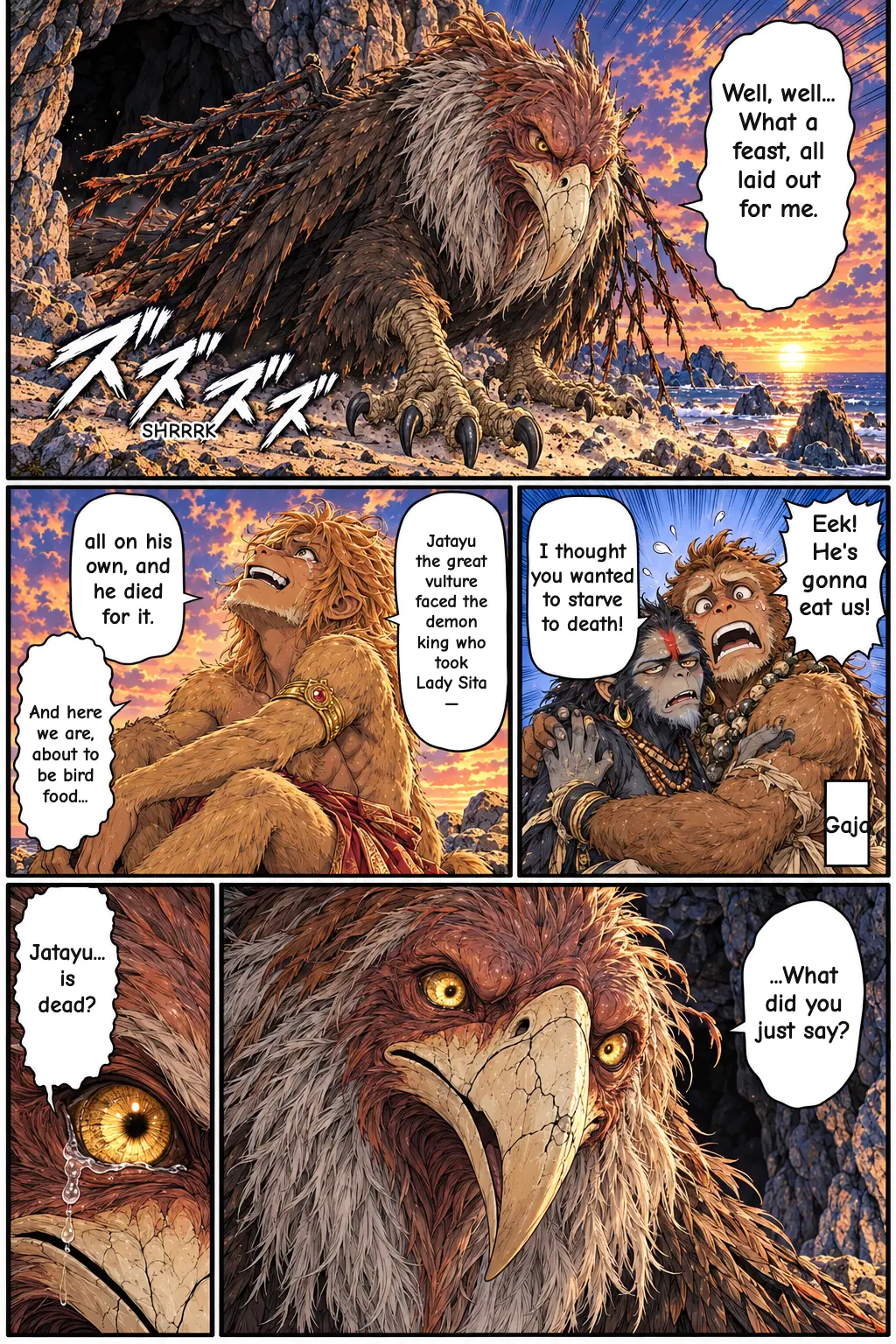
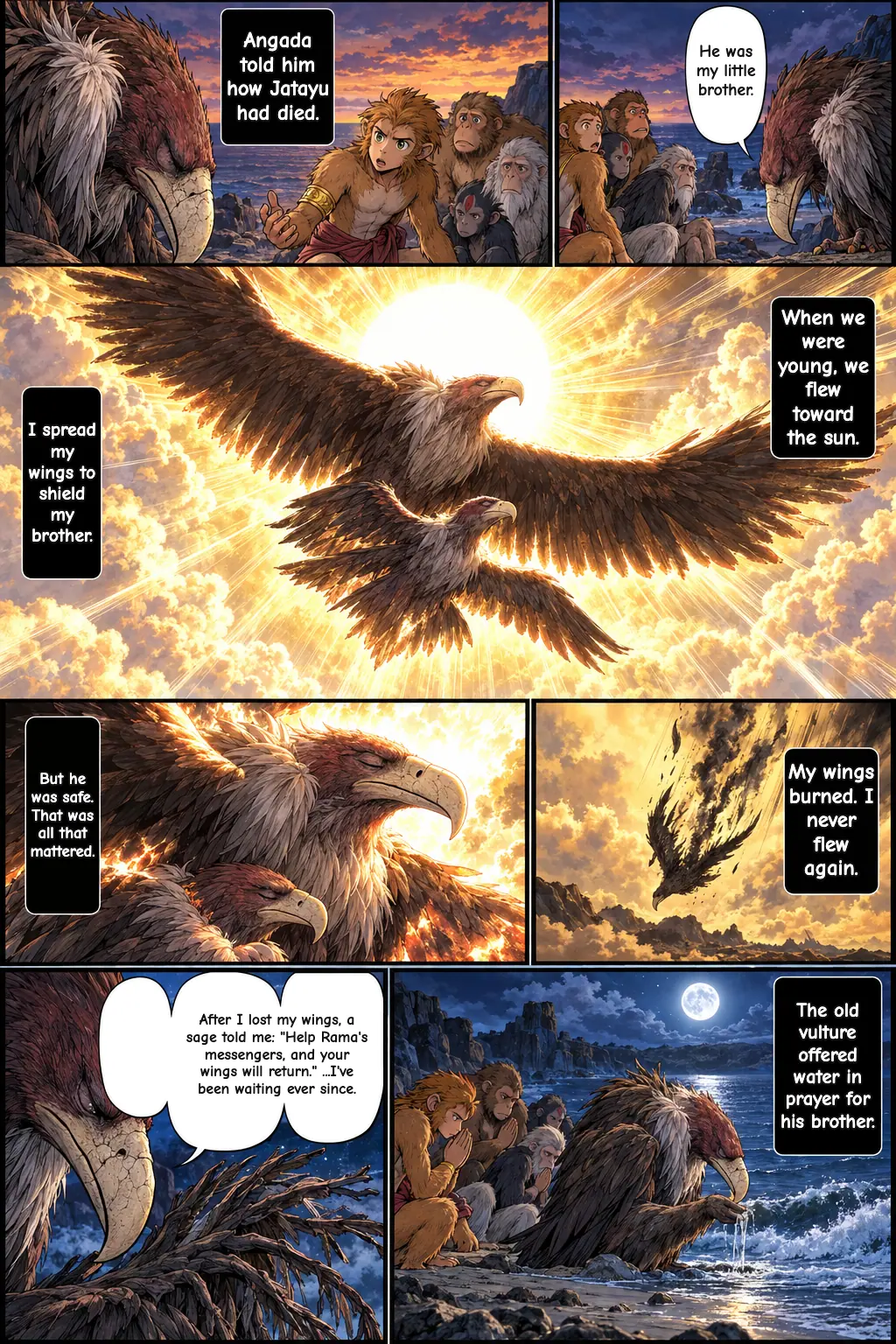
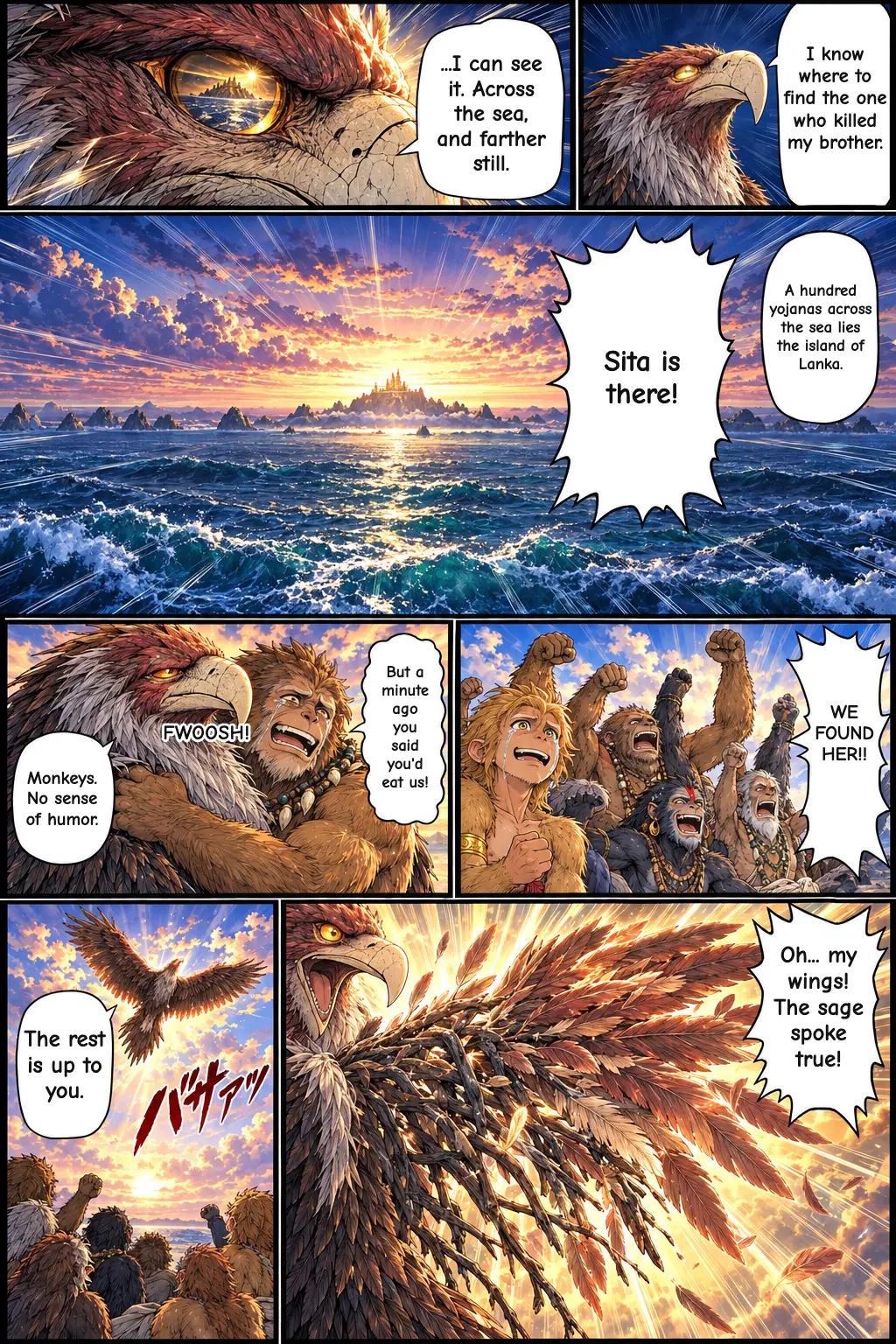
From a mountain cave comes Sampati, an old vulture who cannot fly. At first he is pleased that food has arrived, but when the monkeys mention the death of Jatayu (the vulture who died trying to rescue Sita), he learns his younger brother is dead. Sampati explains that long ago the two brothers raced toward the sun, and he shielded Jatayu with his own wings, which were burned away. With the far-seeing eyes of a vulture, he tells them Sita is held in Lanka, a hundred yojanas across the sea (the yojana is an ancient unit of distance; estimates of its length vary). A sage had once foretold that his wings would return when he helped Rama's cause, and as he finishes speaking, they grow back and he flies away.
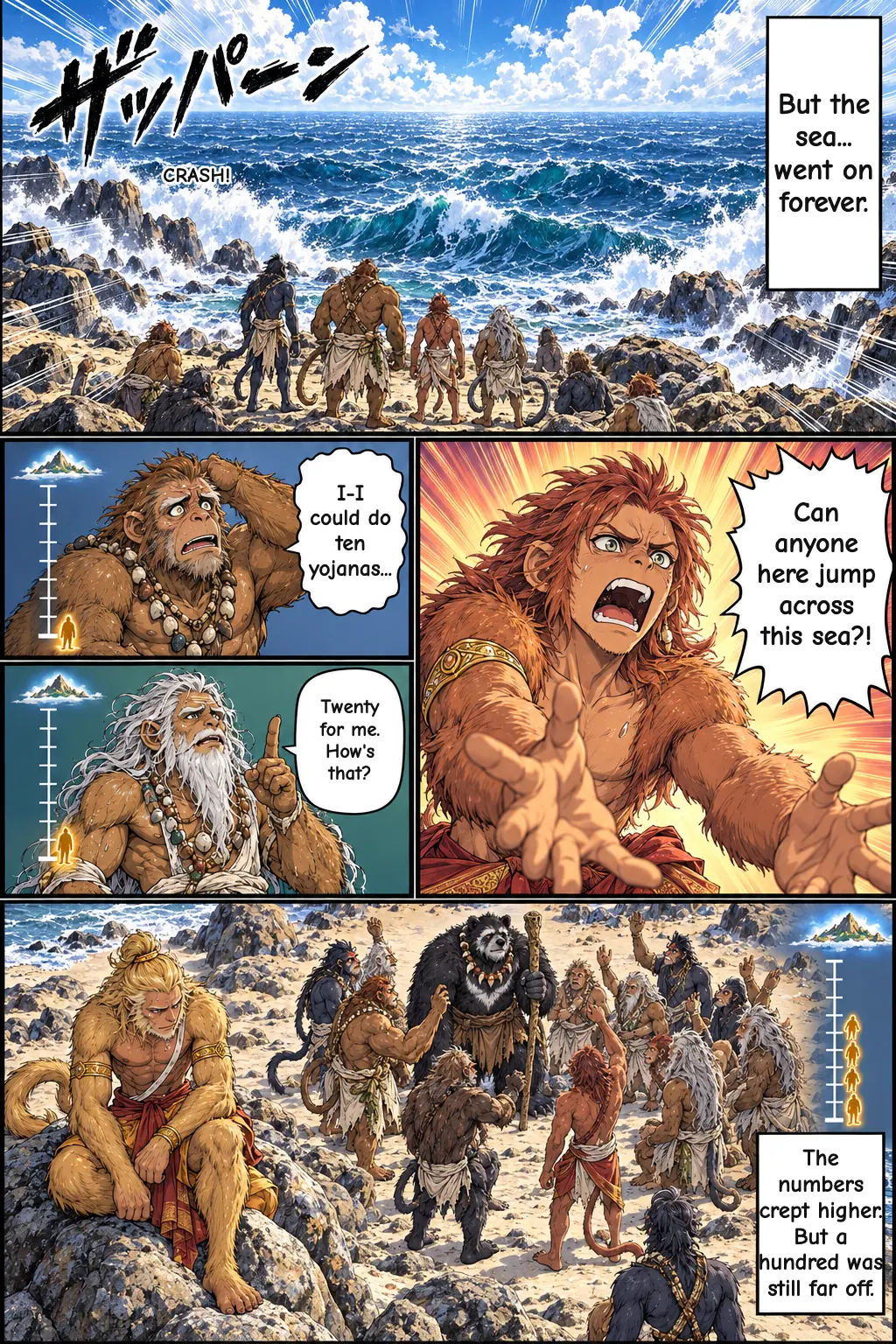
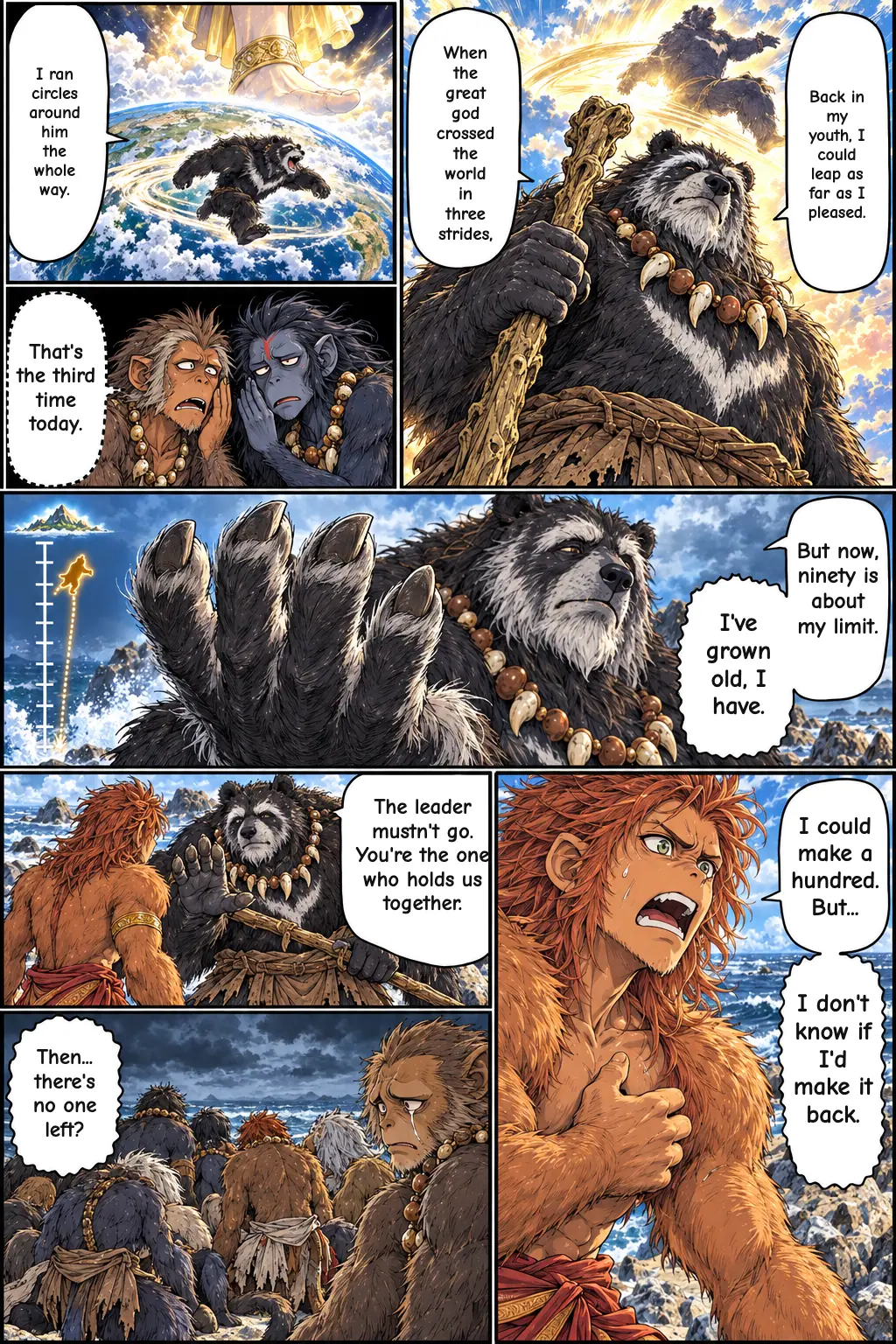
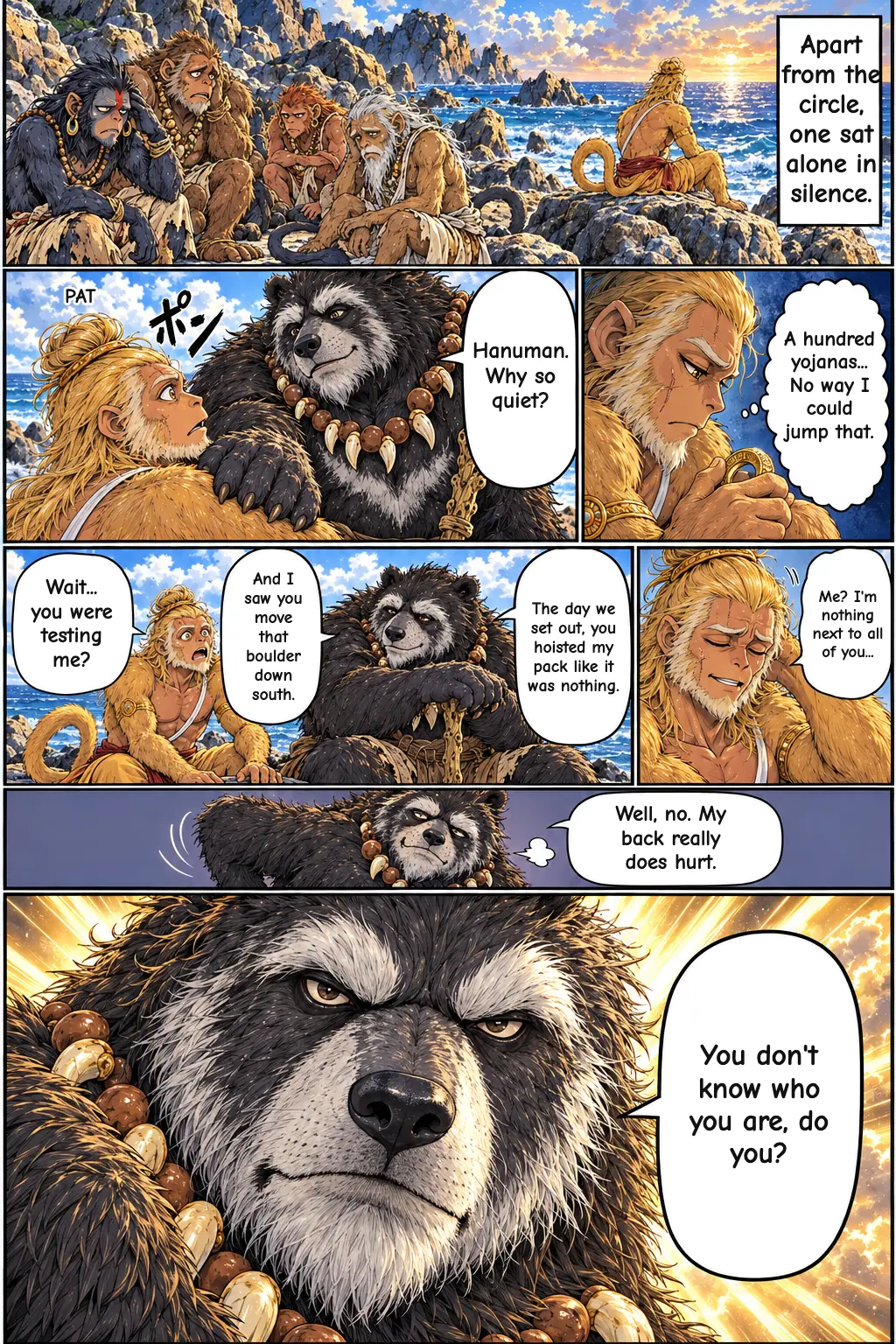
Facing the endless ocean, the monkeys each say how far they can jump: ten yojanas, twenty, up to eighty. Old Jambavan can manage ninety, recalling the strength of his youth. Angada could reach a hundred but doubts he could return, and Jambavan says a leader should not go himself. Hanuman, meanwhile, sits apart in silence.
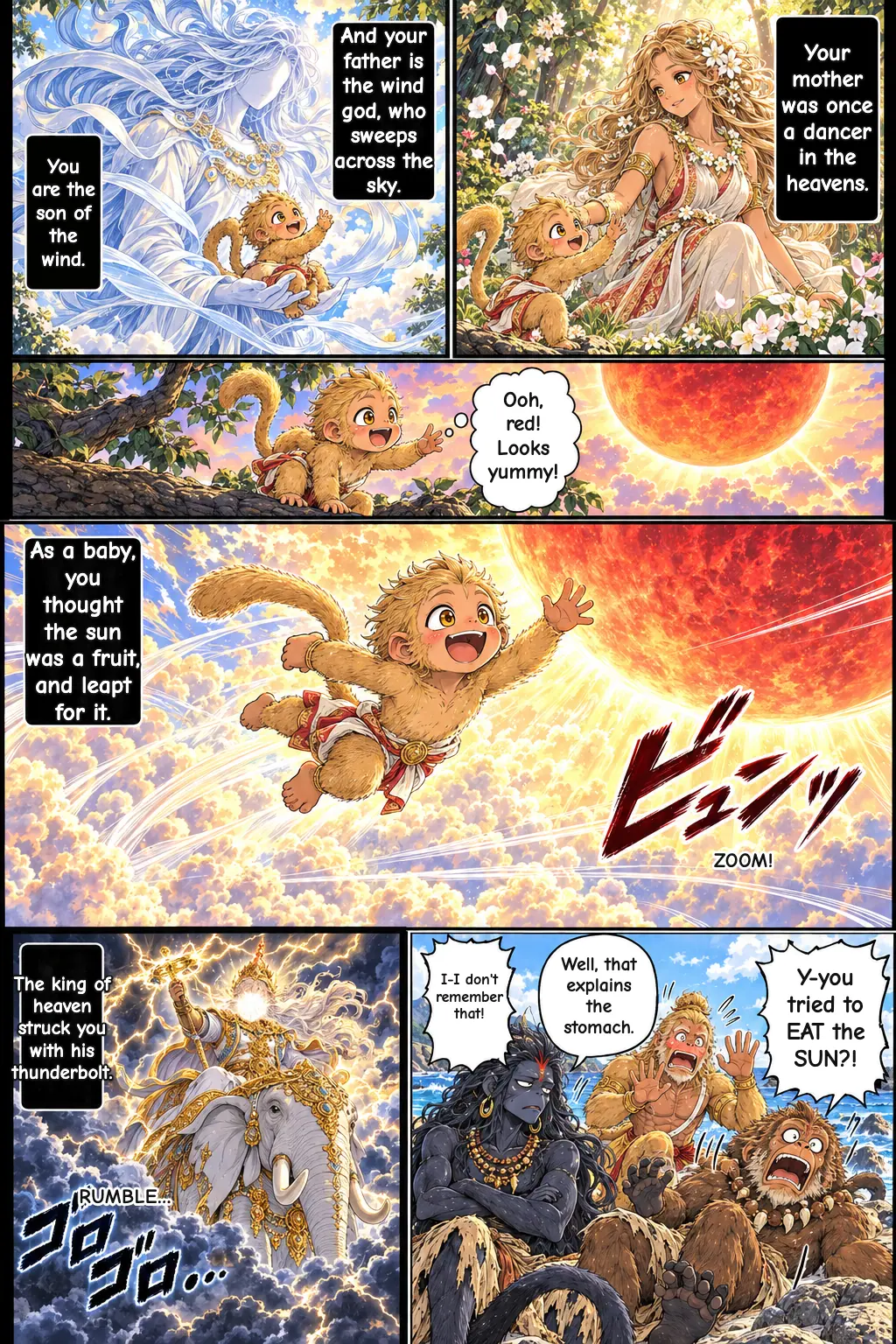
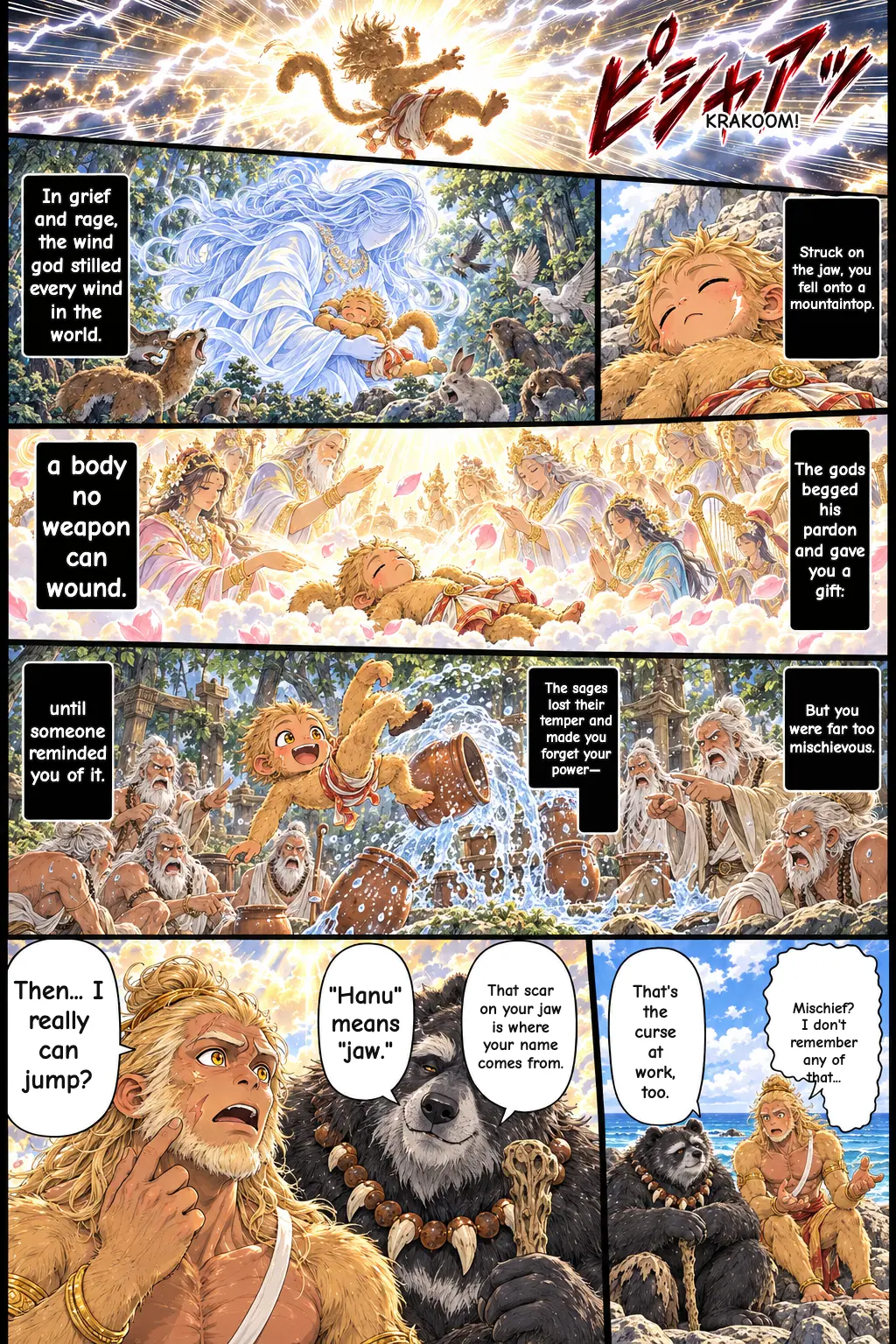
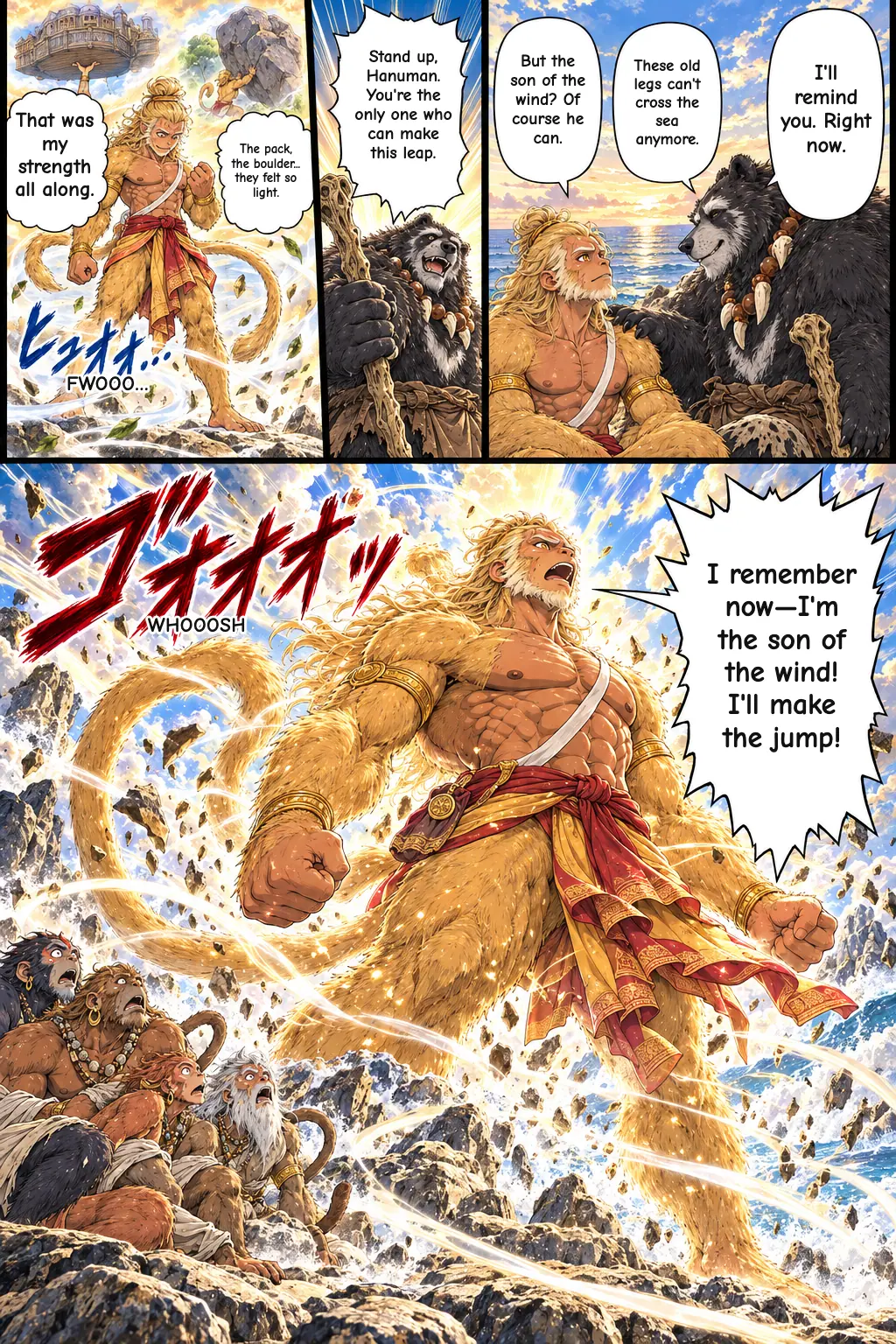
Jambavan turns to him and tells the story of his birth: his mother Anjana, an apsara (celestial nymph) transformed by a curse, conceived him by Vayu, the wind god. As a baby, Hanuman leapt at the rising sun, thinking it was fruit, and was struck down by the god Indra's thunderbolt, injuring his jaw (hanu), which gave him his name. To calm the angry wind god, the gods granted the child gifts, including protection from weapons. Reminded of who he is, Hanuman rises. The well-known idea that Hanuman was cursed to forget his powers until someone reminded him is not found in this part of the epic; it appears in the Uttara Kanda, the final book, which many scholars consider a later addition.
The Leap Across the Ocean
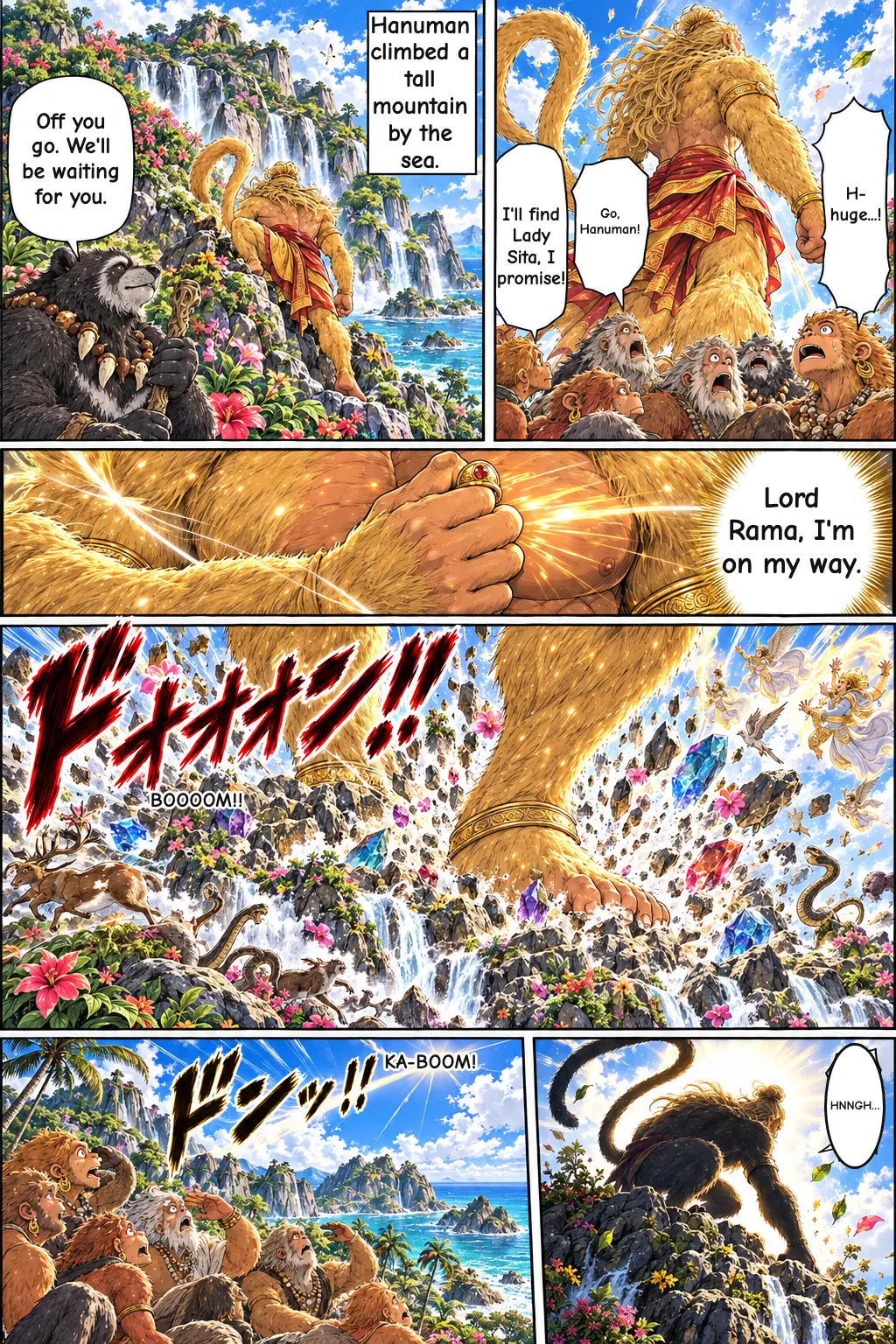
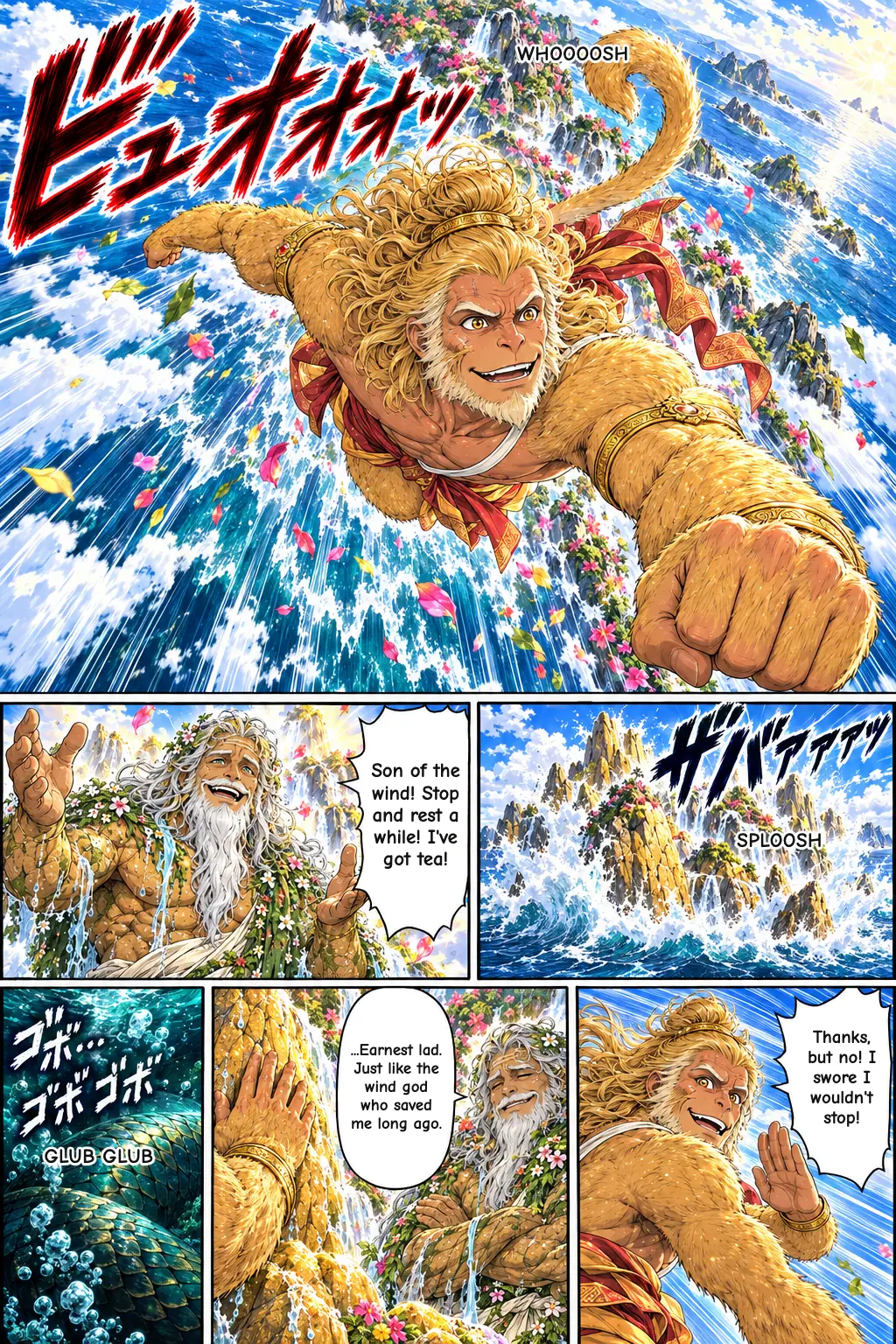
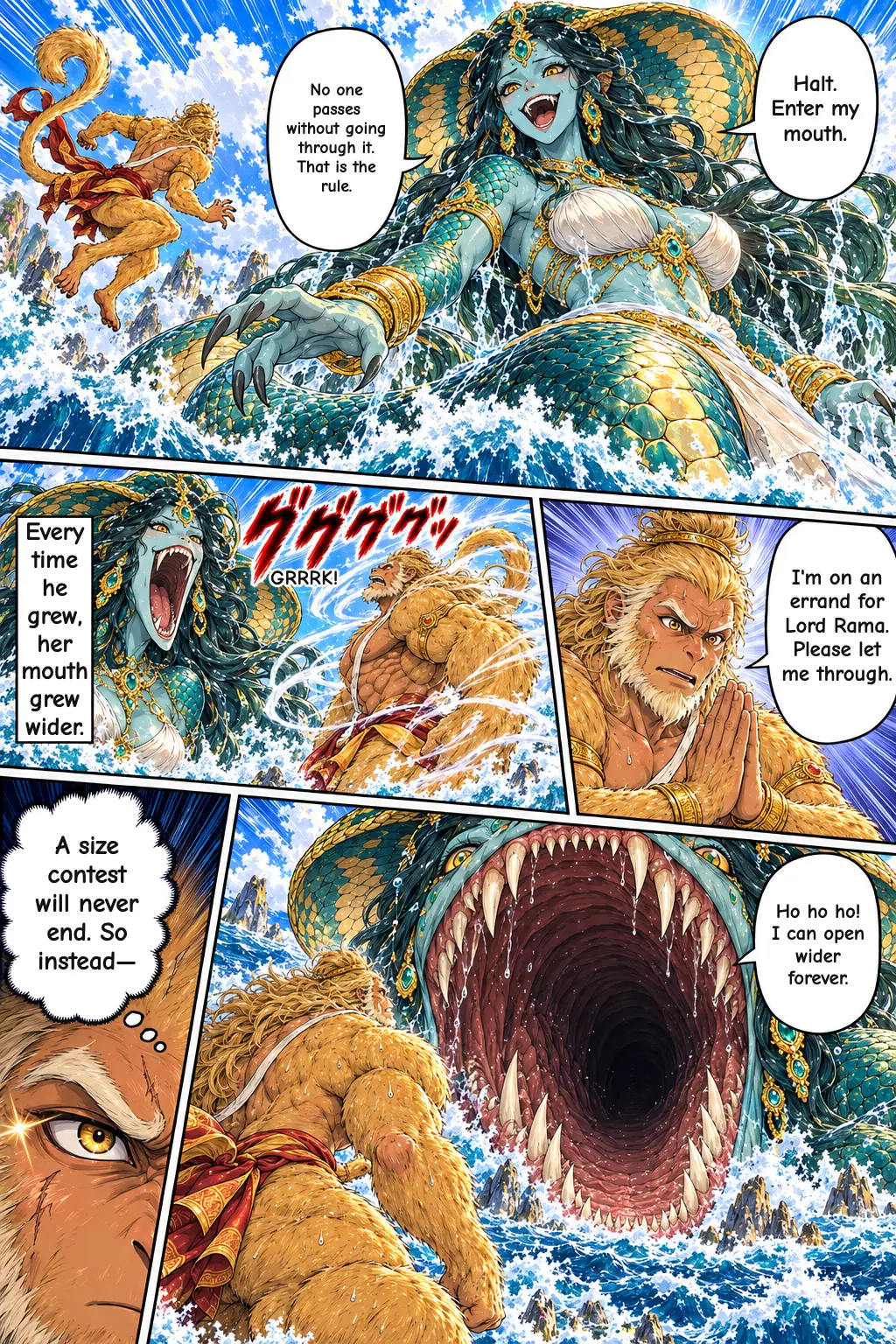
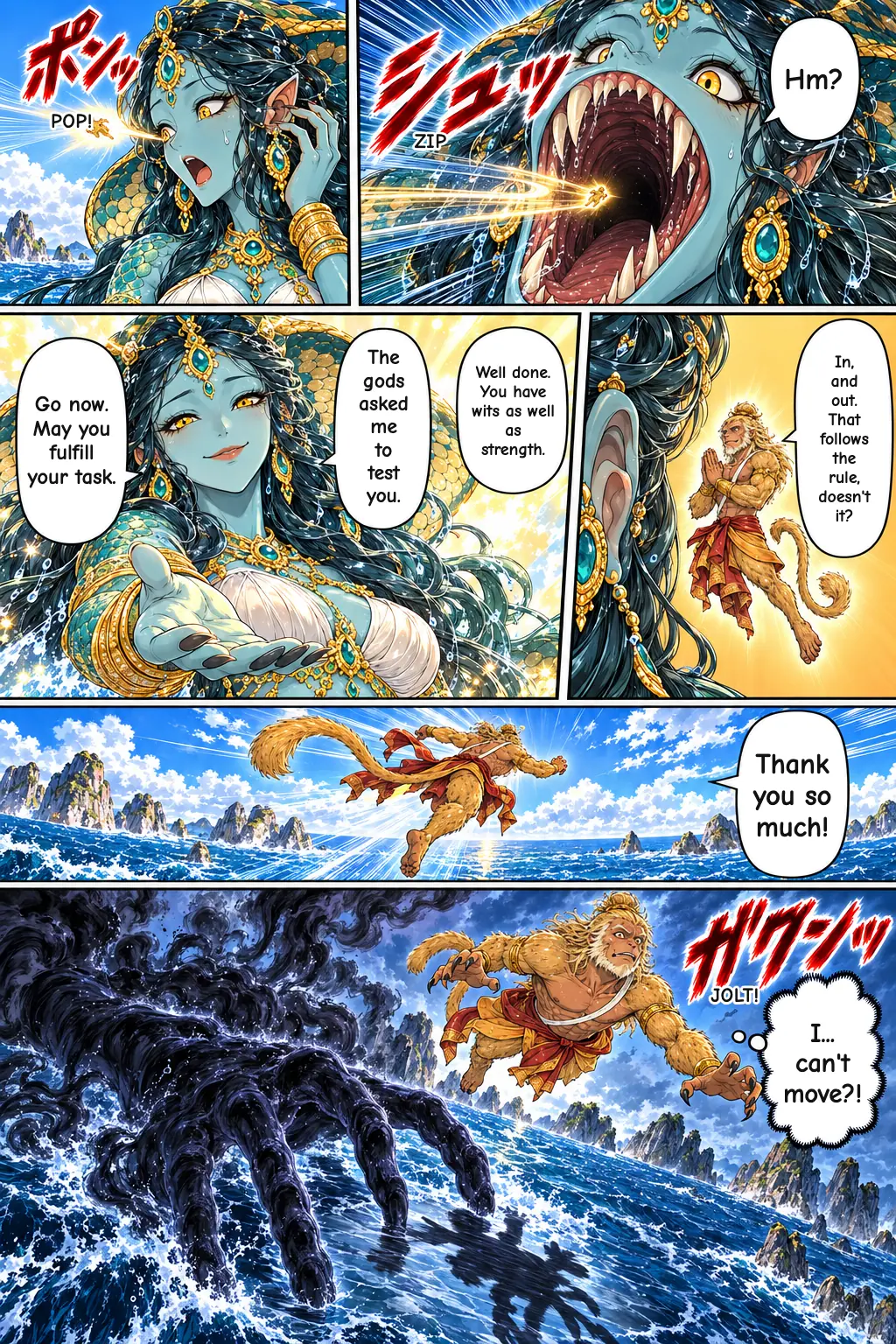
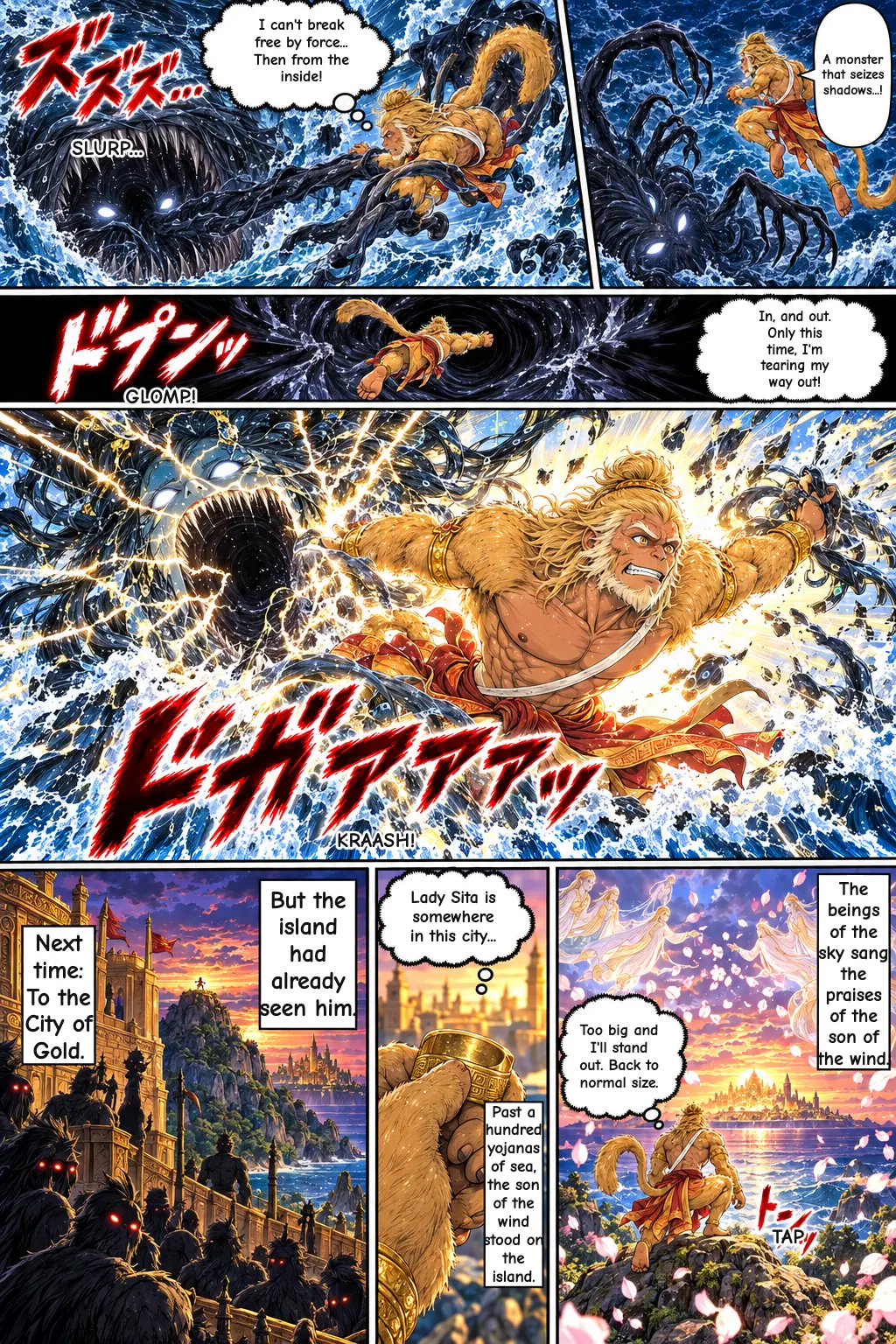
Hanuman swells to an enormous size and launches himself from Mount Mahendra. Over the sea he meets three challenges. Mainaka, a golden mountain hidden under the waves, rises to offer him a resting place out of gratitude to the wind god; Hanuman politely declines and flies on. Surasa, mother of the serpents, is sent by the gods to test him and demands he enter her mouth. As she opens her jaws wider and wider, he suddenly shrinks to the size of a thumb, darts in and out, and she blesses him for his wit. Finally Simhika, a demoness who seizes flying creatures by their shadows, catches him; Hanuman enters her body and tears her apart from inside. He then lands on a mountain peak in Lanka.
What This Myth Says: Background and Meaning
The Sundara Kanda, meaning roughly the "beautiful book," is one of the most loved and recited parts of the Ramayana, and there are several explanations for its name. Hanuman's leap marks a turning point: after despair and near-surrender, the search finally succeeds because one hero recovers his confidence. Many readers see the scene as a lesson that strength can lie unused until someone believes in it, and Hanuman remains one of the most widely worshipped figures in Hinduism as a model of devotion, courage, and intelligence. The tests over the ocean also show that cleverness and courtesy matter as much as raw power.
What the Manga Changes
The epic only calls its characters monkeys, bears, and vultures, so the faces, costumes, and colors in the manga are original designs, as is the look of Rama's ring. Sugriva's long geography lesson is condensed, and details such as the cave palace, the monkeys' conversations, and individual personalities in the search party are the manga's invention. Valmiki says only that Hanuman sat silently; his inner self-doubt is a creative choice, and the theme of forgotten power draws on later tradition rather than this section of the text. The sunset arrival, the visual design of Mainaka, Surasa, and Simhika, and the speed and sound effects of the leap are also dramatizations.
Where to Read It
If you want to see Sampati's wings return and Hanuman clear the ocean in a single bound, Episode 8 of RAMAYANA: The Exiled Prince and the Son of the Wind brings the scene to life. Every episode on Manga Portal is free to read, with no sign-up required, so you can start here or go back to Episode 1 to follow Rama's journey from the beginning.
Characters in this episode
Hanuman
Son of the wind god Vayu and minister to Sugriva, who carries Rama's ring and leaps across the ocean to Lanka.
Jambavan
The aged king of the bears, whose speech about Hanuman's birth and childhood reawakens his courage.
Angada
Vali's son and crown prince of the monkeys, the young leader of the southern search party.
Sampati
An old vulture, Jatayu's elder brother, whose wings were burned by the sun and who reveals that Sita is in Lanka.
Sugriva
The monkey king who sends search parties in all four directions with a strict one-month deadline.
Rama
The exiled prince searching for his wife Sita, who gives Hanuman a ring bearing his name as a token.
FAQ
How did Hanuman cross the ocean to Lanka?
In Valmiki's Ramayana, Hanuman grows to a gigantic size and leaps from Mount Mahendra across a sea said to be a hundred yojanas wide. On the way he declines a rest offered by the mountain Mainaka, outwits the serpent mother Surasa, and kills the shadow-grabbing demoness Simhika.
Why did Hanuman forget his powers?
In the section covered here, Hanuman simply sits in silence until Jambavan reminds him of his divine birth and strength. The story of a curse that made him forget his powers until reminded comes from the Uttara Kanda, a later book of the epic.
Who is Sampati in the Ramayana?
Sampati is a vulture and the elder brother of Jatayu. He lost his wings shielding his brother from the sun, and he uses his far-seeing eyes to tell the monkeys that Sita is in Lanka, after which his wings grow back.
What is the Sundara Kanda?
The Sundara Kanda is the fifth book of the Ramayana, telling of Hanuman's journey to Lanka and his search for Sita. It is among the most popular and frequently recited parts of the epic.
How did Hanuman get his name?
According to Jambavan's account, baby Hanuman leapt at the sun thinking it was fruit and was struck by Indra's thunderbolt, injuring his jaw. The Sanskrit word for jaw is hanu, which is explained as the origin of his name.