Episode 2Whoever Draws the Bow Wins the BrideSita's Swayamvara (The Bow of Shiva)
No king could even lift the divine bow, yet young Prince Rama bows to his teacher and quietly draws it. A wedding to Sita, daughter of the earth, follows—but on the road home, an axe-bearing sage named Parashurama awaits with a trial of his own.
Sita's Swayamvara & the Bow of Shiva: Ramayana Story Explained (Summary)
The Original Story: Rama Breaks the Bow of Shiva
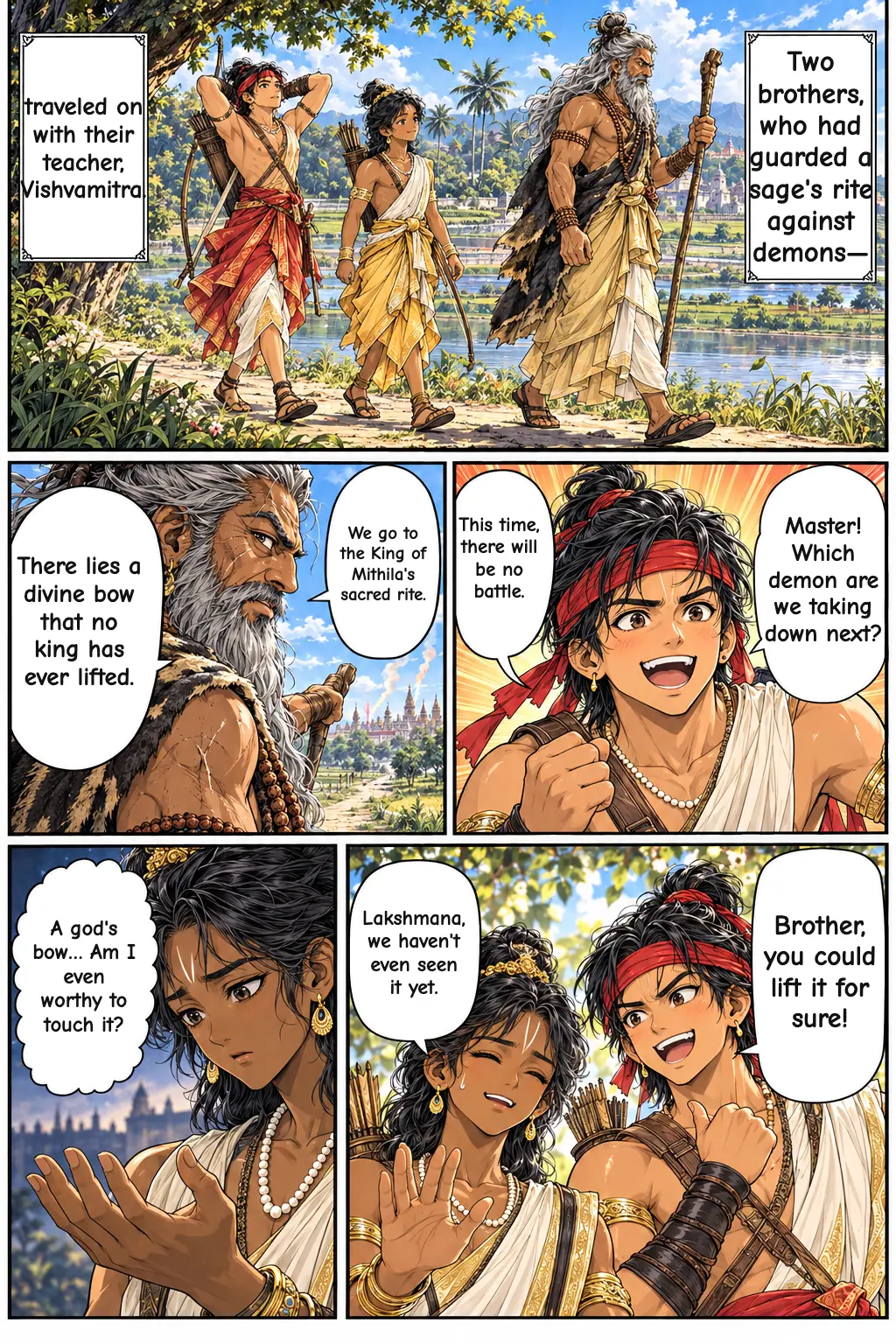
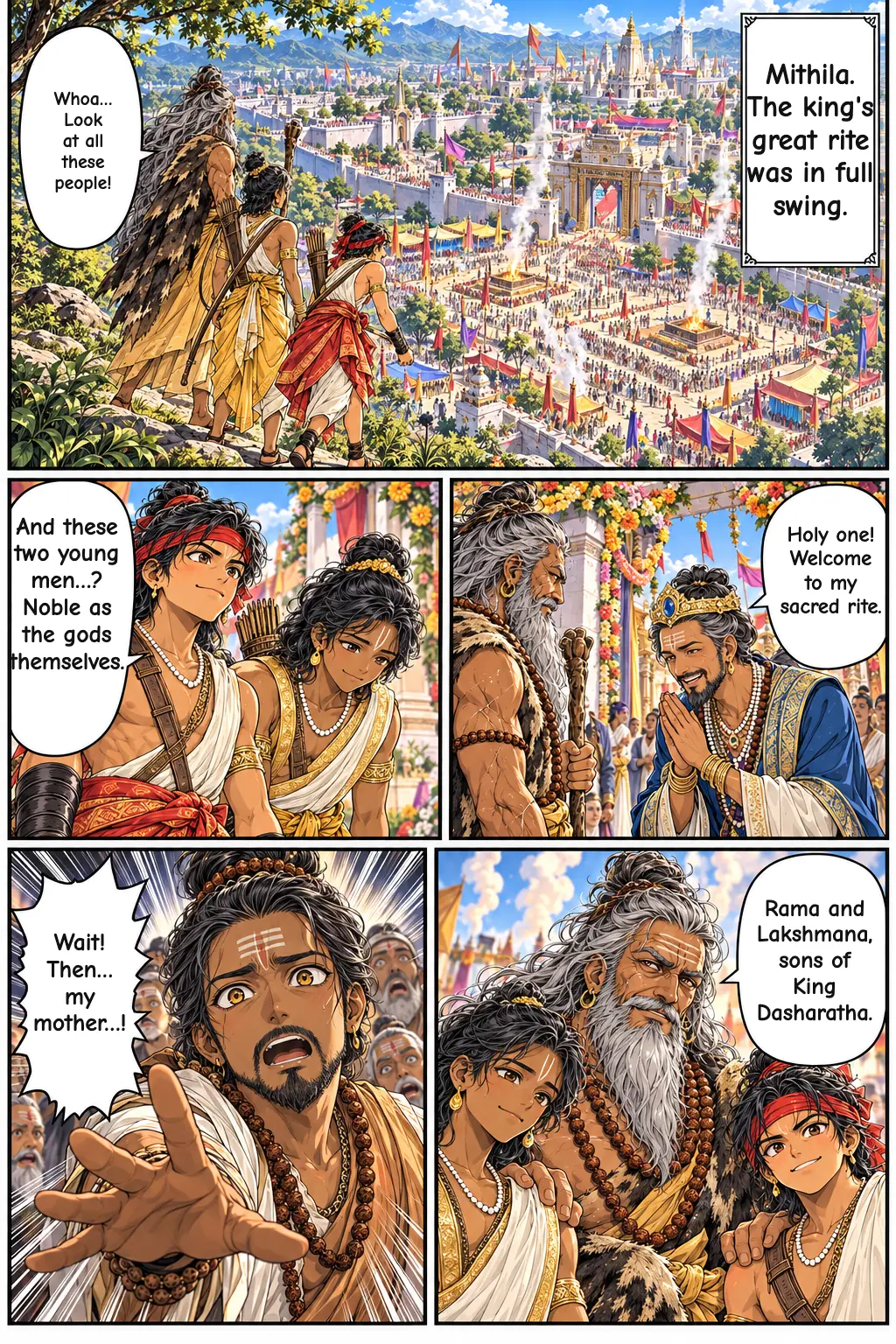
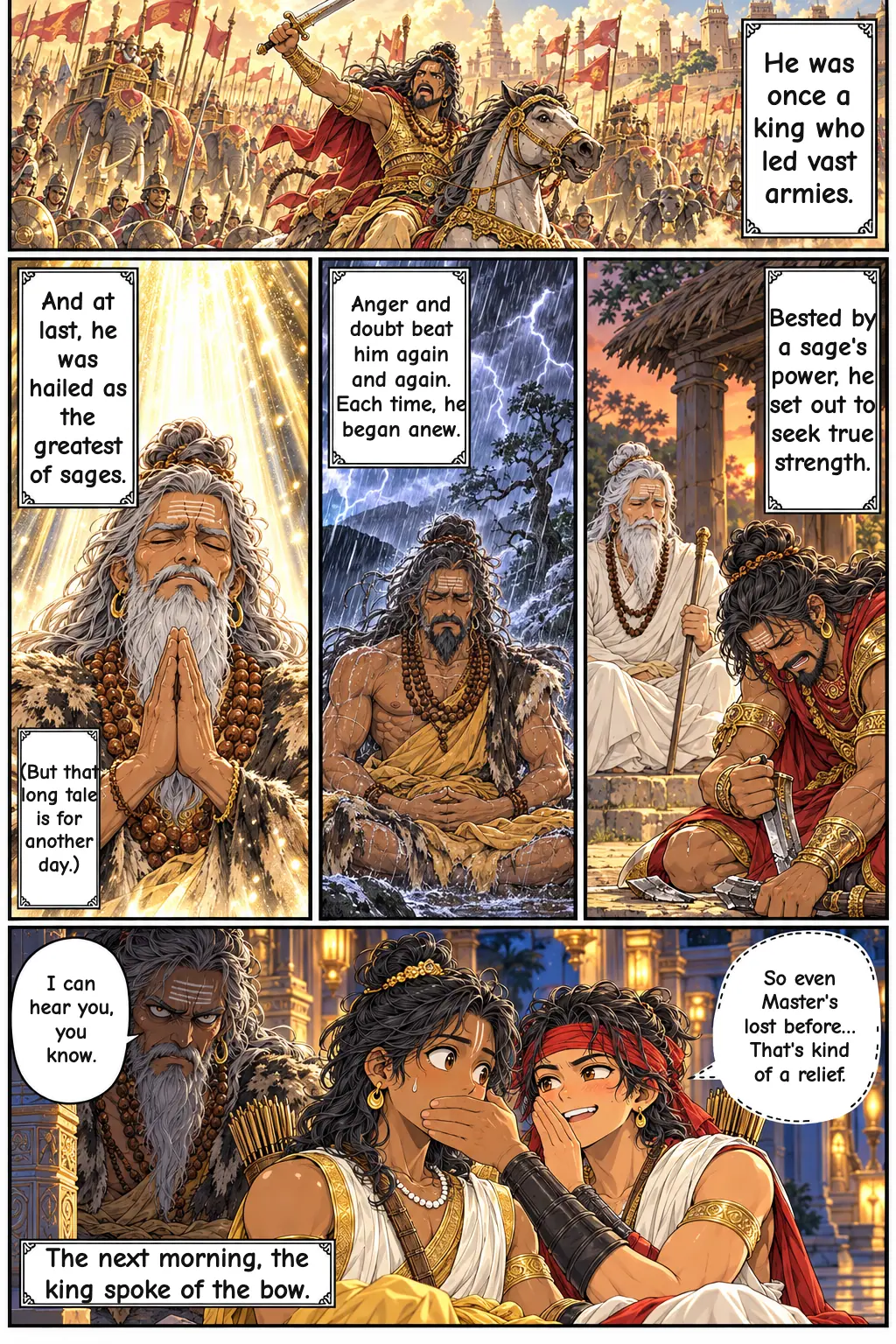
This episode comes from the first book of Valmiki's Ramayana, the Sanskrit epic, known as the Bala Kanda (the Book of Childhood). Young Prince Rama, eldest son of King Dasharatha of Ayodhya, has been traveling with his brother Lakshmana and their teacher, the sage Vishvamitra. The three arrive at Mithila, capital of the kingdom of Videha, where King Janaka is holding a great sacrificial ritual. Janaka welcomes them warmly and asks who the two young men are. His family priest Shatananda then tells a long story of how Vishvamitra, once a king, became a supreme sage (a brahmarshi) through years of hard spiritual discipline.
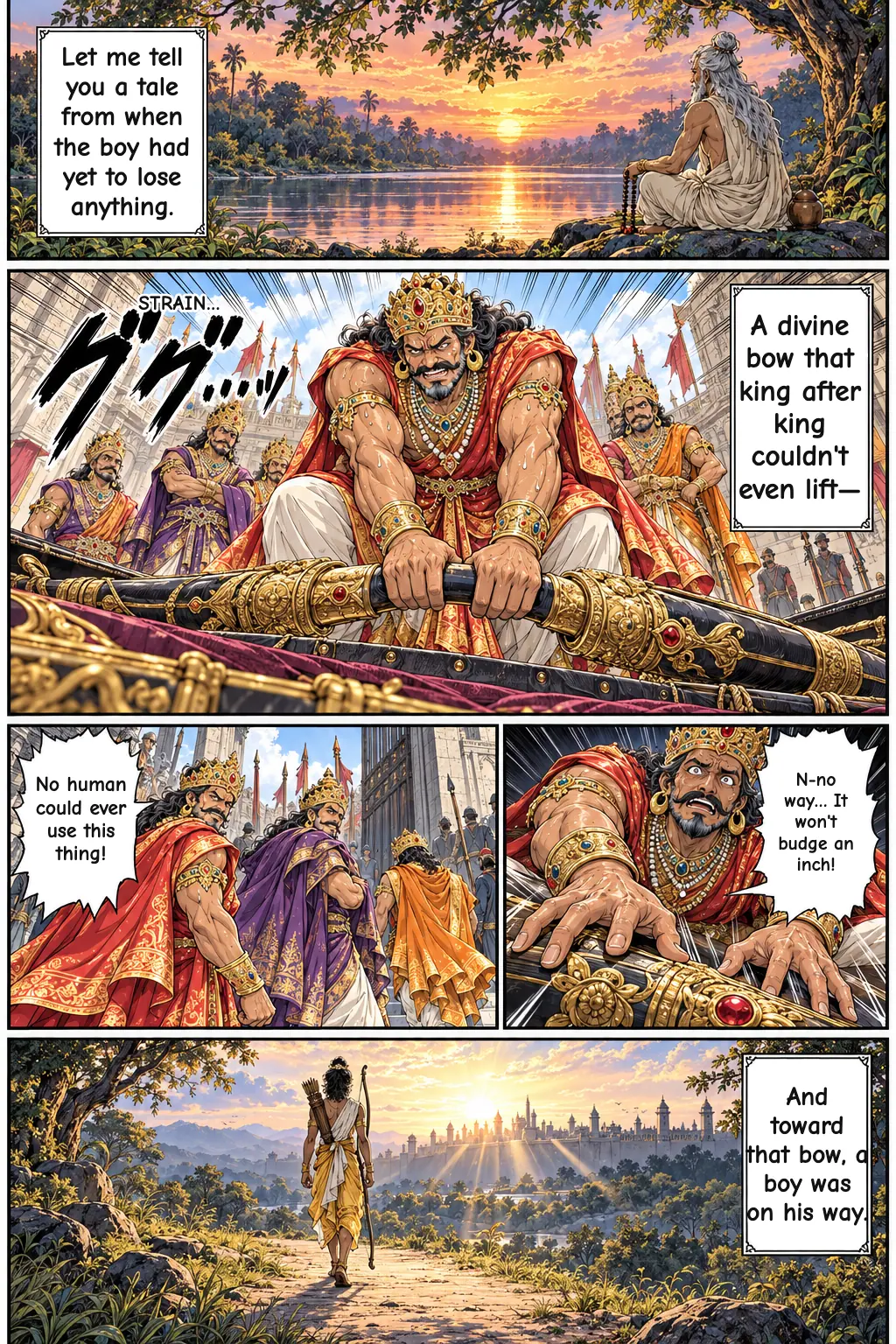
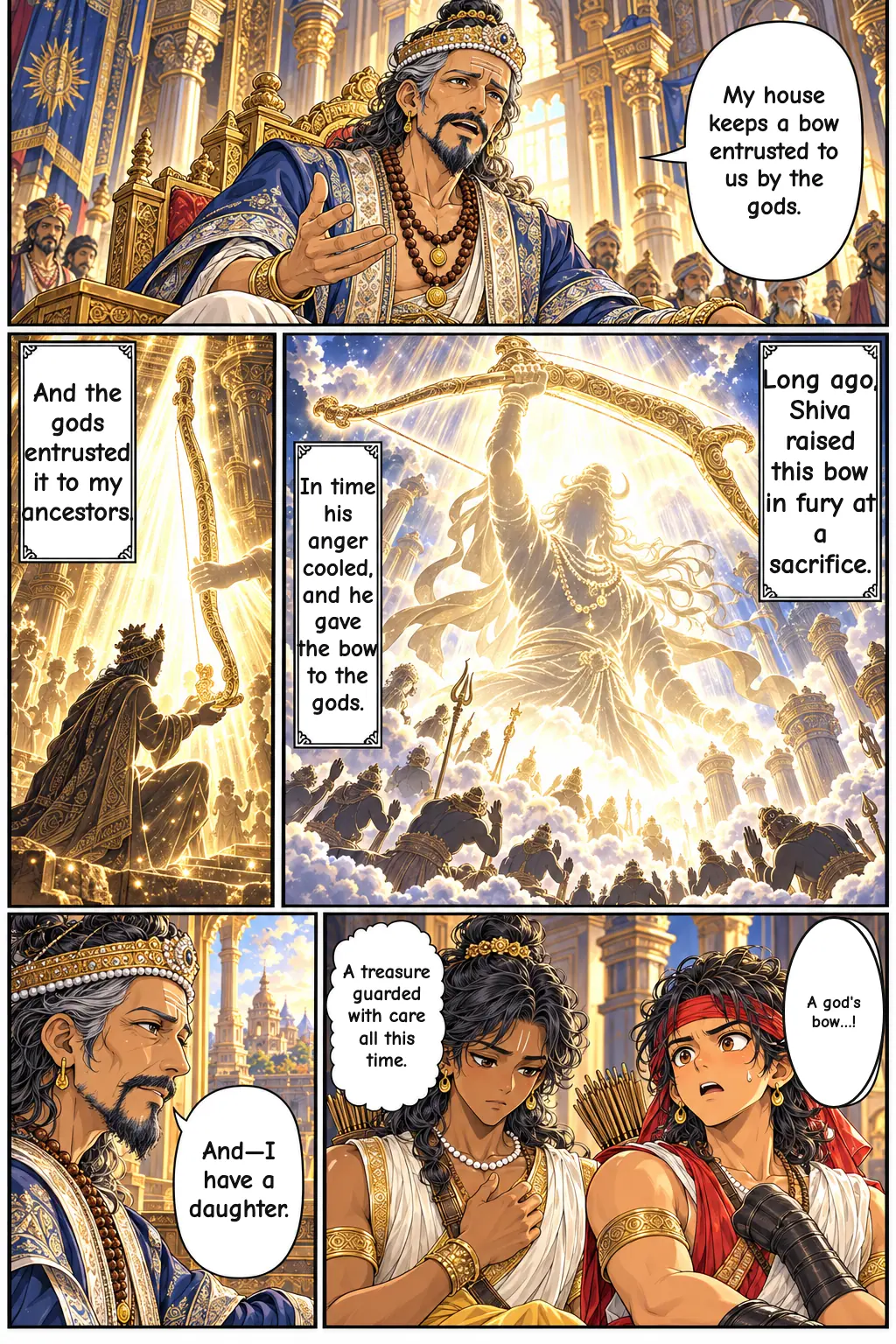
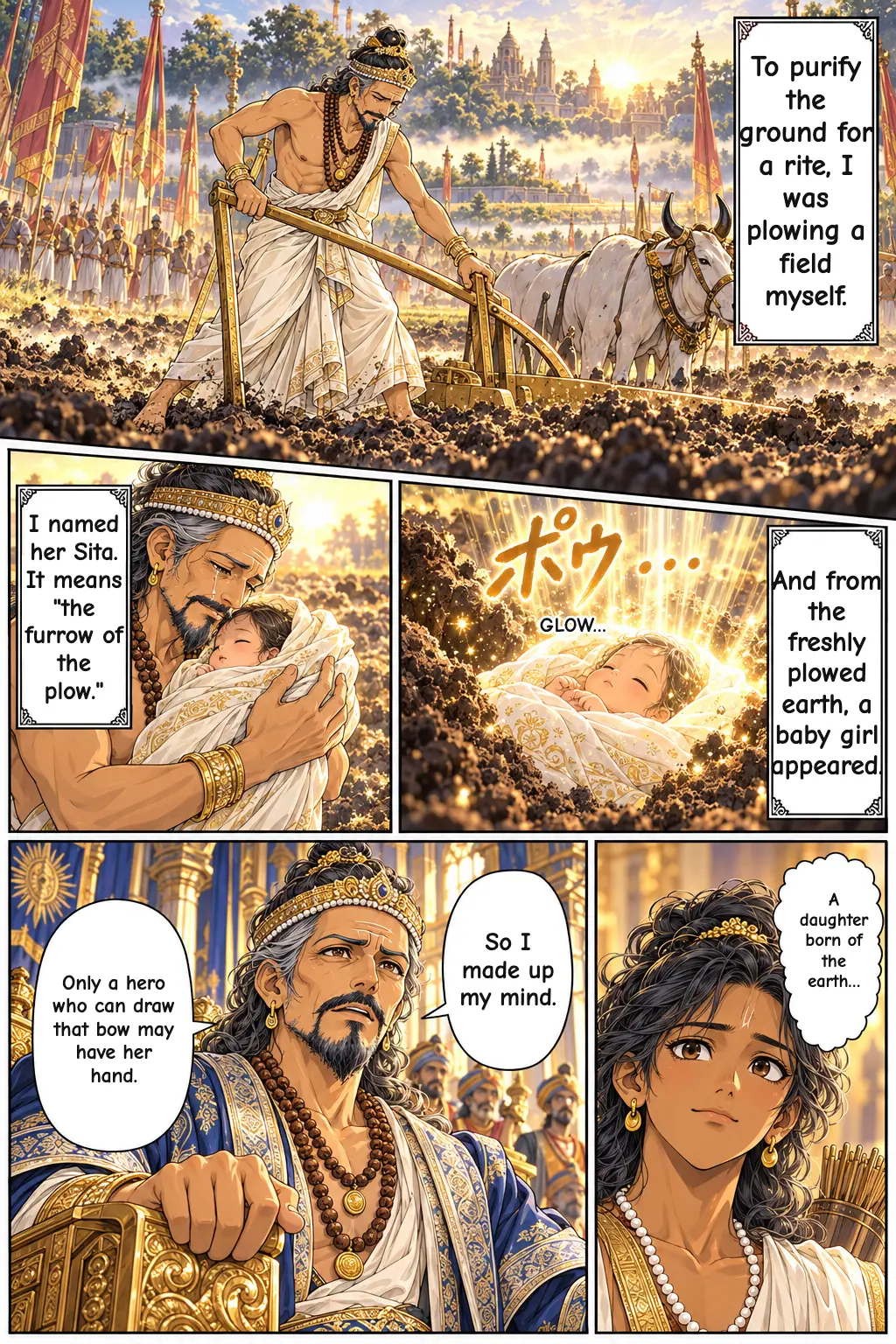
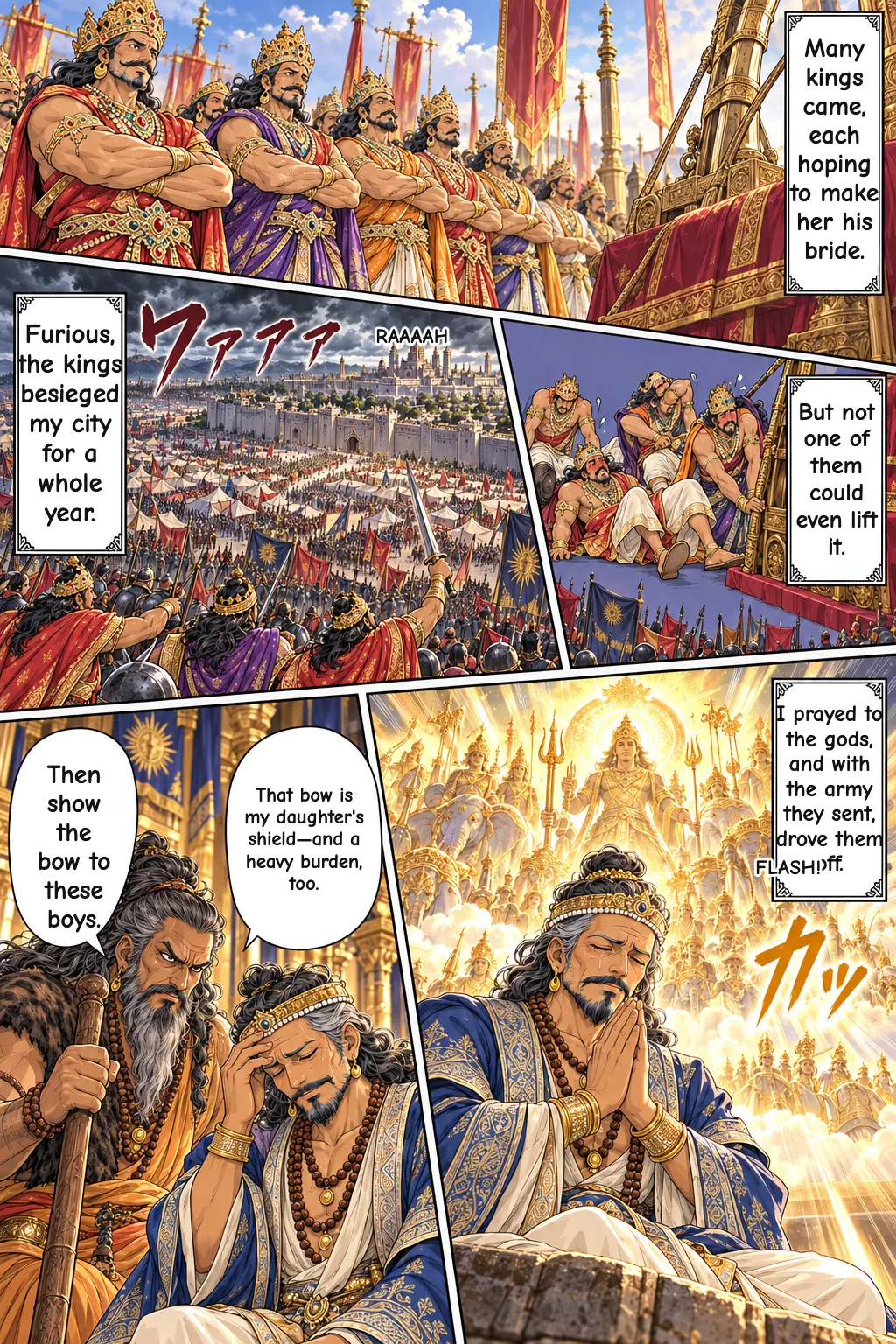
The next day Janaka explains two things. First, his family guards an enormous bow that once belonged to Shiva, the great destroyer god, and that the gods entrusted to Janaka's ancestor Devarata. Second, while he was ploughing a field to prepare ground for a ritual, a baby girl rose out of the furrow. He named her Sita, meaning "furrow," and raised her as his daughter. Because she was not born from a mother's womb, Janaka declared that her hand would go only to a man who proved his strength. Many kings came to ask for her, but none could even lift the bow. Angry, they besieged Mithila for a year, until Janaka drove them off with an army granted by the gods.
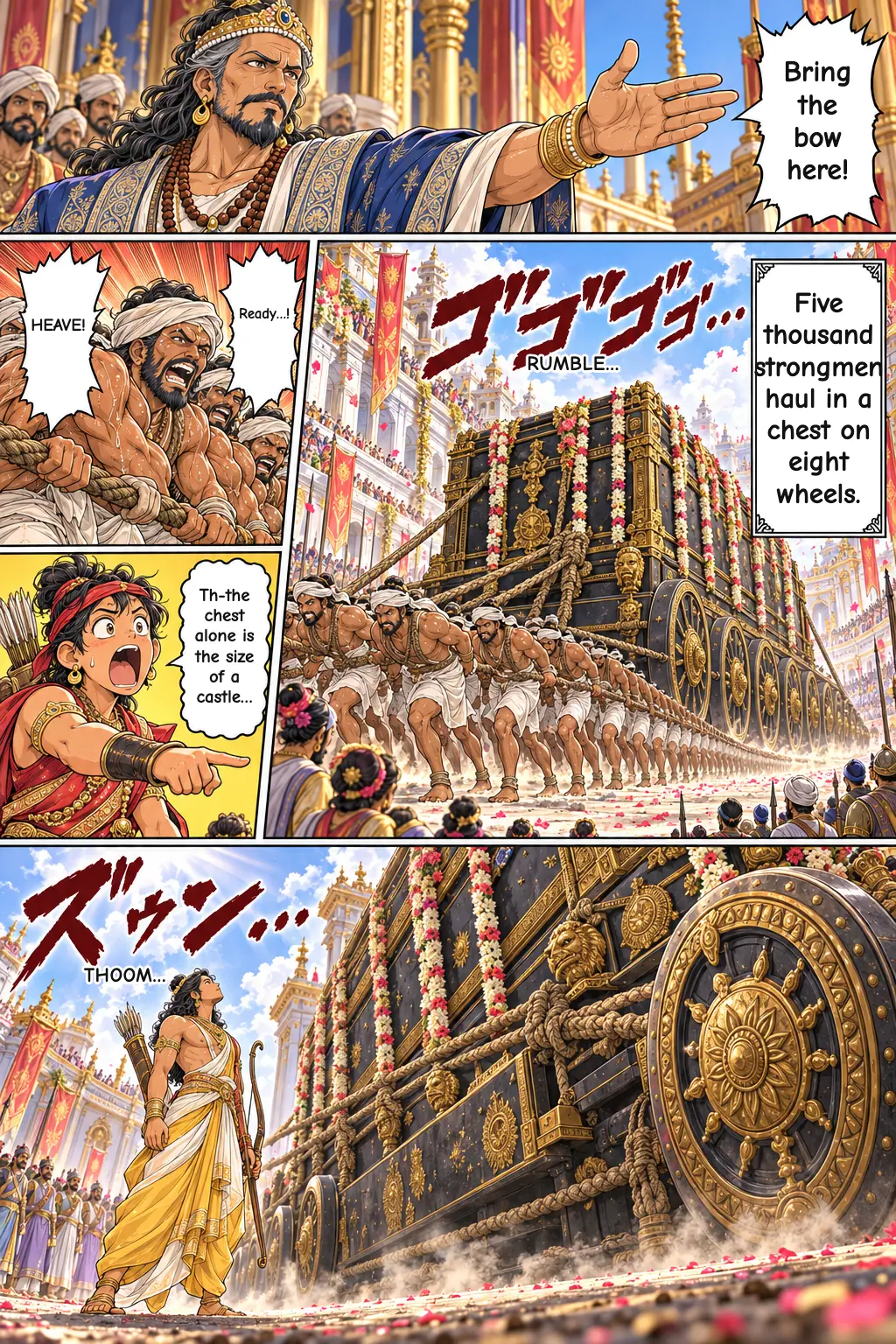
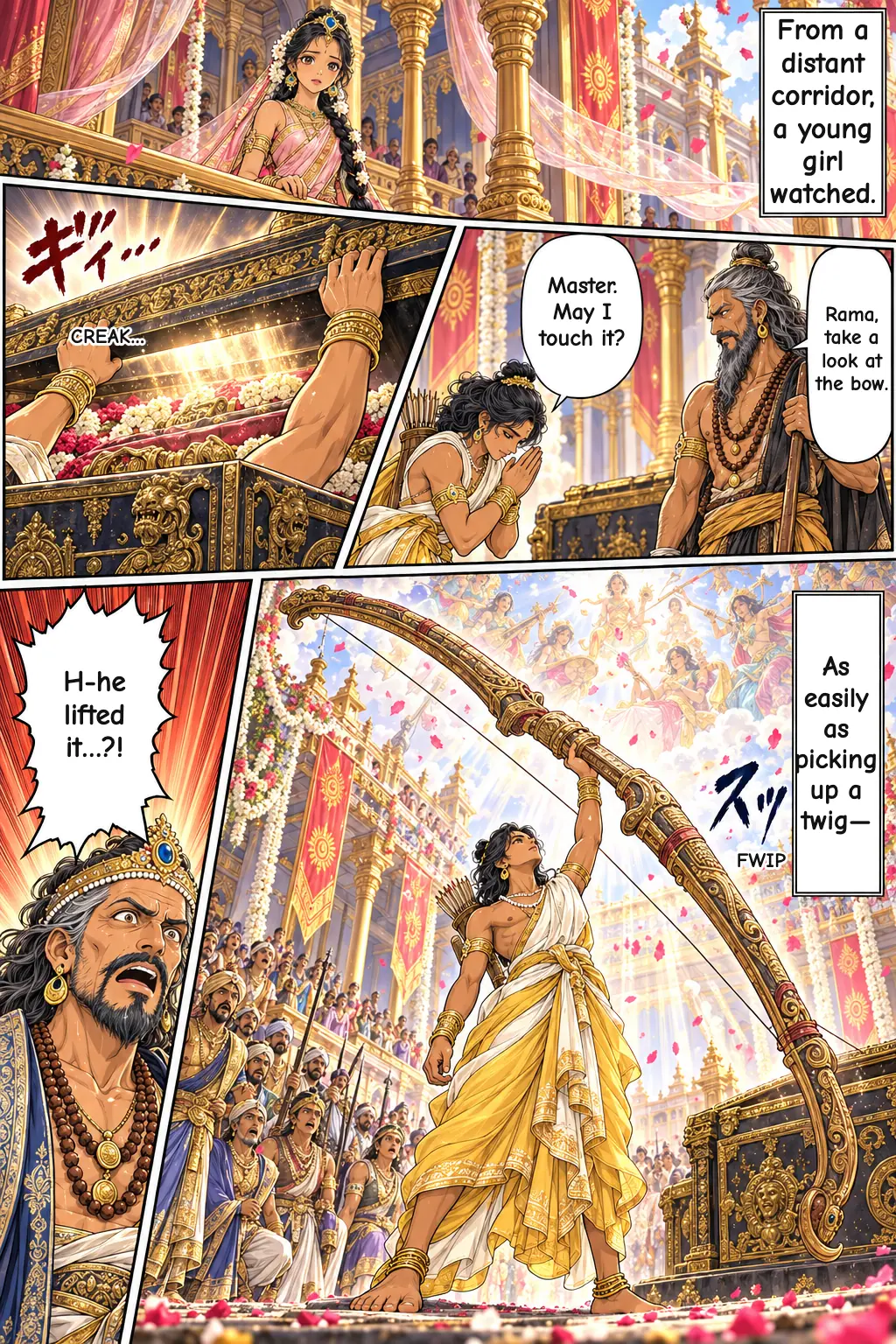
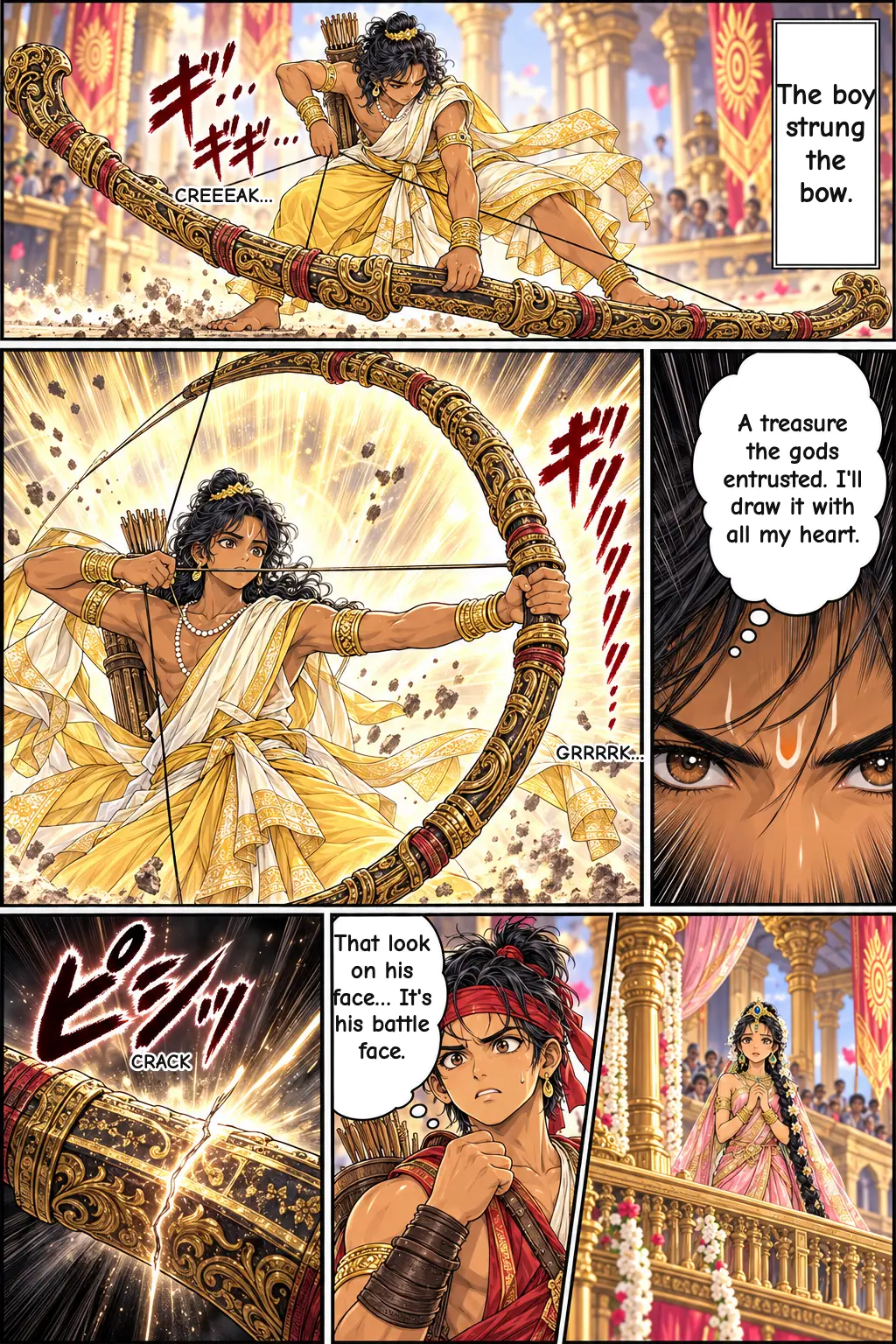
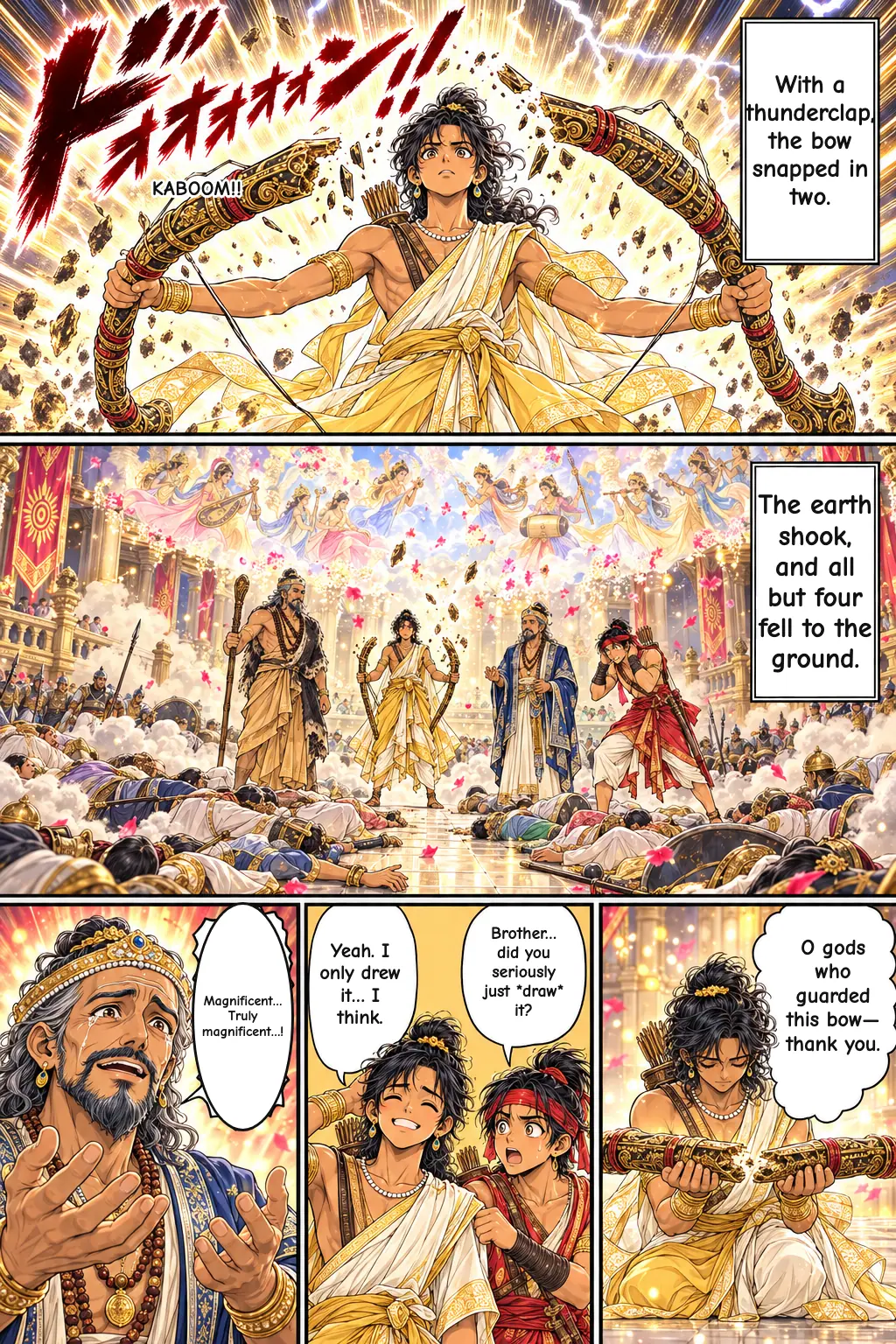
The bow is brought out in an iron chest on eight wheels, hauled by thousands of strong men. Rama, with his teacher's permission, opens the chest, lifts the bow with ease, strings it, and draws it back. The bow snaps in the middle with a sound like thunder, the earth shakes, and nearly everyone present falls senseless. Only Vishvamitra, Janaka, and the two princes stay standing.
The Four Weddings and the Challenge of Parashurama
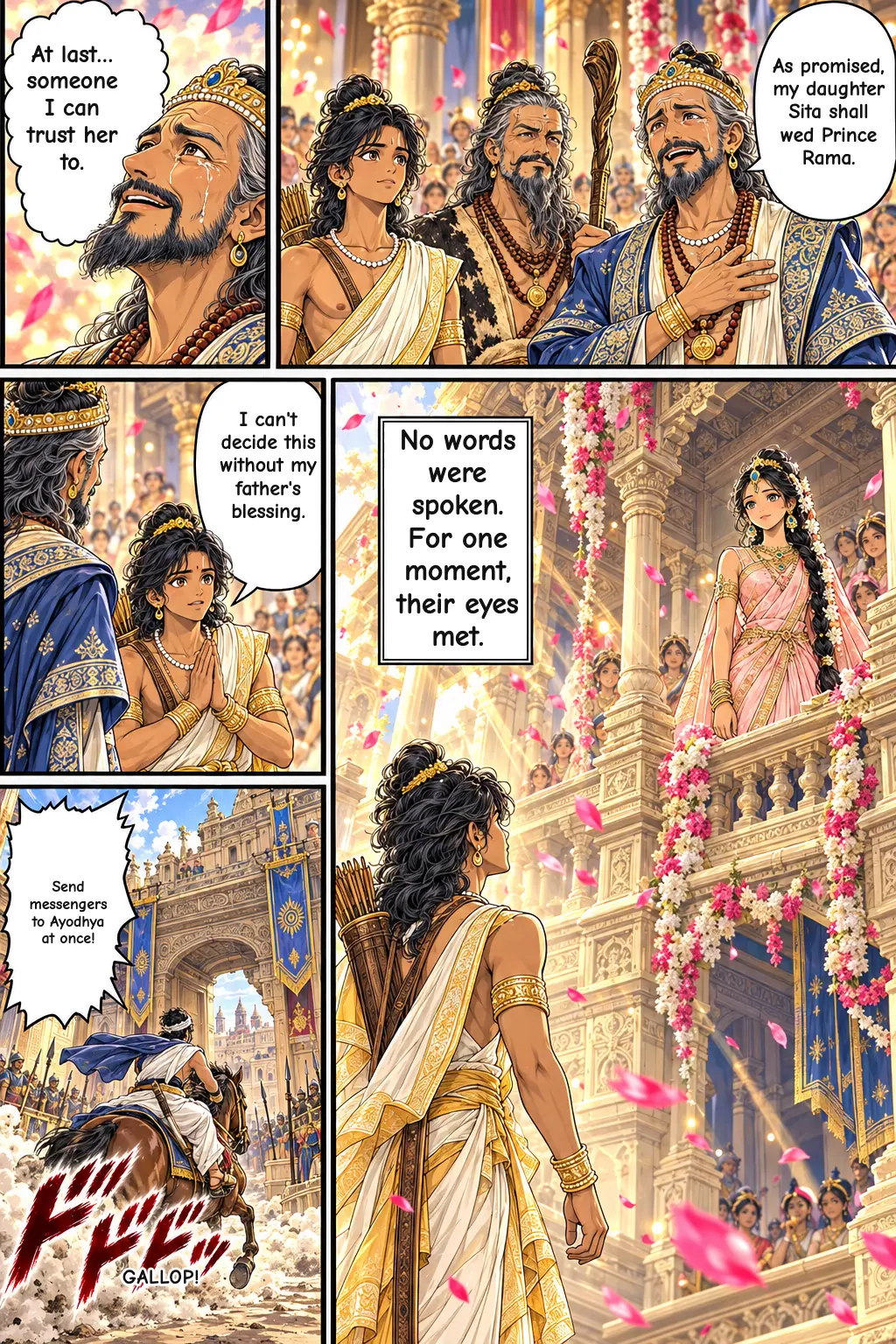
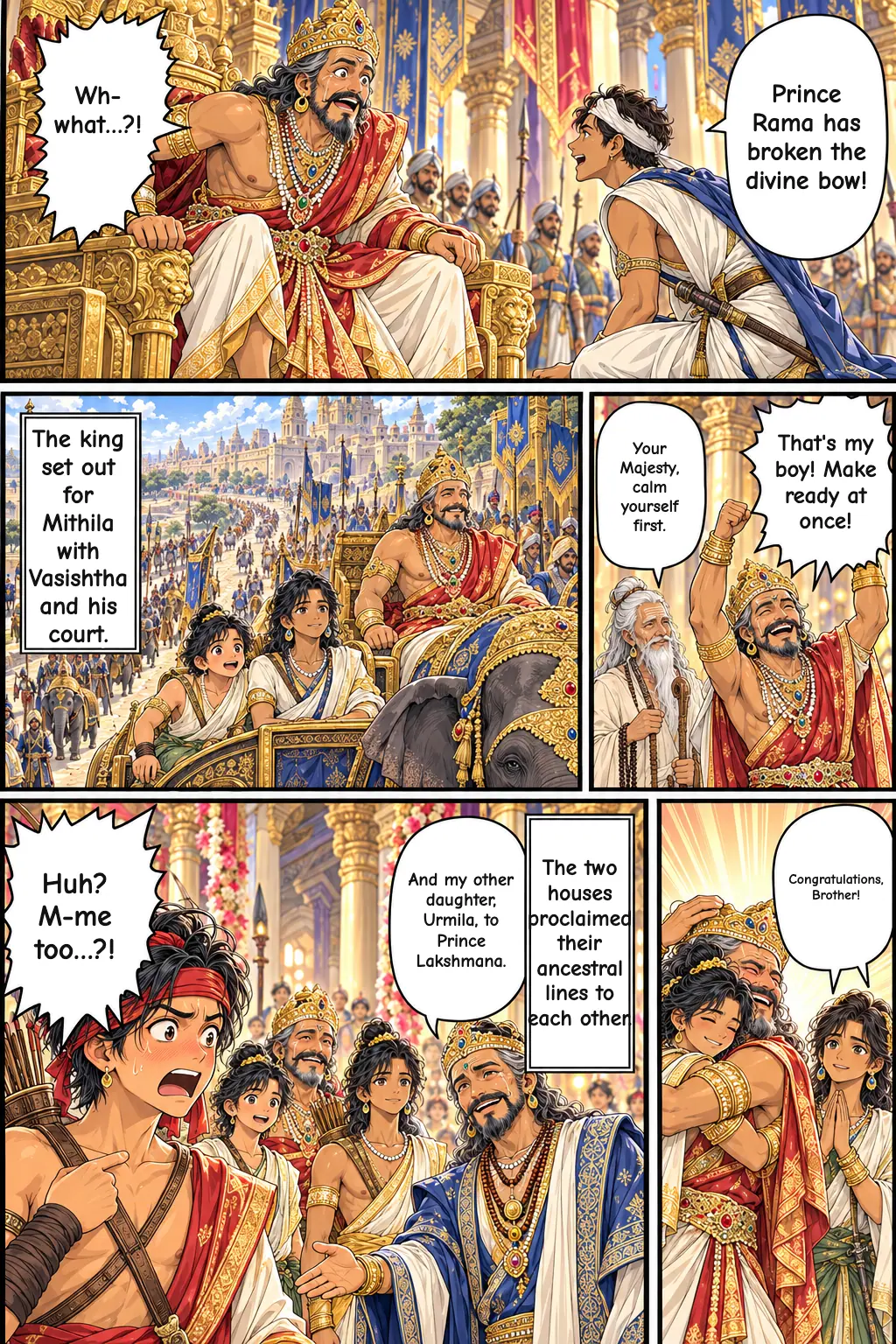
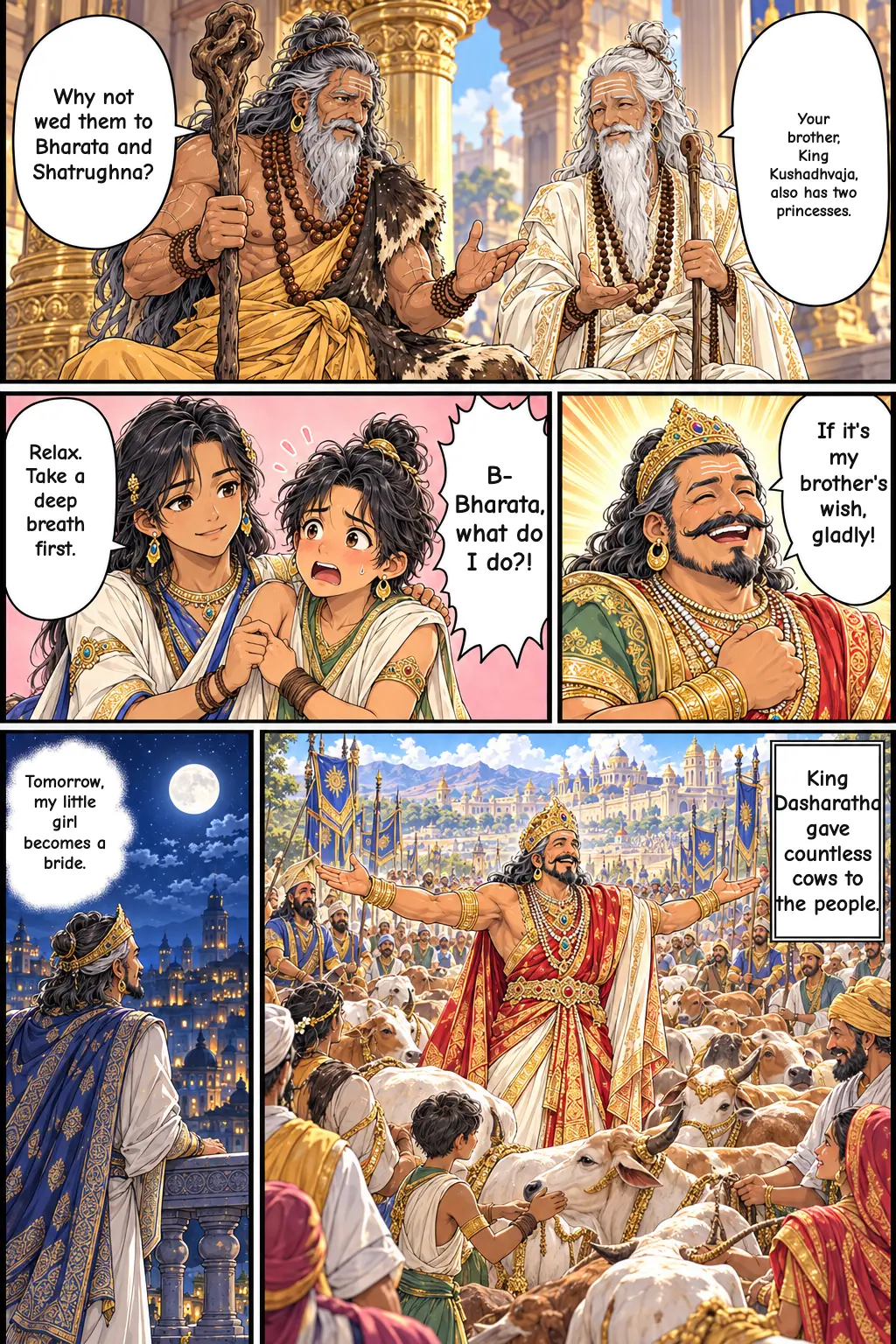
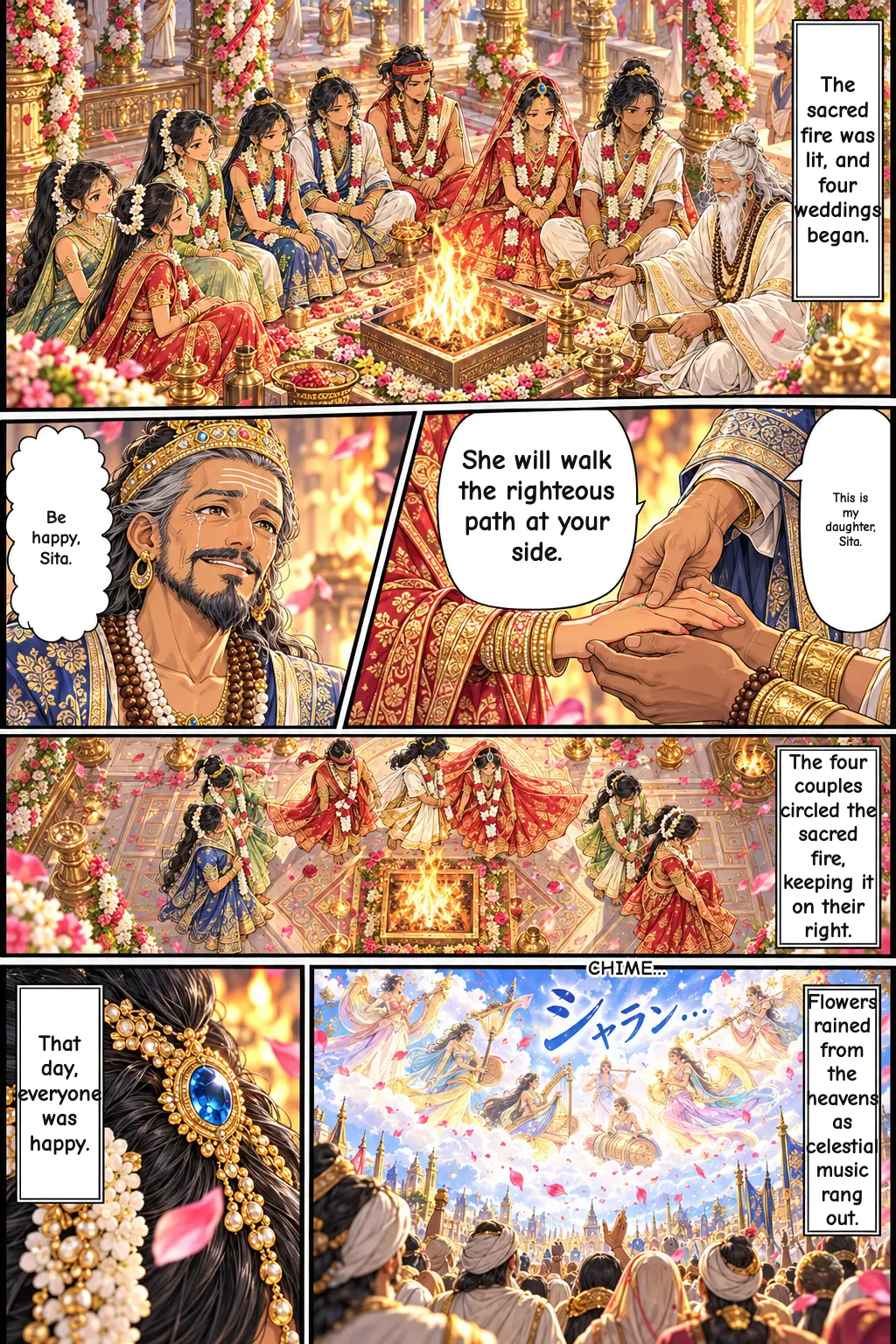
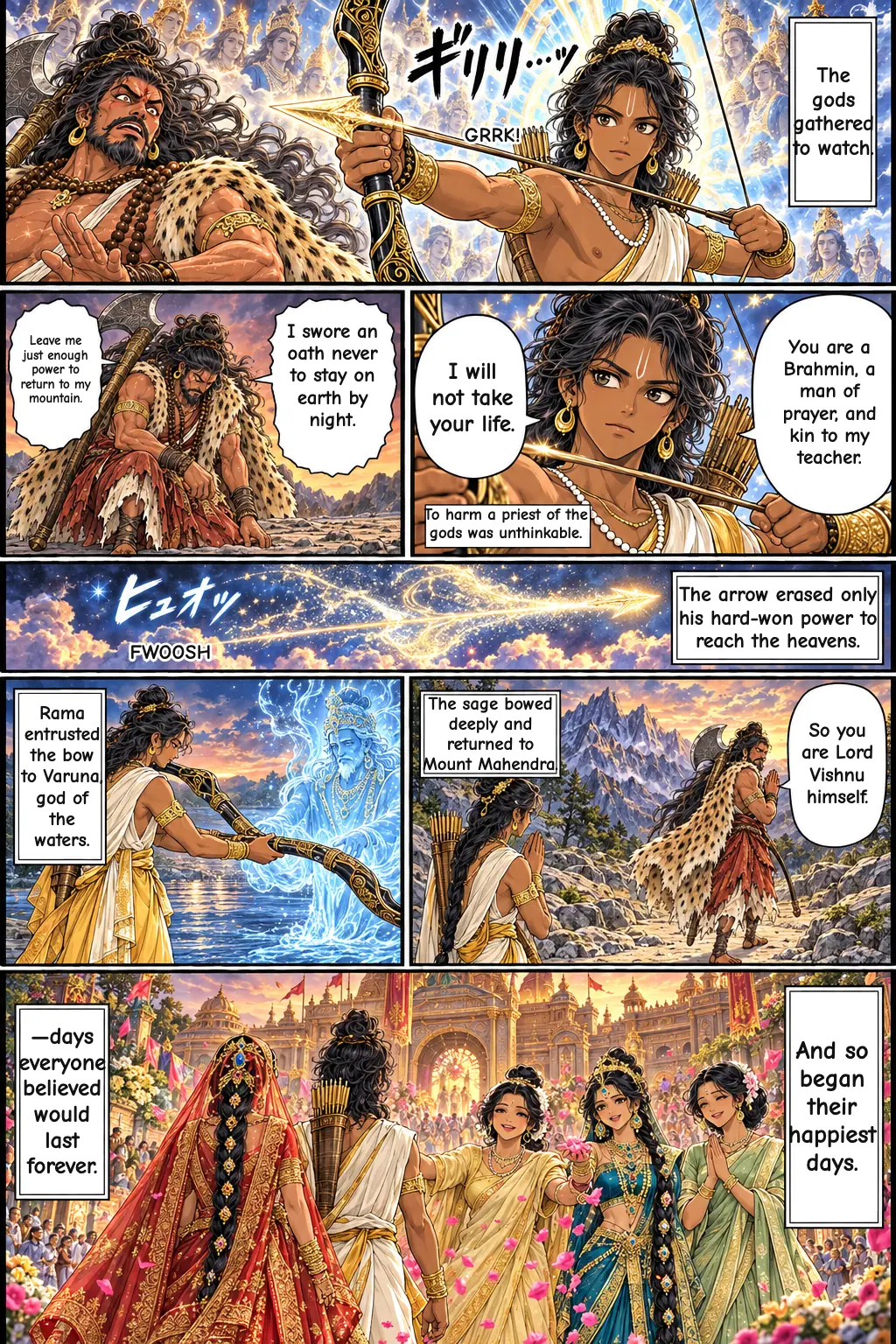
Janaka sends messengers to Ayodhya, and King Dasharatha arrives with his priest Vasishtha. Both families recite their royal lineages, and the match grows from one wedding to four. Sita marries Rama, her sister Urmila marries Lakshmana, and their cousins Mandavi and Shrutakirti, daughters of Janaka's brother Kushadhvaja, marry Rama's brothers Bharata and Shatrughna. At the ceremony Janaka places Sita's hand in Rama's and presents her as his companion in dharma (righteous duty). The four couples walk around the sacred fire, and flowers fall from the sky.
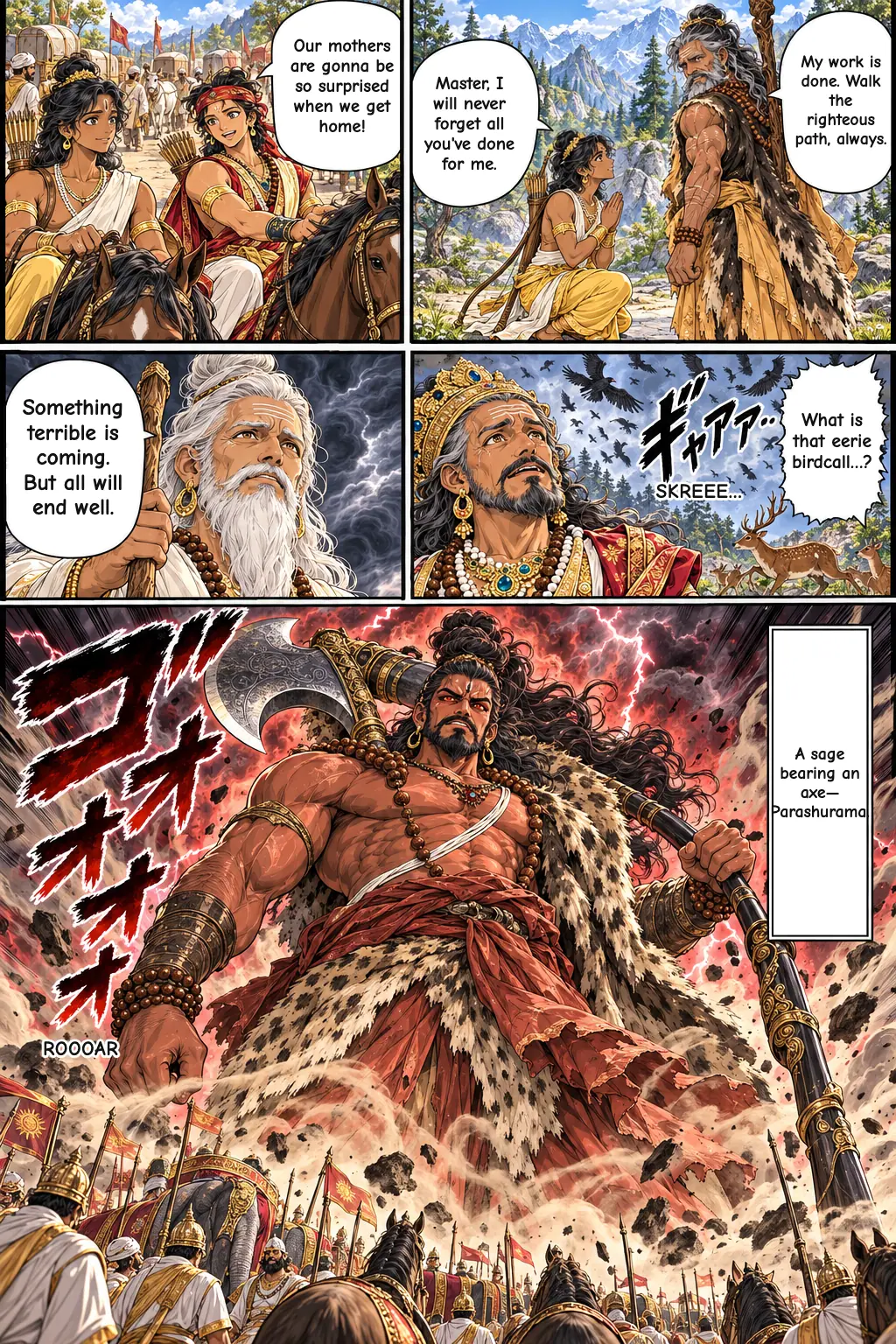
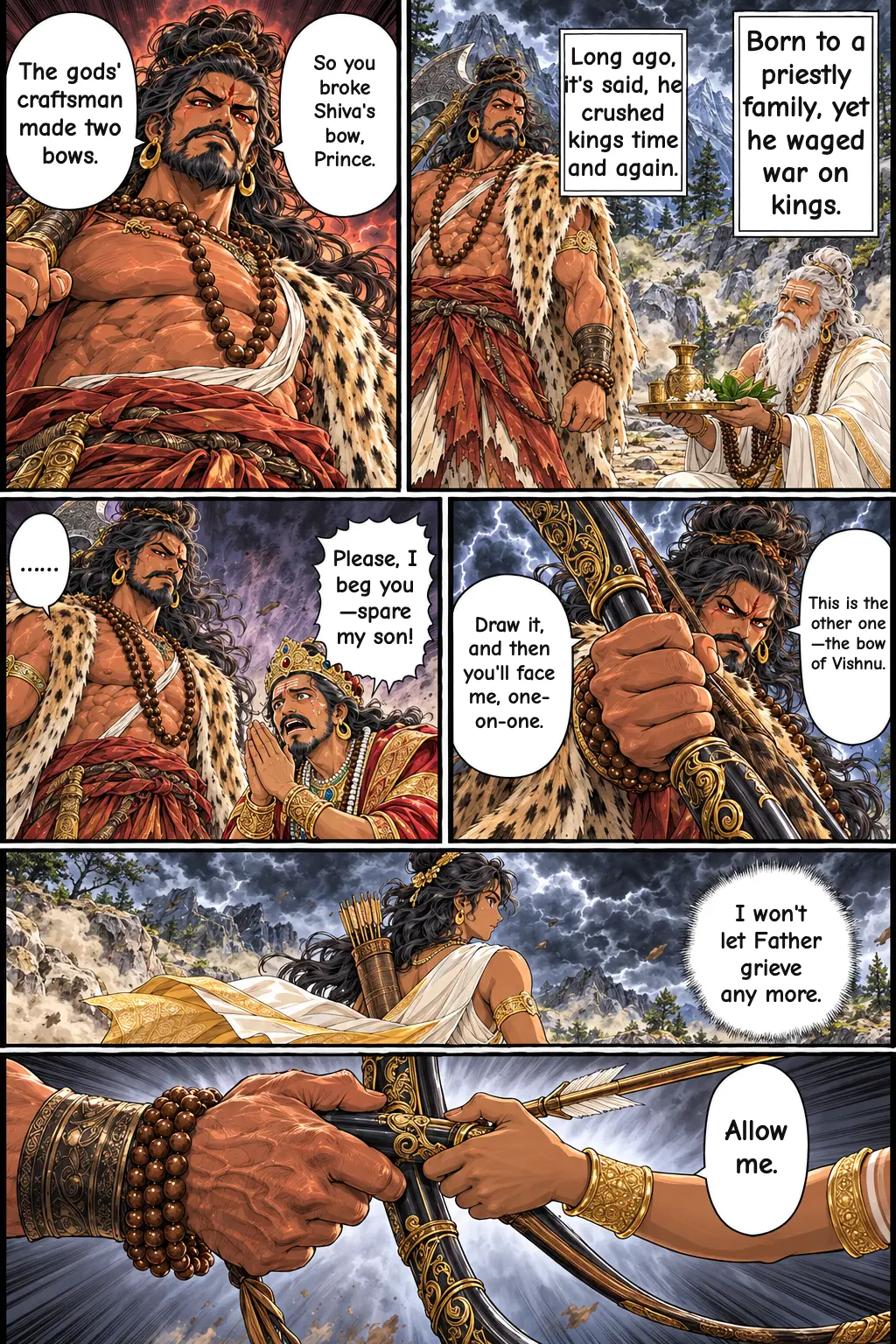
On the road home, a sudden storm darkens the land and a terrifying figure appears: Parashurama, son of the sage Jamadagni. He is a Brahmin (a member of the priestly class) who nevertheless became a warrior and wiped out generations of kings. With an axe on his shoulder and a bow in hand, he says he has heard that Shiva's bow was broken. He explains that the divine craftsman Vishvakarman made two great bows, one for Shiva and one for Vishnu, the preserver god, and he challenges Rama to string Vishnu's bow. Dasharatha begs for mercy, but Parashurama ignores him.
Rama, angered at the insult to his father, takes the bow, strings it, and sets an arrow to it. Because Parashurama is a Brahmin, Rama refuses to kill him, and instead uses the arrow to destroy the heavenly worlds Parashurama had earned through his austerities. Recognizing Rama as Vishnu himself, Parashurama honors him and departs for Mount Mahendra. Rama gives the bow to Varuna, the god of the waters, and the wedding party returns safely to Ayodhya.
What This Myth Says: Cultural Background
Although popular retellings often call this scene Sita's swayamvara, a ceremony in which a bride chooses her husband from many suitors, Valmiki's text frames it a little differently. Sita is a bride whose price is heroic strength, and Rama wins her in a private trial, not in a crowded contest. The large assembly of competing kings is a feature that grew in later versions and in popular imagination.
The episode also sets up the epic's big themes. Sita's birth from the earth marks her as extraordinary from the start. Rama's restraint, waiting for his teacher's word and sparing a Brahmin even in anger, shows the self-control expected of an ideal prince. In later Hindu tradition both Rama and Parashurama are counted as incarnations (avatars) of Vishnu, so some readers interpret their meeting as one form of the god giving way to the next. Many scholars also consider the Bala Kanda to be one of the later layers of the epic, which helps explain its many side stories.
What the Manga Changes
The manga follows the main events of the original, but it fills in details that Valmiki leaves out. In the text, Sita says and does almost nothing in this section, and it never says whether she watched the bow break. The manga places her nearby and adds a brief, wordless exchange of glances between her and Rama before the wedding, which is an invented moment. The scene of rival kings each failing to lift the bow is also dramatized; the original simply reports that none of them could.
The designs of the bow, the eight-wheeled chest, the city of Mithila, the costumes, and the wedding rituals are the artists' own interpretations, as are the flashback to Janaka finding baby Sita and the visual staging of Parashurama's storm. Shatananda's very long history of Vishvamitra is heavily shortened.
Where to Read It
The source is Book 1 (Bala Kanda) of Valmiki's Ramayana, chapters 50 to 77 in the commonly printed version. In the scholarly critical edition the chapter numbers are different, and the Parashurama encounter falls at roughly chapters 73 to 75. Several complete English translations are available if you want to read the original story in full.
If you would like to see the story come alive first, Episode 2 of RAMAYANA: The Exiled Prince and the Son of the Wind on Manga Portal shows the breaking of the bow and Rama's showdown with Parashurama. Every episode is free to read, with no sign-up required, so you can follow Rama's journey from here at your own pace.
Characters in this episode
Rama
The young eldest prince of Ayodhya, who breaks Shiva's bow to win Sita and later faces down Parashurama.
Sita
King Janaka's daughter, found in a ploughed furrow, who becomes Rama's wife.
King Janaka
The ruler of Mithila, who guards Shiva's bow and makes heroic strength the condition for marrying Sita.
Vishvamitra
A king who became a great sage, Rama's teacher who guides the princes to Mithila and helps arrange the marriage.
Parashurama
An axe-carrying Brahmin warrior, son of Jamadagni, who challenges Rama with the bow of Vishnu.
Lakshmana
Rama's loyal younger brother, who stays at his side and marries Sita's sister Urmila.
FAQ
How did Rama win Sita in the Ramayana?
King Janaka promised Sita only to a man strong enough to handle Shiva's great bow, which no visiting king could even lift. Rama lifted it, strung it, and drew it so hard that it broke in two, and Janaka gave him Sita in marriage.
Was Sita's wedding really a swayamvara?
Popular retellings usually call it a swayamvara, but in Valmiki's original Sita is described as a bride won by heroic strength. Rama takes the test in a private setting with Janaka and Vishvamitra present, not in a grand gathering of competing suitors.
Why was Sita called daughter of the earth?
King Janaka found her as a baby in a furrow while ploughing ground for a ritual, so she was not born from a human mother. Her name, Sita, means furrow.
Why did Parashurama challenge Rama?
Parashurama heard that Shiva's bow had been broken and came to test Rama with a second divine bow, the bow of Vishnu. When Rama strung it easily, Parashurama recognized him as Vishnu and withdrew.
Who married whom in the Ramayana's four weddings?
Rama married Sita and Lakshmana married her sister Urmila, both daughters of King Janaka. Bharata and Shatrughna married Mandavi and Shrutakirti, daughters of Janaka's brother Kushadhvaja.