Episode 3Crowned Tomorrow, Exiled TonightThe Exile of Rama (Ayodhya Kanda)
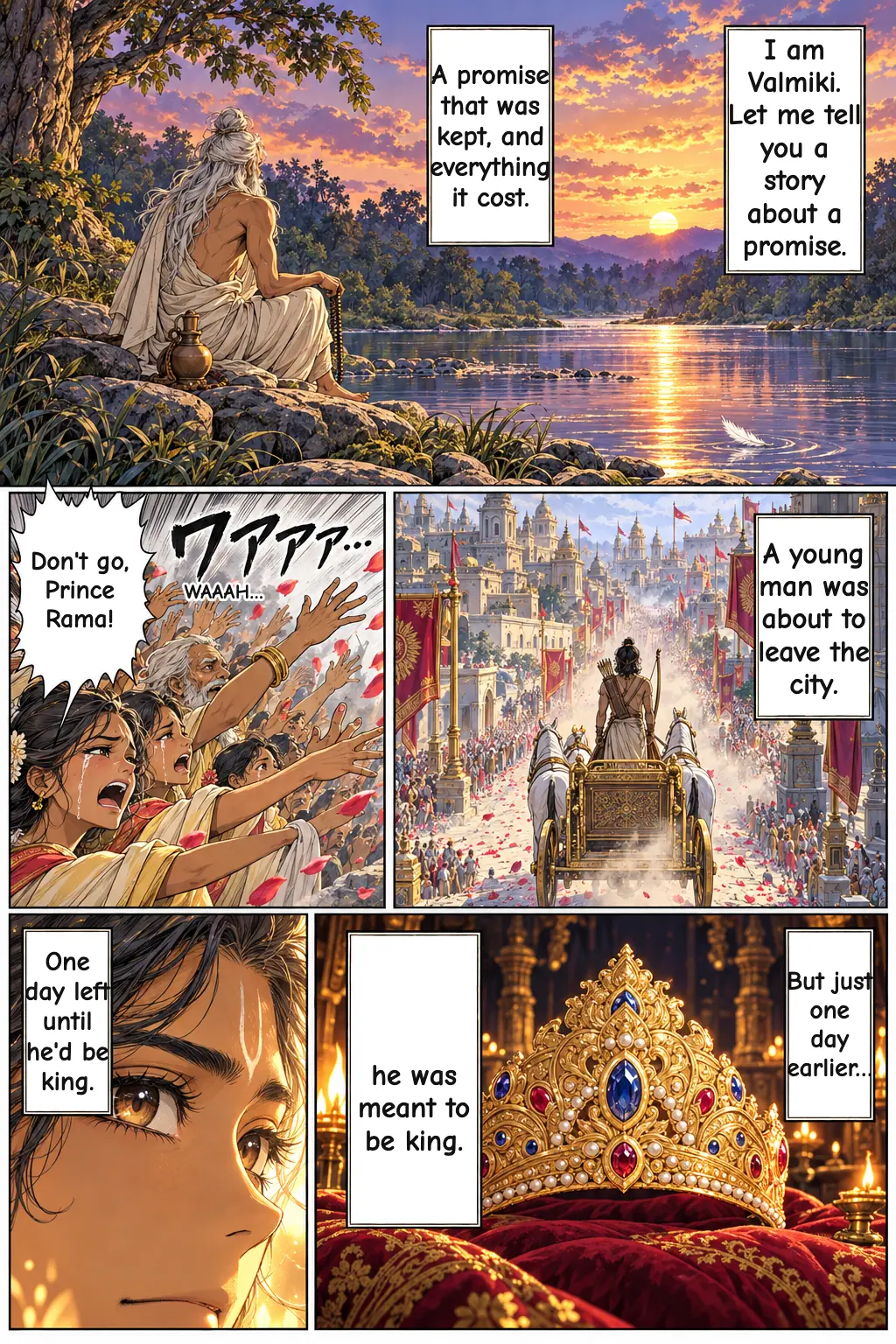
Prince Rama is set to become heir to the throne tomorrow. But long ago his father promised two wishes to the woman who saved his life, and in a single night that promise sends Rama into the forest for fourteen years. No one hates him, yet he loses everything. This is a story about the weight of a promise and what it costs to keep one.
Ramayana Ayodhya Kanda Summary: Why Was Rama Exiled for 14 Years?
What Happens in the Ayodhya Kanda
The Ayodhya Kanda is the second book of the Ramayana, the Sanskrit epic attributed to the poet Valmiki. This episode covers chapters 1–45 as numbered in the widely printed vulgate text (for example, the Gita Press edition). The Baroda critical edition numbers its chapters differently, so every chapter reference in this article uses the vulgate numbering.
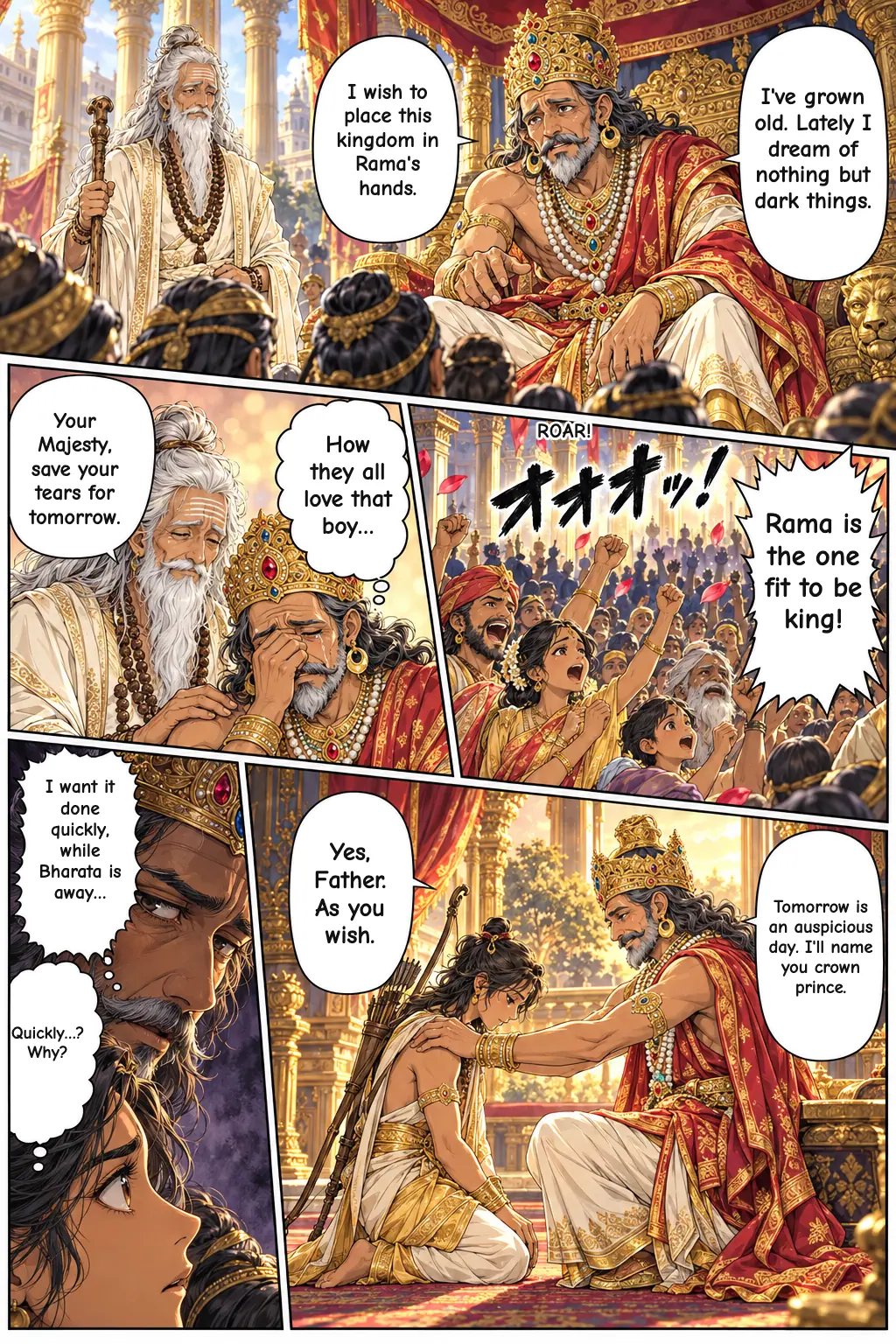
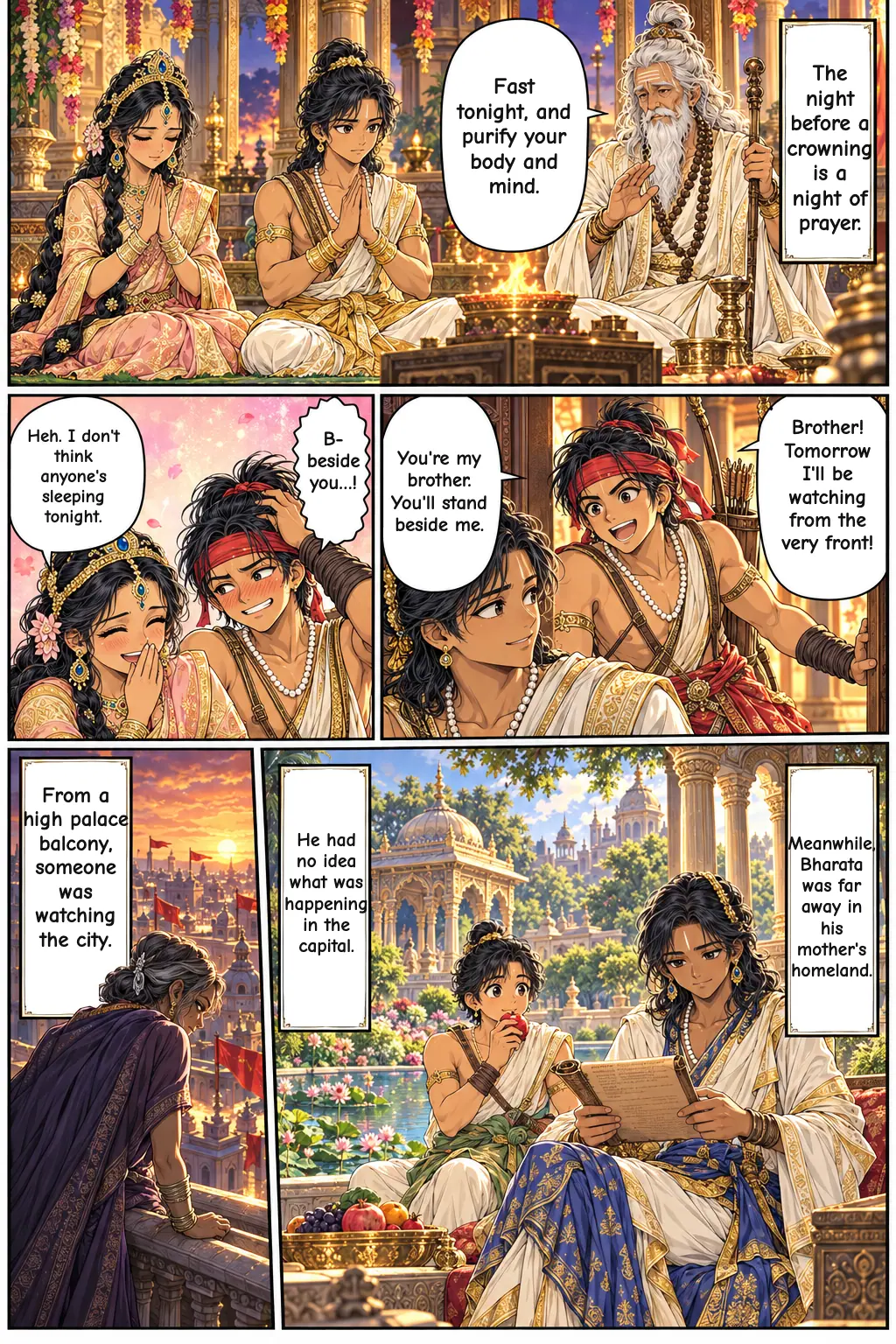
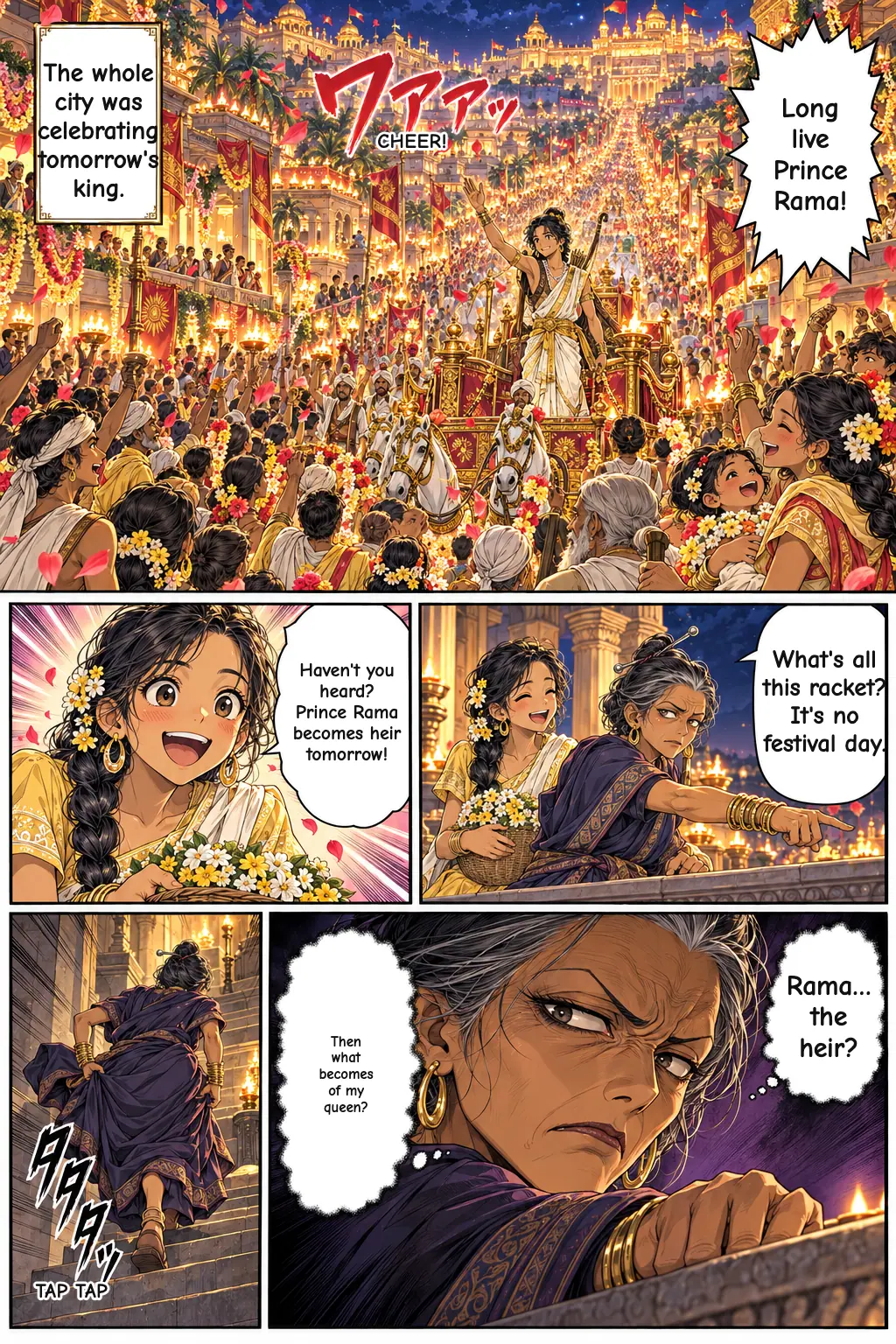
King Dasharatha of Ayodhya is old, and ill omens have made him think about his own death. He decides to make his eldest son, Rama, crown prince. When he puts the idea to his ministers, allied kings and citizens, they welcome it eagerly, because Rama is loved for his goodness. The ceremony is set for the very next day, under the lucky star Pushya. Rama's half-brothers Bharata and Shatrughna are away, staying with their maternal grandfather in the kingdom of Kekaya. The king even admits privately that he wants the ceremony finished while Bharata is gone. Ayodhya fills with flags and flowers, and the royal priest Vasishtha has Rama and his wife Sita fast through the night before the rite.
Kaikeyi's Two Boons: How a Promise Became a Trap
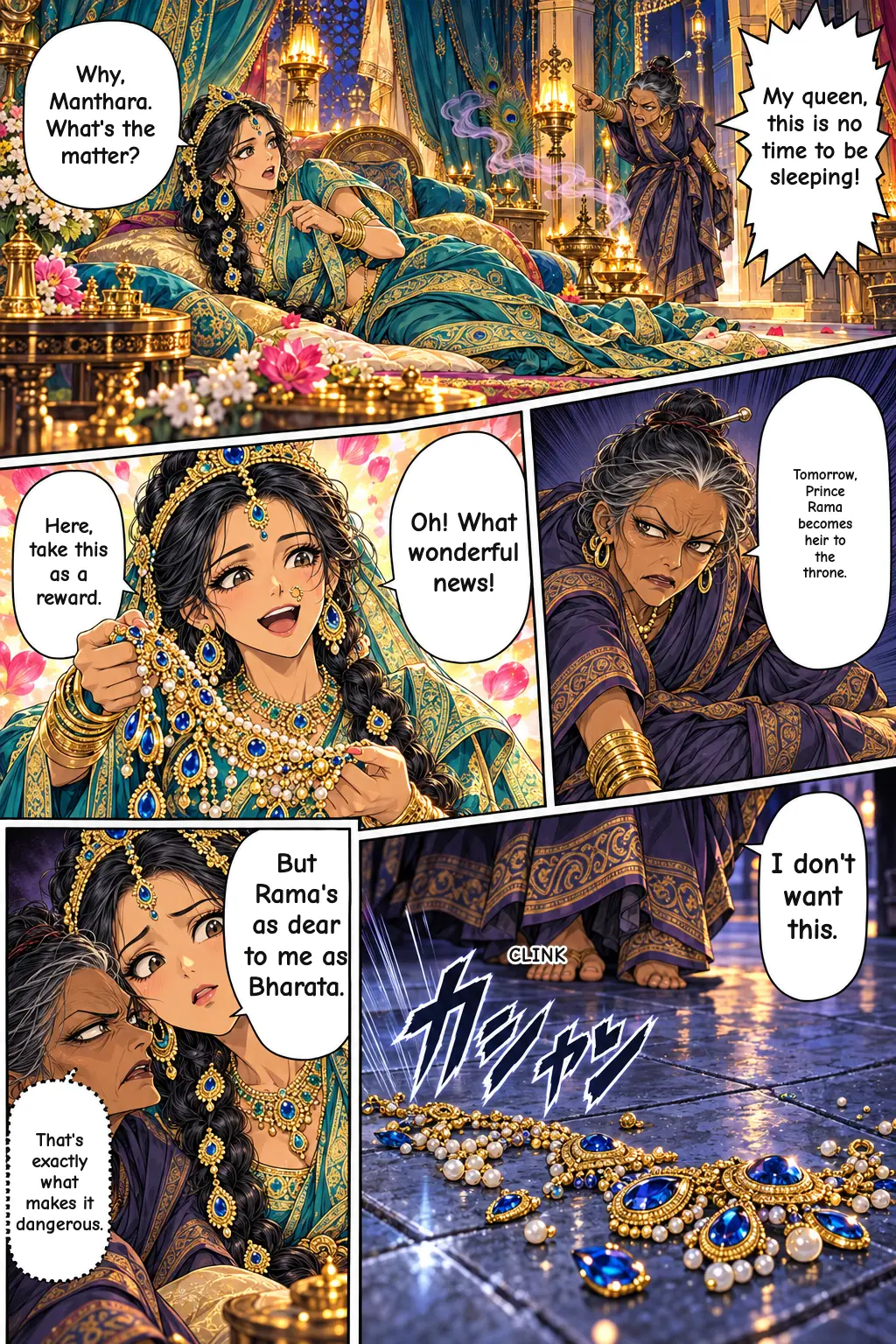
From a rooftop, Manthara, a hunchbacked maid who came to Ayodhya with Queen Kaikeyi from her homeland, sees the celebrations and finds out why the city is celebrating. She hurries to tell her mistress. At first, Kaikeyi is delighted. She gives Manthara a piece of jewelry and says Rama is as dear to her as her own son Bharata.
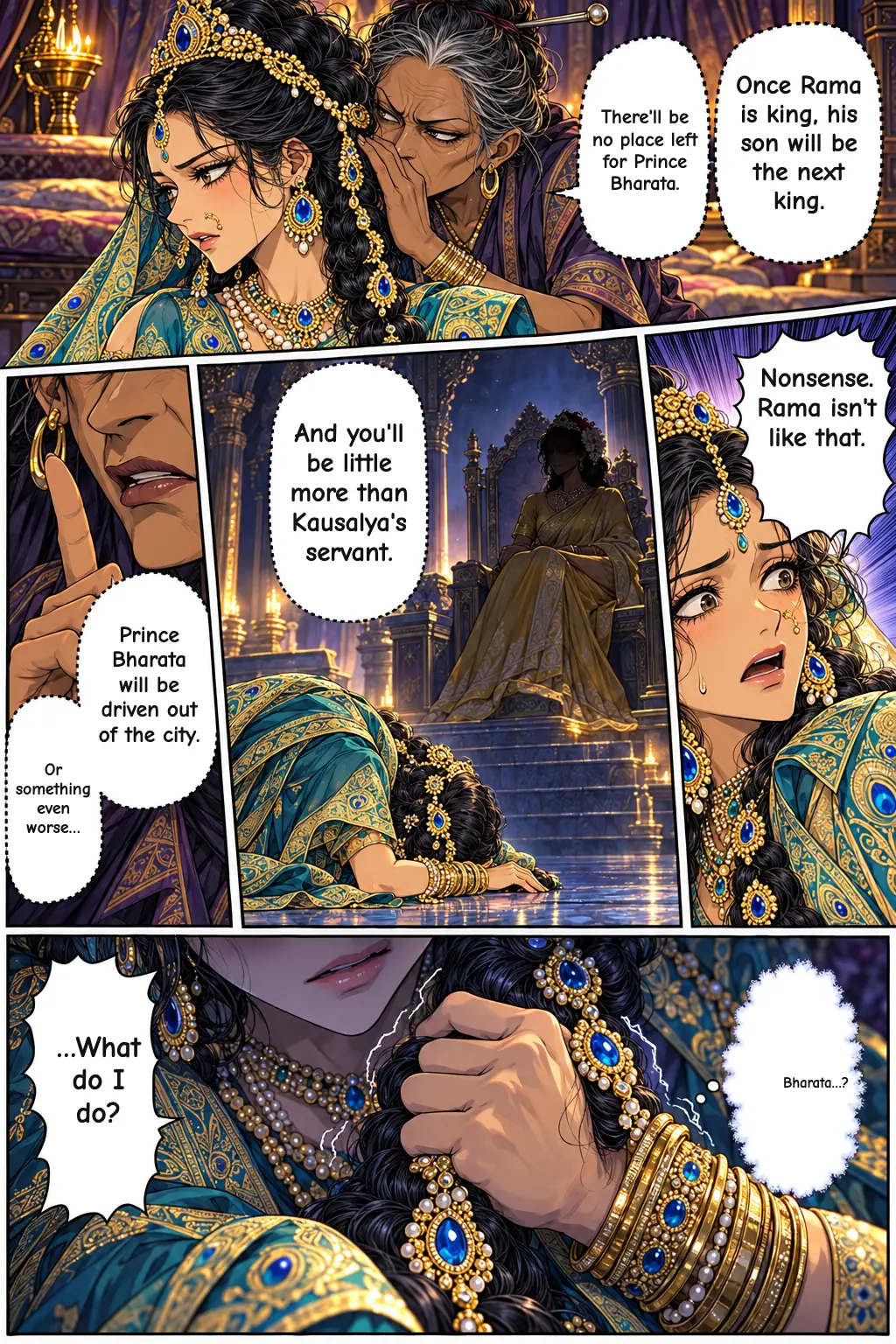
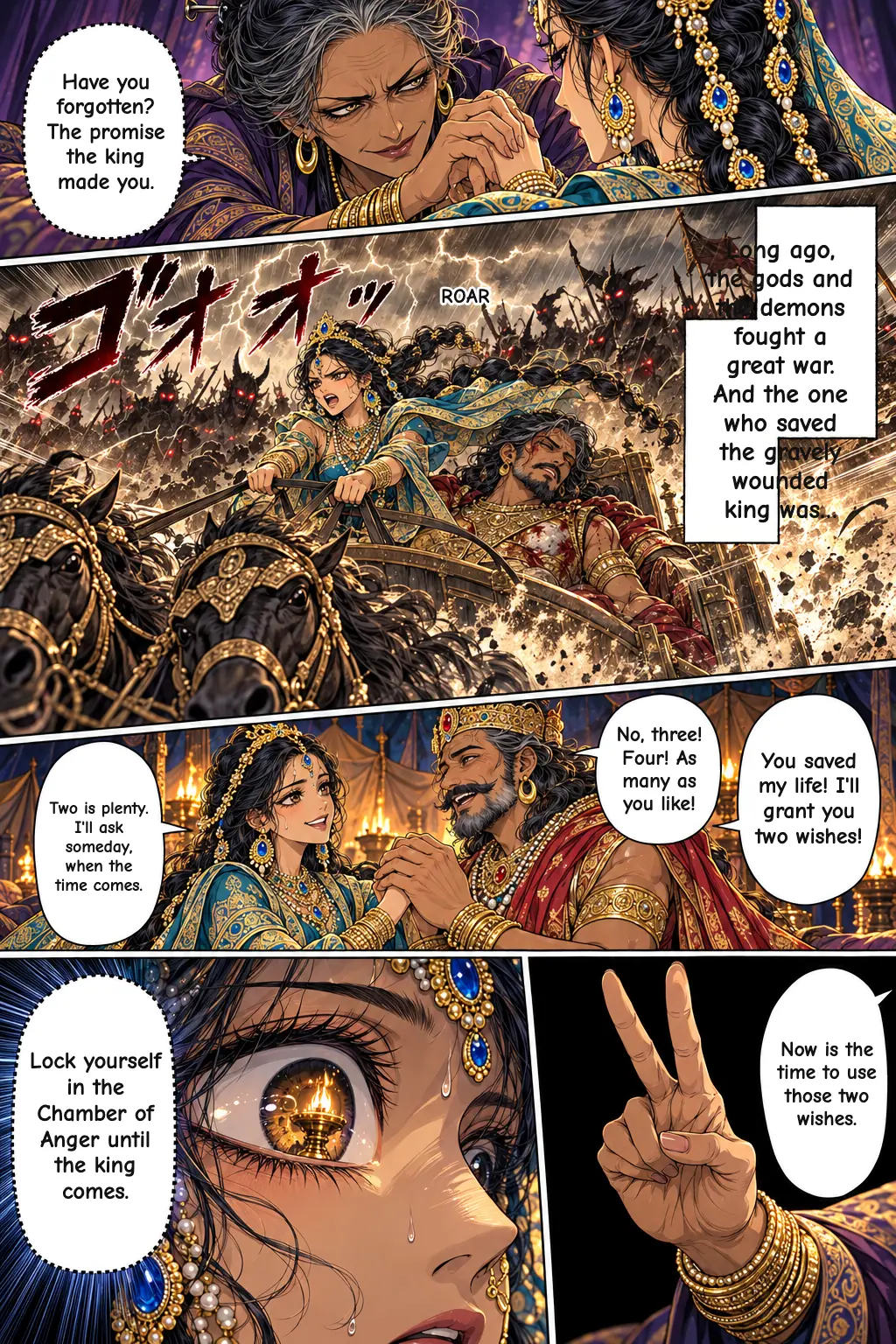
Manthara keeps pushing. Once Rama is king, she argues, Bharata will be pushed aside and Kaikeyi will end up serving Rama's mother, Kausalya. Kaikeyi gives in, and Manthara reminds her of an old debt. Long ago, during a war between the gods and the asuras (demons), Kaikeyi carried the wounded Dasharatha off the battlefield and saved his life. In return, he promised her two wishes.
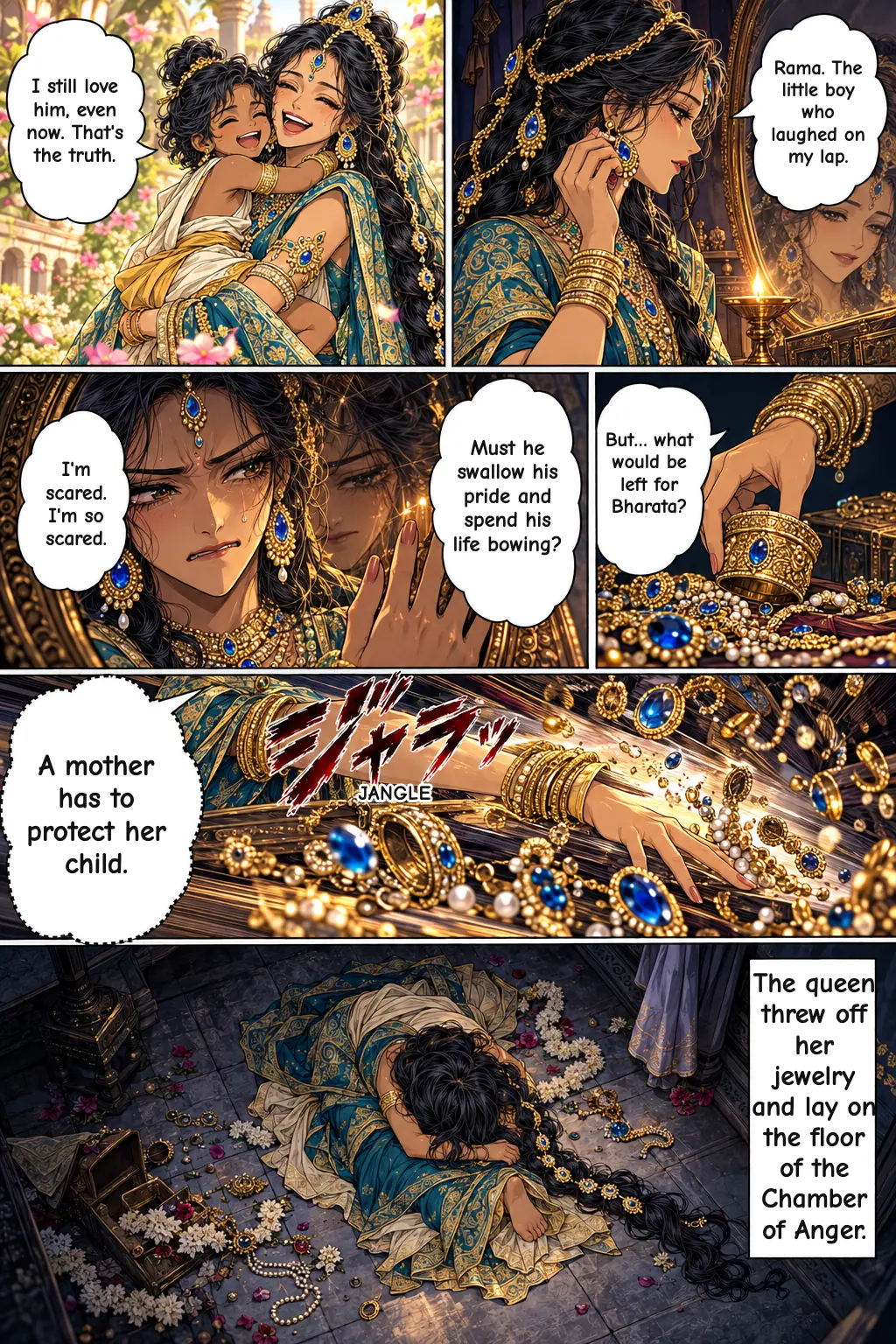
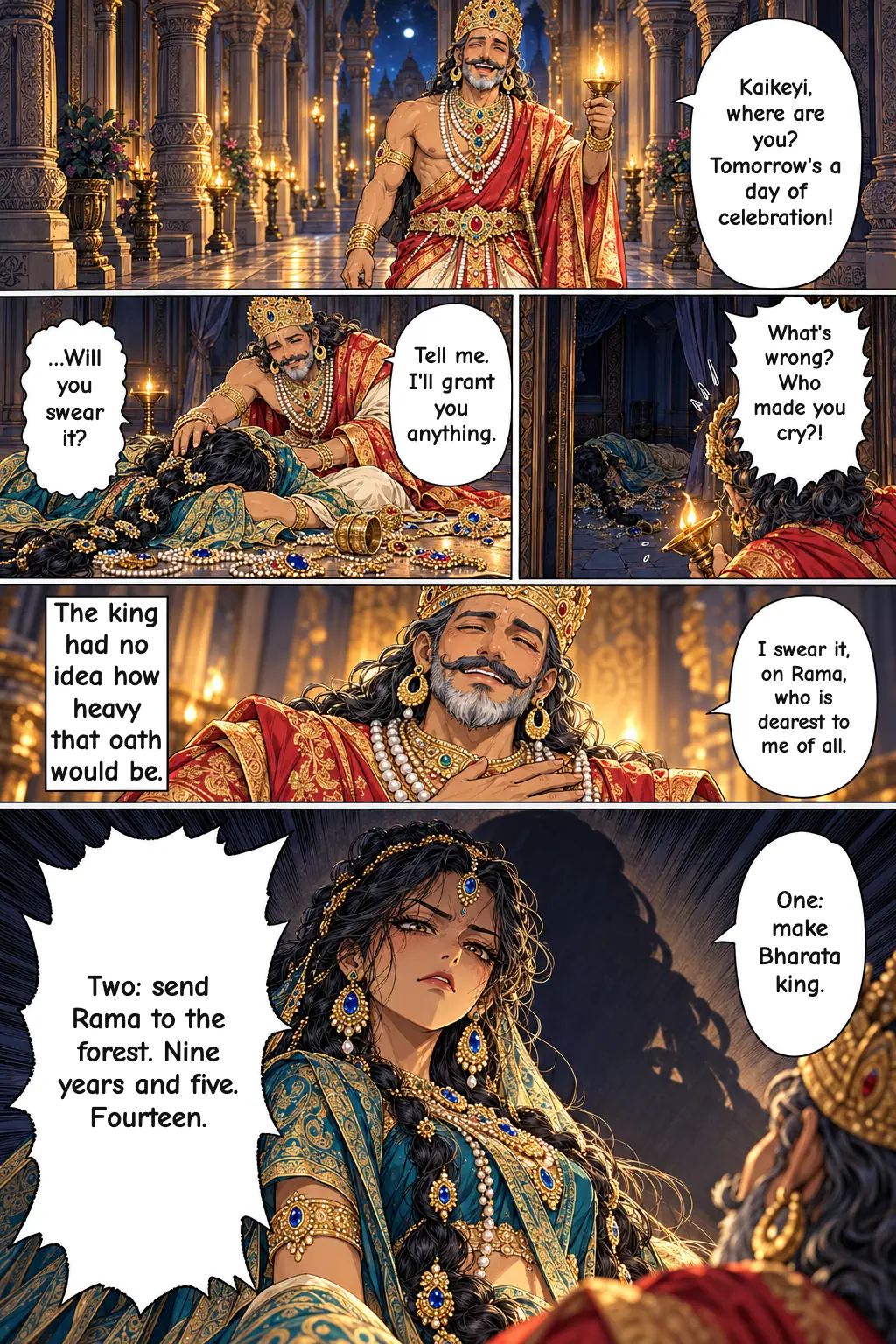
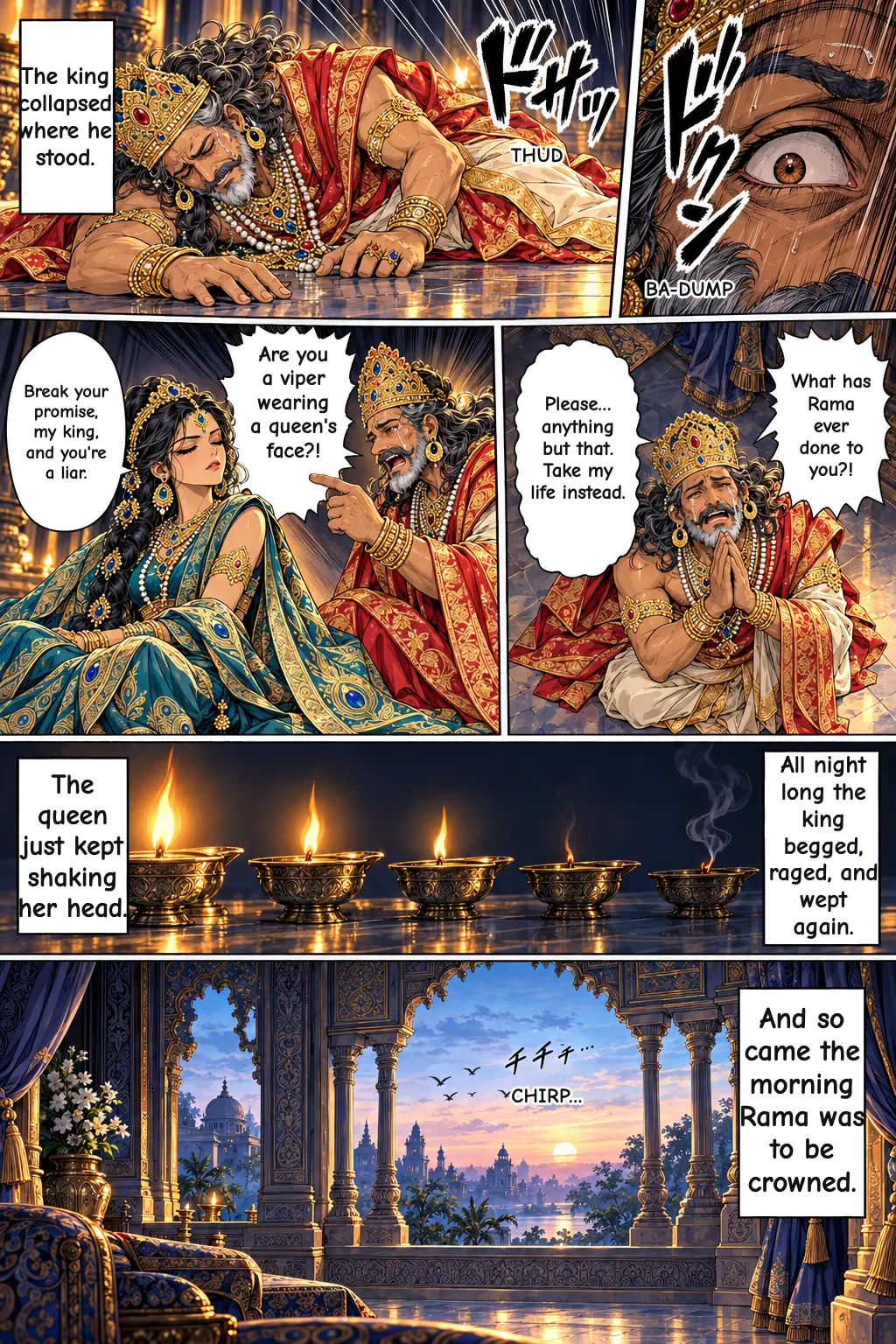
Kaikeyi takes off her ornaments, lies on the floor in dirty clothes and shuts herself in the "chamber of anger." When the king comes to comfort her, she first makes him swear an oath on Rama himself. Then she names her wishes: Bharata must be crowned, and Rama must live in the Dandaka forest for fourteen years, dressed in bark. Dasharatha faints, then begs, curses her and begs again all night. Kaikeyi will not give way. If he breaks a sworn promise, she tells him, he will be a liar. (A popular story says she once saved the king by putting her finger in a broken chariot axle. That detail is a later tradition and does not appear in Valmiki's text.)
Rama, Sita and Lakshmana Leave Ayodhya
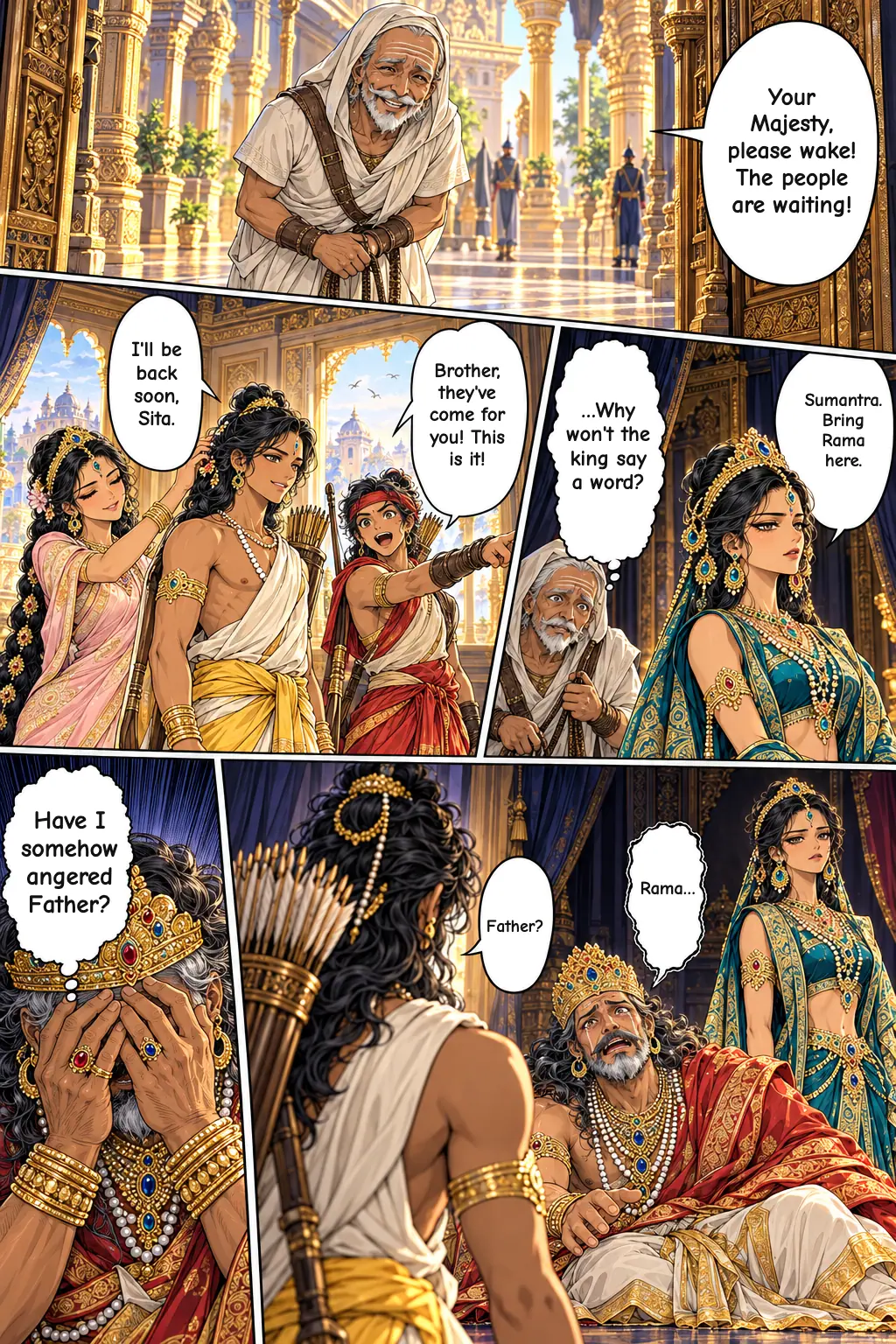
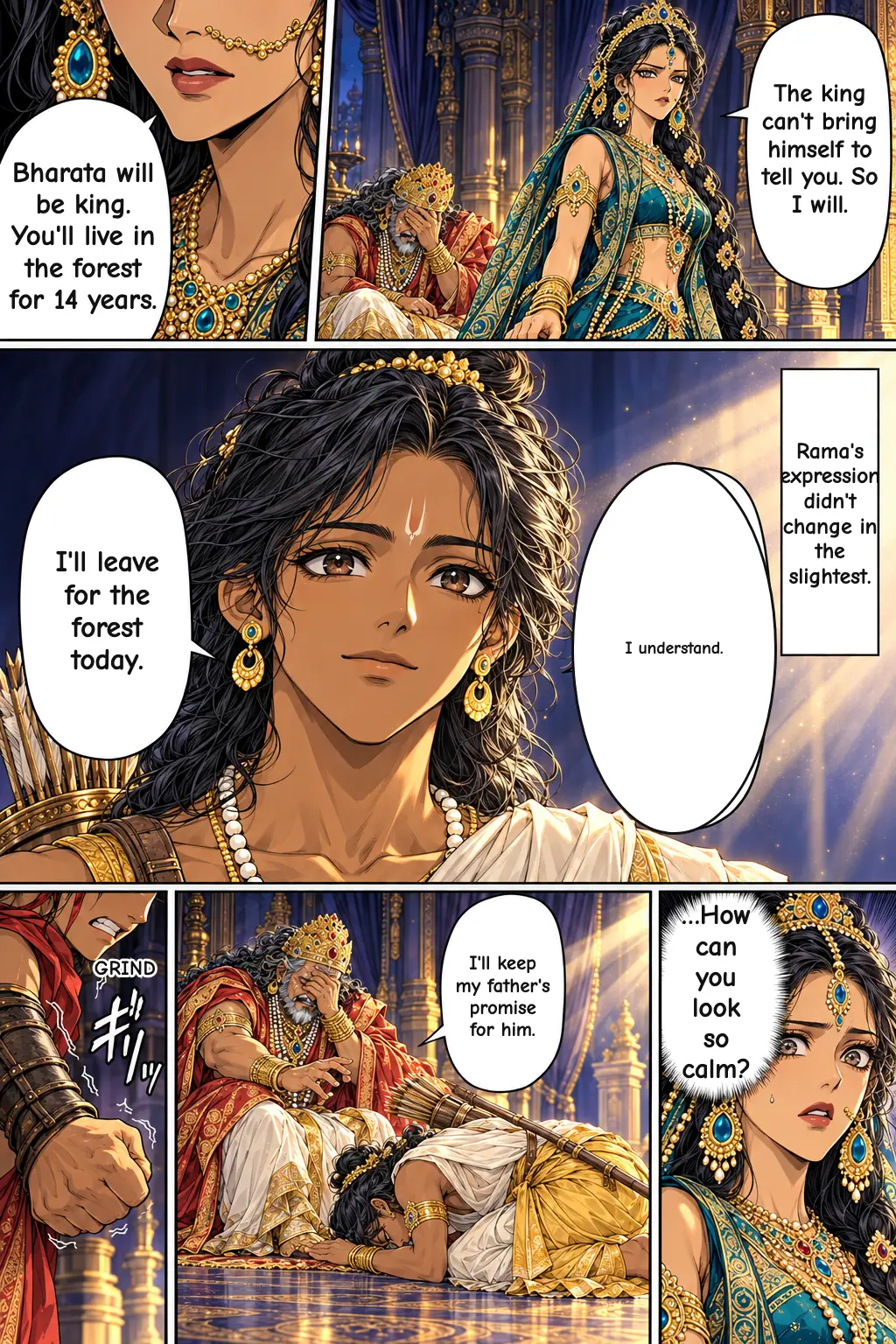
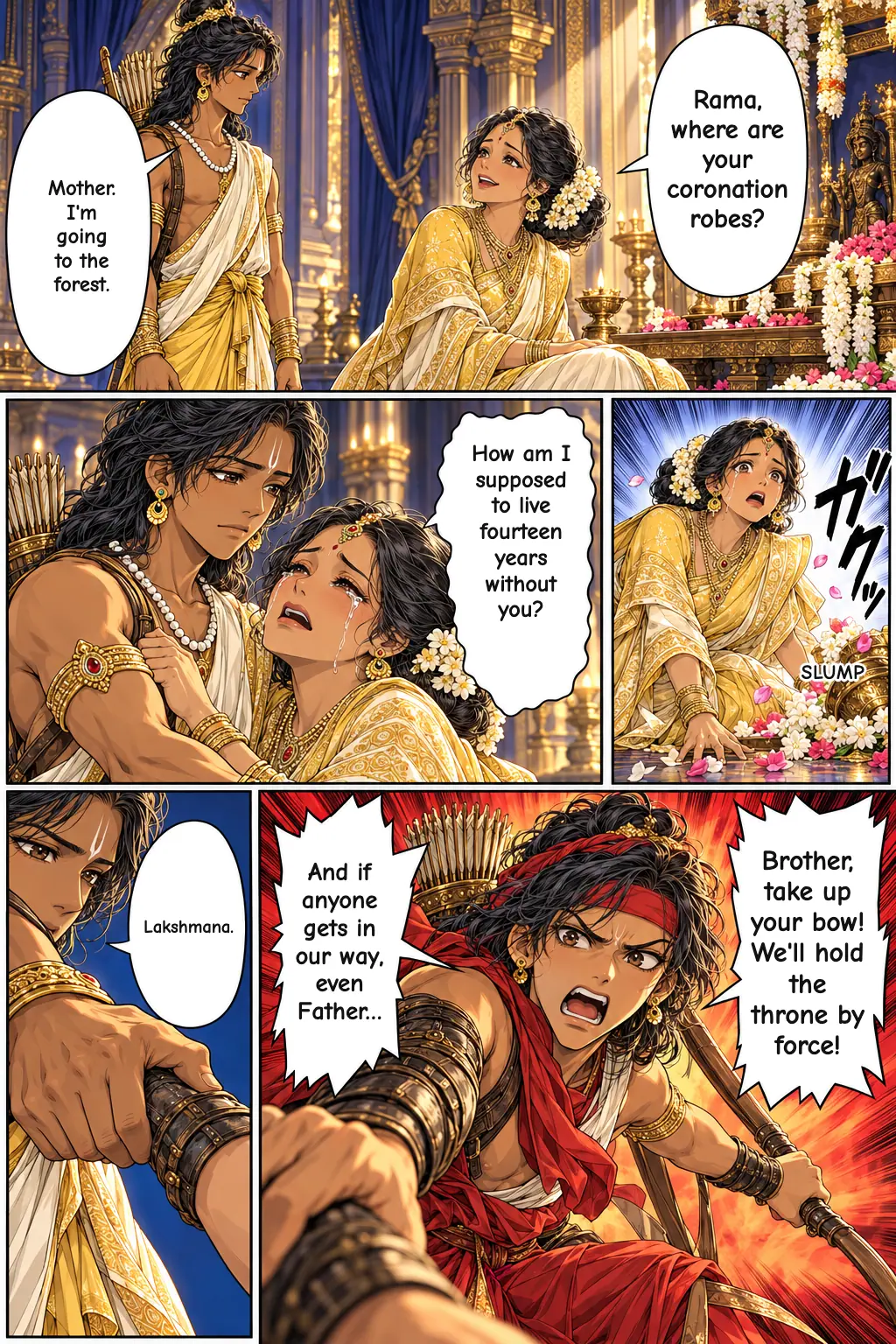
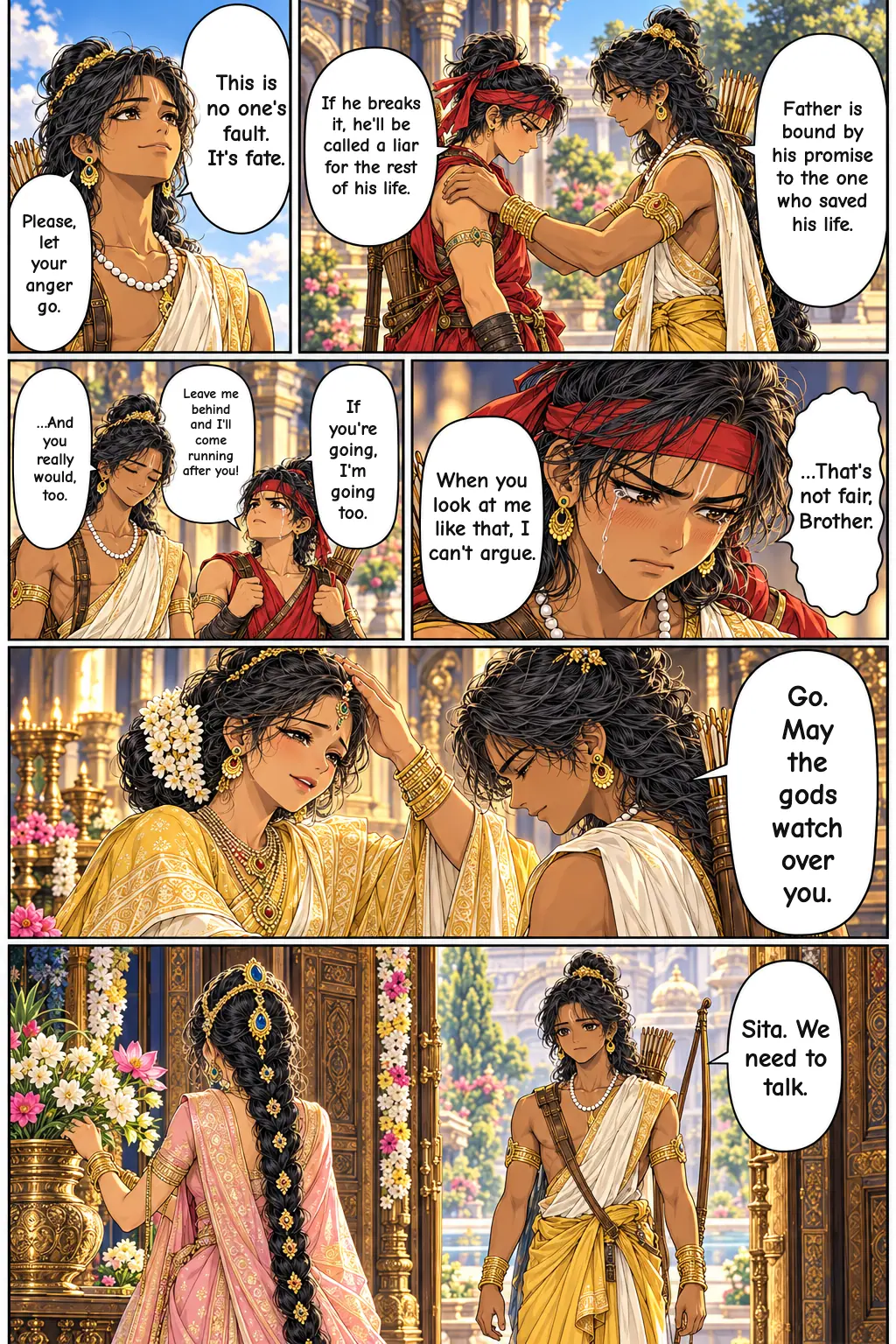
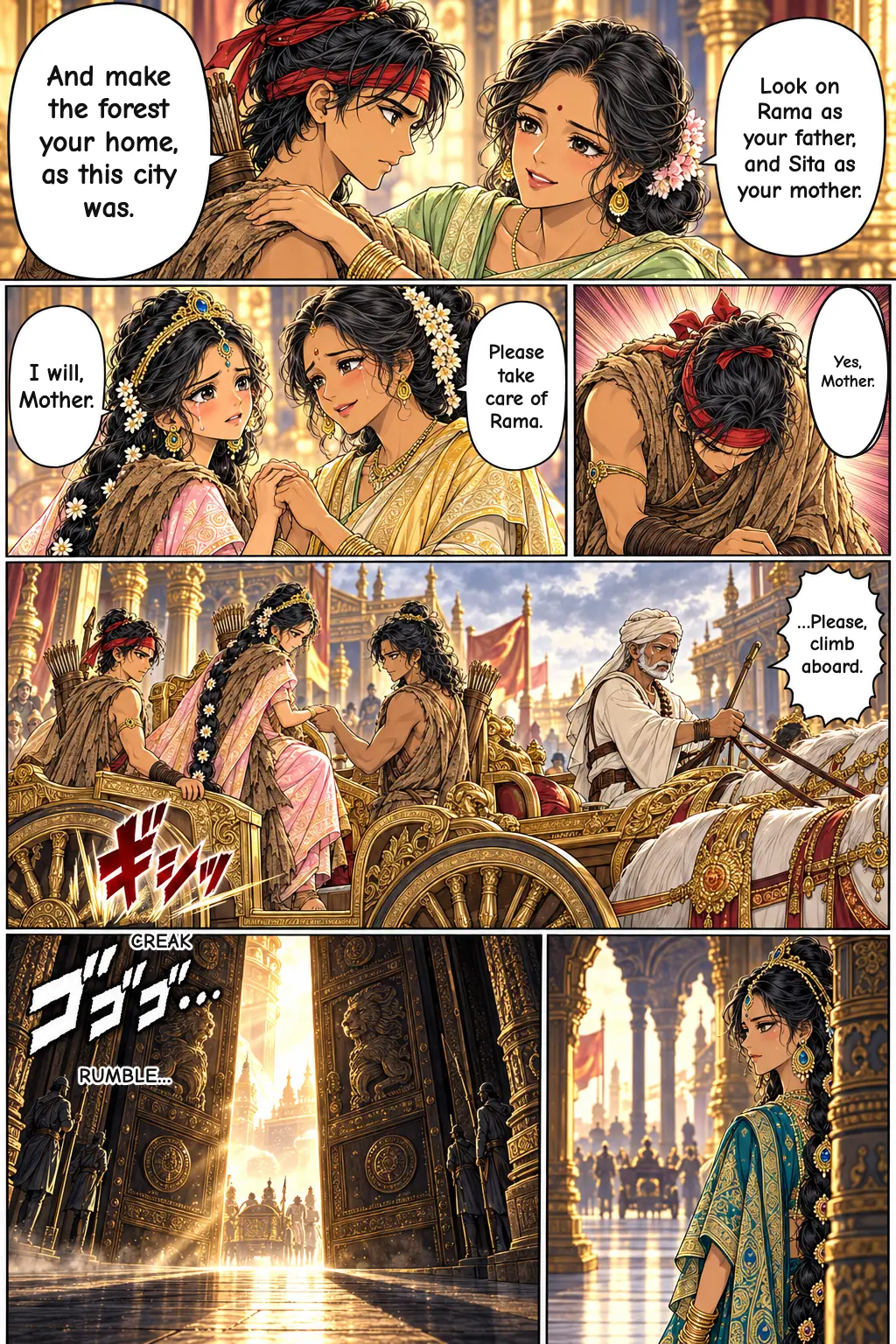
At dawn, Rama is summoned. The king can say nothing but Rama's name, so Kaikeyi tells Rama the terms herself. Rama's face does not change. He promises to obey and says he will leave that day. His mother Kausalya collapses when she hears. His devoted half-brother Lakshmana is furious and tells Rama to take the throne by force, even talking about attacking their father. Rama calms him down by speaking of fate and dharma (righteous duty), which here means keeping a father's word.
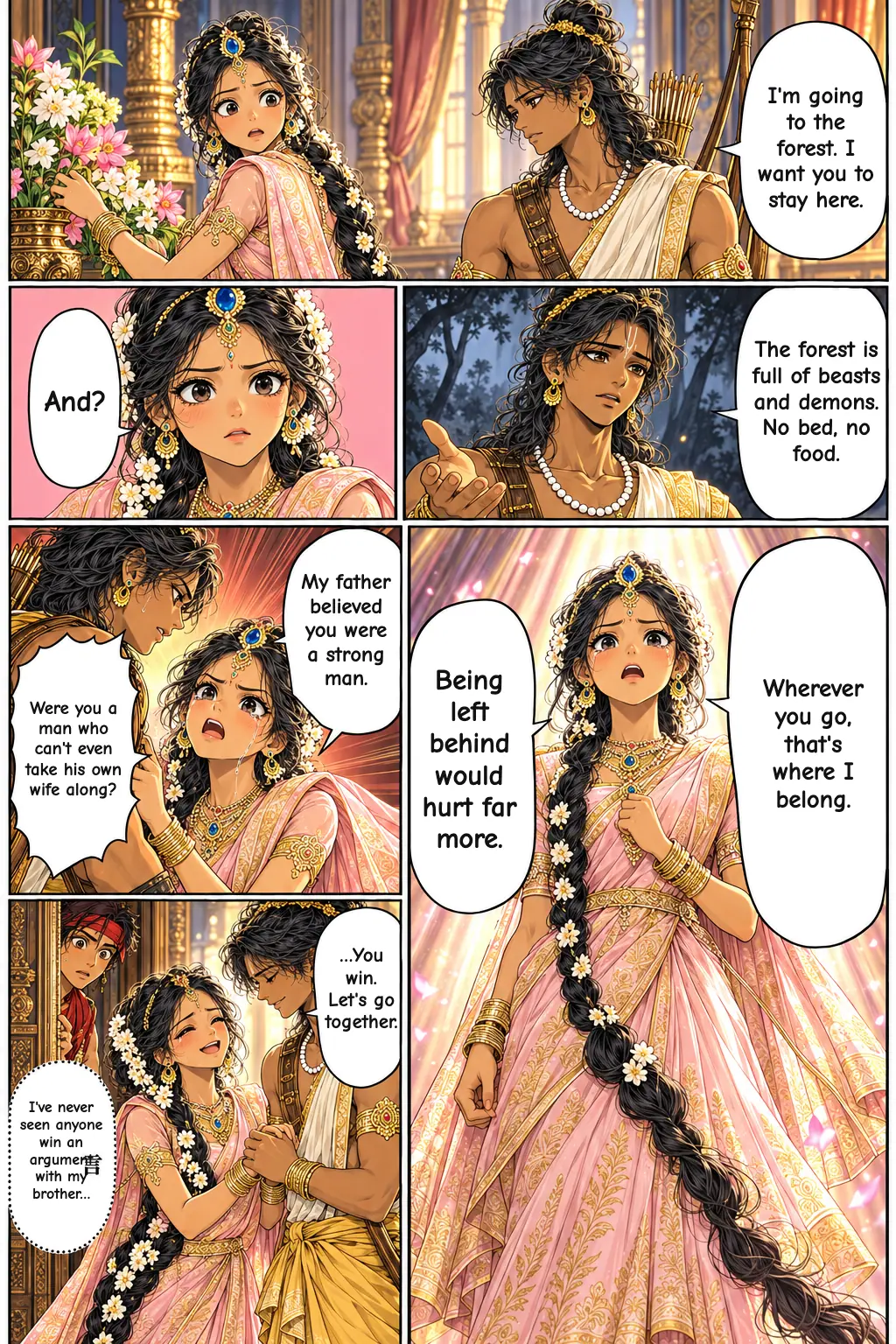
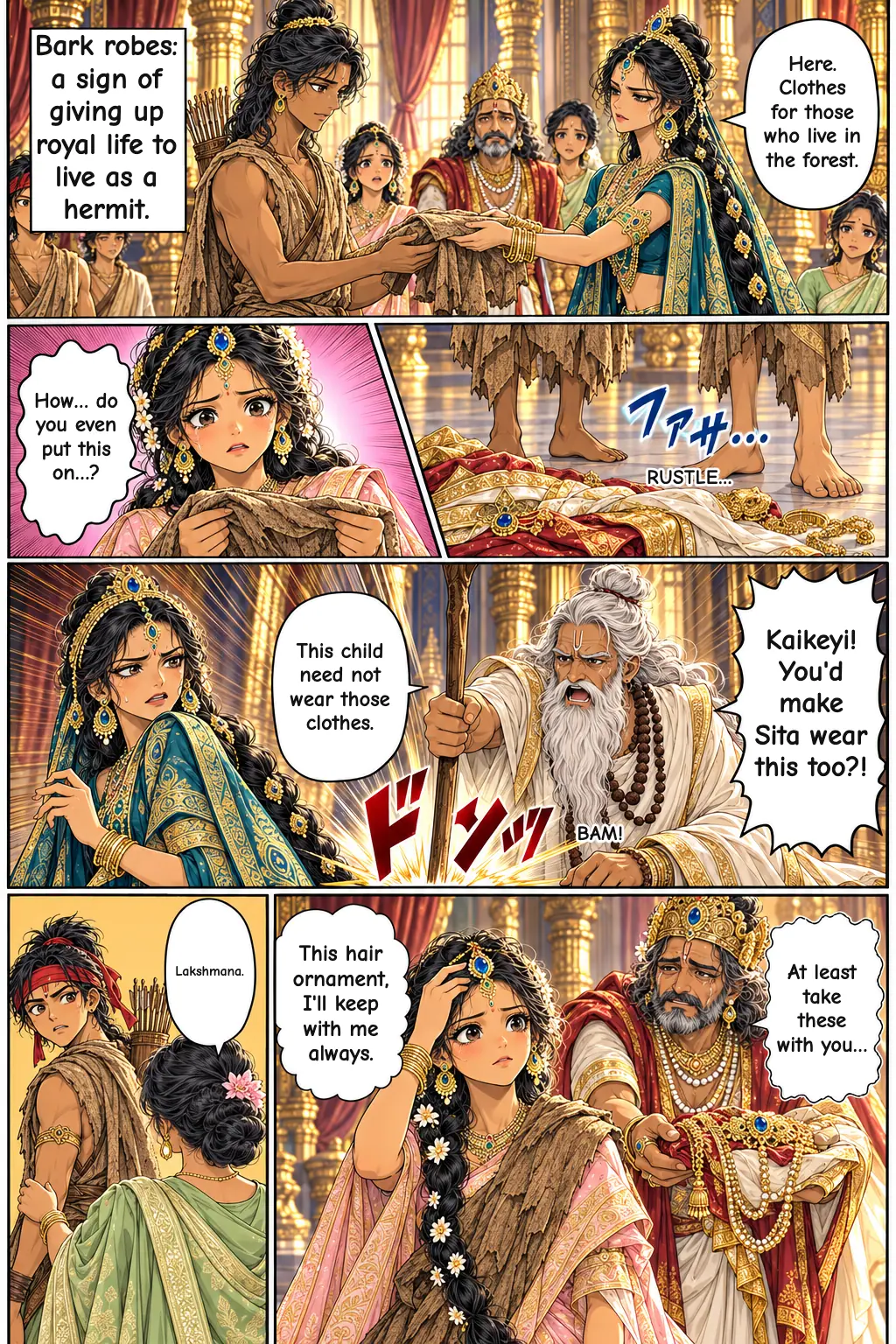
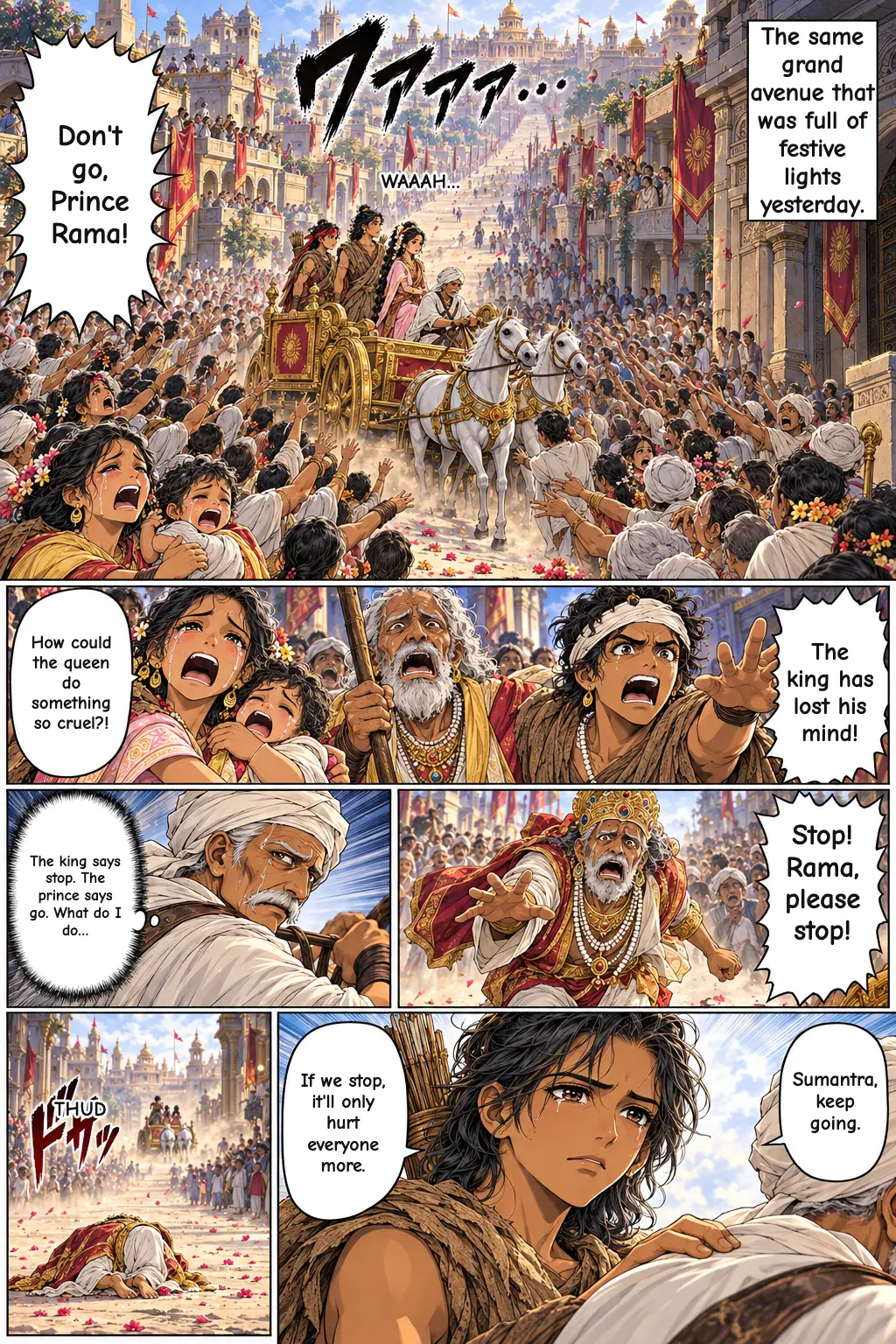
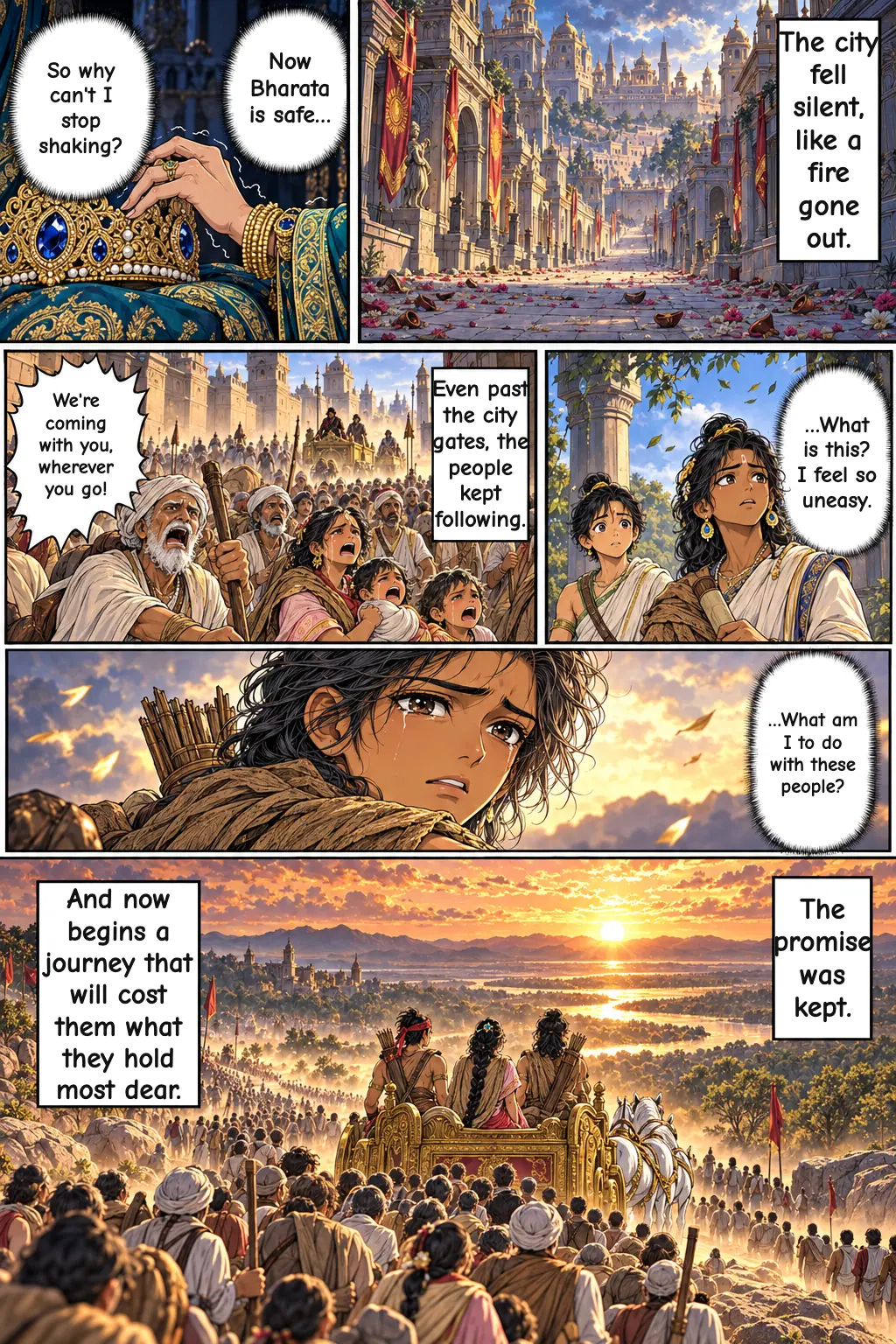
Rama asks Sita to stay behind and warns her about the dangers of the forest. She refuses. She argues that a wife shares her husband's fate, weeps, and finally mocks him until he gives in. Lakshmana also asks to go and is allowed. The three give away their wealth and put on the bark garments, which Kaikeyi hands over herself. Then they leave in a chariot driven by Sumantra, the king's charioteer and minister. The weeping king and citizens run after them, and many people follow all the way to the bank of the Tamasa River.
What the Story Is About: Dharma and the Weight of a Word
Nobody in this part of the epic hates Rama. Even Kaikeyi loved him at first. Bharata never appears in these chapters, and everyone assumes he is a good man. The disaster comes from a promise. In the world of the Ramayana, telling the truth is one of a king's highest duties, so once Dasharatha has sworn, he is caught between that duty and his love for his son, and he falls apart.
Rama's response is the moral center of the book. He accepts exile because he wants to save his father from the sin of breaking a vow, not because he thinks it is fair. Many readers see him as a model of dharma. Others find the scene troubling, and the Ramayana has been debated and retold in many ways across South and Southeast Asia. Valmiki also gives strong voices to the characters who object: Lakshmana is angry, Kausalya grieves, and Sita insists on making her own choice.
What the Manga Adds and Changes
The manga follows the main events of Valmiki's text but fills in some gaps. Its biggest addition is Kaikeyi's inner monologue. The original describes her change of heart mostly from the outside and says almost nothing about any doubts she has. The manga imagines her hesitation and builds it on what the text does give us: her first joy at the news, her fears for Bharata and herself, and her memory of saving the king. The thoughts themselves are the manga's invention.
Other invented details include the small moments of Manthara's persuasion, the look of the chamber of anger, the slow passing of the long night, and individual faces and lines in the crowds. The people's grief and their anger at the king do come from the original. Buildings, costumes and jewelry are freely designed. The long arguments between Rama and Lakshmana, and between Rama and Sita, are shortened to a few panels, but each side still argues the same position. Some side scenes are left out, such as the poor brahmin Trijata, Sumantra scolding Kaikeyi, and the king's offer of an army.
Where to Read It
To go to the source, look for a translation of Book 2 of Valmiki's Ramayana, and check whether it follows the vulgate or the critical edition, because the chapter numbers differ.
To see the story in pictures, Episode 3 of RAMAYANA: The Exiled Prince and the Son of the Wind, "Crowned Tomorrow, Exiled Tonight," is on Manga Portal. Every episode is free to read, and you don't need to sign up. If this night of broken hopes moves you, the following episodes follow Rama into the forest.
Characters in this episode
Rama
Eldest son of King Dasharatha and heir to the throne, who accepts fourteen years of exile to keep his father's promise.
Kaikeyi
Dasharatha's favorite queen and Bharata's mother, who uses two old boons to put her son on the throne and send Rama into the forest.
Dasharatha
The aging king of Ayodhya, trapped between a sworn promise and his love for Rama.
Sita
Rama's wife, a princess of Videha, who insists on sharing his exile despite his warnings.
Lakshmana
Rama's devoted younger half-brother, who rages at the injustice and then chooses to follow him into the forest.
Manthara
Kaikeyi's hunchbacked maid, who stirs up her mistress's fears and reminds her of the two boons.
FAQ
Why was Rama exiled for 14 years?
Long ago, Kaikeyi saved King Dasharatha's life in battle and was promised two wishes. On the night before Rama's coronation, she asked for her son Bharata to be crowned and for Rama to live in the forest for fourteen years. Rama accepted so that his father would not break his word.
What were Kaikeyi's two boons in the Ramayana?
Dasharatha granted them after Kaikeyi carried him, wounded, out of a battle between the gods and the asuras. She used them to ask for Bharata's coronation and for Rama's fourteen-year exile in the Dandaka forest, dressed in bark garments.
Did Kaikeyi save Dasharatha by putting her finger in the chariot wheel?
That story is popular, but it does not appear in Valmiki's Sanskrit Ramayana. In Valmiki's text, she carries the wounded king off the battlefield. The chariot-axle story is a later tradition.
Why did Sita go into exile with Rama?
Rama asked her to stay in Ayodhya, but Sita argued that a wife shares her husband's fate. She wept, argued and finally mocked him until he agreed to take her with him.
Who is Manthara in the Ramayana?
Manthara is Kaikeyi's hunchbacked maid, who came with Kaikeyi from her homeland. She persuades Kaikeyi that Rama's coronation threatens her and Bharata, and she reminds her to use the two boons.