Episode 6The Deer They Never Should Have ChasedThe Golden Deer and the Abduction of Sita
A golden deer far too beautiful to be real appears outside the forest hut, but it's a trap set by Ravana, the ten-headed demon king. One by one, love and kindness open the doors, and Sita is carried off into the sky. Only the aged bird king Jatayu rises alone to stop him.
The Golden Deer and Sita's Abduction: Ramayana Story Explained
The Original Story: How the Golden Deer Led to Sita's Abduction
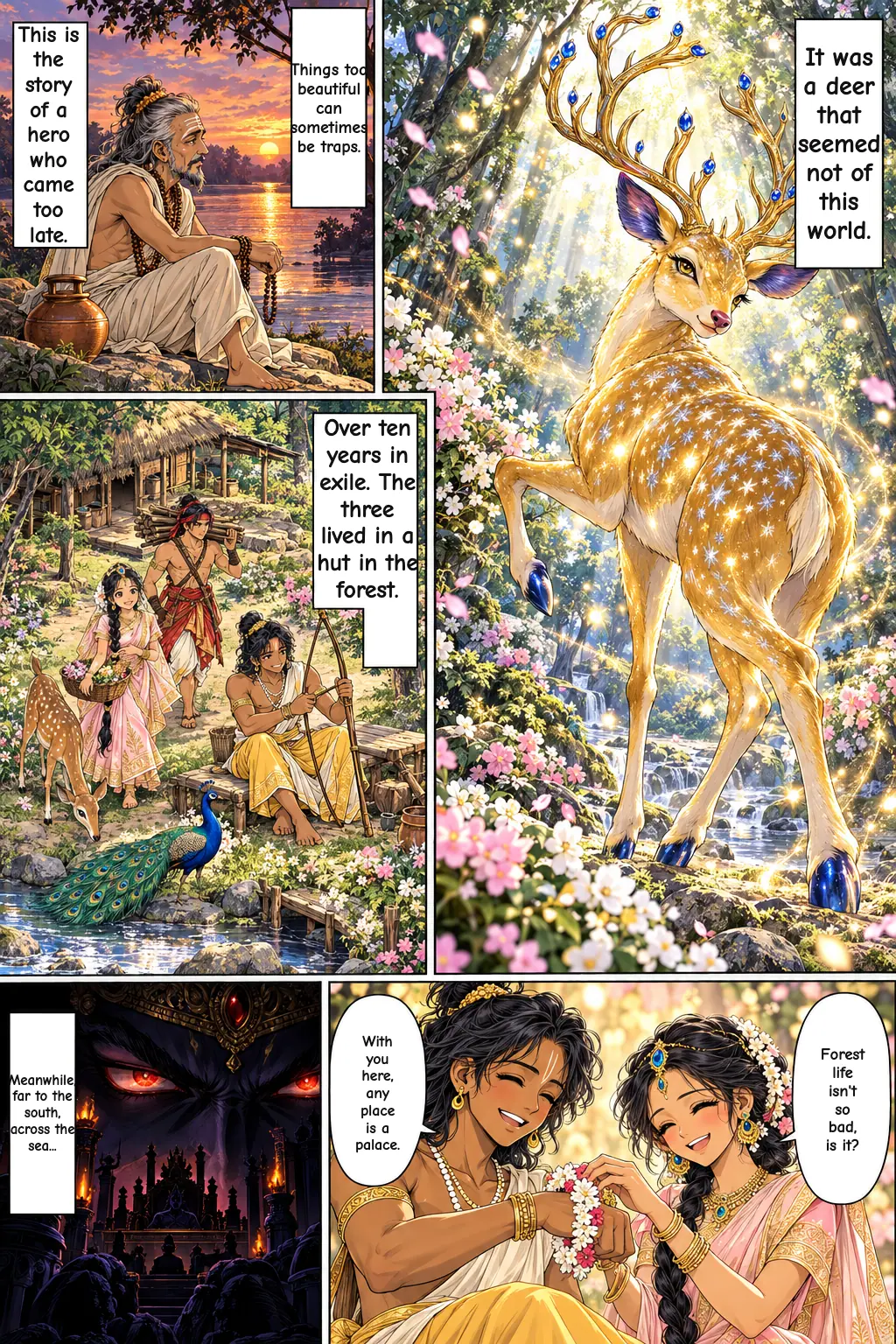
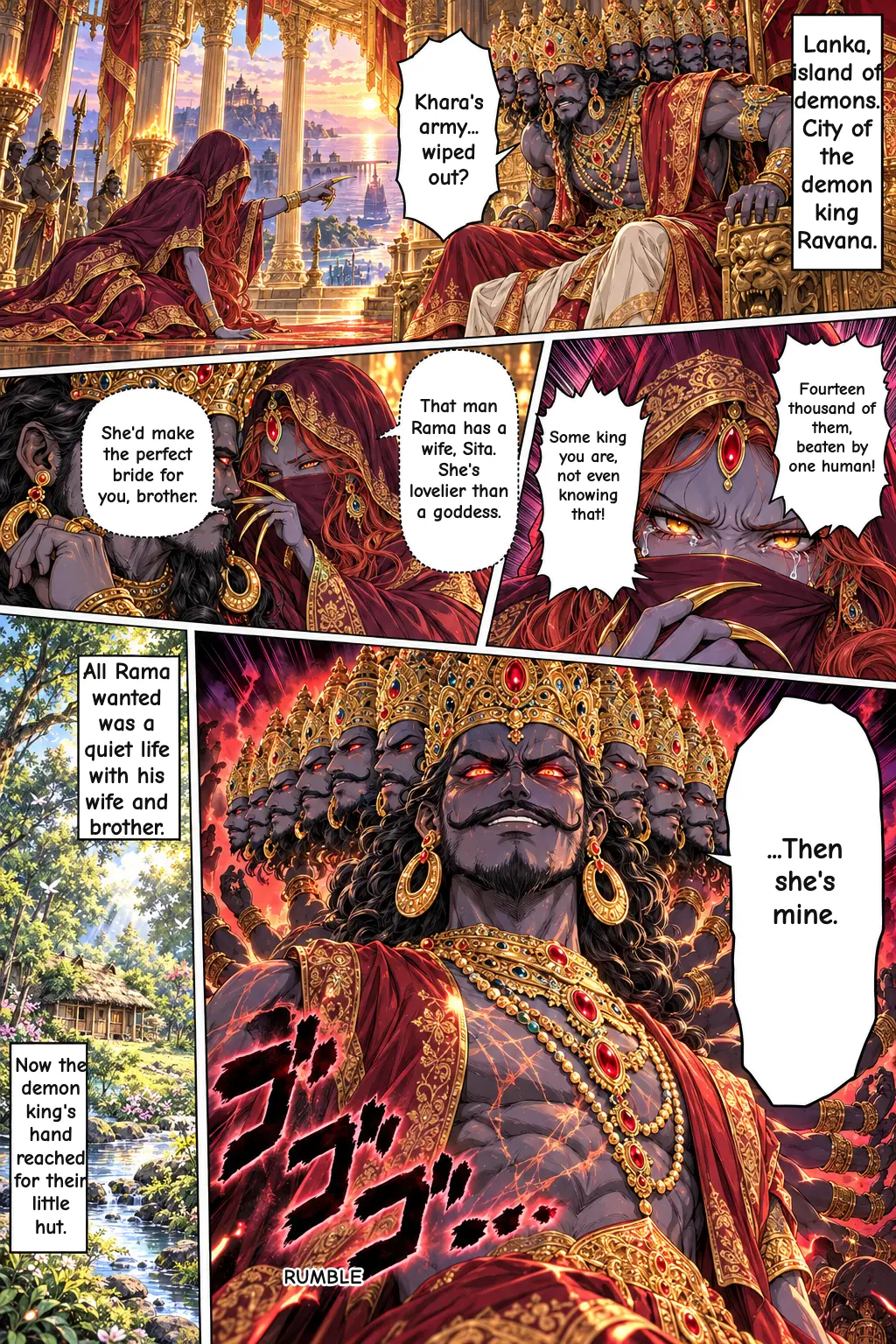
This episode follows the Aranya Kanda (the Forest Book), the third book of Valmiki's Sanskrit Ramayana, roughly chapters 31 to 68 in the commonly used numbering. It begins in Lanka. Ravana, the ten-headed demon king, hears that Rama has wiped out an entire rakshasa (demon) army in the forest. His first plan is to kidnap Rama's wife, Sita, but the old rakshasa Maricha talks him out of it. Then Ravana's sister Shurpanakha arrives, her nose and ears cut off by Rama's brother Lakshmana. She scolds her brother for neglecting his kingdom and describes Sita's beauty until he decides to take her for himself.
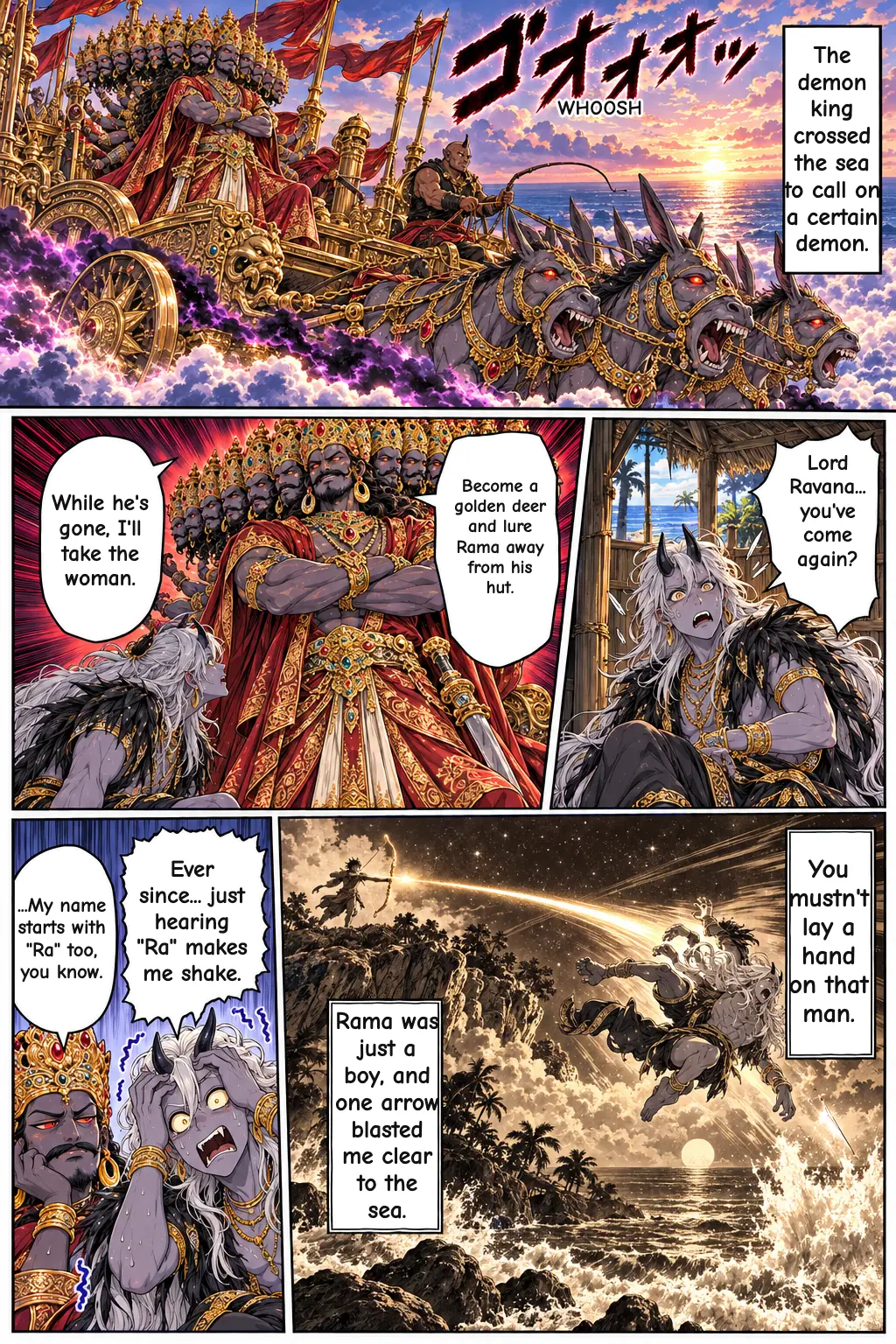
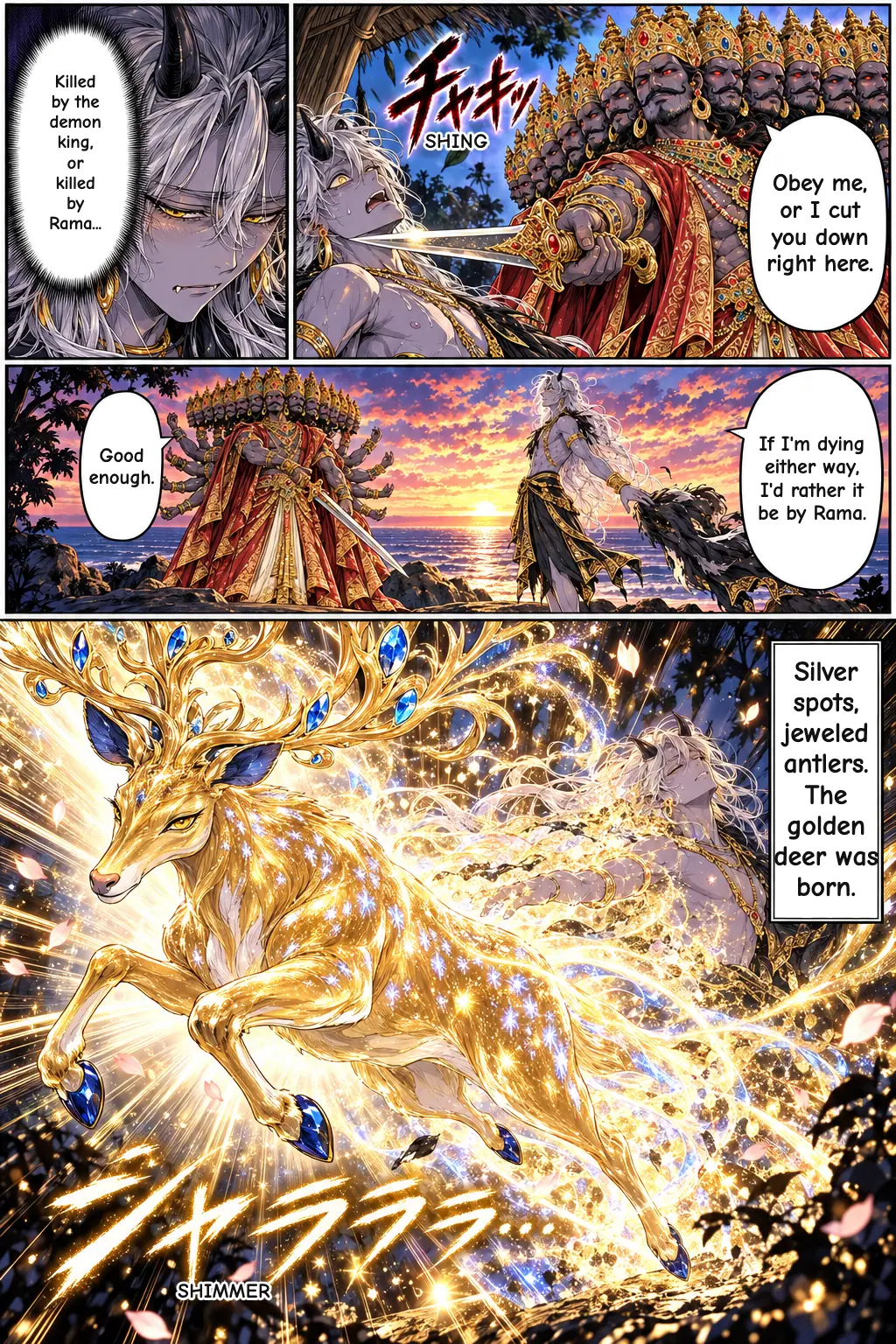
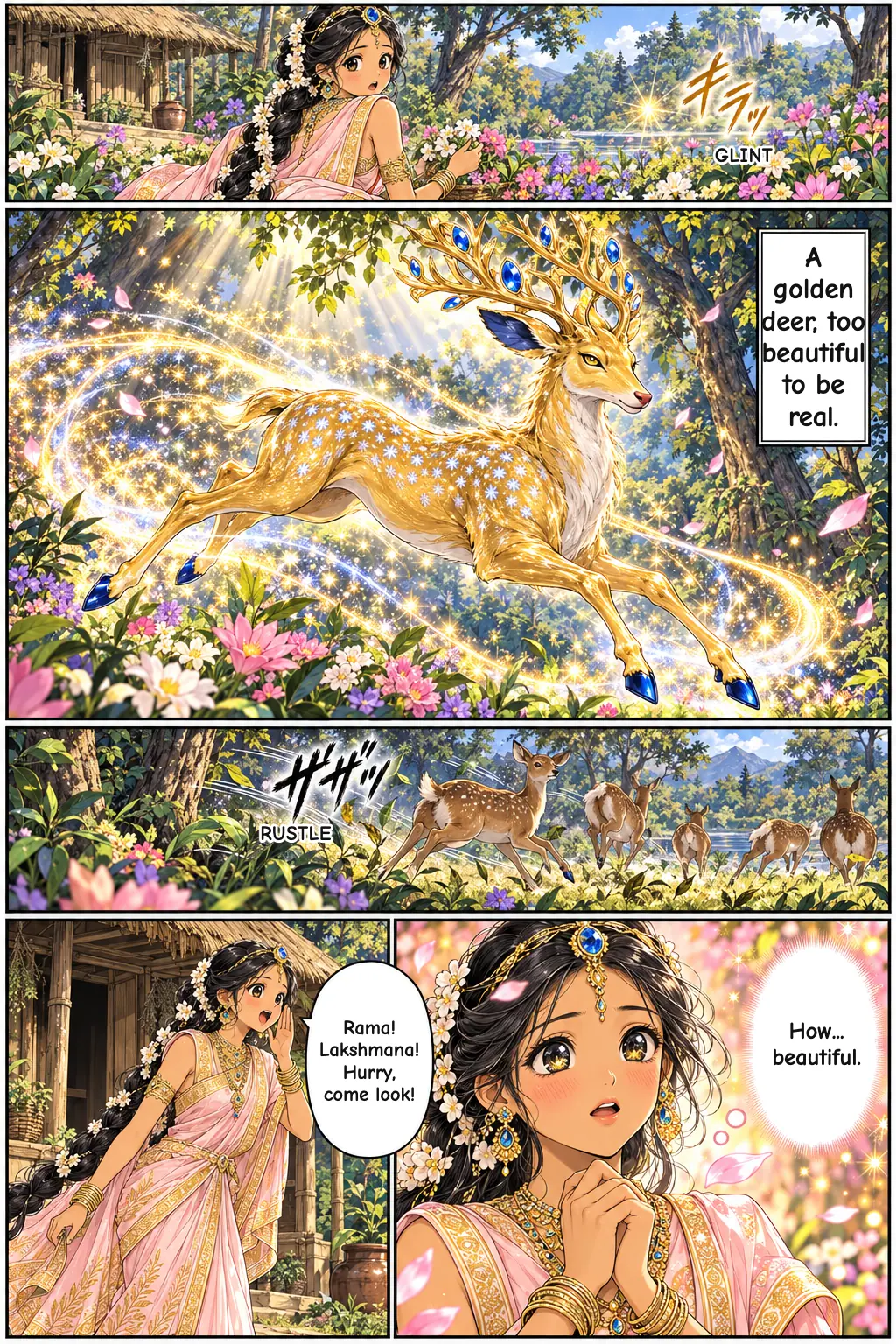
Ravana flies back to Maricha in a golden chariot drawn by donkeys that goes wherever he wishes. Maricha has good reason to refuse. As a boy, Rama once shot him so hard that he was hurled into the sea, and he only escaped a later encounter while his two companions were killed. Ravana answers with a threat: help me or die. Maricha agrees, reasoning that if he must die, it is better to die by Rama's hand. He turns himself into a dazzling golden deer with silver spots and jewel-like horns and wanders near the hut at Panchavati, on the Godavari River.
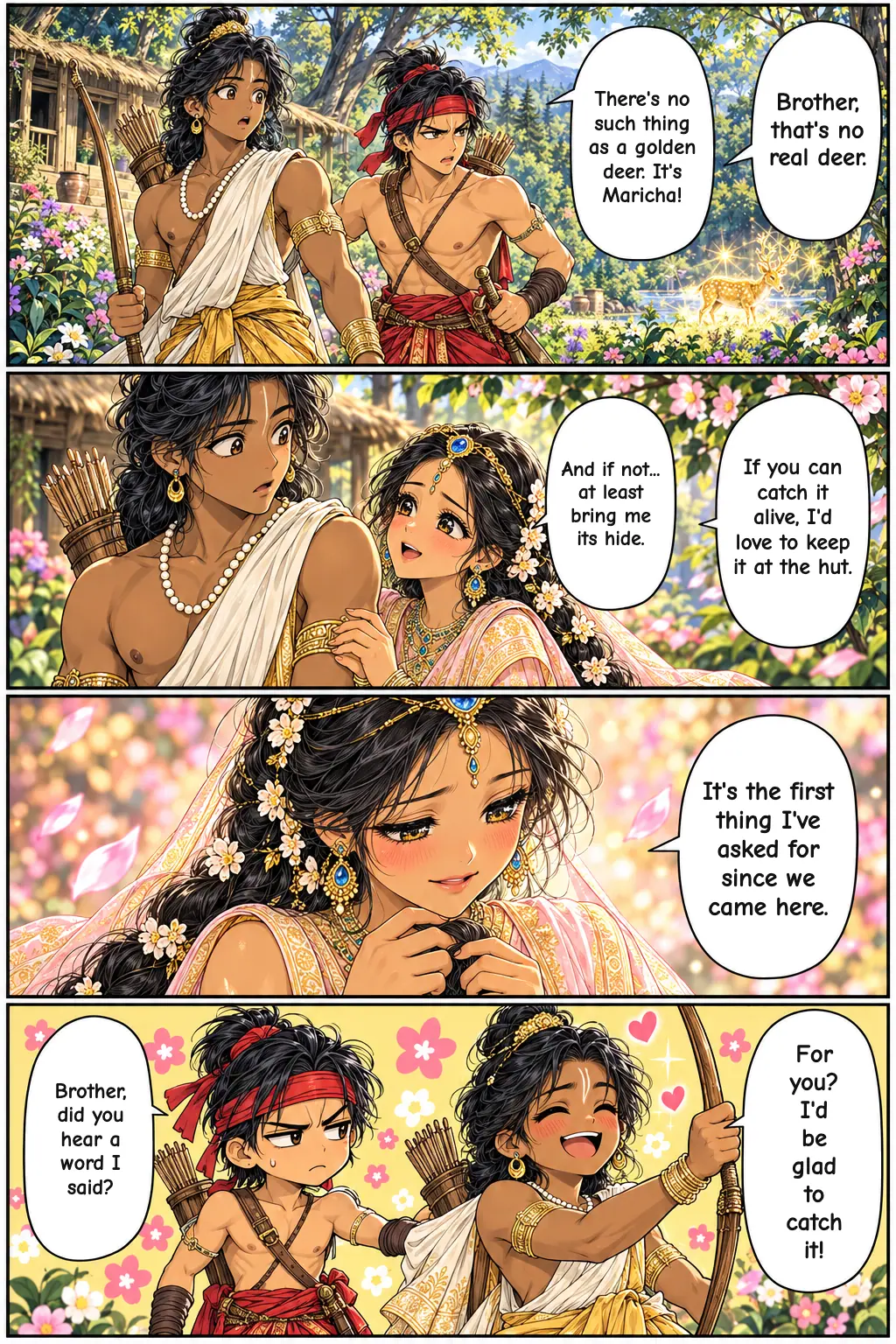
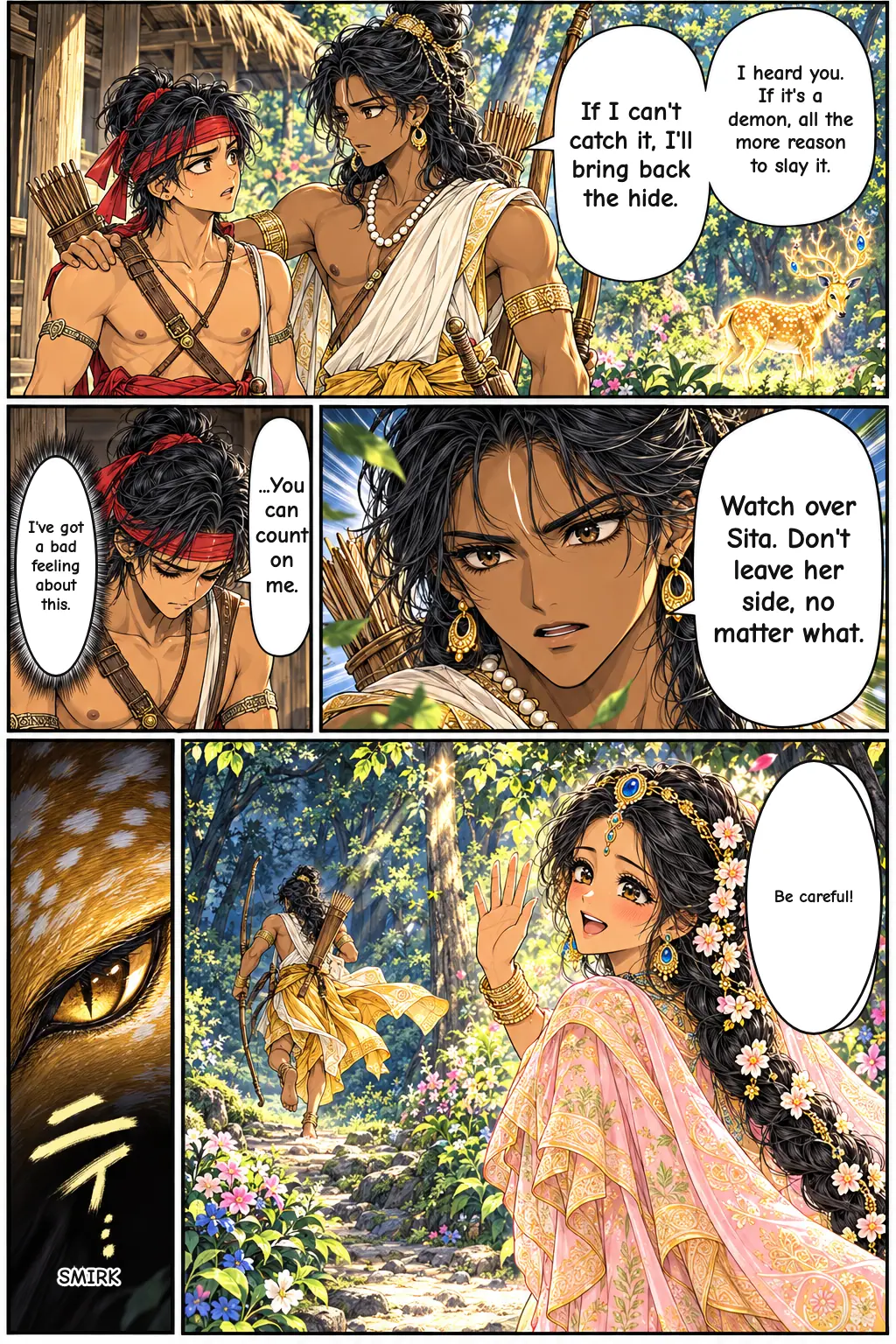
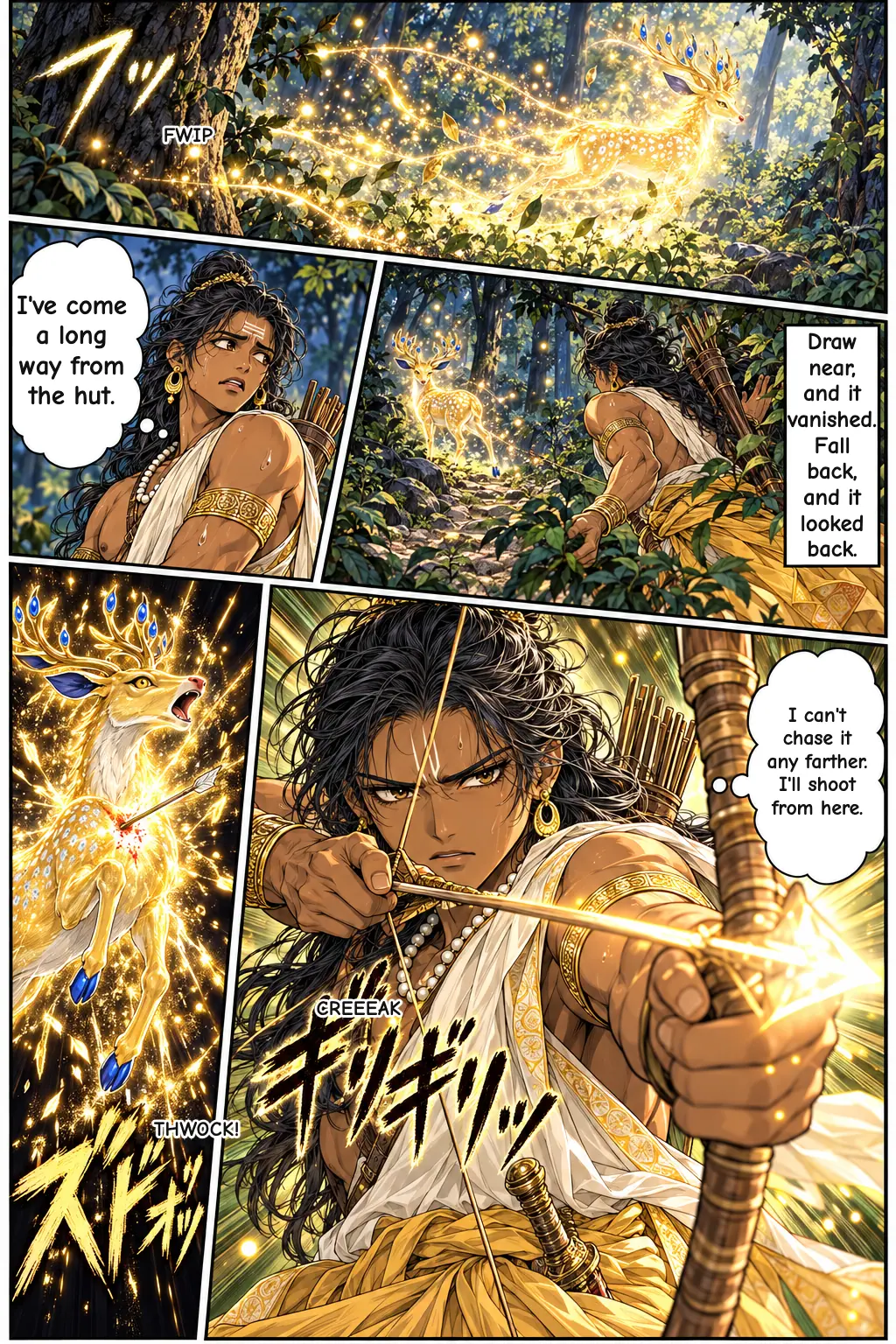
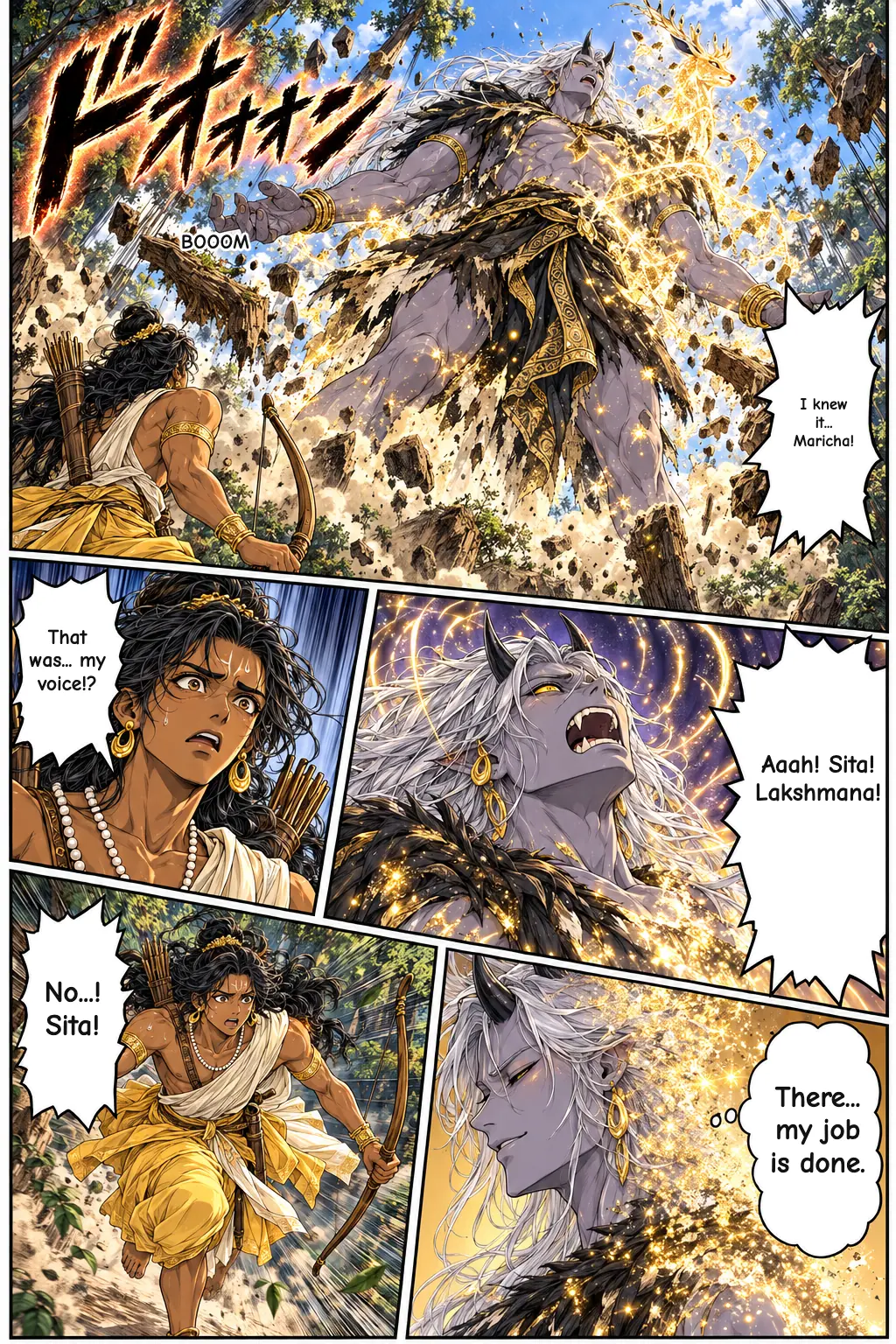
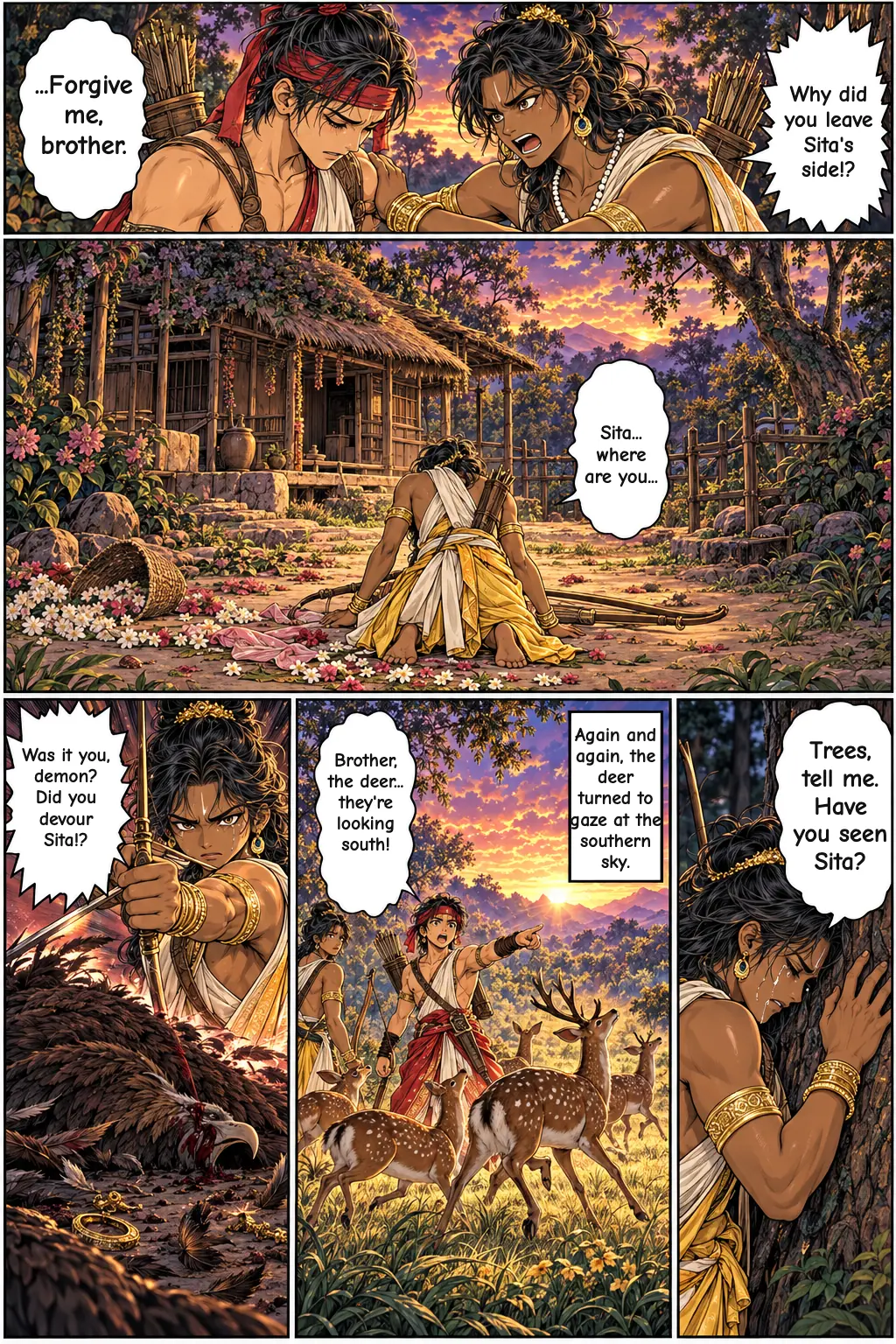
Sita asks Rama to catch the deer, or bring back its skin if it dies. Lakshmana suspects it is Maricha in disguise. Rama goes anyway and leaves Lakshmana to guard Sita. The deer lures him far away. When Rama's arrow finally strikes, Maricha returns to his giant demon form and, as he dies, cries out "Ah Sita! Ah Lakshmana!" in Rama's own voice.
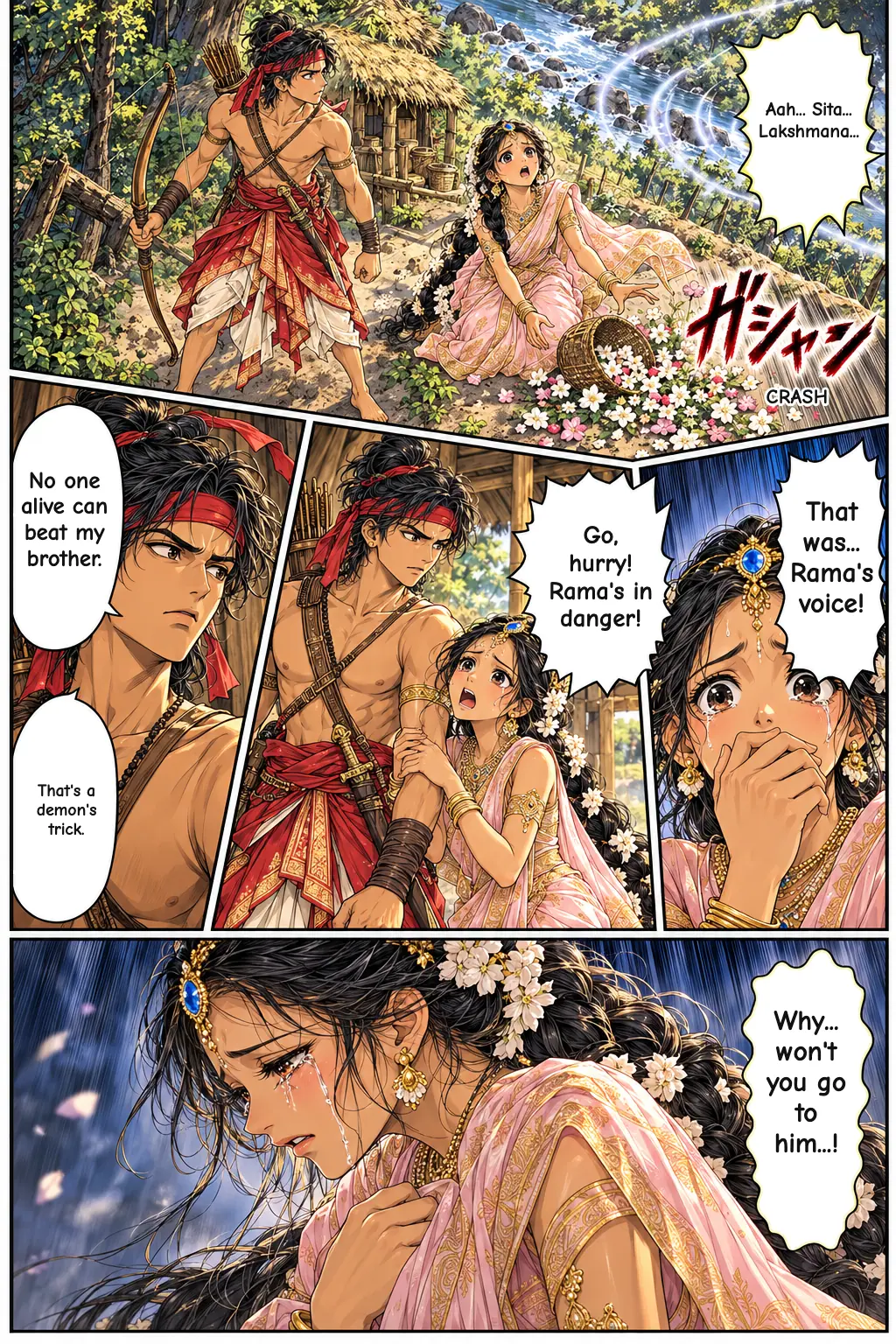
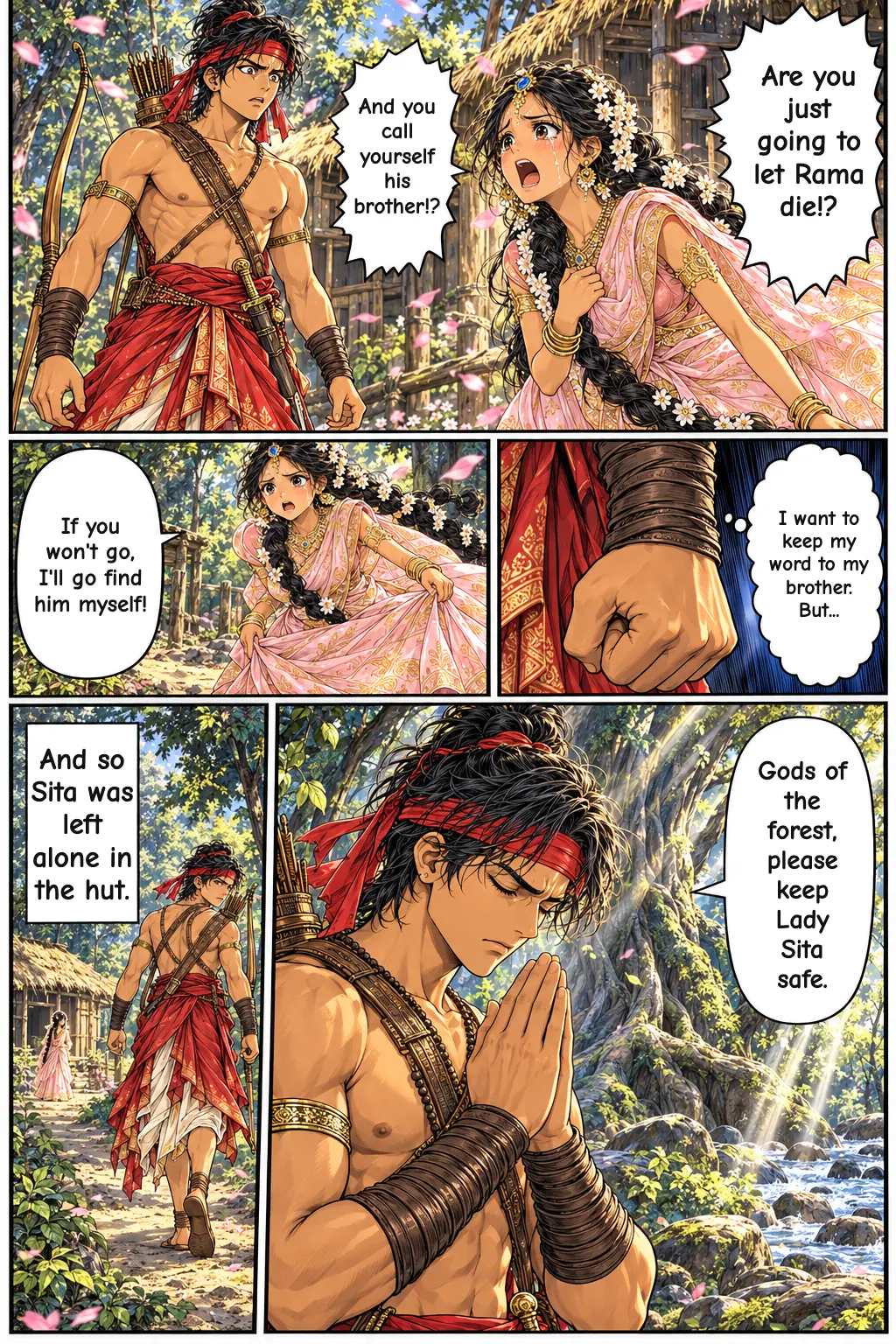
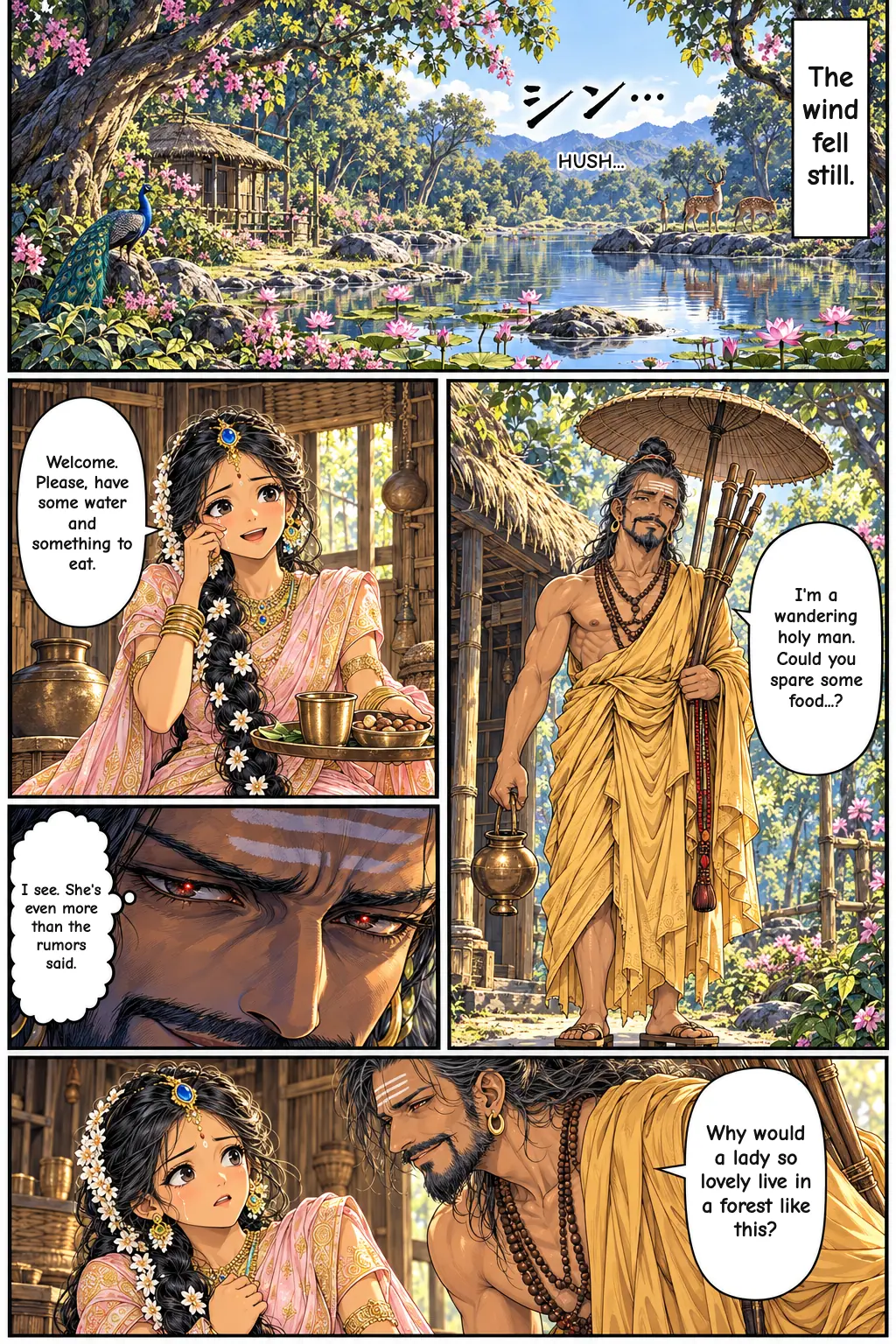
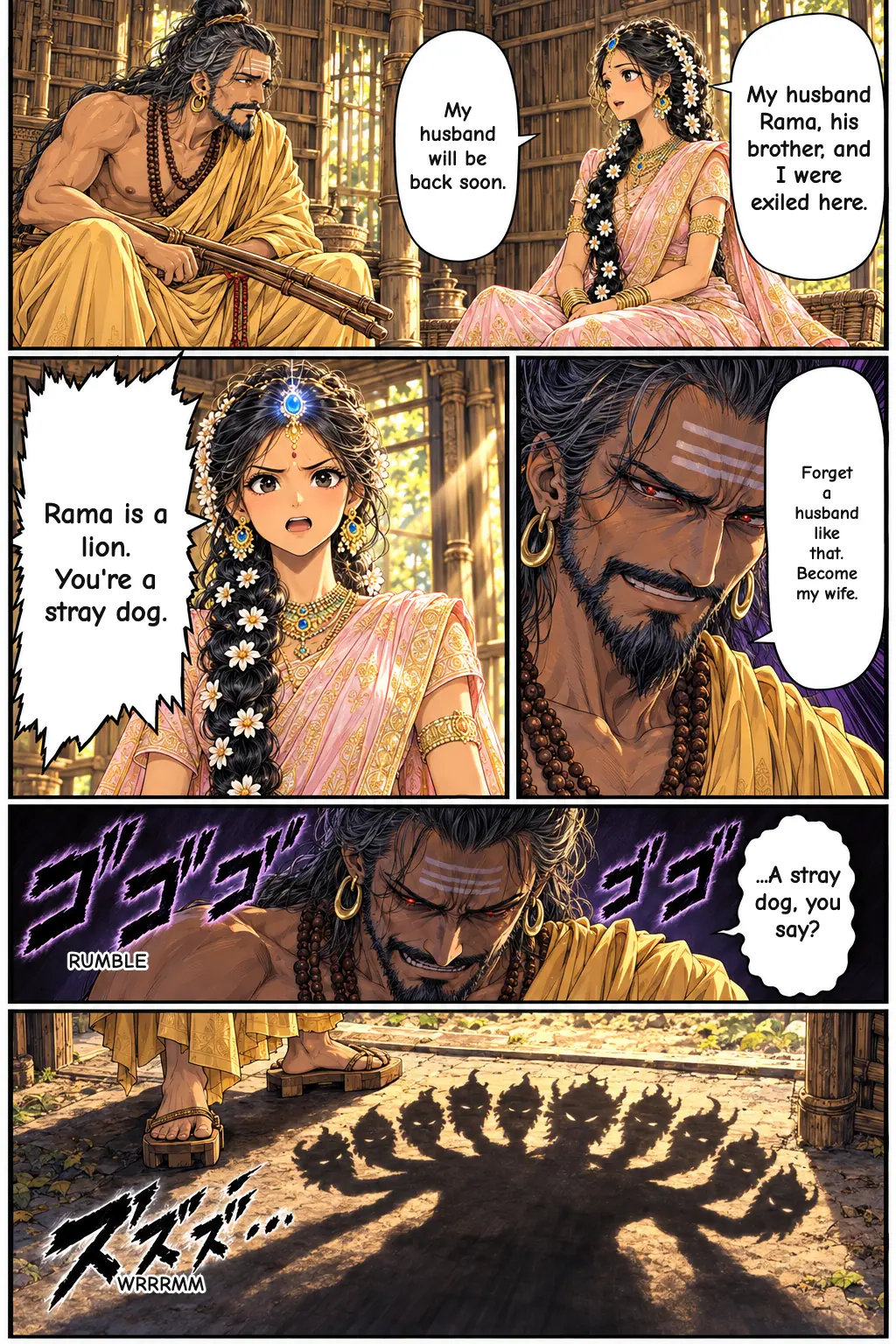
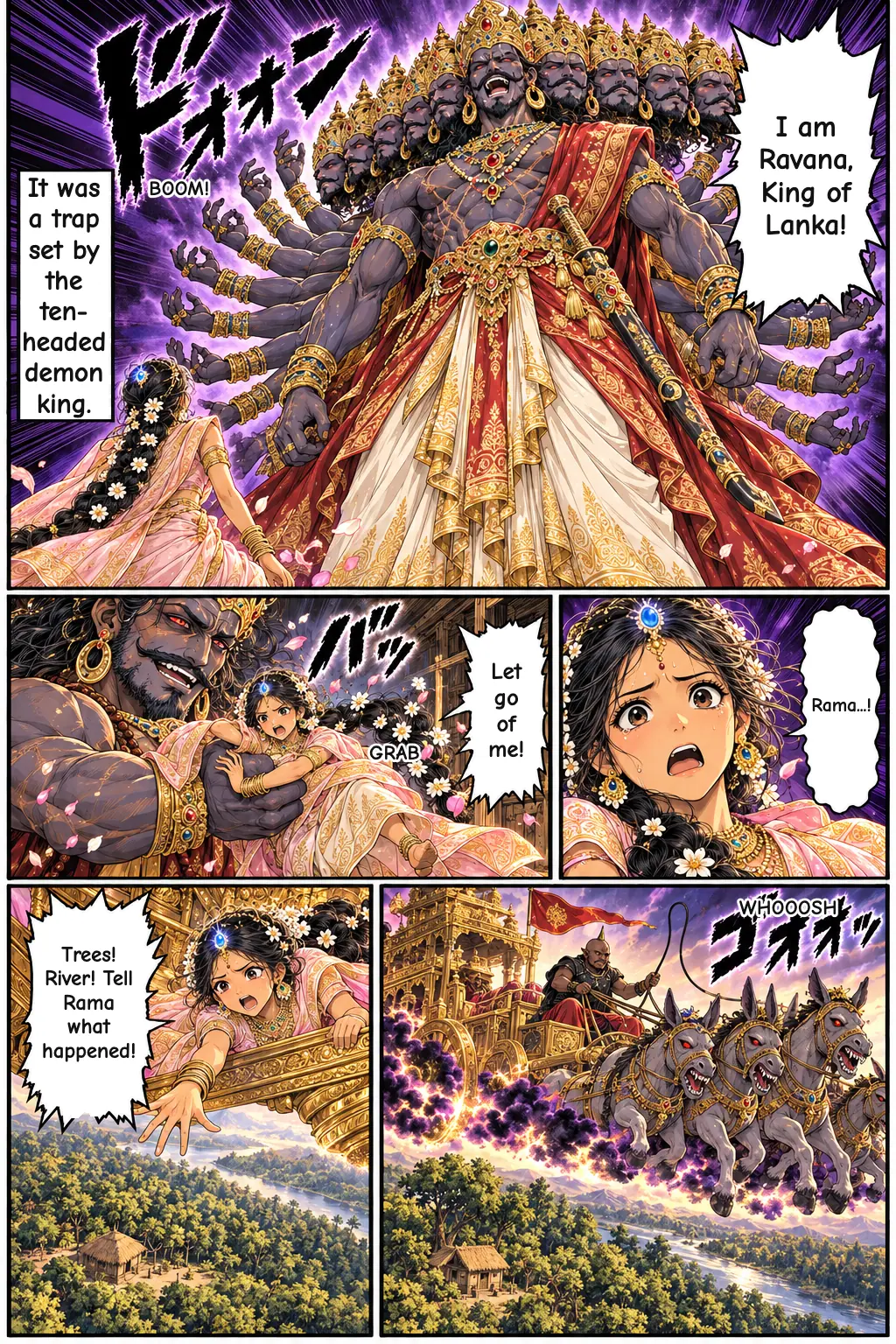
Sita hears the cry and begs Lakshmana to go. He insists Rama cannot be defeated. Frightened, she accuses him of wanting his brother dead so he can have her, and even of being a spy for their half-brother Bharata. Deeply hurt, Lakshmana asks the forest spirits to protect her and leaves. Ravana then appears as a wandering holy man. Sita, believing he is a Brahmin guest, welcomes him and tells him about her life. When he reveals who he is and asks her to become his queen, she refuses: Rama is a lion, she says, and Ravana is a jackal. Ravana takes his true, terrifying form, seizes her, and rises into the sky in his chariot.
Jatayu's Last Battle and Rama's Grief
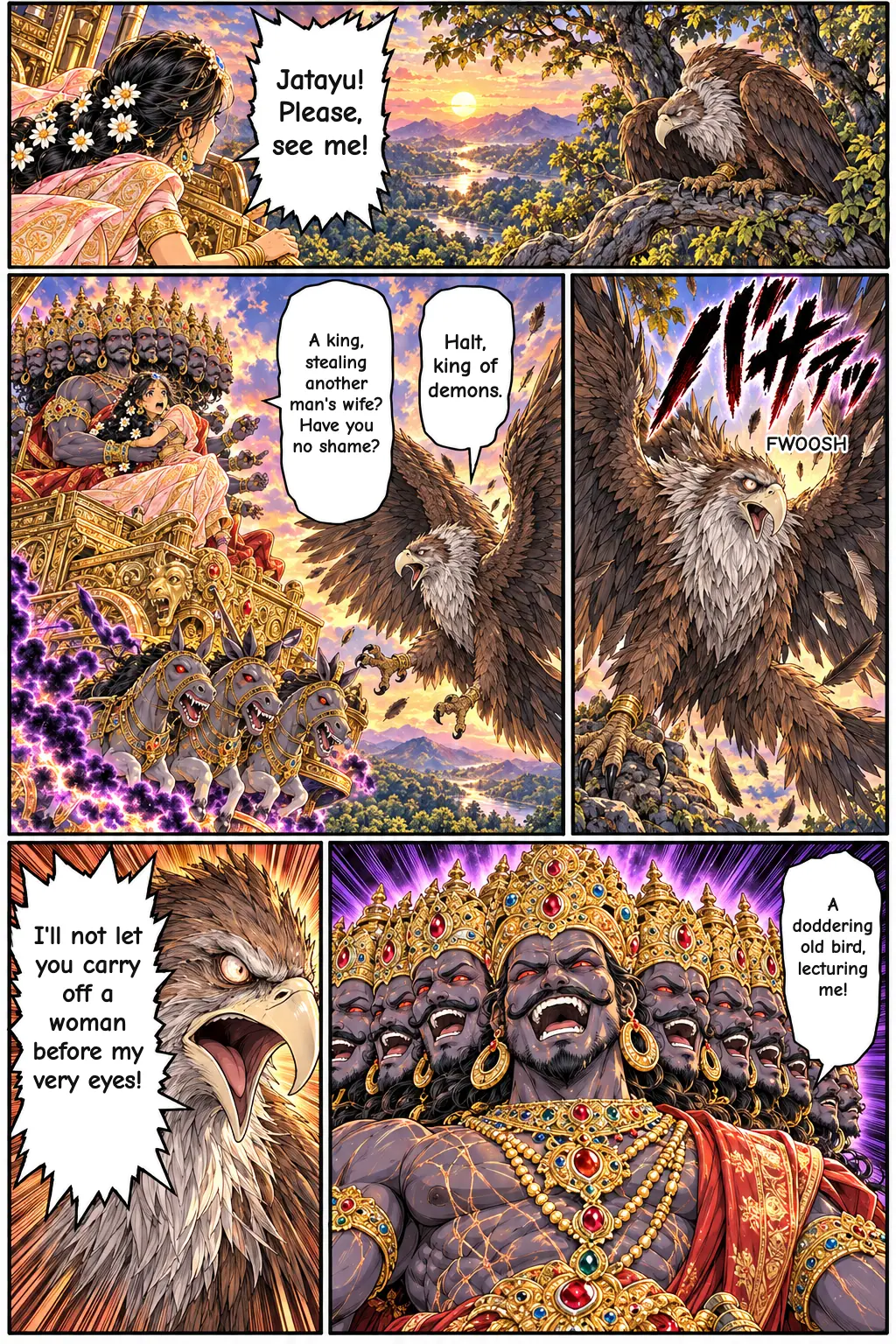
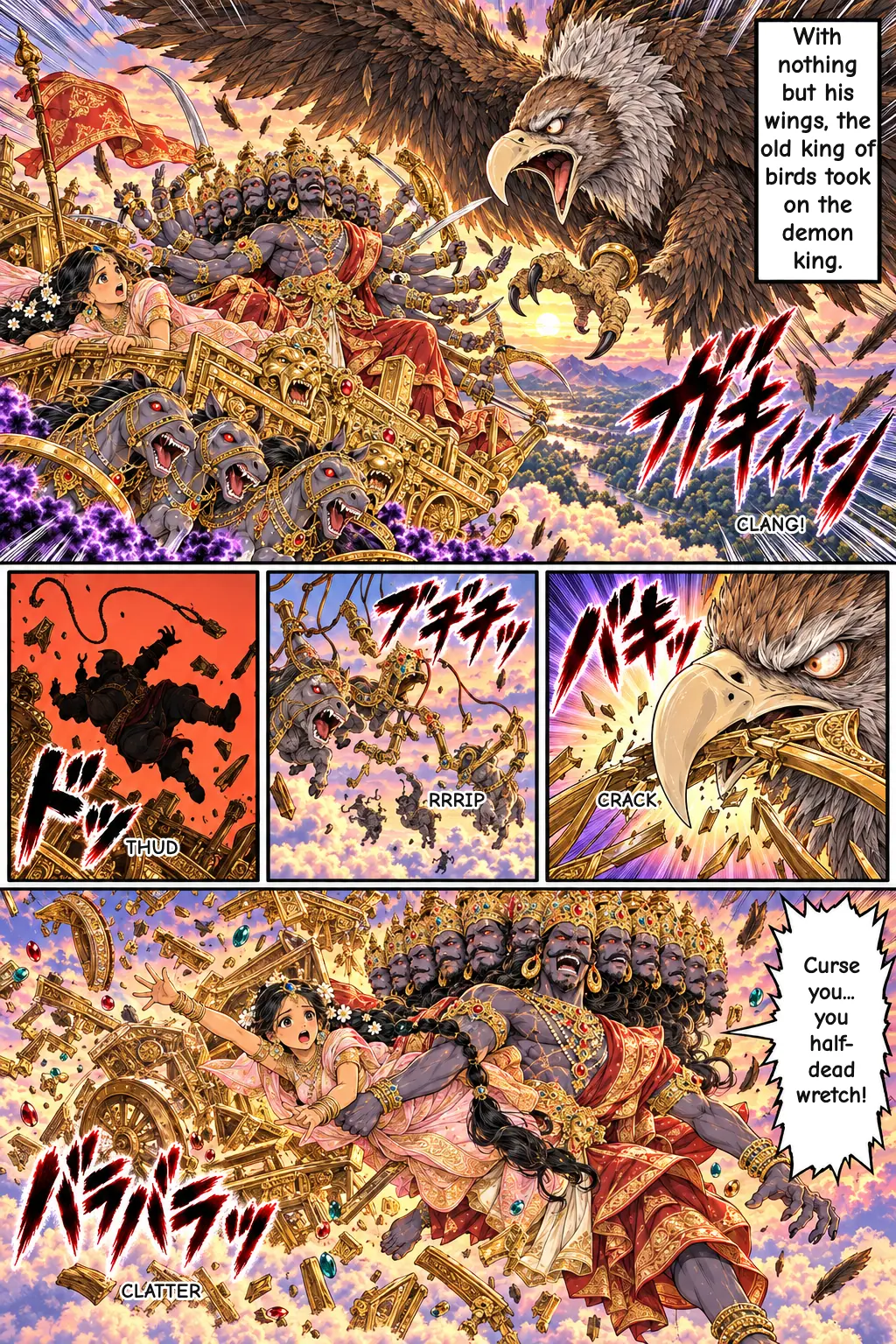
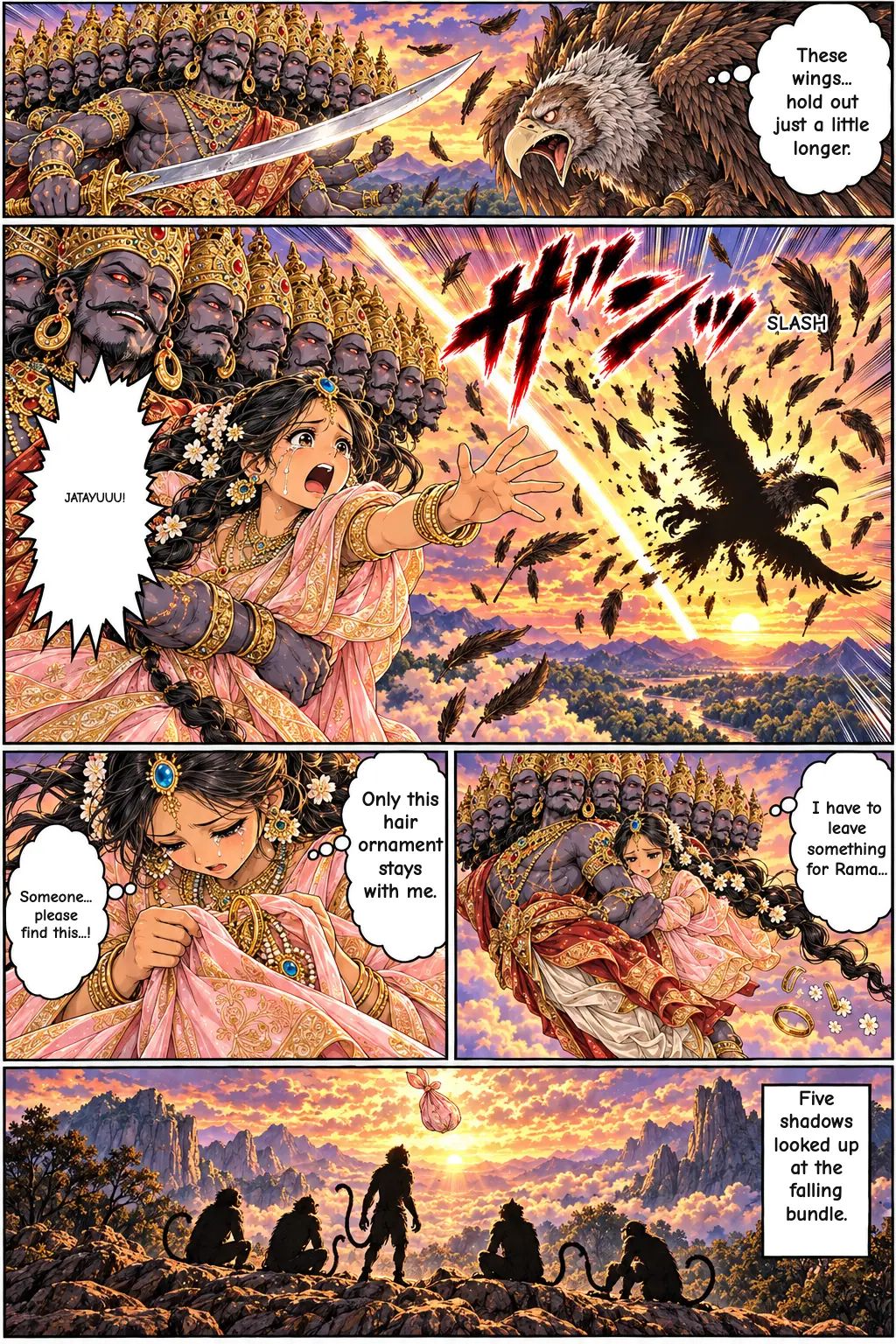
As she is carried off, Sita calls to the trees and the river to tell Rama what happened. She also spots Jatayu, the aged king of the vultures (the Sanskrit word means vulture, though he is often called an eagle in English). He is an old friend of Rama's father and says he has lived sixty thousand years. Jatayu first warns Ravana to let her go, then attacks. He breaks Ravana's bow, kills the donkeys and the charioteer, and wrecks the chariot. But he is old and exhausted, and Ravana's sword cuts through his wings, and he falls.
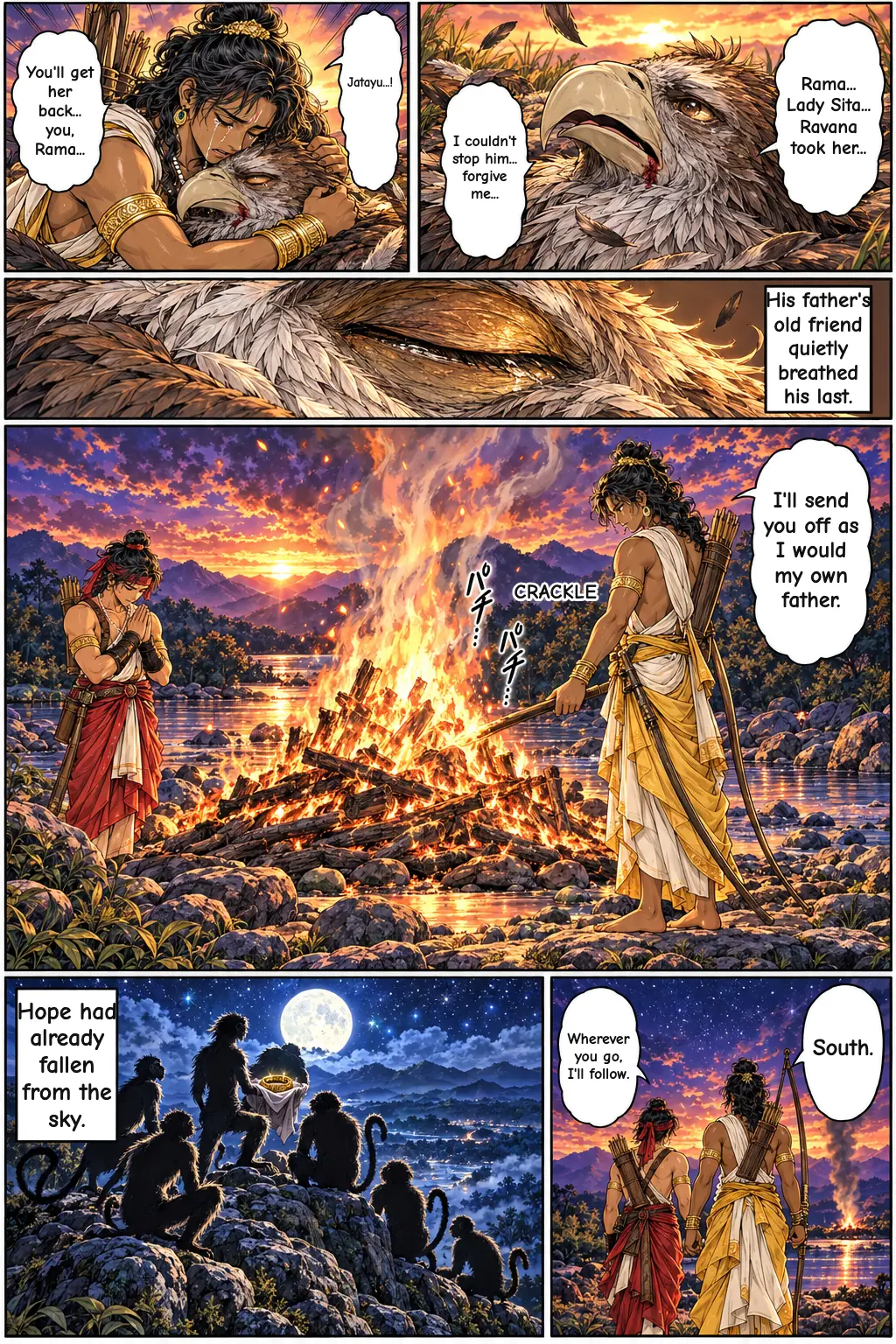
Ravana carries Sita through the air himself. Over a mountain she sees five monkeys, wraps her jewelry in her upper garment, and drops it to them without Ravana noticing, a detail that matters later in the epic. In Lanka, Ravana shows her his wealth and gives her twelve months to accept him, then has her held in a grove of ashoka trees under guard. Meanwhile Rama returns to an empty hut and is nearly mad with grief. He finds the dying Jatayu, at first mistakes him for an enemy, then learns the truth and holds him as he dies. Rama performs the old bird's funeral rites himself.
What This Story Tells Us
The episode shows how good qualities can be turned into weaknesses. Sita's wish for something beautiful, Rama's willingness to please her, Lakshmana's loyalty, and Sita's hospitality toward a holy guest are all things the epic treats as normal or even admirable, and each one opens a door for Ravana. Welcoming a wandering ascetic was a serious duty in ancient India, which is why the disguise works so well.
Jatayu is the epic's picture of courage without hope of winning: an old creature who fights a far stronger enemy because it is right. Rama giving him a funeral, an honor usually reserved for family, shows how highly that sacrifice is valued. Some scholars read Sita's harsh words to Lakshmana as a sign of panic rather than true belief, and readers have debated this scene for centuries.
What the Manga Changes and What It Keeps
The manga keeps the main facts of Valmiki's version: Ravana's ten heads and twenty arms, the golden chariot pulled by donkeys, the golden deer with silver spots, Maricha's dying cry, Sita's refusal, the order in which Jatayu destroys the bow, donkeys, charioteer and chariot, and Sita dropping her jewelry wrapped in cloth to the monkeys.
What is new is mostly in how things are shown. The character designs, costumes and colors are original. The length and route of the deer chase, the staging of Ravana's transformation, and the movements of the battle in the sky are the artist's choices. Long conversations, like Ravana's arguments with Maricha and his speeches in Lanka, are shortened, and inner thoughts are added. The five monkeys appear without names as a hint of Episode 7.
You may know the "Lakshmana Rekha," a protective line Lakshmana draws around the hut. It is well known from later retellings and TV versions, but it does not appear in Valmiki's Sanskrit text. Likewise, a scene where the god Indra brings Sita heavenly food appears only in some manuscripts.
Where to Read It
If you want to see the golden deer, Ravana's flight, and Jatayu's stand come to life, you can read Episode 6 of RAMAYANA: The Exiled Prince and the Son of the Wind right here on Manga Portal. Every episode is free, with no sign-up needed, so you can start from Episode 1 or continue straight on to see who finds Sita's jewelry next.
Characters in this episode
Ravana
The ten-headed demon king of Lanka, who disguises himself as a holy man and carries Sita away in his flying golden chariot.
Sita
Rama's wife and the daughter of King Janaka, who refuses Ravana and secretly leaves clues behind as she is taken.
Rama
The exiled prince of Ayodhya and a master archer, who chases the golden deer and returns to find Sita gone.
Lakshmana
Rama's loyal younger brother, who suspects the deer is a trick but leaves Sita after she accuses him.
Maricha
A demon who fears Rama, yet is forced by Ravana to become the golden deer and dies imitating Rama's voice.
Jatayu
The aged vulture king and friend of Rama's father, who fights Ravana alone to save Sita and dies after telling Rama what happened.
FAQ
Why did Rama chase the golden deer?
Sita saw the beautiful golden deer and asked Rama to catch it for her. Lakshmana warned that it might be the demon Maricha in disguise, but Rama went anyway, thinking he could simply kill it if it was a demon.
How did Ravana kidnap Sita?
After the deer drew Rama and Lakshmana away, Ravana came to the hut dressed as a wandering holy man. Sita welcomed him as a guest, and when she refused to become his queen, he showed his true form and flew off with her in his chariot.
Who was Jatayu in the Ramayana?
Jatayu was the old king of the vultures and a friend of Rama's father, King Dasharatha. He fought Ravana to rescue Sita and destroyed his chariot, but was cut down and lived only long enough to tell Rama what had happened.
Is the Lakshmana Rekha in Valmiki's Ramayana?
No. In Valmiki's Sanskrit text, Lakshmana asks the forest spirits to protect Sita, but he does not draw a magic line. The Lakshmana Rekha comes from later retellings and is popular in modern versions.
Why did Maricha agree to help Ravana?
Maricha tried several times to talk Ravana out of the plan, because he had already been defeated by Rama twice. Ravana threatened to kill him if he refused, so Maricha decided that dying by Rama's hand was the better choice.